
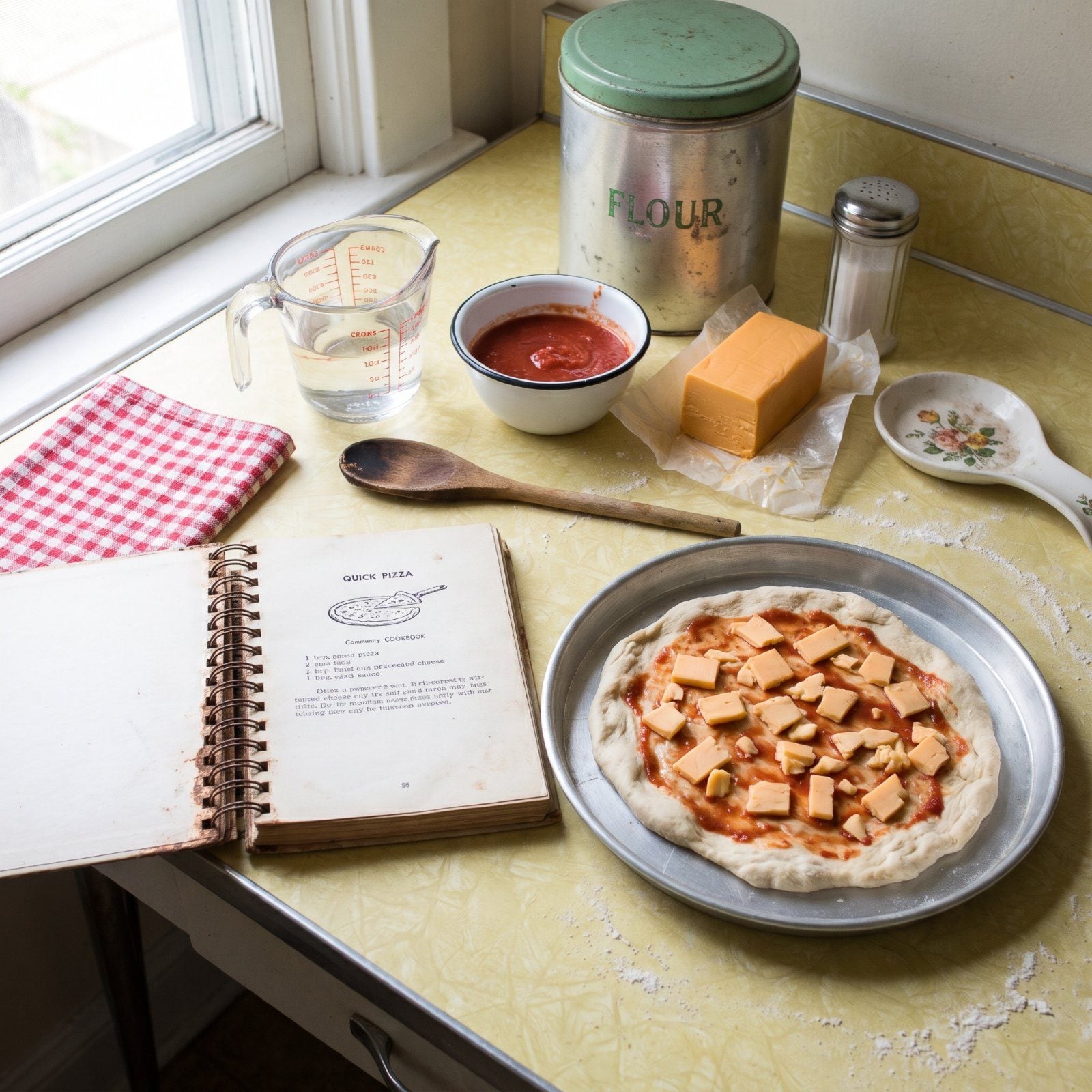
The recipe called for “a hot oven” and left it at that. No temperature, no timer, no photo — just typewriter ink on cheap paper, bound between church fundraiser recipes and a tuna casserole. We decided to make it anyway. No shortcuts, no modern fixes, no swapping in fresh mozzarella because it photographs better. What follows is every step, every guess, and the honest verdict on a pizza somebody’s neighbor wrote down seventy years ago and trusted you to figure out the rest.
Please note that some of the images in this article were created with the assistance of AI.
24. The Original 1950s “Pizza Pie” Recipe on the Page
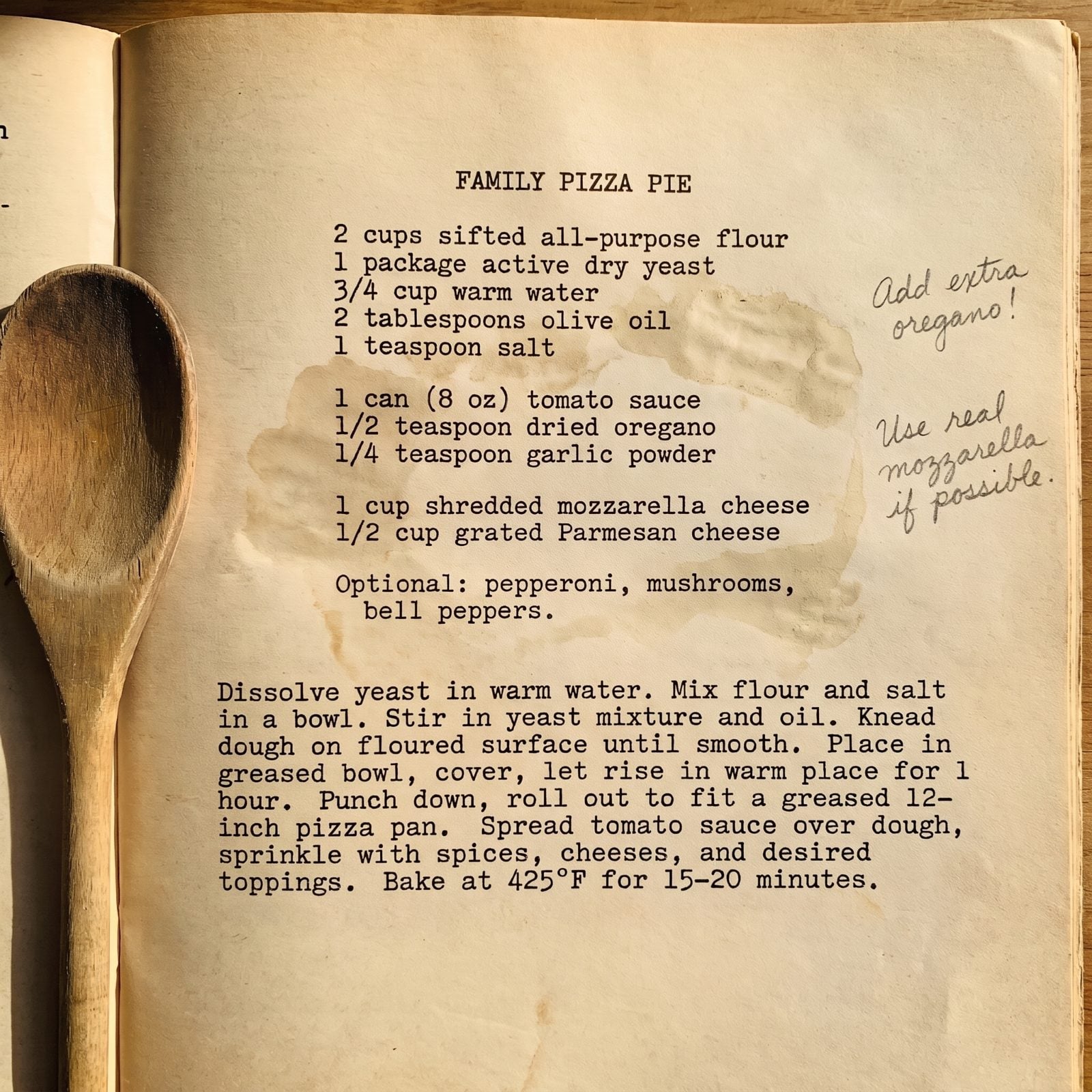
The whole thing ran most of a page. Called “Pizza Pie,” because in 1952 nobody trusted you to know what that was yet. Ten or so ingredient lines plus a line of optional toppings, a long run-on paragraph of method, and a confidence that bordered on cruel.
What struck us first was how little hand-holding there was. No “preheat.” No “until golden.” The writer assumed you already lived in a kitchen and didn’t need the obvious explained, and that’s both the charm and the trap of community recipes — they were written for neighbors, not for strangers reading seventy years out.
What Our Readers Say
- When Piaci Pizza readers loved a food photo and tapped a reason, comfort came out on top at 30%, with nostalgia not far behind at 16%.
- Not everyone is sold on retro, though: meal photos that look like the 1950s or earlier got fewer hearts from our readers than the other images in the same articles.
From Piaci Pizza reader polls and votes.
23. The Community Cookbook That Preserved the Recipe
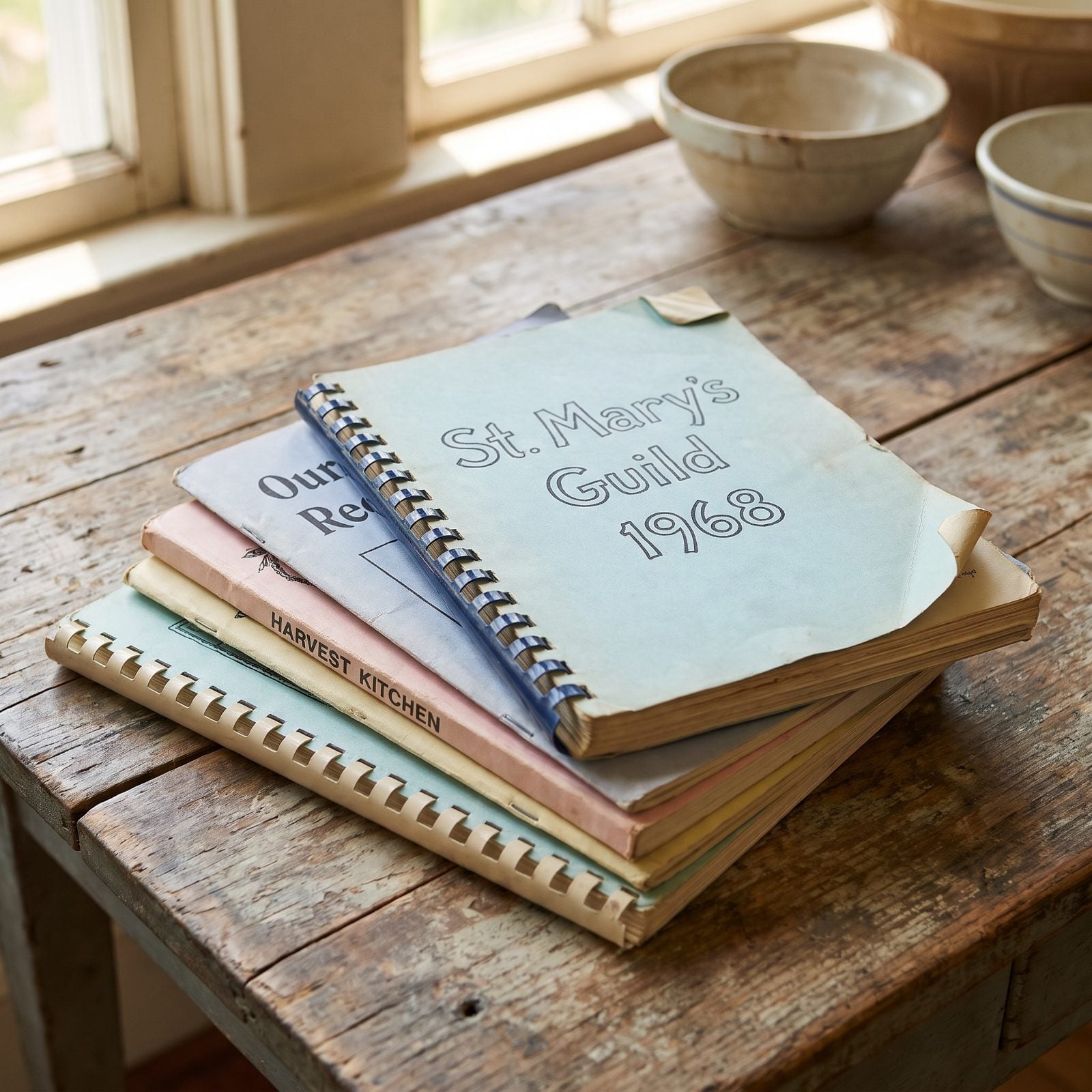
These books sold at bake sales and church bazaars for a dollar, maybe two, to raise money for a new roof or a youth group bus. Families submitted recipes by name, so you could flip through and see exactly whose casserole you were about to copy.
The paper was cheap and the binding was spiral or stapled, but the recipes were real — tested on actual weeknights rather than styled for a camera. That’s why we trusted this one. Nobody was selling anything. Somebody just thought this pizza was worth passing along.
22. Every Ingredient Listed in the Recipe
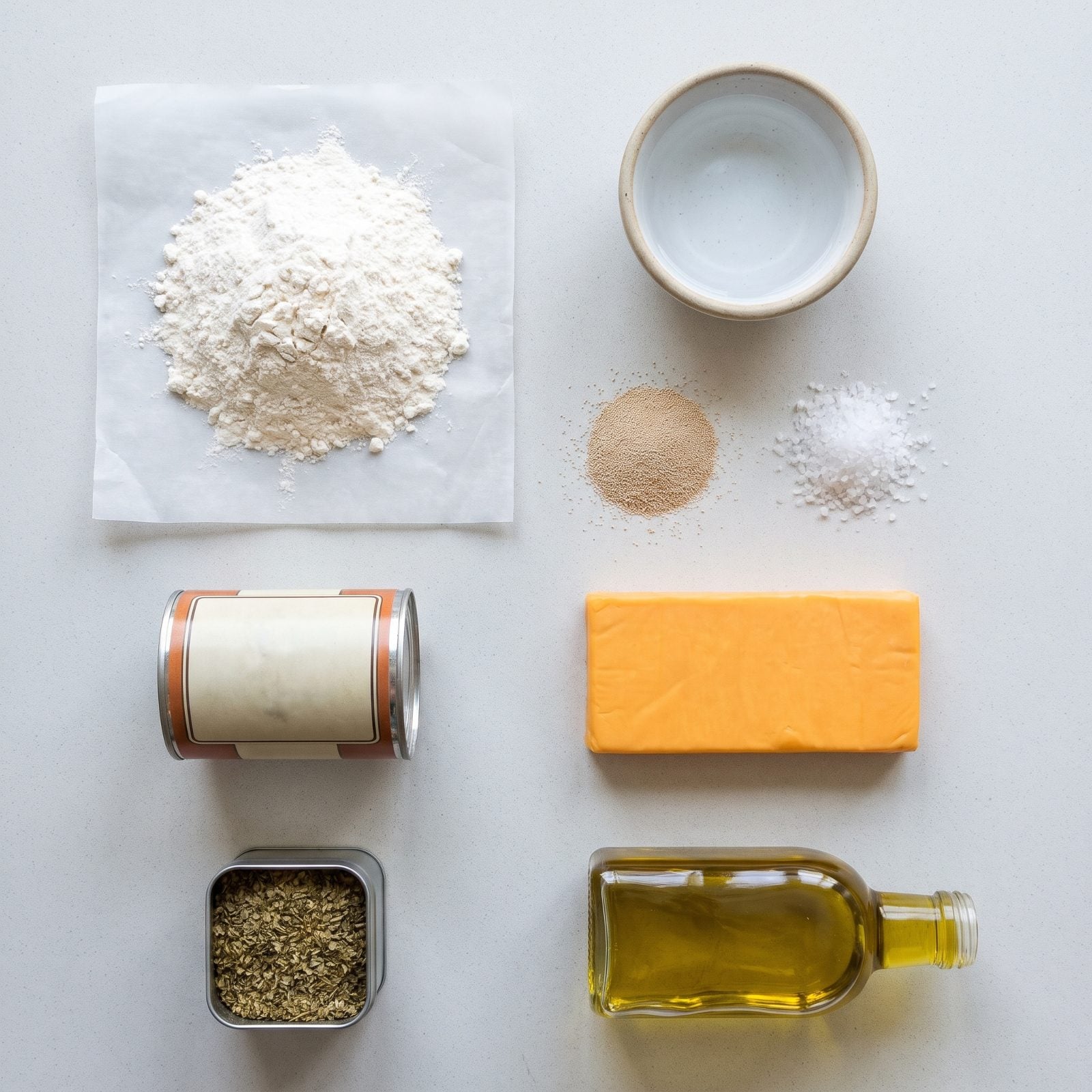
Flour, water, yeast, salt. Tomato sauce from a can. A block of processed cheese. Dried oregano and a little oil. That was the full cast.
No fresh basil. No San Marzano anything. And no mozzarella at all, which surprised us until we remembered that in a 1950s American grocery store, the cheese you could actually find was the kind that came in a rectangle and melted into a flat, orange-gold layer.
When our readers disliked a food photo, ingredients were the second most common reason after a simple “not for me,” which makes a processed-cheese pizza a brave choice.
21. Sourcing the Closest Period-Appropriate Ingredients
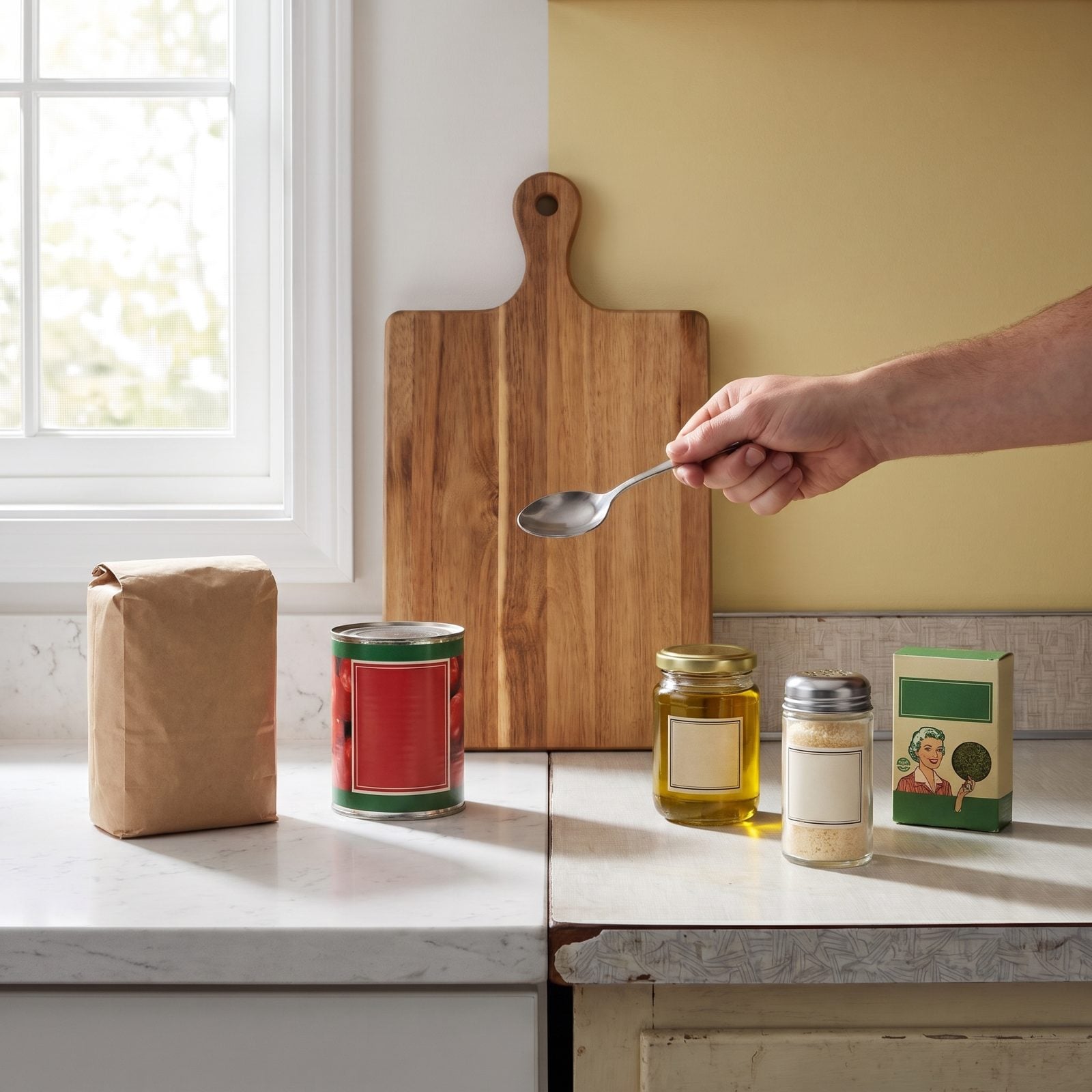
We weren’t going to time-travel, so the goal was faithful, not impossible. No aged balsamic vinegar in a glass jar. No truffle oil with a backstory.
Grated cheese in a shaker jar instead of a fresh wedge. A basic can of tomatoes — not fancy imported ones with character. Dried parsley flakes instead of fresh herbs, from a little cardboard box that looked like it had probably been in somebody’s cabinet a while, which felt about right. The hardest part was not upgrading. Every instinct said buy the truffle oil. We bought the shaker of grated cheese. That was the assignment.
20. The Vintage-Style Kitchen Tools Used for the Test
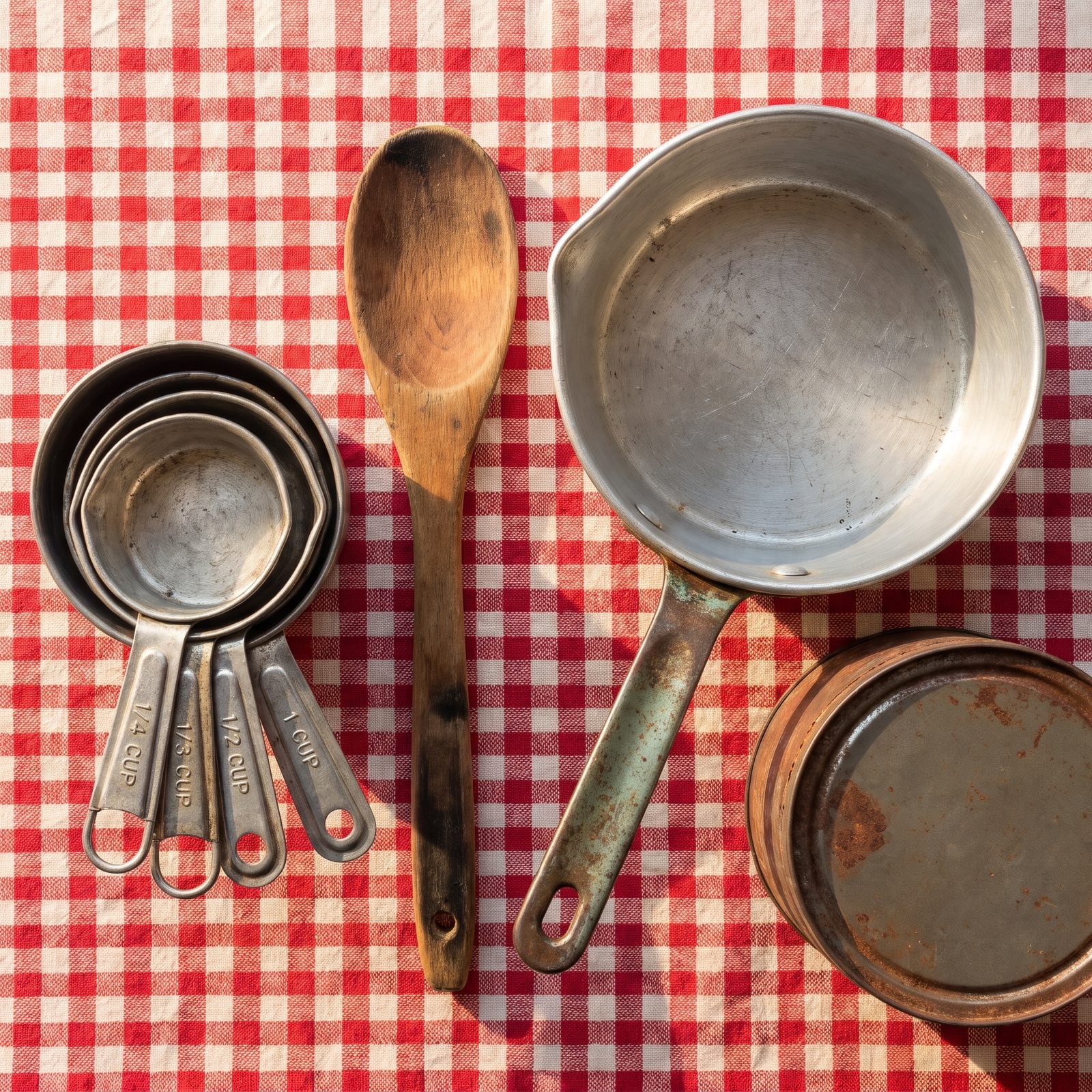
No stand mixer. No pizza stone. No instant-read thermometer. If the recipe’s author didn’t have it, neither did we.
A rusty old shortening tin with a faded label. A nested set of aluminum measuring cups. A wooden spoon that did the stirring. And a deep, well-worn saucepan with a long iron handle — the kind that lived on every mid-century stovetop and conducted heat a little unevenly, which turned out to matter later.
Working this way slows you down. You feel the dough instead of watching a dial. Faintly meditative, too, though by the end my forearm had opinions about doing the whole thing by hand.
19. Deciphering the Recipe’s Sparse Instructions
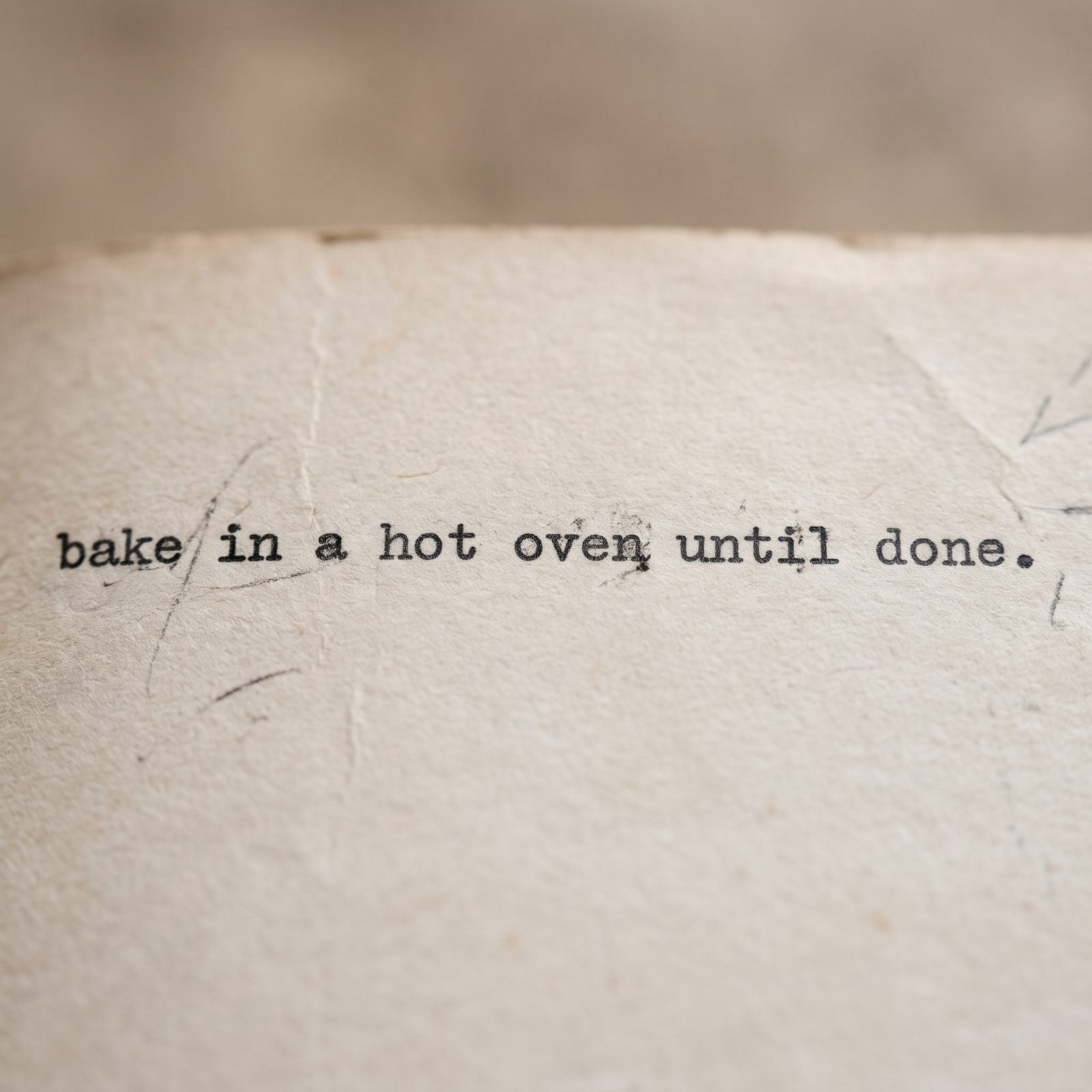
Here’s where it got sporting. “Mix dough, let rise. Spread on pan. Top and bake in a hot oven until done.” That was essentially it.
“Hot oven” was the big one. In 1950s cookbook shorthand, a hot oven usually meant somewhere around 400 to 450 degrees. “Until done” meant you were expected to look at it and just know. And “let rise”? No time at all.
The recipe didn’t trust a timer. It trusted you to pay attention.
We made our best period-informed guesses and wrote them in pencil, so we could admit later if we’d guessed wrong.
18. Measuring Everything Exactly as Written
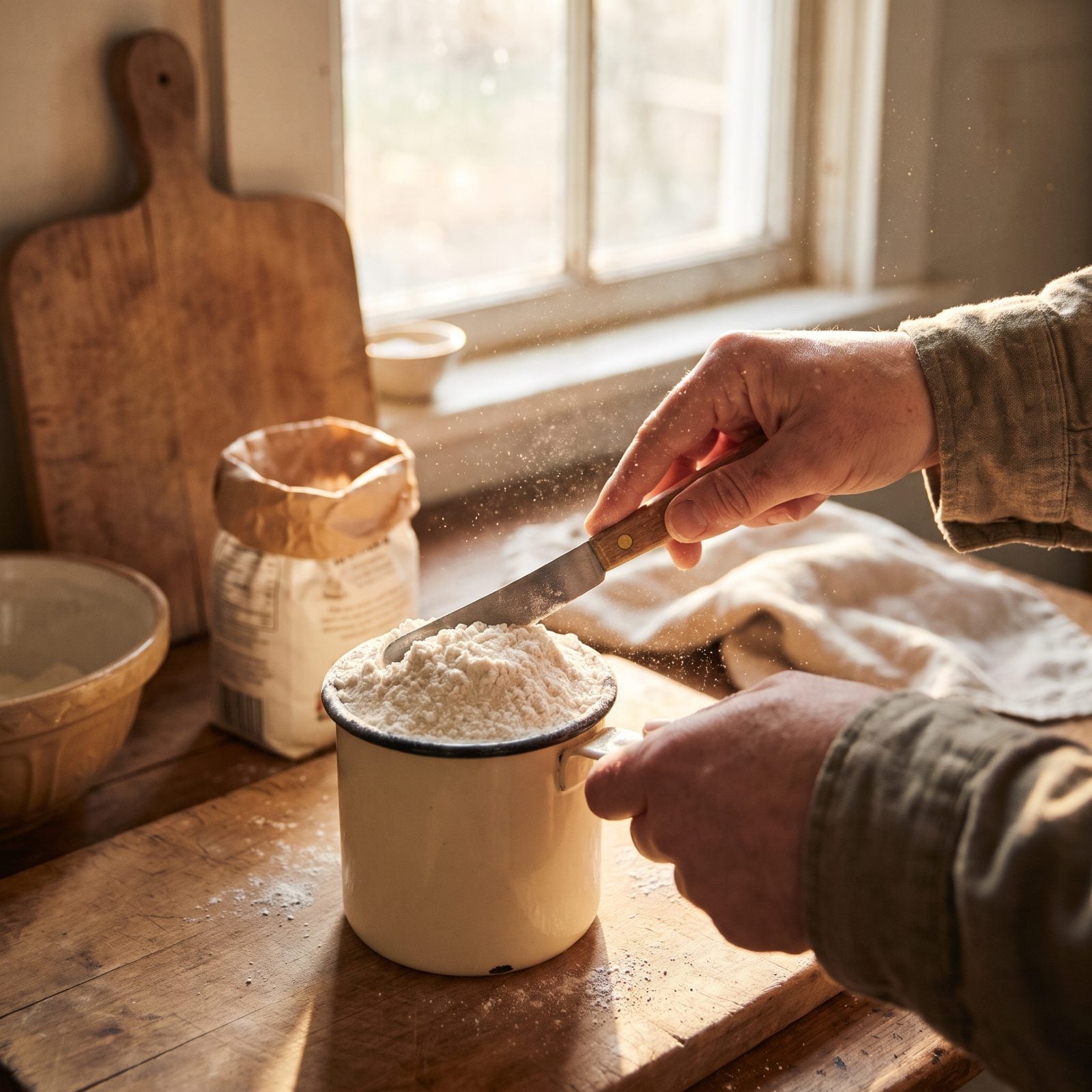
No eyeballing. The recipe gave cups and spoons, so we gave it cups and spoons, leveled with the back of a knife the way your grandmother did.
The proportions ran lean next to modern dough recipes — less water than I expected, a modest amount of yeast. Measuring it out without adjusting took real restraint, because I kept thinking the dough would want more liquid.
17. Mixing the Crust by Hand
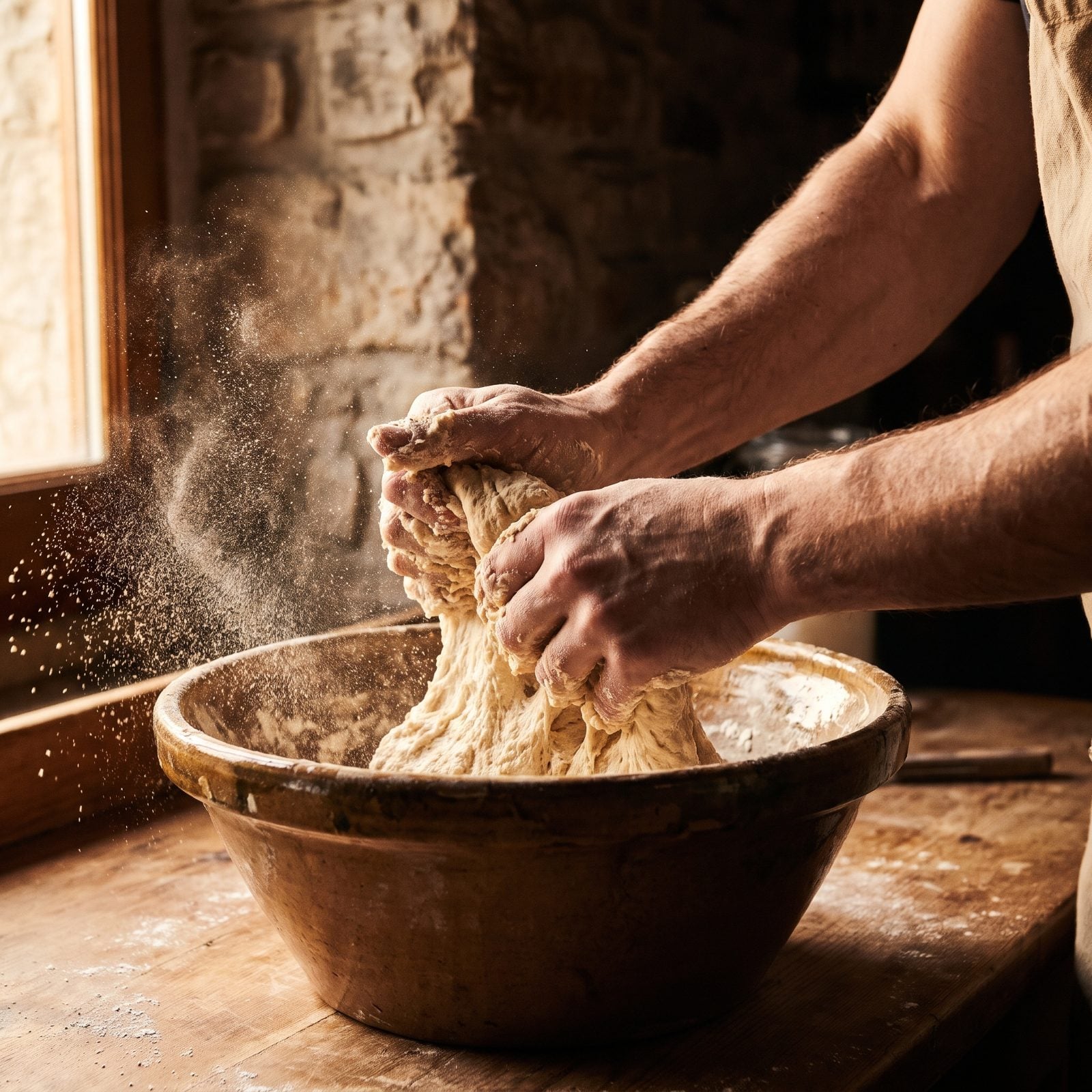
You forget how physical bread work is until you’re doing it with a wooden spoon and then your bare hands. The dough started shaggy and stubborn, then slowly pulled together into something smooth and a little tacky.
Full confession — I got this part wrong years ago by adding water the second a dough looked dry. Didn’t do that here. Kneaded it on a floured counter until it stopped fighting back, maybe eight minutes. The lean recipe gave us a firm, bready dough rather than the slack, stretchy stuff a modern high-hydration recipe would.
16. What the Unbaked Dough Looked Like
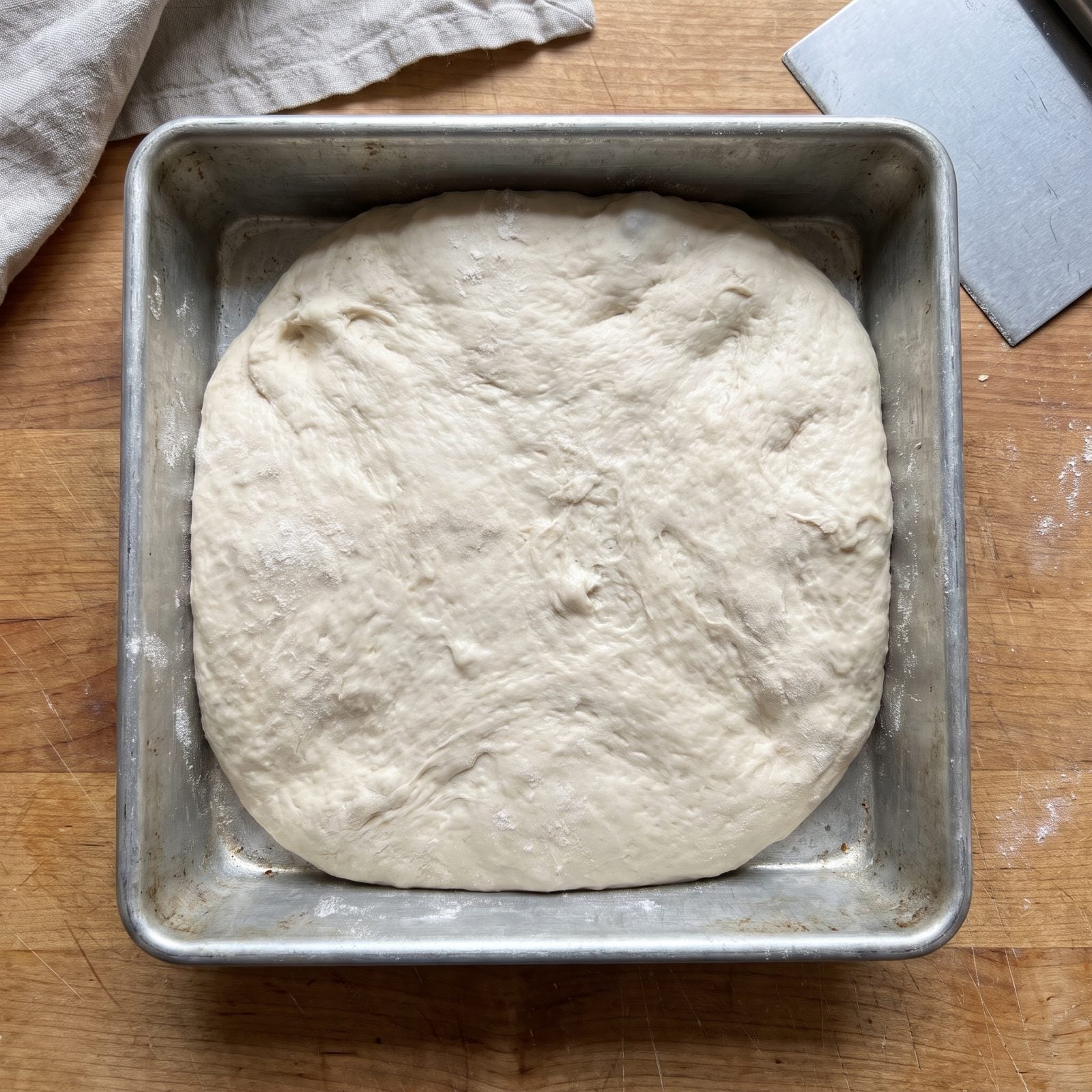
It did not look like the pizza you picture. Pressed into the aluminum pan, the dough was pale, thickish, and a little rustic around the rim, dimpled where fingers had pushed it out.
No perfect circle. No airy, bubbled cornicione. Just an honest round of bread dough that looked like somebody’s mother made it on a Thursday — which, in a sense, somebody’s mother did. We let it sit a few minutes before topping, and the surface relaxed into something softer.
15. Preparing the Pan the 1950s Way
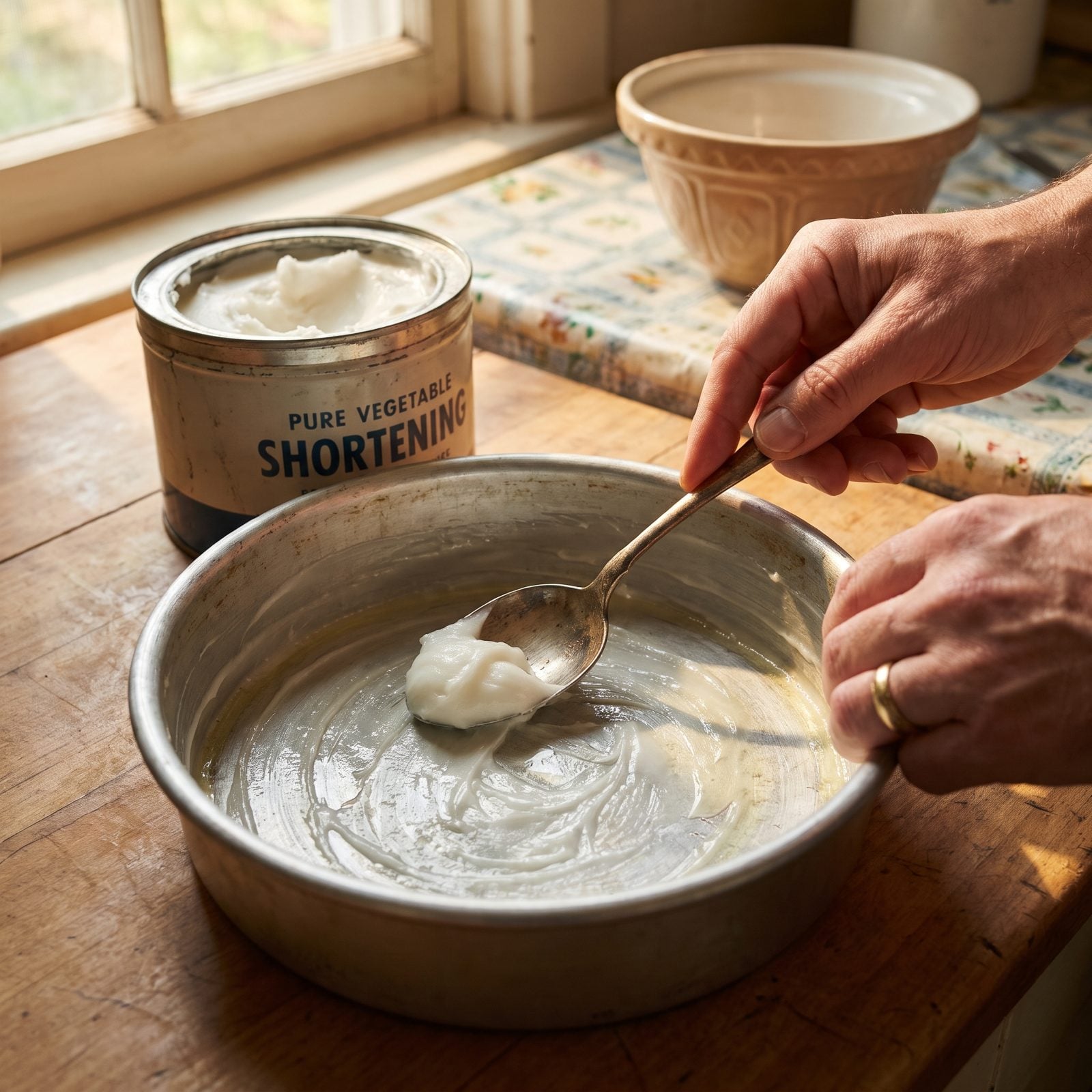
The recipe didn’t say “lightly oil the pan.” It said grease it, and it meant with shortening, scooped from a tin and spread around with the back of an old metal spoon. No olive-oil mist. No parchment.
We dusted the greased pan with a little cornmeal, which a pencil note in the margin suggested. It felt wrong, then it felt right. The pan went slick and dull, the way a pan looks when it’s about to do actual work.
14. Shaping the Crust Without Modern Pizza Tools
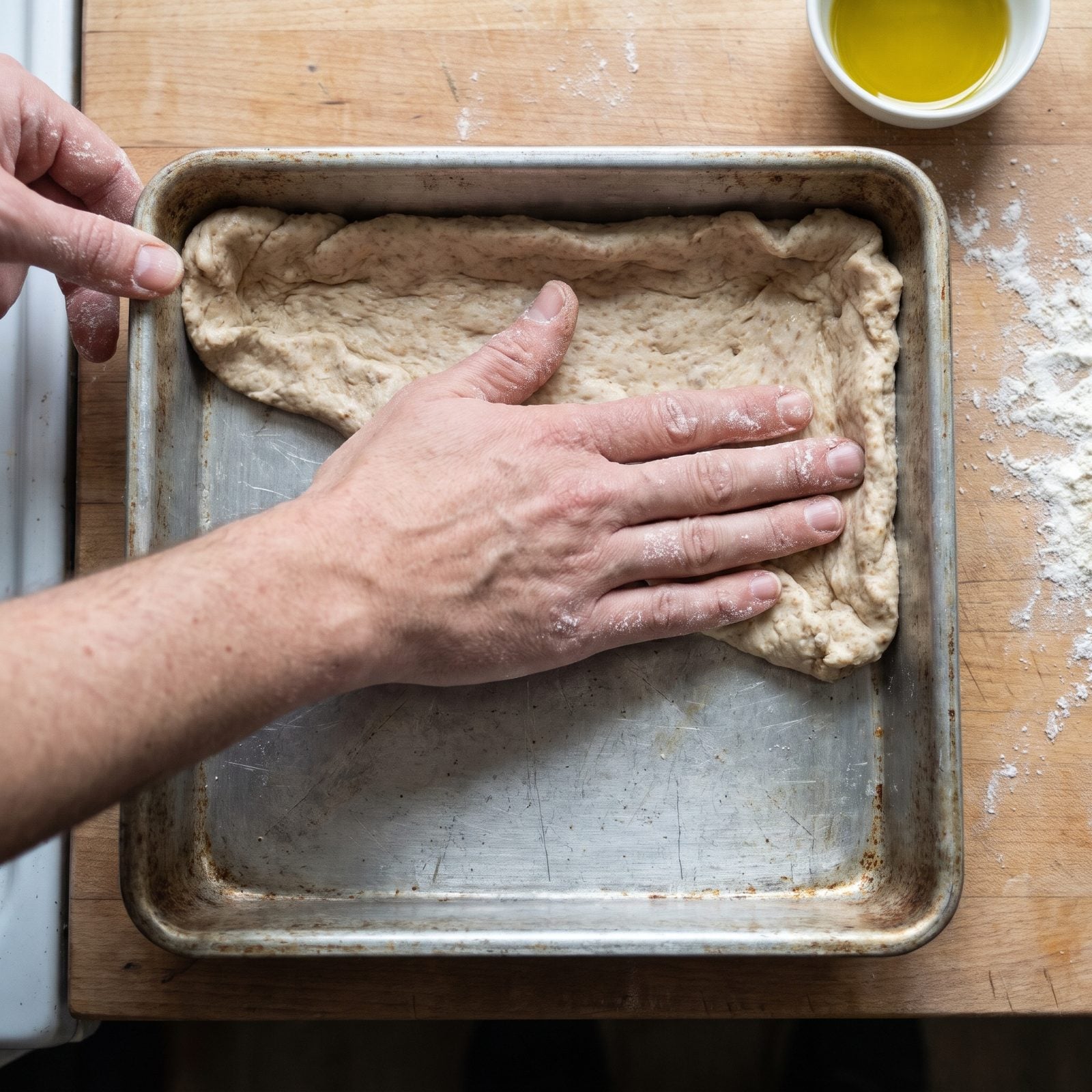
No tossing. The cookbook just said “spread on pan,” so we rolled or patted the dough into the pan and pressed it up the sides. We rolled first, then gave up and used our hands, which is apparently what everyone did.
The result was lumpy and honest — thicker at the rim, thinner in the middle, nothing like the perfect discs spun in the air at a slice shop. Nobody warns you that a hand-patted 1950s crust has personality. It has high spots and low spots where the sauce pools. I stopped fighting it about halfway through, and the dough relaxed too.
13. Making the Cookbook’s Original Sauce
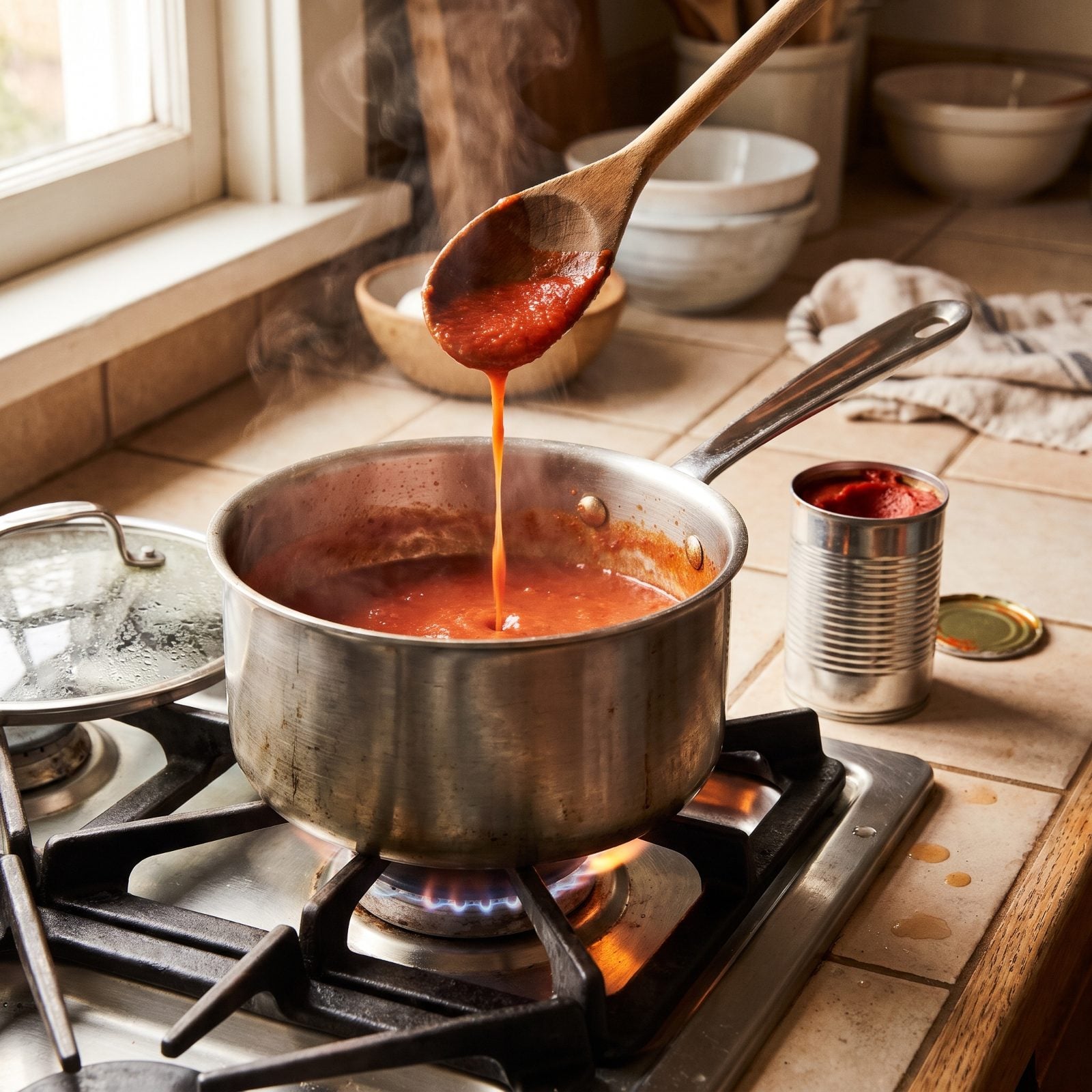
The sauce was the surprise. No fresh tomatoes, no garlic cloves, no hour-long simmer. The recipe leaned on canned tomato sauce, dried oregano, and salt. That’s the whole list.
It cooked about ten minutes and smelled exactly like the pizza of a certain decade: tart, tinny, oregano-forward. Not subtle. Not bad. If you grew up on a particular kind of American pizza, this sauce runs a direct line straight back to it.
It tasted like a memory I didn’t know I had.
12. Adding the Toppings in the Specified Order
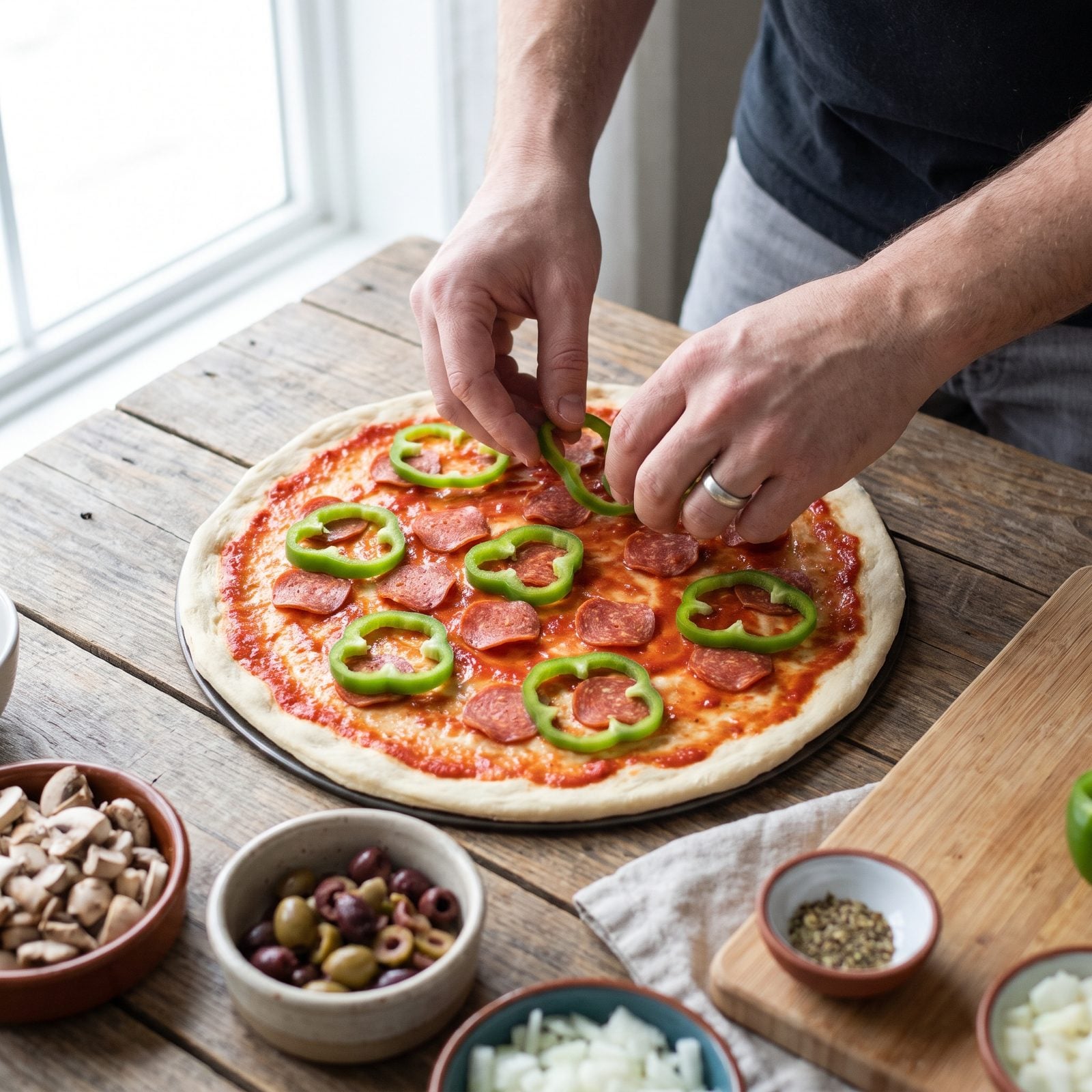
The cookbook was particular about sequence. Sauce first, stopping short of the edge to leave a wide border of bare dough. Then the meat, then the vegetables. Cheese last — which already tells you this recipe predates the cheese-on-the-bottom trick some pizzerias use.
We laid the pepperoni in loose rows, no fancy pattern, just even coverage across the sauce. Canned mushrooms, sliced green pepper, exactly as written. I wanted to add garlic and didn’t. We’d said we would change nothing, so nothing changed.
11. Using the Exact Amount and Style of Cheese
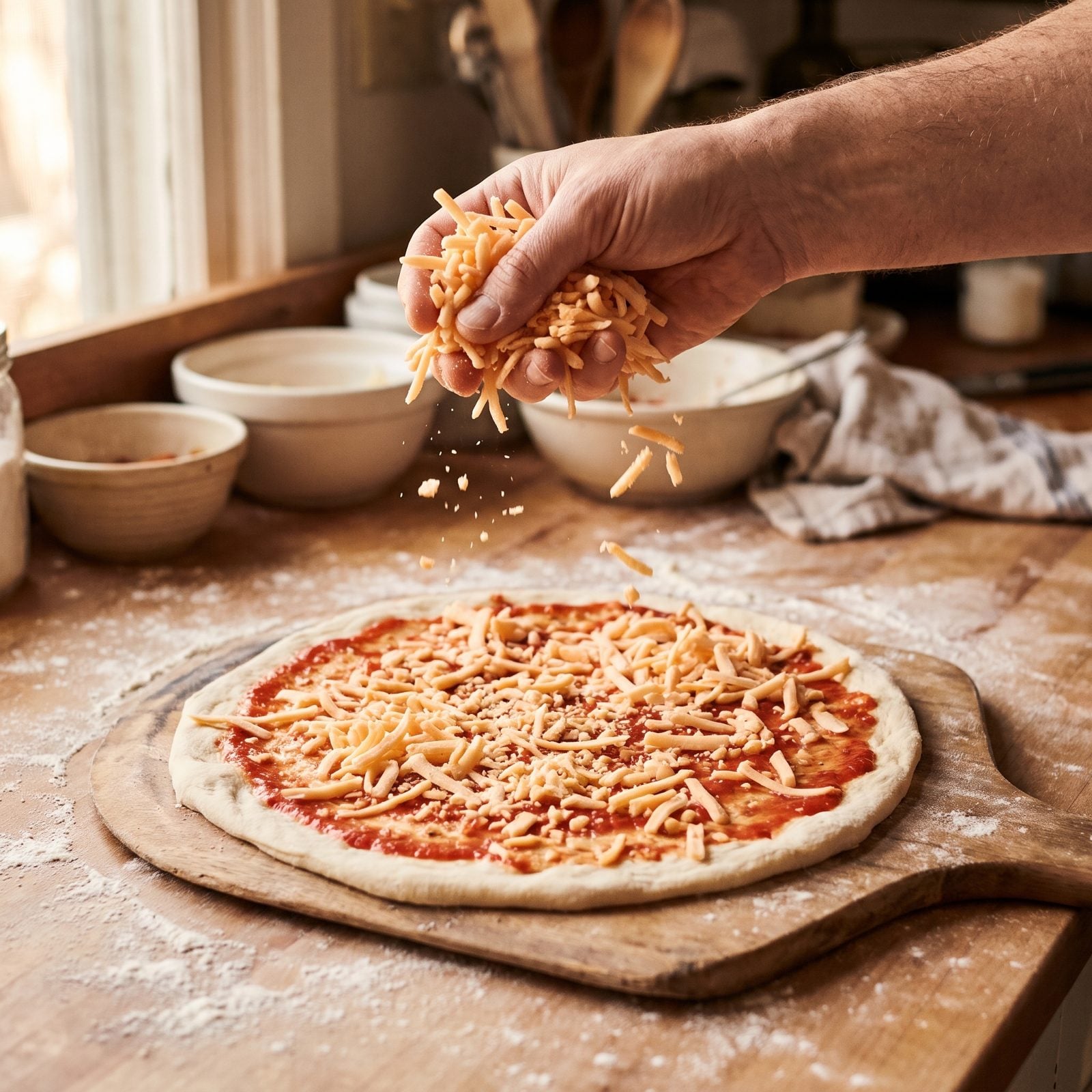
Here’s where the recipe got vague in that trusting midcentury way. The cheese measurement was “enough to cover,” which assumes you’ve done this before. We used the block of processed cheese — a staple of 1950s American kitchens — and grated it by hand, because pre-shredded bags weren’t a thing yet.
The amount felt light to a modern eye. We fought the instinct to pile it on. Turns out “enough to cover” really does mean enough to cover, not enough to bury.
10. The “Pizza Pie” Just Before It Entered the Oven
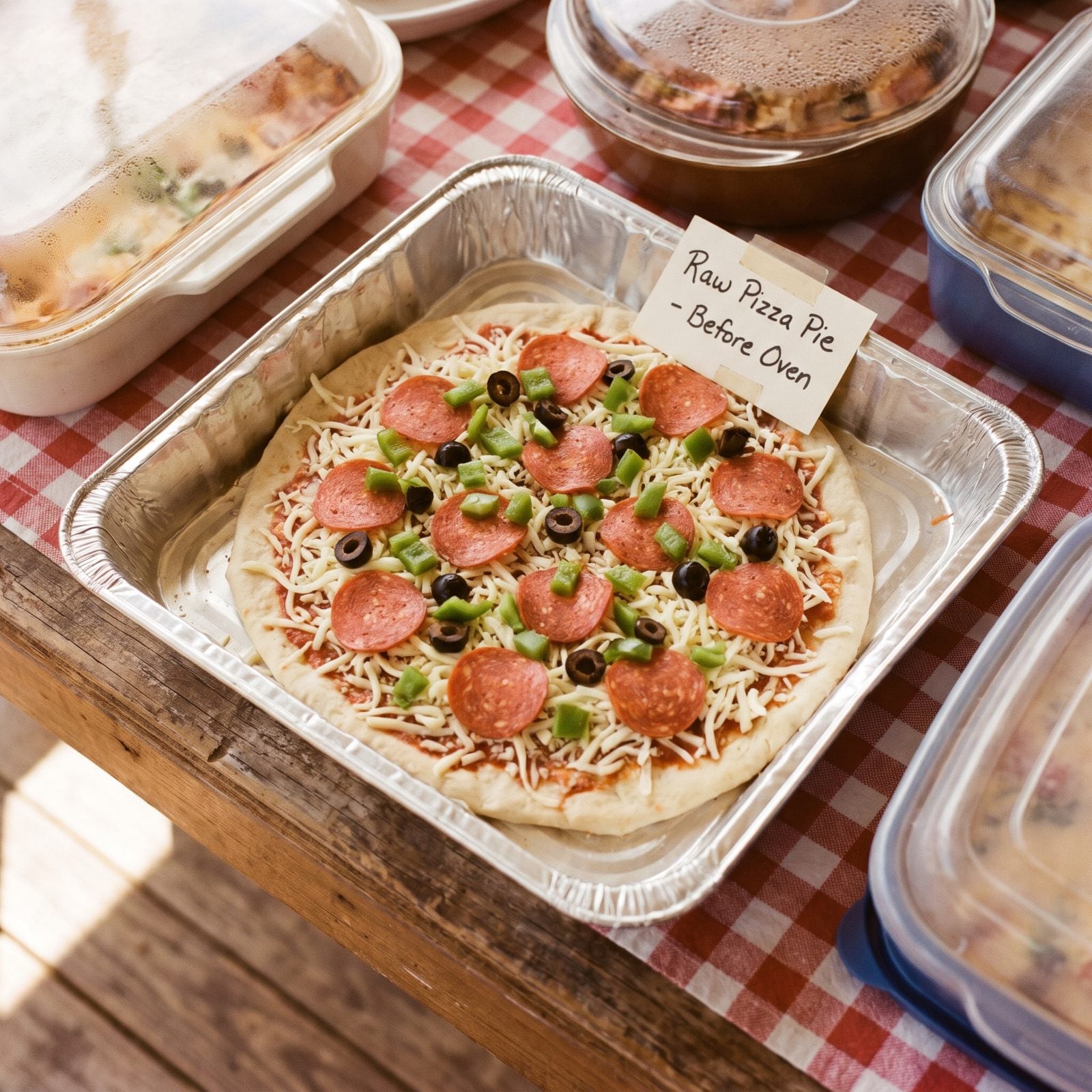
Raw, it sat on the counter waiting for the oven. Loaded. A little showy. Pepperoni, mushrooms and green peppers crowded a modest layer of shredded cheese, red sauce peeking through only at the edges.
I’ll admit I had doubts at this exact moment. It looked like a modern combo pizza rather than the old-style pie. But the smell off the raw sauce and pepperoni was already drifting across the checkered tablecloth, and the oven was still waiting.
9. Baking at the Cookbook’s Stated Temperature
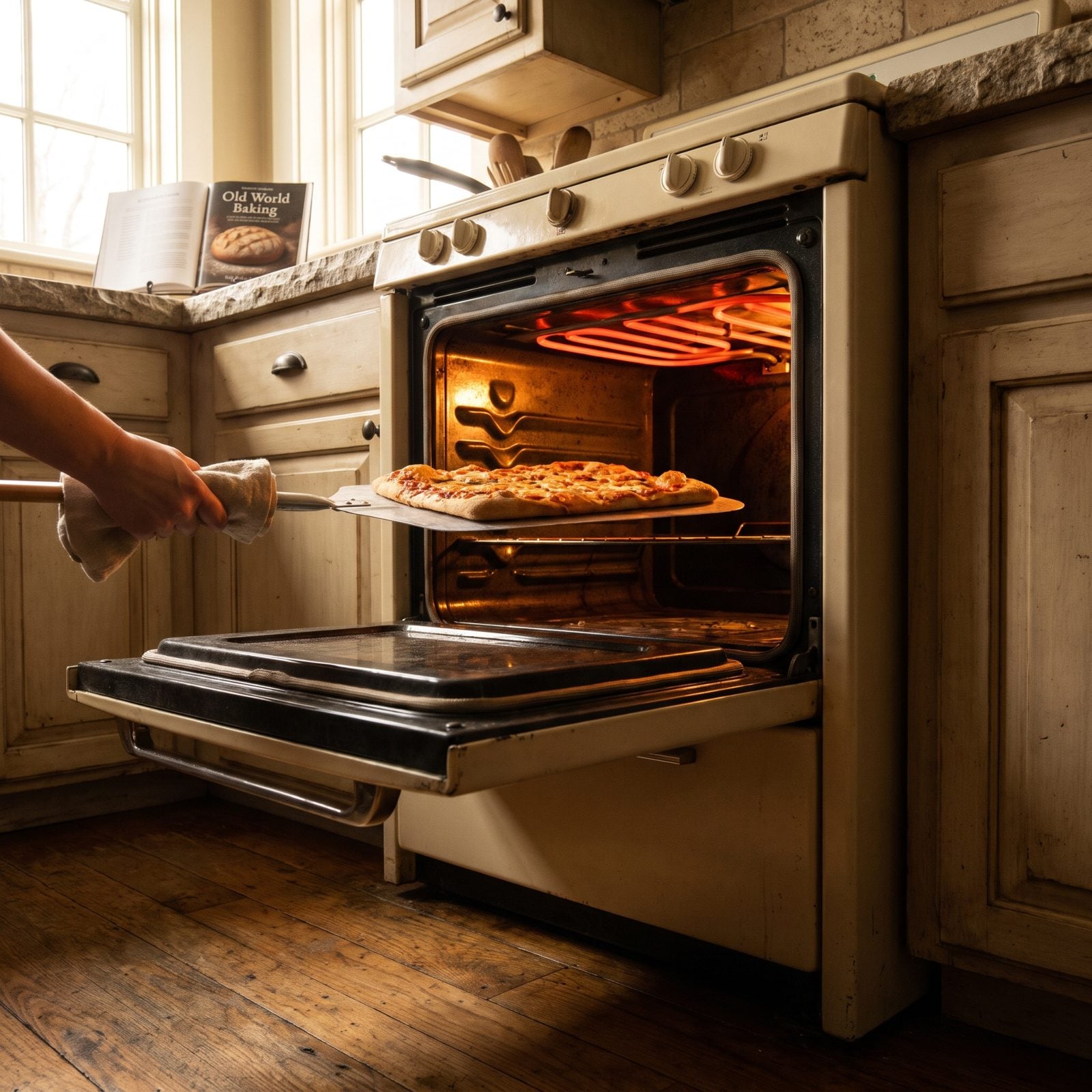
The recipe said only “a hot oven,” so we went with about 425 degrees for around twenty minutes. No convection, no preheated stone — just a home oven, its top element glowing red, running as hot as a 1950s range comfortably managed.
Modern pizza wisdom says you need 700 degrees and a stone to get it right. The cookbook disagreed, and I was curious who’d win.
8. The Finished “Pizza Pie” Straight From the Oven
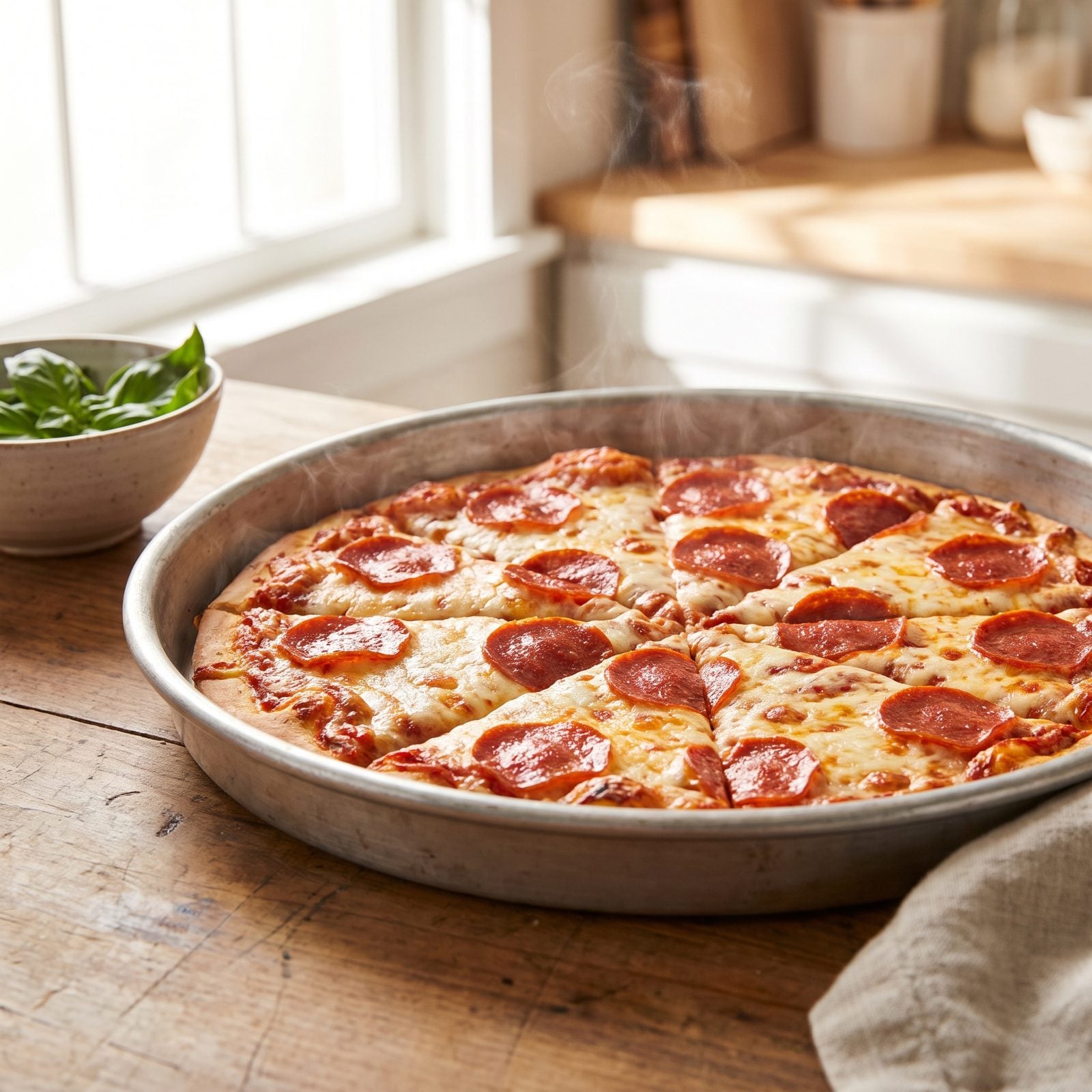
It came out better than it had any right to. The pepperoni lay in flat, glistening rounds across the top, the cheese had melted into a thick, glossy, gooey blanket with just a few light golden spots, and the whole thing smelled like a Friday night from a decade I never lived through.
That modest amount of cheese? Correct. You could still taste the sauce. You could still taste the crust. Nothing drowned. This is the honest part of the taste test, so here it is: I expected to be charmed and disappointed. I was just charmed.
7. How the Crust Edges and Underside Turned Out
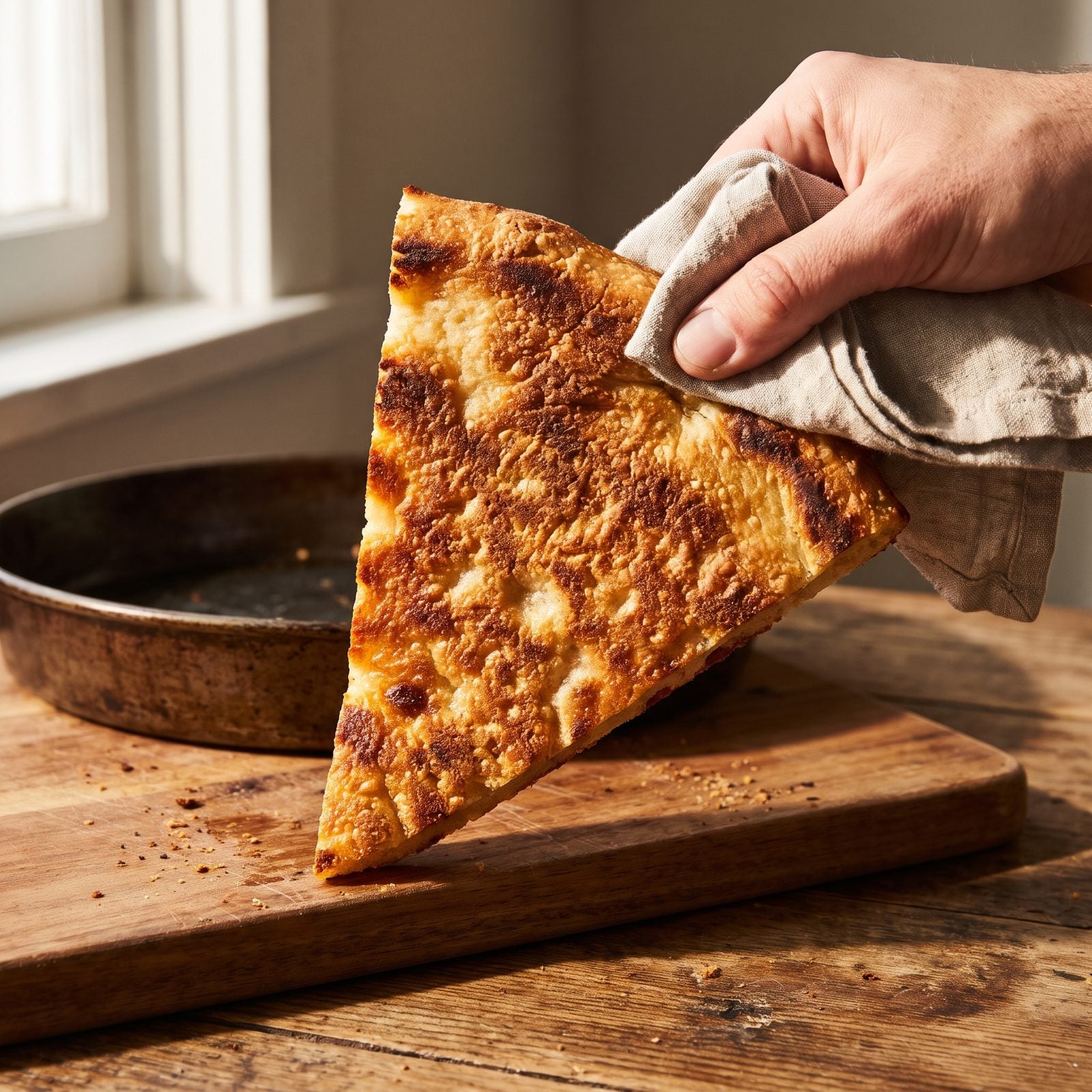
I flipped a slice to check the bottom, the way you do, and the underside was the real reveal. Golden and heavily mottled, crisp, with that faint fried quality the shortening gives it. A few darker brown patches here and there. No soggy middle.
The edges puffed into a tender, bready rim, closer to a dinner roll than the blistered leopard-spotted cornicione the snobs chase now. I’ll say the quiet part out loud: for this style of pizza, I preferred it. The crust was built to hold the sauce and get out of the way, and it did exactly that.
6. Cutting the Pizza the Old-Fashioned Way
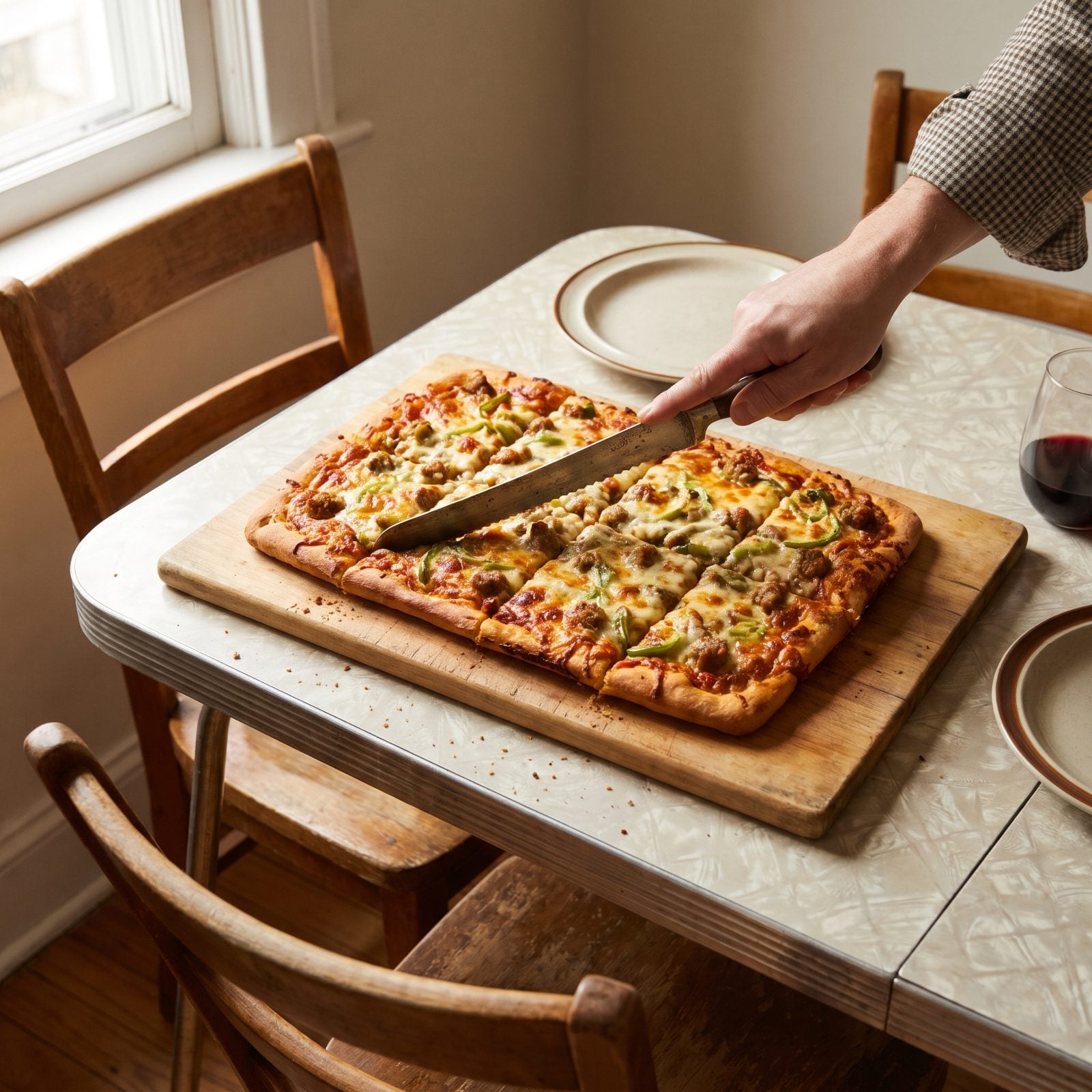
No rolling cutter. The cookbook assumed a knife, and plenty of community cooks cut pizza into squares rather than wedges, serving it off a rectangular wooden board onto plain cream plates with a brown banded rim.
So we cut it into squares, and it felt like the right ending. The middle pieces were soft and saucy, the edge pieces had that crisp bready rim, and everyone quietly reached for a different favorite.
5. The First Slice on a Period-Style Dinner Plate
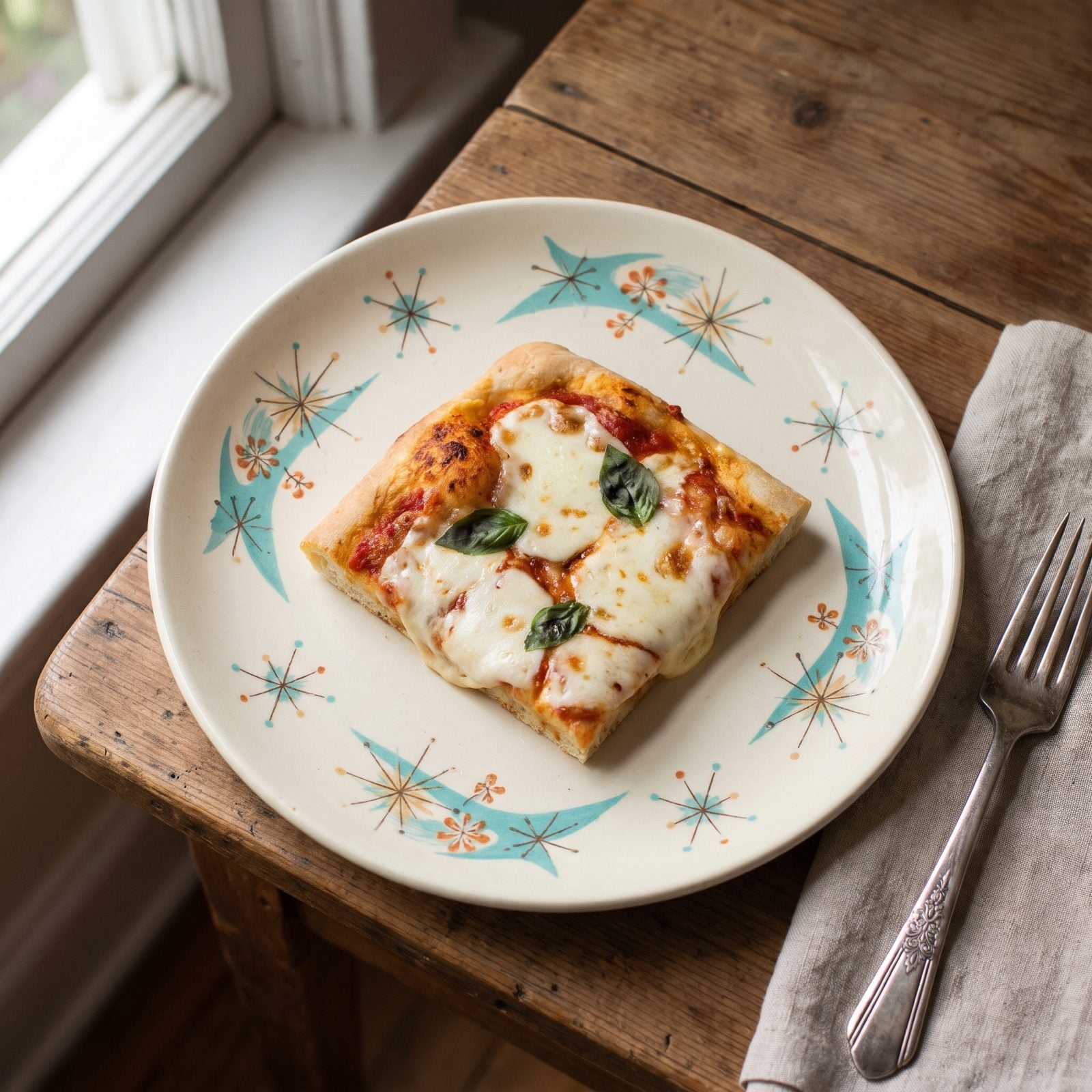
We slid it onto the plate and just looked at it for a second. A puffy, golden square slice with a soft, bready rim.
The recipe called it a “pizza pie,” and it looked the part. Sauce under a smooth layer of melted cheese, the pepperoni and peppers on top, and the smell of warm bread coming off it. That first smell beat half the delivery boxes we’ve opened since. I mean it.
4. The Crust, Sauce, and Cheese in Cross-Section
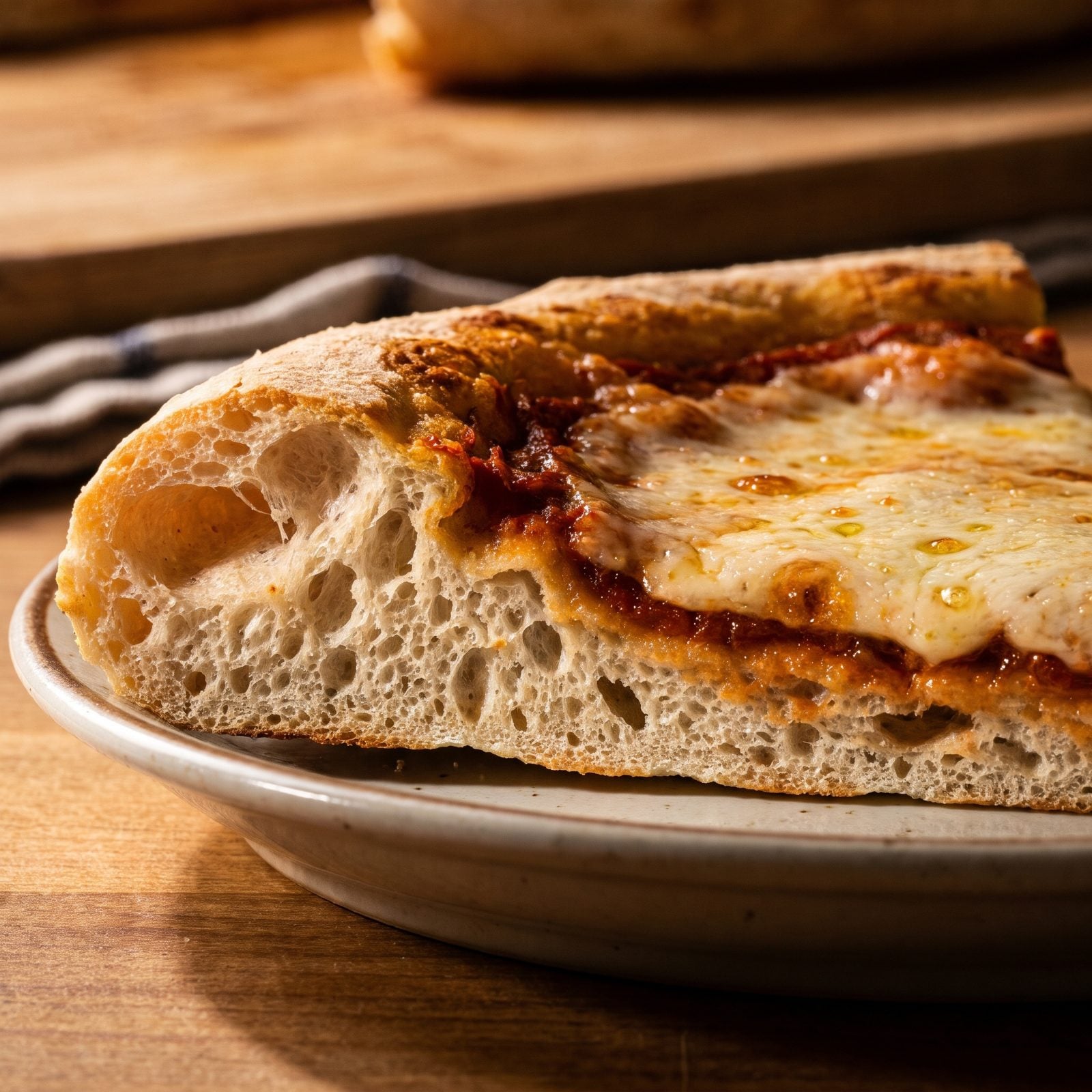
Here’s where the recipe showed its age, and I mean that as a compliment. The crust landed somewhere between a bread and a pizza — puffy and bready with a tight crumb, a yeasted thing left thick and baked to a soft, golden rim, built to hold its shape in the hand.
The sauce was almost shockingly thin. The cookbook said to “spread sauce over dough,” and it meant a wash, not a ladleful. Cheese came in under what any modern pizzeria would call acceptable. Three distinct layers, each one restrained, none of them fighting for attention.
You could see every component. Nothing hid behind a flood of cheese.
3. How the 1950s “Pizza Pie” Actually Tasted
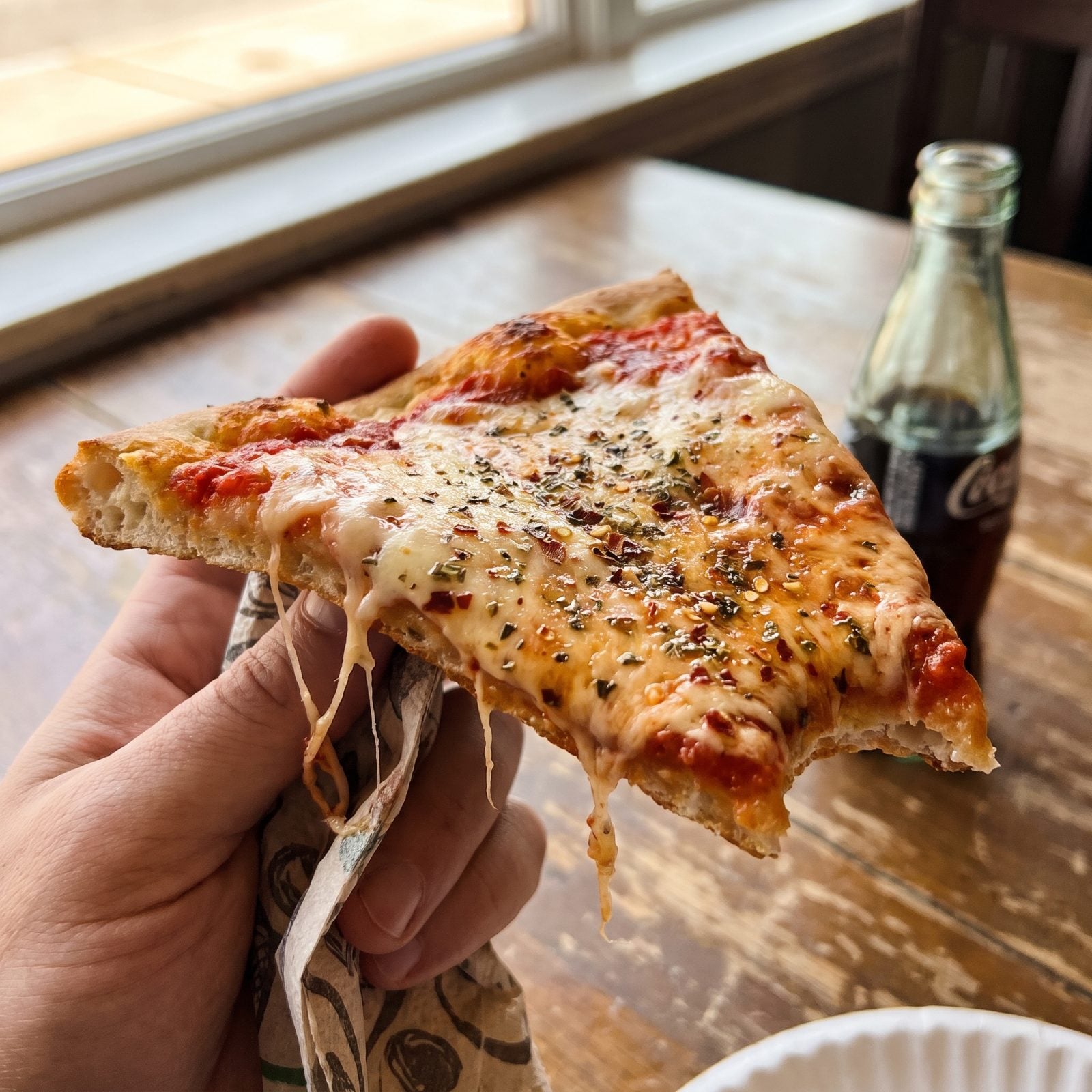
First bite surprised us. Milder than expected, with the oregano doing most of the heavy lifting. No garlic in the sauce. No sugar either, which meant the tomato came through tart and a little flat — the way canned tomatoes tasted before everyone started doctoring them.
The cheese read clean and almost sweet against that tart sauce, and the crust had a real bread flavor, yeasty, with a bottom that cracked slightly when you bit down. I missed the salt, though. These old recipes ran cautious on seasoning and you feel every bit of it.
Would I order it at a slice shop today? No. But it tasted like something a grandmother made on a Sunday with whatever was in the pantry, and that counts for a lot.
2. How the Leftover Pizza Held Up the Next Day
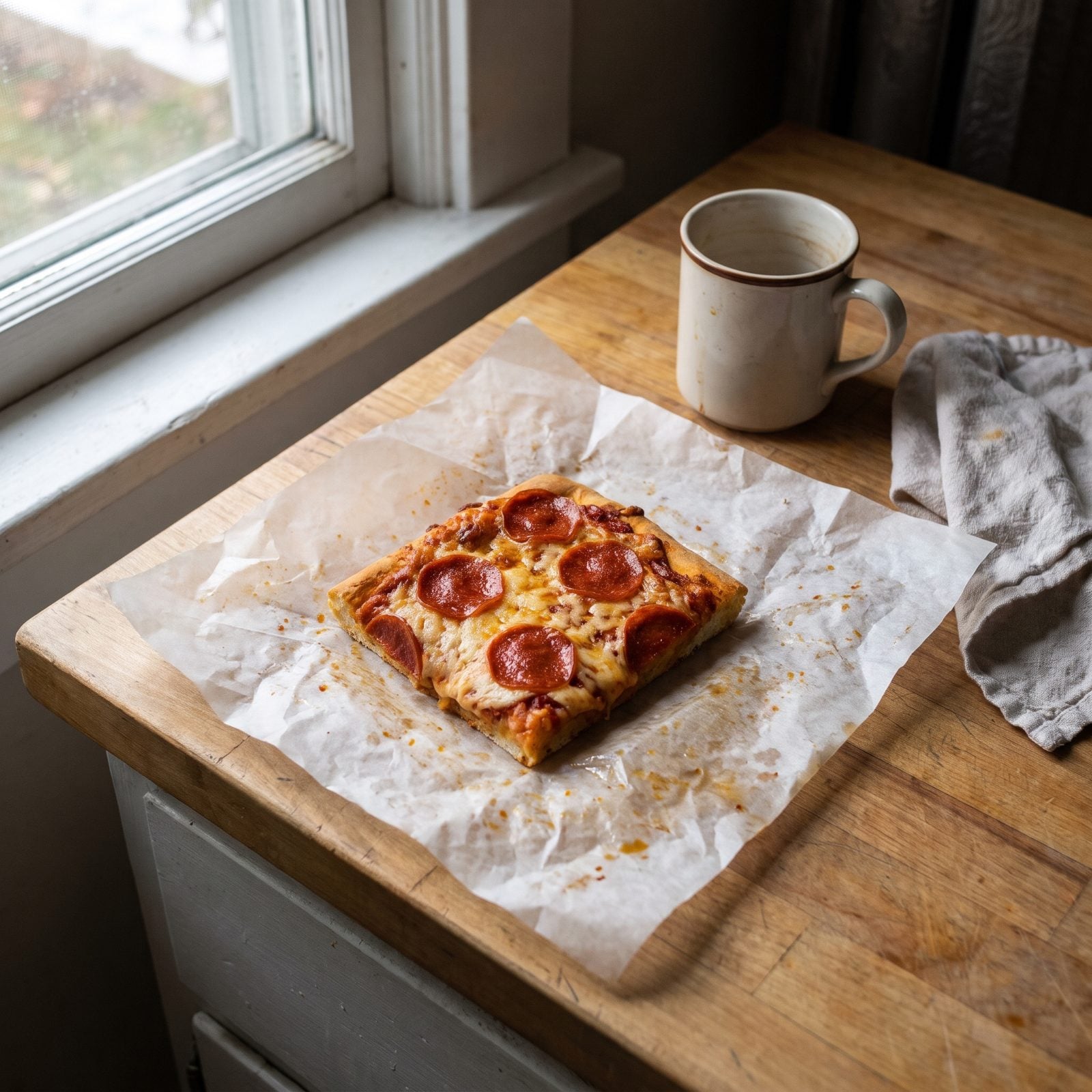
Cold pizza for breakfast is a sacred American ritual, so this was the real test. We wrapped the leftovers loose in wax paper — no plastic, keeping it period-honest — and left them on the counter overnight the way plenty of households did back then.
Next morning it held up better than modern pizza does. That thick, bready crust didn’t go rubbery or soggy; it firmed into something almost like a flatbread cracker. The cheese had set into a firm, glossy layer, and the sauce had mellowed, tasting rounder cold than it did hot.
It wasn’t tidy, though: orange grease and sauce spatter had spread across the wax paper well beyond the slice. Still, one of the rare slices that might actually be better the next day.
1. What Surprised Us Most About This 1950s Recipe
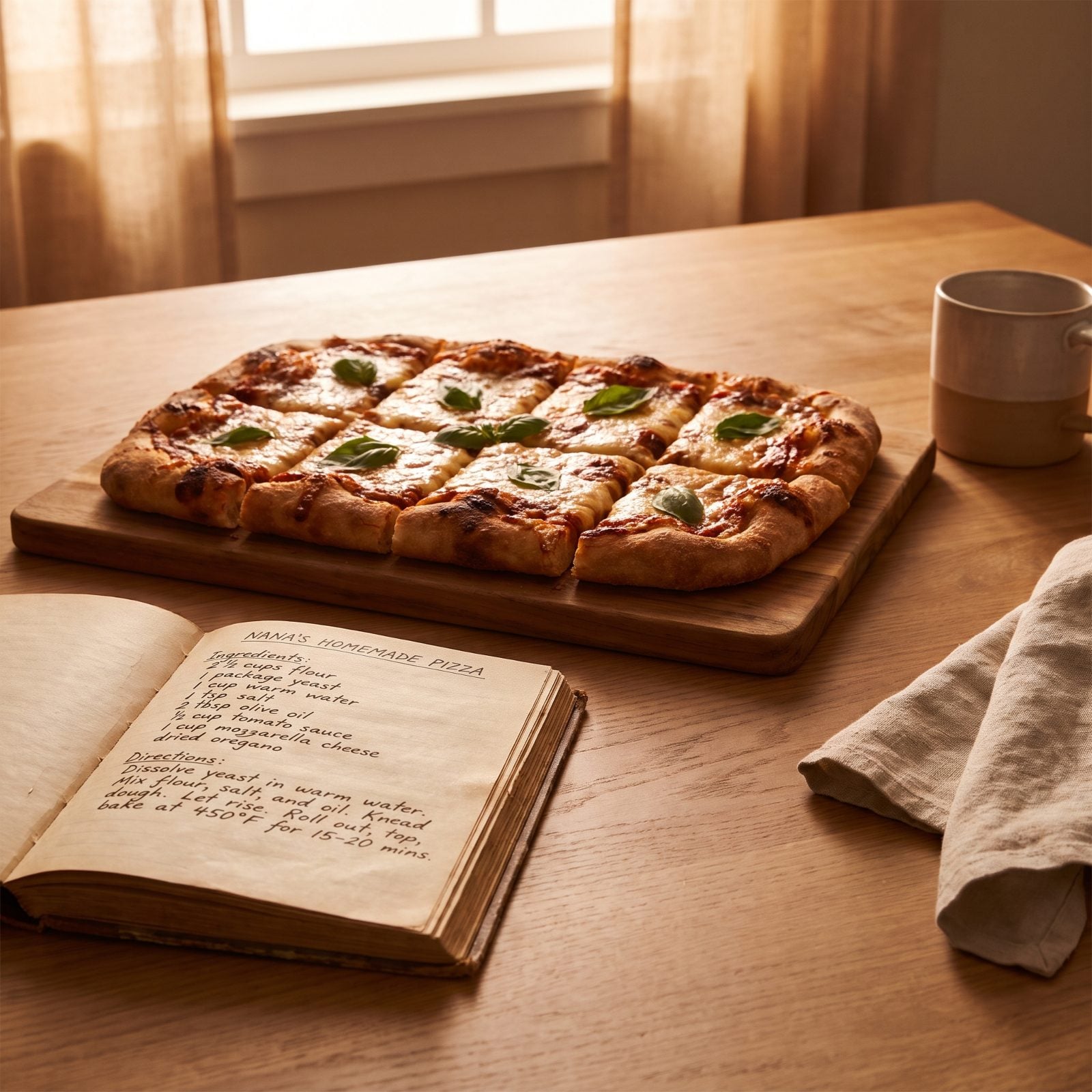
The biggest surprise wasn’t the taste. It was how little the recipe asked of us.
No pizza stone. No preheating a pan to blistering heat. No 00 flour, no overnight cold ferment, no fretting about hydration percentages. The dough used regular flour and a packet of yeast, got rolled out and left to puff up thick, and went into an ordinary home oven on an ordinary sheet pan — the whole thing came together in an afternoon with pantry staples.
That told us something about 1950s home cooks. They weren’t chasing restaurant pizza because most of them had never eaten restaurant pizza. They took an unfamiliar idea and made it with what they had, the same way they handled every new dish that drifted into American kitchens. No ceremony, no reverence, just supper.
We went in expecting to feel a little superior to the old way. We came out respecting it. The recipe knew exactly what it was and never pretended to be fancier. More than you can say for half the pizza we eat now.