
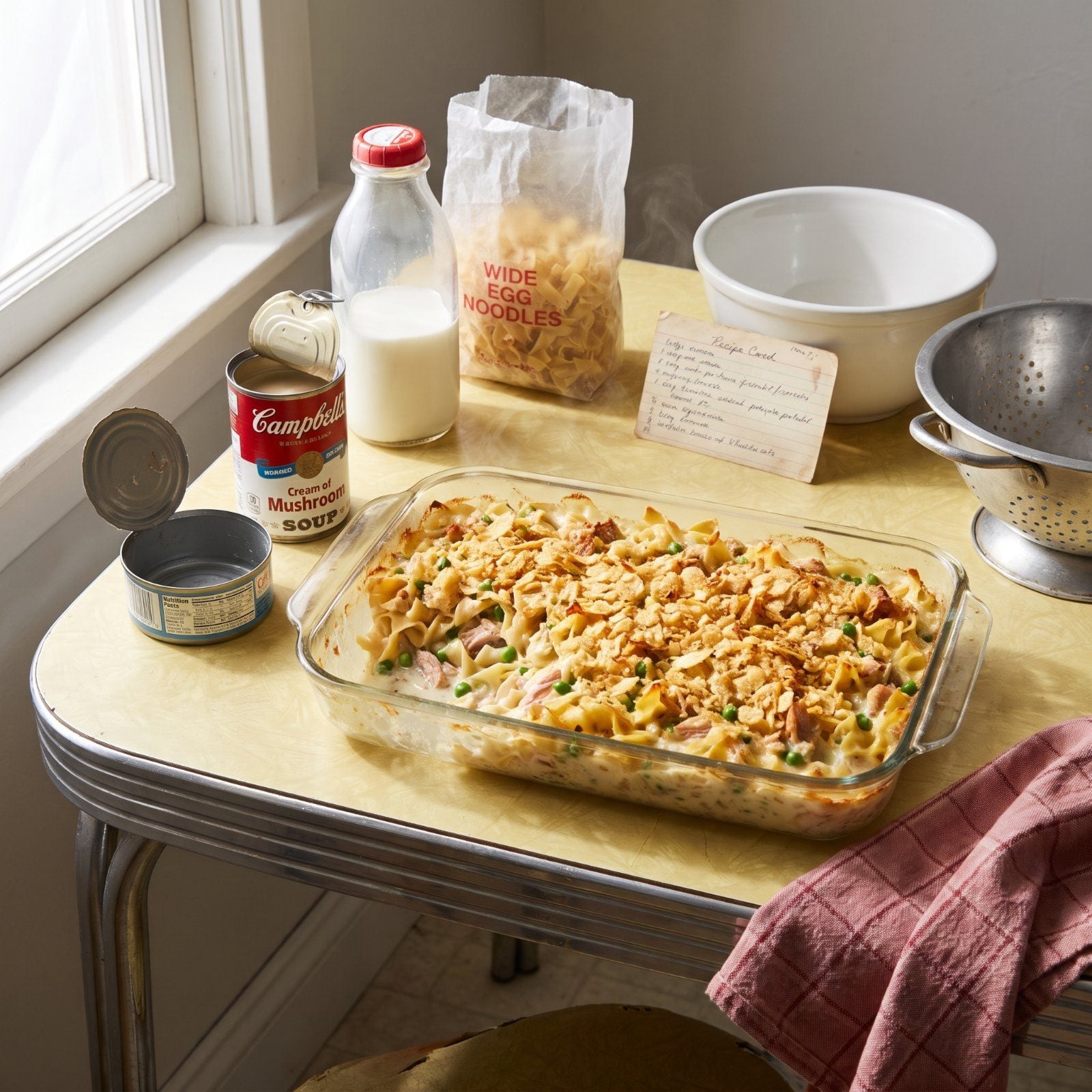
Three cans, a bag of wide noodles, and a crushed sleeve of potato chips. That was dinner, and nobody apologized for it. The smell of cream-of-mushroom soup hitting a warm Pyrex dish meant the oven was on and somebody was setting the table. We pulled a real recipe card, ingredients intact, no fresh thyme, no fancy cheese, no apologies, and cooked it the way it was printed. What follows is that casserole, start to finish.
Please note that some of the images in this article were created with the assistance of AI.
24. The Original Recipe Card With Its Period Instructions Intact
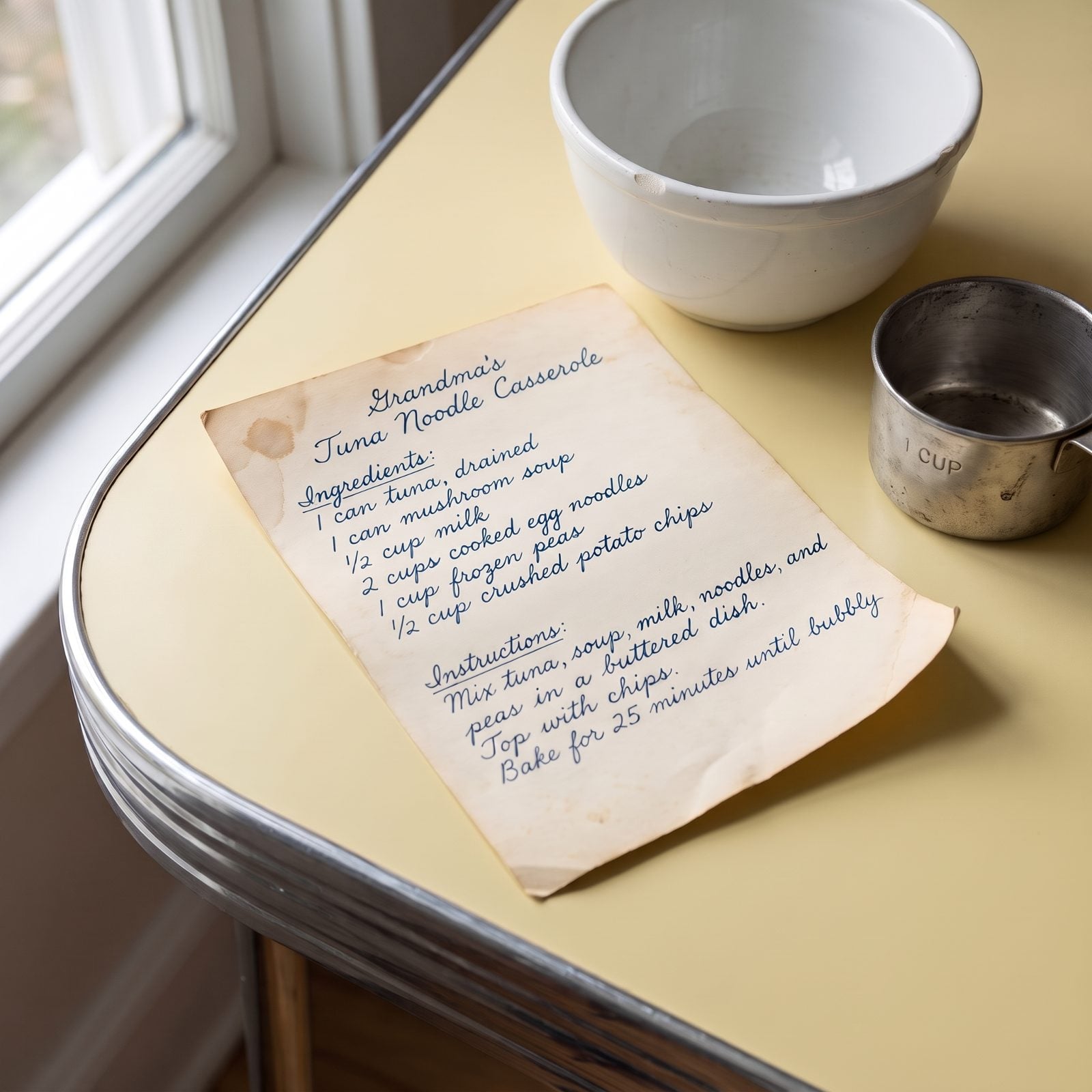
The card tells you everything about the era in a short ingredient list and a handful of lines of instructions. No baking dish size, because you already knew which one to grab. No note about draining the noodles, because of course you drained the noodles. It assumes a cook who had done this a hundred times.
We kept it exactly as written. One tidy column of six ingredients, a handful of looping lines of method, stained paper and all. The brevity is the charm, and these cards got passed hand to hand and copied at kitchen tables until the grease stains proved the thing actually worked.
23. The Complete 1950s Pantry Ingredient Lineup
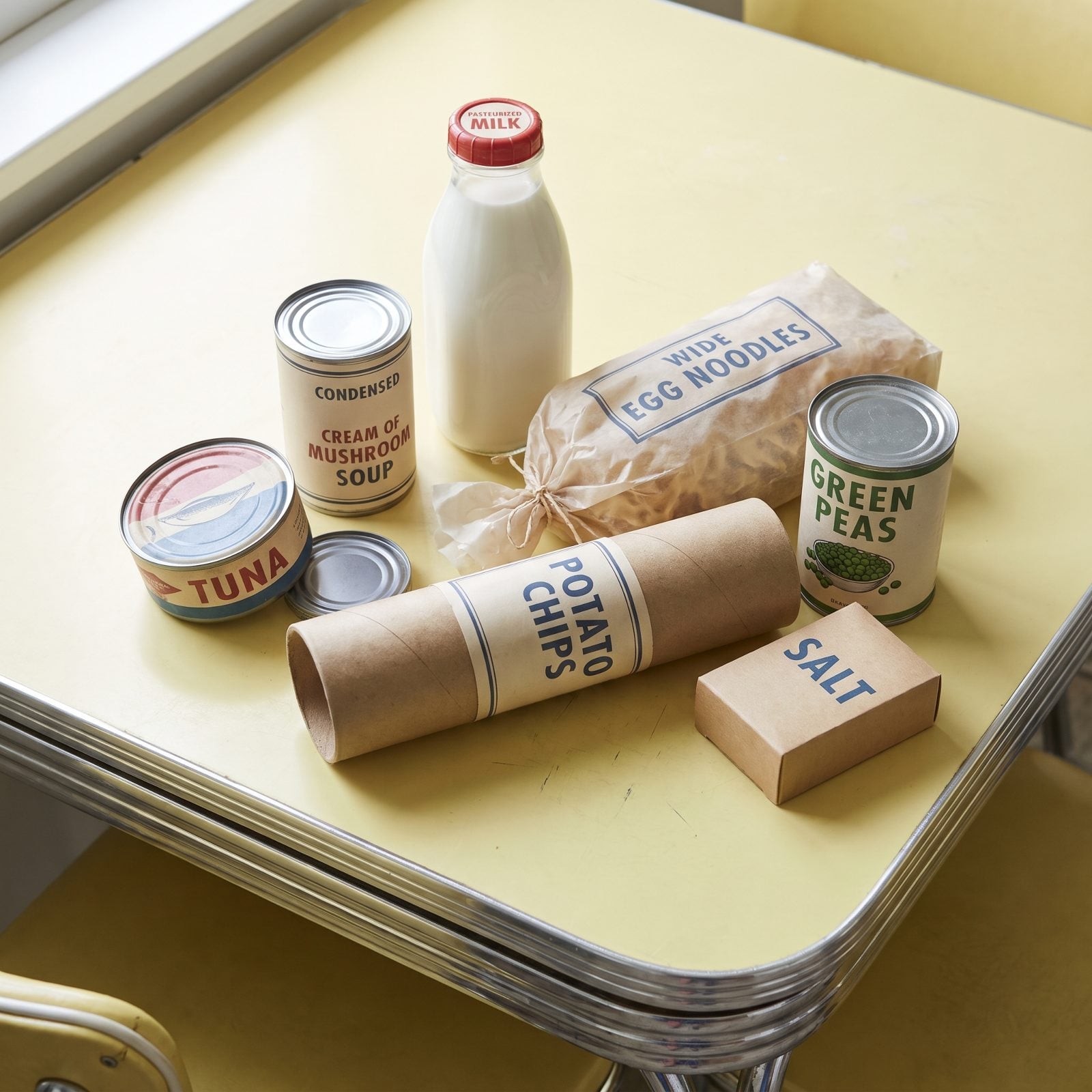
Here is the whole cast. Canned tuna, condensed cream-of-mushroom soup, wide egg noodles, milk, canned peas, and a bag of potato chips for the top. Salt from the box of table salt. That’s it.
Not a single thing on the list needed refrigeration except the milk, and half the time that lived in a bottle on the back step through winter. The whole meal was built around shelf stability and a Friday paycheck. I find that honesty refreshing. Nothing here is pretending to be something it isn’t.
What Our Readers Say
- When Piaci Pizza readers loved a food photo and tapped a reason, comfort came out on top at 30%, with nostalgia close behind at 17%.
From Piaci Pizza reader polls and votes.
22. Following the Printed Measurements Without Modern Substitutions
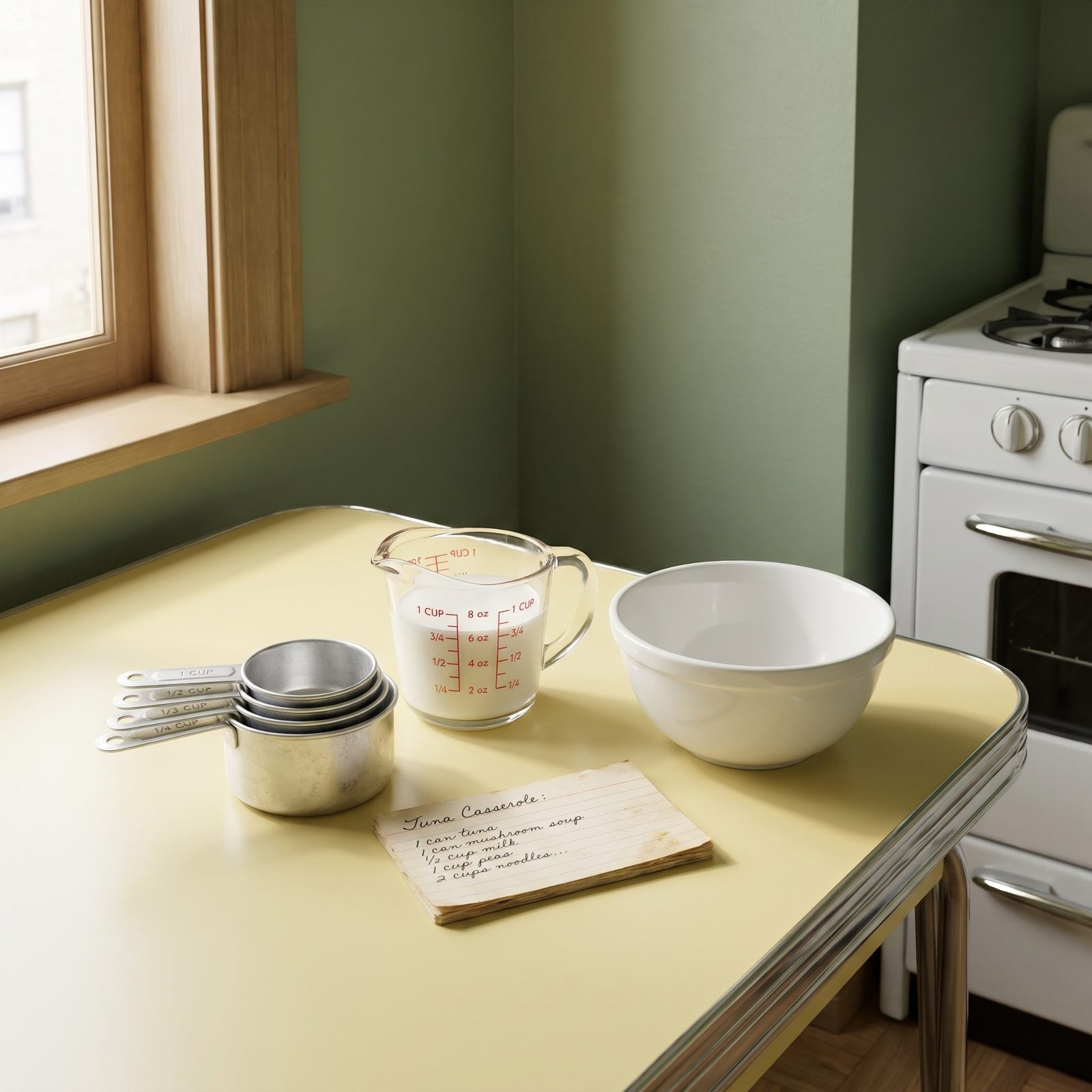
The temptation is real. Swap the canned soup for a from-scratch béchamel. Use fresh mushrooms. Grate a sharp cheese over the top. We did none of it.
The recipe calls for a can of soup, so it got a can of soup. Half a cup of milk means half a cup, measured in a glass cup, no eyeballing. We wanted to taste what the family actually tasted in 1954, not some improved version that misses the whole feeling.
21. The Wide Egg Noodles That Form the Casserole Base
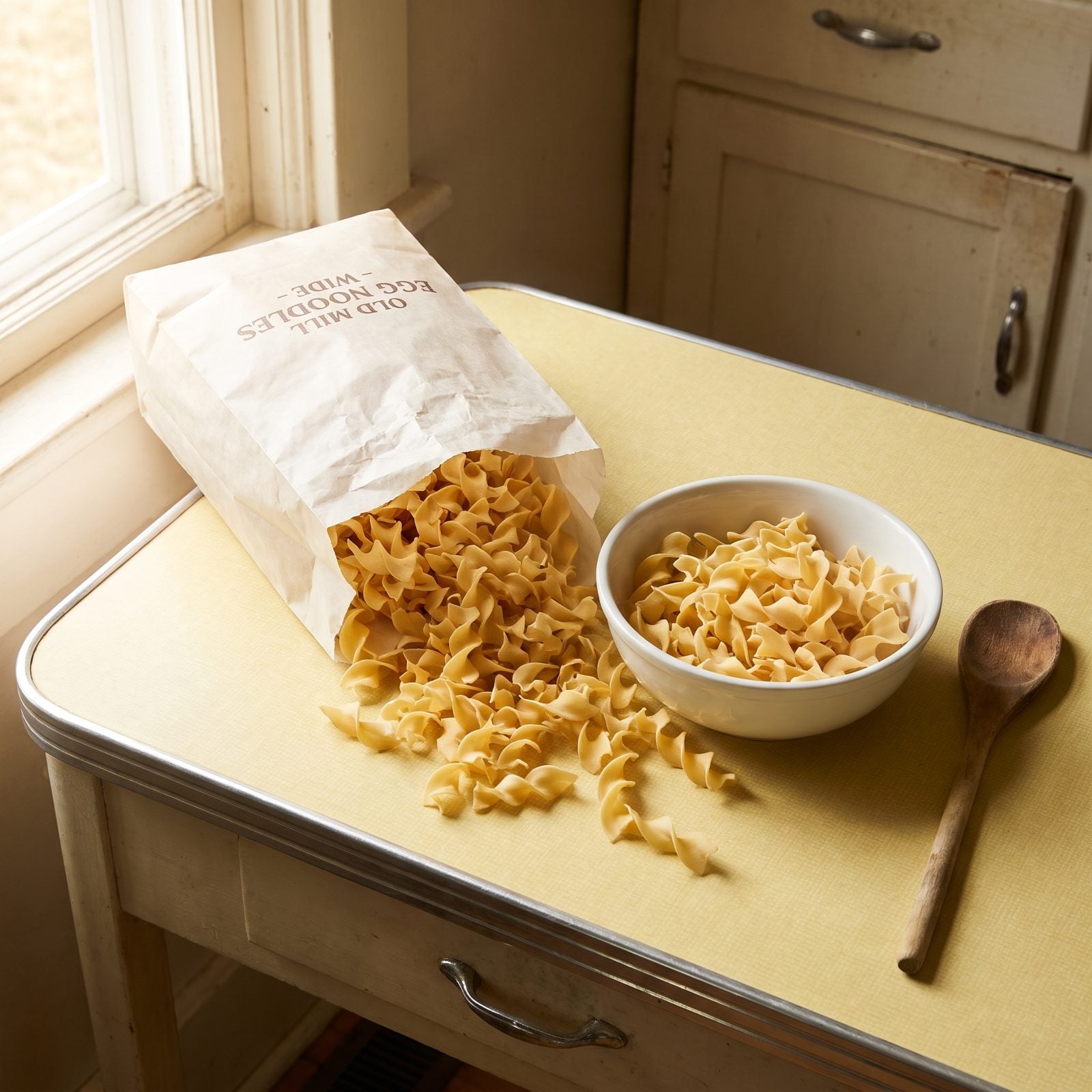
Wide egg noodles. Not spaghetti, not elbows. The ribbon shape matters because it catches the sauce in its curls and gives the casserole that forkful-of-comfort heft when it comes out of the oven.
They came in a wax-paper bag with a little cellophane window, and when you tore the top, half of them tried to escape across the counter. Every family had a drawer with a half-used bag folded over and clipped shut.
20. Boiling the Noodles to the Recipe’s Specified Texture
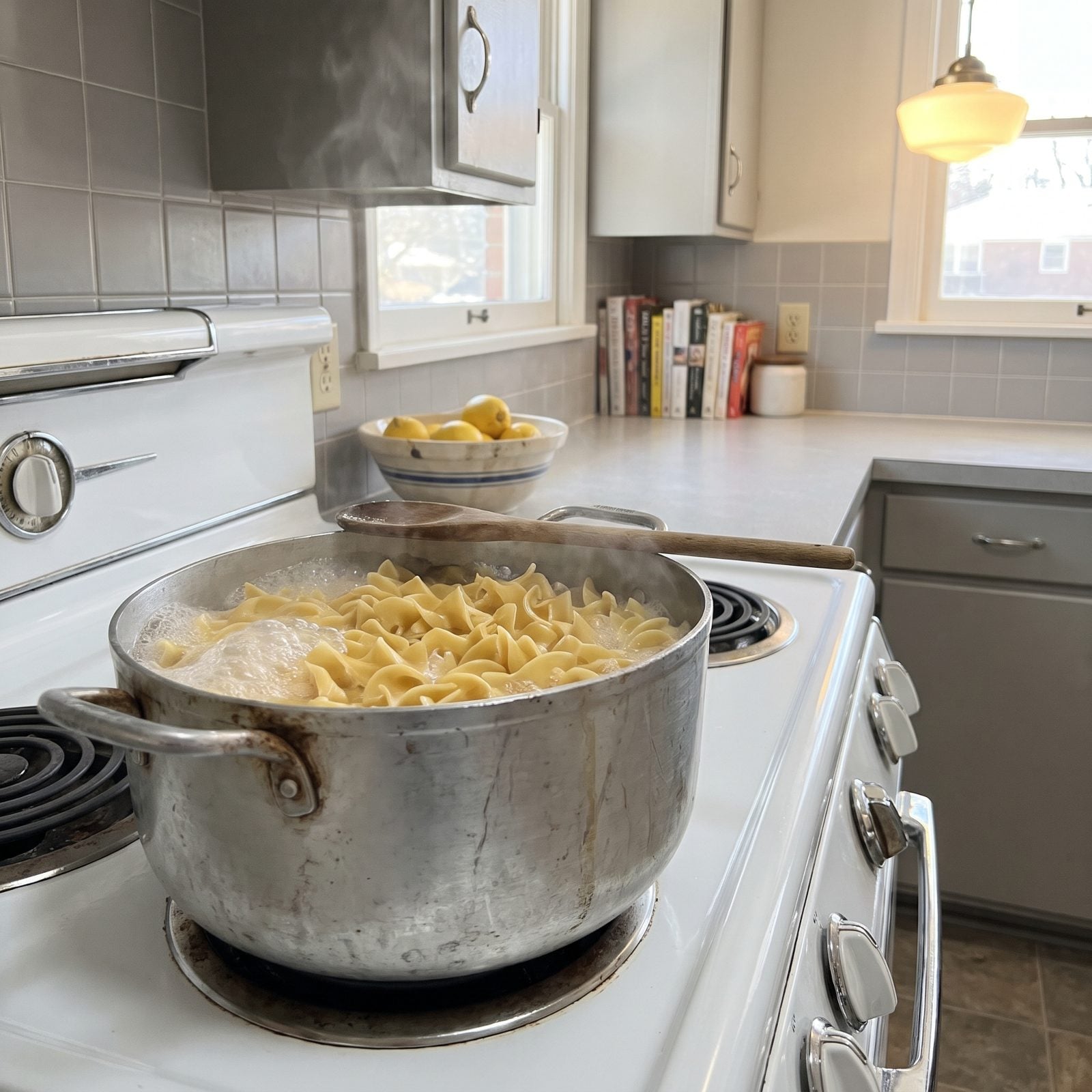
The card says boil until tender, and tender in 1950 meant soft, not the toothsome al dente we chase now. These noodles were heading into a hot oven afterward, so you cooked them just shy and let the bake finish the job.
Overcook them here and you get mush. We pulled them a minute early, drained fast, and trusted the oven. That timing is the one genuinely tricky step in an otherwise forgiving recipe.
19. Draining the Cooked Noodles in a Colander
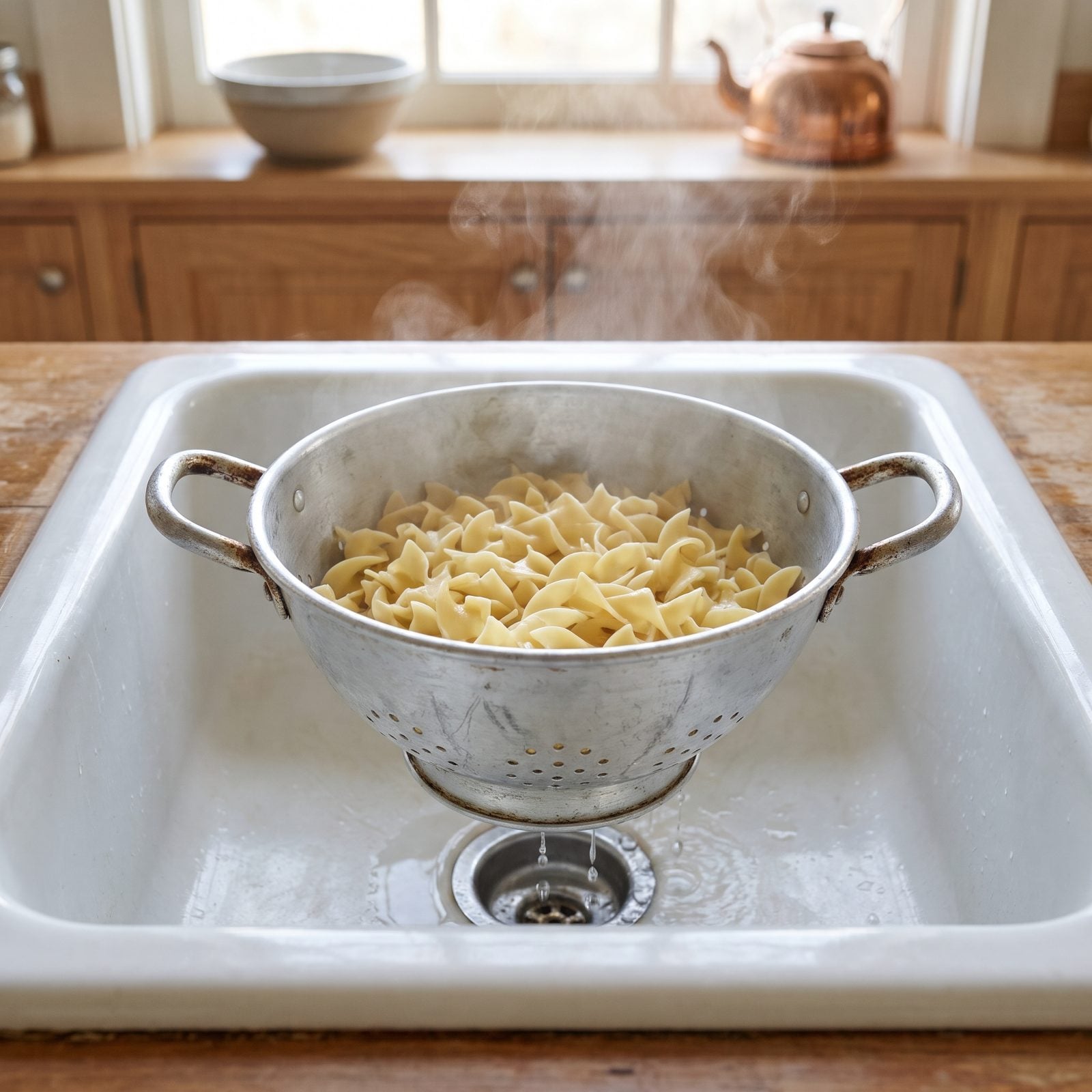
Into the metal colander, the one with the dent on the rim that every kitchen seemed to own. A quick shake, a cloud of steam, and the noodles went pale and glossy.
You didn’t rinse them. Rinsing washes off the starch, and the starch helps the sauce cling. The old cooks knew that without anyone writing it down.
18. Opening and Draining the Canned Tuna
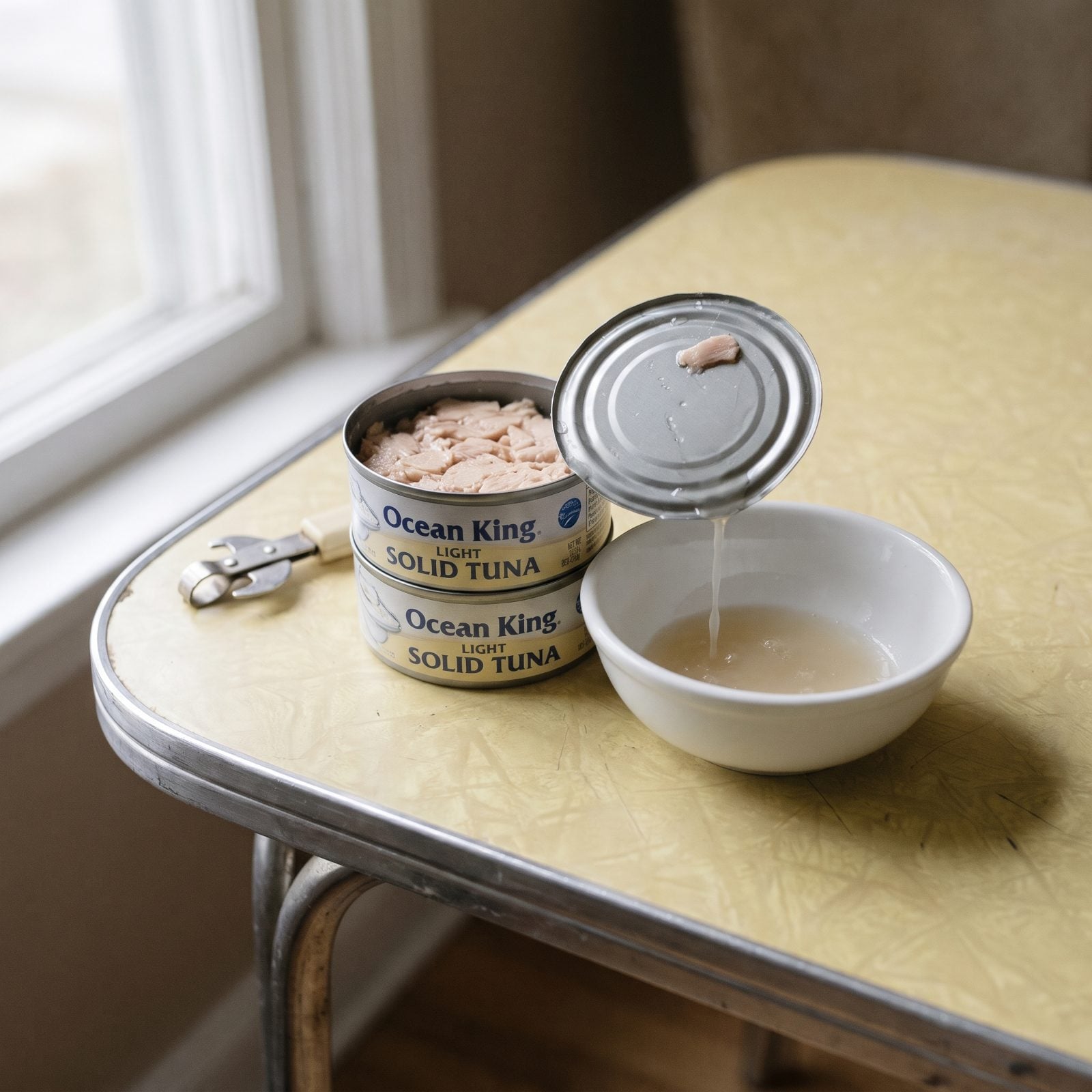
The can opener was the simple hook-and-lever kind you worked around the rim by hand, and it left a sharp edge you learned to respect young. You lifted the lid off, let the liquid run off it into a small bowl, and left the open can sitting upright with its flakes inside.
Draining matters more than the recipe lets on. Leave the liquid in and the casserole goes watery. We drained it well, the way the card assumed you would without saying so.
17. Flaking the Tuna Into Bite-Size Pieces
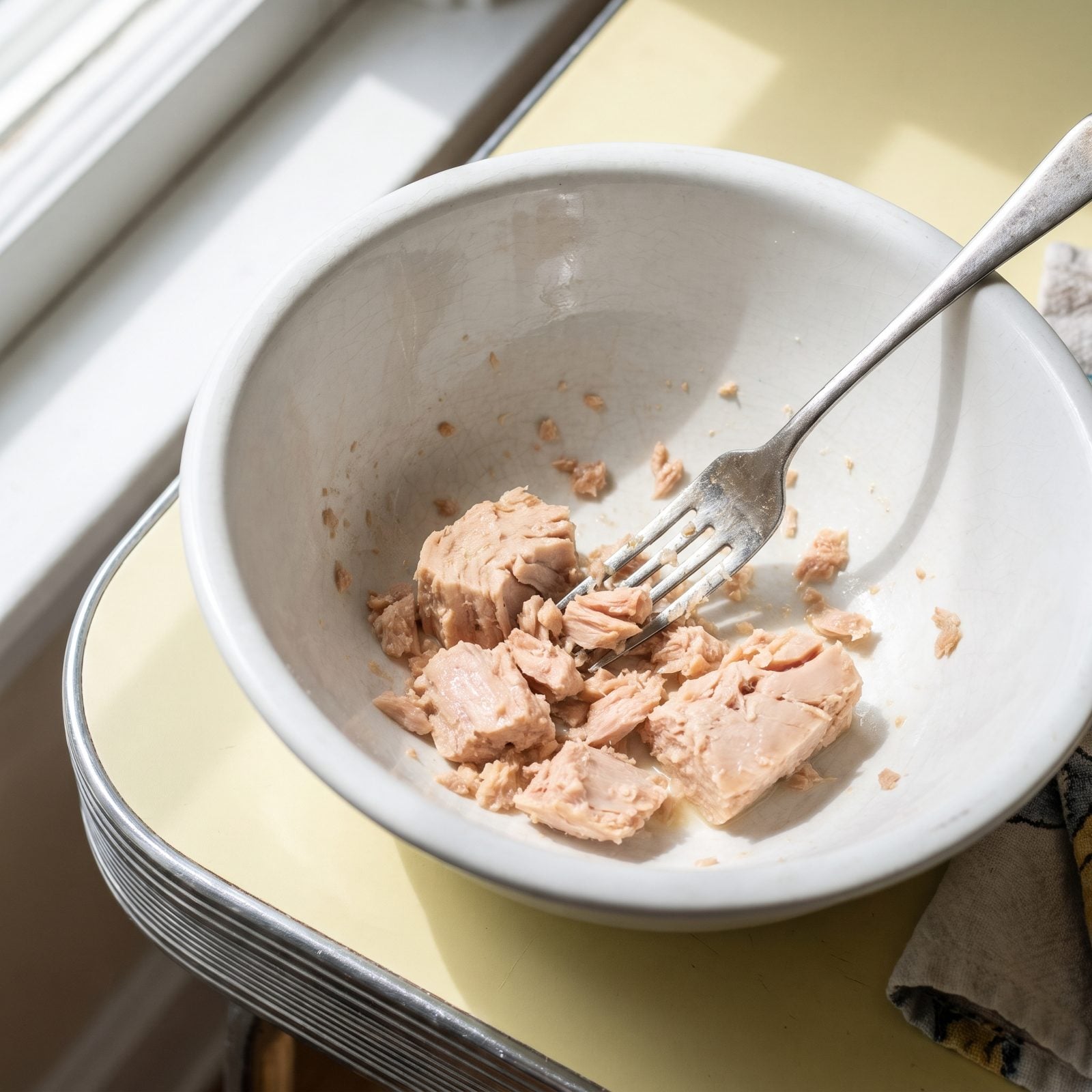
A fork, a few quick passes, and the solid tuna broke into bite-size flakes. Not minced to paste, not left in big slabs. You wanted pieces you could spot on the fork, tucked between the noodles.
This was the step kids used to volunteer for, standing on a chair at the counter, flaking tuna while someone else stirred the soup. Small job, big sense of helping.
16. Opening the Condensed Cream-of-Mushroom Soup
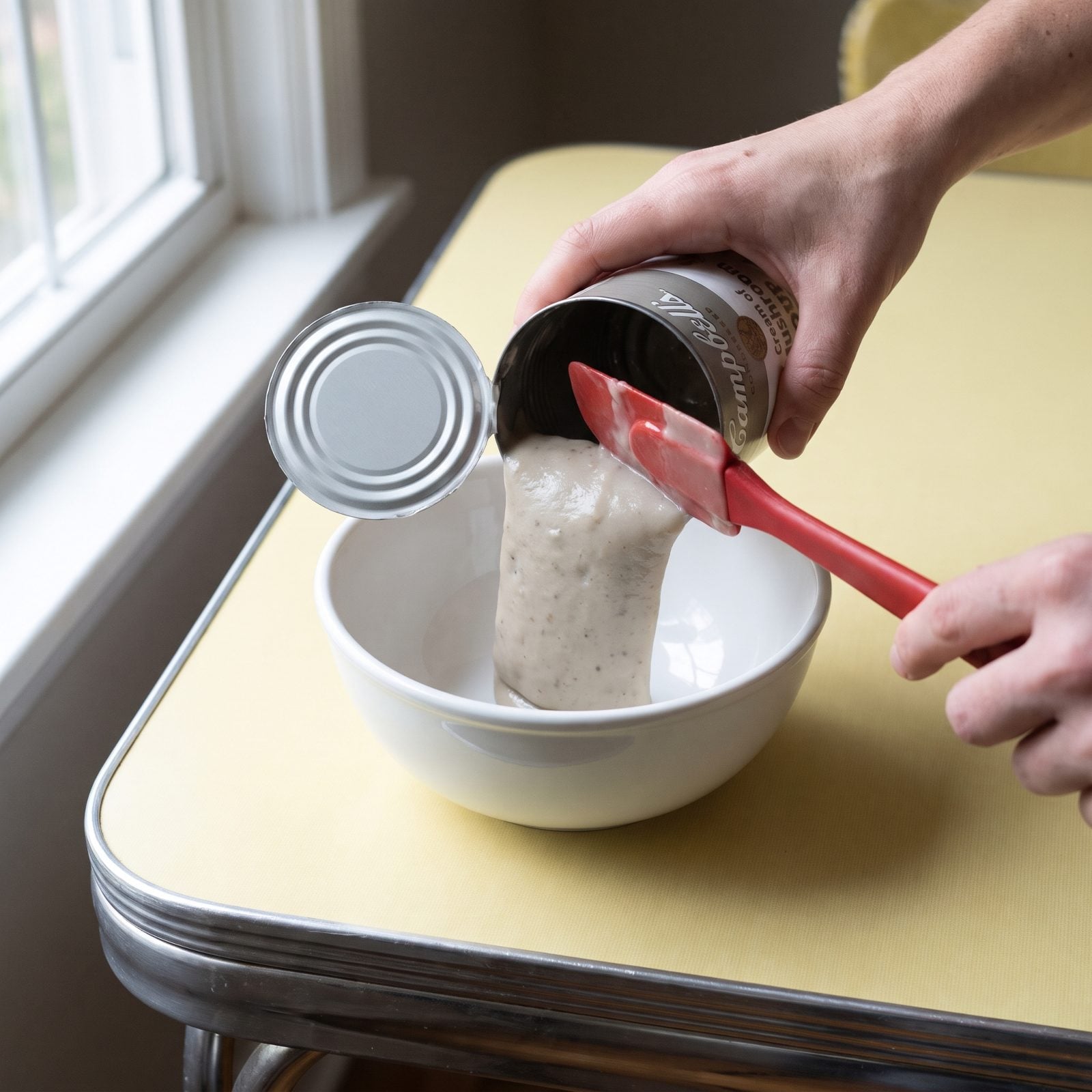
The sound alone takes you back. That slow glug of thick condensed soup sliding out in a pale, thick column still holding the shape of the can, then the spatula catching the last of it at the mouth of the can.
This was the engine of the whole dish. One can turned a pile of noodles and tuna into something creamy and binding. No single ingredient on the shelf did more to shape 1950s home cooking than that gray-beige can of mushroom soup.
15. Adding the Bright Green Canned Peas
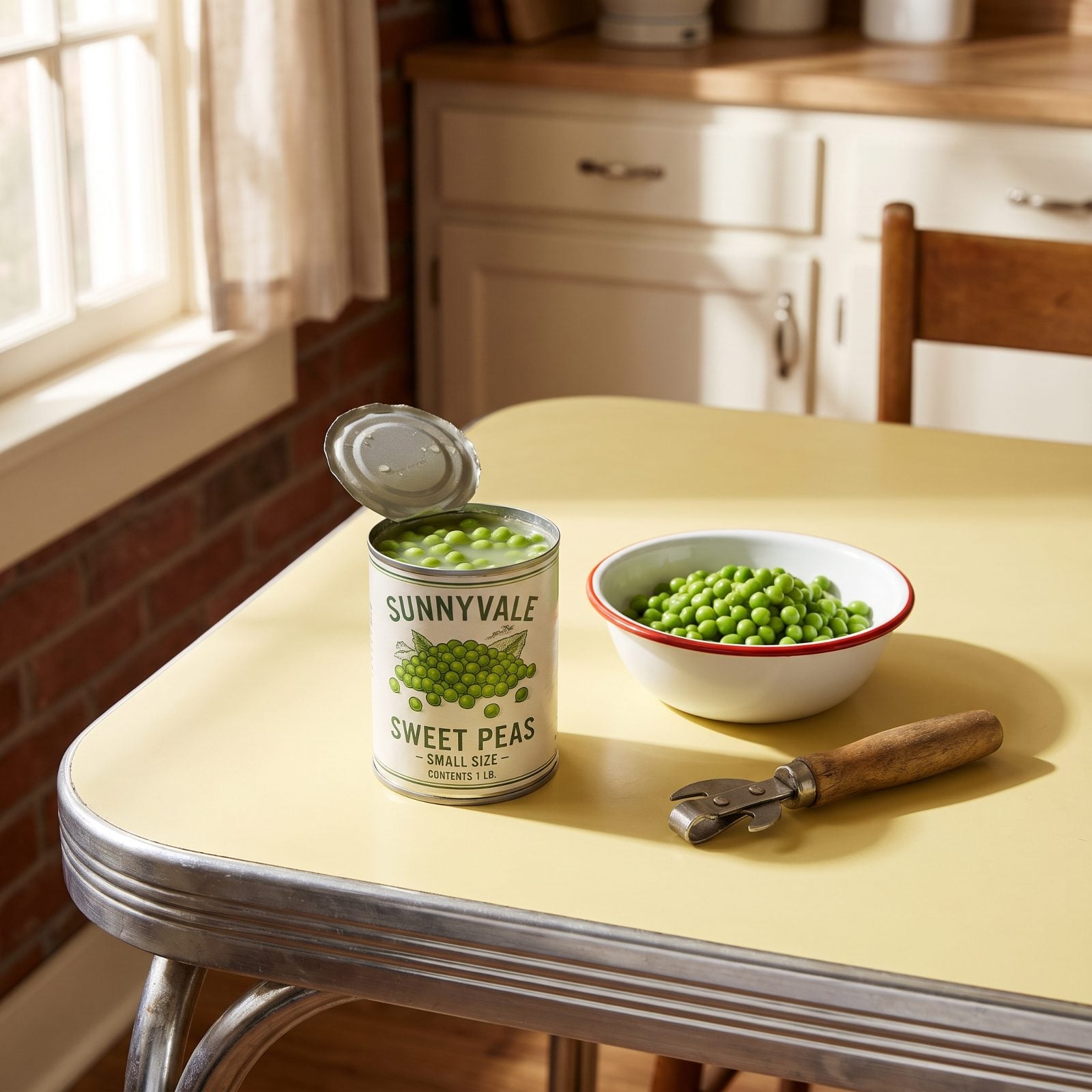
Open the can, drain it, tip the peas in. That’s the whole job, and there’s a reason this casserole leaned on them.
Canned peas were the practical choice in 1950, when plenty of kitchens still had no freezer for frozen vegetables. They came off the shelf ready, held their color, and cost next to nothing. You’ll notice they’re softer than fresh, almost giving — and that softness is correct for this dish. Firm little peas would feel wrong rolling around in all that cream.
14. Combining the Filling in a Large Mixing Bowl
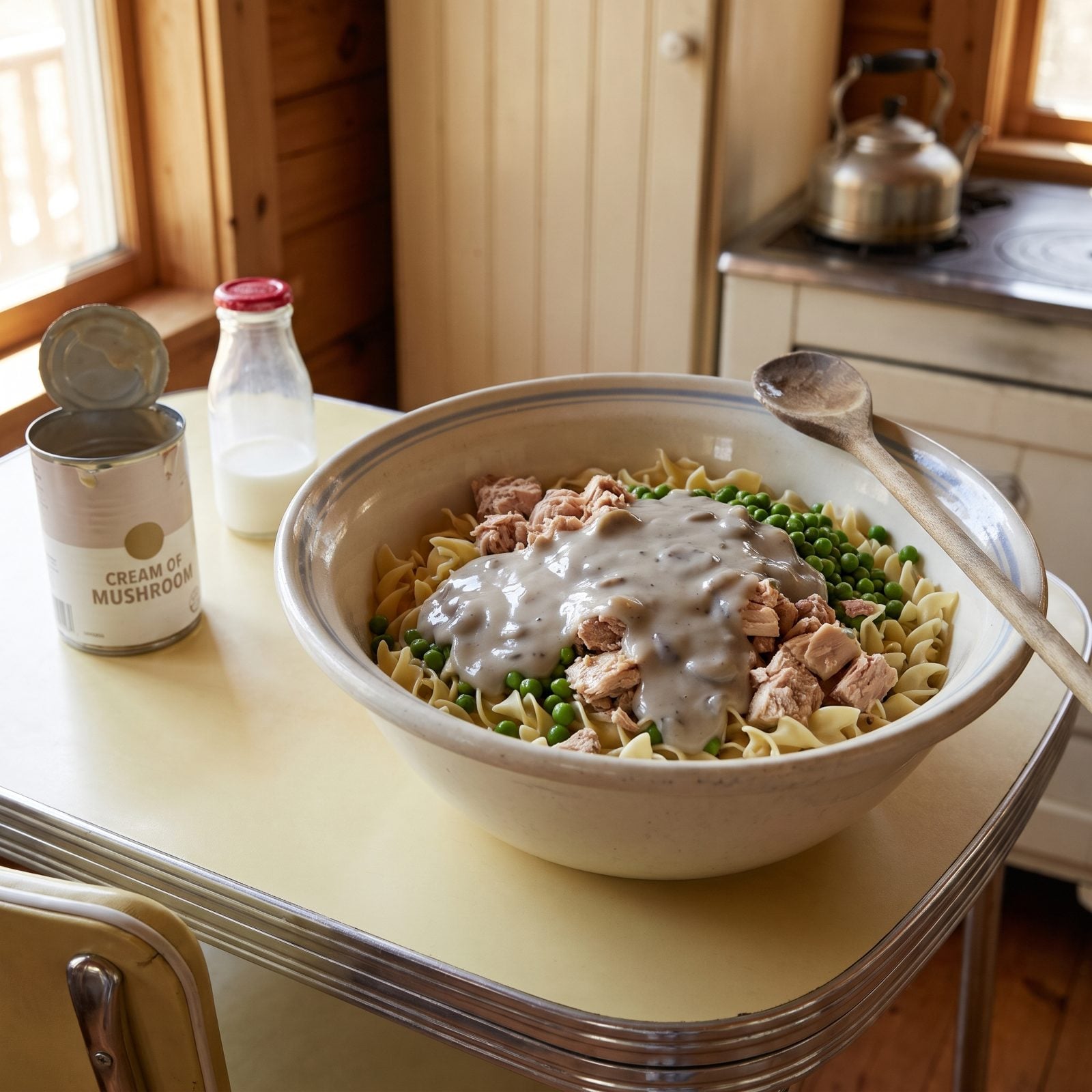
Everything meets here, in one bowl, which is the whole appeal. Noodles, flaked tuna, drained peas, condensed cream of mushroom soup, and a splash of milk to loosen it. No pot on the stove for the sauce. No roux. The soup is the sauce.
That shortcut is why the recipe spread across a million kitchens. A can of condensed soup handled the thickening, the seasoning, and the richness all at once. Thin it with a little milk, add a pinch of salt, and you’re already most of the way to dinner.
The soup is the sauce. That single idea built the casserole.
13. Folding Everything Together Without Breaking the Noodles
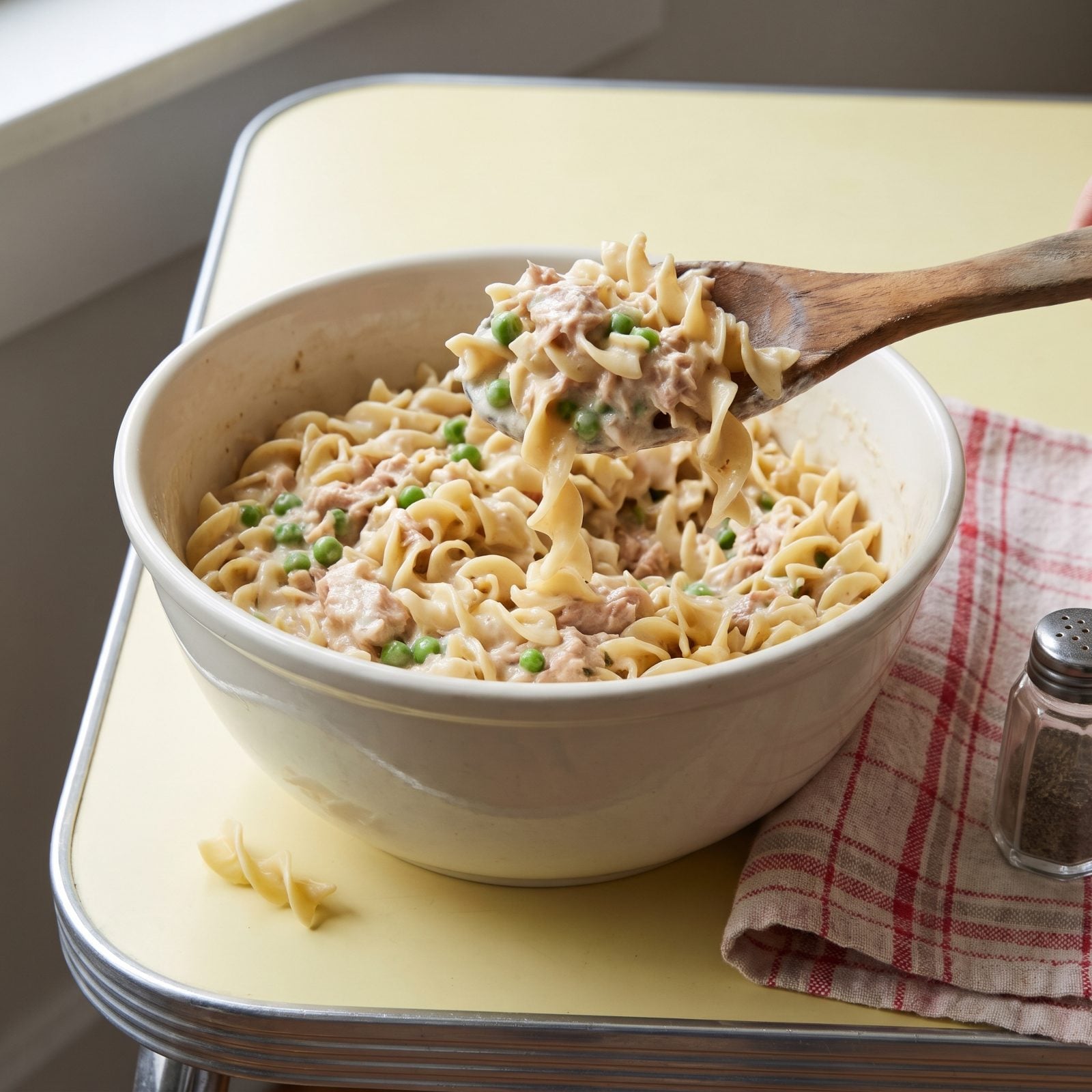
Here’s where a lot of people rush and regret it. You want to fold, not stir. Lift from the bottom, turn the mixture over on itself, repeat. Cooked egg noodles tear if you beat them like cake batter, and torn noodles turn the finished casserole to mush.
I overmixed this for years because I was impatient, standing over a hot stove and wanting it done. Slow down. Six or seven gentle turns coats every noodle and keeps them whole, with the tuna and peas spread evenly instead of clumped in one sad corner.
12. Greasing the Shallow Midcentury Casserole Dish
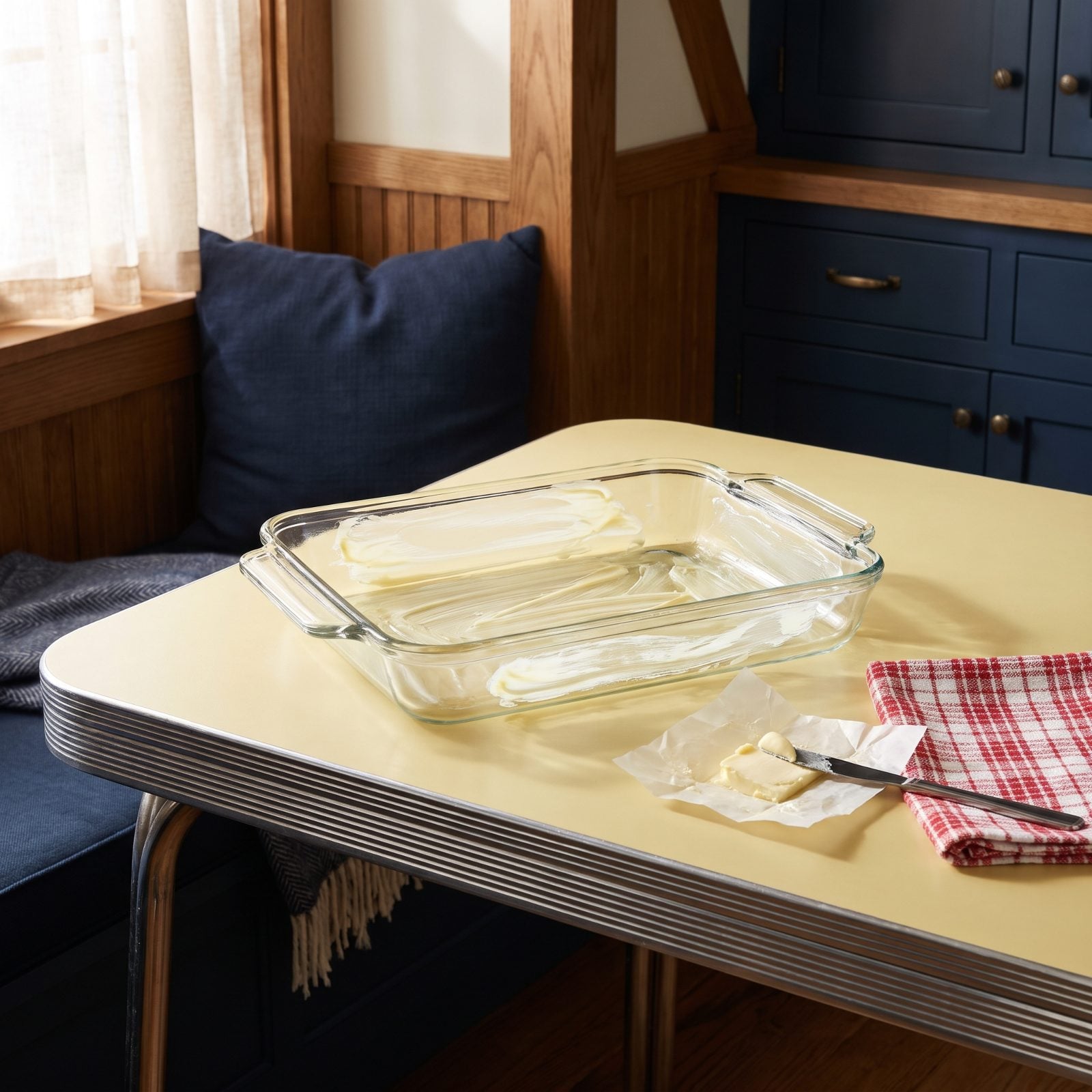
A shallow glass baking dish — the kind that lived in every midcentury cupboard — gets a quick wipe of butter across the bottom and up the sides. No cooking spray on the shelf back then. You grabbed the stick, folded back the wax paper, and ran the end around the dish.
Shallow matters more than people think. Go deep and you bury the mixture, so it steams. A wide, low dish gives you more surface, which means more of the crisp topping and those browned, bubbling edges everyone fights over.
11. Spreading the Tuna-Noodle Mixture Evenly in the Dish
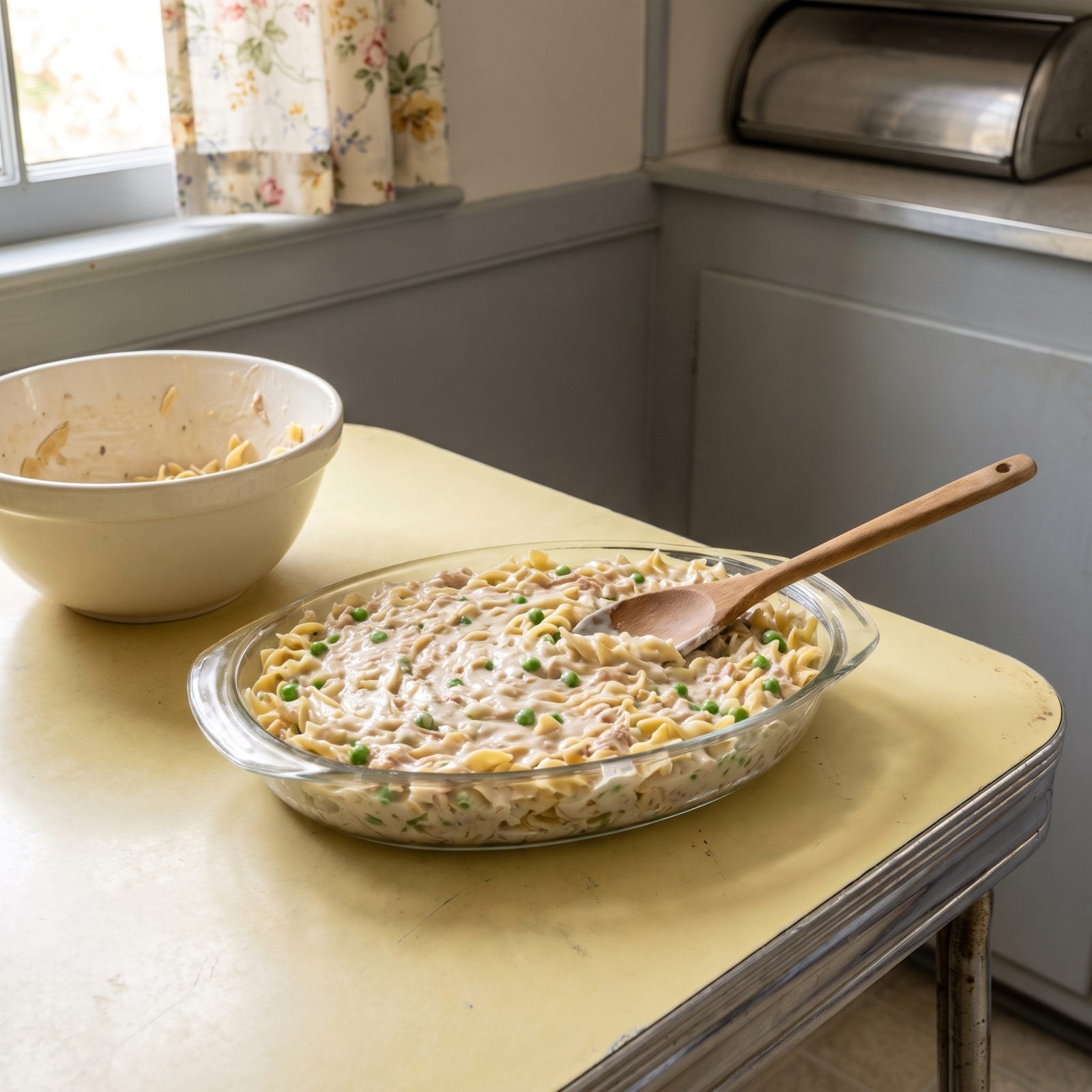
Scrape the bowl into the dish and push the mixture into an even layer, corners included. Use the back of the spoon to level the top without packing it down. Settled, not compressed.
An even layer bakes evenly. Pile it high in the middle and you’ll get a cold center with scorched edges. Flat and fair all the way across is the move, and it gives the chips a level bed to sit on instead of a valley to slide into.
10. Opening the Bag of Plain Potato Chips
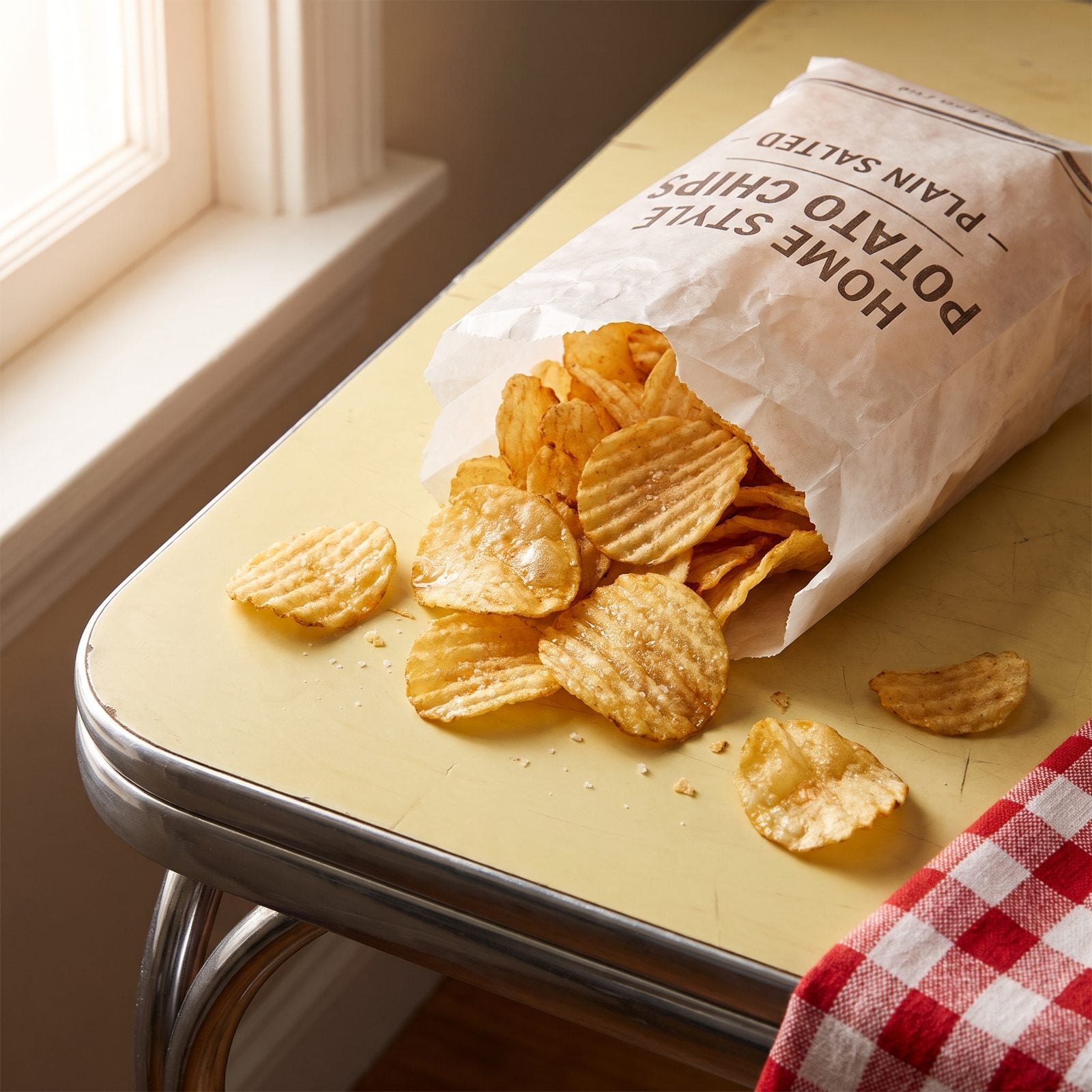
Plain salted chips. Not sour cream and onion, not barbecue, no fancy flavors — ridged or flat, it doesn’t matter. The original recipe called for ordinary salted potato chips, and that’s what you reach for here.
There’s something honest about it. The chip was already in the house for lunches and ballgames, so cooks put it to work on top of dinner. Salt, fat, and crunch in one torn-open bag. No breadcrumbs to toast, no cracker to crush separately — just open and go.
9. Crushing the Potato Chips for the Salty Topping
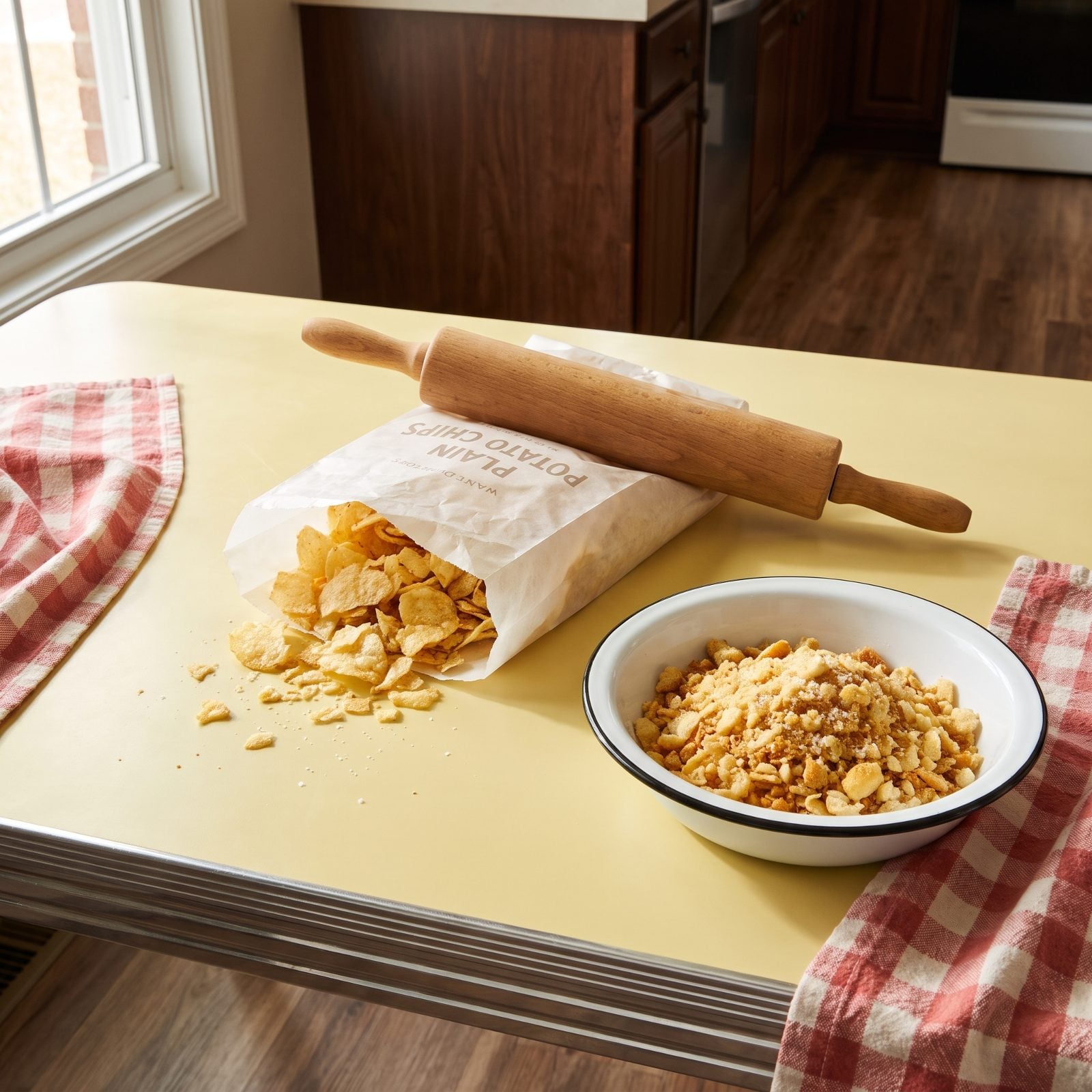
Crush them, but don’t pulverize them. You’re after coarse pieces, a mix of crumbs and bigger shards, never powder. Powder turns to paste in the oven. Shards stay crunchy.
The old method still beats everything: leave the chips in the bag, roll a pin over the top a few times, done. Some people go at it with their hands right in the bowl, which is quicker and a little more fun if you don’t mind salty fingers. Either way, keep it loose and uneven. A ragged texture is what makes a chip topping worth having.
8. Covering the Casserole With Crumbs From Edge to Edge
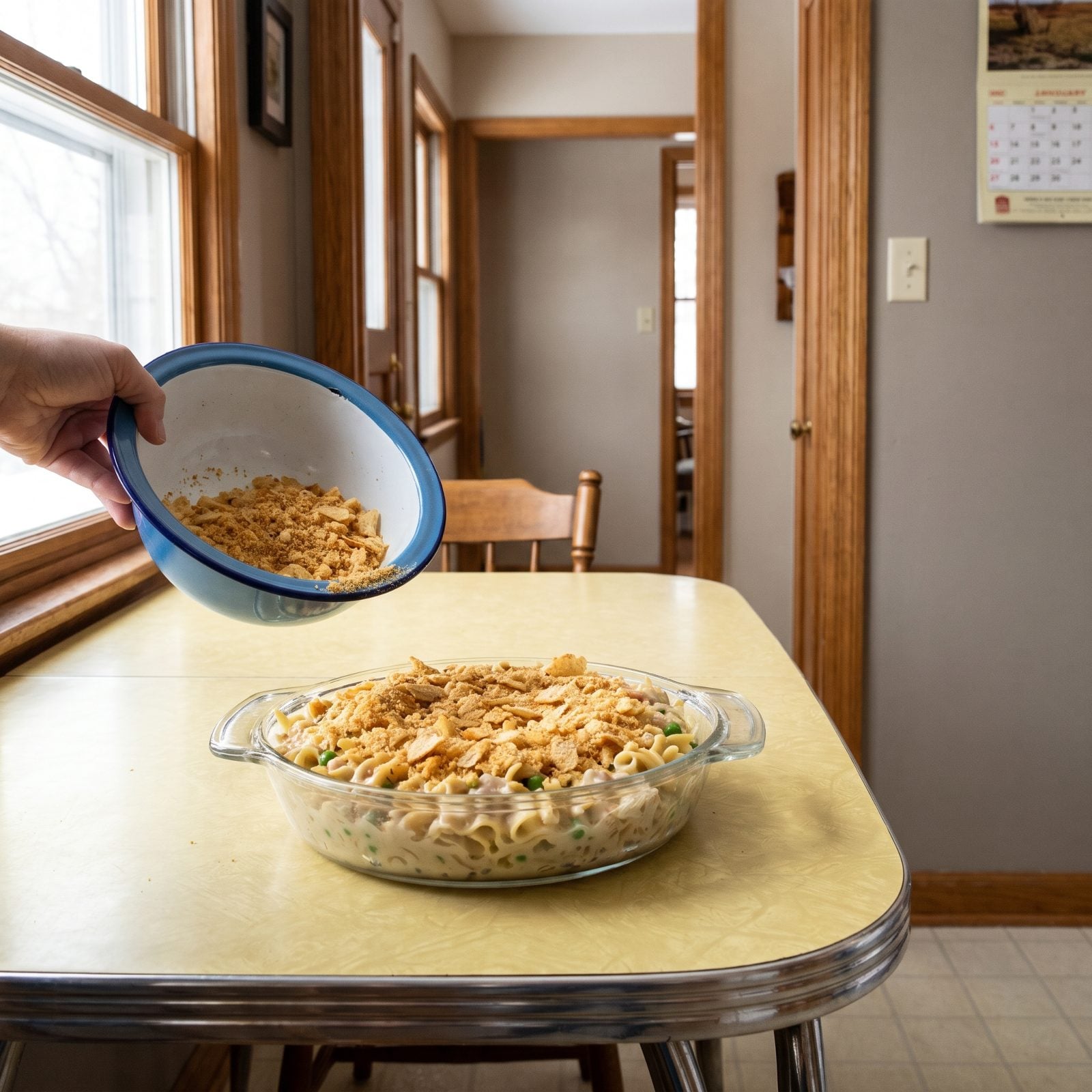
Scatter the crumbs across the top in one even blanket, corner to corner, no bare patches. Every forkful should get a little crunch, which means the topping can’t bunch up in the middle and leave the edges naked.
Don’t press it down. Let it sit loose on the surface. Pressed crumbs steam and go soft, while loose crumbs catch the oven heat and crisp into that golden crackle that makes you reach for the dish again before you’ve finished the first helping.
7. Sliding the Finished Dish Into the Oven
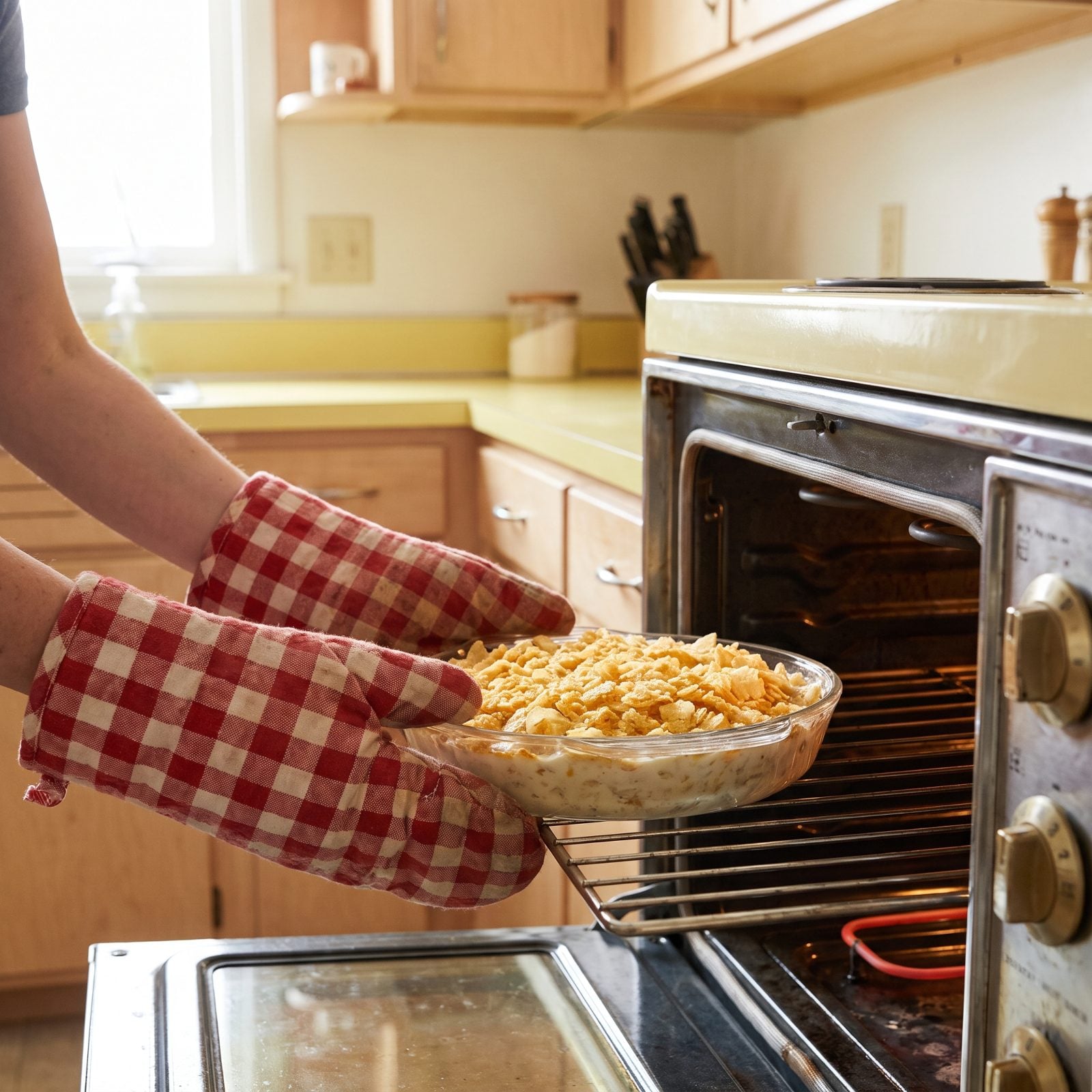
Middle rack, dish centered, door closed. The easy part — and also the quiet turning point of the whole evening. The casserole goes in cool and comes out bubbling.
You know what comes next. The smell builds slowly, mushroom and toasted chip and warm milk, until it fills the kitchen and reaches the next room. In a lot of houses, that smell was the dinner bell, and nobody had to call anyone twice.
6. Baking It at the Original Temperature and Time
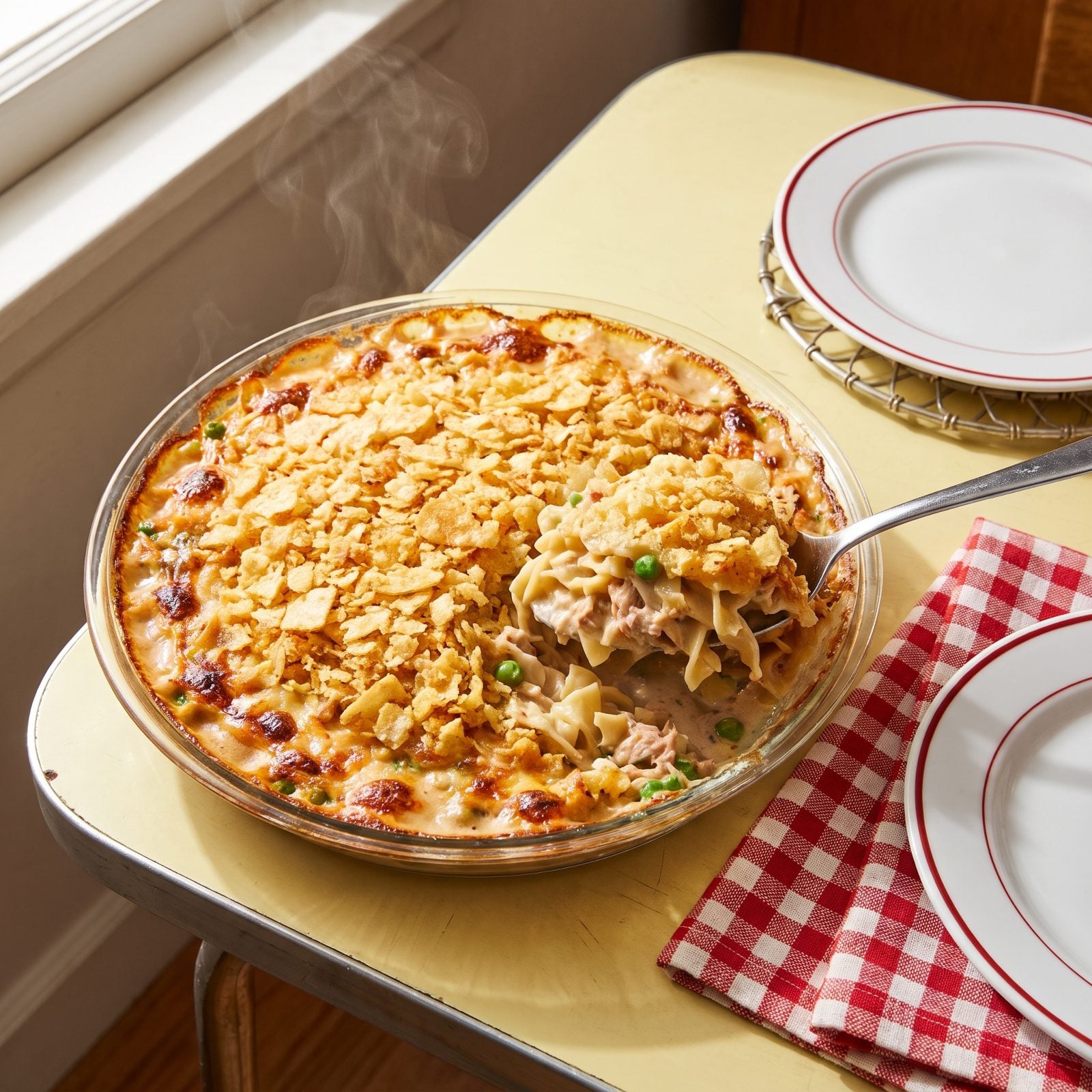
Bake at 350 degrees, roughly half an hour, which is right where the old soup-can recipes landed it. Hot enough to brown the chips, long enough to heat it through, short enough to get supper on the table fast.
You’ll know it’s ready when the edges bubble and the top goes golden and crisp. Pull it out and let it rest ten minutes or so before serving, which firms it up enough to scoop instead of pour. Then it hits the plate: creamy, salty, a little humble, exactly the dinner it was built to be. Cold the next morning? Arguably even better.
Humble on purpose, and good for it. That was the whole idea.
5. The Bubbling Edges That Signal the Casserole Is Hot Through
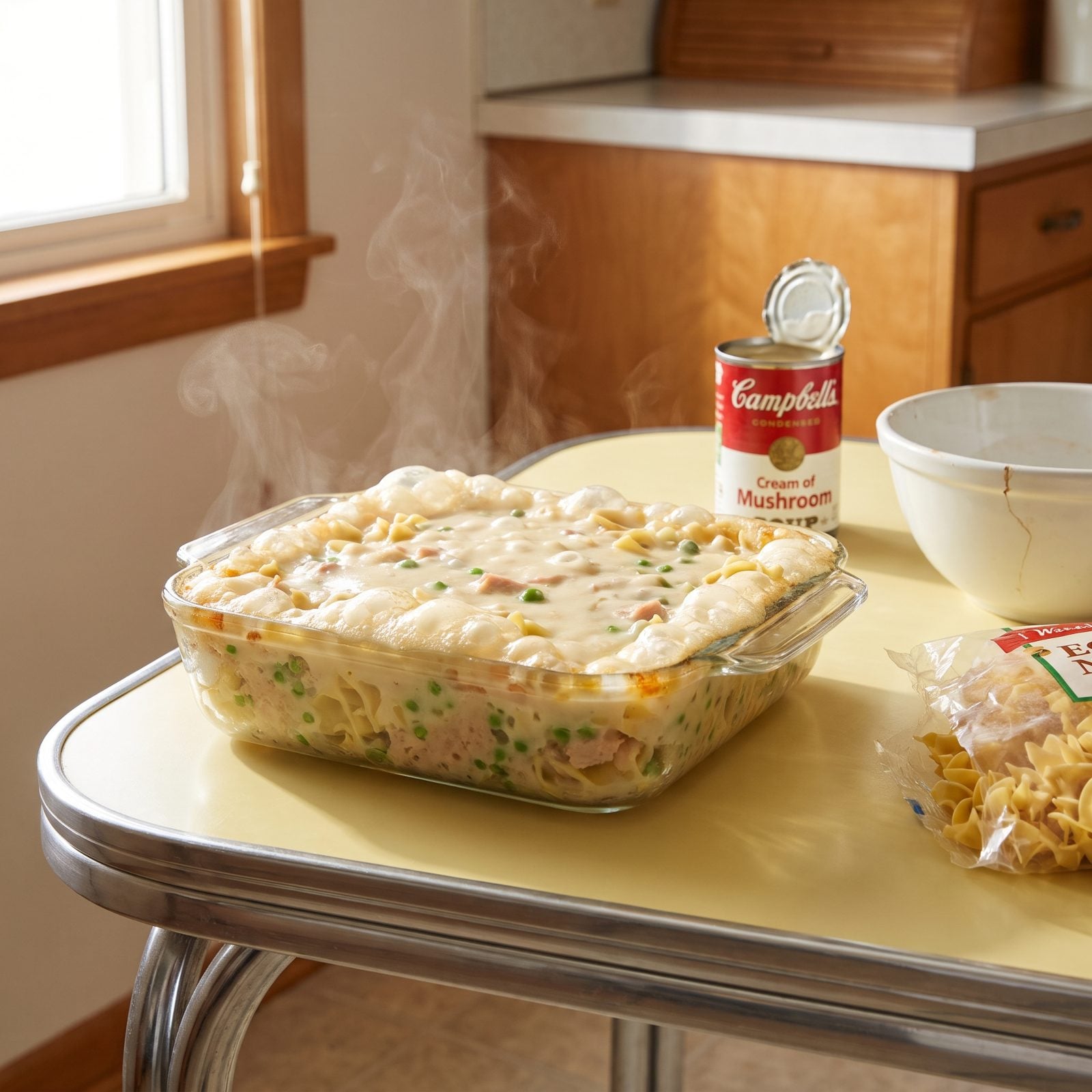
You could hear it before you saw it — that faint, wet, glassy bubbling at the edge of the Pyrex, where the cream of mushroom sauce hit the hot dish and started to simmer against the sides. The sound meant the oven had done its work.
One can of condensed cream of mushroom soup, a can of tuna drained, egg noodles boiled soft, a handful of peas folded in. That was the whole recipe. No stock, no sautéed shallots, no white wine, because the soup was the sauce. When the edges bubbled, the center was hot through, and nobody needed any other doneness test.
4. The Golden Potato-Chip Top That Marks It as Done
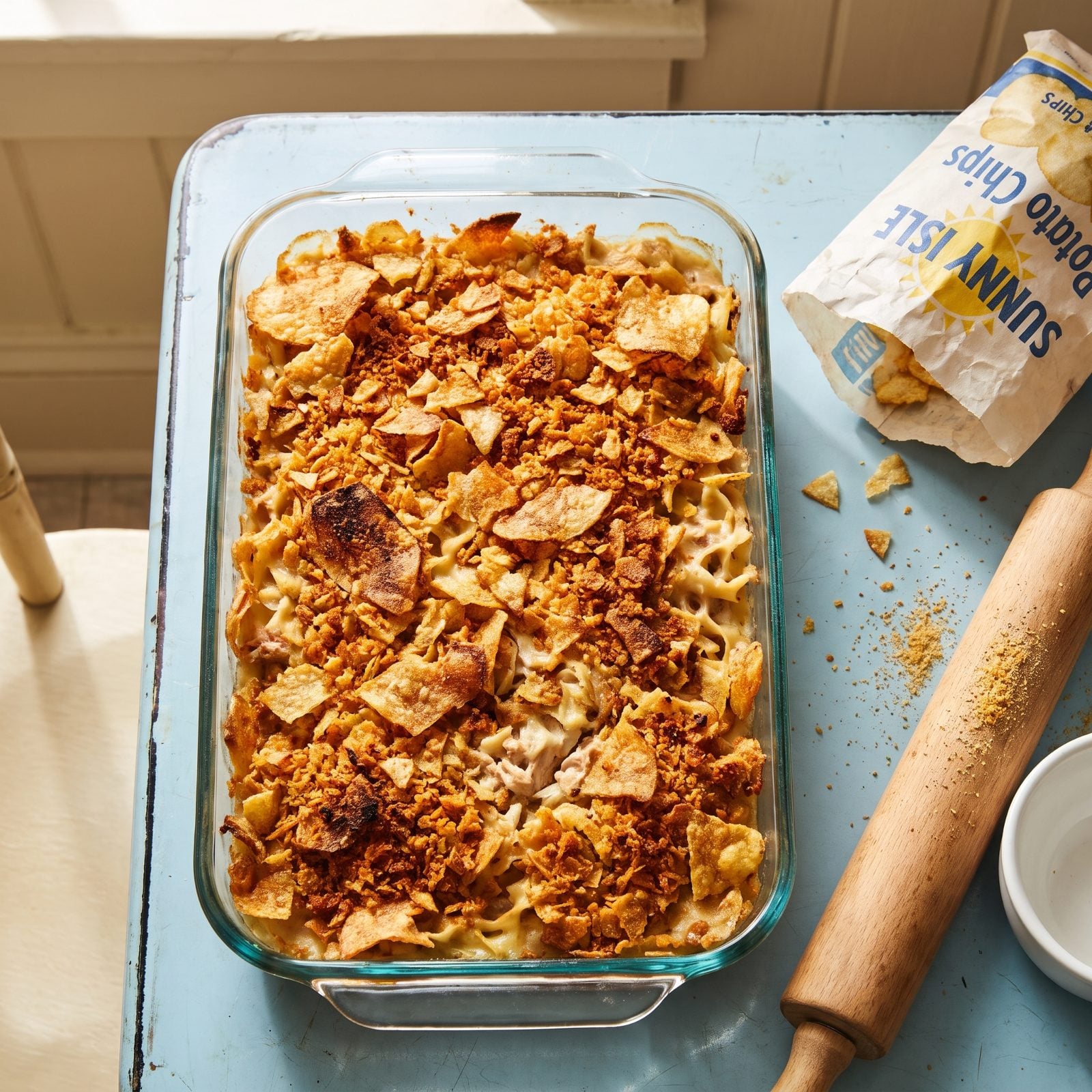
The lid of this casserole was never pastry or breadcrumbs from a canister. Potato chips, crushed by hand in the bag and scattered across the top before the dish went in. Half an hour later they came out the color of a paper lunch sack left in the sun.
That crust was the finish line. When it browned and crisped and the sauce started working up through the cracks, supper was ready. Nobody measured it — you looked at the color and you knew.
3. Letting the Casserole Rest Before Serving
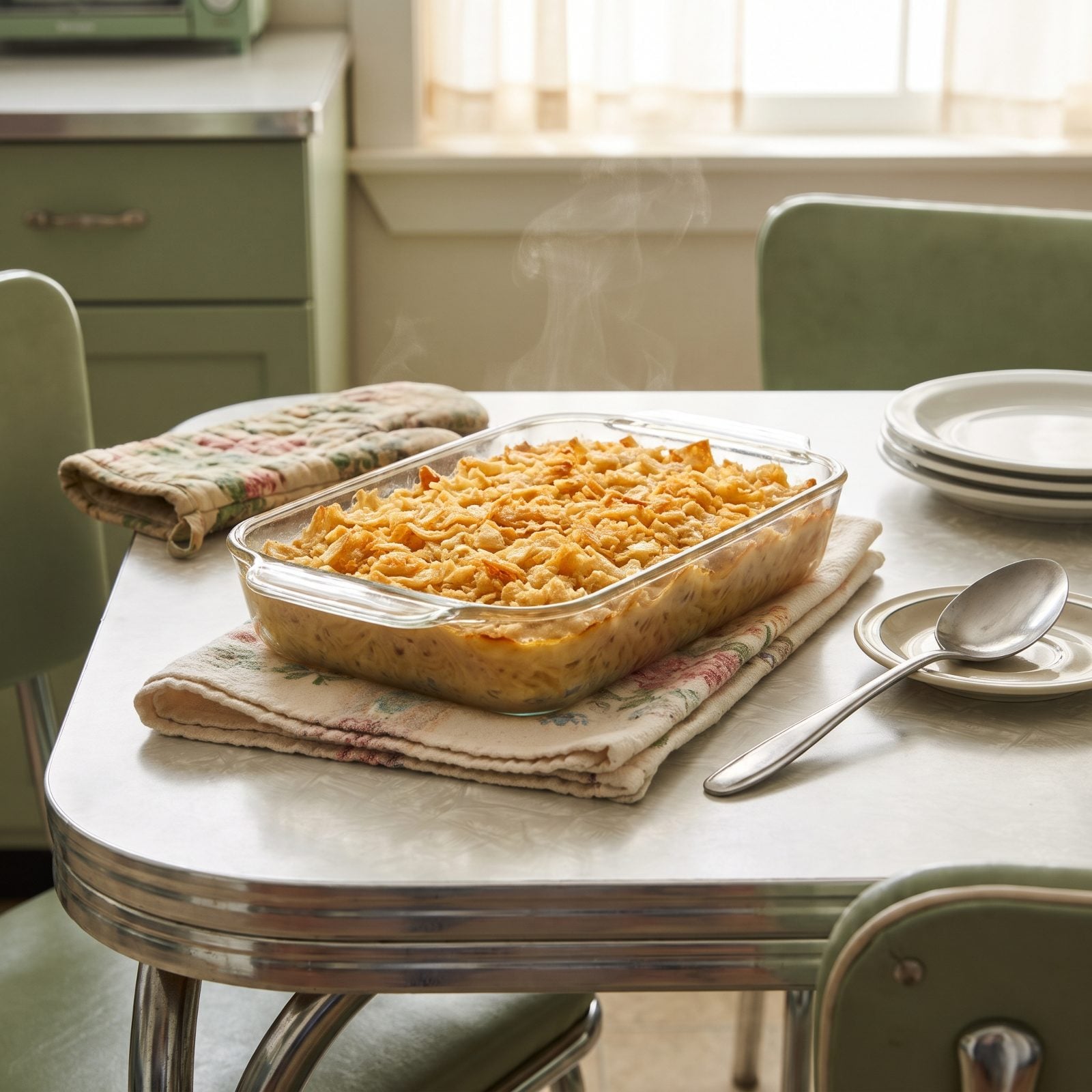
The hardest part came after the oven. You pulled the dish out, set it on a folded towel, and waited — ten minutes, maybe fifteen. Every kid at the table wanted it that second. Every mother knew better.
Pull it straight from the heat and the sauce runs, the noodles slide. Give it those few minutes, though, and the cream of mushroom tightens up around the tuna and peas, so the spoon pulls a clean portion instead of a soupy slump. The chip top stays crisp instead of going soft against a flood of hot sauce.
2. The First Neat Spoonful on a Period Dinner Plate
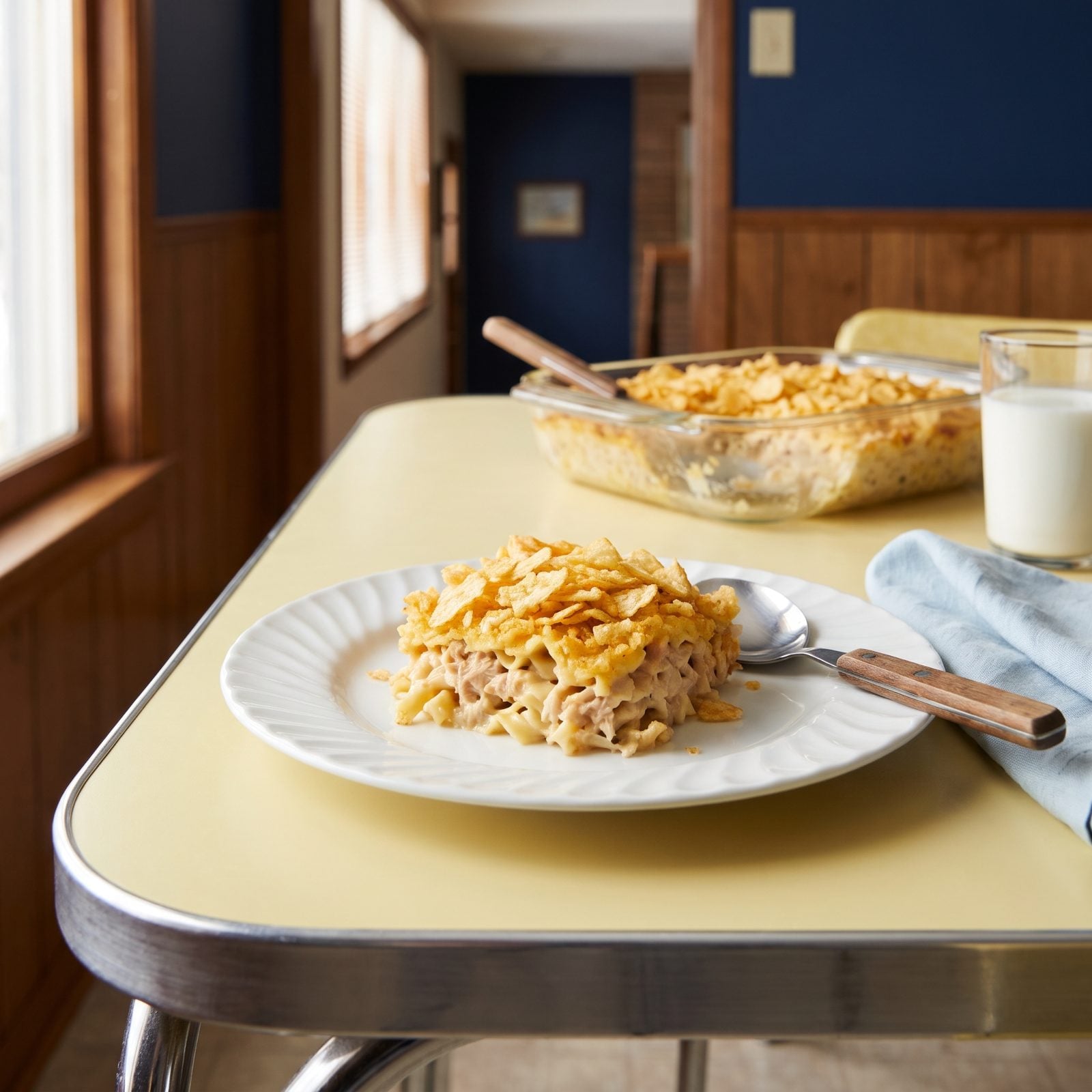
A good casserole gave up a clean portion. The spoon went in, cut down, and lifted out a square that held together — noodles bound in sauce, flakes of tuna folded through, the crisp chip top riding along on the surface.
That spoonful landed on a plain white plate with a fluted rim, next to nothing fancier than a glass of milk. One dish fed the whole table, and the first serving set the standard for how well it would hold. Slumped? You waited another minute. Stood up on its own? Supper was good.
1. Serving the Original Tuna Noodle Casserole at a 1950s Family Supper
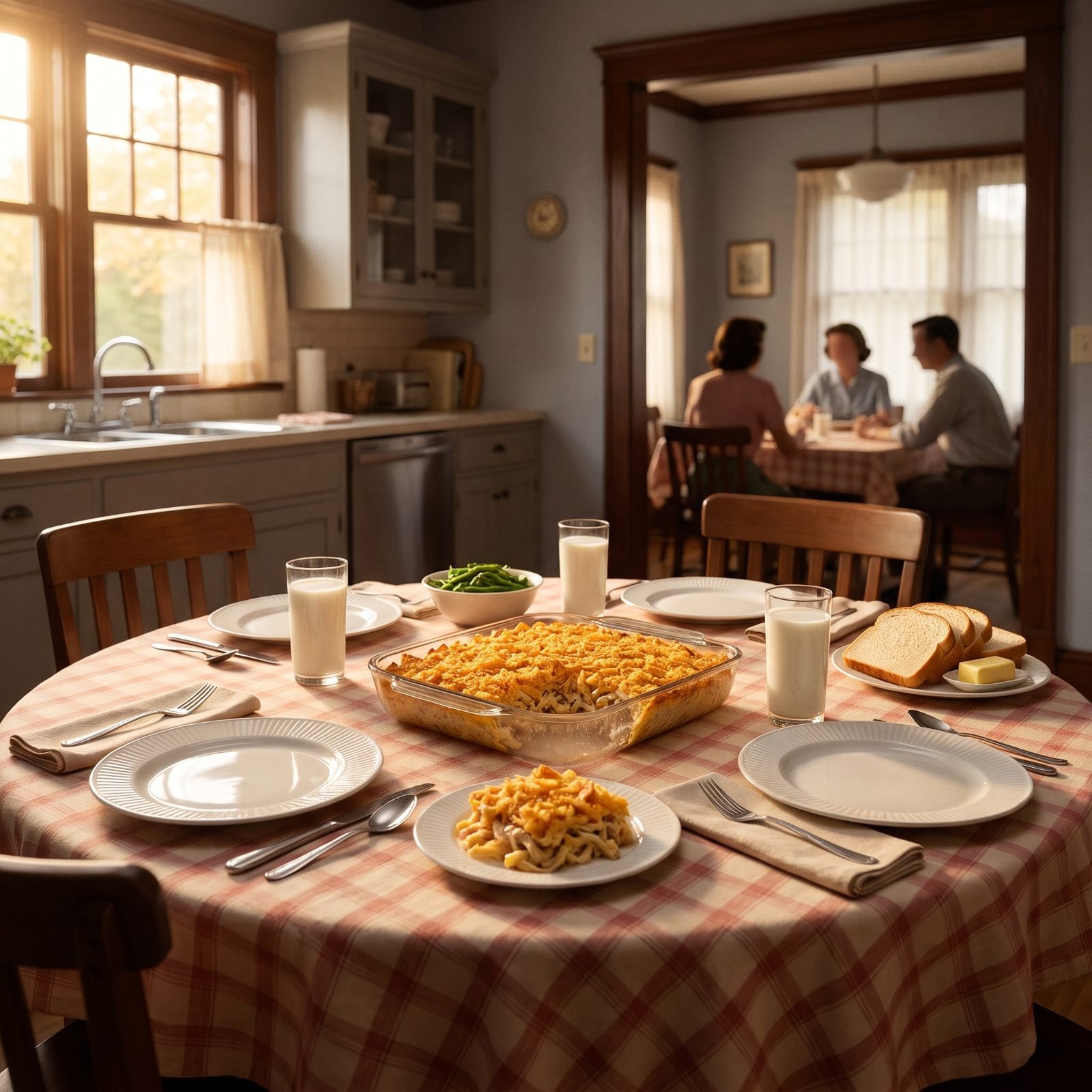
This was Friday-night food in a lot of Catholic households, and payday-stretching food in nearly everyone’s. Cheap, filling, built from the pantry. One can of tuna, one can of soup, a bag of noodles, a bag of chips — it fed a table of six for next to nothing.
It landed in the center of the table straight from the oven, and everybody served themselves. No plating, no garnish, not a sprig of anything. Green beans on the side, white bread and butter, milk in the tall glasses.
It wasn’t trying to impress anyone. It was trying to feed everyone, and it did that better than almost anything else in the recipe box.
Make the original exactly as written. No upgrades. No fresh dill, no gruyère, no panko — just the condensed soup, the canned tuna, the canned peas, the crushed chips on top. Change those and you’ve made something else. Leave them, and you’ve made supper the way a few generations actually ate it.
Our readers seem to like that kind of table too: casual family-style settings got hearts 84% of the time, compared with 79% for the other images in the same articles.