Would you like to save this?
Somewhere between the first bite and the last, a family tells on itself. Who reaches too soon. Who props an elbow. Who forgets to thank whoever stood at the stove sweating over the red sauce. Nobody wrote these rules on a chalkboard — they got taught the slow way, Sunday after Sunday, over pizza boxes and casserole dishes and the good plates that only came out when company did. The table was the classroom, and the lessons stuck. Here are the small table rituals that still mark a person as someone who was paying attention when it counted.
Please note that some of the images in this article were created with the assistance of AI.
30. Wait Until Everyone Is Served Before You Touch Your Fork
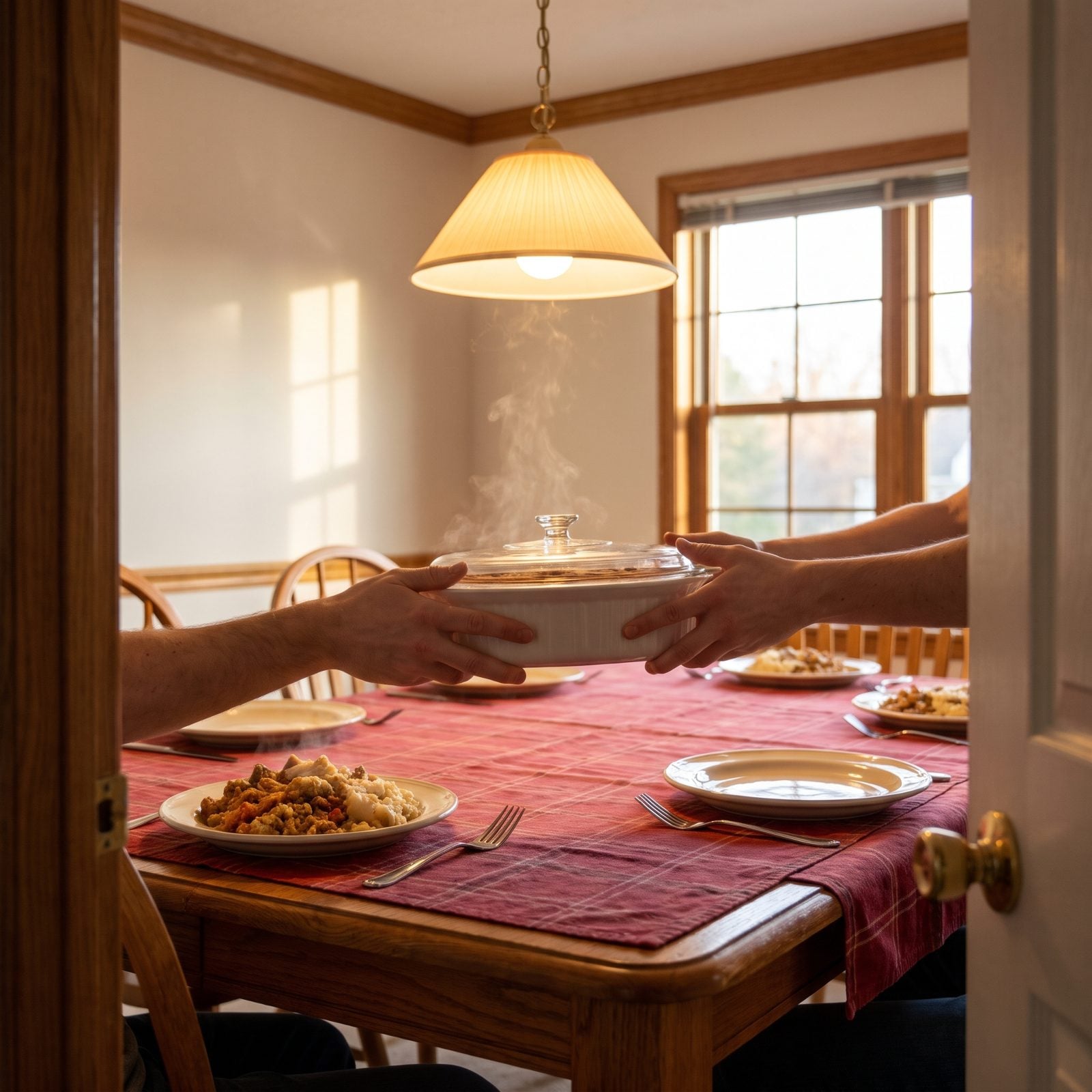
The food is hot. Your stomach is louder than the conversation. And you wait anyway.
That little stretch of patience between a full plate and the first bite is the oldest tell in the book — it says you notice there are other people at the table. In a big family it meant sitting there while the youngest got cut up, while Grandma got the drumstick, while the last plate finally came around.
Nobody dies from waiting ninety seconds. But the person who starts shoveling before the cook sits down announces something about how they were raised, and it isn’t flattering.
29. The Napkin Goes in Your Lap, Not Tucked Into Your Collar
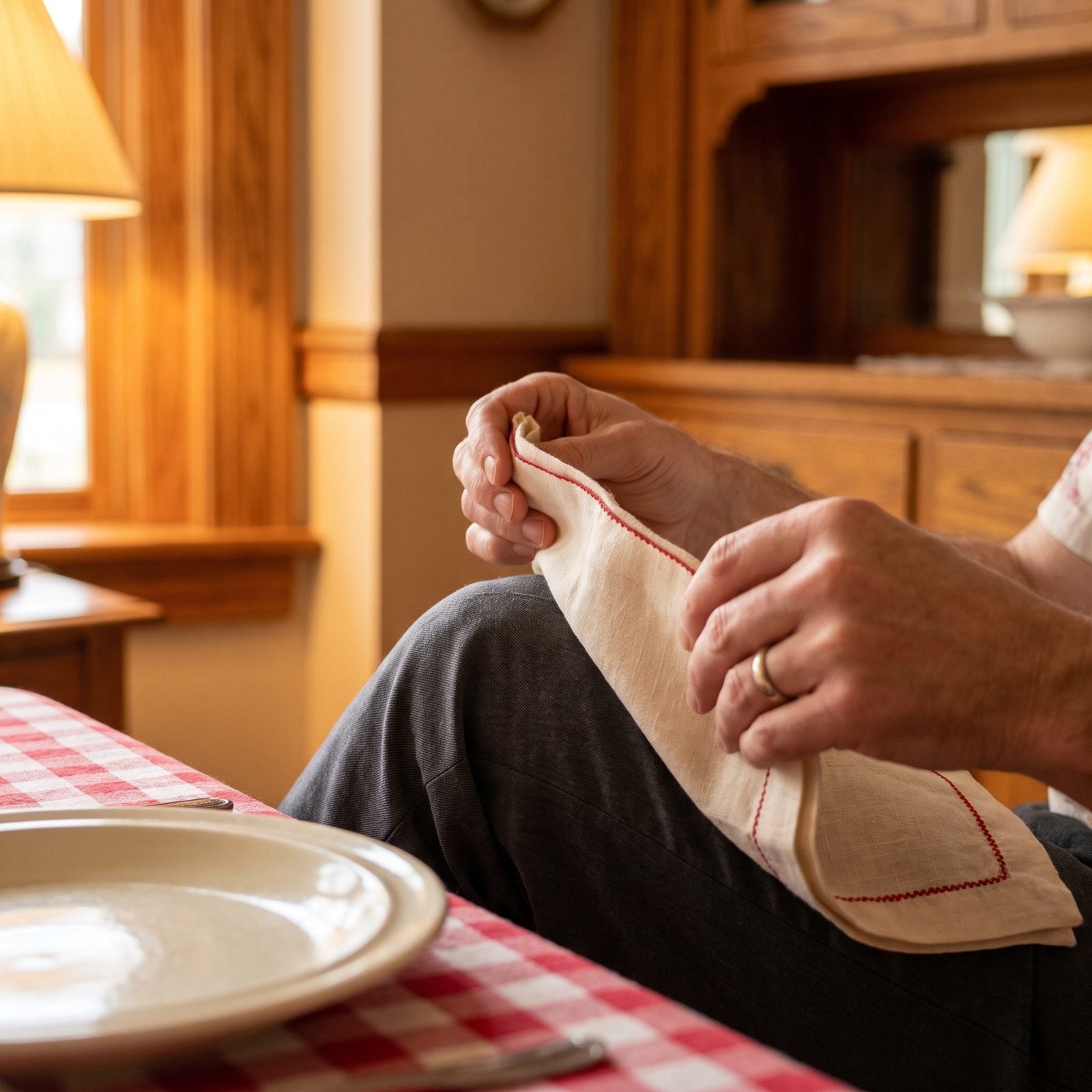
First thing you do when you sit down: shake out the napkin and lay it across your lap. Half a second, done before anyone notices. Not a grand gesture.
The collar tuck is a different animal. It works in a crab shack or over a plate of ribs where everyone’s elbow-deep and honest about it, but at a proper family dinner it reads like a bib — and a grown adult in a bib is a sight to behold.
Meanwhile the lap napkin does its quiet work. It catches the drips, dabs the corner of your mouth between bites, and signals you came ready to eat like a person. When you excuse yourself, it goes loosely beside the plate. Never crumpled. Never on the chair.
28. Pause Before the First Bite, Whether You Say Grace or Not
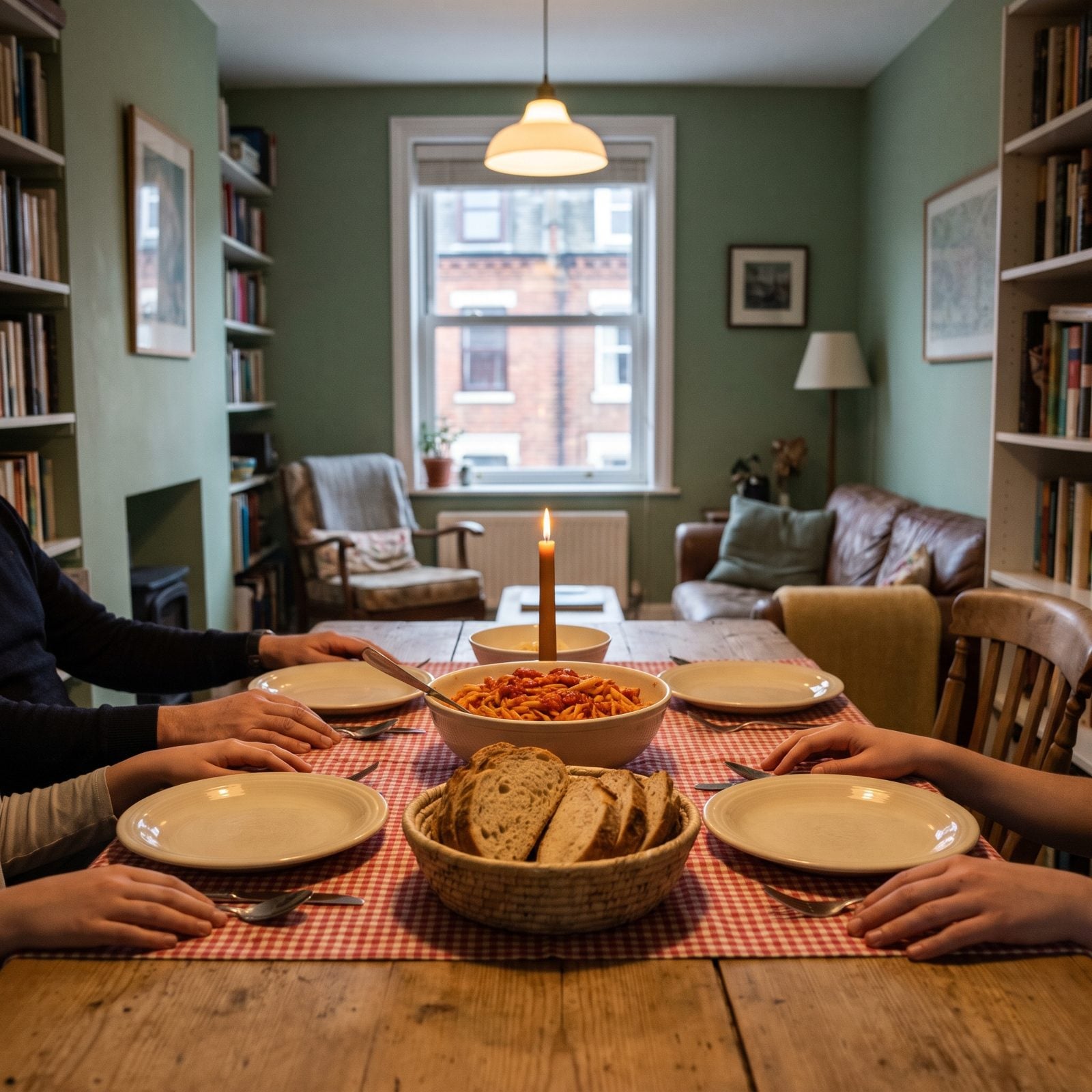
Some families bowed heads and said the words. Some just went quiet for a beat, maybe a hand on the table, before anybody reached for anything.
Either way the pause did the same thing — it drew a line between the chaos of getting everyone seated and the business of eating. A breath. A second to notice the food was there and somebody made it.
You don’t have to be religious to feel the loss when it’s gone. A table that lurches straight from “sit down” to forks clinking feels rushed, like a drive-thru with chairs.
27. Ask to Be Excused Before You Leave the Table
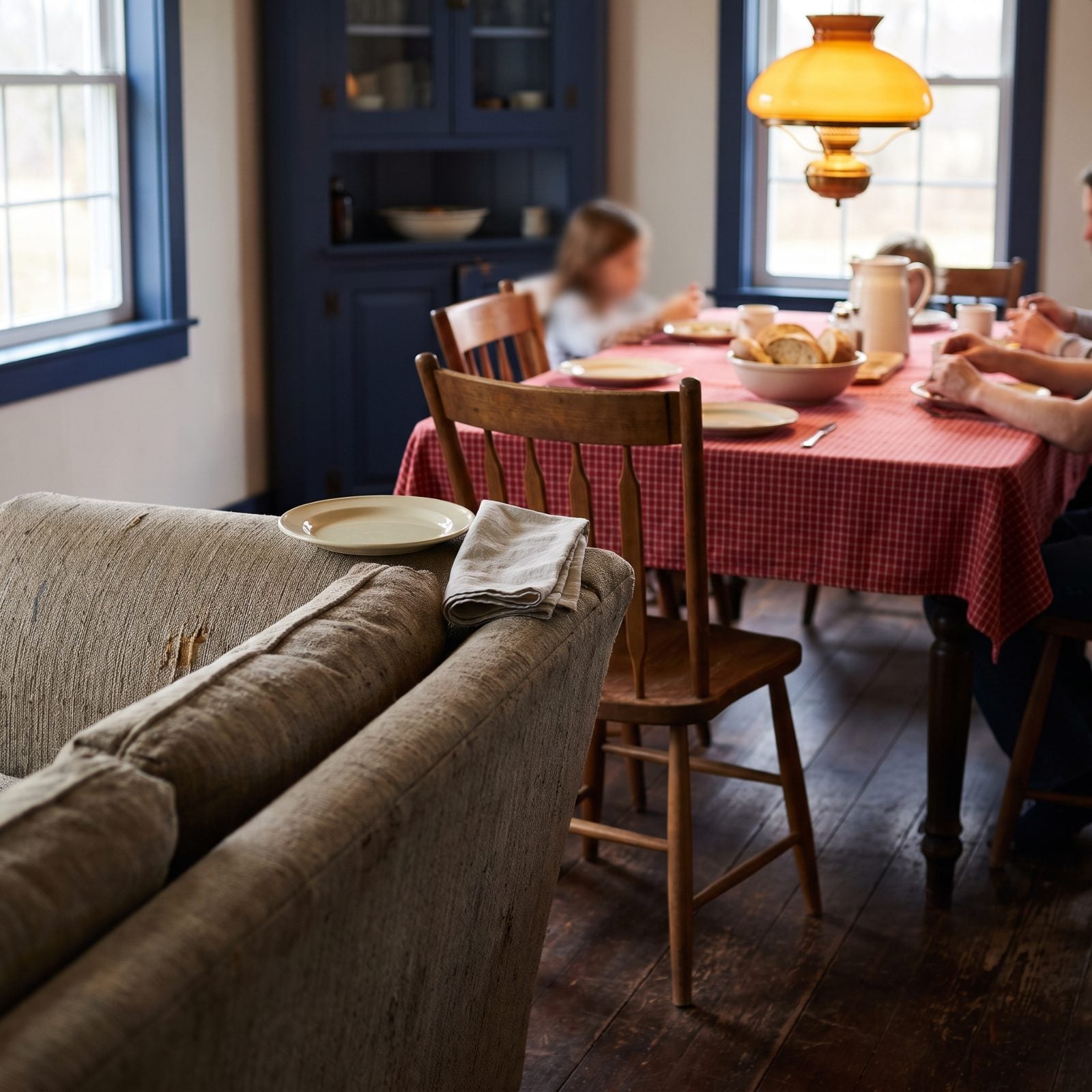
“May I be excused?” Four words that separated the raised from the raised-by-wolves.
You couldn’t just stand up and wander off because you were done. The table was a shared thing, and leaving it was a small announcement you owed the people still sitting there. A nod from whoever ran the kitchen, and off you went — plate carried to the sink more often than not.
Kids hated it. Kids also remember it. The ones who grew up asking still feel the tug as adults, the instinct not to bolt the second their plate is clean.
26. Keep Your Elbows Off the Table While You’re Eating
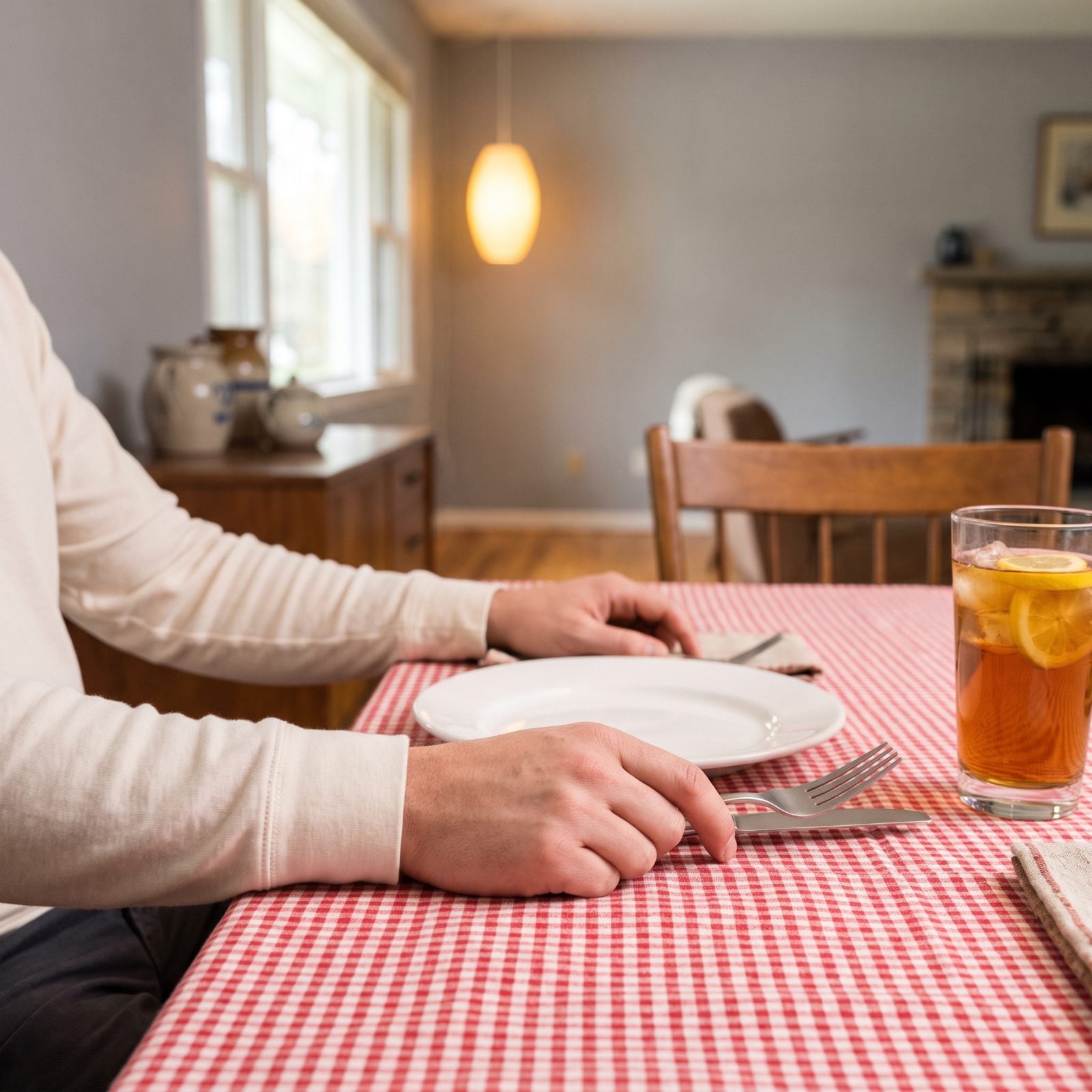
The elbow rule confuses people because it bends. Mid-meal, cutting into something, both elbows parked on the table and leaning in like you’re guarding your plate from raiders? No. That’s the one the rhyme was written for.
Between courses, or over coffee after, with the food cleared and the talking started? Elbows are fine. Lean in. Nobody’s counting.
Plenty of us got corrected on this as kids and figured it was fussy nonsense. Then you watch a grown man hunch over his plate elbows-out and you understand. He looks like he’s bracing for a fight instead of enjoying a meal.
25. Chew With Your Mouth Closed, and Don’t Talk Through It
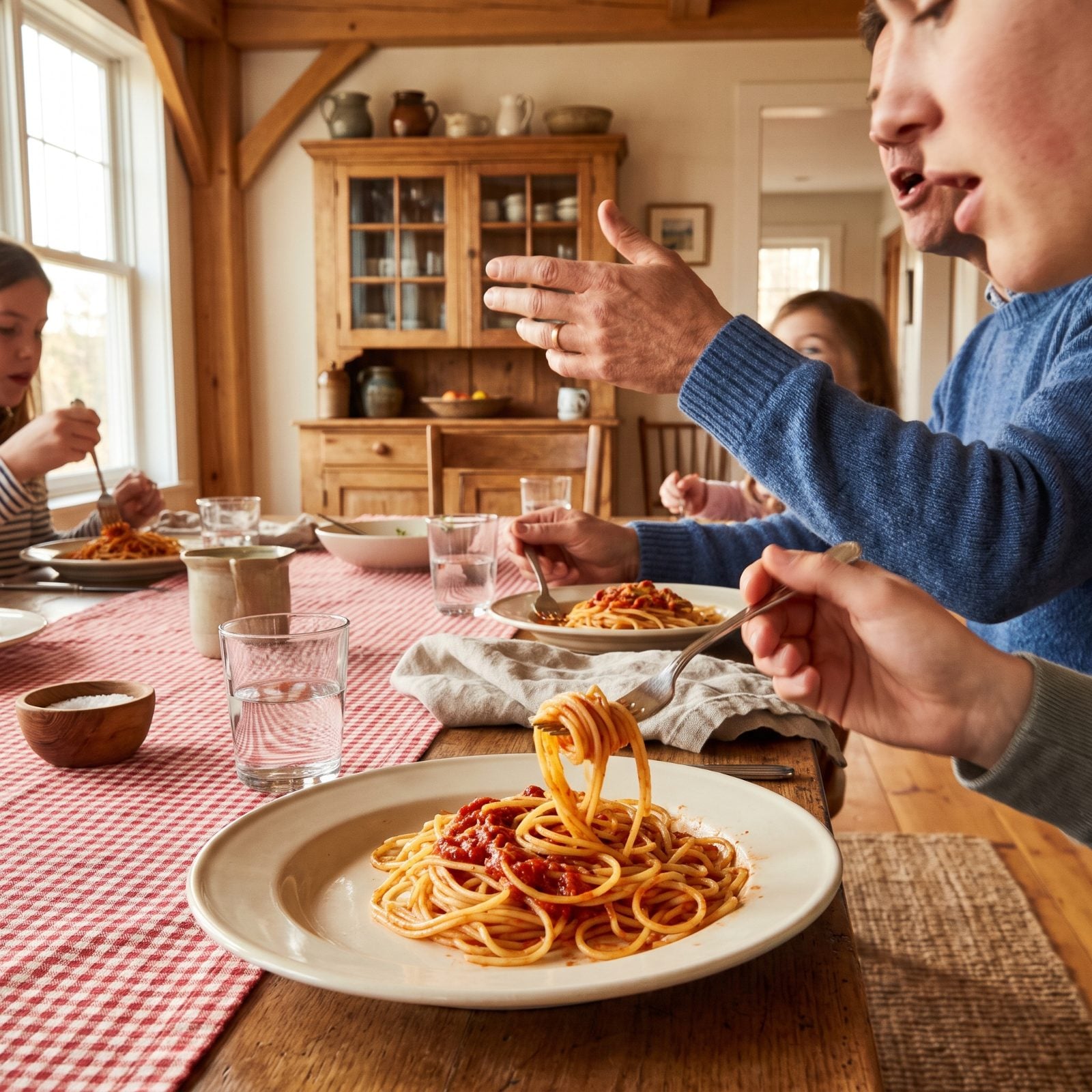
This is the one nobody will ever correct you on to your face, and everybody notices.
Open-mouth chewing has no defenders. Not a soul at any table in any decade enjoyed watching food get worked over like laundry in a window. And talking through a full mouth, spraying the particulars of your day across the mashed potatoes, ended more appetites than any burnt roast.
The fix costs nothing. Small bites. Chew, swallow, then speak. The person who does this without thinking got trained young, back when somebody across the table said “finish your bite first” enough times that it finally took.
24. Say Please When You Ask for a Dish to Be Passed
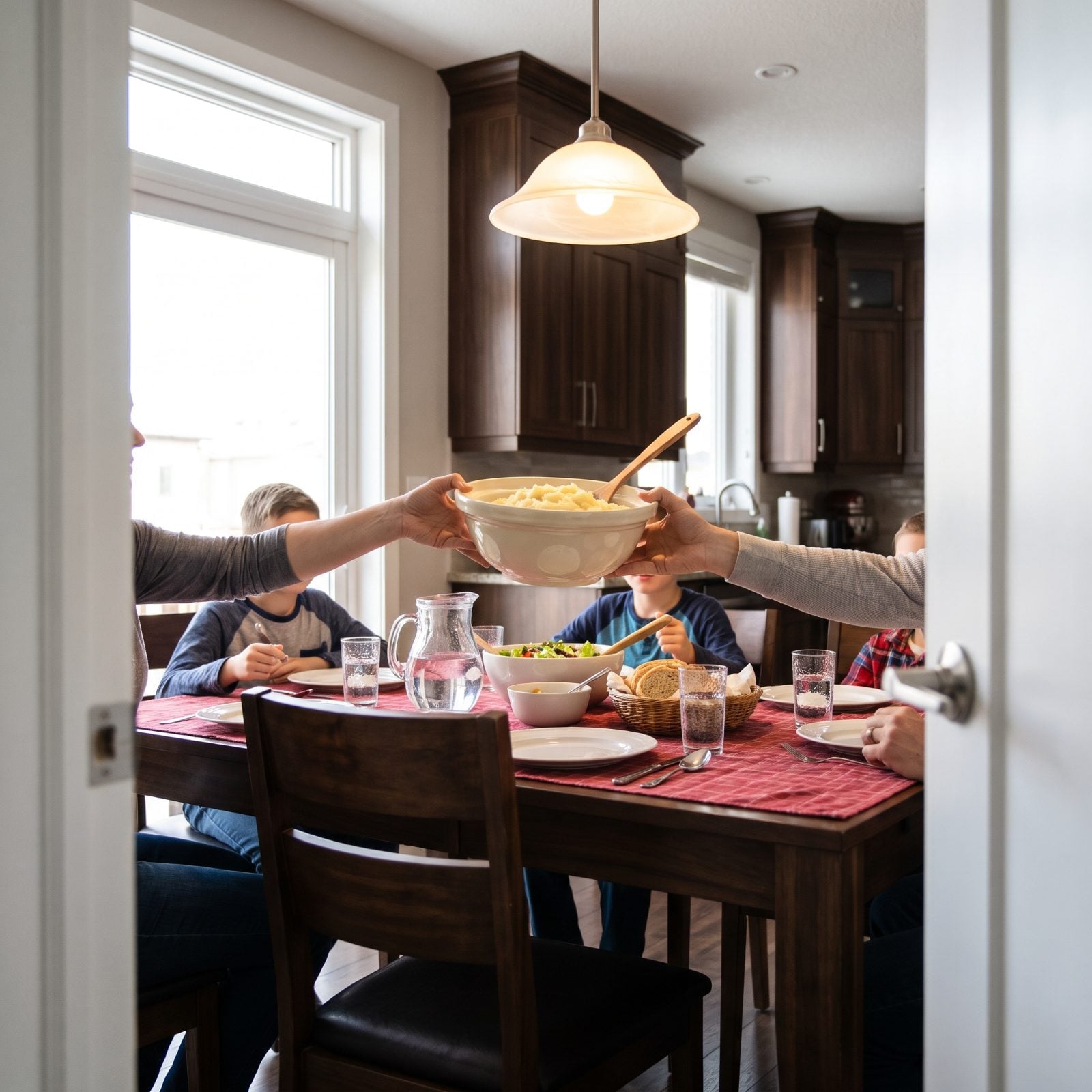
“Pass the bread” is an order. “Pass the bread, please” is a request between people who like each other.
The word is tiny. Its absence is loud. A table where everyone barks demands, grabbing and reaching across plates, feels less like a family and more like a cafeteria line. The please slows it down and reminds you the person holding the butter is a person, not a vending machine.
And the reach-across itself is its own crime. You ask. Somebody passes. You don’t stretch your arm over three plates to grab it yourself.
23. Pass the Salt and Pepper Together, Always as a Pair
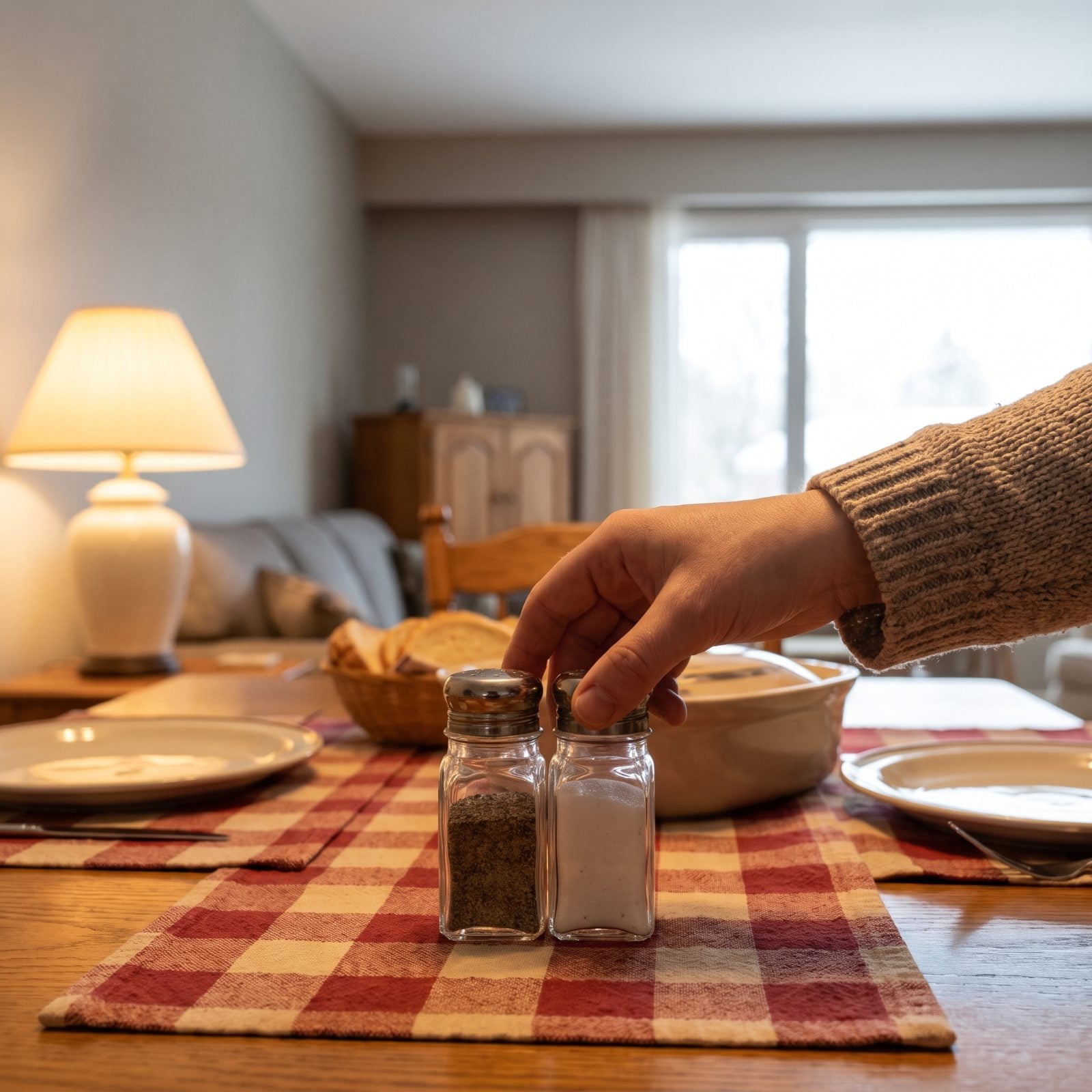
Ask for the salt, and the salt comes with the pepper attached, every single time. They travel as a set. Nobody can fully explain why, and that’s half the charm.
The polite version of the story says they’re a married couple and you don’t split them up. The practical version says the next person will want the other one anyway. Either way, the hand that reaches for just the pepper and leaves the salt stranded marks someone who missed this lesson entirely.
22. Say Something Nice to Whoever Cooked
Would you like to save this?
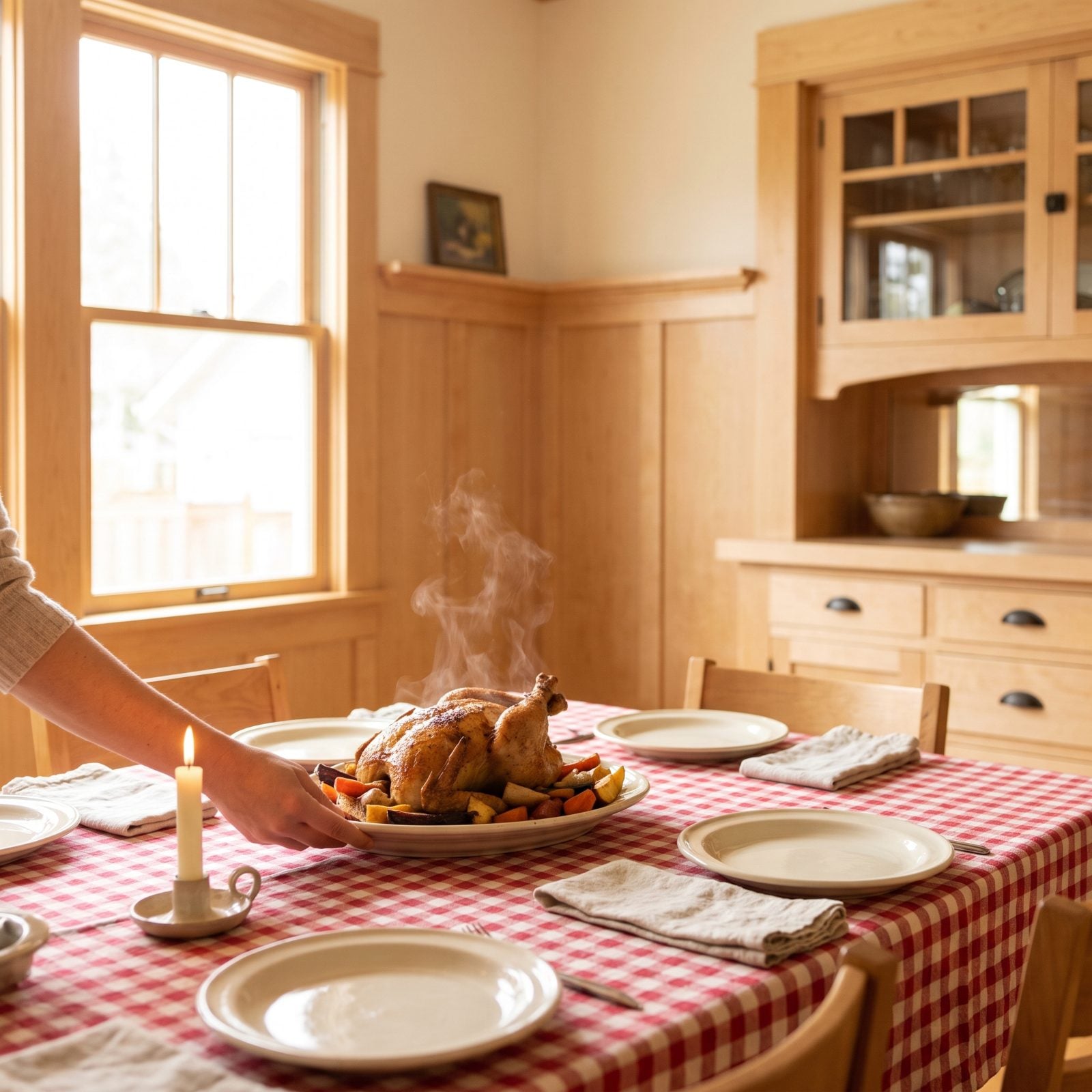
Somebody stood at a stove for an hour so you could sit down for twenty minutes and eat. The least you can do is say the lasagna’s good.
It doesn’t need to be a speech. “This is really good” lands fine. What matters is that you noticed, out loud, in front of everybody, that effort went into the thing on your plate.
The cook always knows who says it and who just eats and leaves. Always. And the kid who learns to thank the cook grows into the adult who thanks the waiter, the host, the friend who had everyone over.
What Our Readers Say
- When Piaci Pizza readers loved a food photo and tapped a reason, “nostalgic” and “comfort” tied for the top spot at 22% each, ahead of simply “looks good.”
From Piaci Pizza reader polls and votes.
21. Offer the Last Piece Before You Take It
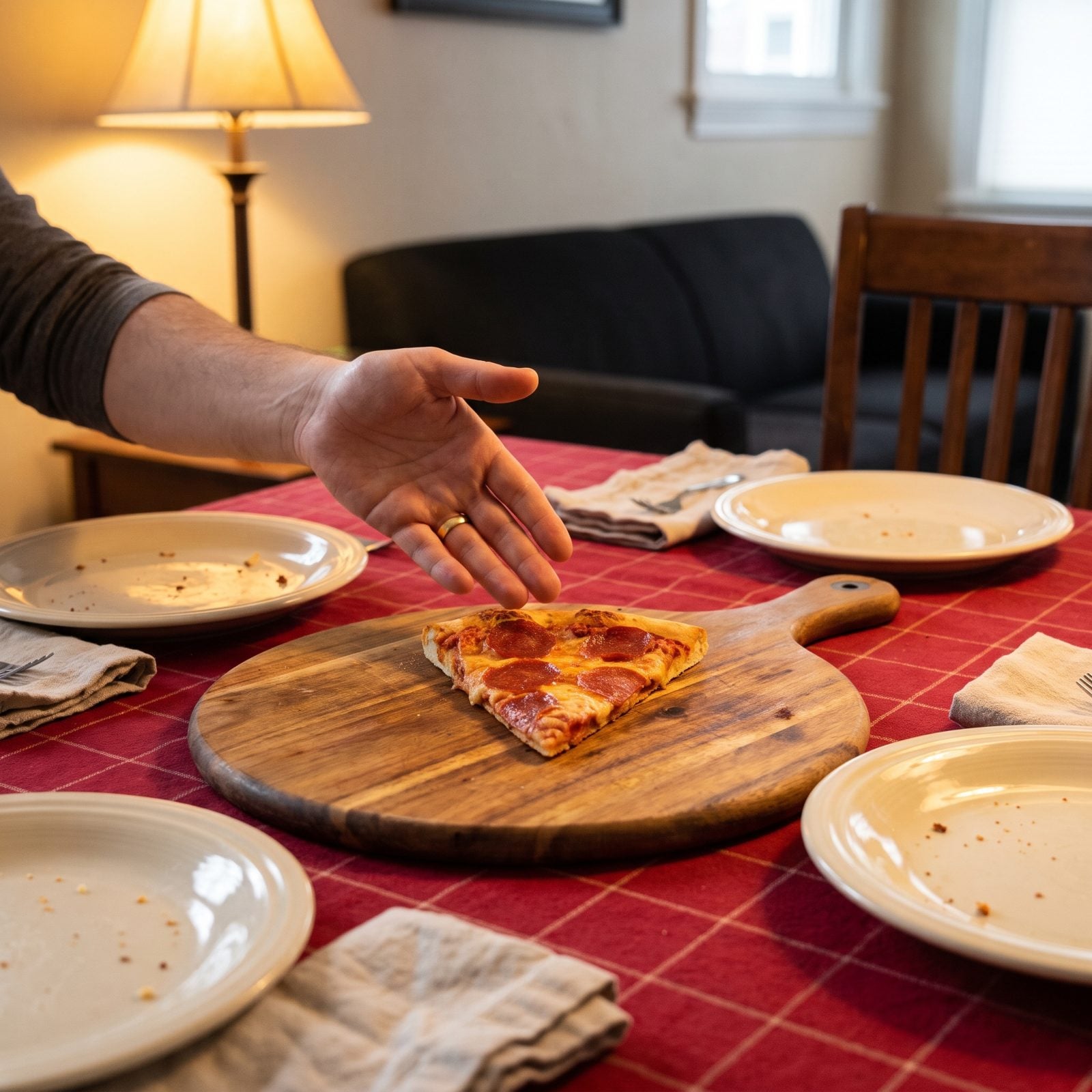
The last slice on the plate is a test, and most people fail it quietly.
You don’t just take it. You ask — “Anybody want this?” — and nine times out of ten everybody says no and insists you have it. That’s fine, because the asking was what counted. The gesture mattered more than the slice.
Grabbing the last piece without a word is a small greed, the kind nobody mentions but everybody clocks. The person who offers it up first, even when they’re still hungry, learned somewhere that a table is about sharing more than it’s about eating. And that one doesn’t stay at the table. It follows you everywhere.
20. No Phones at the Table (The Rule Before Phones Existed)
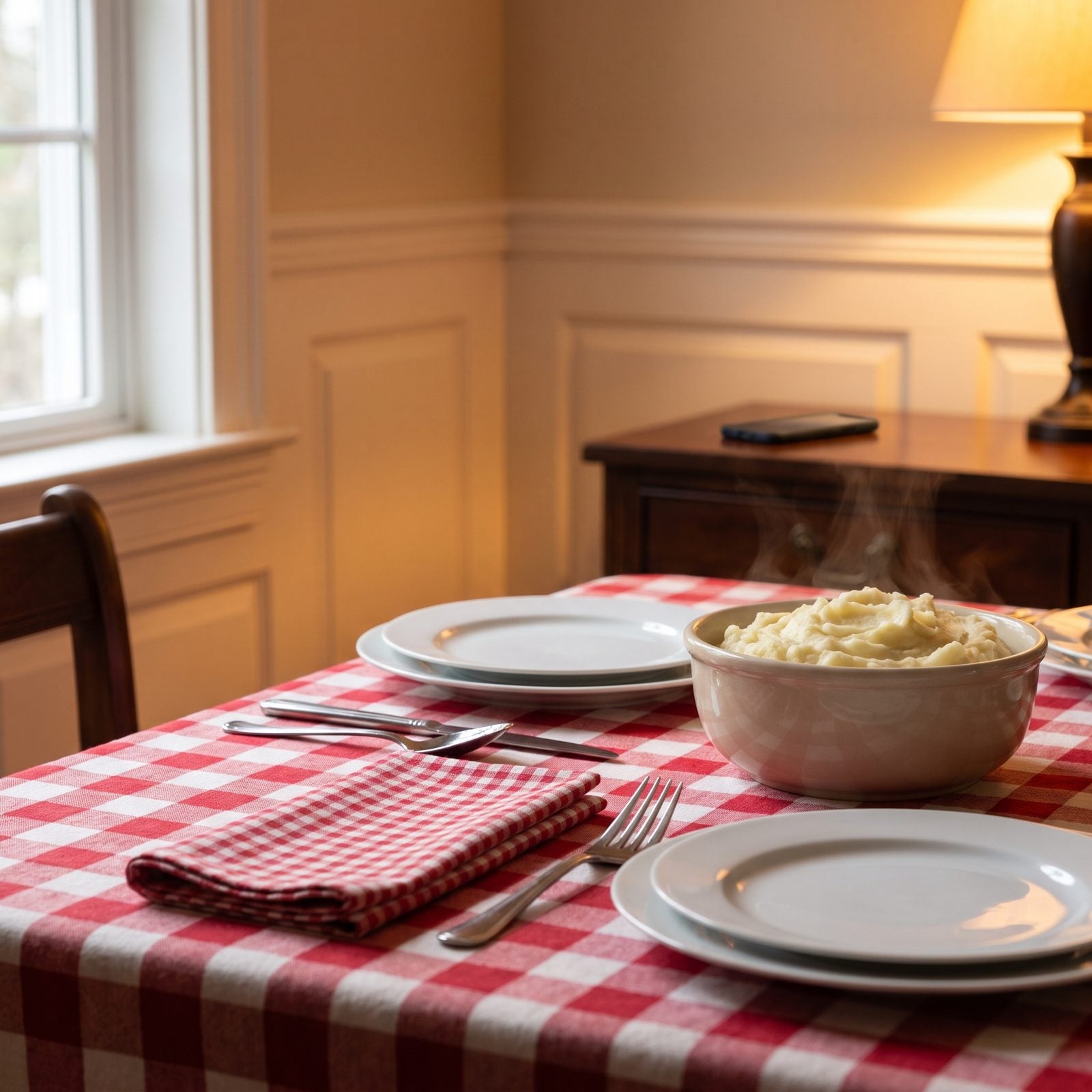
The phone part is new. The principle under it is as old as the table, because dinner was the one hour the whole family was pinned to the same spot, and you were expected to be present for it instead of drifting off into a magazine or the TV in the next room.
People raised right feel the pull of a buzzing pocket and leave it alone. That’s the tell. Anybody can put a phone away. Not everybody can ignore it without announcing they’re ignoring it.
19. Setting the Table With the Forks on the Left
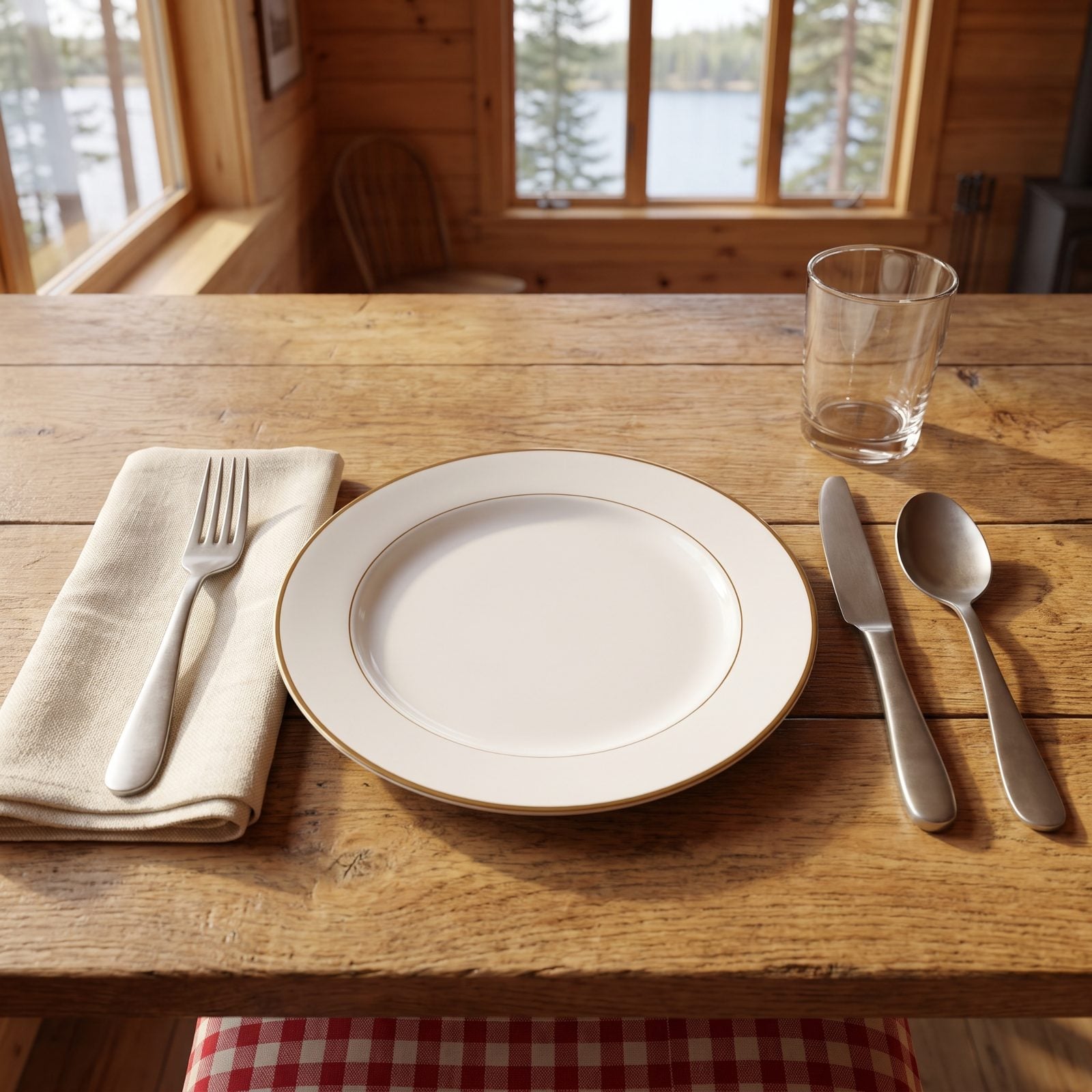
Fork on the left. Knife and spoon on the right, blade facing the plate. A tiny thing that means everything, because a kid who was taught to set a table right was a kid somebody bothered to teach.
Watch how fast you can spot a proper upbringing when somebody lays out silverware without thinking about it. The hands just know. No hesitation, no looking it up.
18. Helping Clear the Dishes When the Meal’s Over
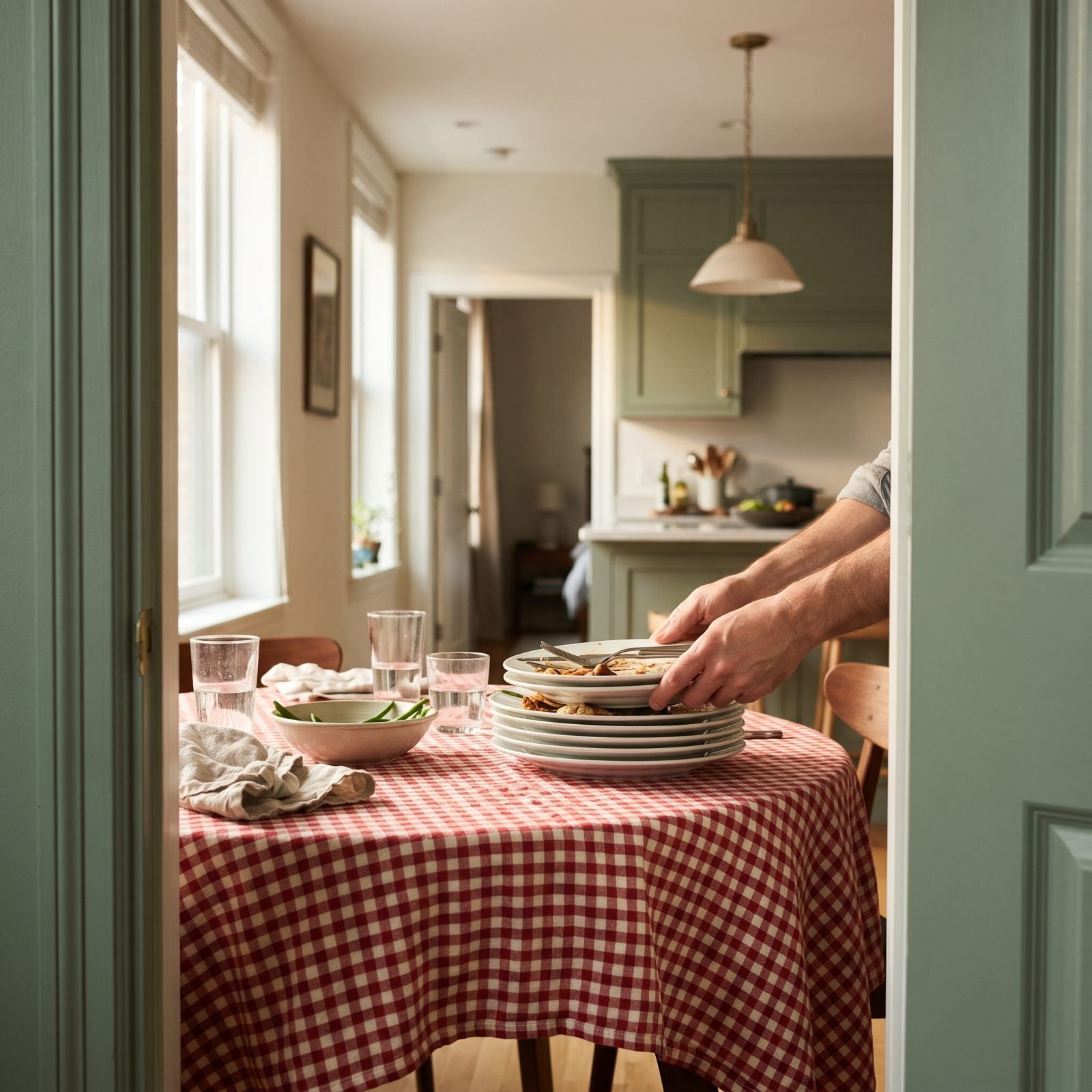
You didn’t wait to be asked. The second the last person set down a fork you were already reaching for the empty plates nearest you, stacking them, carrying them in, not a word said.
This is the one that separates guests from family. The guest sits there full and satisfied. The person raised right is on their feet, because leaving one woman alone with a sink full of pots never once sat well with them. Plenty of us learned it late, with an aunt making sure we knew it.
17. Washing Your Hands Before You Sit Down
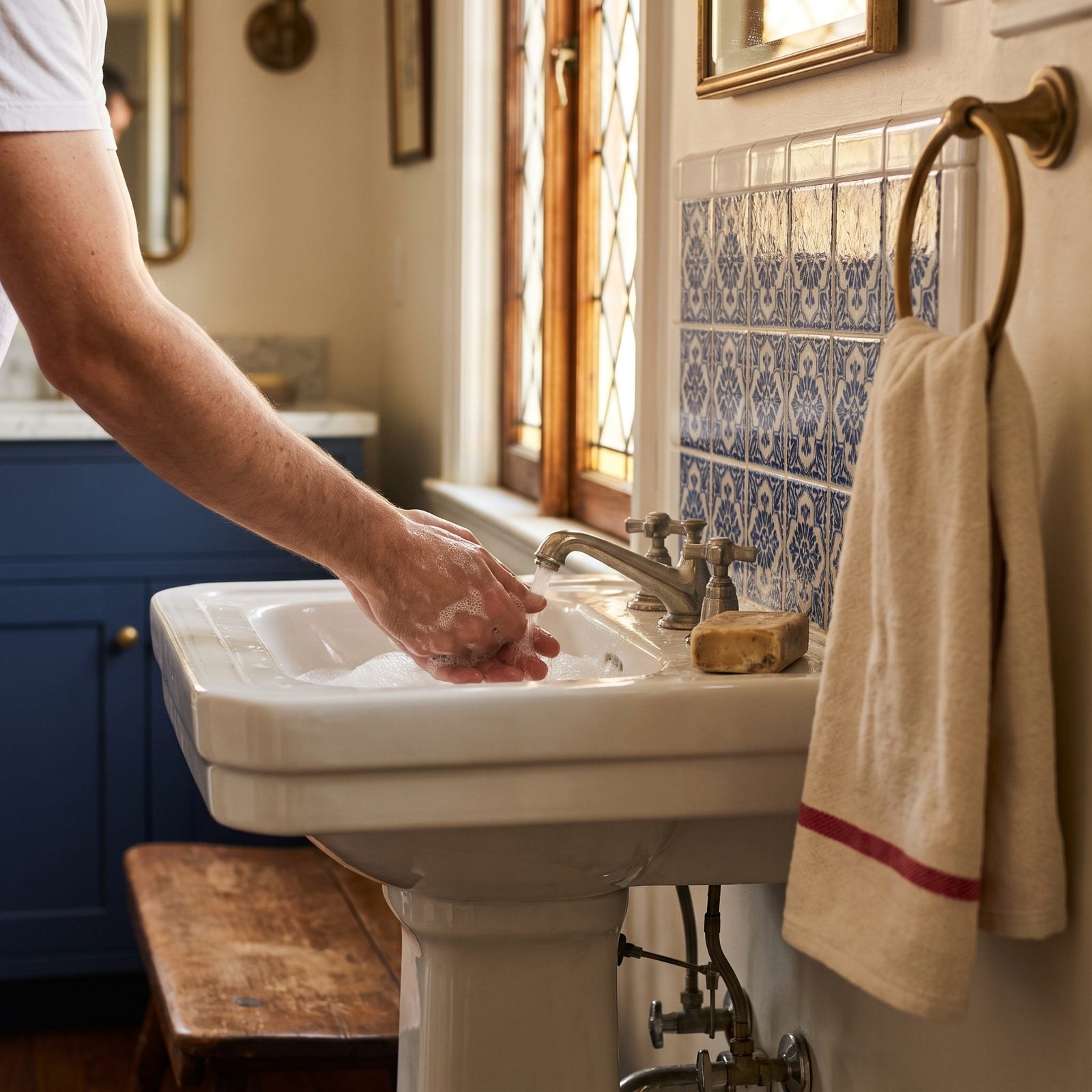
Before you so much as pulled out a chair, you went and washed up. Not a rinse — a real wash, soap and all, because the dirt under your nails from the yard had no business anywhere near supper.
Sounds small until you watch someone sit down and dig in without a second thought. You clock it immediately. Raised right means the washing happens on its own, no reminder needed.
16. Sitting Up Straight in Your Chair
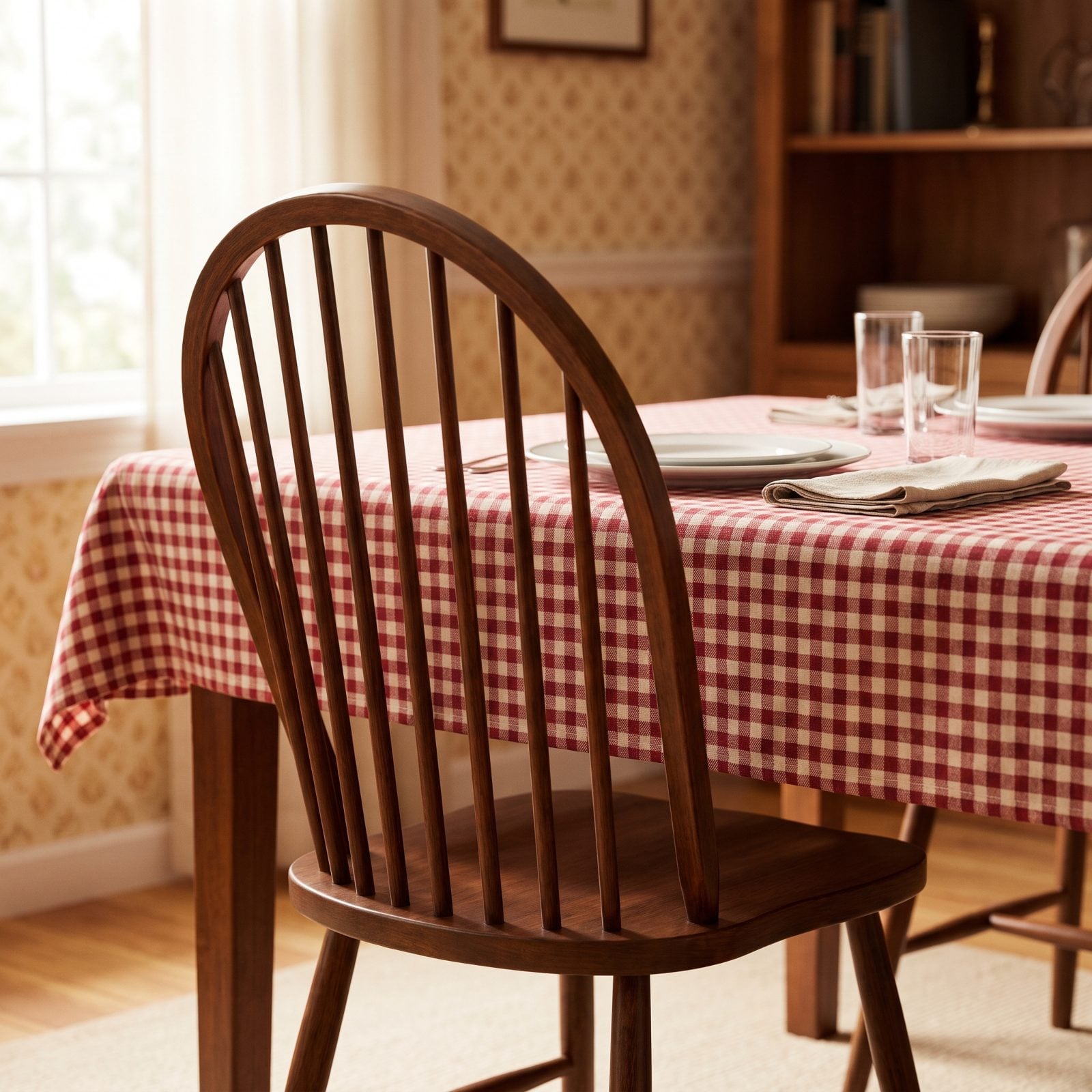
Elbows off. Back straight. Both feet somewhere near the floor. Slouching was treated like a small insult to everyone at the table, and a grandmother’s eyes would find your posture across the room before you’d even noticed it slipping.
Nobody wanted a parade-ground spine at home. But there’s a canyon between relaxed and collapsed, and the people raised right land on the right side of it without trying. They carry themselves like the meal is worth showing up for.
15. Reaching Only for What’s Right in Front of You
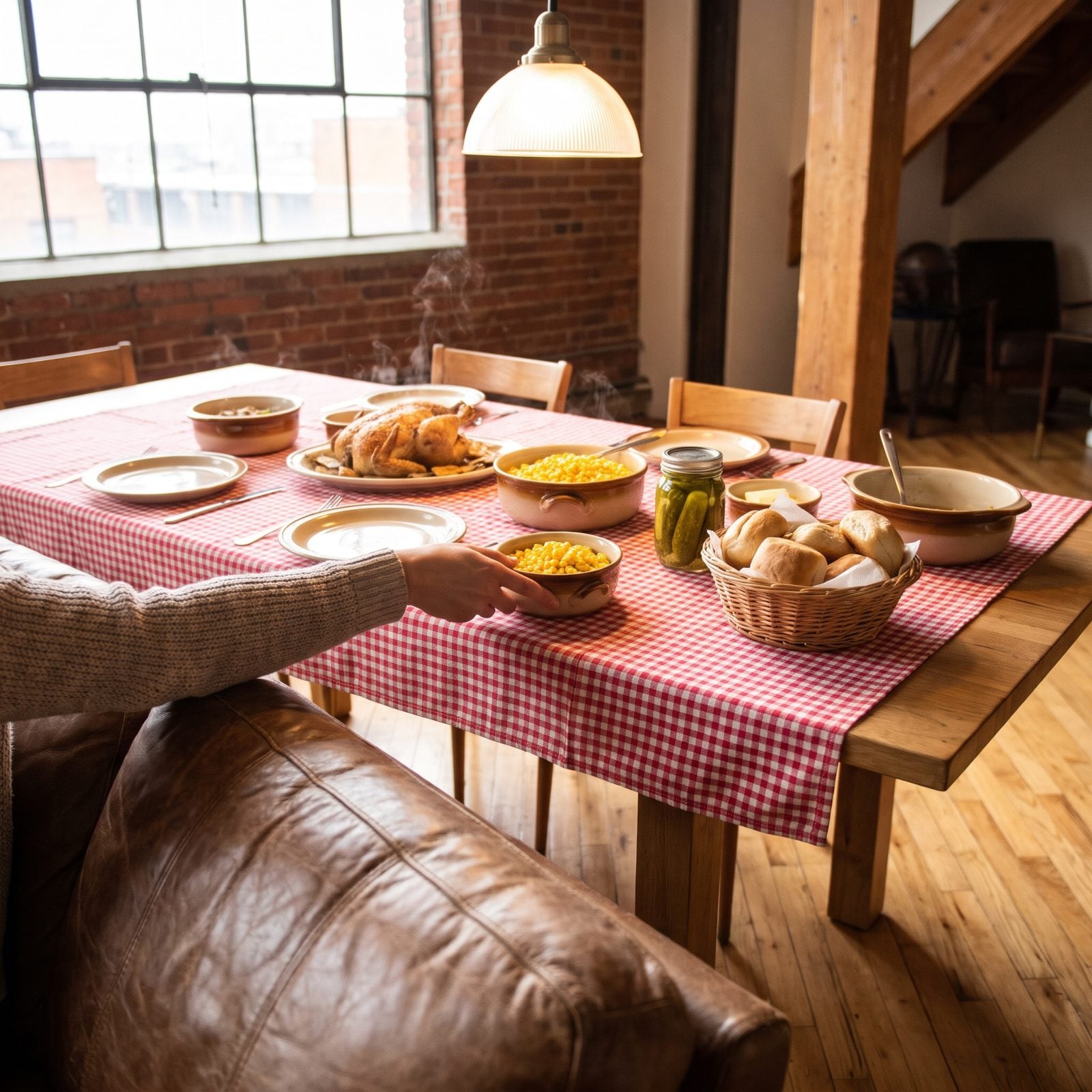
The food in front of you was fair game. Everything else took words. You didn’t lunge, you didn’t stretch, and you absolutely did not let your sleeve trail through the gravy to grab the rolls down at the far end.
Here’s what keeps a crowded table from falling apart: one bad reacher knocks over a glass, bumps an elbow, turns a nice supper into a scramble. The well-raised just ask.
14. Thanking the Host Before You Leave the Table
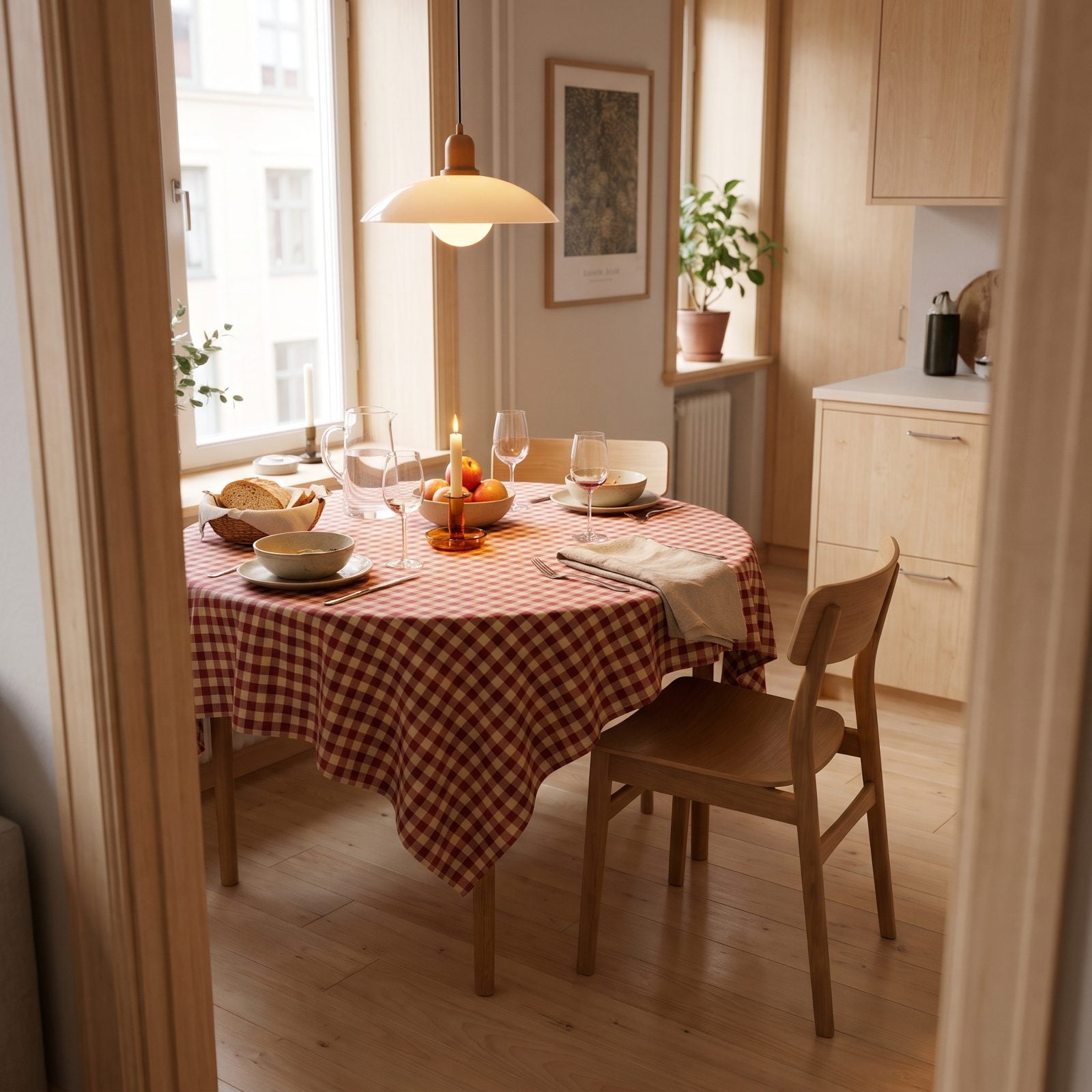
You didn’t get up and wander off. Before you left the table you said thank you, and you meant it, and you said it straight to the person who fed you.
Simple as that sounds, watch how many grown adults skip it entirely. They finish, they stand, they drift toward the couch without a word. The ones raised right close the loop with a thank-you and a folded napkin set beside the plate, and the meal ends the way it ought to.
13. Keep Your Voice Down and Let Others Talk
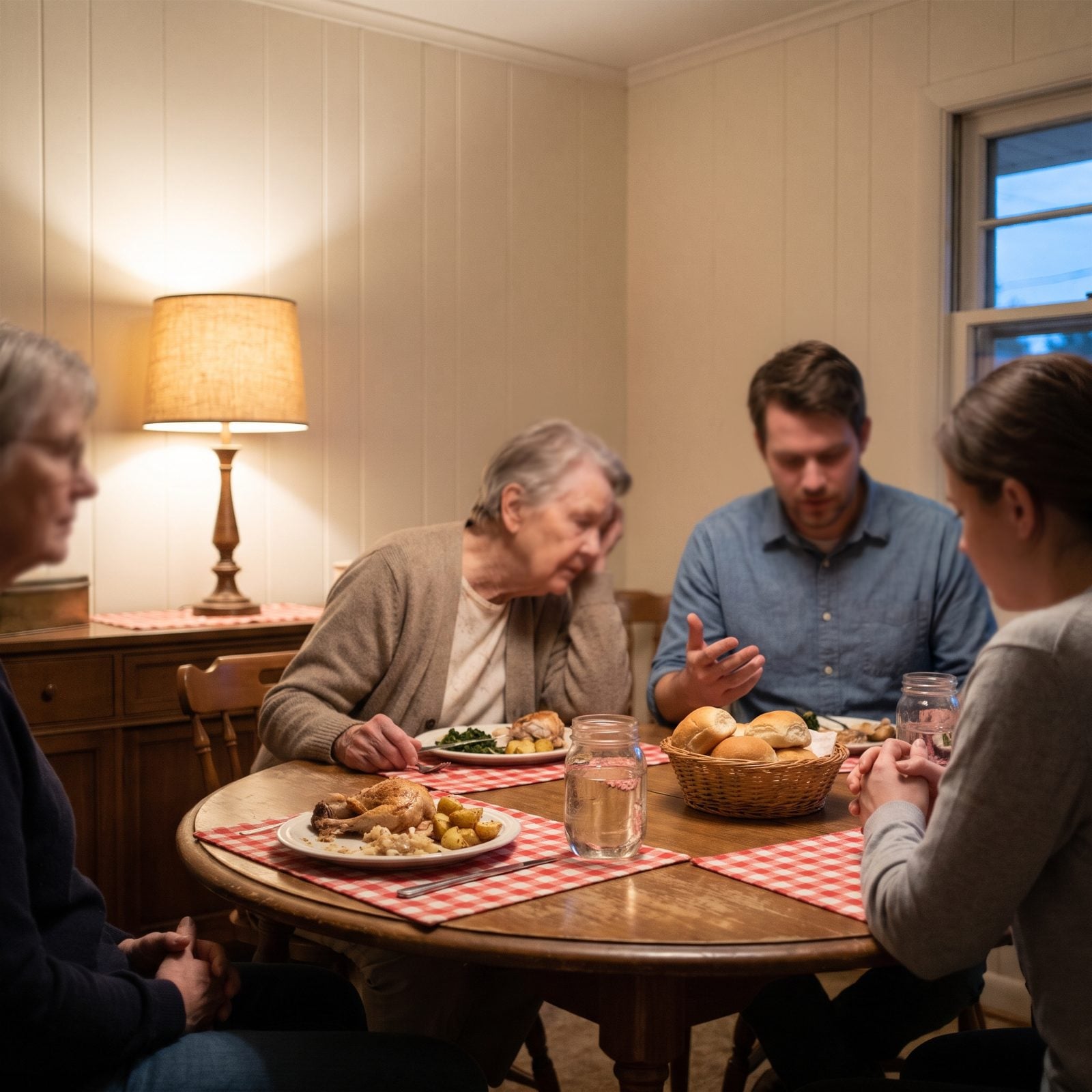
The loudest person at the table is rarely the one who was raised best. There’s a quiet confidence in letting a conversation breathe, in waiting your turn instead of talking over your cousin’s story about the fishing trip.
A dinner table isn’t a stage. It’s a round of give and take, and good home training taught you how to play your part in it. You lower your voice, you ask the follow-up question, and when you notice somebody hasn’t said a word all night, you pull them in.
12. Eat What’s Served Without Complaining
Would you like to save this?
Somebody cooked this. That was the whole argument, and it was enough.
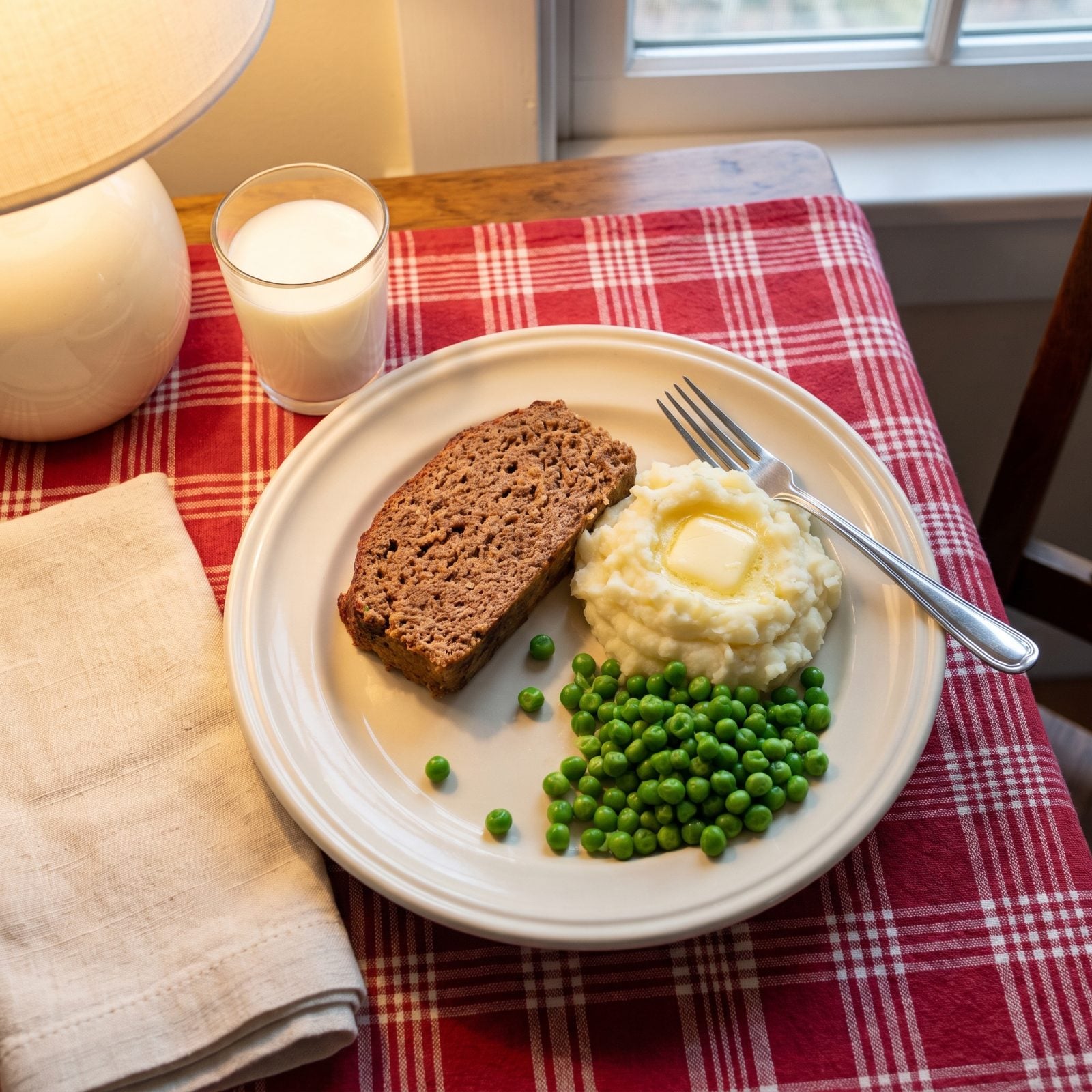
You didn’t push the casserole around your plate announcing what you didn’t like. You ate it, you said thank you, and if the liver and onions truly defeated you, you managed it quietly without turning it into a scene. Complaining about food someone made with their own two hands came awfully close to a cardinal sin.
We all knew kids who were allowed to critique dinner like restaurant reviewers. They were not, as a rule, pleasant to feed.
Not everyone gets excited about the casserole: in our readers’ votes, casserole photos got hearts 66% of the time, compared with 73% for the other images in the same articles.
11. Put Your Fork Down Between Bites
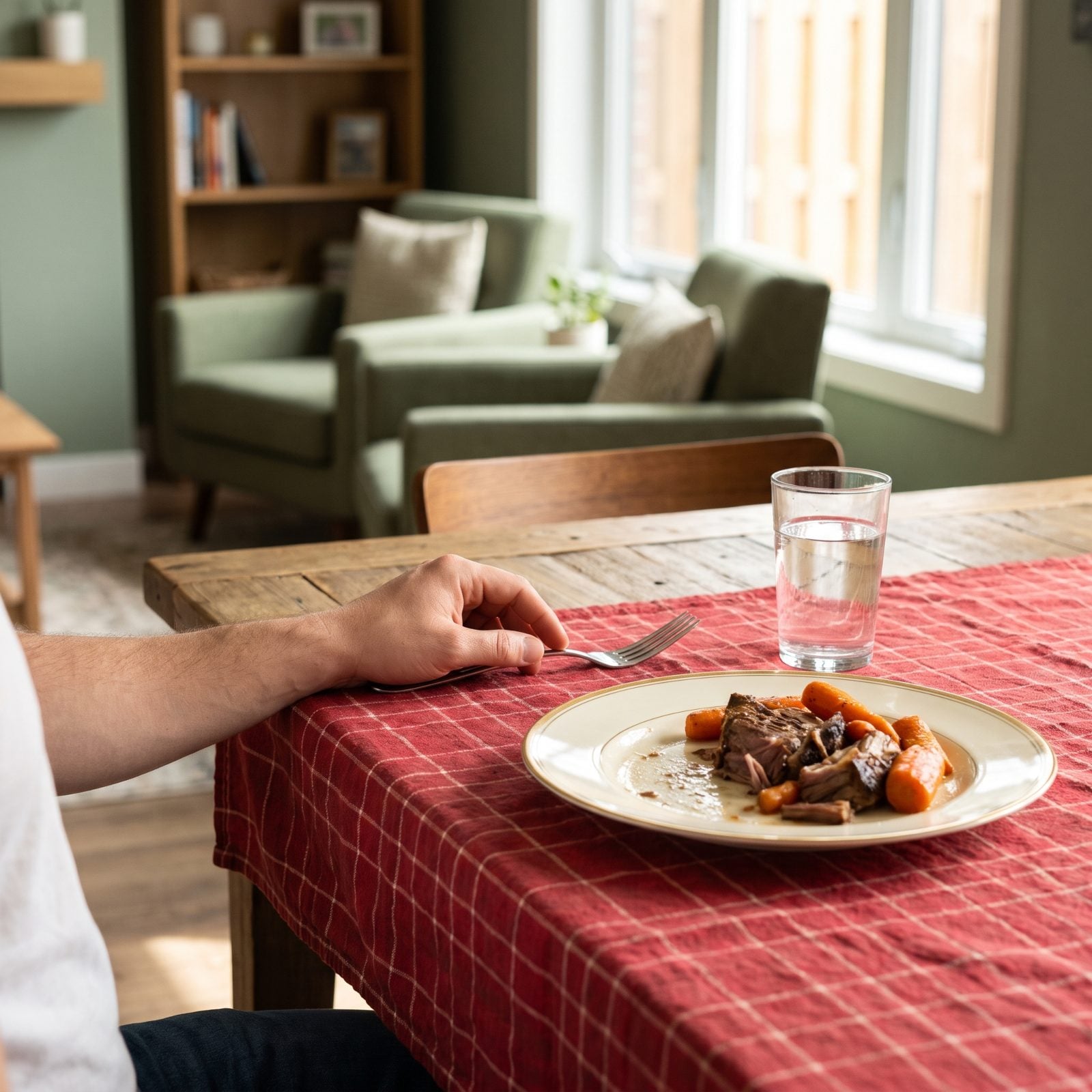
Watch someone who never puts their fork down. They shovel. The food becomes a task to finish rather than a meal to enjoy, and everyone around them feels vaguely rushed.
Setting the fork down between bites slows you to the pace of the people you’re eating with. It gives your hands something to do besides reload, and it signals that you came for the company, not just the calories.
10. Cut One Bite at a Time
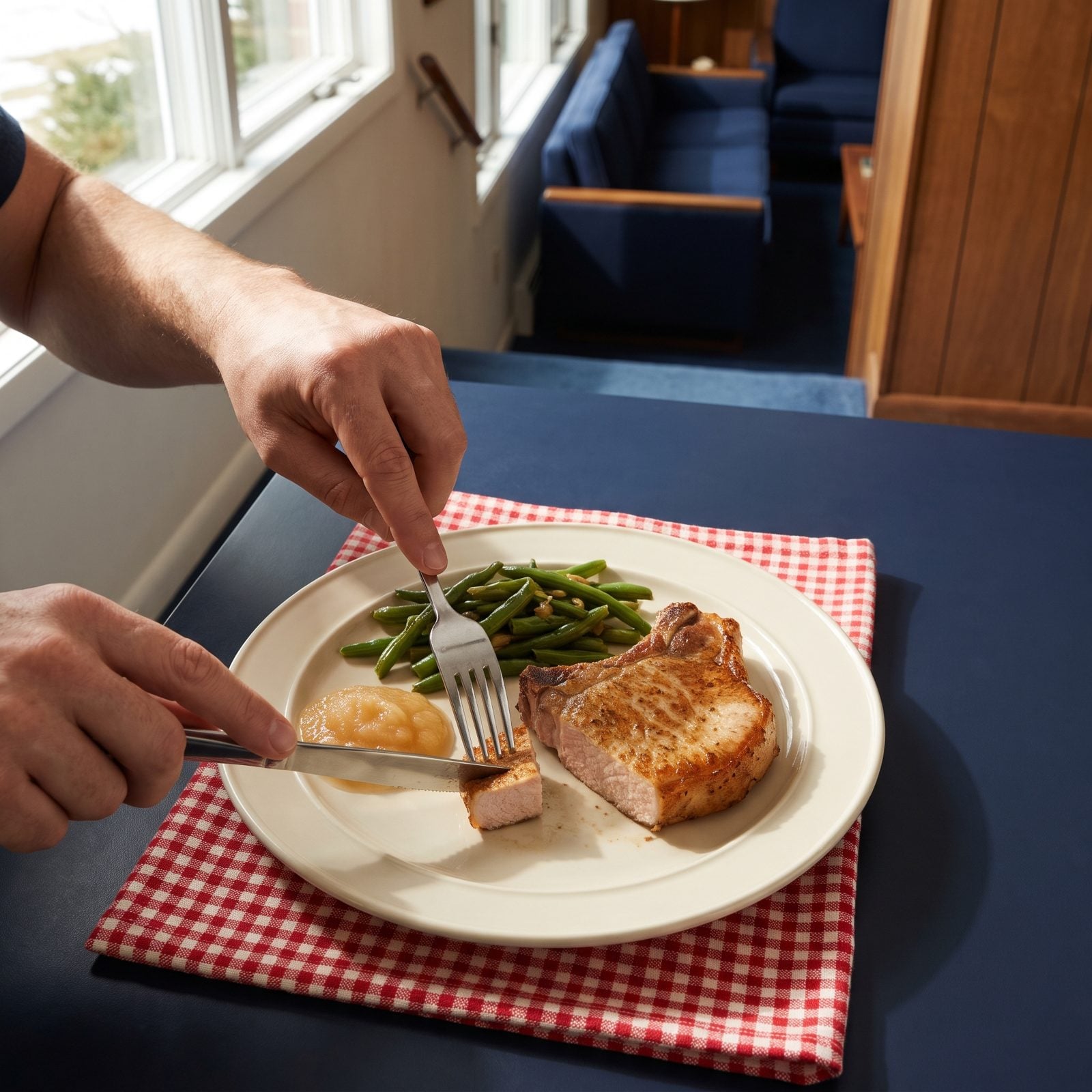
Cutting your whole plate into little squares before you start is something you do for a toddler, not for yourself.
You cut one bite, you eat it, you cut the next. It keeps the plate looking like a meal instead of a pile of debris, and it keeps you present with whatever you’re actually tasting. The person who hacks everything into pieces up front is usually the same one already eyeing seconds.
9. Place Your Napkin Beside Your Plate When Finished
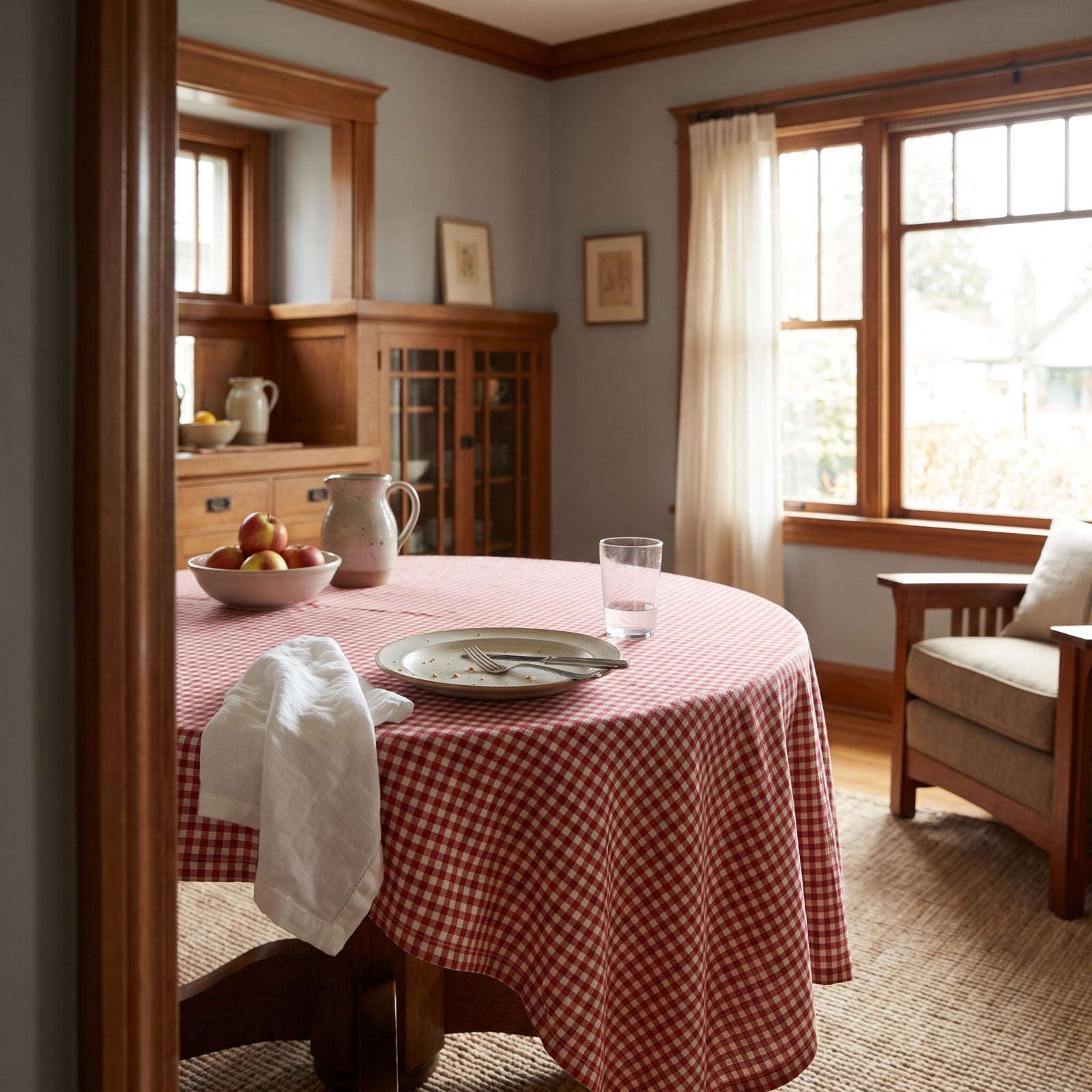
The napkin tells the whole story. Wadded into a ball and tossed on the plate says one kind of upbringing; loosely folded and set to the left of your place setting says another.
Don’t refold it crisply like it’s going back in a drawer. That’s fussy. You just gather it without ceremony and rest it beside your plate, a small signal that you’re done and that you respected the table enough to leave it tidy.
8. Rest Your Utensils at an Angle When Done
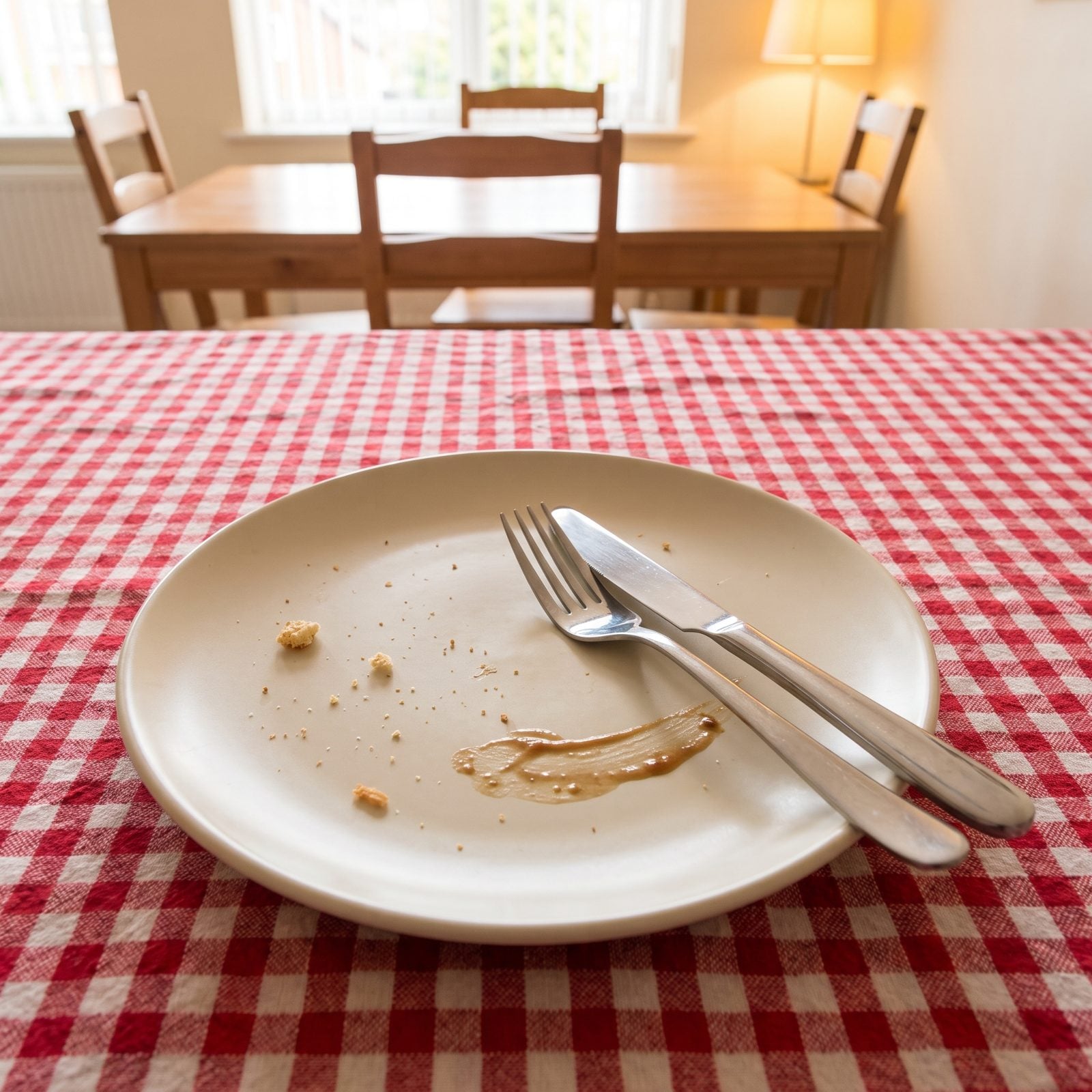
There’s a quiet language in how you leave your silverware, and people who know it recognize it instantly.
Fork and knife laid together at an angle across the plate, pointing somewhere around four o’clock, means you’re finished. Spread apart means you’re still working. Servers in better restaurants read this without a word, and so did your relatives.
7. Offer to Refill Someone’s Drink First
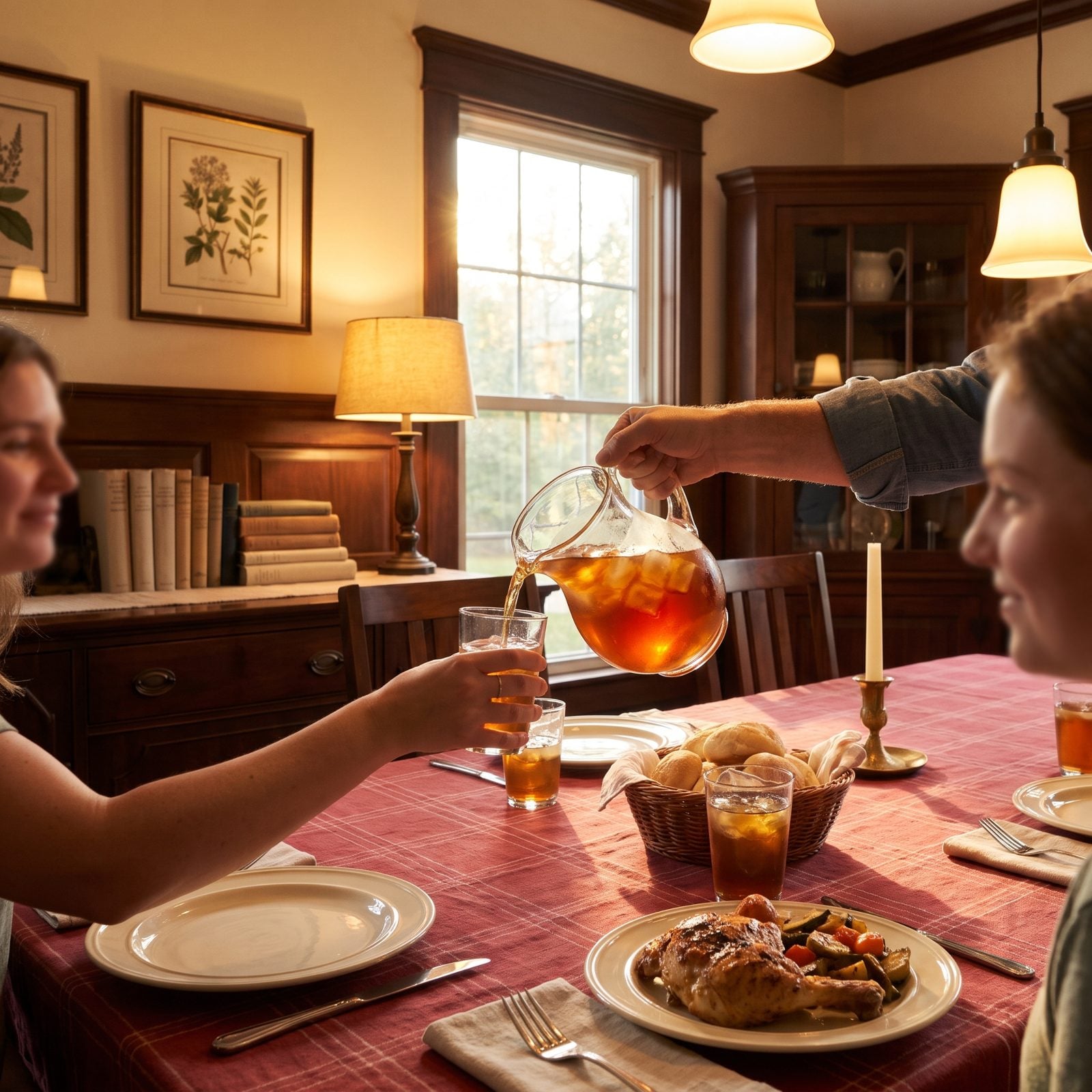
You reach for the pitcher and you don’t fill your own glass first. You ask around the table. Anybody need more tea?
It’s such a small gesture that most people never consciously notice it, but they feel it. Whoever tends to the table before tending to themselves was taught that a shared meal is a shared responsibility, not a buffet line.
We’ll admit we forget this one when we’re hungry and distracted. Worth keeping sharp.
6. Make Eye Contact and Join the Conversation

Eating with your head down, answering in grunts, was never acceptable at a well-raised table.
You looked at the person speaking, you asked how the garden was coming along, and you offered more than one-word answers. The dinner table was the main place a family actually talked, so opting out of that was a kind of rudeness that got noticed, even when nobody said so directly.
5. Take Modest Portions on the First Pass
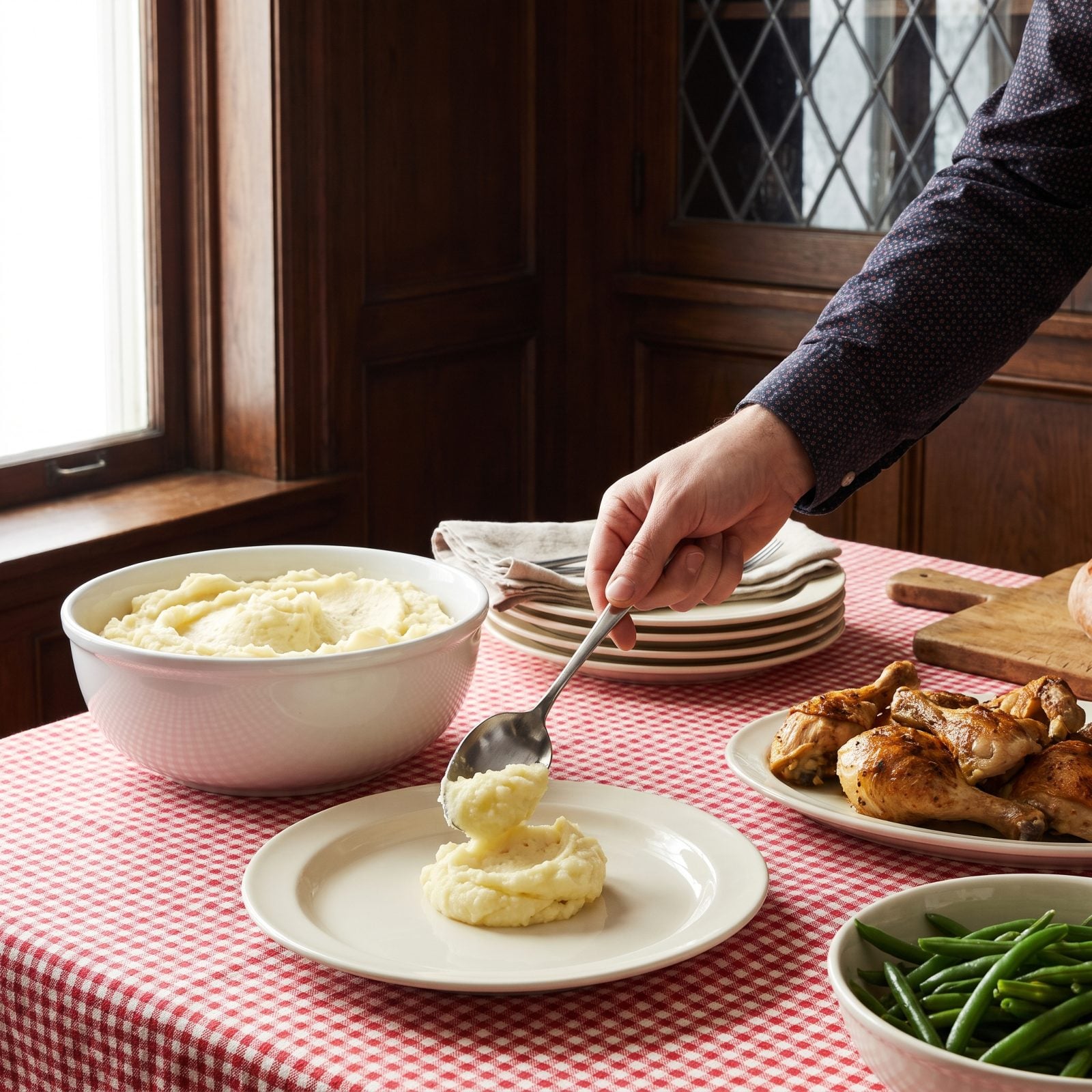
The platter comes around and you take a reasonable amount. Not the biggest piece. Not a mountain of potatoes. Enough.
Loading up on the first pass, before you know whether everyone will get their share, is the oldest tell of poor home training there is. You took what you needed and trusted there’d be seconds if seconds were offered.
Grabbing the best piece before it’s gone around the table once tells on you louder than anything you could say.
4. Serve Others Before Yourself
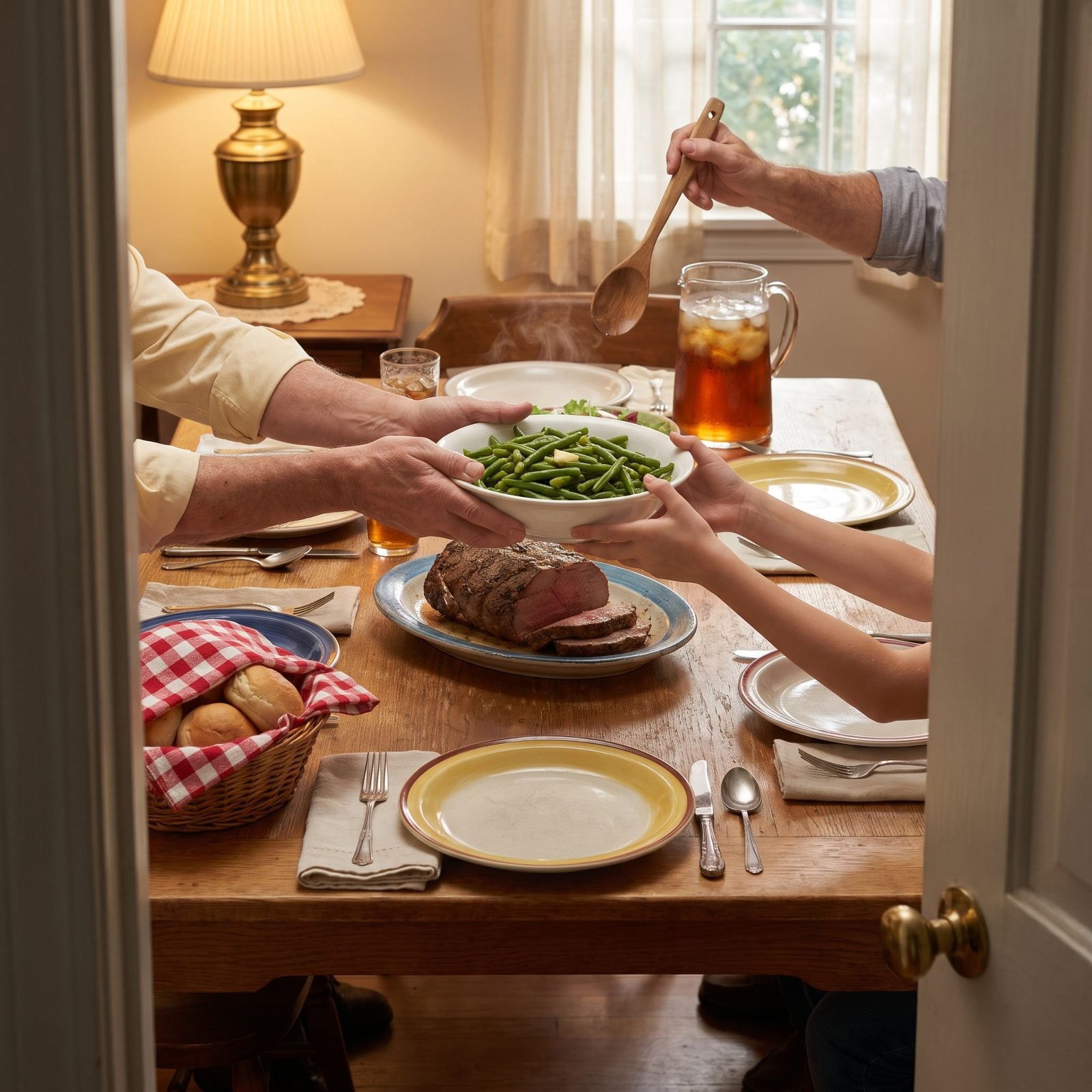
The person who serves themselves last was raised by someone who noticed. You could always tell. The dish went around the whole table before a single fork touched a plate, and the cook — the one who’d stood over that stove all afternoon — ate last by choice.
Reaching across three people to load your own plate first marks you faster than anything you could say. Pass to your right. Hold the bowl steady while somebody else spoons out. Ask whether they want the end piece or the middle. That’s home training doing its quiet work, no announcement required.
3. Keep the Meal Unhurried and Stay Seated
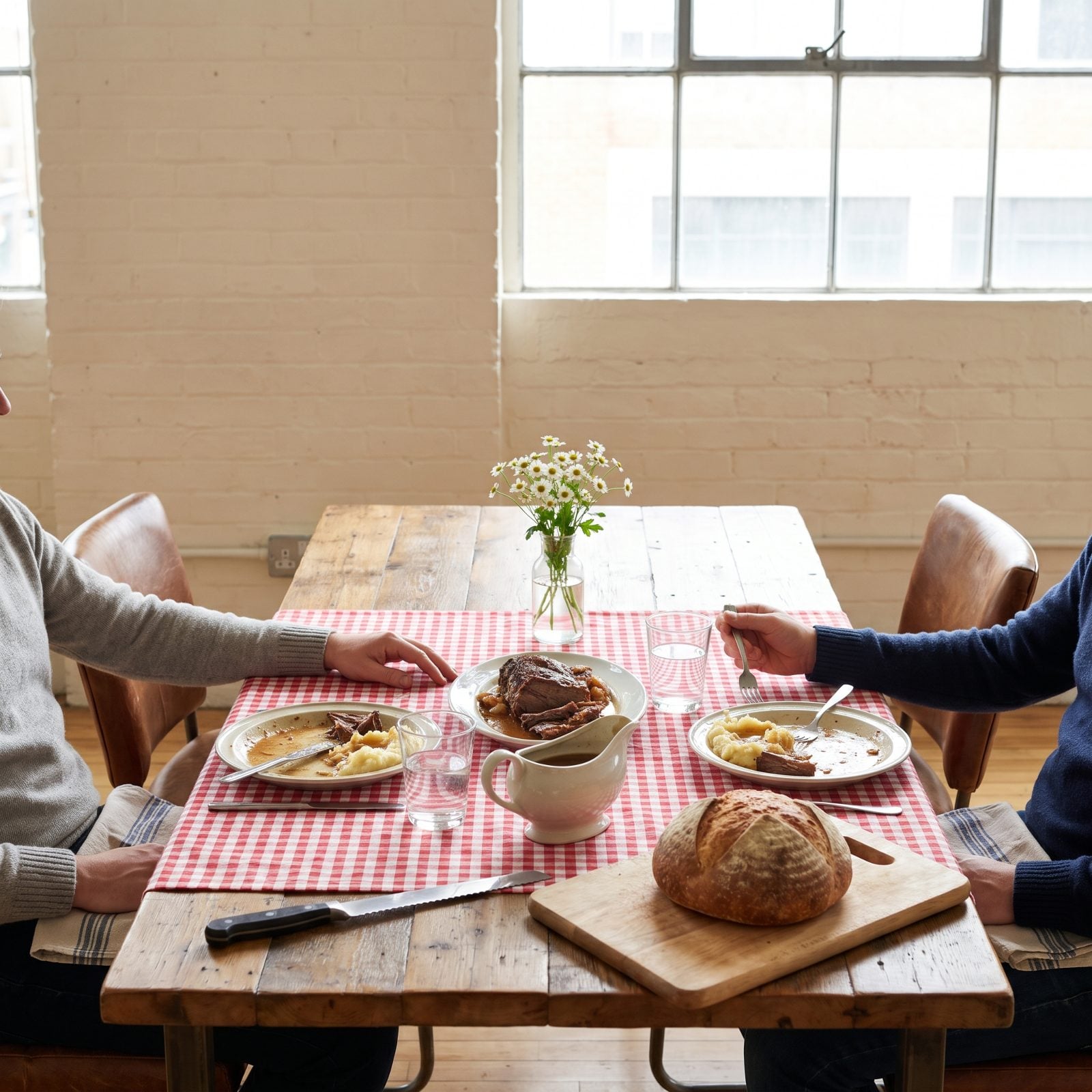
The fastest way to spot bad home training is to watch who bolts first. Somebody finishes, scrapes the chair back, and vanishes to the TV while everyone else is still chewing. It lands like a slammed door.
Staying put until the table clears together has nothing to do with stiffness. Dinner was never only about the food. It was the one stretch of the day everyone landed in the same room at the same time, and leaving early told the room it didn’t matter.
A meal that ends the second your plate is empty was never really a meal. It was refueling.
You asked to be excused. You waited for the nod. And if Grandpa launched into the same fishing story he’d told last Sunday, well — you heard it again, didn’t you.
2. Fold Your Hands or Keep Them Visible
Would you like to save this?
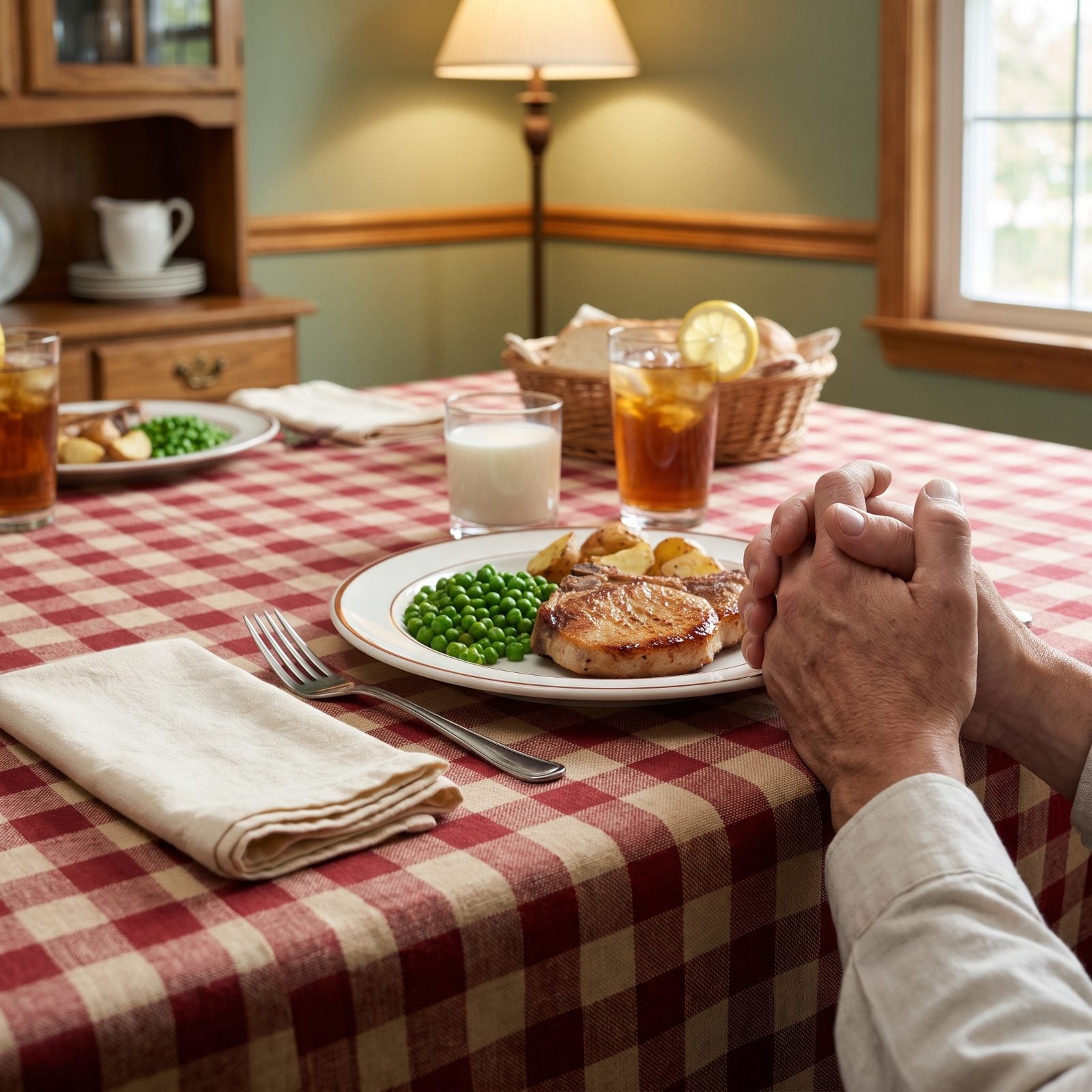
Elbows off, hands where everyone could see them. Not buried in your lap the whole meal, not drumming the edge, not disappearing under the cloth to do who-knows-what.
Folded hands started before grace and never fully quit afterward. Nobody ever explained the reason, but there was one. Hands you could see meant you weren’t fidgeting, weren’t reaching early, weren’t checking out of the conversation. Idle hands got noticed. A kid sitting there with hands folded, waiting, looked like a kid who’d been somewhere nice before.
1. Save Dessert Until Everyone Finishes
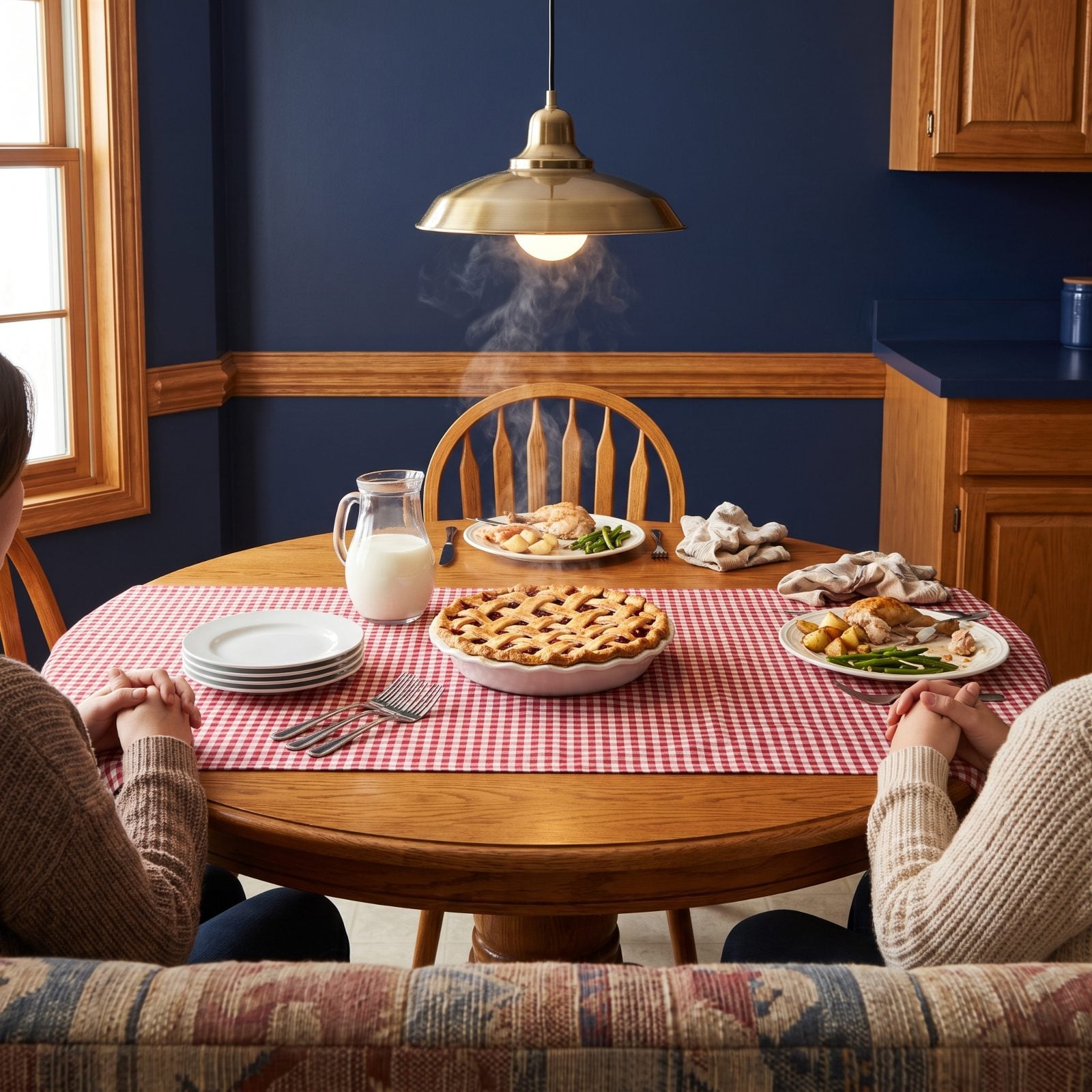
The pie sat in the middle of the table in full view, and nobody touched it. That was the test, and most of us flunked it at least once as kids.
Dessert came out when the last person at the table set down a fork — not one minute before. Eating fast didn’t earn you an early slice. You waited on the slowpoke, the toddler smearing peas, the aunt who talked more than she chewed. Everyone crossed the line together or nobody got cake.
It taught patience without a single lecture. Good training rarely needed words.