Would you like to save this?
The gravy came out of a cast-iron skillet, not a pouch. Somewhere around 1963, a weeknight dinner table carried a plate of something brown over something white, and nobody questioned it. These were the dishes that fed a whole generation on a budget, stretched a little meat into a lot of supper, and smelled up the whole house by five o’clock. Most have slipped off the American table entirely. What follows were the real workhorses of Boomer kitchens.
Please note that some of the images in this article were created with the assistance of AI.
32. Creamed Chipped Beef on Toast, The Dish Everyone Called SOS
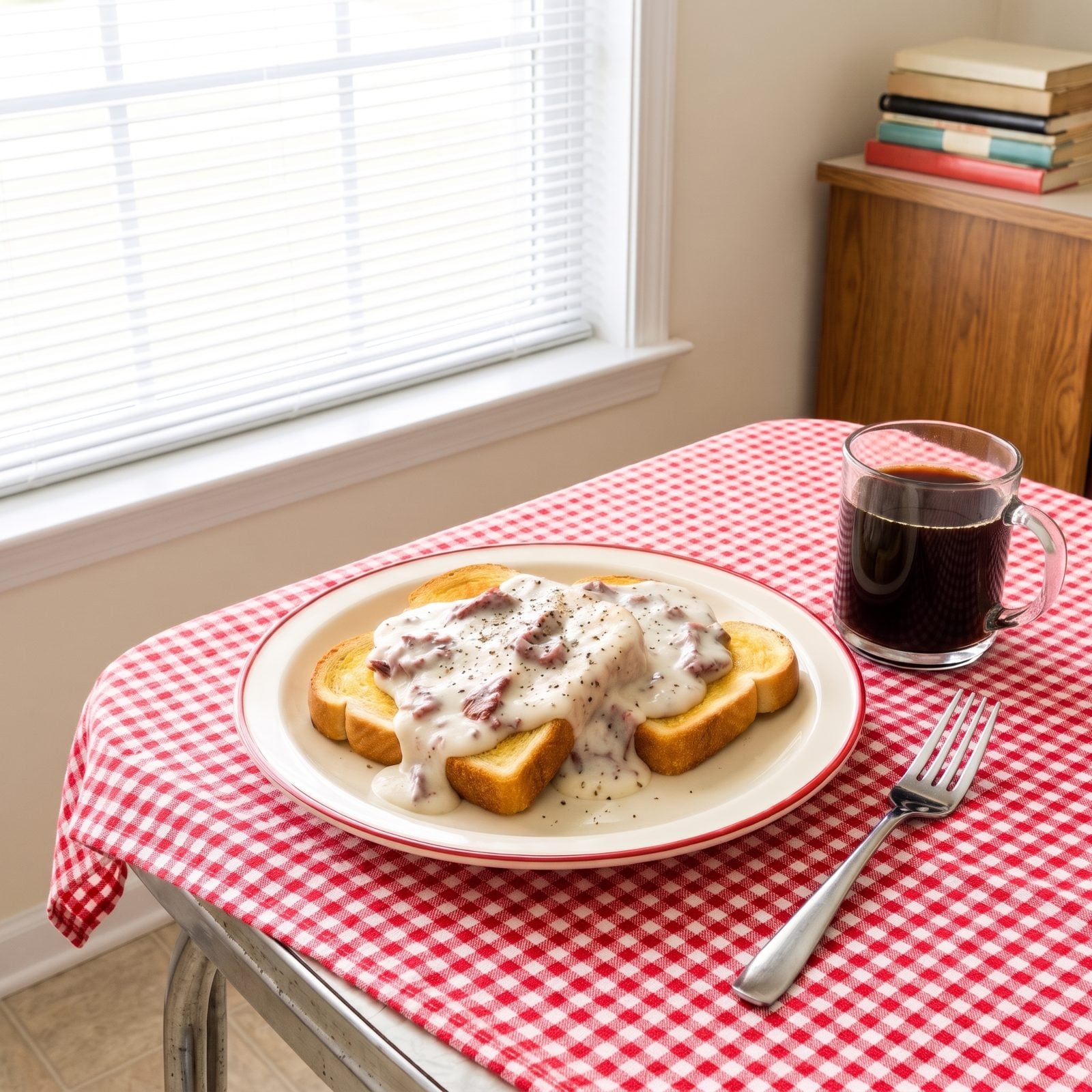
Soldiers gave it the name, and the name was not polite. Creamed chipped beef on toast fed the military, then followed the men home after the war and planted itself on the breakfast and supper table alike. A jar of salty dried beef, a white roux, a slab of toast underneath to soak it all up. Cheap, filling, done in ten minutes.
Your grandfather probably loved it with a fierceness that confused everyone. Gen Z has mostly never seen it, and when they do, that gray-and-white color scheme does it no favors on a dinner plate.
31. Liver and Onions, The Friday Supper Nobody Volunteers For Anymore
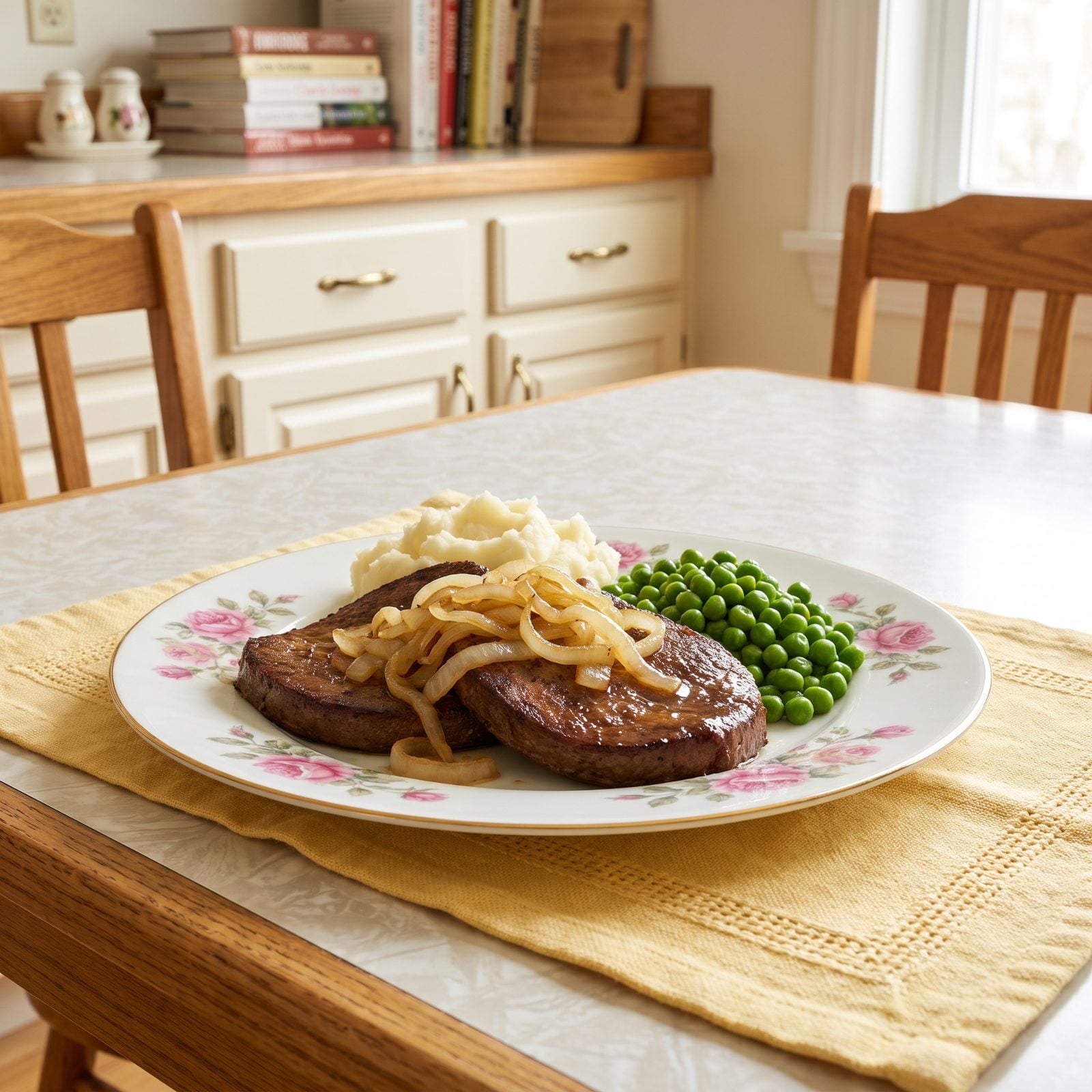
The whole house knew what was for dinner before you walked in the door, because liver has a smell no amount of onion could fully cover. Boomer parents served it because it was cheap, packed with iron, and the doctor said it was good for you. Kids pushed it to the edge of the plate and negotiated.
There was always an argument about how long to cook it. Overdone, it turned to shoe leather; done right, it was tender in the middle with those sweet onions on top. I’ll admit it, cooked properly it’s better than its reputation. But that reputation is a tough thing to shake, and Gen Z never gave it the chance.
What Our Readers Say
- When Piaci Pizza readers loved a food photo and tapped a reason, nostalgia and comfort tied for the top spot, each picked 22% of the time.
From Piaci Pizza reader polls and votes.
30. Tomato Aspic, The Wobbling Red Centerpiece of Every Ladies’ Luncheon
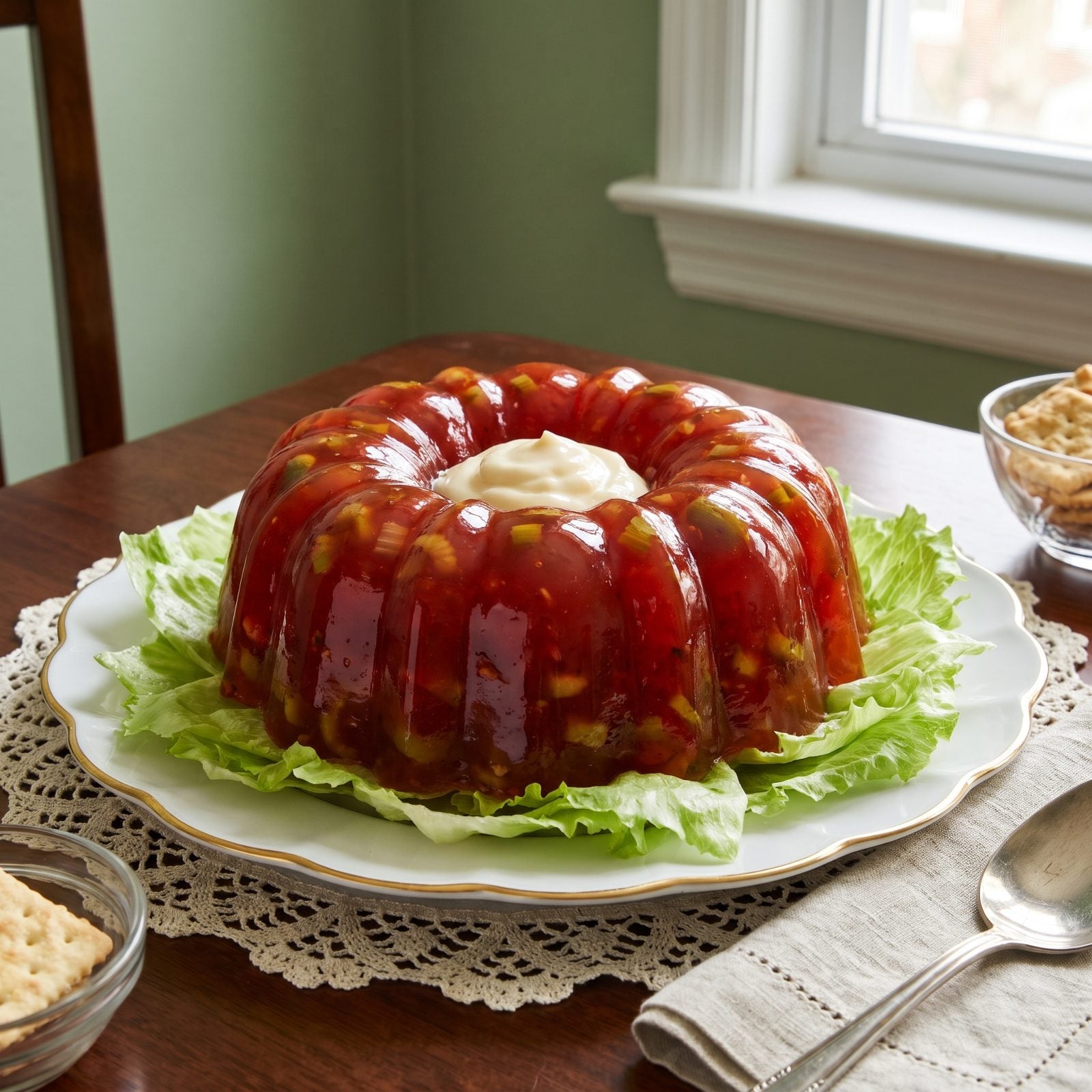
Savory gelatin was once the height of sophistication. Tomato aspic trembled at bridge-club luncheons and holiday buffets, a quivering red ring of tomato juice, gelatin, Worcestershire, and whatever crunchy bits the hostess had on hand. Celery, olives, sometimes a hard-boiled egg trapped inside like a fly in amber.
It looked impressive on the good china. A mold, a cold refrigerator, and real planning went into it. But eating cold, solid tomato juice hasn’t survived into this century, and I don’t think anyone under forty would recognize it as food.
29. Tuna Casserole With the Crushed Potato Chip Topping
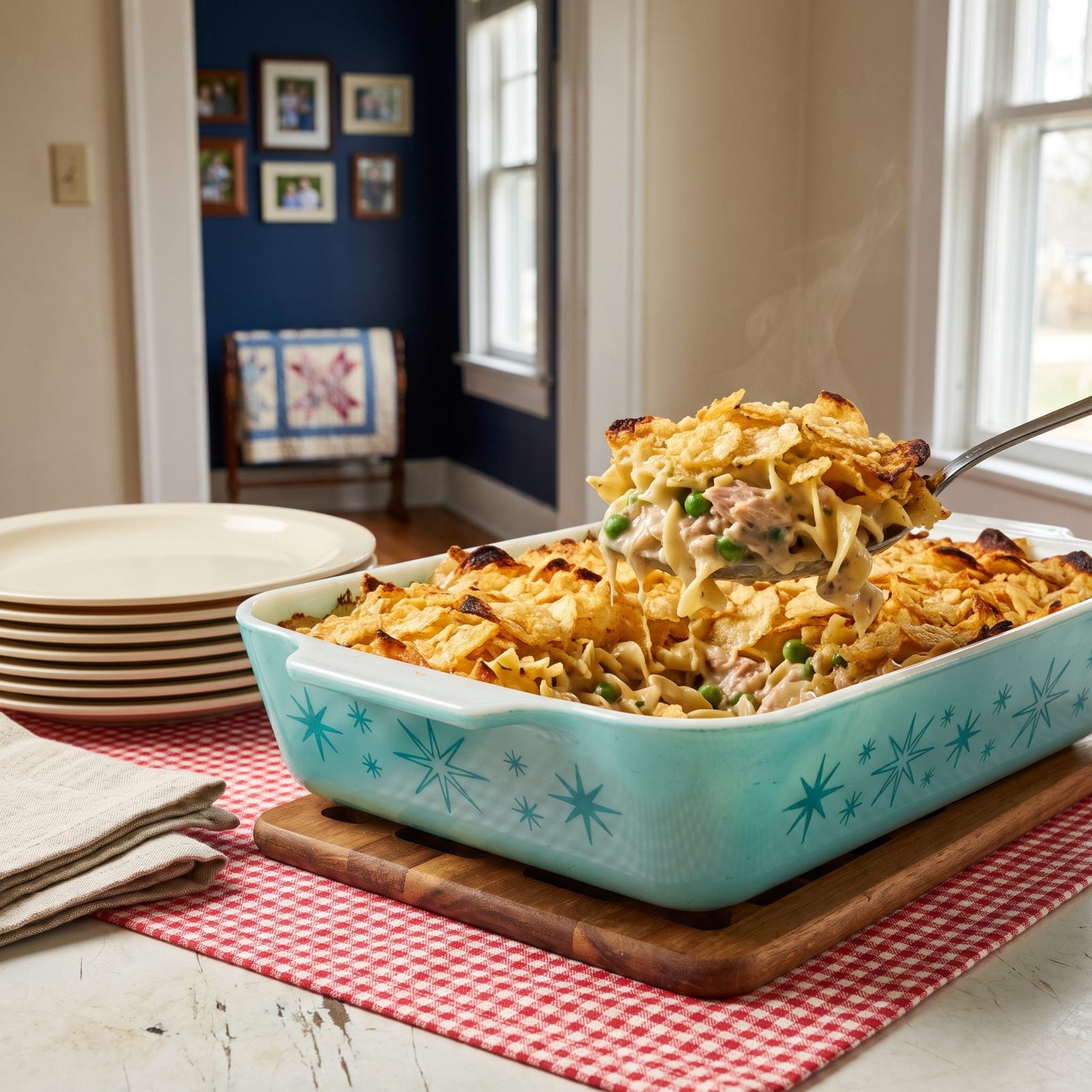
Open a can of tuna, open a can of cream of mushroom soup, boil some noodles, and dinner practically made itself. This was the casserole that fed America on the cheap, especially on meatless Fridays. The genius move was the topping, though. Crush a handful of potato chips over the top before baking and you got a salty golden crust that made the whole thing worth eating.
Tuna casserole hasn’t fully vanished, but it’s become a punchline, and the crushed-chip version in particular feels like a relic. Gen Z would rather order the tuna on a poke bowl than bake it into a soup-bound noodle brick, and honestly I can’t blame them for wanting it fresh.
Not every reader is sentimental about the casserole era: in our heart vs thumbs-down votes, casserole photos got fewer hearts than the other images in the same articles, 66% versus 73%.
28. Jell-O Salad With Fruit and Vegetables Floating Inside
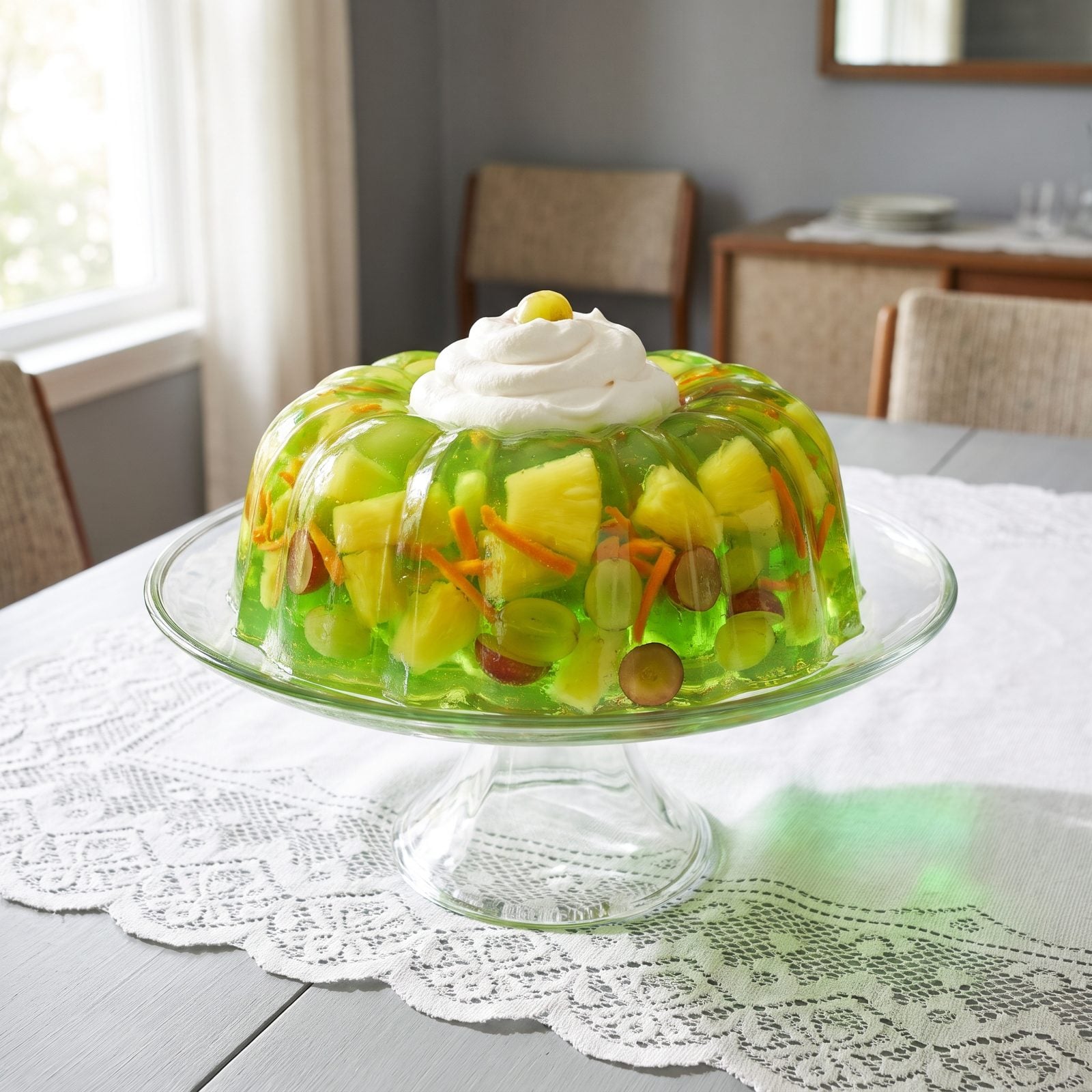
Lime Jell-O did strange things in a Boomer kitchen. It held carrots. It cradled canned pineapple and shredded cabbage and sometimes cottage cheese, all floating mid-mold like they’d been caught in motion, and nobody blinked. The congealed salad was a potluck headliner and a Thanksgiving fixture on tables across the country.
It counted as a salad, which was the joke nobody was in on at the time. Sweet, savory, and crunchy all suspended in wobbling green. Gen Z meets this dish with pure bewilderment, and a vegetable floating in dessert gelatin reads to them like a prank.
27. Chicken à la King, The Fancy Weeknight Cream Dish
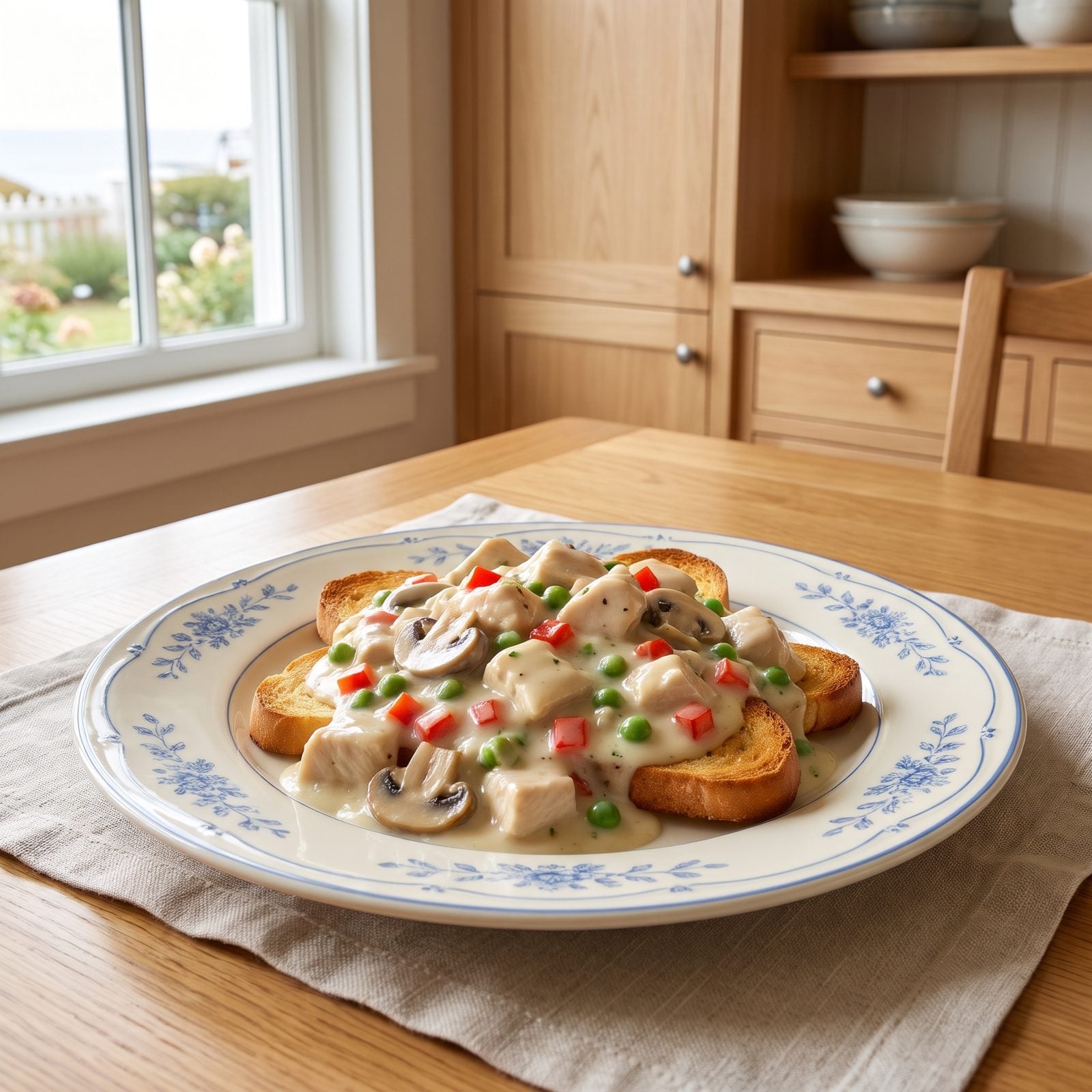
This was the dish you made when company came. Chicken à la king felt elegant, a creamy tangle of chicken, mushrooms, and little red pimento jewels poured over toast points or sometimes into a puff-pastry shell. The pimento made it look special, the cream sauce made it rich, and the whole thing punched above its price.
It showed up at church suppers and ladies’ luncheons and on the occasional lucky Tuesday. Then it quietly disappeared, pimento and all, and most young cooks have never heard of it. A shame, really. Done well, it’s genuinely good.
26. Salisbury Steak Drowning in Brown Gravy
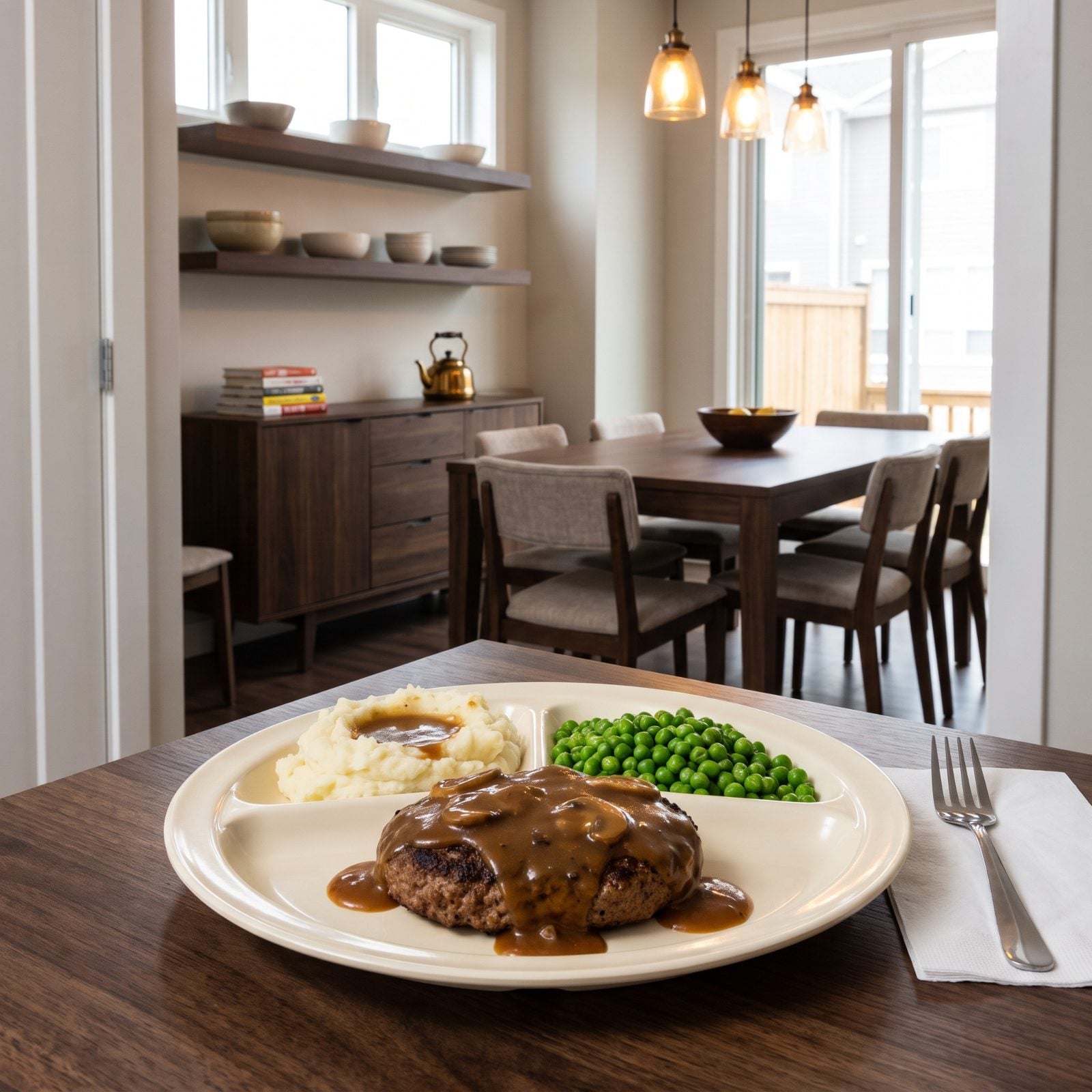
A hamburger patty got a promotion the moment you ladled brown gravy over it and called it steak. Salisbury steak was the smart cook’s way of stretching cheap ground beef into something that felt like a proper meal, shaped into an oval, seared, then simmered in onion and mushroom gravy until tender.
It lived on school lunch trays, in Swanson TV dinners, and on kitchen tables every Thursday. The name alone sounds grander than what it was. Boomers ate it constantly. Gen Z mostly knows it, if at all, from the frozen-dinner aisle, which isn’t the same thing at all.
25. Deviled Ham Spread Sandwiches From the Little Paper-Wrapped Can
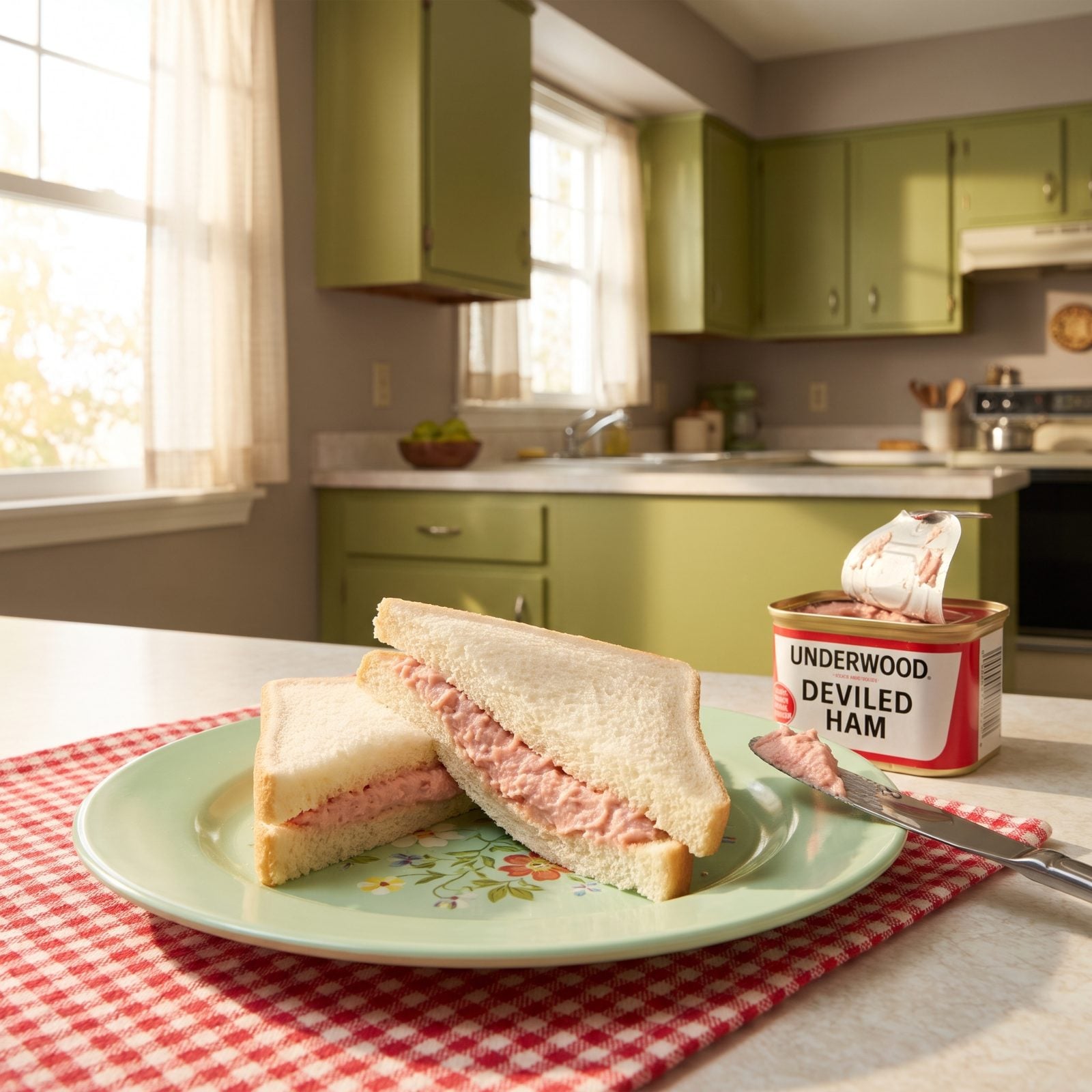
The can was a squat rectangular tin with a red-and-white label and a peel-back lid, and inside was a smooth pink paste that smelled faintly of cloves and spice. Deviled ham went on soft white bread, got cut into triangles, and went straight into a lunchbox or onto a bridge-party platter. It spread like butter and tasted like salt and smoke.
Convenient, shelf-stable, cheap. It was a pantry regular for decades. But that pink hue and the processed texture make it a hard sell to younger eaters, who tend to meet a potted meat spread with suspicion rather than appetite.
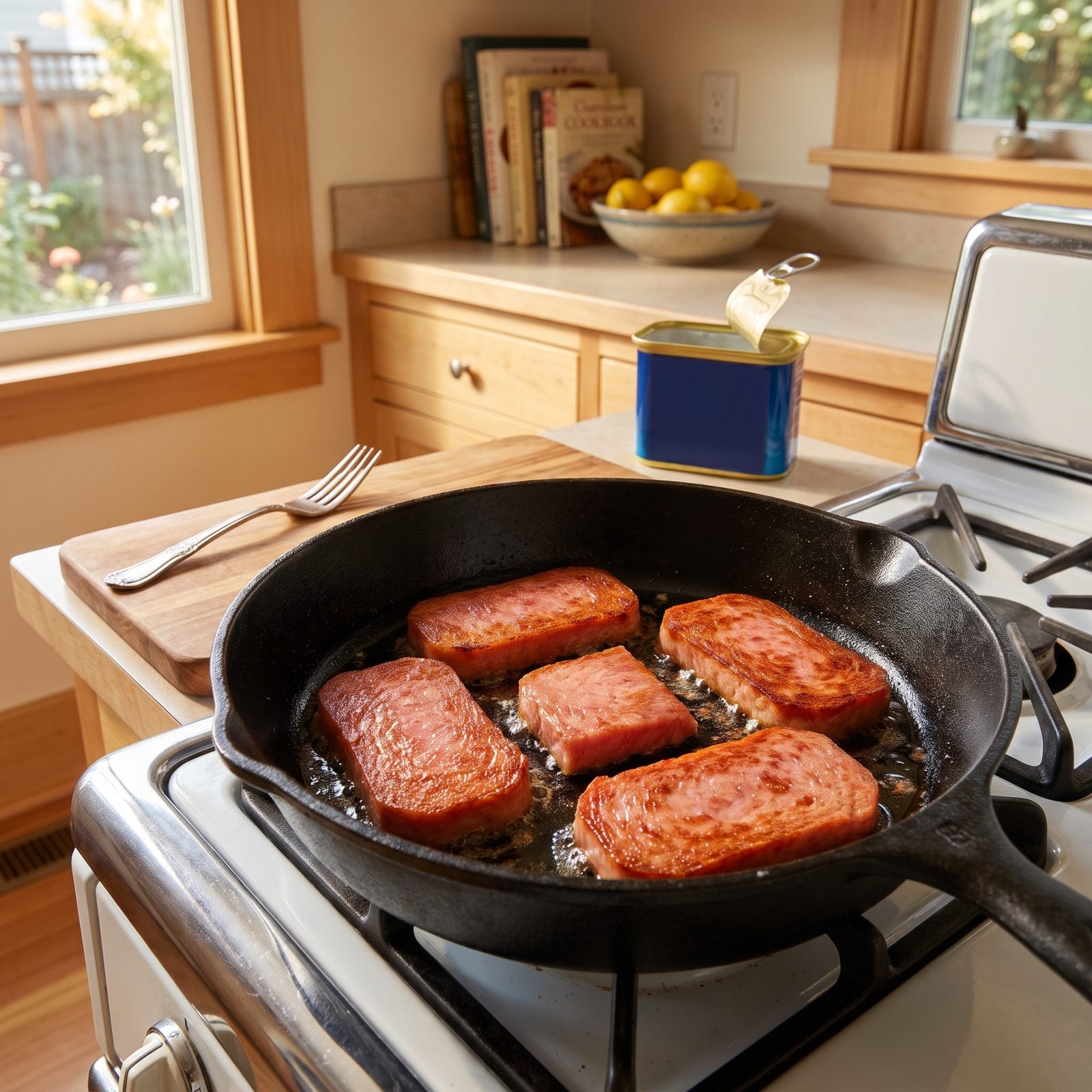
24. Spam Sizzling in a Cast-Iron Skillet
Would you like to save this?
That first slice hitting a hot skillet made a sound you don’t forget. Spam fried up with crisp caramelized edges and a salty, savory center, and for a lot of Boomer households it was a regular on the table. Breakfast with eggs, lunch in a sandwich, dinner with rice. Made famous by wartime rationing and never fully retired.
Cheap, shelf-stable, ready in minutes. It kept whole families fed during lean years and stuck around out of plain loyalty long after.
23. Vienna Sausages Fished Straight Out of the Can

Pop the lid, and there they were, a row of little pale sausages packed tight in their own soft jelly. Vienna sausages were the snack-cabinet workhorse, eaten cold straight from the can, speared on a toothpick, or laid out on saltines with a dab of mustard. No cooking, no plate, no fuss.
They rode along on fishing trips, camping weekends, and lunch pails. Cheap protein that needed nothing but a can opener. Younger eaters tend to recoil at the jelly and the mystery of what’s actually in there, and the little can has slid from pantry staple to curiosity.
22. Braunschweiger on Rye, the Lunch That Smelled Like a Grandfather’s Kitchen
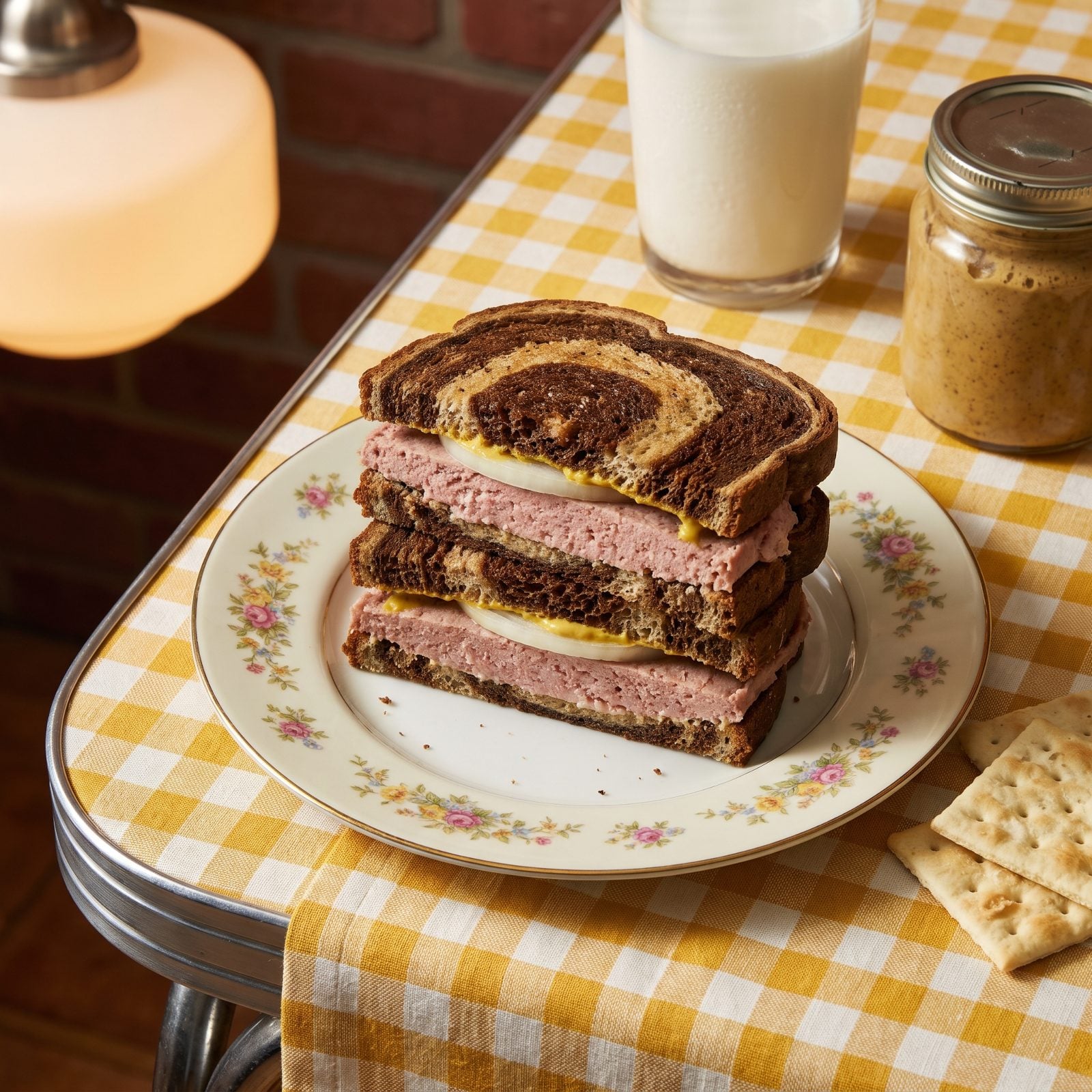
Half the country grew up on this and the other half has never heard the word. Braunschweiger was a fixture in German-American homes, a soft smoked liverwurst cut into thick, rosy-pink slabs and stacked on marbled rye, then crowned with raw onion and a slap of mustard. Grandpa ate it standing at the counter because it was cheap, it kept forever in the fridge, and it had a smell that announced itself the second the paper came off.
Gen Z has largely never met it. Organ meats fell out of favor somewhere in the 80s, and liverwurst got filed under things only old men eat. A shame. The good stuff is rich and almost creamy.
21. Head Cheese, the Deli Slice Nobody Under 40 Will Touch
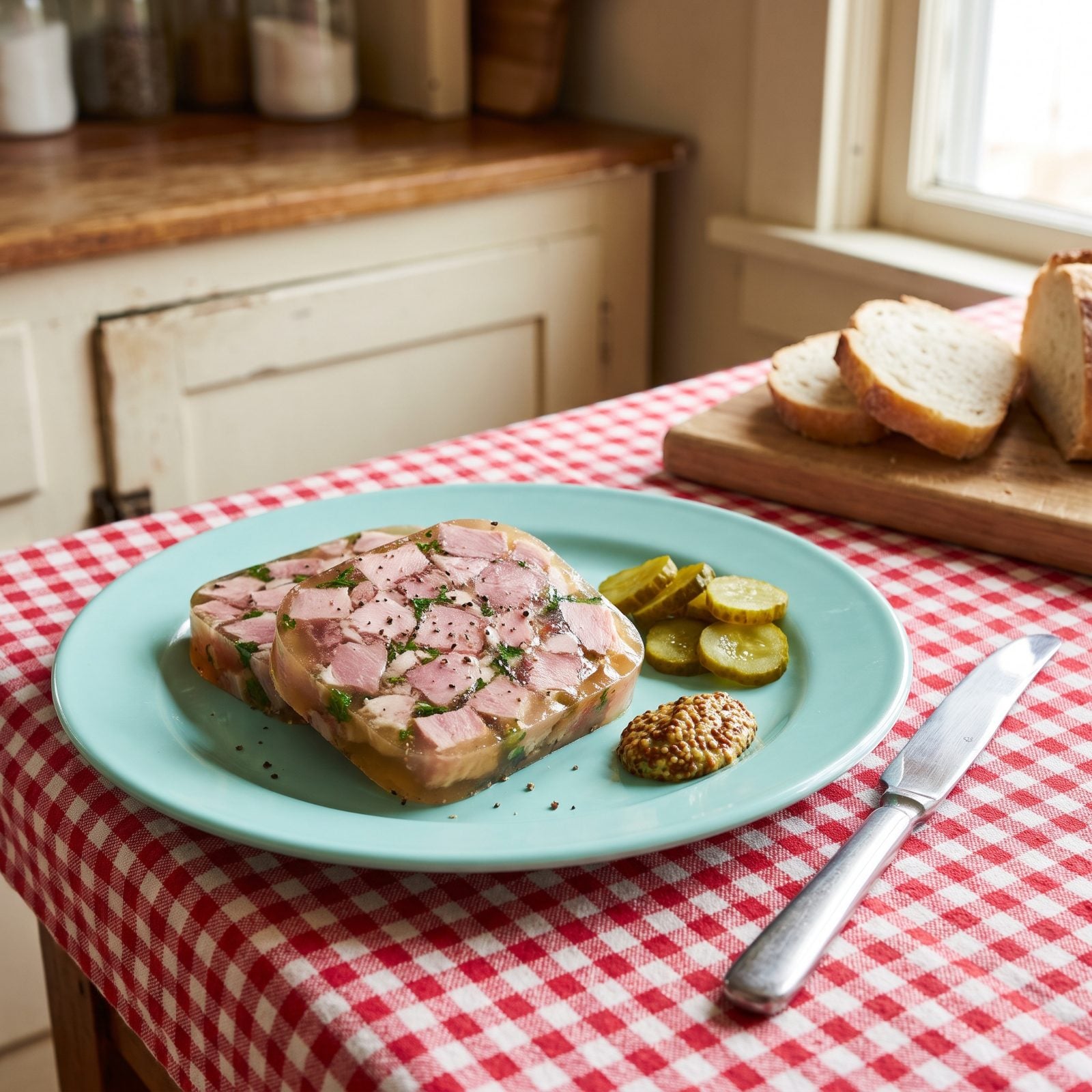
Let’s be straight: the name did it no favors, and neither did the recipe. Head cheese is not cheese. It’s a terrine made from the meat of a pig’s head set in its own gelatin, sliced cold, eaten on bread with mustard and pickle. Thrifty cooks used every part of the animal, and this was the part most people would rather not picture.
For decades it lived in the deli case right next to the bologna. Now you have to hunt for it, usually at an old-school butcher or a Polish or German market, and Gen Z meets it mostly as a dare.
20. Oxtail Stew, the Sunday Pot That Simmered All Afternoon
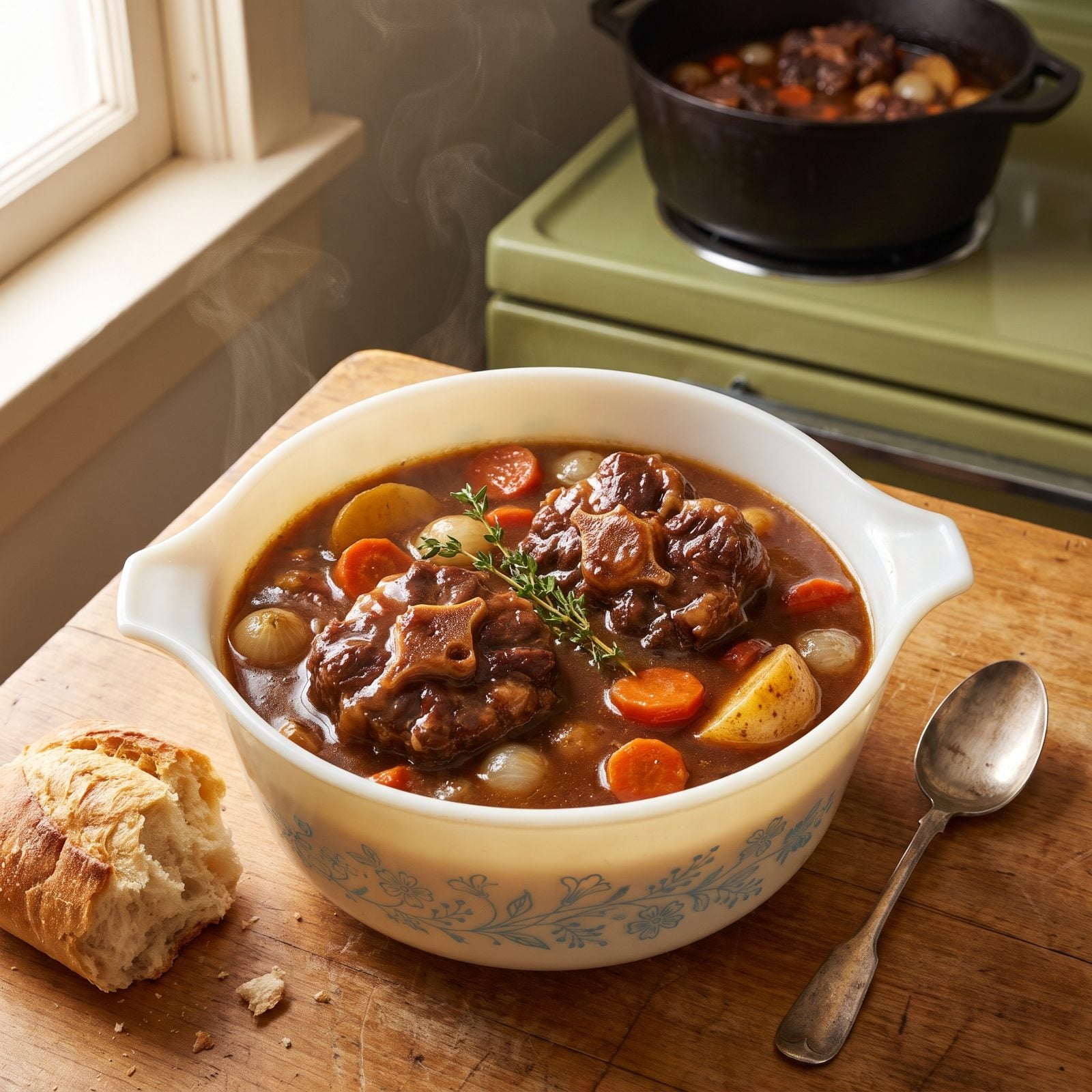
This was patience food. Oxtail was dirt cheap because it was the tail, full of bone and connective tissue, which meant it demanded hours in a low oven before it gave up anything good. And then it gave up everything: a gravy so rich with gelatin it coated your lips, meat that slid off the bone, a pot that made the whole house smell like Sunday.
Now the twist that would’ve broken a 1960s budget cook’s heart. Oxtail isn’t cheap anymore. Chefs rediscovered it, and these days it costs more per pound than a decent steak. The dish that fed hard-up families turned into a restaurant luxury, and Gen Z, if they know oxtail at all, knows it from a trendy menu rather than a grandmother’s stove.
19. Tongue Sandwiches, a Deli Classic Gen Z Can’t Get Past
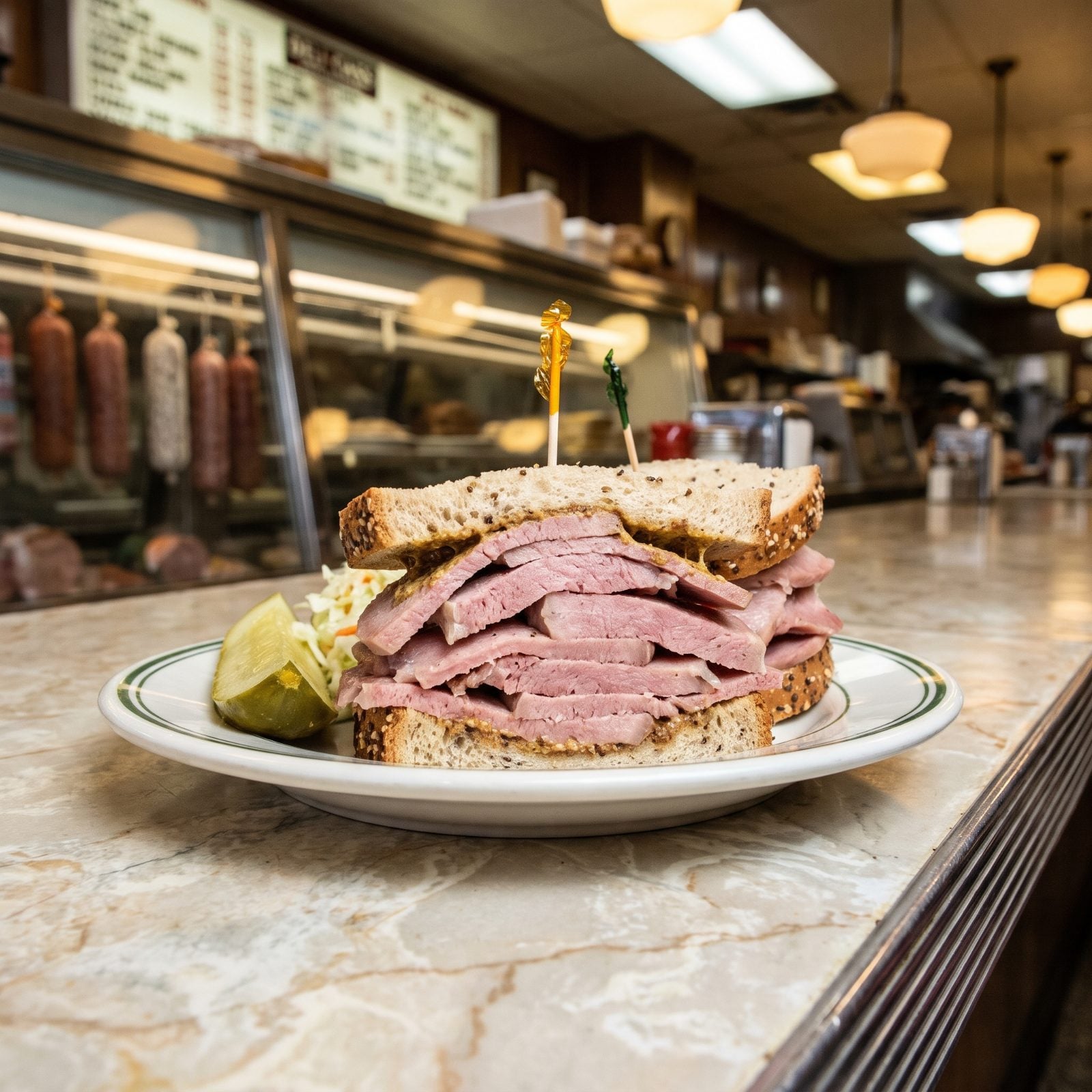
Walk into a classic Jewish deli in 1965 and tongue was right there on the board between pastrami and corned beef, and nobody blinked. Sliced thin, it’s tender and mild, a little like roast beef with a finer grain, and piled on rye with mustard it made a fine sandwich.
The name is the whole problem. People who’d happily eat a hot dog made of unspeakable things couldn’t get past the word tongue. So the dish quietly left most menus, and an entire generation now reacts to it with pure horror. Their loss, truly.
18. Creamed Peas on Toast, the Thrifty Supper of Empty Pantries
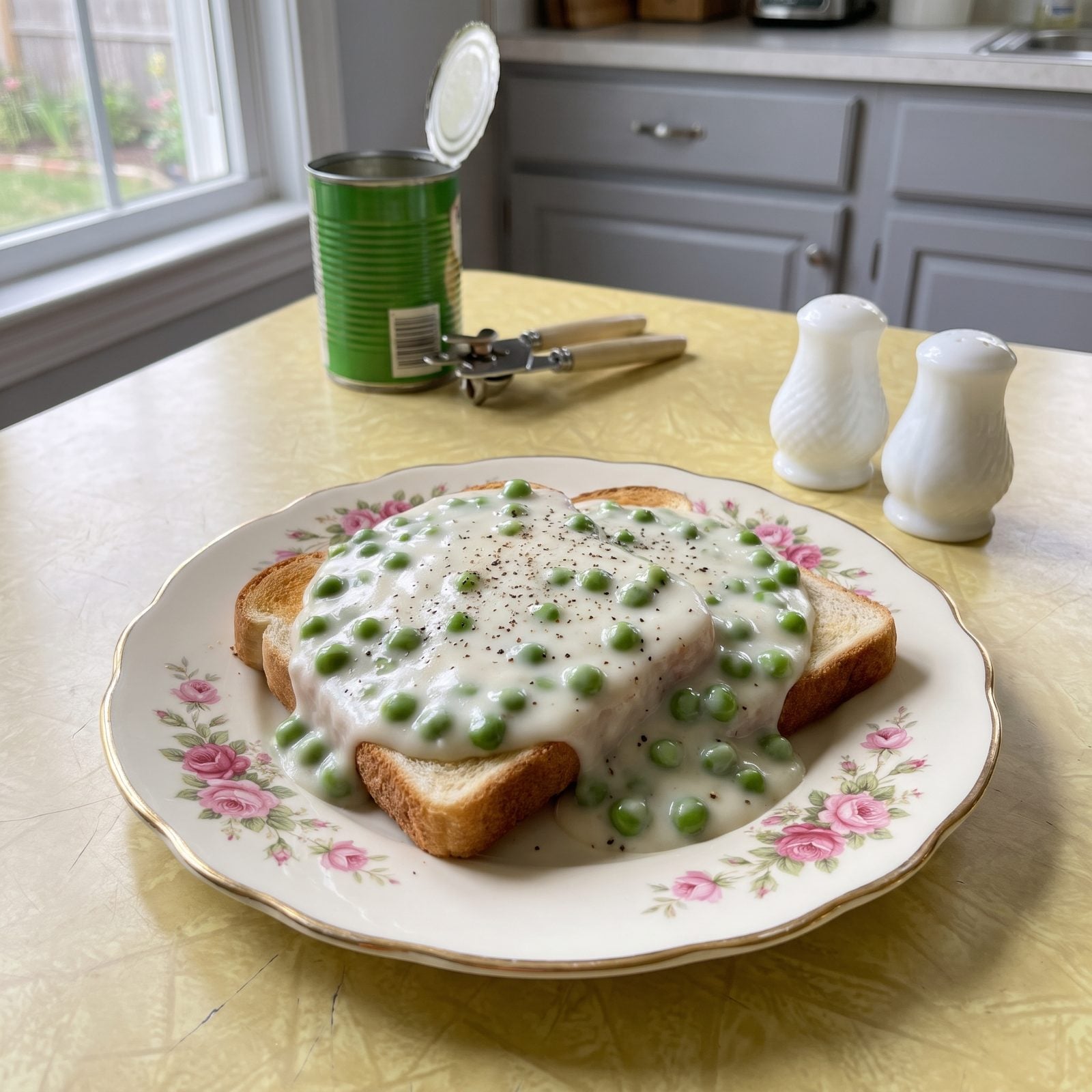
When the money ran thin at the end of the week, this was dinner. A can of peas, a white sauce made from flour, butter, and milk, poured over toast — that was the whole recipe. It cost pennies and it filled you up, and for a lot of Depression-raised parents it never stopped being a comfort even after the lean years passed.
Nobody’s grandkid is making creamed peas on toast tonight. It reads as sad to a generation raised on sheet-pan dinners and takeout. But there was real tenderness in a meal stretched to feed everyone.
17. Scalloped Potatoes and Ham, the Casserole That Owned Monday Nights
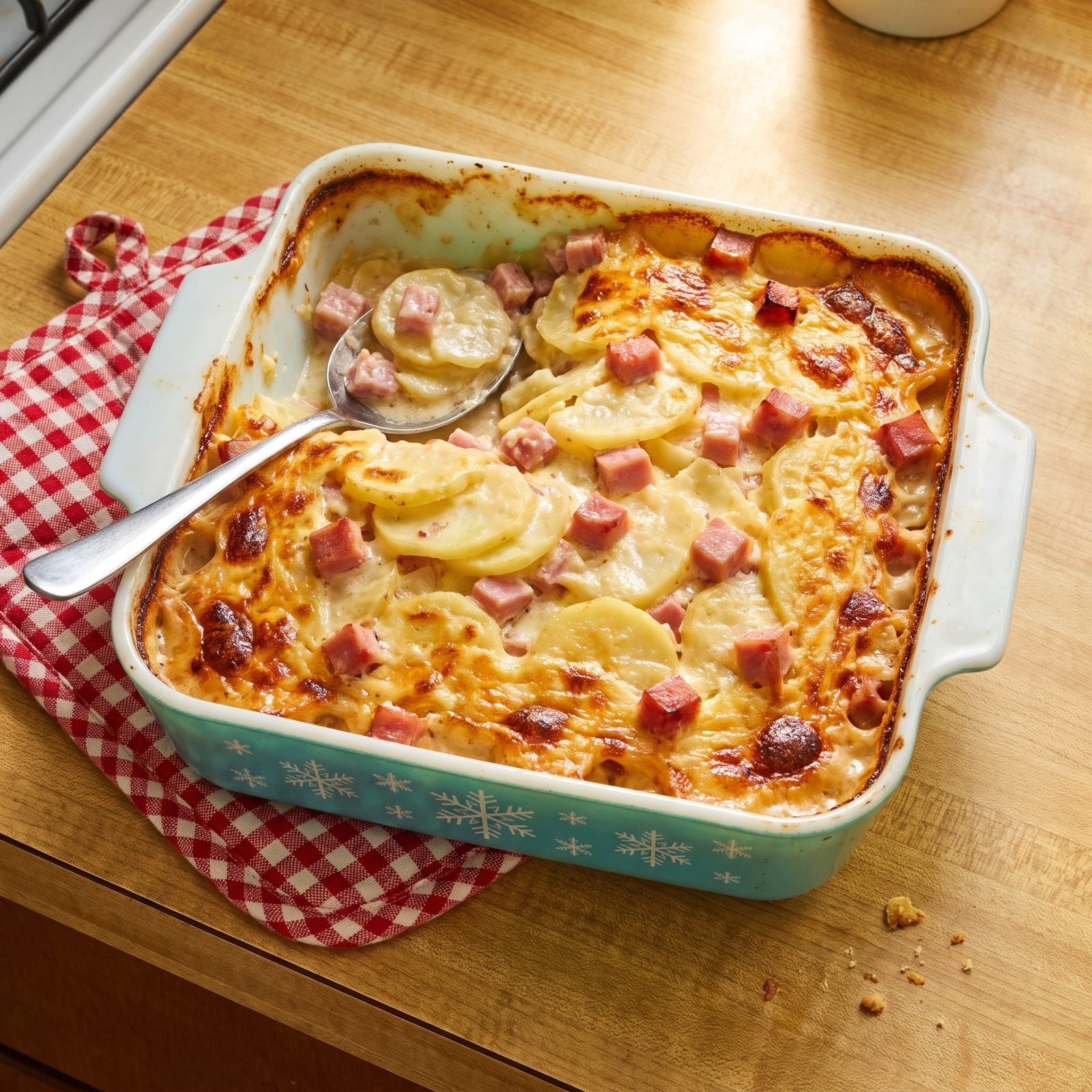
Every Boomer kitchen had a version of this, usually built to use up the ham left from Sunday. Thin potato slices, diced ham, a cream sauce, baked in a Pyrex dish until the top went brown and crusty and the edges caramelized against the glass. The corner piece, crisp and golden, was the one worth fighting over.
It still exists, technically. But it’s a holiday-table thing now, not the regular Monday supper it used to be. Gen Z leans toward faster, lighter weeknight food, and a potato casserole that needs an hour in the oven doesn’t fit a life built around speed.
16. Franks and Beans, the One-Pot Dinner Every Kid Knew by Heart
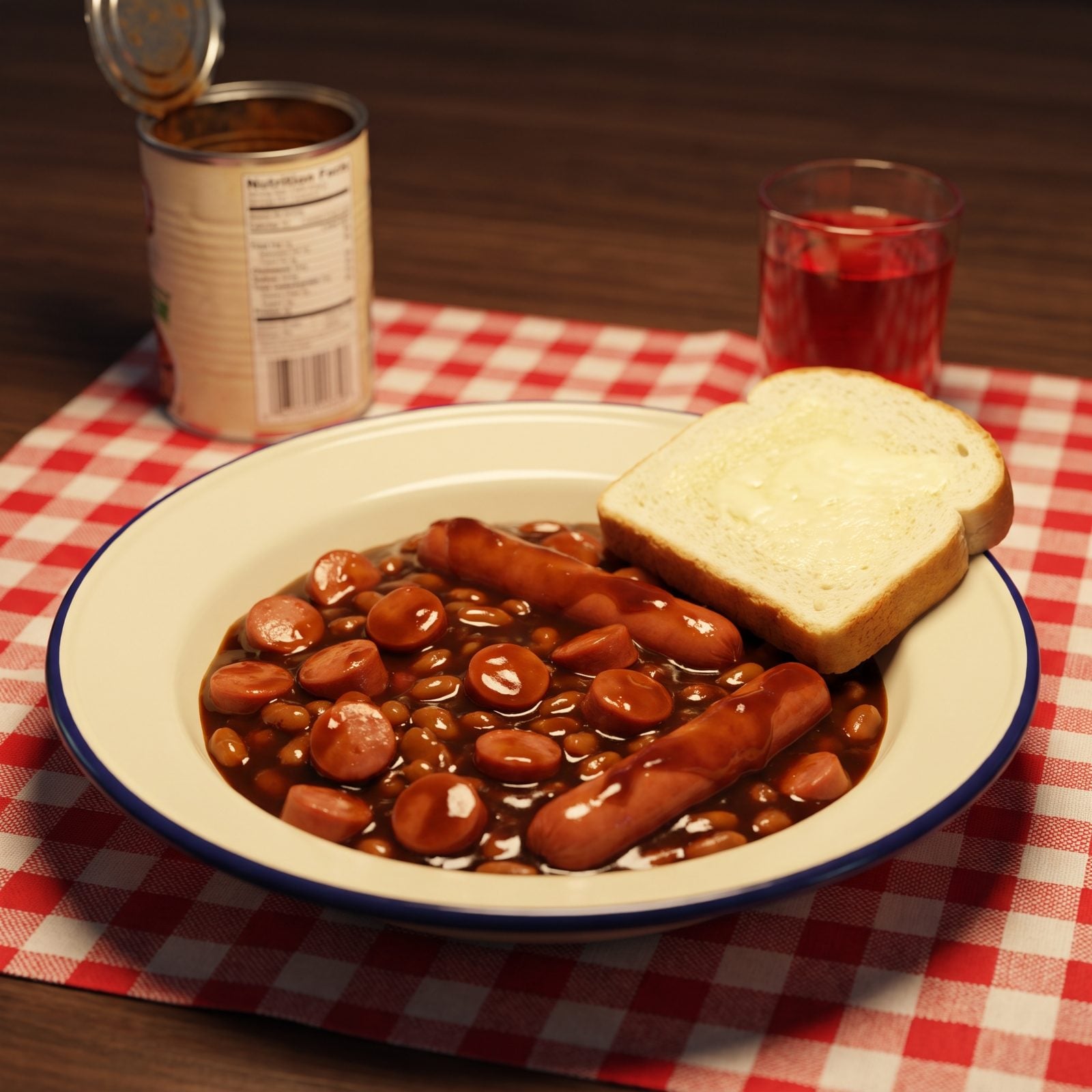
Sliced hot dogs stirred into a can of baked beans, heated on the stove, done in ten minutes. This fed millions of kids while a parent got dinner on the table between jobs. Some families doctored it with brown sugar and a squirt of mustard, and some poured it straight from the can. Either way it was fast, cheap, and the kids never complained.
It hasn’t vanished so much as faded. Gen Z knows hot dogs and knows canned beans, but the specific marriage of the two as a sit-down dinner feels like a relic. I’ll admit I still make it on a lazy night and refuse to apologize for it.
15. Hamburger Helper, the Boxed Dinner That Defined the Weeknight
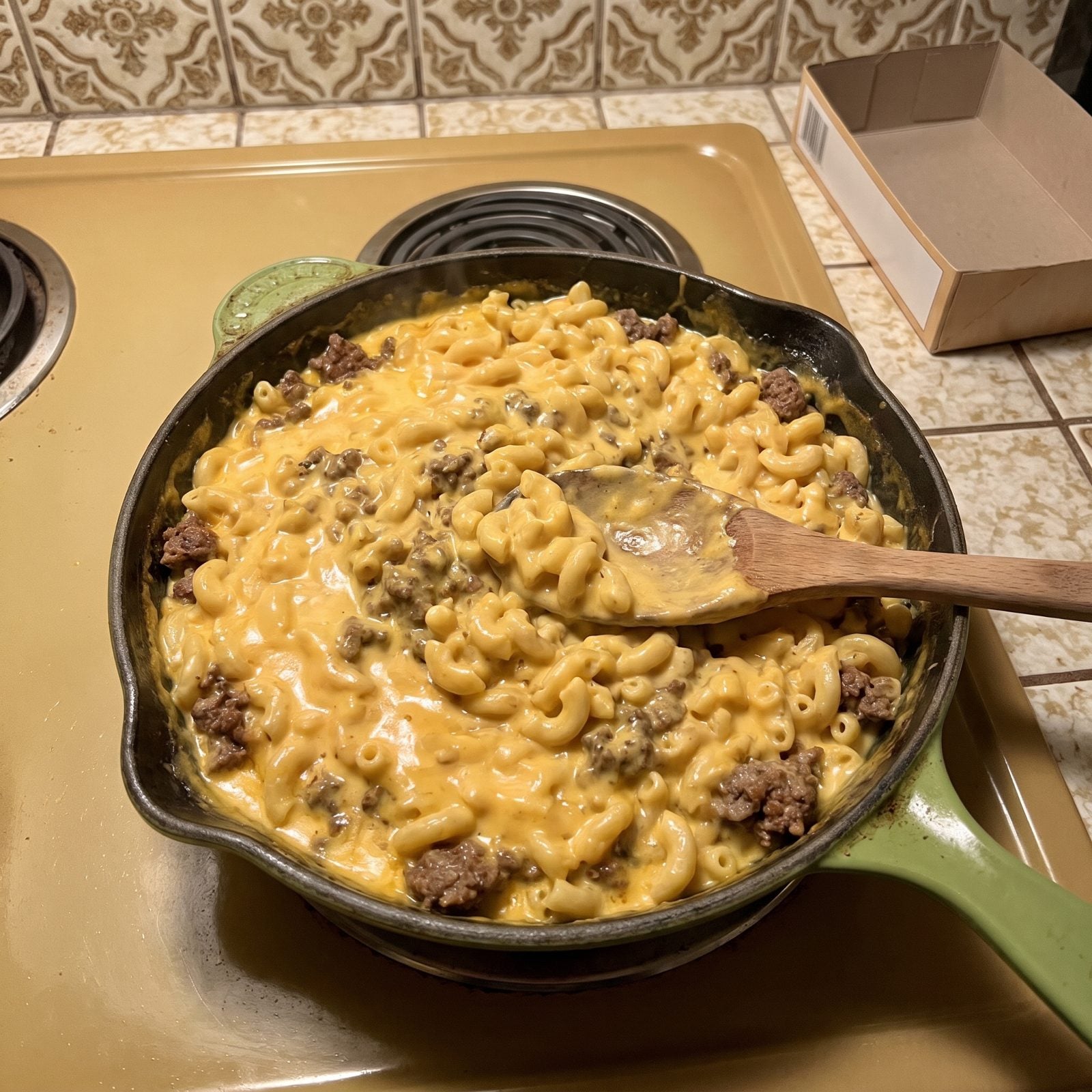
One pound of ground beef, one box, one skillet, dinner. Hamburger Helper landed in 1971 and became the backbone of the American weeknight, a boxed kit of pasta and seasoning that turned cheap hamburger into a full meal. The glove-shaped mascot was in every grocery aisle, and Cheeseburger Macaroni was the one everyone remembers.
It still sits on shelves, but it no longer rules the dinner table. Gen Z grew up with meal kits, delivery apps, and a wariness about processed food that their parents never had. The box that saved a thousand exhausted Tuesdays now reads as a throwback.
14. Mock Apple Pie Made With Ritz Crackers, the Great Depression Magic Trick
Would you like to save this?
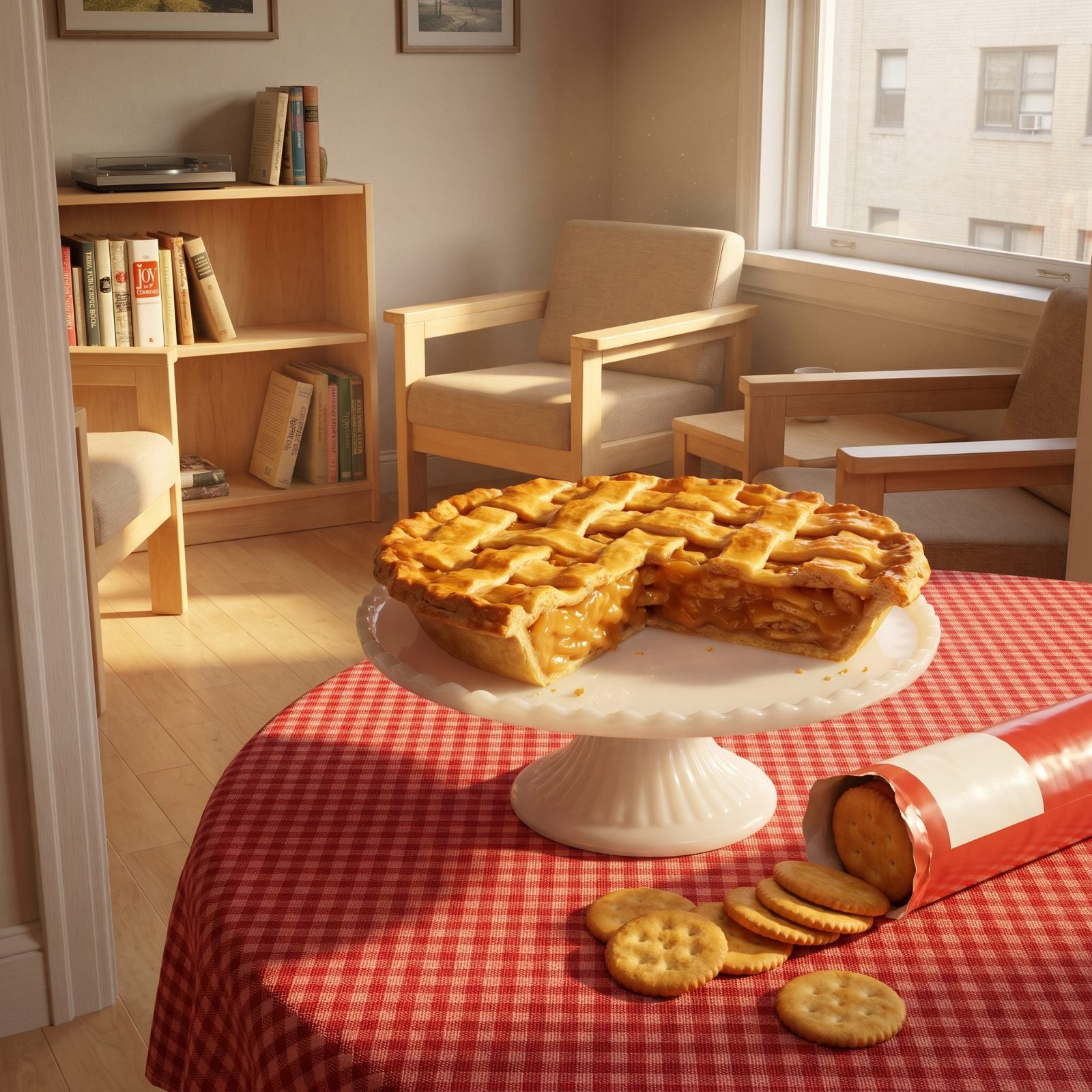
No apples? No problem, and no, that isn’t a joke. Cooks during the Depression and the war years pulled off a convincing apple pie with zero apples, using crackers soaked in a syrup of sugar, water, cream of tartar, lemon, and cinnamon. The crackers soften, the syrup caramelizes, and the whole thing tastes shockingly like the real deal. The famous version used Ritz crackers, and the recipe sat printed on the box for decades.
It was a point of pride, a kitchen trick passed between neighbors. Gen Z, raised in a world where you can get an apple in January, has no reason to fake one. But there’s a genius to it I still find delightful.
13. Ambrosia Salad, the Marshmallow Cloud at Every Church Potluck
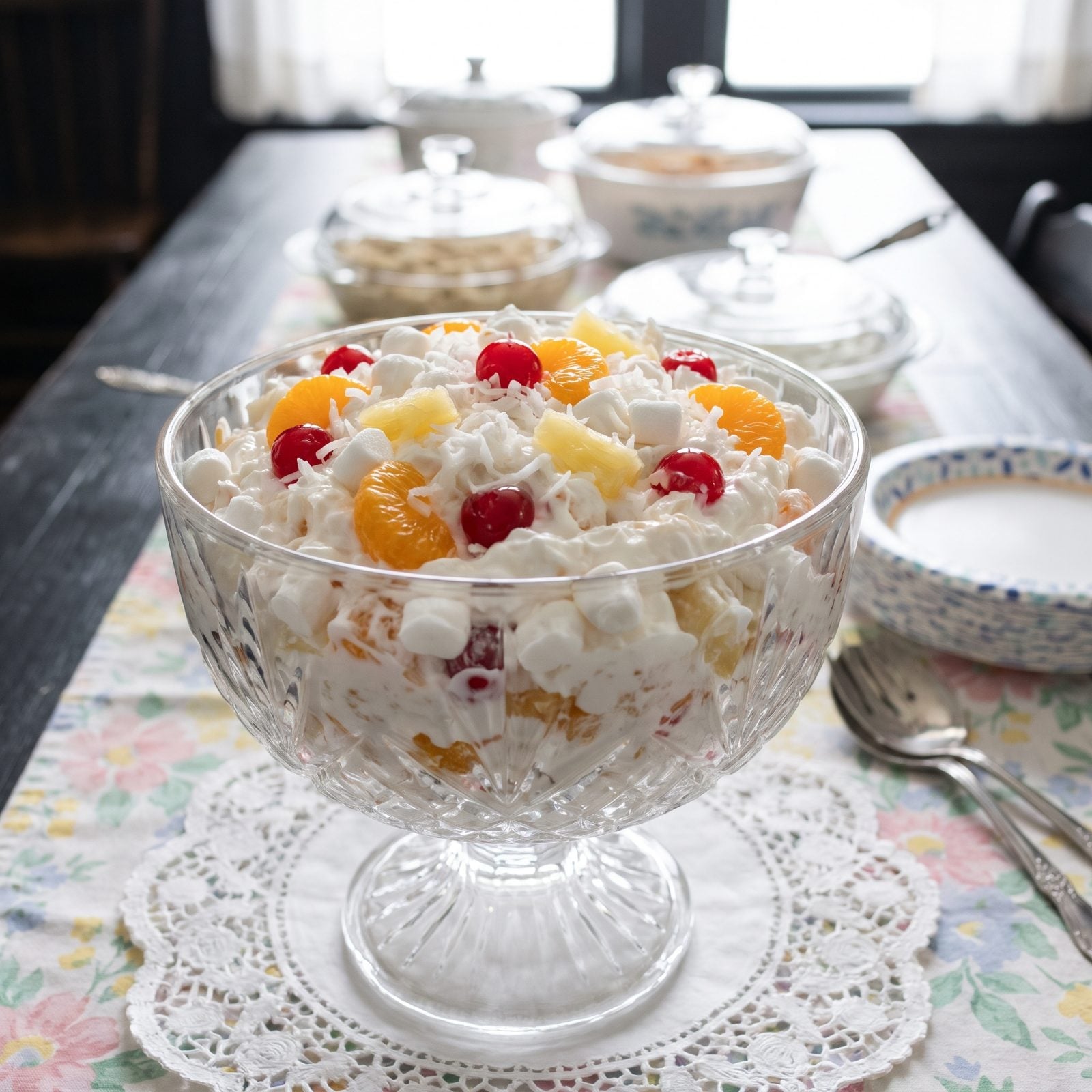
Called a salad, served like dessert, and present at every potluck, every holiday, every church-basement gathering of the era. Ambrosia was marshmallows, canned mandarin oranges, pineapple, shredded coconut, and maraschino cherries all folded into whipped cream. It wobbled. It was sweet enough to make your teeth ache. And people couldn’t get enough of it.
It showed up on the Thanksgiving table right next to the turkey and nobody questioned the logic. Gen Z mostly meets ambrosia as a punchline about retro food, the poster child for an age when canned fruit and Cool Whip counted as a vegetable course.
12. Molded Ham Salad That Wobbled on the Buffet Table
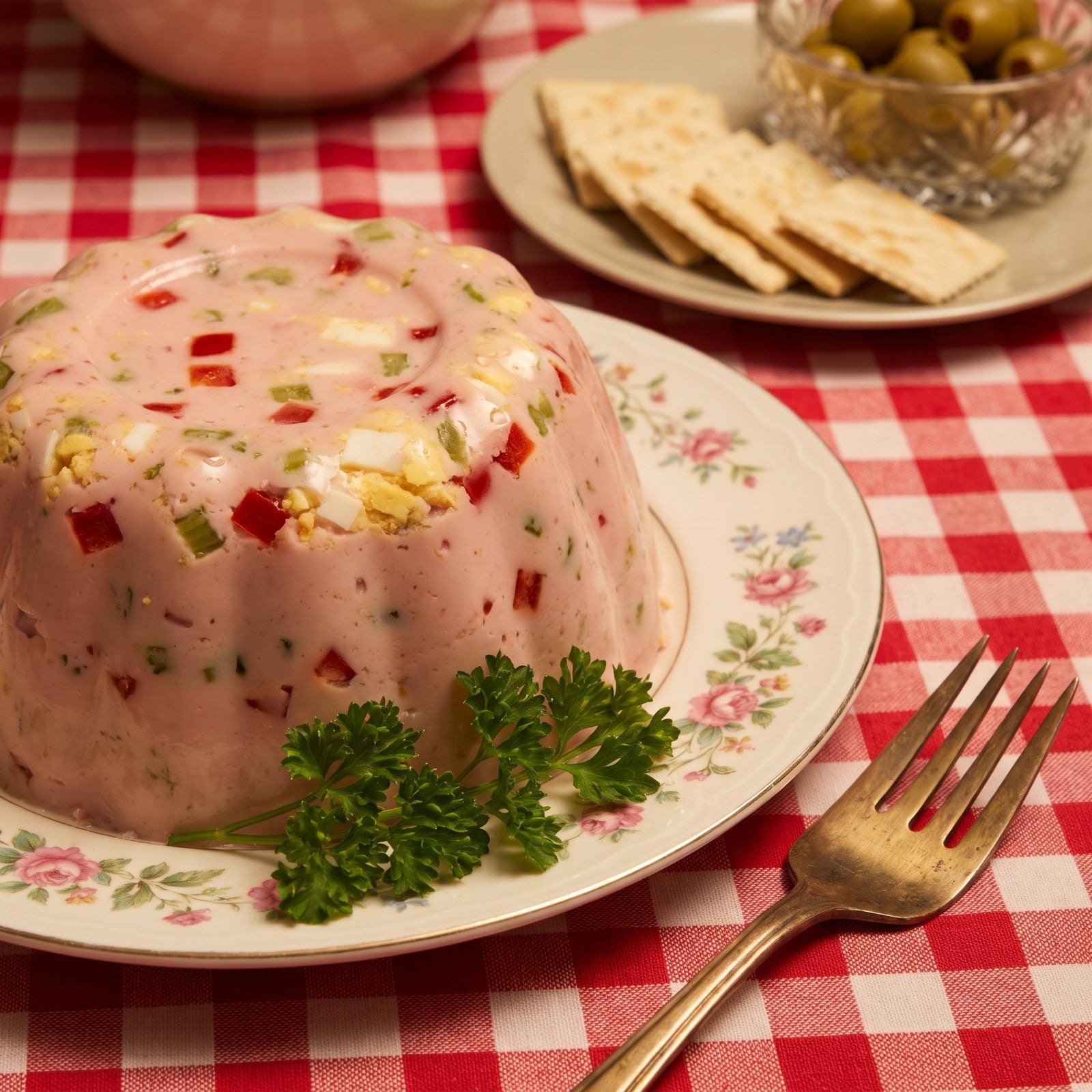
Someone’s aunt always brought this. It arrived in a Tupperware carrier, got turned out of its ring mold with a knife run around the edge and a firm shake, then sat jiggling on the buffet between the deviled eggs and the relish tray.
Ham salad suspended in gelatin was the height of putting-in-effort back in 1962. You ate it on a saltine. The gelatin was savory, which Gen Z finds genuinely alarming, and honestly? I get the alarm. But there was logic to it. Aspic kept things cool and sliceable at a potluck, back before anyone trusted a buffet to stay cold on its own.
11. Welsh Rarebit, the Fancy Name for Cheese on Toast
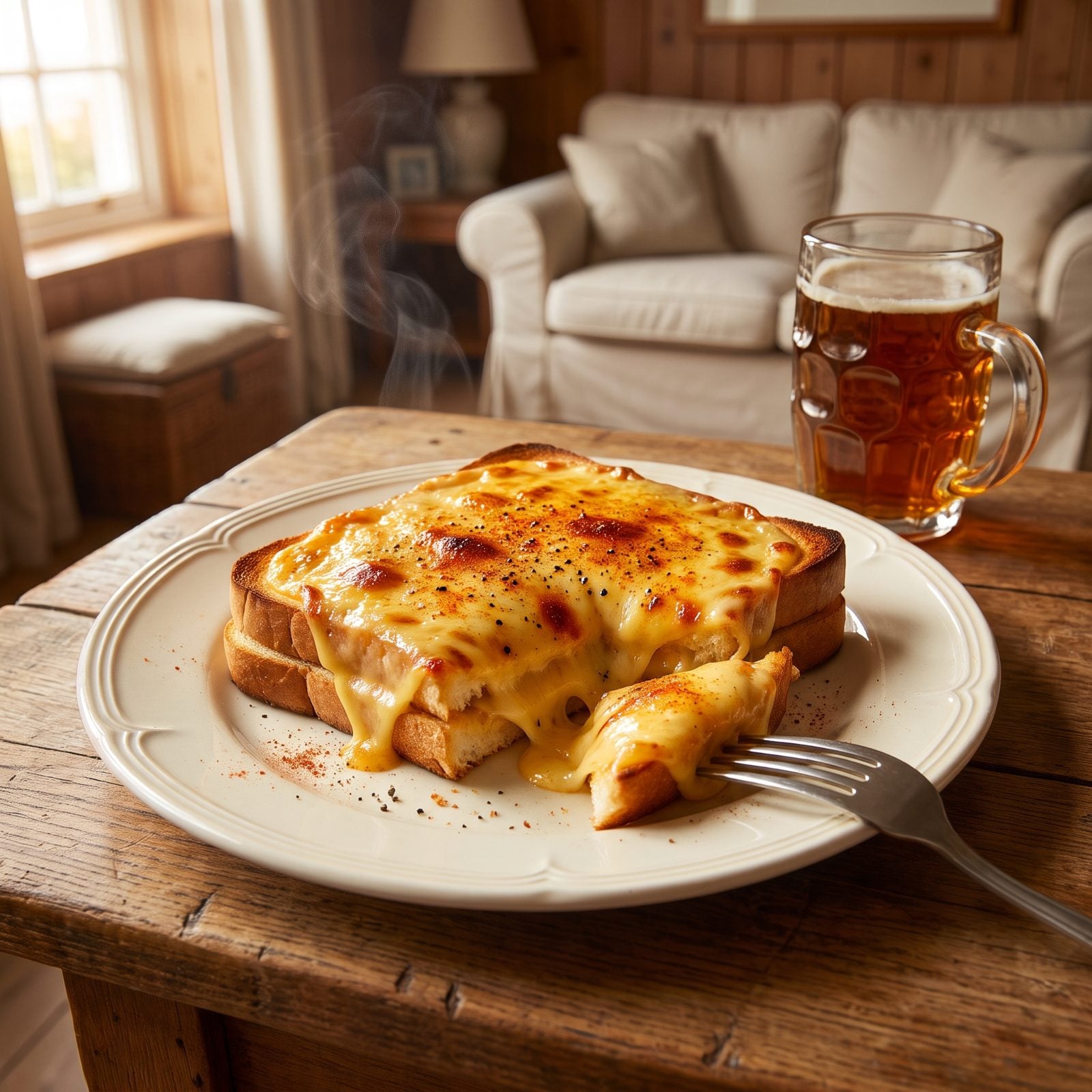
Cheese sauce over toast, dressed up with a Welsh accent and a splash of ale or Worcestershire. That’s the whole trick. Grandmothers made it for a light Sunday-night supper, usually with a poached egg on top if they were feeling generous.
It started in a saucepan — butter, a little flour, sharp cheddar melted down with mustard and a dash of beer, poured over toast and run under the broiler until it blistered. Cost almost nothing. Felt like a treat. Nobody makes it anymore because we call it “a grilled cheese” and move on with our lives, which is a shame. That blistered top was the whole reason to bother.
10. Pigs in a Blanket Rolled by Hand From Scratch

Before the freezer aisle did it for you, somebody rolled these out at the kitchen counter.
Real biscuit or crescent dough, cut into triangles, a cocktail wiener or a chopped-up hot dog tucked inside, pinched shut, brushed with egg, baked until the dough puffed and browned. They turned up everywhere — card parties, New Year’s Eve, church socials, always on a toothpick-studded platter.
Kids got to help roll them. That’s probably why so many Boomers remember the dough more than the sausage. Gen Z knows the frozen box from Costco and nothing else. They’ve never smelled dough baking at 4pm while the grown-ups set up the bar cart.
9. Pickled Herring Straight From the Jar
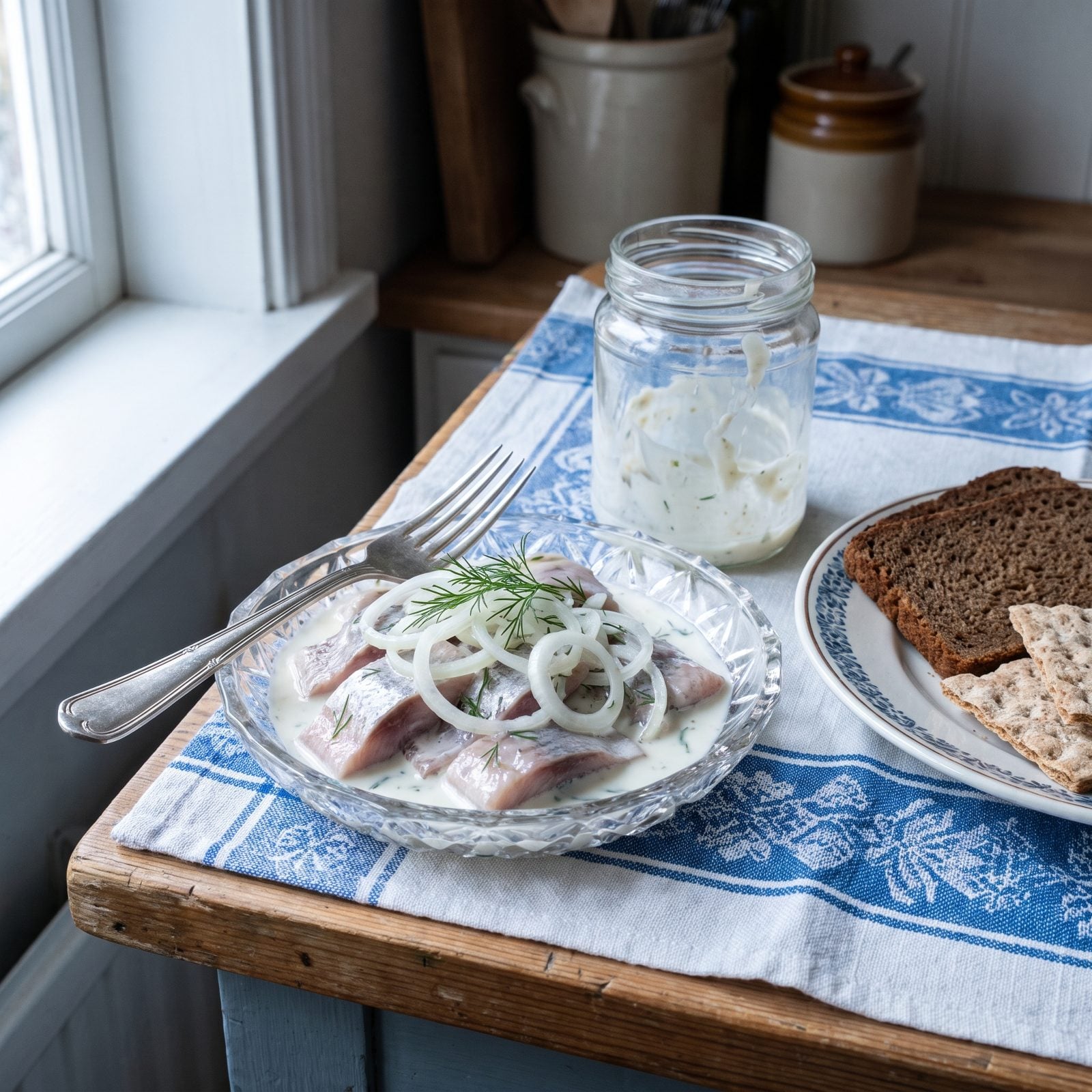
The jar lived in the back of the fridge door. You pulled it out around the holidays, or whenever the Scandinavian or German grandparents came through, and the whole kitchen suddenly smelled like vinegar and the sea.
Herring in cream sauce, herring in wine sauce, onions threaded through either one, eaten on a cracker or a slice of dark rye — it was a Christmas Eve ritual across a lot of Midwestern and Northeastern homes. Younger folks will eat a sushi roll without blinking and then recoil at a fork of pickled herring, which tells you nothing about the fish and everything about what we grew up around.
8. Cottage Cheese With a Ring of Canned Fruit
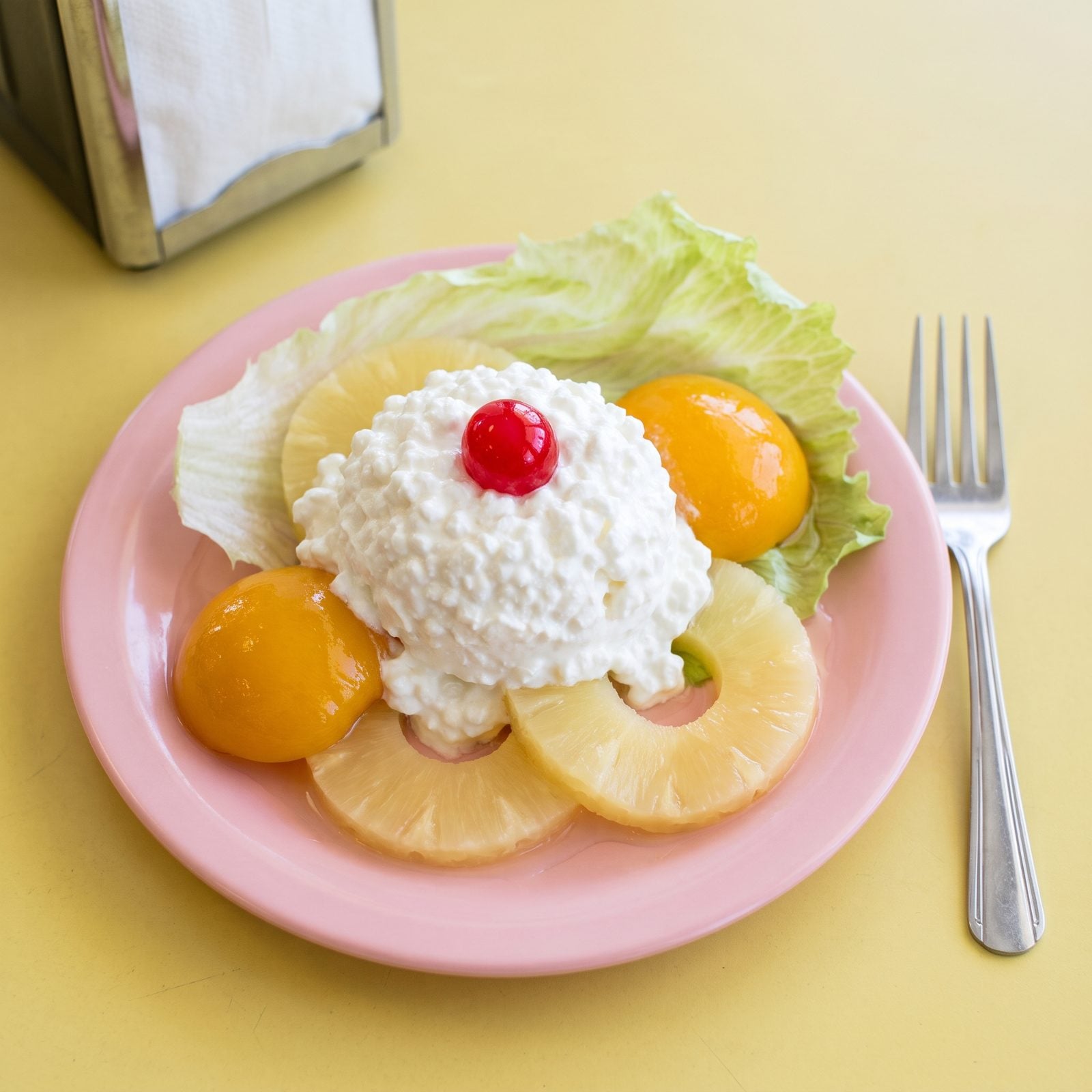
The dieter’s plate. The ladies’-lunch plate. The thing your mother ordered at the coffee shop while you got the grilled cheese.
A scoop of cottage cheese on a lettuce leaf, ringed with canned peach halves or pineapple rings, a maraschino cherry on top if the place was feeling festive. It was considered healthy, which says plenty about what the word meant in 1968. Sweet syrup against bland curds — a generation of women ate exactly this for lunch, for years.
7. Fried Bologna Sandwiches With the Curled-Up Edges
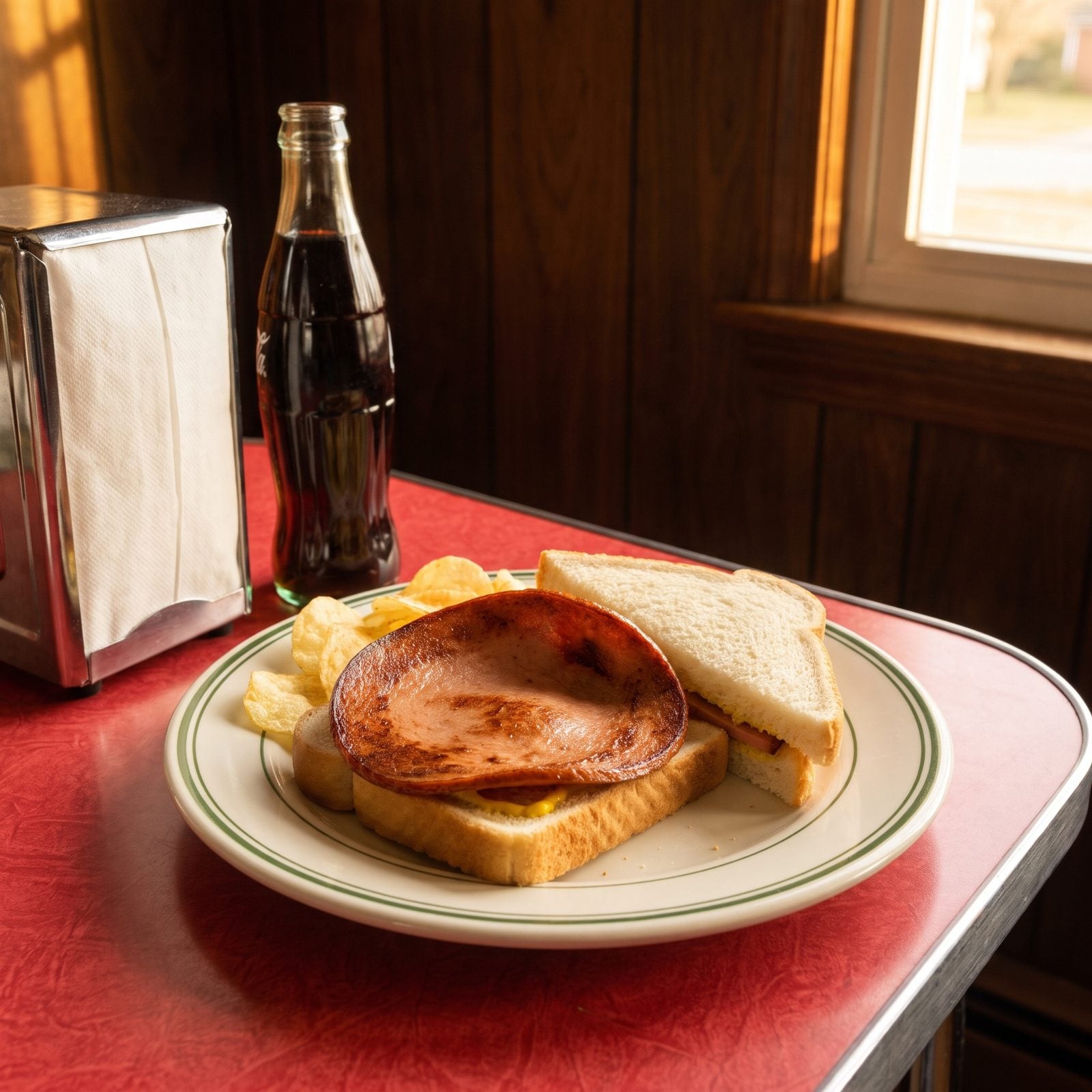
You cut four little slits around the edge so it wouldn’t dome up in the pan, and it domed up anyway — and that curl was the best part. Fried bologna on white bread, mustard, maybe a slice of American cheese melting against the hot meat.
Saturday-lunch staple. Latchkey-kid special. The thing you could make yourself at ten years old with a frying pan and zero supervision. The edges crisped while the center stayed soft. Gen Z grew up on turkey wraps and never knew the plain pleasure of browned bologna, and I feel genuinely bad for them about it.
6. Baked Beans Slow-Cooked With Molasses and Bacon
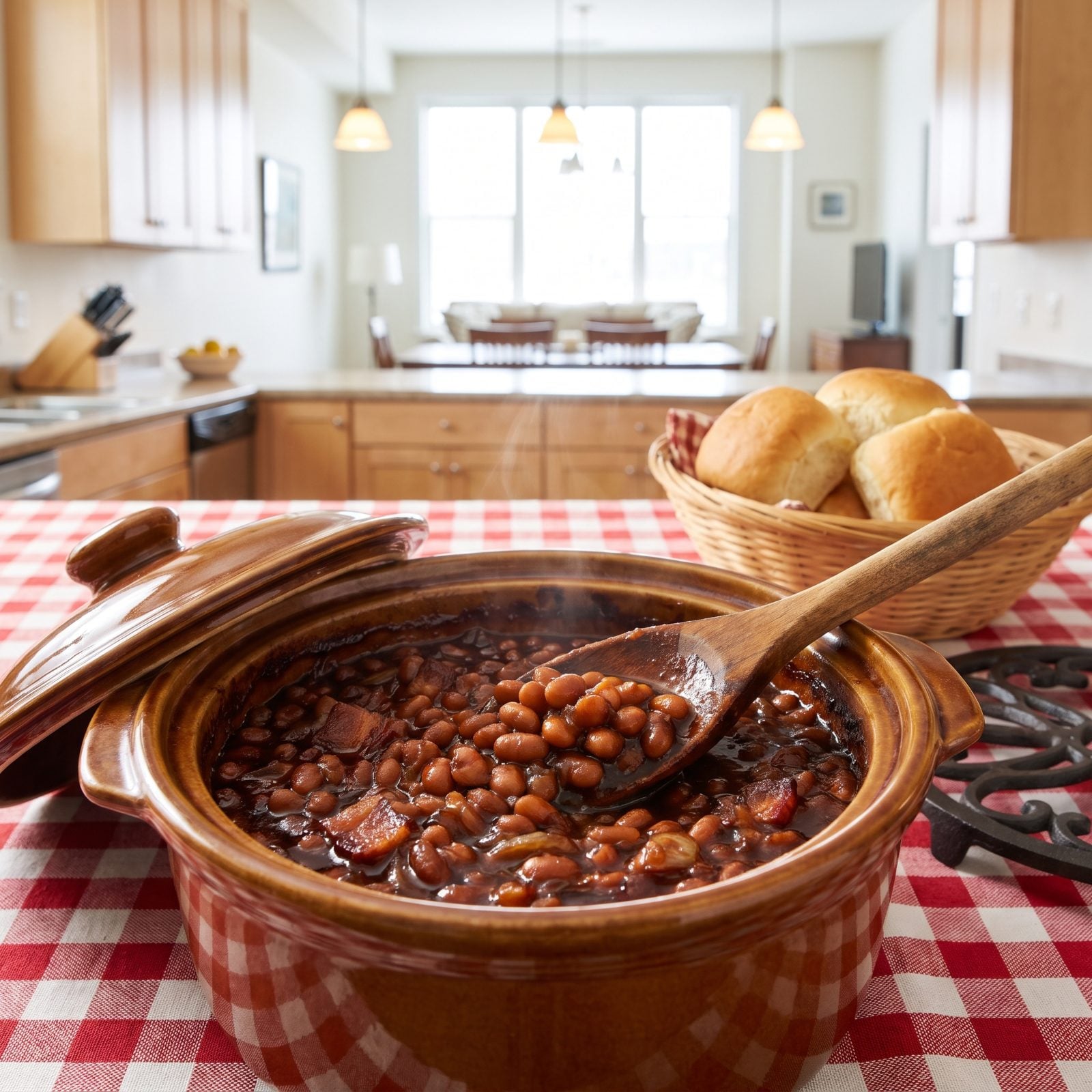
Not the can. The real thing — soaked overnight and baked low and slow for most of a day in a brown ceramic bean pot, sweetened with molasses, studded with salt pork or bacon and onion.
Saturday-night supper in New England ran on this, often paired with brown bread steamed in a coffee can. The sauce went dark and sticky and the beans turned tender enough to collapse. It took forever, which is exactly why it has mostly vanished. We have the can now, and the can is fine. It is not the same pot of beans that perfumed the whole house on a cold afternoon.
5. Shepherd’s Pie Under a Browned Mashed-Potato Crust
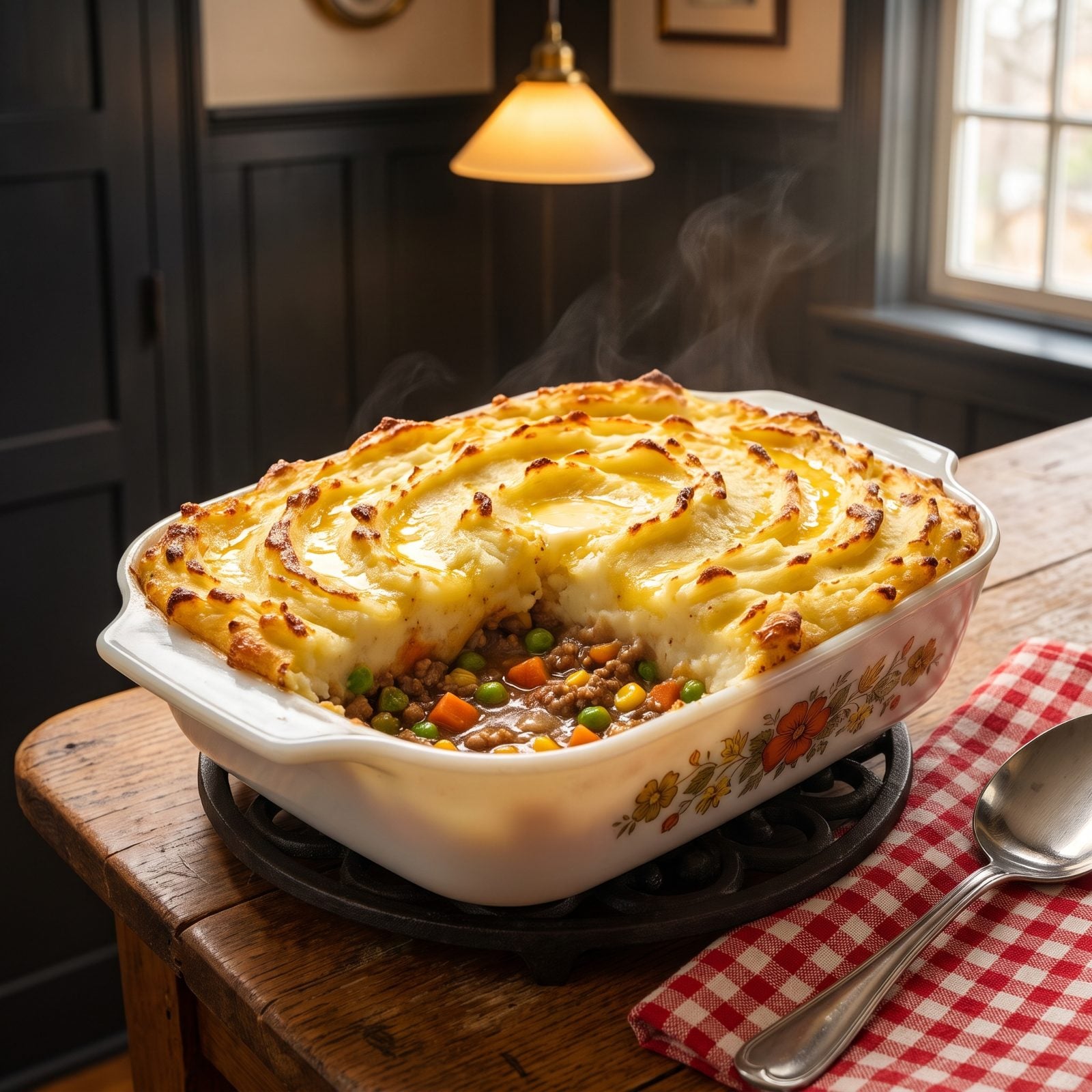
Monday-night dinner built on Sunday’s leftovers. Ground beef or chopped roast in brown gravy with peas and carrots, the whole thing capped with mashed potatoes raked into ridges with a fork so the peaks would brown under the broiler.
Those crispy potato tips were the reward for sitting through supper. Every family had a version, and every version used up whatever was in the fridge — thrift, warmth, and the smell of a casserole dish coming out of a 350-degree oven, all at once.
You still see it around, but it’s slipping. Gen Z orders a bowl, not a casserole, and the covered Pyrex dish that fed a family for two nights is quietly going out of rotation. Rake those potatoes while you still remember how.
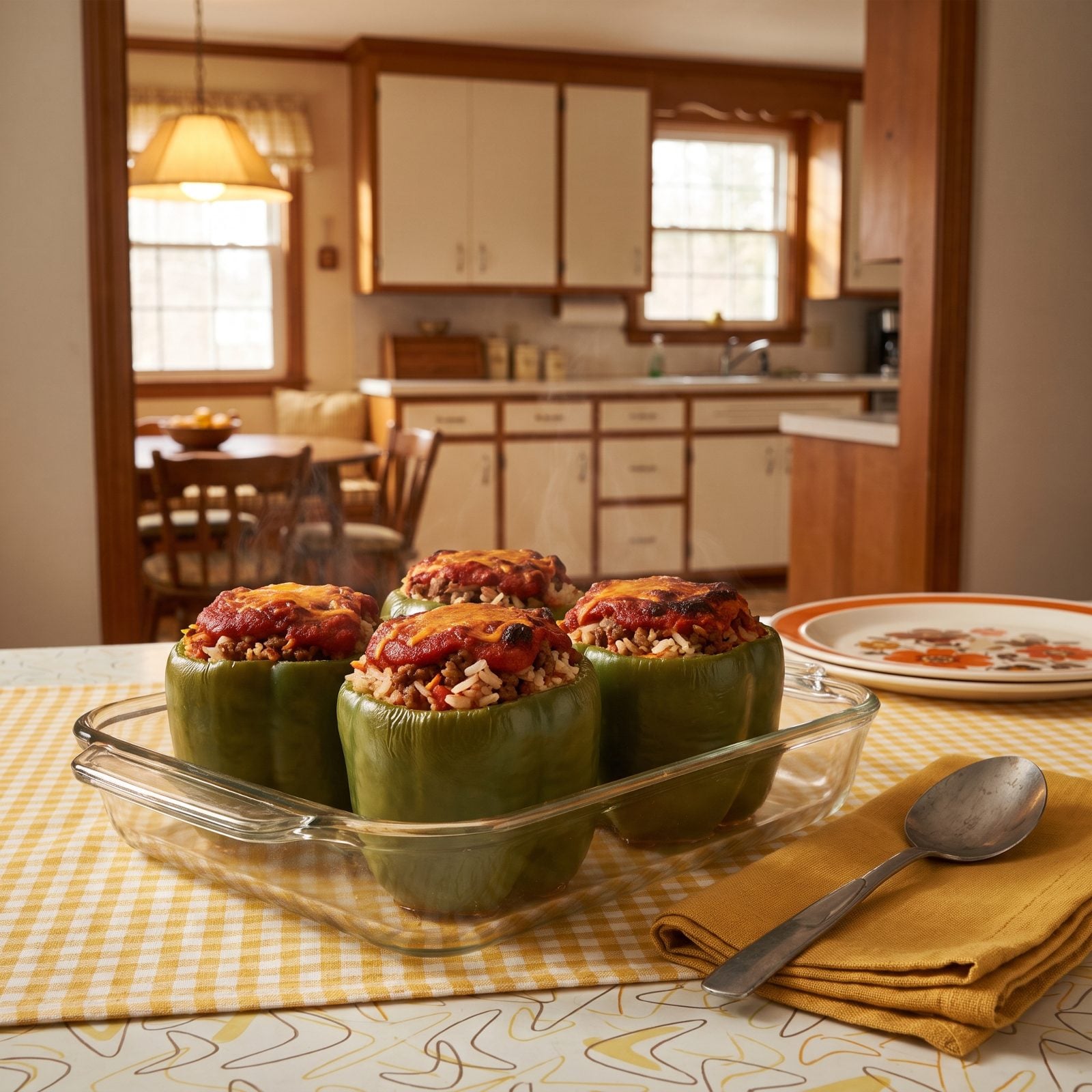
4. Stuffed Bell Peppers With Rice and Beef, Sitting Upright in the Pyrex
Would you like to save this?
Every family had the Pyrex dish that only ever held one thing. Stuffed peppers stood up in it like a row of soldiers, caps on, sauce pooling around their bases. You smelled it at the door — tomato, beef, and something green and faintly bitter off the pepper itself.
Tuesday dinner. Cheap and filling, built from a pound of ground chuck stretched with rice until it fed five, and if you were lucky Mom handed you the cored-out tops to eat raw at the sink.
Gen Z grew up on sheet-pan everything and one-bowl rice. An upright pepper that has to be scooped, refilled, and baked for a solid hour just doesn’t fit a weeknight anymore.
3. Sardines on Saltines, Eaten Standing at the Counter
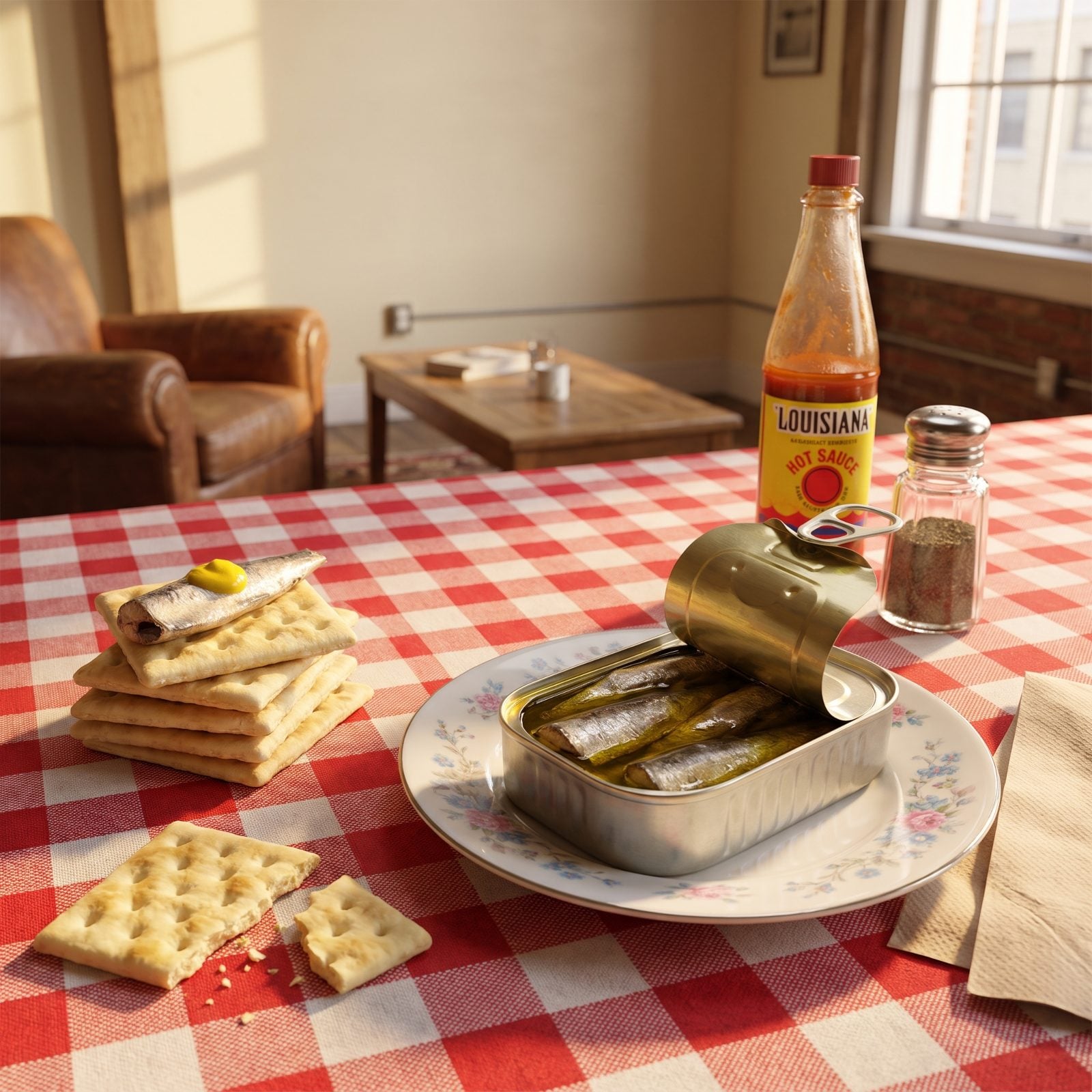
The pull-ring tin made a sound nothing else made. That little crack as the ring lifted and the lid curled back, the oil smell rising, the fish lined up head to tail like somebody very organized had filed them away.
Grandpa ate these standing at the kitchen counter by the window — tin set on a flowered plate, a fish laid on a saltine with a dab of mustard, pepper and hot sauce within reach. A Saturday lunch, a fishing-trip snack, a thing men of a certain age just did without bothering to explain.
Took me thirty years to come around, but I did. There’s nothing wrong with a sardine. Gen Z will eat anchovy on a Caesar and order the branzino without blinking, yet hand them a tin and a sleeve of crackers and watch the hesitation set in.
Canned fish went from Depression-era protein to grandpa’s weird snack to, somehow, a thing again. The saltine just never got invited back.
2. Goulash With Elbow Macaroni, the Pot That Fed You All Week
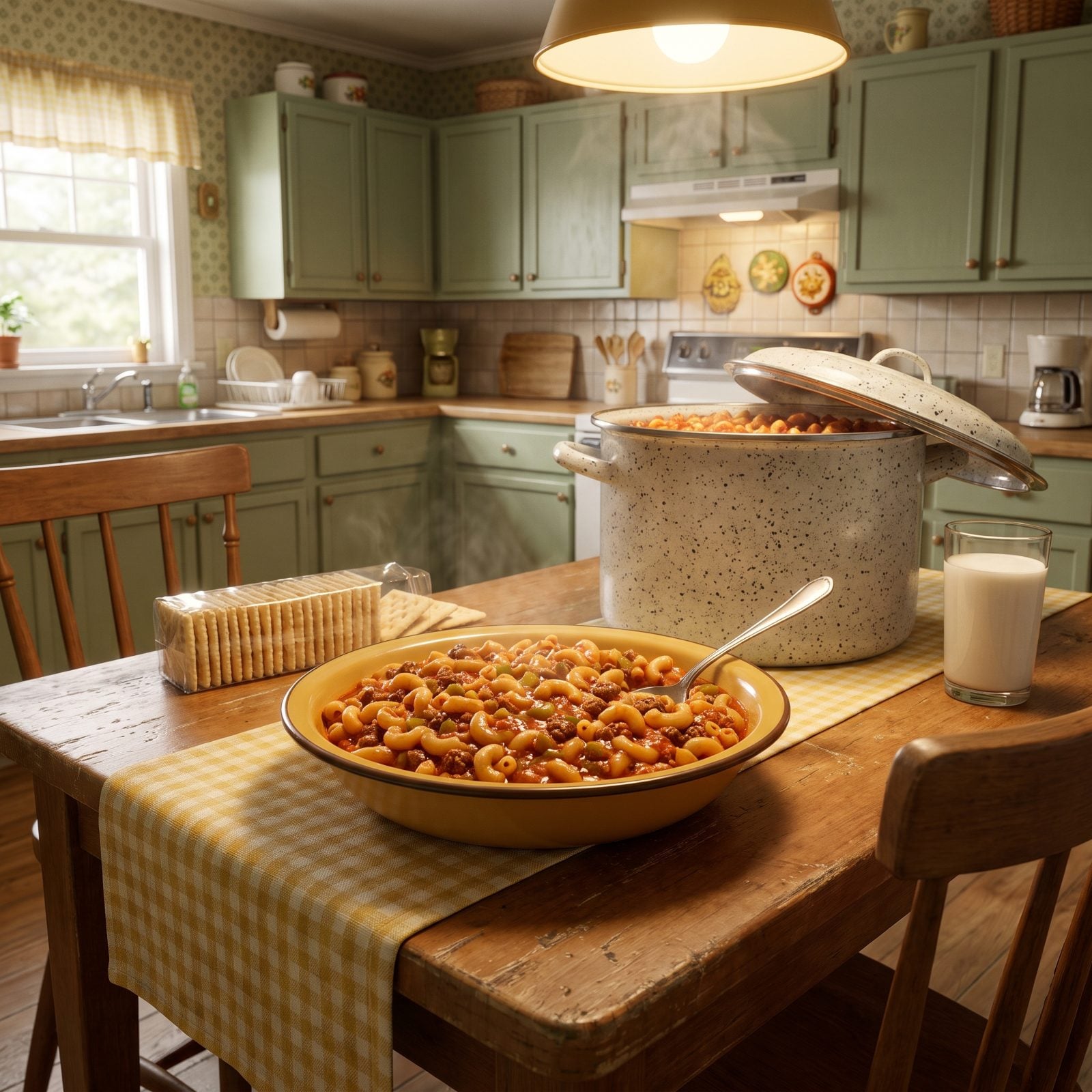
Not the Hungarian kind. Nobody’s calling it that. American goulash meant elbow macaroni, a pound of browned beef, a can of tomatoes, onion, and maybe a bell pepper if someone was feeling ambitious — all of it in one pot on the back burner by four in the afternoon.
You could stretch it for days. It got better on day two and questionable by day four, which never stopped anyone, served in a bowl with saltines crumbled on top and a glass of milk, no questions asked.
The name went out of fashion before the food did. A shame, really — a big pot of it is still one of the most honest things you can make.
1. Prune Juice and Stewed Prunes, the Breakfast Nobody Volunteered For
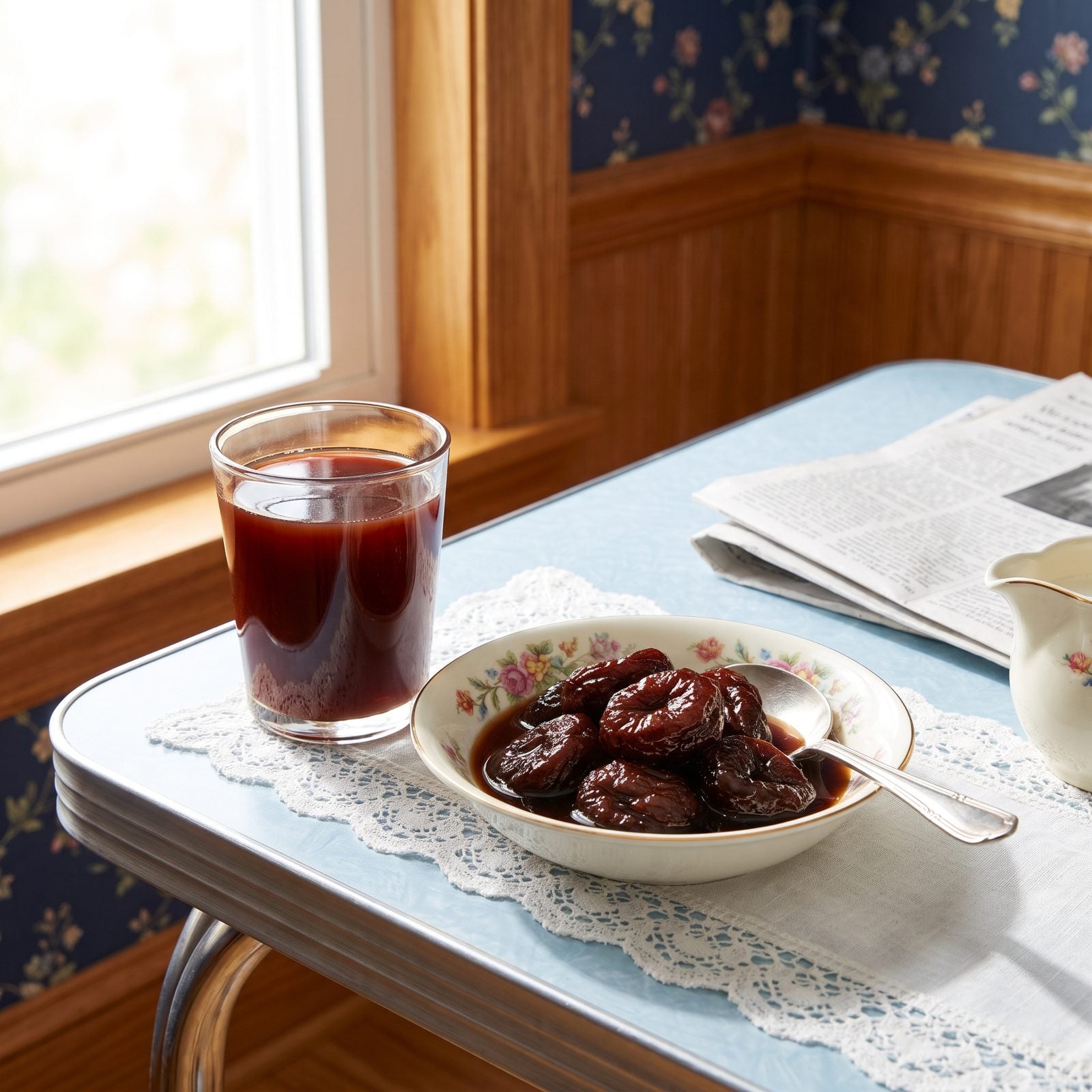
Dark as motor oil, poured into a small glass and set at your place whether you asked for it or not. Prune juice was a morning fixture in a certain kind of house — usually the one with a grandparent in it.
Right beside it sat the stewed prunes, swimming in their own syrup, glossy and wrinkled and sweet in a way that felt almost medicinal. You ate them because that’s what was on the table.
Everybody knew exactly what prunes were for and nobody said it out loud at breakfast. That was the deal. You drank the juice, you kept quiet, the morning moved along.
Rebranded or not, the stewed-prune bowl has vanished. That one I don’t miss. But I understand it.