Would you like to save this?
The casserole was ready at six. Guests were told seven. By 7:04, the host stands at the window, watching headlights that aren’t the right car and quietly building a grudge. Every family has one of these dinner parties in its past, and every one of us has been the one running it. You think you’re just being a good host. You’re actually running a small country with one dinner table for territory, complete with borders, a ruling class, and a surveillance program aimed at wine glasses. The same wiring that makes people crave order at a crowded dinner shows up in much bigger rooms. Here’s where the pot roast meets the power trip.
Please note that some of the images in this article were created with the assistance of AI.
16. You Assign Seats Like the Dining Room Has Borders
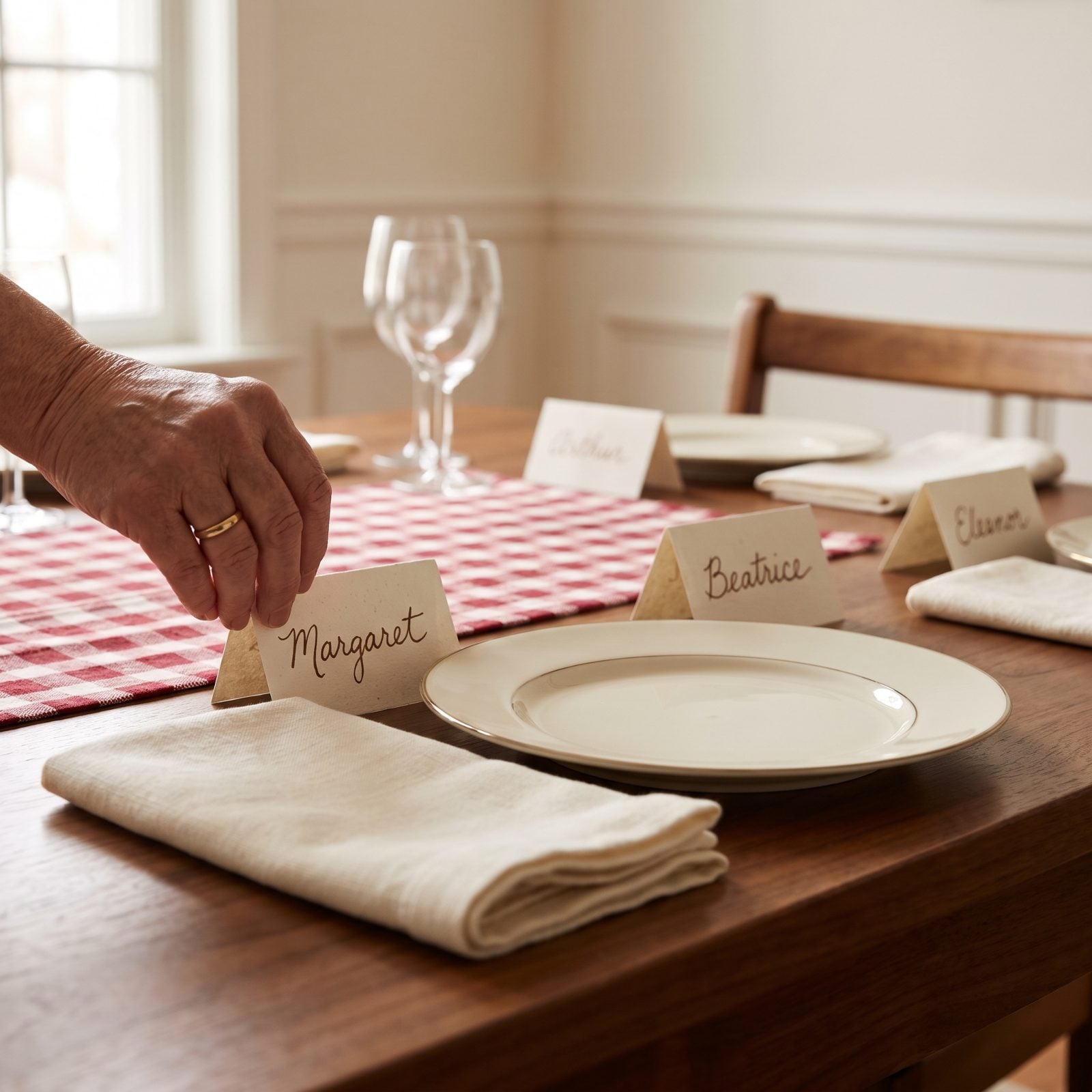
Place cards look charming, and they’re also a map of who you trust near whom. The loud brother-in-law gets parked at the far end, the two people who might argue get buffered by a quiet cousin, and the guest you want to impress lands at your right hand like a visiting dignitary.
You tell yourself it’s about conversation flow. It’s really about keeping the peace through geography, the way nations use buffer states and carefully plotted summit seating. The person across the table from you isn’t an accident. Neither is the person you put three seats down.
The mechanism is control over uncertainty. A free-for-all seating scramble means you can’t predict the night, while assigned seats give you a say over every interaction before the first fork lifts. It feels generous. It’s risk management dressed up in nice handwriting.
15. The Kitchen Becomes a Restricted Access Zone
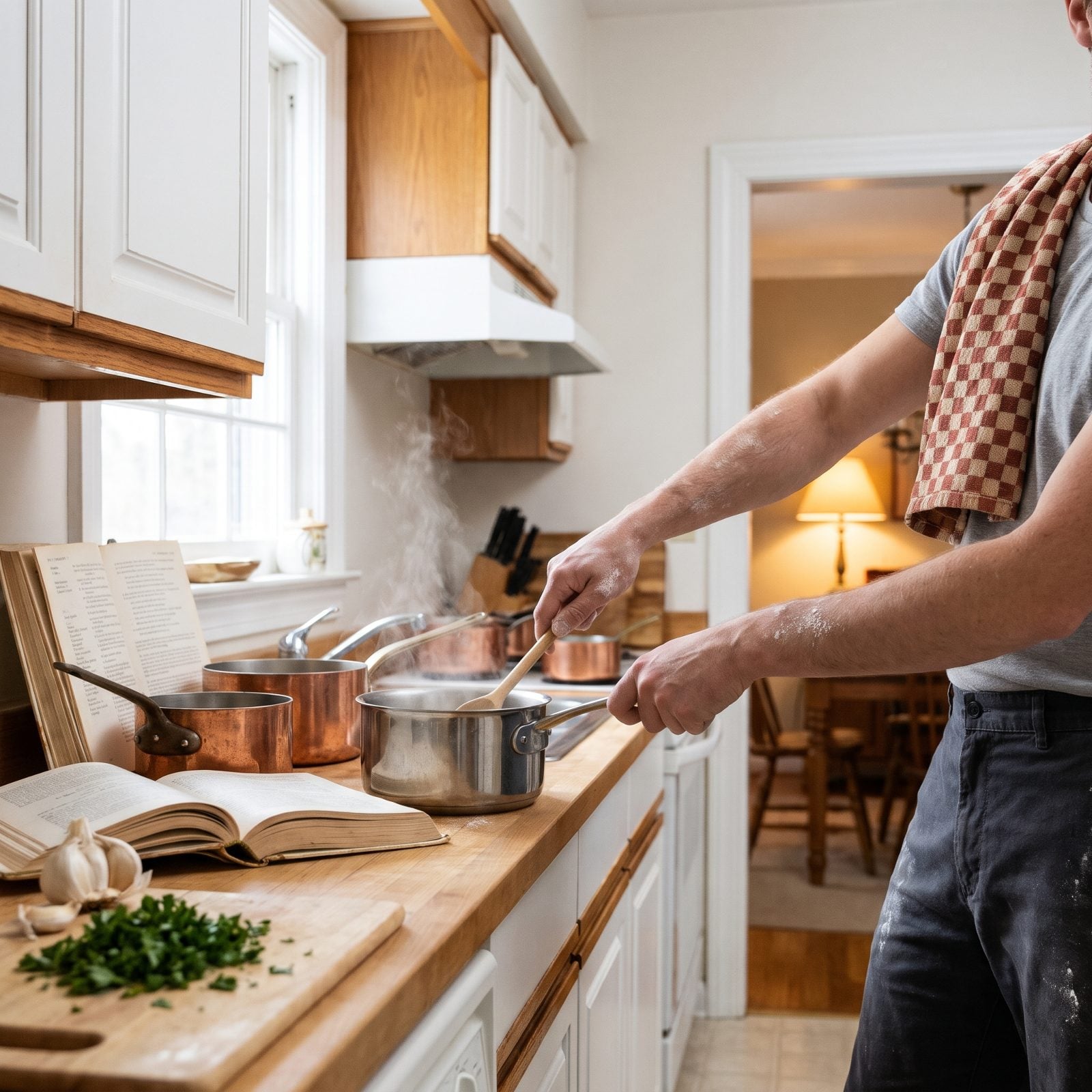
Someone wanders in offering to help, and you feel your shoulders rise. “I’ve got it,” you say, in a tone that means leave. The kitchen is yours, the counter is yours, and the timing is a sequence only you understand — an extra body threatens the whole operation.
Every regime guards its control room. You guard the stove. The guest wanted to feel useful; you wanted to feel indispensable, and those two wishes can’t both win in a small kitchen.
What’s really happening is a loss-of-control fear. If someone else stirs the sauce, the outcome stops being entirely yours, and so does the credit. Letting a guest in means sharing authorship of the meal, and for a lot of hosts that feels less like help and more like a hostile takeover of a very small kingdom with excellent cookware.
Not everyone wants the kitchen sealed off: our readers gave photos of cooking in progress more hearts than the other images in the same articles.
14. Your Partner Gets Drafted Into Service Without Consent
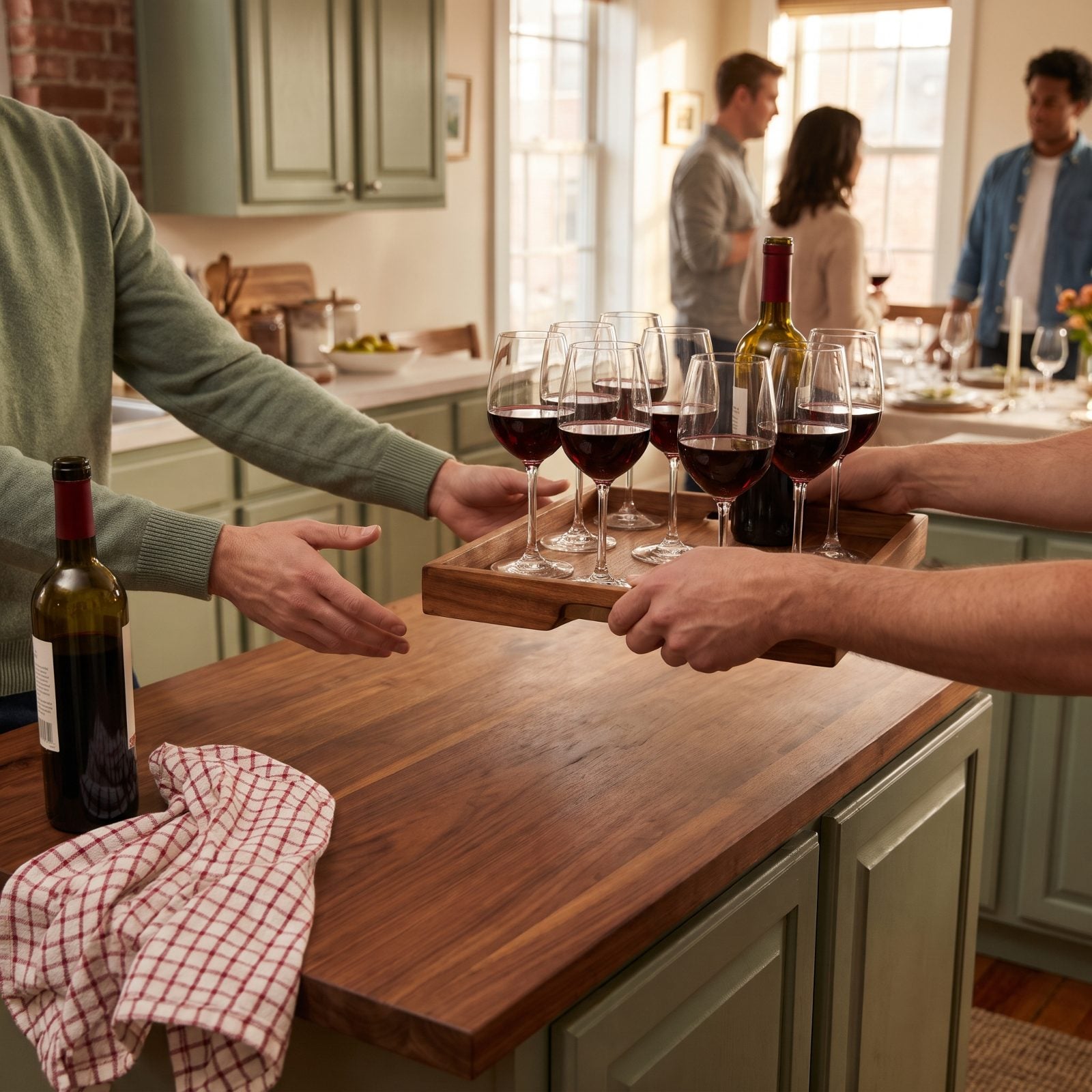
They thought they were a guest at their own party. Instead they’re refilling bread baskets, taking coats, and getting dispatched for more ice with a look that leaves no room for negotiation — and the whole arrangement happened without a single conversation about whether they agreed to it.
This is conscription. The partner becomes the loyal deputy whose main job is to carry out the host’s will and smile while doing it. Every strongman has one. Yours is wearing an apron they didn’t choose.
The psychology is role assignment through assumption. You never asked because asking might get a no, so you acted as though their service was a settled fact. Most people go along with a role handed to them confidently rather than cause a scene in front of company.
13. You Announce the Menu Like It’s Binding Law
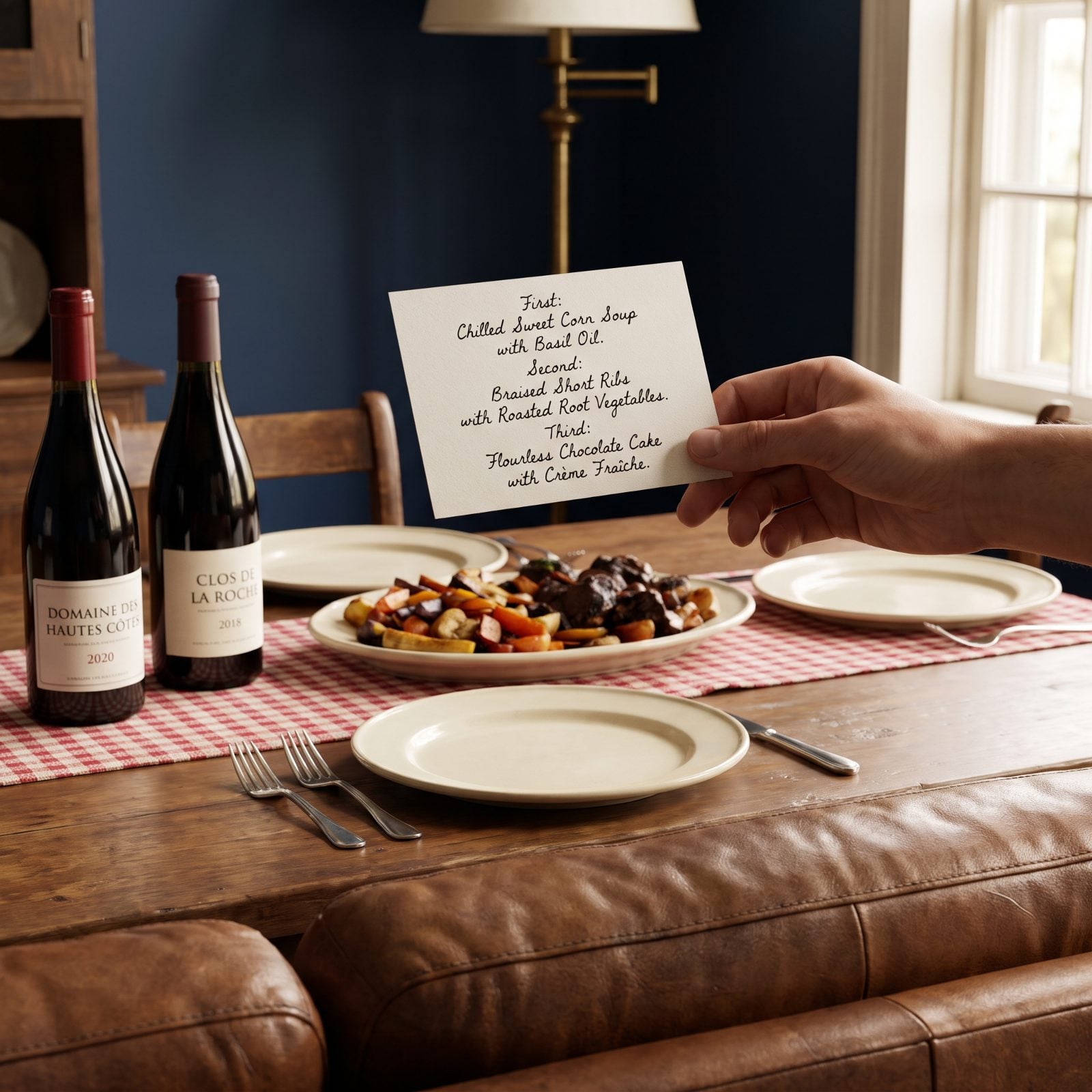
“Tonight we’re starting with the chilled sweet corn soup, then the braised short ribs, and there’s a flourless chocolate cake for dessert.” You deliver it standing, like a proclamation. No vote. Barely a pause for questions.
The menu stopped being a plan and became policy. Nobody asked for the ruling, but you issued it anyway, because an announced menu removes every negotiation before it can start. You’ve set the terms and declared the matter closed.
The mechanism here is anchoring plus pre-emptive framing. By stating the whole meal as a finished decision, you make any alternative feel like a disruption instead of a reasonable request — the same move a leader makes by announcing a policy as already decided. Once it’s spoken as law, pushing back feels like picking a fight rather than asking a question.
12. Dietary Requests Get Treated Like Acts of Rebellion
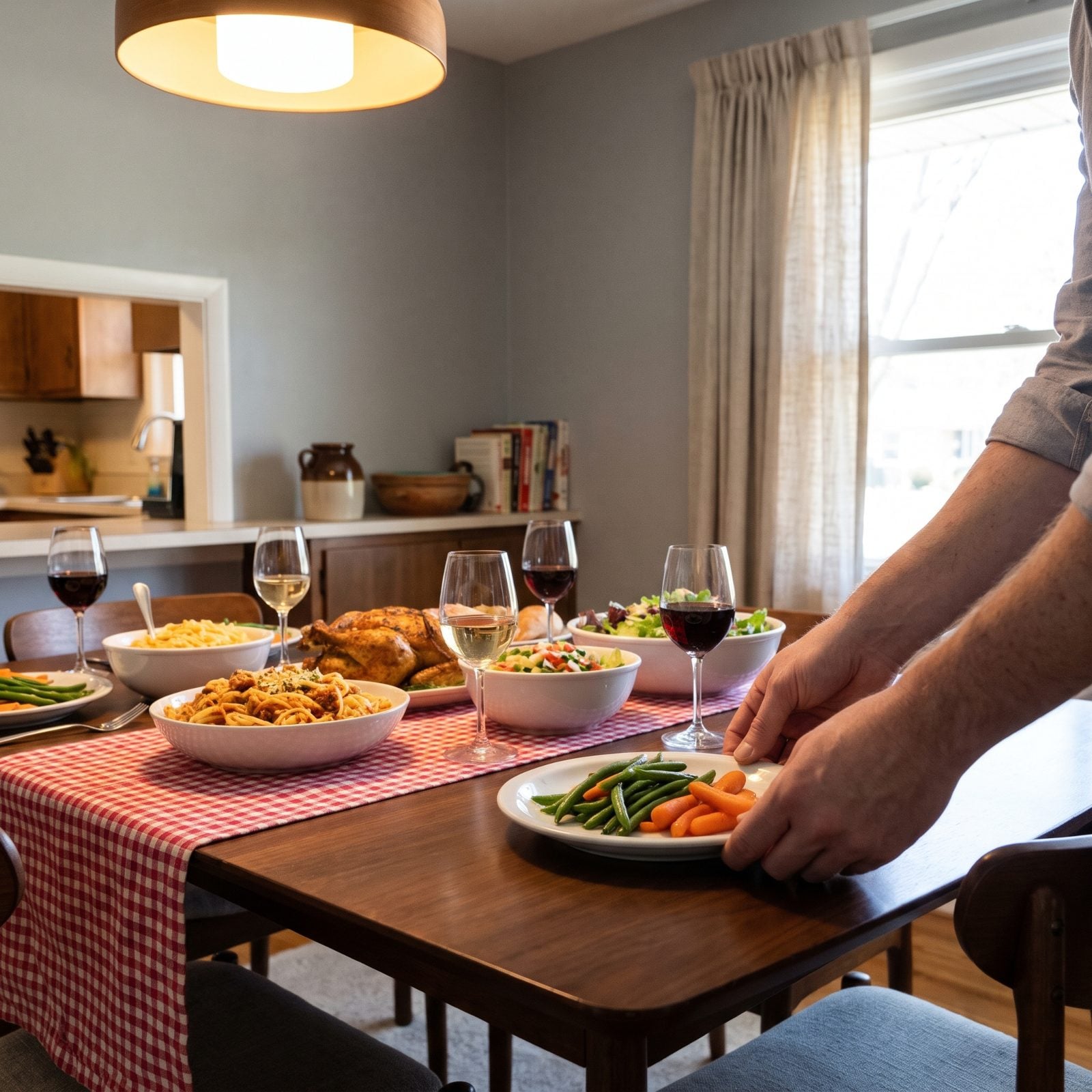
Someone mentions they’re vegetarian now, or can’t do dairy, and you feel it land like a small betrayal. You nod. You say it’s fine. But there’s a flicker, a sense that this person is being difficult, that they’ve opted out of your carefully built plan on purpose.
A reasonable boundary gets read as defiance. The guest isn’t rejecting you; they’re telling you what their body needs. To a host running the table like a tight ship, though, any deviation from the set course reads as a challenge to authority.
This is a loyalty frame. You’ve unconsciously decided that eating what’s served equals respecting you, so declining a dish feels personal. It isn’t. The strongest hosts I’ve seen just ask ahead and plan for it, and the whole thing dissolves. The ones who take it as an insult are usually the ones who needed the table to agree with them more than they needed anyone fed.
When our readers disliked a food photo, the top reason they gave was simply “not for me,” which is often all a guest’s request really means.
11. Late Guests Become Enemies of the Dinner Party
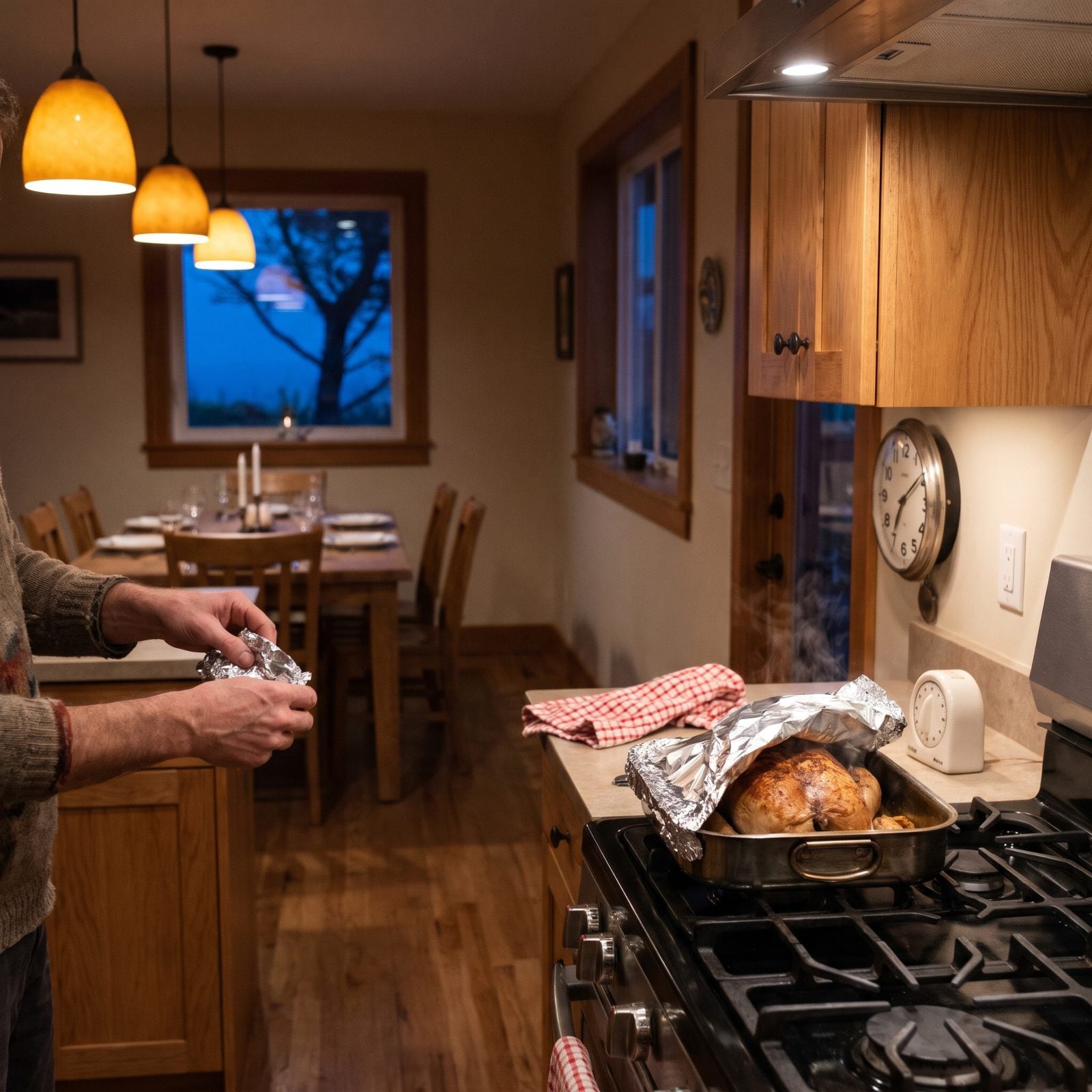
It’s 7:20. The roast is going cold. The seats are two short, and the empty chairs feel like an accusation. By the time the doorbell rings, you’ve built an entire case against these people, and “sorry, traffic was awful” barely gets a hearing.
Lateness becomes disloyalty. A missed start time stops being logistics and turns into a referendum on whether they respect you, your effort, and your schedule. You’ve tried and convicted them before the coats are off.
The engine is the sunk-cost fallacy wearing an oven mitt. You poured hours into timing this meal, and watching that effort slip because someone’s running behind feels like a personal loss, so the anger scales to the investment, not the offense.
The roast can wait ten minutes. The grudge you build in those ten minutes is harder to reheat.
10. The Good Plates Suddenly Become Instruments of Rank
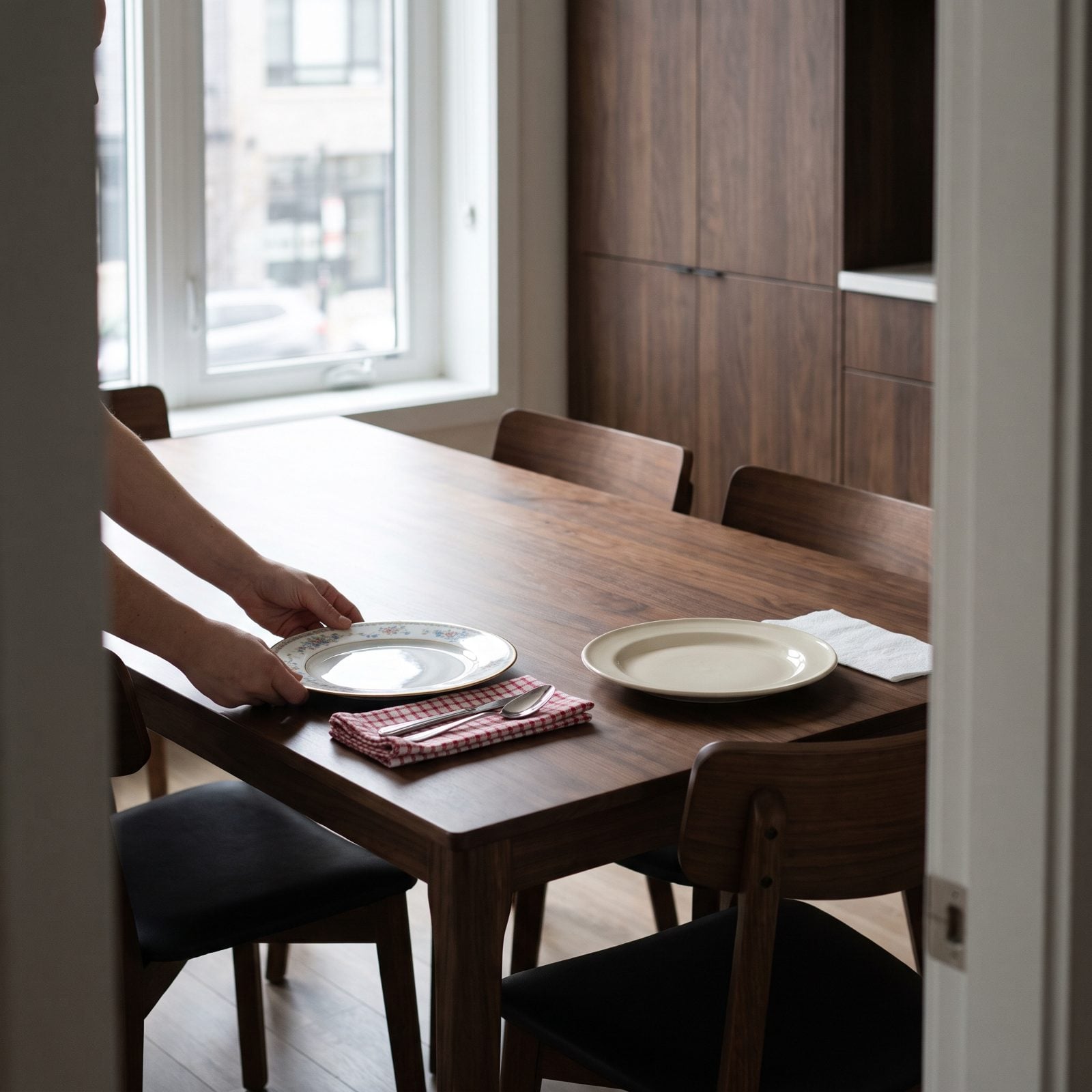
The wedding china comes out, but not for everyone. The in-laws and the boss get the gold-rimmed plates, the kids and the casual friends get the everyday stoneware, and somewhere in that choice you’ve drawn a line nobody else can see but everyone can feel.
Plates became rank. The dinnerware stopped being about dinner and started being about status — who’s worth the good stuff and who isn’t. Royal courts sorted guests the same way, deciding who got the silver and who got the pewter.
This is status signaling, aimed partly at your guests and partly at yourself. Giving someone the fine china tells them where they stand. It also tells you that you’re the kind of host who has fine china to assign. The hierarchy flatters the person setting the table most of all.
What Our Readers Say
- When Piaci Pizza readers loved a food photo, the top reason they tapped was comfort, ahead of nostalgia, ingredients and simply looking good.
From Piaci Pizza reader polls and votes.
9. Seconds Are Rationed Until Every Guest Is Counted
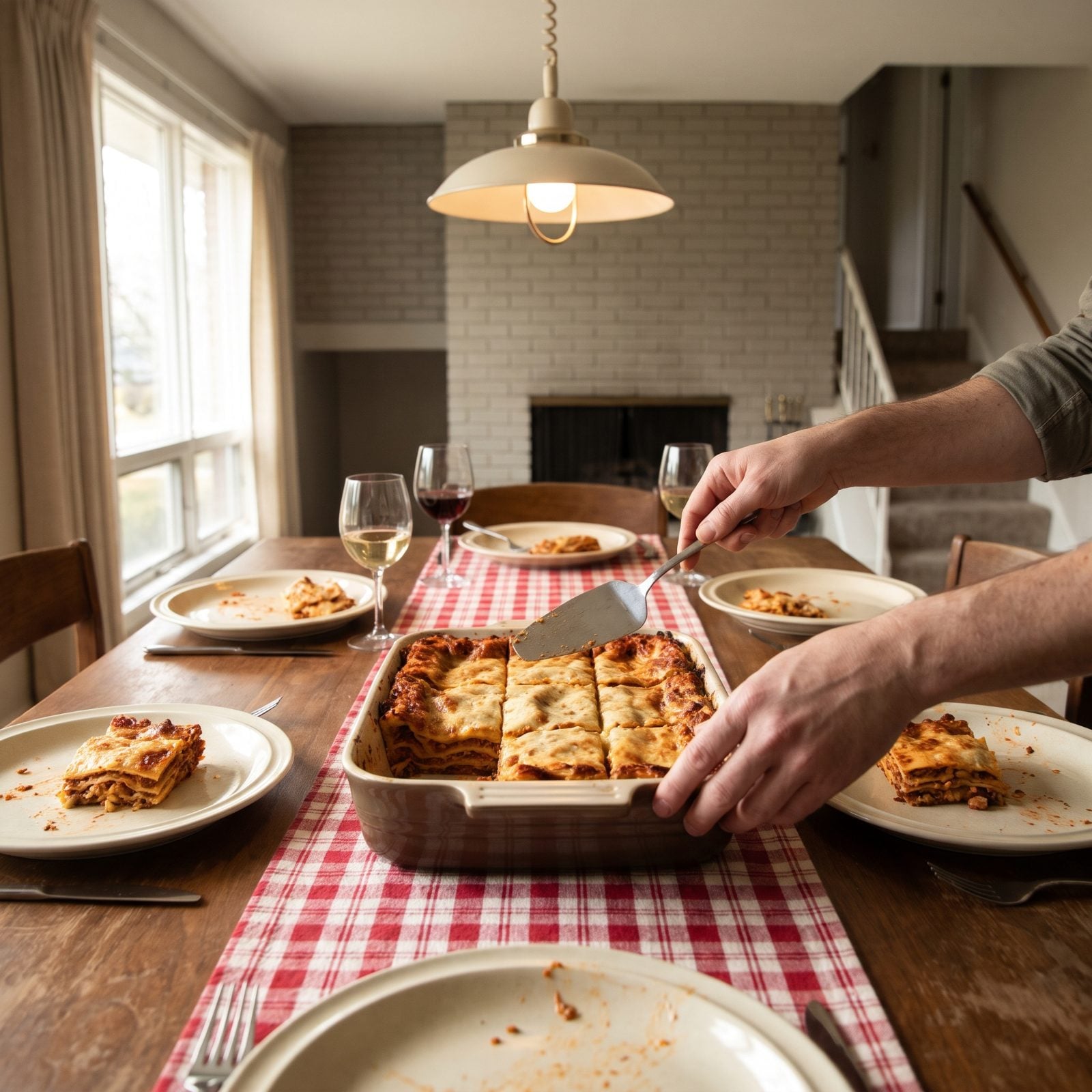
You watch the lasagna like a quartermaster. Before anyone gets seconds, you run the numbers in your head — eight people, one dish, who hasn’t eaten yet, who ate too fast. Someone reaches for the spoon and you cut in with “let’s make sure everyone’s had some first.”
Abundance gets managed into scarcity. There might be plenty, but you’ve turned the serving dish into a controlled resource, doled out on your schedule, by your count. Rationing is one of the oldest ways to hold power at a table.
The driver is control through scarcity, real or imagined. Even when there’s enough, managing the supply keeps you at the center of every portion. Nobody eats more without your approval, and that quiet power feels a lot like generosity from where you’re standing.
8. You Control the Playlist to Control the Population
Would you like to save this?
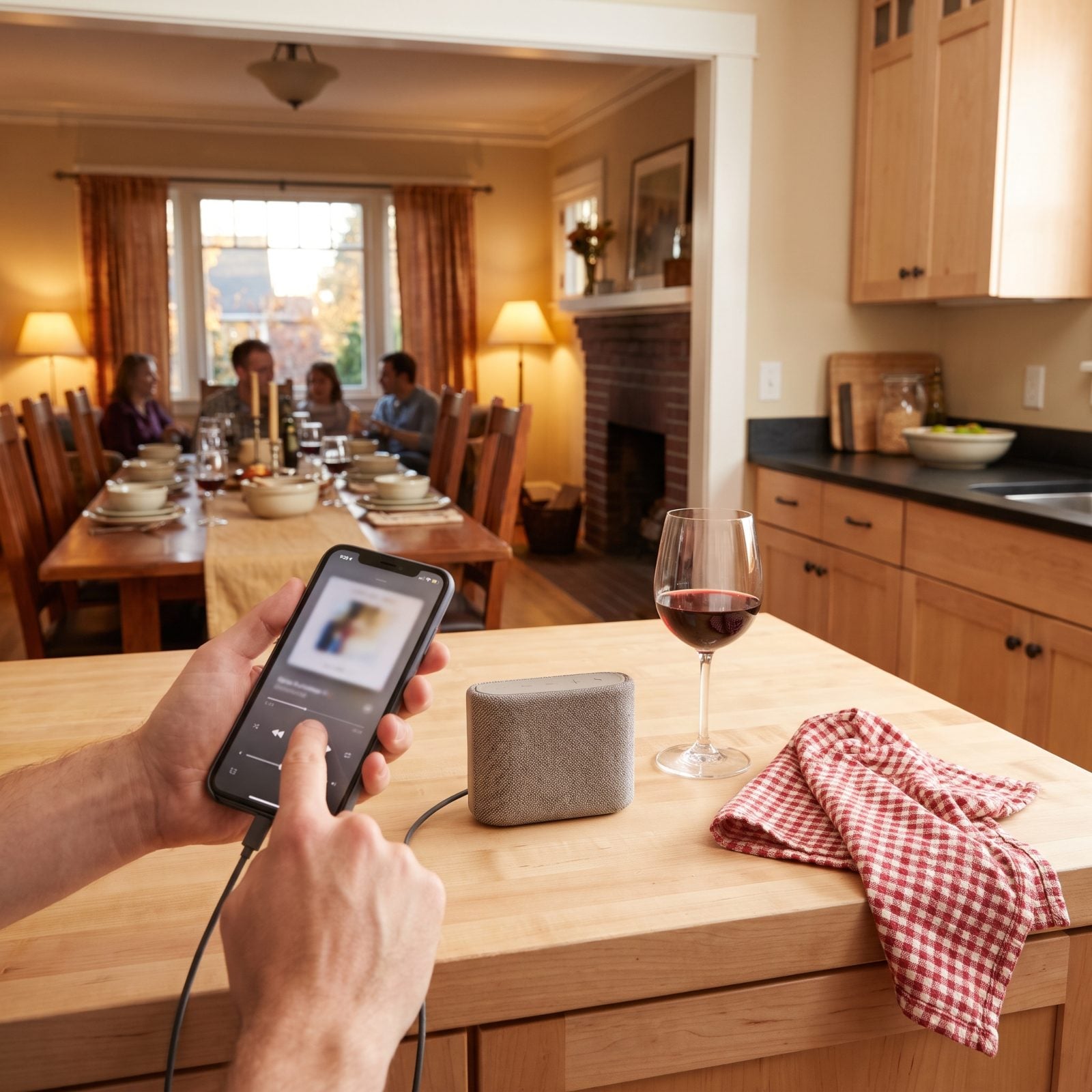
Someone puts on a song. You don’t love it. Three minutes later your hand drifts toward the phone, and suddenly the room is back to your playlist, the one tuned to keep the mood exactly where you want it. Too lively and people get rowdy; too mellow and the energy sags. You manage the volume on the whole evening through the speaker.
Music becomes crowd control. The soundtrack sets the emotional temperature of the room, and holding the aux cord means holding the thermostat on everyone’s mood at once. A soft, deniable kind of power.
The mechanism is emotional contagion — the way feeling spreads through a group, and music nudges it fast and invisibly. Whoever controls the playlist is steering how the whole room feels without ever telling anyone to feel it, which is exactly why you won’t give up that phone.
7. You Monitor Empty Glasses From Across the Room
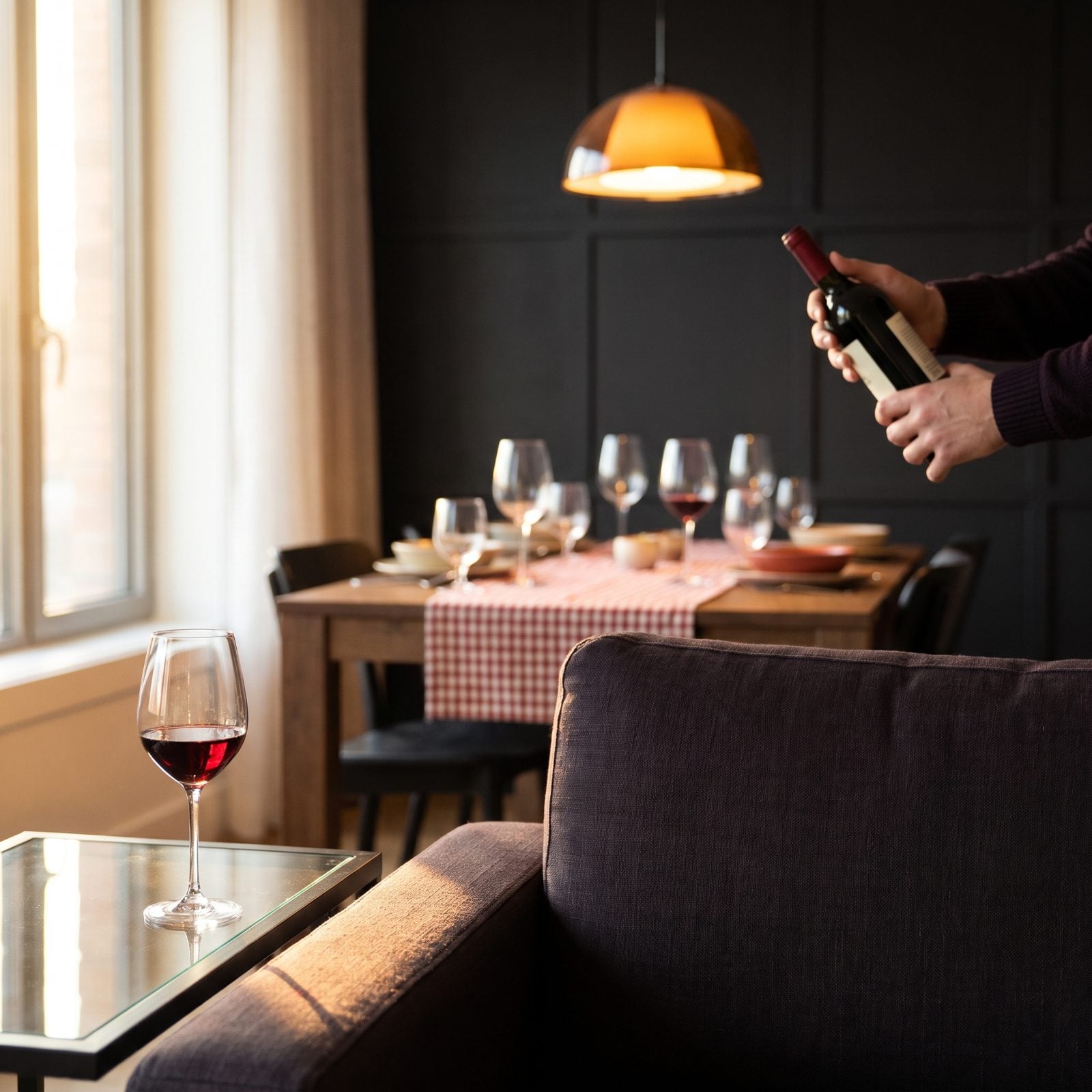
You’re mid-sentence, but your eyes are doing laps around the table. His glass is almost empty. Hers is getting low. You track every level in the room like a radar operator, and before anyone has to ask, you’re already up with the bottle, topping off, tending, watching.
It reads as hospitality. Underneath, it’s surveillance. You’re keeping tabs on everyone’s consumption, their pace, their state, and nothing at that table happens without you noticing it first.
The psychology is hypervigilance in service of control. Knowing everything that’s happening in the room — who needs what, who’s had how much — keeps you one step ahead of the whole party. There’s genuine care in it, and there’s also a need to miss nothing, and those two things sit right next to each other every time you lift that bottle. The best hosts eventually learn to put it down, sit, and let a glass stay half-empty for five minutes. The world keeps turning. So does the dinner.
6. You Ban Phones While Keeping Yours Within Reach
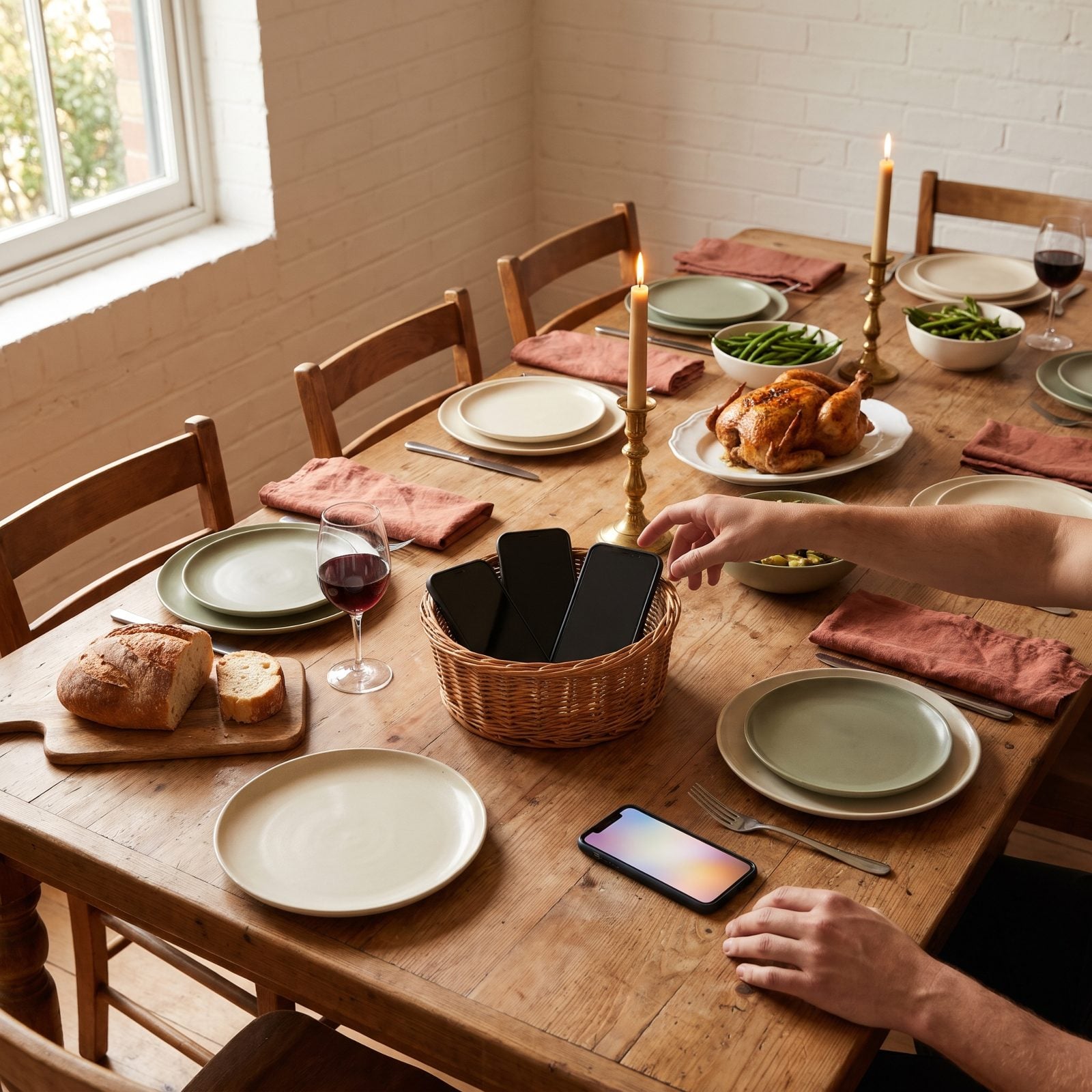
The rule gets announced before the first course. Phones in the basket, everybody, we’re being present tonight. And into the basket they go, dropped like homework turned in late. Everyone nods, everyone agrees connection matters more than a buzzing pocket.
Then the host’s own phone stays face-up by the wine glass. For the timer, obviously. For the playlist. For the one text that might actually matter. The rule was never a rule — it was a hierarchy wearing the costume of a principle.
This is the oldest trick in control: a law for the room, an exemption for the one who wrote it. It’s a close cousin of what psychologists call moral licensing — the sense that doing something virtuous earns you a pass to bend the rules. You set the standard, so you float above it. And we’ve all watched someone enforce a quiet table while thumbing their own screen under the edge of it, pretending not to notice.
5. You Decide When Everyone May Leave the Table
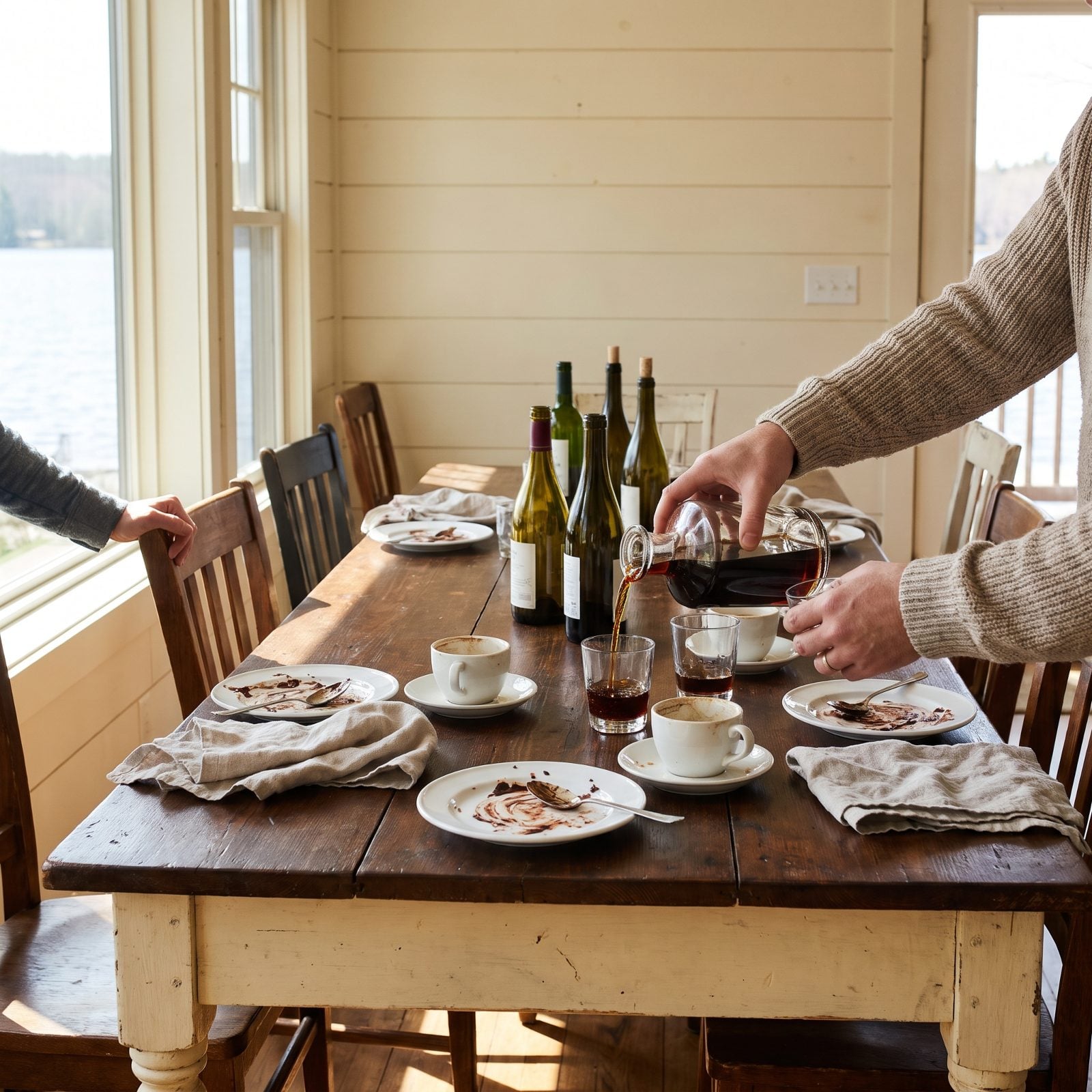
Dinner ended twenty minutes ago. The plates are stacked, the coffee’s gone cold, and someone’s eyeing the door with the look of a person who has an early morning ahead. Then out comes the amaro. One more round. You can’t leave yet, I made this whole thing, sit, sit.
Nobody controls a room like the person who controls when it ends. The meal was never the point. The staying is. Every refill is a small test of loyalty, every “just one more” a check on who’ll give you another hour.
And there’s a reason it works on everyone, even the exhausted. Call it the sunk-cost grip turned outward. Guests have already given you three hours, so leaving now feels like wasting all of it — they stay, resentful and smiling. The host who times the exit owns the night, and a few of them will stretch that night until the last guest’s politeness finally cracks.
4. A Spilled Sauce Requires a Very Public Example
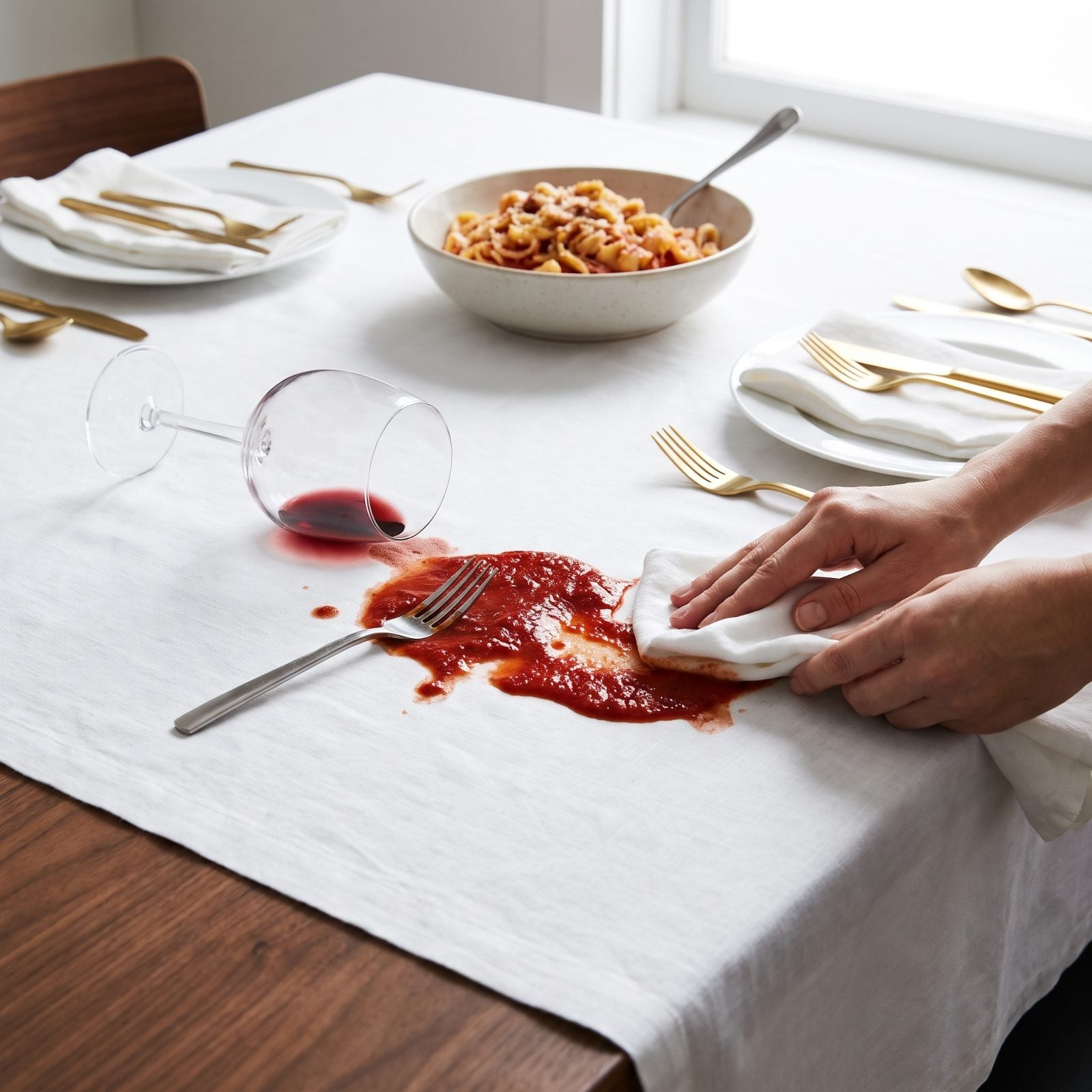
A guest knocks over the wine. Or drops a meatball, or splashes marinara across the good cloth. An accident — the kind that happens at every table ever set. But instead of a quick wipe and a laugh, the whole room goes still while the mess becomes a moment.
Oh. Oh no. Let me just. No, don’t move. Everybody, watch your glasses. The sigh. The slow dab. The announcement that this cloth was a wedding gift.
One clumsy guest, maximum visibility. That’s not stain management. That’s making an example. Crank the reaction loud enough and the other guests police themselves for the rest of the night, suddenly careful, suddenly quiet.
3. You Demand Praise Before Anyone Gets Dessert
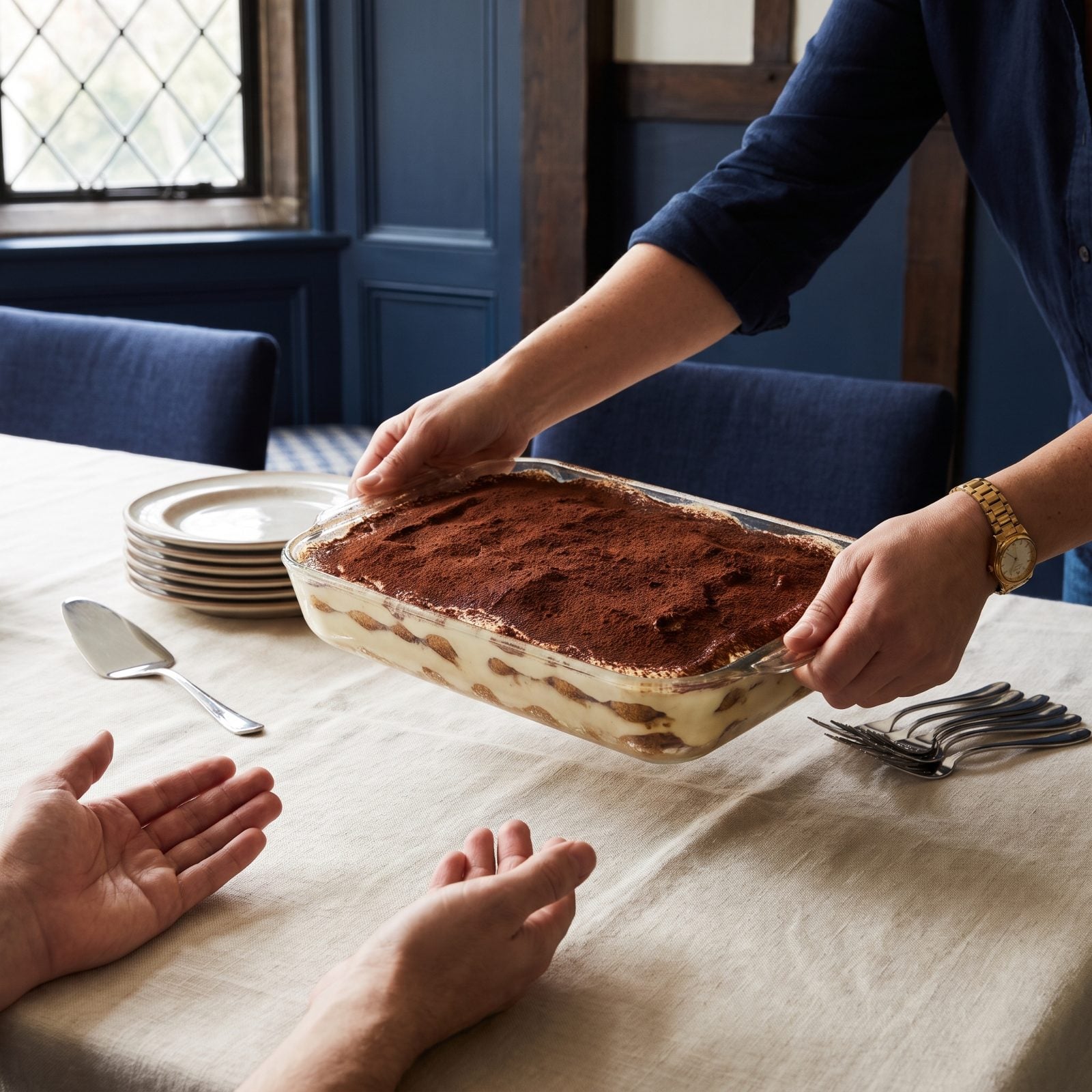
The dessert is made. It’s sitting right there, gorgeous, and the host is holding the whole dish hostage. So? How was it? Come on, tell me. The tiramisu does not get served until someone says, out loud, that this was the best meal they’ve had all year.
Fishing for compliments is universal. Making dessert contingent on them is governance — the praise stops being a bonus and turns into the toll you pay to proceed.
What’s happening is a loyalty test wearing an apron. Genuine thanks arrives on its own. Demanded thanks only proves who’s willing to perform on command, and that performance is the real prize the host is after. We’ve all sat through the awful pause where somebody has to produce the required enthusiasm before the forks come out.
Praise given freely means something. Praise extracted at the dessert table means only that everyone wants tiramisu.
2. Leftovers Go Only to Guests in Good Standing
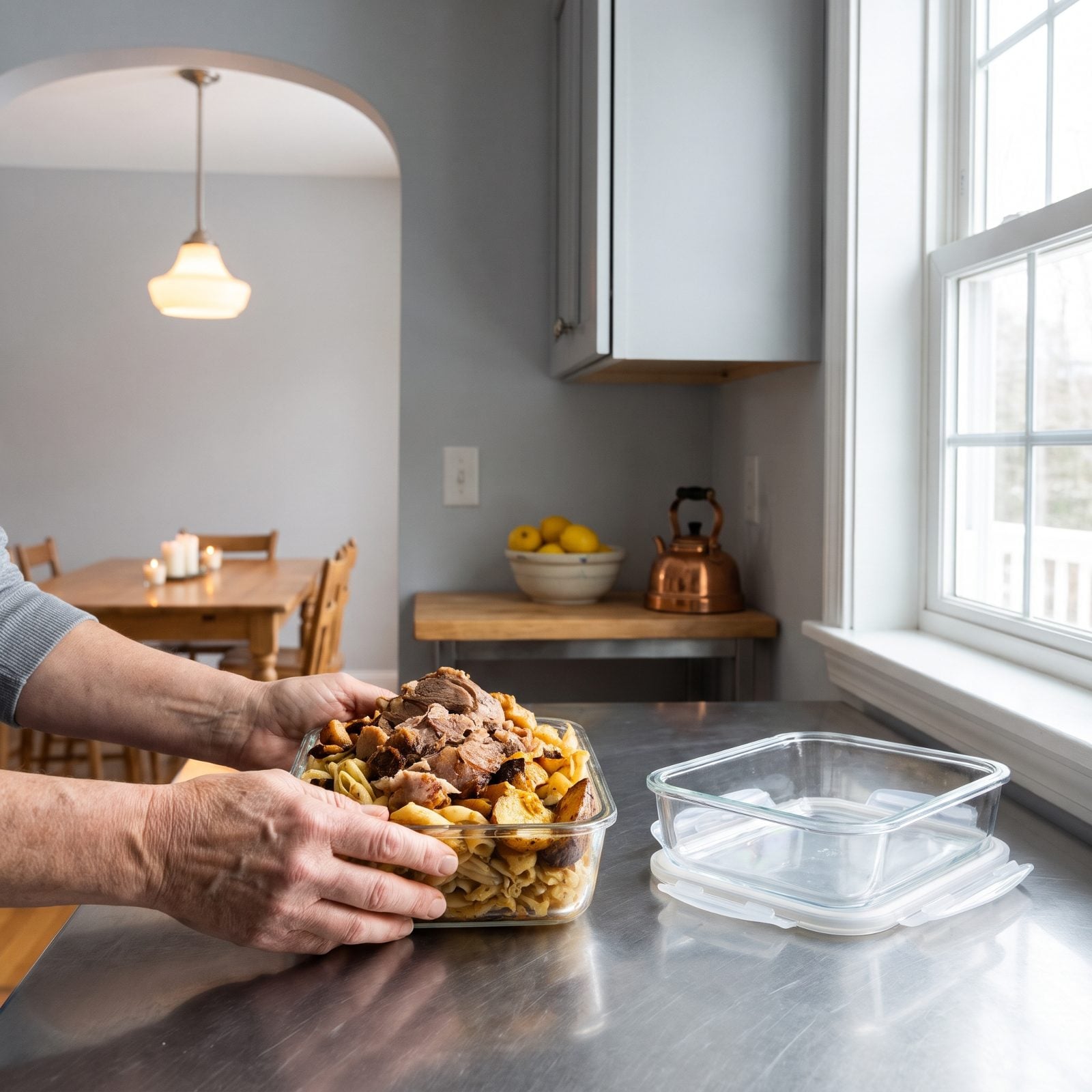
The night winds down and the containers come out. This is where the real scorekeeping happens. The guest who laughed at the stories, complimented the sauce, and stayed to help with the dishes goes home with half a lasagna. The one who arrived late and left early gets a tight smile and a wave.
Leftovers are love, portioned by rank. Favoritism with a lid on it.
Underneath it all sits reciprocity, bent into a reward system. Give and you receive. Perform loyalty and you get the roast chicken for tomorrow’s lunch. Hold back and you walk out empty-handed, having learned your place without anyone saying a word.
1. The Group Photo Becomes Mandatory Proof of Happiness
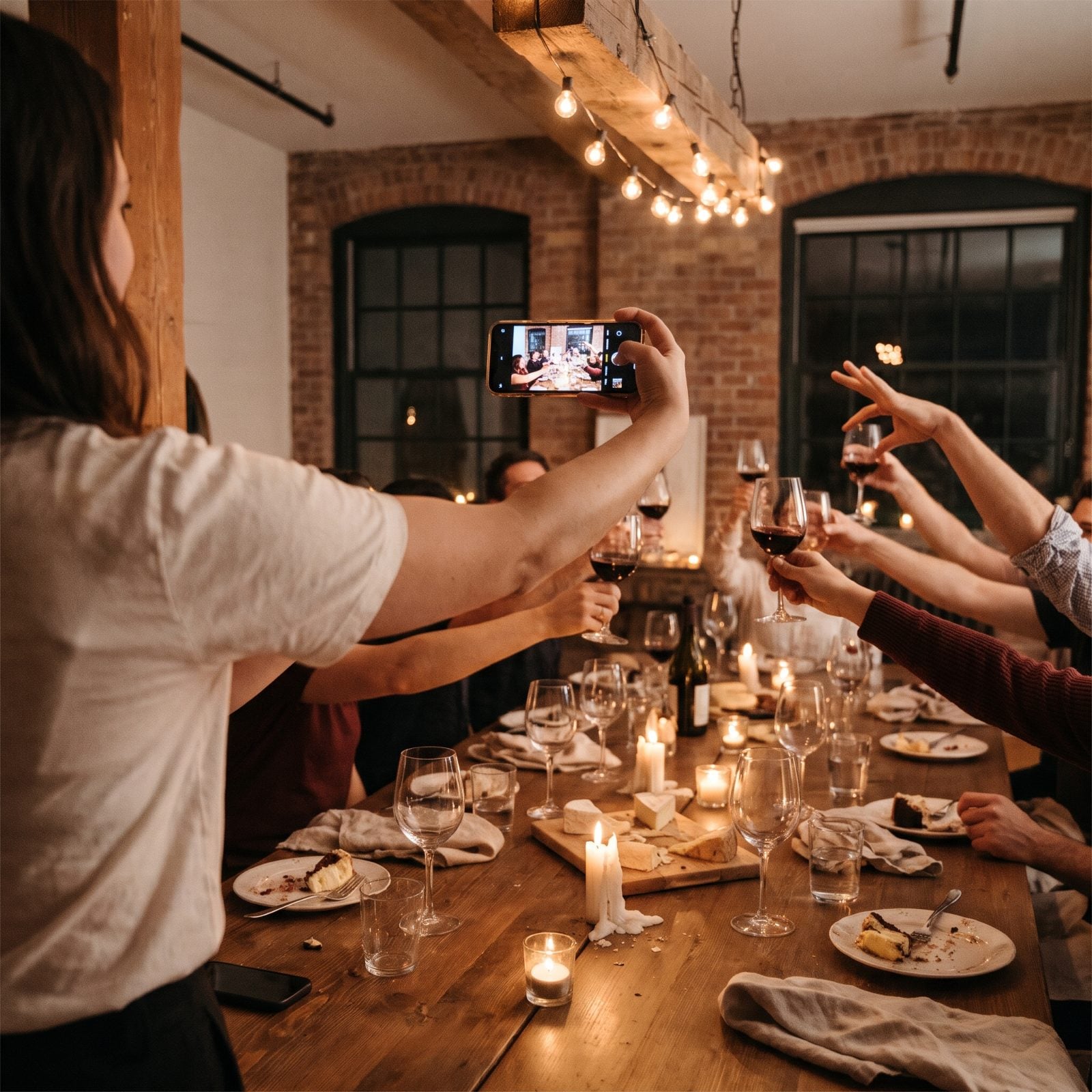
Right as people are gathering their coats, the phone comes out. One picture, everyone, come back, squeeze in, glasses up. Down go the coats. Chairs scrape. Everybody arranges a face that says this was the best night.
The photo isn’t a memory — it’s documentation. Proof, for later, that the evening was a triumph and everyone was delighted to be there. Smile like you mean it, because this is going somewhere other people will see.
What drives it is impression management, that deep human itch to control the record. The meal itself is over and can’t be changed. The photo can be staged, filtered, captioned, and passed around as evidence. So the exhausted guest still lifts the glass, because refusing to smile in the group shot reads as a betrayal. And the final act of the night turns into a little performance of joy, held hostage until the host gets the shot that confirms the story already being told.