Would you like to save this?
A plate of spaghetti knows things your therapist charges to uncover. Watch the fork pause mid-bite when someone mentions money, or the eye roll that lands before the sauce has even been tasted. One person sweats at the stove while everyone else studies a phone like it holds the meaning of life. Marriage counselors spend decades naming these patterns, and your family already performs every one of them over a weeknight bowl of pasta. Same wiring. The forces that decide who talks, who sulks, who quietly keeps score at the table run the whole house. We lined up the dinner behaviors against the counseling-office classics, and the overlap is almost rude. You’ll recognize yourself in at least one. Probably more. Pass the parmesan.
Please note that some of the images in this article were created with the assistance of AI.
20. Your Phone Gets More Eye Contact Than Your Partner
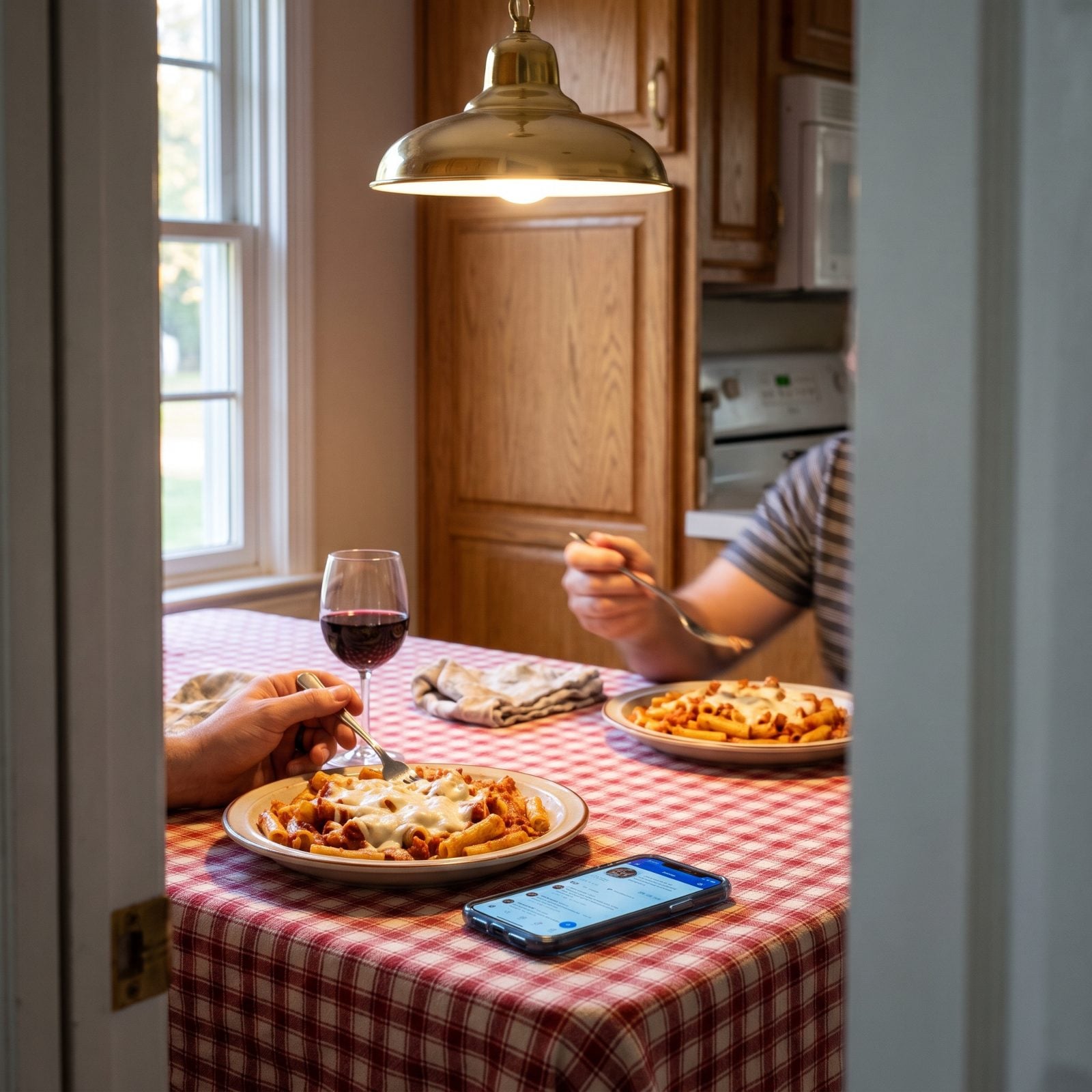
The casserole hits the table, the garlic bread is still warm, and somewhere between the first bite and the second a thumb starts scrolling. Someone says something. You answer without looking up. The phone gets your eyes; the person who made dinner gets the top of your head.
Counselors call it attention economy, and it’s the quiet killer. Not the big fight — the slow starvation of never feeling seen. Each glance at the screen is a tiny message: this matters more than you right now. Repeat that for three hundred nights and someone stops bothering to tell you about their day.
The pull is real. A buzzing phone offers novelty on demand, and your brain treats novelty like a slot machine, so a spouse recounting their afternoon never stood a chance against that reward schedule. That’s the trap. The table went silent and nobody called it a problem.
19. One Person Cooks While Everyone Else Somehow Looks Busy
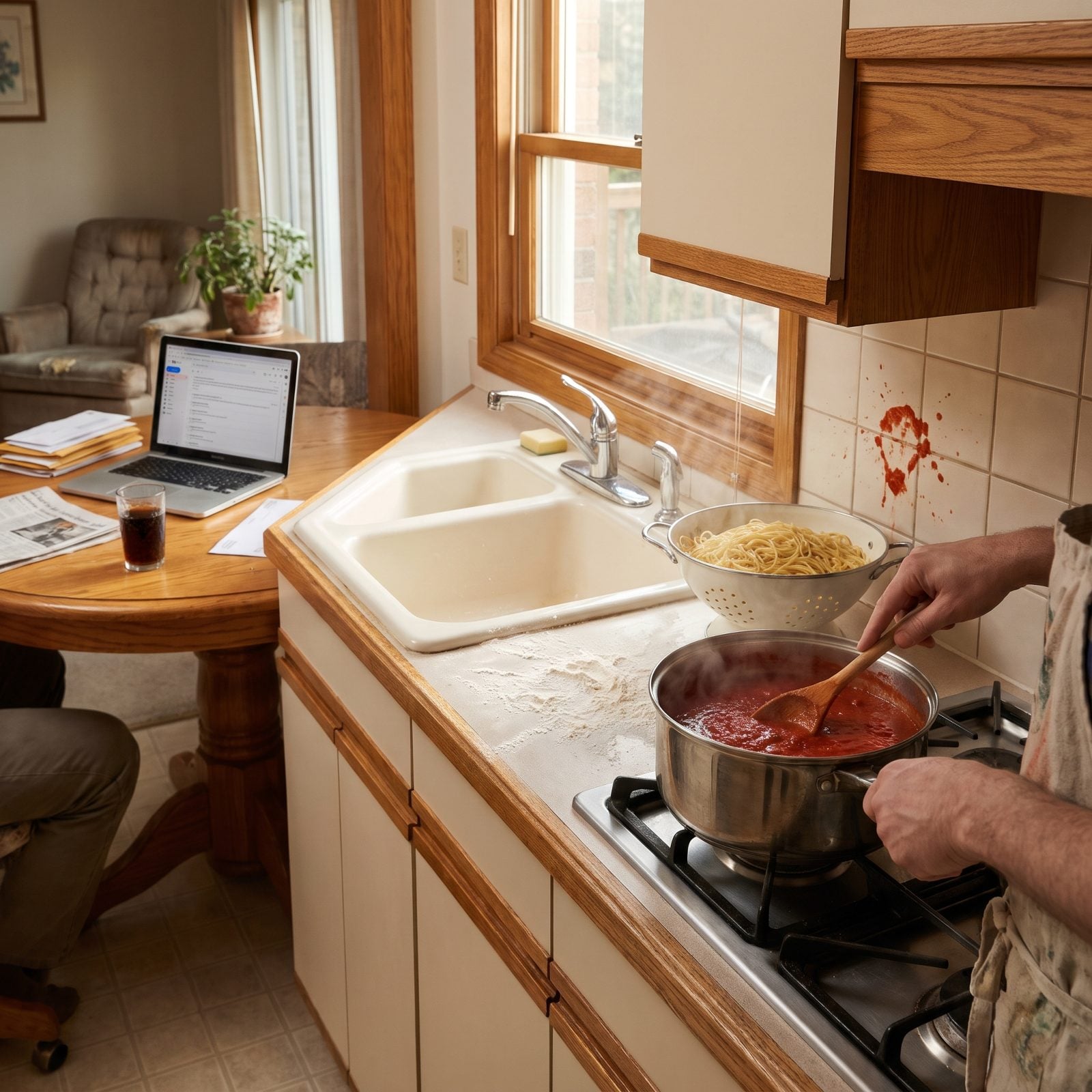
You know the choreography. One person is at the stove, elbow-deep in sauce and steam, timing the pasta so it lands hot, while everyone else gets suddenly very occupied. Important emails. A show that needs finishing. A drawer that, apparently, must be organized this exact minute.
This is the division-of-labor fight, and it almost never happens out loud. It happens in silent tallies. The cook keeps a running ledger of who helped and who vanished, and resentment compounds quietly until it detonates over something small — like who left the parmesan out.
Invisible labor runs on a cruel asymmetry. The person doing the work notices every minute of it; the person not doing it genuinely does not see it happening. Both are telling the truth from where they sit. That gap is where a lot of marriages fray, one unacknowledged dinner at a time.
18. You Ask What’s for Dinner but Never Help Plan It
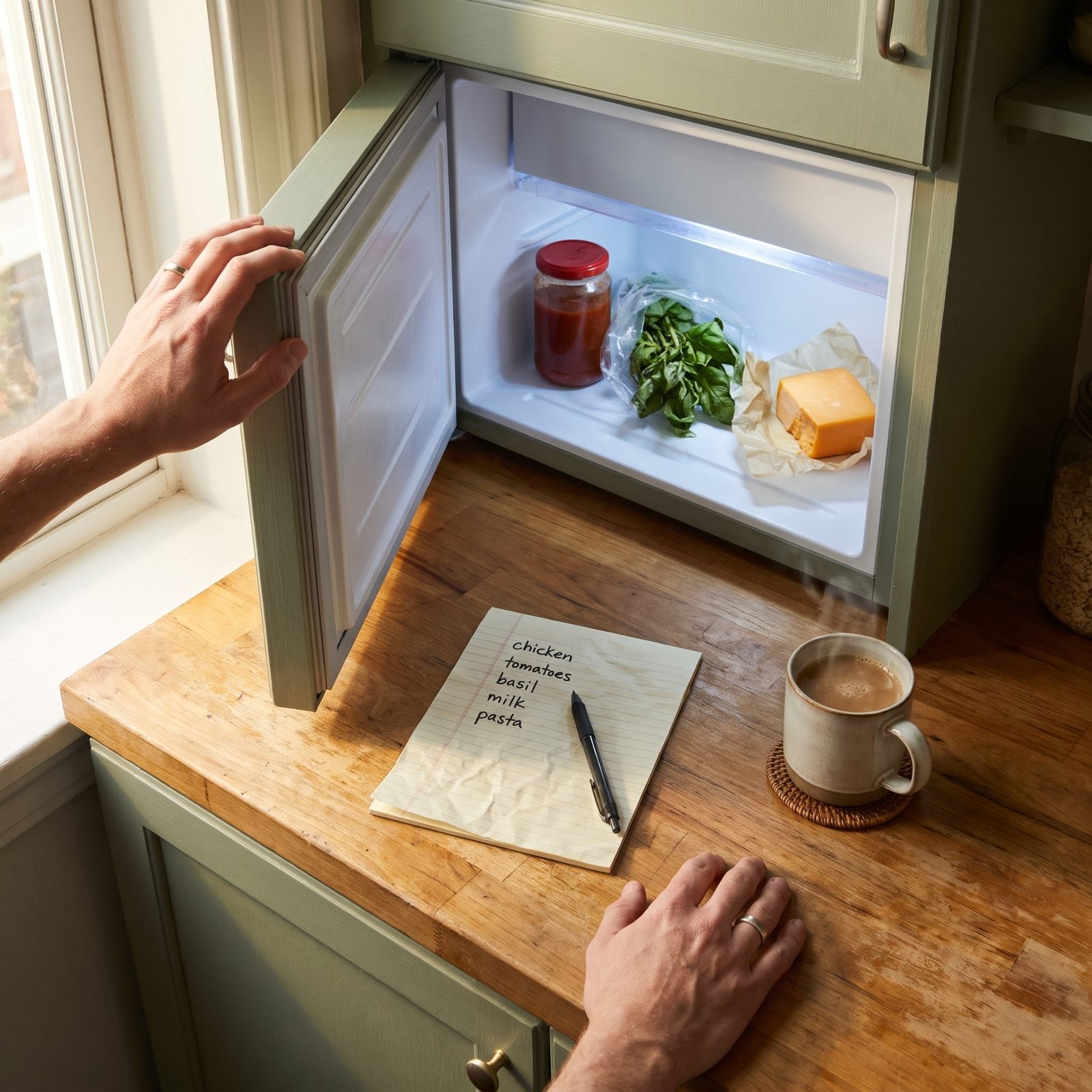
“What’s for dinner?” lands at five o’clock like a daily toll. You ask it without once considering the thawing, the list, the mental math of what’s about to expire. Someone else carries all of that in their head, every single day, forever.
Therapists call it the mental load, and it’s the most lopsided job in any household — the planning, the remembering, the anticipating, none of which ever clocks out. Asking what’s for dinner is fine. Only ever asking, never planning, turns one adult into the household’s full-time project manager.
The question sounds like interest. Over time it sounds like a demand.
The fix isn’t grander. It’s boring. Own a night — pick the meal, buy the stuff, make the call. Decision fatigue is real, and the person making every food decision for the family is running on empty by the time the water boils.
17. You Say Anything Is Fine, Then Reject Every Menu
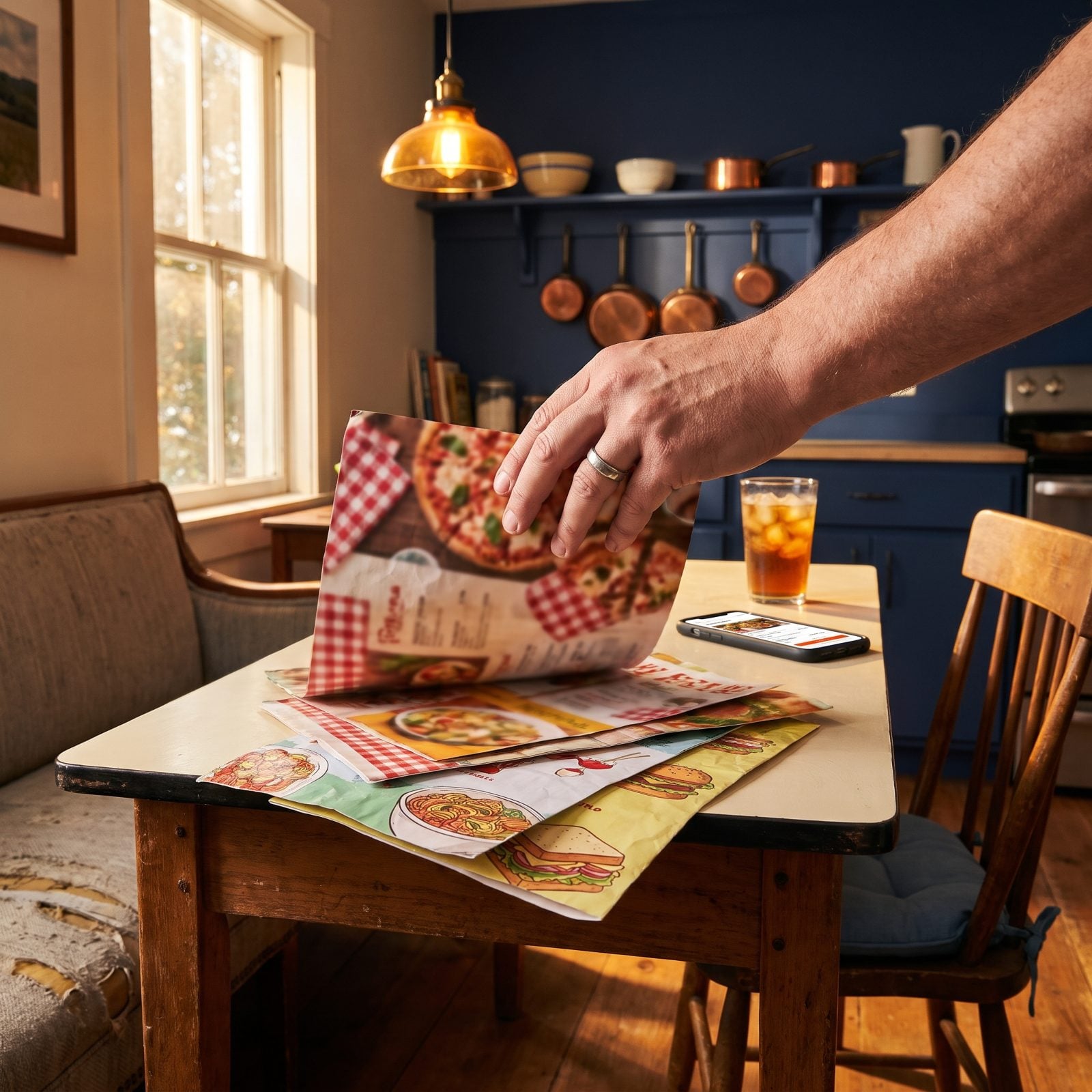
“I don’t care, anything is fine.” Then the pizza place is too greasy, the Chinese is too far, the sub shop was last week. Every suggestion gets quietly shot down while you insist, honestly, that you have no preference at all.
This is the passive-aggressive classic, and counselors hear it in a hundred costumes. You withhold your real want, then punish the other person for guessing wrong. You get to keep your hands clean. They get to feel like they can’t win.
Sometimes it’s conflict avoidance dressed as flexibility. Stating a preference feels risky, so you outsource the decision and then reserve the right to veto. The other person learns the lesson fast: there is no correct answer, only a trap with cheese on it.
16. You Correct Their Story Before They Reach the Punchline
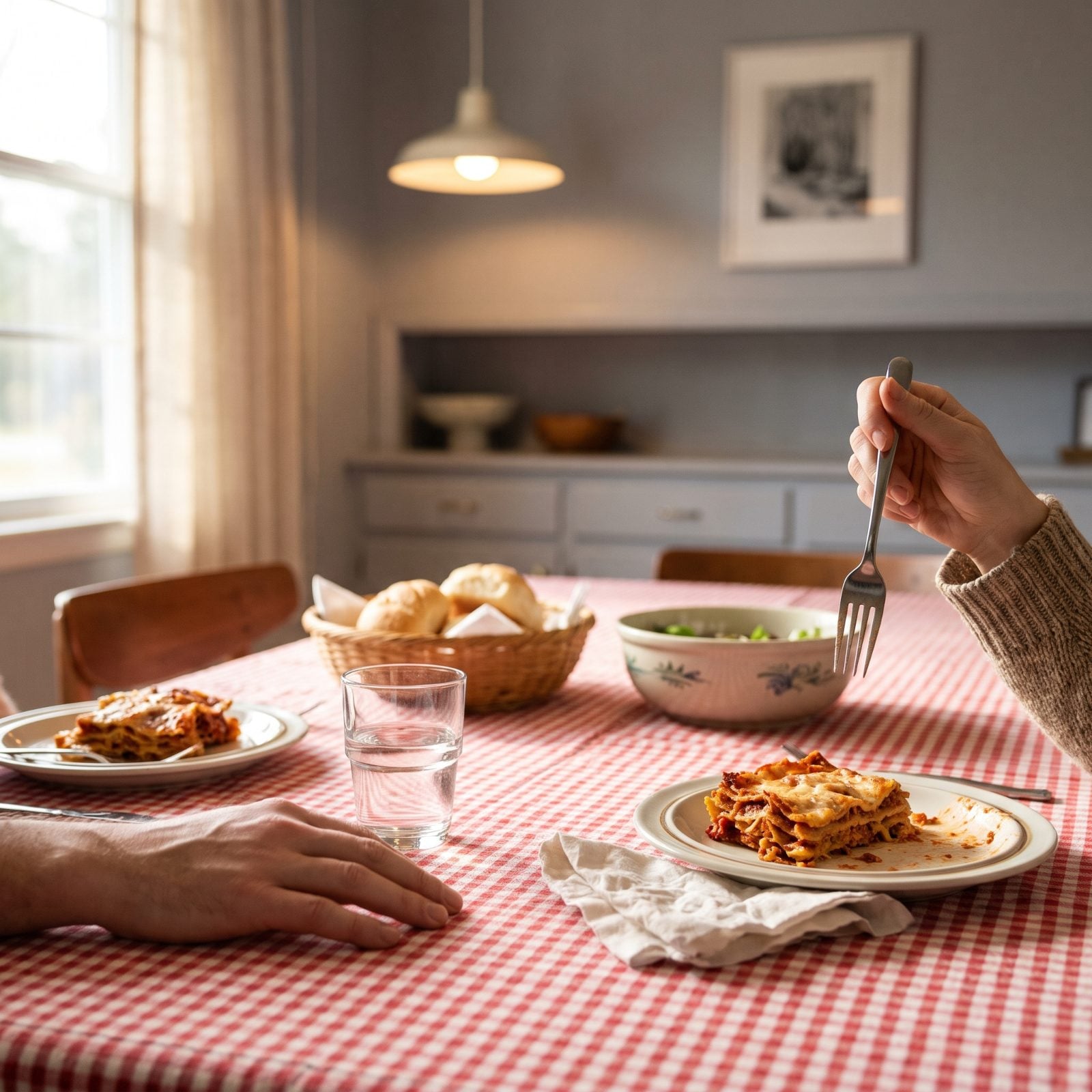
They start telling the story about the time at the lake. You jump in. “No, it was August, not July, and it was your cousin, not your brother.” The punchline dies. The story was never really about the date.
Counselors call this a bid for connection that gets rejected mid-flight. Someone is reaching out, trying to share a moment, and the correction says: accuracy matters more than your joy right now. A small thing that curdles into a big one.
The urge usually comes from a decent place — you want the record straight. But needing to be right in the moment costs you the warmth of the moment. Over a dinner table, those interruptions pile up into a partner who just stops telling stories, because why bother.
15. You Roll Your Eyes Before Tasting the Pasta
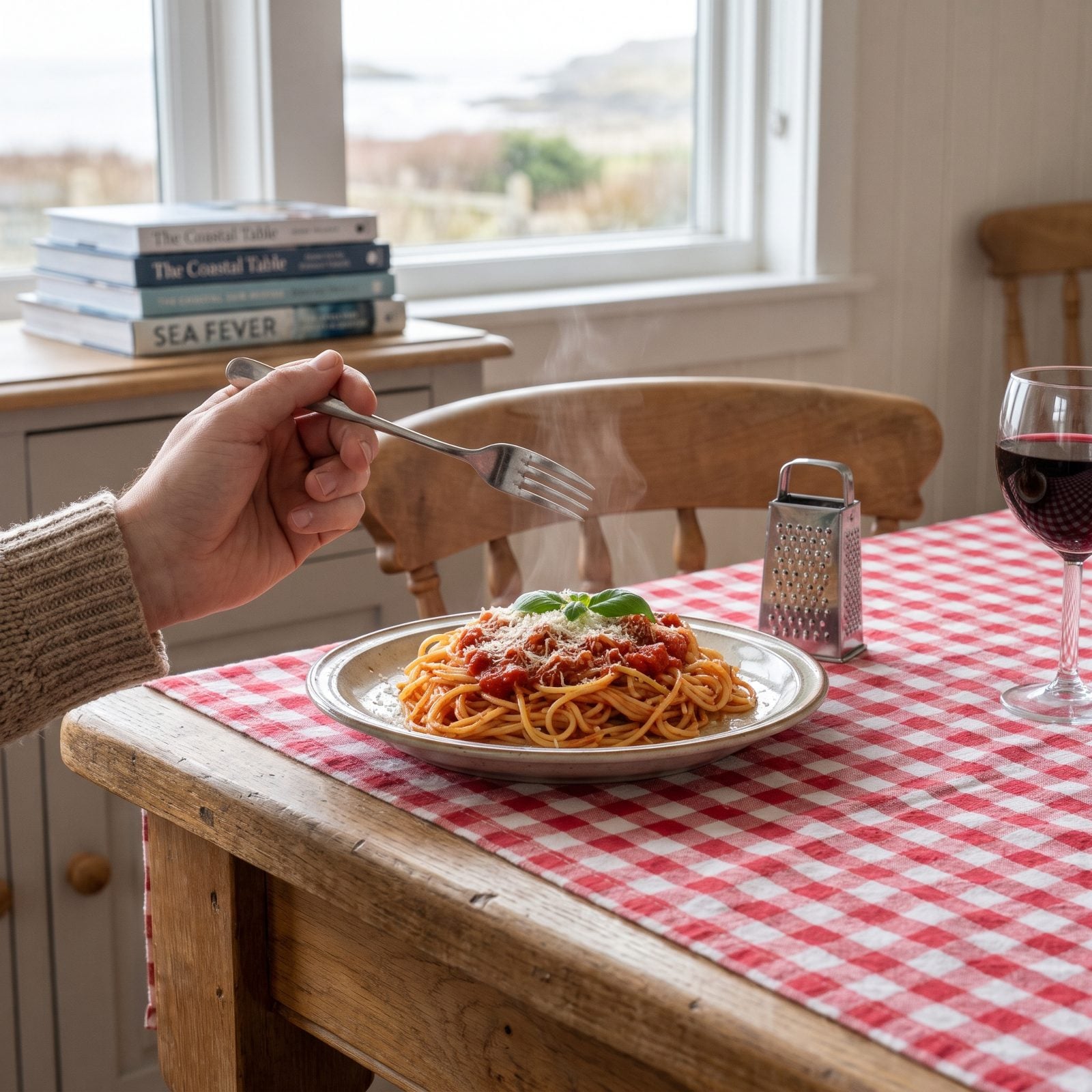
The pasta hasn’t touched your lips and your face has already filed its verdict. The eye roll, the little sigh, the fork poking at the sauce like it owes you money. The cook sees all of it, and the meal is dead before the first bite.
Of all the dinner-table tells, this one’s the loudest. Marriage researchers flag contempt as the single strongest predictor of a relationship falling apart. Not anger. Not conflict. Contempt — the eye roll, the sneer, the sense that the other person is beneath your respect.
Here’s the brutal part. Your partner cannot un-see that face. A criticism can be talked through; contempt lands as a message about their worth, and it accumulates like plaque. One rolled eye over dinner is nothing. A thousand of them is a diagnosis.
What Our Readers Say
- When Piaci Pizza readers disliked a food photo and tapped a reason, the top answer was simply “not for me” at 38%, ahead of ingredients and looks.
From Piaci Pizza reader polls and votes.
14. A Burnt Crust Becomes Proof They Ruin Everything
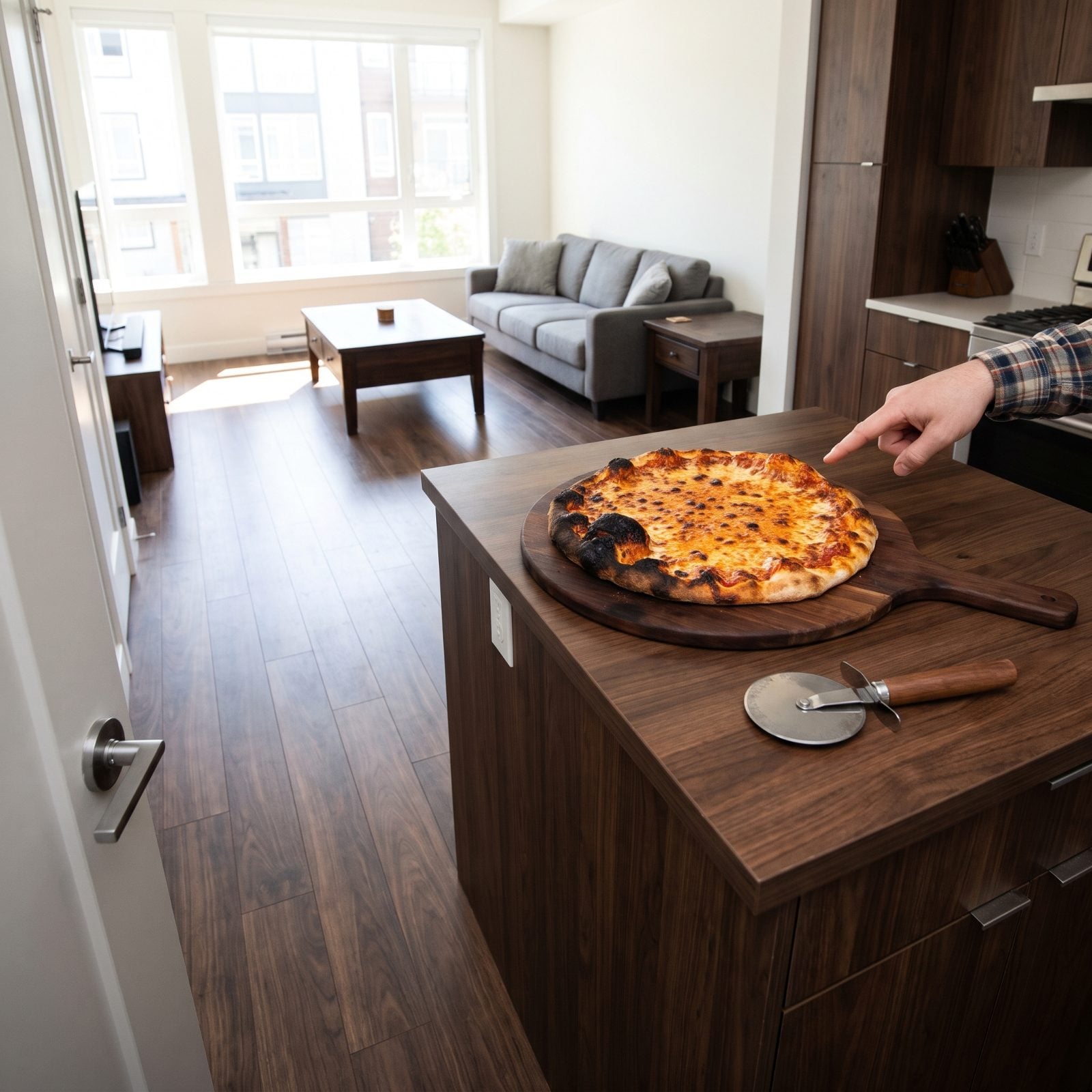
One edge of the homemade pizza went dark. Not the whole thing. One edge. And suddenly it isn’t a burnt crust, it’s evidence. “You always do this.” “Of course it’s burnt.” A single char mark becomes a whole personality verdict.
This is overgeneralization, and counselors watch for the words that carry it: always, never, every time. The brain loves a pattern, even a false one, so one mistake gets promoted to a lifelong character flaw, and now you’re not arguing about dinner — you’re arguing about who someone fundamentally is.
Loss aversion feeds it too. The good part of the pizza barely registers while the burnt corner screams. We’re wired to notice what went wrong far louder than what went right, which is a terrible way to grade a person you love.
13. Every Dinner Complaint Gets a Defensive Explanation
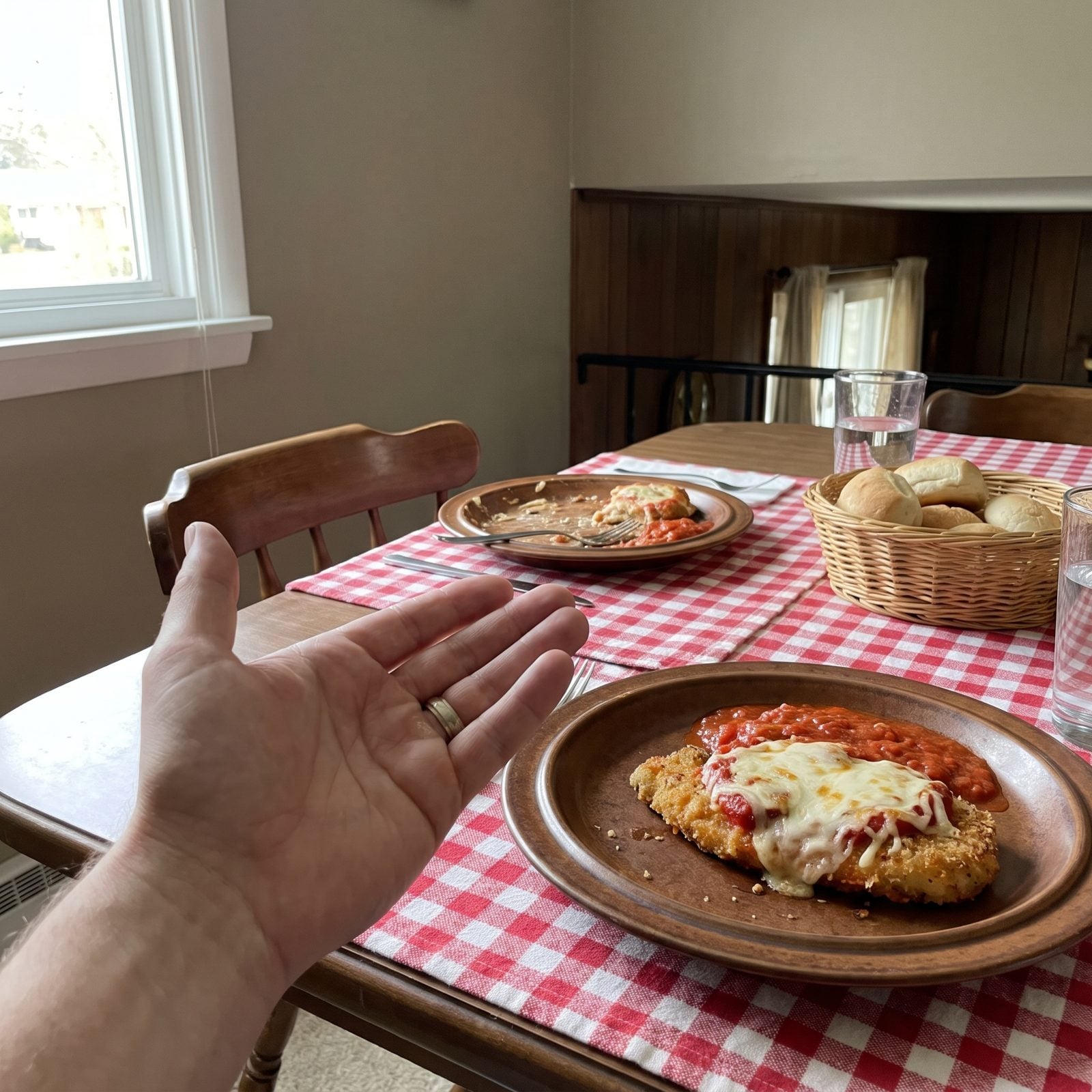
“The chicken’s a little dry tonight.” Before the sentence finishes, the defense is already deployed. The oven runs hot. The recipe was weird. You distracted me. Nobody said sorry. Nobody even heard the complaint — it bounced off a wall of reasons.
Defensiveness is the reflex that turns a small note into a standoff. Instead of hearing the feedback, you hear an attack and counter it. The message underneath: this is not my fault, and also, why are you attacking me. Neither person feels heard, and the dry chicken is now the least of it.
A complaint is a request wearing a frown. A defense treats it like a lawsuit.
The counselor’s move is almost absurdly simple. Take the one percent that’s true. “You’re right, it got overcooked, I’ll watch it next time.” Watch the whole thing deflate. Nobody wanted a fight. They just wanted the chicken acknowledged.
12. The Silent Treatment Lasts Through Dessert and Dishwashing
Would you like to save this?
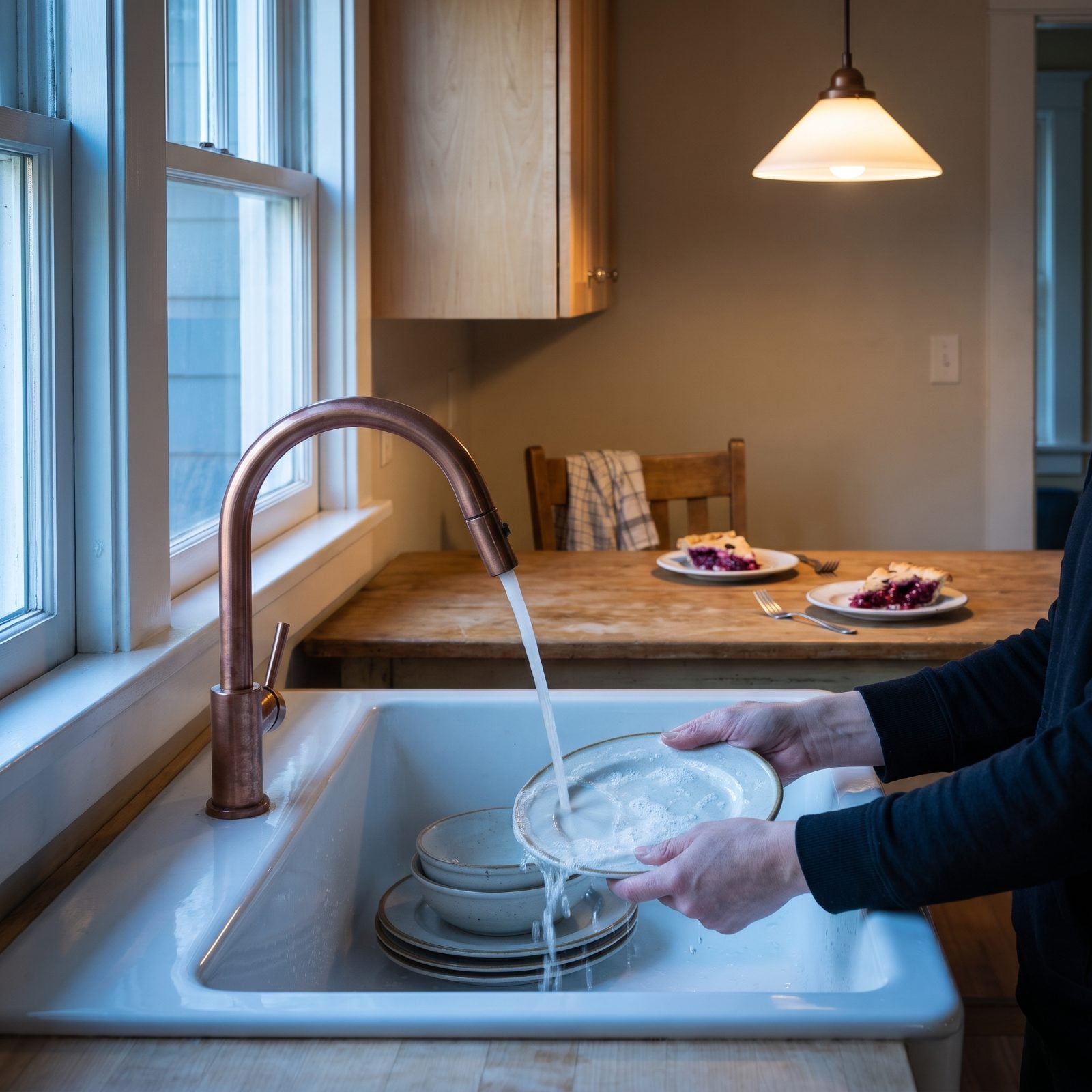
Something happened before dinner. Nobody will say what. Now the meal passes in clipped yeses and nos, the pie gets eaten in silence, and the dishes get washed with a little too much force. The quiet has a temperature, and it is freezing.
Stonewalling, the counselors call it — shutting down, going cold, refusing to engage. It often starts as self-protection, a way to dodge a fight when you’re overwhelmed. But on the receiving end, silence reads as punishment, and it does more damage than yelling because there’s no door to walk through.
The body is usually flooded. Heart rate up, system overwhelmed, genuinely unable to talk it through in the moment. Trouble is, the silence outlasts the flooding by hours. Dinner ends, the dishes dry, and the cold front just sits there, uninvited, taking up a chair.
11. Nobody Mentions the Argument Sitting Beside the Salad
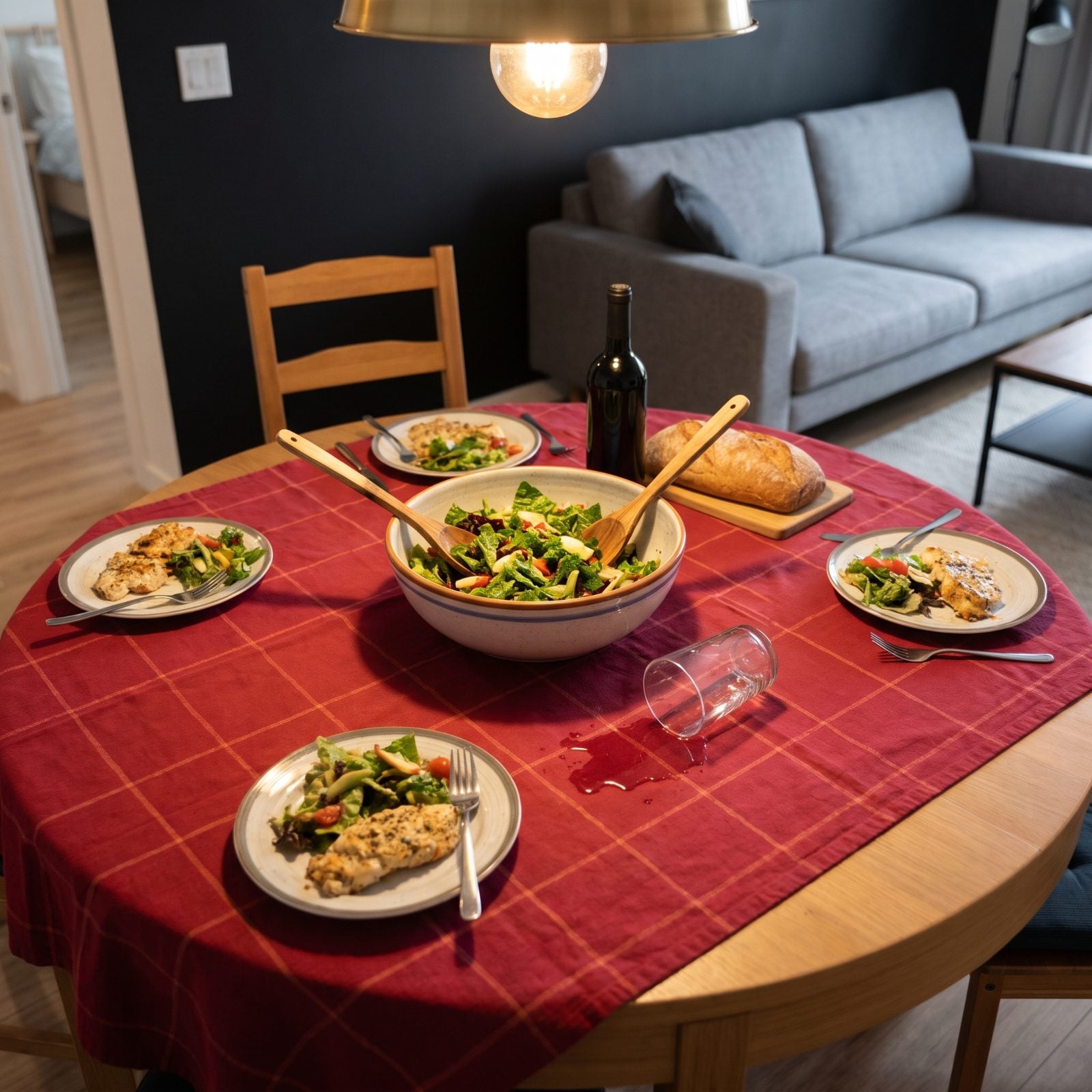
Everyone knows. The thing that happened this afternoon is sitting right there at the table, pulled up a chair, helped itself to the salad. And the whole family performs a flawless show of normal. Pass the dressing. How was work. More bread, anyone.
This is the elephant in the room, and avoiding it is its own kind of fight. The energy it takes to not mention the obvious thing is enormous — you can feel it in the overly polite voices, the careful eye contact that skips certain people entirely.
Conflict avoidance feels safe in the moment. No ugly scene over dinner. But unaddressed problems don’t evaporate, they ferment, and the thing that could’ve been a ten-minute conversation becomes a mood that hangs over the house for days. The salad was fine. The silence around it was the whole meal.
10. You Ask the Kids Questions Meant for Your Partner
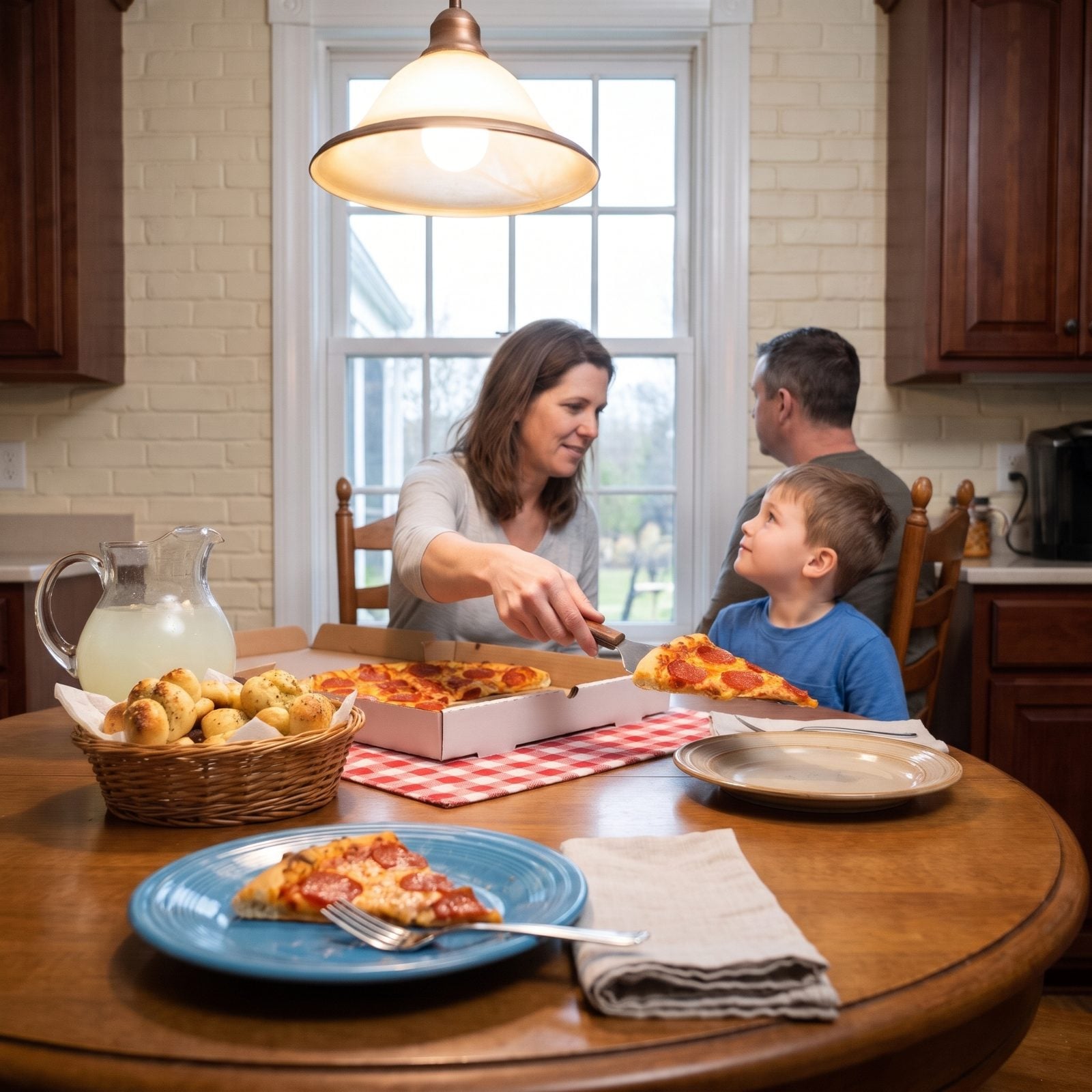
“Honey, ask your father if he wants more pizza.” Then the child becomes a switchboard, relaying a message between two adults sitting four feet apart. Nobody plans it. It just feels easier than saying the thing directly.
Therapists call this triangulation: routing a message through a third person because the direct line runs too hot. On pizza night it looks harmless, almost sweet. But a kid carrying grown-up questions back and forth is learning that the shortest distance between two parents runs through them.
The fix is almost embarrassingly simple. Look across the table. Ask the actual person. The pizza tastes the same either way.
9. Everyone Knows Which Topic Makes Dad Leave the Table
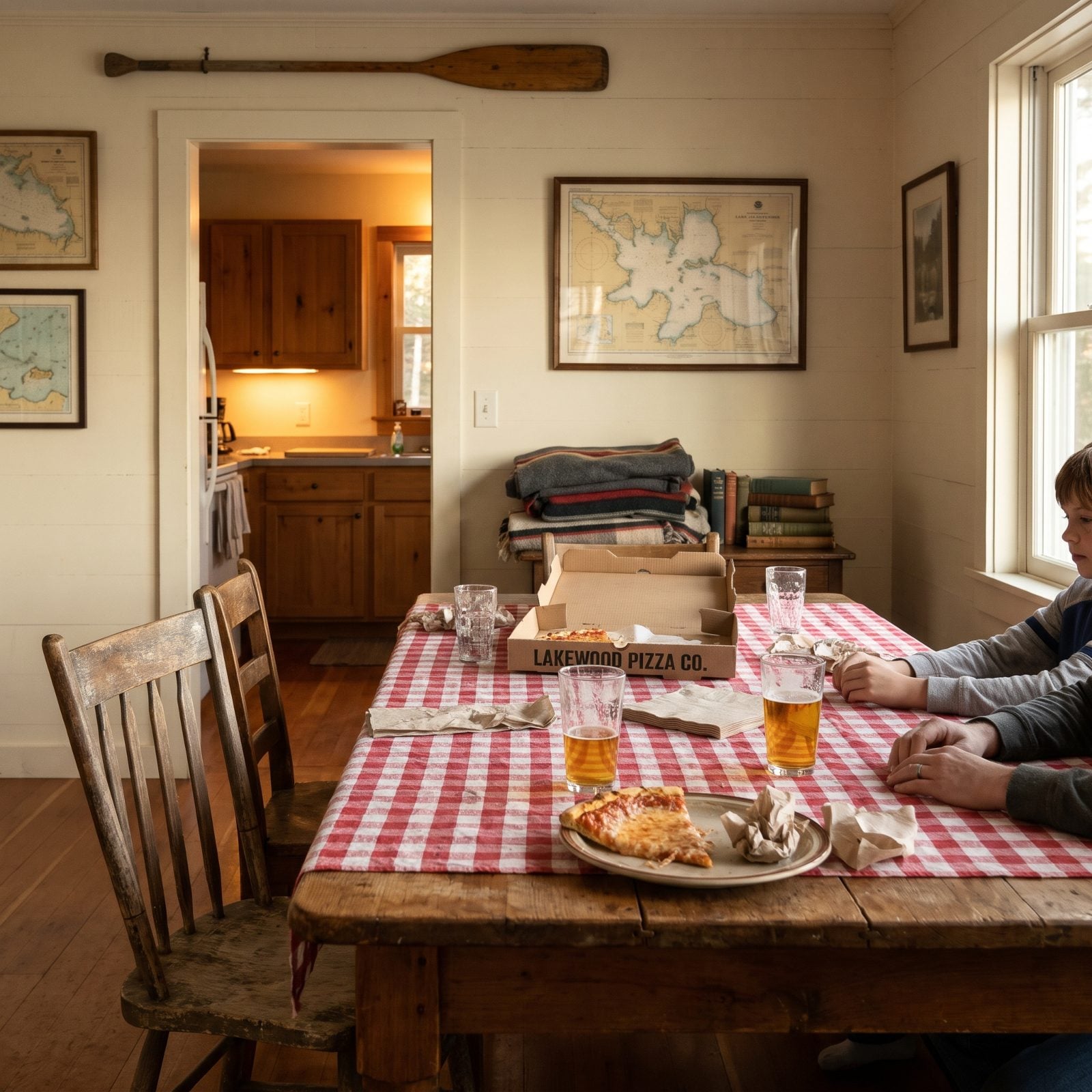
Every family has the subject nobody names on purpose. Money. The in-laws. That job someone quit. The second it surfaces, a chair scrapes back and somebody’s suddenly very interested in the fridge.
Conflict avoidance, dressed up as a bathroom break. The topic isn’t dangerous because it’s unsolvable. It’s dangerous because the last three attempts went badly, so the whole table learned to steer around it like a pothole they’ve memorized.
Avoidance doesn’t make the problem smaller. It just makes it the one thing you can’t discuss over pizza.
Counselors will tell you the topics couples refuse to touch are rarely the real problem. The refusal is the problem. A subject that empties a chair has stopped being a subject and become a wall.
8. One Person Controls Portions, Seconds, and Dinner’s End
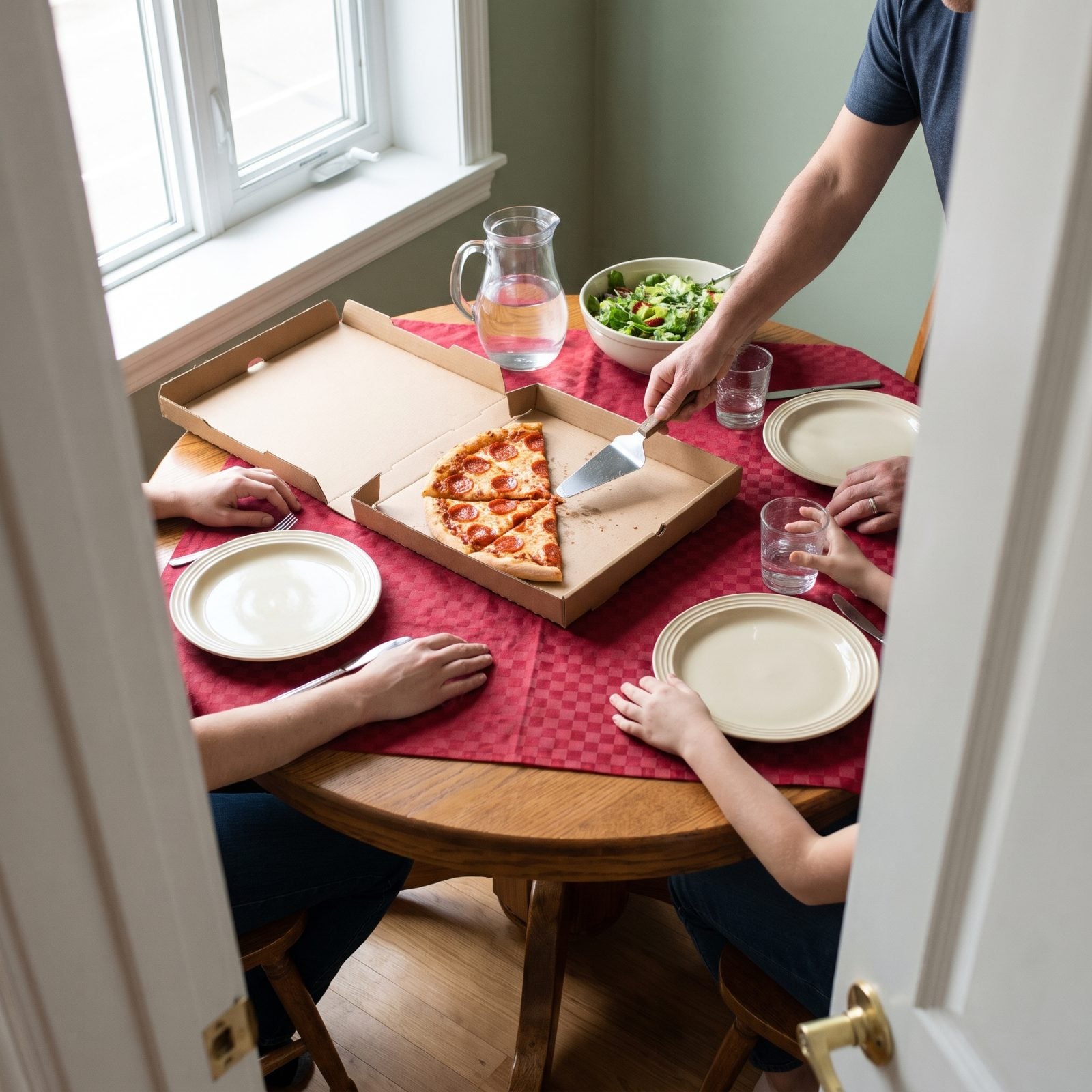
There’s always a gatekeeper. The one who decides how many slices you get, whether seconds are happening, and when dinner is officially over because they’ve started stacking plates while you’re still chewing. Everyone else eats on that person’s clock.
Control over small resources is still control. In counseling it shows up as the partner who manages the money, the calendar, the thermostat, the final word on all of it. The pizza server is just the version you can see.
The gatekeeper usually isn’t a tyrant. Often they’re just the one who got tired of waiting for someone else to decide anything. But a table where one person always holds the server is a table where everyone else has quietly agreed to ask permission.
7. You Keep Score of Who Took the Last Slice
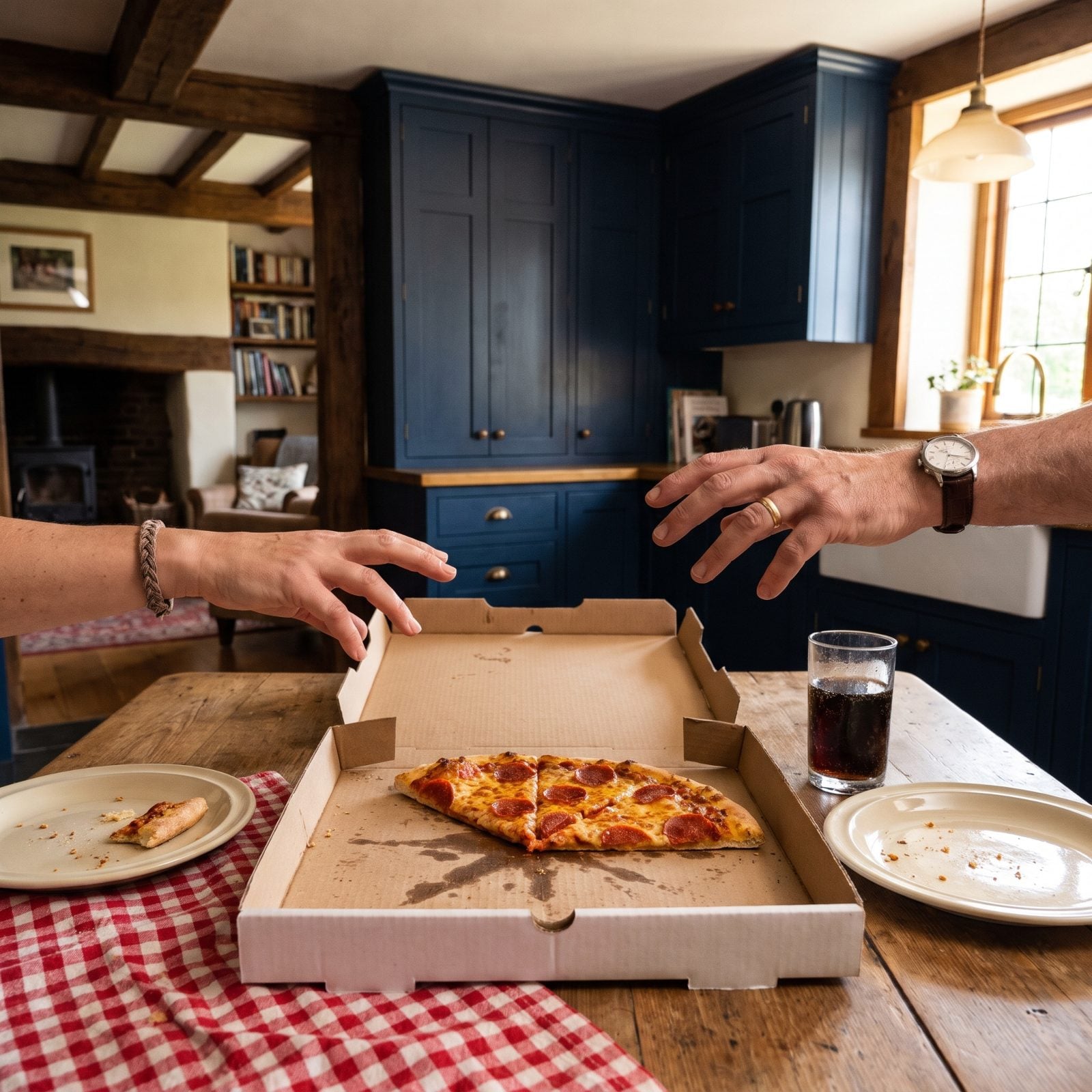
You remember. Last Friday they took the last slice without offering, and three weeks before that it was the garlic bread. You’ve got a running tally nobody else can see, and it comes out sideways when you least expect it.
Scorekeeping is the quiet killer of partnerships, and counselors watch for it constantly. The moment a relationship becomes a ledger of favors given and slices taken, generosity stops being generous and turns into a deposit you expect back.
Here’s the trap: the scorekeeper always feels behind. Nobody tracks the kind things they themselves failed to do. The tally is rigged in your own favor, which is exactly why it poisons everything it touches.
6. Dish Duty Reopens a Fight From Three Tuesdays Ago
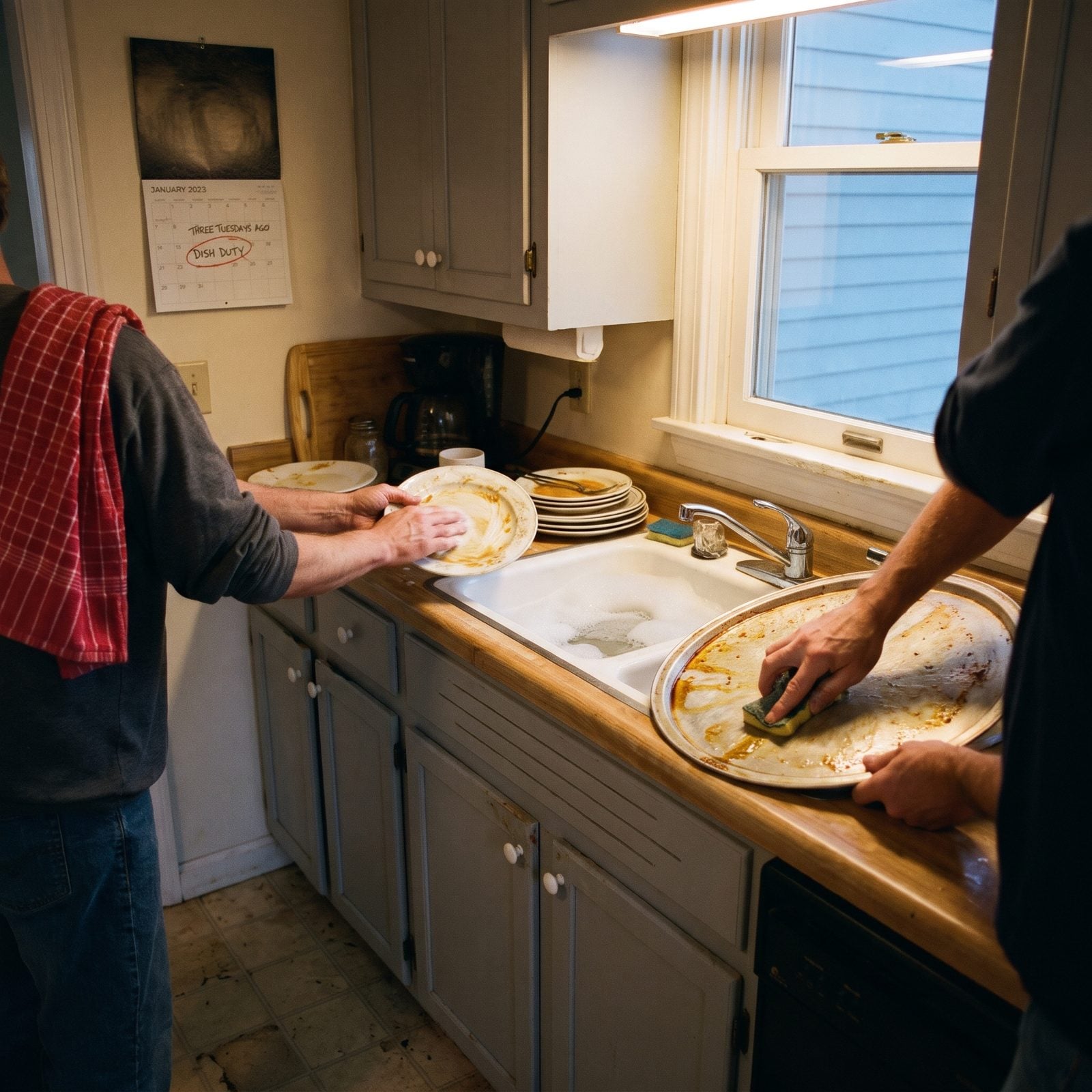
The plates come to the sink and somehow so does the argument from three Tuesdays ago. One wrong word about who always loads the dishwasher, and suddenly you’re both relitigating a disagreement that was supposedly settled before the pepperoni even got cold.
Therapists have a name for this: kitchen-sinking. You start on the dishes and end up hauling in every unresolved grievance you’ve been stockpiling since spring. The soap suds are just the detonator.
It happens because none of those older fights actually ended. They got paused. And unfinished conflict doesn’t evaporate, it waits for the next bit of friction to come riding back in on. The dishes aren’t the issue. The dishes are the stage.
5. Your Mother’s Lasagna Recipe Is Somehow Beyond Debate
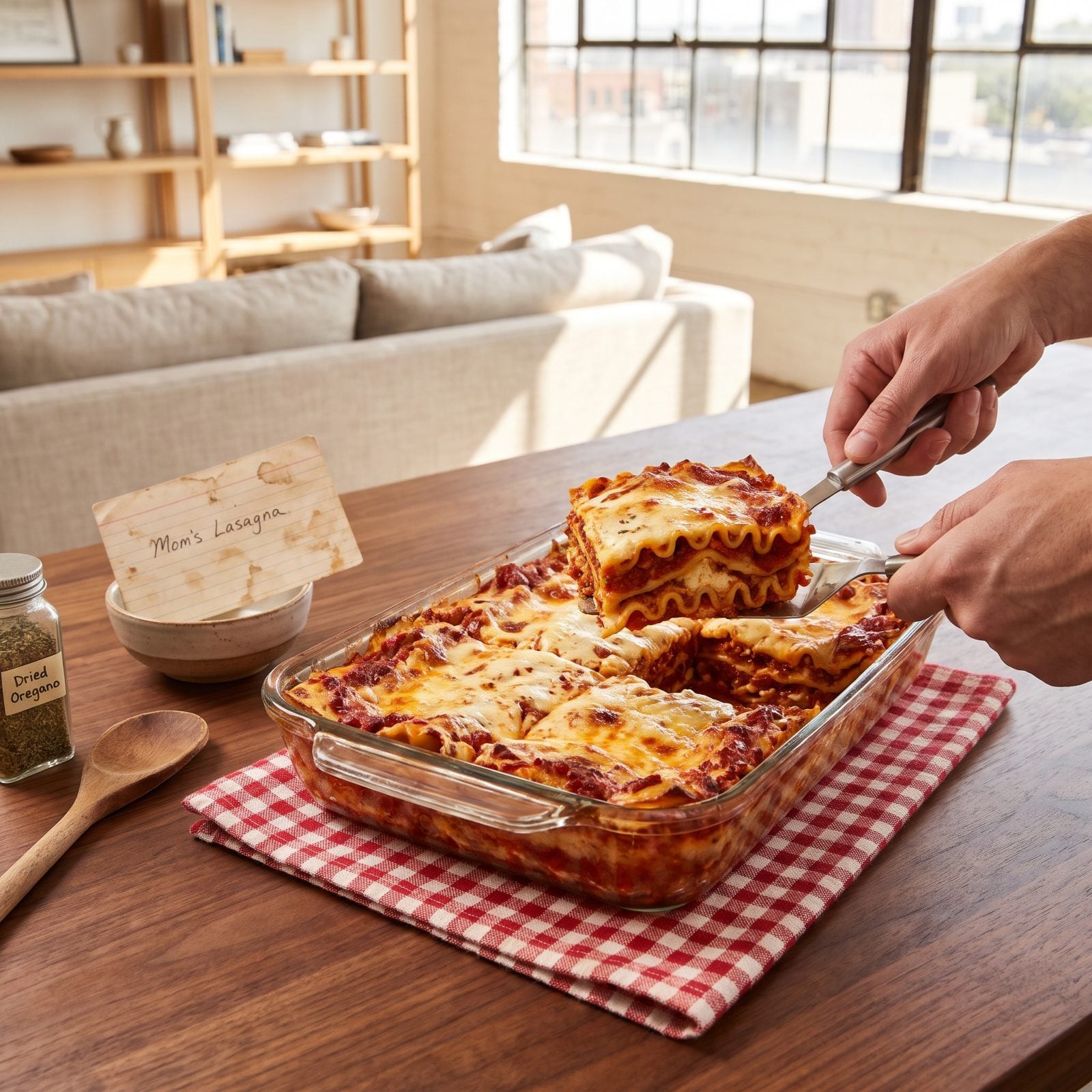
You can renegotiate the mortgage before you can suggest the family lasagna needs less ricotta. Grandma’s recipe isn’t food at this point, it’s scripture, and questioning it feels like questioning her.
Every couple hauls in these untouchable rules from their families of origin. How holidays are done. What counts as “on time.” Which recipe is correct. They feel like neutral facts, but they’re inherited loyalties, and challenging one can feel like betraying a whole bloodline.
The lasagna fight is never really about the lasagna. It’s two family histories trying to agree on whose kitchen the marriage lives in.
When our readers loved a food photo, comfort and nostalgia were two of the top reasons they gave, which may help explain why a family recipe can feel so untouchable.
4. You Critique Their Chewing Instead of Naming What Hurts
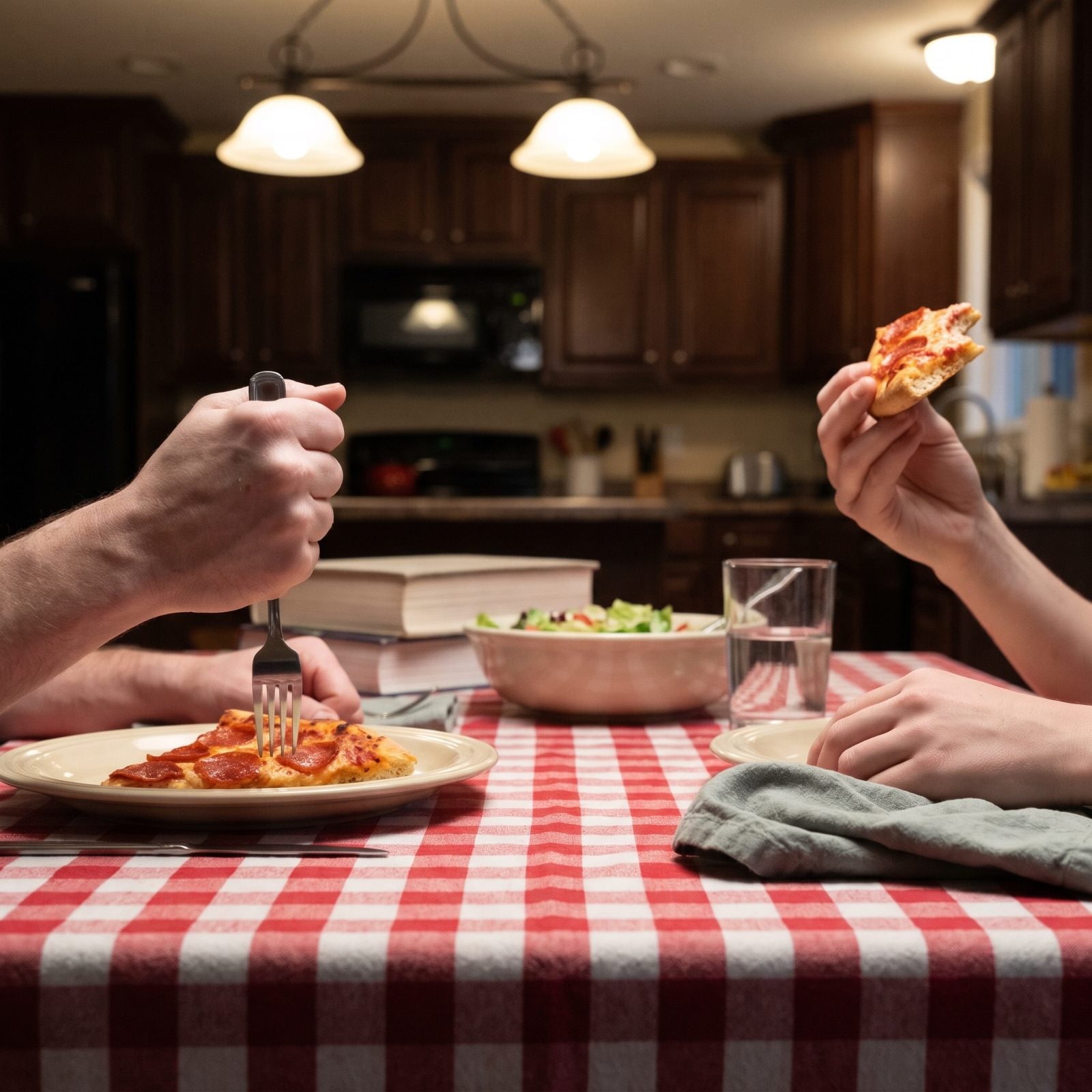
Suddenly the way they chew is unbearable. The sniffing, the elbow on the table, the sound the ice makes. You snap about it with a heat the crime clearly doesn’t deserve.
This is displacement, one of the most common patterns in a strained relationship. The thing you’re actually upset about feels too big to say out loud, so it leaks out as a complaint about chewing. The target is safe. The real wound stays buried.
Here’s the tell. If a small habit enrages you far past its size, the small habit isn’t the problem. Something larger is wearing it as a costume.
3. They Offer You a Bite, and You Never Look Up
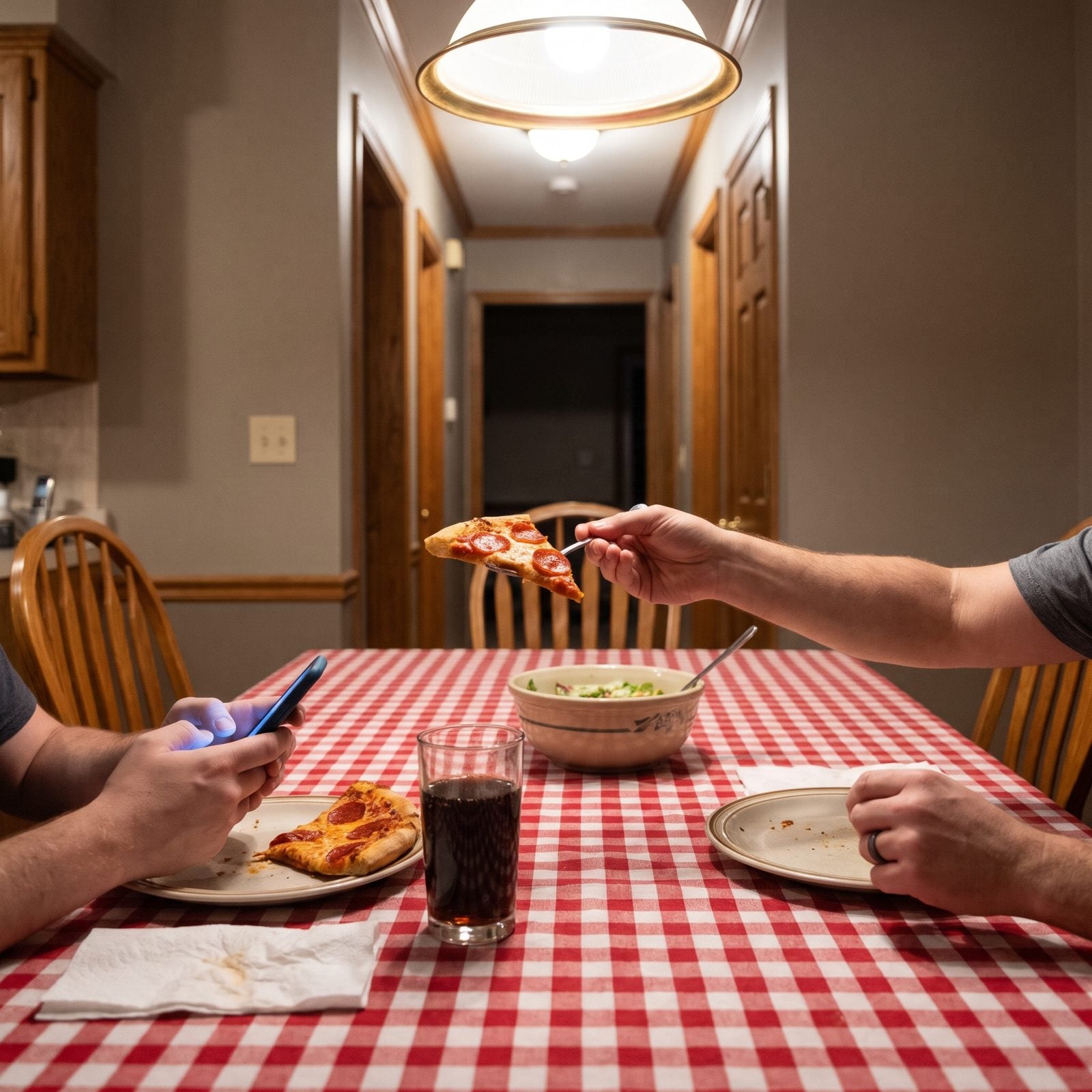
A fork comes across the table. “Here, try this bite.” And you say “mm” without looking up, eyes still down on the phone or the crust or anywhere but them.
Relationship researchers call these moments bids for connection. Small, easy, constant. A shared bite, a glance, a little aside. The future of a couple often gets decided not in the big fights but in whether these tiny bids get caught or dropped.
Catch them, and warmth piles up. Miss them often enough and something quietly starves. The person offering the bite isn’t really asking about the food. They’re asking if you’re still there.
2. Their Peace-Offering Garlic Bread Sits There Untouched
Would you like to save this?
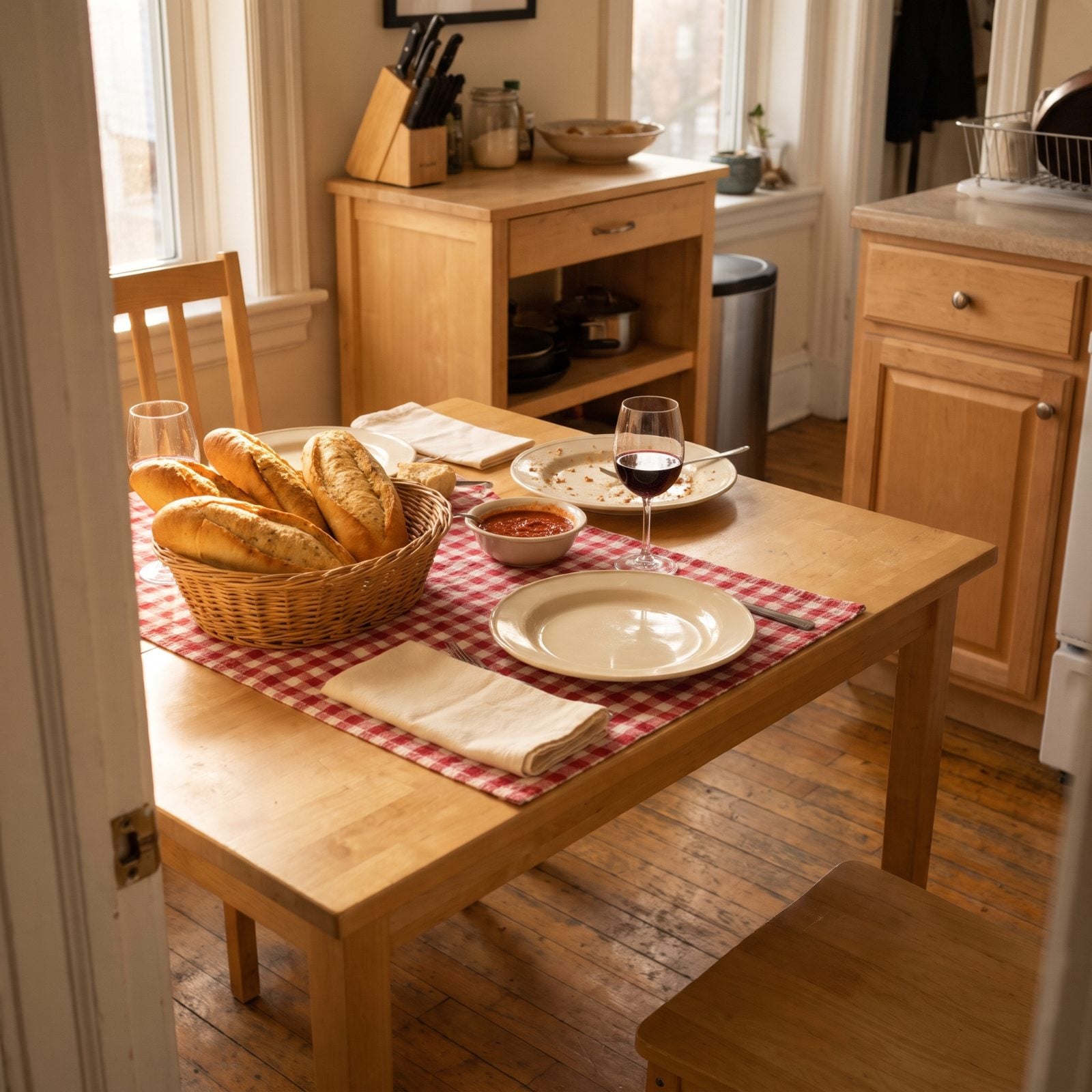
They know they messed up earlier, so they slide the garlic bread toward your side of the table without a word. An apology with no sentence attached. And you let it sit there, refusing to give them the satisfaction.
This is the repair attempt, and whether a couple survives often comes down to whether these get accepted. The garlic bread is a peace offering. Ignoring it isn’t neutral. It’s a message: not yet, not forgiven, keep trying.
Repair attempts are fragile. Offer one that gets rejected too many times and people stop offering. The real danger isn’t the fight. It’s the day somebody decides the garlic bread isn’t worth sliding over anymore.
1. Guests Arrive, and Suddenly You’re the Perfect Couple

The doorbell rings and something shifts. The tight energy from ten minutes ago vanishes. You’re laughing at each other’s stories, refilling each other’s wine, finishing each other’s sentences. The guests would never guess.
Psychologists call this impression management, and every couple does a little of it. The trouble starts when the public version and the private version drift so far apart that the performance becomes the only time you’re kind to each other.
If the warmest moment in your week is the one with an audience, that’s worth noticing.
Nothing wrong with putting on a nice table for friends. But a couple that saves their best manners for guests is telling the truth about who they think is worth the effort. The people who see you on an ordinary Tuesday deserve the dinner-party version too. Sometimes they need it more.