
Would you like to save this?
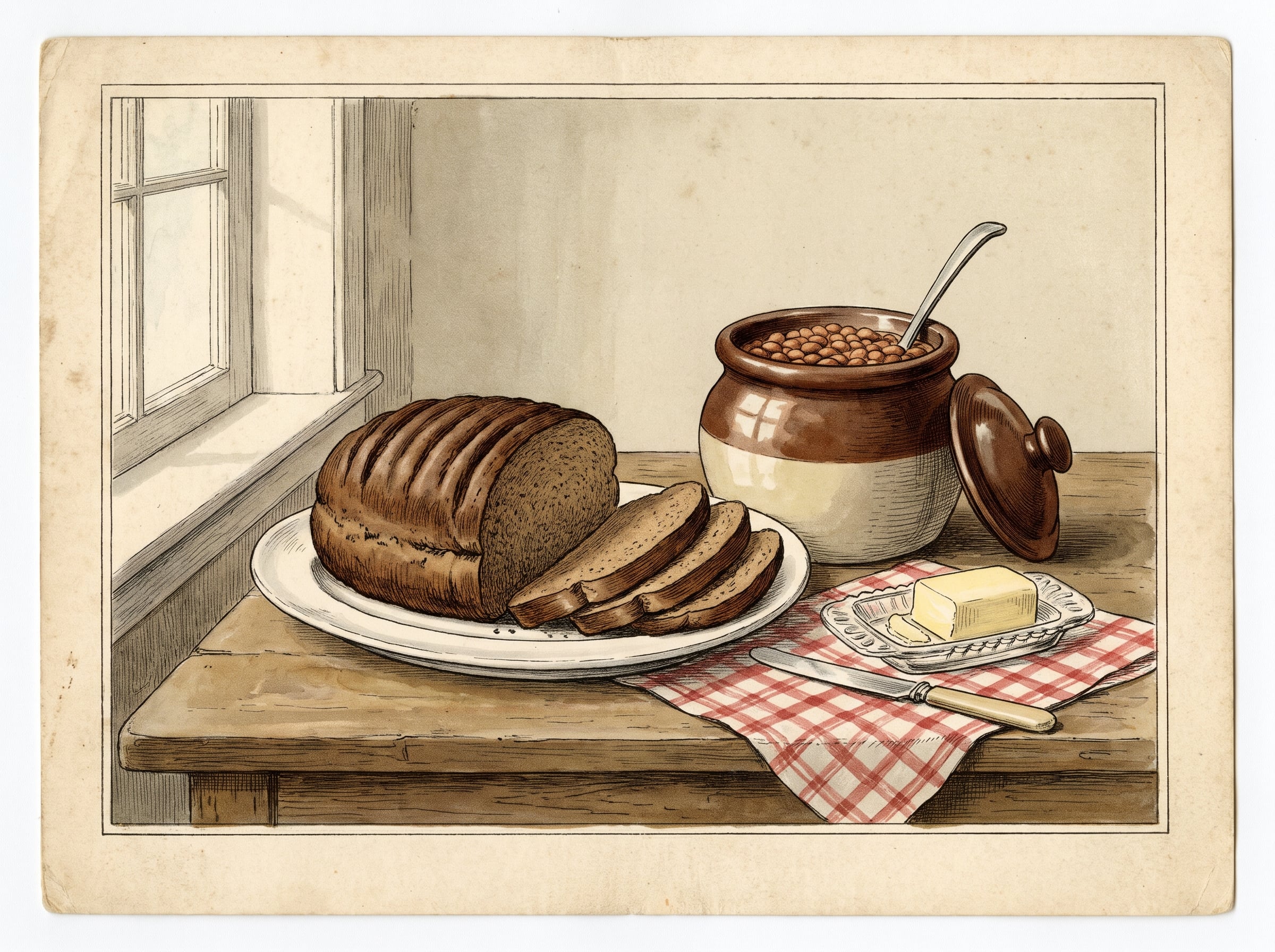
Fannie Farmer’s Boston Brown Bread uses three coarse meals, molasses, soda and sour milk. You steam it for three and a half hours in a buttered mould with the lid tied on, and she says a one-pound baking-powder box or a five-pound lard pail will do. The recipe comes from the 1905 printing of the most famous American cookbook of its day. It takes a very old New England ‘make-do’ bread and writes it out in the new language of level cups and measured spoons. It also gives a glimpse of a kitchen in the middle of a change: coal and gas stoves, chemical leavening and store-bought tins were all newly ordinary.
Please note that some of the images in this article were created with the assistance of AI.
From The Boston Cooking-School Cook Book, 1905
About This Recipe
This recipe comes from Fannie Merritt Farmer, a Boston cook who became principal of the Boston Cooking School in 1891 and later opened her own Miss Farmer’s School of Cookery. It appears in the 1905 printing of her Boston Cooking-School Cook Book, published by Little, Brown in Boston, a book known for insisting that every cup and spoon be measured level. Brown bread goes back to the colonists’ yeasted ‘Rye and Indian’ loaf, and by the mid-1800s cooks were pouring the old cornmeal-and-rye mixture into a tin and steaming it, sweetened with molasses and raised with sour milk and soda. Farmer steams hers for three and a half hours with the lid tied on, and says a one-pound baking-powder box or a five-pound lard pail will do for a mould. In Boston it has long been paired with baked beans, traditionally for Saturday night supper.
Fannie Merritt Farmer · page 60
What Our Readers Say
- When Piaci Pizza readers loved a food photo and tapped a reason, comfort came top at 30%, with nostalgic, ingredients and looks good each picked 17% of the time.
From Piaci Pizza reader polls and votes.
The Page, as Printed in 1905
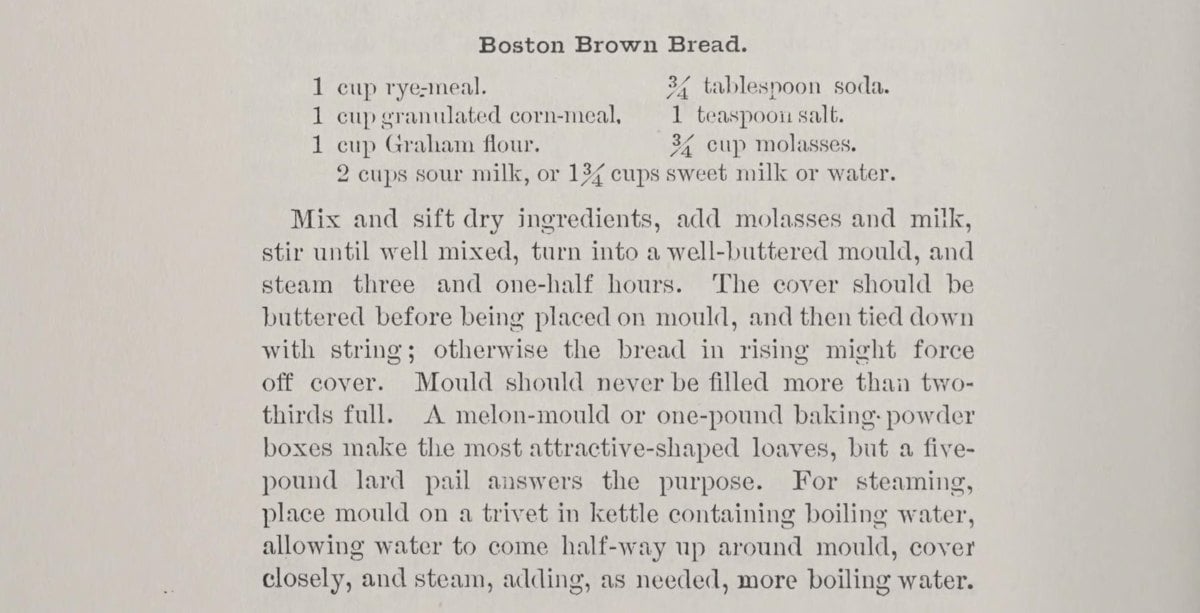
Fannie Merritt Farmer, The Boston Cooking-School Cook Book (Little, Brown, and Company, Boston, 1905), p. 60. Transcribed from the original scan.
The recipe · 1905
Boston Brown Bread
From The Boston Cooking-School Cook Book by Fannie Merritt Farmer (1905), page 60. Every word below is as printed.
Ingredients
- 1 cup rye-meal.
- 1 cup granulated corn-meal.
- 1 cup Graham flour.
- ¾ tablespoon soda.
- 1 teaspoon salt.
- ¾ cup molasses.
- 2 cups sour milk, or 1¾ cups sweet milk or water.
- Old baking-powder boxes and lard pails weren’t made for steaming food today, so steam it in a food-safe pudding mould or a clean, unlined metal can.
- Today’s pasteurized milk spoils rather than souring the old-fashioned way, so use cultured buttermilk where the recipe says sour milk.
Method
-
Mix the batter and steam
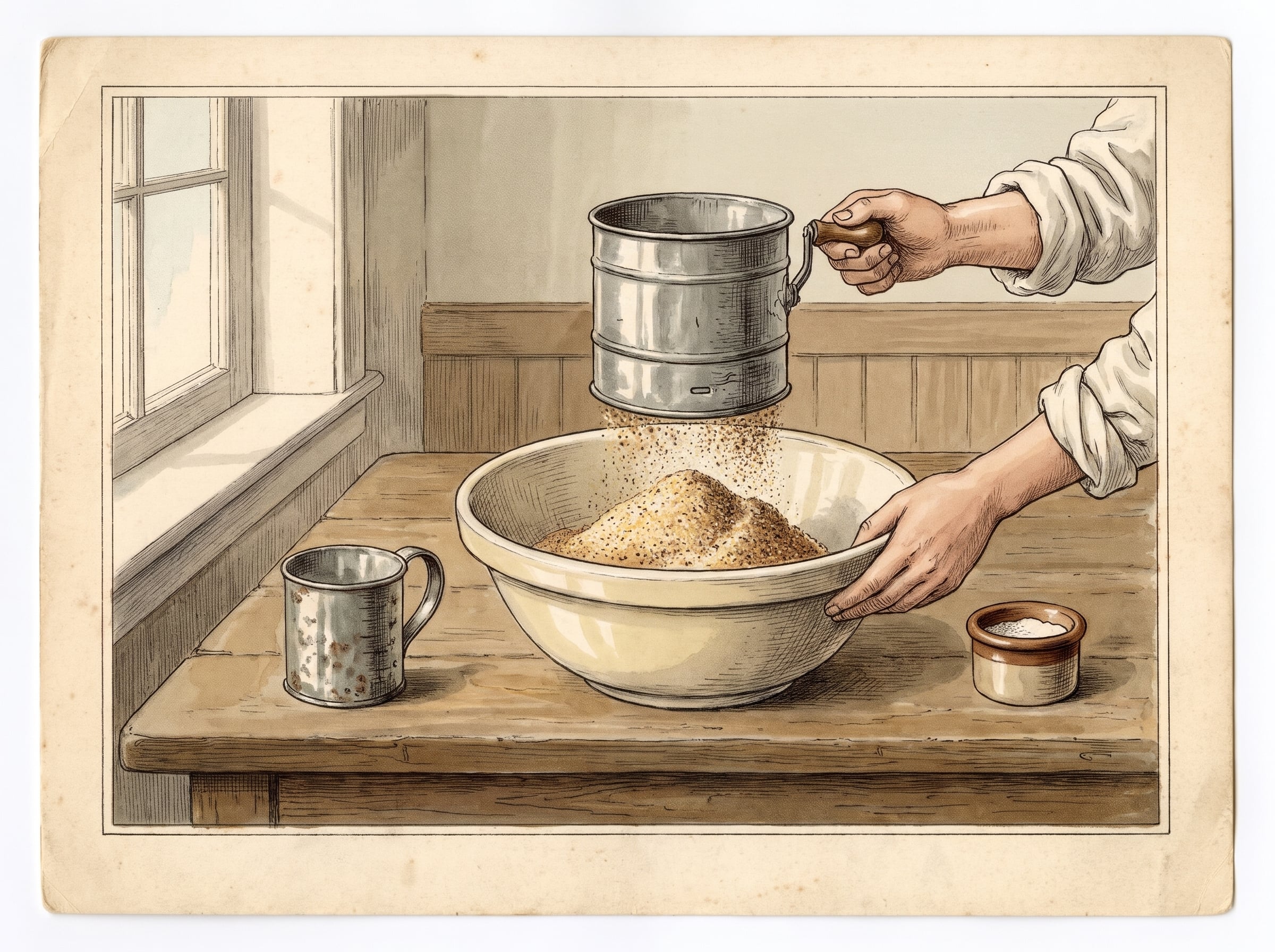
Mix and sift dry ingredients, add molasses and milk, stir until well mixed, turn into a well-buttered mould, and steam three and one-half hours.
-
Butter and tie down the cover
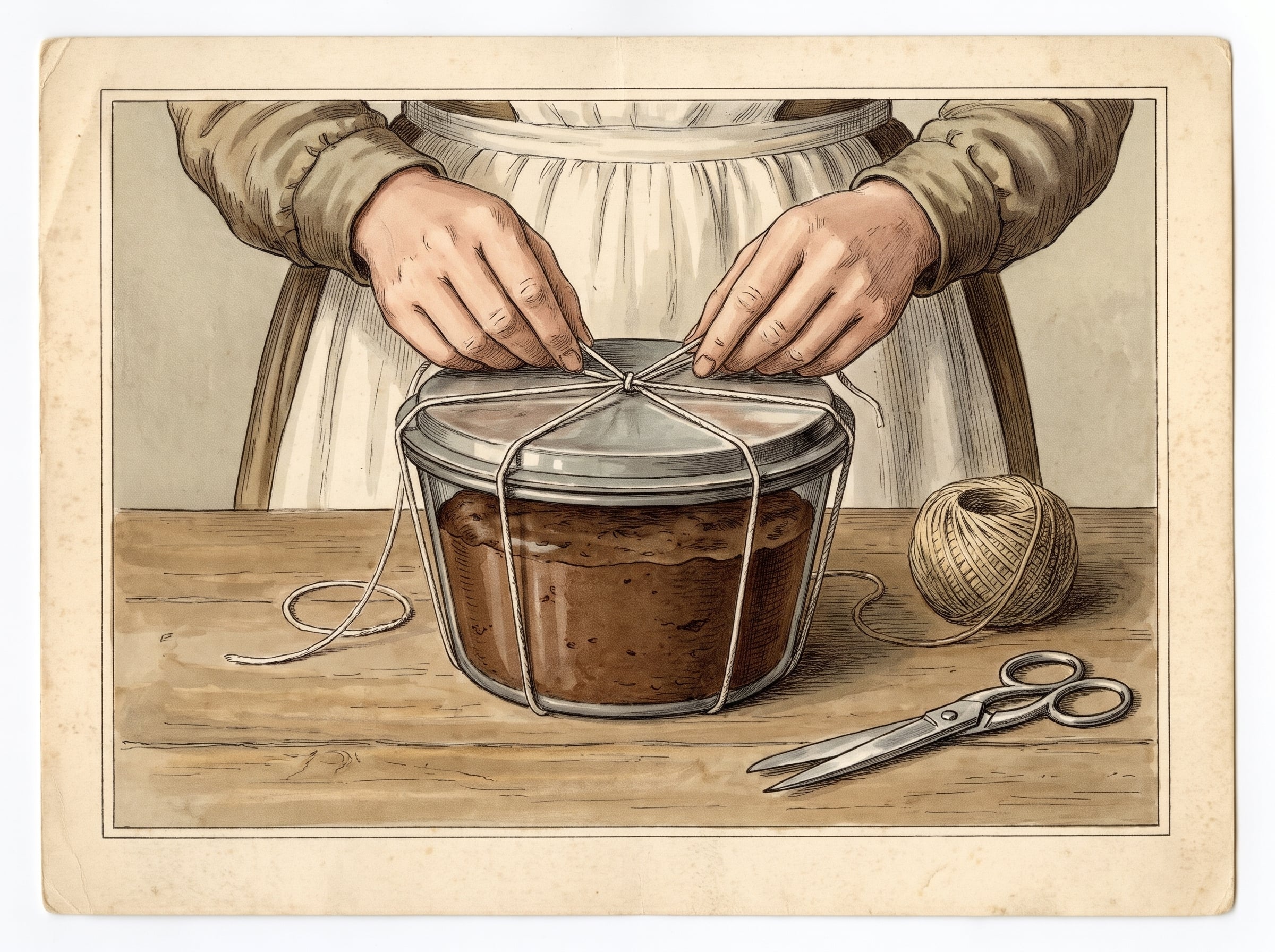
The cover should be buttered before being placed on mould, and then tied down with string; otherwise the bread in rising might force off cover. Mould should never be filled more than two-thirds full.
-
Choose a mould
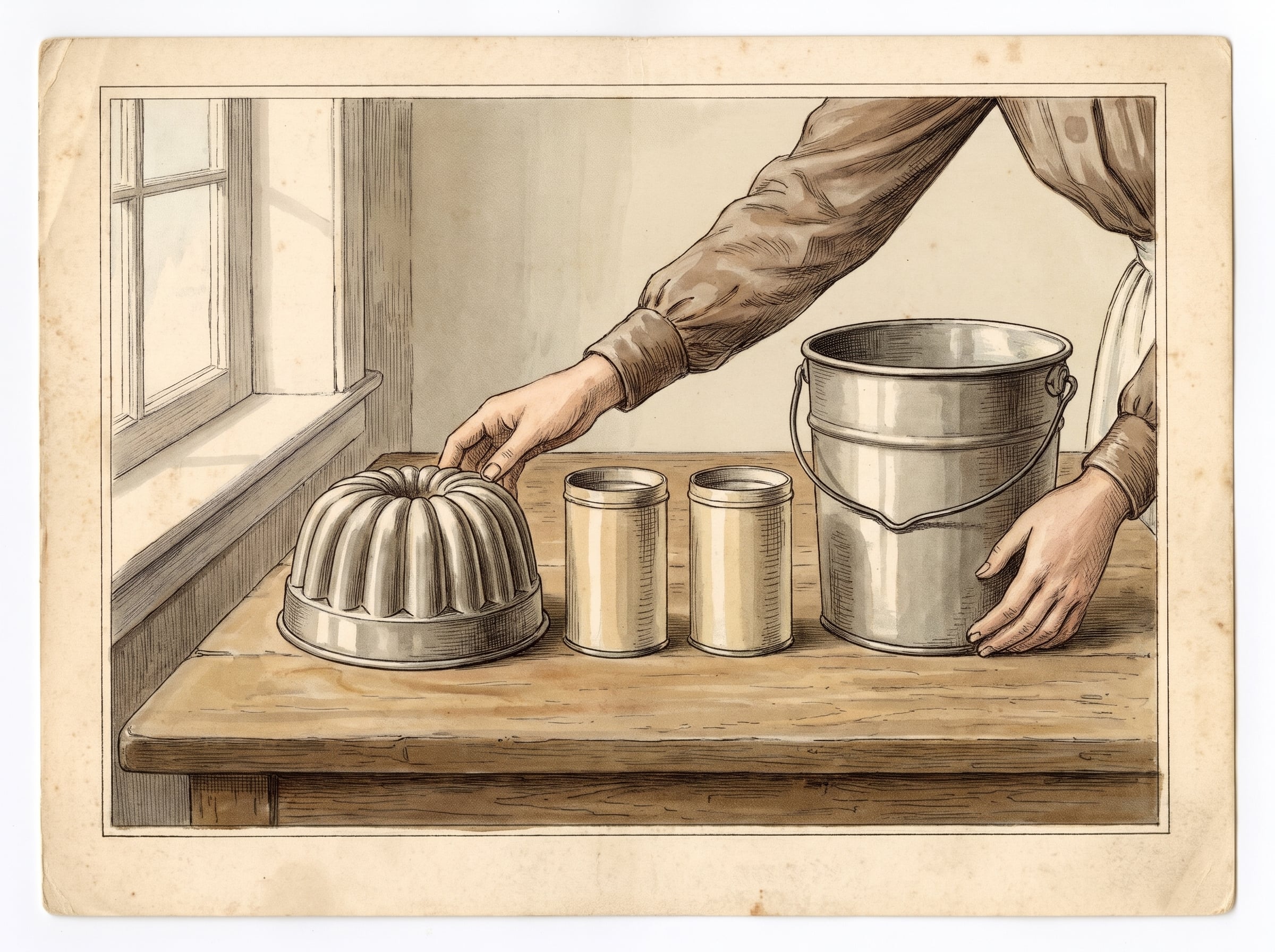
A melon-mould or one-pound baking-powder boxes make the most attractive-shaped loaves, but a five-pound lard pail answers the purpose.
-
Set up the steamer
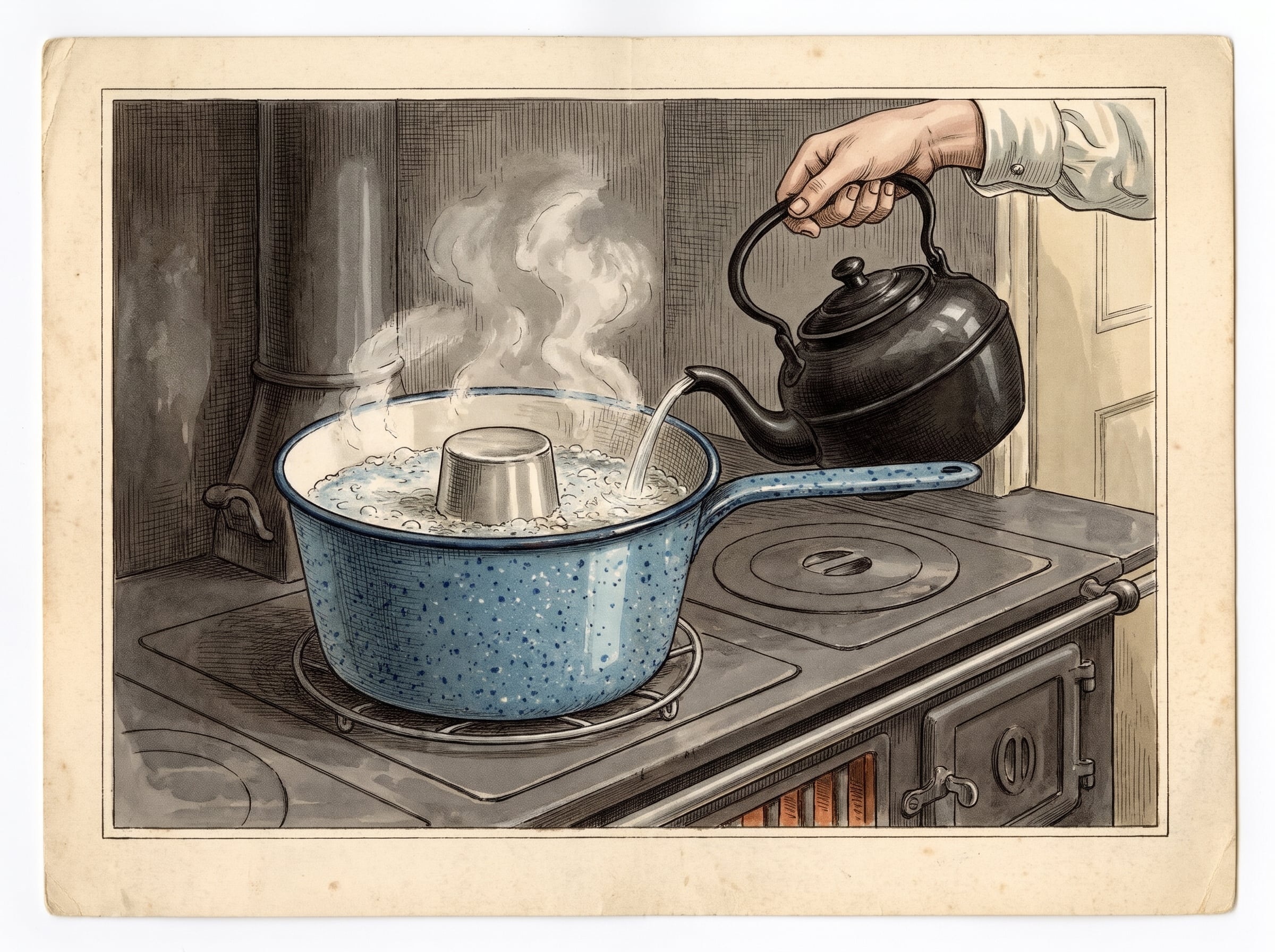
For steaming, place mould on a trivet in kettle containing boiling water, allowing water to come half-way up around mould, cover closely, and steam, adding, as needed, more boiling water.
Source: Fannie Merritt Farmer, The Boston Cooking-School Cook Book (Little, Brown, and Company, Boston, 1905), p. 60. View the original page (Internet Archive, scan from The Library of Congress).
The original recipe text and page scan are from a work published in 1905 and are in the public domain in the United States. The history and notes are Piaci Pizza’s own writing. Brand names that appear in historic recipes are mentioned as historical fact only. Illustrations are AI-generated in a vintage style. The recipe is shown exactly as it was published in 1905; we have not photographed a test batch.