
Would you like to save this?
Open the junk drawer in most home kitchens and you’ll find the graveyard. An avocado slicer. A strawberry huller. Some contraption that claims to core and peel apples and botches both. Professional cooks own none of it. Walk into any serious kitchen and you’ll see a tight set of tools, all beaten up, all used constantly, each one capable of ten jobs. Fewer things, better things, used harder. Here’s what actually earns a spot on the rail.
Please note that some of the images in this article were created with the assistance of AI.
48. An 8-Inch Chef’s Knife Instead of a Bulky Knife Block
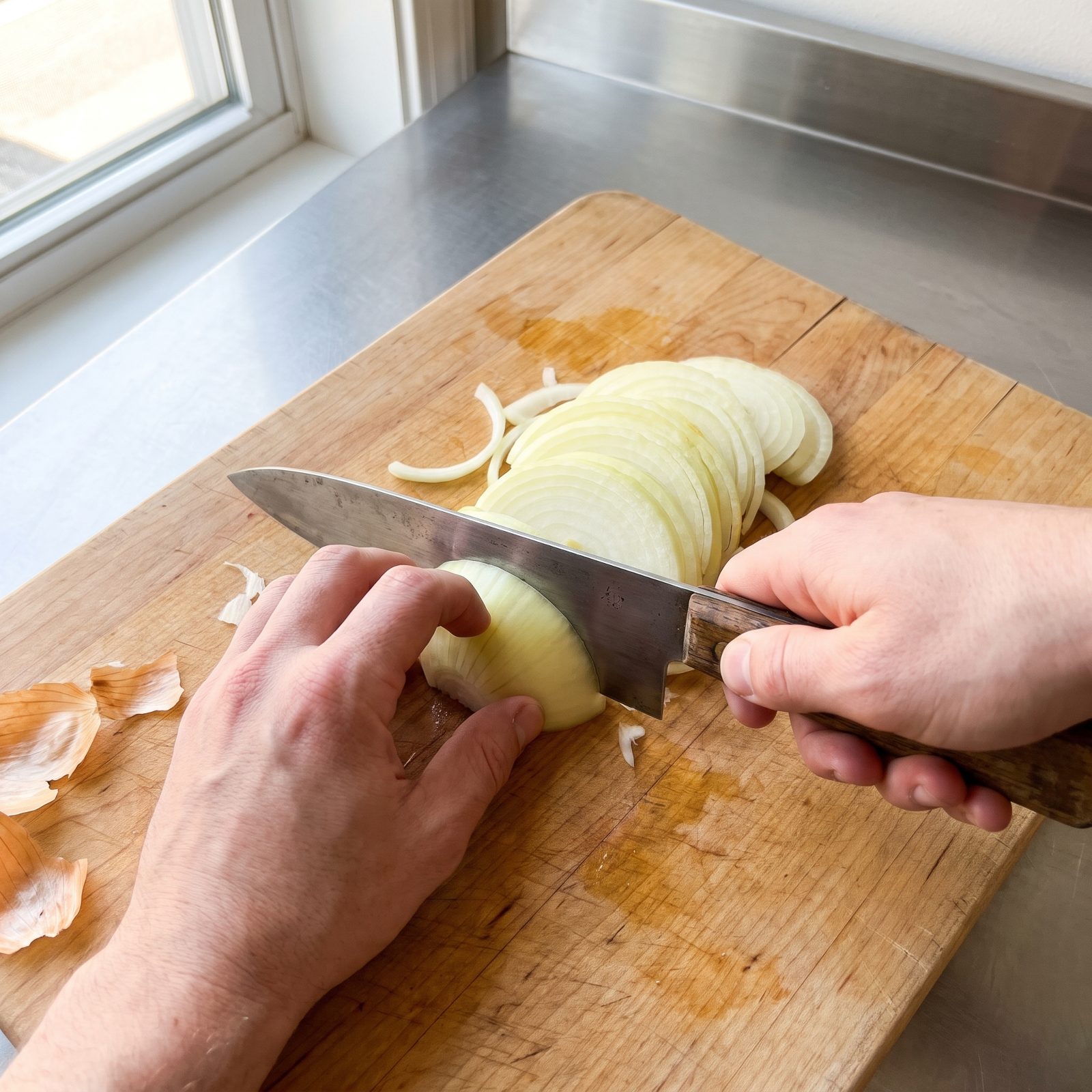
That wooden block holding fourteen knives is mostly storage for knives you never touch. The steak knives, the utility knife, the little bird’s beak thing — all of it collects dust while one blade does ninety percent of the work. That blade is the 8-inch chef’s knife.
A knife block eats counter space and lies to you about what you need. Pros carry one good chef’s knife to a dozen gigs and never miss the rest, because it slices, dices, minces, breaks down a chicken, and smashes a clove of garlic flat under its side.
Buy one that feels balanced in your hand. Learn to hone it with a steel before every session, give it a real sharpening twice a year, and you’re set. One knife, kept sharp, walks all over a block of dull ones.
47. A Large Commercial-Grade Cutting Board That Stays Put
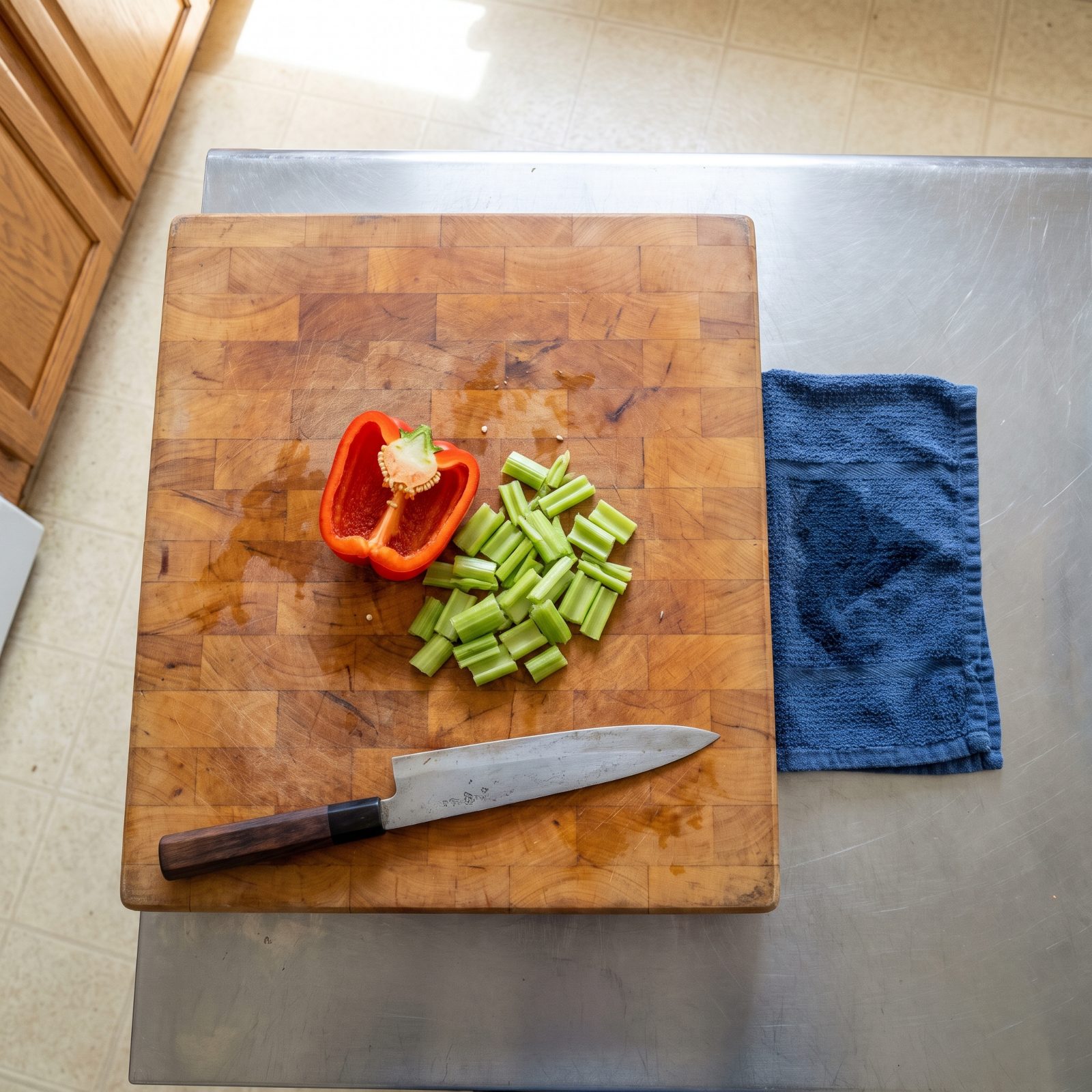
You’ve fought the little plastic cutting board that scoots across the counter every time you lean into the knife. Nobody should have to have that fight.
A board that slides is a board that cuts you. It also forces you to prep in tiny batches, because there’s nowhere to pile anything. A large commercial board — wood or thick polypropylene — hands you a whole workspace plus the mass to stay planted. Tuck a damp towel underneath and it won’t budge an inch. That little trick with the wet towel is how every line cook keeps theirs locked down. Bigger surface, more room, zero chasing it around.
46. Long Locking Tongs That Work Like Heatproof Hands
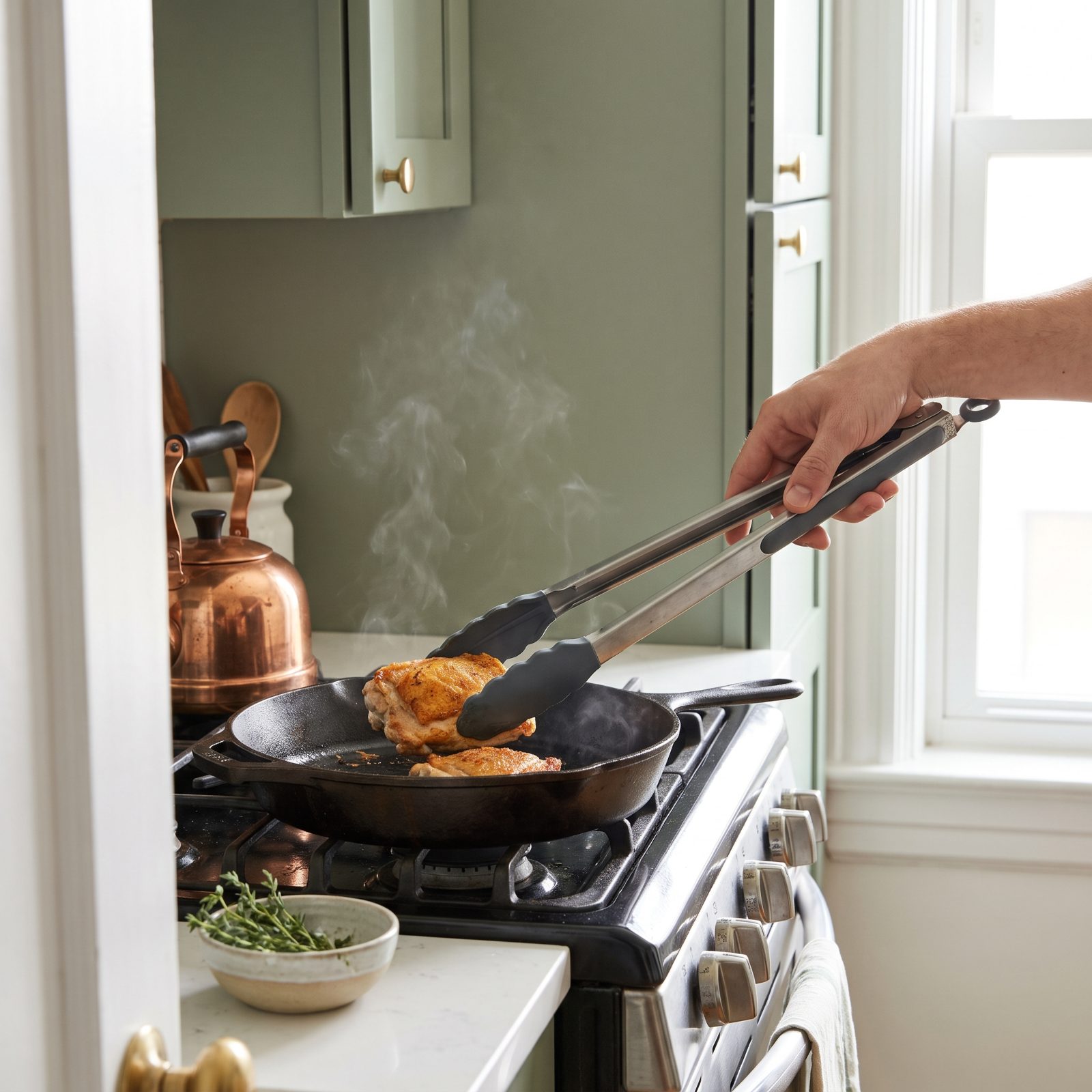
Tongs are the one tool a cook reaches for without looking. Flipping, turning, tossing, grabbing, plating, pulling a pan from under the broiler — a good pair of long locking tongs is a heatproof extension of your fingers.
The short cheap ones keep your hand too close to the heat, and the spring-loaded junkers fly open in the drawer at the worst moment. Get a 12-inch stainless pair with a locking ring and scalloped tips.
45. A Fast-Reading Digital Thermometer for Instant Checks
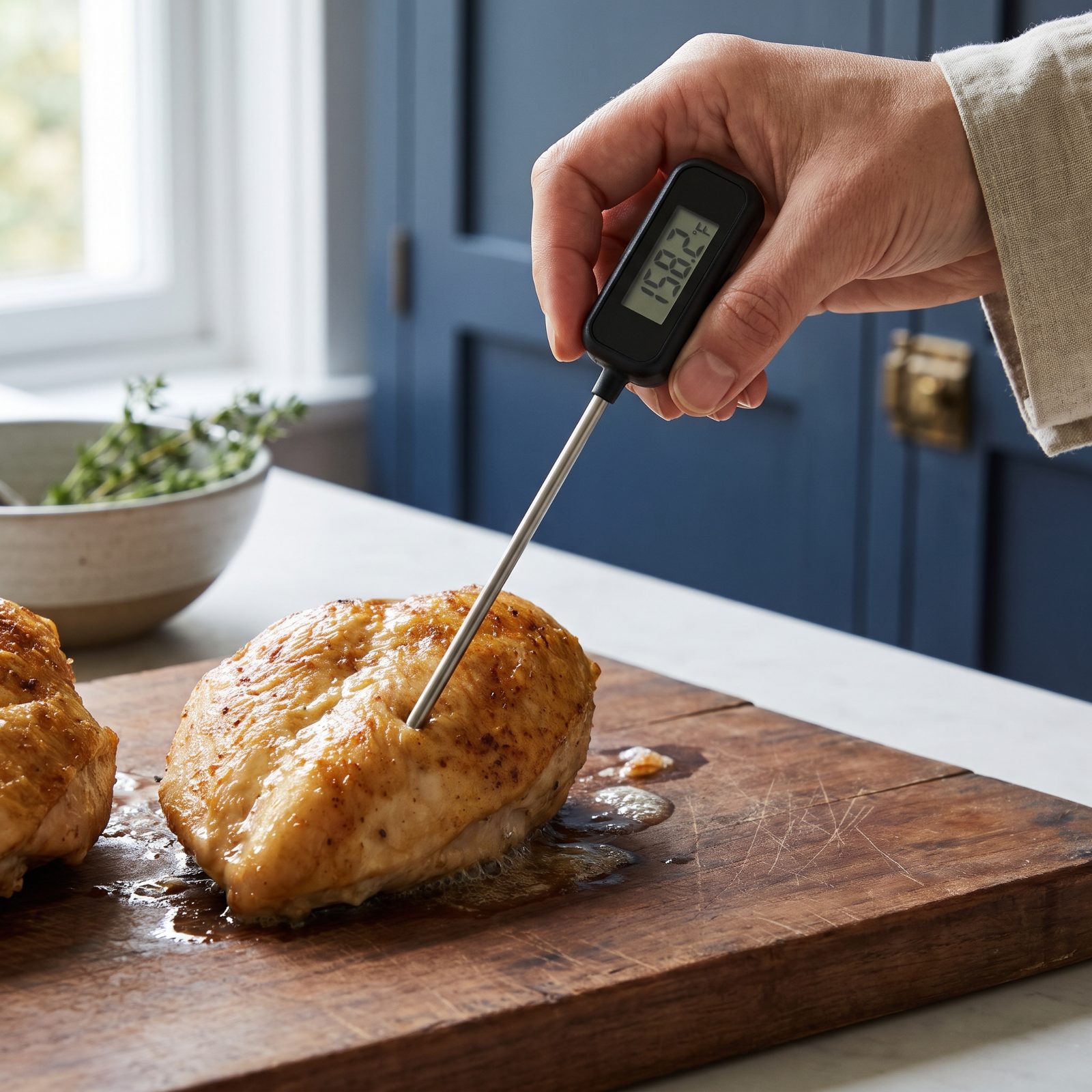
Cutting into a steak to see if it’s done is how you lose the juices and ruin the surprise. Poking it with your finger and guessing? That’s how grandparents overcooked pork for forty years.
A fast digital thermometer ends the guessing in two seconds. No more dry chicken, no more leathery fish, no more slicing a burger in half at the grill to peek inside. It reads the instant you need it, which is exactly when the pan is hot and timing is tight.
Get one that reads in under three seconds. Pull chicken a touch early and let carryover heat finish it, rest a roast off the probe, and stop treating doneness like a mystery.
44. A Digital Kitchen Scale for Accurate, Repeatable Results
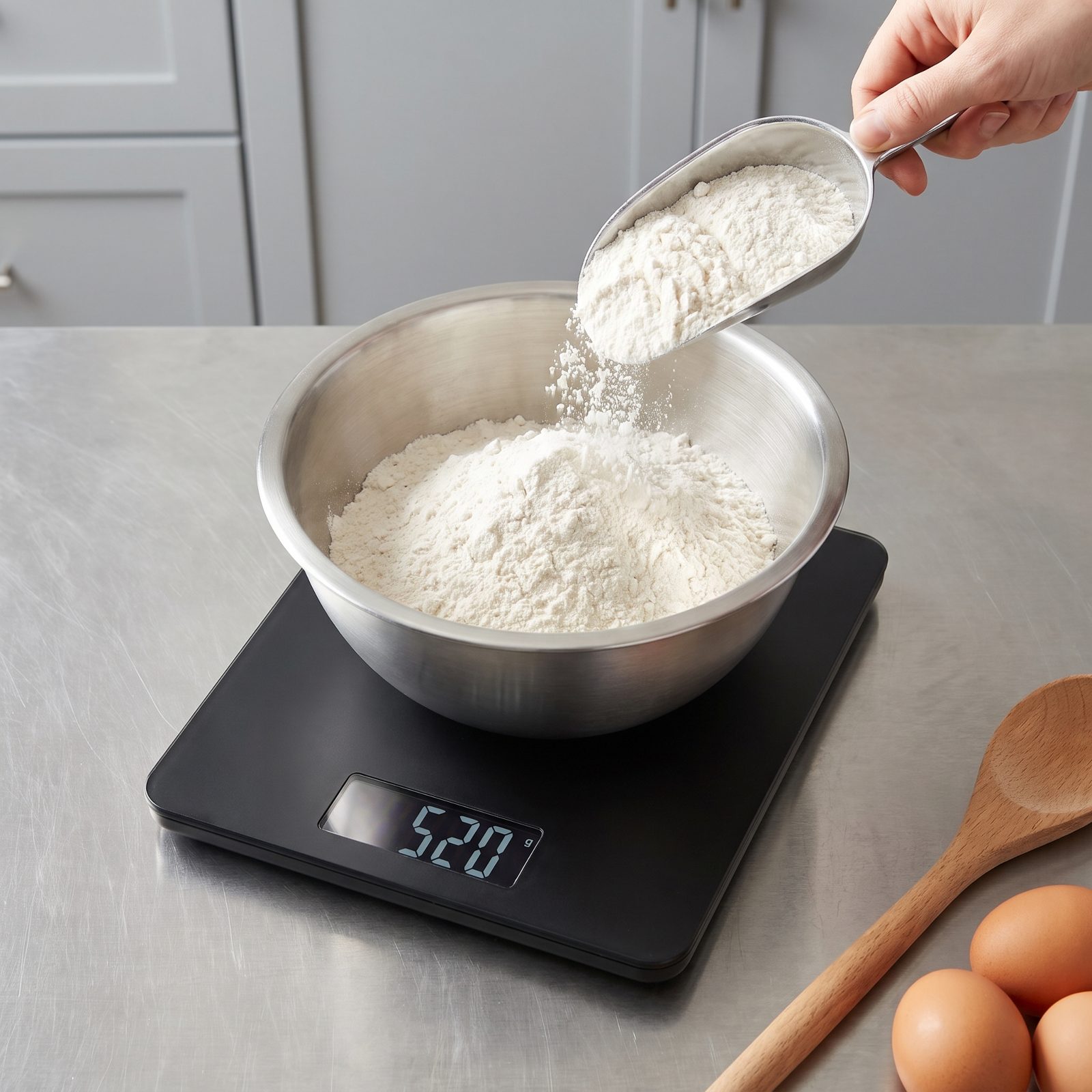
Measuring cups are a liar’s game, especially with flour. Scoop it packed and you get far more than someone who spooned it light. Same recipe, two completely different loaves.
Weighing is how every bakery and serious kitchen nails the same result Monday and Thursday. A scale cuts the dishes too, since you can zero out the bowl and add ingredients straight in. And pizza dough hydration only means anything if you’re weighing the water against the flour.
Spend a little on a flat digital scale that reads grams and ounces. Keep it on the counter where you’ll actually use it, and watch your baking turn consistent overnight.
43. A Heavy Rimmed Sheet Pan for Roasting, Baking and Prep
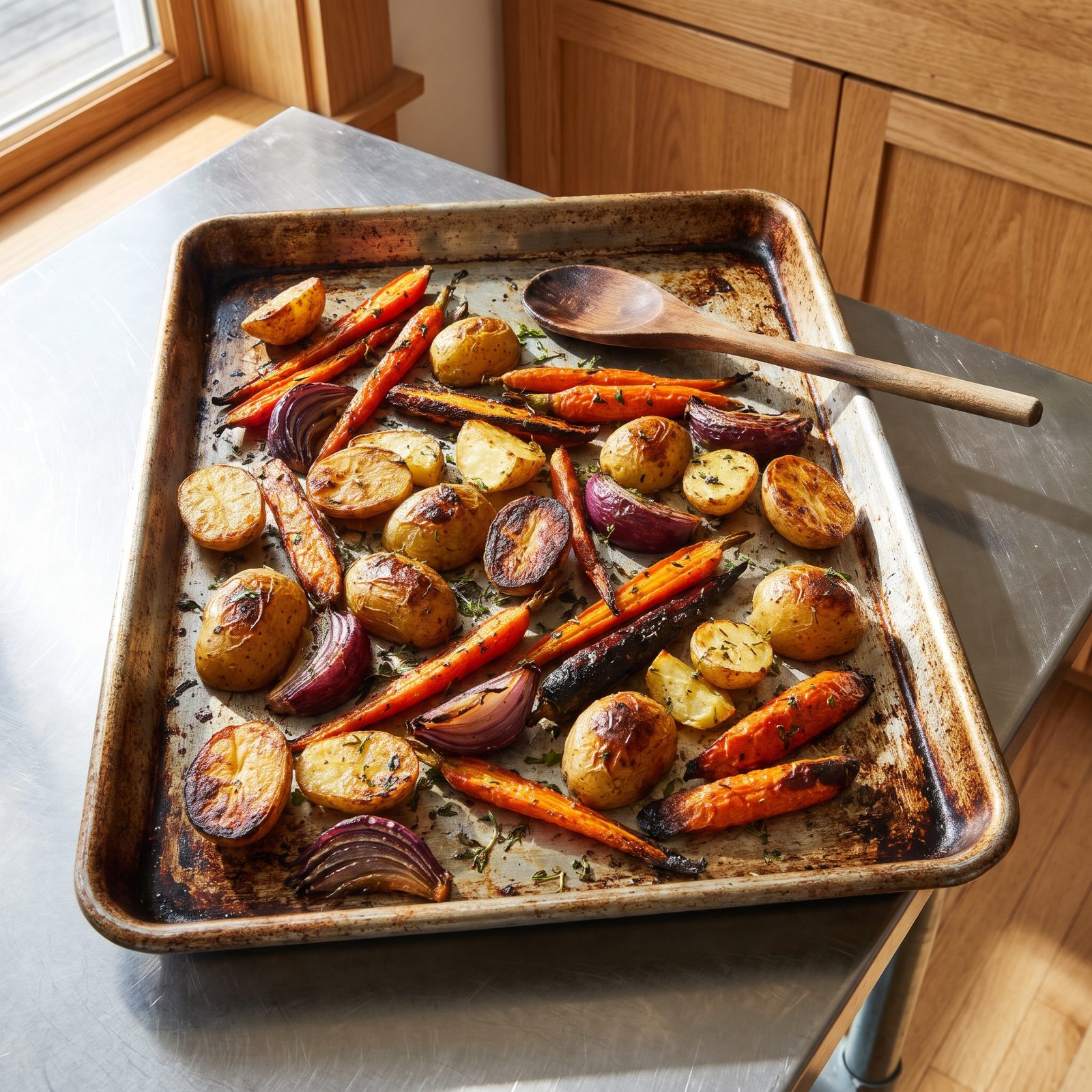
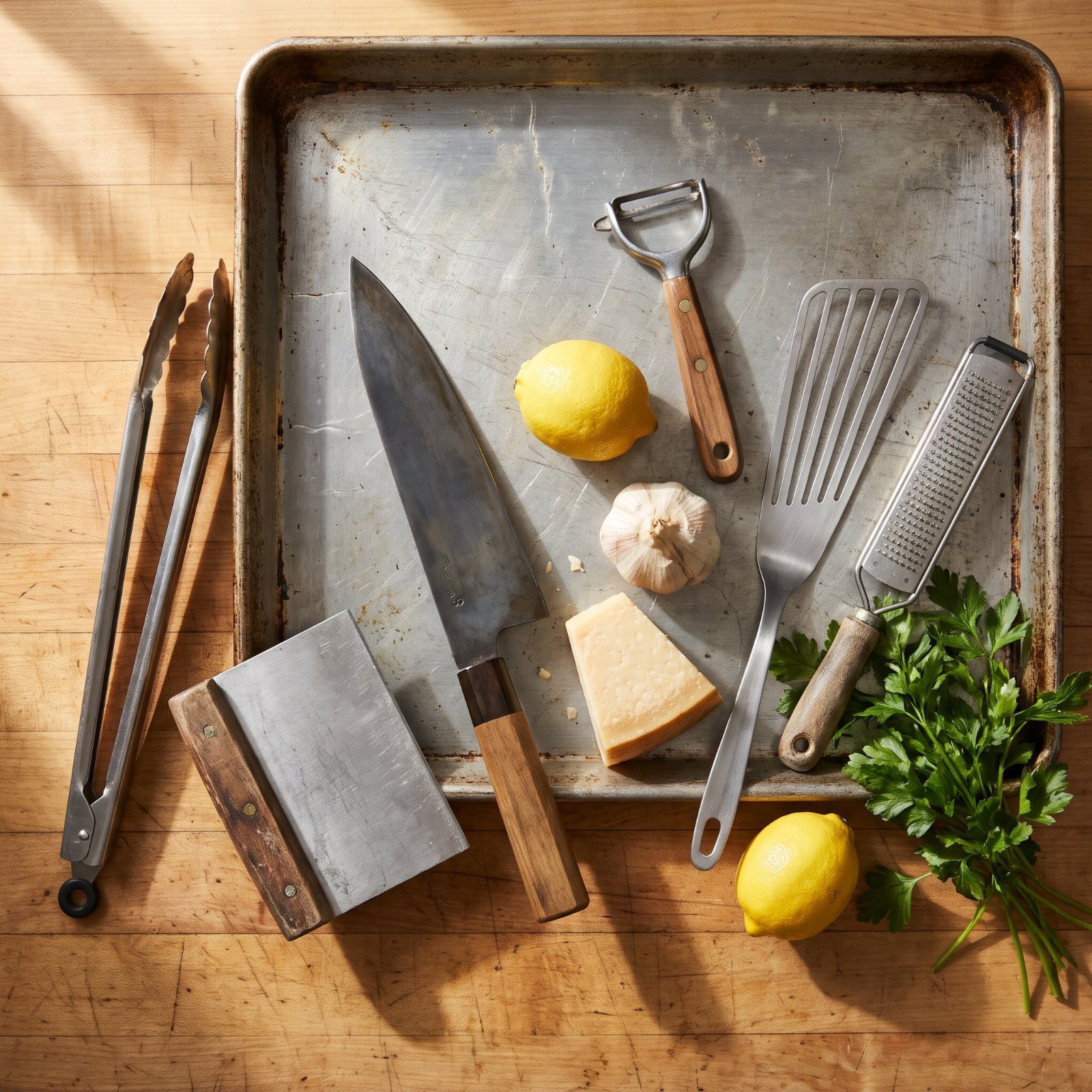
If you own one pan, own a heavy rimmed half-sheet. Roasting vegetables, baking cookies, toasting nuts, catching drips under a pie, hauling prepped ingredients to the stove — it does the work of six specialty bakeware pieces and stores flat.
Thin flimsy sheet pans warp and buckle the second they hit a hot oven, and that warp sends oil and heat sliding into one corner, so half your food burns and half just steams. A heavy-gauge aluminum pan stays flat and heats even.
Buy two in the half-sheet size, use parchment for easy cleanup, and give your vegetables room to breathe. Crowd the pan and they steam. Spread them out and they roast. That’s the whole game.
What Our Readers Say
- In our heart vs thumbs-down votes, photos showing cooking in progress got hearts 88% of the time, compared with 82% for the other images in the same articles.
From Piaci Pizza reader polls and votes.
42. A Thin Fish Spatula for Delicate Foods and Crisp Edges
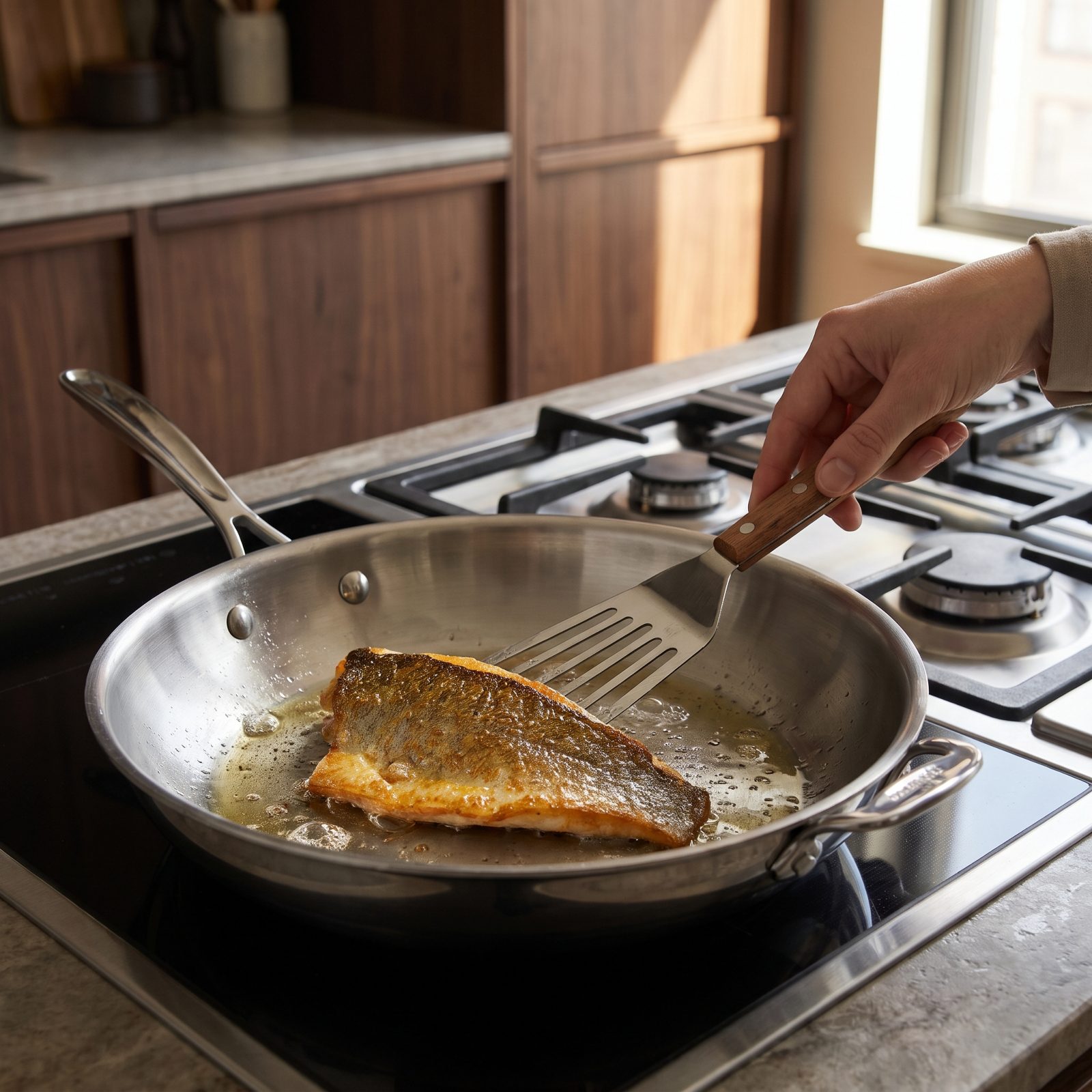
The name says fish, but that undersells it badly. A fish spatula is the best all-around turner in the kitchen, and most home cooks have never held one.
The thin flexible slotted blade slides under food a stiff plastic spatula can’t touch without shredding it. Delicate fillets, fried eggs, pancakes, smashed burgers, roasted vegetables lifted off the sheet pan. The slots let grease drain instead of pooling under whatever you just rescued.
Get one with a little flex and an angled edge. Once it’s in your hand, three other spatulas quietly go into retirement.
41. A Stainless-Steel Bench Scraper for Dough and Chopped Ingredients
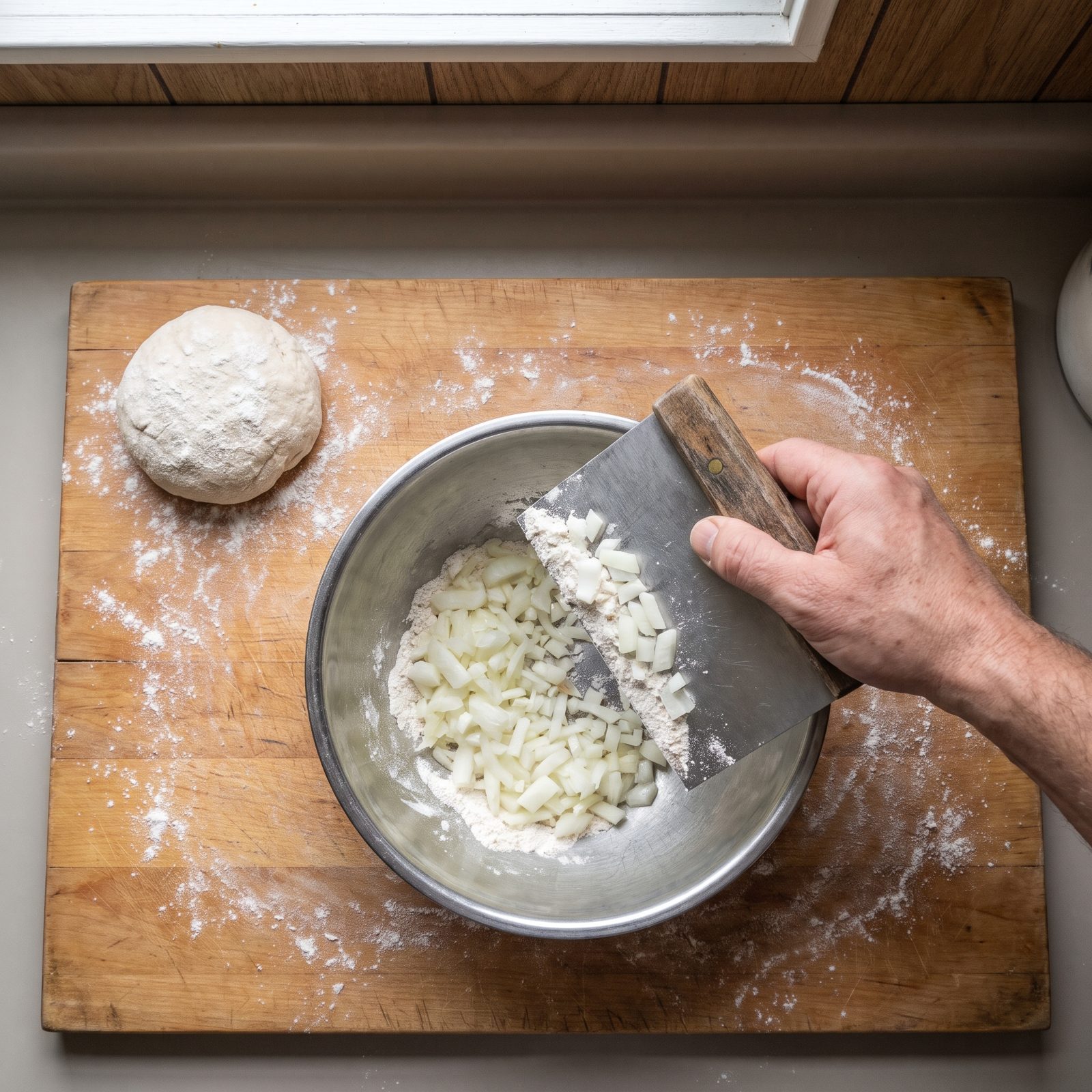
You’ve been using the side of your knife to scoop chopped onions into the pan — dulling the edge and dropping half of them on the floor. There’s a tool for exactly this, and it costs almost nothing.
A bench scraper is just a flat rectangle of steel with a handle, but it moves piles of chopped food in one clean sweep. It also cuts and portions dough, scrapes sticky flour off the counter, divides a ball of pizza dough into even pieces, and squares off the edge of a lasagna tray.
40. A Simple Y-Peeler Instead of Specialty Produce Peelers
Would you like to save this?
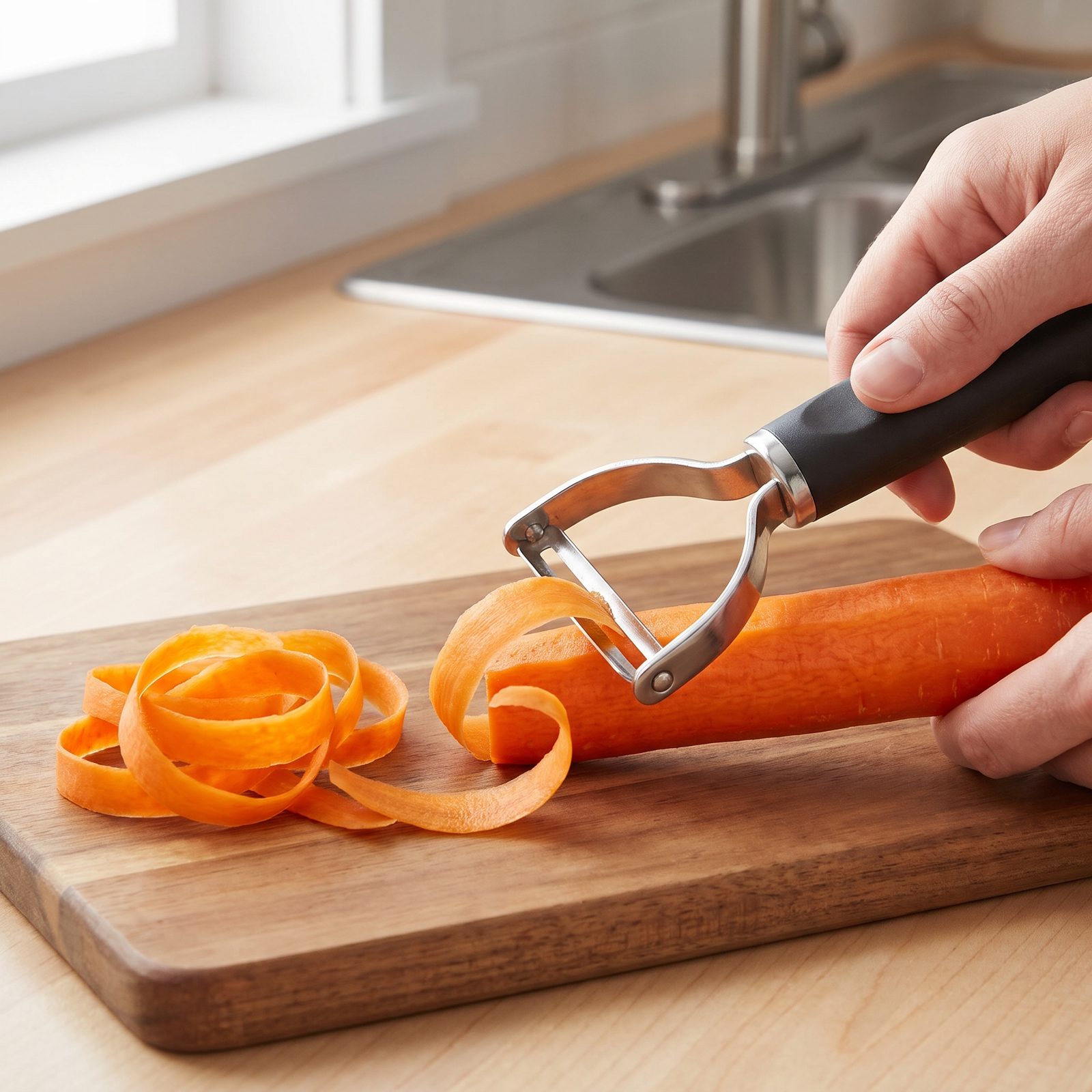
The straight swivel peeler your parents owned is fine. But the Y-peeler is faster, and that drawer full of specialty peelers for tomatoes and asparagus and whatever else? Pure marketing.
A Y-peeler lets you pull toward yourself in long confident strokes — quicker, and with more control over the blade. Carrots, potatoes, apples, cucumbers, butternut squash, it handles all of it. Spin the vegetable, pull the blade, done.
Spend a few dollars on a sharp stainless or ceramic blade, and swap it when it starts dragging instead of gliding. A dull peeler is just a slow way to bruise your knuckles.
39. A Fine Microplane for Citrus, Garlic and Hard Cheese
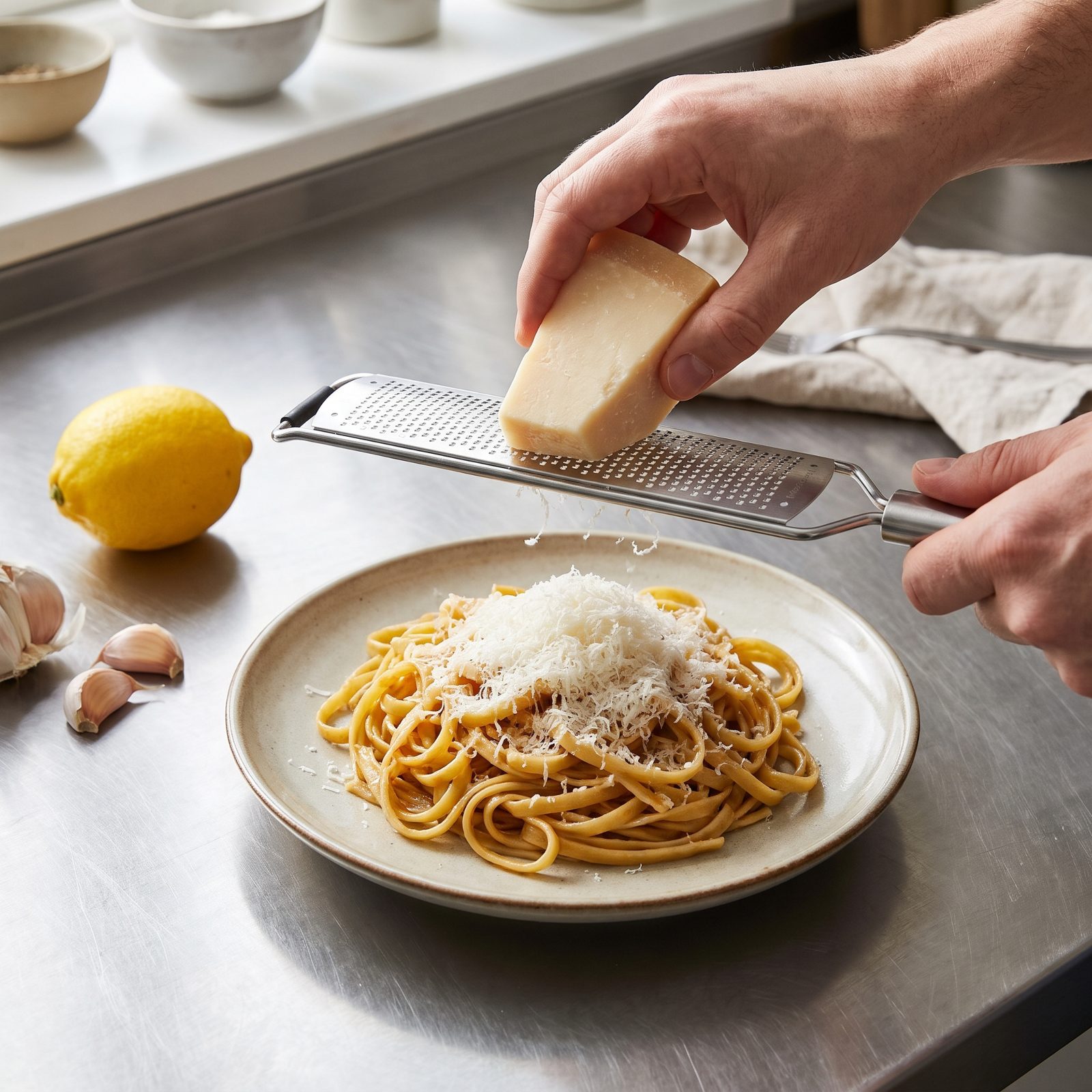
A fine microplane is the smallest tool on this list and one of the most used. It turns a lemon into a cloud of fragrant zest, a garlic clove into paste without a cutting board, parmesan into a snowdrift, and whole nutmeg into warm spice drifting over a sauce.
It started life as a woodworking rasp, until some cook realized the razor-fine teeth grate food better than any box grater’s fussy side ever could. So now one skinny tool does the job of the zester, the garlic press, and the nutmeg grater.
Zest only the colored part of the citrus and stop at the white pith — it’s bitter. And rinse the thing the second you’re done with garlic, or your coffee the next morning tastes like a Tuesday dinner.
38. Heavy-Duty Kitchen Shears That Come Apart for Cleaning
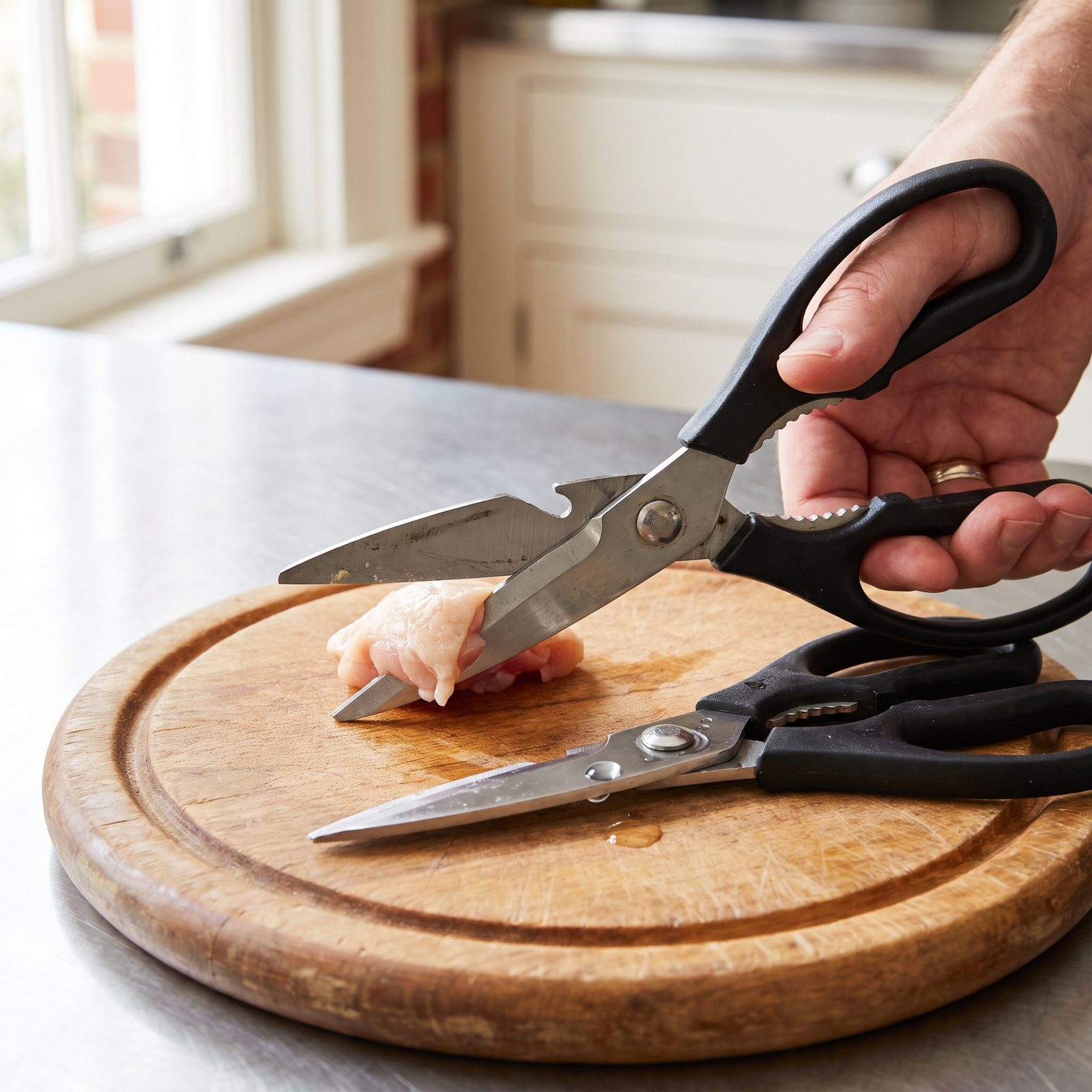
A good pair of shears is the most underrated knife in your kitchen, and it isn’t even a knife. They spatchcock a chicken, snip herbs over a bubbling pot, open stubborn vacuum-sealed packaging, trim pizza dough, and cut through the cartilage that makes a paring knife skid off and go flying.
Now the cheap molded pair that won’t open? That becomes a petri dish the first time raw chicken juice sneaks into the pivot. You can’t clean what you can’t reach. A tool goes from helper to hazard right there.
Buy a pair that pulls apart at the hinge. Micro-serrated blades grip better. Run both halves through hot soapy water, dry them, snap them back together, and they’ll outlive the drawer they live in.
37. A Serrated Bread Knife That Also Handles Tomatoes and Cakes
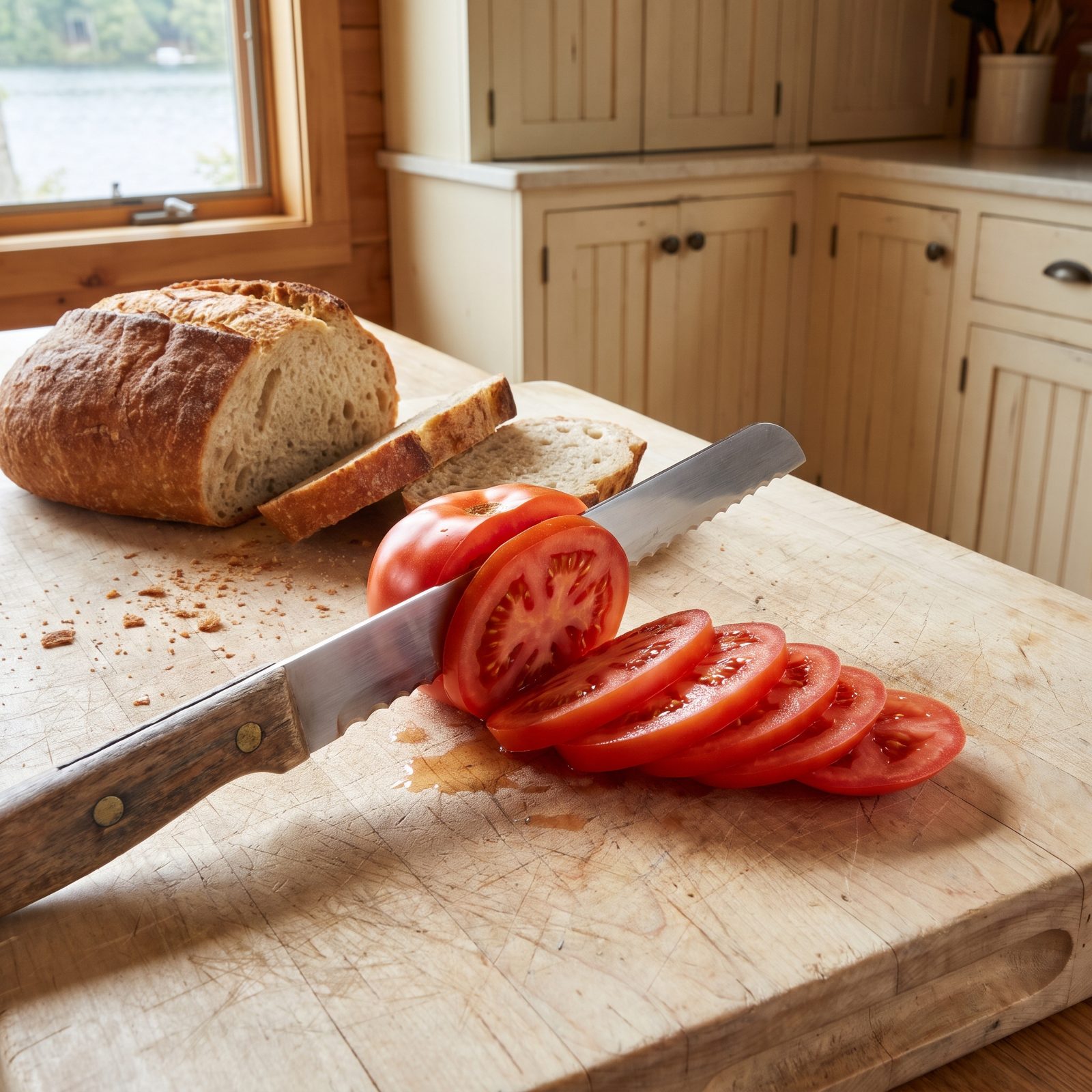
Everyone thinks the serrated knife lives for bread. It does so much more. Those teeth saw through a soft tomato skin without crushing the flesh underneath, something a dull straight blade will never manage without turning your beefsteak into pulp.
It also levels cake layers, slices citrus, and cuts a crusty roll for a sub without compressing the inside into a hockey puck. A paring knife squished against a ripe tomato is one of those small daily defeats nobody talks about.
Length matters. Get one at least eight inches long so the blade clears the loaf in a single stroke. Let the serrations do the work and stop pressing down. Sawing beats shoving, always.
36. A Sharp Paring Knife for Precise Handwork
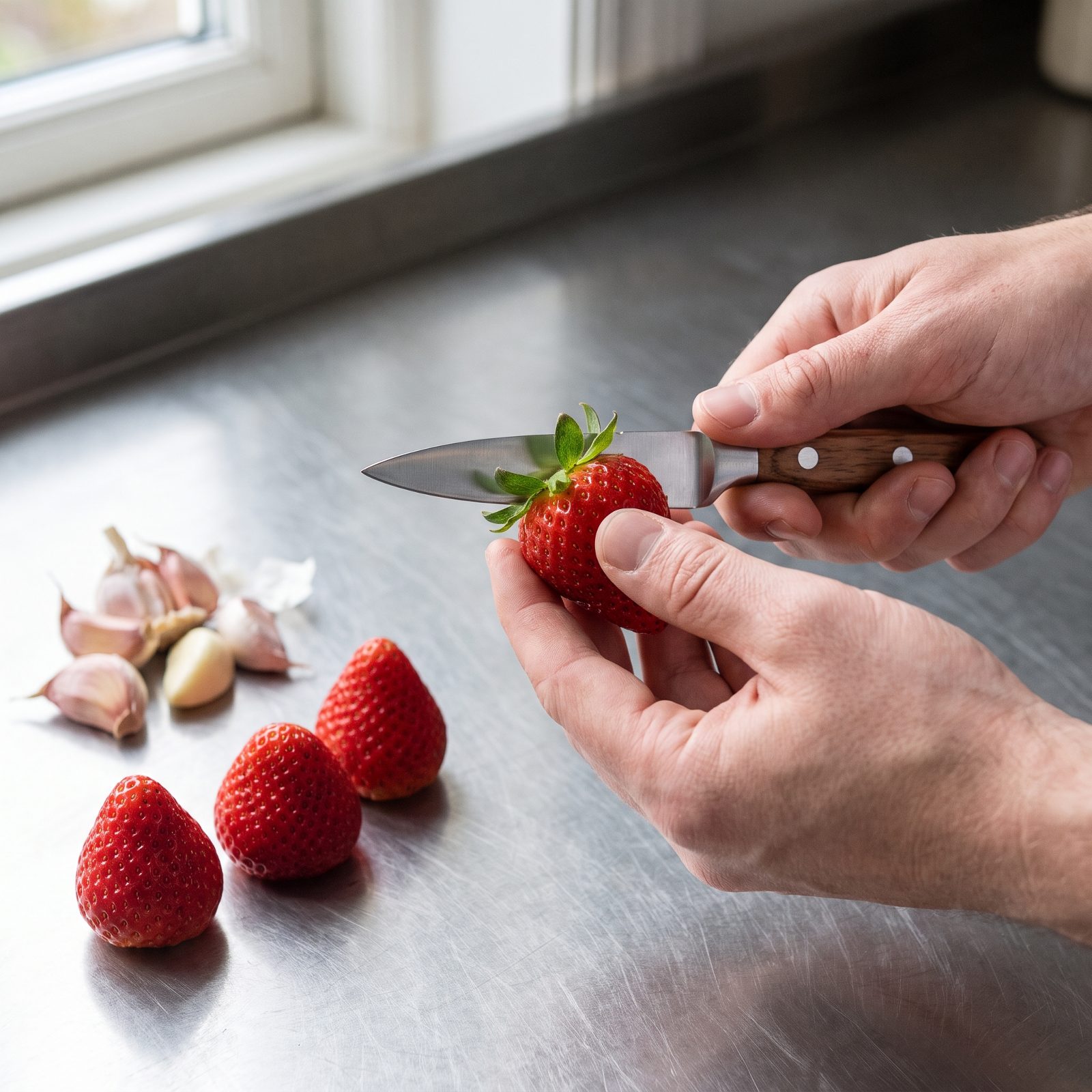
The little knife that does the fiddly stuff. Deveining shrimp, hulling strawberries, peeling garlic, scoring the top of a pepper, lifting the white off a soft-boiled egg — anything your big chef’s knife is too clumsy to manage.
People skip this one because it looks like no big deal. Then they try to peel an apple with an eight-inch blade and nearly lose a thumb. Your hands need a tool as small as the job, and that’s the whole reason this knife exists.
Keep it wicked sharp. A dull paring knife is far more dangerous than a sharp one, because you push harder and it slips. Three or four inches of blade is plenty.
35. A Whetstone for Restoring a Truly Sharp Edge
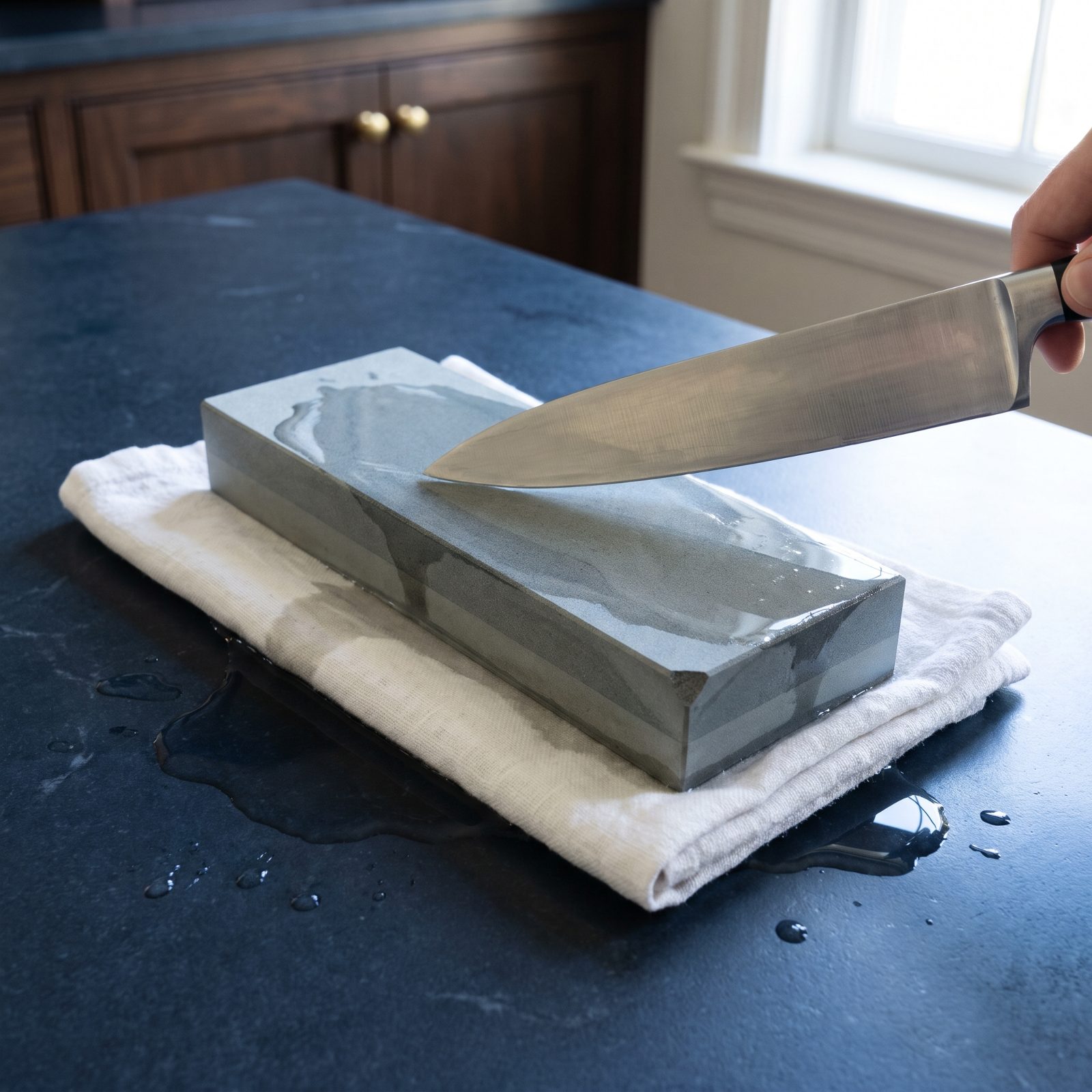
Nobody wants to hear it: your knives aren’t bad, they’re just dull. The honing steel on the counter only straightens the edge. It doesn’t sharpen a thing. For that you have to actually remove metal, and a whetstone is how cooks have done it for a thousand years.
Those pull-through sharpeners grind your blade down fast and uneven, chewing years off a good knife. A stone takes a few minutes and gives you an edge that glides through a tomato under its own weight. It’s oddly meditative once you find the rhythm.
Get a combination stone — coarse on one side for repair, fine on the other for polish. Soak it, hold a steady angle around fifteen degrees, and go slow.
34. An Adjustable Mandoline with a Proper Hand Guard
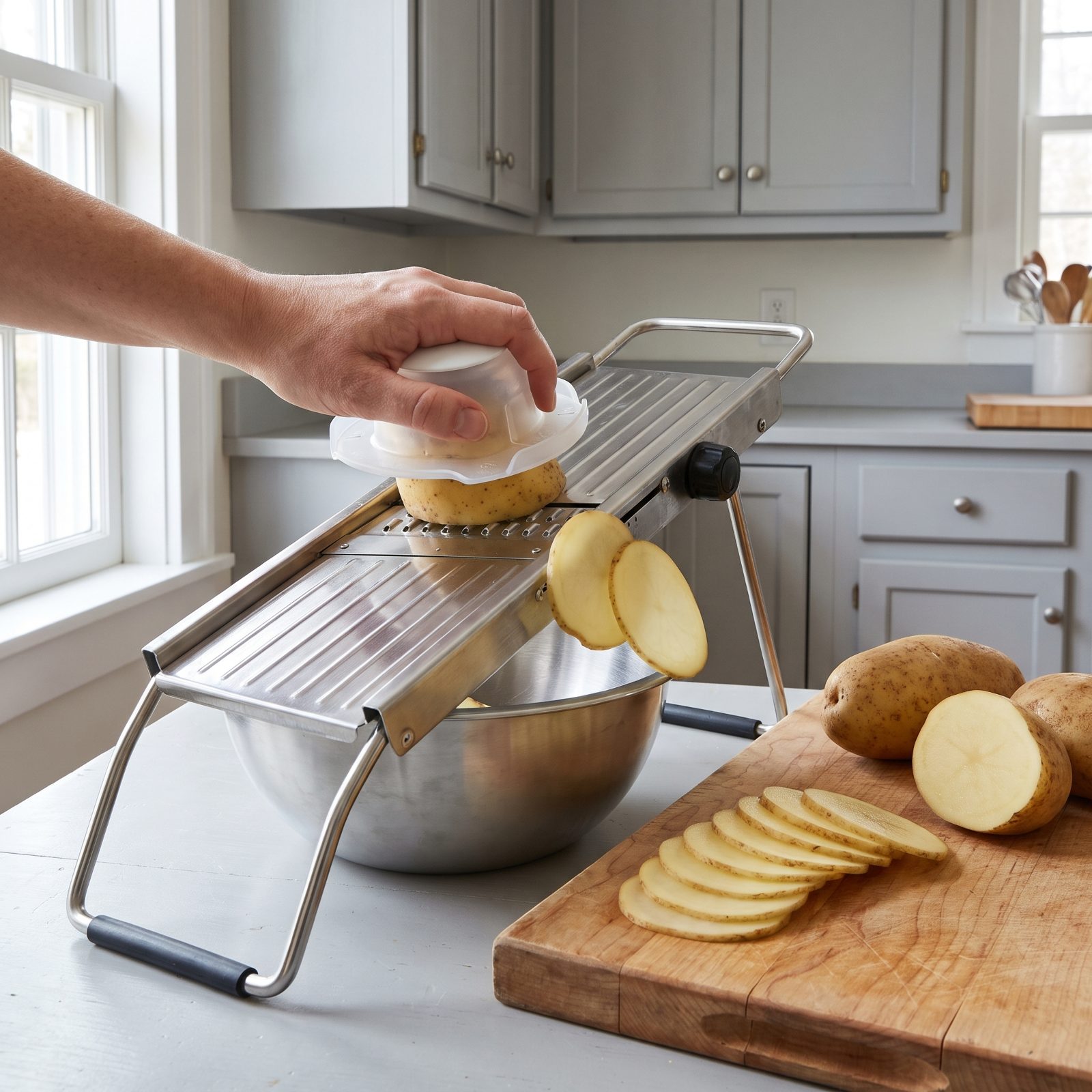
Paper-thin potato slices for gratin, even coins of zucchini, shaved fennel so delicate it’s almost see-through. A mandoline does in two minutes what a knife does in twenty, and far more evenly.
But respect it. This is the tool that sends more home cooks to urgent care than anything else in the drawer. The adjustable blade is what makes it worth owning, so get one you can dial from a whisper to a thick cut. And use the hand guard every single time.
The gadget-store crinkle-cut slicers and single-thickness versions are a waste. One good adjustable mandoline covers all of it.
33. A Heavy Mortar and Pestle for Spices, Sauces and Pastes
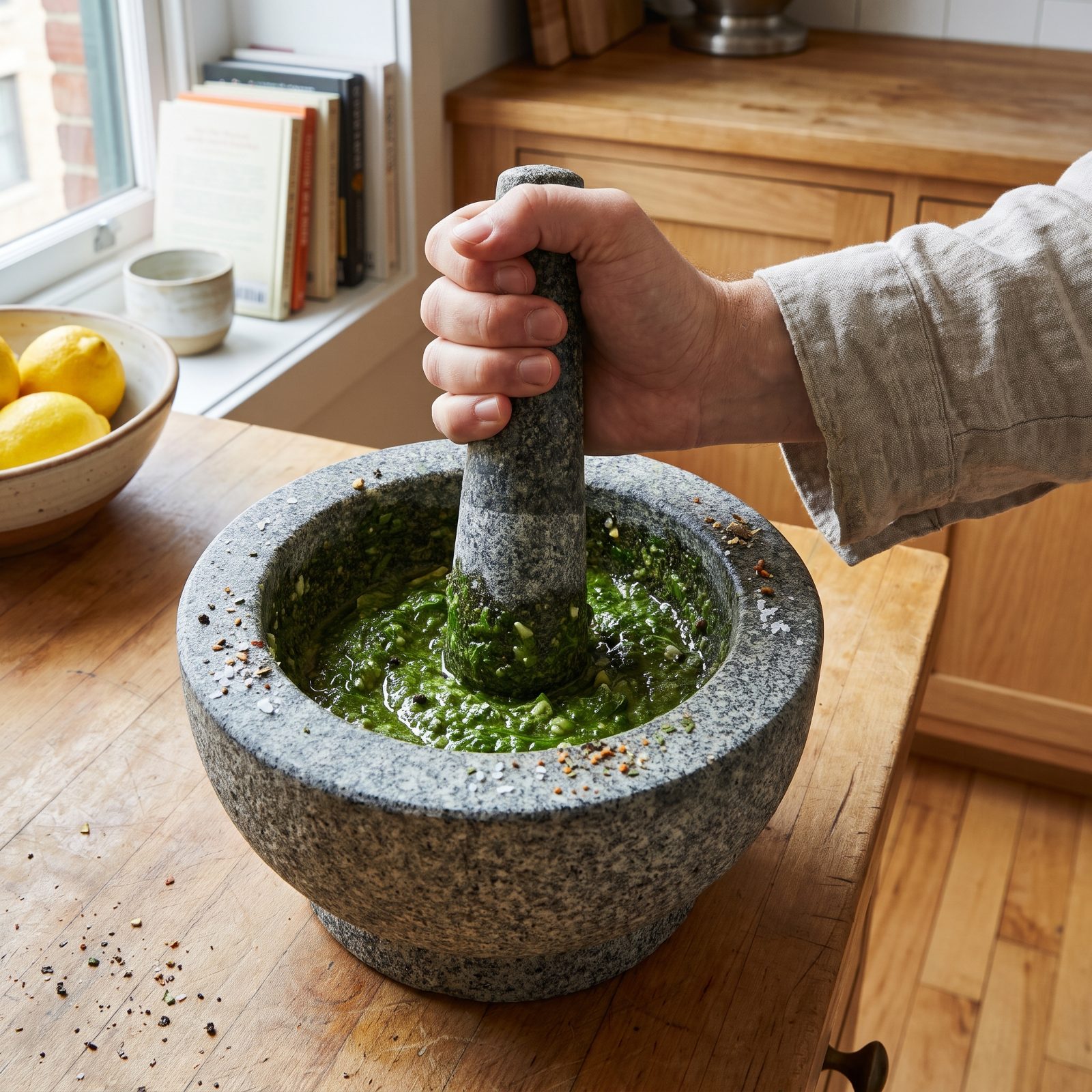
A food processor purees. It doesn’t crush, and crushing is a whole different thing. Pound garlic and salt together in heavy stone and you break the cell walls, releasing oils a spinning blade just chops right past. The flavor comes out deeper, rounder, more alive.
This is how pesto was made for centuries before anyone owned a blender, and the old way still wins on taste. It toasts and grinds whole spices, makes curry pastes, cracks peppercorns, muddles herbs. No batteries, nothing to break, no plastic bowl to scrub.
Go heavy. Granite or marble, with real weight to it. A light ceramic one skitters across the counter and frustrates you into giving up.
32. A Refillable Pepper Mill with a Consistent Grind
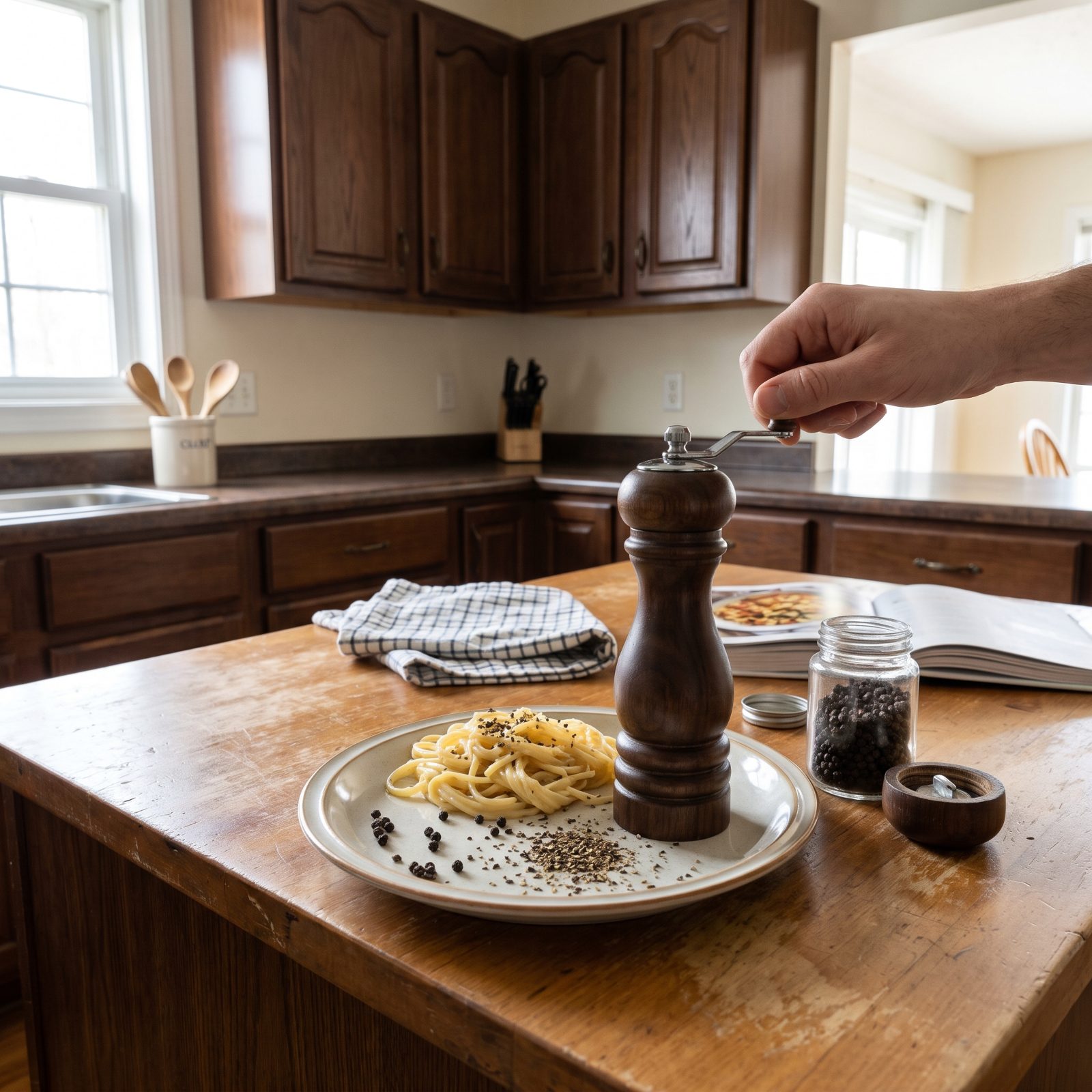
Pre-ground pepper is sawdust with a memory of flavor. The volatile oils that make pepper taste like anything start fading the moment it’s cracked, which is why that tin in the cabinet smells like dust and tastes like less.
A real mill with an adjustable burr grinds fresh every time, and you set the coarseness yourself. Fine for a sauce, a bold crack for a steak or a bowl of cacio e pepe. That control is the whole game. A cheap mill that grits out inconsistent dust and jams on the stems? Worse than nothing.
Buy one you can refill forever and dial from powder to crushed. Then throw out the pre-ground. Trust me on this.
31. A Heatproof Silicone Spatula for Scraping Pots Clean
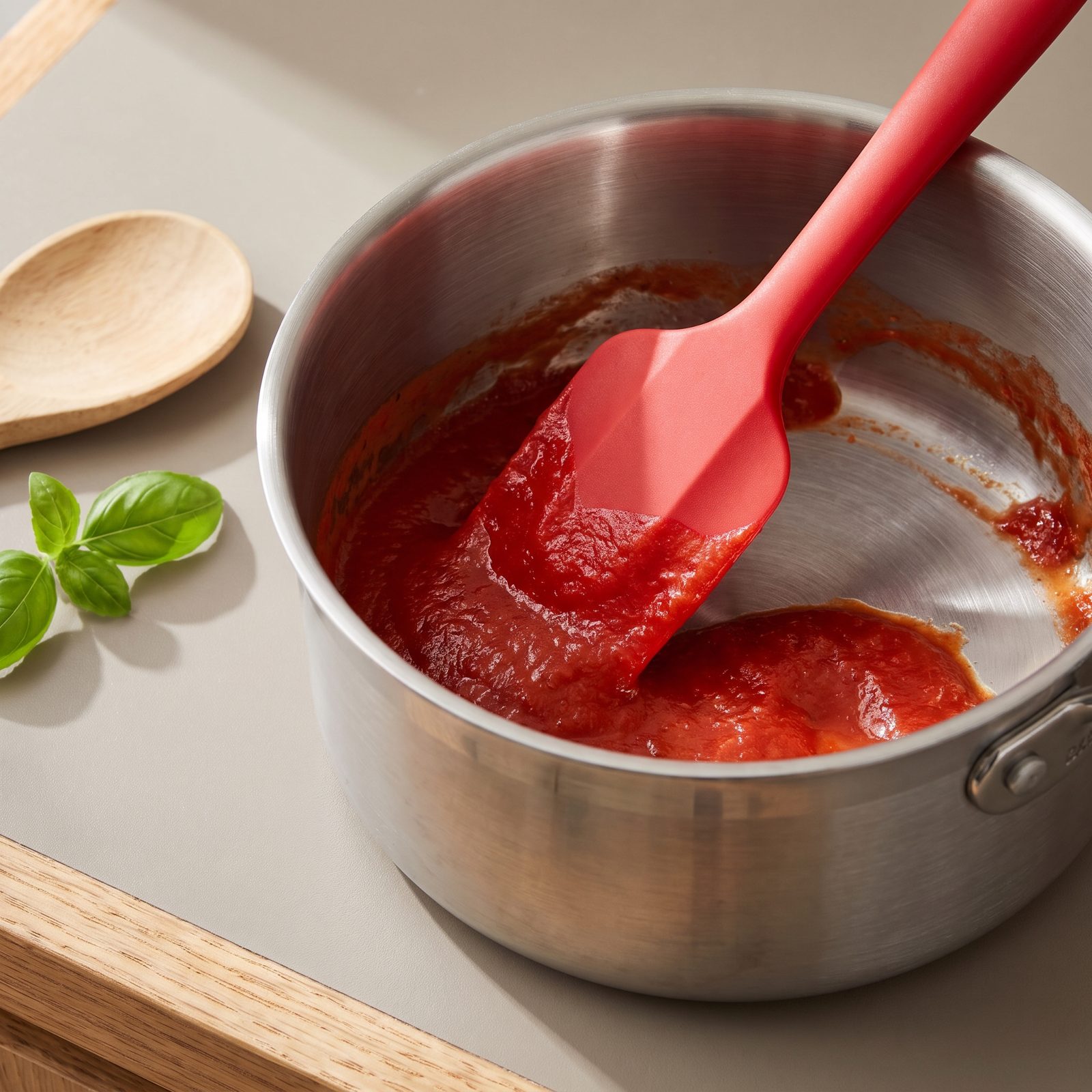
The hero of not wasting food. A silicone spatula flexes into the exact curve of a pot and drags every last bit of sauce, batter, or custard out, where a wooden spoon leaves a quarter cup behind.
The old rubber ones melted the second they touched a hot pan and left a faint plastic smell in your Bolognese. Modern silicone handles real heat without flinching, so one tool stirs risotto, folds eggs, and scrapes the pan.
One piece, seamless — that’s the detail that matters. The two-part kind, where the head pops off the handle, traps gunk in the seam. Get a seamless one and it cleans up in seconds.
30. A Solid Wooden Spoon That Will Not Scratch Cookware
Would you like to save this?
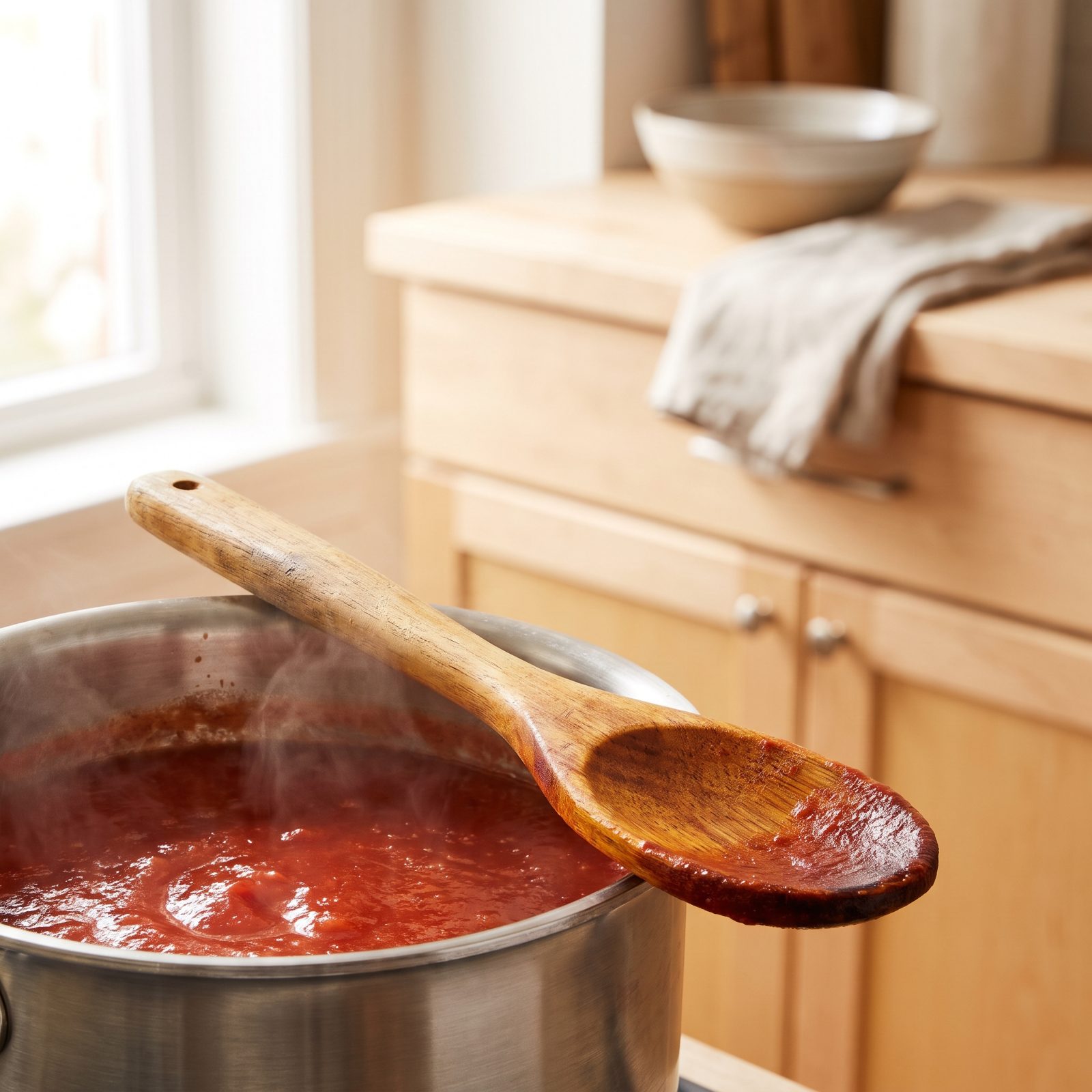
Every serious kitchen has one wooden spoon that’s basically a family member. Stained dark from a thousand pots of sauce, worn to fit your hand, maybe a little scorched on one edge. It won’t scratch your nonstick, won’t melt, won’t conduct heat up to your knuckles, and won’t react with acidic tomato the way bare metal can.
It stirs, it scrapes, it tastes (one spoon per taste, don’t double-dip in the pot — my grandmother would have smacked you for it). A good hardwood spoon does what a drawer full of silicone-this and nylon-that only pretends to.
Hand wash it, oil it now and then, and it’ll be around longer than most of your appliances.
When Piaci Pizza readers loved a food photo and tapped a reason, “nostalgic” and “comfort” tied at the top, which suits a spoon that feels like family.
29. A Wire Spider for Frying, Blanching and Noodle Service
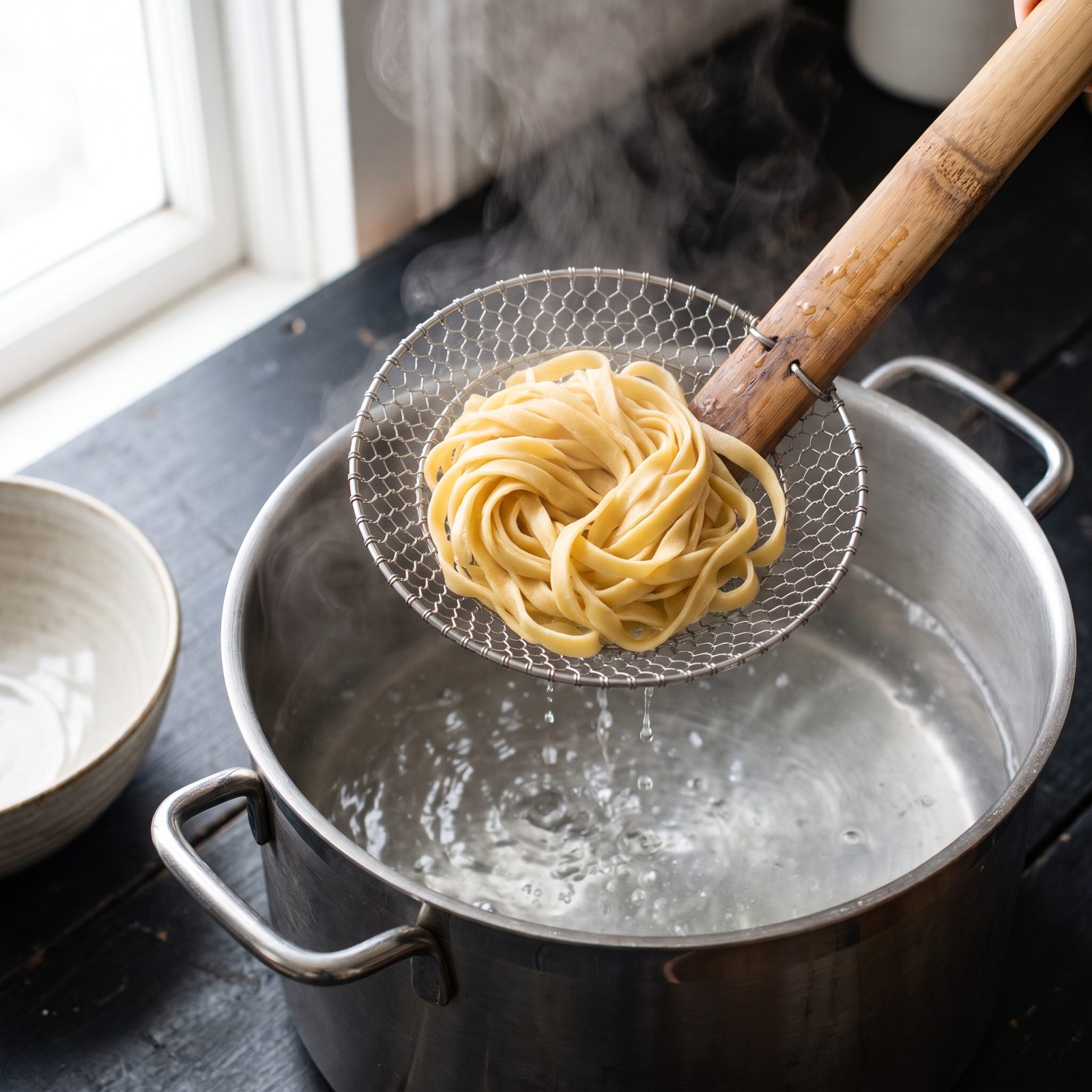
An open wire basket on a long handle, cheap as anything and quietly indispensable. It scoops fried calamari out of hot oil draining as it rises, lifts blanched greens from boiling water in one motion, and pulls pasta straight from the pot to the sauce without you hauling a heavy colander to the sink.
That last move? A secret of good pasta. You want a little of the starchy cooking water clinging on, and the spider lets you fish noodles out exactly when they hit al dente instead of dumping the whole pot and overcooking in the drain.
Get the one with the wide shallow basket and a wooden or bamboo handle that stays cool. It’ll earn its drawer space every week.
28. A Balloon Whisk That Reaches Every Corner of the Bowl
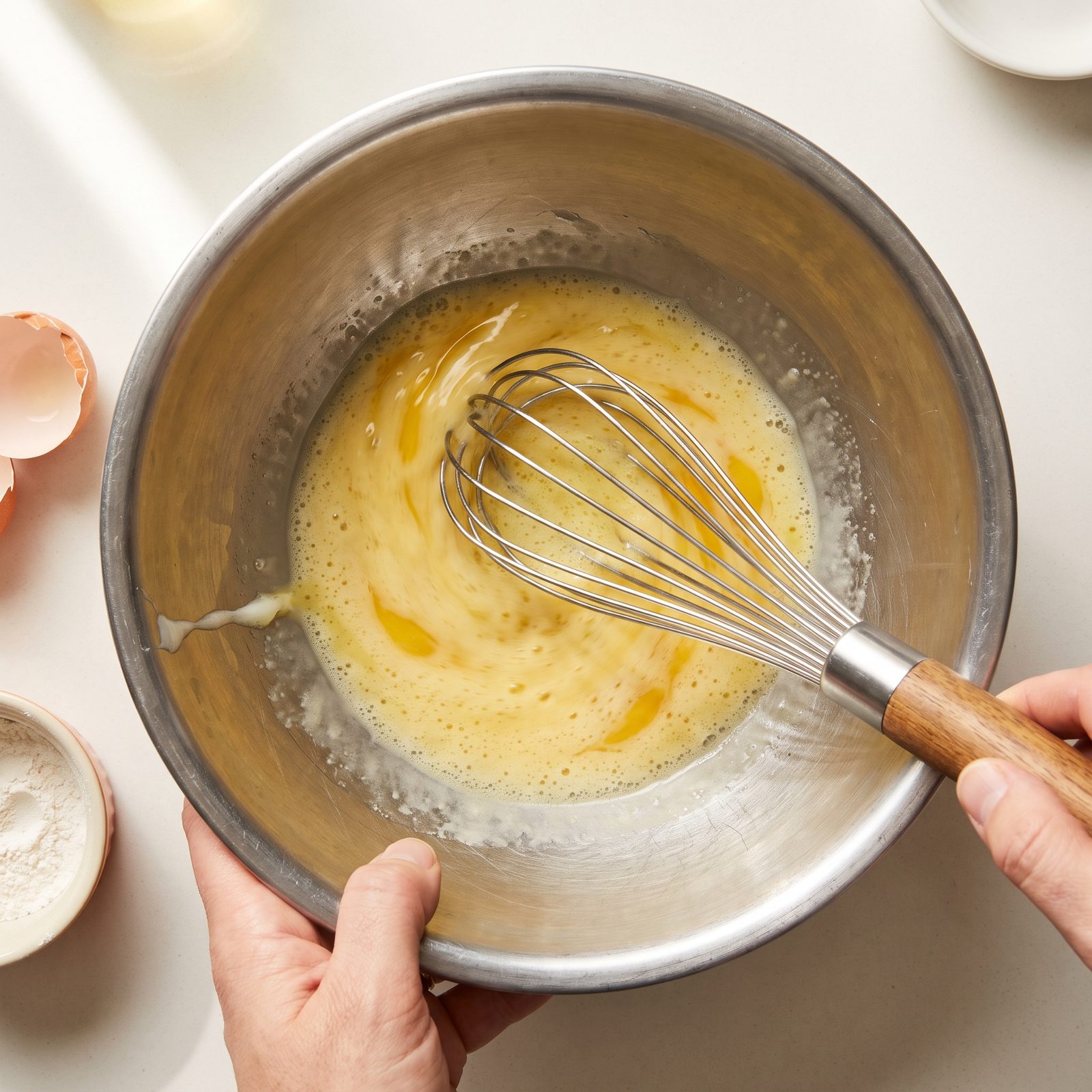
A flat roux whisk and a tiny coil whisk both sit in the drawer doing a fraction of the job. The balloon whisk — fat, round, a dozen flexible wires — is the one that earns its spot. Those wires fan out and scrape the curve of the bowl, so beaten eggs actually take on air and a vinaigrette breaks into something that clings.
Single-use gadgets promise the same and never deliver. A battery milk frother. An egg-beater with a crank. They clog, they break, they rot in a box in the back of a cabinet. A good balloon whisk whips cream, emulsifies dressing, smooths out lumpy gravy, and never once asks you for a cord or a fresh set of batteries.
27. A Fine-Mesh Sieve for Straining, Sifting and Dusting
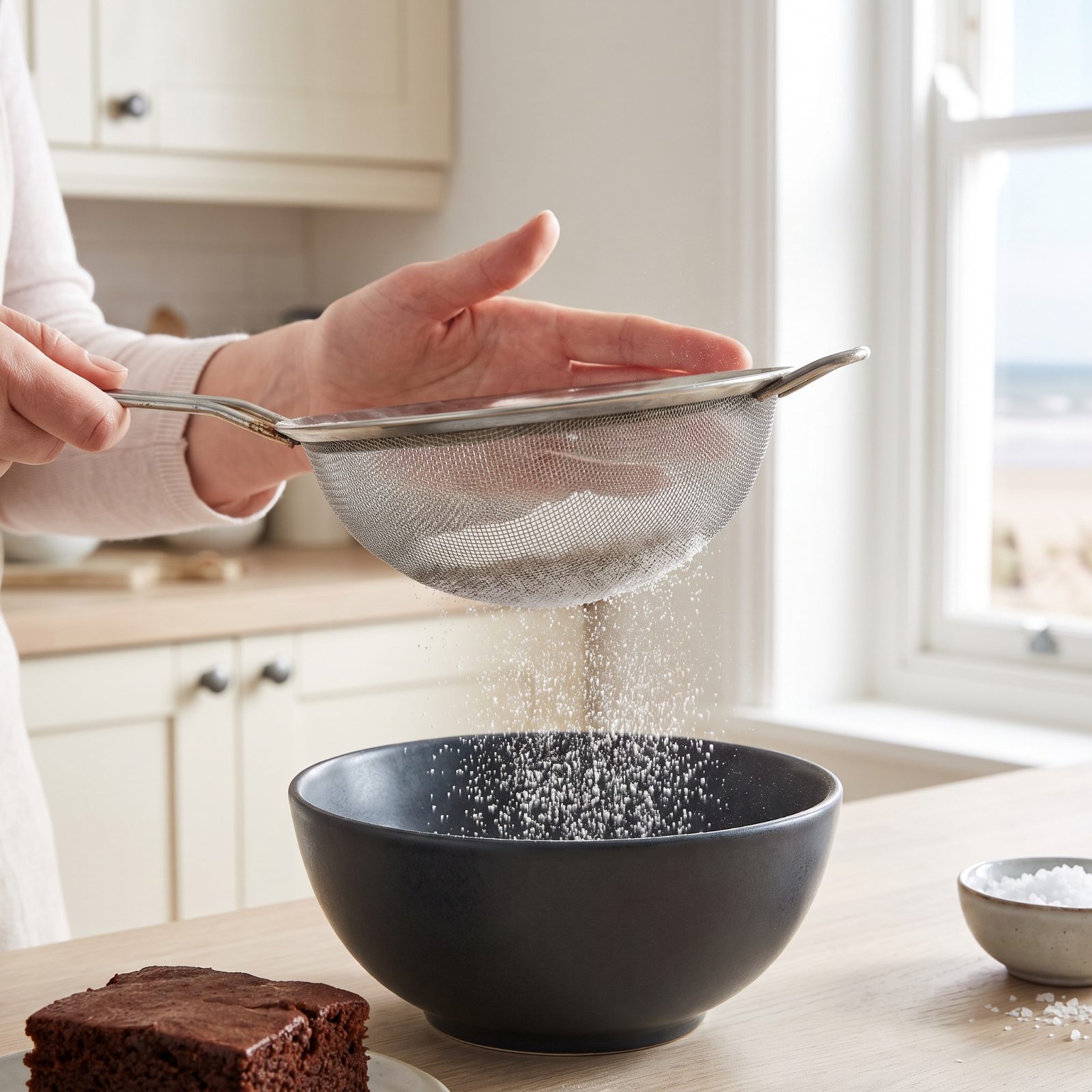
Flour sifters with the squeeze handle were everywhere once, and every one of them rusted at the hinge, jammed at the crank, and did exactly one thing before dying. A fine-mesh sieve does all of it and a dozen jobs besides.
Push stock through it and you catch the grit. Tap flour through it and the clumps vanish. Hold it over a finished tart, dust powdered sugar in an even veil instead of a dumped pile, and suddenly dessert looks like someone cared. The tight weave strains seeds out of raspberry sauce and gives you gravy with no lumps. Buy one with a hook on the far side so it balances across a bowl or pot while your hands are busy elsewhere.
26. A Footed Metal Colander for Pasta and Produce
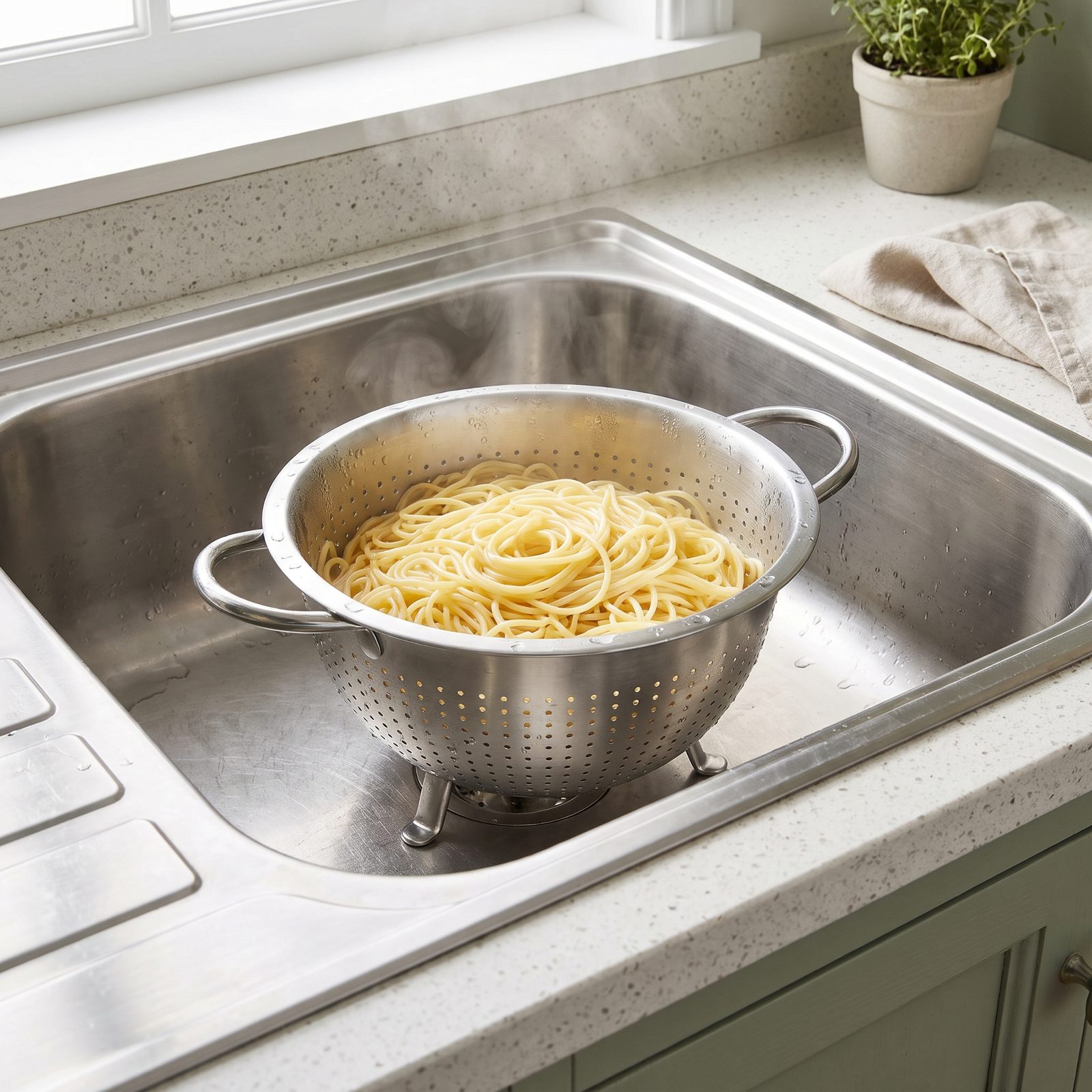
The flat strainer that clamps onto the pot rim seems clever until the lid slips and half the penne goes down the drain. A footed colander sits upright in the sink on its own three legs, so you can dump a full pot into it and walk away.
Those feet matter more than they look. They lift the holes off the sink floor so drained water keeps moving instead of pooling back up into your pasta. It washes a head of lettuce, rinses a pound of blueberries, drains a can of beans, and lasts decades. Stainless beats the collapsible silicone ones that warp the first time a hot pot touches them.
25. A Large Salad Spinner for Washing and Drying Greens
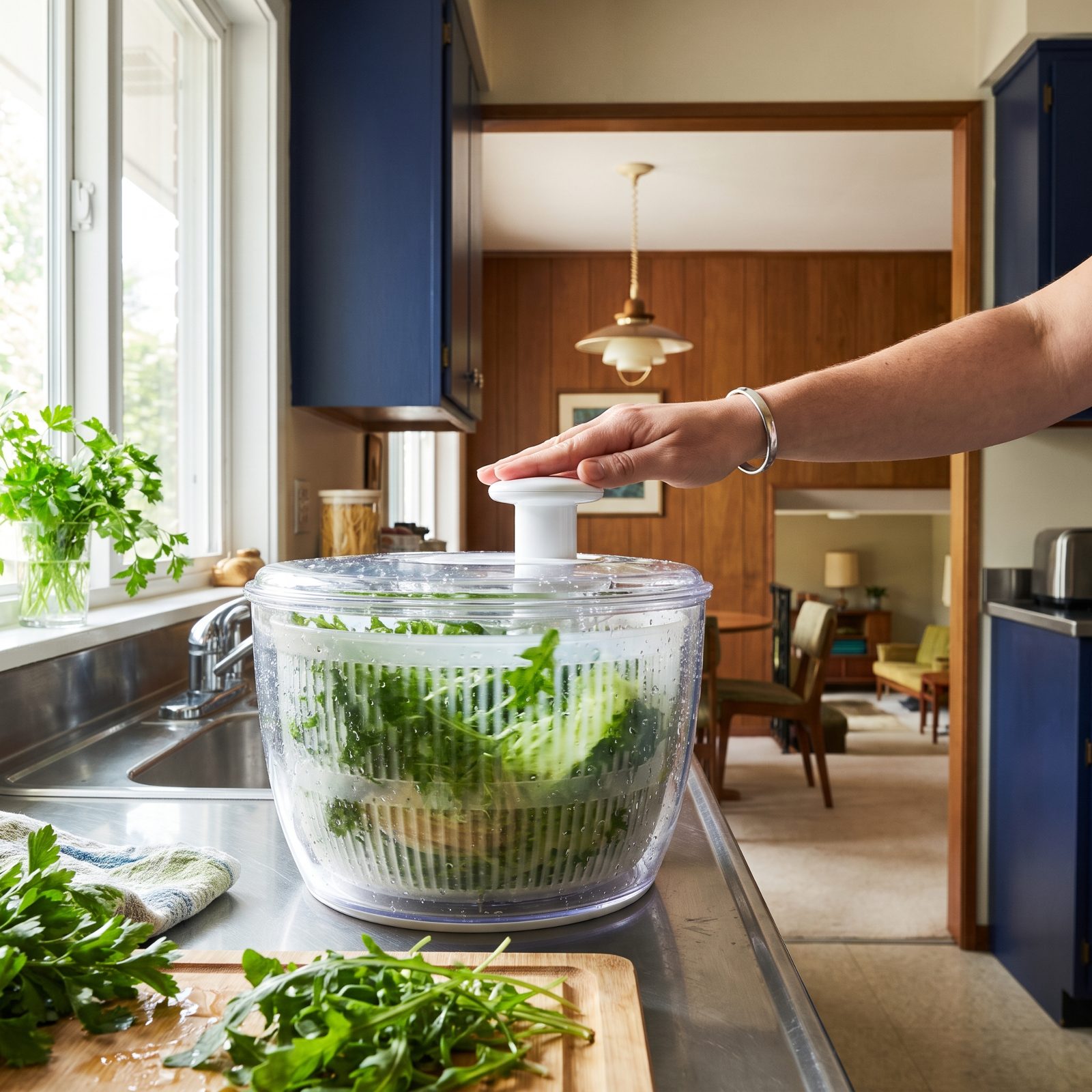
A rare honest single-tasker that earns its drawer space. Wet greens are the whole reason a dressing slides off and pools at the bottom of the bowl — water and oil refuse to cooperate, so a few drops clinging to each leaf means your vinaigrette never grips.
A spinner washes and dries in one motion. Fill the basket, flood it with cold water, lift, spin, done. The leaves come out dry enough that dressing clings instead of drowning. Buy the big one. A small spinner means two or three batches for one dinner salad, and that is exactly where good intentions go to die.
24. Nesting Stainless-Steel Mixing Bowls That Can Take Abuse
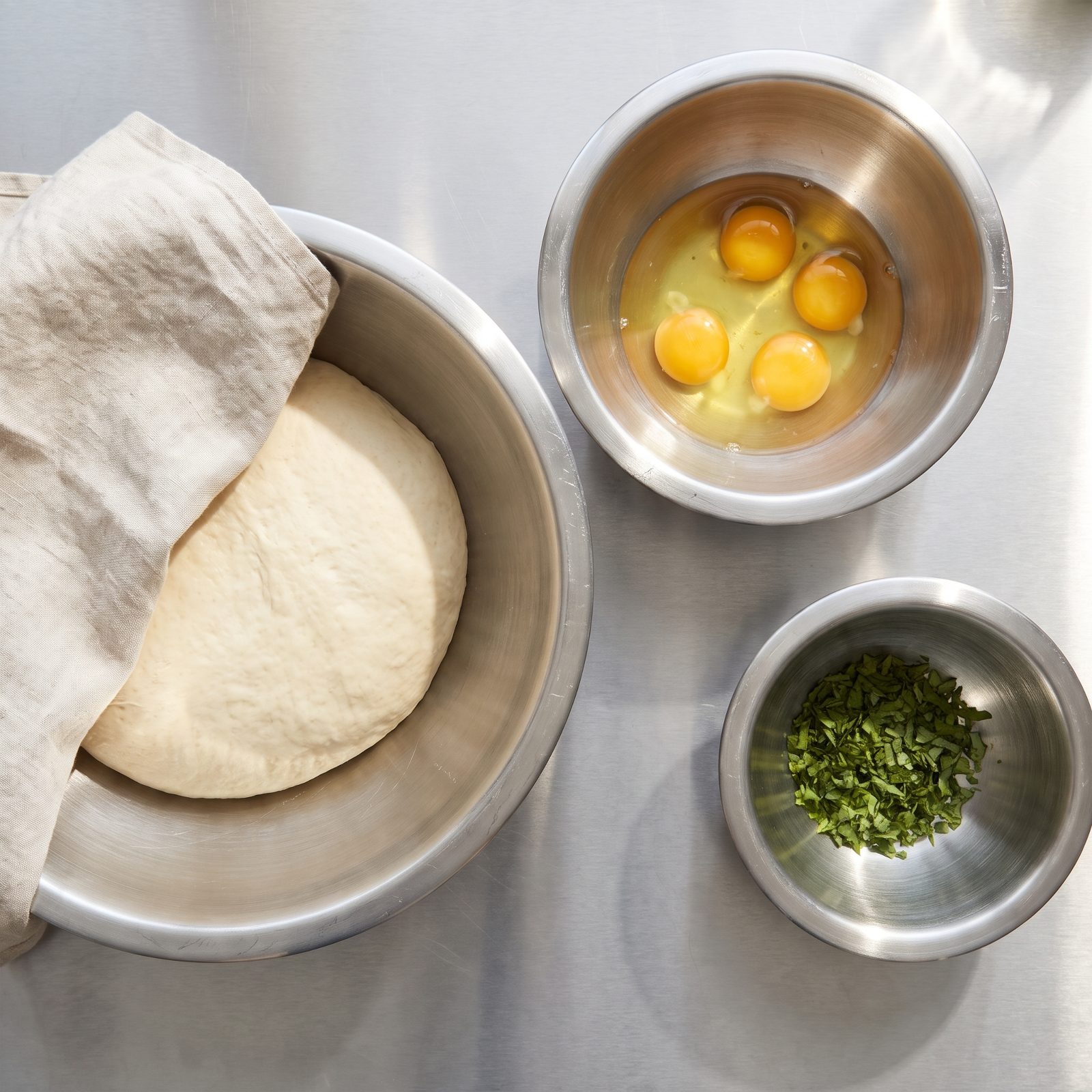
We kept a set of pretty ceramic bowls for years and chipped every single one. Beautiful, heavy, and useless the moment you need to carry whipped egg whites across the kitchen without your arm giving out halfway.
Stainless nesting bowls weigh almost nothing, won’t crack when you drop them, and chill fast when you set one over ice. They stack into each other, so three bowls take the footprint of one. Big one for dough, middle for tossing salad, small for a dredge station. And a metal bowl doubles as a double boiler over a pot of simmering water, which no plastic set will ever manage.
23. A Wire Cooling Rack That Fits Inside the Sheet Pan
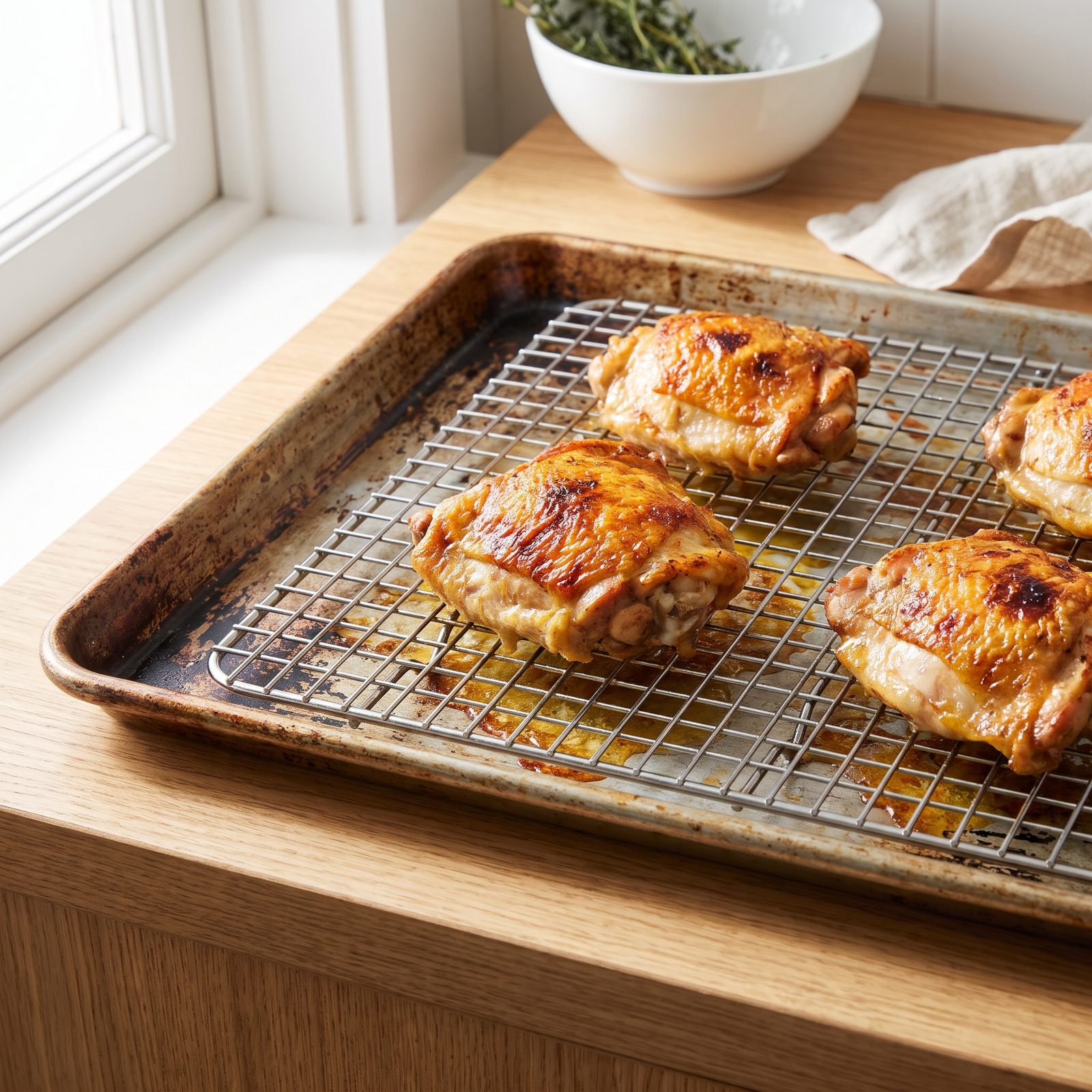
A cooling rack that drops inside your sheet pan quietly does the work of three separate gadgets. It cools cookies without steaming their bottoms soft. It lifts a roasting chicken so hot air circles underneath and the skin crisps all the way around instead of stewing in its own rendered fat.
Get one sized to sit inside your half-sheet pan. That pairing turns into a genuine workhorse: resting steaks so juices drain instead of soaking the crust, draining fried food, glazing donuts, cooling bread. Oven-safe stainless means you roast and cool on the same rig.
22. A Seasoned Cast-Iron Skillet for Searing and Baking
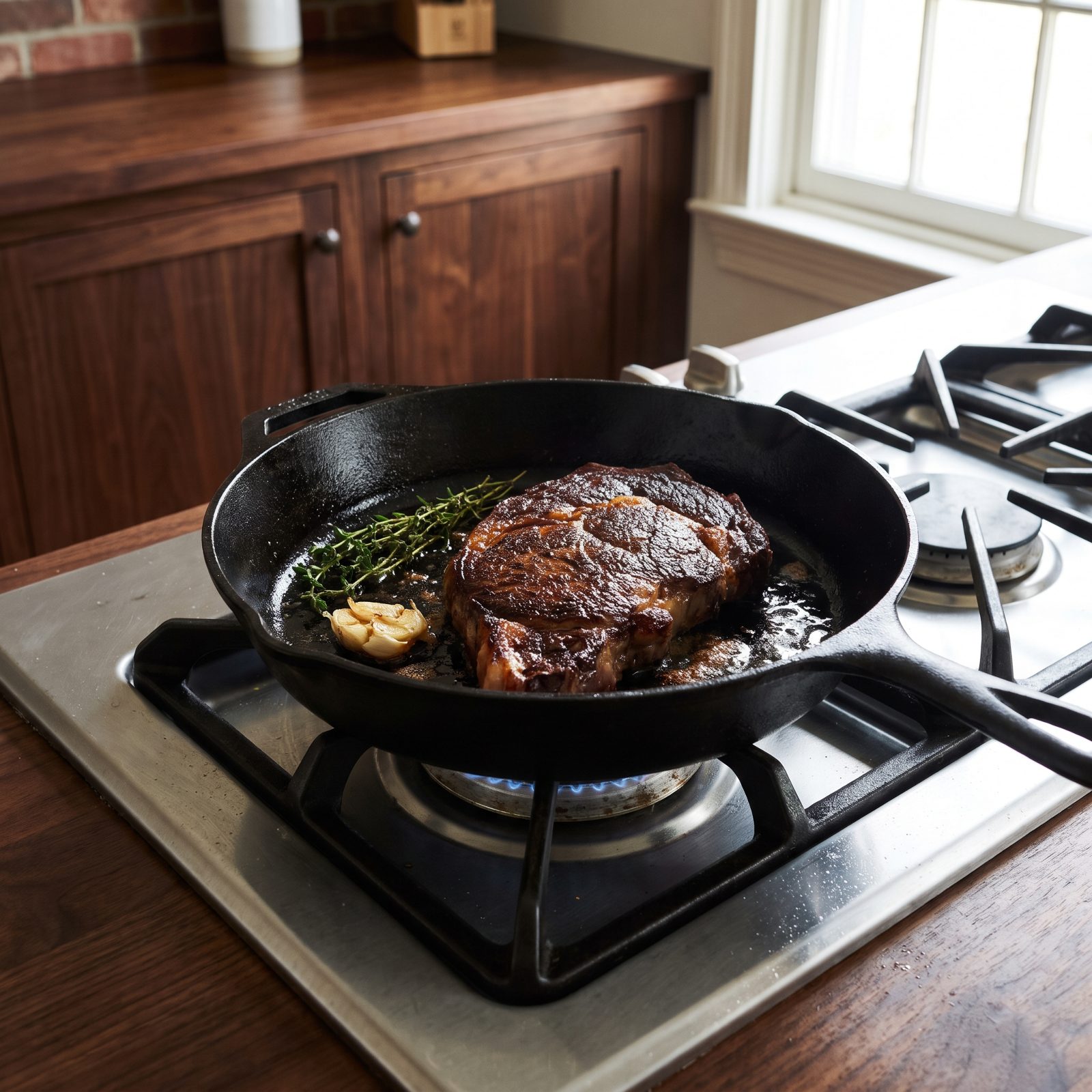
Nothing you can buy sears like cast iron. It holds heat the way a brick holds the afternoon sun, so a steak hits the surface and the temperature barely drops. That stored heat is what builds a crust instead of a gray, weeping slab of meat.
One pan carries you from stovetop to oven without a second thought. Sear a chop and finish it in the heat. Build a frittata and slide the whole thing under the broiler. Bake cornbread, fry chicken, char a pizza. A single cast-iron skillet replaces a drawer full of coated nonstick pans that flake and die in three years — and the thing actually gets better the more you abuse it.
21. A Fully Clad Stainless-Steel Sauté Pan for Pan Sauces
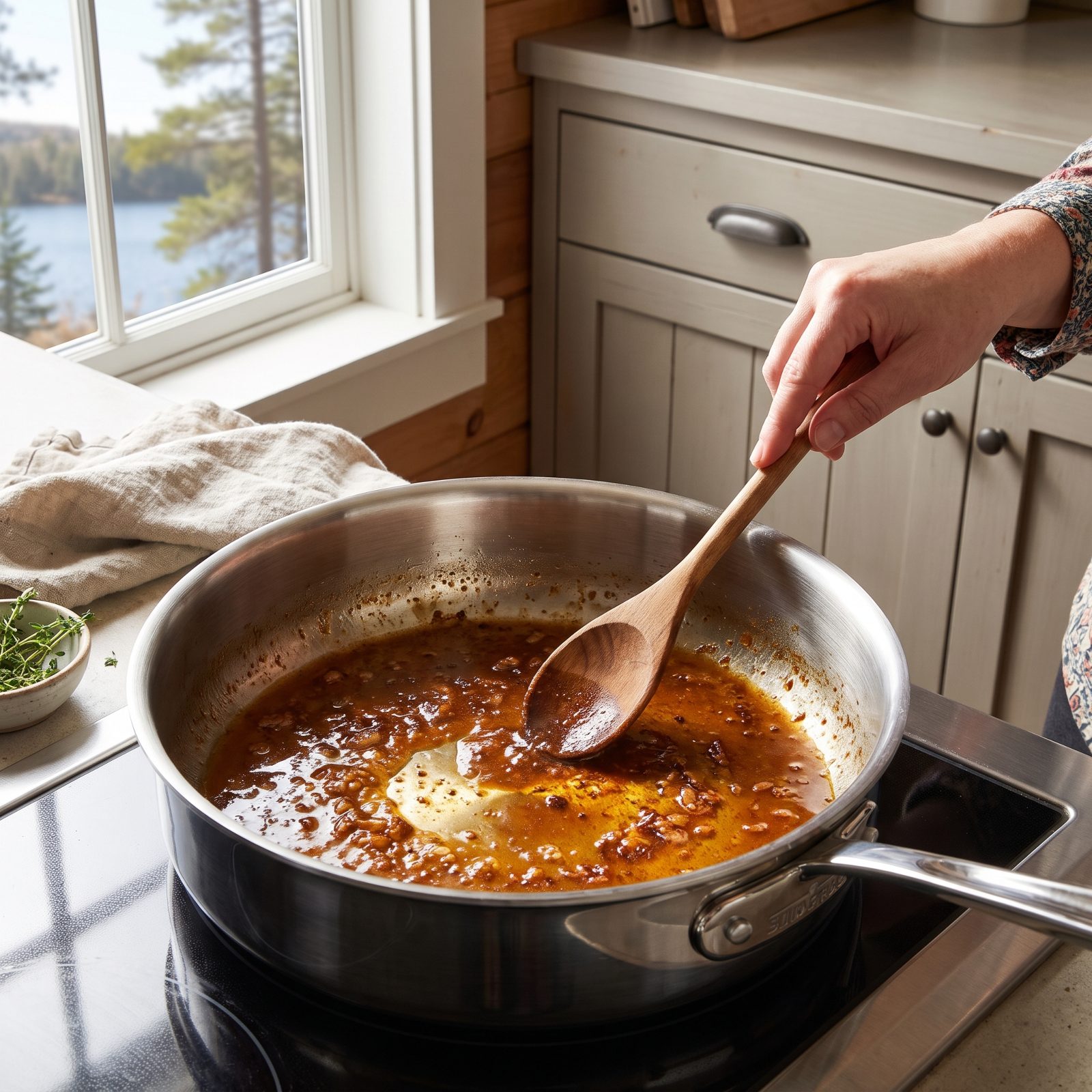
Ever wonder why restaurant chicken comes with a sauce that tastes like the chicken? It’s this pan. Stainless lets the fond build — those caramelized brown bits glued to the bottom after you brown meat. Nonstick keeps everything from sticking, including the flavor you actually wanted to keep.
Fully clad means the aluminum or copper is sandwiched through the whole pan, not just the base, so heat climbs evenly up the straight sides. Brown your protein, pour off the fat, splash in wine or stock, scrape. Every brown bit lifts into the liquid and becomes the sauce. Wide and straight-sided, it also simmers a braise, poaches eggs, and shallow-fries without crowding.
20. A Carbon-Steel Wok for High-Heat, Fast-Moving Cooking
Would you like to save this?
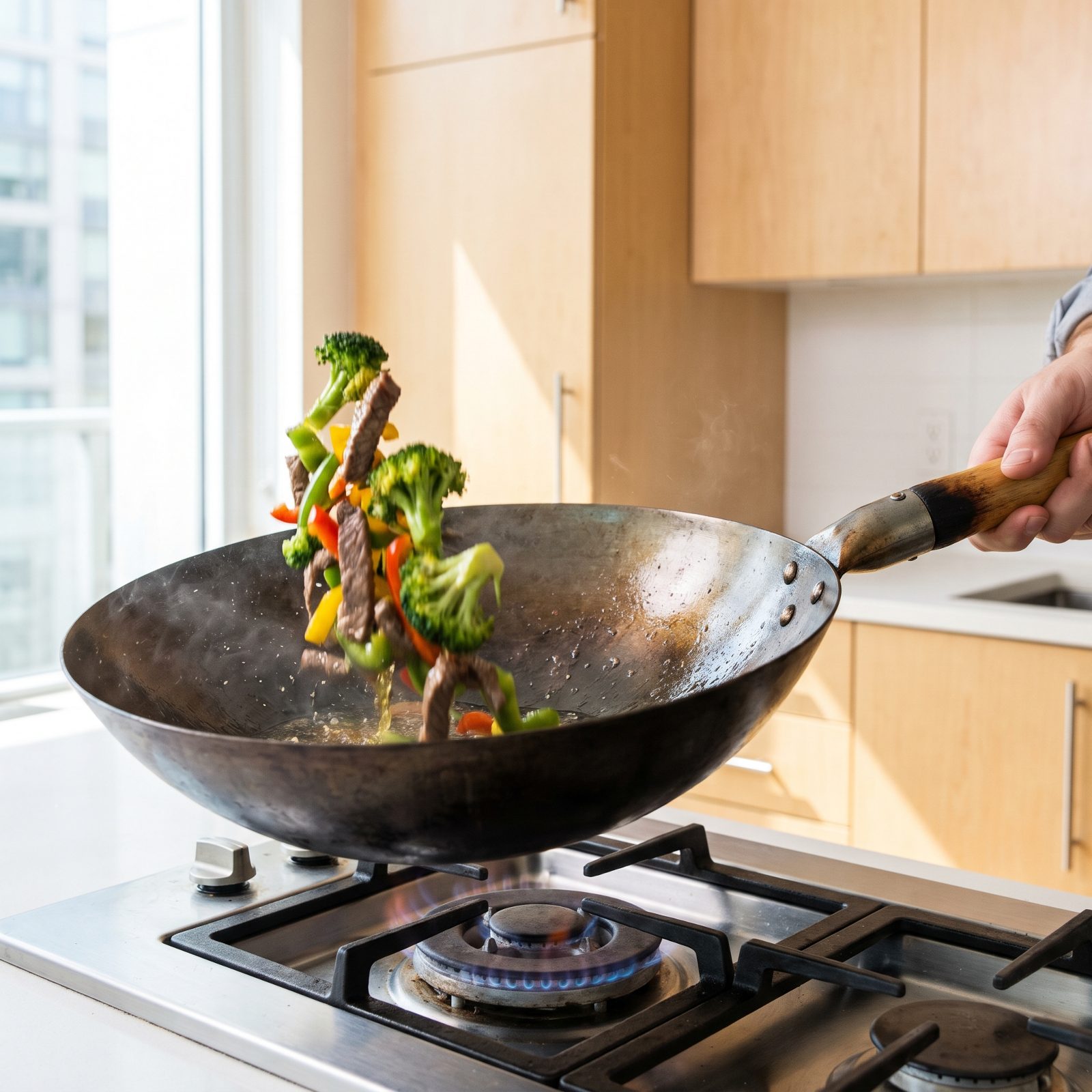
A wok looks like a one-trick pan for stir-fry. It’s the opposite. The bowl shape and thin carbon steel heat up fast and roaring, which is exactly what fast cooking demands and most flat pans simply can’t deliver.
The sloped sides let you shove cooked food up and out of the hot center so nothing overcooks while the next batch sears. Past stir-fry, a wok steams, deep-fries with less oil than a pot, smokes, and tosses a huge pile of vegetables without crowding. Carbon steel seasons like cast iron but weighs a fraction, so you can lift it one-handed to toss.
19. An Enameled Dutch Oven for Braises, Soups and Bread
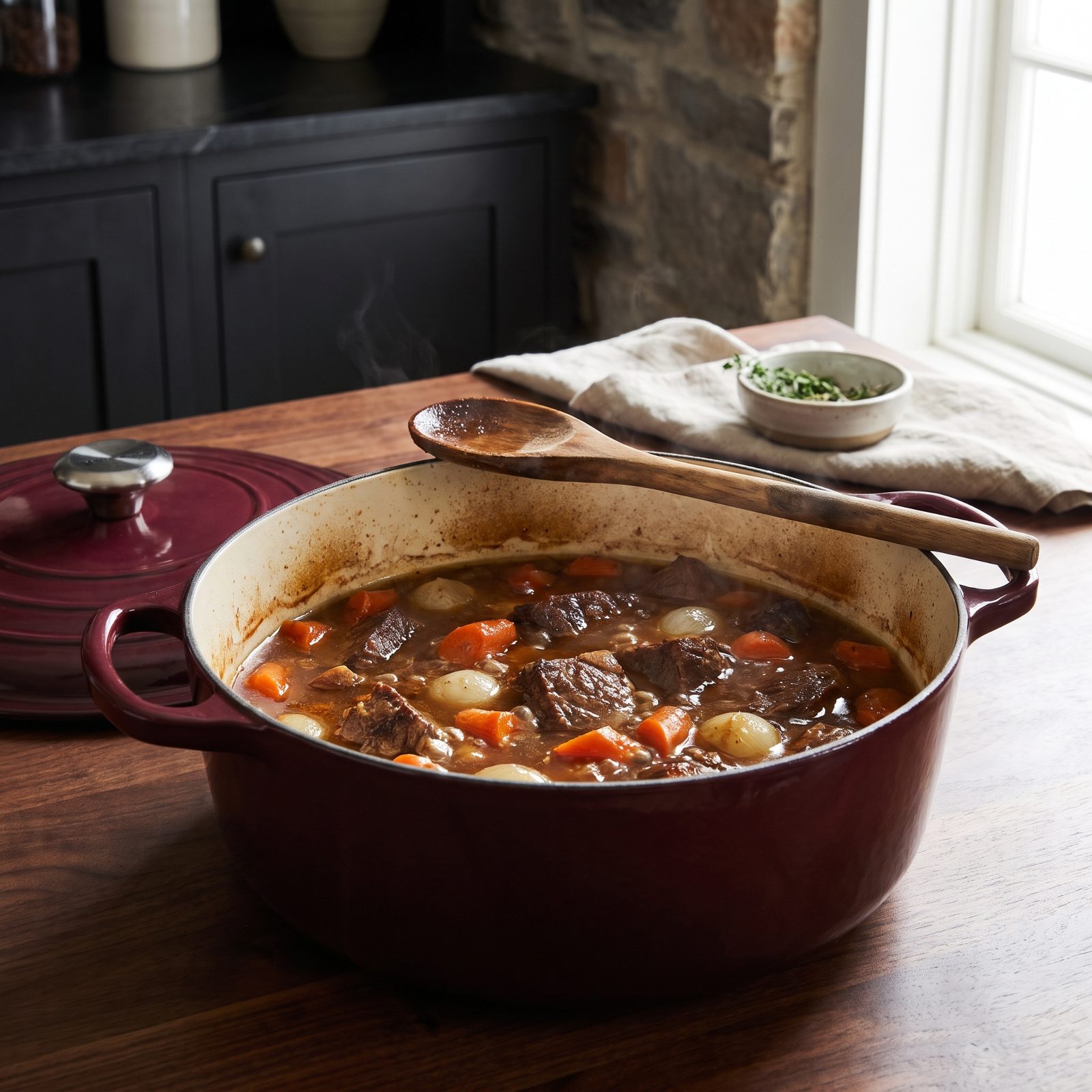
If you could keep only one heavy pot, keep this one. The thick enameled cast-iron walls hold a low, even heat for hours, which is precisely what a tough cut needs to go from chewy to falling apart in its own broth.
It browns on the stovetop and braises in the oven in the same vessel, so all the flavor stays put. Simmer a vat of soup. Hold a stew overnight. Bake a serious loaf of bread when you clamp the lid on and let the trapped steam build a crackling crust. Best of all, the enamel means no seasoning to maintain and no reaction with acidic tomato sauce — so your Sunday gravy simmers all afternoon without picking up a metallic edge, the way Grandma’s pot never did either.
18. A Heavy-Bottomed Saucepan for Controlled Everyday Cooking
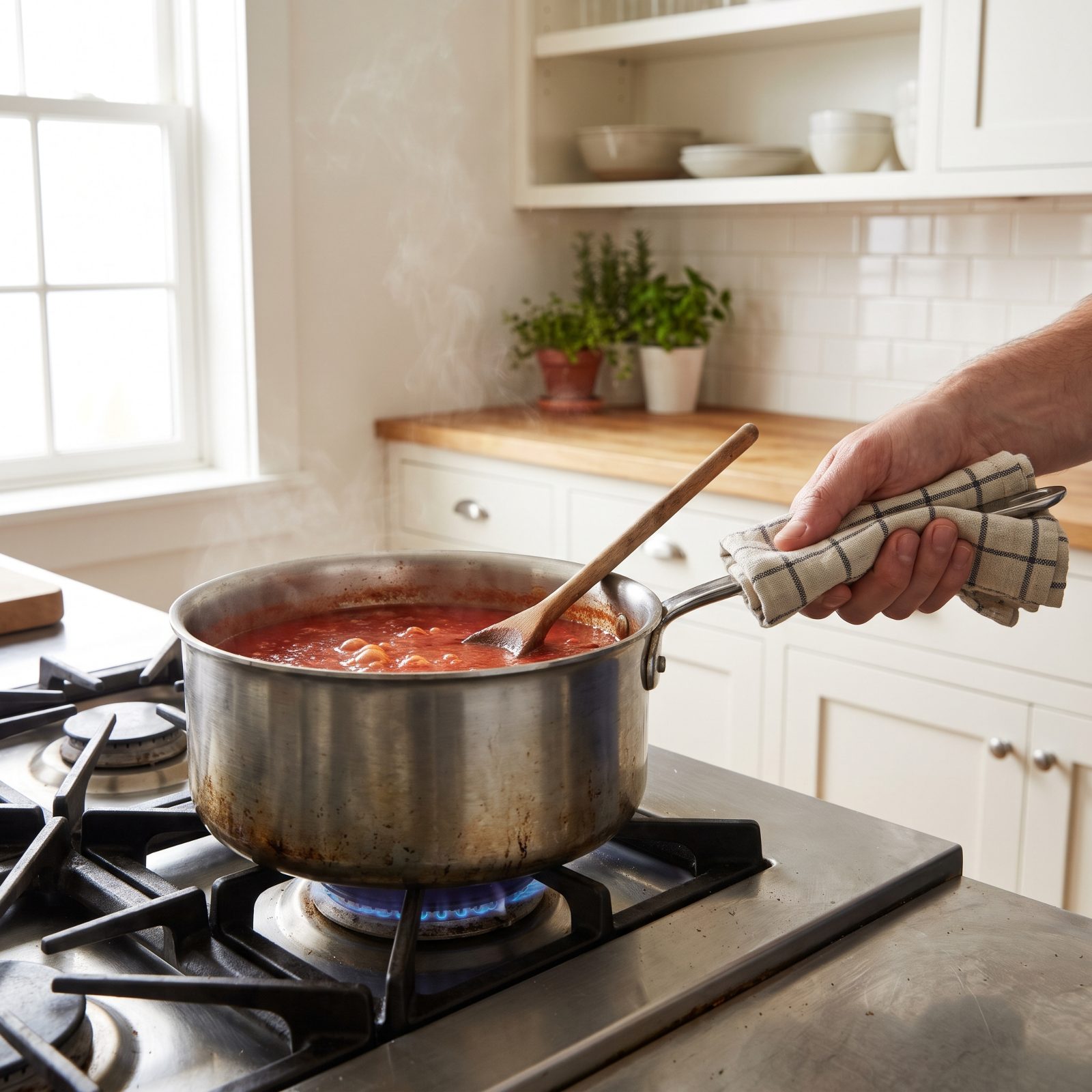
Every kitchen needs one good saucepan, and this is it. A saucepan with a thick, clad bottom spreads heat evenly instead of dumping it all into one scorching spot, which is the whole difference between a béchamel that comes together smooth and one that catches and tastes faintly of burnt milk. Thin pans have hot spots. Hot spots ruin sauces.
The heavy base holds a bare simmer without babysitting, and the straight-ish sides make whisking painless. Risotto, custard, caramel, reductions, melting chocolate, blanching a handful of beans — one pan, all of it. Plenty of cooks spend years burning rice in a cheap aluminum pot before realizing the fix is weight, not skill.
17. A Tall Stockpot for Broth, Pasta and Batch Cooking
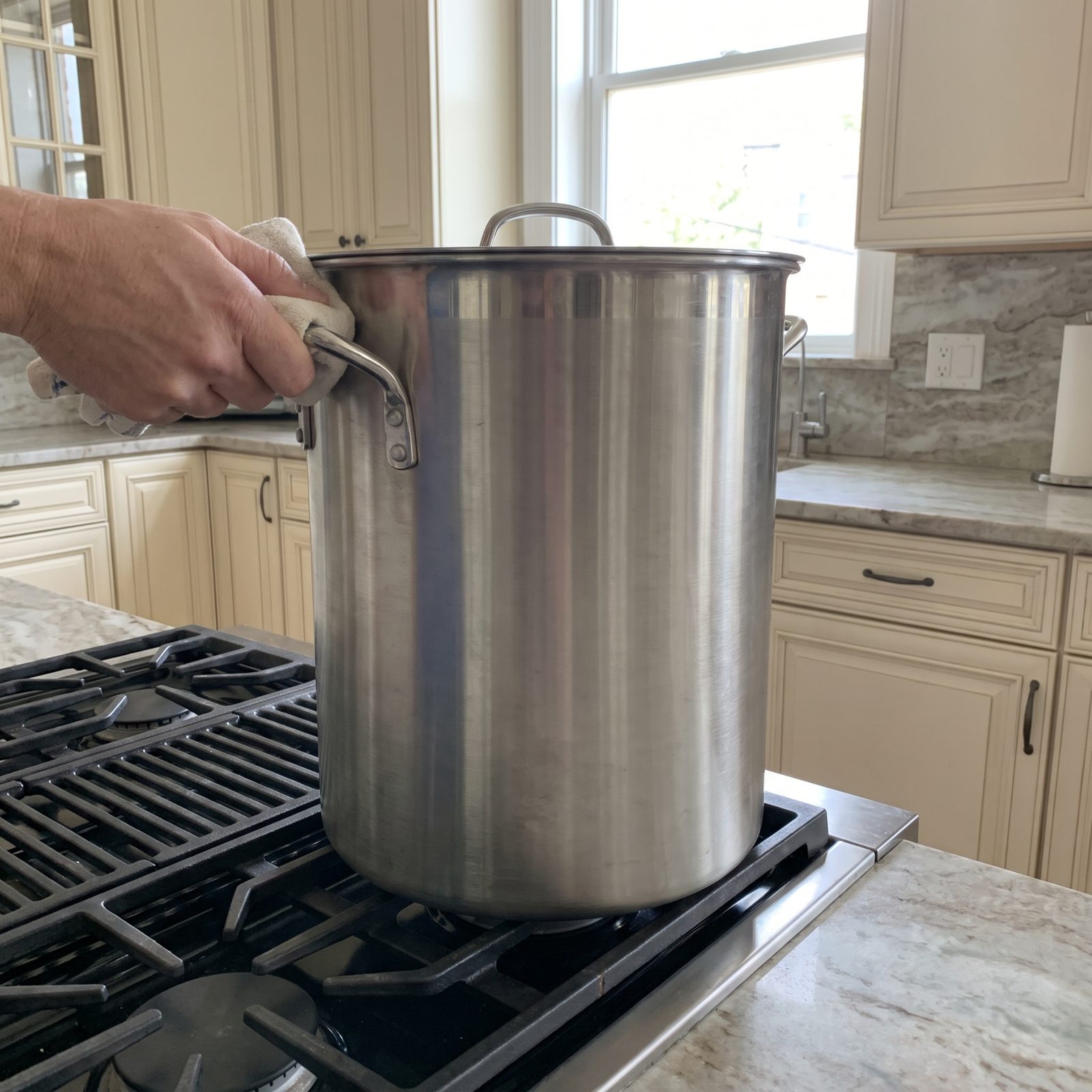
You can’t boil a pound of pasta properly in a crowded pot. The water temperature crashes the second the noodles go in, they clump, and you get a gummy mess no amount of good sauce can save. A tall stockpot gives pasta room to move and enough volume to recover its boil fast.
And it’s not just pasta. Stock that simmers for hours, a big pot of beans, blanching tomatoes for sauce by the bushel, canning, a Sunday gravy that feeds twelve — the tall profile means less surface evaporation, so your stock stays put instead of cooking down to nothing while your back is turned. Buy the eight-quart at minimum. You’ll grow into it.
16. Stainless-Steel Hotel Pans for Prep, Storage and Serving
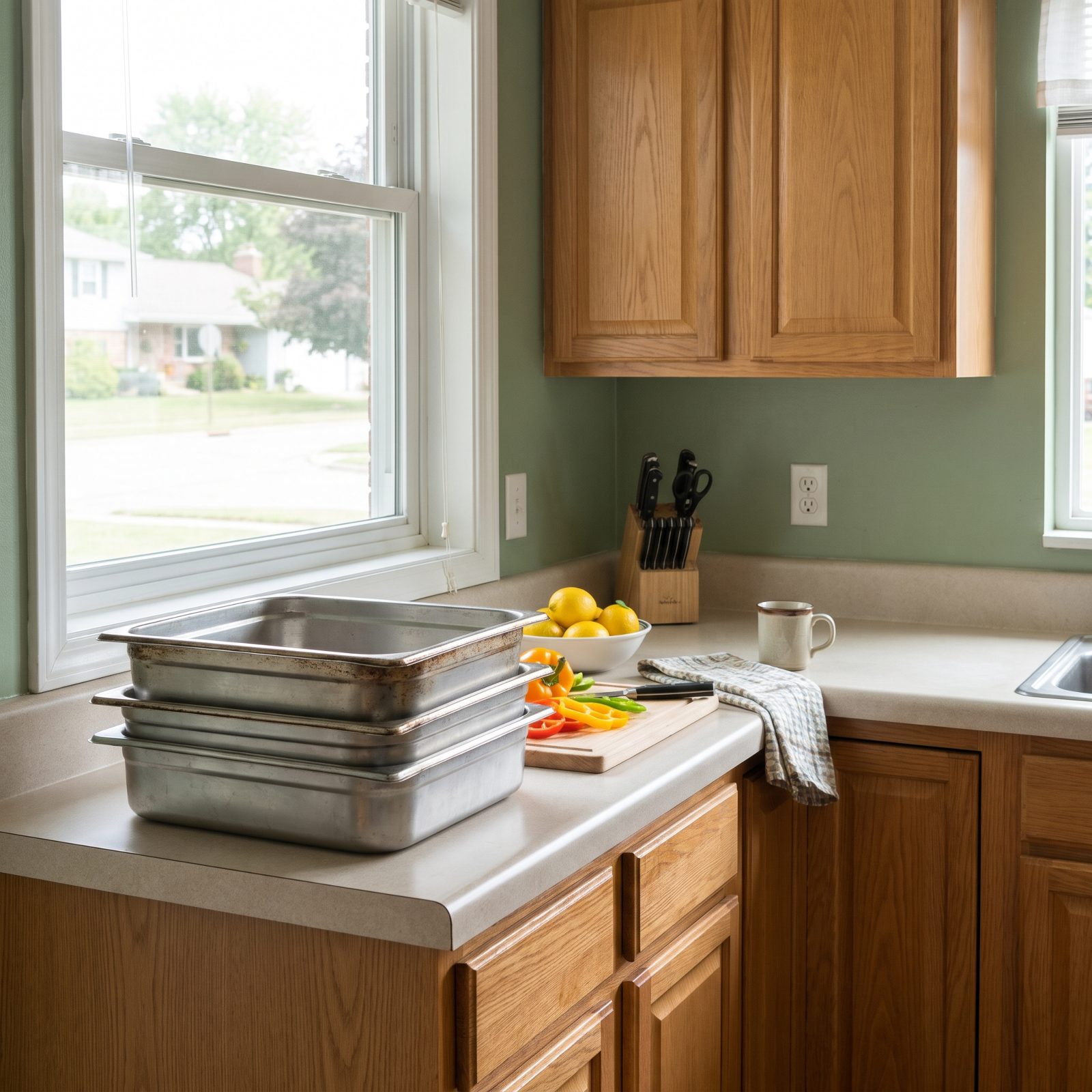
Walk any kitchen worth eating at and you’ll see these rectangular steel pans everywhere, holding prepped onions, sitting over hot water on a steam table, stacked clean in the rack. They come in standardized sizes that fit together like a system. That’s the whole genius of them.
Prep into one, slide it in the fridge, pull it out, serve from it, run it through the dishwasher, repeat. They don’t stain, don’t hold onion smell, don’t crack when you drop them. One full-size pan and a couple of thirds will reorganize how you cook at home.
15. Clear Deli Containers with Interchangeable Lids
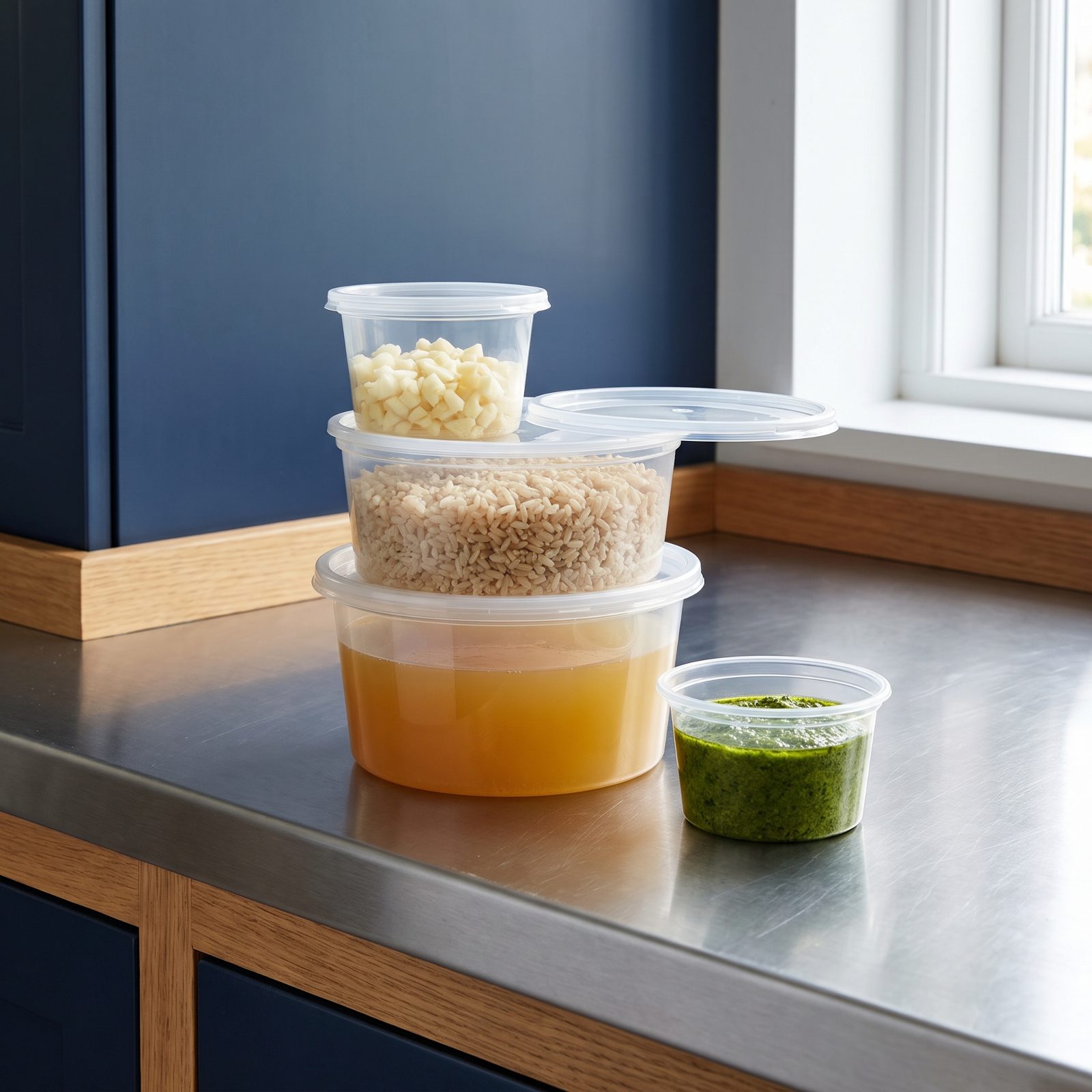
The quiet workhorse of every kitchen. Cheap, stackable, and clear so you can see what’s inside without peeling back a lid and sniffing suspiciously at week-old leftovers. Best part? The lids are interchangeable across sizes, so you’re never hunting for the one that fits.
They freeze, they stack, they survive the dishwasher a dozen rounds before you recycle them for pennies. We buy a sleeve of pints and quarts and never think about food storage again. Mismatched containers with warped lids are a small daily misery you can simply stop having.
14. Restaurant-Style Squeeze Bottles for Oils and Sauces
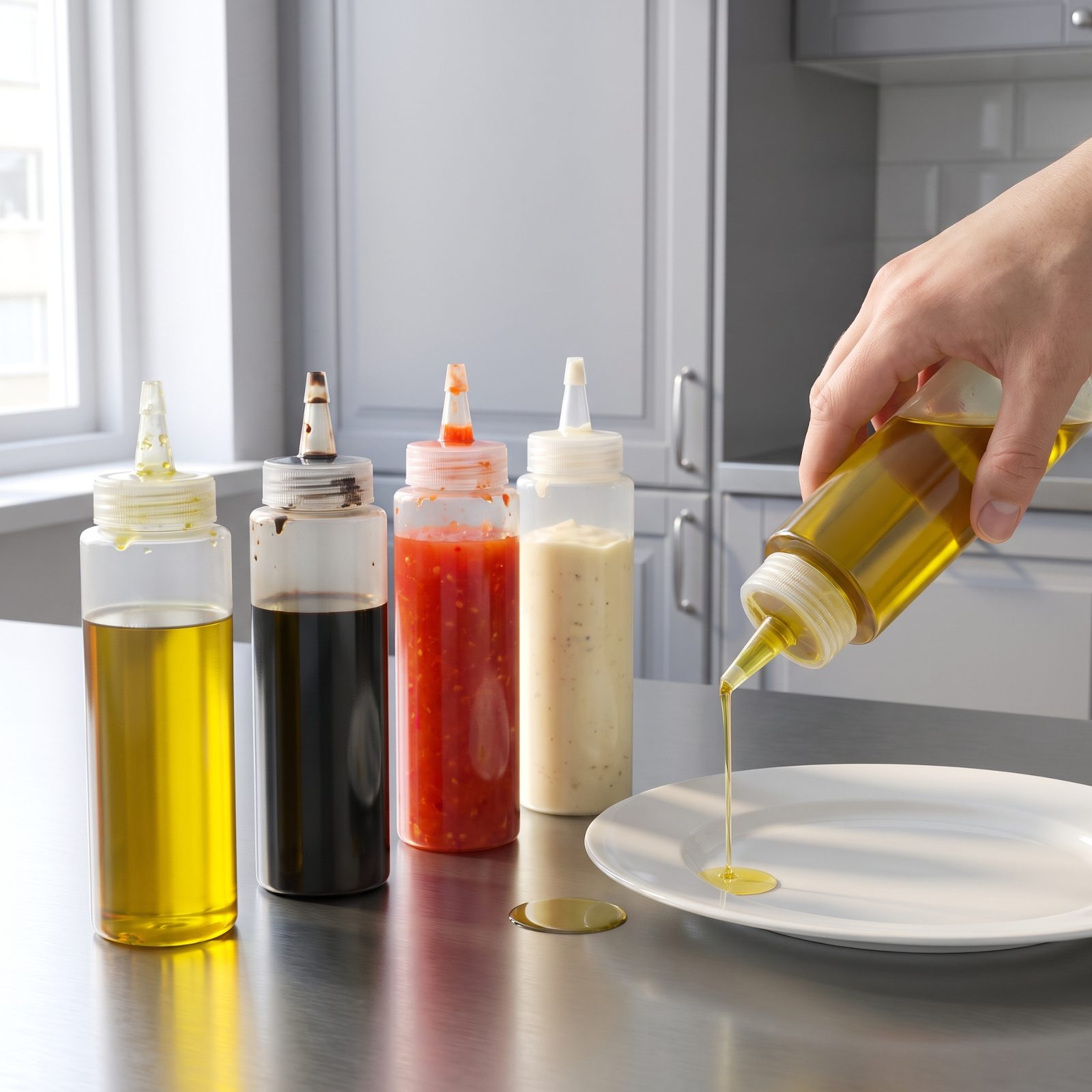
Precision in a dollar bottle. A squeeze bottle gives you a controlled line of oil across a salad, a measured dot of sriracha, a clean drizzle of dressing that doesn’t flood the plate. Try that pouring straight from a glug-prone olive oil bottle and you’ll overshoot every single time.
Fill them with oils, vinaigrettes, pancake batter, sauces, even thinned honey. The narrow tip meters the flow so you use less and plate neater. Keep one by the stove with your everyday cooking oil and you’ll never knock over the big jug again.
13. A Commercial-Style Immersion Blender for Blending in the Pot
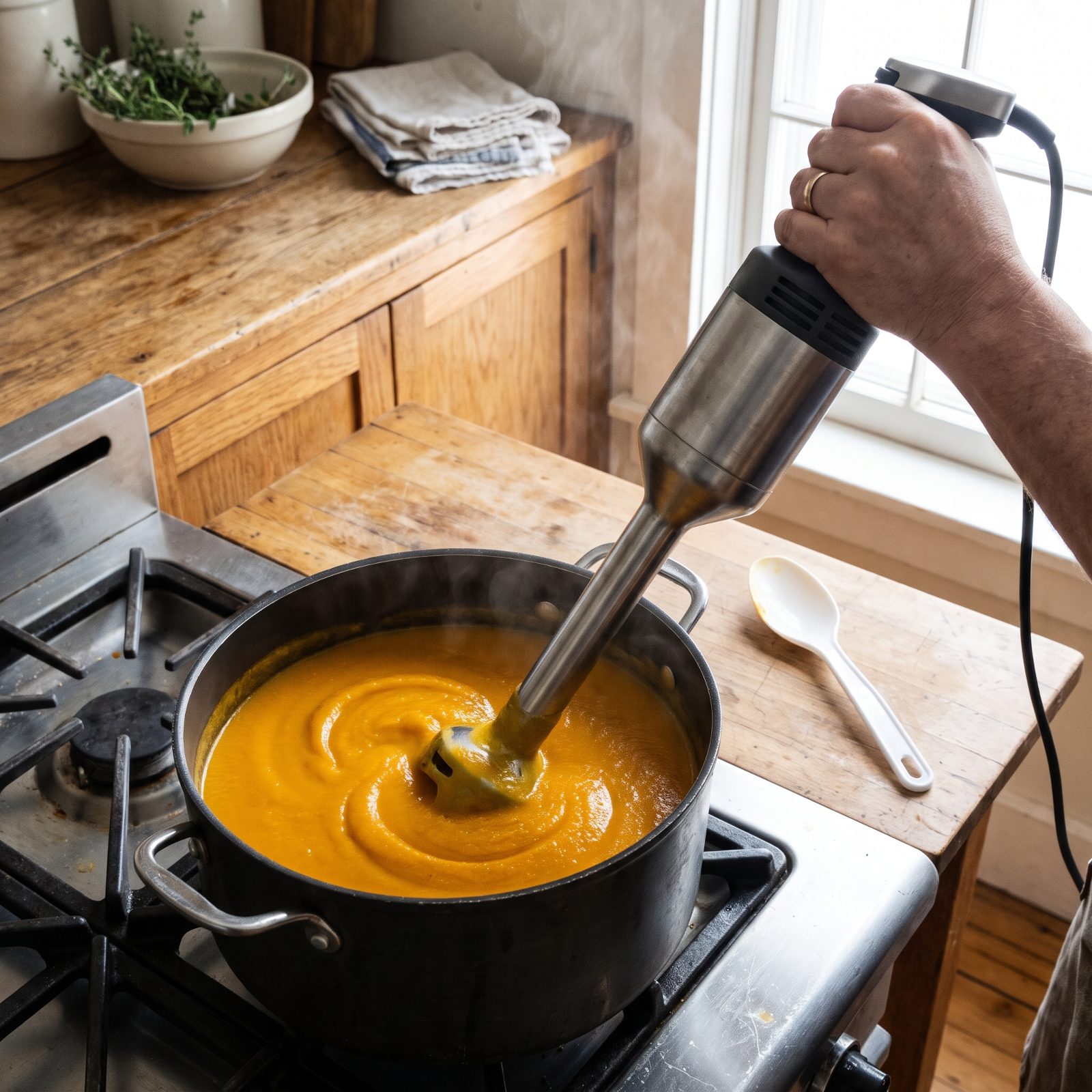
Pouring hot soup into a countertop blender in batches is how people end up with squash on the ceiling. An immersion blender goes straight into the pot — no transferring, no burns, no second container to wash. You blend right where the food already is.
Purée soups smooth, emulsify a quick mayonnaise, blend sauces, whip up a vinaigrette, knock down lumps in a batter. Spring for a metal-shaft model over a flimsy plastic one. The cheap ones burn out their motors the first time you make a big batch of anything thick.
12. A High-Powered Countertop Blender for Silky Purées
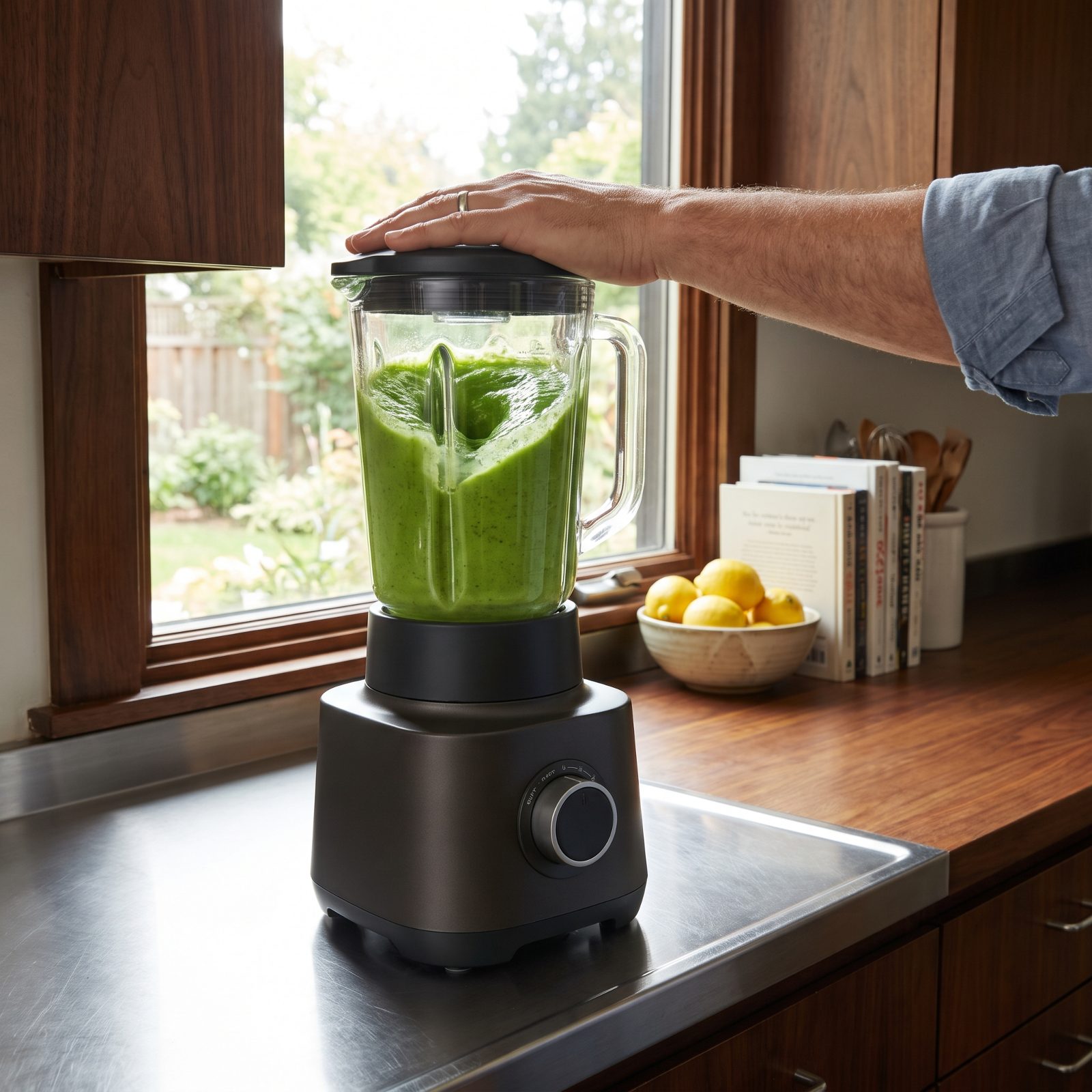
There’s a texture a cheap blender simply cannot reach. That glass-smooth, strain-free purée for a bisque comes from real motor power and a jar shaped to pull everything back down through the blades. A weak blender leaves grit and fibers behind no matter how long you run it.
Silky soups, nut butters, pesto, frozen drinks, batters, even grinding grains if you ever get ambitious. One serious machine replaces a smoothie maker, a food chopper, and three gadgets that would otherwise clutter the counter.
The question isn’t whether a blender purées. It’s whether it purées so smoothly you skip the strainer.
11. A Full-Size Food Processor for Fast, Even Prep
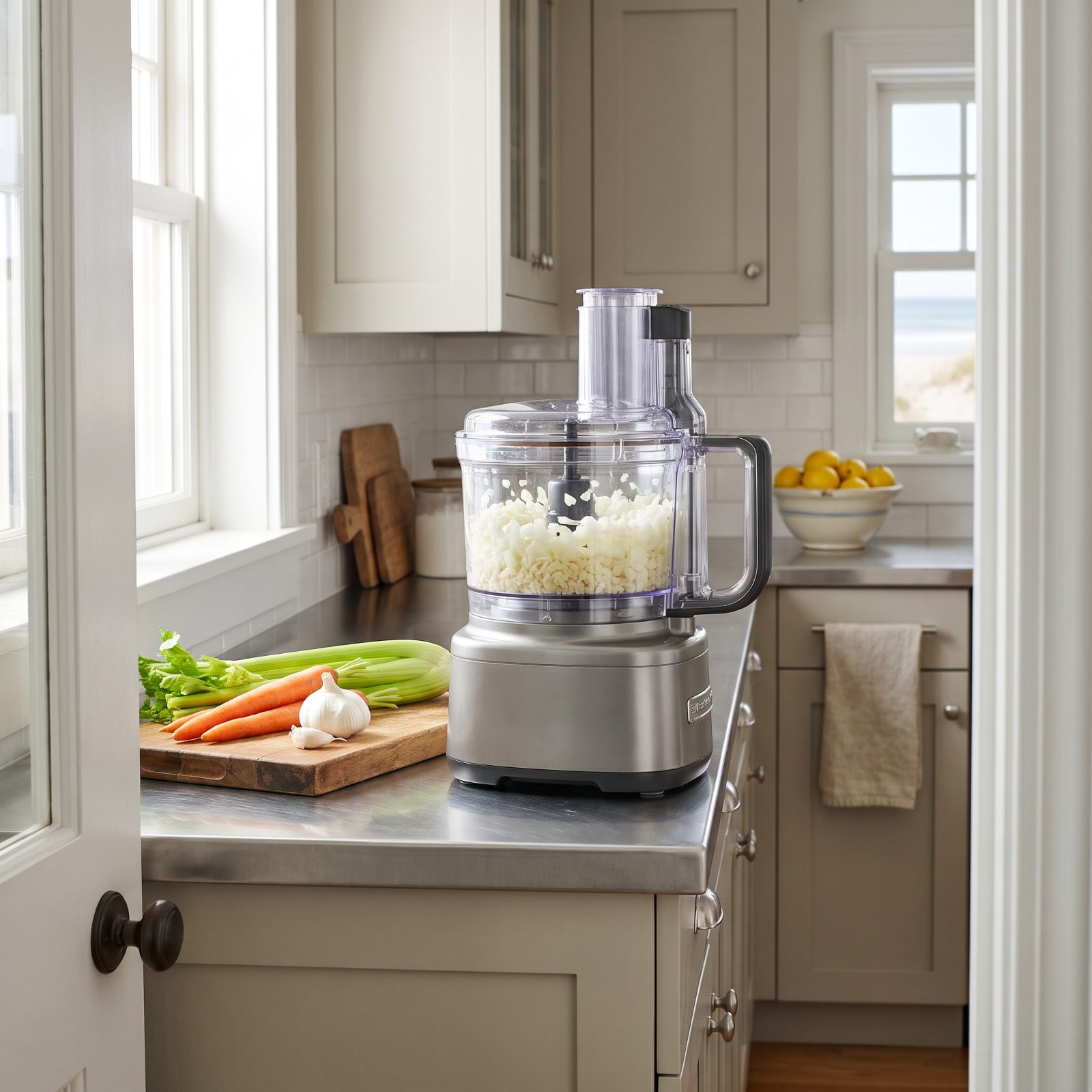
When a recipe opens with a mountain of onions, celery and carrot for a soffritto, the food processor turns long minutes of knife work into a quick blur. Even, consistent, no crying. The pros use it not because they can’t chop, but because volume cooking rewards speed.
Beyond prep it makes pie dough, pesto, breadcrumbs, hummus, nut butters, and shreds a block of cheese in the time it takes to find your box grater. Get the full-size bowl. The mini choppers are adorable and useless for anything past half an onion.
10. A Stand Mixer for Doughs, Batters and Whipped Mixtures
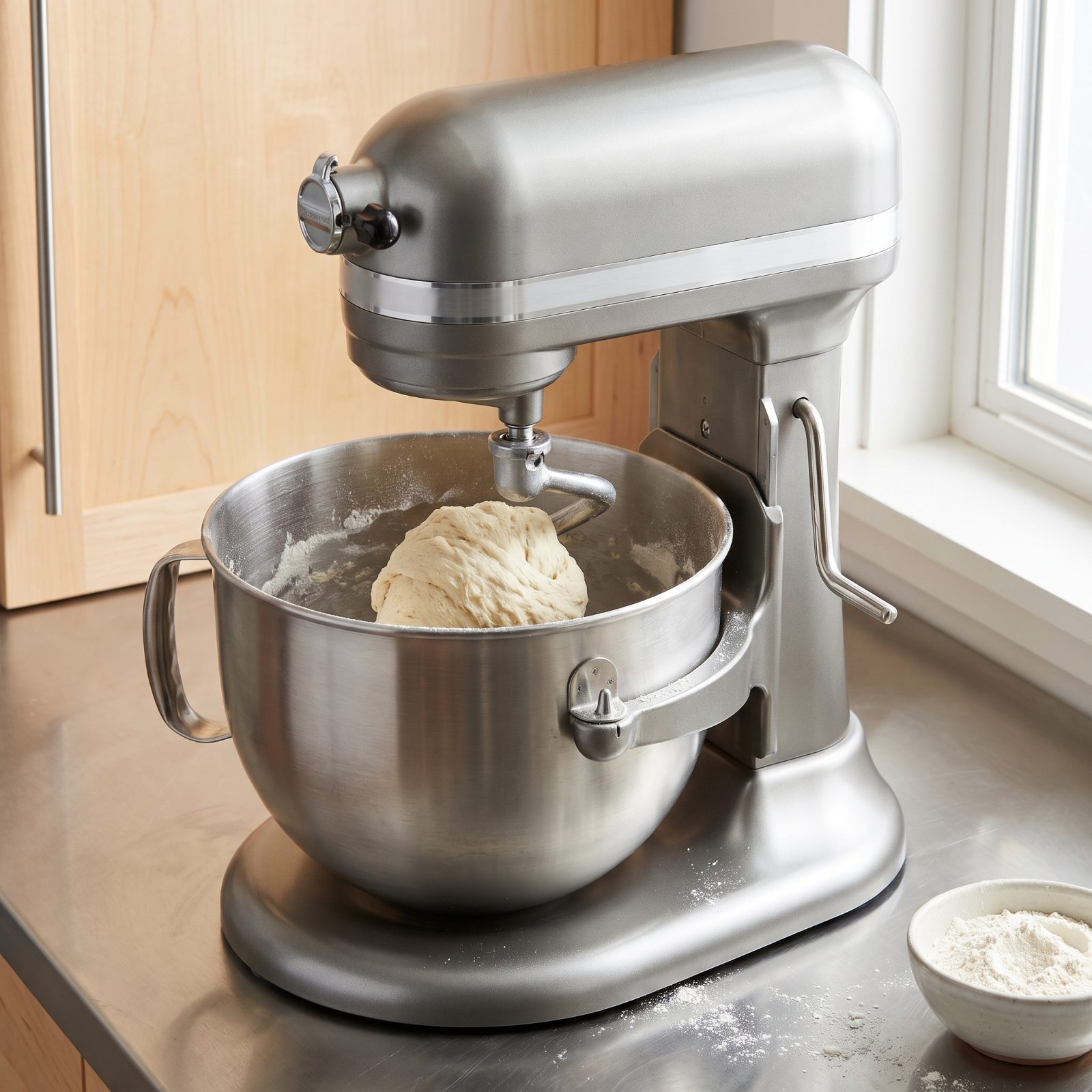
Kneading pizza dough by hand builds character and a sore shoulder. A stand mixer with a dough hook does it while you measure the next thing, developing gluten evenly for that stretchy, bubbly crust without the forearm workout. For a double batch of bread, it’s the difference between baking and giving up.
Swap the hook for the whisk and it whips cream and meringue to stiff peaks hands-free. Swap for the paddle and it creams butter and sugar for cakes in a minute. The attachment ports turn it into a pasta roller, a grinder, a shredder. One motor, a dozen machines.
9. A Hand-Cranked Food Mill for Smooth Purées Without Tough Skins
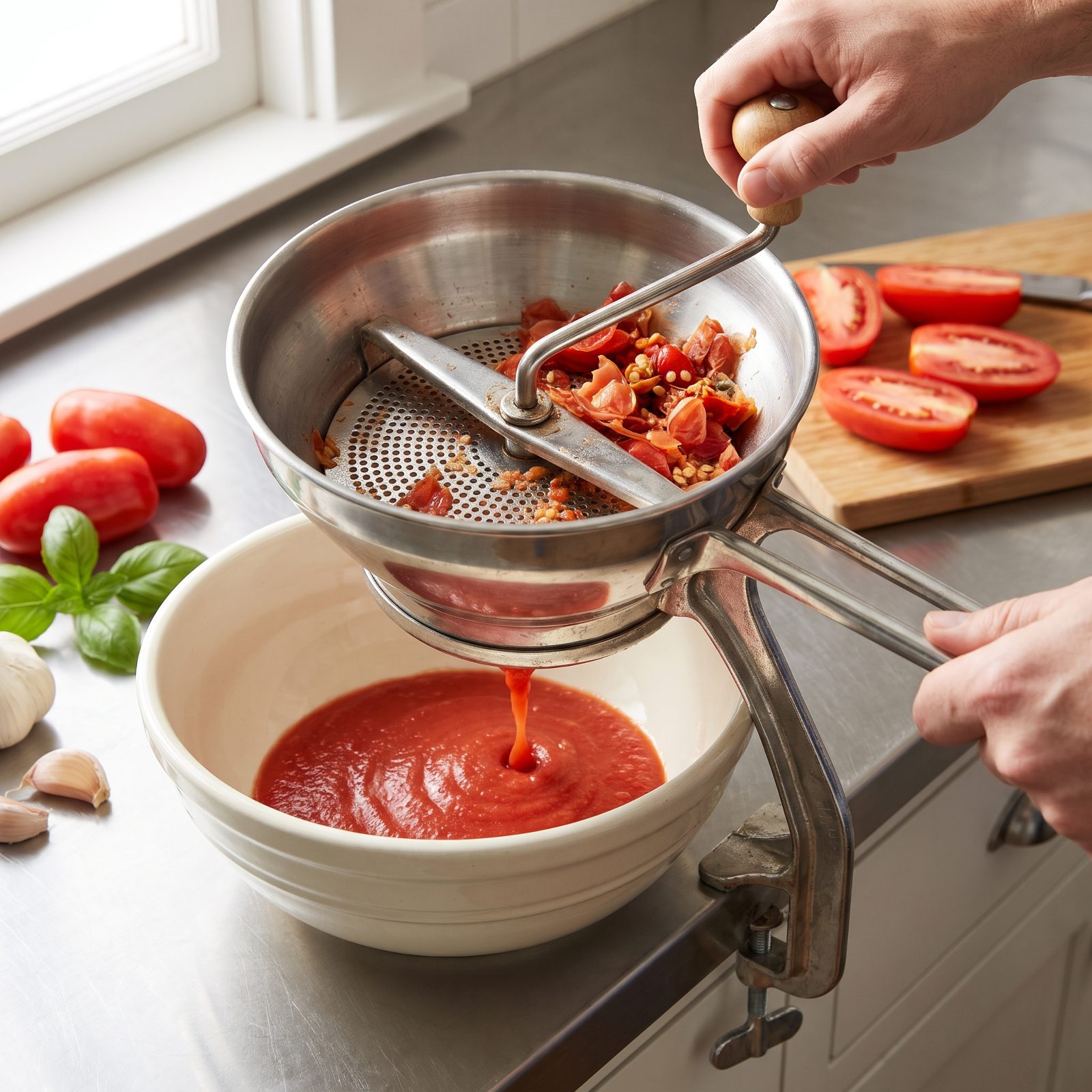
The sauce that tastes homemade and the sauce that tastes like a jar usually come down to one thing: skins. Blend tomatoes in a machine and you pulverize the skins and seeds right into the pot, which is where that faint bitterness and grainy texture comes from. A food mill does the opposite. It pushes the soft pulp through a fine wire-mesh basket and leaves the skins behind on the plate.
Crank cooked tomatoes through the mesh basket and you get velvet, no peeling required. Same trick works for applesauce, split pea soup, raspberry seeds, roasted squash. No blade to dull, no motor to burn out, and it comes apart into three pieces you can rinse in ten seconds.
8. A Potato Ricer for Fluffy Potatoes and Tender Gnocchi
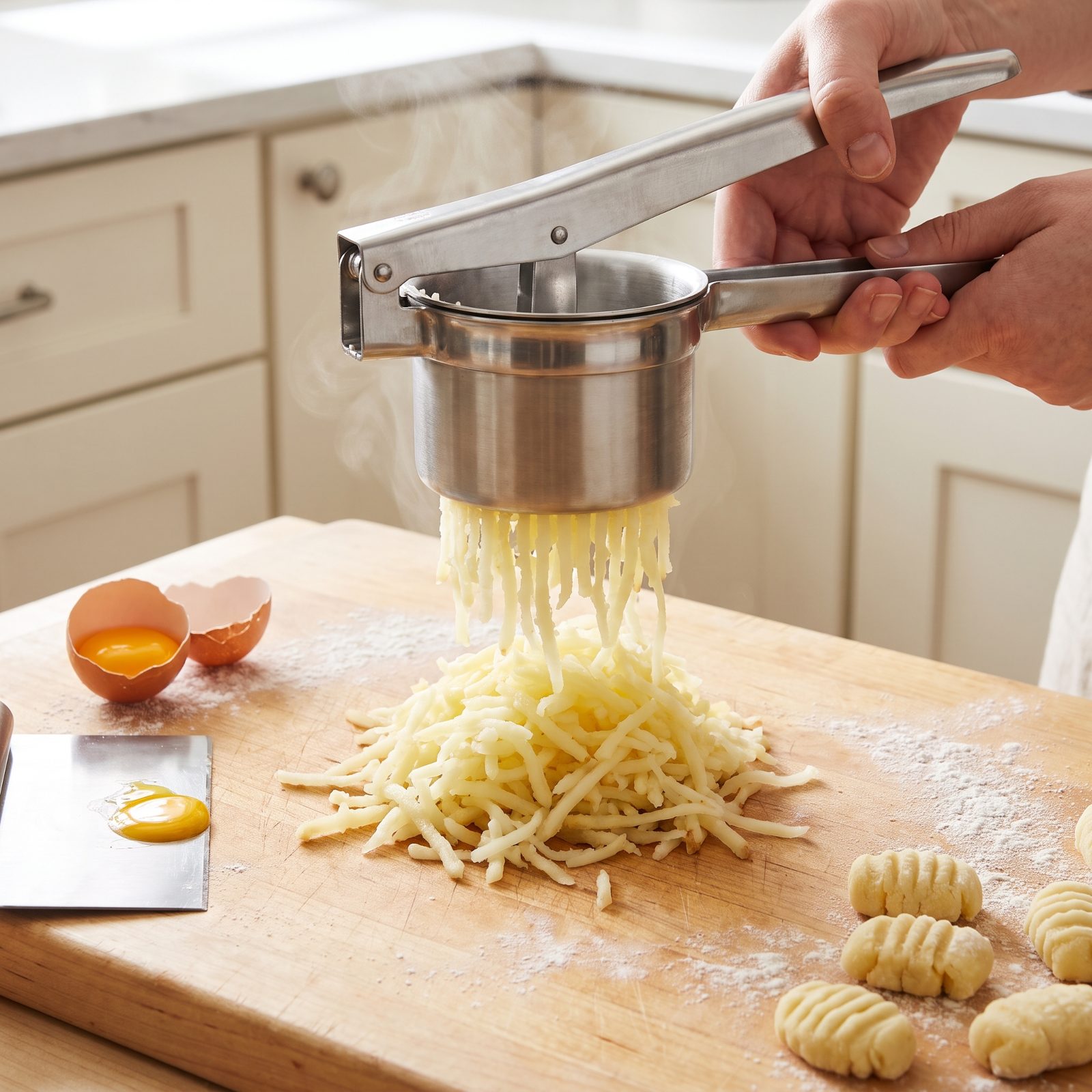
Gluey gnocchi can’t be saved. And a potato masher, bless it, is a glue factory — every mash and smear breaks the starch cells and releases the sticky paste that turns dumplings into cement and mashed potatoes into wallpaper glue.
A ricer solves this by force, not friction. It pushes hot potato through tiny holes in a single pass, keeping the cells mostly intact, and what falls out is dry, light, and separated — exactly the texture gnocchi dough needs so it can take flour without turning leaden. For mashed potatoes it means you can fold in butter and cream and never beat the mix tough. Get the model with interchangeable discs if you can. One good squeeze and you’re done.
7. A Flat-Sided Meat Mallet for Even Cutlets
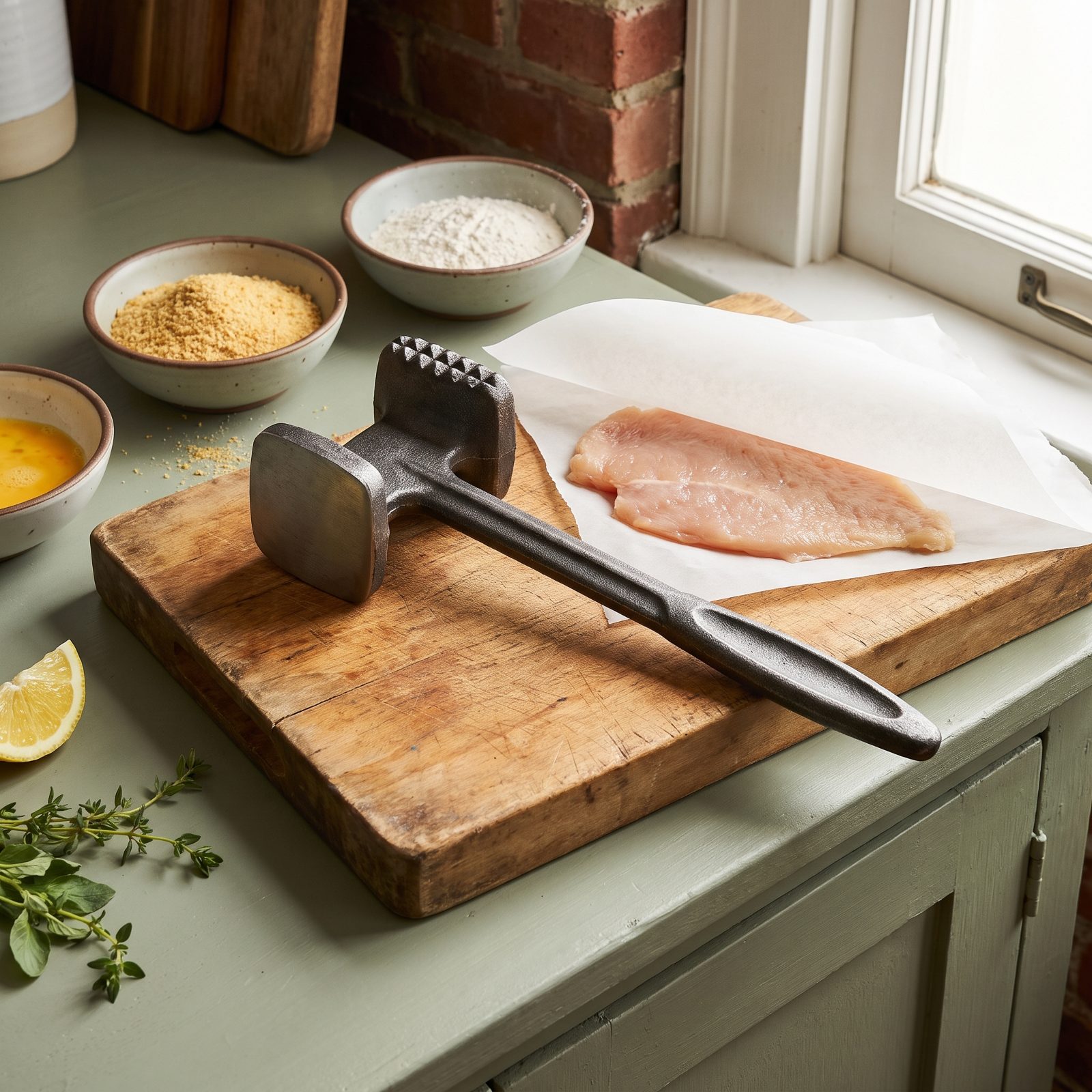
Thin veal Milanese and chicken cutlets that cook in two minutes flat start with one tool, and it isn’t the spiky side of the mallet you keep reaching for. Those teeth shred the meat and tear holes that leak juice all over the pan. For cutlets you want the flat face.
A flat, heavy head flattens by pressure, spreading the meat to even thickness without ripping the fibers apart. Even thickness means even cooking, which is the whole ballgame with a cutlet. No raw middle, no leathery edges.
6. A Hinged Citrus Press for Fast, Seed-Free Juice
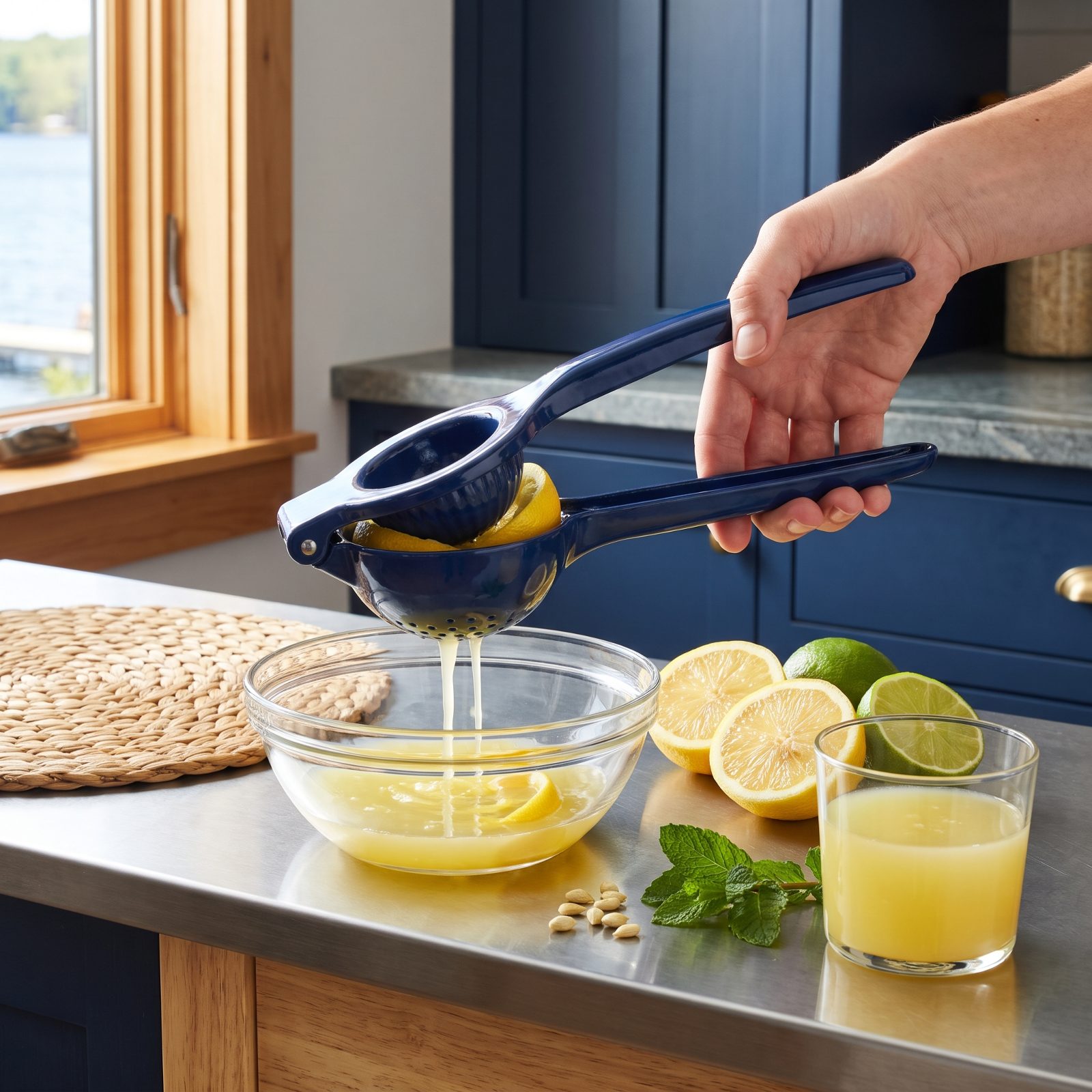
A fork stabbed into a lemon half gets you half the juice and three seeds in your dressing. A hinged press turns the fruit inside out and squeezes every drop through small holes that strain the pulp and catch the seeds on the way down.
Here’s the part most people miss. Put the cut side down, facing the holes. The peel flips inward as you press, and that turned-out skin pushes out more juice than any barrel juicer manages. Faster, one piece of metal, stores in a drawer.
5. A Heavy-Duty Manual Can Opener That Is Easy to Clean
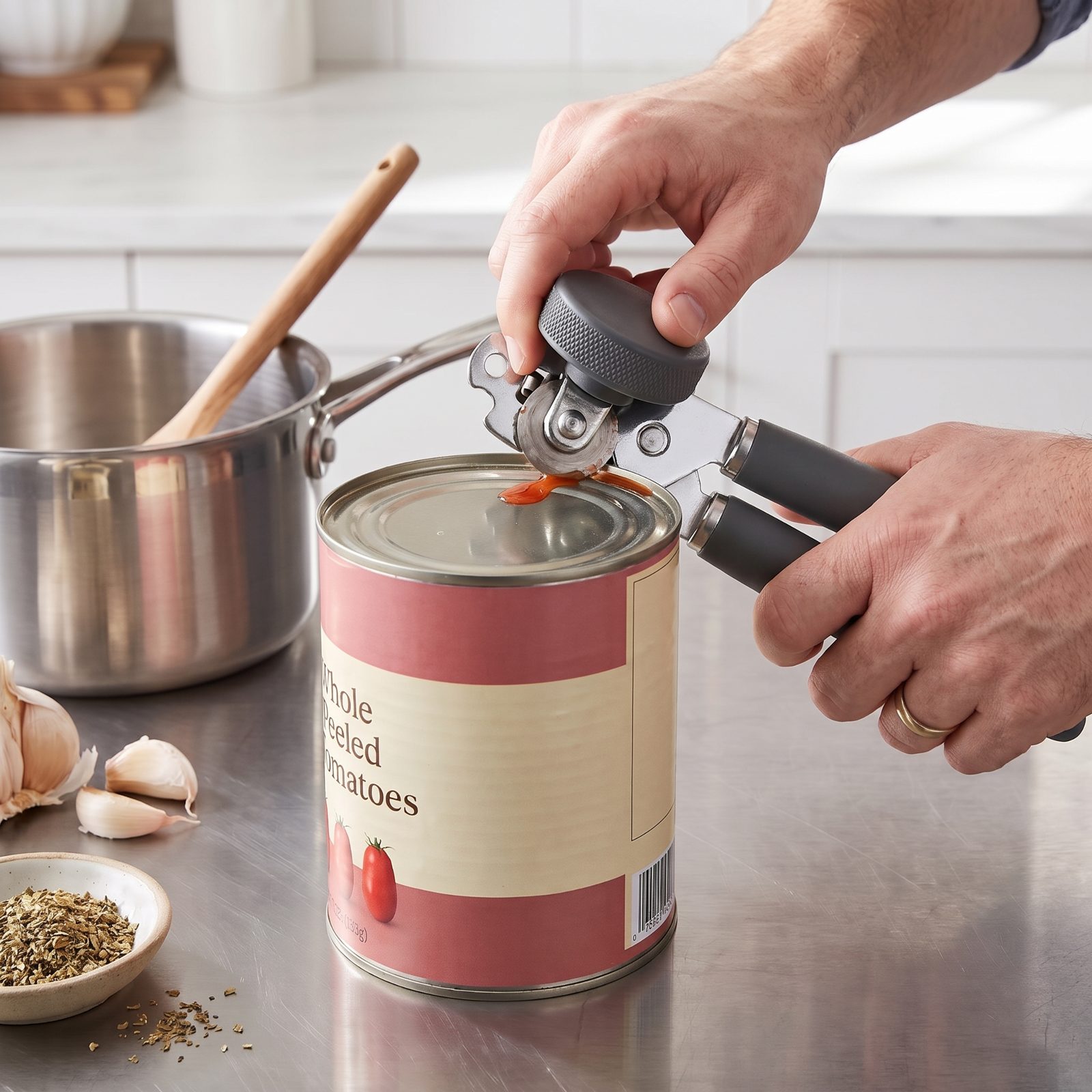
Nobody thinks about the can opener until it slips halfway around a can of San Marzanos and leaves a jagged half-attached lid floating in the tomatoes. The flimsy ones do this constantly. The gears gum up with dried sauce, the handle loses its grip, and before long you’re buying another.
A heavy manual opener with a smooth cranking knob and a cutting wheel that comes apart for cleaning lasts decades. No batteries, no counter space, no motor whining. And the kind that cuts along the side seam leaves no sharp edge at all, which matters more than you’d think the day you reach into a soapy sink.
4. A Spring-Loaded Portion Scoop for Consistent Servings
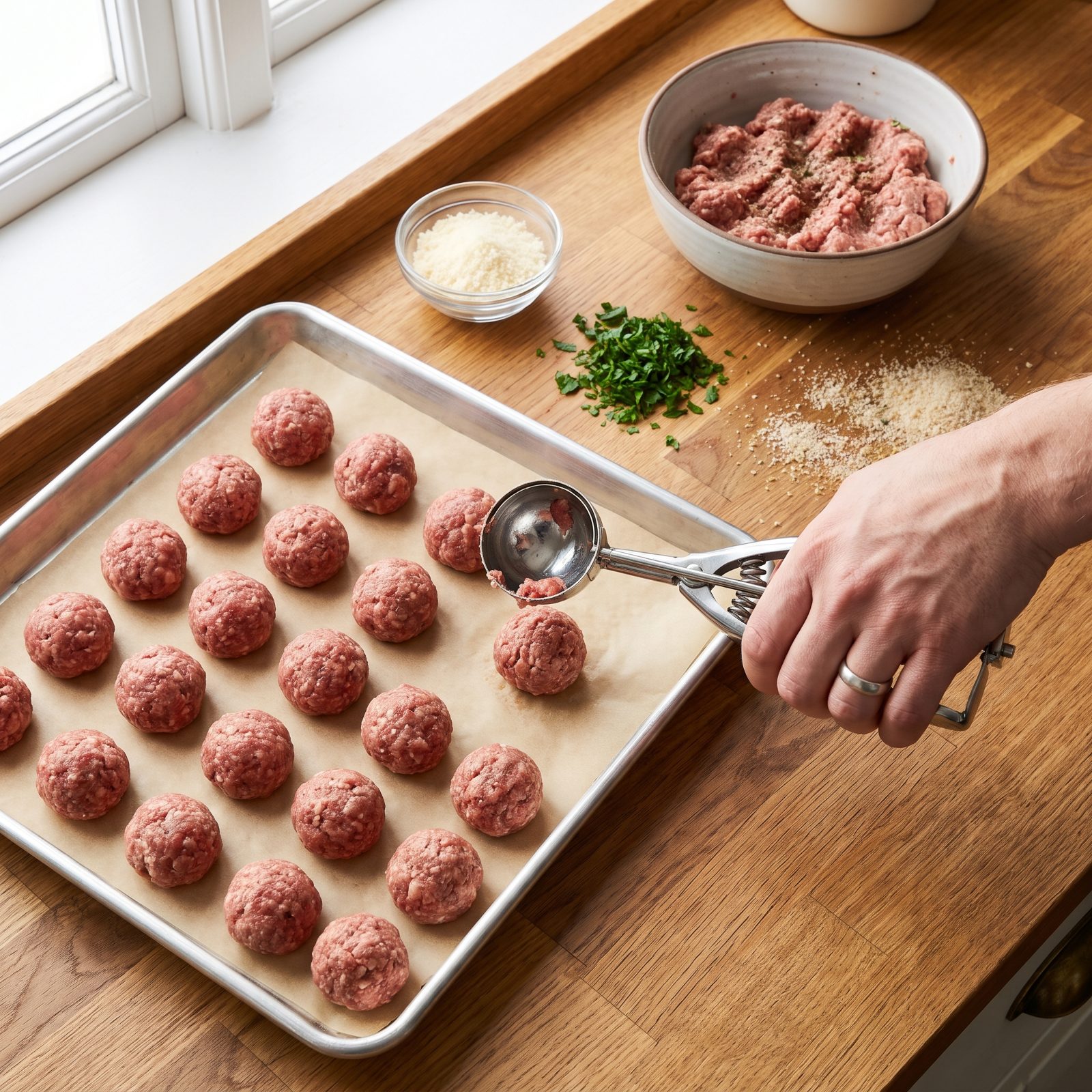
Meatballs that all finish at the same time came out of the same scoop. Size them by hand and the little ones dry out while the big ones stay raw in the middle, and there you are, standing over the pan picking them off one at a time.
A spring-loaded scoop portions identical balls in one squeeze. Meatballs, cookie dough, muffin batter, falafel, ricotta dollops for stuffed shells — same size, same cook time, every one. It’s the single cheapest way to make home food look like it came out of a real kitchen.
3. A Loud, Simple Kitchen Timer with Multiple Channels
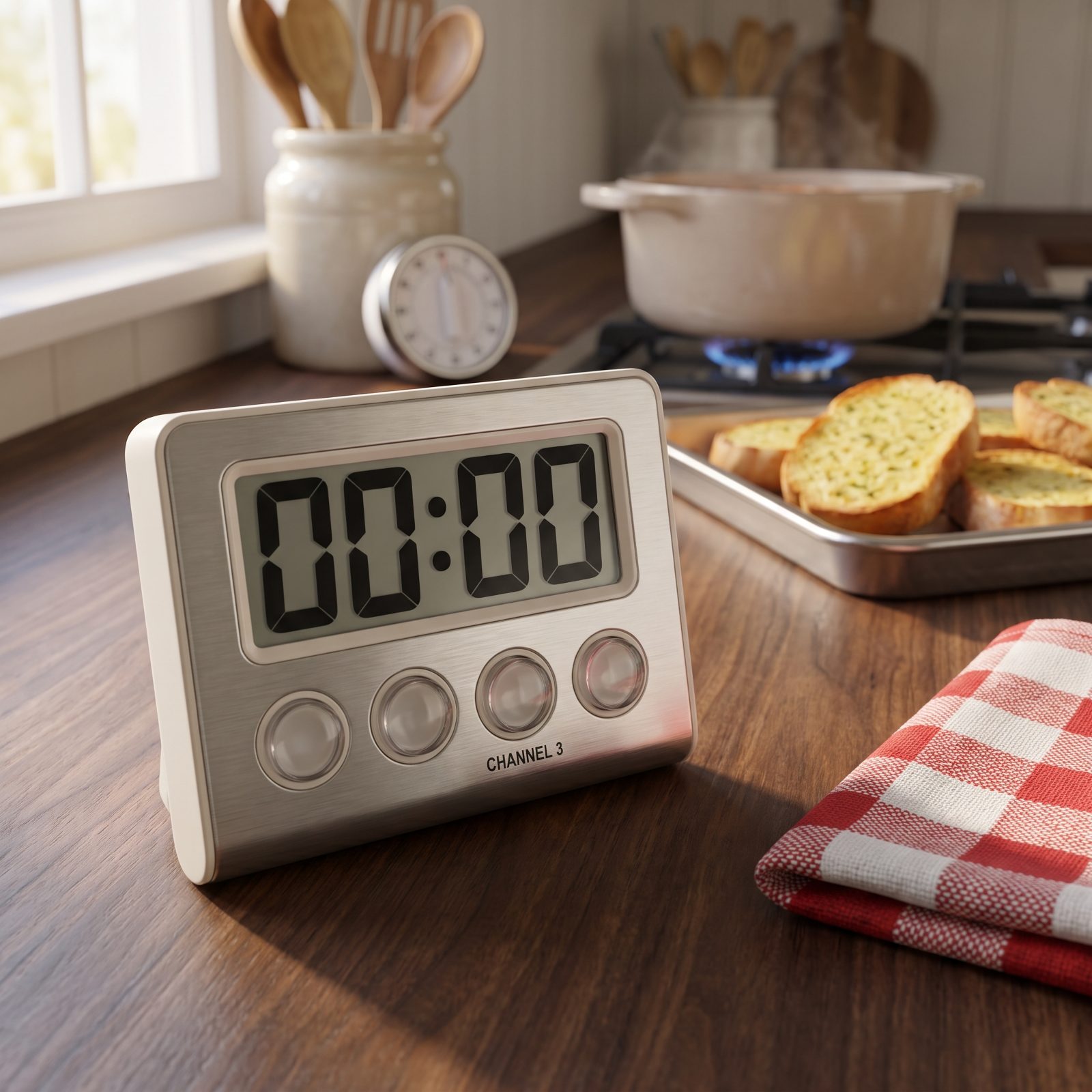
The phone is a terrible kitchen timer. It rings in the other room, you’ve got flour on your thumb so it won’t unlock, a text comes in and buries the alarm — and meanwhile the garlic bread goes from golden to charcoal.
A dedicated timer with three or four channels lets you run the pasta, the sauce reduction, and the bread at once, each on its own count, each with a beep loud enough to hear over an exhaust fan. No swiping, no unlocking, no notifications. It sticks to the hood with a magnet and it’s ready the second you need it.
The difference between a cook and someone cooking is usually just a timer they actually trust.
2. A Refillable Kitchen Torch for Browning and Blistering
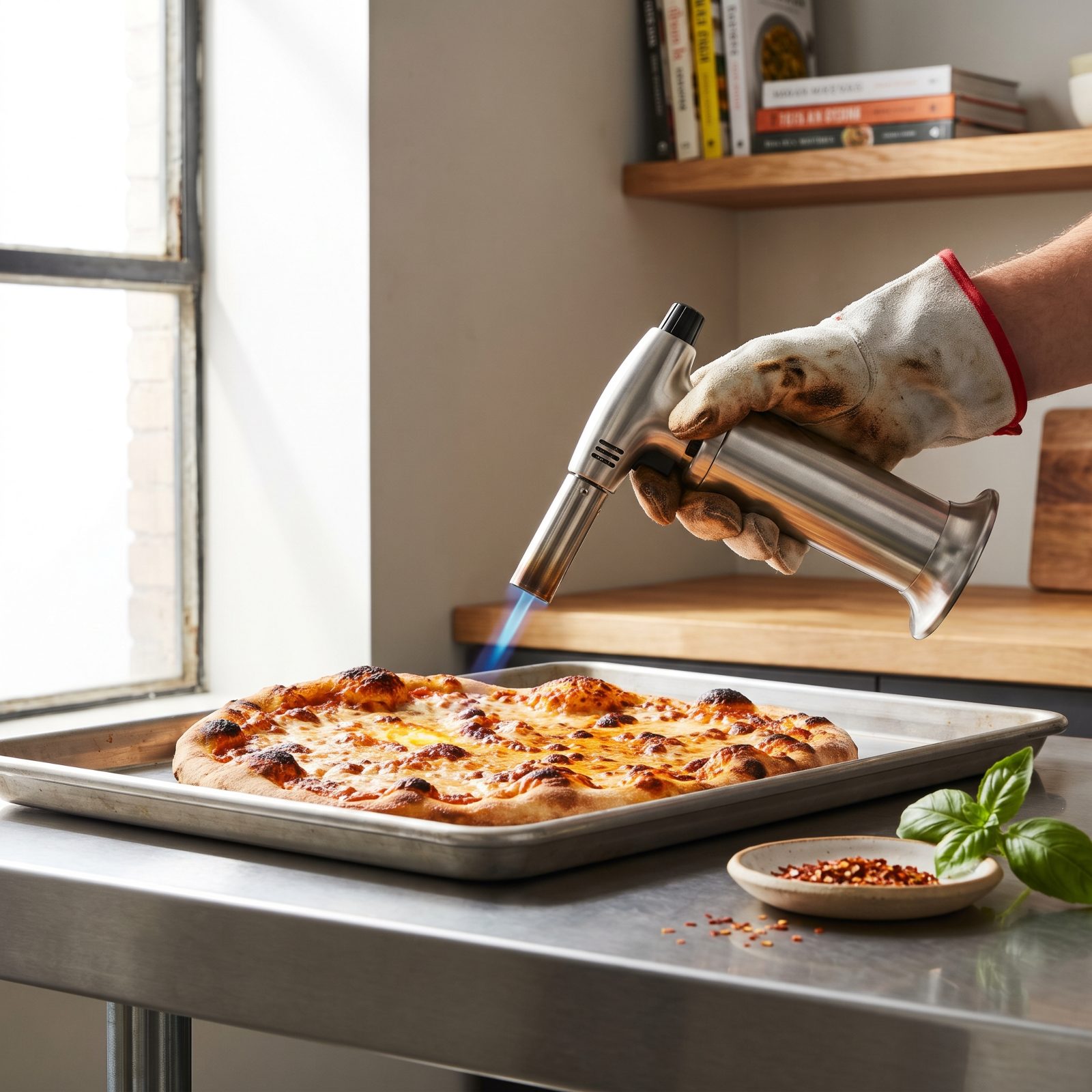
Your home oven cannot get hot enough to char a pizza the way a coal-fired oven does, and that leopard-spotted blistering on the cheese and crust edge is half of what makes the good ones good. A torch closes the gap.
A refillable butane torch with a decent flame gives you direct, controllable heat right where you want it. Blister the mozzarella, brown a ricotta top, crisp the edge of a focaccia, blacken a pepper skin so it peels clean. And the refillable kind beats those little crème-brûlée toys that run dry in a week and cost more over time than a tank of butane ever will.
1. A Stack of Absorbent Cotton Kitchen Towels for Gripping and Cleanup
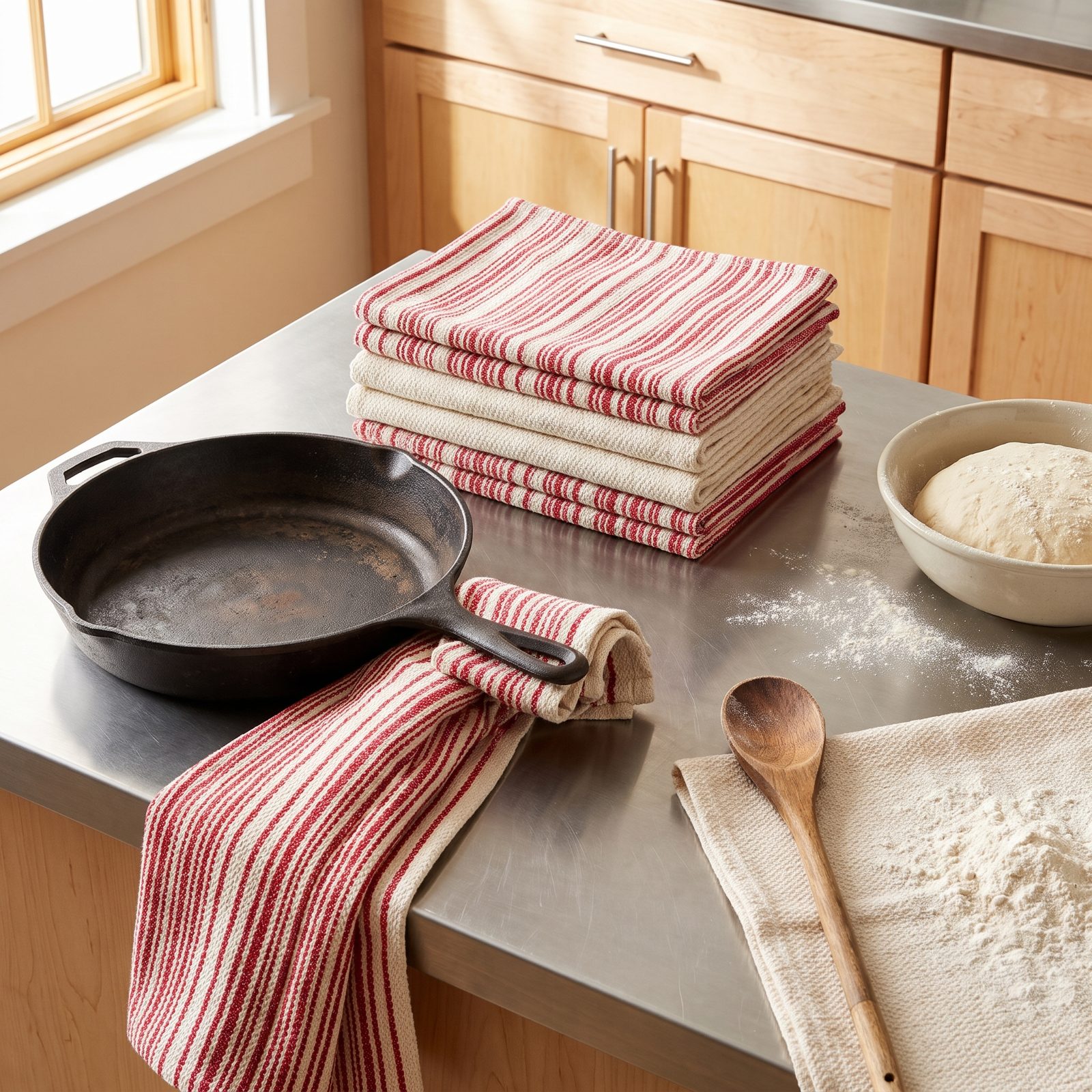
Watch anyone who actually cooks for a living and there’s always a towel over the shoulder or tucked into the apron string. Not paper. Real woven cotton — the flat waffle-weave or old flour-sack kind.
One tool does four jobs: grips a hot pan handle, wipes a spill before it spreads, dries a cutting board, steadies a bowl you’re whisking in. They absorb what paper can’t, they don’t shred into your sauce, and they survive the wash over and over. A stack of eight costs less than a month of paper towels and will outlast your oven.