
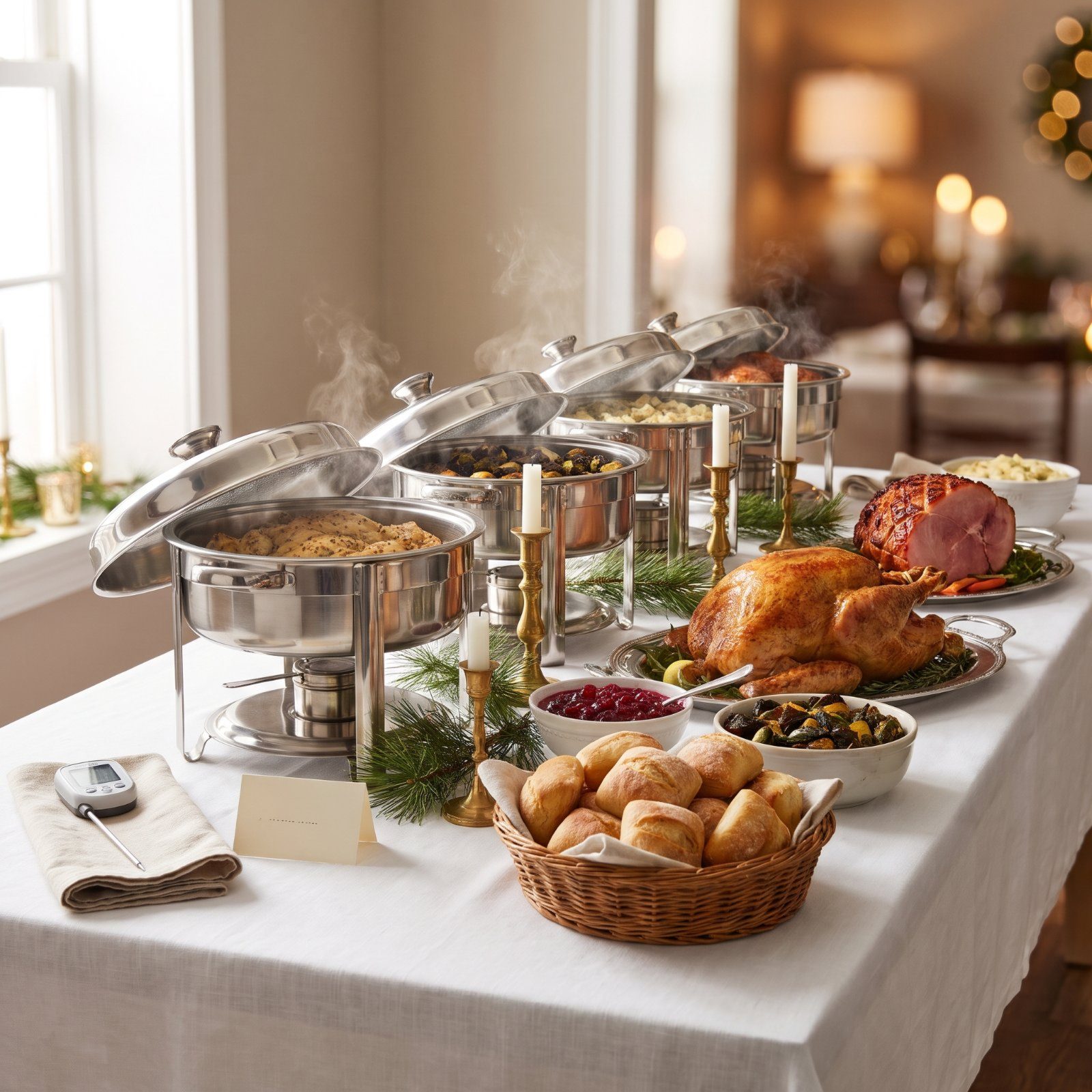
A holiday buffet looks like generosity itself — a long table, steam curling off the chafing dishes, platters that never seem to empty. But most of what makes that spread feel bottomless happens where you can’t see it. In the walk-in. On the stainless prep table. In a count the caterer locked in weeks before anyone put on their good coat. The people who do this for a living make a hundred small decisions about cost, timing, and safety, and almost none of them show up on your plate. So here’s what’s really going on behind the service line.
Please note that some of the images in this article were created with the assistance of AI.
42. No-Shows Don’t Make Quiet Underordering a Safe Bet
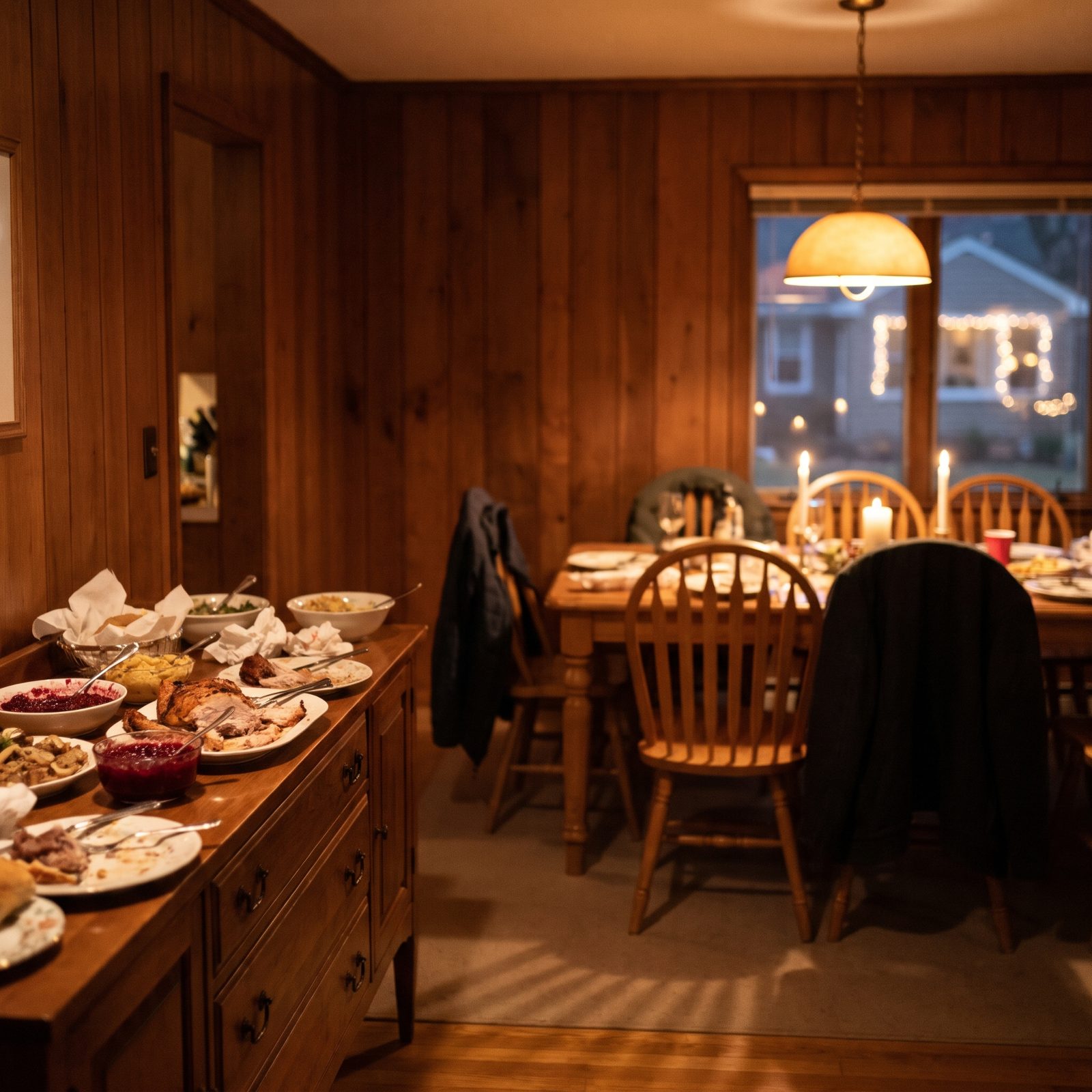
People assume a handful of no-shows means they over-ordered, so next year they trim the count to save money. This backfires almost every single time.
The guests who do show up don’t eat lighter because others stayed home. They eat more. A buffet runs out fast when the early crowd loads up and the shy latecomers find scraped pans staring back at them. An empty chafing dish at 7:30 does far more damage to the night than a little leftover ham ever could, and the memory of running short lingers long after the leftovers would have.
Order for the people you expect, not the ones you’re hoping won’t come.
41. Buffet Portions Assume Guests Will Mix Their Choices
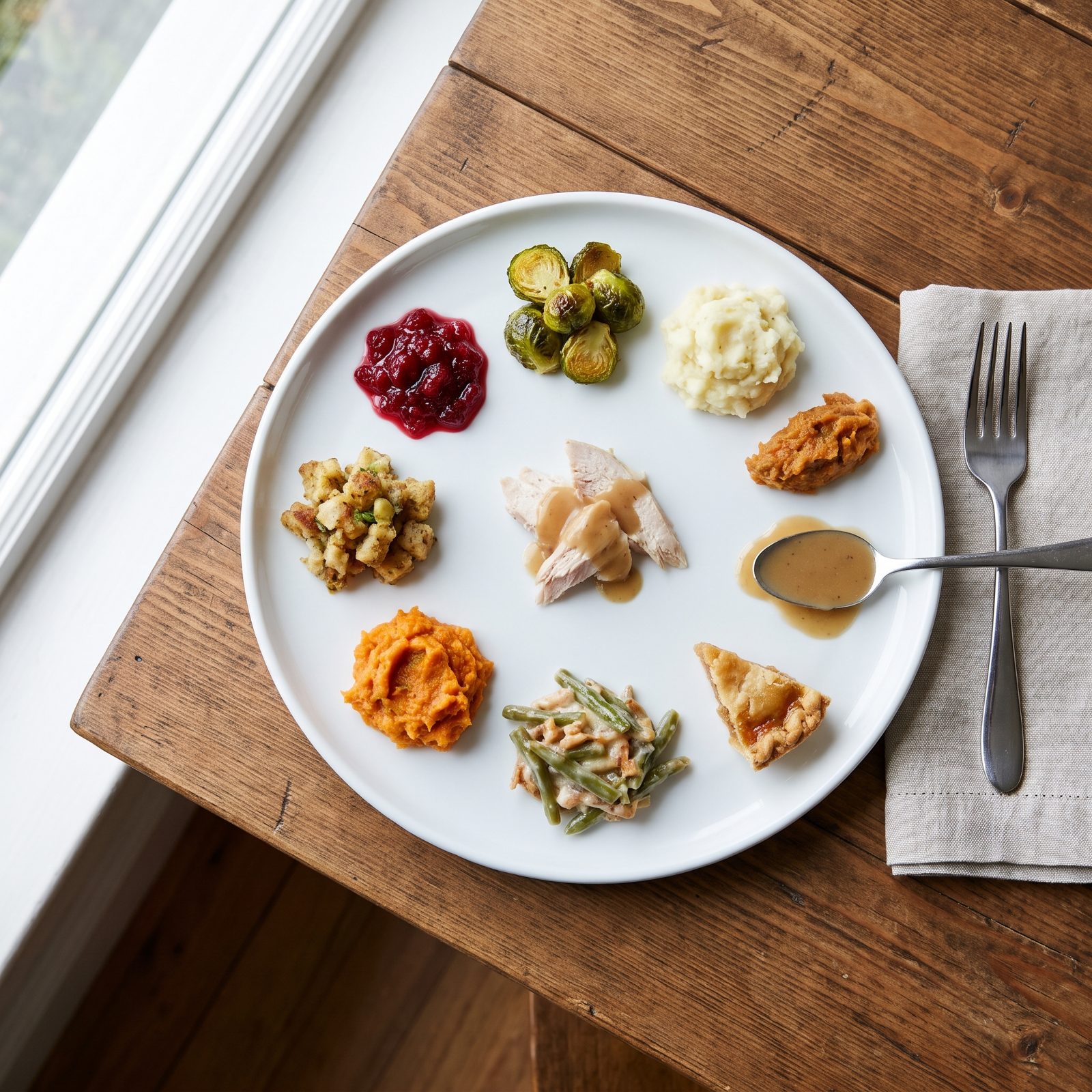
A caterer does not plan for every guest to eat a full serving of every dish. That’s the whole math behind a buffet. Offer five entrées and people take a little of three, skip the two they don’t fancy, and the totals even out.
Which is why a four-item spread for fifty doesn’t require fifty full portions of each item. It requires enough total food, spread across options, that nobody feels shorted.
40. The Most Familiar Entrée Usually Vanishes First
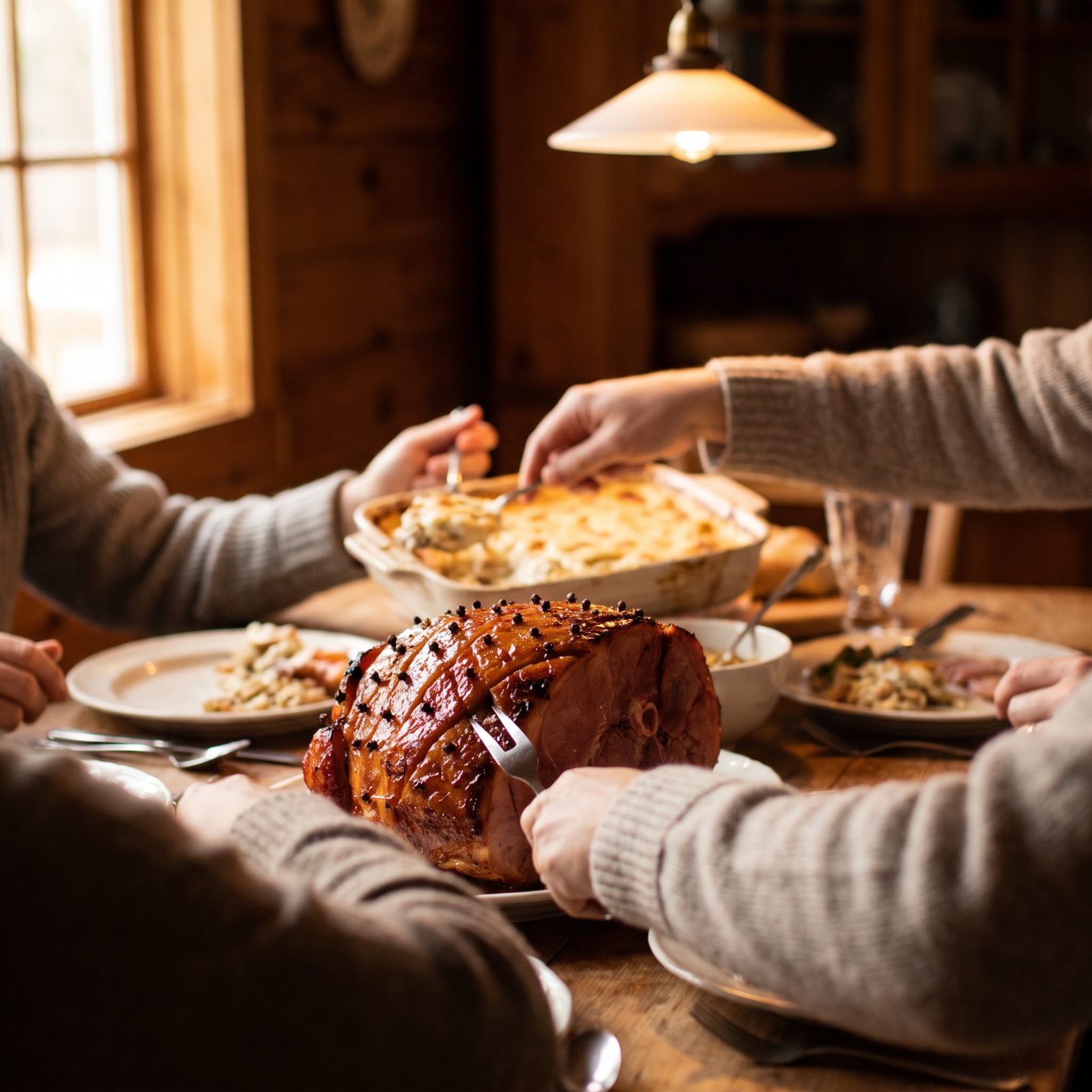
Put a glazed ham next to something braised in a sauce nobody can pronounce, and watch the ham go first. Every time.
At a holiday table, comfort beats adventure. The dish people grew up eating is the dish they reach for, especially the folks who get a little nervous about what they’re allowed to take at a party. Caterers know this cold, which is why the crowd-pleaser gets the biggest batch and the most frequent refills. Cheap out on the familiar one to splurge on something fancier and you’ll run dry on exactly the thing everyone wanted.
Our readers back this up: when they loved a food photo and tapped a reason, “comfort” was the top pick at 30%, with “nostalgic” also making the list at 15%.
39. Vegetarian Entrées Are Never Eaten Only by Vegetarians
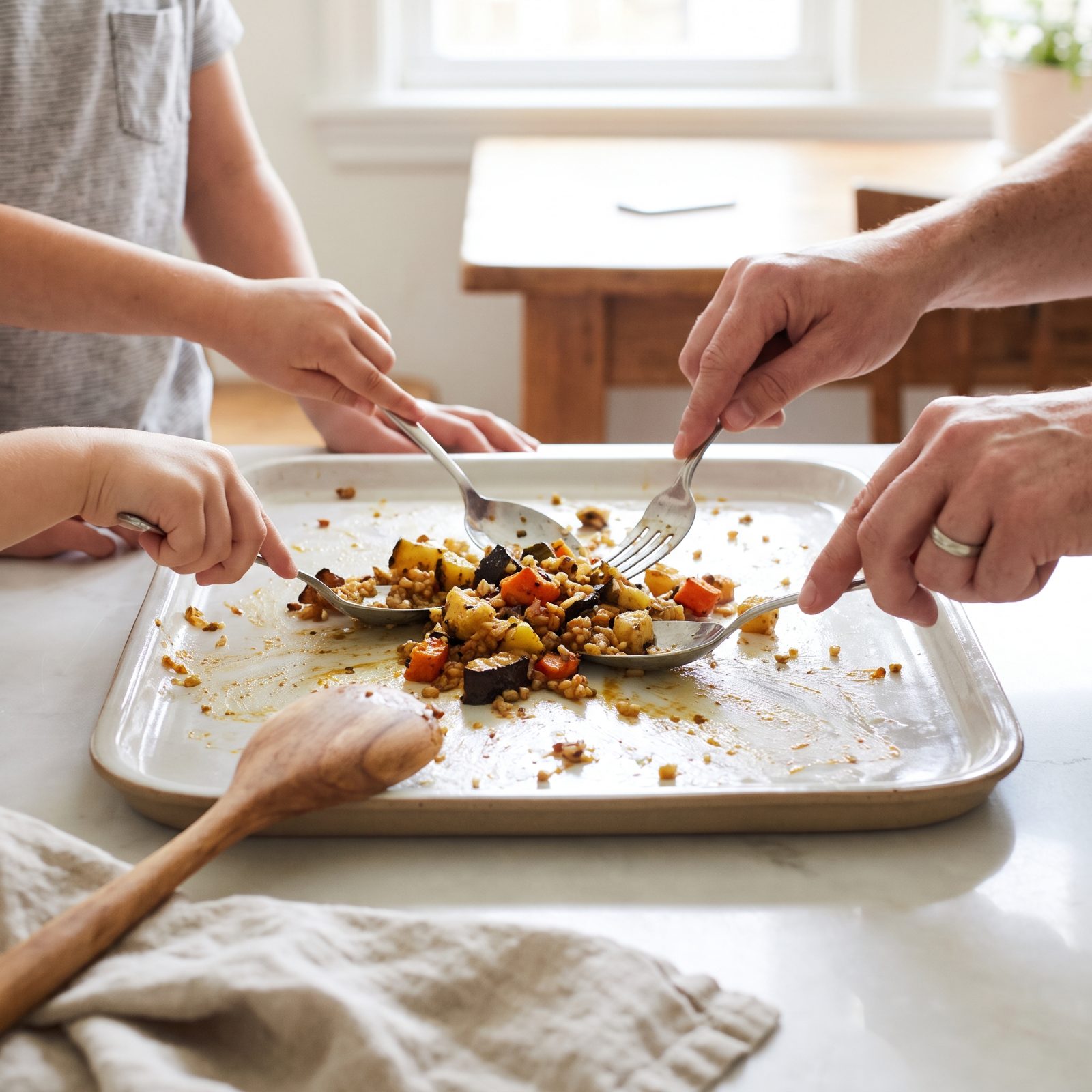
Count the three vegetarians on your list, order a modest tray for them, and you’ll be scraping that pan within fifteen minutes.
Everyone eats the vegetarian dish. The meat-eaters take a scoop because it looks good, because they want a side, because the roasted squash or the mushroom thing smells better than expected. A strong plant entrée gets raided by the entire room.
Advising hosts to order more vegetarian food than their headcount suggests, one Indian restaurant caterer warns “If a quarter of the room is vegetarian, a quarter of the food being vegetarian will not be enough, because non vegetarians eat vegetarian dishes freely while the reverse is not true.”
38. Smaller Plates Quietly Reduce Waste
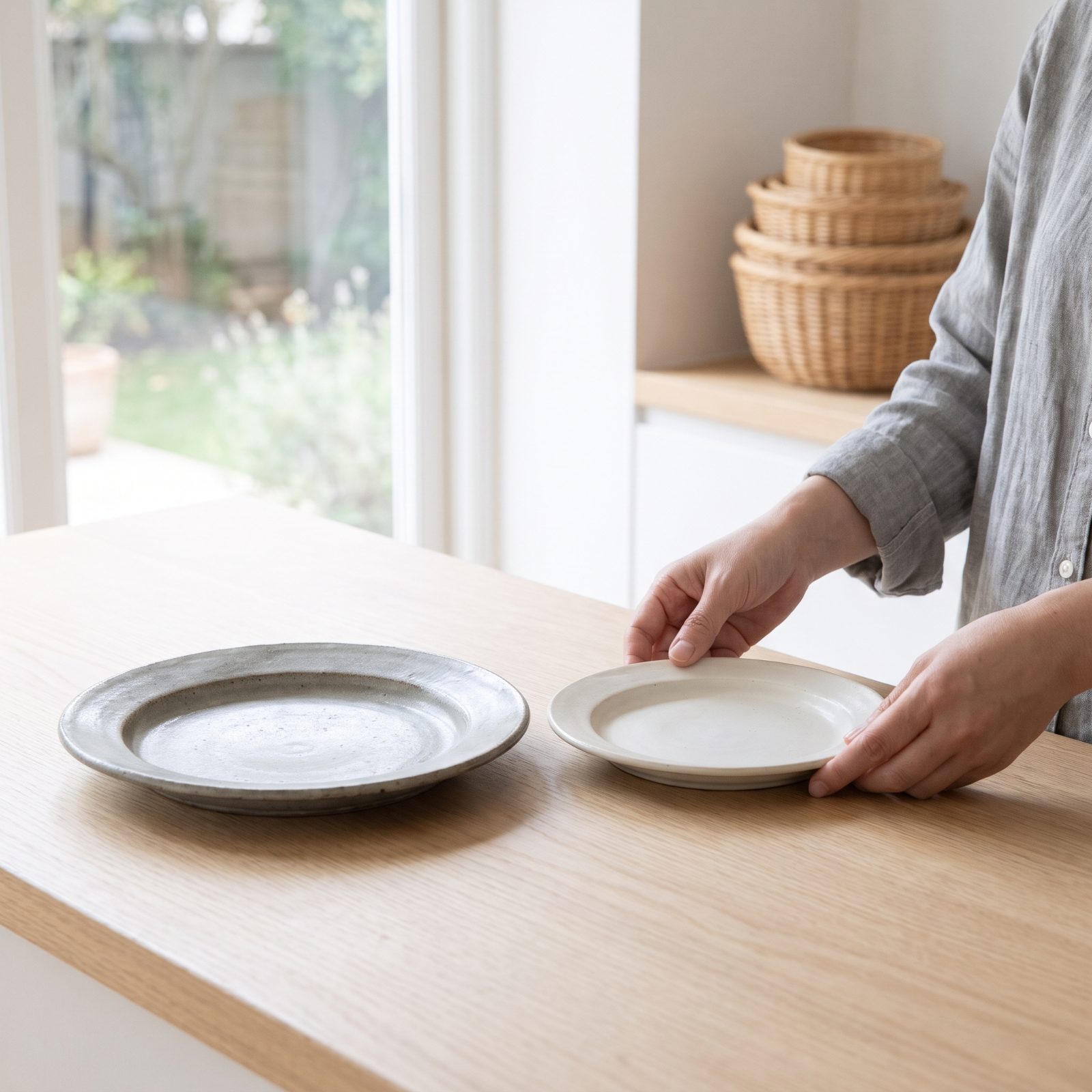
Swap the big dinner plates for salad-sized ones and watch your food costs drop. One of the oldest tricks caterers use, and it runs on pure psychology.
A smaller plate fills up faster, so people take less per trip. They can always come back, and they rarely do with the same hunger. A heaping ten-inch plate ends up half-eaten and scraped into the bin. Two little plates, taken as needed, waste almost nothing.
On setting up a buffet so guests eat more mindfully, one catering company writer notes “Smaller plates means guests take less food initially, less plate waste.”
37. Risers Create Abundance Without Adding More Food
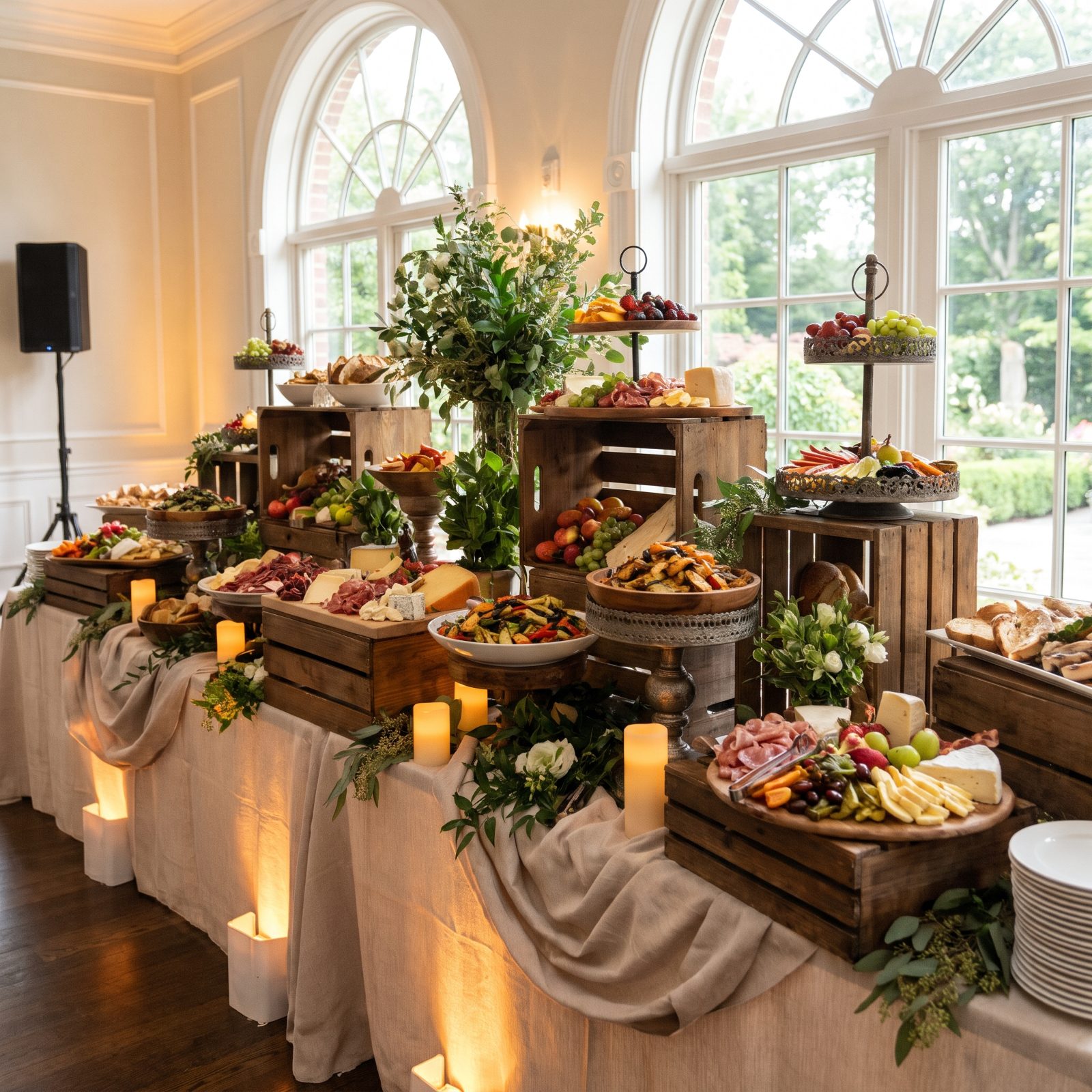
A flat table of pans looks like a cafeteria. The same food, staged on risers and tiers, looks like a feast.
Height is the oldest styling trick in the catering playbook. Elevate the back dishes, step them down toward the front, tuck greenery and candles between — and suddenly the spread reads as generous even though the actual quantity hasn’t budged.
What Our Readers Say
- Piaci Pizza readers gave food laid out as a board spread hearts 80% of the time, compared with 75% for the other images in the same articles.
- Main-course photos also earned more hearts from our readers than the other images around them, 79% versus 75%.
From Piaci Pizza reader polls and votes.
36. A Full-Looking Buffet May Have Half Its Food Backstage
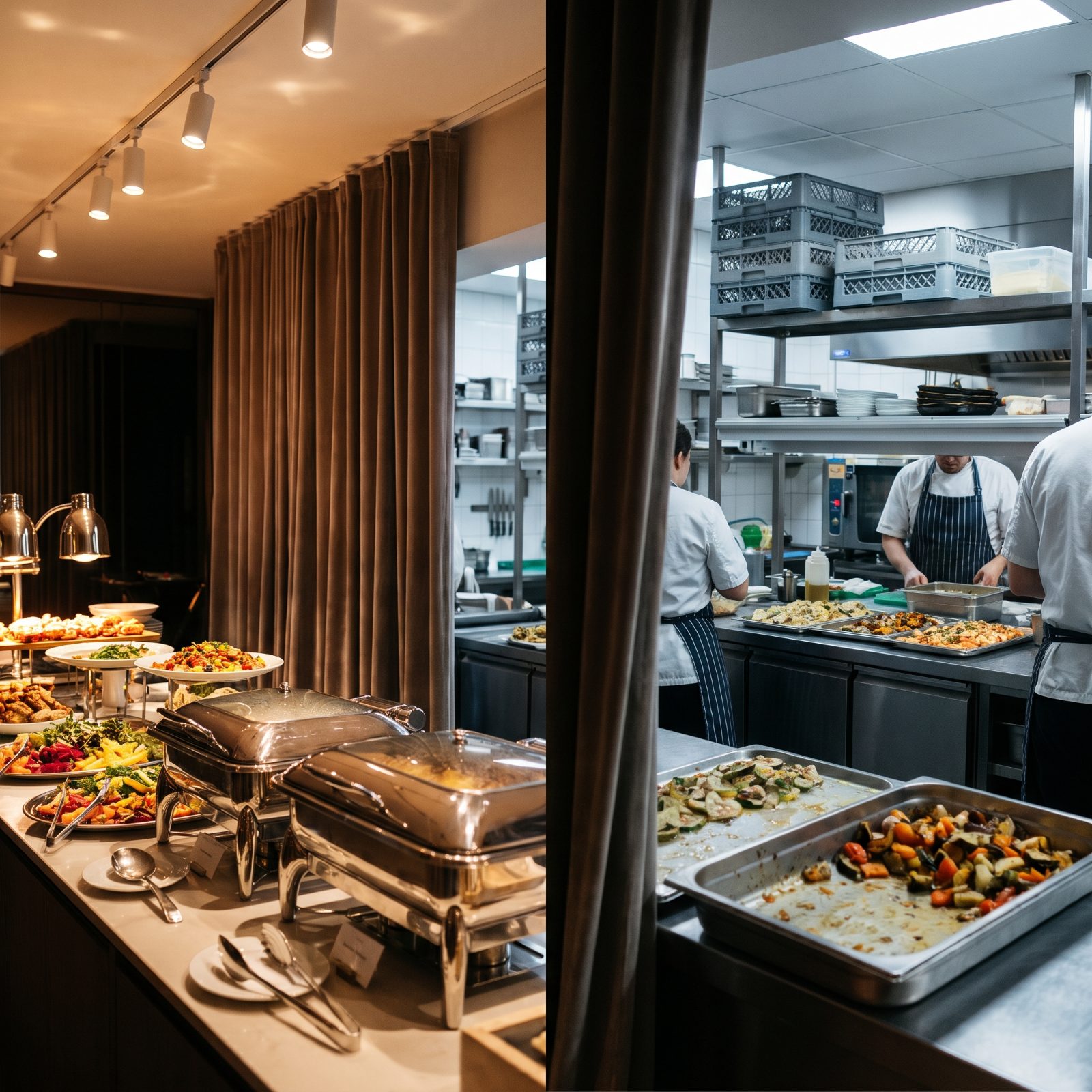
The buffet that looks effortlessly full all night is working harder than you’d ever guess, because most of its food isn’t on the table at all.
Good caterers stash backup trays in a holding cabinet out back, labeled and ready, swapping half-empty pans for fresh ones before anyone clocks the gap. A pan gets pulled when it hits the halfway mark, not when it’s scraped bare. That’s why the line always looks abundant, right down to the tail end of service.
The art is in the refill rhythm, not the first setup. Anyone can fill a table once.
35. Bread and Rolls Help Cover Unexpected Demand
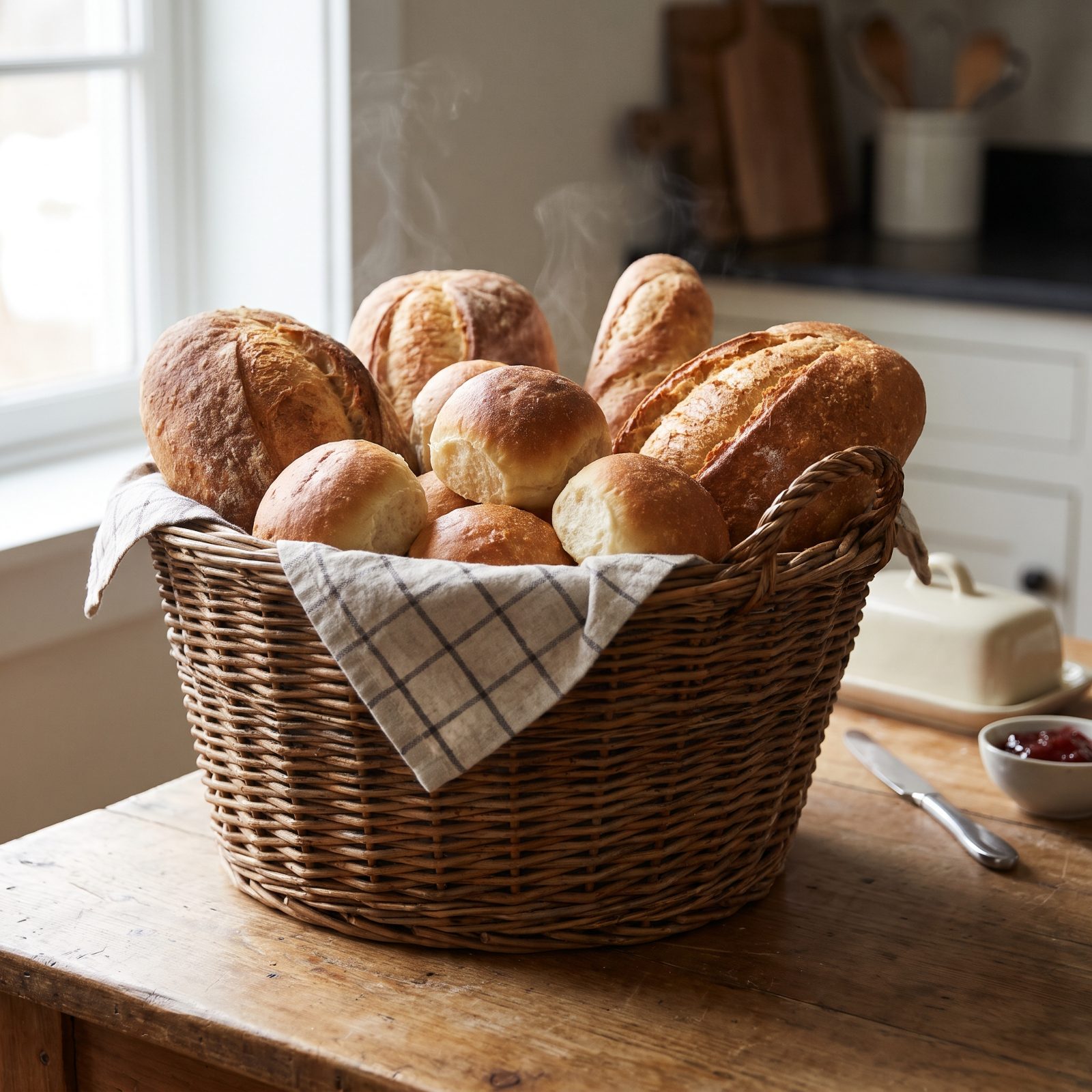
Bread is the caterer’s insurance policy. Cheap, nearly everyone eats it, and it fills the gap when a popular dish runs lower than planned.
A well-stocked bread basket keeps guests happy while the kitchen scrambles on a refill, and it quietly stretches a meal that’s running tight. Nobody has ever left a holiday buffet griping that there was too much bread.
34. Chafing Dishes Hold Hot Food; They Do Not Cook It
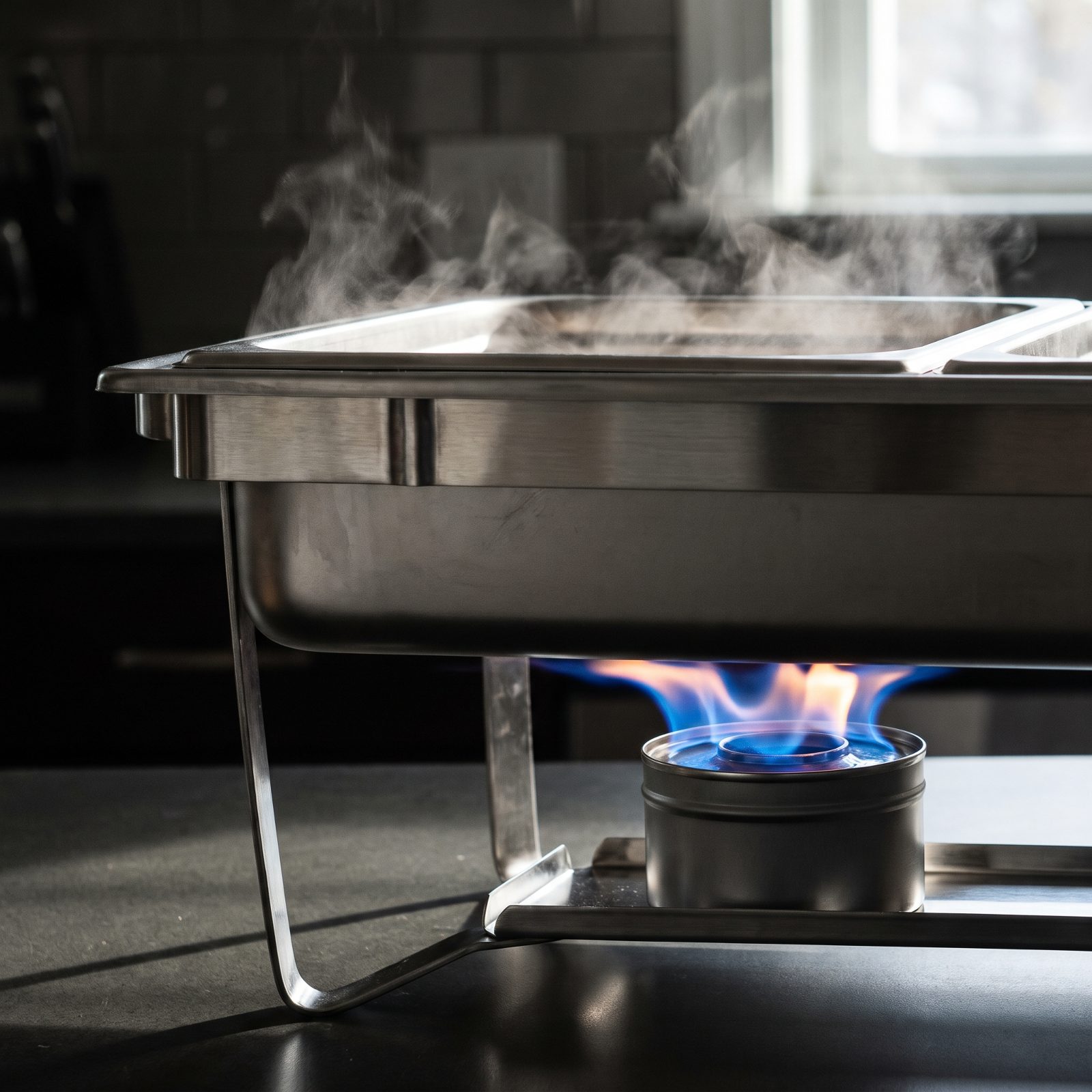
Here’s the one that keeps caterers up at night. A chafing dish is a holder, not an oven. That gentle flame underneath keeps already-hot food above the danger zone — and it cannot bring cool or lukewarm food up to a safe temperature. No chance.
Food goes into the chafer fully cooked and hot, period. The water pan and sterno maintain it; they don’t rescue it. Which is why serious caterers probe temperatures throughout service and swap pans on a clock, not a guess.
Asked whether a chafer can rescue food that arrives cool, one Baltimore caterer is blunt “A chafing dish keeps hot food hot. It cannot bring cool food back up to a safe temperature, and using it that way is one of the easiest ways to make guests sick.”
33. Fresh Trays Replace Old Ones, They Don’t Get Topped Off
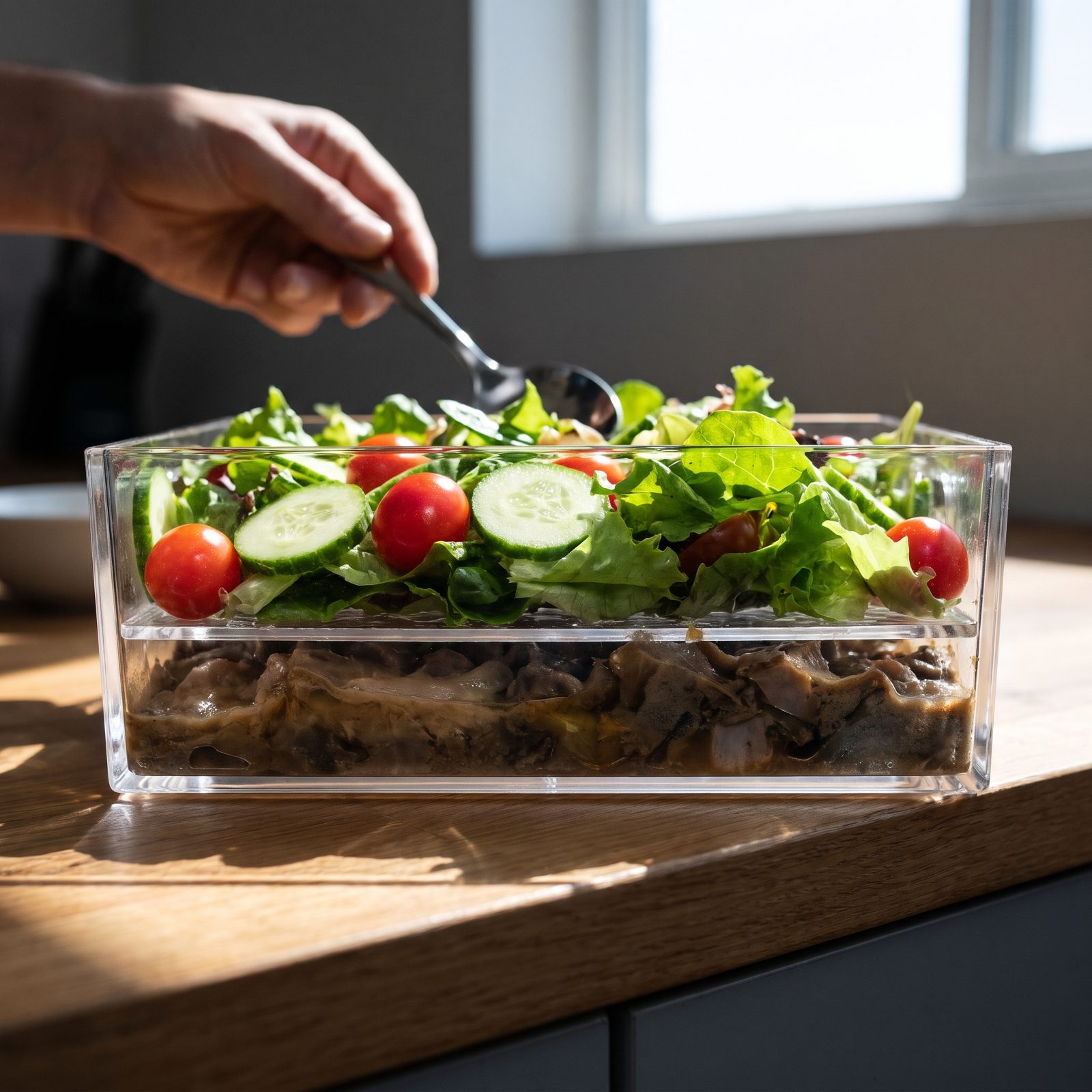
Topping off looks efficient and ruins everything underneath. New food sits on top while the old stuff stays trapped at the bottom of the chafer, holding at serving temperature for hours past when it should’ve been pulled — and that’s exactly where limp green beans and gray meat come from. The top looks fresh. The bottom’s been dying since four o’clock.
Good caterers swap the whole insert: empty tray out, full tray in, a washed pan every time. More backup trays, more washing. Which is precisely why the cut-rate outfits skip it.
32. Steam Will Quietly Murder Anything Meant to Stay Crisp
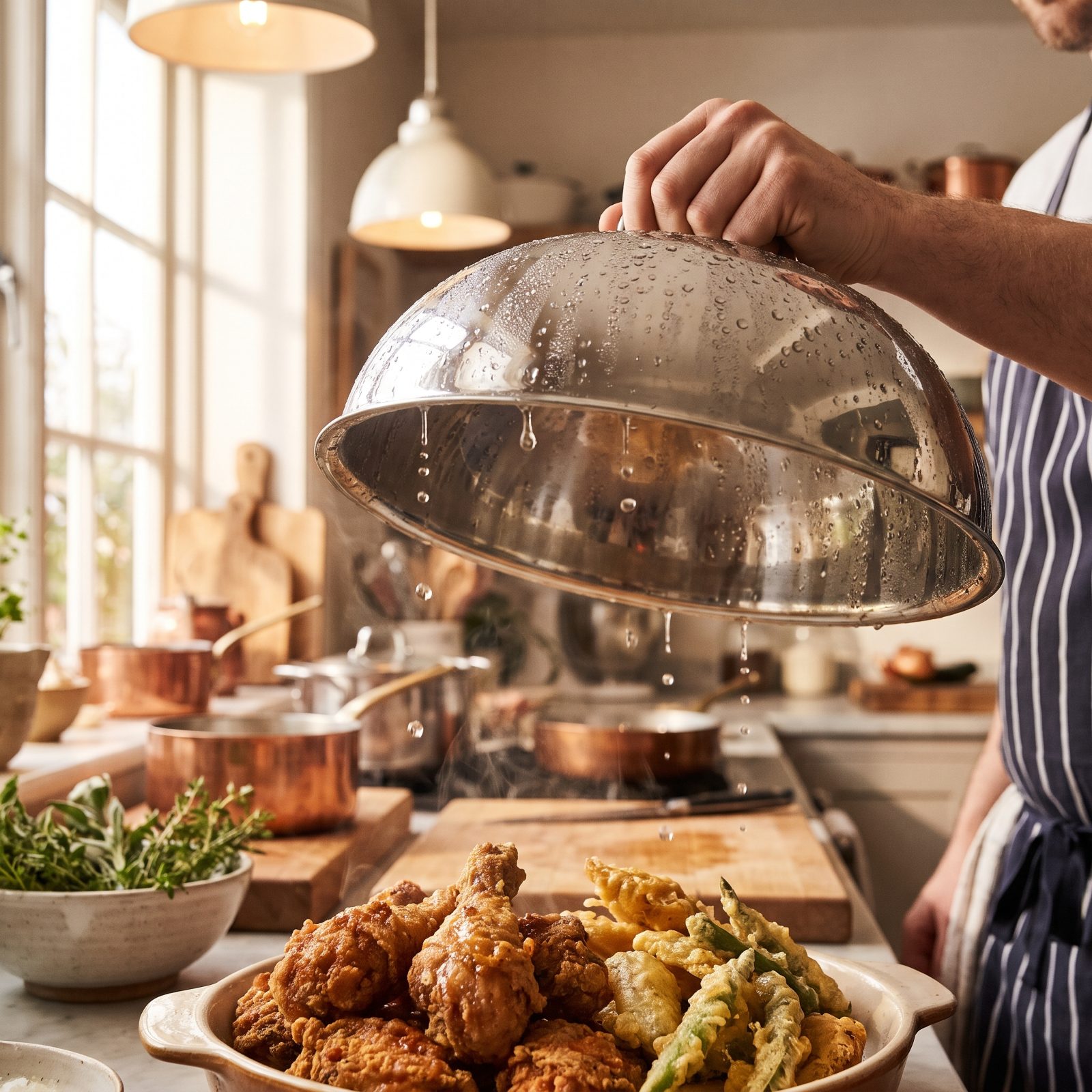
Put anything fried, roasted, or crusted into a covered chafing dish and condensation does the rest. The lid traps moisture, the moisture falls back onto the food, and within twenty minutes your beautiful crackling skin is wearing a soggy jacket.
So experienced caterers won’t chafer their crispy items. Fried chicken, roasted potatoes, anything with a crust — out in open vessels, small batches, replenished often. More labor, and yes, it exposes them to cooling, but slightly-warm-and-crisp beats hot-and-soggy every single time. The guests always pick crisp. Nobody ever praised a crouton for its warmth.
31. Pasta Keeps Cooking After It Hits the Chafer
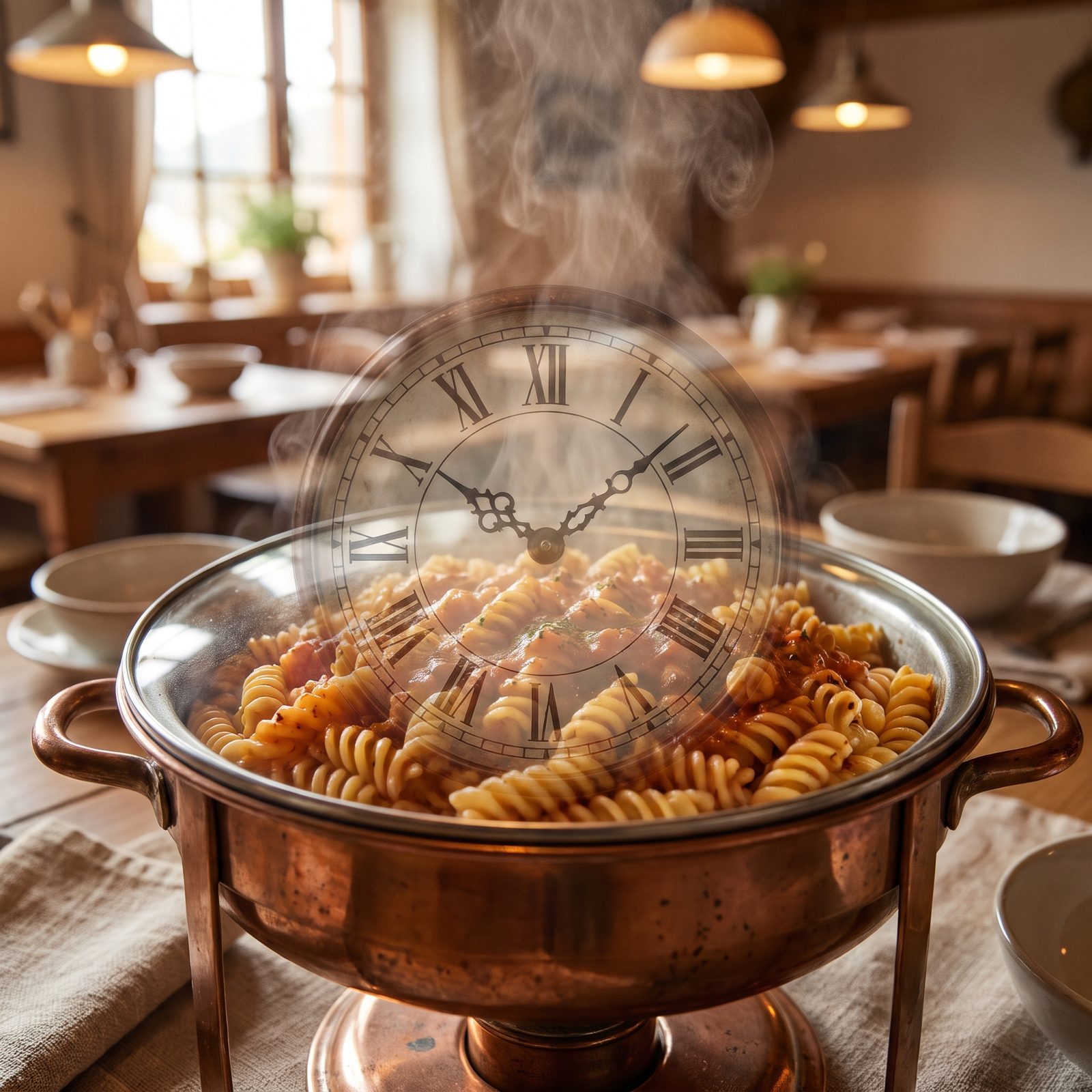
Heat doesn’t quit just because the pot’s off the stove. Pasta sitting in a warm chafer for two hours keeps softening, and what went in with a little bite comes out as paste.
Smart kitchens undercook on purpose, pulling the pasta a minute or two short of done because the holding time will finish the job. And they sauce it right before service rather than hours ahead — sauce-soaked noodles turn to mush faster than dry ones.
30. Sauces Hang Back to Protect What They’d Otherwise Ruin
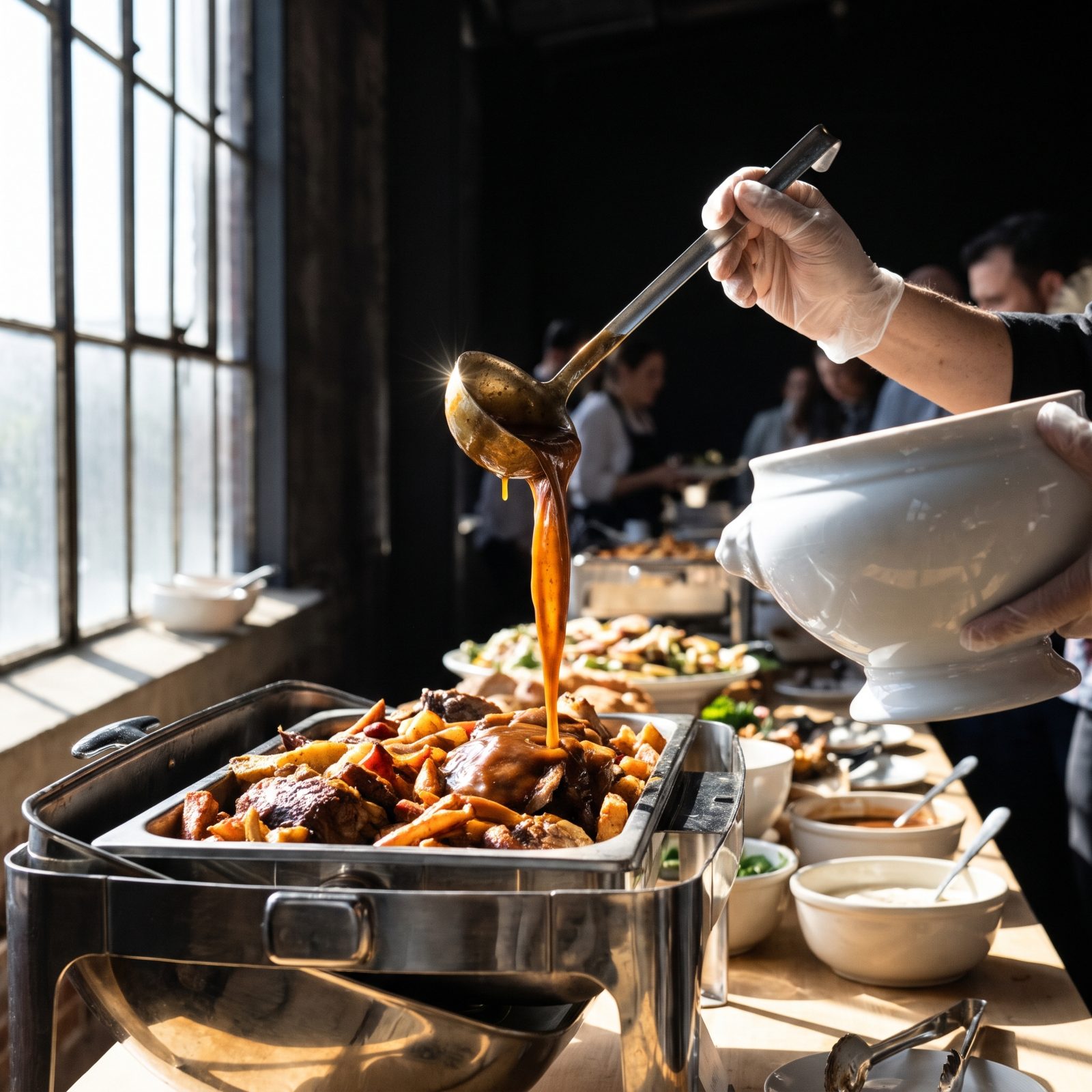
Pour sauce over a tray an hour before guests arrive and you’ve started a slow demolition. The sauce soaks in, the surface goes soft, and by the time the line forms, portions have clumped into one sad mass.
Keep the sauce in its own tureen and ladle it over the tray only at the moment of serving, and you solve three problems at once. The fries hold their texture. Each ladleful goes just where it’s needed. And you can refill the tureen from the pot without touching the meat and fries waiting their turn. Looks like extra fuss. It’s insurance.
29. Fish Is the Entrée That Keeps Caterers Up at Night
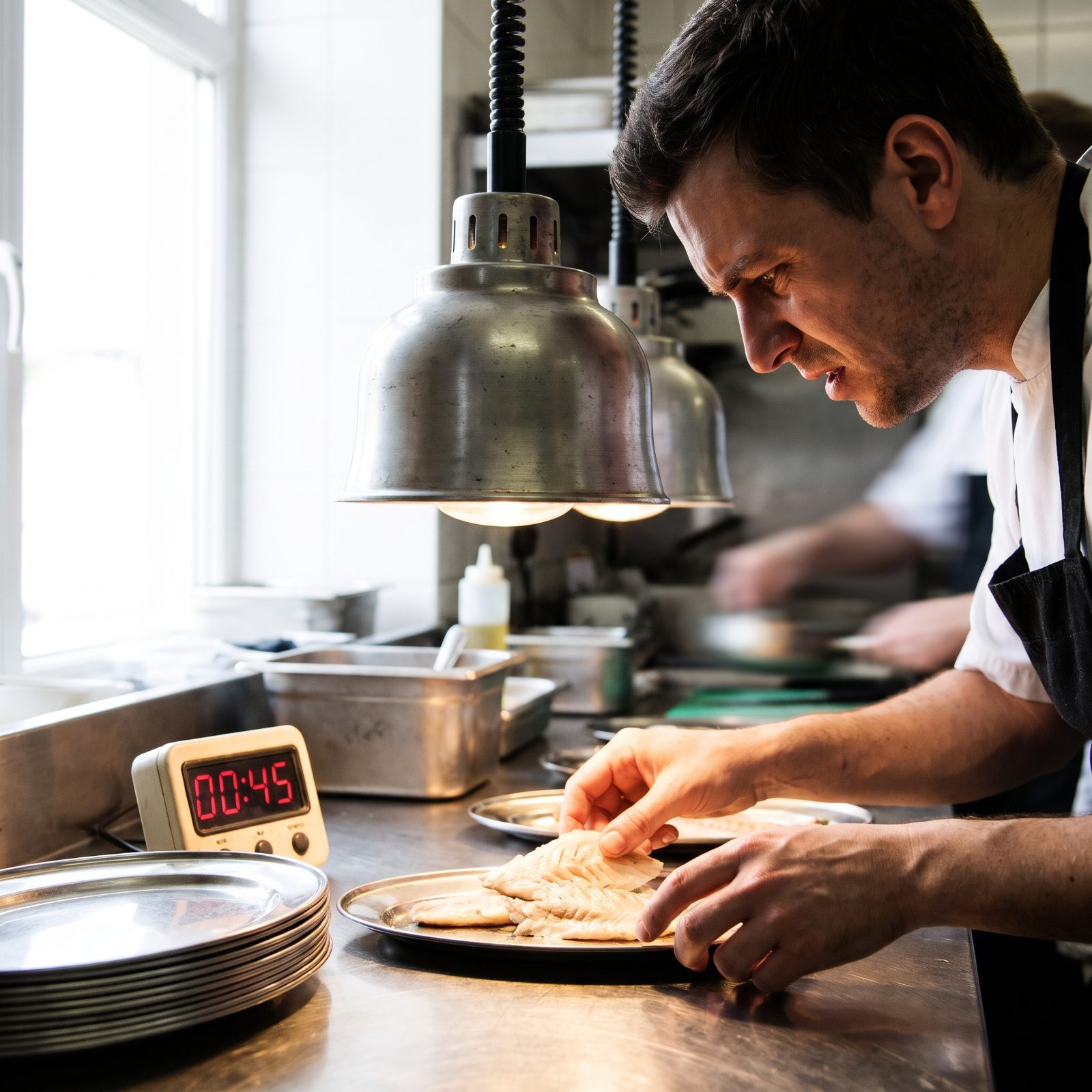
Fish has the shortest fuse on the whole table. The window between done and dried-out is maybe fifteen minutes, and a chafer blows right past it. The salmon that was gorgeous at five o’clock is a chalky, overcooked brick by six.
Better move: small trays out often, pulled from the oven slightly underdone, never a giant batch holding for the duration. Some caterers position fish last on the line so it moves fast, or plate it to order if staffing allows.
28. Mashed Potatoes Forgive the Clock, Roasted Potatoes Don’t
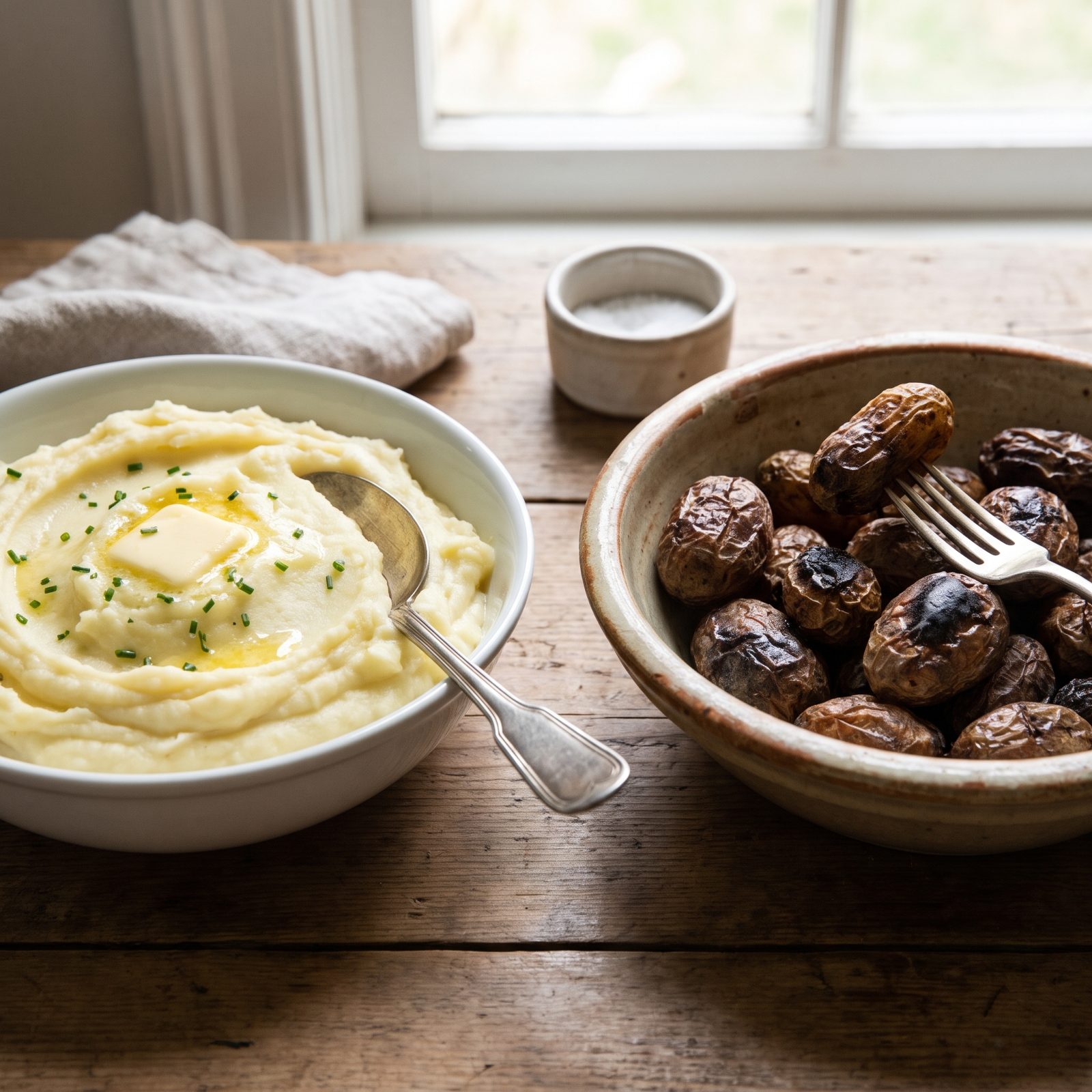
A buffet rewards food that doesn’t depend on crispness, and mashed potatoes are the champion of the hold. Fat and moisture keep them soft and happy in a chafer for hours, especially with a little extra butter or cream worked in before service.
Roasted potatoes are the opposite tragedy. That crackling exterior is the whole reason you made them, and twenty minutes under a lid turns it to steam-softened mush. Want roasted potatoes on a buffet? They need open-tray, small-batch service, same as anything crisp — which is a lot of work, which is why the mash keeps winning.
27. Pre-Sliced Meat Takes the Guesswork Out of Portioning
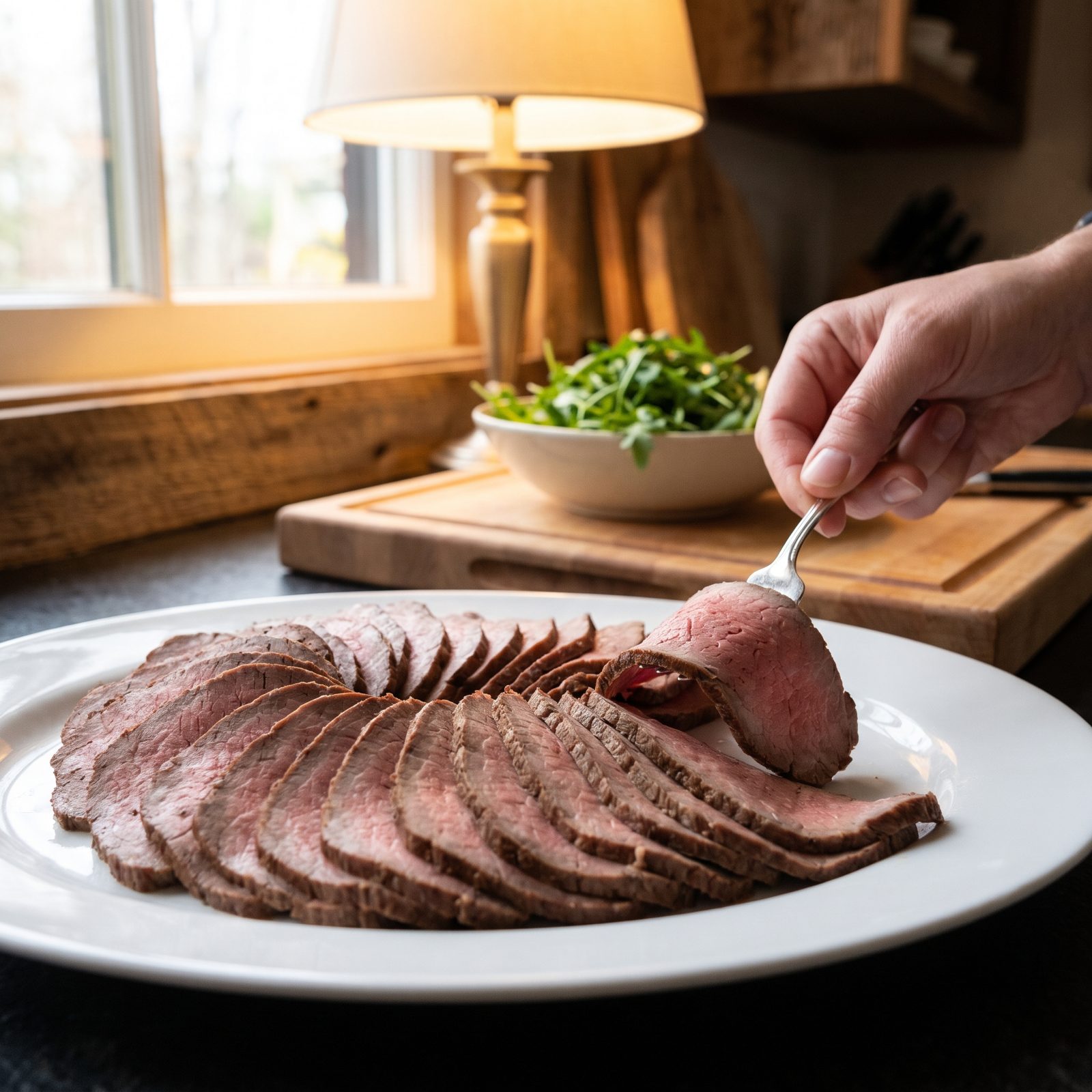
A whole roast on a buffet turns every guest into an amateur carver, and amateur carvers take wildly different amounts. One person hacks off a slab, the next takes a sliver, and you either run out or overbuy with no way to predict which.
Pre-slicing solves the math. Uniform slices mean a portion is a portion, the headcount actually tells you how much to make, and the line moves because nobody’s standing there sawing. Thin slices with a little jus also hold better than a thick roast drying out from the cut face.
26. The Showpiece Whole Turkey Is Usually the Wrong Call
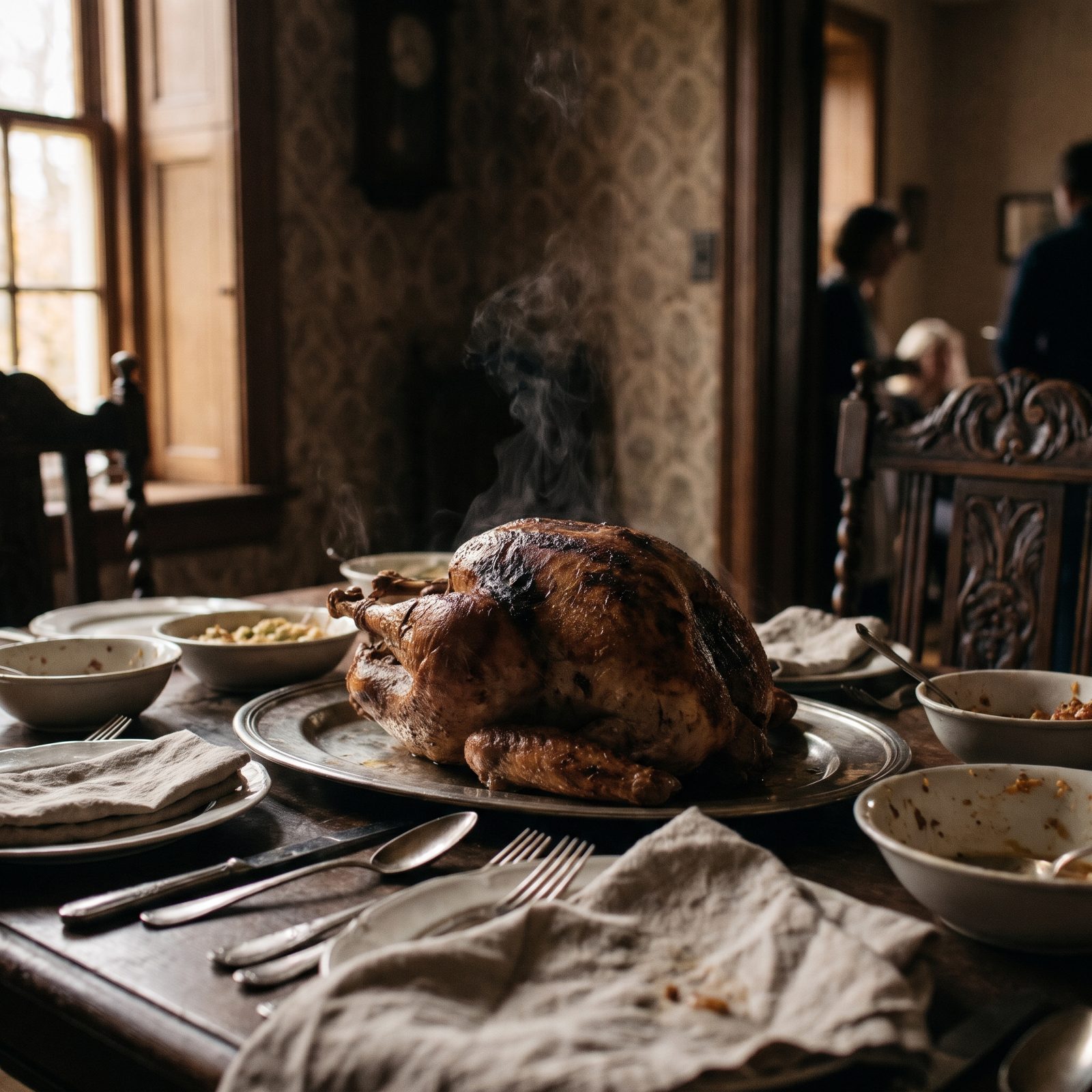
A whole roasted turkey photographs like a Norman Rockwell cover and serves like a disaster. It cools fast once it’s out, it demands a carver stationed at the table all night, and the dark meat and white meat cook at different rates so something’s always dry.
Carved turkey breast skips the drama. It holds temperature evenly, portions cleanly, and you can roast the breasts separately from the legs so each gets the heat it wants. The whole bird is for the family photo. The carved breast is for feeding forty people who’d like their turkey moist.
25. Gravy Vanishes Faster Than Anyone Plans For

Gravy is the one thing guests pour with abandon and hosts always underestimate. It goes on the turkey, the potatoes, the stuffing, sometimes the roll — and a container that looked generous empties before half the line has eaten.
Caterers plan for roughly double what instinct suggests. And they stage backup already hot, because nothing stalls a buffet like a dry gravy boat and a kitchen scrambling to make more.
24. Passed Appetizers Break Up the Opening Stampede
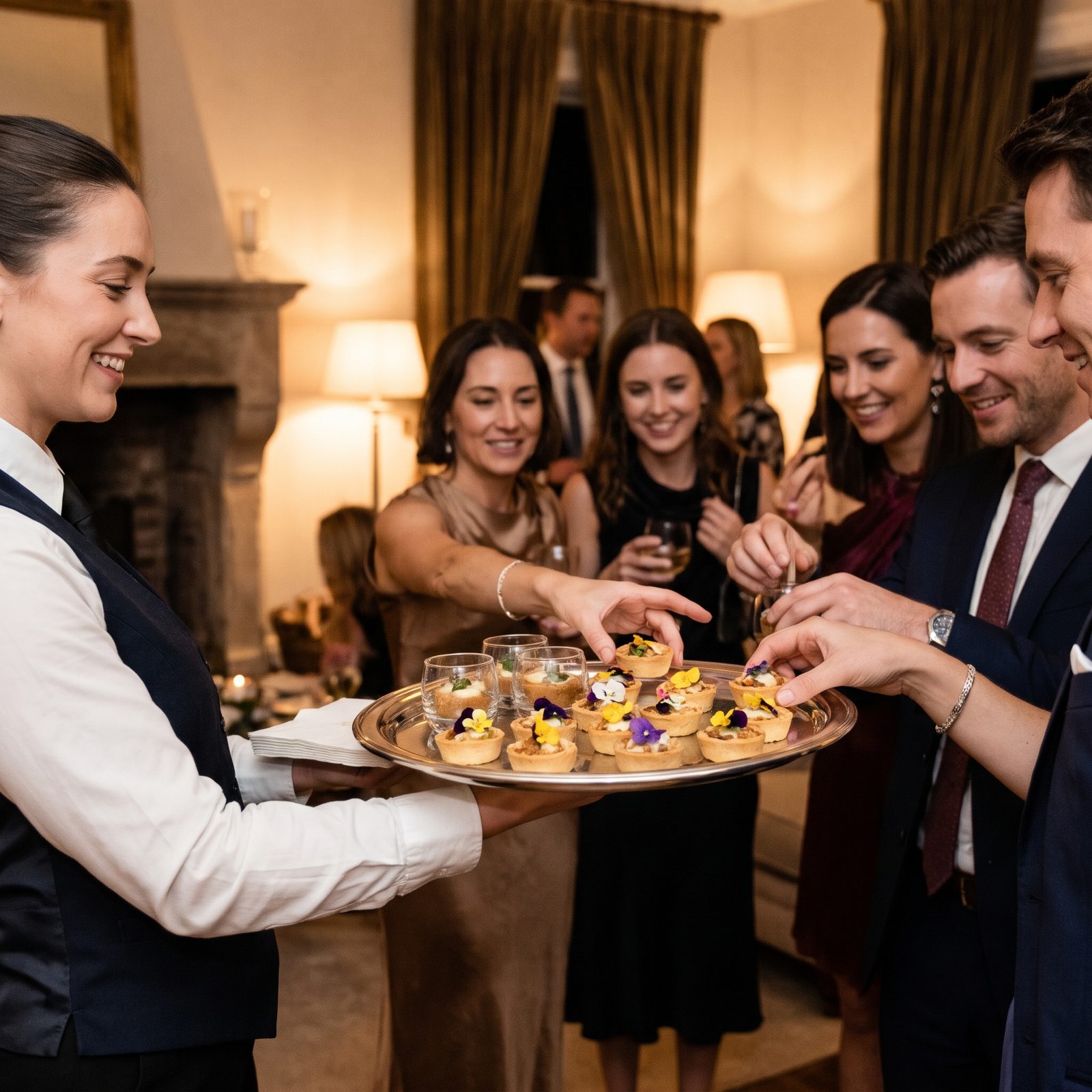
The worst moment at any holiday party is the first fifteen minutes, when everyone arrives hungry at once and the buffet becomes a bottleneck with elbows. People get grabby. The line snakes to the door. And the first trays get wrecked before the kitchen’s ready to replenish.
Passed appetizers defuse the whole thing. Trays circulating through the room take the edge off hunger, keep guests spread out instead of stacked at the buffet, and buy the kitchen time to get the main line right. Crowd control disguised as a hospitality touch.
23. Duplicate Food Stations Beat a Longer Menu Every Time
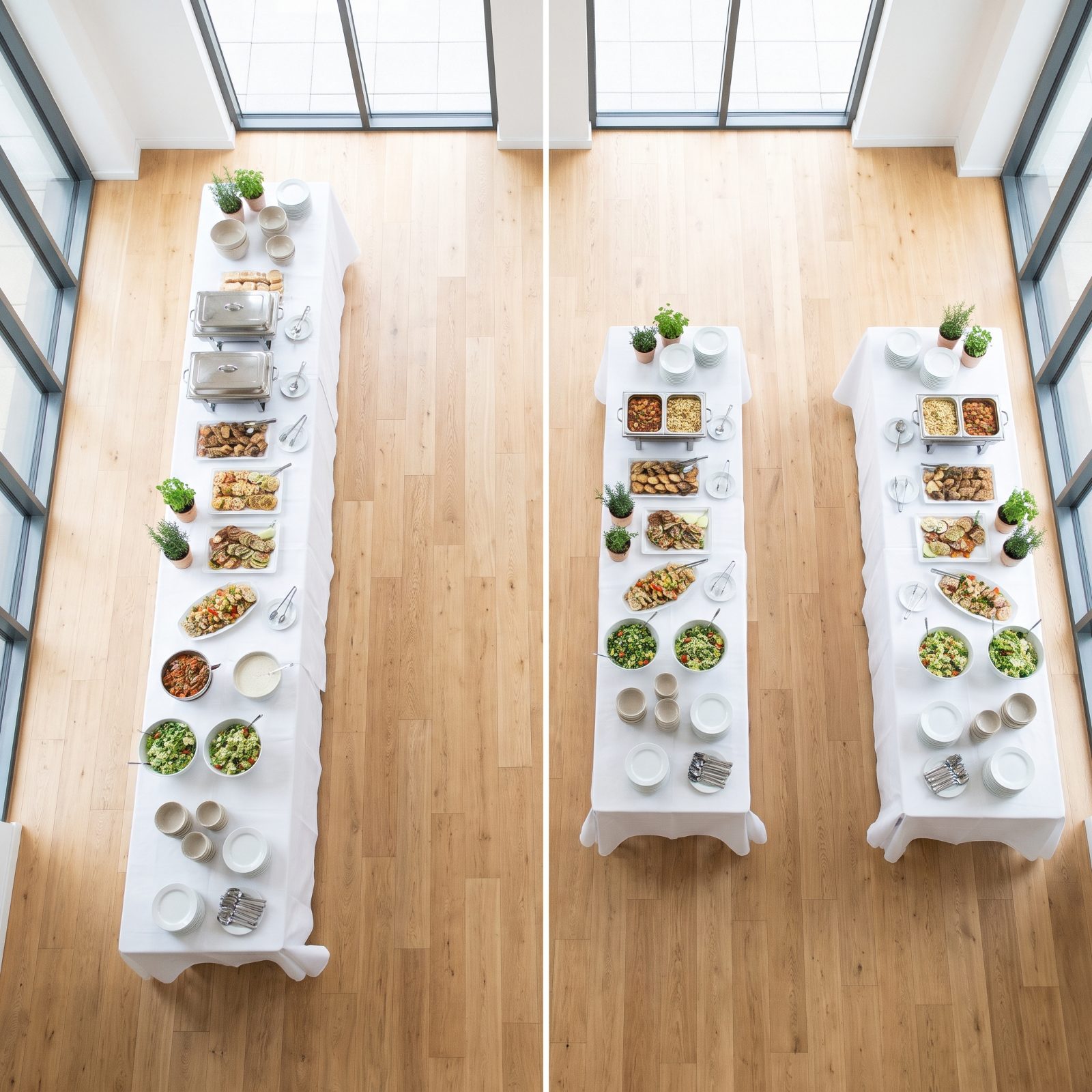
More dishes feel generous. They aren’t. A buffet with fourteen options and one line of each still funnels everyone through a single bottleneck, and the folks at the back watch their turkey congeal while they wait.
Experienced caterers would rather run the same eight dishes twice, mirrored on both sides of the table, than impress you with variety. Two identical stations cut the wait roughly in half. Guests graze from both ends and the crowd never clots in one spot.
22. The Running Order of Dishes Decides How Fast the Line Crawls
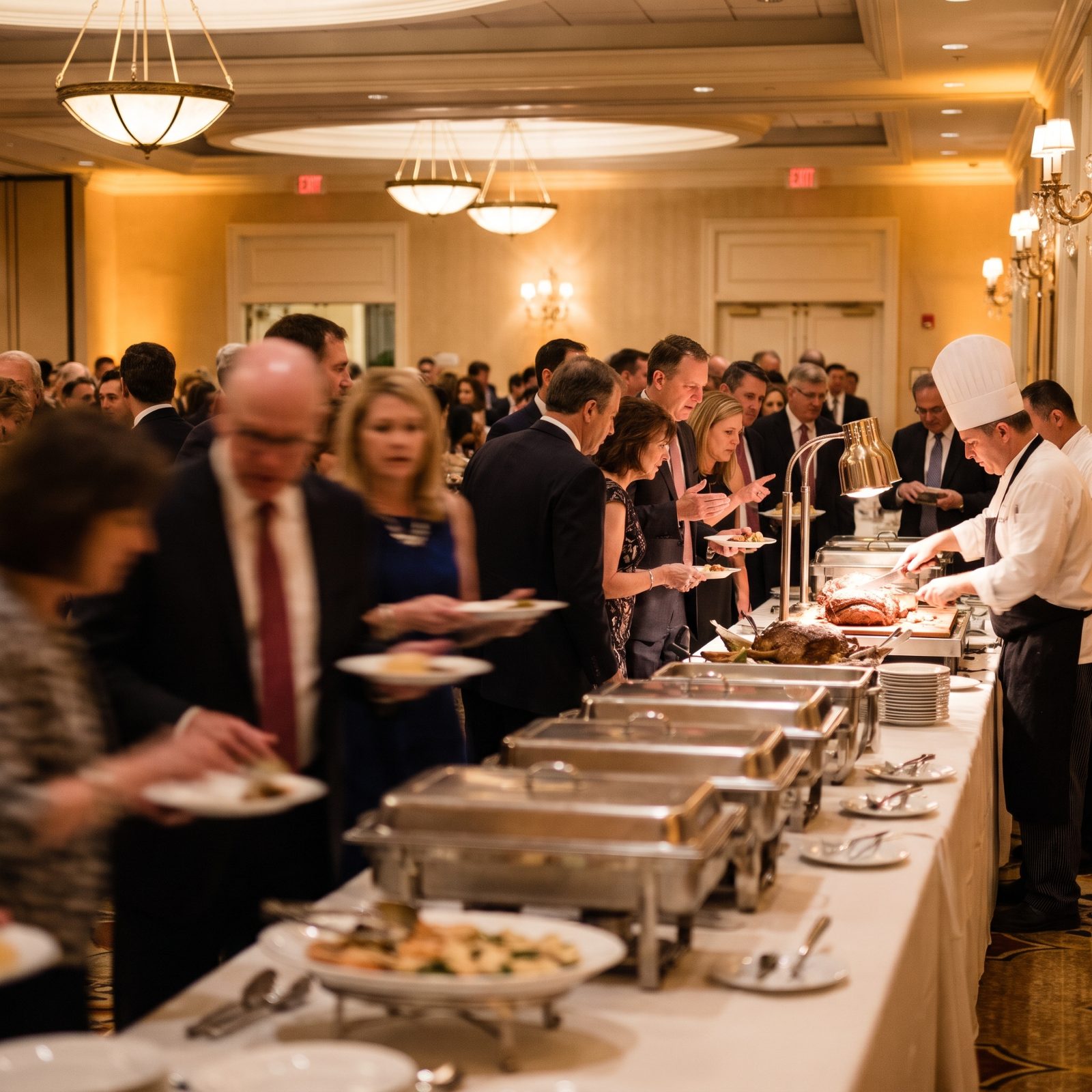
Put the slow stuff first and you’ll strangle the whole line. A carving station, or anything that needs plating, takes time, and if it sits at the front, every guest stalls there while a queue stacks up behind them.
So the pros load the quick, scoopable items up front: rice, salads, rolls. The dishes that demand a server’s attention go near the end, where the crowd has already thinned out. Sauces and gravies? Dead last, so nobody’s hovering with a dripping ladle while five people wait behind them.
Explaining why it puts proteins and pricier items at the end of the line, a Houston catering team says “This encourages guests to fill their plates with sides like potatoes, vegetables, and bread before reaching the main attraction — like prime rib — at the finish.”
21. Cutlery Belongs at the End, Not the Start
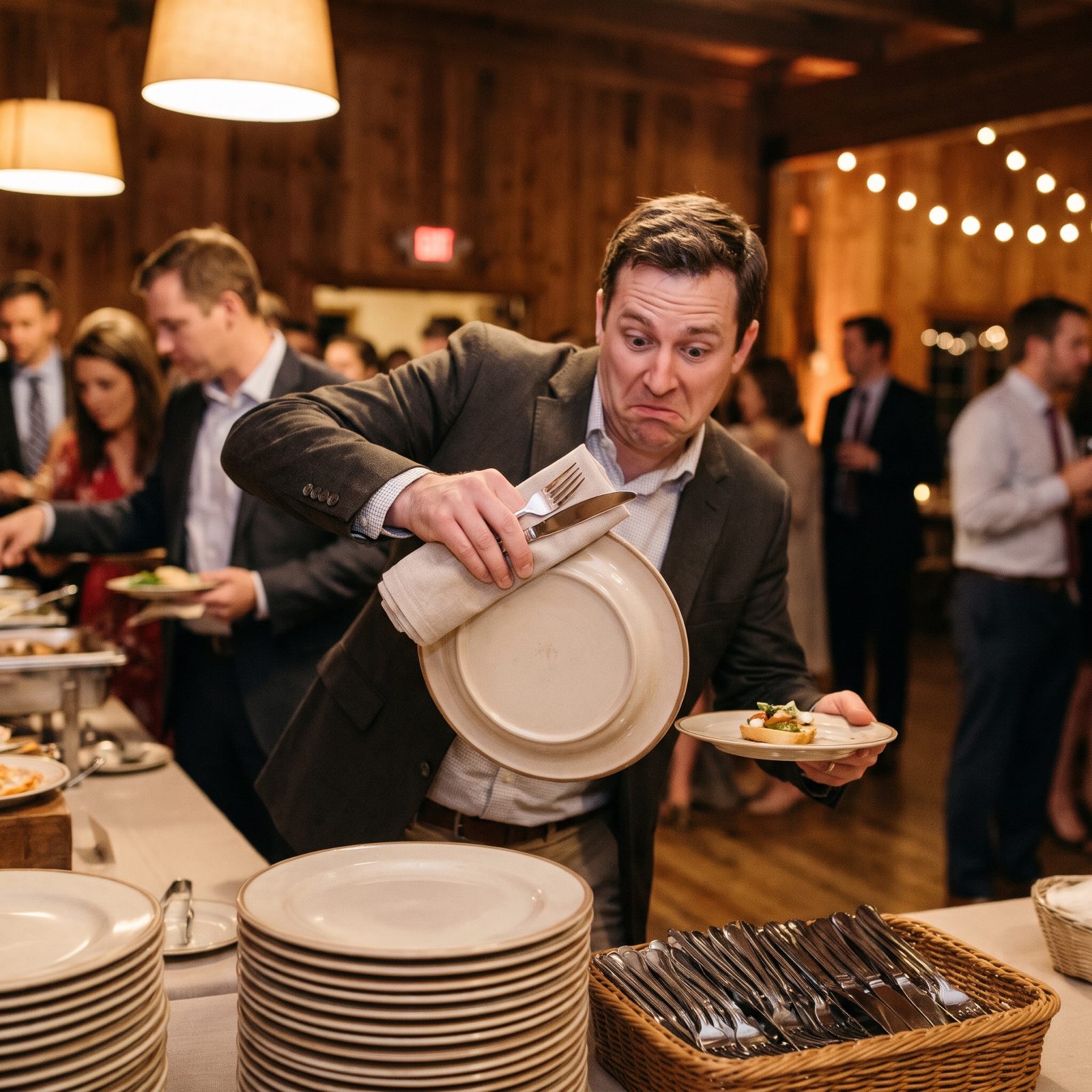
You’ve watched it happen. Someone grabs a fork and napkin at the front, then has to juggle them against the plate while spooning out stuffing one-handed. Food slides. The line stops.
Cutlery goes at the end for a reason. A guest moving down the line needs both hands free to serve themselves, and if you hand them silverware first you’ve just given everybody a balancing act to perform at every single dish.
20. Shoving the Buffet Against a Wall Is a Replenishment Trap
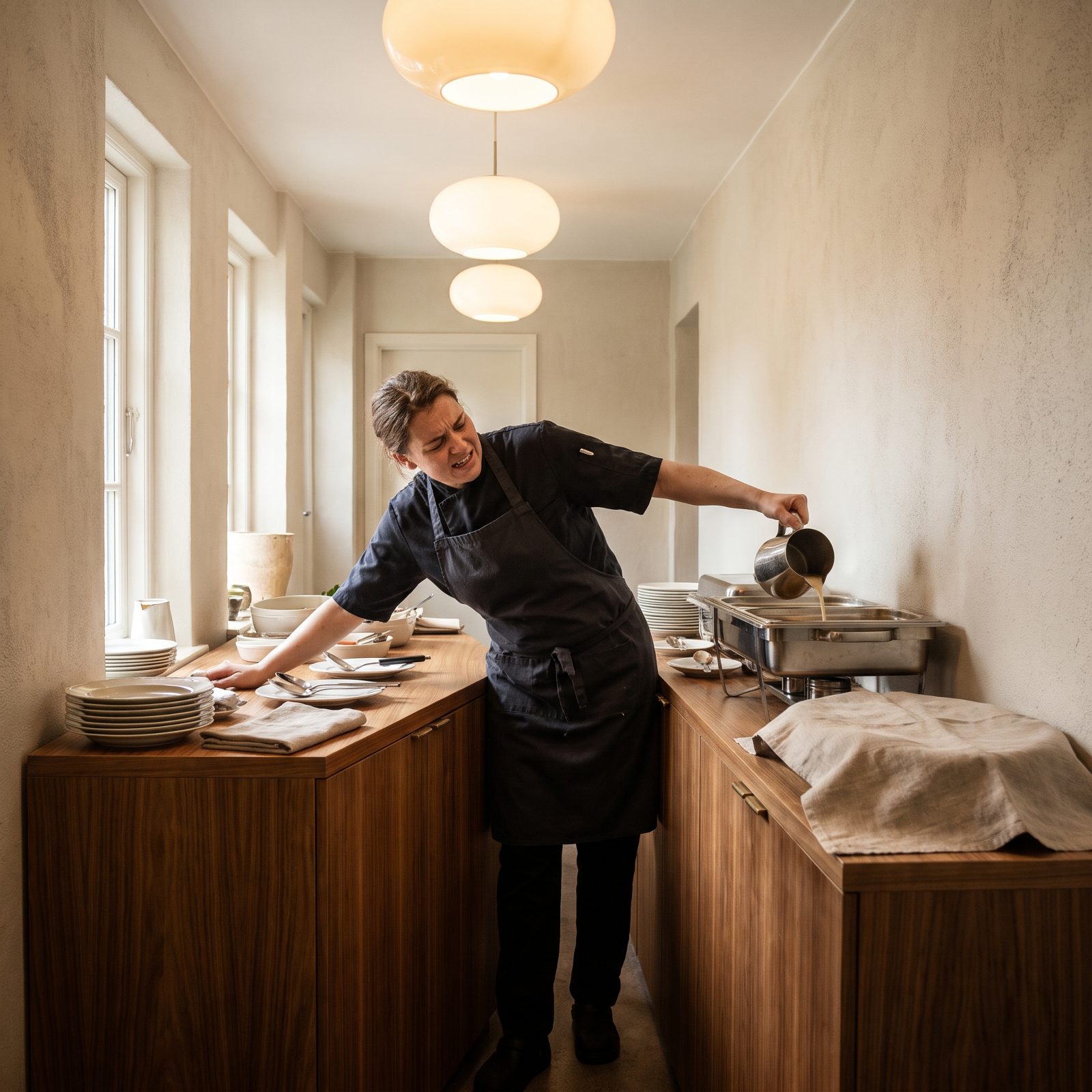
A buffet flat against a wall looks tidy. Then the green beans run out, and now a server has to lean across the entire table, reaching over guests’ plates to swap the tray.
Float the table instead. Leave a lane behind it so the crew restocks from the back, out of sight, while guests keep serving themselves from the front without ever seeing the swap. The buffet feels bottomless because the labor stays invisible. That access lane is the single most overlooked decision in home entertaining, and it costs you nothing.
19. Coffee Stations Spawn Their Own Traffic Jams
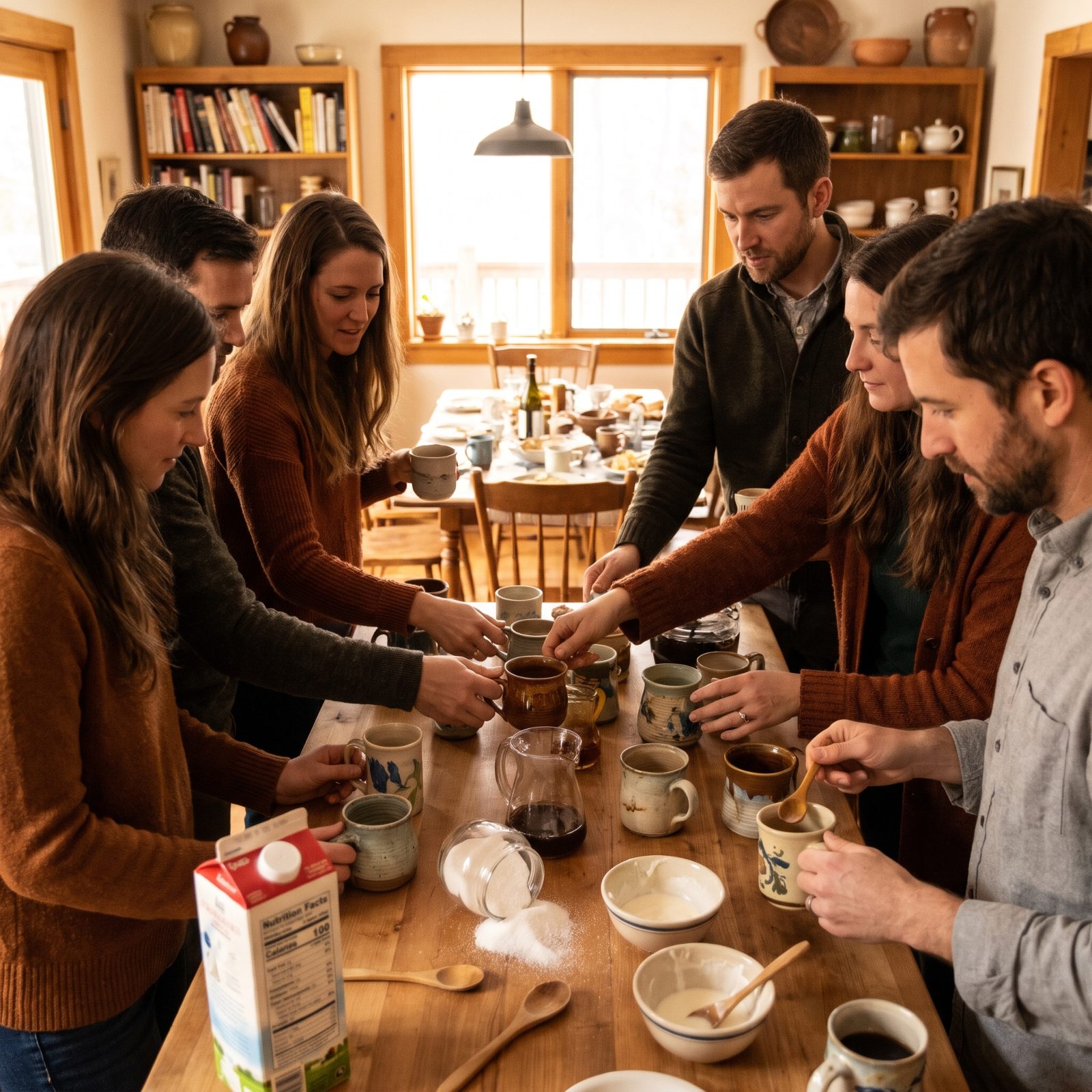
Coffee is slow. People pour, add cream, stir, decide about sugar, stir again, taste, adjust. Each cup is a small ceremony, and a line forms behind every unhurried soul.
So caterers pull the coffee off the main buffet entirely and give it its own table in a different corner. Dessert goes near it, the main line stays far away, and the two crowds never collide.
18. Ice Runs Out Faster Than Anyone Guesses
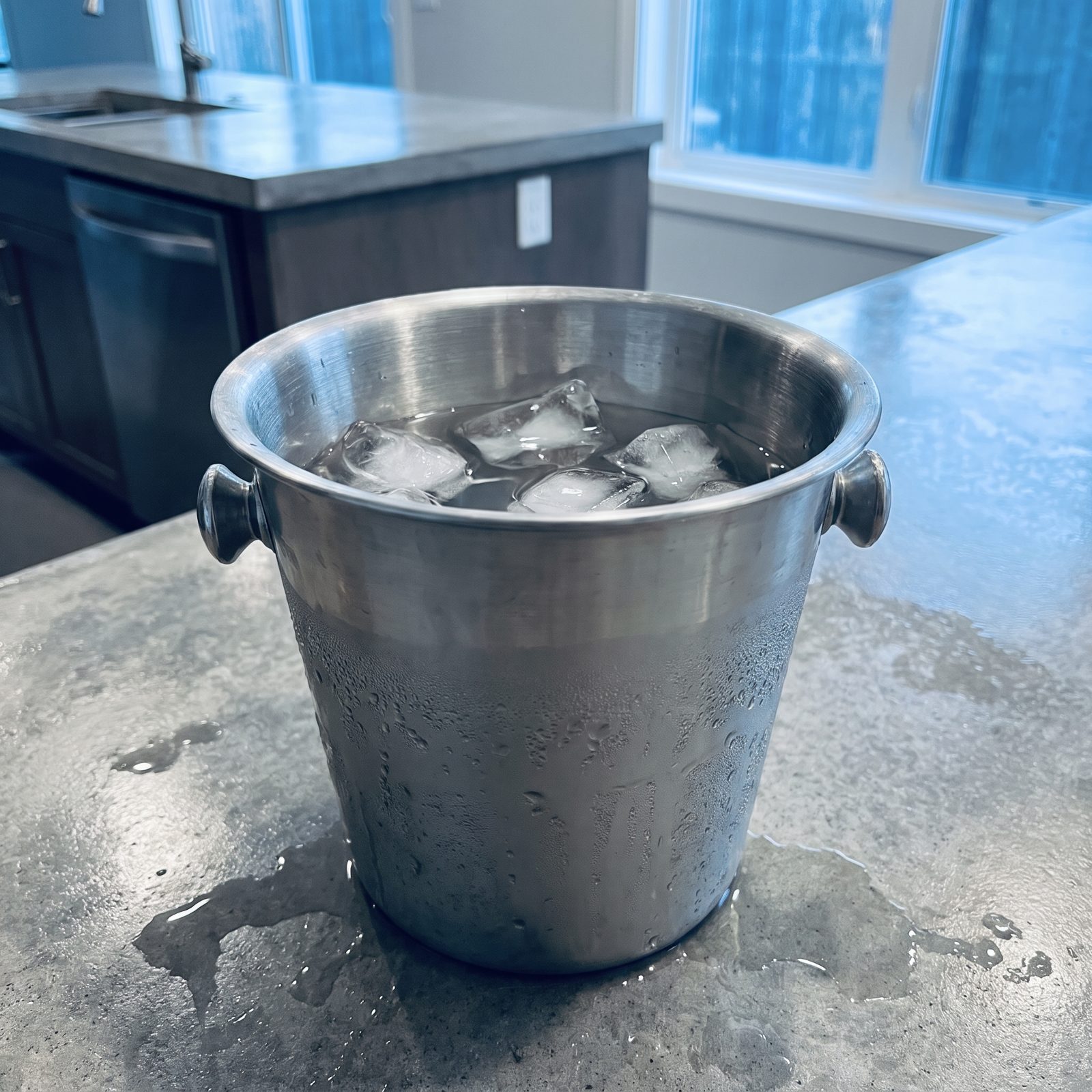
Ice is the item everyone forgets until it’s gone, and then the whole drink situation falls apart at once.
Nobody accounts for the fact that ice does two separate jobs. It chills bottles and tubs, and it goes in glasses. Those are two different piles, and the chilling pile melts the whole time. Plan for one and you’ll come up short on the other right around the time the speeches start.
The rule of thumb among caterers runs a pound to a pound and a half per guest for a holiday event, more if it’s warm or the bar is busy. Buy more than feels reasonable. Nobody ever complains about too much ice.
17. A Late Speech Can Wreck Perfectly Timed Hot Food
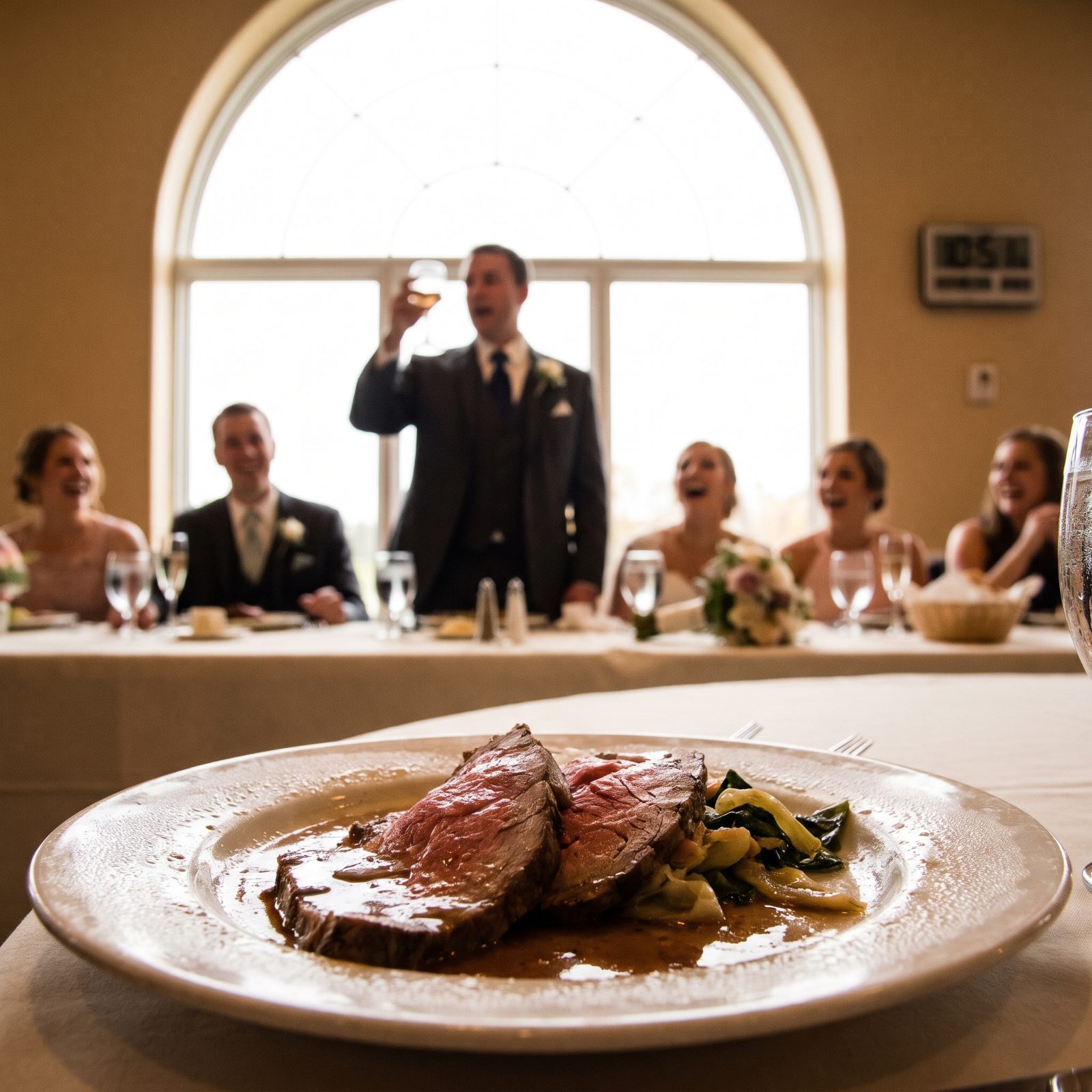
The kitchen plates the beef to hit the table at nine-thirty sharp. At nine-thirty, someone’s uncle stands up to toast, and he’s got a lot to say.
Hot food has a window. Hold it too long and the sauce breaks, the vegetables go limp, the crust on the roast turns to leather. Every minute a speech runs over, the food degrades, and the crew behind the door can’t do a thing about it.
16. The Buffet Was Never Meant to Stay Open All Night
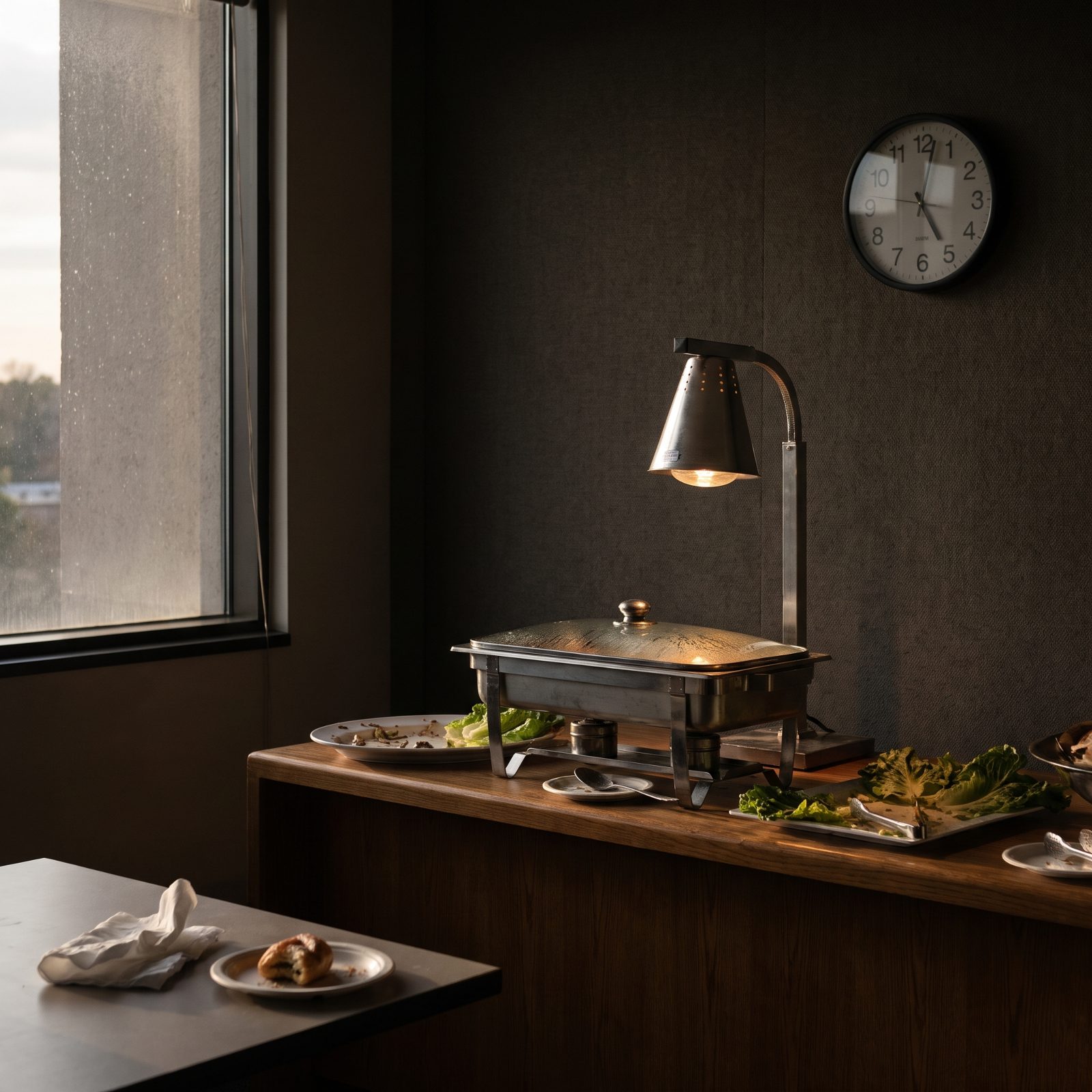
Food held under a lamp for hours on end isn’t generosity. It’s a food-safety problem. The two-hour rule exists because perishable food left in the danger zone between cold and hot grows bacteria whether or not it looks fine.
Good caterers set a closing time and work toward it. Hot items come down, replaced by things that hold safely at room temperature, coffee, dessert, a cheese board. The buffet doesn’t vanish. It just stops being a liability nobody can see.
15. The Overtime Clock Starts Before the Last Guest Leaves
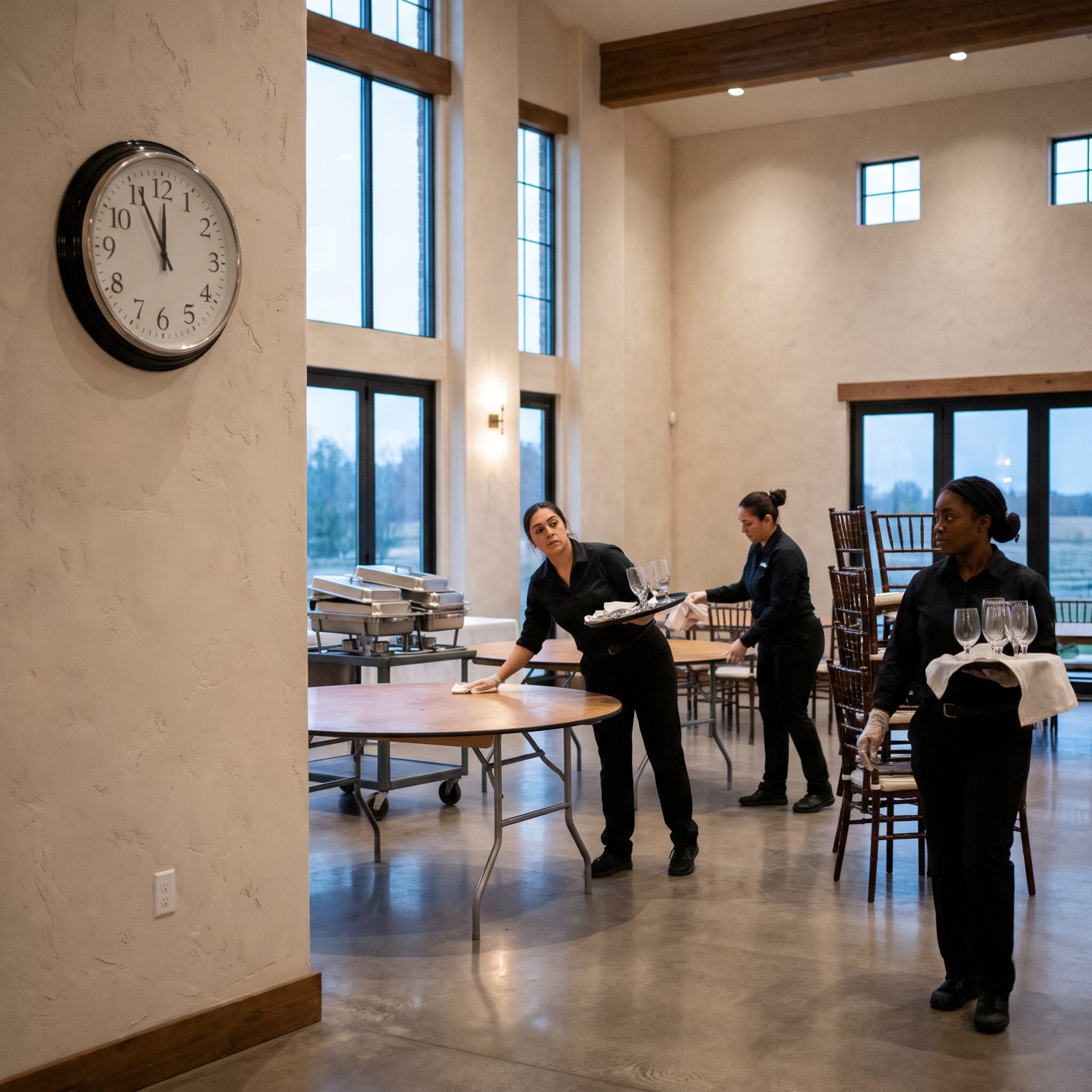
Nobody flags this when they book: breakdown is labor, and labor gets billed. The crew doesn’t vanish when the last pie plate empties. They’re scraping chafers, folding linens, boxing rentals, and sweeping up where the gravy station took a hit. That hour or two gets charged, and it’s often the line item people argue about on the final bill.
Ask up front whether your quote includes strike time or stops at the end of service. The gap between those two answers can run into real money.
14. Rentals Can Quietly Match the Food Budget
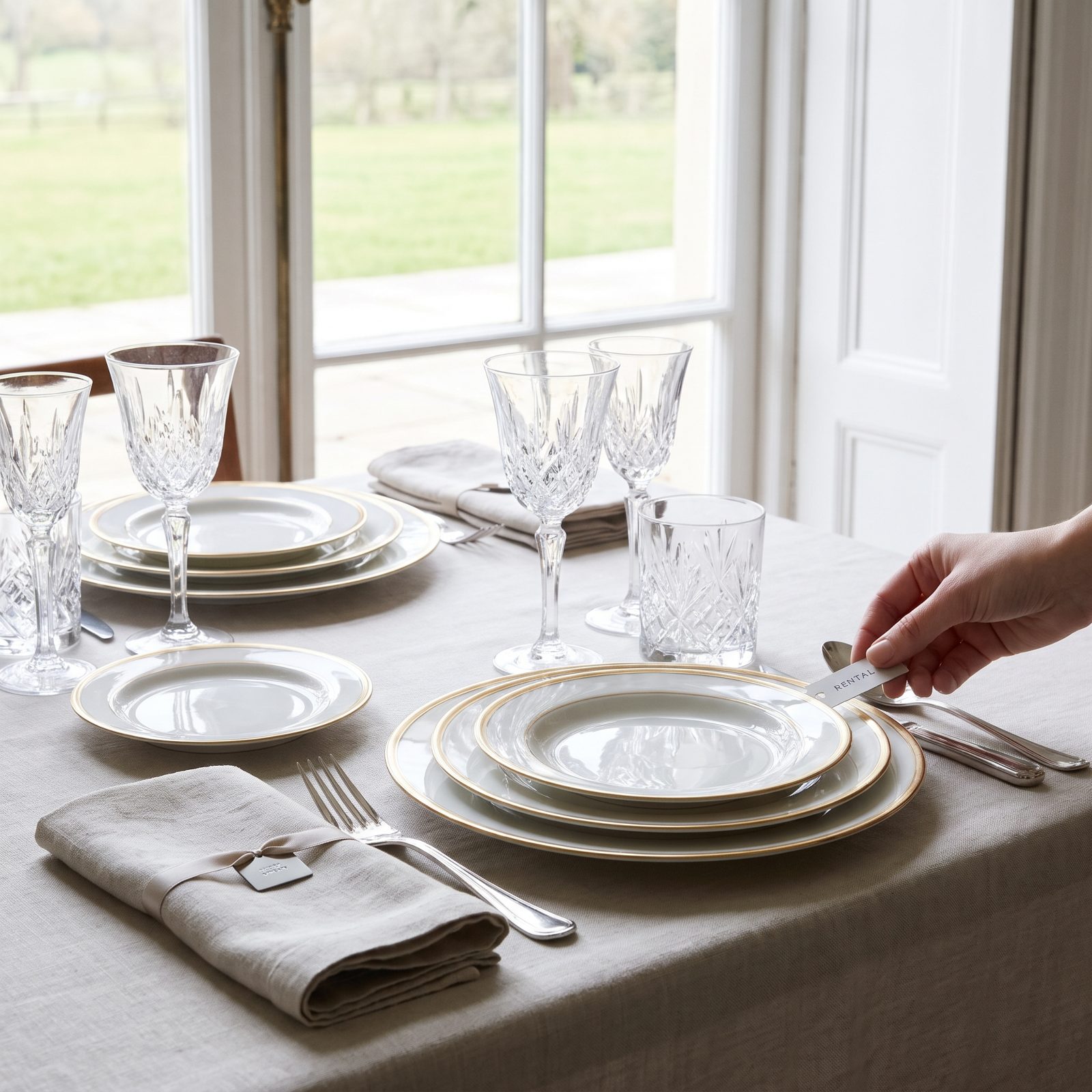
You priced the prime rib. Did you price the fork? Plates, glassware, linens, chafers, chargers, serving platters, and the tables themselves all rent, and for a seated-plus-buffet holiday spread the rental sheet can creep right up alongside the food.
Tiered buffets, specialty platters, anything a planner calls “elevated” — that means more pieces, more rental, more washing, more breakage risk. Those glossy tablescape photos you saved to your phone? Half of what makes them look good is rented and headed back Monday morning.
13. China Orders Always Include Casualties
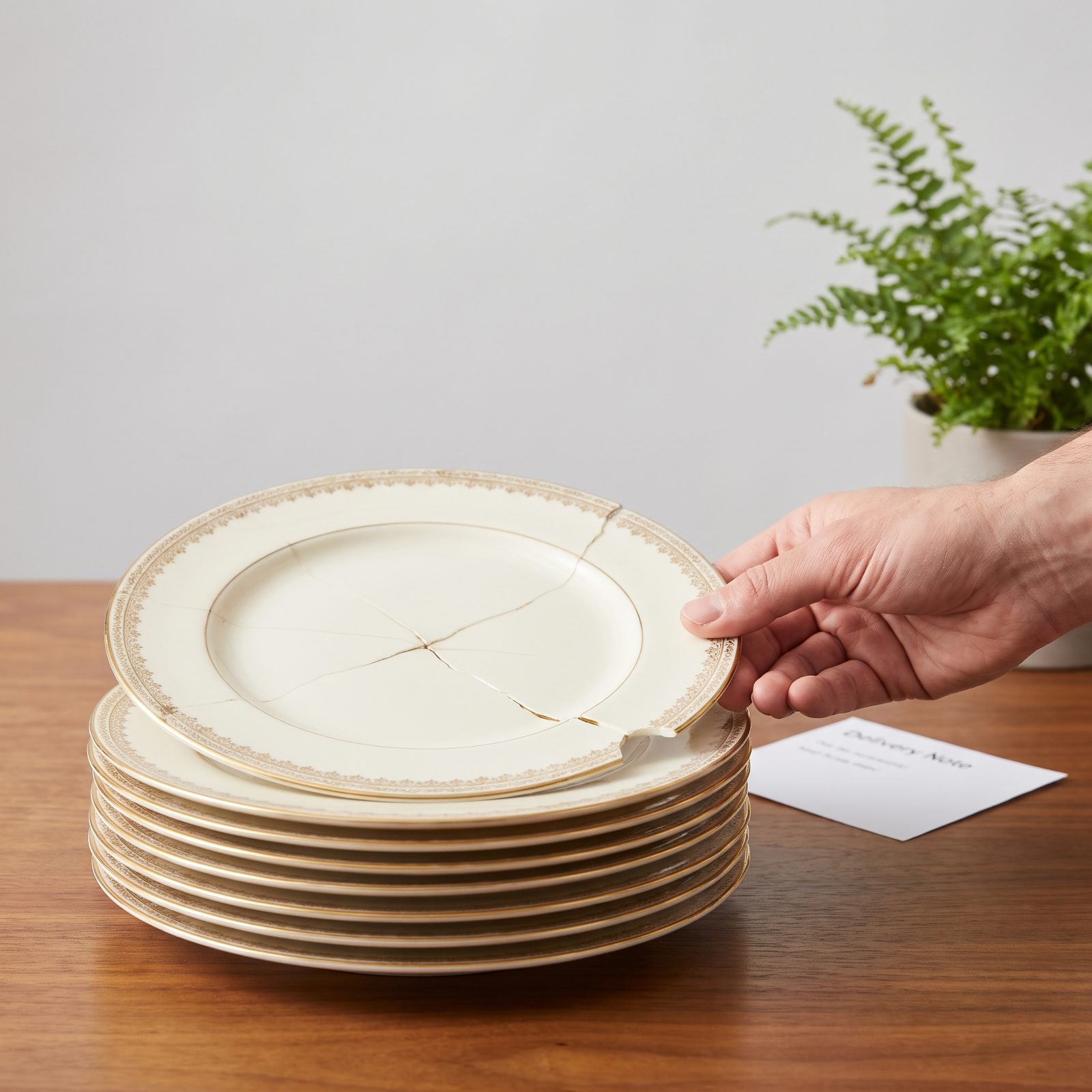
Order plates for exactly your headcount and you’ll come up short — every caterer learns this early, usually the hard way. Plates chip in transit. A server clips a stack with an elbow, a guest sets a glass down like it personally offended them, and suddenly you’re two dinner plates light during the rush. Rental china orders pad in extras for drops and breakage, and that padding sits in your quote whether anyone spelled it out or not.
12. The Venue’s Breaker Panel Decides Your Menu
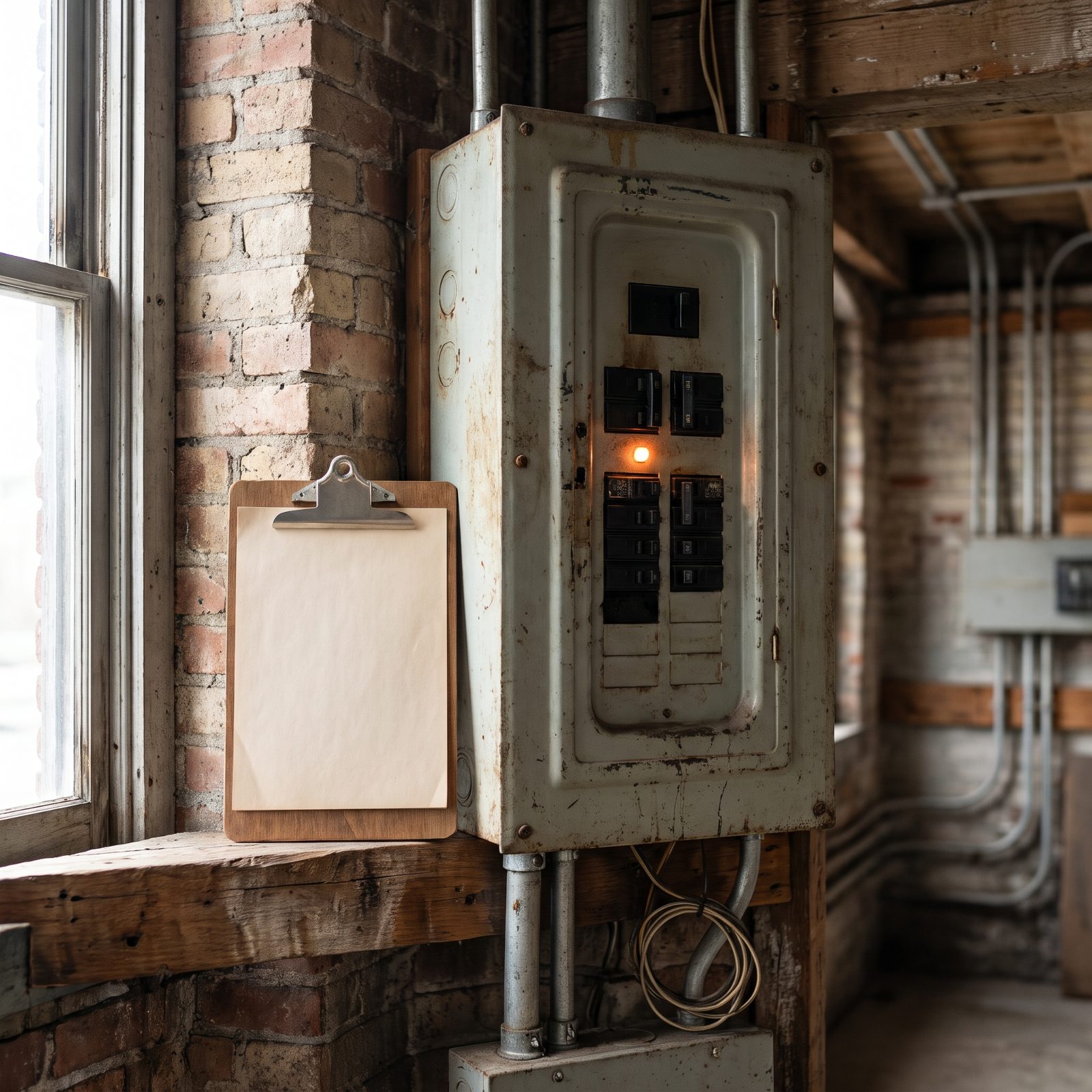
Every warming cabinet, electric chafer, and coffee urn draws power, and old buildings have limits. A historic home or a church basement can trip a breaker the second the mashed potato warmers and the espresso machine fire up together. So caterers scout the panel before they commit to a single dish.
That’s why the venue walkthrough matters more than the tasting. If the electrical can’t carry hot-holding equipment, the menu slides toward room-temp and cold stations whether anyone wanted it to or not. And nobody tells you a blown fuse rewrote the buffet.
11. A Cramped Prep Kitchen Rewrites the Whole Spread
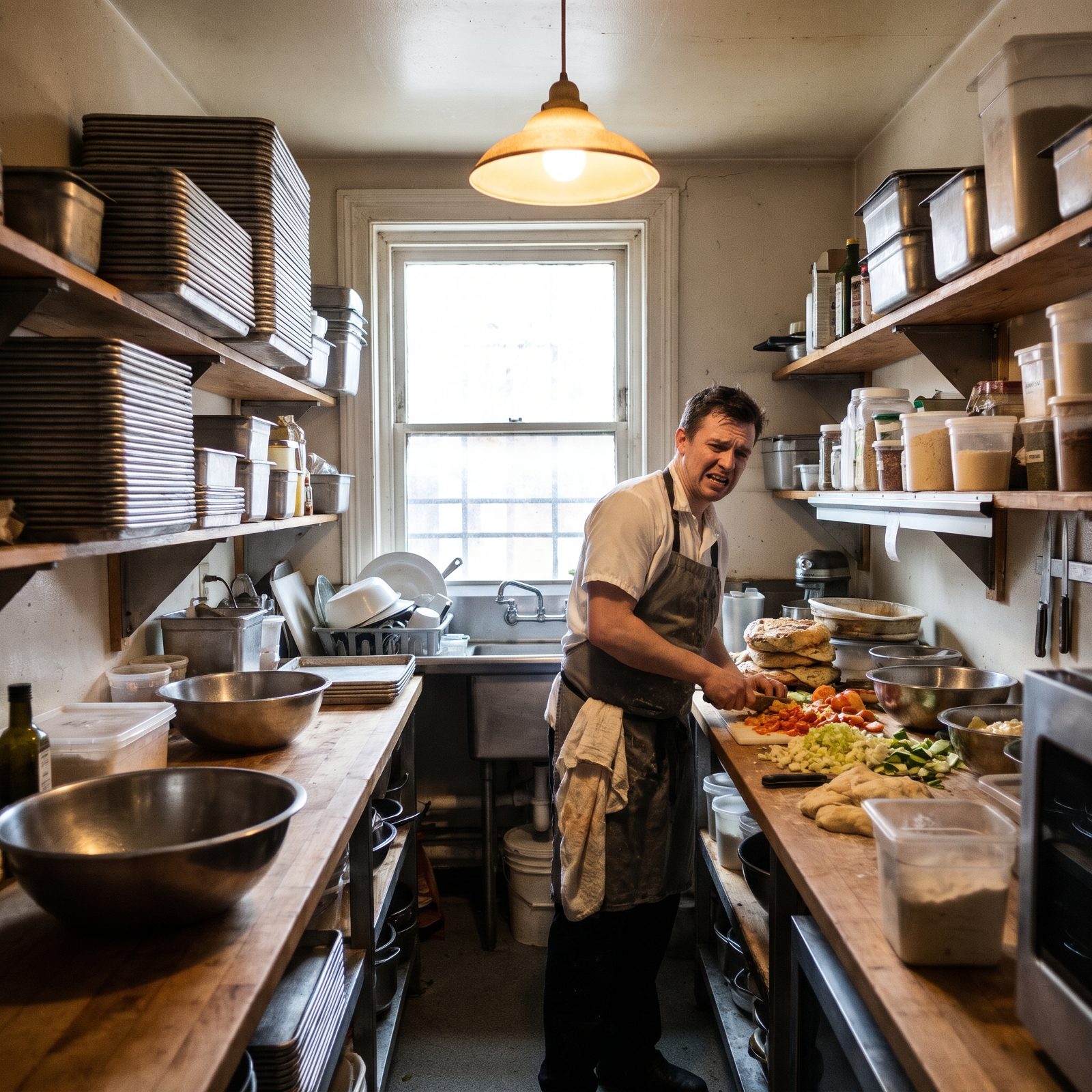
The food you imagine and the food the space allows are two different menus. A tiny prep kitchen — or no kitchen at all — means everything either arrives finished or holds warm on limited equipment. No à la minute searing. No delicate plating. No last-second saucing.
Caterers working out of a closet-sized back room lean on braises, roasts, and dishes that sit happily for an hour without falling apart. That’s not a compromise on skill. It’s physics. The space tells you what it can do, and the smart ones listen.
10. The Freight Elevator Is on Your Invoice Too
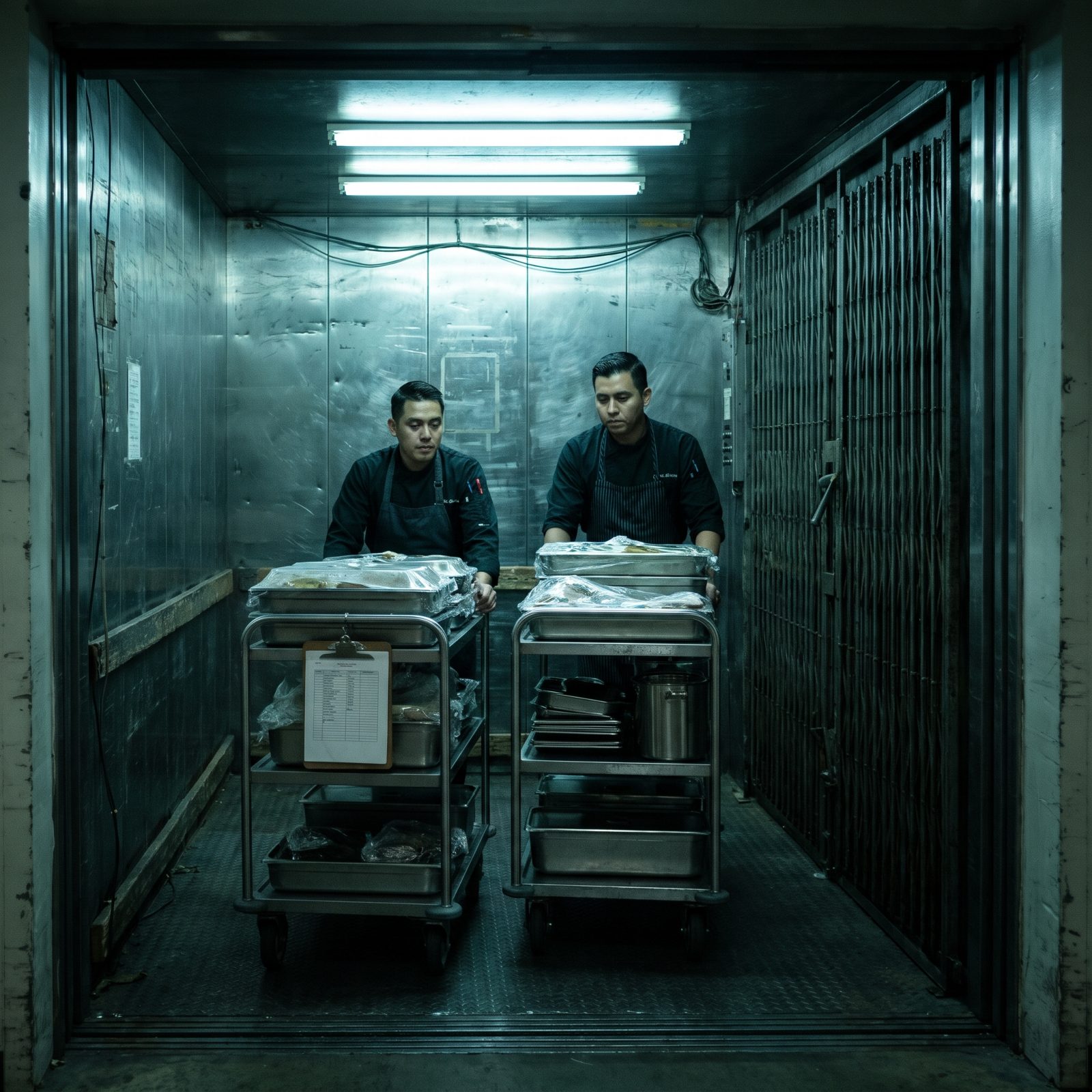
Loading into a tenth-floor venue with one slow freight elevator and a strict two-hour window is a completely different job than backing a truck up to a ground-floor door. More trips, more time, more hands, and sometimes union building staff who alone are allowed to run the lift. All of it lands in the quote.
Ask any caterer about a high-rise holiday party and watch them wince. The food is the easy part.
The kitchen determines the menu. The elevator determines the price.
9. Staffing Ratios Are Why the Trays Stay Full
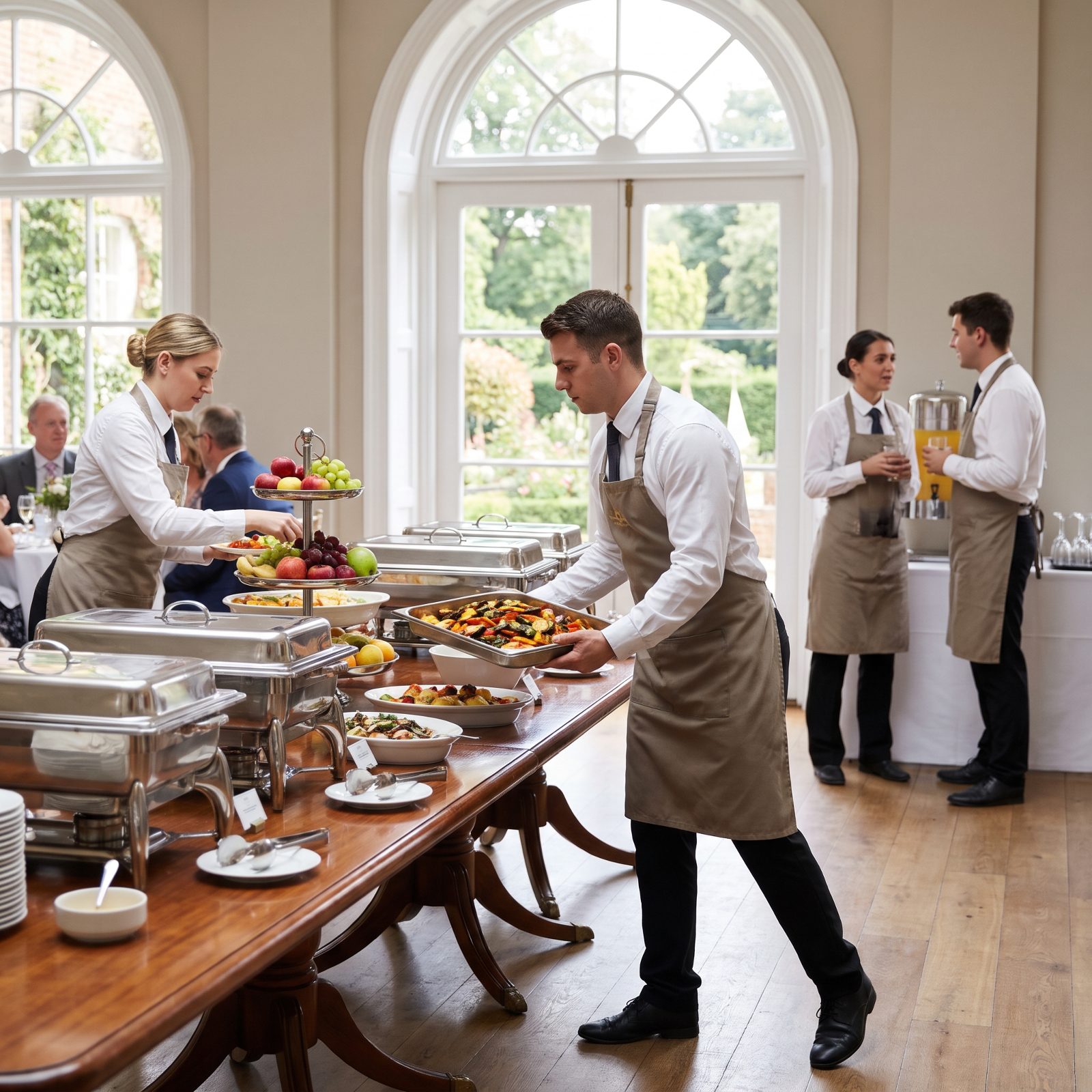
A buffet that looks picked-over by eight and one that stays sharp till the lights come up? The difference is bodies. Enough staff means trays get swapped before they bottom out, spills get wiped, empty pans vanish, and the line keeps moving. Too few, and the whole thing wilts in front of your guests in real time.
Cutting staff count is the most common way a client shaves a quote and the first thing they regret. Most caterers would take one fewer appetizer and one more server, every single time.
8. A Spoon in the Wrong Dish Is How Allergens Travel
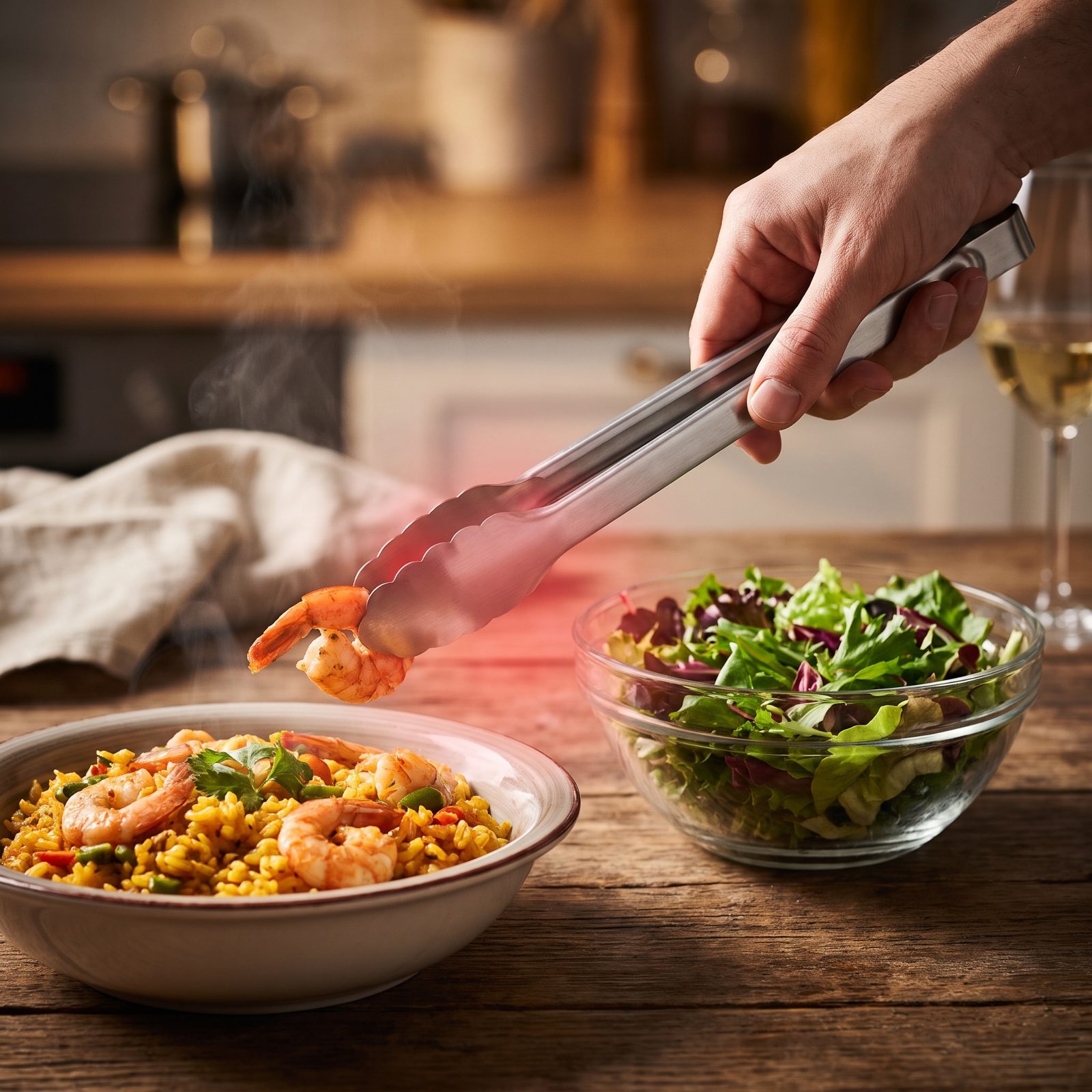
A guest grabs the tongs from the shrimp and reaches into the salad. That’s cross-contact, and on a self-serve line it happens all night long. The fix is boring and it works: one dedicated utensil per dish, each with its own rest so it never wanders.
Good staff watch for strays and swap them back. It’s the least glamorous job on the floor and one of the most important, because a misplaced serving spoon can turn a nice buffet into a hospital trip for someone who never saw it coming.
7. A Label Tells You What’s In It, Not What Touched It
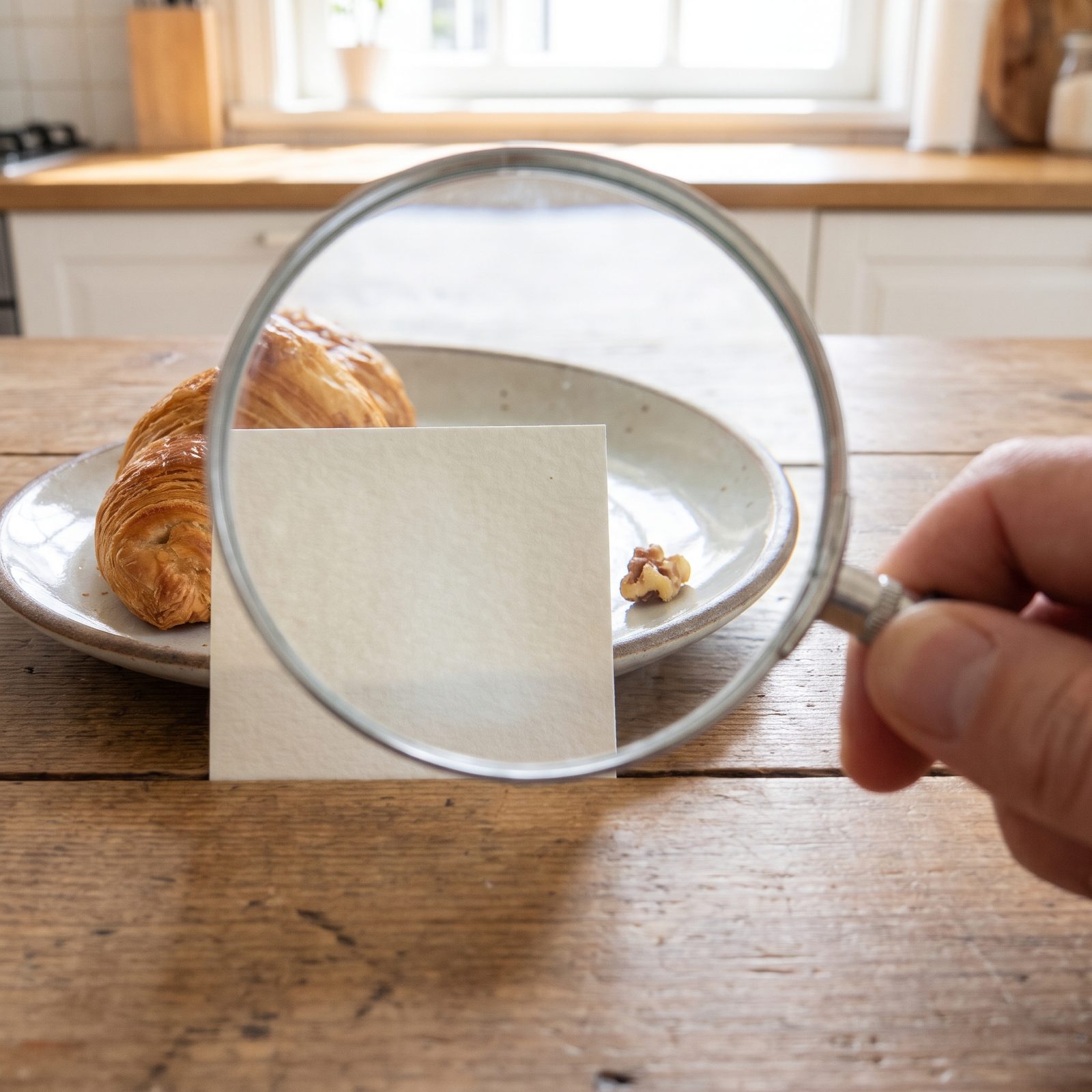
A distinction that gets glossed over constantly: a card reading “contains nuts” tells you the recipe. It says nothing about whether that dish shared a cutting board with something else, or whether some guest dragged a utensil over from two dishes down. The label is honest. It’s also not a cross-contact guarantee, and those are very different things.
For a guest with a severe allergy, the label starts the conversation. It doesn’t end it. The safest answer comes from asking the staff directly, and from a caterer who treats that question as routine rather than an imposition.
6. The Safest Special-Diet Plate Never Touches the Buffet
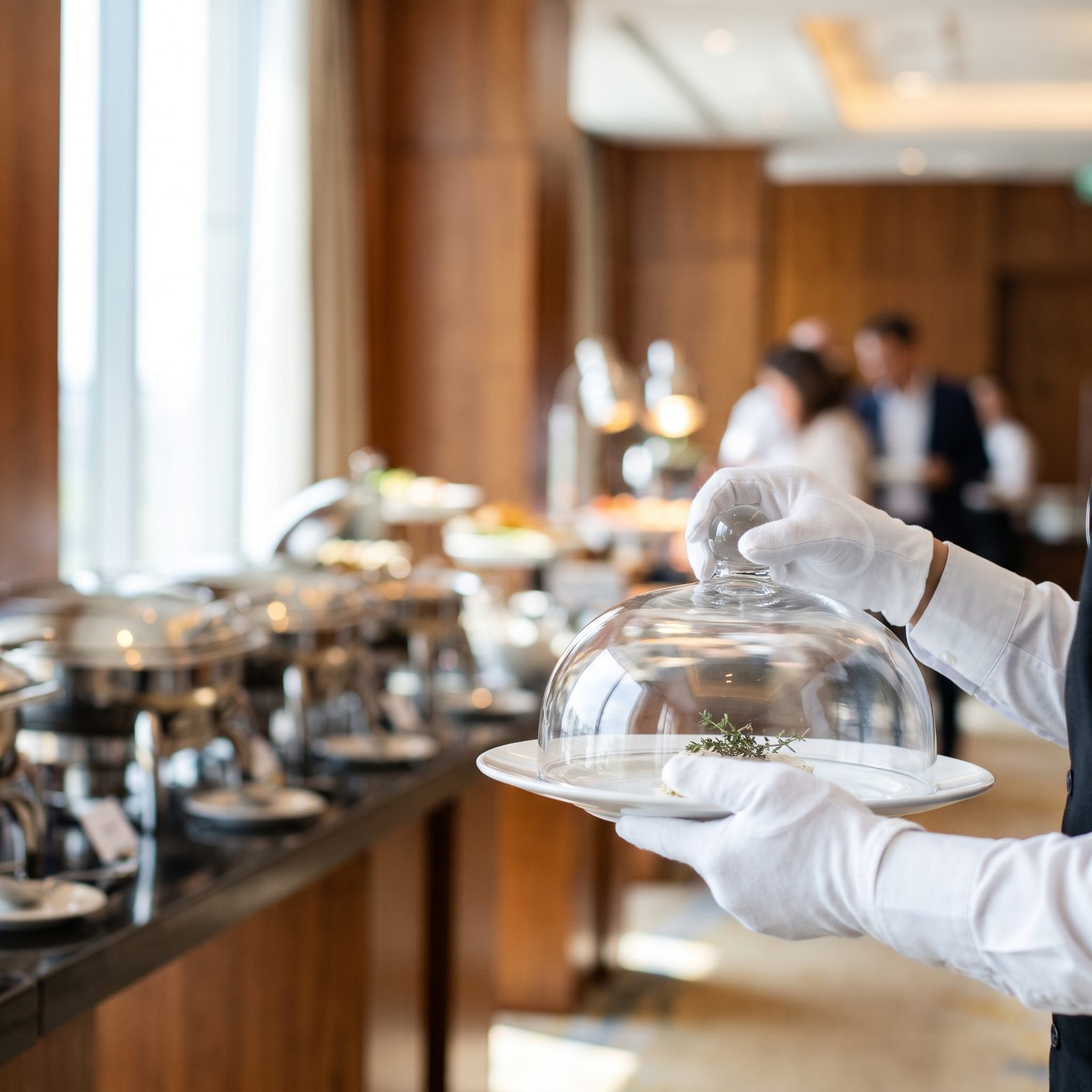
The real protection for a serious dietary need isn’t a careful walk down the buffet. It’s a plate built separately in the kitchen, covered, labeled with the guest’s name, and handed over by hand. No shared serving spoons, no reaching over the stuffing, no guesswork at the sneeze guard.
Caterers who do this well treat it as normal, not a favor. Give them the heads-up when you book — not the night of. A plated special meal needs planning, and the ones who plan for it are the ones you call back next December.
5. Why Caterers Need Your Allergy List Before the Turkey Thaws
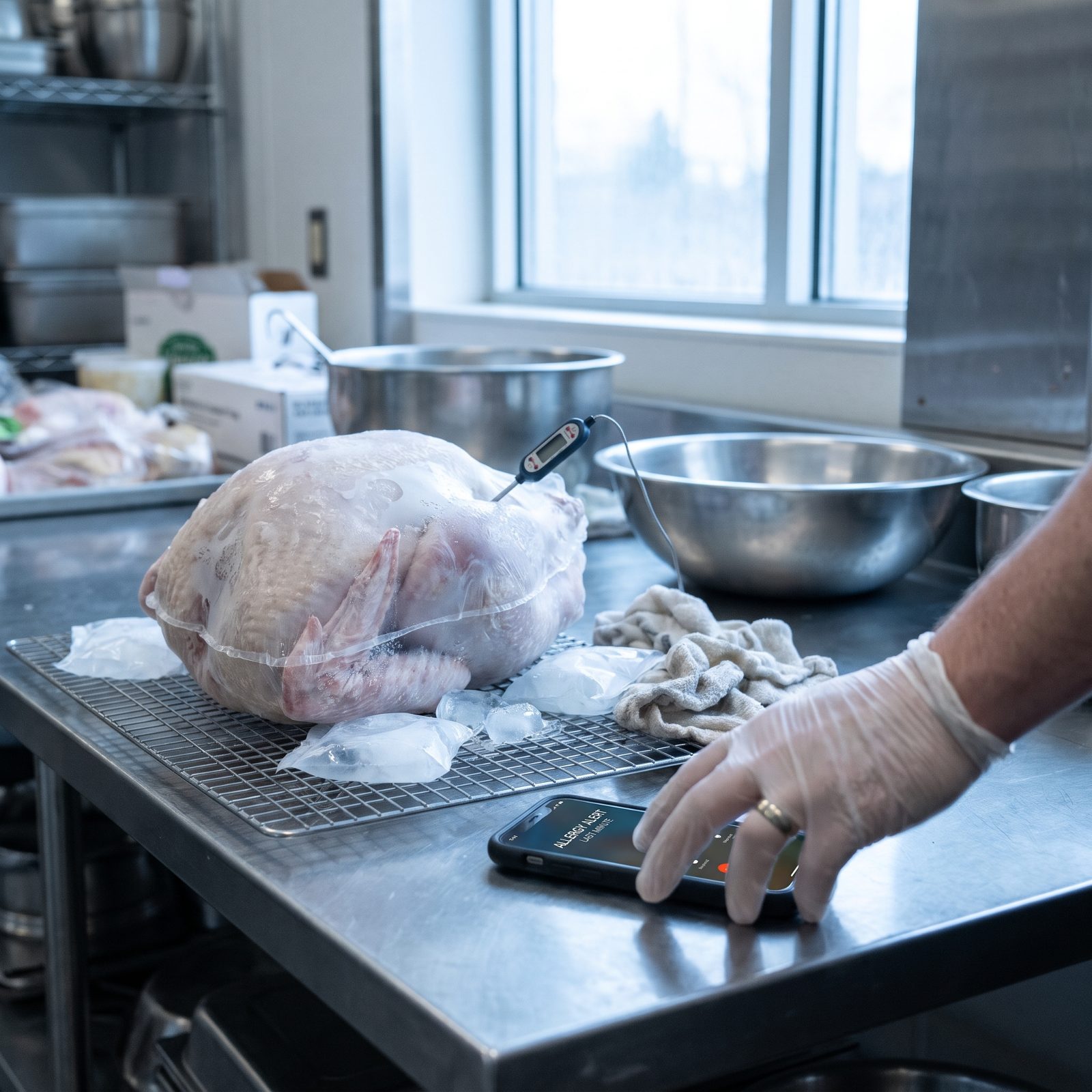
The last-minute allergy call never goes well. A caterer who learns about a tree-nut guest the morning of the party gets two bad options: scramble to re-source a dish, or serve something unsafe and hope. Neither one is the party you paid for.
Good holiday buffets collect allergen info weeks out, because separation is a logistics problem and not a garnish. Separate prep surfaces, separate serving utensils, separate storage — that means planning, extra trays, and sometimes a whole second cooking line running alongside the first.
4. Outdoor Wind Snuffs Out Chafing Fuel Faster Than You Think
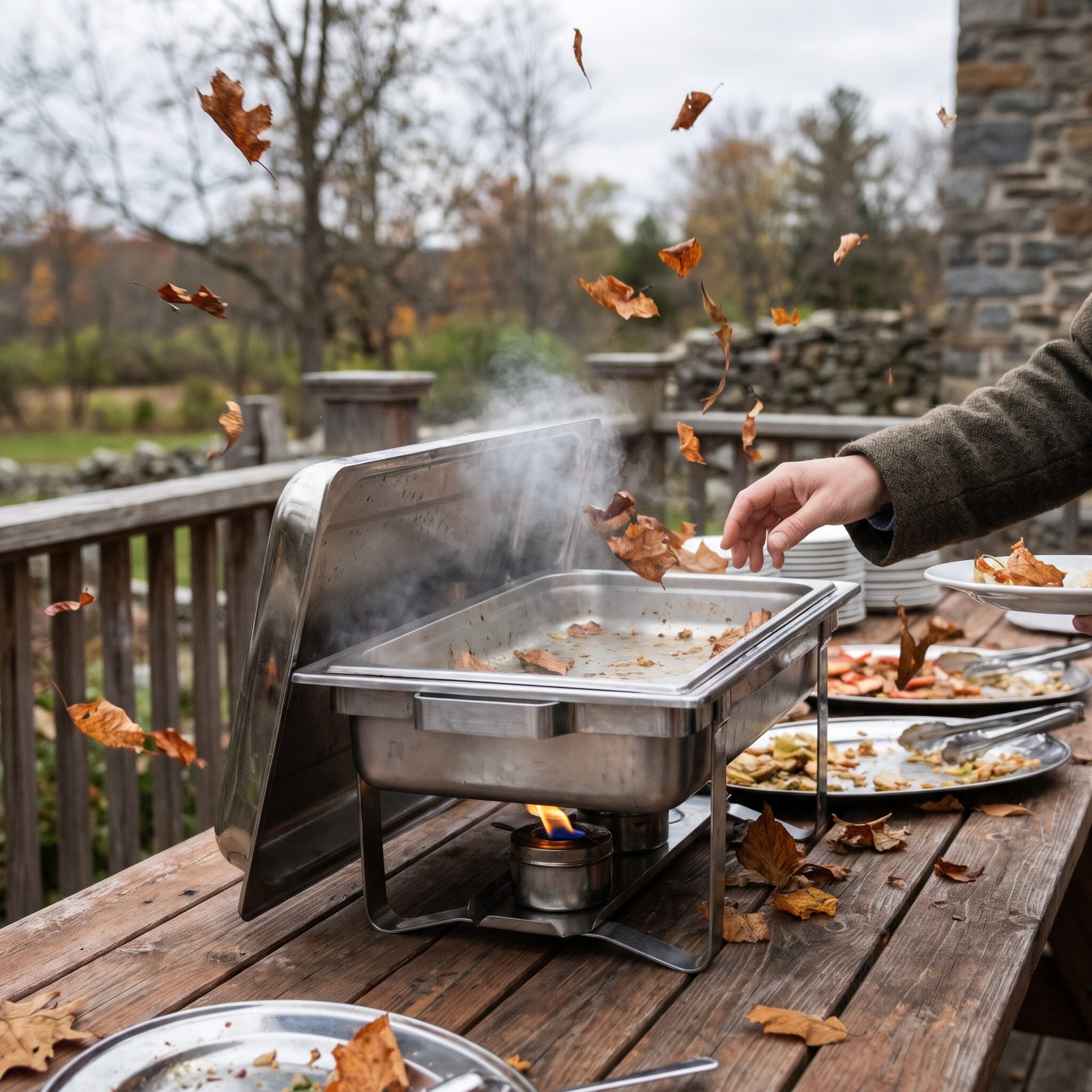
A gust of wind can turn a hot buffet into a room-temperature one in about the time it takes to refill your drink. Open-flame chafing fuel is the quiet workhorse of outdoor service, and it hates moving air. Flicker it out and the water bath cools, the food cools, and now you’ve got a food-safety clock running instead of a dinner.
Experienced caterers scout the wind before they set a single tray. They angle burners away from the breeze, build with wind guards, and keep spare fuel within arm’s reach. The amateur move? Assuming a covered tent handles it. Covered does not mean still.
3. A Real Rain Plan Covers the Equipment, Not Only the Guests
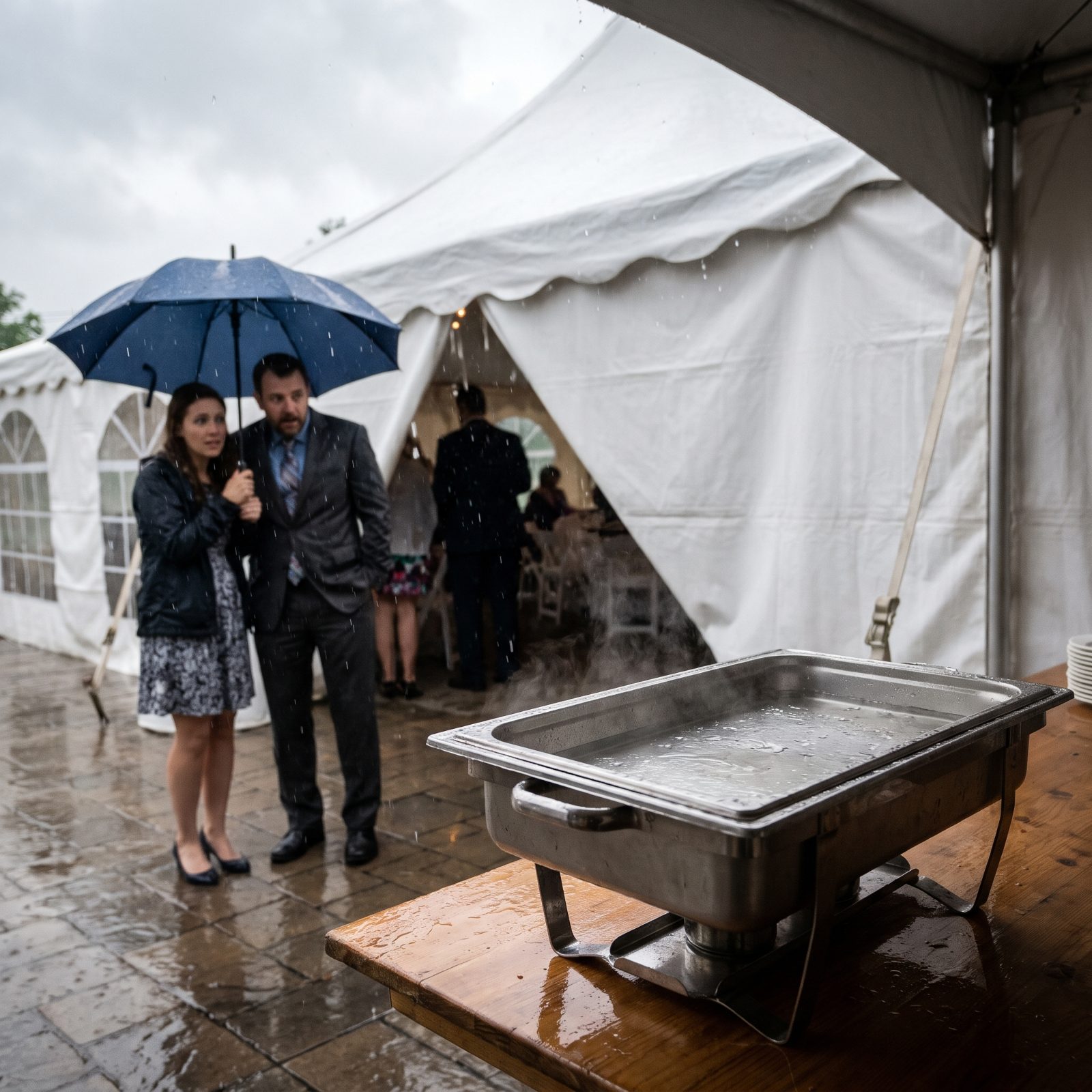
Everyone plans the umbrella for grandma. Fewer people plan the dry route for the warming trays.
Nobody mentions this part: catering equipment runs on open flame and electricity, and both get dangerous in weather. A rain plan that moves guests indoors but leaves the buffet line sitting in a drizzle is only half a plan. Where do the chafers go? Where do the extension cords stay dry? Can the staff still reach backup trays without crossing a soaked lawn?
Walk the backup location with your caterer before the forecast turns. Ten minutes now saves a soggy scramble later.
2. That Gorgeous Garland Might Be Blocking the Server’s Path
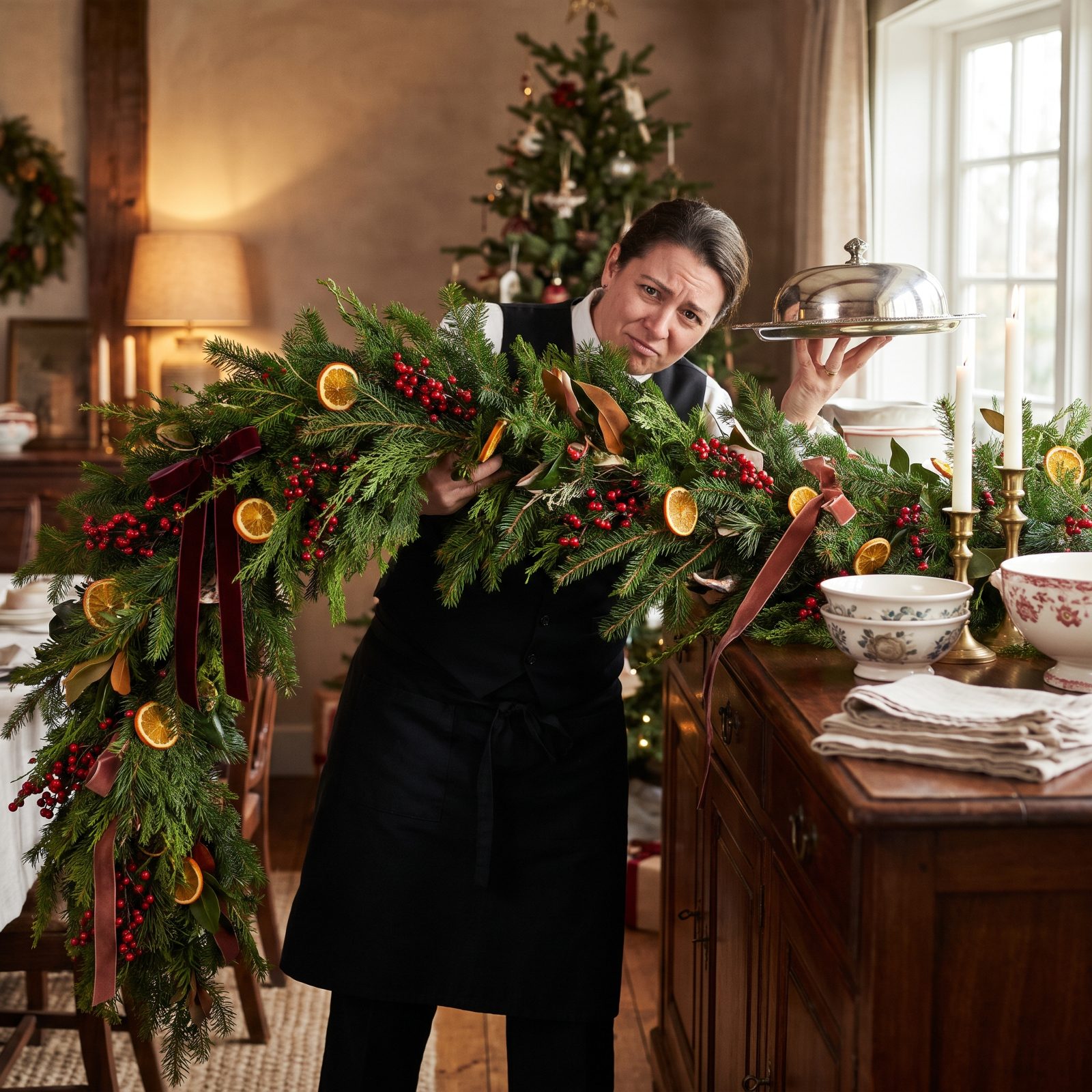
Décor and logistics fight over the same square footage, and décor usually wins — right up until the food needs replacing.
Caterers need clear routes: a path to swap empty trays, a side of the table to approach from, a few feet of staging near the kitchen door. Pile the table with towering centerpieces and trailing garland, and suddenly the only way to refill the green beans is to reach across three guests and a lit candle.
1. Why Your Caterer Won’t Hand Over the Leftovers
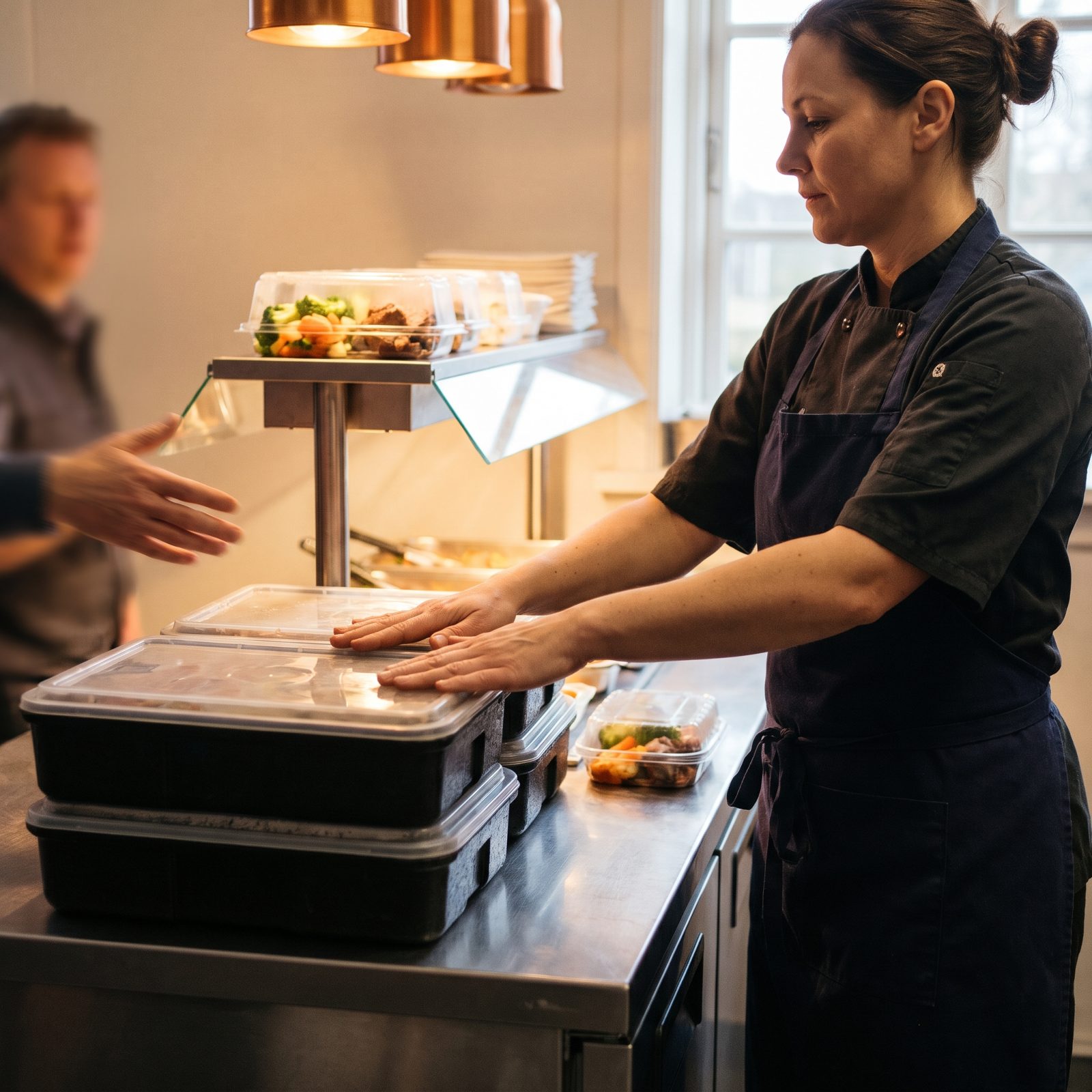
You paid for the food, so the leftovers are yours. Except when they aren’t.
Hot food sitting out past a safe window is no longer something a professional will put their name on. Licensed caterers follow time-and-temperature rules, and the clock on a holiday buffet runs shorter than most hosts guess. Once that threshold passes, handing you a tray of stuffing becomes a liability they legally cannot take on.
Want leftovers to take home? Ask for a portion to be pulled and refrigerated early, before the buffet even opens. That’s the move. Scraping the warming trays at midnight is not.