
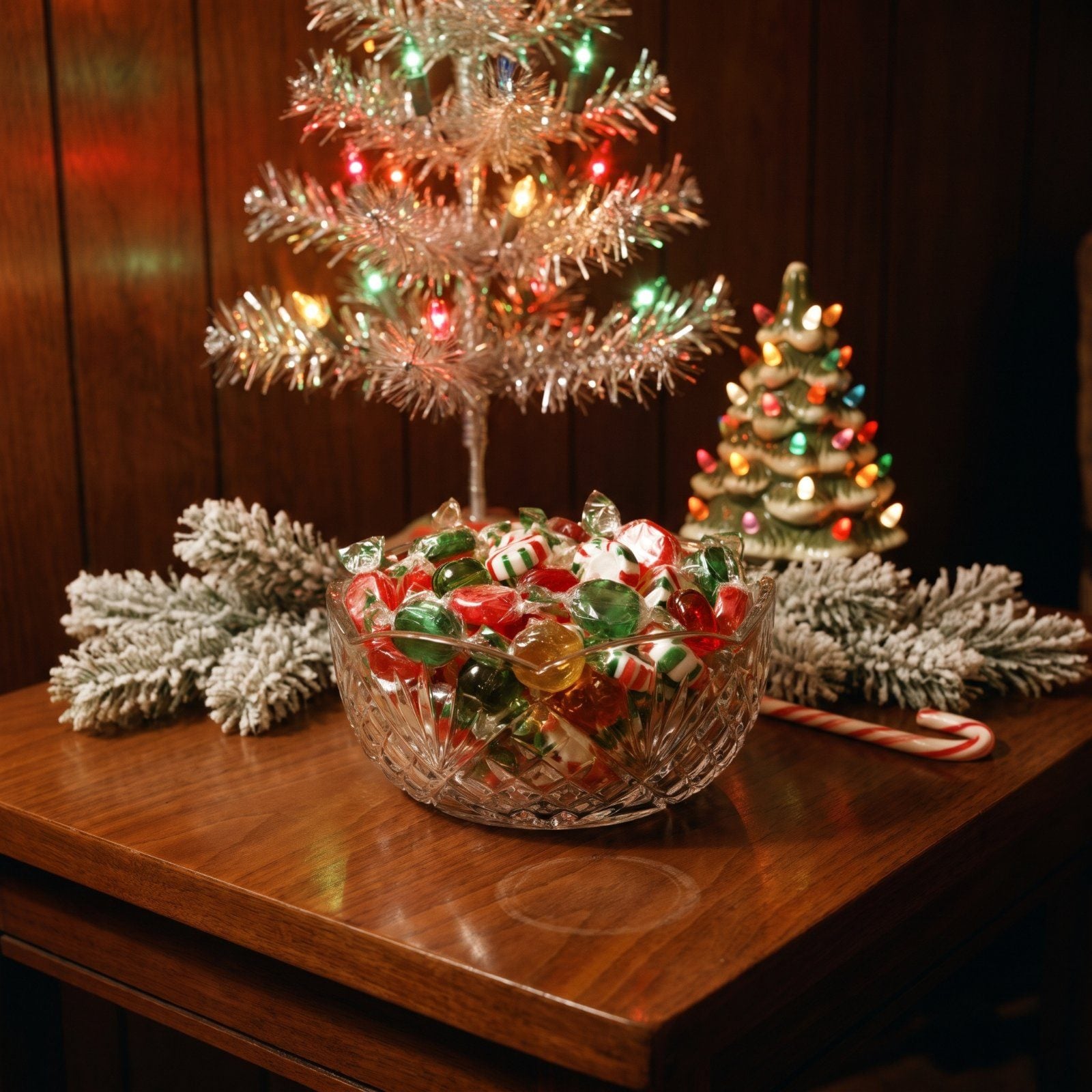
The lid came off with a little ceramic clink, and there it sat. A pressed-glass dish on the end table, filled with candy nobody actually ate but everybody rearranged. Ribbon candy too pretty to crunch. Strawberry bon bons welded together by August humidity. The dish was decoration and offering and quiet rule all at once: you could look, you could take one, you could not take six. Most of these candies have faded from the shelves and the memory. The ones below bring the whole walnut-and-tinsel room right back.
Please note that some of the images in this article were created with the assistance of AI.
36. Glasslike Ribbons of Multicolored Ribbon Candy
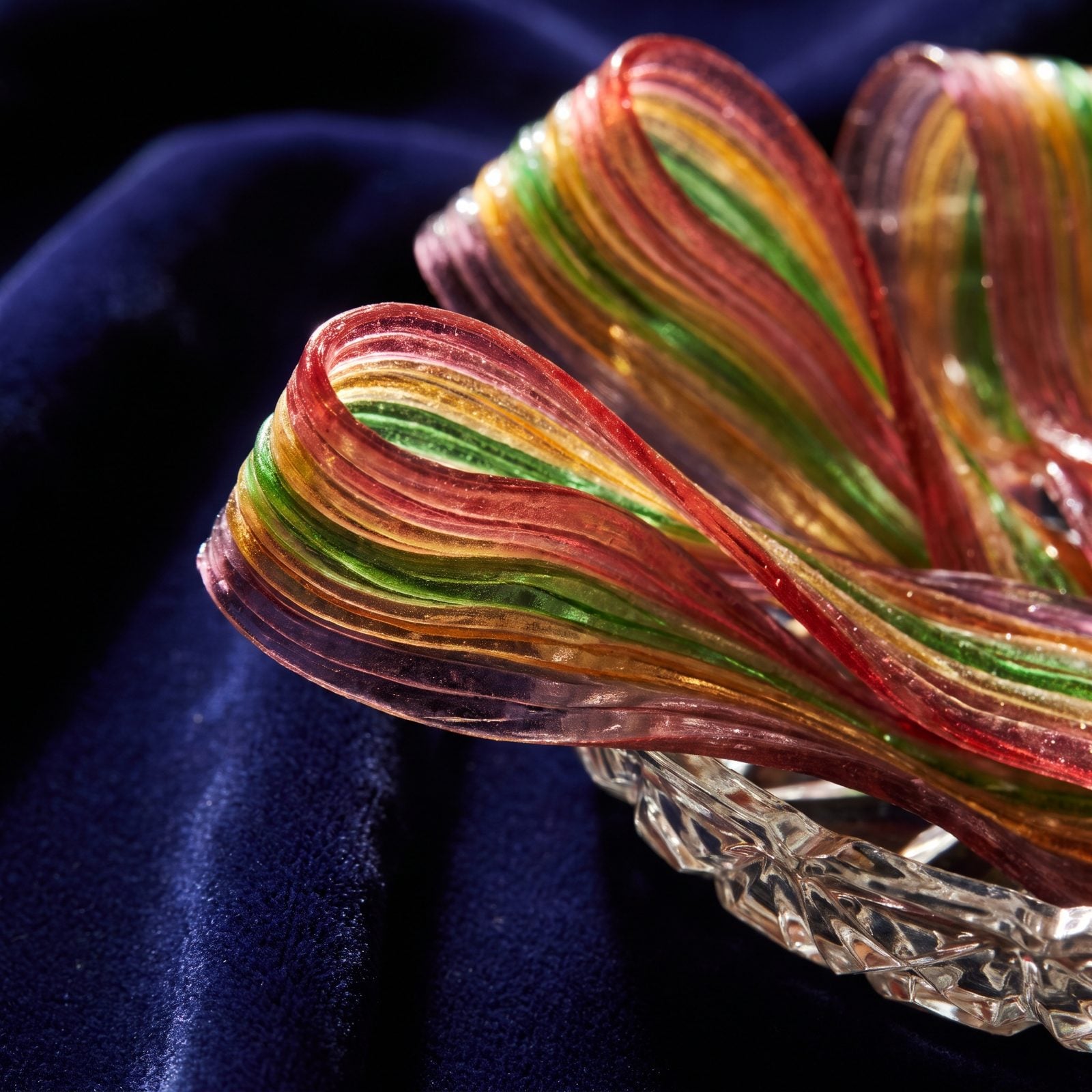
You weren’t supposed to eat it. Everyone knew that. Ribbon candy was architecture, a frozen wave of spun sugar so thin it glowed when you held it to the window bulb, and touch one wrong and a whole fold snapped off clean.
By spring there were always a few orphaned shards rattling at the bottom of the dish, nobody willing to be the person who finished it. It was made on heated rollers that pleated hot sugar into those accordion folds, fussy to produce and fussier to ship. Stores quietly stopped stocking it, and the folks who made it at home mostly stopped too.
35. Sugar-Crusted Filled Raspberry Candies
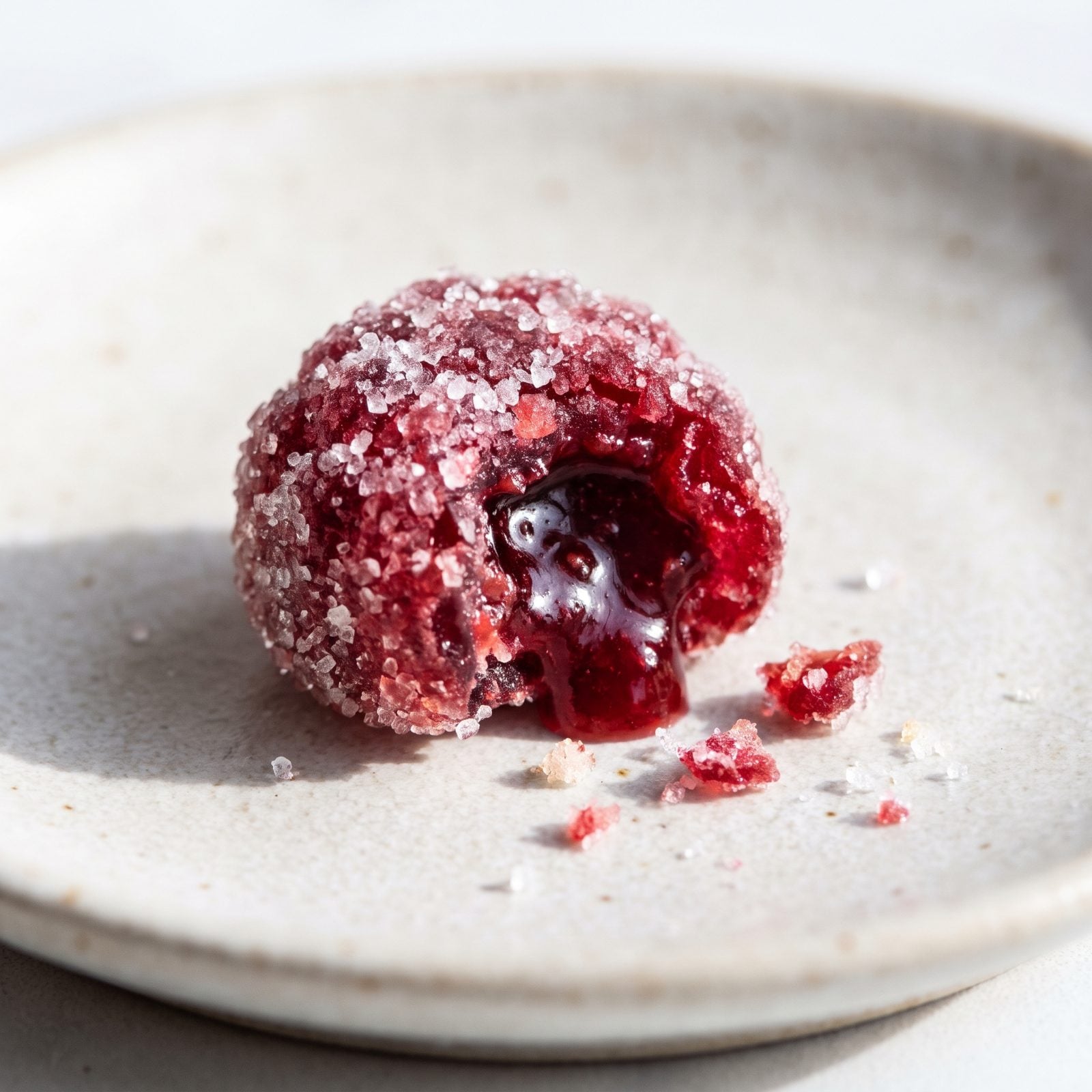
Red as a stoplight, rough with sanded sugar, hiding a soft raspberry center that surprised you every single time. You’d bite down expecting solid hard candy and get a little rush of jammy filling instead.
They lived in the dish year-round in some houses but came out in force at Christmas, when their color earned them a spot. Cheap enough to buy by the pound, sweet enough to satisfy a kid who got turned away from the chocolate. They never really left store shelves entirely, but the ritual of the filled dish did, and so did the memory of that sugar-crust grit on your fingers.
What Our Readers Say
- When Piaci Pizza readers loved a food photo and tapped a reason, comfort topped the list at 30%, with nostalgic not far behind at 15%.
From Piaci Pizza reader polls and votes.
34. Cellophane-Wrapped Strawberry Bon Bons
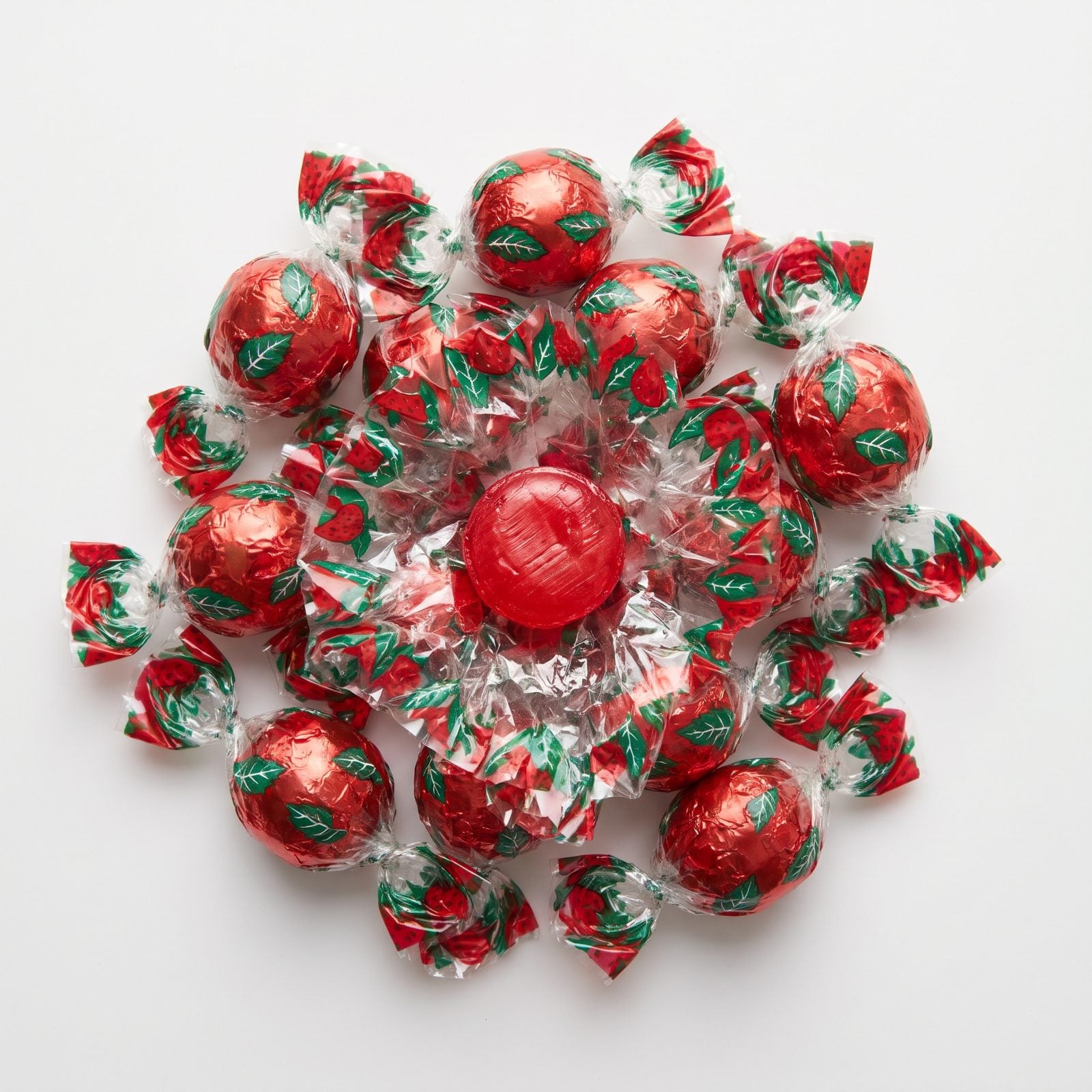
You know this candy even if you never knew its name. The red strawberry hard candy in the leaf-printed wrapper, the one that lived in a bowl at your grandmother’s and reliably stuck to three of its neighbors.
Half the fun was the fight with the cellophane. By late December the whole cluster had bonded into one sticky mass, and freeing a single bon bon meant sacrificing a little of the candy to its wrapper. Nobody minded. They were sweet in that old-fashioned strawberry-soda way, and they outlasted almost every other candy in the house.
33. Striped Hard Candy Pillows
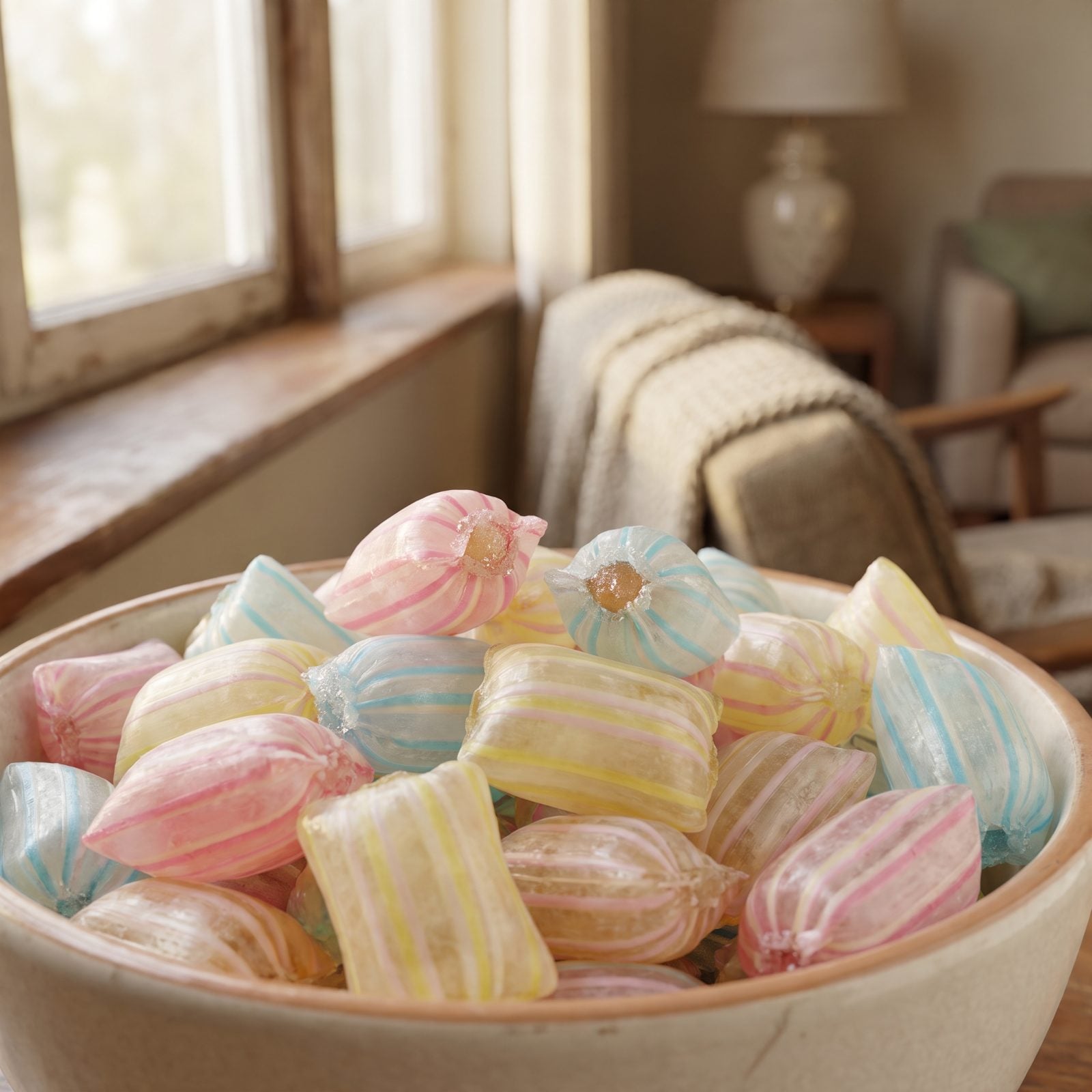
Plump striped candies with a secret inside. These candy pillows look like tiny wrapped sweets, pulled from glassy, translucent sugar in soft pastel stripes of pink, blue and yellow and pinched at both ends, and peeking into one reveals a sticky amber, jam-like filling.
They were a Northeast and Midwest fixture, the kind of thing a local candy shop made by the barrelful every December. Heap a few in a ceramic bowl and they look like a candy store that’s been gone forty years.
32. Chocolate-Covered Creme Drops
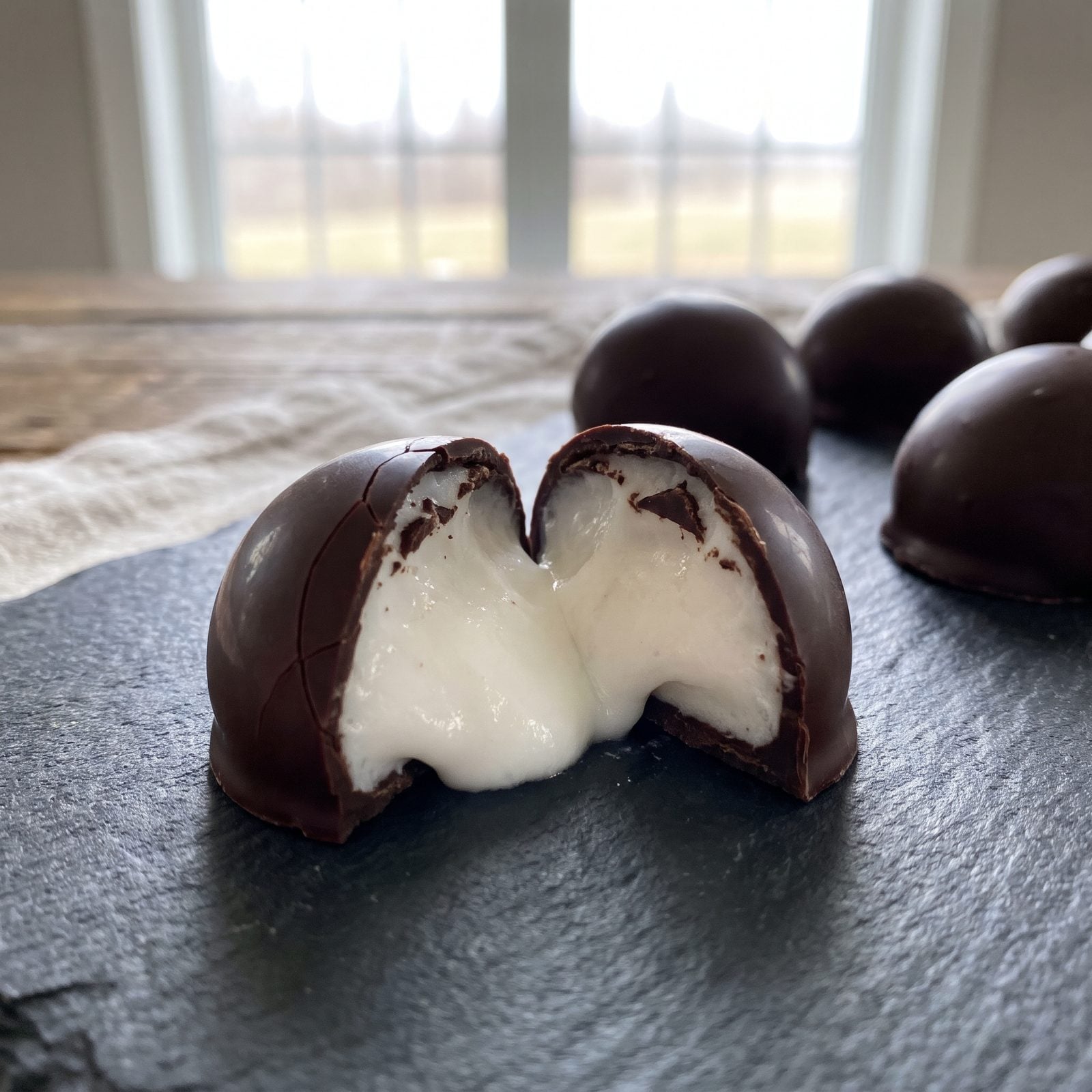
A thin, glossy shell of chocolate wrapped around a white creme center so soft it nearly collapsed on your tongue. Creme drops were the grown-up pick in the dish, the one the adults reached for while the kids went after anything shinier.
They came in a rainbow of pastel centers, vanilla and maple and a pink one that tasted vaguely of cherry. Old candy counters sold them loose by the scoop in a paper bag. Mass-market chocolate boxes mostly muscled them out, and the few regional makers who still turn them out treat them like a holiday-only tradition.
31. Green-Tree Peppermint Christmas Nougats
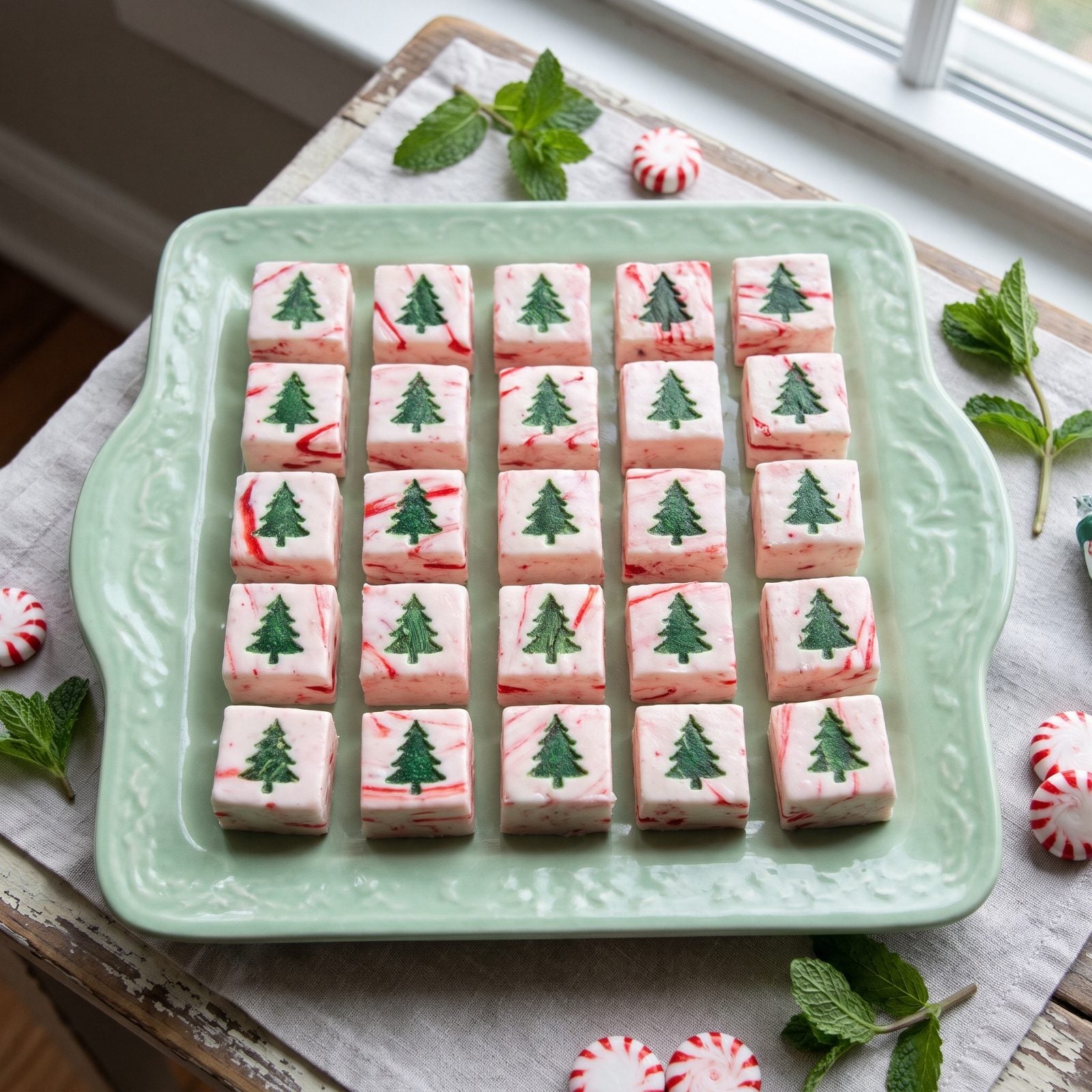
Every piece had a little green tree stamped right in the middle. These soft peppermint nougats were pure Christmas, chewy and cool and dotted with that cheerful evergreen that told you the season had arrived.
They showed up in the dish in December and vanished by New Year’s, strictly seasonal, which gave them a glamour the year-round candies never had. The chewy nougat base held its printed design beautifully, a little trick most people never thought twice about.
30. Individually Wrapped Brach’s Royals
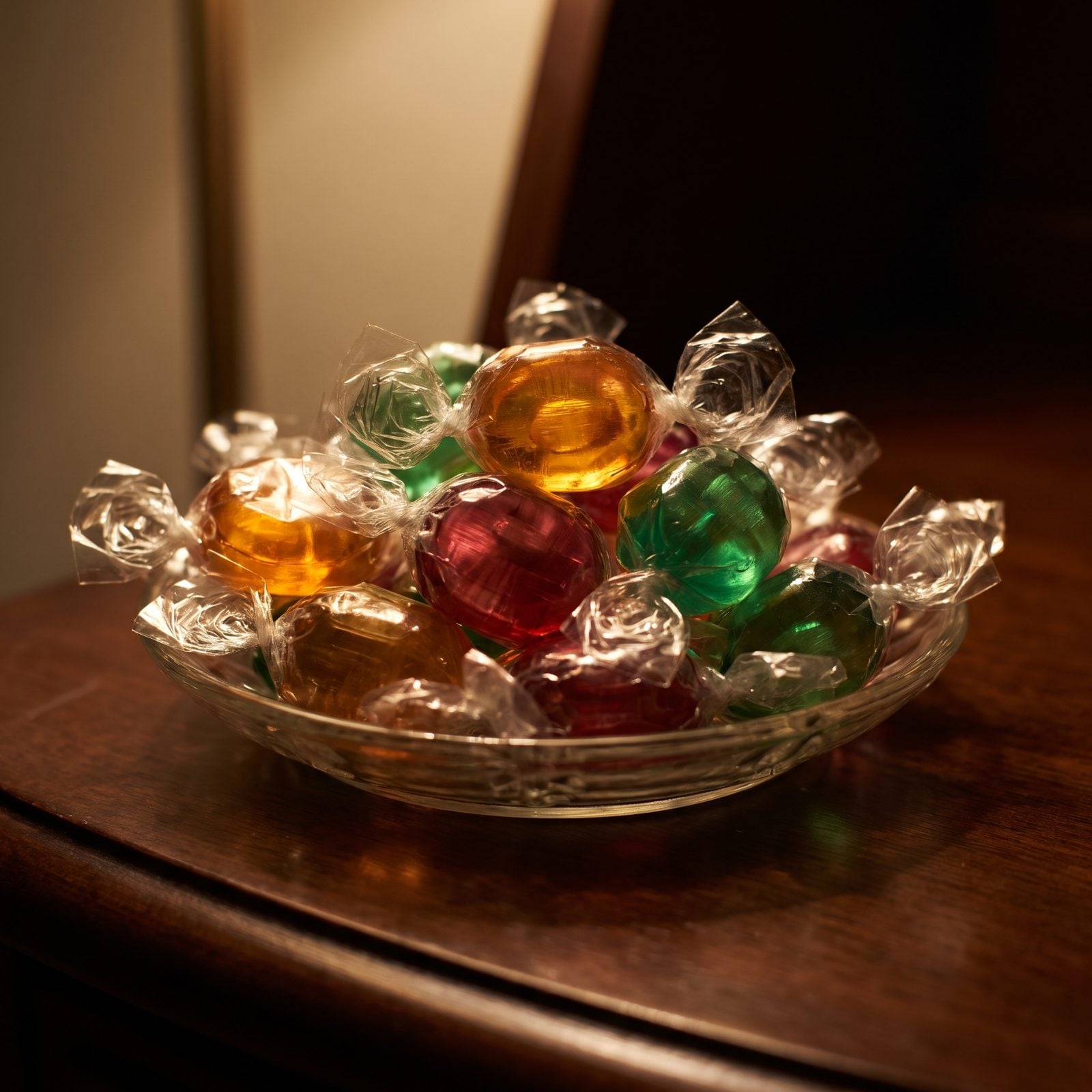
The classy ones. Each twisted in its own crinkly cellophane, assorted hard candies in deep amber and ruby and forest green, they looked like a dish of gemstones when the tree lights hit them.
The individual wrapping was the selling point. No fusing, no sticky clump, just a clean twist of cellophane you could pocket for later. These were the candy you offered guests, the civilized option. They hung on longer than most because of that convenience, but the full assorted-dish habit faded anyway, and the bulk bags got harder to find.
29. Brach’s Neapolitan Coconut Sundaes
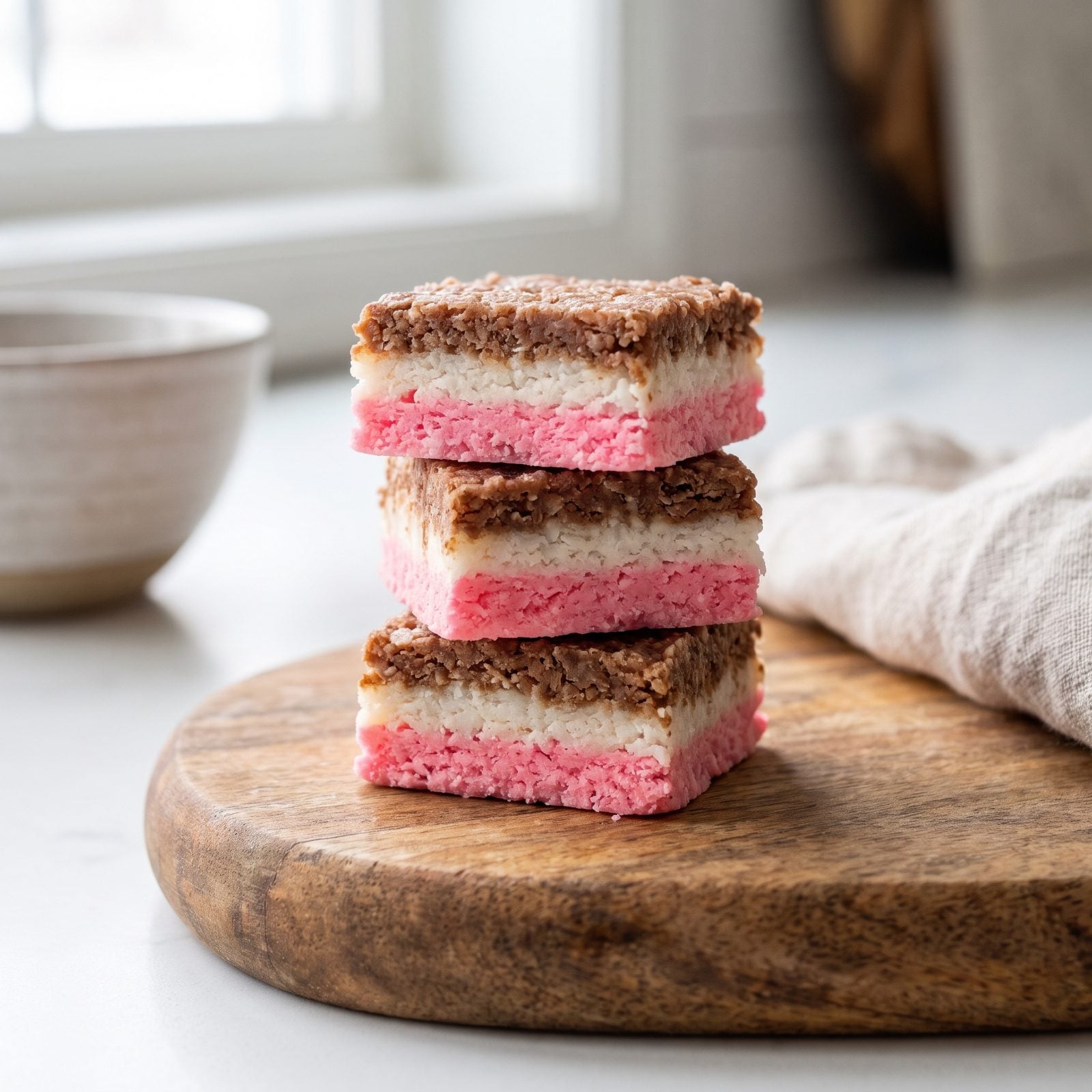
Pink, white, and brown in three neat chewy layers, like somebody sliced a bar of Neapolitan ice cream and dared it to stay sweet forever. The coconut gave it a texture nothing else in the dish had.
These were a love-them-or-leave-them candy. The coconut crowd went straight for them while everyone else left them for last. Soft, dense, almost fudgy, they were a grocery-store staple that quietly slipped off shelves as coconut fell out of favor and the old assorted-mix bags disappeared.
28. Crunchy Maple Nut Goodies
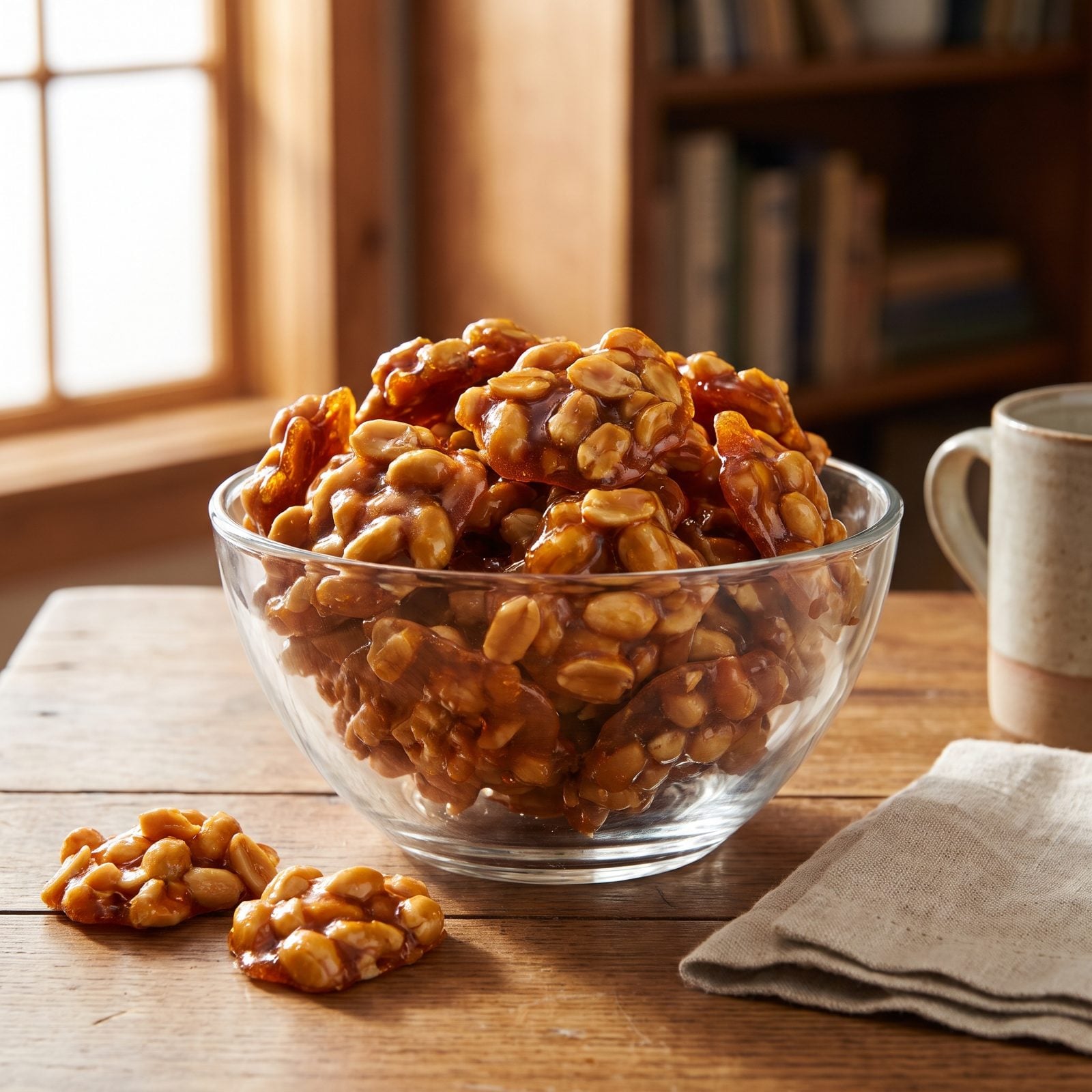
Peanuts fused into flat, glossy clusters of hard maple caramel, these were the candy you snapped apart when you reached into the dish. Crunchy, sweet, with that maple note that meant cold weather and wool sweaters.
They were a nut-lover’s candy in a dish usually ruled by fruit flavors and chocolate, which gave them a loyal if smaller following. Maple nut goodies still turn up in bulk bins here and there, a survivor. But the dish that held them, the pressed glass on the end table with its lid that clinked, is what really went away. The candy was always just the occupant.
27. Molasses-and-Peanut-Butter Mary Janes in the Yellow-and-Red Wrapper
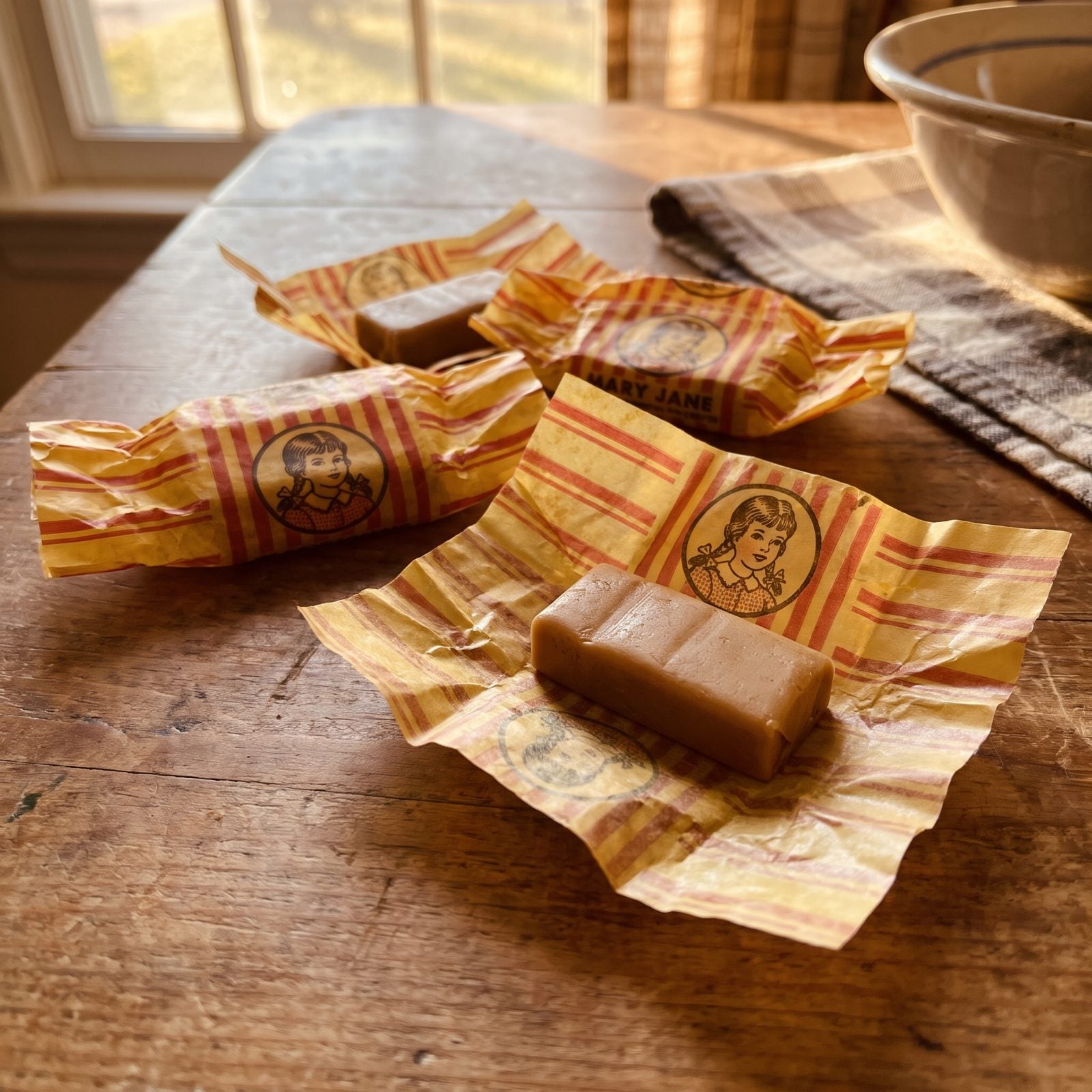
The yellow wrapper with the red stripes, the red flowers and the little girl on the front was a giveaway. Mary Janes were the dish’s stubborn holdout, peanut butter and molasses taffy so dense it could pry a baby tooth loose if you weren’t careful.
A Boston candy maker introduced them in 1914 and named them after a family aunt. By the 1960s they were already considered an old-timer’s candy, the one Grandpa liked and the kids traded away. The flavor is deep, earthy, almost savory, nothing like the bright fruity chews that took over later. Plenty of people dismiss them now, but put one in your mouth and the whole living room comes back.
26. Chewy Almond-Honey Bit-O-Honey Pieces That Pulled Your Fillings
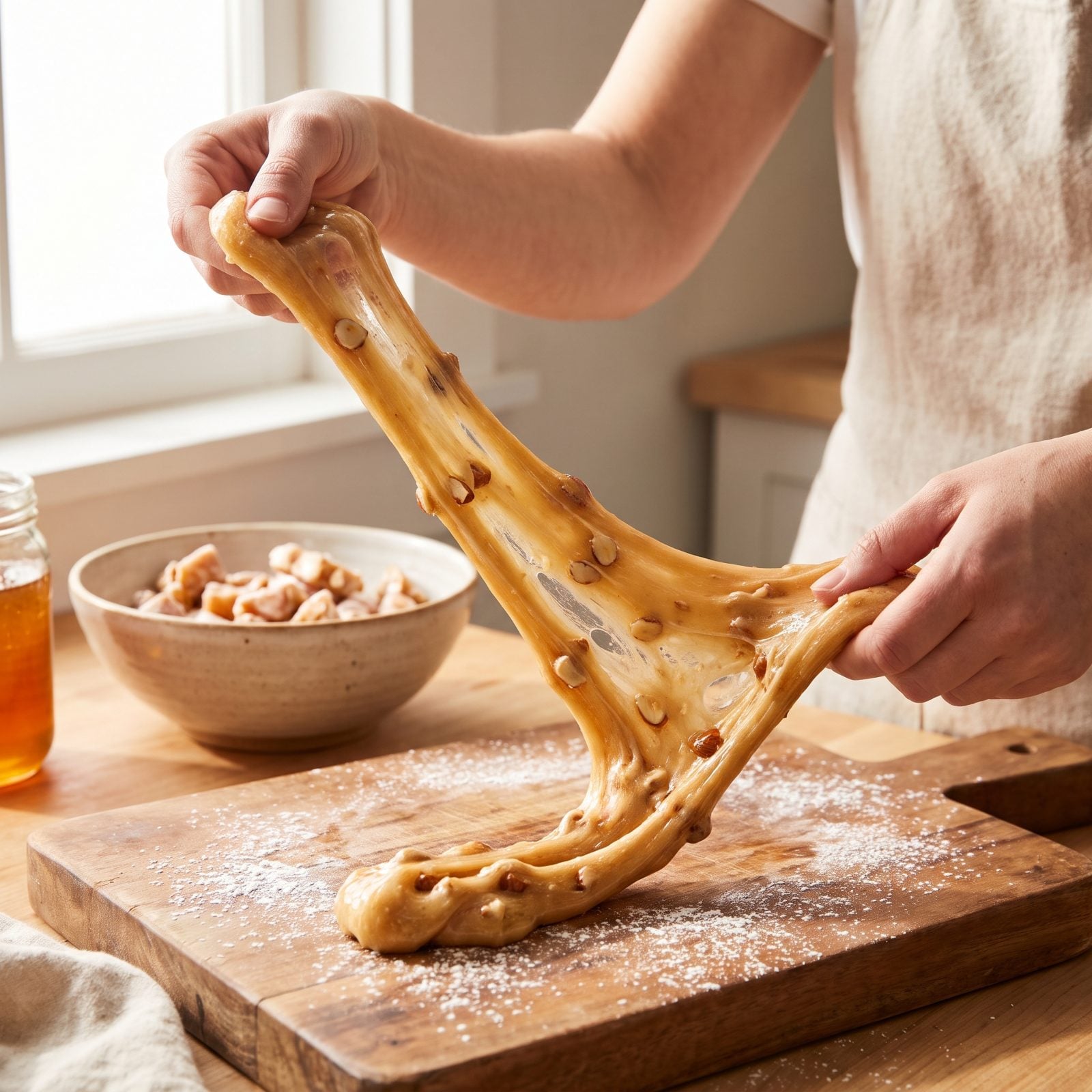
Every family had someone who refused to touch these, usually because of dental work. Bit-O-Honey came in little cellophane-twist-wrapped pieces of honey-flavored taffy studded with bits of almond. It was soft and rubbery, stretching into a long, clear, glue-like band the moment you pulled on it.
That chew was the whole experience. Your jaw got a workout, the sweetness built up slowly, and you’d find a sliver of almond you swore wasn’t there a minute ago. The candy dates back to 1924 and still turns up today, but it lost its spot in the holiday dish to softer, quicker treats that didn’t come with a warning about fillings.
25. Squirrel Nut Zippers That Nobody Under Forty Can Name
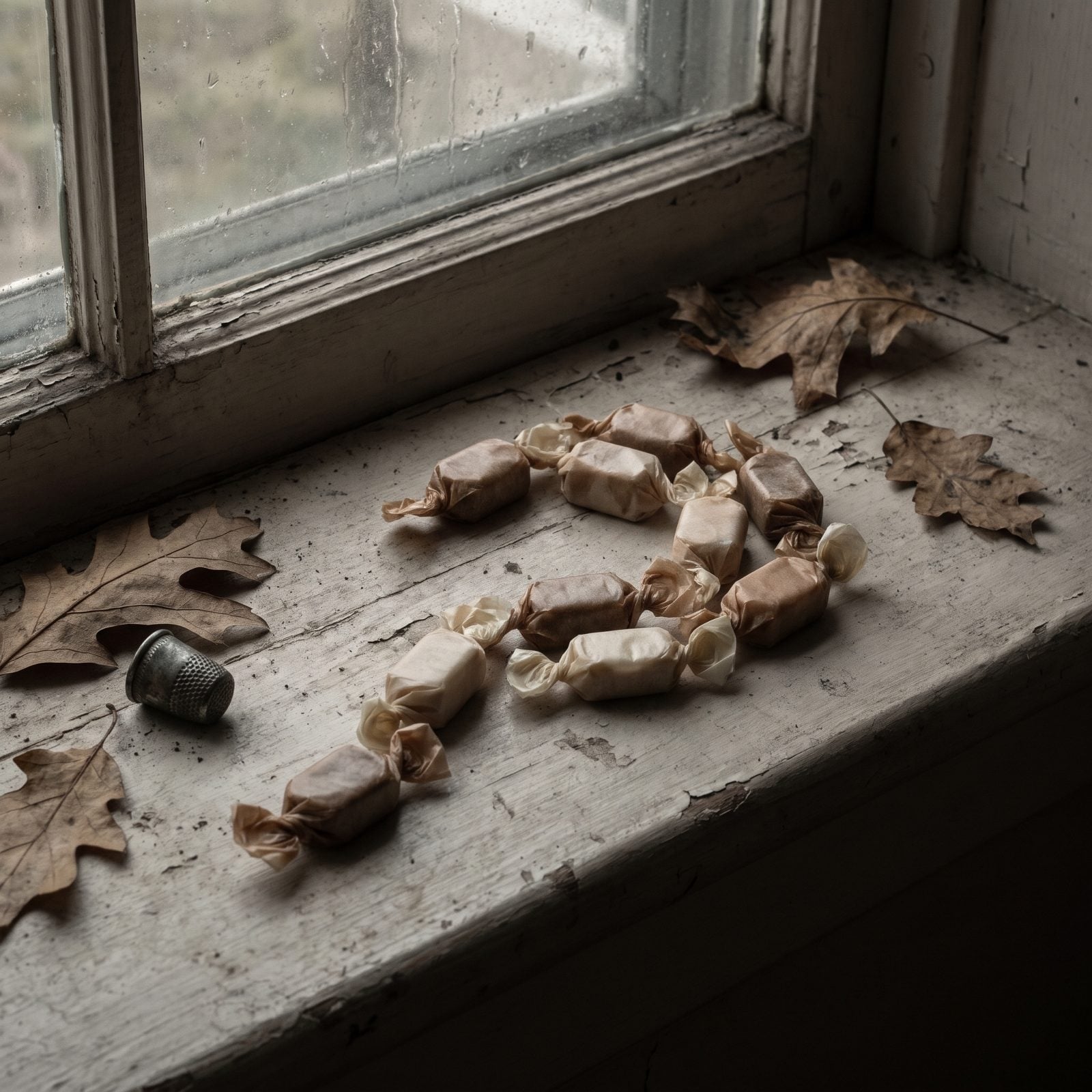
Say the name to anyone under forty and they’ll probably think of the 1990s swing band. The band took its name from the candy, and the candy came first: a chewy vanilla caramel loaded with chopped peanuts, wrapped in a little twist of paper.
Squirrel Nut Zippers came out of Massachusetts and were old-fashioned penny candy long before they turned up in Christmas dishes. They were sweet and nutty with a salty edge that made you go back for one more. These days they’re a novelty you have to hunt for in nostalgia shops. The name outlived the candy for most people, which is a funny kind of fame.
24. Shards of Homemade Peanut Brittle From the Buttered Cookie Sheet
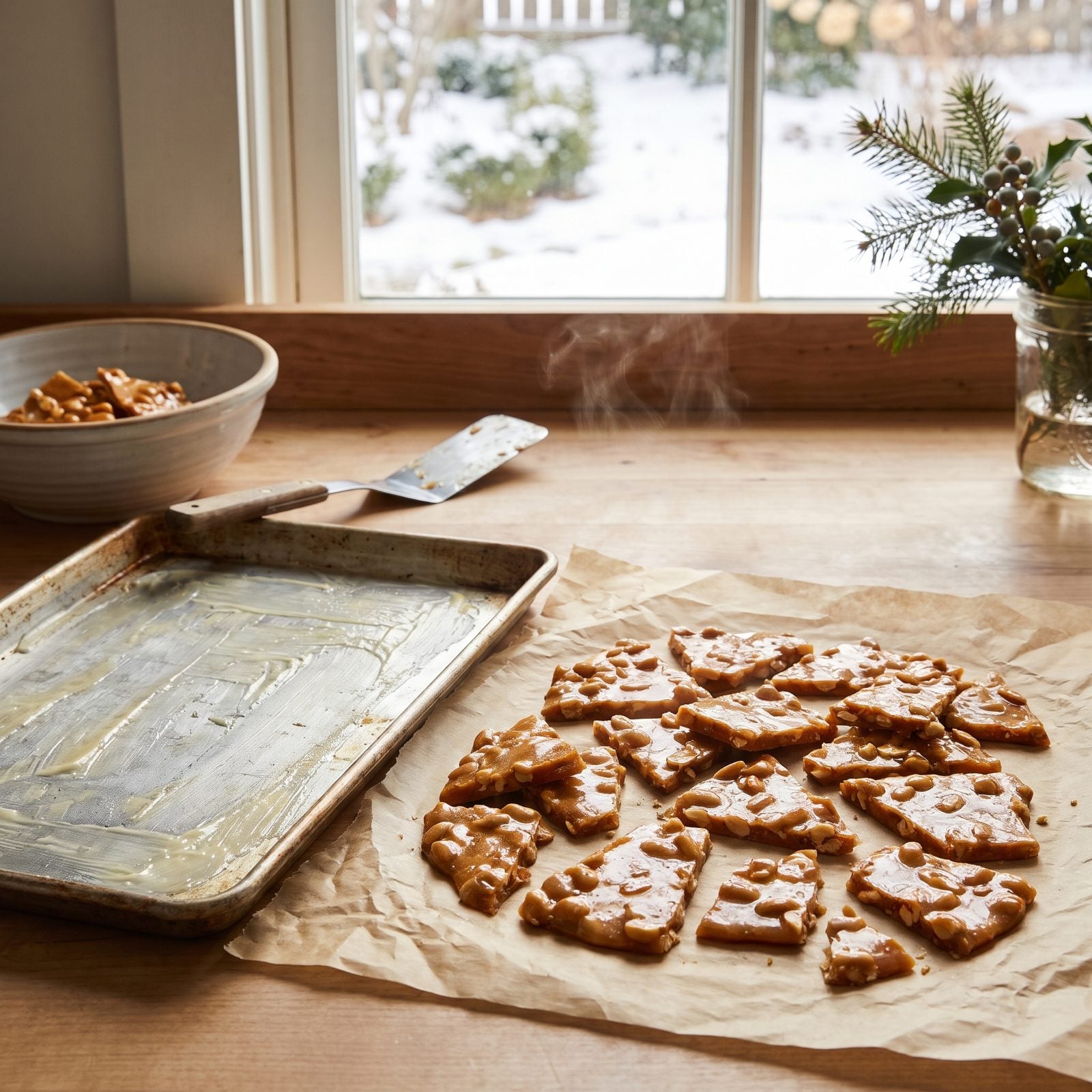
The kitchen smelled like scorched sugar and roasted peanuts, and nobody was allowed near the stove. Homemade peanut brittle meant boiling sugar and corn syrup up to the hard-crack stage, stirring in peanuts and butter, then adding a pinch of baking soda that made the whole pot foam up like a science experiment.
It went straight onto a buttered cookie sheet and spread thin, and once it cooled someone broke it apart with the back of a spoon or their bare hands. The pieces were never the same size. That was half the charm. The kitchen work is what killed it: hot sugar burns, candy thermometers intimidate, and a tin of store-bought brittle is much easier. It just never had those glassy, bubbly edges.
Describing what that last pinch of baking soda does once the sugar hits 300 degrees, a regional extension agent writes “Acid reacts with the alkaline baking soda to release bubbles of carbon dioxide (CO2). This is the same gas that makes bread rise and some drinks fizzy.”
23. Snowy Pecan Divinity Dropped in Soft White Mounds
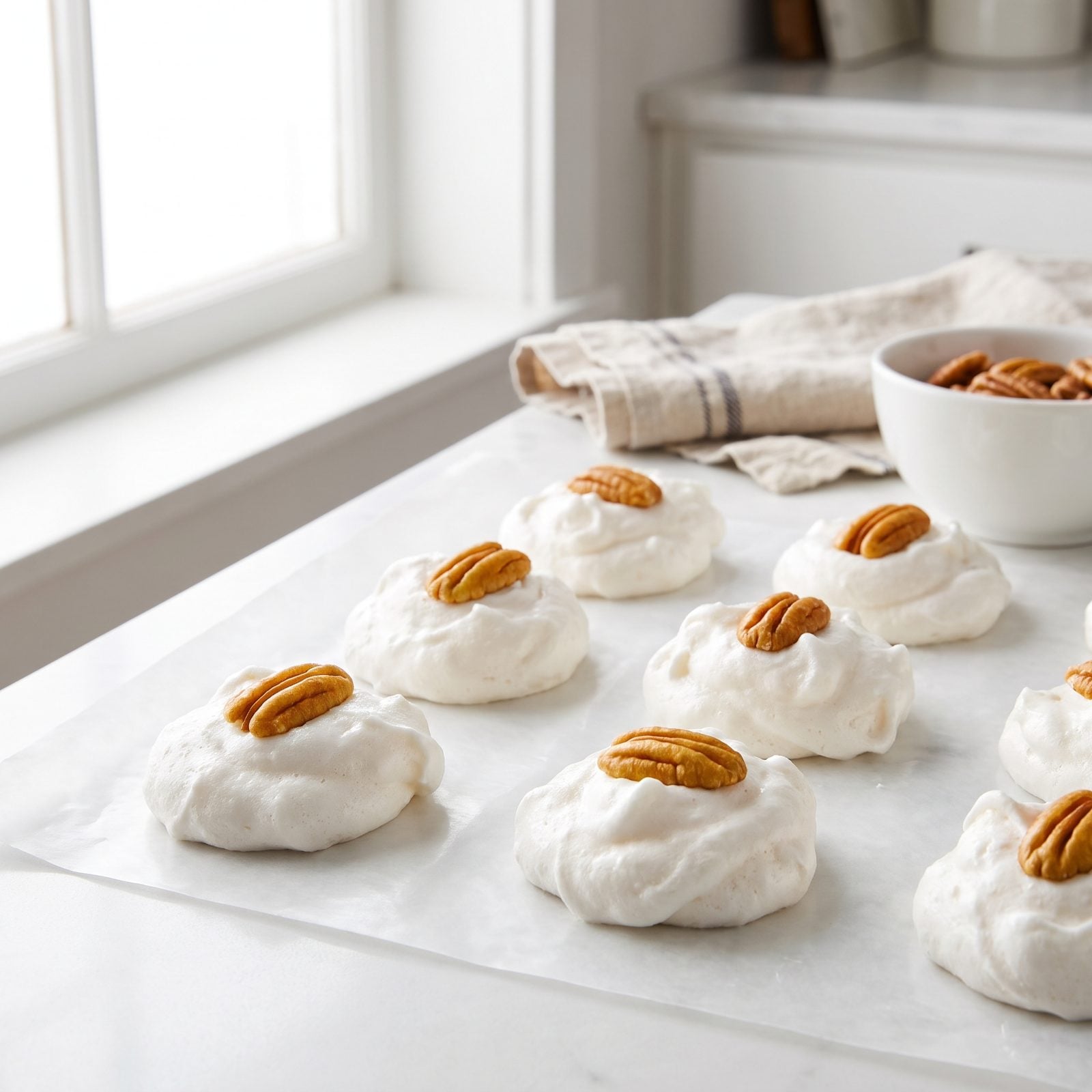
Divinity looked like little clouds piled on wax paper, glossy white mounds with a pecan pressed on top or folded inside. It tasted like sweet air with a crunch, and it melted almost as soon as it hit your tongue.
Making it was another story. You beat hot sugar syrup into whipped egg whites until the mixture lost its shine and held its shape, then raced to drop spoonfuls before it set up in the bowl. Every Southern cook knew the rule: never make divinity on a rainy day, because the humidity would leave you with sticky goo. Fussy, weather-dependent candy doesn’t survive busy schedules, and divinity slipped from a holiday staple to a fading family recipe.
Recalling the old hand-crank mixers grandmothers once used, a home divinity candy maker says “If you have ever used one of these, you will know that it takes a great deal of strength and stamina to generate enough mixing action to make divinity.”
22. Brown-Sugar Penuche Squares Cut From the Pan on Christmas Eve
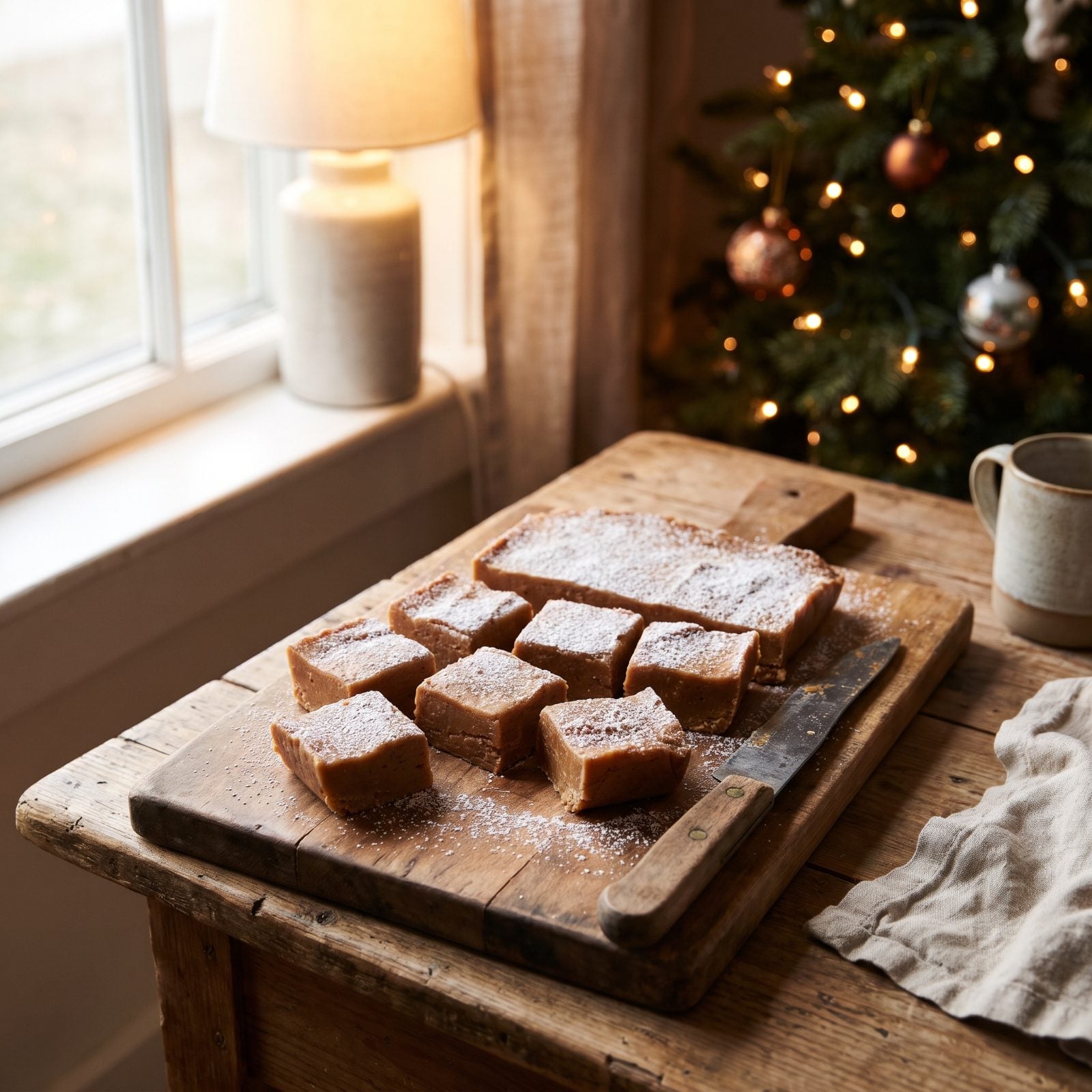
If fudge had a cousin from the country, it was penuche. Made with brown sugar instead of chocolate, it had a deep caramel, butterscotch flavor and a slightly grainy, melt-away texture that set it apart from anything else on the plate.
Christmas Eve was penuche night in a lot of houses, especially in New England. Brown sugar, milk and butter bubbled on the stove, then got beaten by hand until the shine went dull and the arms ached. The pan went somewhere cold to set, and someone always cut the squares too early. Chocolate fudge won the popularity contest over the decades, and most people today have never even heard the word.
21. Chocolate-Dipped Opera Creams That Melted the Second You Held Them
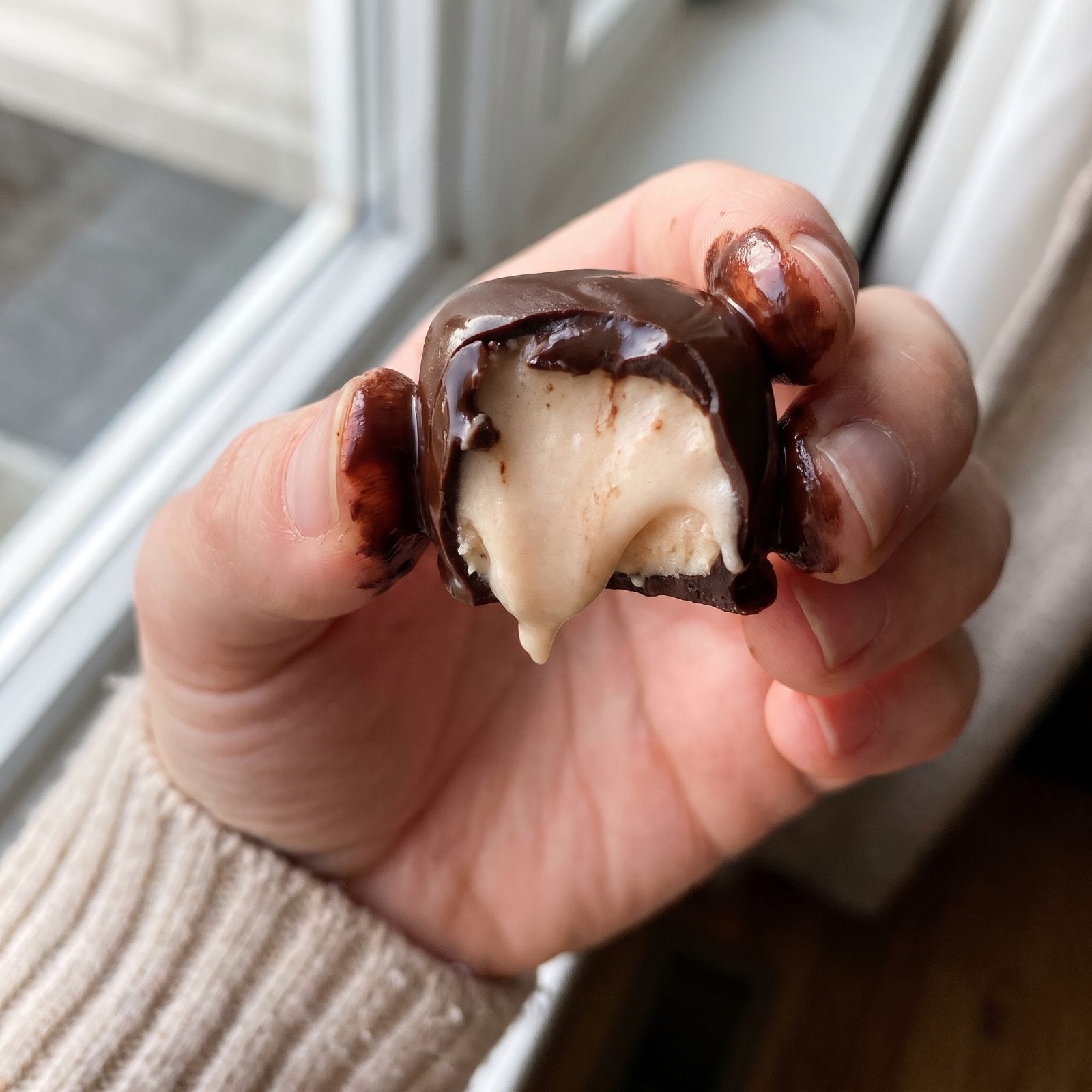
You had to eat an opera cream fast. The center was a rich mix of cream, butter and sugar, so soft that the warmth of your fingers turned it buttery before you got it to your mouth. A thin coat of dark chocolate held the whole thing together, but just barely.
Opera creams are especially tied to Cincinnati and the Midwest, where local candy shops still make them as a winter tradition because they keep best when it’s cold out. Outside those pockets they were always more of a specialty than a staple. Their richness and short shelf life kept them out of national candy boxes, so if you didn’t have a local shop making them, you never met them at all.
20. Pastel Coconut Bonbons in Easter Colors at Christmastime
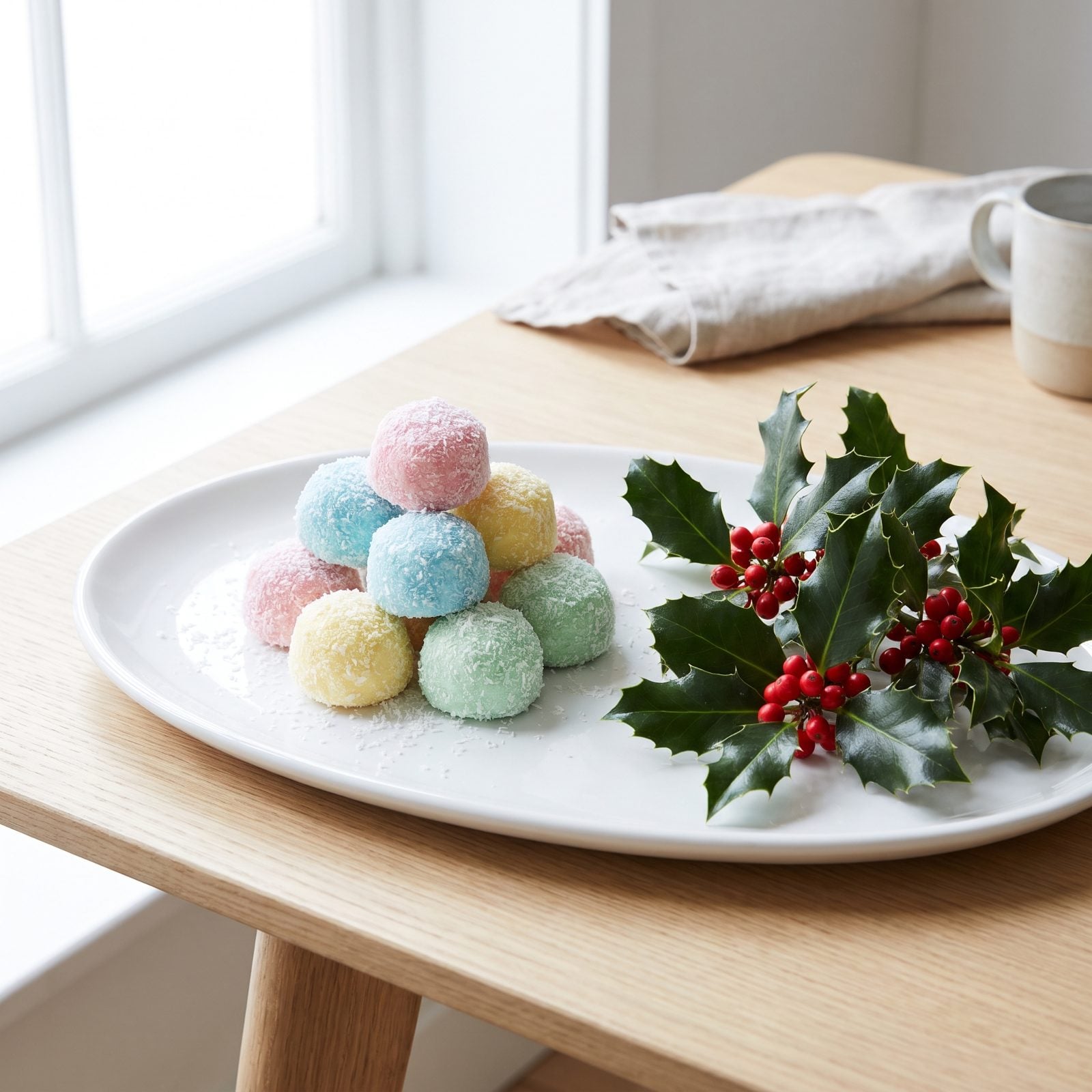
Somebody’s aunt made these, and everybody knew it. Coconut bonbons showed up in colors that had no business being near a Christmas tree: baby pink, mint, that strange pale lavender. They looked like they wandered in from an Easter basket and refused to leave.
Inside the pastel coating sat a coconut cream so sweet it made your teeth ache in the good way. You took one, regretted nothing, then grabbed a pink one to compare.
They faded because almost nobody rolls coconut centers by hand anymore. The store versions taste thinner now, and the pastel ones vanished altogether.
19. Hand-Painted Marzipan Fruits Too Pretty to Eat
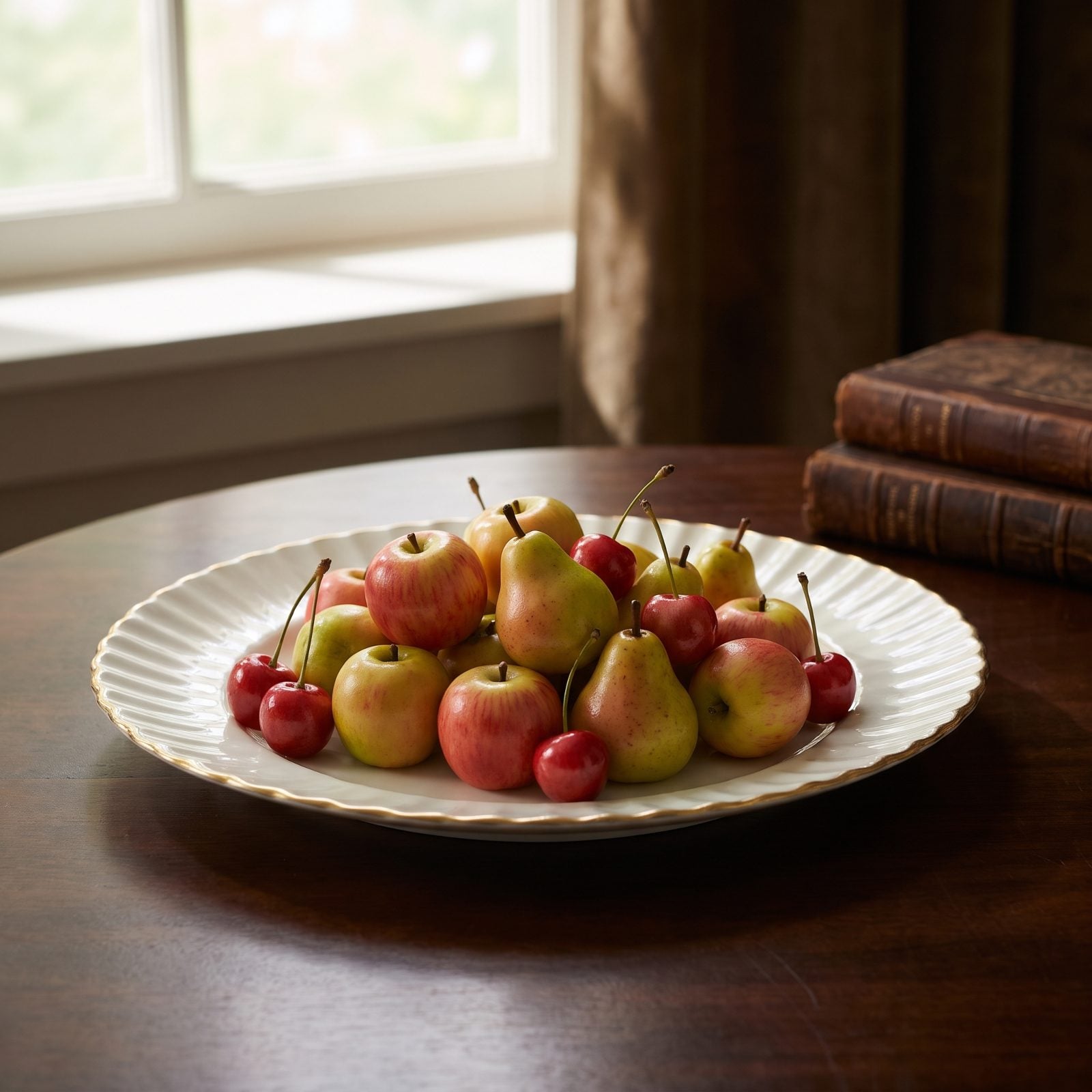
These were the candies you weren’t allowed to touch until Christmas Day, and even then your mother winced a little. Marzipan fruits, hand-painted with a tiny brush, each apple blushed and each pear freckled, like something swiped off a dollhouse table.
The taste surprised kids who expected the fruit to match the flavor. It was almond. Dense, sweet almond paste, the same no matter which little peach you bit into. Some loved it. Some quietly spit it into a napkin and lunged for the chocolate.
They were decoration that happened to be edible, which is exactly why half of them survived until New Year’s.
18. Powdered-Sugar Turkish Delight From the Fancy Tin
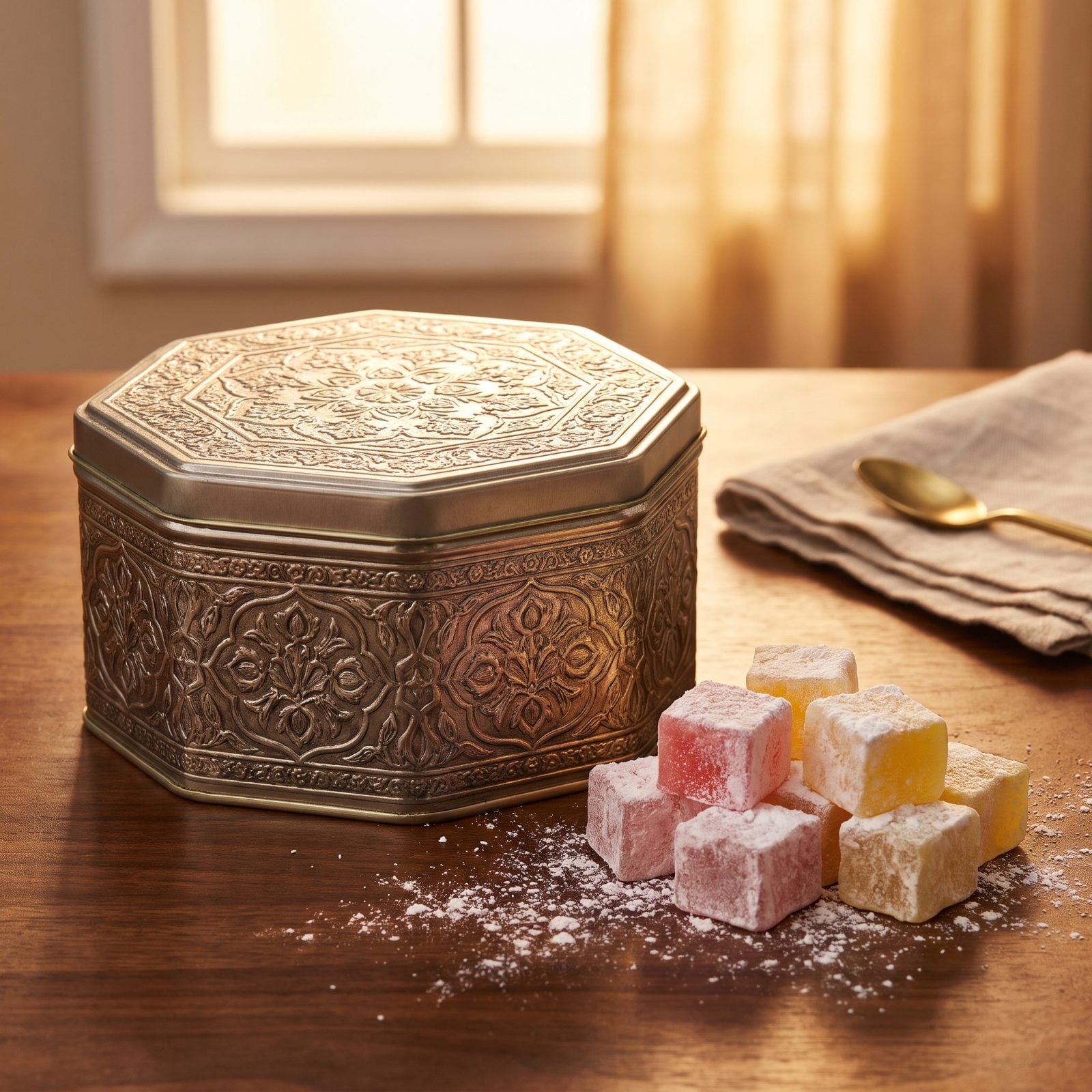
It came in an octagonal tin embossed with floral patterns and a price that announced it was a gift, not a grocery buy. You lifted the lid, caught a cloud of powdered sugar up the nose, and found jellied cubes stuck together in rose and amber.
Rosewater threw a lot of American kids. It tasted like perfume to the unprepared. The adults who grew up with it, often with a European grandparent, ate it with a reverence nobody else at the table understood.
It faded because it was never really ours. Once the relatives who insisted on it passed on, the tin stopped appearing. Honestly, I miss the smell of it more than the taste.
17. Liquid-Centered Chocolate-Covered Cherries That Leaked on You
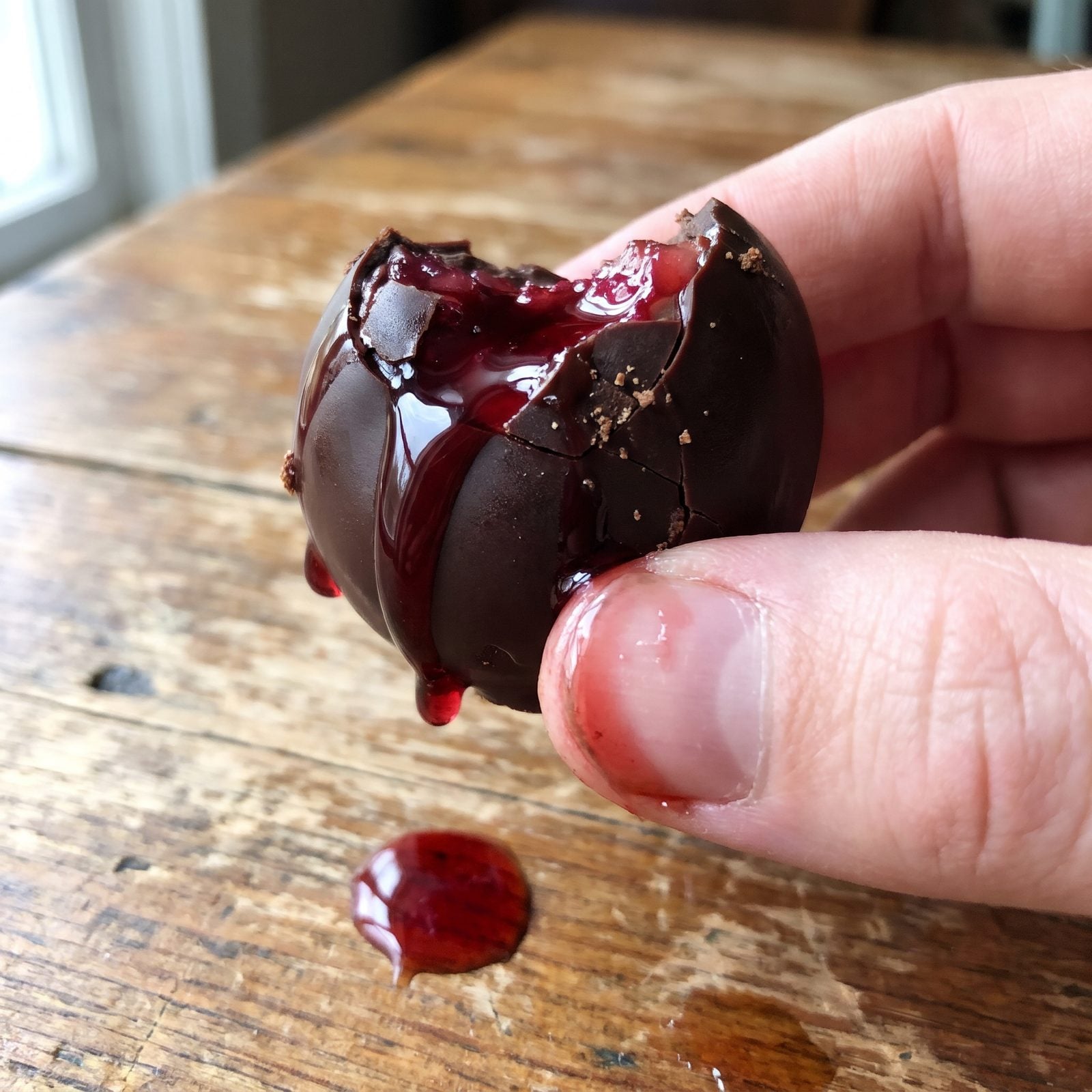
You never knew which end held the leak. Bite the wrong side of a chocolate-covered cherry and the cordial ran down your wrist before you could reach a napkin. The smart move was to nibble a tiny hole and suck out the syrup first, which no child alive had the patience for.
Inside sat a whole cherry, stem gone, floating in that sweet liquid center that took a week or two in the box to turn from fondant to syrup. That was the trick. The candy finished making itself on the shelf.
These never truly left. The ritual around them did, though. They were a Christmas thing, boxed and bowed, and now they sit in a drugstore aisle year-round looking a little lonely.
16. Dark-Chocolate-Covered Orange Peel for the Grown-Ups
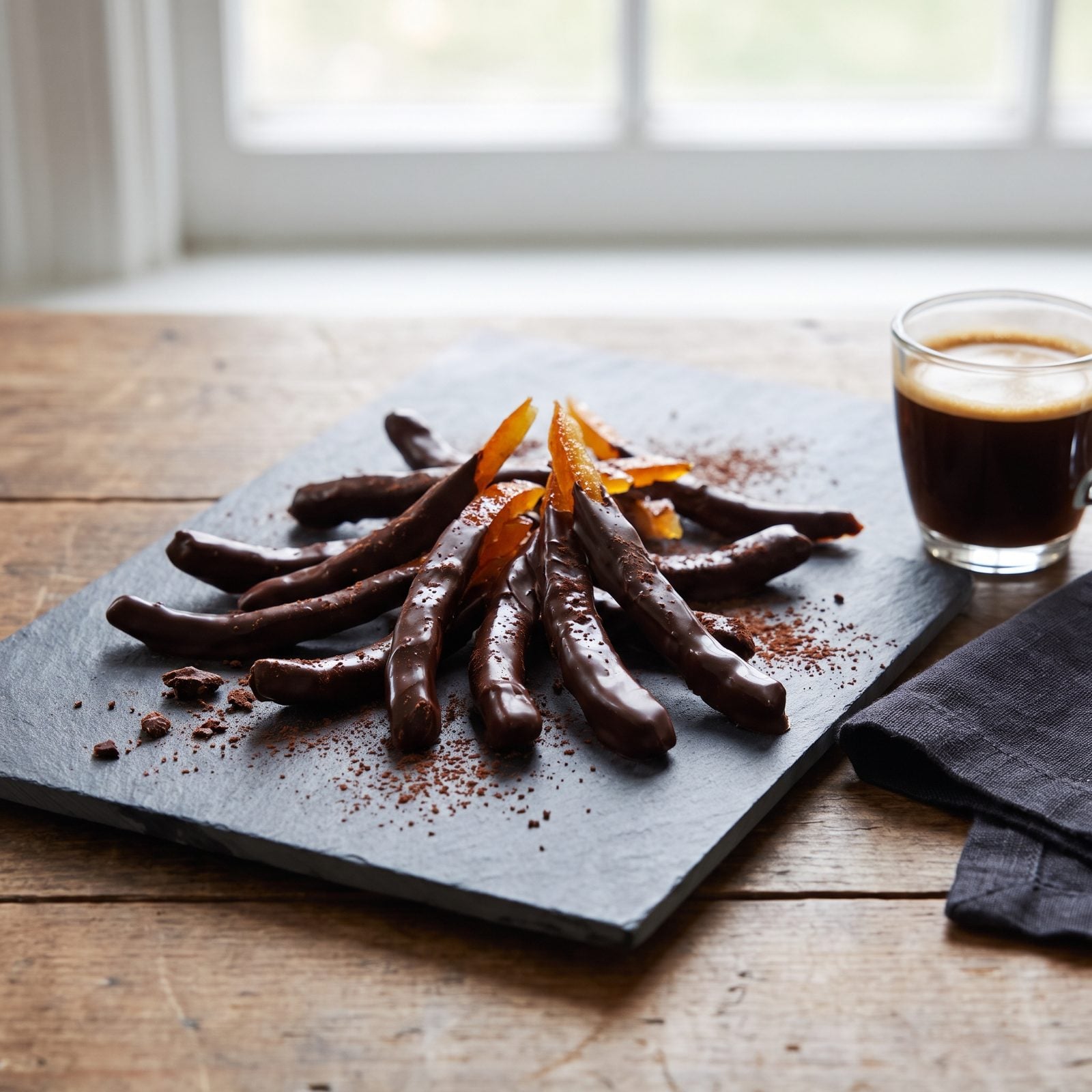
This was the candy the adults hovered near. Kids took one bite of the bitter-sweet peel, made a face, and retreated to the coconut bonbons. The grown-ups stood by the dish with a drink and worked through half of it.
Thin strips of candied orange rind, chewy and sharp, dipped in dark chocolate that was never the cheap milk stuff. The orange cut through the sweetness and left something almost grown-up on the tongue.
It faded for the same reason a lot of these did. Candying peel at home is real work, and the store version got expensive and specialty. A sophisticated taste that a holiday candy dish no longer had room for.
15. Caramel-and-Pecan Chocolate Turtles Shaped Like the Real Thing
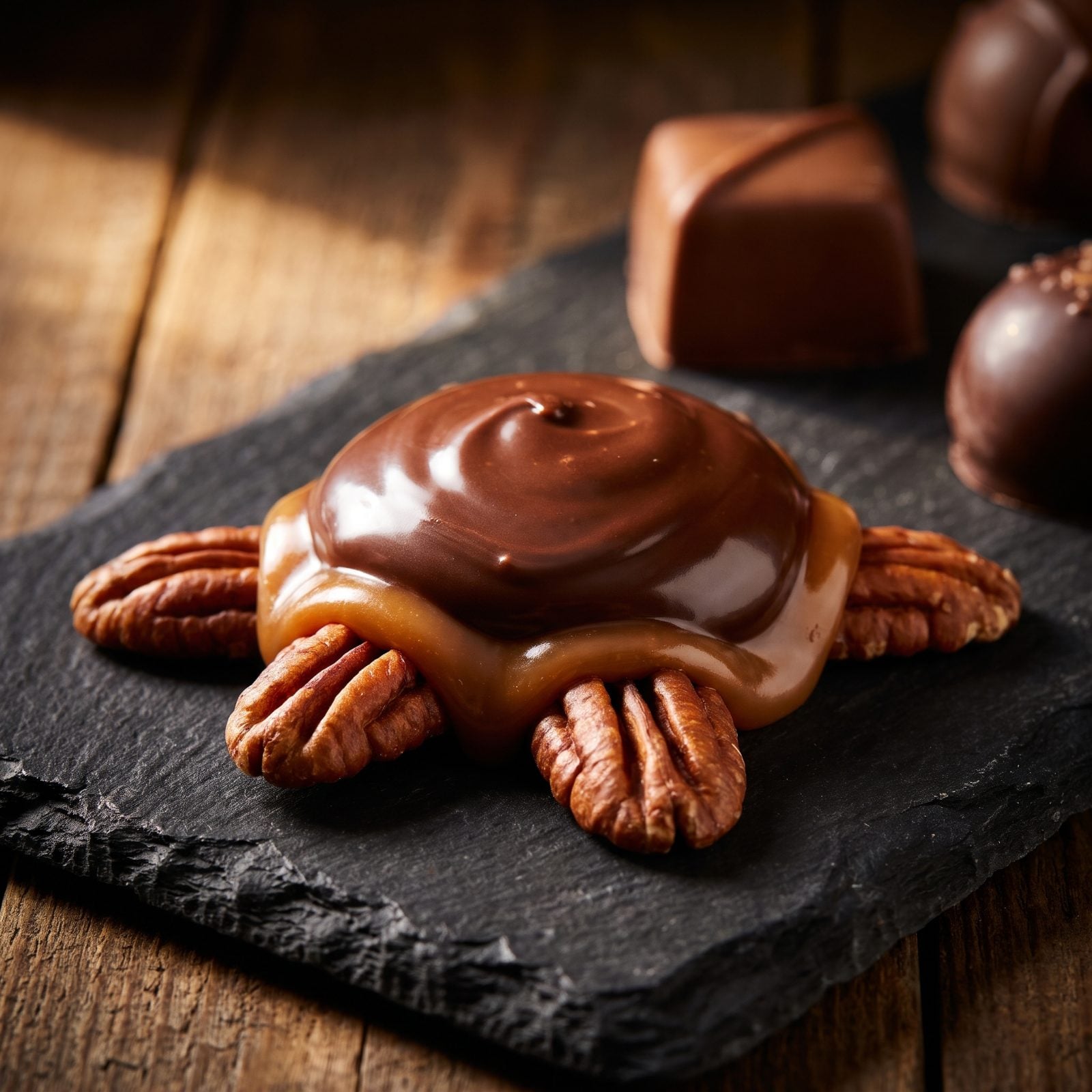
The turtle was the prize of the dish. Everyone knew it. You eyed the bowl all afternoon, waited until nobody was watching, and grabbed one before a cousin cleared them out.
Pecan halves fanned out like little legs, caramel pooled in the middle, chocolate over the top. Bite in and the caramel stretched into a thread you had to snap with a finger. Somebody molded them to look like the actual animal, which is either charming or ridiculous depending on your mood.
They never disappeared so much as got demoted. A box of turtles used to be a genuine Christmas gift. Now they’re a candy-store impulse buy, same as anything else.
14. Crunchy Chow Mein Noodle Haystacks Nobody Could Name
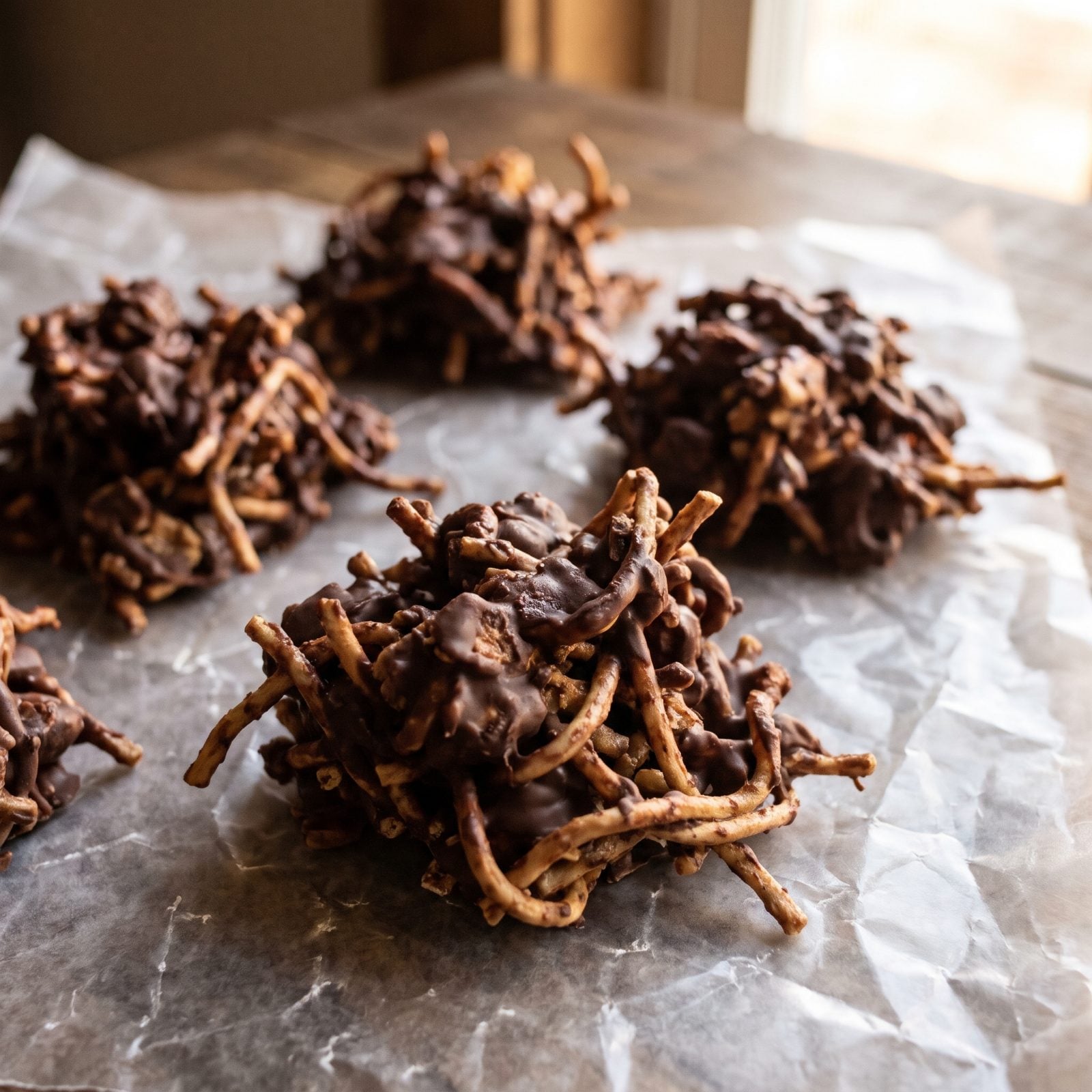
Half the people at the party couldn’t tell you what was in these. Fried chow mein noodles, the kind from the can, bound up in melted dark chocolate and sometimes a handful of peanuts, dropped onto waxed paper in craggy little piles.
They had the crunch of a bird’s nest and tasted like chocolate with a weird savory edge nobody questioned. A church-cookbook recipe. The thing a neighbor carried in on a paper plate under a sheet of foil.
They faded with the cookbook-swap culture that birthed them. When the ladies who typed up those mimeographed recipes stopped hosting, the haystacks went with them.
13. Chocolate Nonpareils Buried Under White Sprinkles
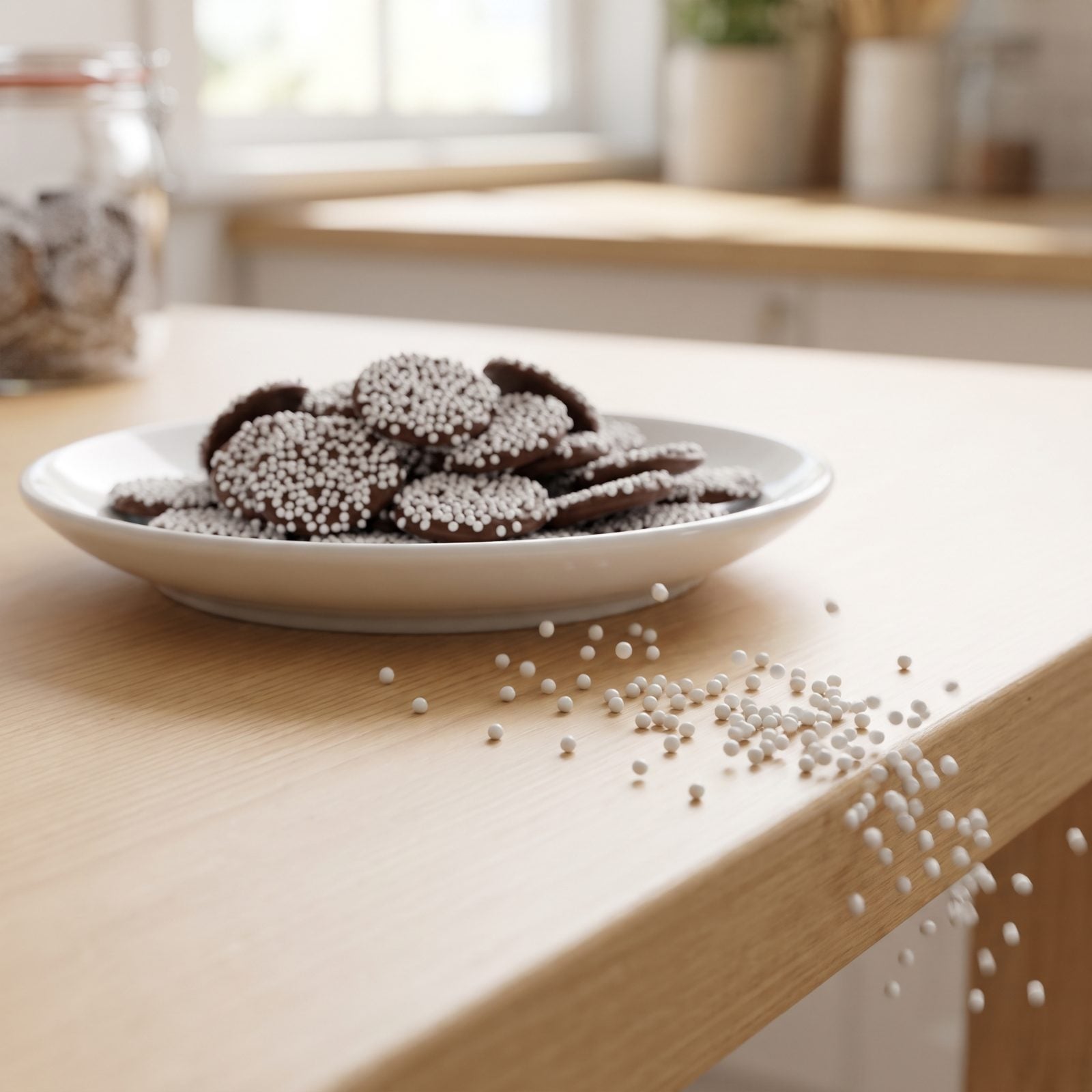
The white beads went everywhere. You’d eat a nonpareil and half the sprinkles ended up on your shirt, the couch, and the carpet, where they’d keep turning up until February.
Underneath the sugar sat a thin disc of plain chocolate doing almost no work. The whole point was the texture, that tiny crunch of a hundred little beads before the chocolate melted. Simple. Cheap. Always in the mix.
These are still around, which makes them easy to overlook. But a dish of nonpareils used to be its own thing, set out on purpose, not just the filler scraped from the bottom of a mixed bag.
12. Milk Chocolate Stars Stamped From a Mold
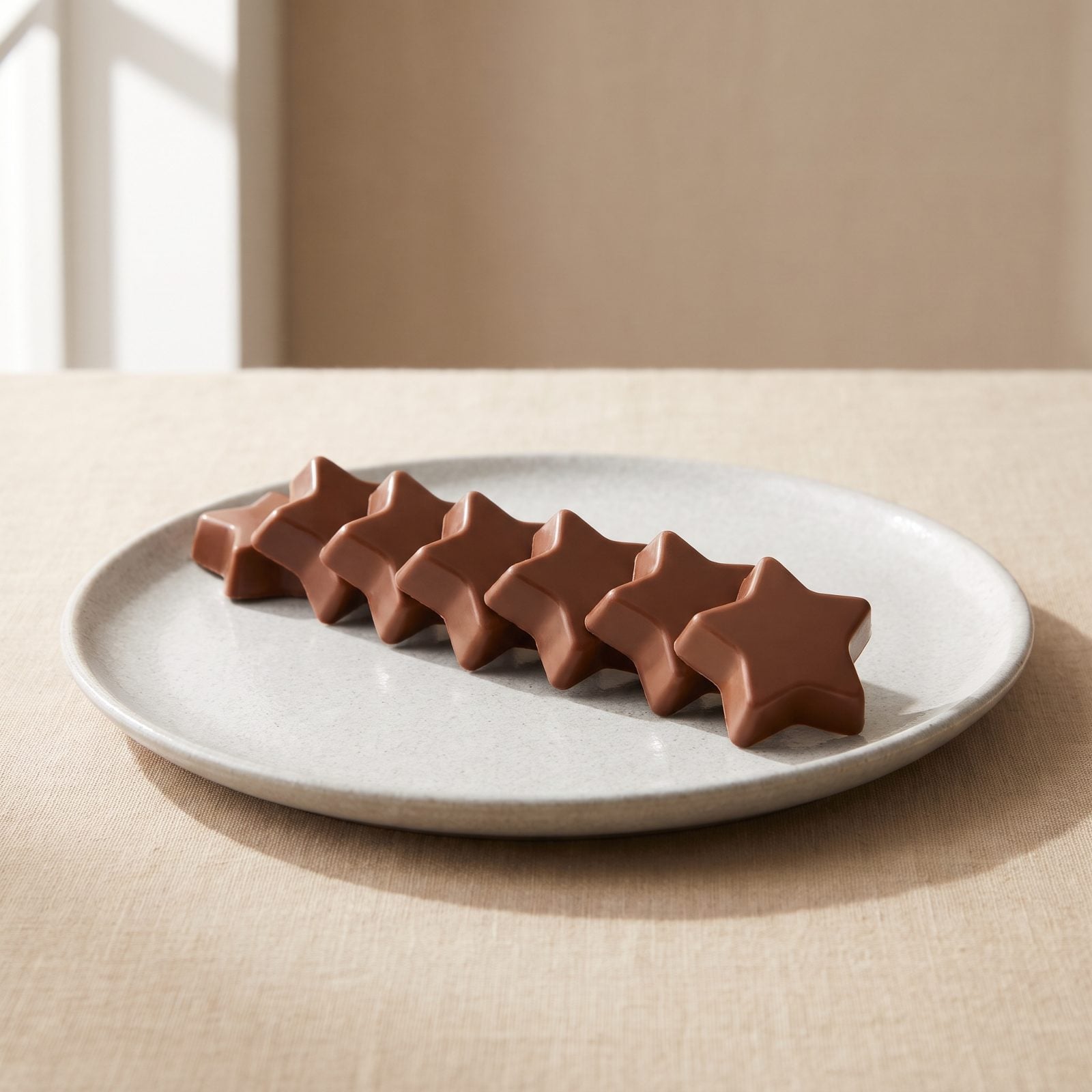
Pure, plain, molded milk chocolate shaped like a star, and that was the whole pitch. No caramel, no nut, no filling to surprise you. Just a smooth piece of chocolate you could eat ten of without noticing.
Kids loved them precisely because they were safe. No cherry cordial ambush, no bitter peel. That star shape made them feel festive enough to count as a Christmas candy rather than a candy-bar square.
Sometimes the quietest candy in the dish is the one you reach for without thinking, again and again, until it’s gone.
They faded because they offered nothing a chocolate bar didn’t, once bars got cheaper and the novelty of a molded shape wore off.
11. Craggy French Burnt Peanuts in the Cut-Glass Dish
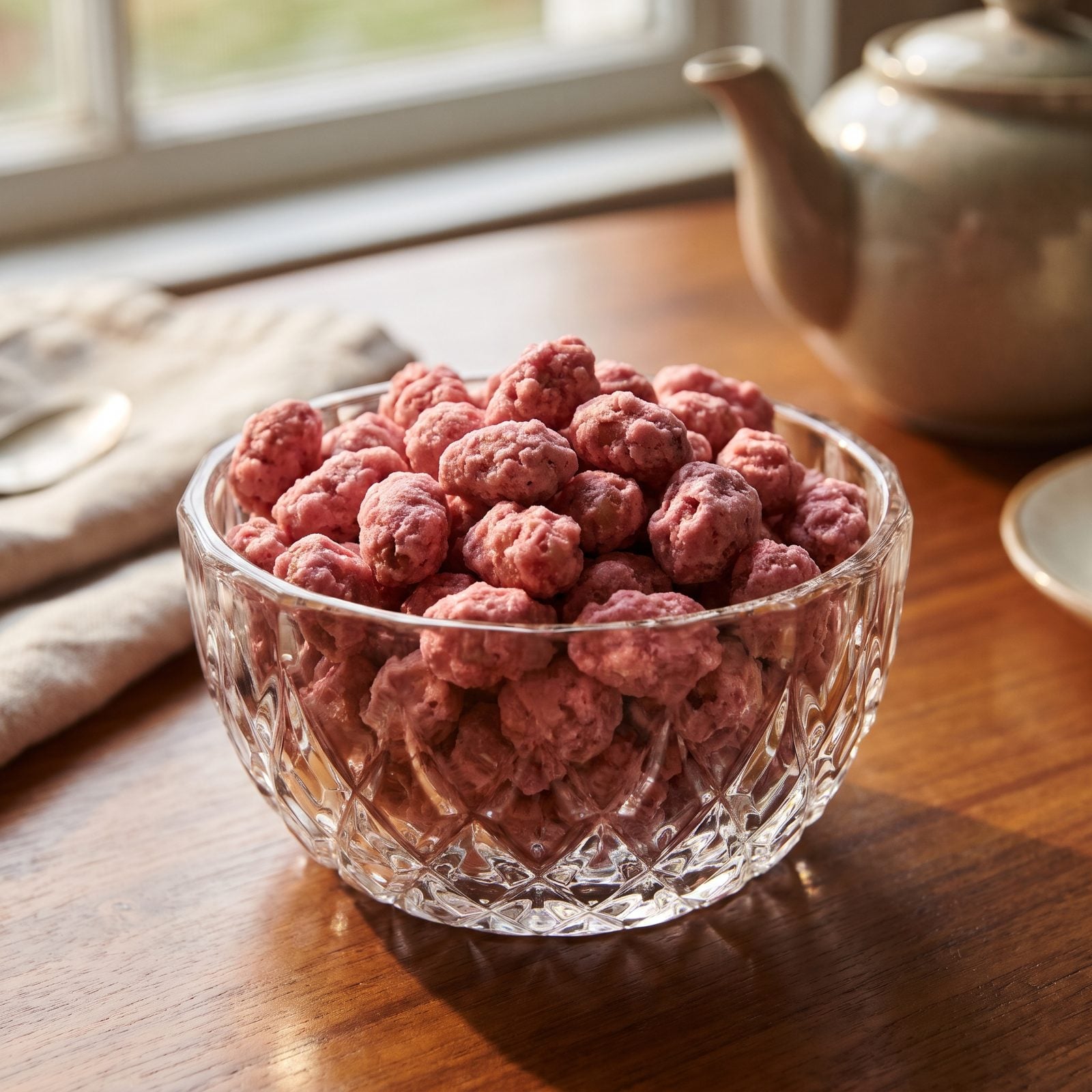
You dug past the chocolate first. Everybody did. And buried near the bottom sat these rose-pink gravel nuggets, a whole peanut hiding under a candied shell so rough it felt like a tiny rock in your palm.
French burnt peanuts weren’t French and they sure weren’t burnt. They were a penny-candy holdover that drifted into the Christmas rotation because they kept forever and photographed well in cut glass. The shell cracked loud. The peanut inside? Almost beside the point.
10. Red-Shelled Boston Baked Beans Candy
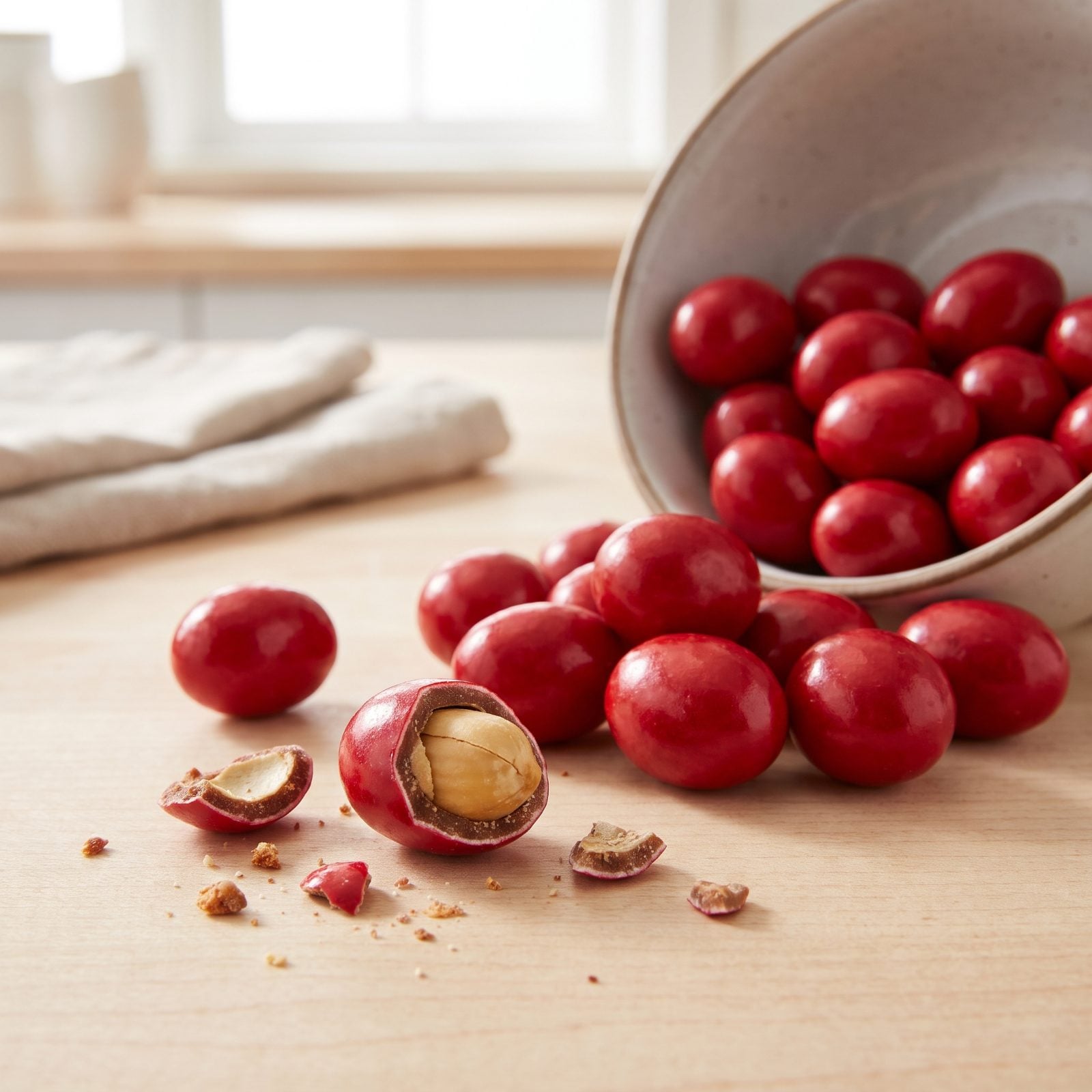
Shiny as ornaments, these were the ones that fooled you. You popped one expecting cherry, maybe cinnamon, and got a candy-coated peanut instead. A quiet little bait and switch.
Boston Baked Beans earned their spot on looks alone. That lacquered red matched the tinsel, the bulbs, the wrapping paper, and a handful in a speckled ceramic bowl was instant holiday color for zero effort.
9. Peach-Colored Circus Peanuts, the Marshmallow Nobody Admitted Loving
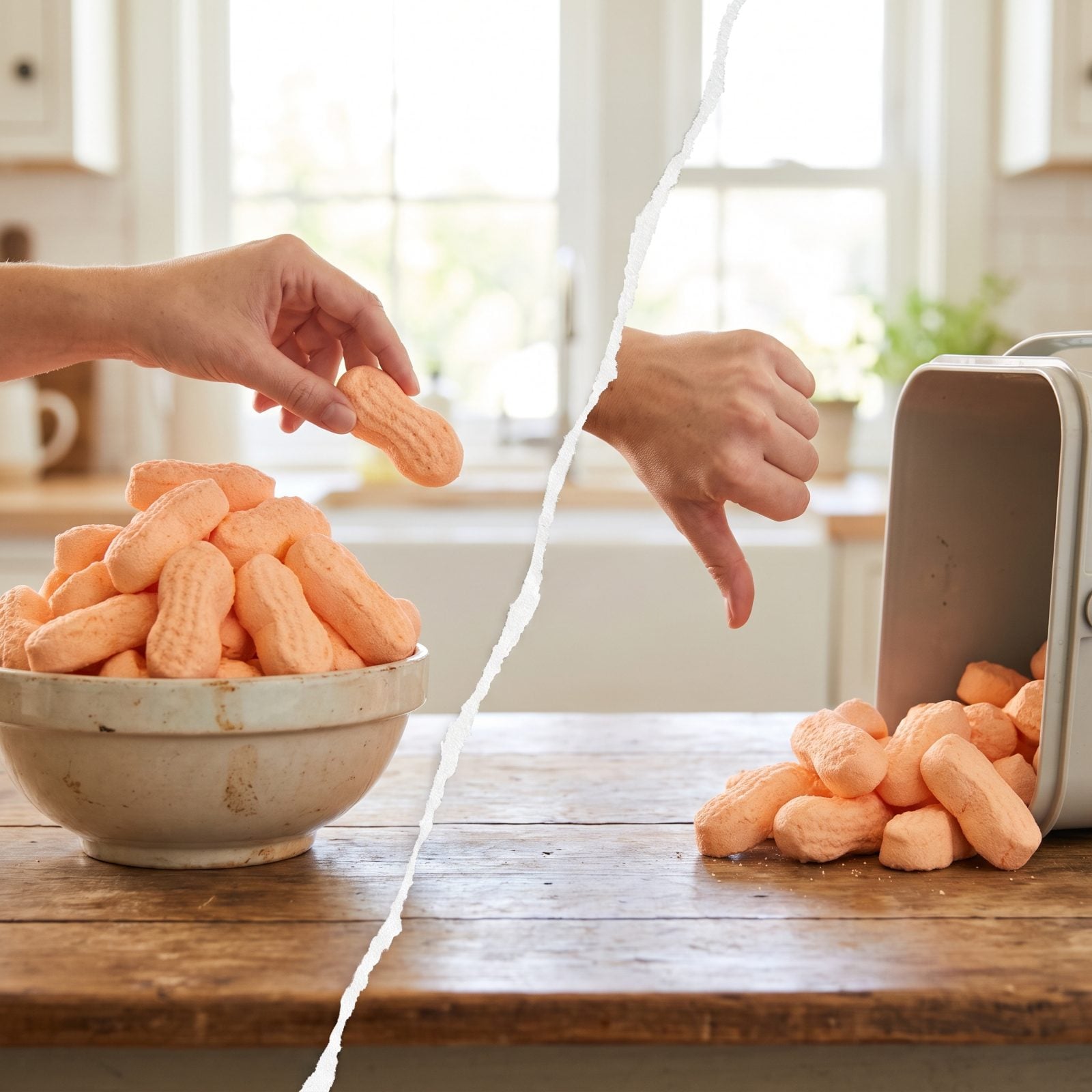
Love them or hate them, you had an opinion.
Circus Peanuts split every family down the middle. Giant, peach-colored, shaped like a peanut but tasting like artificial banana, with a spongy give that landed somewhere between a marshmallow and a pencil eraser.
They made the dish because they were cheap and they filled space. A dozen took up half a bowl. And there was always one relative at every gathering who quietly ate four and told absolutely no one.
That split shows up in our reader data too: when readers disliked a food photo, the top reason they tapped was simply “not for me” at 39%, ahead of ingredients at 29%.
8. Sugar-Coated Spearmint Leaves
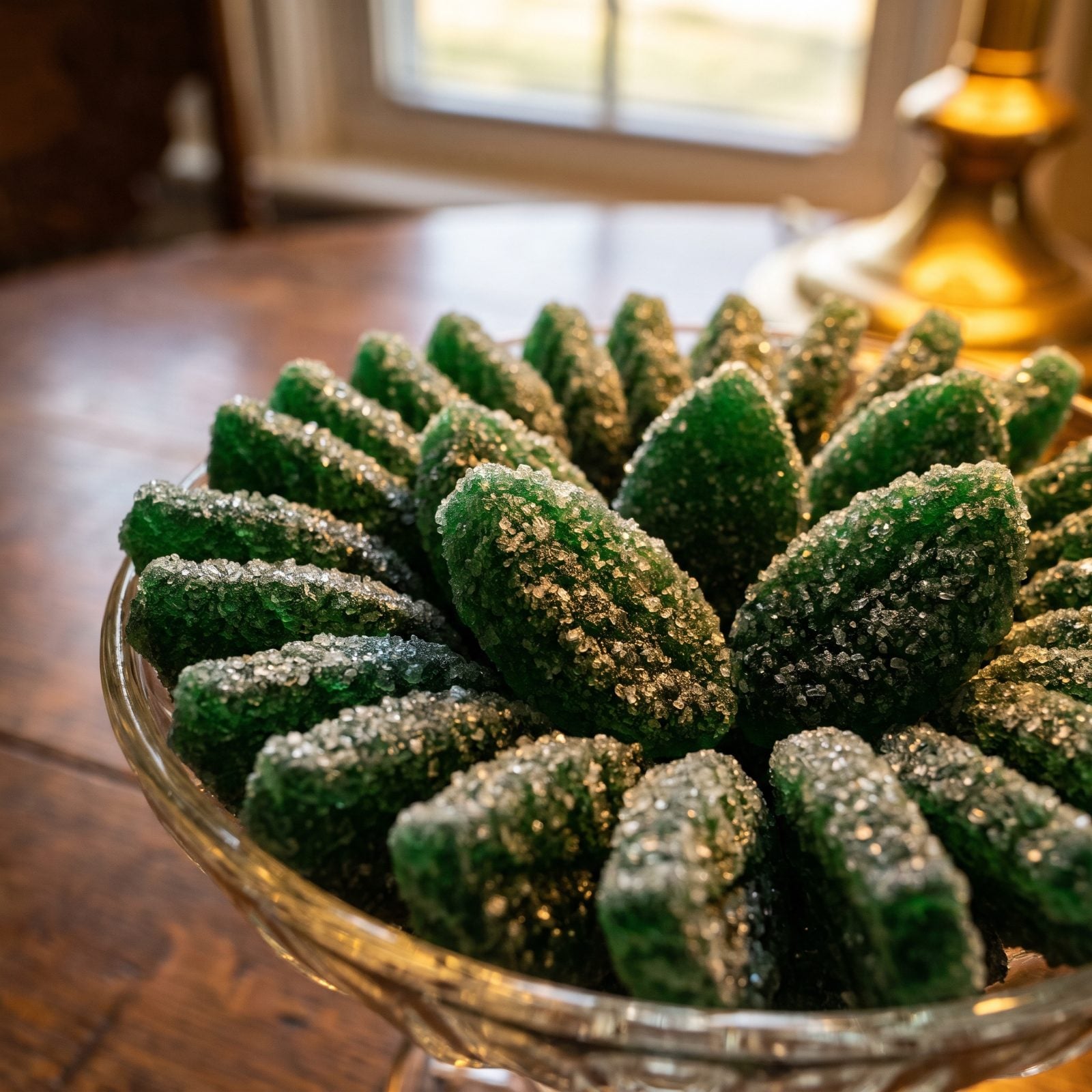
Chewy, deep green, rolled in crunchy sugar and shaped like a leaf nobody could name. Spearmint leaves were the palate-cleanser candy, the one you grabbed after too much fudge.
They stuck to your back teeth in the best way. A little sugar grit, then that cool mint pull. In a lot of houses these lived in the dish year-round, but December was their moment. Green against all that holiday red.
7. Brightly Colored Spice Drops
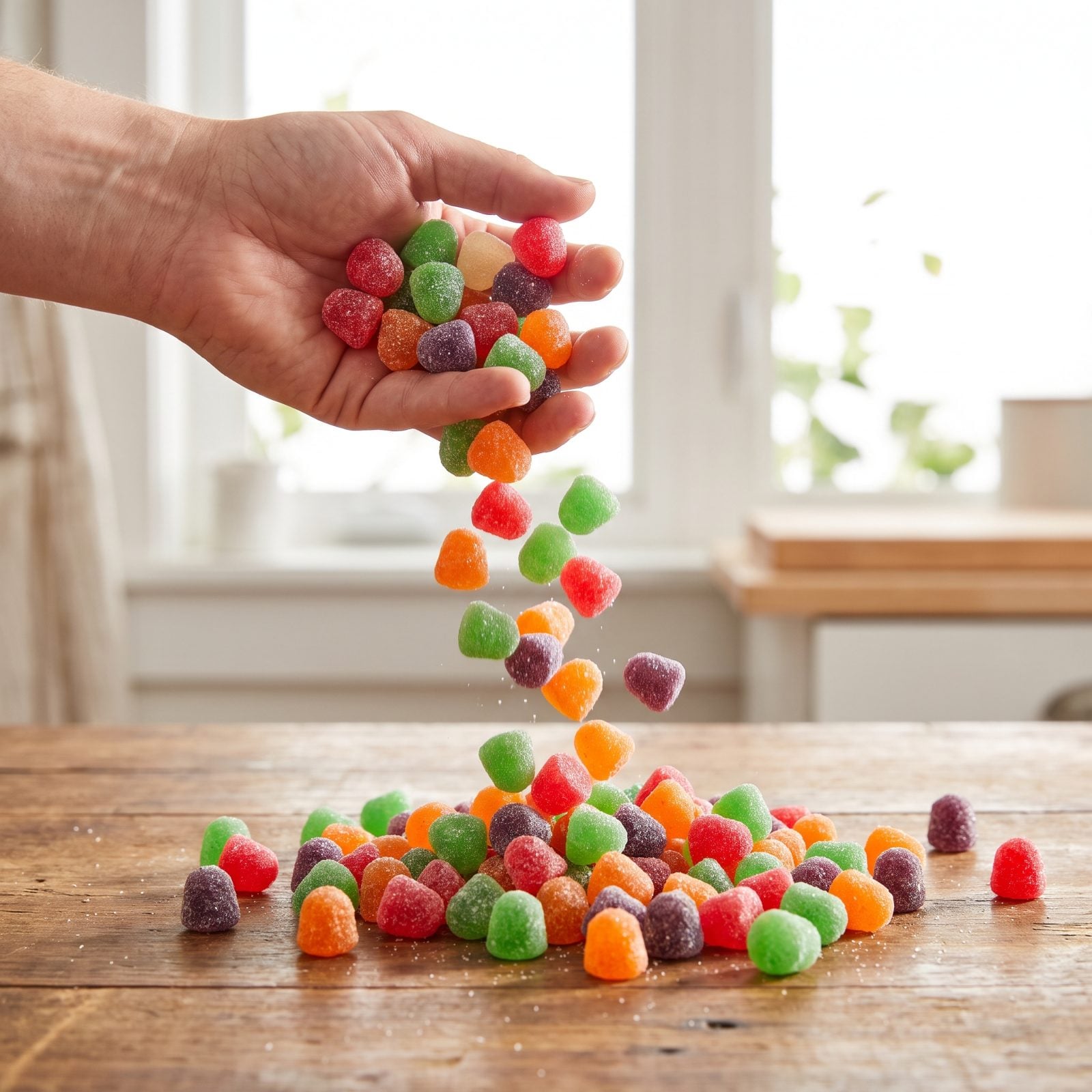
A fistful of spice drops looked like somebody had scooped up a handful of tiny tree bulbs. Red, orange, yellow, green, purple, each a sugar-dusted dome of chewy spice: clove, wintergreen, cinnamon, something vaguely anise you could never quite place.
Kids picked out the reds and left the black ones for the grownups, the oldest negotiation at any candy dish. These doubled as gingerbread-house trim the same week, which is probably why the bag never made it to New Year’s.
6. Licorice Allsorts, the Dish Within the Dish
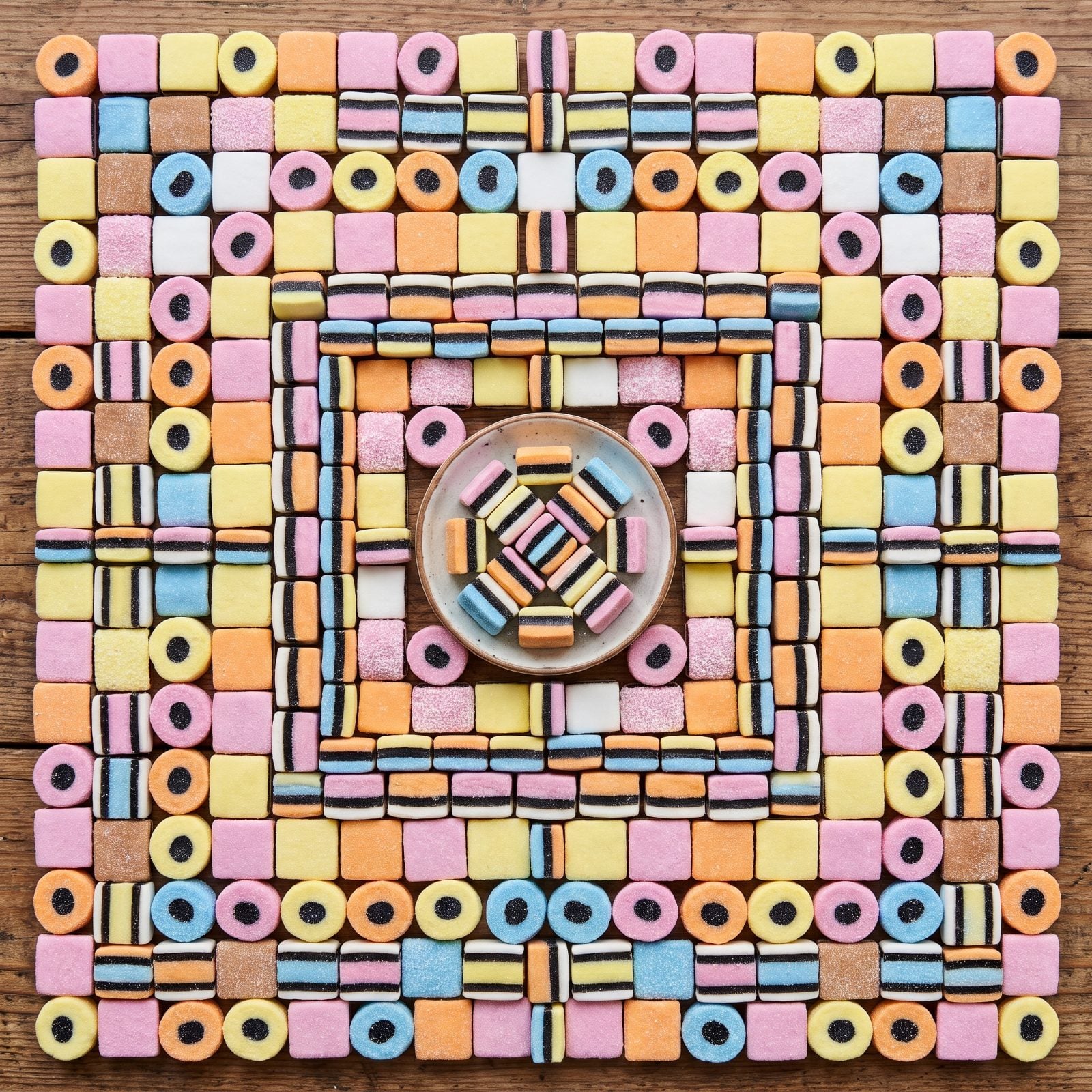
Half candy, half tiny construction project. Allsorts came as layered pastel-and-black sandwiches, blue bullseye coils, and little bead-covered logs, like somebody built sweets out of spare parts.
They were the English import that felt a touch fancy, which is why they came out when company did. You either loved the licorice bite or you spent the afternoon peeling off the colored coconut layers and abandoning the black. No judgment. Everyone did it.
5. Pink Wintergreen Lozenges That Cooled the Whole Room
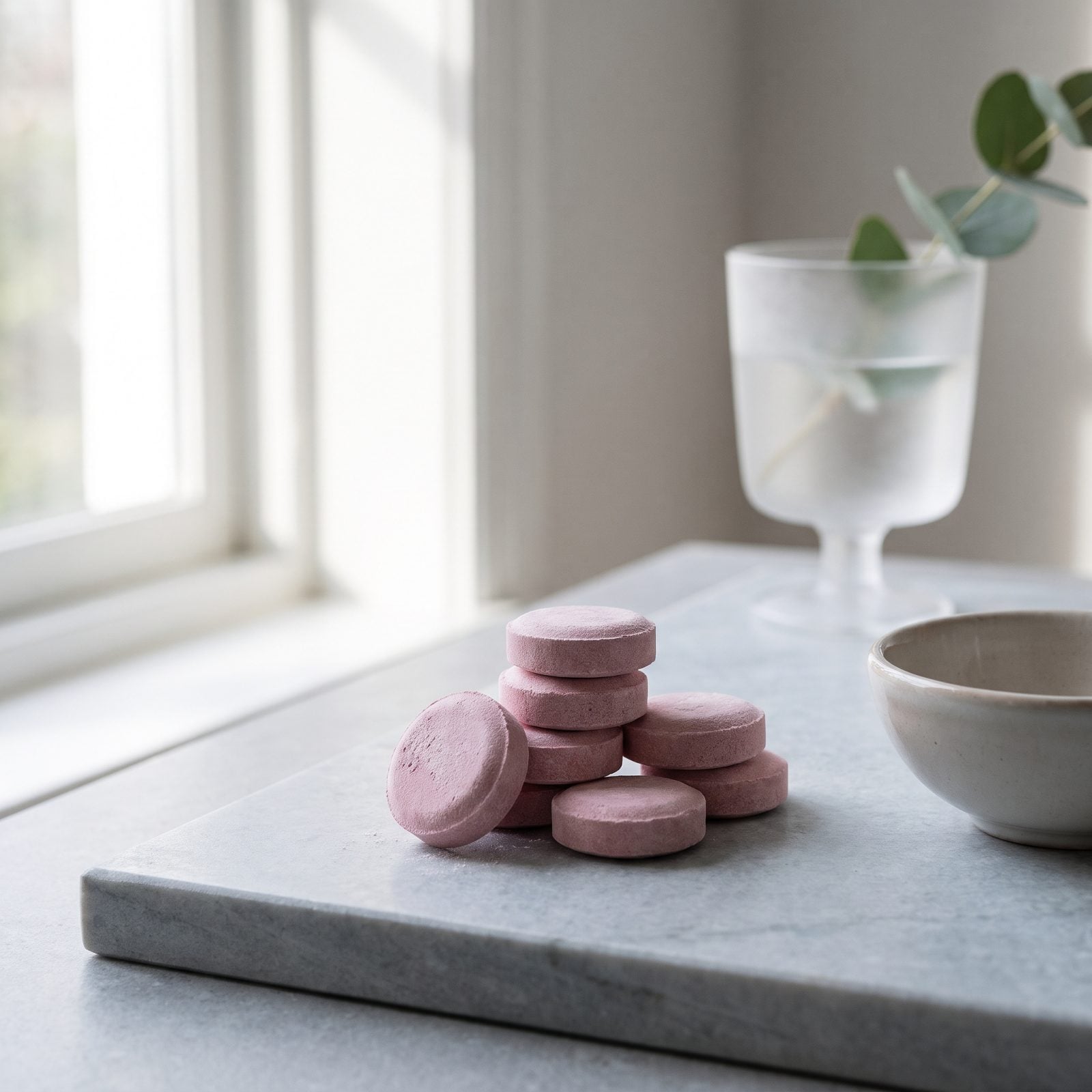
Chalky, flat, dusty pink, and cold the second they touched your tongue. Wintergreen lozenges didn’t taste like much at first. Then the mint bloomed and your whole mouth went cool.
Grandmother’s candy, through and through. They lived in a dish near her chair and smelled faintly of the inside of a purse. A single disc could last ten minutes if you didn’t crunch it, and crunching one in the dark supposedly threw off little sparks of light. Half the kids at every sleepover tested that theory, lights off, teeth clamped, waiting.
4. Brach’s Ice Blue Mints, the Winter-Cold Pillows
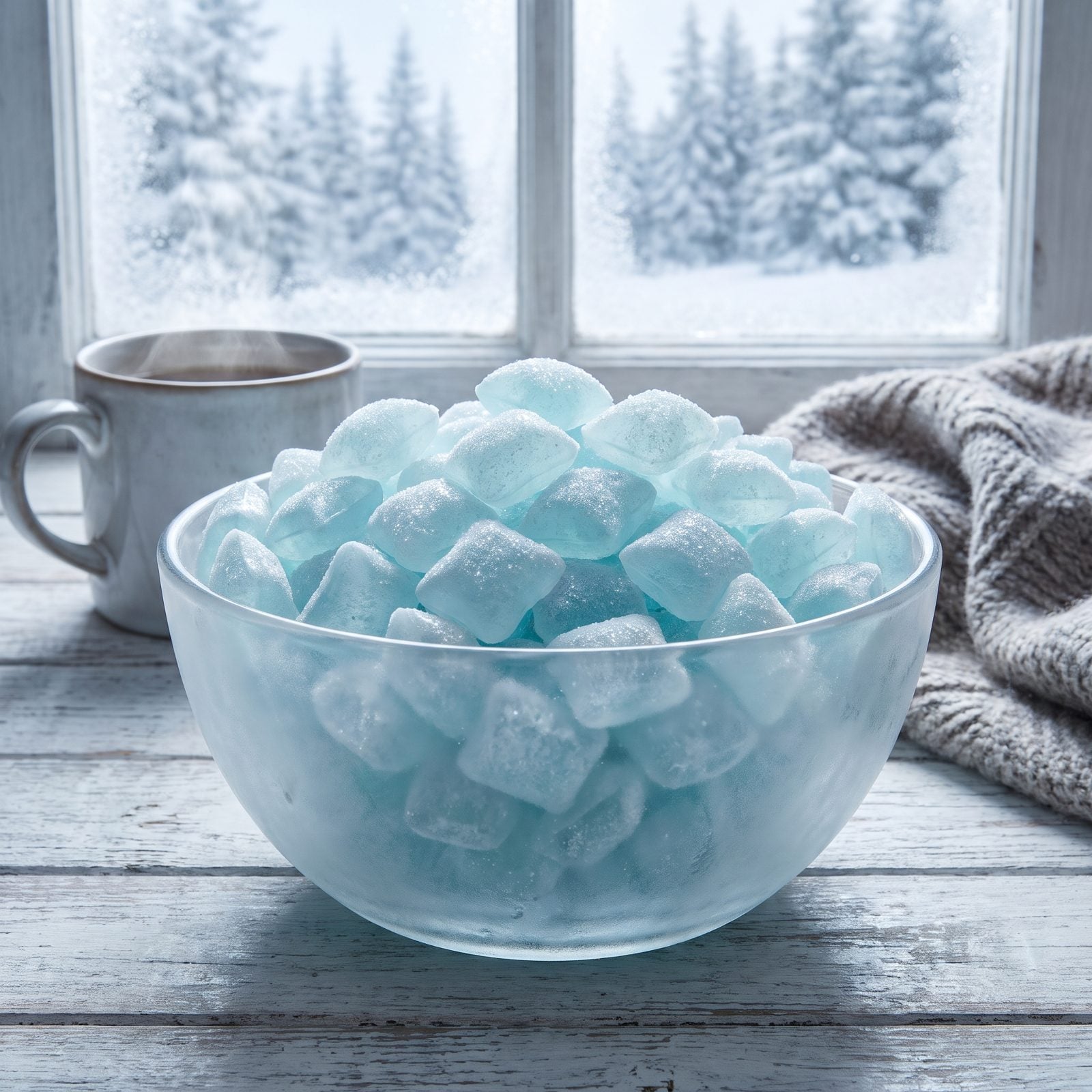
They looked like little frozen pillows, and they tasted like them too.
Ice blue mints were solid pale-blue, pillow-shaped candies with a frosty sugar crust and a cool mint flavor that matched the color exactly. Icy blue, icy taste. Somebody at Brach’s clearly got the memo.
In a dish of red and gold, these were the one cold note, a sweet little snowflake. They clacked against your teeth and the glass when you fished one out, a small sharp sound every grandmother’s living room knew by heart.
3. Amber Root Beer Barrels Clinking in the Glass
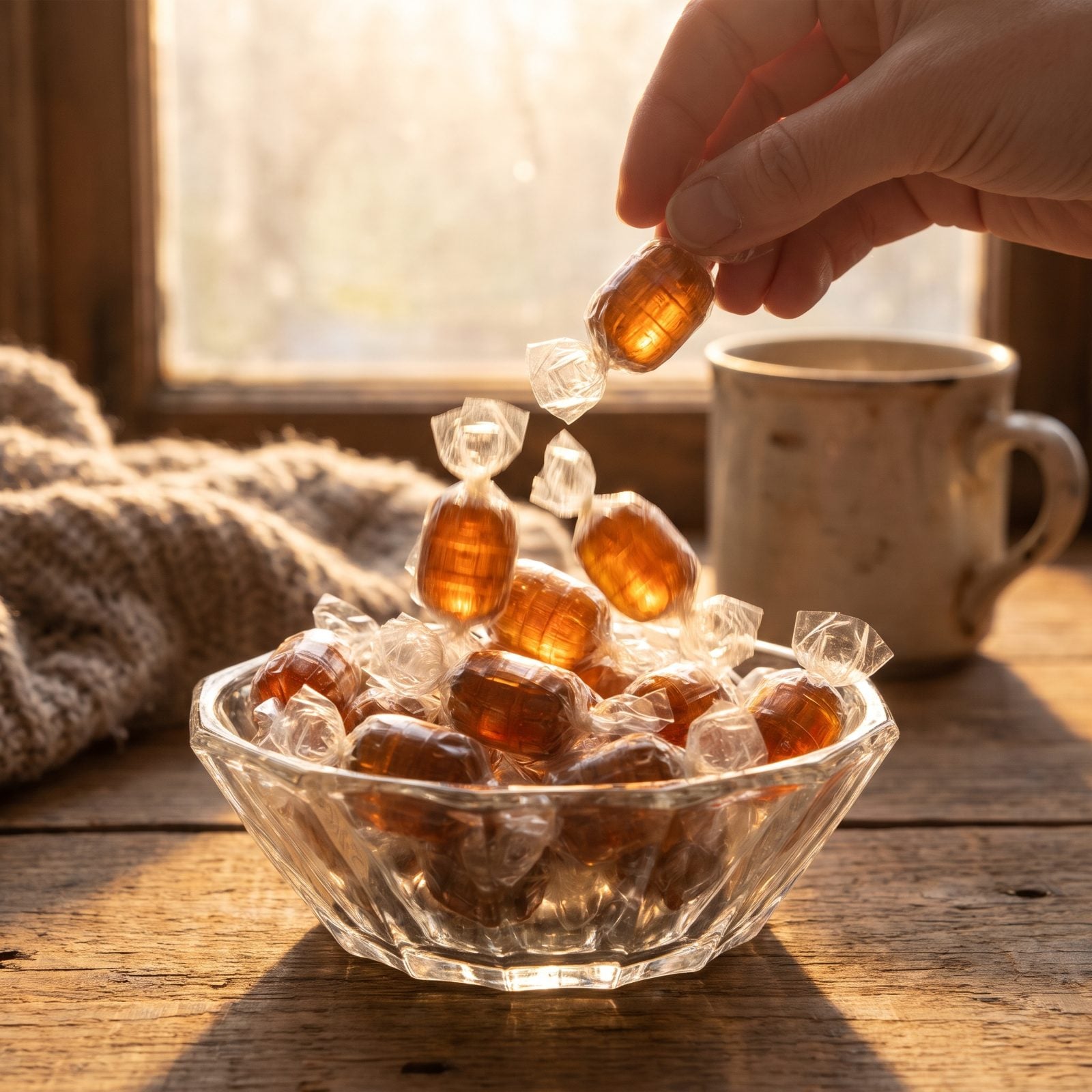
You heard these before you ate them. Amber barrels clinked against the dish like marbles, each twisted in cellophane that crackled loud enough to give you away mid-sneak.
Root beer barrels were a grandfather candy, the kind a man kept in his coat pocket and the car ashtray. That warm, syrupy, faintly medicinal sweetness filled your whole mouth and lasted forever, which was the entire point. One barrel turned any dish into a quiet soda fountain.
2. Powdered-Sugar Date Nut Roll Slices on the Good China
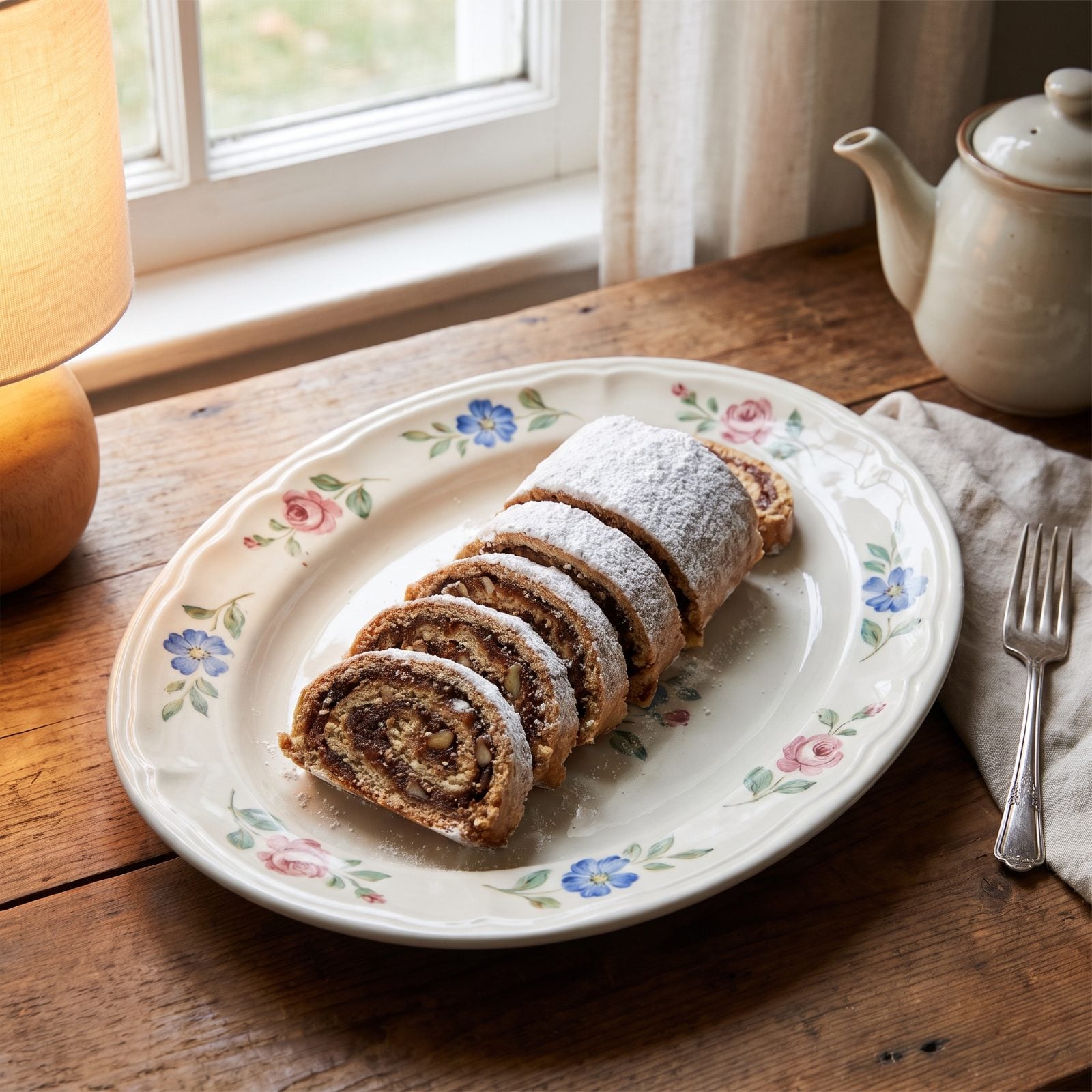
This was the homemade one, the candy that meant somebody actually cooked.
Date nut roll came as a dense log of dates, nuts, and sugar, sliced into coins and rolled in powdered sugar until each piece looked like a snowy little pinwheel. Sticky, chewy, impossibly rich. One slice and you were finished.
It sat on the good china, never the everyday dish, because Aunt Somebody made it from a recipe card gone soft at the corners. The powdered sugar got everywhere. Your shirt, the tablecloth, the carpet. Worth every bit of it.
1. Translucent Clear Toy Candy Figures
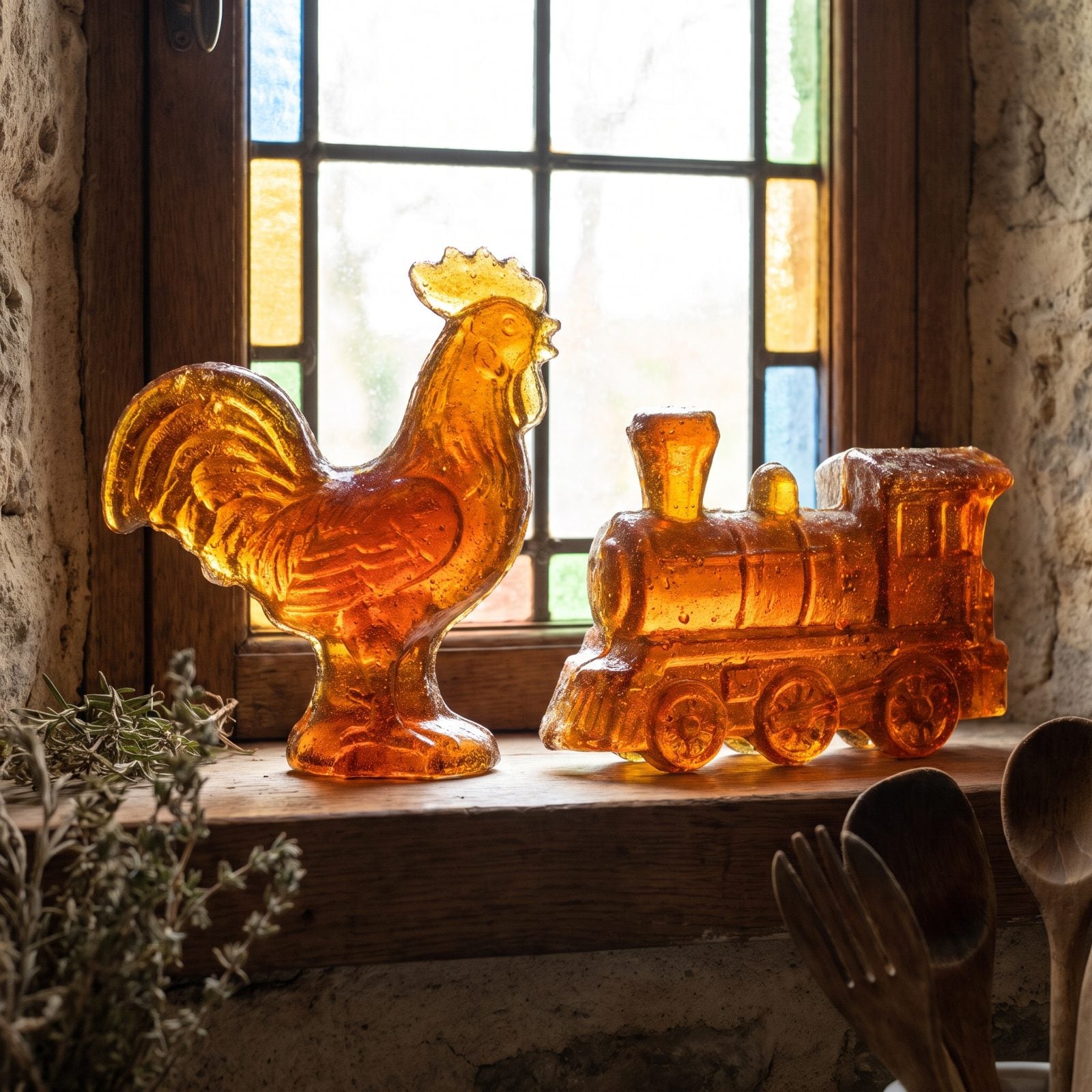
They looked like stained glass somebody had shrunk down and handed to a child. A red rooster, a yellow locomotive, a green dog sitting up to beg, all pressed from clear hard sugar so you could hold one to the tree lights and watch the color glow straight through.
Clear toy candy was more ornament than snack. Kids lined the little figures up on the windowsill and played with them for days before anyone dared take a lick, and by then they’d gone sticky and picked up lint. The flavor was plain and sweet, maybe a whisper of cherry or lemon. Nobody cared. The point was the shape.
They faded because making them takes hot syrup, heavy two-piece metal molds, and fast hands before the sugar sets. A handful of old-school candy makers, mostly in Pennsylvania, still pour them every December, but most of us haven’t seen one since the dish went back in the cabinet.