
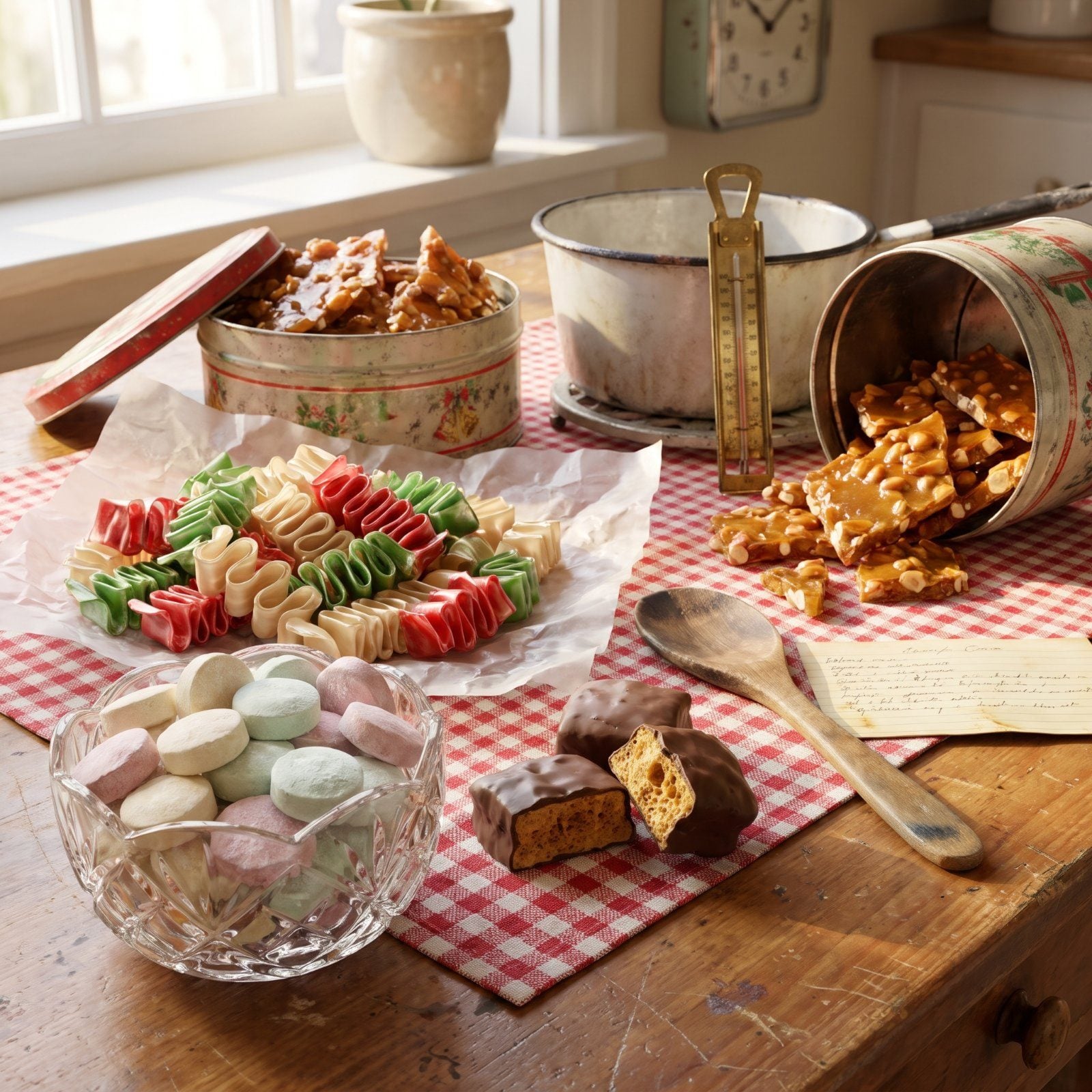
The candy thermometer clipped to the side of a pot, mercury creeping toward 300 degrees while somebody kept yelling not to slam the door. That was December in a lot of houses. Not store candy. Real candy, the kind that took a free afternoon, a wooden spoon worn smooth on one edge, and more patience than anybody has anymore. The ones below pulled, boiled, molded, dipped, and set their way onto the good glass dish once a year. Some we still miss hard.
Please note that some of the images in this article were created with the assistance of AI.
34. Cloudlike Divinity with a Pecan Pressed on Top
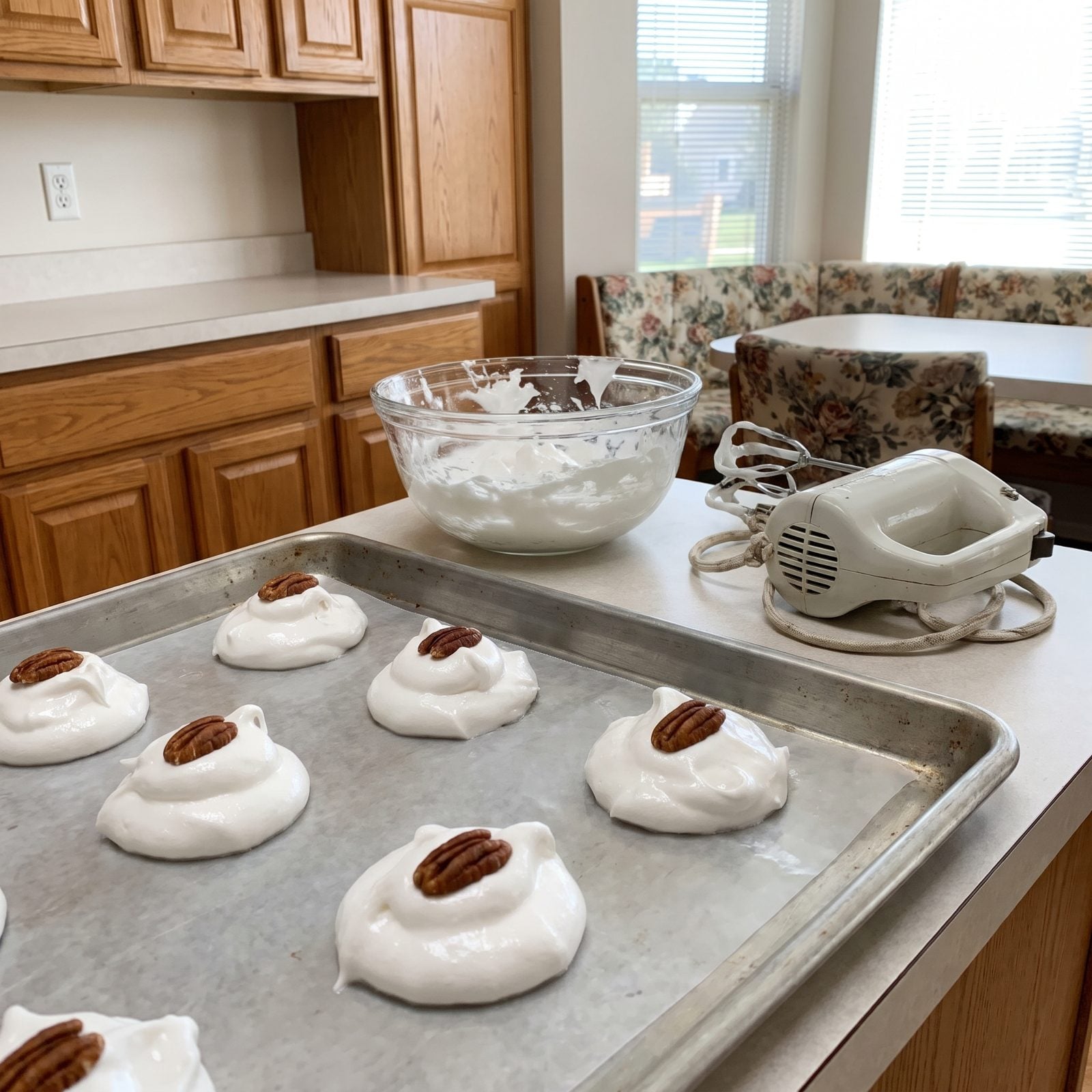
Divinity could ruin an afternoon if the weather turned, because make it on a humid day and it wept into a sticky puddle that never set. Grandmothers checked the sky before they checked the recipe.
The whole thing hinged on beating hot sugar syrup into stiff egg whites at exactly the right second — arm aching, waiting for that moment it stopped glossing and started holding its shape. Drop it too soon and it spread. Too late and it seized in the bowl. A pecan half pressed into each warm mound was the finishing move, and somehow that one nut made the difference between candy and dessert.
33. Hand-Shaped Ribbon Candy That Snapped Like Glass
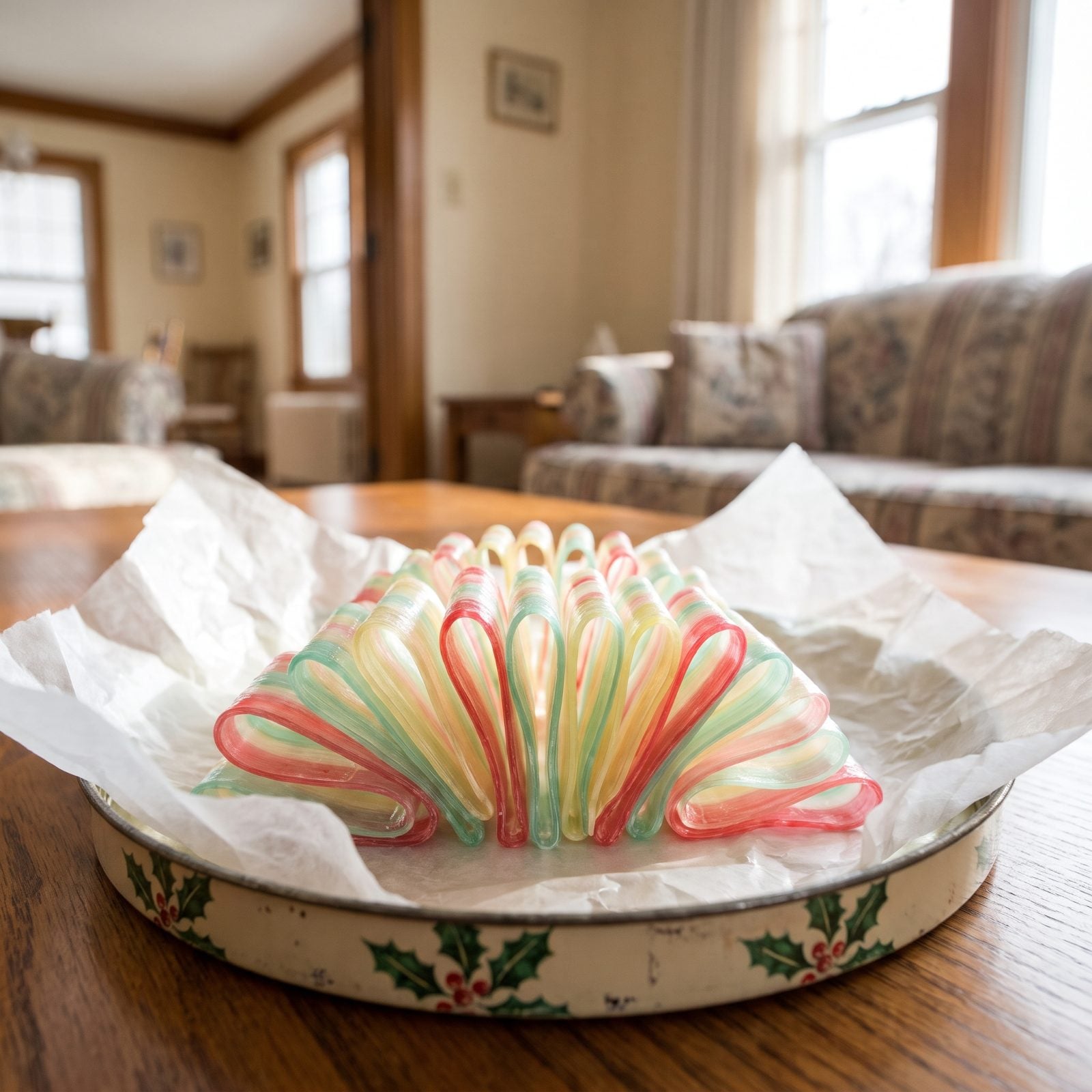
Ribbon candy was the one you weren’t supposed to actually eat. It sat in the good dish looking like folded stained glass, and if you took a piece it shattered into shards too sharp to chew comfortably. Beautiful and faintly dangerous.
Making it by hand meant pulling and folding hot sugar into those fine ridges before it hardened, a race against cooling candy that burned if you weren’t quick. Most people bought it by the time it hit the dish. The ones who still made it had the scarred fingertips to prove it.
Even a third-generation candy maker who turned out ribbon candy for 44 Christmases admits “Ribbon candy is like one of those Christmas songs they play every year: We might not always want to admit it, but when the season comes around, we’re looking for it.”
32. Shatter-Crisp Peanut Brittle Poured Thin
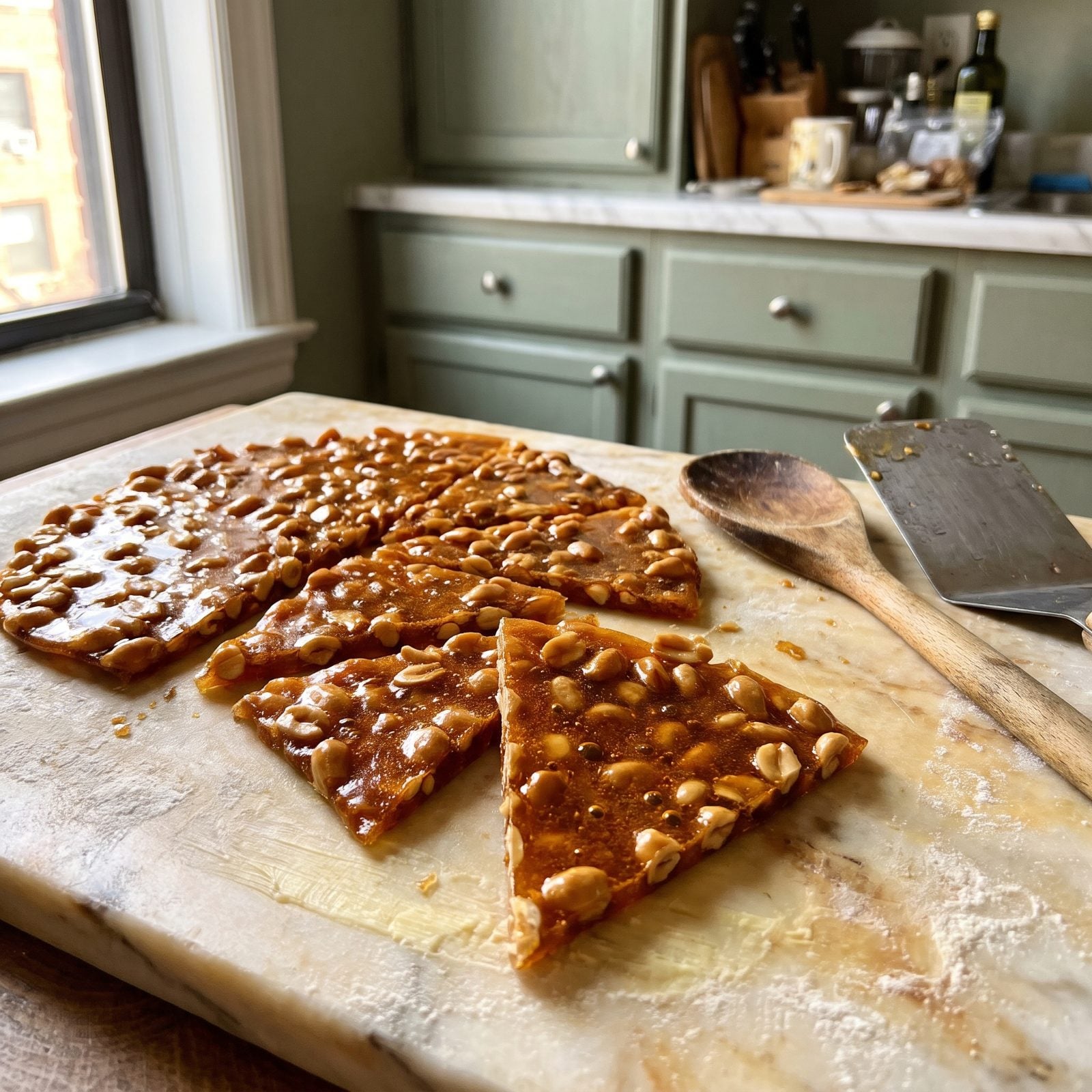
Peanut brittle had a sound. That first crack when you snapped off a piece carried across the whole kitchen.
Every grandmother knew the trick was baking soda, stirred in fast at the very end, foaming the hot sugar up so the brittle set light and crackly instead of dense and tooth-breaking. Then it got poured thin onto a buttered slab and left to cool while you weren’t allowed to touch it. It always ended up with one impossibly thin corner that was secretly the best part.
On the baking soda, a competition-winning pastry chef advises “You want to add it at the end, once your sugar has reached its goal temperature, and you work quickly to incorporate it before pouring it out from the pot”
31. Chocolate-Dipped Sponge Candy with the Honeycomb Center
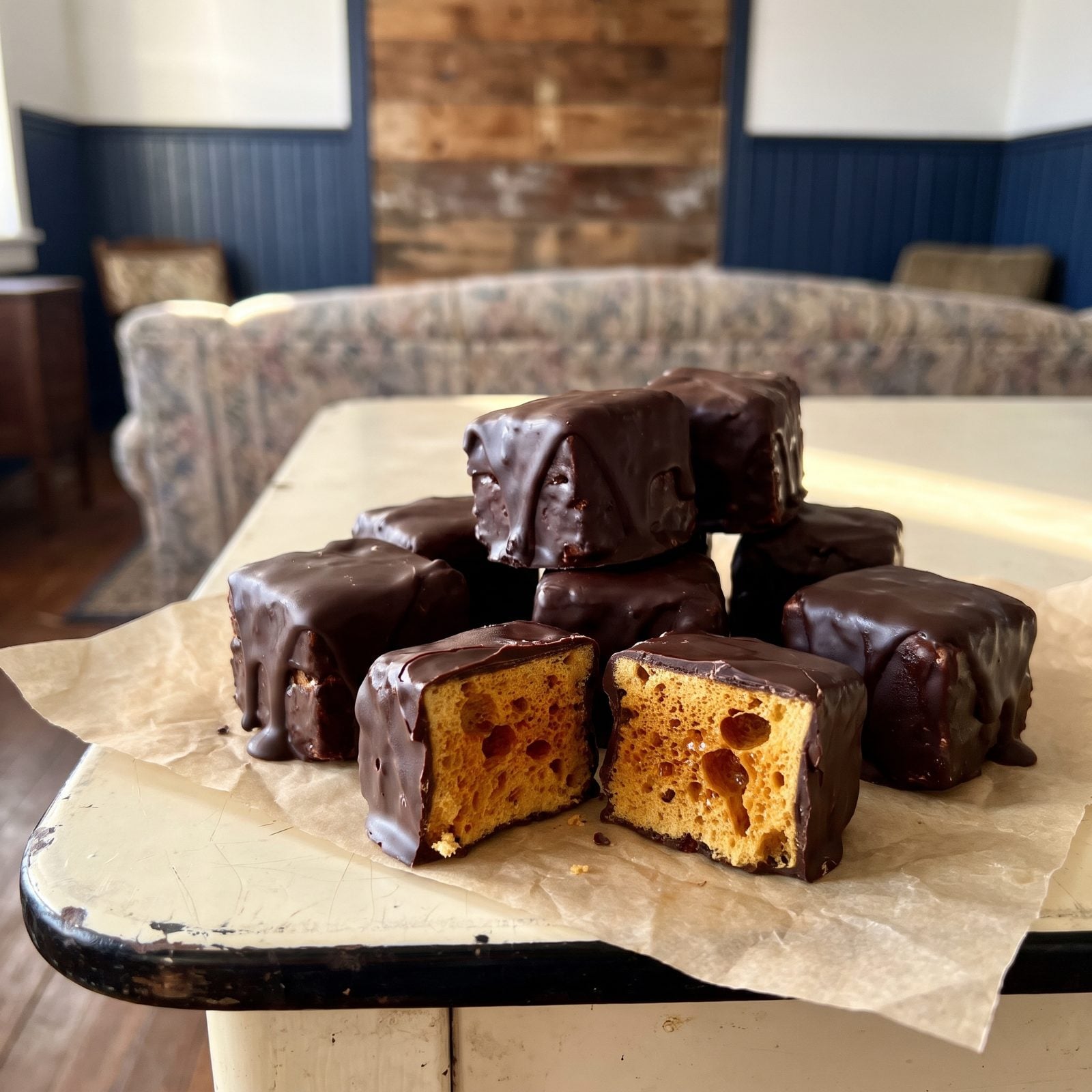
Sponge candy went by a dozen names depending on where you grew up. Seafoam, honeycomb, fairy food, cinder toffee. The magic was always the same: hot syrup hit baking soda and ballooned into a golden bubbly mass that set into something that looked solid but crunched into nothing.
Dipping each piece in chocolate was the labor part. Melted chocolate, a fork, a steady hand, and wax paper lined up across every flat surface in the kitchen. The chocolate sealed in the crunch so it didn’t go soft and chewy overnight. A Buffalo and Upstate New York tradition that never traveled as far as it deserved.
As a meteorologist who wrote about the candy’s sensitivity to weather notes, “There are similar variations that go by other names, like sea foam and molasses puffs, but the story’s all the same.”
30. Molasses Pull Taffy That Took Two People
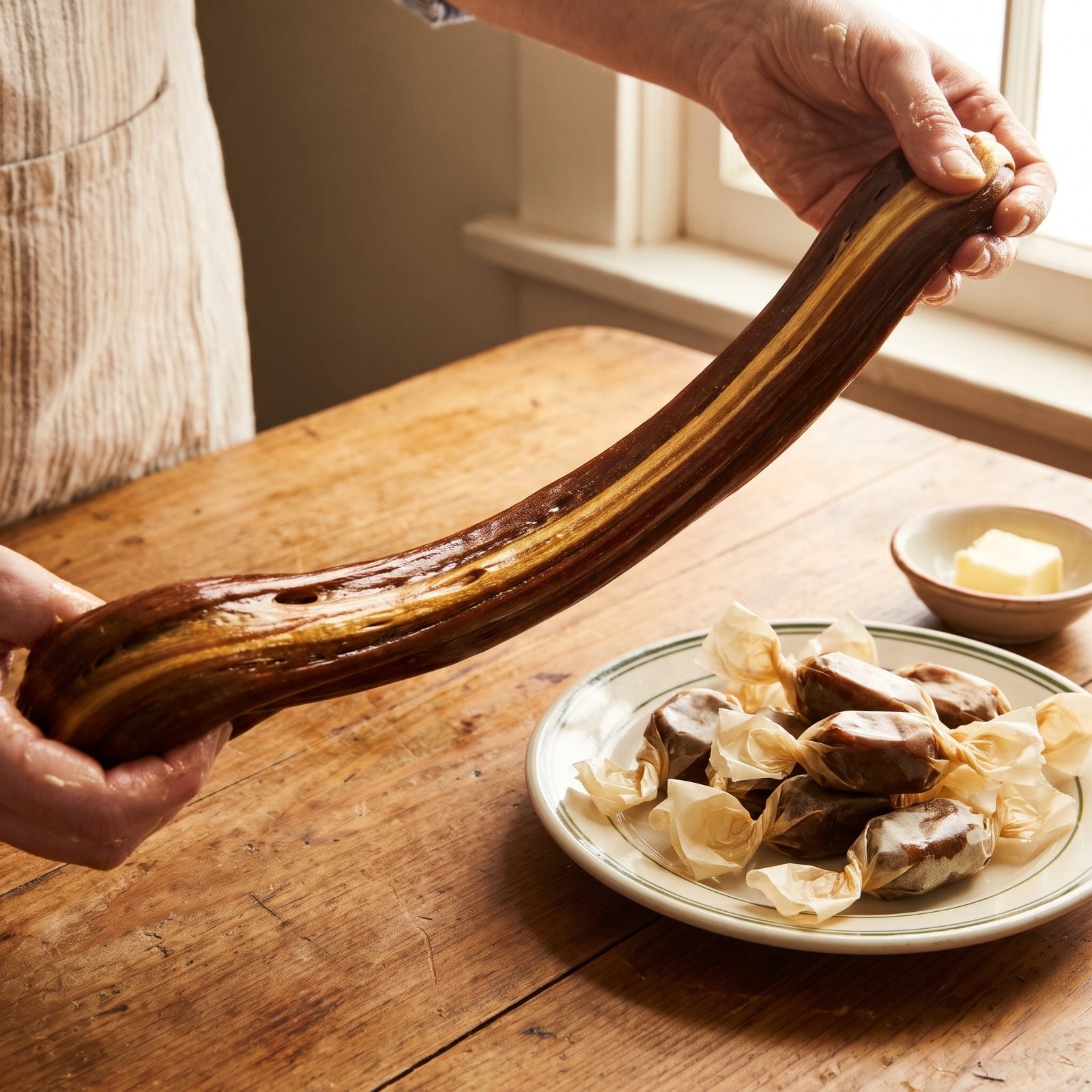
Taffy pulls were the candy that was secretly a party. The syrup boiled, cooled just enough to handle, and then you buttered your hands and started pulling, folding, pulling again, passing it back and forth, that dark molasses stretching out in a glossy, amber-glowing sheet.
You couldn’t do it alone. The stretching took two sets of arms, which is why taffy pulls turned into a whole evening of teenagers and cousins and someone complaining their hands hurt. Then everyone twisted the finished taffy into bite-size pieces and wrapped each one in a little square of wax paper.
What Our Readers Say
- When Piaci Pizza readers loved a food photo and tapped a reason, comfort came out on top at 30%, with nostalgia not far behind at 15%.
- In our reader votes, meal photos with a polished, restaurant-style look got fewer hearts than the other images in the same articles.
From Piaci Pizza reader polls and votes.
29. Pulled Peppermint Sticks with the Barber-Pole Stripe
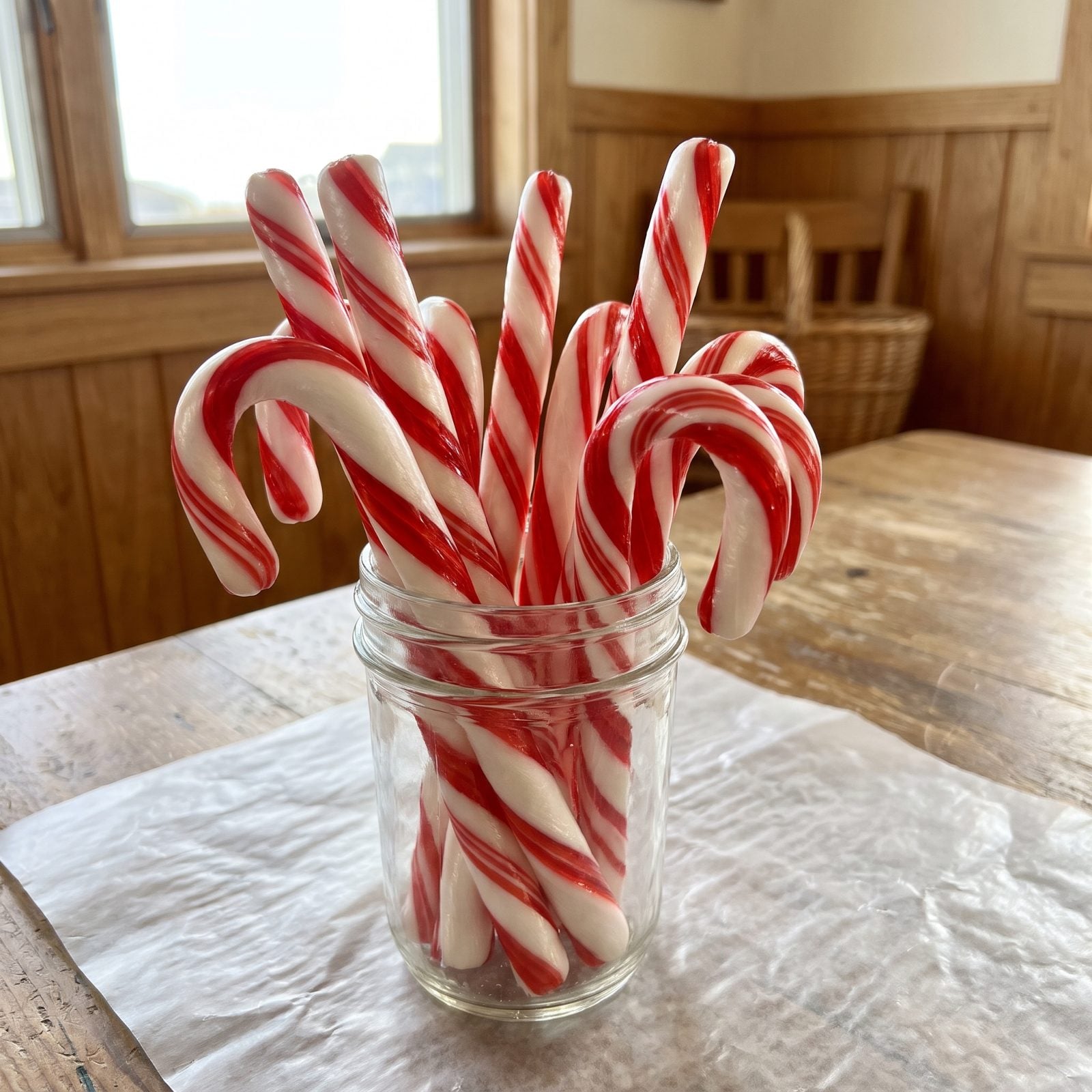
The red stripe on a real pulled peppermint stick wasn’t printed on. Somebody laid a rope of red candy against a mass of white that had been pulled until it turned opaque and satiny, then rolled and stretched the whole thing so the stripe spiraled down like a barber pole.
That pulling is what separated handmade from store-bought. Clear hard candy stayed clear. Pulled candy went soft-white and glossy, melting into peppermint on your tongue instead of just sitting there like glass.
28. Molded Clear Toy Candy in Little Tin Shapes
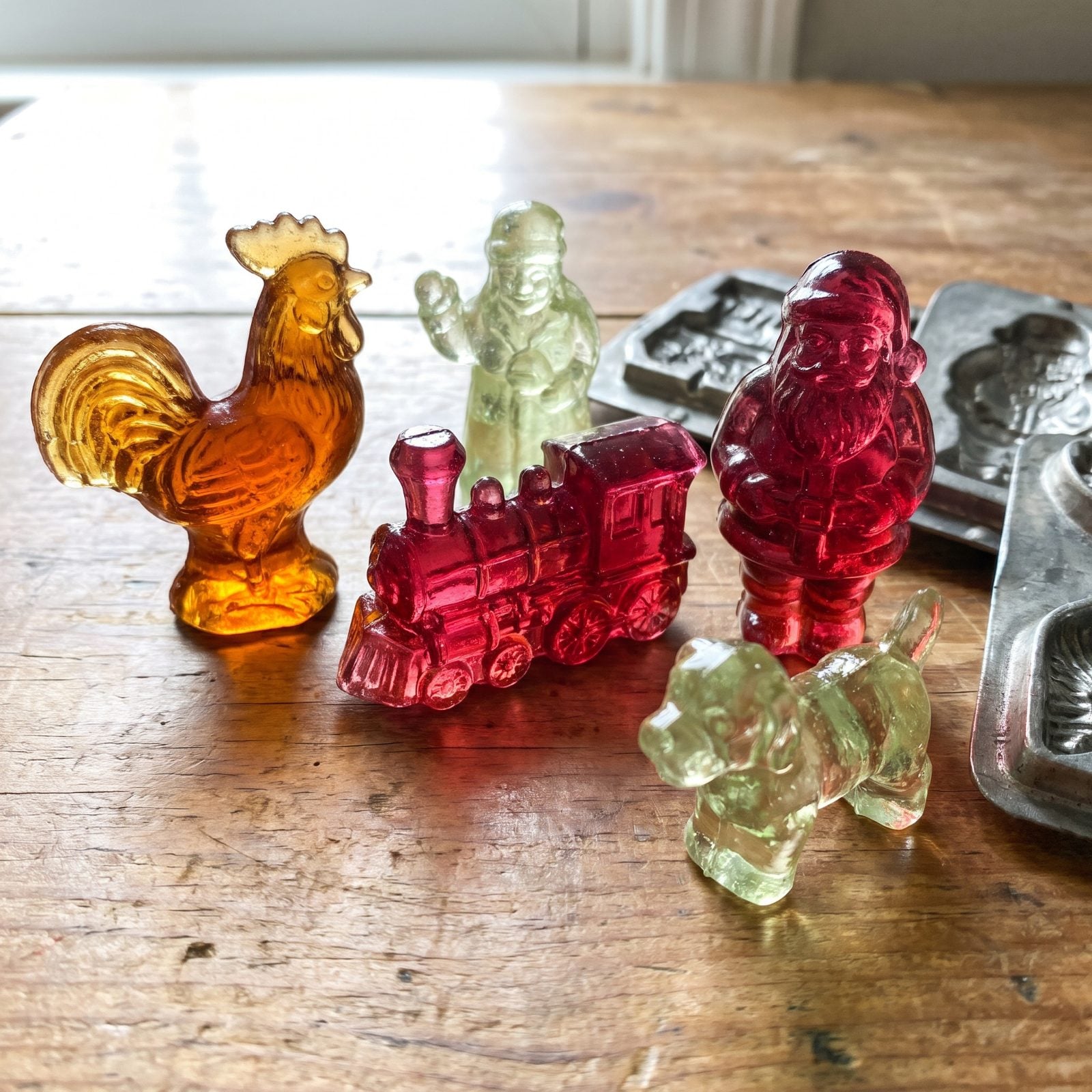
Clear toy candy was a Pennsylvania Dutch Christmas tradition, poured into antique pewter molds shaped like roosters and locomotives and little men. It was barely even for eating. Mostly it was for looking at, hung on the tree or set in the window where the light came through it like colored glass.
You cooked the sugar hot and poured it fast before it clouded, and the detail in the mold decided whether you got a crisp little rooster or an amber blob. Kids got one every year and most of them were still around in the drawer come February, slowly going sticky.
27. Cinnamon Hard Tack Candy Smashed with a Hammer
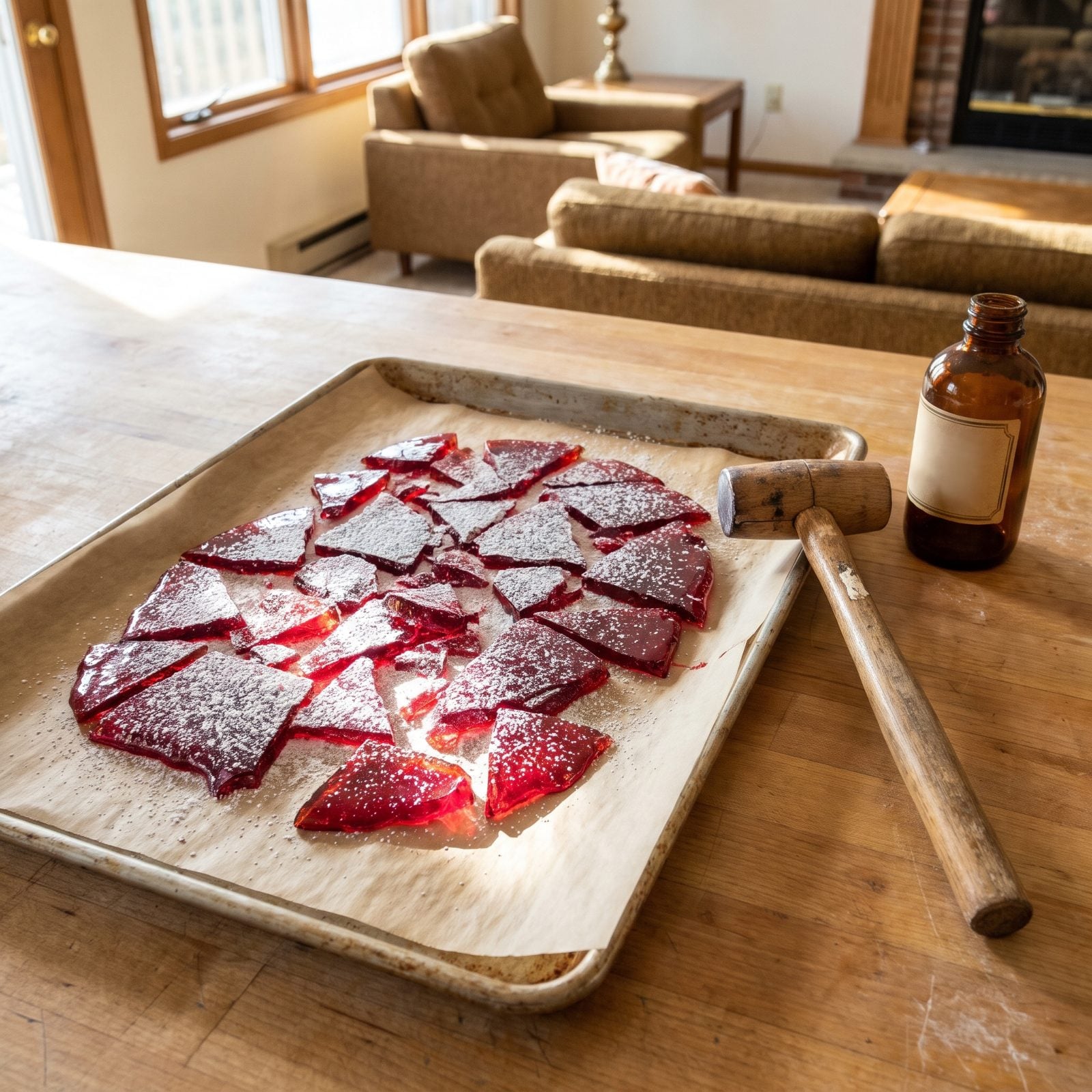
Hard tack candy came with cinnamon oil so strong the whole kitchen smelled like fireballs for a week. A few drops went into the hot red syrup, then you poured it into a sheet and waited for it to set rock-solid.
Then came the fun part. You smashed it. Kitchen hammer, back of a spoon, whatever was handy, breaking the whole sheet into sharp little ruby shards and tossing them in powdered sugar so they didn’t stick together. It was candy you could make loud.
26. Old-Fashioned Horehound Drops Nobody Under Sixty Remembers
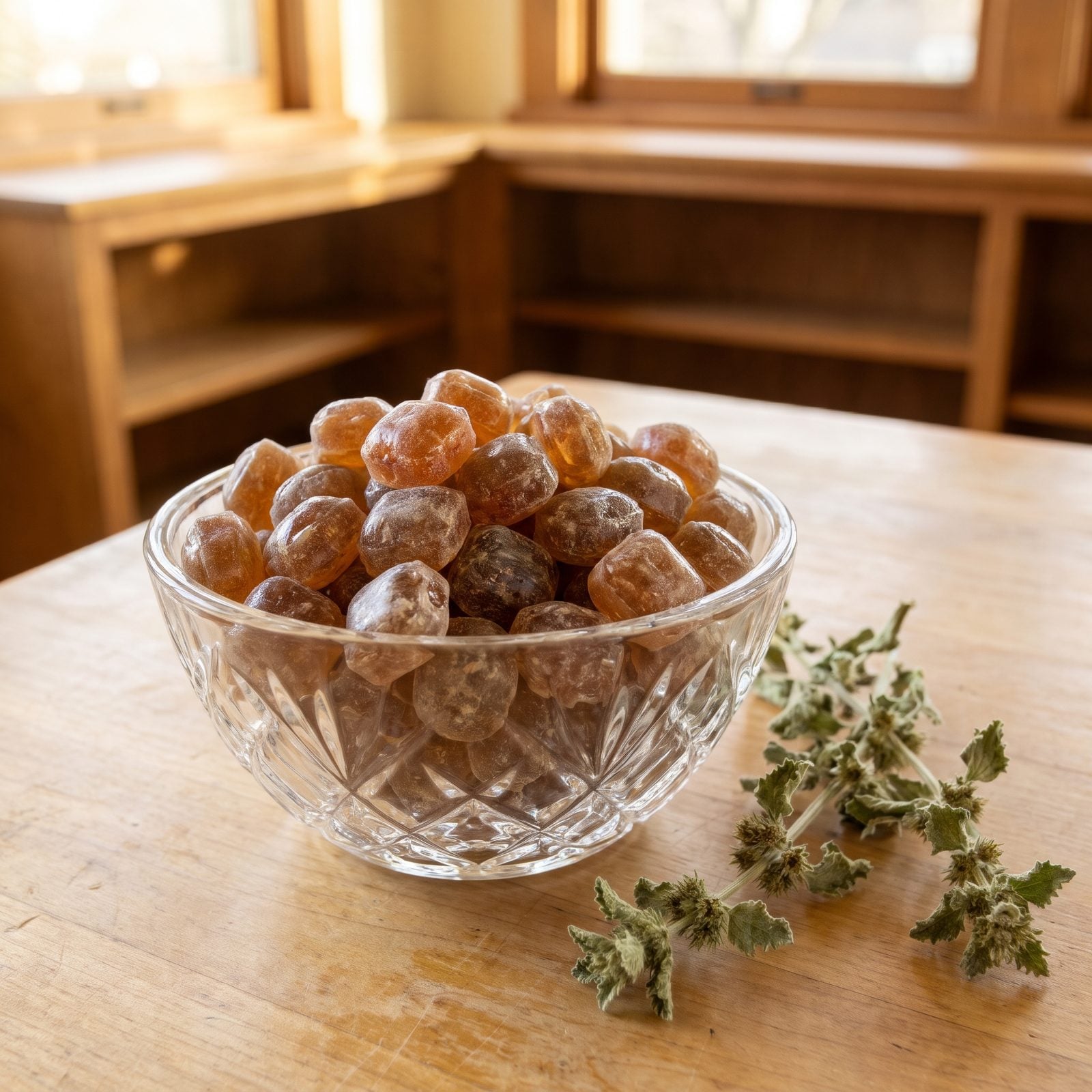
Horehound drops were the candy for grandparents, the ones with the bitter-herbal edge that kids spit back out and old folks swore by for a cough. You steeped the horehound herb into a tea, cooked it down with sugar into dark amber drops, and set out a dish most of the family avoided.
It tasted like root beer that had second thoughts. Faintly medicinal, oddly addictive once you got used to it. This is the one on the list most people truly forgot, which is exactly why it belongs here.
Bitter herbs are a tough sell. When our readers disliked a food photo, the top reason was a plain “not for me” at 39%, with ingredients next at 29%.
25. Pastel Butter Mints That Melted the Second They Hit Your Tongue
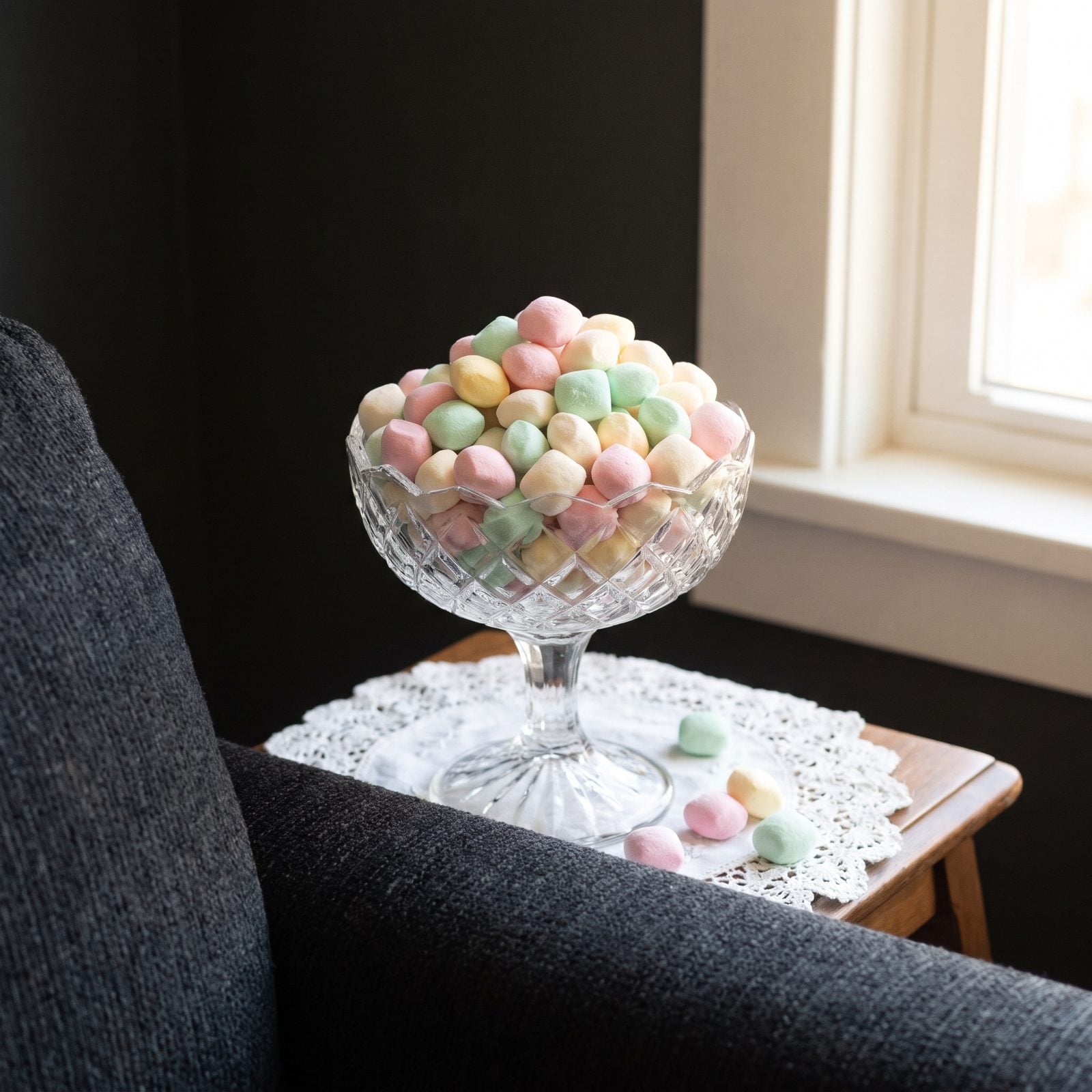
Butter mints were the quiet ending to a holiday meal, sitting in a little dish by the door in pink and green and yellow. You took one on the way out and it dissolved before you reached the car, all butter and cream and cool peppermint.
Making them meant kneading powdered sugar into softened butter and a drop of mint until it turned into a smooth dough, tinting it pastel, then rolling it into ropes and snipping tiny pillows with kitchen scissors. No boiling, no thermometer, just patience and sore hands. They set up firm on the outside and stayed creamy enough to melt. The gentlest candy on this whole list, and the one you’ll find yourself wanting first.
24. Maple Sugar Leaves Pressed From a Little Tin Mold
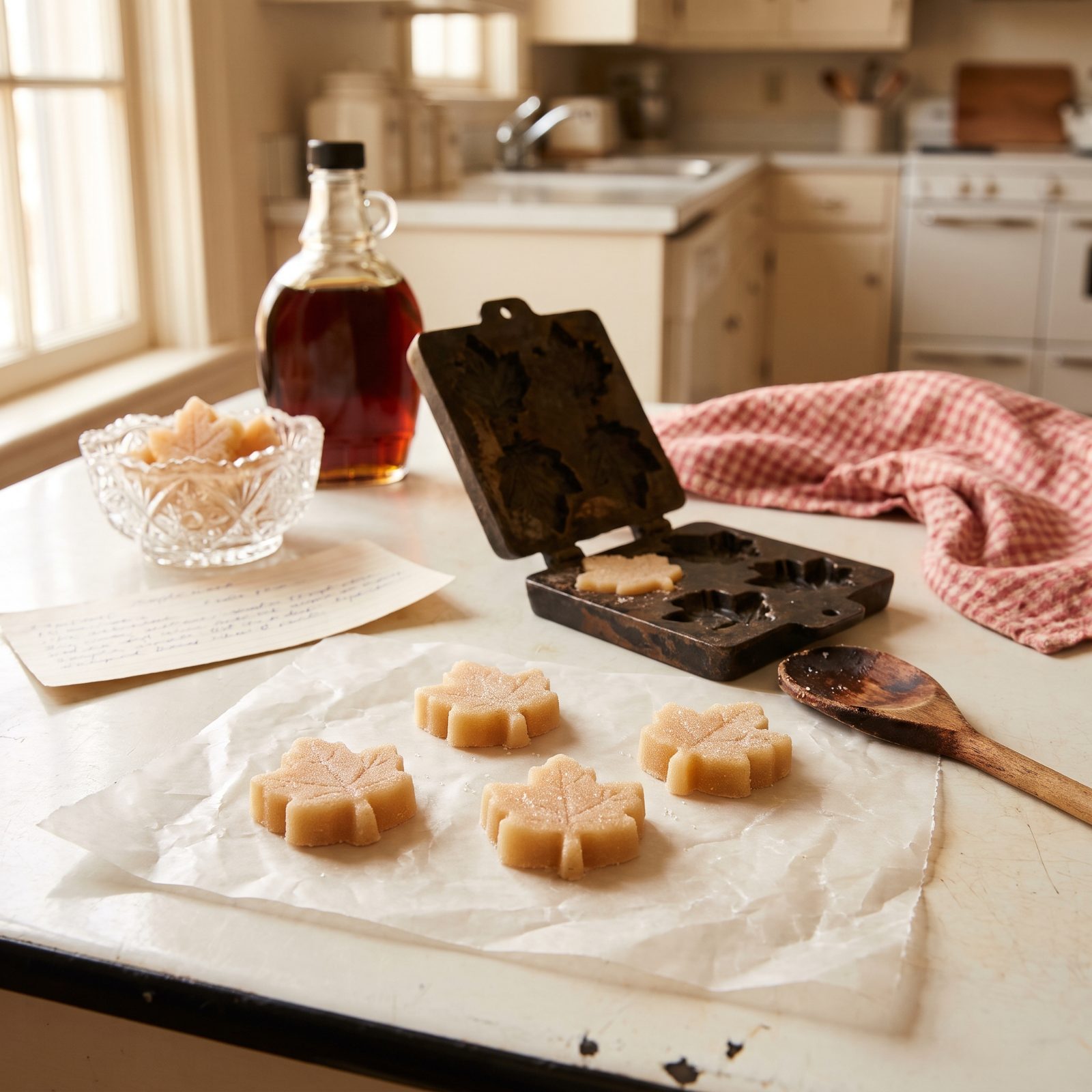
Pure maple syrup, boiled until it threatens to seize, then beaten and spooned fast into cold tin molds shaped like leaves. No chocolate, no nuts, nothing to hide behind. Just sugar and timing.
Grandma kept the molds in a drawer that smelled permanently of sap, and she worked quick because maple sugar sets the second it decides to. Pour too slow and you had a pan of amber rock. Pour just right and the leaf popped out clean, grainy on the tongue, sweet in a way store candy never managed.
23. Chocolate-Coated Opera Creams With That Glassy Snap
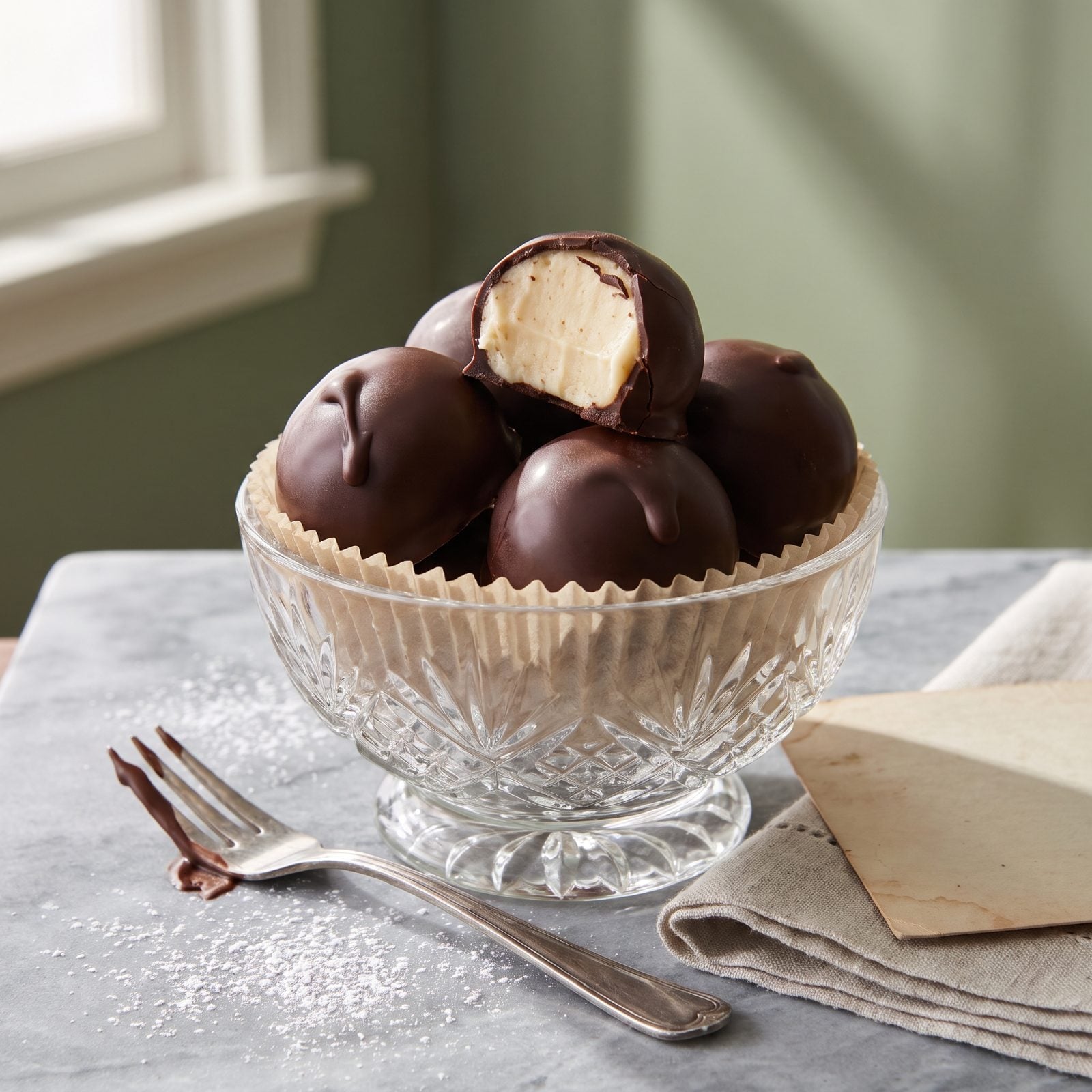
The snap is what you remember. You bite through a thin chocolate shell and hit a cool, almost fondant cream inside that practically dissolves. Cincinnati built a whole identity around these.
Making them meant cooking sugar and cream to the soft-ball stage, letting it rest, then kneading it smooth before hand-dipping each little cream in melted chocolate with a fork. Tedious work. The kitchen counter would be covered in waxed paper and little chocolate feet where the coating pooled.
22. Peanut Butter Potato Candy Pinwheels, the Cheapest Magic in the House
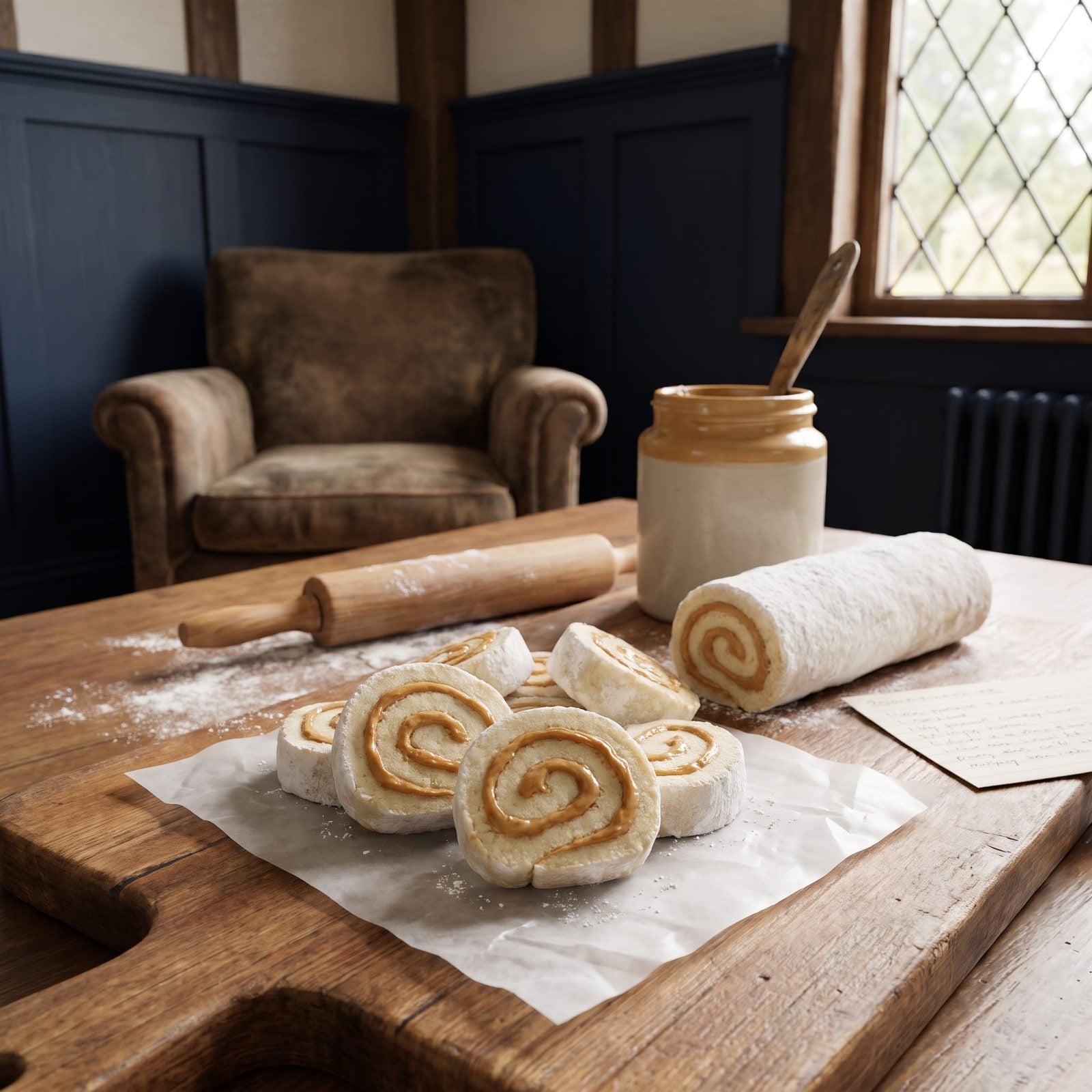
Start with one boiled potato. That’s the secret nobody believes until they try it. Mash it, work in powdered sugar until it becomes a stiff white dough, roll it flat, spread peanut butter edge to edge, then roll it up like a jelly roll and slice.
The potato vanishes entirely, and all it does is pull in an impossible amount of sugar while keeping the dough pliable. Depression kitchens leaned on this one hard because it cost almost nothing and fed a crowd.
Every slice is a little spiral of white and tan. Kids fought over the end pieces.
21. Caramel-Covered Pecan Logs, the Bus-Station Candy Made at Home
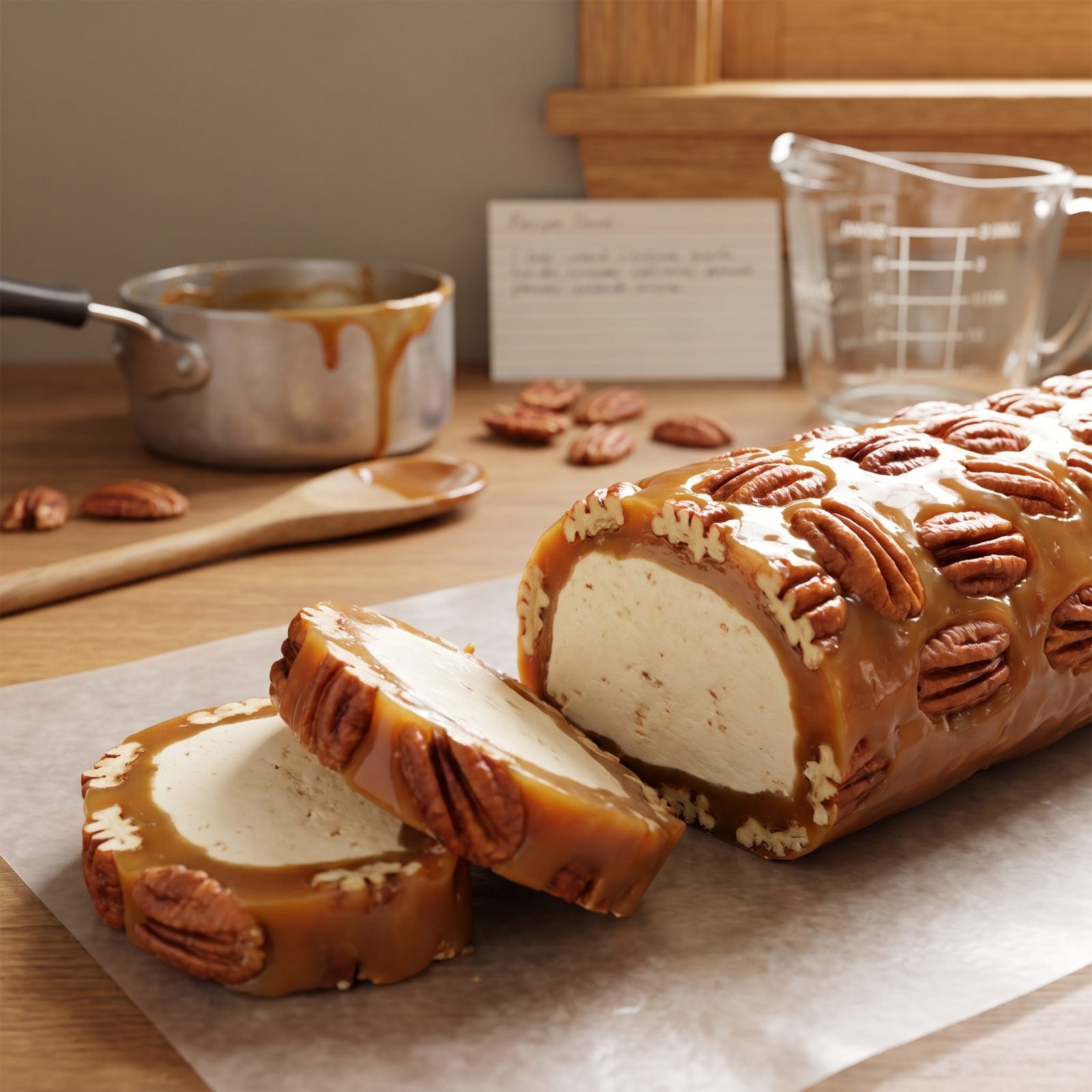
You know the version wrapped in cellophane at the highway gift shop, the one that sat by the register next to the fudge. Grandma made the real one, and it ruined the store kind forever.
A soft white nougat center, rolled in warm caramel, then crowned with pecan halves pressed across the top. Three separate candies stacked into one, each requiring its own fussy sugar stage.
Slicing it was a sticky business. The caramel stretched, the pecans crunched, and the nougat gave soft in the middle. Worth every napkin.
20. Liquid-Center Cherry Cordials and the Three-Day Wait
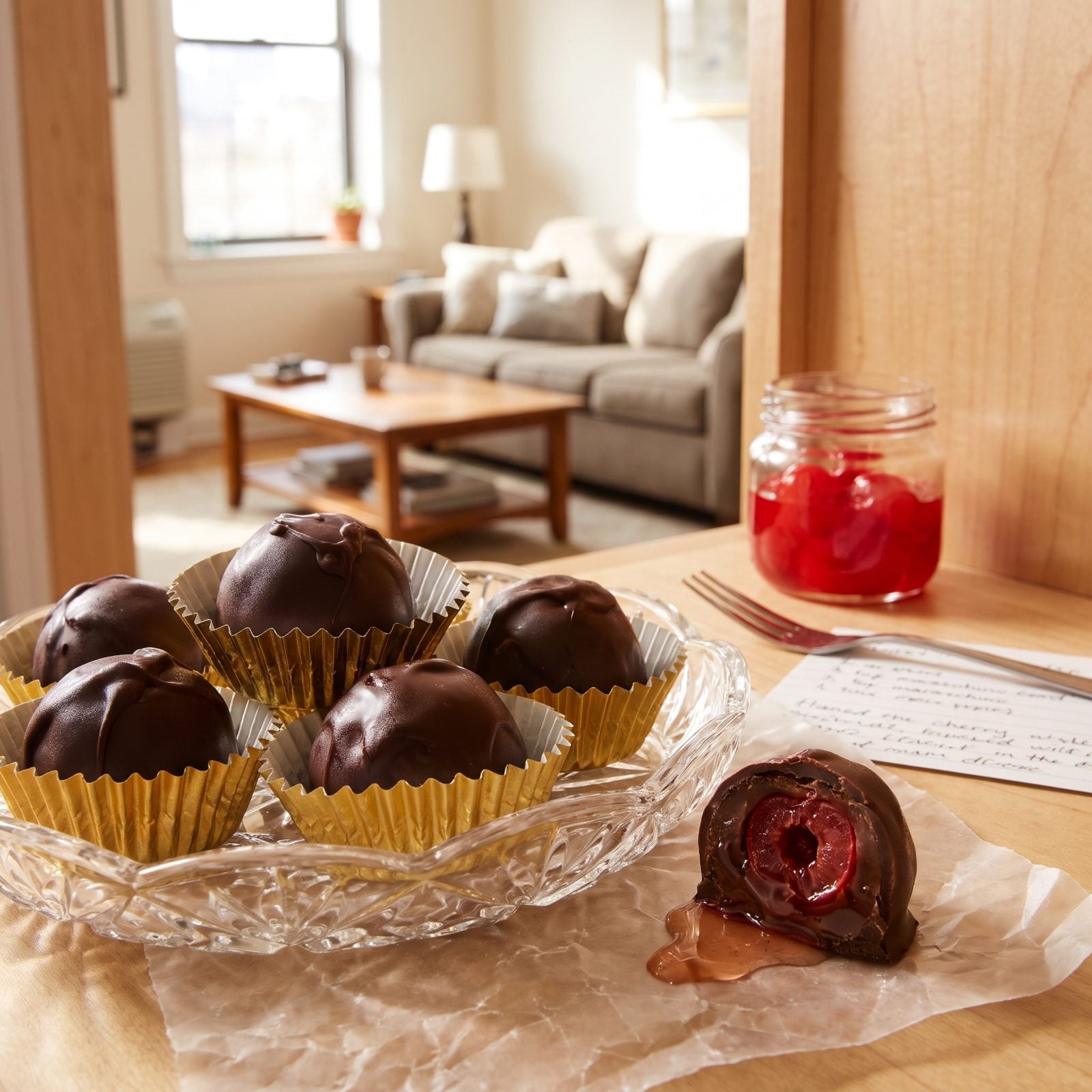
The miracle was always the liquid center. How did the cherry end up swimming in syrup inside a solid chocolate shell?
Here’s the trick. You coat the cherry in a firm fondant made with an enzyme called invertase, then dip the whole thing in chocolate, and over the next few days the invertase quietly breaks the sugar down so the solid fondant liquefies on its own. You had to wait. Impatience got you a chalky center.
Grandma made a batch in early December so they’d be ready by Christmas. She counted the days.
19. Chocolate-Dipped Candied Orange Peel, the Candy That Wasted Nothing
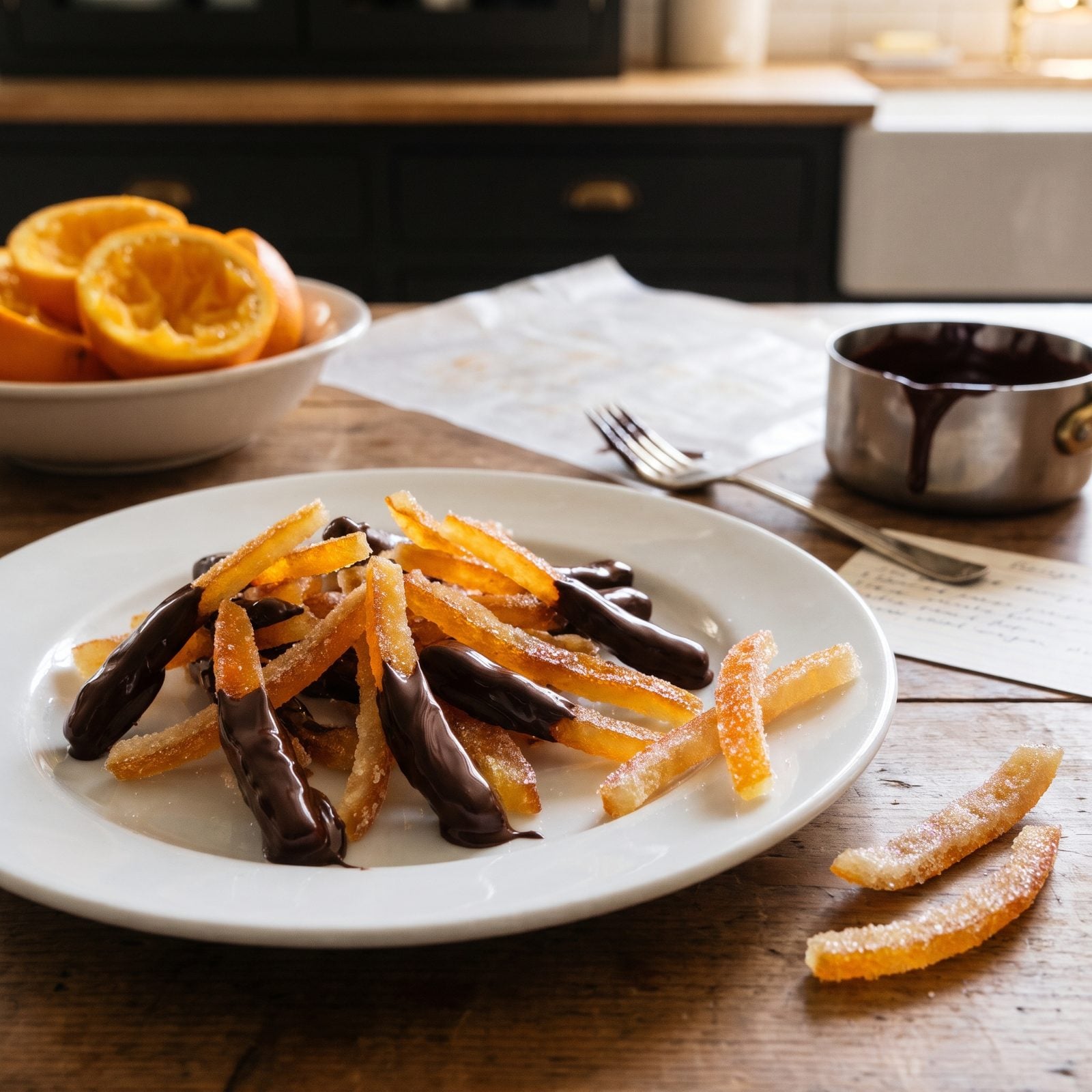
Nobody threw out an orange peel in Grandma’s kitchen. Not in December. The peels got simmered in sugar syrup until they turned glassy and translucent, rolled in sugar, dried on racks, then half-dipped in dark chocolate.
The result sat somewhere between candy and marmalade. Chewy, bittersweet, intensely orange, the kind of grown-up flavor you only come to appreciate after years of grabbing the chocolate stuff first.
Thrift turned into a treat. A pile of peels headed for the compost became the one candy on the tray that actually tasted like something other than sugar. We skipped it as kids and reach for it now. Funny how that goes.
18. Homemade Sugar-Coated Gumdrops
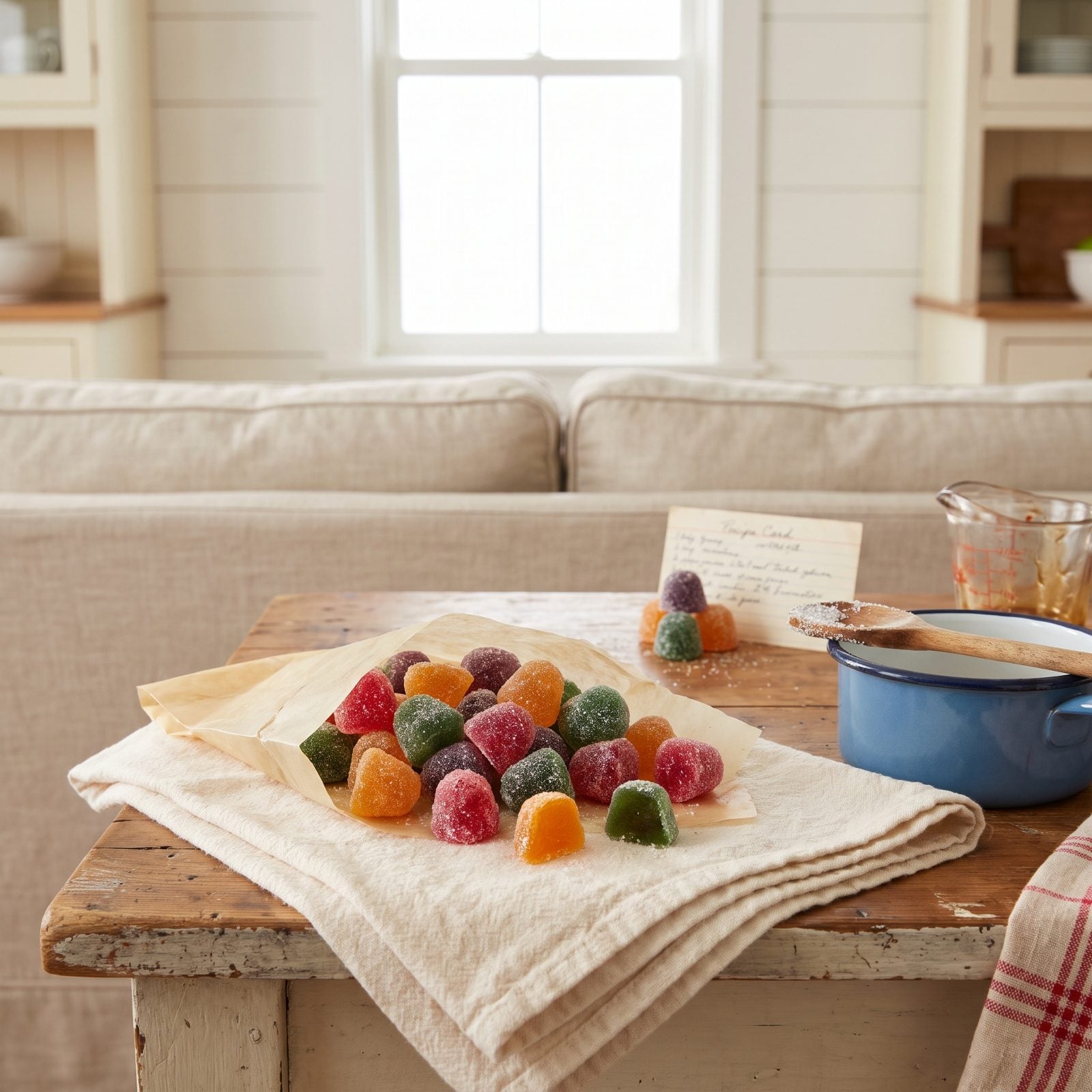
Store gumdrops are fine. Homemade gumdrops were something else, softer and brighter, flavored with whatever extracts were in the cupboard. Spearmint, lemon, anise, cherry.
The syrup was sugar and gelatin or pectin, tinted and poured into a pan to set overnight. Then you cut it into little cubes with a wet knife, tossed every piece in granulated sugar, and let them sit out to dry so the crust firmed up. Some houses stuck them on the bare branches of a gumdrop tree for the table. Most of them never made it to Christmas Day.
17. Rosewater Turkish Delight
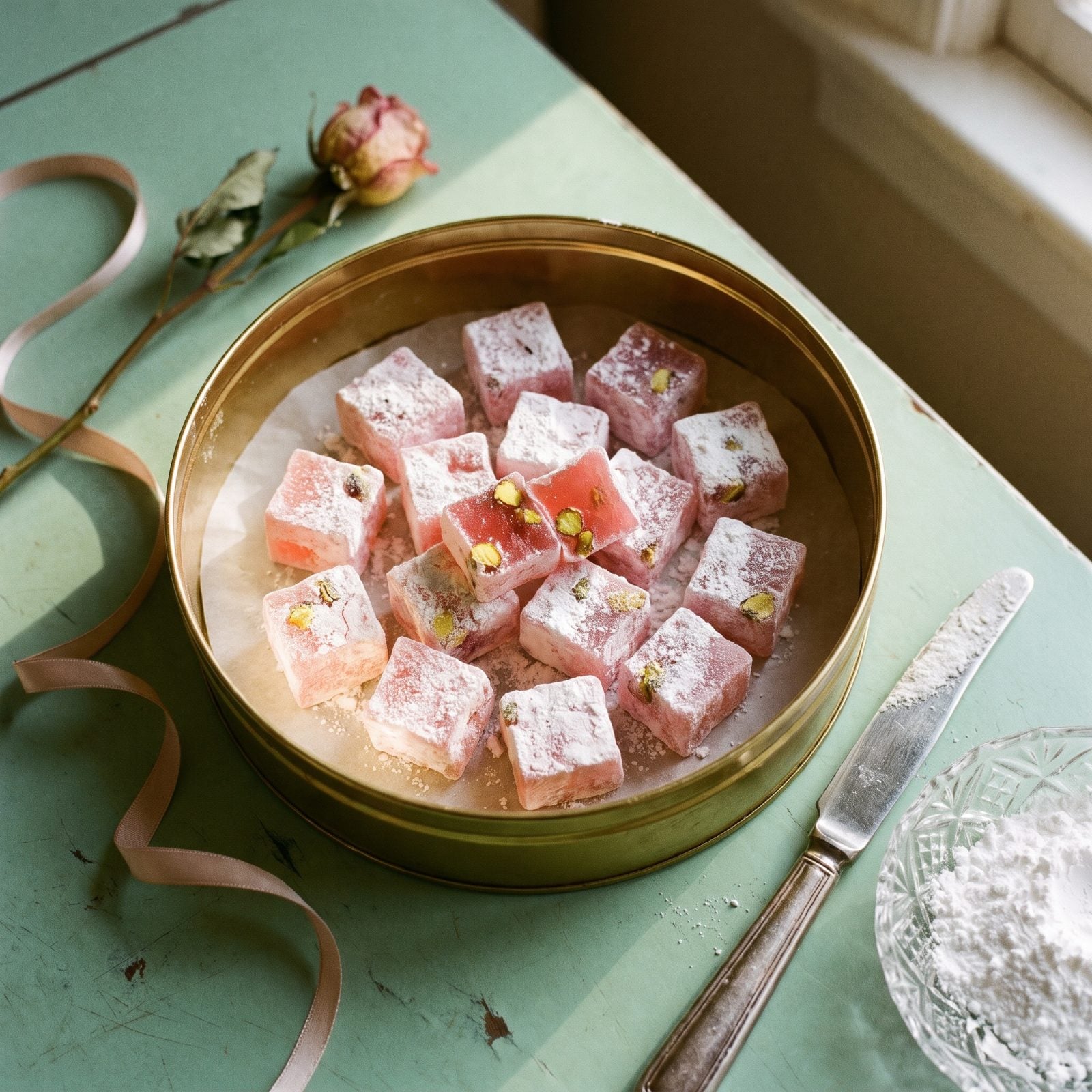
Plenty of kids first heard of Turkish delight in The Lion, the Witch and the Wardrobe and spent years wondering what could be worth betraying your family over. The homemade version answered the question.
It’s mostly sugar and cornstarch, cooked low and stirred for the better part of an hour until the mixture turns thick and translucent. A splash of rosewater went in at the end, sometimes a drop of pink coloring. Once it set, you cut it into soft cubes and buried them in powdered sugar and cornstarch so they wouldn’t weep together. Floral, chewy, and strange in the best way.
16. Nut-Studded Italian Torrone
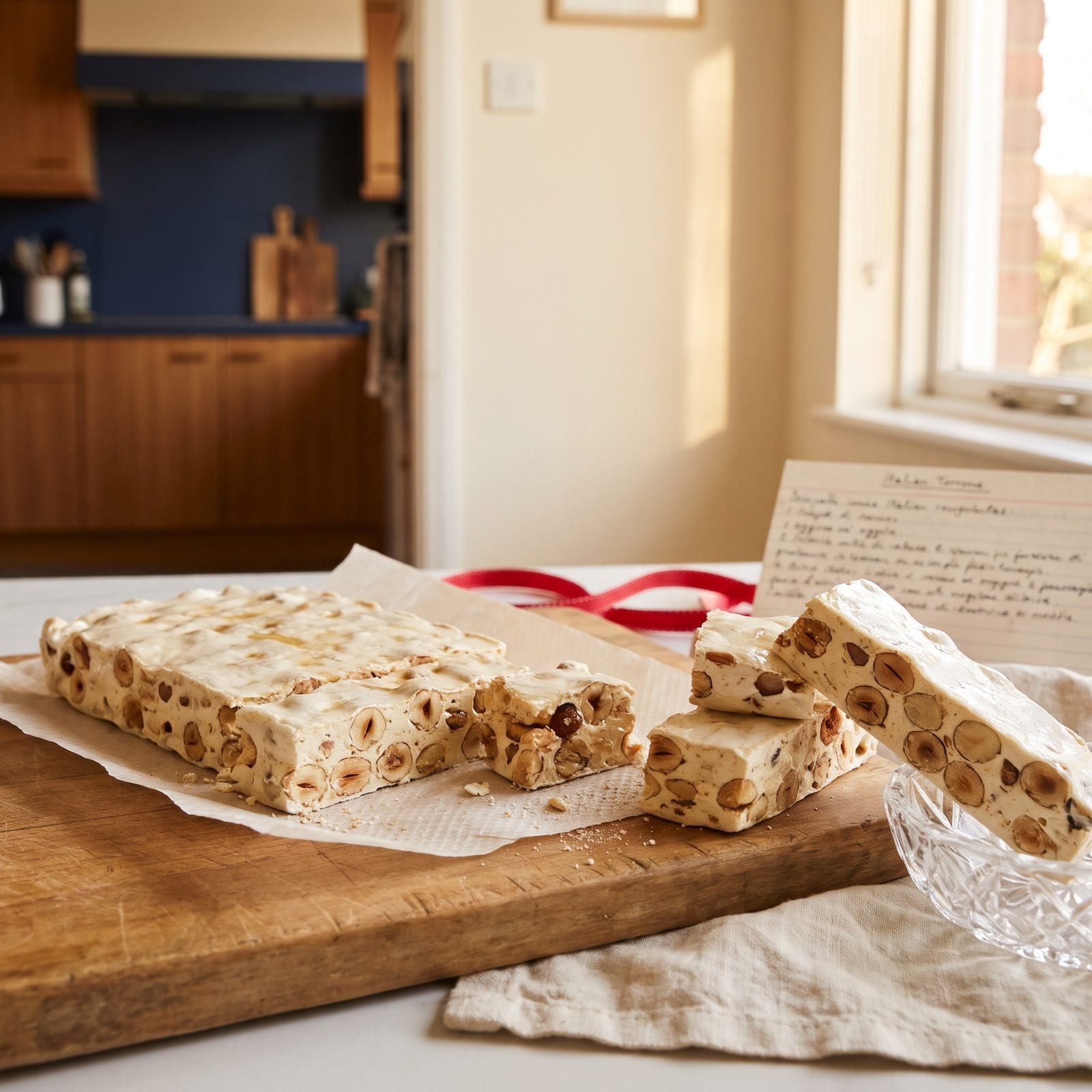
In Italian households, Christmas meant torrone. Honey, sugar, and egg whites whipped into a dense white nougat, then packed with toasted almonds or hazelnuts until there was nearly as much nut as candy.
The traditional move was pressing it between sheets of thin edible wafer paper, which kept it from welding itself to the pan and to your hands. Depending on how long the honey cooked, it set up soft and chewy or hard enough to need a sharp knife and some nerve. Cremona, in northern Italy, claims it as their own. Every family that made it claimed their version was right.
15. Chocolate-Covered English Toffee
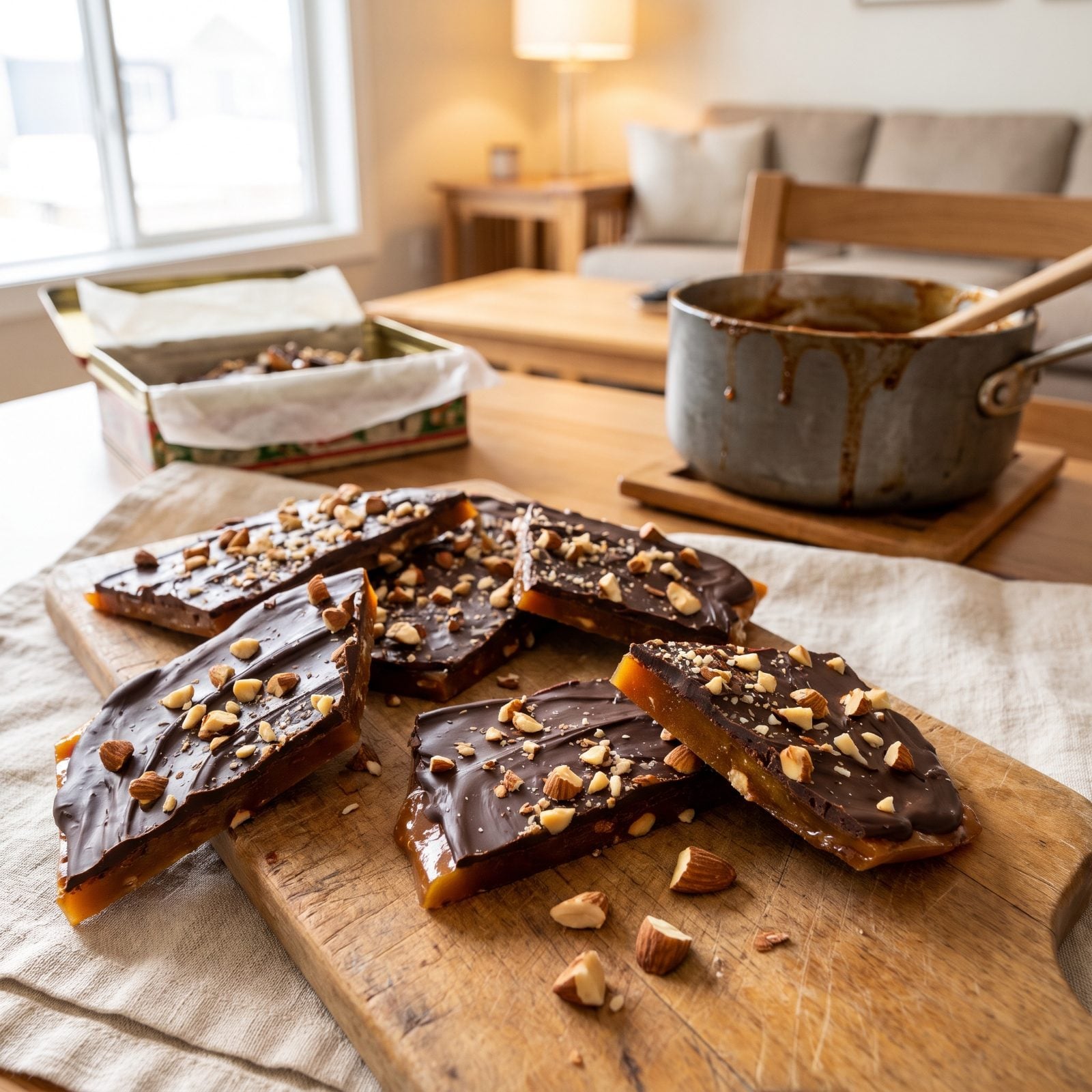
English toffee is mostly butter and sugar, cooked until it turns the color of a well-worn penny. Then it gets poured out thin on a sheet pan, and everything happens fast after that.
Chocolate went on while the toffee was still hot, scattered across the top and left to melt before being spread smooth with a spatula. A heavy sprinkle of chopped almonds or pecans followed. Once it hardened, you broke it into jagged pieces. The danger was the butter splitting out into a greasy mess if the heat jumped or the stirring stopped, and every cook had a batch or two they’d rather forget.
14. Fondant-Filled Cream Filberts
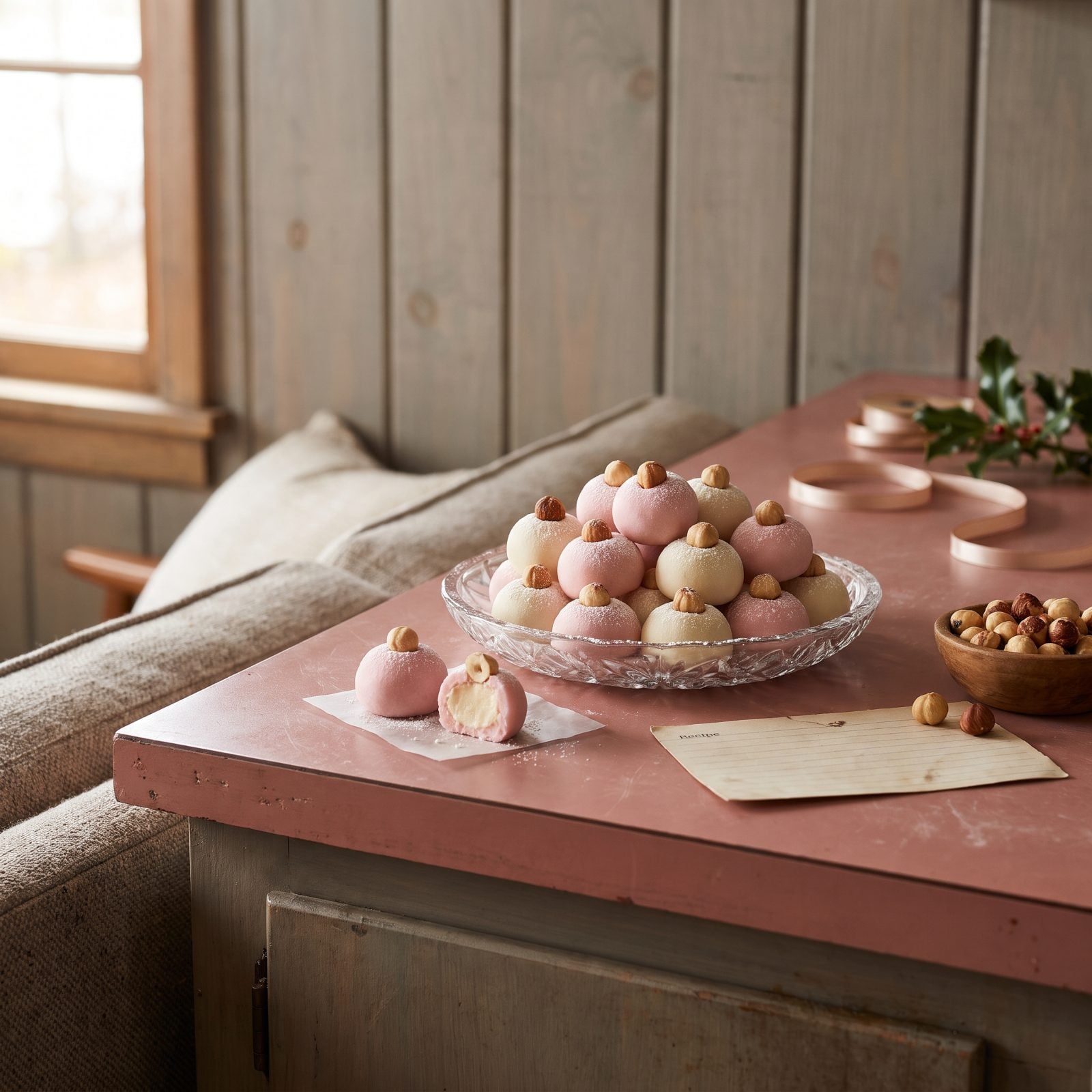
Filbert is the old name for a hazelnut, and cream filberts were a box-of-chocolates favorite that some families made at home. Soft fondant cream was rolled into balls, tinted pastel pink or left creamy white, dusted with sugar, and crowned with a toasted hazelnut pressed on top.
It was fiddly work. Every ball of fondant got rolled between your palms, then a nut pressed on top, then a chill, then the sugar dusting and the wax paper. The payoff was that bite where a crunchy, toasty nut gave way to smooth sweet cream. Not flashy. Just the one people reached for first.
13. Dark Chocolate Peppermint Patties
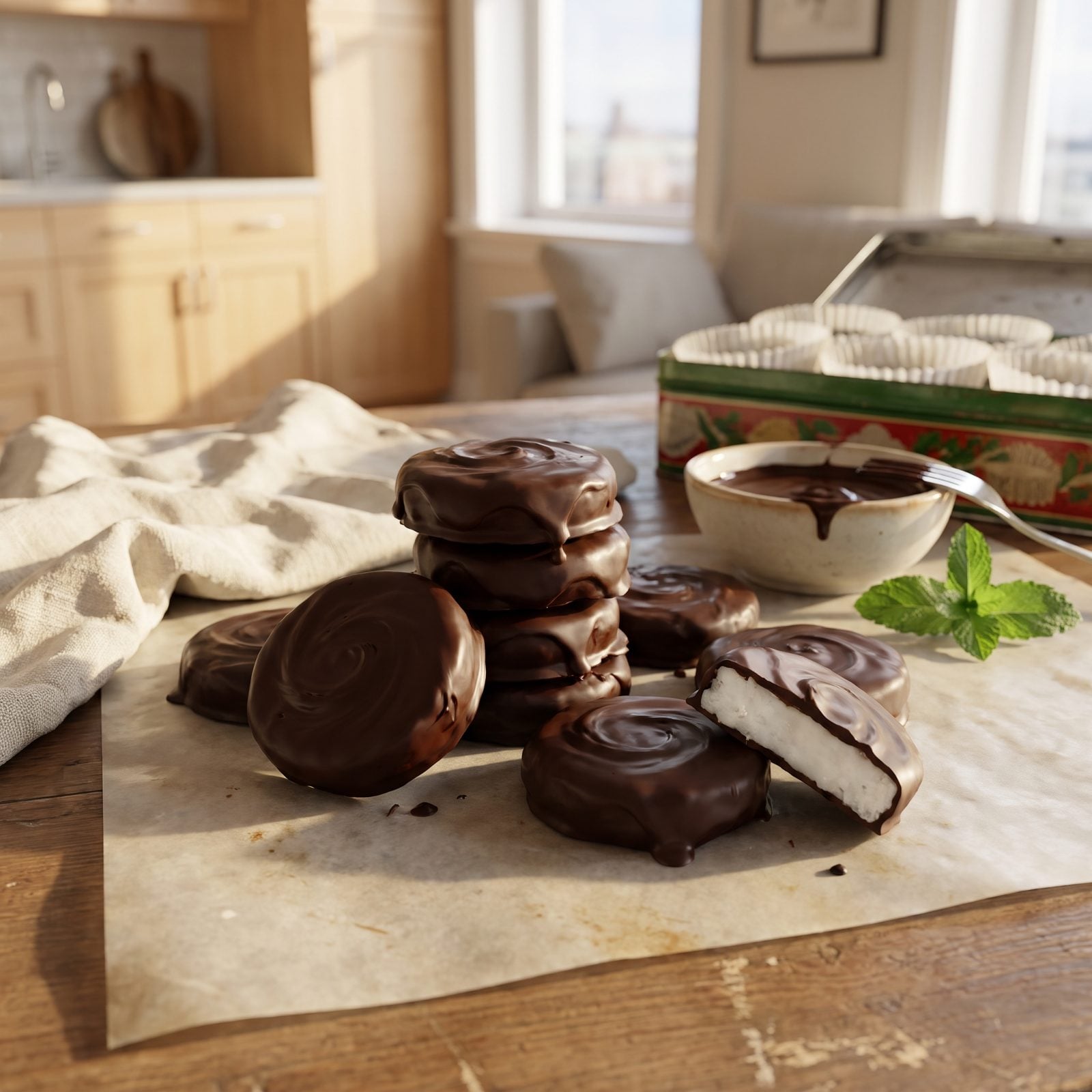
Before every checkout lane sold them, peppermint patties were something you made yourself. A stiff, sweet fondant flavored with a few drops of peppermint oil got rolled out, cut into rounds with a small cutter or a bottle cap, and chilled until firm.
Then came the dip in dark chocolate, which is the only correct chocolate for a peppermint patty. The bitterness keeps the mint from tasting like toothpaste. Bite into one cold from the back porch and it was as close to an ice-cold snap as candy gets.
12. Two-Tone Coconut Ice
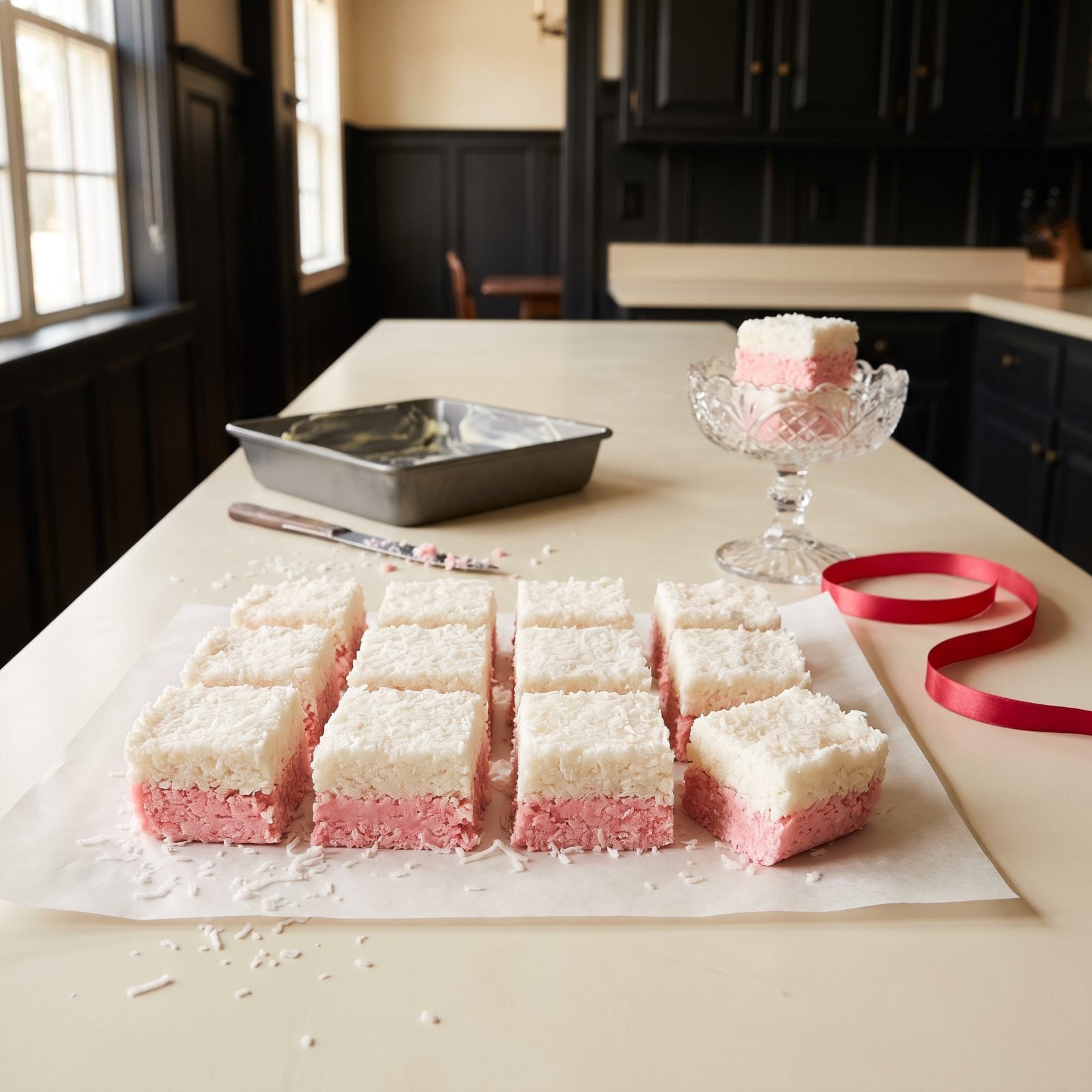
Coconut ice is a British candy that made it into plenty of American kitchens, and it’s easy to see why. It looks fancy and asks for almost nothing. Shredded coconut, powdered sugar, and sweetened condensed milk mixed into a thick paste.
Half stayed white. Half got a drop of red coloring to turn it pink. You pressed one layer into a pan, then the other on top, and let it firm up before cutting it into neat two-toned squares. It was often the first candy kids were trusted to make, since there was no boiling syrup involved. It tasted like a birthday party in December.
11. Fondant-Stuffed Dates with Walnut Halves
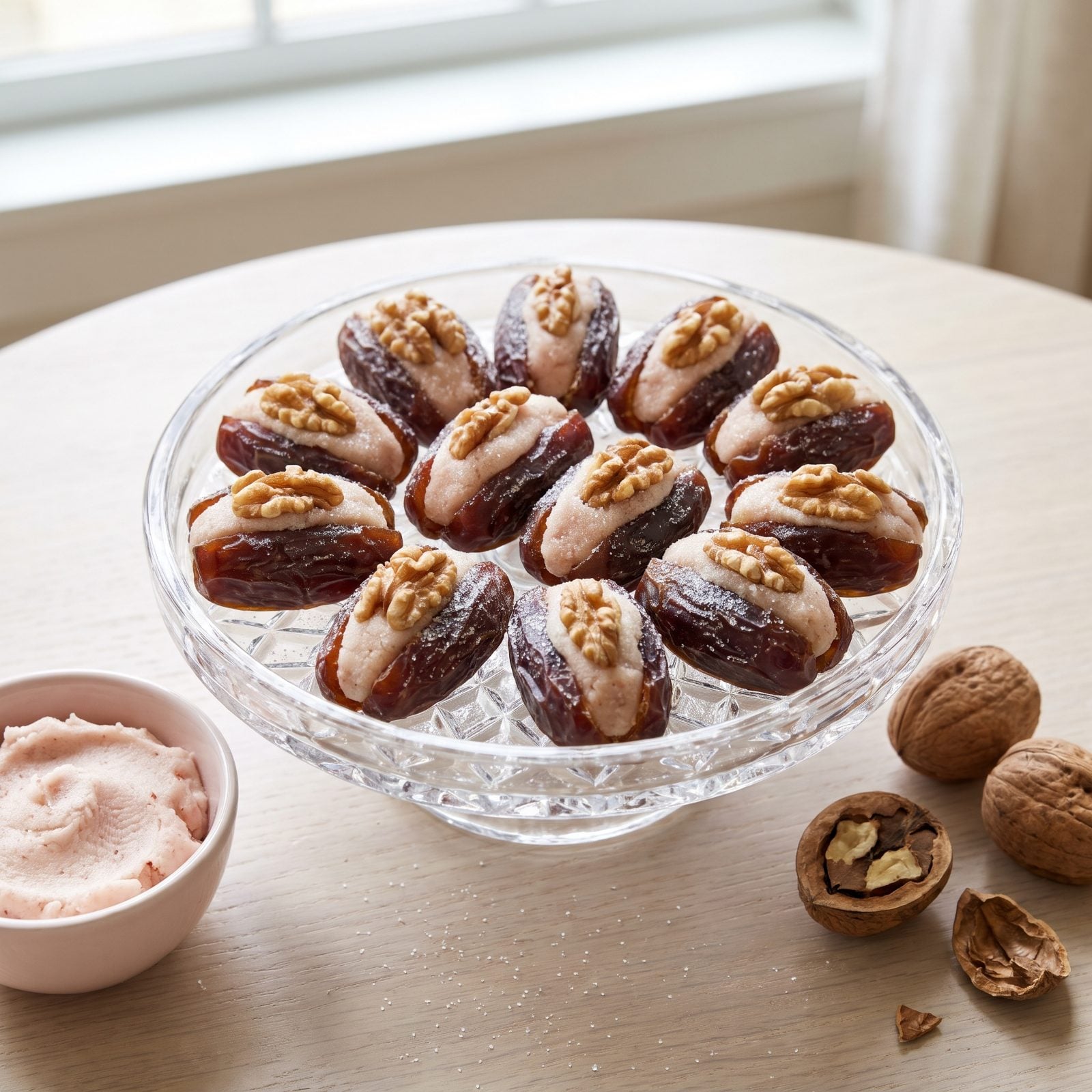
Stuffed dates were the candy that looked fancy and took almost no cooking at all. You slit each date down the side, pulled out the pit, and tucked in a little log of white fondant or a sweetened cream filling.
A walnut half got pressed on top, and then the whole thing went for a roll in granulated sugar until it sparkled. They sat in neat rows in paper candy cups on the good dish, sticky and chewy and rich. Kids skipped them for the chocolate. Grown-ups went back for thirds.
10. Sugar-Rolled Fig Balls
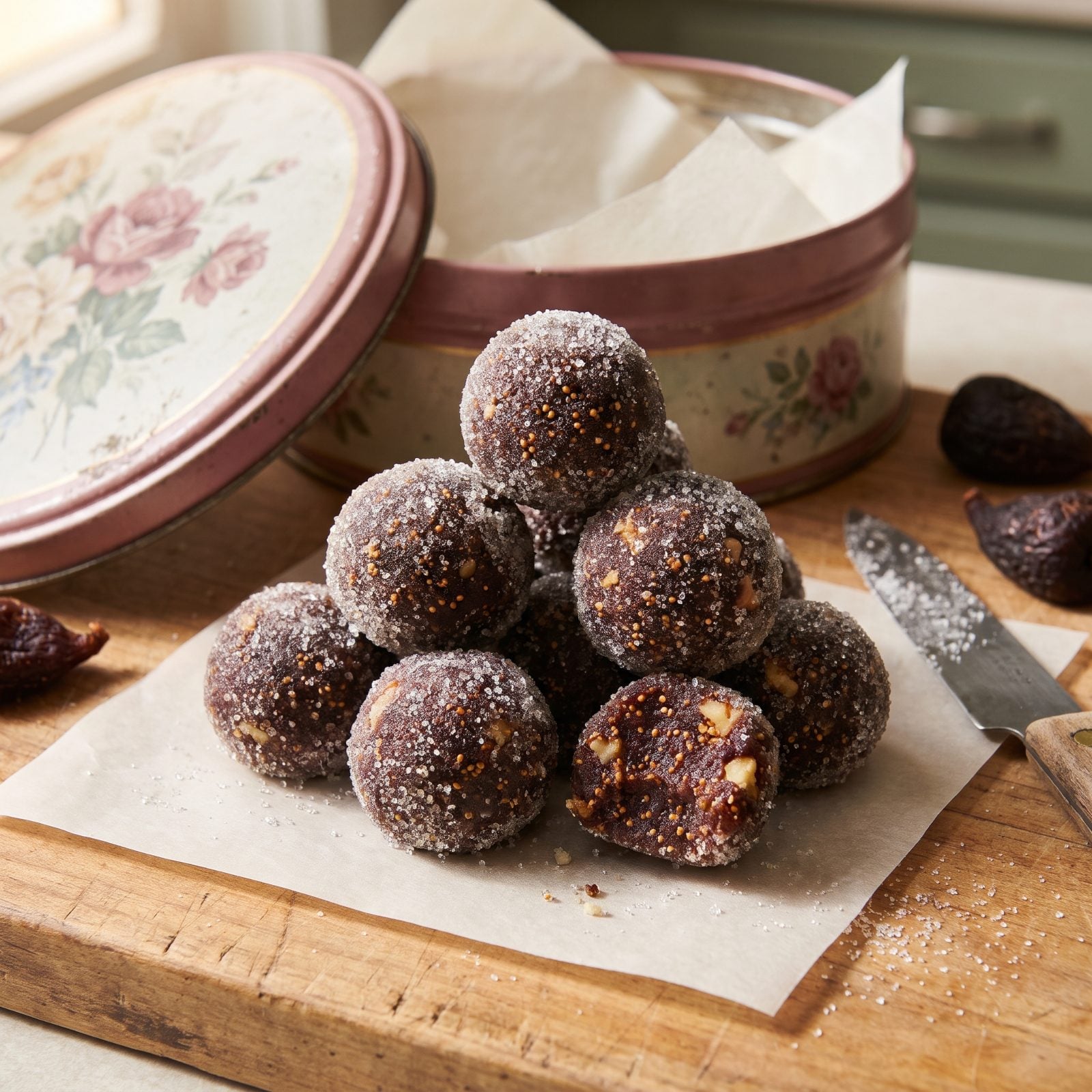
Fig balls started at the old hand-crank food grinder clamped to the edge of the table. Dried figs went in the top with walnuts or pecans, sometimes a few raisins or some orange peel, and came out the bottom as a thick, dark paste.
A little honey or orange juice bound it all together. Then you rolled it into small balls between your palms and dropped each one into a bowl of sugar. No thermometer, no boiling, no ruined batches. Just sticky fingers and a candy that tasted like something out of an old country Christmas.
9. Aunt Bill’s Brown Candy
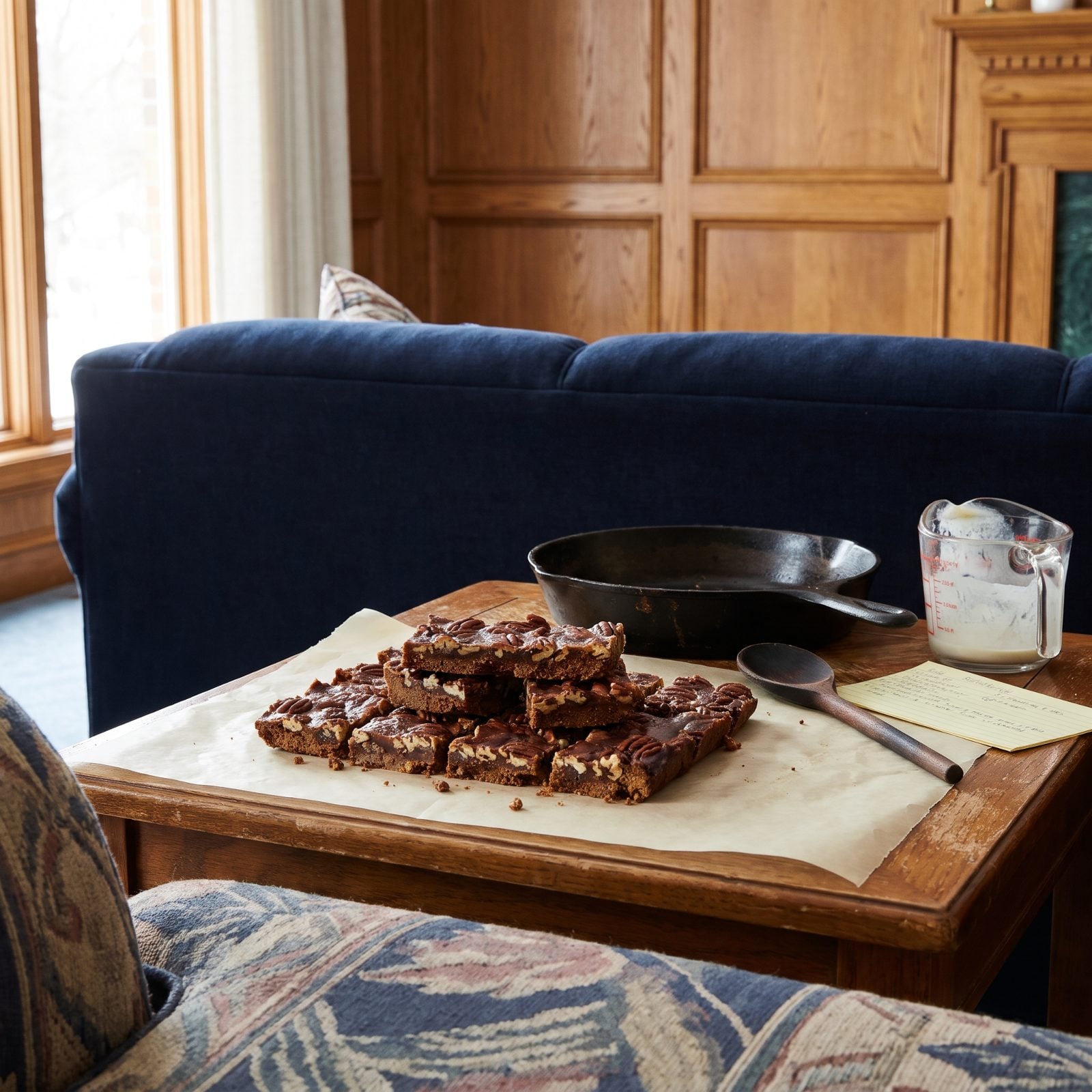
Ask anybody raised in Oklahoma about Christmas candy and Aunt Bill’s Brown Candy comes up fast. The recipe ran in the local paper every holiday season for decades, and plenty of families clipped it so many times the newsprint went soft.
It was a two-pot job. One pot of sugar and milk simmered while a second batch of sugar melted down to dark caramel in a heavy skillet, and then the caramel got poured into the milk in a thin, careful stream. Cook it to soft ball, add butter and a pinch of baking soda, let it cool, then beat it with a load of pecans until it lost its gloss.
What you got was a deep, toasty praline-fudge hybrid that set firm and sliced clean. Worth the burned fingers.
8. Caramel-Wrapped Modjeskas
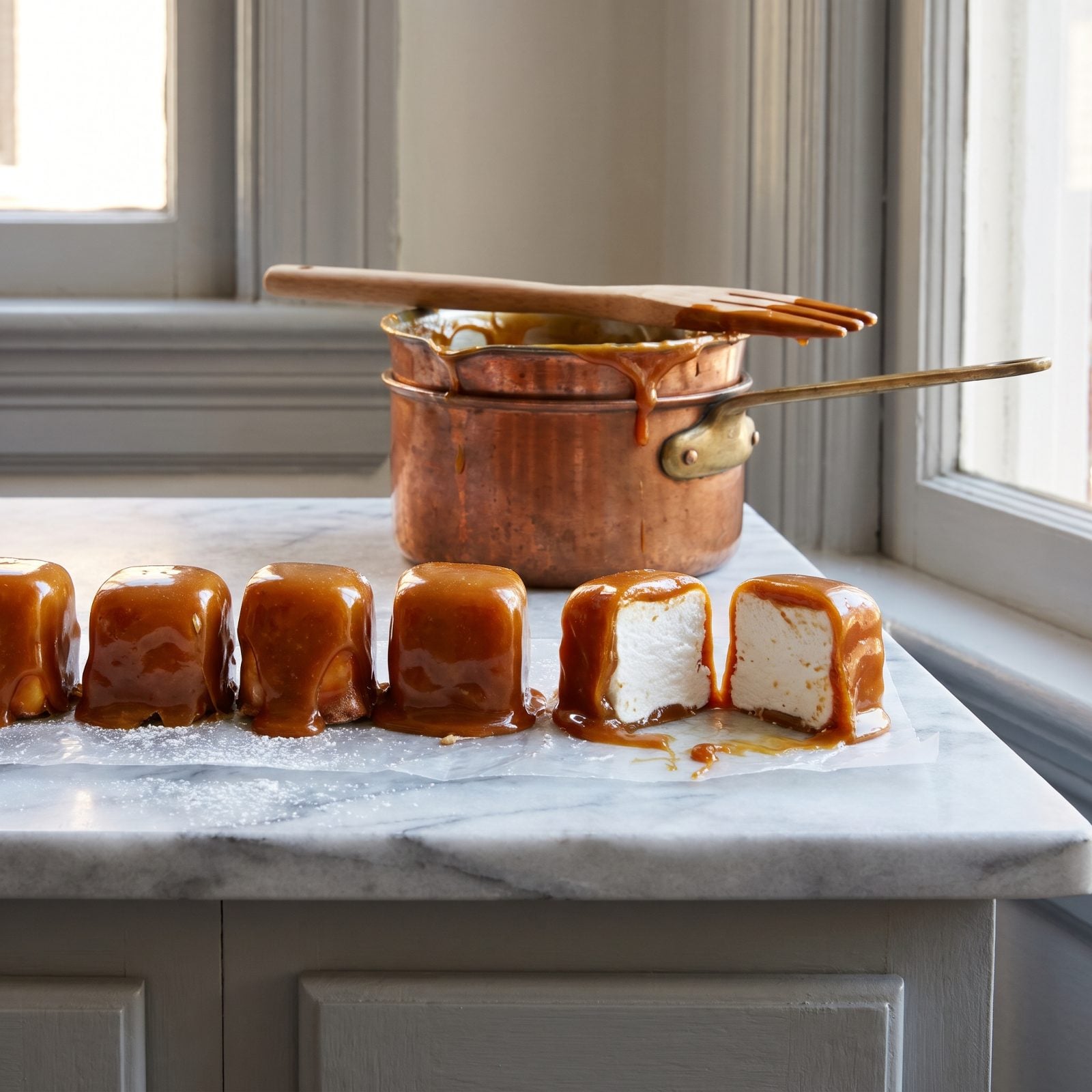
Modjeskas are a Louisville, Kentucky, thing: a fat, pillowy marshmallow dipped in buttery caramel and left to set. The candy took its name from Helena Modjeska, a Polish actress who toured American stages in the late 1800s, and Louisville has claimed it ever since.
Making them at home meant cooking a batch of soft caramel and dunking each marshmallow on a fork, turning it until fully coated, then setting it on buttered wax paper. Once firm, every piece got its own wrapper. Biting through the chewy caramel into that soft middle is the whole point, and it’s hard to describe to anybody who never had one.
7. Crumbly Scottish Tablet
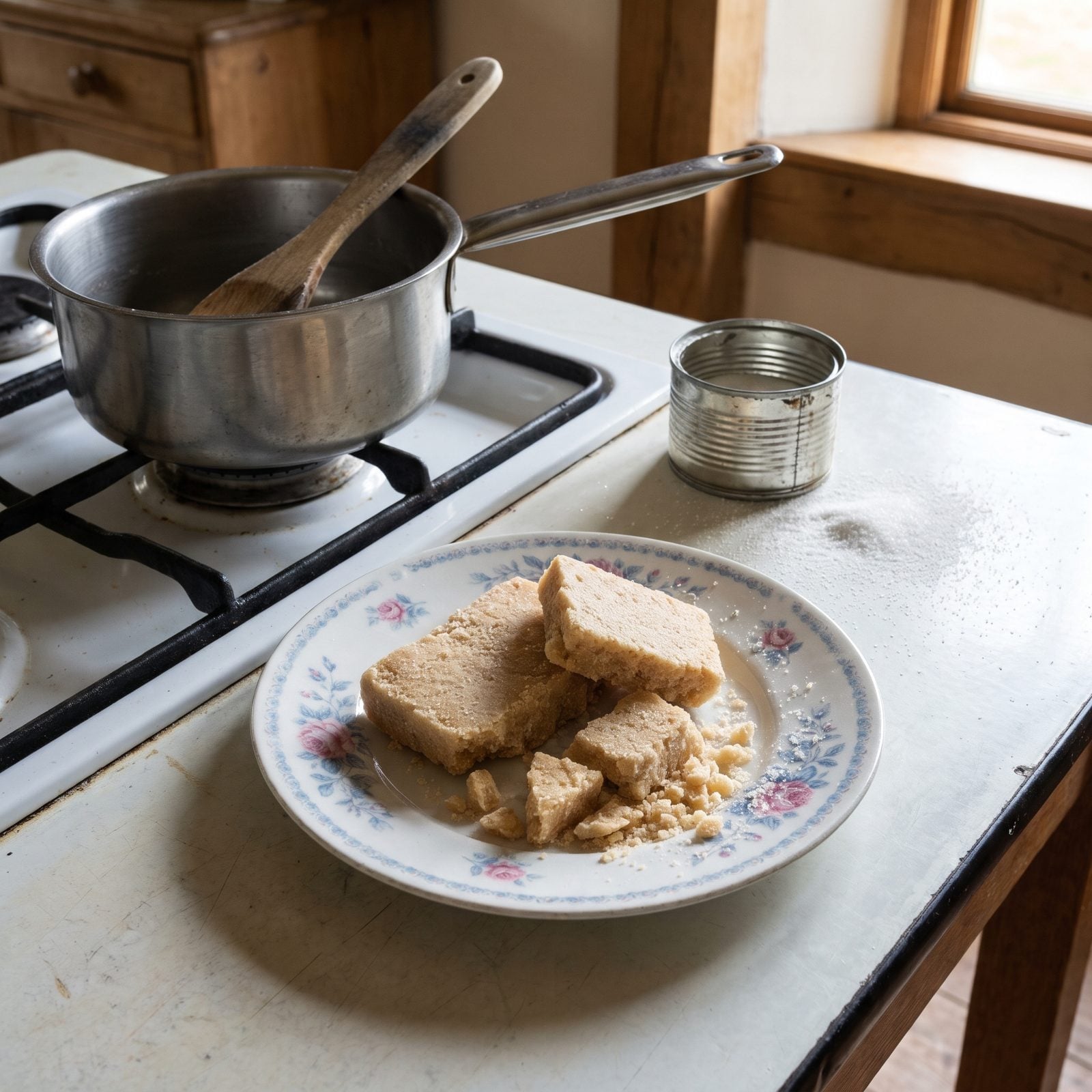
Scottish tablet looks like fudge from across the room. Then you bite it and it snaps, then crumbles, then dissolves into pure sweet butteriness. It’s made from sugar, butter, milk, and usually a tin of sweetened condensed milk, boiled down and beaten hard until it turns grainy.
That grain is the whole point. Tablet is meant to be firmer and sandier than fudge, almost brittle at the edges, and it’s sweeter than just about anything else on the dish. It got cut into squares while still warm and saved for Christmas and Hogmanay. A little goes a long way, and nobody ever stops at a little.
6. Mexican Milk Candy Jamoncillo
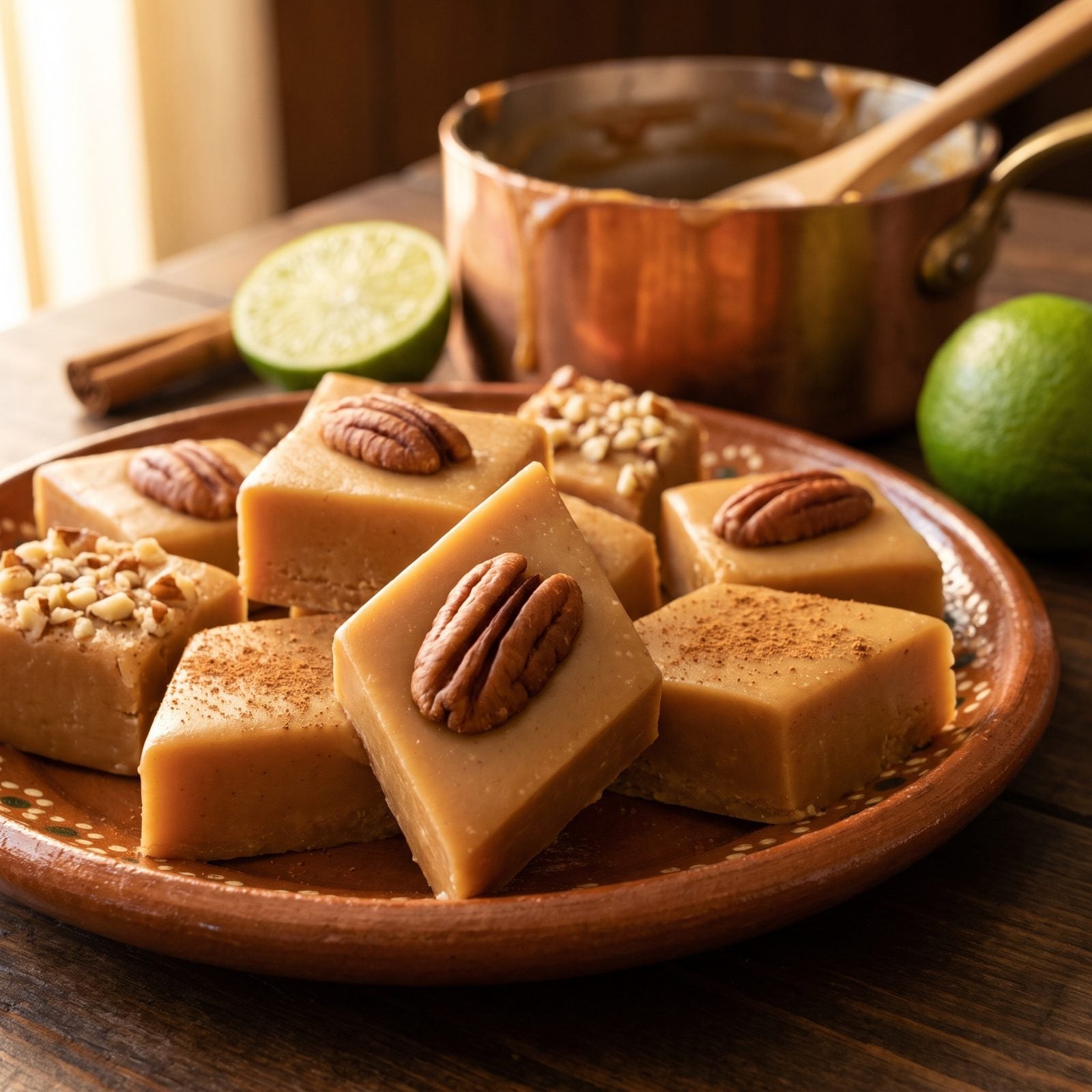
Jamoncillo is Mexican milk candy at its most basic: milk and sugar cooked down slowly in a wide pot, often with a stick of cinnamon and some vanilla, stirred and stirred until it thickens into a dense, fudgy paste.
The stirring is the commitment. You stand there with a wooden spoon for the better part of an hour, scraping the bottom so it doesn’t scorch, until the mixture pulls away from the sides of the pot. Pecans often went in at the end. Then it got pressed into a pan or shaped into bars and cut once cool.
It tastes like caramelized milk with a hint of spice. Simple ingredients, serious patience.
5. Sugar-Crusted Fruit Jelly Squares
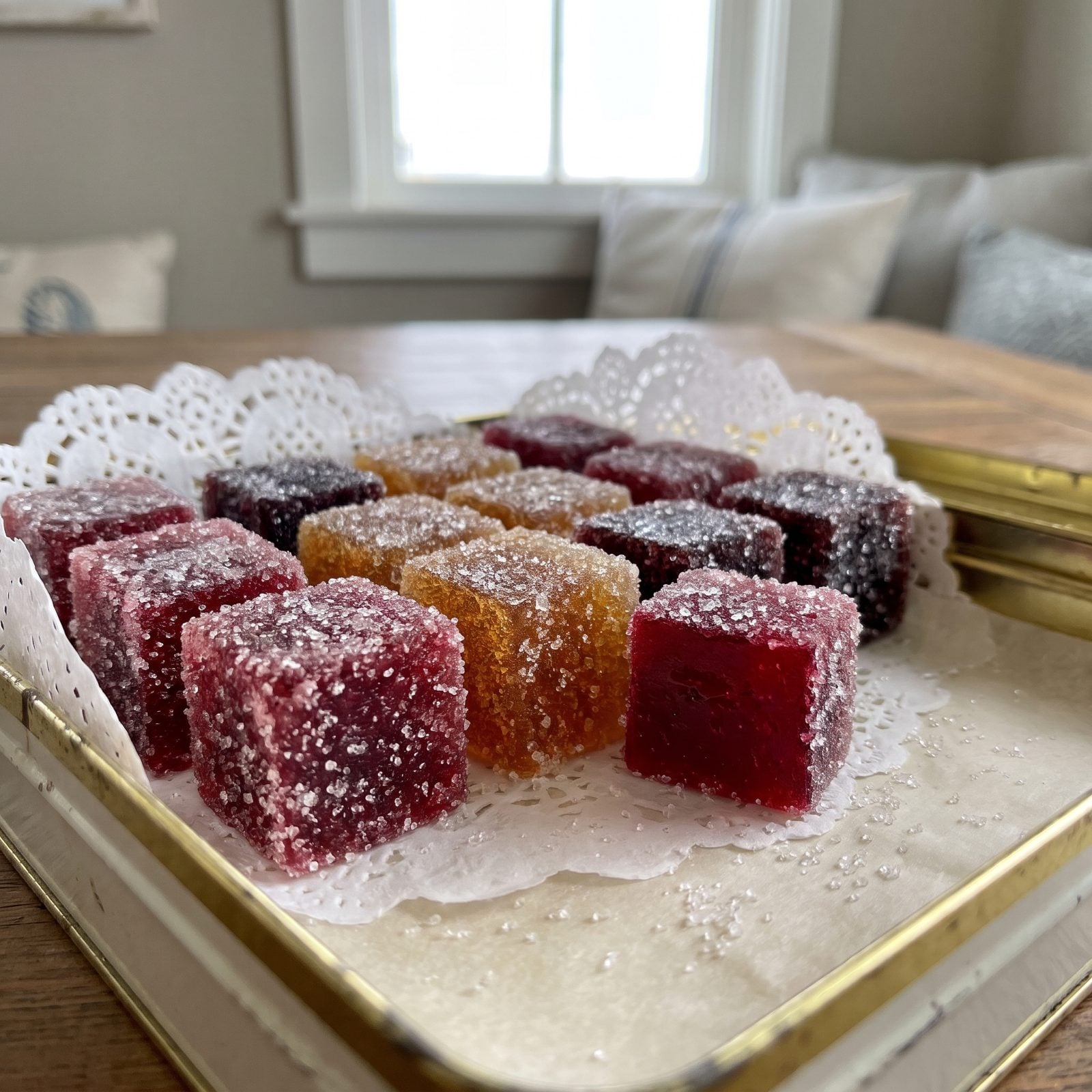
Fruit jelly squares were the jewel box of the candy tray. Fruit juice or purée cooked with sugar and pectin until thick, poured into a pan, and left overnight to set into a firm, wobbly slab.
The next day you cut it into small squares with a knife dipped in hot water and tumbled each one in granulated sugar. Raspberry, orange, lemon, sometimes grape, all in different colors lined up side by side. They had to be made close to serving, because given enough humidity the sugar coating started to weep. Bright, tart, chewy, and nothing like the store-bought kind.
4. Hand-Cut Vanilla Marshmallows
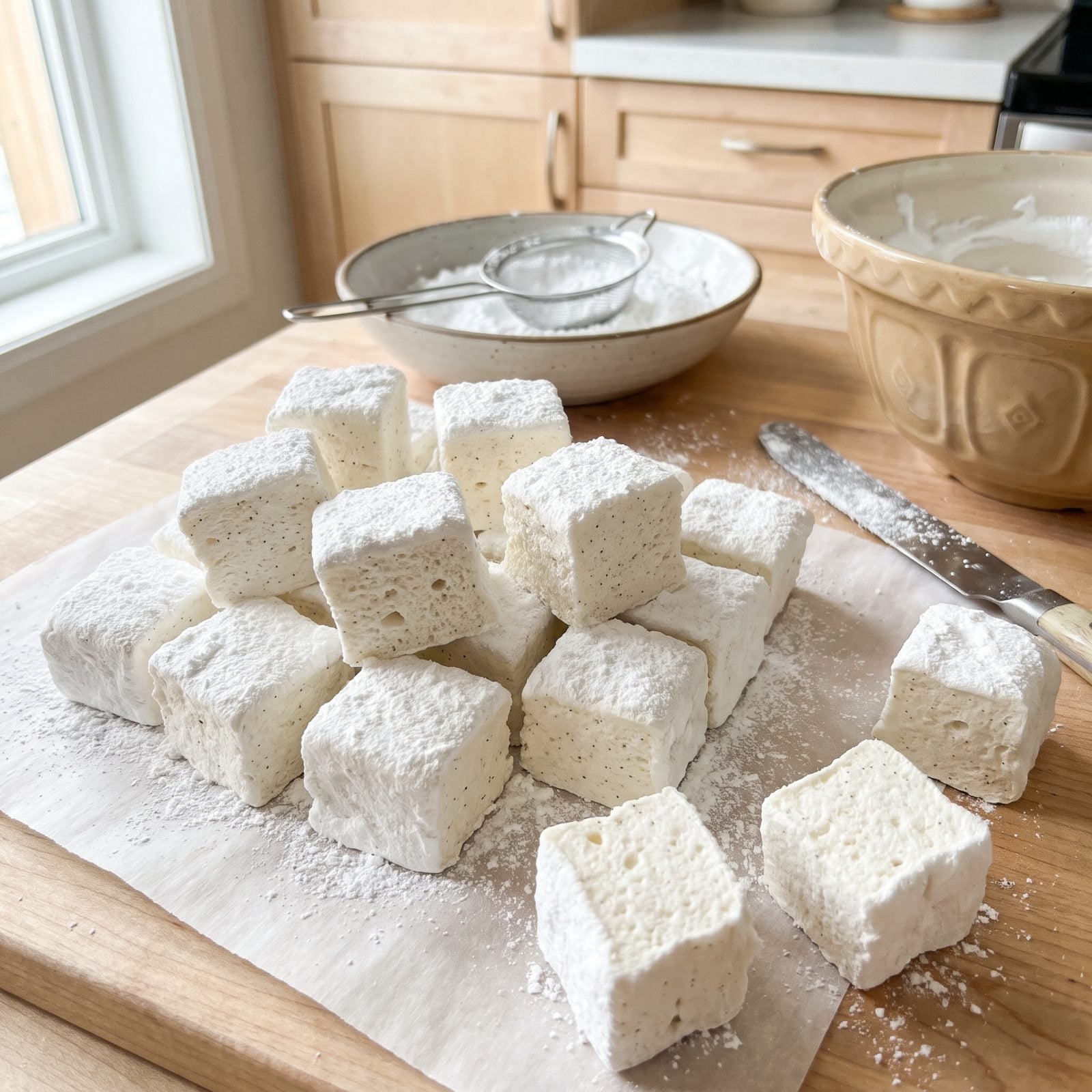
Most people have never had a real marshmallow, and once you have, the bagged kind tastes like packing foam. Homemade ones start with gelatin softened in cold water, then hot sugar syrup poured in and beaten until the whole bowl swells into thick, glossy white fluff.
It got spread into a pan dusted with cornstarch and powdered sugar and left to set overnight. Cutting them was the messy part, with a knife dusted again and again so it didn’t drag. The squares came out soft, springy, and a little uneven.
Dropped into a mug of hot cocoa, they melted into a sweet foam on top. That was the whole reason to make them.
3. Spiced Victorian Sugarplums
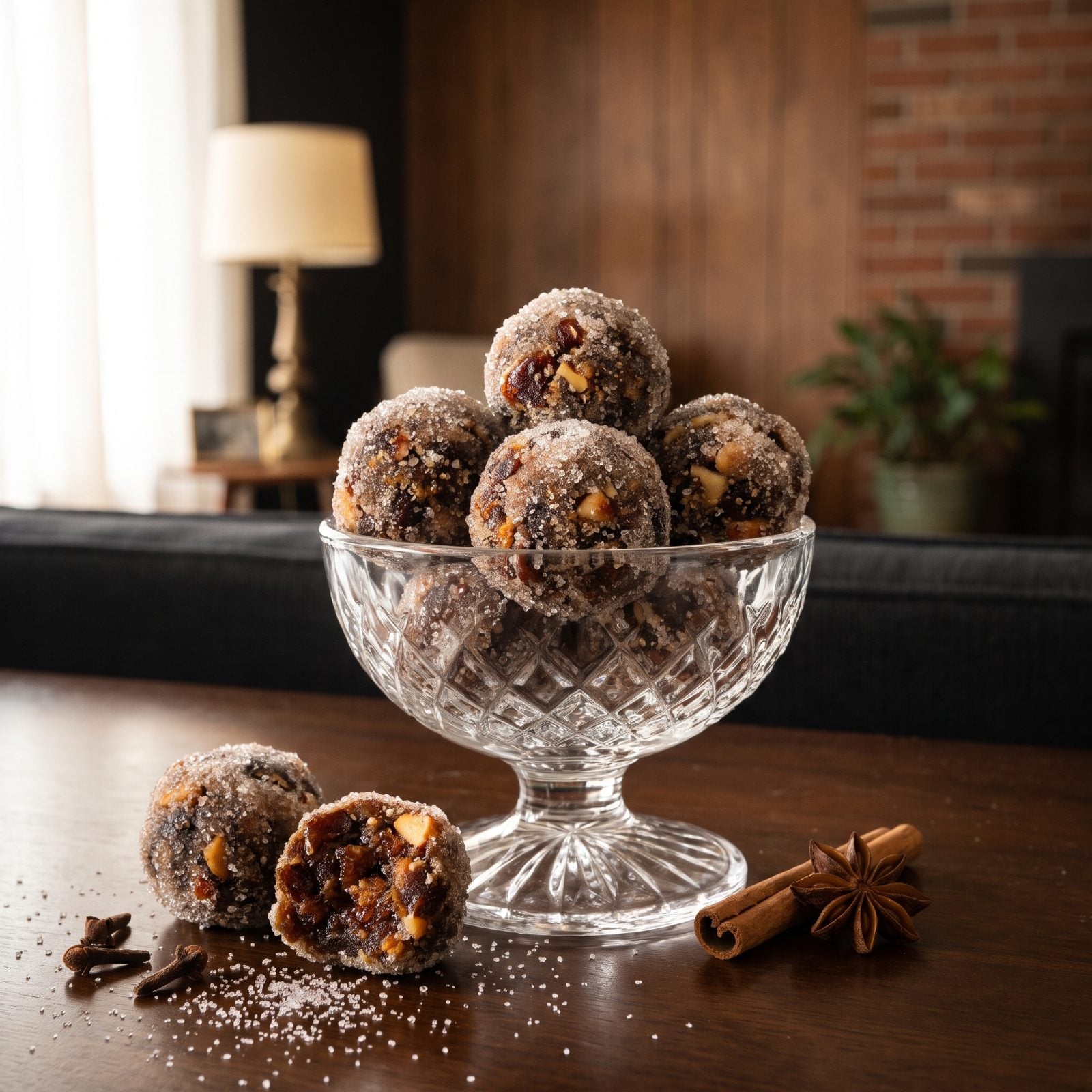
The sugarplums of “visions danced in their heads” fame were never plums at all. Minced dried fruit, almonds, warm spice, rolled into little balls and crusted in sugar — a confection that beat the candy aisle to the punch by a couple of centuries.
Making them ate up a whole afternoon. You chopped dates and figs fine, worked in cinnamon and clove and a whisper of anise, then rolled each one by hand and tossed it in coarse sugar until it sparkled. They kept for weeks in a tin, which mattered back when fresh anything was a December luxury.
Bite into one and the spice hits first, then the dense chew of the fruit, then that sugar crunch. Tastes like a Christmas carol, honestly. And I don’t say that lightly.
2. Homemade Cherry Mash Candy, the Chocolate-Peanut Mounds Nobody Makes Anymore
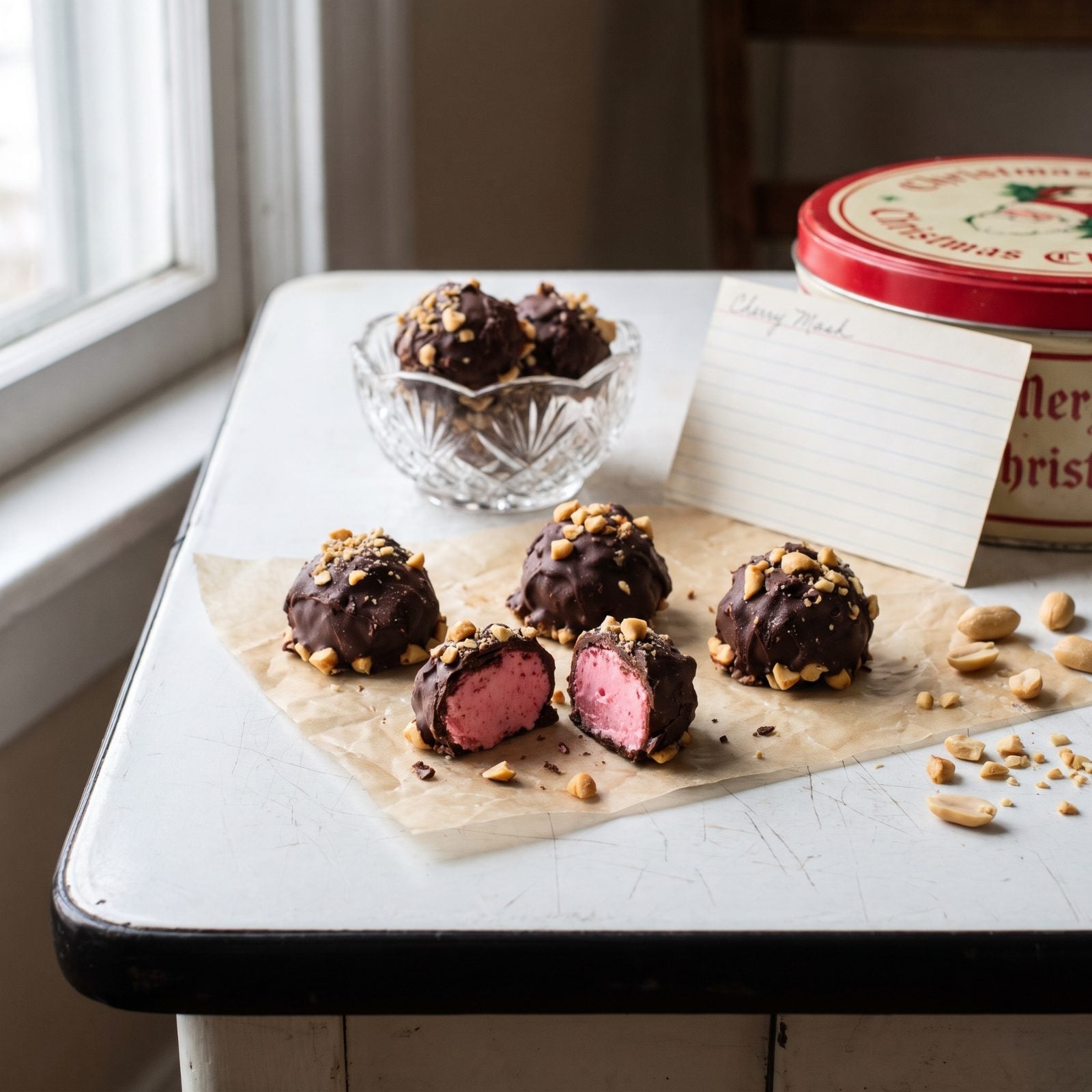
Cherry Mash is a candy bar out of St. Joseph, Missouri, that has been around for more than a century, and across the Midwest a lot of families figured out how to make their own version at home.
The center was a soft, pink cherry filling made with powdered sugar, butter, and chopped maraschino cherries, rolled into little balls and chilled firm. Then came the coating: melted chocolate spooned over each center so it set into a smooth, glossy shell, with crushed salted peanuts sprinkled on top before it hardened.
Sweet cherry, salty peanut, plain chocolate. It shouldn’t work as well as it does, and it disappeared off the plate faster than anything else.
1. Glazed Whole Chestnuts (Marrons Glacés), the Candy That Took a Week of Patience
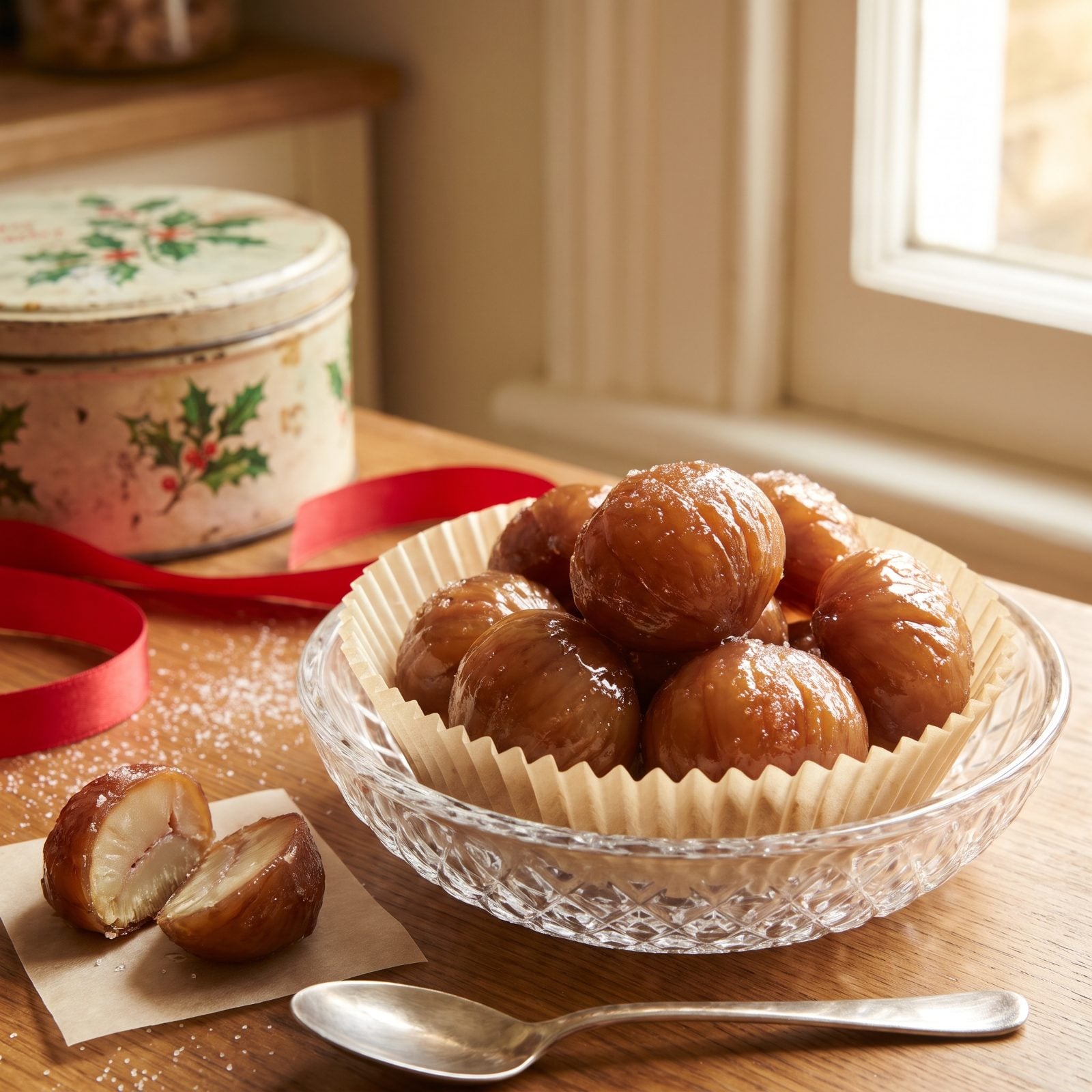
Grandma started these before Thanksgiving so they’d be ready by Christmas. Whole chestnuts, peeled by hand — a job that wore down the most patient person in the house — then poached and simmered in syrup over several days, each soak a little sweeter than the last until the sugar finally worked its way all the way through.
You didn’t rush marrons glacés. You couldn’t. Push the heat and they fell apart into mush. But the payoff for a week of babysitting a pot was a chestnut that glowed like amber and melted into something dense and caramel-soft, almost like velvet. One was plenty. You let it sit on your tongue and go slow.
They never won over the fudge-and-brittle crowd. That was half their charm, honestly. Find one tucked into the good cut-glass dish and you knew: somebody had decided you were worth a week of work.