Would you like to save this?
Somewhere in a cabinet right now, there’s a cut-glass ring mold that hasn’t held a thing since the Nixon administration. Grandma used it for tomato aspic. You used it for nothing. These are the dishes that once meant Christmas: the crown roast with its little paper hats, the oyster stew on Christmas Eve, the salad shaped like a candle with a cherry flame. They didn’t fail — tastes moved on and left them behind. Here’s what used to sit at the center of the table.
29. Crown Roast of Pork With Paper Frills
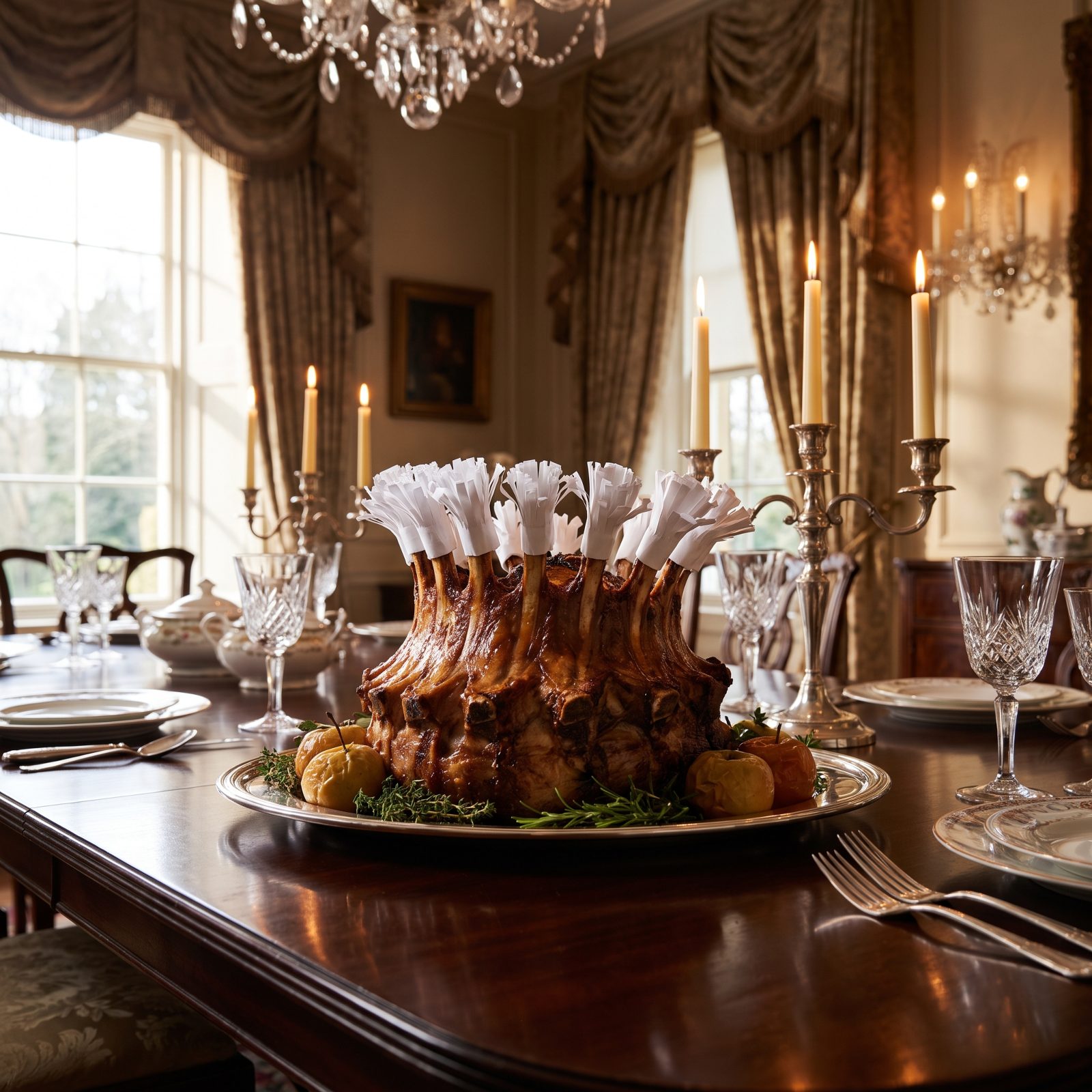
You knew the holiday was serious when the roast came to the table wearing hats. The crown roast of pork was a showpiece: twelve or more rib bones bent into a circle, the hollow center packed with stuffing, every bone capped with a frilled paper the butcher threw in for free.
It took a butcher who knew you by name and an oven big enough to turn the whole thing. That’s part of why it faded. We stopped keeping butchers, and you were never going to find a crown roast waiting under plastic wrap in the cold case.
28. Roast Goose With Apple Stuffing
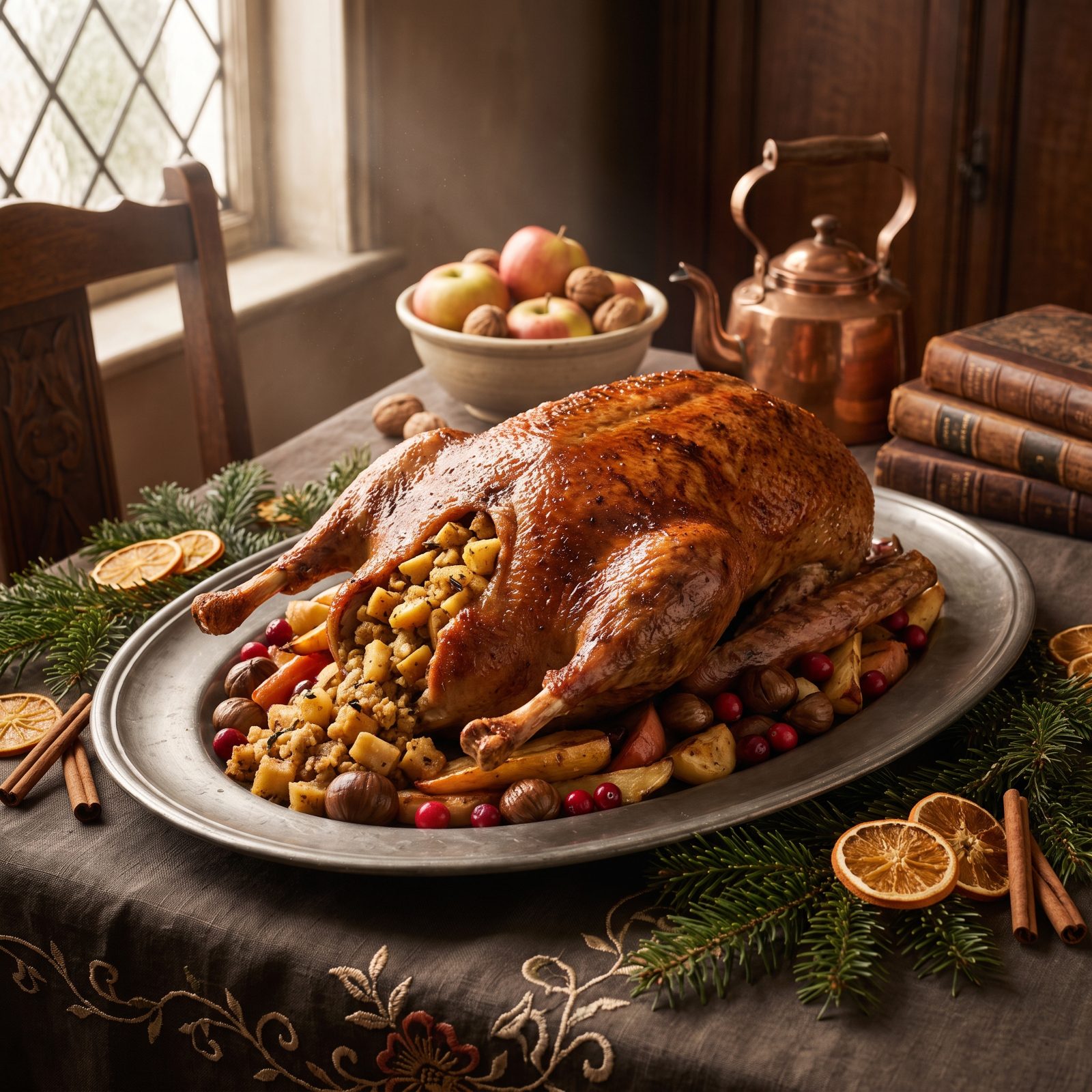
Before the turkey took over, goose was the Christmas bird — fatter, darker, richer, with a layer of grease that could fry a week of potatoes. Dickens put it on the Cratchits’ table and it stayed there in the collective imagination long after it left the oven.
Why did it go away? Goose yields little meat for its size, mostly bone and fat, and it feeds fewer people than a turkey that costs half as much. Thrift won. But a goose with apple stuffing, skin crackling and the drippings saved in a jar, still beats a dry turkey breast, and I’ll say that to anyone who’ll stand still for it.
27. Oyster Stew on Christmas Eve
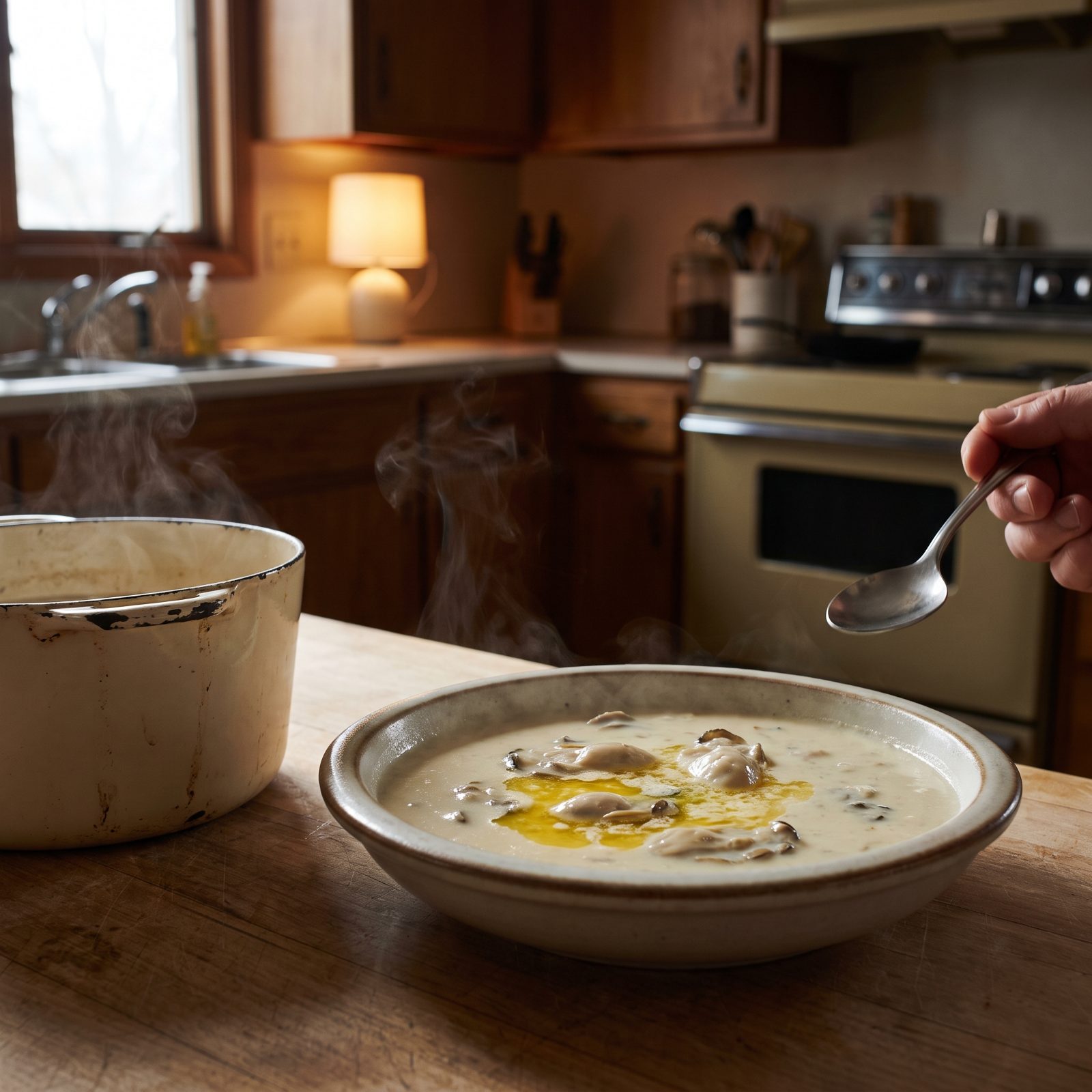
This was the quiet one. No showstopper, no paper frills — just a pot of milk, butter, and oysters simmered until the edges curled, ladled into bowls on Christmas Eve before the big day arrived.
It ran strongest in coastal and Catholic households, where meatless Christmas Eve was the rule and oysters were cheap and plentiful. Shucking a quart at the kitchen counter with the radio on was half the point. When oysters got expensive and the meatless-eve tradition loosened, the stew slipped off the calendar almost without anyone noticing.
26. Mincemeat Pie Made With Real Meat
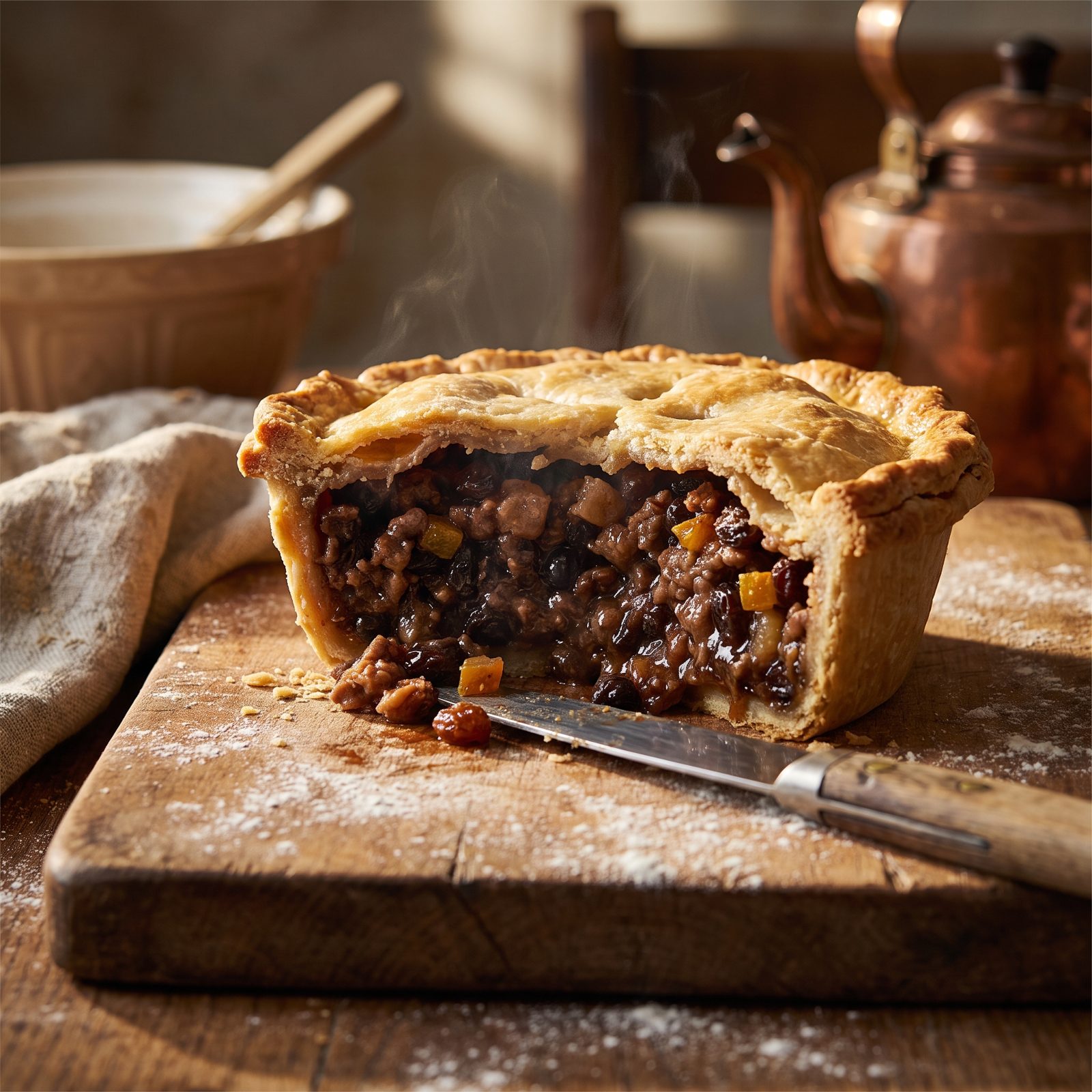
The jarred mincemeat on the grocery shelf today is a fraud. A tasty fraud, but a fraud. The original was exactly what the name says: minced meat, usually beef or venison, mixed with suet, apples, dried fruit, spices, and a heavy pour of brandy, then baked into a pie for Christmas.
Meat, spice, and booze all did a job — preserving the filling through winter back when that mattered. Once refrigeration made preservation moot, the meat quietly disappeared from the recipe and nobody mourned it. The modern version is all fruit and spice. Somewhere a great-grandmother is shaking her head.
25. Tomato Aspic Christmas Ring
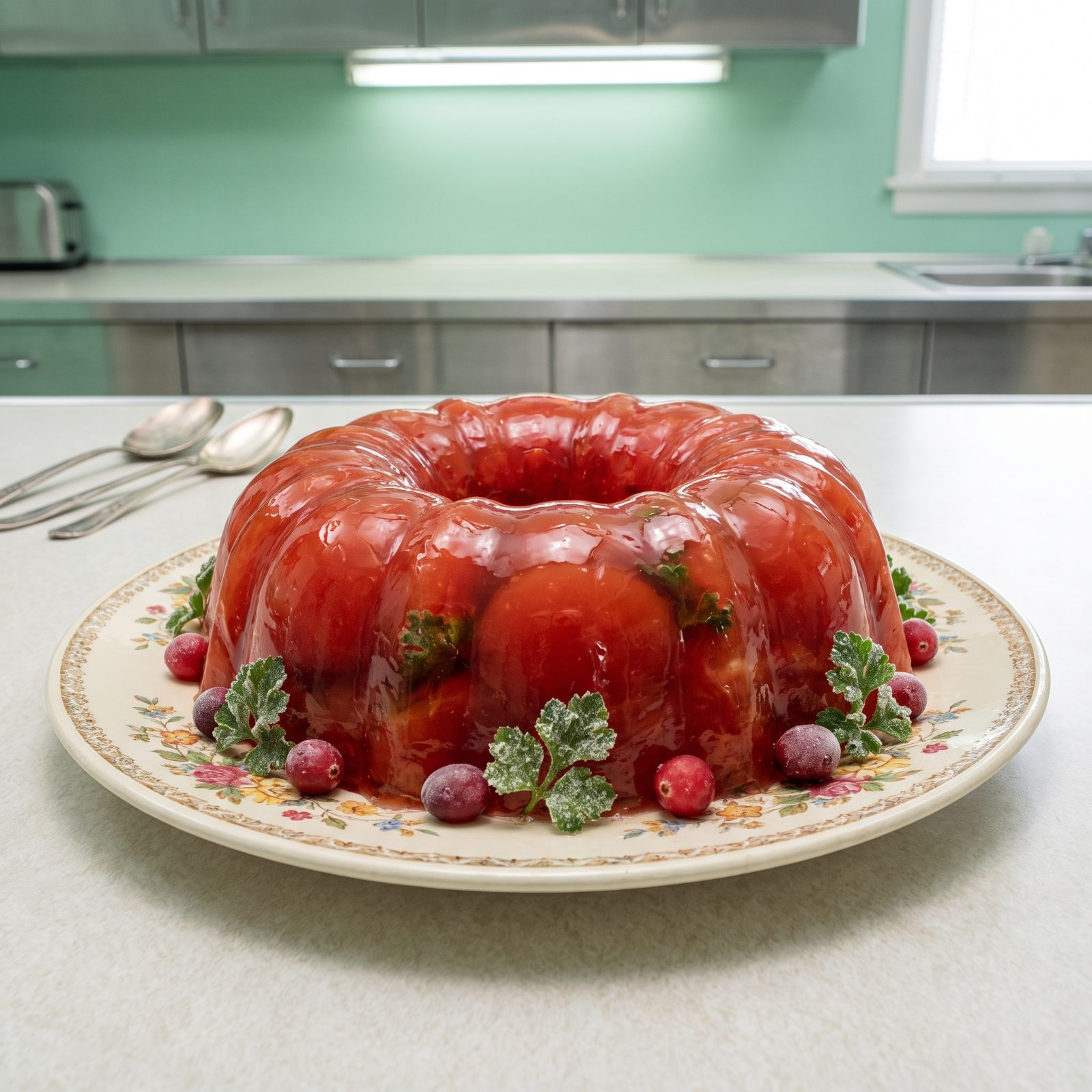
Red, wobbly, and proud of it. The tomato aspic ring was the midcentury centerpiece that food historians love and modern eaters fear — tomato juice set with gelatin, studded with celery and olives, unmolded from that cut-glass ring and filled in the center with shrimp or cream cheese.
Gelatin salads were a flex. They meant you owned a refrigerator, a fancy mold, and the patience to layer and chill. The savory jiggle is what killed it. Our palates decided tomatoes should not bounce. I understand, but I also respect the ambition.
24. Cranberry Candle Salad
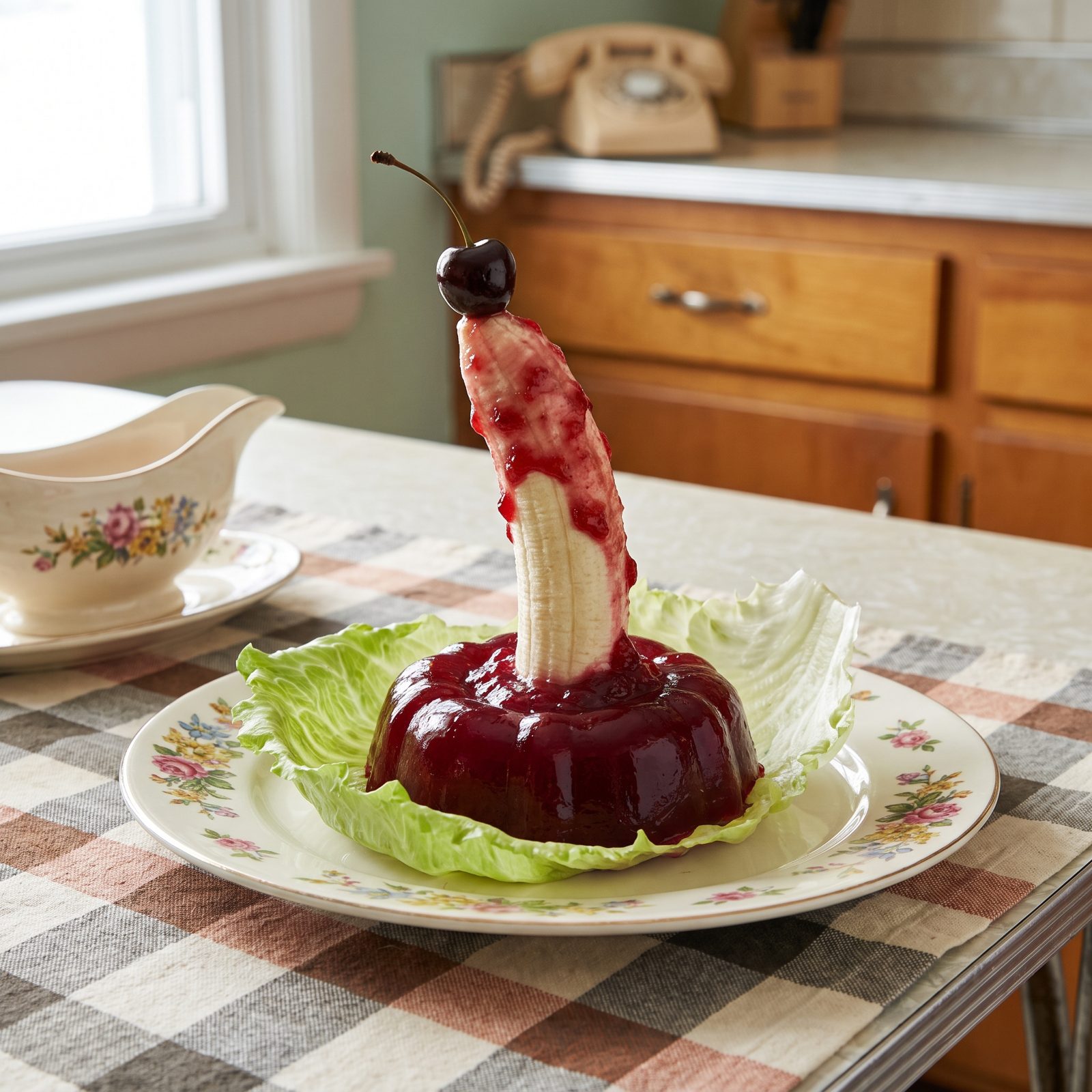
Someone’s aunt made this every single year and dared you to say something. A pineapple ring on lettuce, a banana standing straight up through the hole, a cherry on top, and a dribble of mayonnaise down the side to mimic dripping wax. A candle. Made of fruit. On a salad plate.
The cranberry version swapped in a ruby ring of molded sauce for extra holiday color. It was a staple of the 1940s and ’50s table, equal parts dessert, decoration, and inside joke. It vanished the moment we collectively decided banana salads should not resemble birthday candles. Fair enough. But it made kids laugh, and that counts for something.
23. Frozen Fruit Salad in Paper Cups
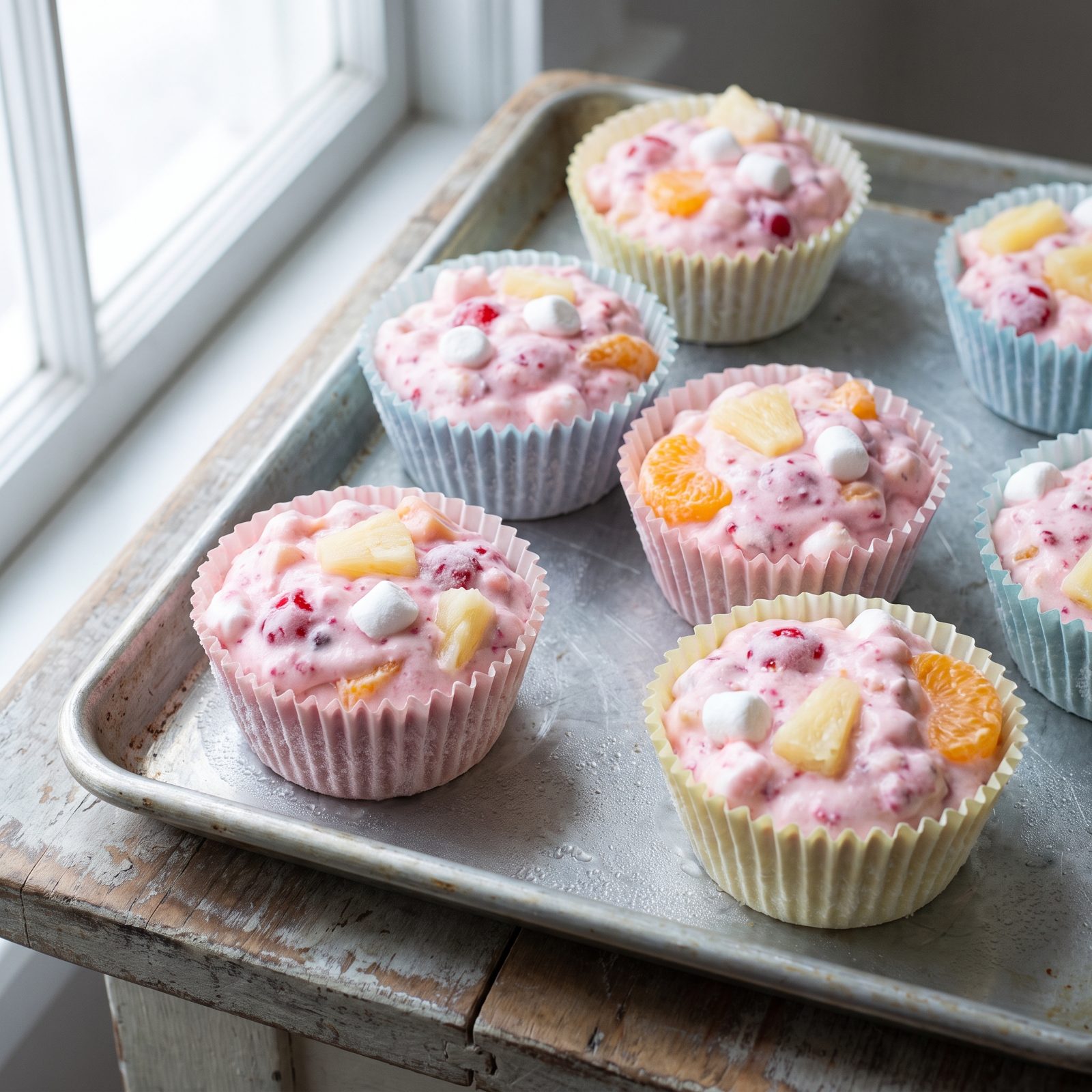
Make-ahead was the whole draw. Cream cheese, whipped cream, canned fruit, maraschino cherries, and marshmallows folded together, spooned into pleated paper cups, and frozen solid. Christmas morning you pulled a tray from the freezer and let them soften on the plate.
It was the busy hostess’s dream — no last-minute fuss, no oven time, just pink little pucks waiting in the cold. And the paper cup was half the fun. You peeled it down like a cupcake liner and ate it half-frozen. Tupperware and store-bought desserts eventually did it in, but this one earned its spot through pure convenience.
22. Ambrosia With Fresh Coconut
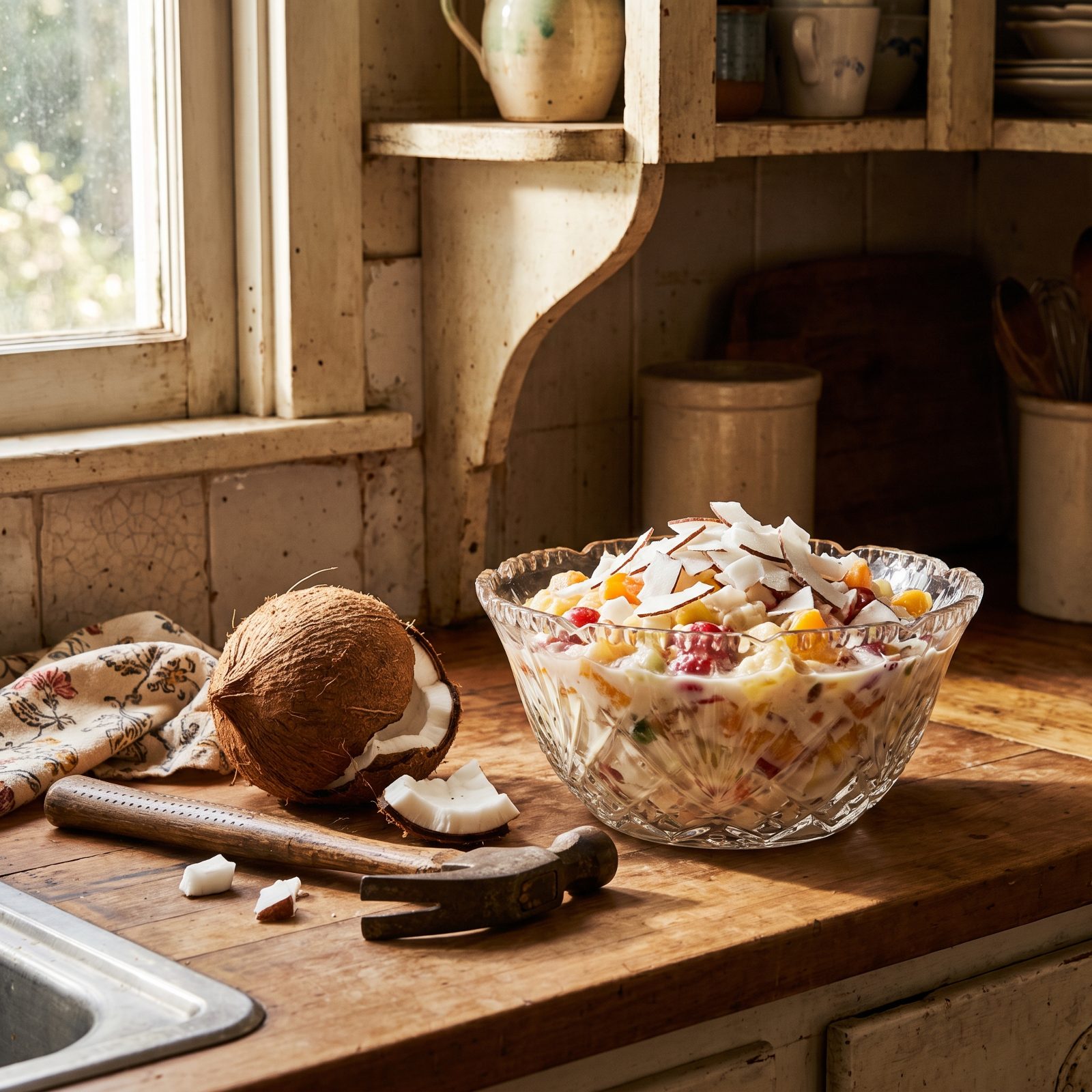
Real ambrosia required a hammer. Not the modern sour-cream-and-mini-marshmallow version, but the original: fresh orange segments and pineapple layered with coconut you grated yourself off a whole coconut, cracked open on the back porch.
It was a Southern Christmas standard, named for the food of the gods, and the fresh coconut carried the whole thing. That snowy, slightly chewy, just-grated stuff tasted nothing like the bagged sweetened kind. And the labor was real — puncture the eyes, drain the milk, crack the shell, pry the meat, grate until your knuckles complained. Nobody has time for that anymore, so ambrosia got easier and a little sadder.
21. Old-Fashioned Persimmon Pudding
Would you like to save this?
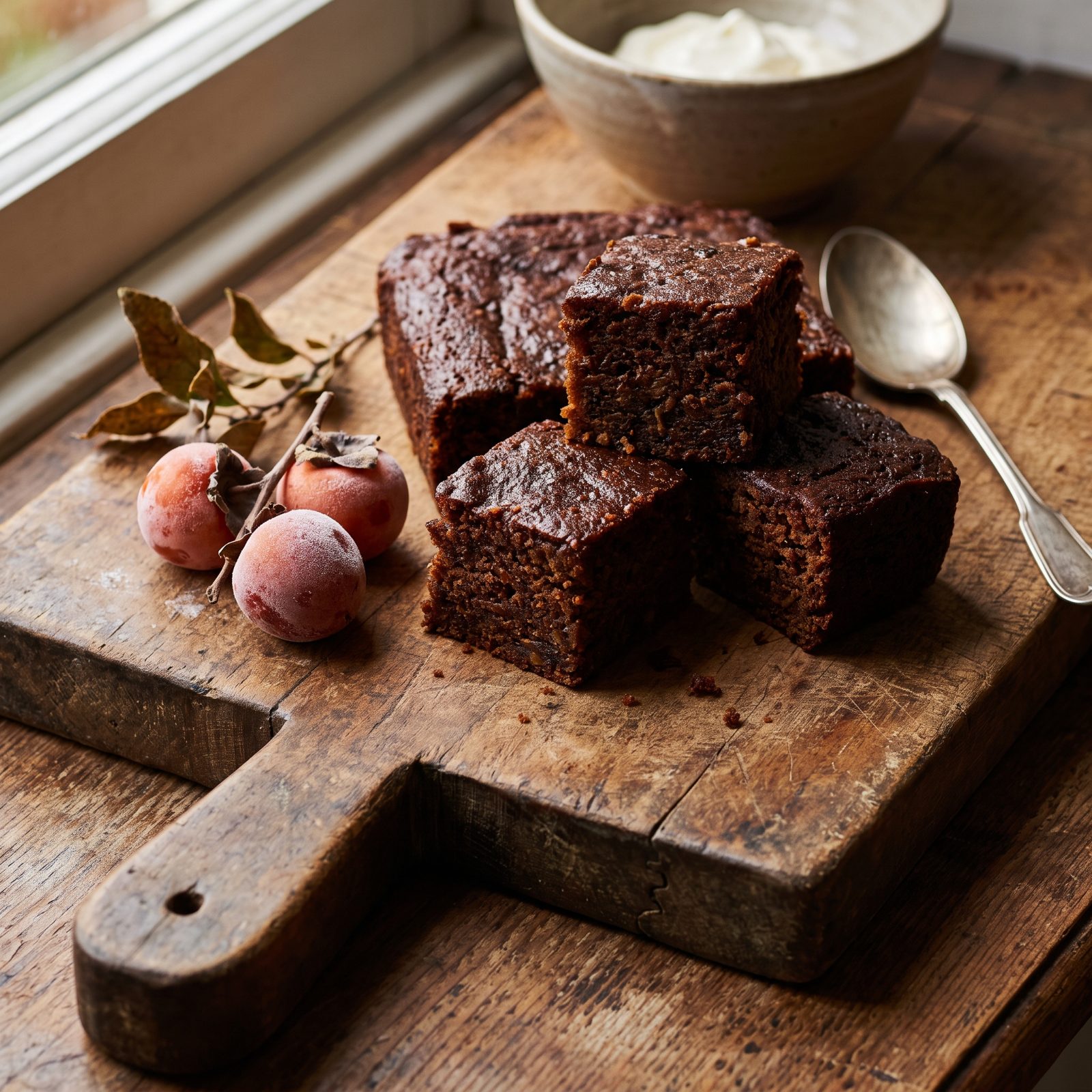
This one depended entirely on a tree. Wild American persimmons ripen late, after the first frost, going from mouth-puckering to soft and sweet almost overnight. People who had a persimmon tree out back turned that fruit into a dense, dark, spiced pudding baked in a pan — somewhere between cake and bread pudding.
In the Midwest and the South it was a regional point of pride, especially around Indiana. You couldn’t buy persimmon pulp at the store, so when families left the land and the trees, the pudding went with them. It survives now in county fairs and a few stubborn kitchens, which is exactly where a dessert like this belongs.
20. Charlotte Russe
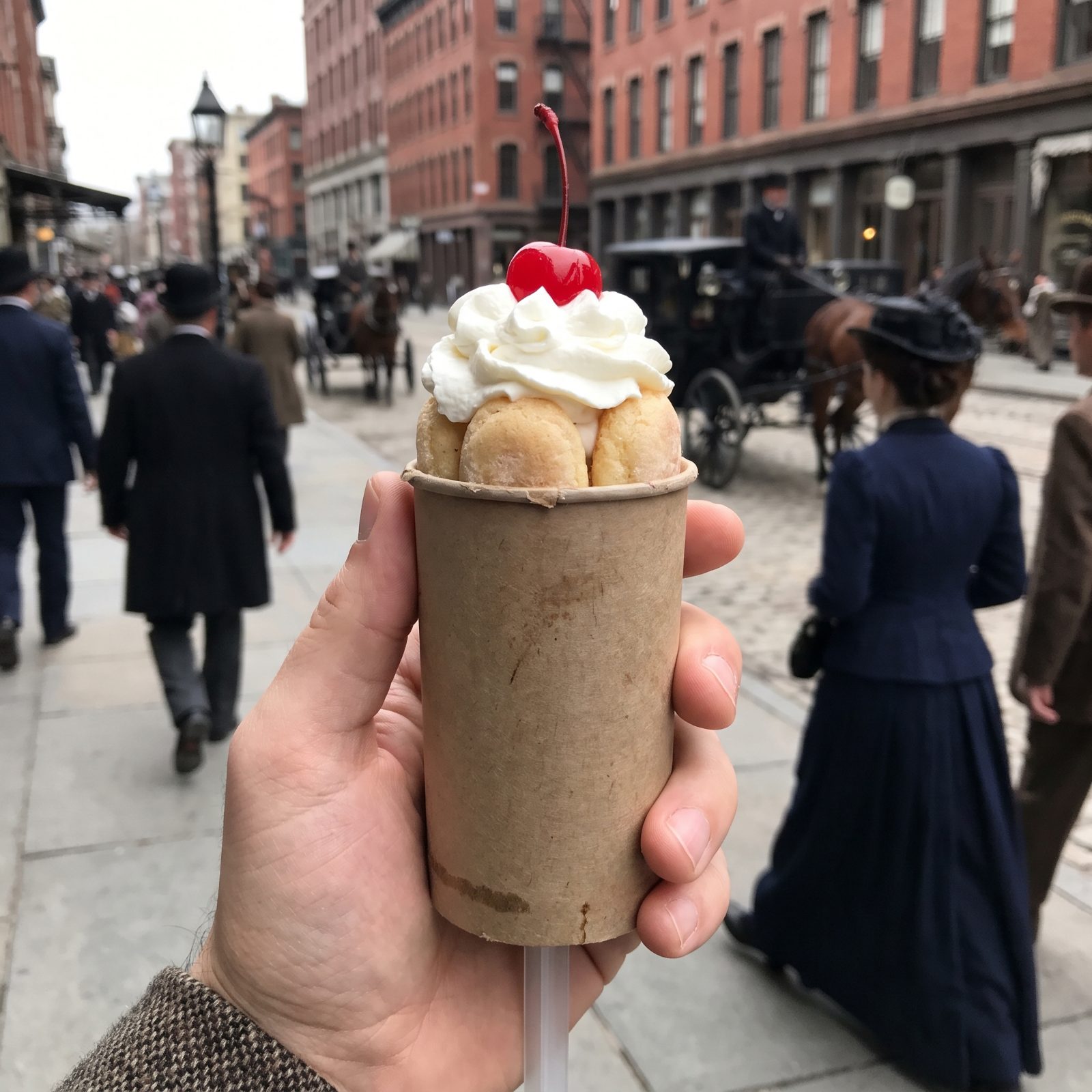
In the city it meant something different — a sponge cup with whipped cream pushed up through a cardboard sleeve from the corner store. But the proper Charlotte Russe was a showpiece: a mold lined with ladyfingers standing like a picket fence, filled with vanilla Bavarian cream, unmolded and crowned with whipped cream and a cherry.
It was the dinner-party dessert of a more formal age, the kind of thing you served in the good glass bowl when company came at Christmas. It asked for gelatin, custard, patience, and a mold. We traded all four for a box of cake mix. The Charlotte Russe deserved a better ending than that.
19. Lane Cake With Fruit-and-Bourbon Filling
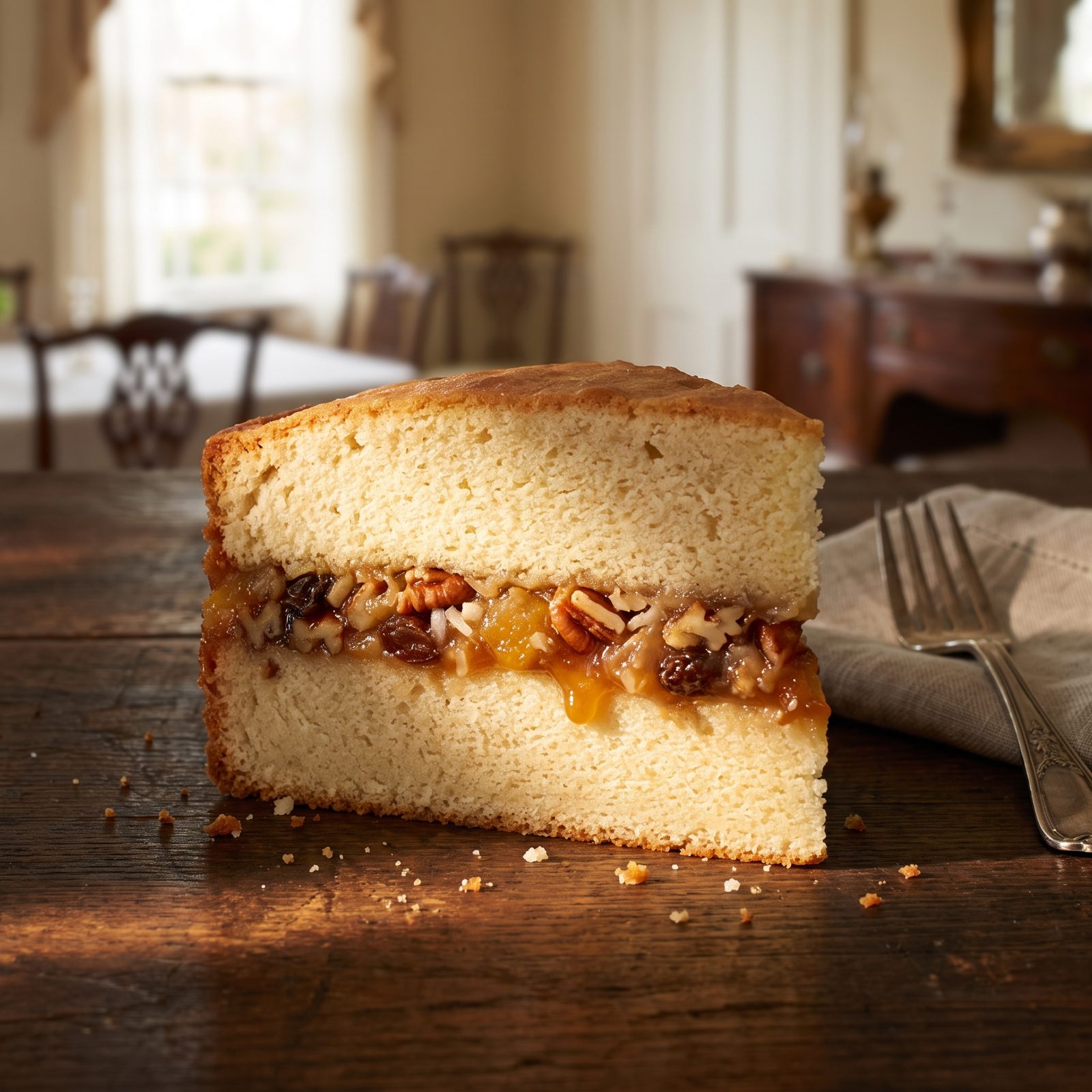
Cut into it and the whole thing told on itself. That amber seam of raisins, pecans, cherries and coconut, soaked in enough bourbon to make a Baptist aunt raise an eyebrow, ran between three layers of plain white cake like a secret the kitchen couldn’t keep.
Lane cake came out of Alabama in the 1890s, and it became the cake you made days ahead so the filling could do its slow work under a dish towel. Harper Lee wrote it into To Kill a Mockingbird, the one Miss Maudie baked so rich it left you tipsy. Nobody bakes it anymore. It takes a full afternoon and a steady hand with boiled icing, and who has either in December?
18. Dark Fruitcake Aged in Brandy
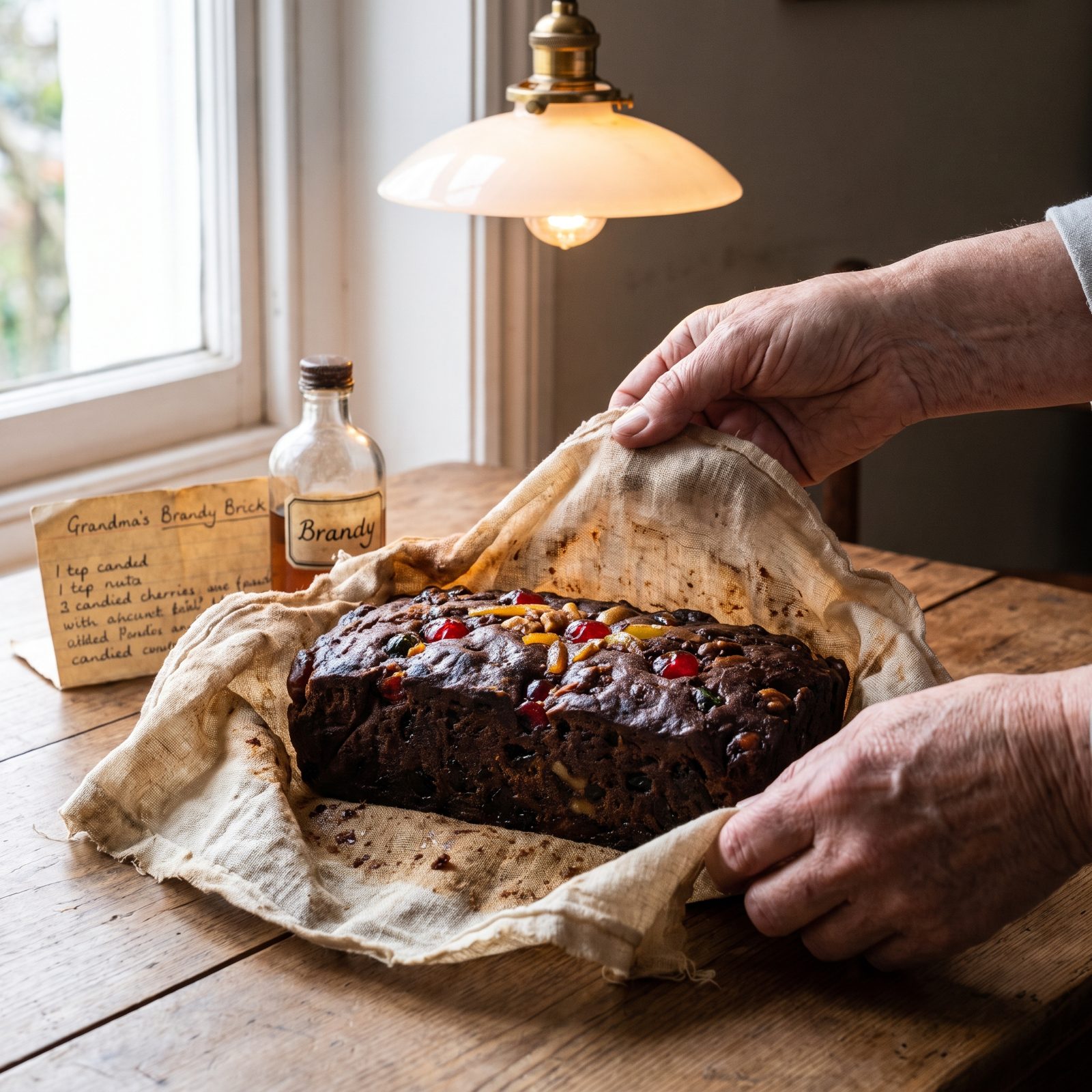
Somebody in your family defended it to the death every December, usually the same person who’d kept it wrapped in a brandy-soaked cloth in a tin since October. And here’s what the jokes always got wrong: a real dark fruitcake wasn’t a dry brick at all. Basted for weeks, sliced thin, it came off dense and almost wet with spirit.
It took planning most modern Decembers don’t allow. You started in autumn, fed it, waited. The payoff landed on a willow-pattern plate next to the coffee on Christmas morning. Then the mass-produced doorstops killed its reputation, and the reputation killed the tradition.
17. Gumdrop Cake
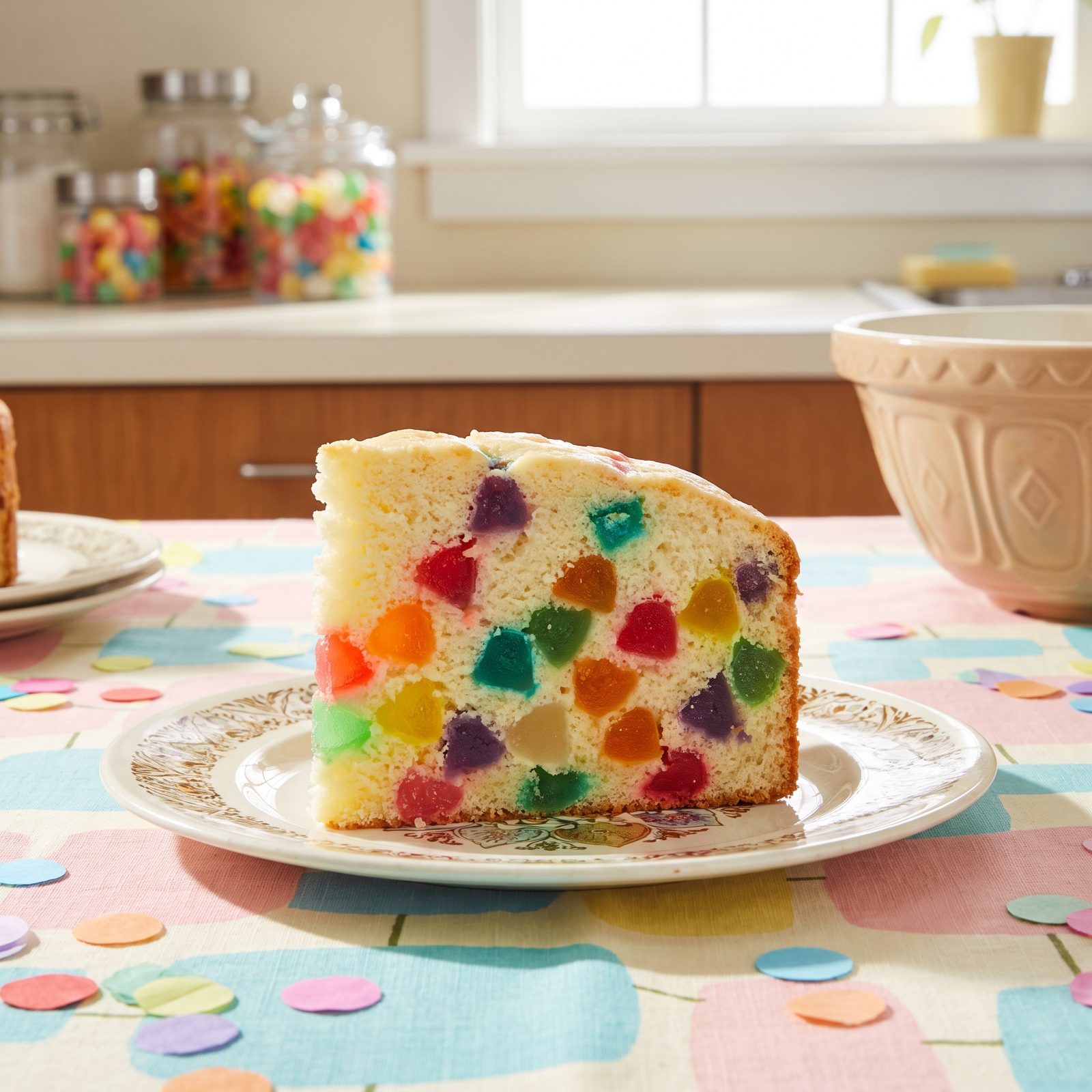
This was fruitcake for people who had decided, firmly, against fruitcake. Gumdrop cake swapped the candied citron for chopped spice gumdrops, so every slice came freckled with red, green and yellow confetti.
Kids loved it for the obvious reason. The gumdrops went soft and chewy in the baking, little pockets of sweet in a plain butter crumb. It showed up at cookie exchanges and church potlucks through the 1950s and ’60s, usually on a pink glass plate, and then it just quietly stopped. A shame, honestly. It never pretended to be sophisticated, and that was the charm.
16. Ribbon Candy in a Cut-Glass Dish
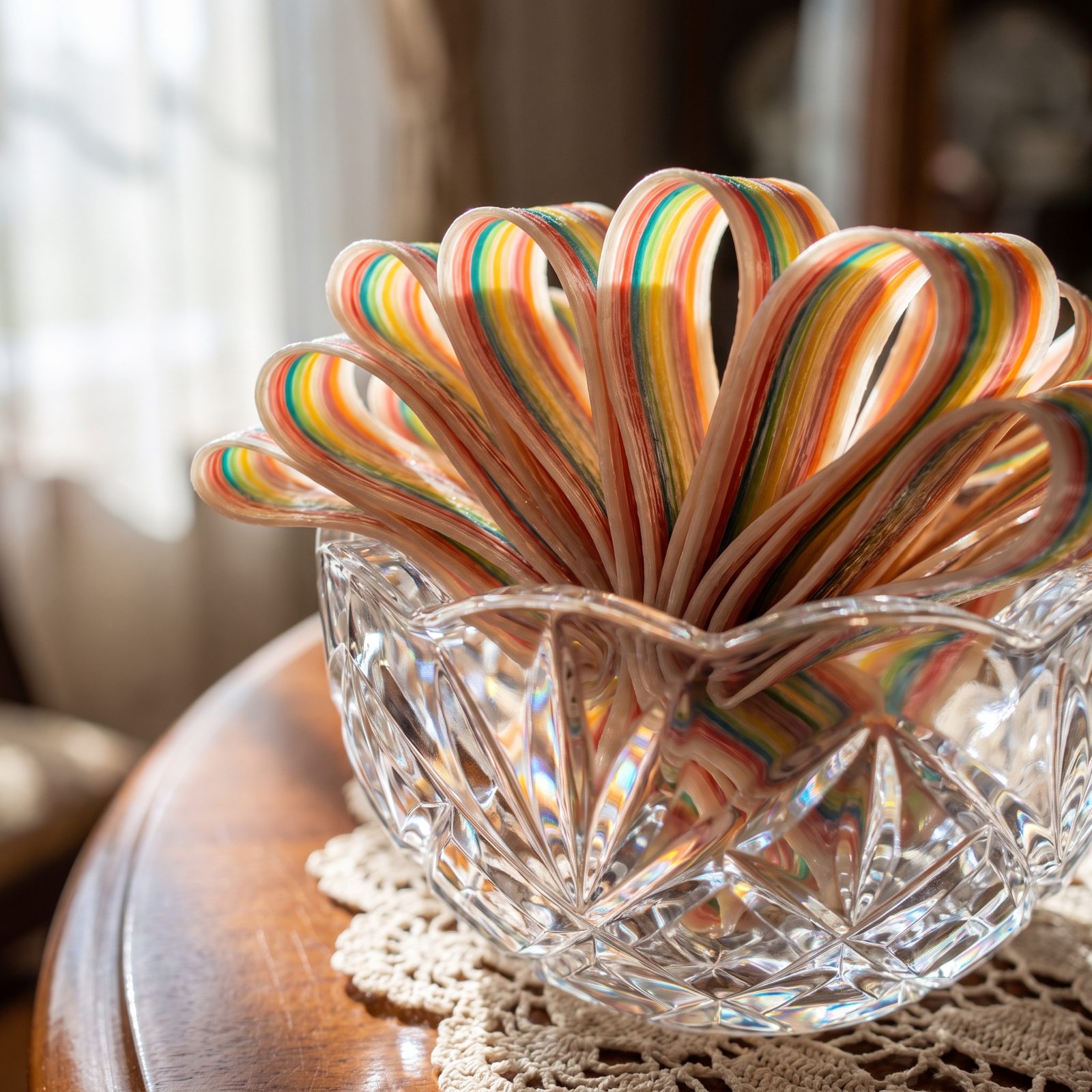
It was there to be looked at, not eaten. Ribbon candy lived in a cut-glass dish on the good side table, those thin wavy pastel accordions lighting up like stained glass when the lamp hit them.
And every year the same thing happened. The pieces fused into one giant sticky brick, somebody tried to break off a ribbon, it shattered, and a sharp edge cut the roof of your mouth. You ate it anyway. It was pretty, it was there, it was Christmas, and those were the only three qualifications it ever needed.
15. Pulled Molasses Candy
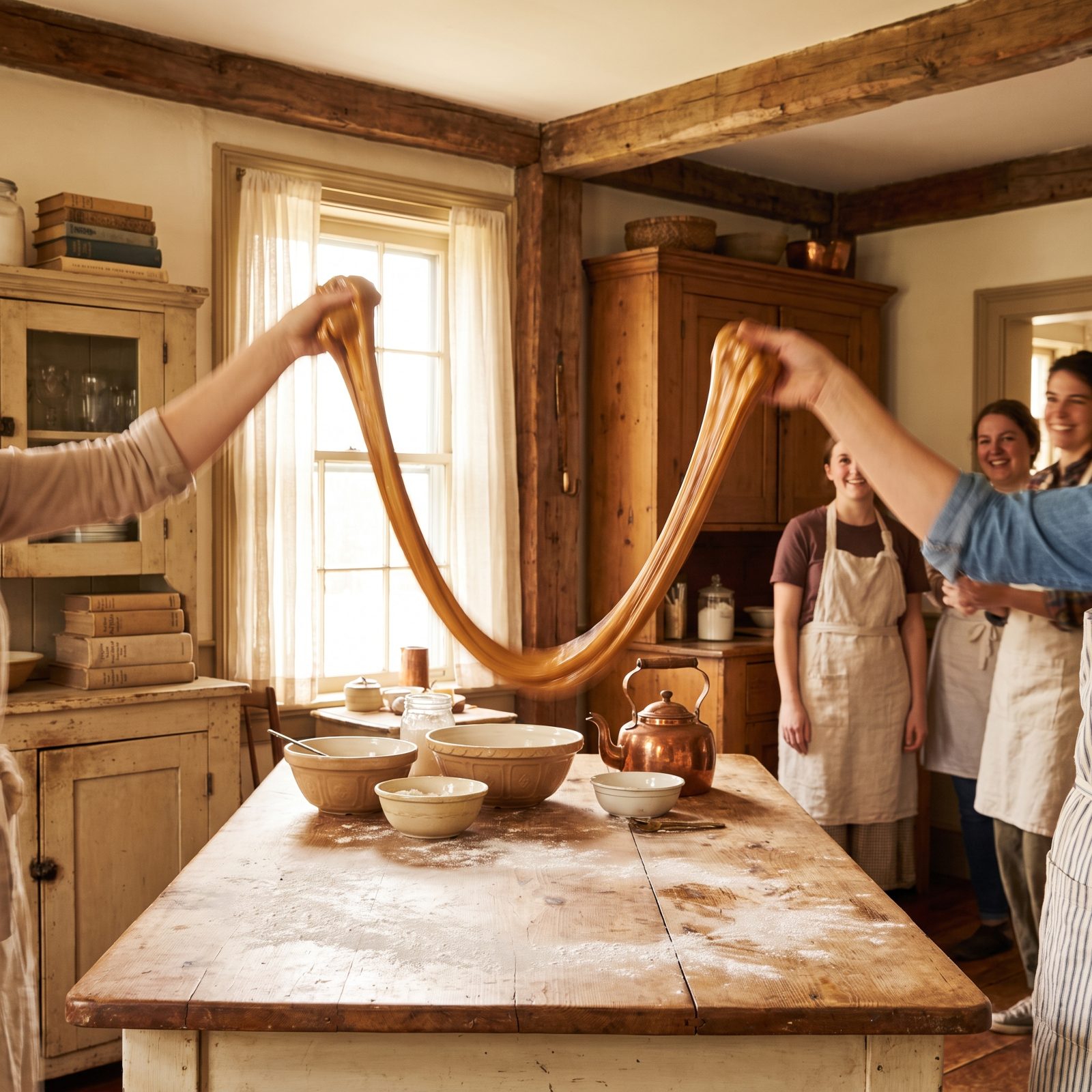
Pulling molasses candy was a group sport. You buttered your hands, grabbed a hot rope of cooked molasses with somebody across the kitchen, and pulled until the dark syrup turned pale, glossy and chewy. The whole room smelled like burnt sugar and winter.
A taffy pull without the party name, done on cold afternoons when the candy needed to set up. The arm ache was real. So was the handful of twists wrapped in wax paper you snuck before dinner. Hardly anyone pulls candy by hand now, which means a lot of kids have never watched sugar change color in a grown-up’s hands.
14. Homemade Divinity
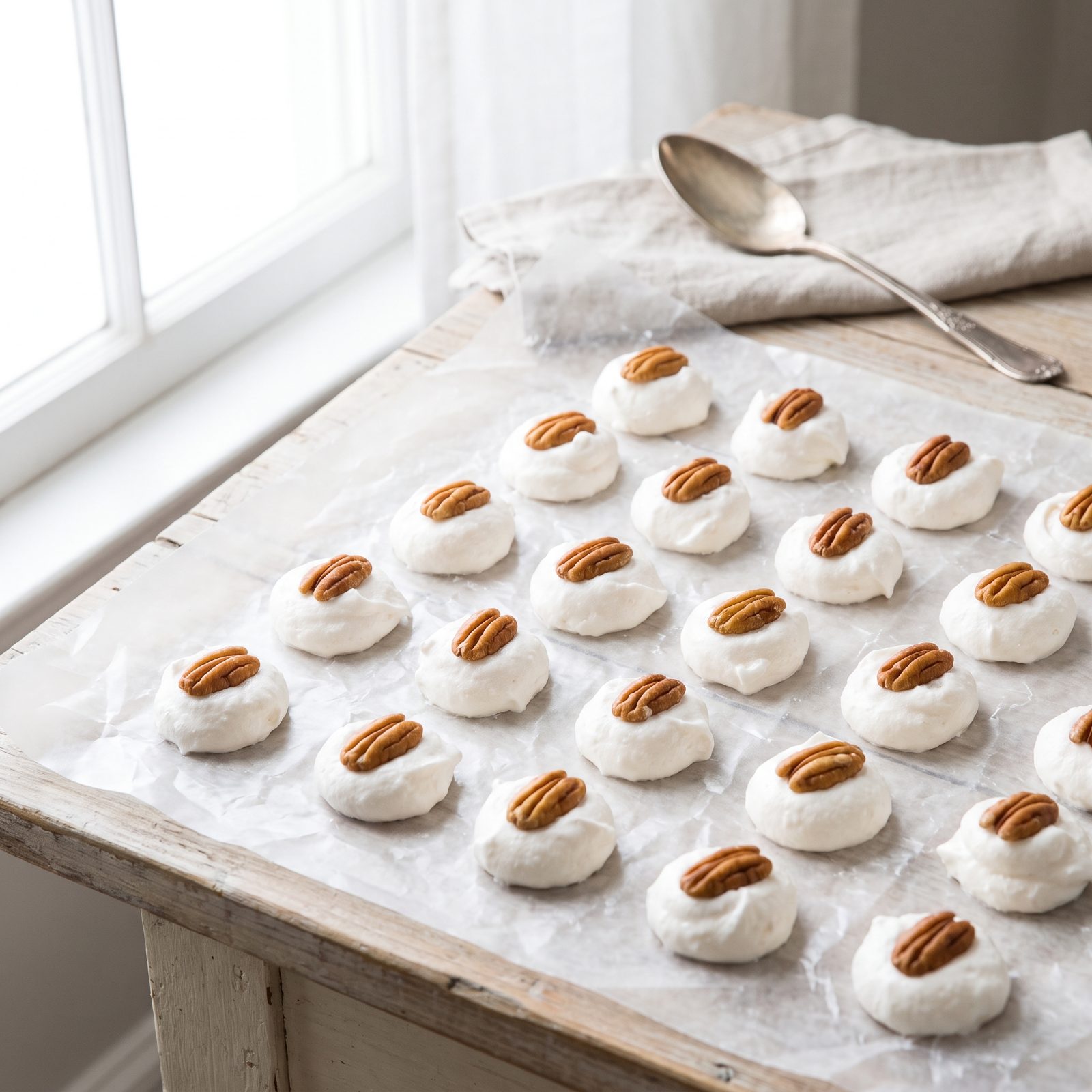
Divinity had a reputation, and the reputation was true. Make it on a humid day and it would not set, period. Which is why making it at all felt like a small triumph: these snowy peaked mounds of beaten egg white and boiled sugar, each one crowned with a pecan.
It took a hand mixer, a candy thermometer, a cooperative weather forecast and a good arm. The texture landed somewhere between meringue and marshmallow, melting on your tongue. Grandmothers guarded the technique like a secret. When beat-it-by-hand candy making faded, divinity went down with it.
13. Pfeffernüsse Stored in a Tin
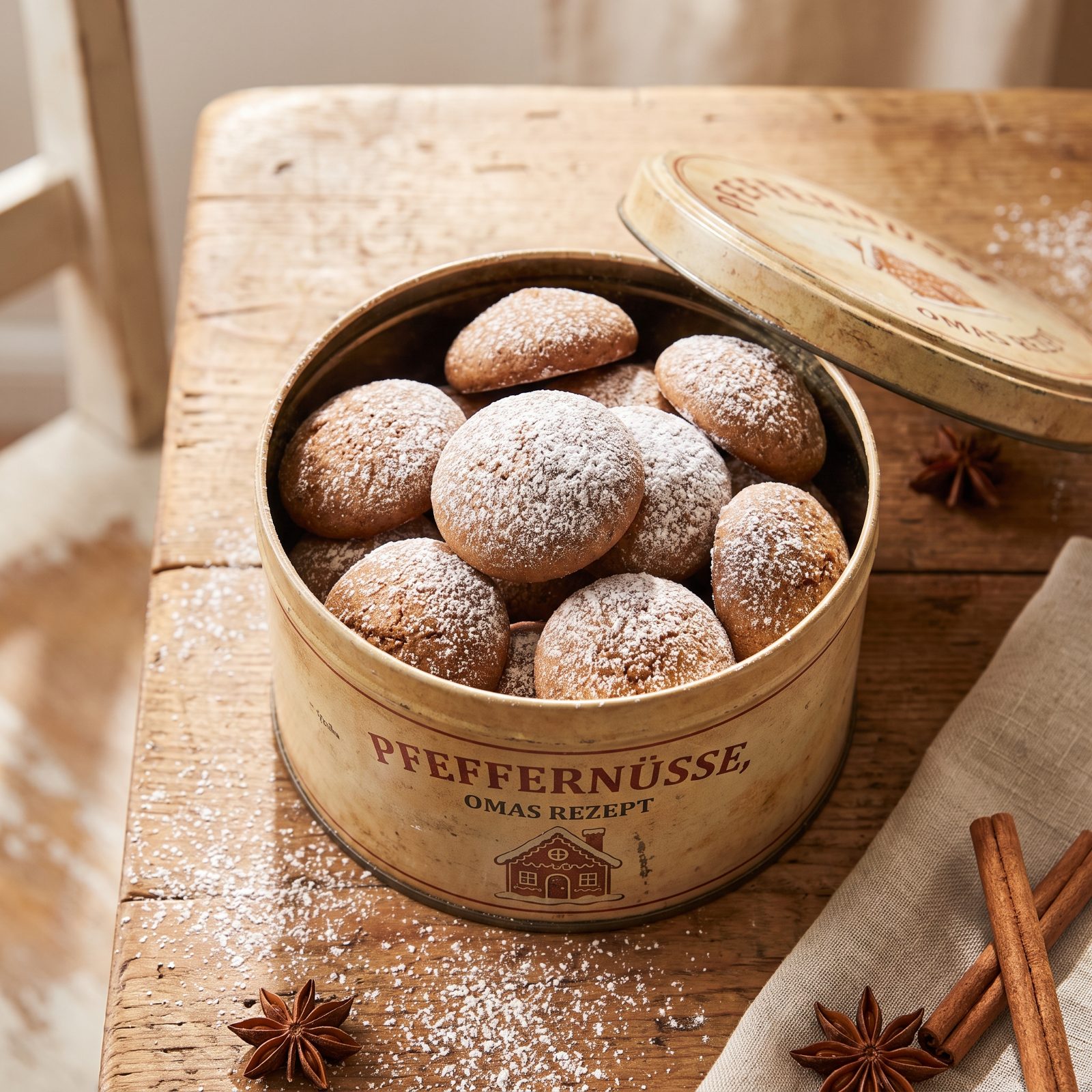
You didn’t eat pfeffernüsse fresh. You hid the tin and waited. These little spiced domes, heavy with clove, cinnamon, cardamom and a whisper of actual black pepper, came out of the oven hard as marbles and needed a week in a sealed tin with a slice of apple before you could bite one.
German-American families made them by the dozen, dusted in powdered sugar, stored where the kids couldn’t find them. The patience was the point. In a season that now runs on whatever you can buy today, a cookie you had to make and then leave alone feels almost unreasonable.
12. Springerle With Carved Designs
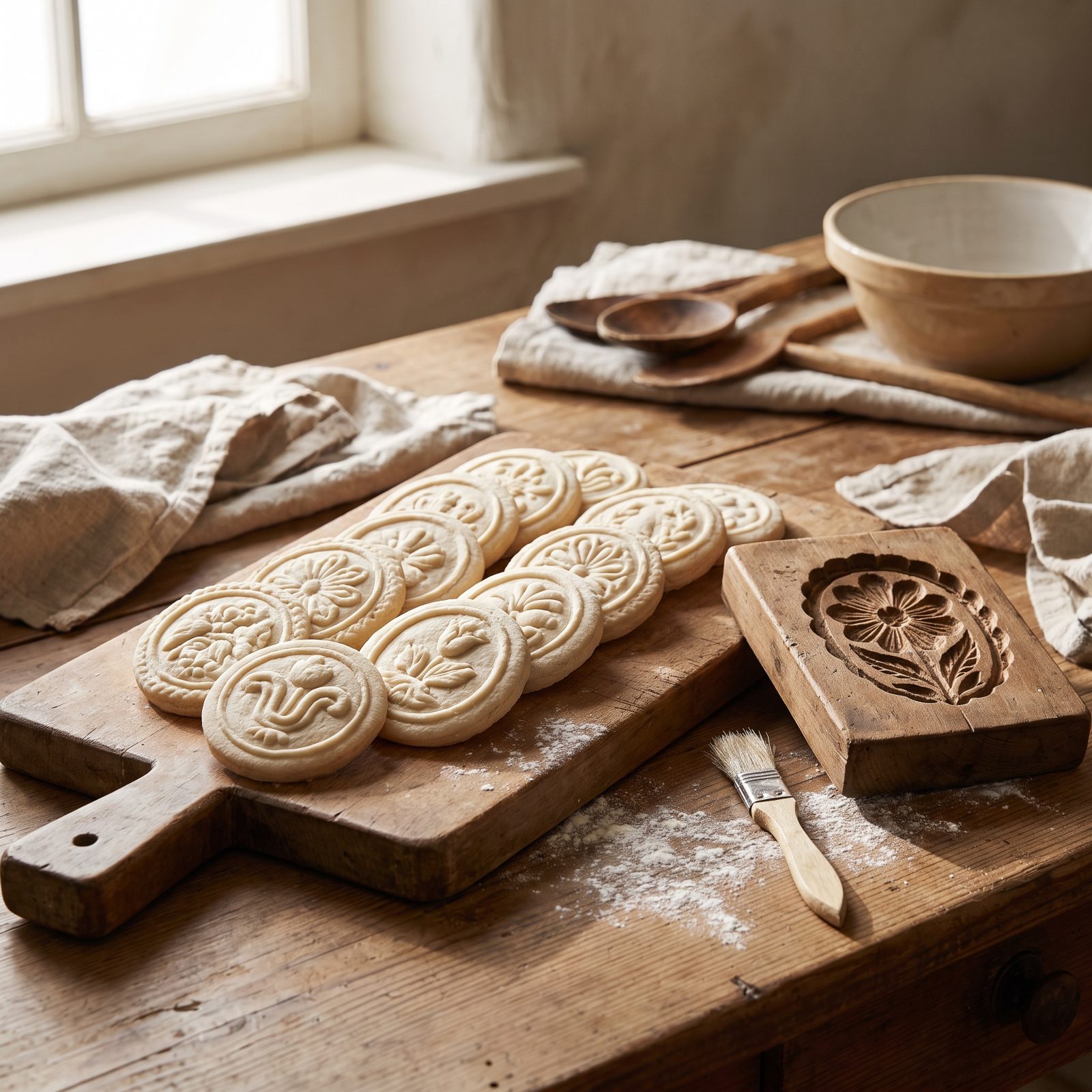
Half cookie, half low-relief sculpture. Springerle got their raised designs from carved wooden molds pressed into the dough before baking, so a stag, a star or a whole nativity scene stood out in pale ivory across the top.
The molds were heirlooms, passed down, sometimes a century old. The cookies tasted of anise and had to dry overnight before baking so the picture held its edge. People made them to look at as much as to eat. And when the generation that owned the molds passed on, the carved-mold tradition went with them, designs and all.
11. Applesauce Stack Cake
Would you like to save this?
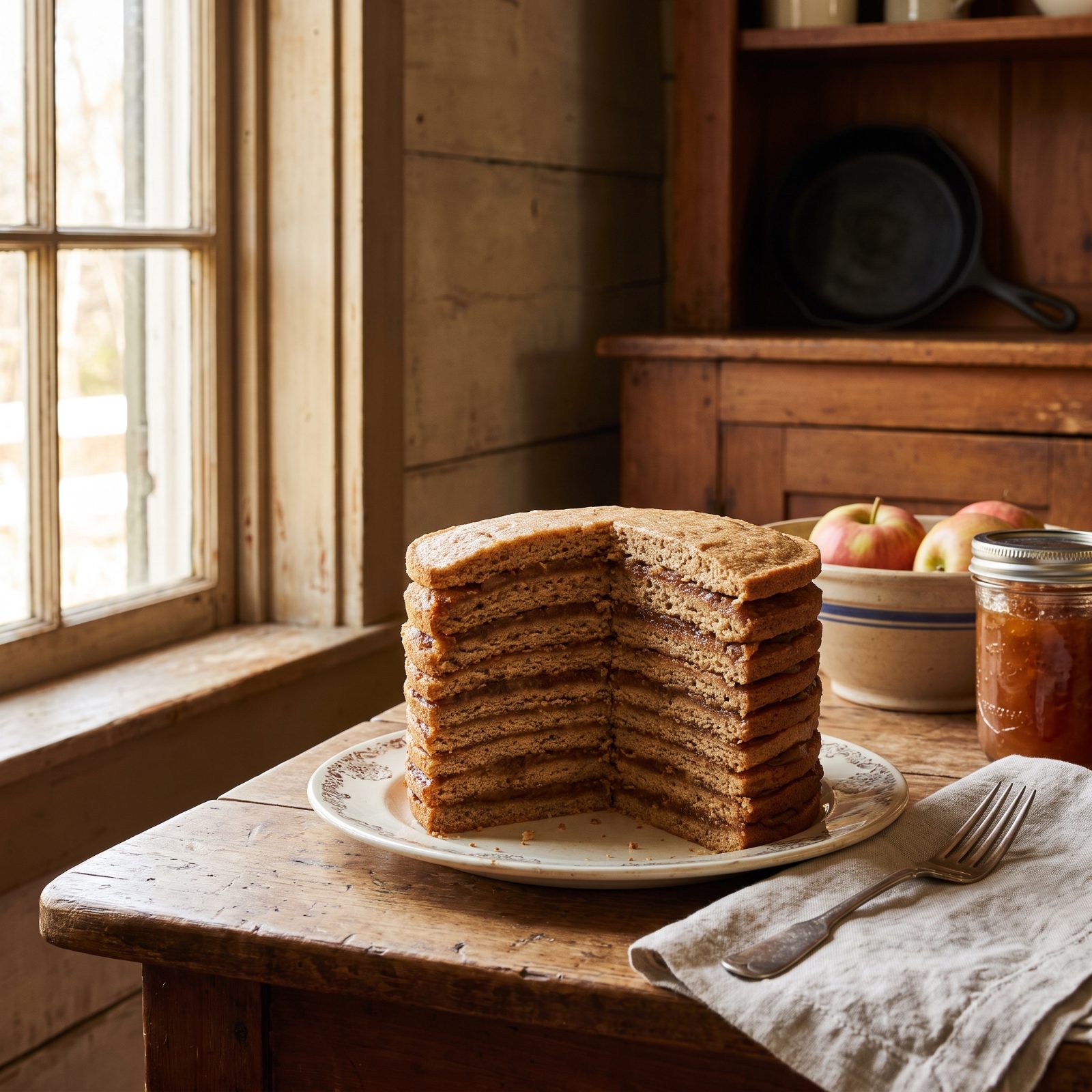
This was the Appalachian wedding and Christmas cake before anybody had a stand mixer. Thin spiced layers, sometimes seven or eight of them, each rolled or patted out by hand, stacked with spiced applesauce or dried-apple filling between.
The magic happened overnight, when the layers drank the applesauce and settled into one dense, moist, almost pudding-like tower.
In mountain tradition, neighbors each brought a layer to a bride, and the number of layers measured how well-liked she was. Poor-country ingenuity, a fancy cake built without expensive ingredients. The recipe survives in a few families and almost nowhere else, which is the quiet tragedy of a lot of mountain cooking.
10. Chestnut Stuffing Made From Fresh-Roasted Chestnuts
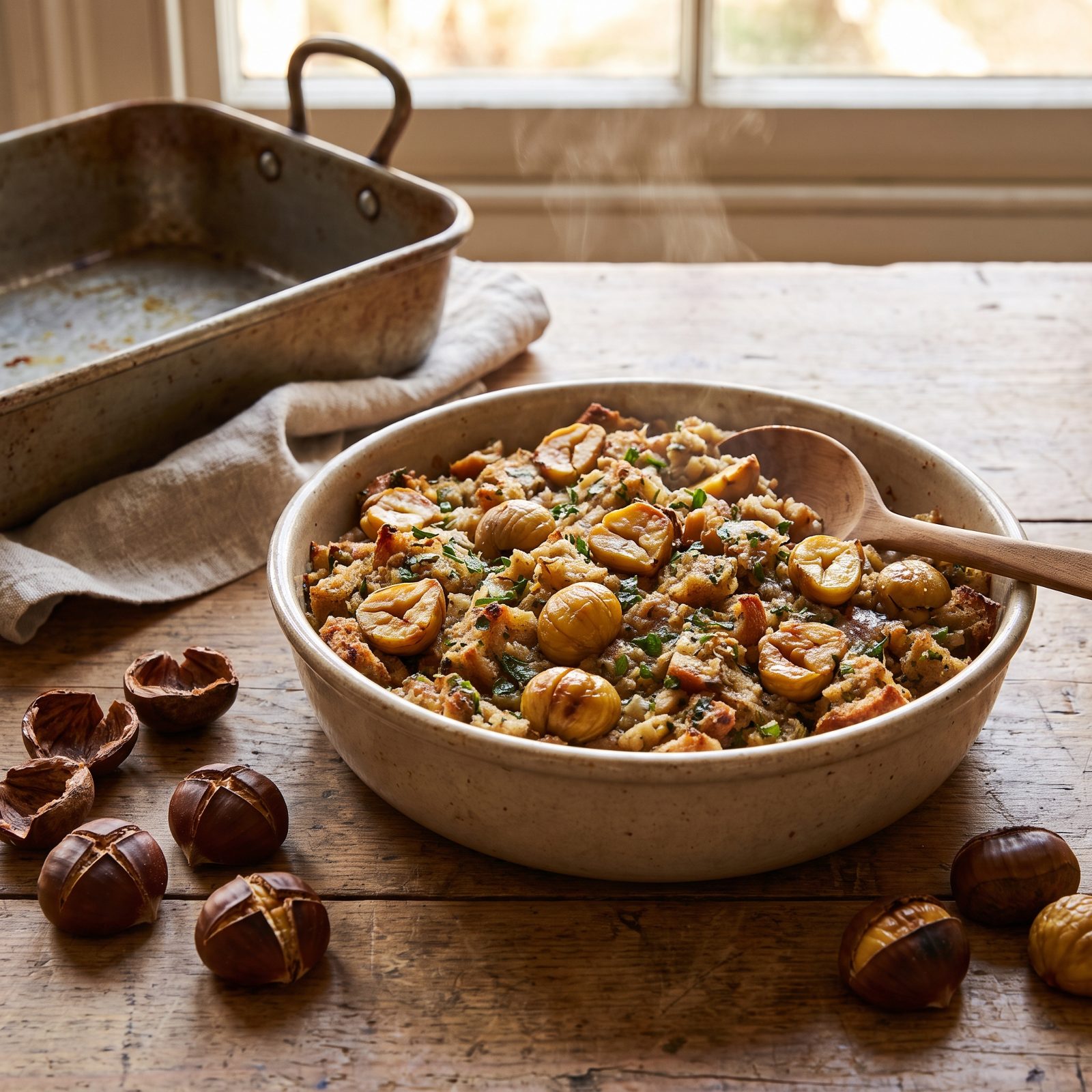
The chestnut part used to mean something. You scored each nut, roasted them until the shells split, then peeled them hot while they burned your fingertips, and only then did they go into the bread and sage. The stuffing came out nutty and faintly sweet, dense in a way the boxed stuff never manages.
American chestnuts practically vanished after the blight of the early 1900s wiped out billions of trees, so the fresh nut got scarce and expensive. The song still tells you to roast them on an open fire. Almost nobody does. The stuffing that defined so many old holiday tables now shows up mostly as a line in a Christmas carol.
9. Creamed Onions, the Side Dish That Owned Its Own Casserole
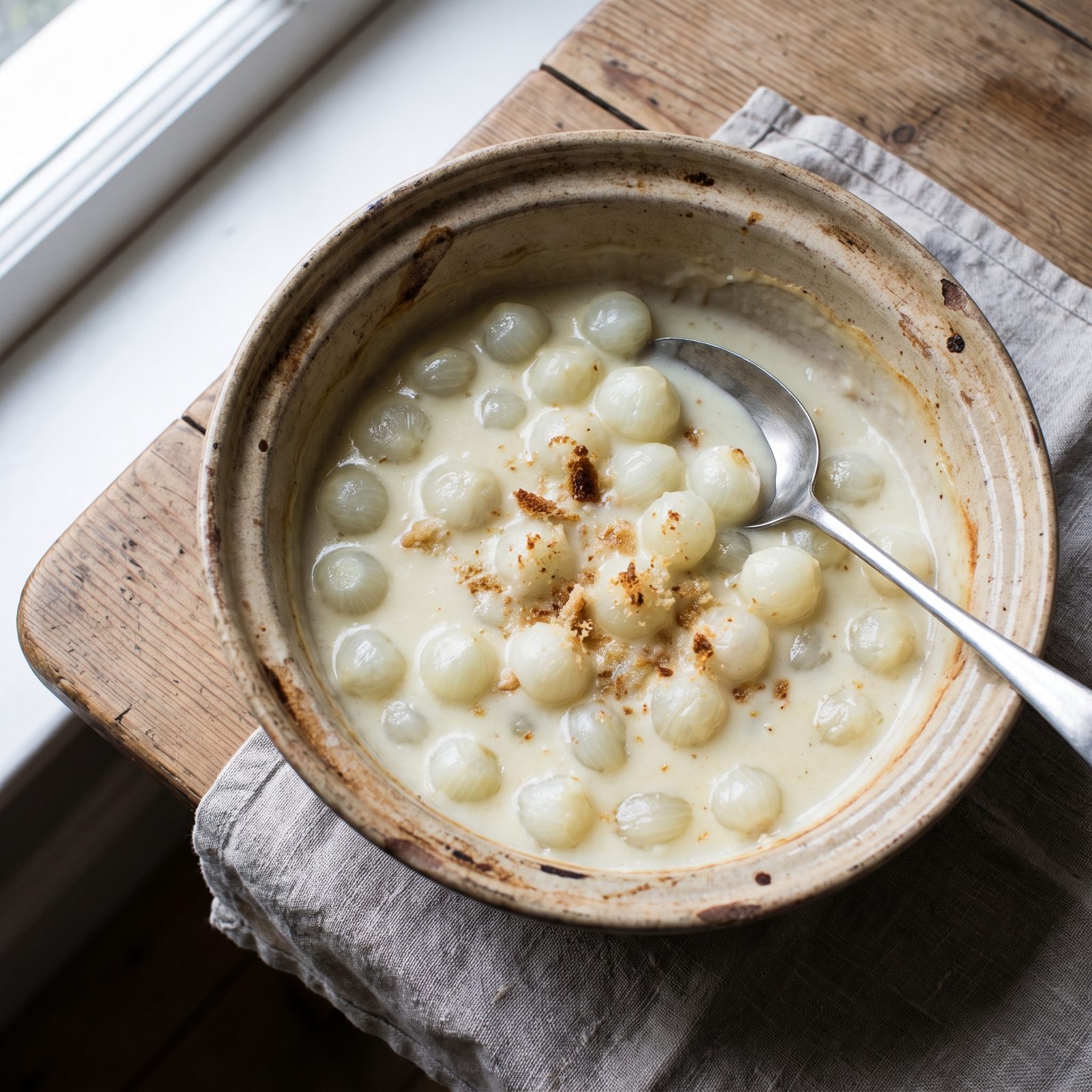
Every family table had one bowl nobody fought over and everybody ate anyway: the creamed onions. Little pearl onions, peeled by somebody’s aunt who complained the entire time, simmered soft and then drowned in a béchamel so heavy with nutmeg you could smell it from the hallway.
They sat between the turkey and the mashed potatoes like a quiet old relative — warm, a little bland, completely reliable. You passed the dish, took a spoonful, moved on. Nobody photographed them. Nobody needed to.
8. Sweet Potato Pone, the Pudding That Wasn’t a Casserole
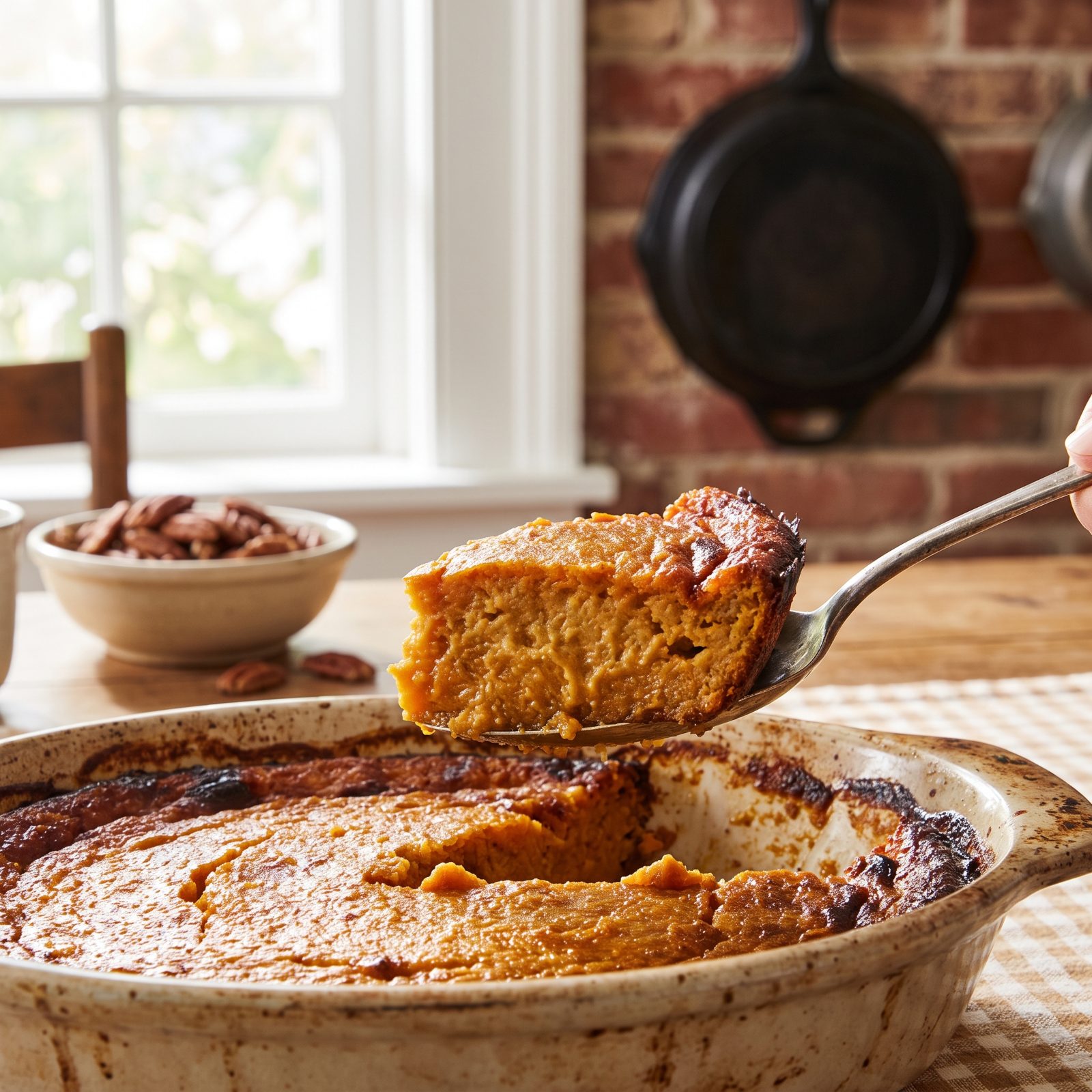
Don’t confuse pone with that marshmallow-topped sweet potato casserole that took over the holidays. Pone came first, and it was tougher stuff — grated raw sweet potato bound with molasses and warm spice, baked slow until the edges went chewy and dark.
It landed somewhere between a pudding and a bread, dense enough to cut into squares, sweet in a deep molasses way rather than a sugary one. Southern grandmothers made it without a recipe because the recipe lived in their hands.
The canned-yam-and-marshmallow version was faster and flashier, and it quietly shoved pone off the table sometime after the war. A shame, honestly. Pone had character the casserole never earned.
7. Southern Spoon Bread, Too Soft to Slice and All the Better for It
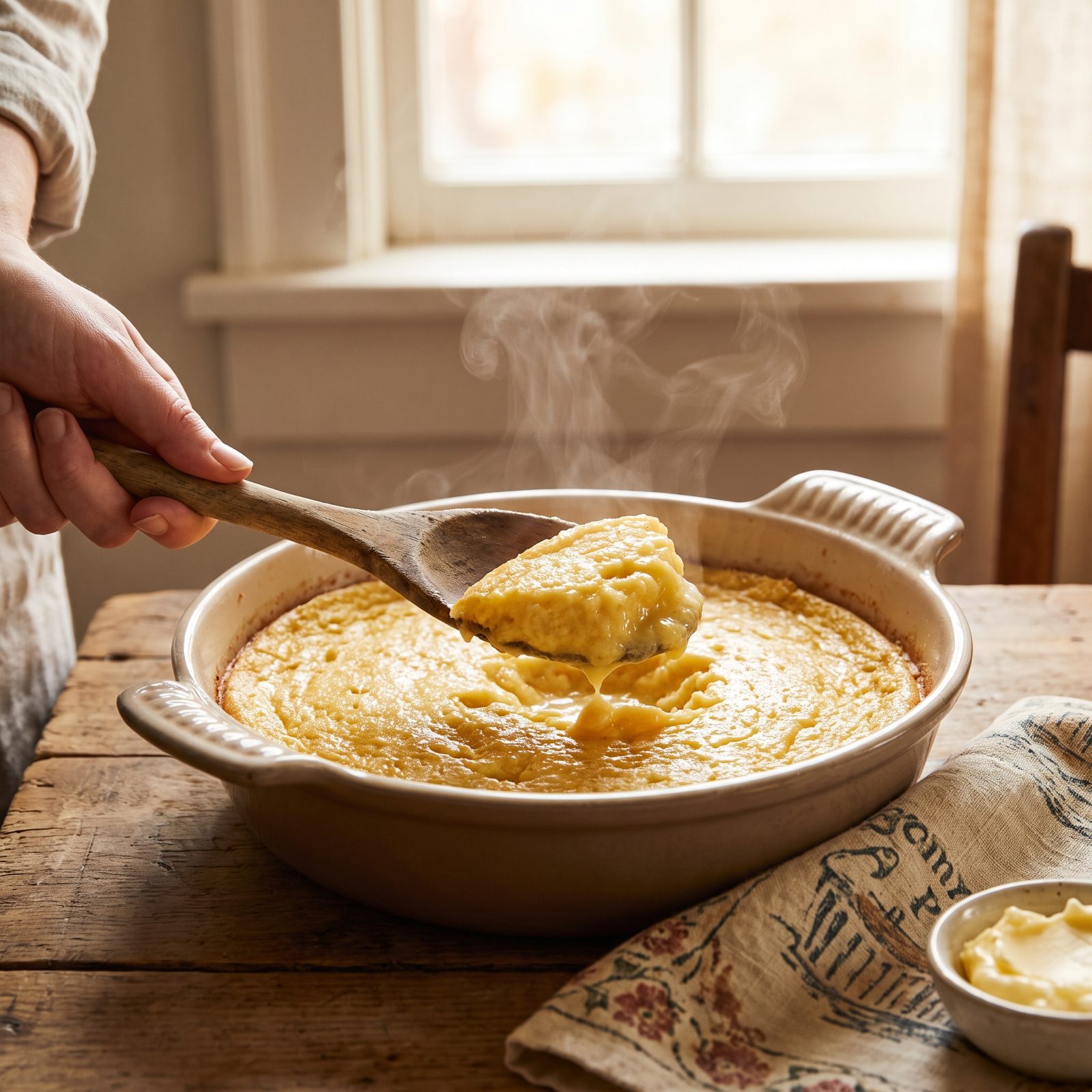
You couldn’t slice spoon bread, and that was exactly why it eventually fell away. A dish you had to scoop with a spoon didn’t fit a world that wanted everything to pass cleanly down a buffet line.
Cornmeal, eggs, milk, baked until it rose like a soufflé and then slumped soft the moment you broke the surface. Butter melted into the warm center. It tasted like corn and cream and nothing else, which was plenty.
6. The Whole Baked Ham Studded With Cloves in a Diamond Grid
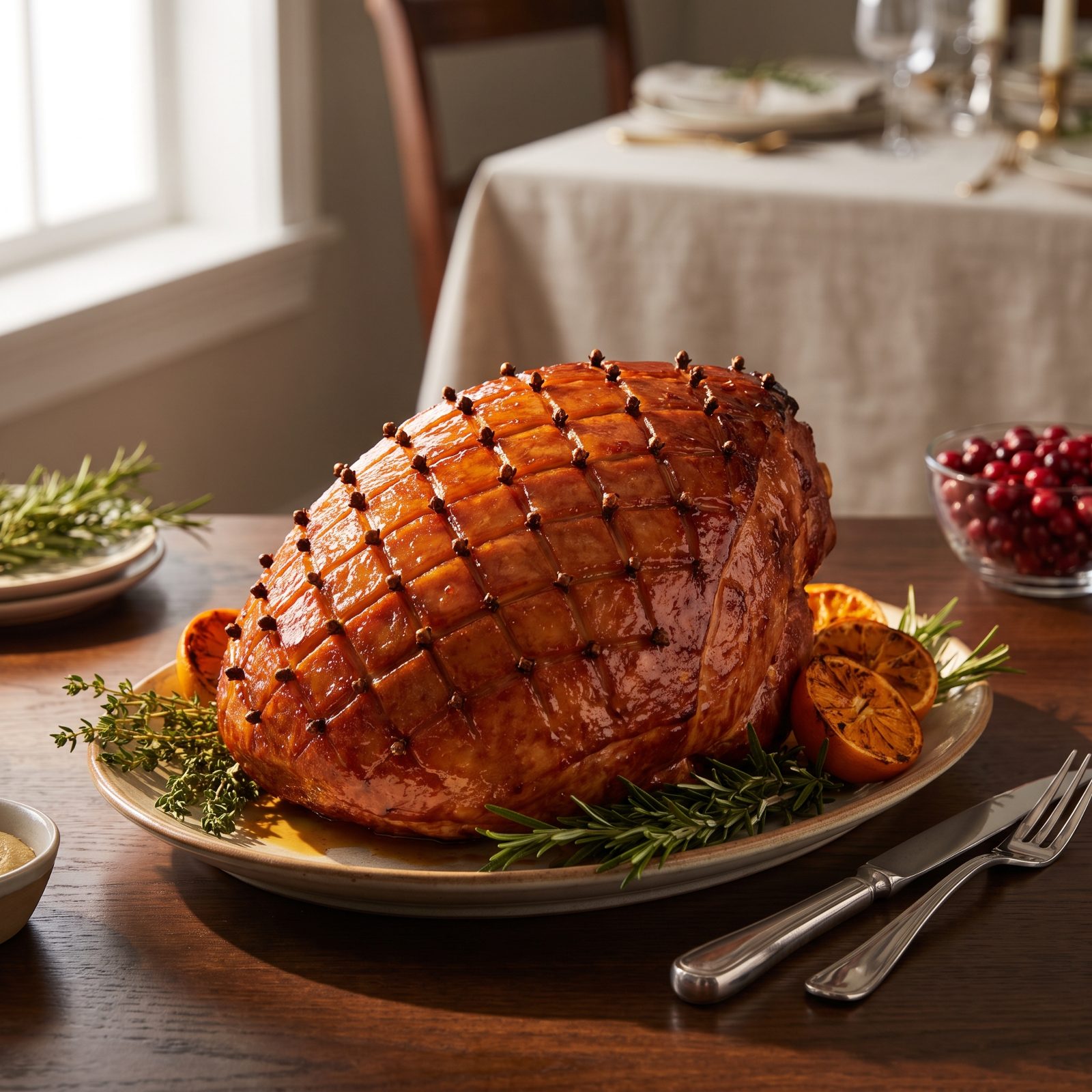
This was the centerpiece that announced the holiday before anyone sat down — the scored diamond grid, a clove stabbed into every intersection, pineapple rings and maraschino cherries pinned on with toothpicks like ornaments.
Studding a ham with cloves was fussy work, and that was the message: somebody spent the whole afternoon on this. The cloves perfumed the glaze, and fishing the hard little buds out of your slice was just part of the deal.
Spiral-cut hams killed it. Why score and stud and pin when the grocery store hands you a ham that fans open on its own? Convenience won, and the diamond grid became a thing your grandmother used to do.
5. Jellied Veal Loaf, the Cold Molded Meat We Quietly Retired
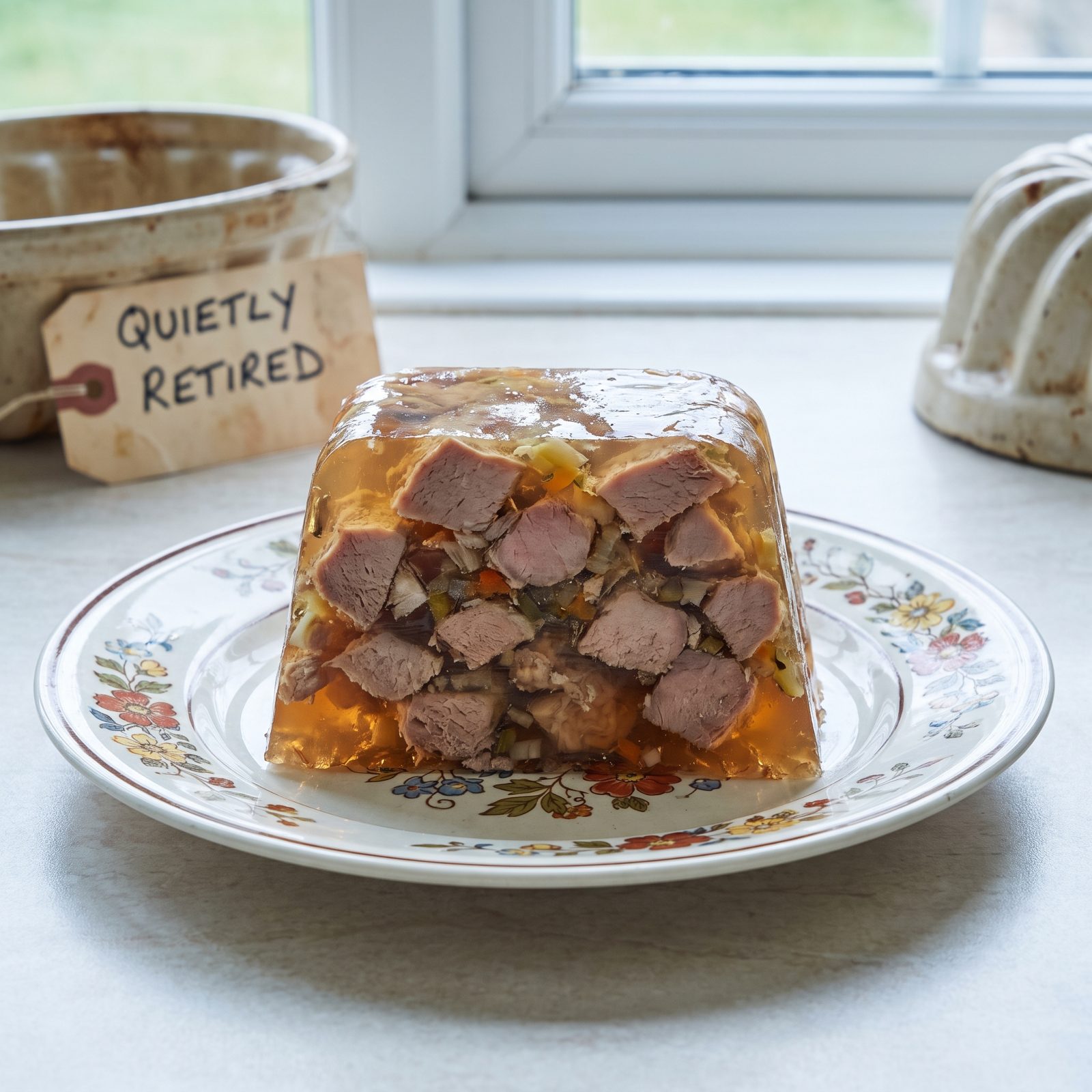
There was an entire era convinced that suspending meat in clear jelly was elegant, and for a while it genuinely was. Jellied veal loaf came to the table cold and glassy, flecks of veal and halved eggs floating in amber aspic like specimens in a jar.
Hostesses prized it because it looked like effort. You unmolded it, sliced it thin, fanned the pieces on a platter with parsley and lemon. And it wobbled when you set it down.
4. Chicken à la King Spooned Into a Crisp Pastry Shell
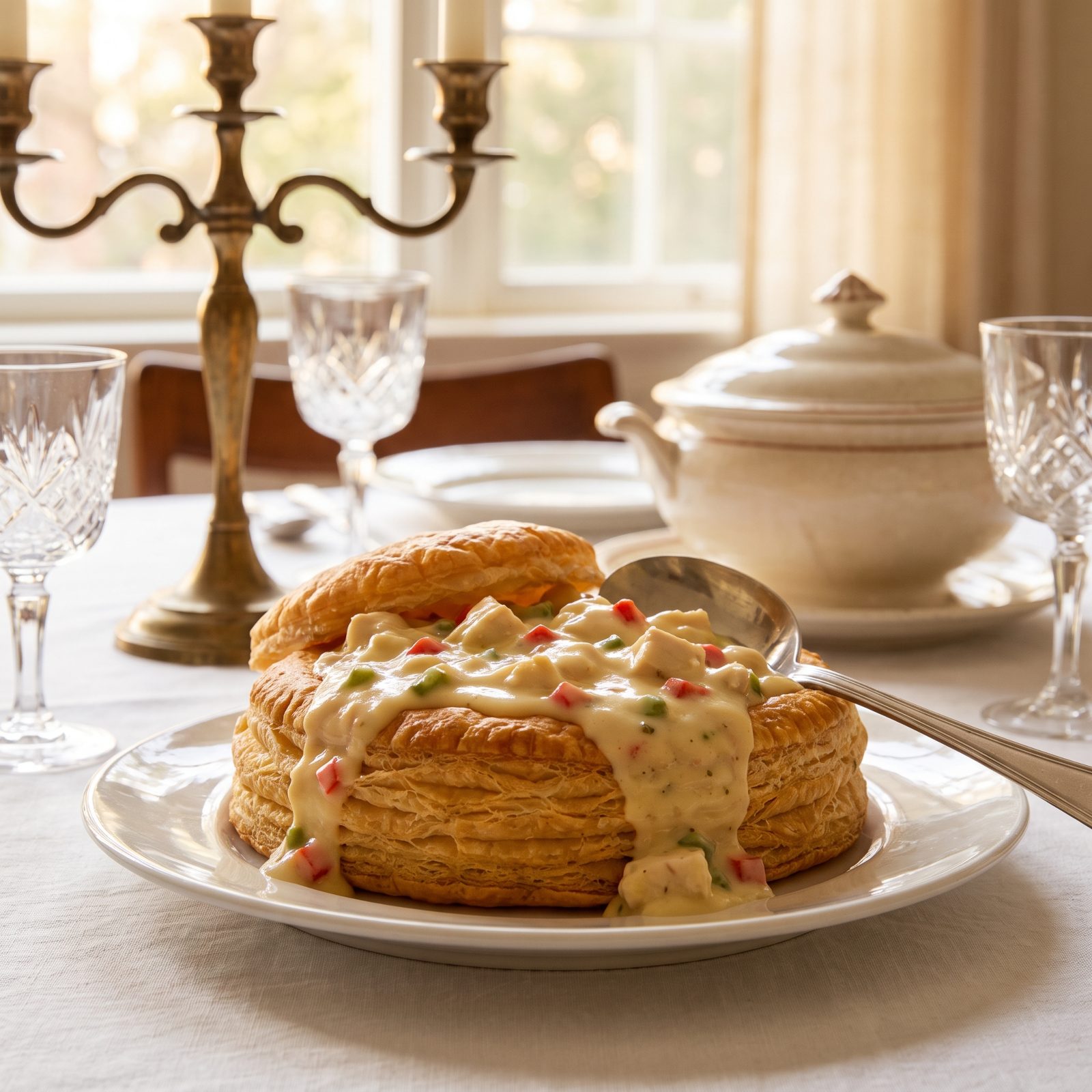
Chicken à la King was how you served chicken when you wanted it to feel like an occasion. Diced chicken and mushrooms and peas in a cream sauce shot through with pimento, ladled into a crisp pastry shell that shattered under your fork.
The pastry vol-au-vent did the heavy lifting. Without it, you had a bowl of creamed chicken. With it, you had something that looked like a restaurant made it — worth the trouble on a holiday afternoon.
It ruled the ladies’ luncheon and the fancier Christmas buffet for decades. Then cream sauces went out, the pastry shell went out of style, and à la King drifted to the back of the church-cookbook recipe box.
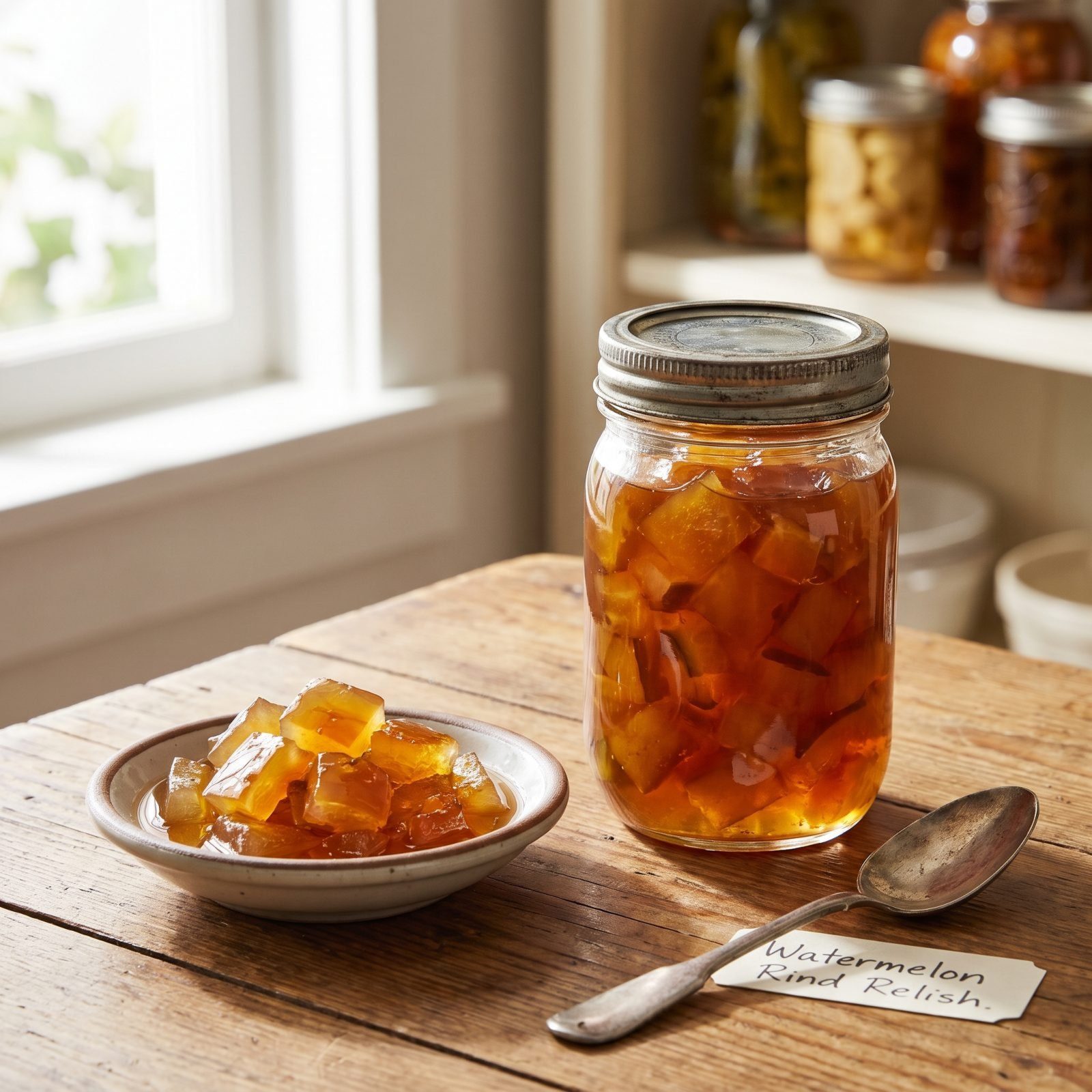
3. Pickled Watermelon Rind, the Relish That Wasted Nothing
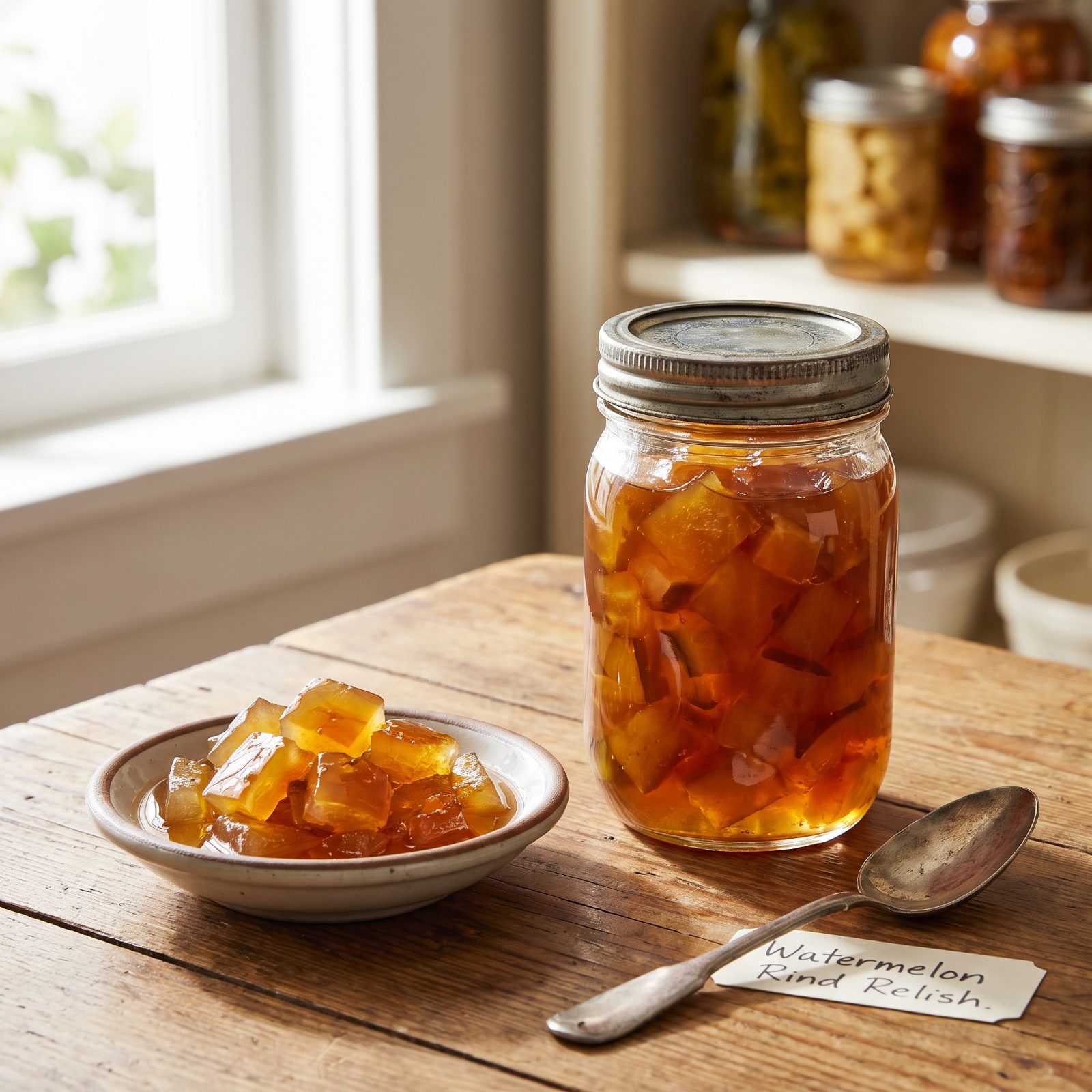
Long before “nothing gets wasted” was a lifestyle slogan, it was just Tuesday. Somebody’s grandmother looked at the thick white rind everybody else threw out and turned it into something you’d fight over by Christmas.
Pickled in a spiced syrup with cinnamon and clove, the rind went glassy and translucent, sweet and sour and faintly crunchy. It landed on the relish tray between the olives and the celery, and it always disappeared first.
2. Spiced Crab Apples, the Glossy Red Garnish Nobody Plates Anymore
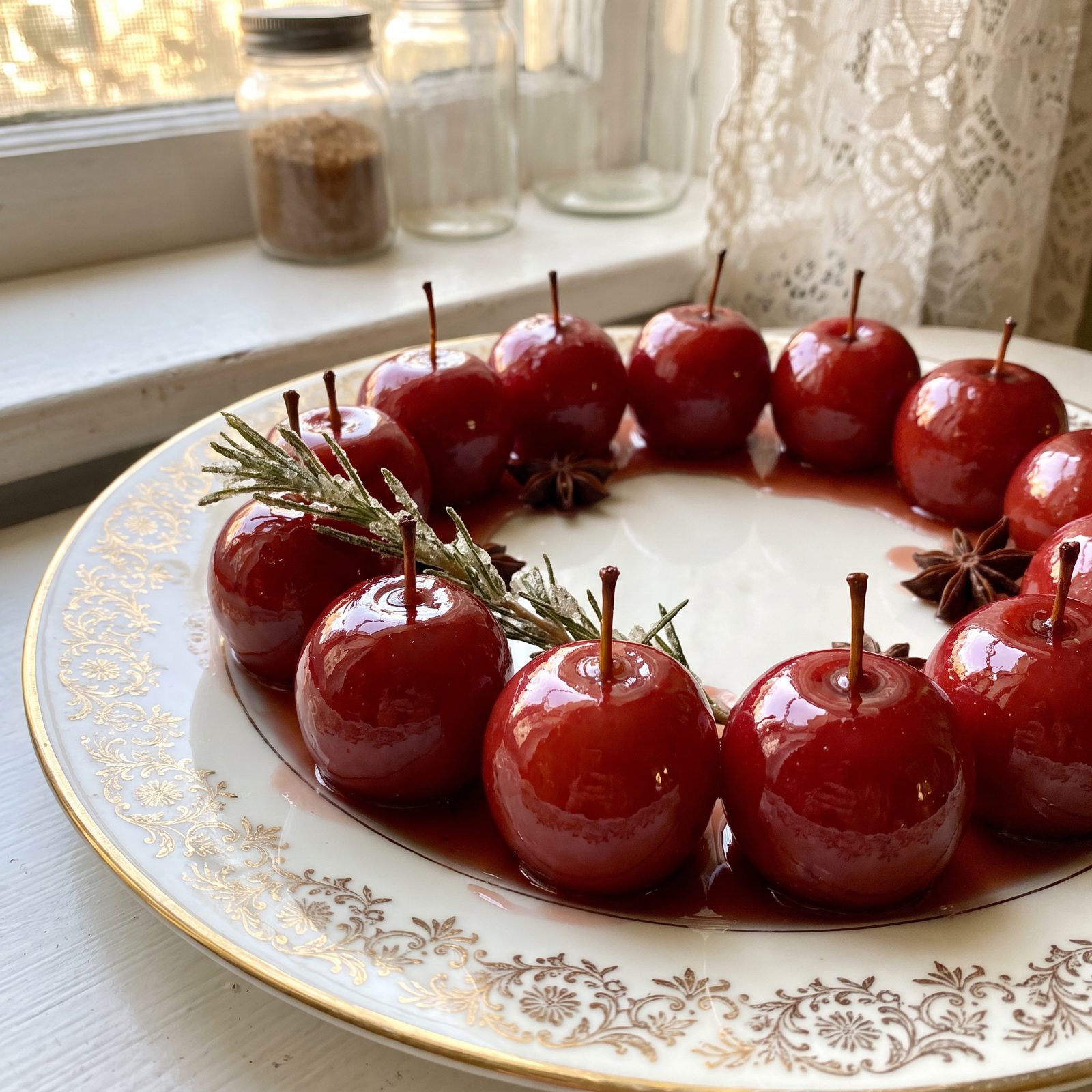
These were the little red ornaments of the dinner plate. Whole crab apples poached in spiced syrup until they turned glossy and ruby, then ringed around the ham or turkey like edible decorations — which is exactly what they were.
Half the table ate them and half the table just admired them. Either way, they did their job: making the main dish look like somebody cared.
They vanished along with the whole idea of garnishing a platter. Ringing a roast with spiced fruit reads as fussy and old-fashioned now, and the jarred crab apples that used to sit in every grocery store slowly stopped selling. Pretty, though. We lost something festive there.
1. Celery Stuffed With Pimento Cheese on the Relish Tray
Would you like to save this?
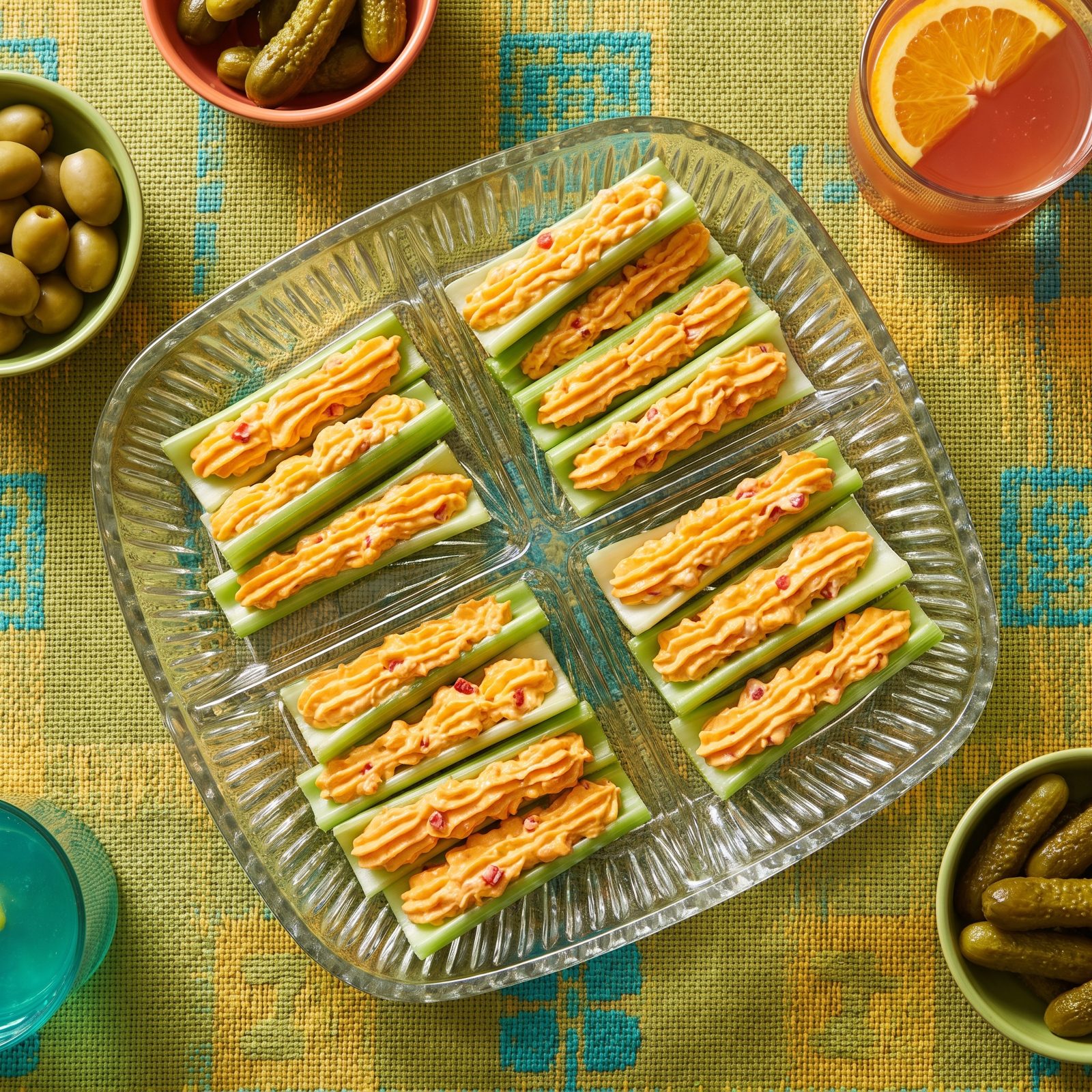
While the grown-ups had cocktails, the relish tray held the line — and stuffed celery was the best thing on it. Crisp stalks snapped into lengths, each one piped full of pimento cheese and dusted with paprika.
You could eat four before dinner and nobody said a word, because celery is practically a vegetable and vegetables are good for you. That was the loophole, and every kid in the room knew it.
The whole relish-tray ritual faded as appetizers got fancier, and the stuffed celery went down with it. A small loss, but a real one.