Would you like to save this?
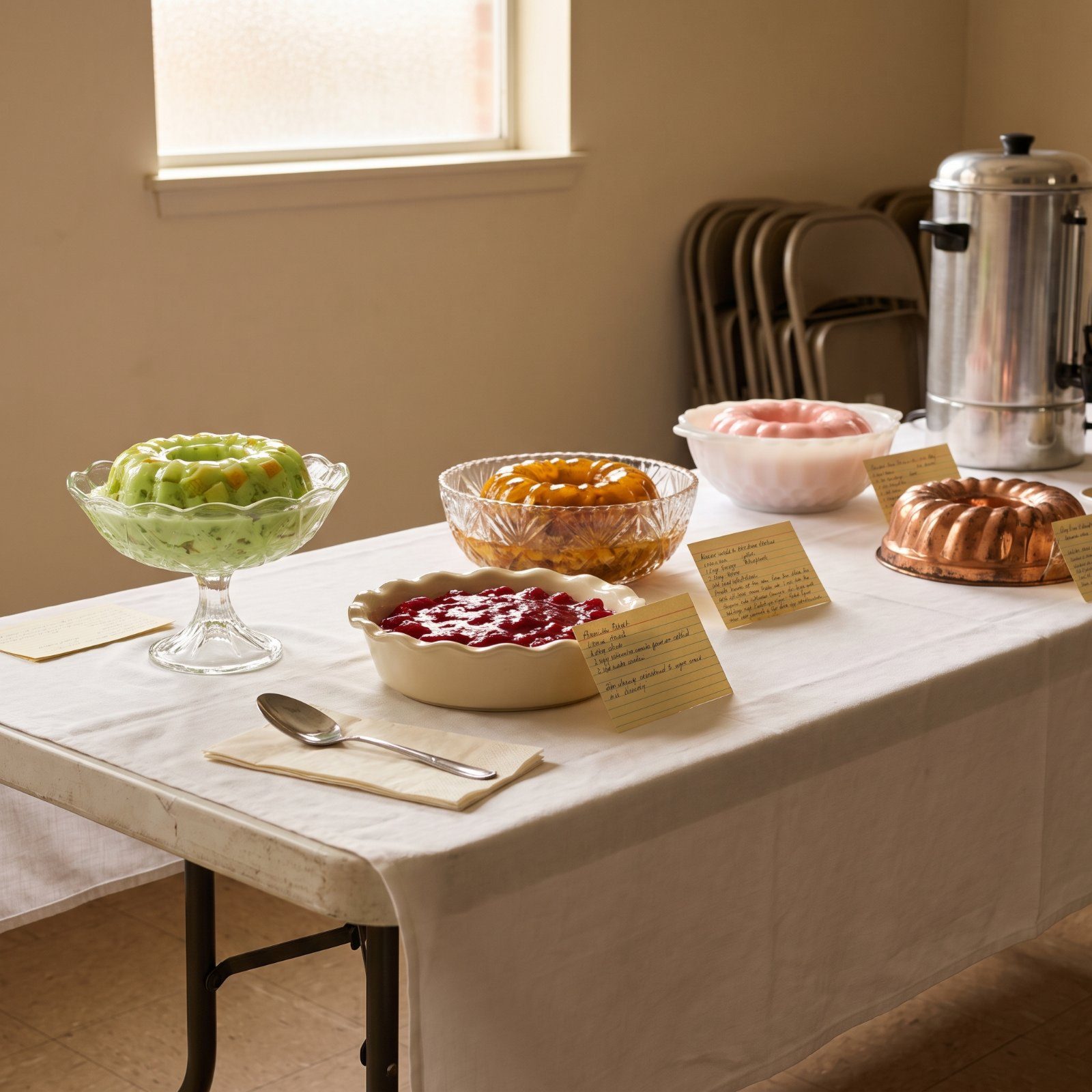
Somewhere in a basement fellowship hall, under a drop ceiling and a buzzing fluorescent tube, there used to be a banana standing straight up in a ring of pineapple. Nobody questioned it. Church ladies ran the potluck table like a civic institution, and gelatin was their medium of choice. These were the dishes copied by hand onto index cards, passed between sisters-in-law, and set out beside the sweet tea. Most have vanished, a few deserve to stay gone, and every one of them tells you something about a generation that trusted a lime-green salad with its whole heart.
Please note that some of the images in this article were created with the assistance of AI.
48. Cranberry Candle Salad Built Around an Upright Banana
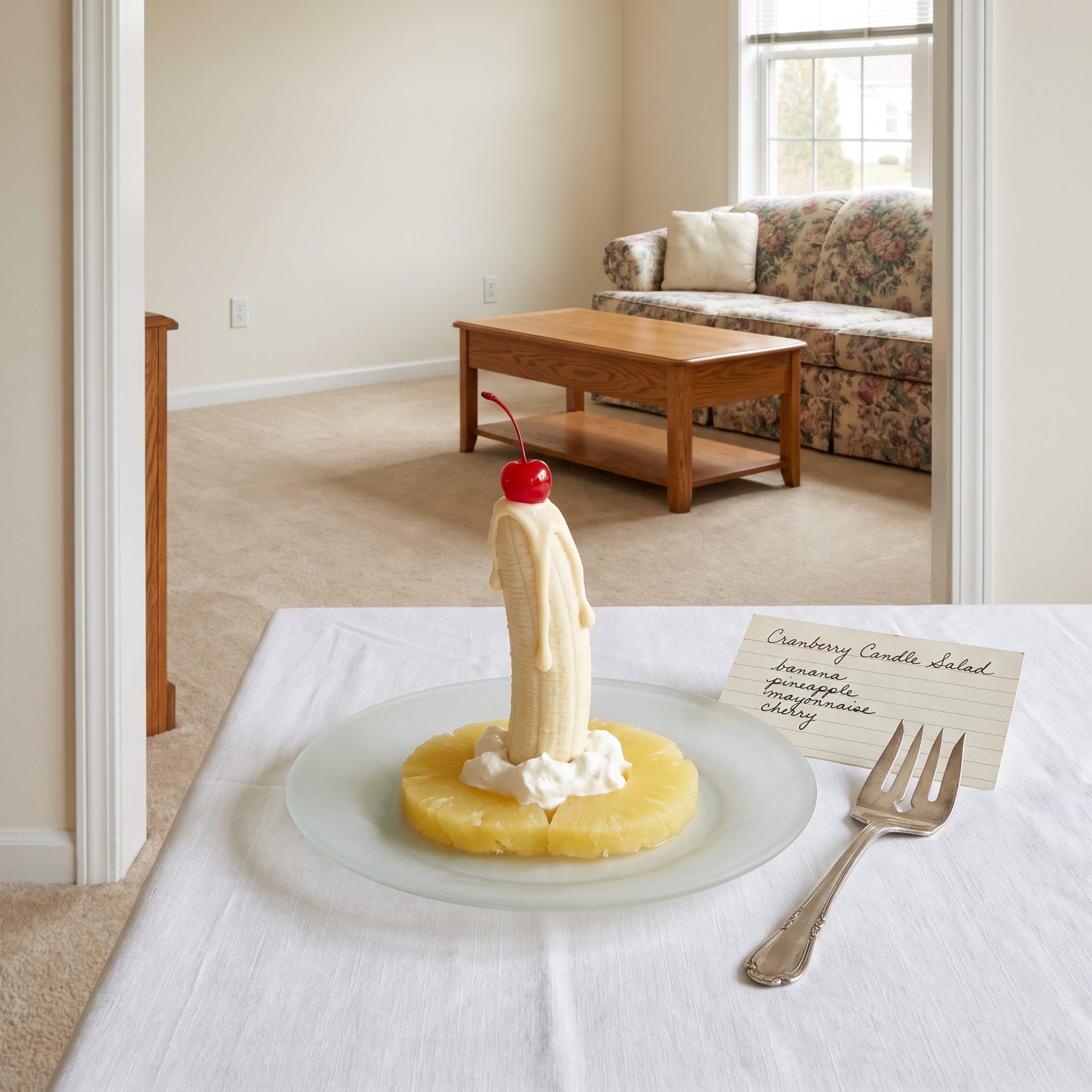
Someone actually served this to children and expected a straight face. The cranberry candle salad was equal parts dessert, centerpiece, and dare. A banana stood upright in a pineapple ring, mayonnaise dribbled down to imitate melting wax, and a cherry played the flame.
It read as whimsical in 1955 and reads as something else entirely now. Most people can’t get past the warm mayo and fruit, and honestly, they have a point. This one earned its retirement.
47. Banana Croquettes Rolled in Peanuts and Served With Dressing
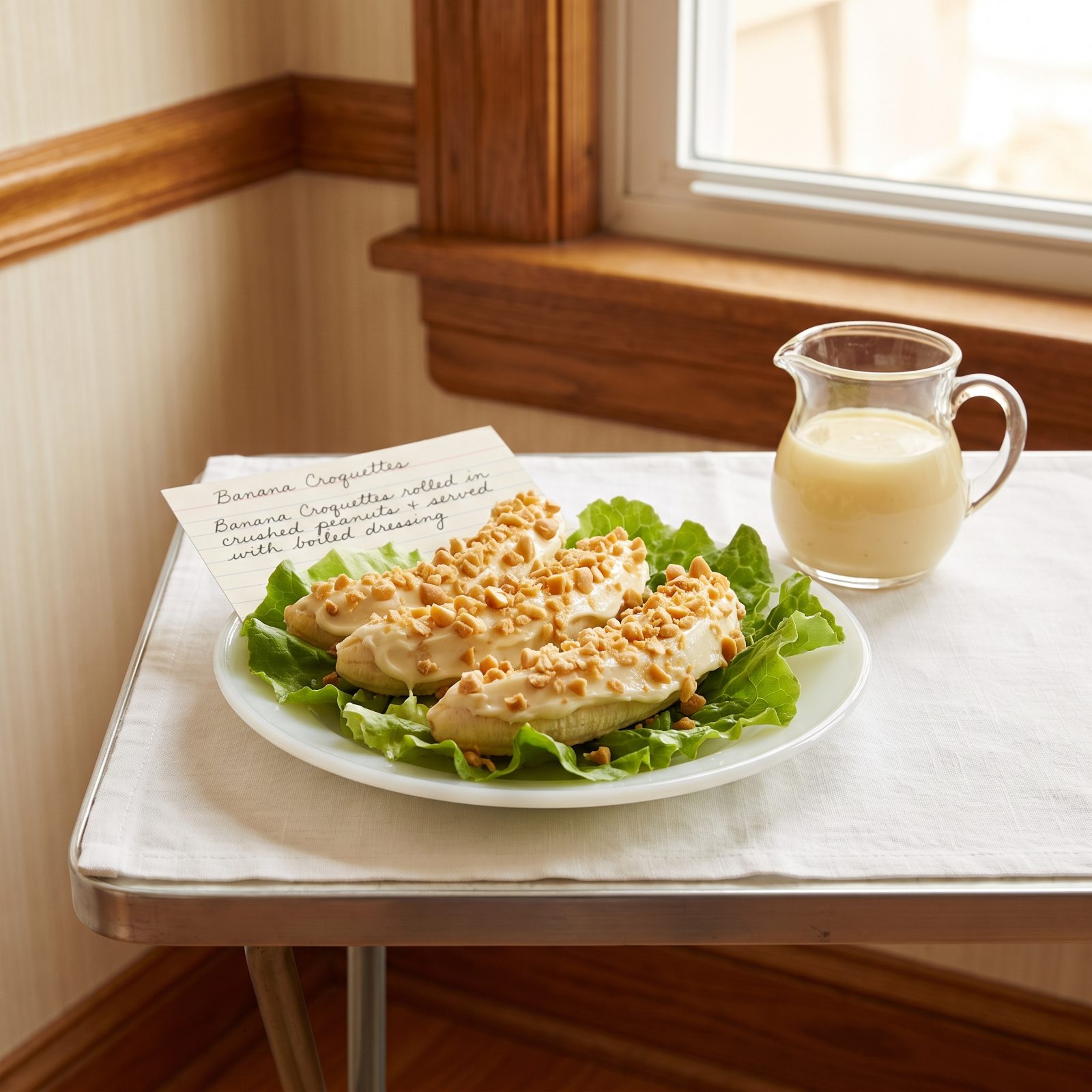
Picture a banana rolled first in mayonnaise, then in chopped salted peanuts, set on lettuce and topped with a spoon of cooked dressing. That was lunch. The croquette shape made it feel almost like a restaurant plate, which counted for a lot back when fancy meant effort more than ingredients.
The sweet-salty-tangy pileup wasn’t bad, exactly. It just asked a lot of one forkful. You rarely see it now because nobody under seventy will admit to wanting it.
46. Ham Mousse Ring Made With Ground Ham and Whipped Cream
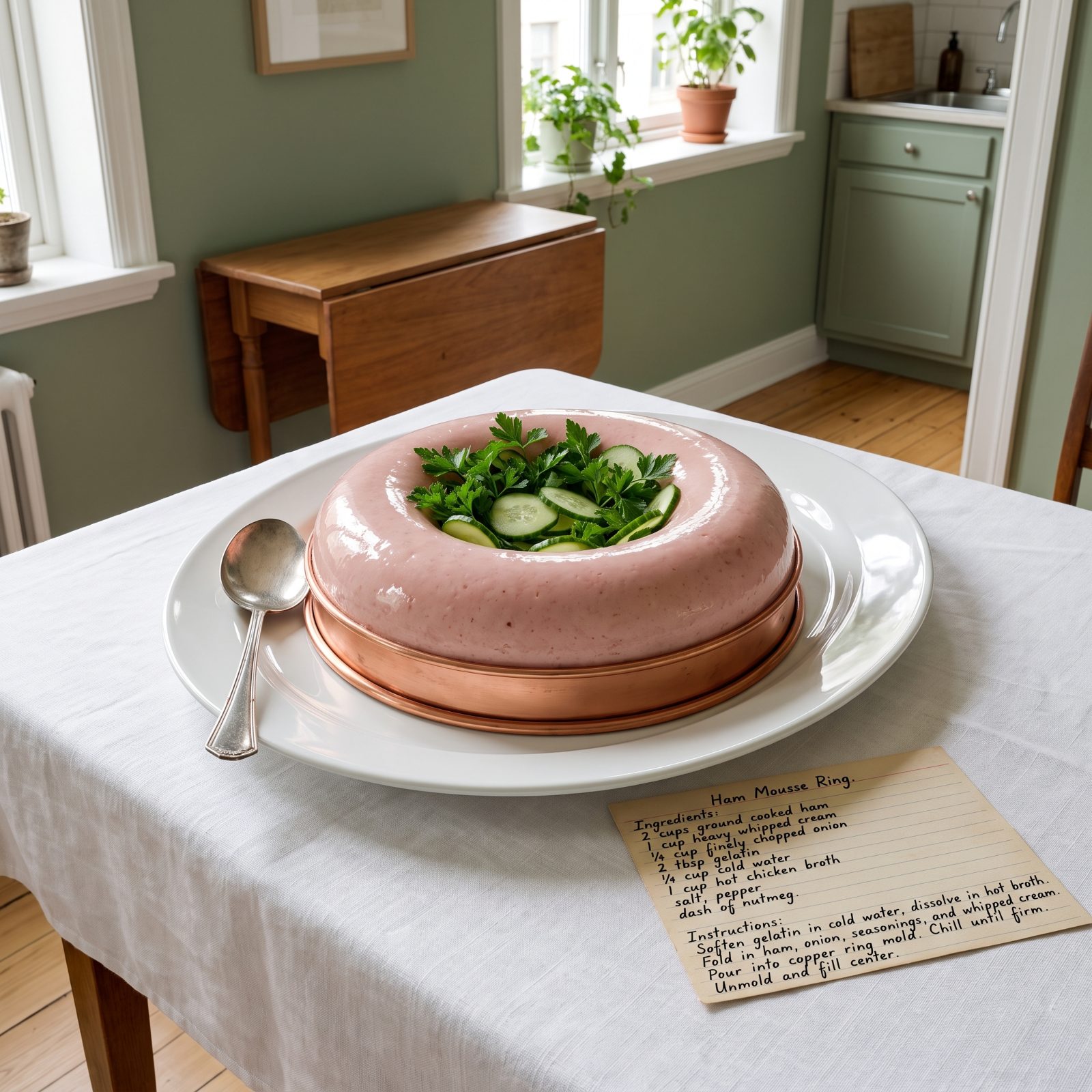
Ground ham folded into whipped cream and gelatin, chilled until sliceable, then set in a copper pan, swelling up over its rim, and filled with parsley and sliced cucumber in the middle. The ham mousse ring was the potluck table’s answer to elegance. It wobbled, it glistened, and it fed a crowd from a single pan.
Whipped cream and ham together sounds wrong until you remember how much the postwar kitchen loved folding savory things into soft, pale, molded shapes.
The flavor was gentler than you’d guess, more like a smoky spread than anything alarming. The texture is where modern eaters get off the bus.
45. Molded Tuna Salad Decorated With Olives and Hard-Boiled Eggs
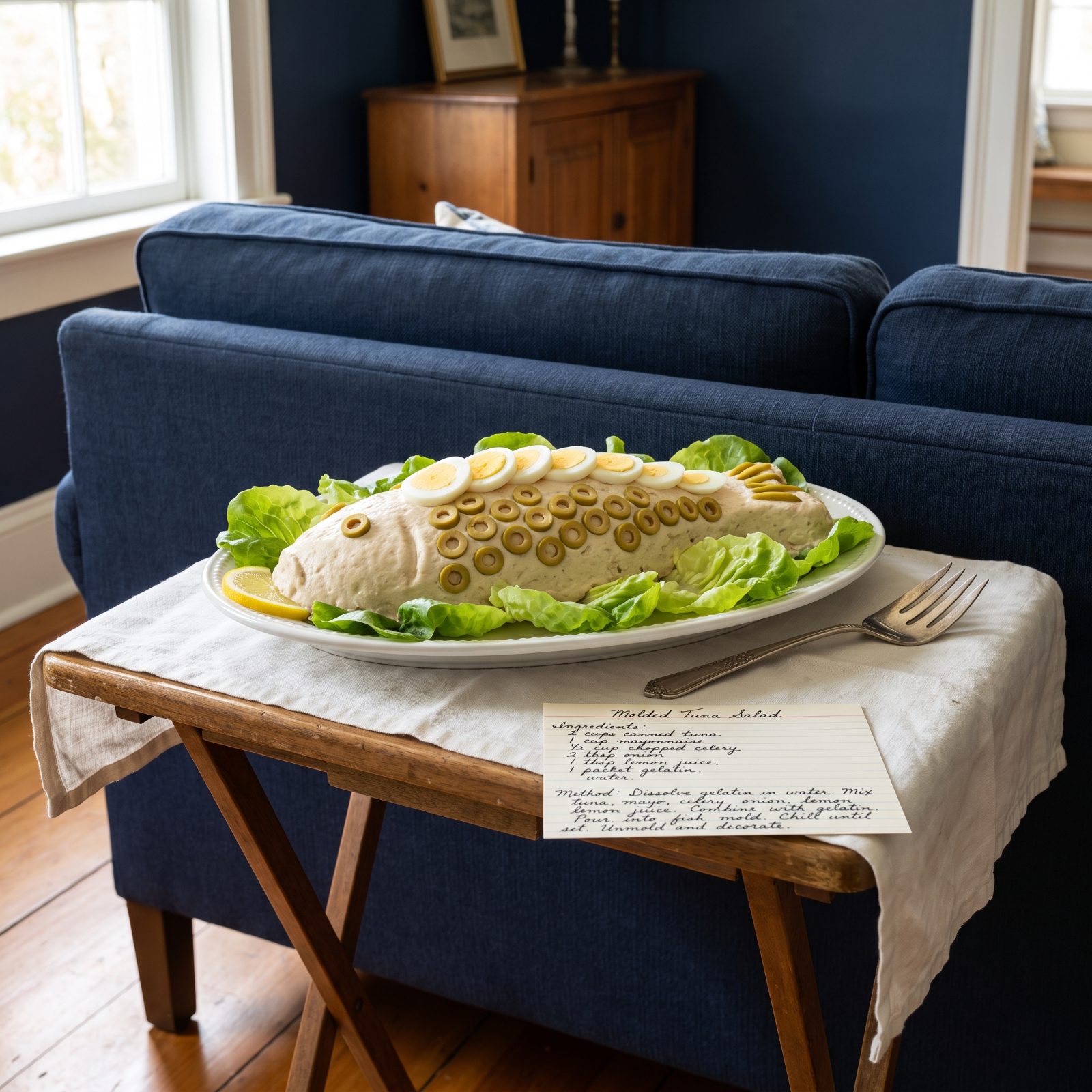
Tuna, gelatin, chopped celery, and mayonnaise, pressed into a fish-shaped mold and decorated with olive-slice scales and egg-slice fins. Arts and crafts you could eat. The fish mold was practically a status object in a certain kind of kitchen.
It made cold tuna shareable and sliceable, which mattered at a long table. The decorating is the part worth missing. Picture someone standing over that fish, placing every olive by hand.
44. Under-the-Sea Salad With Lime Gelatin, Pears and Cream Cheese
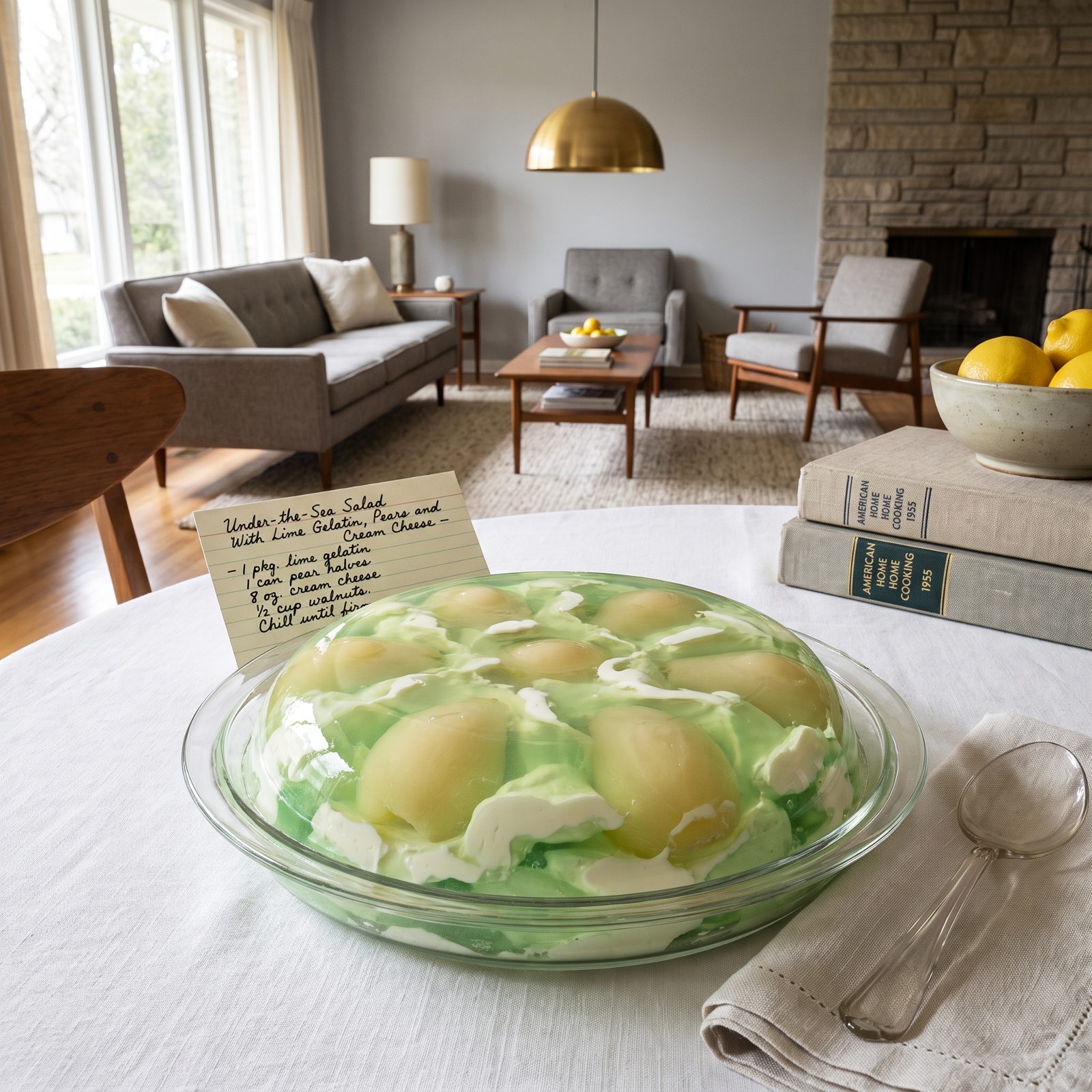
Lime gelatin, poached pears, and dollops of whipped cream cheese scattered over the surface and around the edges, giving the salad its watery, drifting look. That’s where the name came from. The pears floated like something half-submerged, which somebody decided was charming rather than unsettling.
Of all the gelatin salads, this one had genuine merit. The cream cheese softened the sweetness, the pears gave it bite, and it looked like stained glass under the hall lights. It faded mostly because gelatin salads as a whole fell out of favor, not because it deserved to go.
43. Perfection Salad With Cabbage, Celery and Pimentos Suspended in Gelatin
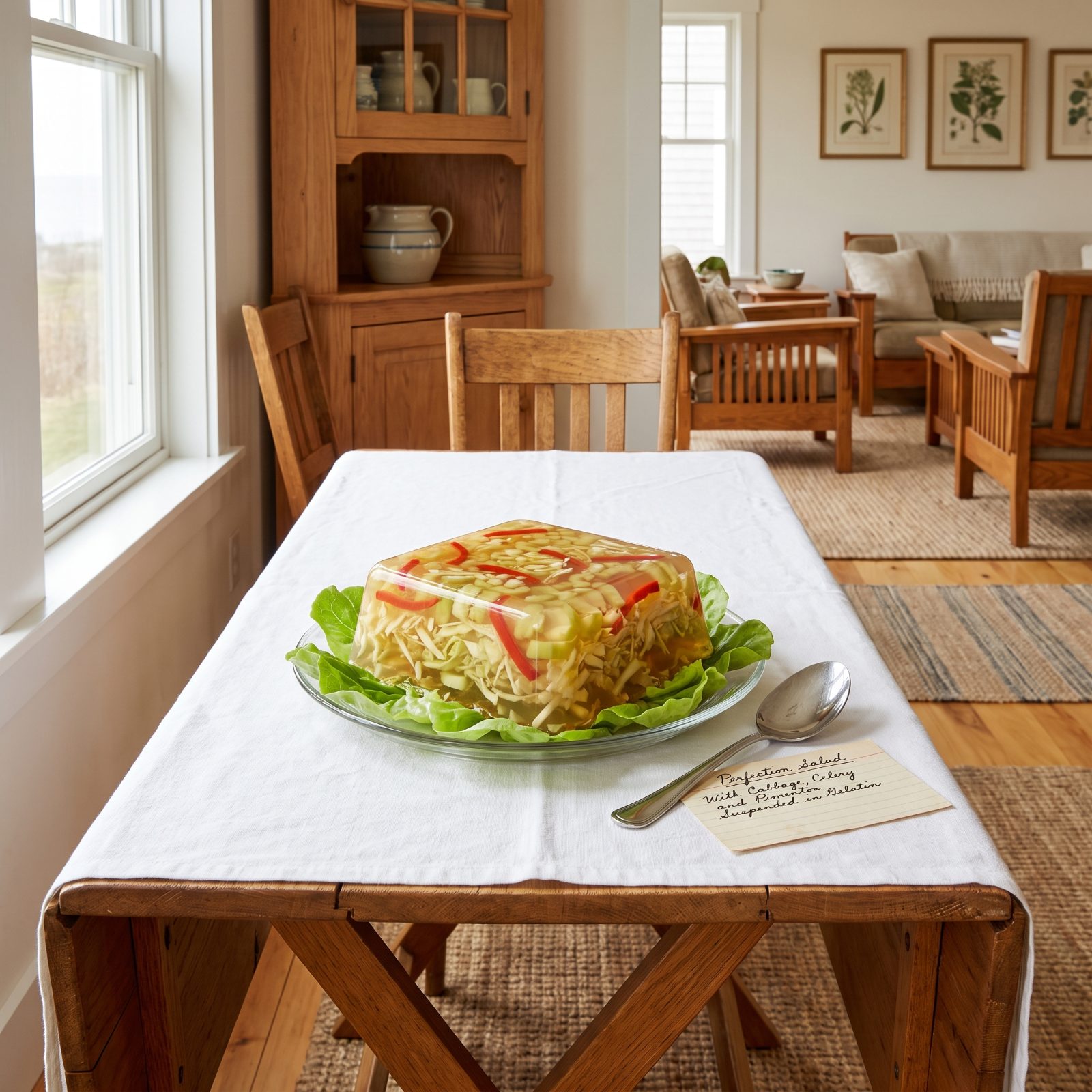
Shredded cabbage, diced celery, and red pimento strips held in a tart, barely-sweet gelatin, sliced into squares and served on lettuce. The Perfection Salad won a recipe contest more than a century ago and rode that reputation for decades.
And here’s the uncomfortable truth. Vegetables in savory gelatin is where most modern palates draw a firm line. A cold, trembling cube of cabbage reads as a prank now. Back then it signaled thrift, cleverness, and a cook who knew what she was doing.
42. Savory Tomato Aspic Served on Lettuce With Mayonnaise
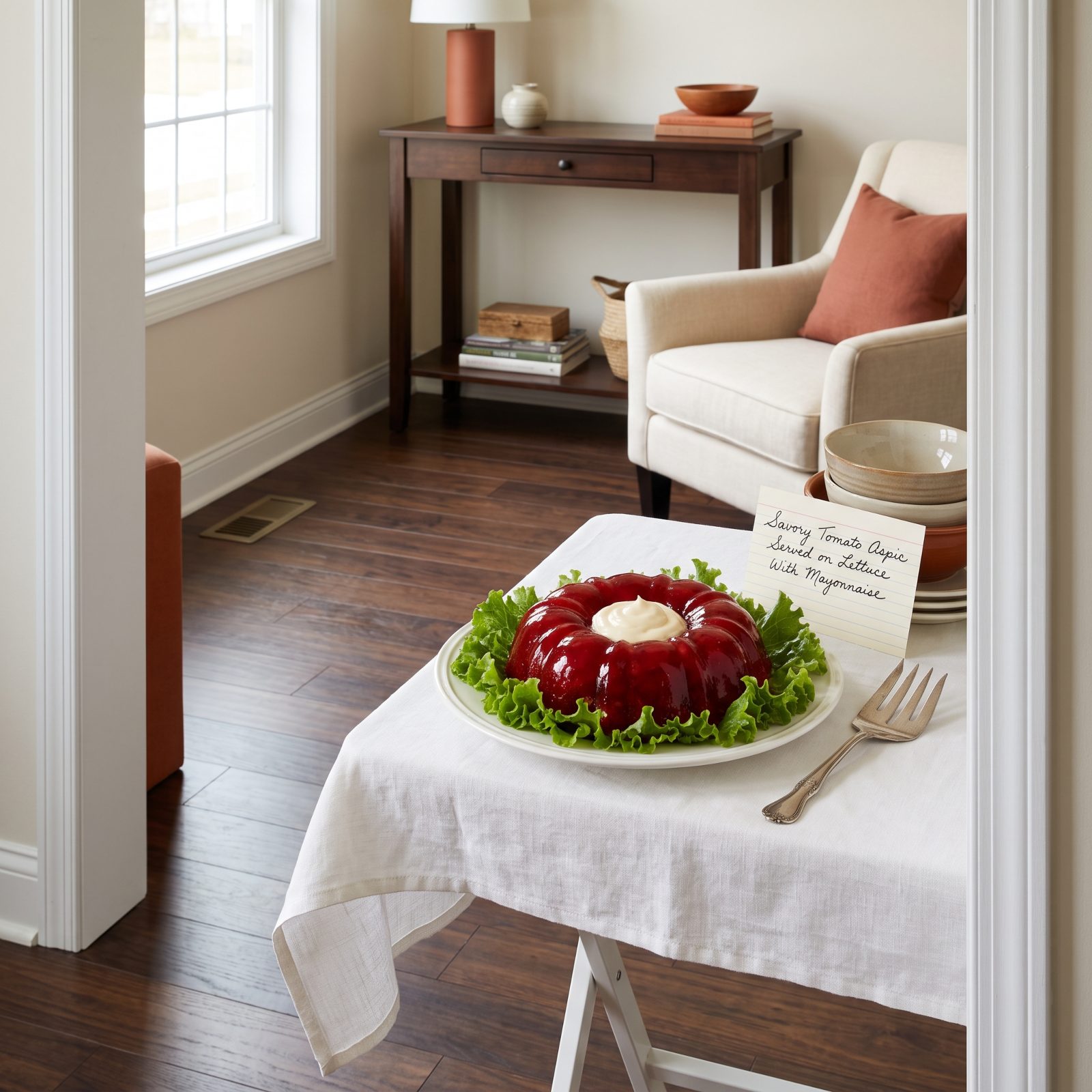
Tomato juice, a little vinegar, celery, and gelatin set into a trembling red ring, served cold on lettuce with mayonnaise in the middle. Tomato aspic was the savory salad grown-ups actually liked, sharp and a touch acidic, closer to a chilled gazpacho than a dessert.
It outlasted most of its gelatin cousins, hanging on at Southern luncheons well past its potluck heyday. Say what you want about it. This one had real flavor and real purpose. The texture still sends people running, which is a shame.
41. Coca-Cola Salad With Cherries, Pineapple and Pecans
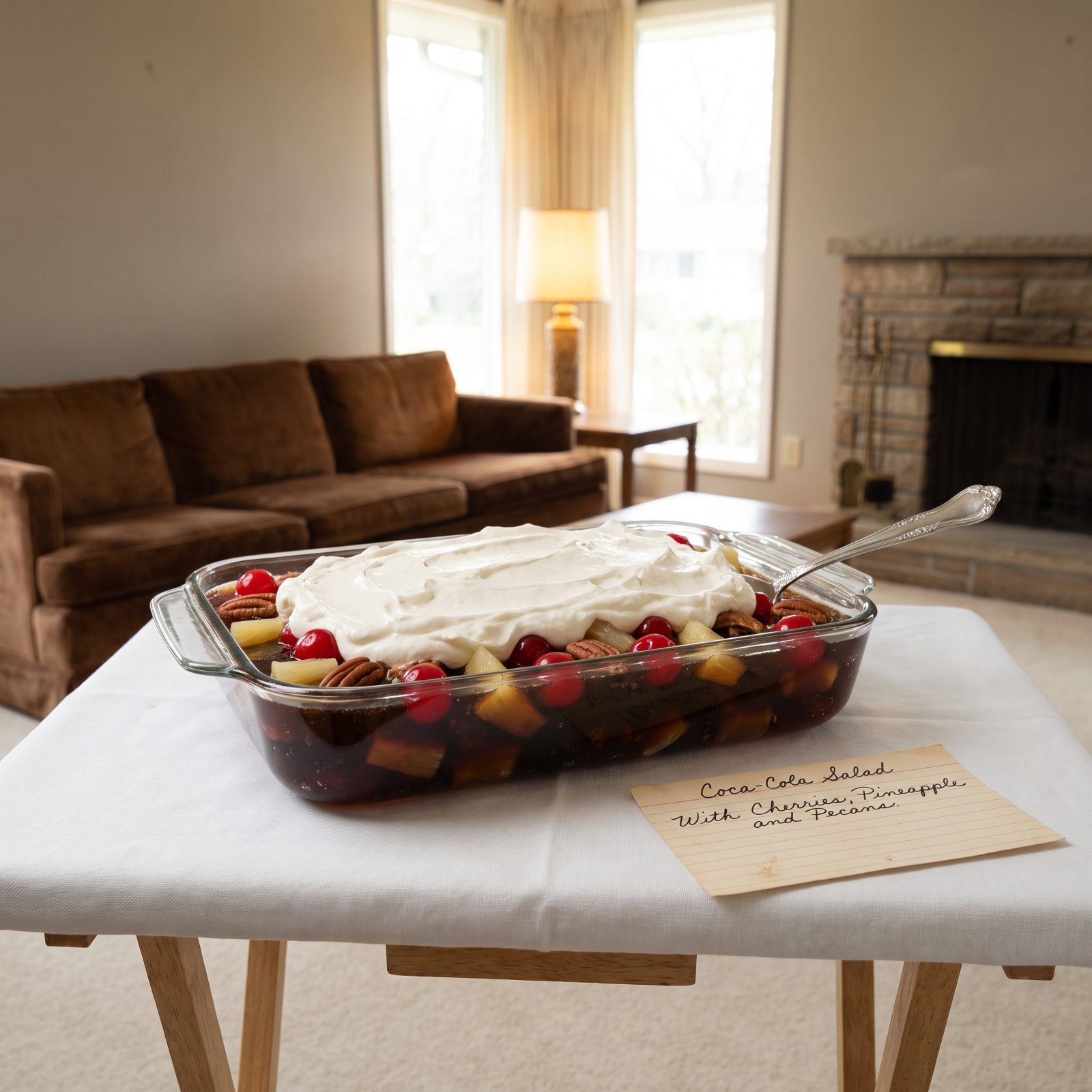
Cherry gelatin dissolved in warm Coca-Cola, loaded with cherries, pineapple, and pecans, sometimes crowned with a cream cheese layer. Coke salad was a Southern potluck fixture, sweet enough to pass as dessert but filed firmly under salad because of the lettuce leaf nobody actually ate.
This one still has defenders, and not without cause. The cola gave the gelatin a spiced, cola-nut depth that plain cherry jello never managed.
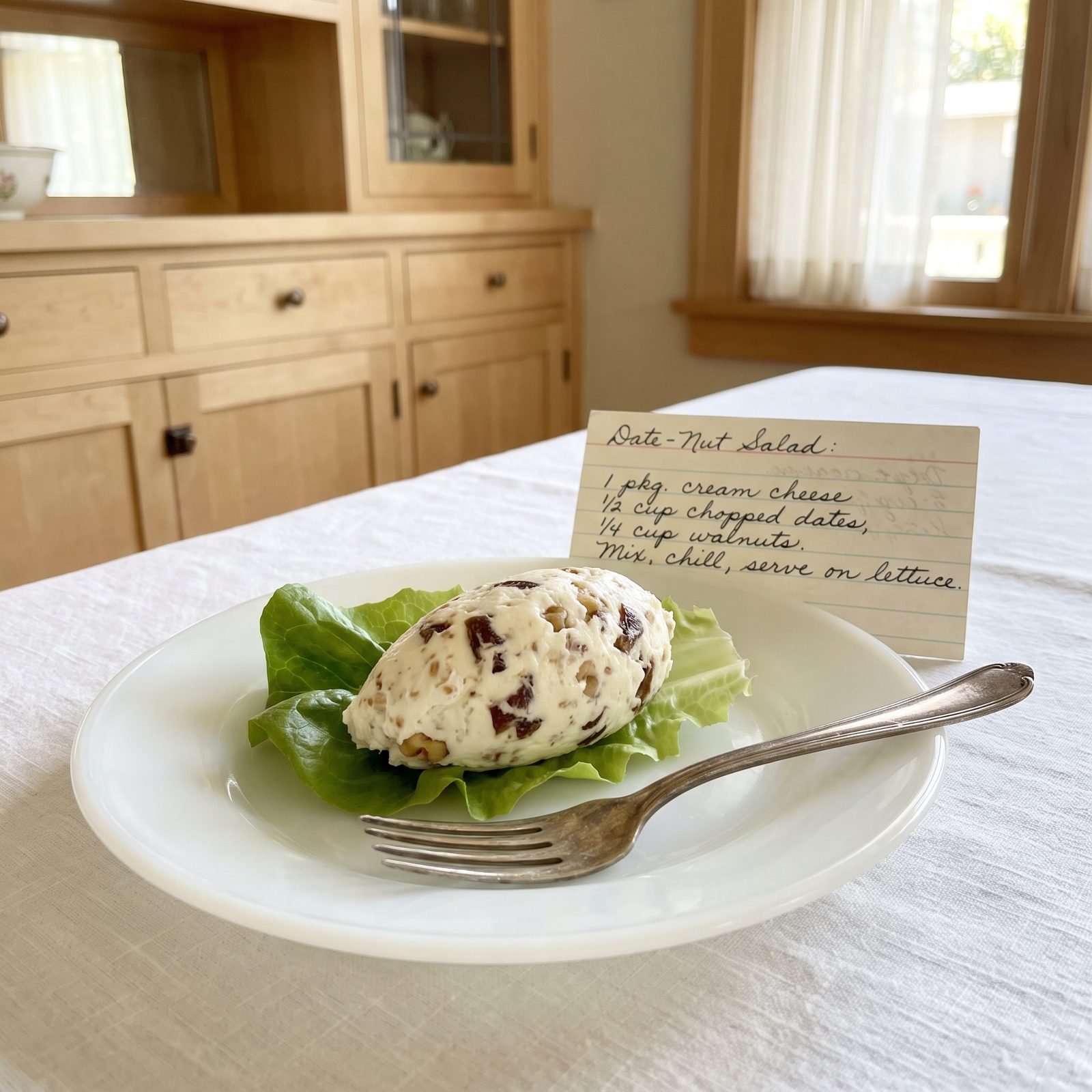
40. Date-and-Nut Cream Cheese Salad on Lettuce Leaves
Would you like to save this?
Cream cheese beaten soft, folded with chopped dates and walnuts, scooped onto a lettuce leaf and called a salad. It leaned sweet, more suited to a tea tray than a dinner plate, but the lettuce gave everyone permission to treat it as a side.
No gelatin, no mold, no decorating. Just a quick little thing a cook could throw together an hour before the covered-dish supper. It faded because it never really belonged anywhere on the modern plate, too sweet for savory and too plain for dessert.
39. Scalloped Oysters Layered With Buttered Cracker Crumbs
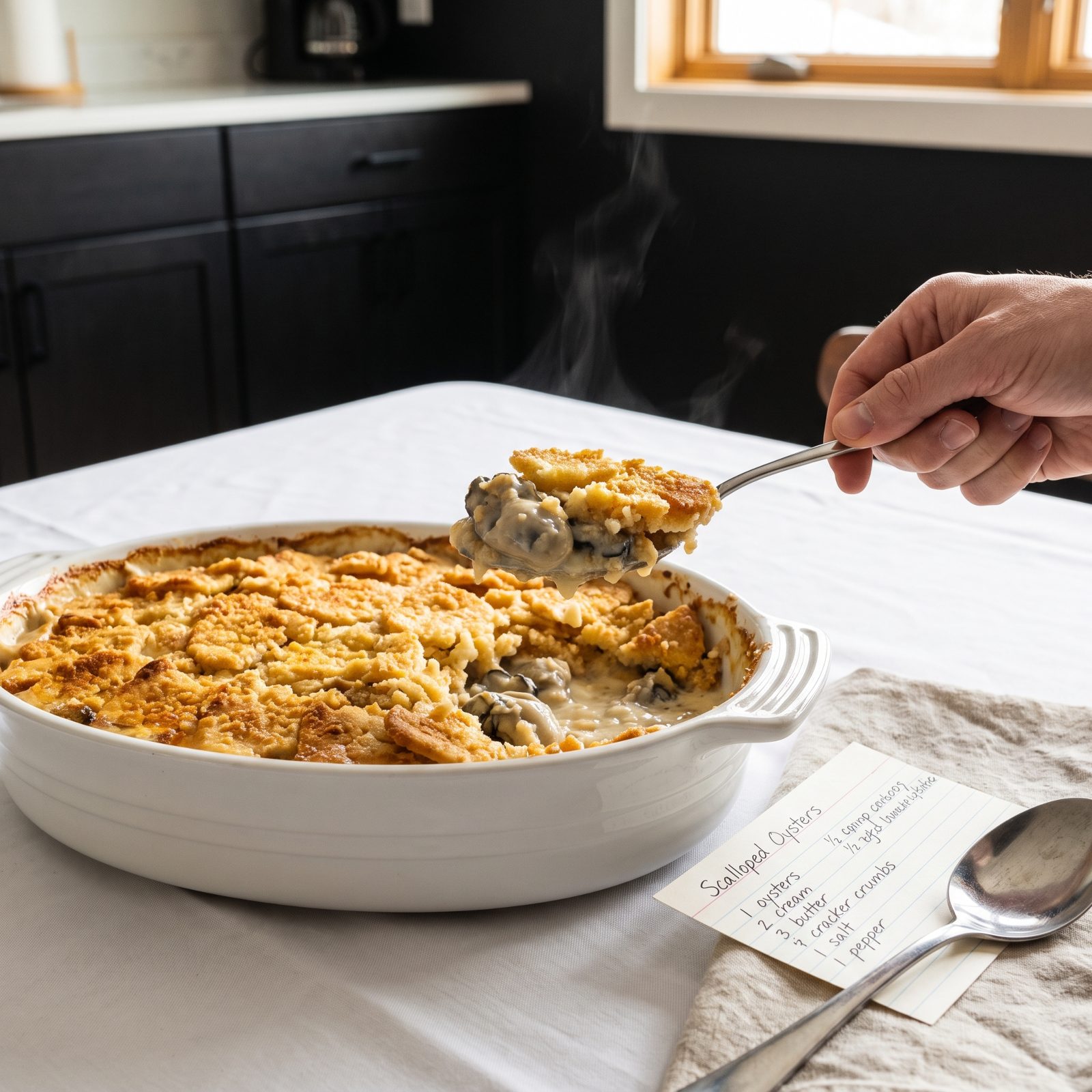
Oysters layered with crushed buttered crackers, dotted with more butter, moistened with milk, and baked until the top crisped. Scalloped oysters were the holiday heavyweight, the dish set out near the ham at Christmas and funeral dinners alike.
This is the one on the list that doesn’t deserve to disappear. The cracker crust goes toasty, the oysters stay briny and tender, and the whole thing smells like a church hall in December. It survives in pockets of the coast and the South, but shucking and sourcing oysters became a bridge too far for the weeknight cook.
38. Tomato Pudding With Buttered Bread and Brown Sugar
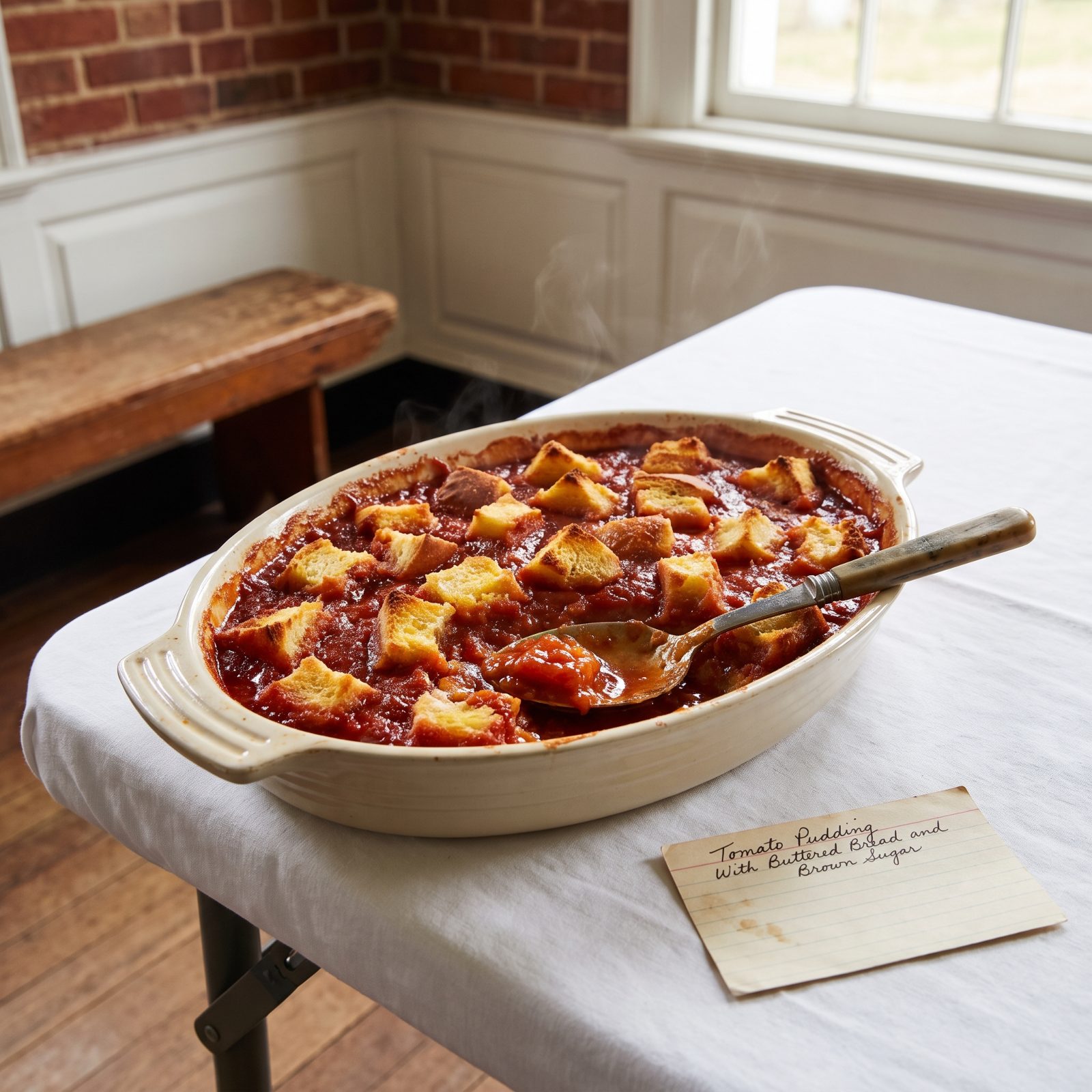
Half the people reading this just made a face. Tomato pudding sounds like a mistake, and then the first bite rearranges your whole opinion. Canned tomatoes cooked down with a startling amount of brown sugar, poured over cubes of buttered bread and baked until the top crisps and the middle goes thick and jammy. Sweet, tart, savory, all at once, and it has no business working as well as it does.
It reads like dessert and eats like a side, which is exactly why casual potluck-goers walked right past it. Their loss. The ones who knew went back for seconds.
37. Pineapple Cheese Casserole With Buttery Cracker Crumbs
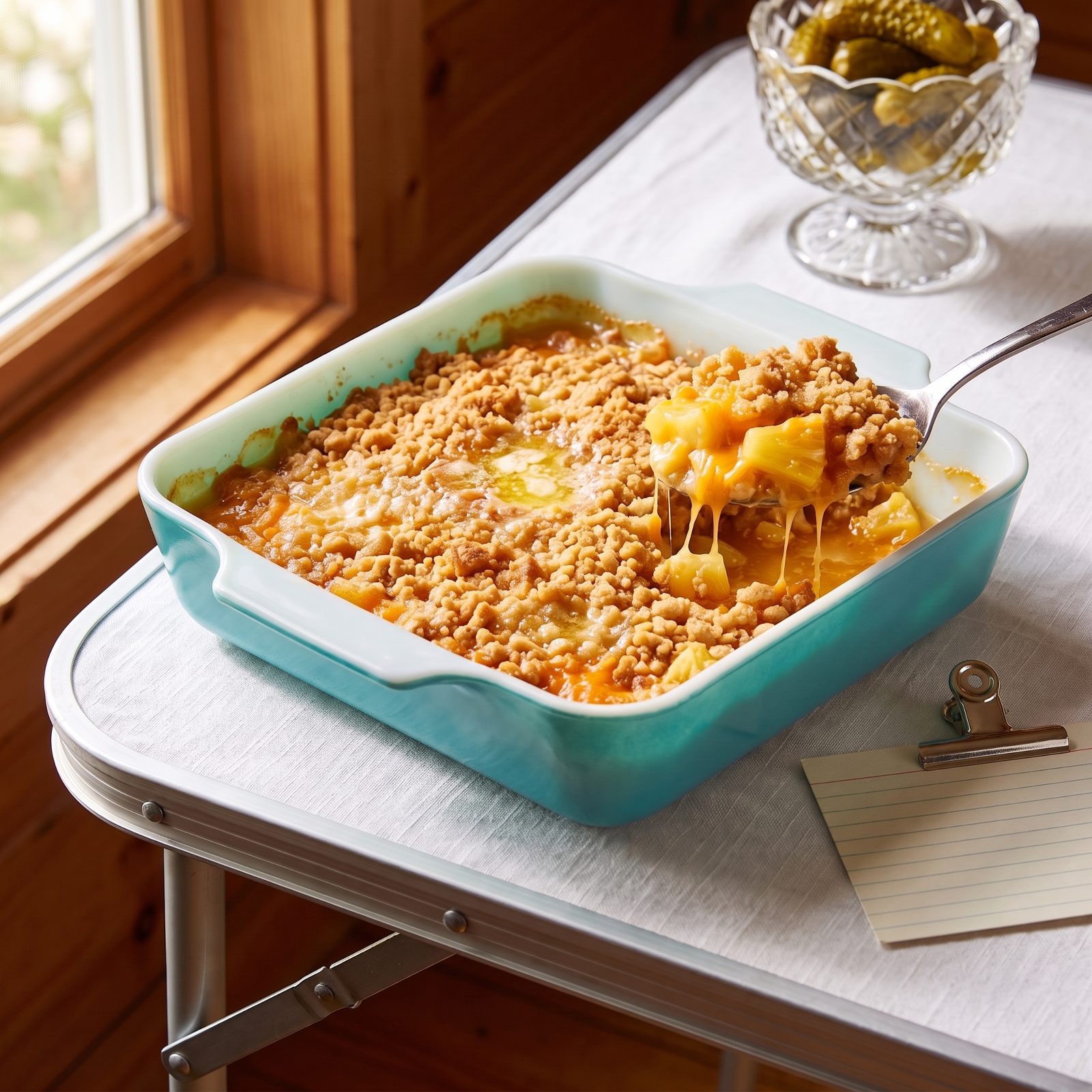
Pineapple and sharp cheddar bound in syrup and flour, blanketed with crushed butter crackers. It lands somewhere the modern palate can’t quite file. Too sweet for a side, too cheesy for a dessert, parked next to the ham like it owns the place.
Southern Baptist potlucks kept this one alive longest. The whole thing sounds wrong until salty cheddar hits warm pineapple and your brain just gives up the fight. People who grew up on it will defend it to their last breath, and honestly? They’ve got a case.
36. City Chicken Skewers With Crisp Cracker-Crumb Coating
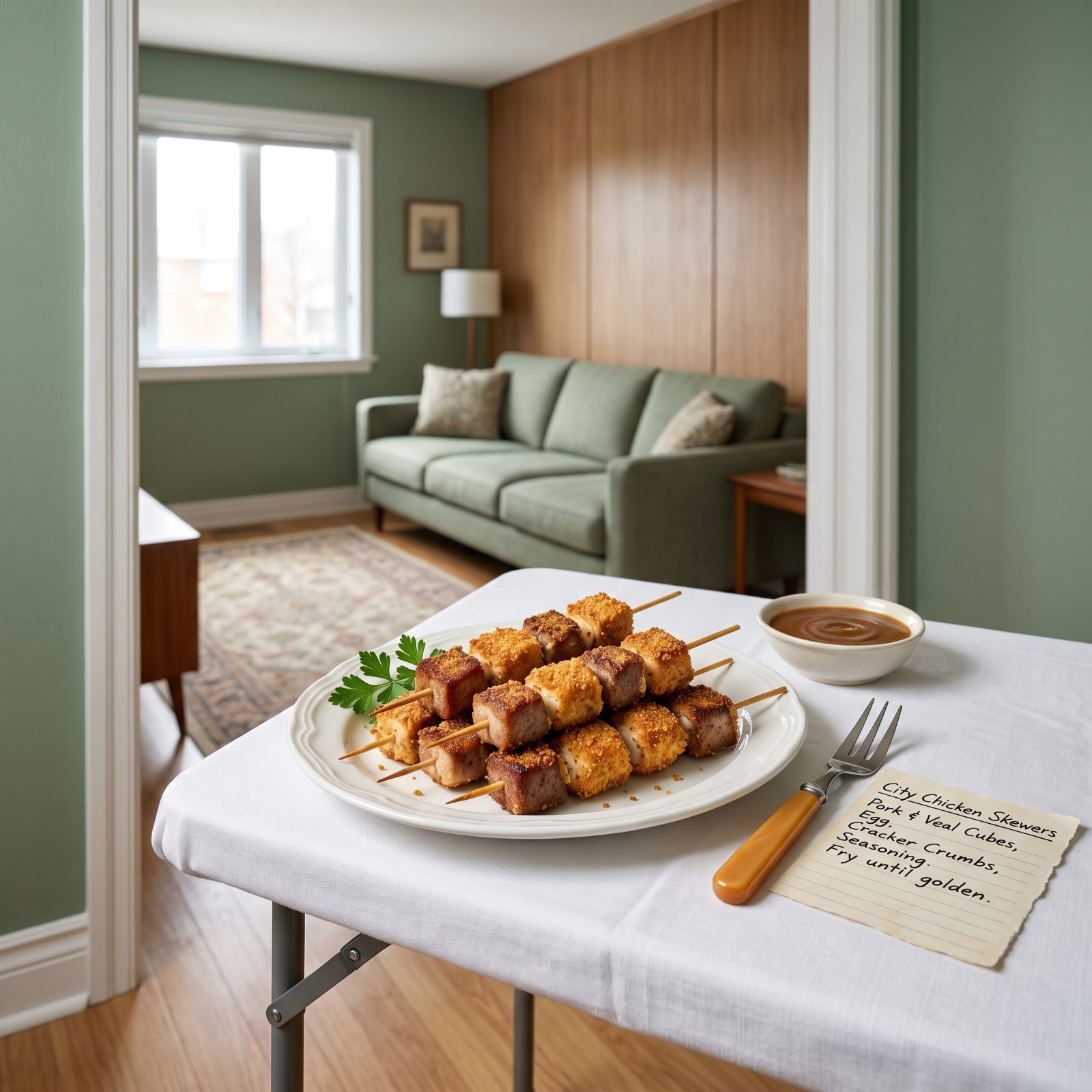
The name is a lie, and everyone was in on it. City chicken contains no chicken. It’s cubed pork and veal pressed onto little skewers, some cubes breaded in cracker crumbs and others left bare to brown to a smooth glaze, then fried and finished in the oven. Industrial-era families in the Midwest and Rust Belt invented it back when scrap pork was cheaper than a whole bird, then shaped it into drumstick-sized portions to fool the eye.
By the time it reached the potluck table it had become its own beloved thing, no apology required. Crisp outside, tender in, served with gravy. Try finding it on a restaurant menu now. You won’t.
35. Brown Sugar-Glazed Ham Loaf Baked in a Loaf Pan
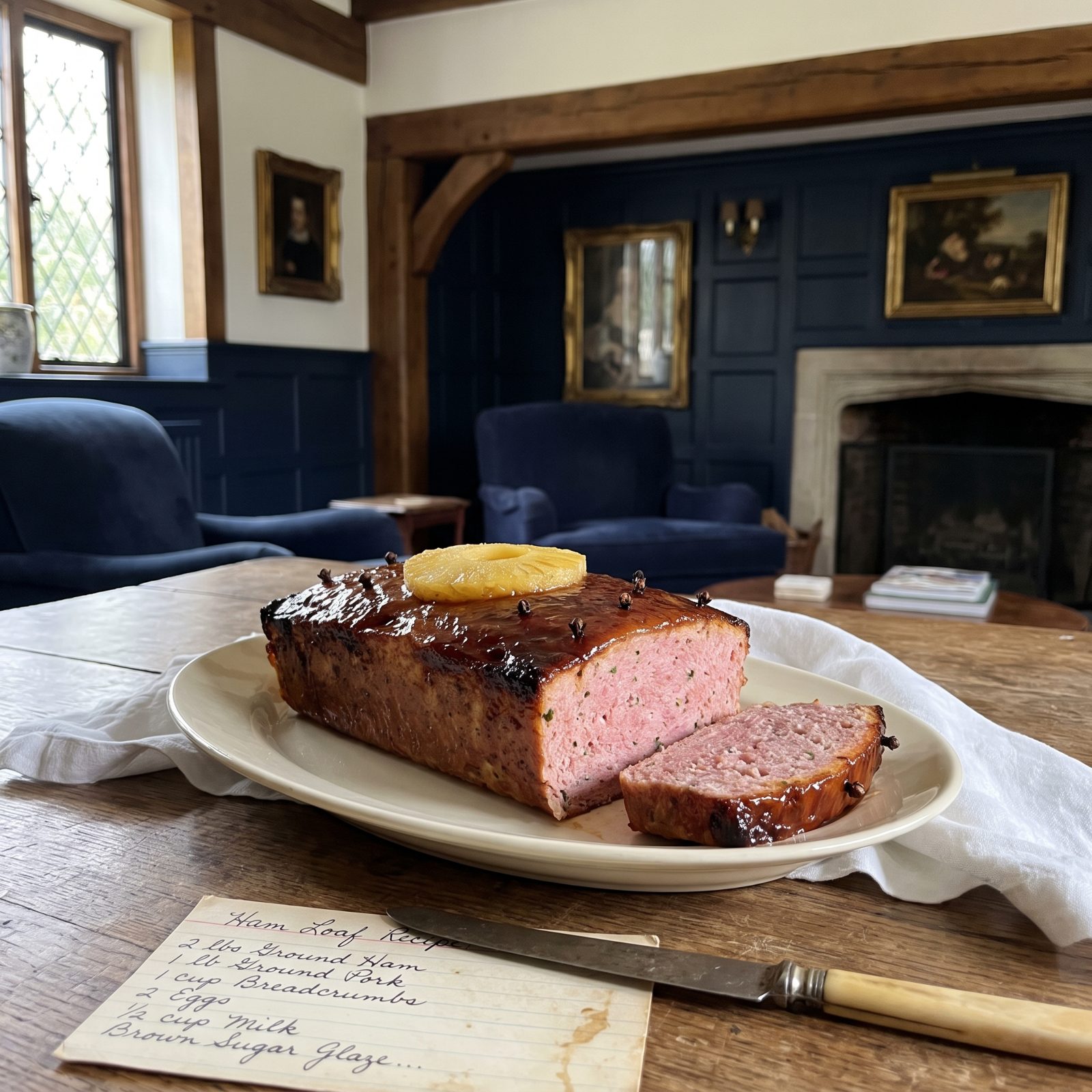
Ground ham mixed with ground pork, pressed into a loaf pan, then lacquered with a brown sugar and mustard glaze that caramelizes into a sweet crust. Pink inside from the cured ham. Sliced like meatloaf’s fancier cousin.
This was how a family stretched leftover holiday ham into a whole second meal for the congregation. Butchers used to sell the ground ham-and-pork mix already blended, and that convenience is half the reason the loaf disappeared. Nobody grinds it at home, and nobody sells the pre-mix anymore.
34. Salmon Loaf With Egg Sauce or Creamed Peas
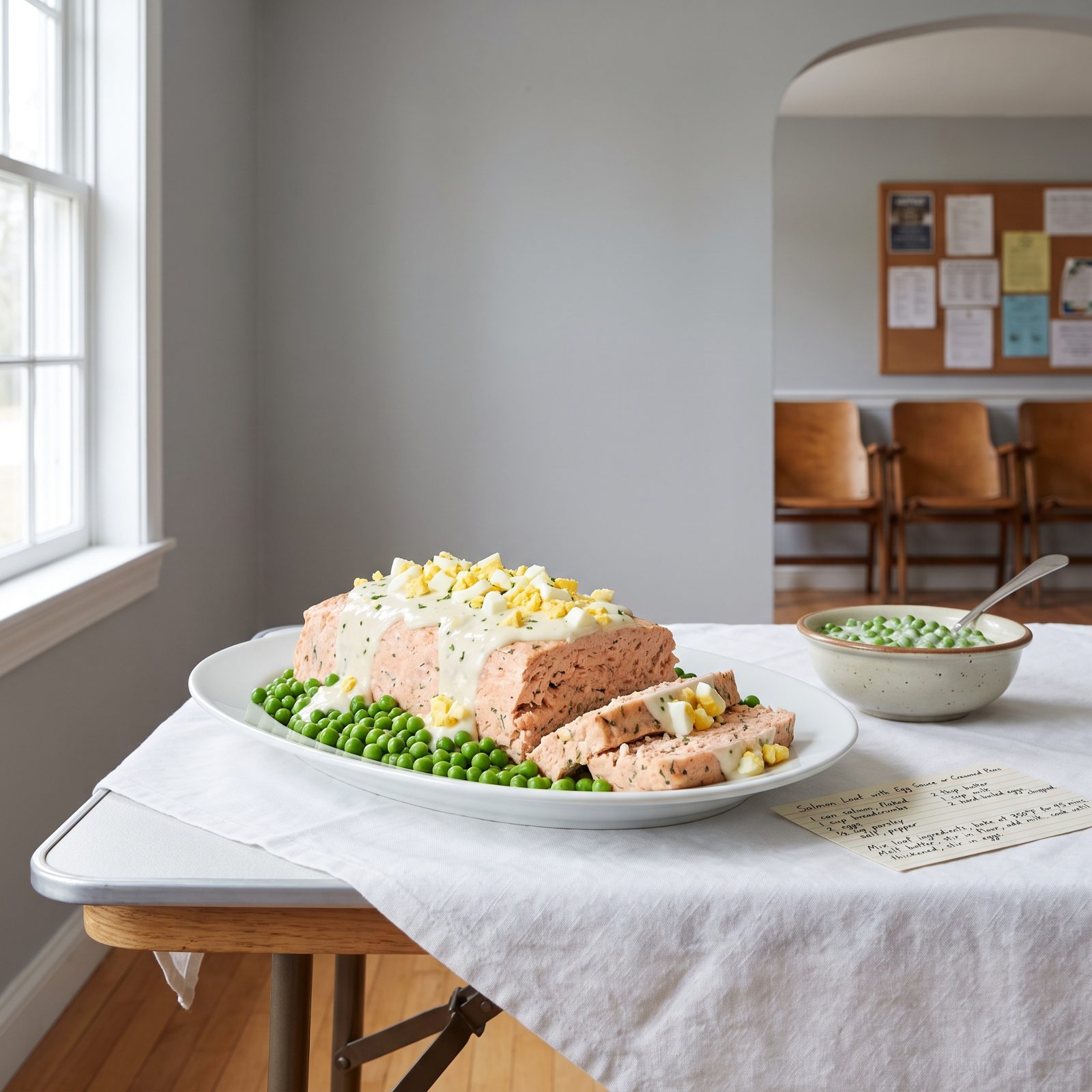
A can of pink salmon, bones and all, mixed with crushed crackers and egg, baked into a loaf and smothered in white sauce speckled with chopped hard-boiled egg, or a scoop of creamed peas if that was the week’s budget. Thrifty and filling.
Friday nights and Lent kept it going, meatless and cheap. The canned salmon gave it a flavor nobody under fifty wants to revisit, which is fair. But a properly made salmon loaf, light and moist with a bright egg sauce, is better than its reputation suggests.
33. Shipwreck Casserole With Layered Beef, Potatoes, Beans and Rice
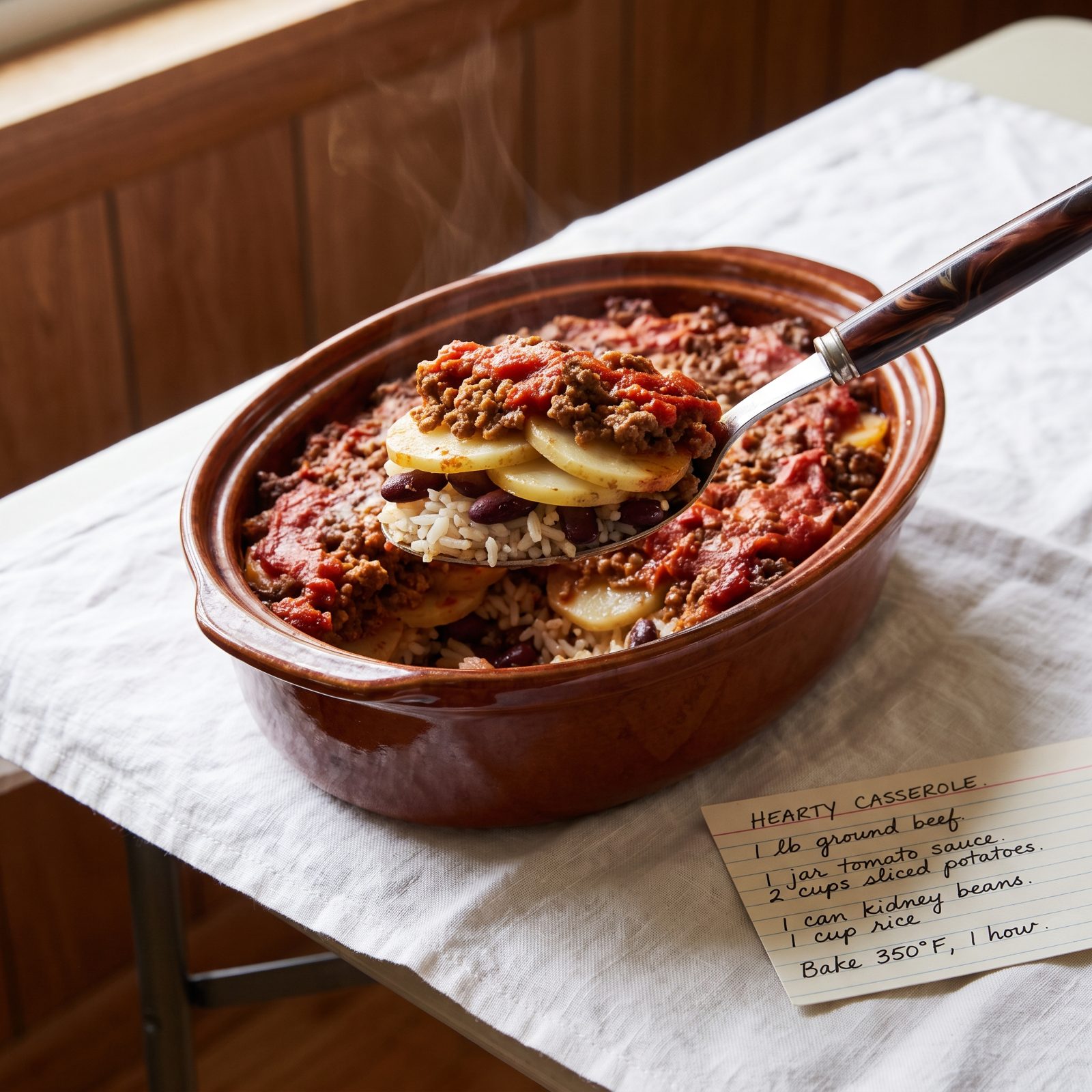
The name tells you everything. A jumble of whatever lived in the pantry, layered in one dish and baked long enough to meld into something coherent. Ground beef, sliced potatoes, onions, kidney beans, rice, a can of tomato soup poured over the top. No stirring, no fuss, feeds a mob.
Shipwreck was the ultimate one-dish dinner for a family stretching a pound of beef across eight plates. It fell out of favor not because it tasted bad but because it looked like exactly what it was. Nobody photographs well in a casserole.
32. Johnny Marzetti Casserole With Beef, Tomato and Noodles
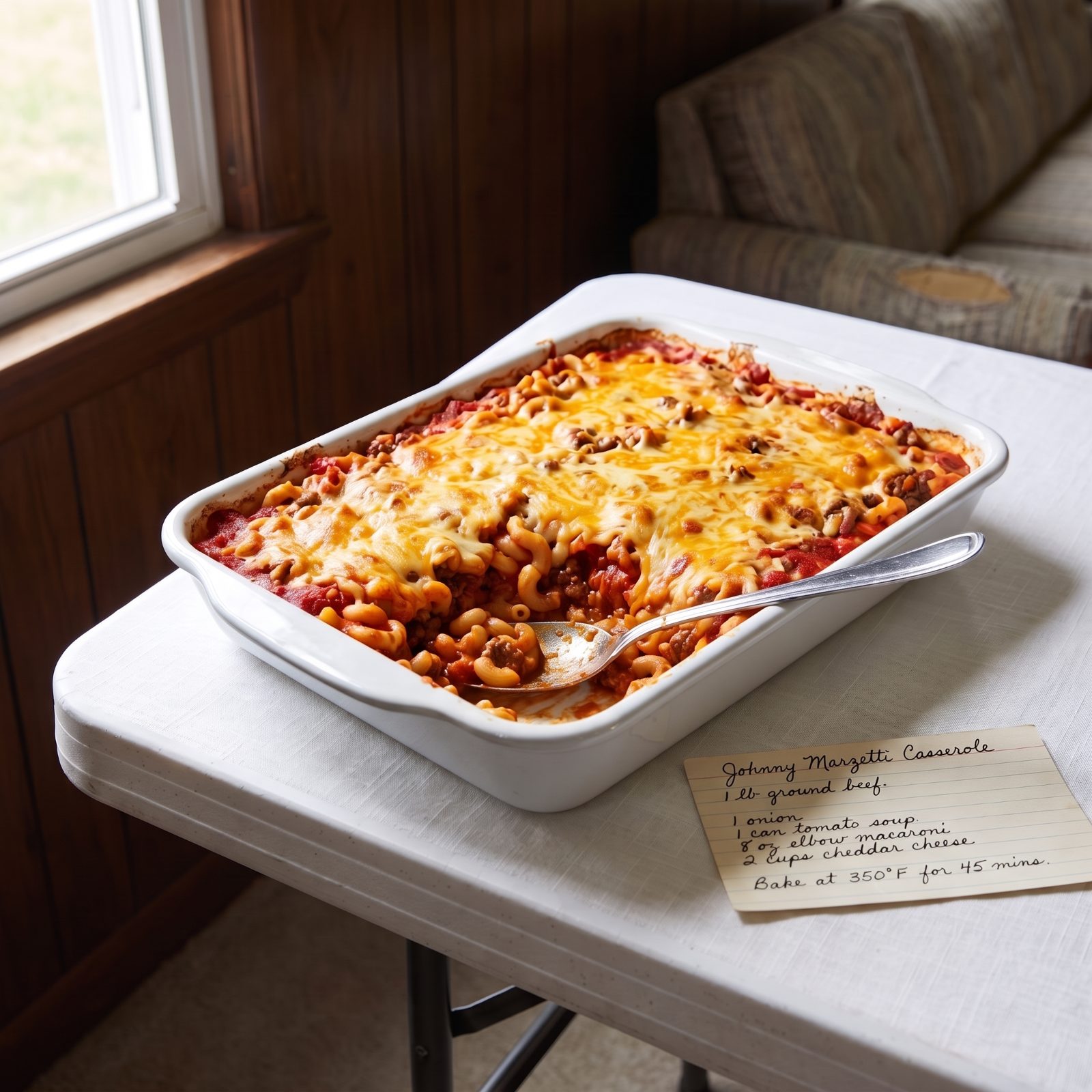
Ohio’s gift to the potluck table. Elbow macaroni, ground beef, tomato sauce and plenty of cheese baked into a bubbling dish that could feed a whole Sunday school wing. Named for the brother-in-law of a Columbus restaurant owner who served it, it spread across the Midwest through church cookbooks and school cafeterias.
It never fully vanished. It just got renamed. American goulash, beefaroni, that one casserole your aunt still makes. But proper Johnny Marzetti, with the cheese baked into a crust on top, is a specific thing worth knowing by its real name.
31. Hot Chicken Salad Casserole Topped With Potato Chips
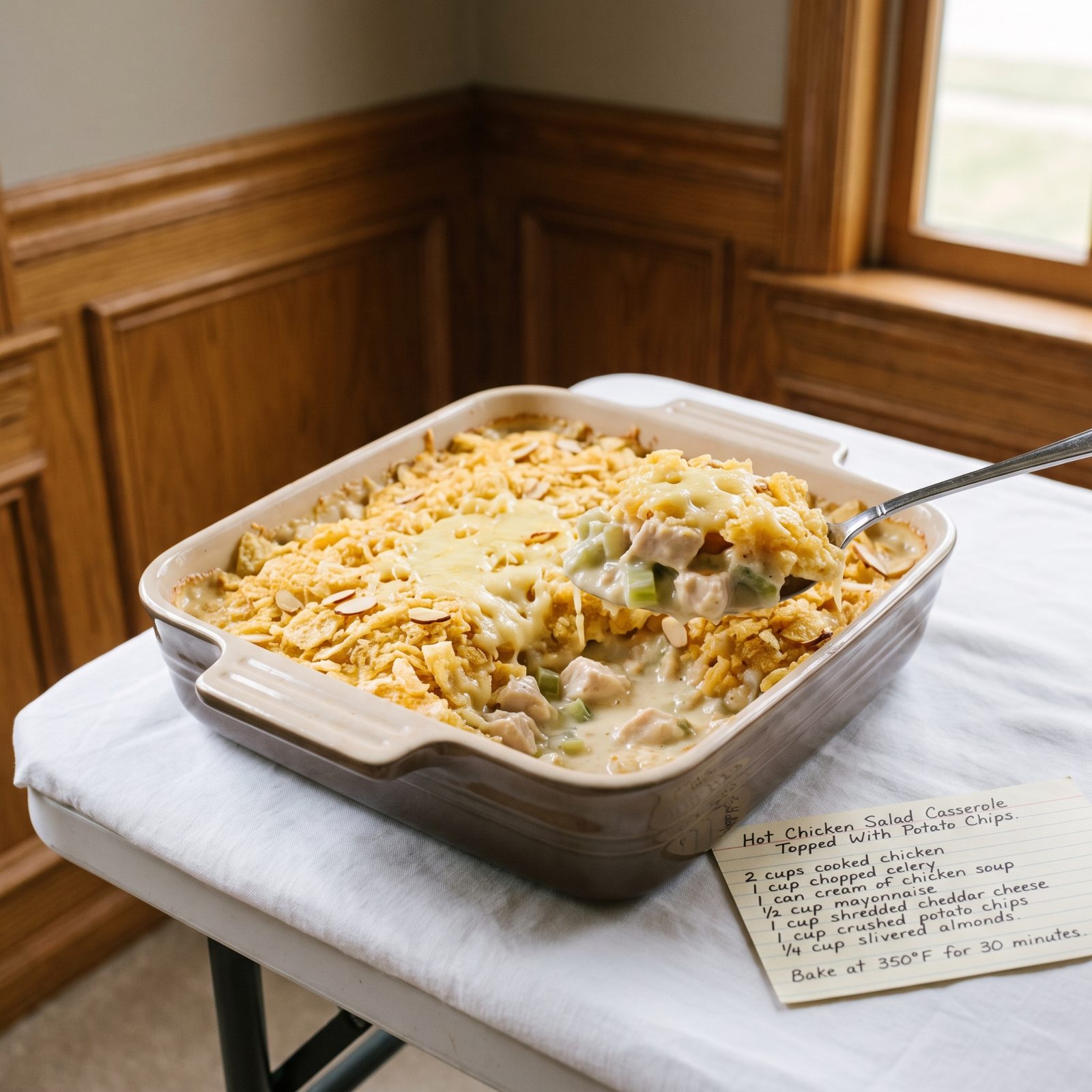
Chicken salad is cold. This one isn’t, and that’s the whole surprise. Diced chicken, celery, mayonnaise, cream of chicken soup and a fistful of slivered almonds, baked warm and crowned with crushed potato chips that go gold and crackly in the oven.
Hot and creamy under crunchy, that contrast carried the whole dish. It was the funeral-and-reception standby, the one somebody always brought when words ran out. Still delicious. Just no longer in anyone’s regular rotation.
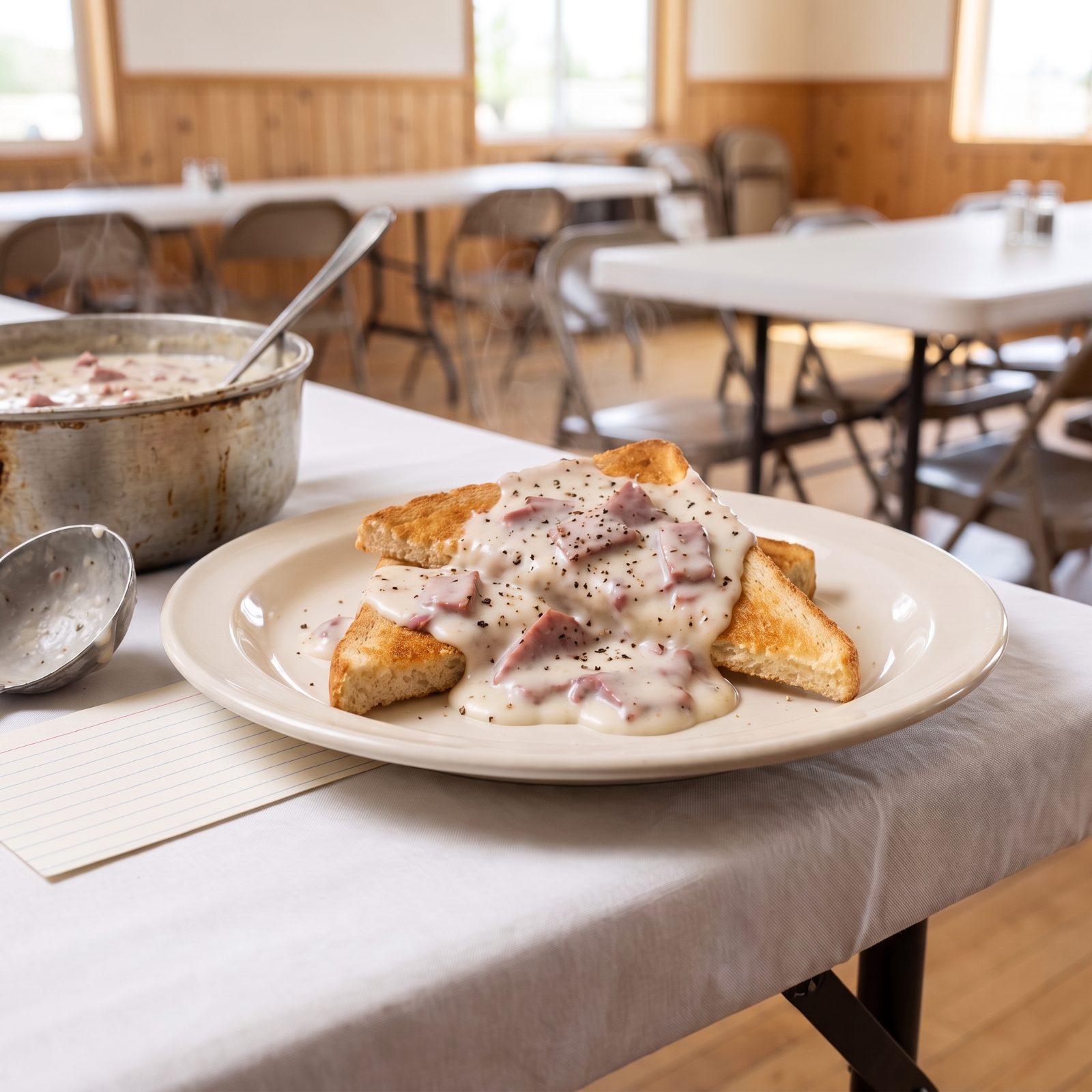
30. Creamed Chipped Beef Ladled Over Toast Points
Would you like to save this?
A white cream gravy loaded with chunky pieces of dried beef, ladled over triangles of toast. Generations of veterans knew it by a cruder mess-hall nickname, which tells you both how far it spread and how cheap it was to make.
At the potluck it turned up at breakfast gatherings and prayer meetings, held warm in a big dented pot, spooned over toast as the line shuffled forward. The dried beef in the little jar still sits on grocery shelves, mostly unbought. A whole dish hiding in plain sight, waiting for someone to remember what it’s for.
29. Chicken à la King Served in Puff-Pastry Shells
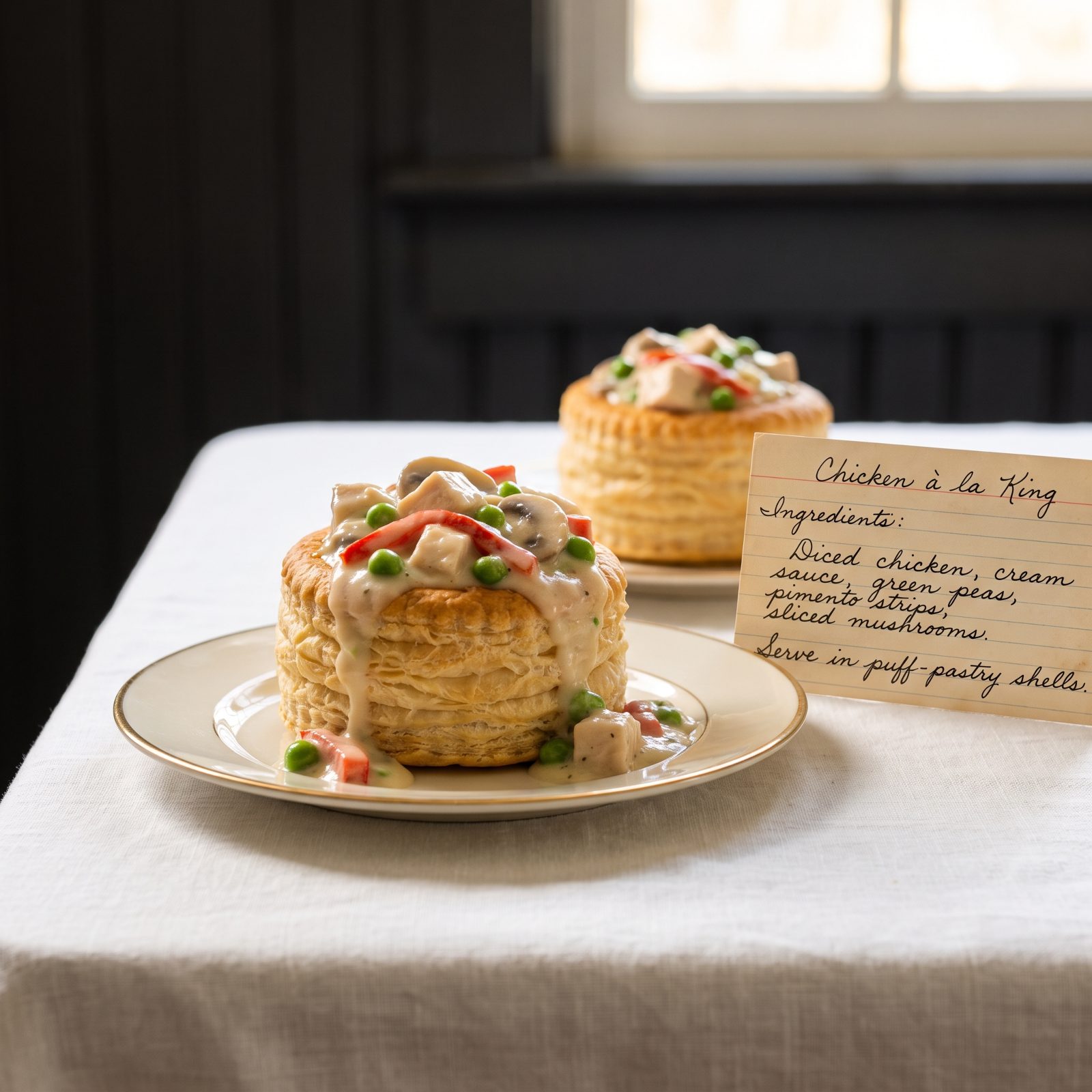
The dress-up dish. When a potluck needed to feel like an occasion, out came chicken à la king: diced chicken in a sherry-kissed cream sauce dotted with peas, mushrooms and bright red pimento, spooned into a crisp puff-pastry shell. The pastry cup did the heavy lifting, dressing a thrifty filling up like a banquet.
Frozen shells came six to a box, and that box was the whole secret. When fewer hosts kept that box in the freezer and nobody kept making the shells at home, the dish quietly lost its serving vessel and slid off the table for good.
Take away the pastry shell and you take away the occasion. That little golden cup was the difference between leftovers and a celebration.
28. Porcupine Meatballs Made With Rice and Tomato Sauce
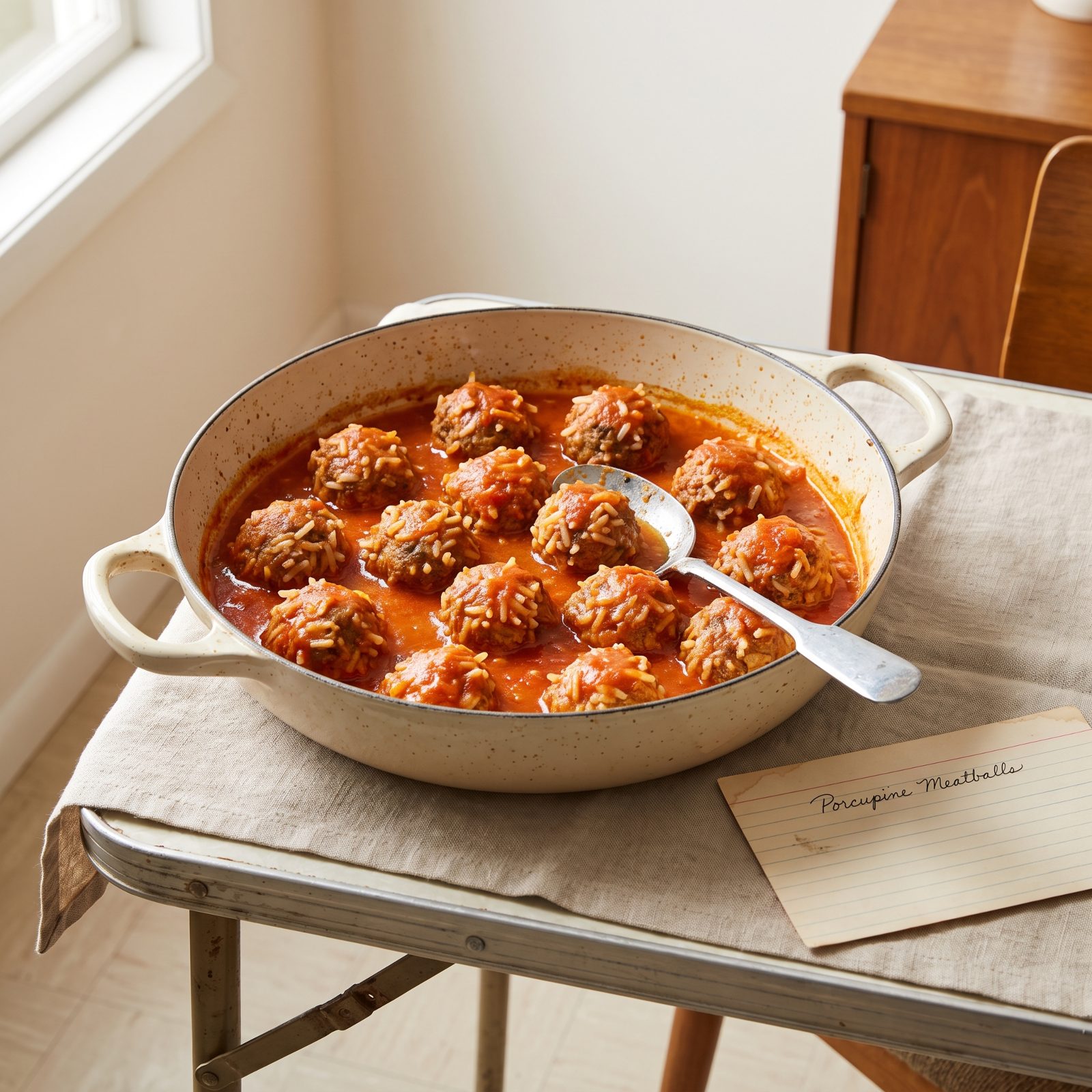
The rice was the whole trick. You rolled it raw into the meatball, and as everything braised the grains swelled and pushed out through the surface like little spines — that’s where the name came from. No fancy seasoning, no breadcrumbs, just ground beef, uncooked rice, and a can of tomato sauce doing the heavy lifting.
It stretched a pound of beef into a dish that fed a crowd, which is exactly why Depression-era cooks loved it and church ladies kept it going. The reward was texture: tender meat with a slight chew from the rice that store-bought meatballs never had.
27. Swiss Steak Braised With Tomatoes, Onions and Peppers
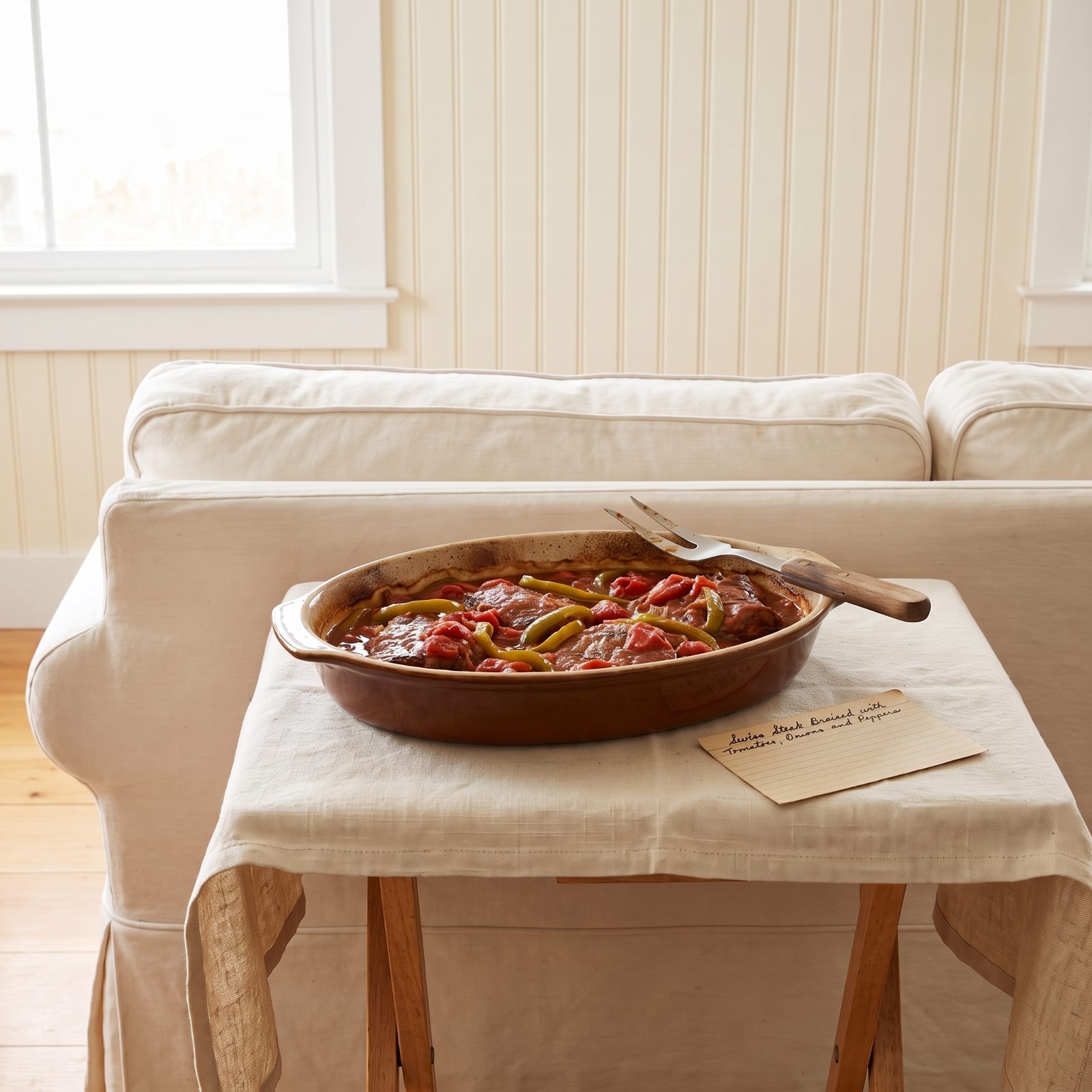
Nothing Swiss about it. The name comes from “swissing,” an old term for running meat through rollers to tenderize it, which is why the home version meant beating a cheap cut with the edge of a saucer until your arm gave out.
That tough round steak turned into something you could cut with a fork after a long braise with tomatoes, onion, and pepper. It held up beautifully on a buffet line because the sauce kept it from drying out. These days people reach for a quick sear and call it dinner, and the slow, forgiving old method mostly faded along with it.
26. Spoon Bread Served Straight From the Casserole Dish
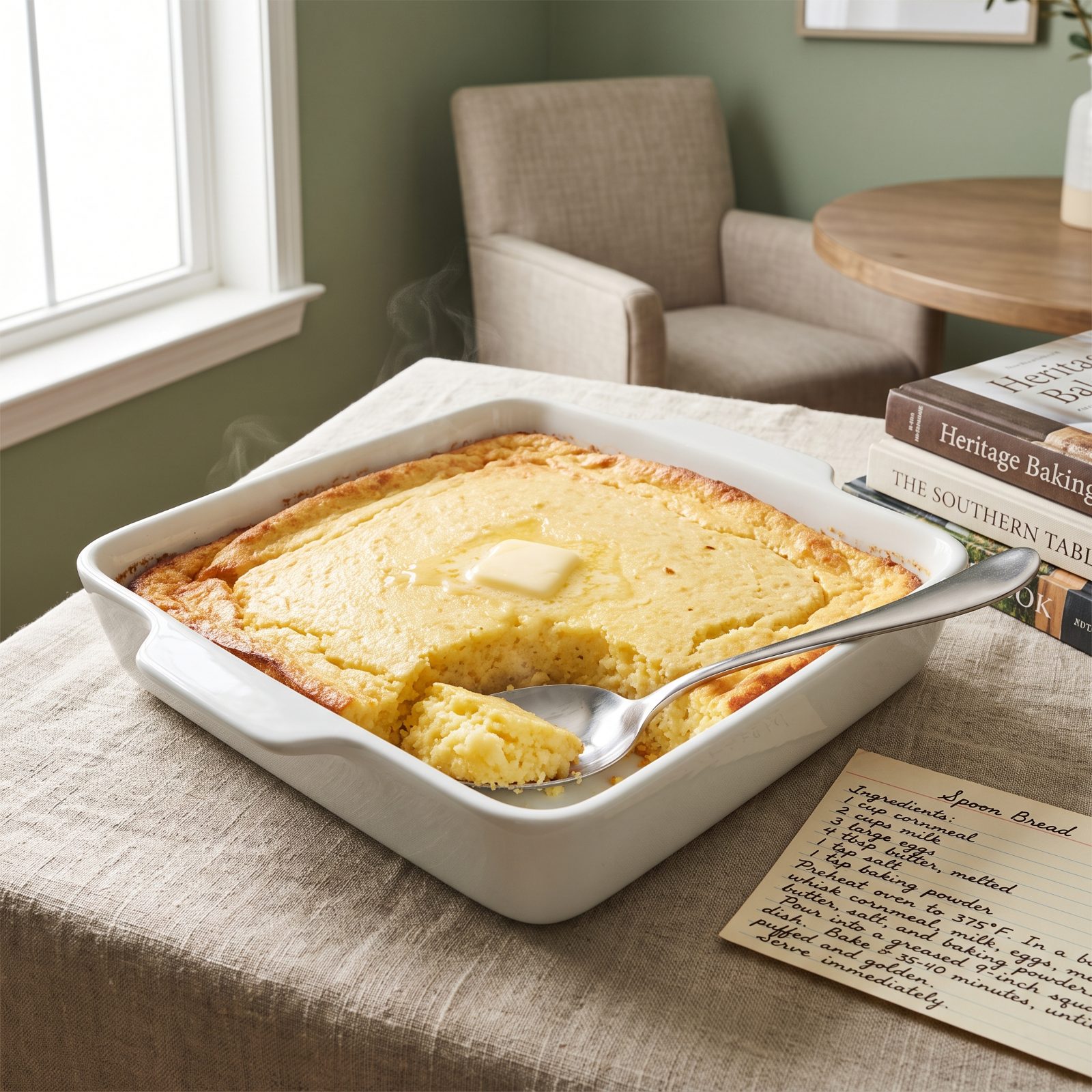
Somewhere between cornbread and a soufflé, spoon bread lived in that in-between place where a knife was useless. You served it with a spoon because it never set firm. The texture landed closer to a savory custard — soft and steamy, with just enough body to hold a shape before it collapsed.
Southern church cooks treated it as a side, a starch, and a comfort all at once. It never traveled well, which may be why it stayed regional and then nearly vanished. A square of cornbread survives on every table. Its softer cousin did not.
25. Creamed Peas and Pearl Onions in White Sauce
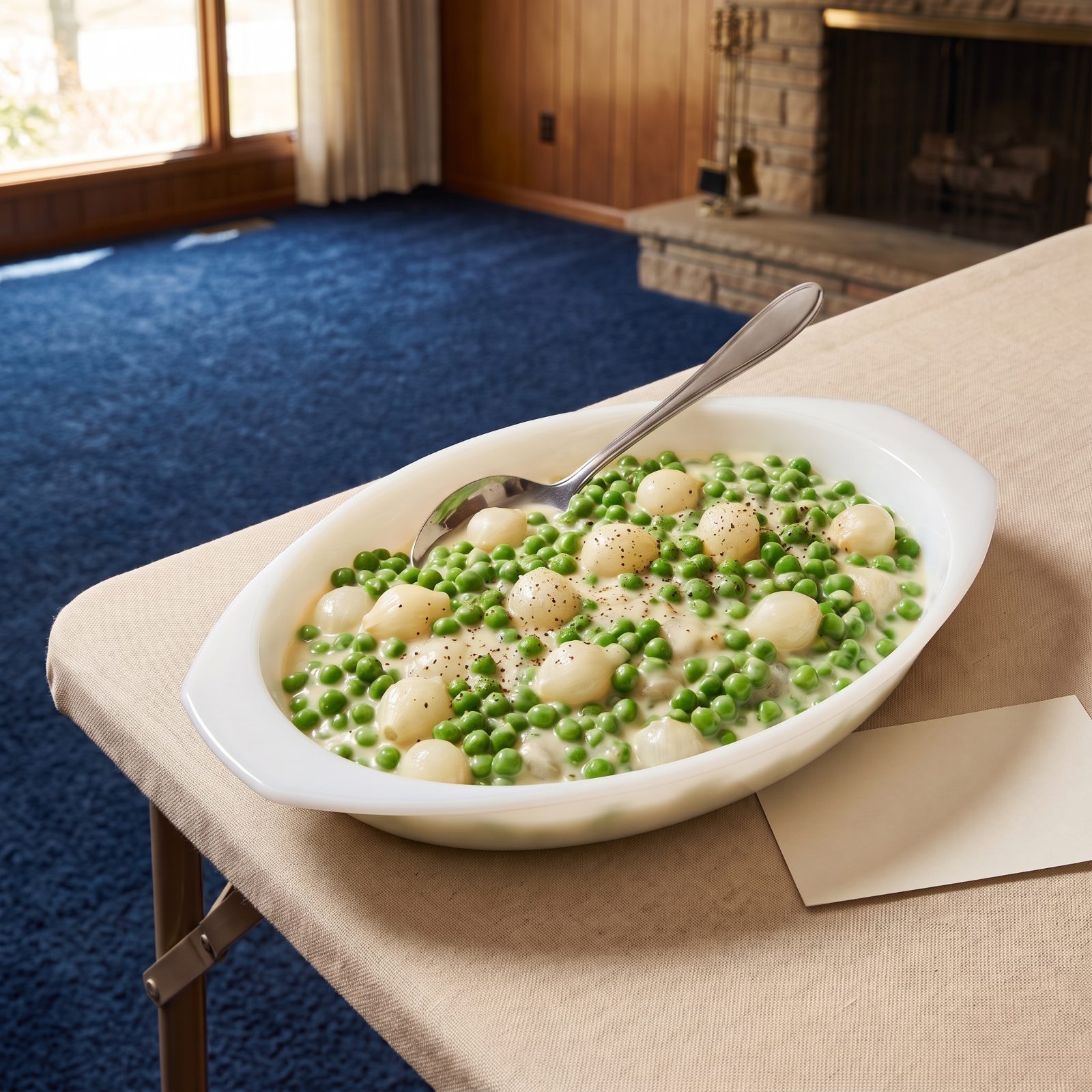
Peas and onions, drowned in a béchamel so plain it was almost an afterthought. Butter, flour, milk, salt. The whole draw was contrast: sweet peas, sharp little onions, and a sauce that smoothed the thing into something you could eat by the spoonful.
It sat on holiday tables and potluck lines for decades, usually right next to the ham, and frozen peas with jarred pearl onions made it nearly foolproof. Then everyone decided cream was the enemy, the white sauce fell out of fashion, and this gentle little dish went down with it.
24. Harvard Beets in Glossy Sweet-and-Sour Sauce
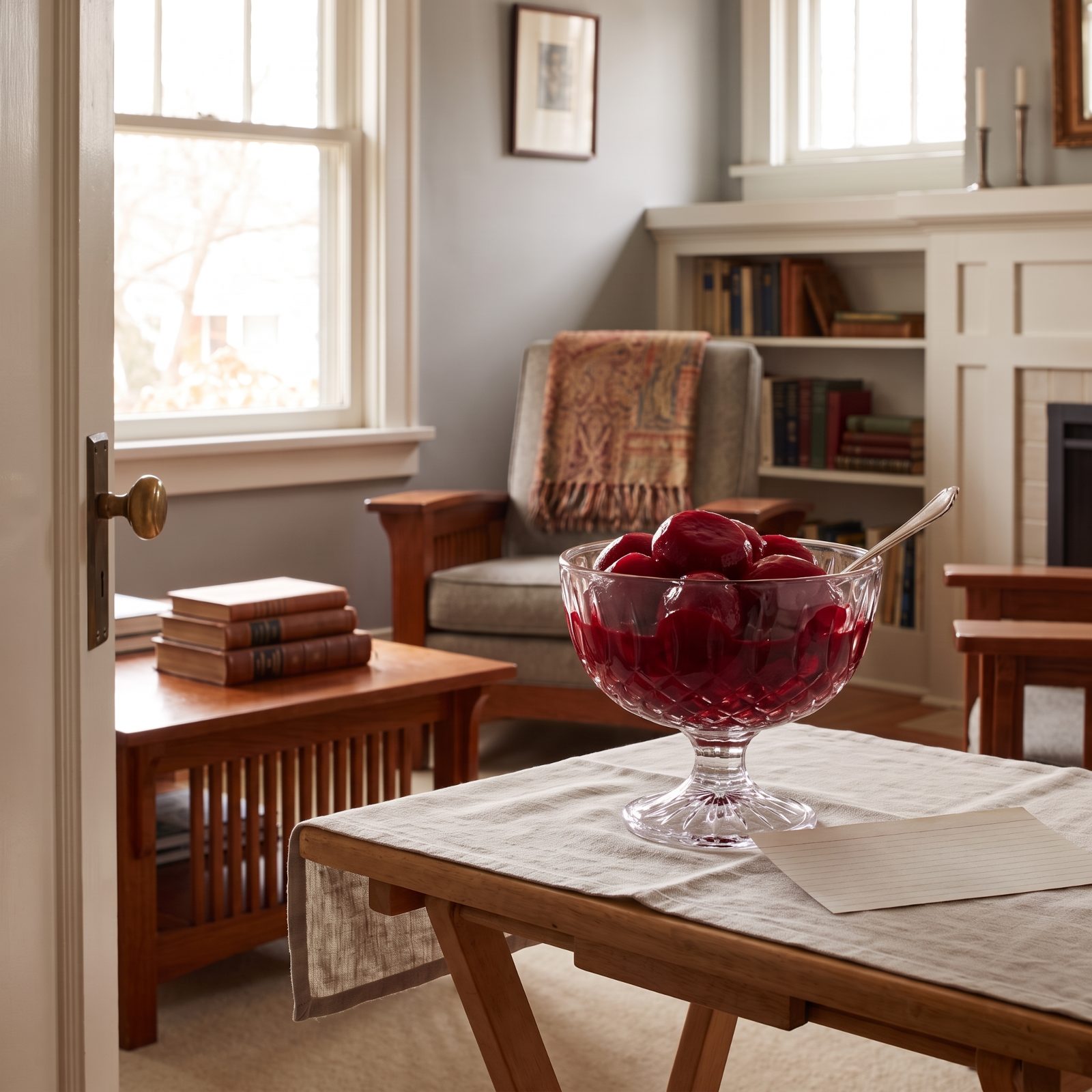
That shine was the signature. Harvard beets got their glossy coat from a cornstarch-thickened sauce of sugar and vinegar, which clung to the beets like red glass. Nobody fully agrees where the name came from, though the crimson color and the university have been linked in food lore for over a century.
The flavor was aggressive in the best way, sweet and sour slugging it out over an earthy beet. It brightened a plate of beige potluck food and gave the color-shy something to argue about. Beets are polarizing, and this was beets at their most confident.
23. Copper Pennies Made With Marinated Carrot Coins
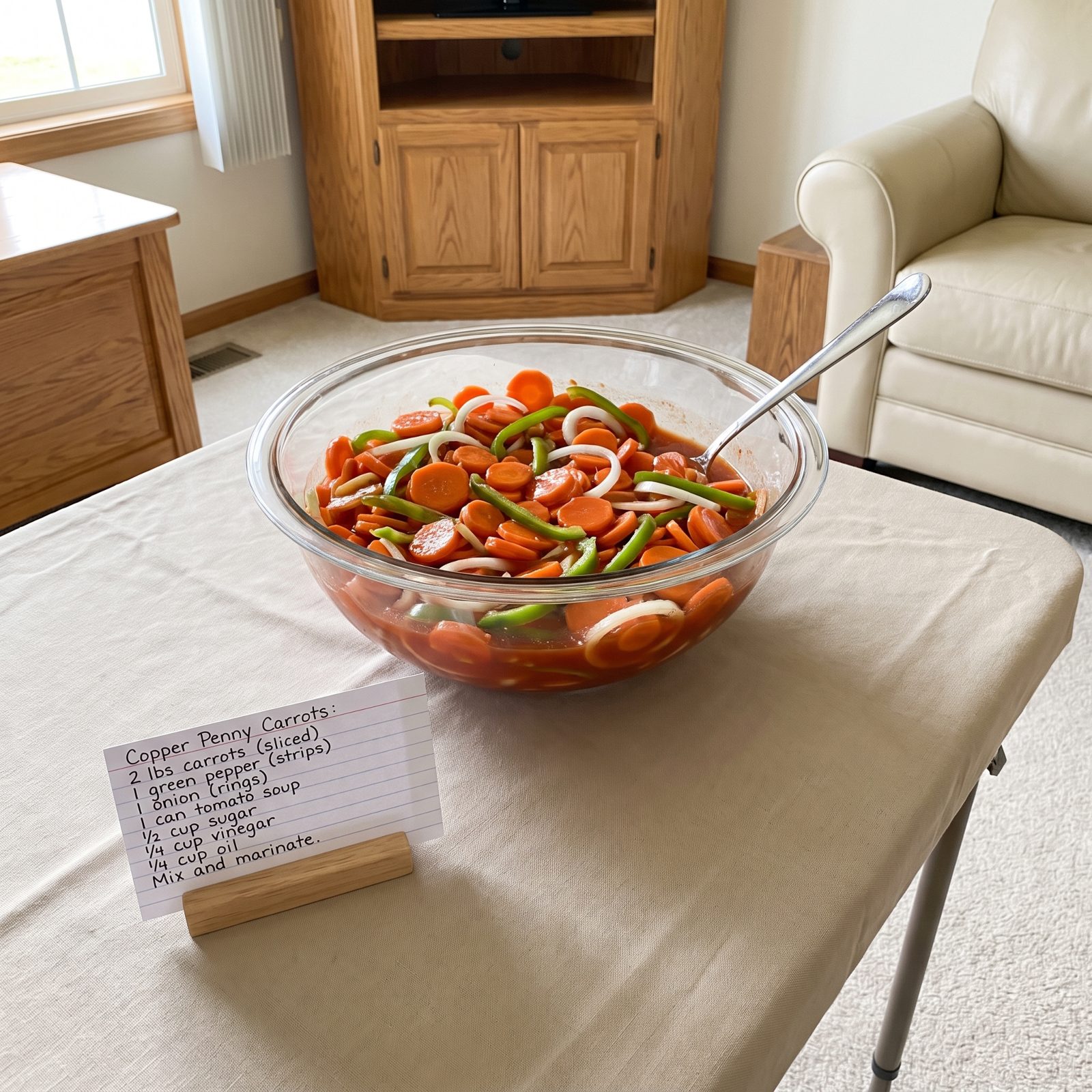
Named for the shape, not the taste. Sliced carrots cooked just shy of soft, then marinated for a day in a sweet-and-sour dressing built on tomato soup, vinegar, and sugar, tossed with onion and green pepper.
The magic was patience. It got better overnight, which made it a potluck natural — you could make it Saturday and it tasted best Sunday. Served cold, it landed somewhere between a salad and a relish, and it held its own next to anything.
22. Overnight Cabbage Slaw With Boiled Vinegar Dressing
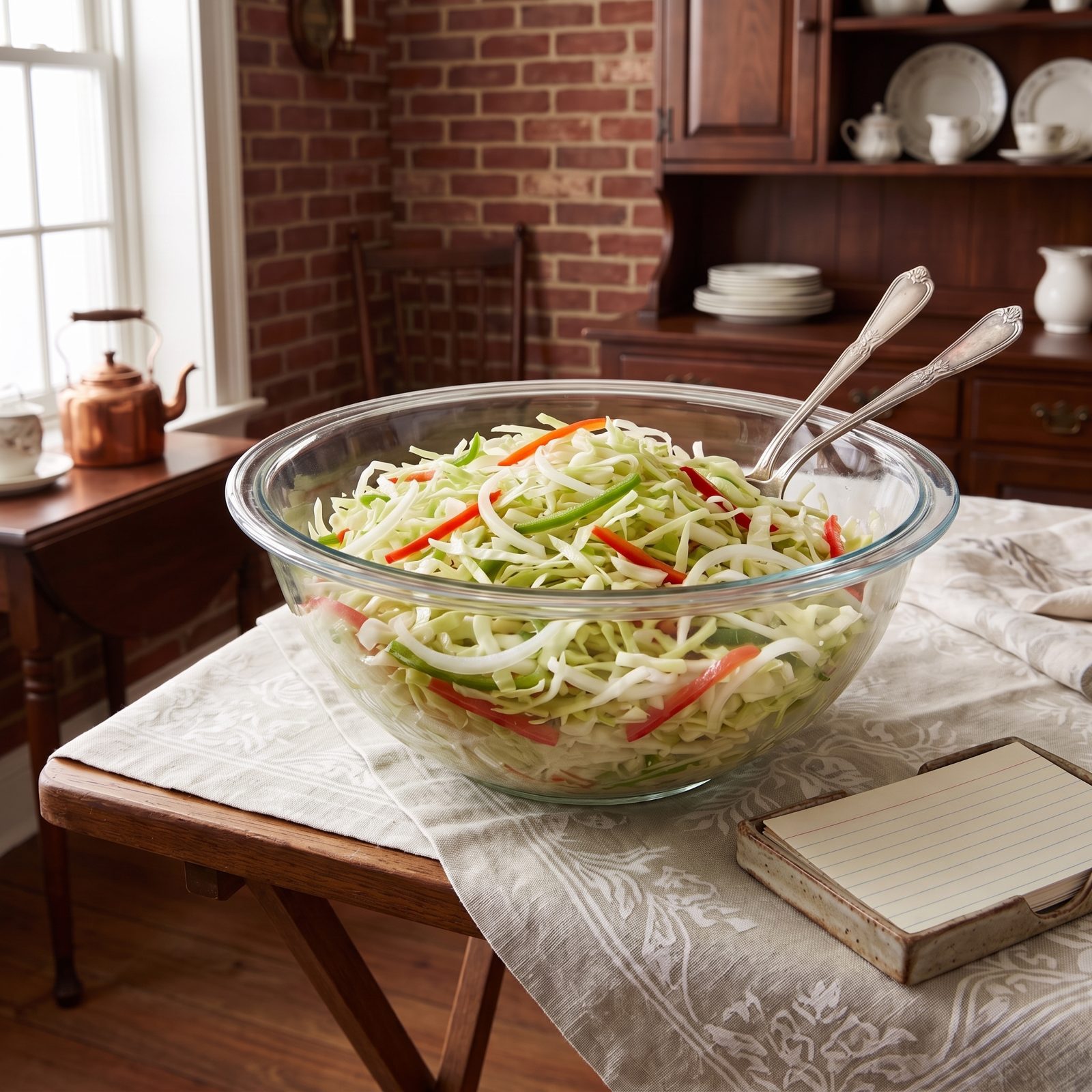
This is the slaw before mayonnaise took over. You boiled the dressing — sugar and vinegar and oil heated together — then poured it hot over raw shredded cabbage and left the whole bowl to sit overnight. The heat softened the cabbage just enough while keeping a snap.
It kept for days in the icebox, which made it the smart cook’s choice for a weekend of church events. Tangy, a little sweet, no dairy to fret over in the heat. Then the creamy version won the popularity contest, and this crisp vinegar one got shoved to the back of the recipe box.
21. Glorified Rice With Pineapple and Whipped Cream
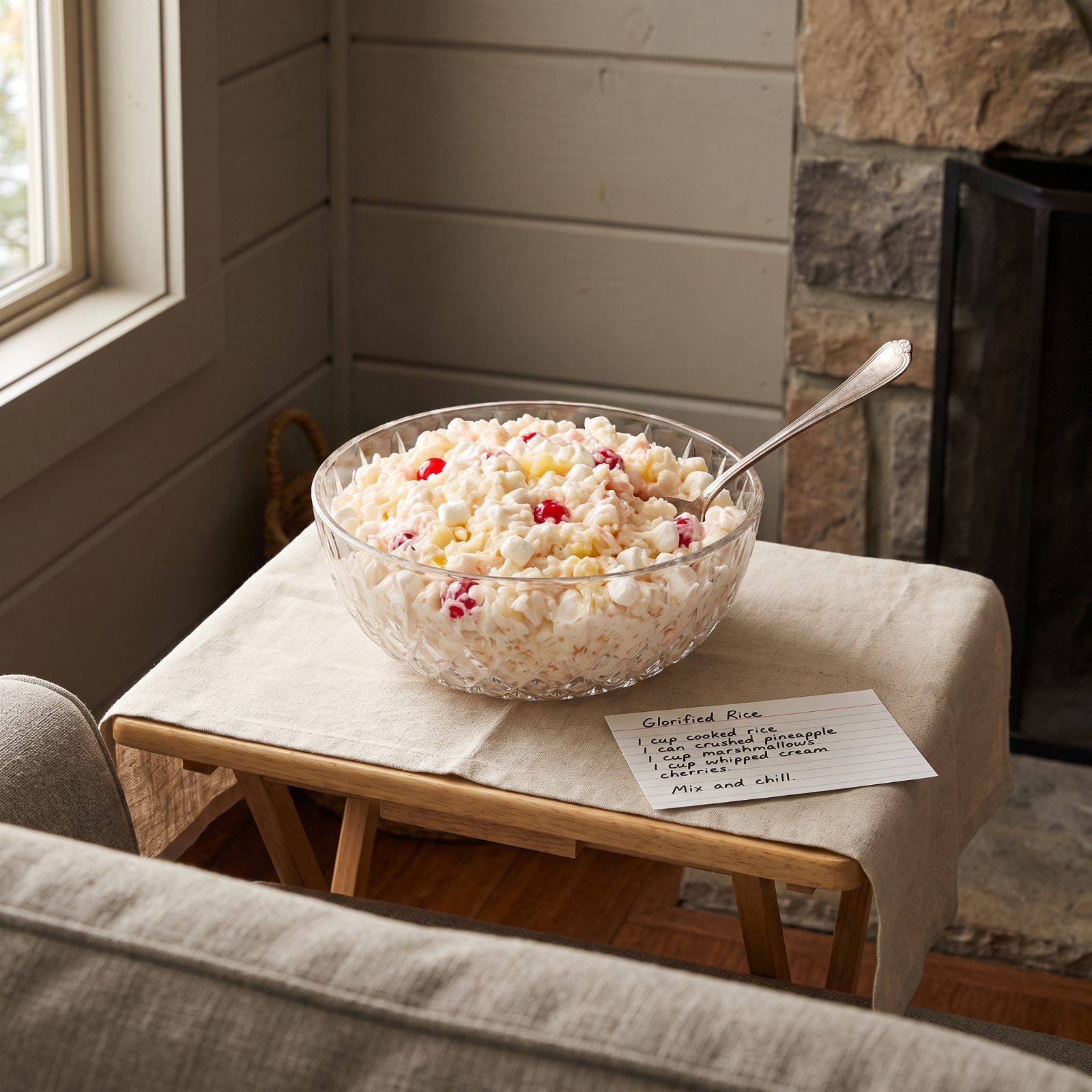
Dessert disguised as a side, or a side masquerading as dessert. Nobody ever decided. Cold cooked rice folded into whipped cream with crushed pineapple and marshmallows, maybe a few cherries if the cook was feeling festive.
The name says everything about the era. You took the plainest thing in the pantry and glorified it with sugar and cream. It showed up on the dessert table and the salad table, depending on the family, and yes, arguments were had about which was correct.
The 1960s dessert table had no borders. If it had whipped cream in it, it counted as salad somewhere.
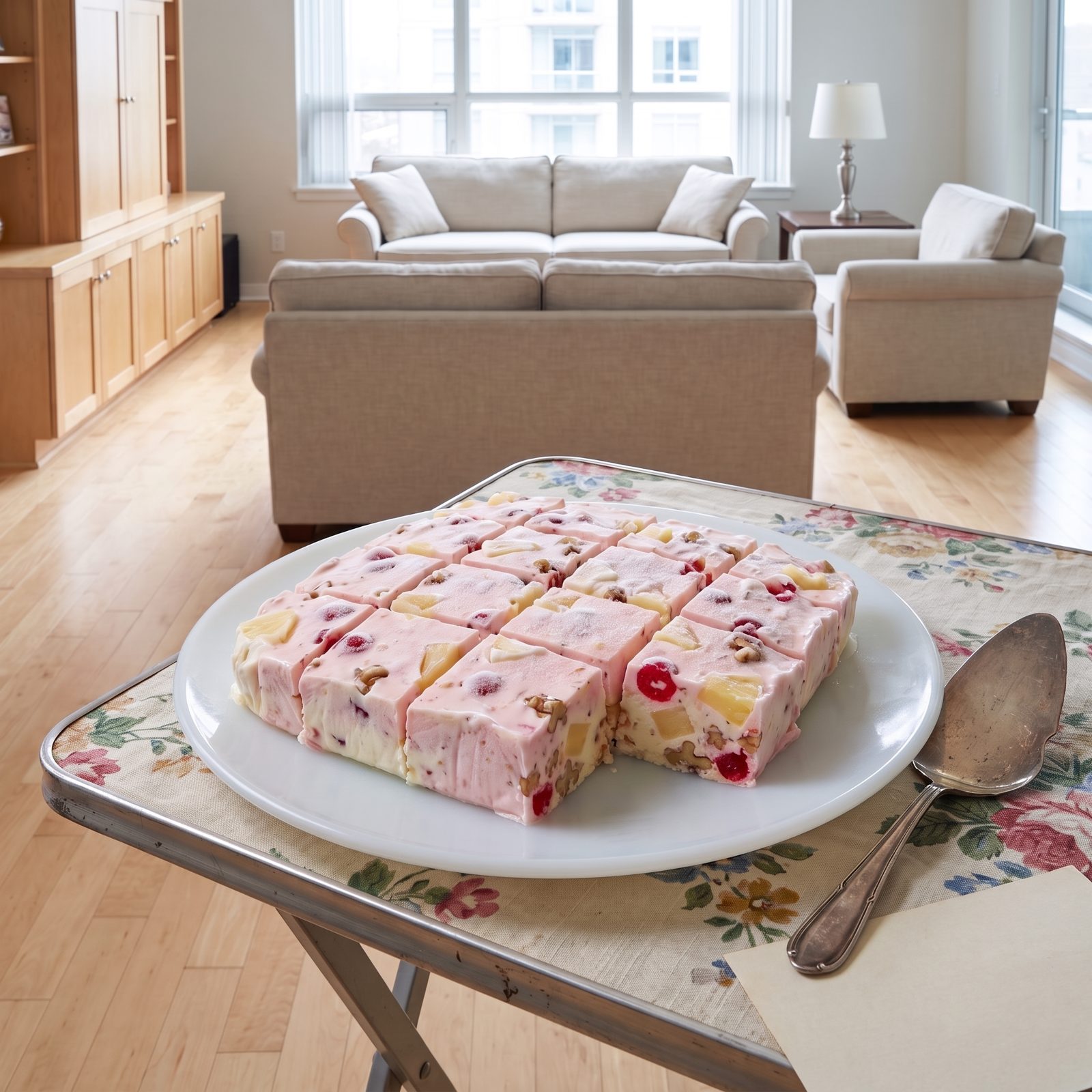
20. Frozen Fruit Salad Sliced Into Frosty Squares
Would you like to save this?
Frozen solid in a loaf pan or a square dish, then sliced like a brick and served cold enough to make your teeth ache. The base was cream cheese or mayonnaise whipped with cream and canned fruit, frozen until firm.
It was the summer potluck answer to a basement with no air conditioning. You pulled it from the freezer at the last second and it stayed cold right there on the table. The texture carried the whole thing — part sherbet, part salad, wholly its own strange creature. Modern desserts drifted toward soft and fresh, and the frozen squares lost their shelf.
19. Frog Eye Salad Made With Acini di Pepe and Pineapple
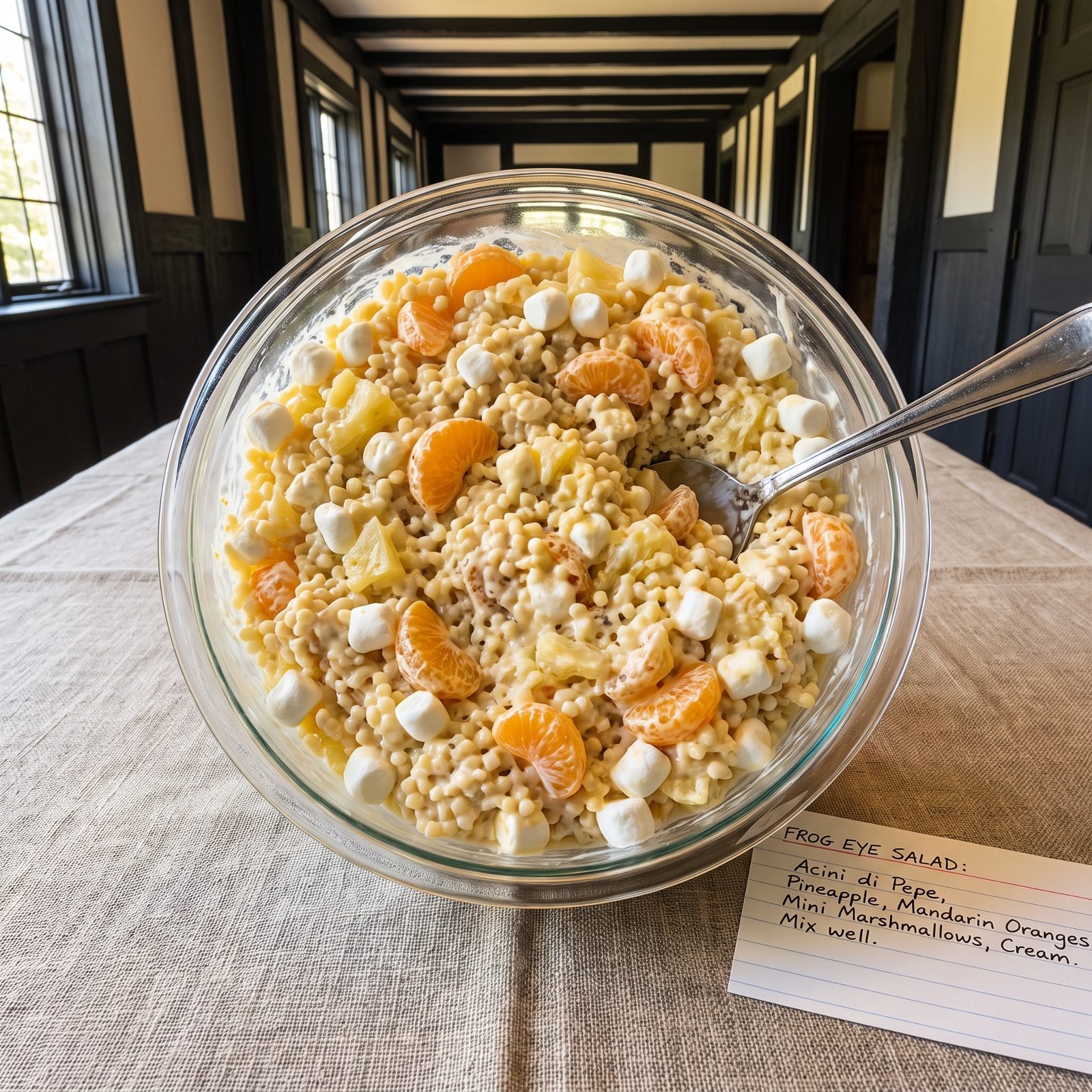
The name is doing it no favors, and that’s a shame, because it’s better than it sounds. The “eyes” are acini di pepe, tiny pasta beads cooked soft, bound in a sweet egg-based dressing, then loaded with pineapple, mandarin oranges, and marshmallows.
Utah and the Mountain West claim it hardest, where it still shows up at big gatherings. The dressing cooks like a custard, which means it needs an overnight rest to come together properly. That extra step scared off busy cooks, and the dish got rarer everywhere else.
18. Celery Sticks Stuffed With Pimento Cheese
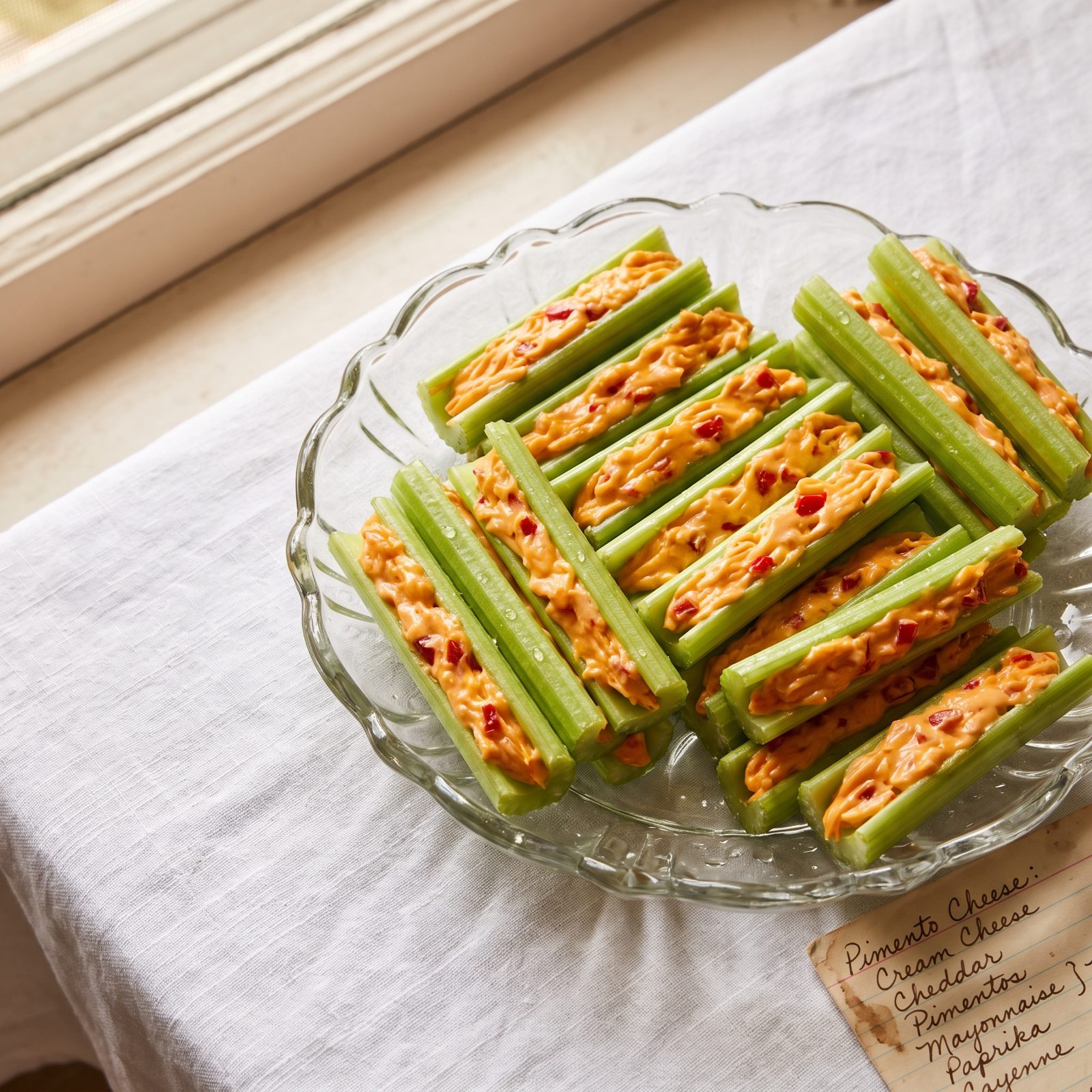
Before vegetable trays came shrink-wrapped from the warehouse club, somebody always volunteered the celery. The genius was the cream cheese softening that sharp cheddar and pimento, so the filling piped into the groove and stayed put instead of sliding out on the first bite.
You either loved the cold crunch against the salty filling or you nudged it to the far edge of your plate, no middle ground to speak of. It was the dish that disappeared last at any potluck, and that tells you more than the recipe ever could.
17. Olive-Nut Finger Sandwiches on Crustless White Bread
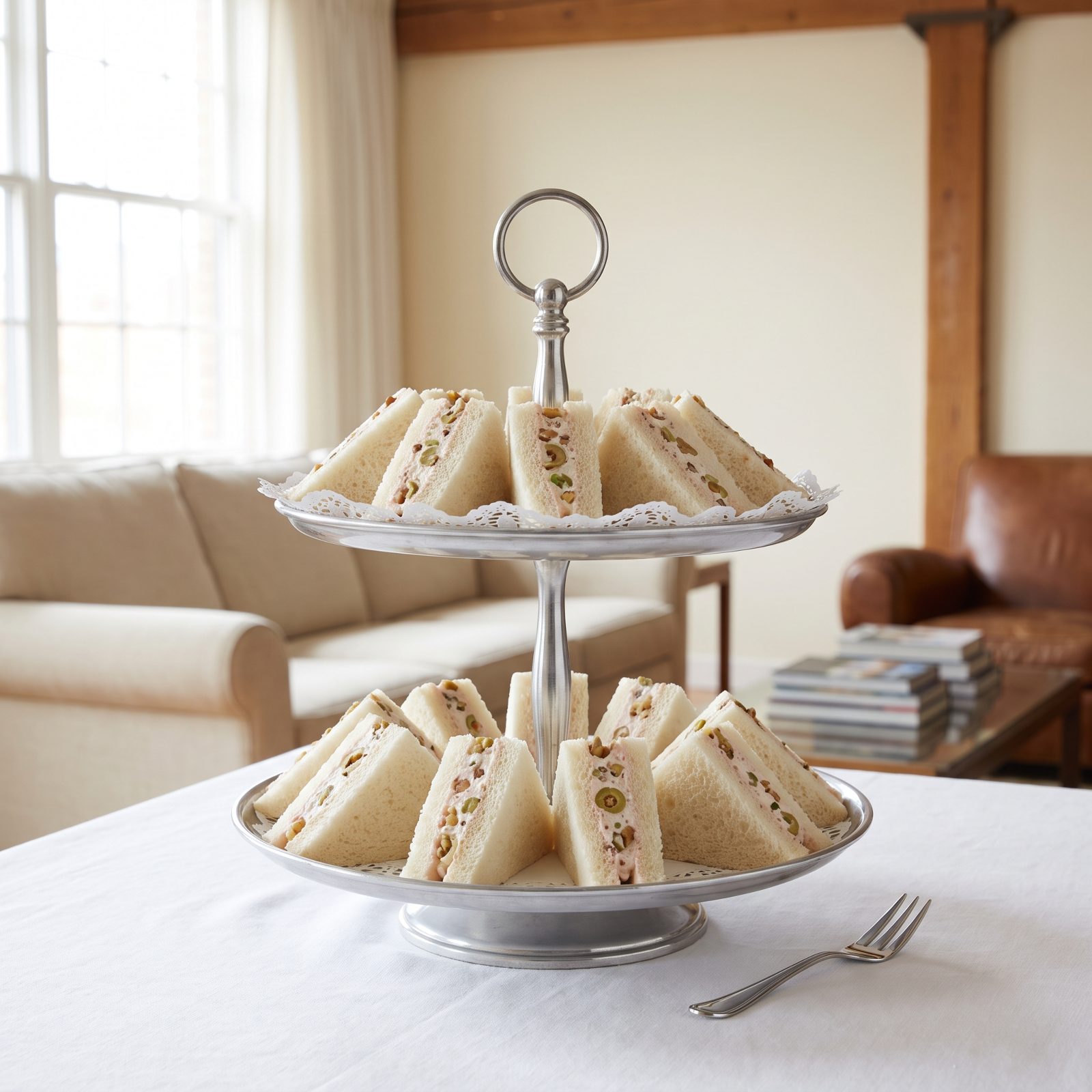
Cream cheese, chopped green olives, a handful of nuts, and a splash of the olive juice turned the whole thing pink. That pink is the detail nobody mentions. It meant somebody added the brine, which was the difference between a decent sandwich and the one people asked about.
Crusts came off because this was ladies’ luncheon food borrowed for Sunday. Dainty on purpose. You could eat six without feeling like you’d eaten anything, which was exactly the trap.
16. Deviled Ham Pinwheels Rolled in Soft Sandwich Bread
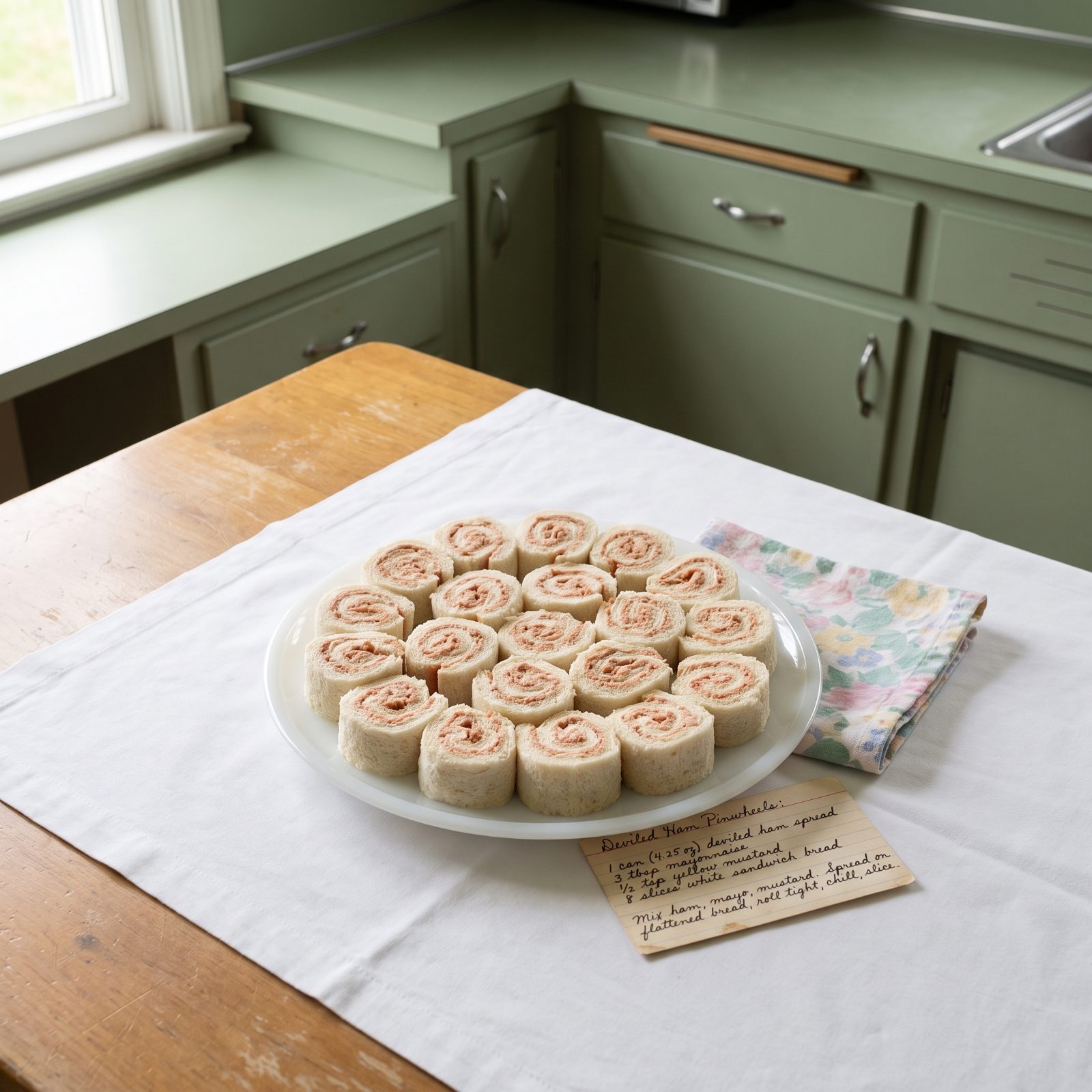
The trick was rolling the bread flat with a pin first, spreading the deviled ham thin, rolling it like a jelly roll, then slicing. You got these little spirals that looked fussier than they actually were. One can of deviled ham, a little mayo to loosen it, maybe a dab of mustard.
They showed up at bridal showers and funeral receptions alike. A sandwich that knew how to behave at both.
15. Chipped Beef Cheese Ball Rolled in Chopped Nuts
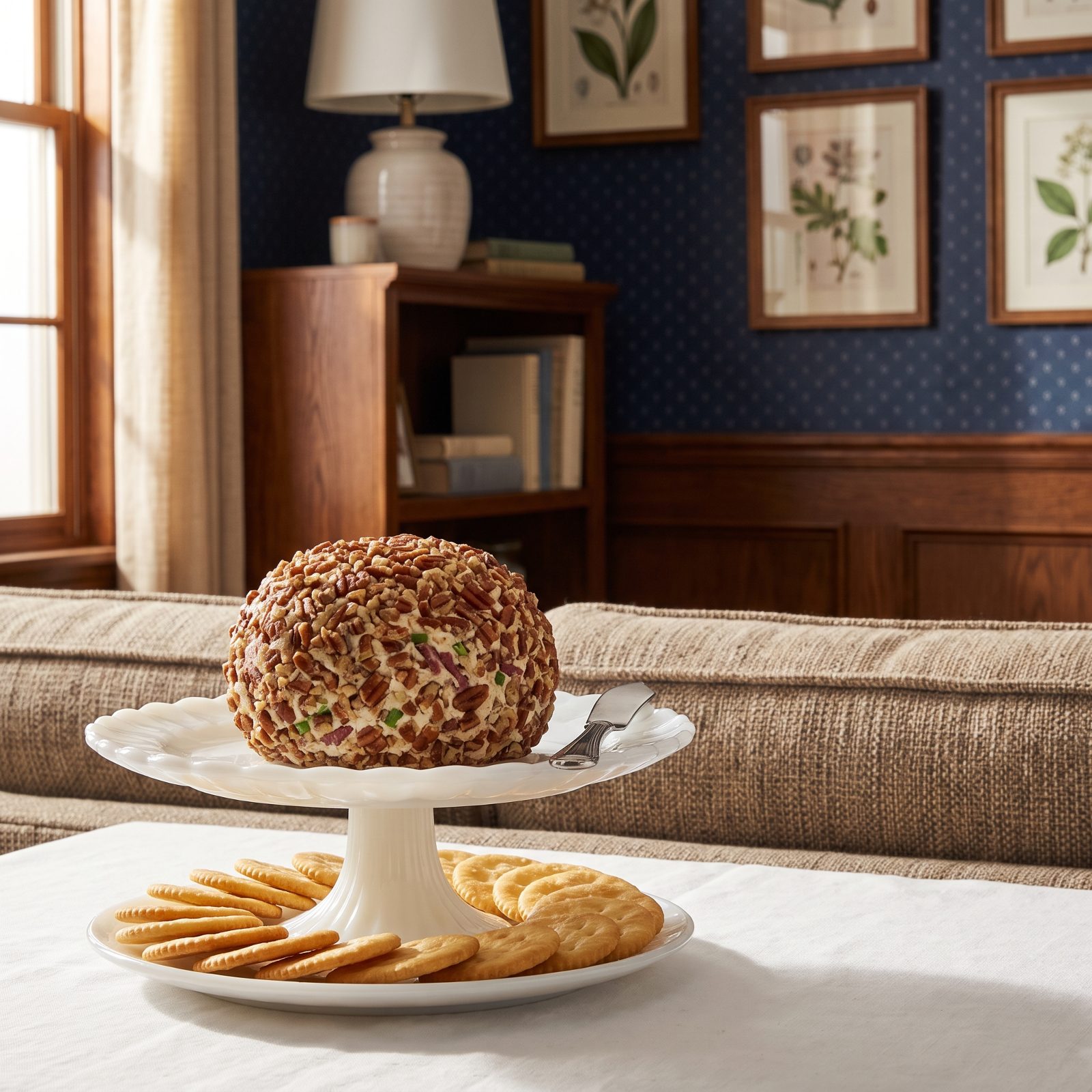
Cream cheese, chopped dried beef, a little Worcestershire and green onion, mashed into a sphere and rolled in nuts until the whole thing resembled a pinecone. It sat in the center of the appetizer table like something you’d won at the fair.
Everybody dug at the same spot until it looked like a moon crater by two o’clock. Nobody minded. Half the fun was the collapse.
14. Hanky Pankies With Sausage and Cheese on Cocktail Rye
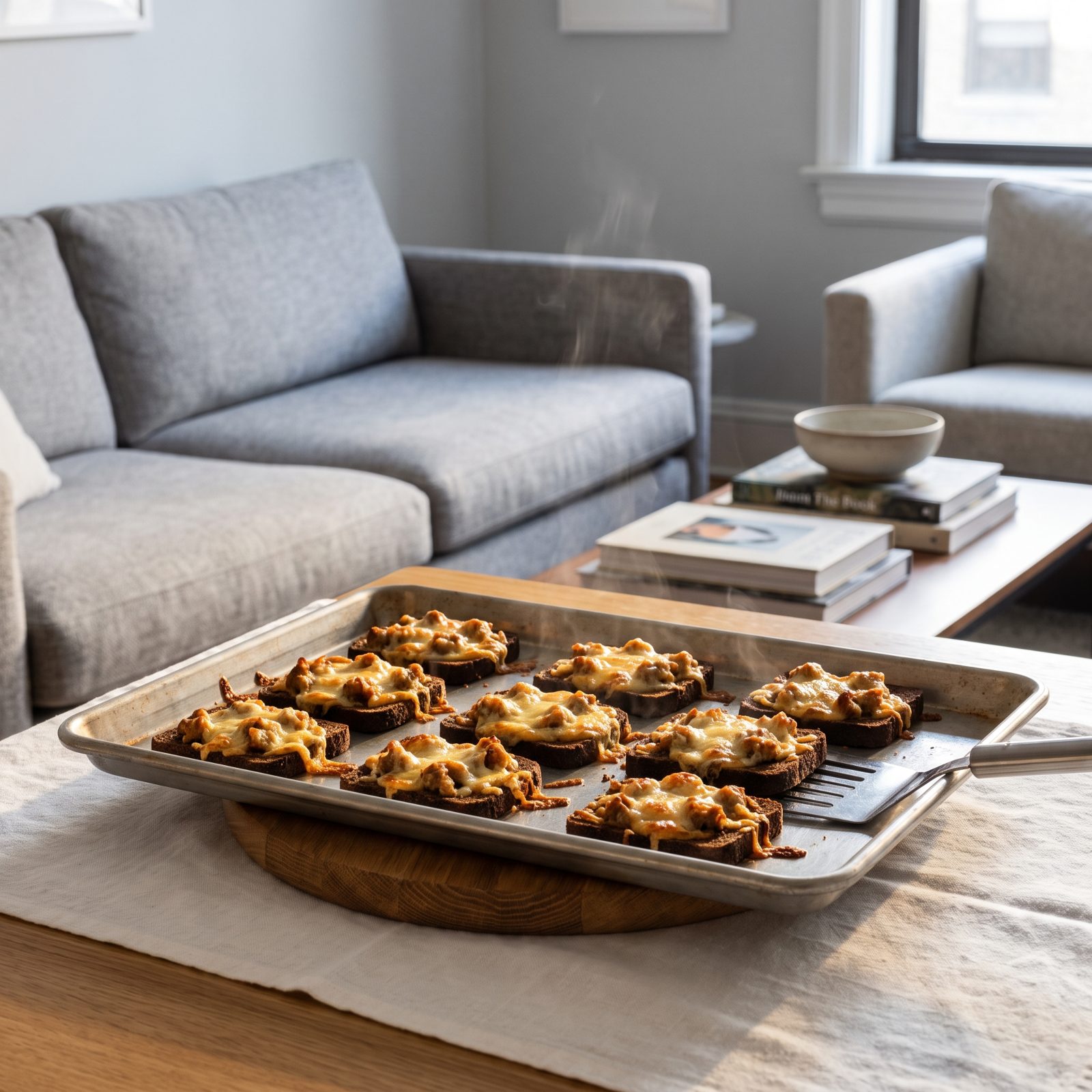
The one everybody remembers the smell of. Ground sausage browned with ground beef, melted into a brick of Velveeta, spooned onto little squares of cocktail rye and run under the broiler. Salty, greasy, impossible to stop at one.
The name is pure mystery. Nobody agrees where “hanky panky” came from, and the recipe card never bothered to explain it. You froze a tray ahead and broiled them the morning of, which made them the smart cook’s secret weapon.
13. Cheese Dreams Broiled Until Puffy on White Bread
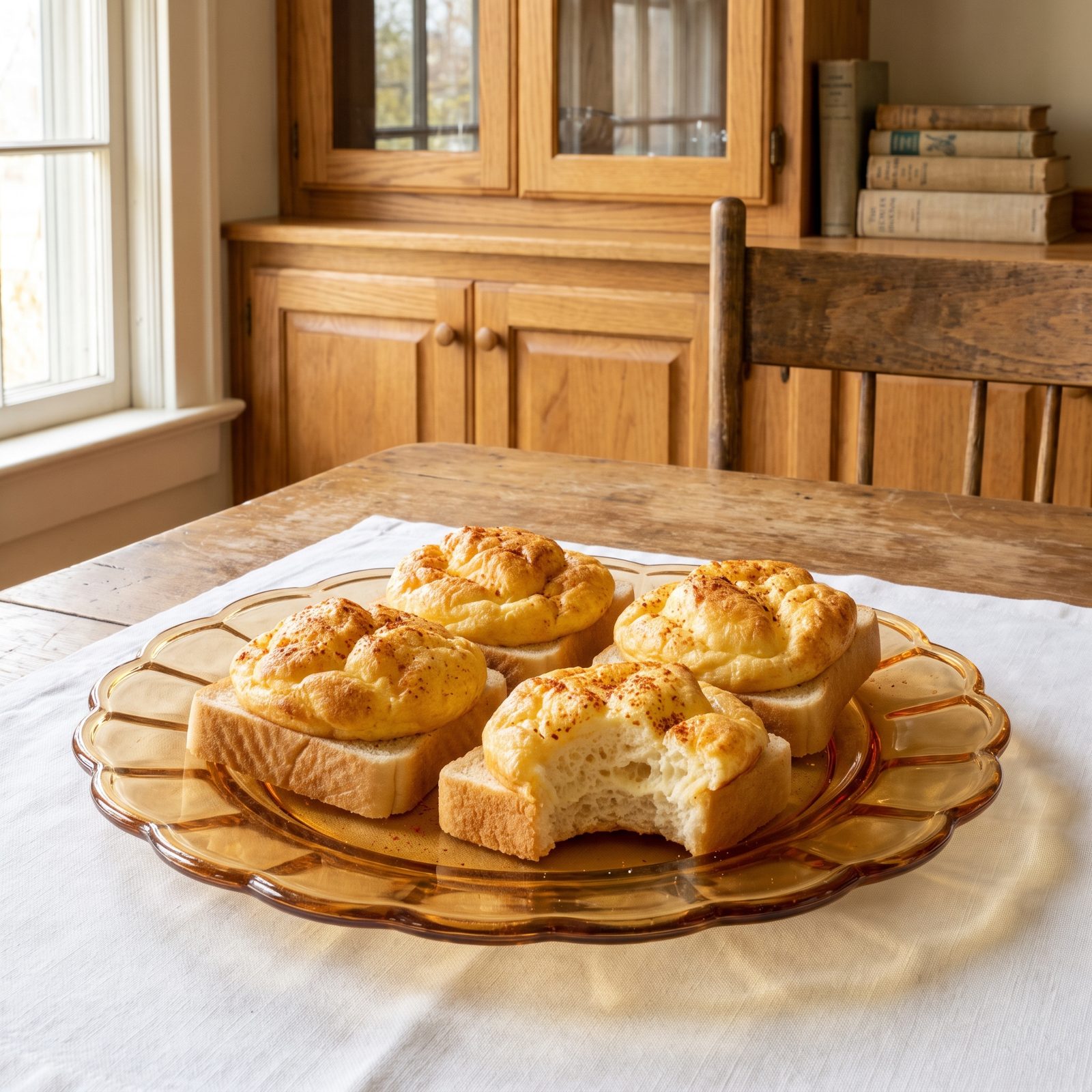
Cheese Dreams were the fancy cousin of the grilled cheese. Grated sharp cheddar bound with a beaten egg white or a little mayo, piled on white bread, broiled until it rose and browned in peaks. The puff was everything. Flat meant you did it wrong.
Some cooks added a crumble of bacon, some a shot of cayenne. They came out of the oven too hot to eat and nobody waited anyway.
12. Pickle Roll-Ups Wrapped in Cream Cheese and Dried Beef
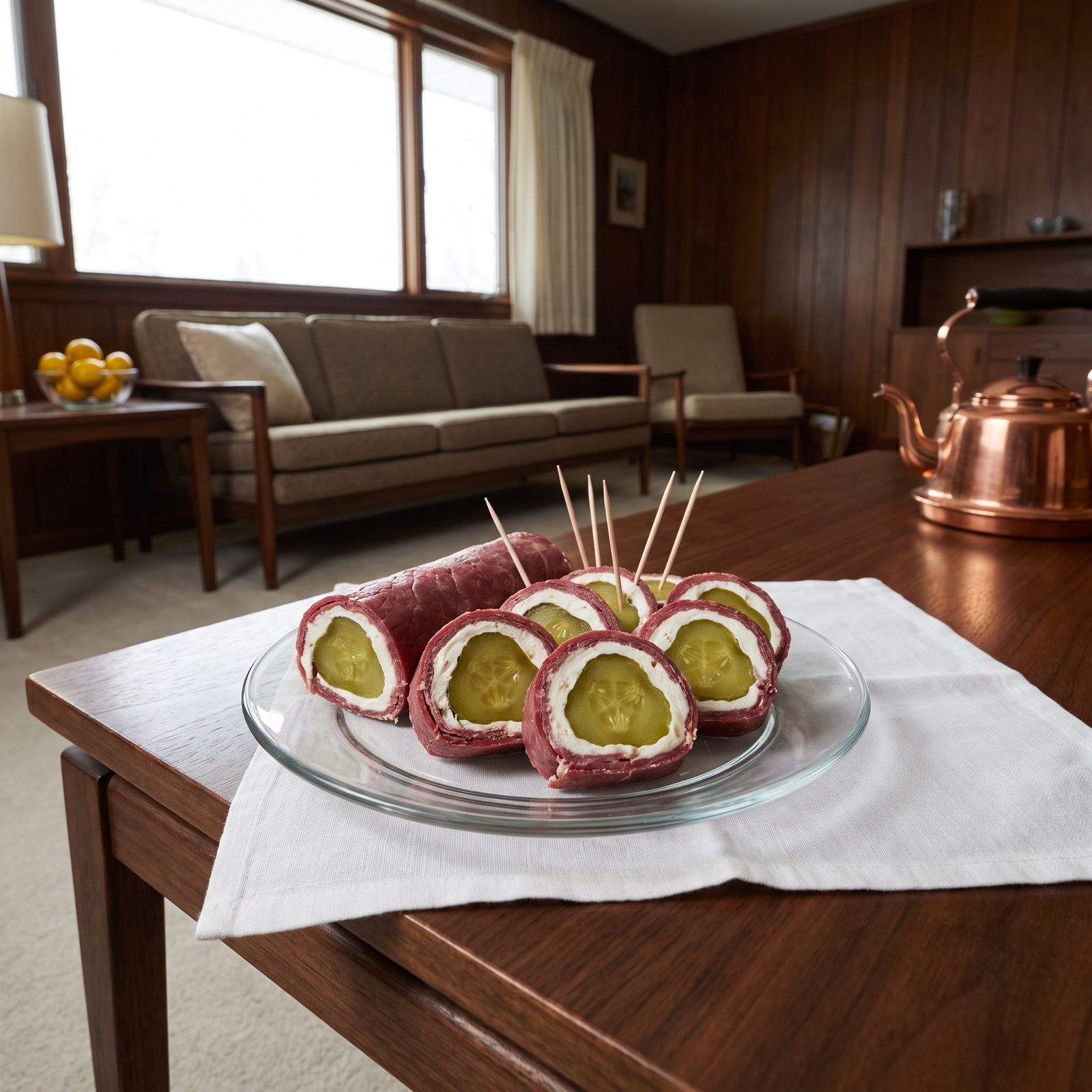
Three ingredients, zero cooking, maximum reward. Spread cream cheese on a sheet of dried beef, lay a whole dill pickle at one end, roll it up tight and chill it until firm, then slice into coins. Each one a little target of green, white, and red.
Salty, tangy, cold, a little weird. The kind of thing you were suspicious of as a kid and craved as an adult.
11. Ritz Cracker Mock Apple Pie Without Any Apples
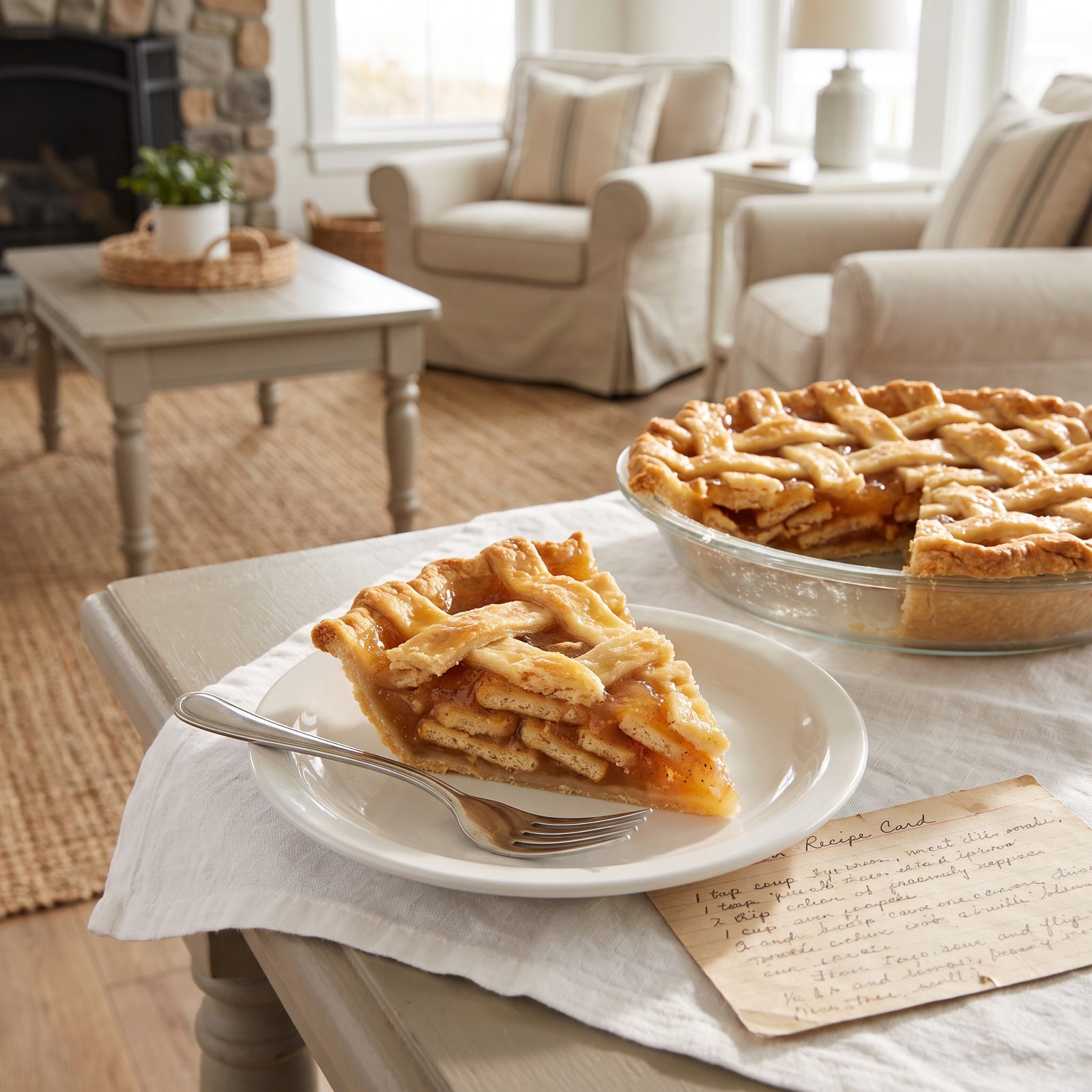
No apples. That’s the headline and the dare. Ritz crackers simmered in a sugar syrup spiked with cream of tartar and cinnamon somehow come out tasting like cooked apple. The crackers hold their shape in neat stacked layers glossed with amber syrup, and people who didn’t know swore it was Dutch apple.
Born in the Depression when apples cost money and crackers didn’t, it stuck around for decades as a party trick. Serve it, say nothing, watch faces when you tell them.
10. Tomato Soup Spice Cake With Raisins and Warm Spices
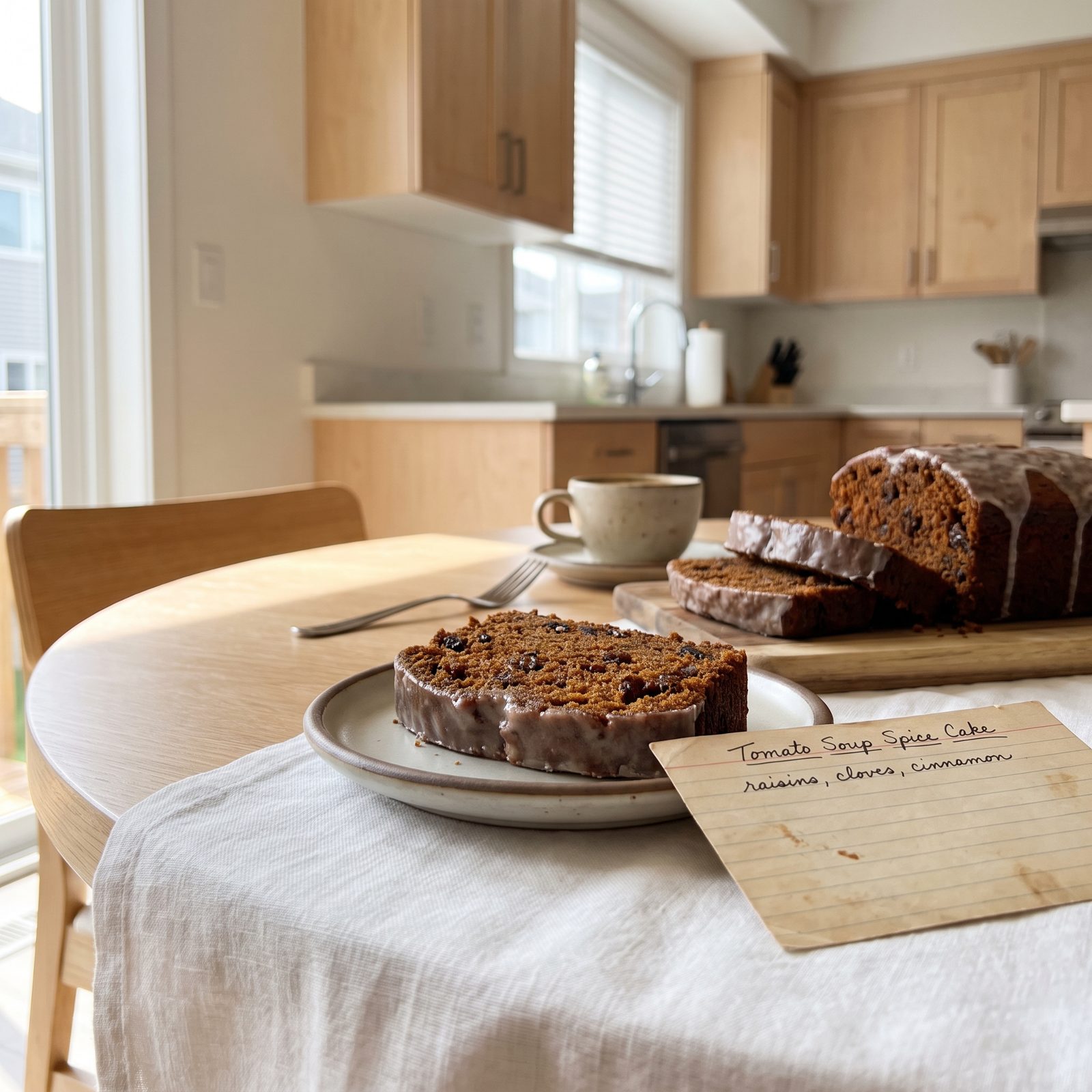
A can of condensed tomato soup went into the batter instead of some of the liquid, and nobody tasted tomato. What it did was keep the cake moist for days and give it a deep russet color that read as pure spice. Cinnamon, cloves, raisins, sometimes walnuts.
It was a pantry cake, built from cans when fresh fruit was out of reach. Finished with a thin drizzled sugar glaze, it survived the long car ride and the warm fellowship hall better than almost anything else on the table.
9. Prune Cake With Buttermilk Glaze
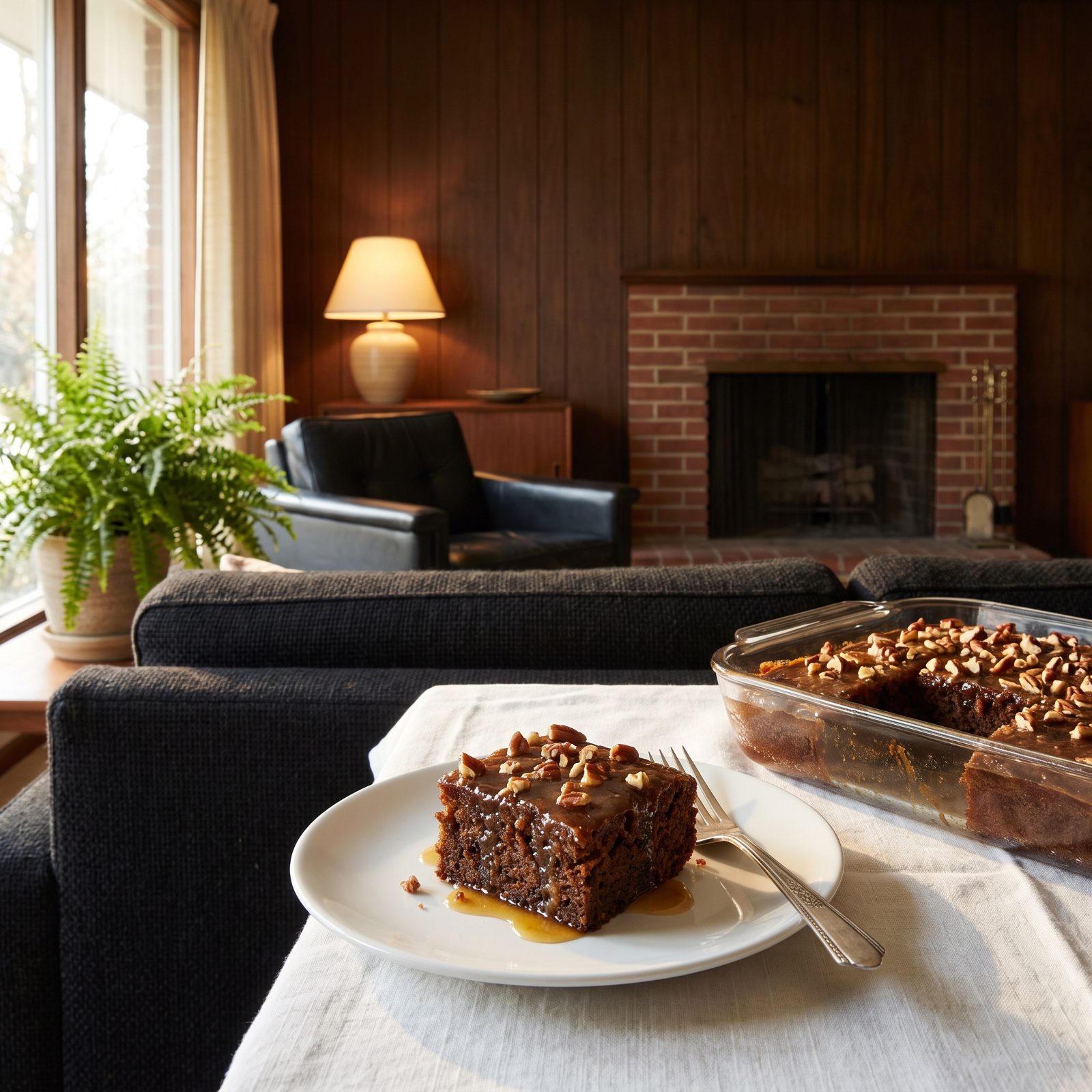
Say “prune” at a modern dinner table and watch people flinch. That reaction is exactly why this one vanished. A shame, because the buttermilk glaze poured over the warm cake is the real story. It soaks in, caramelizes at the edges, and turns a humble spice cake into something you’d fight for seconds of.
The prunes mostly melt away into moisture and don’t announce themselves. The cake stayed good for days, which is partly why it lived so long on the potluck circuit before the name finally did it in.
8. Chocolate Mayonnaise Cake With Fudge Frosting
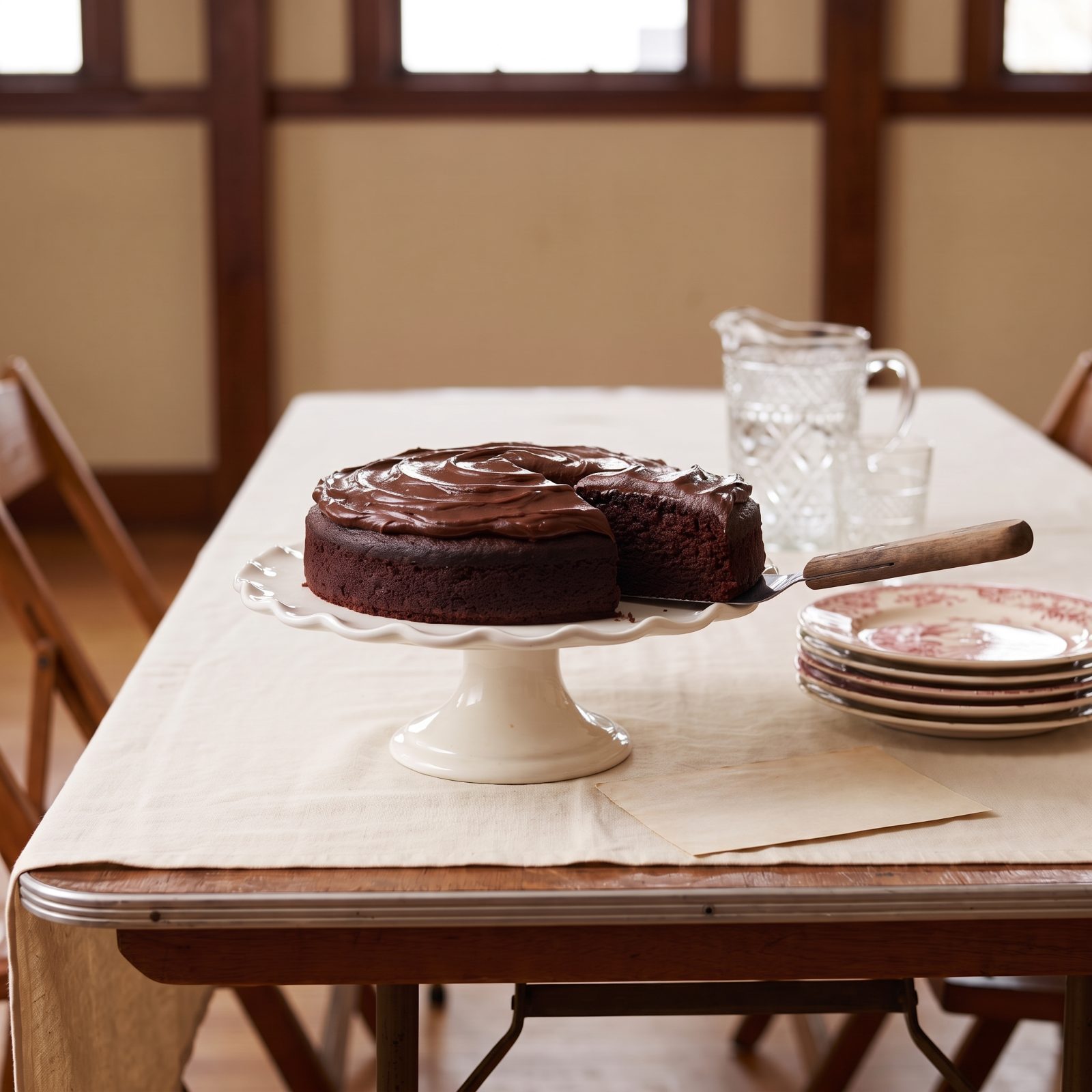
Mayonnaise in a cake sounds like a dare. It isn’t. Mayo is just oil, egg and a little vinegar, exactly what a moist chocolate cake wants anyway. The church cooks who leaned on it during the lean years weren’t being clever so much as thrifty, and the result came out better than the butter version by accident.
The fudge frosting did the heavy lifting, cooked on the stove until it turned thick and glossy enough to swirl. You rarely see this cake now because nobody believes the premise long enough to try it.
7. Grasshopper Pie With a Green Mint Filling
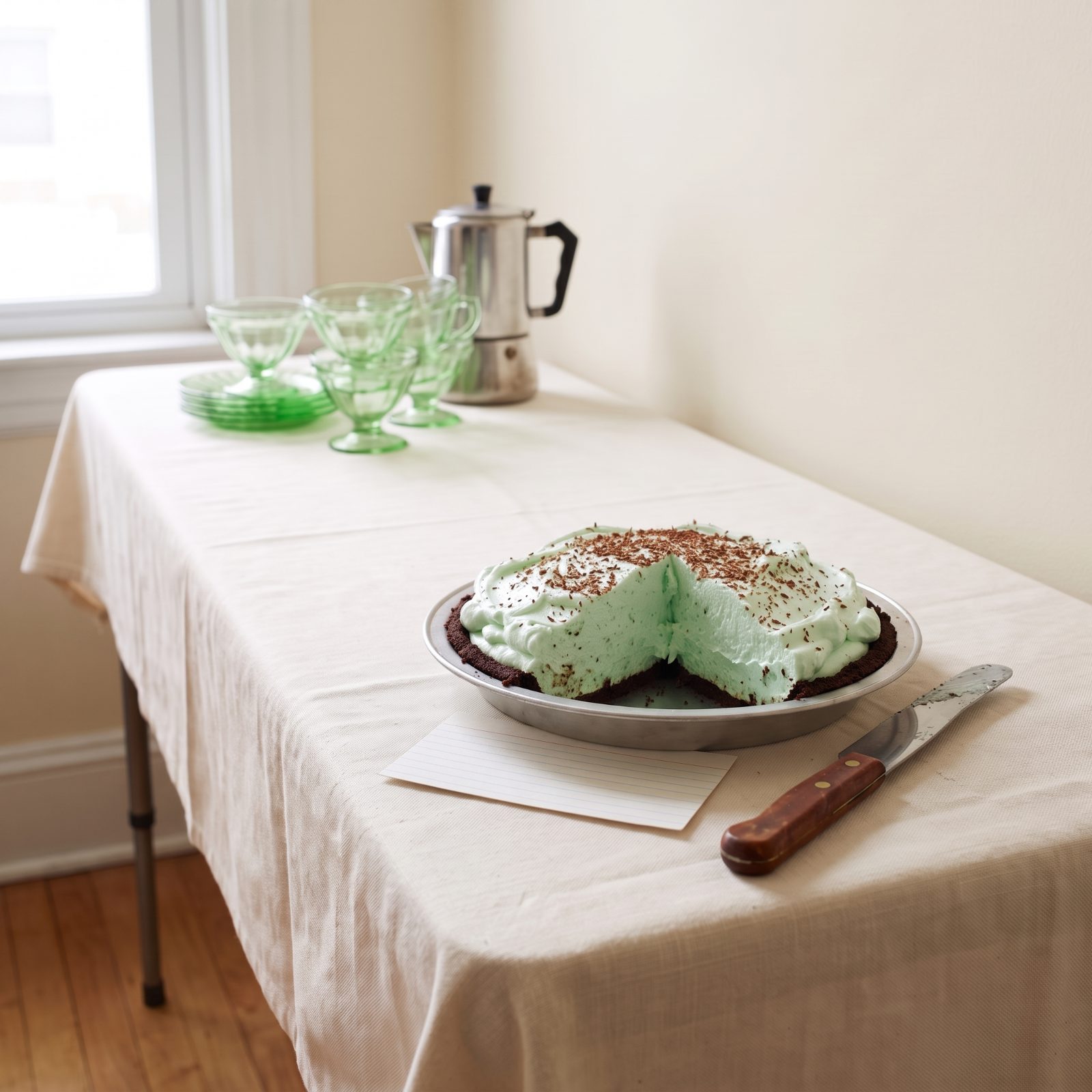
Pale green, cloud-light, faintly boozy. The grasshopper pie earned its color and its buzz from crème de menthe and crème de cacao, which is a strange thing to find at a Baptist potluck. Plenty of congregations made a dry version with mint extract and a few drops of food coloring, and nobody at the table ever asked which one they were eating.
The chocolate cookie crust held everything down. Without it the filling floated off into sweet nothing. You don’t spot grasshopper pie much anymore, partly because the liqueur spooks the church crowd and partly because green desserts fell out of fashion around the time avocado kitchens did.
6. Vinegar Pie With a Sweet Custard Center
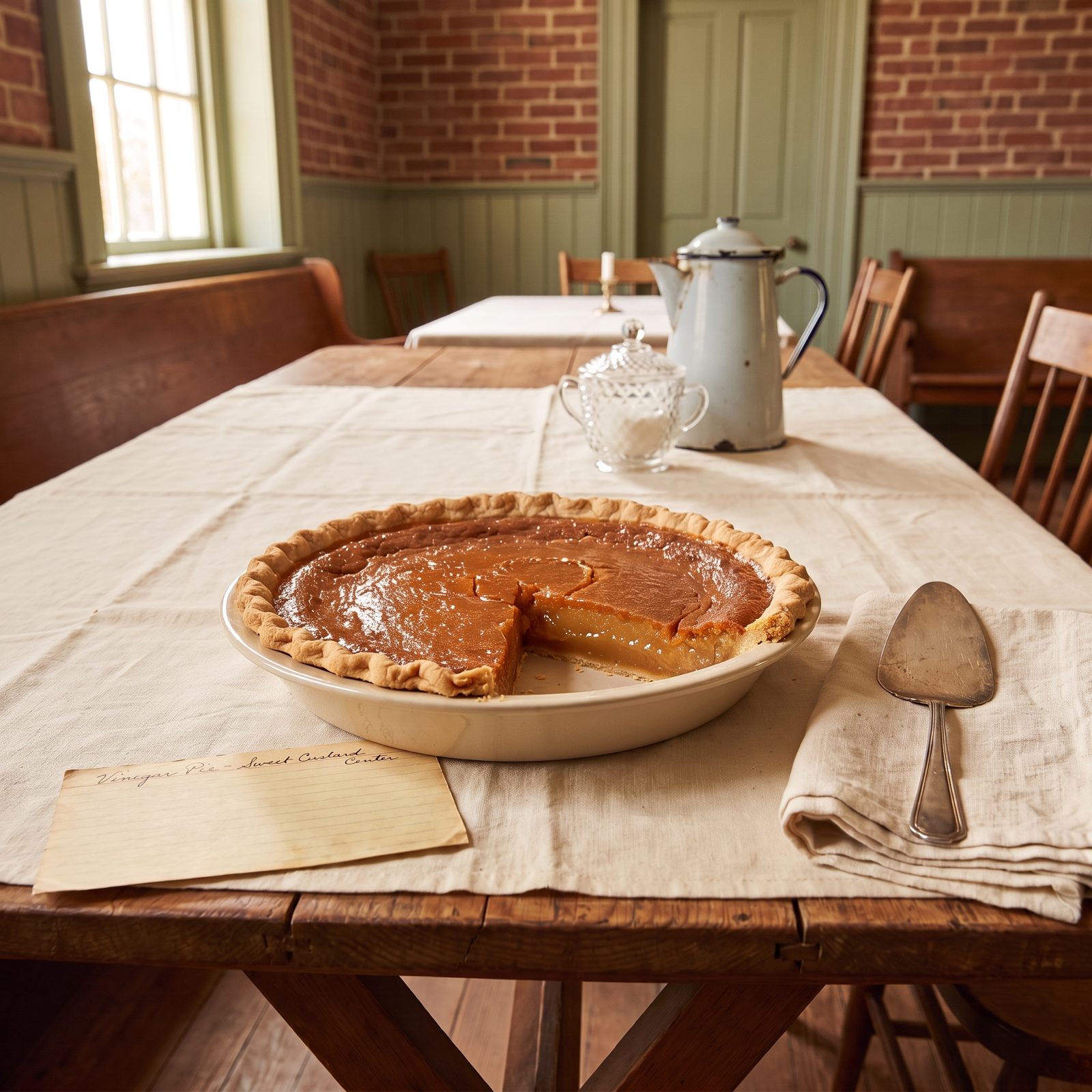
Before lemons were cheap and everywhere, pie cooks needed a cheat for tartness, and cider vinegar was always in the pantry. A splash into a sweet custard mimics the bright edge of a lemon without the lemon, and the result tastes nothing like a salad dressing. It tastes like caramel that learned a little discipline.
A pure frontier-economy dessert, this. Born of making do, it survived longest in rural congregations where the old cooks never saw a reason to switch. Try describing it to anyone under fifty and watch their face.
5. Millionaire Pie With Pineapple, Coconut and Pecans
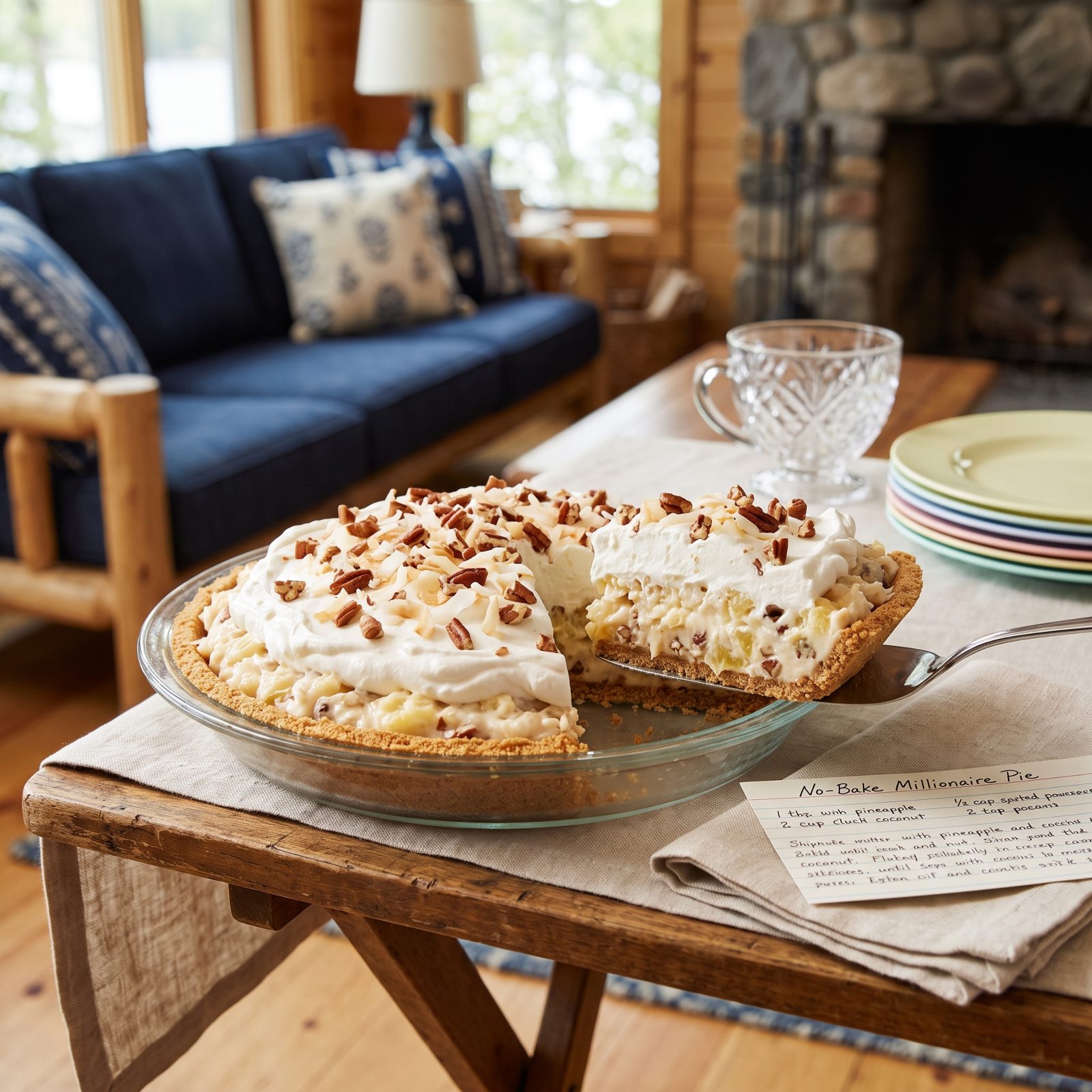
The name was the whole joke. Nothing in it cost a dollar, yet it tasted rich enough that somebody decided only a millionaire deserved it. Crushed pineapple, coconut, pecans, condensed milk, whipped topping, a graham crust. No oven required, which made it perfect to throw together in a hot kitchen the morning of the picnic.
It vanished off the table first. Southern congregations especially treated it like currency. If it faded, it faded because no-bake fluff pies started reading as dated the moment real pastry made its comeback.
4. Seven-Layer Salad Sealed Beneath a Mayonnaise Topping
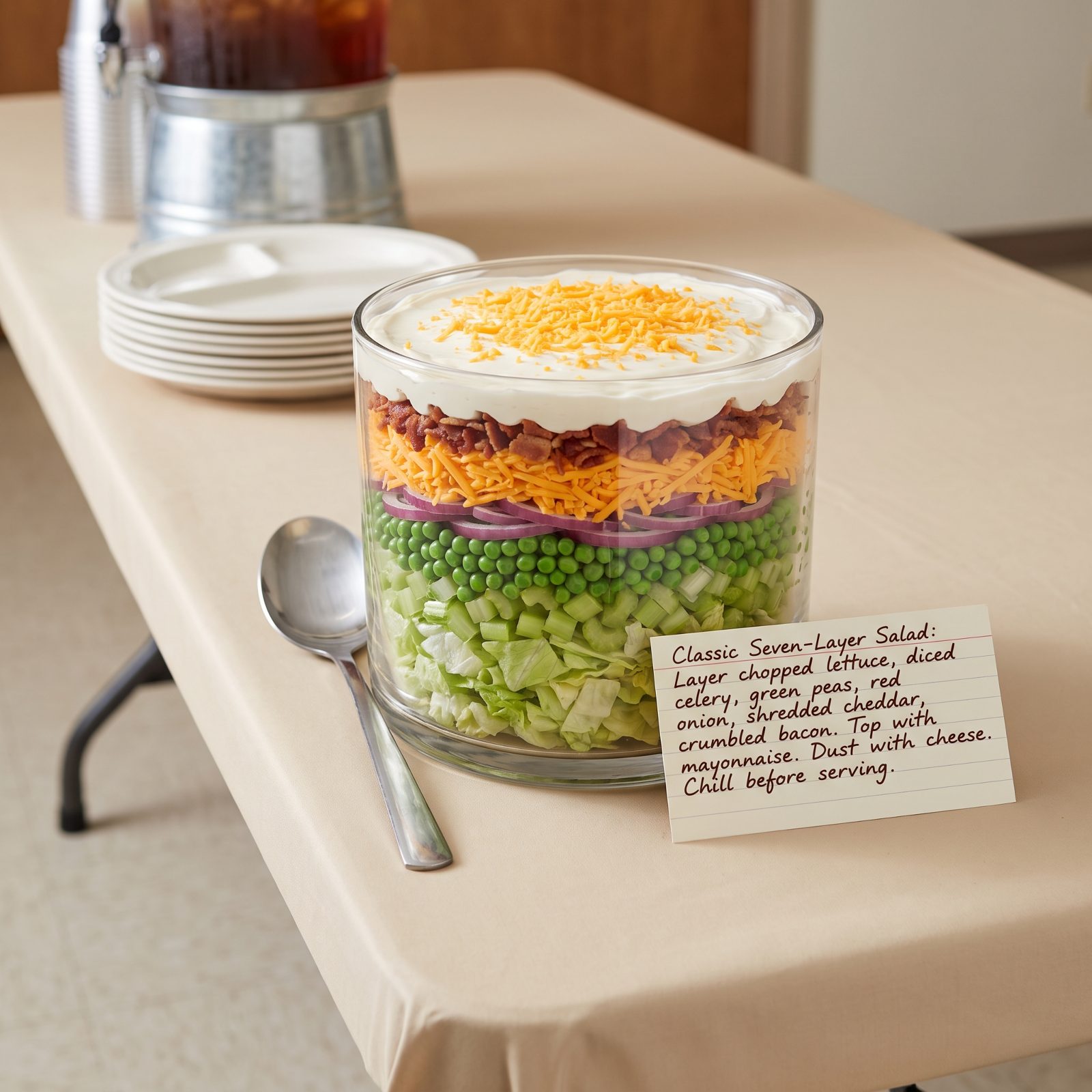
This one got built the night before on purpose. The mayonnaise was spread edge to edge like grout, a seal that kept the lettuce crisp and the peas from going anywhere until someone drove a spoon through all of it at the table. Half the appeal was in the structure. A glass bowl showed off the stripes, and people judged you a little on how clean your layers were.
Peas, cheddar, red onion, bacon, the whole thing crowned with that pale lid of mayo. It still shows up at a reunion here and there, but the full ceremony of it has mostly gone.
3. Watergate Salad With Pistachio Pudding and Crushed Pineapple
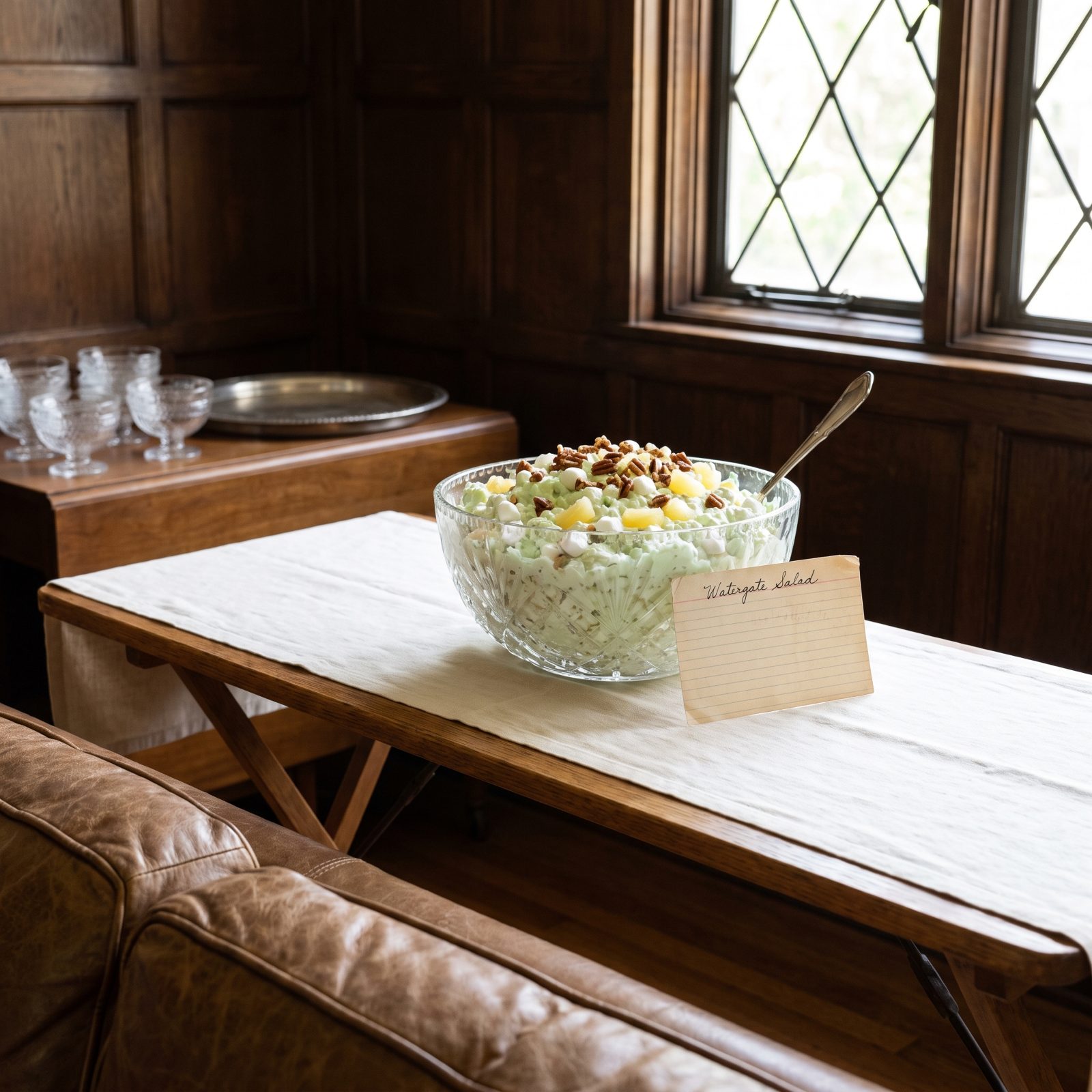
A box of pistachio pudding mix, a tub of whipped topping, a can of pineapple and a handful of marshmallows. That’s the whole roster, and nobody could ever decide whether it counted as a salad or a dessert, so it got parked wherever there was room.
The name has nothing to do with the scandal. Or maybe it does, depending on which food historian you corner. That green was unapologetic. You don’t run into it much now because convenience fluff salads carry a whiff of the church basement that younger cooks have decided to skip.
2. Tuna Noodle Casserole Under a Crushed Potato-Chip Topping
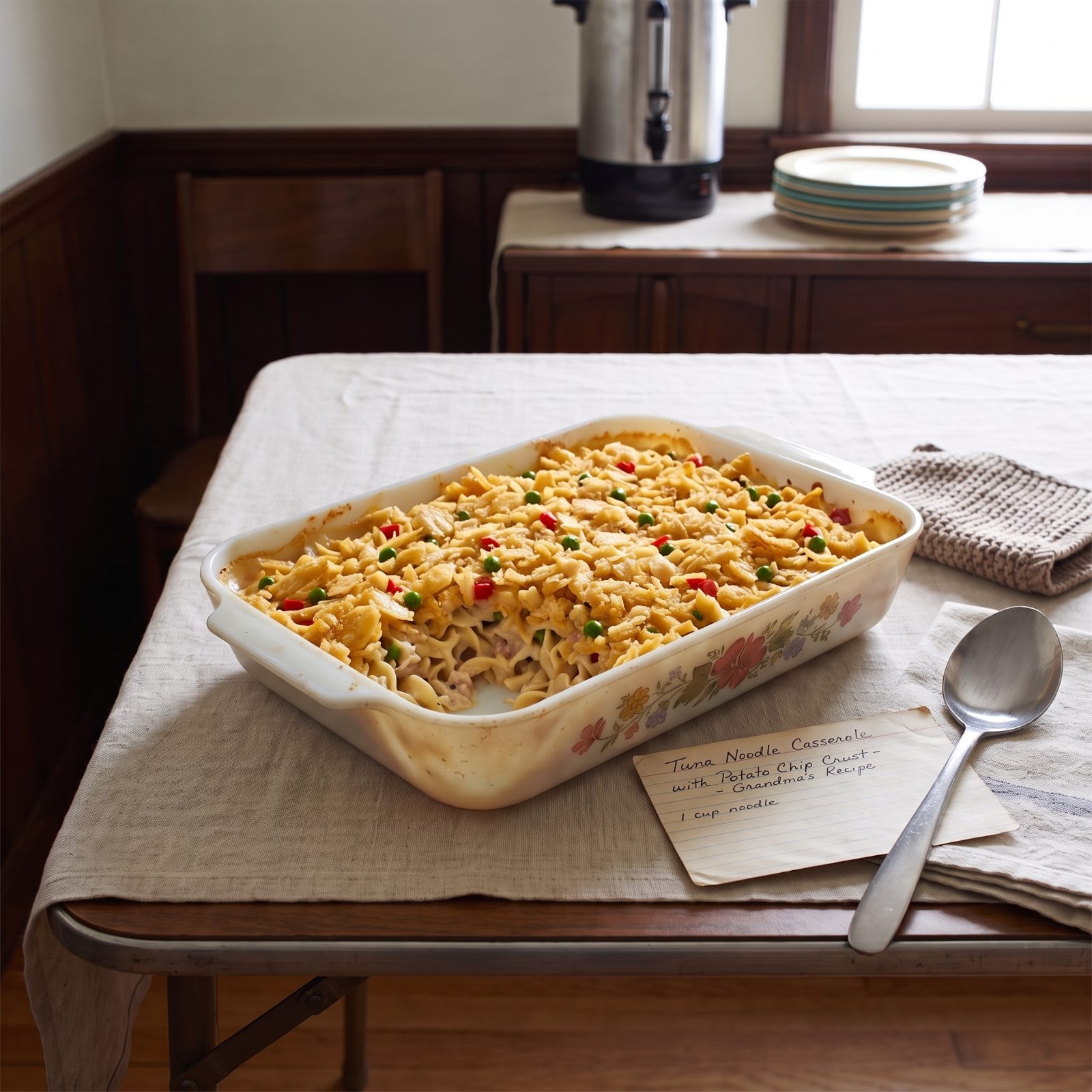
People forget the potato-chip topping. Buttered breadcrumbs were the fancier option, but crushed chips were faster and tasted better, salt and crunch sitting right on top of all that soft creamy comfort underneath.
Canned soup, egg noodles, a can of tuna, frozen peas. This fed a crowd for almost nothing and rode in the back seat without complaint. It hasn’t vanished so much as gotten embarrassed about itself. Mention cream-of-mushroom soup to a serious cook today and you’ll get a look. Their loss, honestly, because the chip crust alone earns its place.
1. Ambrosia Salad With Citrus, Coconut and Marshmallows
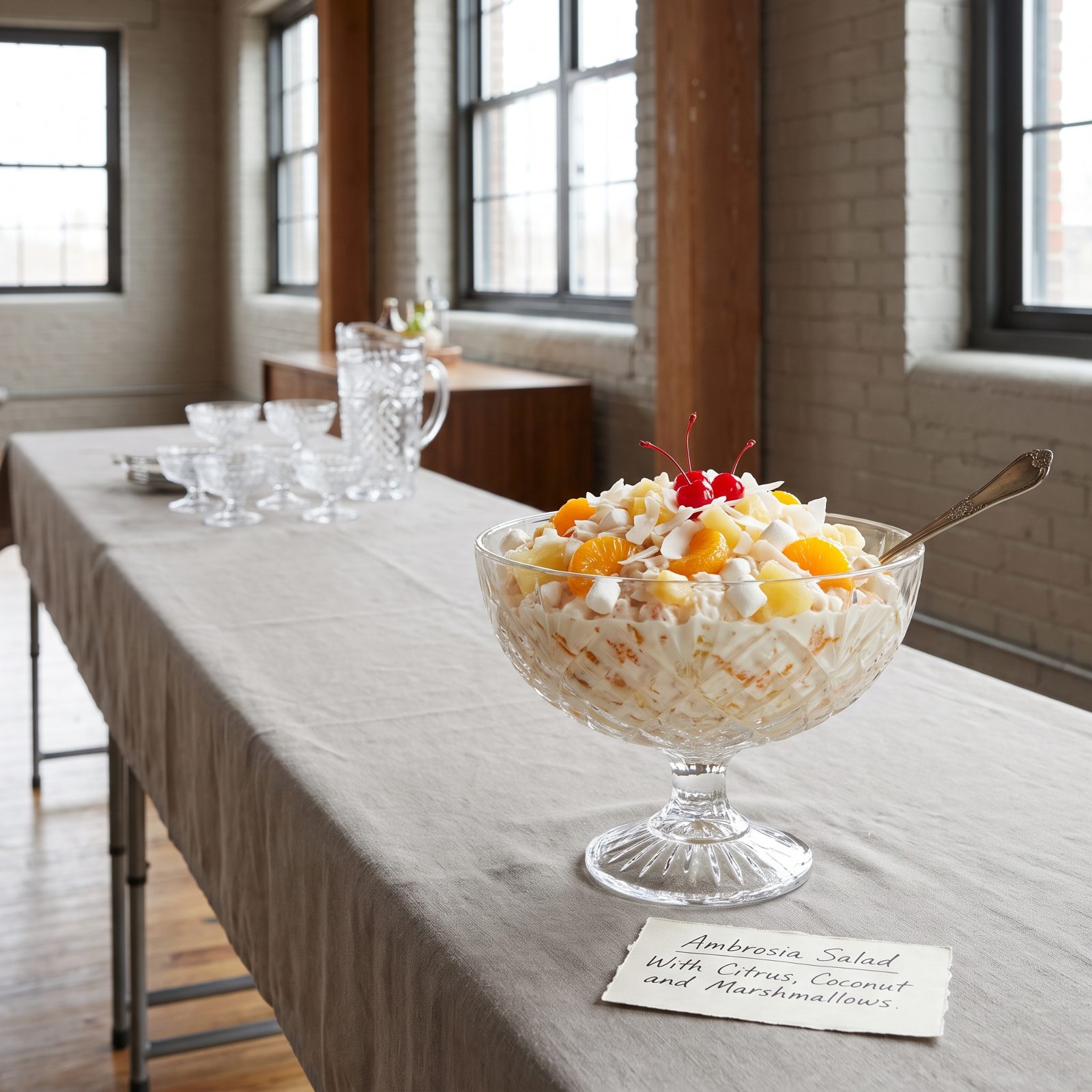
The original was almost austere. Oranges, coconut, a little sugar, maybe a splash of sherry. Then the twentieth century got hold of it and buried the fruit under marshmallows, sour cream and canned everything, and that’s the version most people picture now.
Both kept turning up at potlucks for decades, usually with a few maraschino cherries parked on top like a signature. Ambrosia hangs on better than most of these, mostly at holidays, but the everyday potluck bowl of it has thinned out. Shame. On a hot day it was the first thing to disappear.