
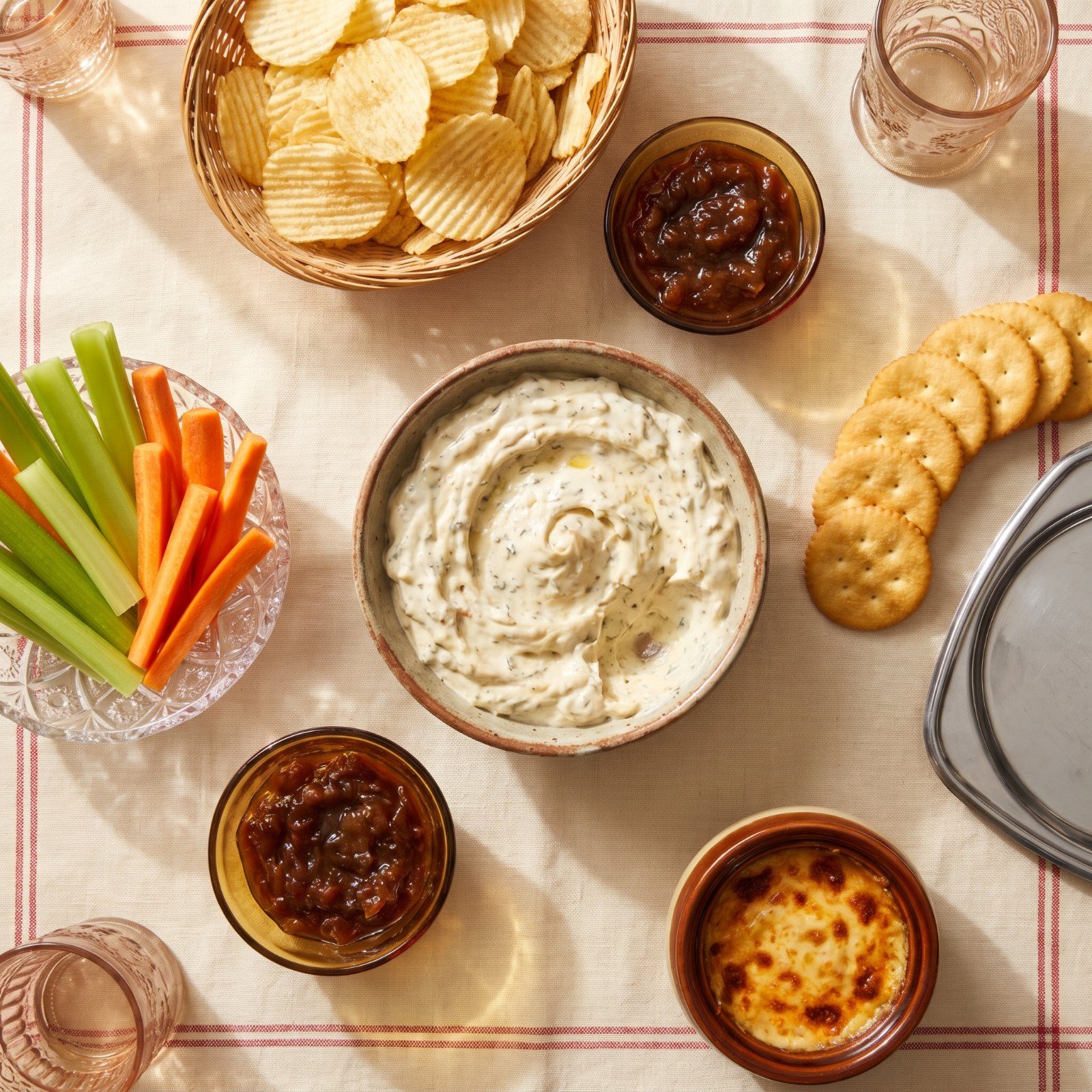
The first scoop always went to whoever hovered closest to the bowl. You knew the house by its dip. A ring of raw carrots around something green meant one kind of evening, while a warm bread bowl leaking cheese meant something else entirely. These recipes got handed around on index cards, stained with sour cream and memorized by hand. What follows is the stuff that defined how America gathered around a coffee table, one scoop at a time.
Please note that some of the images in this article were created with the assistance of AI.
1950s: California Onion Dip Born From a Packet of Soup Mix
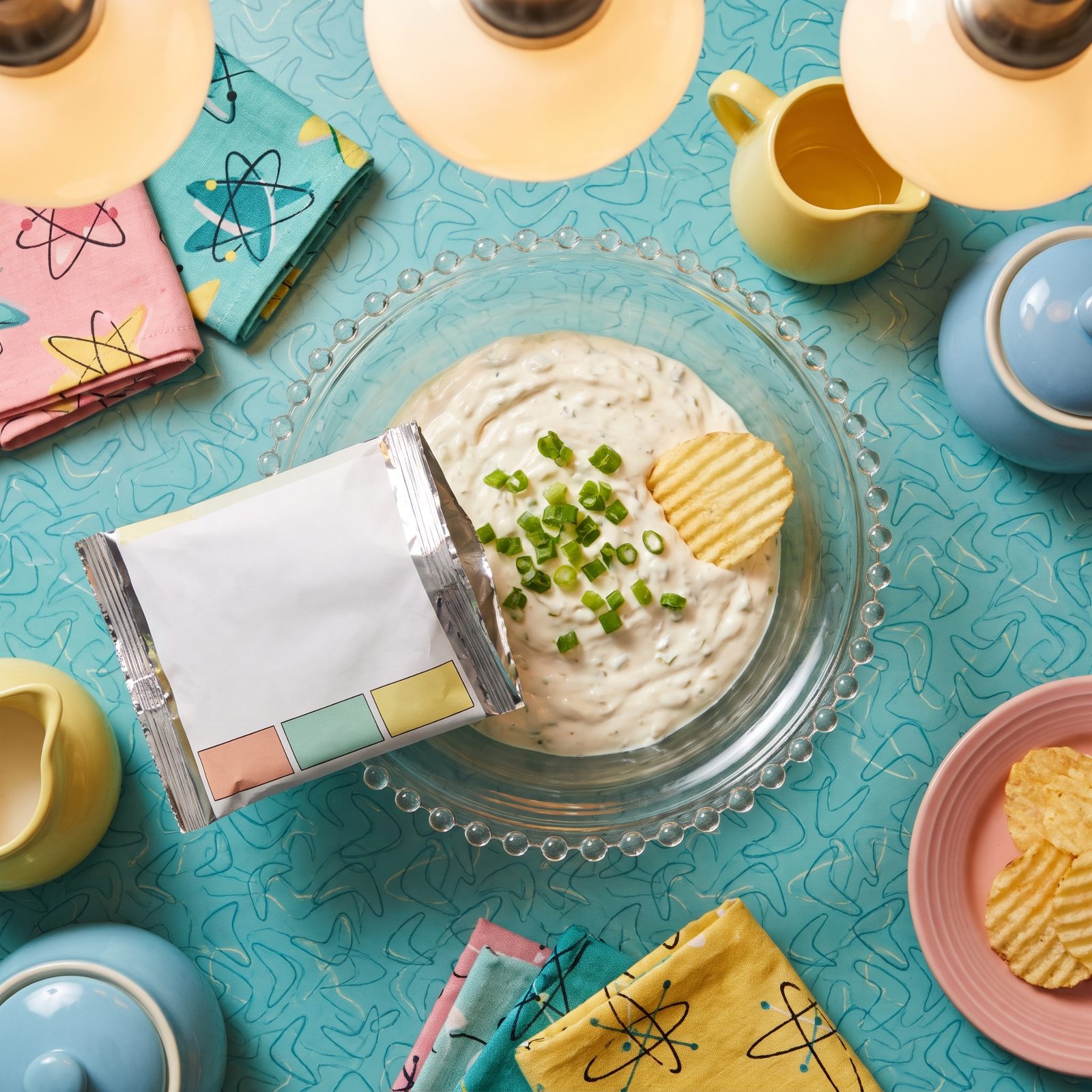
It started with a packet. Tear it open, stir it into a tub of sour cream, and you had the dip that would outlive every other recipe here. Lipton printed the instructions right on the back of the soup box in the 1950s, and that one move rewired how America snacked.
No chopping, no measuring — you could make it in the time it took the guests to park the car. The onion flecks bloomed as it sat in the fridge, so the smart hosts made it an hour early.
It paired with one thing and one thing only: the rippled potato chip, built with ridges deep enough to carry a full load without snapping in the bowl.
1950s: Cream Cheese and Canned Clam Dip From the Pantry Shelf
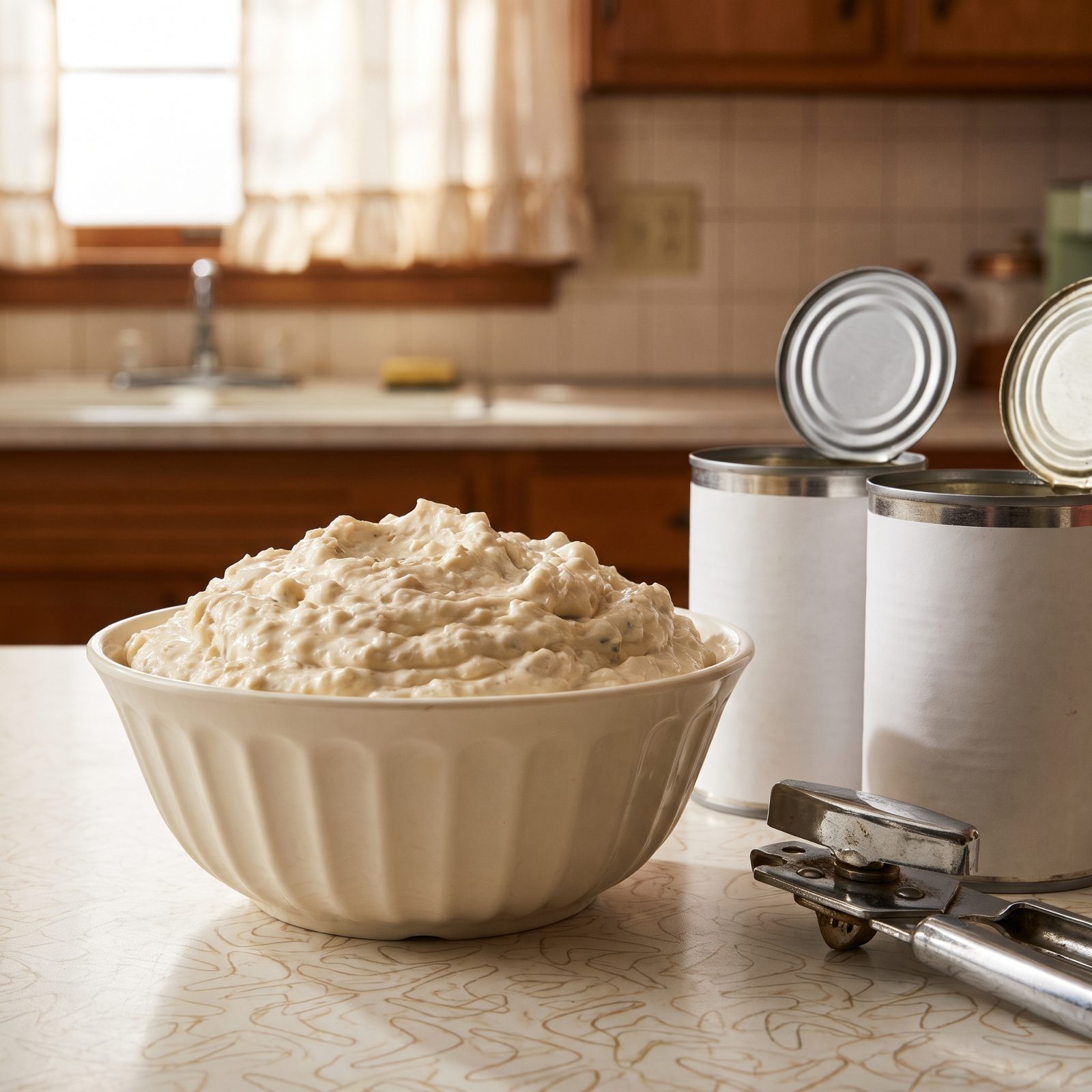
Two cans and a block of cream cheese. That was the whole operation. You drained the baby clams, beat them into softened cream cheese with a splash of their own juice, and hit it with a little onion and lemon.
This was the dip for the host who wanted to seem a little fancy without going near a fish counter. Canned clams meant you could pull it off on a Tuesday with nothing fresh in the house, and it tasted briny and rich and slightly mysterious to anyone who didn’t know how simple it really was.
Served cold, scooped with a plain salted cracker so nothing fought the clam. It’s easy to underestimate this one until you taste a good version.
1950s: Deviled Ham Dip Riding a Ritz Cracker
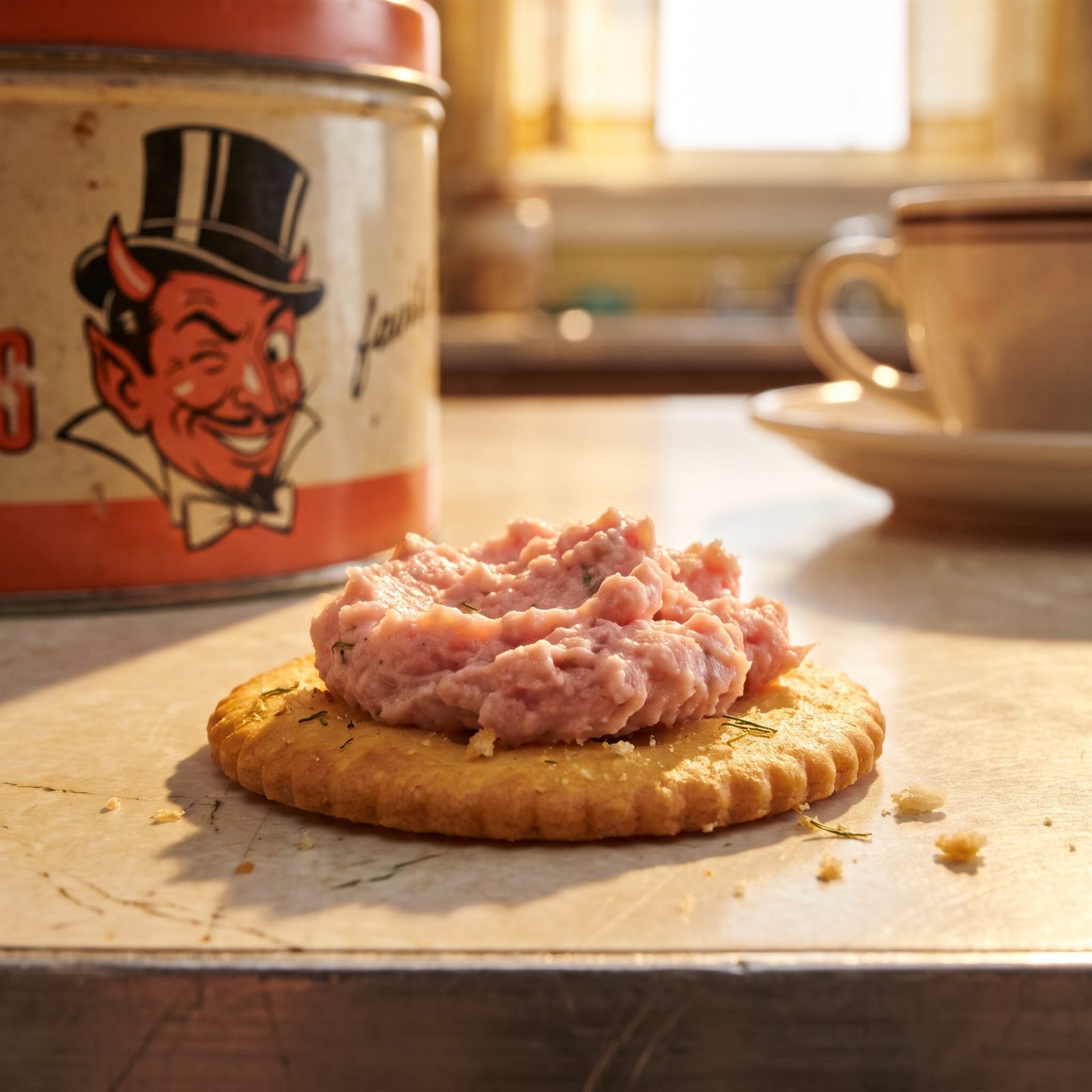
The little can with the devil on the label did most of the work. You whipped canned deviled ham into cream cheese, maybe a dash of mustard and a few chopped pickles, and spread it thick.
The Ritz was non-negotiable. That buttery, salty, faintly sweet cracker could make almost anything taste like a treat, and the pink ham spread leaned right into it. Guests built little stacks and popped them whole.
It showed up at bridge nights and baby showers, the kind of spread that sat out all afternoon and somehow never ran out. Humble food, dressed up just enough to pass.
What Our Readers Say
- When Piaci Pizza readers loved a food photo and tapped a reason, comfort came out on top at 30%, with nostalgia also making the list at 15%.
- When our readers disliked a food photo, the top reason was simply “not for me,” followed by the ingredients themselves at 30%.
From Piaci Pizza reader polls and votes.
1960s: Green Goddess Dip Guarding a Ring of Raw Vegetables
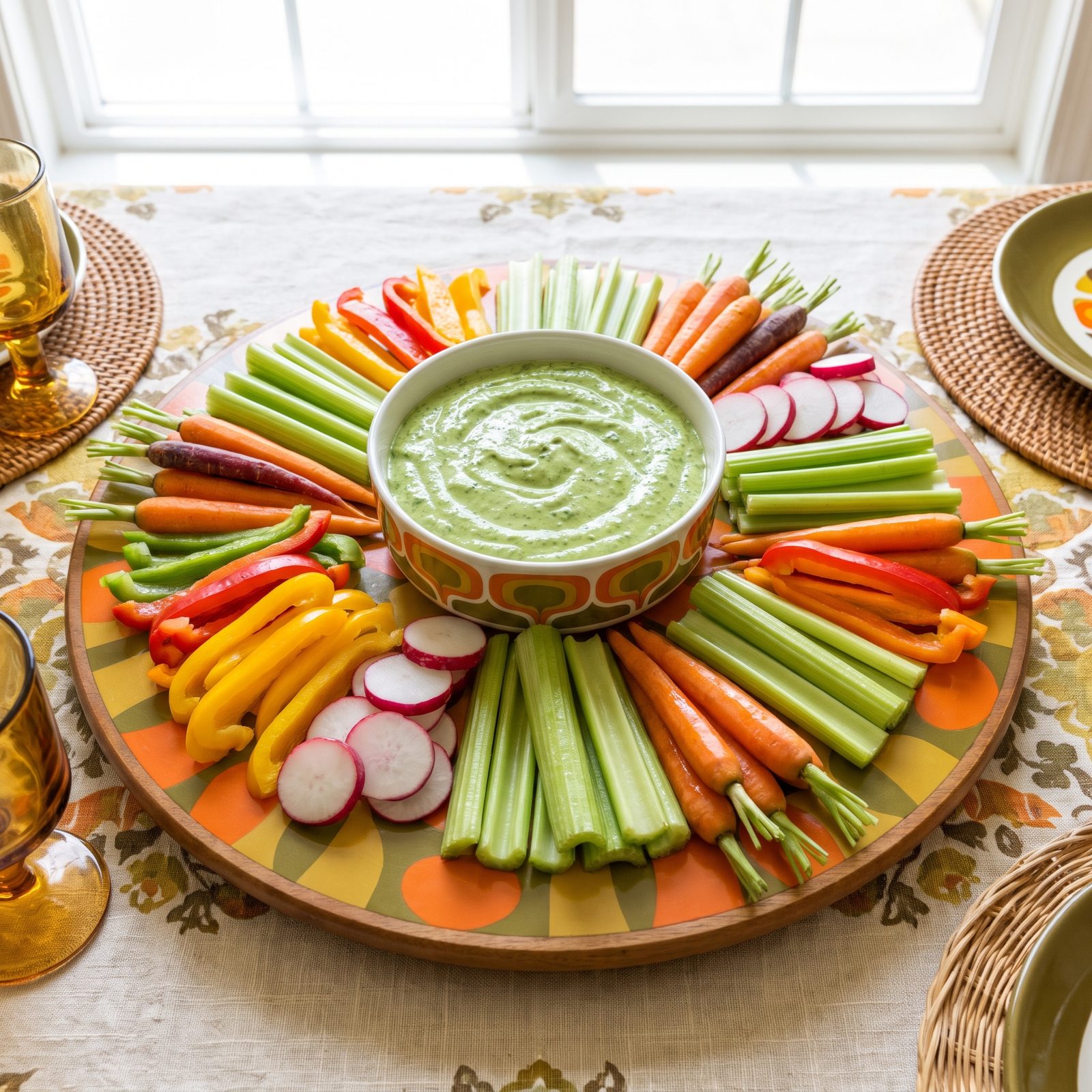
The sixties wanted you to eat your vegetables, but with style. Green Goddess was the answer — a tangy herb-packed dressing thickened into a dip, built on anchovy, chives, tarragon, and a whole garden of green.
It arrived with the crudité platter, that careful wheel of carrot sticks and celery and radishes and bell pepper strips arranged like a clock face. For the first time, raw vegetables got to be the centerpiece instead of an apology.
It signaled that the host had read a magazine and cared about color on the table. The anchovy stayed a secret most guests never figured out.
1960s: Smoked Salmon Dip on a Shingle of Melba Toast
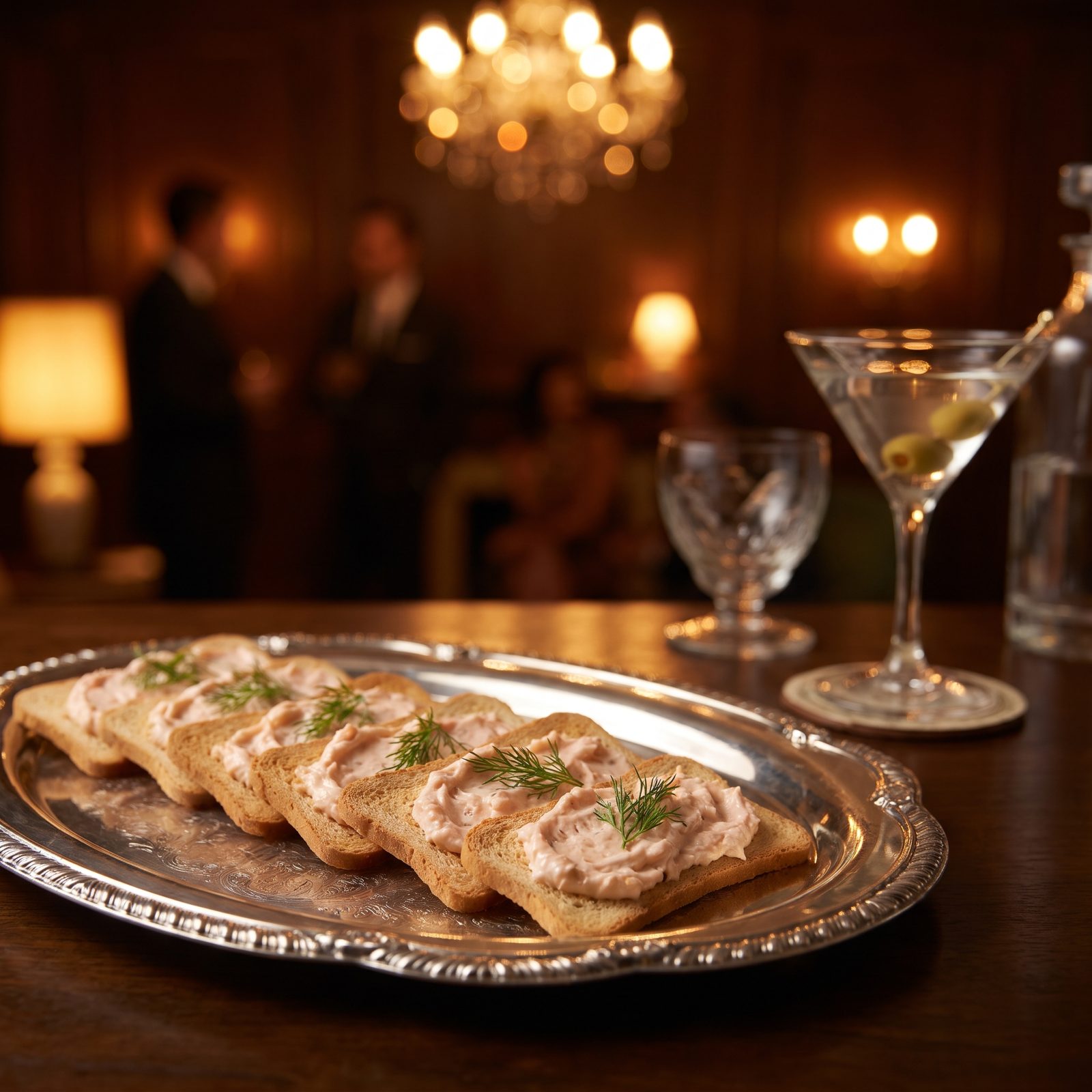
This one meant the host was trying to impress, and usually succeeding. Smoked salmon whipped into cream cheese and sour cream with dill and a squeeze of lemon, pale coral and luxurious looking.
Melba toast was the vehicle of choice — those thin dry crackers that snapped clean and let the salmon do all the talking. The dryness was the point. Nothing greasy to compete.
It belonged to the cocktail hour, the stretch of the evening before anyone sat down, when people stood around with highball glasses and nibbled while on their feet. A little salty, a little rich, and just expensive-sounding enough to feel like an occasion.
1960s: Curried Sour Cream Dip With a Spoonful of Chutney
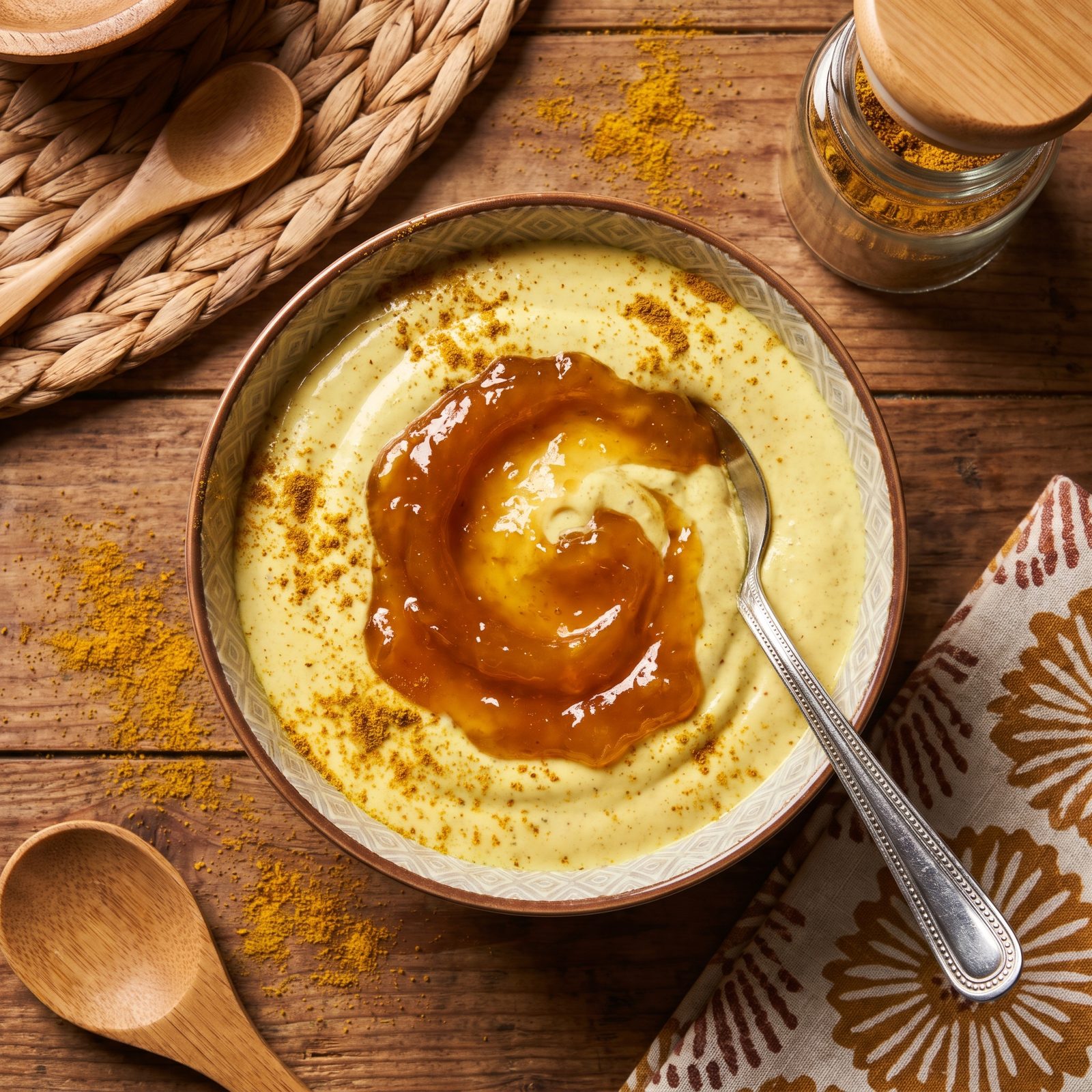
Curry powder was having a moment, and American hosts went for it. A base of sour cream and mayonnaise, a generous shake of curry powder, and a mound of mango chutney spooned over the top.
The contrast did the work: cool and creamy underneath, sweet and spiced on top, with a little heat creeping in behind it. Toasted almonds gave it crunch.
This was the dip that said the host had traveled, or at least read about traveling. It felt exotic on a suburban coffee table in a way that’s hard to explain now. Scooped up with water crackers or raw vegetables, it was the thing people asked about by the end of the night.
1970s: Swiss Cheese Fondue and the Communal Pot
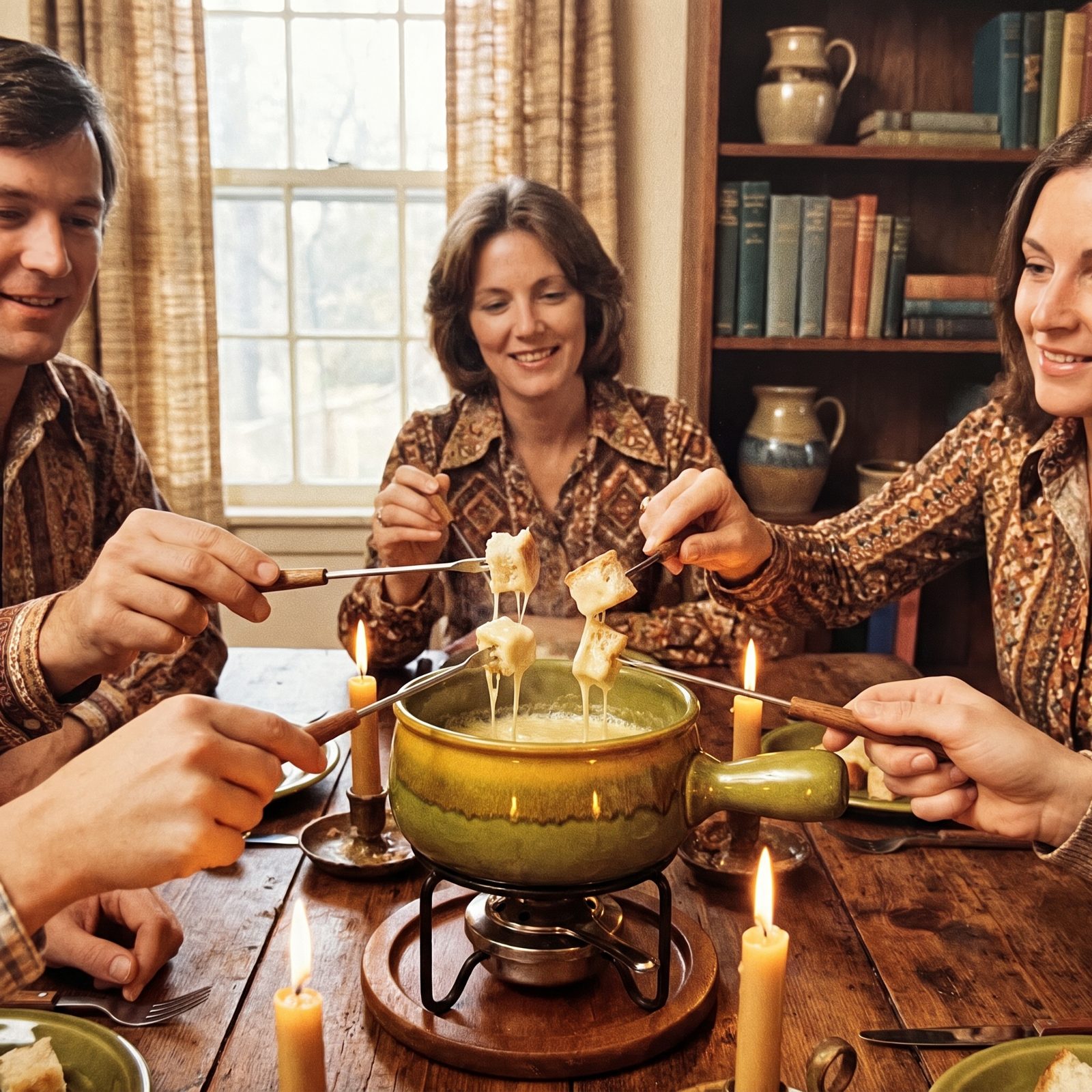
The seventies took dipping and made it a group activity. Everyone leaned in over the same pot, spearing bread cubes on long color-tipped forks and swirling them through molten Swiss and Gruyère loosened with white wine and a whisper of kirsch.
The rules were half the fun. Drop your bread in the pot and you owed the table a round, or a kiss, depending on the house. That one pot forced people to slow down and actually talk to each other across the flame.
Fondue wasn’t a snack. It was the whole evening, pot included.
The fondue set was a wedding-gift fixture, usually orange or avocado enamel, and it spent most of the year in a cupboard waiting for the one dinner party it was born for.
Explaining how Switzerland’s cheese cartel came to push fondue on the world, a Swiss food historian describes the pitch: “We could sell it with a traditional story behind it to show that cheese was a very healthy food from the Alps.”
In our reader votes, food photos served straight from a skillet or pot got more hearts than the other images in the same articles, 85% versus 78%.
1970s: Hot Chipped Beef Dip Steaming in a Bread Bowl
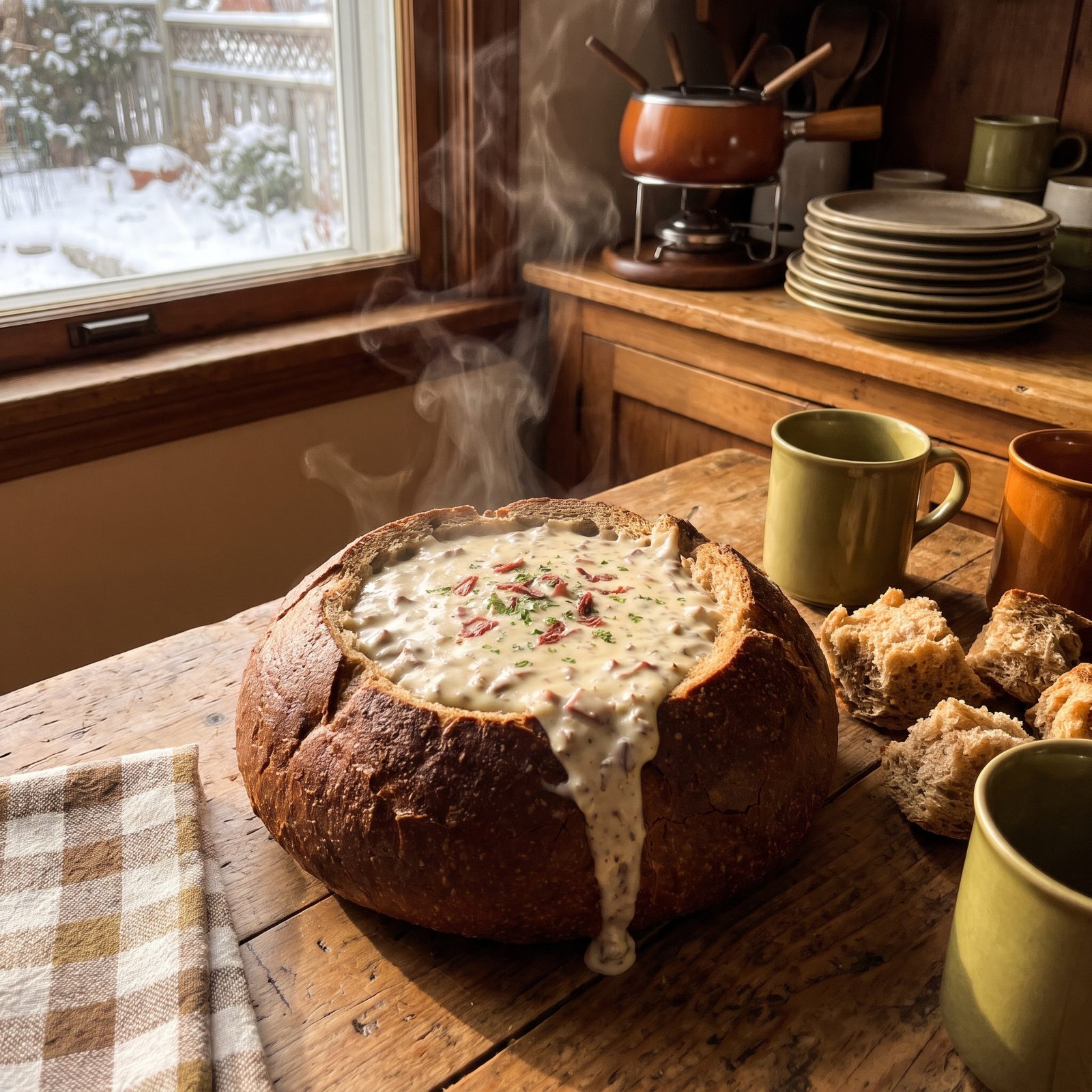
Warm, savory, and served nestled inside a loaf, this was the dip that announced winter entertaining. Dried chipped beef chopped fine, folded into cream cheese and sour cream with a little onion and pepper, then baked until it bubbled.
The hollowed rye loaf pulled double duty. The dip went straight into the bread, sometimes generously enough to spill over the crust, and once it ran low, you tore the loaf apart and ate the evidence. Nothing wasted.
It sat on the buffet next to the meatballs and the cheese ball — working-class elegance that fed a crowd without fuss. The kind of thing a neighbor brought over and you immediately asked for the recipe card.
1970s: Refried Bean Dip Under a Blanket of Melted Cheddar
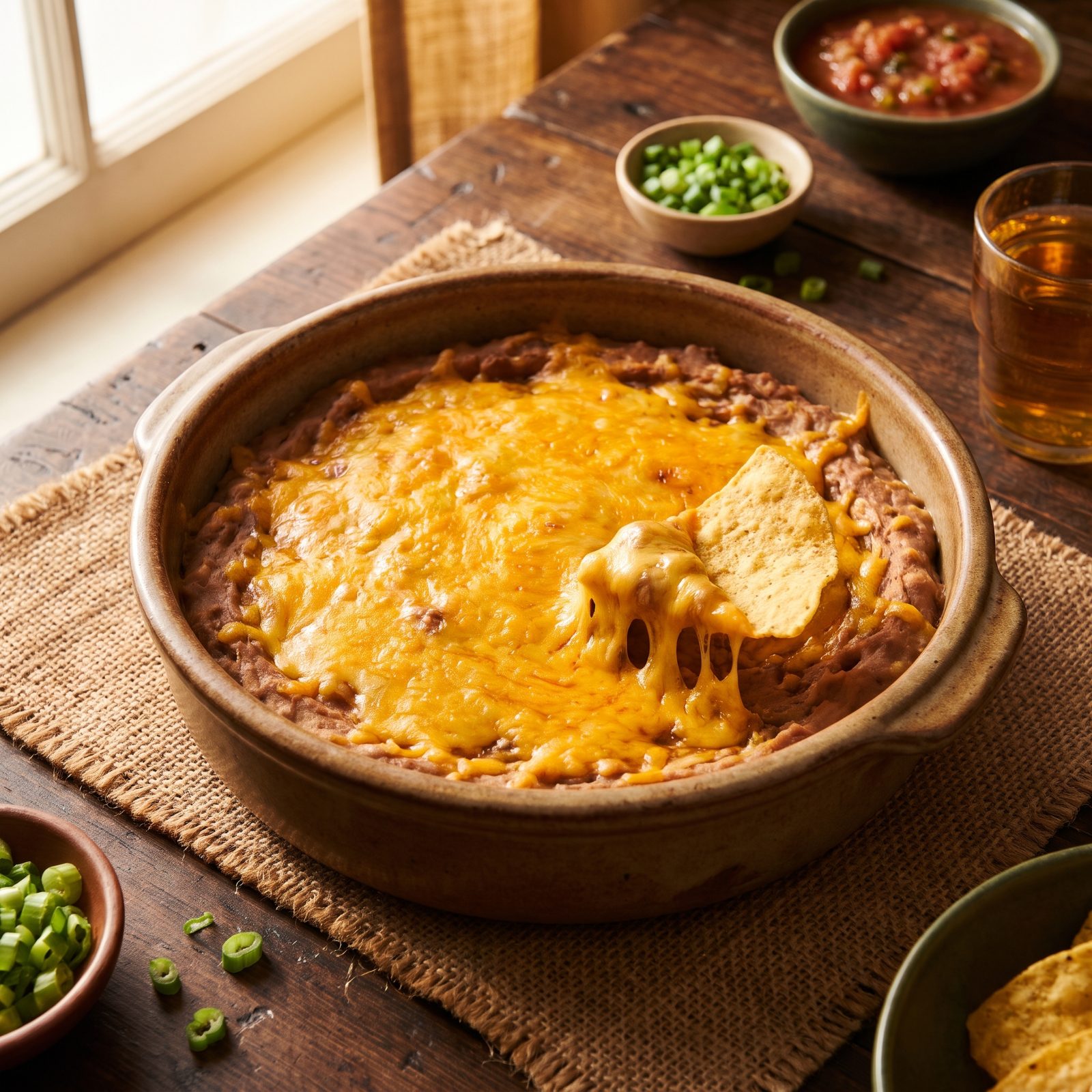
Two ingredients, almost no effort, endless appeal. A can of refried beans spread in a dish, covered with a thick layer of cheddar, and run under the broiler until it blistered and browned.
Some hosts fancied it up with a spoon of taco seasoning or a few jalapeño rings, but the bones stayed simple. Warm beans and melted cheese scooped onto a sturdy tortilla chip — that was the whole appeal.
This was the dip of card games and televised football, the one that didn’t ask for a cocktail dress. Casual entertaining found its hero here, and it never really left.
1980s: Knorr Spinach Dip Living Inside a Hollowed Sourdough Loaf
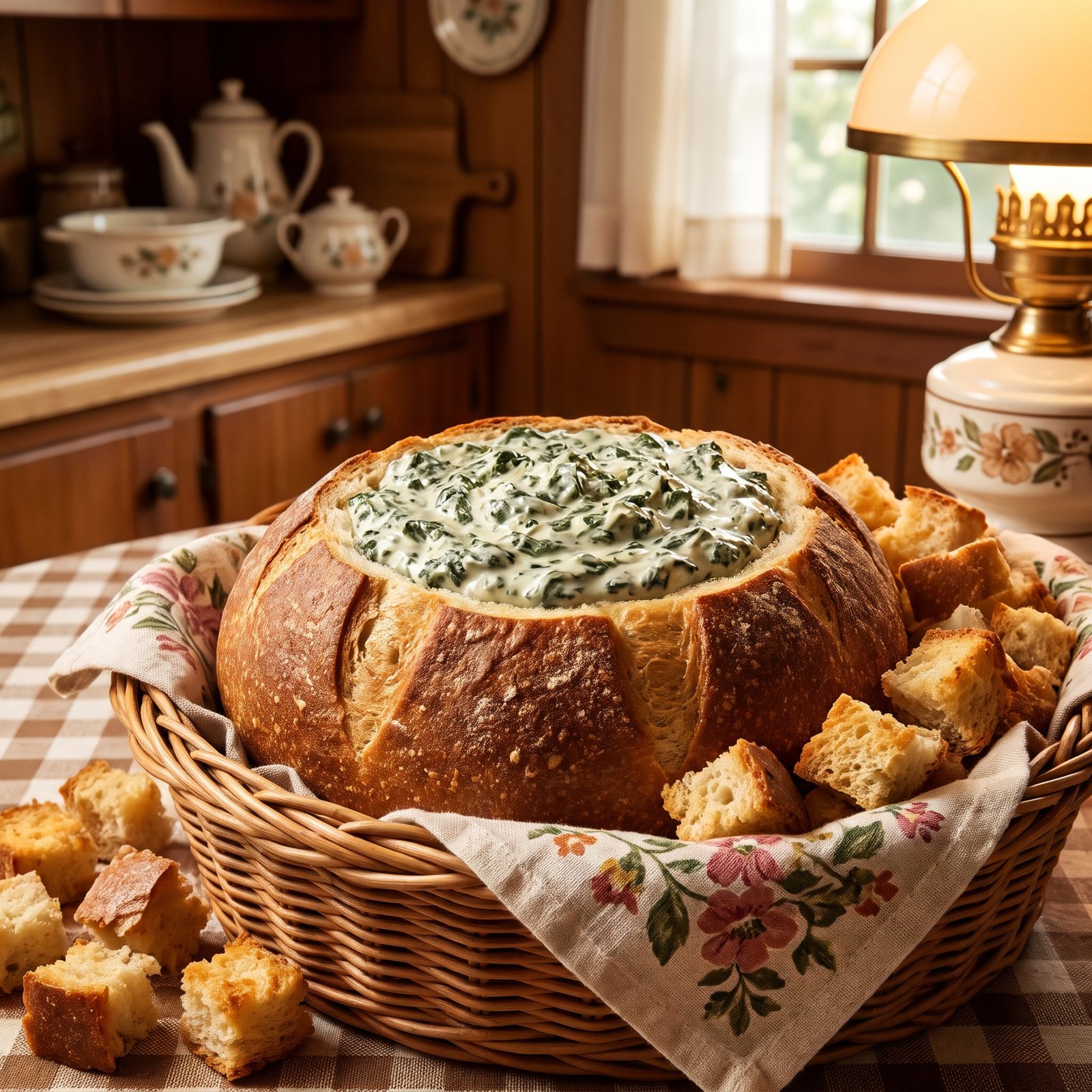
If you went to a party in the eighties, you met this dip. Frozen chopped spinach squeezed dry, a tub of sour cream, a cup of mayo, water chestnuts for crunch, and a packet of Knorr vegetable soup mix stirred through.
Then came the theatrics. A round sourdough loaf scooped out, the dip poured in, the torn bread piled around it. People ate the bread, then ate the bowl. The thing was built to vanish.
It was the spiritual heir to the fifties onion dip — same trick, bigger presentation. Decades on, you still spot it at showers and office parties, green flecks and all, because nothing beats a dip that eats itself.
1980s: Seven-Layer Taco Dip on a Glass Platter
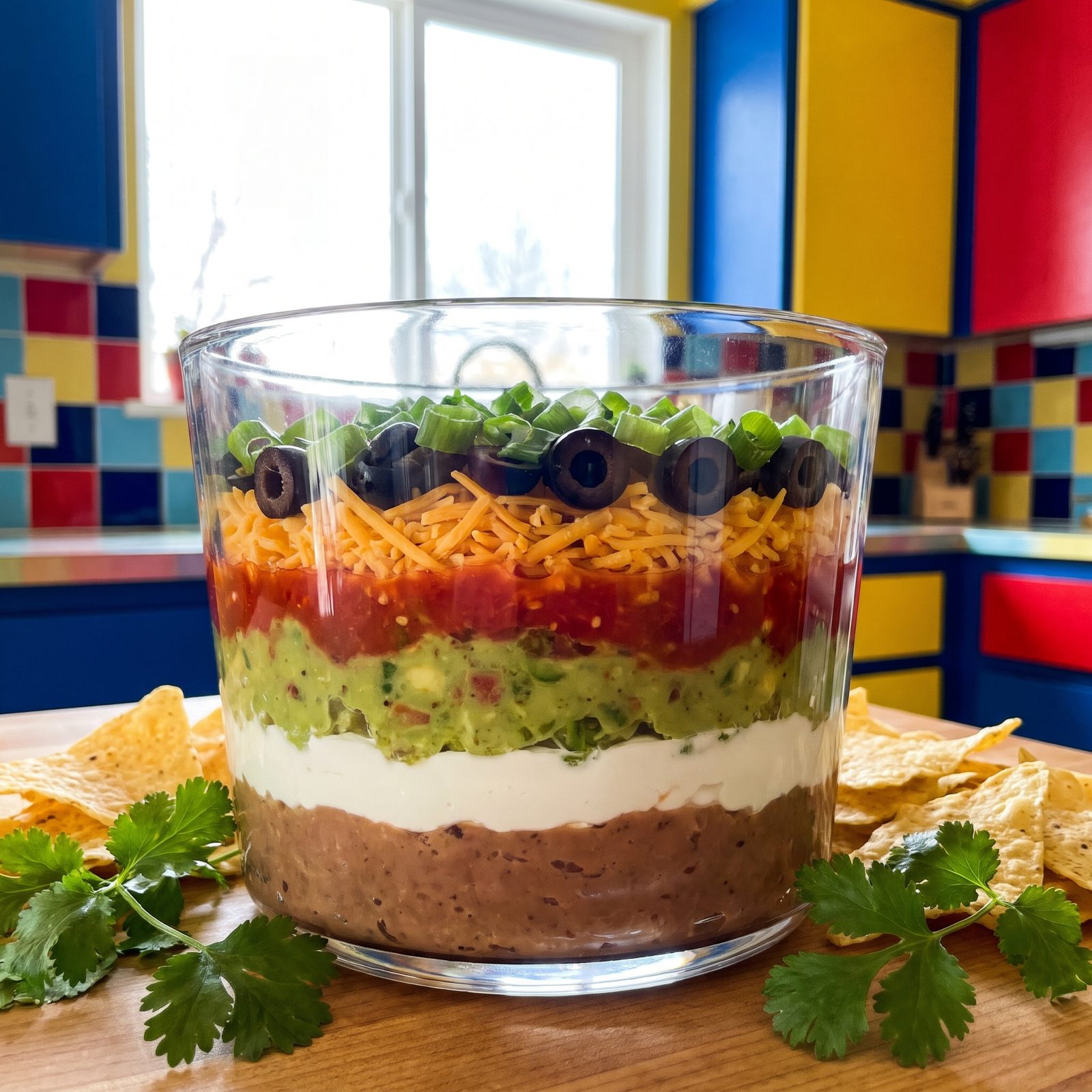
The glass dish was the whole point. You built this one in strata so everyone could see what they were getting: refried beans on the bottom, sour cream stirred with taco seasoning, a layer of guacamole, then salsa, shredded cheddar, sliced black olives, and a scatter of green onions or diced tomato on top.
Every scoop was a negotiation. A brave chip went straight to the bottom and came up carrying a little of everything. A timid one skimmed the cheese and snapped in half. By the end of the night, the neat stripes looked like a landslide.
It was the potluck champion of the decade, the dish that made a host look organized without ever turning on the oven. Assemble it in the morning, cover it with plastic wrap, and let the fridge do the rest.
Tracing the layered dip back to early-1980s Dallas, a Texas cookbook author argues for restraint: “And when you keep the layering to a respectable level, each scoop of your chip allows you to savor the individual flavors.”
1980s: Hot Artichoke Dip With Toasted Baguette Slices
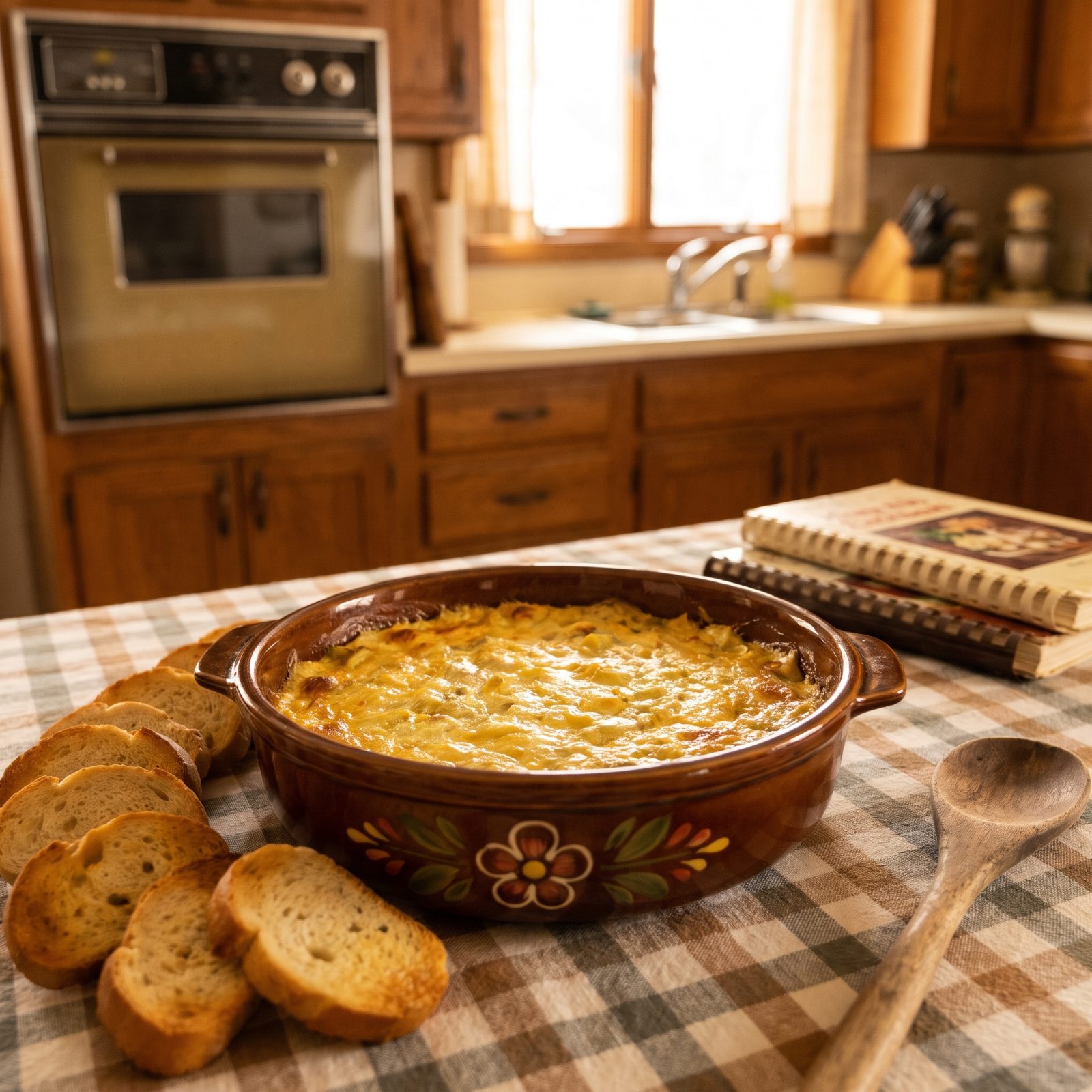
Three ingredients, one baking dish, and a reputation far bigger than the effort. Canned artichoke hearts chopped up, mayonnaise, and a generous pile of grated Parmesan, stirred together and baked until the top went golden and the edges bubbled.
It sounded fancy. Artichokes still felt a little sophisticated in plenty of American kitchens, and serving them hot made the whole thing feel like restaurant food. Some cooks folded in garlic or a handful of mozzarella, but the basic version needed nothing.
The toasted baguette slices sealed the deal. Thin rounds brushed with a little oil and crisped in the oven, sturdy enough to drag through a dip that set up thick as it cooled. Whoever got there while it was still steaming won the evening.
1990s: Velveeta-and-Rotel Queso in a Crockpot
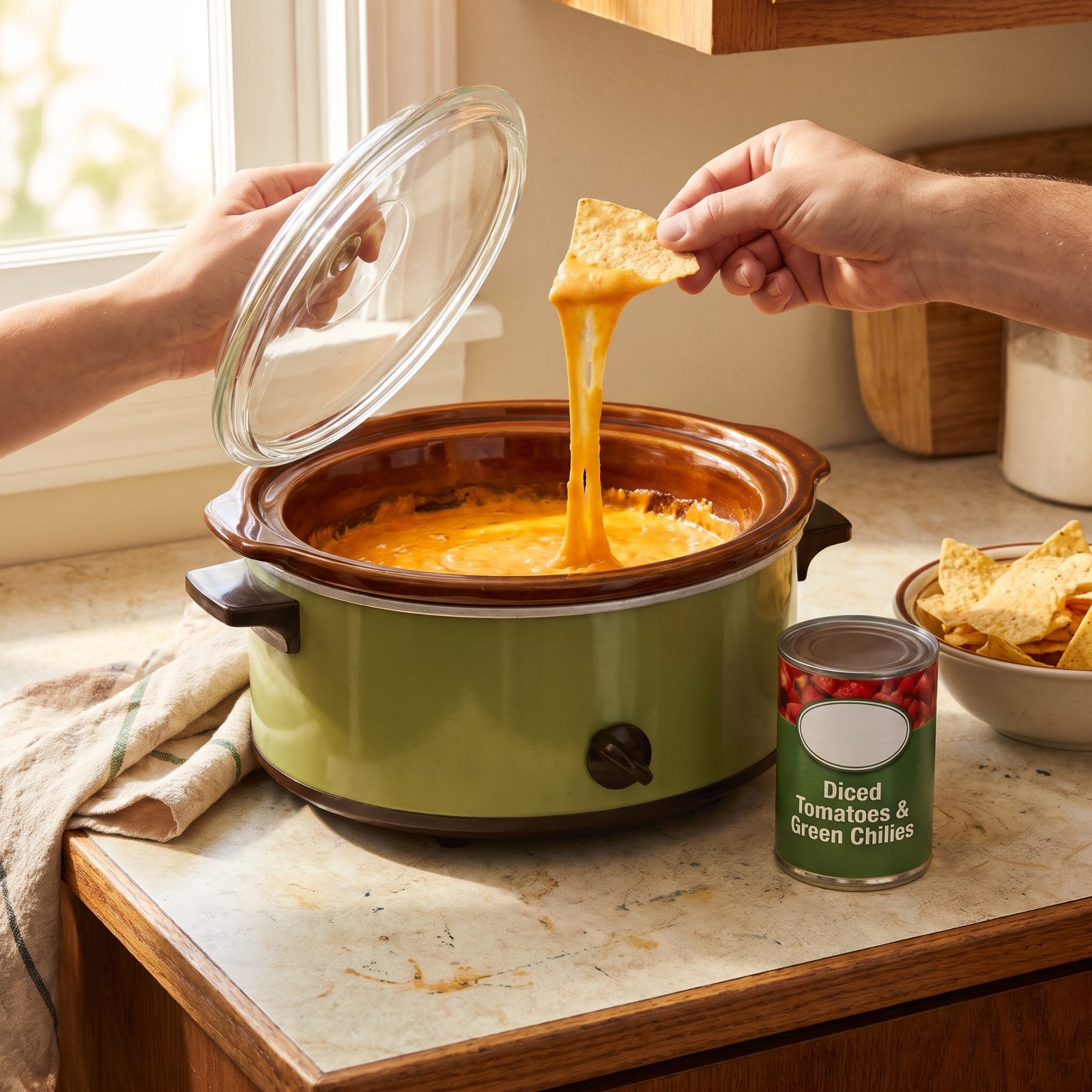
A block of Velveeta, a can of Rotel, and a slow cooker set to low. That was the entire recipe, and nobody ever needed it written down.
Rotel brought diced tomatoes and green chiles, just enough heat and tang to cut through all that molten processed cheese. Velveeta brought the texture: smooth, glossy, and stubbornly unwilling to break or turn grainy, no matter how long it sat. Some households browned a pound of sausage or ground beef and stirred it in, which turned a dip into practically a meal.
The crockpot made it a fixture at office parties, Super Bowl gatherings, and church basements. Plug it in, give it a stir now and then, and keep a bag of tortilla chips within arm’s reach. The orange crust around the rim at the end of the night was the sign of a job well done.
1990s: Baked Pizza Dip With Pull-Apart Bread
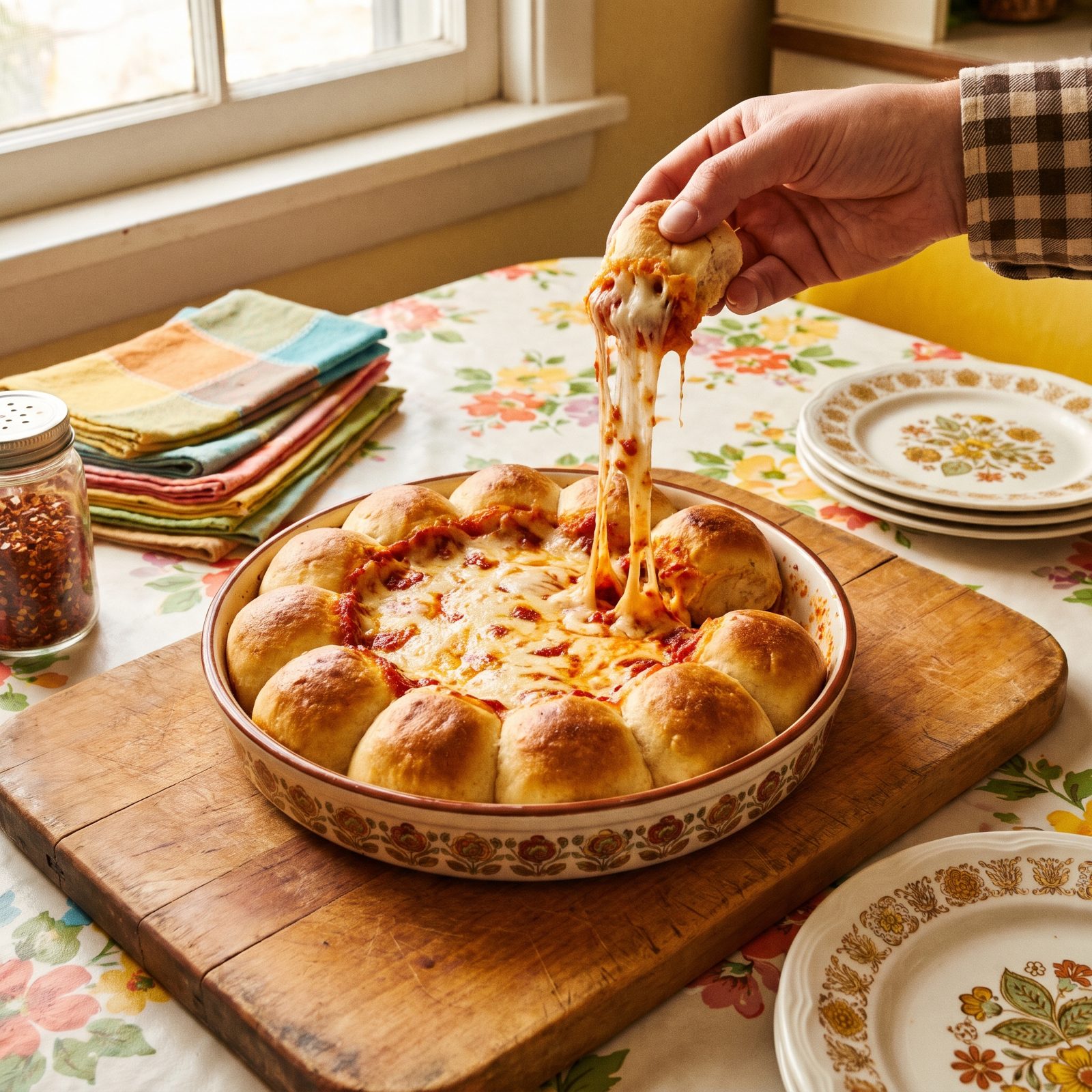
Everything people loved about a pizza, minus the crust and the delivery wait. A layer of softened cream cheese spread across a pie plate, pizza sauce on top, and a heavy blanket of mozzarella that melted and browned in the oven.
It came out bubbling and browned, the cheese stretching in long strings streaked with sauce, and it smelled exactly like a Friday night pizza parlor. Some versions tucked in pepperoni, chopped peppers, onions, or black olives for anyone who insisted on a supreme.
The pull-apart bread finished the job. A ring of soft, golden rolls baked right around the edge of the dish, torn off in warm chunks and dragged straight through the cheese. It was a teenager’s sleepover dream and a grown-up’s guilty pleasure, and it rarely survived long enough to cool.
1990s: Cream Cheese Salsa Dip With Tortilla Chips
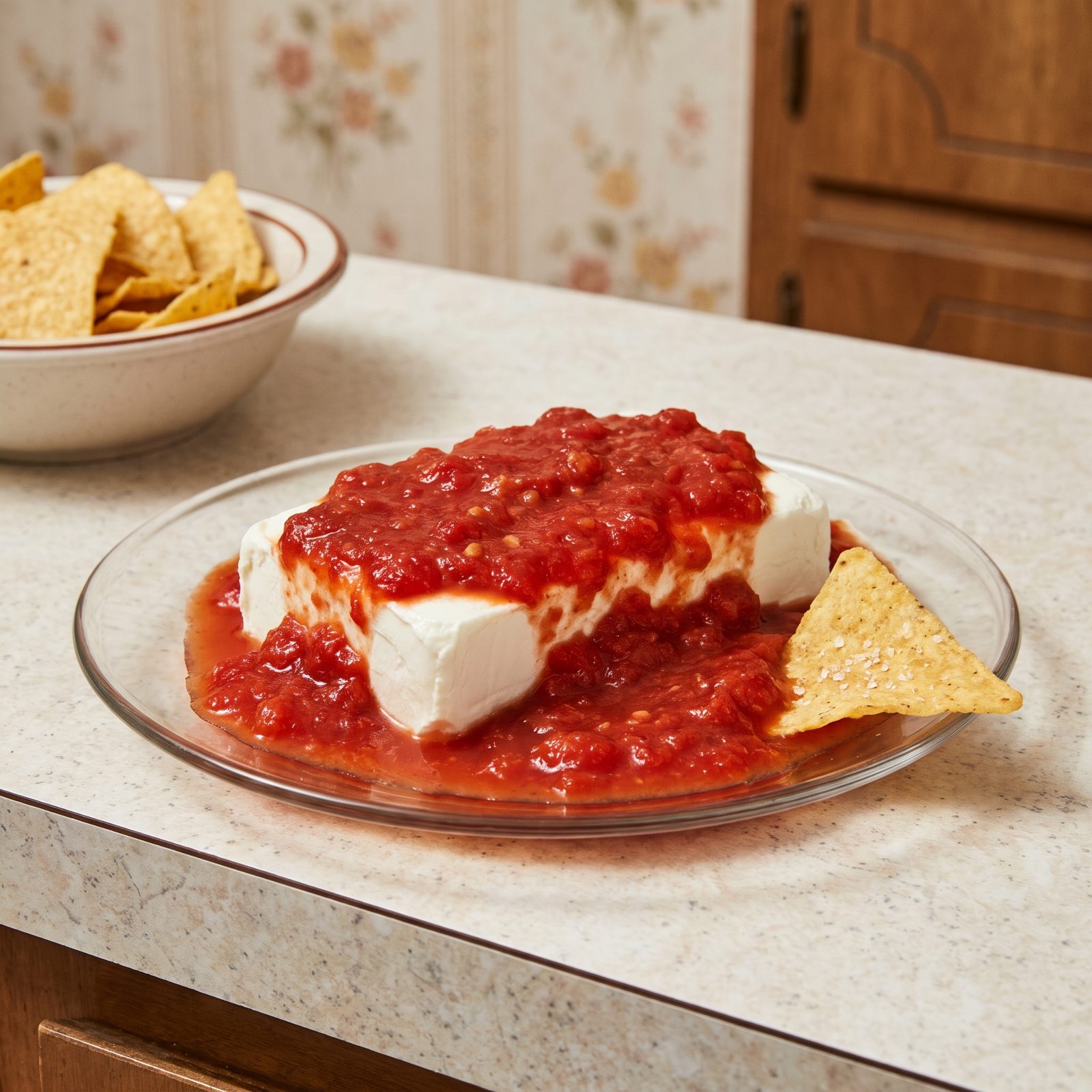
Unwrap a block of cream cheese, set it on a plate, and pour a jar of salsa over the top. That counted as a party dip in the 1990s, and honestly, it still works.
Some hosts beat the two together into a pale orange spread, while others left the block whole so the salsa ran down the sides like lava. Either way, the cool, tangy cheese softened the bite of the chunky tomatoes and onions, and the tortilla chips did the scooping.
It was the emergency dip, the one you threw together when guests showed up early or a neighbor stopped by unannounced. Two ingredients, thirty seconds, and nobody ever complained.
2000s: Buffalo Chicken Dip for Game-Day Parties
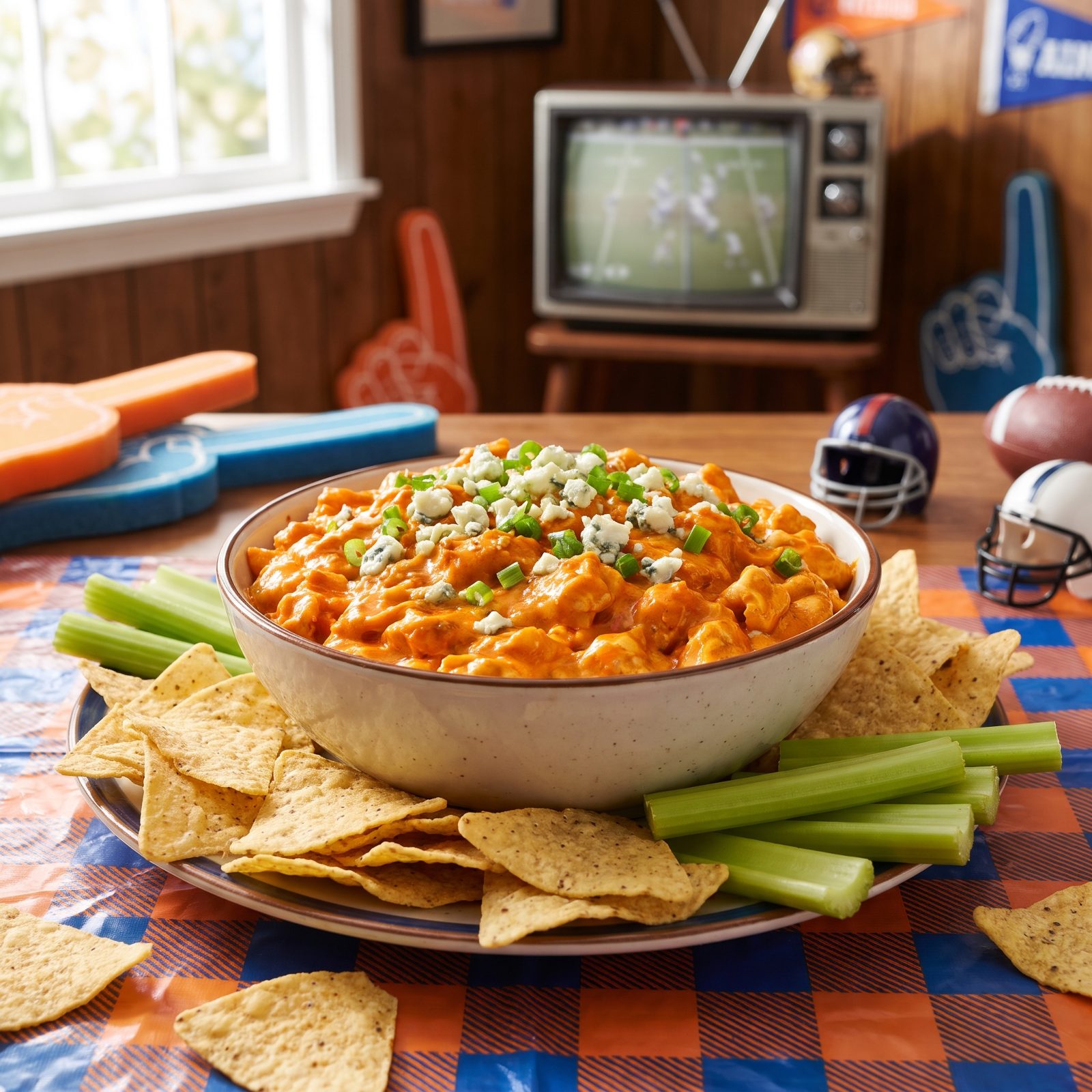
Buffalo wings came out of Buffalo, New York, back in the 1960s, but wings are messy. The 2000s found the fix: take all that flavor, shred it, and bake it in a dish you can scoop with a chip.
Shredded chicken, cream cheese, a hefty pour of cayenne pepper sauce, ranch or blue cheese dressing, and a layer of cheddar melted over the top. It came out of the oven hot, tangy, and orange, with that vinegary sauce cutting straight through the richness.
This was the official dish of the living-room football party. Tortilla chips, celery sticks, and crackers all got pressed into service, and the slow cooker kept it warm through overtime. Make one pan and someone always asked why you didn’t make two.
2000s: Roasted Red Pepper Hummus With Pita Chips
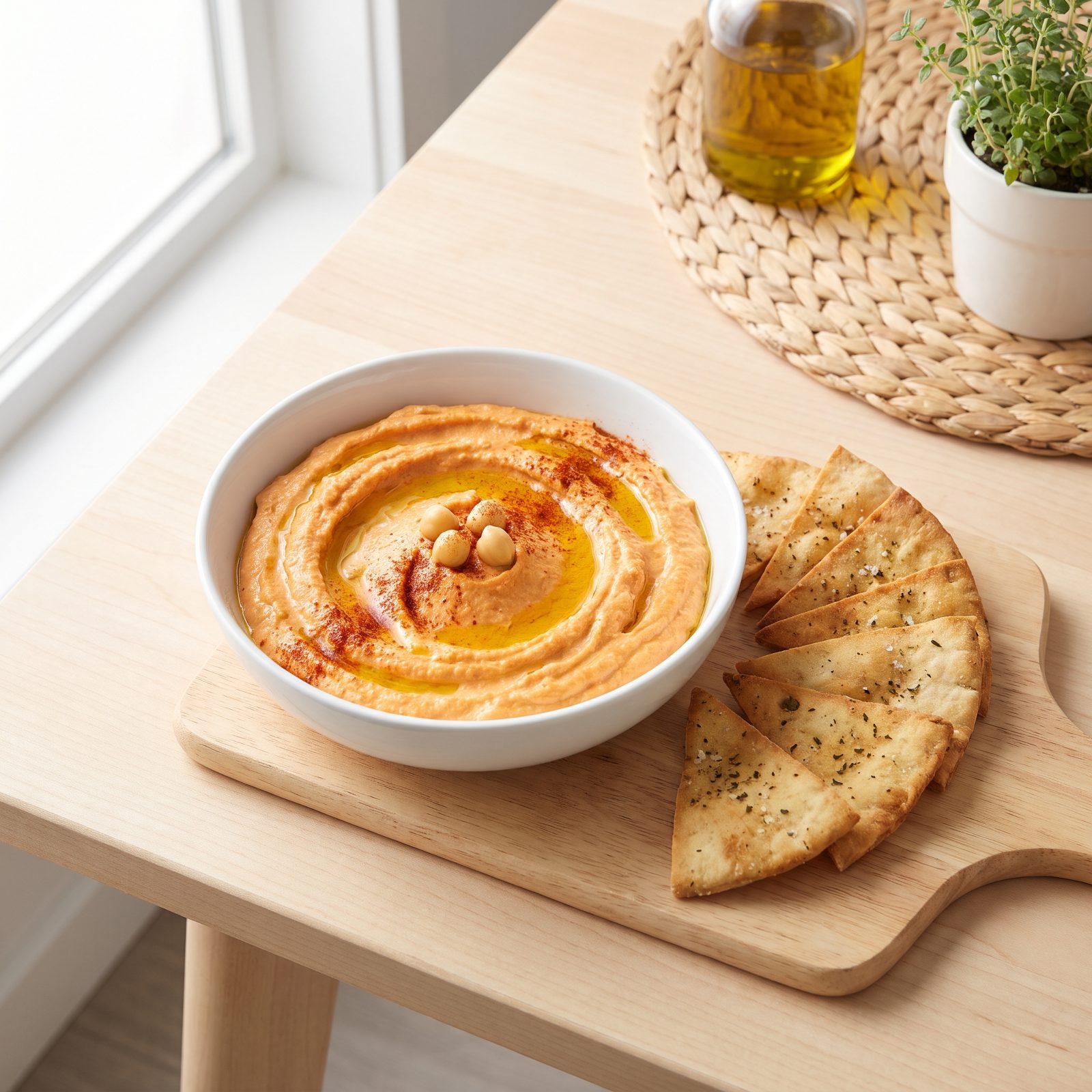
Hummus crossed over in a big way in the 2000s, and the roasted red pepper version was the one that brought skeptics around. Chickpeas, tahini, lemon, and garlic blended smooth, then swirled with sweet, smoky roasted peppers that turned the whole bowl a warm shade of orange.
It felt worldly and wholesome at once, a step away from the sour cream tubs of earlier decades. The supermarket deli case filled up with tubs of it, and plenty of hosts never bothered making their own.
The pita chips were the real discovery. Thick, crunchy, salted, and nearly impossible to stop eating, they made the hummus feel like a snack instead of a health food. A drizzle of olive oil and a sprinkle of paprika on top, and the bowl looked ready for company.
2000s: Sweet Cream Cheese Fruit Dip With Strawberries
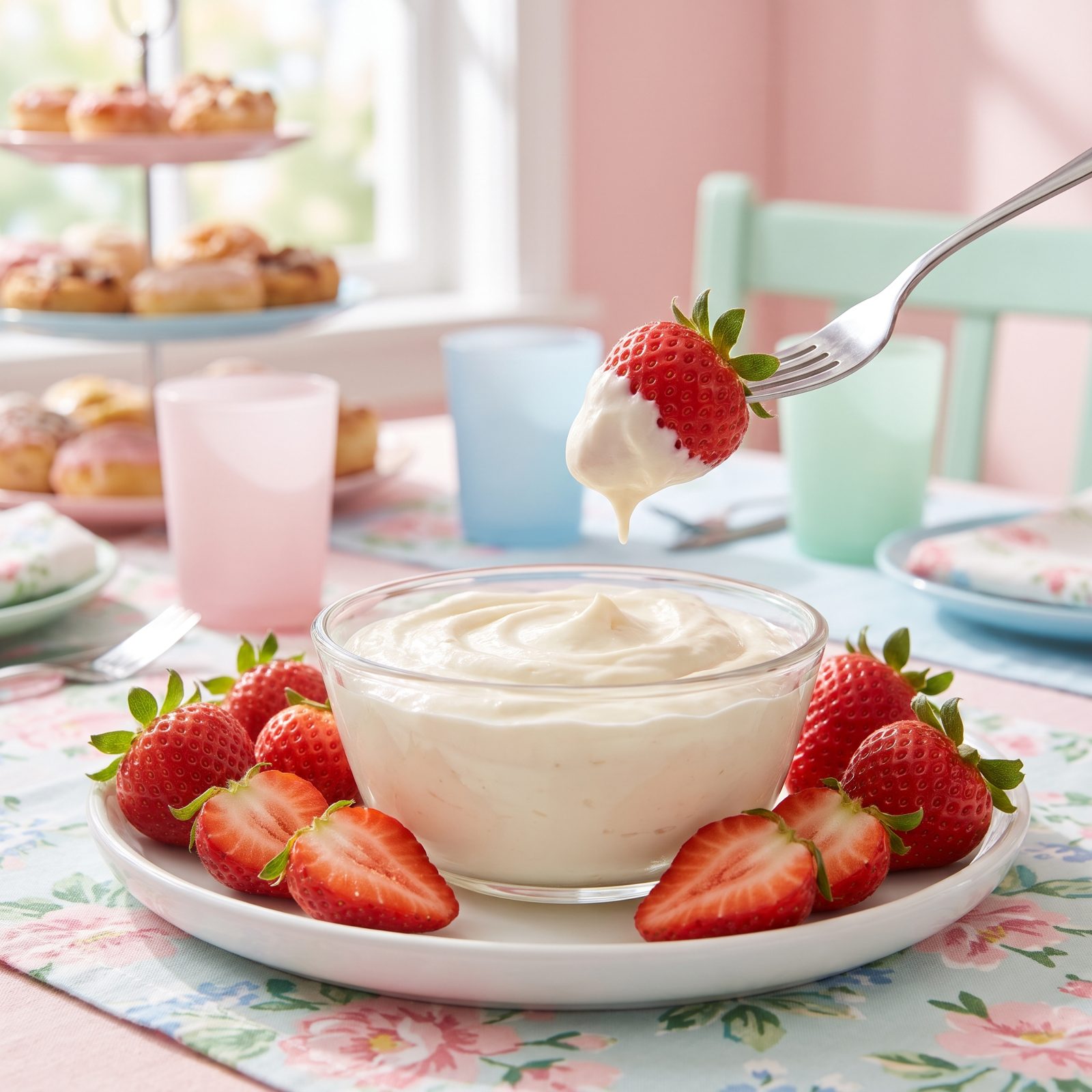
Not every dip had to be savory. This one showed up at baby showers, bridal luncheons, and summer potlucks, usually in the center of a platter ringed with strawberries, pineapple chunks, apple slices, and grapes.
The base was soft cream cheese beaten with a jar of marshmallow creme, or with powdered sugar and a splash of vanilla for hosts who wanted it a little less sweet. It came out fluffy, pale, and tangy enough to keep it from tasting like straight frosting.
Kids made a beeline for it, and so did plenty of adults who claimed they were just being polite. A ripe strawberry dragged through that cloud of cream cheese tasted like cheesecake without the fork, which was exactly why the bowl was always scraped clean.
2010s: Loaded Baked Potato Dip With Bacon and Chives
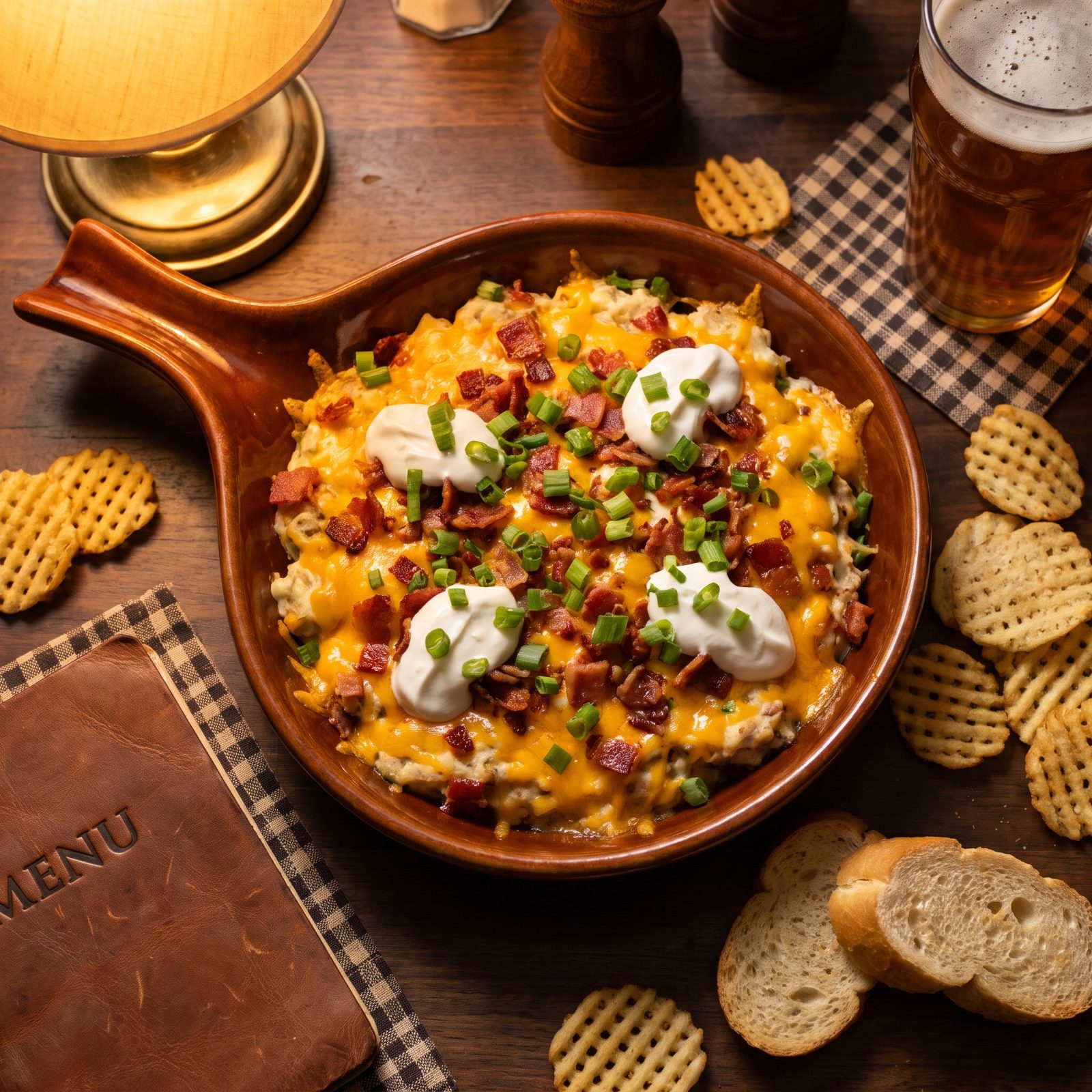
The 2010s loved anything loaded, and this dip took the best part of a steakhouse side and made it scoopable. Sour cream, sharp cheddar, crumbled bacon, and a heavy shower of chives, with a little garlic and black pepper to round it out.
It tasted exactly like the top of a baked potato, which was the joke and the appeal. Served cold, it was creamy and bright from the chives. Some cooks baked it until the cheese bubbled and the bacon crisped, which was arguably better.
The pairing was obvious once you thought about it: potato chips, waffle fries, or crispy potato skins, potato on potato on potato. It was a dip that knew exactly what it was and never once apologized for it.
2010s: Whipped Goat Cheese Dip With Honey
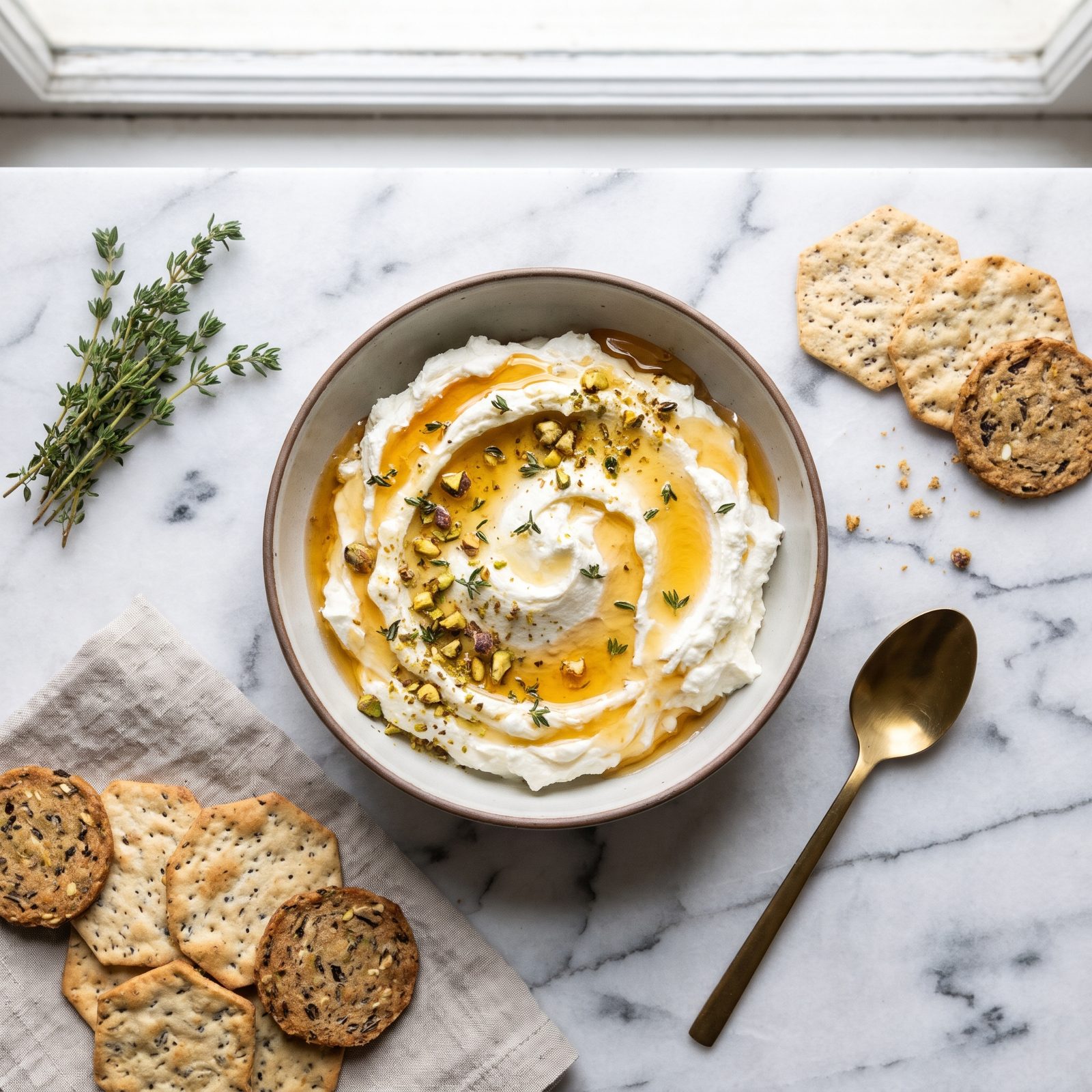
This was the decade the party dip got its photo taken. Goat cheese whipped smooth in a food processor, often loosened with a little cream cheese or olive oil, spread in a shallow bowl with a swoosh down the middle, and drizzled with honey.
The swoosh mattered. It caught the honey, the cracked black pepper, the fresh thyme leaves, and the chopped pistachios or walnuts, and it looked beautiful on a wooden board next to the salami and the fig jam. Tangy cheese against sweet honey turned out to be one of those combinations that never misses.
Toasted crostini or crackers did the scooping. It felt elegant enough for a wine night but took about five minutes to make, which is exactly the kind of trick every host is after.
2010s: Avocado Hummus With Seeded Crackers
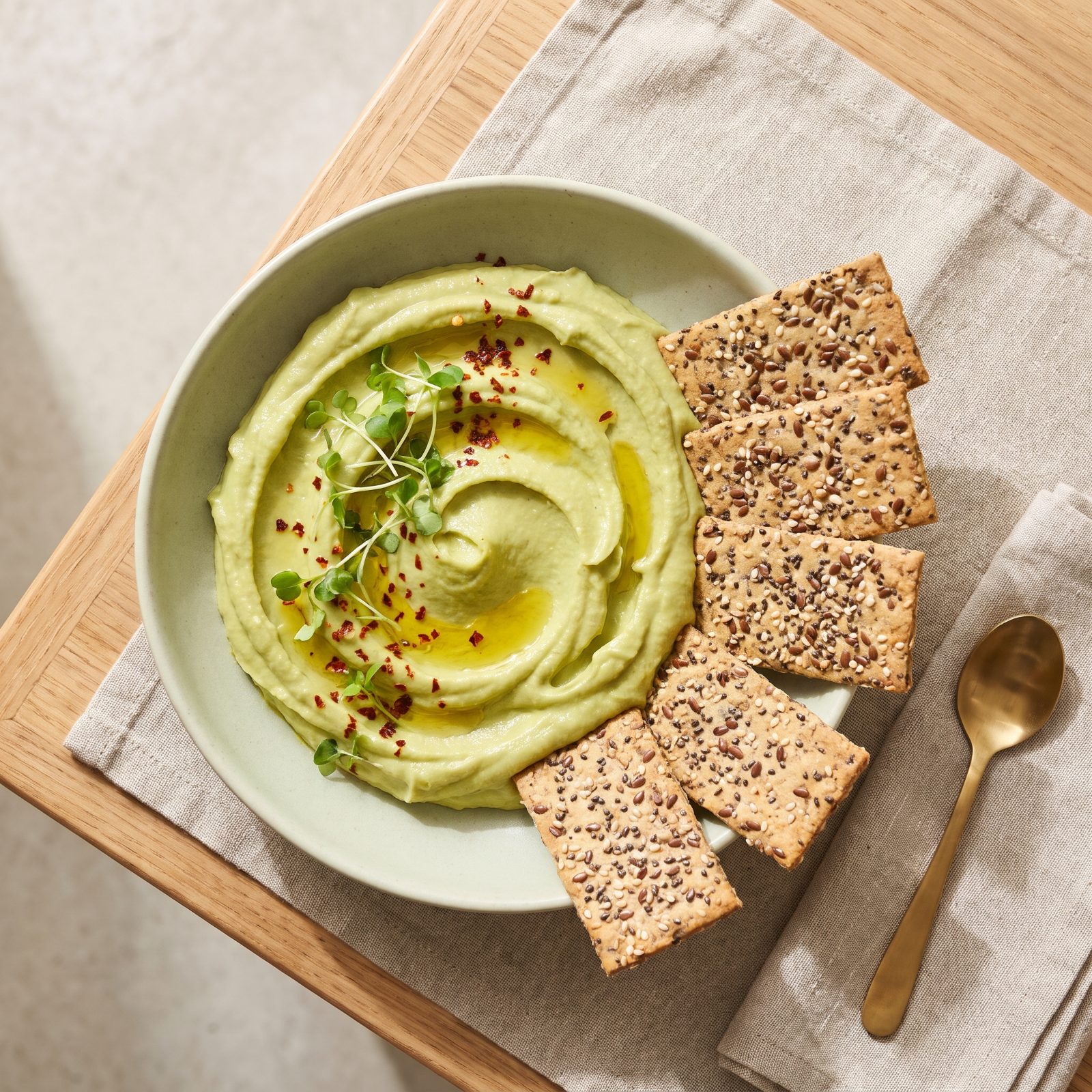
Somewhere around 2013, plain hummus stopped cutting it, so someone blended avocado into it and the beige bowl at every gathering went green overnight. This was peak Pinterest, peak brunch, peak everyone-owns-a-food-processor.
The seeded crackers were the tell. Not Ritz, not Triscuits — flax-and-sesame multigrain things that crumbled if you looked at them wrong, served on a wooden board with a little dish of lemon wedges. You scooped, you double-dipped when nobody was watching, and you felt vaguely healthy about the whole operation.
It tasted good. It still does. But it also marked the moment party dips started trying to be good for you, which honestly drained some of the fun right out of the bowl.
2020s: Pickle Dip With Ridged Potato Chips
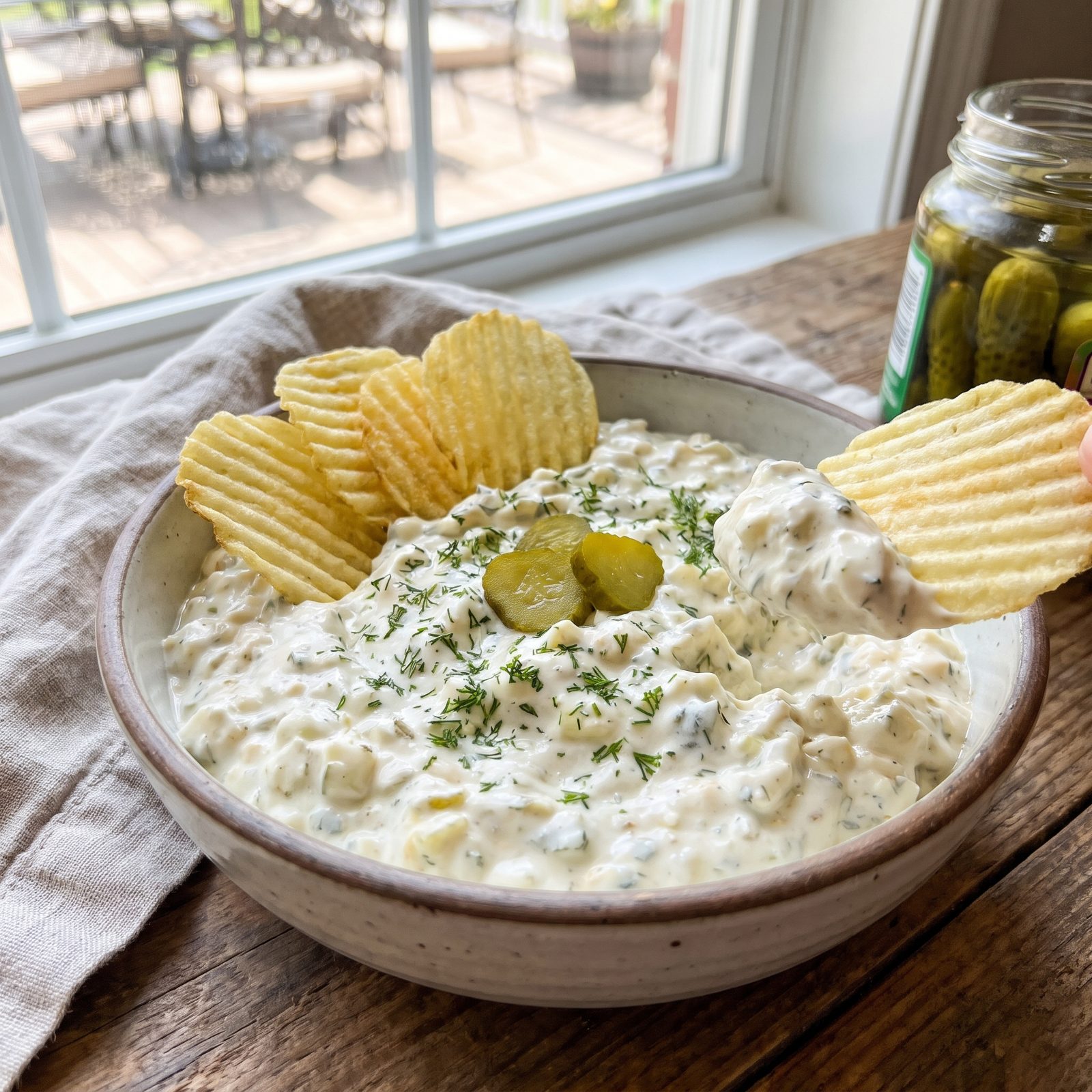
Pickle dip broke out of the Midwest church-basement circuit and went everywhere once everyone was stuck at home making snacks and filming the process. Tangy, salty, cold, and faintly ridiculous in the best way.
The move is a ridged chip — not for flavor, for structure. A ridged kettle chip can carry a heavy scoop without snapping halfway to your mouth, and this dip is a heavy scoop every single time. Cream cheese base, chopped dill pickle, a splash of brine, fresh dill folded through at the end.
Pickle in a dip sounds like a dare. Then you try it and understand why people make a double batch and hide half of it behind the milk.
2020s: Cottage Cheese Ranch Dip With Fresh Vegetables
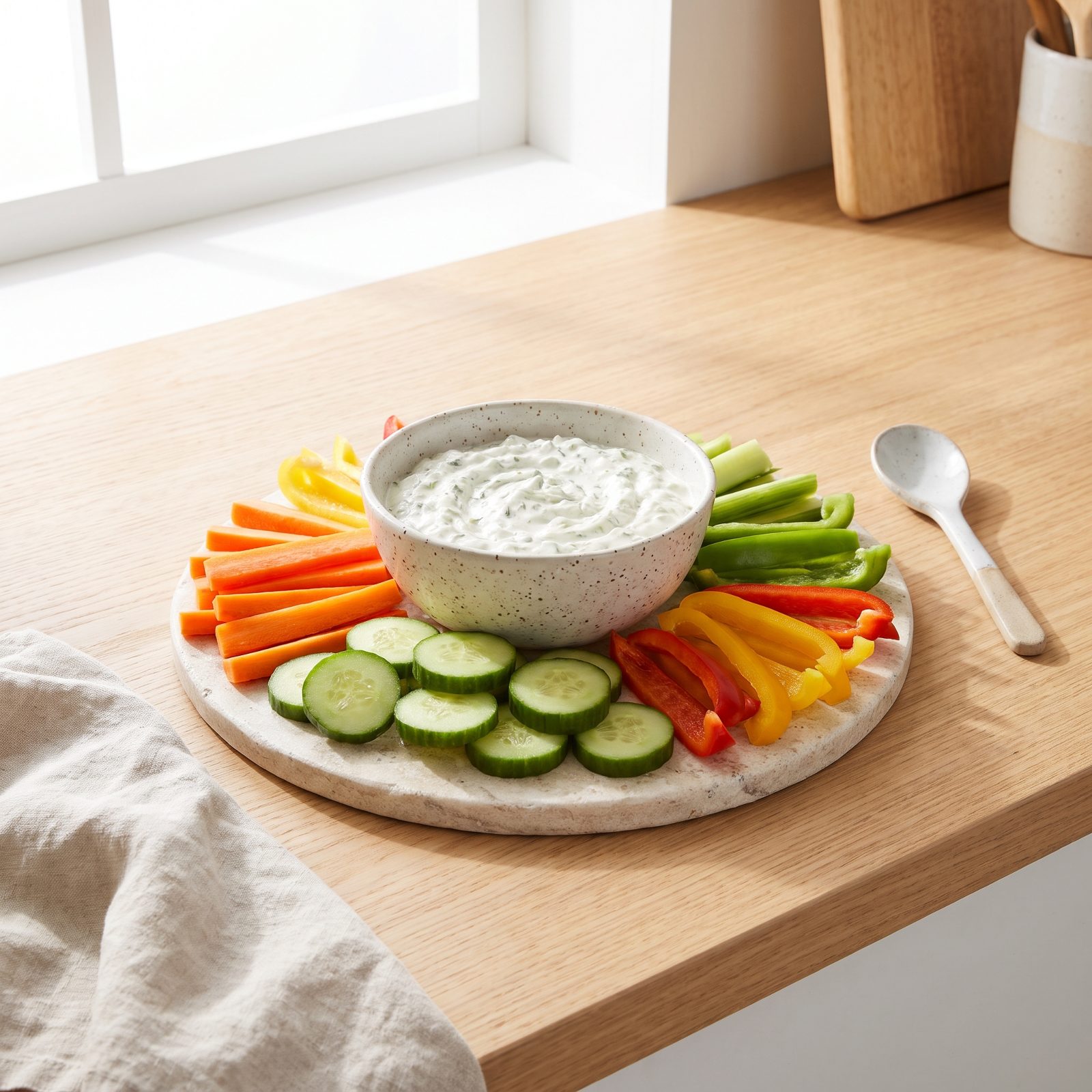
Cottage cheese got rehabilitated in the 2020s, which nobody saw coming. The stuff your grandmother ate off a lettuce leaf got tossed in a blender, hit with ranch seasoning, and reintroduced as a high-protein dip people genuinely wanted at the table.
Blending is the whole trick. Unblended cottage cheese is a texture problem — curds, basically, doing nothing for anyone. Blended, it turns silky and carries ranch flavor better than sour cream does. Chives, dill, garlic powder, a little onion, and a tray of cut vegetables so bright they look staged.
And this one tells you something about the decade. The party dip finally quit pretending it wasn’t paying attention to protein, and it pulled it off without turning sad. Even the skeptics come around.
Making the case for blended cottage cheese over the usual yogurt base, a dietitian who builds high-protein dips explains: “I actually prefer to make the cottage cheese ranch dip because cottage cheese is much more mild in flavor and doesn’t have the tang that comes with greek yogurt.”
2020s: Whipped Feta Dip With Roasted Tomatoes
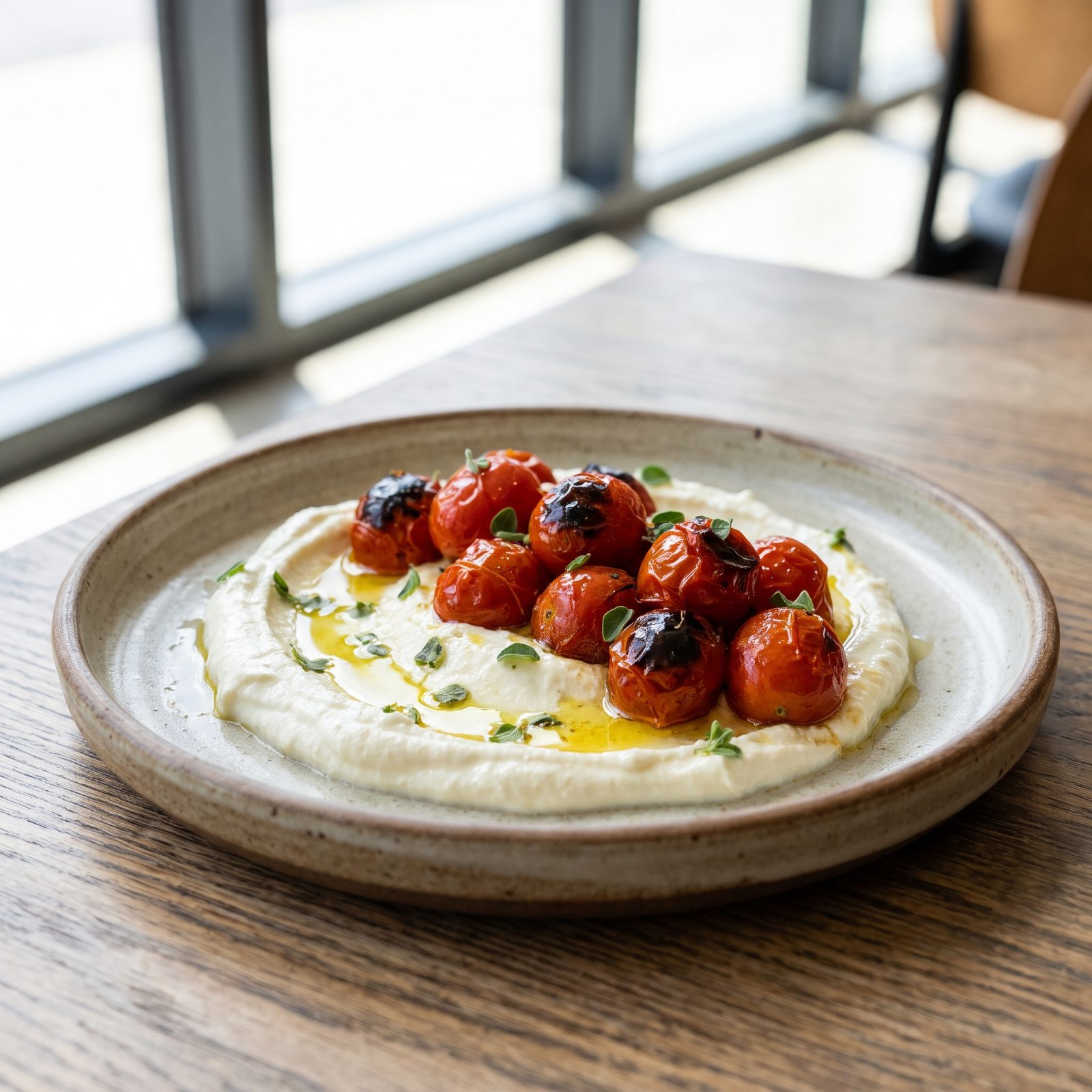
Whipped feta was the dip that made people feel like they’d actually cooked something. Blend feta with a little cream cheese or yogurt until it goes cloud-light, then pile roasted tomatoes on top so their juice bleeds into the white. It photographs like a magazine spread, which is half the reason it caught on.
The roasted tomatoes do the heavy lifting. Blistered in a hot oven until they collapse and go jammy, they bring sweetness and acid against the salty, tangy feta. Warm pita to scoop, a drizzle of good oil, torn basil over the top.
Salty, sweet, warm, and cool all in one scoop. That contrast is the entire appeal.
This is a dip with ambitions. It wants to be a small plate at a nice restaurant, and it gets most of the way there on a Tuesday night in your own kitchen.
2020s: Chili Crisp Labneh With Warm Flatbread
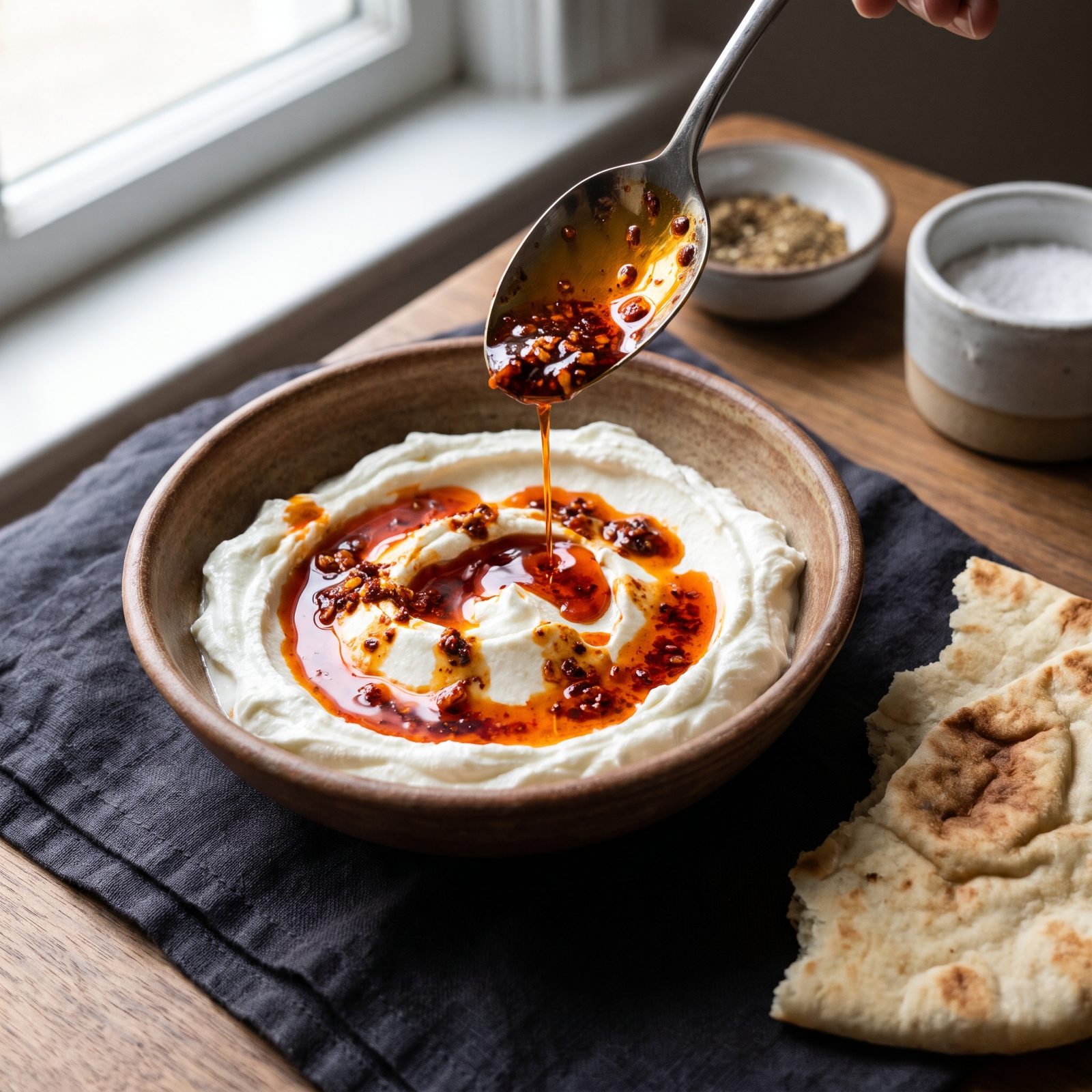
Chili crisp was the condiment of the decade, and it landed on labneh like it had been waiting there all along. Thick strained yogurt, cool and tangy, with a spoonful of glossy, garlicky chili oil dragged across the top. The contrast does everything here.
Spread the labneh in a swoosh, not a mound. The grooves catch the chili oil and hold it, so every tear of warm flatbread picks up both at once. Fried garlic, crunchy bits, sesame, that slow heat that builds instead of slapping you.
So this is where party dips ended up by the 2020s. Bolder, borrowed from everywhere, and completely unbothered about whether your grandmother would recognize it. She wouldn’t. Nobody’s complaining.
Spooning chili crisp over a layer of labneh, a restaurant veteran who now develops recipes notes: “I like to add a good amount of honey to balance the spice, but add to taste!”