Would you like to save this?
The best Christmas tables do their work in the thirty seconds before dinner. You walk in, you see candlelight pooling on good linen, you catch the smell of clove and pine, and your shoulders drop. The food hasn’t even arrived yet — that’s the whole trick. A table that announces the occasion tells your guests this night is different, and it does it through light, fabric, a few heirloom pieces, and small personal touches nobody could buy at a store. Here are the tables that pull it off, plus the reasons each one works before the first plate lands.
32. The Candlelit Table With No Overhead Lights
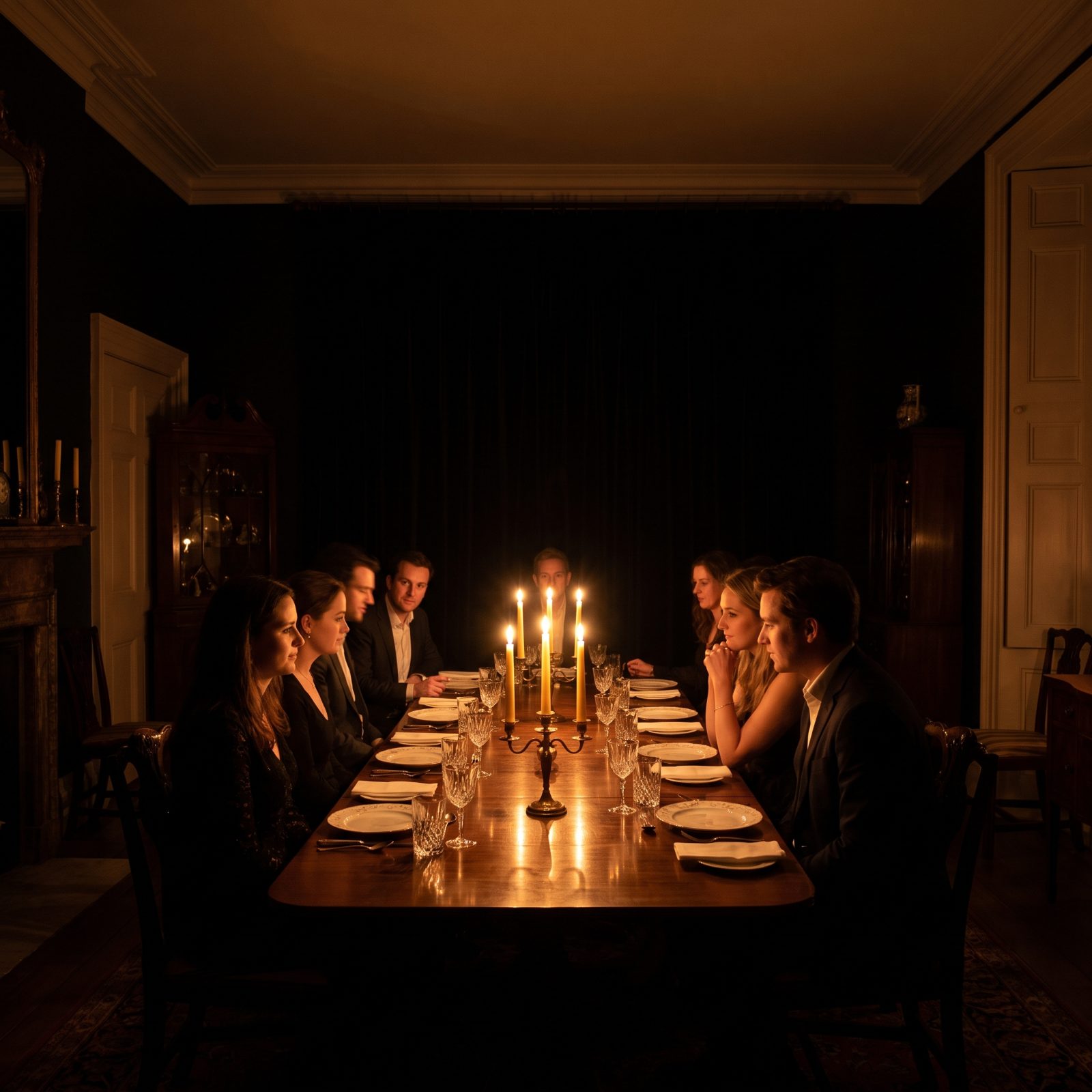
Turn off the overhead light and the whole room changes character. Suddenly the table is the brightest thing in the house, and everyone’s face softens the second they sit down. That’s no accident — low, flickering light is part of why a candlelit room feels calmer than a brightly lit one.
The mistake people make? Three polite little tealights and calling it ambiance. You need volume. A dozen flames at different heights, tapers and pillars mixed together, so the light has texture instead of just dimness.
31. The Table Set With Grandmother’s Wedding China
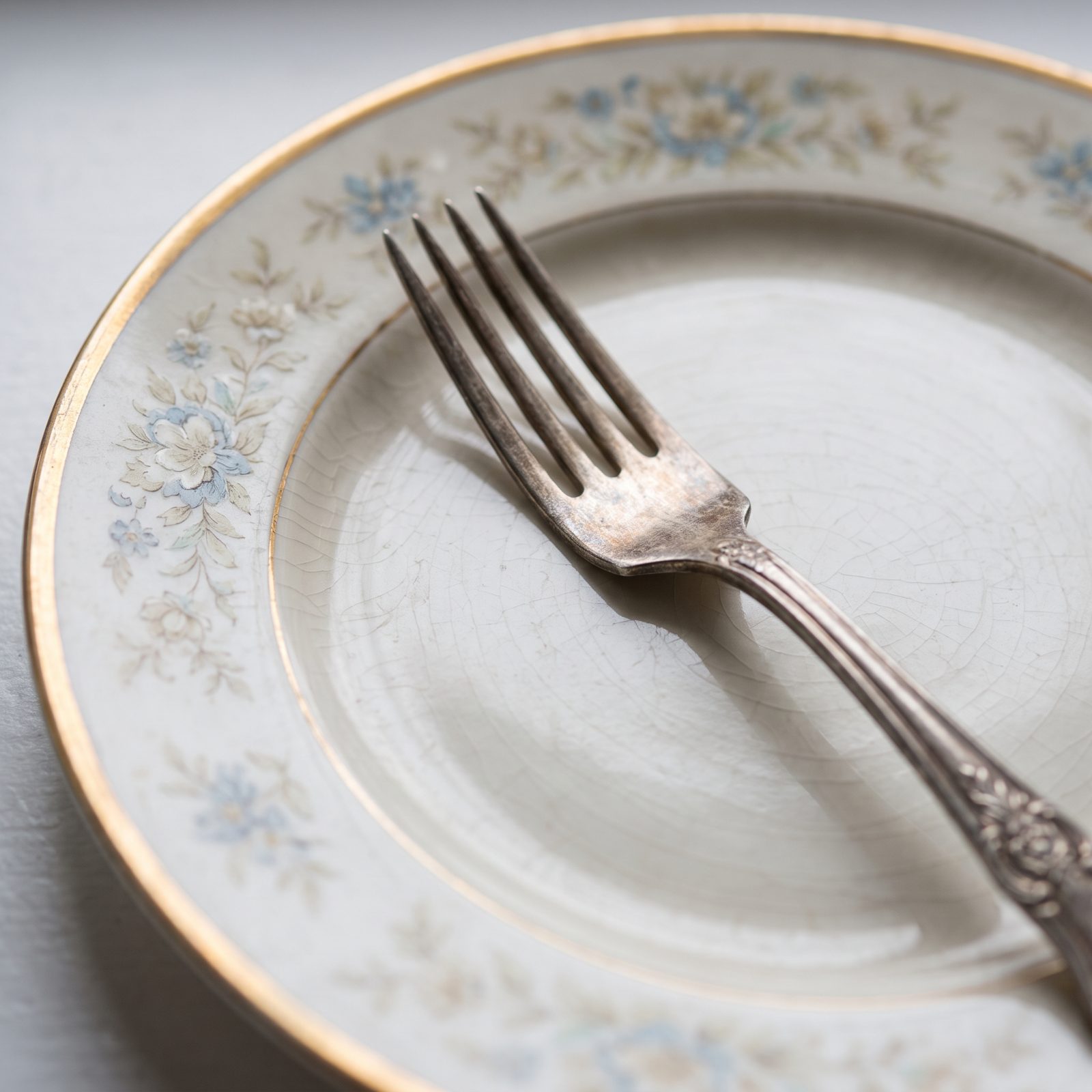
There’s a specific weight to a plate someone ate off of in 1952. The gold rim has worn thin where decades of forks crossed it, the pattern is a little out of fashion, and somehow it’s worth more than anything you could register for, because it carries a name.
You don’t need a full matching set. Half the charm is the gaps — the one cup that got broken, the serving bowl that doesn’t quite match because it came from the other side of the family. Set it anyway. Tell the kids whose it was. That story is the centerpiece, not the china.
30. The Long Farmhouse Table With Shared Platters Down the Center
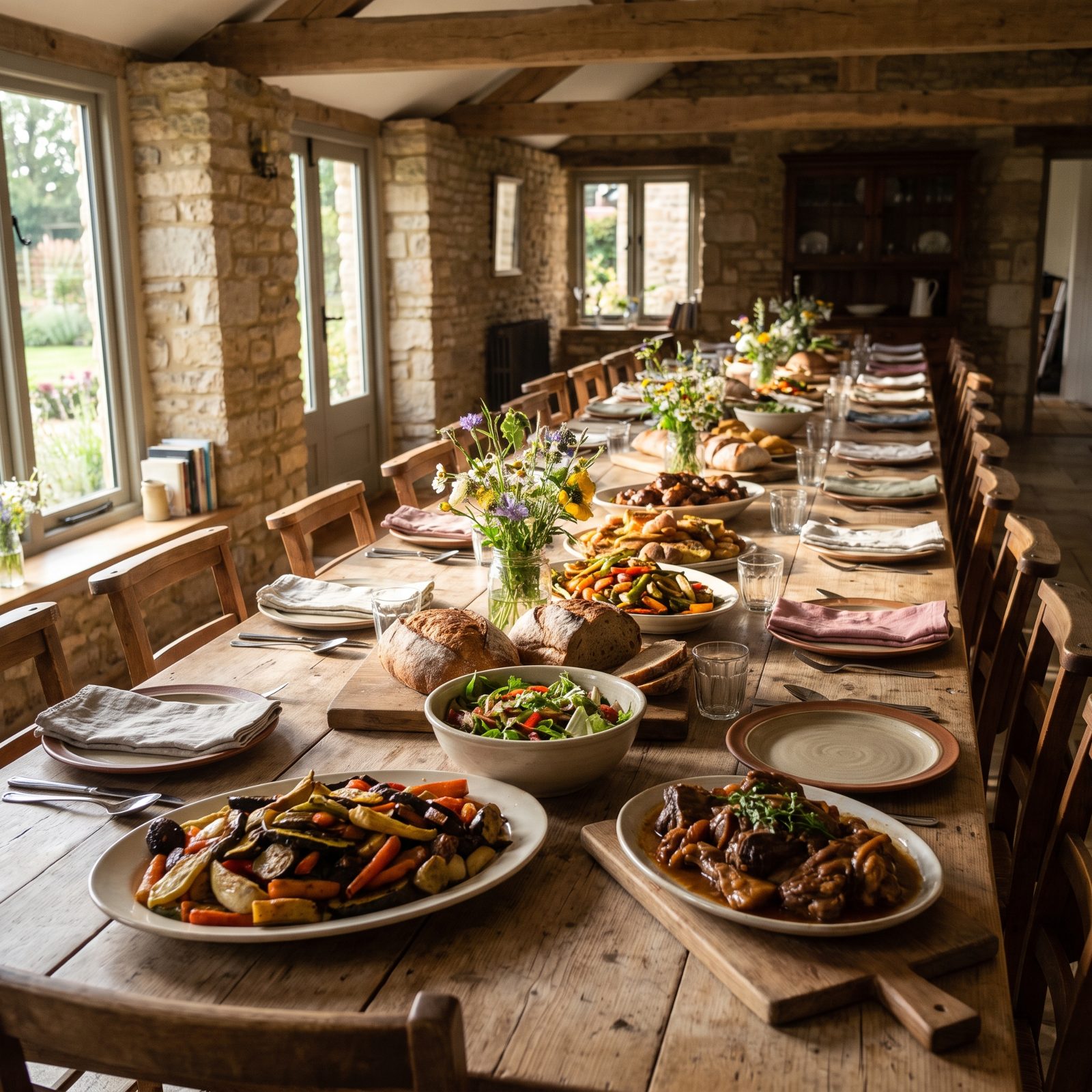
Family style beats plated service every single time at Christmas. The platters down the middle do something a neat individual plate never can: they force people to reach, to pass, to ask you to hand the potatoes. That small choreography turns a table of twelve into one conversation instead of six separate ones.
Leave the food out the whole meal and the second-helpings question answers itself. And the look of it — bowls and boards marching down a reclaimed oak farmhouse table with garland woven between — says abundance before anyone has tasted a thing.
29. The Table Set in Front of a Glowing Fireplace
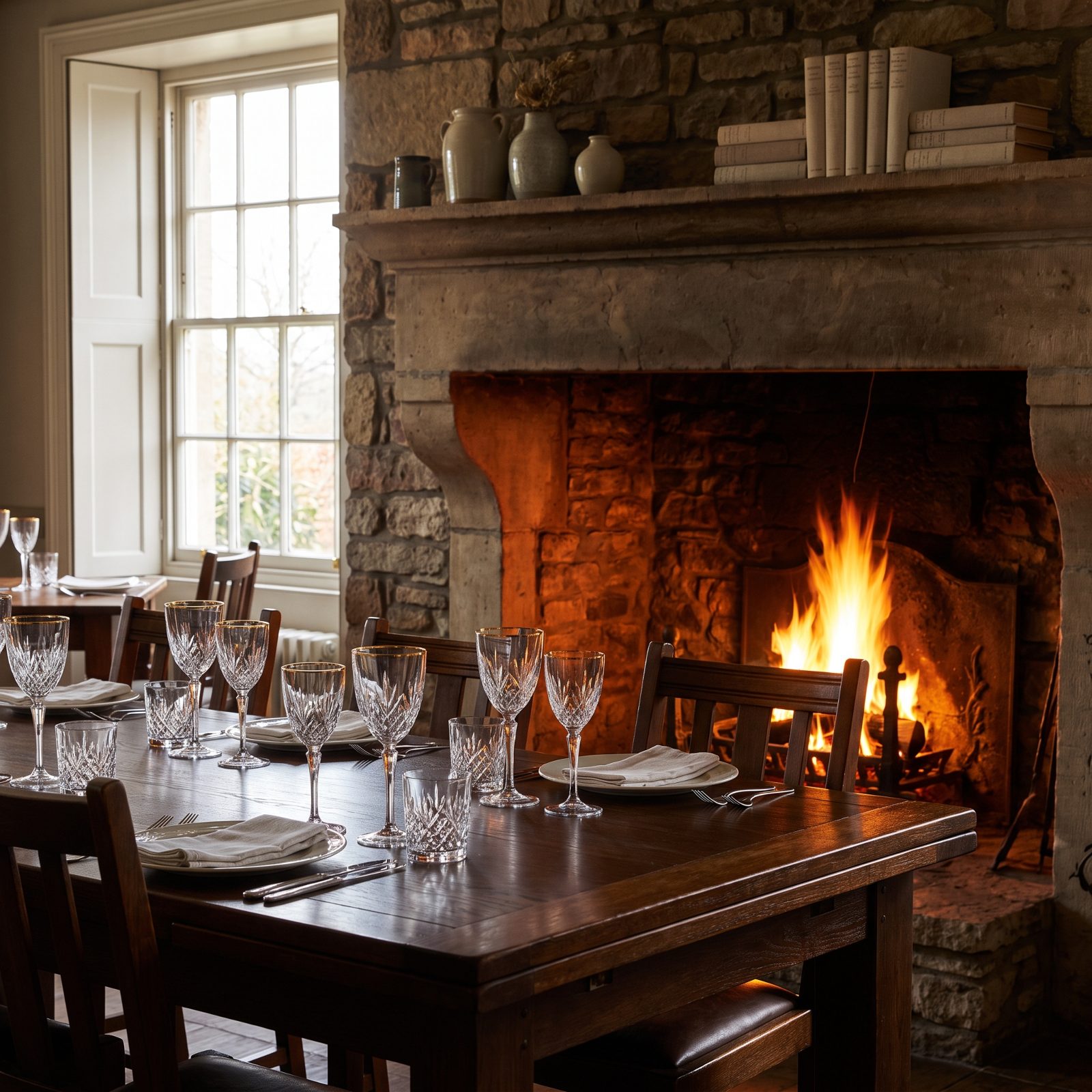
Put the table near the fire and you’ve borrowed the oldest mood lighting there is. The glow moves, the wood pops and shifts, and the whole setting looks alive in a way steady flames can’t manage.
A word of warning from experience: a roaring fire plus a crowded table gets hot fast. Build it down to a steady glow before guests sit, not a blaze. You want warmth on the back of the neck, not a sweat.
28. The Evergreen Runner Gathered From the Backyard
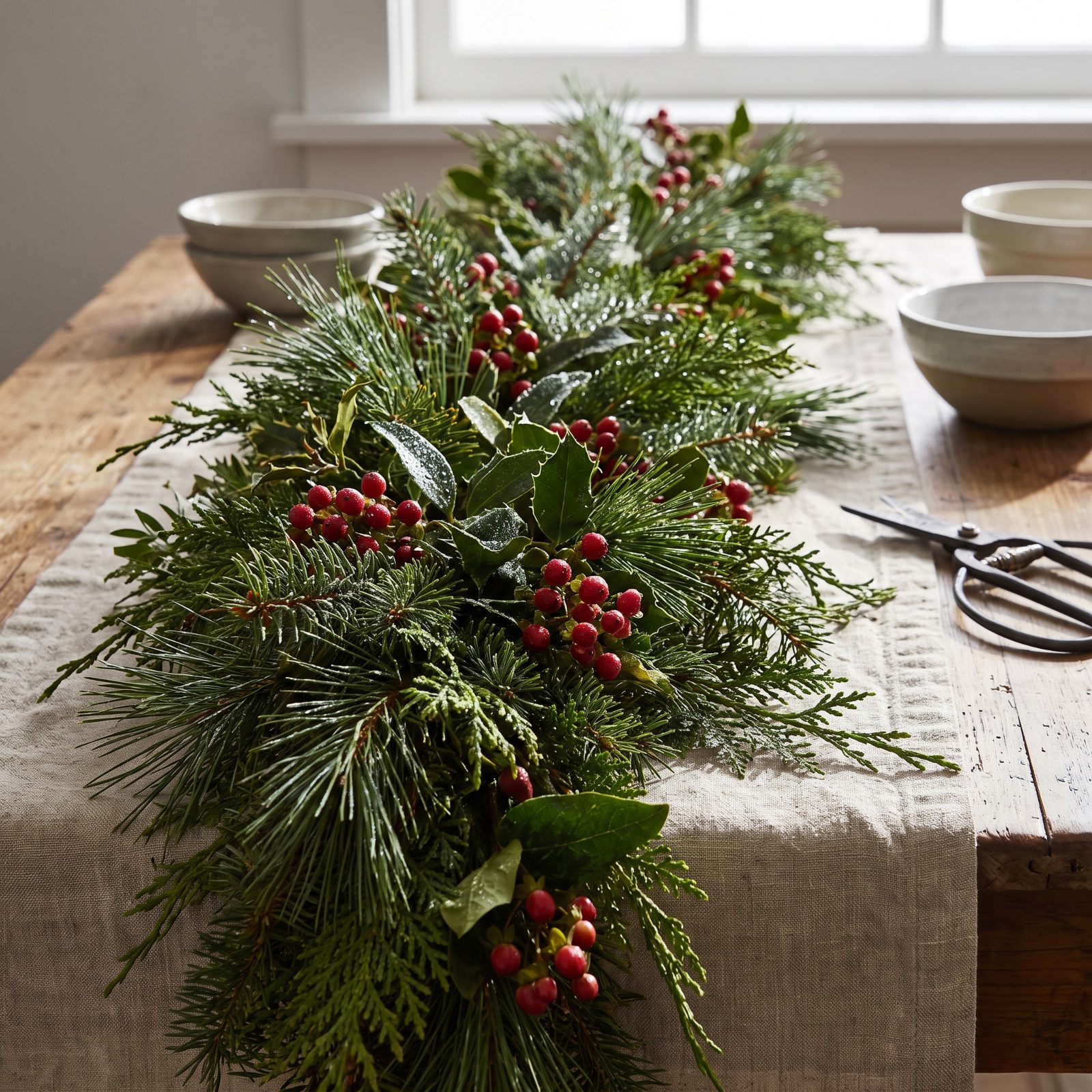
A garland you cut yourself looks nothing like the plastic coil from the craft store, and your guests clock the difference without knowing why. Real cedar and pine have a slightly messy, uneven shape. They also release their scent when the candle heat hits them, which the fake stuff never does.
Fifteen minutes with the clippers in the yard gets you enough for a full runner. Lay it loose, let it spill a little, tuck candles and orange slices into the gaps. The imperfection is the point. A too-tidy centerpiece looks bought; a loose one looks like somebody loved you enough to go outside in the cold for it.
27. The Children’s Table That Feels Like a Celebration of Its Own
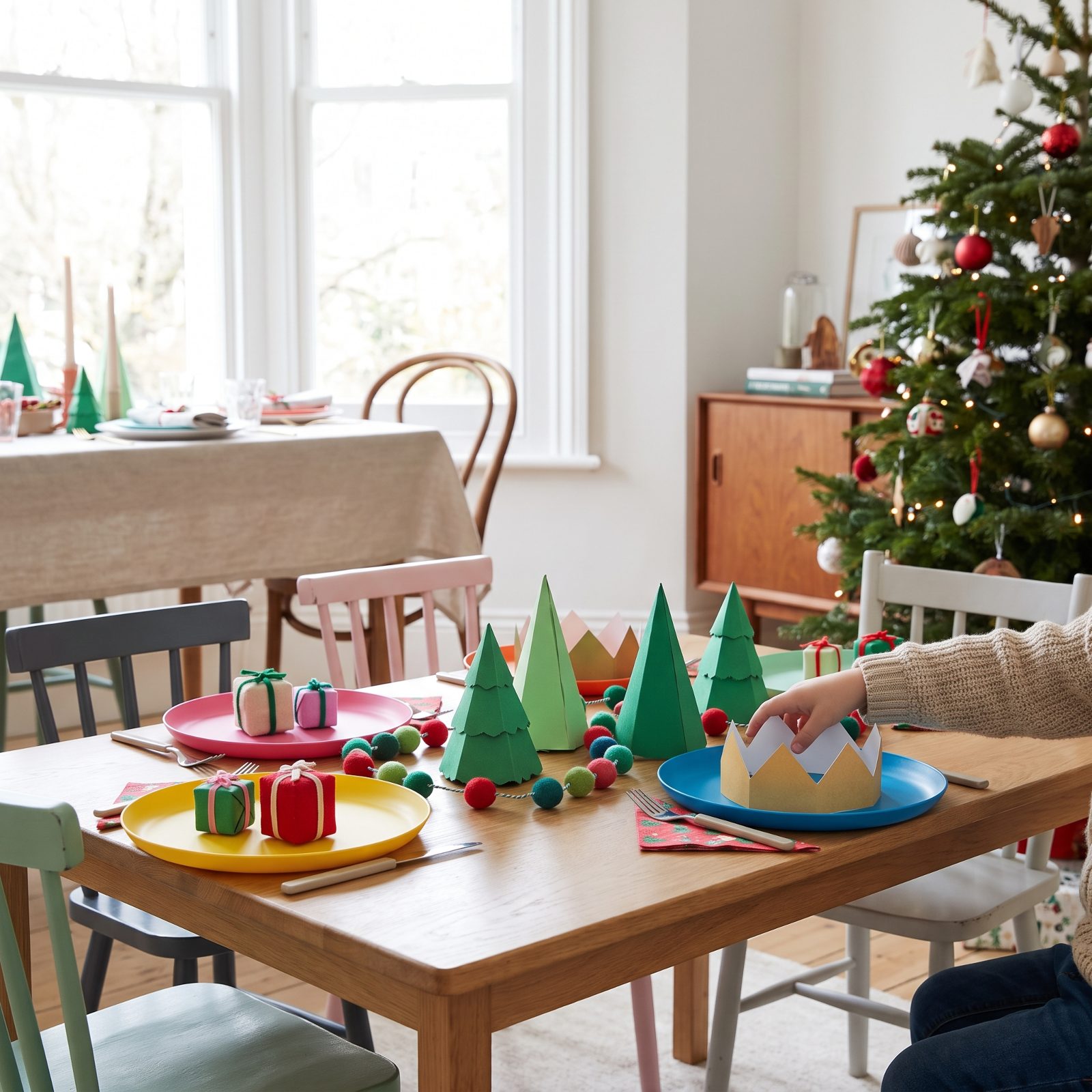
Most kids’ tables are a folding card table and a resigned sigh. Flip that. A children’s table done with real intention becomes the one spot every kid actually wants to sit.
Roll out kraft paper and leave crayons in a jar so the tablecloth doubles as a coloring page. Give them their own little centerpiece — candy canes in a jar, a tiny tree. Add mini crackers so they get the same bang the grownups get.
26. The Table With Crackers at Every Place
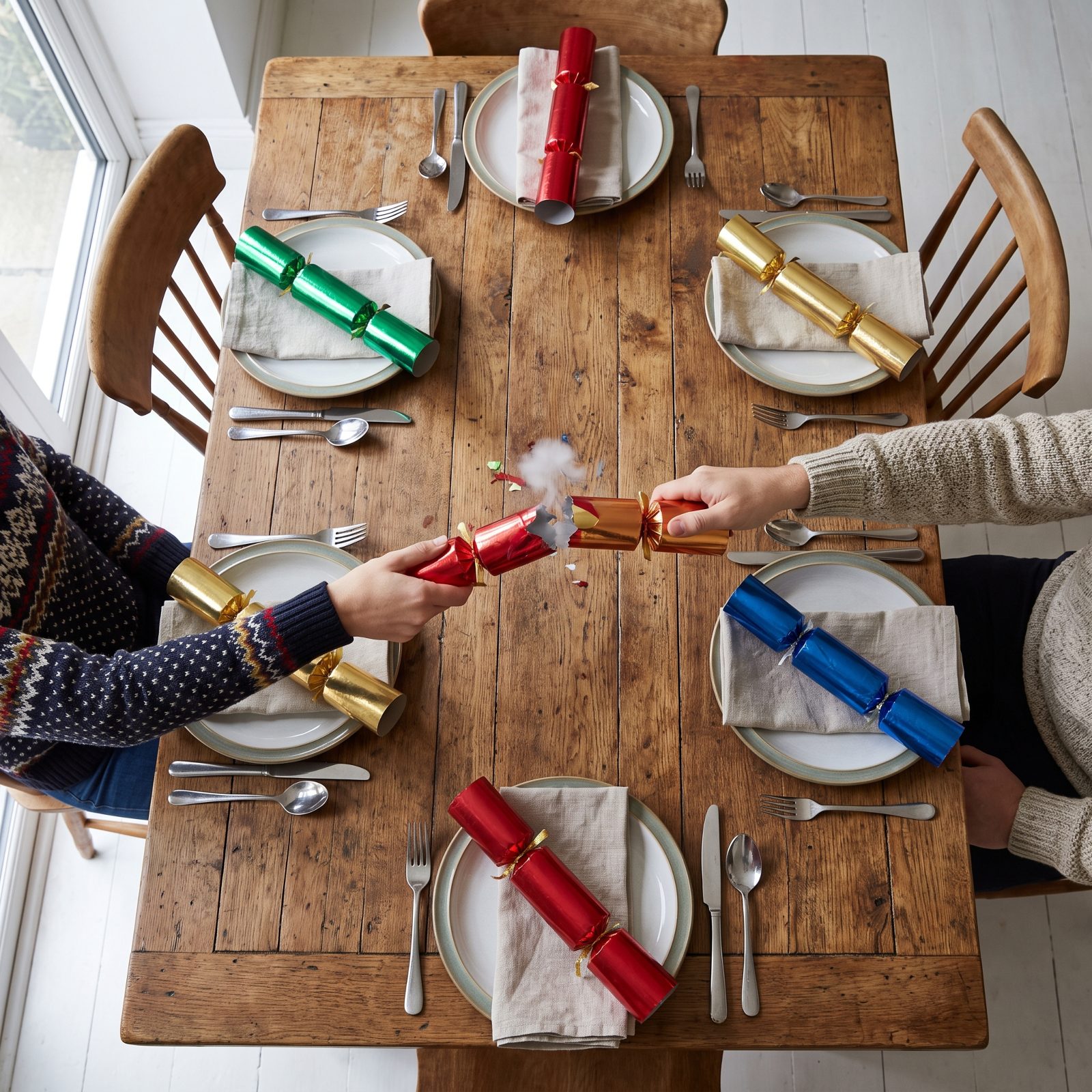
The cracker is one of the great pieces of table theater. You pull it with your neighbor, it snaps, and out tumbles a paper crown, a dreadful joke, and a plastic trinket worth nothing. Everyone puts the crown on. Everyone groans at the joke. The whole table does something silly together in the first minute, and the ice is gone.
It’s an English tradition dating to the 1840s, invented by a confectioner who wanted his sugared almonds to go off with a bang. Set one at every plate, crowns and all, and dinner starts with laughter instead of an awkward pause.
25. The Red Tartan Table With Brass Candlesticks
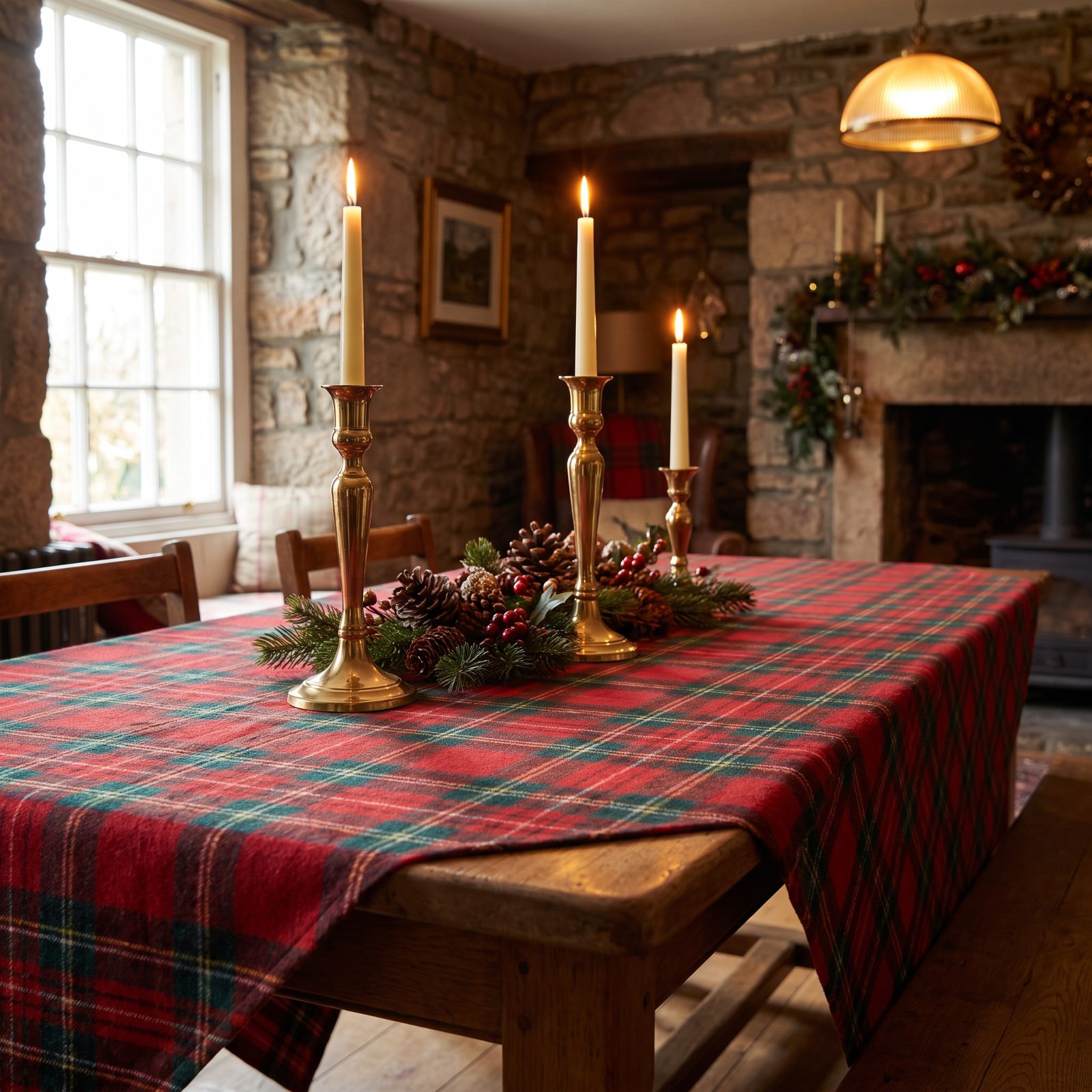
Red tartan is the sound of jingle bells in fabric form. It reads Christmas instantly, which is exactly why you have to handle it with a little restraint, or the table tips over into gift-wrap.
The move is to pair the busy plaid with something plain and gleaming. A row of brass candlesticks down the center gives the eye a quiet, shining line to follow through all that pattern. Keep the plates simple, white with a thin gold edge, and let the red tartan tablecloth and the metal do the talking.
24. The Round Table That Keeps Every Guest in the Conversation
Would you like to save this?
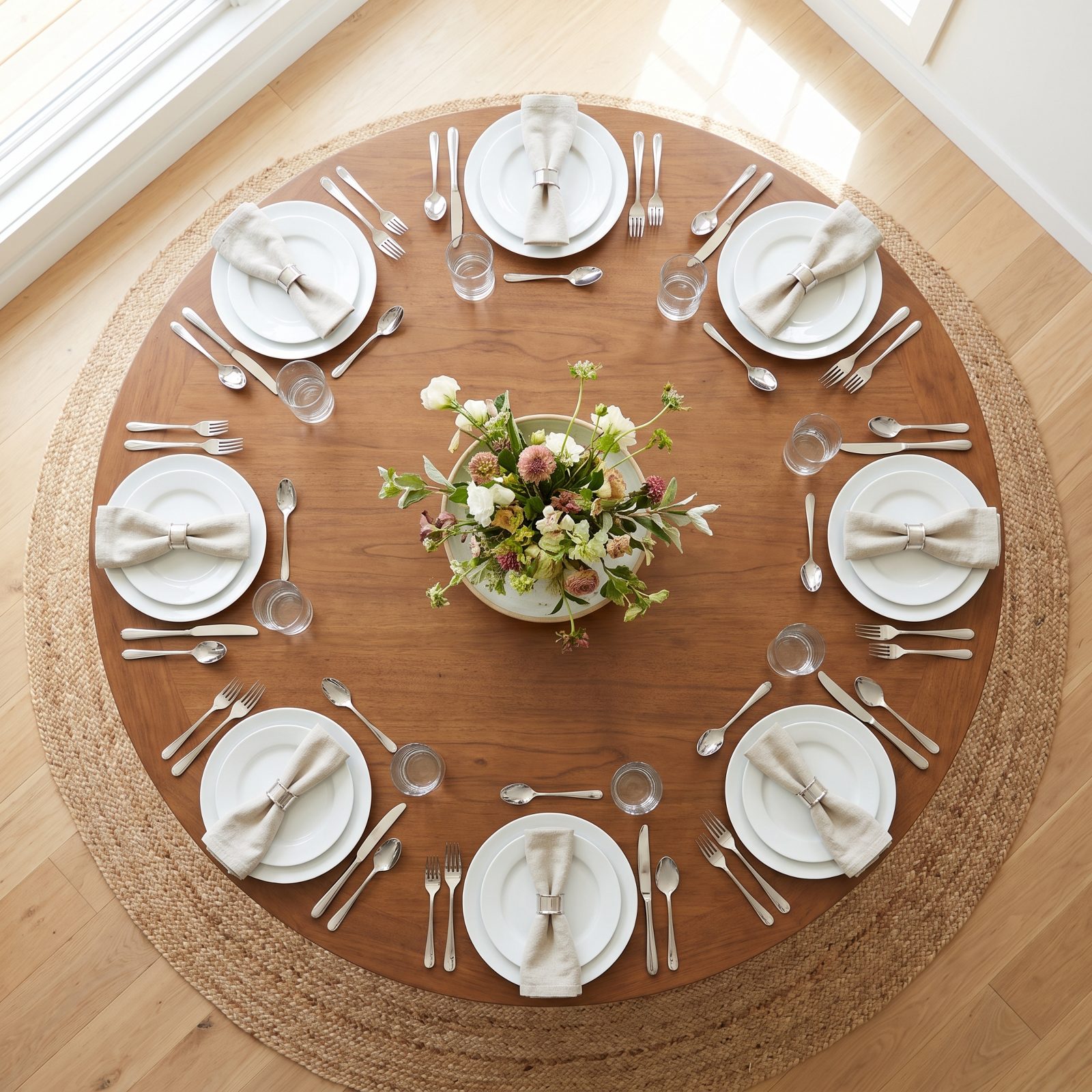
A round table has no head, which means it has no hierarchy. Nobody’s stuck at the far end shouting to be heard, and everyone can catch everyone’s eye. For a small gathering, it’s the friendliest shape there is.
One rule makes or breaks it: keep the centerpiece low. A tall arrangement on a round table is a wall, and you’ll spend the whole night watching two people lean sideways to talk around a flower.
23. The Citrus-and-Clove Table That Smells Like Christmas

Smell gets to the memory faster than anything you can see. Clove, orange and cinnamon reach a part of the brain that light and linen never do, pulling up every Christmas you’ve ever had before anyone has sat down.
Stud a few oranges with whole cloves and let them sit near the warm candles. Add cinnamon sticks tied in little bundles, a bowl of clementines with the leaves still on. The scent builds slowly through the meal, warmed by the flames.
It’s the one element on this whole list your guests will remember and never be able to name. They’ll just walk in and feel like they’re home.
22. The Table With Family Photographs as Place Cards
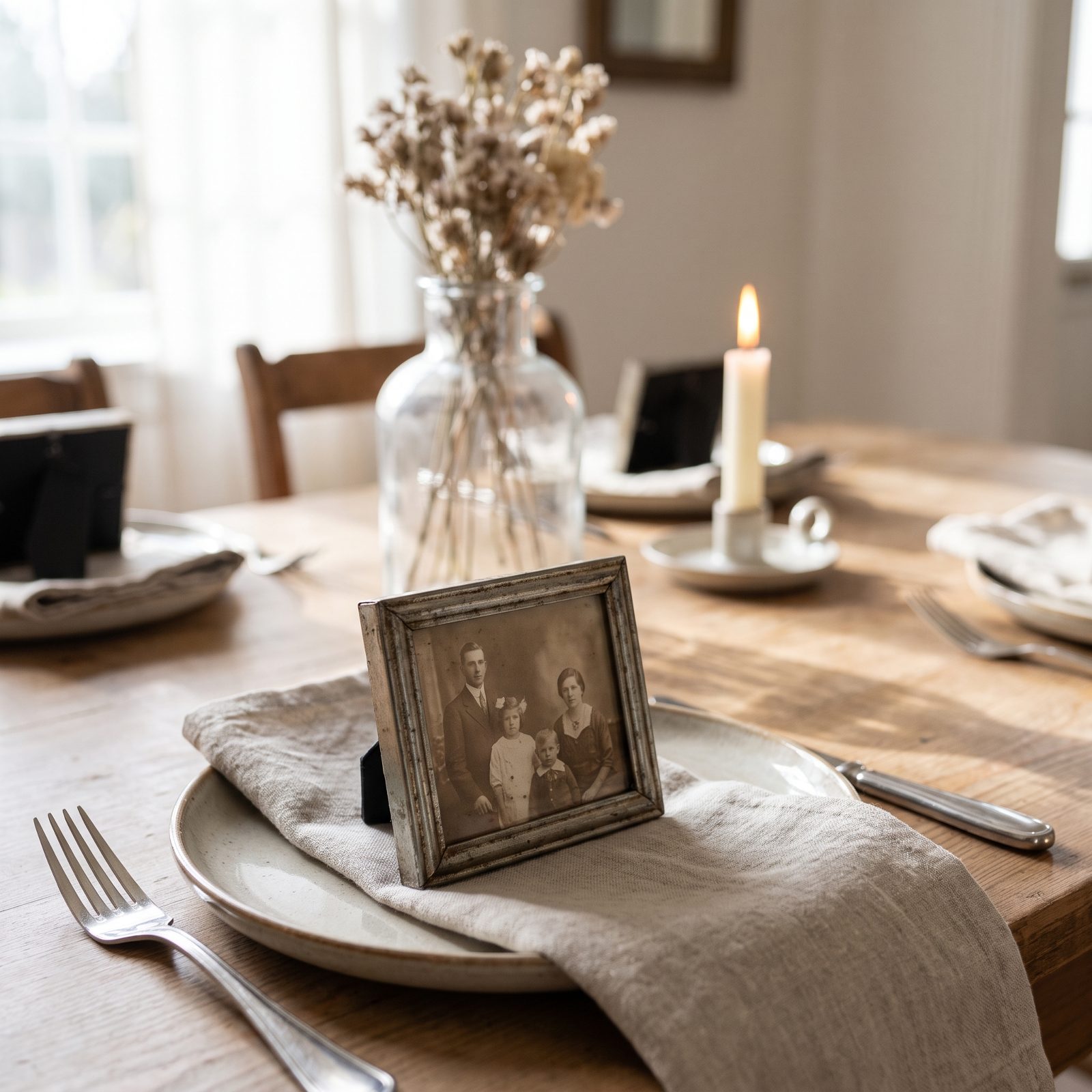
Swapping printed name cards for old family photos does something no calligraphy can touch. Guests arrive, scan the table, and find themselves at twelve, at their wedding, at a Christmas thirty years gone. Everyone leans in before they ever pull out a chair.
Go small. A snapshot in a two-inch brass frame propped against the napkin reads as a place card, not a shrine. Mix generations on purpose — put grandpa’s army photo next to the toddler’s first Santa visit and watch the conversations start themselves.
21. The Table With a Tiny Wrapped Favor at Every Seat
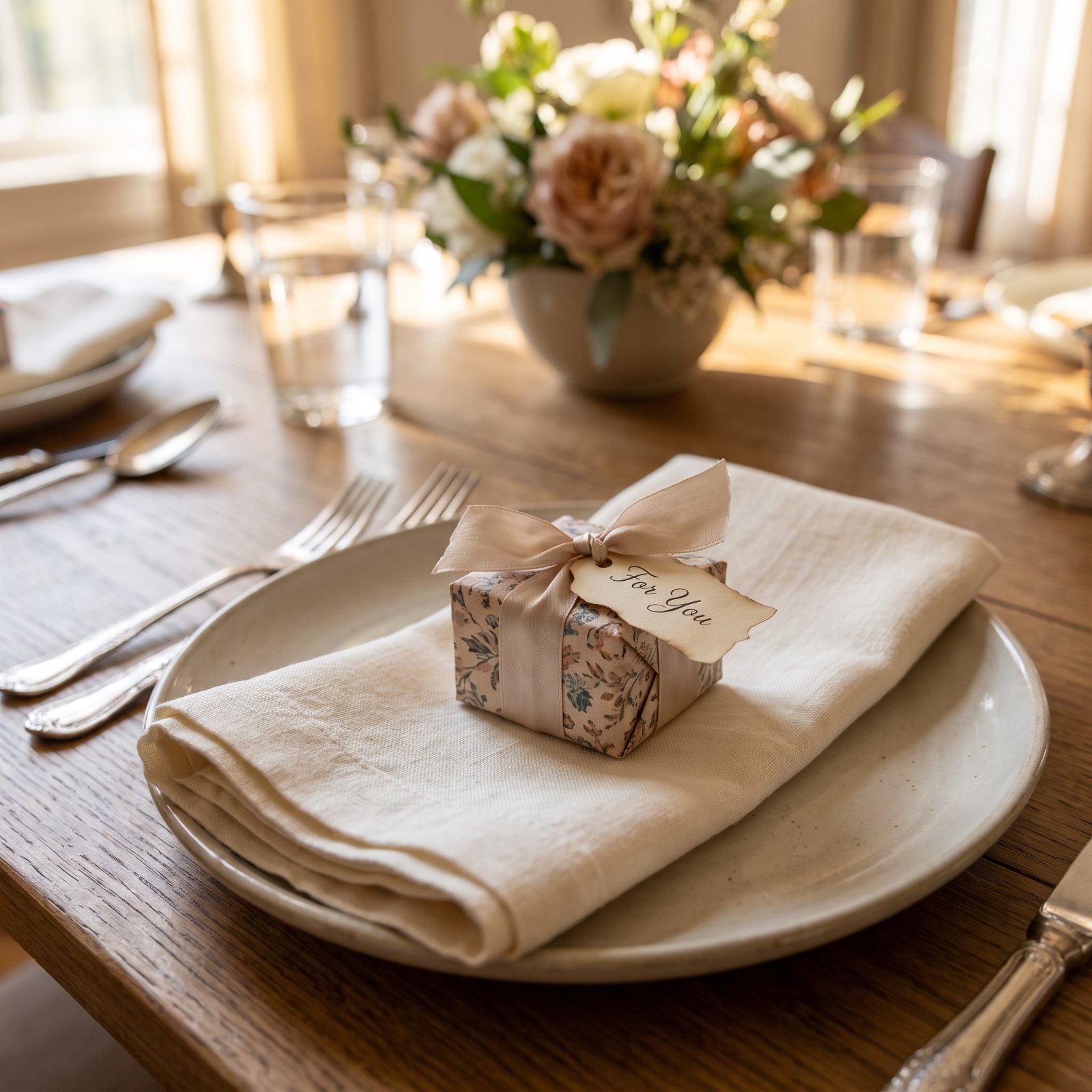
A wrapped favor at each plate tells your guests one thing before they sit: you thought about me specifically. Good chocolate, a packet of seeds, a folded note — doesn’t matter which. The gesture lands harder than the gift.
Keep it small enough to sit on the dinner plate without crowding it. Brown kraft paper and twine looks more considered than anything shiny, and a sprig of fresh rosemary tucked under the knot throws scent when they pick it up. I’ll admit I used to skip this as fussy. I was wrong. People hold onto these.
20. The Table Built Around a Bowl of Pomegranates and Oranges
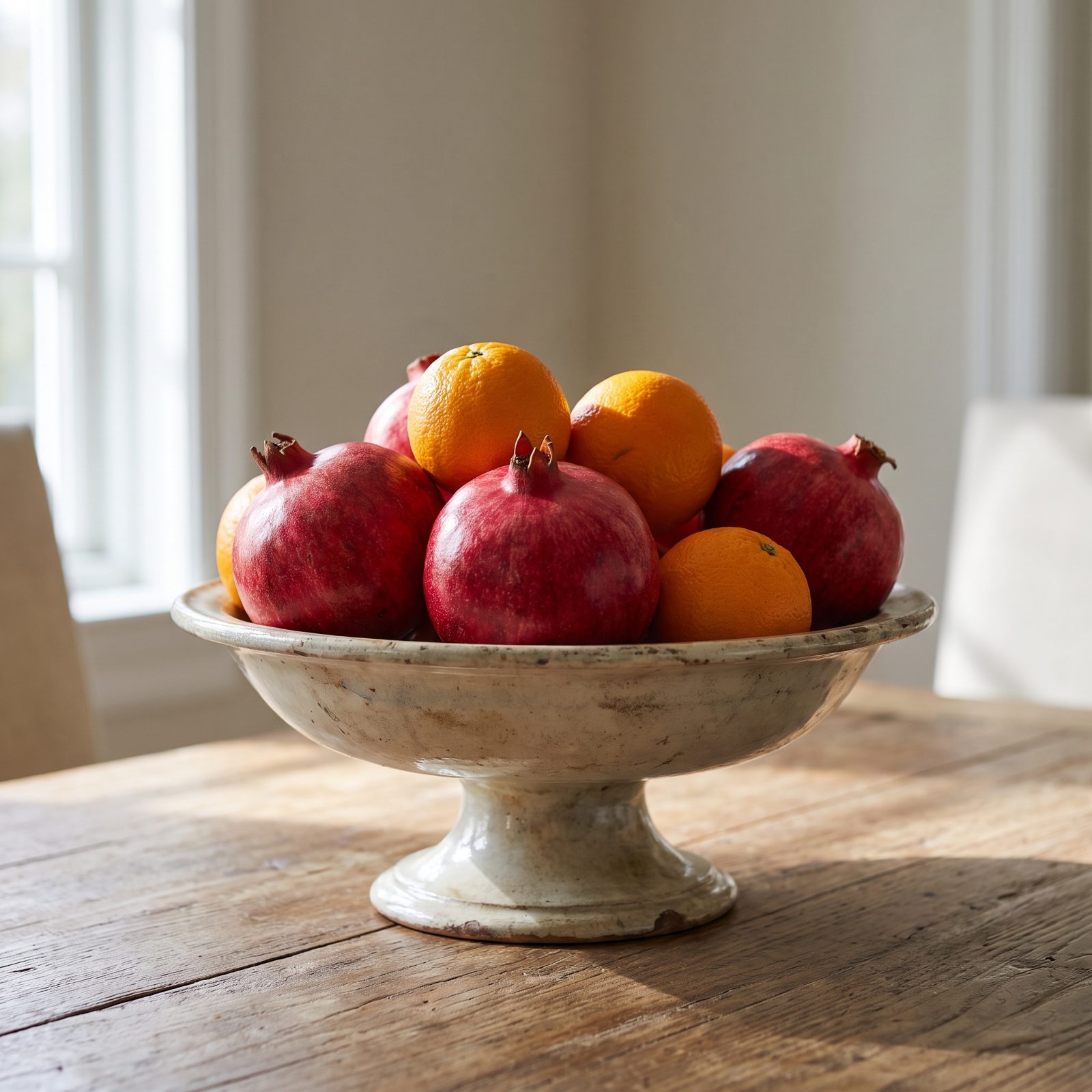
Forget the florist. A heaped bowl of pomegranates and oranges does more for a holiday table than any pricey arrangement, and it costs what you’d spend on fruit anyway.
The color is the whole argument. Deep garnet against bright orange reads as Christmas without a single ornament in sight. Stud a few oranges with cloves for scent, split one pomegranate so the seeds catch the candlelight, and let trailing ivy soften the edge of the bowl.
19. The Table Centered on a Vintage Ceramic Christmas Tree
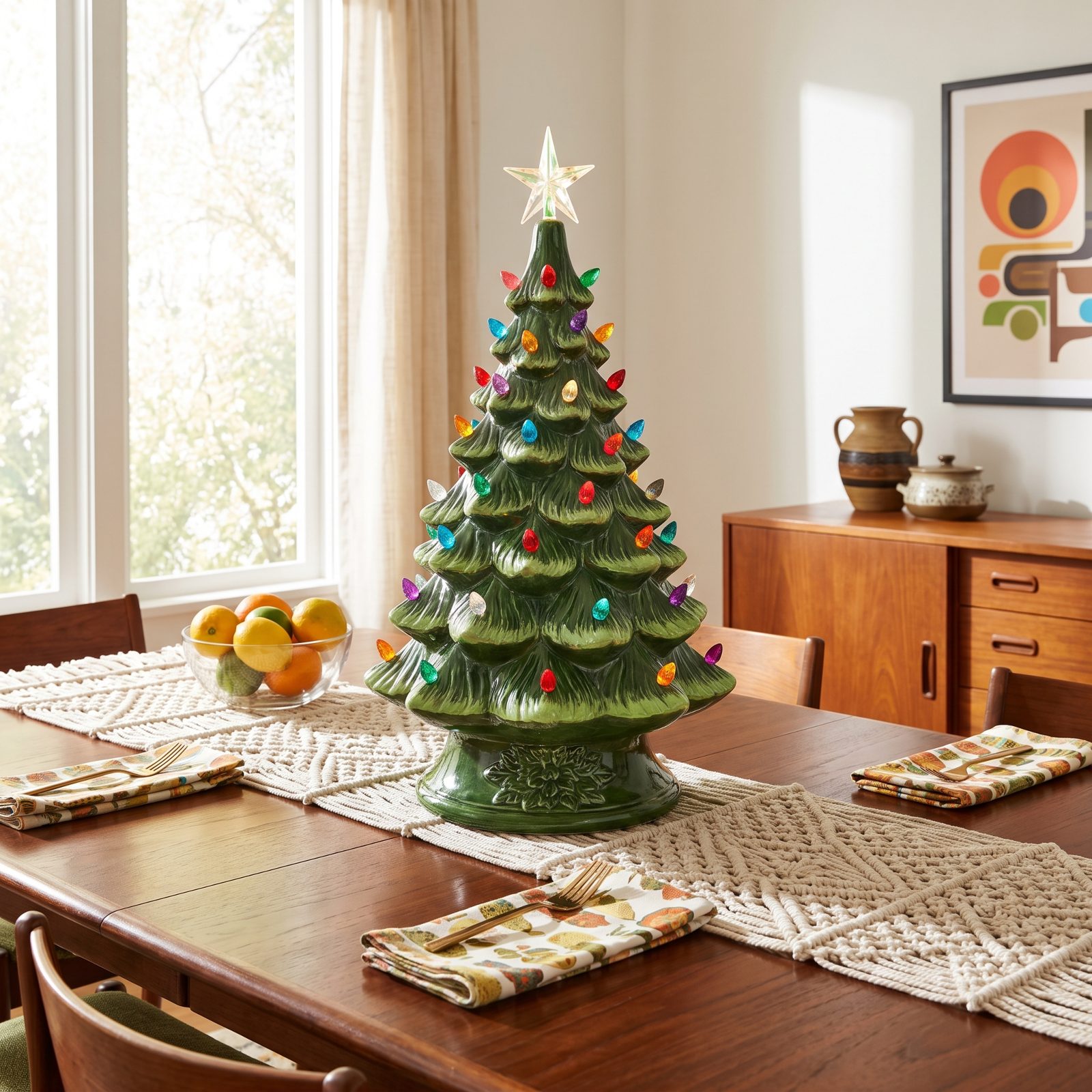
That little green ceramic tree with the plastic bulbs is having a moment, and rightly so. Pulled from an attic box or found at an estate sale, lit up in the middle of the table, it does the work of ten candles and carries decades of somebody’s December with it.
Set it on a bare gingham cloth and keep everything around it quiet. The tree is the event. Let its colored bulbs throw their glow across the plates, and don’t go piling greenery on top of it.
18. The Table With a Suspended Branch Above the Centerpiece
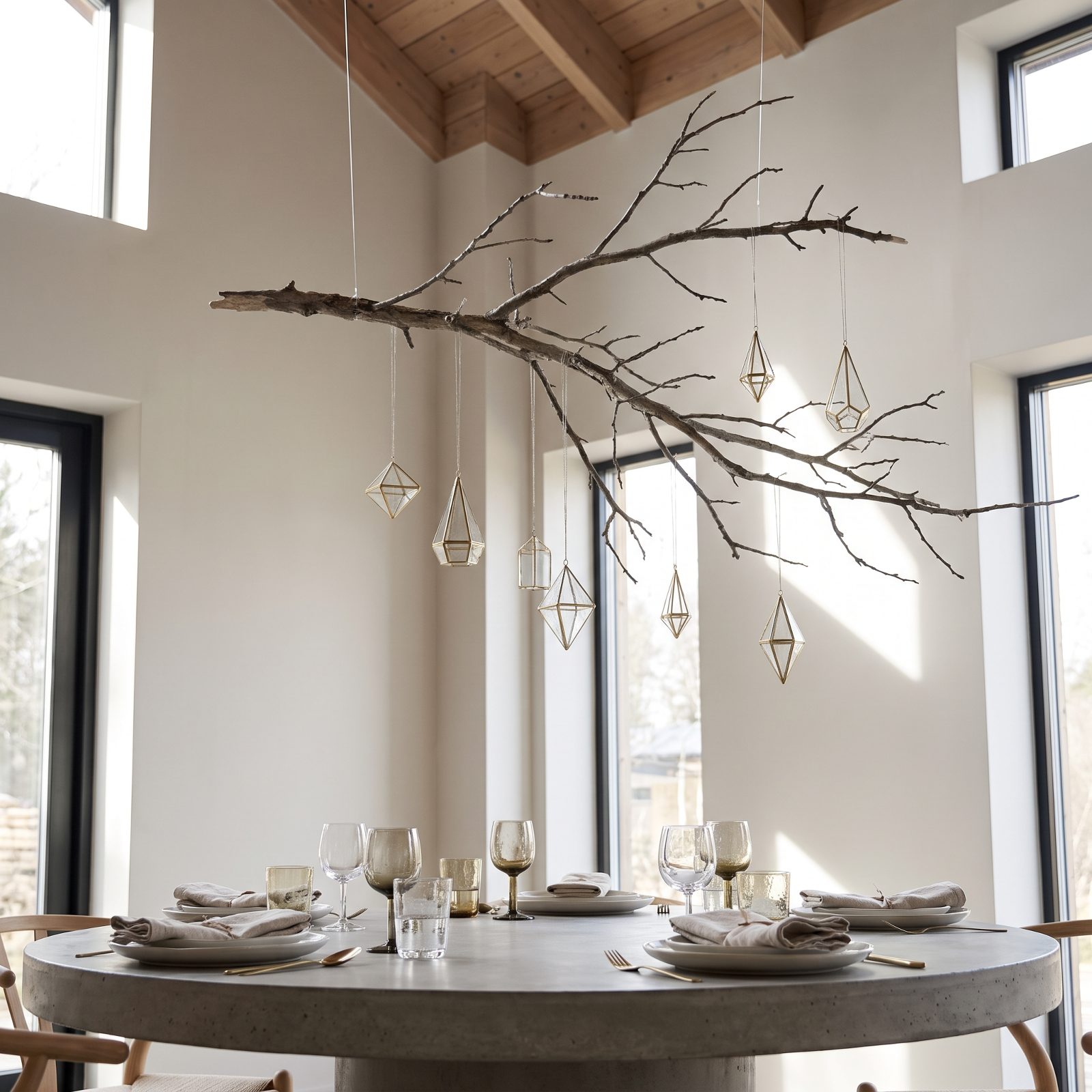
Hang a branch over the table and you’ve changed the whole room, not just the surface. The eye goes up. Guests walk in and look where they never look, which is the fastest way to make an ordinary dining room feel like an occasion.
A bare birch branch on clear cord does the job. Dress it light: a few hanging ornaments, a wind of warm fairy lights, maybe eucalyptus for scent. The danger is overloading it until it reads as a parade float. Hold back, and that’s the difference between magic and a mess over the mashed potatoes.
17. The Table Framed by Paper Stars in the Windows
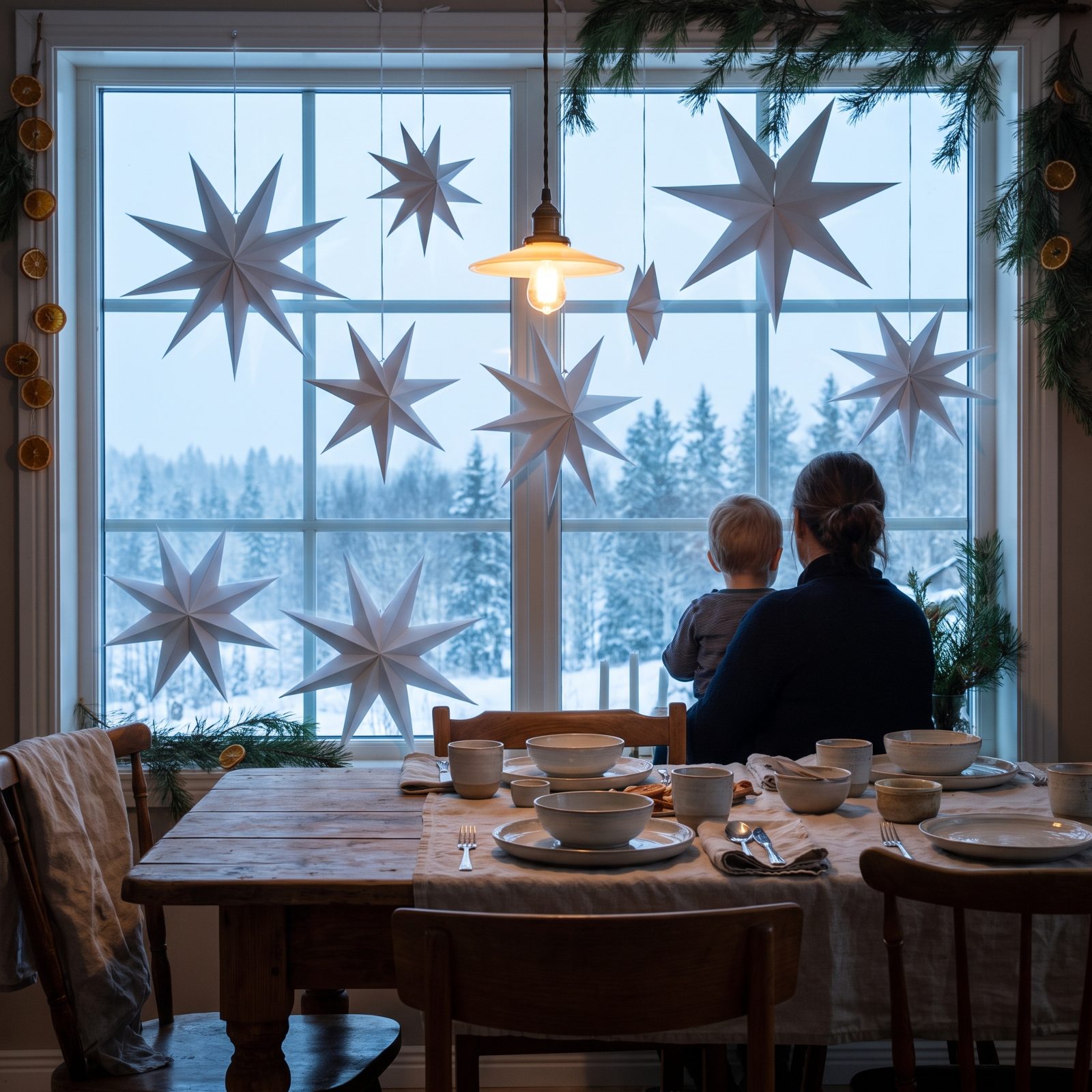
Paper stars in the windows cost almost nothing and change the view in both directions. Inside, they frame the table against the dark. Outside, they tell the street somebody’s celebrating in there.
The folded German Froebel stars or the big pleated Scandinavian ones both throw a soft light when the winter dusk comes down behind them. Hang them at different heights so the window reads as a sky, not a row. Put tiny bulbs in a couple, leave the rest plain, and you’ve got depth for the price of paper.
16. The Table With Bowls of Nuts and Nutcrackers Between Courses
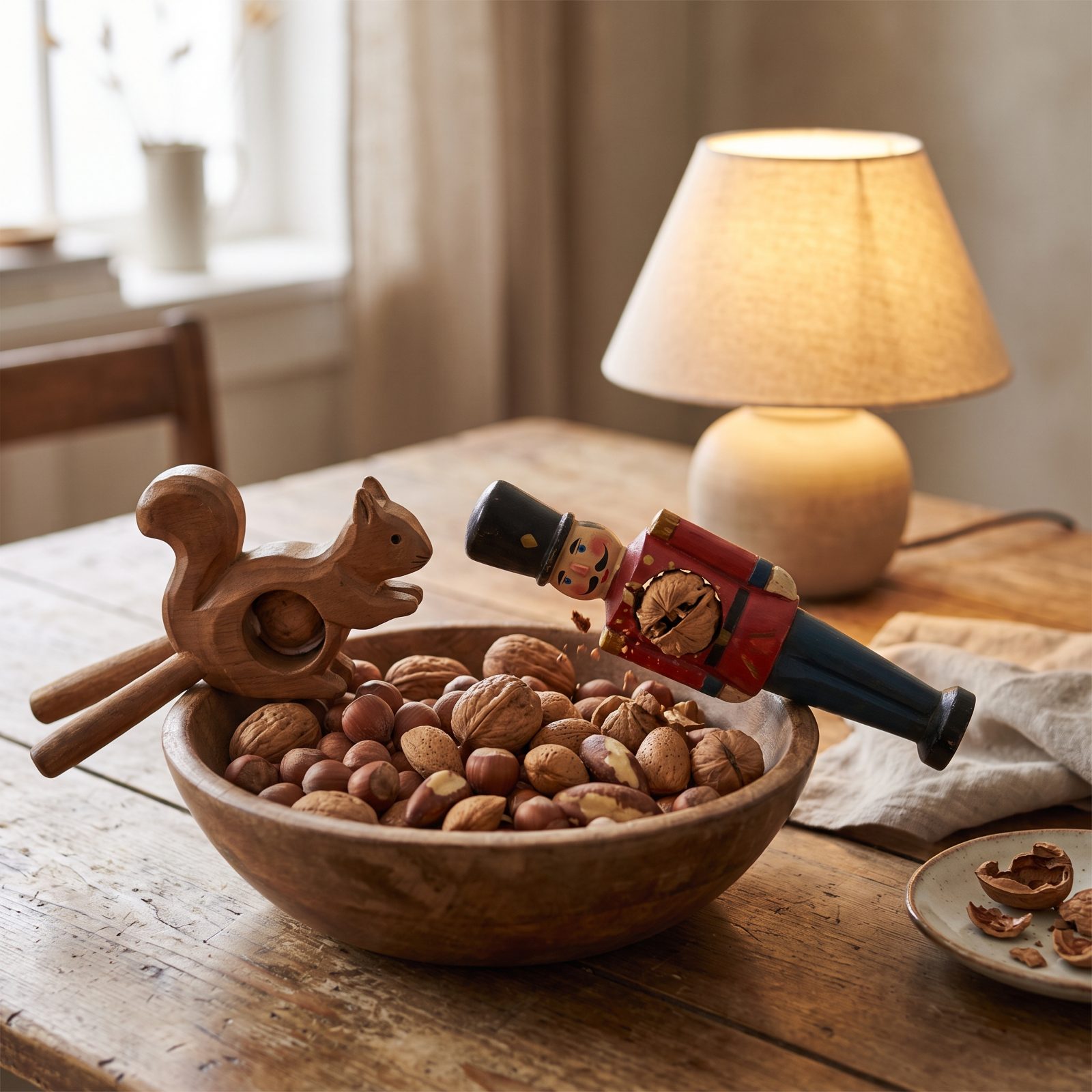
Bowls of whole nuts and a few nutcrackers do something quietly clever: they give people a job between courses. Nobody checks a phone while they’re wrestling a walnut open. The cracking and passing fills the pause after the plates have gone and before the next thing is out.
Walnuts, almonds, hazelnuts in the shell, a brass nutcracker or two left among the bowls. The scatter of shells on the cloth is the point, not a mess to fear. It’s the look of a table nobody wants to leave.
15. The Table Set With Menus Printed for the Occasion
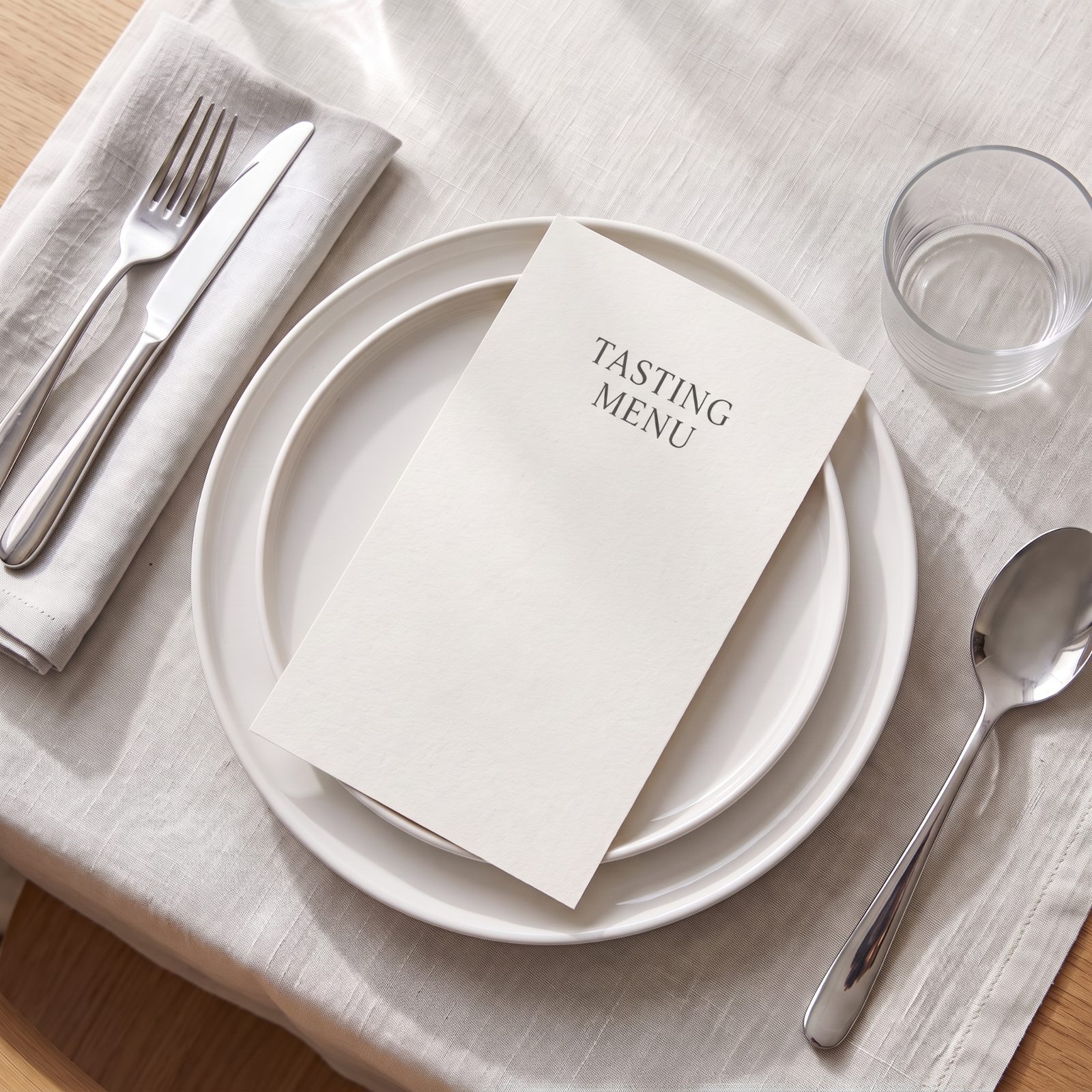
A printed menu at each seat is the oldest restaurant trick in the book, and it works at home for the same reason it works out. Dinner becomes an event with a running order. Guests read it, anticipate, pace themselves. The meal has a shape before the first fork lifts.
You don’t need a printer or fancy stock. A plain cream card with a simple serif heading across the top, done. Name the dishes with a little ceremony. “Grandma’s sausage stuffing” beats “stuffing” every time.
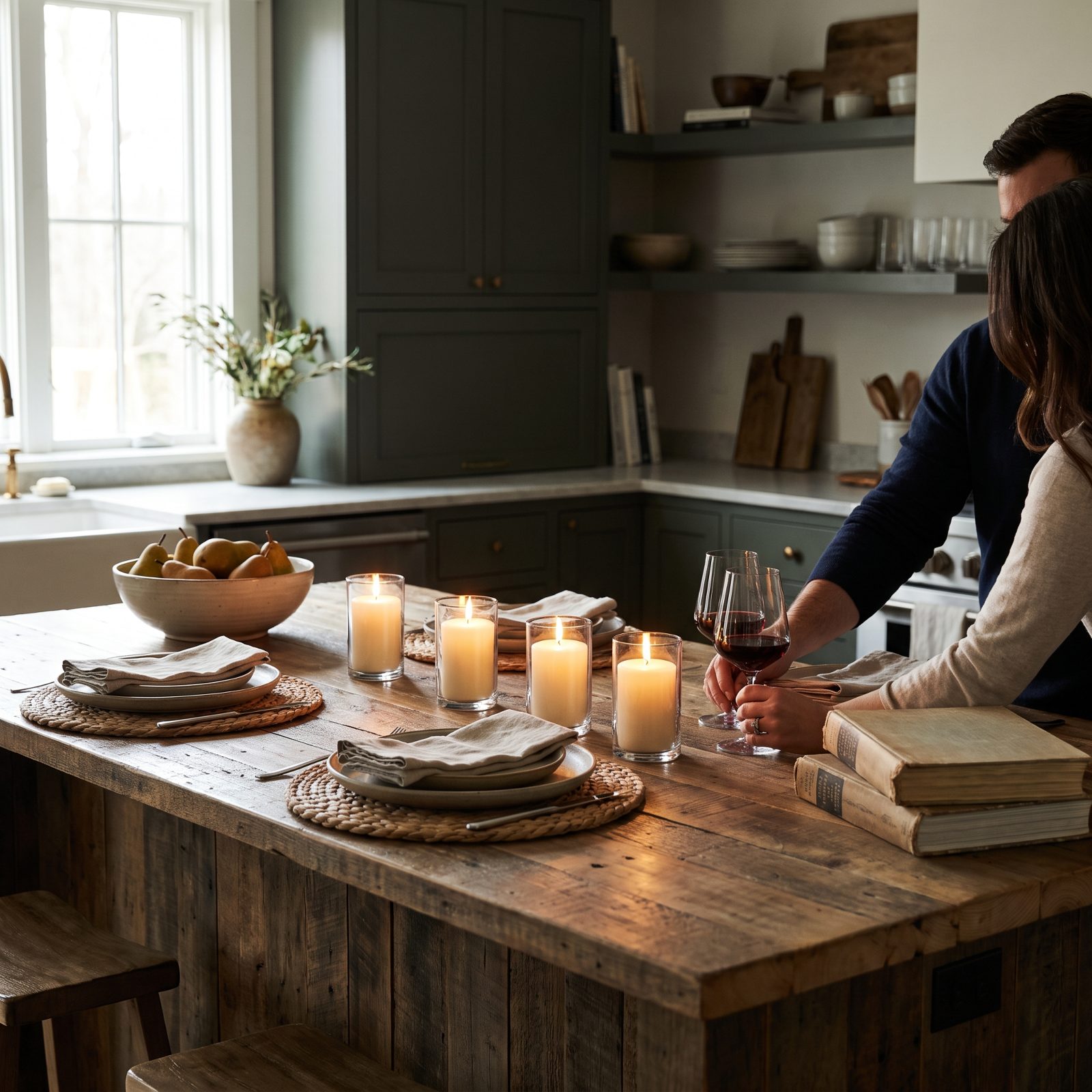
14. The Candlelit Kitchen-Island Table for a Small Gathering
Would you like to save this?
Not every Christmas dinner is twelve people and the good dining room. Some years it’s four of you, and the kitchen island is the right table, not the sad one.
Candles make it work. Kill the overhead lights, cluster a dozen mismatched candles of different heights down the island, and the butcher block becomes the warmest seat in the house. Counter stools pulled close, napkins in a real color, a few clementines among the flames. Small and lit beats big and bright.
Four people and twelve candles will out-occasion twelve people under a ceiling fixture every single time.
13. The Table With Chairs Borrowed From Every Room
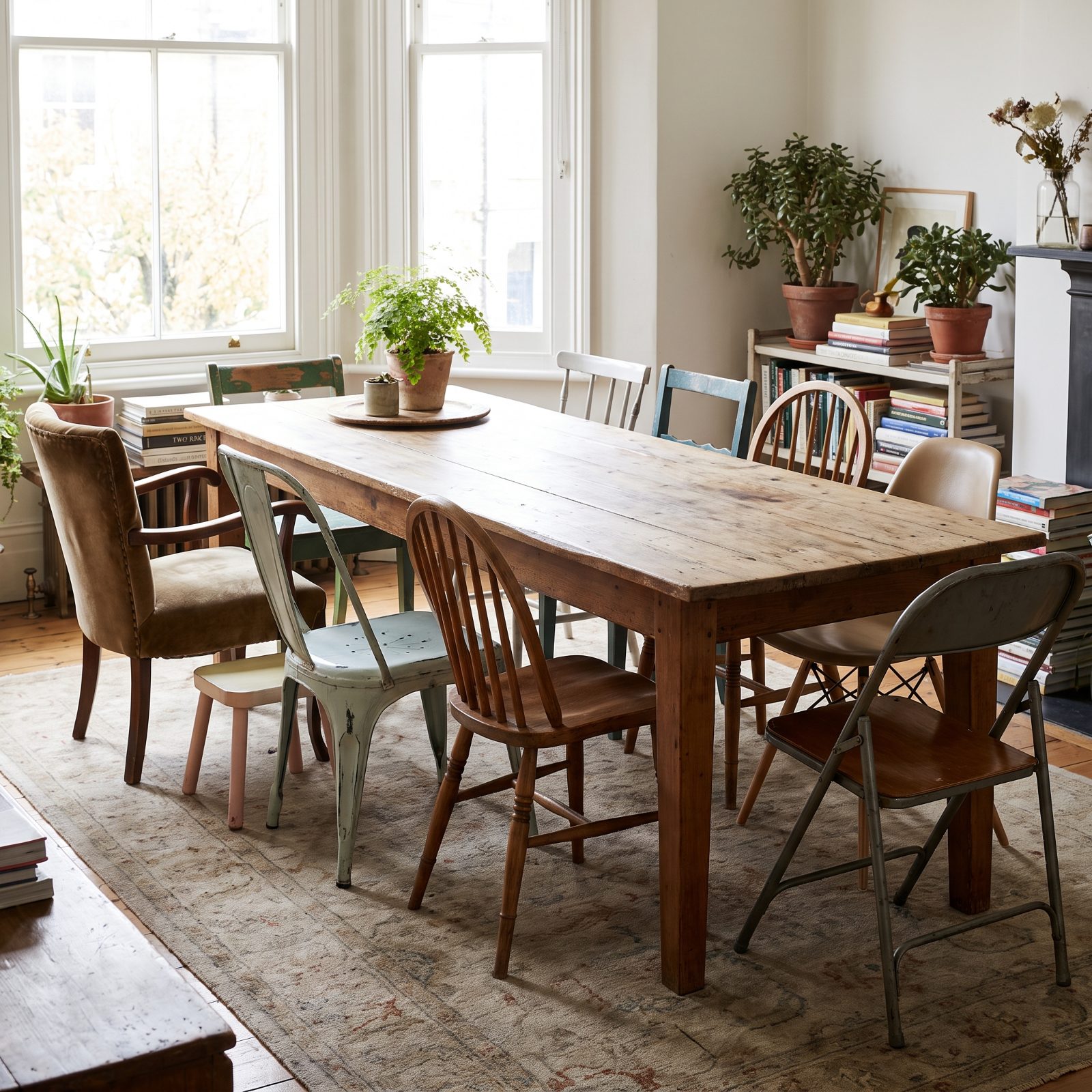
When the whole family comes, the chairs never match, and that’s the best part. The painted kitchen chair next to the cane-back next to the stool with a cushion for height tells its own story: everyone fit, nobody got turned away.
Don’t apologize for it or hide it. Tie a ribbon or a sprig of pine to each chair back and the mismatch reads as deliberate. The crowded table with borrowed seats is the one people remember. That matched set in the furniture store never held a single real Christmas.
12. The Table Where Every Guest Brings a Serving Dish
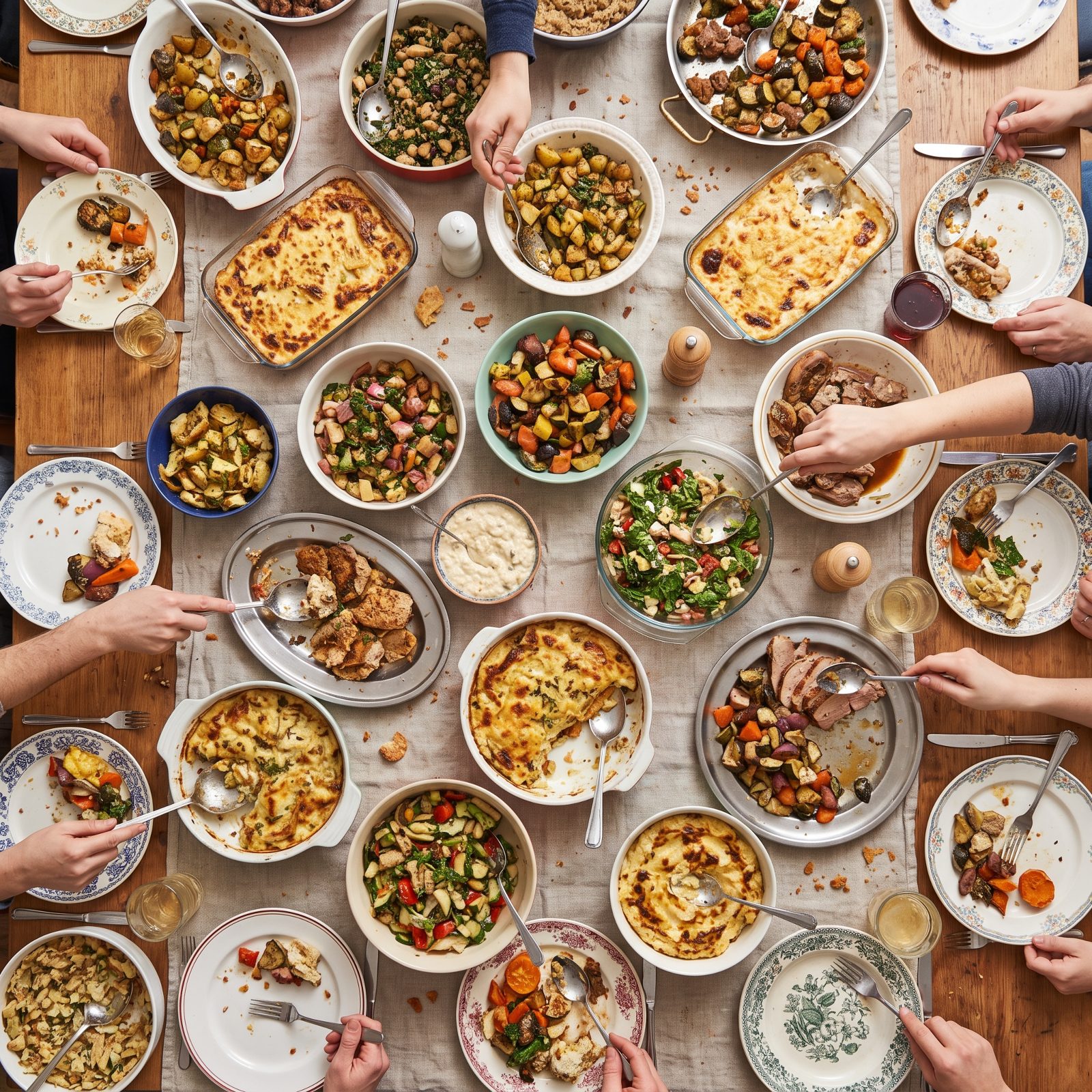
Nobody’s china matches, and that’s the whole charm. The surface is already crowded before anyone lifts a fork, so the potluck table reads as abundant from the doorway. Different dishes, different heights, different hands that carried them in.
A table like this signals belonging. Every guest spots their own green enamel casserole somewhere in the spread and knows they’re part of the meal, not just invited to it. Leave the covered dishes covered until the toast — the reveal is half the fun.
11. The Table With a Nativity Scene on the Sideboard
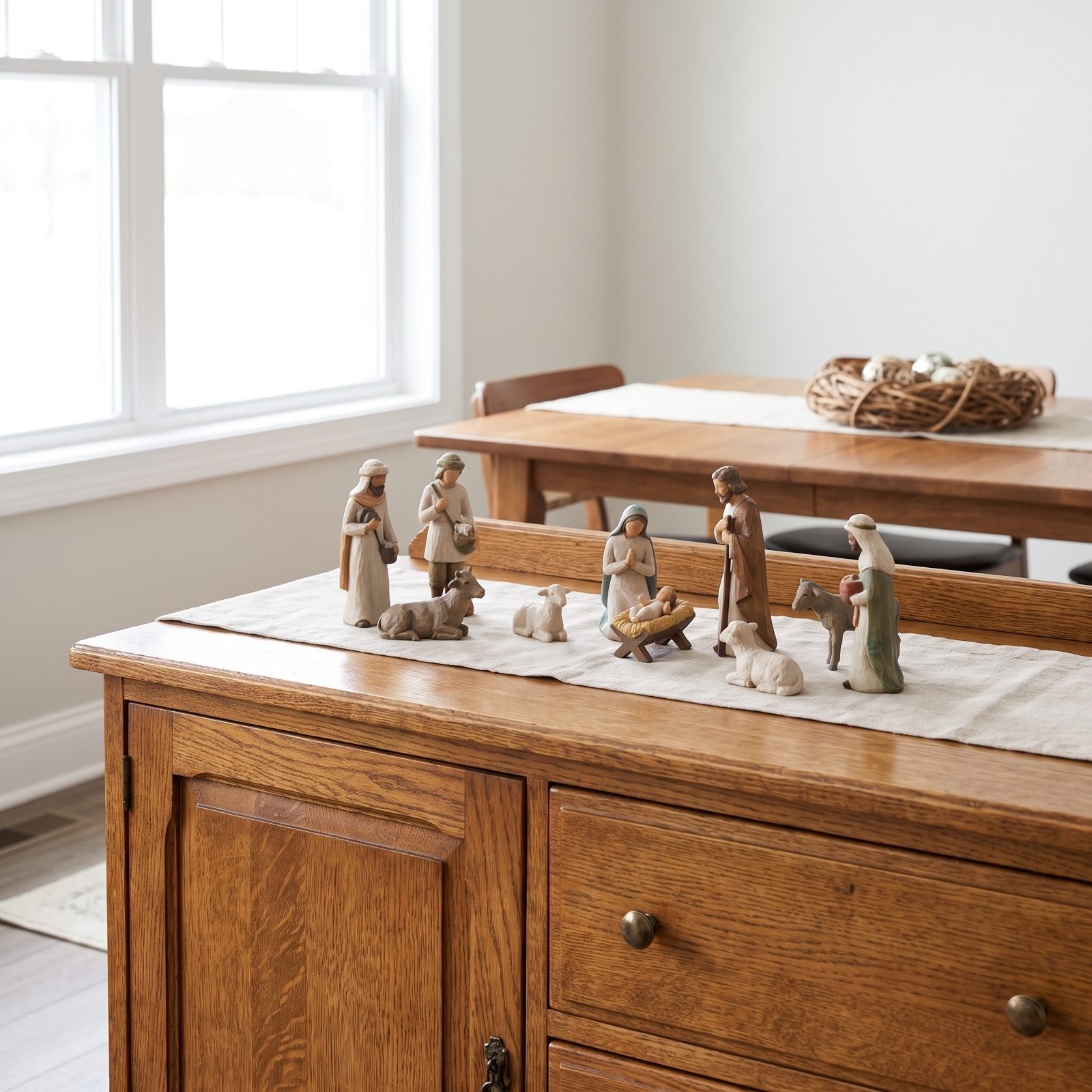
The nativity doesn’t go on the table. It goes where everyone glances on the way to their seat, and that placement matters more than people think.
A hand-carved stable on the sideboard sets the tone before the first word of grace, telling the room what the night is about without a single decoration having to shout it. Older figures are better. Chips in the paint mean the set has survived decades of being unpacked and loved.
10. The Table With One Dramatic Amaryllis as Its Centerpiece
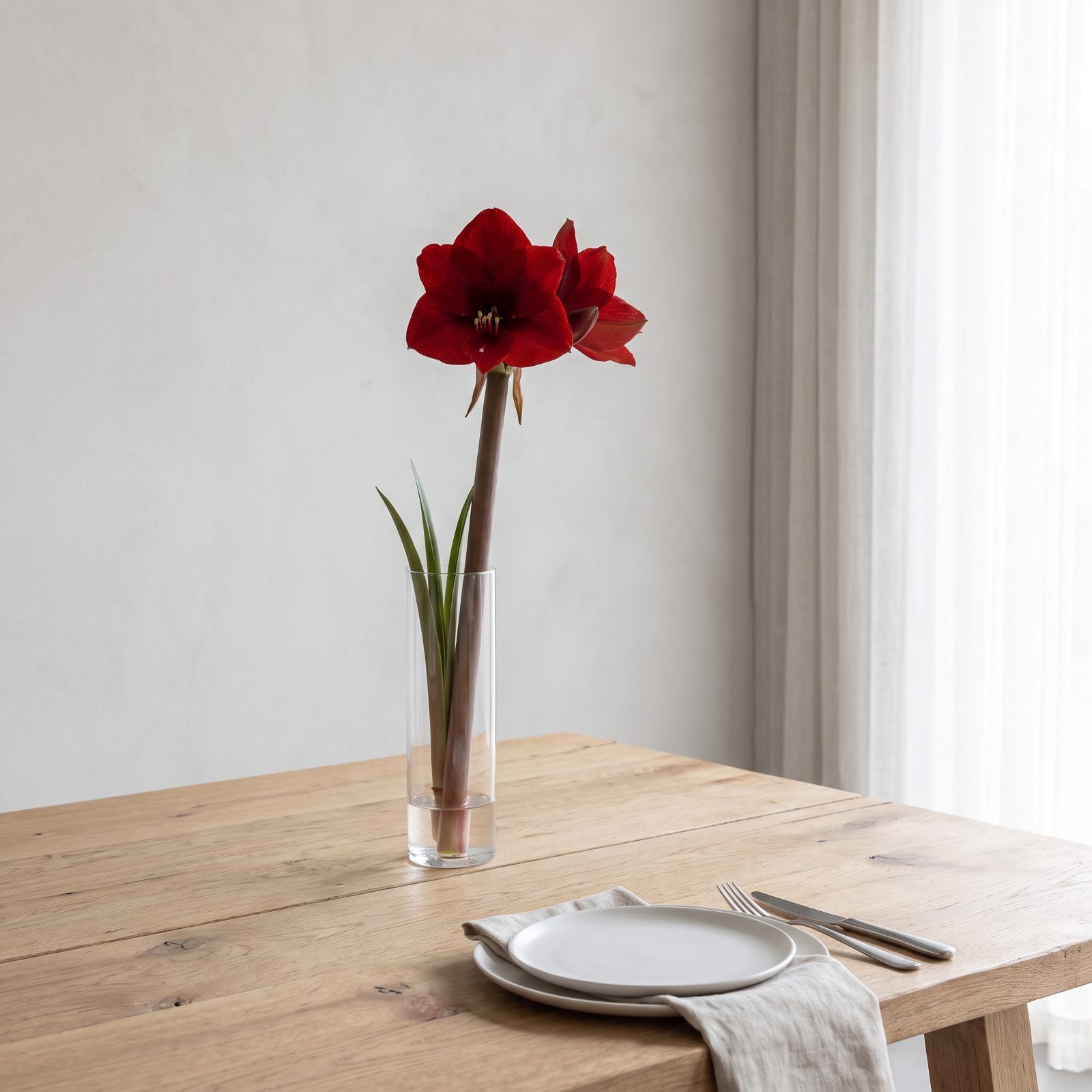
One flower. That’s the whole trick. A single amaryllis does what a dozen small arrangements can’t, because its height commands the table and its scale makes everything around it feel intentional.
Red against gray linen is a loud, good decision. The stalk rises well above the candles, so it reads as sculpture more than bouquet. Plant it in a stone planter pot wrapped in burlap and let the drama carry the room.
9. The Table Set Beside a Frosted Window
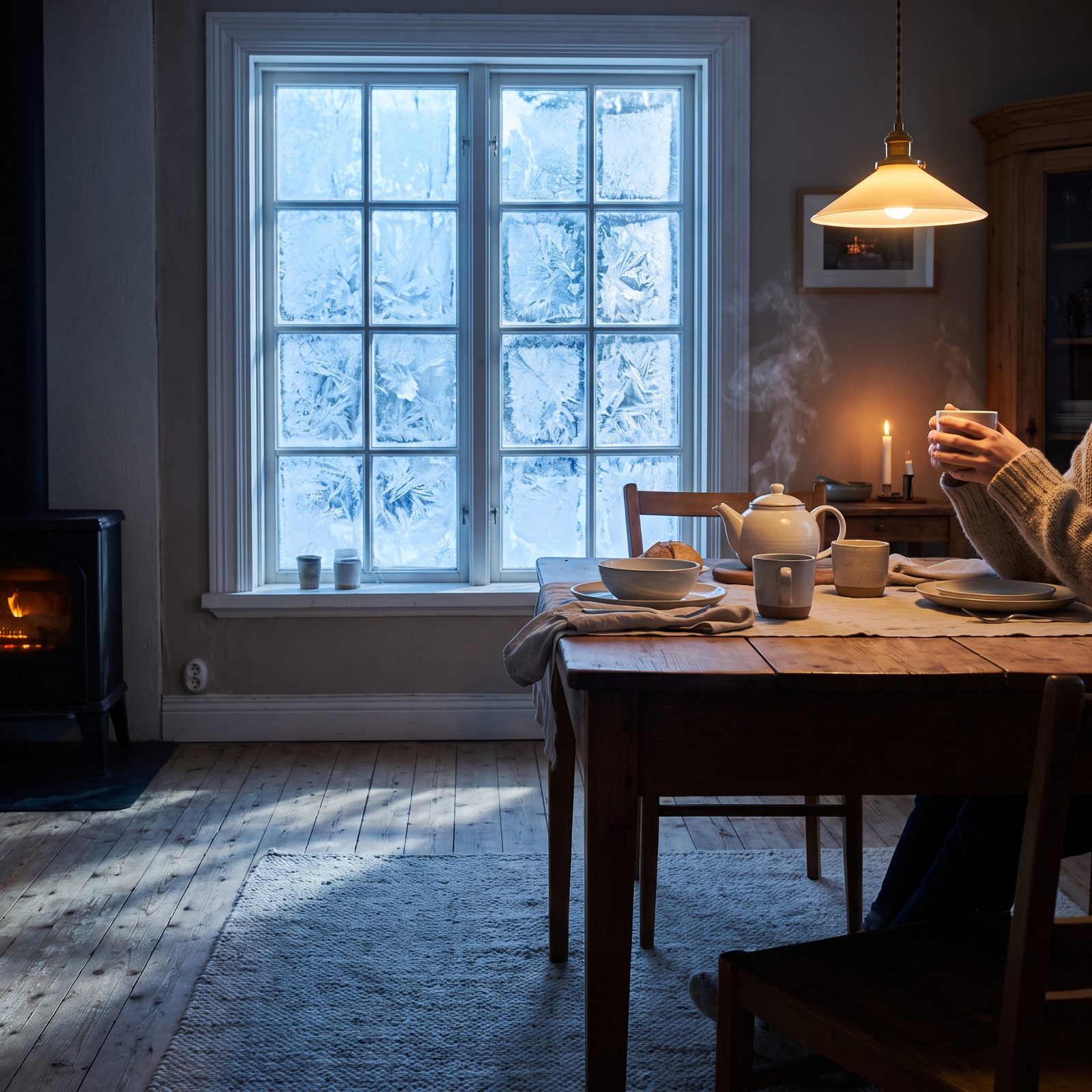
Half the setting is outside the glass. A table beside a frosted window borrows the weather, and nothing you buy can compete with real ice crystals forming in the corners of the pane.
Lean into the cold palette indoors: icy blue linen, silver, clear crystal. Then warm it from within. Line the sill with mercury glass votives so the flames double in the reflection. That clash between the cold blue outside and the gold flicker inside is what makes guests stop at the doorway.
8. The Table Decorated With Gingerbread Houses
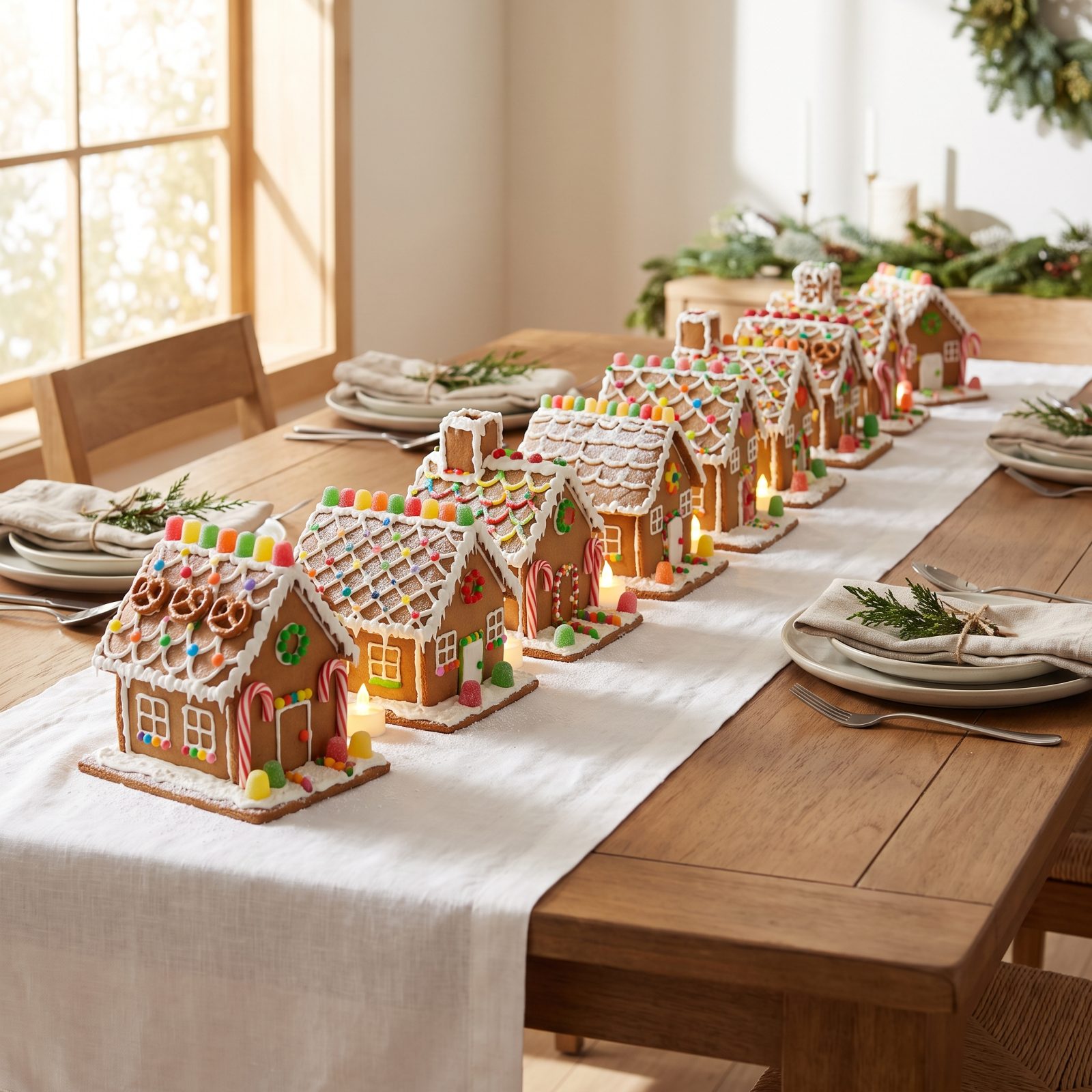
Gingerbread houses down the center turn the table into a little street, and the kids at the meal will not take their eyes off them. That’s exactly what you want.
Homemade beats store-bought. A slightly crooked roof with icing that ran a little says someone spent an afternoon at the kitchen counter, swearing gently at the royal icing. Three houses of different sizes read as a village. Scatter sugar between them for snow and leave it messy.
7. The Table With Vintage Ornaments in Footed Glass Bowls
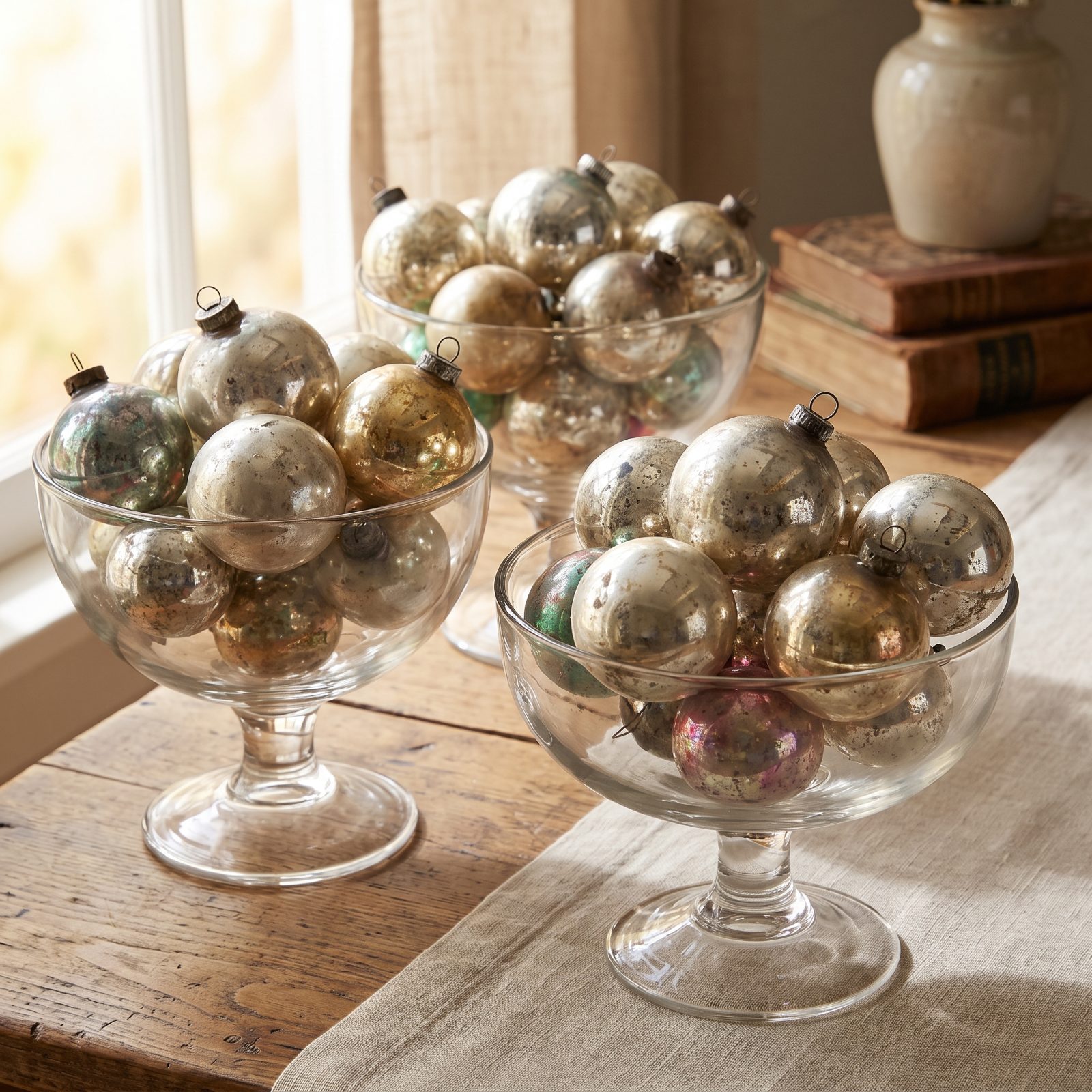
Ornaments don’t have to hang. Pile the old ones — the mercury-glass with the worn stripes, the blown-glass that’s slightly dented — into footed glass compote bowls and let them catch candlelight from inside the cut crystal.
Faded gold and rose-pink read warmer than anything new on a shelf. These are the ornaments too fragile for the tree now, and the table is where they finally get seen up close instead of hidden on the back branches where no one ever looked anyway.
6. The Table With a Train Circling the Buffet Behind It
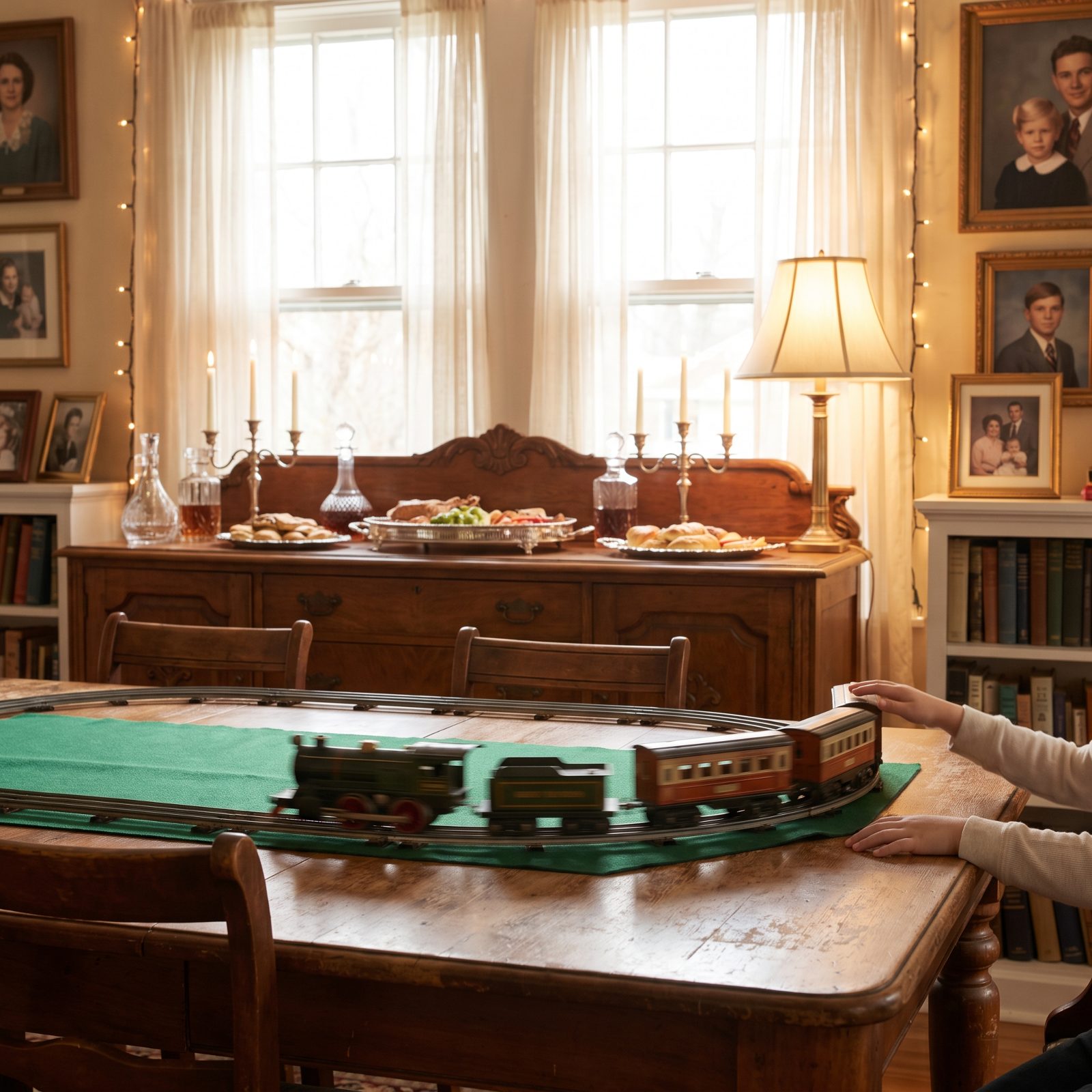
The train isn’t on the table. It’s behind it, circling the buffet, and that sound it makes — the low electric hum, the click at the track joints — is what tells everyone the night has started.
Grandfathers set these up for a reason. A model train hauling little wrapped parcels past the platters gives children an excuse to leave their seats and come back smiling. Line the track with bottle-brush trees and load the freight cars with candy.
5. The Table With a Toast Written Beneath Each Plate
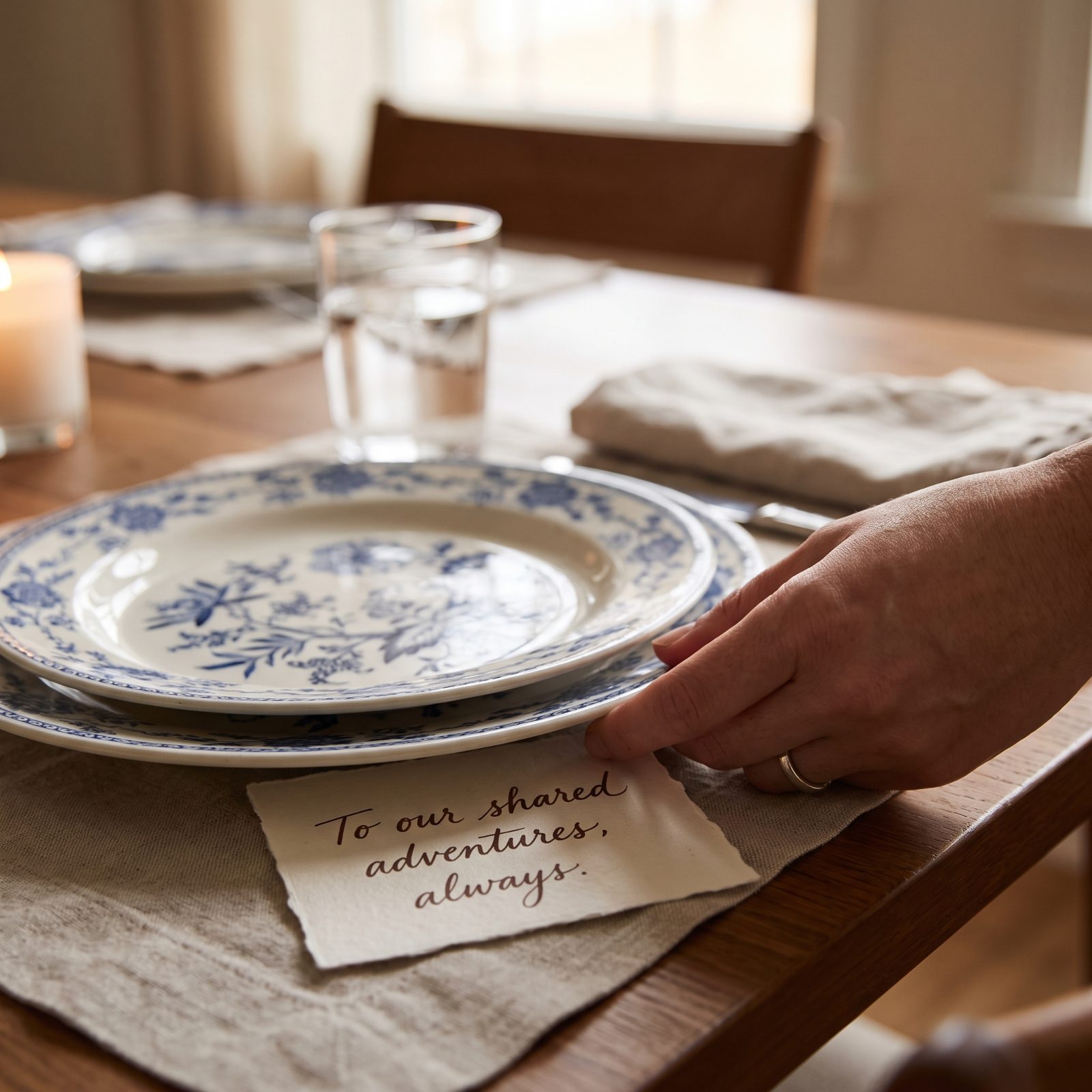
Slip a card under each plate — a line of handwriting, a short toast, a word you’ve never quite managed to say out loud to the person sitting there.
Nobody expects it, which is why it lands. Guests lift their plates, find the card, and the room goes quiet in a good way. Tie the napkin with a rosemary sprig so the whole setting smells faintly of the season. And keep the toasts short — one honest sentence beats a paragraph of fine words.
The cheapest thing on the table is the one guests take home.
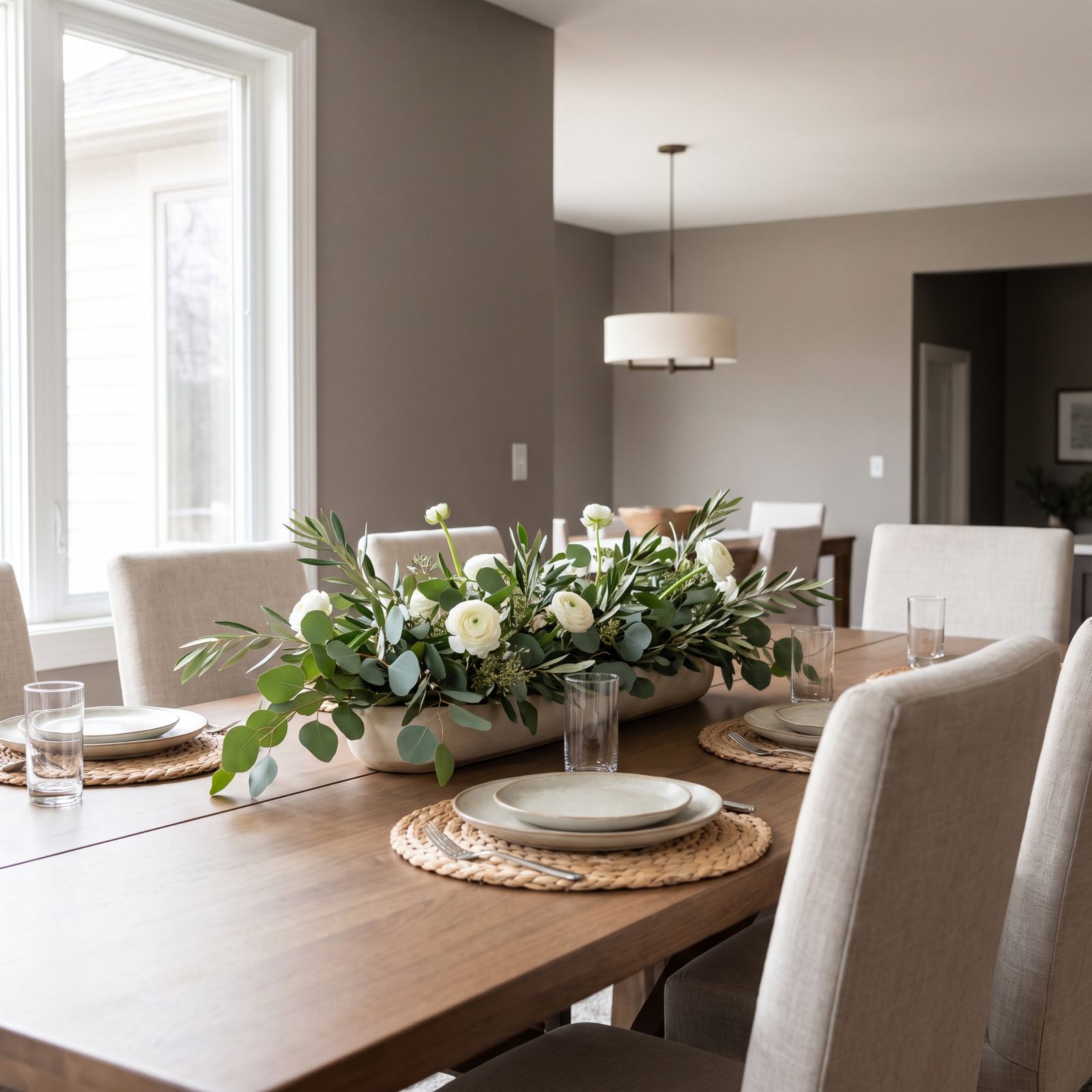
4. The Table With a Centerpiece Low Enough to See Across
Would you like to save this?
Everyone makes the same mistake every December: a centerpiece so tall guests have to crane around it to talk. Going low fixes all of it.
A shallow wooden trough centerpiece packed with cedar, white roses, and pomegranates keeps the greenery under six inches. Scatter short votives through it. Conversation across the table stays open, faces stay lit, and the greenery turns into a runway instead of a hedge.
3. The Table Set in a Conservatory Full of Winter Greenery
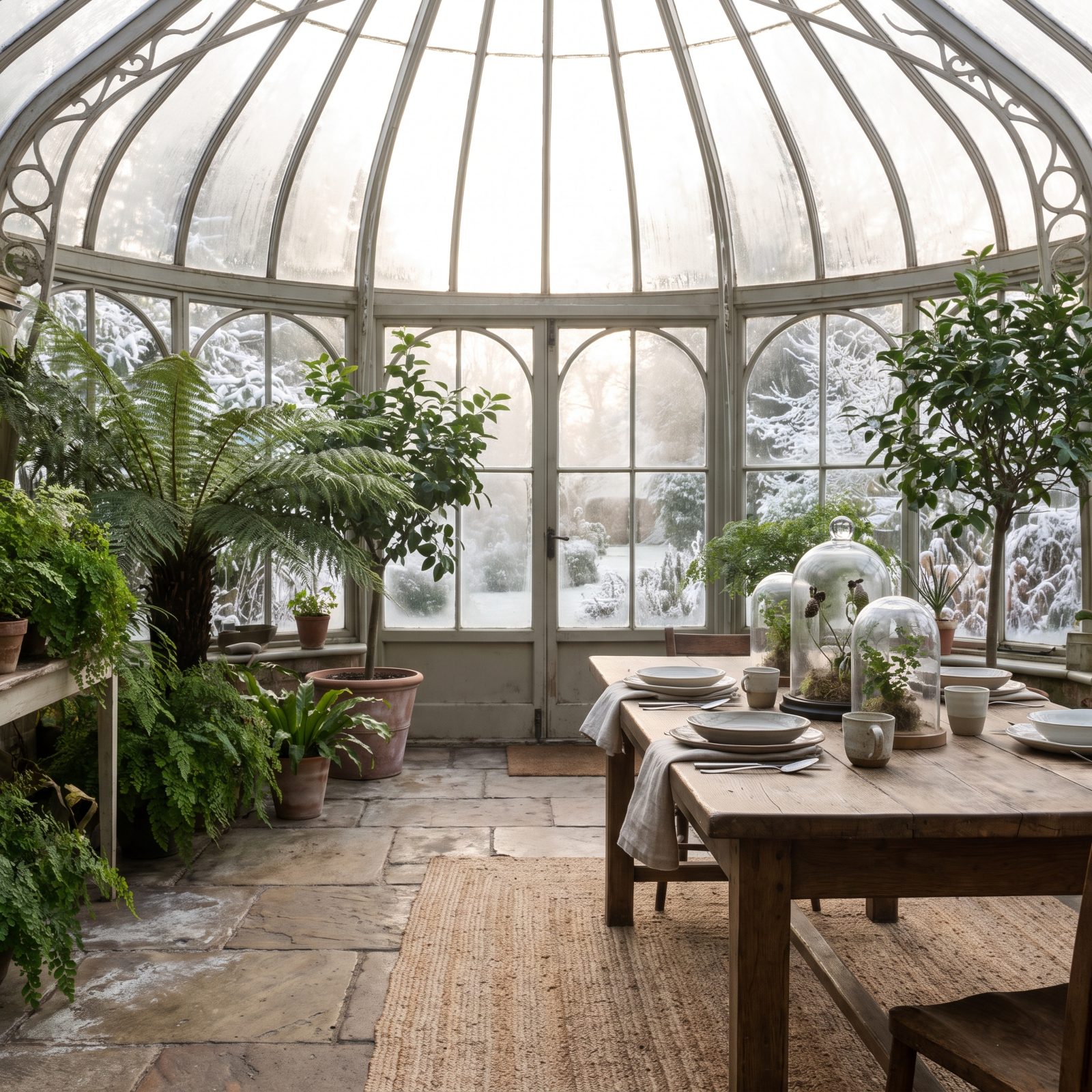
Eat among the plants. A conservatory table turns dinner into something closer to a garden in the dead of winter, glass walls holding back the cold while ferns lean in from every side.
The greenery’s already there, so the table can stay simple — white linen, botanical porcelain, a fresh garland down the center. Wind warm fairy lights through the potted trees so the room glows from the edges inward, and let the blue twilight pressing on the glass handle the rest.
2. The Table With a Dedicated Seat and Bowl for the Family Dog
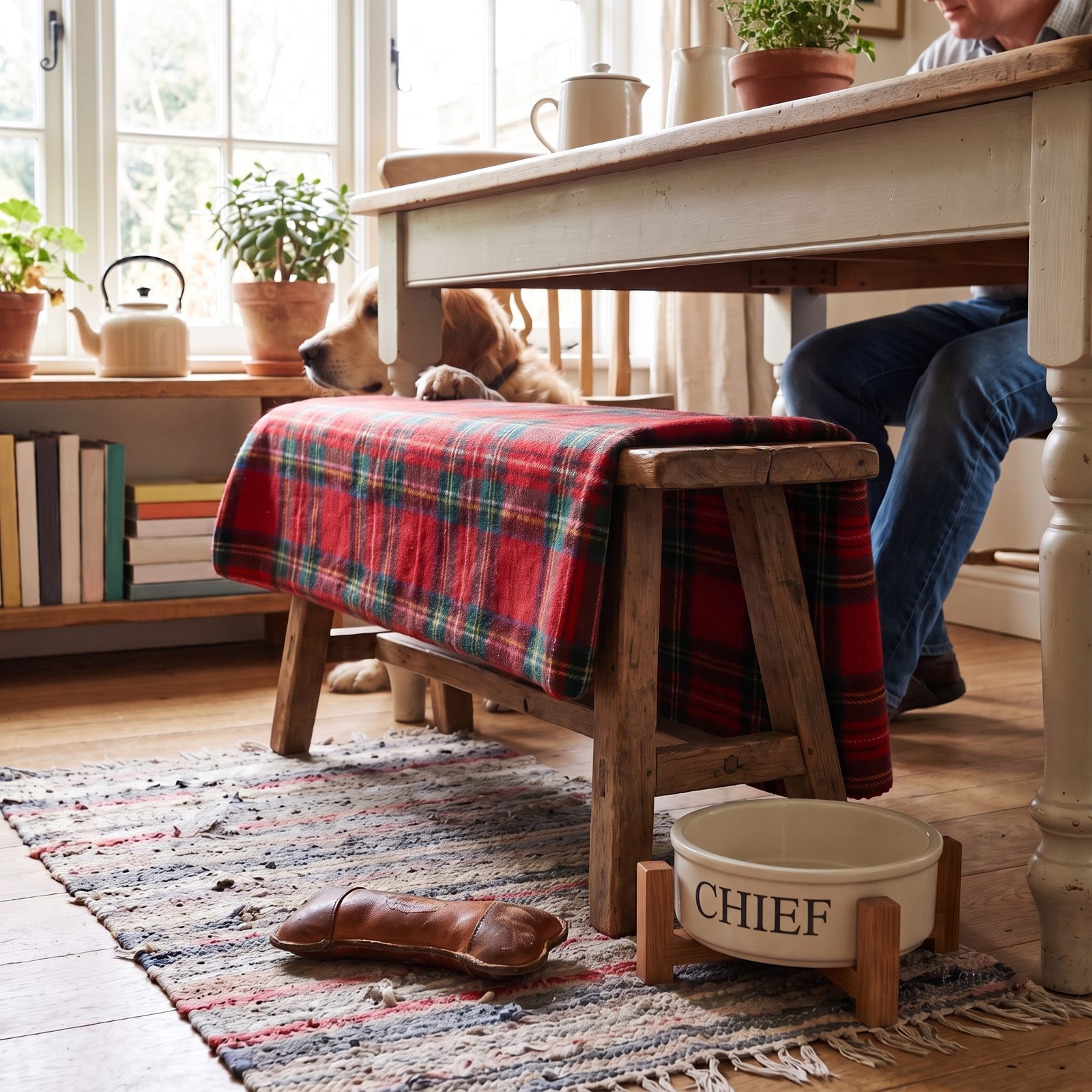
Somewhere between the second cousin and the empty chair sits a wooden bench with a plaid blanket on it, and a bowl on the floor labeled CHIEF in bold printed letters. The dog gets a seat. Not a joke seat — a real one.
What makes this table land isn’t the tartan throw blanket or the ceramic pet bowl. It’s the admission that this animal is family, counted the same as the humans passing the gravy. You’ve seen that house, the one where the dog waits under the table all night, patient as a saint waiting for the roast to slip. This table just stopped pretending that wasn’t already the arrangement.
1. The Table With a Place Quietly Kept for Someone Missed
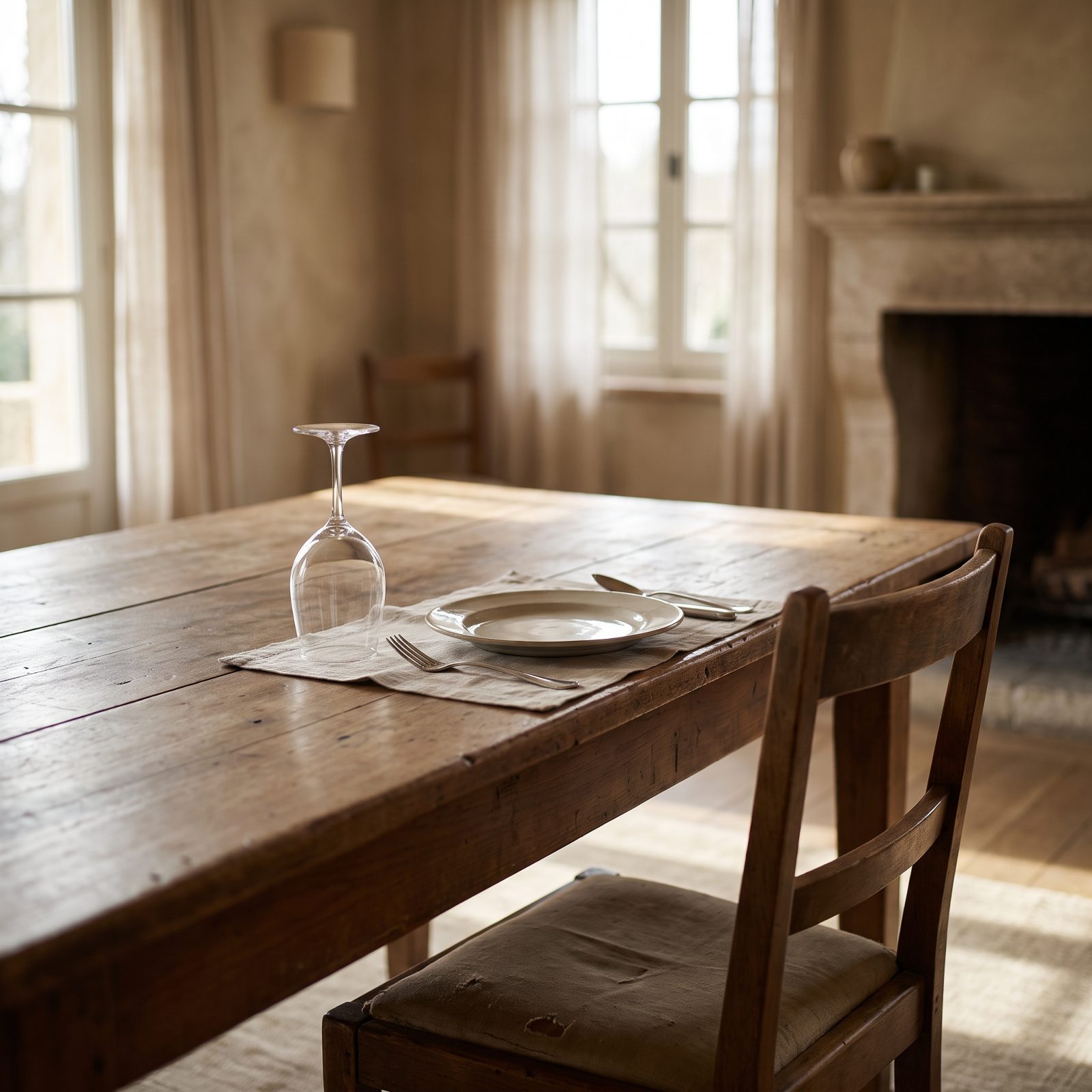
One setting at the head of the table has everything the others have. Plate, silver, napkin. But the wine glass is turned over, a candle burns alone, and a sprig of holly sits where a hand would reach.
Nobody announces it, and everybody understands it anyway. The empty chair at Christmas is an old tradition in plenty of families, one that never made it onto a greeting card. You set the place because setting it keeps the person at the table a little longer — and because the alternative, pretending the gap isn’t there, feels worse than the ache of staring at it.
The single lit white taper candle does most of the heavy lifting. It gives the grief somewhere to go instead of parking it in the middle of the antipasto.