
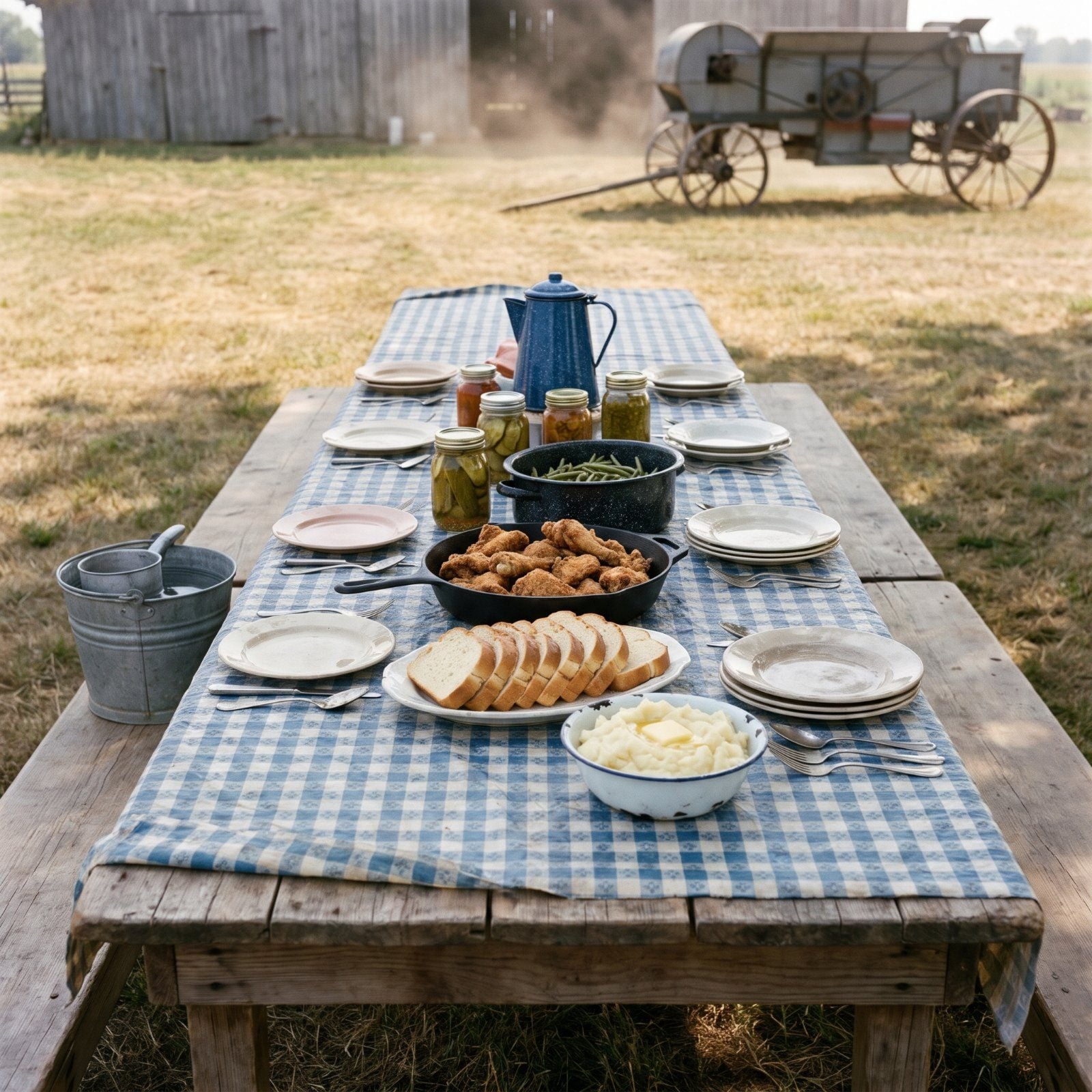
The steam engine fired up around six, and by the time the crew hit the field the kitchen was already losing a war against the heat. Threshing day meant feeding a dozen or more hungry men on a wood stove while the thermometer climbed. No shortcuts, no store-bought anything — just whatever came out of the garden, the smokehouse, and the chicken yard, loaded onto mismatched ironstone plates and carried out in granite roasters. These are the meals that kept a 1955 harvest crew upright from dawn coffee to lamplight supper.
Please note that some of the images in this article were created with the assistance of AI.
37. Skillet-Fried Chicken with Mashed Potatoes, Gravy, and Green Beans
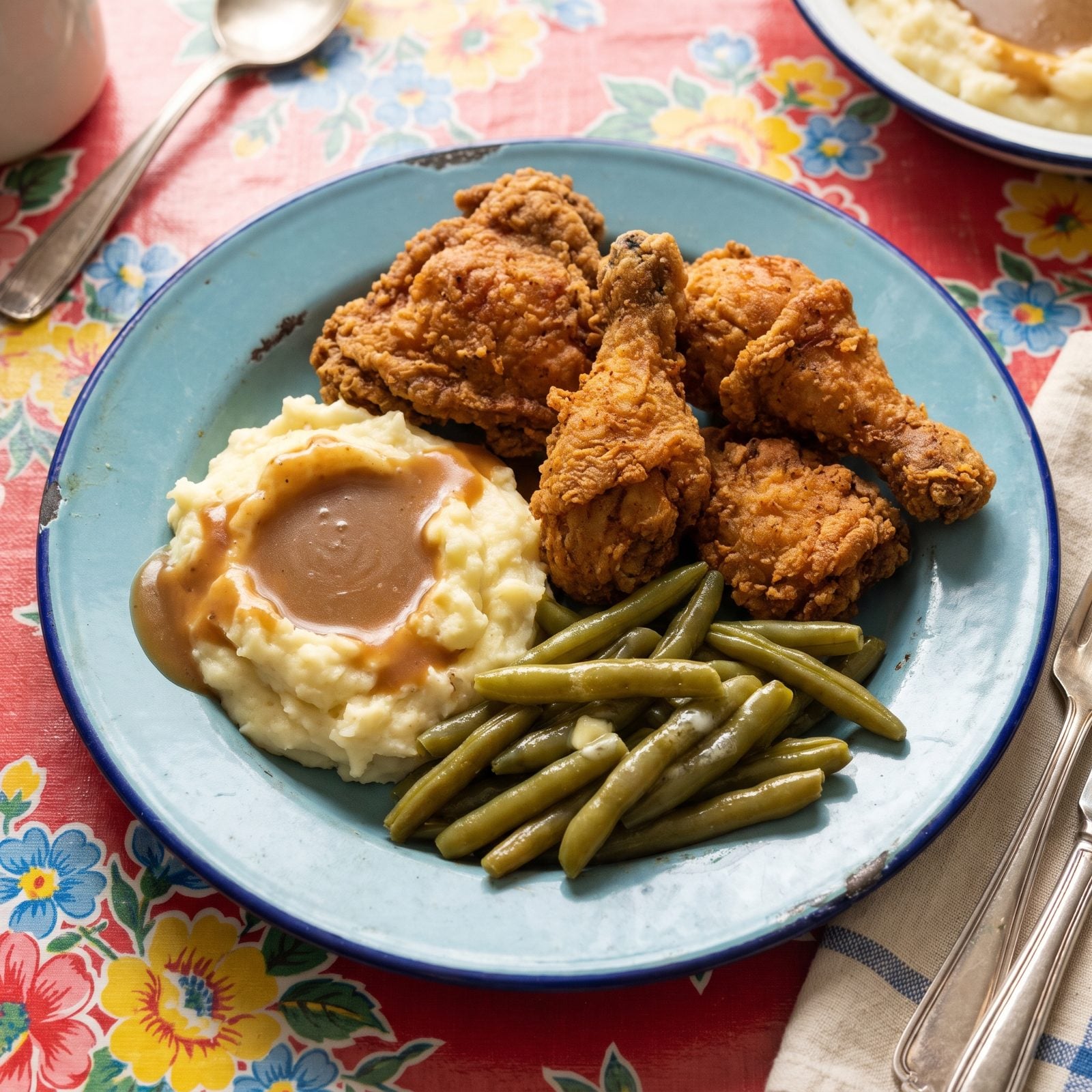
Chicken killed that morning hit the lard by ten and sat under a dish towel until the crew came in. The oldest hens went to stew, but threshing-day birds were young ones — floured, salted, fried in a skillet deep enough to spit at you.
Mashed potatoes got piled into an enamel bowl with a dent pressed into the top for gravy made from the pan drippings. Green beans had been simmering with bacon since mid-morning, long past the point anybody today would call done. That was correct. A threshing man didn’t want crisp beans. He wanted food that stayed with him.
36. Country Ham, Fried Eggs, Biscuits, and Red-Eye Gravy
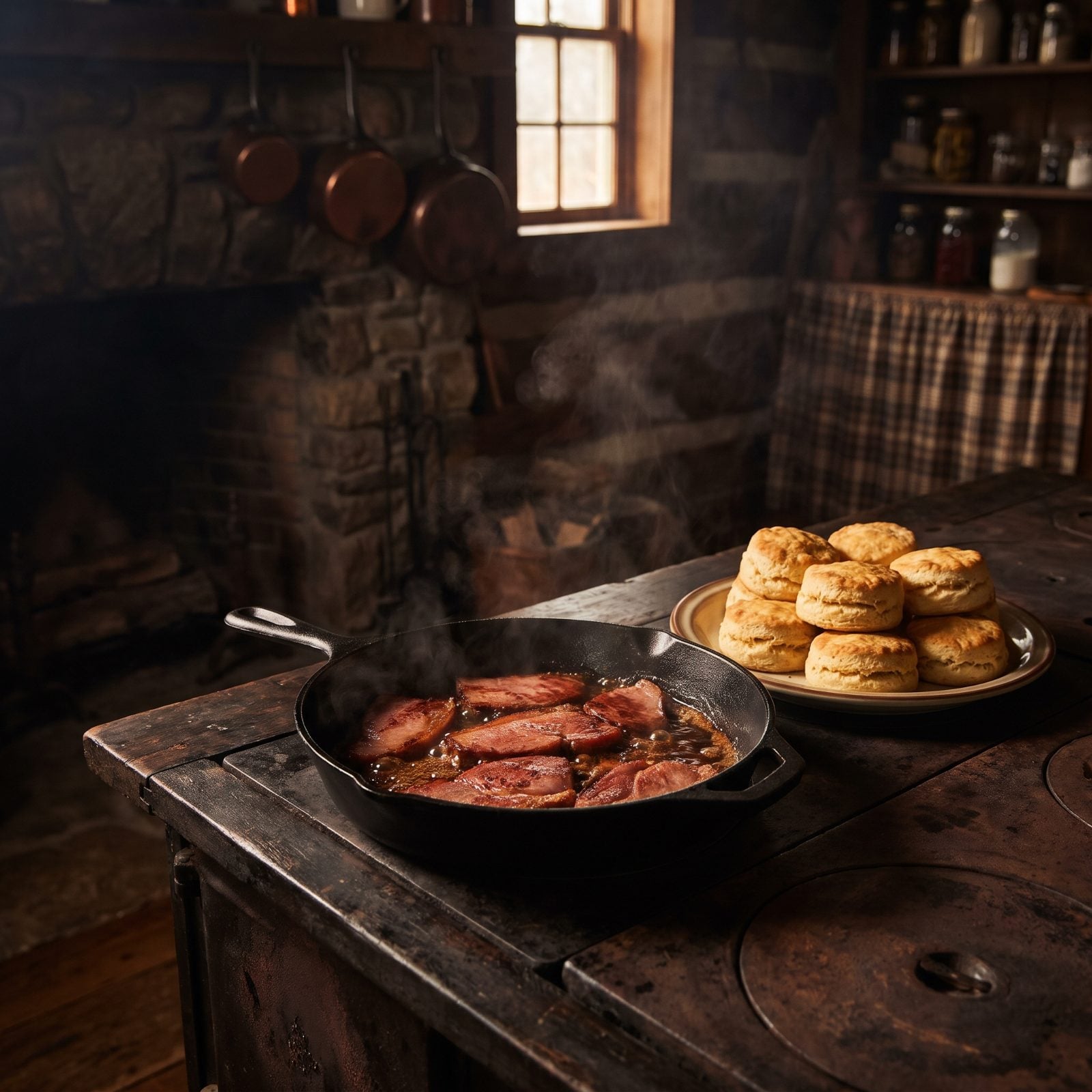
Before full light, the ham came out of the smokehouse and hit a screaming cast-iron skillet. Salt-cured and hard as a board until the heat worked on it. You fried it, lifted it out, then poured a splash of black coffee into the pan to lift the browned bits.
That was red-eye gravy. Thin, dark, a little bitter, named for the ring of grease that floated in the middle. You sopped it with a biscuit. The eggs went in afterward, whites gone lacy at the edges from the ham fat.
This breakfast sent a man to the field at daybreak and didn’t quit on him until the coffee-break wagon rolled out mid-morning.
What Our Readers Say
- When Piaci Pizza readers loved a food photo and tapped a reason, comfort came out on top at 30%, and nostalgic was picked 15% of the time.
- In our readers’ votes, main-course photos got hearts 80% of the time, compared with 75% for the other images in the same articles.
From Piaci Pizza reader polls and votes.
35. Buckwheat Pancakes with Pork Sausage and Maple Syrup
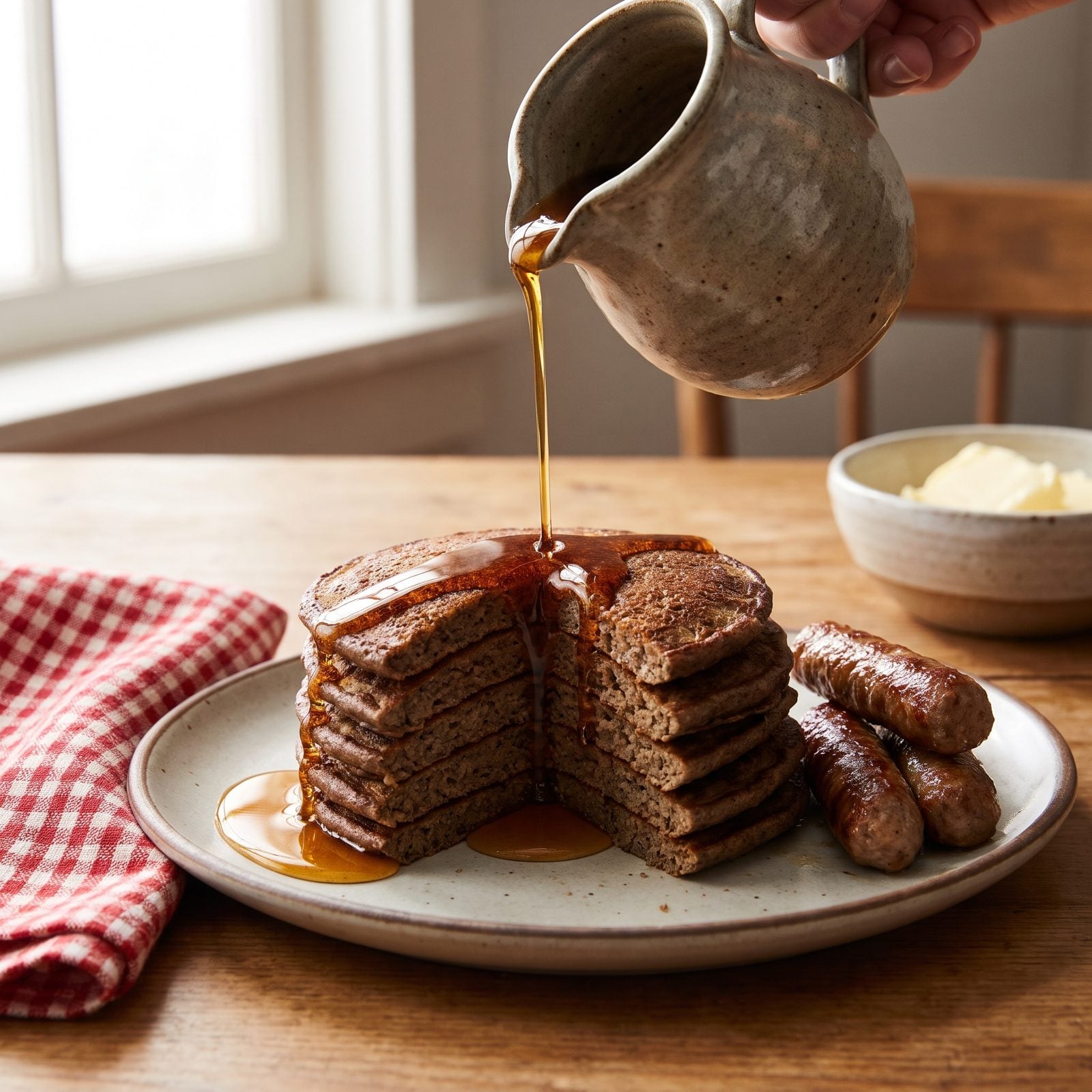
Buckwheat made a darker, heavier pancake than wheat flour, with an earthy near-bitter edge that most children claimed to hate and most grown men ate four of. The batter often got started the night before with a bit held back as a starter, so it carried a faint sour tang when it hit the griddle.
Homemade sausage, ground and seasoned from the last butchering, came off as fat links. Real maple syrup if the farm had sugar maples, sorghum or cane if it didn’t.
34. Biscuits with Sausage Gravy and Stewed Prunes
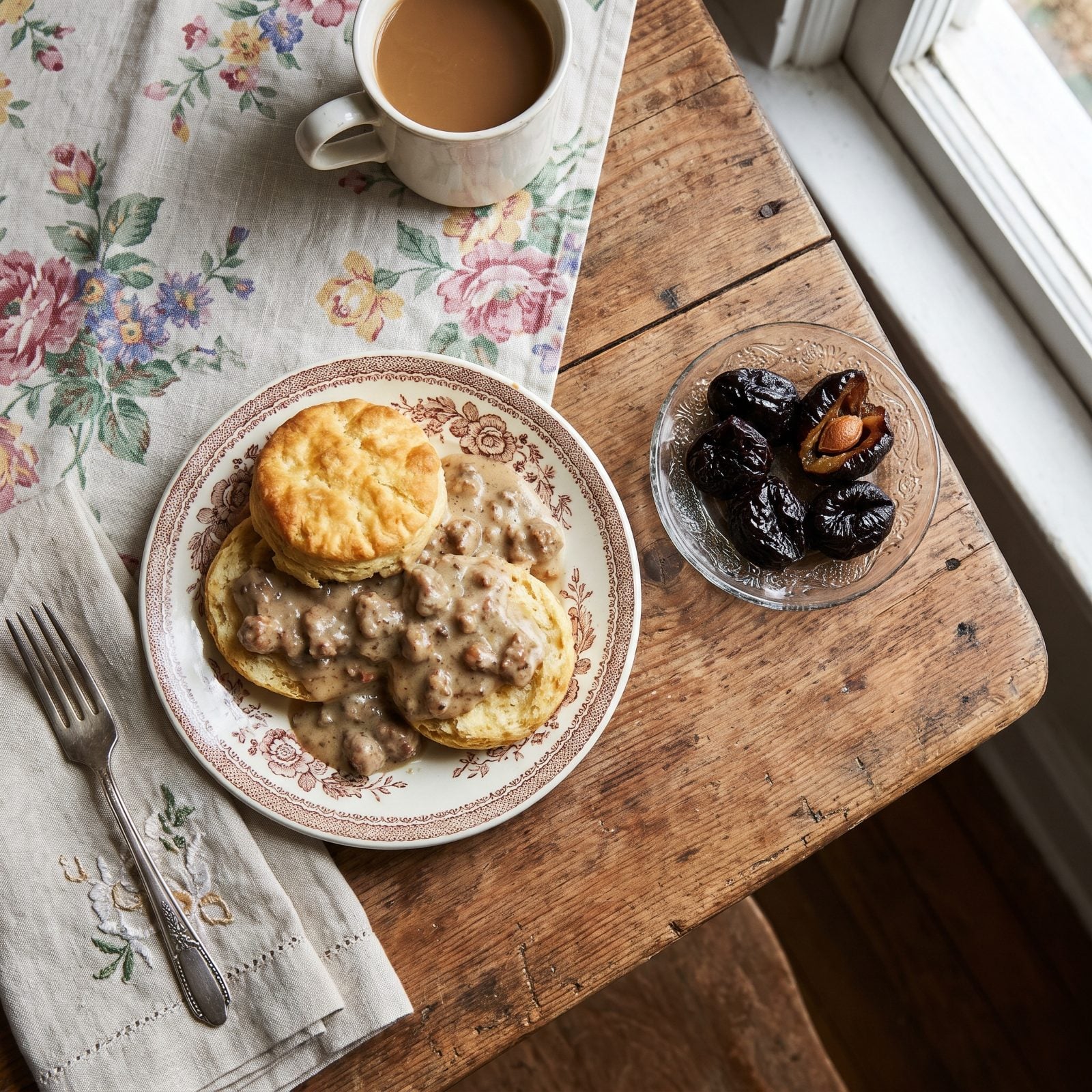
The gravy started with sausage crumbled in the skillet, a spoon of flour stirred into the grease, then milk poured in and worked until it thickened and took on all that pepper. Over biscuits split open while still hot. It stuck to your ribs and your plate both.
The prunes are the part people forget. A dish of stewed prunes sat on nearly every threshing breakfast table, partly for the sweetness and partly — well, for practical reasons when a crew is eating this much heavy food for two straight weeks. Nobody said it out loud. Everybody understood.
33. Breakfast Steak, Eggs, Fried Potatoes, and Biscuits
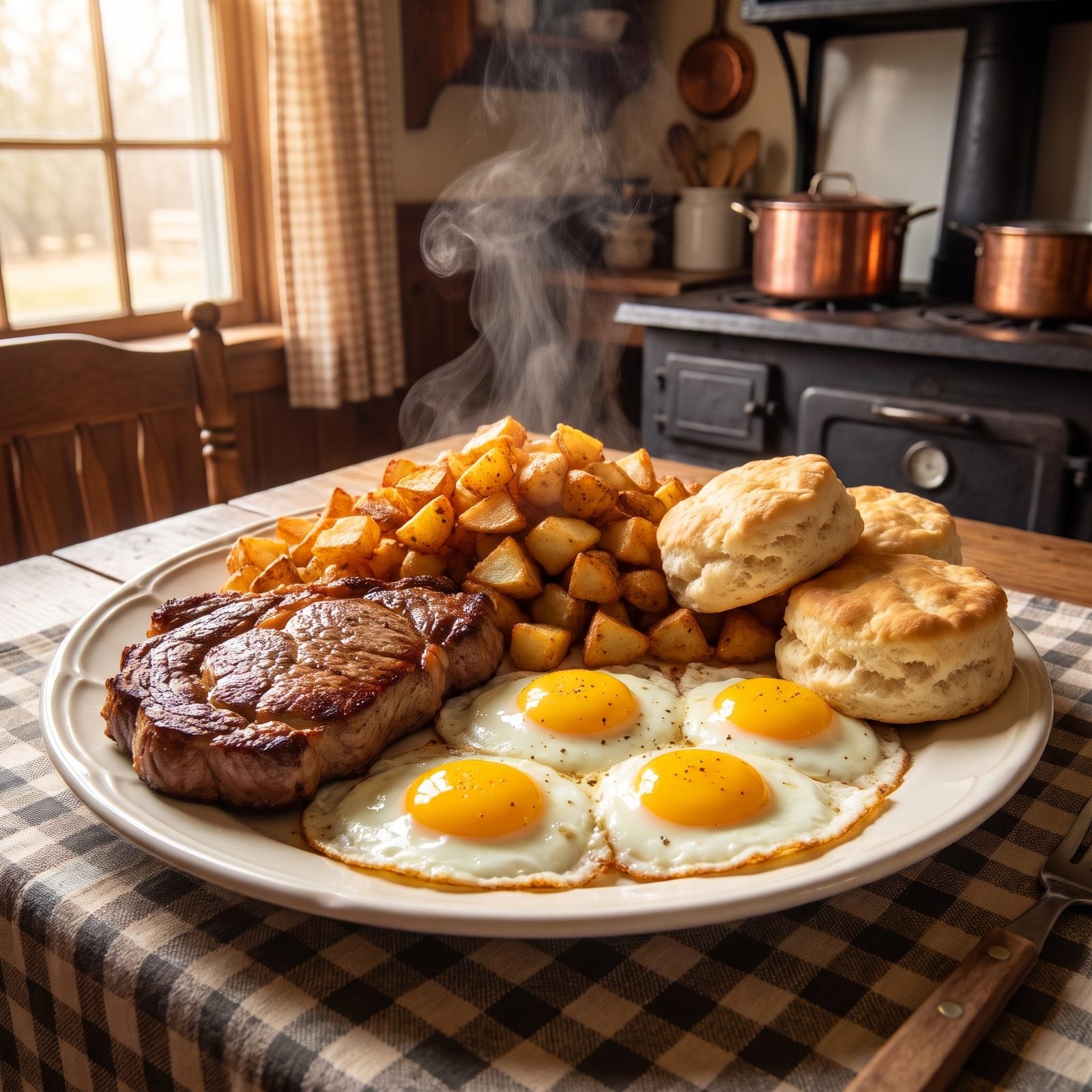
This was the heavy artillery of harvest breakfasts. A steak — usually round steak pounded and floured — fried hard in the skillet until it had a crust. Not tender. Threshing men chewed, and they had time while the engine built steam.
Fried potatoes cooked in the steak grease with onion, flipped until the edges went crisp and dark. Eggs on top, biscuits on the side to catch everything. A plate like this was a loaded promise: you will not think about food again until this wagon comes back at ten with coffee and cake.
32. Cornmeal Mush with Fried Side Pork and Sorghum
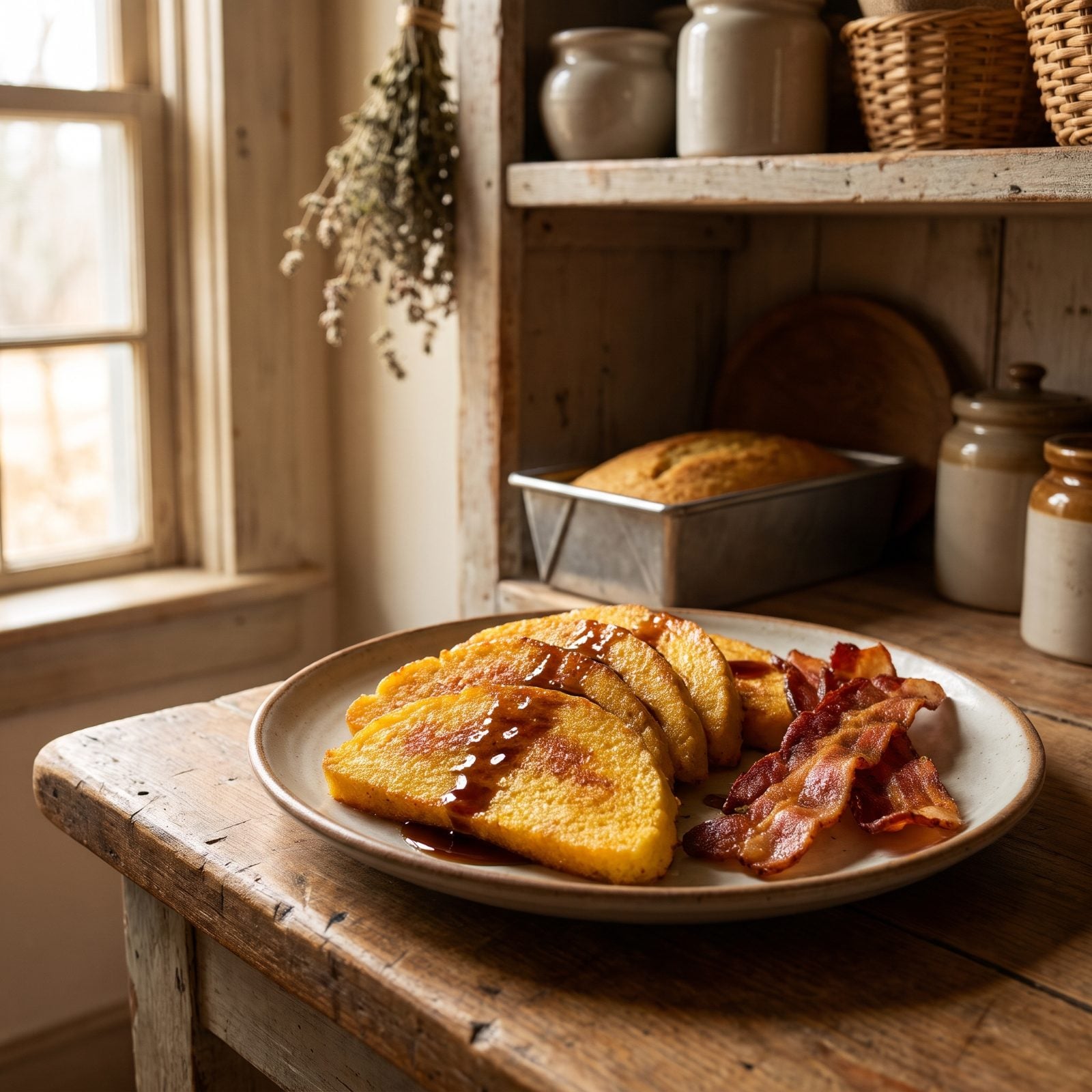
Last night’s cornmeal mush got poured into a loaf pan and set in the cool pantry to firm up. Come morning it sliced like a brick, and those slices went into the skillet to fry crisp and golden on both sides.
Side pork, salt-cured and sliced thin, fried alongside and gave up its grease for the mush. Then sorghum, dark and thick, poured over the whole business.
A thriftier plate than steak and eggs, the kind that showed up on a farm stretching its larder. A crew ate it clean anyway. Crisp outside, soft inside, sweet and salty. Nobody complained.
31. Creamed Dried Beef on Toast with Sliced Tomatoes
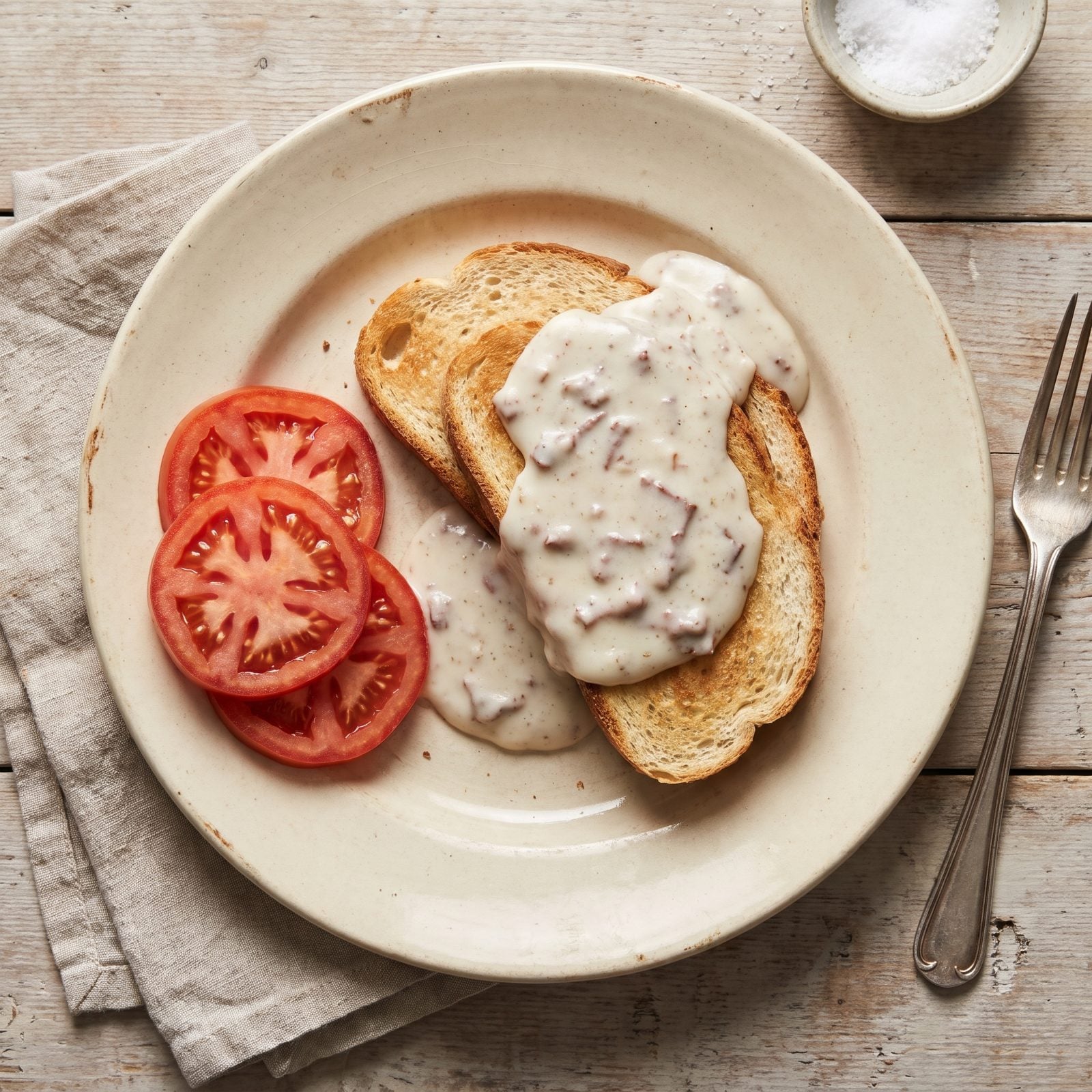
Dried beef came in thin salty sheets you tore into ribbons and dropped into a white cream gravy. Over toast, it fed a crowd on not much meat, which was the whole idea.
Soldiers had a cruder name for it. Farm families just called it a good quick breakfast when the garden tomatoes were coming in heavy. Those tomatoes mattered. Sliced thick, sprinkled with salt, still warm from the vine. The salty gravy and the sweet cold tomato ran at each other on the plate, and the whole thing worked better than it had any right to.
As an army veteran wrote, remembering the mess hall during World War II, “The Mess Sergeant’s menu listed ‘cream chipped beef on toast.’ What we called it was ‘Something on a Shingle,’ or usually ‘S.O.S.’”
30. Corned Beef Hash with Poached Eggs and Buttered Toast
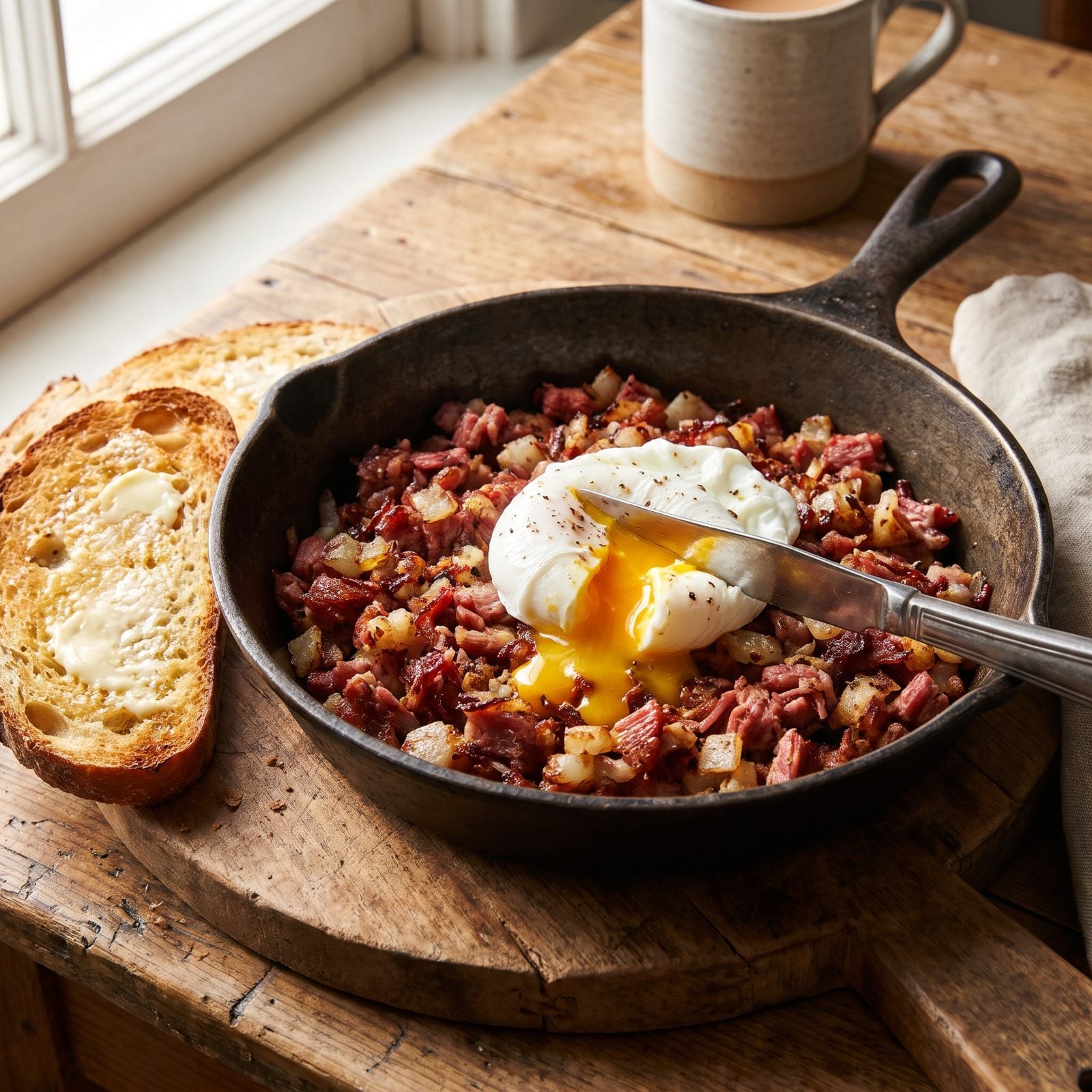
Hash was where leftover corned beef and boiled potatoes got a second life — chopped together, pressed into a hot greased skillet, and left alone long enough to build a dark crust on the bottom. The crust was the whole argument. You did not stir it to death. You let it brown, flipped it in sections, let it brown again.
Poached eggs went on top so the yolk ran down into the crispy bits. Buttered toast to push it around the plate.
Our readers seem to like a meal shown in its pan: food served in a skillet or pot got hearts 85% of the time, versus 80% for other images in the same articles.
29. Apple Fritters with Smoked Sausage and Fresh Milk
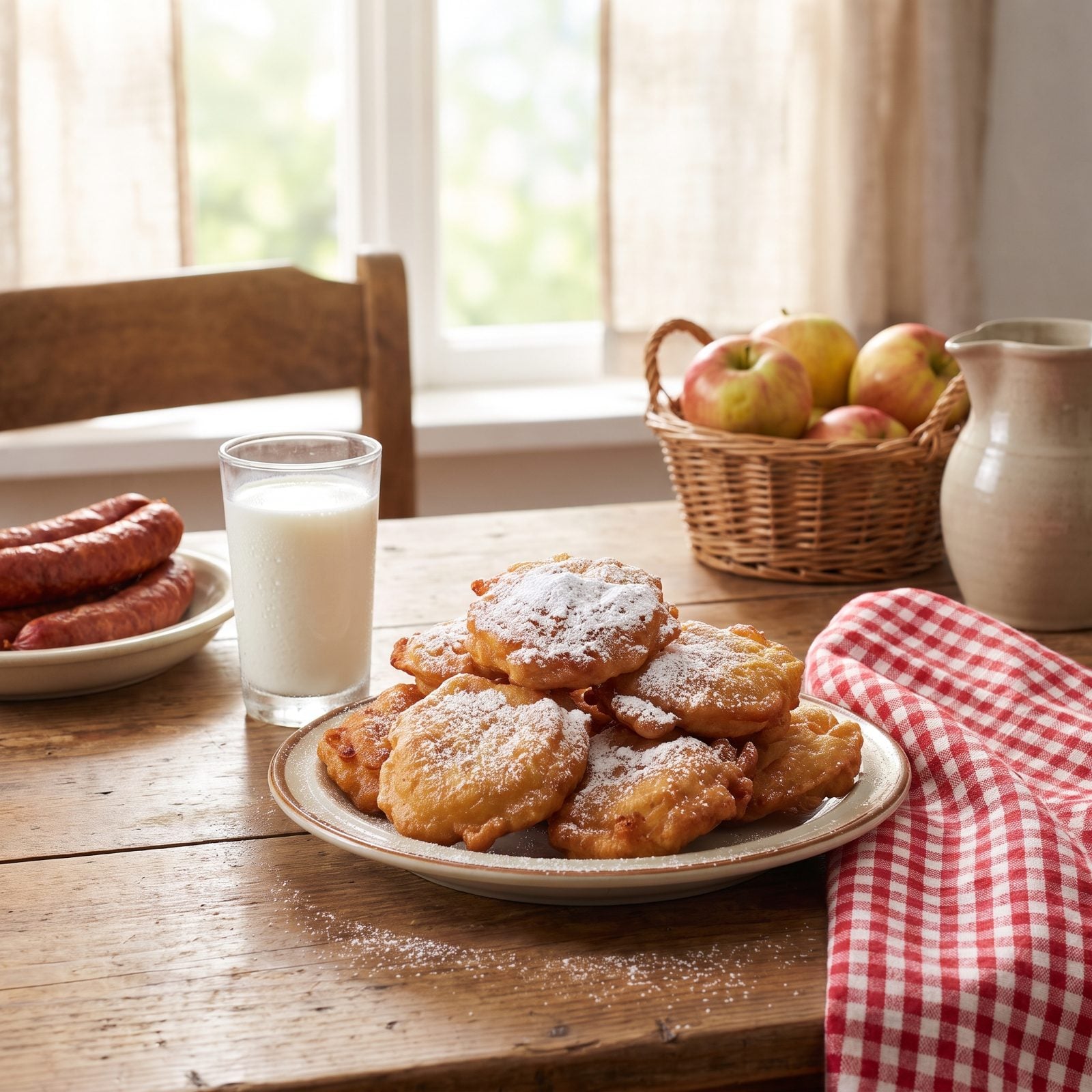
When the early apples came down, some got sliced into a batter and dropped into hot fat to puff up into fritters. Crisp and lacy at the edges, soft and apple-sweet inside, rolled in sugar while they were still too hot to hold.
Smoked sausage balanced the sweetness. And the milk came straight from the morning milking, poured into tall glasses with the cream still on it, cold from the cellar or the cooling tank. A town child in 1955 drank thin bottled milk. A farm child drank this. There was no comparison, and the farm child knew it.
28. Beef Pot Roast with Carrots, Onions, and Boiled Potatoes
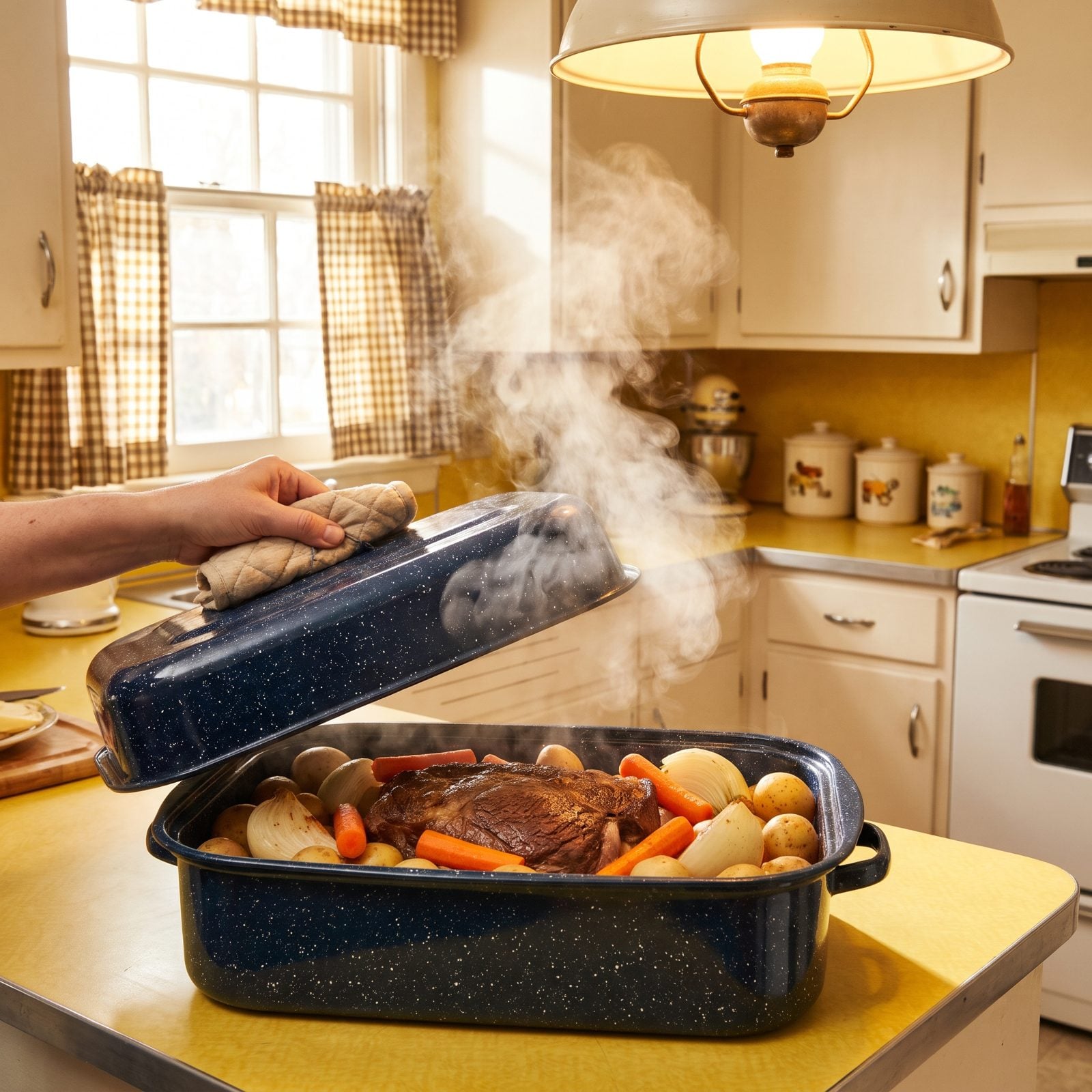
The supper after the threshing stopped was the one the women planned around. A big cut of beef went into the graniteware roaster early in the afternoon and cooked low and slow while the men finished in the field, filling the whole house with the smell of it until a man coming in from the dust nearly staggered.
Carrots, onions, and potatoes cooked right in the drippings. The meat pulled apart with a fork. Bread to mop the gravy, and plenty of it.
Eaten by lamplight after a day that started before the sun. Tired men at a long table, not talking much, passing the roaster down the line. The season was in. The table said so.
27. Chicken and Dumplings with Pickled Beets and Coleslaw
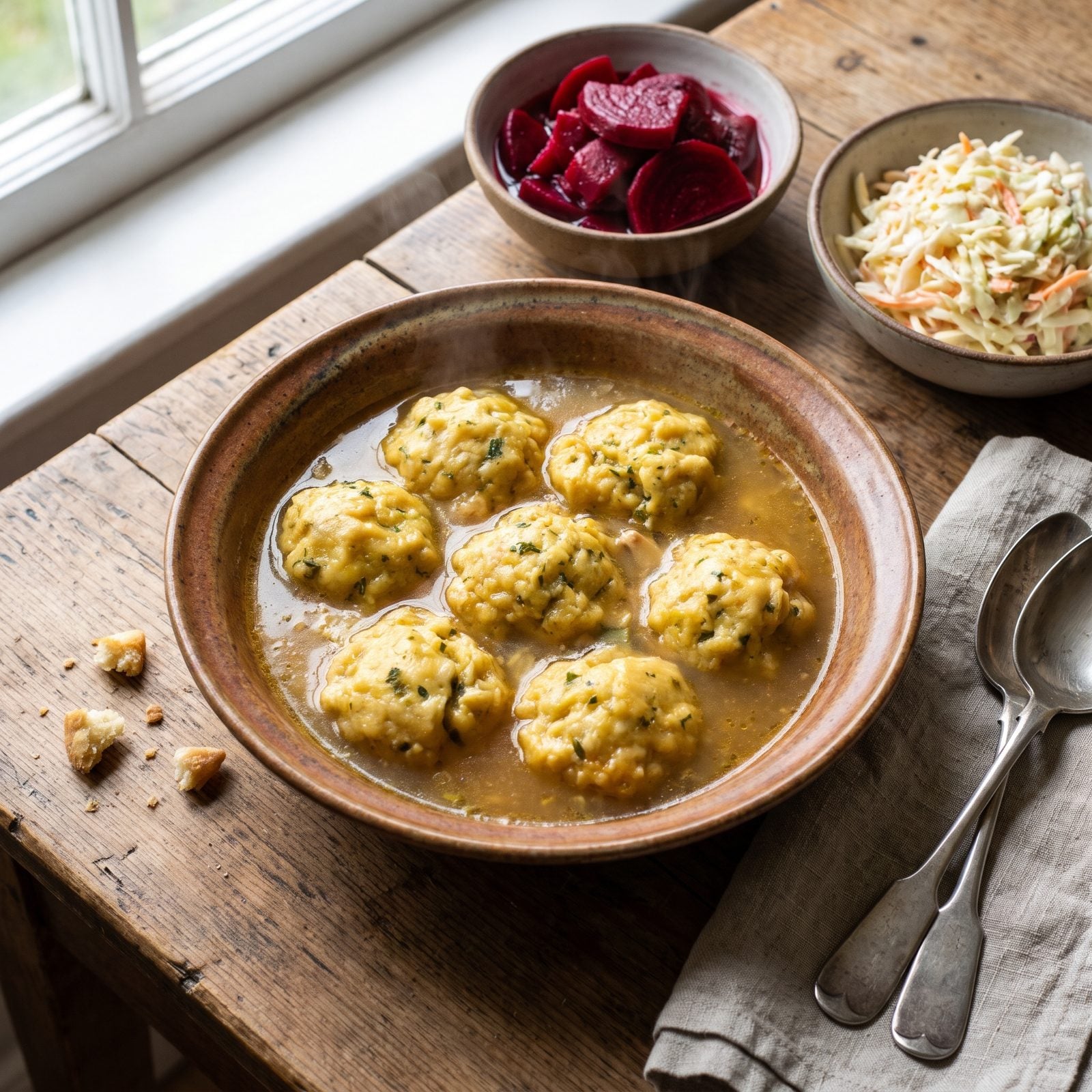
Chicken and dumplings fed a threshing crew the way a long fuse feeds a slow fire. One stewing hen, a pot of broth, and a batter dropped in by the spoonful stretched to cover a dozen men who’d been pitching bundles since dawn. The dumplings came out pale and uneven — some dense, some light. Nobody minded.
The pickled beets did the real work. Sweet, sour, cold, they cut the richness of the broth and kept the plate from going one-note. Coleslaw rounded it out, shredded fine and dressed with vinegar and a little sugar.
26. Roast Pork with Dressing, Applesauce, and Buttered Cabbage
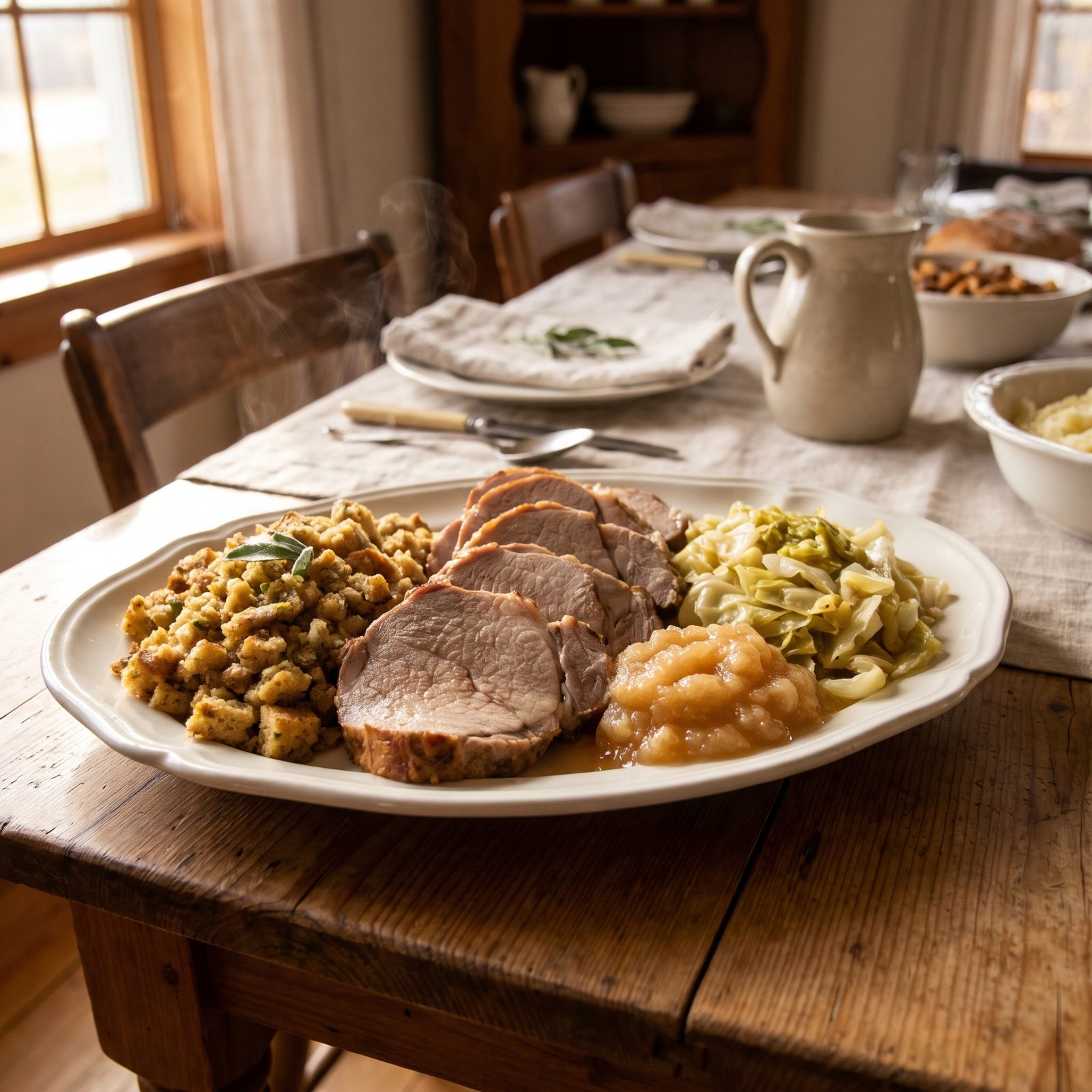
Pork meant a crew ate well. A roast carried its own gravy in the pan drippings, and the bread dressing soaked those drippings up without complaint. You scooped it straight from the roaster onto plates that didn’t match, and nobody counted.
Applesauce turned up because the orchard gave more apples than the cellar could hold. Cold sweet applesauce against hot pork is a pairing farm cooks figured out generations before any restaurant called it a trend. Buttered cabbage finished the plate, cooked just past crisp in a cast-iron skillet with a slab of butter melting over the top.
25. Brown-Sugar Baked Ham with Scalloped Potatoes and Peas
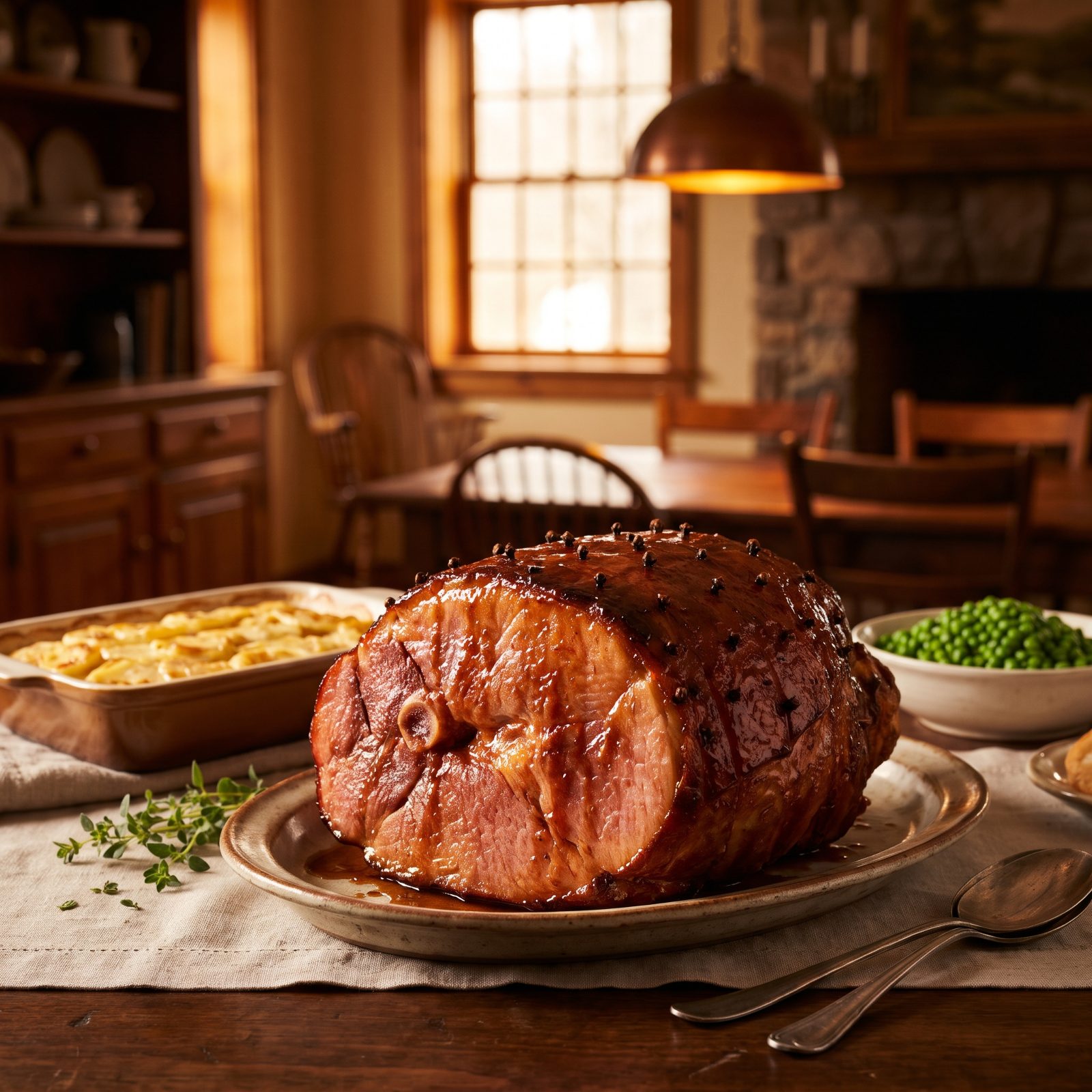
Ham came out for the big days, and threshing qualified. A cured ham from the smokehouse got scored, studded with cloves, and packed with brown sugar until the glaze turned dark and tacky at the edges. The smell filled the whole house by mid-morning.
Scalloped potatoes rode alongside, layered thin with a cream sauce that bubbled up through a browned crust. Peas came from the garden, shelled that same morning at the kitchen table — buttered, bright, gone fast.
24. Beef and Homemade Egg Noodles with Buttered Carrots
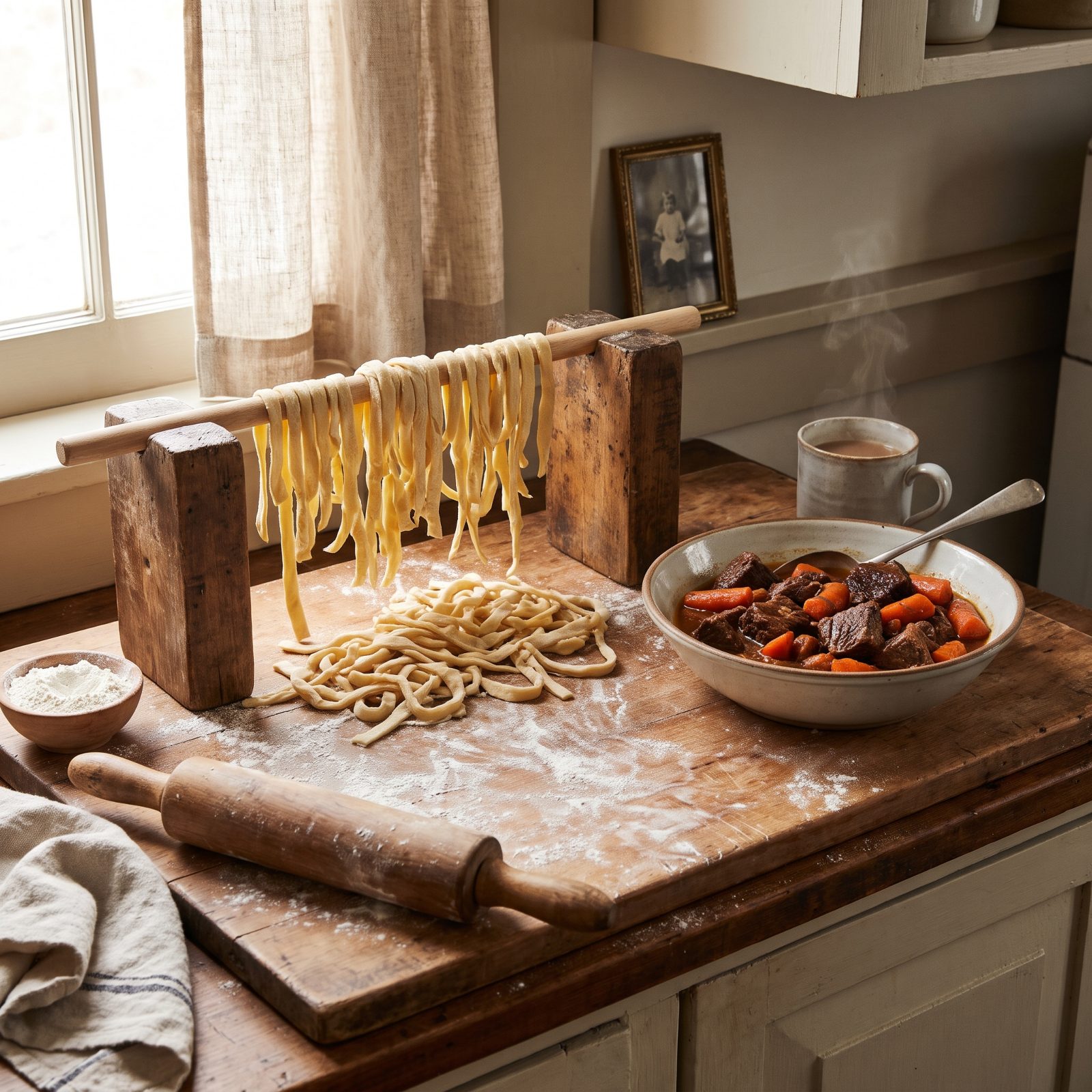
The noodles gave this one away. Rolled out by hand on a floured board, cut into thick ribbons, then left to dry over a long wooden dowel before they ever hit the pot — that was the morning’s work, done between other work.
Simmered in beef broth with meat pulled off a tough cut, the noodles came out golden from all those egg yolks, thick and a little chewy. Buttered carrots sat beside them, sweet and bright against the deep brown of the gravy. Cheap to make, and it stuck to a man’s ribs clear through an afternoon in the field.
23. Glazed Meatloaf with Creamed Potatoes and Garden Peas
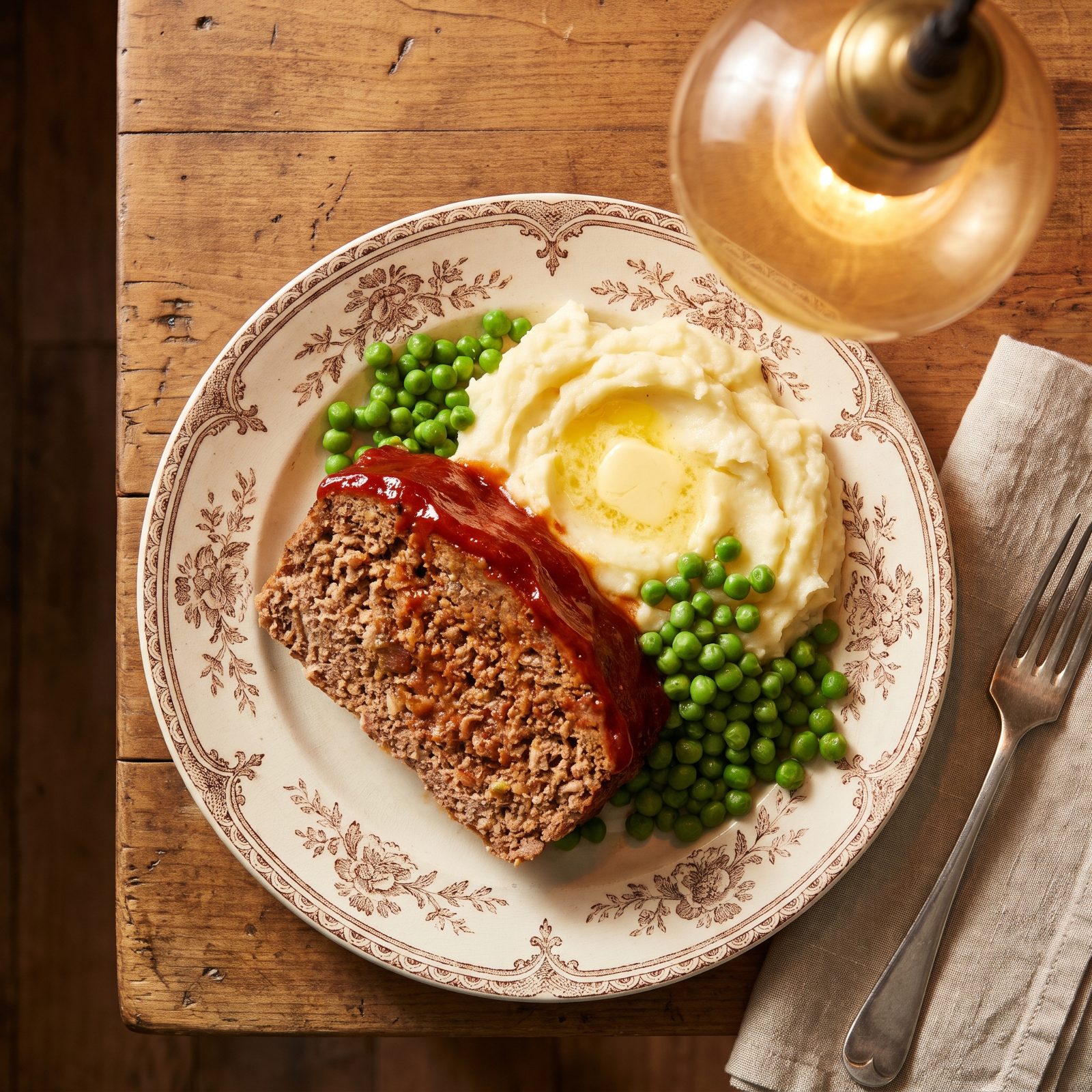
Meatloaf stretched a pound of ground beef into a meal for a crowd. Bread crumbs, an egg, grated onion, and whatever was in the icebox went into the mix. The glaze on top was usually ketchup, or a little tomato sauce with brown sugar stirred in, and it baked up dark and sweet.
Creamed potatoes meant real mashed, whipped with milk and a good lump of butter, with a well pressed in the center to hold more butter still. Garden peas finished the plate — green, quick, shelled by whoever sat closest that morning.
22. Pan-Fried Pork Chops with Milk Gravy and Fried Apples
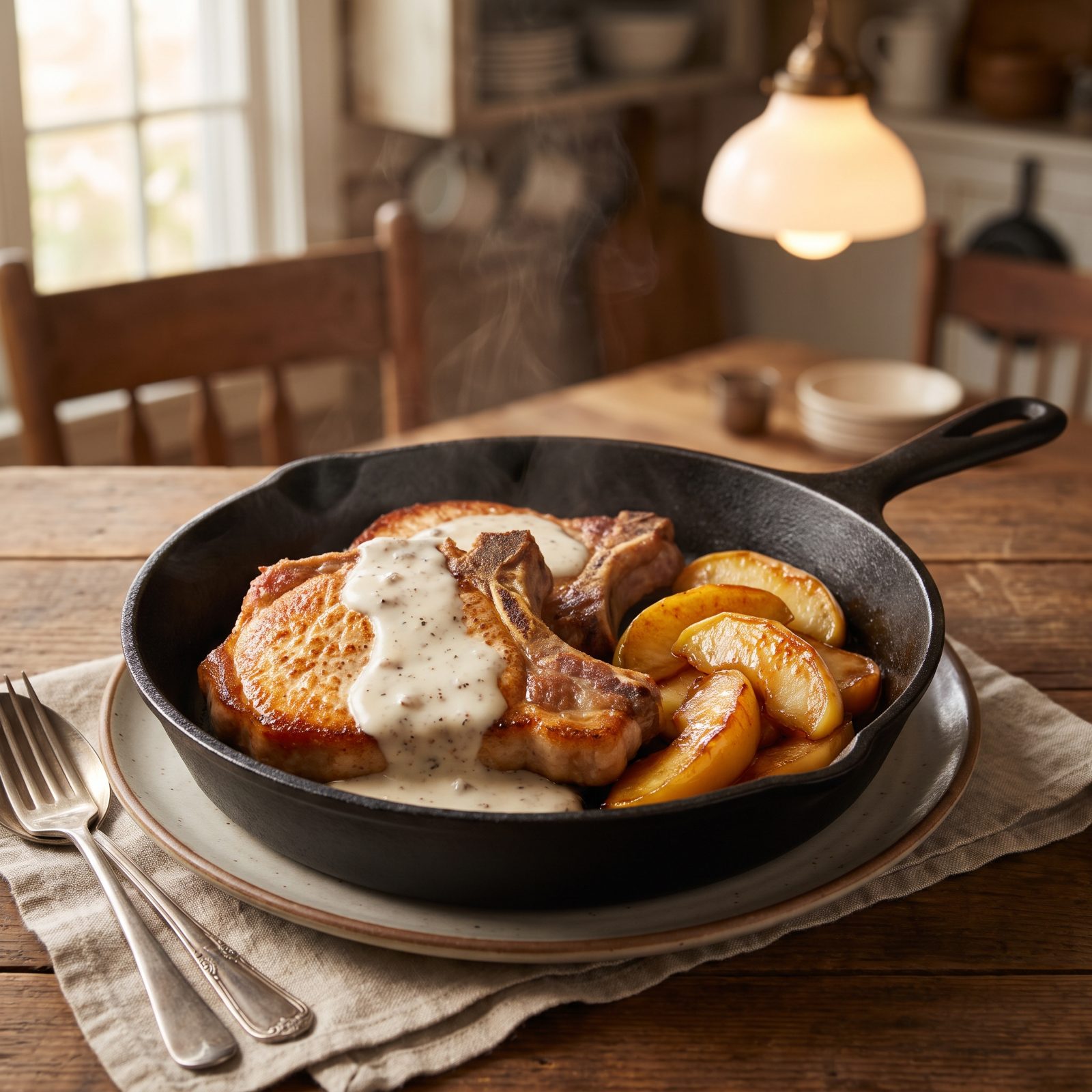
Milk gravy is why anyone remembers this plate. After the chops came out of the skillet, you kept the drippings and the browned bits, stirred in flour, and poured milk straight in until it thickened into something pale and peppery. You poured it over everything on the plate, and nobody told you to stop.
Fried apples came from the same tree that gave the applesauce, sliced and cooked down slow in butter until they went soft and amber. Sweet against the salty chops and the plain gravy, they made a plate feel like more than its parts.
21. Swiss Steak with Tomato Gravy, Mashed Potatoes, and Corn
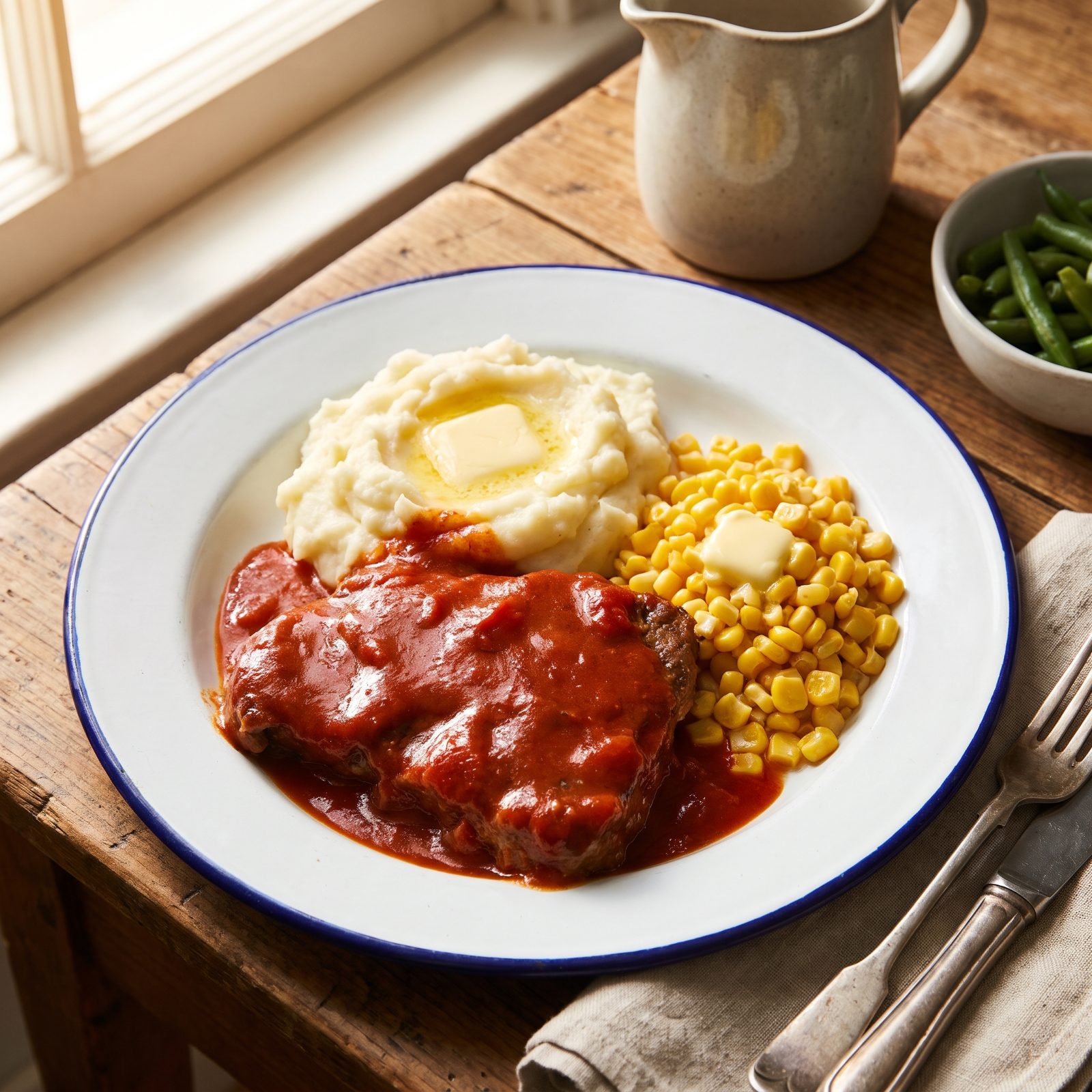
Swiss steak took a cut no one wanted and beat it into submission. The meat got floured, pounded, browned, then braised low in a tomato gravy thick with onions and peppers until it gave up and went fork-tender. That slow braise let the cook start it early and walk away while the morning filled up with other chores.
Mashed potatoes caught the tomato gravy, which is the correct use of a mashed potato — fight me. Buttered corn, cut fresh off the cob that time of year, finished the plate bright and sweet.
20. Chicken Pot Pie with a Lard-Crust Top and Garden Vegetables
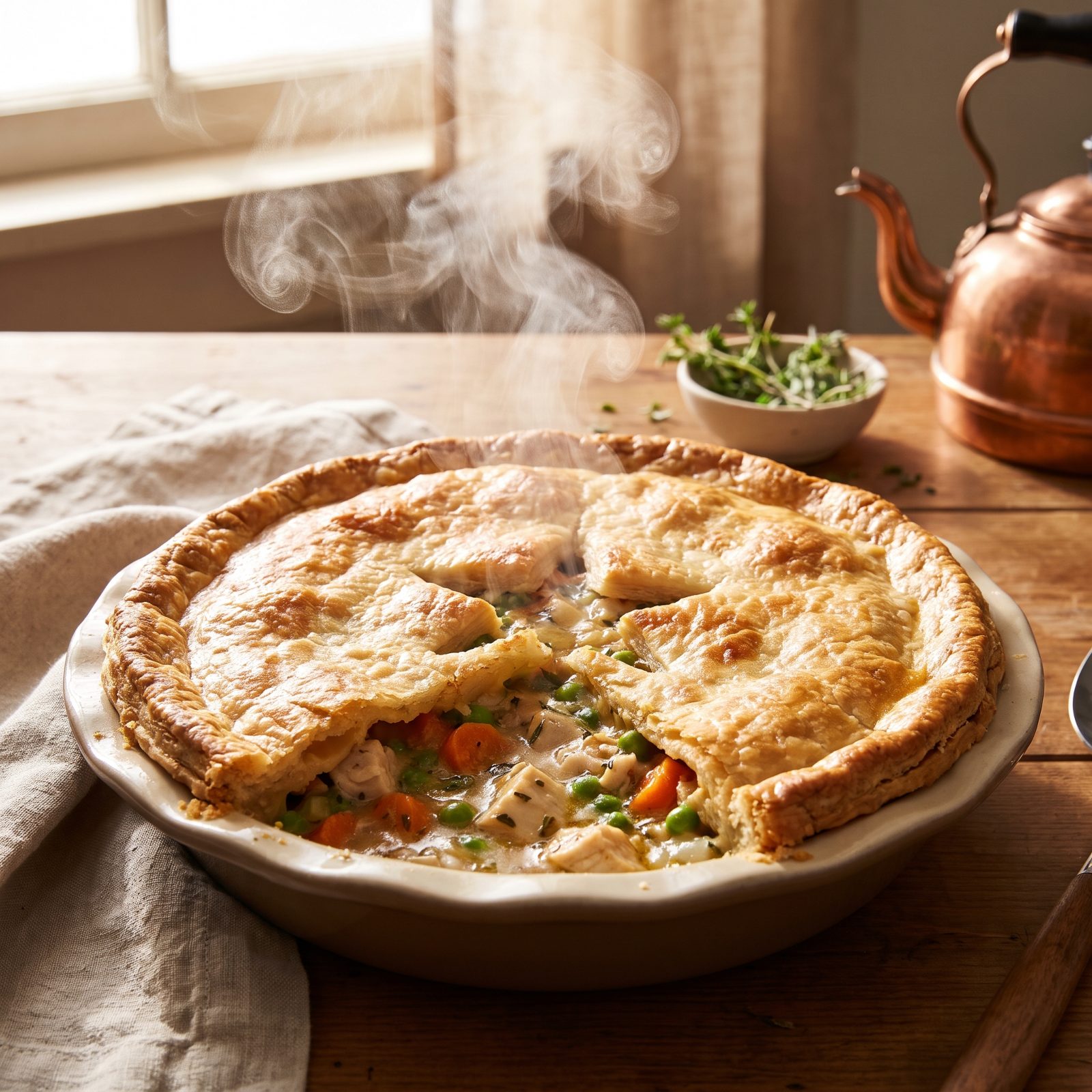
A pot pie buried the whole meal under one crust. Stewed chicken, carrots, peas, and potatoes went into a cream gravy, then got capped with a lard crust rolled out that morning and crimped at the edges. The lard did what nothing else could — it gave you a crust that shattered instead of bent.
Cut into it and the steam came up carrying everything from the garden that was ready. One dish fed a crew, and the bowl went straight to the table, which on a threshing day mattered as much as the taste.
According to an executive pastry chef at a Miami Beach restaurant, “Lard is almost tasteless but makes super tender and flaky doughs.”
19. Roast Chicken with Bread Stuffing, Creamed Corn, and Gravy
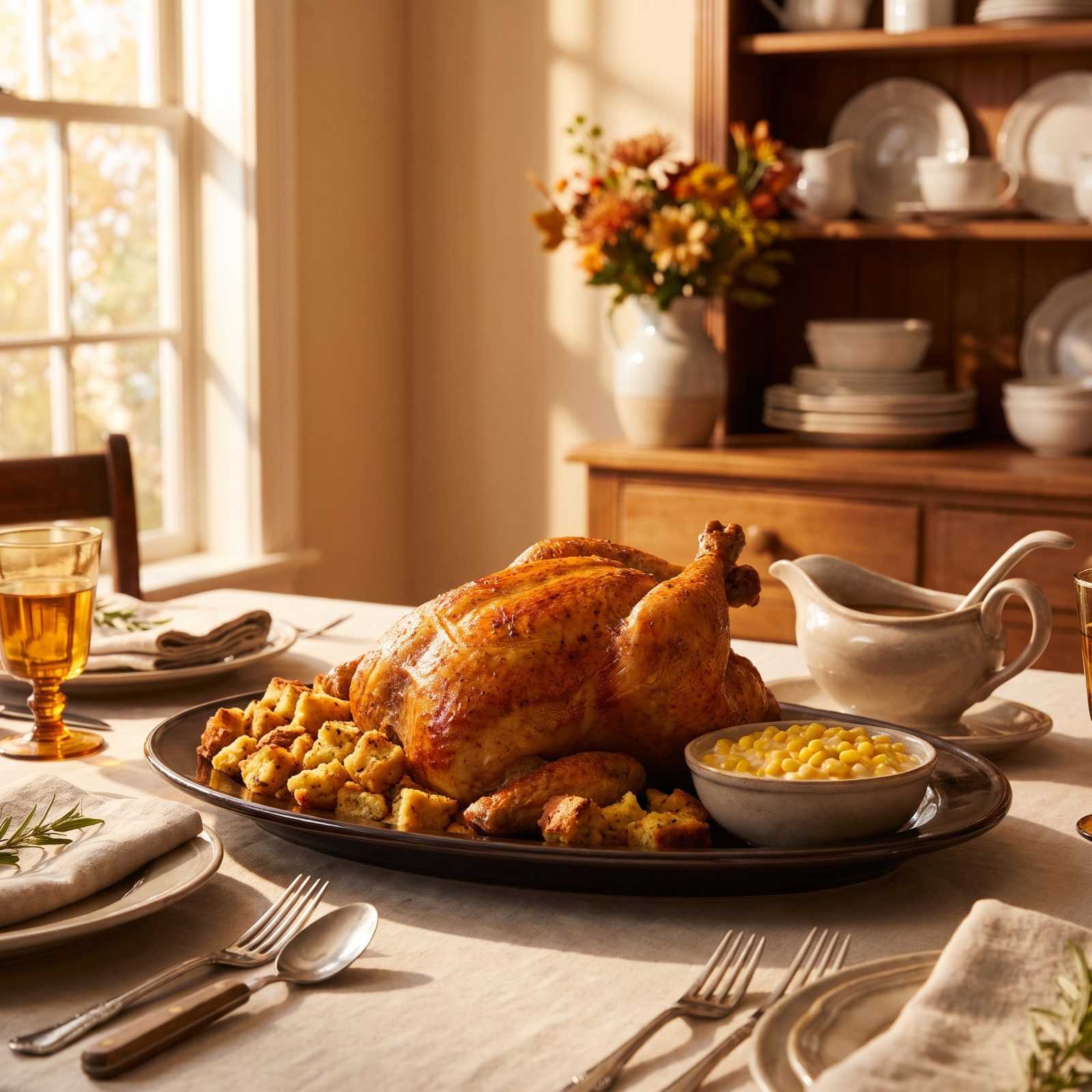
Roast chicken was the Sunday-best version of a weekday bird, hauled out for threshing because the crew earned it. The skin went crisp and deep brown, the bread stuffing came out of the cavity soaked in drippings, and the gravy got made from the pan the second the bird came out.
A bowl of corn stood beside it. Creamed corn, cut off the cob and simmered in cream until thick. This plate said the work was worth feeding well, and everybody at the table understood the message.
18. Farm Sausage with Sauerkraut, Boiled Potatoes, and Mustard
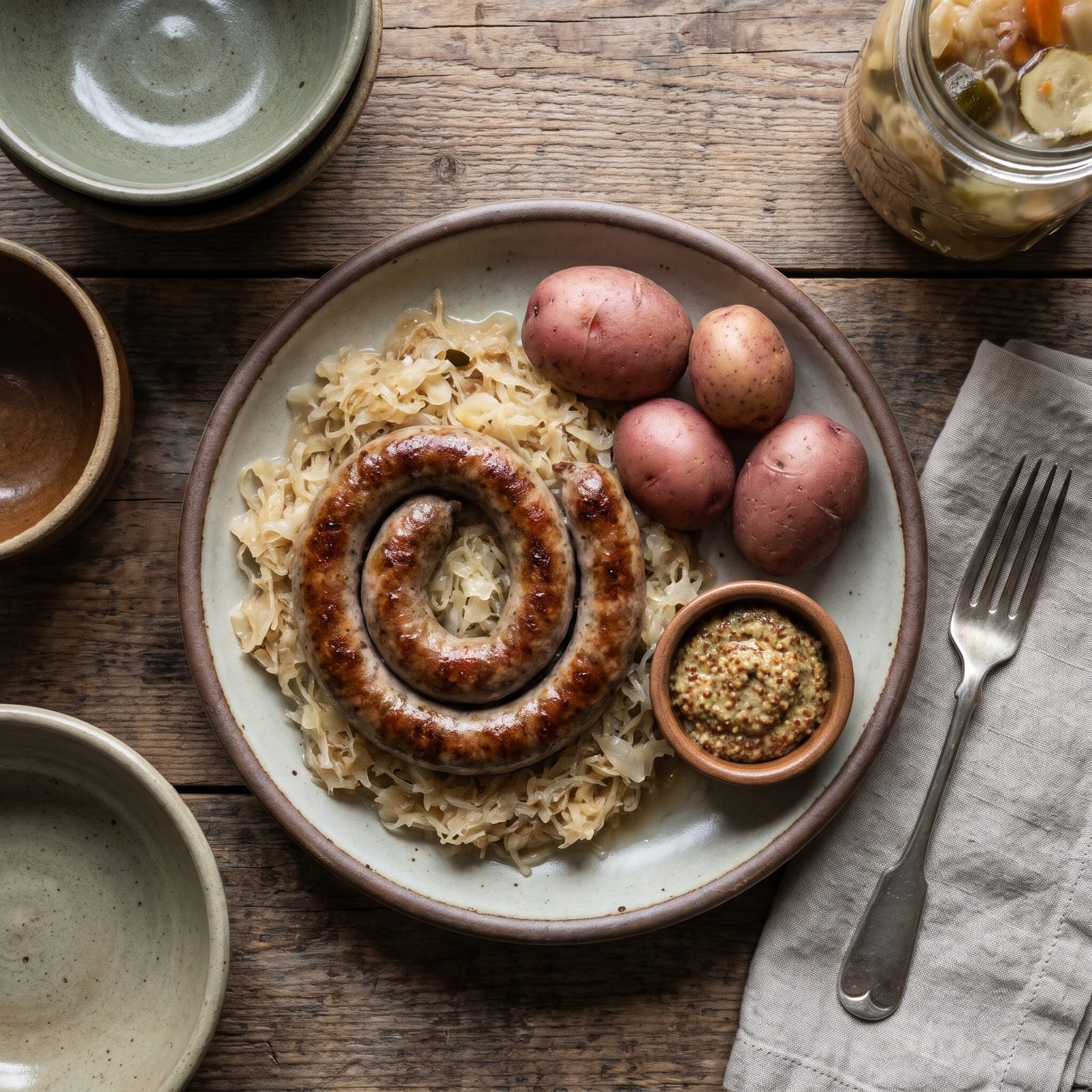
This was the plate for the German farm families, and it showed up at threshing tables across the Midwest for good reason. Homemade sausage, cased and smoked in the fall, came out of the cellar crock and got browned in a skillet with sauerkraut from the same cellar.
Boiled potatoes soaked up the fat and the tang. A crock of sharp mustard sat in the middle of the table for every man to reach — plain, filling, and sour enough to wake you up for the afternoon. We’d take it over half the fancier plates on this list, and we’ll stand by that.
17. Salmon Patties with Creamed Potatoes and Vinegar Slaw
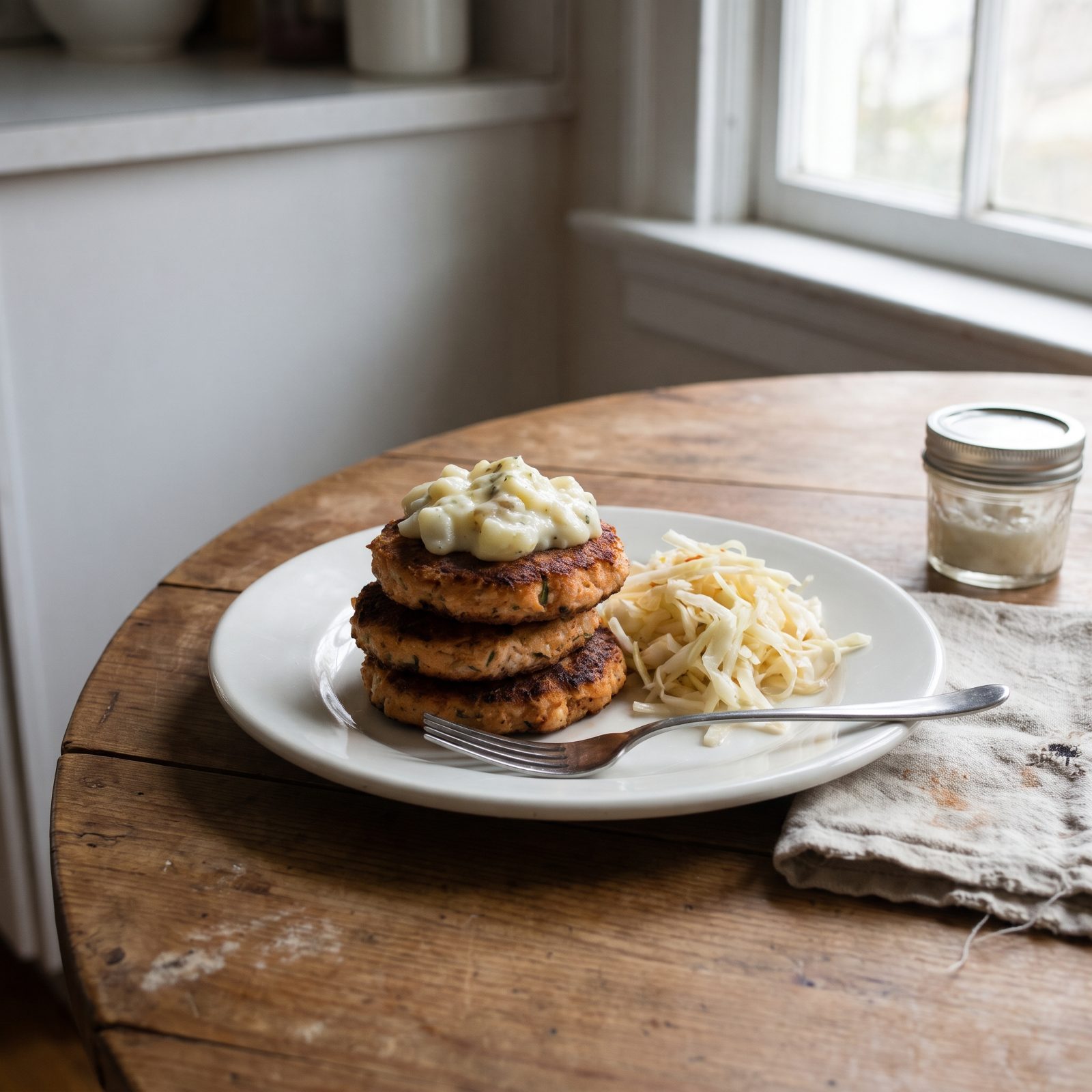
Canned salmon was the thrifty protein that kept a threshing crew fed when the money ran short and the mouths ran many. You dumped the whole can in, bones and all, worked in cracker crumbs and a beaten egg, then fried the patties in a skillet that had seen a thousand breakfasts.
The creamed potatoes did the heavy lifting — pure starch to fill a man who’d been pitching bundles since five in the morning. Then the vinegar slaw cut through all that richness, sharp and cold, the only bright thing on a plate otherwise built for ballast.
16. Tuna Noodle Casserole with Potato Chips and Buttered Green Beans
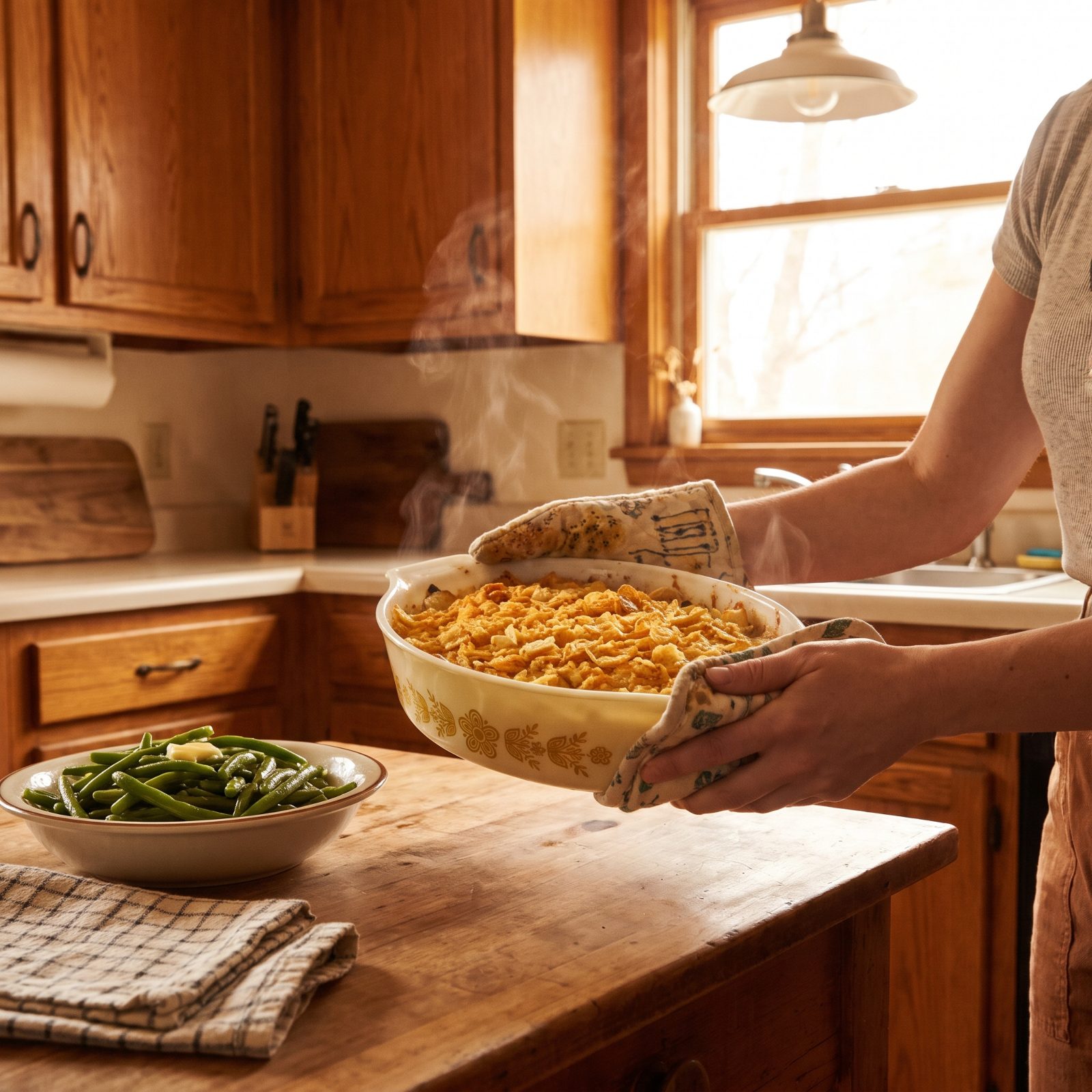
Someone always carried the casserole dish to the table still hot, a scorched oven mitt on one hand and a patterned cloth potholder in the other underneath, and set it down with a thud that meant dinner. The crushed potato chips on top? Those were the whole reason anyone cared. They went in last so they’d stay crisp against the soft noodles underneath — a cheap trick, and a good one.
Buttered green beans came out of the garden that morning, snapped by hand on the porch steps while the men worked the field. Plain, dark, slicked with butter. Nobody fussed with them, and nobody needed to.
15. Baked Macaroni and Cheese with Stewed Tomatoes and Cabbage Slaw
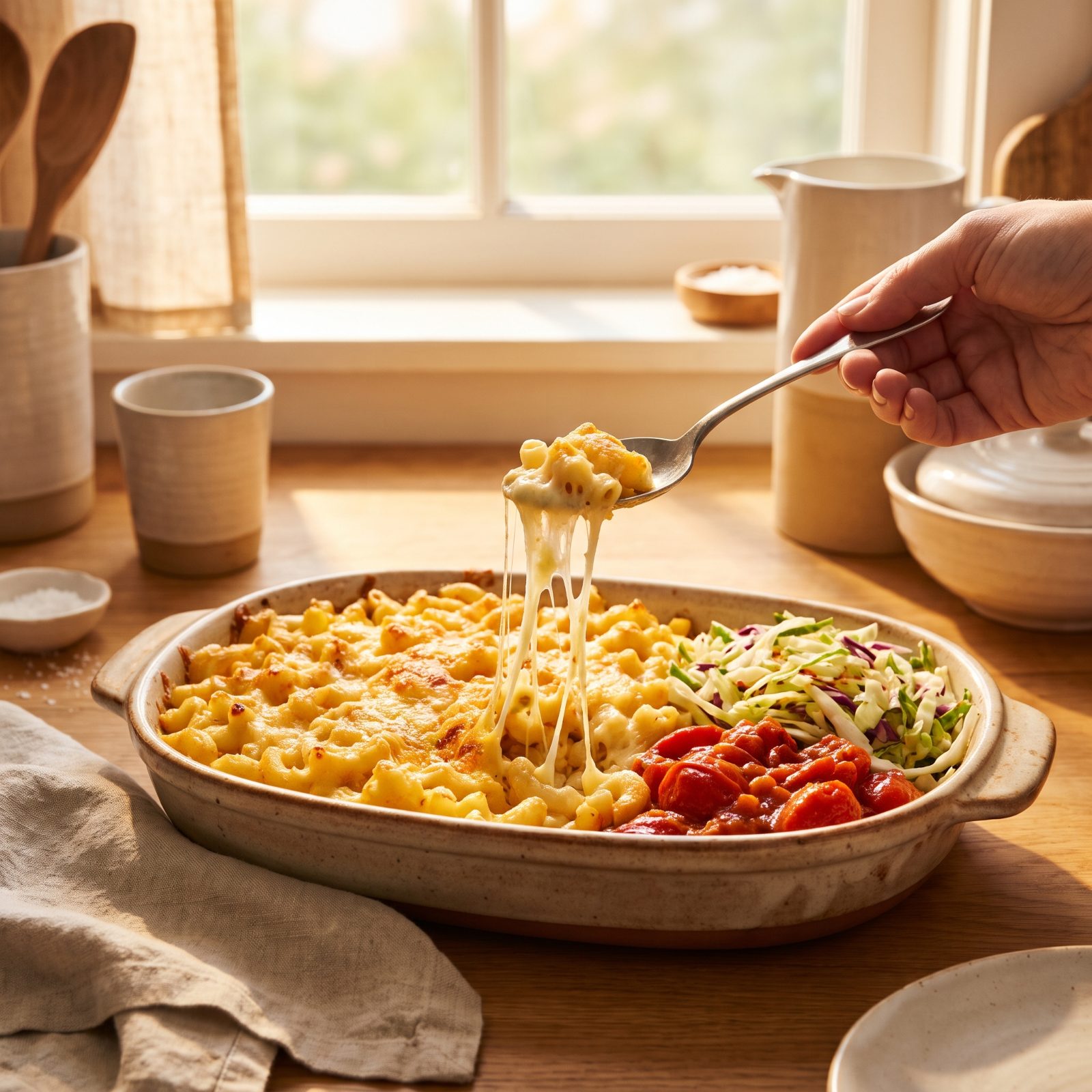
This was the dish that made the kids line up early. Real macaroni and cheese in 1955 meant a block of sharp cheese grated by hand, a flour-and-butter roux, and a long bake until the top went blistered and brown. No powder. No box. The crust was the prize, and more than one fight broke out over the corner piece.
Stewed tomatoes sat alongside, sweet and a little tart, thickened with torn bread, while the cabbage slaw stayed crisp and simple, shreds of green and purple cabbage. Three foods shared one plate — macaroni, tomatoes and slaw side by side — and every man at the table ate until his plate shone.
14. American Goulash with Elbow Macaroni, Ground Beef, and Tomatoes
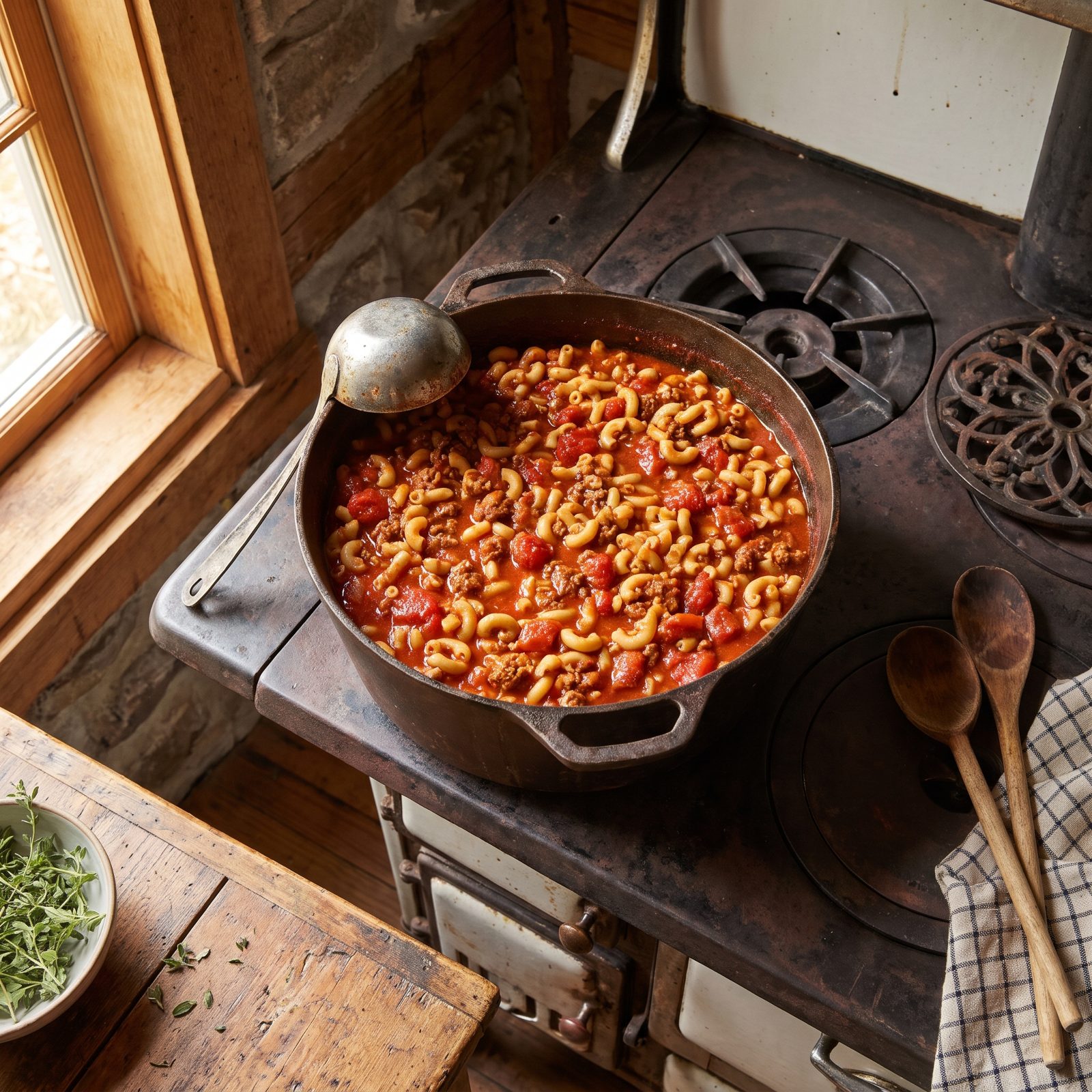
One pot, endless reach. Goulash was how a farm wife stretched a pound and a half of ground beef across a dozen hungry threshers without anyone feeling cheated — macaroni, tomatoes, onion, whatever pepper the garden gave up, all of it simmered down together until the whole kitchen smelled like supper by noon.
It had nothing to do with Hungary, and everybody knew it. This was prairie goulash, and it tasted like the inside of a cast-iron pot that had made it a hundred times before.
13. Beef-and-Bean Chili with Skillet Cornbread and Raw Onion
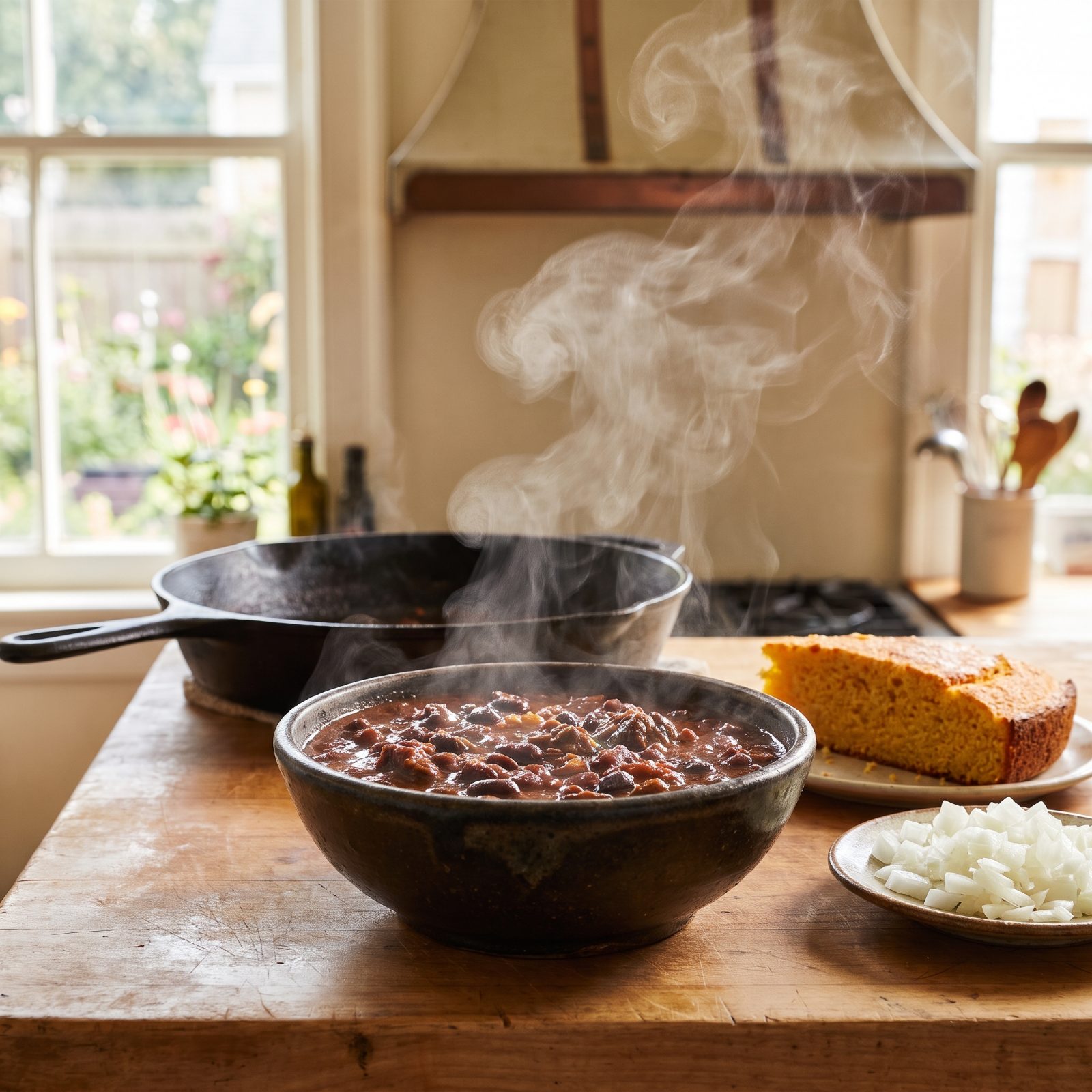
The chili sat on the back of the stove all morning, growing darker and thicker while the crew worked the field. By the time they came in dusty and starving, it had cooked down to something you could stand a spoon in.
Cornbread baked in the same skillet it was served from, crisp where it met the hot iron. A handful of raw onion on top was not negotiable for the men who wanted it — sharp, cold, a little mean against the warm beans.
12. Ham and Bean Soup with Cornbread and Apple Butter
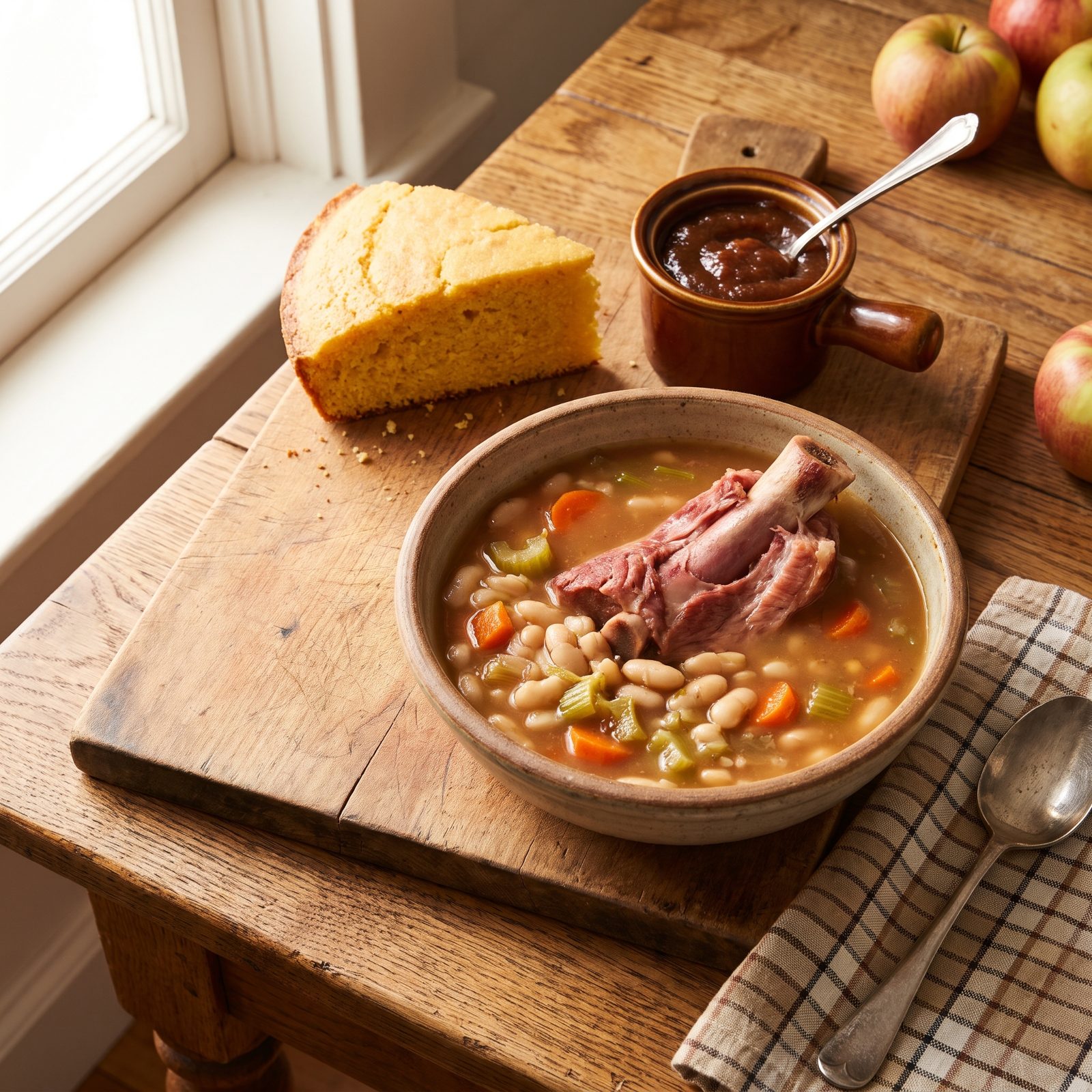
Nothing on the farm went to waste, and the ham bone was proof. After the Sunday ham was carved down, that bone went into a pot of soaked navy beans and simmered for hours, until the broth turned creamy and the last threads of meat fell away on their own.
The apple butter threw everyone off until they tried it. A smear of it on the cornbread, dark and spiced, landed somewhere between dinner and dessert. That sweet-salty back-and-forth kept a man reaching for another square long after his bowl was empty.
11. Vegetable-Beef Soup with Crackers and Homemade Dill Pickles
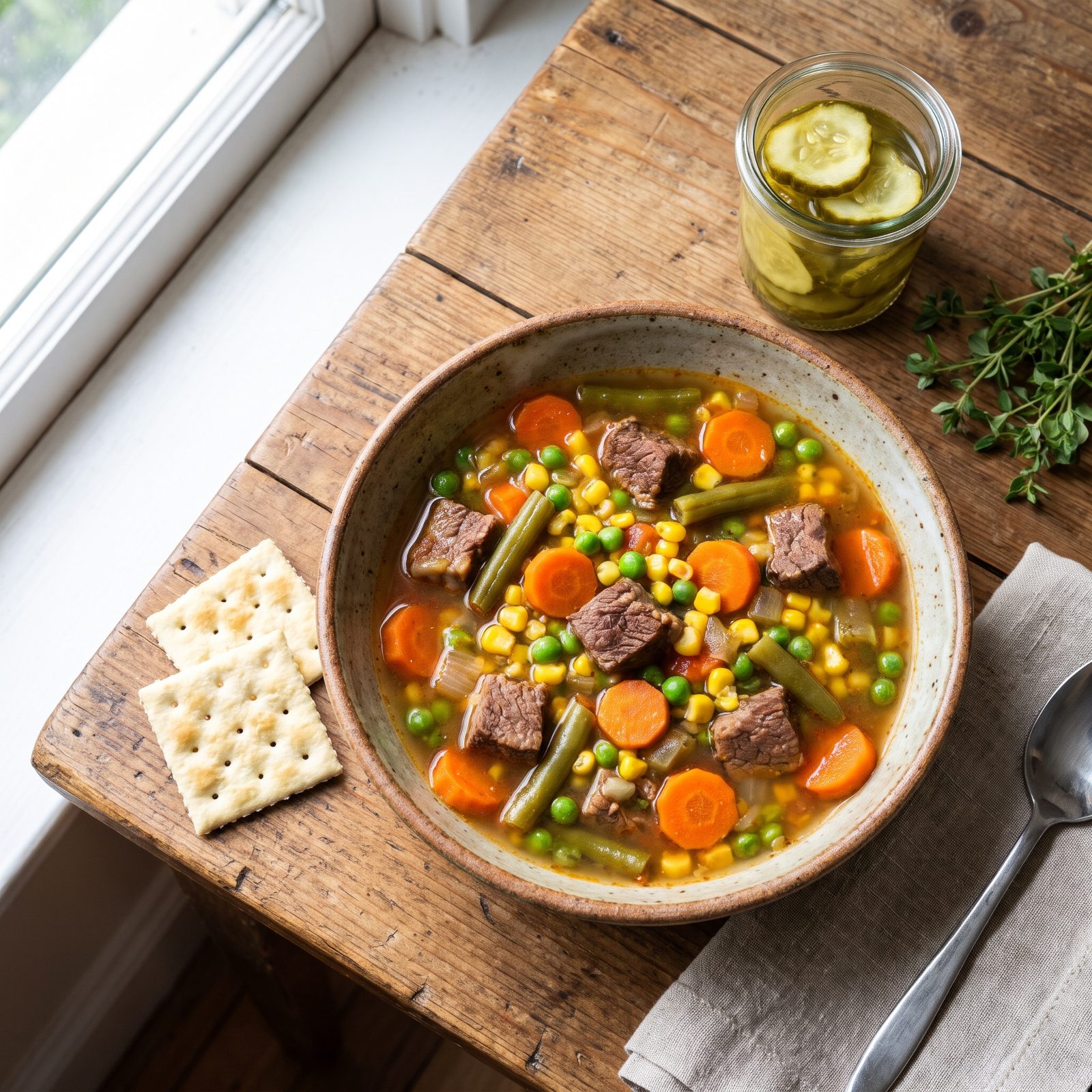
This was the catch-all soup, the one that emptied the garden and the icebox in a single pot. Whatever was ready came in — carrots, potatoes, corn off the cob, green beans, a few tomatoes, and a tough cut of beef that needed the long simmer to turn tender.
Crackers went in by the handful, crumbled under the spoon until the broth thickened. And the dill pickles, put up in summer and pulled from the cellar, snapped cold and sour between bites. Homemade. Always homemade. A store pickle would’ve been noticed and quietly judged.
A pot of vegetable-beef soup was a whole garden’s worth of August, served steaming in October.
10. Creamed Corn Chowder with Saltines, Sliced Ham, and Radishes
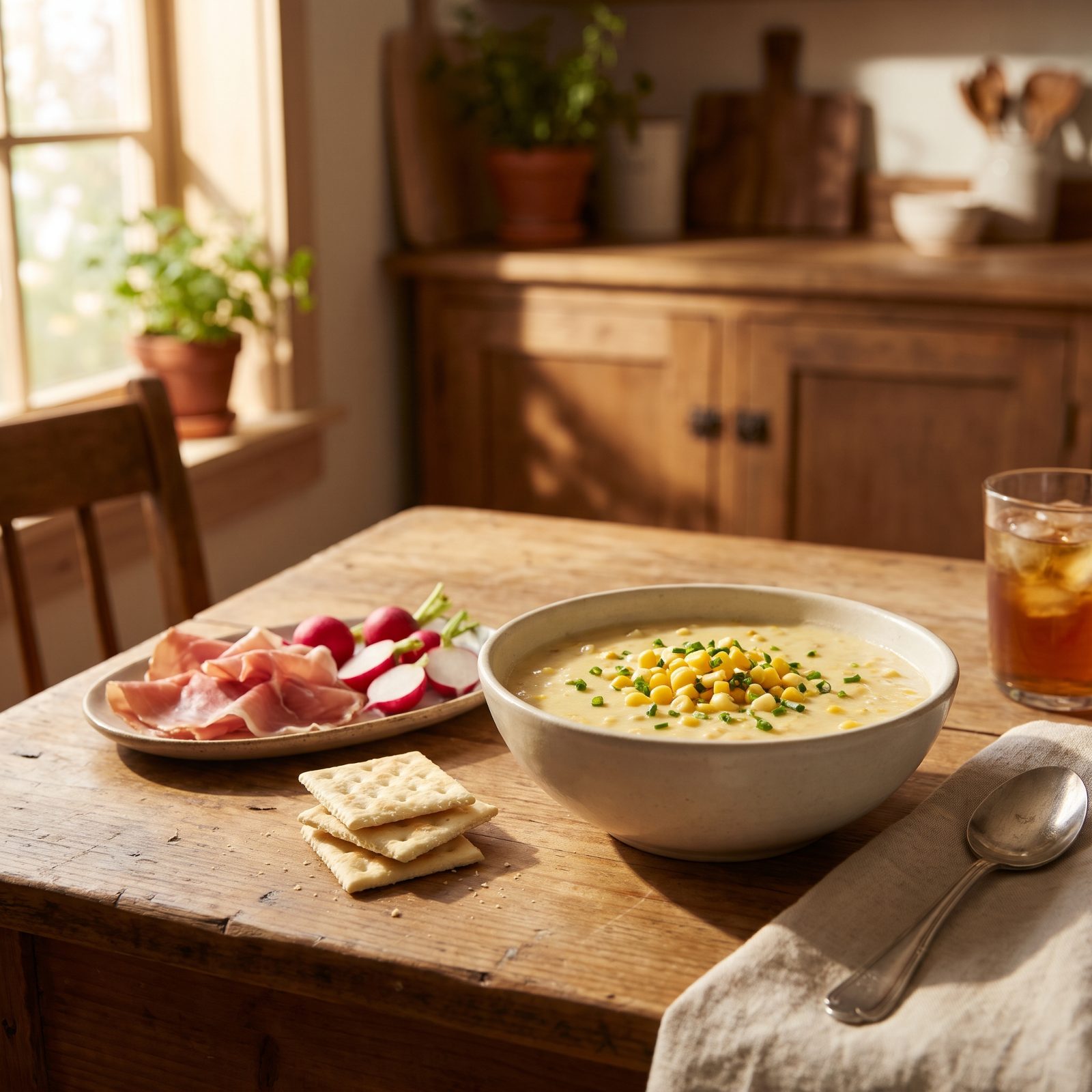
Sweet corn chowder showed up at the height of the season, when the field corn and the sweet corn both came ripe and the kitchen smelled like boiled cobs for a week straight. Milk, butter, potato, and corn scraped right off the ear into the pot.
Saltines went in whole and softened. Cold sliced ham sat on the side for the men who wanted meat with everything. And the radishes — peppery and crunchy straight from the row — were the kind of thing a kid ate three of before anyone noticed.
9. Sloppy Joes with Potato Salad, Carrot Sticks, and Dill Pickles
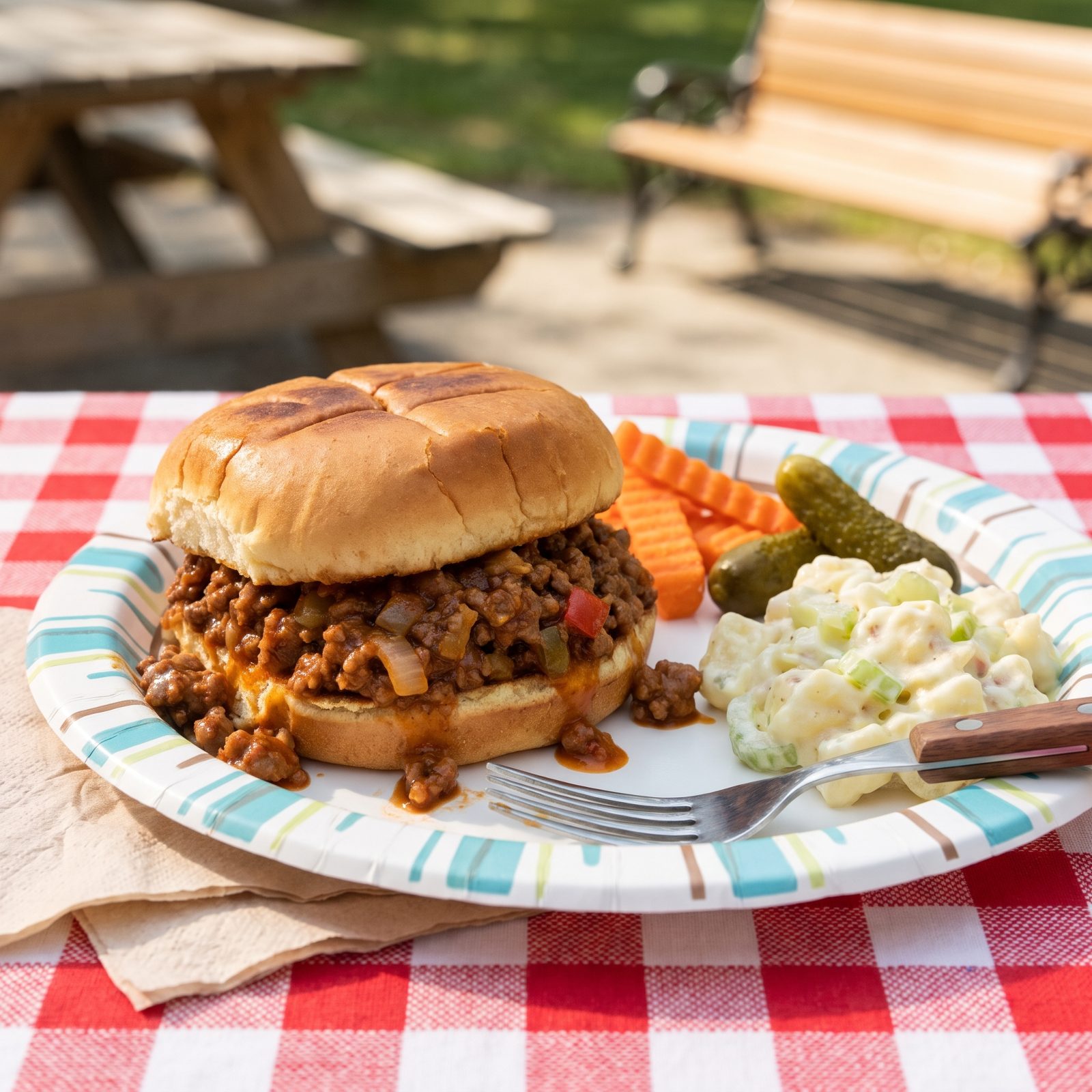
You could feed a crowd fast with sloppy joes, and speed mattered when the men broke from the field only long enough to eat. The ground beef went into a skillet with onion, tomato, a little brown sugar and mustard, and simmered into a loose, sweet-tangy mess you spooned onto a bun.
Potato salad sat alongside, made that morning and kept cool in the cellar, bright with mustard and chopped egg. Carrot sticks and dill pickles filled out the plate. This was hand food, lap food — eat-it-standing-in-the-shade-of-the-barn food.
8. Barbecued Beef Buns with Cabbage Slaw and Buttered Corn
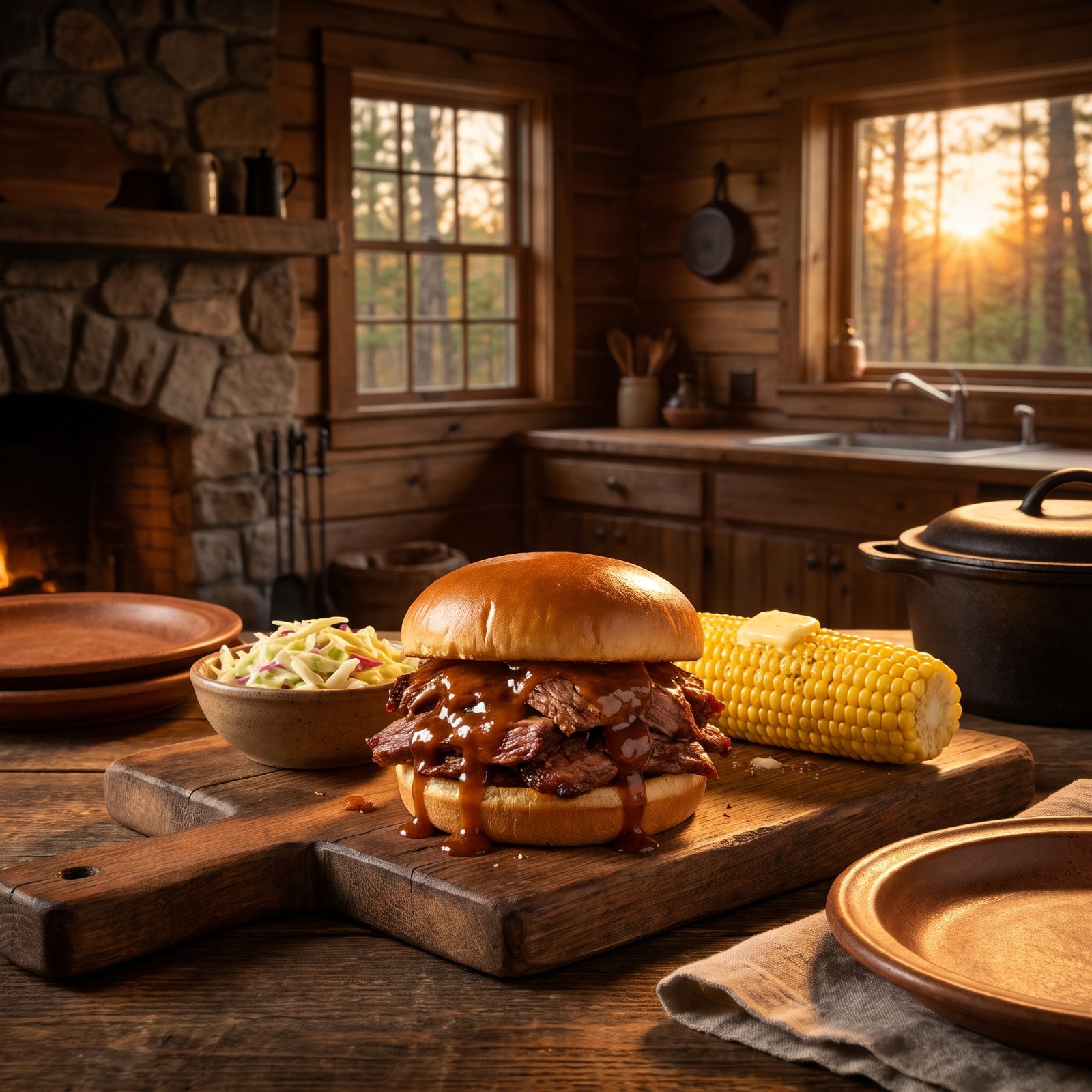
The last of the day’s eating, and often the best. A tough roast cooked low and slow all afternoon until it shredded under a fork, then got pulled apart and bound in a sauce the cook mixed from ketchup, vinegar, brown sugar, and whatever else she swore by and never measured.
Piled on a bun, it ran everywhere, and nobody minded. Cabbage slaw went on top or on the side depending on the man. Buttered corn, pulled from the pot and rolled in a pat of butter, finished the plate.
And when the threshing crew sat down to barbecued beef at the end of a long harvest day, the work was nearly done and the table knew it.
7. Braunschweiger and Onion on Rye, Served with Dill Pickles and Cold Buttermilk
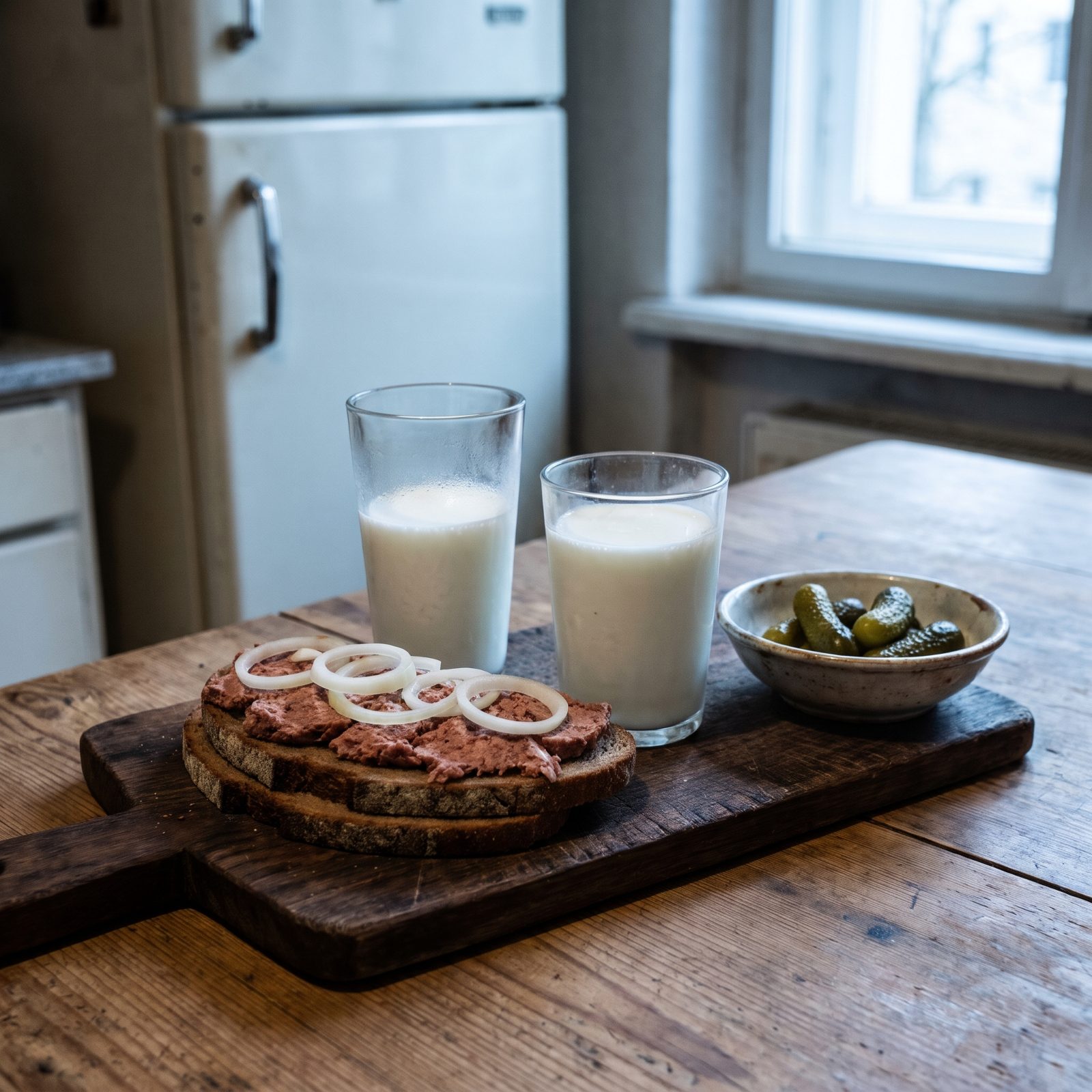
Braunschweiger was the soft, smoky liver sausage that German families across the Midwest kept in the icebox, and it spread on rye bread like butter. Dark rye, sliced thick, held up to it. A slab of raw onion went on top, sharp enough to wake a man halfway through a hot afternoon.
Dill pickles came out of the crock in the cellar, sour and crunchy. The buttermilk came straight from the churn, kept cold in a can lowered into the well or set in the springhouse until it was time to pour.
It sounds like an odd lineup today. Out in the stubble with the sun beating down, it made perfect sense. Rich, salty, sour, and cold, all in a few bites.
6. Thick-Cut Bologna Sandwiches with Mustard, Coleslaw, and a Hard Apple
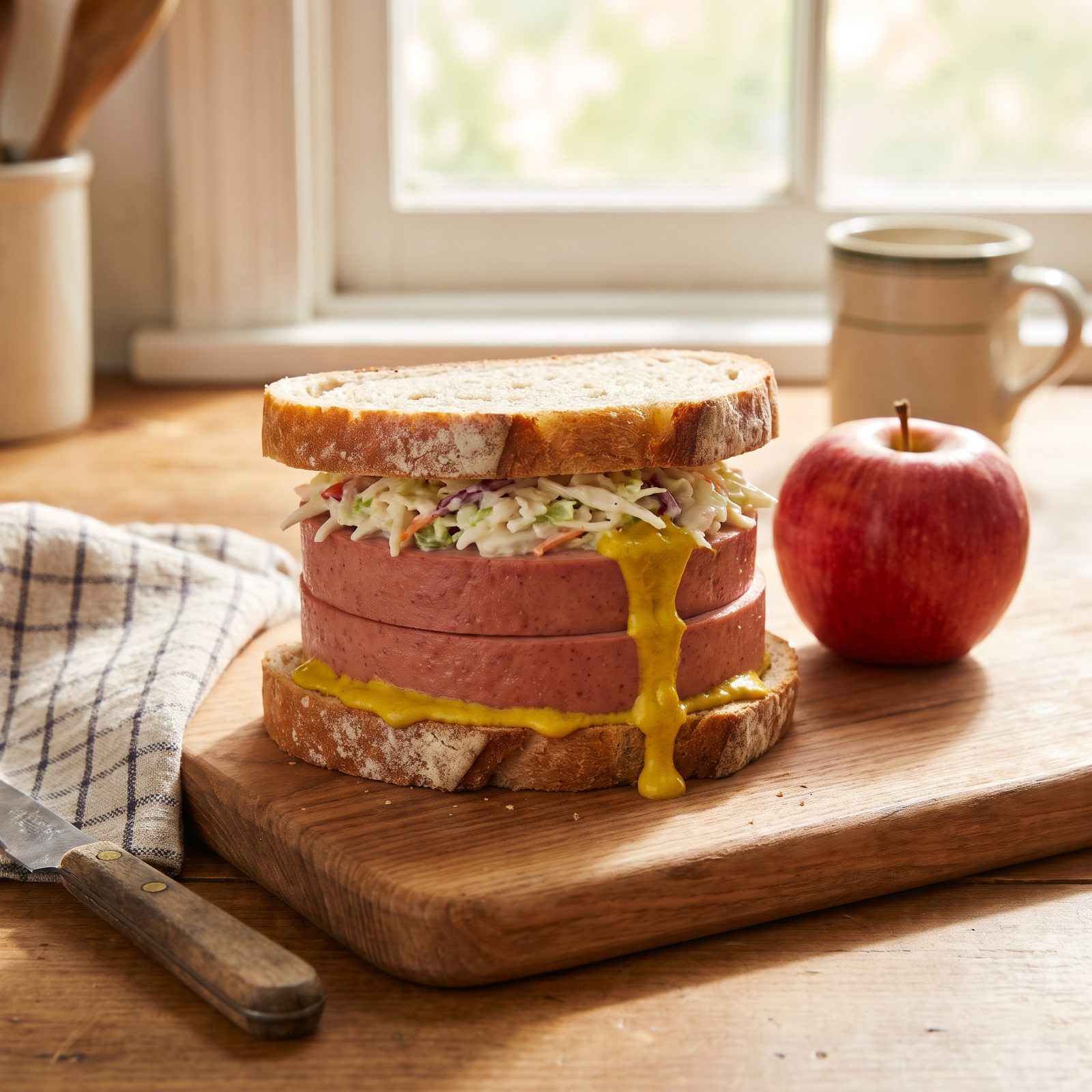
Bologna on the farm didn’t come paper-thin. It came off the chub in slices you could have used as a doorstop, cut with the big kitchen knife and slapped between two pieces of homemade bread with a stripe of yellow mustard down the middle.
The coleslaw rode along in a crock or a covered bowl, and plenty of men piled it right onto the sandwich for the crunch. Then the apple, one of the first off the tree in late summer, hard and tart enough to make your jaw ache.
Nothing about this meal took fuss. It packed easy, ate fast, and kept a man going until supper. On a day when the separator didn’t stop for anybody, that counted for more than anything fancy.
5. Ham Salad Sandwiches with Deviled Eggs and Cool Sliced Cucumbers
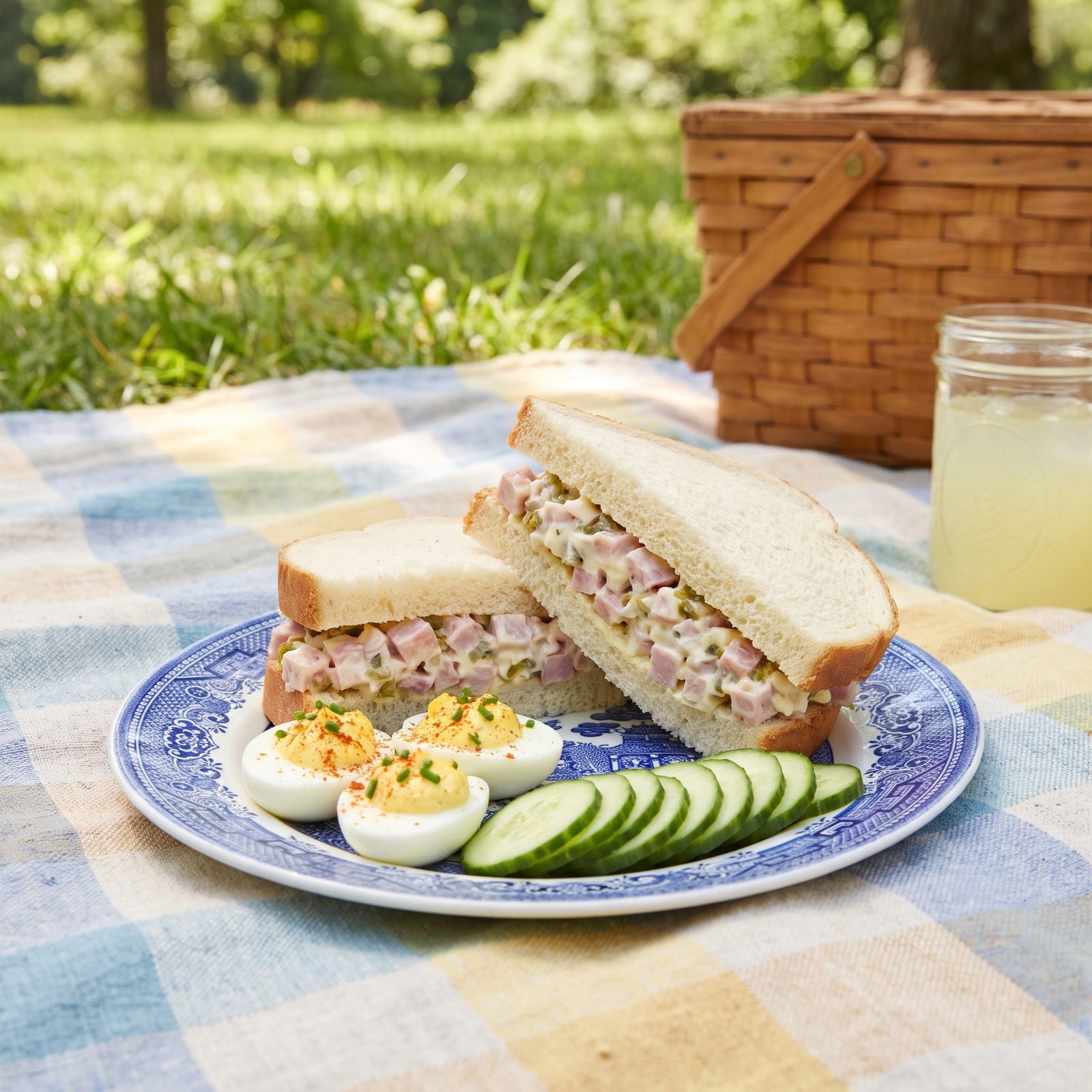
The end of a baked ham never went to waste. What was left got diced into chunky cubes on the cutting board, then stirred up with chopped sweet pickles, a little onion, and enough salad dressing to hold it together. Spread thick on bread, it made a sandwich that tasted like Sunday on a Tuesday.
Deviled eggs used up the morning’s gathering from the henhouse, the yolks mashed with mustard and dressing and spooned back into the whites. A shake of paprika made them look like company food.
The cucumbers came last, sliced thin, salted, and kept cold until serving. After hours of chaff and dust, that clean, cool bite was the best thing on the plate.
4. Summer Sausage, Sharp Cheddar, Crackers, Pickles, and Hard-Boiled Eggs on a Field Board
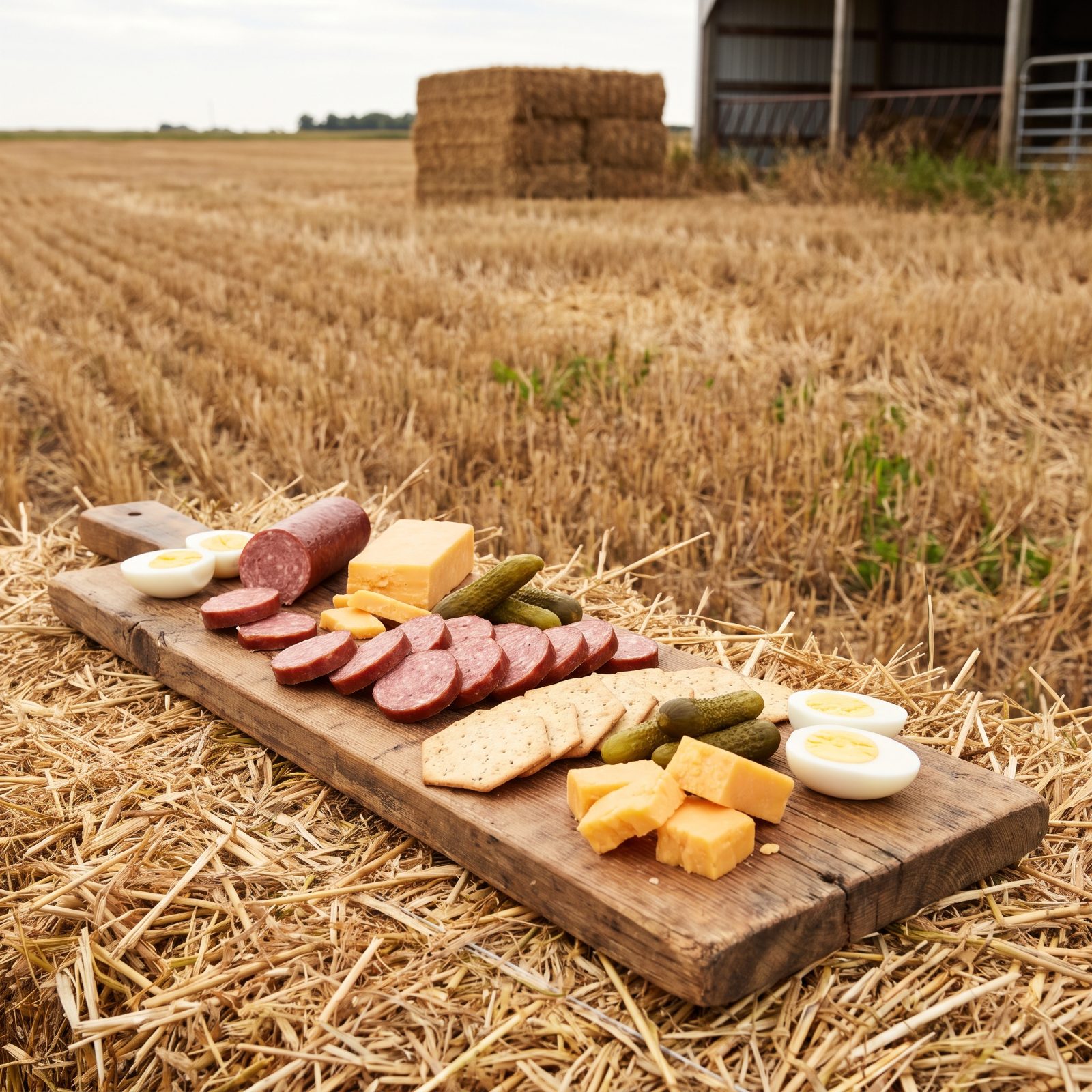
Some days the crew couldn’t come in. When a storm was building or the rig was running full tilt, the food went out to them instead, packed onto a board or into a dishpan and carried to the edge of the field.
Summer sausage was made for exactly this. Cured and dried, it held up in the heat without an icebox. Sharp cheddar, wrapped in cloth, came along with it, cut into hunks with a pocketknife. Crackers, a jar of pickles, and a pile of hard-boiled eggs with a twist of salt in wax paper filled out the rest.
Men ate standing up or sitting in the shade of a wagon, sweat drying on their shirts. Nobody needed a plate. A clean hand and a few minutes were enough.
Board spreads go down well with Piaci Pizza readers too, earning hearts 81% of the time compared with 75% for the other images in the same articles.
3. Beef-and-Potato Pasties with Mustard Pickles and a Thermos of Hot Coffee
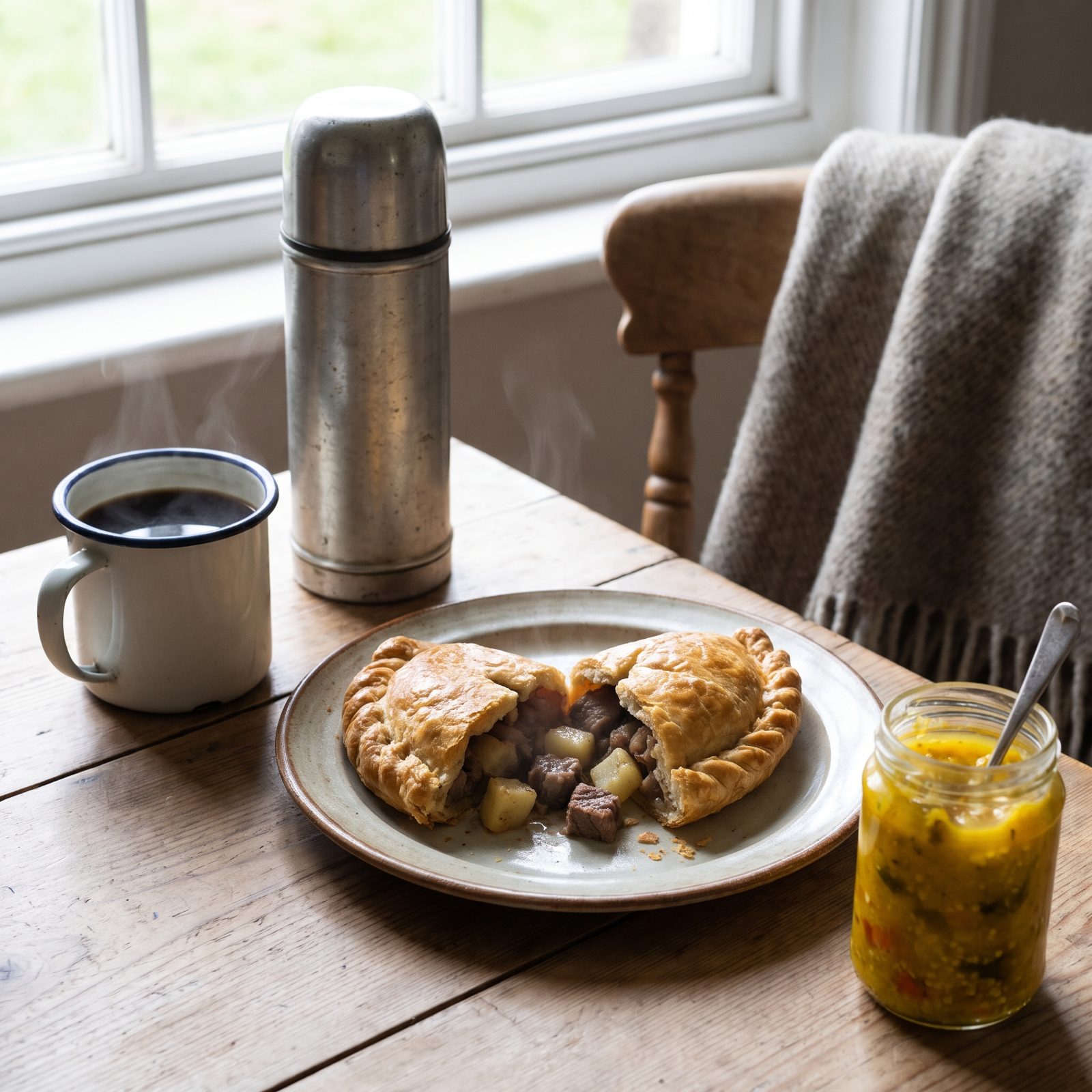
A pasty was a whole dinner folded into a half-moon of lard crust. Diced beef, potatoes, onion, and often rutabaga went in raw, got crimped shut along the edge, and baked until the juices cooked into the filling. They came out of the oven sturdy enough to wrap in a dish towel and carry anywhere.
Mustard pickles, bright yellow and tangy with chunks of cauliflower and cucumber, gave a sharp bite against all that crust and potato. The thermos of hot coffee might seem strange on a sweltering day, but threshing men drank coffee from dawn to dark, heat or no heat.
In the words of a former pasty line cook who worked in Upper Peninsula pasty restaurants, “You take a bite, and it’s filling. That’s what Michigan is for me.”
2. Potato Pancakes with Applesauce, Cottage Cheese, and Smoked Sausage
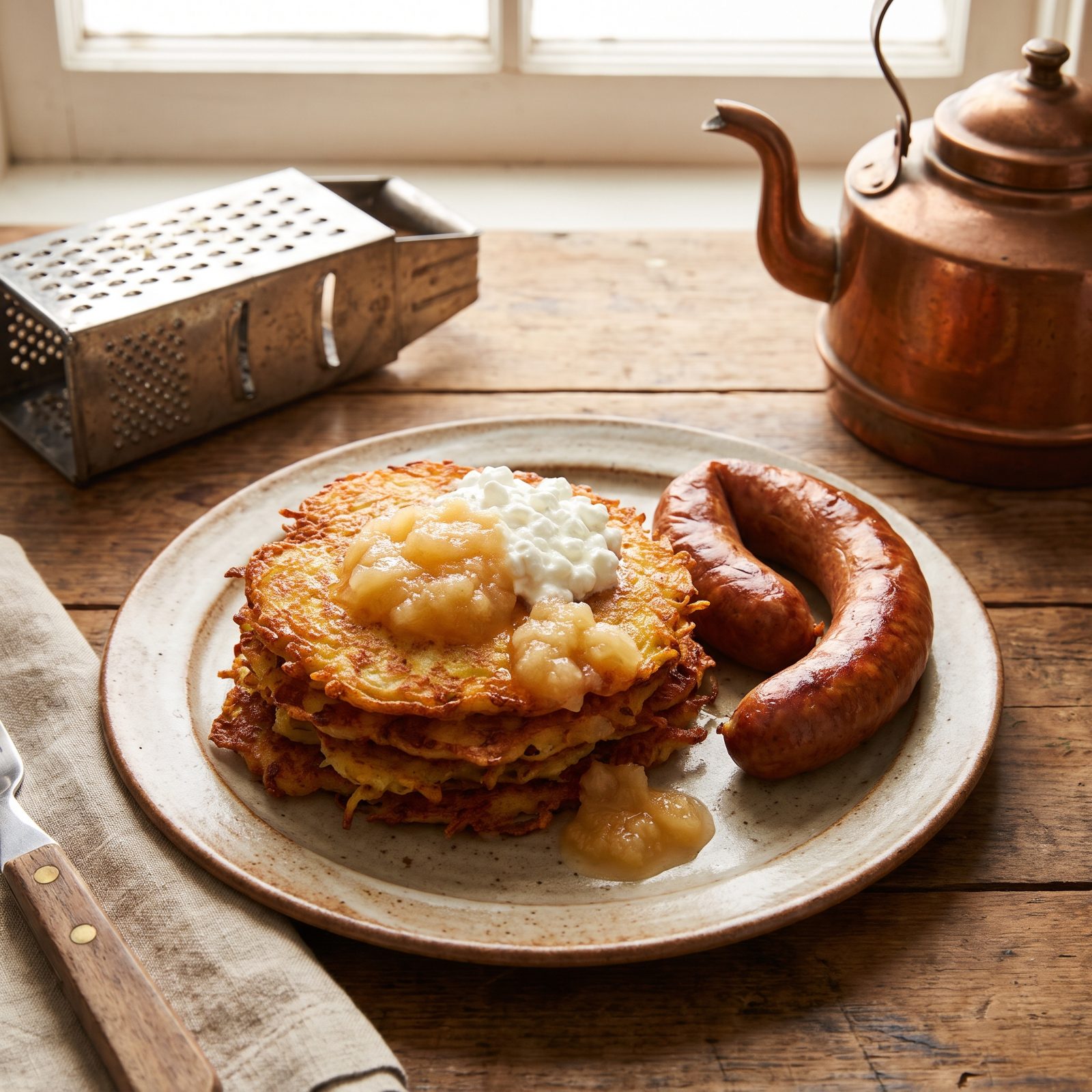
Raw potatoes got grated on the box grater until somebody’s knuckles paid the price, then squeezed dry and mixed with grated onion, a beaten egg, and a little flour. Spooned into hot fat, they spread into lacy-edged cakes that crackled at the rims and stayed soft in the middle.
Applesauce went on top or alongside, cooked down from the orchard and still a little chunky. The cottage cheese was often homemade, curds from soured milk, mild and cool against the hot skillet cakes.
Smoked sausage, browned in the same pan, made it a meal worth sitting down for. It was the kind of supper that came from German and Eastern European kitchens and stuck around because it turned a sack of potatoes into something a crew would talk about.
1. Fresh Cinnamon Rolls and Percolator Coffee at the Midmorning Break
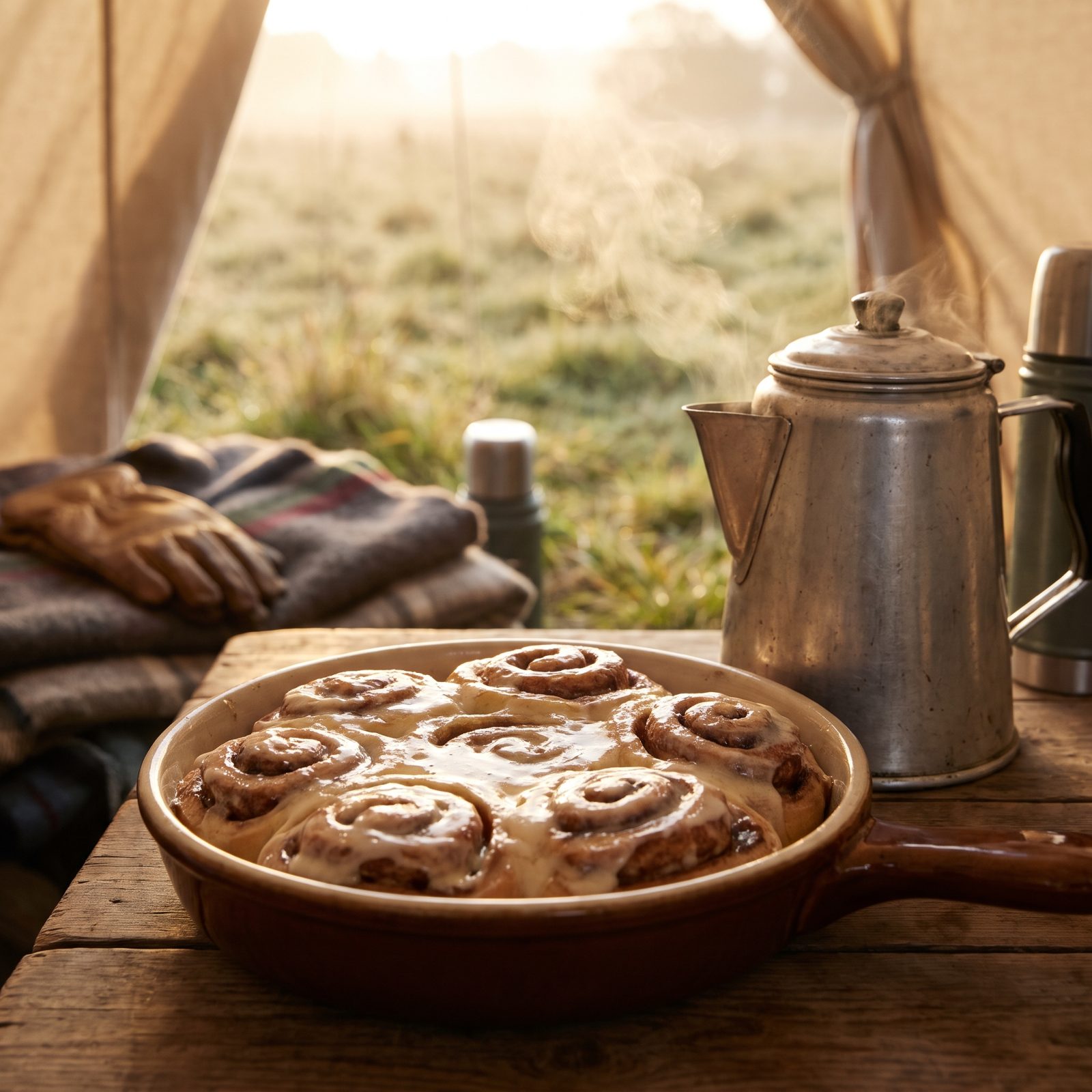
Around ten, when the morning’s work had burned through breakfast, a pan of cinnamon rolls headed for the field. The dough had been set early, punched down, rolled out, spread with butter, brown sugar, and cinnamon, then rolled up, sliced, and left to rise before baking.
They came out of the oven sticky and pulled apart in long, steaming spirals. Some kitchens drizzled them with a powdered sugar glaze. Others figured the brown sugar running down the sides was glaze enough.
The coffee had been bubbling away in a battered metal percolator, and it went out strong and black, steam still curling from the lid. Ten minutes in the shade, a roll in one hand and a cup in the other, and then everyone went right back to it.