
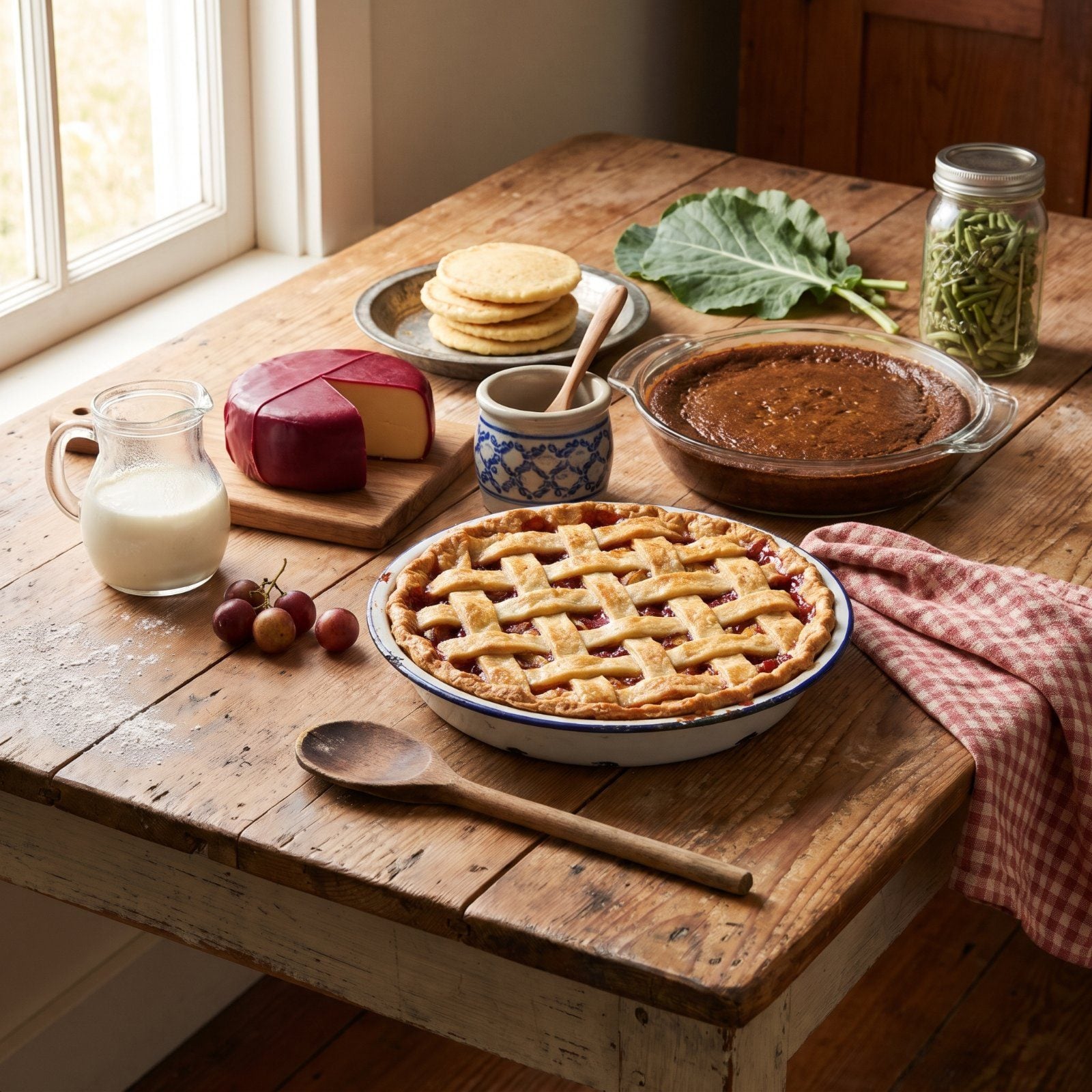
The smell hits you before you see it. Fruit bubbling under a thick blanket of dough, a jug of sweet milk-dip waiting on the counter, and somebody’s grandmother insisting you take a second helping. That’s a Surry County sonker, one of the dishes slipping quietly out of North Carolina kitchens. One got banned outright. Others lost the people who knew how to make them, or just took too long for a world in a hurry. Here’s what we’re losing, and why it mattered.
Please note that some of the images in this article were created with the assistance of AI.
12. Surry County Sonker, the Cobbler-Pie Hybrid With a Marker to Prove It
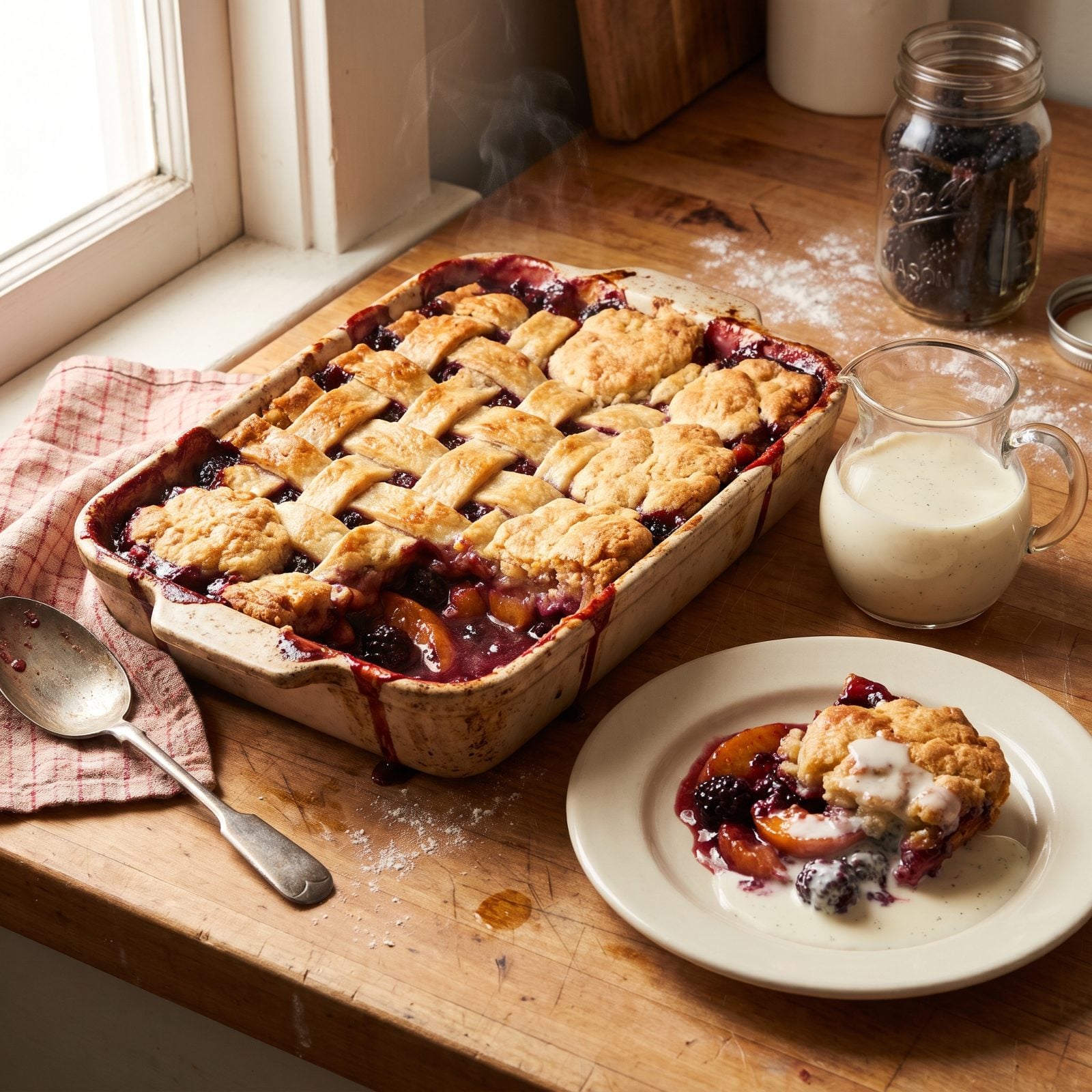
Call it a cobbler and a Surry County cook will gently correct you. A sonker runs deeper and richer, closer to a deep-dish pie, and it comes drowned in a sweet pour called milk-dip. Nobody outside the county quite makes it the same way, which is half the point.
The dessert goes back to the mid-1800s, and local legend says it started as a way to stretch whatever fruit the family had on hand. Berries, peaches, even sweet potato all found their way under the crust. There’s a ‘Hungry for History’ road marker in Dobson naming the county as the official home of the sonker, which is about as serious as a dessert gets.
Since 2015 the Surry Sonker Trail has pointed visitors toward the handful of places still baking their own versions. Follow it while the recipes are still passed hand to hand.
11. Wild Persimmon Pudding, the Thanksgiving Dessert You Had to Wait All Fall For
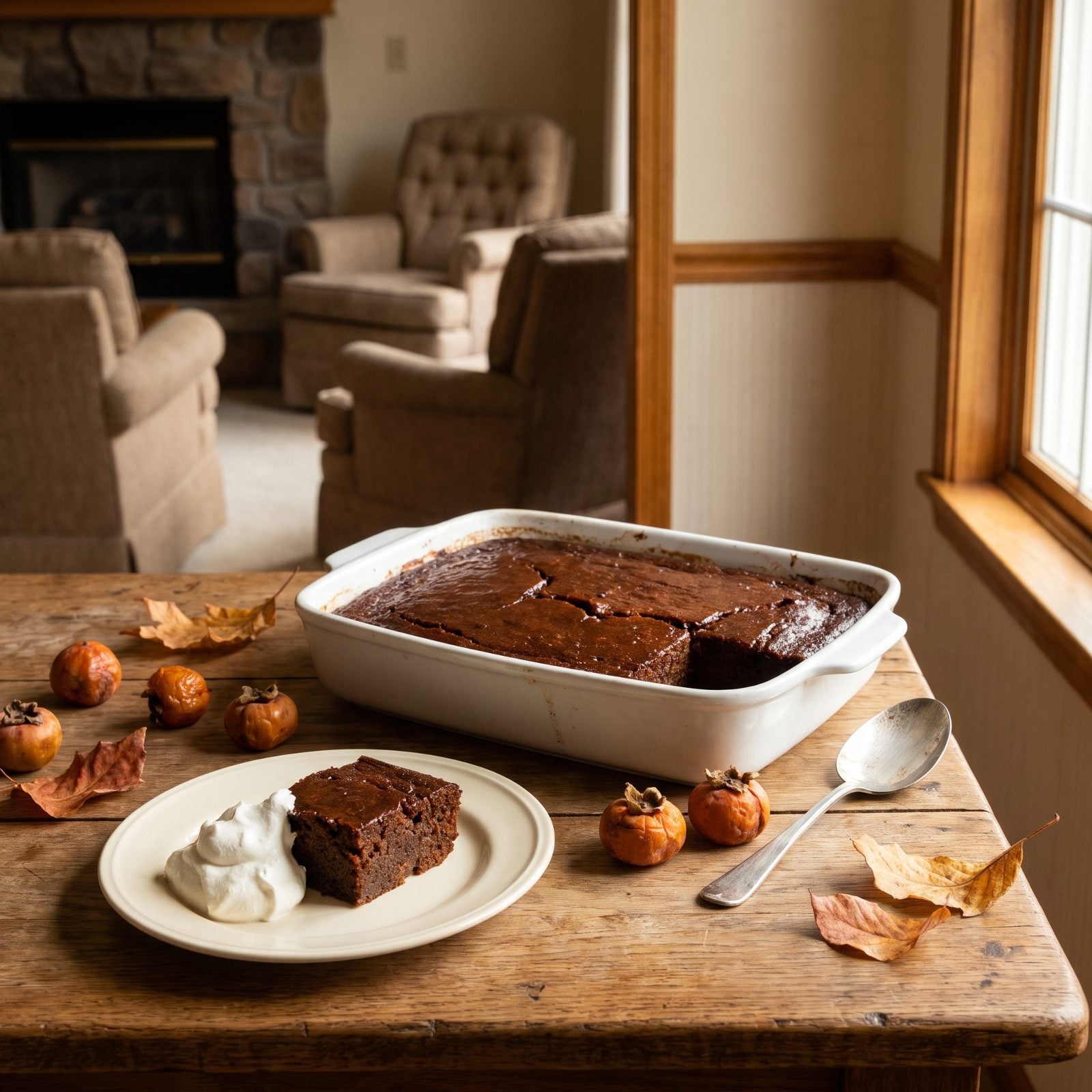
You couldn’t rush this one. The wild American persimmon is native to North Carolina and much smaller than its grocery-store Asian cousin, and it turns sharp and bitter if picked too soon. Families learned to wait, letting the fruit ripen soft and amber along the edges where forest met field.
Back when most North Carolinians lived on farms, persimmon puddings showed up alongside the fall corn shuckings. The foraging was half the ritual. The pudding was the reward.
Along with pawpaw pudding, it’s long been a distinctly North Carolina Thanksgiving tradition, dark and custardy and spiced. Fewer people forage now, and that’s the quiet reason it’s slipping away. The pudding was never hard to make. We just lost patience for the waiting.
What Our Readers Say
- When Piaci Pizza readers loved a food photo and tapped a reason, comfort topped the list at 30%, and nostalgia also made the top reasons at 16%.
From Piaci Pizza reader polls and votes.
10. Corned River Herring, the Spring Catch North Carolina Had to Stop Eating
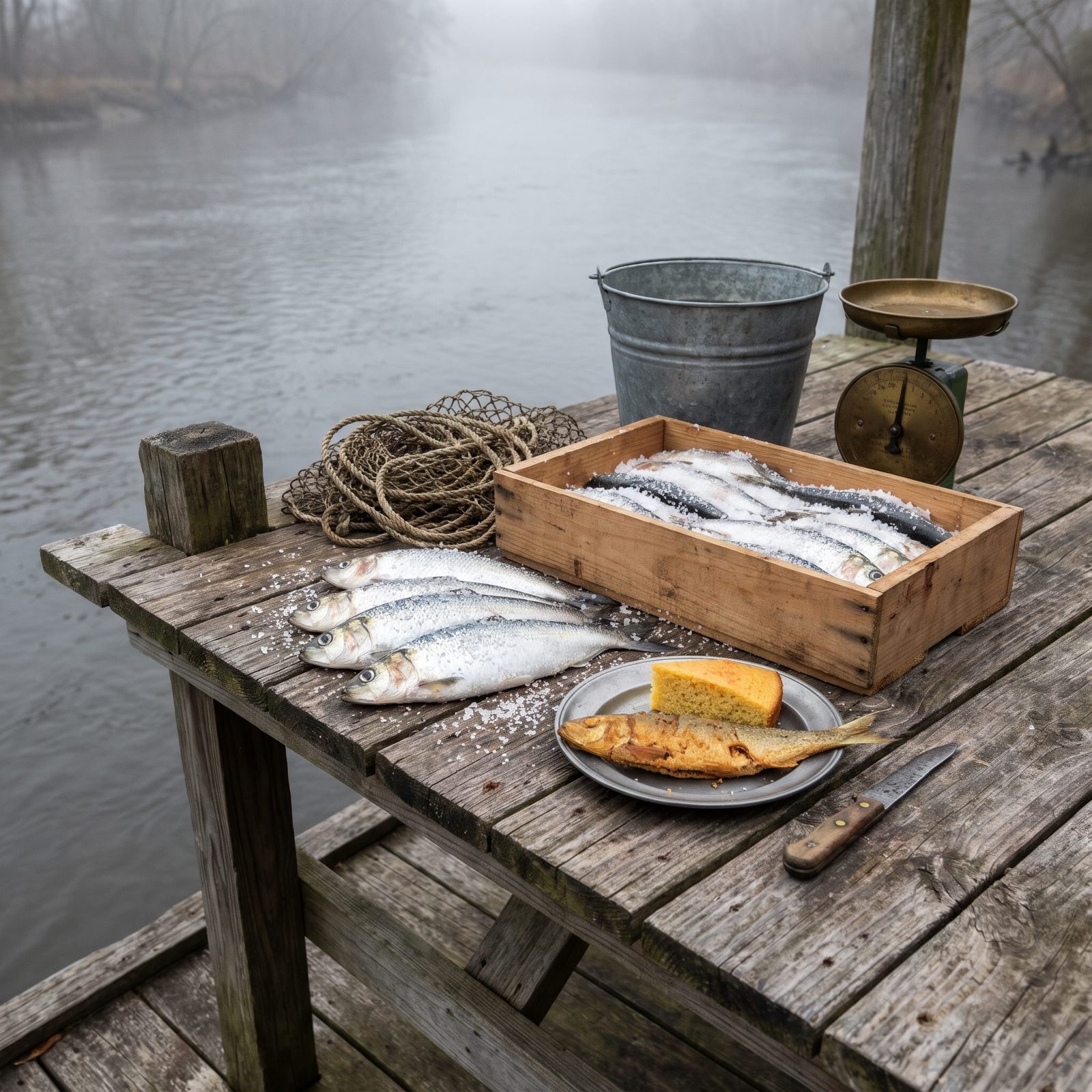
This is the only food on the list you legally can’t catch anymore. Since colonial times, fishermen worked the spring spawning runs up rivers like the Chowan, netting herring, shad and striped bass as they pushed upstream. Early settlers ate the herring boiled, fried, or corned, cured down hard with salt so it would keep through lean months.
North Carolina banned harvesting river herring in 2007. State marine fisheries officials said the population would take years to recover, and commercial fishermen on the Chowan have been pushing to lift the ban ever since.
So a food that fed families for three centuries became a memory almost overnight. Check the current rules before anyone tells you the ban has changed. Last we knew, the fish still gets to run upriver in peace.
9. The Lumbee Collard Sandwich, Cornbread Where the Bread Should Be
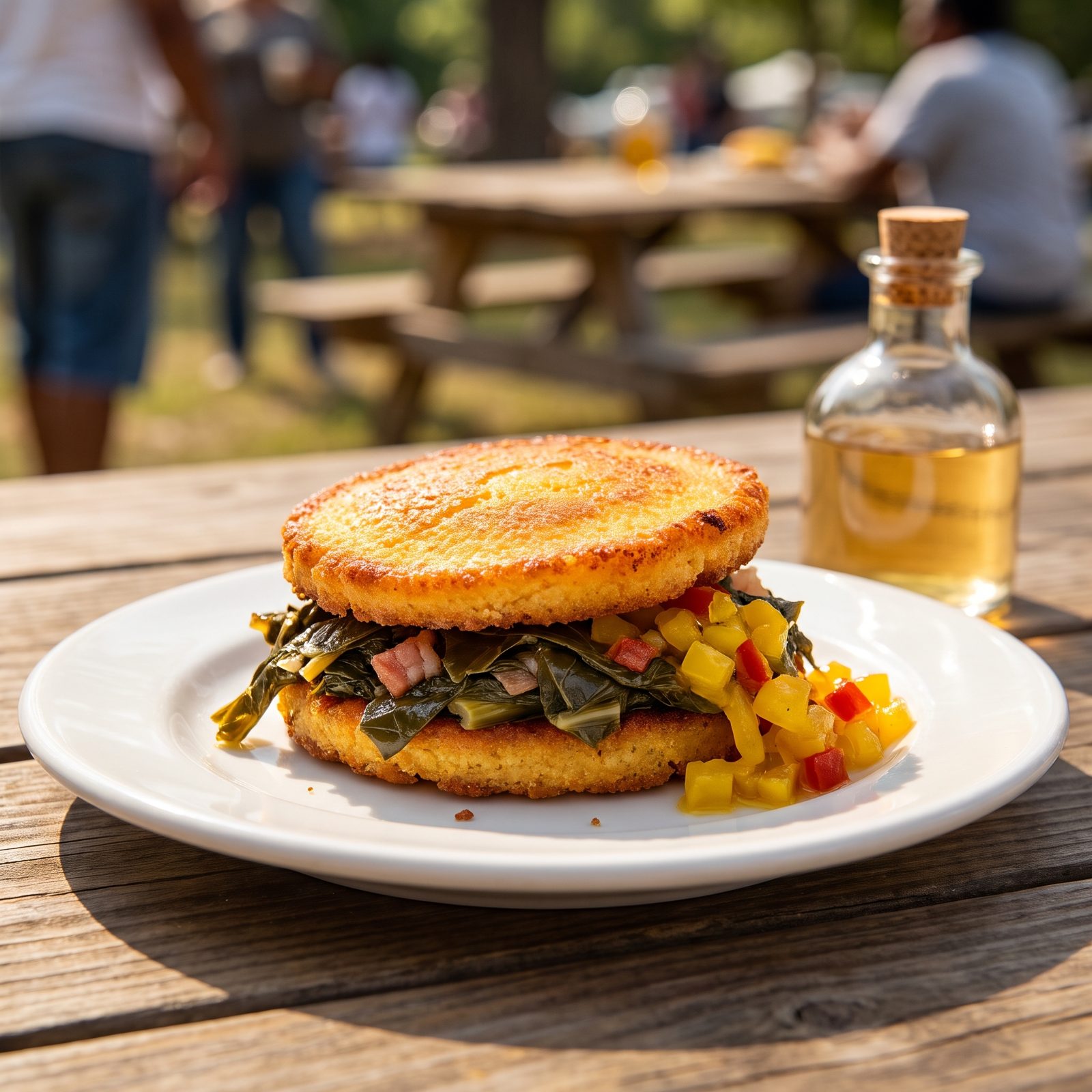
Forget bread. The Lumbee collard sandwich swaps it for two thin, round patties of fried cornbread, crisp at the edges, with a heap of collards and fatback pressed between them. Some folks add chowchow or a splash of vinegar. The whole thing eats like a Southern supper you can hold in one hand.
Slow Food USA calls it an iconic meal of the Lumbee Tribe, based in Robeson County. You’ll find it at its best during Lumbee Homecoming in Pembroke, held in the days leading up to the Fourth of July, where the sandwich is less a snack and more a point of pride.
8. Leather Britches Beans, Green Beans Dried on a String
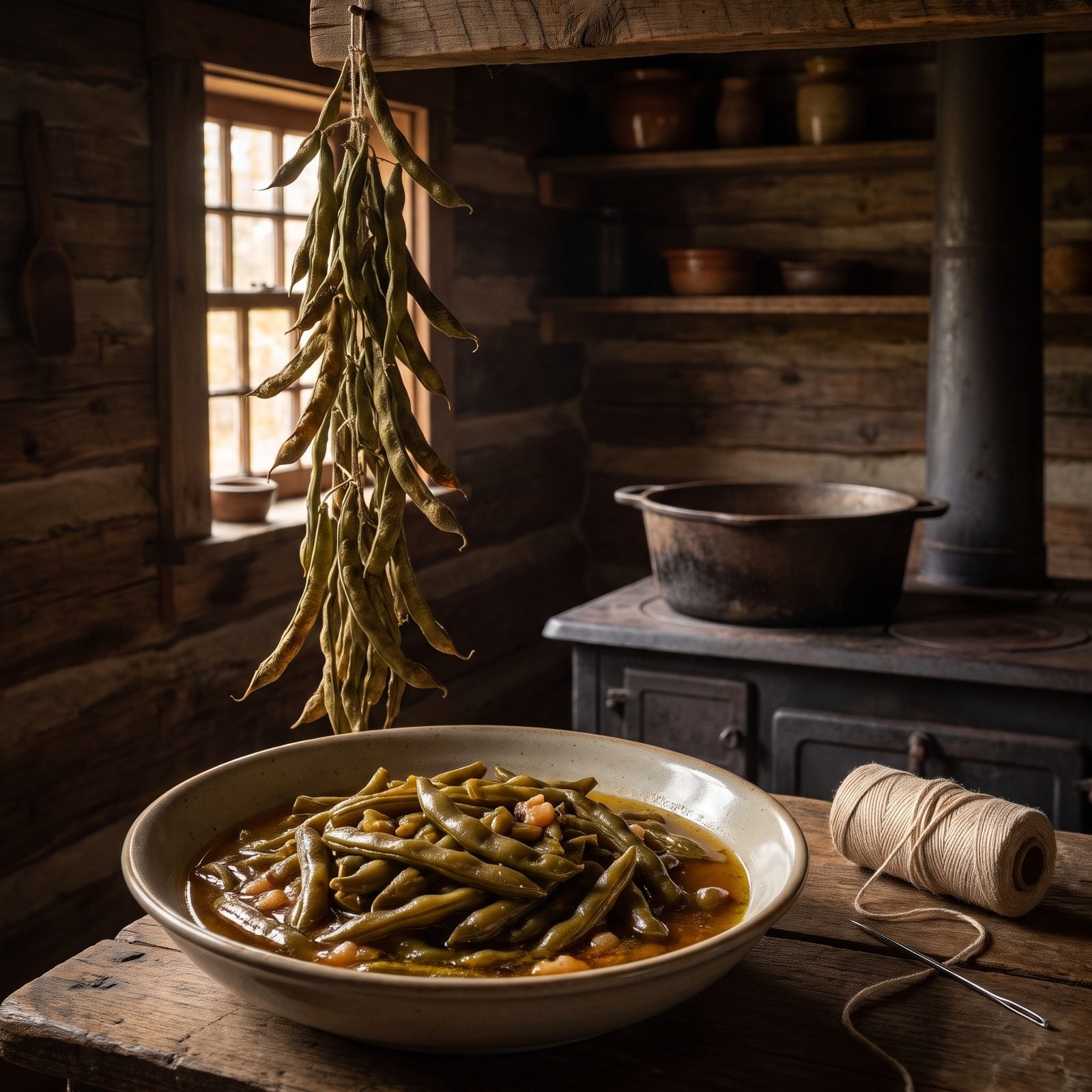
The name tells you most of it. Green beans threaded onto string and dried whole in the pod, hung on the porch or by the fireplace until winter, when they got boiled back to life. The dried pods look like old leather, hence the name.
Horace Kephart described leather-breeches beans in his 1913 book Our Southern Highlanders, and a later source from Hazel Creek recorded the practice too. Early German settlers may have brought the method over with them.
Before canning and refrigeration reached the mountains, drying was simply the cheapest way to get your garden through to spring. The beans come out chewier and funkier than fresh, almost smoky. We’ll admit they’re an acquired taste. But that deep, slow flavor is exactly what you can’t buy in a can.
7. Ocracoke Fig Cake, the Outer Banks Bundt Built on Homemade Preserves
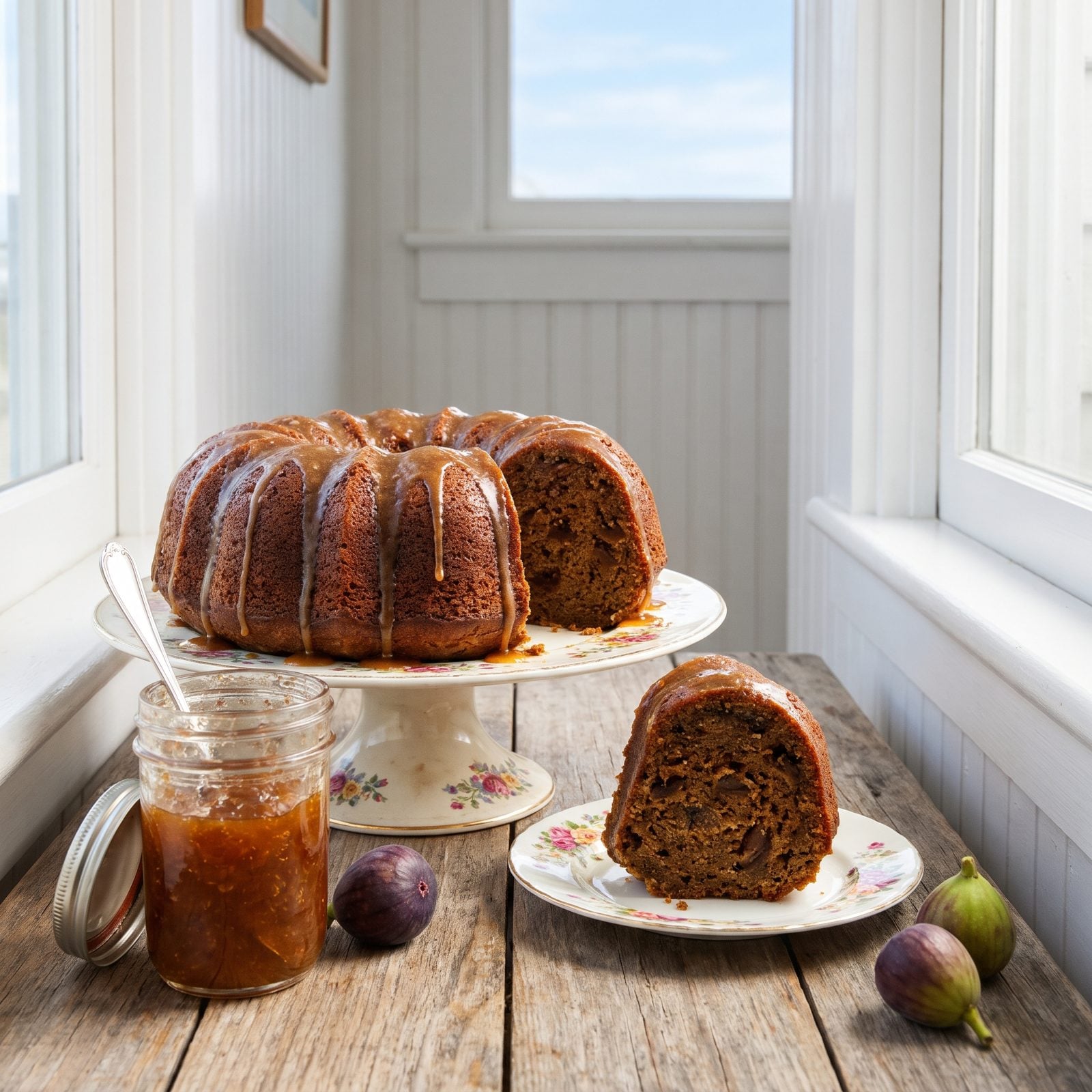
Figs grow stubborn and sweet in the sandy soil of the Outer Banks, and communities out there each guard their own fig cake traditions. On Ocracoke it takes the form of a bundt, closer to a spice cake, sweetened with homemade fig preserves rather than fresh fruit.
Some ninth-generation Ocracokers have won the island’s traditional fig cake category more than once. On Ocracoke that’s roughly the equivalent of a knighthood.
The free Ocracoke Fig Festival runs August 7 and 8, 2026, at the historic Berkley Barn, and its centerpiece is a Fig Cake Bake-Off with Traditional, Innovative Dessert, and Savory categories. Catch the ferry, catch the cake. Both run on island time.
6. Scuppernong Grape Hull Pie, the Pie Too Much Work to Survive
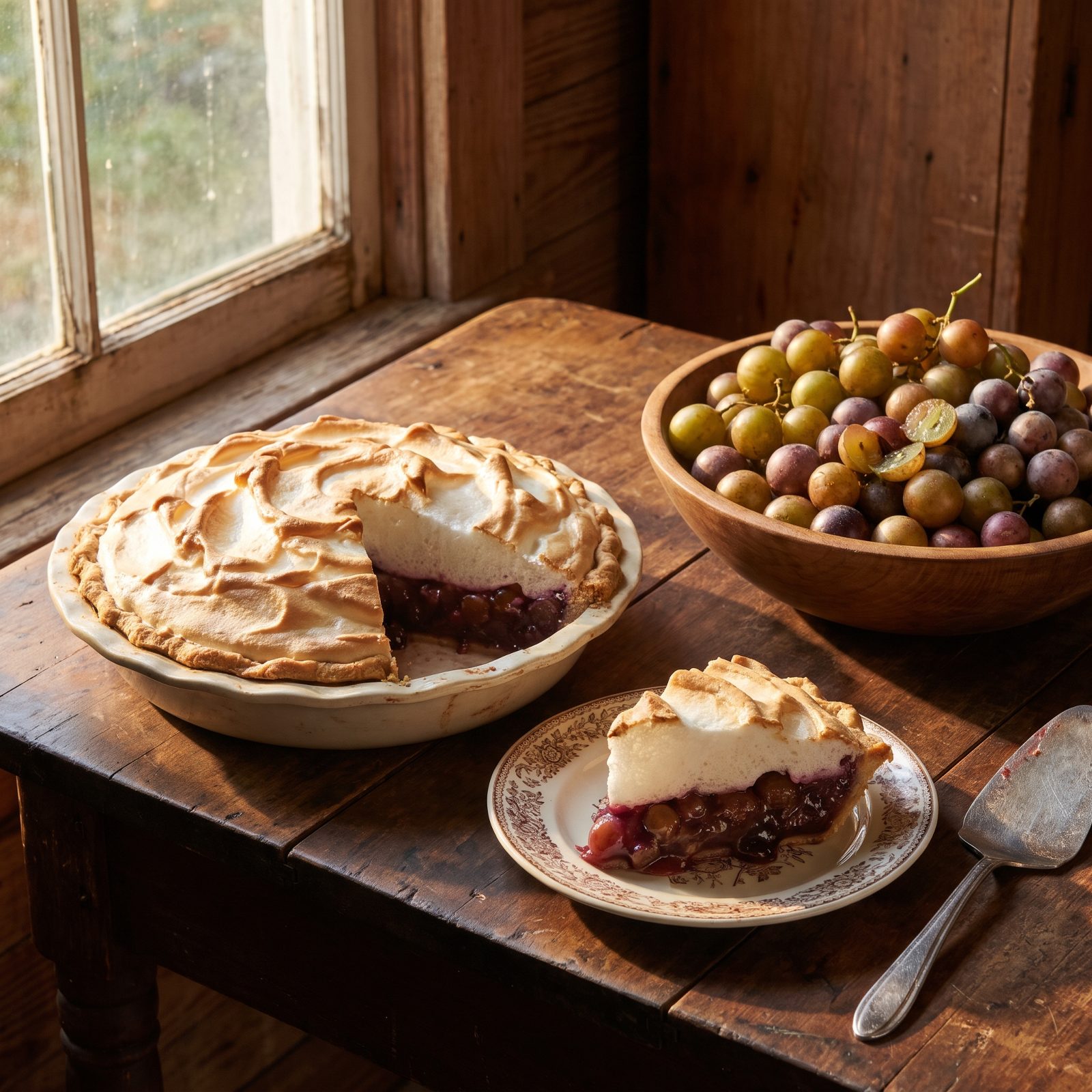
Our State calls grape hull pie a regional classic that’s hard to find, and the reason is simple: it’s a pain to make. The muscadines get pressed by hand to separate those thick skins from the pulp, then every seed has to come out. A lot of hand work for a single pie.
Duplin, the Fussell family business, still makes ‘Mama Ann’s’ grape hull pie with a homemade crust and meringue, following a family recipe handed down through the generations. It’s a fall pie, made only when muscadines and scuppernongs come ripe.
Eastern North Carolina throws a party for the grapes every September in Kenansville. And the pie? It’s the kind of thing that disappears when nobody has the afternoon to spare anymore.
A pie you can’t rush, made from a grape you have to press by hand, in a season that lasts a few weeks. No wonder it’s rare.
5. Appalachian Apple Stack Cake, the Mountain Wedding Cake Built From Dried Apples
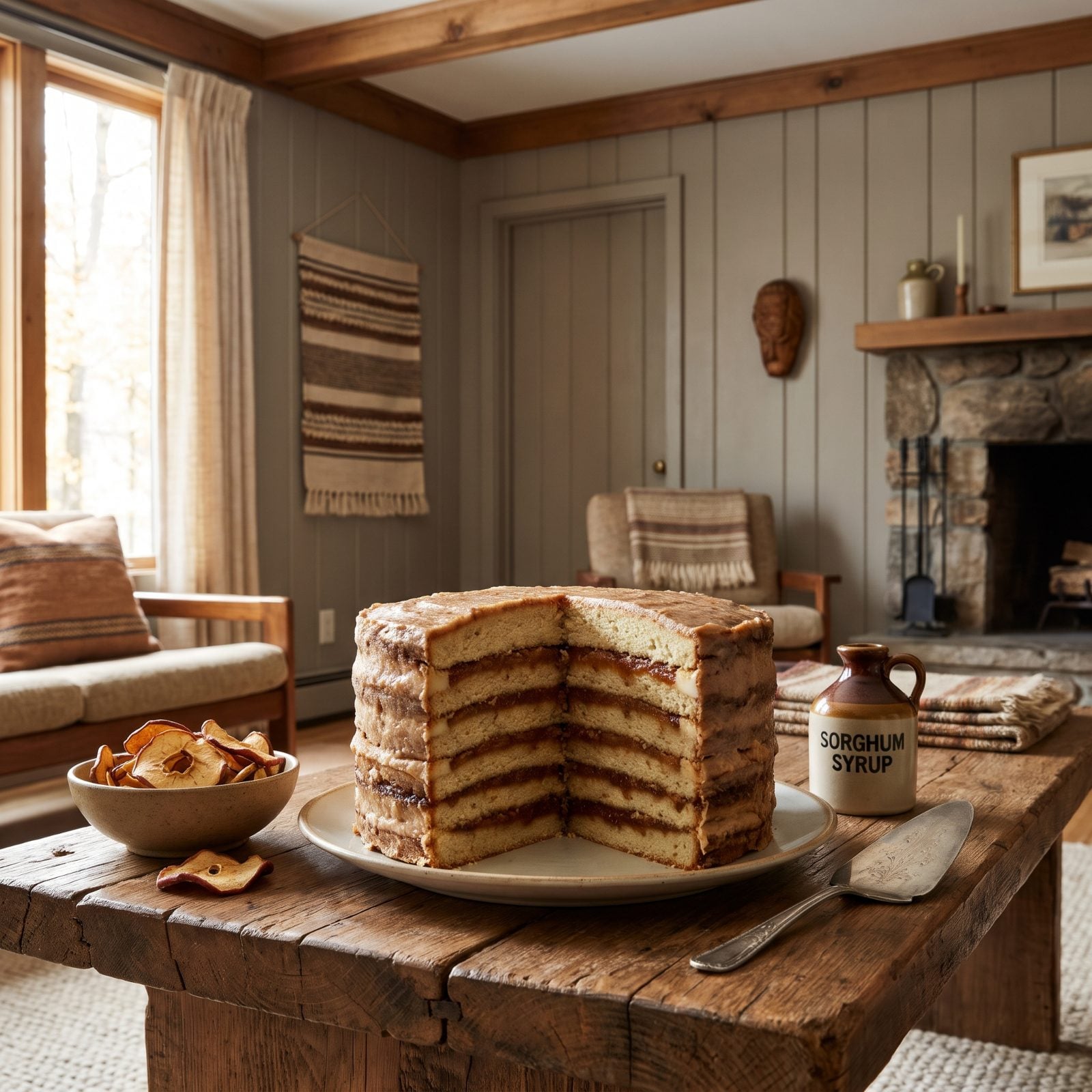
Cut into one and you’ll count the layers. Many thin, rather dry cake rounds, sweetened with sorghum, stacked high with dried apples, apple butter, or apple preserves spread between them. The filling softens the cake over a day or two, which is exactly why you make it ahead.
It was cheap to make and once the favorite cake for mountain weddings, when a fancy bakery was out of reach but a family’s jar of dried apples wasn’t. The whole cake depended on how good the previous fall’s apple harvest had been.
A cake measured in layers and patience. The kind of thing that made a wedding feel like a wedding when there wasn’t much money to go around.
In our readers’ heart votes, baked desserts got hearts 81% of the time, a little more than the 77% for other images in the same articles.
4. Wood-Cooked Whole-Hog Barbecue, the Pit That Almost Nobody Tends Anymore
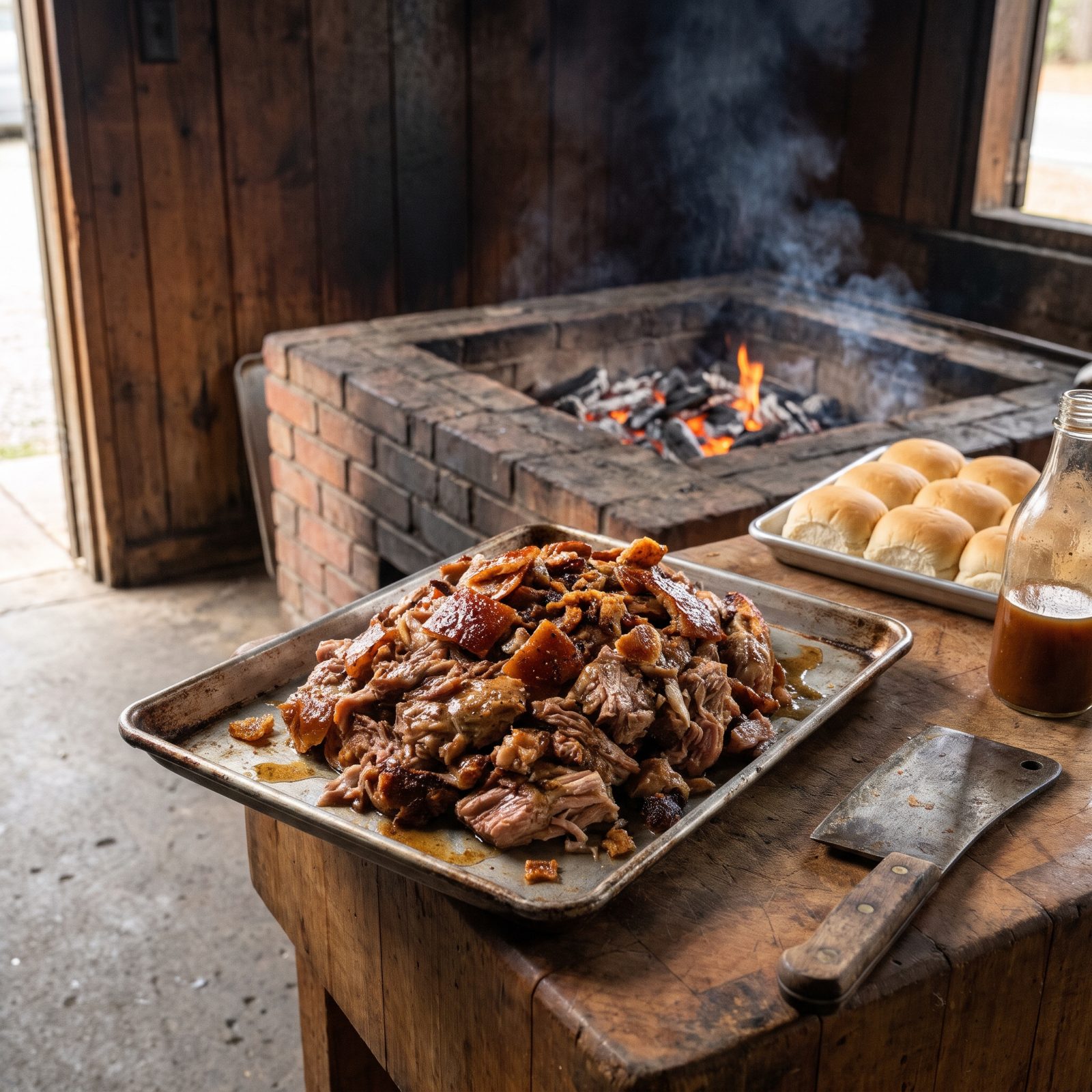
This is the one that breaks your heart a little. Barbecue writers will tell you it’s now genuinely rare to find a joint that cooks whole hogs over wood-fired pits. It takes all night, somebody has to stay up tending the coals, and younger cooks keep opting for gas and electric.
Eastern North Carolina and South Carolina’s Pee Dee region have long been the last strongholds. Melton’s in Rocky Mount opened in 1924 as the state’s first sit-down barbecue restaurant, then closed in 2005 after hurricane damage and hard times.
But Skylight Inn in Ayden has been smoking whole hogs over hickory since 1947, and they’re still at it. Chopped fine, crisped skin folded in, dressed with vinegar. If you care about this food, go eat it where somebody still stays up all night for it.
3. Liver Pudding and Livermush, the Breakfast Meat That Split North and West
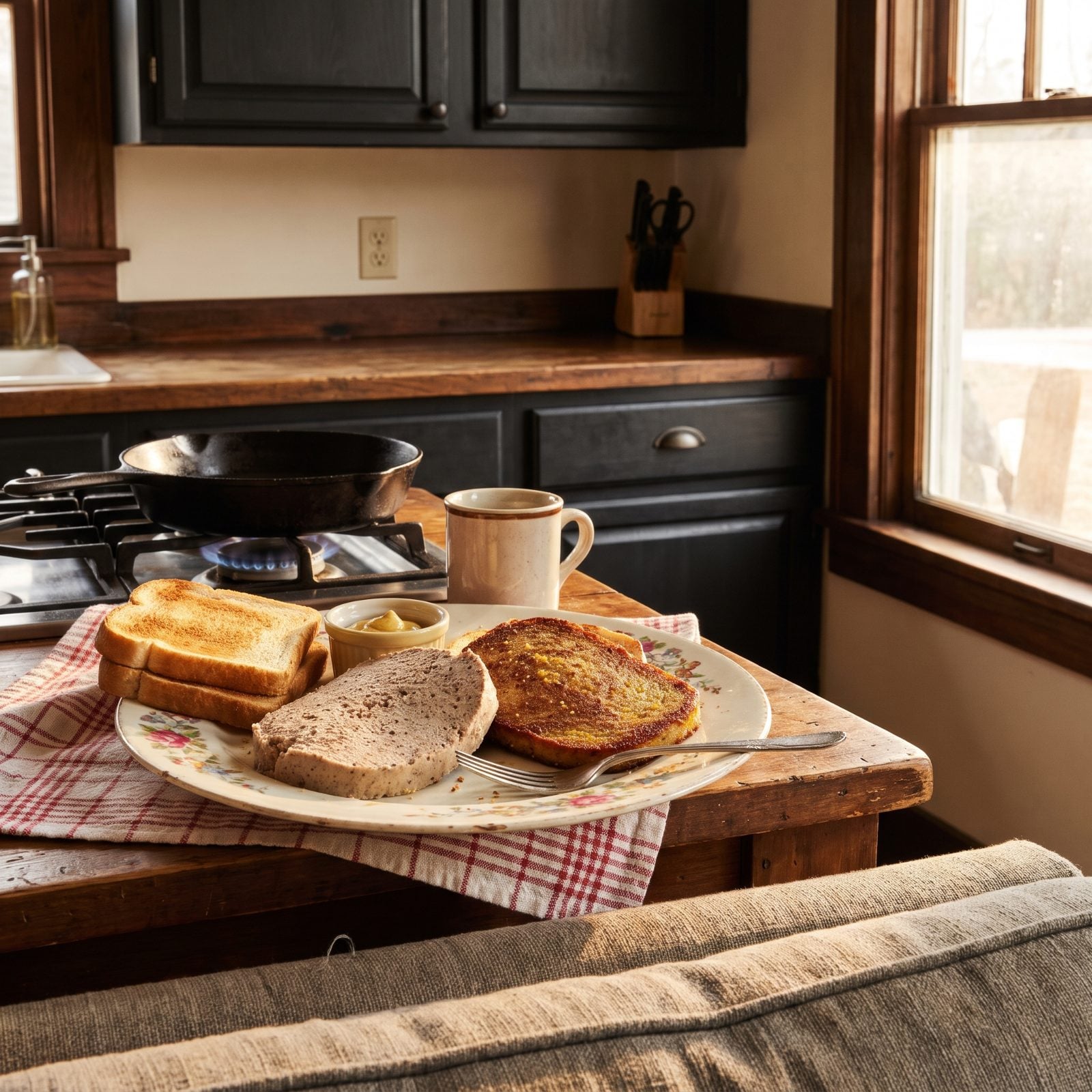
Same idea, two states of matter. In eastern North Carolina, liver pudding is a soft, spreadable pork-liver pâté, usually bound with flour. Head west and it firms up into livermush, its German-rooted cousin, made with liver, scrap meat, cornmeal, sage, and pepper, sliced and fried crisp at the edges.
Mack’s Liver Mush started the Shelby Livermush Festival back in 1985, and in 2012 the General Assembly made it the official fall livermush festival. A very North Carolina thing to legislate, if you think about it.
Now here’s the twist: livermush is still easy to buy across western North Carolina. Walk into the right grocery store in Shelby or Hickory and it’s sitting right there in the cooler. Travel beyond its home turf, though, and good luck. It’s a regional loyalty most of the country never got to taste.
2. Country-Store Hoop Cheese in Red and Black Wax
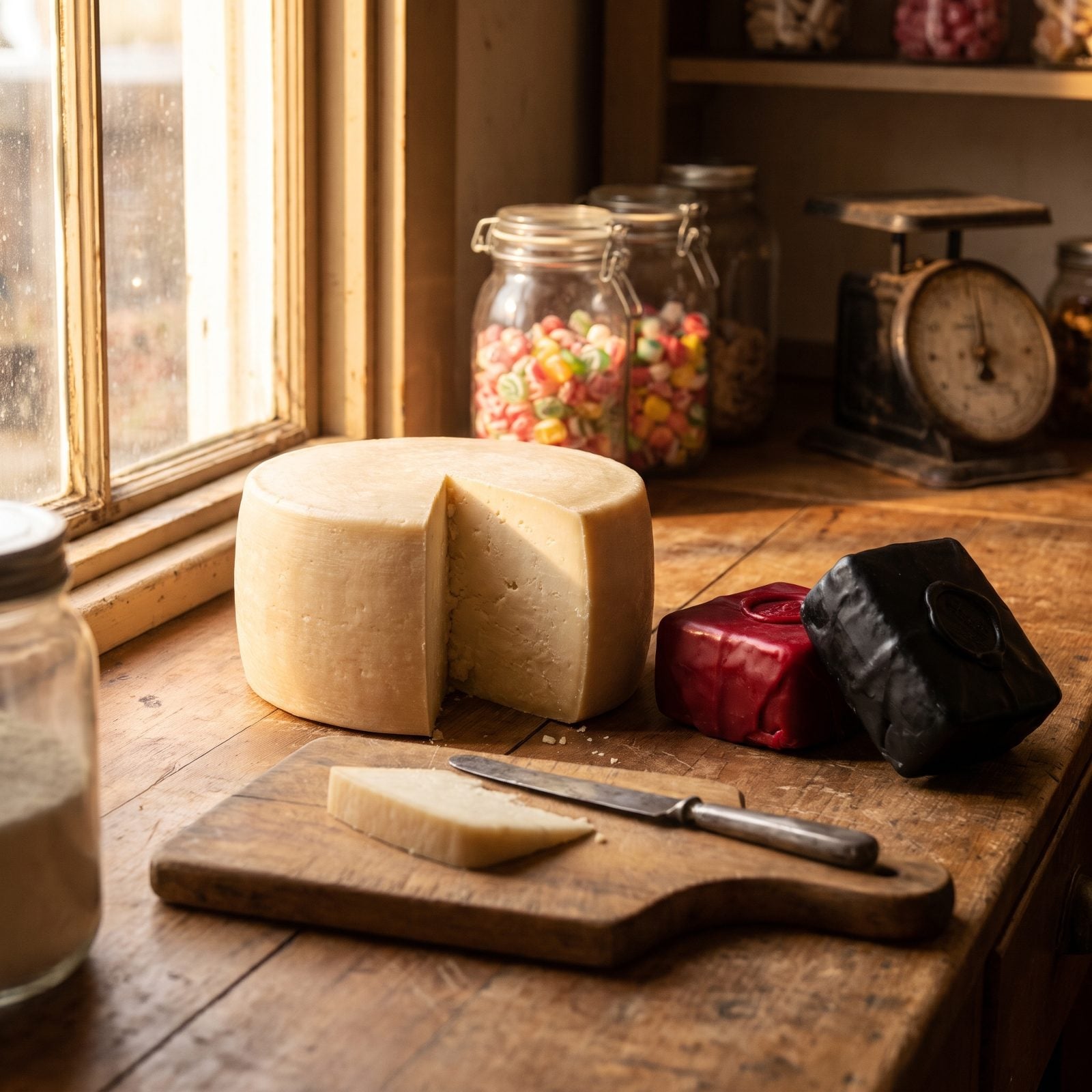
It sat on the counter under a glass dome or a cloth, a big round wheel sealed in wax, waiting for someone to ask for a wedge. The store clerk would swing the blade of a cheese cutter down and wrap your slice in paper. Hoop cheese is mild, soft, and a little springy, a simple whole-milk cheese pressed into a round hoop, which is where it got its name. Kids loved it because it never bit back.
For a lot of North Carolinians, a trip to the country store meant a hunk of hoop cheese, a sleeve of saltines, maybe some bologna sliced off the roll, and a cold bottle of something sweet to wash it down. It was a working man’s lunch and an afternoon snack in one, eaten on the porch or the tailgate. The waxed rind kept the wheel fresh on the counter, and the color made it easy to spot.
As crossroads stores closed and supermarkets switched to pre-sliced, plastic-wrapped cheese, the wheel on the counter mostly disappeared. You can still buy hoop cheese in parts of the state, sometimes in a small waxed round, but buying it cut to order from a whole wheel has become rare. The cheese hasn’t changed much. The ritual of watching it get cut just for you is what we lost.
1. The K&W Cafeteria Plate You Loaded Up After Church
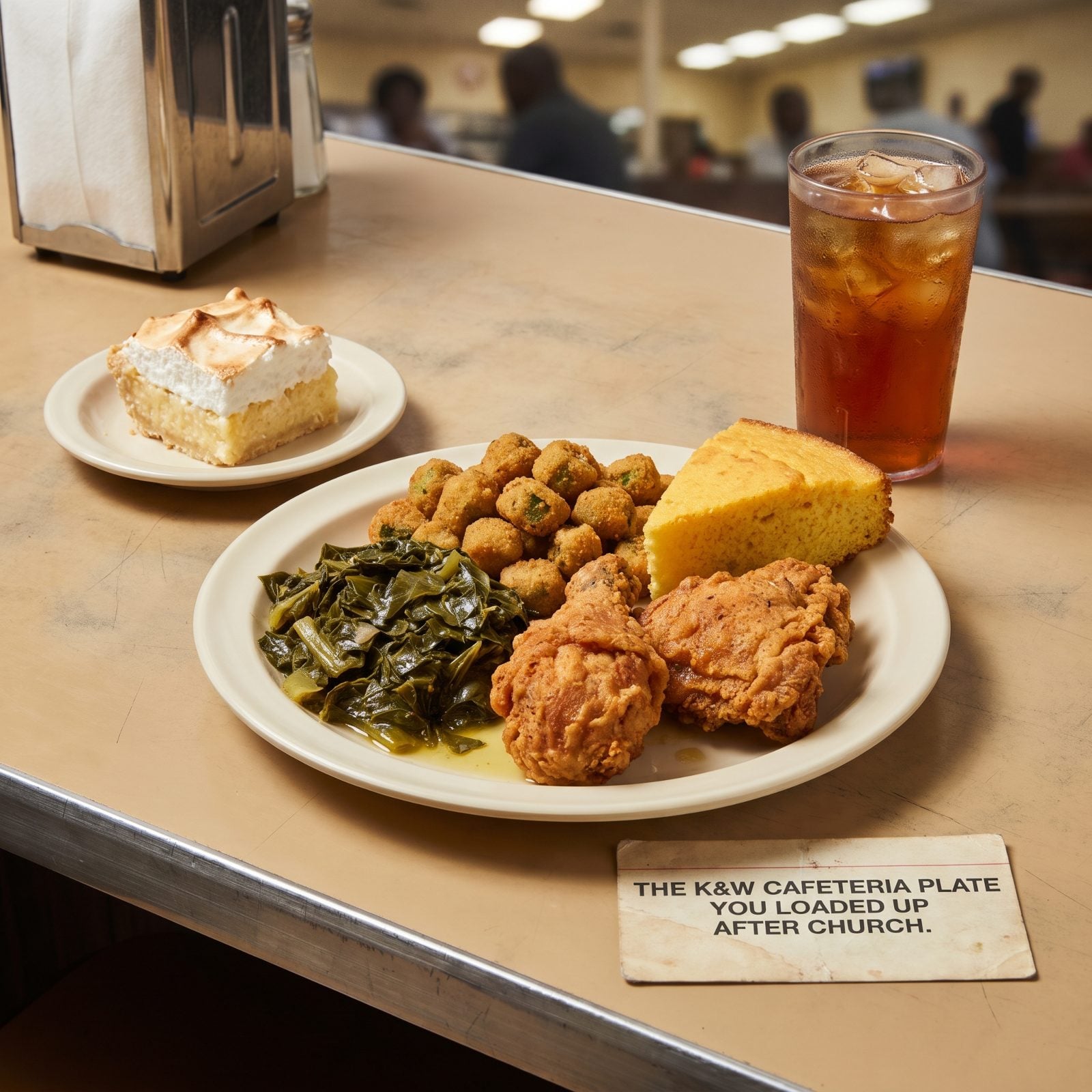
You went down the line with a tray and made a hundred tiny decisions before you ever reached the cashier. Fried chicken or the roast beef. Turnip greens or green beans. And then the real agony showed up at the end, because the pie case glowed like a jewelry counter and you only had room for one slice.
K&W Cafeterias opened in Winston-Salem back in 1937 and fed the state for decades. Fried okra, candied yams, cornbread, homemade pies — the kind of spread your grandmother would’ve cooked if she’d had a steam line and twelve hands to work it.
Then it ended, and it ended cold. All eight remaining North Carolina locations closed without warning on December 1, 2025. No farewell week. No last-Sunday-crowd goodbye. One day the trays were there and the next the doors just didn’t open.
What made the trip worth it was never one dish. It was watching three generations crowd one table — the little ones wobbling their trays, the grandparents heading straight for the chicken livers and the stewed apples. You can’t pipe that through a drive-thru window. So go find a church-basement supper or a meat-and-three while they’re still standing.