
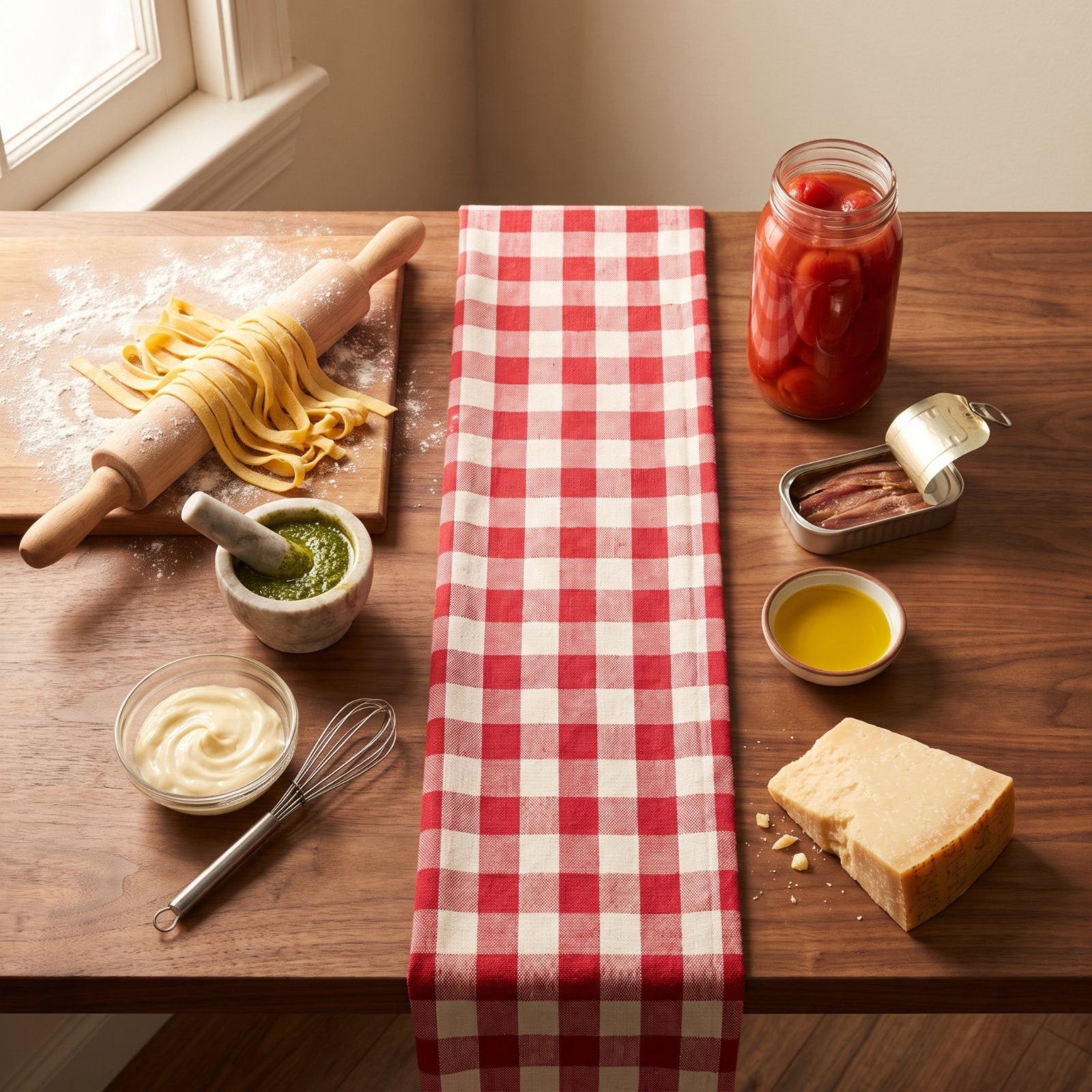
Walk into the back of a busy kitchen and you’ll find a cook pulling fresh pasta off a drying rack while, three feet away, a case of canned San Marzano tomatoes sits stacked to the ceiling. Both choices are correct. The myth that real cooking means doing everything by hand dies fast once you’re feeding a Friday-night rush. Good cooks know exactly where the payoff lives and where their time just evaporates. So here’s the honest split: the handful of things worth making yourself, and the ready-made staples professionals grab without a shred of guilt.
Please note that some of the images in this article were created with the assistance of AI.
47. Make It Yourself: Fresh Egg Pasta
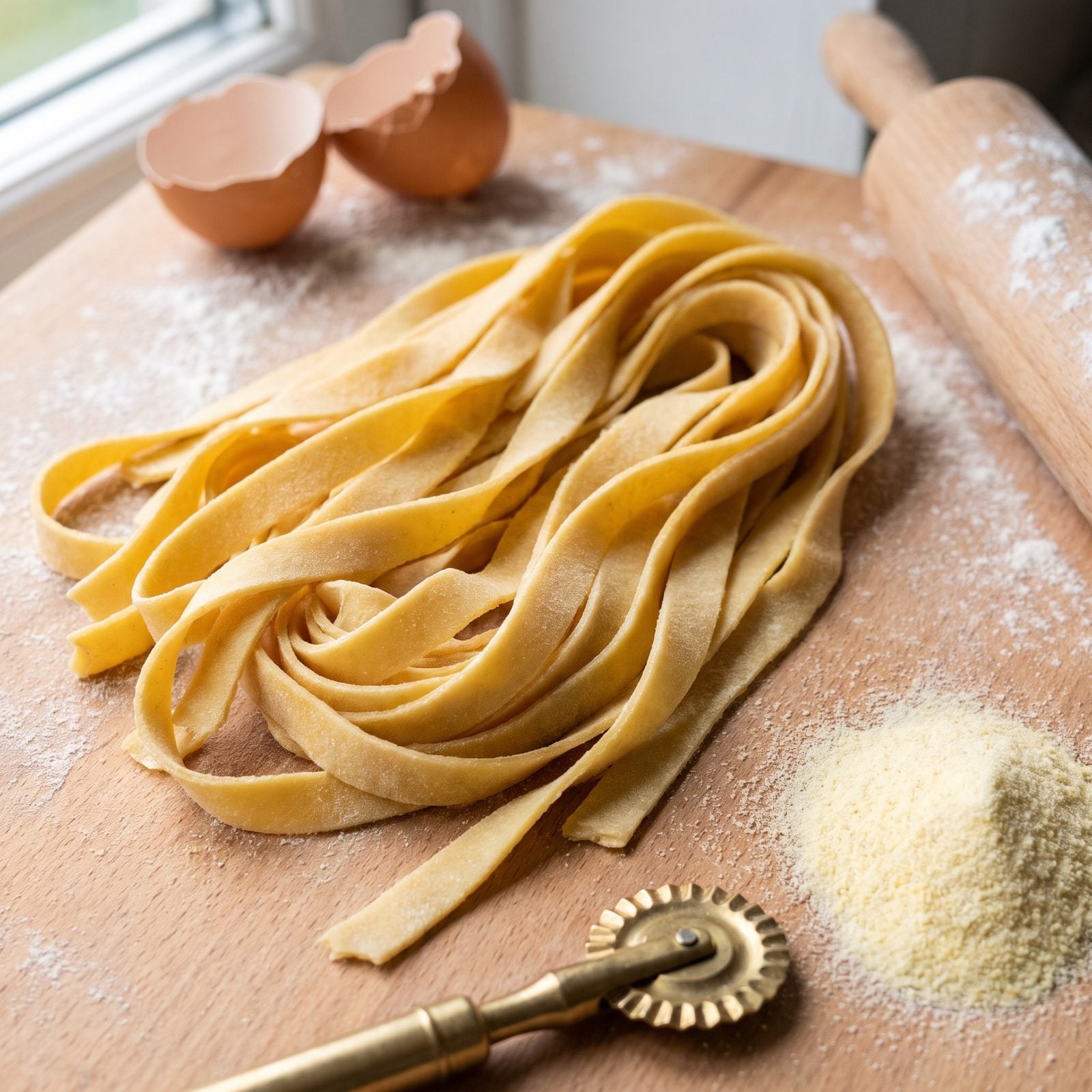
Fresh pasta is the clearest win on this list. The gap between a box of dried spaghetti and a sheet of silky egg dough isn’t subtle — it’s a different food entirely, one that drinks up sauce instead of sitting under it, and it cooks in about ninety seconds.
I got this wrong for years, convinced I needed a machine and a free afternoon. You don’t. A bowl, a fork, and patience get you most of the way there. The one thing nobody warns you about? How much flour you’ll end up wearing on your shirt.
46. Make It Yourself: Pizza Dough That Actually Blisters
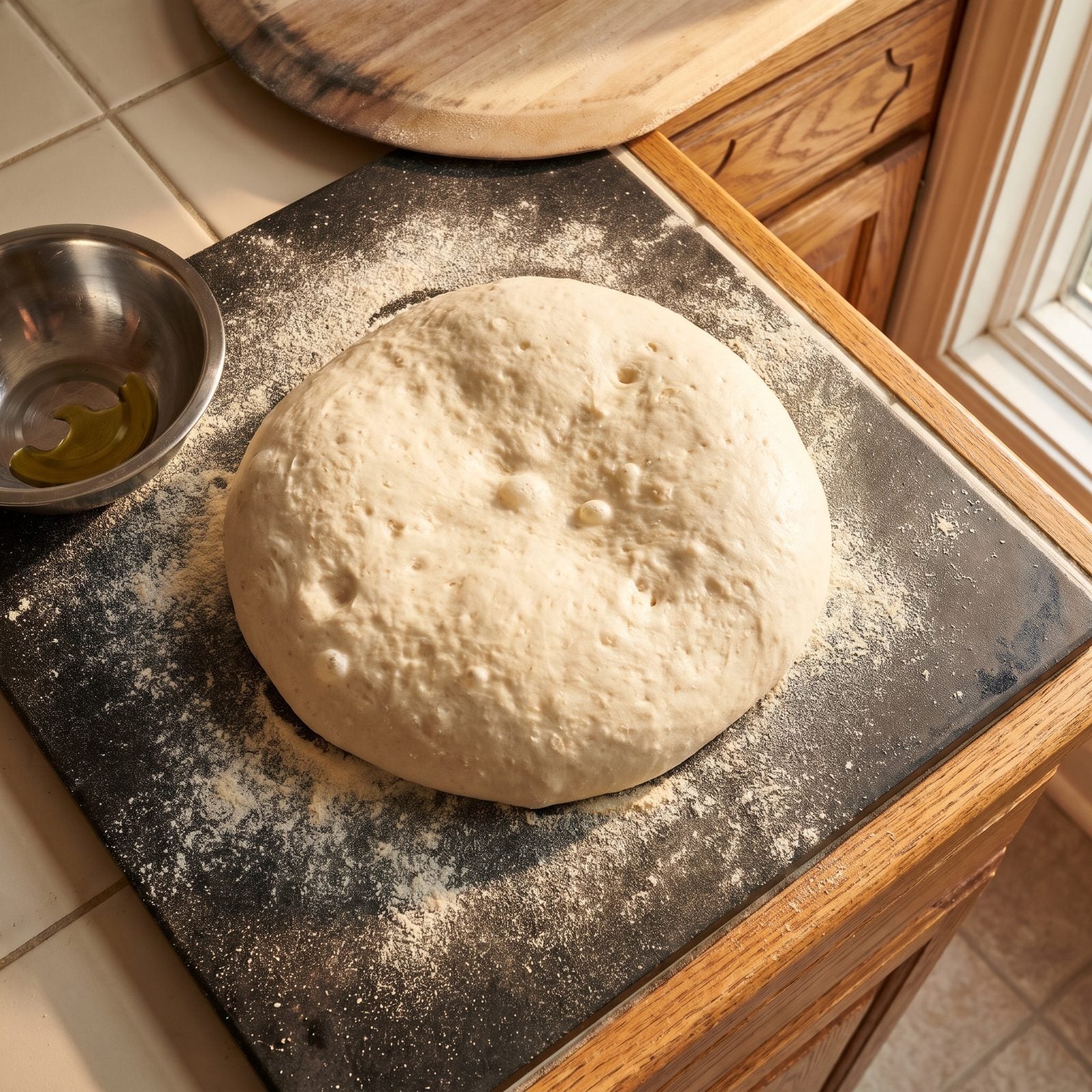
Store-bought dough is the single biggest upgrade a home pizza night can make over a frozen pie, and making it yourself is cheaper still. Flour, water, yeast, salt, and time. That’s the whole cast.
The secret ingredient isn’t an ingredient at all. It’s a day in the fridge. A slow cold rise builds the flavor and the chew that makes a crust taste like a real pizzeria instead of a biscuit with sauce on it. Same-day dough works in a pinch, but it tastes flat next to the stuff you let wait.
45. Make It Yourself: Chicken Stock From the Carcass
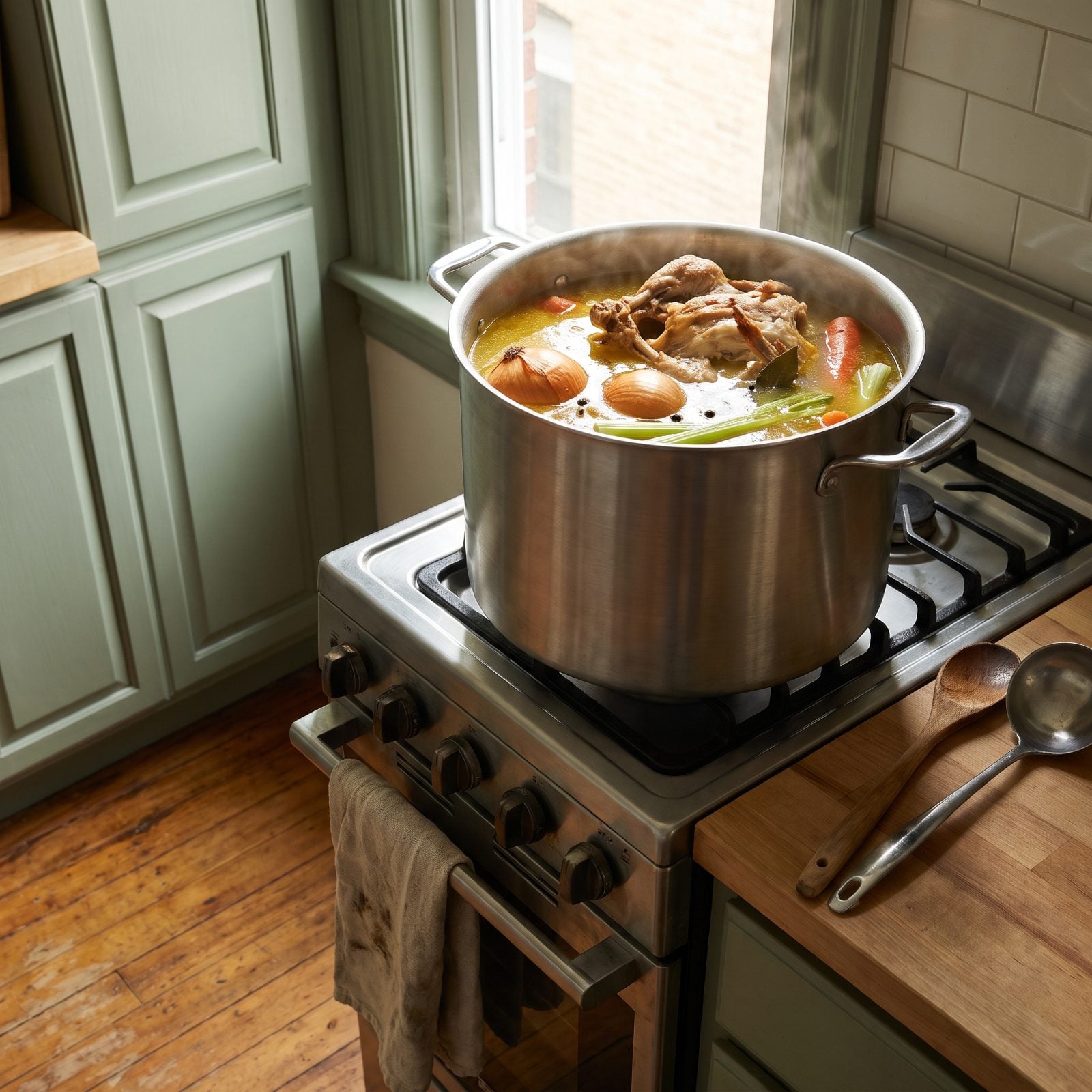
Boxed stock is salt water with a chicken rumor. Even the good brands taste thin next to the real thing, because real stock gets its body from gelatin that a box can’t fake.
And here’s the part that makes it feel like getting away with something: you already paid for the ingredients. The roast chicken bones, the onion ends, the wilty celery slumped in the crisper drawer. Toss them in a pot with water and walk away. You turn garbage into something worth a dollar a cup while the laundry spins.
What Our Readers Say
- When Piaci Pizza readers loved a food photo and tapped a reason, comfort came out on top at 30%, ahead of ingredients at 17%.
- Homemade meals styled to look like polished restaurant plates got hearts 64% of the time from our readers, fewer than the 72% for other images in the same articles.
From Piaci Pizza reader polls and votes.
44. Make It Yourself: A House Vinaigrette
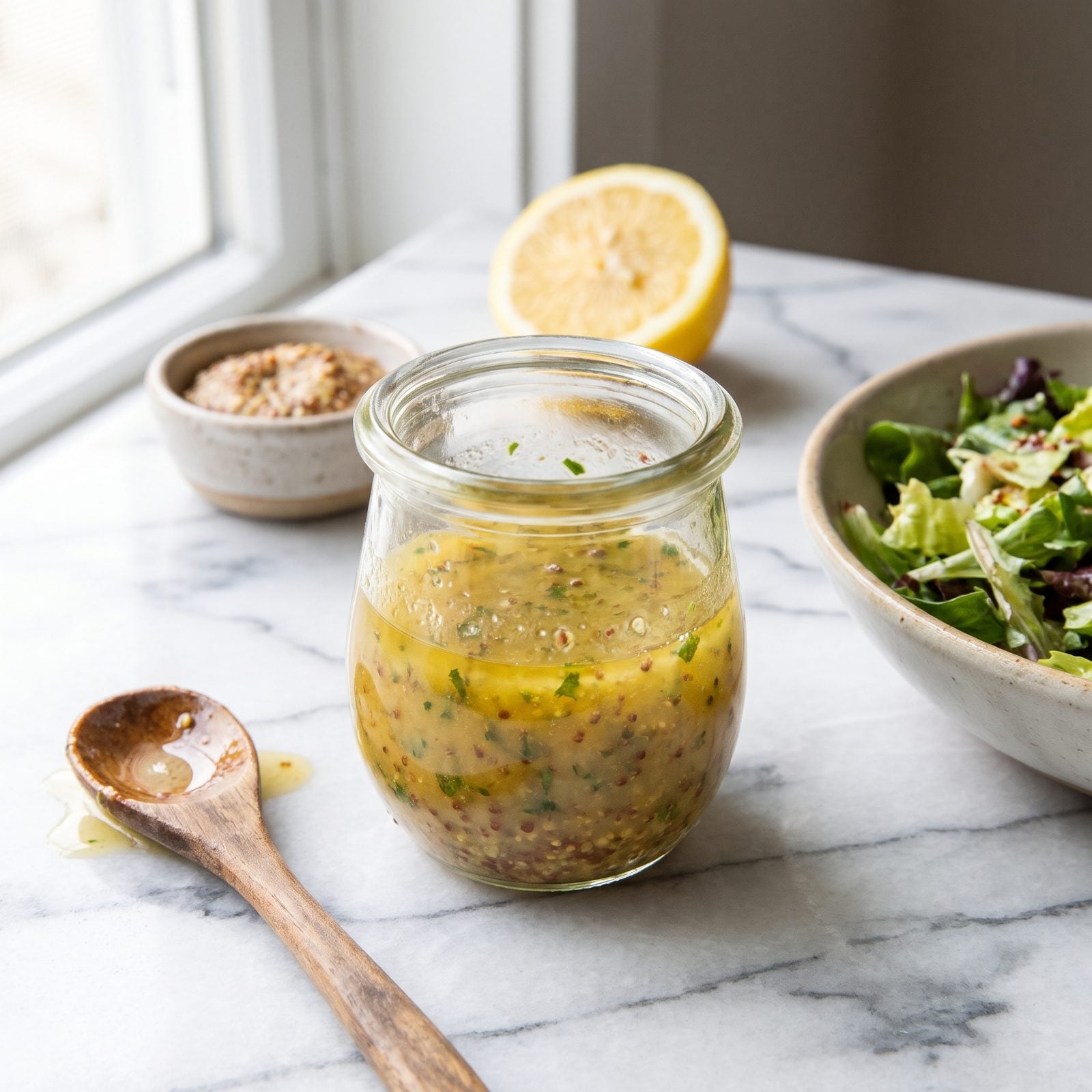
Bottled dressing is the great unnecessary purchase. Three ingredients you already own, sold back to you with stabilizers and a shelf life measured in years.
A vinaigrette is acid, oil, and something to hold them together — usually mustard. Shake it right in the jar you store it in. Done. The whole thing takes less time than digging the bottle out of the fridge door would have.
43. Make It Yourself: Mayonnaise and Garlic Aioli
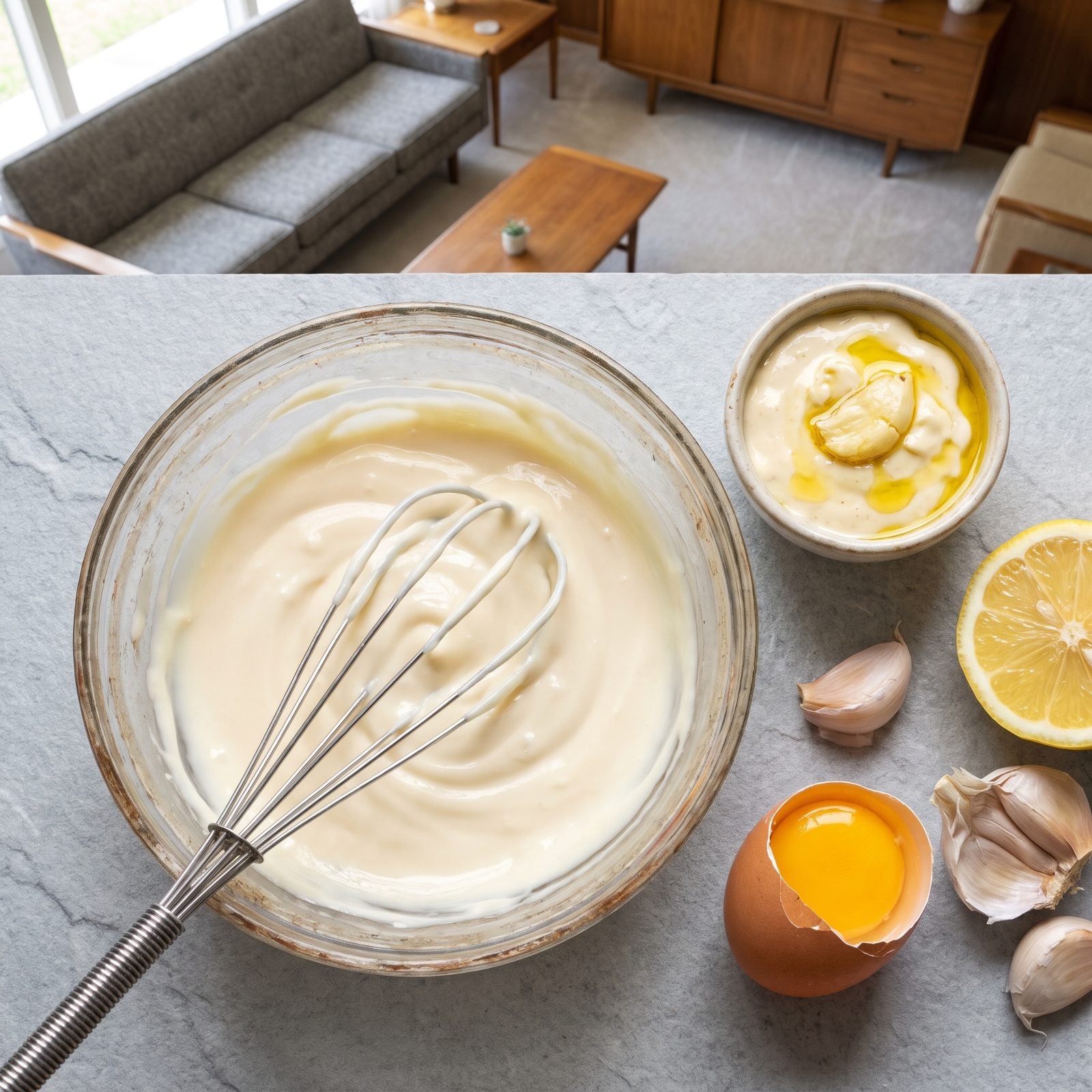
Scratch mayonnaise splits people. My flat opinion: jarred mayo will do in a pinch, but homemade is worth the five minutes. Homemade aioli is a different animal, and that’s where handmade earns its keep.
Beat an egg yolk, drizzle in oil until it thickens, work in garlic and lemon. What you get is thick, bright, and tastes of actual garlic instead of a memory of it. It’s the sauce that makes plain fries feel like a restaurant order.
42. Make It Yourself: Fresh Basil Pesto
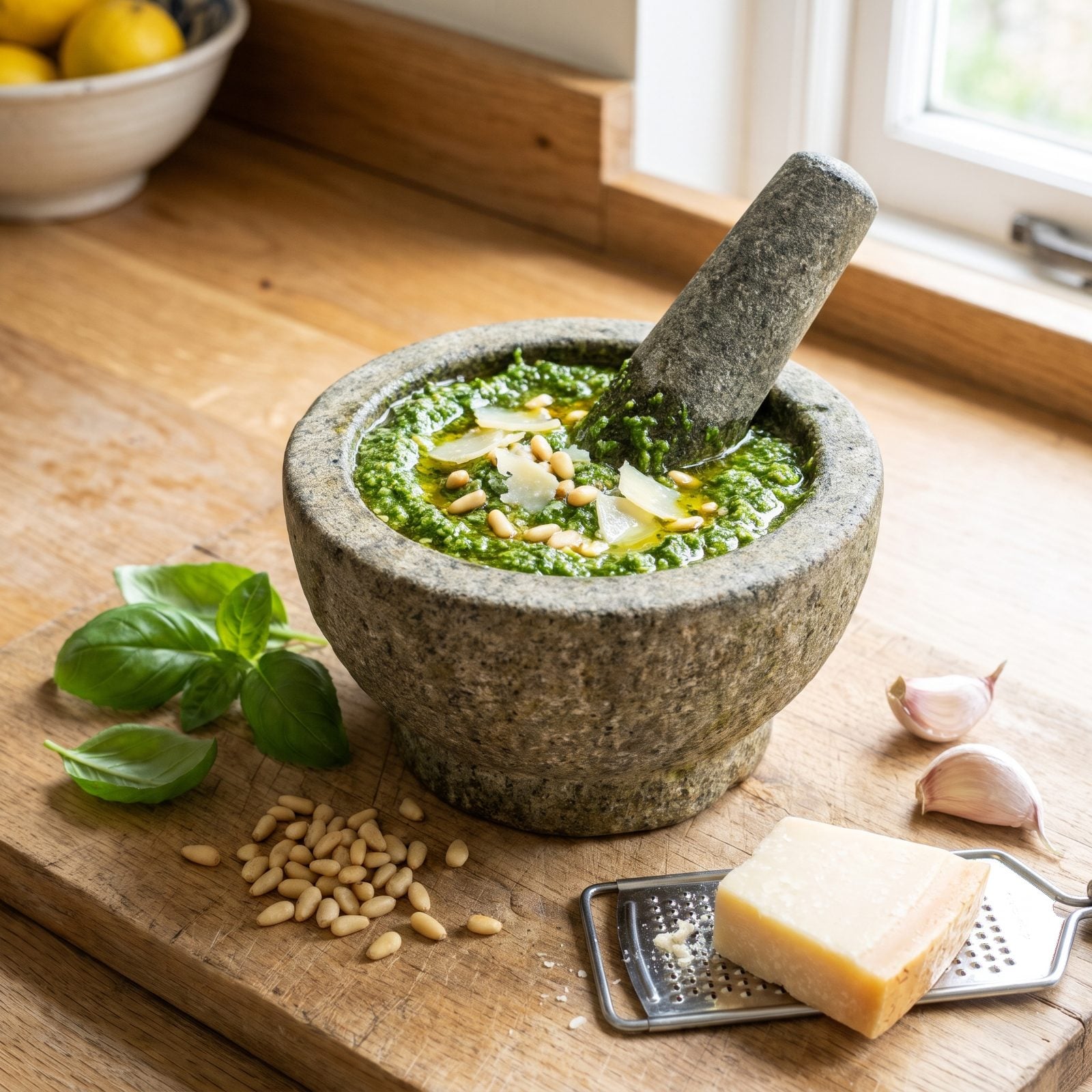
Jarred pesto is a dull, grey-green compromise. Basil oxidizes fast, and the stuff in the jar has been sitting in that sad color for months. You can smell the difference the second you open a fresh batch.
Basil, pine nuts, garlic, Parmesan, good oil. Blitz it, or pound it in a mortar if you’re feeling romantic about the whole thing. Five minutes, and it’s gone by the end of the week — the only honest timeline for something this alive.
41. Make It Yourself: Restaurant-Style Salsa
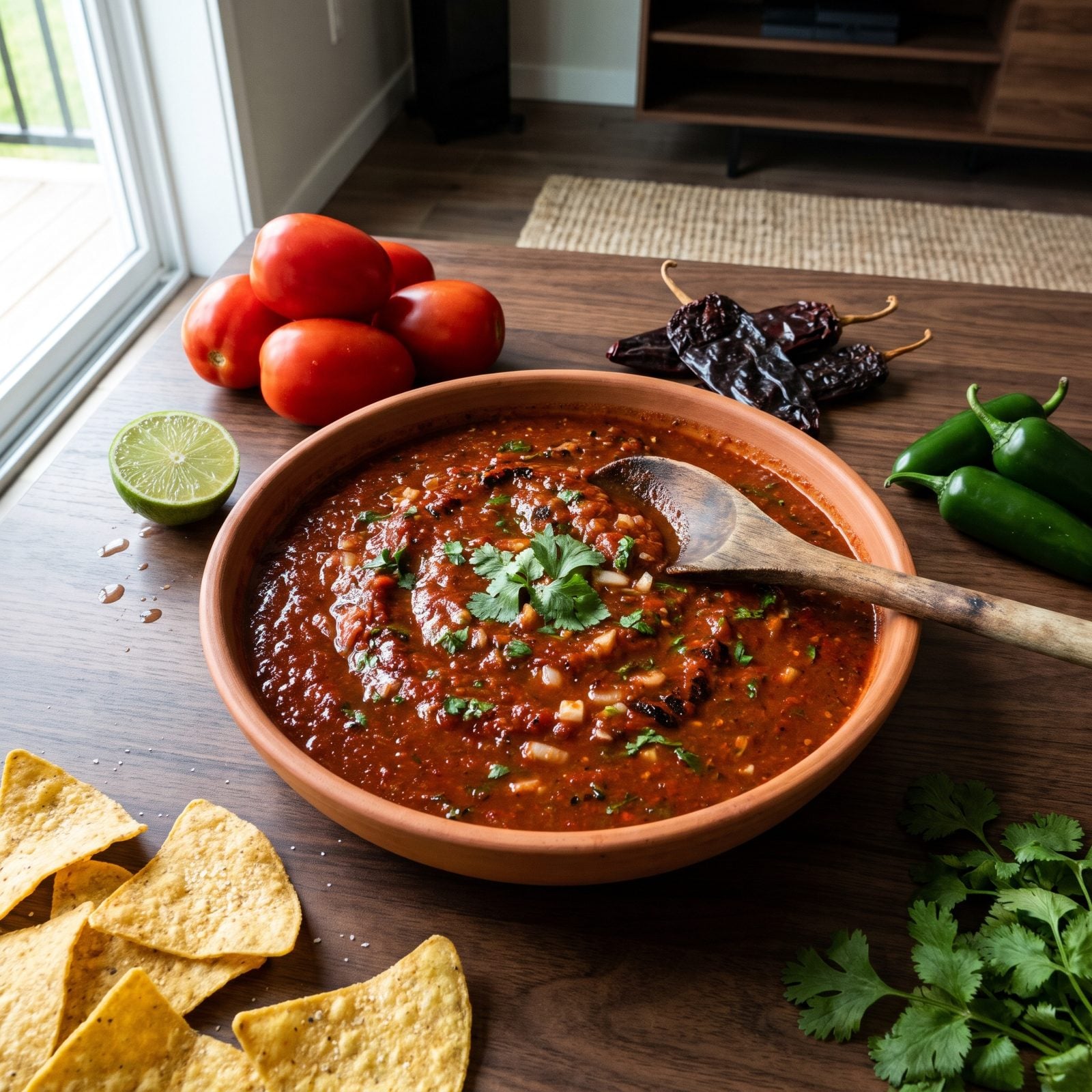
That thick, rustic, slightly smoky salsa they bring to your table at a good Mexican place is a world away from the stuff in supermarket jars. It’s chunky, with diced onion and charred tomato bits, and the texture is everything.
Charred tomatoes, onion, chile, a handful of cilantro, lime, salt. Everything gets roughly chopped and stirred together, leaving plenty of chunks. The char is what people miss at home — that little bitter edge that keeps the sweetness in line.
40. Make It Yourself: Guacamole Worth the Avocado
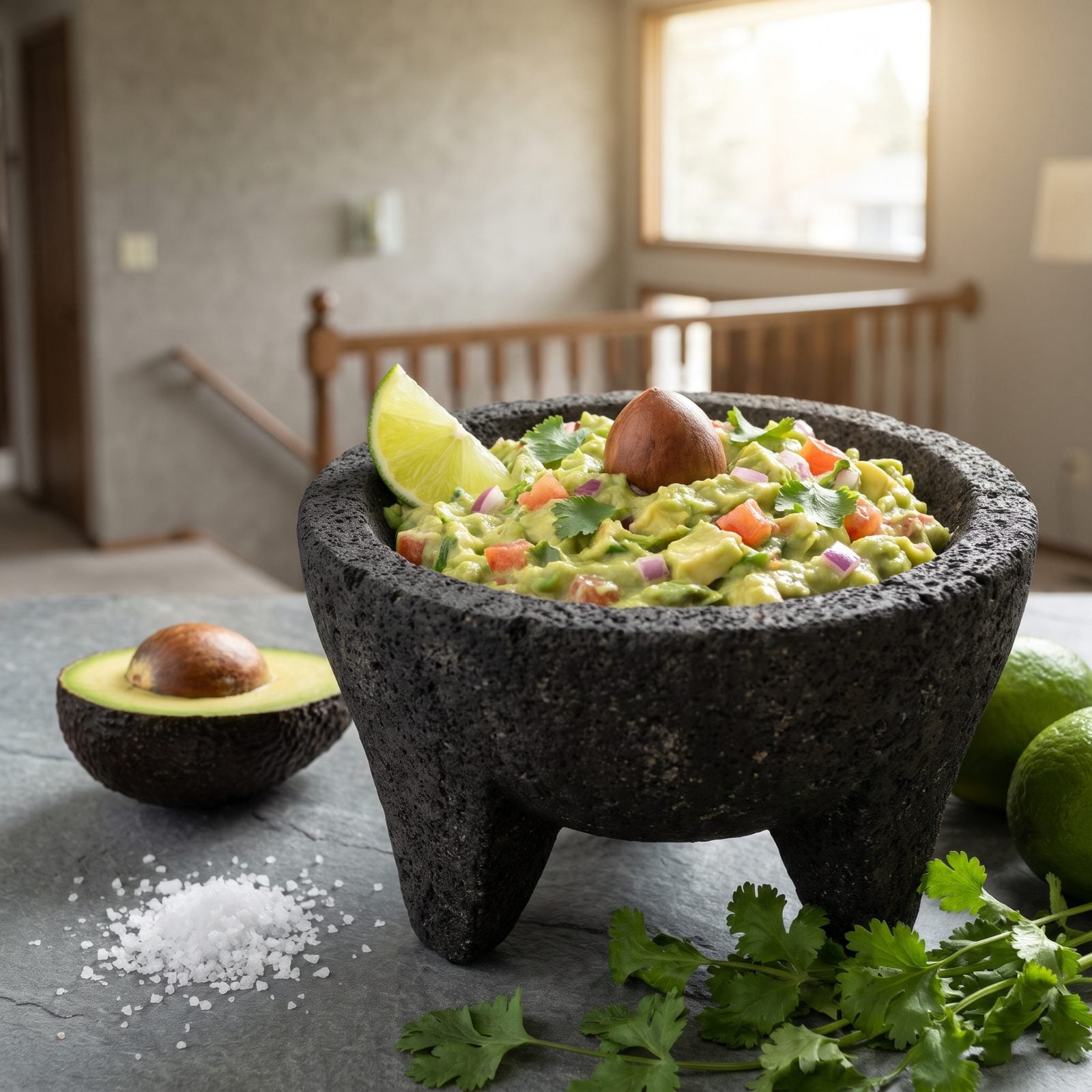
There is no store-bought guacamole worth the money. Full stop. I will die on this hill. The pre-made tubs go brown and taste of preservative, and guacamole is only good when it’s alive and made ten minutes ago.
Ripe avocado, lime, salt, and whatever you like after that. Mash it rough. Texture matters more than the recipe here — a guac whipped down to baby food has lost the plot entirely.
39. Make It Yourself: Hummus Smoother Than the Tub
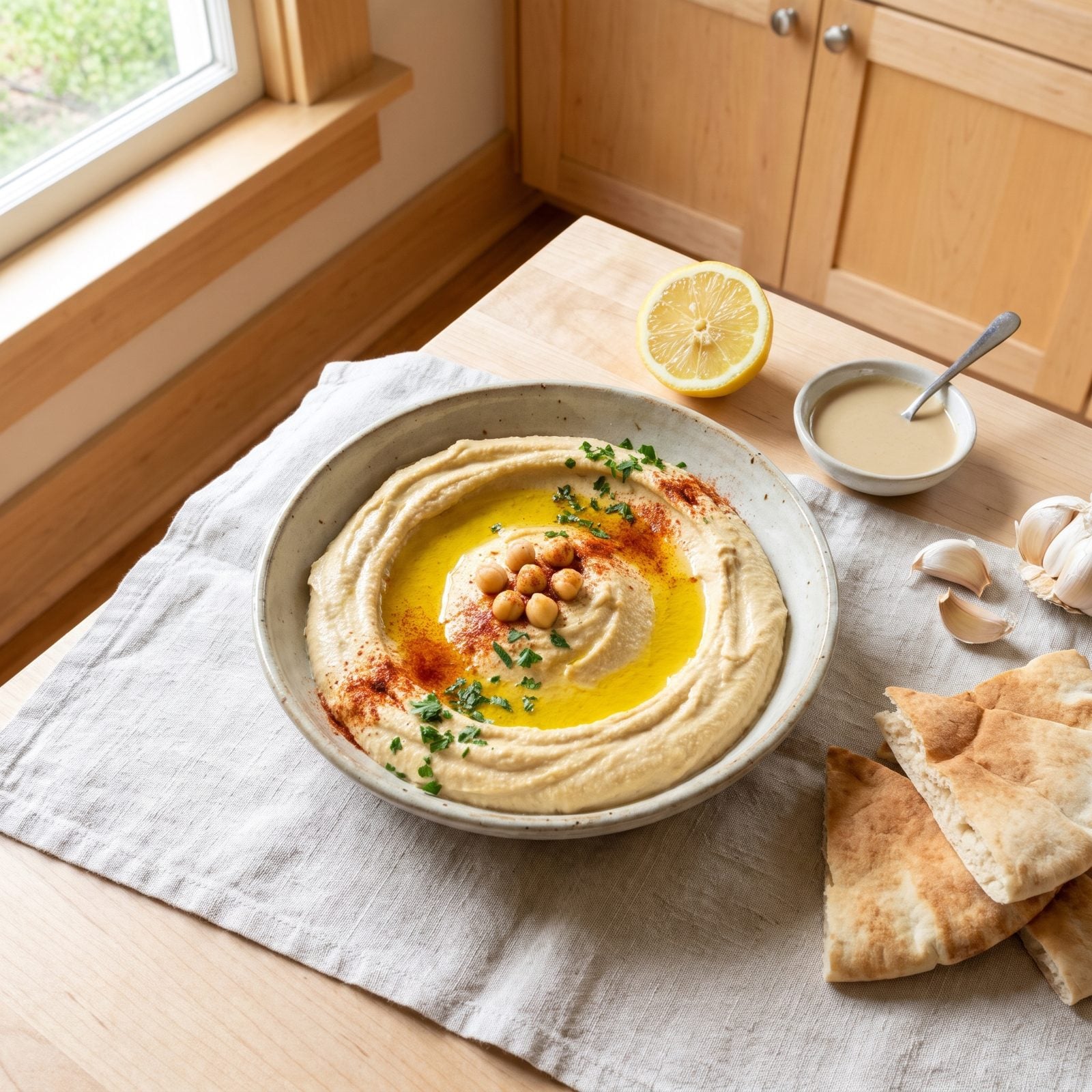
Tub hummus is fine. Nobody’s getting hurt. But homemade hummus can go velvety in a way the refrigerated stuff never manages, and the gap is wider than you’d expect for something this cheap to make.
The move the tubs skip is tahini, and plenty of it. Good tahini is what separates silky hummus from beige paste. Blend longer than feels reasonable, add ice water, and it turns almost whipped.
38. Make It Yourself: Slow-Simmered Marinara
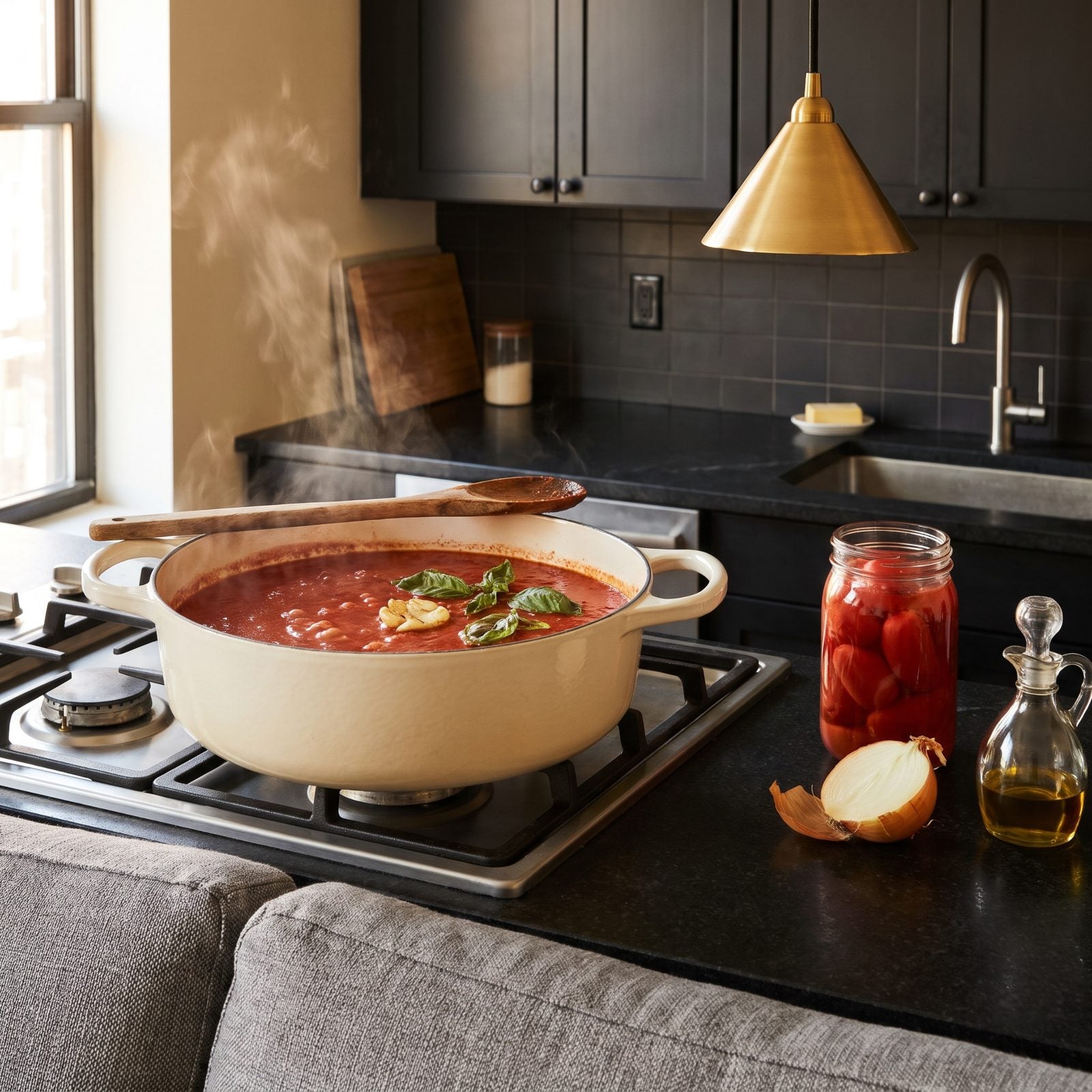
This is where scratch cooking and smart shopping shake hands. The move the pros make: buy the best canned whole tomatoes you can find, then build the sauce yourself. Tomatoes are the one thing not worth doing fresh, because quality canned plum tomatoes beat mealy winter ones every single time.
Garlic in oil, those tomatoes crushed by hand, salt, basil, an hour of low heat. That’s it. Jarred sauce tastes of sugar and oregano dust next to it. And a pot of this simmering is the smell every Sunday kitchen is chasing — ask anyone who grew up near a stove.
The best cooks don’t make everything. They know which two ingredients to buy and which hour to spend.
37. Pan Gravy: The Reason You Don’t Throw Away the Drippings
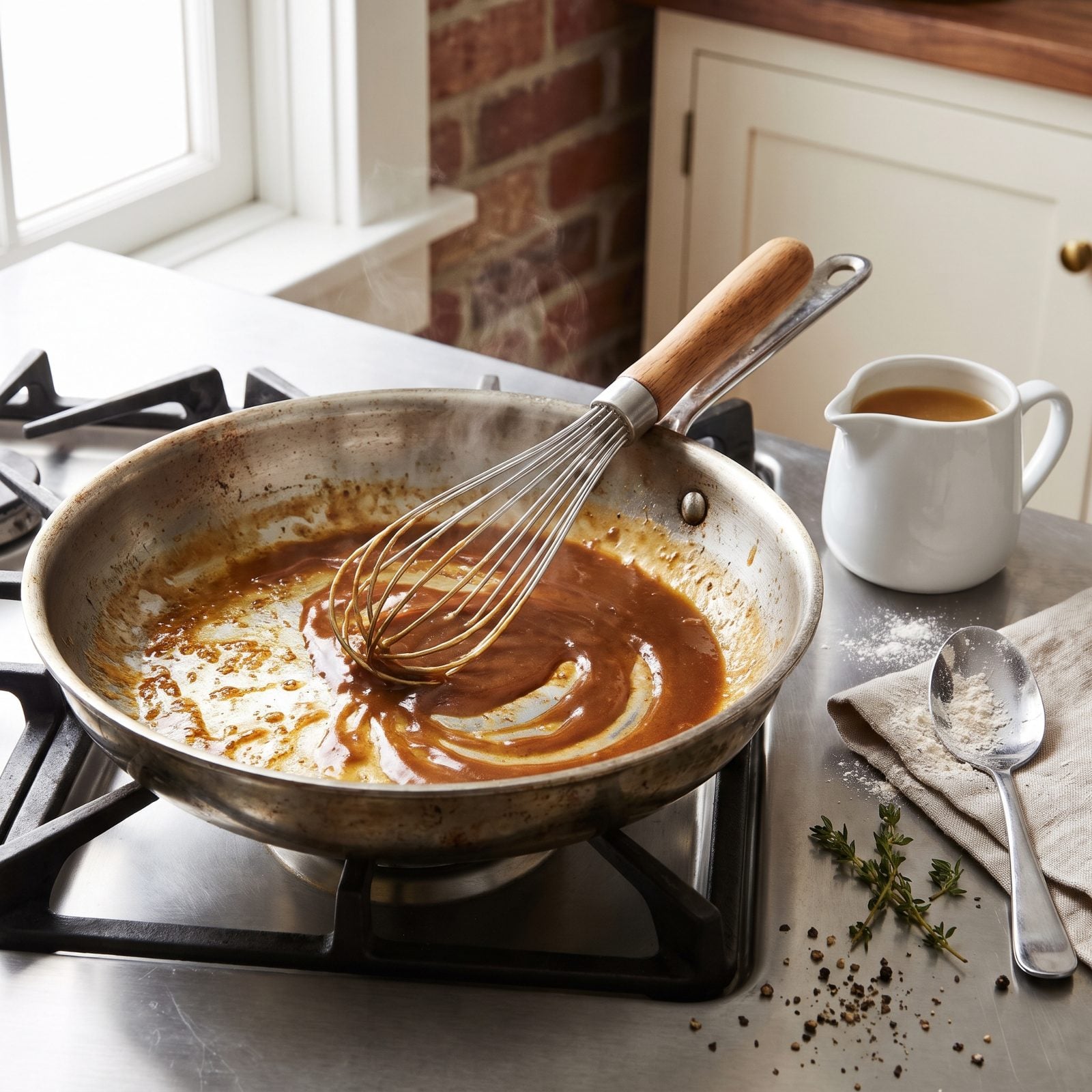
The jar stuff is sodium with ambitions. Real pan gravy starts with that brown crust stuck to the bottom of the pan after you’ve seared something, and the crust is where every bit of flavor hides. Scrape it up with stock and it dissolves into gold.
Five minutes, one whisk. Nobody who’s tasted both ever goes back, because the powdered version carries this faint tin-can note underneath, like it’s apologizing for itself.
36. Hollandaise: Worth the Risk, Not Worth the Packet
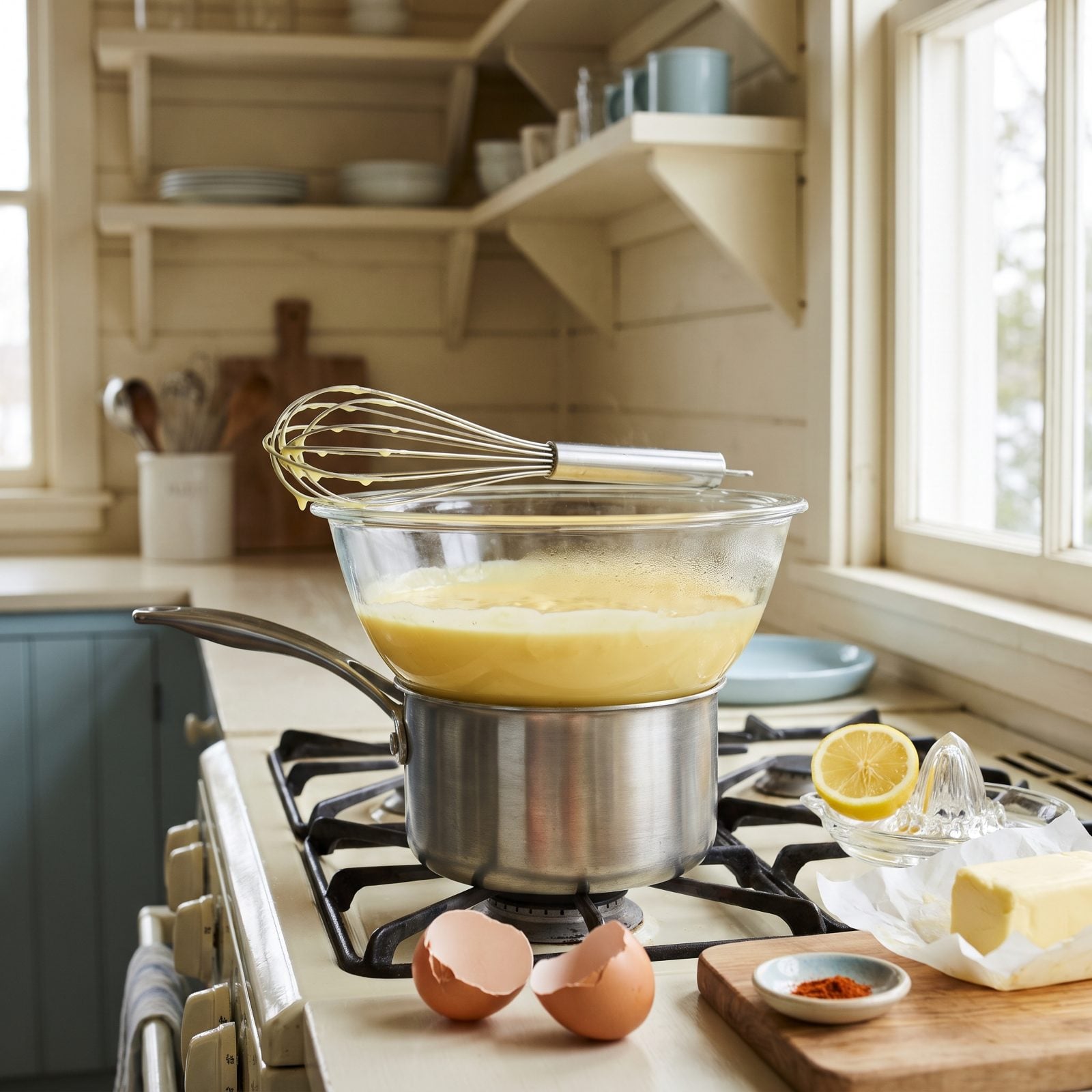
Hollandaise has a reputation for breaking, and it earns it. But the powdered stuff that promises you’ll never fail is a lie dressed as convenience, tasting of warm mustard and regret.
I broke my first three attempts and swore it off for a year. Then I slowed down, added the butter in a trickle instead of a pour, and it held. That first bite over a poached egg converted me for good. Egg yolks, butter, lemon, a pinch of cayenne. The whole thing lives or dies on temperature control, which is really just patience with a whisk.
35. Chimichurri: Ten Minutes, Zero Excuses
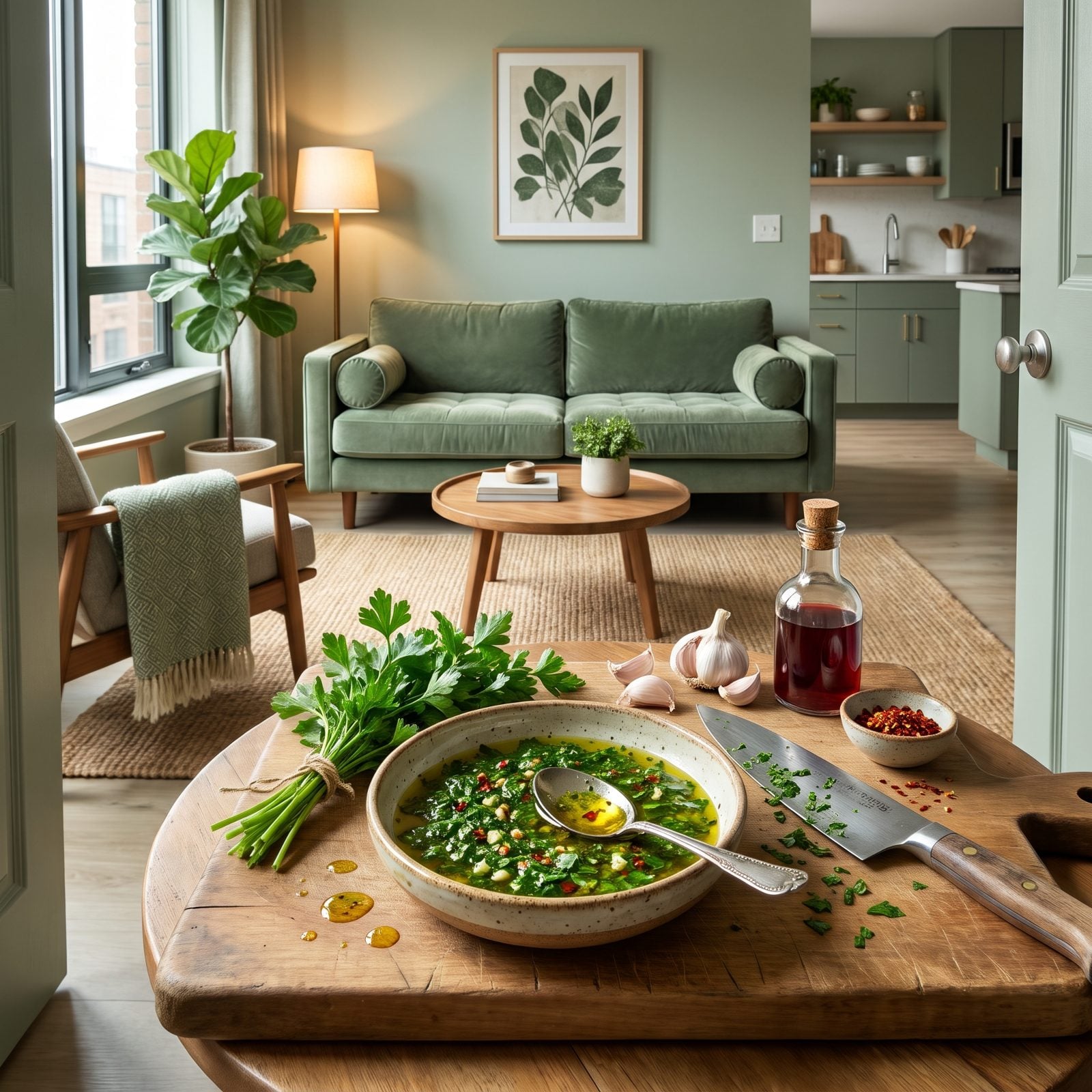
There is no good jarred chimichurri. None. The bottled versions turn brown and taste of vinegar fighting a losing battle against preservatives. Fresh parsley oxidizes fast, so anything that sat on a shelf for months was dead on arrival.
Chop parsley, oregano, garlic. Add oil, red wine vinegar, chili flakes. Done. Ten minutes with a knife, and a plain grilled steak suddenly tastes like somebody with opinions cooked it.
34. Quick-Pickled Onions: The Fridge Upgrade You Keep Forgetting
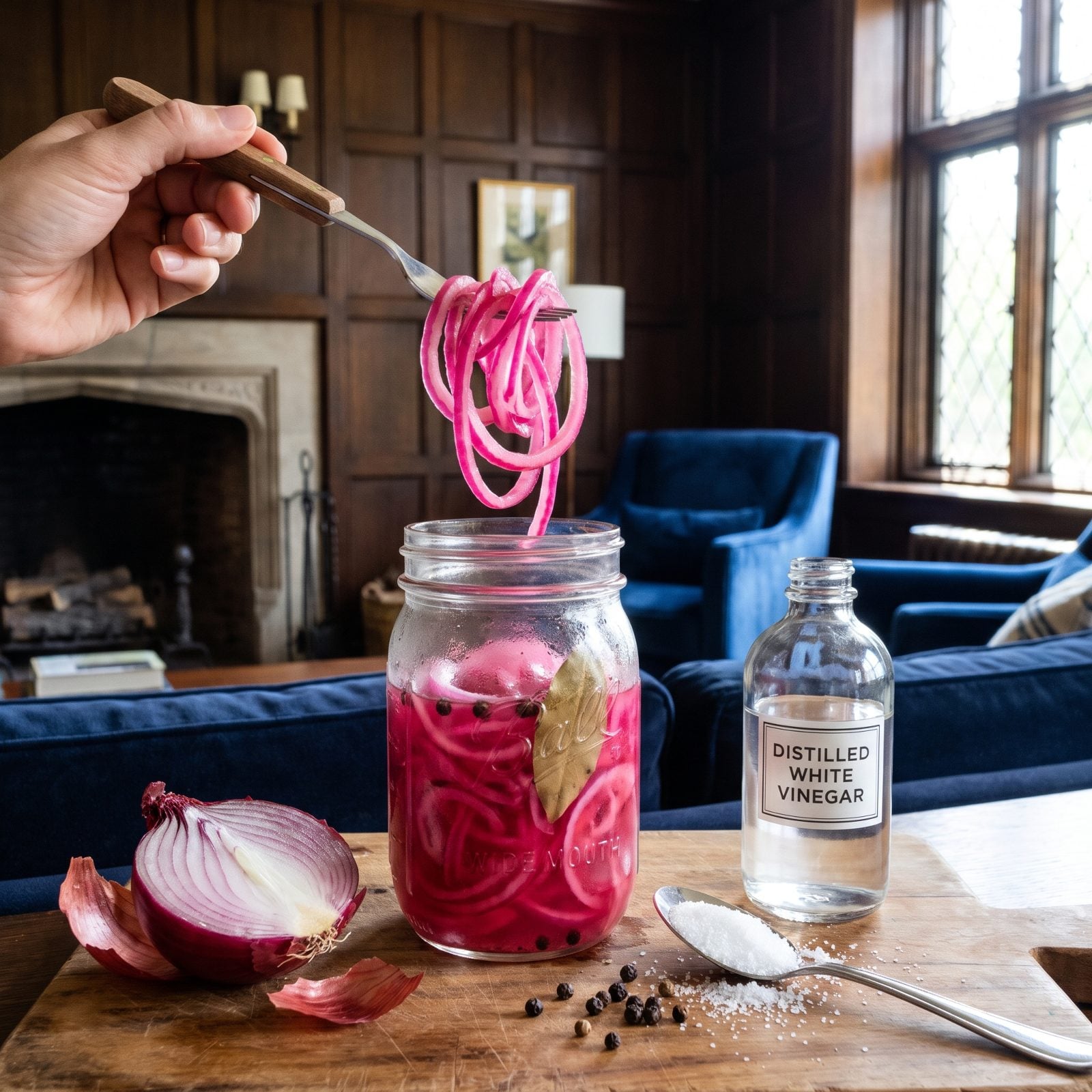
These do more work than anything in the fridge for how little effort they cost. Thin-sliced red onions, hot vinegar brine, twenty minutes. They go on tacos, burgers, grain bowls, sandwiches, eggs, basically anything that needs a sharp bright jolt.
And the color alone is worth it. Raw red onion is a sulky brown-purple. Hit it with acid and it blooms into this electric magenta that makes a plate look like someone cared.
33. Buttery Croutons: Stale Bread’s Second Act
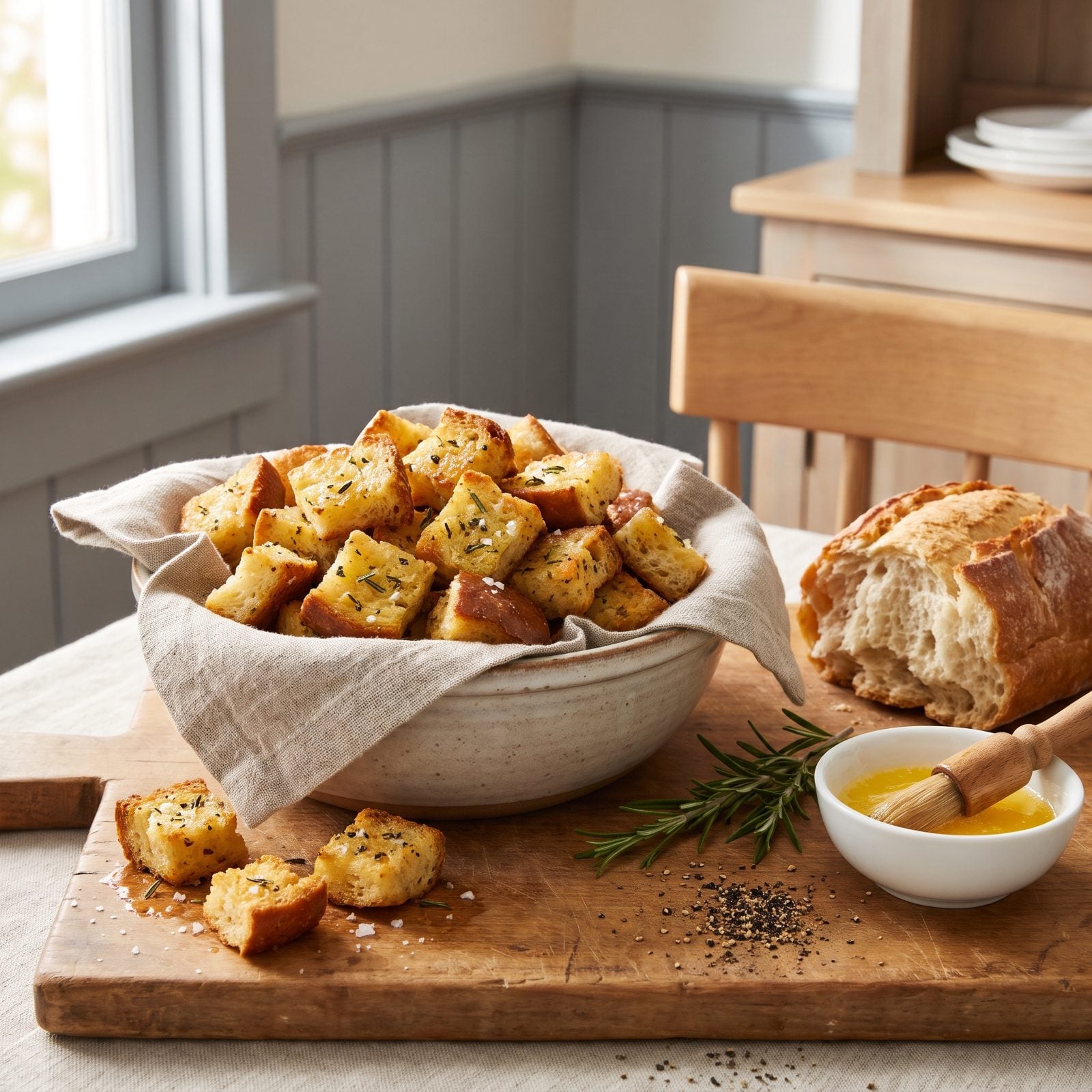
Box croutons are little sawdust bricks that scratch the roof of your mouth and taste of nothing but aggressive garlic powder. Homemade ones are a completely different food.
You need stale bread, butter, and a hot oven. Cut it into rough cubes with a sharp knife, leaving the crust on, so the edges and corners crisp up and catch the butter. That texture is why you bother.
32. Herb Compound Butter: The Fancy Trick That Isn’t Hard
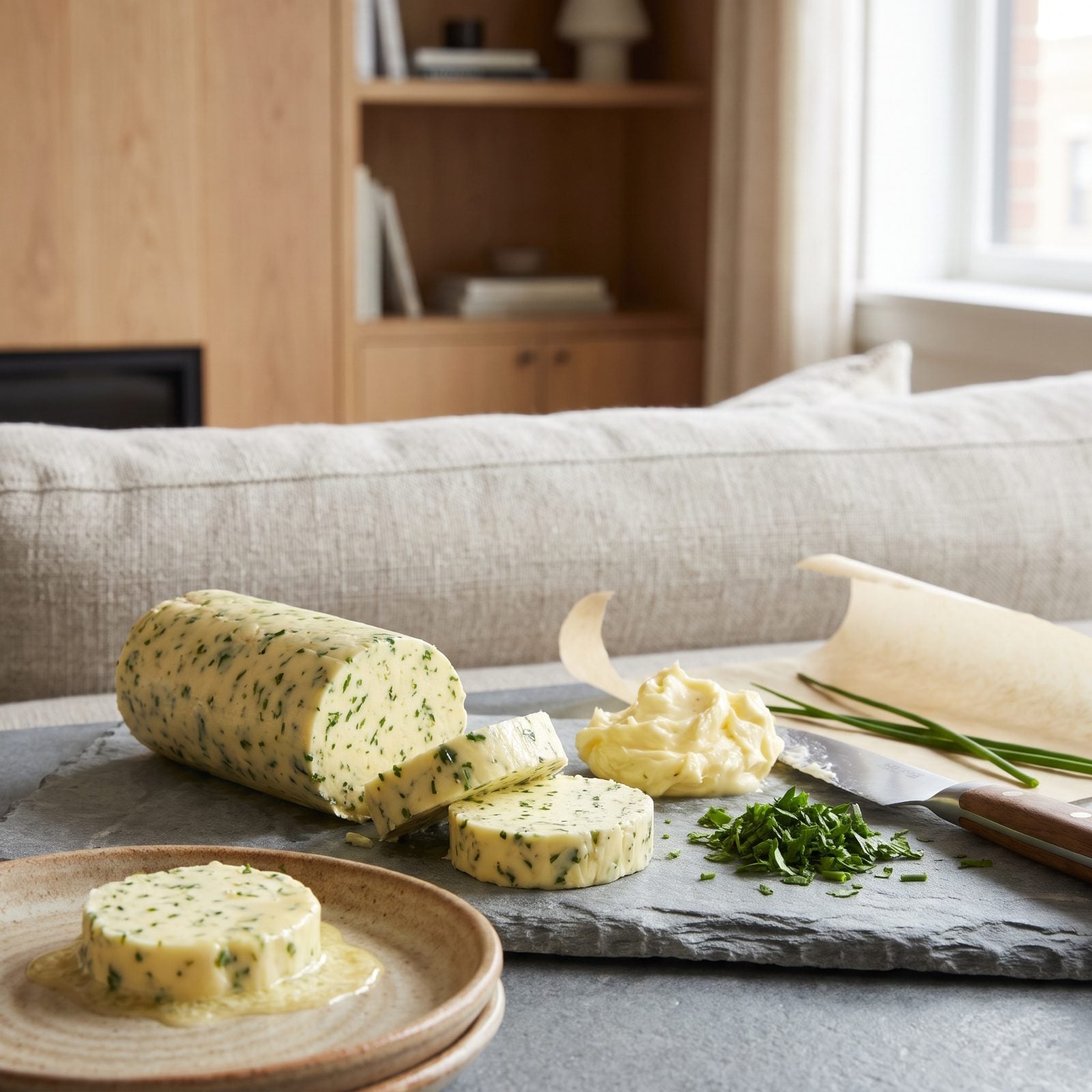
Soften butter. Mix in chopped herbs, garlic, maybe lemon zest. Roll it in parchment, chill it, slice off coins as you need them. A disc melting over a hot steak or a baked potato does more for a plate than most things that take an hour.
It keeps for weeks in the fridge, longer in the freezer. Make a batch when you’ve got leftover herbs about to wilt, and you’ve turned garbage into a garnish.
31. Fresh Whipped Cream: The Canned Stuff Doesn’t Count
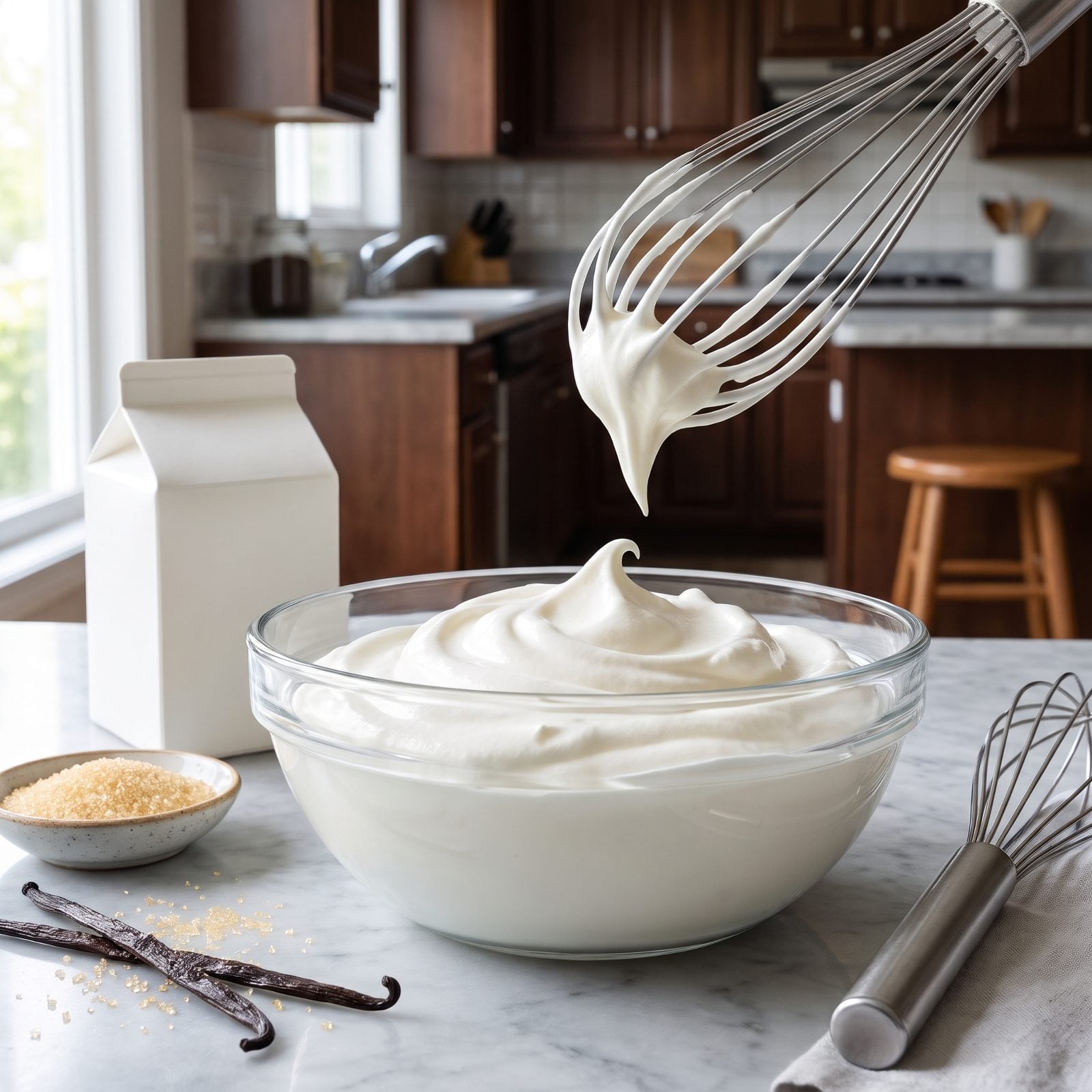
The aerosol can sprays out something that’s half cream and half propellant, and it collapses into a puddle within minutes. Real whipped cream holds its shape and tastes like actual dairy.
Cold heavy cream, a little sugar, a whisk or a mixer, three minutes. The trick nobody mentions is chilling the bowl first, because warm cream fights you the whole way.
30. Buttercream Frosting: The Tub Is a Crime Against Cake
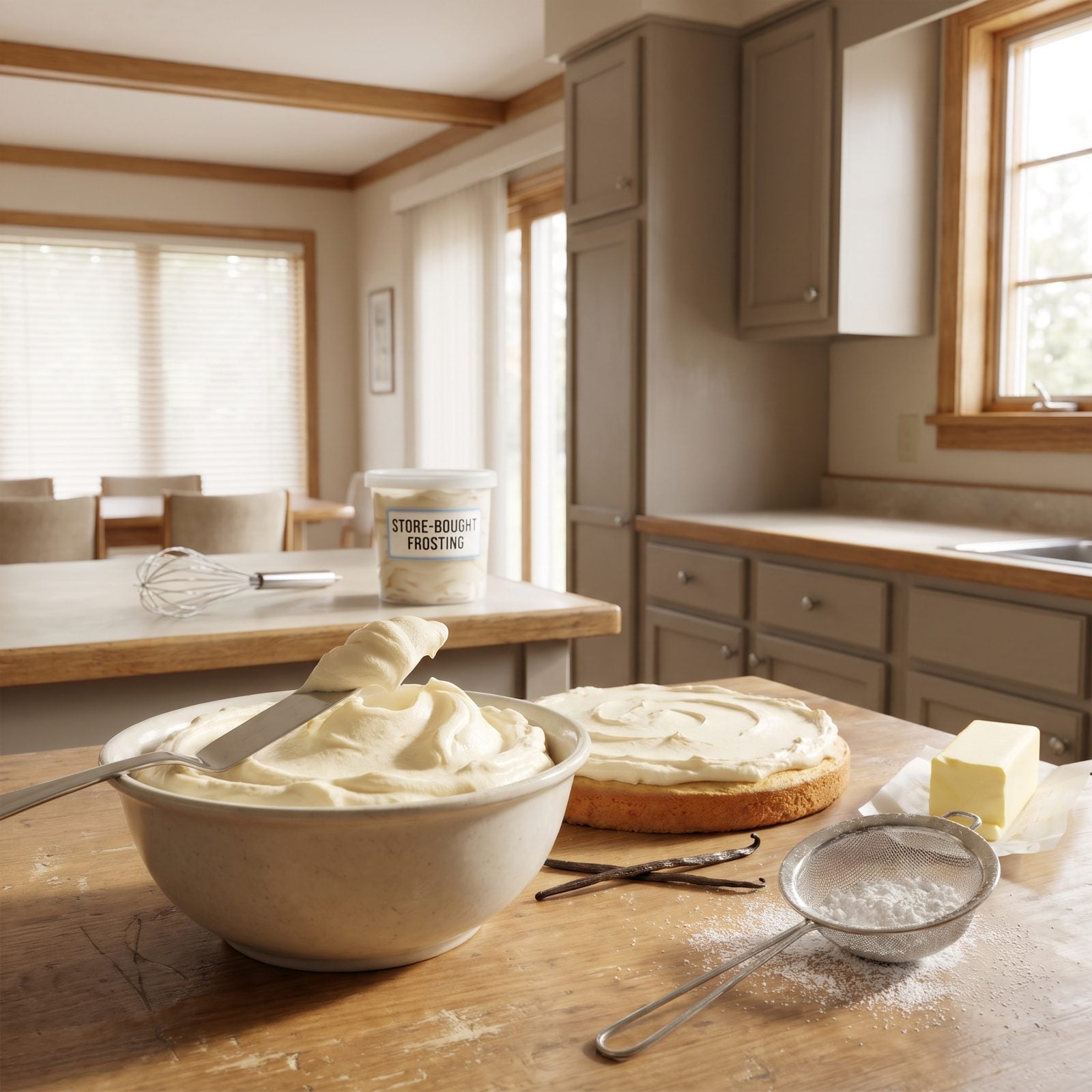
Canned frosting has a waxy coating that sticks to the roof of your mouth and a sweetness so flat it reads as chemical. It’s shelf-stable because it’s barely food.
Real buttercream is butter, powdered sugar, vanilla, a splash of milk, beaten until it’s light. It tastes of butter, which is the whole idea. Spread the real thing on a cake once and the tub starts looking like spackle.
29. Pastry Cream: The Custard Behind Every Good Bakery Case
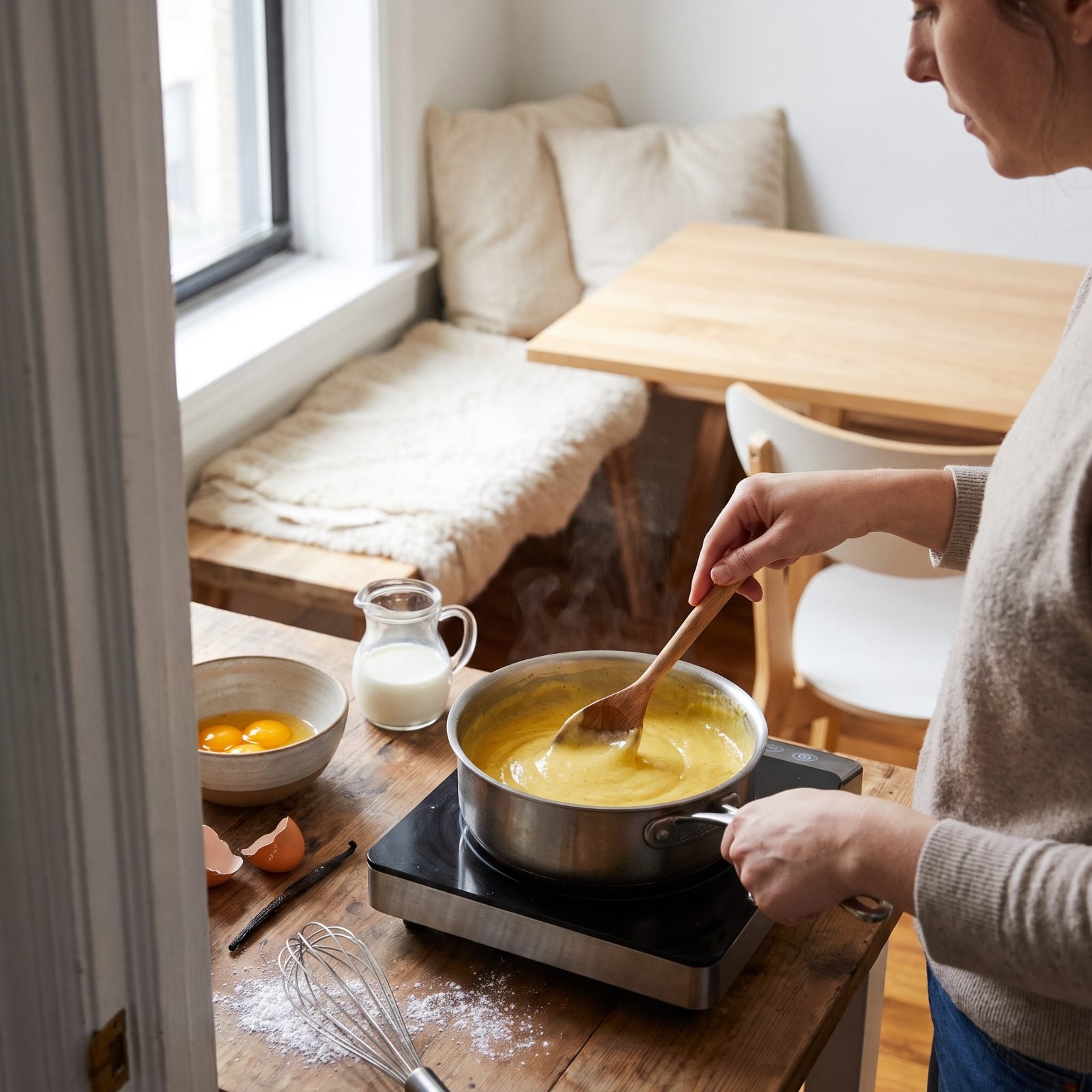
This is the custard inside éclairs, fruit tarts, and cream puffs, and there’s no decent shortcut for it. The instant pudding substitutes taste of artificial vanilla and gelatin.
Egg yolks, milk, sugar, a little cornstarch, real vanilla. You cook it slowly, whisking constantly so it doesn’t scramble, until it thickens into something silky. It’s fussy, and it demands your full attention for a solid stretch at the stove. That’s the whole price, and it’s worth paying.
28. Chocolate Ganache: Two Ingredients, No Reason to Buy It
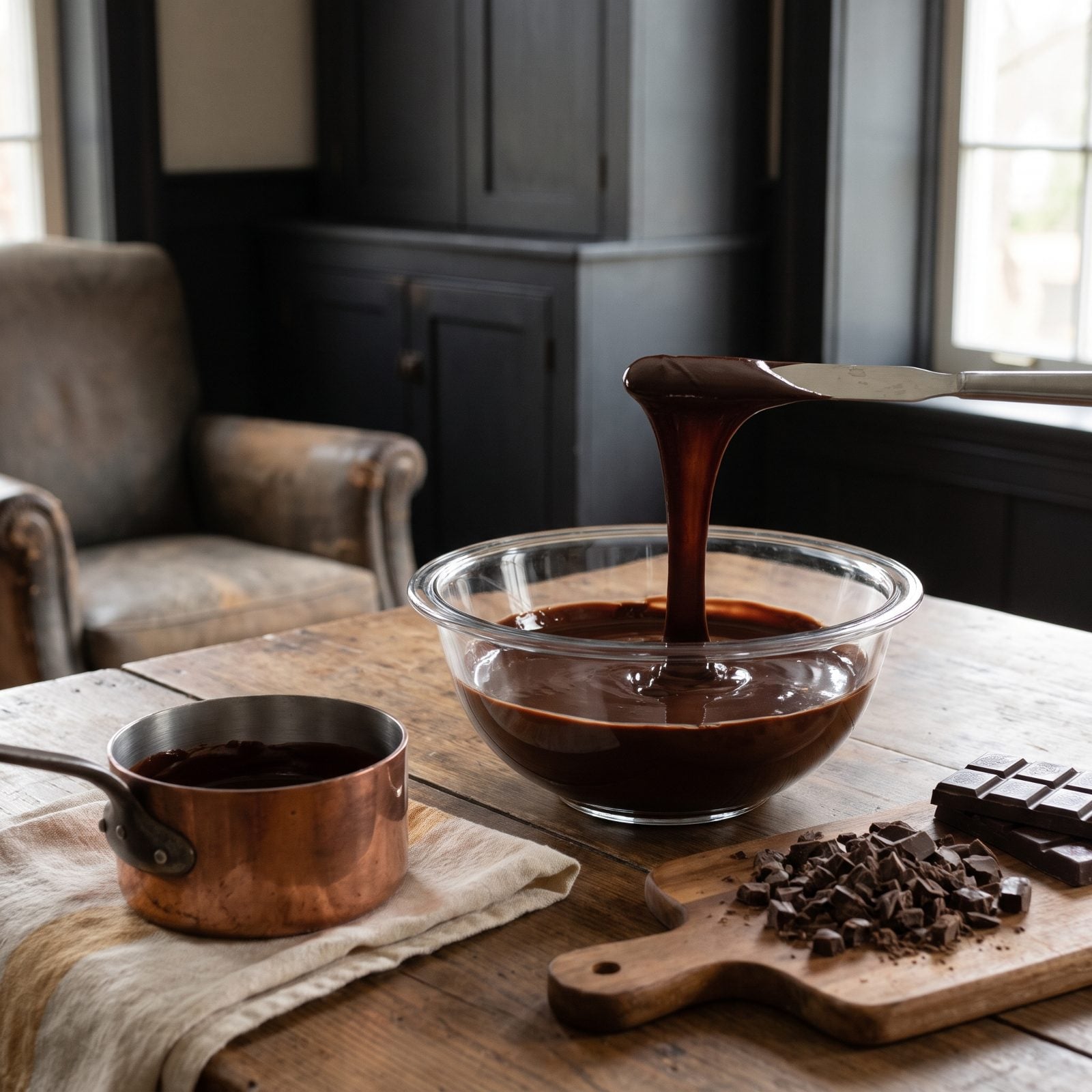
Ganache is chopped chocolate and hot cream stirred together until smooth. That’s the entire recipe. There’s genuinely no ready-made version worth buying when the homemade one takes five minutes and uses two ingredients.
Warm versus cool changes everything. Pour it while warm and it’s a glossy glaze over a cake. Let it cool and whip it and it’s a frosting. Chill it fully and roll it into truffles. One bowl, three desserts, and nothing from a jar can match the shine.
27. Caramel Sauce: The One Thing Worth Burning Your Fingers For
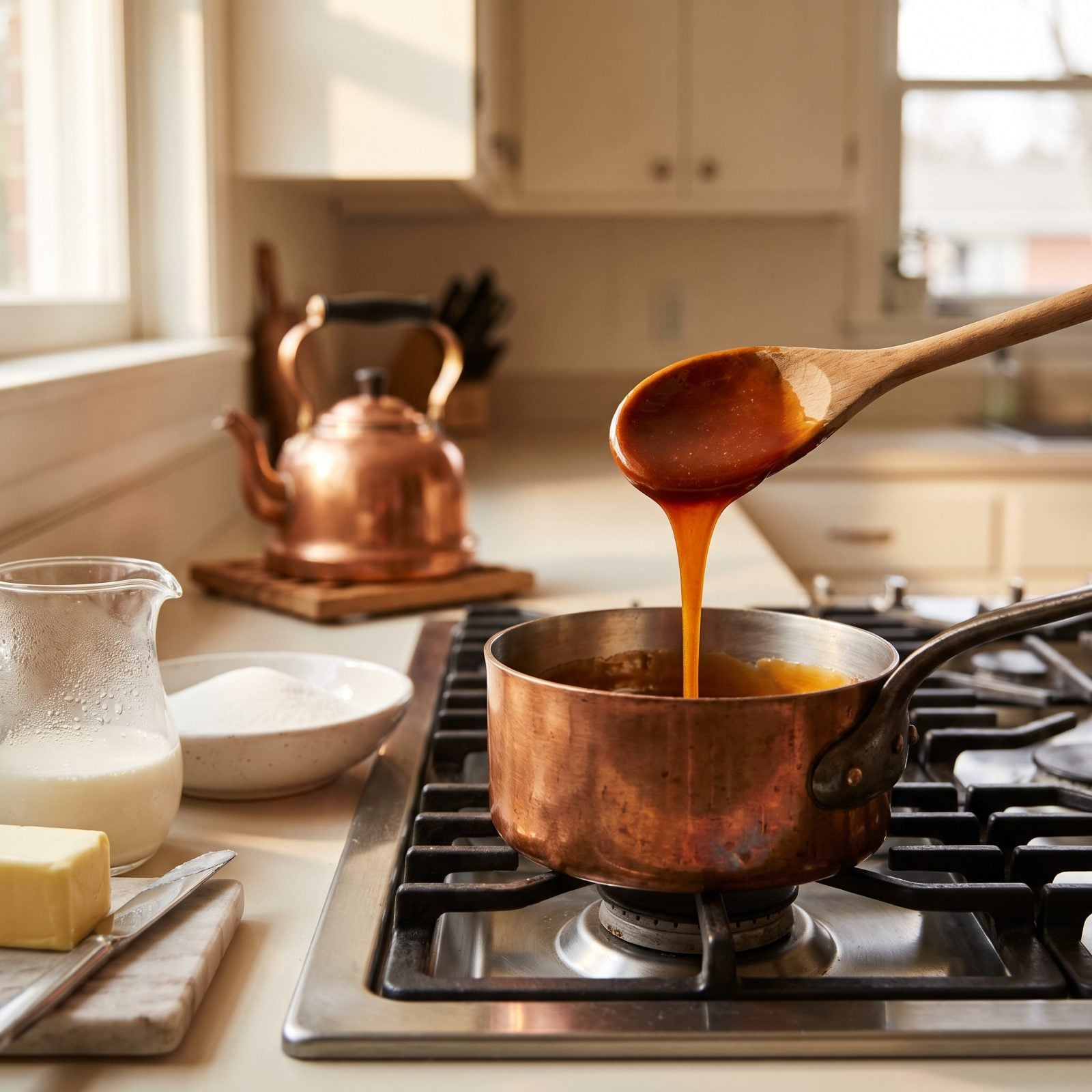
Jarred caramel tastes like candy pretending to be sauce. The real thing tastes like toasted sugar on the edge of ruin, which is the whole point. Caramel is just sugar, heat, and your nerve. Push it one shade darker than feels safe, right to the color of a copper penny, and the flavor goes from sweet to complex. Too timid and you get syrup; too greedy and you get bitter smoke.
I ruined three batches learning to leave the spoon alone. Swirl the pan, don’t stir, and trust your eyes over the clock.
26. Pancake Batter: Skip the Box, It Takes Four Minutes
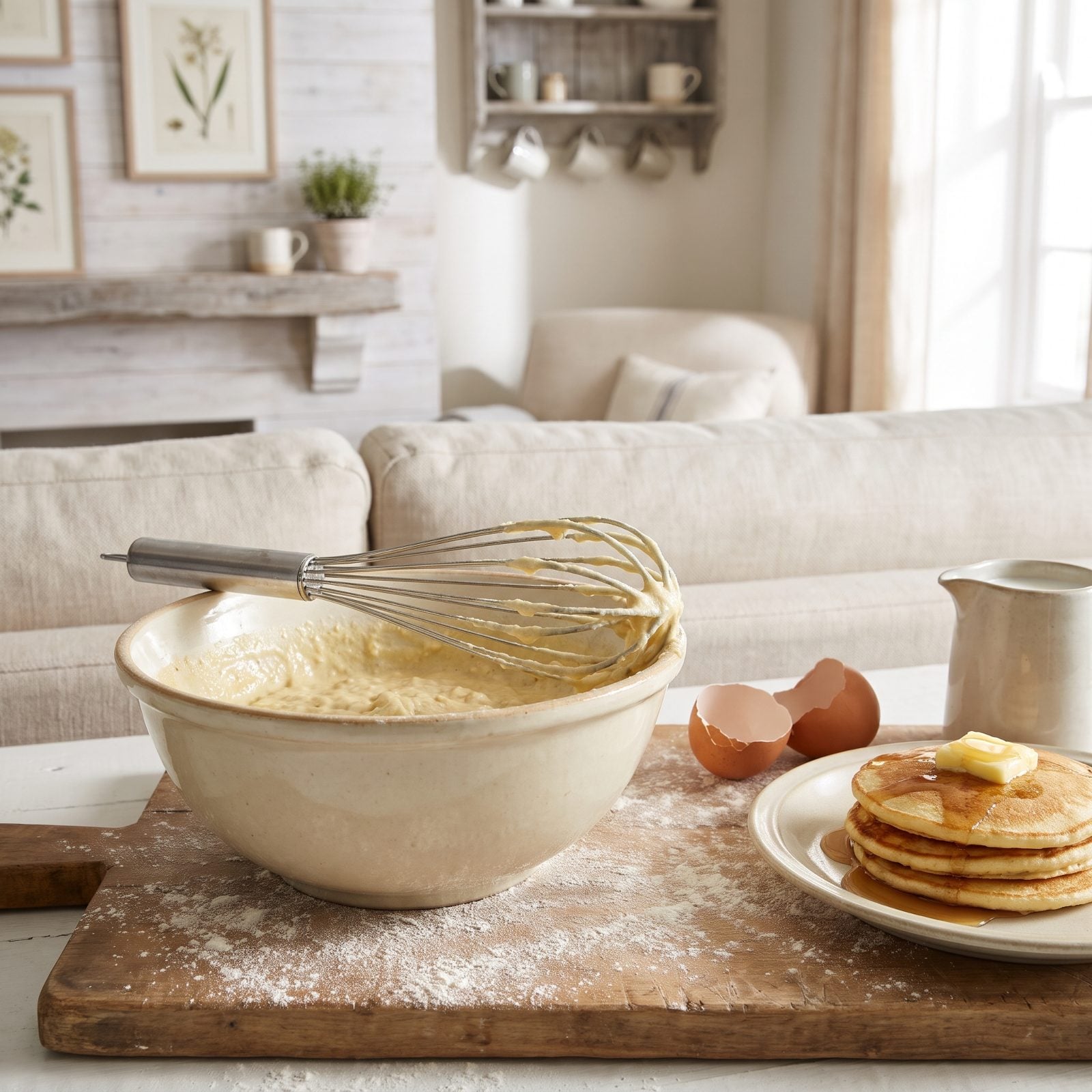
The boxed mix was invented to save time that doesn’t need saving. Flour, baking powder, a little sugar, salt, an egg, milk. That’s the whole list, and it lives in your cupboard already. The difference on the plate is real: scratch batter puffs taller and tastes like something besides a vague memory of breakfast.
One trick the boxes can’t teach you. Don’t overmix. Lumps are fine, lumps are your friend, a smooth batter means tough pancakes. Pull back while it still looks a little rough and you’ll thank me.
25. Flaky Biscuits: Cold Butter and a Light Hand Win Every Time
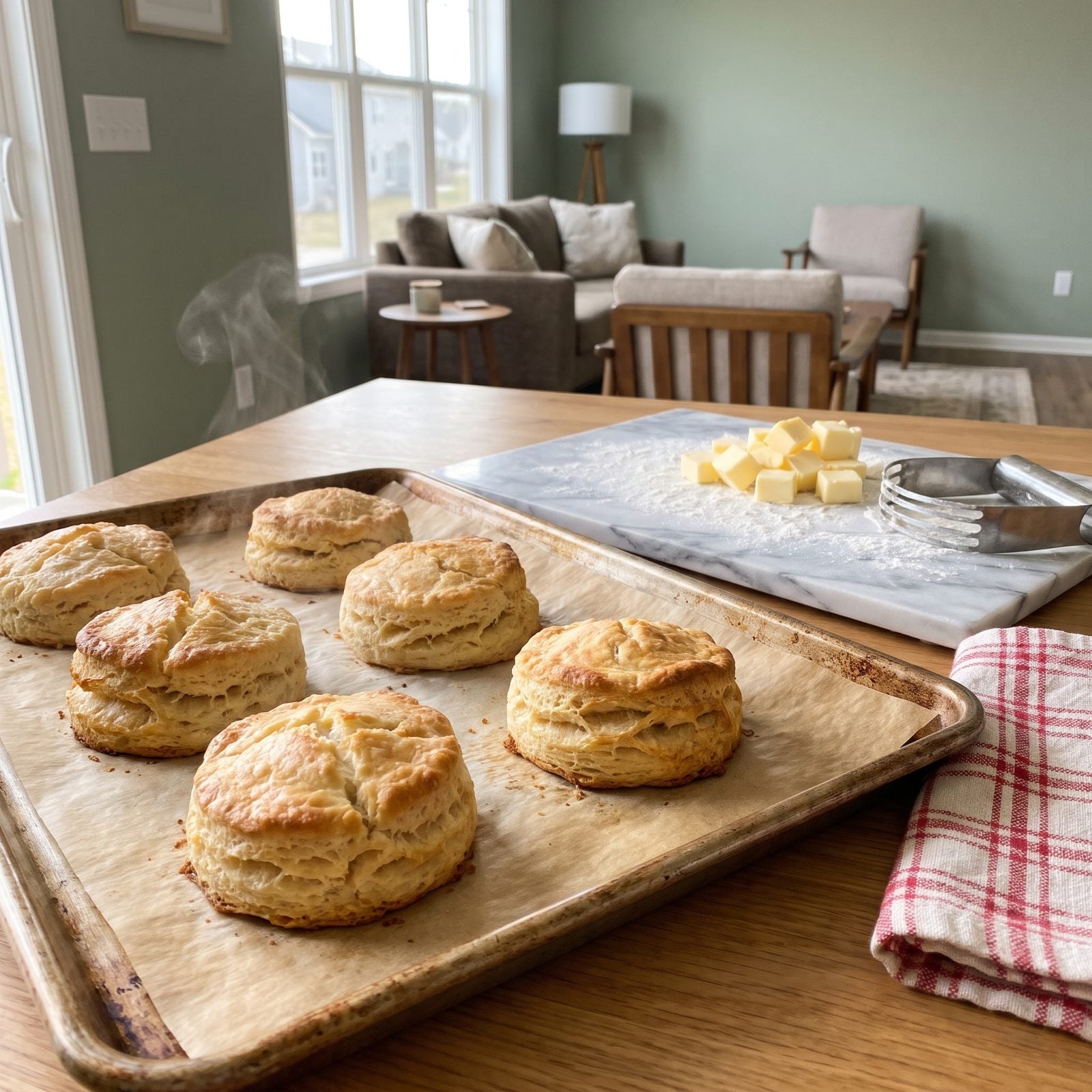
Canned biscuits are a crime against breakfast, and I’ll say it louder for the people in the back. That rubbery, uniform pop-tube texture bears no relation to a real biscuit, which shatters into buttery sheets when you pull it apart.
The whole secret is temperature. Keep the butter cold, almost frozen, and handle the dough as little as your hands can manage. Those cold butter chunks melt in the oven and leave steam pockets behind, and steam pockets are what flaky means. Warm your butter and you’ve made a hockey puck.
24. Skillet Cornbread: The Cast Iron Does Half the Work
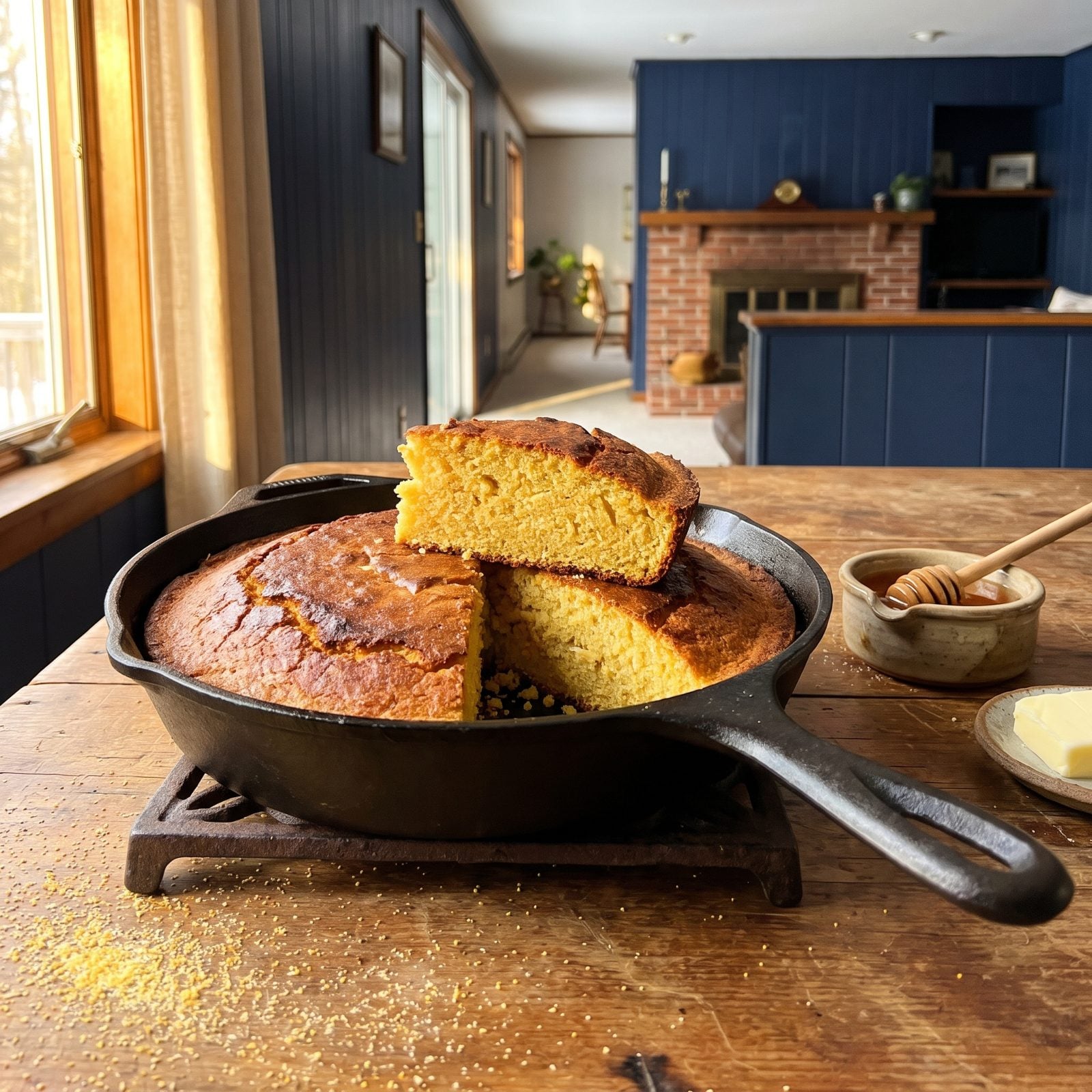
A box of cornbread mix skips the one step that matters most: the screaming-hot skillet. Scratch cornbread isn’t about fancy ingredients. It’s about pouring the batter into cast iron that’s been preheating with a slick of fat until it sizzles the second it hits.
That’s how you get the crust, the brittle, lacy, almost-burnt edge that the mix can never deliver. Northern cooks add sugar, Southern cooks fight about it. I lean savory and barely sweet, but that argument is older than any of us and won’t be settled here.
23. Focaccia: The Scratch Bread That Forgives Beginners
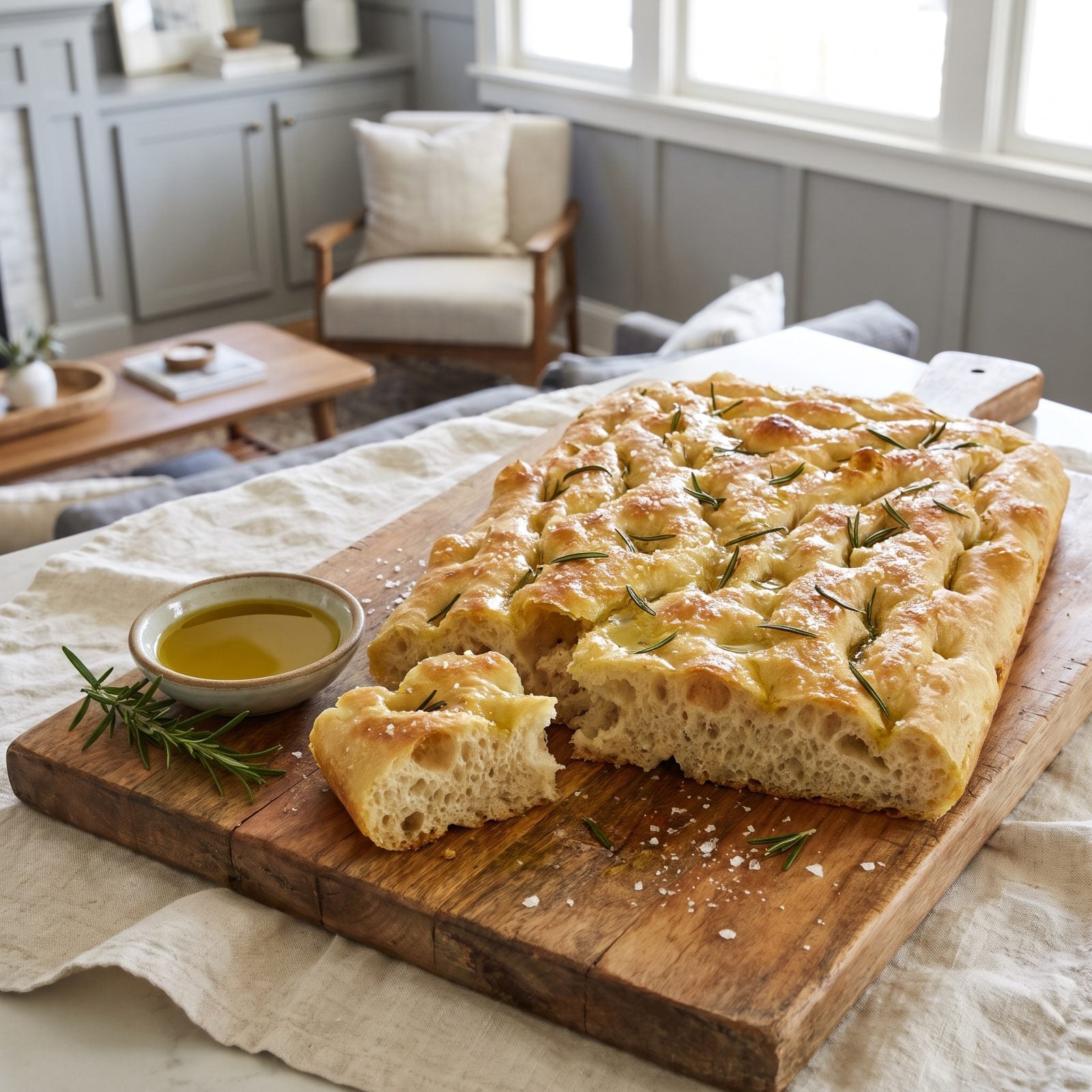
Most bread baking punishes impatience. Focaccia doesn’t. It’s wet, forgiving, and nearly impossible to overwork, which makes it the gateway bread for anyone scared of yeast. You poke dimples into oiled dough with your fingers, flood it with good olive oil, hit it with salt and rosemary, and the oven handles the rest.
The best focaccia uses more olive oil than feels reasonable. Then a little more.
Store-bought focaccia goes stale and tastes of nothing by the second day. The homemade version, warm and oil-crisp on the bottom, is a different food entirely.
22. Pie Crust: Where Store-Bought Betrays You Fastest
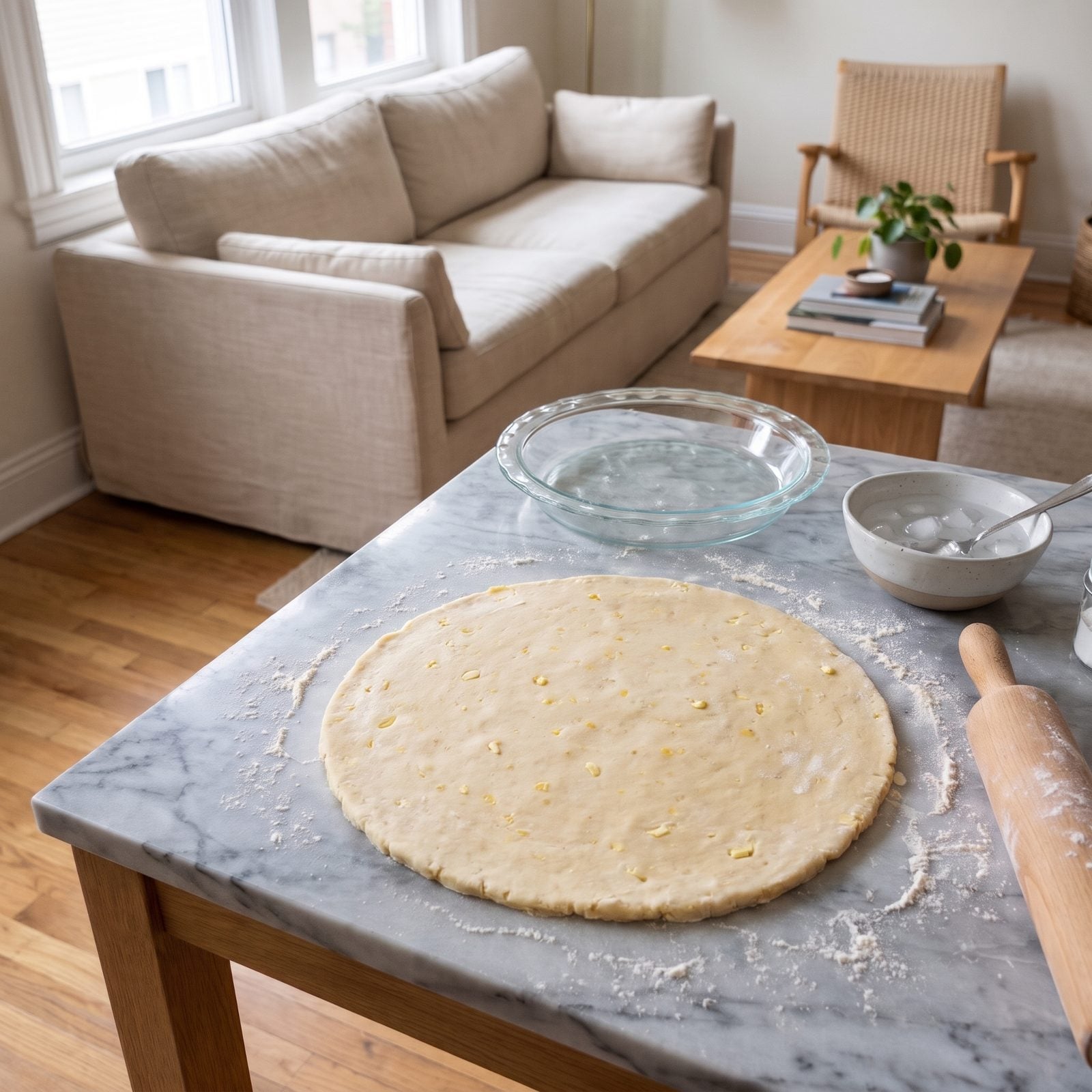
The refrigerated roll-out crust is the single biggest compromise most home bakers make, and it’s the one that shows. A good scratch crust eats like layers of toasted pastry, crisp where it should be, tender where it shouldn’t crack. The store version eats like damp cardboard with a sweet finish.
Same enemy as biscuits: heat. Cold butter, ice water, and a refusal to knead. You want visible bits of butter dotted through the raw dough, because those pockets become flakes. If the dough looks perfectly smooth with no butter showing, you’ve gone too far.
21. Fudgy Brownies: The Box Can’t Do Gooey Right
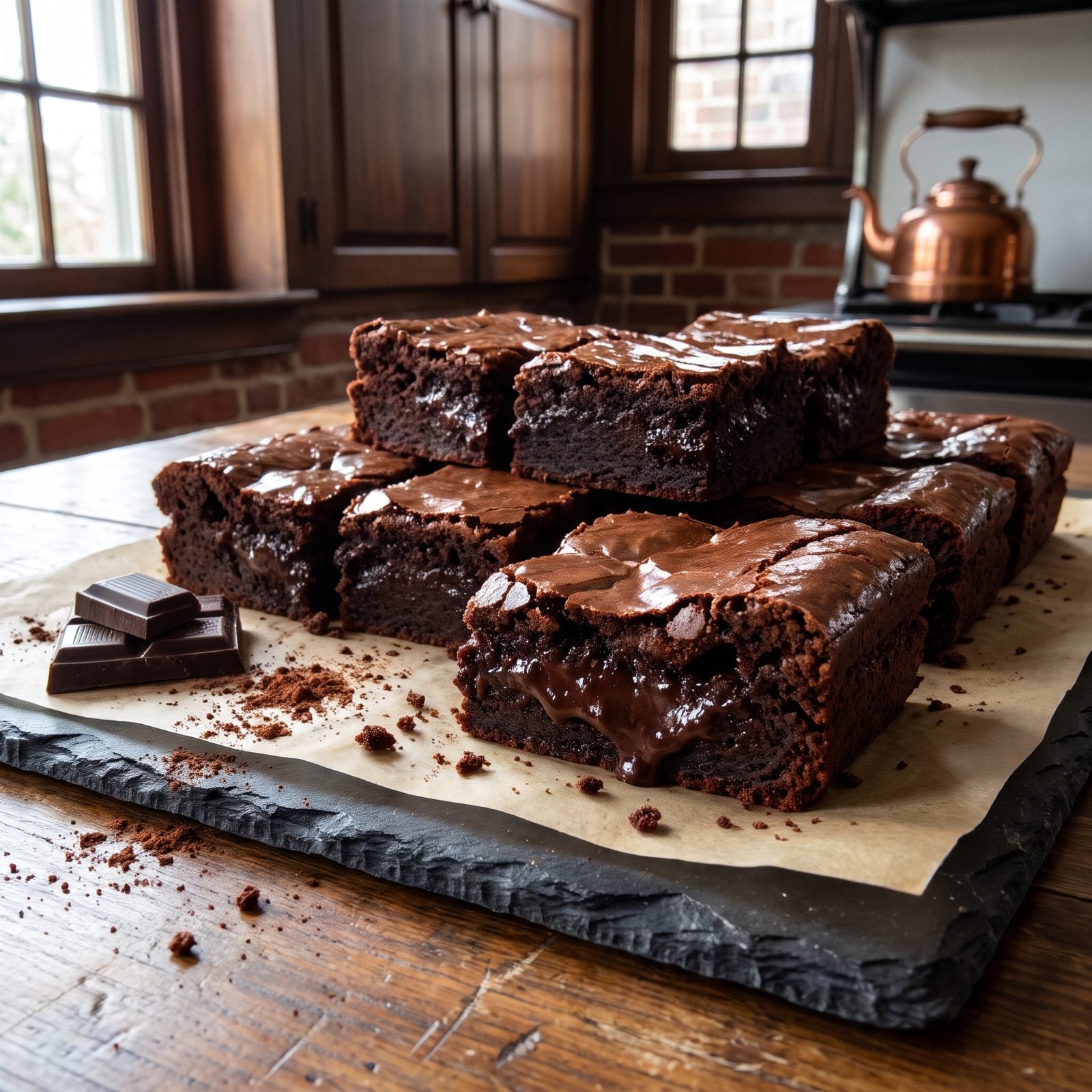
Box brownies are decent. That’s the honest line. They’re fine, they’ll do in a pinch, and nobody at a potluck will complain. But they top out at fine, because the formula is built for consistency, not greatness.
Scratch brownies let you chase the texture you actually want. More melted chocolate and butter, less flour, and you land in fudgy territory the box physically cannot reach. The crackly top comes from beating sugar into the eggs long enough to dissolve it. That’s the move. The box skips it, and the top goes dull.
20. Potato Gnocchi: Tender or Tragic, No In-Between
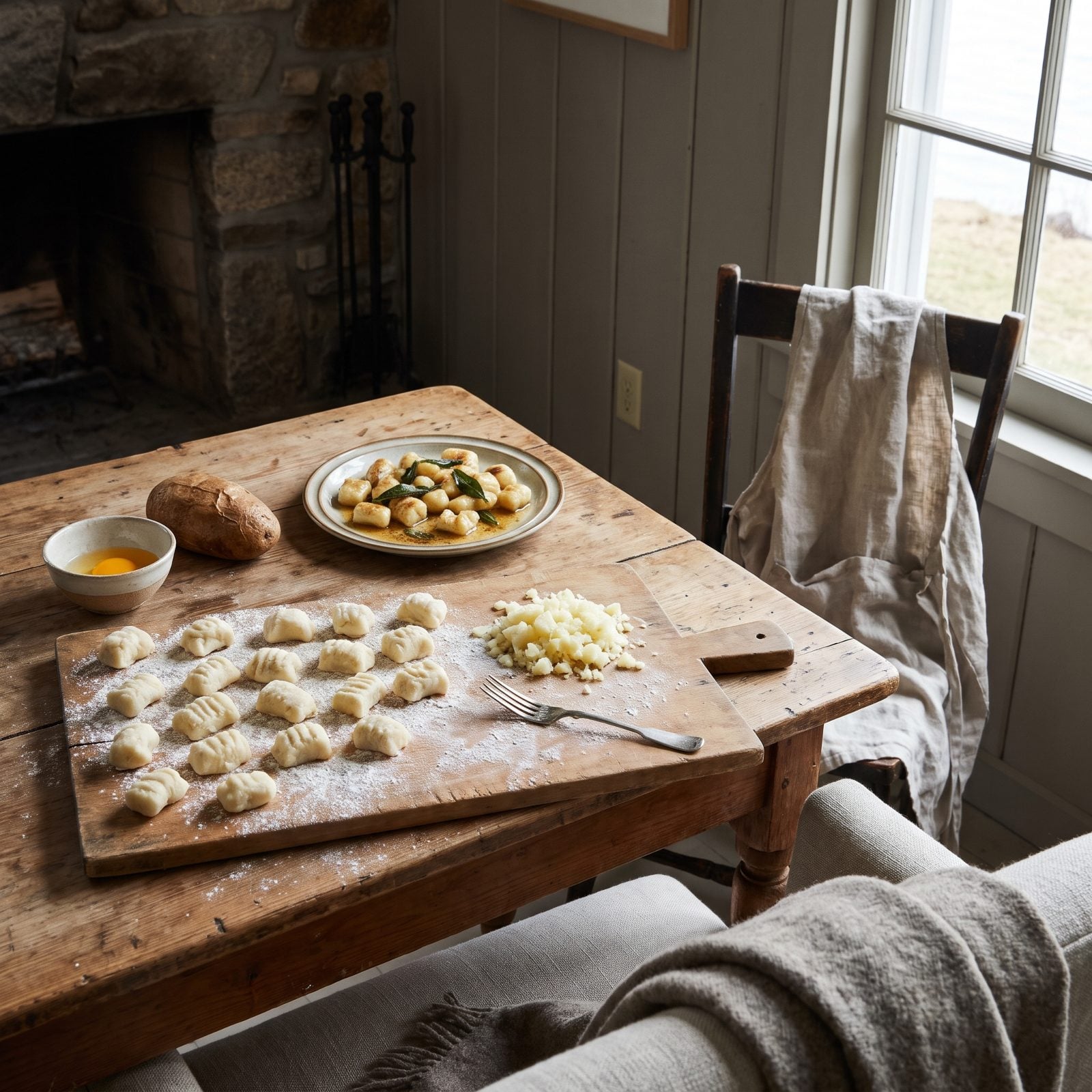
Vacuum-packed gnocchi are little rubber erasers, and the people selling them know it. Real gnocchi should be pillowy, almost melting, barely holding together. The gap between the two is enormous and there’s no faking your way across it.
Nobody tells you this part: the less flour, the better the gnocchi, but the harder they are to shape. It’s a tightrope. Too little flour and they dissolve in the water, too much and you’ve made paste dumplings. The trick is a dry, starchy potato (bake it, don’t boil it) and the lightest possible hand. This one takes practice. I’m still practicing.
19. Savory Dumplings: Thin Wrappers Beat Thick Every Time
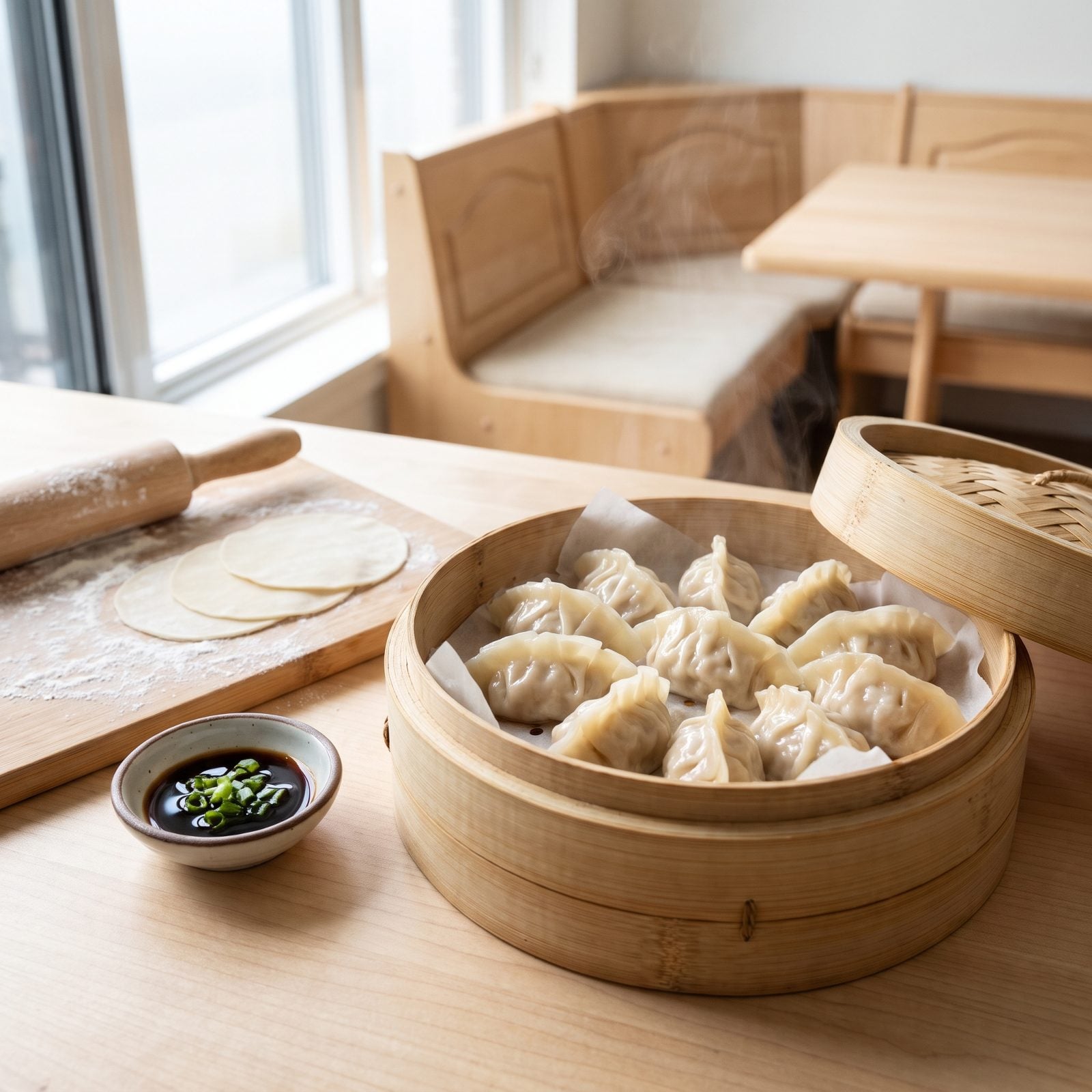
Store-bought dumpling wrappers are thick, gummy, and uniform, which is why restaurant dumplings taste better than almost anything you’ll steam at home from a bag. The wrapper is the whole game. Roll your own thin at the center, thicker at the pleated rim, and the dumpling turns delicate instead of doughy.
The filling, though? That’s where you can relax. A rough chop, a splash of sesame oil, some ginger, and you’re most of the way there. Spend your effort on the skin.
18. Italian Meatballs: The Scratch Version Chefs Won’t Compromise On
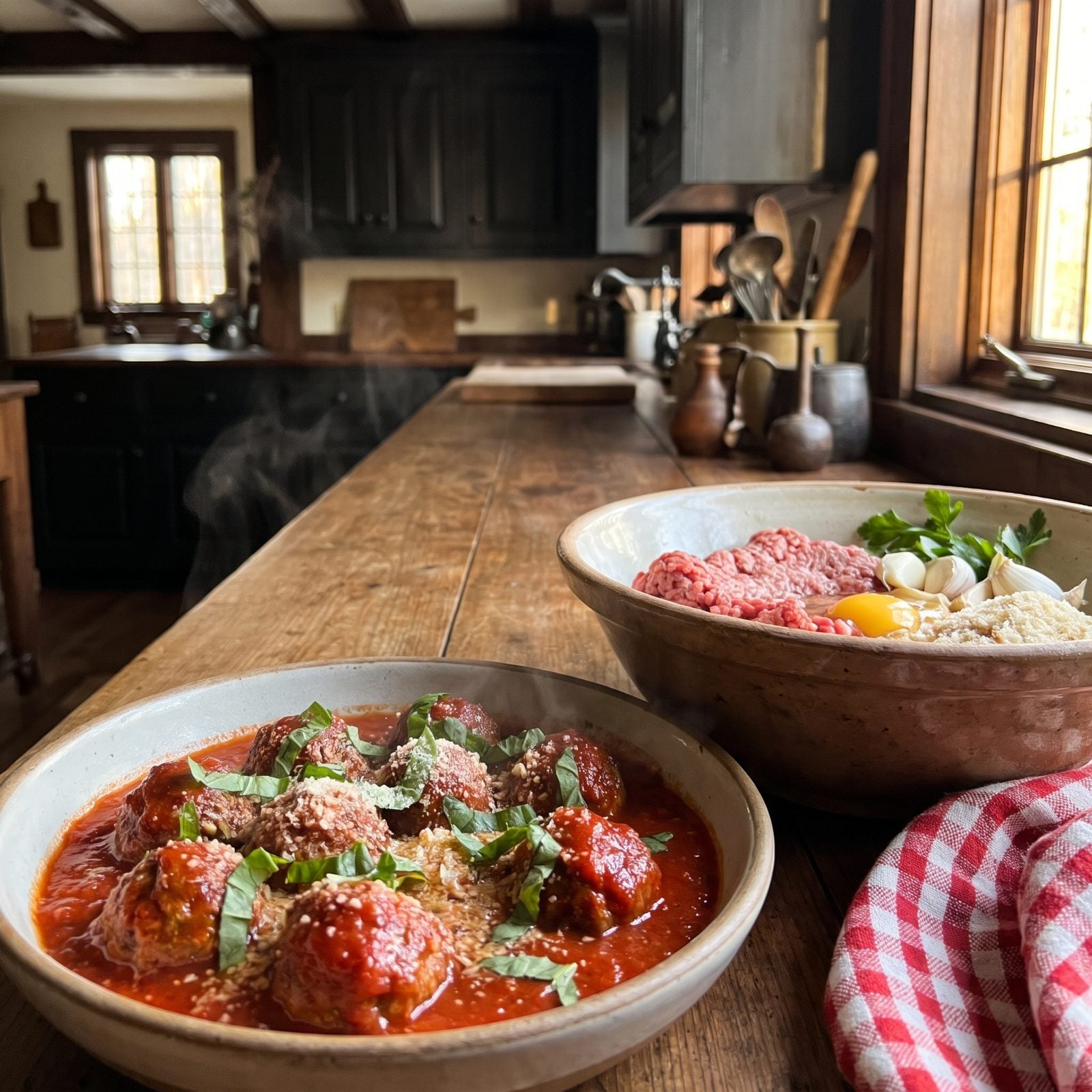
Frozen meatballs are bouncy, salty, and all the same size, which tells you everything about how they’re made. Nothing about them says somebody’s grandmother. Scratch meatballs are tender because of the panade, that soaked-bread-and-milk paste mixed into the meat, which keeps them soft while they simmer.
The mistake almost everyone makes is packing them tight like baseballs. Loose hands, gentle rolling, and don’t overwork the mix. A meatball should give a little when you press it, not bounce back at you.
This is the hill I’ll die on. Use a blend of beef and pork, finish them in the sauce, not the oven, and let them simmer long enough to trade flavor back and forth. That exchange is the entire reason a Sunday pot tastes the way it does.
17. Make From Scratch: Hand-Ground Burger Patties
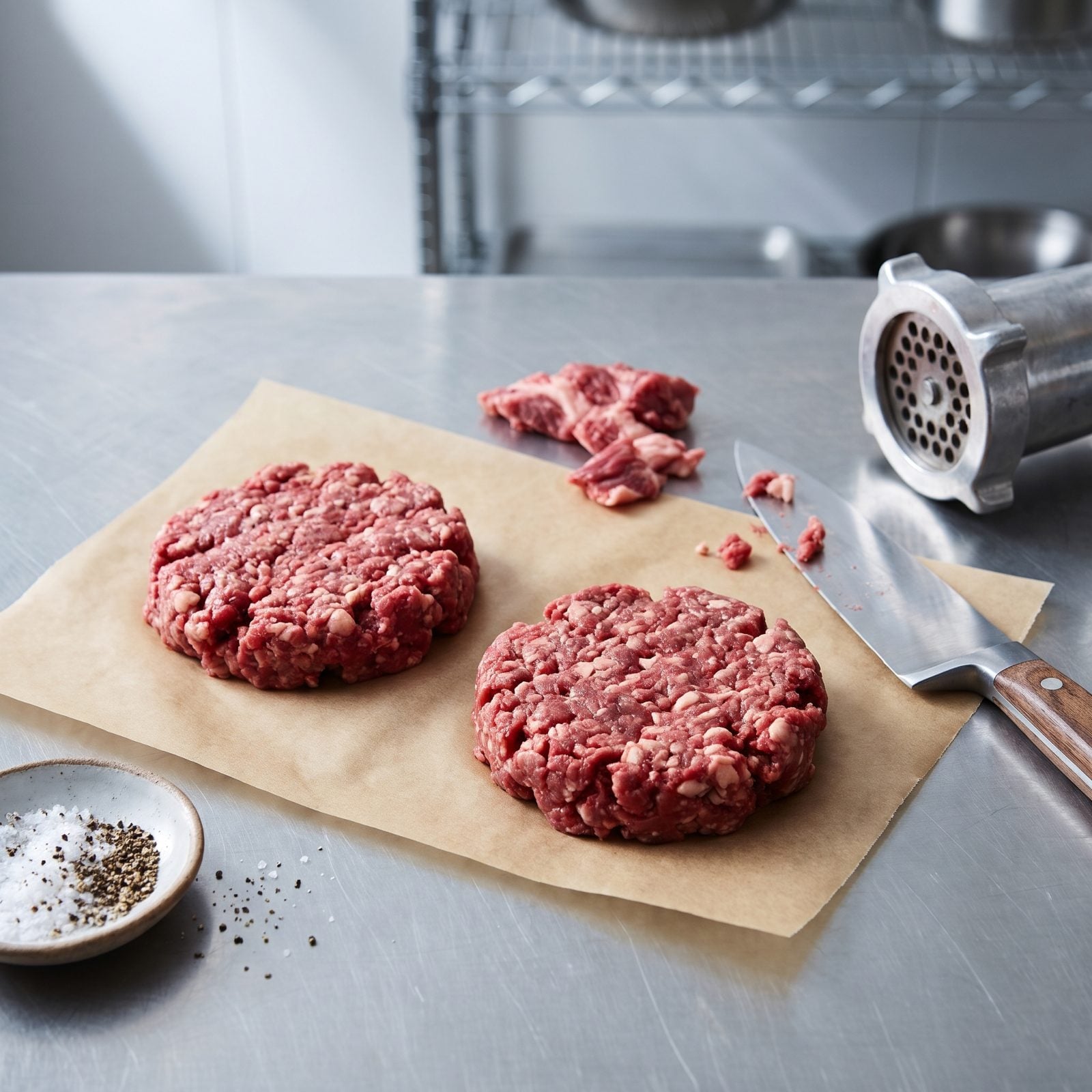
A pre-made patty is pressed within an inch of its life. That tight, uniform puck cooks up dense and bouncy because the machine that formed it treated the beef like a brick. Grind your own and everything changes: loosely packed chuck with a good fat cap holds pockets of air, which means a burger that stays juicy and tender instead of turning into a hockey disk.
You don’t even need a grinder. A sharp knife and ten minutes of chopping gets you most of the way there, and you control the fat ratio, which is the one thing cheap pre-ground beef never tells you.
16. Make From Scratch: Crab Cakes With Actual Crab
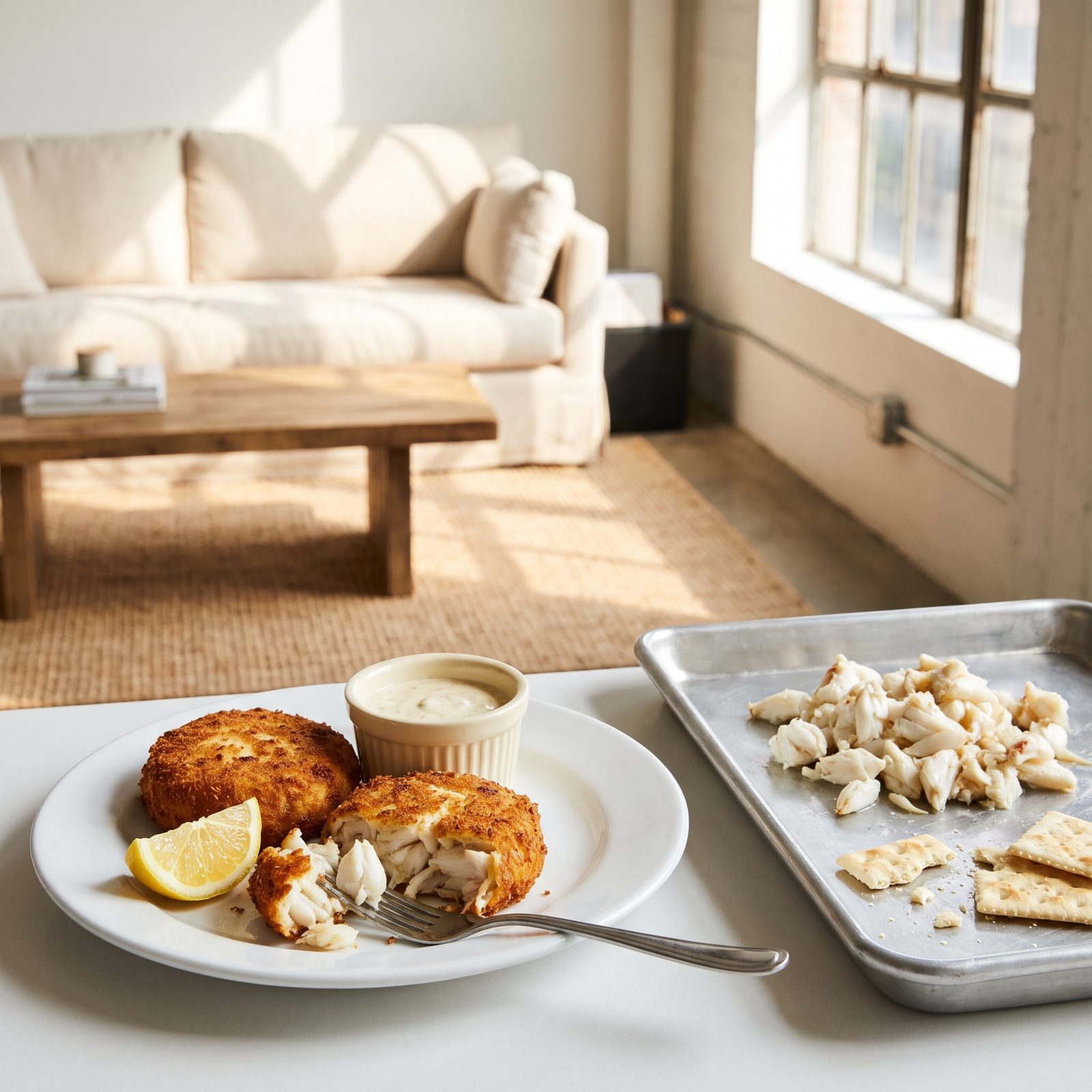
The tell of a bad crab cake? You can’t find the crab. It’s buried under a landslide of breadcrumb and mayo, fried into a hush puppy that happened to walk past a dock once. Make your own and the ratio flips. You want so little binder it barely holds together — that’s the point.
Big lumps of jumbo meat, a whisper of egg and cracker to glue it, and a cold rest before cooking so the thing doesn’t collapse. Restraint does all the work here.
15. Make From Scratch: Mashed Potatoes Worth the Starch
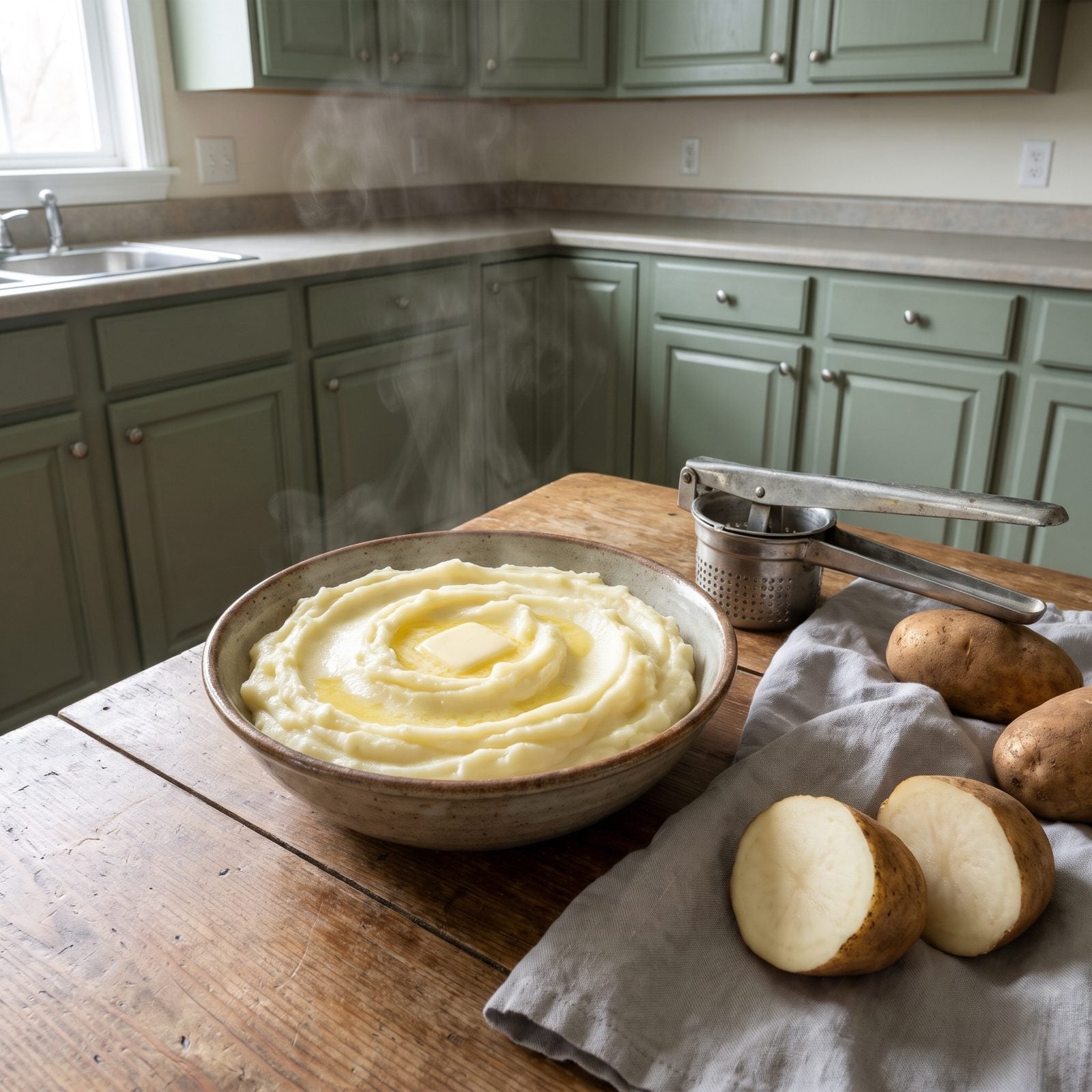
Boxed flakes rehydrate into something smooth and vaguely potato-adjacent, and I’ll admit they have a place at 11pm when standards are low. But real mashed potatoes aren’t hard. They’re just fussy about two things: the potato and the mixing.
Use a starchy russet, not a waxy one, and push them through a ricer instead of beating them with a mixer. Over-worked potato turns gluey fast because you’ve whipped the starch into paste. Fold warm butter and warm cream in by hand and stop the second it comes together.
14. Make From Scratch: Crispy Hash Browns
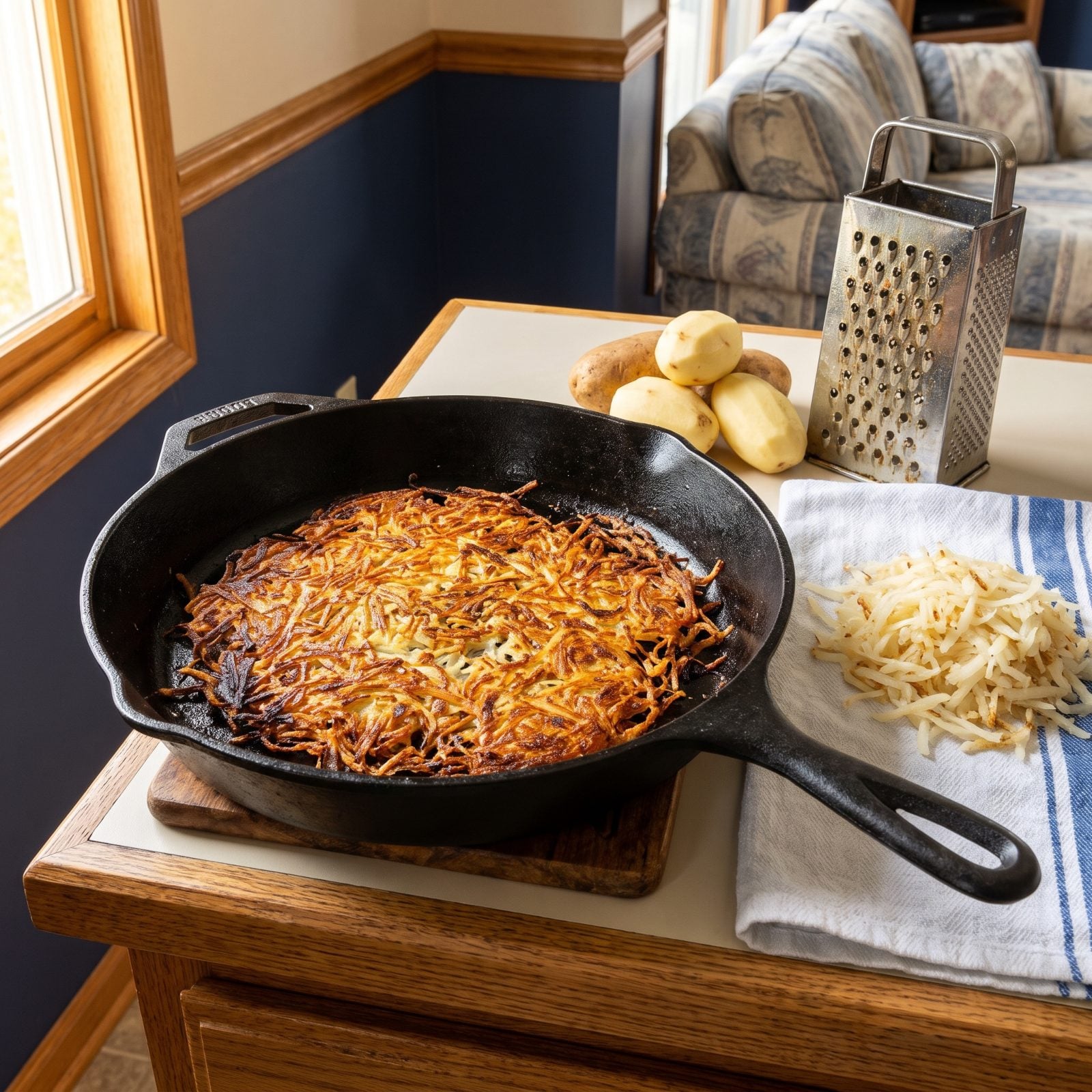
Frozen shredded potatoes are fine, but they’ll never crisp the way the scratch version does, and the reason is water. The whole battle with hash browns is moisture, and frozen potato hides a quiet reservoir of it that fights you in the pan.
Grate a raw russet, then wring it out in a towel like you mean it. You’ll be shocked how much liquid comes out. Dry shreds, hot fat, and the discipline to leave them alone until one side is lacquered golden. Flip too soon and you get a soggy heap.
13. Make From Scratch: Risotto You Stir Yourself
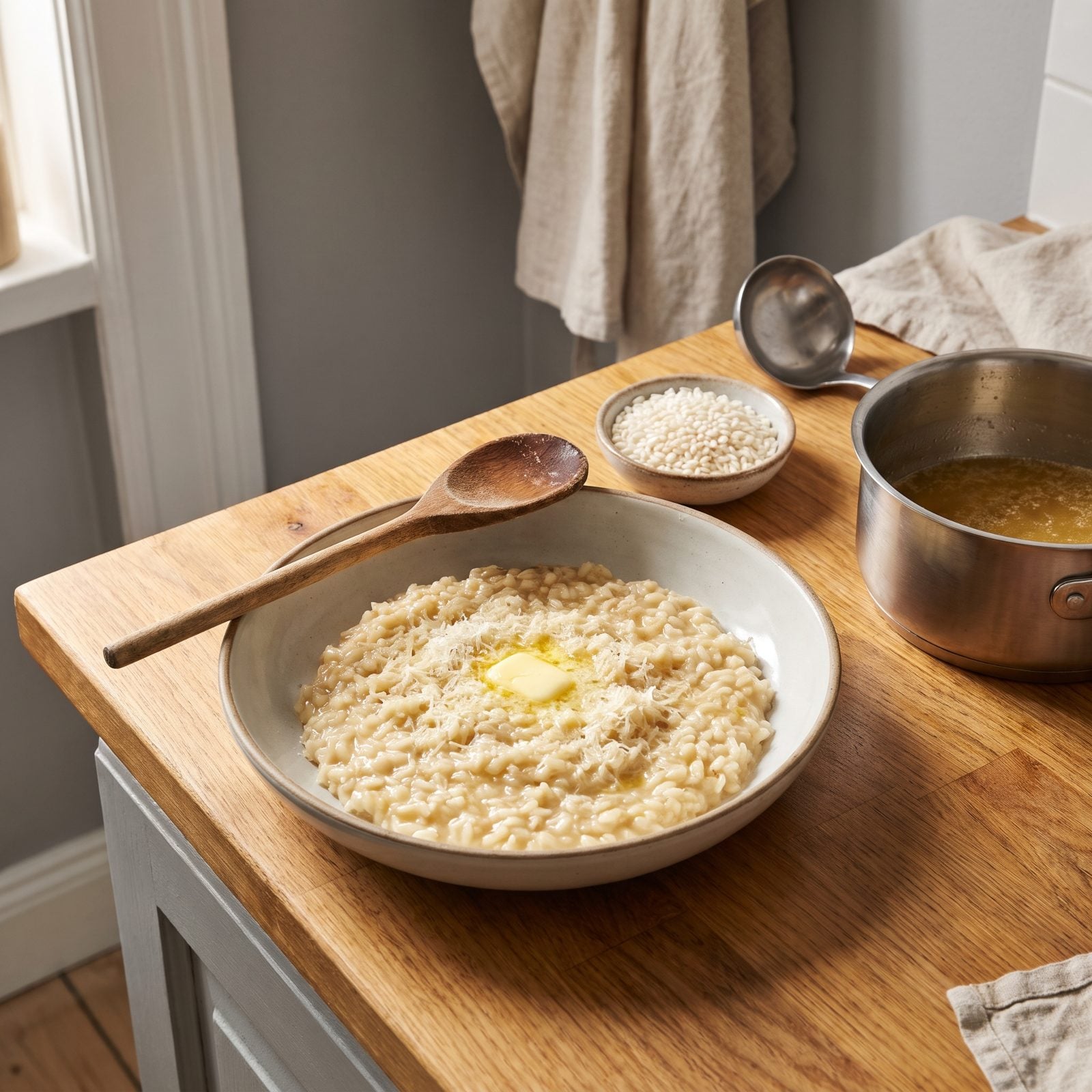
No shortcut gets you real risotto, which is probably why it feels like such a flex to make it well. Arborio rice releases its starch slowly, one ladle of warm stock at a time, and that slow coaxing builds the loose, creamy body that no cream or cheese can fake.
The pros call the right consistency all’onda — it should move in a gentle wave across the plate when you tilt it. Not stiff, not soupy. You get there by paying attention, which is the whole charm and the whole chore.
12. Make From Scratch: Macaroni and Cheese With a Real Sauce
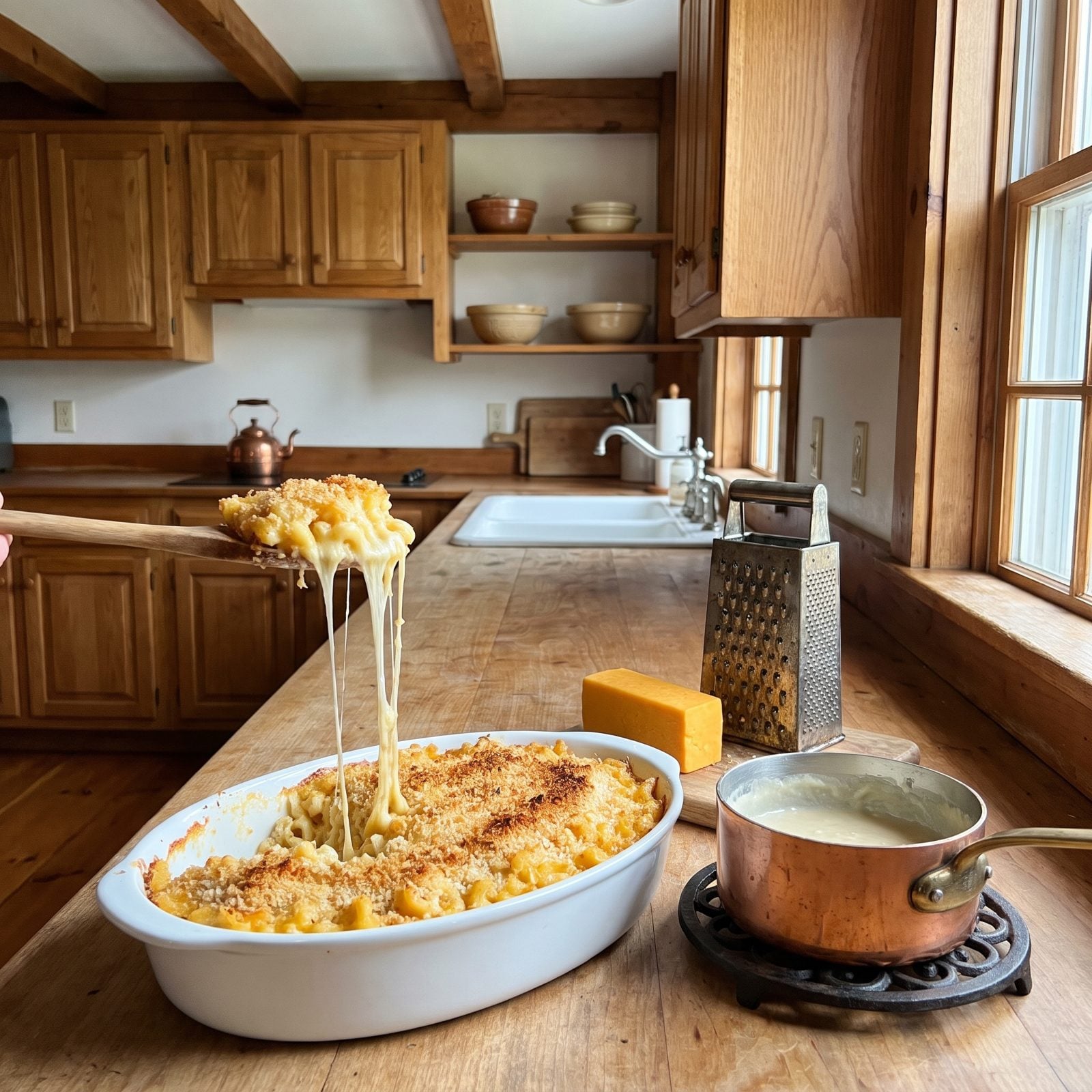
The powdered packet makes a specific kind of mac and cheese, and I won’t pretend I don’t love it for what it is. But a real cheese sauce is a different animal, and it’s embarrassingly simple: a butter-and-flour roux, milk whisked in, then cheese melted off the heat.
Grate your own cheese for this. The bagged pre-shredded stuff is dusted with anti-caking powder that makes the sauce break into a grainy mess — the one shortcut that actively sabotages the dish.
11. Make From Scratch: Crunchy Coleslaw
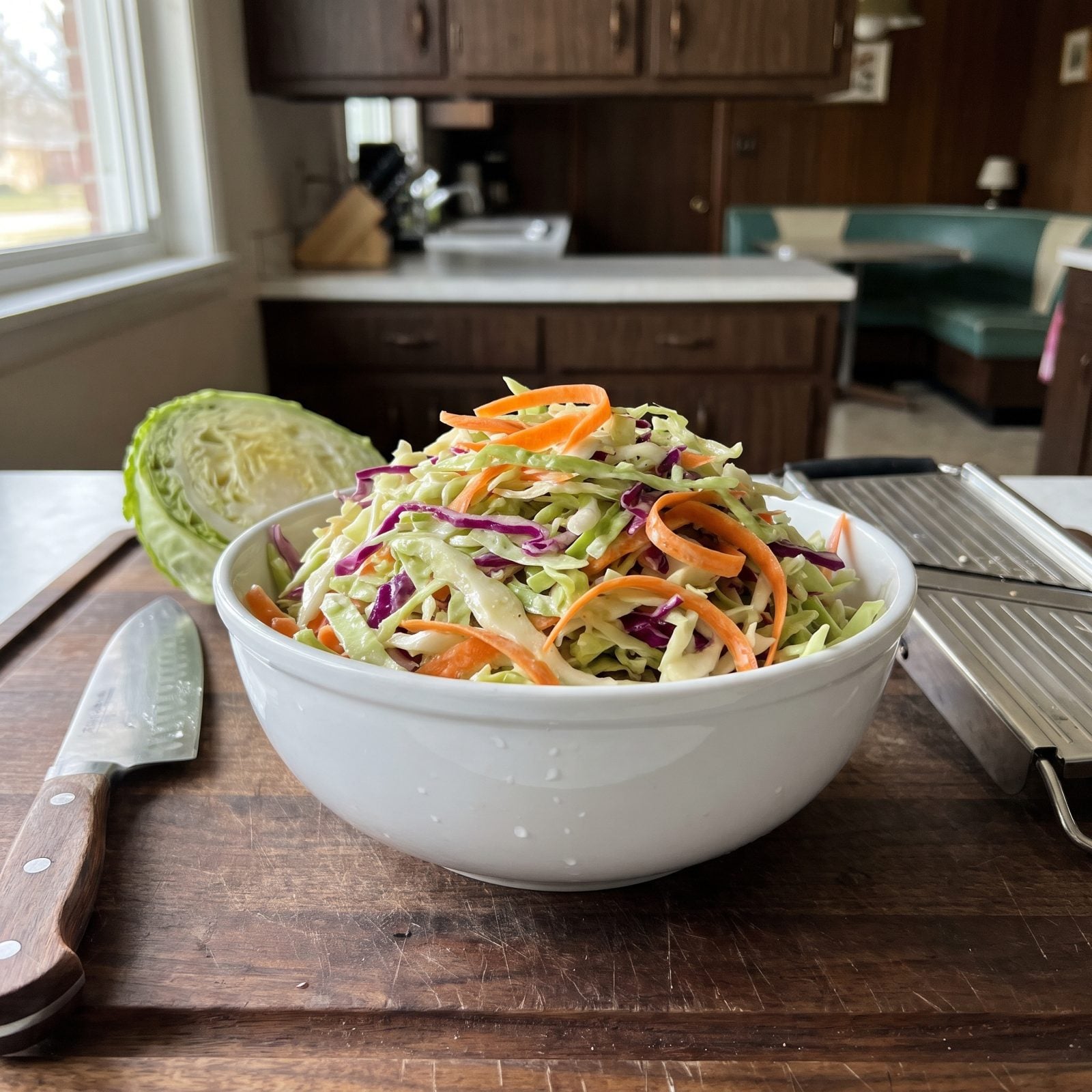
Deli-tub coleslaw drowns. It sits in dressing until the cabbage goes limp and weeps a puddle at the bottom of the container. Scratch slaw stays loud and crunchy because you control two things the tub can’t: how thin you cut and when you dress.
Shred the cabbage fine, salt it, and let it drain for twenty minutes so it sheds its water before the dressing ever shows up. Dress it last, dress it light. That one step is the difference between crisp and soggy.
10. Make From Scratch: Seasonal Soup From the Pot Up
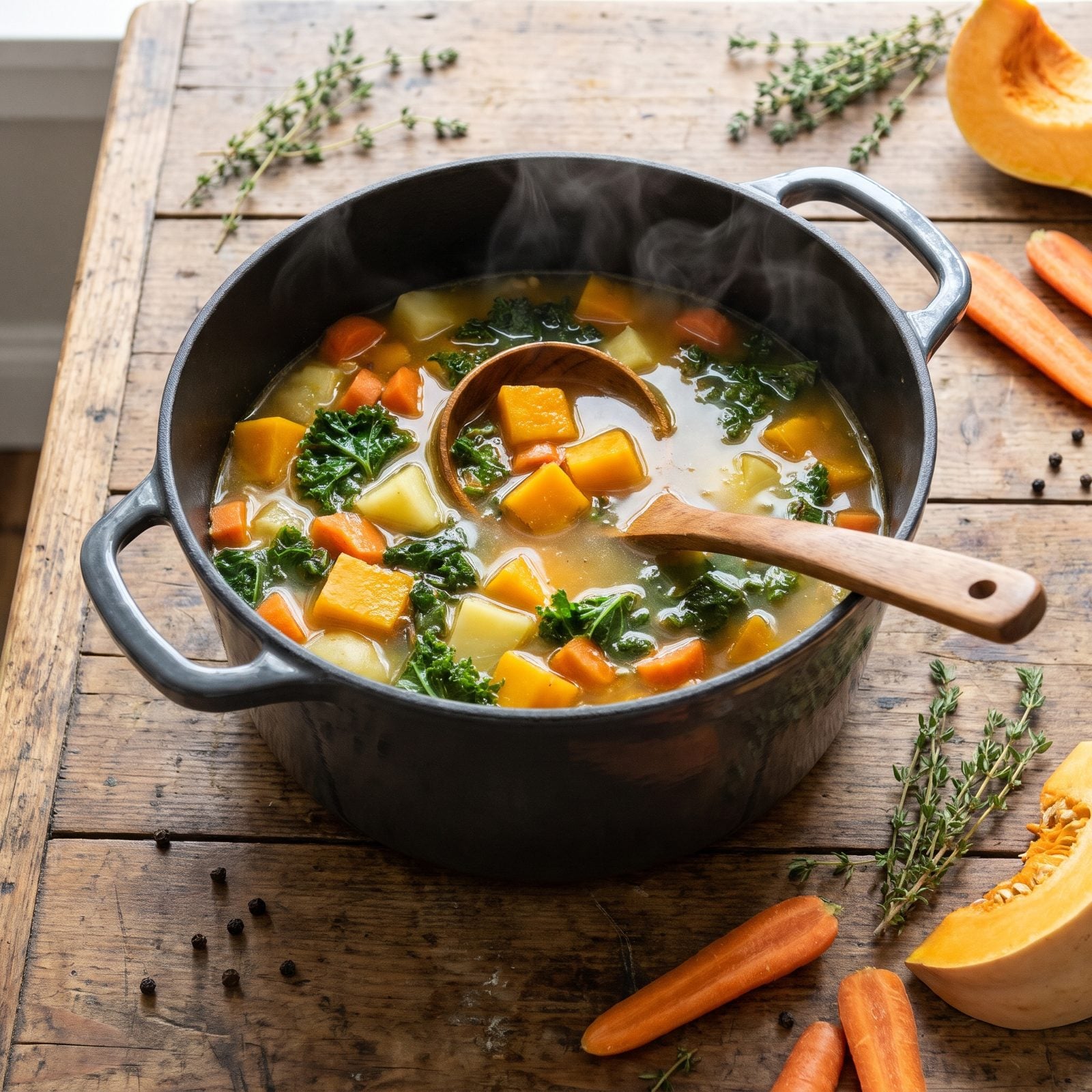
Canned soup is engineered to taste identical in March and in August, which is exactly its problem. It has no idea what season it is. The reason to make your own is that it bends to whatever’s actually good right now.
Build it on a real base. Sweat your aromatics in fat before any liquid goes in — that’s where the backbone of flavor comes from, and canned soup skips it entirely. Everything after is just letting good ingredients get to know each other in a warm pot.
9. Make From Scratch: Signature Spice Blends
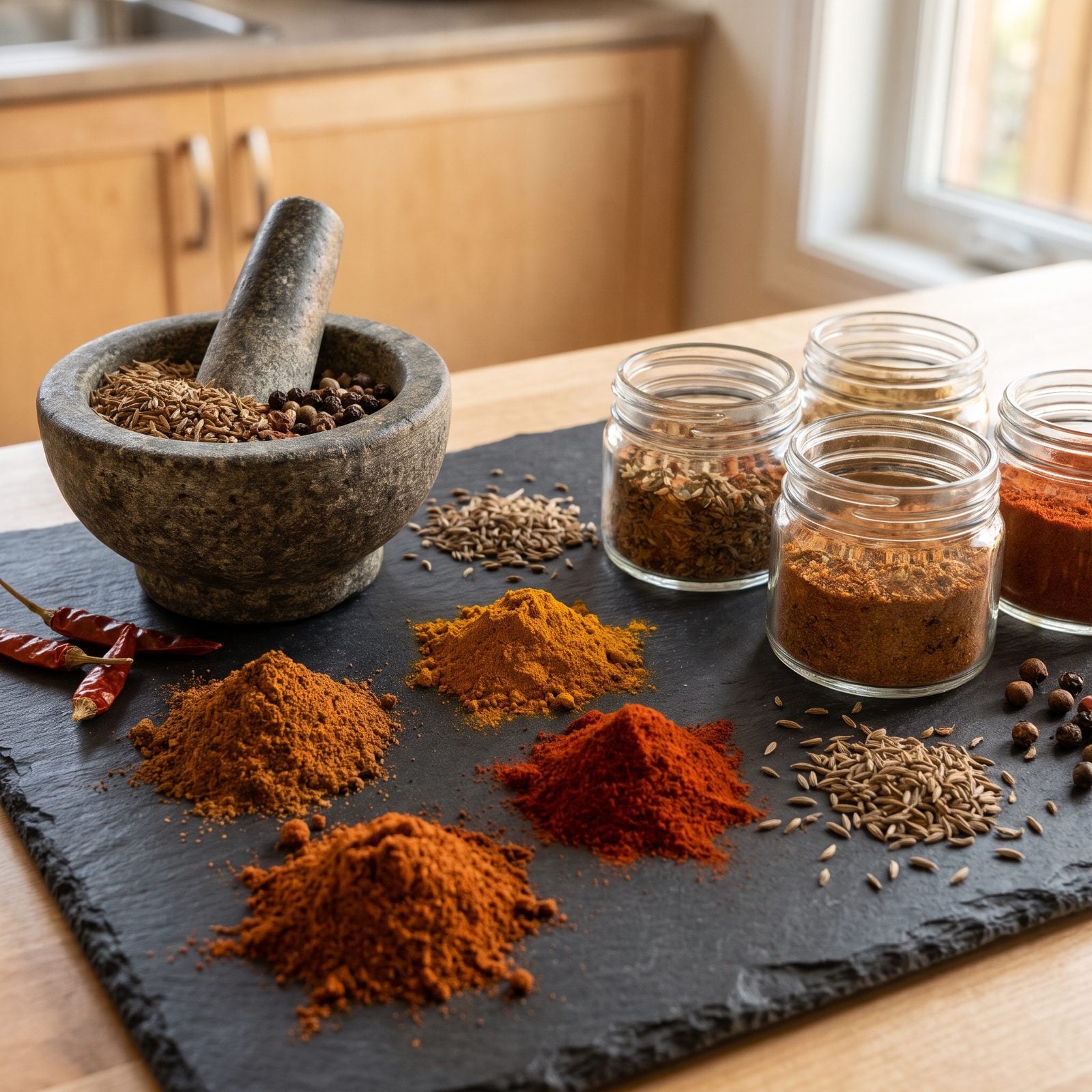
A jar of pre-mixed blend labeled “BBQ” or “Cajun” is a committee decision made by a factory, usually leaning too hard on salt and stale garlic powder. Mix your own and you learn what you actually like — the secret that line cooks guard.
Toast whole spices before you grind them. Cumin, coriander, and peppercorns wake up when they hit a dry pan for thirty seconds, releasing oils that the pre-ground jars lost months ago on a warehouse shelf.
8. Happily Buy: All-Butter Puff Pastry
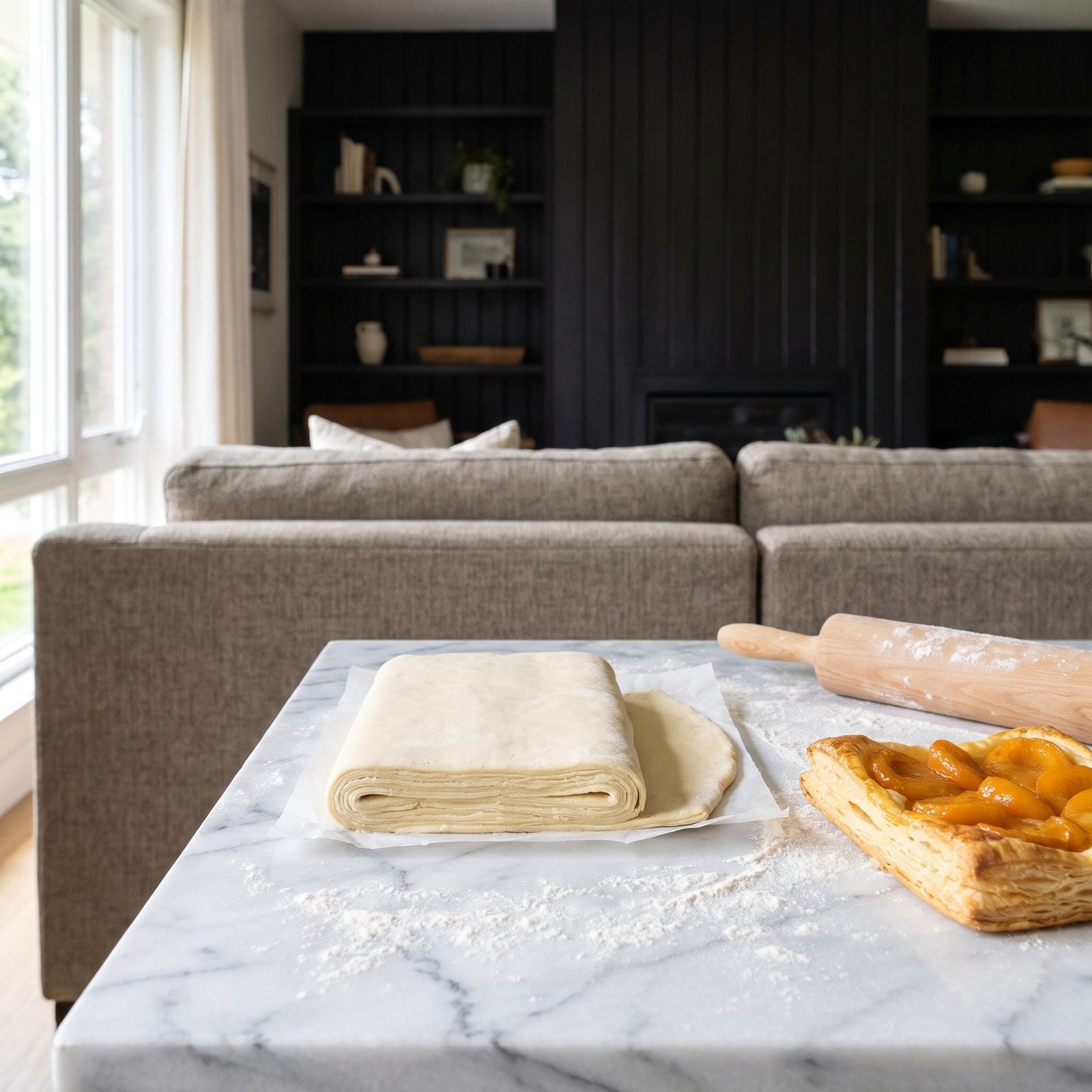
This is where even the snobs put their hands up. Puff pastry is laminated dough, meaning you fold butter into flour over and over to build hundreds of paper-thin layers, chilling between every single turn. It takes the better part of a day, a cold kitchen, and a temperament for tedium.
Professional kitchens buy it. Full stop. One rule only: check the label and get the all-butter version, not the one made with oils and shortening, because that’s the whole flavor.
Knowing what not to make from scratch is its own kind of skill.
7. Happily Buy: Paper-Thin Phyllo Dough
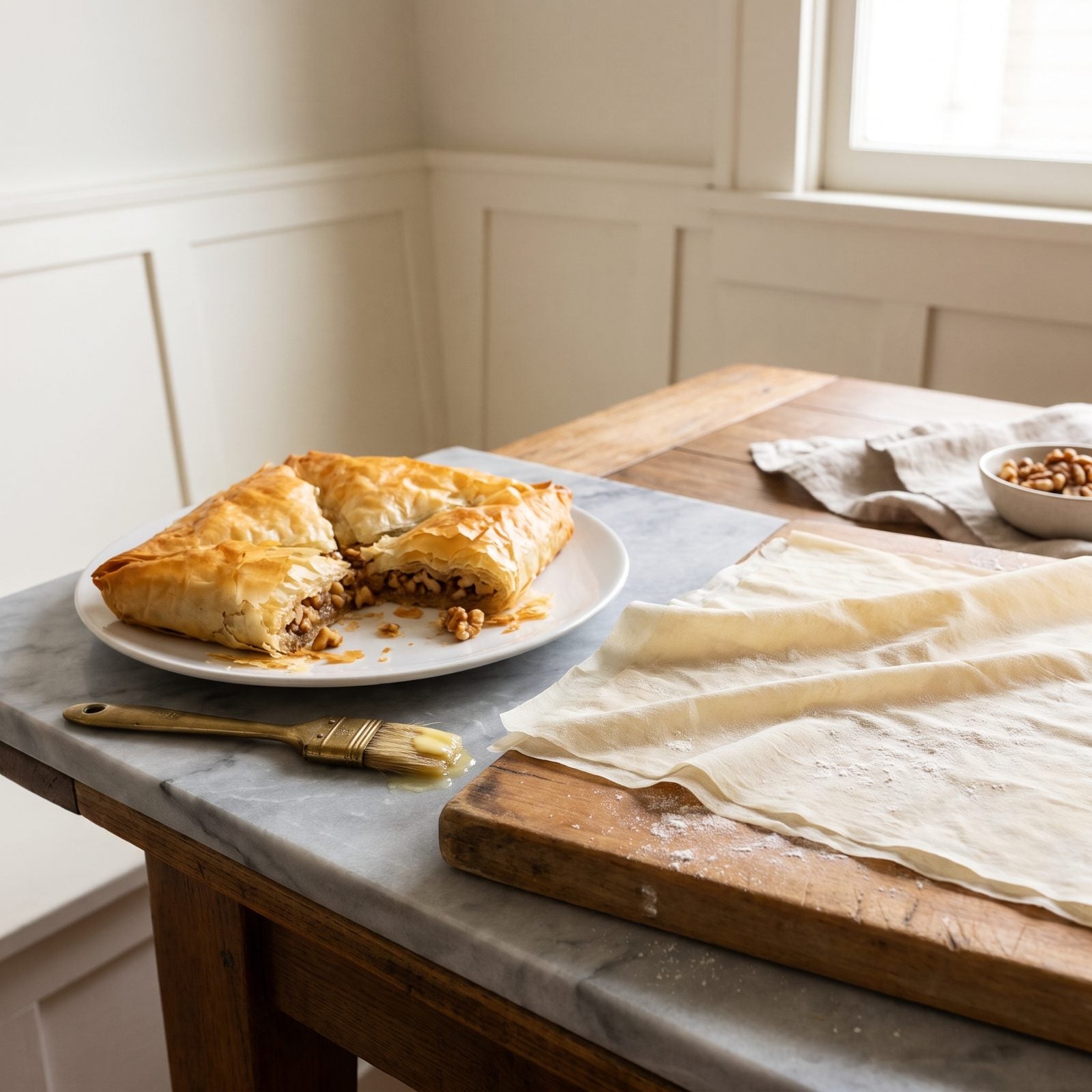
Try rolling dough thin enough to read a newspaper through. You can’t. I can’t. Almost nobody can, which is exactly why phyllo gets made in factories on steel rollers calibrated to a hair’s width.
Pastry chefs who laminate butter into croissant dough at six in the morning will still reach for a frozen box of phyllo without a flicker of guilt. The payoff for homemade is near zero and the failure rate is near total.
6. Happily Buy: Canned Whole Tomatoes
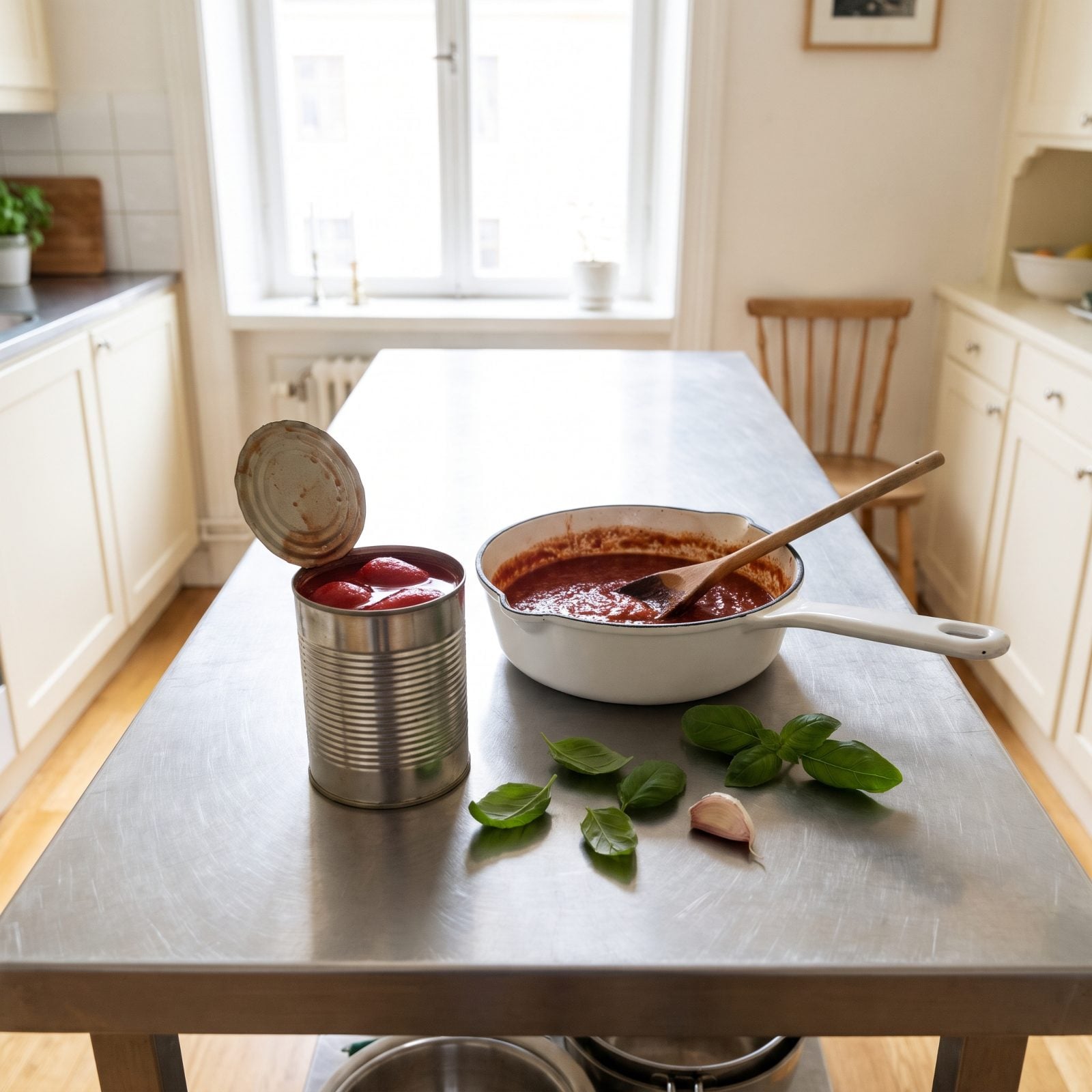
Fresh tomatoes lie to you nine months of the year. Pale, mealy, picked green and gassed red in a truck, they make a sauce that tastes like a shrug.
Good canned tomatoes get picked at the peak of summer and sealed within hours, which is why kitchens from Naples to New Jersey run on them. A can of San Marzano-style whole peeled tomatoes beats a January beefsteak every time, and no cook worth their salt pretends otherwise. Buy whole, not crushed. Crush them yourself with a spoon — that’s the only part worth doing by hand.
5. Happily Buy: Dijon Mustard
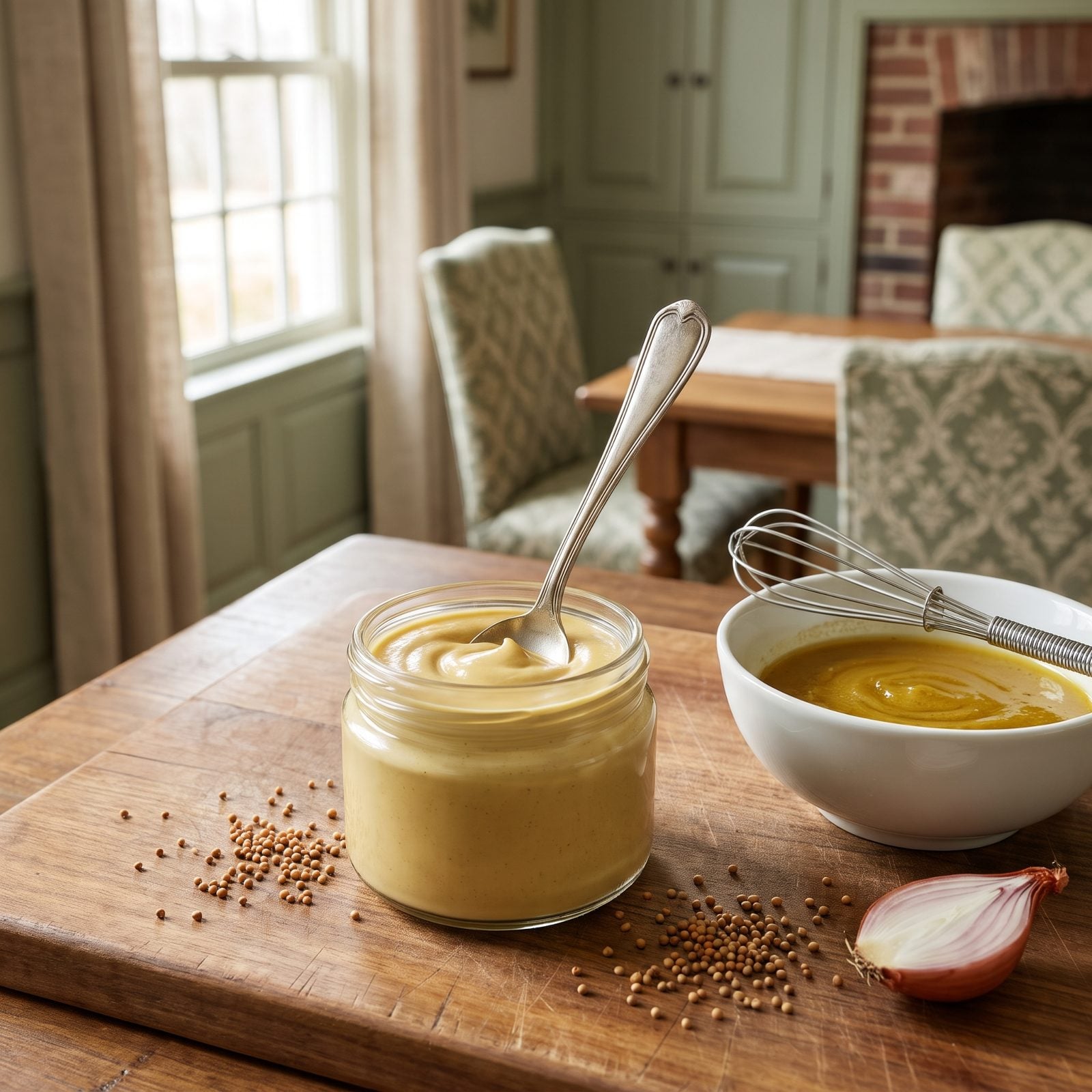
Making real Dijon means grinding mustard seeds with verjus and letting the mix sit for weeks while the harshness mellows. Nobody has time for that, and the jarred version nails it anyway.
The real reason to buy it is the emulsifying power. A spoonful holds a vinaigrette together and keeps oil and acid from divorcing in the bowl. That function matters more than any artisanal pretension.
4. Happily Buy: Naturally Brewed Soy Sauce
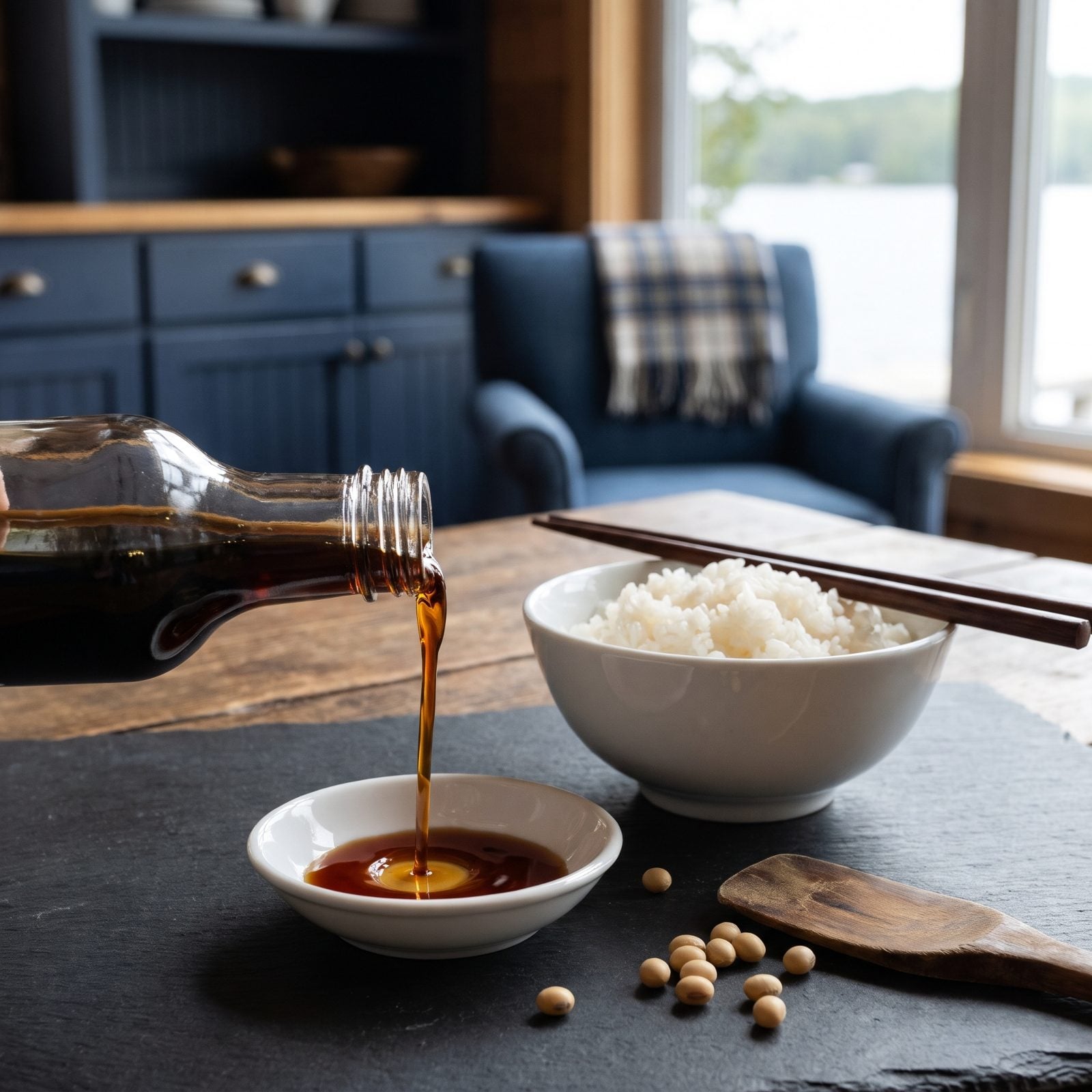
Soy sauce takes months. Sometimes years — soybeans, wheat, salt, and a koji mold doing slow quiet work in barrels while you sleep. You couldn’t replicate that at home if you tried, and you’d have no reason to.
The split that matters isn’t homemade versus bought. It’s naturally brewed versus the chemically hydrolyzed stuff that tastes flat and salty-sharp.
3. Happily Buy: Aged Fish Sauce
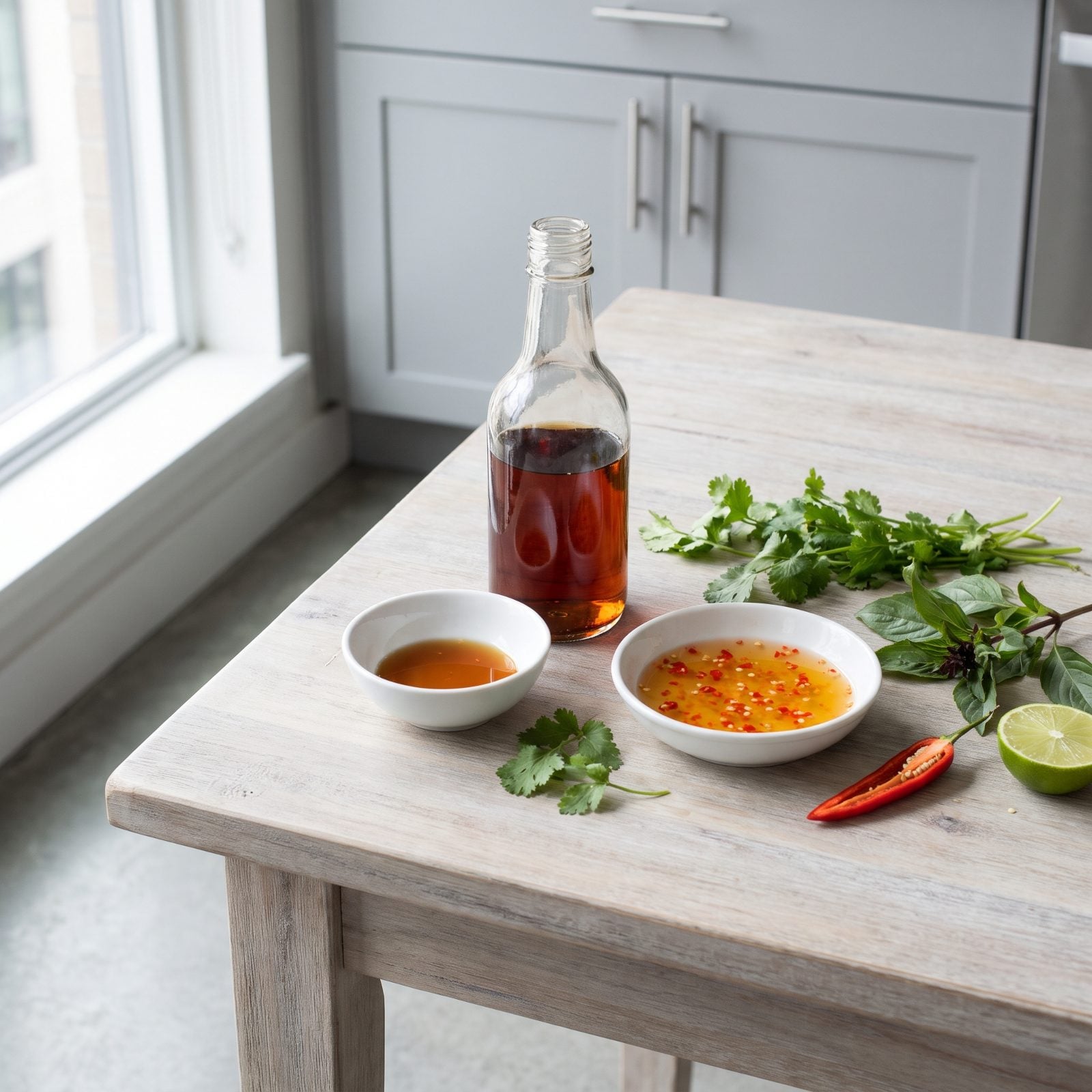
Fish sauce is anchovies and salt packed into barrels and left to ferment under the sun for a year or more. The good stuff runs clear amber, not murky brown, and it smells pungent in the bottle but turns savory and round the second it hits heat.
No kitchen makes this from scratch. It wants time, tonnage, and a climate most of us don’t have. And a little goes a long way — one spoonful gives a stew or dressing a savory backbone that salt alone can’t touch.
2. Happily Buy: Worcestershire Sauce
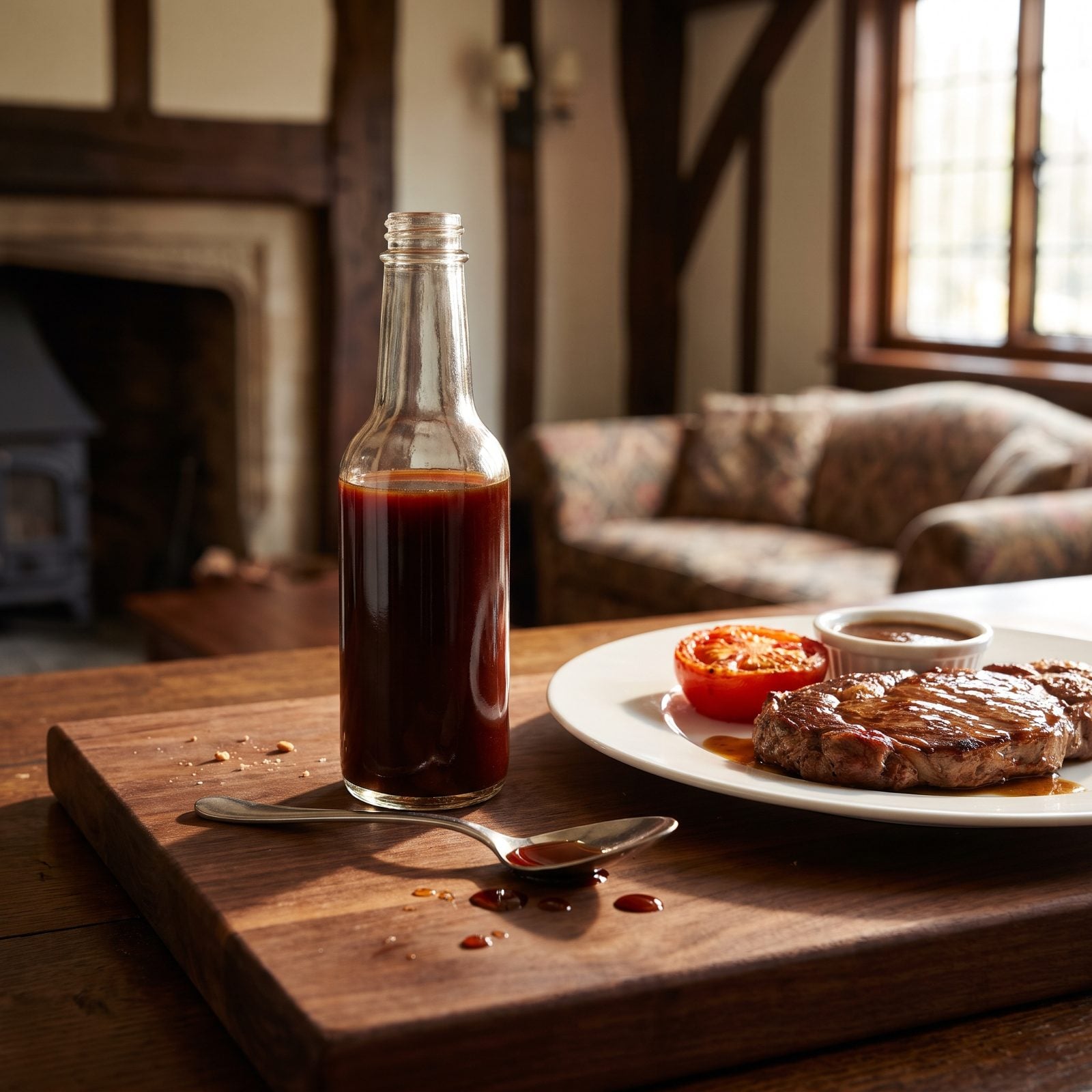
The ingredient list reads like a dare: fermented anchovies, tamarind, molasses, vinegar, and a spice blend some brands still keep secret after generations. It ages in barrels for months before it ever gets bottled. This is not a weekend project. It’s barely a year-long one.
What a few dollars buys you is a concentrated hit of fermented savoriness that works into marinades, pan sauces, and a good Bloody Mary. One bottle lasts practically forever in the fridge, which is the only maintenance it ever asks for.
1. Happily Buy: Authentic Curry Paste
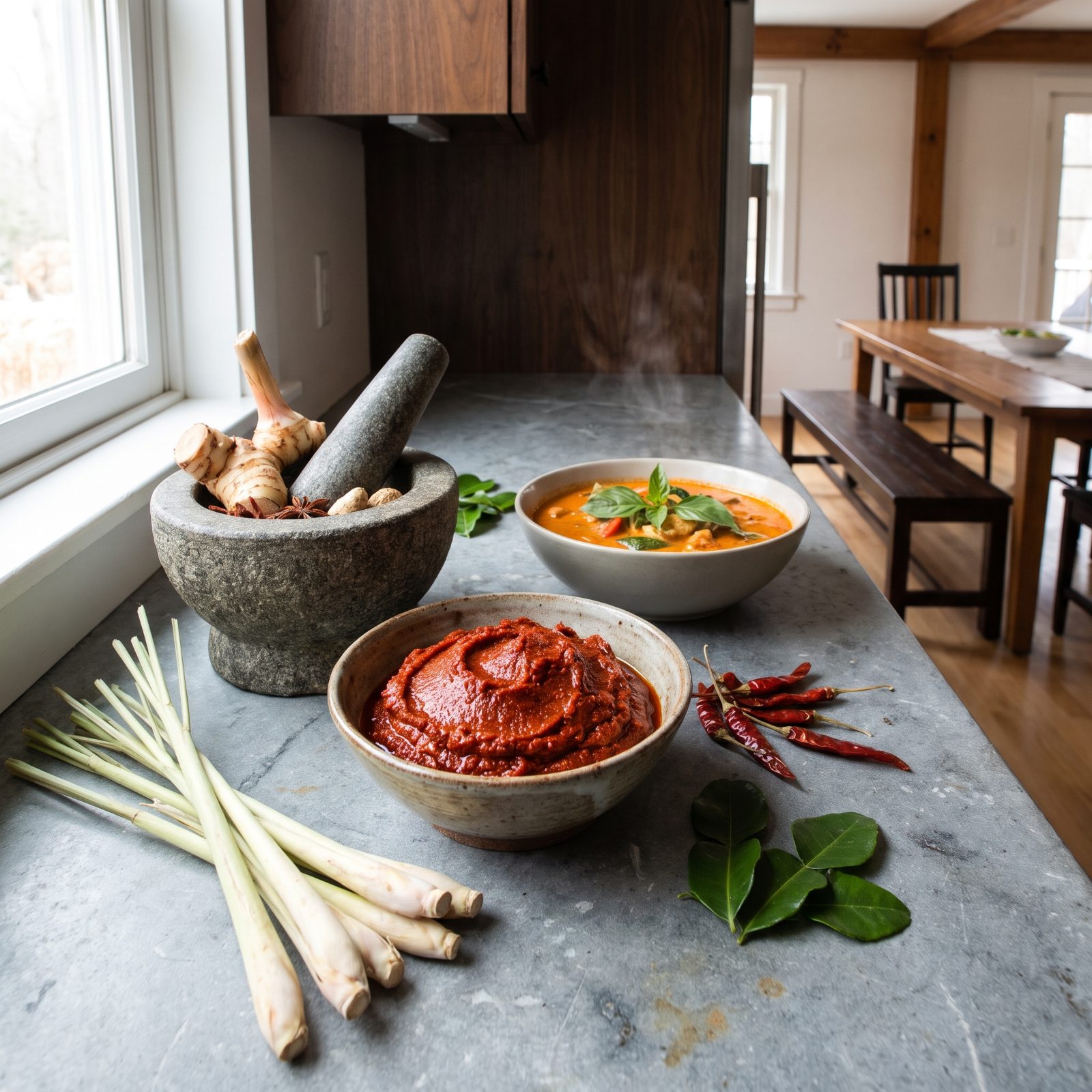
I made Thai curry paste from scratch once. Pounded galangal, lemongrass, kaffir lime, dried chilies, and shrimp paste in a mortar until my arm gave out. It was good. It was not that-much-work good.
A well-made jarred paste from a brand that knows what it’s doing gets you most of the way there with a spoon and a pan. And the aromatics it leans on — fresh galangal, proper chilies — are a nightmare to source outside a specialty market anyway.