
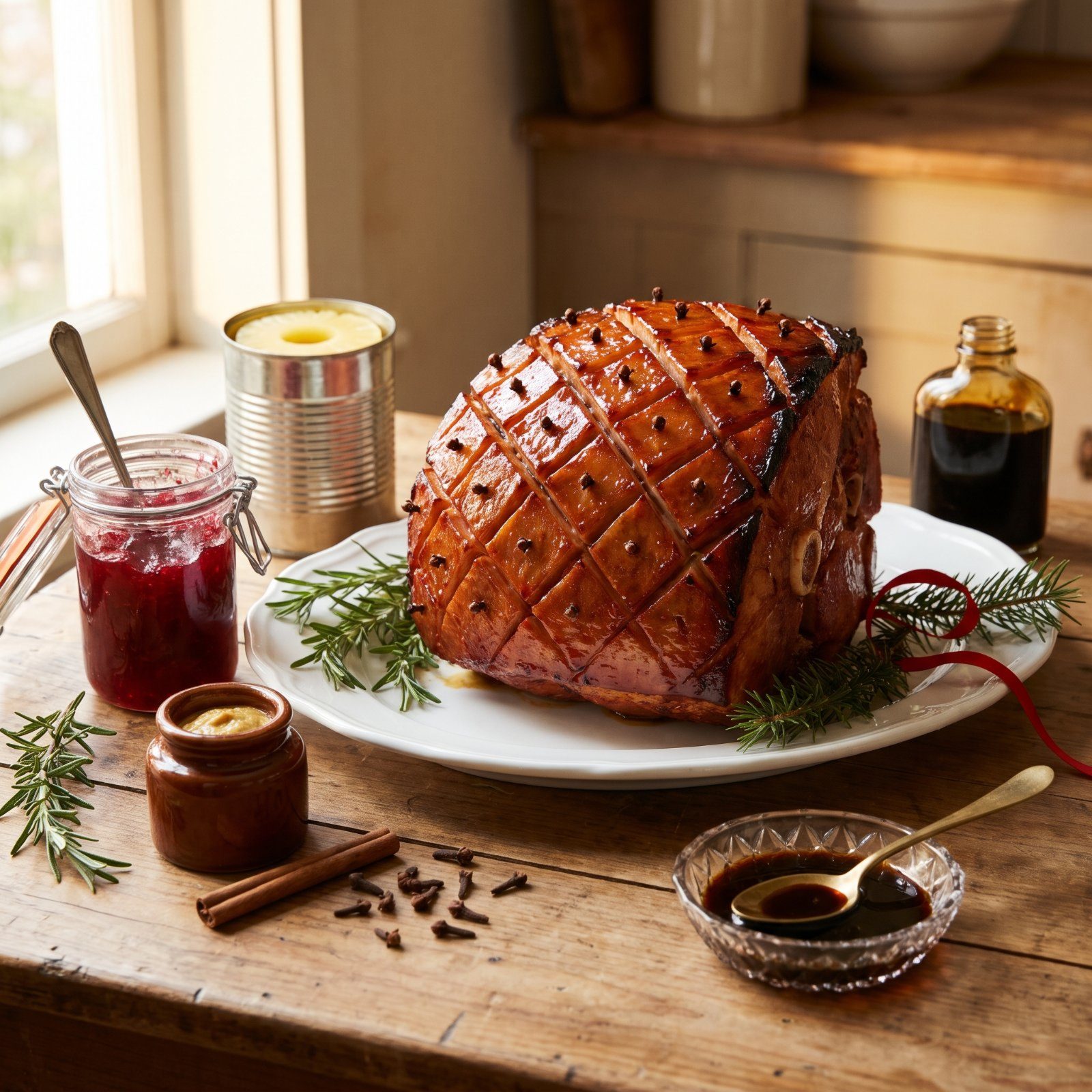
The ham was never the point. The glaze was. That dark lacquer somebody spooned over the top three times during the last hour, the kitchen smelling like cloves and burnt sugar, the diamond scoring going mahogany at the edges — that’s what people remember. Half these glazes came from whatever sat in the pantry door: a jelly jar, a can of pineapple, a bottle of soda gone flat. No measuring, no recipe card, just a spoon and a memory. Here are the ones worth dragging back out of the cupboard this December.
Please note that some of the images in this article were created with the assistance of AI.
47. Brown Sugar, Pineapple Juice, and Whole-Clove Glaze
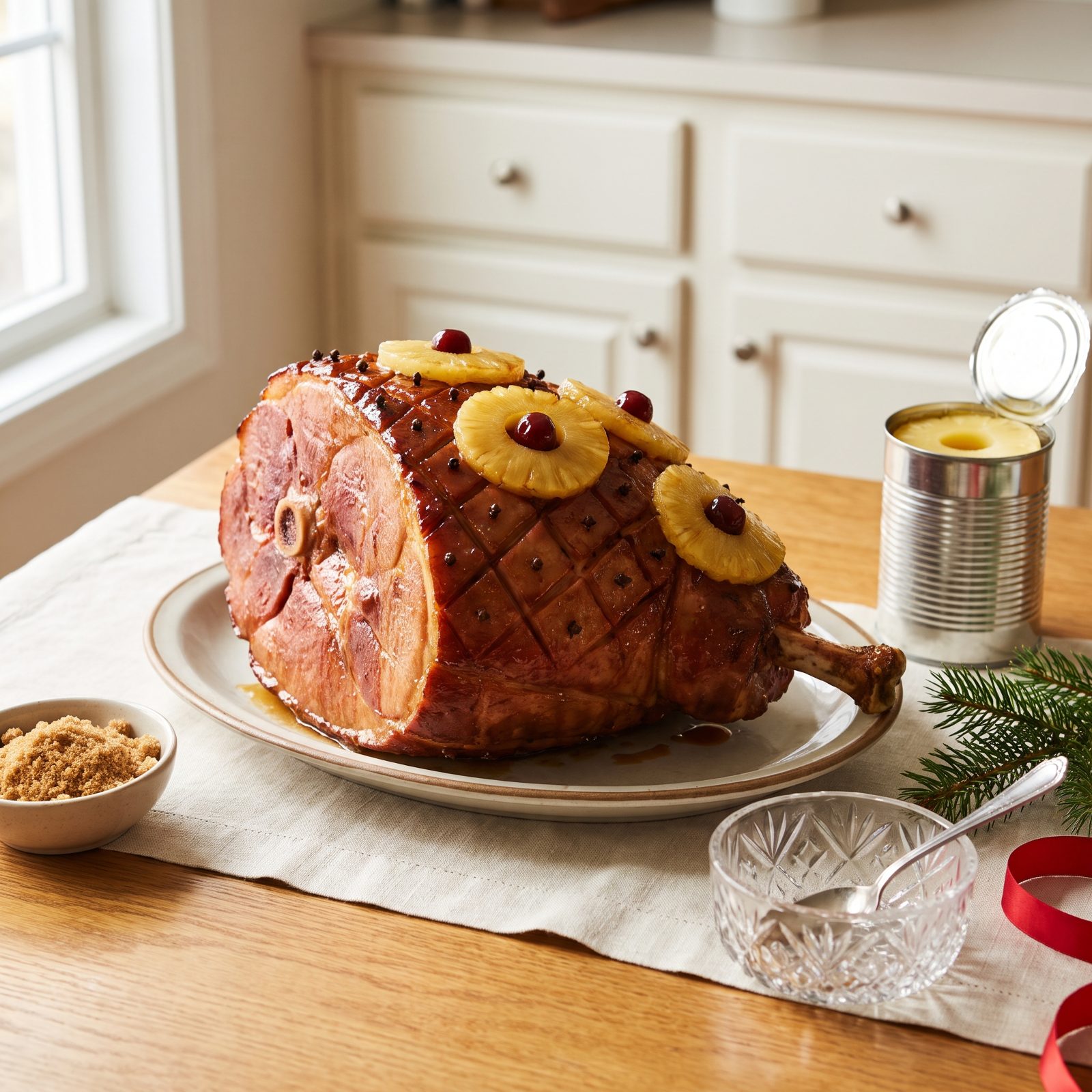
This is the ham on every church-basement buffet since about 1955, and it never left for a reason. Brown sugar melts into a crackly top while the pineapple juice keeps it from sliding into pure candy, and the cloves do the heavy lifting on aroma. You smell it before you see it.
Heat a cup of packed dark brown sugar with half a cup of pineapple juice until it’s syrupy, score the fat in diamonds, stud the crossings with whole cloves, and brush it on in the last 45 minutes at 325, three coats, basting between each. The cherries and rings are optional. I leave them on because the whole thing looks wrong to me without them.
46. Red Currant Jelly and Dry Mustard Glaze
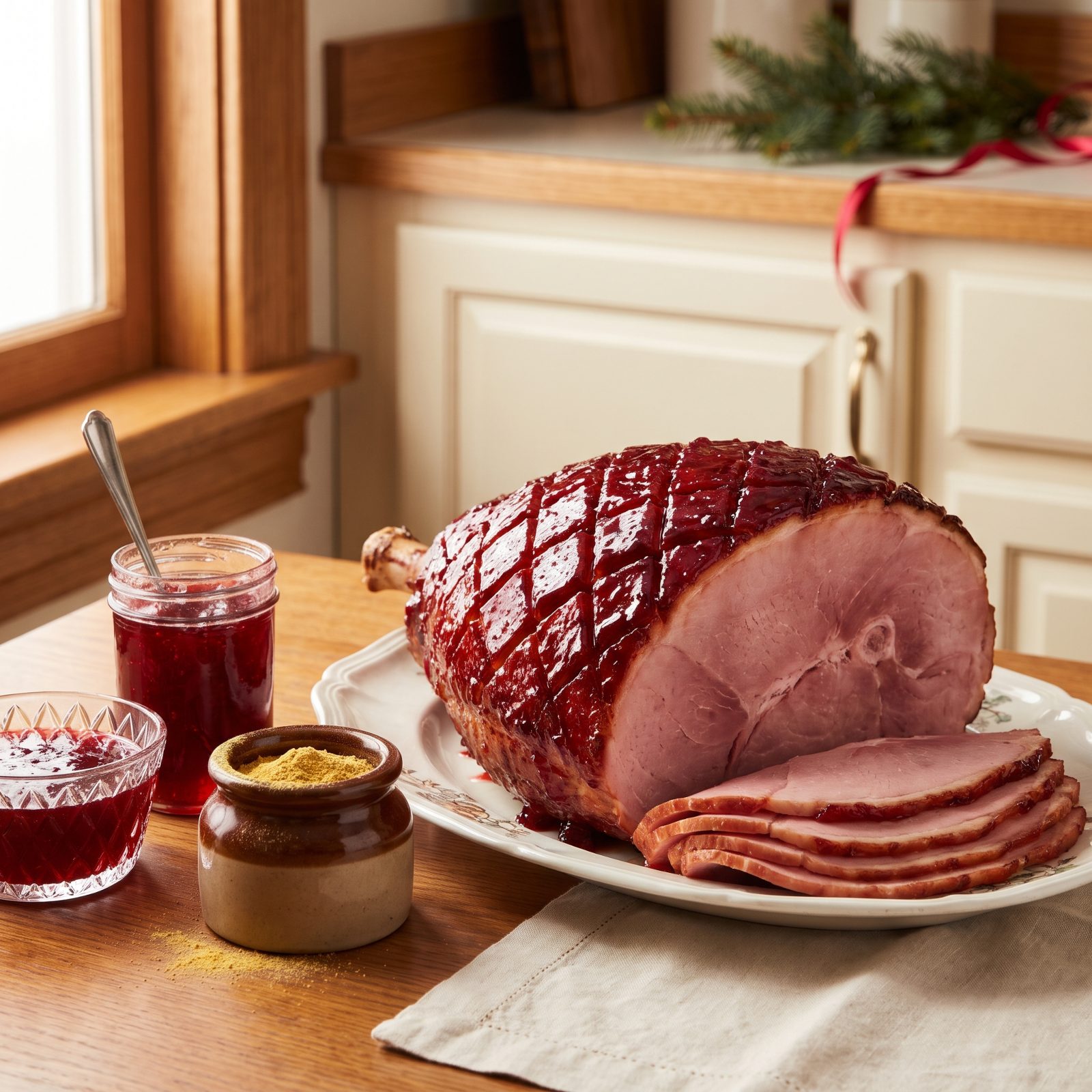
Sweet with a slap. The currant jelly goes on like stained glass, then the dry mustard cuts underneath so the whole thing doesn’t taste like dessert on pork. This was the quiet, slightly posh glaze, the one somebody’s aunt who read magazines brought to the table.
Melt a cup of red currant jelly with two tablespoons of dry mustard and a splash of red wine vinegar, whisk smooth, brush over the ham in the last half hour. It sets up glossy and firm. If your jelly’s gone grainy in the jar, warm it slow and it’ll come back.
45. Apricot Preserves and Cider Vinegar Glaze
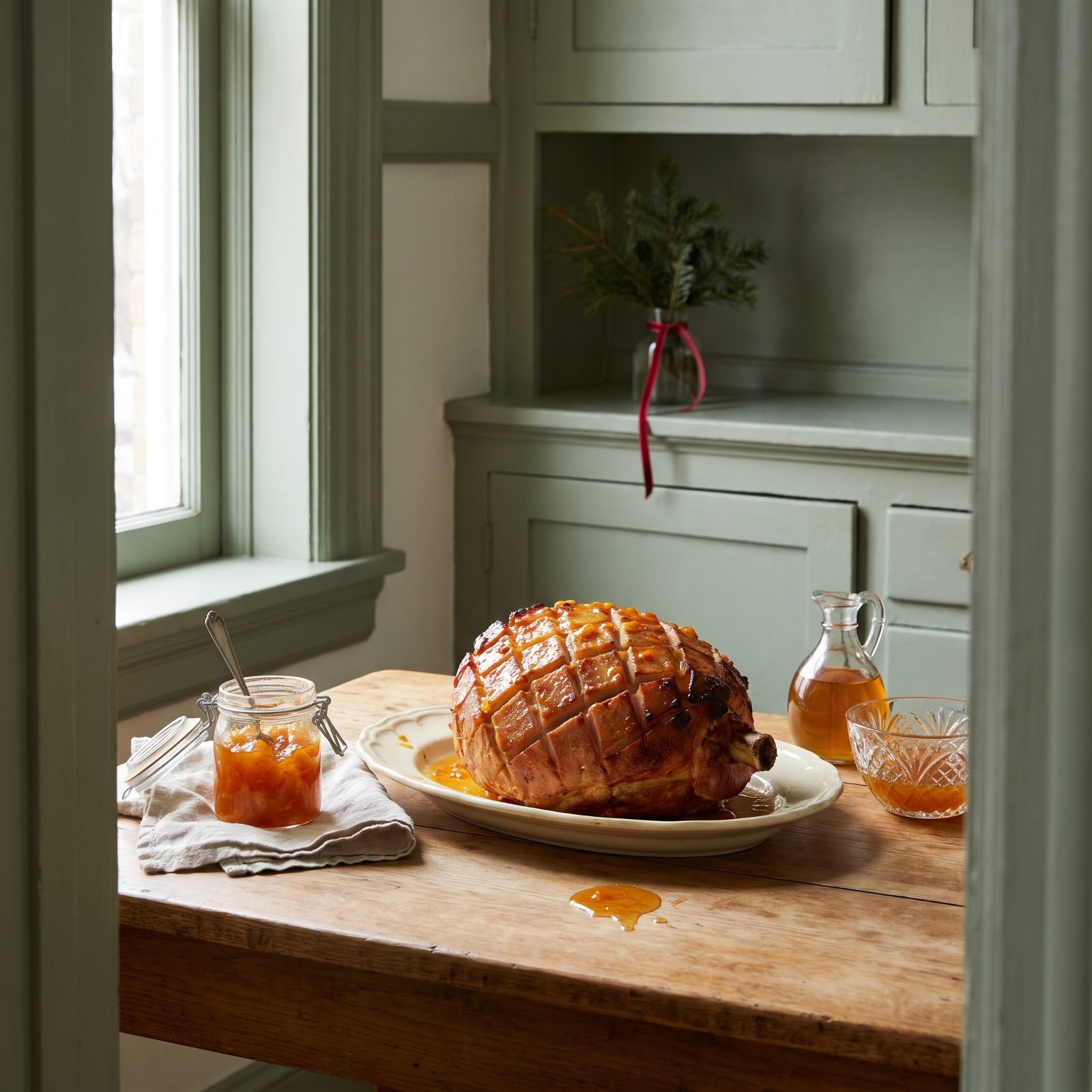
Apricot preserves give you the prettiest ham on the table, a glowing orange-gold that photographs like a Norman Rockwell cover. But preserves alone turn cloying fast. The cider vinegar saves it, pulling the sweetness back into balance so the second slice is as good as the first.
Warm three-quarters of a cup of apricot preserves with two tablespoons of cider vinegar and a pinch of ground cloves. Brush it on twice in the final 40 minutes. Those little flecks of fruit caramelize into sticky dark spots — the best bites, and the ones that disappear first.
What Our Readers Say
- When Piaci Pizza readers loved a food photo and tapped a reason, comfort came first at 30%, with nostalgia and ingredients close behind at 17% each.
- When our readers disliked a food photo, the top reason was simply “not for me” at 39%, followed by the ingredients themselves at 28%.
From Piaci Pizza reader polls and votes.
44. Orange Marmalade and Crystallized Ginger Glaze
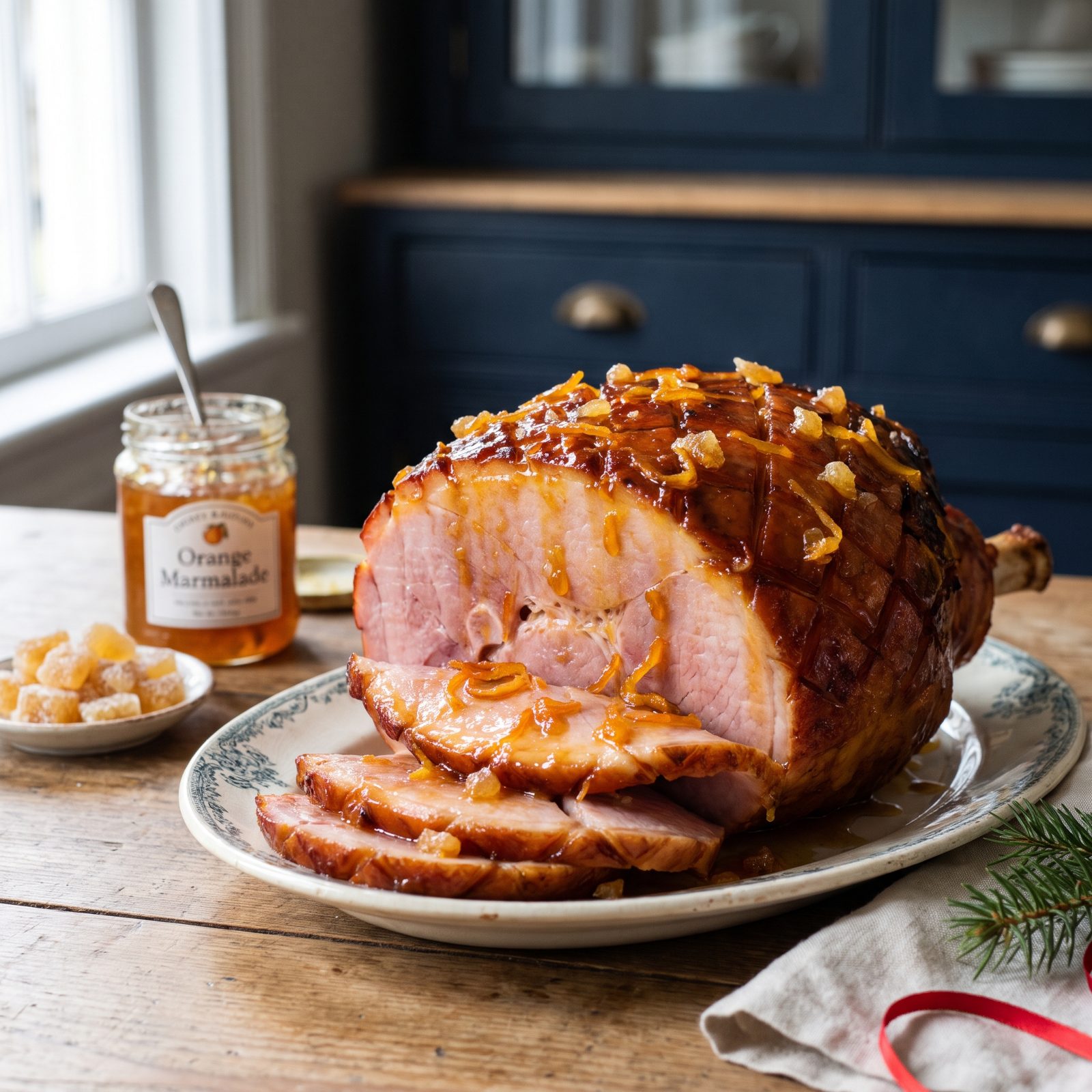
The marmalade ham has an edge the others don’t. That bitter citrus rind in the preserve keeps the sweetness honest, and the crystallized ginger adds a warm burn that sneaks up on you three or four bites in. It’s a grown-up glaze. Kids pick around the peel. Fine, more for us.
Stir a cup of orange marmalade with a couple tablespoons of finely chopped crystallized ginger and a spoon of Dijon. Brush it on in the last 30 minutes so the shreds of peel caramelize but don’t scorch.
43. Dark Molasses and Mustard-Powder Glaze
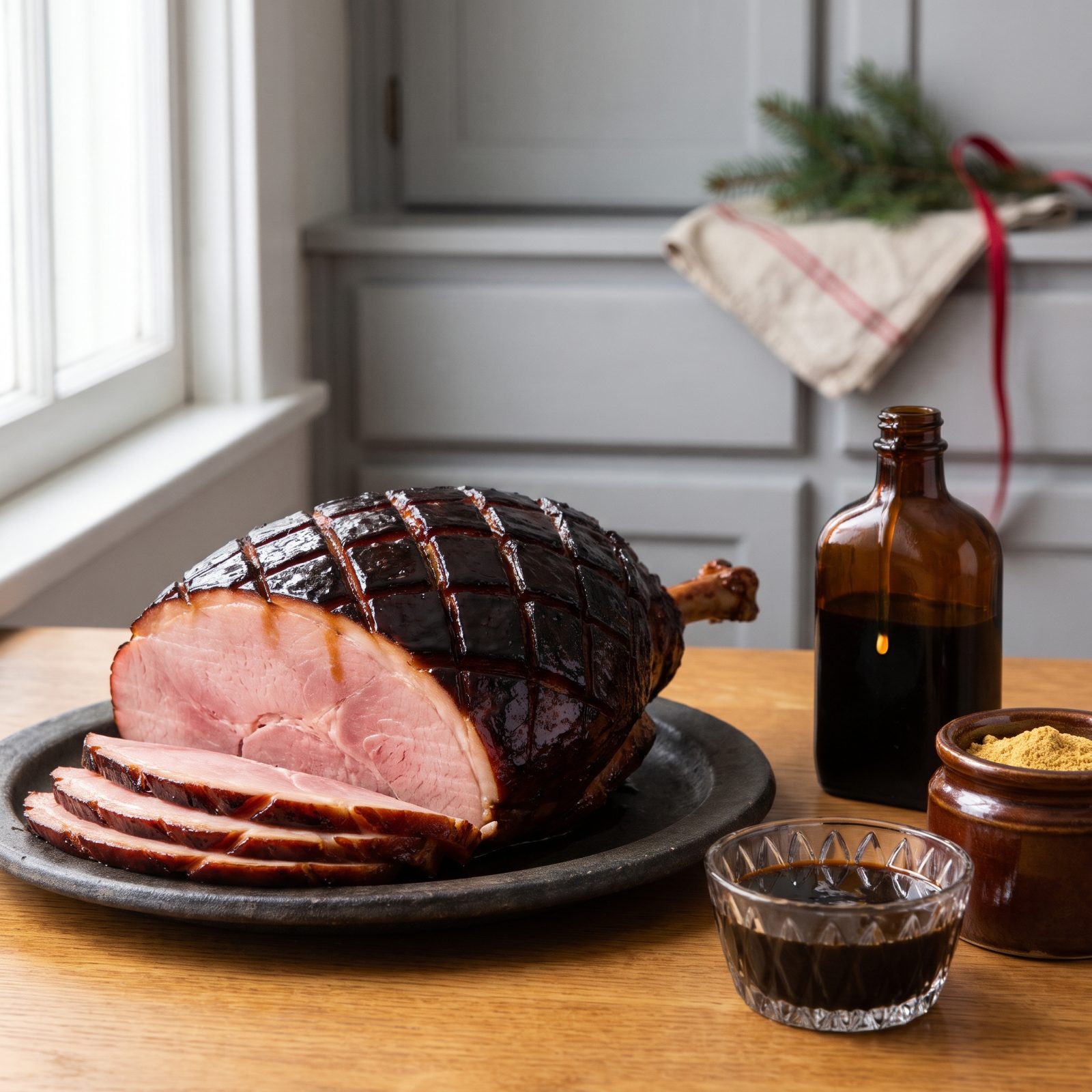
This is the old farmhouse glaze, from back when molasses sat in every kitchen because sugar cost money. It bakes down almost black, glossy like it’s been shellacked, with a bittersweet depth that brown sugar can’t touch. The mustard powder keeps it from going medicinal.
Whisk half a cup of dark molasses — not blackstrap, that’s too harsh — with two tablespoons of mustard powder and a tablespoon of cider vinegar. Brush it on in two coats over the final 40 minutes. Watch it near the end. Molasses goes from beautiful to burnt faster than anything else on this list.
42. Maple Syrup and Bourbon Glaze
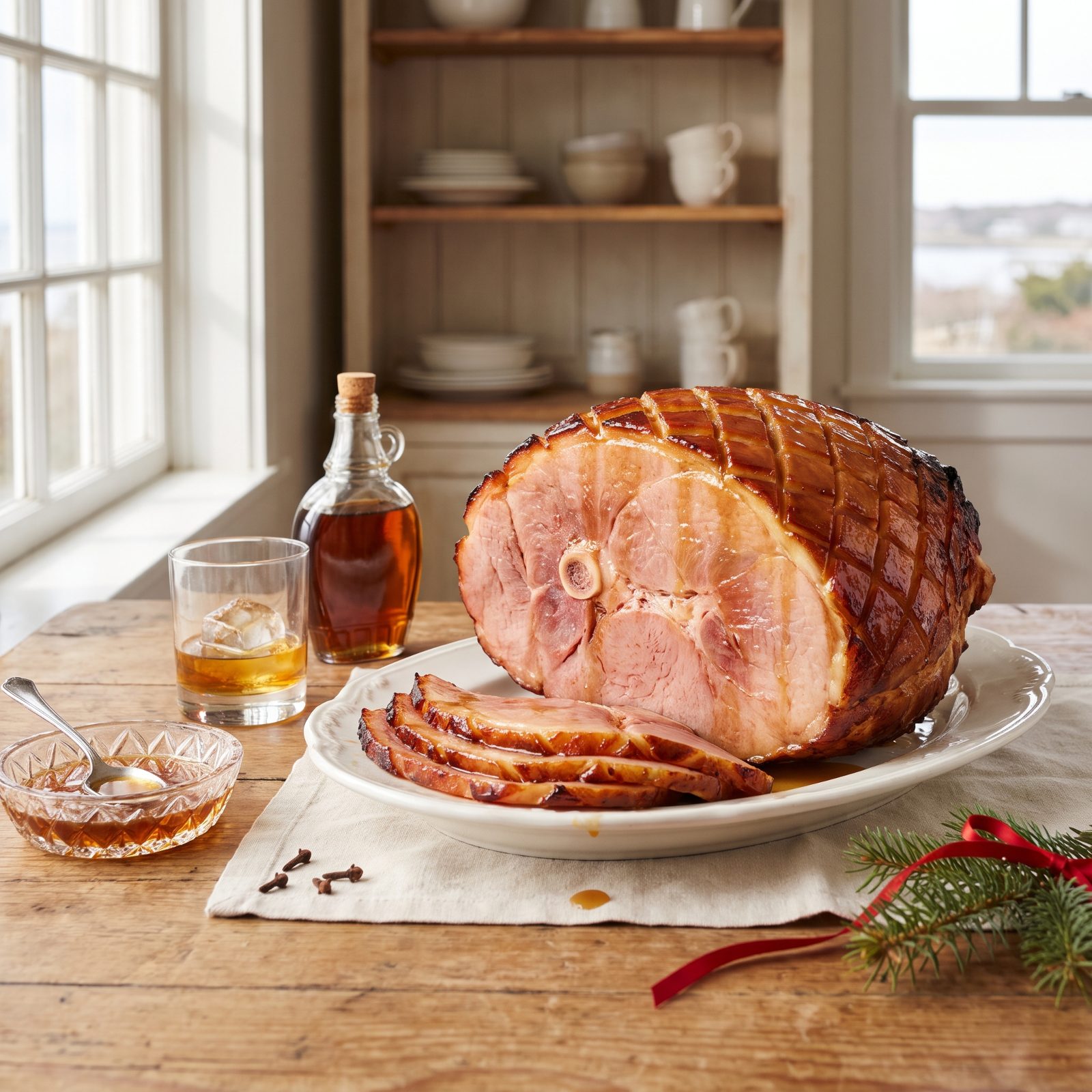
Real maple syrup and a good pour of bourbon make a glaze that smells like a holiday before the oven door’s even open. The alcohol cooks off and leaves behind that round vanilla-oak warmth, the maple goes deep and caramel, and the two together are almost too good on a dinner roll afterward.
Simmer two-thirds of a cup of real maple syrup with a quarter cup of bourbon and a tablespoon of Dijon until it tightens up slightly, maybe five minutes. Brush on three times in the last 45 minutes. Use the grade B maple if you’ve got it, the robust stuff, not the pale pancake syrup.
41. Sorghum Syrup and Cracked-Pepper Glaze
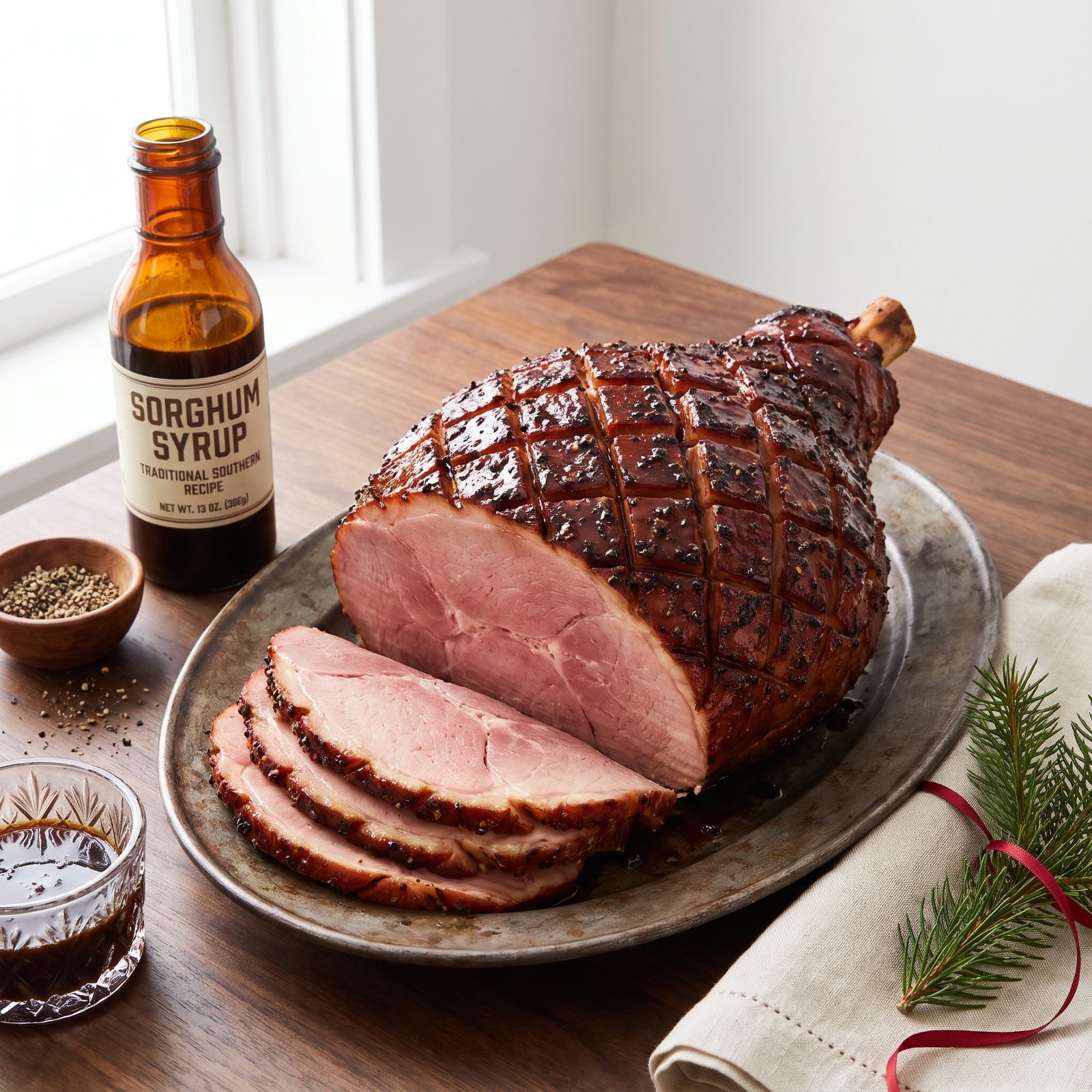
Sorghum is the Southern pantry’s answer to molasses — thinner, tangier, with a grassy sour note that plays strange and wonderful against ham. Half the country has never tasted it. The other half grew up with a tin of it on the breakfast table.
Whisk two-thirds of a cup of sorghum syrup with a tablespoon of coarse cracked black pepper and a splash of apple cider vinegar. Brush it on in the last half hour. The pepper blooms in the oven heat and gives you that sweet-then-warm finish that makes people slow down and try to figure out what the heck is in it.
40. Jellied Cranberry and Port Glaze
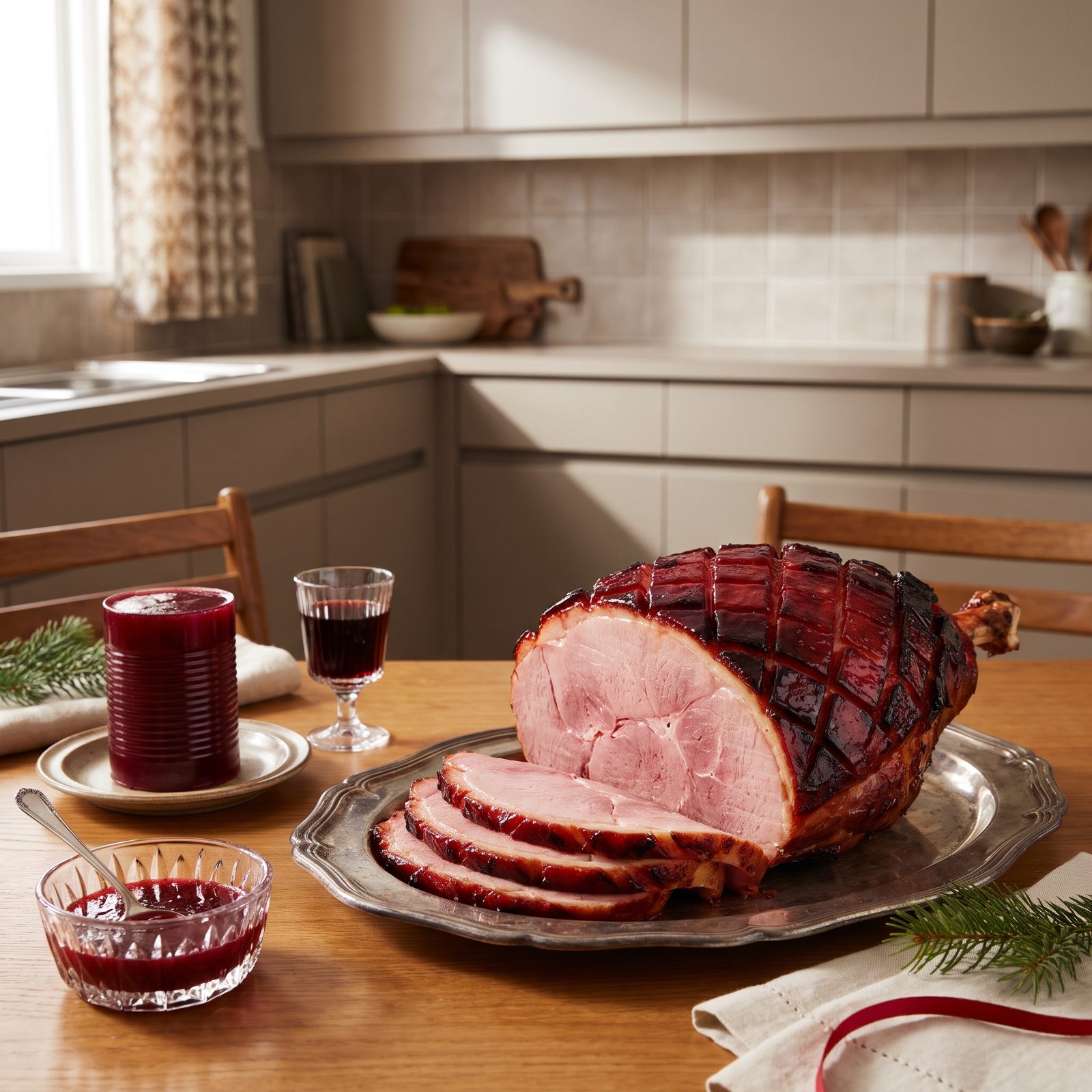
Yes, the can-shaped jellied cranberry with the ridges still on it. Don’t apologize for it. Melted down with a little port, it turns into a crimson glaze so deep it looks almost black at the edges, and it finally answers that eternal question of what to do with the cranberry nobody finished.
Melt a whole can of jellied cranberry with a quarter cup of ruby port and a pinch of allspice, whisk until it’s smooth and loose. Brush it on in two coats over the final 40 minutes. It gives you Thanksgiving and Christmas on the same plate, which is either genius or chaos depending on your family.
39. Peach Preserves and Fresh-Lemon Glaze
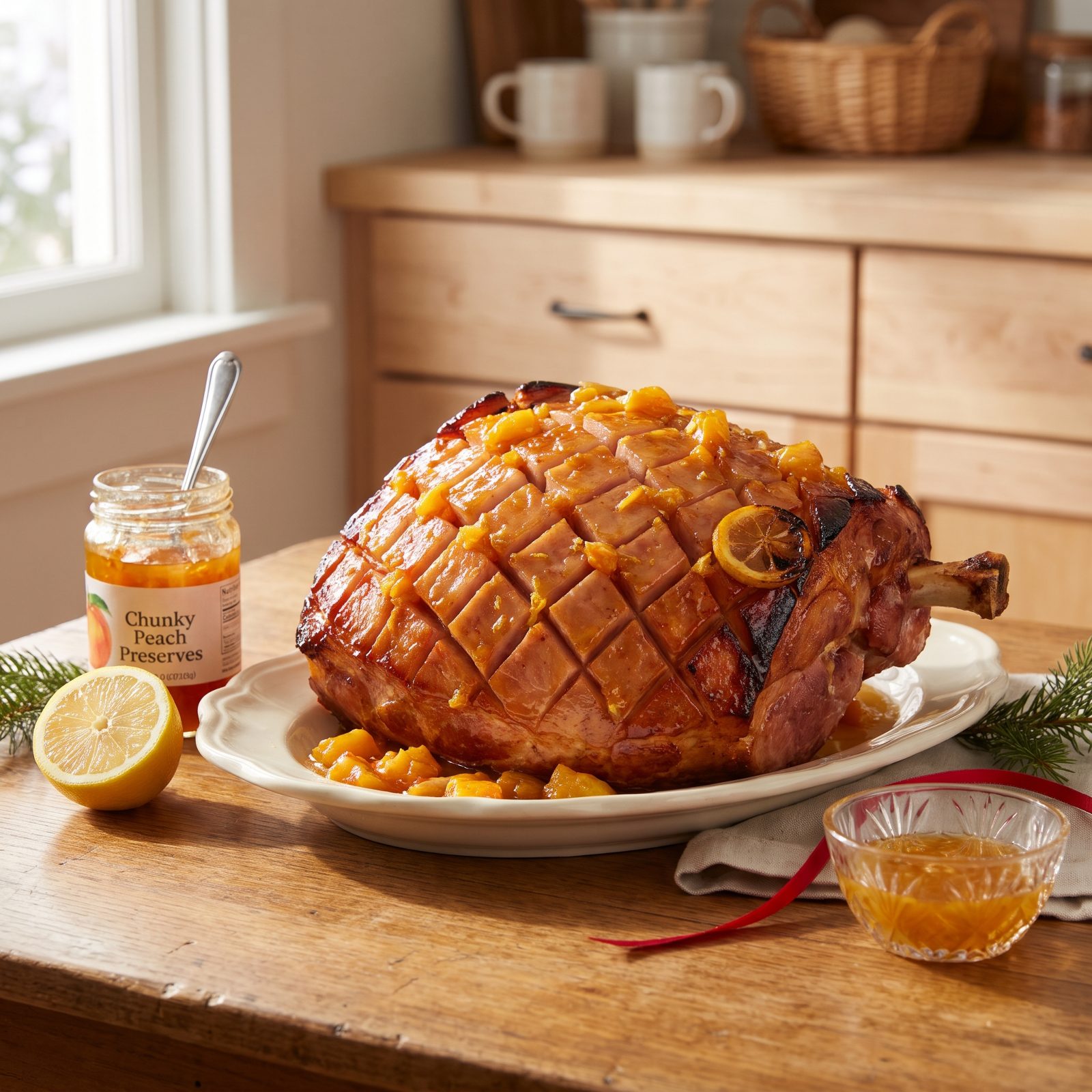
Peach preserves give you a glaze that tastes like summer wandered into December. Softer and rounder than apricot, a little floral, and the fresh lemon juice at the end keeps it from reading like pie filling. This one’s a sleeper. Nobody expects it and everybody asks about it.
Warm a cup of peach preserves with the juice of one lemon and a tablespoon of grated onion — believe it or not, old recipes swore by it. Brush on twice in the last 35 minutes. The lemon brightness against the salty ham is the whole trick.
38. Apple Butter and Cinnamon Glaze
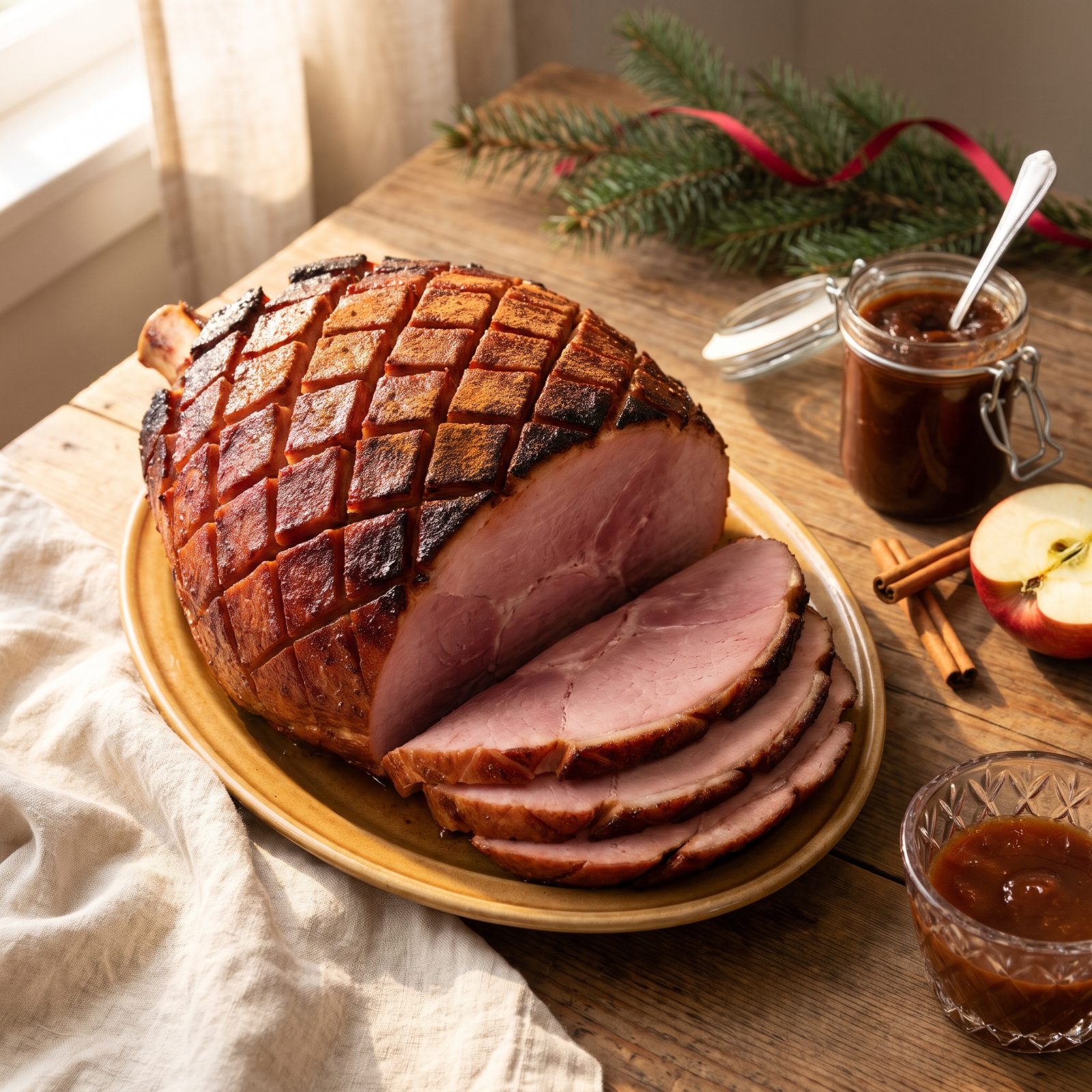
Apple butter is the thickest, most forgiving glaze here. It’s already cooked down to that dark spiced concentrate, so it clings to the scoring and doesn’t run off onto the pan. Cinnamon deepens it into something that smells like a cold porch and a woodstove.
Spread three-quarters of a cup of apple butter mixed with a teaspoon of cinnamon and a spoon of brown sugar right onto the scored fat with the back of a spoon. Bake the last half hour at 325 and it goes russet, setting into an almost paste-thick crust. Quietly the coziest of the spiced glazes.
37. Crabapple Jelly and Whole-Clove Glaze
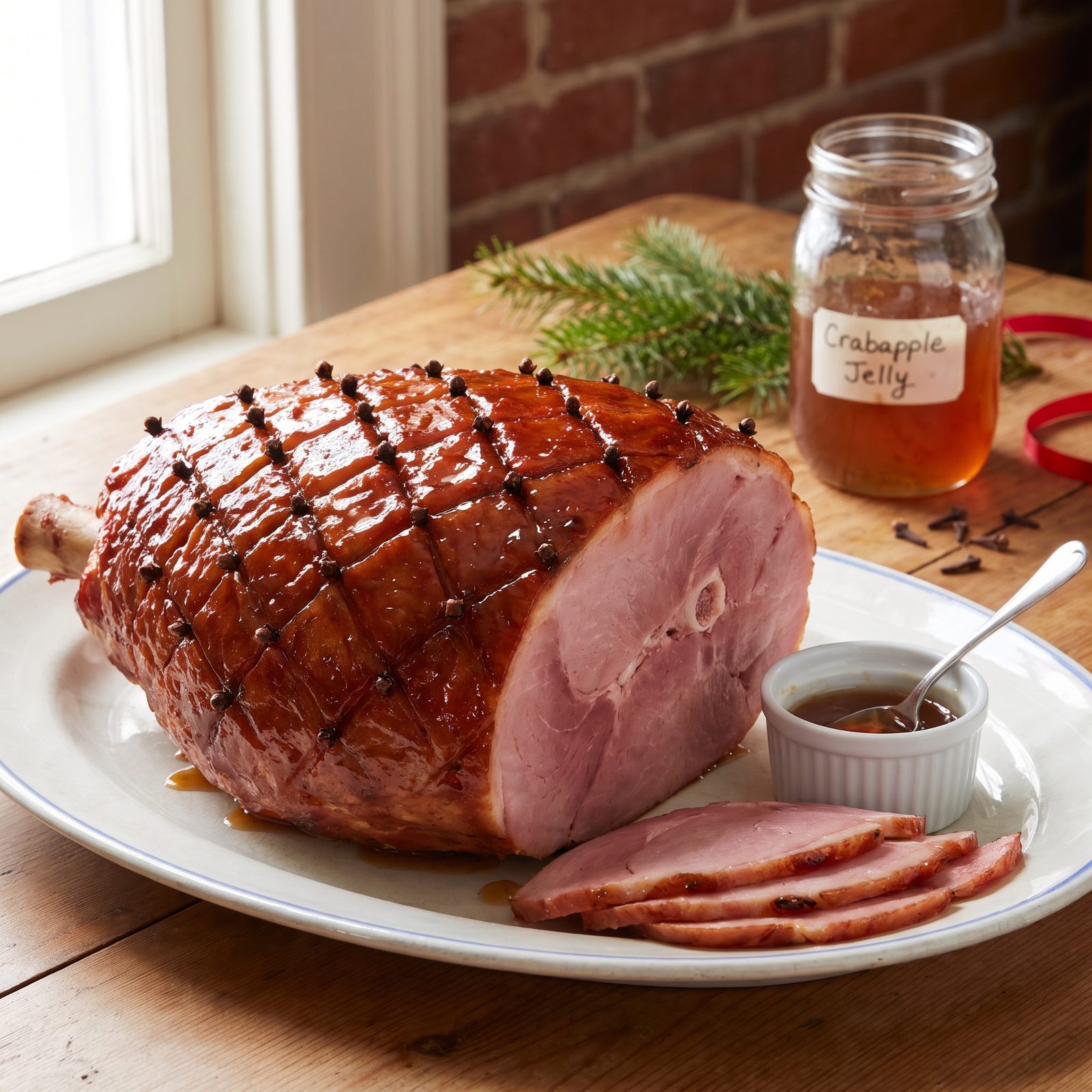
Crabapple jelly tastes like something your grandmother made because the tree out back dropped more fruit than anyone could eat. Tart, a little floral, brighter than apple. Brush it on a ham and it turns copper and glossy, and the whole cloves pressed into every score hand you a warm bite of Christmas in each slice.
Melt about a cup with a splash of water, brush it on during the last 30 minutes at 325°F, and baste twice. The cloves aren’t decoration. They perfume the fat as it caramelizes.
36. Quince Jelly and Mace Glaze
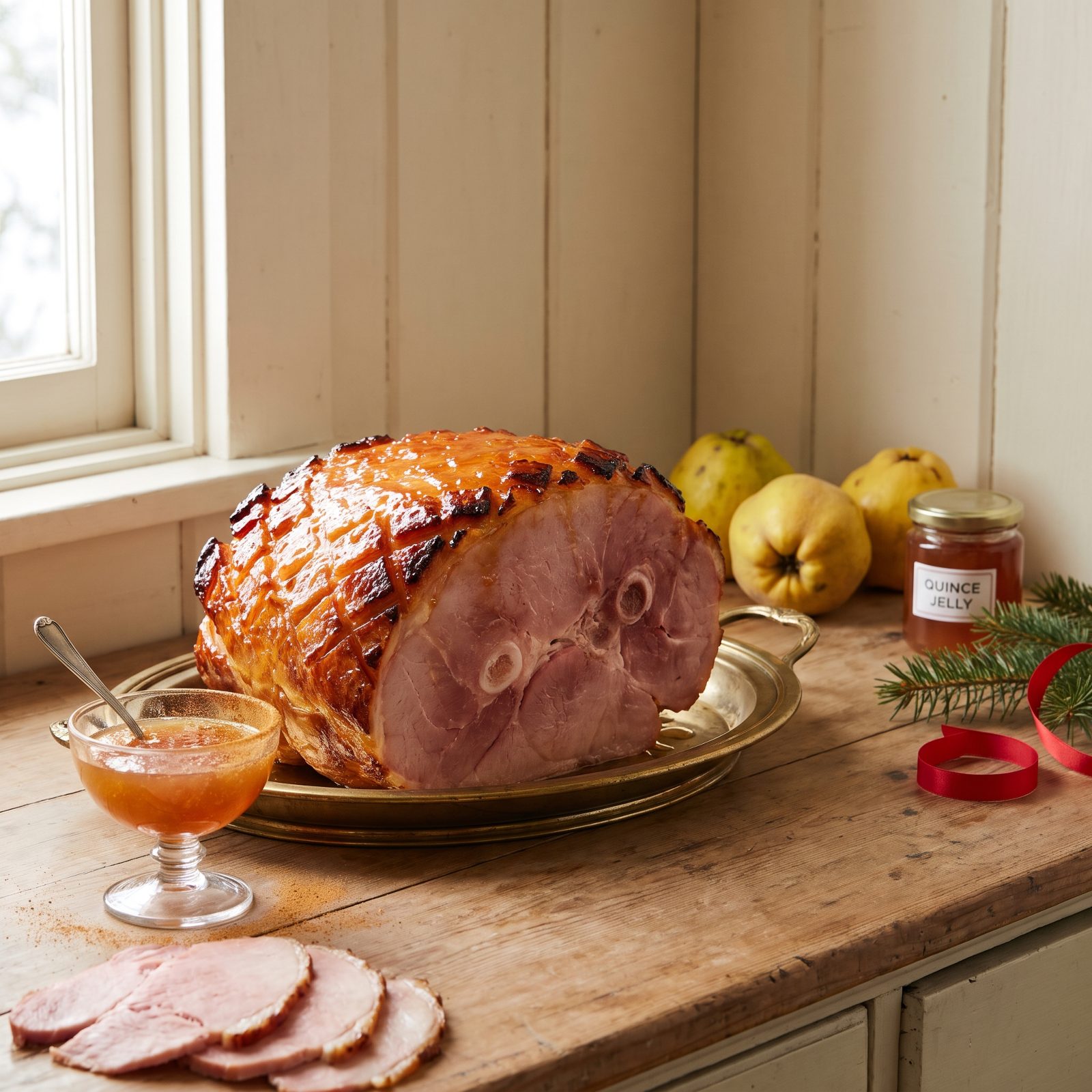
Quince is the fruit everybody’s great-aunt knew and nobody buys anymore. Raw, it’s hard and astringent. Cook it into jelly and it turns a honeyed rose-gold with a perfume somewhere between apple, pear, and old roses.
Thin it with a tablespoon of water, warm it until pourable, and whisk in a pinch of mace. Not nutmeg. Mace — the lacy outer shell — is softer and more floral, and it ruled the holiday spice rack before nutmeg crowded it out. Two coats over the last half hour, and the edges go a burnished amber that looks like stained glass.
35. Grape Jelly and Bottled Chili Sauce Glaze
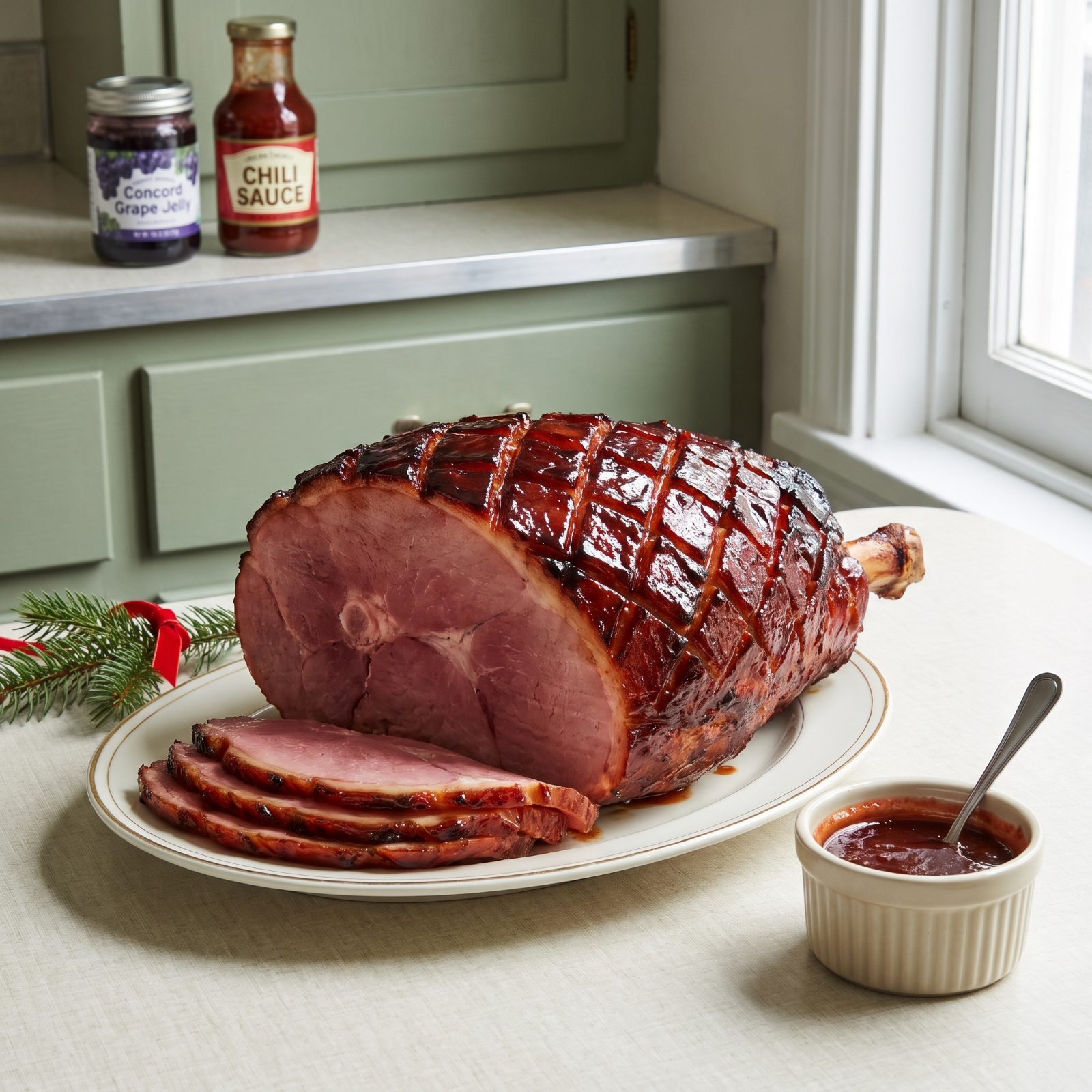
Yes, the meatball sauce. On a ham. Grape jelly and bottled chili sauce was the secret handshake of 1960s cocktail parties, and somebody smart figured out it belonged on the Christmas ham too.
The jelly brings sweet and that unmistakable Concord grape tang. The chili sauce brings tomato, vinegar, and a whisper of heat. Together they lacquer into a glossy, almost barbecue-dark coat.
Combine a cup of grape jelly with a half cup of chili sauce, simmer five minutes, brush on over the last 30 minutes. People will ask what’s in it. Tell them or don’t.
34. Mint Jelly and Cider Vinegar Glaze
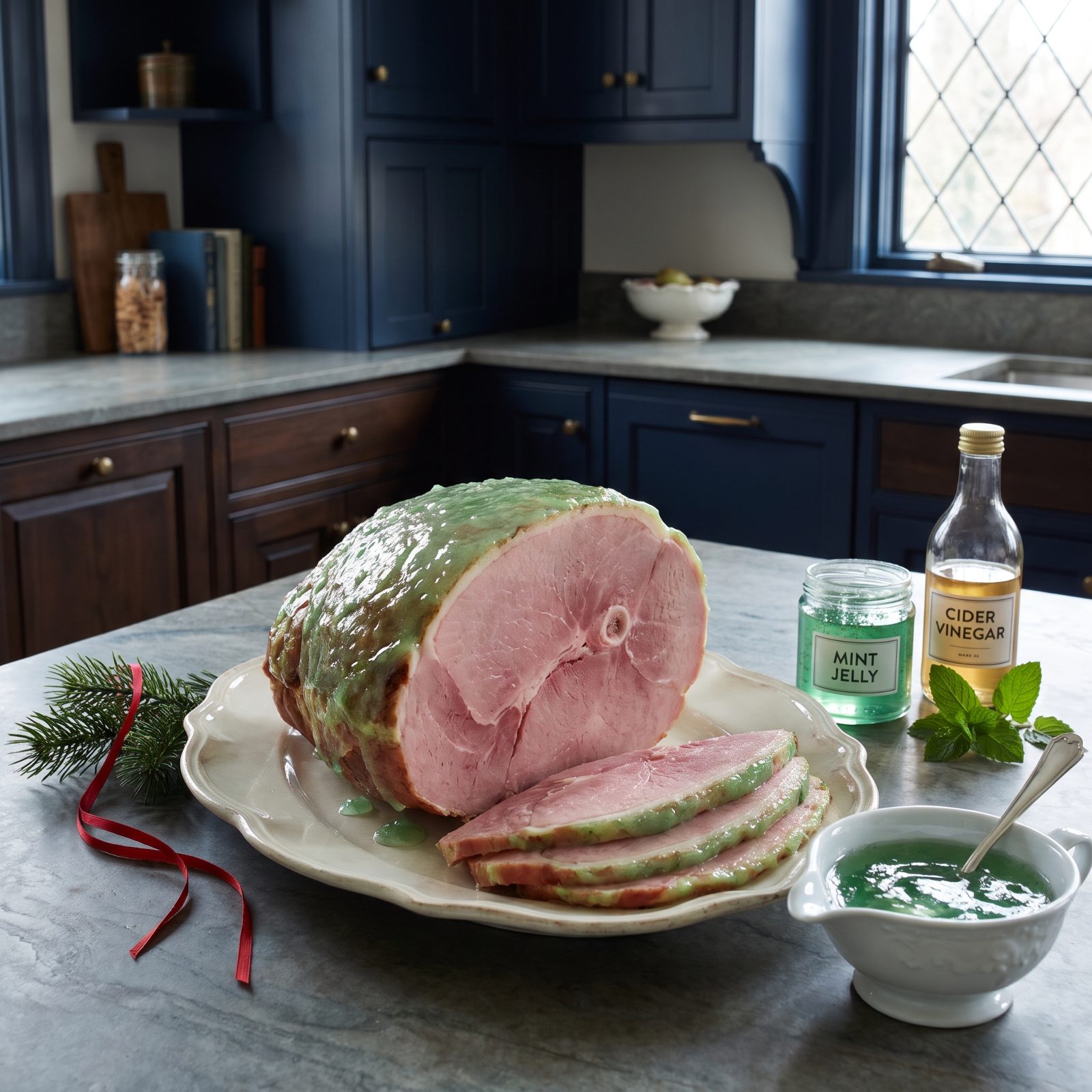
Mint jelly got shoved onto lamb and forgotten everywhere else. Shame, really. On ham, cut with cider vinegar, it reads cool and bright against the salty pork while cloying sweet glazes just sit there being sweet.
Warm a cup of that wobbly green stuff with two tablespoons of cider vinegar until it loosens, then brush it over the ham in the final 25 minutes at 325°F. The vinegar sharpens the sweetness so it doesn’t go flat. That jade color glowing through the caramelized ridges? Pure holiday postcard.
33. Coca-Cola and Brown Sugar Glaze
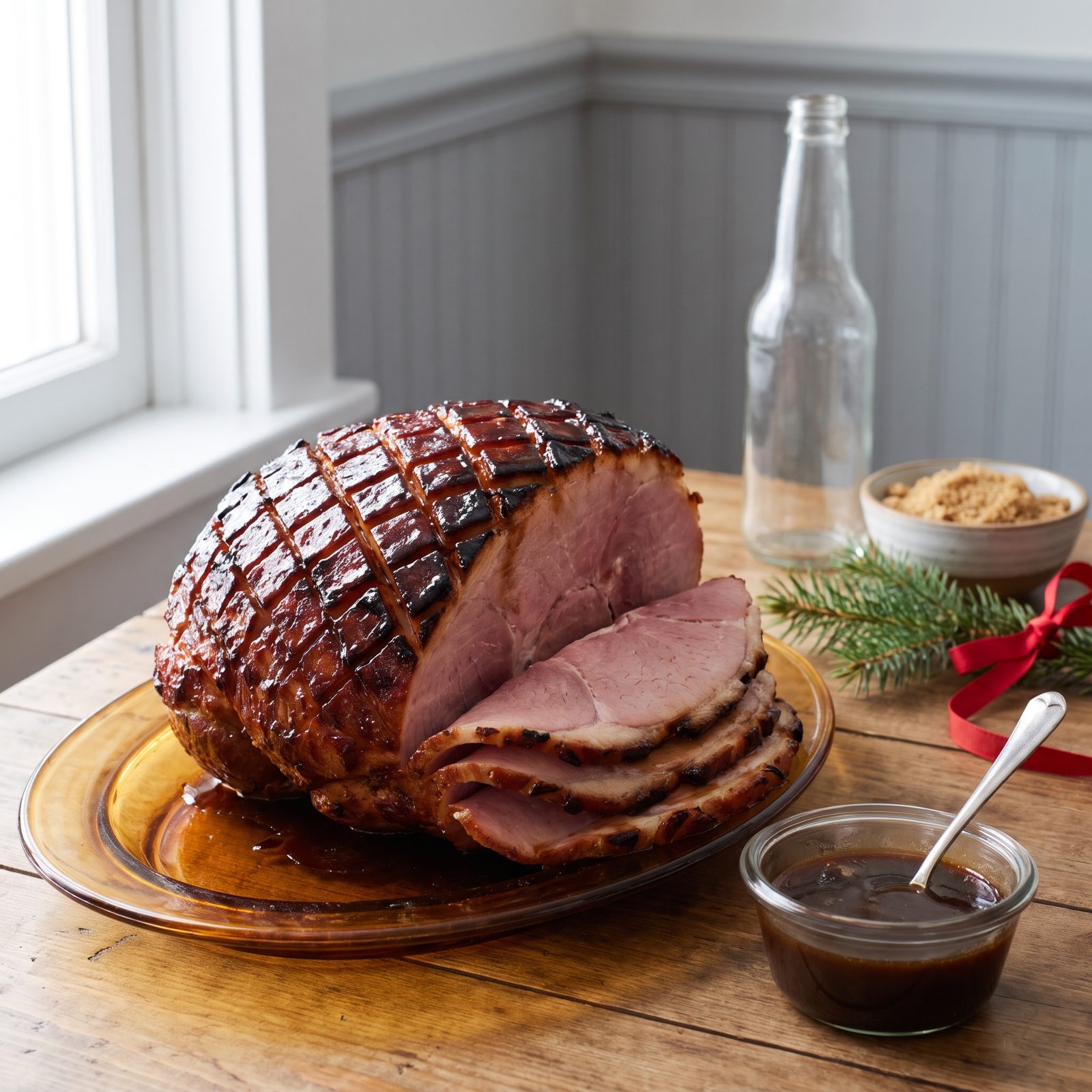
Cola in cooking isn’t a gimmick. It’s chemistry. All that sugar and acid and the trace of spice in the syrup reduces into a glaze that caramelizes faster and darker than plain sugar ever could.
Simmer a cup of regular cola — not diet, the sweeteners won’t caramelize — with a cup of packed brown sugar until it thickens to a loose syrup. Brush it on in layers over the last 40 minutes, basting every ten. Each coat builds that lacquered, glass-dark shell Southern cooks have sworn by for generations.
32. Root Beer and Molasses Glaze
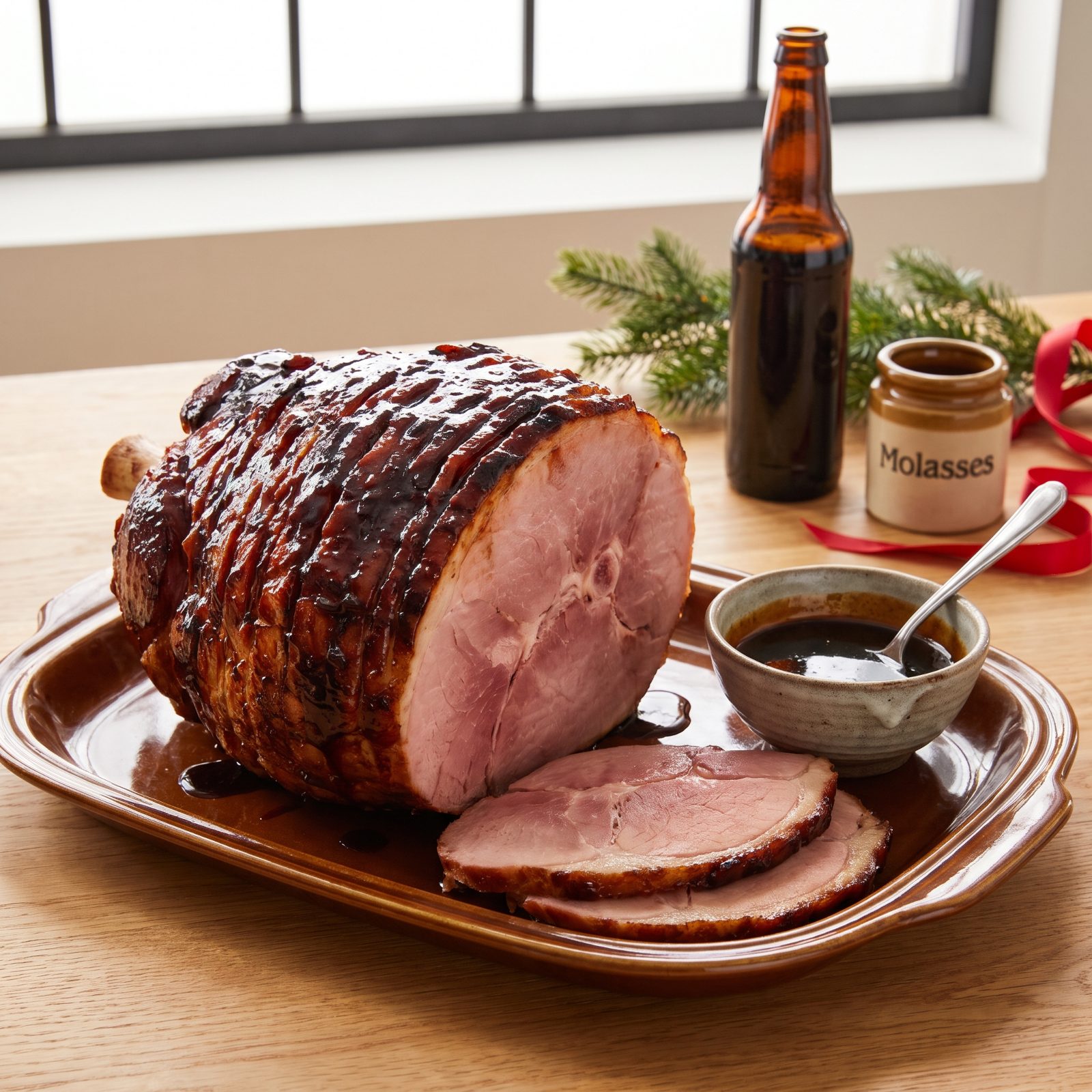
Root beer carries sassafras, wintergreen, licorice, vanilla — all those old soda-fountain notes that happen to taste like the holidays. Pair it with blackstrap molasses and you’ve got a glaze that’s smoky, bittersweet, and darker than any jam could manage.
Reduce two cups of root beer with a third of a cup of molasses down to a thick syrup, about 15 minutes of hard simmering. Brush the ham every ten minutes for the last 40. The molasses pushes a slight bitter edge against the sweet soda, and that tension is exactly what keeps a glaze interesting instead of candy-flat.
31. Strong Coffee and Brown Sugar Glaze
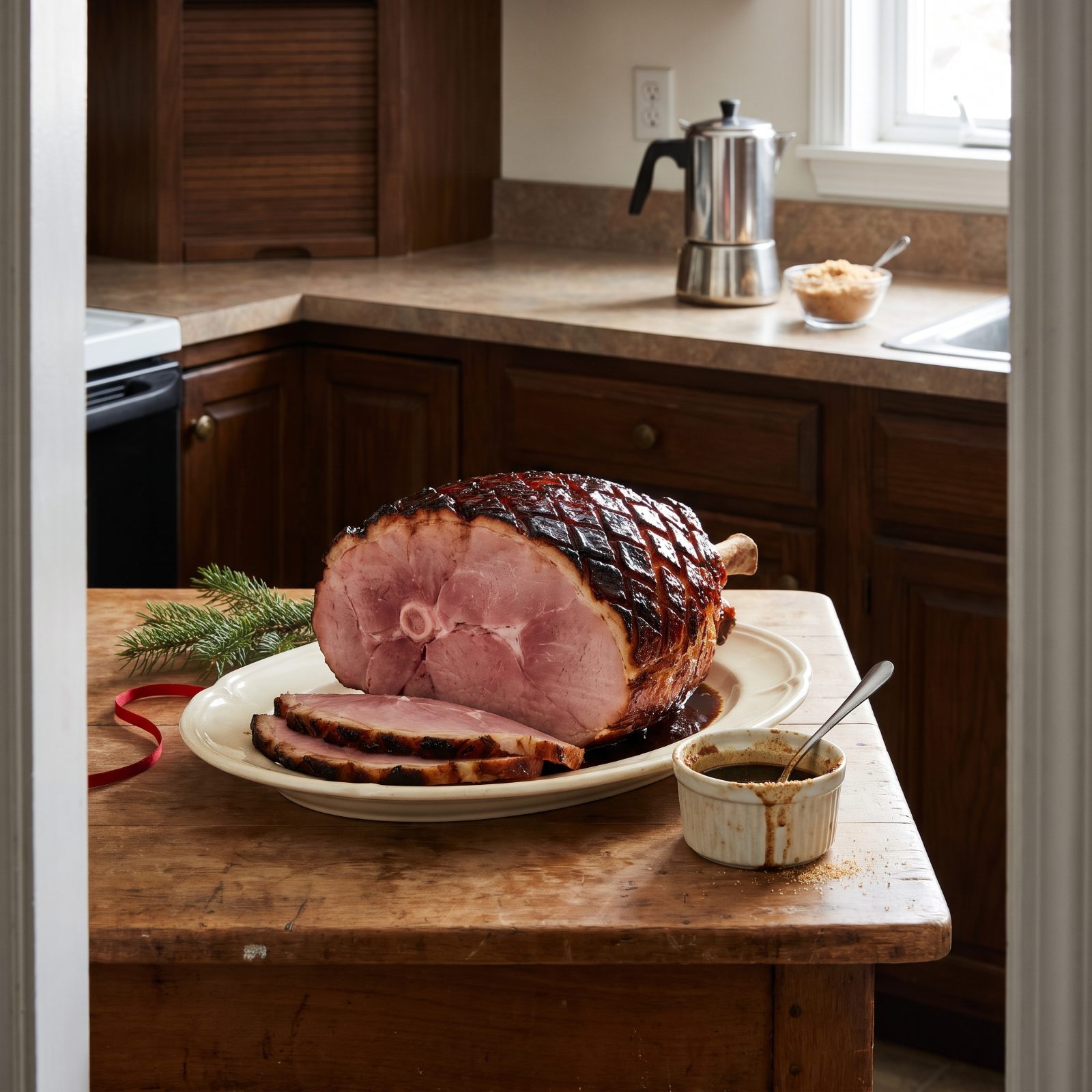
This one sounds odd until you taste it. Strong black coffee, the kind that sat on the percolator burner too long, does on a ham what it does nowhere else: it deepens everything without tasting like coffee at all.
Cook a cup of strong brewed coffee with a cup of brown sugar until it reduces by half and turns syrupy. Brush it on over the final 35 minutes. What you get is roasted bitterness underneath the sweet, the same reason a pinch of coffee ends up in good chili and good chocolate cake. It just makes the ham taste more like itself.
Coffee doesn’t make the ham taste like coffee. It makes the ham taste more like ham.
30. Black Tea, Orange, and Clove Glaze
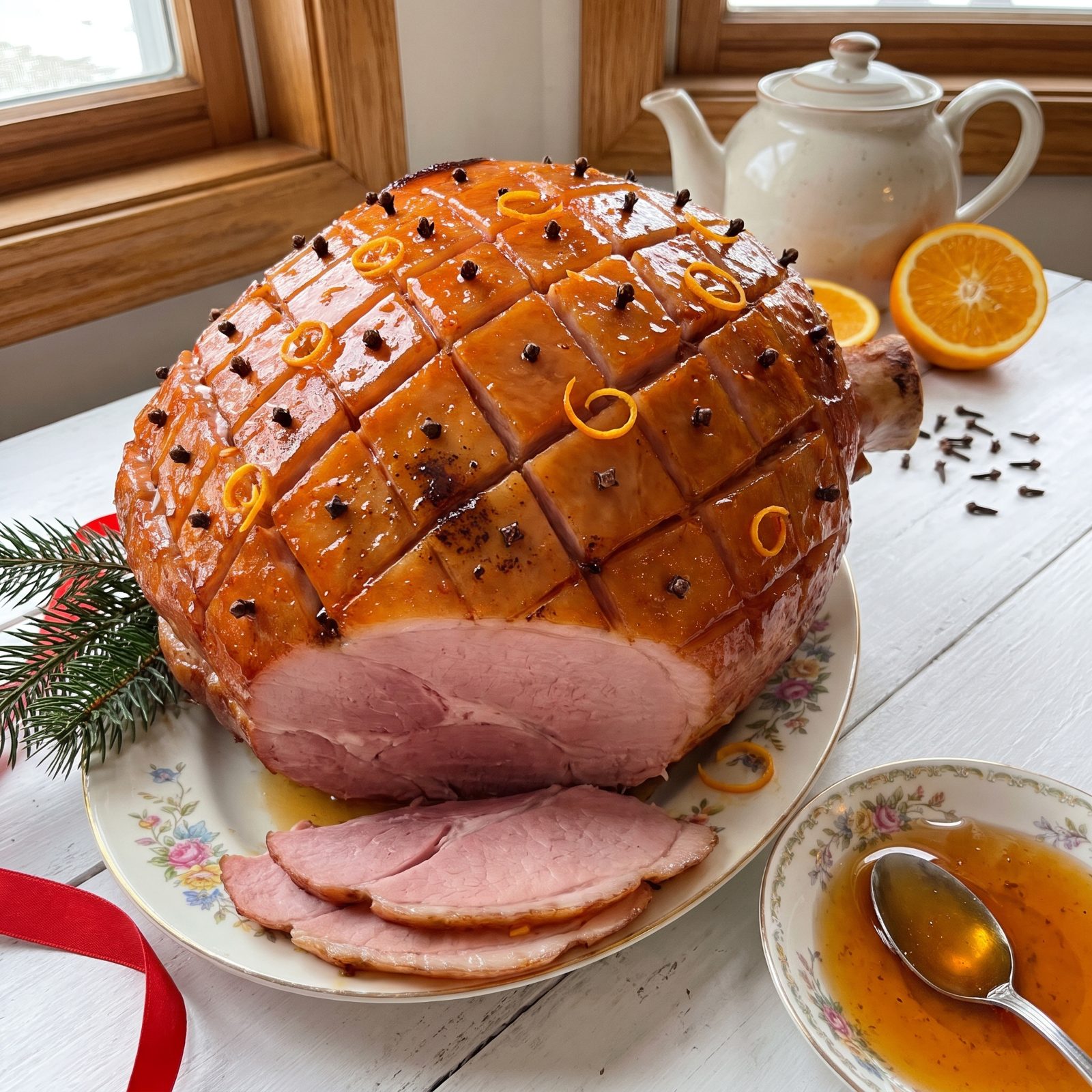
Steep the tea strong, like you forgot the bag in the pot. Its tannins do something quietly useful on pork, cutting richness the way a squeeze of lemon cuts fish. Orange and clove turn it into something that smells like a decorated tree.
Brew a cup of black tea extra strong, stir in a half cup of orange marmalade, the zest and juice of one orange, and a dozen whole cloves. Simmer ten minutes, then brush on over the last 30. The marmalade’s bitter peel keeps the sweetness honest, and the glaze sets to a clear bronze that smells like the whole season in one pan.
29. Boiled Cider and Mustard-Seed Glaze
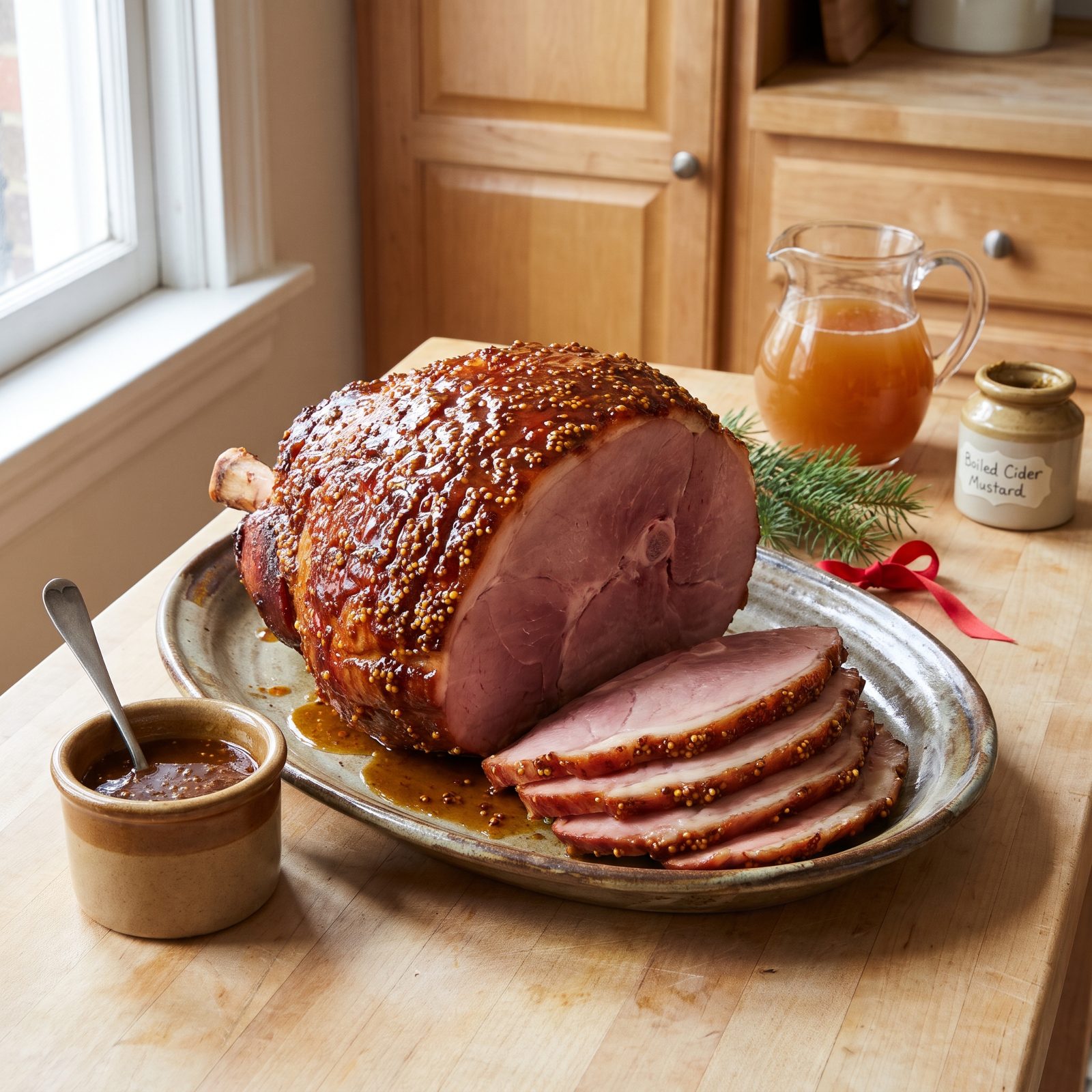
Boiled cider is apple cider cooked down until it’s practically molasses — dark, tart, intensely apple. New England farmers made it to keep the harvest through winter, and a jug lasts most of a year in the cellar.
You need very little. Whisk a third of a cup of boiled cider with two tablespoons of whole mustard seeds and a spoonful of brown sugar, then brush it over the ham in the last 25 minutes. The seeds pop against your teeth, little bursts of heat in the tart-sweet glaze. Most grown-up ham on this list, hands down.
28. Pear Nectar and Cardamom Glaze
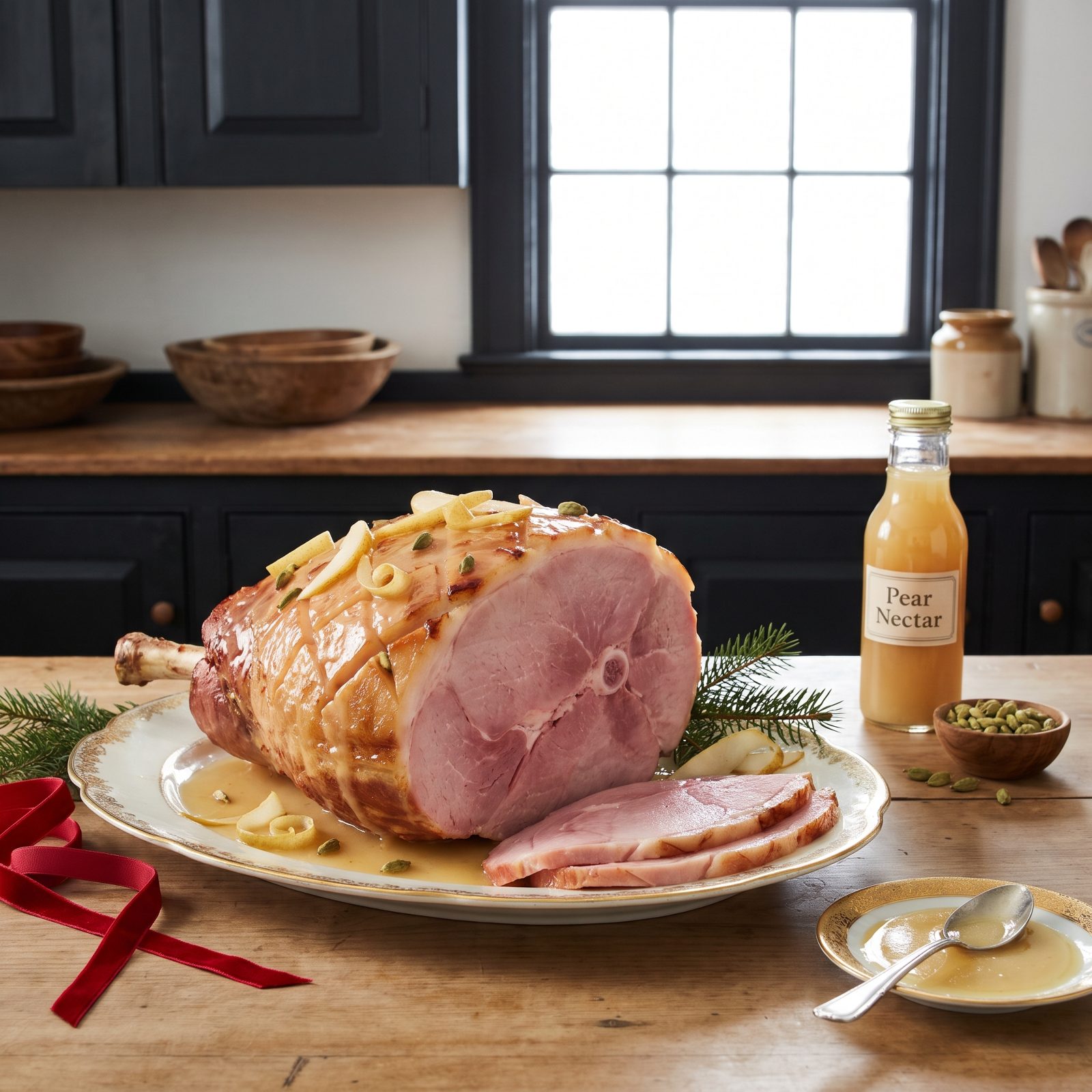
Canned pear nectar was a pantry regular back when every store stocked it in the juice aisle. Softer and more floral than apple, it gives you a glaze that stays pale gold instead of going dark — a nice change on a table full of brown food.
Reduce a cup of pear nectar with a quarter cup of honey and the seeds crushed from six green cardamom pods. Cardamom smells like a bakery and expensive perfume at once, and it loves pear. Simmer until syrupy, glaze over the final half hour. Light, fragrant, and not a clove in sight.
27. Prune Juice and Dark Molasses Glaze
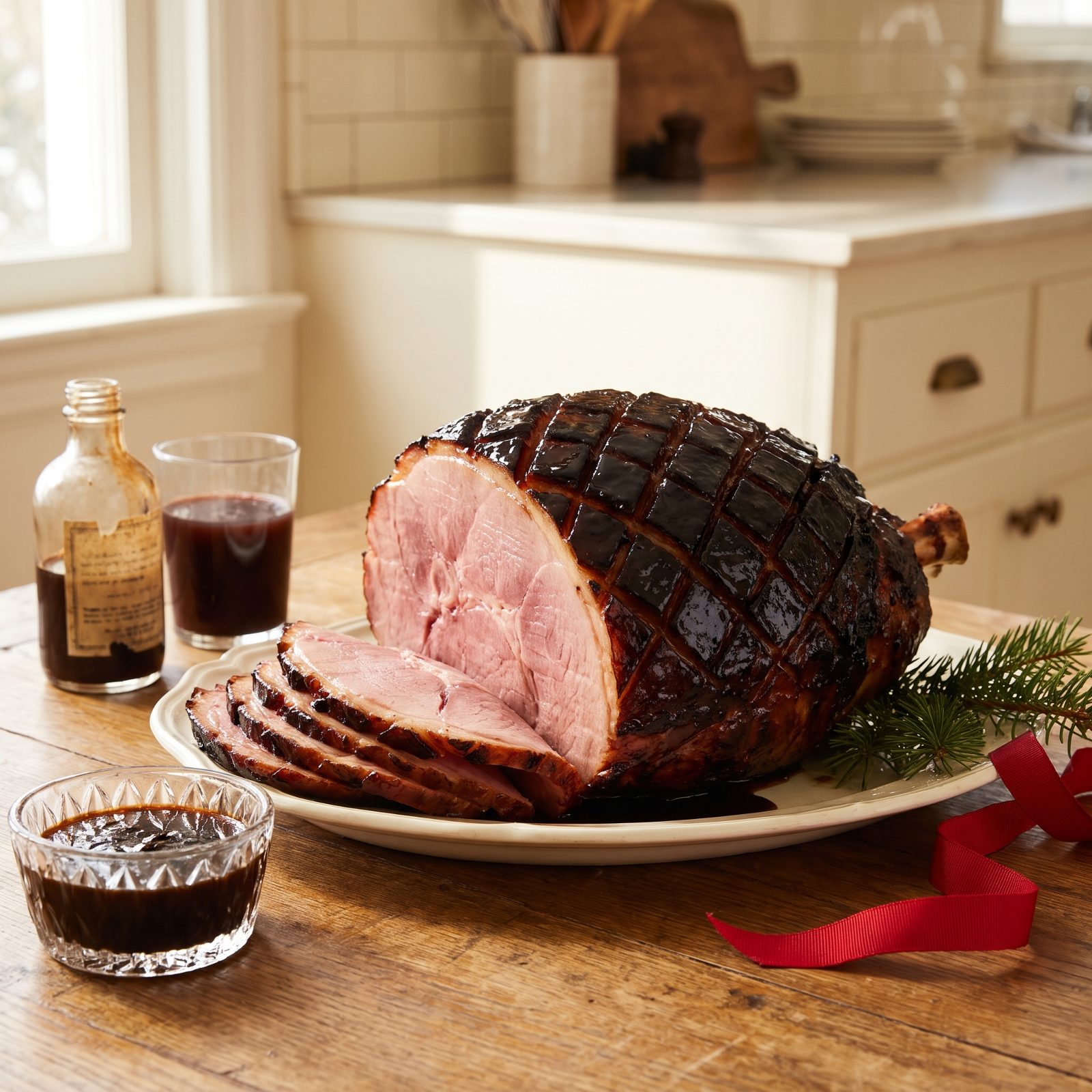
Before prunes became a punchline, cooks reached for them because they do something sugar can’t. Prune juice brings a dark, almost smoky sweetness. Pair it with dark molasses and you get backbone, plus that near-black lacquer you want on a holiday ham.
Simmer a cup of prune juice with half a cup of dark molasses until it coats the back of a spoon — maybe ten minutes. Brush it on over the last forty minutes at 325°F, basting every fifteen. Keep an eye on it near the end, and the whole thing caramelizes into crisp mahogany edges without turning bitter.
26. Raisin, Vinegar, and Mustard Glaze
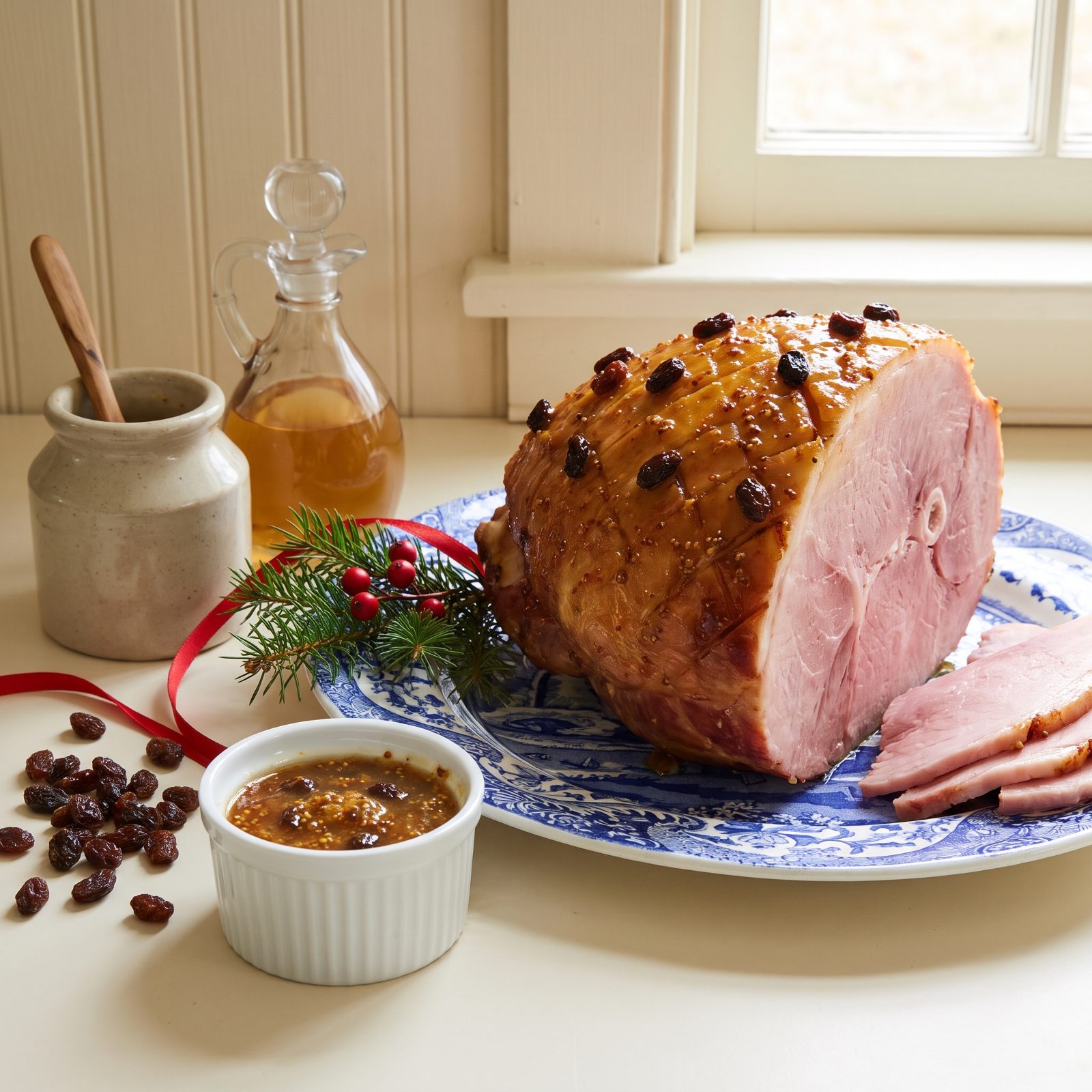
This one tastes like a church-supper ham from 1958, and I mean that as the highest compliment. Raisins plump up in the hot glaze and go jammy, the cider vinegar cuts the sweetness, and the mustard keeps the whole thing from tipping into dessert.
Soften a cup of raisins in a saucepan with a quarter cup of cider vinegar and two tablespoons of brown mustard. Stir in brown sugar to taste, then loosen with a splash of water. Spoon it over the ham in the final half hour so the raisins don’t scorch. Sweet, sharp, and savory in one bite — which is exactly why it hung on in old community cookbooks long after fancier recipes came and went.
25. Mincemeat and Brandy Glaze
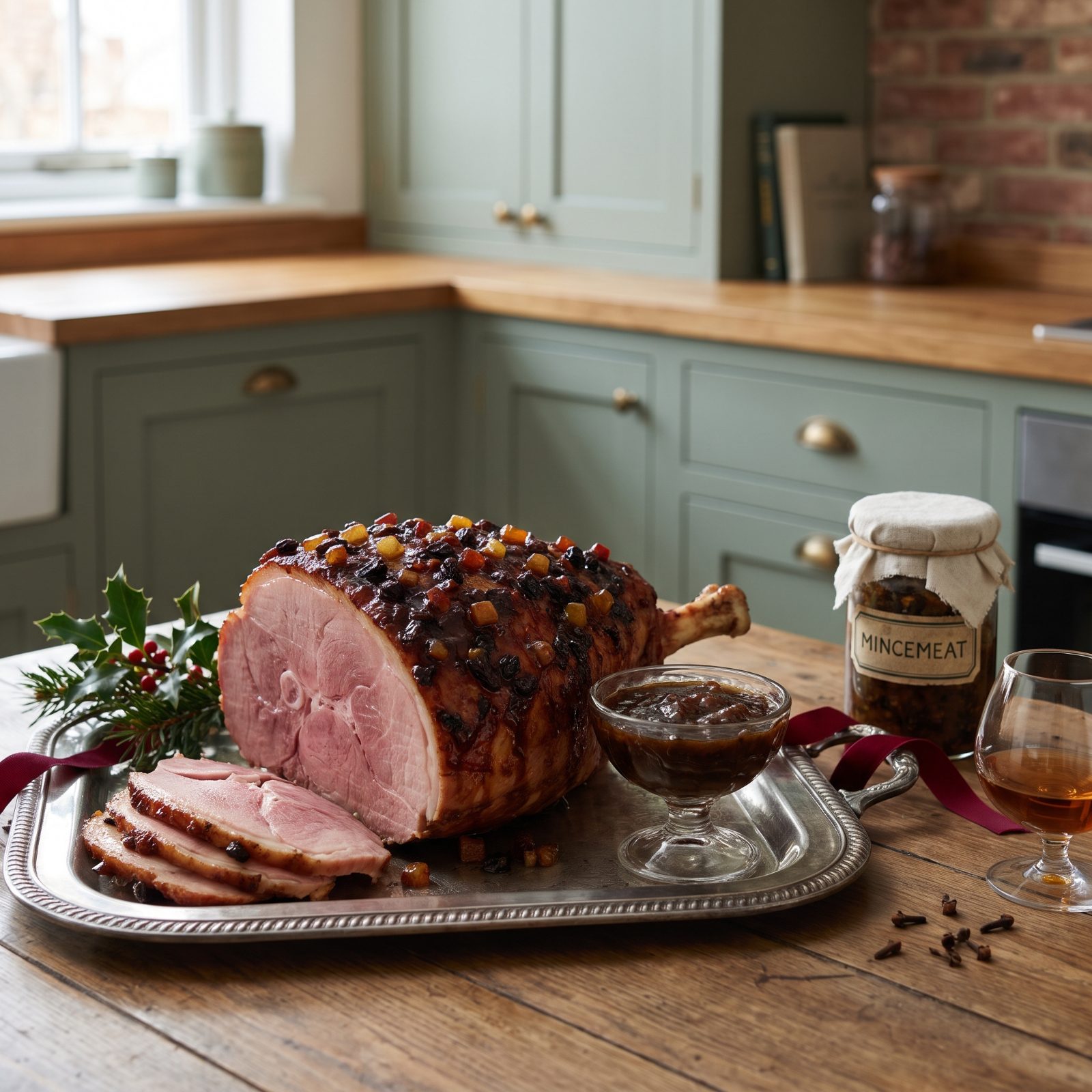
Mincemeat used to live in every holiday pantry, and smart cooks didn’t save it only for pie. A jar of it thinned with brandy makes a glaze loaded with raisins, warm spice, and citrus peel — all of it already doing the work for you.
Warm half a jar of mincemeat with a couple of tablespoons of brandy and a spoonful of brown sugar until it’s brushable, then coat the ham for the last forty-five minutes at 325°F. The brandy cooks off and leaves a fragrant, dark-spiced crust that smells like December.
One jar did double duty: pie on the dessert table, glaze on the ham. Nothing wasted, everything festive.
24. Gooseberry Jam and Ginger Glaze
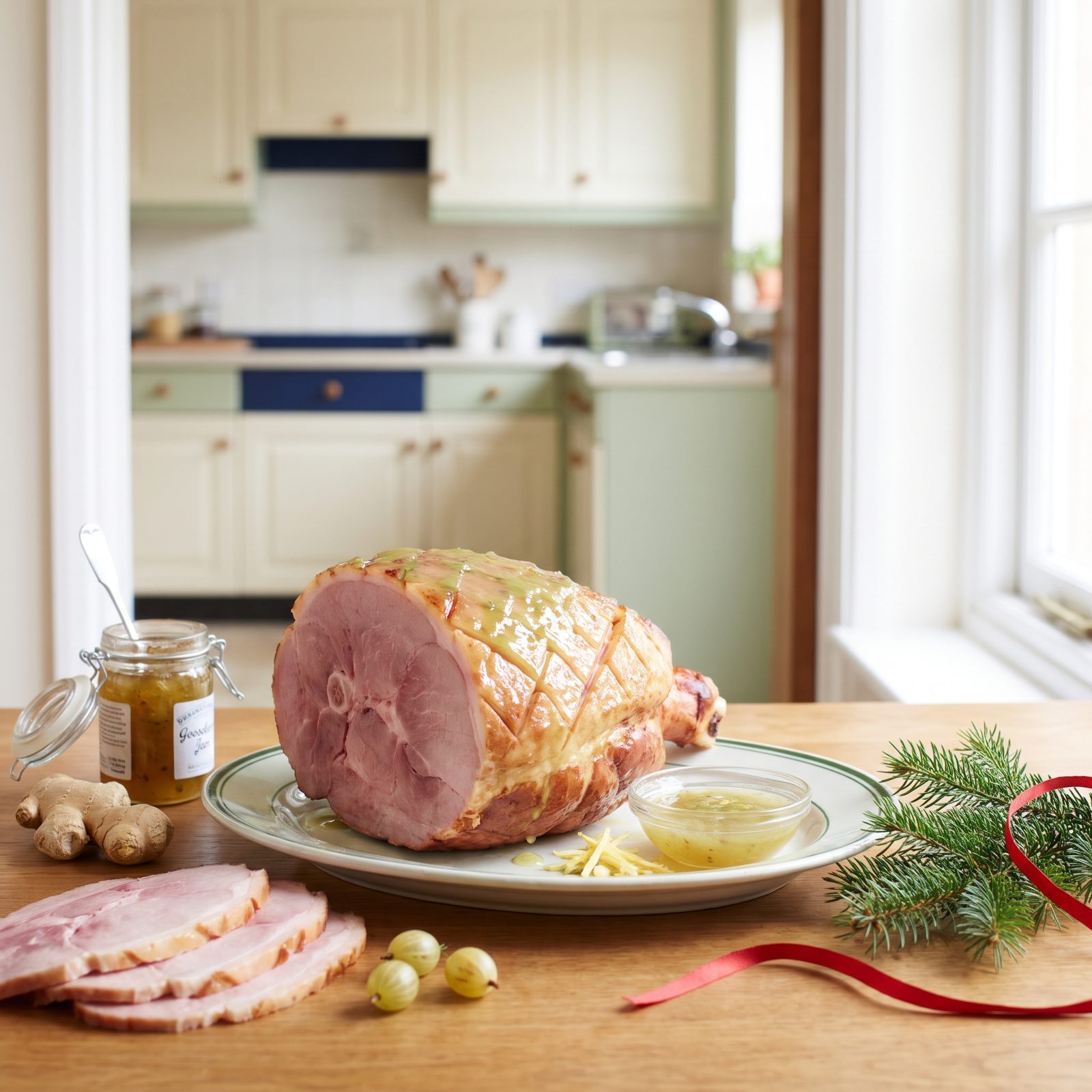
Gooseberry jam has a tartness most preserves can’t touch — almost green apple with an edge — and it’s made for salty ham. Fresh ginger wakes it up and keeps it from reading as too fruity.
Melt a cup of gooseberry jam with a tablespoon of grated fresh ginger and a squeeze of lemon over low heat. Strain if you want it sleek, leave the ginger in if you want bite. Brush it on in the last half hour. The glaze goes glassy and golden, with just enough sour to keep you reaching for another slice.
23. Fig Preserves and Dry Sherry Glaze
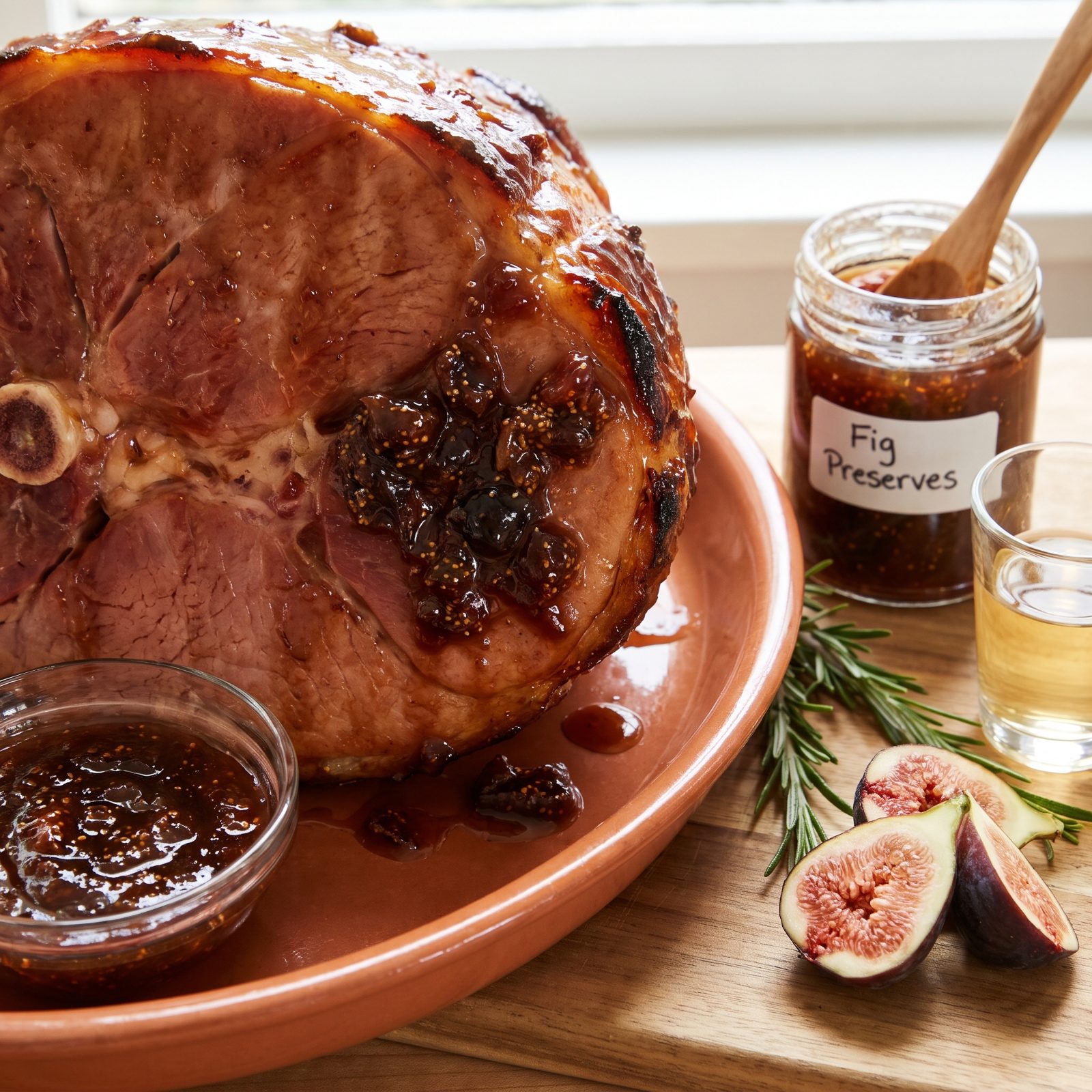
Fig preserves melt into something close to liquid velvet, and dry sherry gives them a grown-up, slightly nutty finish that plain fruit glazes miss. This is the one for a quieter, more elegant holiday table.
Warm a cup of fig preserves with a quarter cup of dry sherry and a pinch of salt until spoonable. Brush it generously over the ham for the final forty minutes, basting twice. The figs caramelize into dark, jammy pockets along the scoring, and the sherry leaves a faint warmth underneath. One warning — skip the sweet sherry here. It tips over fast.
22. Date Syrup and Orange-Zest Glaze
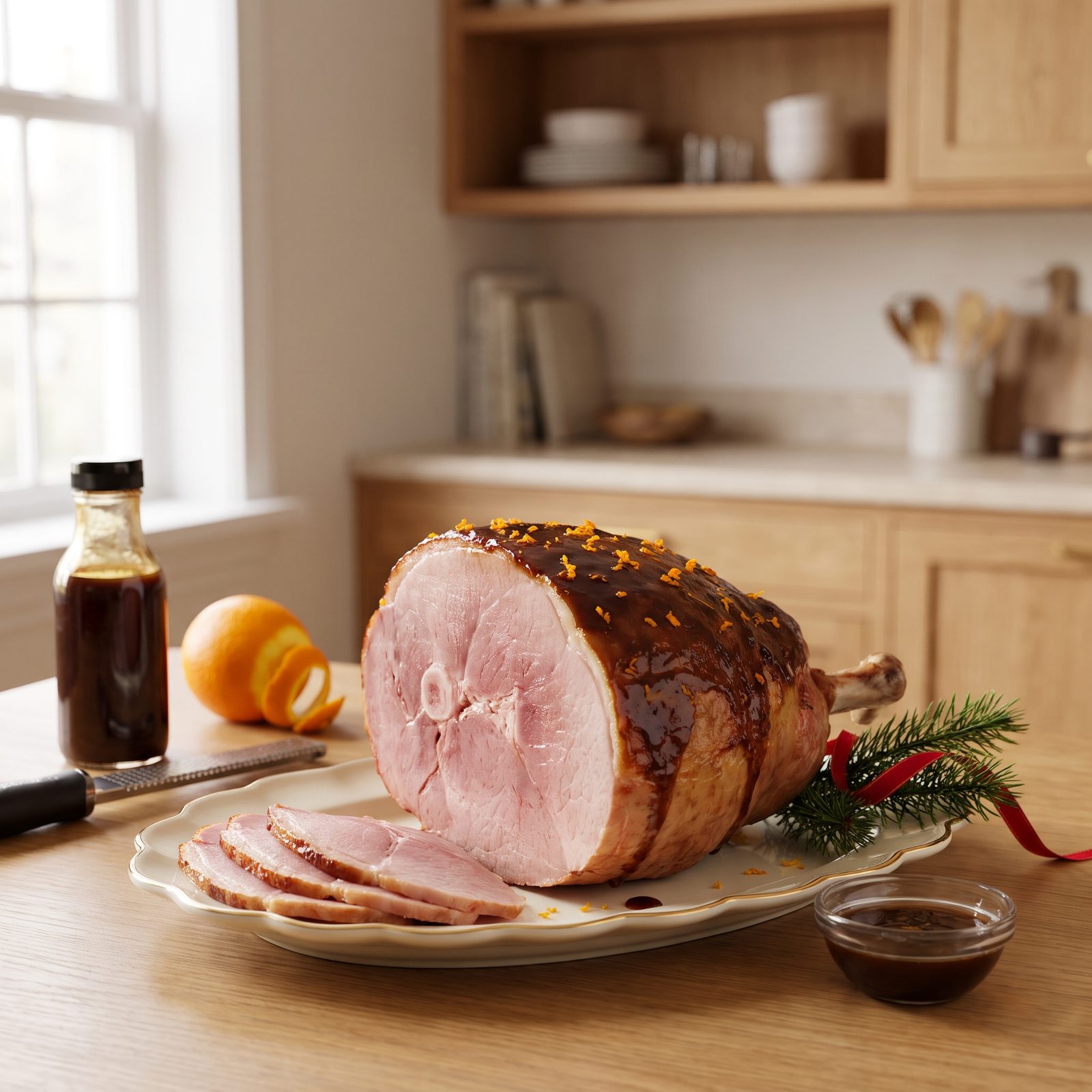
Dates were the holiday sweet in a lot of households long before the candy aisle took over, and date syrup makes a glaze that’s deep and nearly toffee-like without a grain of refined sugar. Orange zest keeps it bright.
Whisk half a cup of date syrup with the zest of a whole orange and a splash of its juice, then brush it on over the last thirty minutes. The syrup clings and caramelizes into glossy dark edges, while the zest hits your nose before the first bite does.
21. Spiced Tomato Preserves Glaze
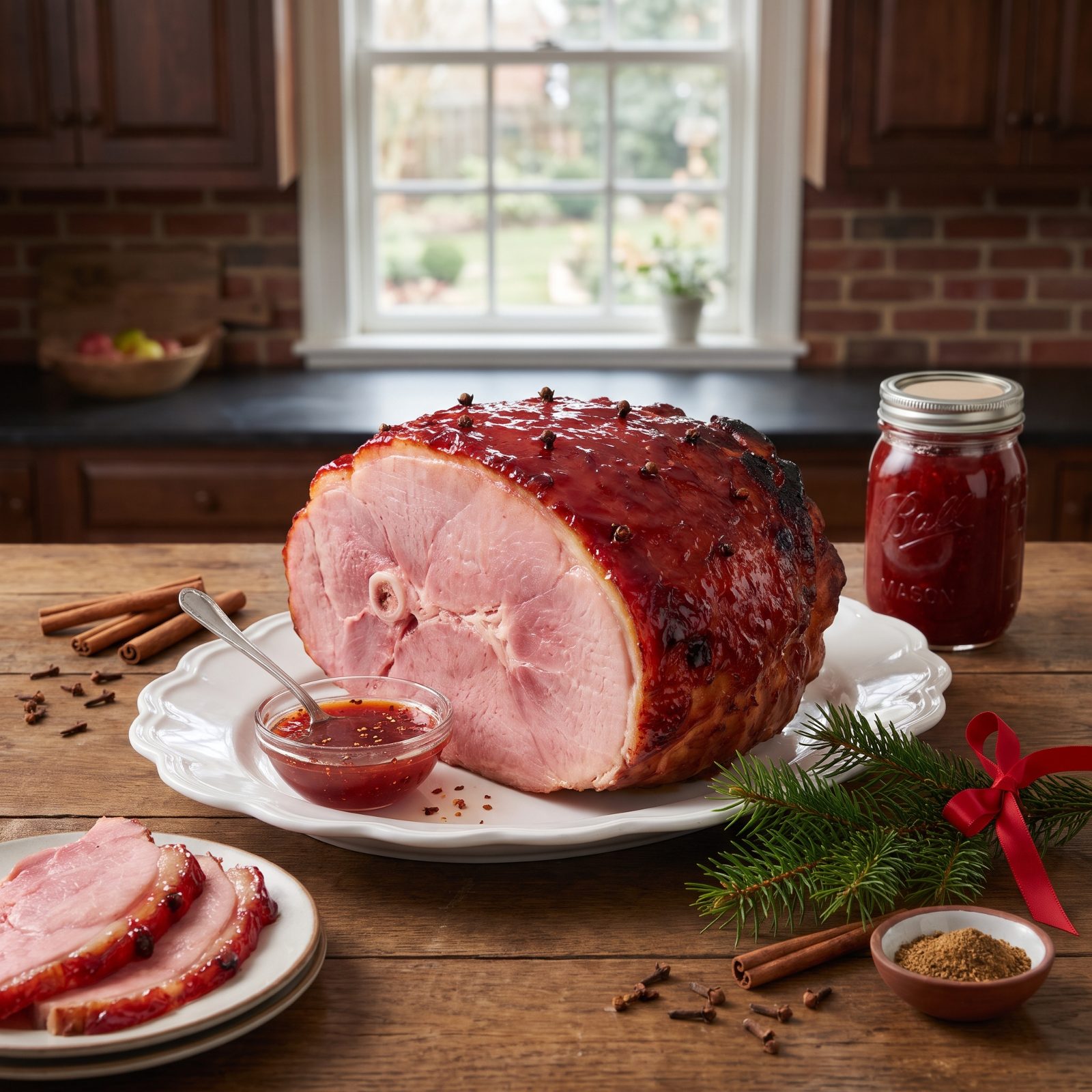
Tomato preserves sound strange until you taste them. Old Southern and farmhouse cooks put up ripe tomatoes with sugar and warm spice into something between jam and chutney, and on ham the result is remarkable — sweet, a little tangy, spiced like mulled cider.
Spread or brush the preserves over the ham, stud with a few cloves, and bake the last forty minutes at 325°F. They glaze into a glossy ruby crust with edges that catch and caramelize. If you’ve only known tomatoes as sauce, this will reset what you think they can do on a holiday table.
20. Bread-and-Butter Pickle Syrup Glaze
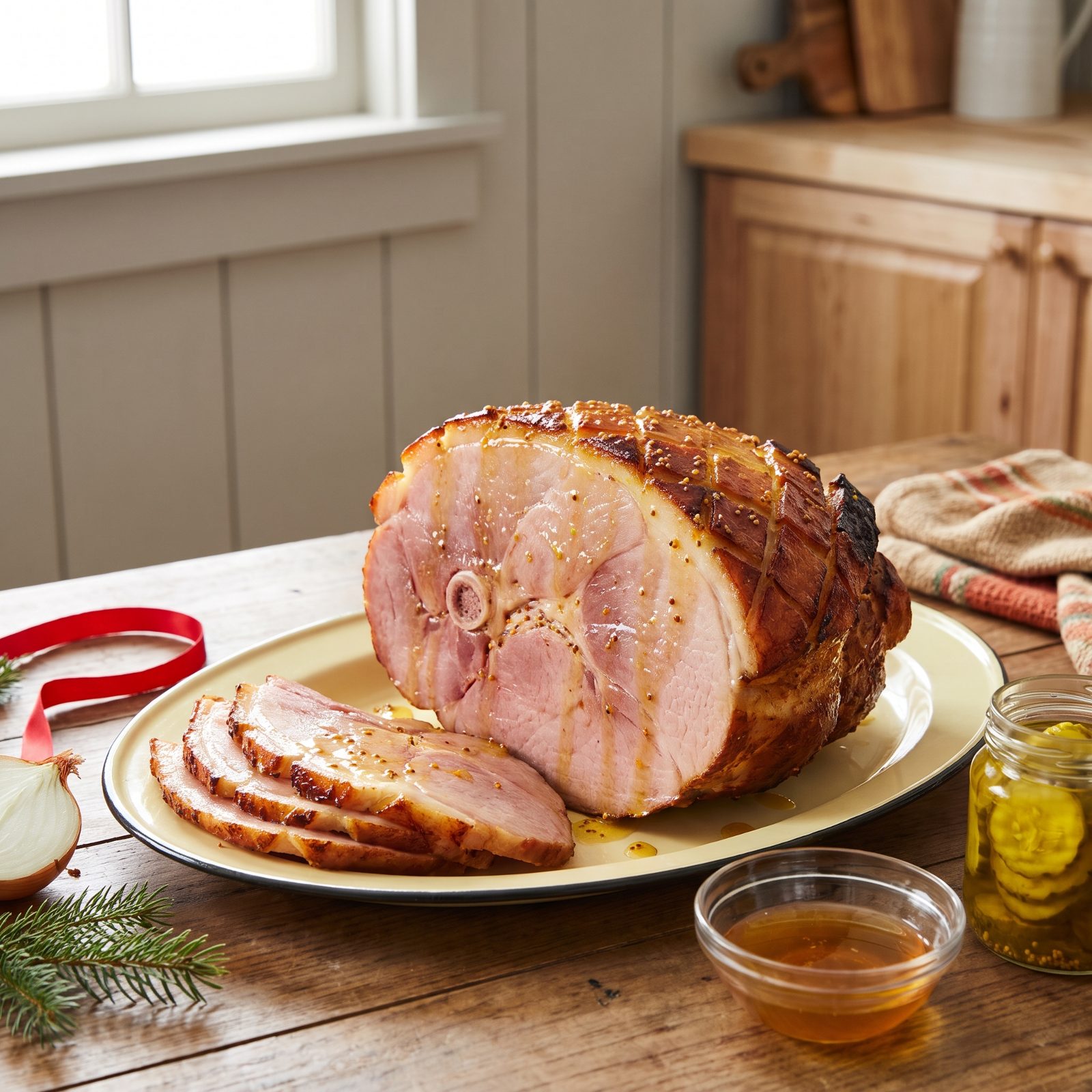
Never pour that pickle juice down the drain. The syrup left in a jar of bread-and-butter pickles is sugar, vinegar, mustard seed, turmeric, and onion, already perfectly balanced. It’s a glaze waiting to happen, and thrifty cooks have known it for generations.
Pour off a cup of the syrup, reduce it by half with a spoonful of brown sugar, and brush it over the ham for the last thirty minutes. You get a tangy-sweet lacquer with little mustard seeds caught in the crust and a faint golden color from the turmeric. Zero waste, genuinely good.
19. Boiled Brown Sugar and Vinegar Glaze
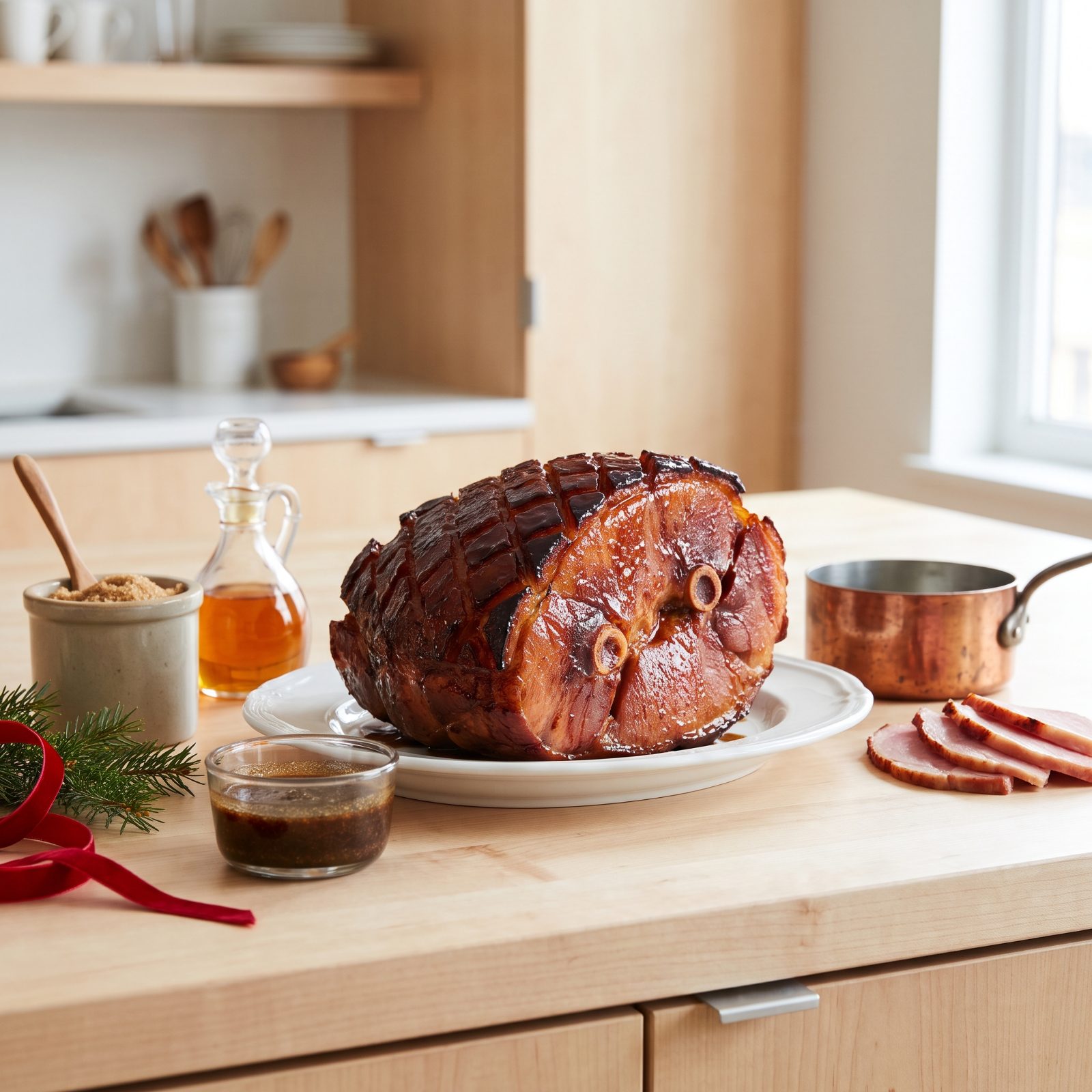
This is the grandmother of all ham glazes — two ingredients and nothing to hide behind. Brown sugar boiled with vinegar until it threads sets into an almost candy-like crust, sweet up front and clean on the finish.
Boil a cup of packed brown sugar with a third of a cup of cider vinegar until it thickens slightly, a few minutes of real bubbling. Brush it on hot over the last half hour, basting once or twice. The vinegar is the whole trick. Without it you’ve got cloying sugar; with it you’ve got balance. I chased fancier glazes for years and overlooked this one. It still beats most of them.
18. Bourbon and Toasted-Pecan Glaze
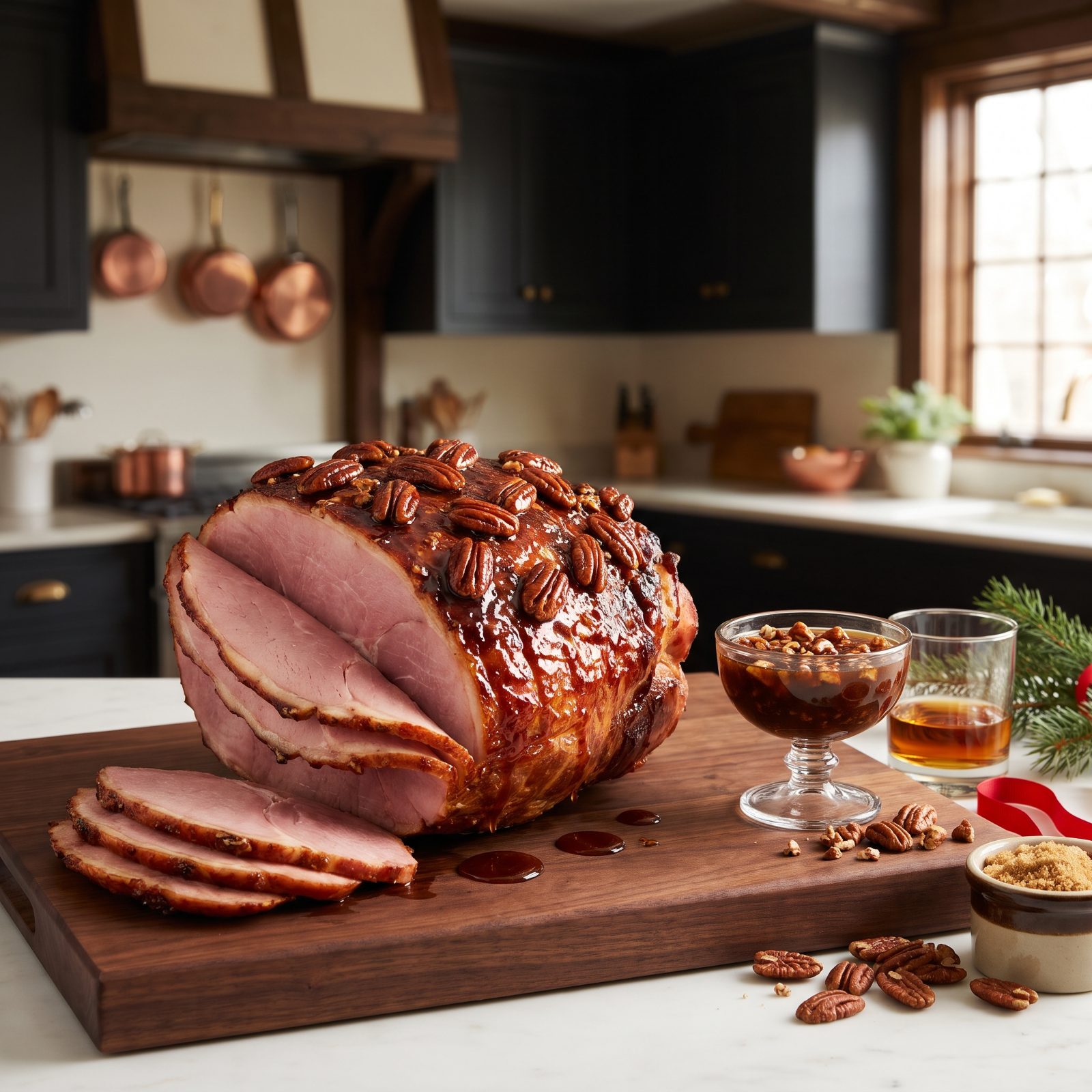
Here’s where a Southern holiday table often ends up: bourbon and pecans. The bourbon cooks down into a warm caramel depth, the toasted pecans go glossy and crunchy on top, and the ham underneath drinks up all that smoky sweetness.
Simmer a cup of brown sugar with a quarter cup of bourbon and two tablespoons of butter until syrupy, then fold in a handful of toasted, roughly chopped pecans. Spoon it over the ham in the last twenty-five minutes so the nuts crisp without burning. Baste the pecans back on if they slide off. Smells like a steakhouse and a bakery at once — and it’s the kind of glaze people ask about before they’ve finished chewing.
17. Brown Ale and Mustard Glaze
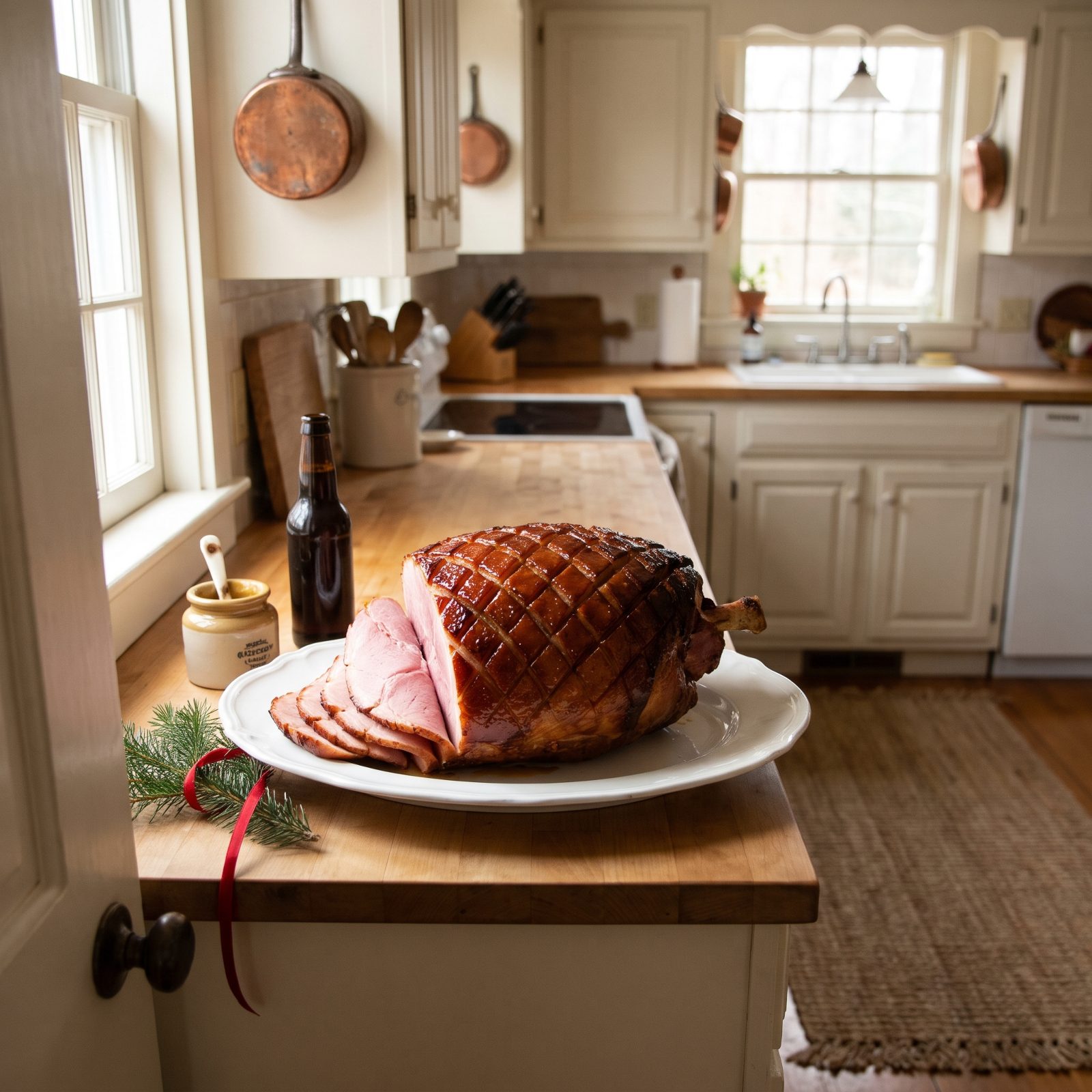
Brown ale cooks down into something between butterscotch and malt bread, and when you whisk it with sharp English mustard you get a glaze that argues with the ham’s sweetness instead of agreeing with it. That tension does all the work.
Reduce a bottle of nut-brown ale with brown sugar until it coats a spoon, then stir in Colman’s mustard and a spoon of molasses. Brush it on in the last 40 minutes, re-coating every 15. The sugars in the beer caramelize hard at the edges and go glassy. I used to pour the ale straight over the ham and wonder why it ran off into the pan. Reduce it first. No shortcut there.
16. Hard Cider and Sage Glaze
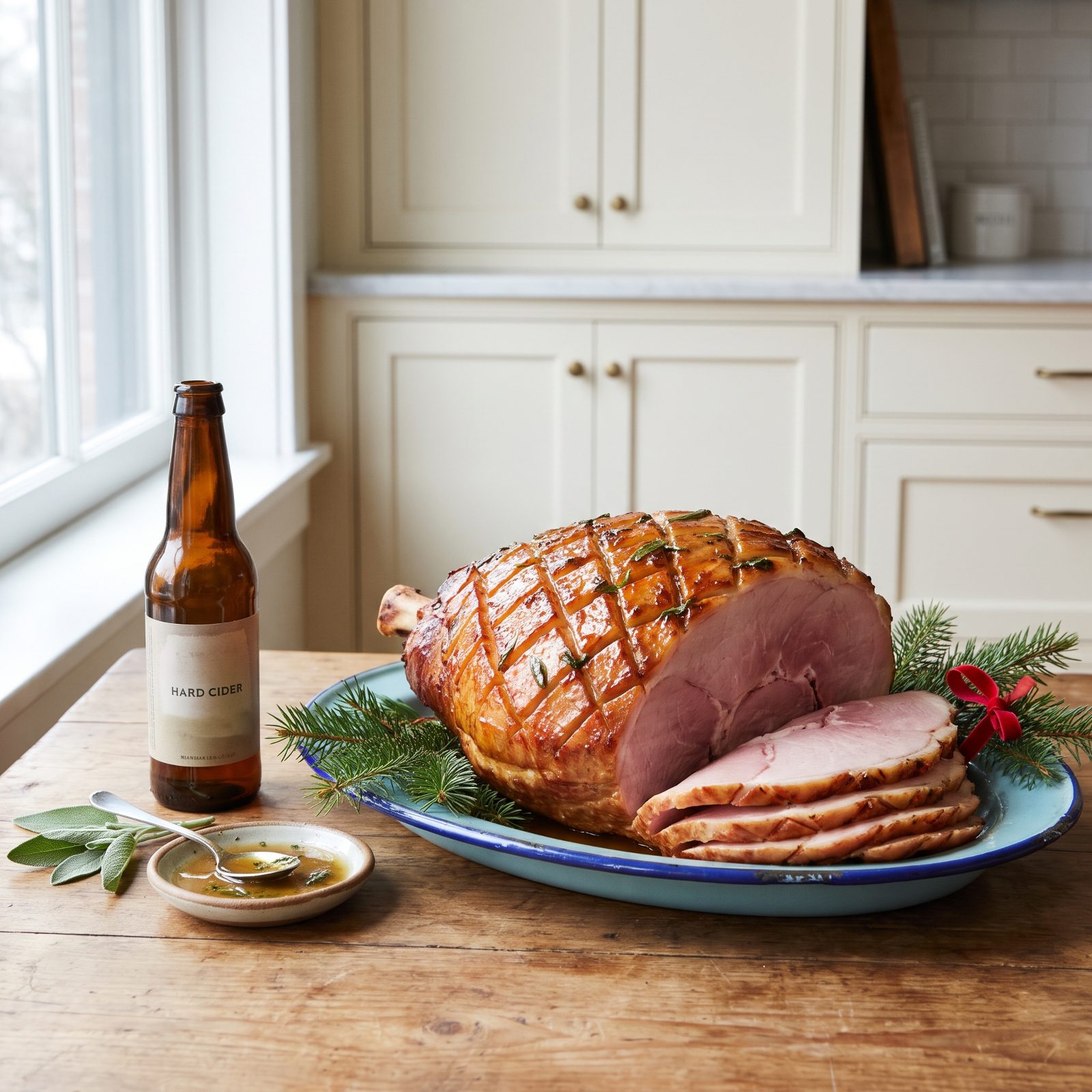
Pour hard cider into a pan with butter and chopped sage and let it bubble down till it smells like an orchard somebody parked next to a fire. Cider goes cloying on its own. The sage reins it in.
Simmer two cups of dry hard cider with a knob of butter, a handful of fresh sage, and light brown sugar until syrupy, then spoon it over the ham during the final half hour. The apple notes read autumnal and old-fashioned — the kind of flavor your grandmother’s kitchen had without anyone naming it.
15. Red Wine Jelly and Rosemary Glaze
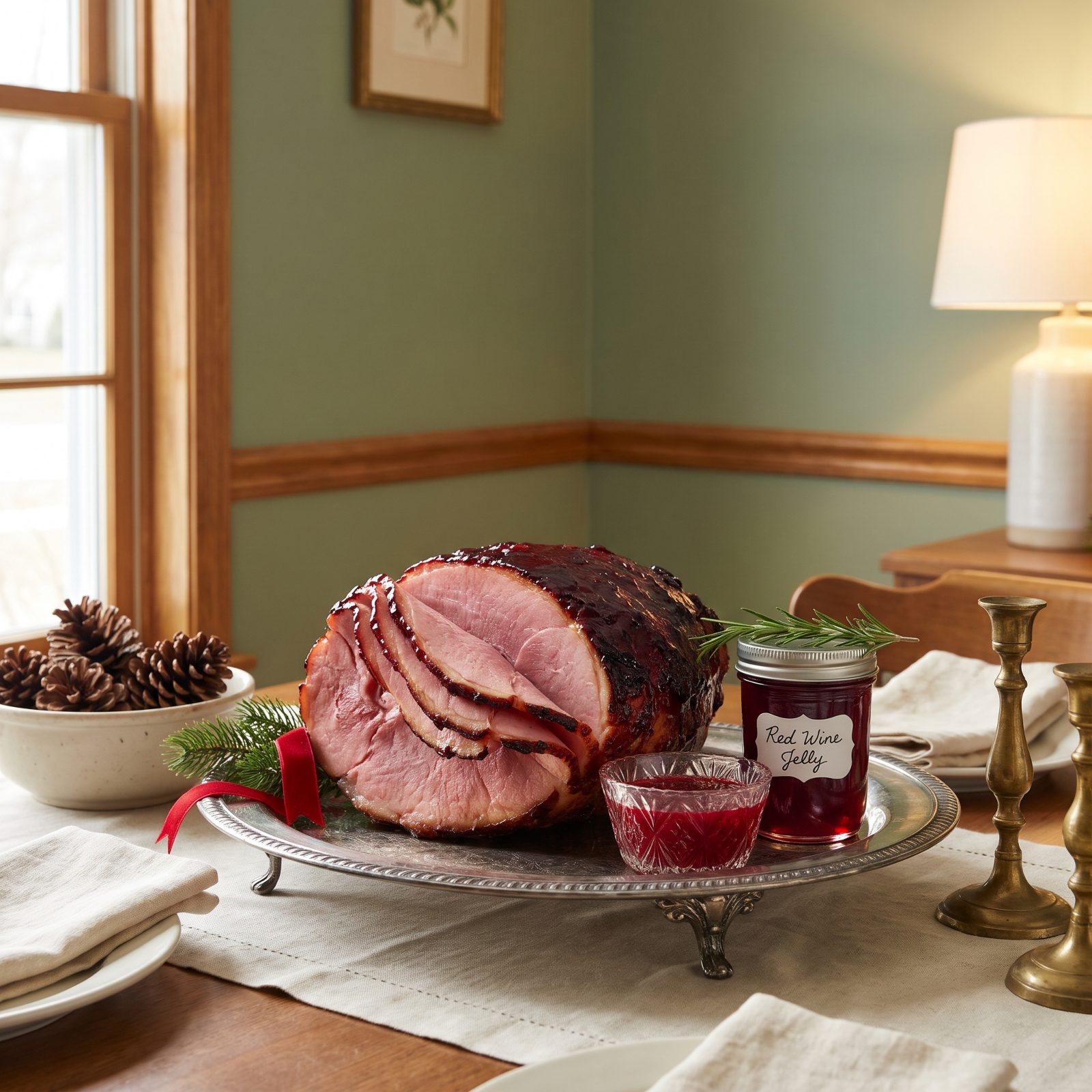
Red currant or red wine jelly belongs on a ham, not just a cheese board. Melted with rosemary and a splash of the wine it came from, it turns almost lacquer-black at the edges and catches the light like glass.
Warm a jar of red wine jelly with a little red wine, a crushed garlic clove, and a few rosemary needles until it loosens into a brushable syrup. Paint it on thick for the last 30 minutes. The pectin in the jelly helps it cling and set, so you get that stained-glass sheen instead of a puddle.
14. Sweet Vermouth and Orange Glaze
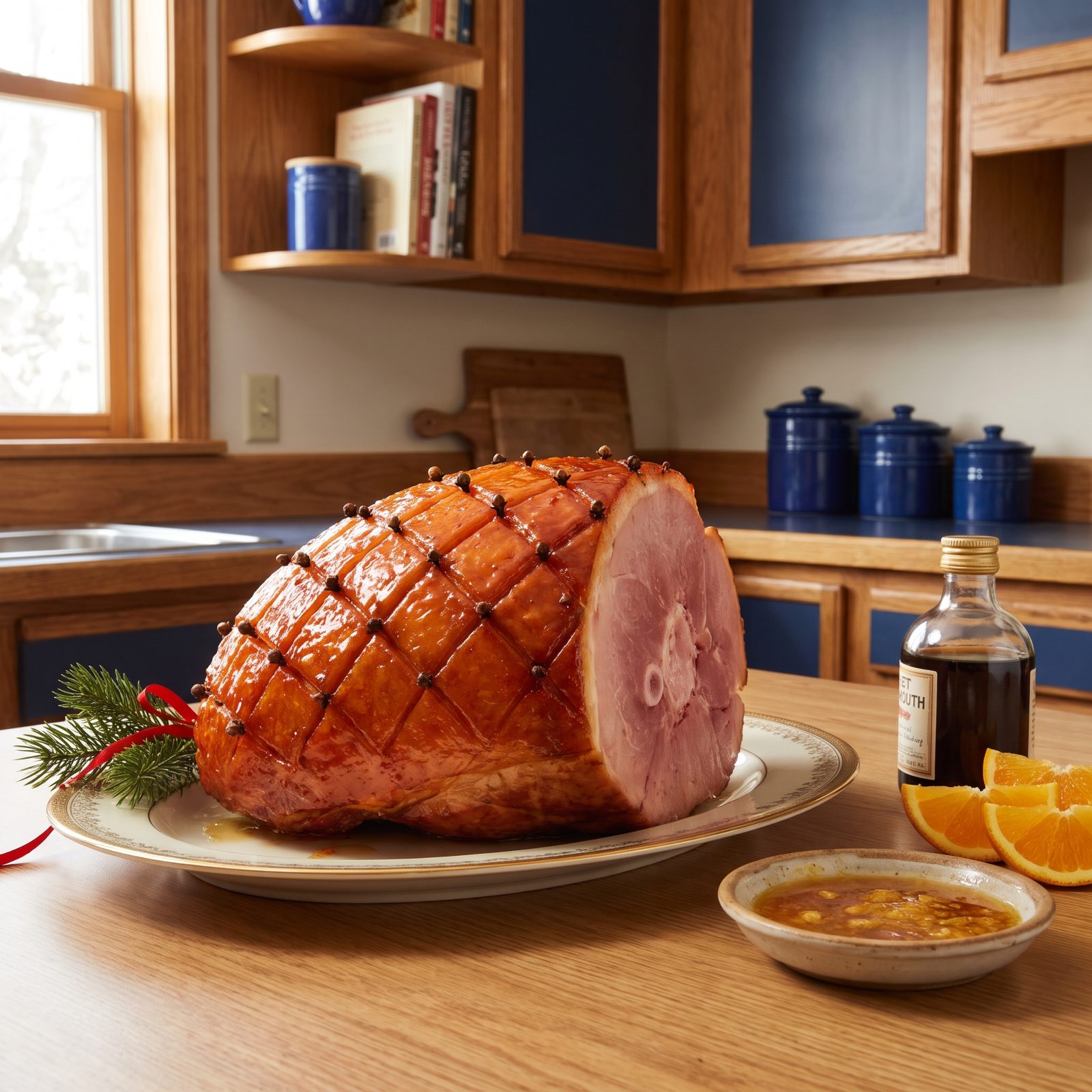
Sweet vermouth tastes like orange peel, cola, and a little bitterness all at once, which makes it a shortcut to a glaze that would otherwise run six ingredients deep. Cook it down with orange marmalade and it goes dark and faintly herbal.
Reduce a cup of sweet vermouth with half a jar of orange marmalade and the zest of one orange. Stud the ham with whole cloves first, then brush and bake. The vermouth’s botanicals keep the marmalade from being one-note sweet, and the cloves do what cloves have done to Christmas hams for a hundred years.
13. Maple and Black-Walnut Glaze
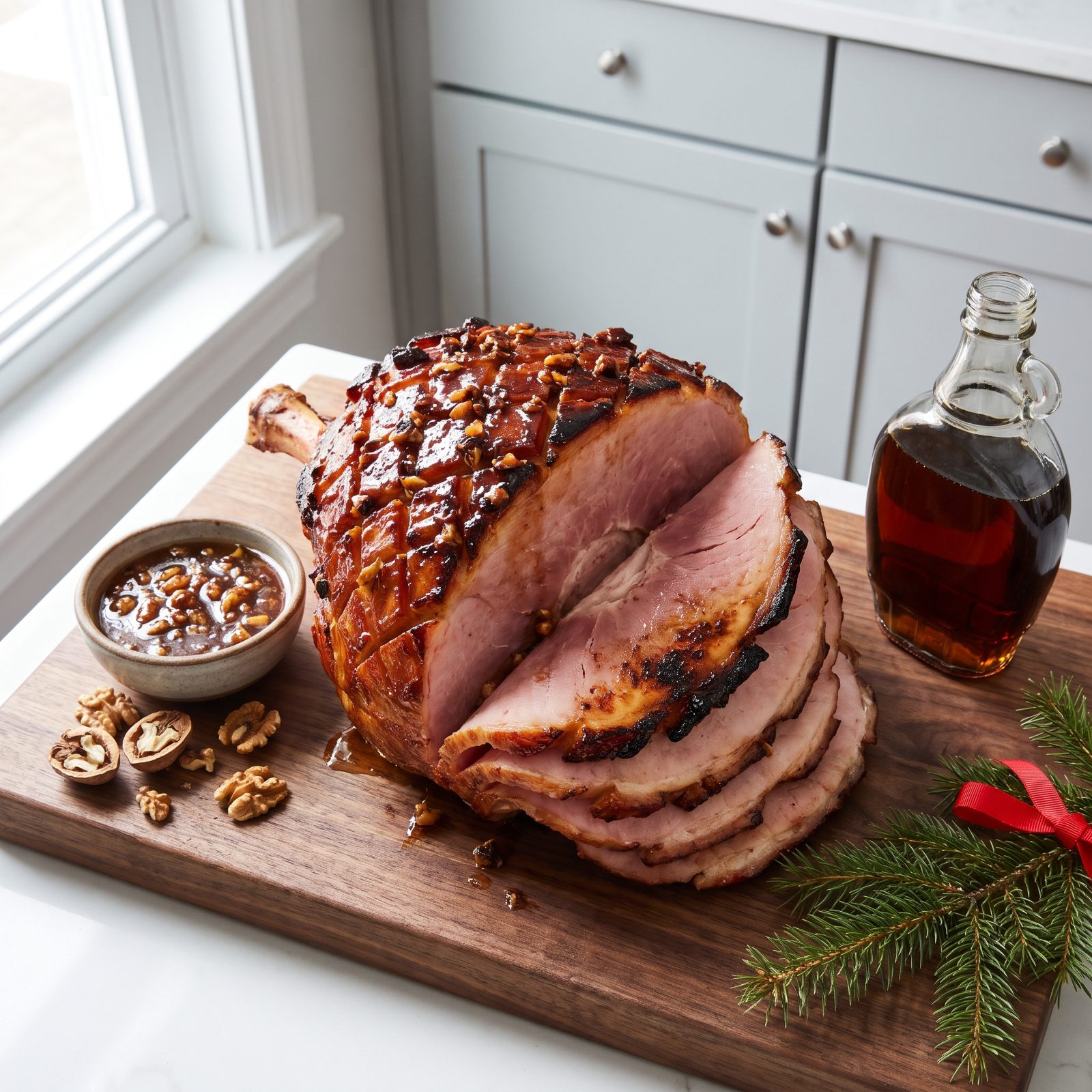
Black walnut is the flavor most people have forgotten. Stronger than the English walnut, almost winey and bitter, it was a Midwestern pantry staple back when families cracked them on the back porch all fall.
Simmer real maple syrup with a knob of butter and a pinch of salt, fold in finely chopped black walnuts, and brush the whole thing over the ham in the final 25 minutes. The walnuts toast against the heat while the maple sets into a sticky shellac. Use grade B maple if you can find it — the darker syrup stands up to the ham where the pale stuff just gets lost.
12. Sweet-and-Sour Duck Sauce Glaze
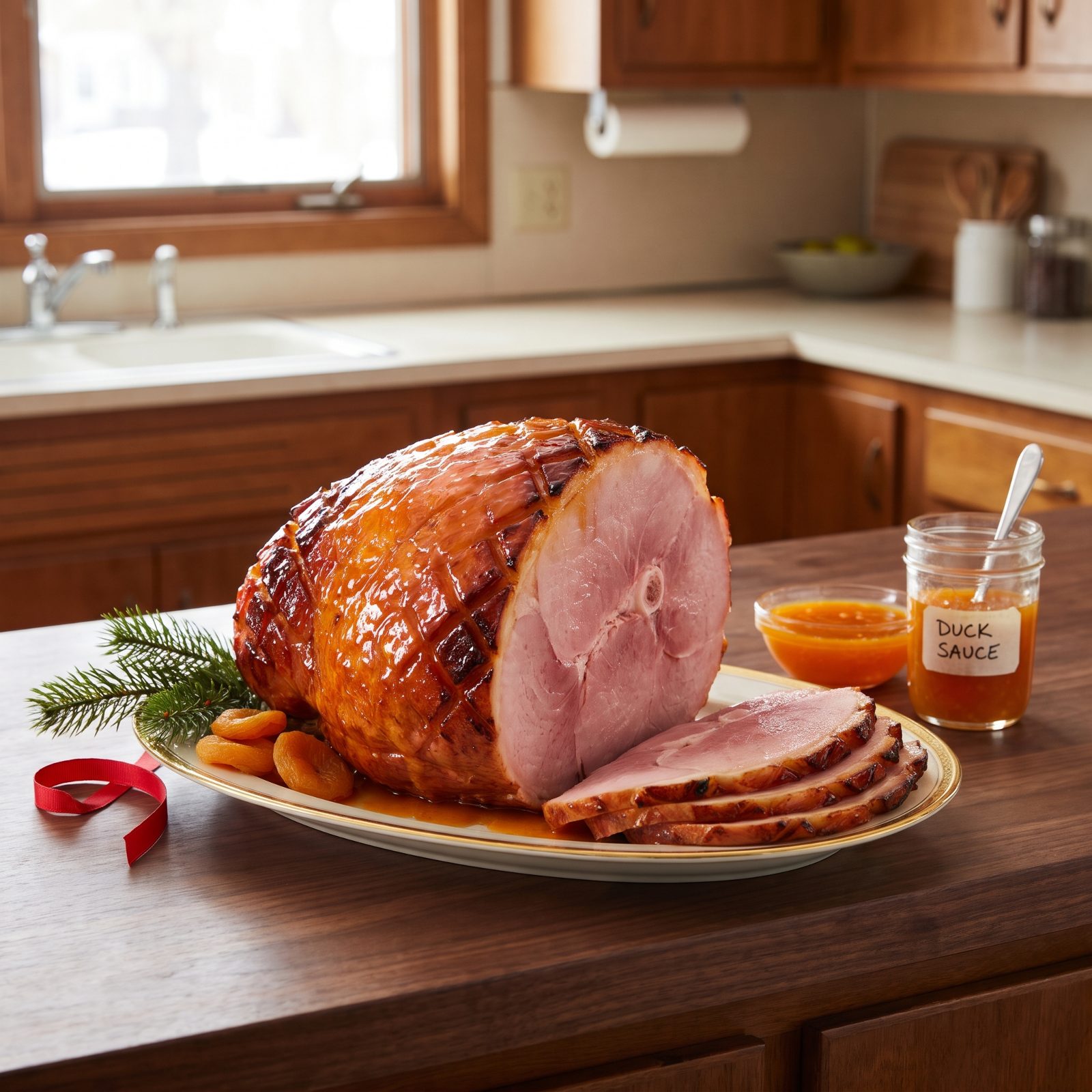
Those little packets of duck sauce rattling around the takeout drawer are secretly a finished ham glaze. Apricot, plum, vinegar, a whisper of ginger. Some thrifty cook back in the sixties figured that out and never looked back.
Thin a cup of duck sauce with a splash of soy and a spoon of brown sugar, then brush it over the ham in the last 30 minutes. The fruit purees caramelize into a sticky sweet-tart lacquer with a tang most holiday glazes never reach. I was skeptical the first time. Then I ate three slices standing at the counter.
11. Apple Chutney and Curry-Powder Glaze
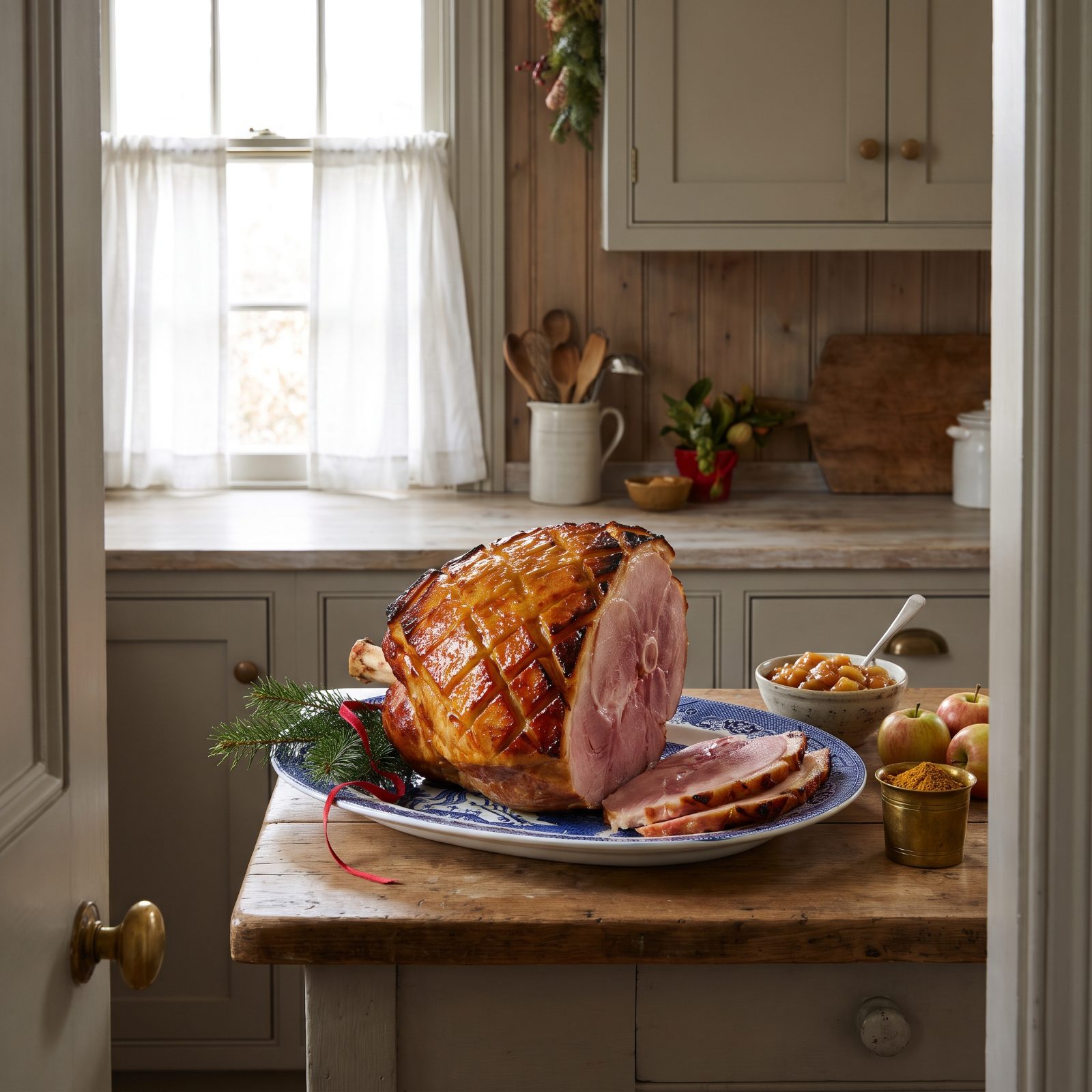
Chutney on ham is an old British and Anglo-Indian habit that drifted into American holiday kitchens and then quietly vanished. A warm note of curry powder makes the whole thing smell like the spice cabinet on Christmas morning — which is to say, like everything at once.
Warm a jar of apple or mango chutney with a teaspoon of mild curry powder and a squeeze of lemon until loose, then brush it over the ham for the final half hour. The curry stays in the background, more aroma than heat, while the chunky fruit catches and candies in the scoring. This is the glaze that makes guests ask what the mystery spice is.
10. Pineapple and Curry Glaze
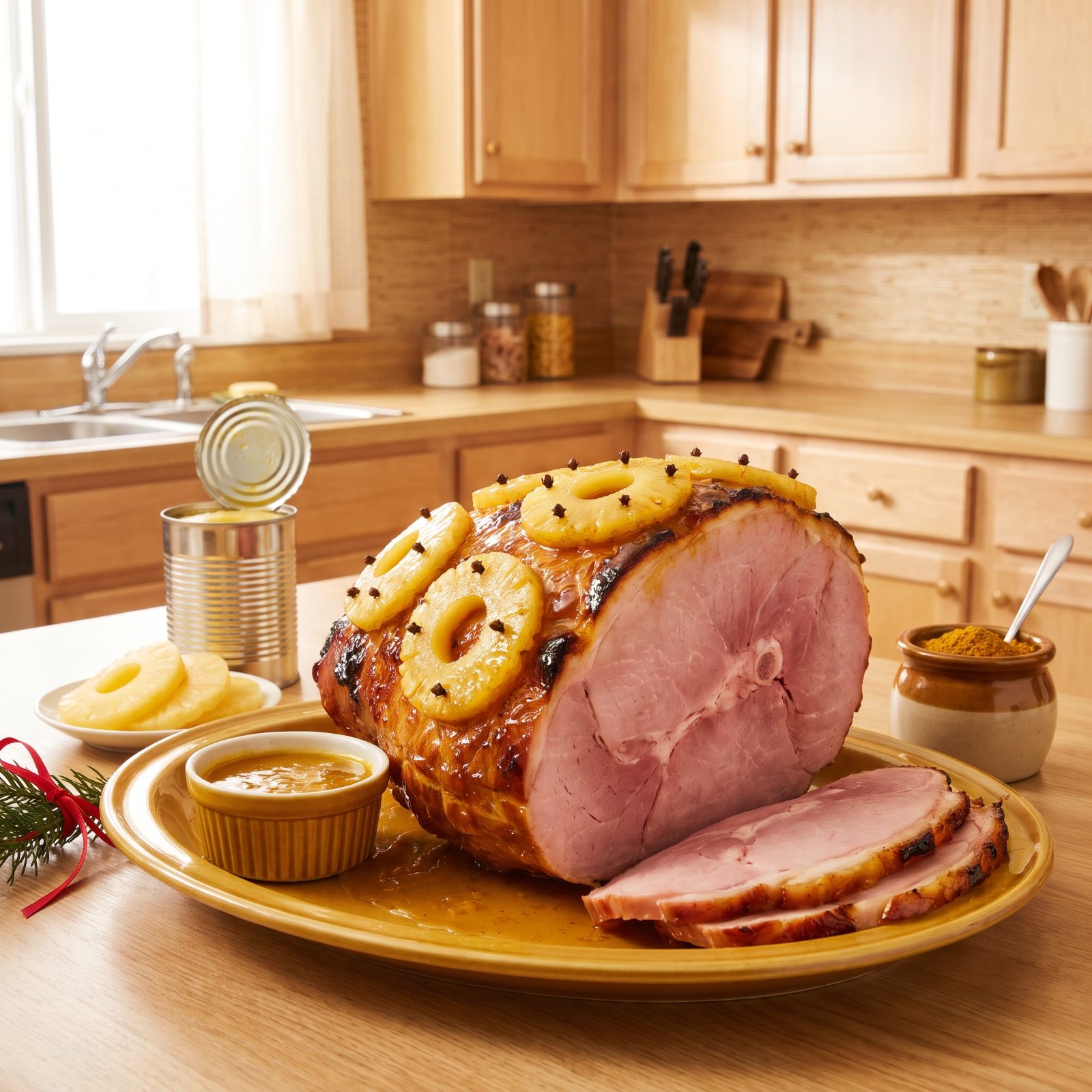
The clove-pinned pineapple ring ham is practically a national monument. But the curry version? Most people never met it. Pineapple juice and curry together land somewhere warm and retro, dinner-party exotic circa 1972.
Simmer the juice from a can of pineapple rings with brown sugar and a teaspoon of curry powder until it thickens, then brush it over the ham. Pin the rings on with cloves for the last stretch so their edges blacken and candy. The curry gives that familiar pineapple ham a backbone it never had.
9. Orange Breakfast-Drink Powder Glaze
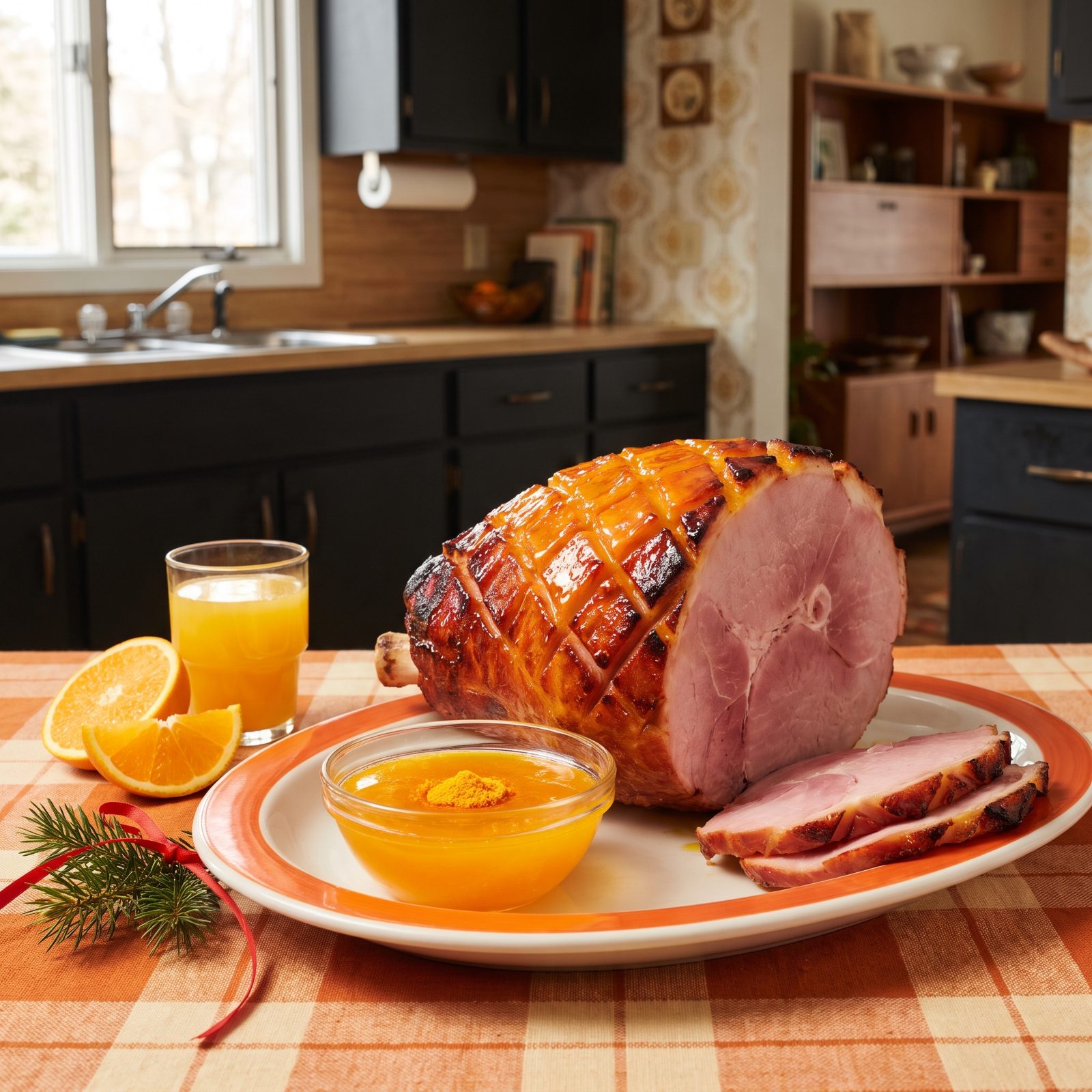
Yes, the powdered orange breakfast drink in the big jar. The one the astronauts supposedly drank. Somewhere along the way a thrifty cook discovered that mixed thick with brown sugar and butter, it makes a glaze the color of a tangerine and a sheen you cannot fake.
Stir a few heaping spoons of the orange drink powder into melted butter and brown sugar, add a splash of water to loosen it, and paint it over the ham in the last 25 minutes. It caramelizes into a bright citrus lacquer with a tang that pulls you straight back a few decades. Sounds like a dare. Tastes like Christmas 1974, and it works.
8. Frozen Lemonade Concentrate and Brown Sugar Glaze
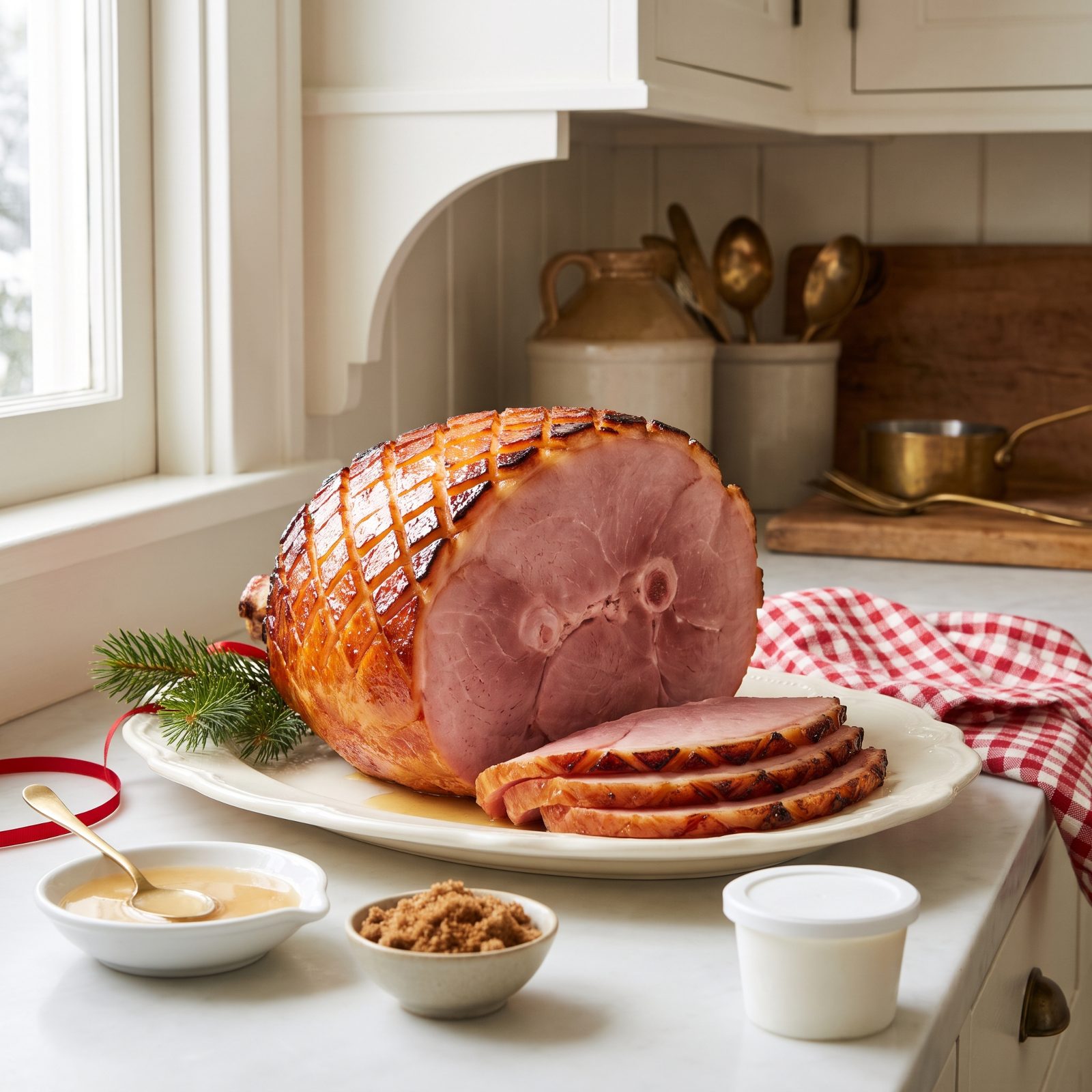
This is the glaze that fooled everybody into thinking the cook spent all afternoon. Frozen lemonade concentrate, thawed and whisked with a pile of dark brown sugar, turns into a tart-sweet lacquer that crisps along the scored edges and goes the color of a copper penny.
The acid in the lemonade is the whole trick, cutting through the salt of the ham so the sweetness doesn’t flatten out into candy. Brush it on in the last 45 minutes, baste every 15, and let the oven do the shellacking.
7. Frozen Orange-Juice Concentrate and Nutmeg Glaze
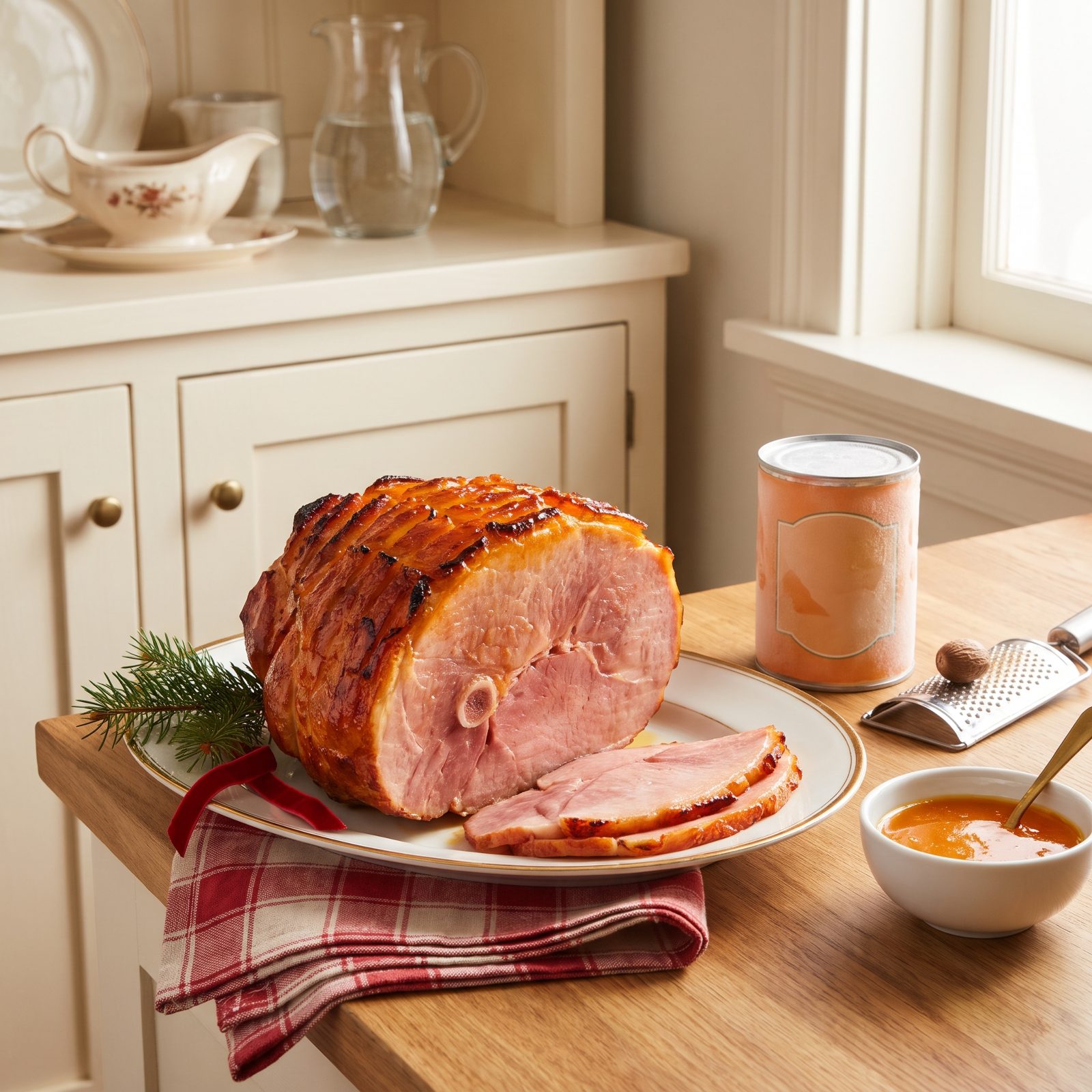
Orange and clove is the expected holiday pairing. Swap the clove for nutmeg, though, and the whole ham smells like your grandmother’s kitchen on the morning of the 25th. Thawed orange-juice concentrate carries more punch than fresh juice because the water’s already gone, so you get concentrated citrus without a watery mess pooling in the pan.
Grate fresh nutmeg into warm concentrate with a spoonful of honey, then spoon it over the ham thick. The sugars in the juice caramelize into little burnished edges that taste almost like candied orange peel.
6. Cherry Gelatin and Crushed Pineapple Glaze
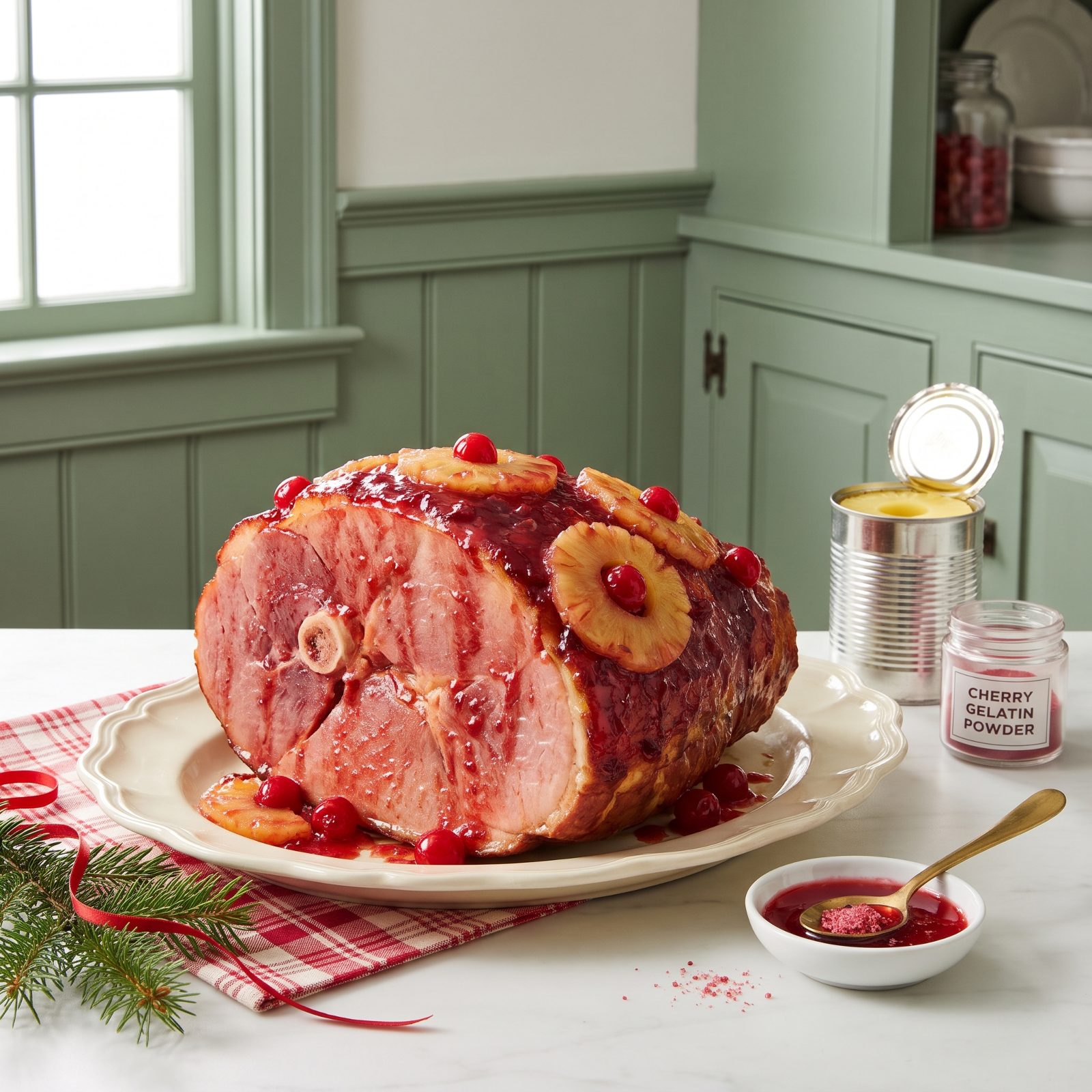
Here’s one straight out of a 1960s ladies’ auxiliary cookbook. A box of cherry gelatin powder melted into crushed pineapple and its juice makes a glaze that sets up glossy and red, the kind of shine that looks painted on with a brush dipped in rubies.
People forget how well gelatin works in a glaze. It gives the glaze body, so it clings instead of sliding off.
5. Maraschino Cherry Juice and Almond-Extract Glaze
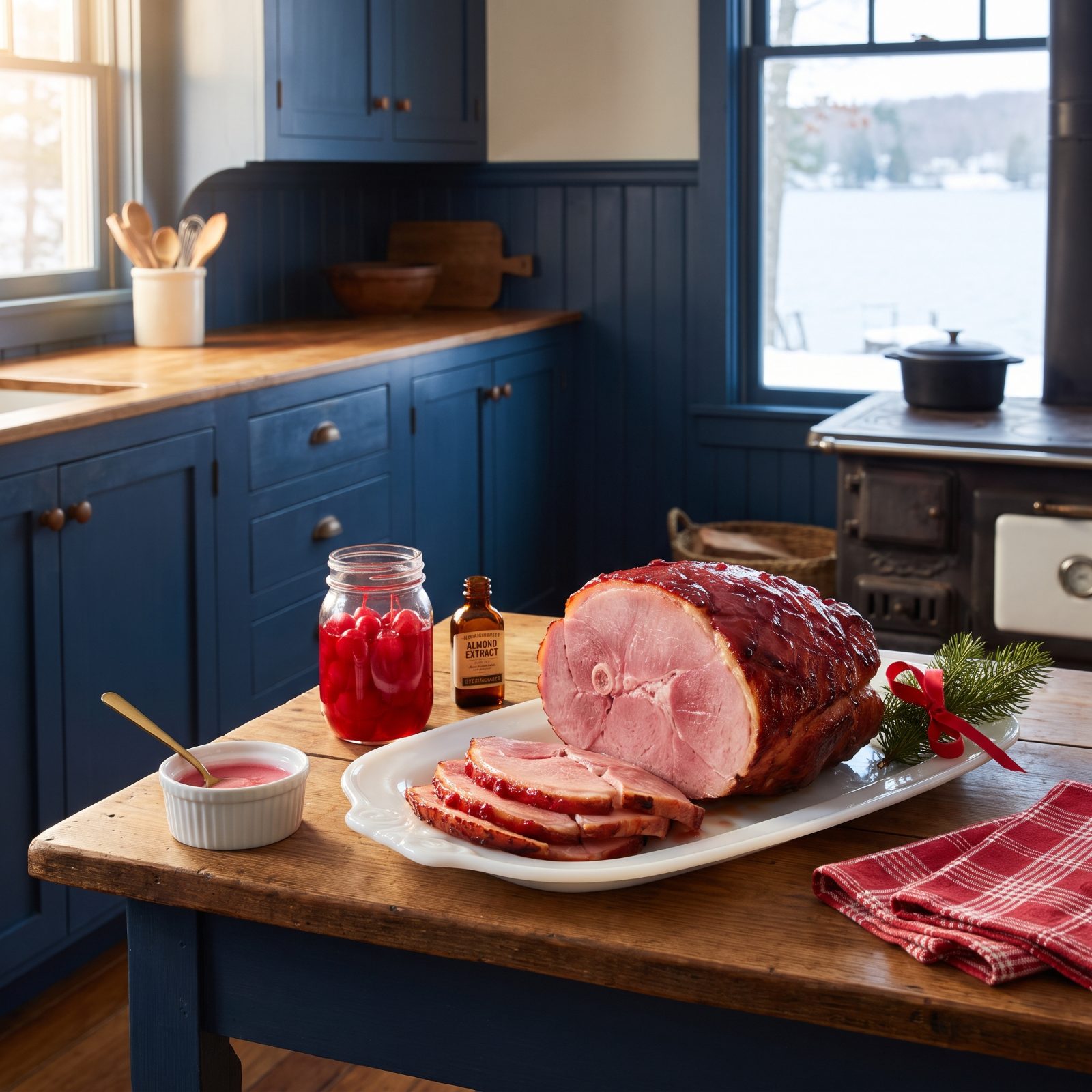
Nobody throws out maraschino cherry juice. Well, nobody who grew up watching their mother save every drop of it in the jar. That syrup, cooked down with a few drops of almond extract and a little brown sugar, goes into the oven pink and comes out a burnished rose.
The almond is what makes it. Cherry and almond are cousins in the flavor world, and the extract deepens the cherry into something that tastes like a Christmas cordial. Use it sparingly. A little almond extract goes a very long way, and I’ve ruined more than one batch of something by pouring it like it was vanilla.
4. Rhubarb Jam and Candied-Ginger Glaze
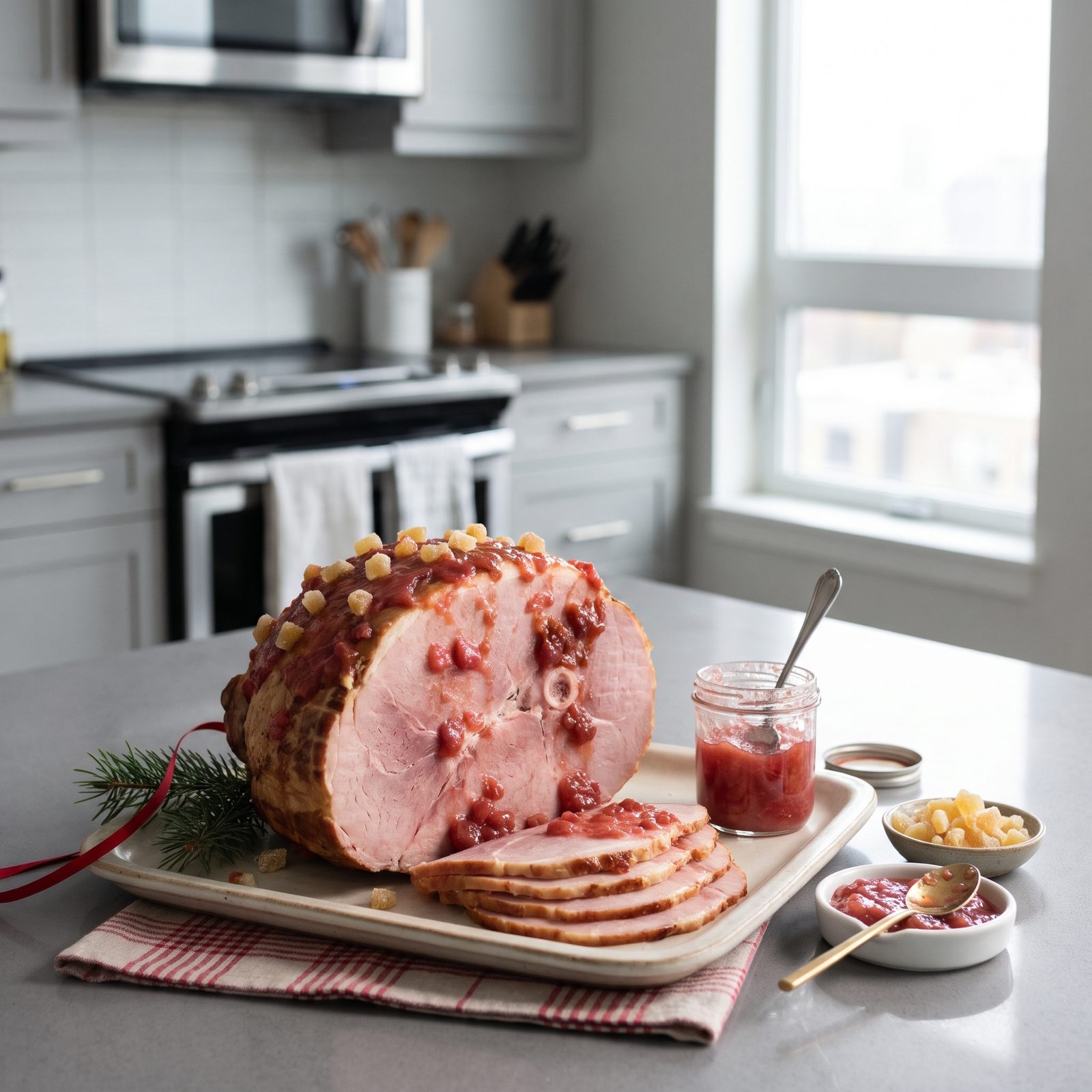
Rhubarb jam on a ham sounds odd until you taste it. The tartness does what lemonade does, knocking back the salt, but it brings an earthier, almost wine-like edge that store-bought glazes never get close to.
Warm the jam with chopped candied ginger until the ginger softens and the whole thing loosens into something you can paint on. The ginger throws little sweet-hot sparks against the smoky ham. And if you’ve got a jar of homemade rhubarb jam from June hiding in the back of the cupboard, this is its finest hour.
3. Apple Juice and Red-Hot Cinnamon Candy Glaze
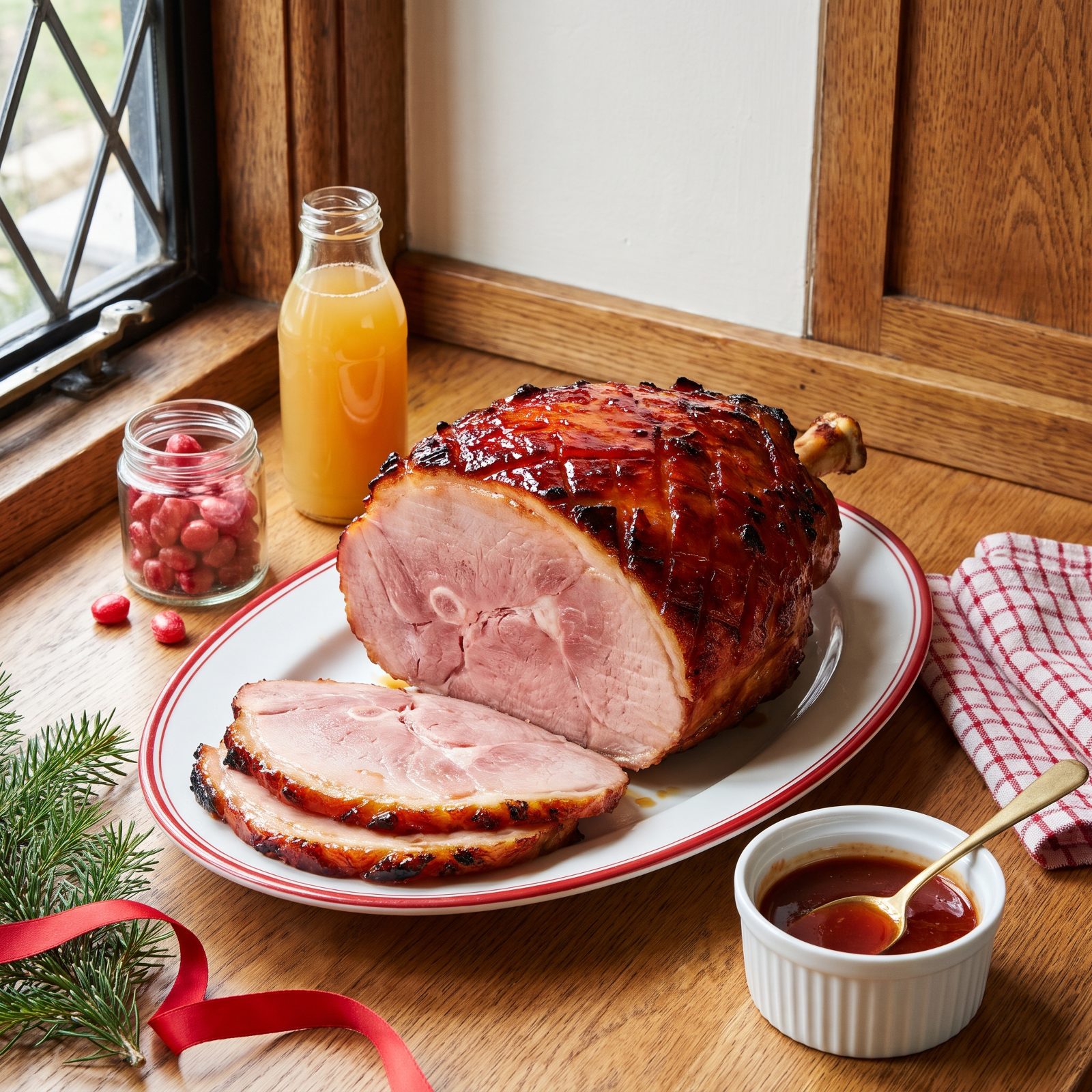
This one’s pure midcentury magic, the kind that makes kids lean over the oven door. A handful of red-hot cinnamon candies melted into apple juice turns scarlet and glossy, tasting like a hot cinnamon apple straight off a stovetop.
The candies pull double duty. They melt into both color and spice, so you skip the ground cinnamon entirely and still get a deep, warm heat.
2. Steak Sauce and Brown Sugar Glaze
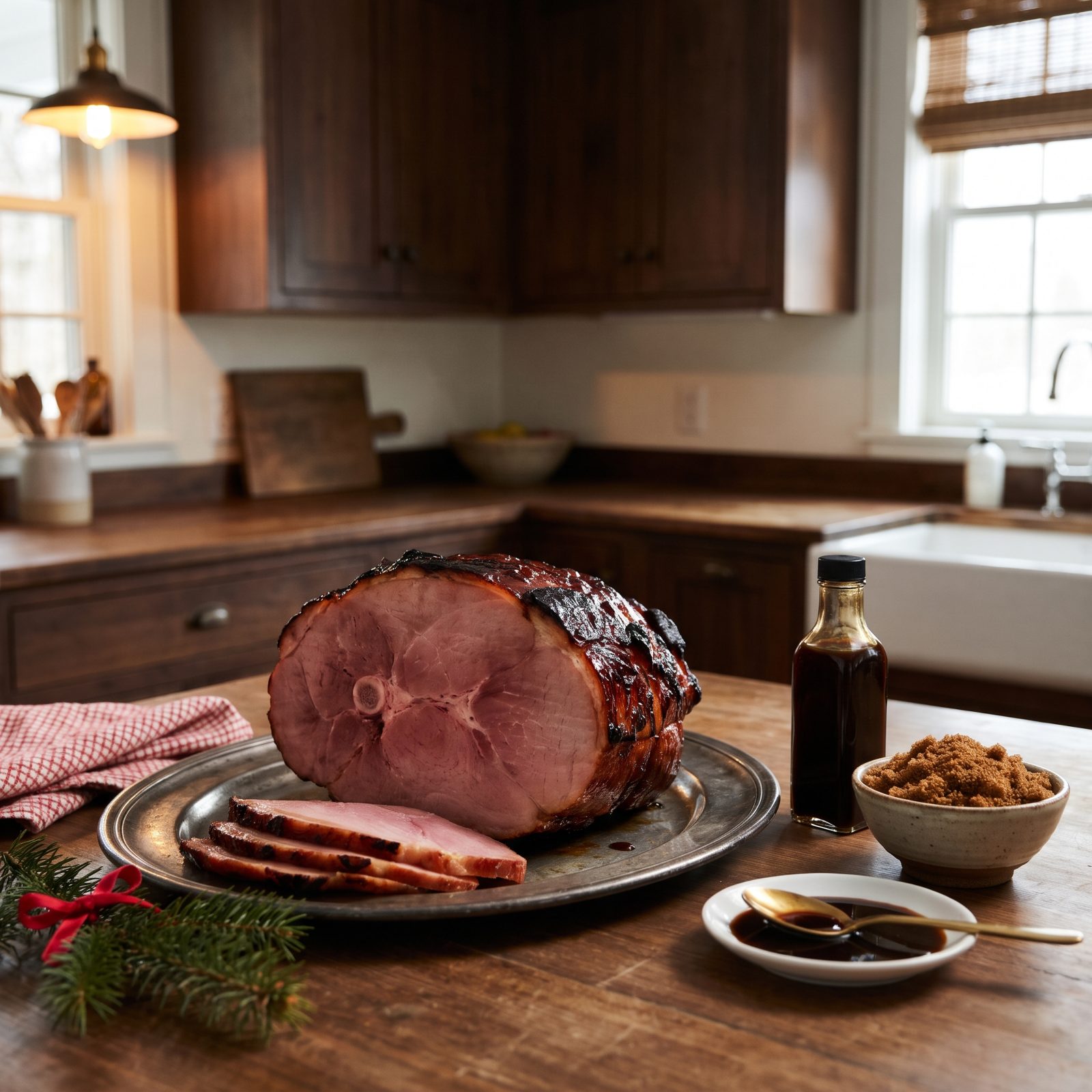
Steak sauce on a Christmas ham feels wrong written down. Then it comes out of the oven dark as mahogany and you understand. All that tang and tamarind and molasses in the bottle is basically a glaze base somebody already built for you.
Stir it into brown sugar, maybe a splash of apple cider, and brush it on heavy. What you get is a savory-sweet lacquer with more depth than the usual honey-and-clove routine. This is the glaze for the house where somebody always wanted the ham to taste a little more like barbecue. I won’t argue with them.
1. Plum Jam and Chinese Five-Spice Glaze
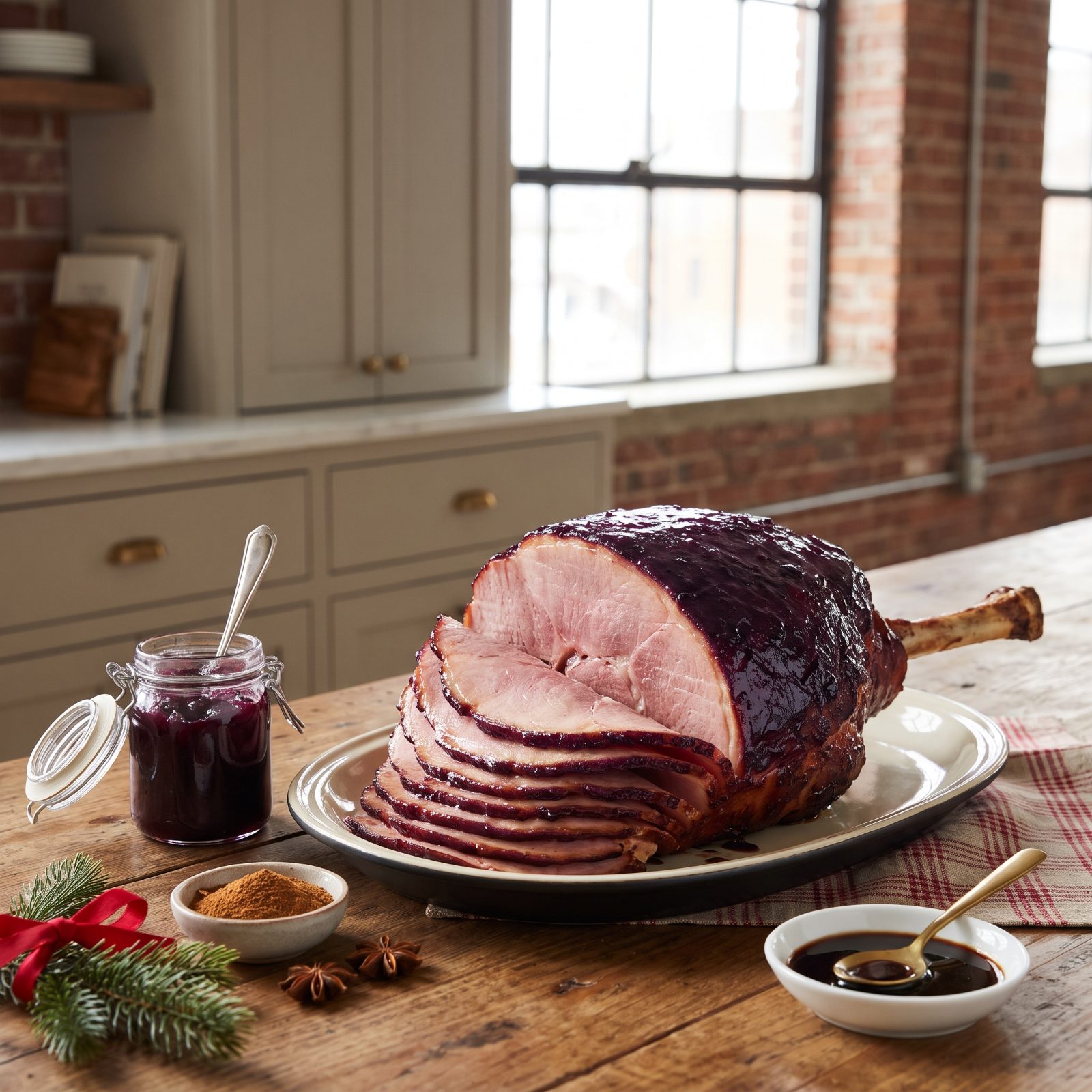
Plum jam already tastes like Christmas: dark, jammy, a little like the inside of a fruitcake. Loosen it with warm water or a splash of sherry, whisk in a teaspoon of five-spice, and you’ve got a glaze that leans toward the duck-and-plum-sauce side of the holiday without ever leaving the ham behind.
Five-spice carries cinnamon, clove, and star anise all in one jar, so a single spoonful gives you layered warmth. The star anise is the quiet standout, lending a licorice-sweet note that makes people ask what’s in it. Brush it on in the final half hour so the jam caramelizes instead of scorching.