
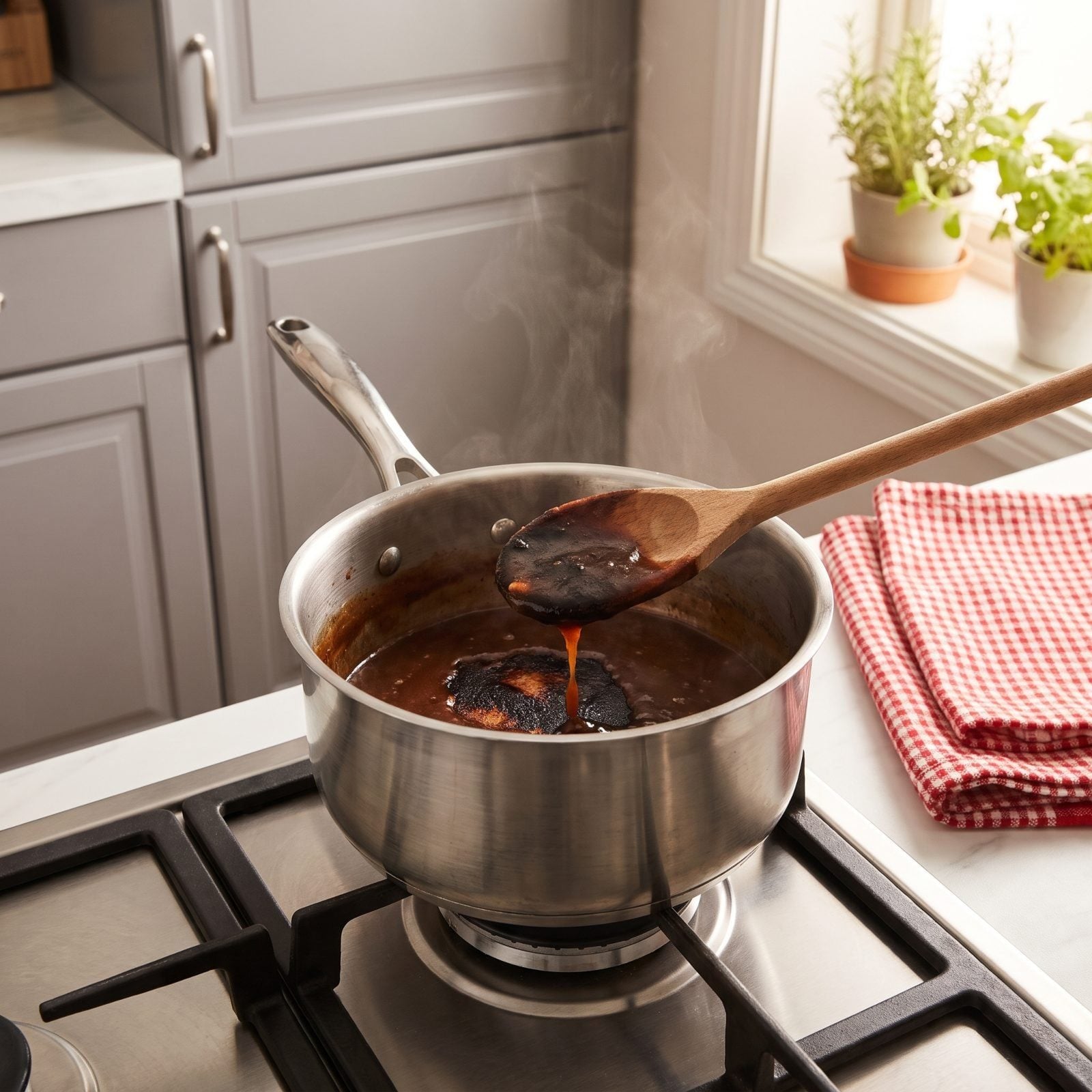
Nobody ruins a turkey. People ruin the gravy. The bird comes out fine, the stuffing holds, the potatoes do their job, and then the one thing everyone actually reaches for twice shows up thin, salty, or lumpy as library paste.
Please note that some of the images in this article were created with the assistance of AI.
Good gravy isn’t luck. It’s a handful of small decisions made in the right order, and most of them happen before the turkey even leaves the oven. Get these right and you’ll be the one quietly spooning seconds while everyone asks what you did different.
41. Letting the Drippings Burn in the Roasting Pan
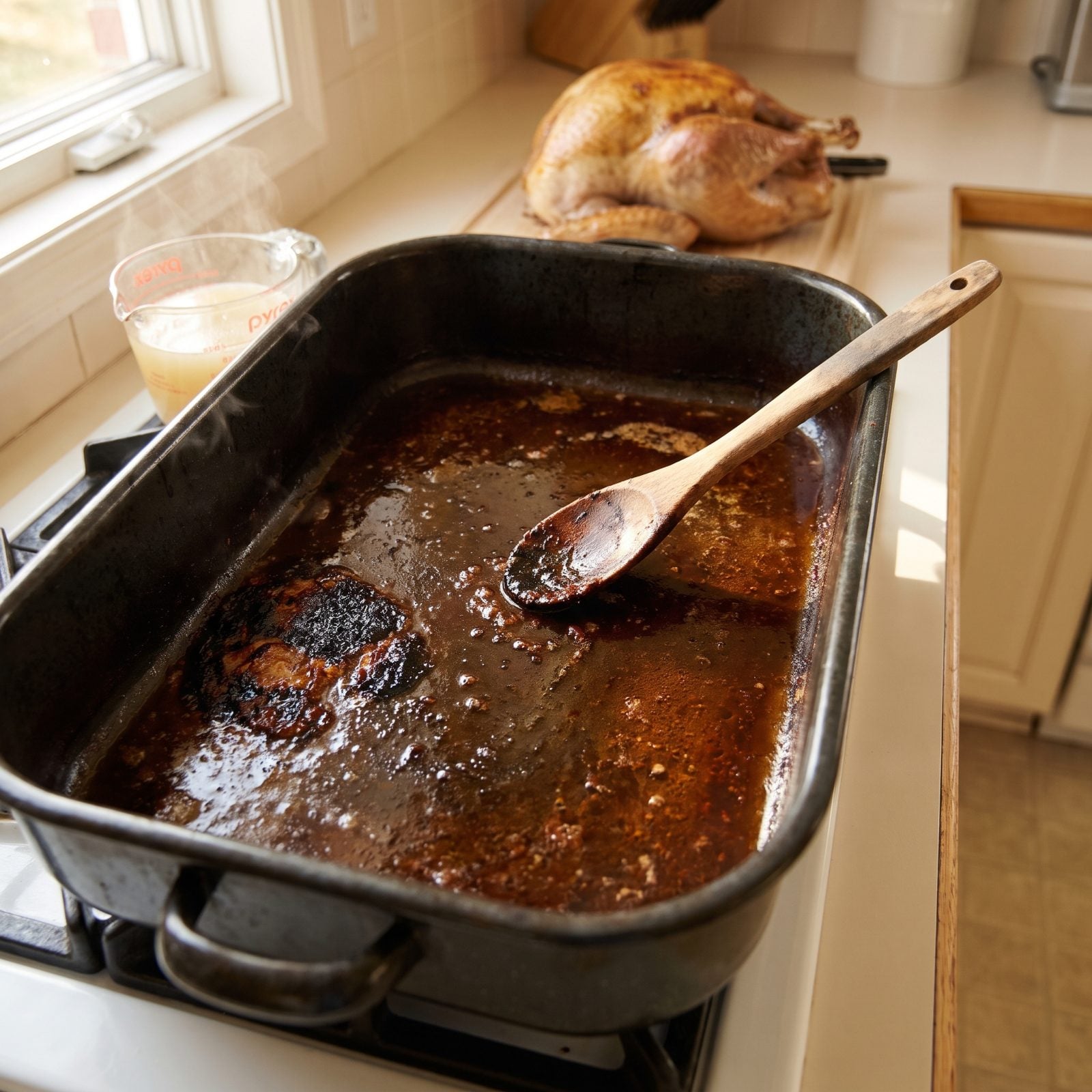
You know the smell. Sweet caramel one minute, then that sharp burnt-coffee bite, and suddenly the bottom of your pan looks like tar. Once the drippings cross from brown to black, bitterness is baked in and no amount of stock or butter pulls it back out.
The fix is attention at the end, not the beginning. If the fond is darkening fast while the turkey rests, get the pan off the heat and deglaze right away with a splash of warm stock or wine. Scrape it loose while it’s still glossy brown. When in doubt, pull it early — pale amber gravy beats scorched every single time.
40. Pouring Away the Flavorful Brown Fond
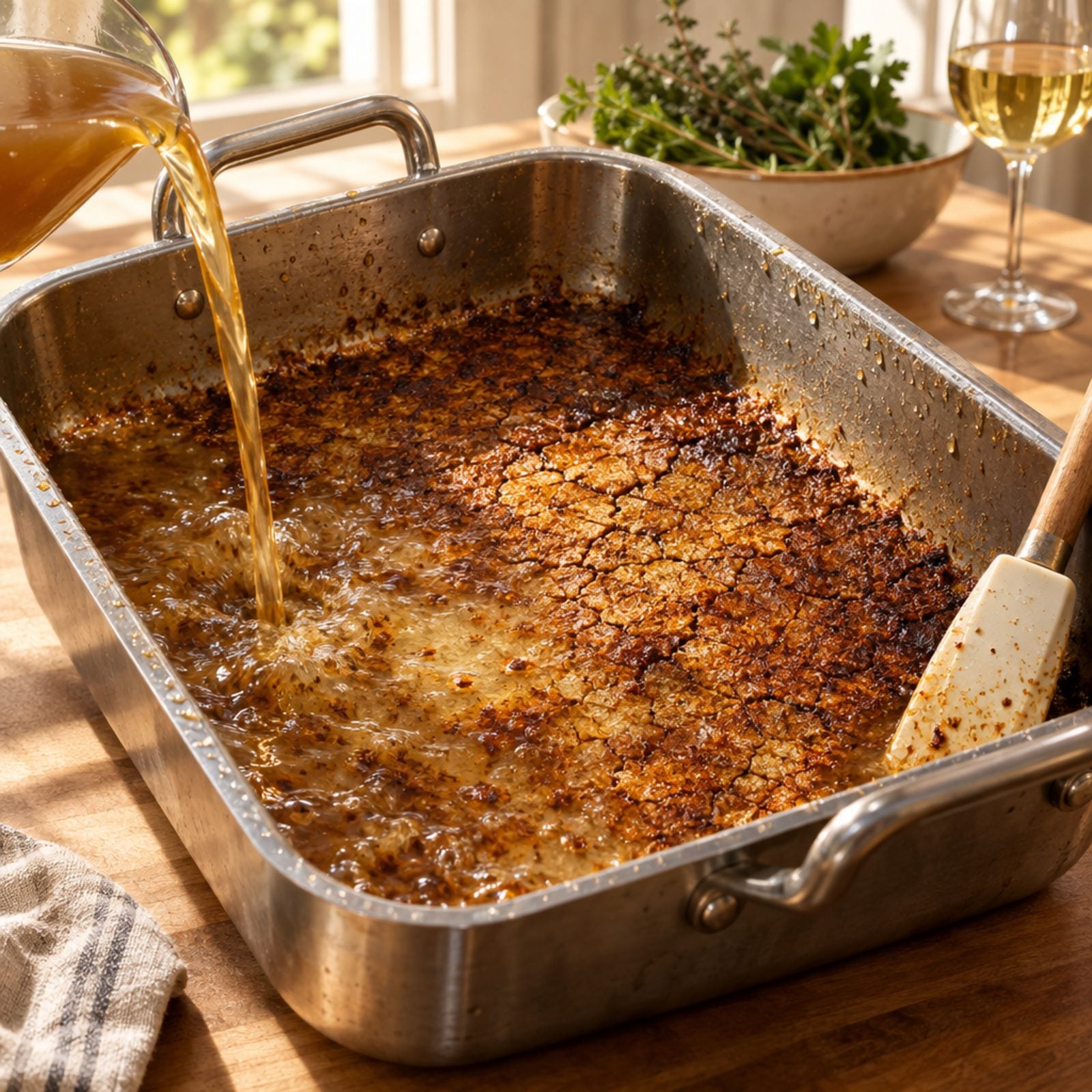
This one hurts to watch every time. Somebody lifts the turkey out, sees a greasy pan with brown crud welded to the bottom, and rinses the whole thing in the sink. That brown crud is the gravy — roasted turkey flavor, concentrated and stuck to metal, worth more than the drippings themselves.
So never rinse. Leave the pan right there on the counter while it’s still hot, pour in a cup of stock or wine, and scrape every bit loose with a silicone spatula as you swirl it around. Those browned bits dissolve into the liquid and give you color and backbone. It’s the whole thing restaurants quietly charge you extra for.
39. Leaving Too Much Poultry Fat in the Drippings
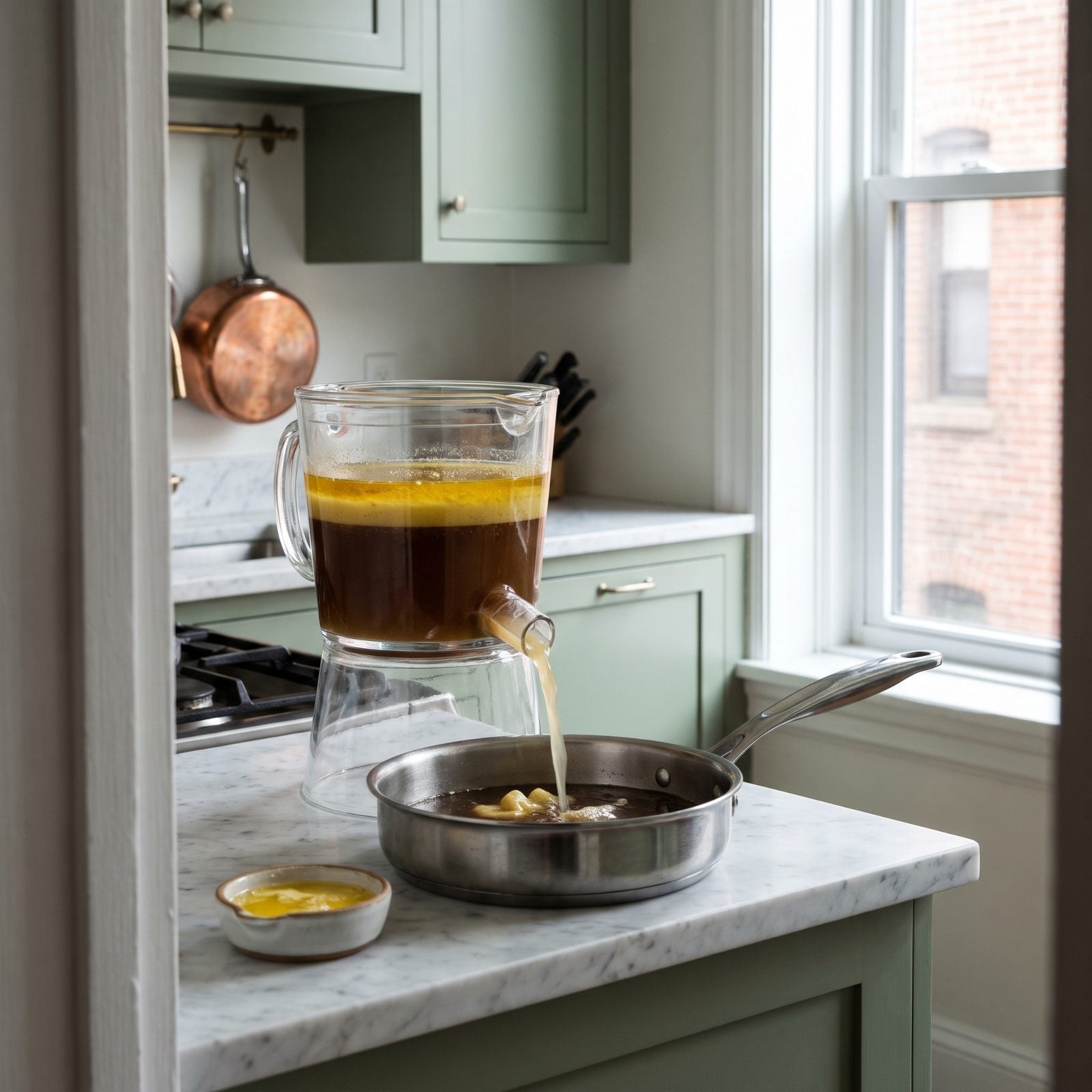
Pour all the drippings straight into the pot and you’ll get gravy that pools grease on top like a parking lot after rain. A thin slick is fine. Half an inch of floating fat is a texture problem nobody wants coating the back of their fork.
Let the drippings sit a few minutes so the fat rises, then skim most of it off with a fat separator or just a ladle and a patient hand. Keep a few tablespoons of that fat for your roux and toss the rest. You want the flavor of turkey fat, not a swimming pool of it.
38. Making Gravy in a Flimsy Disposable Roasting Pan
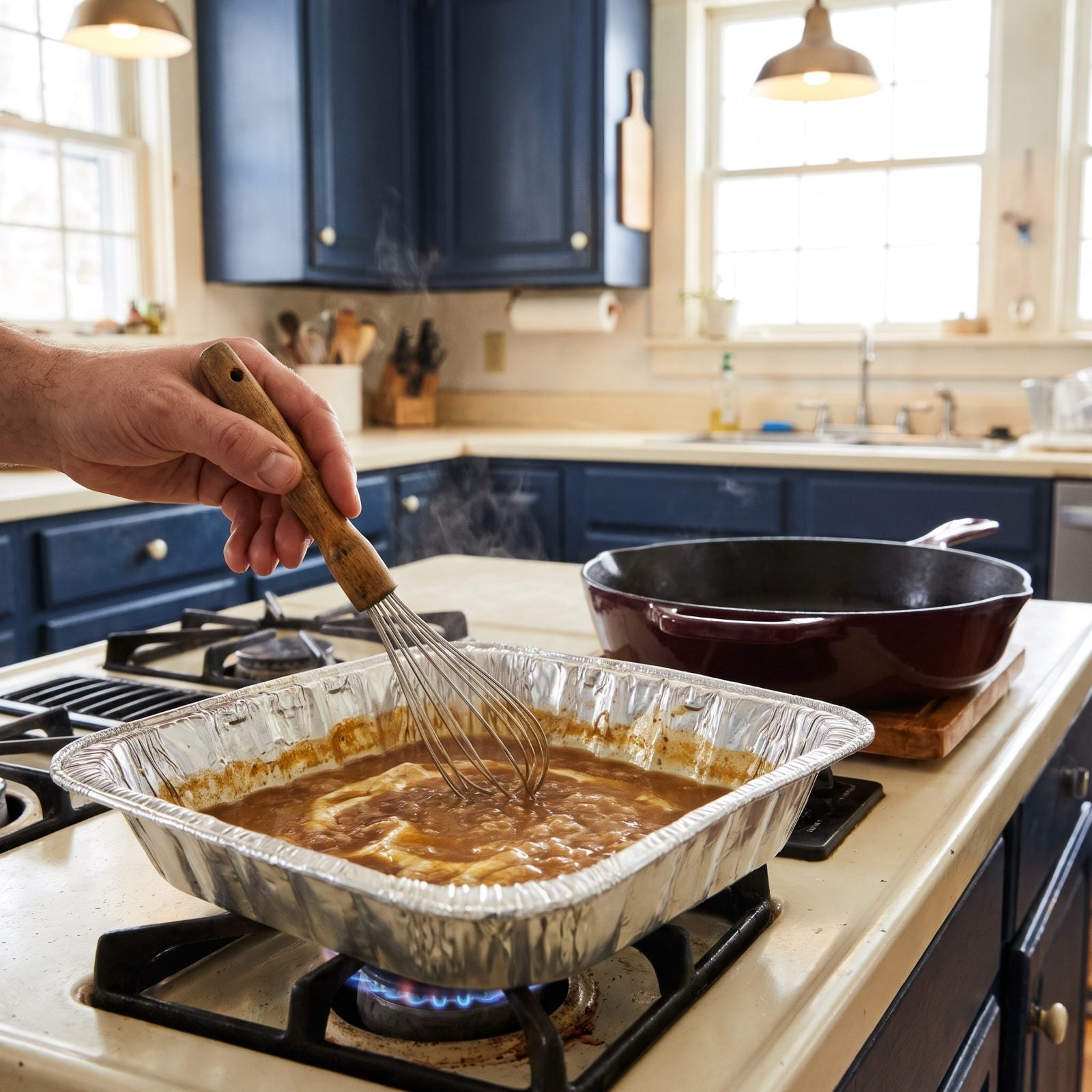
Those thin foil pans from the grocery store are great for roasting and terrible for gravy. Set one across a burner and the center scorches while the edges stay cold. Worse, they buckle the second you lean on a spoon — and now you’ve got hot drippings on your stovetop and a bad word in front of your mother-in-law.
If you must roast in disposable foil, don’t make the gravy in it. Pour the drippings and scraped fond into a real saucepan or your heaviest skillet. Stainless, cast iron, anything with an honest bottom that spreads heat evenly. Your whisk and your temper will both thank you.
37. Waiting Until the Turkey Is Carved to Start the Gravy
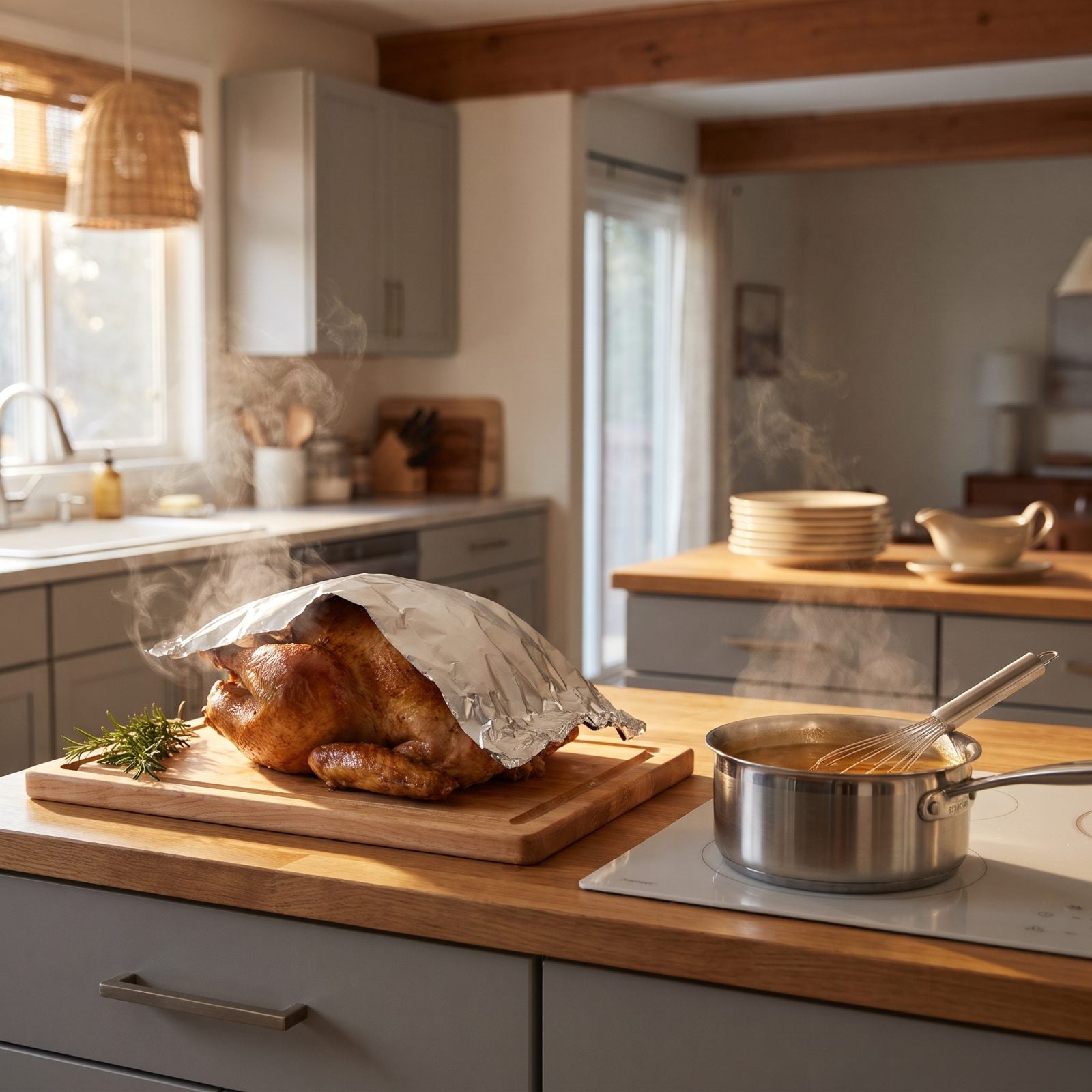
Gravy is a resting-time job, not a last-minute scramble.
The turkey needs twenty to thirty minutes to rest anyway, and that’s your window. Start the gravy the second the bird comes out of the oven. Wait until everything’s carved and plated and you’re making gravy while a dozen people stand around a cooling table — and stress makes lumps.
Deglaze, build your roux, whisk in stock, and let it simmer gently while the turkey rests. By the time you’re ready to slice, the gravy’s done, seasoned, and holding warm. Calm cook, hot gravy, happy table.
What Our Readers Say
- Photos showing cooking in progress got more hearts from Piaci Pizza readers than the other images in the same articles, 86% versus 79%.
- When our readers loved a food photo and told us why, comfort was the top reason, ahead of ingredients and simply looking good.
From Piaci Pizza reader polls and votes.
36. Forgetting to Reserve Stock for Last-Minute Adjustments
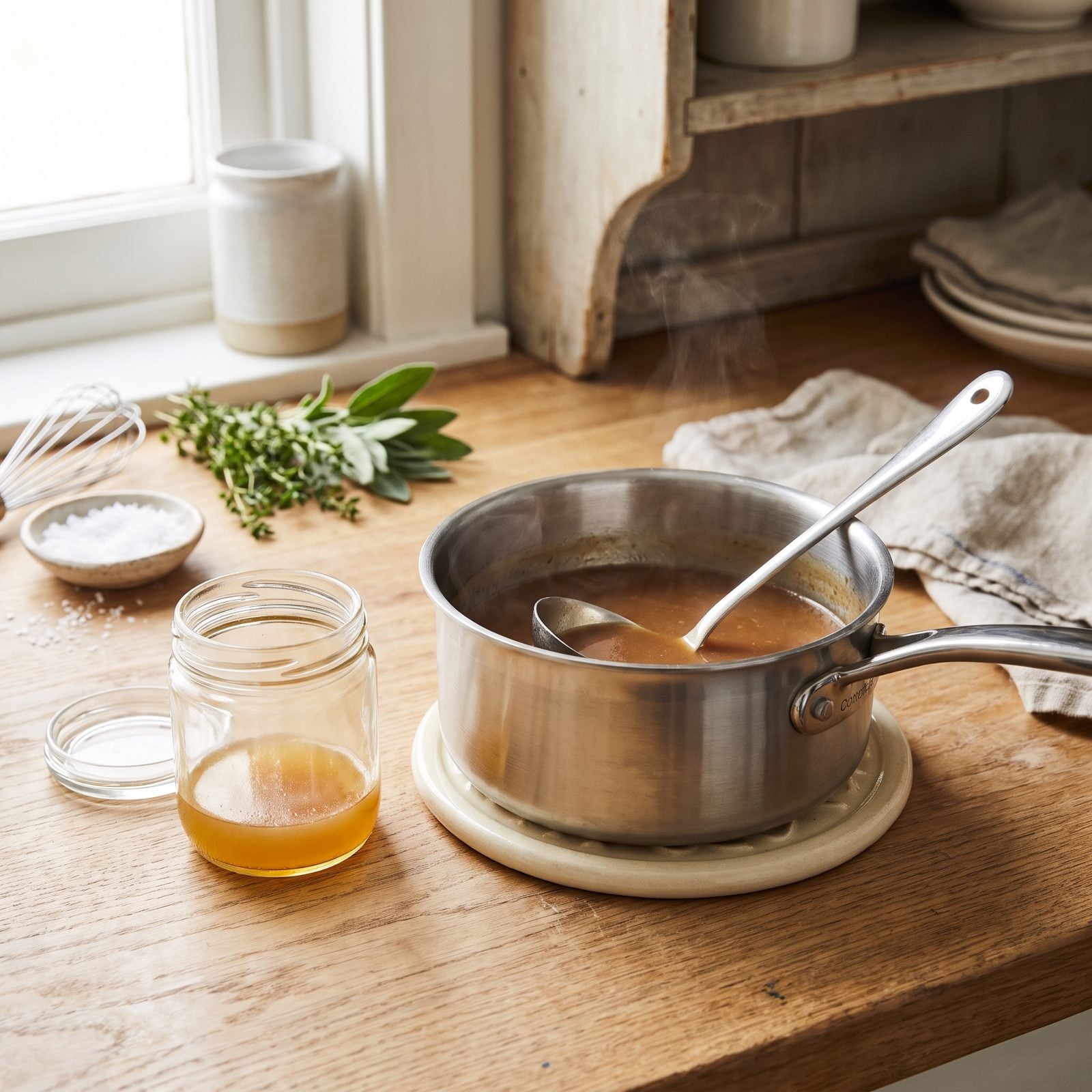
Gravy thickens as it sits. That beautiful pourable consistency on the stove turns to pudding on the table ten minutes later, and now you’ve got nothing to loosen it with because every drop of stock went into the pot.
Always hold back a cup. Keep it warm in a small pan or a measuring cup by the stove. When the gravy tightens up, whisk in a splash to bring it back to a silky pour. It also saves you if you over-salt or over-thicken. Reserved stock is the undo button, and you want it within arm’s reach.
35. Using Weak, Watery Stock as the Base
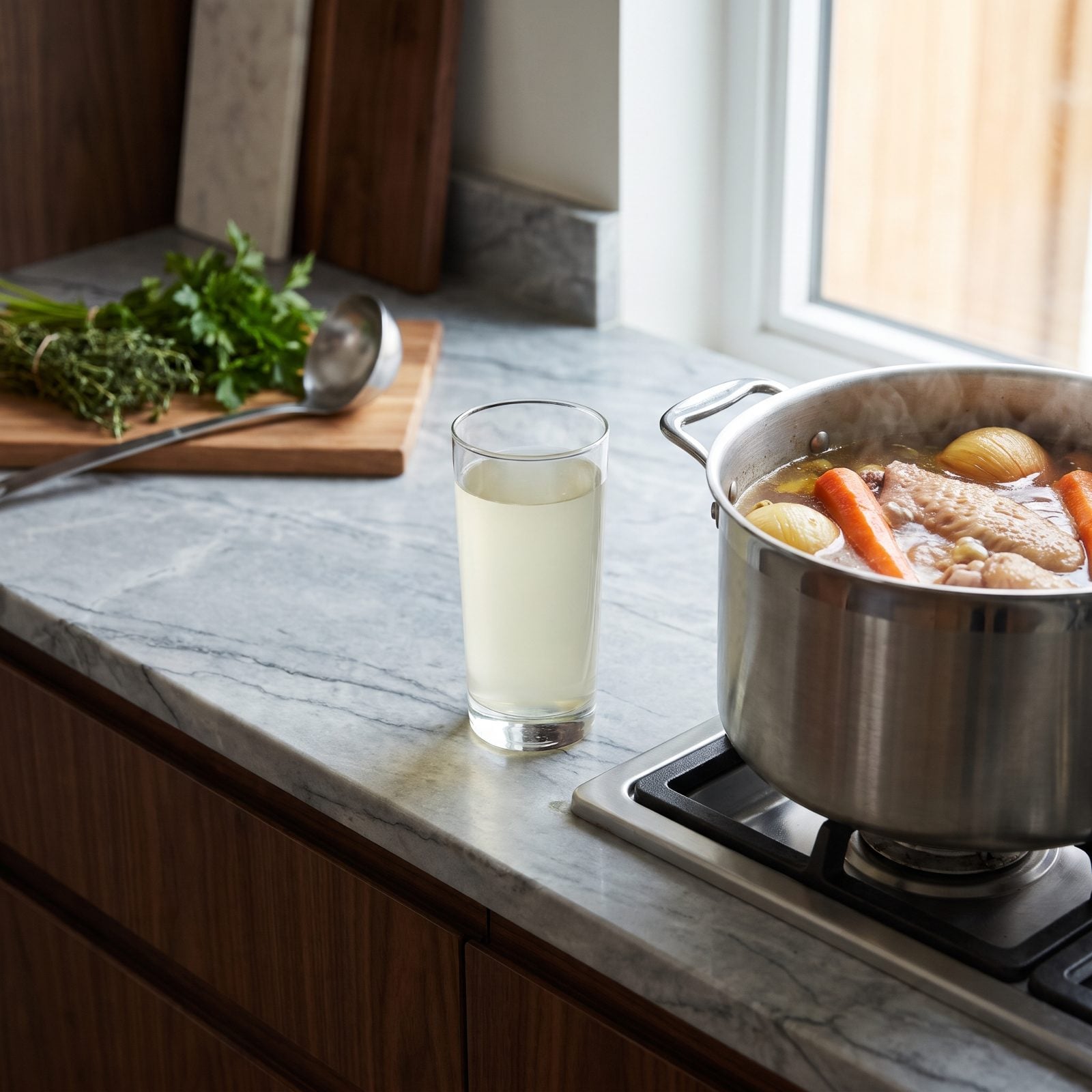
Thin stock makes thin gravy, and no roux on earth fixes that. You can thicken watery broth until it’s gluey, but it’ll still taste like dishwater with flour in it. Body comes from flavor, not just starch.
Use a stock with real backbone. Simmer your own from the turkey neck, wing tips, and giblets with an onion and a carrot for an hour or two before the big day. Buying it? Grab the “bone broth” or low-sodium stock, not the pale yellow boxed stuff. And if your stock tastes weak, reduce it on the stove for a while before building the gravy. Concentrate first, thicken second.
34. Using Salty Bouillon Without Tasting It First
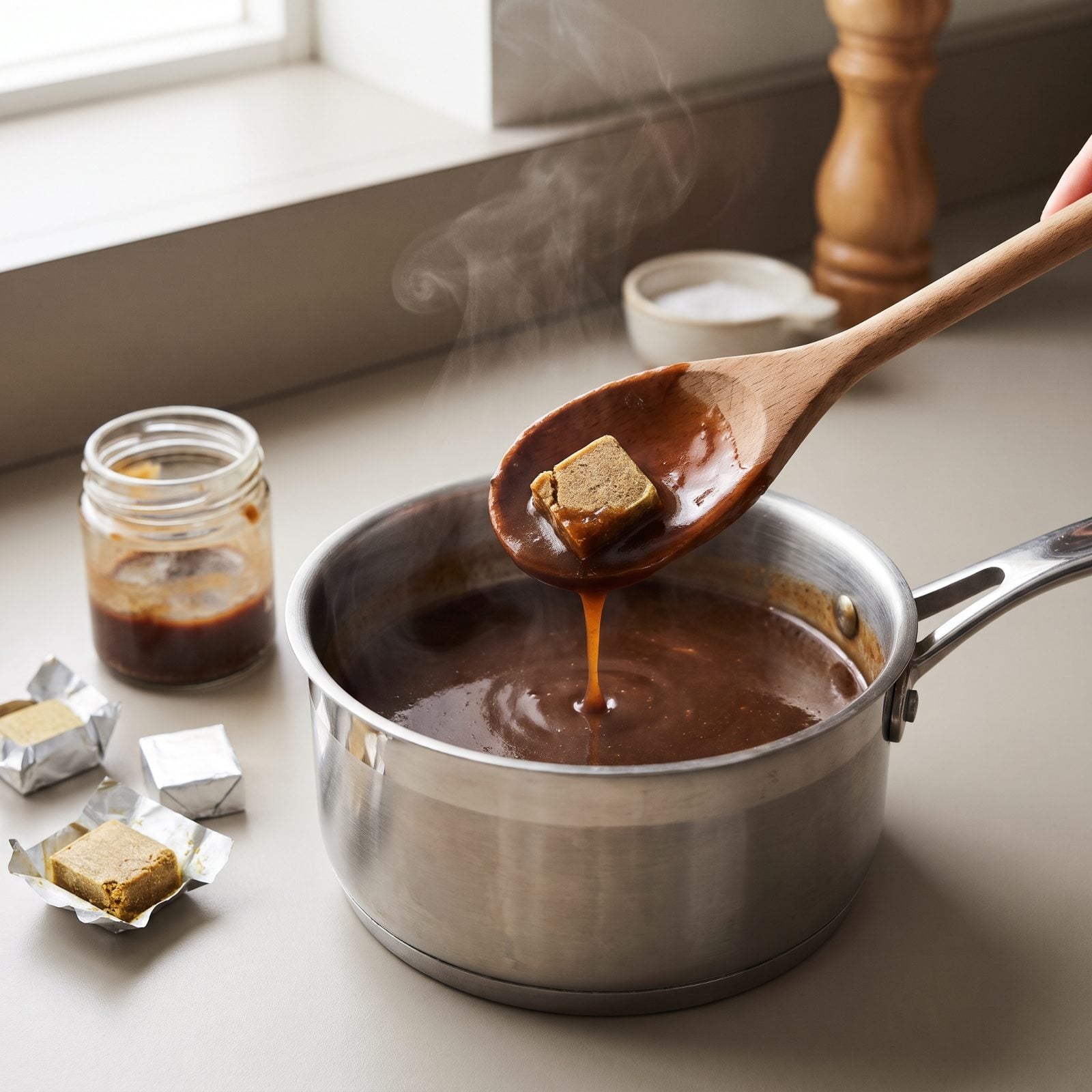
Bouillon cubes and base pastes are mostly salt. Build your whole gravy around one without tasting, then salt it again out of habit, and you’ve got something closer to the ocean than a sauce. Here’s the trap: gravy reduces, so the salt only gets louder as it sits.
Taste before you add a single grain. If you’re using bouillon or a concentrated base, hold off on all extra salt until the very end. Season last, after the gravy has reduced to its final consistency, when you actually know what you’re tasting. Under-salt early and you can always add. There’s no walking it back the other way.
33. Pouring All the Stock Into the Roux at Once
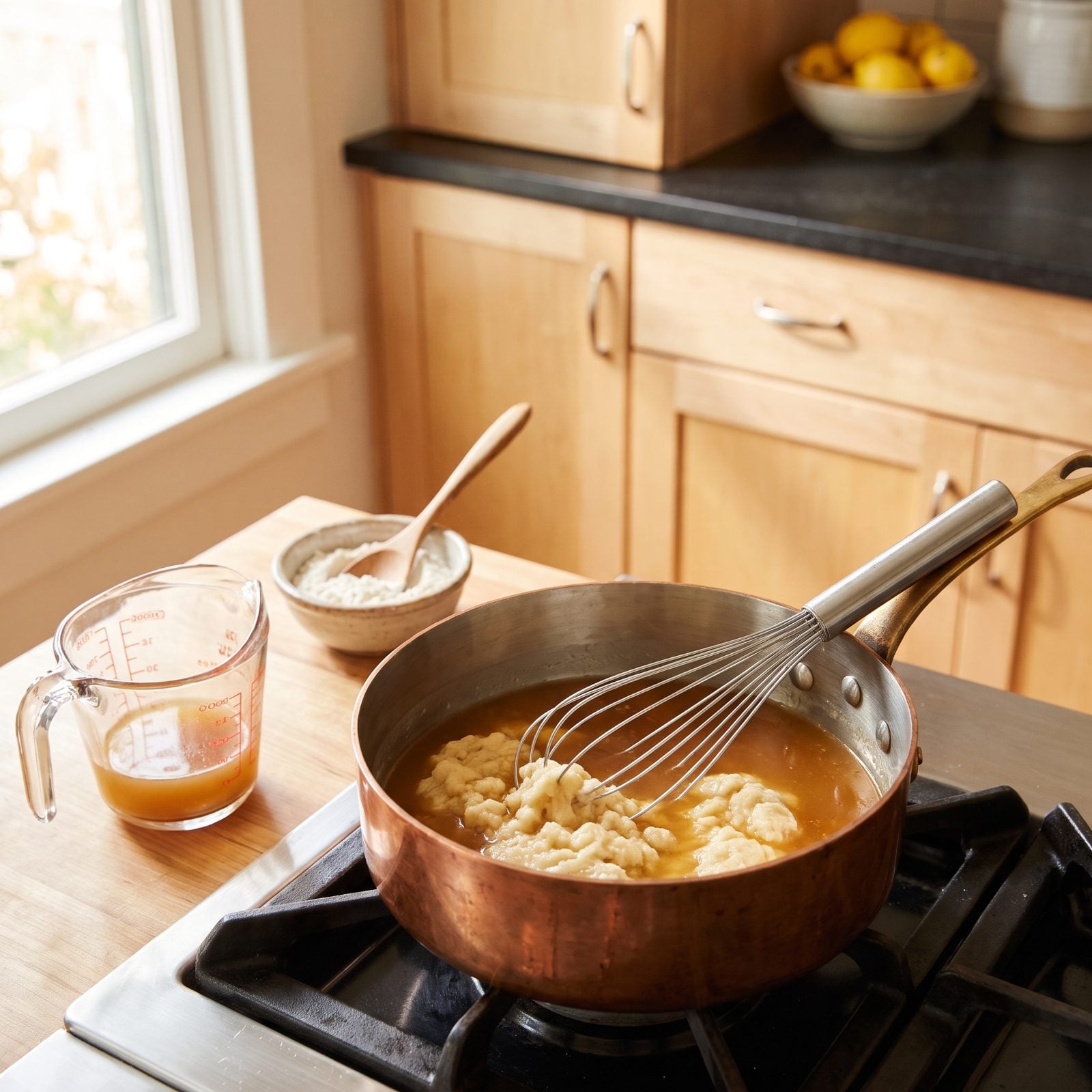
Dump all your stock into the roux in one go and you’ll fight lumps for the next ten minutes. The flour seizes around the cold liquid and forms little paste pebbles no whisk ever fully breaks. We’ve all stood there frantically whisking a lumpy mess, hoping it smooths out. It usually doesn’t.
Add the stock in stages — a ladleful at a time, whisking each addition until it’s completely smooth before the next one goes in. The first few additions turn thick and claggy, and that’s correct. Keep whisking, keep adding, and the gravy loosens into silk. Warm stock helps, too. Cold liquid into hot roux is where the lumps are born.
32. Guessing the Flour-to-Fat Ratio
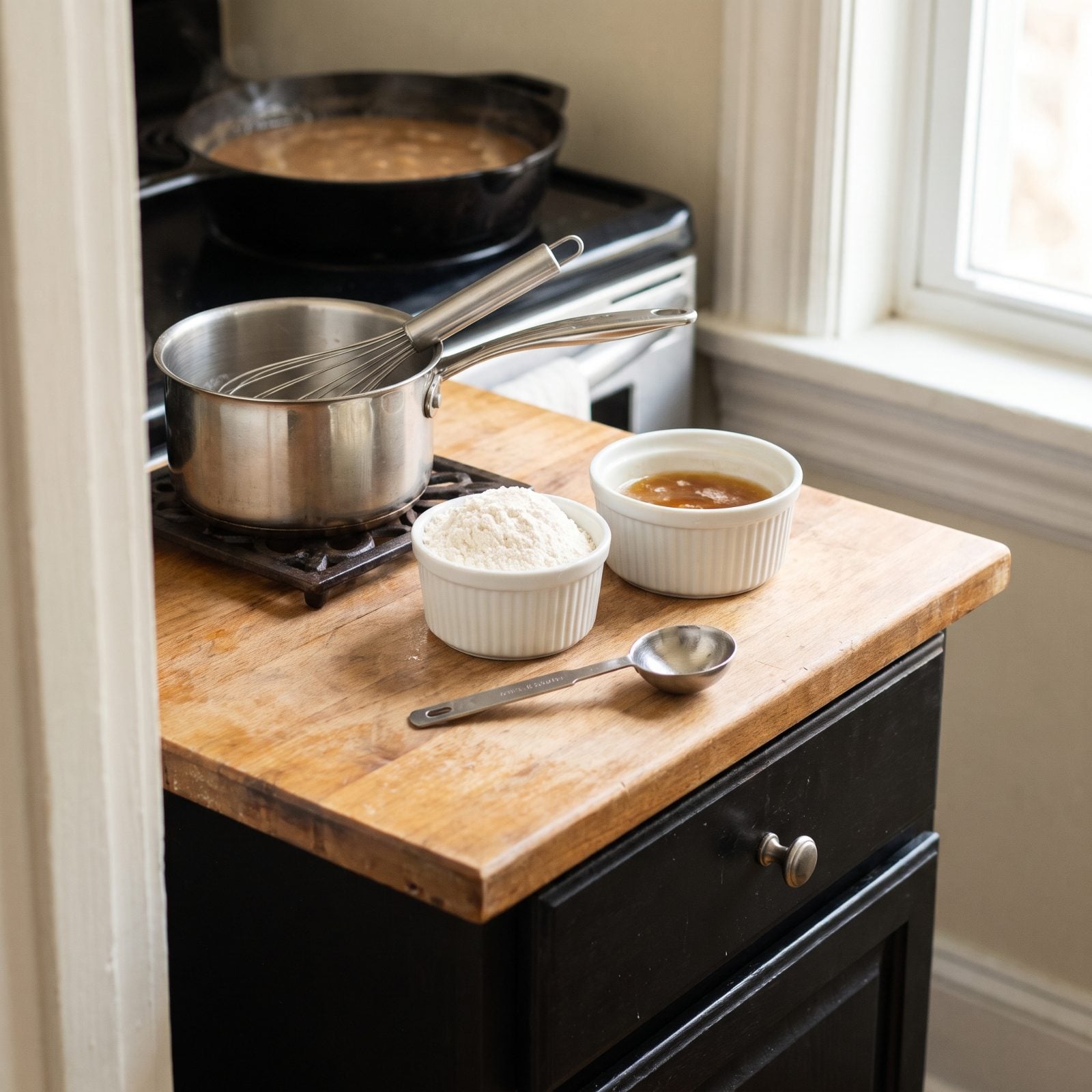
Eyeballing the roux is how you end up with gravy you could stand a spoon in, or gravy that never leaves the thin side no matter how long it cooks. Starch needs a partner in roughly equal measure to do its job without clumping.
Go equal parts by volume: two tablespoons of fat to two tablespoons of flour will thicken about one cup of liquid to a pourable gravy. Want it thicker? Nudge both up together. This is the one number worth memorizing in the whole business. And cook the roux a full minute or two before the stock goes in, or you’ll taste raw flour right through everything.
31. Failing to Cook the Raw Taste Out of the Flour
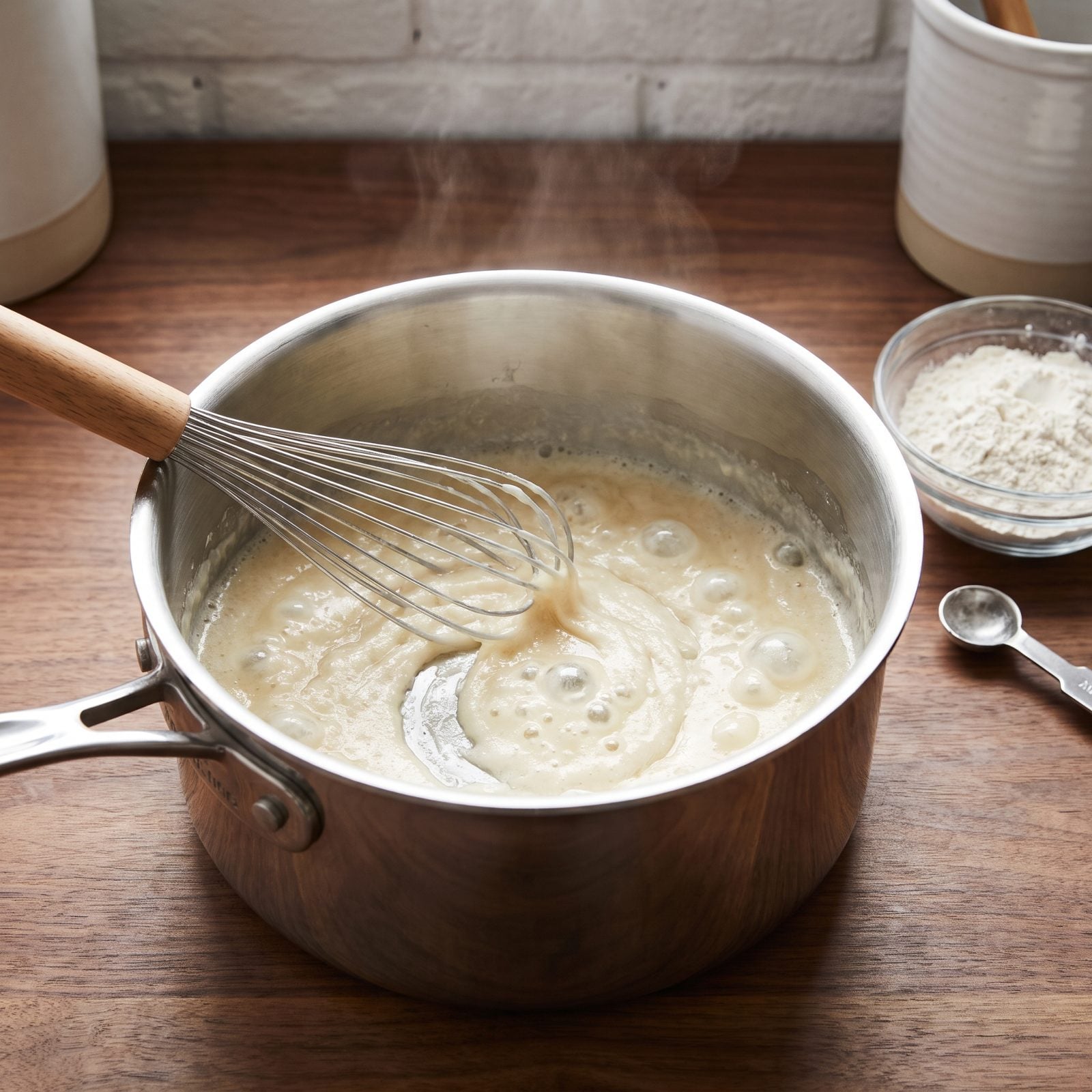
You know the taste. That chalky, slightly raw note that sits on the back of the tongue and makes the whole gravy feel unfinished usually means the flour went in and the liquid followed about twenty seconds later.
Flour needs heat and time to lose its raw starch flavor. Rush it and you can thicken the gravy perfectly and still have it taste like library paste.
So cook the flour into the fat for a solid two to three minutes before any liquid touches the pan, stirring constantly over medium heat until it smells nutty and toasty instead of raw. That smell is your signal. Don’t add stock until you get it.
30. Cooking the Roux Until It Turns Bitter
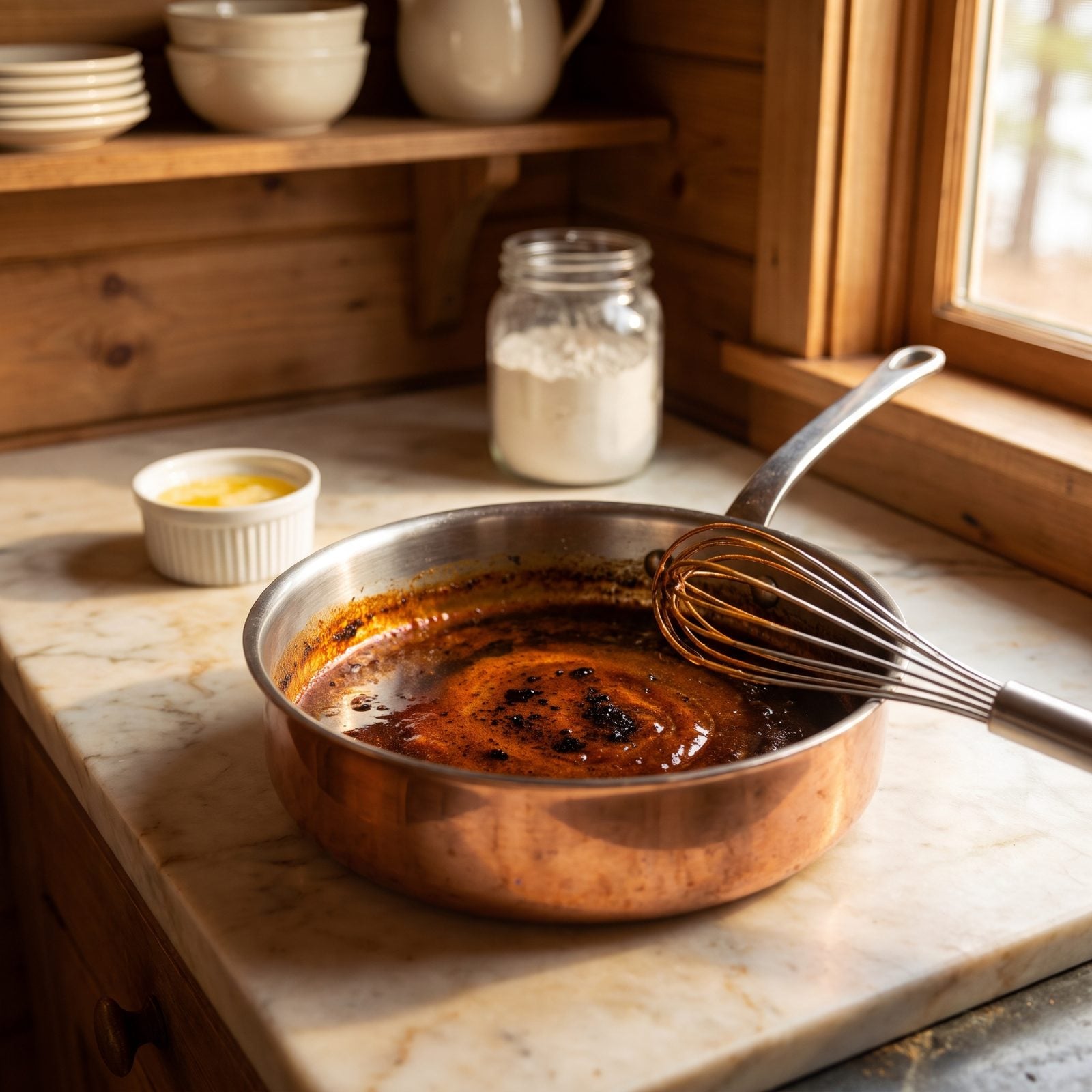
There’s a point where a good brown roux tips over into trouble. The color deepens past caramel into something darker, and a scorched, acrid edge creeps in that no amount of stock will cover.
Once a roux burns, even slightly, it’s done. Flecks of black mean start over, because that bitterness spreads through the whole batch.
And for holiday gravy you don’t need a deep Cajun-dark roux anyway. Take it to a light peanut-butter brown over medium heat, whisking the whole time, then pull it off the moment it gets there. Keep the heat moderate. A roux goes from perfect to ruined in about thirty seconds if you walk away to baste something.
29. Adding Dry Cornstarch Straight to the Pan
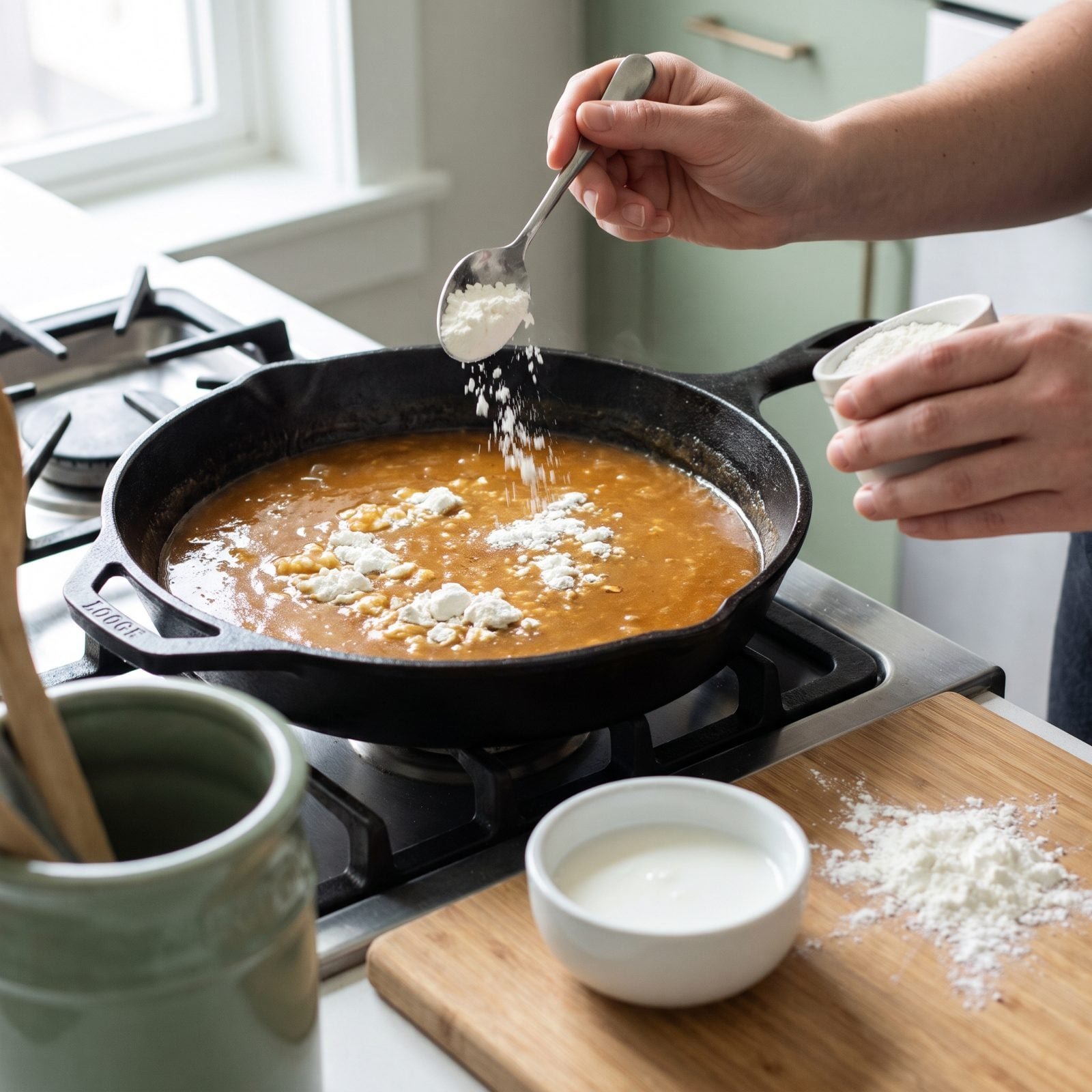
It feels efficient. Gravy’s a little thin, so you shake some cornstarch straight into the simmering pan, then spend the next ten minutes chasing pale, rubbery lumps around with a whisk that isn’t winning.
Dry cornstarch hits hot liquid and seizes instantly on the outside, trapping dry powder inside. Those lumps won’t dissolve no matter how hard you whisk.
Make a slurry first, every time. Stir one tablespoon cornstarch into two tablespoons cold water until it’s smooth and milky, then pour it into the simmering gravy in a thin stream while whisking. It’ll thicken in under a minute, clear and glossy, with no lumps to strain out.
28. Using Too Much Cornstarch Slurry
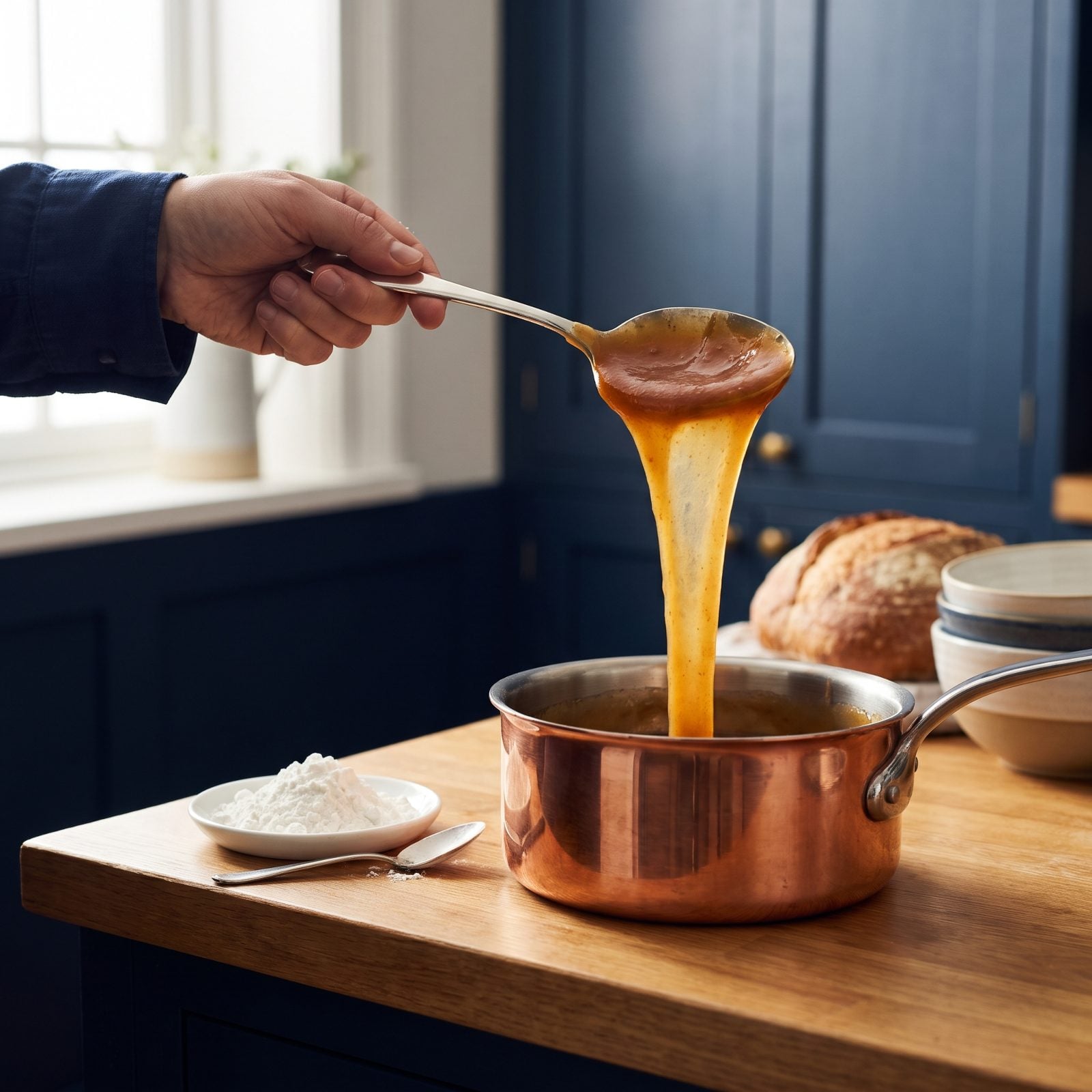
Cornstarch is sneaky. A little does a lot, and the gravy that looked thin two minutes ago is now coating the ladle in a shiny, jelly-like sheet that wobbles when you tilt the boat.
Overdo it and you get that glassy, almost translucent texture that reads more like glaze than gravy. It dulls the flavor too.
Go slow. Add slurry a little at a time, let it cook a full minute to show its true thickness, then judge. One tablespoon per cup of liquid is plenty. Already gone too far? Whisk in a splash of warm stock to loosen it back down.
27. Whisking Too Slowly as the Gravy Thickens
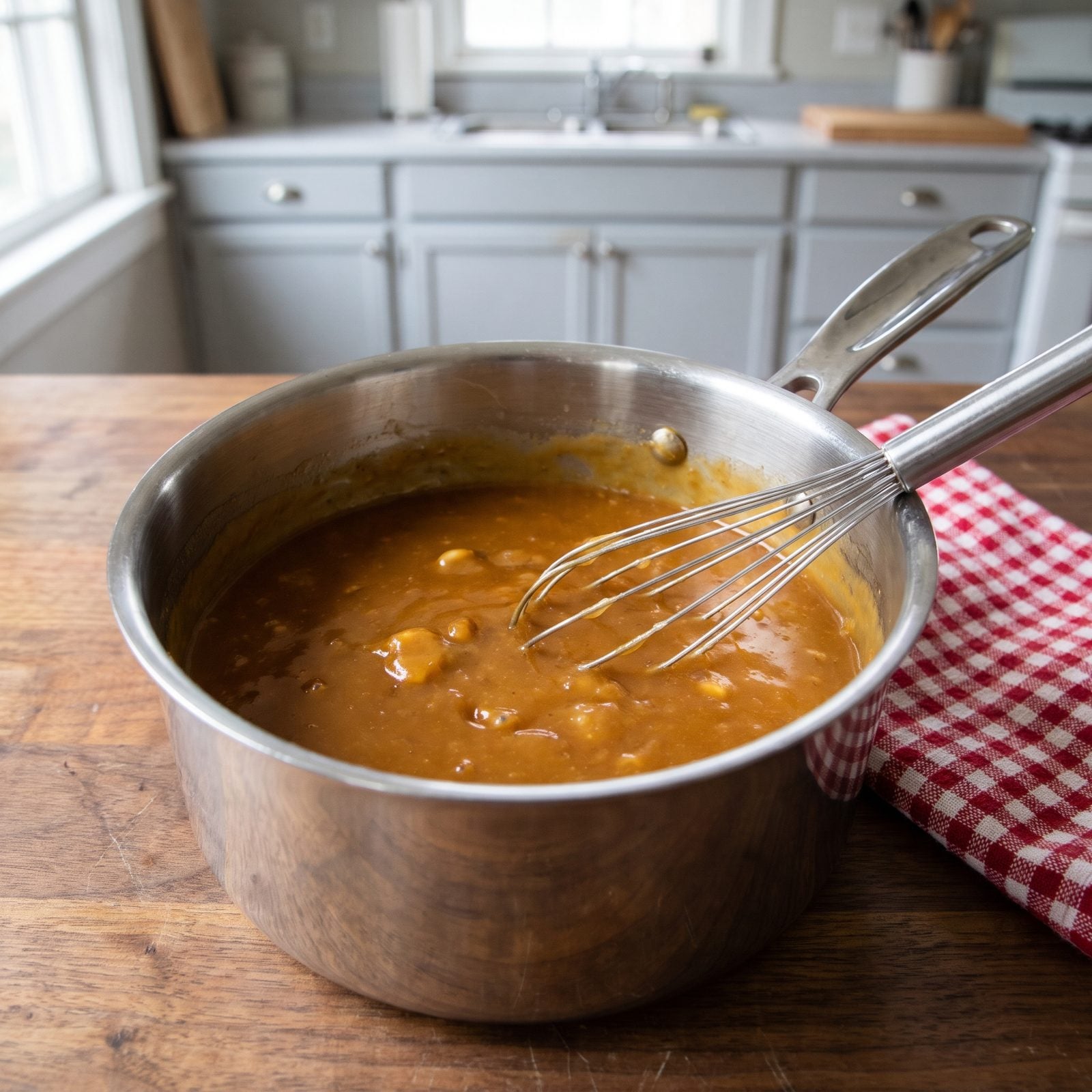
The moment the slurry or stock goes in decides everything. Stir lazily and the thickener clumps at the bottom and welds into lumps before it disperses.
As gravy thickens, slow spots overcook into gluey knots while the rest stays thin. Uneven heat plus slow whisking gives you a grainy finish.
Whisk steadily and with intent when you add anything, keeping the whole surface moving for a good thirty to sixty seconds. A balloon whisk beats a spoon here every time. Once it’s smooth and thickened, you can ease off and let it simmer.
26. Simmering So Gently the Gravy Never Thickens
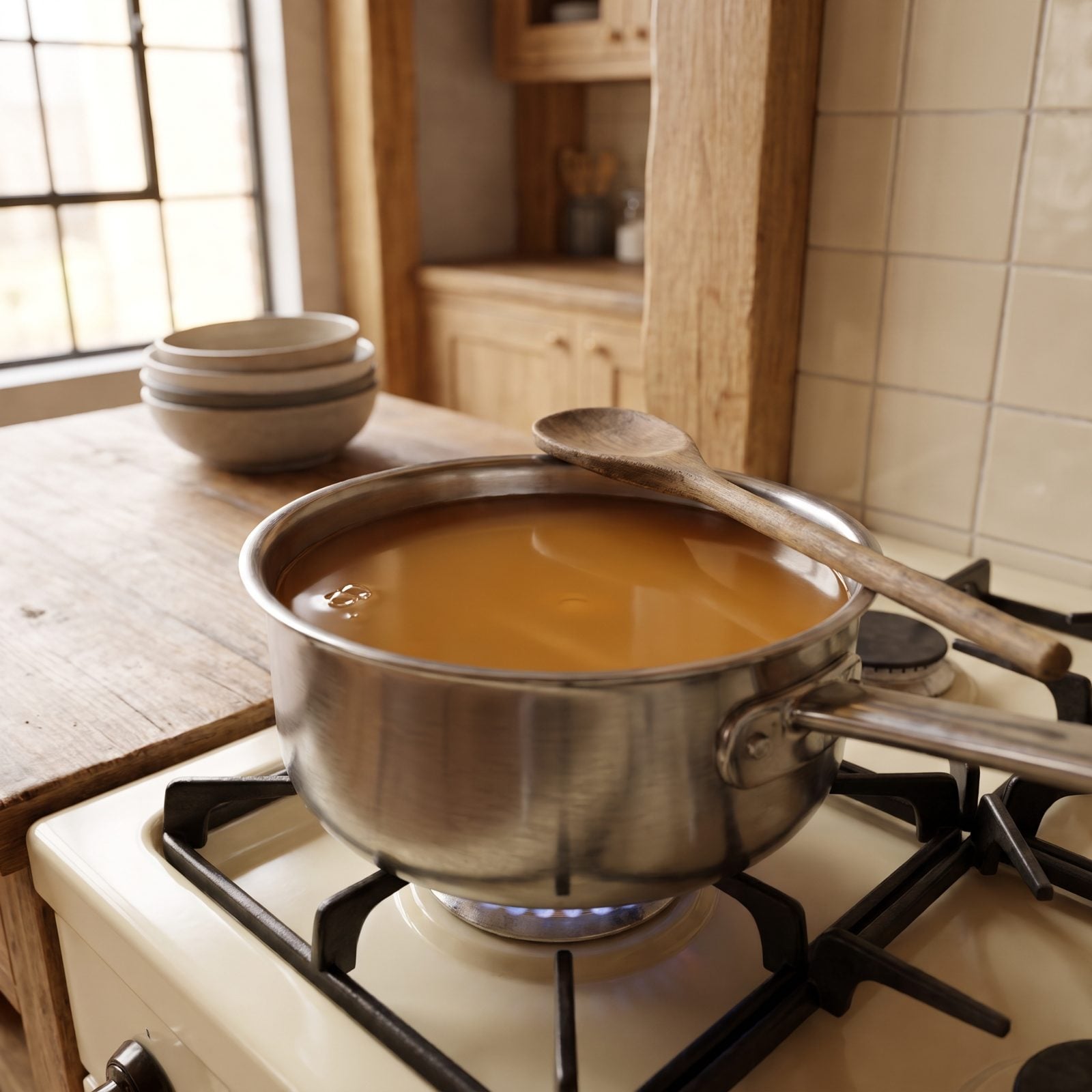
Everyone warns you not to boil gravy, so you turn the heat way down to be safe. Now it’s been fifteen minutes, it’s still thin as broth, and the crowd is getting hungry.
Flour and cornstarch both need real heat to activate and thicken. A bare simmer keeps the gravy warm but never lets the starch do its job.
You want an active simmer, small steady bubbles breaking the surface, not a flat, silent pan. Bring it up to a gentle rolling simmer for a couple of minutes, whisking now and then, and watch it tighten up. Medium heat, not medium-low.
25. Boiling the Gravy Until the Fat Separates
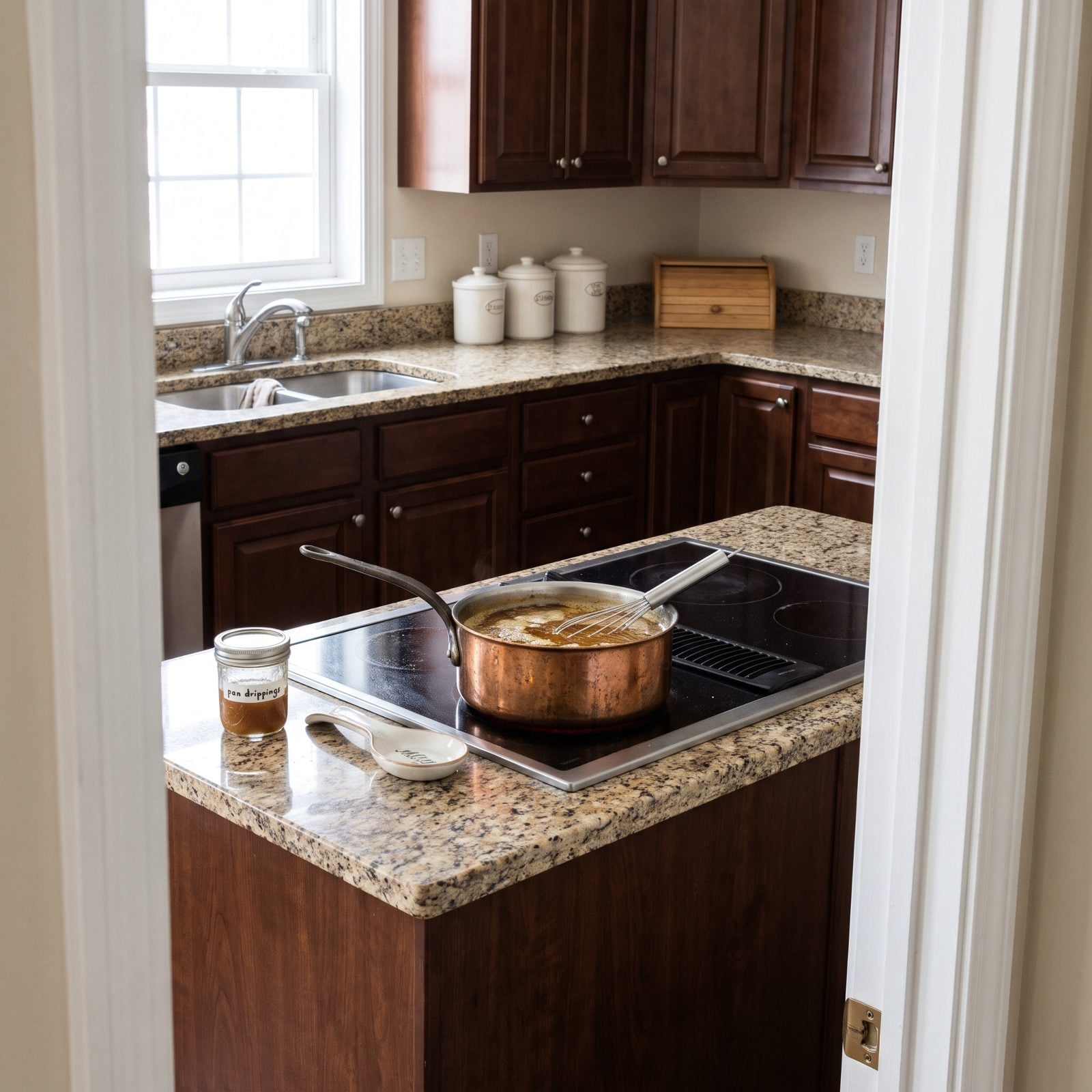
Push a thickened gravy into a hard boil and the smooth surface breaks. A greasy slick rises to the top, the body turns thin, and the texture goes from velvet to oil-and-water in a matter of seconds.
A rolling boil shatters the emulsion holding fat, starch and liquid together. Once it splits, it looks curdled and tastes greasy.
Keep it at a simmer after the thickener goes in. Never a full boil. And if it does separate on you, pull it off the heat and whisk hard; often the emulsion comes right back. A splash of warm stock whisked in can rescue a stubborn one.
24. Reducing the Gravy Until It Becomes Salty Paste
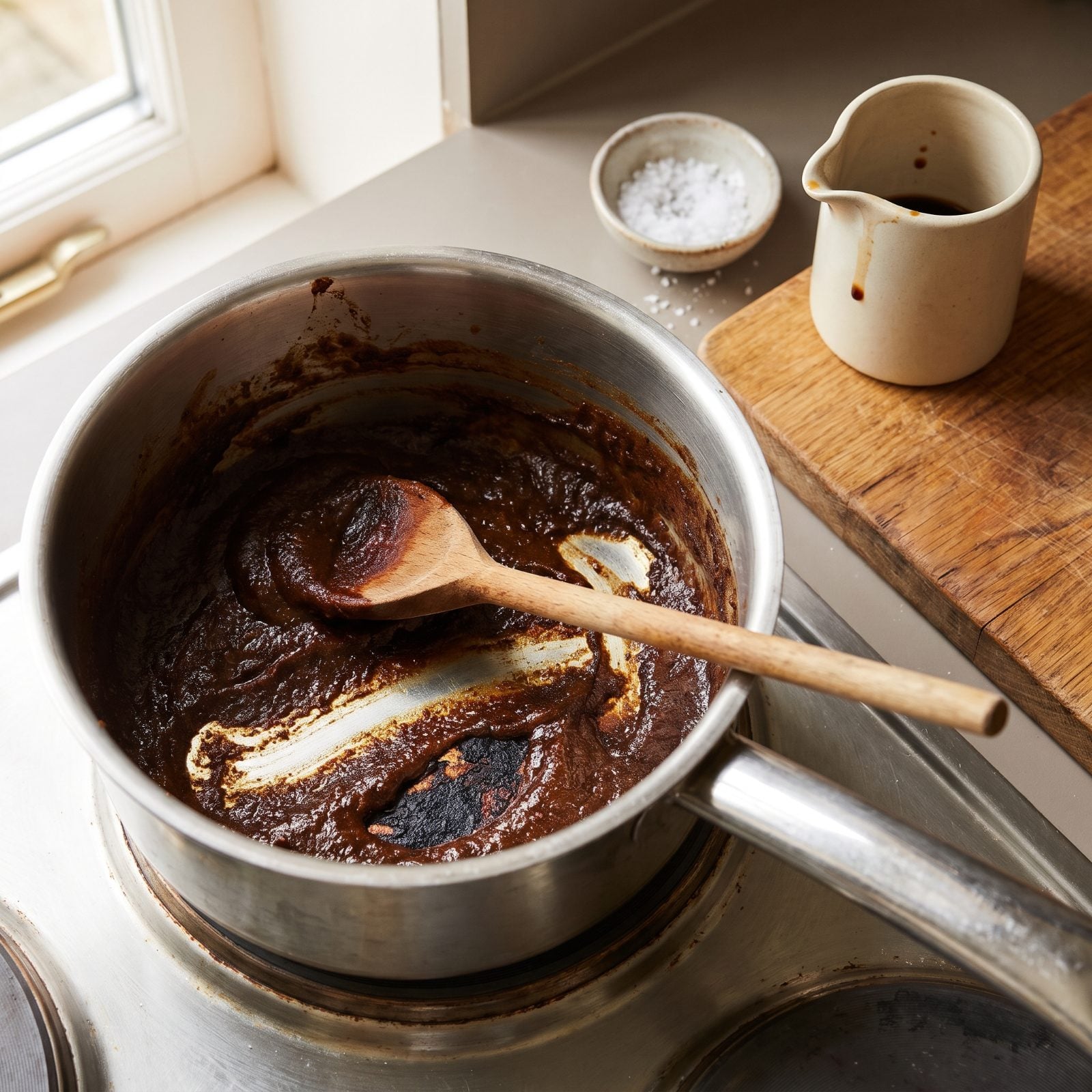
Reducing concentrates flavor, which sounds great right up until the gravy turns into a thick, intensely salty paste that could double as a glaze.
Here’s the catch nobody expects: salt doesn’t cook off. As the liquid evaporates, every bit of seasoning in the pan gets stronger, and a gravy that tasted balanced an hour ago turns harsh.
Season at the end, after reducing, never before. Over-reduced already? Whisk in warm unsalted stock or even a little water to bring the volume and the salt level back down. Taste as you go. You can always add salt later; you can’t take it back out.
23. Leaving the Gravy Too Thin and Hoping It Thickens in the Boat
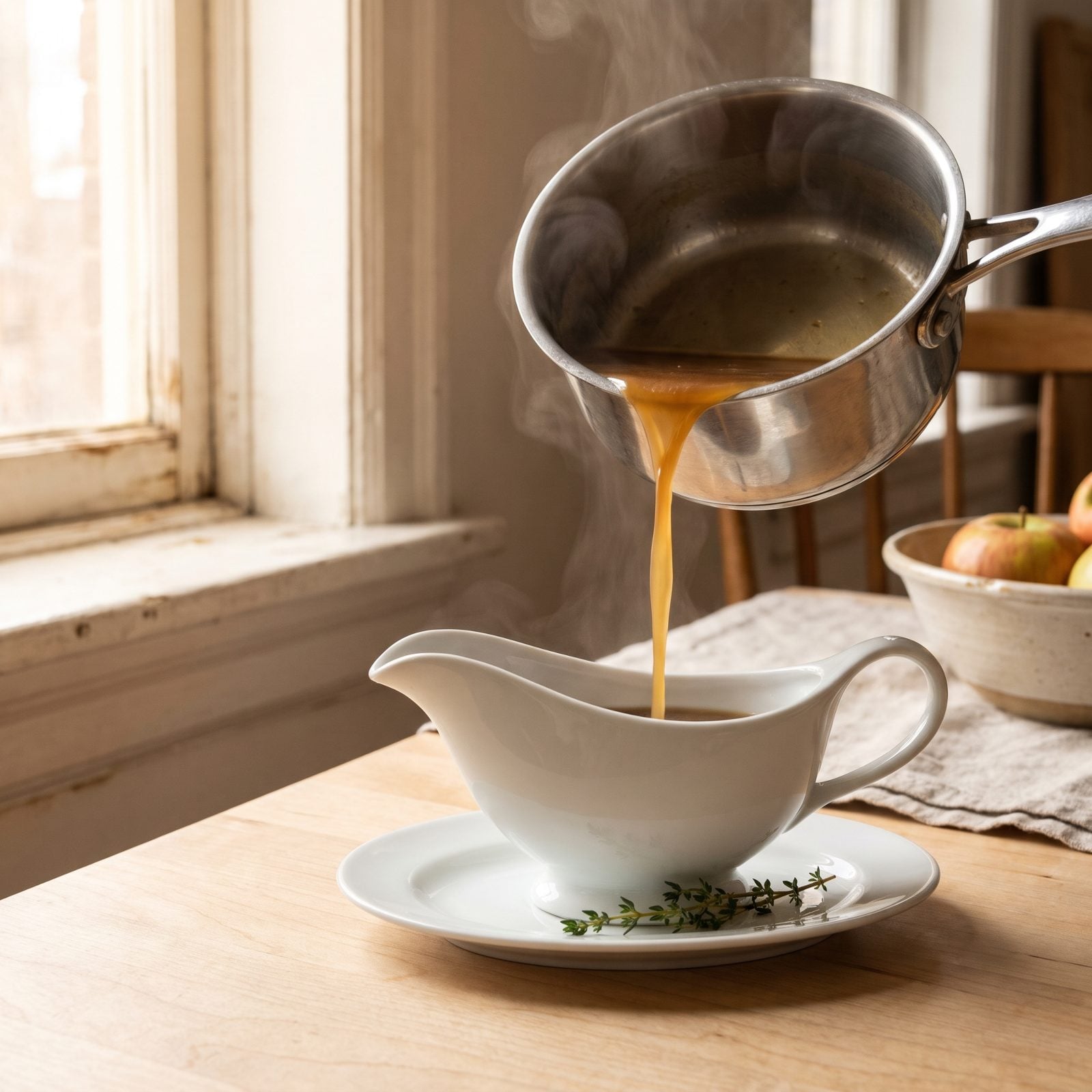
The gravy’s a little loose, the turkey’s resting, and the logic sounds reasonable: it’ll firm up once it’s sitting in the boat. It won’t firm up the way you hope. It just gets cold, then pools sadly around the potatoes.
Gravy thickens with heat and starch, not with time in a serving dish. Cooling actually makes it look thicker for a minute, then it runs the moment it hits a warm plate.
Get it to the right consistency in the pan, where it coats the back of a spoon and holds a line when you drag your finger through it. Still thin? Add a touch more slurry and simmer. Fix it on the stove, not on the table.
22. Thickening the Gravy Until It Sets Like Pudding
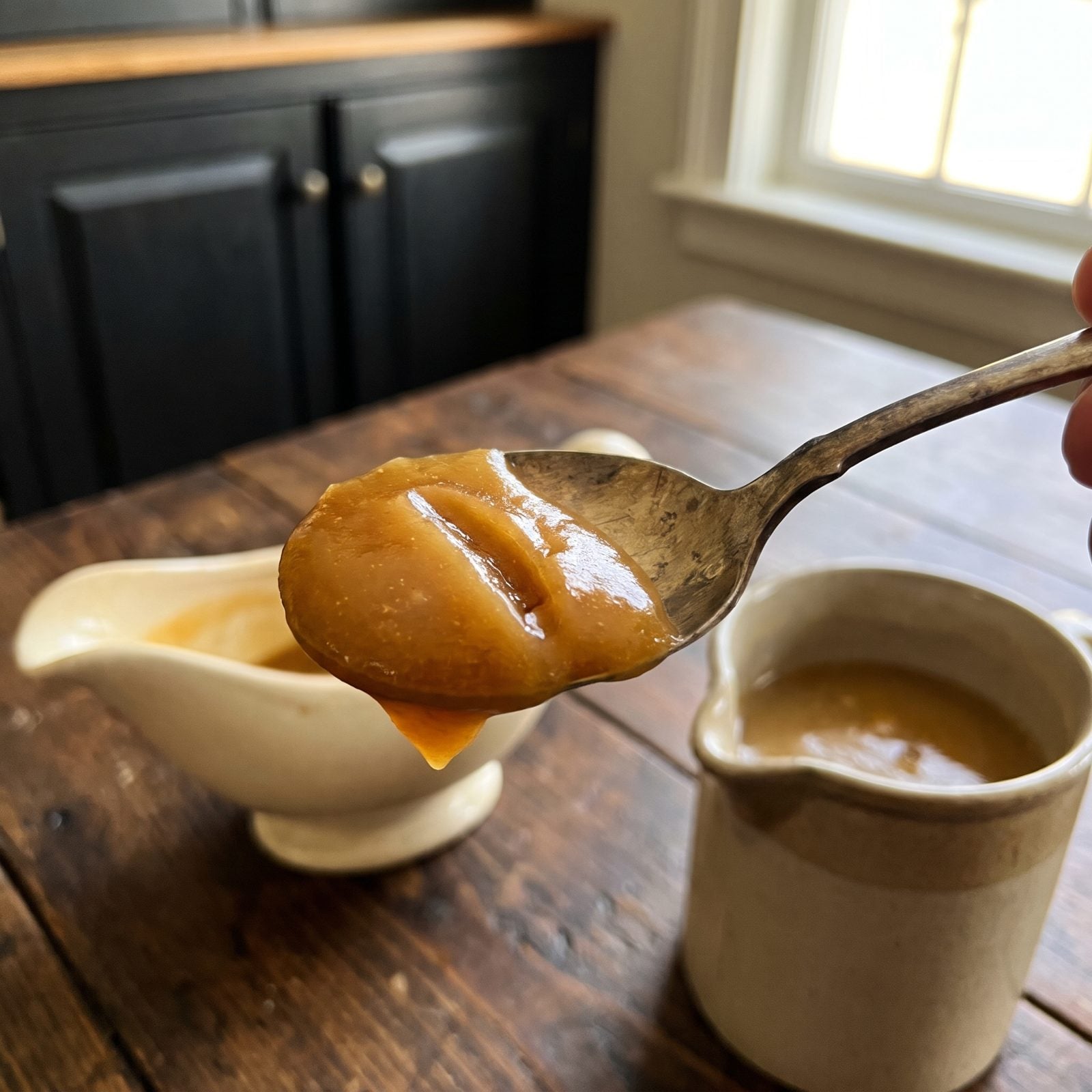
Somewhere between thin and right there’s a sweet spot, and it’s easy to blow past it. One more spoon of thickener and the gravy stiffens into something you could slice, sitting on the potatoes in a quivering mound instead of flowing over them.
Over-thickened gravy mutes flavor, feels gluey, and skins over fast as it cools. Nobody wants to spoon pudding onto their turkey.
The target is nap, the point where gravy coats the back of a spoon and a line drawn through it holds for a second before closing. That’s it. Pull the thickener there. Overshot? Whisk in warm stock a splash at a time until it loosens back to a pour, then taste and re-season, because loosening it dilutes the salt a little.
21. Forgetting That Gravy Thickens as It Cools
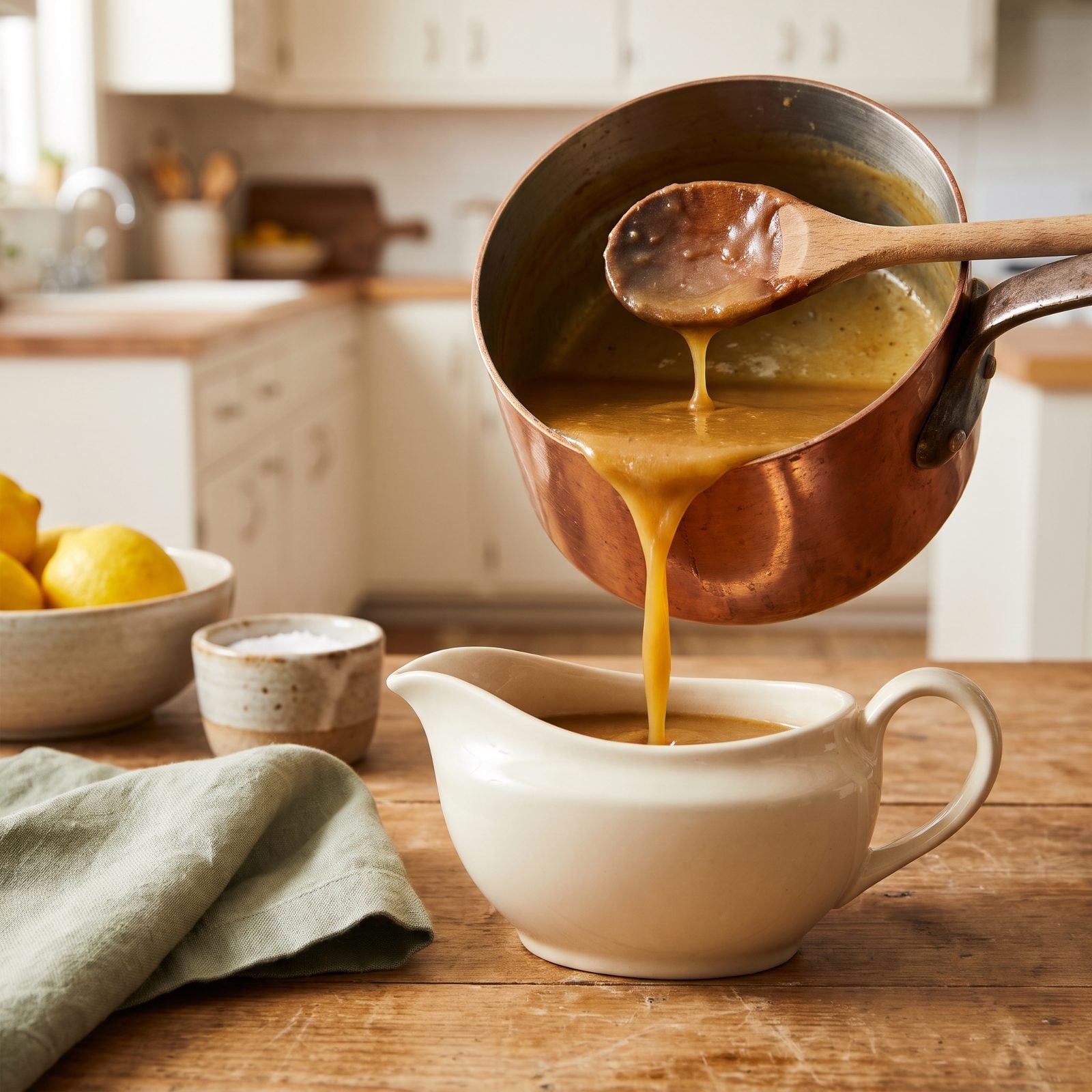
In the pan it looks perfect — loose, glossy, pouring off the spoon like silk — and you carry it to the table proud. Ten minutes later it’s set up like pudding, holding a spoon upright in the gravy boat.
Starch keeps working as the temperature drops. What’s thin and ideal at a boil turns thick and gluey once it hits a cool gravy boat and a cold plate, and the gap between stove heat and table heat is bigger than most people plan for.
So pull your gravy off the heat a touch thinner than you actually want it. If it coats the spoon but still runs freely, you’re in good shape. Warm the gravy boat with hot tap water first, then dry it. That one trick buys you ten more minutes of pourable gravy.
20. Relying on Salt Instead of Building Savory Flavor
Salt makes food taste more like itself. It does not add flavor that was never there. A thin, pale gravy with no savory backbone just becomes a salty thin pale gravy, and you keep adding salt chasing richness that never comes.
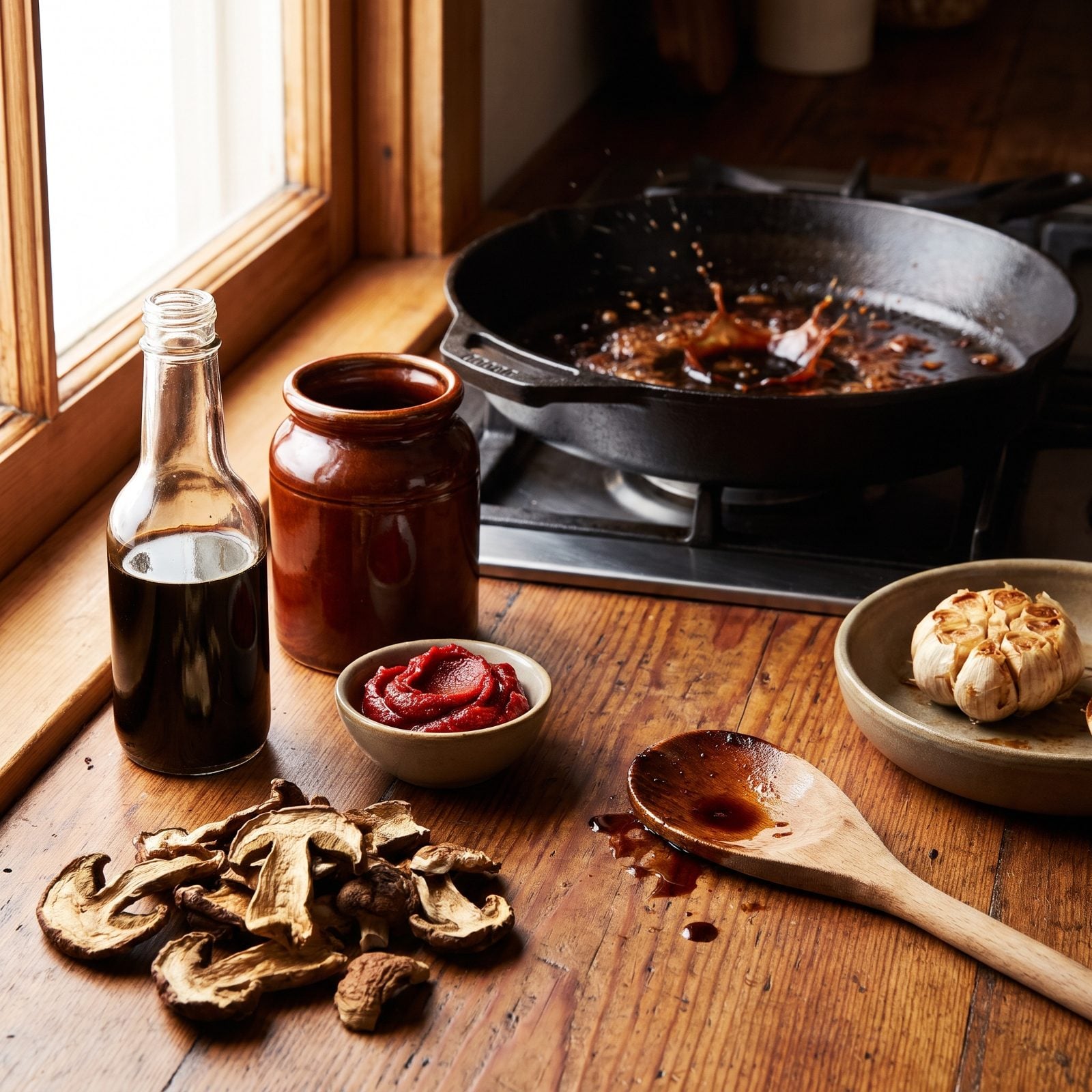
What you’re missing is umami — that deep meaty savor that makes gravy taste like it took all day. Build it from the fond, the browned bits stuck to the roasting pan. Deglaze them with stock and scrape every speck up.
A teaspoon of tomato paste cooked until it darkens. A splash of soy sauce or Worcestershire. A few dried porcini ground to powder. Any one of these adds depth that salt alone can’t touch, and if you taste before you reach for more salt, you’ll salt a lot less.
19. Pouring Wine Into Finished Gravy Without Cooking It
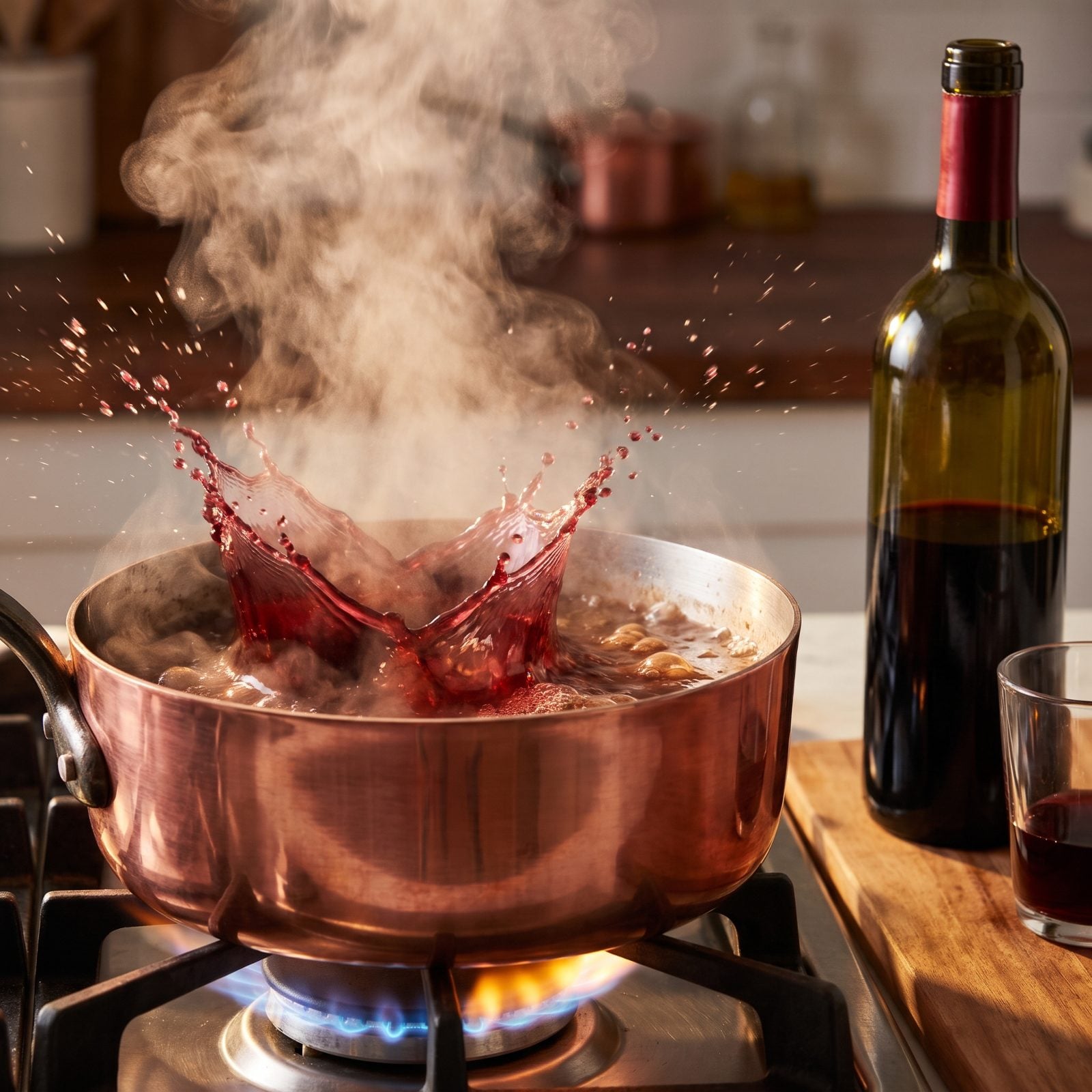
Wine stirred into finished gravy at the last second tastes exactly like what it is. Raw. Sharp. That boozy bite sits on top of everything and refuses to blend in, and no amount of extra simmering at that point fully buries it.
Alcohol needs time and heat to cook off and mellow. Add it late and you’re serving the harsh edge instead of the warm, rounded flavor wine is supposed to bring.
Pour the wine in early, right after you deglaze, and let it bubble down by at least half before the stock goes in. You want that sharp smell to fade and the liquid to concentrate into something jammy and deep. Smell the steam. When it stops smelling like a wine bar and starts smelling like dinner, you’re ready for the next step.
18. Burning the Garlic Before Adding Liquid
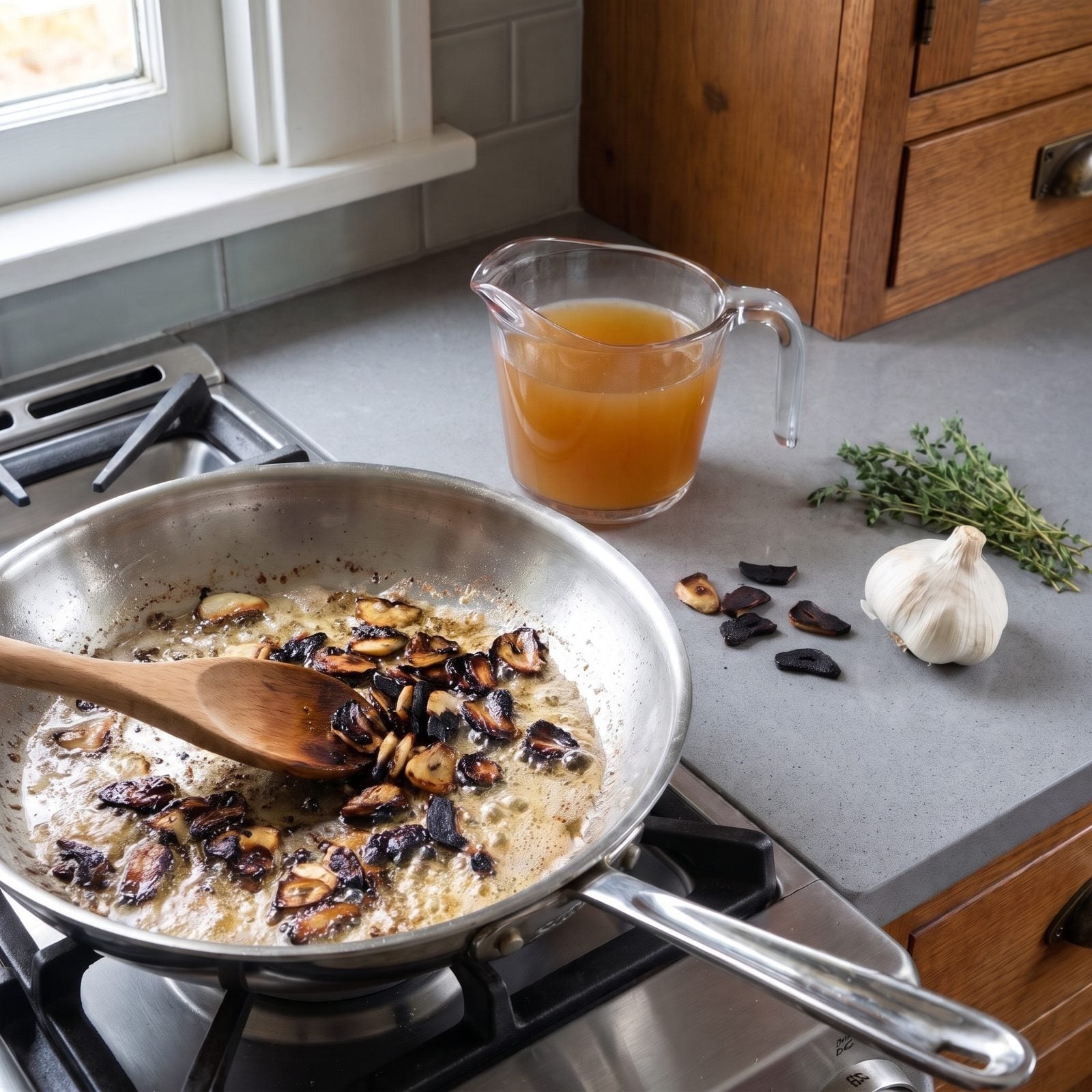
Garlic goes from golden to acrid in about fifteen seconds. One moment it’s perfuming the whole kitchen, the next it’s dark brown and bitter, and that burnt edge will haunt every spoonful of gravy you pour.
Burnt garlic doesn’t blend away. It’s a sharp chemical bitterness that cuts right through the richness you worked to build.
Keep the heat moderate and the garlic moving. The second it turns pale gold and smells sweet, get your liquid in the pan. The stock or wine drops the temperature instantly and stops the cooking cold. And if you do scorch it? Don’t try to save that batch. Start the aromatics over. Bitter garlic is one gravy mistake there’s no fix for.
17. Leaving Onions Crunchy in an Otherwise Smooth Gravy
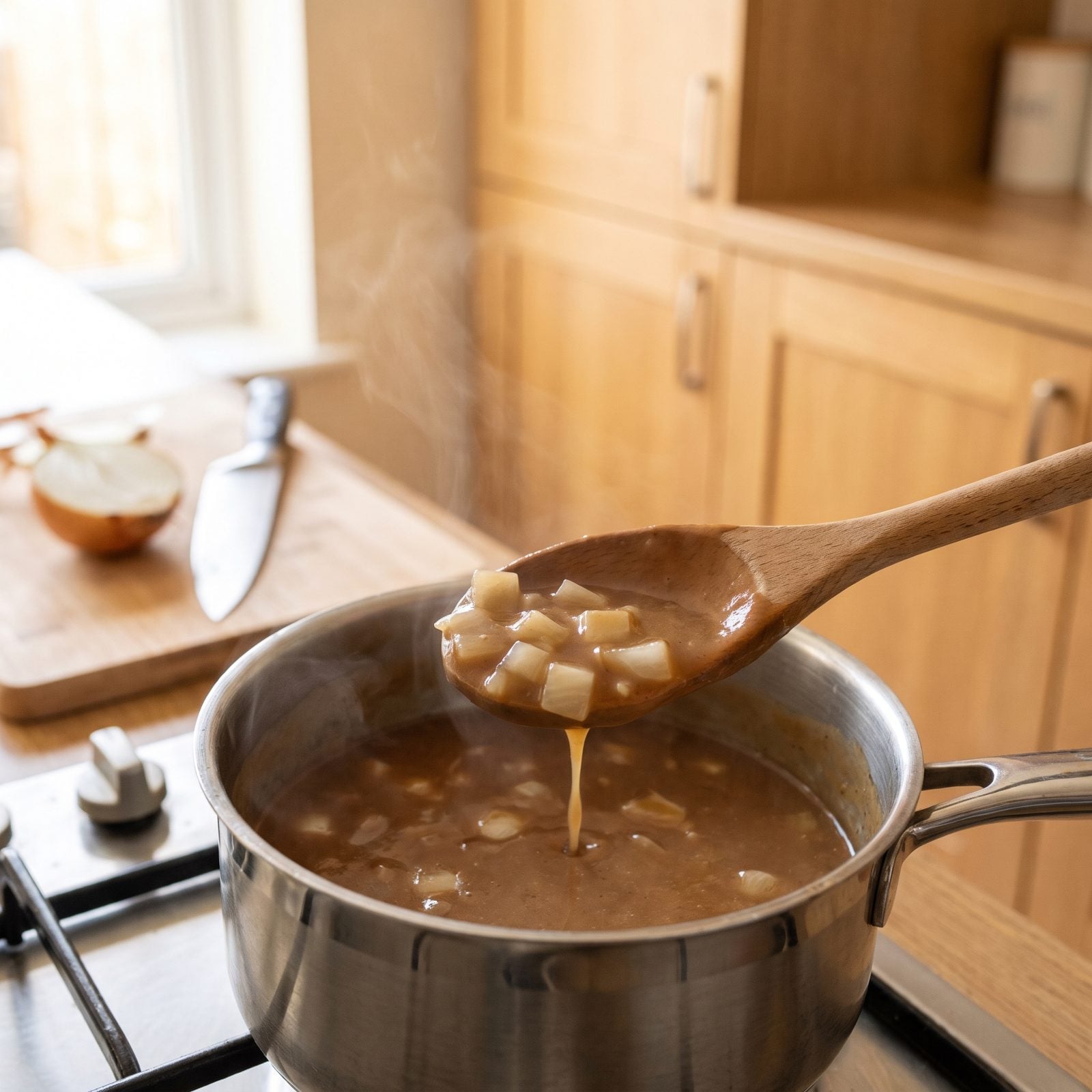
You take a bite of silky gravy and hit a hard little nugget of raw onion, and the texture contrast ruins the whole mouthful. It reads as unfinished, like someone rushed the sauce to the table.
Onions need real time to break down. Dropped in late or cooked too fast, they stay firm and sharp while everything around them has gone soft and mellow.
Start your onions early and low, sweating them in fat until they turn soft and translucent before any liquid goes in — ten to fifteen minutes of patience. Want them gone entirely? Dice them fine and let them melt into the gravy, or strain them out at the end for a glass-smooth finish.
16. Using Too Much Dried Sage
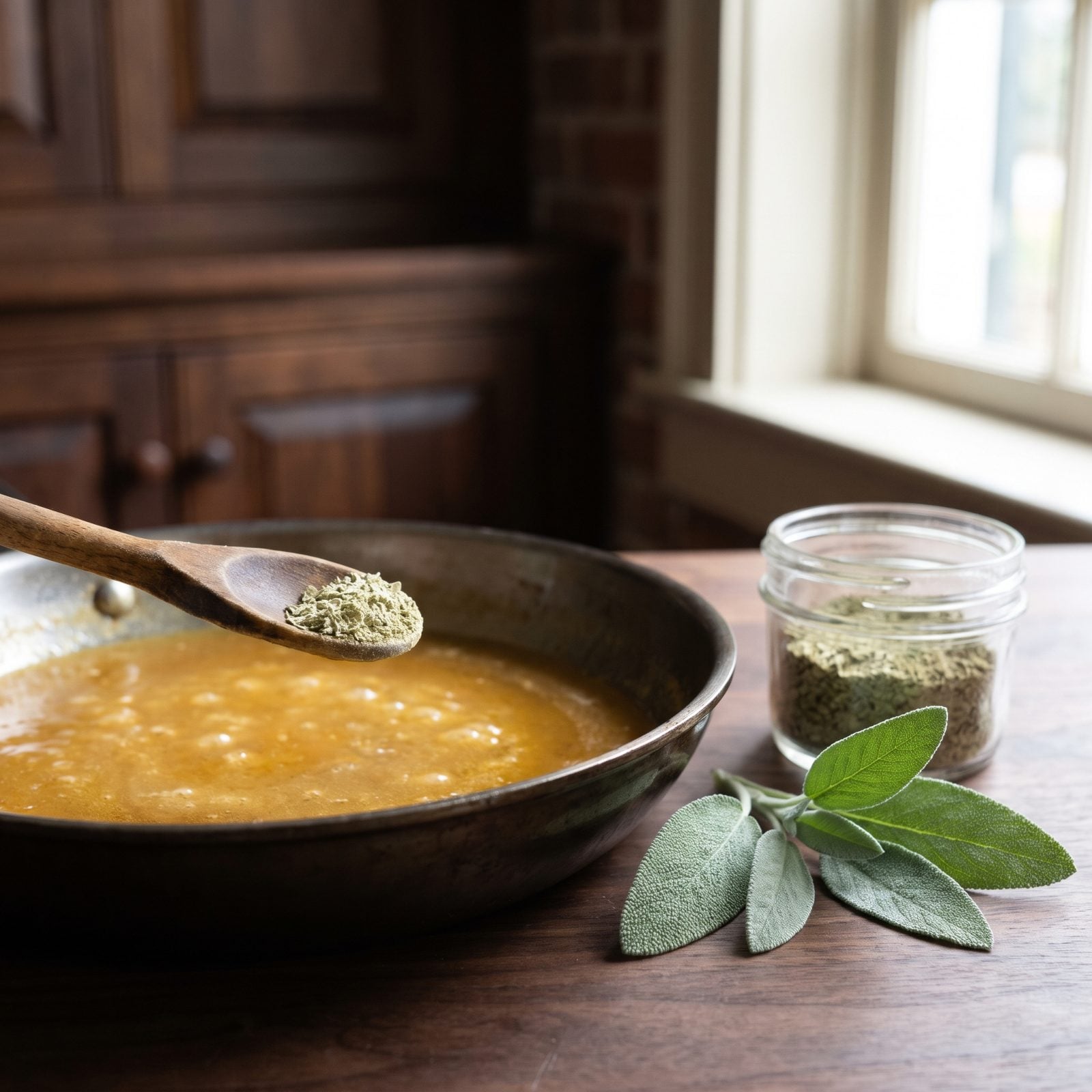
Sage is the taste of the holiday table, but it turns on you fast. A little gives gravy that warm, piney, savory note everyone associates with turkey. A little too much and the whole pot tastes medicinal, almost dusty, like you licked the inside of a spice tin.
Dried sage is concentrated and it only gets stronger as the gravy reduces. What seems reasonable at the start can dominate by the end.
Go light. A quarter teaspoon of dried sage per cup of gravy, added early, then taste and adjust. Fresh sage is gentler and more fragrant if you can get it, and frying a few leaves in butter before building the gravy gives you aroma without the bitter edge. When in doubt, use less. You can always add more sage. You can’t take it out.
15. Forgetting to Taste the Gravy With the Meat
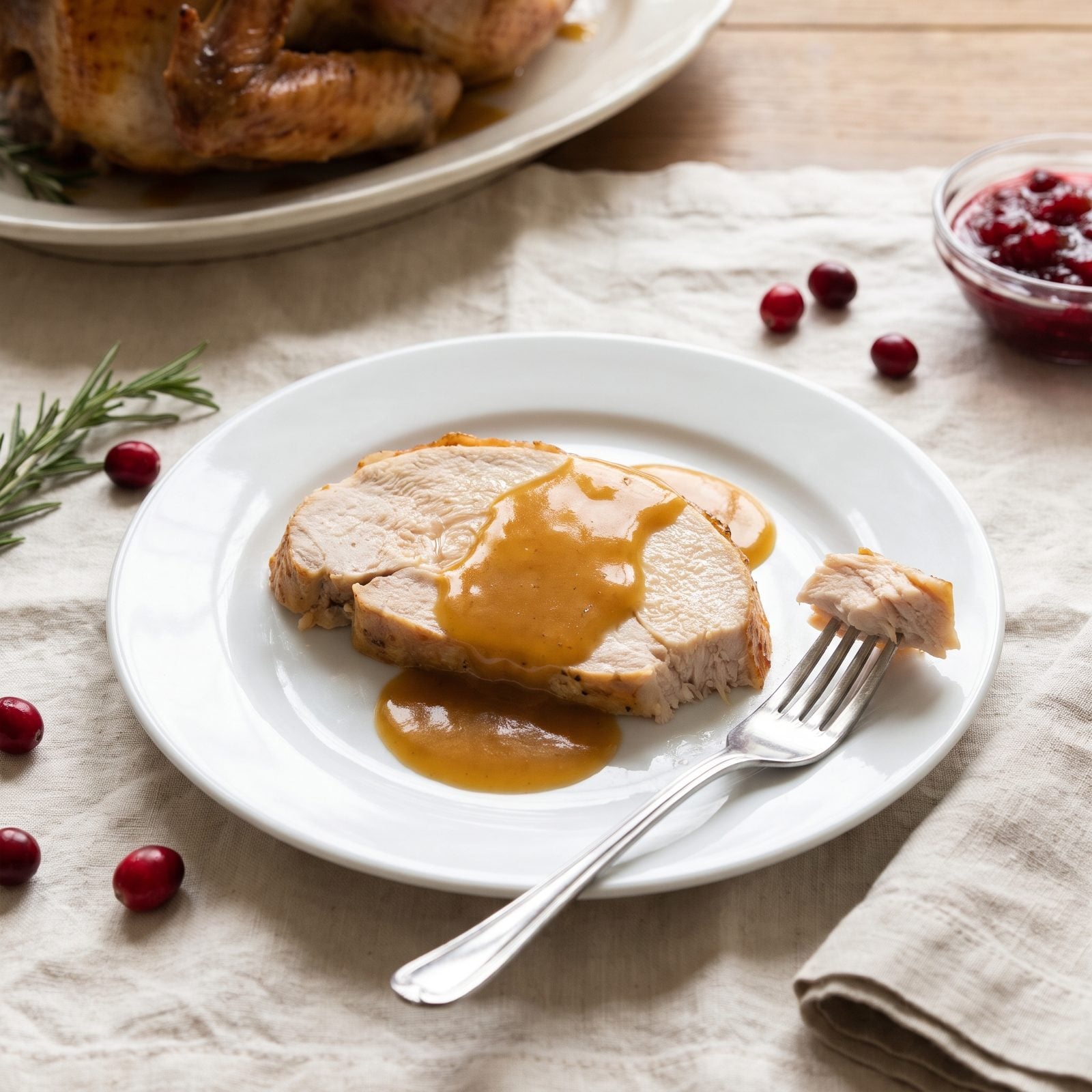
You taste the gravy off the spoon, it’s seasoned just right, and you call it done. But gravy never gets eaten alone. It gets eaten with turkey, with potatoes, with stuffing, on a plate that’s already salted and buttered.
A gravy that tastes balanced by itself can taste flat and underseasoned once it’s spooned over rich meat and starch, because the surrounding food dilutes it.
So before the final seasoning call, dip a bite of actual turkey into the gravy and taste them together. That’s the only tasting that matters, because that’s how it gets eaten. Gravy destined for potatoes can carry a bit more salt and punch than gravy you’d sip from a spoon. Season it for the plate, not for the pan.
14. Skipping the Strainer When the Gravy Is Full of Debris
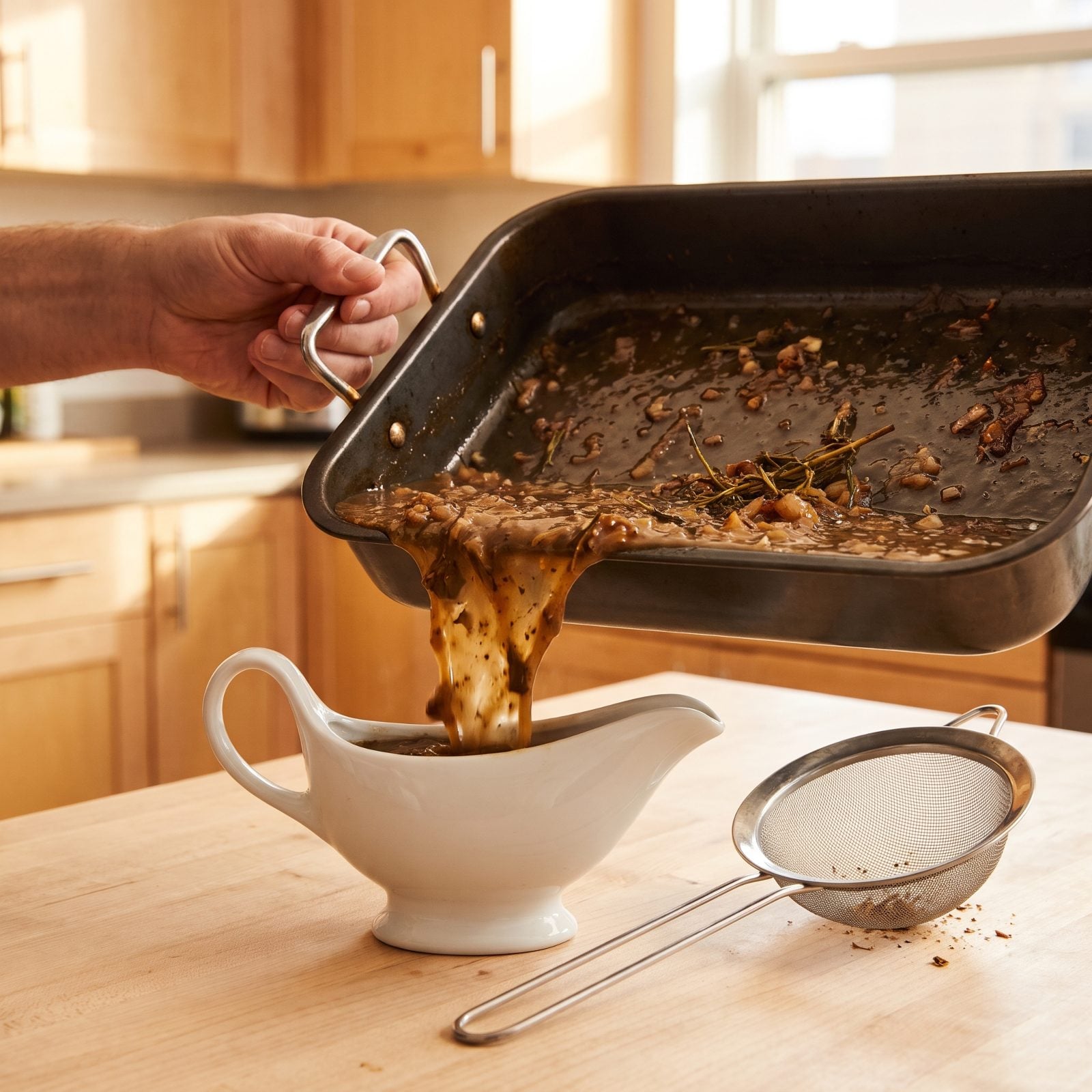
Pan drippings make the best gravy and the messiest — charred bits, herb stems, stray chunks of skin, little coagulated clumps of who-knows-what floating in an otherwise good sauce. Pour that straight into the gravy boat and every serving looks sloppy.
Texture is half of how we judge gravy. A few flecks are rustic. A gravy full of debris just looks like nobody bothered.
Run the finished gravy through a fine-mesh strainer into a clean pan before serving. Thirty seconds and it comes out glass-smooth, uniform in color, restaurant-clean. Press the solids with the back of a spoon to squeeze out every bit of flavor before you toss them. Keep it warm after straining, and don’t let it sit so long it skins over on top.
13. Using an Immersion Blender in a Shallow Pan of Hot Gravy
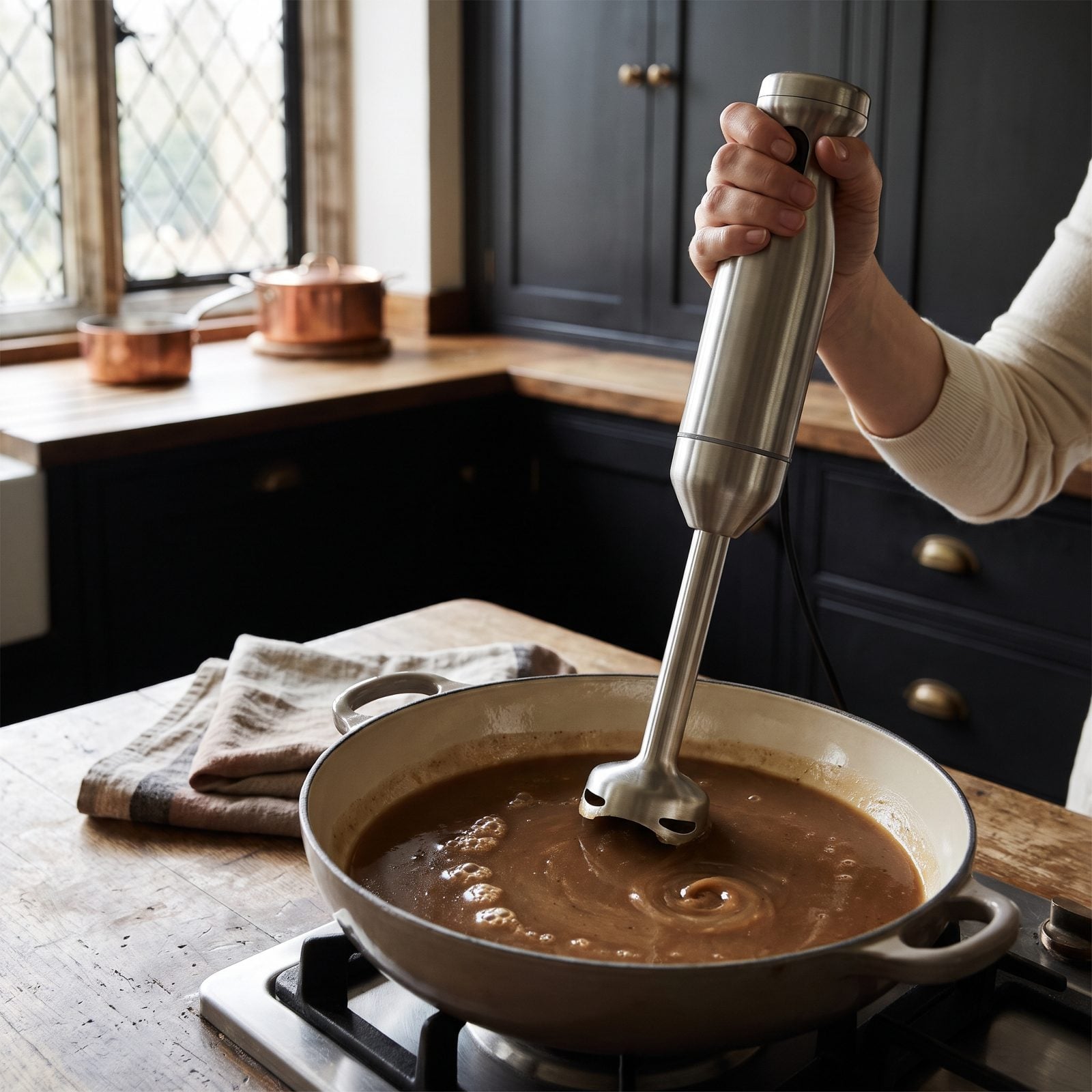
An immersion blender in a shallow pan of hot gravy is how kitchens get redecorated. Fire it up and it fountains scalding gravy up the walls, across the stove, and onto whoever’s holding it. Burns and a cleanup nightmare in one bad second.
Blenders need depth to create the vortex that pulls liquid down into the blade. A shallow pan means the blade sits near the surface, whipping air and flinging hot sauce everywhere.
Move the gravy to a tall, narrow pot or a deep measuring pitcher where the liquid rises well above the blade guard. Submerge the head fully before you switch it on, and don’t lift it out until the motor stops. Keep it tilted slightly to work in any unblended pockets. Deep vessel, blade under the surface, power off before you pull it up. That’s the whole safe routine.
12. Adding Tough Giblets Without Simmering Them First
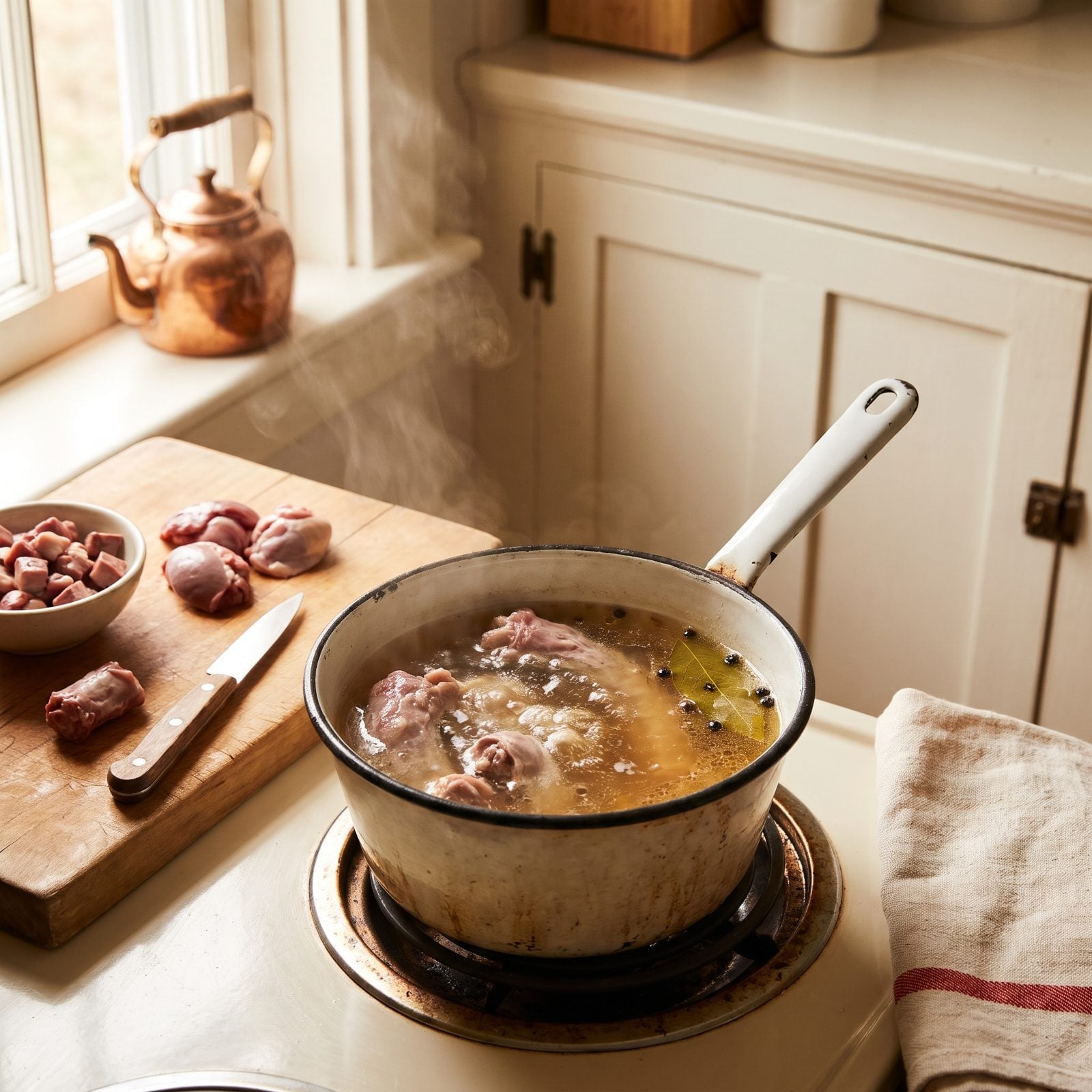
You chop the giblets fine, stir them into the gravy at the last second, and ladle it out — and then someone bites down on a piece of neck meat with the texture of a pencil eraser. Raw giblets are connective tissue and muscle that fought for a living. They need time.
Dropped into gravy at the finish, they stay chewy and leak a faint livery edge into the sauce. So start early: simmer the giblets and neck in salted water or stock for the better part of an hour before the bird even comes out of the oven. Pull the meat, dice it small, strain and save that liquid. You get tender bits and a bonus stock richer than anything from a box.
11. Crowding Mushrooms So They Steam Instead of Brown
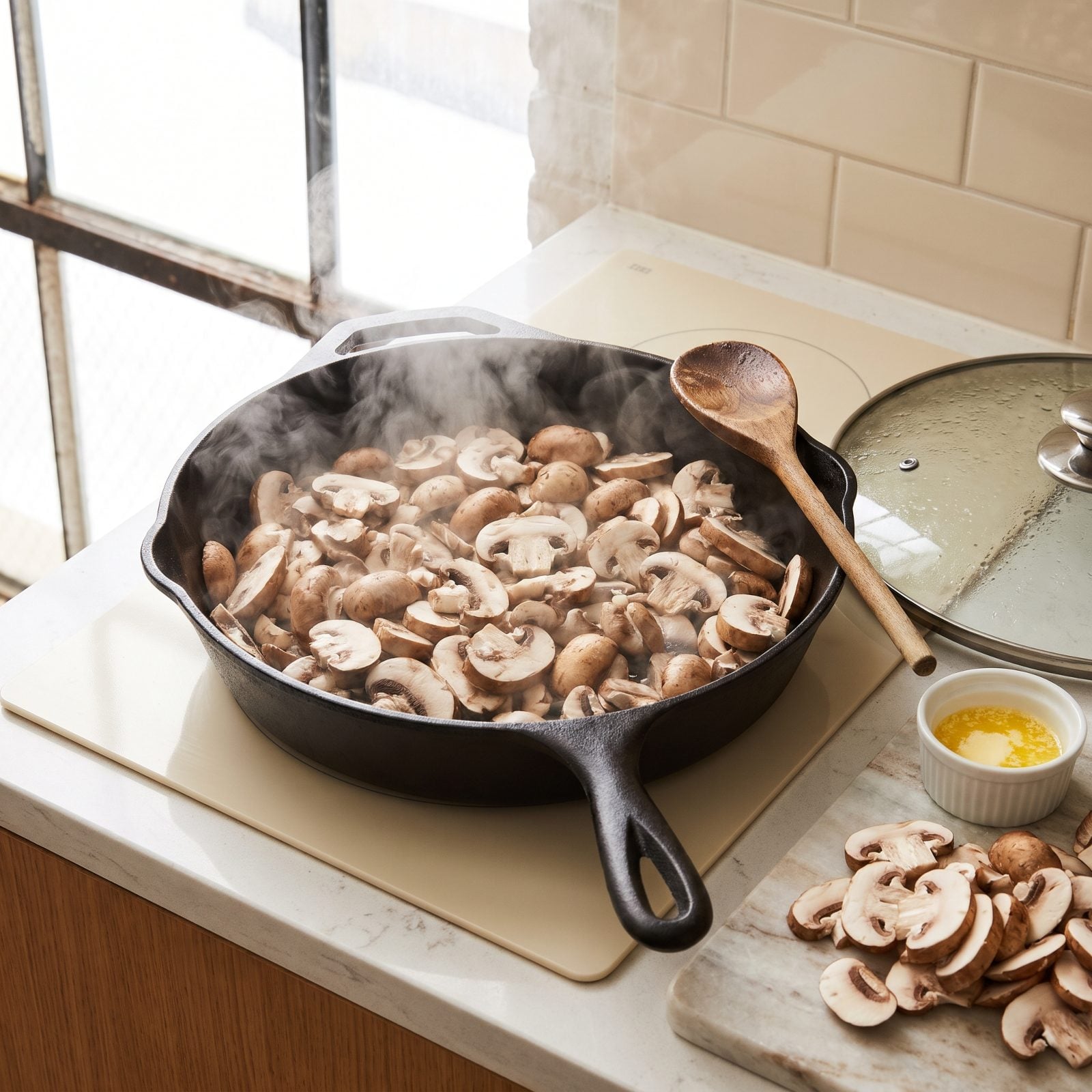
Pile the mushrooms in and they huddle, release water, and simmer in their own juices until they go gray and rubbery. No color, no flavor, just sad wet slices stirred into your gravy.
Mushrooms are mostly water, and the second you overcrowd the pan the temperature drops and that water pools instead of evaporating. So work in batches and give each slice room to sit on hot metal. Hot pan, a little butter, single layer, and then — this is the hard part — leave them alone for a minute before you touch them. Wait for the hiss to turn quiet and the undersides to brown. Now you can stir. Golden, meaty mushrooms carry a savory punch into gravy that steamed ones never will.
10. Adding Cream While the Gravy Is Boiling Hard
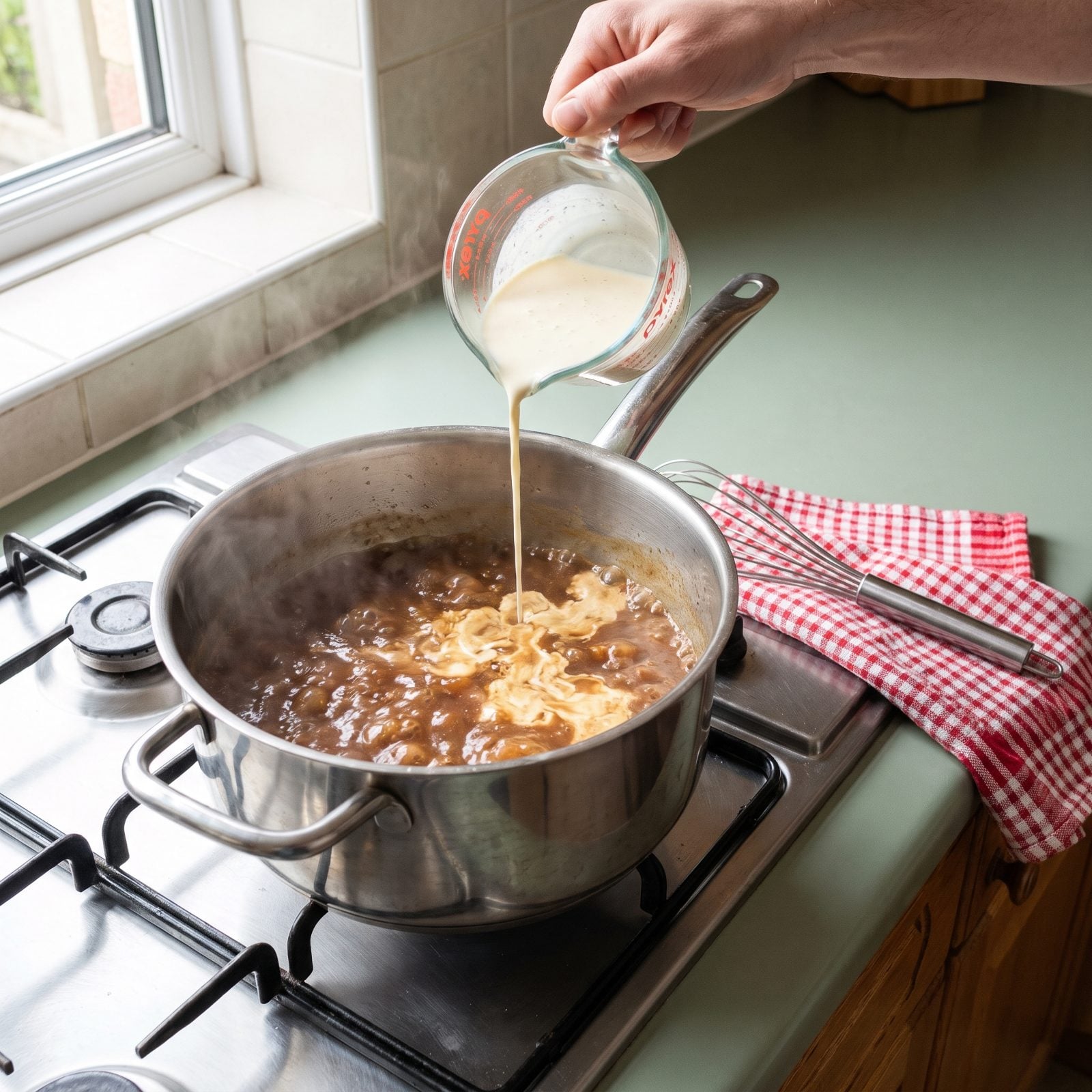
Cream and a rolling boil do not get along. Pour cold cream into furiously bubbling gravy and the dairy proteins seize, curdling into little white specks that no amount of whisking will smooth back out. We learned that one the hard way, standing over a pot the texture of cottage cheese twenty minutes before dinner.
Pull the heat back to a bare simmer first, barely a shimmer on the surface. Temper the cream by stirring a ladle of hot gravy into it, then pour that mixture back in a slow stream, whisking as you go. Let it warm through without boiling again. Silky instead of broken.
9. Cross-Contaminating Gluten-Free Gravy With the Regular Whisk
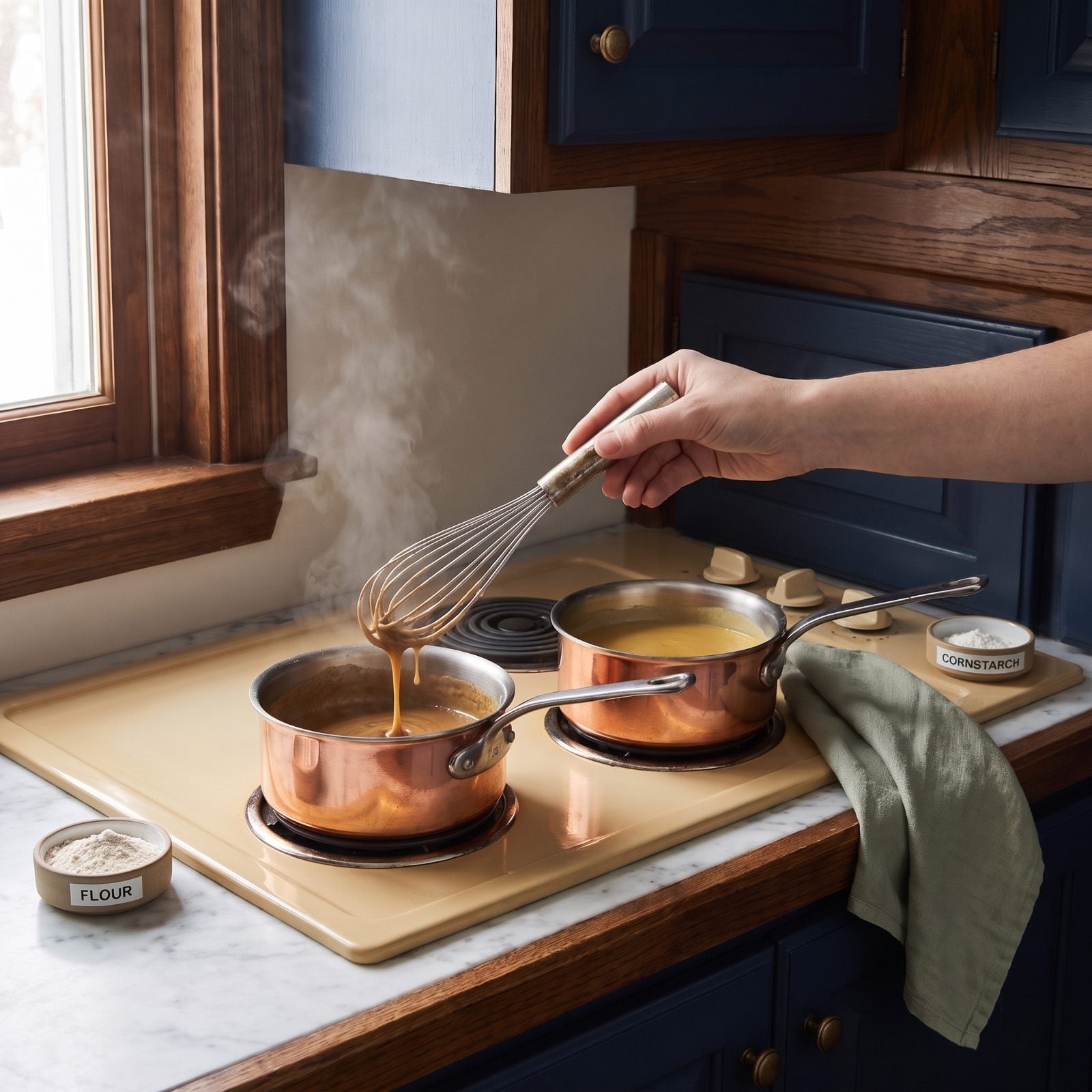
Someone at the table can’t eat gluten. You made a separate cornstarch gravy for them, felt good about it, then stirred it with the same whisk you just pulled out of the flour-thickened pot. A dusting of wheat flour in those whisk wires is all it takes to make someone sick.
Cross-contamination is invisible, and it doesn’t care how careful you were five minutes ago. Set up a clean zone — fresh whisk, fresh ladle, a clean pot — and make the gluten-free batch first, before any wheat flour is out on the counter. Label the gravy boat if the table is crowded. One extra utensil, and you’ve saved someone a miserable night.
8. Holding Gravy Over Direct Heat Until the Bottom Scorches
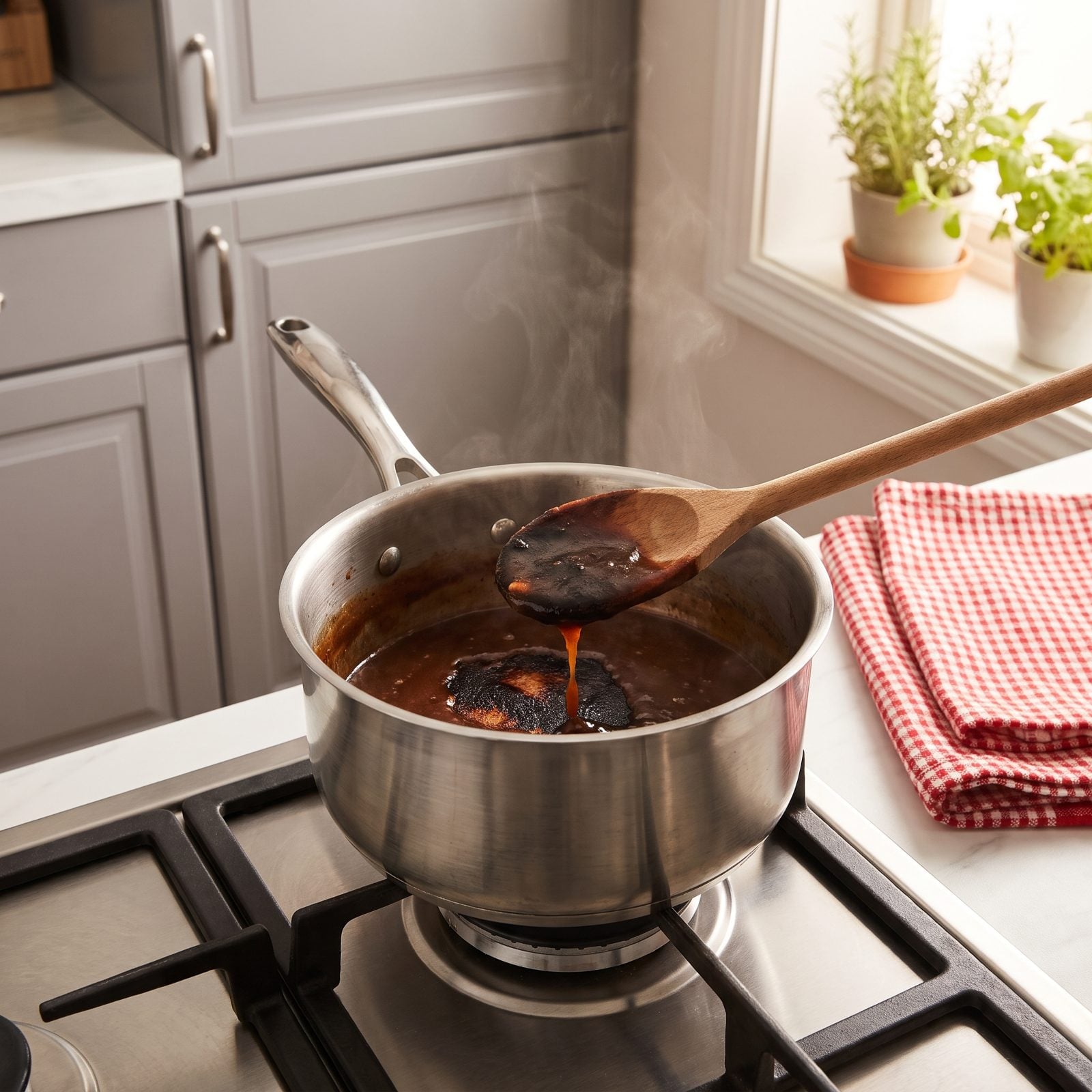
The turkey’s resting, the gravy’s done, and you leave the pot on a low burner to keep it warm. Twenty minutes later there’s a scorched brown crust welded to the bottom and that burnt note has crept into every spoonful.
Gravy is thick and it doesn’t move much on its own, so whatever touches the hot metal just sits there and cooks until it burns. Skip the direct burner. Set the gravy pot inside a larger pan of barely simmering water — a makeshift double boiler — and it holds for an hour without a hint of scorch. A slow cooker on warm does the job too. Stir now and then, and you’ll never taste the bottom of the pan.
7. Leaving Finished Gravy Uncovered Until a Skin Forms
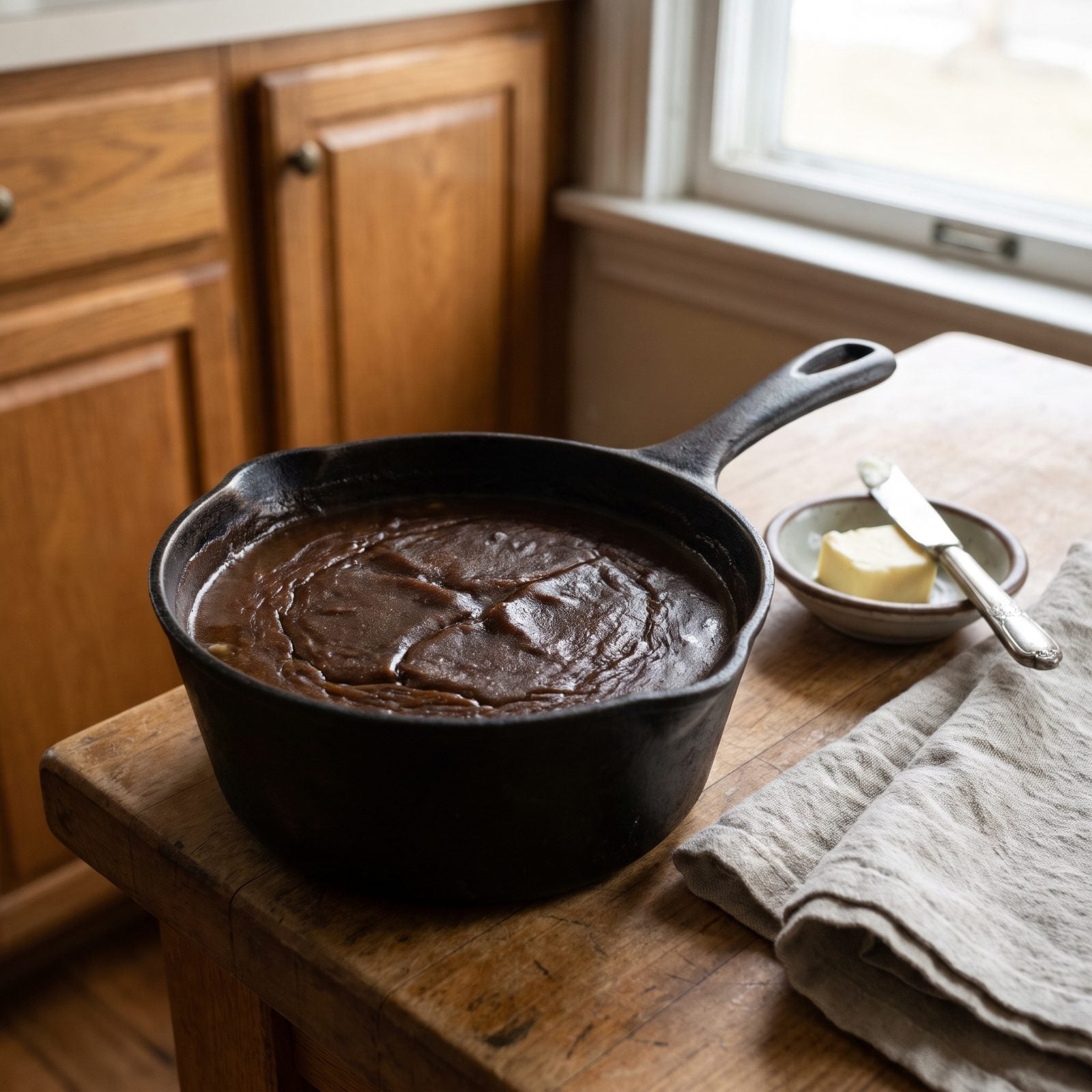
Leave gravy sitting open on the stove and a rubbery skin forms across the top as it cools, the starches and proteins setting into a film you have to fish off or whisk back in lumpy.
It’s just moisture evaporating from the surface, and there are two easy ways to stop it. Press a piece of buttered parchment or plastic wrap directly onto the gravy so no air touches it. Or float a thin pat of butter on top and let it melt into a protective slick you can stir in later. Either way: no skin, no fuss, and the gravy stays pourable right up to the moment you serve it.
6. Reheating Gravy at Full Power in the Microwave
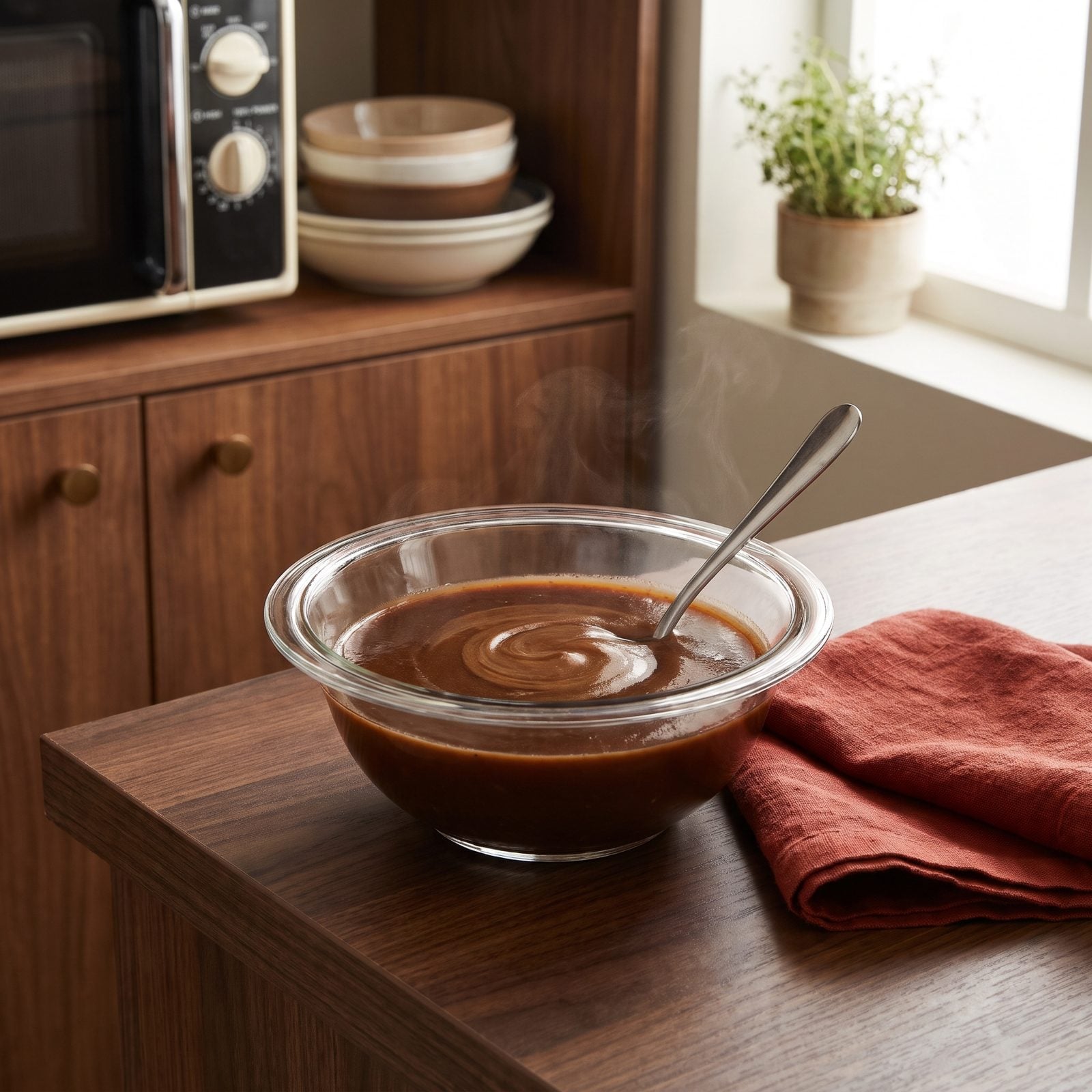
Leftover gravy, Tuesday night, into the microwave. It comes out steaming, smooth and glossy, with a lazy swirl where the spoon went through and not a drop of separated grease at the edges.
That result isn’t luck. Full power heats unevenly and blasts the starch, splitting the fat right out of the sauce. So drop to half power and go in 30-second bursts, stirring between each. It takes a couple minutes longer and the gravy comes back smooth and whole instead of separated. A pinch of patience beats a bowl of grease.
5. Thinning Reheated Gravy With Plain Water
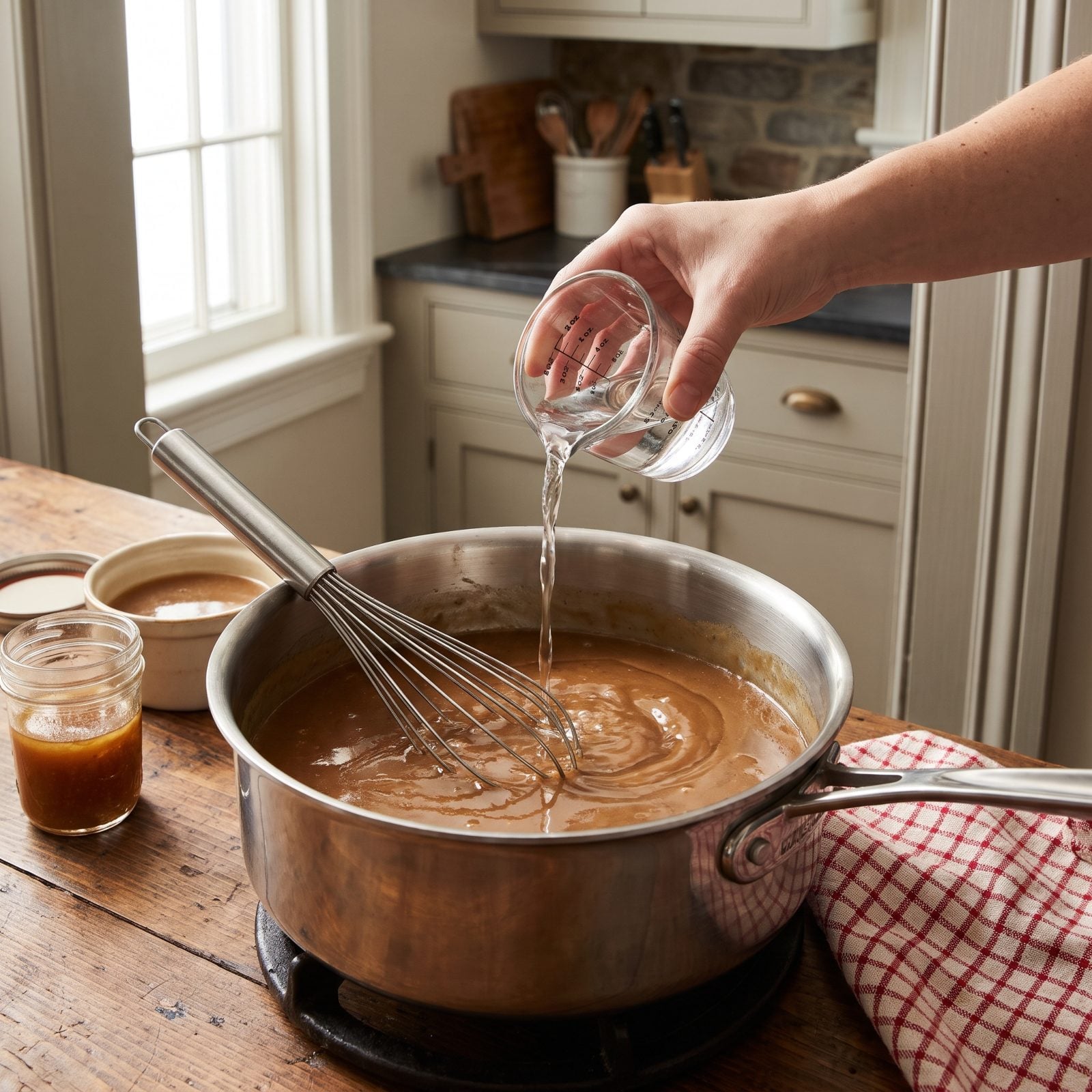
Reheated gravy always thickens up as it sits, so you splash in some tap water to loosen it. Now it’s thinner, sure — but it’s also flatter, weaker, and a little watery on the tongue. You diluted the one thing that made it good.
Thin it with stock, not water. Warm turkey or chicken stock, or the giblet liquid you saved, loosens the gravy without bleeding out the flavor. A splash of leftover pan drippings works even better. And if all you’ve got is water? Add a knob of butter and a pinch of salt behind it, so you’re putting flavor back as you let it out.
4. Serving Gravy in a Cold Gravy Boat
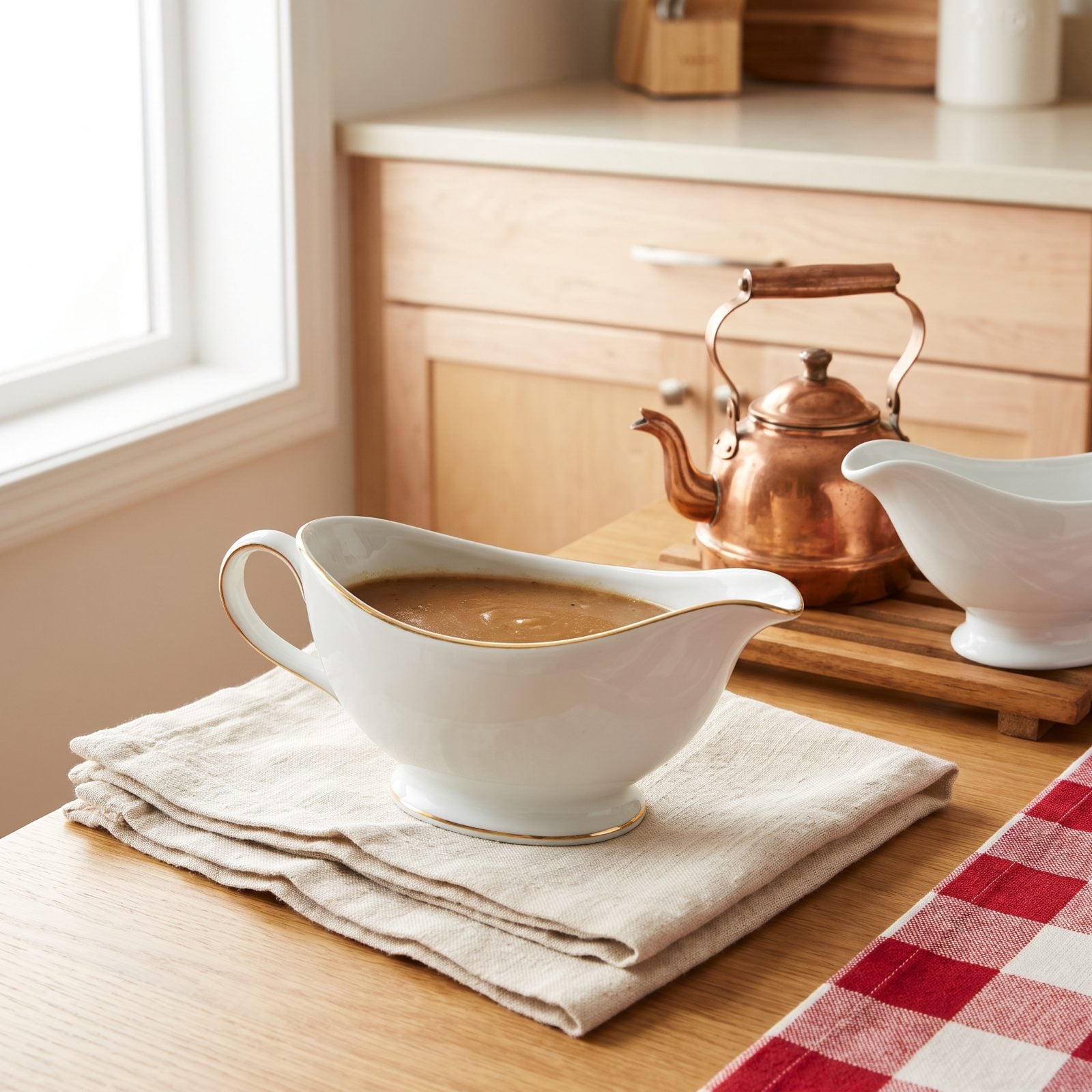
Pour piping-hot gravy into a gravy boat straight from the cupboard and the cold porcelain pulls the heat right out of it. By the time it reaches the far end of the table it’s lukewarm and starting to set.
Thick sauces lose heat fast, and a cold vessel speeds it along. So warm the boat first. Fill it with hot tap water for a few minutes, dump it, dry it, then pour in the gravy. The porcelain holds that warmth and your gravy arrives hot at every seat instead of congealing somewhere around Aunt Carol’s plate.
3. Filling the Gravy Boat Long Before Dinner Is Ready
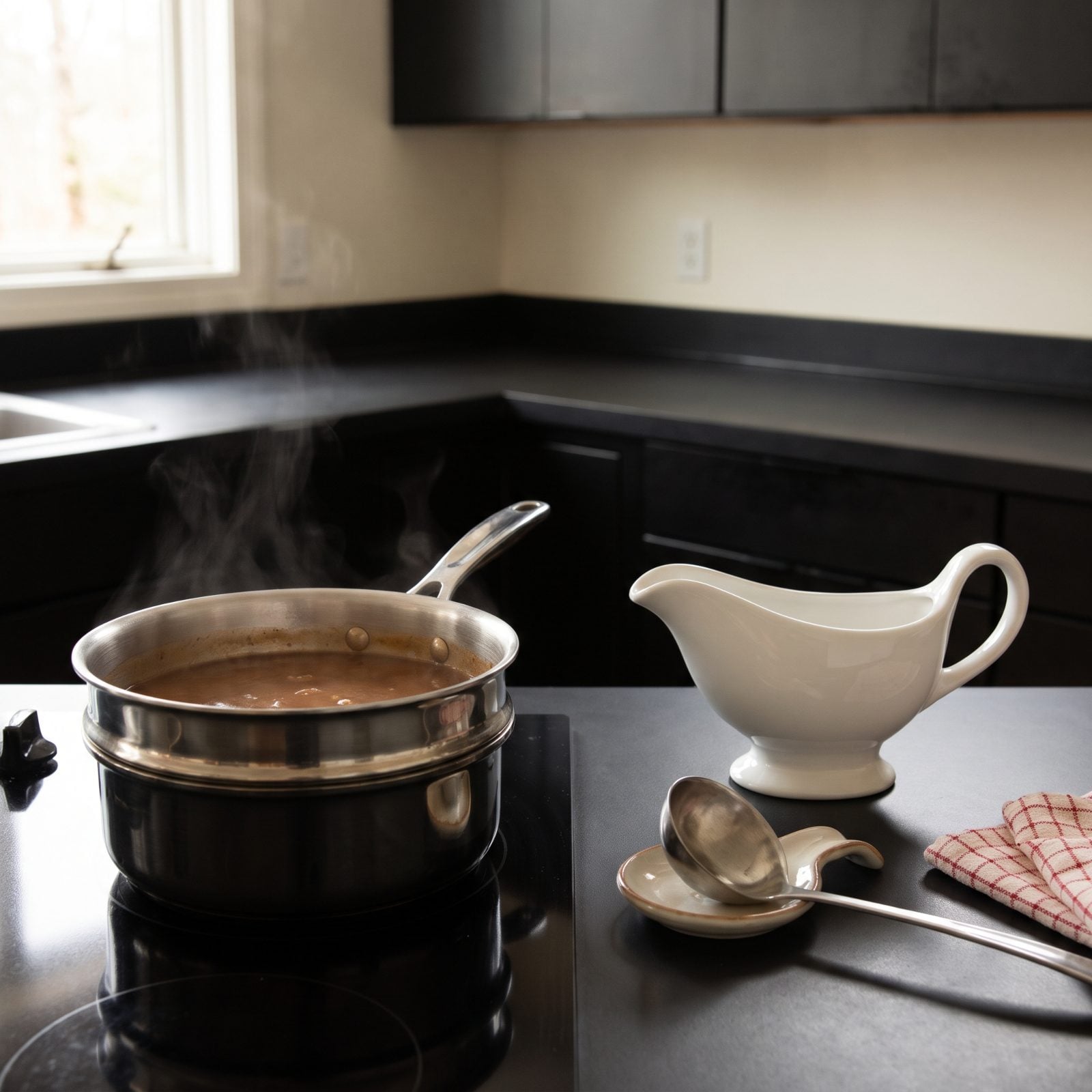
You finish the gravy, fill the boat, and set it on the table while you carve. Fifteen minutes later it’s got a skin on top and a cool, set layer around the sides, and you’re serving tired gravy at a meal you worked all day on.
Gravy waits badly in an open boat. Keep it in the pot over that gentle water bath and fill the boat only when the plates are going down — last thing out of the kitchen, hot and loose, straight to the table. It’s the final flourish of the whole dinner. Treat it like one, and don’t let it sit around getting old before anyone takes a bite.
2. Making Too Little Gravy for the Guest List
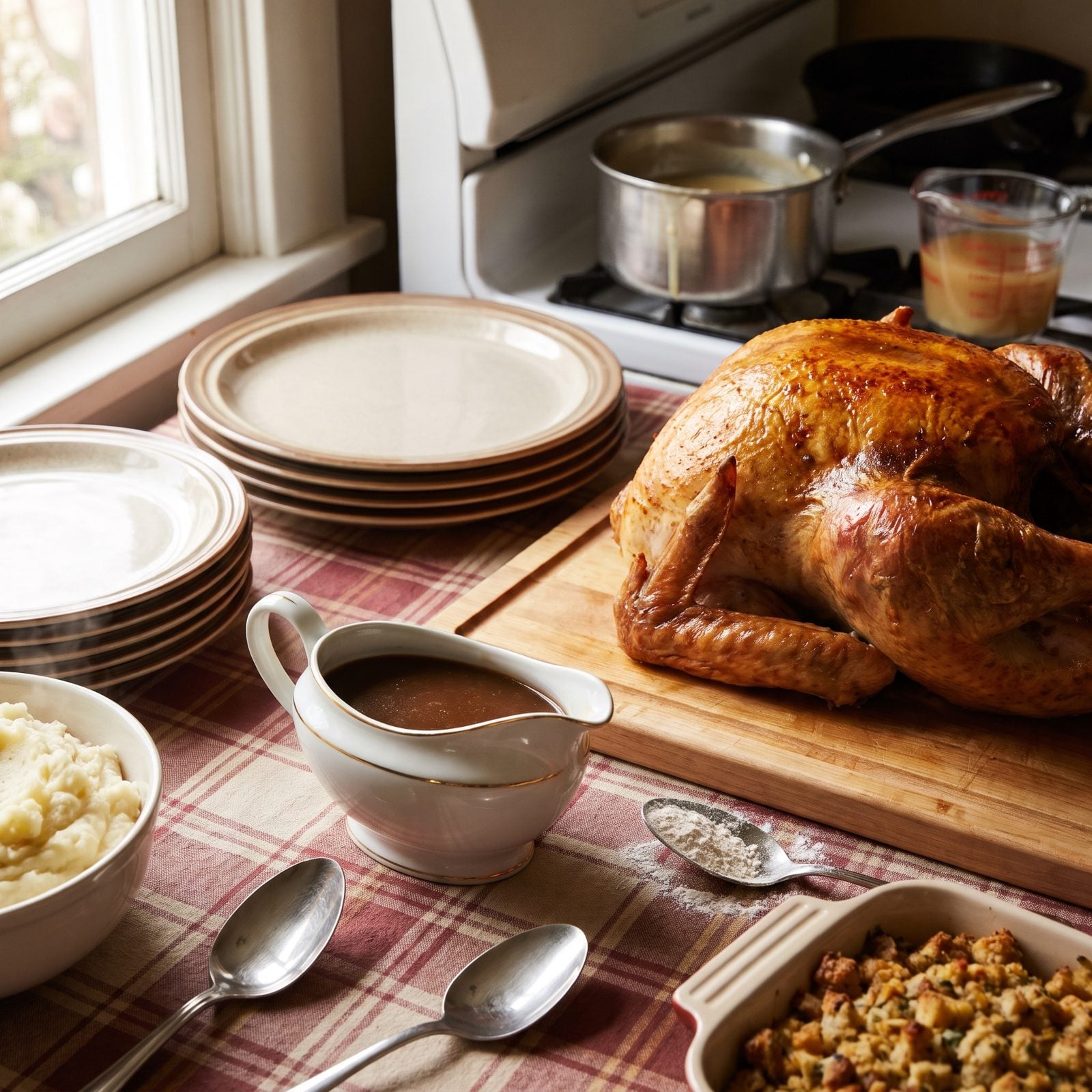
The gravy boat empties before it reaches the far end of the table, and somebody down there gets a dry slice of turkey and a polite smile. You know that moment. Every host has lived it.
Gravy vanishes faster than anything else out there. People ladle it over turkey, potatoes, dressing, and the roll they swore they wouldn’t touch. A single cup stretches to maybe four people if everyone’s being careful — and nobody is careful in late November.
Plan for roughly a third to a half cup per guest, then make more than that. Thin gravy you can rescue with warmed stock; an empty pot you cannot. Keep the surplus warm in a water bath on the stove and top off the boat as it drains down.
1. Serving Lumpy Gravy Without Using a Last-Minute Fix
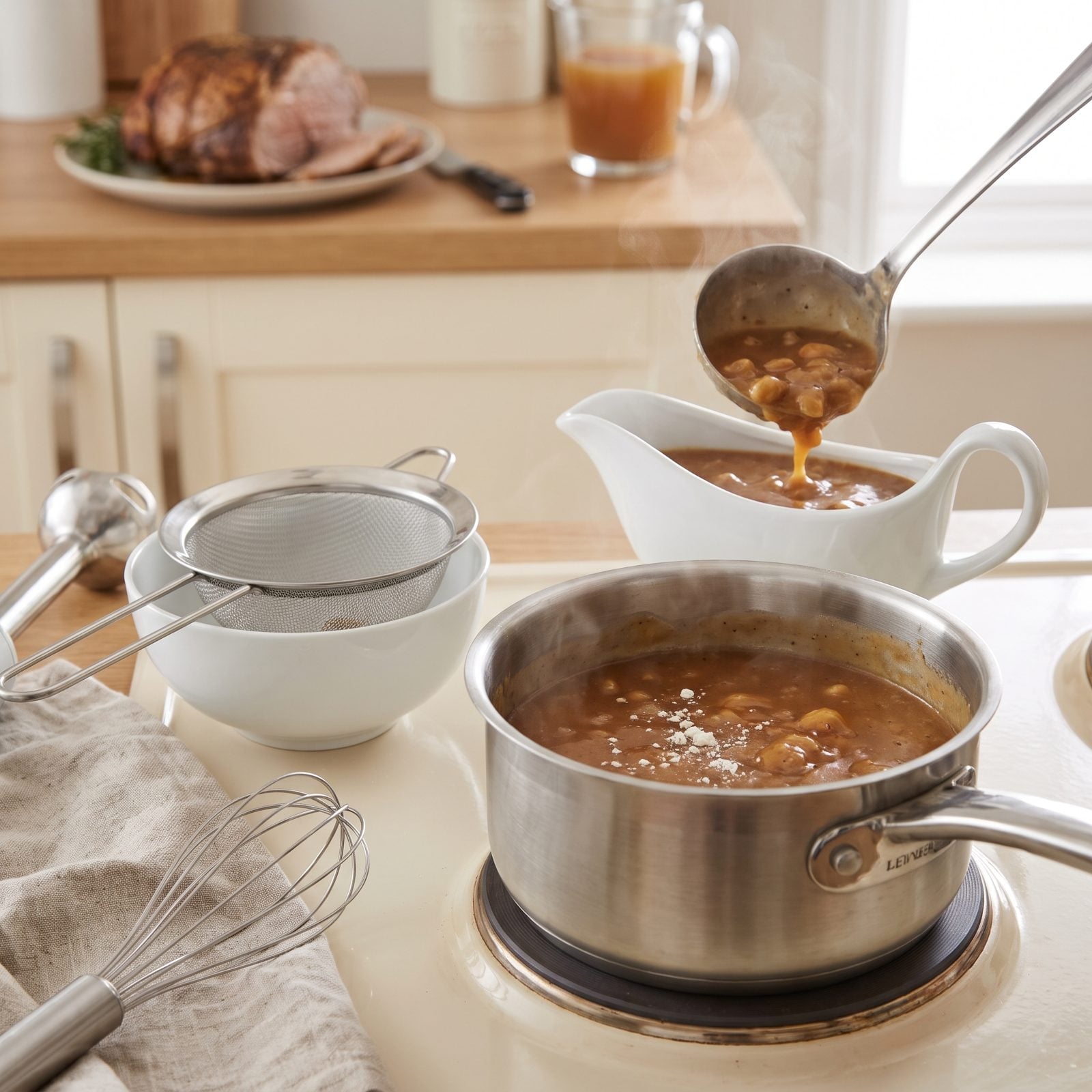
Lumps happen to good cooks. You add flour to hot fat, the heat gets away from you, and little pale knots form that no amount of stirring will beat out. By the time you spot them, the family’s already seated and the window for calm problem-solving is slamming shut.
But lumpy gravy isn’t a catastrophe — it’s a thirty-second fix most people forget they have. Those lumps are just flour that seized before it spread out, and they break apart or strain away if you catch them in time.
Pour the gravy through a fine-mesh sieve into a clean saucepan. Or hit it with an immersion blender for a few seconds. Either works. Gets too thick afterward? Whisk in a splash of warm stock to loosen it back up.
Keep a sieve and a warm cup of stock within arm’s reach, and no lump ever makes it to the table.