
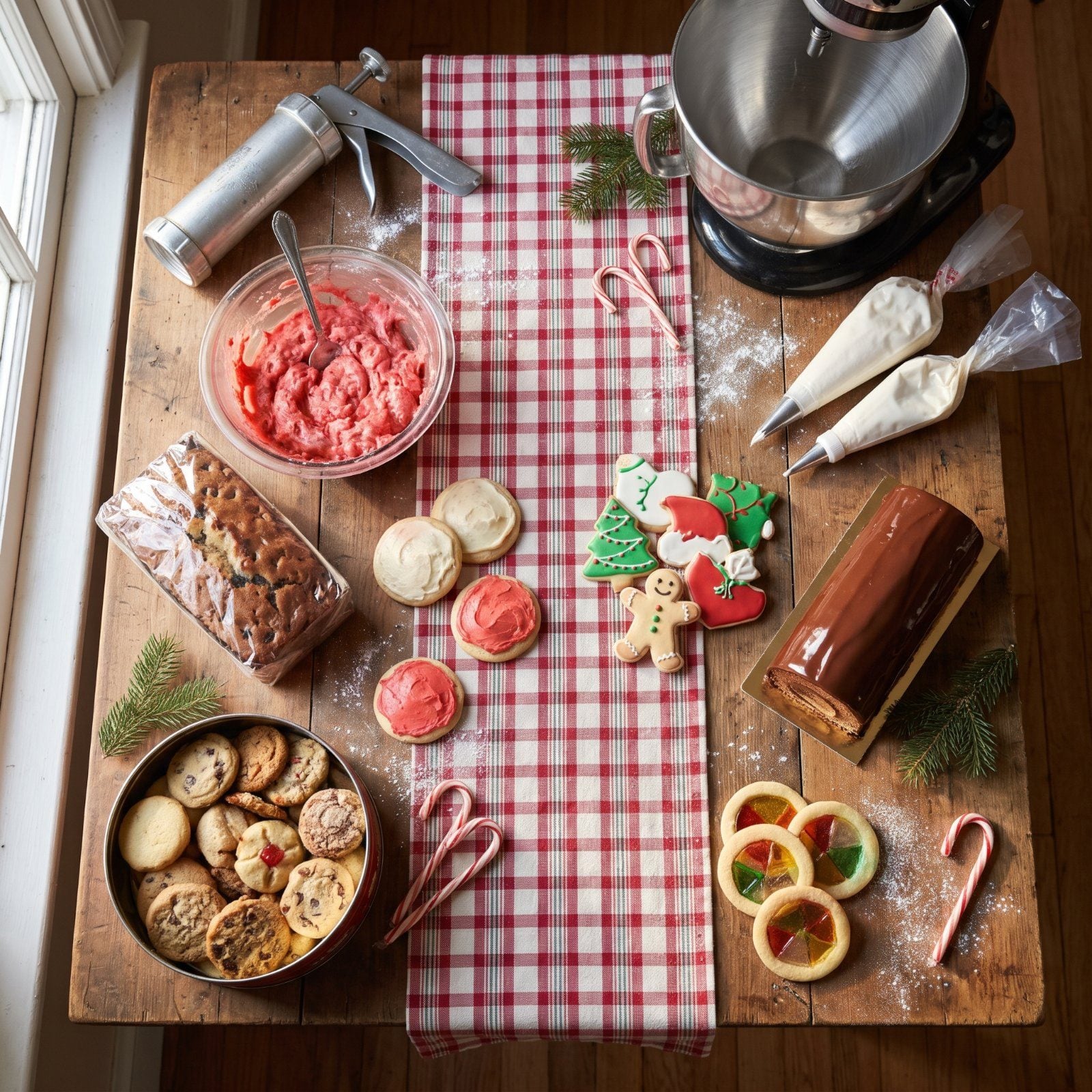
The smell hit you at the kitchen door. Burnt sugar, cinnamon, a Pyrex bowl of red-tinted icing drying crusty at the edges. A holiday cookie in 1965 got built with a butter knife, a jar of raisins, and whatever candy was left in the dish by the phone. We pulled classic treats from that era and set each one beside what it looks like now. Some of the changes are gorgeous. Some of them, honestly, made us miss the raisin buttons.
Please note that some of the images in this article were created with the assistance of AI.
47. Gingerbread Houses: The Candy Cottage vs. the Architectural Showpiece
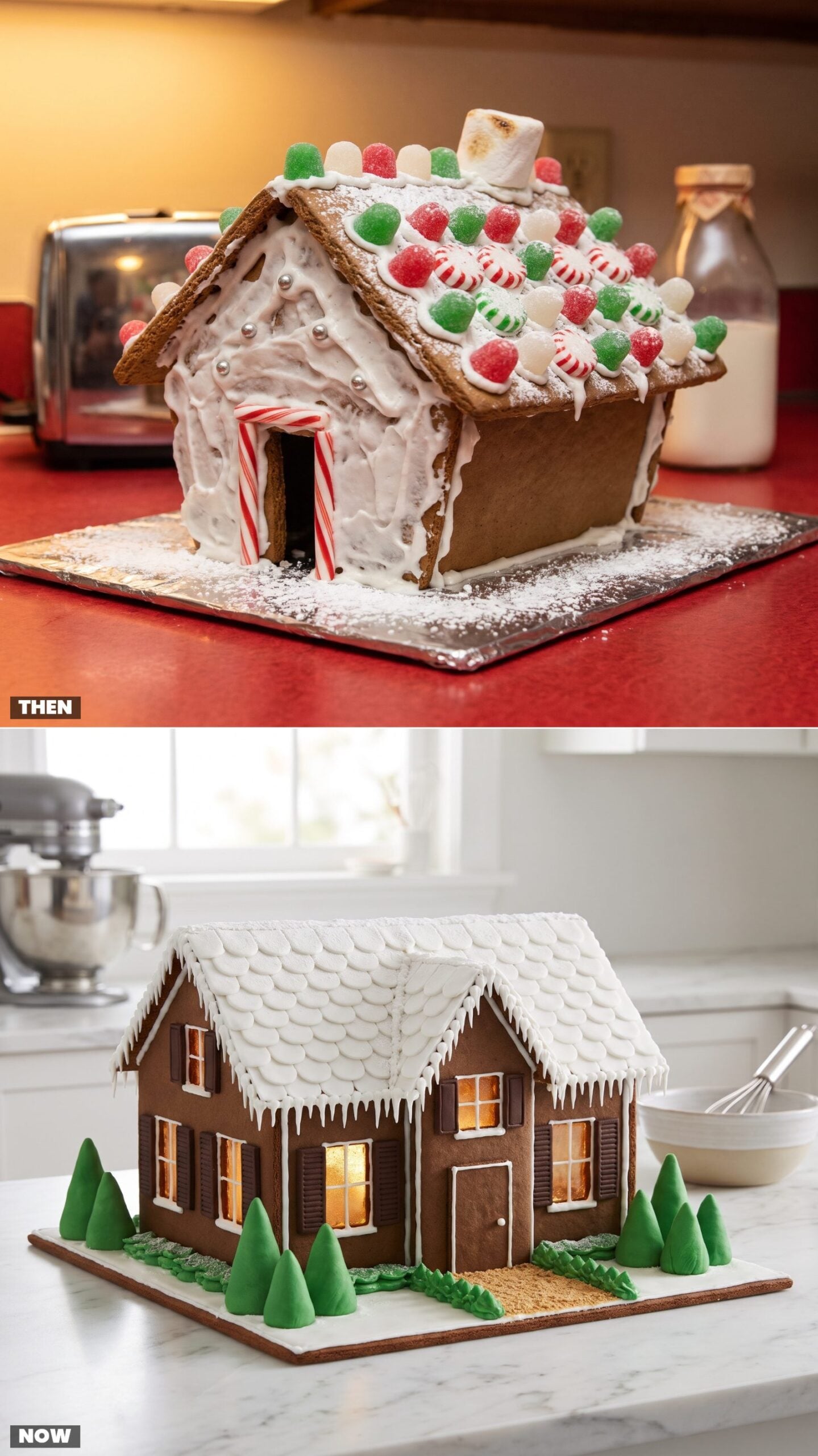
In 1965 the gingerbread house was a family demolition project in reverse. The walls leaned, the icing dripped where a spoon dropped it, and the roof got shingled with whatever candy lived in the dish by the front door. Gumdrops. Peppermints. A marshmallow chimney that slid off by Christmas Eve.
Now the thing stands up straight — royal-icing seams sharp as a drafting pencil, sugar-glass windows glowing from a battery tea light, fondant shingles laid in neat rows. It’s a showpiece, and it’s genuinely impressive. Nobody’s allowed to eat it, though, which was never the point.
46. Sugar Cookies: Hand-Tinted Icing vs. Precision Royal-Icing Art
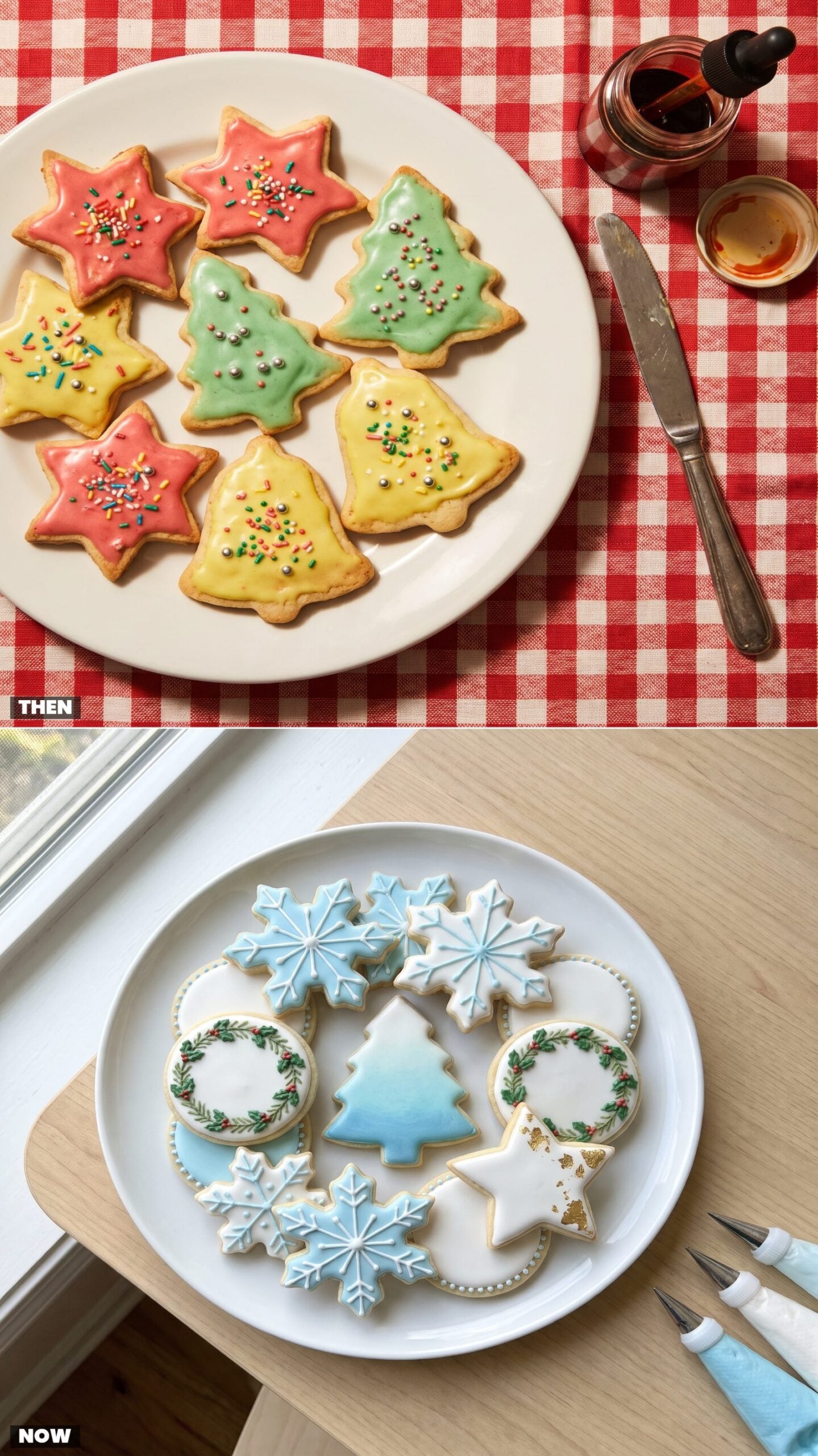
Back then you tinted a bowl of icing with three drops of McCormick red, spread it on with a knife, and shook sprinkles over the top before it set. Every cookie looked a little different. That was fine. That was half the fun.
The modern version is a tiny painting — flood work, wet-on-wet dots, piped snowflakes so fine you need a magnifying glass to appreciate them. Beautiful. Also two hours per dozen, which is a lot to ask of a snack.
The old cookies tasted better partly because you weren’t afraid to eat one. The new ones feel like you’re biting a museum piece.
What Our Readers Say
- When Piaci Pizza readers loved a food photo, the top reason they tapped was comfort at 30%, with nostalgia and simply looking good tied behind it at 16% each.
- When our readers disliked a food photo, the top reason was a plain “not for me” at 39%, while only 5% said it looked too fussy.
From Piaci Pizza reader polls and votes.
45. Fruitcake: The Cellophane Loaf vs. the Artisan Fruit-and-Nut Cake
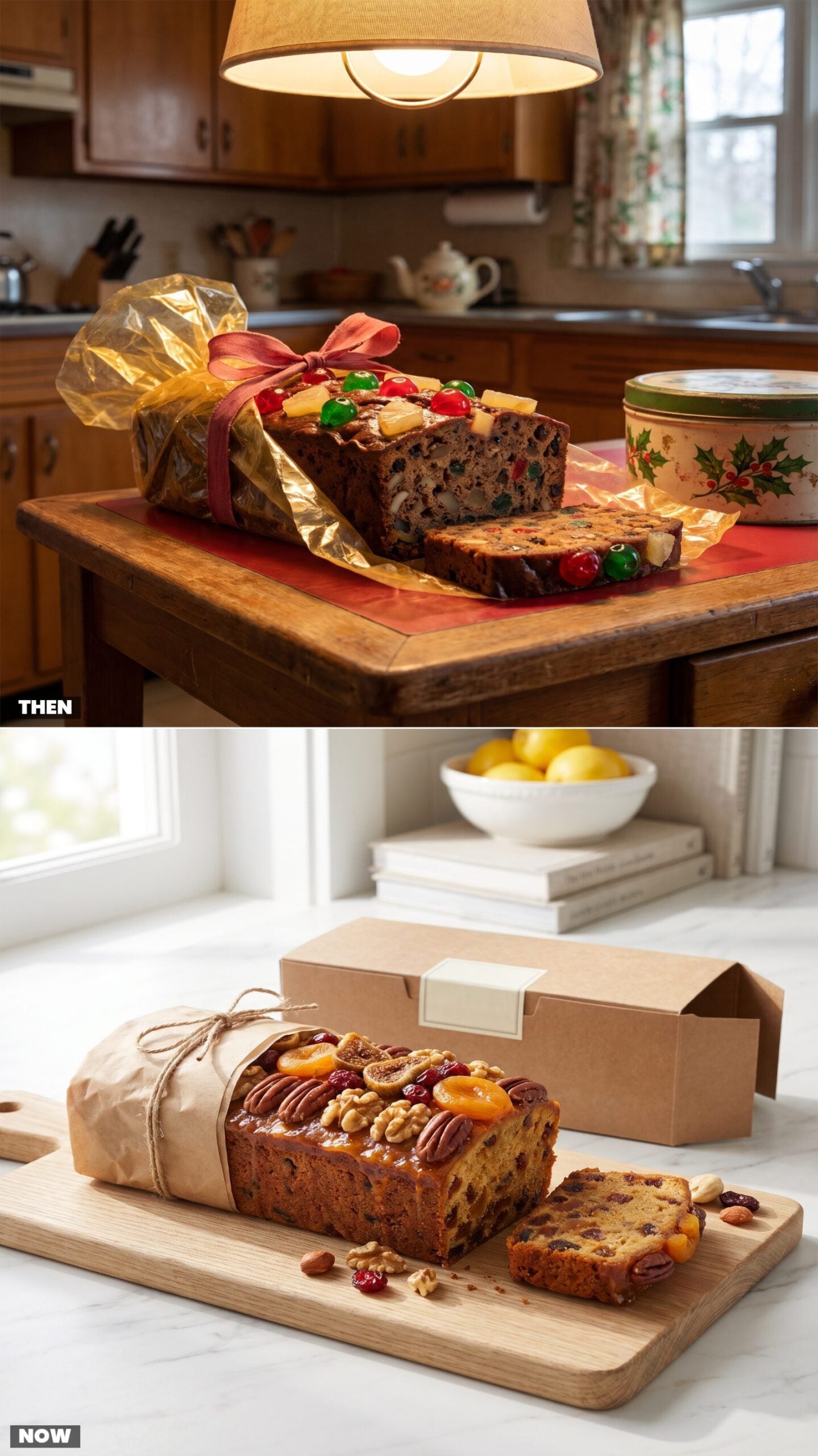
The 1965 fruitcake arrived in cellophane, dense as a brick, flecked with those neon candied cherries that glowed red and green like stoplights. It got regifted. It got jokes made about it. And it outlived the holiday, the New Year, and sometimes the following summer.
Today’s version wants your respect. Real dried figs and apricots, toasted pecans arranged on top, a brush of apricot glaze, honest brandy soaking into it. Kraft paper, natural twine, a price tag that’ll make your eyes water.
44. Yule Log: Buttercream-Ridged Roll vs. Mirror-Glazed Bûche de Noël
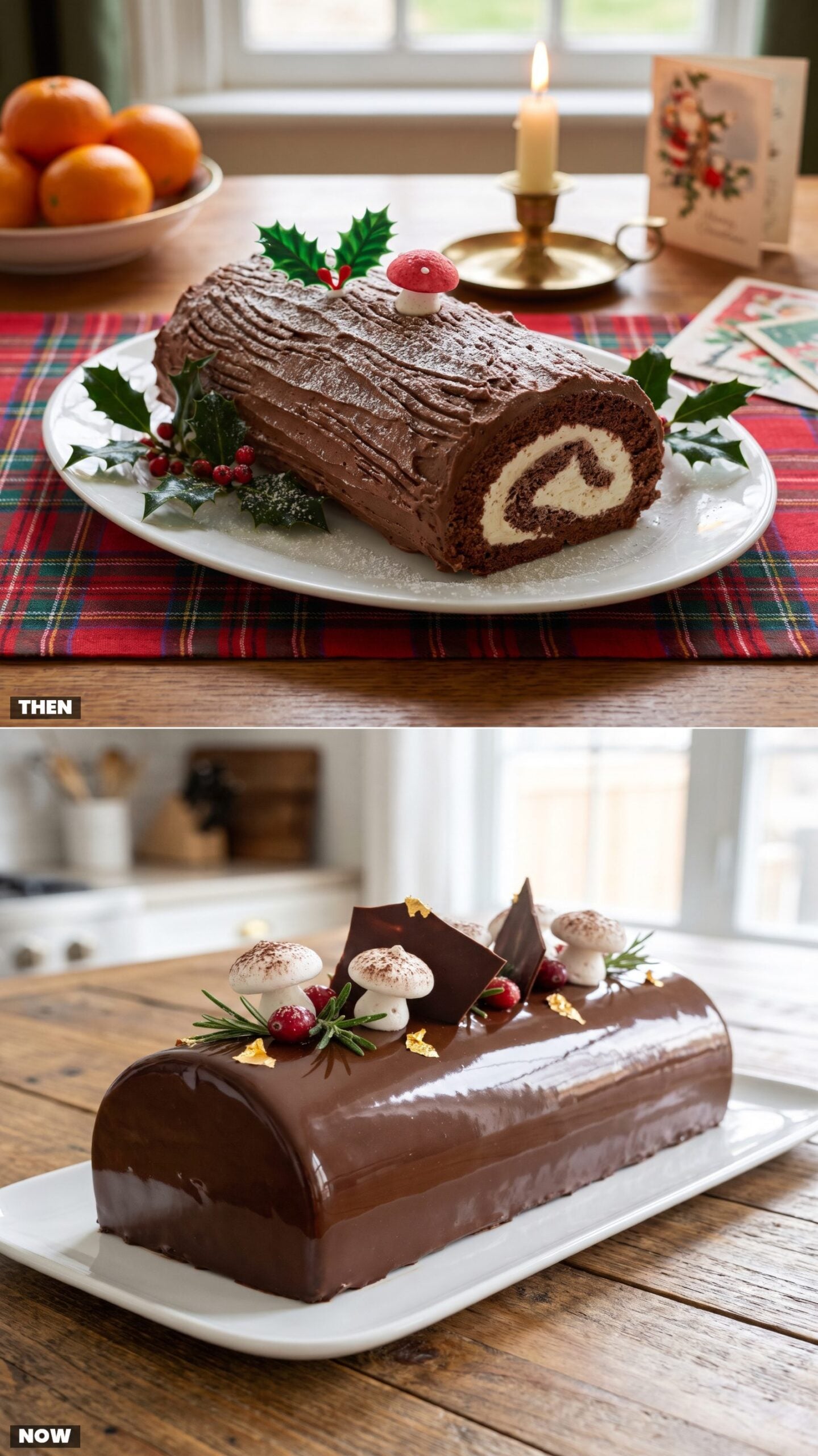
You made the bark with fork tines dragged through chocolate buttercream. That was the trick your mother showed you, and it worked every single time. A dust of powdered-sugar snow, a plastic holly pick, maybe a meringue mushroom if you were feeling brave.
The pastry-shop version now gleams like a bowling ball. Mirror glaze, tempered chocolate shards, gold dust, a cross-section so clean you’d swear a machine built it. Stunning under the lights. But that fork-dragged bark had a texture you wanted to run your finger through, and glass just doesn’t invite that.
43. Holiday Cookie Trays: Mixed Metal Platter vs. Curated Grazing Board
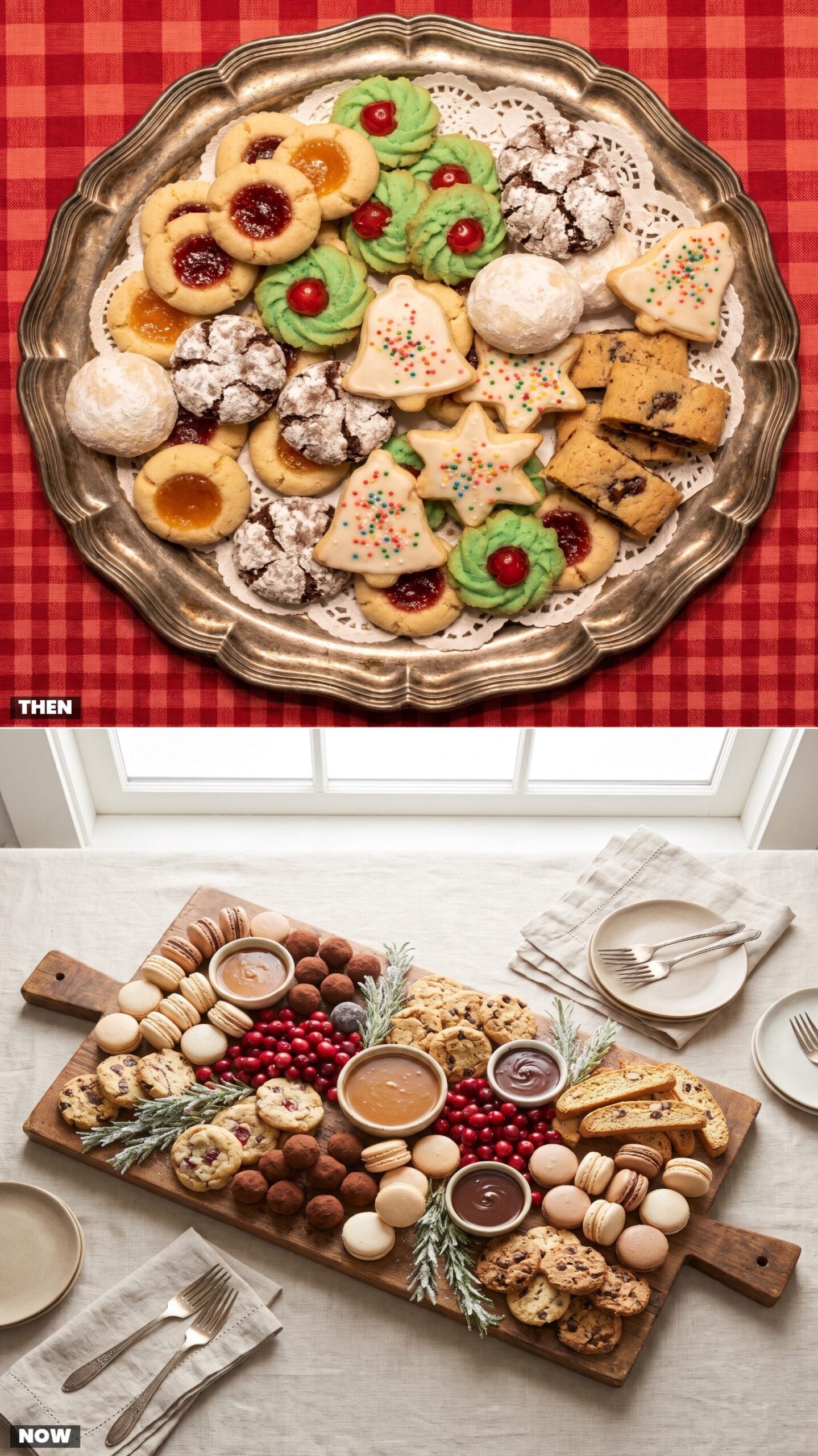
The 1965 cookie tray was a mountain, not a design. A silver scalloped platter, a few paper doilies for class, every kind of cookie the kitchen made that week piled on top of each other. Thumbprints next to tea cakes next to crinkles. You dug in and took what you wanted.
Now it’s a grazing board. Macarons in their own little cluster, sugared rosemary tucked between truffles, deliberate empty space because apparently emptiness is a flavor now. It photographs beautifully. It also feels a little like being told where to stand at a party.
In our readers’ heart votes, food photos showing a board spread got hearts 84% of the time, compared with 77% for the other images in the same articles.
42. Spritz Cookies: The Aluminum Press vs. Electric Press Designs
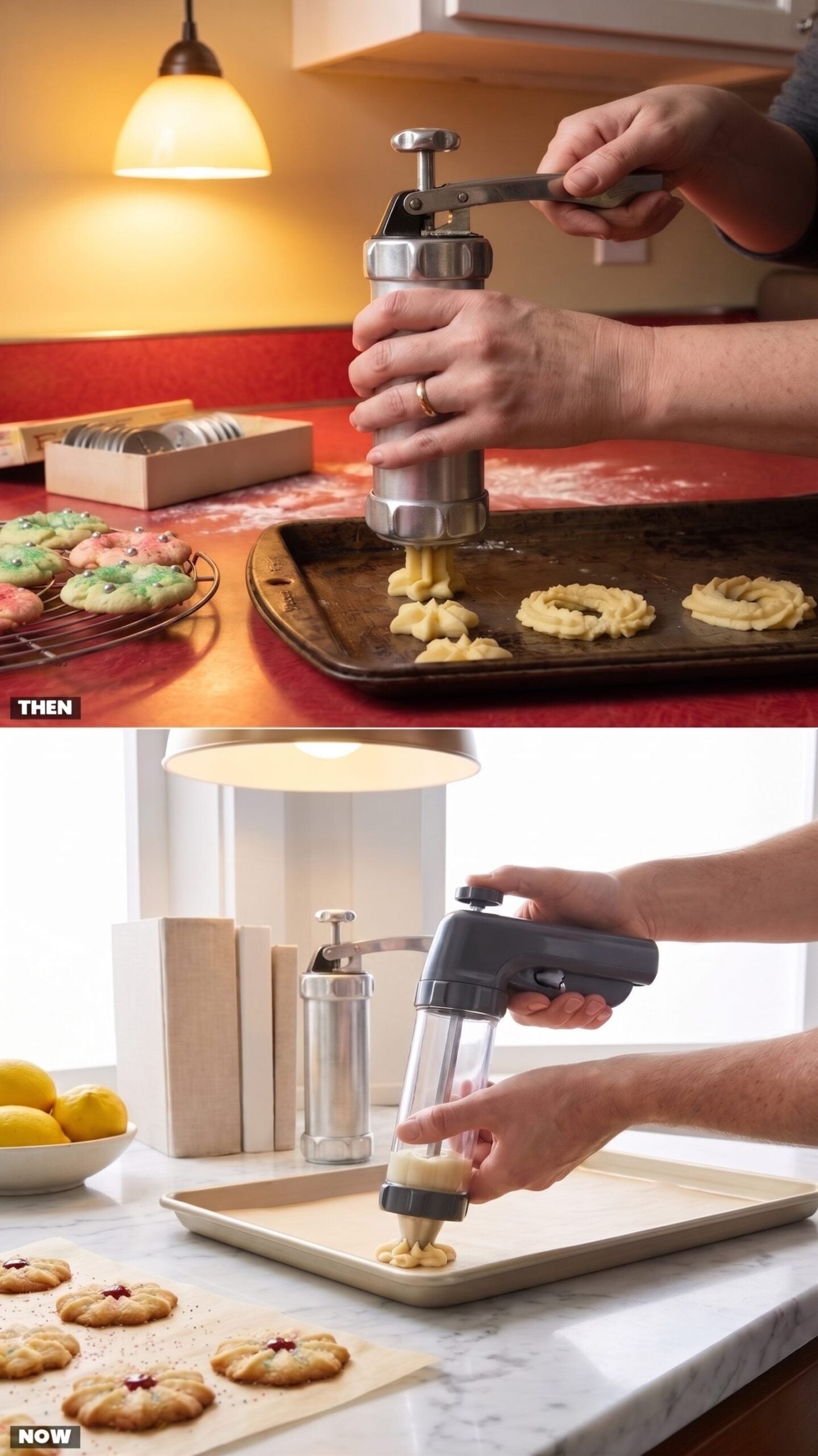
The aluminum spritz press was a workout. You loaded the barrel, screwed on the star disc, and cranked that handle while the dough either came out perfect or stuck in a blob you had to scrape off and start over. Room-temperature butter, a cold sheet. Everybody learned that the hard way.
The electric press today has a trigger. Squeeze, a uniform cookie appears, move on — faster, cleaner, no forearm strain. Something’s lost there, though. The crank made you earn the cookie.
41. Gingerbread People: Raisin Buttons vs. Elaborate Icing Wardrobes
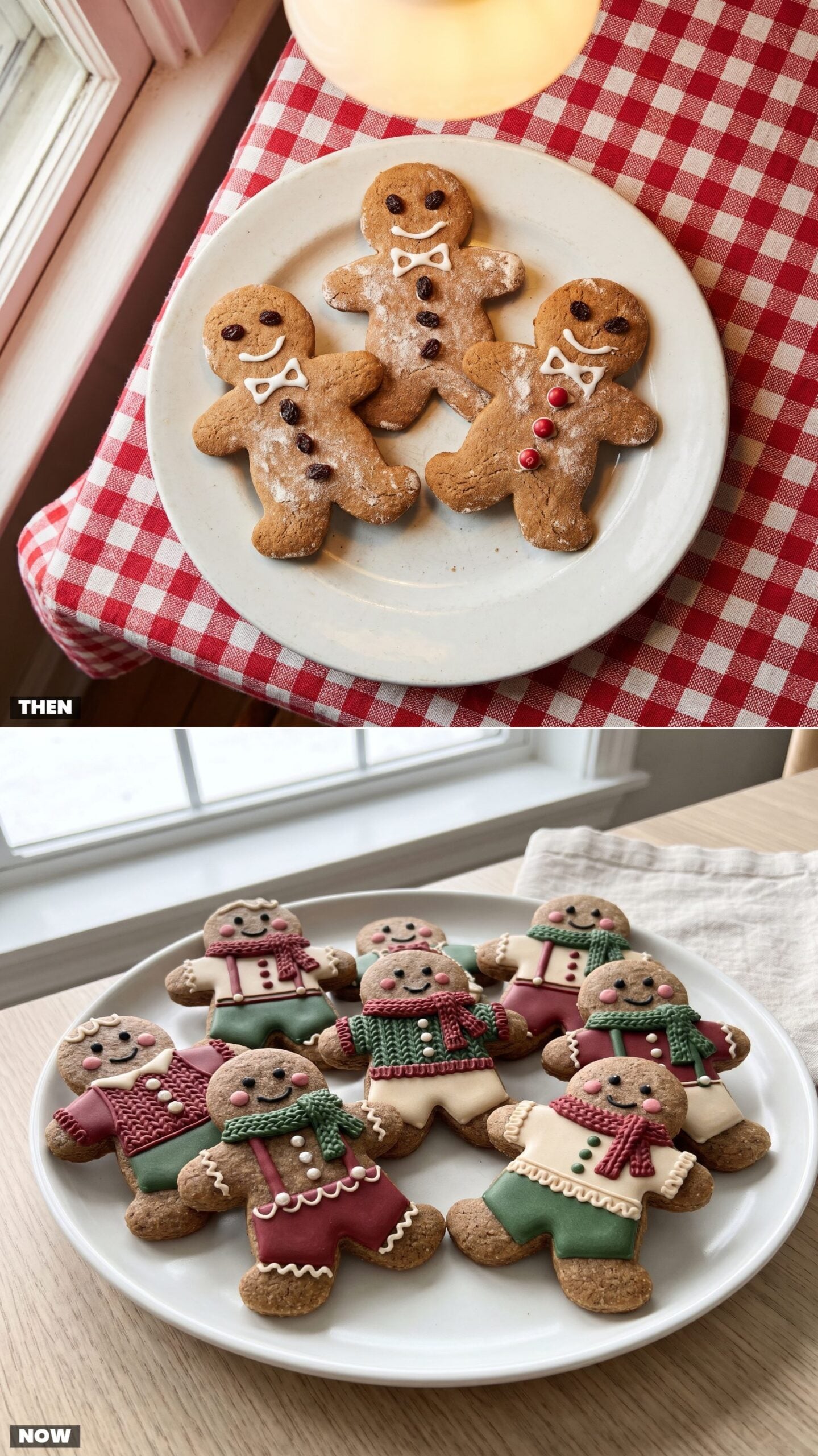
Two raisins for eyes, raisins down the middle for buttons, a squiggle of icing mouth. That was a gingerbread man in 1965, and it was plenty. A red-hot cinnamon candy, too, if the kid doing the decorating got ambitious.
Now they wear outfits. Piped sweaters with patterns, little scarves, rosy cheeks, pearl buttons. They look like they’re headed somewhere important. The raisin version looked like he’d been through something, and honestly that gave him more personality than any piped cardigan ever could.
40. Stained-Glass Cookies: Crushed Hard Candy vs. Isomalt Window Designs
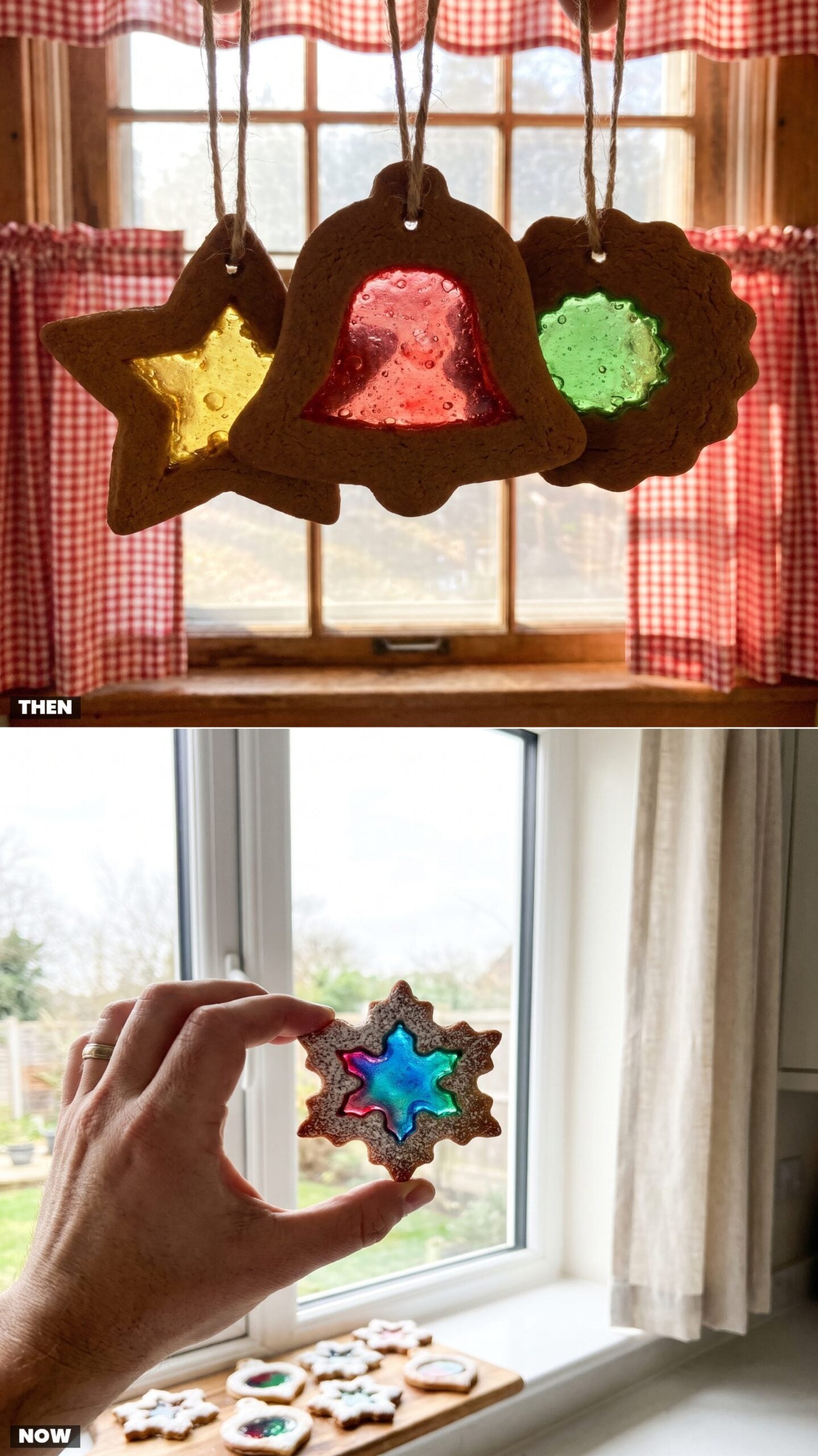
You crushed Life Savers in a plastic bag with a rolling pin, dropped the shards into cut-out cookie centers, and watched them melt into cloudy little windows in the oven. Held up to the kitchen glass, they glowed. The edges came out rough and bubbly every time, and that was part of the magic.
Isomalt changed everything. It melts clear as actual glass — no cloudiness, no bubbles — so the modern versions look like real cathedral panes. Prettier, sure. But crushing those candies in a bag was half the point.
39. Pinwheel Cookies: Chocolate-Vanilla Spirals vs. Rainbow Patterned Dough
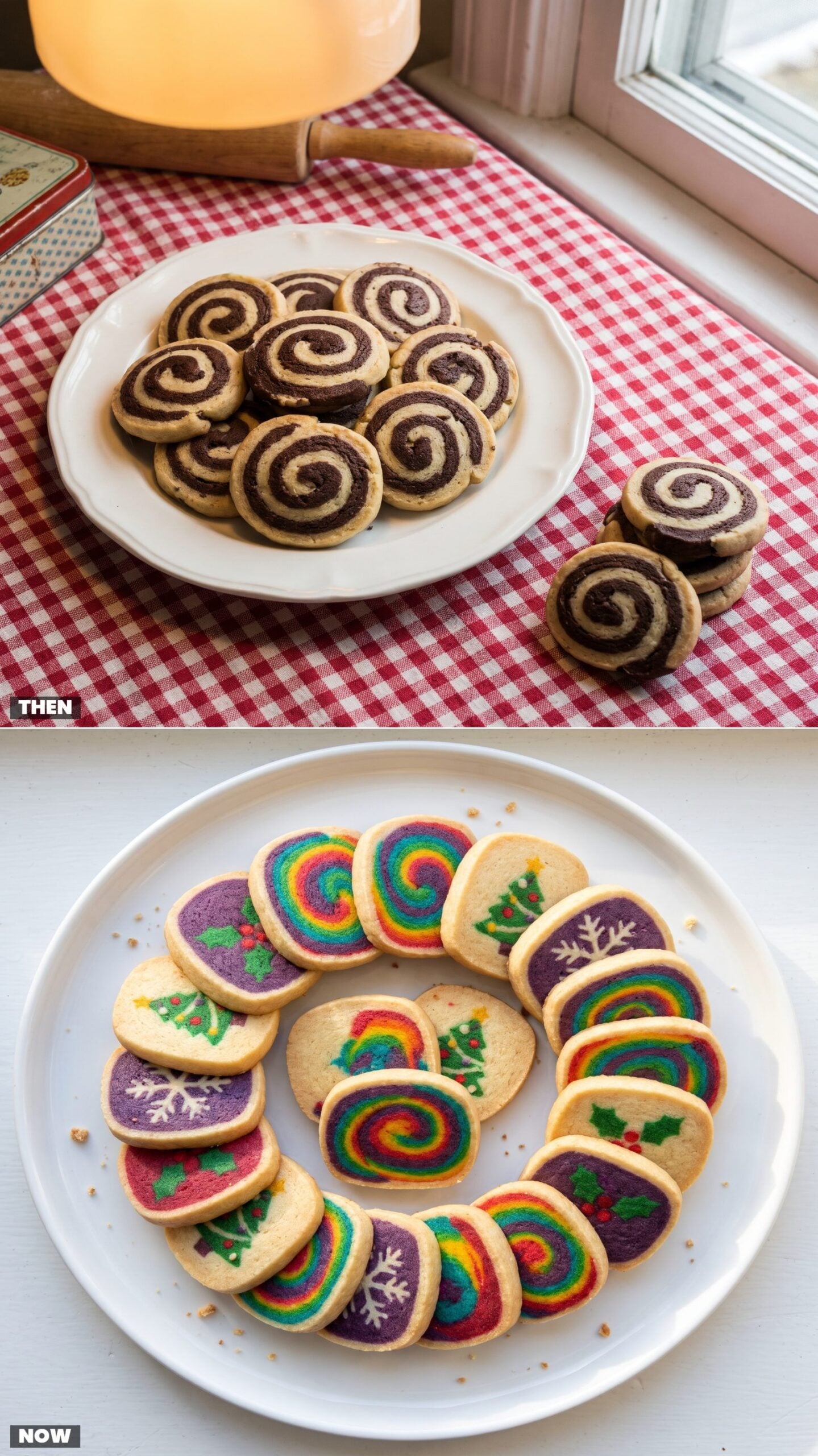
The pinwheel was simple genius. Roll a sheet of chocolate dough and a sheet of vanilla together, slice it, and every cookie showed a swirl. The spirals were never quite even — one cookie had three turns, the next had four. Nobody counted.
Now bakers hide entire pictures inside the dough. Slice a modern log and out comes a Christmas tree, a snowflake, a rainbow ring, all built from colored dough assembled like a loaf of edible mosaic. The precision is wild. The old swirl was cozier, and you could pull it off on a random Tuesday.
38. Wreath Cookies: Cornflake-Marshmallow Rings vs. Piped Buttercream Wreaths
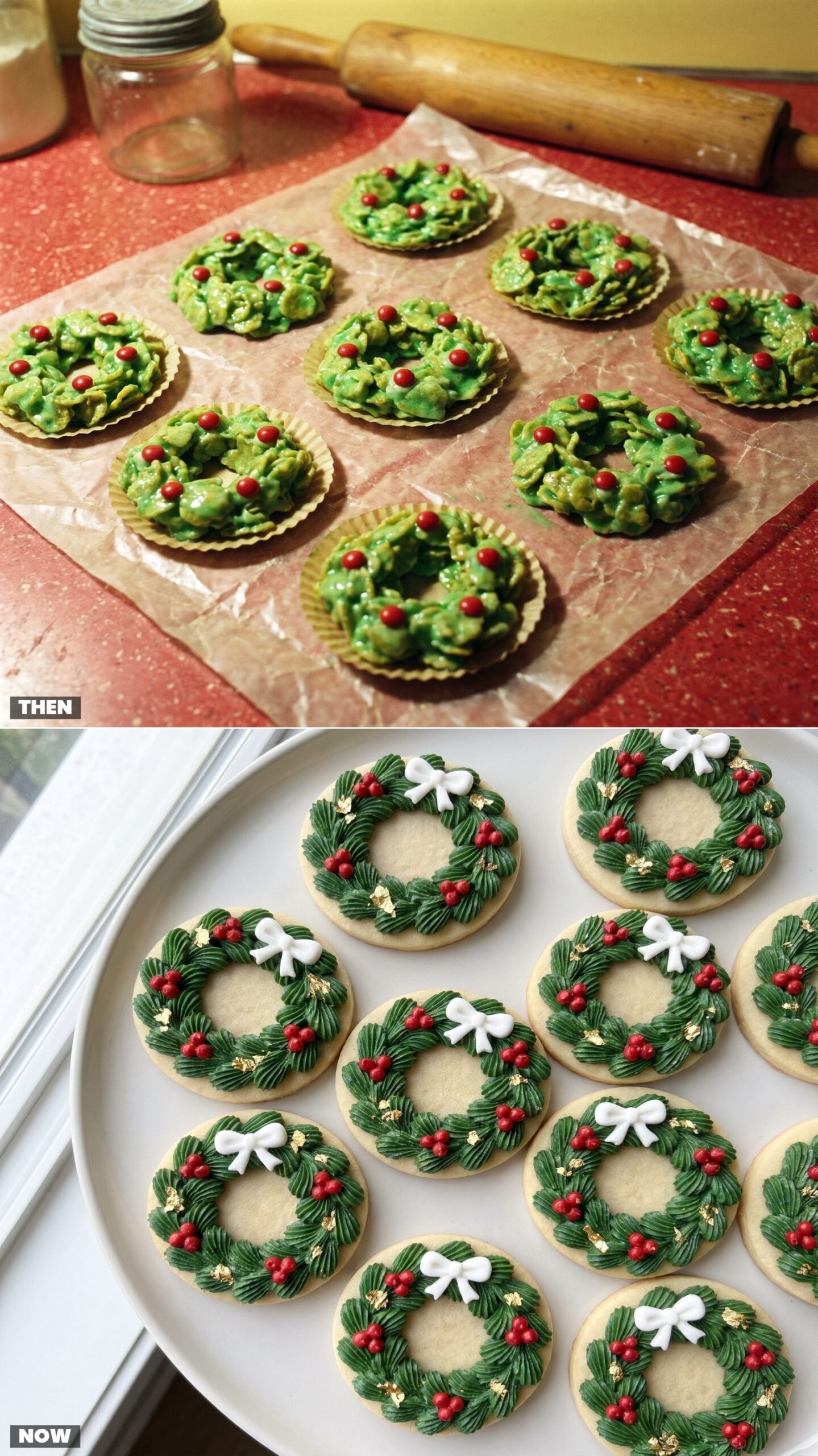
Green cornflake wreaths. Every kitchen in 1965 made them — melted marshmallow, a hit of green food coloring, a bowl of cornflakes, red-hot candies for berries. Sticky, clumpy, gone by the second day. No oven required, which is exactly why they were the kid’s job.
The modern wreath is a piping exercise. Leaf-tip buttercream built ring by ring, uniform berries, a little fondant bow, edible gold if you’re showing off. Clean and precise. But the cornflake version had crunch and chaos, and nobody ever once worried about whether it was Instagram-ready.
37. Thumbprint Cookies: Red Jelly Centers vs. Small-Batch Preserve Fillings
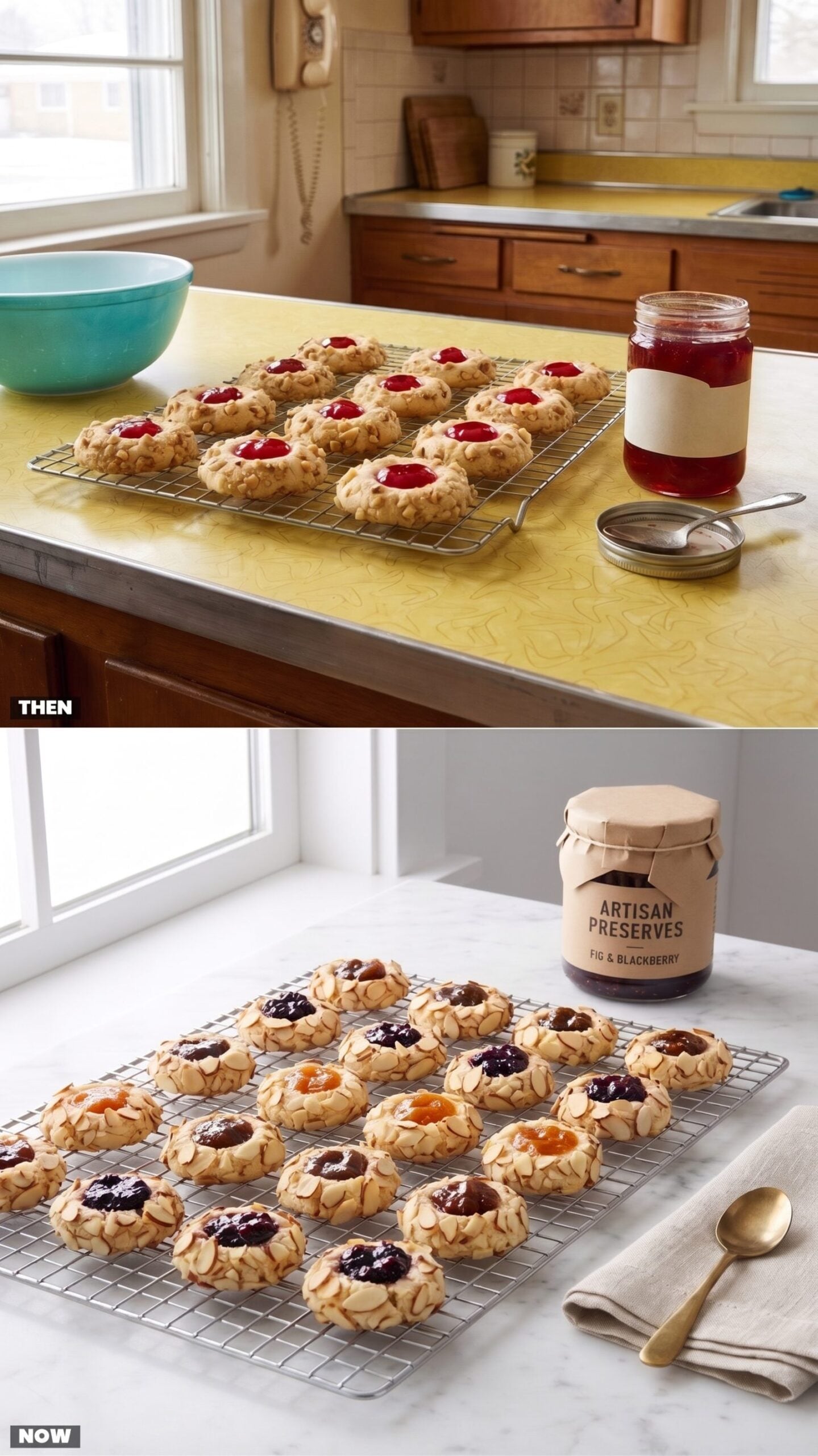
Back in 1965, a thumbprint cookie was a pantry cookie. You pressed your actual thumb into the dough, filled the dent with whatever jelly was open in the fridge, and that electric-red Welch’s or Smucker’s center was half the charm. Nobody cared that the color came from a jar — it looked like Christmas, and that settled it.
Now the thumbprint has gone small-batch. The centers run dark and jammy, full of real fruit — blackberry and fig and apricot that taste like the orchard instead of the candy aisle. The cookies get piped to the same size, rolled in sliced almonds instead of the old walnut rubble. Prettier. We’re not fully convinced the fig earns its keep over a plain stripe of raspberry, but that’s a fight for another day.
36. Molasses Cookies: Crackled Pantry Cookies vs. Sea-Salt Ginger Molasses Cookies
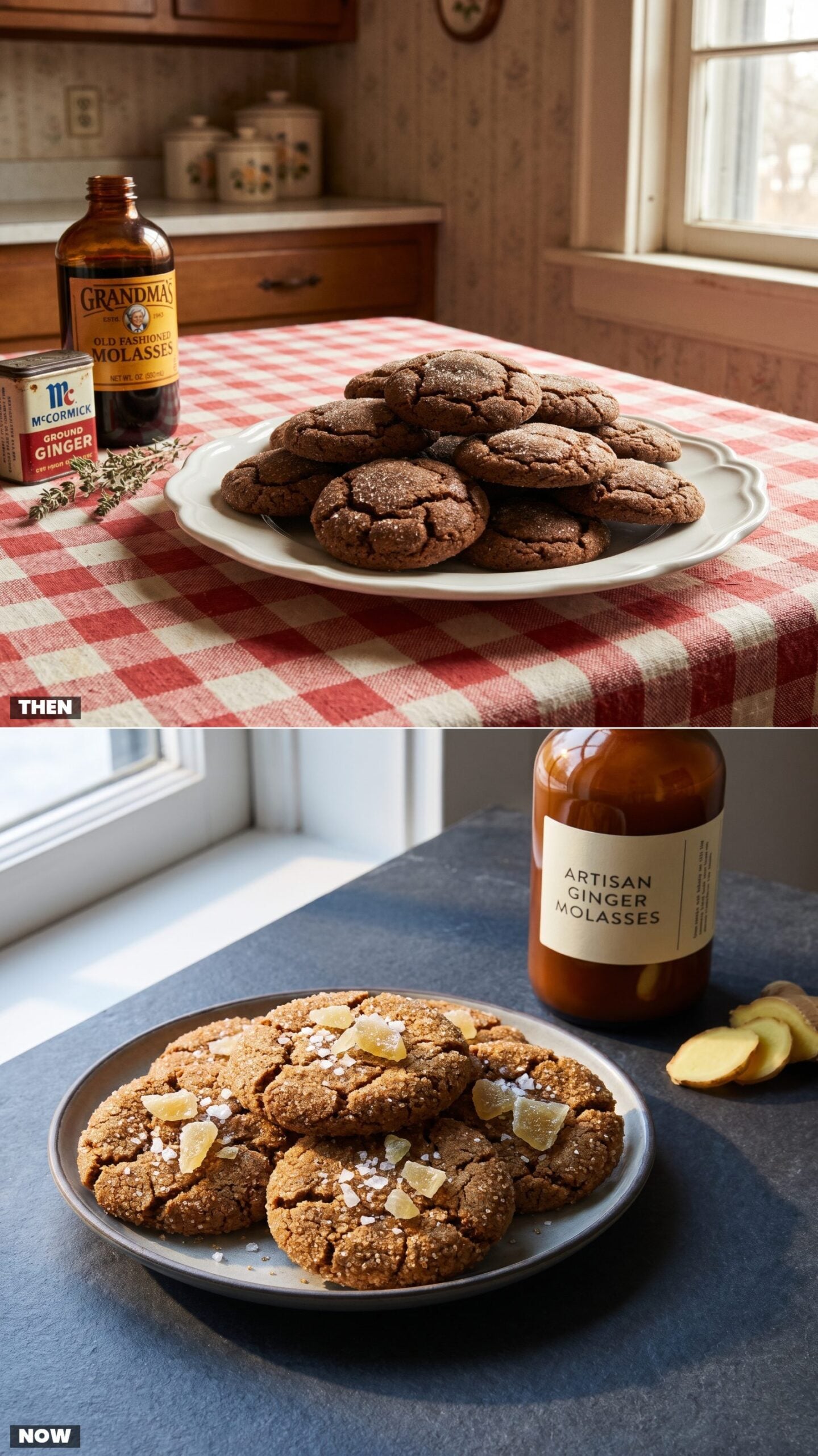
The molasses cookie of 1965 was honest work. Dark, chewy, cracked across the top like dry earth, rolled in plain white sugar and spiced with whatever ginger and cinnamon lived in the cabinet door. It came out of the oven smelling like the whole house was about to feel better.
Today’s version wants a little drama. Flaky sea salt up top, bits of crystallized ginger for heat, turbinado sugar catching the light like frost. Same soul, more polish. Honestly, the sea salt is one modern upgrade we’ll defend to anyone — it cuts the sweet and makes the spice land harder.
35. Shortbread: Fork-Pricked Wedges vs. Embossed Botanical Shortbread
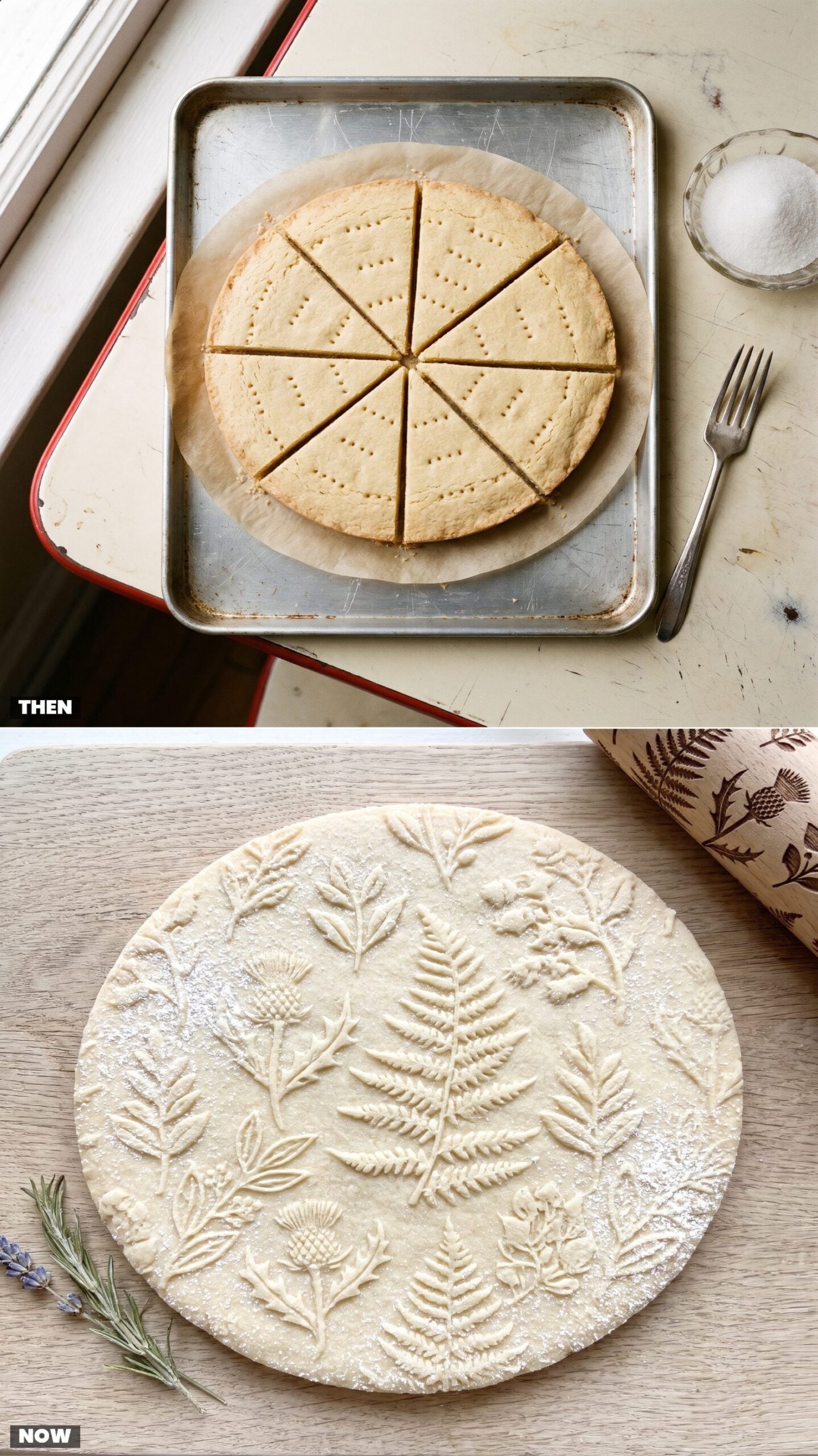
Shortbread in 1965 was three ingredients and a fork. Butter, sugar, flour, pressed into a round pan, scored into wedges, poked with a fork so it wouldn’t puff. Those fork holes weren’t decoration — they were doing a job. That they also looked nice was a happy accident nobody planned.
The modern shortbread shows up embossed. Ferns, thistles, whole little pressed gardens stamped from carved rolling pins and silicone molds that cost more than the butter. It’s almost too pretty to break apart. Almost.
34. Linzer Cookies: Simple Jam Sandwiches vs. Intricate Cutout Linzers
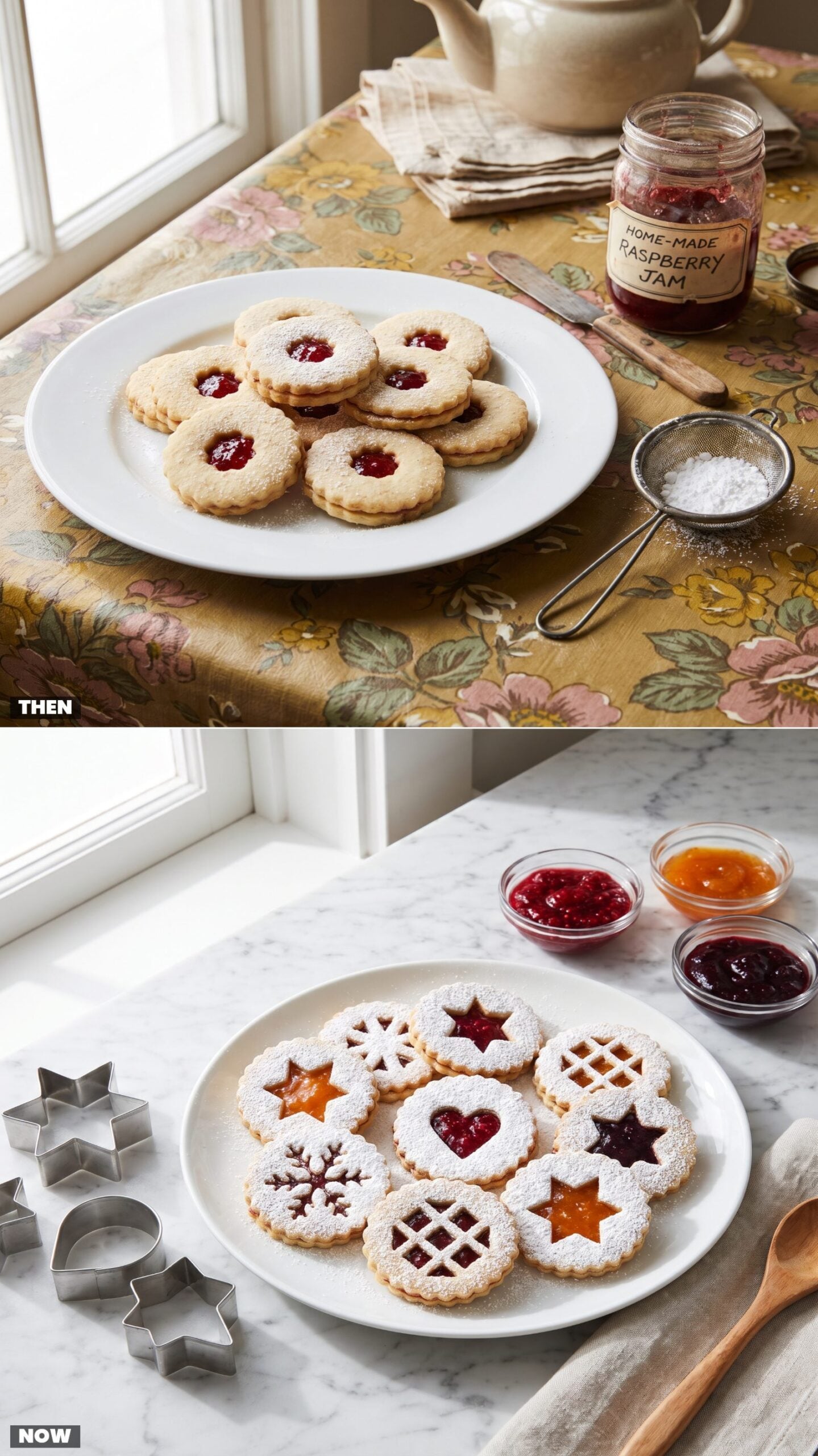
A 1965 Linzer cookie was a jam sandwich with aspirations. Two rounds of almond dough, a dollop of raspberry in the middle, one little hole punched in the top so the red peeked through, and powdered sugar over the whole plate because that’s what you did. Fancy by neighborhood standards, and nobody looked too close at the edges.
The Linzer of today is a different animal. Snowflakes, lattice windows, stars so crisp they look machine-cut — because half of them basically are. The jam glows through like stained glass. It’s gorgeous and genuinely harder to make, and the first time one of those delicate tops cracks on you, you understand why Grandma just used a thimble.
33. Pizzelles: Stovetop-Iron Wafers vs. Electric-Iron Snowflakes
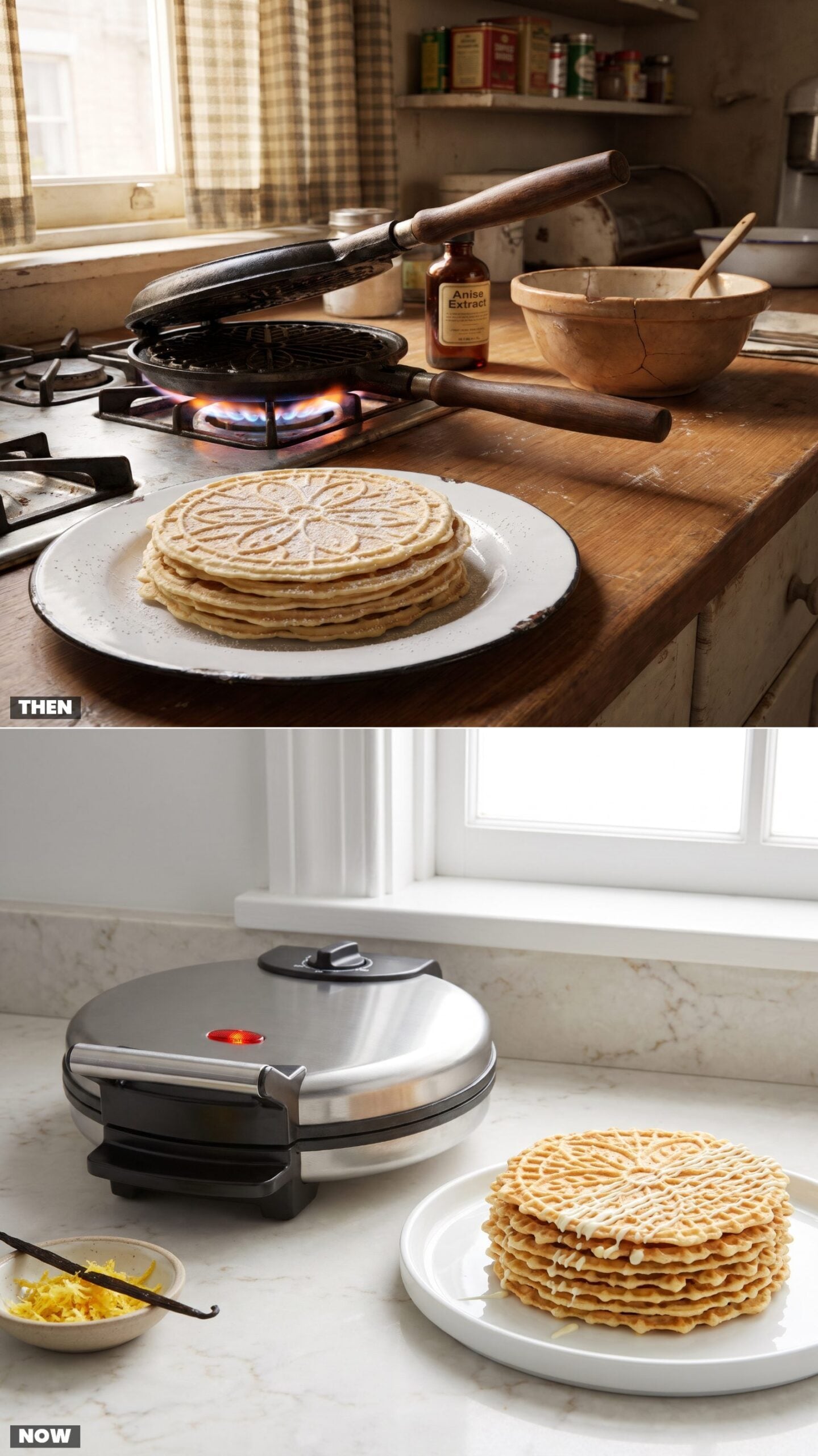
If you grew up in an Italian-American house, you know the sound — the hiss of batter hitting a cast-iron pizzelle iron held over the gas flame, flipped by hand, one wafer at a time, the whole kitchen smelling of anise for a week. The patterns came out a little scorched on one side and nobody minded.
Now it’s an electric clamshell with an indicator light. You close the lid, wait for the beep, lift out a snowflake-perfect wafer, repeat. Faster, even, no burnt thumbs.
Something got lost, though. The old iron was handed down; the electric one came in a box with a warranty card.
32. Rugelach: Walnut-Raisin Crescents vs. Chocolate-Pistachio Rugelach
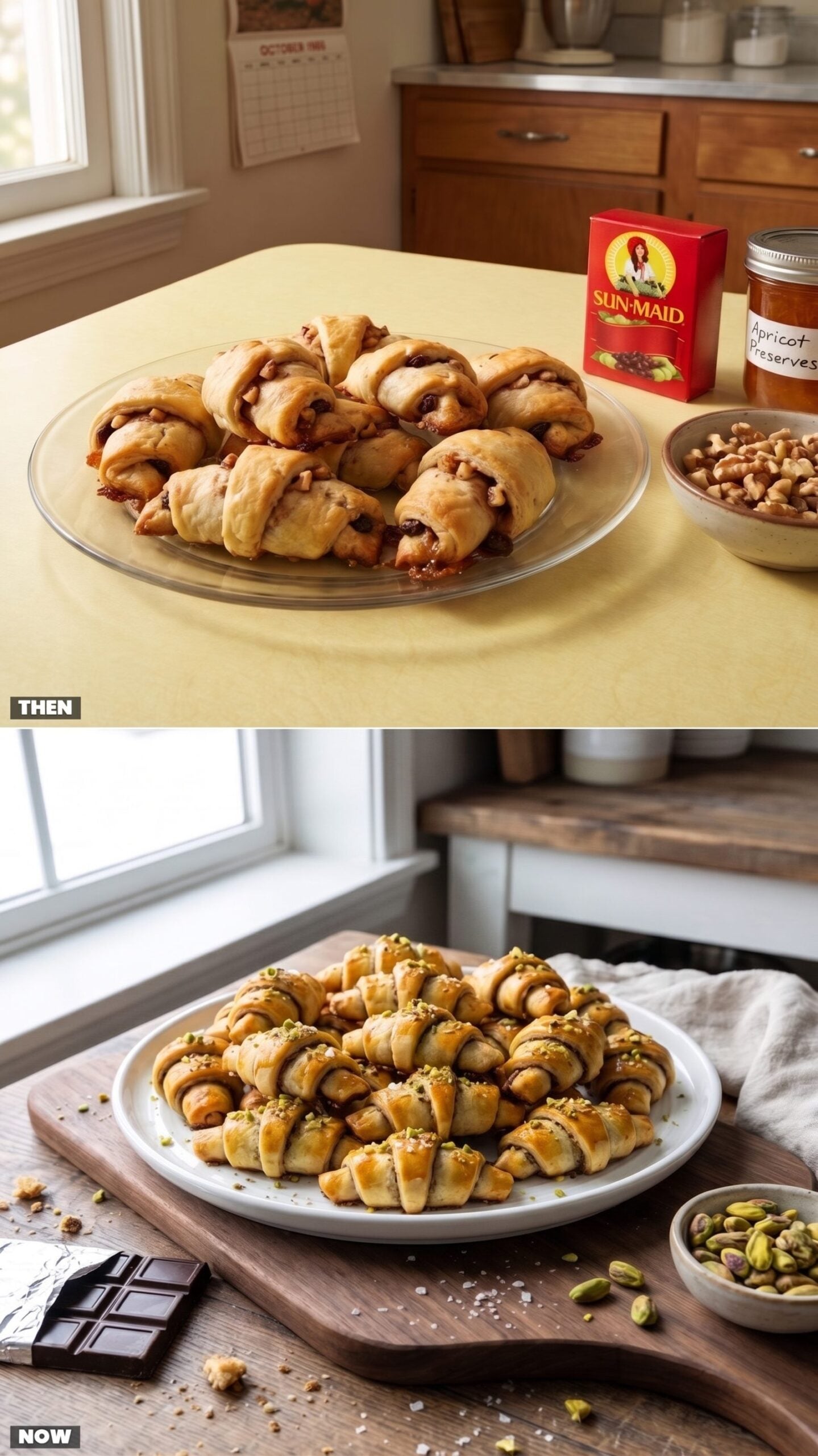
Rugelach in 1965 was a crescent of cream cheese dough wrapped around walnuts, raisins and cinnamon, and the best ones always leaked a little sugar out the ends and caramelized on the pan. That crispy burnt-sugar bottom was the piece everyone fought over. Uneven, rustic, perfect.
The current favorite leans into dark chocolate and pistachio — that bright green against deep brown, finished with sea salt, because everything is finished with sea salt now. Tighter rolls, shinier egg wash, more deliberate. Still delicious. But we miss the ones that fell apart.
31. Coconut Macaroons: Condensed-Milk Mounds vs. Chocolate-Dipped Macaroons
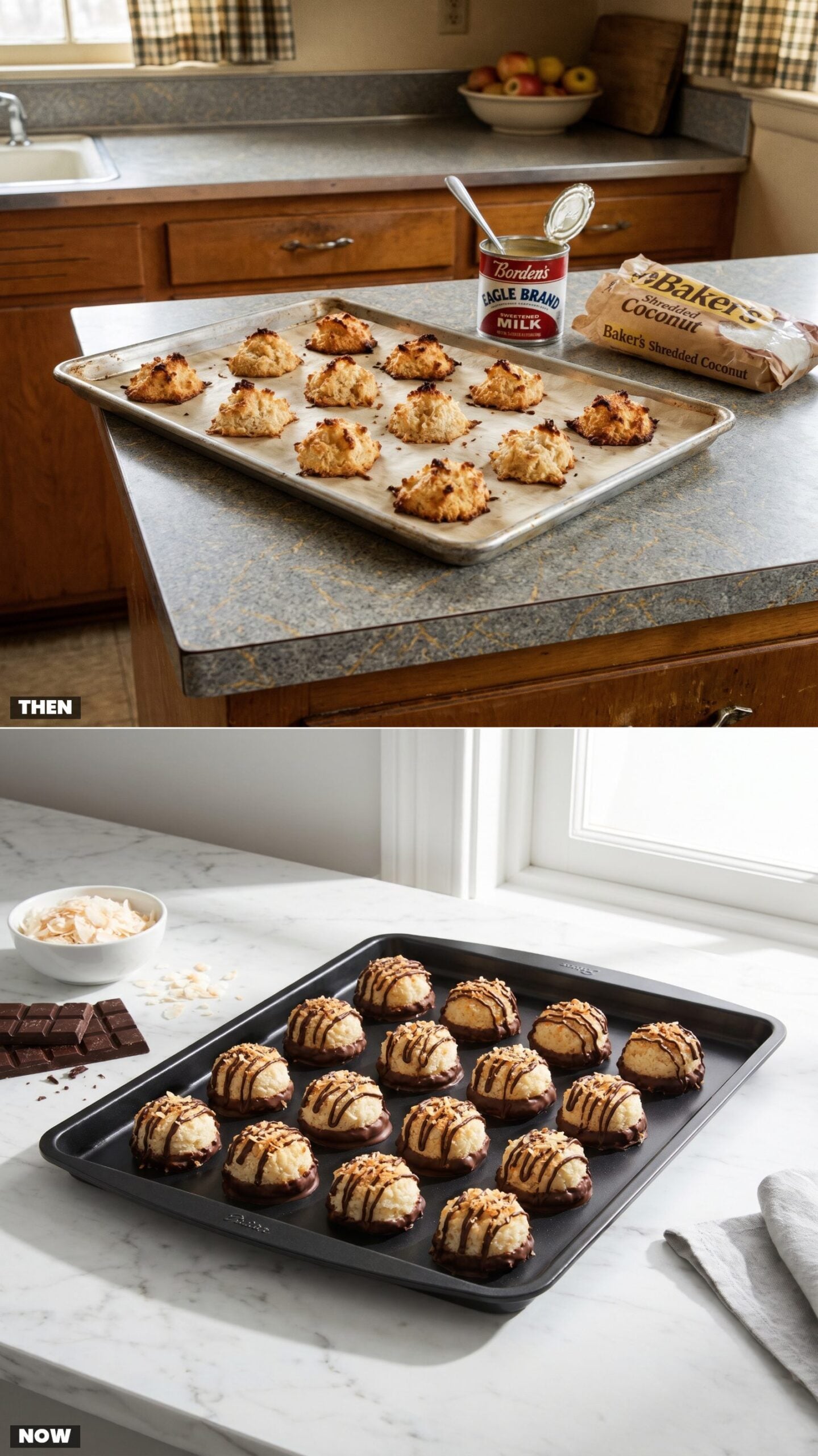
Three ingredients and a can opener. That was the 1965 macaroon — shredded coconut, sweetened condensed milk, maybe an egg white, scooped into craggy little mounds and baked until the peaks went gold. They were lumpy. They were sweet enough to make your teeth hum. They were gone by dinnertime.
The modern macaroon dresses up: bottoms dipped in tempered dark chocolate, a drizzle across the top, toasted flakes for crunch. Neater, taller, built for a photo.
30. Chocolate Fudge: Stovetop Candy Thermometer vs. Microwave Fudge Squares
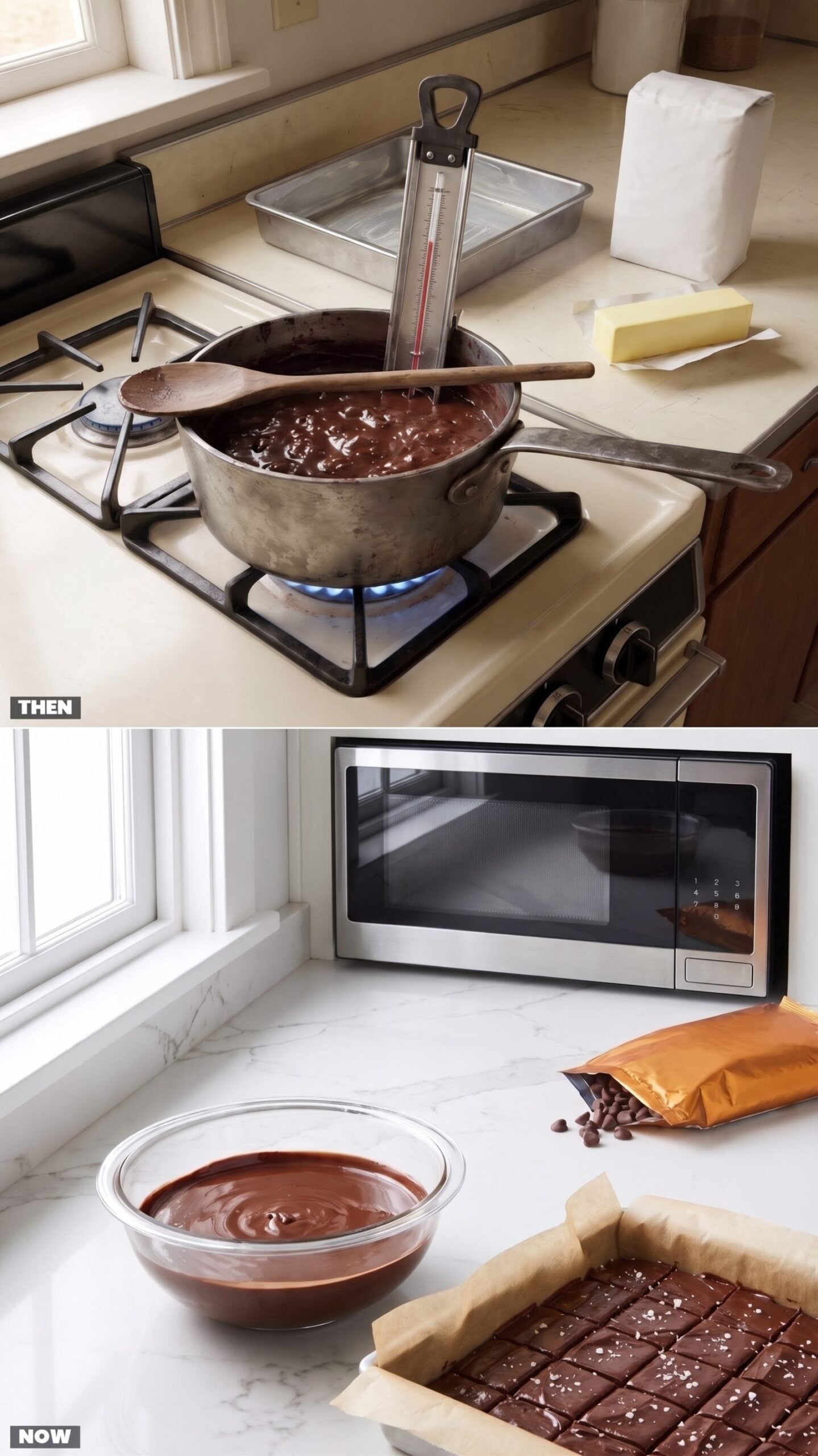
Making fudge in 1965 meant committing to it. You clipped the candy thermometer to the pan, you stirred, you watched the mercury crawl toward the soft-ball stage, and you did not walk away. One degree too far and the whole batch went grainy. People failed at this regularly and blamed the weather.
Now you dump chocolate chips and a can of frosting into a glass bowl, microwave it, stir, pour, done. Fifteen minutes. Nearly foolproof. A little sea salt on top and it looks like it came from a shop.
Is it as good? Depends who you ask. The microwave version never fails, which is more than the thermometer version could ever promise.
29. Divinity Candy: Hand-Beaten Clouds vs. Stand-Mixer Divinity
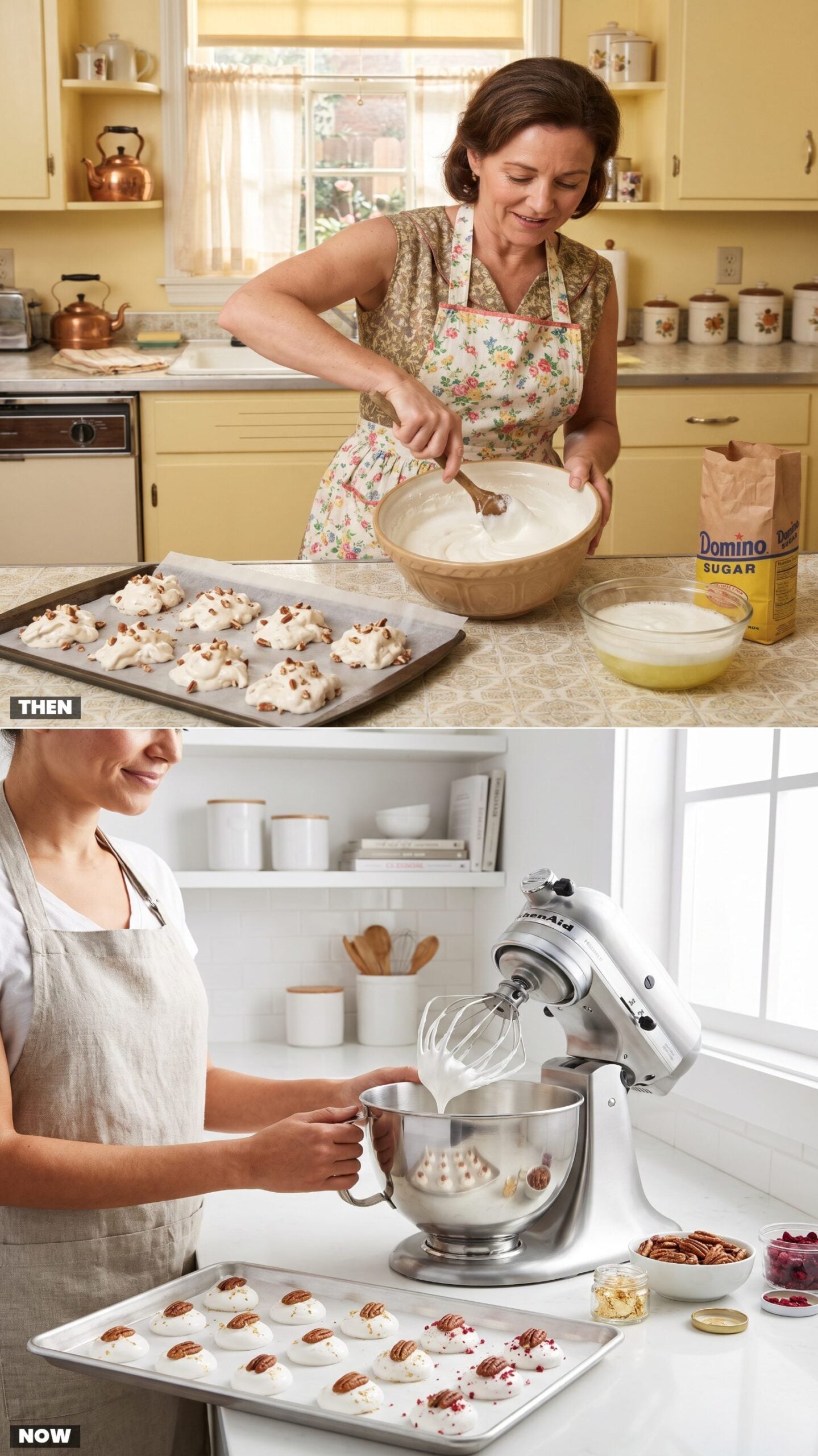
Divinity was the candy that separated the serious bakers from everyone else. You beat egg whites and hot sugar syrup by hand, arm burning, until the mixture held its shape — and if the humidity was wrong that day it simply would not set. Grandmothers kept it as a point of pride. Your arm would be sore for two days and you earned every cloud-white drop.
The stand mixer took the ache out of it. Pour, walk away, come back to stiff glossy peaks. Piped neat, topped with toasted pecans, maybe a dusting of something bright.
28. Peanut Brittle: Buttered Baking Sheet vs. Silicone-Mat Brittle
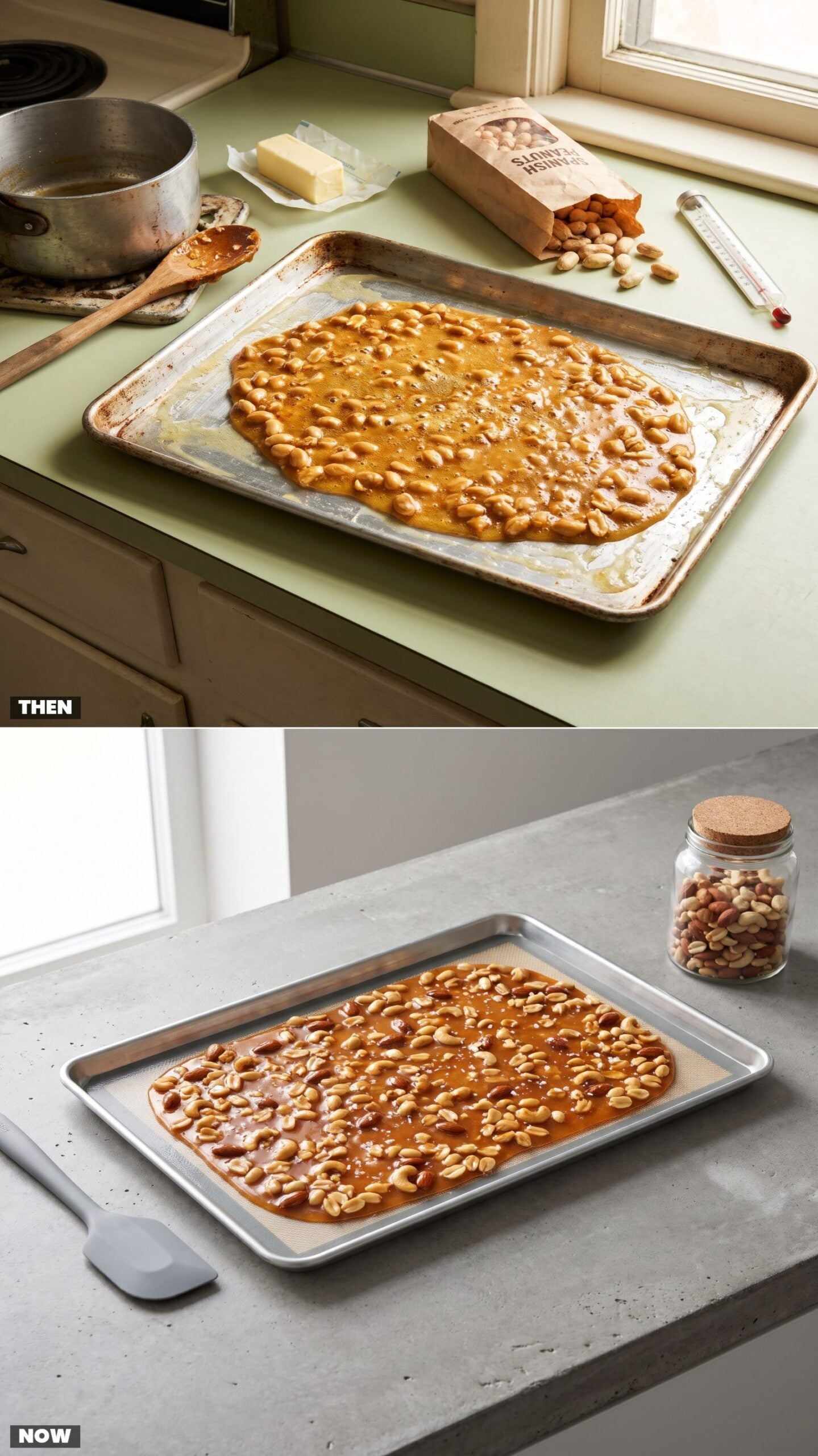
Peanut brittle in 1965 came down to how well you buttered the pan. A thin even coat on an aluminum sheet, poured fast before the sugar hardened, cracked into shards once it cooled. Half of it stuck no matter what you did, and the spoon was a lost cause by the end.
Silicone mats changed everything. Nothing sticks, the brittle peels right off, the surface stays glossy and even. Toss in some cashews, some flaky salt, and you’ve got the same candy with none of the scraping. The cleanup alone is worth the switch — and we say that as people who’ve lost a good spatula to this exact candy more than once.
27. Popcorn Balls: Sticky Corn-Syrup Lumps vs. Gourmet Caramel Spheres
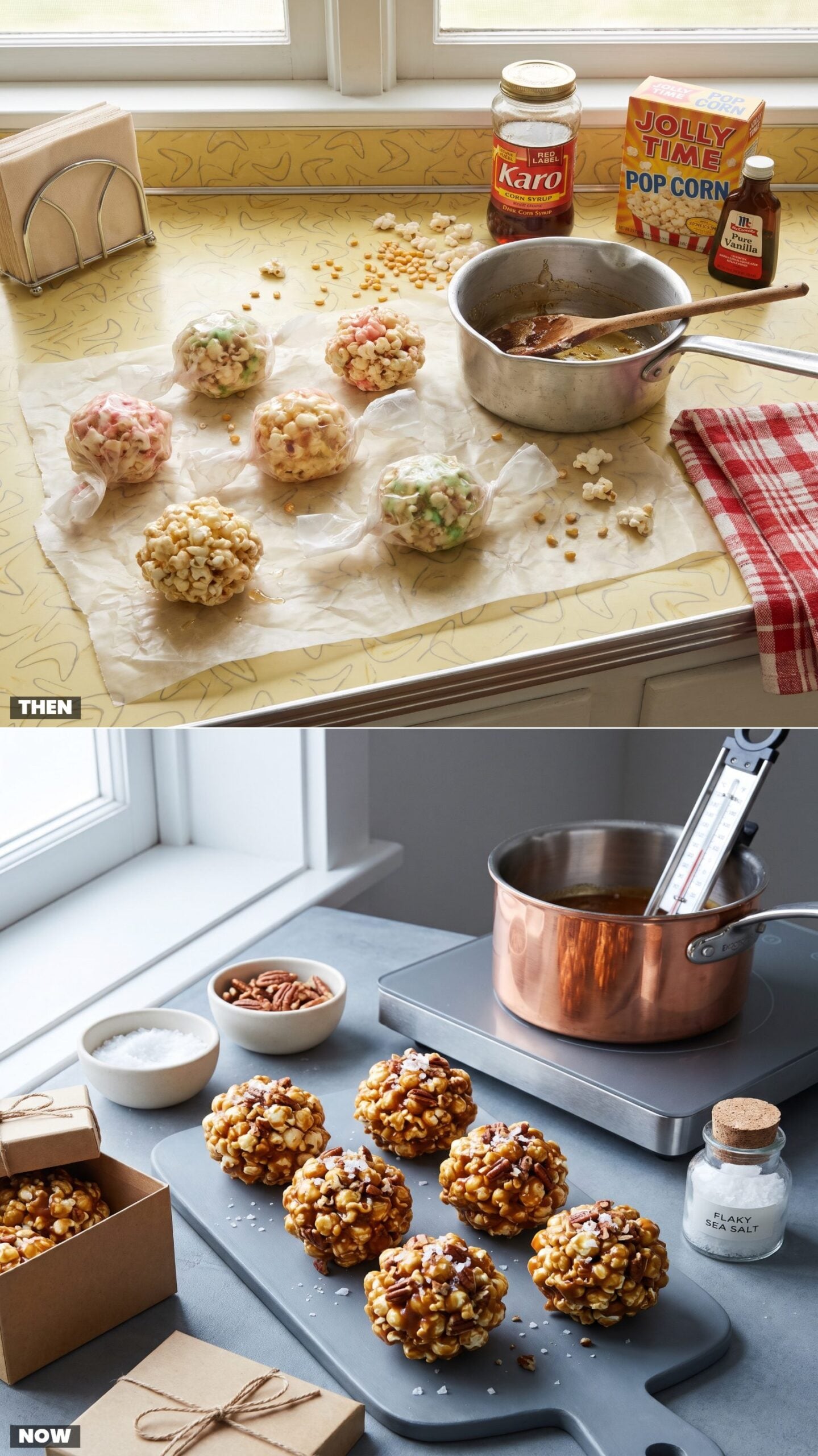
In 1965, a popcorn ball meant one thing: hot corn syrup, a bowl of popped corn, and buttered hands moving fast before the whole batch seized into a boulder. They came out lopsided, a little pink, a little green if your mother had the food coloring out. You ate them off waxed paper twisted at the ends, and the roof of your mouth paid for it.
Now they’re spheres — salted caramel, toasted pecans, a candy thermometer clipped to a copper pot so nothing scorches, all of it sitting in kraft boxes tied with twine like they’re being shipped somewhere important.
26. Pumpkin Pie: Evaporated-Milk Filling vs. the Brûléed Version
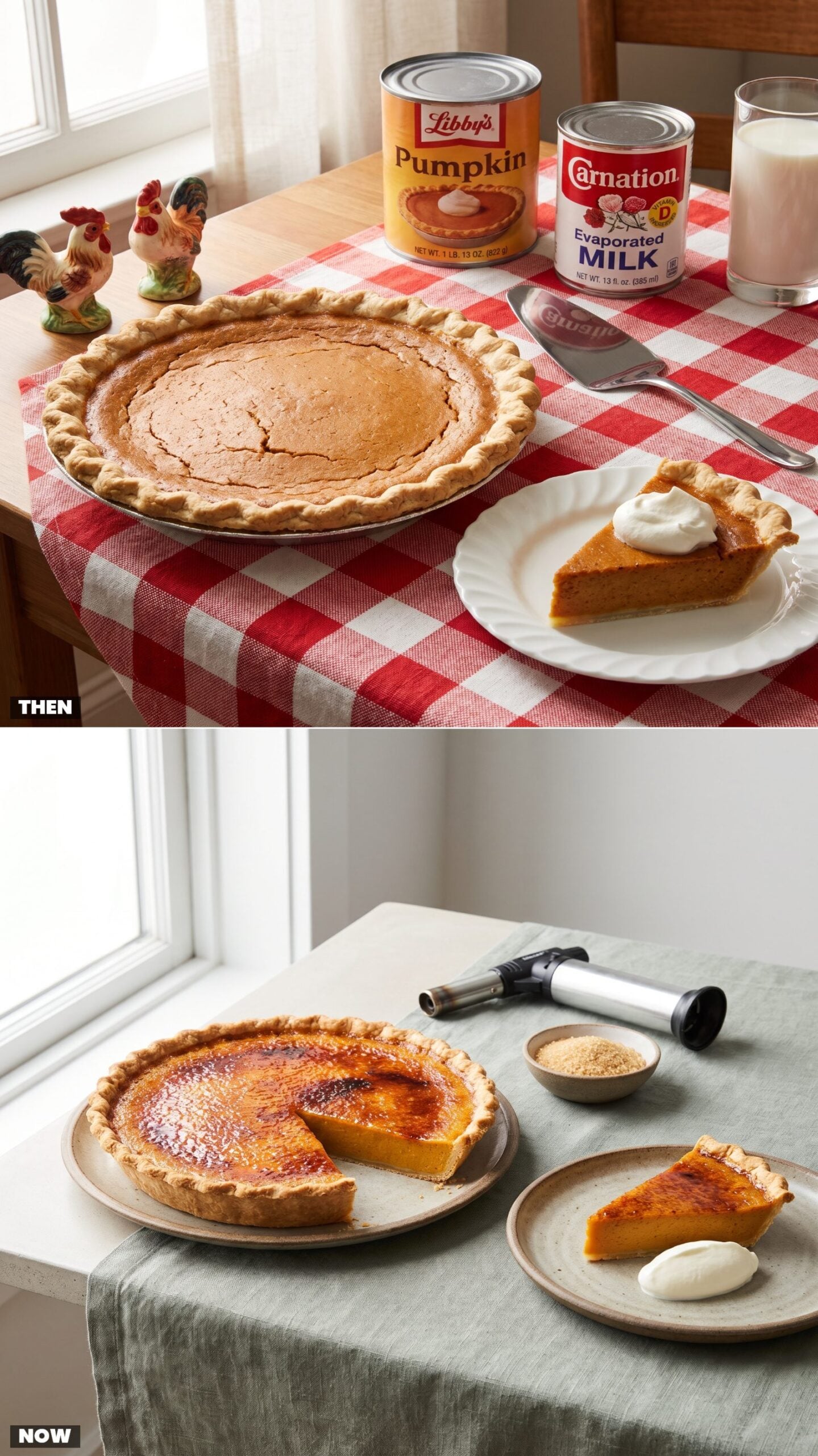
The 1965 pumpkin pie had a recipe, and the recipe was on the can. Libby’s pumpkin, a can of evaporated milk, eggs, the spices already in the cabinet — flat matte orange top, a crack or two near the edge, a crimped crust nobody fussed over. It was the same pie at every table in the country, and that sameness was the comfort.
Today someone pulls out a kitchen torch and glazes the top into a sheet of crackling amber like it’s custard at a bistro. The crust gets blind-baked so it stays crisp. Tastes wonderful. Also, we’ll say it, shows off a little.
25. Pecan Pie: The Corn-Syrup Classic vs. Maple-Bourbon
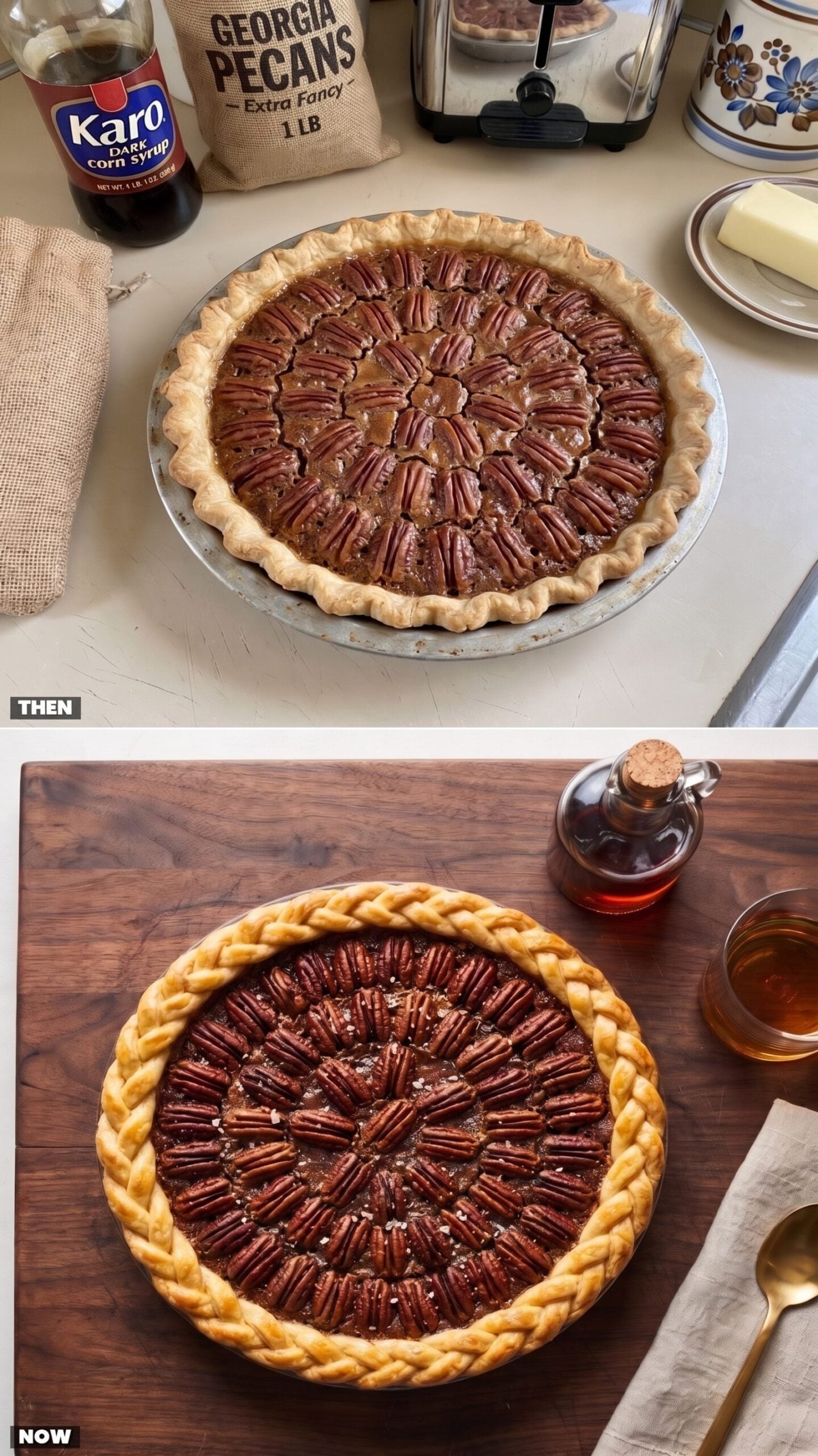
Corn syrup, sugar, eggs, pecans. That was pecan pie in 1965, and it set up into a sweet so direct it made your teeth ache in the good way. The nuts floated to the top and formed that cracked, sticky crust everyone fought over.
The modern one swaps a chunk of that corn syrup for real maple and a splash of bourbon, toasts the pecans first, and finishes with flaky salt. Deeper, a touch grown-up. We’ll say this though — the old version never once disappointed anyone, and we’ve met people who’d fight you over keeping it exactly as it was.
24. Mincemeat Pie: The Full-Size Lattice vs. Individual Tarts
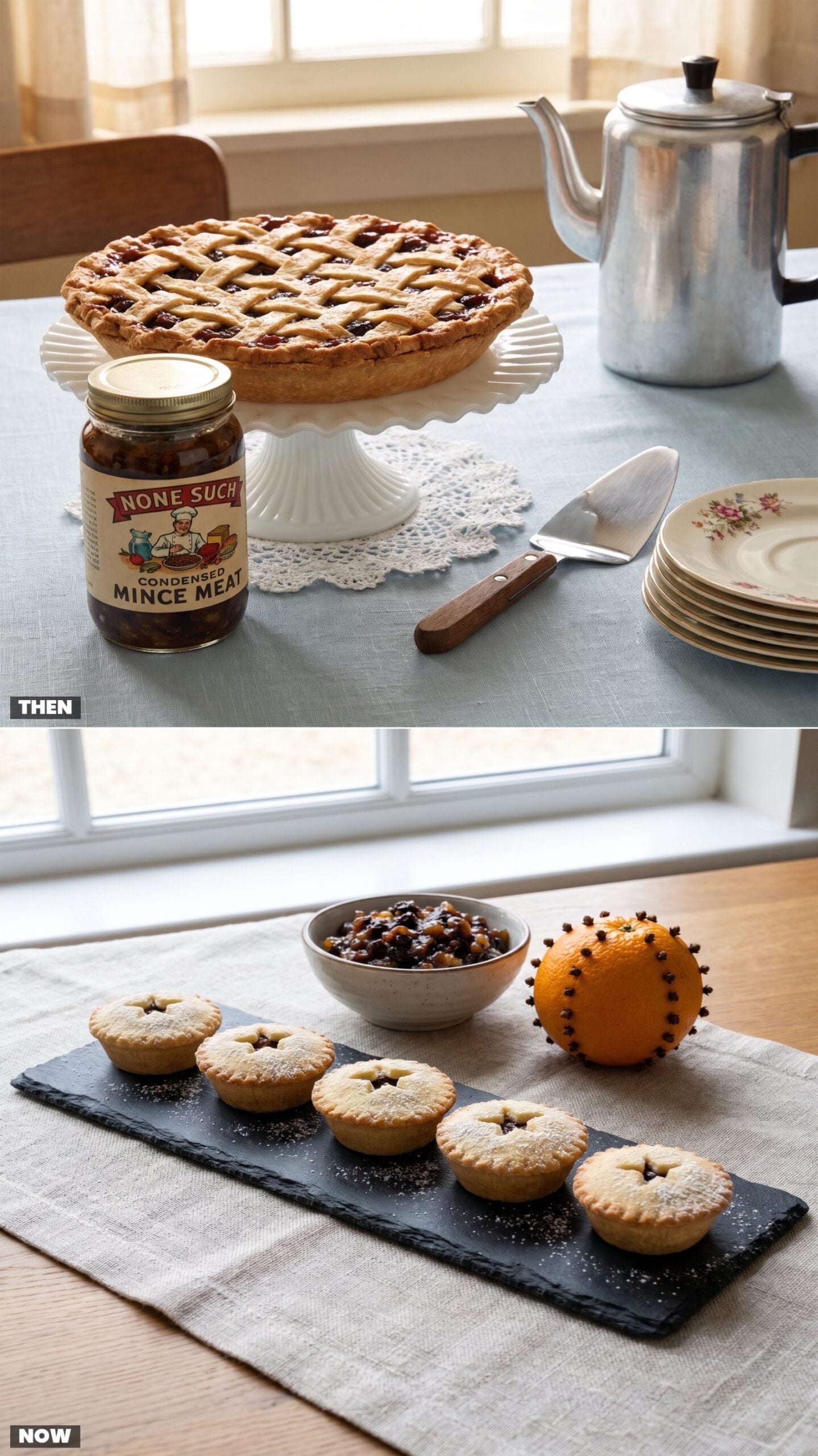
Mincemeat came out of a jar in 1965, None Such usually, and it went under a lattice crust as one big ceremonial pie that sat on the good glass pedestal stand. Dark, spiced, boozy in a way nobody discussed in front of the kids. Half the table loved it and half quietly took the smallest possible slice.
Now it’s parceled out into individual tarts, each with its own star-cut vent and a dusting of sugar, so everybody gets exactly the amount they want. Which, for mincemeat, turns out to be a smart move.
23. Cheesecake: Graham-Cracker Classic vs. Basque-Style
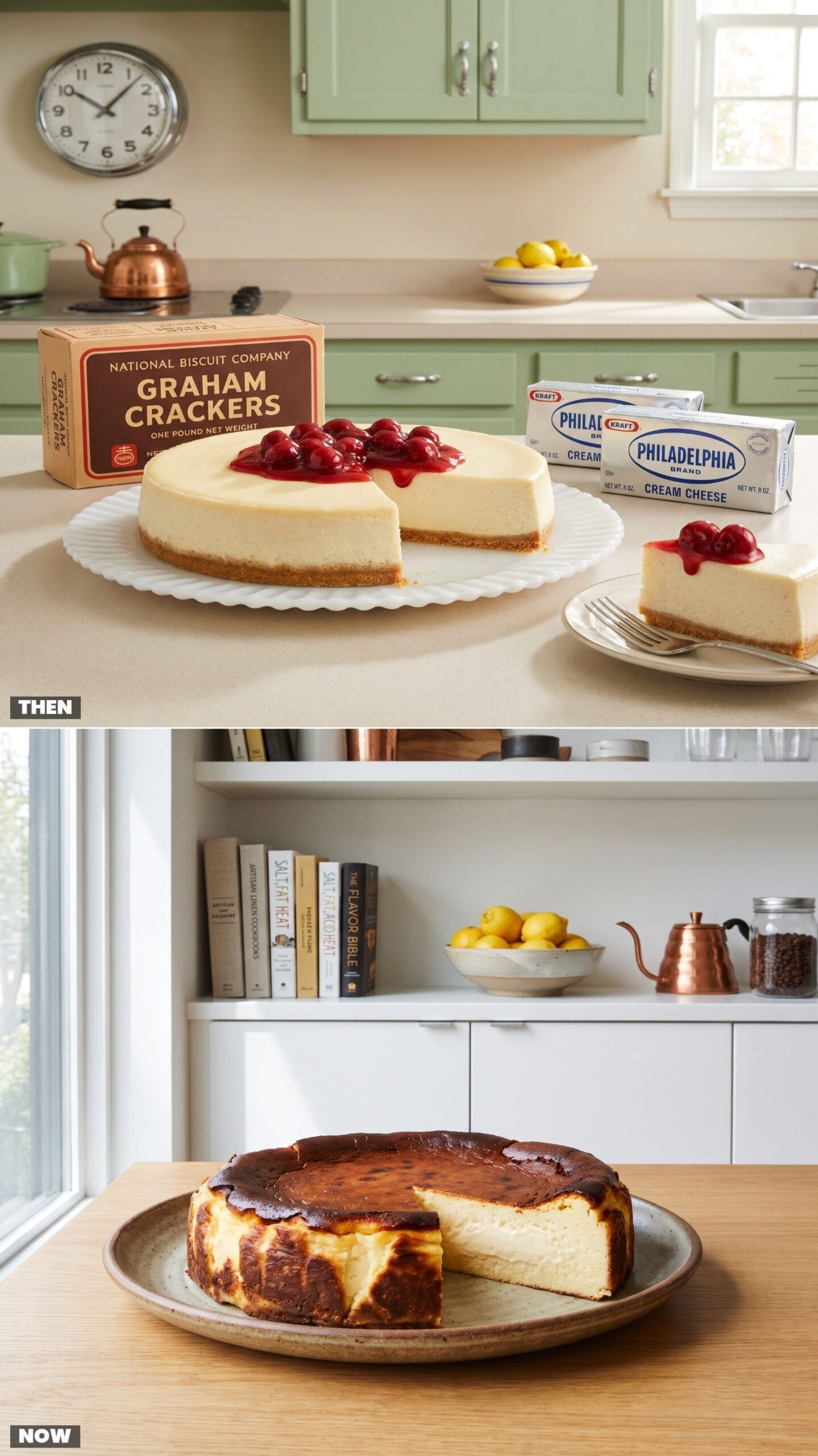
The 1965 cheesecake was pale, proud, and wearing a graham-cracker crust like a belt. Dense, cool, usually topped with a slick of canned cherry glaze that glowed an unnatural red. It came out of the fridge, it sat on the milk-glass plate, and it did not apologize for any of it.
The version people fawn over now is the opposite in every way. Crustless. Scorched almost black on top, wobbling in the middle like it’s barely holding together — burnt Basque cheesecake, the thing that looks like a mistake and tastes like a small miracle. Funny how the dessert our mothers would’ve thrown out became the one we photograph.
22. Bundt Cakes: The Gelatin-Mold-Era Ring vs. the Glazed Nordic Bundt
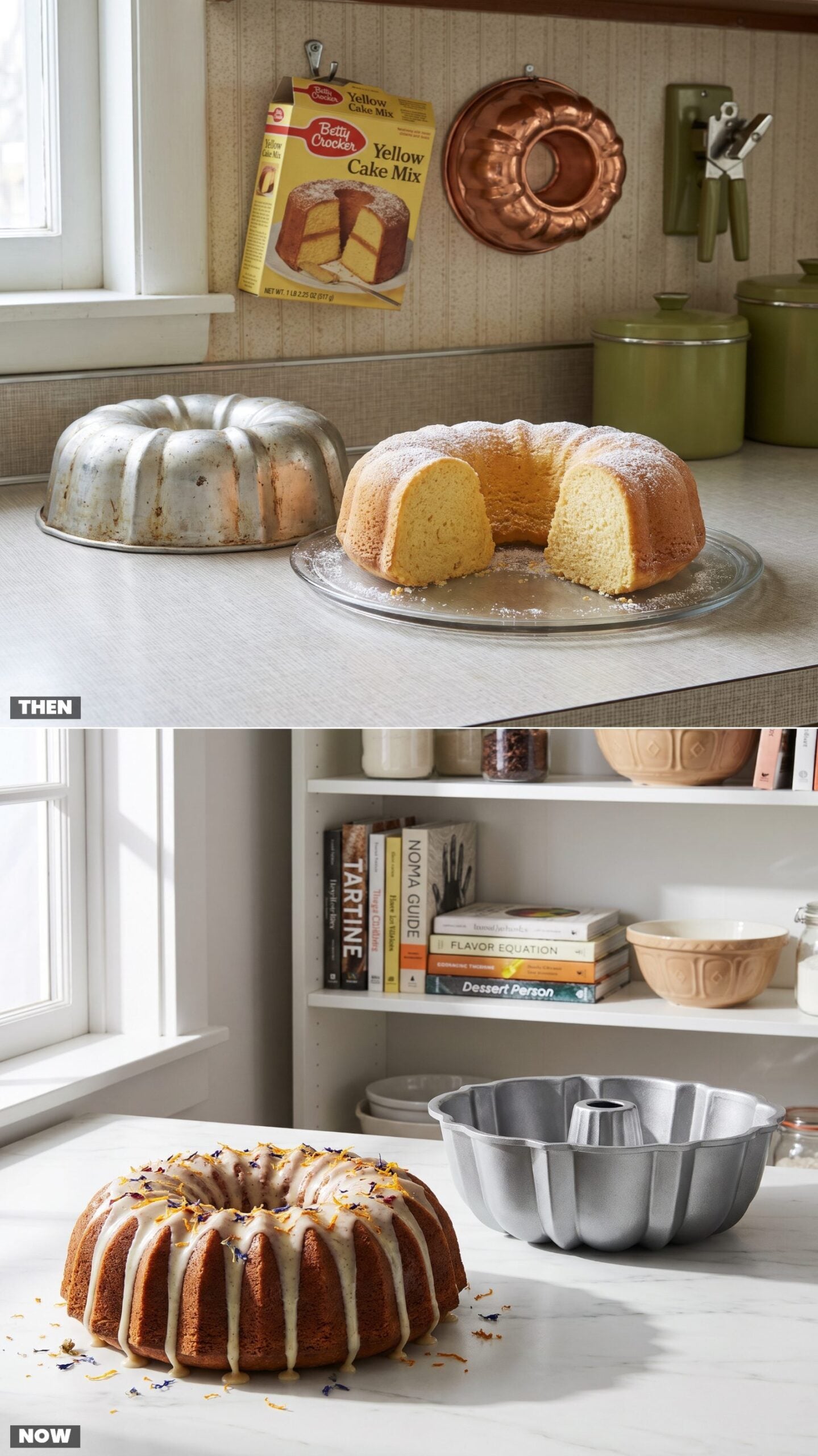
The Bundt cake had its big moment in the 1960s, and in 1965 it usually meant a box of cake mix poured into that first wave of aluminum ring pans, turned out, and dusted with powdered sugar. Simple. A little dry if you weren’t careful. It shared cabinet space with the copper gelatin molds, which tells you everything about the era’s relationship with ring-shaped food.
The modern Bundt comes out of a heavy sculpted pan with fluting sharp enough to cut yourself on, then gets a glaze that cascades down every ridge like it’s posing for a catalog. Same shape, three generations later, finally dressed up.
21. Stollen: The Powdered-Sugar Loaf vs. Boutique Marzipan
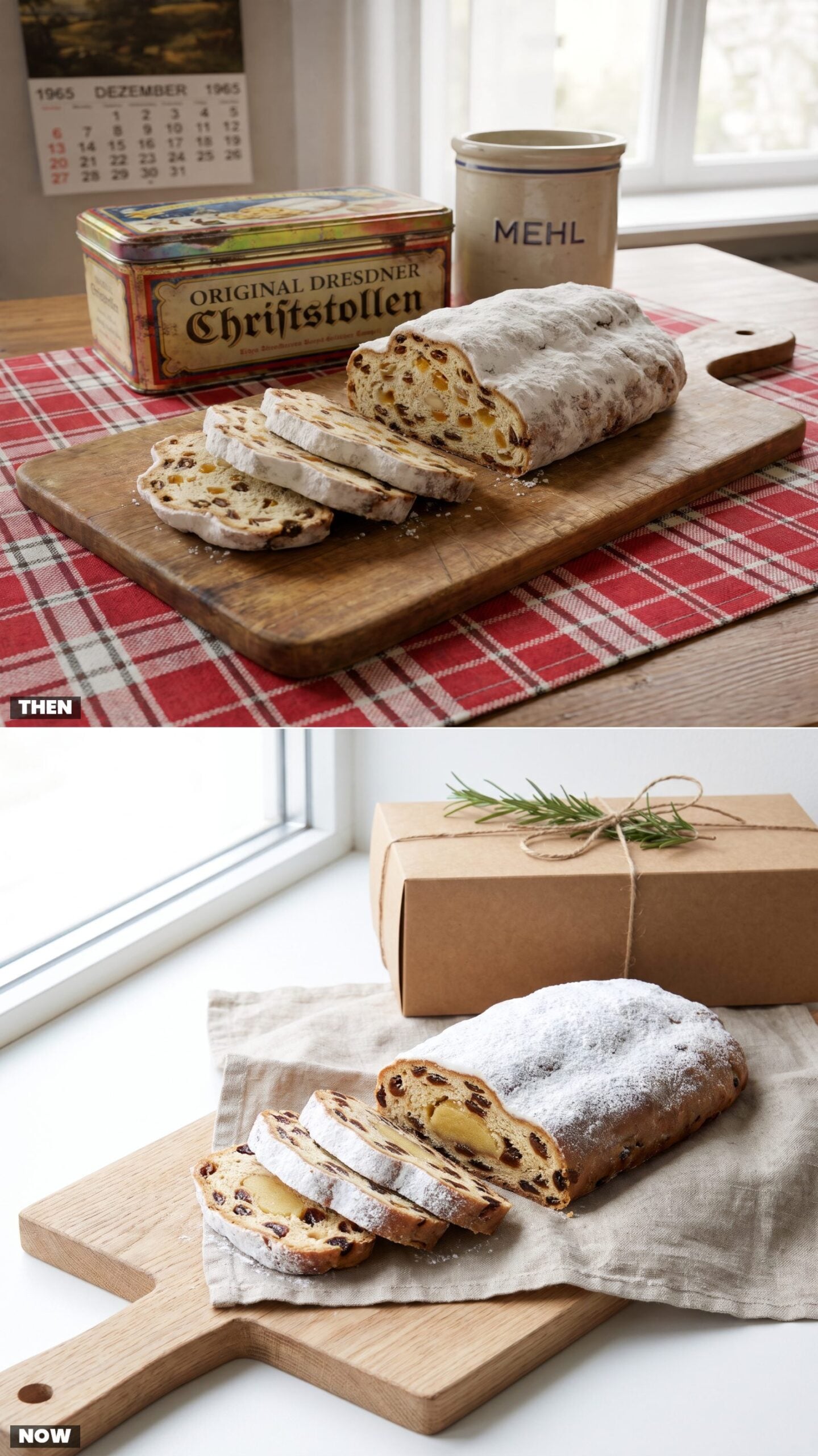
Stollen in 1965 American kitchens often arrived in a dented imported tin, or got made once a year from a card passed down through somebody’s German side of the family. A dense loaf, buried in powdered sugar, packed with candied fruit that half the grandkids picked out and left on the plate.
The boutique version now runs a ribbon of marzipan straight through the middle, soaks the fruit in rum, and dusts the sugar fine instead of in drifts. Comes in a kraft box with twine. Costs more than you’d think. And that marzipan core, we’ll admit, converts the fruit-pickers.
20. Panettone: The Imported Holiday Splurge vs. Home-Baked Flavored
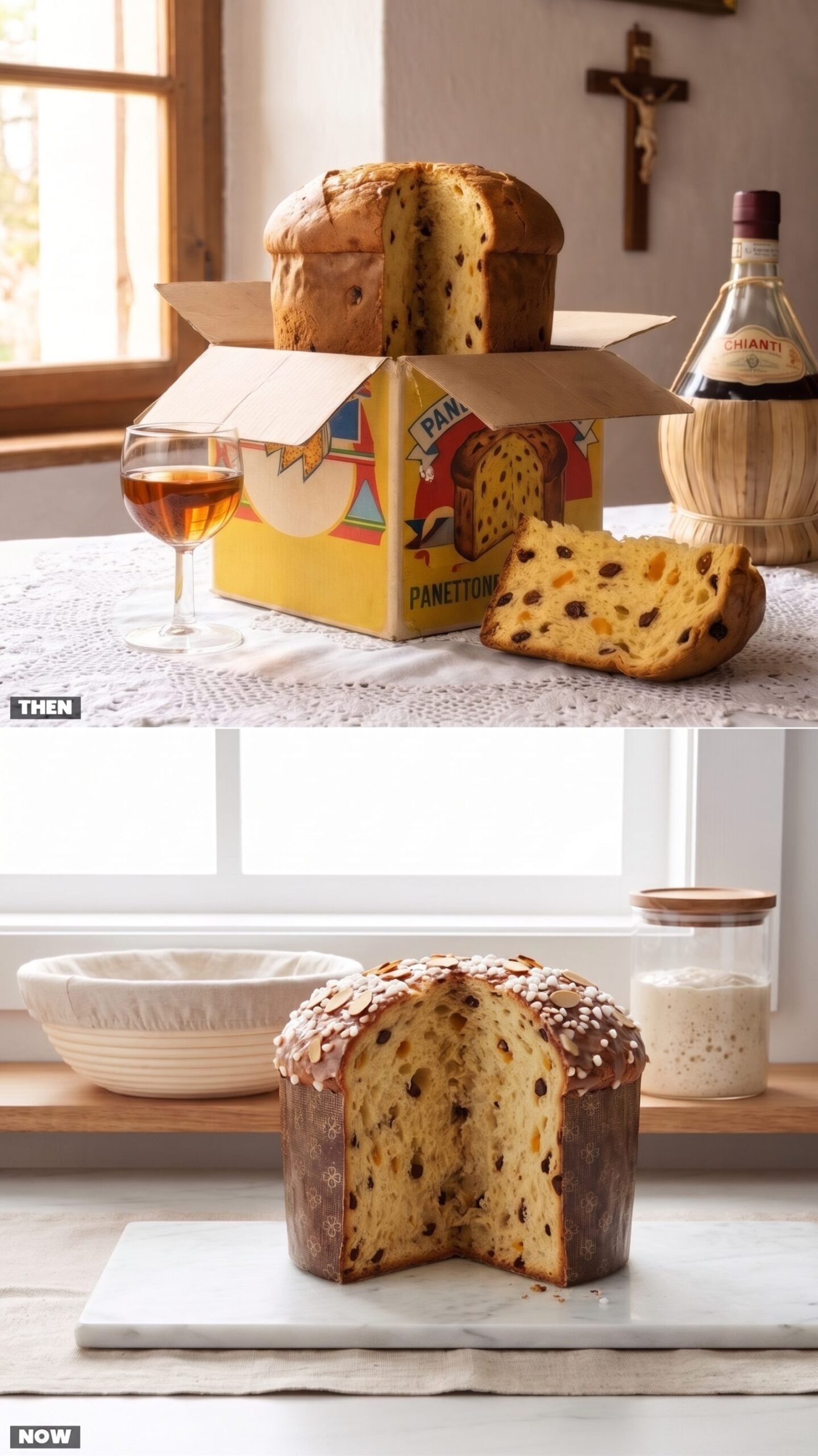
For an Italian-American family in 1965, panettone was something you bought, not something you made. It came in a bright cardboard box with Italian lettering, probably from the deli or a cousin who knew a guy, and it felt like a splurge because it was. You sliced it thin, had it with sweet wine, and the box itself felt like a small event on the table.
Now people proof their own for three days, feed a starter, fold in chocolate and candied orange, and bake it in paper molds at home. The thing that was once a luxury import is now a weekend project for the ambitious.
19. Christmas Morning Rolls: Tube Dough vs. Sourdough Cinnamon Buns
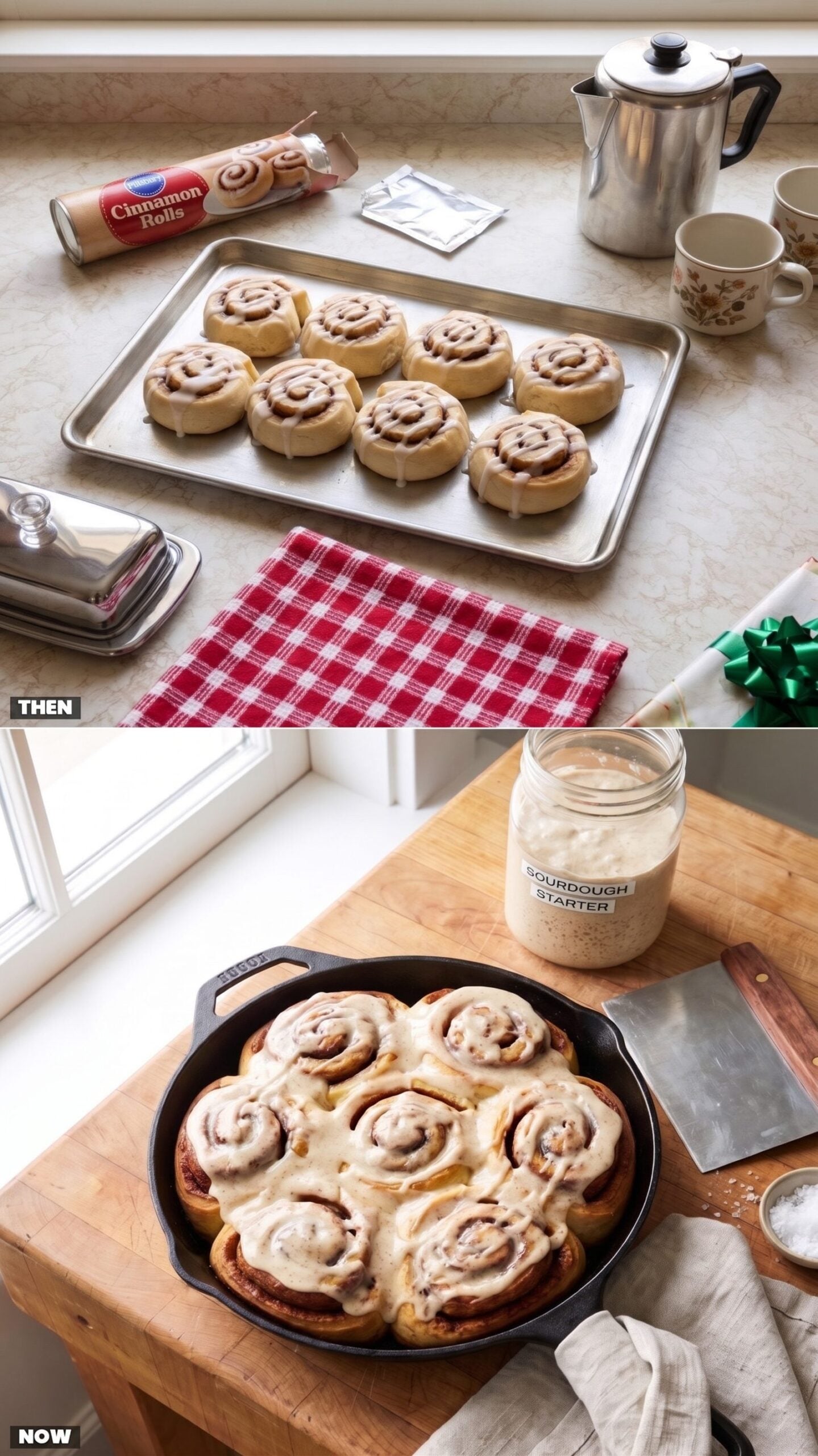
Christmas morning in 1965 had a sound: the thwack of a cardboard dough tube hitting the counter edge, then the pop as it split open. Eight little rolls onto the pan, into the oven, squeeze the icing out of the foil packet while the coffee percolated. Fifteen minutes, start to finish — exactly what you wanted on a morning when the kids were already tearing into packages.
The modern version starts days earlier with a jar of sourdough starter, gets hand-rolled, bakes in a cast-iron skillet, and wears a cream-cheese glaze thick as spackle. Better? Probably. But nothing beats the speed of that tube, and we won’t pretend otherwise.
18. Oven-Baked Party Mix: Cereal and Pretzels vs. Custom Spiced Snack Mix
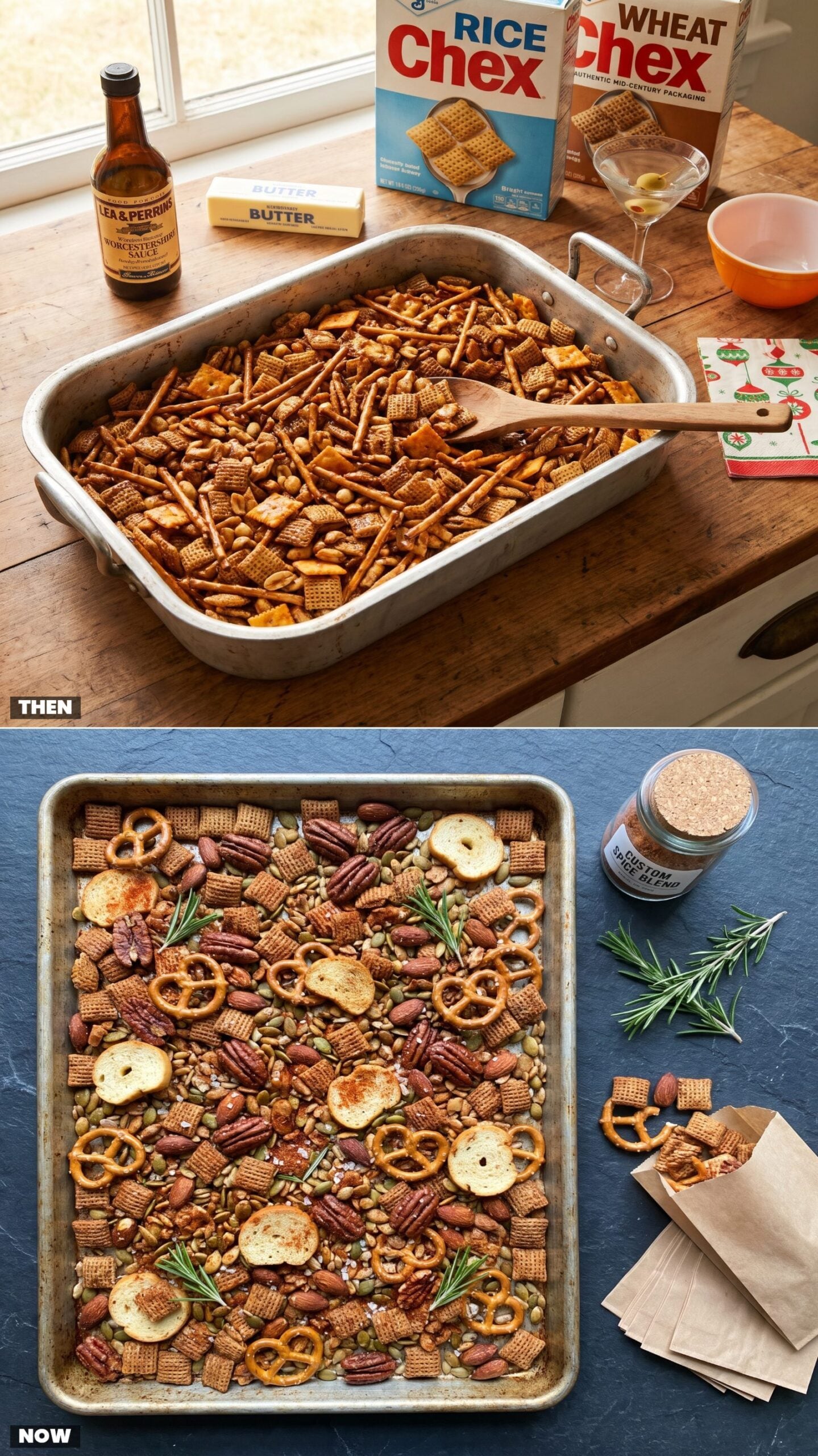
Party mix in 1965 came out of a roasting pan the size of a small boat. Chex, pretzel sticks, peanuts, the little cheese crackers, all tossed in melted butter and Worcestershire and baked low until the whole house smelled like it. Every family had a slightly different ratio and every family thought theirs was correct.
Today it gets rebranded as a “custom snack mix,” with rosemary, smoked paprika, candied nuts, maybe some furikake if the cook has been reading. Portioned into little kraft bags for guests to take home.
17. Holiday Cupcakes: Foil Liners and Plastic Picks vs. Sculpted Buttercream Toppers
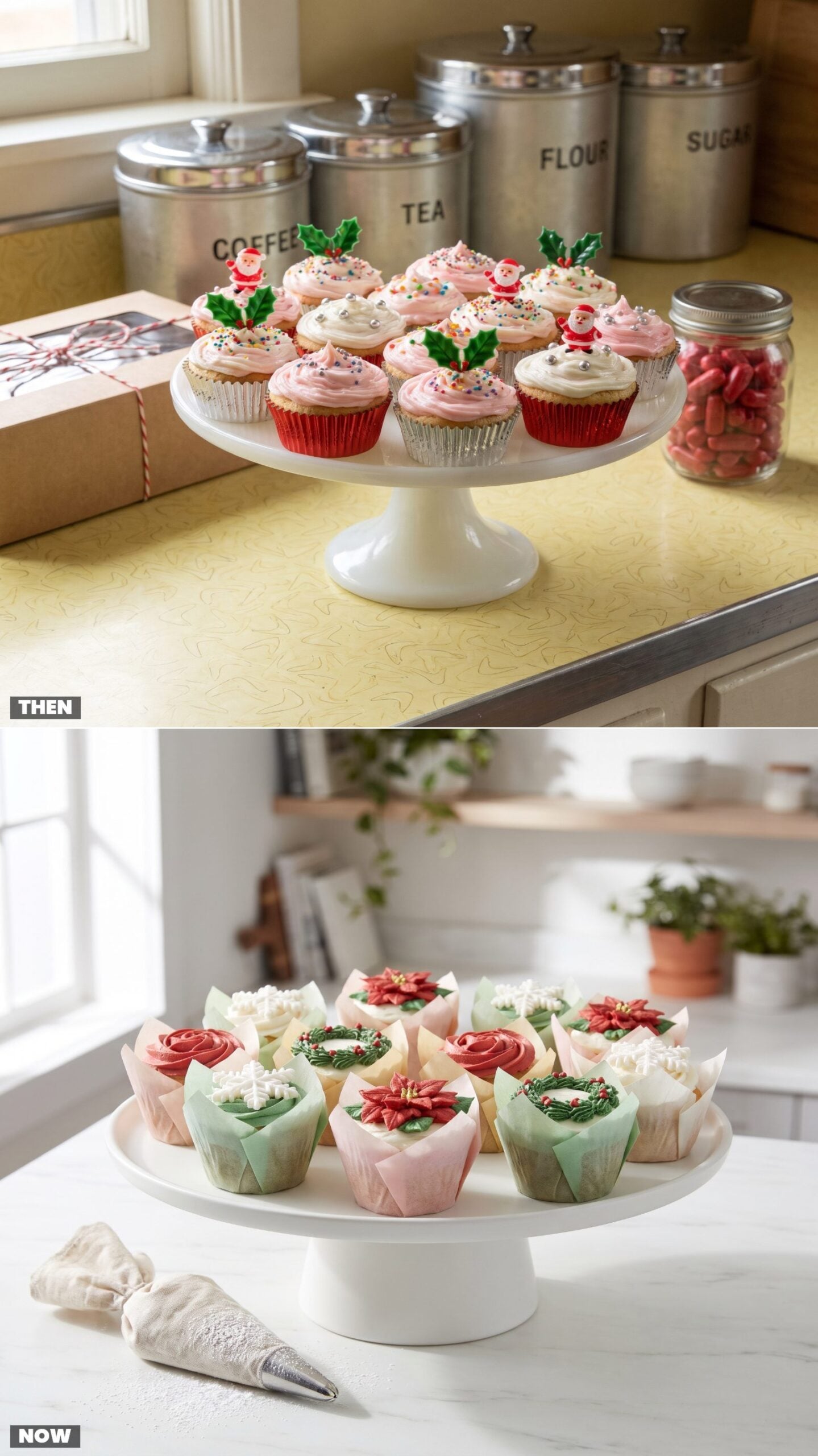
Back in 1965 the holiday cupcake was an afterthought with a hat. You swirled frosting on with a butter knife, scattered silver dragées that cracked a filling if you weren’t careful, and stuck in a plastic Santa pick you later fished out and saved in a drawer for next year. Nobody expected art. You expected sugar.
Now the topper is the whole event. Buttercream poinsettias piped petal by petal, snowflakes with eight even arms, wreaths in three shades of green — and the cupcake underneath barely matters. We’ve turned a quick treat into a tiny display piece, and honestly, half of them are too pretty to bite.
16. Holiday Recipes: Handwritten Index Cards vs. Tablet Recipe Apps
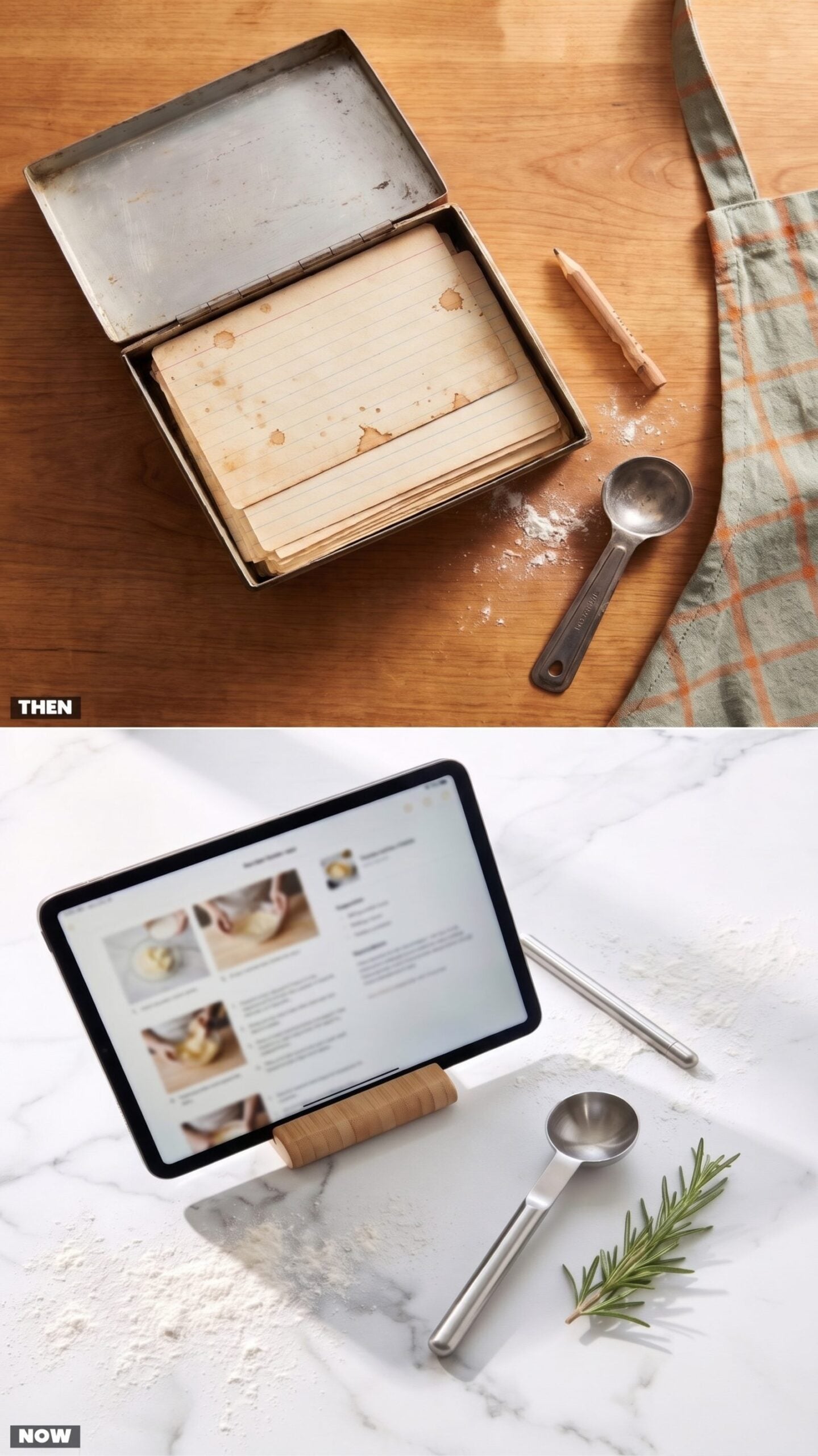
The recipe box held the whole family. Cards in three different hands — some from an aunt who’d passed, some copied off the back of a shortening can — and every one of them stained with the exact ingredient it called for. You could spot the good recipes by how filthy the card was.
Today it’s a tablet in a splash-proof stand, scrolling hands-free when you wave at it, five stars and a comment section arguing about whether to chill the dough. Convenient. But nobody’s grandkid is going to tear up over a recipe app in forty years.
A grease stain on an index card is a kind of signature. A download never smelled like anything.
15. Measuring Ingredients: Aluminum Cups vs. Digital Kitchen Scale
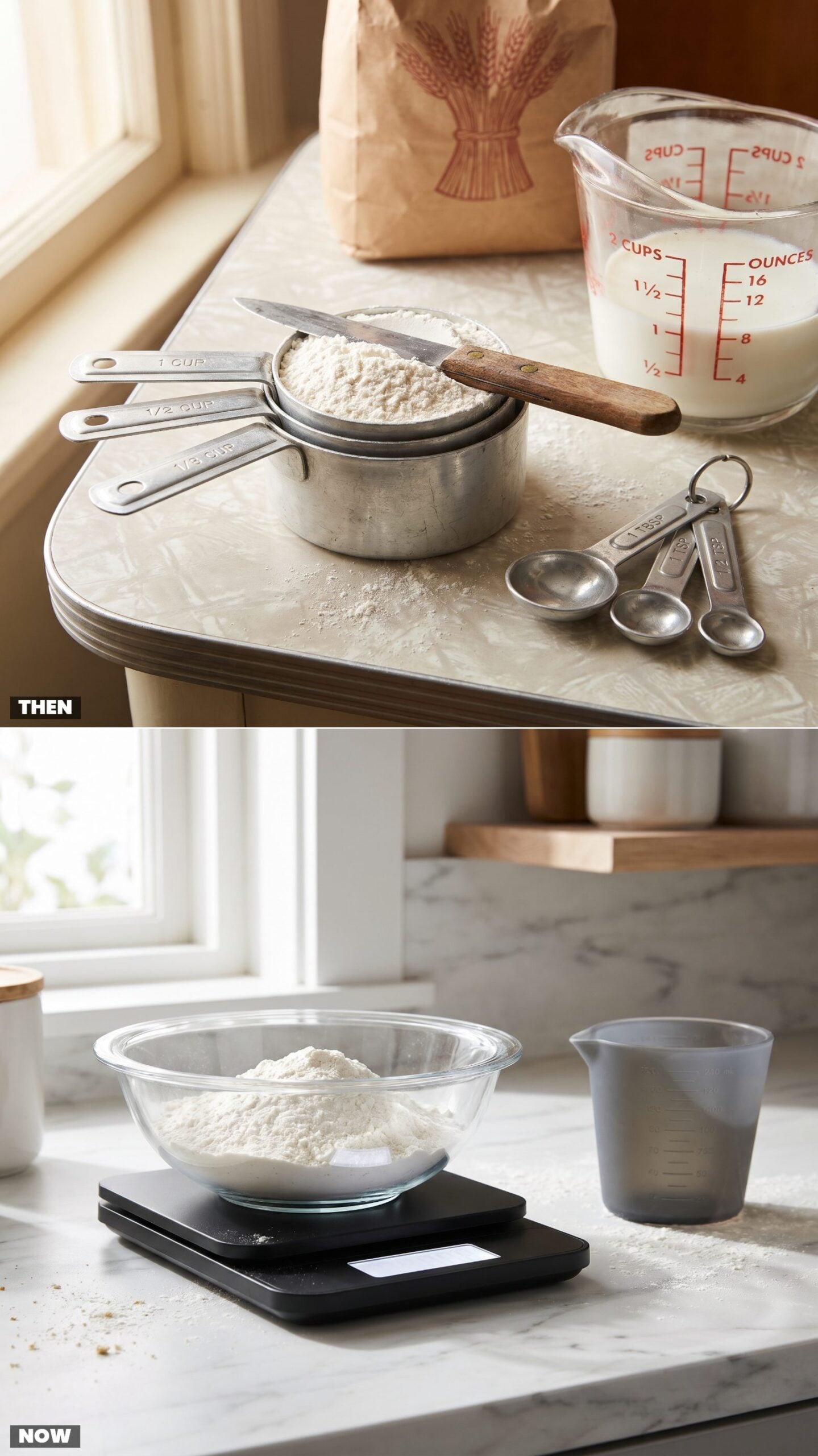
Flour by the scoop, leveled with the flat of a knife, packed or not depending on who taught you. Two cooks working the same card could land in completely different places, which is exactly why your cookies and your neighbor’s cookies never quite matched even from the same recipe passed hand to hand.
The digital scale ended all that. Grams don’t argue. Tare the bowl, pour until the number hits, done — more accurate, and a lot less romantic.
14. Mixing Dough: Portable Hand Mixer vs. High-Powered Stand Mixer
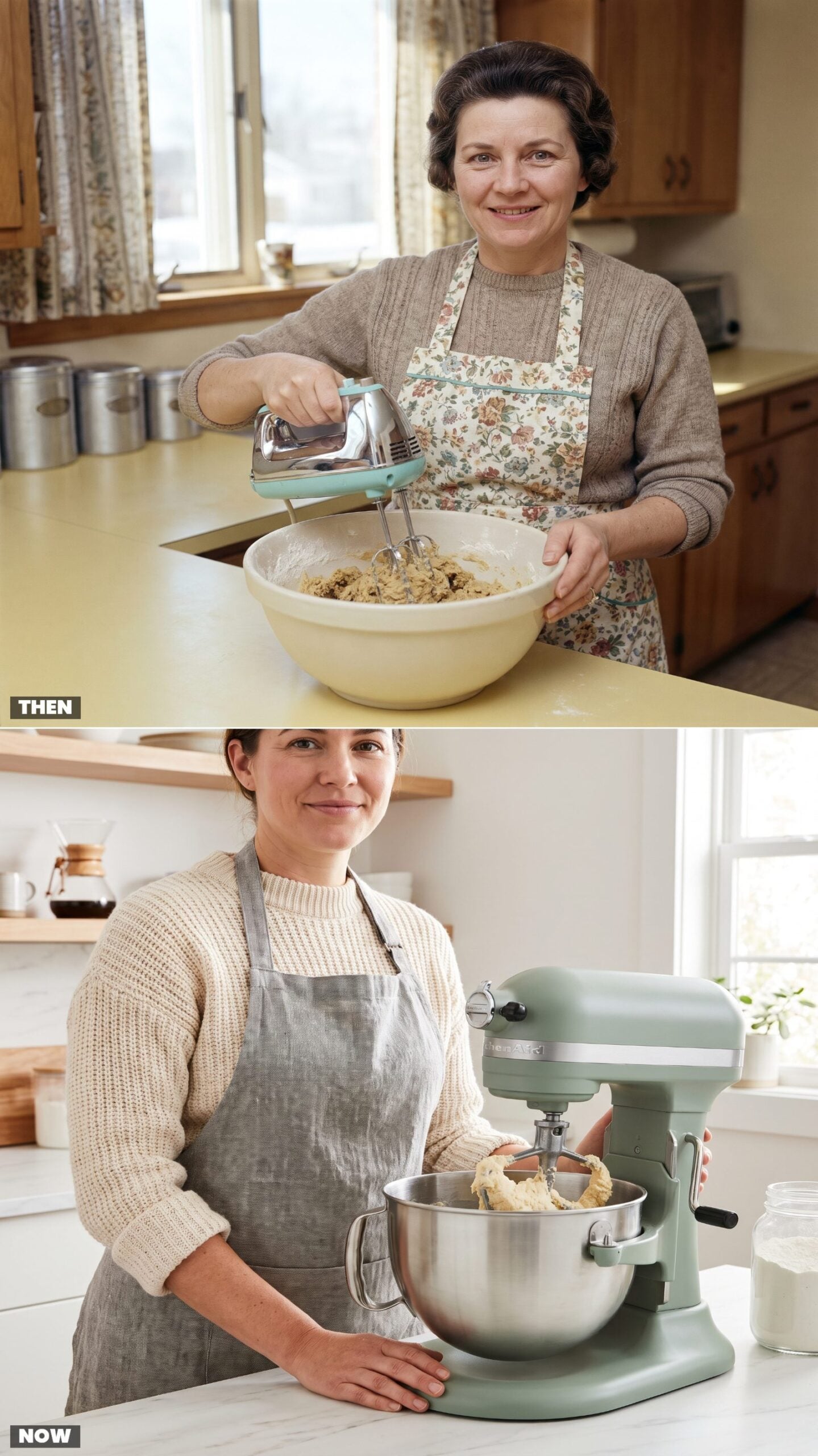
The hand mixer was a two-handed sport. One hand drove it in slow circles around the bowl while the other held the bowl so it didn’t spin off the counter, and your forearm was done by the second batch. Stiff cookie dough could stall the motor cold and leave you finishing the job with a wooden spoon.
The stand mixer just takes the whole chore off your hands. Lock the bowl, drop the paddle, walk away and crack eggs for the next thing. Biggest upgrade in the whole holiday kitchen, and we won’t hear otherwise.
13. Oven Baking: Analog-Dial Range vs. Convection Smart Oven
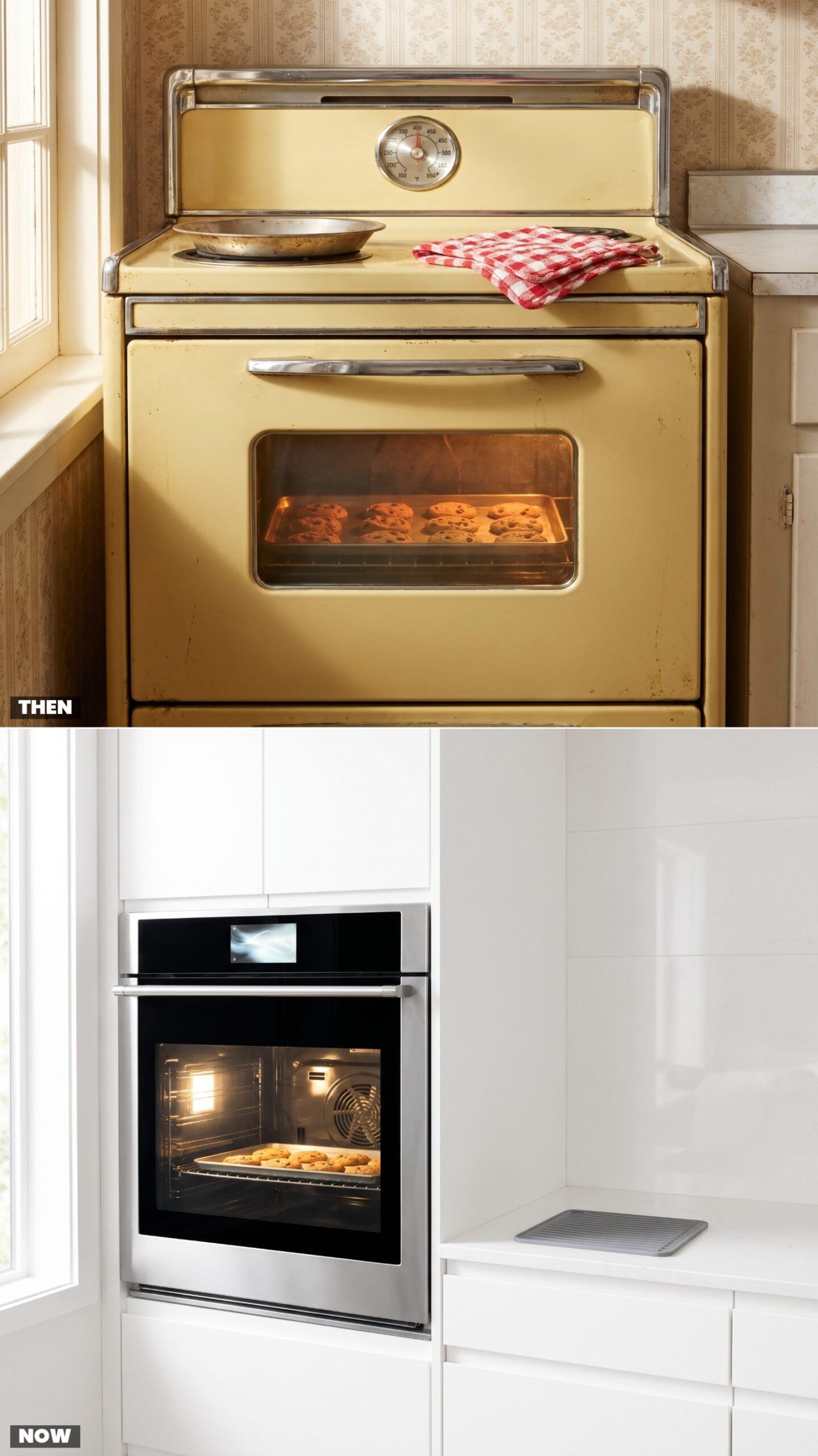
You didn’t trust the dial. You trusted the hot spot in the back left corner, the way the gas whumped on, and your nose. Every oven ran a little off its own reading, and you learned yours the hard way with one scorched pan of snickerdoodles.
The convection smart oven preheats in minutes, circulates heat so every rack browns the same, and pings you when it’s done. No rotating trays. No guessing. The cookies come out identical, which is either a triumph or a little sad depending on how you feel about character.
12. Pan Liners: Greased Wax Paper vs. Parchment and Silicone Mats
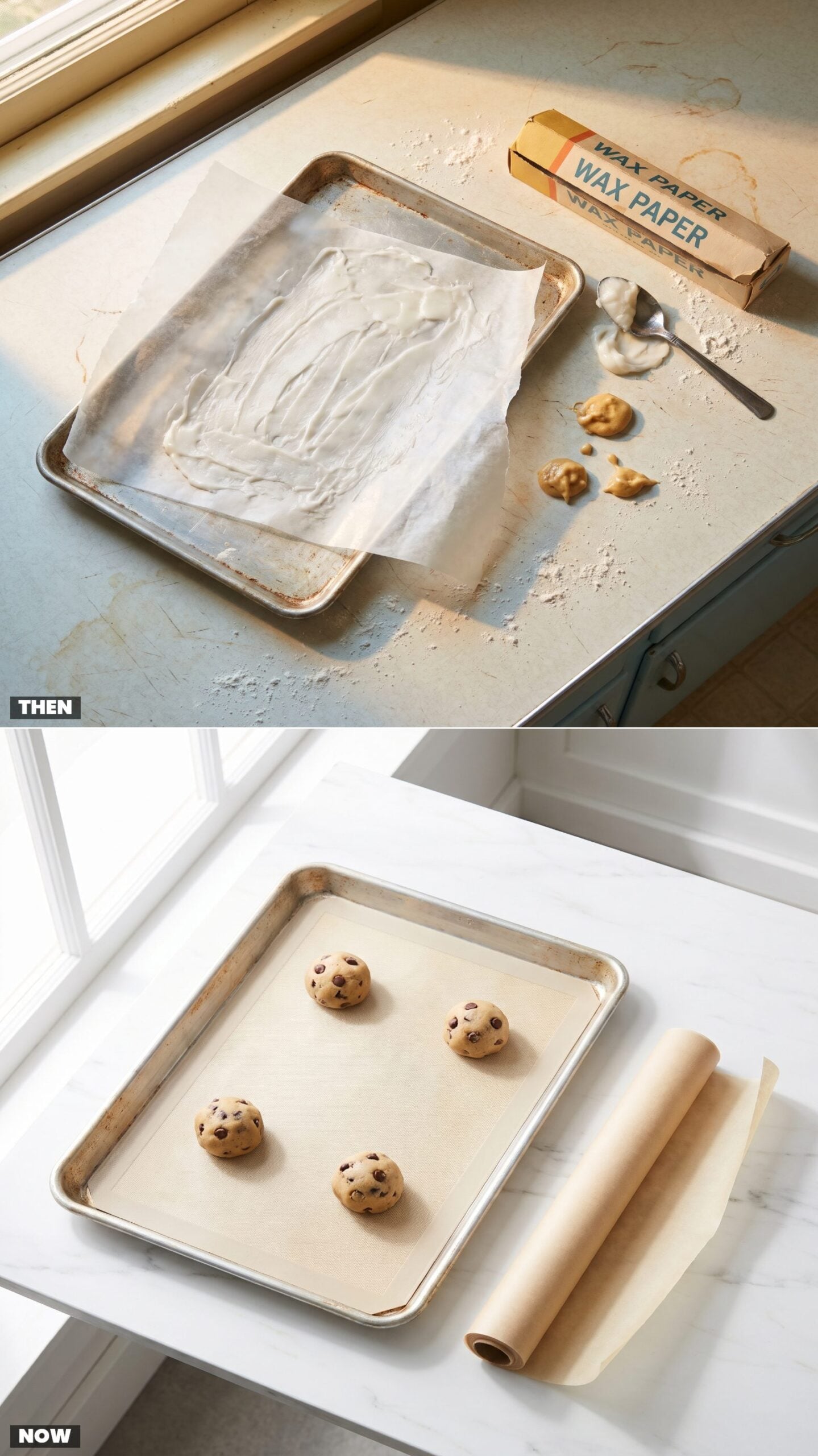
Grease the pan, lay down wax paper, grease that too — and still half the batch welded itself to the tray. The wax paper smoked if the oven ran hot, the bottoms burned, and cleanup was a steel-wool situation.
Parchment and silicone mats fixed all of it. Nothing sticks, nothing scorches underneath, and the mat rinses clean and lasts for years. If you’re still greasing pans with a wad of shortening on a paper towel, we love you, but it’s time.
11. Cookie Cutters: Tin Stars and Bells vs. 3D-Printed Custom Shapes
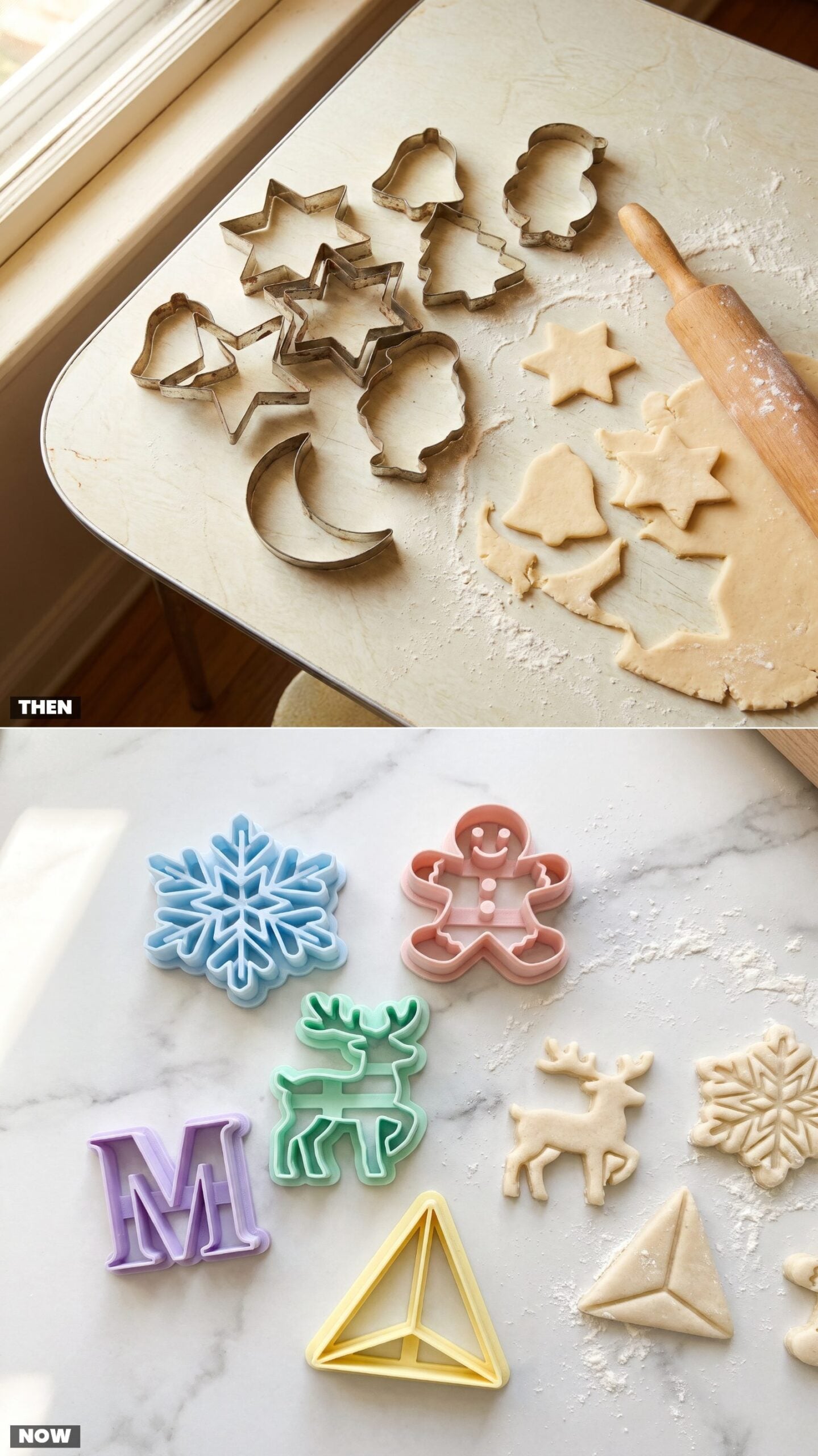
The tin cutters lived in a dented coffee can: a star, a bell, a tree, a Santa so basic he was really just a snowman in a hat. They rusted a little, the edges went soft, and you made the same five shapes every single year. That was the tradition, and nobody wanted it changed.
Now people print a cutter shaped like anything. Their dog. The family initial. A snowflake so finely detailed the dough tears if you breathe on it. Endless choice, which is wonderful — though we’ll admit we miss the limits a little.
10. Rolling Pins: Wooden Dowel vs. Adjustable-Ring Rolling Pin
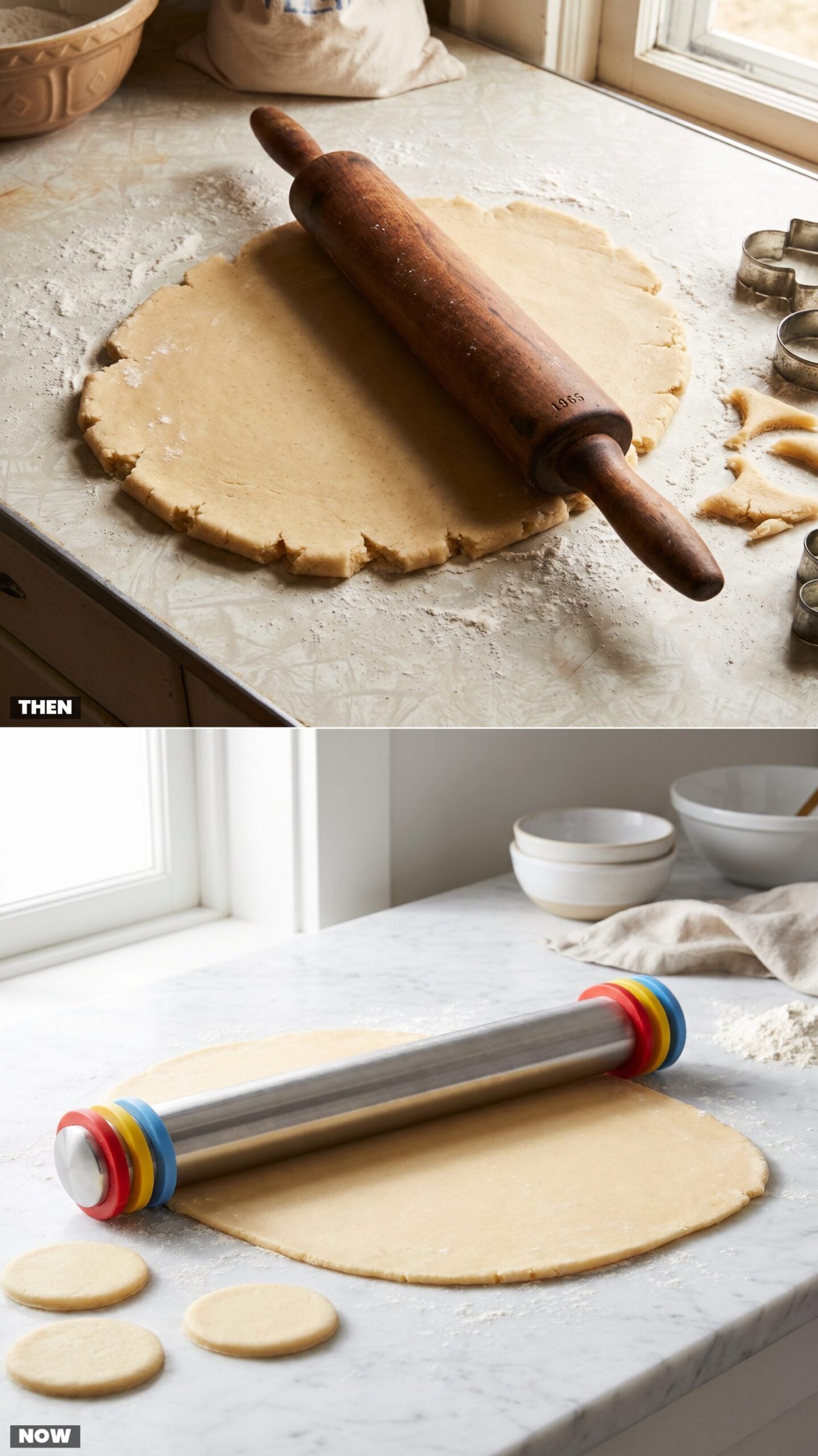
Even thickness was a skill, not a given. The old wooden pin rolled the dough thin in the middle and thick at the edges, so the center cookies burned while the outer ones stayed pale, and you just accepted a range of doneness per batch.
The adjustable-ring pin snaps little discs onto each end so the dough rolls to one exact thickness, edge to edge. Every cookie bakes the same. A small gadget that quietly solves a problem home bakers lived with for a hundred years.
9. Cooling Cookies: Countertop Towels vs. Stackable Wire Racks
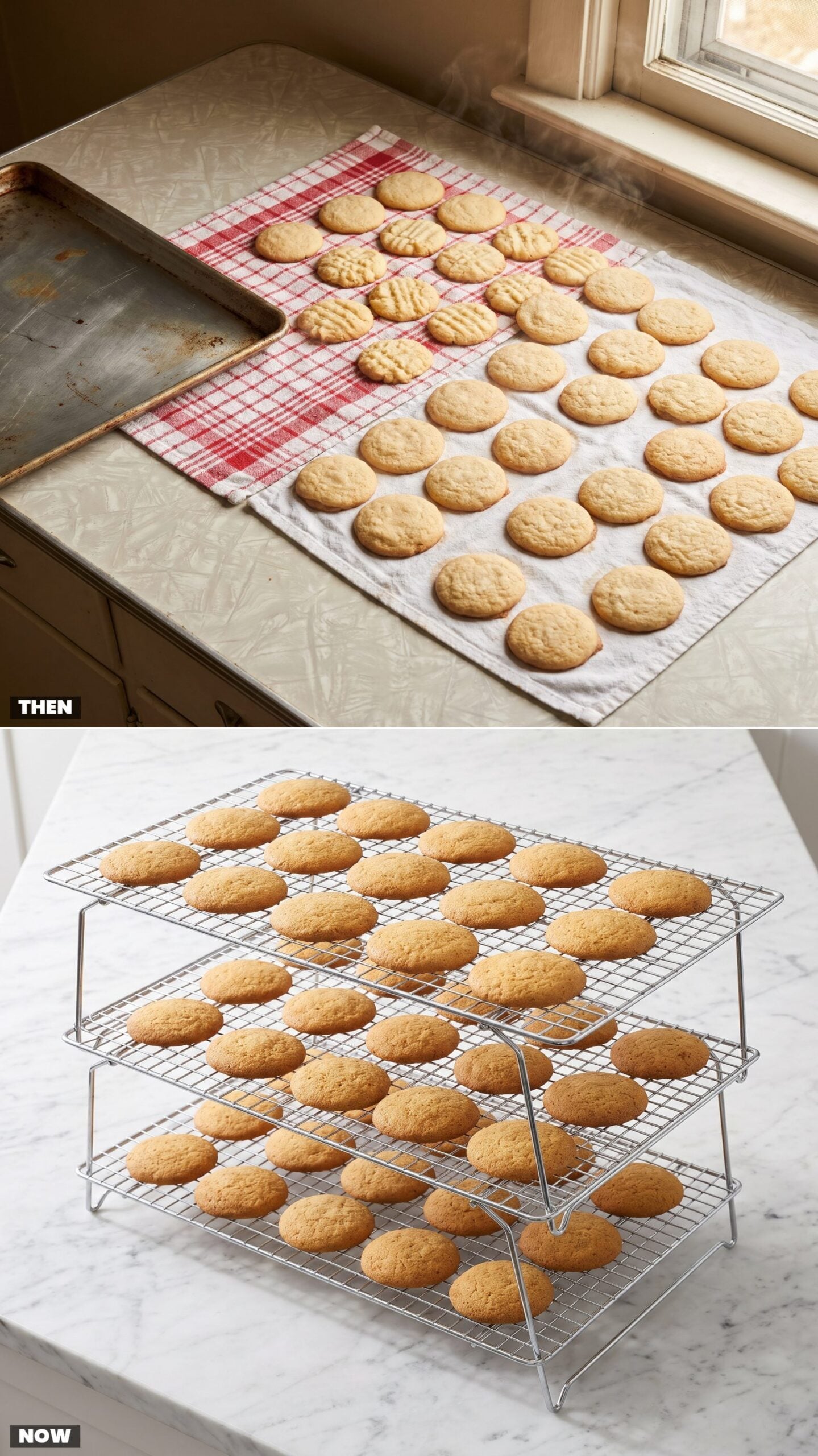
Cookies went straight from the sheet onto a dish towel spread across the counter. The tops cooled fine; the bottoms steamed against the cloth and went a little damp. It worked, and nobody complained, because nobody knew any different.
Stackable wire racks fixed it by moving air under every cookie, and the three-tier kind cools a huge holiday batch in one tidy tower instead of taking over the whole kitchen. Crisper bottoms, more counter, and fewer cookies swiped while they sat out in the open.
8. Decorating Tools: Paper Cones vs. Multi-Tip Piping Sets
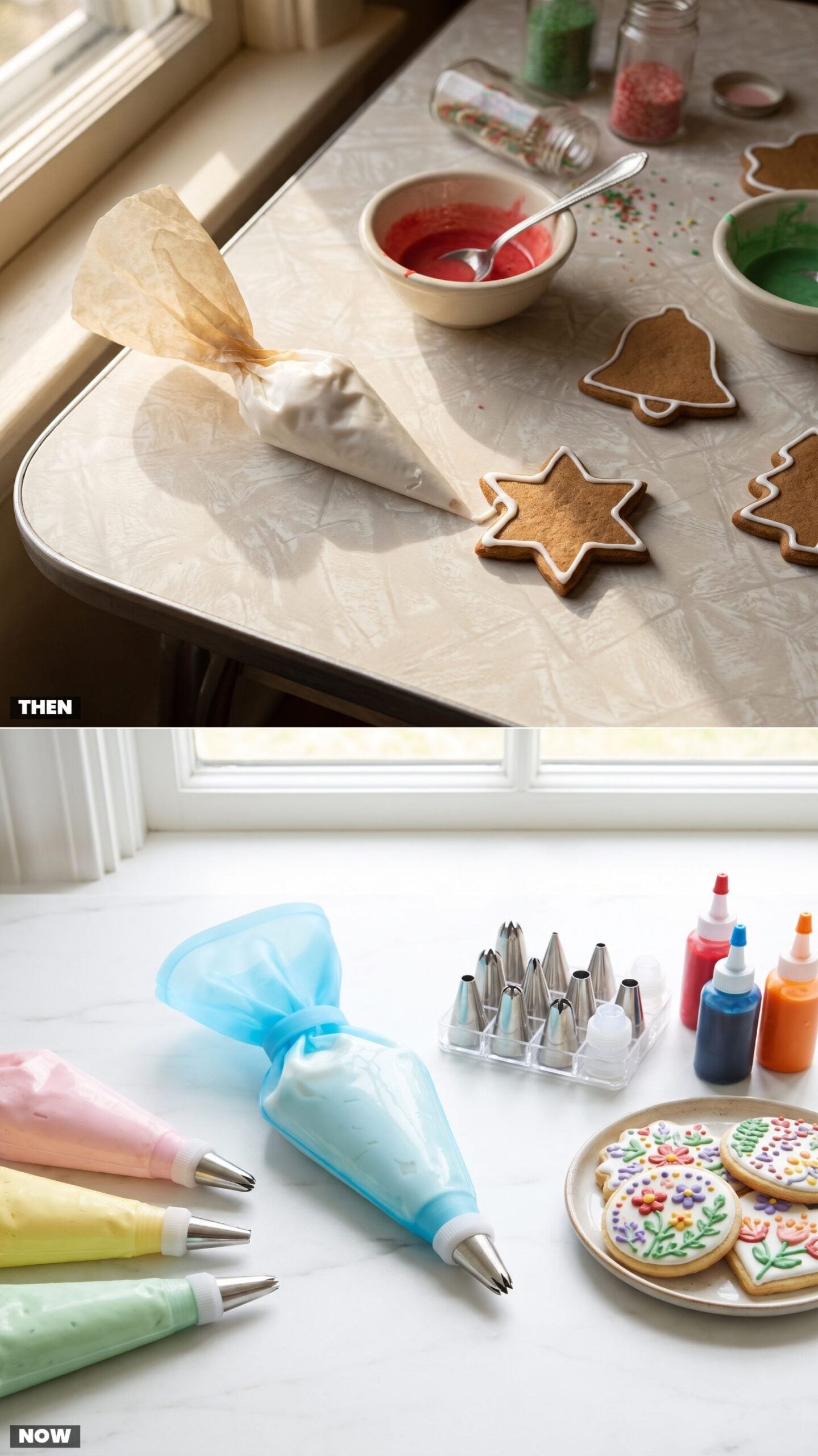
You rolled your own cone out of parchment, filled it with icing, snipped the tip with scissors, and prayed for a steady hand. One size of line, one shot at it, and if you cut the tip too big you started over. The decorating came out honest and a little wobbly.
Now there’s a tip for everything — fine lines, fat rosettes, leaves, stars, basketweave. Reusable bags, couplers to swap tips mid-cookie, squeeze bottles for flooding. The results look like a storefront window. The soul of it, though, still comes down to whether your hand shakes when it matters.
7. Food Coloring: Red-and-Green Liquid Drops vs. Concentrated Gel Palettes
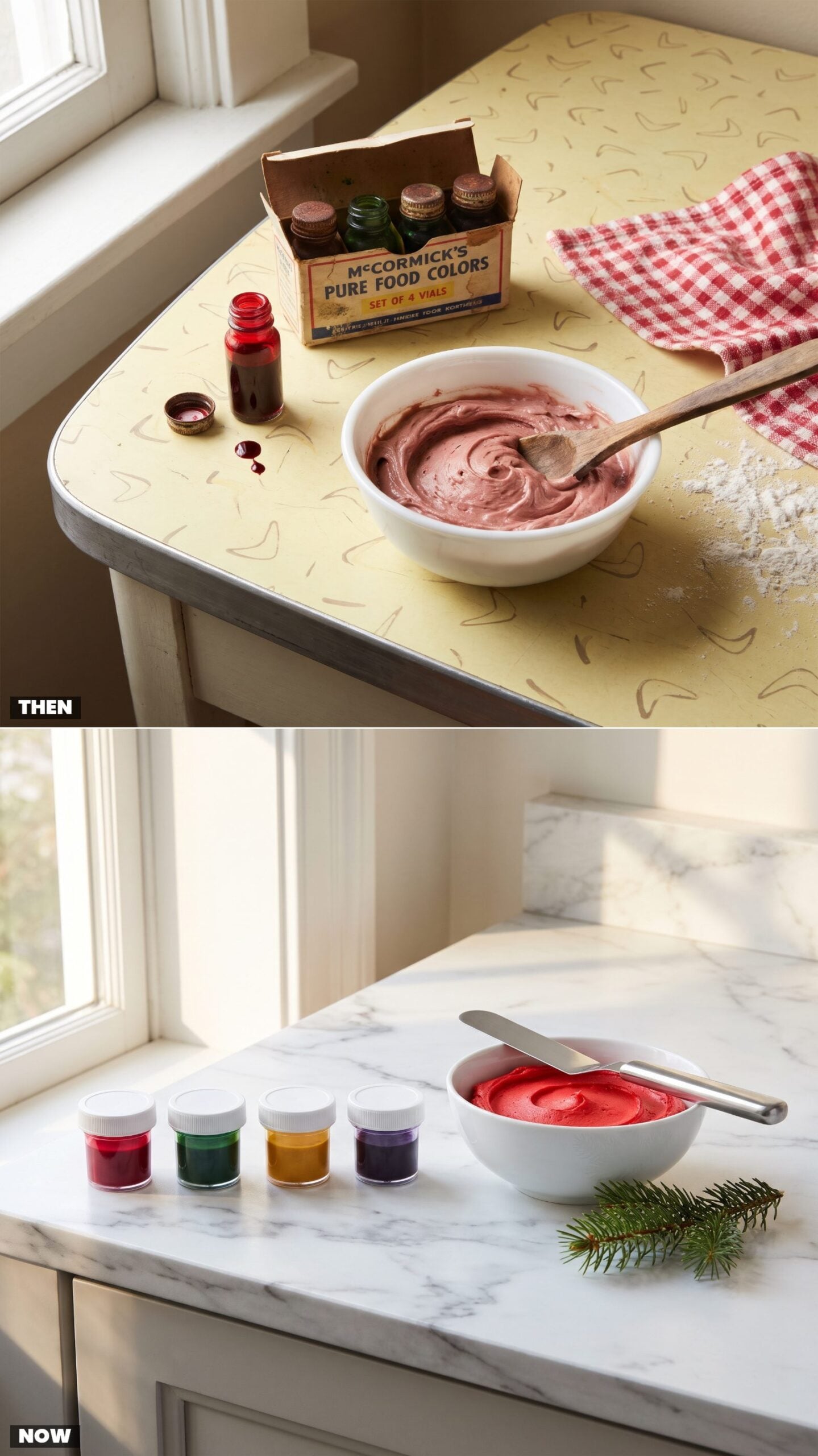
Two drops of that thin red liquid and you still had pink. Three and you had pink with a chemical afterbite. The 1965 baker worked with what the grocery sold — four little glass coloring bottles in a cardboard sleeve, and the color you got was the color you were given.
Now a pinhead of gel does what a teaspoon of liquid never could. The buttercream stays stiff, the red reads true red, and nobody’s frosting breaks down into soup.
6. Candied Fruit: Neon Fruitcake Mix vs. House-Candied Citrus Peel
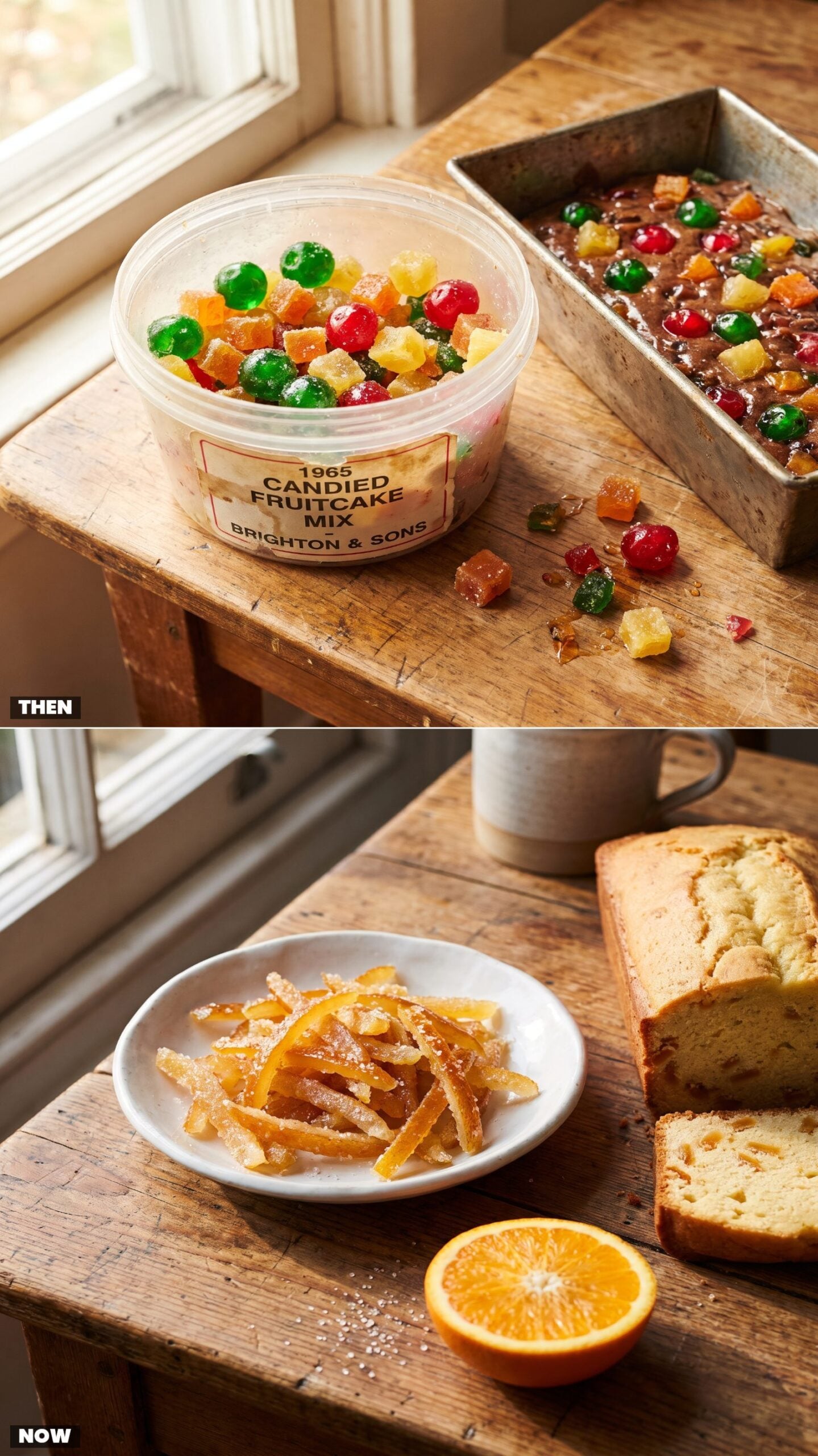
You knew the green cherries were a lie and you ate them anyway. That tub of fruitcake mix glowed like a traffic light, and for decades it was simply what went into the holiday loaf nobody fully finished.
The modern version tastes like actual citrus because it is actual citrus — peel simmered in syrup until it goes glassy and amber. More work, obviously. But the fruitcake stopped being a punchline somewhere along the way, and the peel is a big reason why.
5. Pie Crust: Pastry-Blender Dough vs. Food-Processor All-Butter Crust
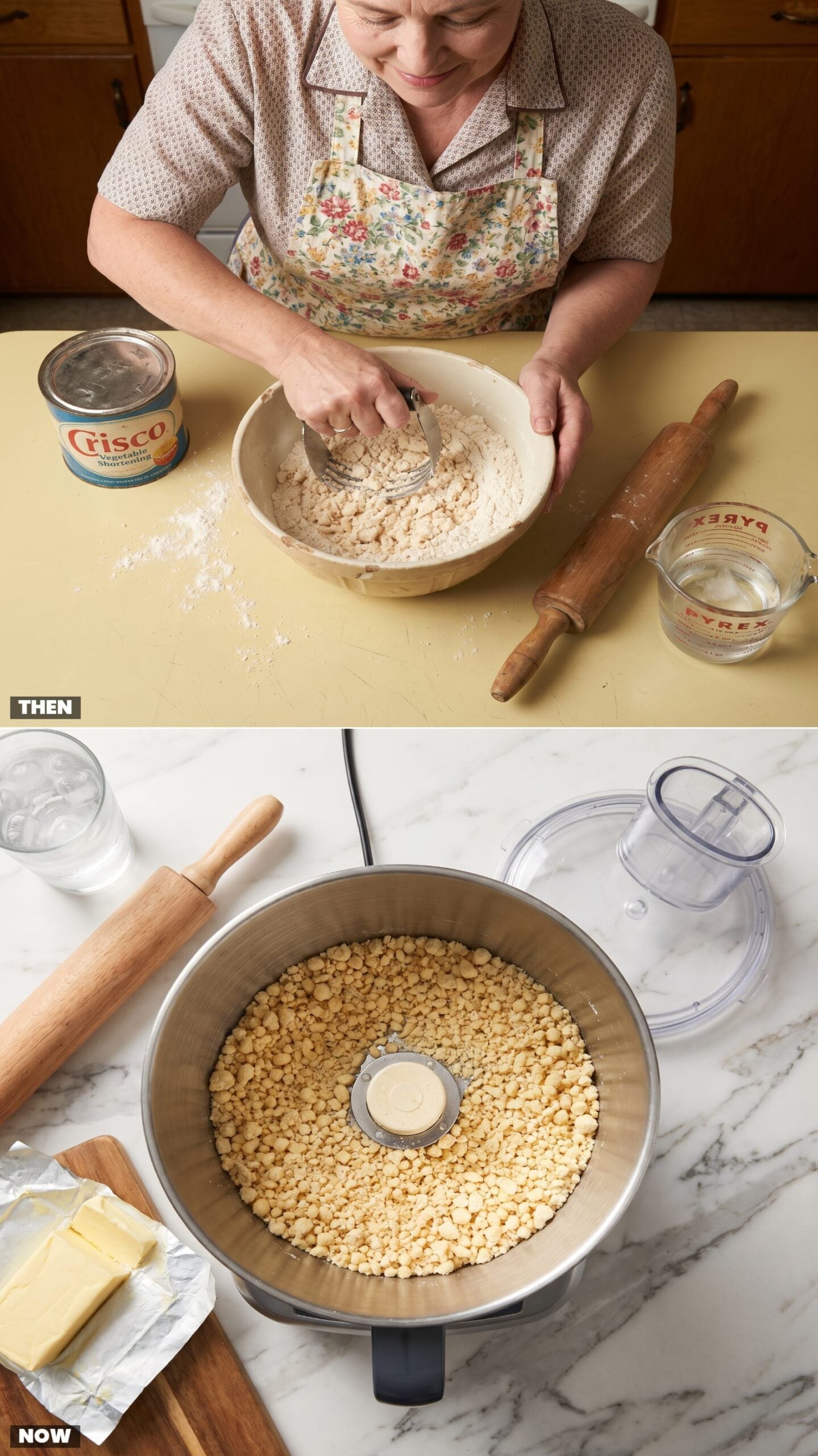
The pastry blender was a tool you earned calluses with. You cut shortening into flour by hand, feeling for the moment the crumbs looked right, usually with the radio on and a window fogged from the oven.
The food processor does it in eight pulses. All butter now, no mystery shortening, and the dough comes together before your hands ever warm it up — which is honestly how you land a flaky crust.
4. Cookie Storage: Wax-Paper-Lined Tin vs. Airtight Modular Containers
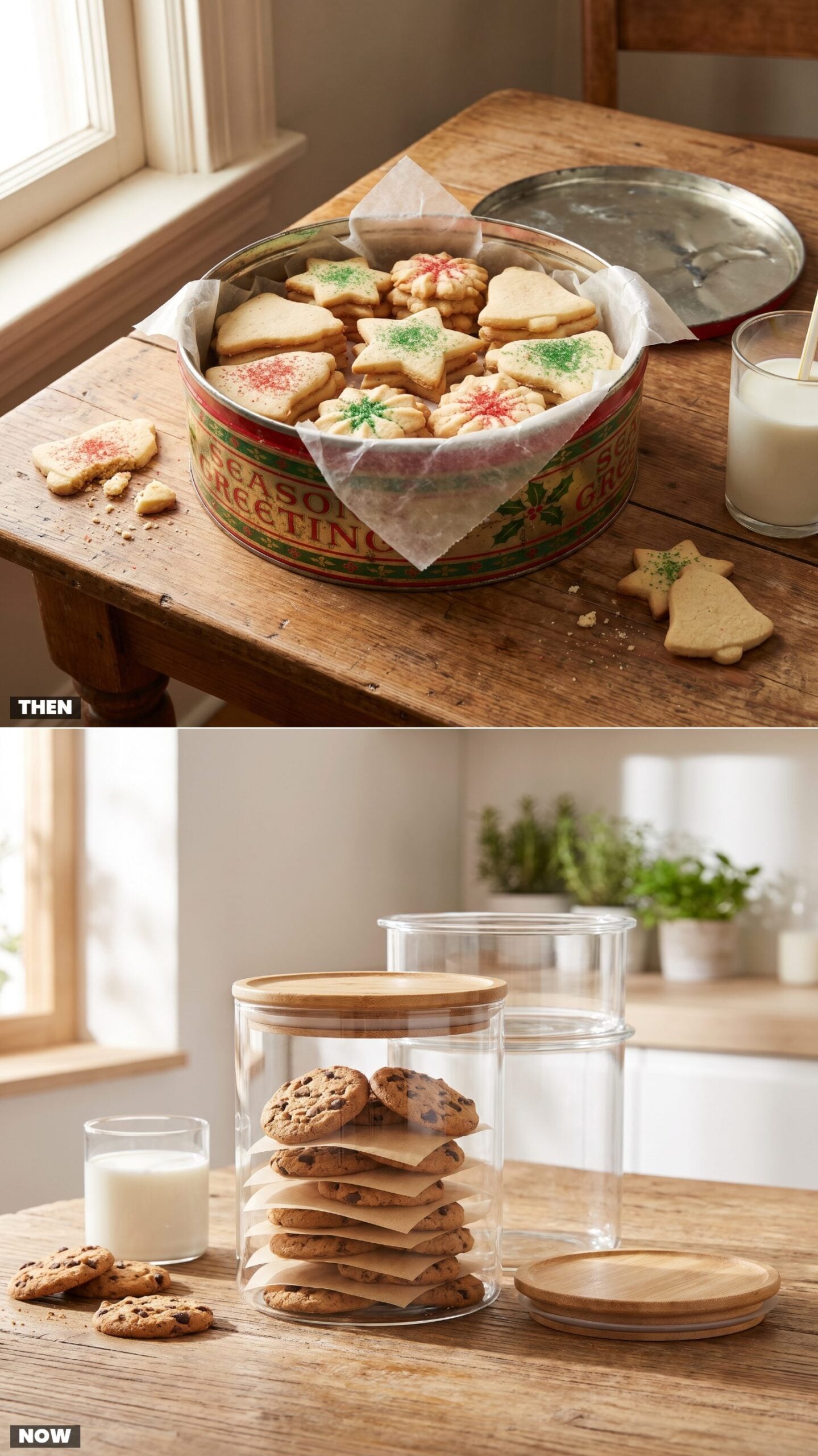
Wax paper between every layer, the lid pressed on with a satisfying little pop. That tin lived on top of the refrigerator, and everyone in the house knew exactly which batch of the week it came from.
Today the cookies go into clear airtight containers that stack and seal and keep a spritz cookie crisp past New Year’s. Practical, sure. But nobody ever got sentimental about a snap-lock lid.
3. Baked-Gift Packaging: Reused Metal Tin vs. Windowed Kraft Gift Box
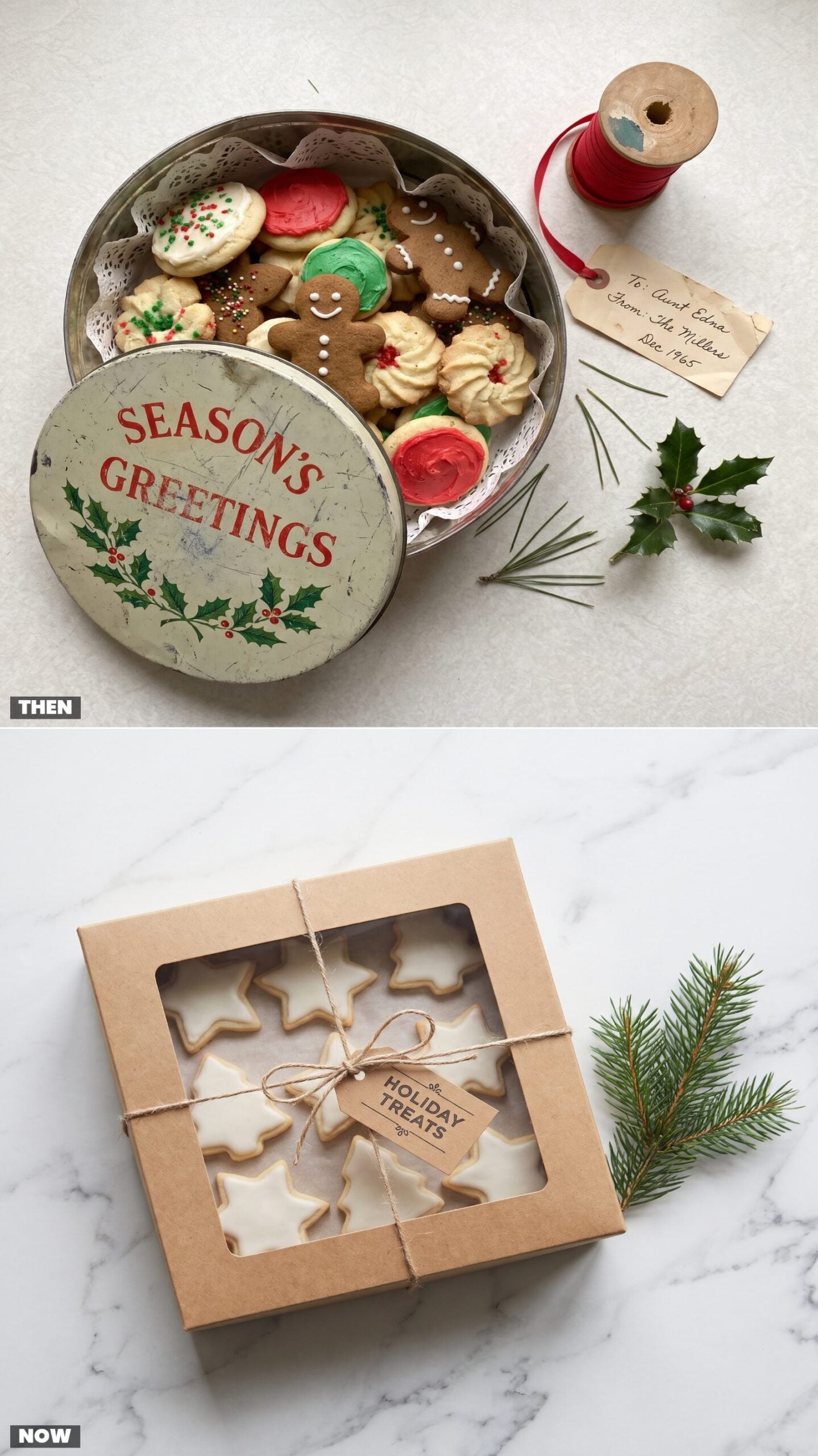
The tin that showed up full of your cookies had held three other families’ cookies first. That was the system. A butter-cookie tin got a doily, a lid, a ribbon, and a second life every December until the hinge finally gave.
Now the gift arrives in a windowed kraft box tied with twine, cookies peeking through a little acetate panel like a shop display. Cleaner, prettier, disposable. The old tin had the better story.
2. Cookie Swaps: Neighborhood Living Room vs. Styled Social-Media Exchange
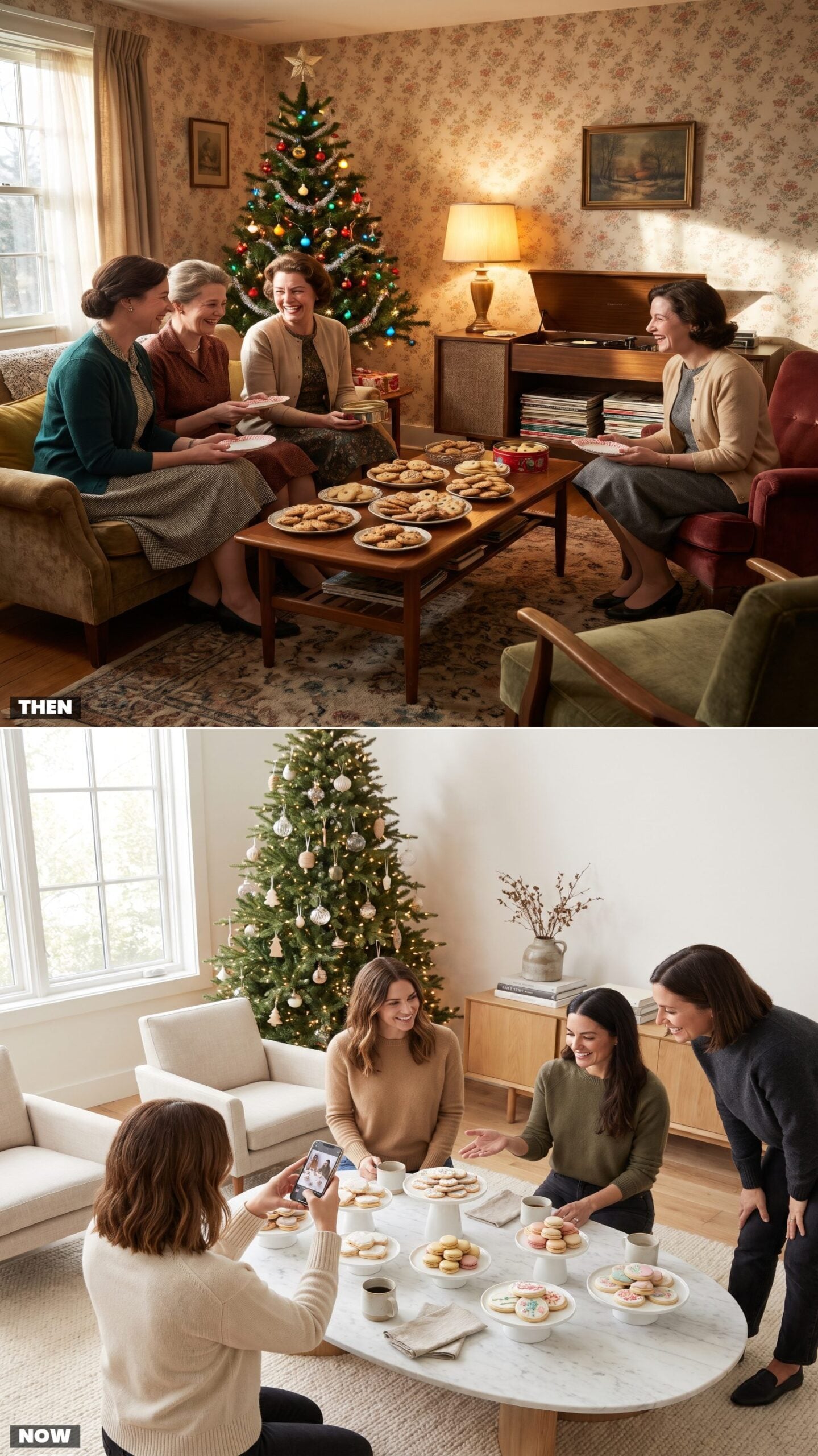
You brought six dozen, you went home with six dozen different ones, and the whole thing happened in somebody’s living room over coffee and a little gossip. The swap was a reason to sit down together before the holiday swallowed everyone whole.
The modern version is lovely and also, if we’re being honest, half-staged for the overhead photo. Matching risers. Coordinated colors. A phone hovering before anyone takes a bite.
1. Children Helping: Standing on a Kitchen Chair vs. Child-Safe Baking Station
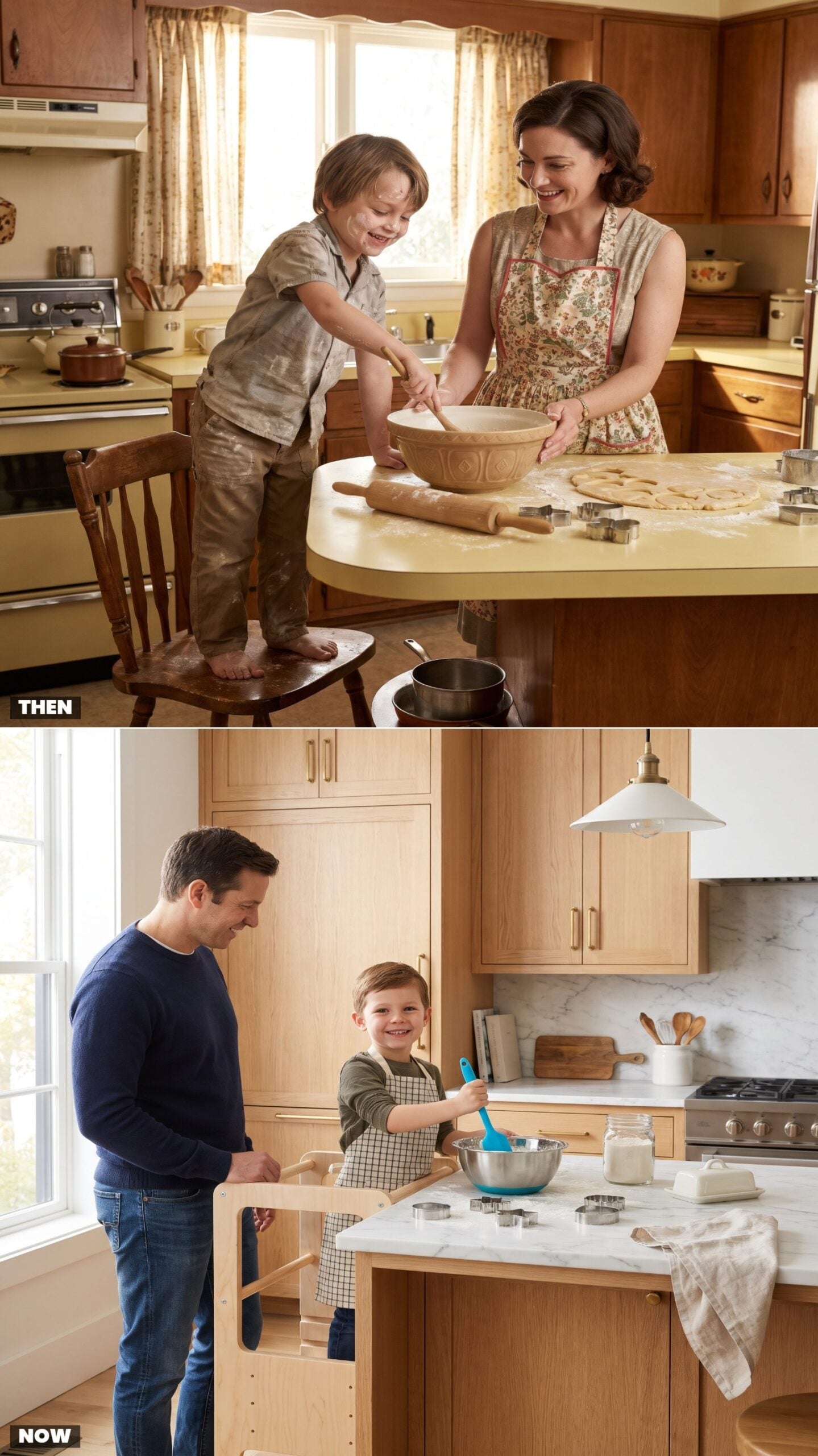
The kitchen chair was the baking stool, the step stool, and the lookout tower all at once. A kid stood on it, wobbled a little, and learned to roll dough while a parent kept one hand near the back just in case.
Now there’s an actual tower built for it — rails, a non-slip base, the works. Safer, no argument. But the chair taught balance along with cookies, and plenty of us turned out fine.