Would you like to save this?
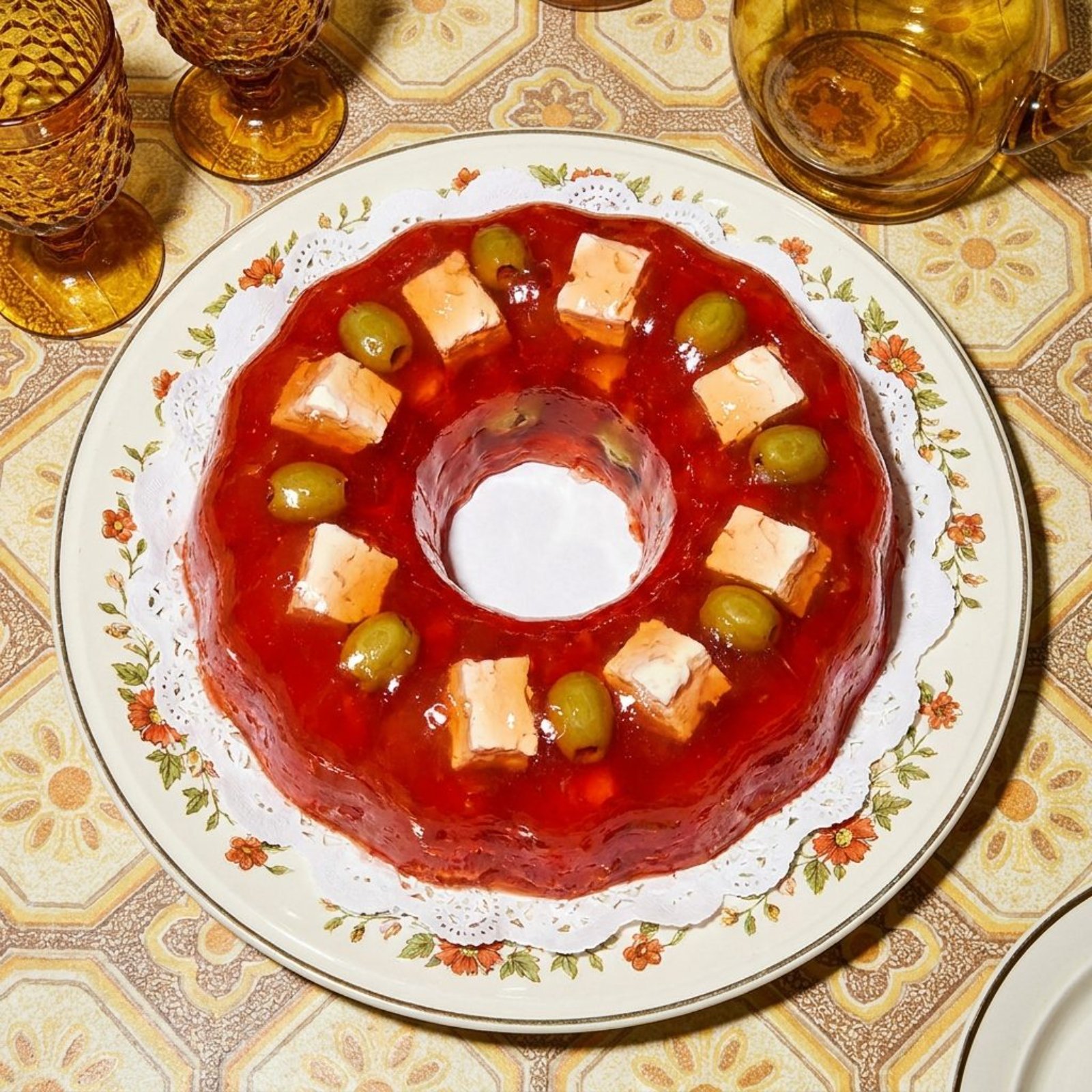
The ring mold came out of the refrigerator with a sound like a held breath releasing. Someone had been up since seven. The table already held the deviled eggs and green bean casserole, but the Jell-O mold was the centerpiece—the thing that said effort, the thing that said occasion.
Please note that some of the images in this article were created with the assistance of AI.
Lime with cream cheese. Orange with grated carrots. Cranberry with walnut pieces suspended in perfect midair. Some were desserts, some insisted they were salads, and a few were savory aspics wearing mayonnaise like formal attire. These are 26 of the molds, congealed salads, and gelatin creations that turned church basements, backyard potlucks, bridge luncheons, and holiday buffets into a full-contact display of culinary ambition. See how many you remember.
26. The Rainbow Ribbon Jell-O That Took Three Days and Absolute Dedication to Pull Off
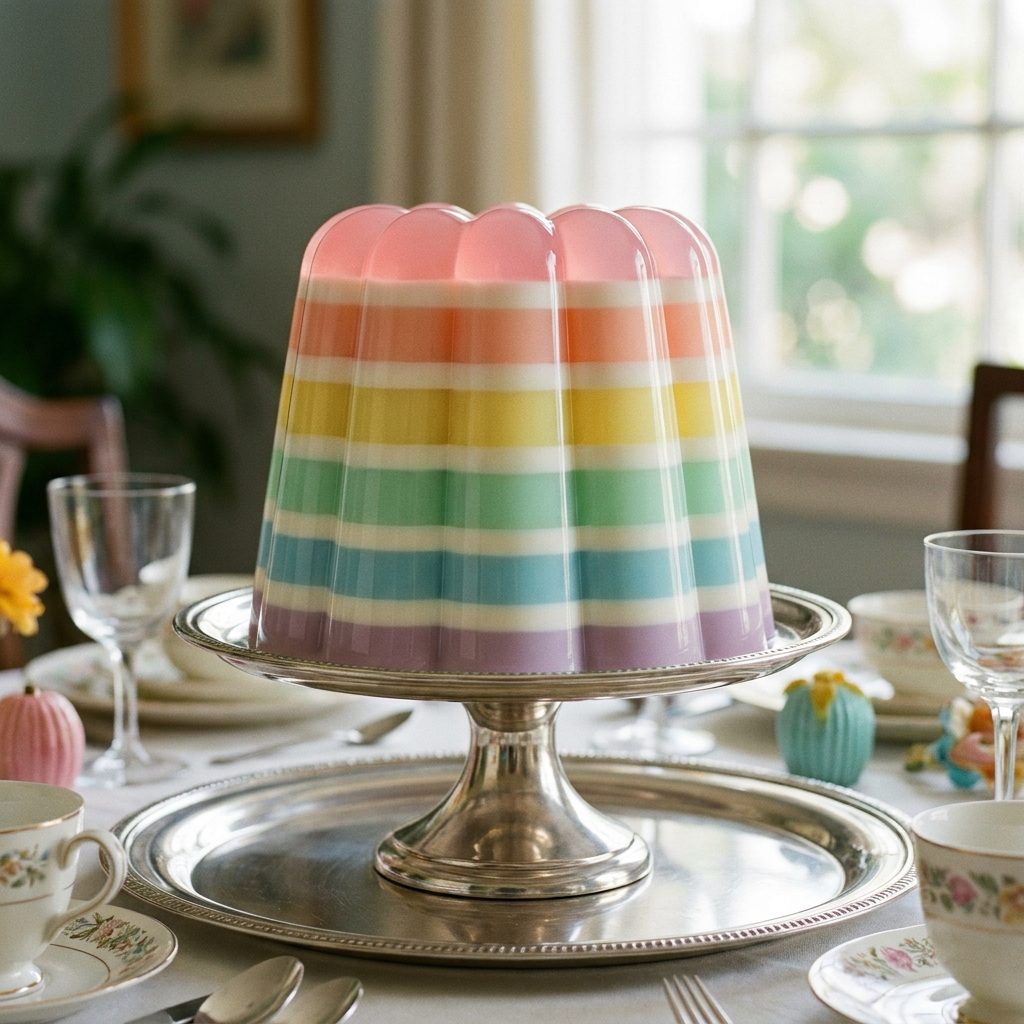
This was the Jell-O mold that announced itself. Six colors, with a pale cream layer separating each one. The recipe card promised two or three days of patient refrigeration, one layer firming before the next went in, and every woman who made it knew that estimate was optimistic.
You started on Wednesday if you needed it Saturday. That was simply understood.
The finished loaf, sliced and fanned across the good platter, looked genuinely architectural. Children stared. Neighbors asked for the recipe. The woman who brought it to the church potluck carried the empty dish home with a satisfaction that had very little to do with modesty.
Six colors of Jell-O, two and a half days of your life, and the best-looking thing on the buffet.
25. The Lime Jell-O Loaded With Carrots, Pineapple, and a Little Too Much Confidence
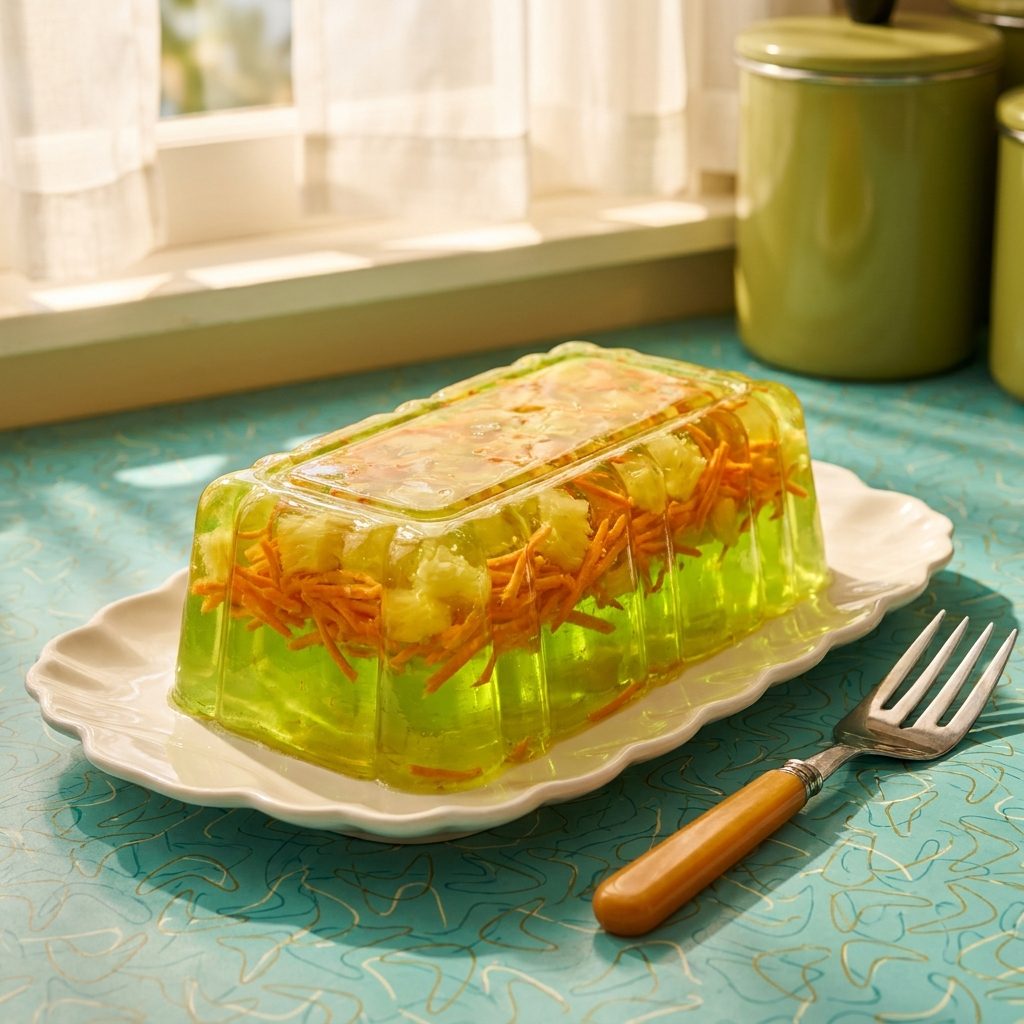
Green Jell-O did not stay dessert for long once the mid-century salad era got moving. Somebody decided it needed vegetables, and once that door opened it never quite shut—shredded carrots, crushed pineapple, cottage cheese, and sometimes a handful of cabbage for crunch.
It landed between the ham and the deviled eggs, and nobody wasted time deciding whether it counted as a salad or a treat. Both. Neither. It wobbled when the platter touched the table, and nearly everyone took a slice out of curiosity.
24. The Under-the-Sea Pear Salad With Lime Jell-O and Cream Cheese
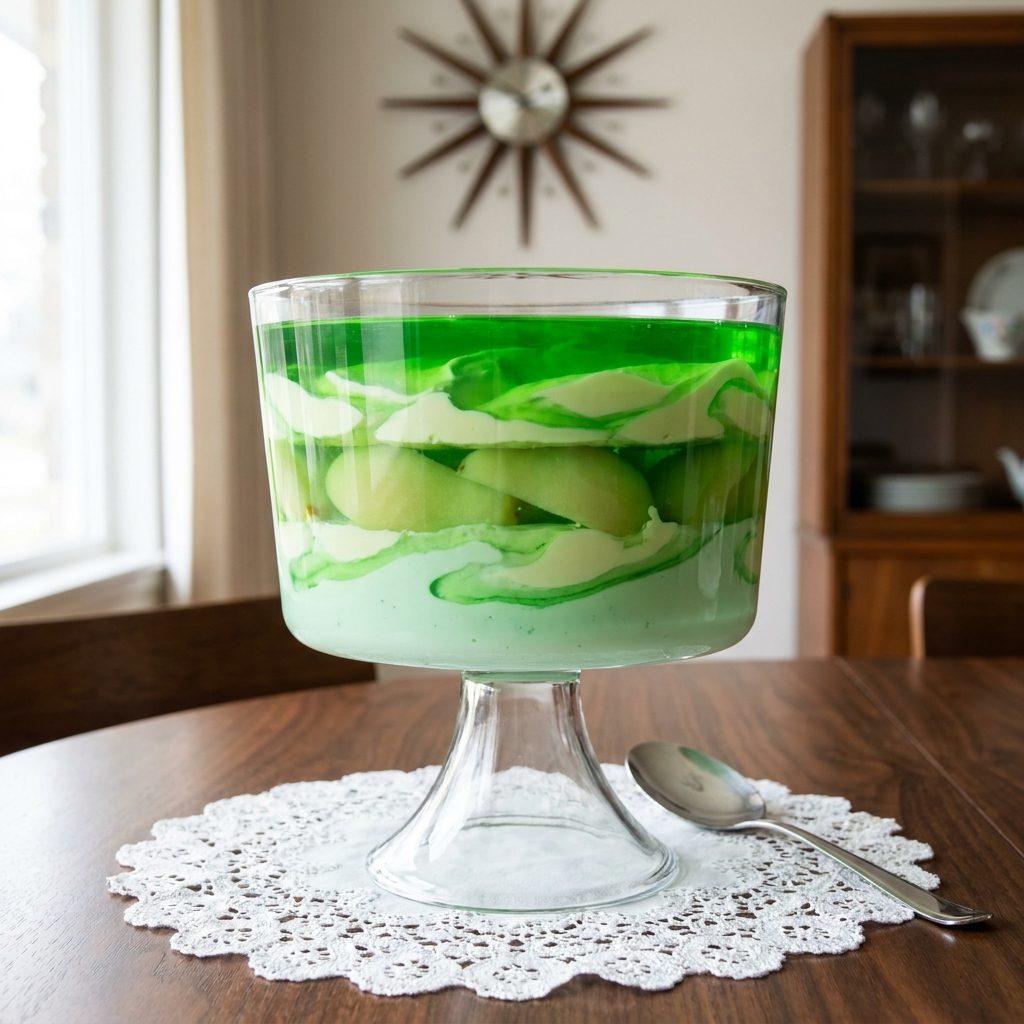
Under-the-Sea Salad was one of Jell-O’s own promoted recipes, printed on boxes and recipe cards, and it demanded more patience than most weeknight dinners could spare. One portion stayed clear and jewel-like; another was blended with cream cheese and pears into a pale, cloudy layer.
The trick was letting the first layer thicken enough to support the second without allowing the two to merge. Rush it and the pears drifted into a sad little pile. Get it right and the finished mold looked like something viewed through green glass. Grandmothers got quietly competitive about this one.
23. The Perfection Salad With Cabbage, Celery, and Pimento
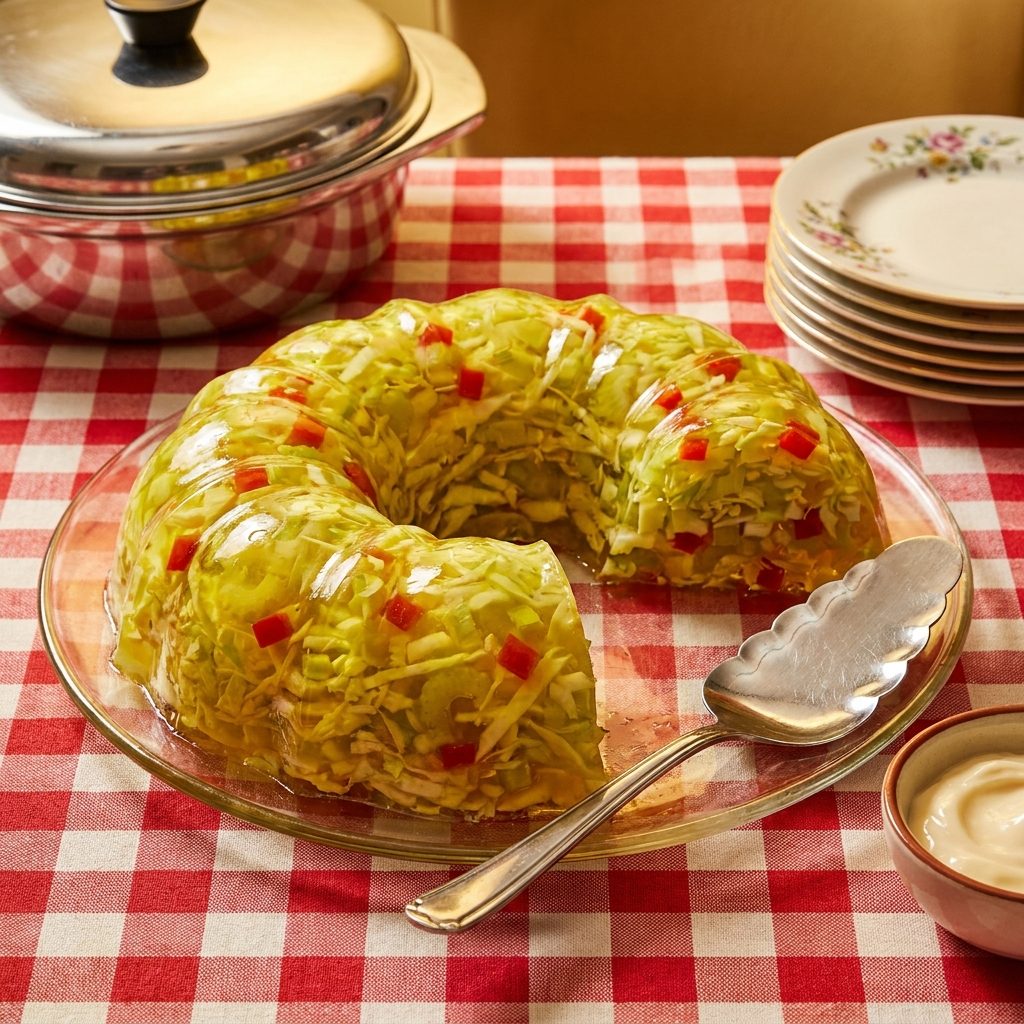
Perfection Salad had been around since the early 1900s, but it fit the 1960s potluck table perfectly—shredded cabbage, chopped celery, and small squares of red pimento suspended in a tart gelatin mixture sharpened with vinegar and lemon.
Thin slices, a spoonful of mayonnaise on top. Half crunch, half wobble. It looked sophisticated in the way anything unmolded onto lettuce once looked sophisticated, and it could make a covered-dish supper feel briefly ceremonial.
22. The Cranberry Jell-O Ring That Only Appeared at Thanksgiving
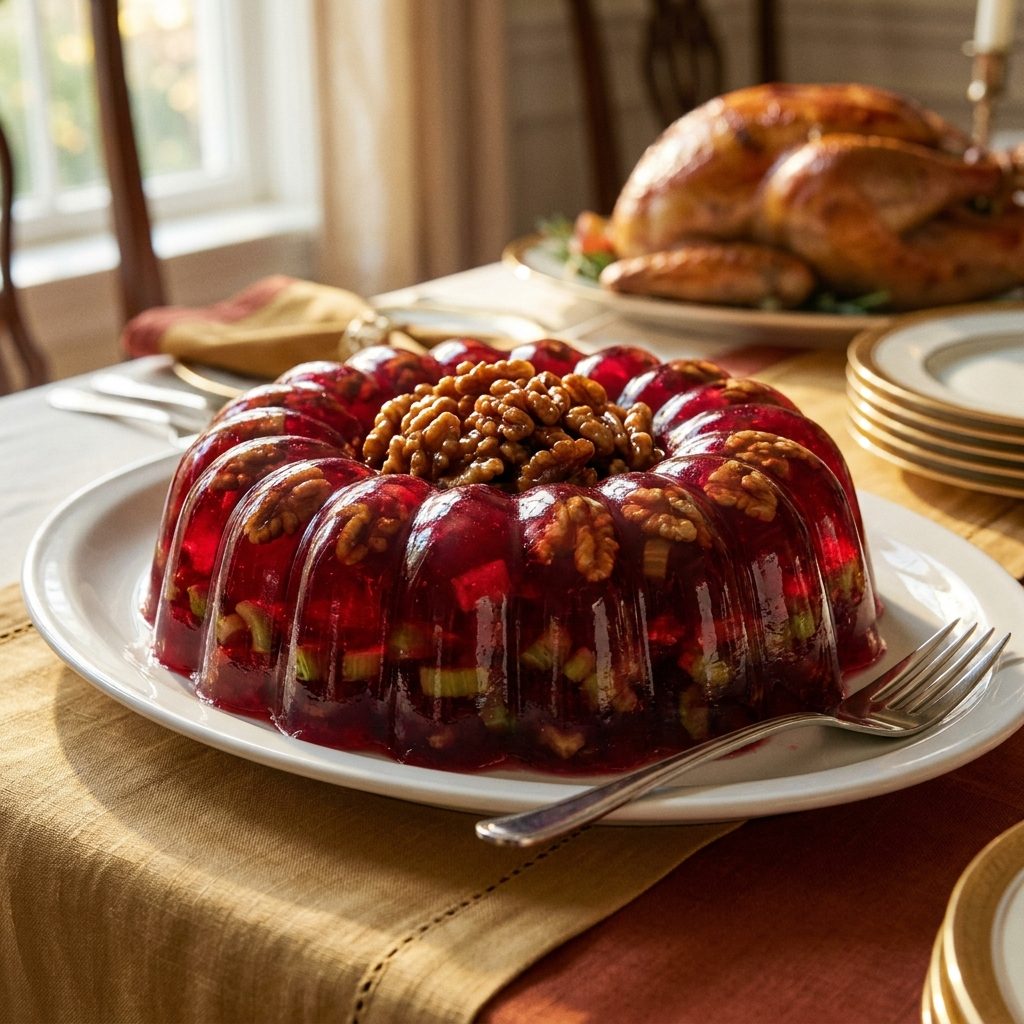
This one earned its spot. Once a year the cranberry ring came out, and it came out in the good mold—the fluted one that lived at the back of the cabinet during the other eleven months.
Whole-berry cranberry sauce, chopped celery, walnuts, and a little orange zest if the cook was feeling fancy, all set into a ring so the center could cradle extra fruit or a mound of cream cheese. Deep red, glossy, and nearly luminous when the light caught the ridges. Everybody wanted one of the deeply fluted outer slices.
21. The 7-Up and Lime Sherbet Congealed Salad That Fizzed Going In
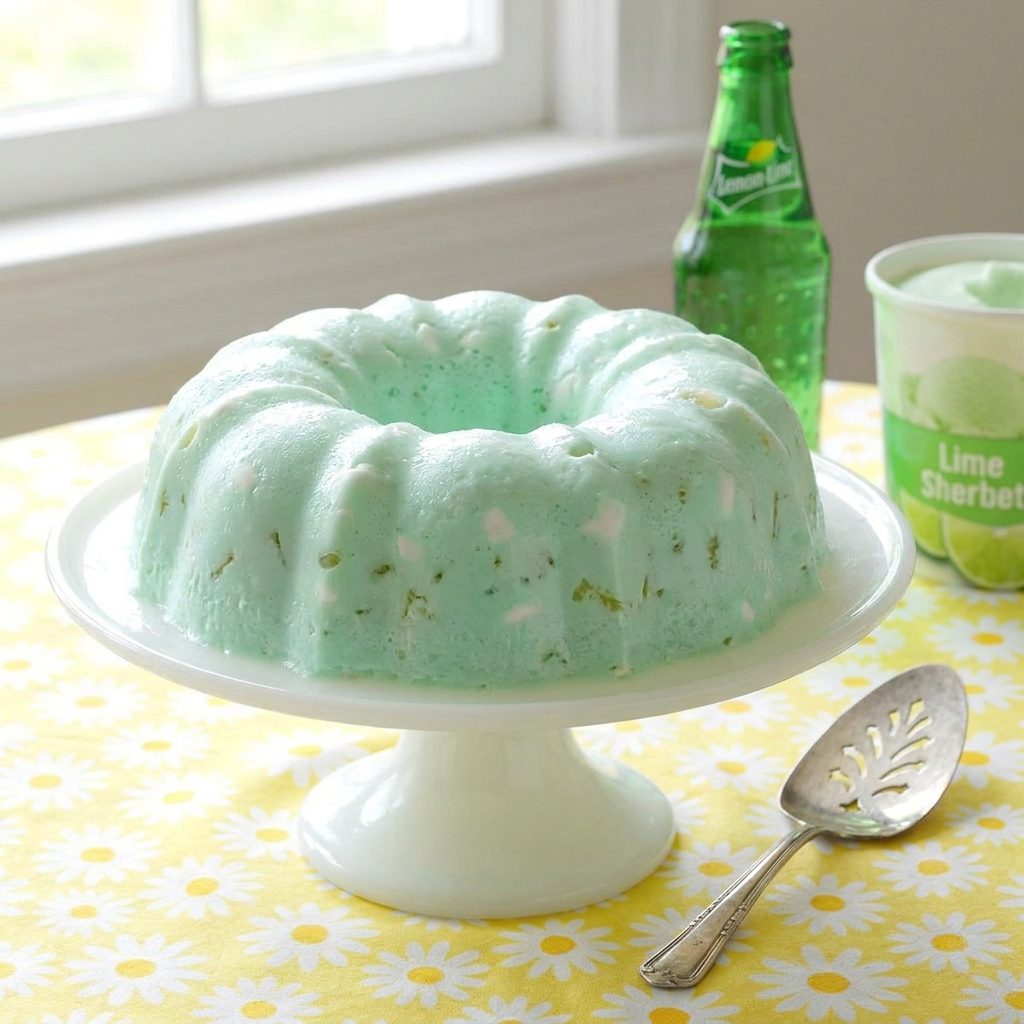
Pouring the 7-Up into the warm gelatin made the whole bowl fizz like a kitchen chemistry experiment. That was the fun part. Lime sherbet melted into the mixture and turned it cloudy, creamy, and softer than an ordinary mold.
Miniature marshmallows drifted upward while crushed pineapple settled lower, leaving the finished dish somewhere between mousse, salad, and dessert. It was cold, sweet, faintly tart, and especially welcome at a summer potluck when everything else on the table seemed to involve mayonnaise.
20. The Coca-Cola Salad With Cherries, Cream Cheese, and Cola
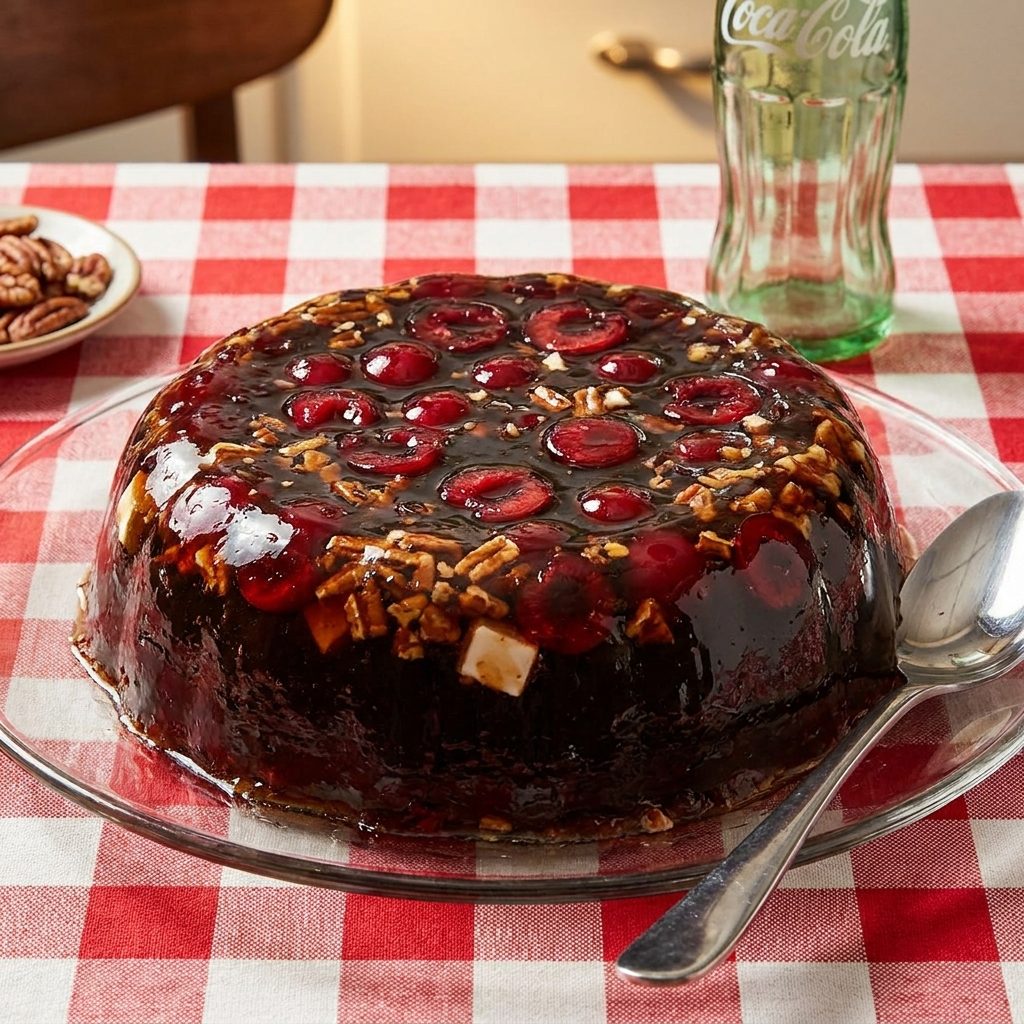
Southern kitchens leaned into this one hard. Cherry Jell-O dissolved into warm cola instead of water, then took on maraschino cherries, chopped pecans, and small pockets of cream cheese. The finished mold came out dark, glossy, and more appealing than brown gelatin had any business being.
The cola gave it a caramel edge that plain cherry gelatin could not manage. It became a familiar sight at Southern church suppers, with plenty of families insisting that their version was the original.
19. The Tuna and Celery Gelatin Salad Nobody Talks About Anymore
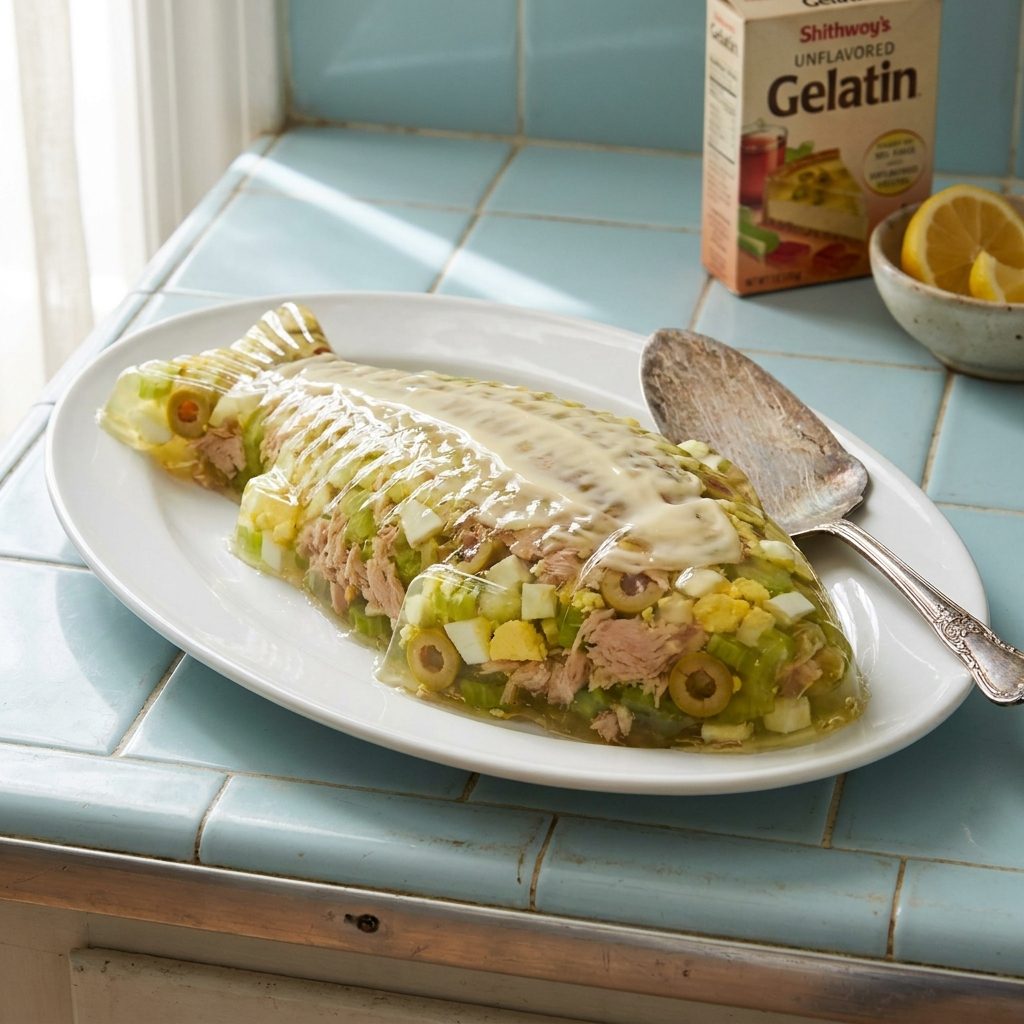
And here it is—the savory mold that fell hardest out of favor. Unflavored gelatin, canned tuna, celery, chopped egg, and olives, all set firm and served in a fish-shaped mold because someone, somewhere, decided the visual joke deserved full commitment.
It appeared at bridge luncheons and ladies’ club buffets, sliced thin and finished with mayonnaise. People genuinely ate it. Some even enjoyed it. There is no polite way to explain the fish mold, but the fish mold was exactly the point.
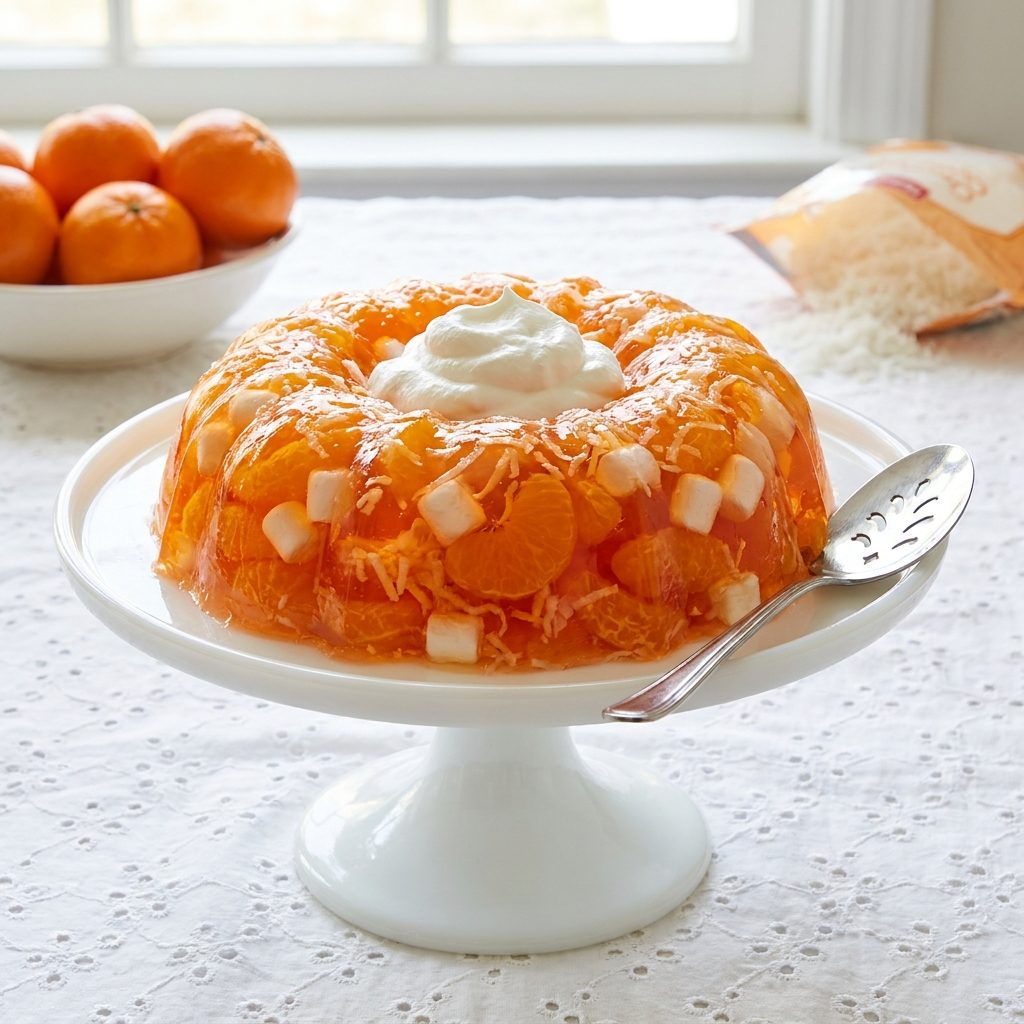
18. The Ambrosia-Inspired Jell-O Ring With Mandarin Oranges and Coconut
Would you like to save this?
This ambrosia-inspired ring folded mandarin oranges, coconut, crushed pineapple, and miniature marshmallows into orange gelatin. It borrowed the familiar ingredients of ambrosia salad, then gave them the full molded treatment.
The result tasted like a Creamsicle that had wandered into a family reunion. Children hunted for the marshmallow-heavy slices. Sweet enough to count as dessert, it still took its place in the salad lineup without anyone finding that especially strange.
17. The Bing Cherry Mold Filled With Port Wine and Toasted Almonds
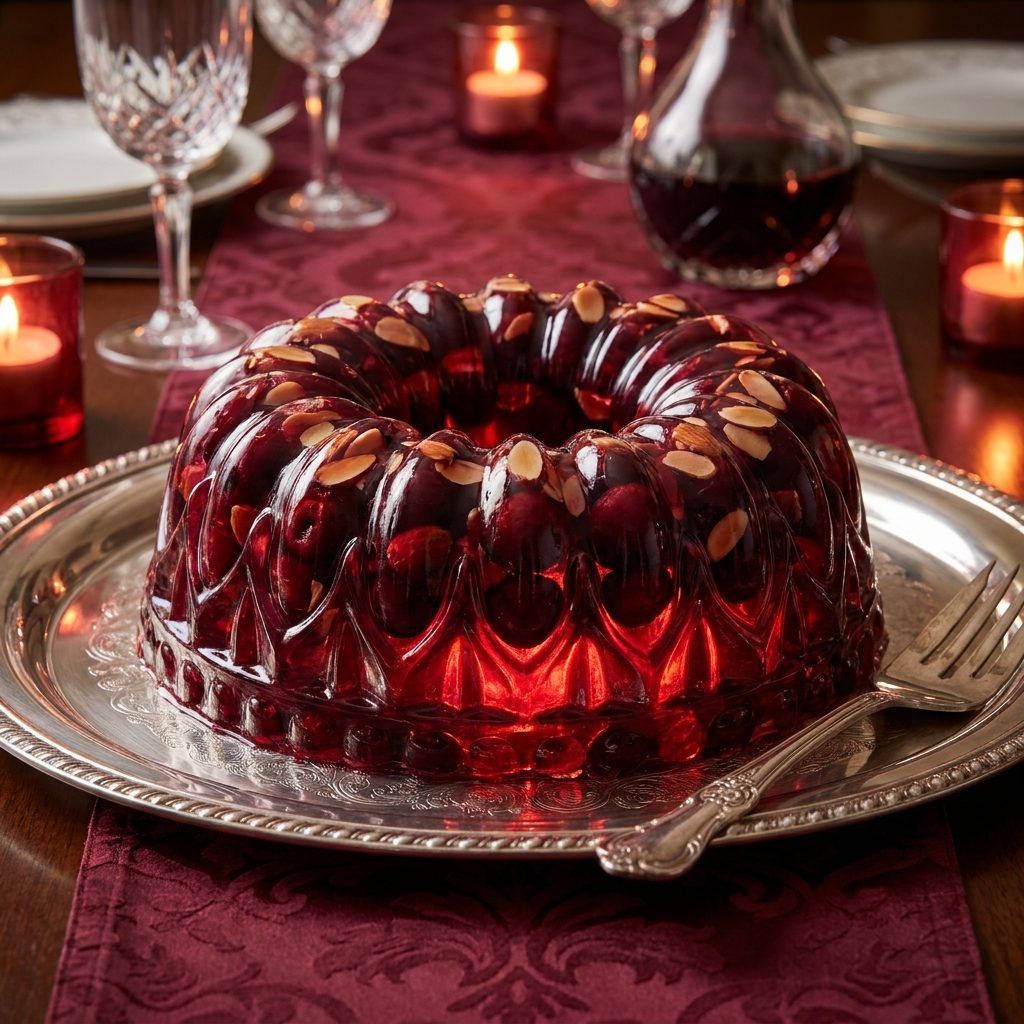
This was the grown-up mold. A splash of port went into the cherry gelatin with dark Bing cherries and toasted slivered almonds, and the finished dish looked like a garnet somebody had liberated from a jewelry box.
Dinner-party hostesses saved it for company. The wine gave it a deeper flavor the children were not invited to analyze—glossy, rich, and just showy enough to justify bringing out the good china.
16. The Broken Glass Cake That Sparkled Like Stained-Glass Cubes
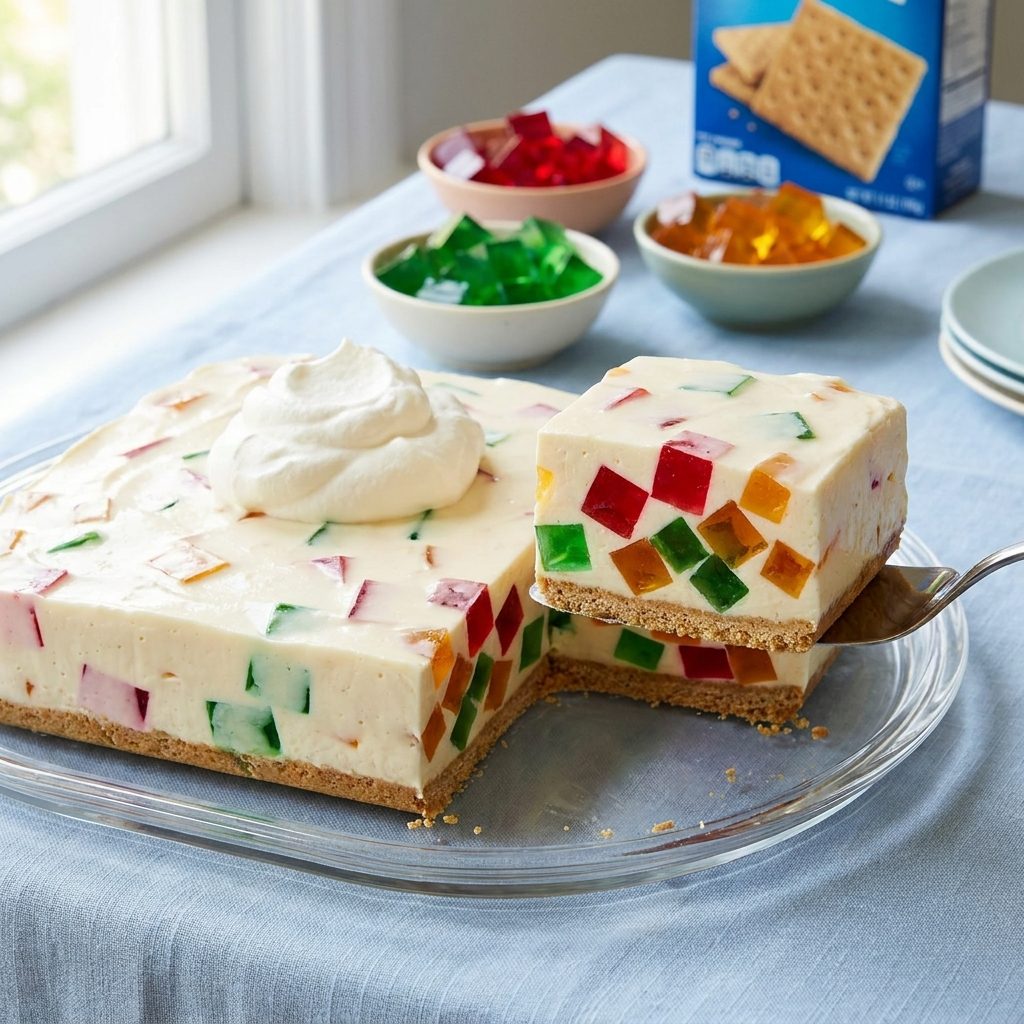
This was one of the table’s true showstoppers—the dessert that made children pause when the light hit it. Three flavors of Jell-O were set separately, cut into cubes, then folded into a whipped cream and gelatin base spread over a graham-cracker crust.
Chilled overnight, it sliced into squares filled with glowing red, green, and amber cubes suspended like fragments of a church window. Did it have a complicated flavor? Not particularly. It did not need one. It was the prettiest thing on the table, and everyone understood the assignment.
15. The Salmon Mousse Ring That Showed Up at Every Bridge Club Luncheon
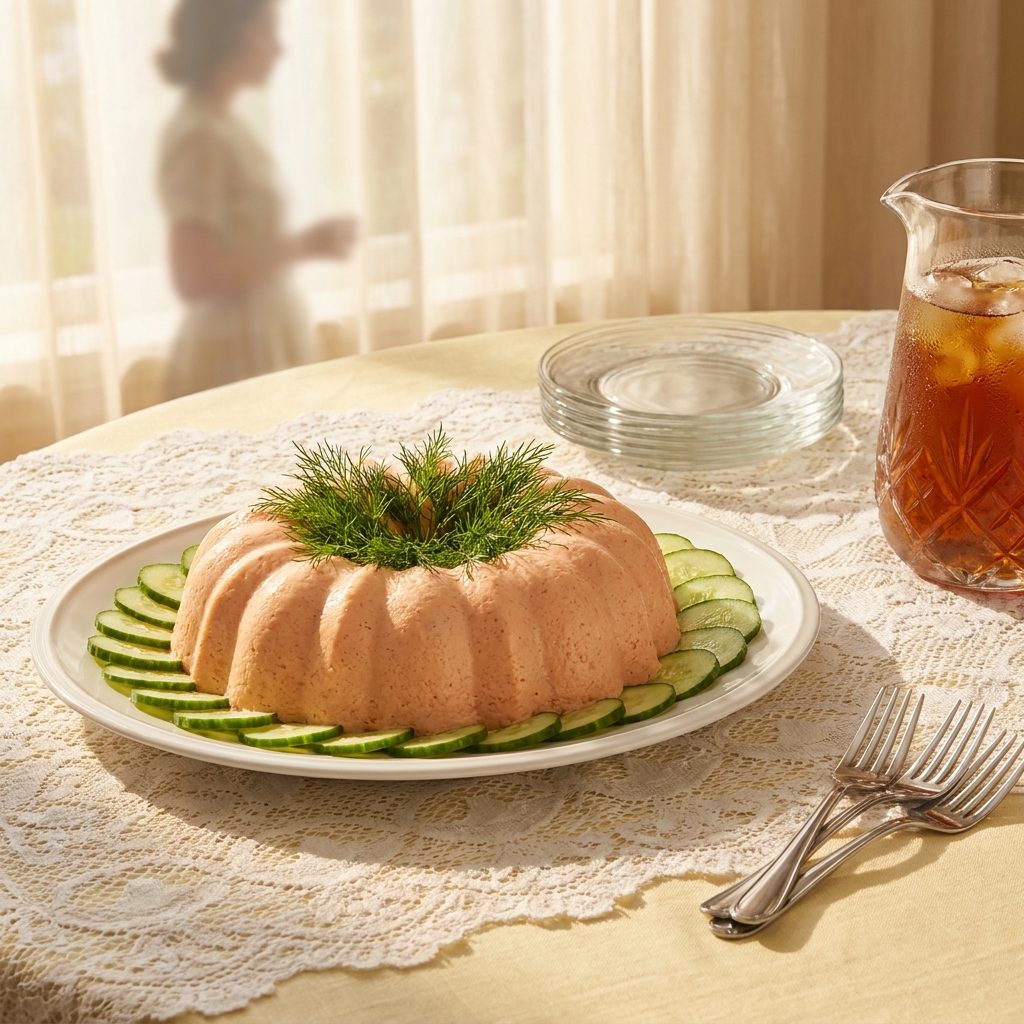
Salmon mousse was the polite one. It did not jiggle so much as quiver, tinted soft coral by canned salmon folded into gelatin, mayonnaise, and lemon. Dill and cucumber often filled the center, as though the mold were dressing for a job interview.
This was luncheon food—the sort that appeared at bridge clubs, church circles, and any gathering involving a lace tablecloth. You spread it on a Ritz cracker and pretended it was fancy. Honestly, it kind of was.
14. The Grape Jell-O and Cottage Cheese Combination That Divided Families
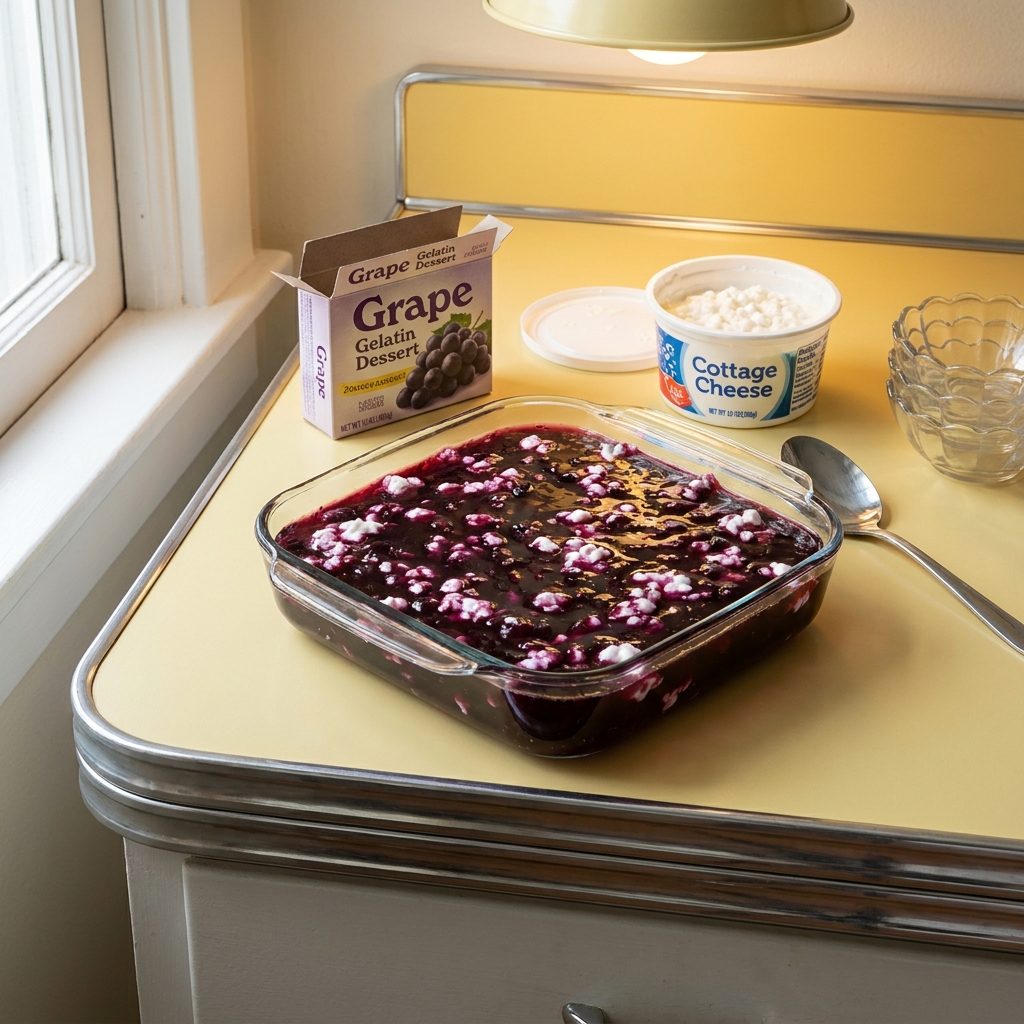
You either grew up eating this or spent years wondering why anybody had. Grape Jell-O folded with cottage cheese delivered several textures at once: cold, sweet, tangy, and unmistakably lumpy.
It was inexpensive and quick to mix, which helped explain its staying power. A working mother could put it together in ten minutes and leave the refrigerator to do the rest. Children investigated the curds. Grandparents ate it without comment.
13. The Tomato Juice Aspic Ring With Cream Cheese and Olives That Split the Table
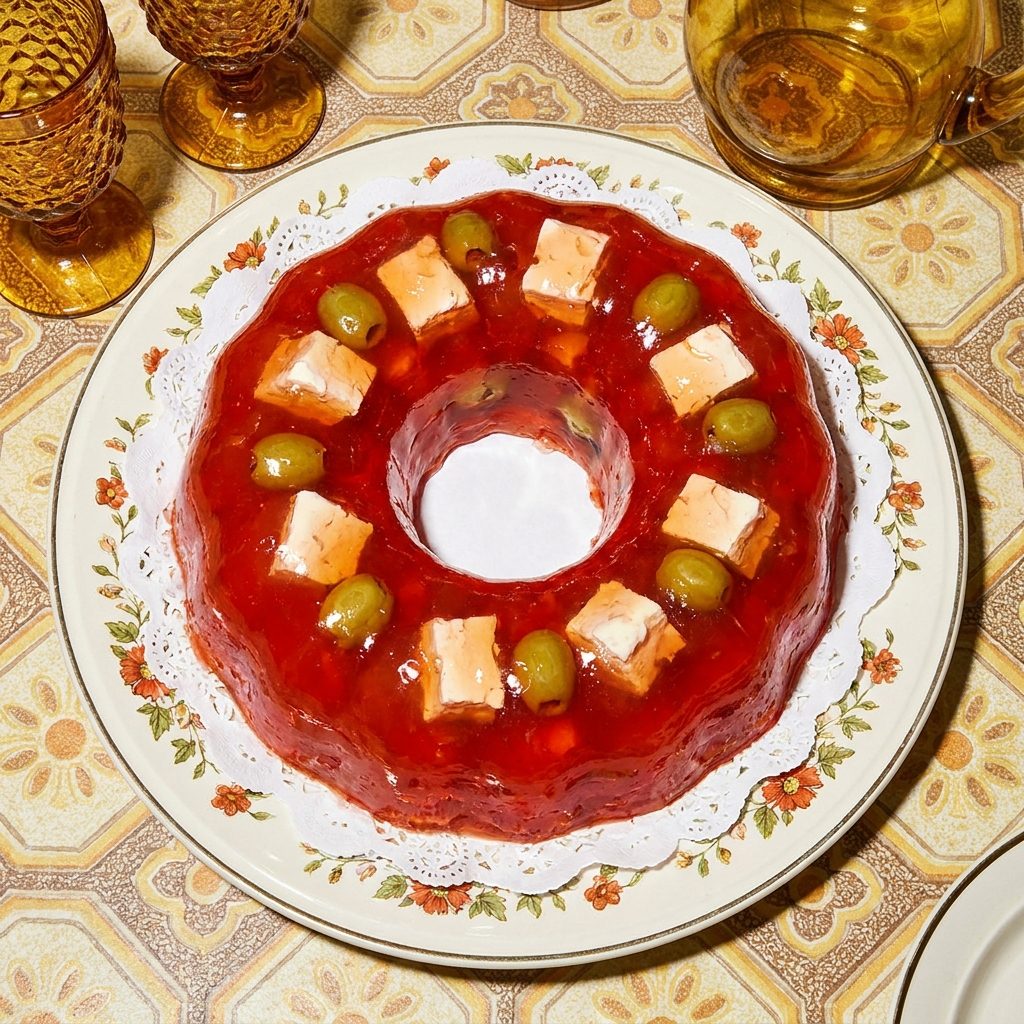
Nobody in the 1960s thought it strange to put tomato juice into gelatin. The savory aspic ring was dependable potluck food, unmolded onto a platter with cream cheese piped into the center and parsley arranged around the base like a tiny formal garden.
The olives suspended inside were the detail that determined your allegiance. Some guests reached for a slice immediately. Others became intensely interested in the rolls at the opposite end of the buffet.
12. The Orange Jell-O and Mandarin Segments Suspended in Sunlight
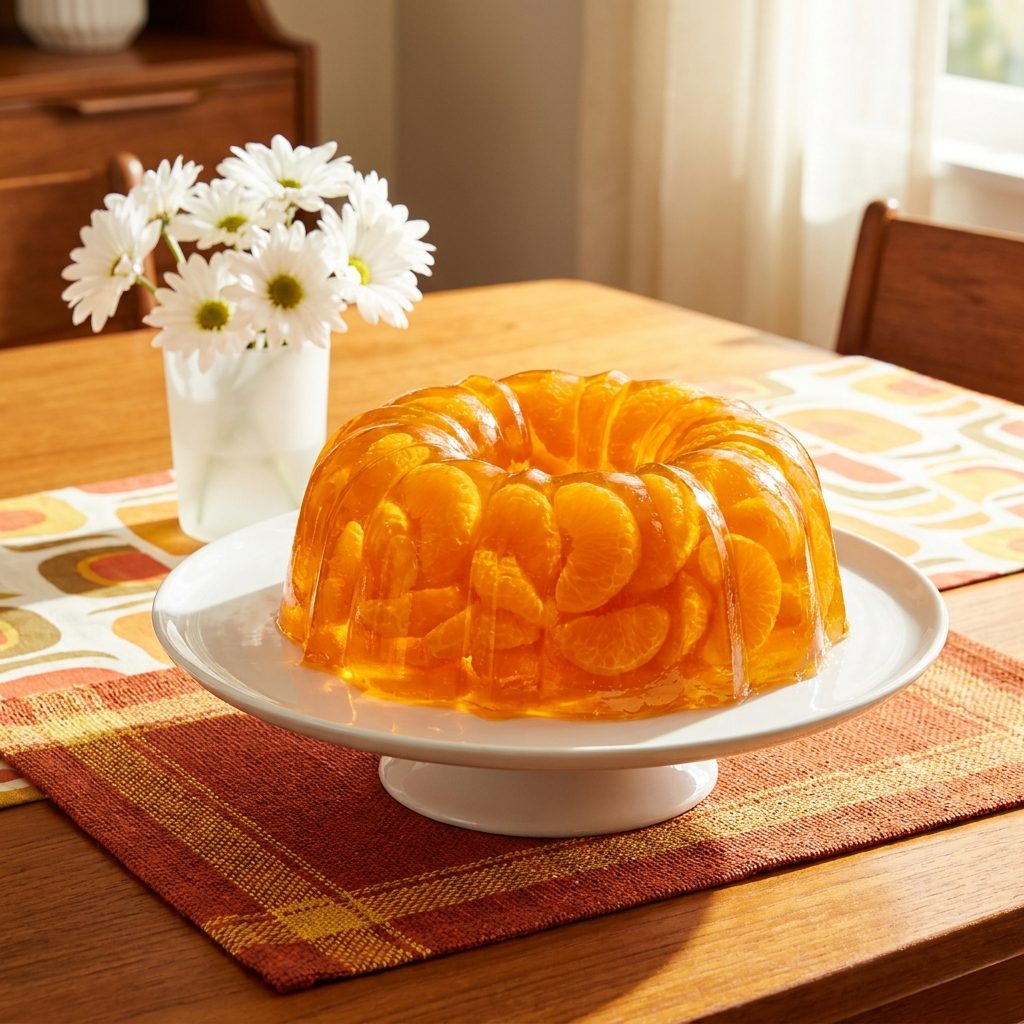
Hold it near a window and it caught the light like a lantern. Orange gelatin with mandarin segments suspended inside was simple, bright, and almost impossible to make unattractive.
The canned oranges were drained, then added once the gelatin had thickened enough to keep them from sinking. Sweet, cold, faintly citrusy, and easy enough for a first-time mold maker, it rarely lasted long once dessert plates appeared.
11. The Tomato and Shrimp Aspic Molded in a Fish Shape
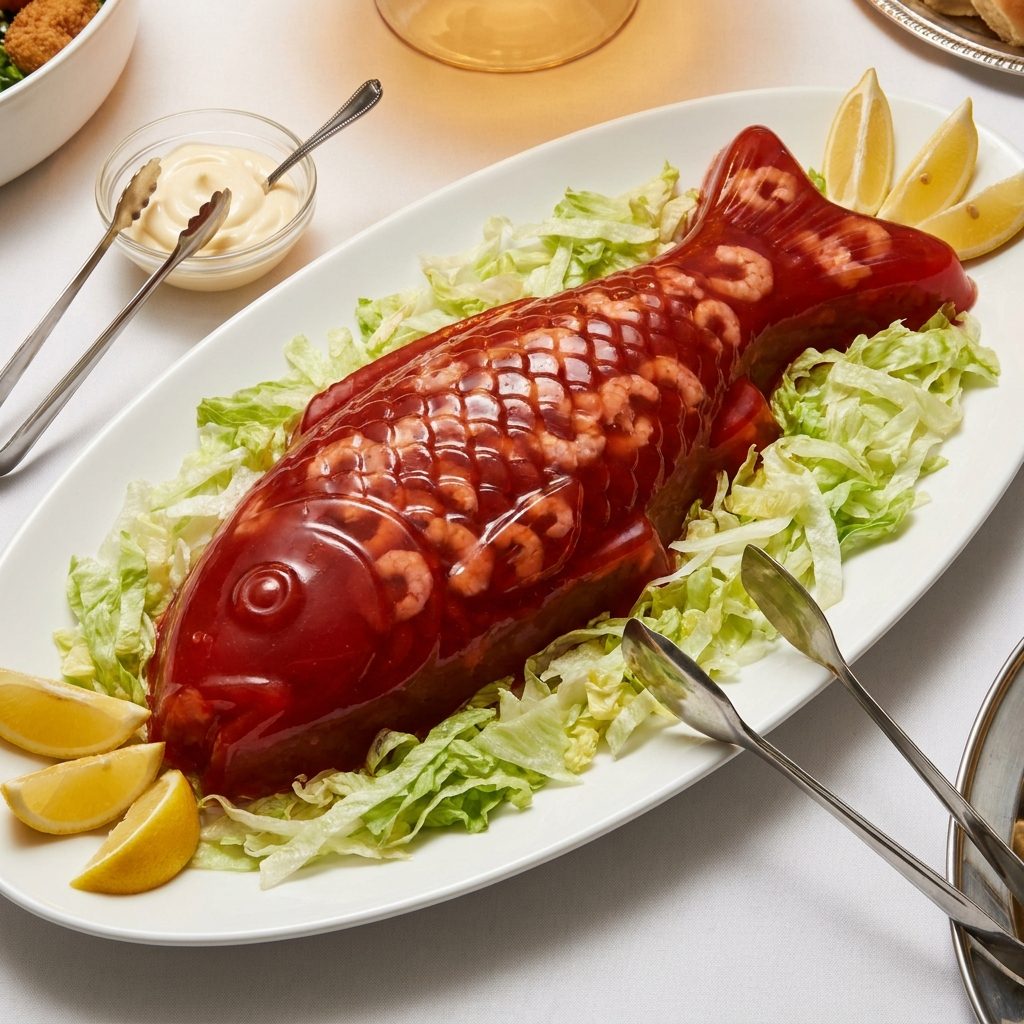
This version pushed tomato aspic in a more cocktail-sauce direction: tangy tomato juice, Worcestershire, lemon, celery, and shrimp suspended inside a glossy red mold. Then it was poured into a scaled fish form with a raised eye, because subtlety had already left the kitchen.
It arrived on shredded lettuce with mayonnaise or a creamy horseradish sauce nearby. Guests might have hesitated over the flavor, but everyone appreciated the commitment to presentation.
10. The Lemon-Lime Jell-O Studded With Miniature Marshmallows
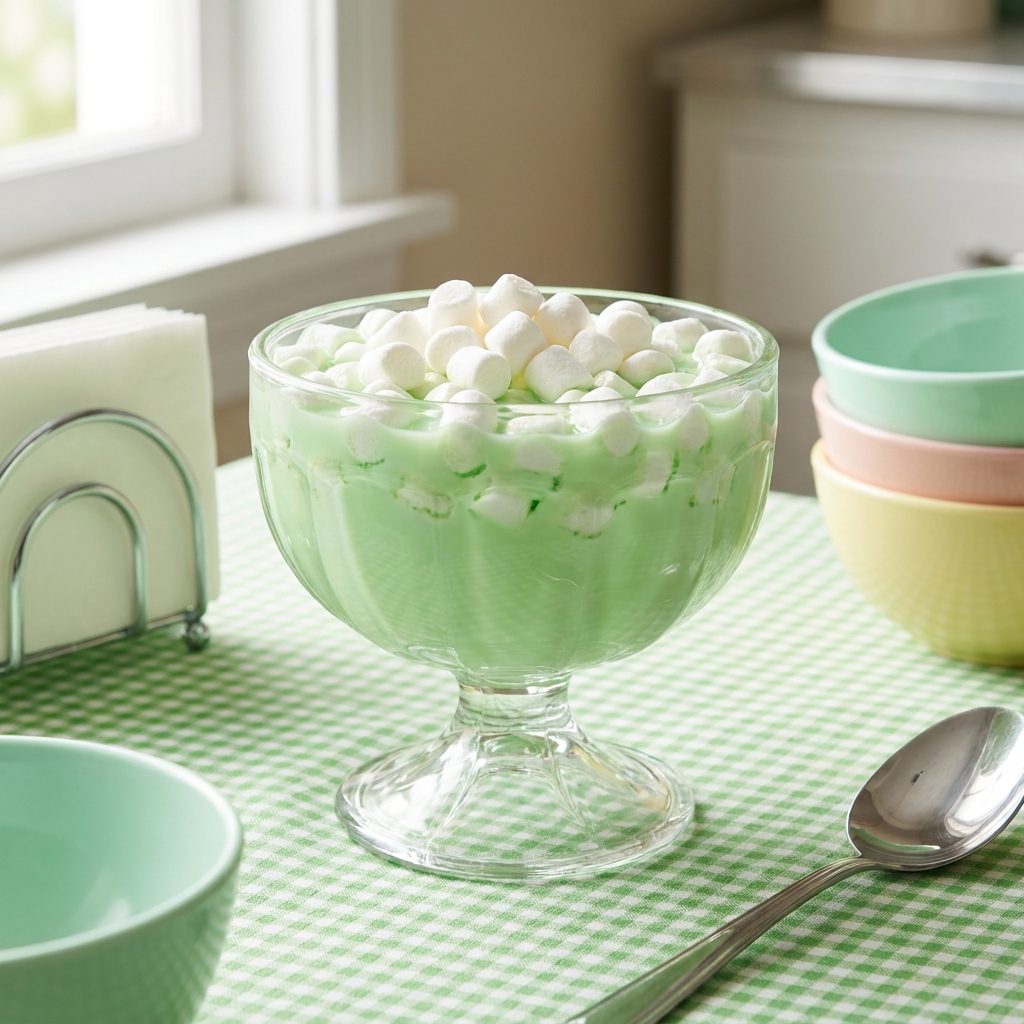
The marshmallows floated. Every child at the table watched them bob like little life rafts in a green sea, and that was nearly the whole attraction.
Lemon-lime gelatin and miniature marshmallows made one of the simplest beginner molds. No vegetables, no cottage cheese, no hidden olives. Just sweet on sweet, with enough wobble to make serving it feel like a game.
9. The Layered Strawberry and Banana Jell-O That Took a Steady Hand
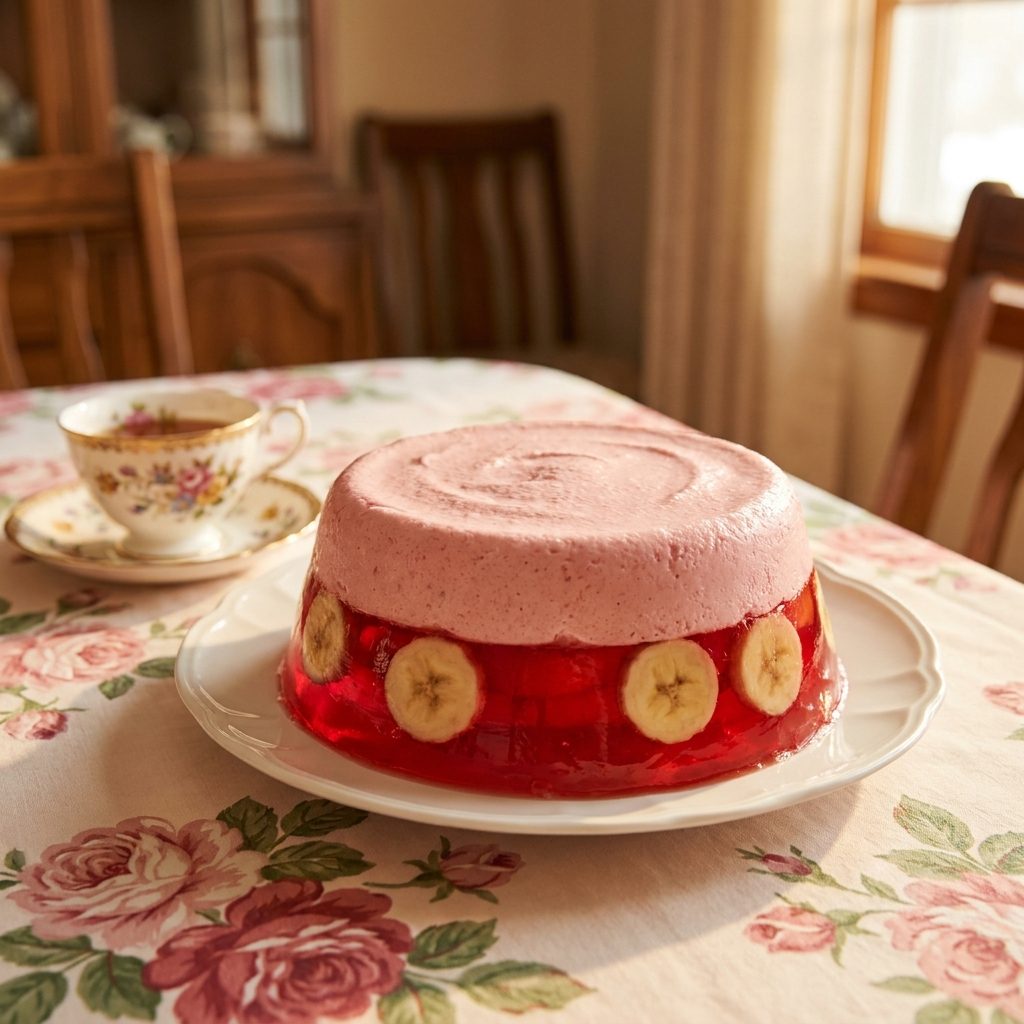
Two layers meant patience. The strawberry base went in with banana slices, then had to firm just enough to support a creamy sour-cream layer without allowing the colors to bleed. Rush the pour and the clean divide became a muddy pink blur.
Done correctly, the slices came out with sharp bands of color and banana coins held neatly in place. This was not the most complicated mold on the table, but it made carelessness immediately visible.
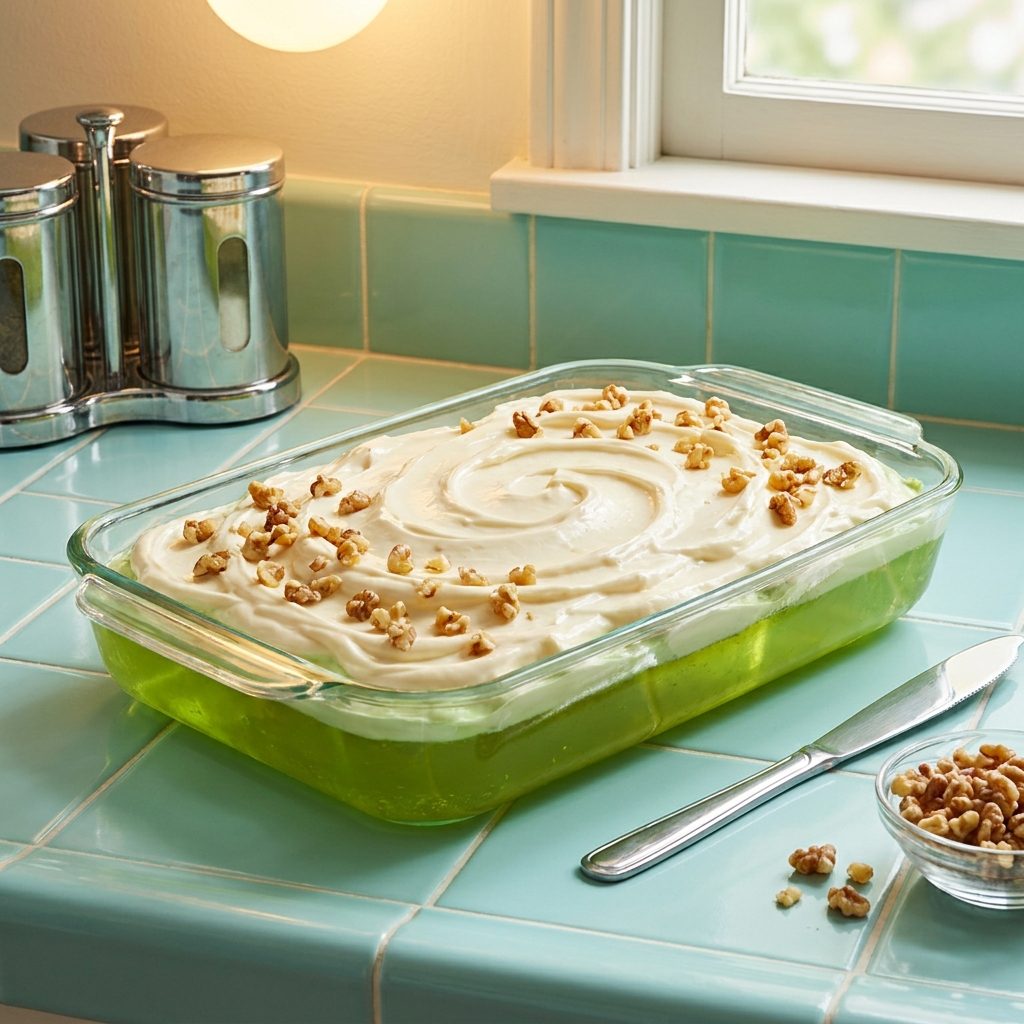
8. The Frosted Lime Salad With a Cream Cheese and Mayonnaise Topping
Would you like to save this?
The topping dressed this one for company. A lime gelatin base sat beneath a smooth layer of whipped cream cheese and mayonnaise, finished with chopped walnuts so it resembled a frosted cake from across the room.
People called it salad and served it on lettuce beside the ham without a trace of irony. The lettuce leaf was not merely garnish. It was paperwork.
7. The Applesauce and Red Hots Jell-O That Tasted Like Cinnamon Candy
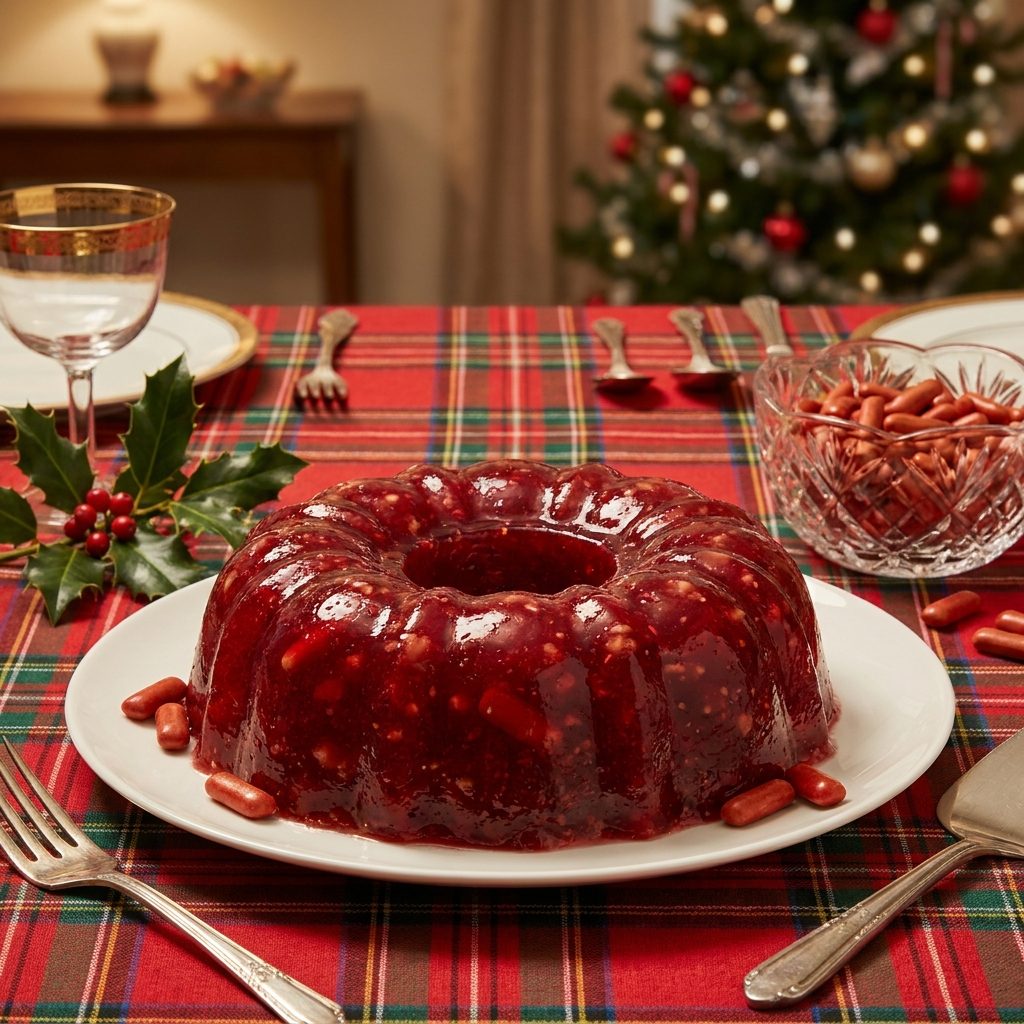
A handful of Red Hots melted into hot water before the applesauce and gelatin went in, producing a mold that tasted almost exactly like Christmas smelled. Cinnamon, apple, and hard-candy sweetness strong enough to leave its mark on your tongue.
This was a cold-weather special, especially useful when somebody wanted another red dish on the holiday table without making cranberries again. Children liked it because it was candy pretending to be a side dish. Fair enough.
6. The Cheese and Pineapple Jell-O That Needed a Place on the Ice Tray
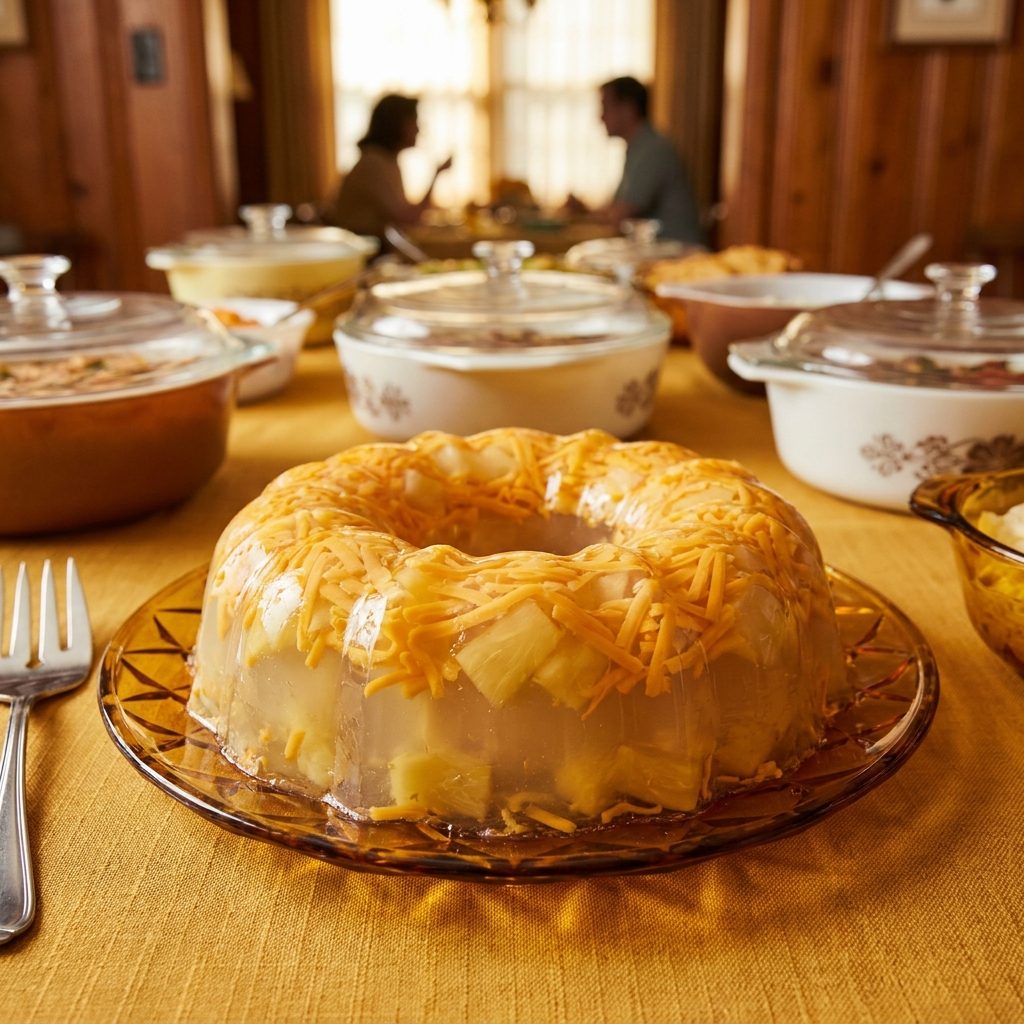
Shredded cheddar in a fruit mold sounds like an accident until you remember that pineapple and sharp cheese have always gotten along. Sweet, salty, cold, and strange in a way that became more persuasive after the second bite.
True covered-dish food, it rode to the potluck in the back seat and stayed chilled until the buffet opened. Once served, it belonged over ice or back in the refrigerator before long. Gelatin may be stubborn, but dairy still has rules.
5. The Champagne Salad That Wasn’t Jell-O but Always Got Invited Anyway
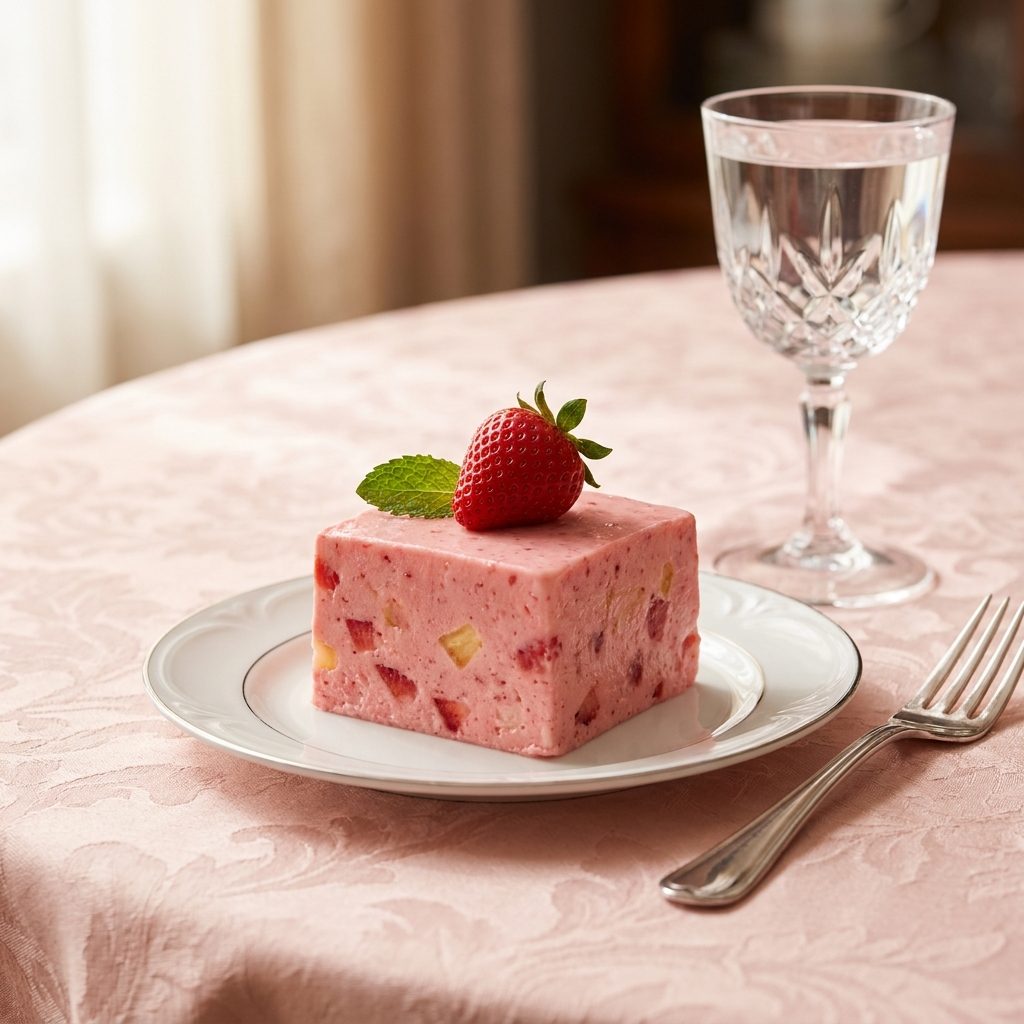
The name did most of the work. Champagne salad usually contained no champagne and, in this version, no gelatin either—just cream cheese whipped with sugar, crushed pineapple, frozen strawberries, and whipped topping, frozen into a soft pink block.
It still sat comfortably beside the Jell-O molds because mid-century potluck law was flexible about frozen pink squares. Call it champagne salad and suddenly it belonged at a wedding shower.
Cut while still slightly frozen and topped with a real strawberry, it landed somewhere between mousse and ice cream. People still make it, which is more than can be said for many actual gelatin salads.
4. The Waldorf Salad Suspended in Lemon Jell-O With Apples, Walnuts, and Celery
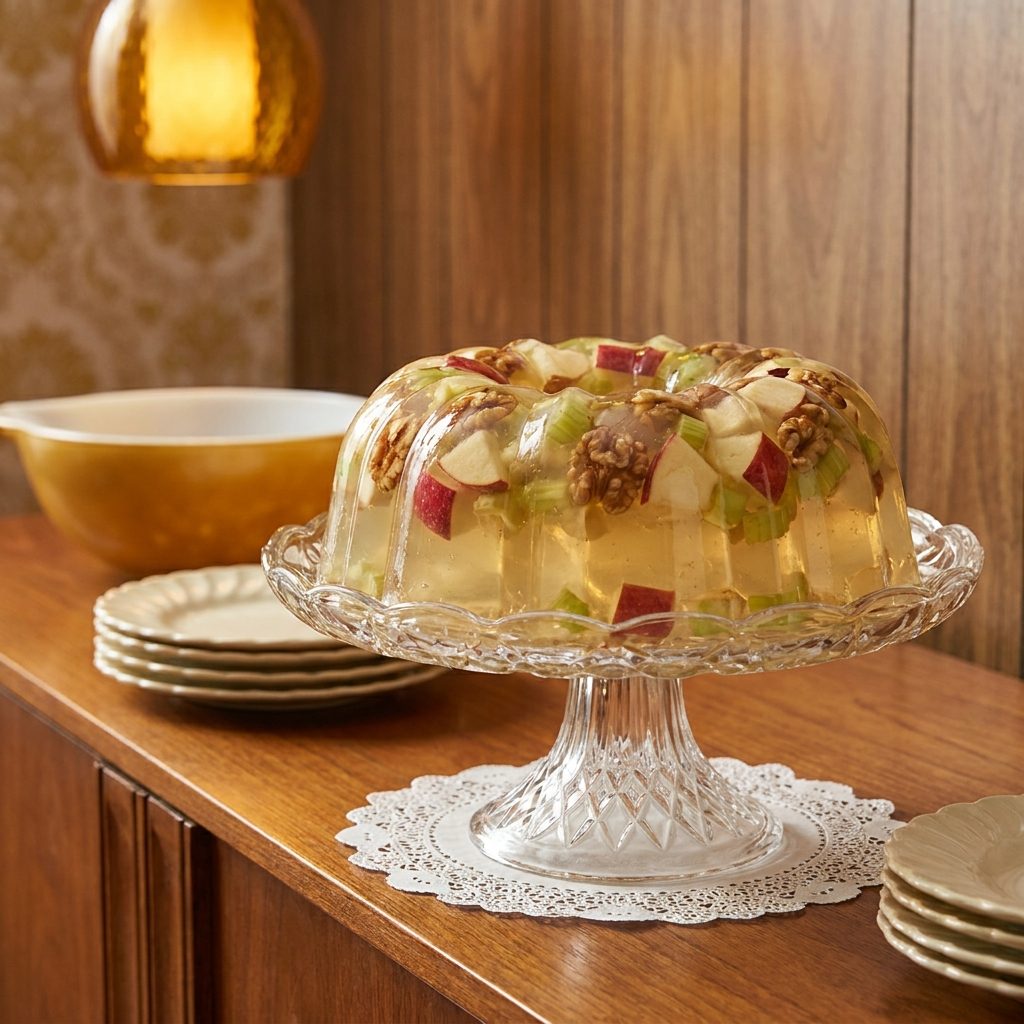
Every hostess who wanted to push an ordinary fruit salad toward something more formal could reach for the Waldorf treatment: apples, walnuts, and celery locked into lemon Jell-O and unmolded as though it had required a small engineering crew.
The celery was the gamble. Some people liked the snap against the sweet gelatin. Others picked it out and left a tidy pile at the edge of the plate.
3. The Avocado Lime Whip That Passed Itself Off as Dessert and Side Dish Both
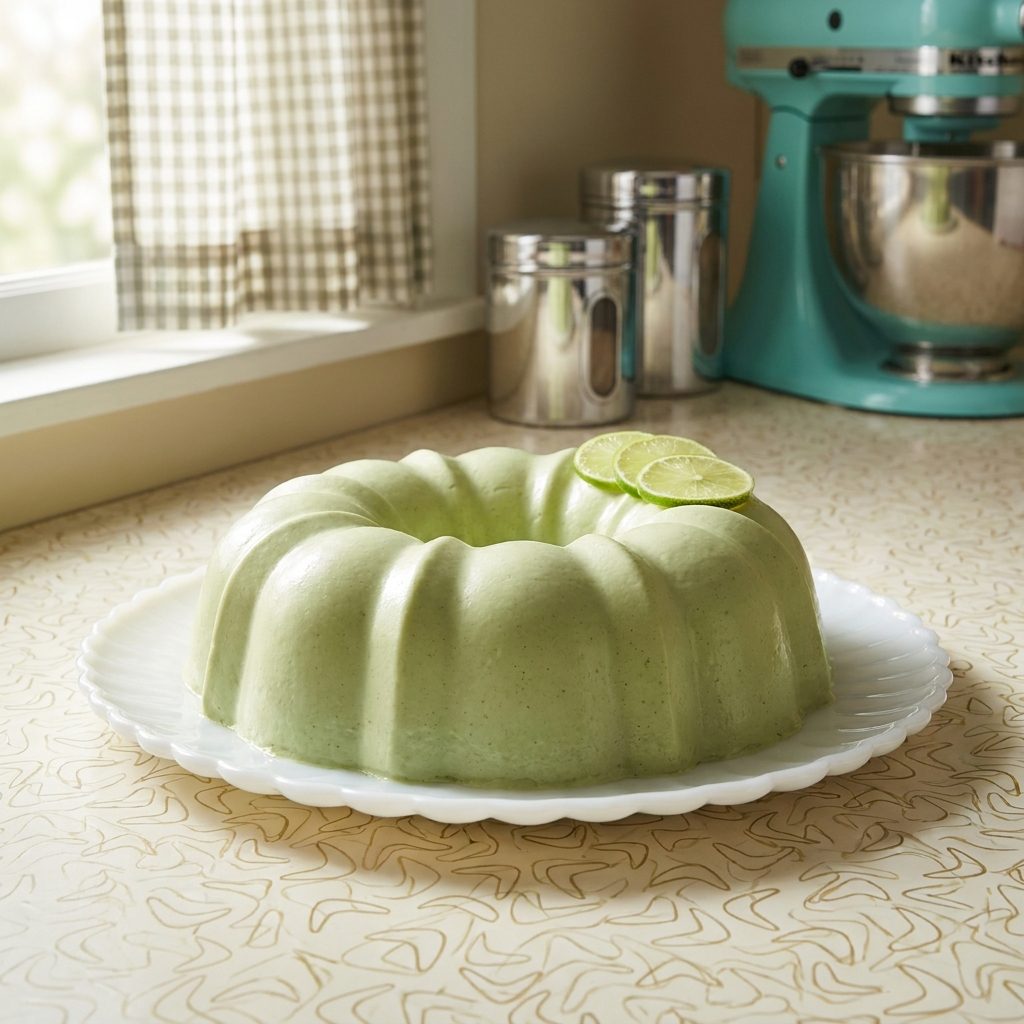
Green, creamy, and impossible to categorize. Was it a salad? A dessert? Something spooned beside the ham? The avocado lime whip declined to answer, and that uncertainty was part of its charm.
Mashed avocado went into lime Jell-O with whipped cream or whipped topping, depending on the recipe, until the mixture turned pale and mousse-like. It tasted less like guacamole than anyone feared—cool, faintly grassy, and sweet enough to keep the argument going.
The soft green looked especially handsome against milk glass, which helped it photograph beautifully for community cookbooks. Presentation mattered. Nobody was pretending otherwise.
2. The Sunshine Salad With Grated Carrot and Crushed Pineapple in Orange Jell-O
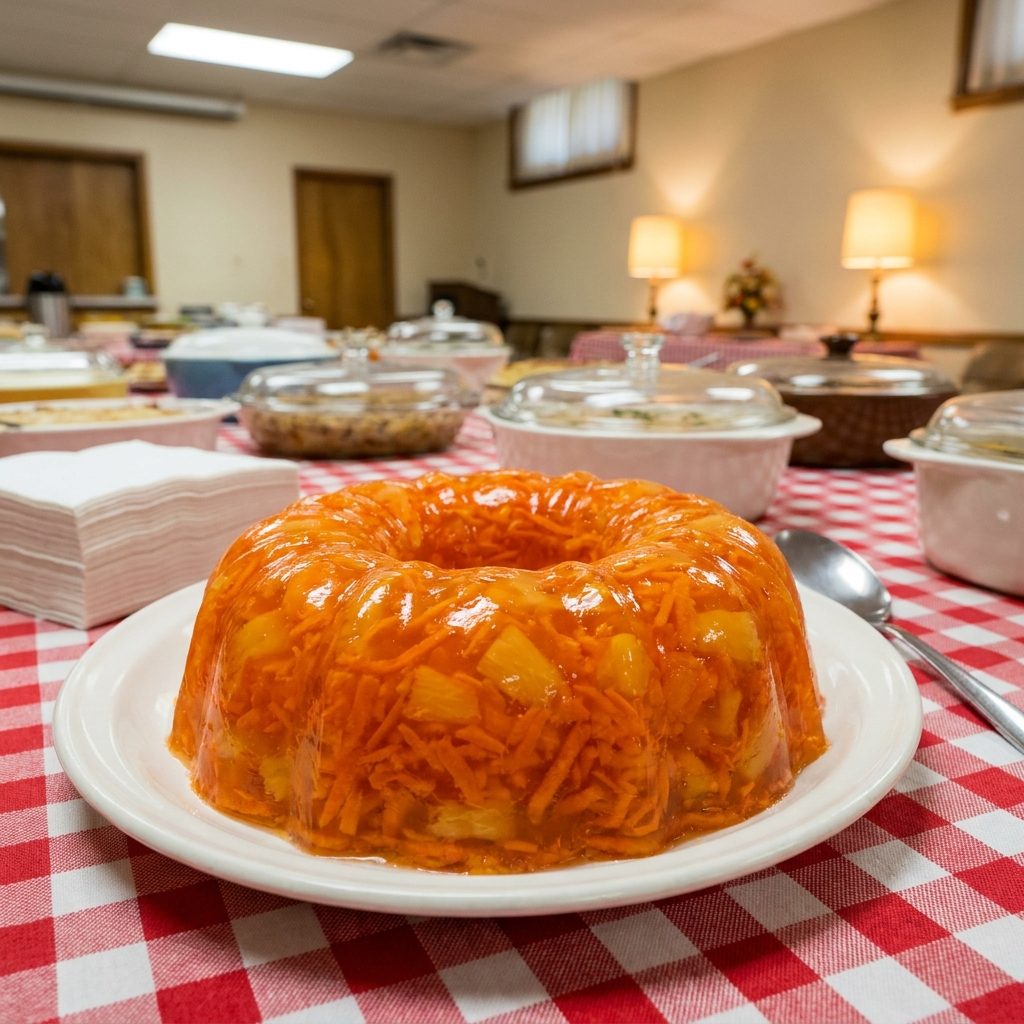
This was the workhorse of the potluck table. Cheap, quick, and forgiving. A box of orange Jell-O, a can of crushed pineapple, a handful of grated carrot, and suddenly there was a dish bright enough to justify the name and large enough to feed a crowd.
Children ate it without much resistance because it was orange and sweet. Grandmothers made it because the ingredients were already in the pantry. It appeared at fellowship suppers from Ohio to Oregon, sometimes beside another nearly identical mold brought by somebody who had received the same recipe card.
1. The Gelatin-Set Prune Whip Grandmothers Swore By and Grandchildren Feared
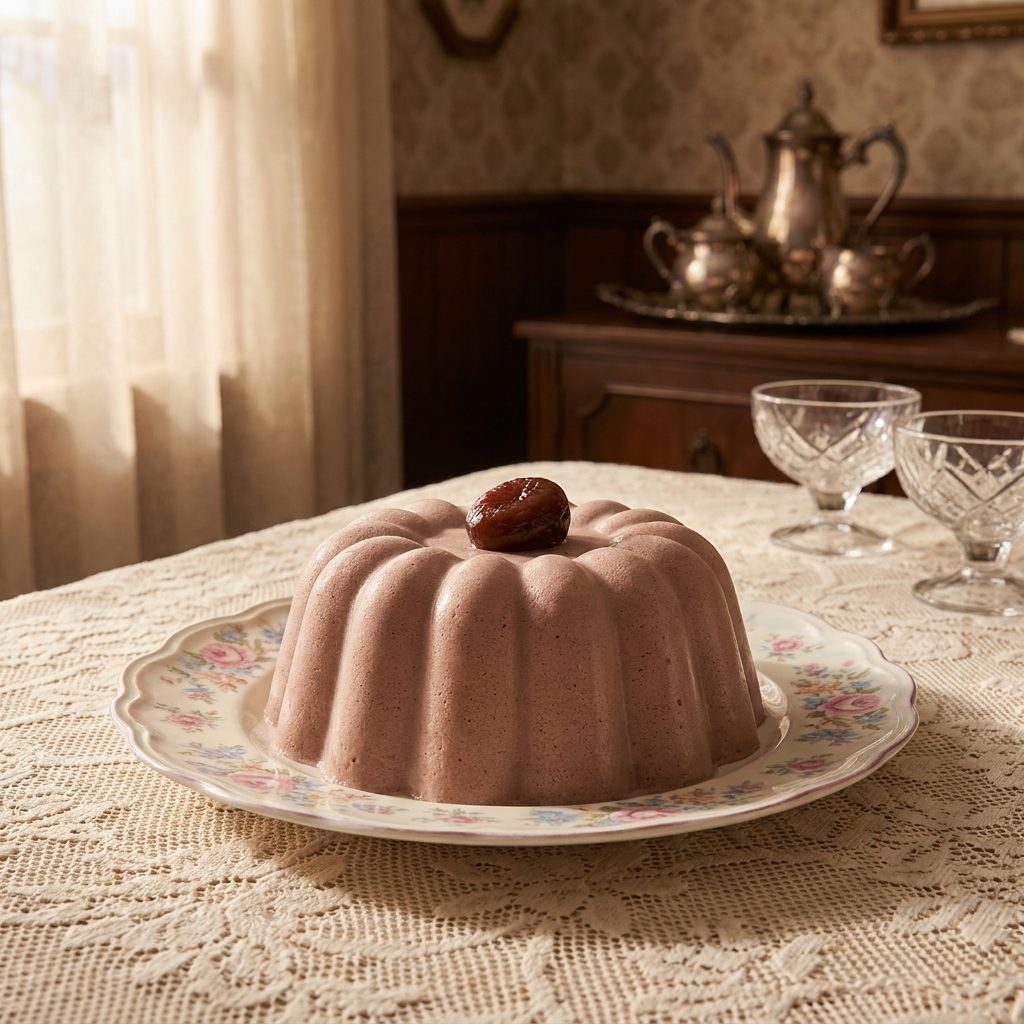
Nobody under forty asked for the prune whip. It appeared anyway, carried in by a grandmother who considered it both a treat and a public service.
Traditional prune whip was made with prune purée and whipped egg whites, but gelatin-set variations also circulated. This version turned soft mauve-brown and held its shape more firmly than the airy original. The flavor ran deep, dark, and faintly medicinal in a way older diners found comforting and younger ones regarded with suspicion.
It was served in careful spoonfuls, usually with whipped cream, and nobody needed the recipe explained at the table. The grandmothers knew exactly what they were doing.