
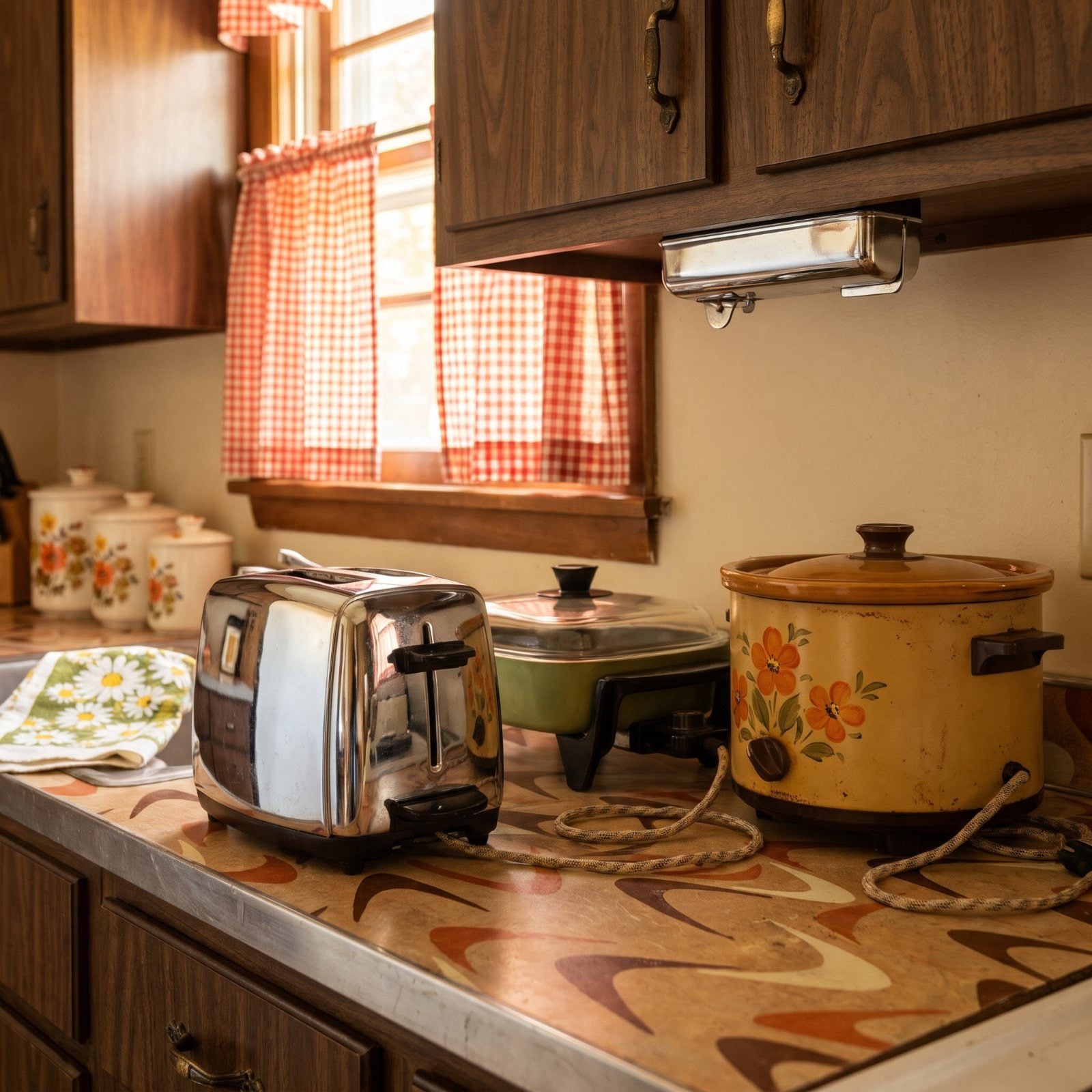
The smell hit first. Warm toast, a little scorched at the edges, rising from a chrome machine that lowered the bread by itself while the coffee percolated nearby. Boomer kitchens ran on gadgets that hummed, glowed orange, and stayed plugged into the wall all week long. A few were genuine marvels of mid-century ingenuity. Others were fire hazards wearing avocado-green coats, and everybody loved them anyway. All of them have quietly vanished from the counters where they once ruled. Here are the ones that would stop a twenty-two-year-old cold.
Please note that some of the images in this article were created with the assistance of AI.
21. The Sunbeam Radiant Control Toaster That Lowered Bread Automatically
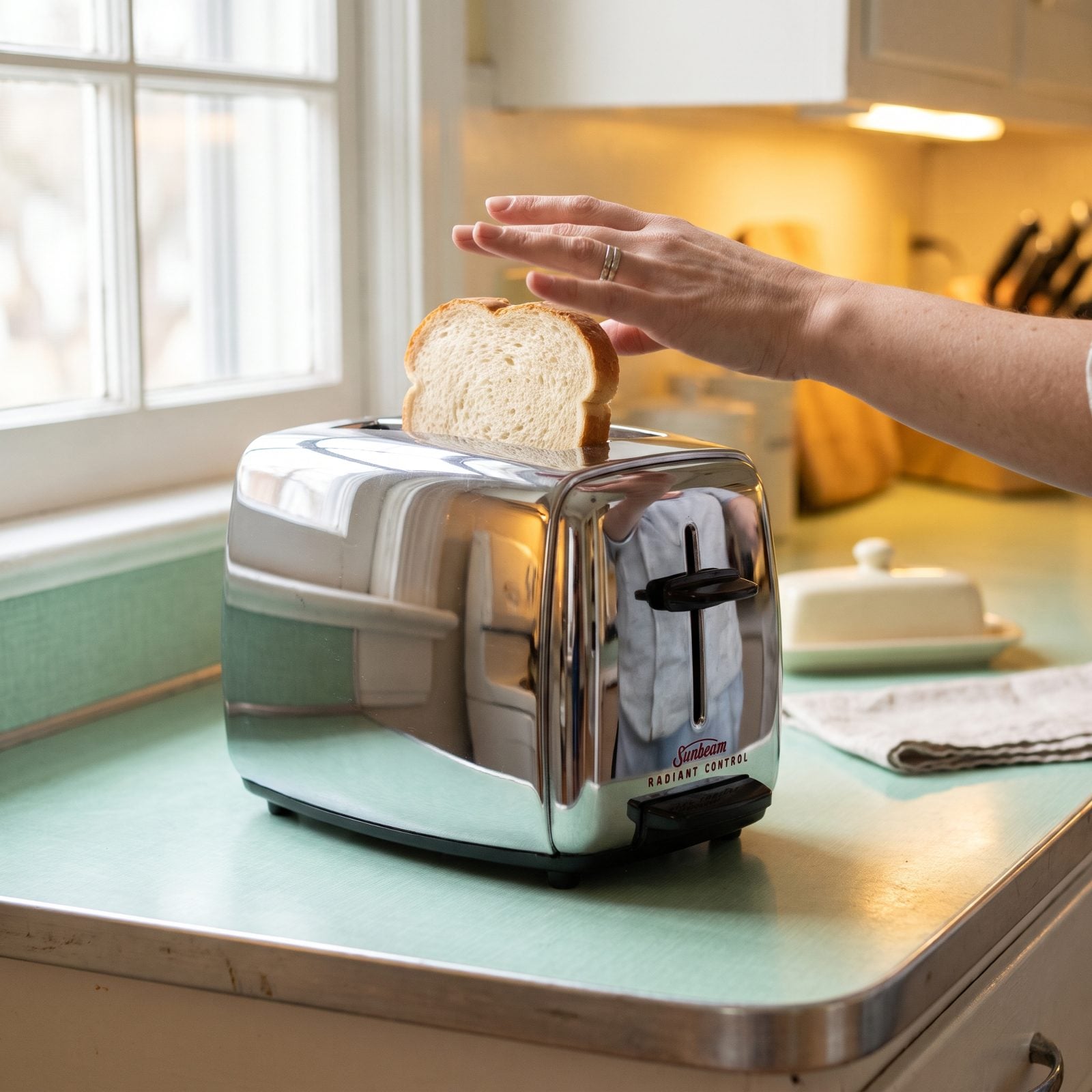
You dropped a slice in the slot and the toaster took it from there. There was no lever on the side to push down, and that was the whole idea. The Sunbeam sensed the bread’s weight, lowered it on its own, and brought it back up when the toast matched the color you’d dialed in — reading the bread itself rather than running a timer, which is why the second slice came out the same shade as the first.
It was the kind of over-engineering nobody bothers with anymore, a toaster with the manners of a butler. Collectors still pay real money for a working T-20, and honestly, I get it. Most toasters today can’t manage what a 1949 machine did without being asked.
20. The Electric Carving Knife Kept in a Fitted Case
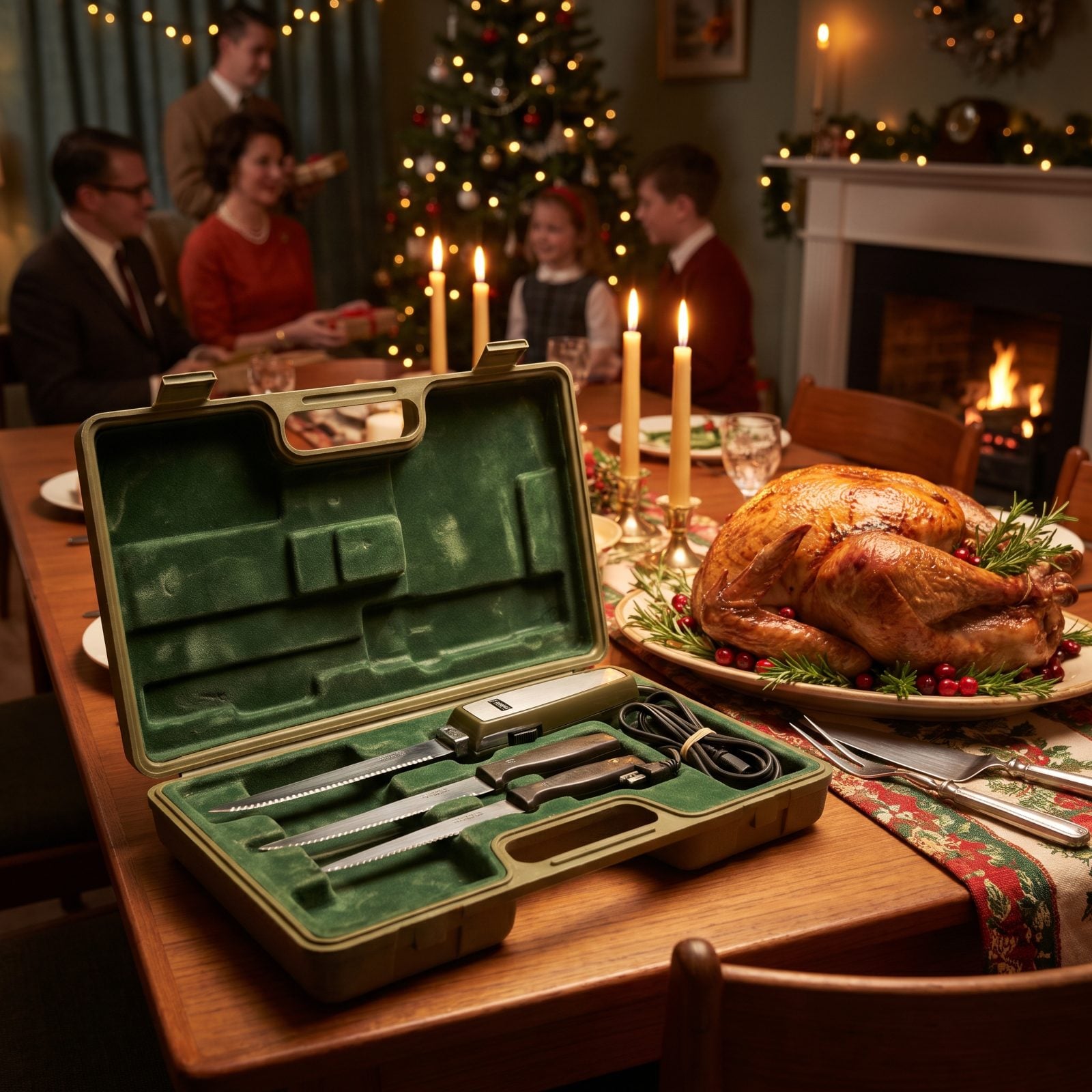
This one only came out twice a year. Thanksgiving and Christmas, when the turkey hit the table and somebody fetched the case down from the top shelf. The twin serrated blades buzzed back and forth, and whoever held it felt like a surgeon.
The rest of the year it lived in its fitted plastic coffin, the electric knife and two dark-handled serrated knives lying diagonally across the green velvet, cord coiled and tied beside the motor. Nobody carved a daily chicken with this. It was ceremony, not utility — a dull hum at the head of the table that meant the big meal had officially begun.
What Our Readers Say
- When Piaci Pizza readers loved a food photo and tapped a reason, comfort came out on top at 30%, and nostalgia was picked 15% of the time.
From Piaci Pizza reader polls and votes.
19. The Plug-In Warming Tray Used for Sunday Dinner
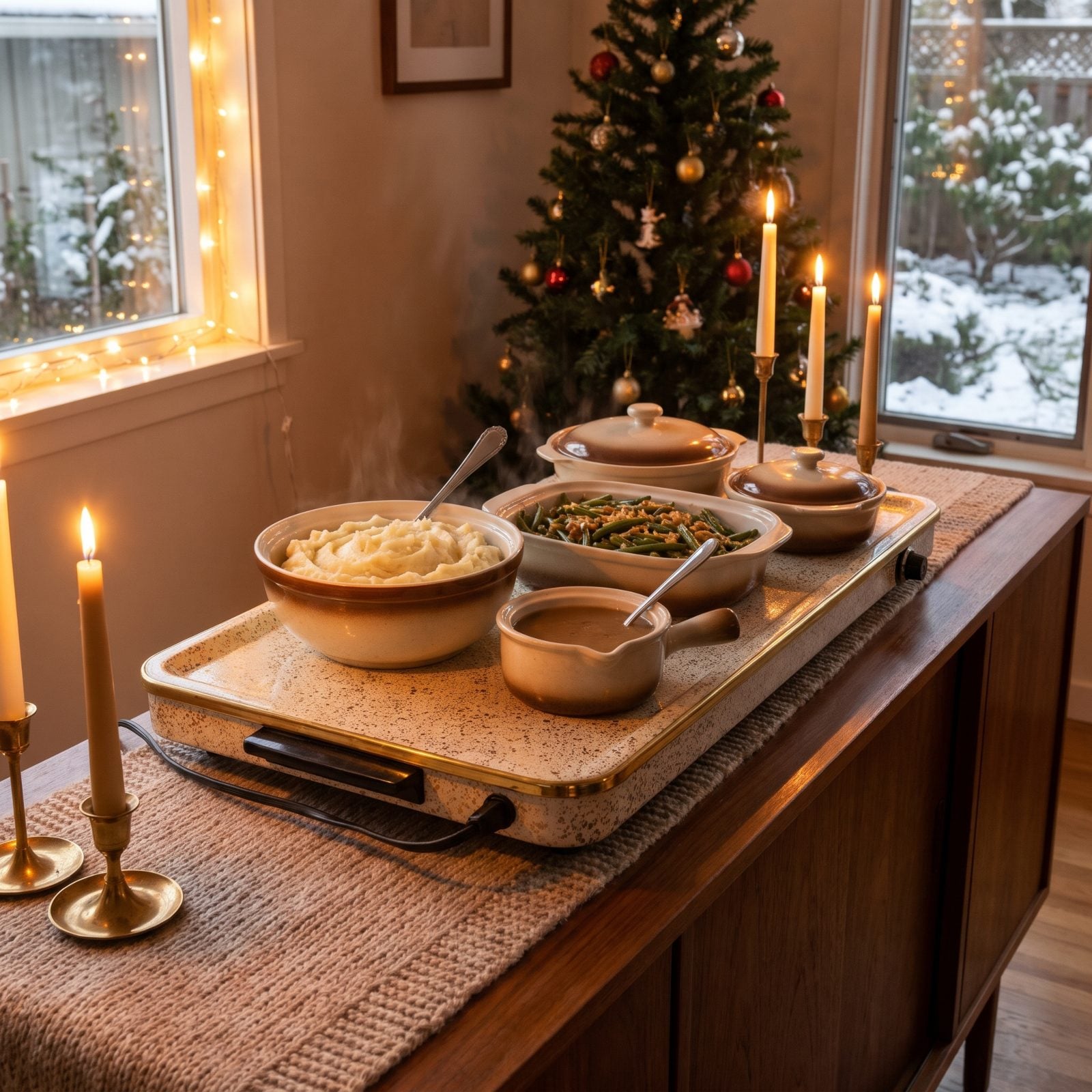
You’ve seen one on a sideboard during the holidays — a flat panel of gold-flecked glass or enamel keeping the mashed potatoes hot while the first round of plates came back for seconds. It never cooked anything. It just refused to let dinner go cold.
Casserole dishes, the gravy boat, a basket of rolls, all parked on a surface that stayed warm for hours. When the whole family ate at different speeds, this was the peacekeeper. Modern homes crank the oven to “warm” instead, which works fine and takes up no counter. The warming tray had a quiet dignity, though, and I miss it a little.
18. The Ceramic Crock-Pot With a Painted Floral Pattern
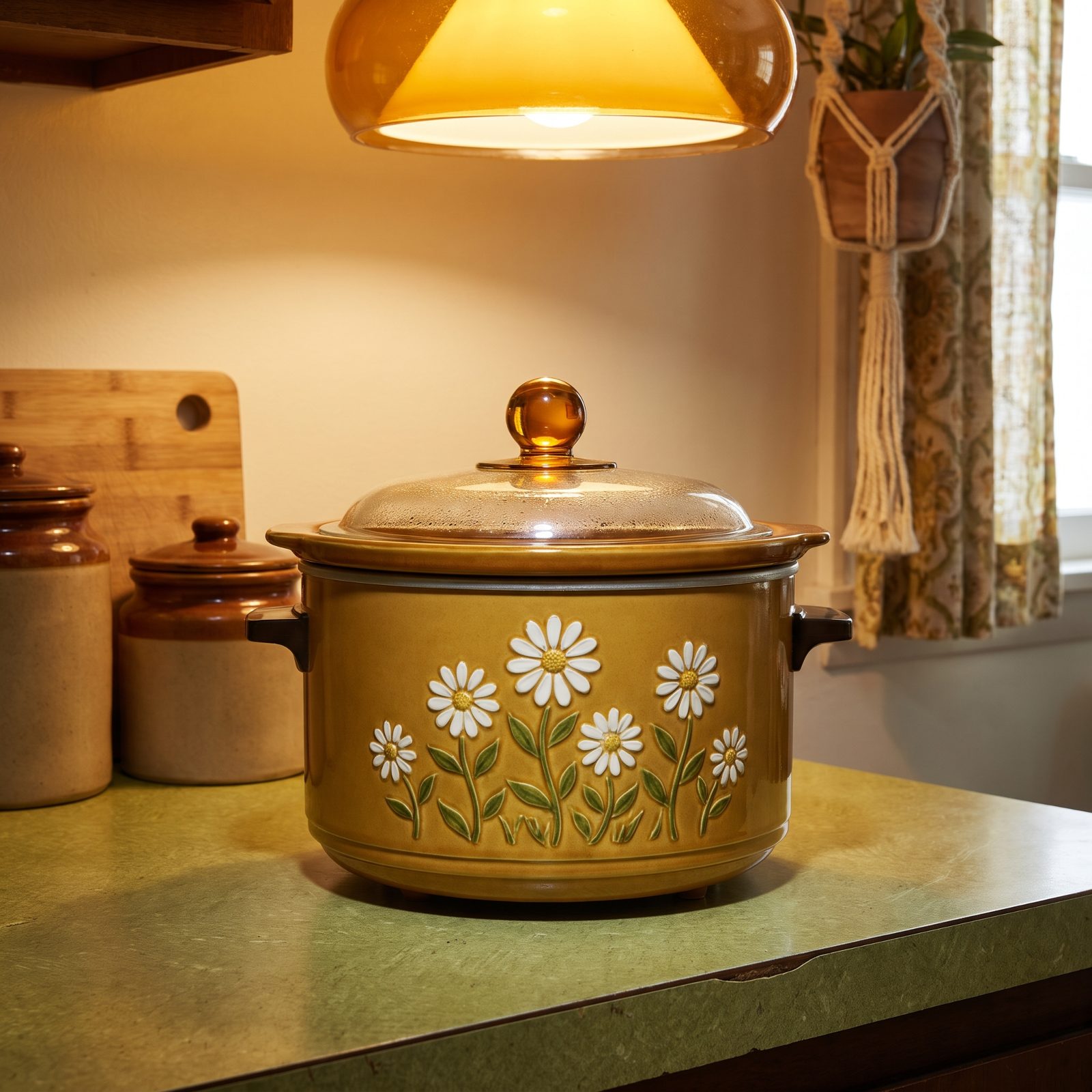
Harvest gold with daisies painted up the side, a glass lid fogged from eight hours of pot roast. The Crock-Pot got switched on before work and did its thing all day, which felt like a small miracle in a decade when “dinner cooks itself” was a brand-new idea.
The floral paint tied it to the whole kitchen — same daisies on the canisters, same orange on the dish towel. Slow cookers never actually left us. But the painted ceramic ones, the ones that matched the drapes, got replaced by sleek black ovals with digital timers. Something got lost in that swap. I’ll say it plainly: the daisies were better.
Our readers still have a soft spot for that style: meal photos served straight from the skillet or pot got hearts 85% of the time, against 79% for other images in the same articles.
17. The Countertop Rotisserie With a Glass Front
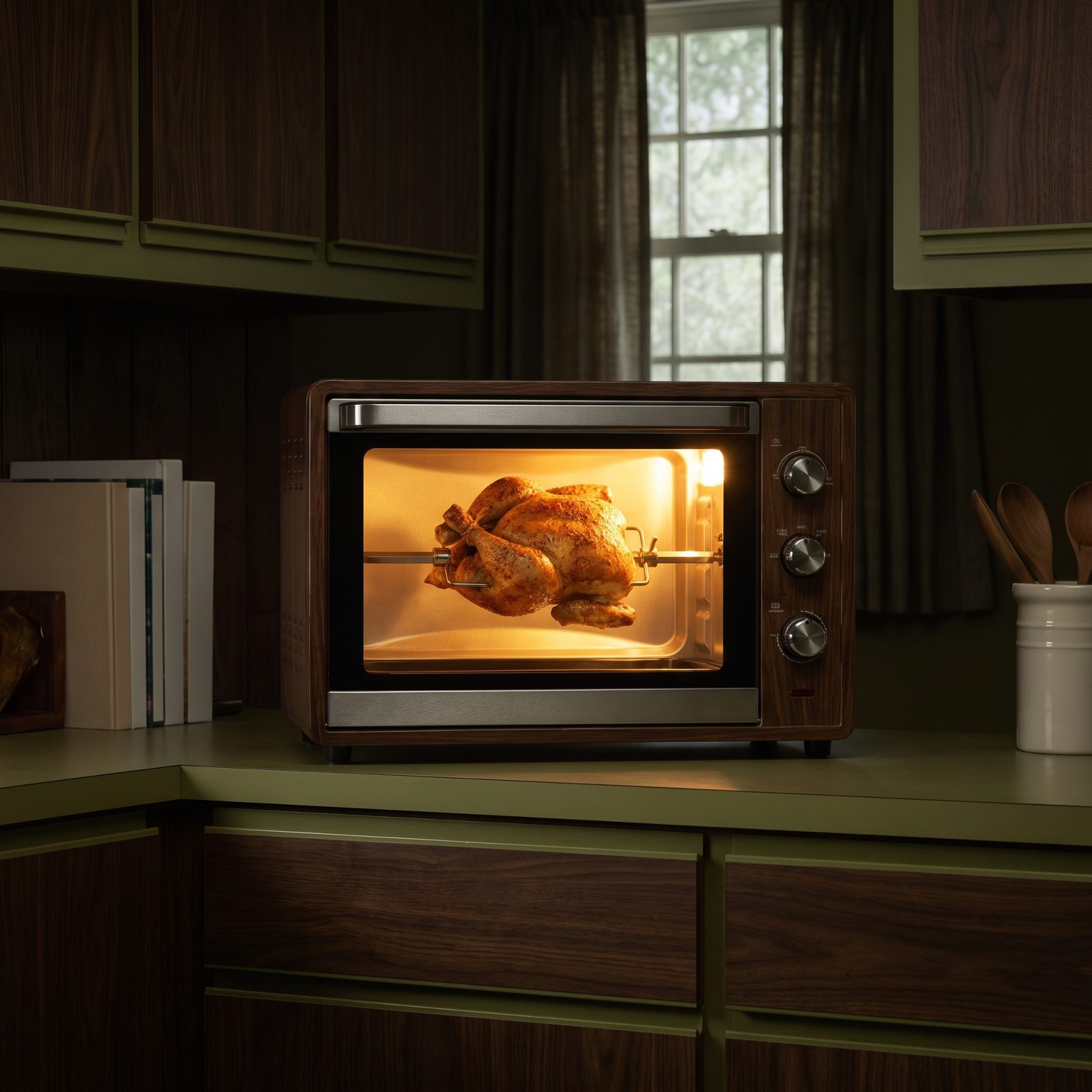
The chicken spun, and that was the whole appeal. You watched it turn behind the glass, skin crisping under the elements, grease ticking into the tray below while the kitchen smelled like a restaurant for an hour straight.
Dinner as entertainment. A roast turning slowly in plain view, doing its work where you could keep an eye on it. These predated the air fryer by decades and pulled off the same party trick: cooking in front of you so you felt involved even while doing nothing. The smart appliance makers have always known the show matters as much as the food.
16. The Infrared Countertop Broiler That Cooked From Above
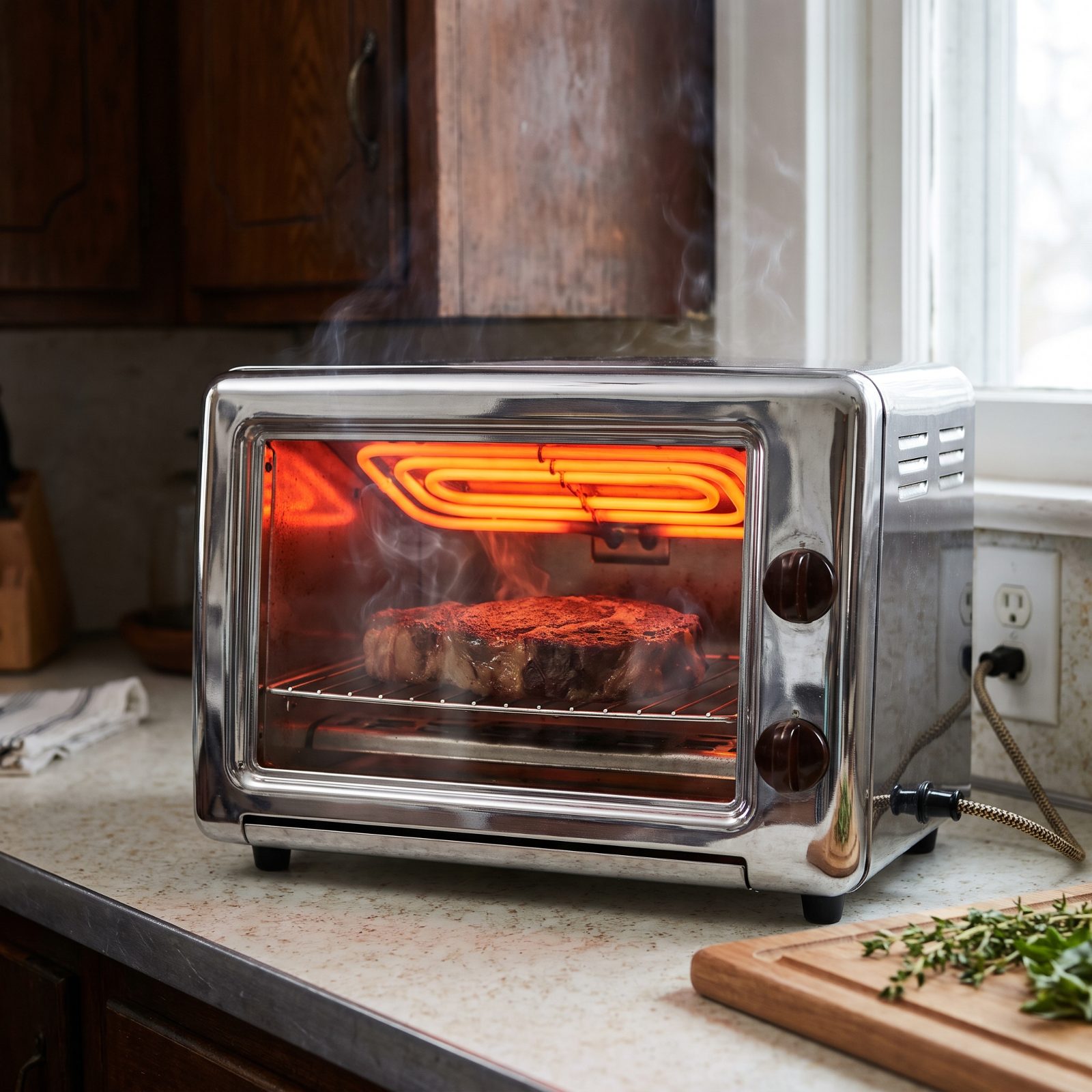
Heat from the top, not the bottom. The infrared broiler glowed red-orange across its element and seared steaks and burgers from above, dripping fat into a crumb tray while the meat charred in minutes. No preheating the whole oven for two chops.
Fast, direct, and a little alarming — the element ran hot enough to make you respect it. These faded once full ovens with broil settings became standard, but for a stretch there, grilling indoors in February meant plugging this chrome contraption into the wall and standing guard over it.
15. The Metal Deep Fryer With an Open Oil Well
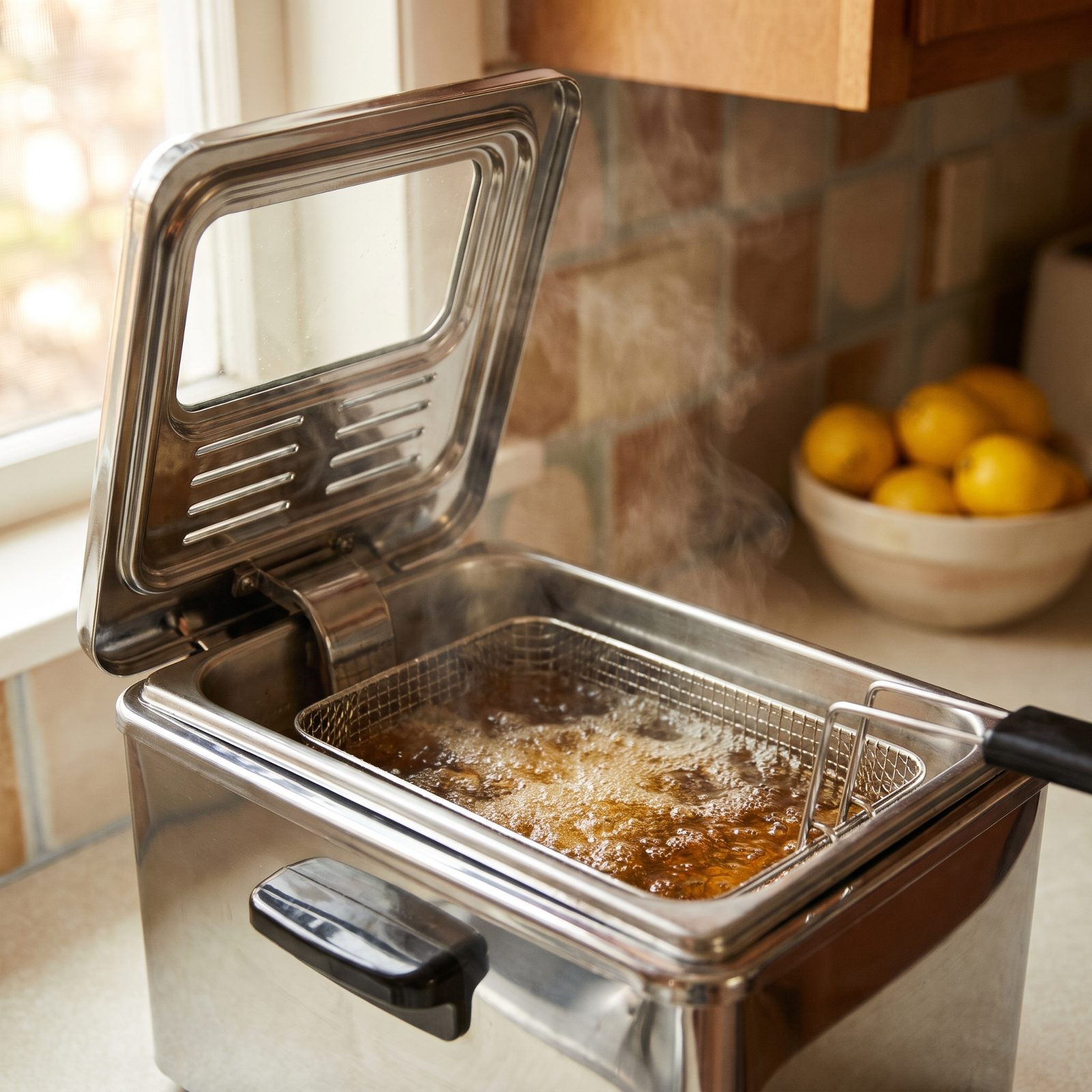
An open well of hot oil sat right there on the counter — hinged lid flipped up and propped open, just a chrome basket you lowered into the shimmer. Friday night fries, fried chicken, the occasional batch of doughnuts. It made the whole house smell like a diner, and that smell lingered clear into Saturday.
The oil got strained and reused until it turned the color of weak tea. These basically disappeared from home kitchens, partly because sealed fryers and air fryers took over, and partly because an open vat of scalding oil with a toddler in the room makes modern parents break out in a cold sweat. Can’t fully blame them.
14. The Jiggler-Top Pressure Cooker
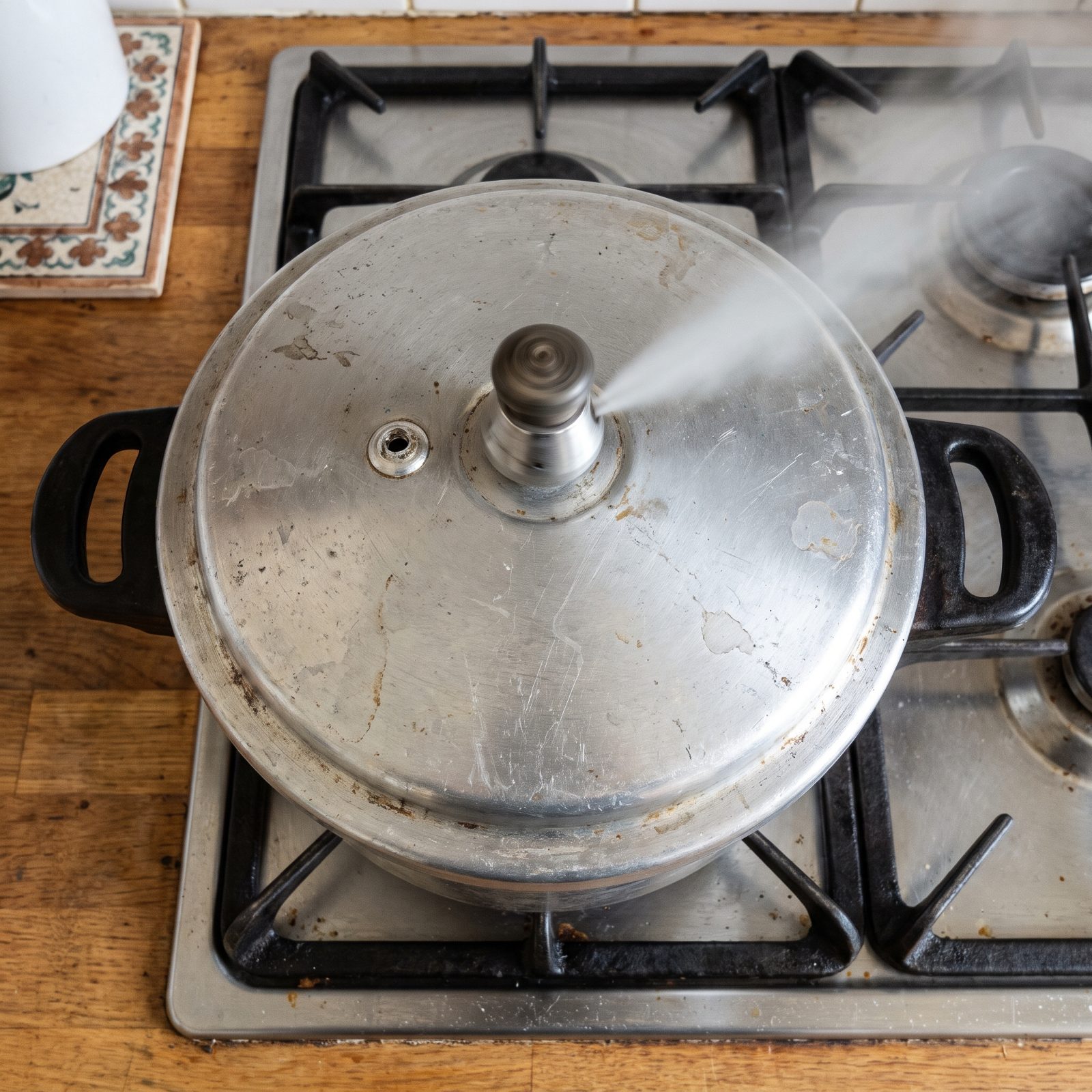
You didn’t watch it. You listened to it. The little weight on top rocked and hissed, and you learned its rhythm — a steady rattle meant everything was fine, a frantic one meant turn down the heat right now. Beans in under an hour, a pot roast not much longer, decades before anyone uttered the words “Instant Pot.”
It also terrified half the people who owned one. Every family had a story about the ceiling and a batch of exploded soup. That dancing metal knob was the only gauge you got, and reading it was a skill passed down like handwriting. Electric models with locking lids and safety valves took over for good reason. Still, there’s a whole generation that hears that rhythmic hiss and smells Sunday dinner.
13. The Speckled Enamel Electric Roaster Oven
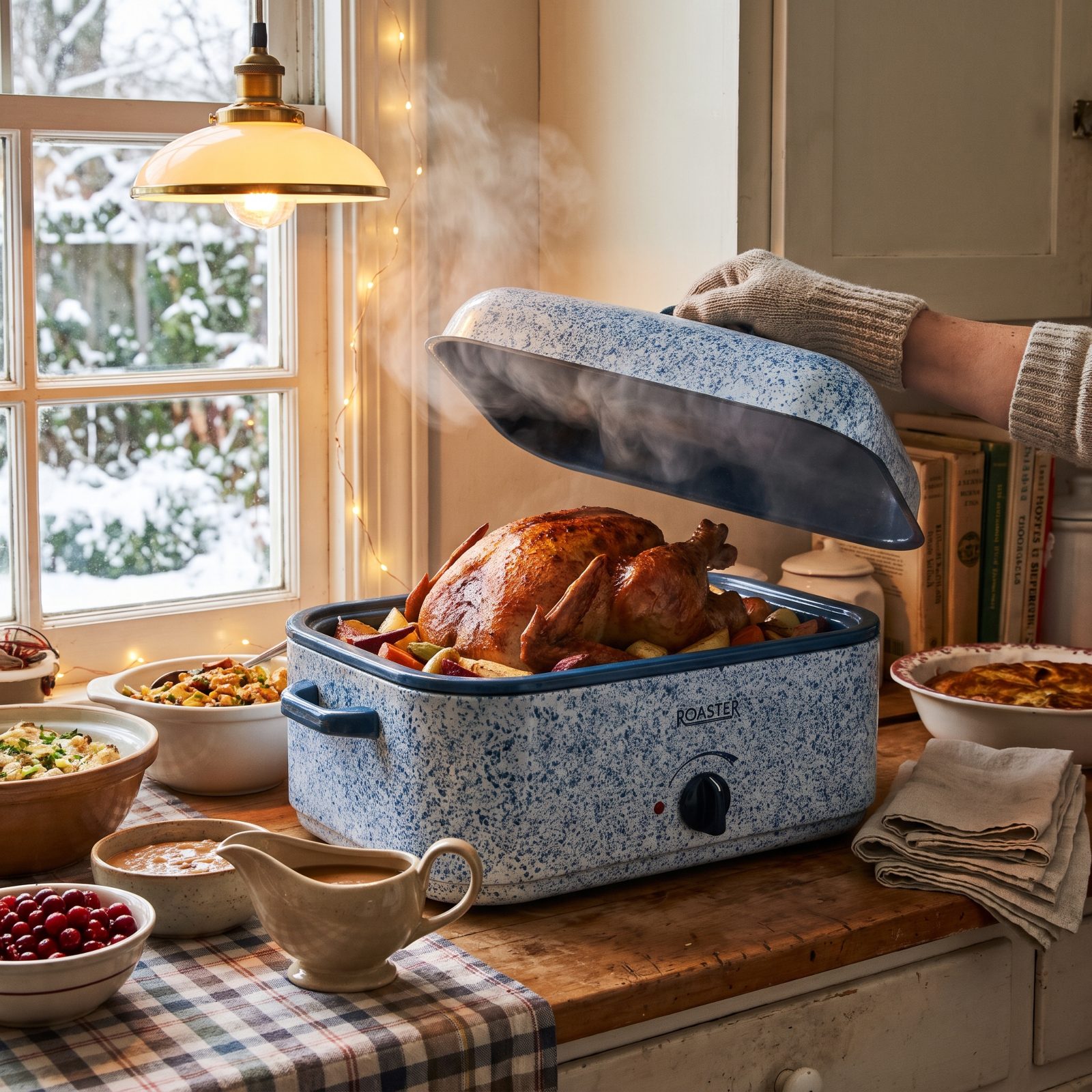
Before the counter filled up with air fryers and slow cookers, the roaster oven held the holidays together. It came out of the basement twice a year, speckled enamel lid heavy as a manhole cover, and freed up the real oven for pies and rolls. Grandma’s turkey never touched the wall oven. It went into this thing.
The dial went to about 450 and that was the whole interface. No probe, no app, no beep — you lifted the lid, poked the bird, and lowered it back down with both hands because that enamel lid had some heft to it.
12. The Portable Hot Plate With an Exposed Coil
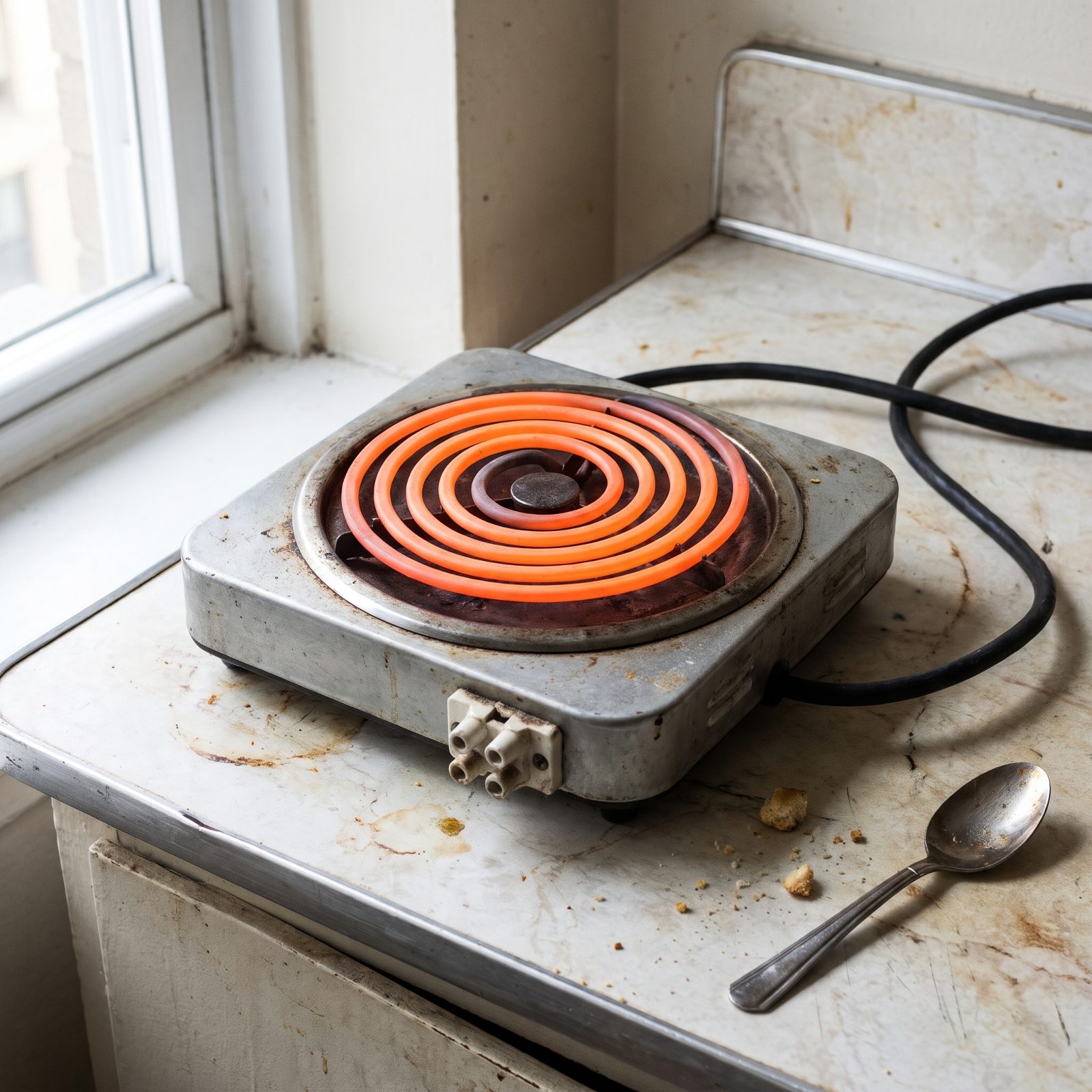
One burner. One coil. No off switch you’d trust completely. The hot plate was the appliance of small apartments, church basements, and anyone whose real stove had given up.
You could watch the coil go from black to dull red to a serious orange, and you learned exactly how long that took because no indicator light was going to tell you. Gen Z would look at that glowing spiral and reasonably ask where the safety features went. There weren’t any. That was the deal.
11. The Electric Fondue Pot With Color-Coded Forks
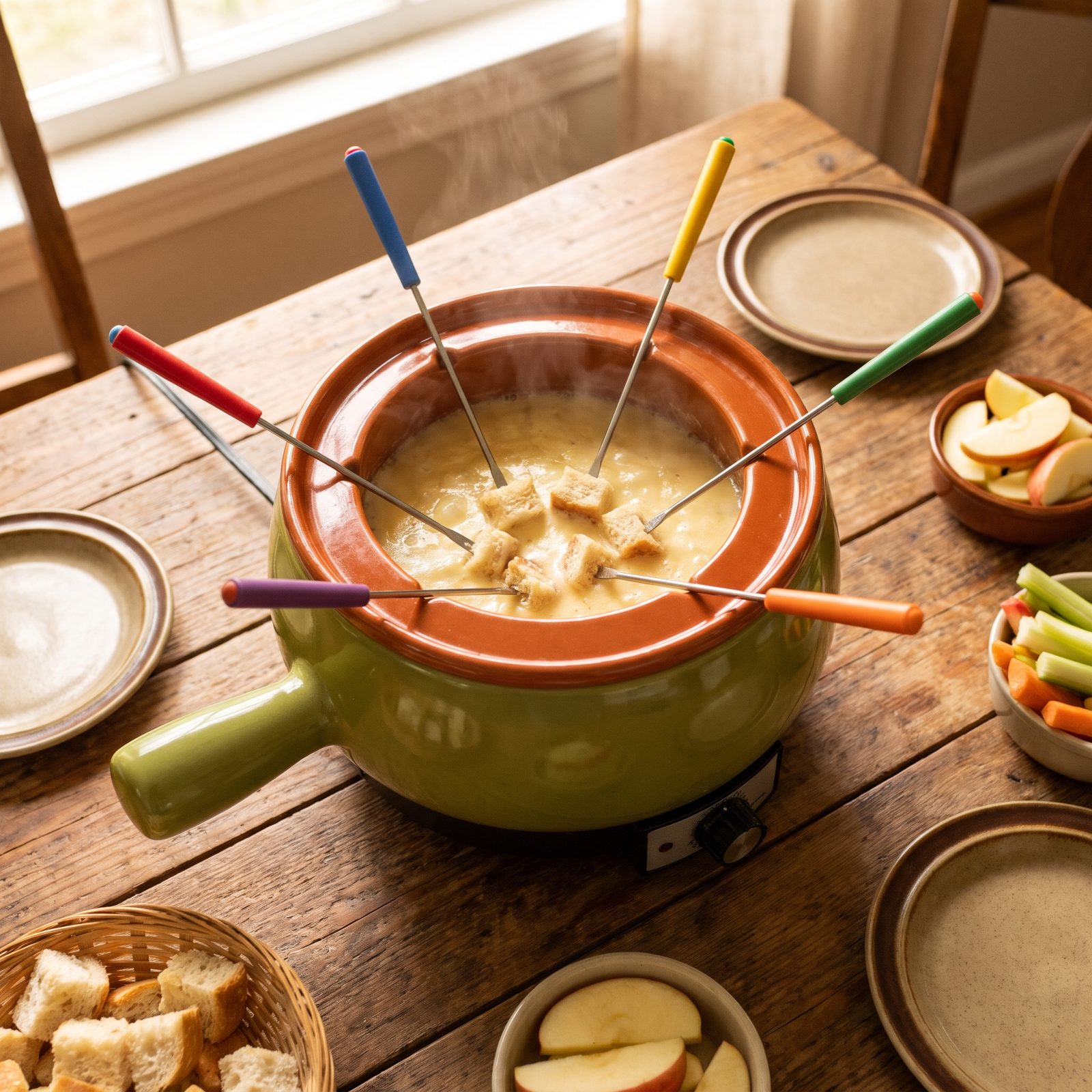
The color-coded forks existed for one reason: so nobody ate off yours.
You got the yellow one, your brother got the red one, and everyone dunked bread cubes into a communal pot of cheese like it was the height of sophistication. For a stretch in the seventies, the fondue pot was the centerpiece of every dinner party worth hosting — then it vanished almost completely, demoted to a wedding gift that lived in the box. Gen Z has mostly met fondue as a mall-restaurant novelty, not a thing that sat on the dining room table between the candlesticks.
10. The Heavy Cast-Iron Waffle Maker With a Cloth-Covered Cord
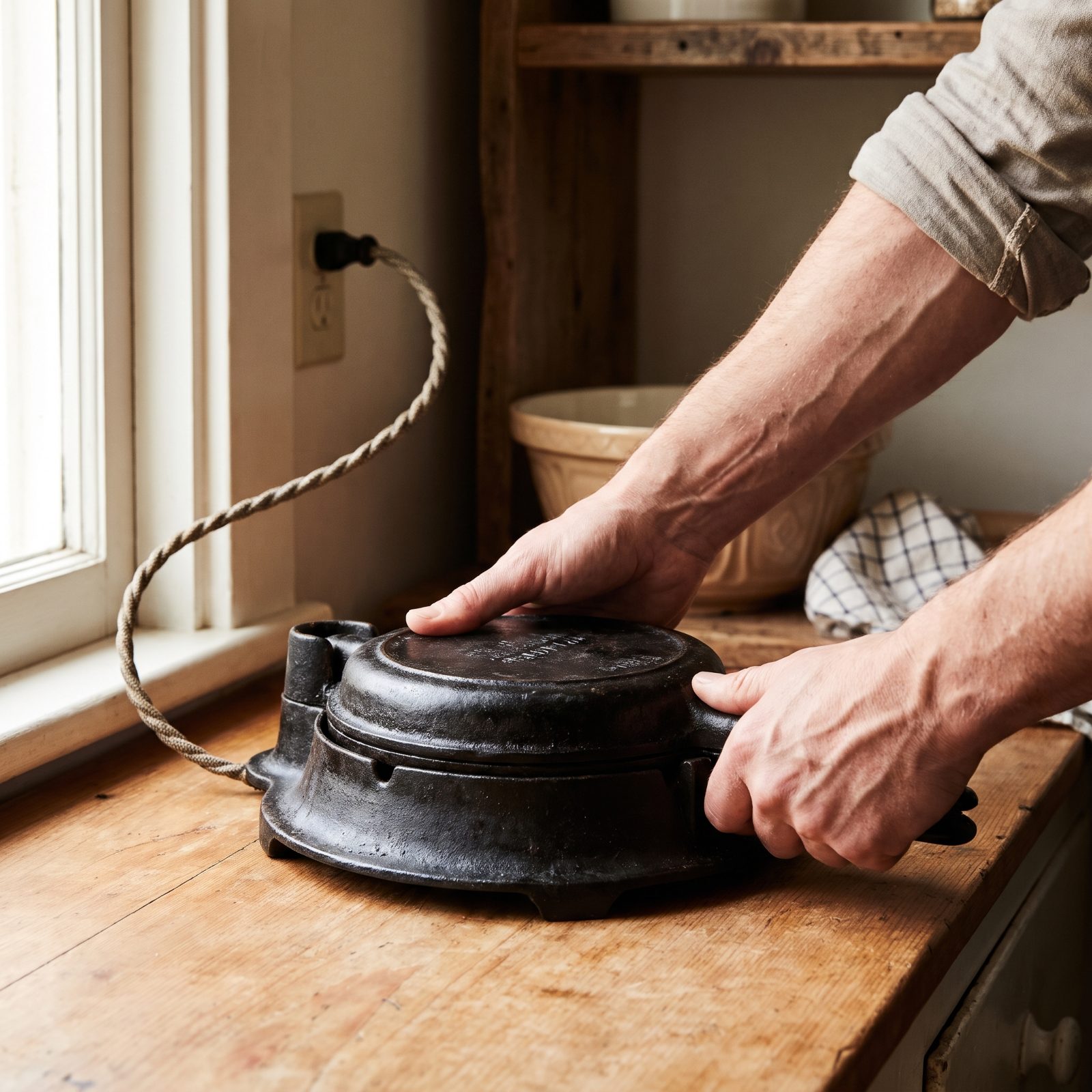
Lift this thing and your wrist knew it. The cast-iron waffle maker weighed about as much as a bowling ball, held heat like a brick, and ran on a cloth-covered cord that frayed a little more every year until someone finally wrapped the worst spot in electrical tape.
No nonstick coating. You greased the plates, you waited for the little amber jewel to glow, and the first waffle always stuck as tribute. By the third one it ran like clockwork. Those things outlived their owners, which is more than you can say for most of what’s on the counter now.
9. The Hand-Crank Ice Crusher Clamped to the Counter
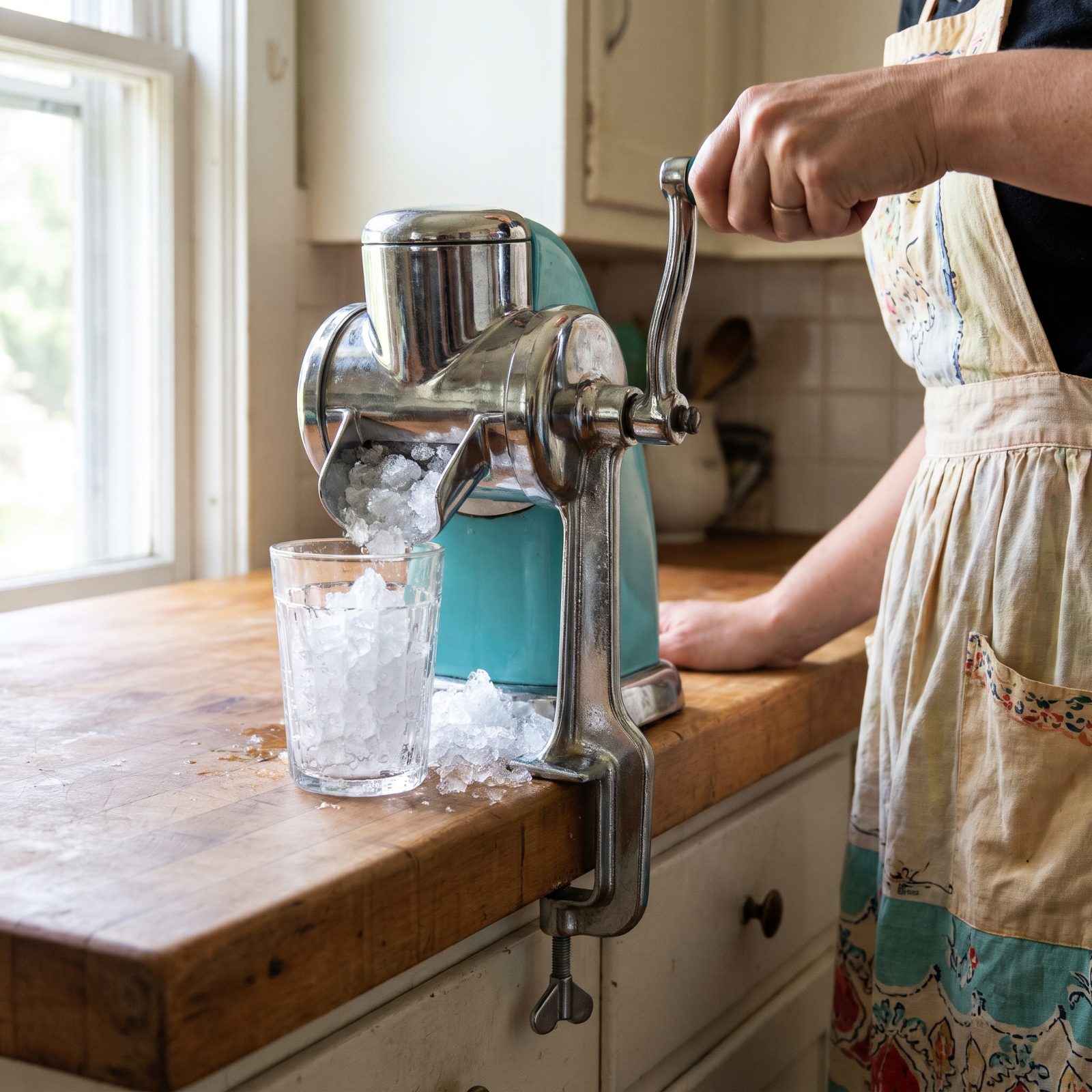
You clamped it to the counter, loaded it with cubes, and cranked. Your arm did the work a freezer door now does without being asked, making a grinding racket and a satisfying pile of crushed ice for summer drinks and sickbed washcloths.
I’ll admit I kind of miss the arm workout, mostly because it meant someone actually wanted that iced tea badly enough to earn it. Freezers with built-in crushers made the whole gadget pointless. A kid today would stare at the crank and wonder where the ice comes from.
8. The Dedicated Hot Dog Cooker With a Bun-Warming Compartment
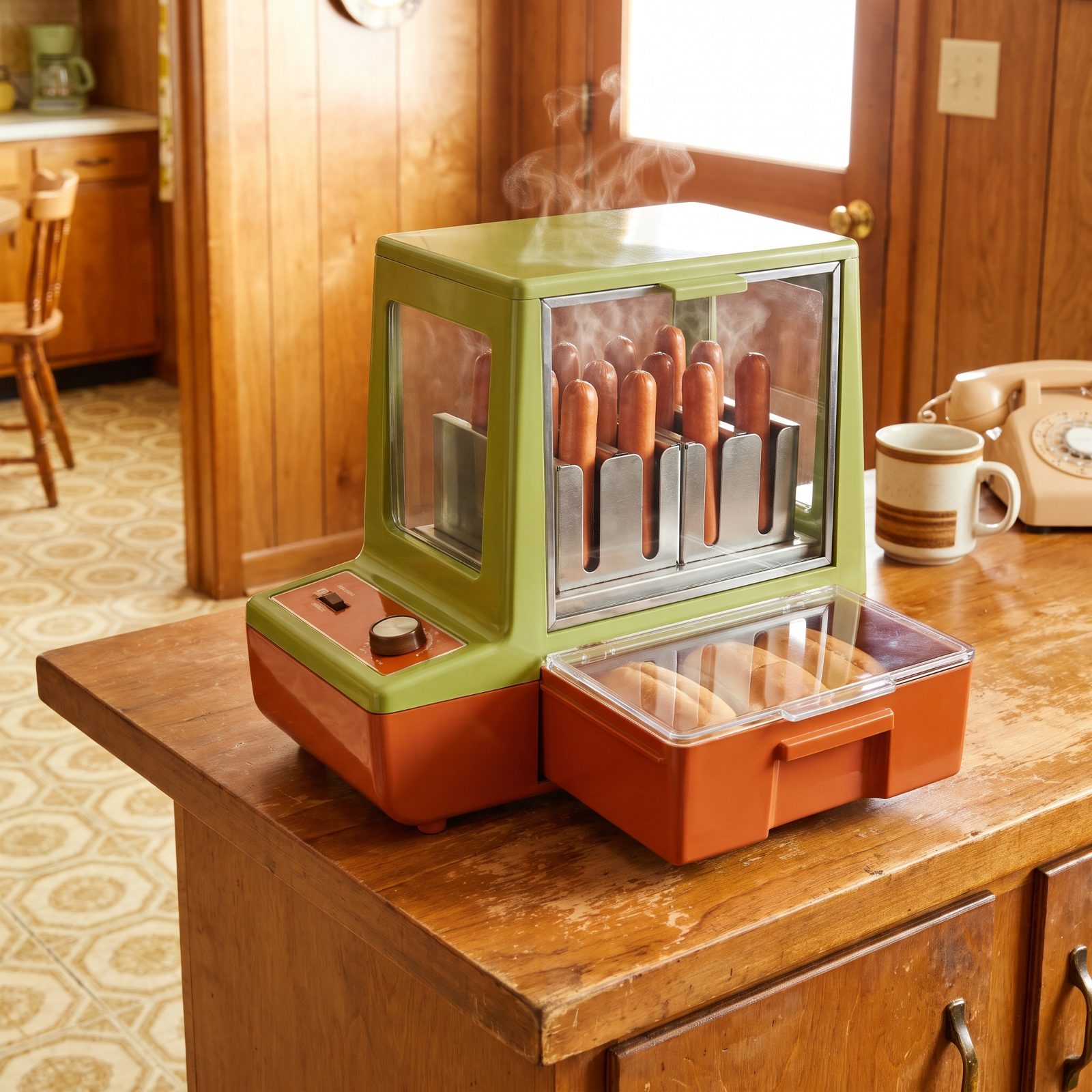
There was an era when a gadget that did exactly one thing felt like progress. This one steamed hot dogs upright and warmed the buns in a little side pocket, and families bought it in earnest.
It took up real estate for a food you could make in a pot of boiling water in five minutes. But that missed the point. The point was that it was fun, and that the hot dog cooker made a weeknight dinner feel like a small event.
A single-use appliance was a luxury statement once. Now it’s the first thing we’d declutter.
7. The Stand-Alone Milkshake Mixer With a Stainless-Steel Cup
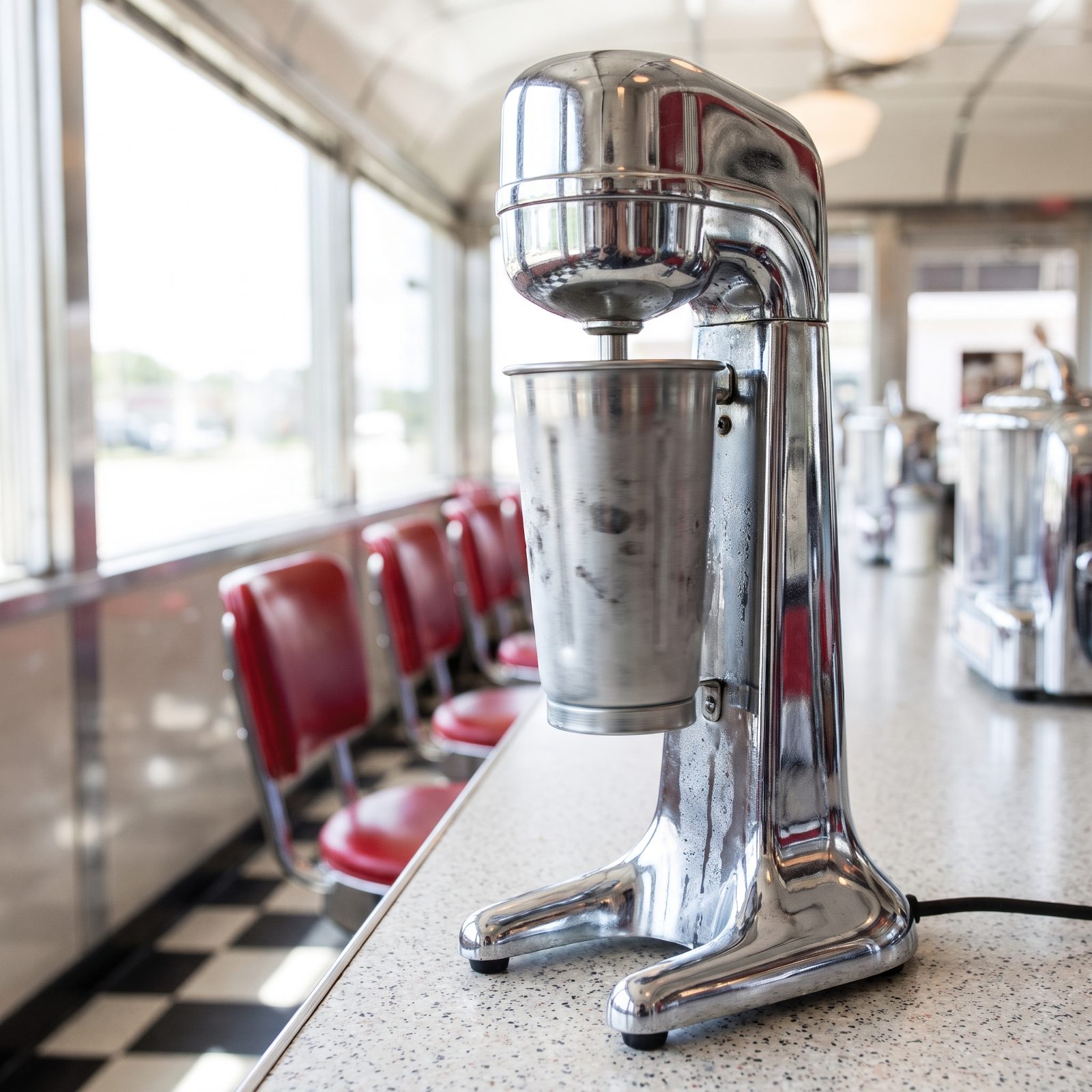
The sound alone takes people back: that high mechanical whir and the steel cup fogging up with cold.
This was no blender. It was a single-purpose spindle mixer, the same kind that lived behind the counter at the drugstore soda fountain, and having one at home meant you could make a real malt. The frosted stainless cup was half the magic. Nothing kept a milkshake that cold.
Countertop blenders absorbed the job, so the dedicated mixer slipped away. Gen Z has met the stainless cup only as a prop in a diner booth, if at all.
6. The Glass-Jar Blender With Push-Button Speeds
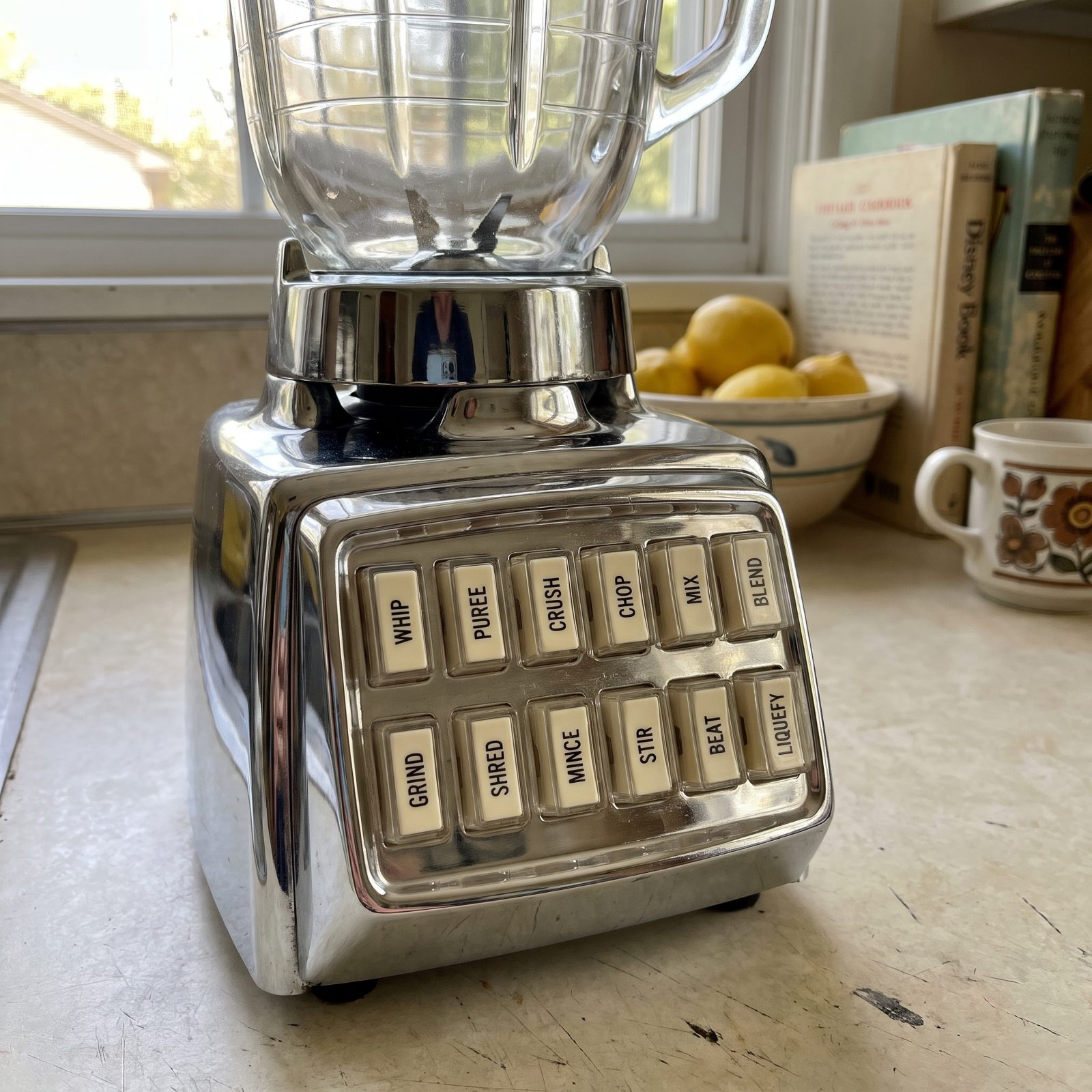
Twelve buttons, each with a word on it. Whip, puree, crush, blend, liquefy, and a few that nobody ever pressed. The glass-jar blender had the vocabulary of a thesaurus and the weight to match, with a jar of real glass thick enough to survive a drop that would have shattered a modern plastic pitcher.
You pressed a button, it stayed down, and the whole machine rattled across the counter if you didn’t hold it. Honestly? The push-button bank was mostly theater. Everyone used two speeds. But reading those tiny labels felt like operating something serious.
5. The Oster Kitchen Center With One Motor and Multiple Attachments
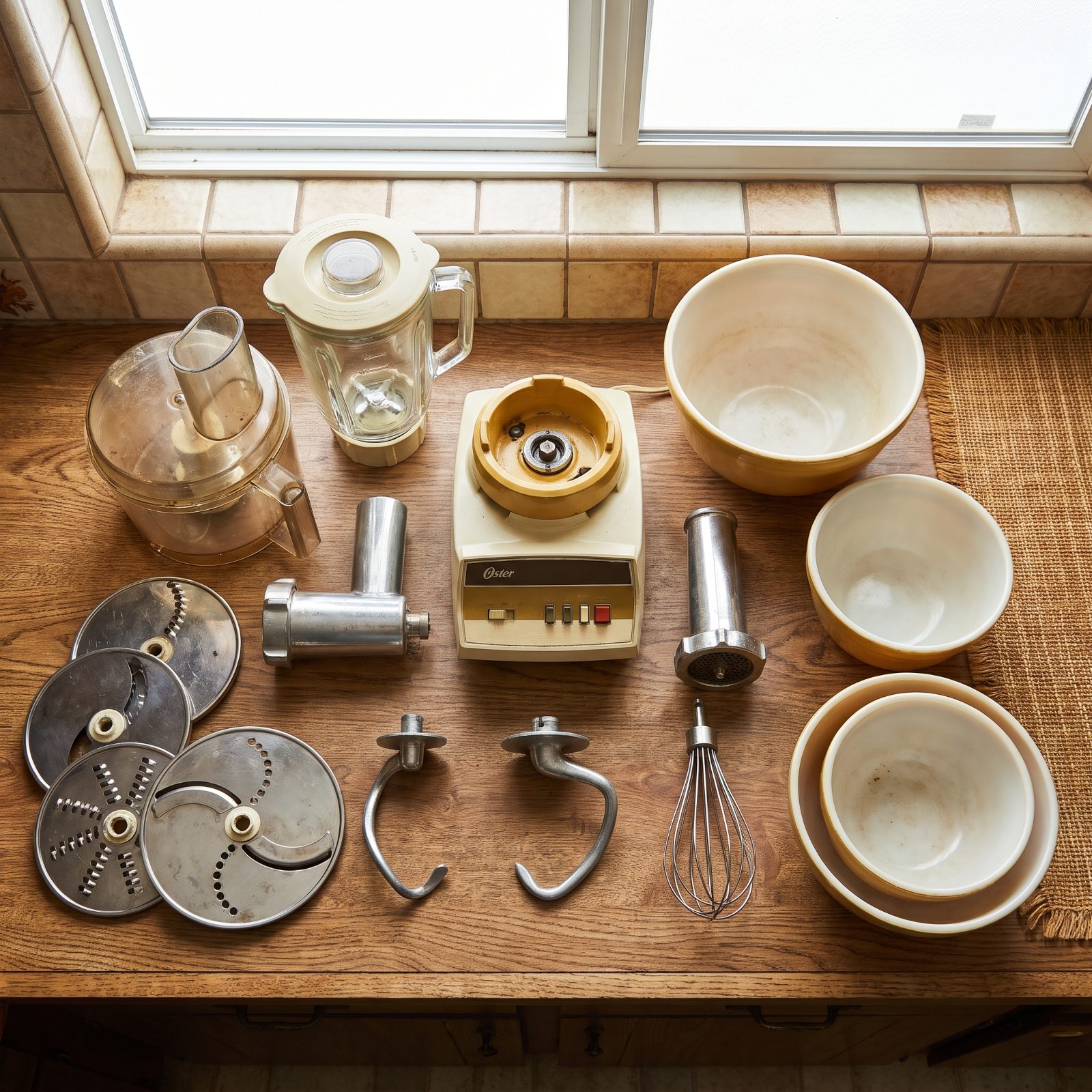
One motor, a drawer full of attachments, and a promise: this machine replaced your mixer, your blender, your grinder, and your dough hook all at once. The Oster Kitchen Center was the all-in-one dream appliance of the seventies, and it came with a chart telling you which piece did what.
The catch? Swapping the attachments, which lived in six different cabinets by the second year. Half of them never came out again. Still, as a piece of design ambition, it was something — one powerful motor doing everything beats eight weak gadgets doing one thing each, and that idea has quietly come back around.
4. The Countertop Meat Grinder That Clamped to the Edge and Chewed Through Sunday
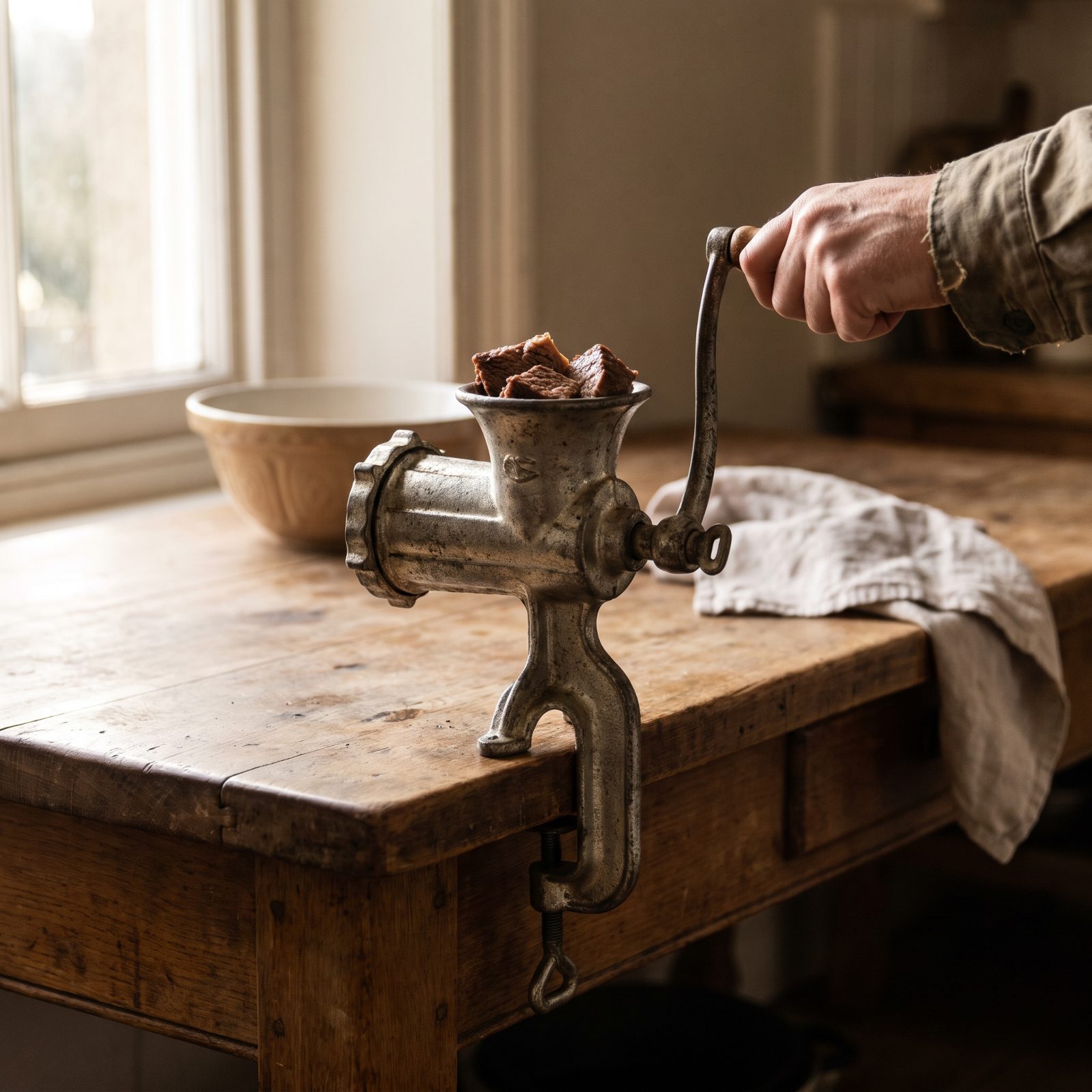
Sunday’s roast never really ended on Sunday. Come Monday, the cast-iron grinder came out of the drawer, clamped onto the edge of the counter or kitchen table with a wing screw, and whatever was left of the beef or ham went in the top. You turned the crank, the auger pulled the meat through, and it came out the plate in little ribbons ready for hash, croquettes, or ham salad spread on white bread.
It was frugality you could hear: a steady crunch-and-squeak with every turn. The same grinder handled cranberry relish at Thanksgiving, whole berries and orange pieces going in together. Nothing about it was fast. But nothing went to waste either, and that was exactly the point.
3. The Range With a Deep-Well Cooker Sunk Right Into the Cooktop
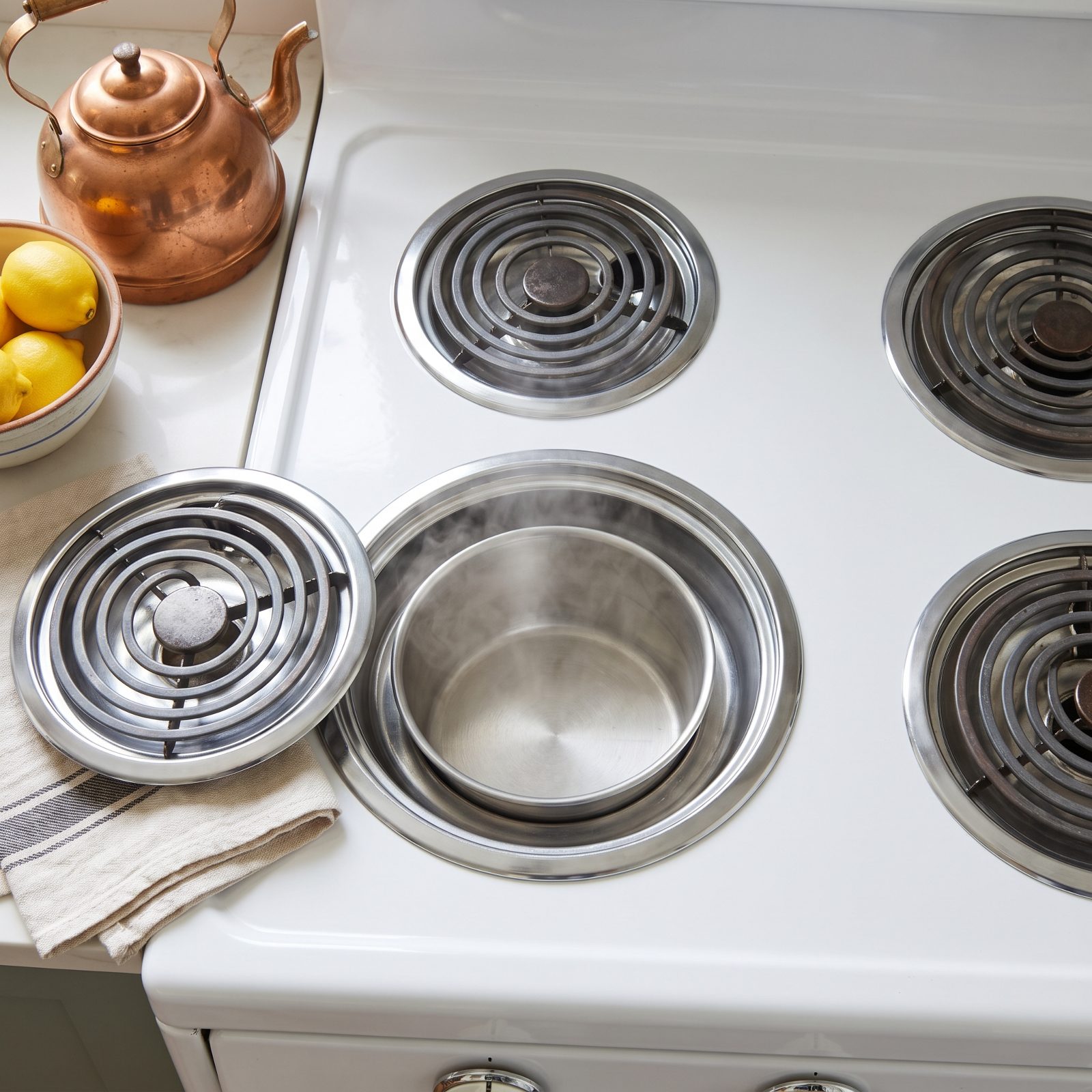
Lift what looked like one of the burners on some mid-century electric ranges and you’d find a hole. A deep one. The deep-well cooker was a pot sunk right into the cooktop, sitting over its own heating element, built for soups, stews, beans, and anything else that wanted hours of low, steady heat.
You loaded it in the morning, dropped the lid, and left it alone. Sound familiar? It was doing the Crock-Pot’s job years before the Crock-Pot showed up on the counter. On some ranges the element could even be raised to work as a regular burner when the well wasn’t needed. Today most people would assume it was a manufacturing defect.
2. The Refrigerator You Opened With Your Foot Because Your Hands Were Full
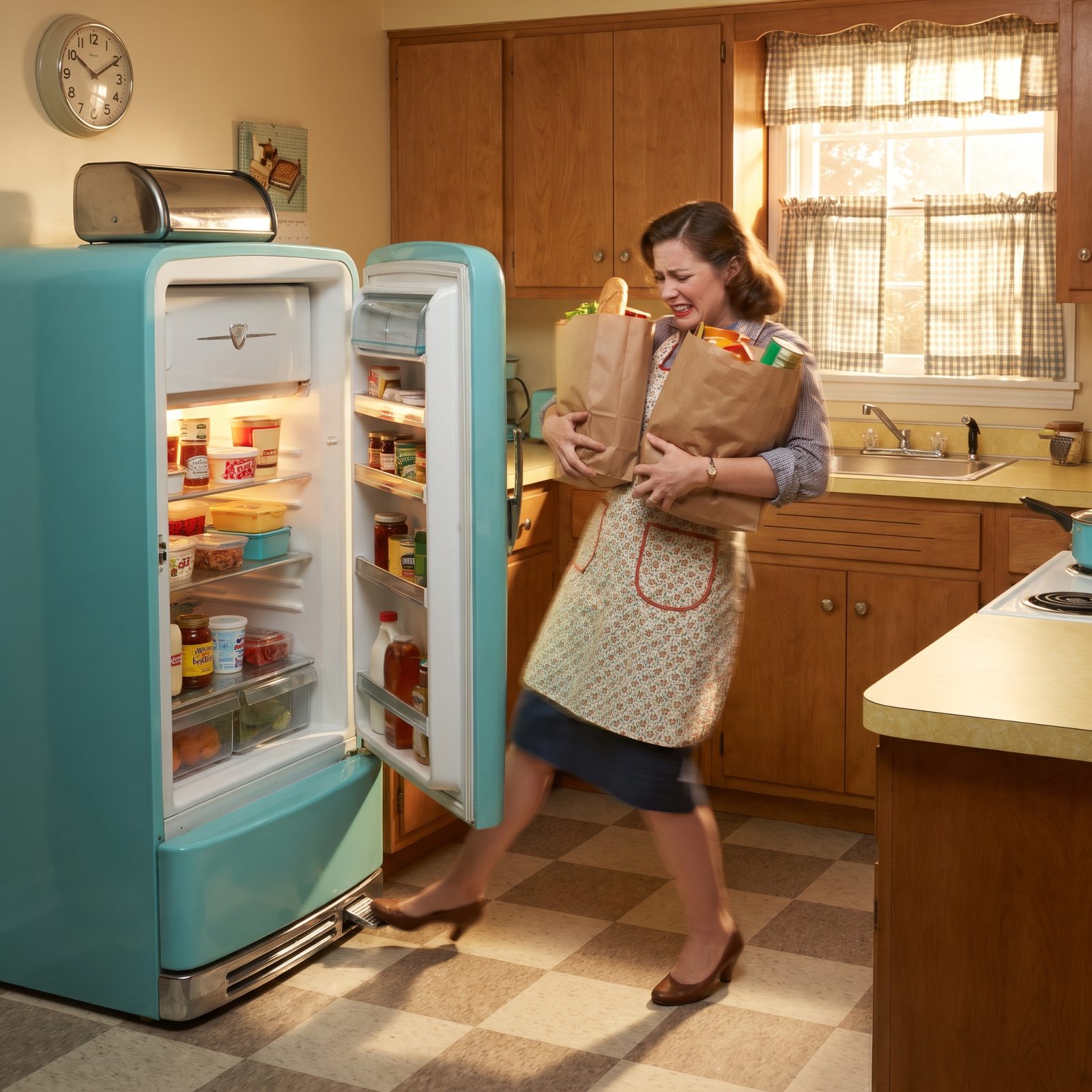
Arms full of groceries, a casserole dish in each hand, and the fridge door shut tight. Several refrigerators of the 1950s solved that with a foot pedal near the base. One press and the door swung open, no hands required, which felt like the future had arrived in a kitchen painted turquoise.
It made sense for the era, when doors closed with a heavy mechanical latch rather than a soft magnetic seal. The pedal didn’t last, but the idea keeps coming back. Touch-free gadgets get pitched as innovations now, even though a Boomer kitchen worked it out with a lever and a little leverage.
1. The Chrome Electric Percolator That Gurgled the House Awake
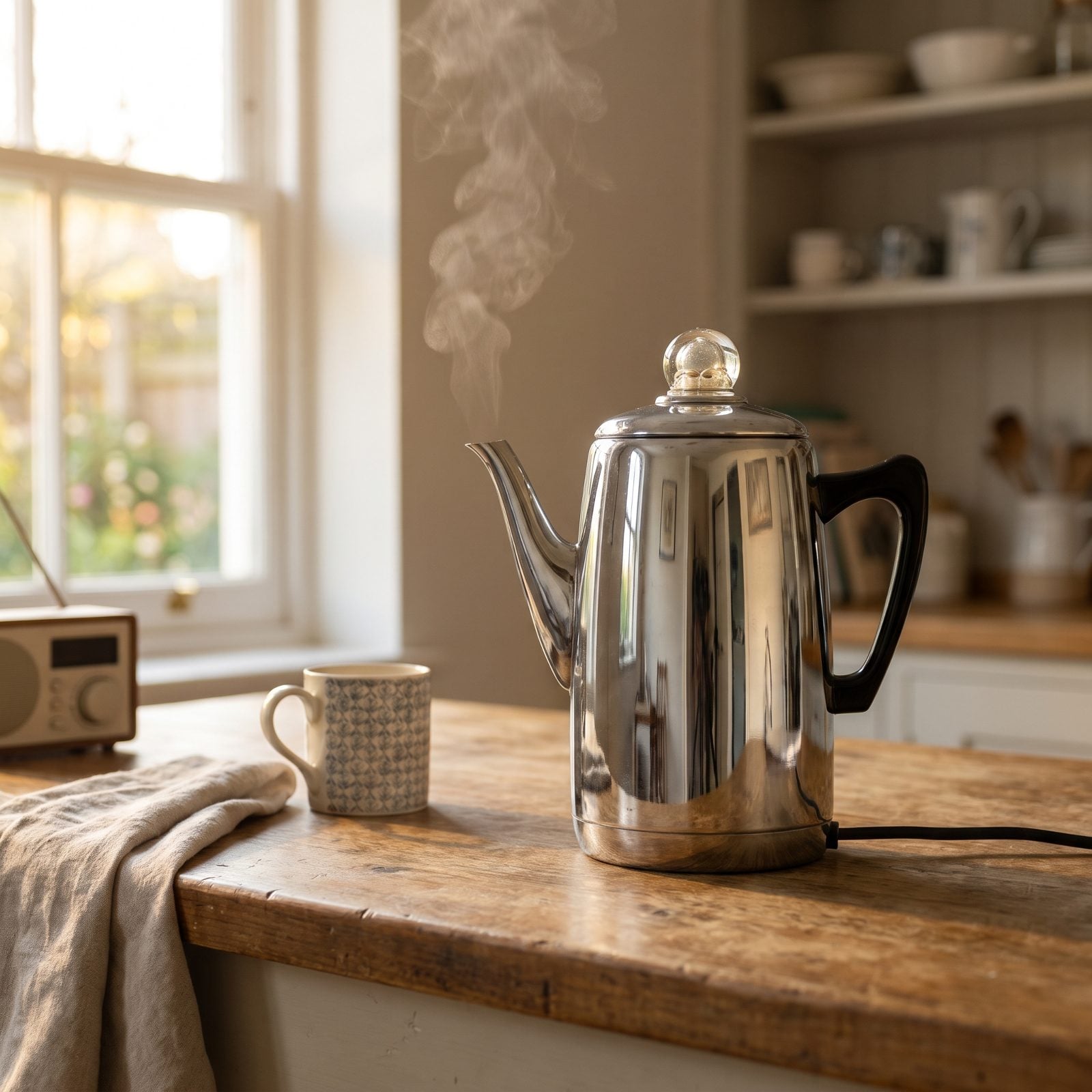
Before anyone was awake enough to talk, the percolator was already talking. Water heated in the base, shot up a center tube, and splashed over the grounds again and again, and you could watch it happen through the little glass knob on the lid as the coffee darkened with every burble. The gurgle carried through the whole house. That was the alarm clock.
The coffee itself was strong, hot, and often bitter, since the grounds got cycled through over and over. Nobody complained. When drip machines took over in the 1970s, they made a better cup, but they never made a kitchen sound like morning the way that polished chrome pot did.
Describing how a percolator runs boiling water over the same grounds again and again, a former barista warns “This almost always leads to very strong, but very bitter and over-extracted coffee.”