
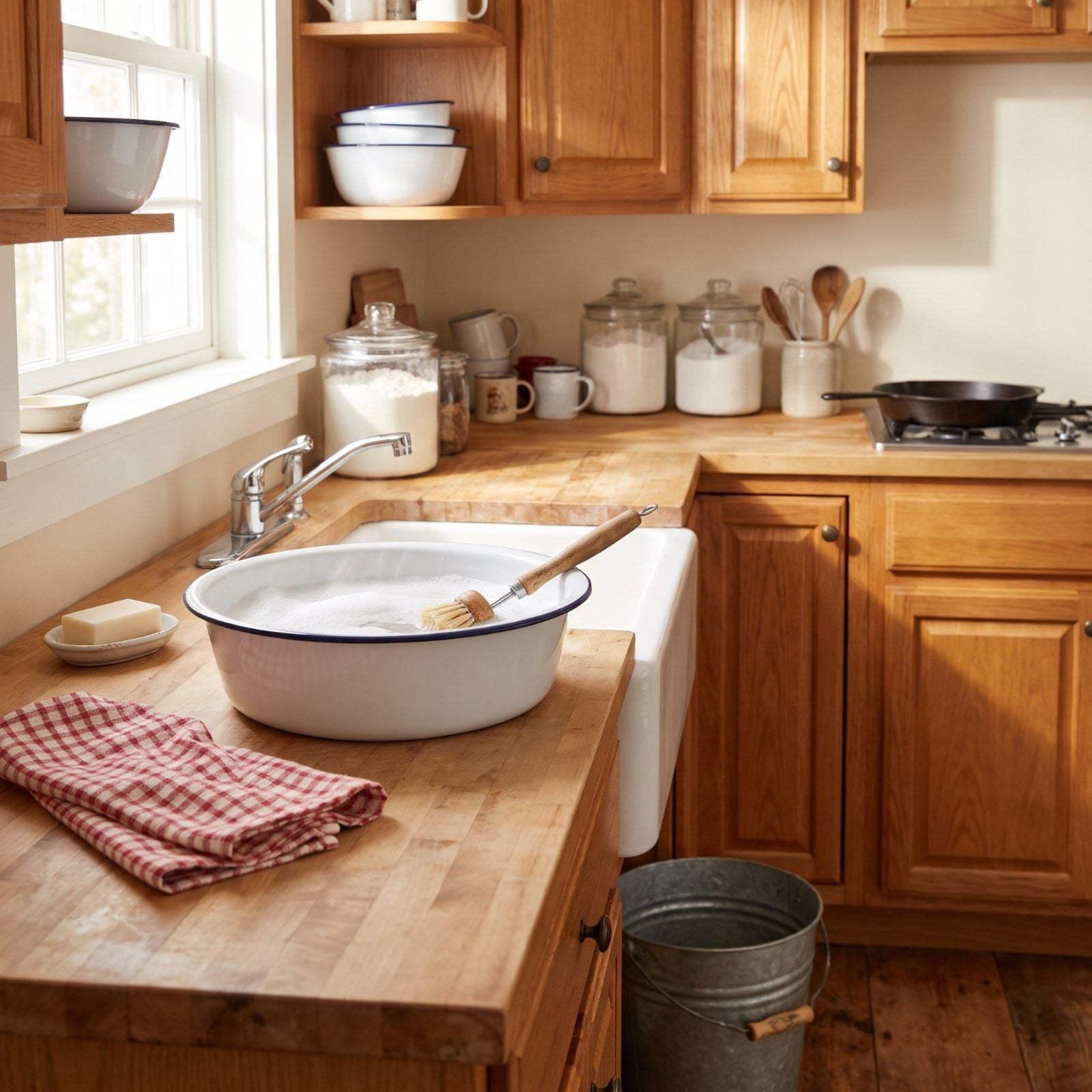
Nobody ever handed you a dishpan and explained why it mattered. You just watched it fill with soapy water before the pork chops hit the pan, and somehow the kitchen was clean before dinner ended. These habits came out of small kitchens, tight budgets, and no dishwasher to hide behind. They still work — better than the apps, the pods, the plug-in contraptions. The ones below cost almost nothing and save you more than you’d guess.
Please note that some of the images in this article were created with the assistance of AI.
44. Clean as You Cook
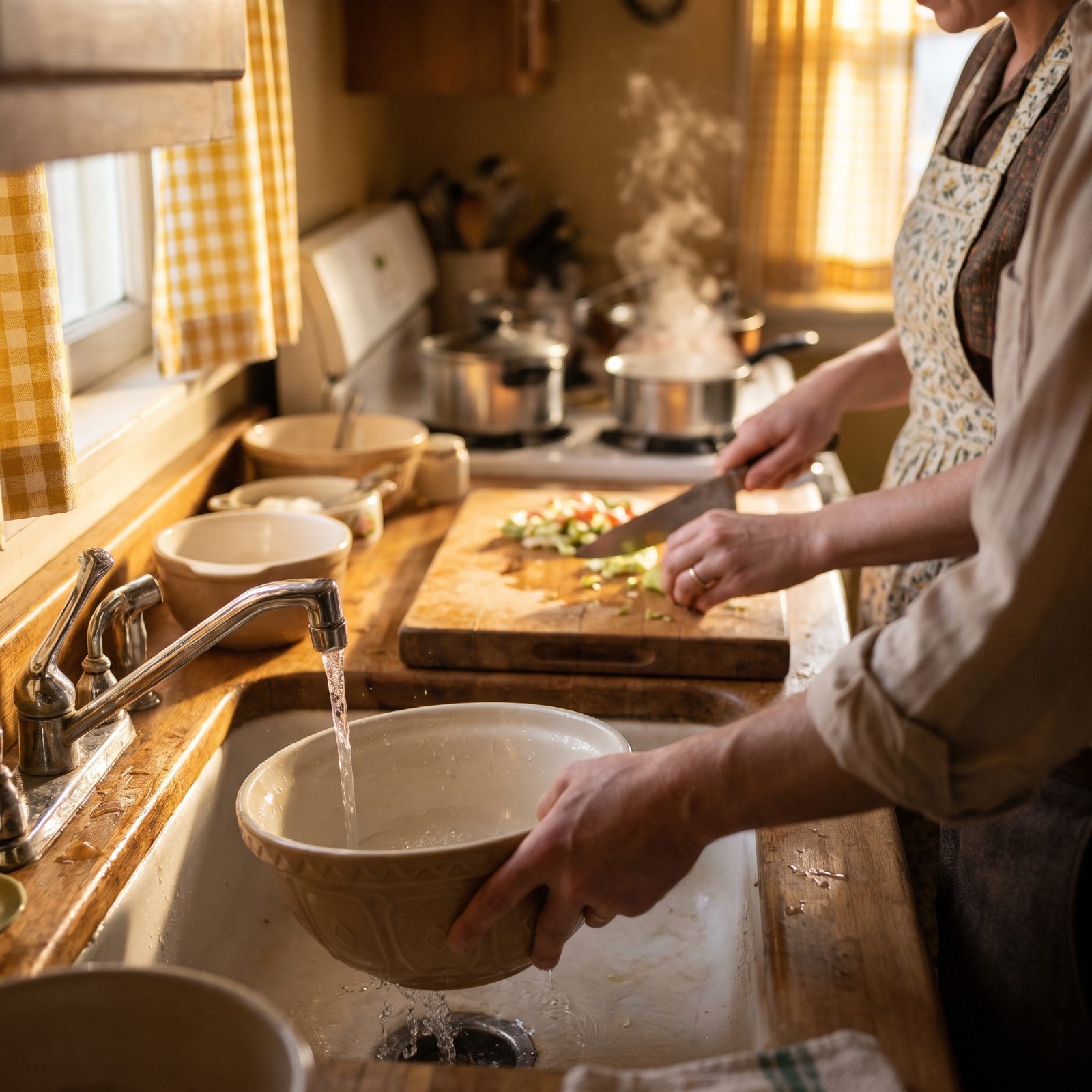
The sink never overflows if you never let it fill. That’s the whole trick. You rinse the mixing bowl while the onions soften, wipe the board before the next thing needs chopping, and by the time dinner’s plated the only dirty dish left is the one you ate from.
Skip it and you pay for it every single night, standing over a mountain of crusted pots at nine o’clock wondering why you hate your own kitchen. The problem wasn’t the cooking. It was the waiting.
43. Fill a Dishpan With Hot, Soapy Water Before Dinner
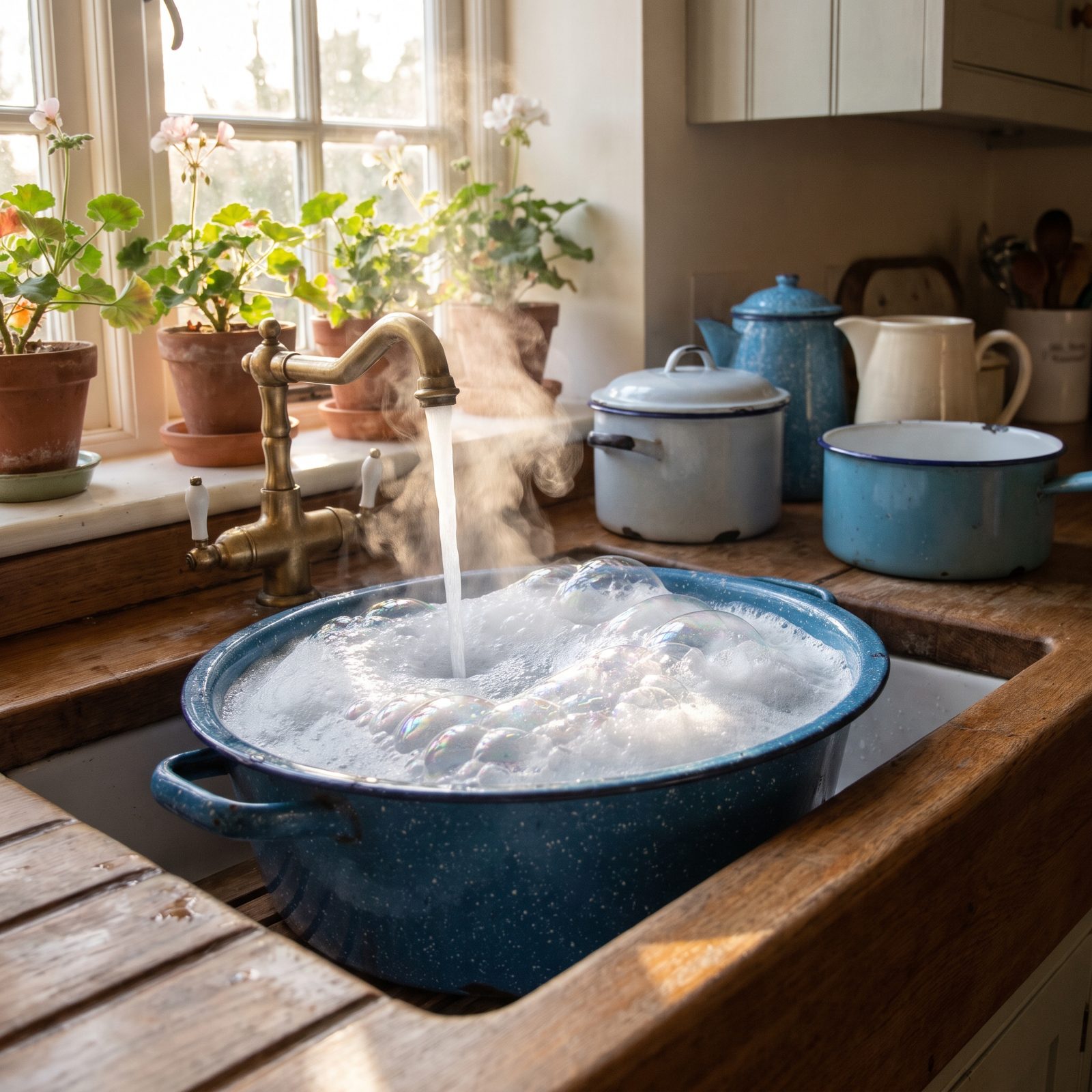
Set the pan filling while the oven preheats. Hot water, a squeeze of soap, done. Every fork, every measuring cup, every spoon goes in the second you’re finished with it.
What you’re really doing is buying time. A utensil that soaks for a while practically wipes itself, and the egg yolk that would’ve cemented itself to the whisk just slides off. You did the work before the work got hard.
What Our Readers Say
- When Piaci Pizza readers loved a food photo and tapped a reason, comfort came out on top at 30%, and nostalgia still made the list at 15%.
From Piaci Pizza reader polls and votes.
42. Scrape Plates Before They Reach the Sink
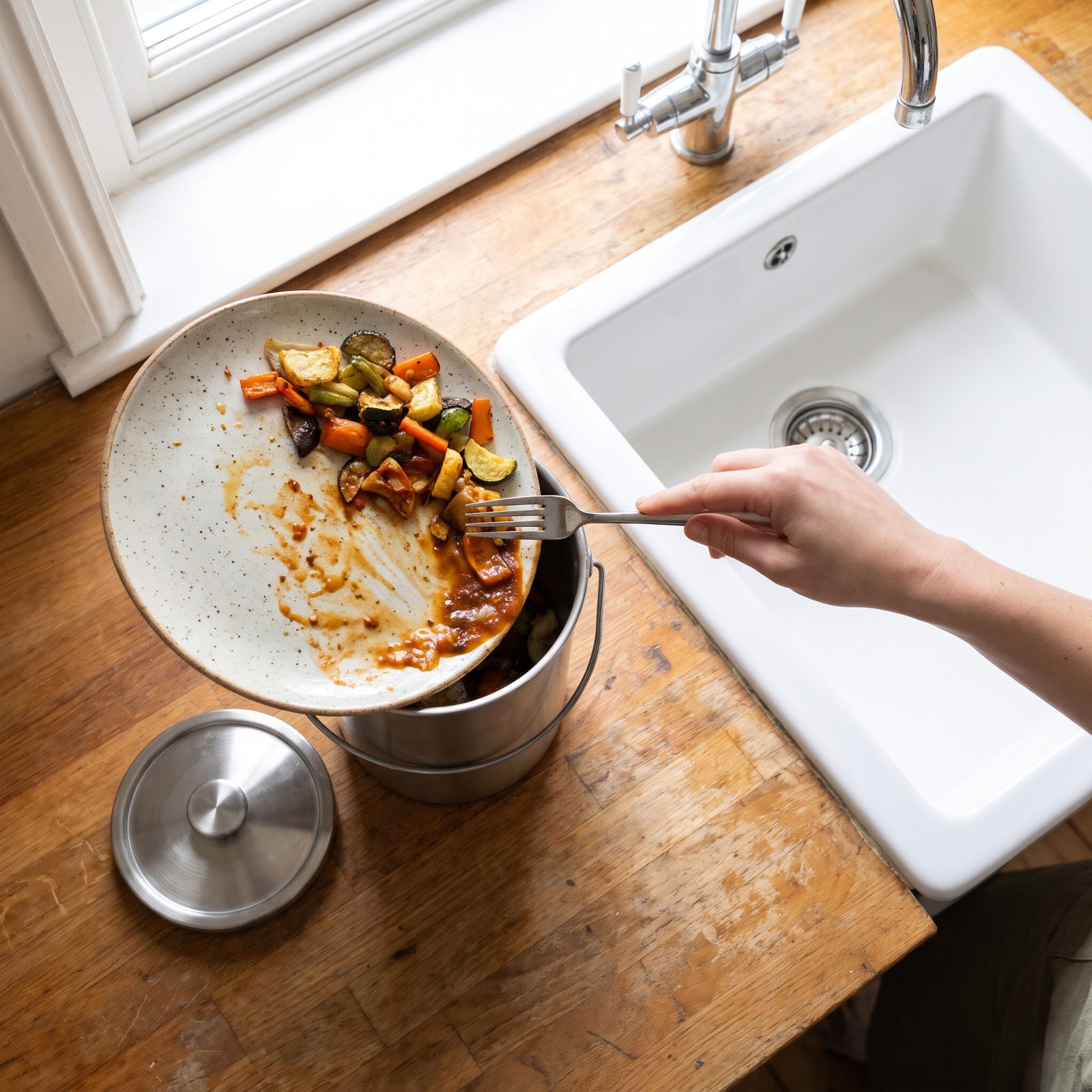
Food in the drain is a plumber’s invoice waiting to happen. Scrape it first, always, into the compost pail or the trash, before a single plate touches the water.
Here’s the part people miss: scraping keeps your wash water clean longer. A sink full of floating rice and gravy stops washing anything and starts just smearing grease around. Scrape well and one basin does the whole meal.
41. Soak Warm Pans Before Food Can Harden
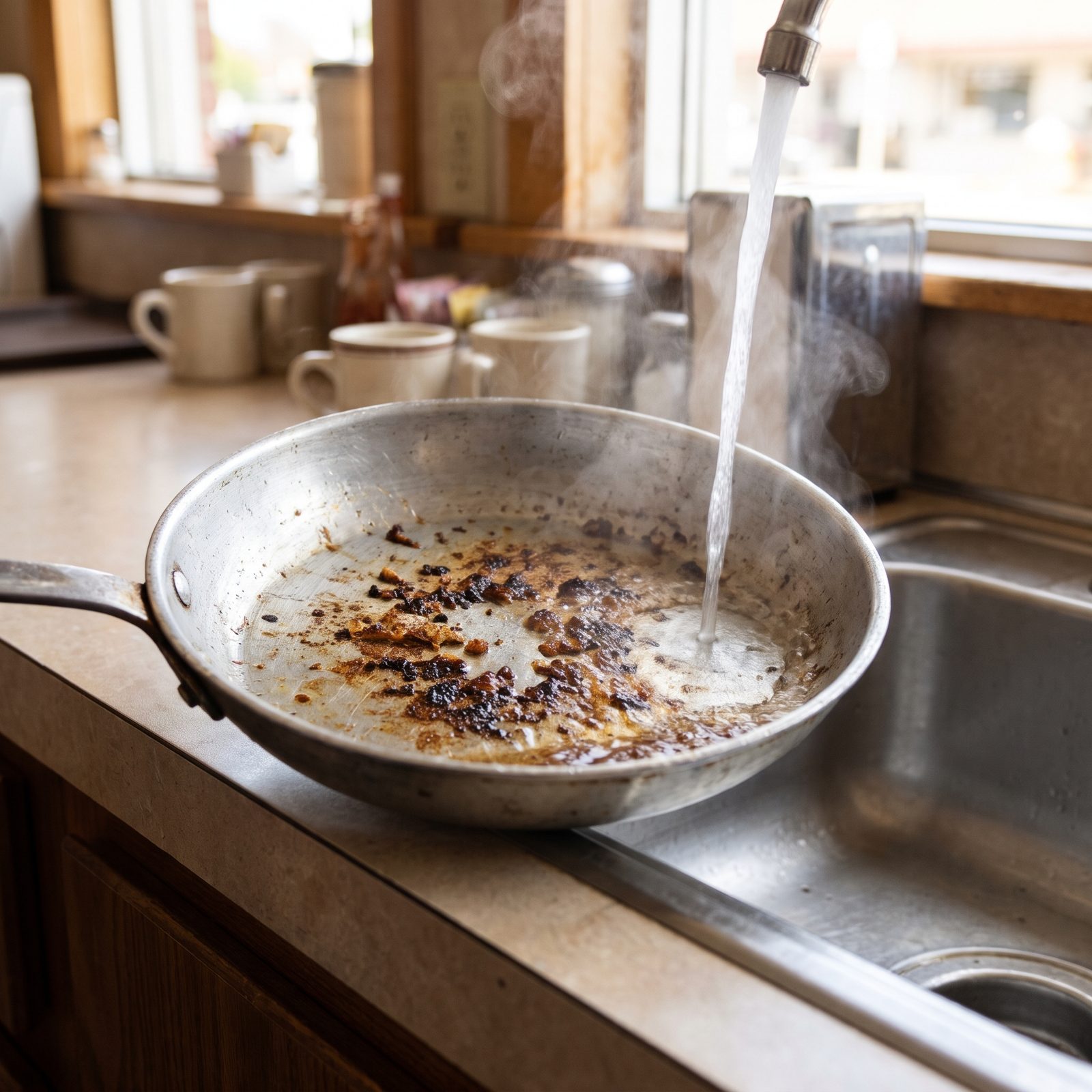
Timing is everything with a crusty pan. The moment it comes off the heat, fill it with warm water and a drop of soap. Not cold. Warm. Cold water shocks baked-on starch into concrete.
Give it the length of your meal. By the time you’re clearing the table, the scorched rice at the bottom has gone soft enough to wipe with your thumb — no scouring, no steel wool, no scraping your knuckles raw against the side.
40. Wash Glassware Before Greasy Cookware
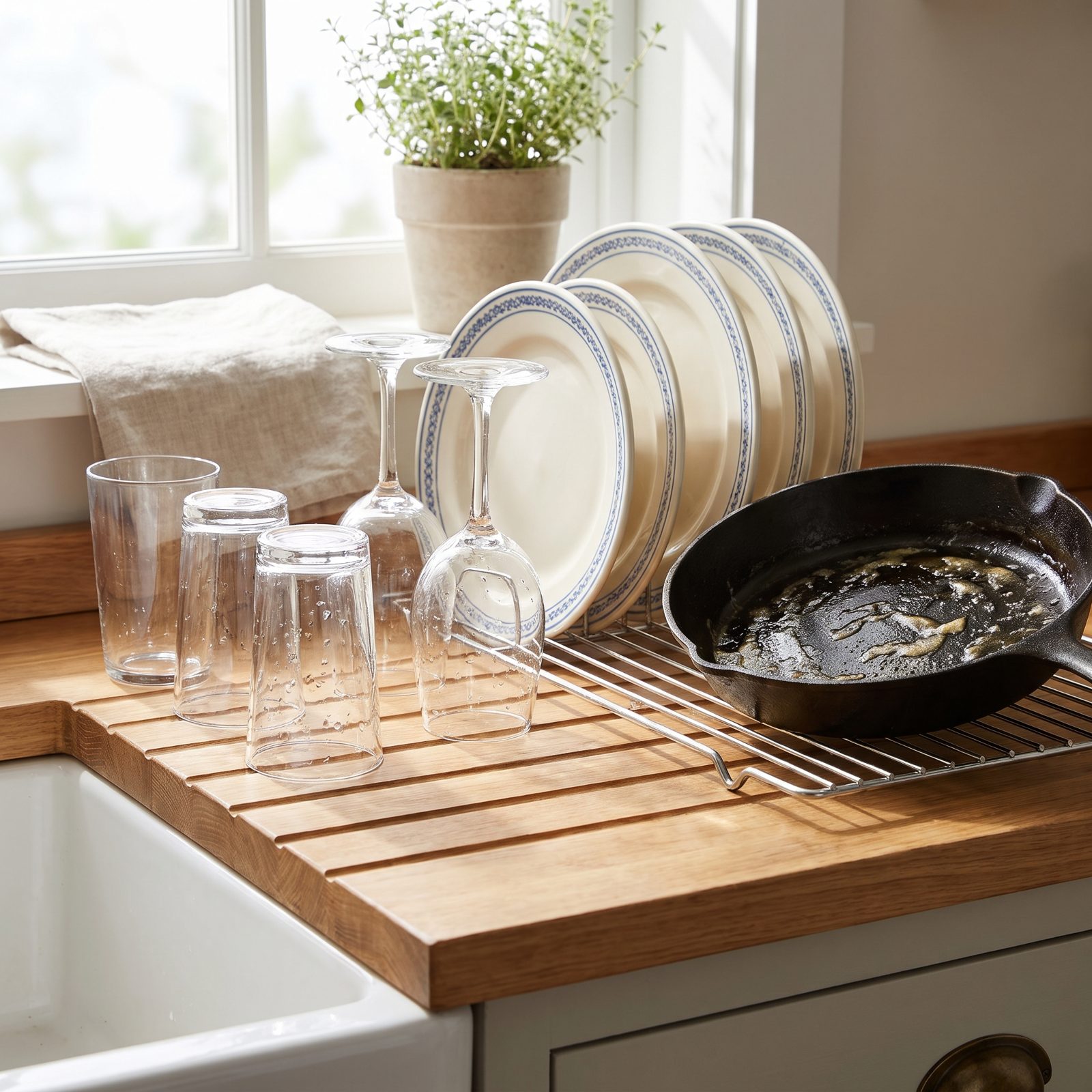
Order matters more than anyone tells you. Glasses and cups go first, while the water’s clean and clear. Then plates. The greasy pots and pans wait for last, when the water’s already given up.
Wash a wine glass after the bacon pan and you’ll understand fast. That film doesn’t rinse off. You end up re-washing the thing you did first, which defeats having a system at all.
39. Use Separate Wash and Rinse Basins

One basin for washing, one for rinsing. The two-sink method, except you don’t need two sinks — just a second basin or dishpan.
You wash in the soapy one, dunk in the clear one, and set to dry. No running tap, which saves a shocking amount of water over a week of dinners. The dishes come out without that soap-film haze a quick rinse under the faucet always leaves behind.
Our grandmothers did this their whole lives, and it looks fussy. It isn’t. It’s faster.
38. Let Dishes Air-Dry Instead of Towel-Drying
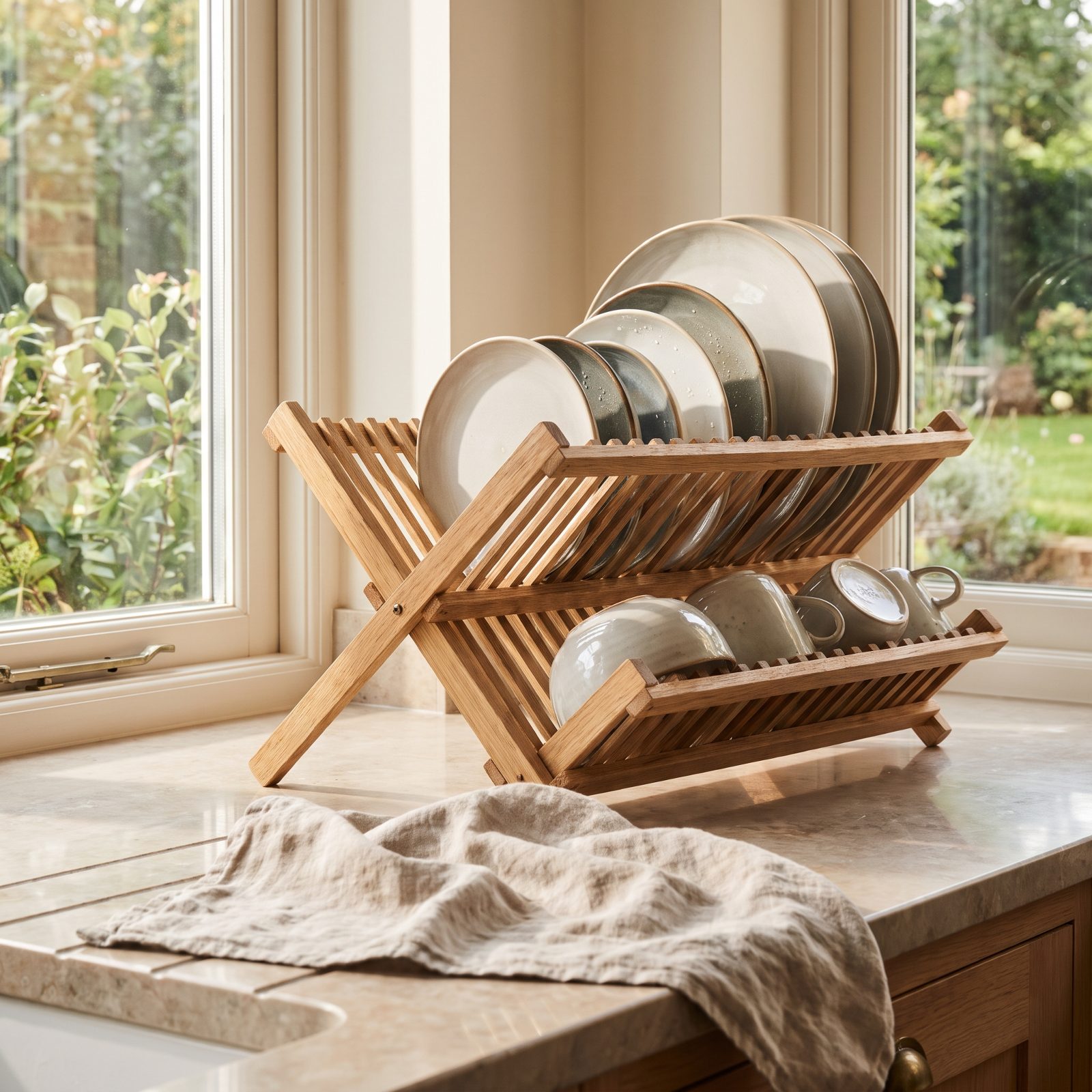
Put the towel down. A damp dish towel is about the least sanitary thing in your kitchen, passing bacteria from the roast pan to your clean plates with every wipe.
Air-drying is cleaner and it’s free labor. Stack everything in the rack, walk away, and gravity handles the rest. Glasses come out clearer, with none of the lint a towel leaves behind.
37. Wipe the Sink Dry Before Bed
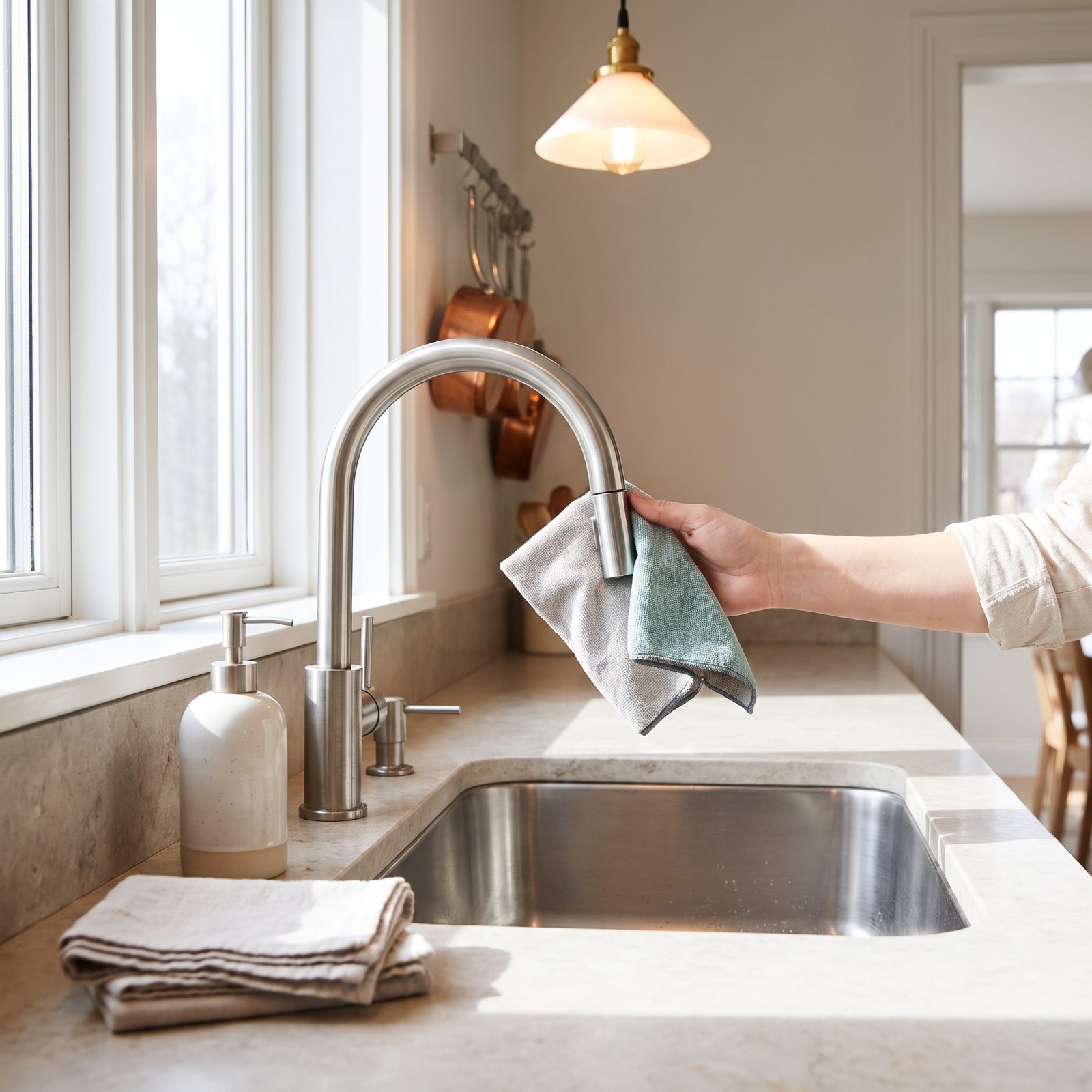
Last thing before the kitchen light goes off: run the cloth around the sink and wipe it bone dry. Faucet included.
Sounds like nothing. It isn’t. A dry sink doesn’t grow the pink mold ring, doesn’t water-spot, doesn’t smell. And there’s something about walking in the next morning to a clean dry sink waiting for you — the whole day starts a little straighter.
36. Hang Wet Dishcloths Fully Open
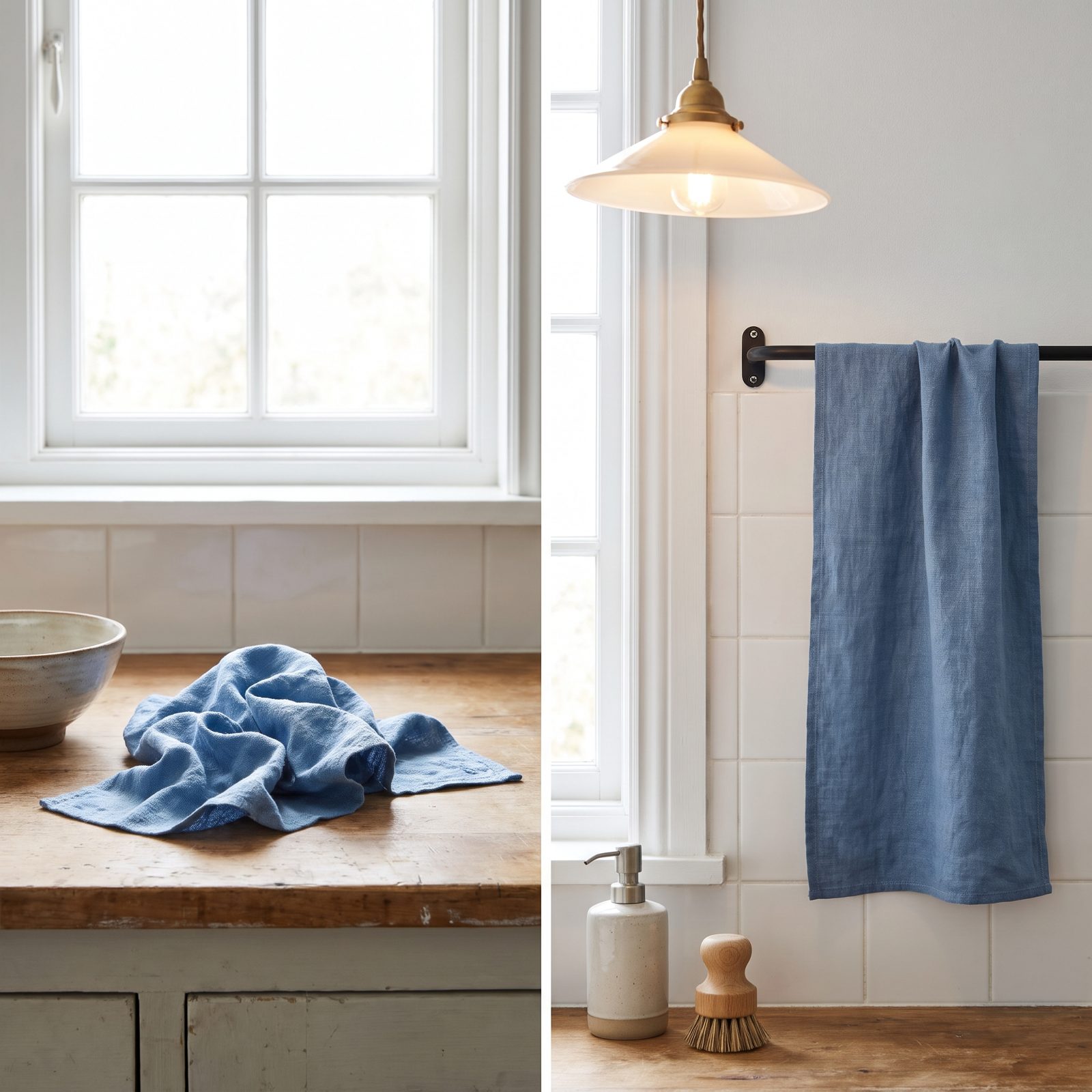
A dishcloth wadded in a ball stays wet, and a wet cloth goes sour by morning. You know the smell — that mildew funk no amount of soap seems to beat.
Hang it open, spread wide over a rail so the air gets to the whole thing. It dries in an hour and smells like nothing at all. This one small move is the difference between a cloth that lasts a week and one you toss on Tuesday.
35. Boil Cotton Dishcloths for a Weekly Reset
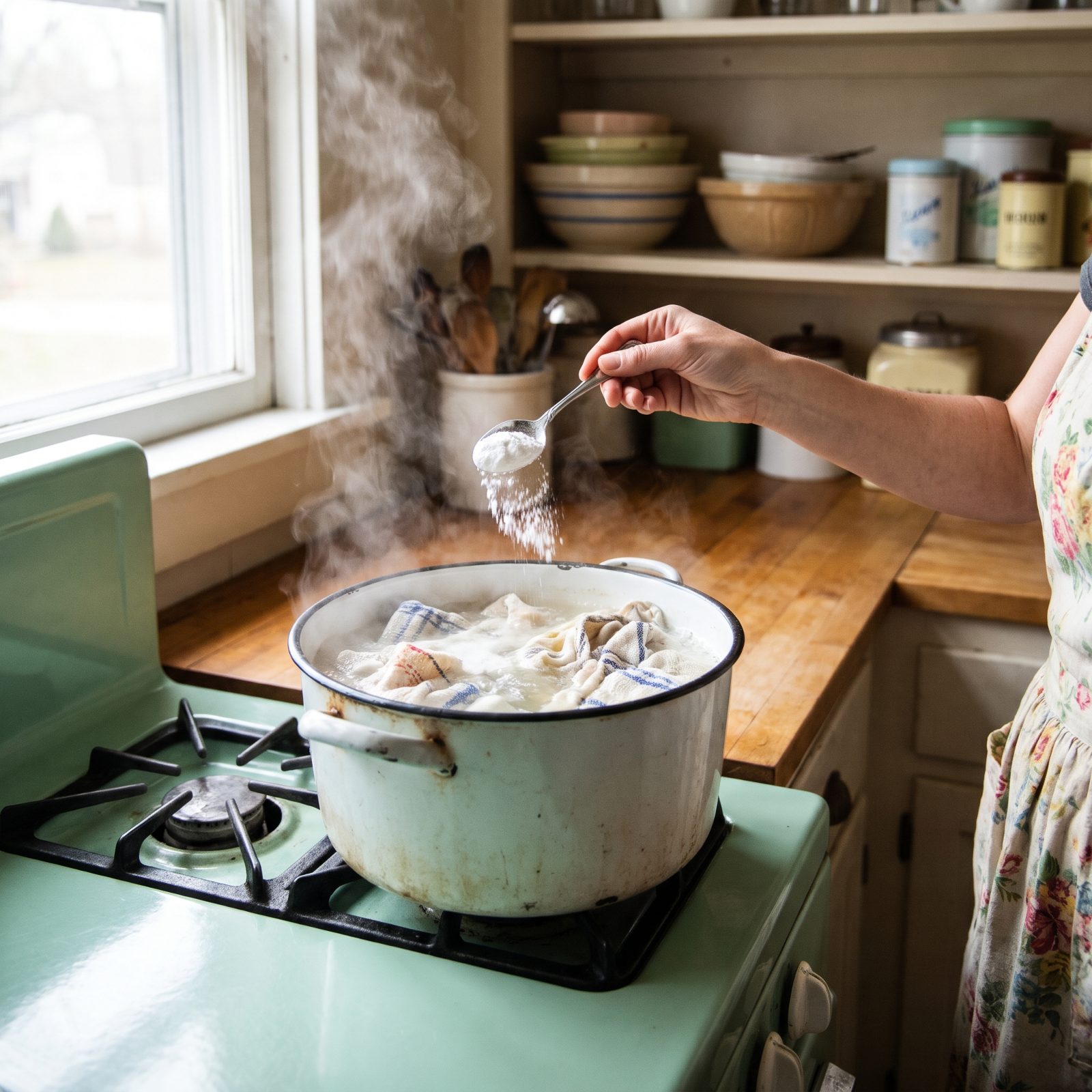
Once a week, drop your cotton dishcloths into a pot of boiling water for ten minutes. A splash of baking soda if you’ve got it. That’s the whole reset.
Boiling kills what detergent misses, strips out the grease that builds up in the fibers, and brings a gray, tired cloth back to white. A cloth you’d otherwise throw away gets another month of life.
People buy packs of disposable wipes to dodge exactly this, and I get the appeal. But a boiled cotton cloth outlasts a hundred wipes and costs almost nothing. Half the time the pot’s already on the stove anyway. Go on, go check your dishcloth drawer. You’ll know the one I mean.
34. Keep Separate Cloths for Dishes, Counters, and Floors
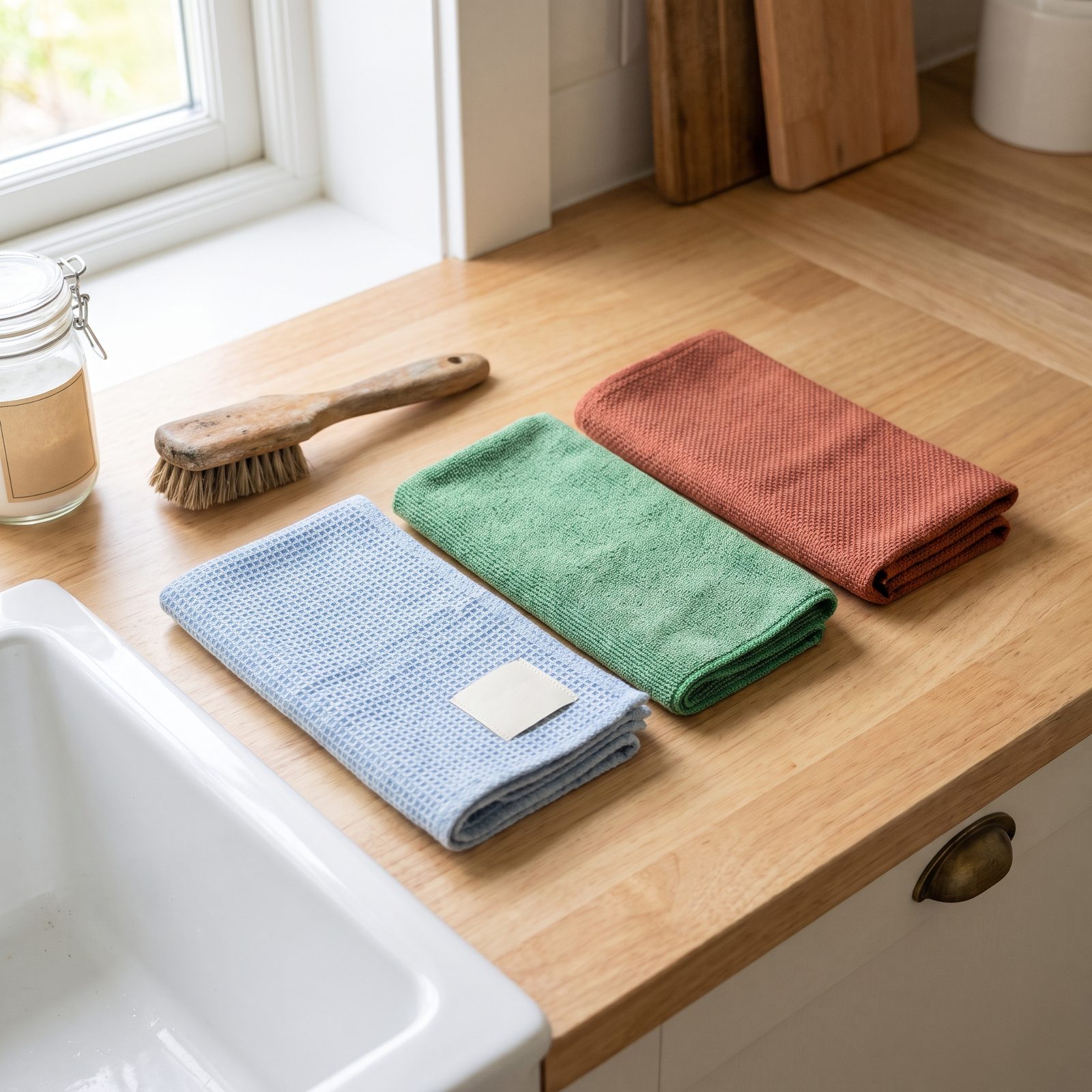
The one-rag-for-everything habit is how counter grime ends up smeared across the plate you eat from. Color-coding fixes it with zero technology: blue wipes dishes, green handles counters, and the rust-red one lives for floor spills, never touching anything above knee height.
Your eyes sort them before your brain does. No confusion, no cross-contamination, no mystery smell building up in a single overworked rag.
33. Shake Tablecloth Crumbs Straight Out the Back Door
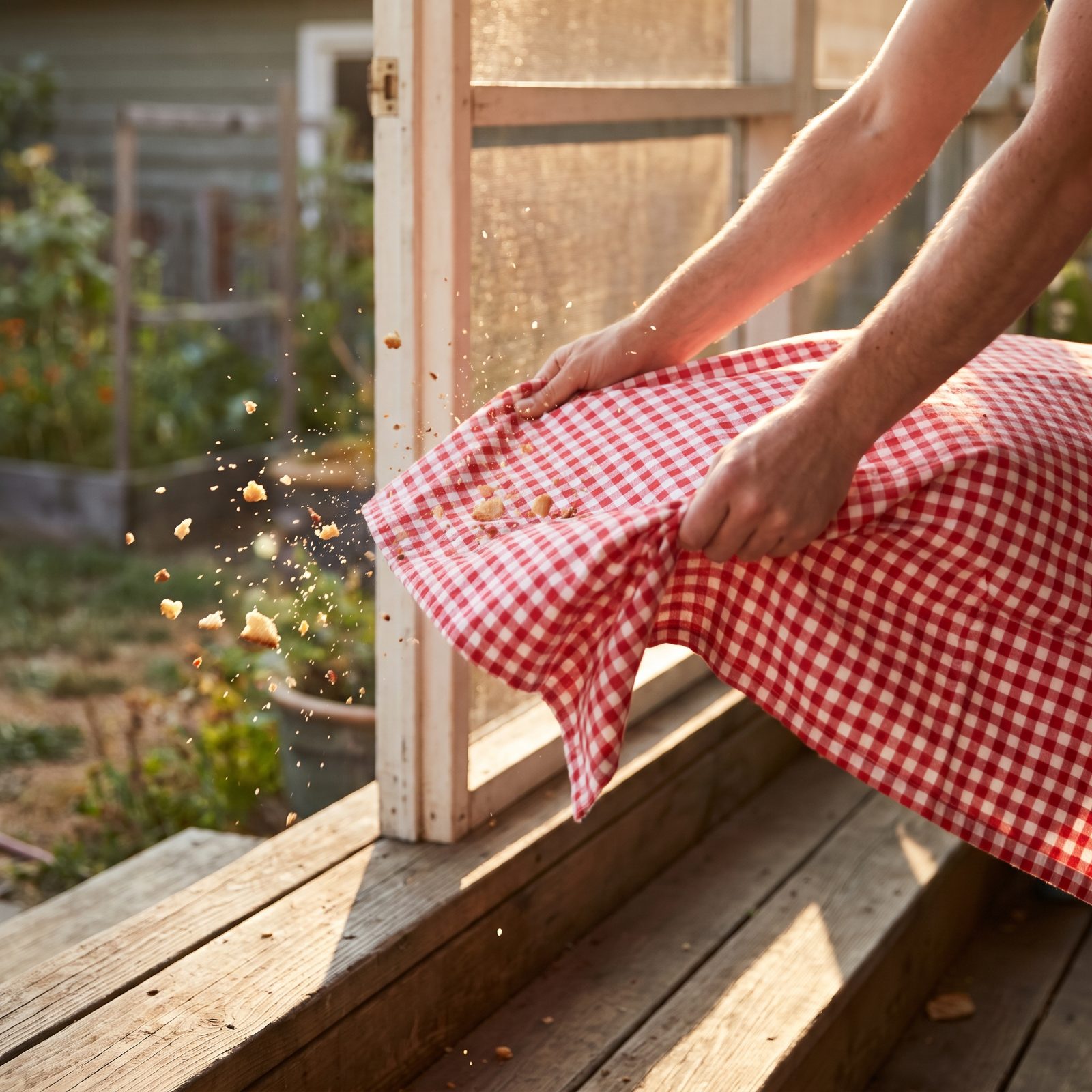
There’s a specific satisfaction in snapping a checkered tablecloth over the back step and watching the crumbs scatter for the birds. One shake and the table is clean — no vacuum, no cord, no fuss.
Do it after every real meal and crumbs never get the chance to settle into chair cushions or migrate under the table legs. The garden gets the leftovers, and your cloth is folded and put away in ten seconds flat.
I hold mine by two corners and give it a firm downward crack. Works every time.
32. Sweep the Table With a Crumb Brush and Little Pan
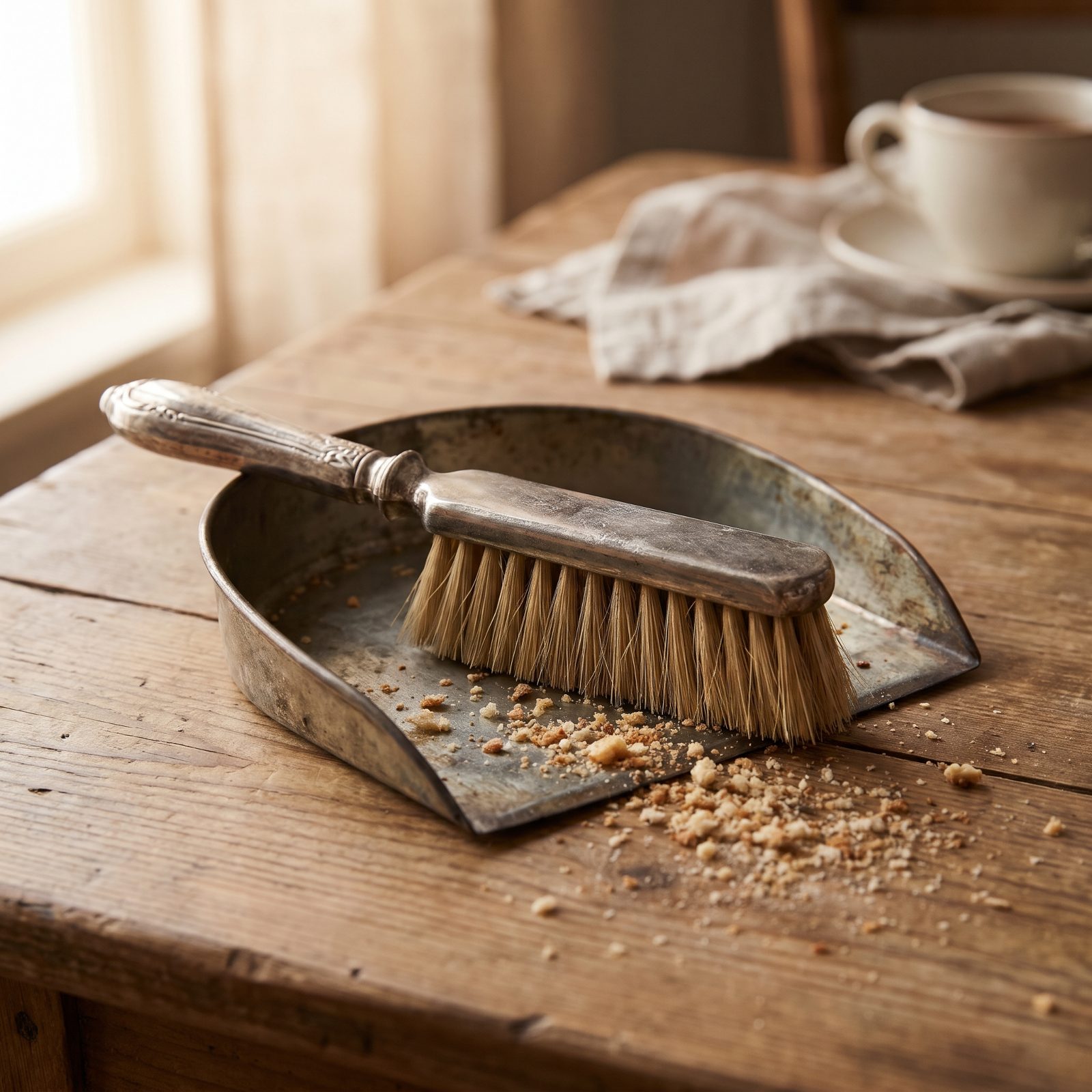
Before handheld vacuums existed, every proper table had a crumb brush and a curved tin pan, and honestly nothing has improved on it. You sweep, the crumbs tumble into the pan, you tip them in the bin. Silent, instant, nothing to charge.
It handles the fine stuff a shaken tablecloth leaves behind — the sugar near the coffee cups, the toast flecks by the butter dish. A good boar-bristle brush lasts decades.
The best kitchen tools are the ones that never needed a battery in the first place.
31. Run a Bottle Brush Through Narrow Containers the Second They’re Empty
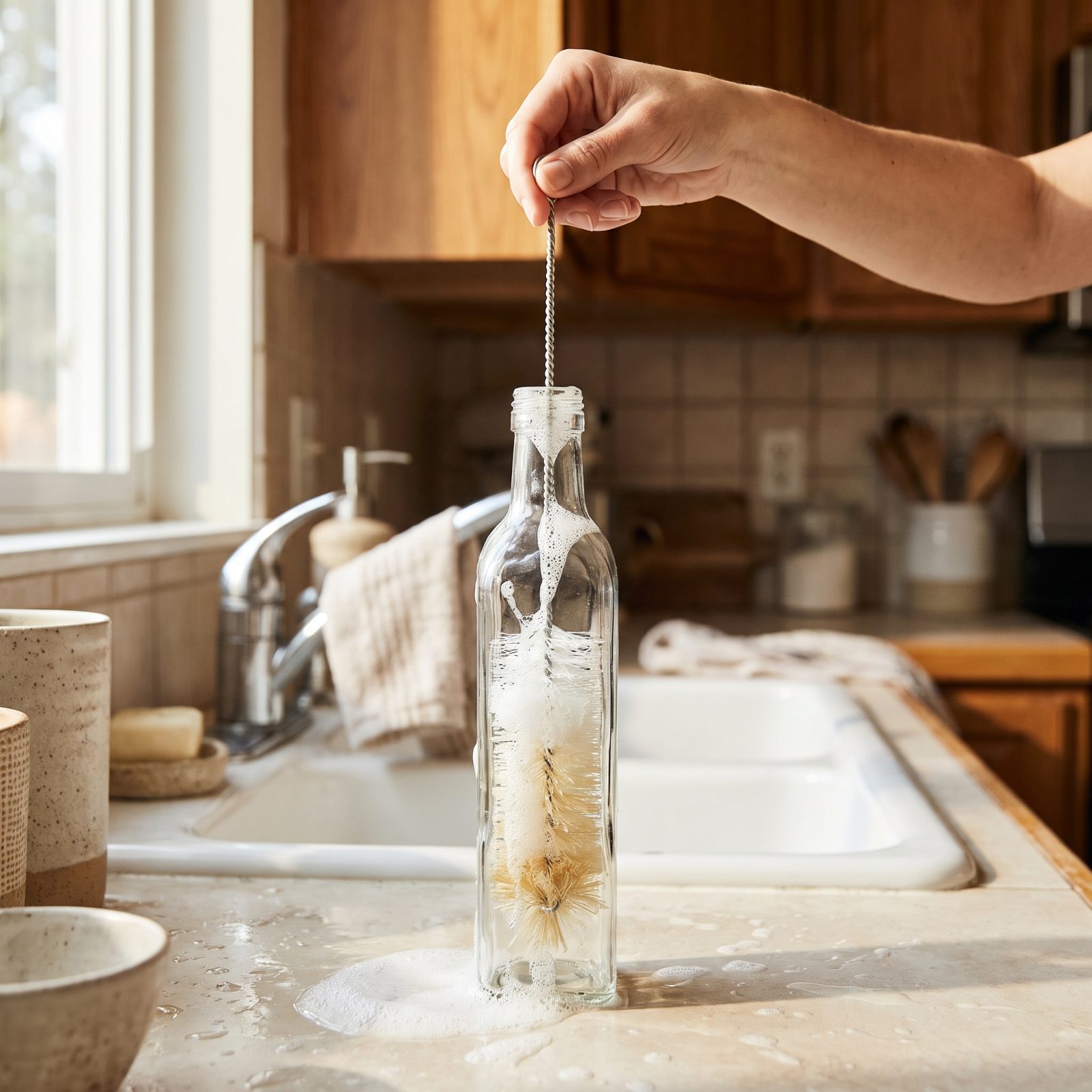
Wait a day and the residue at the bottom of a narrow jar turns into cement. Hit it the moment it’s empty, while whatever was in there is still soft, and a bottle brush clears it in three twists.
This one habit keeps olive oil cruets, vinegar bottles, and thin vases from developing that cloudy, sour film you can never quite rinse out later.
30. Put a Saucer Under Every Sticky Pantry Jar
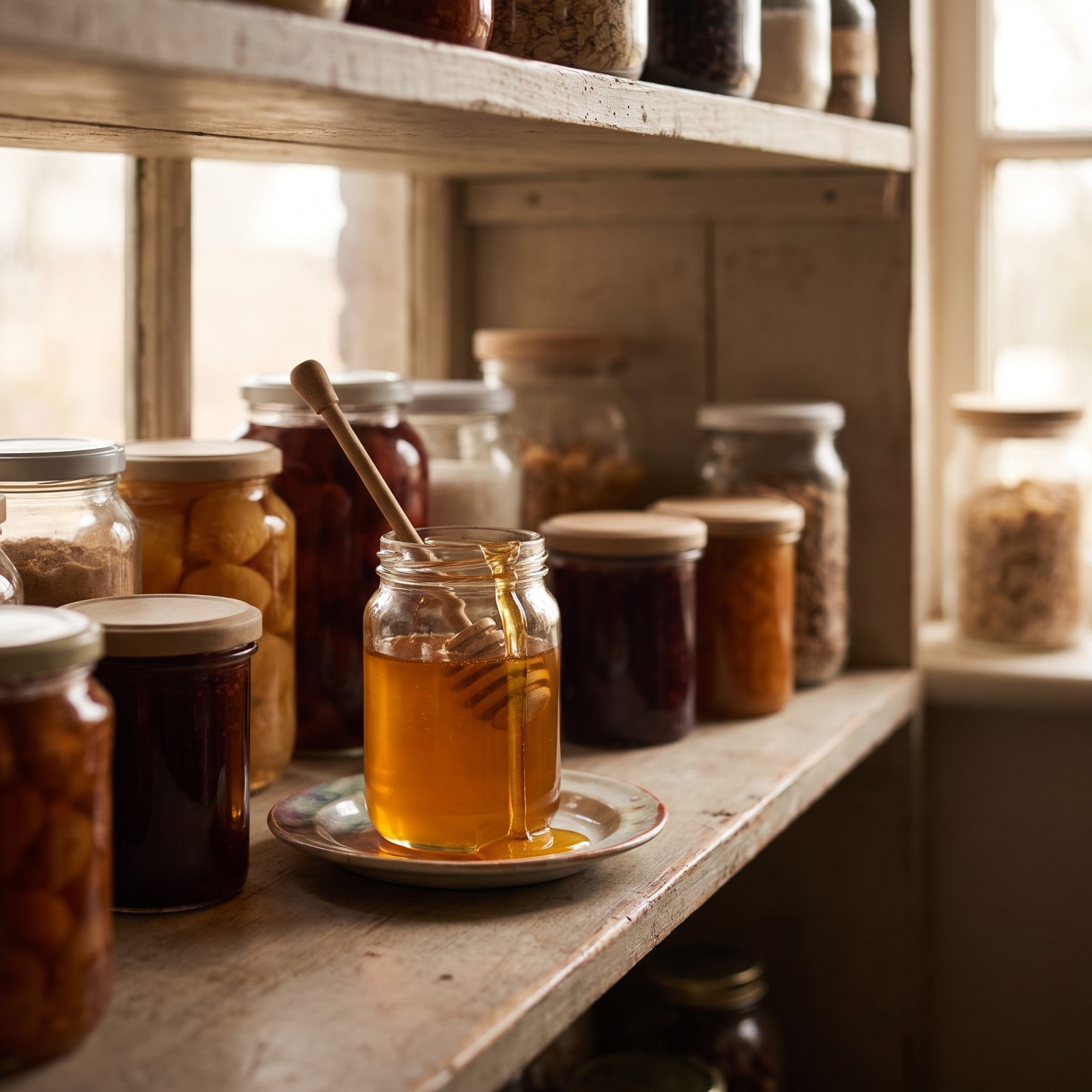
Honey drips. Jam oozes down the side when you screw the lid on crooked, and molasses is its own kind of villain. A cheap saucer under each sticky jar catches all of it, and when it gets gummy you wash one small dish instead of scrubbing a whole shelf.
Thrift-store saucers go for a quarter and they spare the wood from that dark, tacky stain that never fully comes out. Match them or don’t — nobody’s judging the inside of your pantry.
29. Set Your Oil Bottles on a Washable Tray
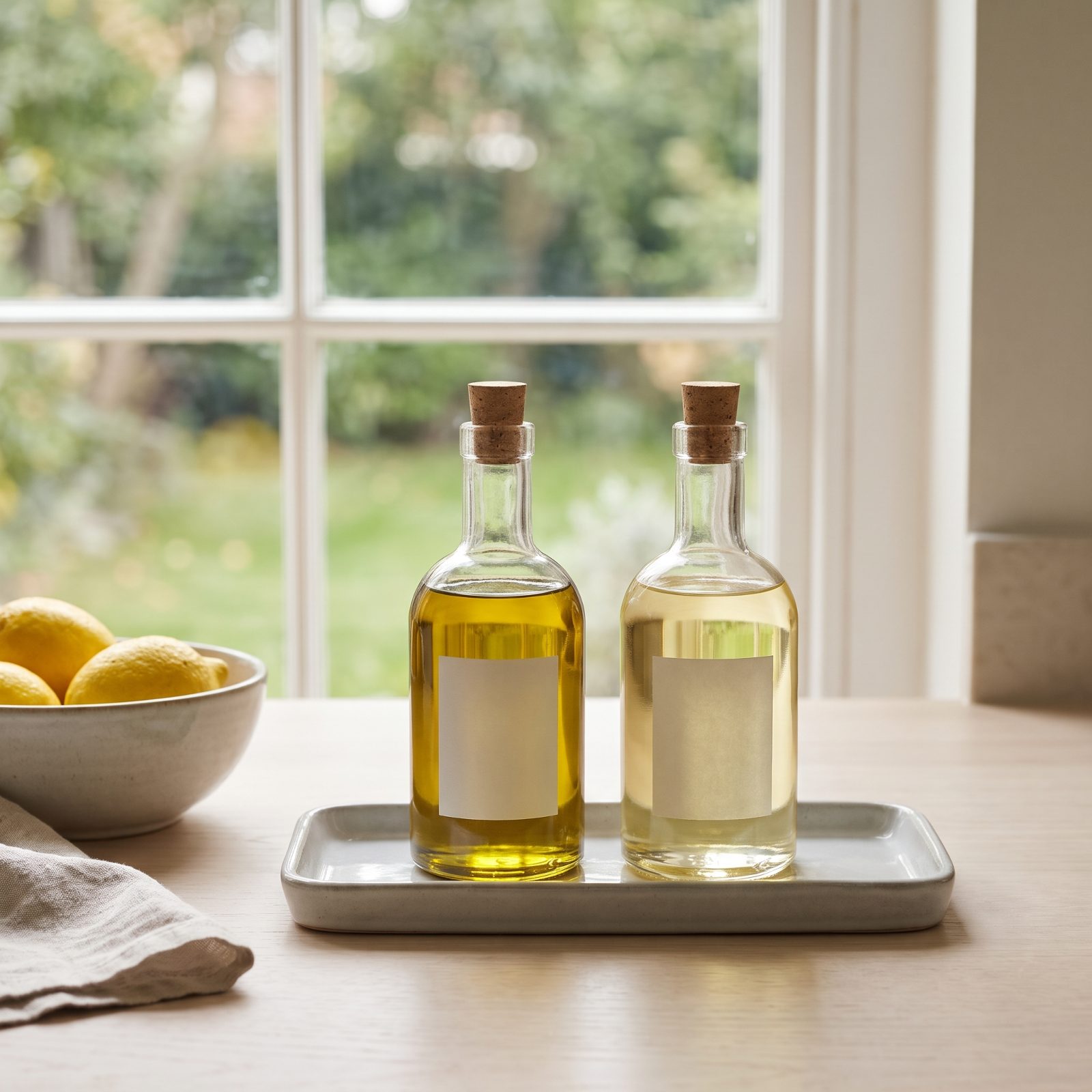
Oil creeps. Every bottle you own has a slow, invisible film working its way down the sides and onto whatever surface it stands on. Corral them on one enamel or tin tray and the mess stays inside a tray-sized zone you can wipe in seconds.
Beside the stove this matters double, because cooking oil plus airborne grease equals a counter that feels permanently tacky. Lift the tray, wipe under it, done.
28. Store Dry Goods in Tight-Lidded Tins, Not Open Bags
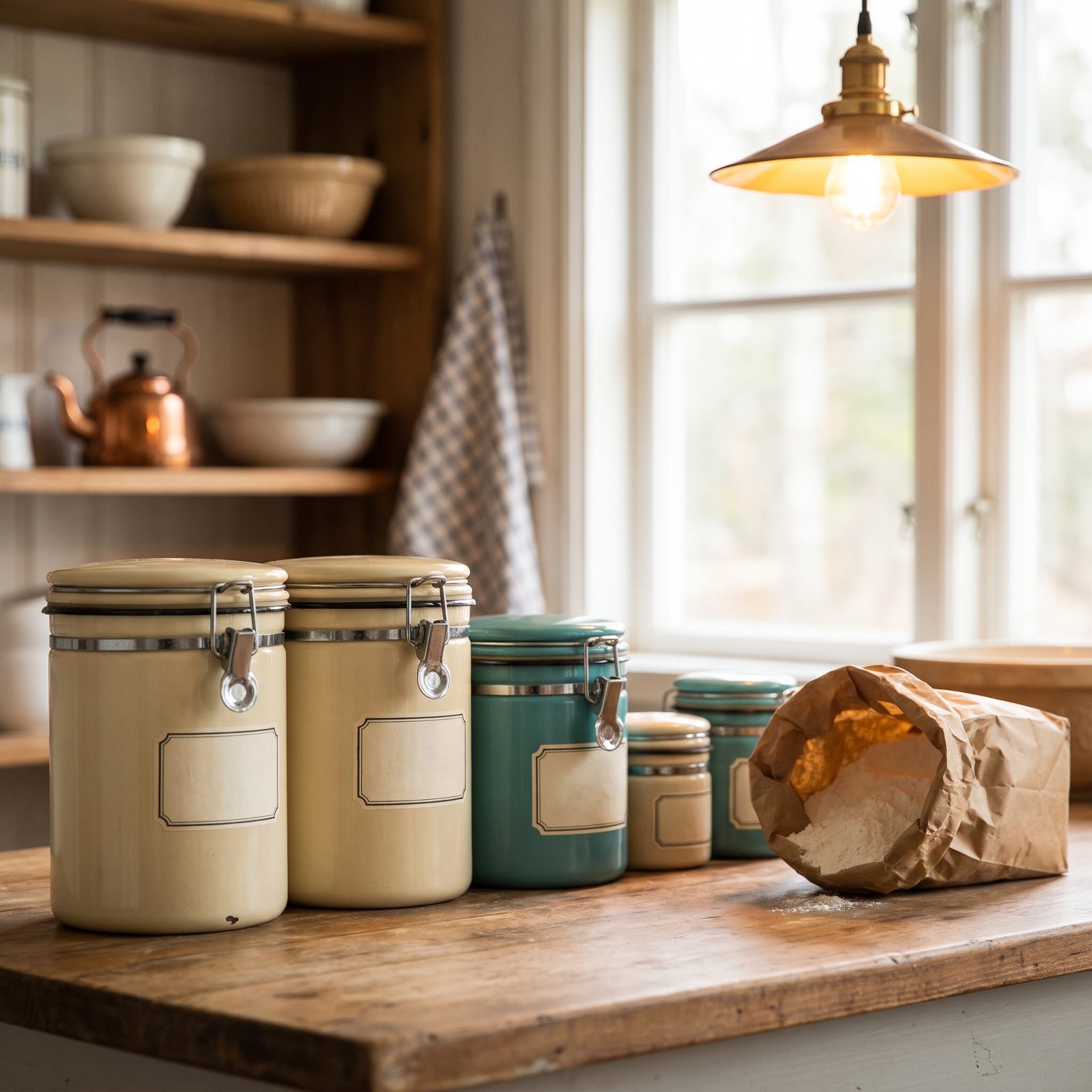
An open flour bag is an open invitation. Pantry moths, weevils, and ambient moisture all find their way into loose packaging, and by the time you notice, the whole shelf’s a problem.
Tight-lidded tins shut all of that out. Flour stays dry and dust-free, sugar doesn’t clump, oats don’t go stale, and you never open a bag to find something’s beaten you to it.
A good lid is cheaper than tossing a ruined five-pound bag of flour. Do the math once and you’ll convert.
27. Check the Onion and Potato Baskets Every Single Week
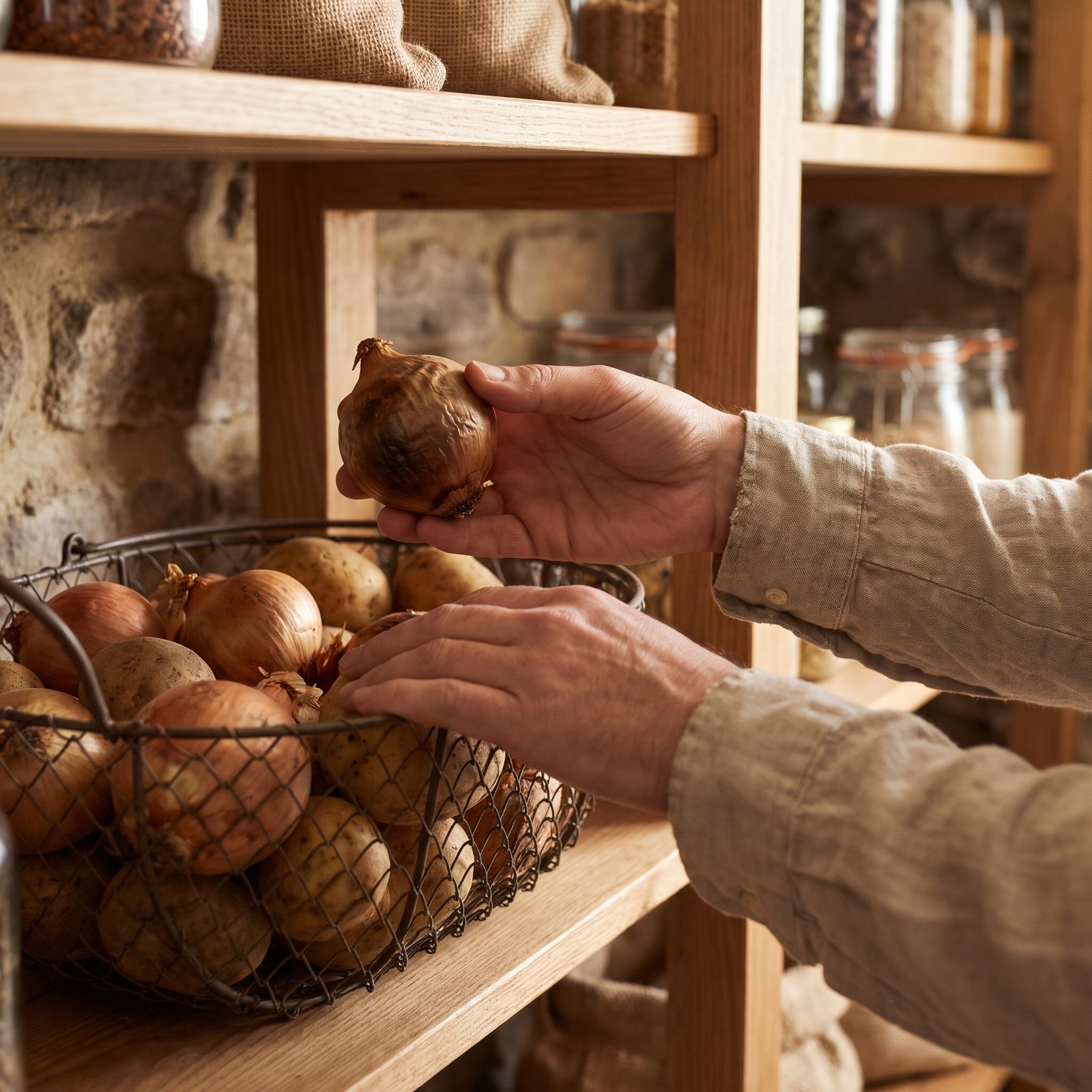
One soft onion rots the three around it, fast. The weekly dig-through is the whole game with onions, potatoes, and garlic — catch the one going bad before it drags the basket down with it.
You lift them, squeeze gently, toss anything soft or sprouting, and knock off the loose papery skins piling up in the bottom. Two minutes, start to finish.
Keep the baskets somewhere dark and airy, never under the sink where the damp lives, and if your onions and potatoes share one basket, check it even closer, because potatoes make onions turn faster. That last one I learned the slow and smelly way.
26. Freshen the Refrigerator With an Open Box of Baking Soda
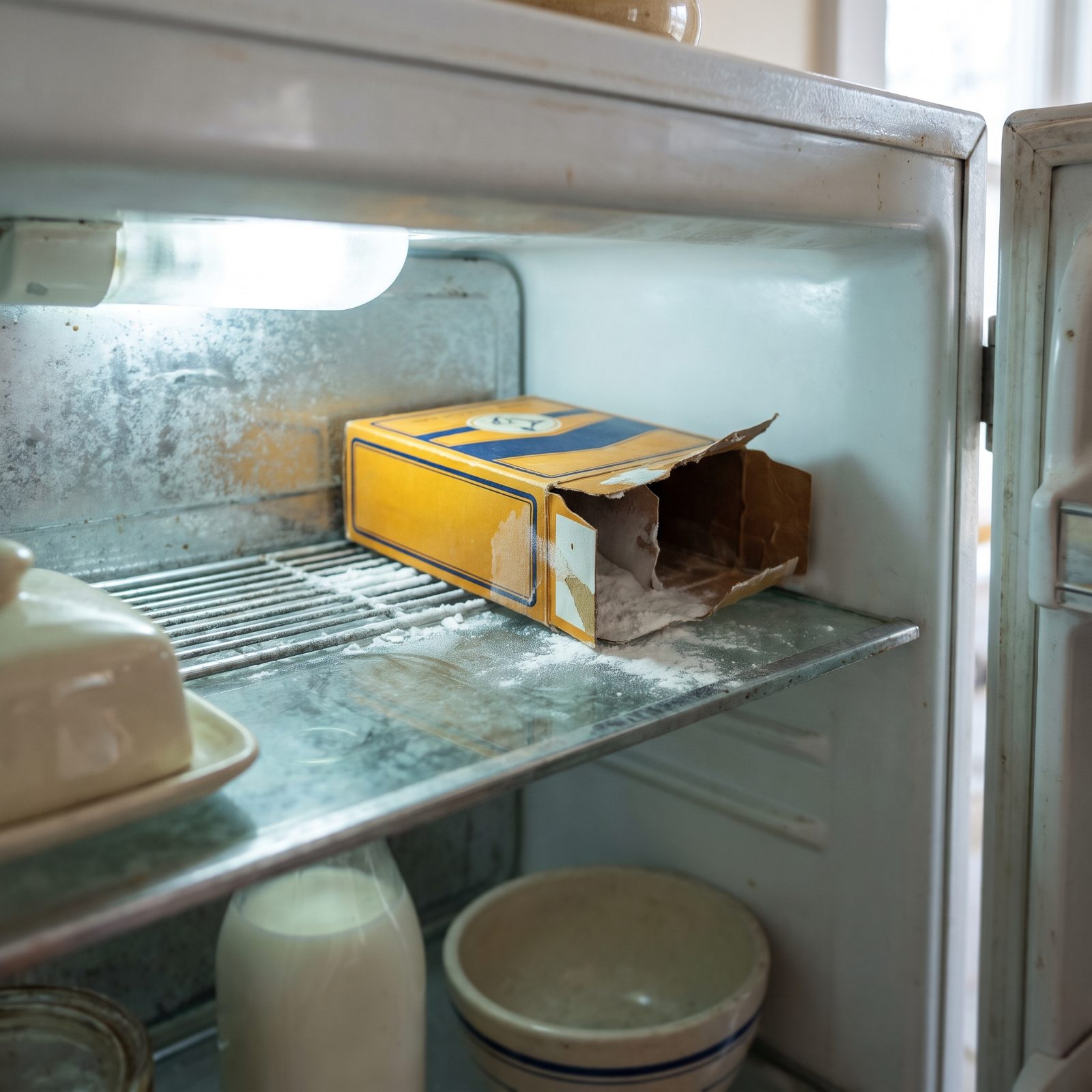
Every grandmother’s fridge had one. A torn-open box of baking soda shoved to the back of a shelf, quietly doing its job while the leftovers plotted against it.
The science is simple. Most odors are acidic or alkaline, and baking soda is a mild base that neutralizes them rather than masking them the way a scented spray does. One box lasts about a month. When it stops pulling its weight, pour the old powder down the drain with hot water and start fresh.
According to a university chemistry educator, an open box of baking soda clears fridge smells by neutralizing odors, not by absorbing them.
25. Wipe Stove Splashes While the Surface Is Still Warm
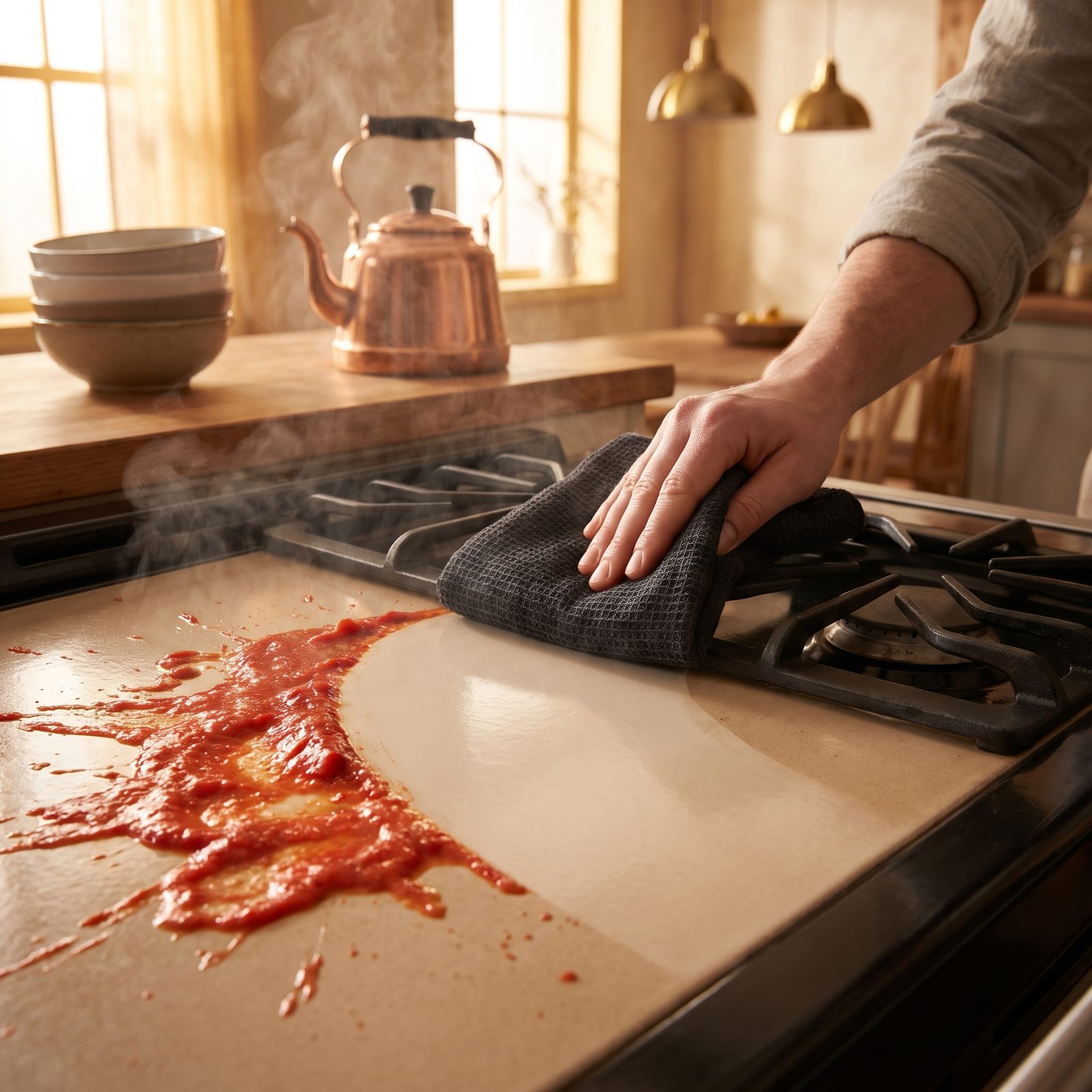
Timing is everything here. A splash of marinara wiped off a warm stove comes up with one pass of a damp cloth, but that same splash left to harden overnight becomes a baked-on crust you’ll be scraping with a fingernail.
Residual heat keeps grease soft and loose, so you’re not scrubbing, you’re just lifting. Skip it and you’ll spend Sunday mornings attacking cold, cemented spatter with steel wool, swearing at it, every single week. Wipe while it’s warm — not hot enough to burn you — and the whole chore disappears.
24. Soak Burner Grates After Frying
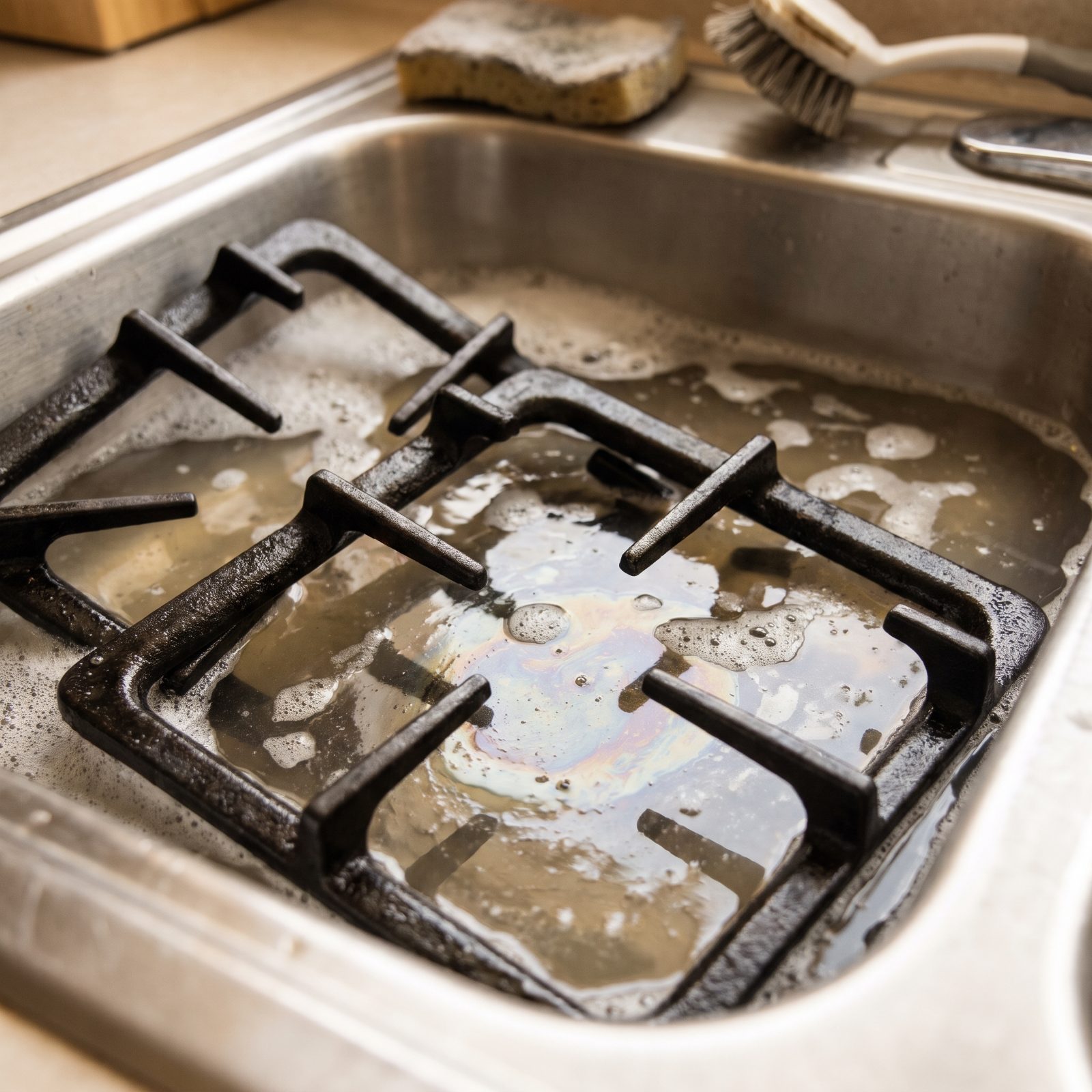
Frying bacon or fish leaves a film on the grates that no amount of dry wiping will touch. The old move is the easy one: drop them in the sink with hot water and a squirt of dish soap and walk away.
Give it twenty minutes while you eat. The hot water softens the grease so a brush does the rest without any elbow-breaking scrubbing. Dry them before they go back on, or they’ll flash-rust on the next burn.
23. Lift Stove Knobs to Remove Hidden Grease
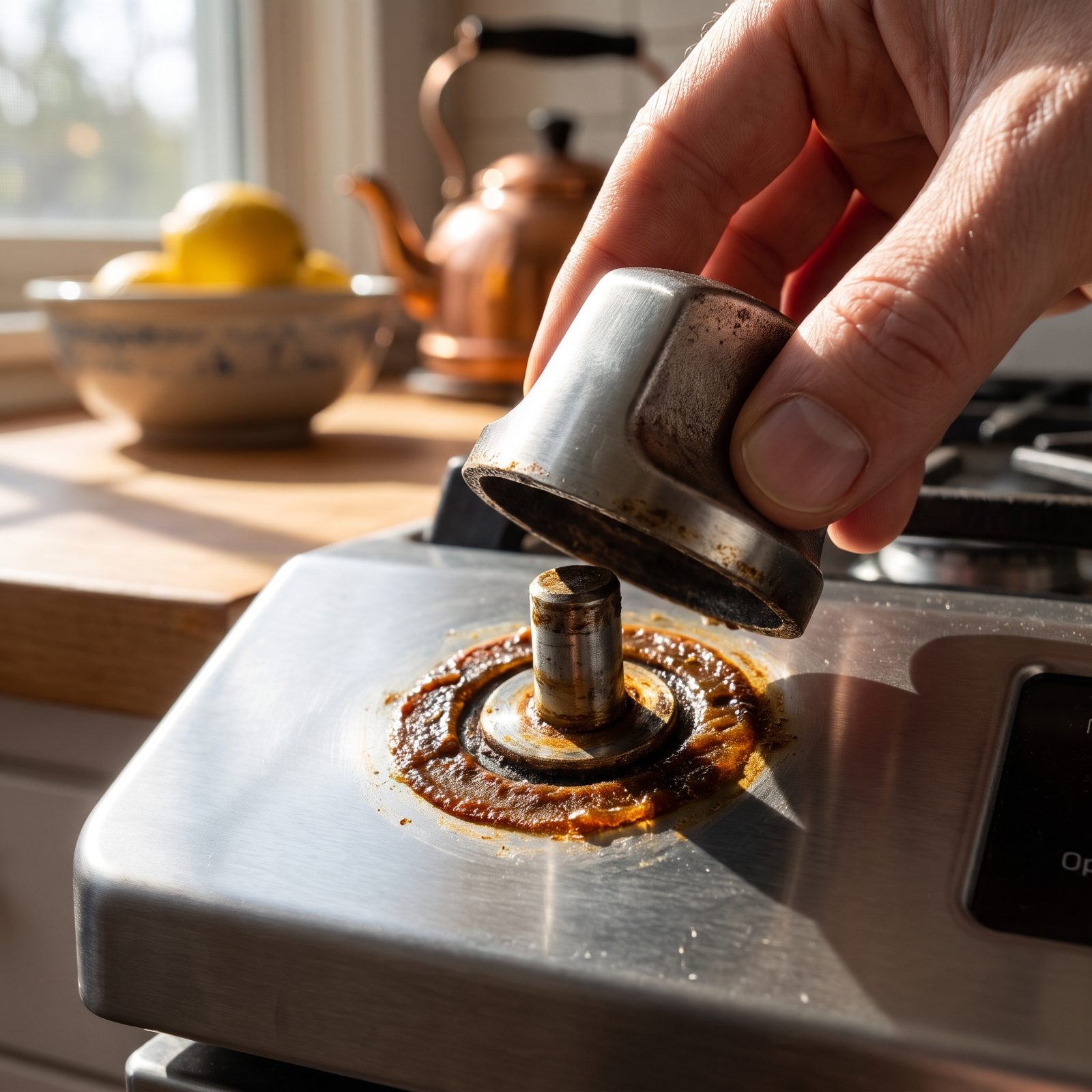
Pull one knob off and look at what was hiding underneath. That ring of brown, tacky grease is the stuff a surface wipe never reaches, and it’s been there longer than you want to know.
Most knobs pull straight off the post with a gentle tug. Soak them in warm soapy water, wipe the exposed panel with a damp cloth, dry everything, push them back on. Takes five minutes. Some knobs get so fused with old grease they practically glue themselves in place. Don’t let yours get there.
22. Clean the Stove-Counter Gap With a Cloth-Wrapped Ruler
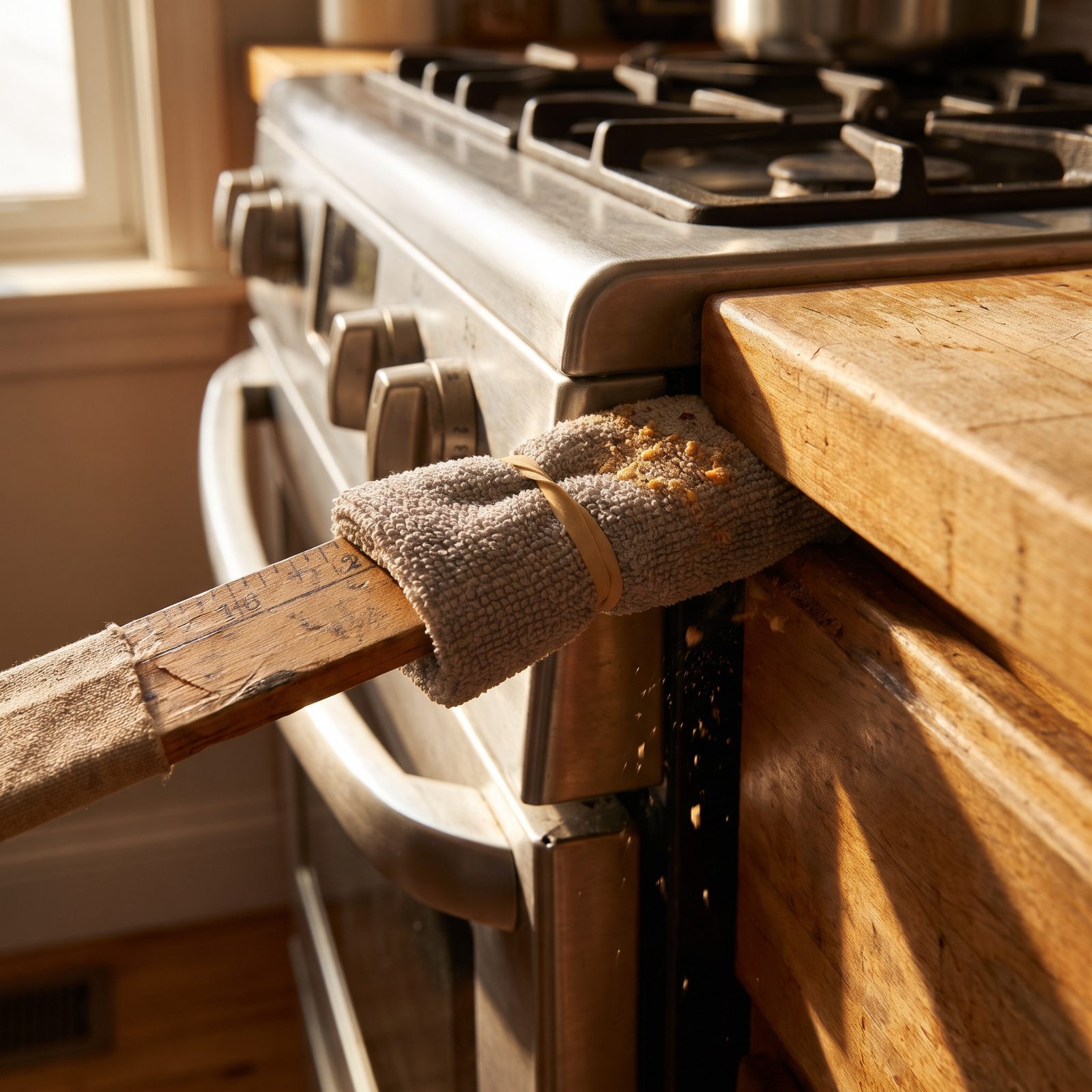
You know the gap. That dark slot between the stove and the counter where crumbs, pasta, and one petrified pea have been accumulating since you moved in.
Wrap a flat ruler or a long wooden spoon in a slightly damp cloth, secure it with a rubber band, and run it down the crevice. It grabs everything a sponge can’t reach, and no fancy gadget required. Somebody figured this out generations ago because they had a ruler and a problem, and it still beats anything sold for the purpose.
The best kitchen tools are usually the ones you already own, used for something they weren’t sold to do.
21. Simmer Baking Soda in a Scorched Saucepan
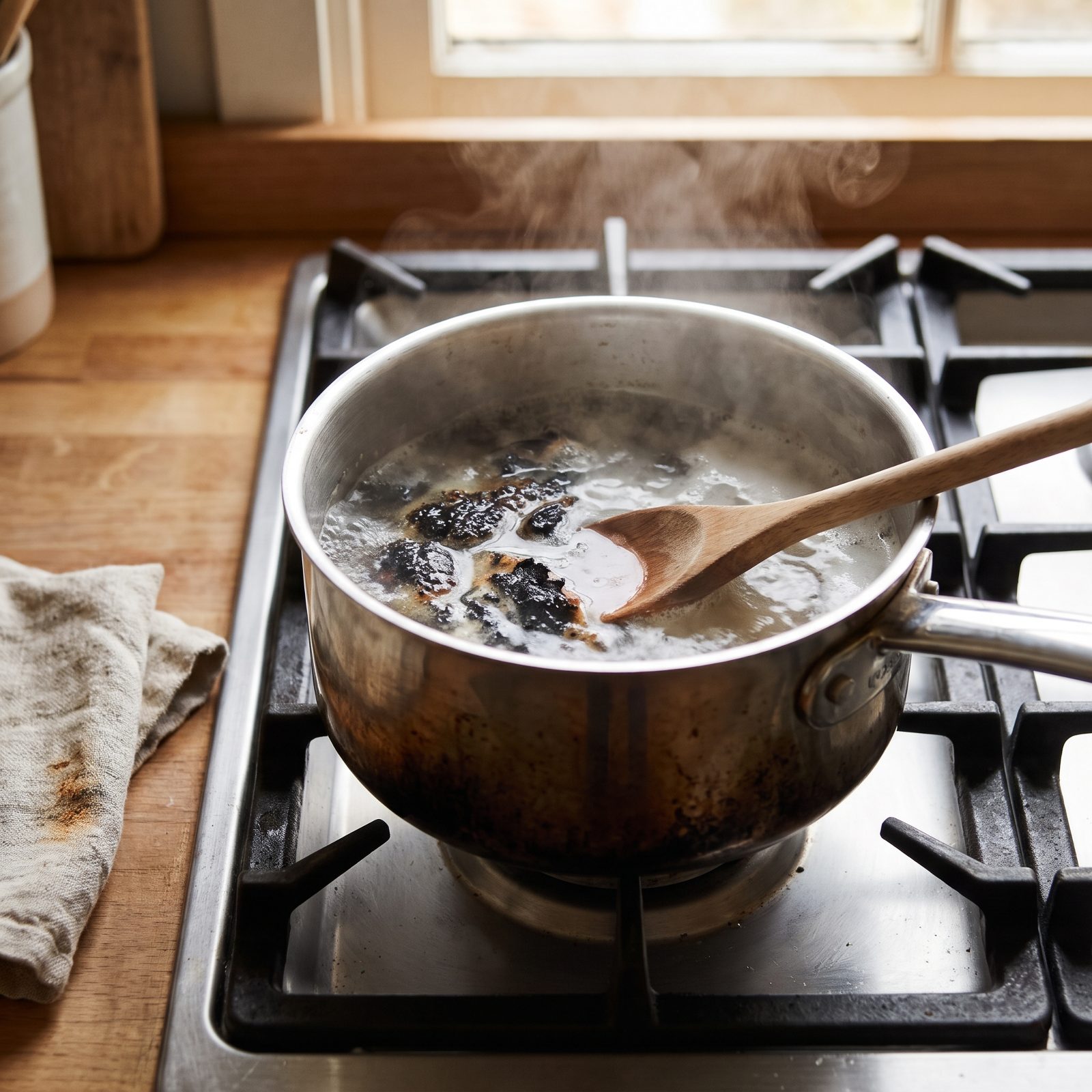
Scorched the bottom of a pot? Before you reach for anything abrasive, try water and a few spoonfuls of baking soda brought to a slow simmer.
Let it bubble for ten minutes or so. The mild alkaline solution creeps under the burnt layer and loosens it, so it lifts away with a wooden spoon instead of a wire brush. Stainless loves this. It saves the surface from the scratches harsh scouring leaves behind, and it costs about a nickel.
20. Scrub Cast Iron With Coarse Salt, Then Dry It at Once
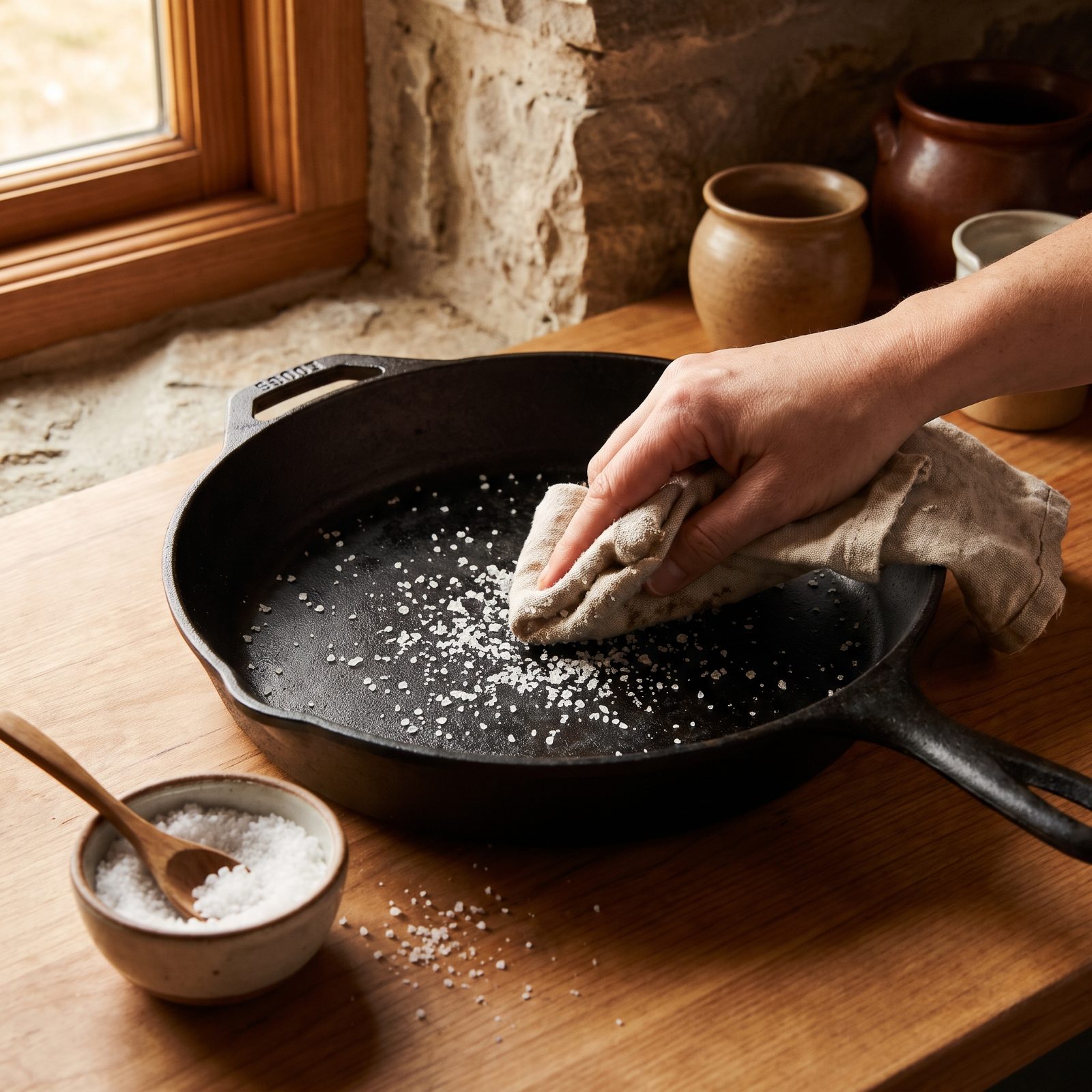
Soap is the wrong instinct here. A handful of coarse salt and a cloth or a stiff brush scours stuck-on food off cast iron without stripping the seasoning you worked to build.
The salt acts as a gentle abrasive. Scrub, rinse with hot water, then dry it immediately over low heat so no water sits in the pores to rust it. A thin wipe of oil at the end keeps it black and slick. Leave it to air-dry in the rack overnight and you can wake up to an orange bloom of rust.
For everyday cast-iron upkeep, one professional chef advises: “Scrub with hot water using a nonabrasive scour pad with 2 tablespoons of salt or a soft bristle cleaning brush to remove all unwanted stuck-on food particles.”
Worth the care: in our reader votes, meals served straight from a skillet or pot got hearts 85% of the time, compared with 78% for the other images in the same articles.
19. Polish Copper Pots With Ketchup and Salt
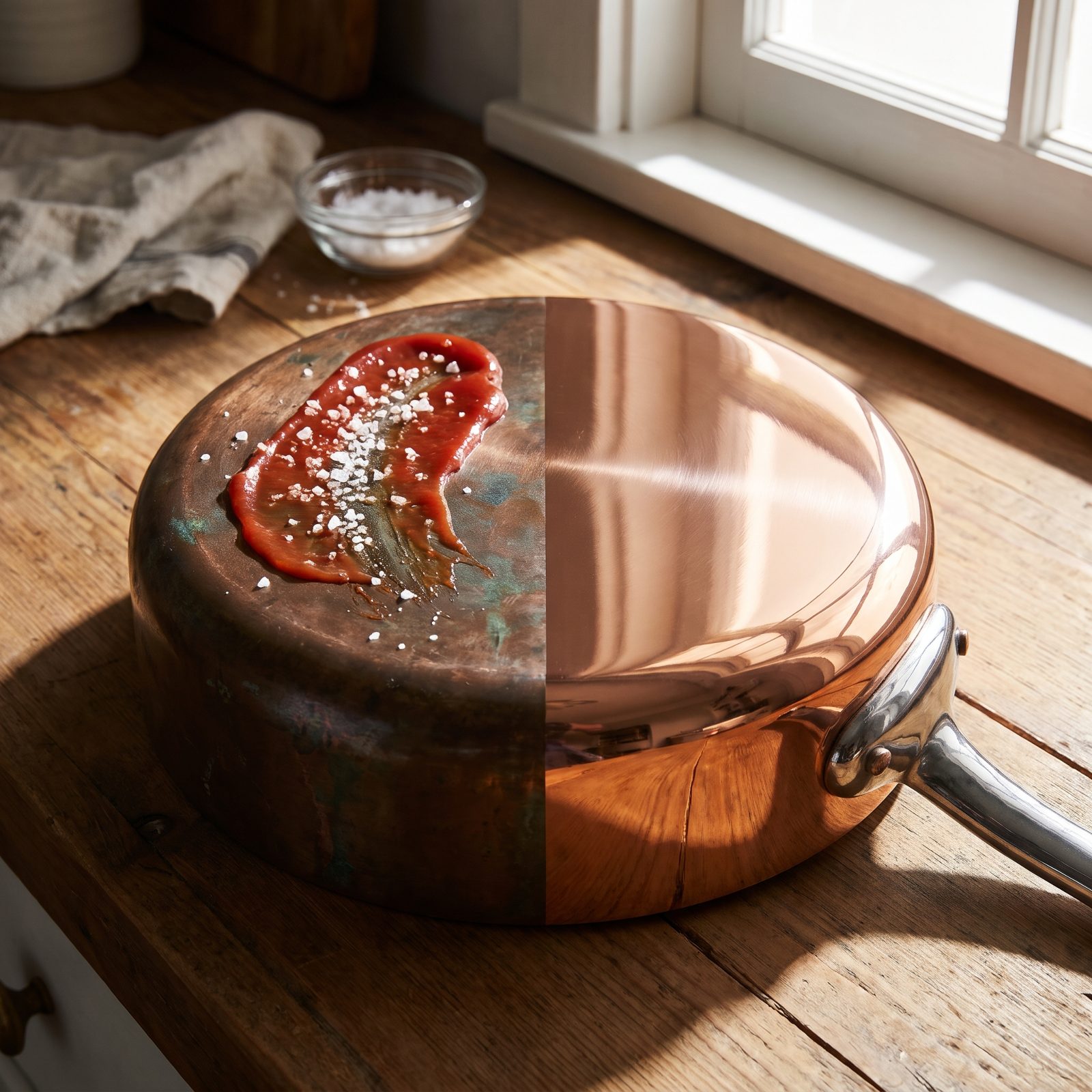
This one sounds like a joke until you watch it work. Ketchup polishes copper, and fast.
The mild acids in the tomatoes and vinegar dissolve the dull tarnish, while a pinch of salt gives it enough grit to lift the residue. Smear it on, let it sit a couple of minutes, rub with a cloth, then rinse and dry well. The pot comes back to that warm pink glow it had the day you bought it. Old diner cooks swore by this long before copper cleaner came in a tube.
18. Clean a Cloudy Glass Coffee Pot With Ice and Salt
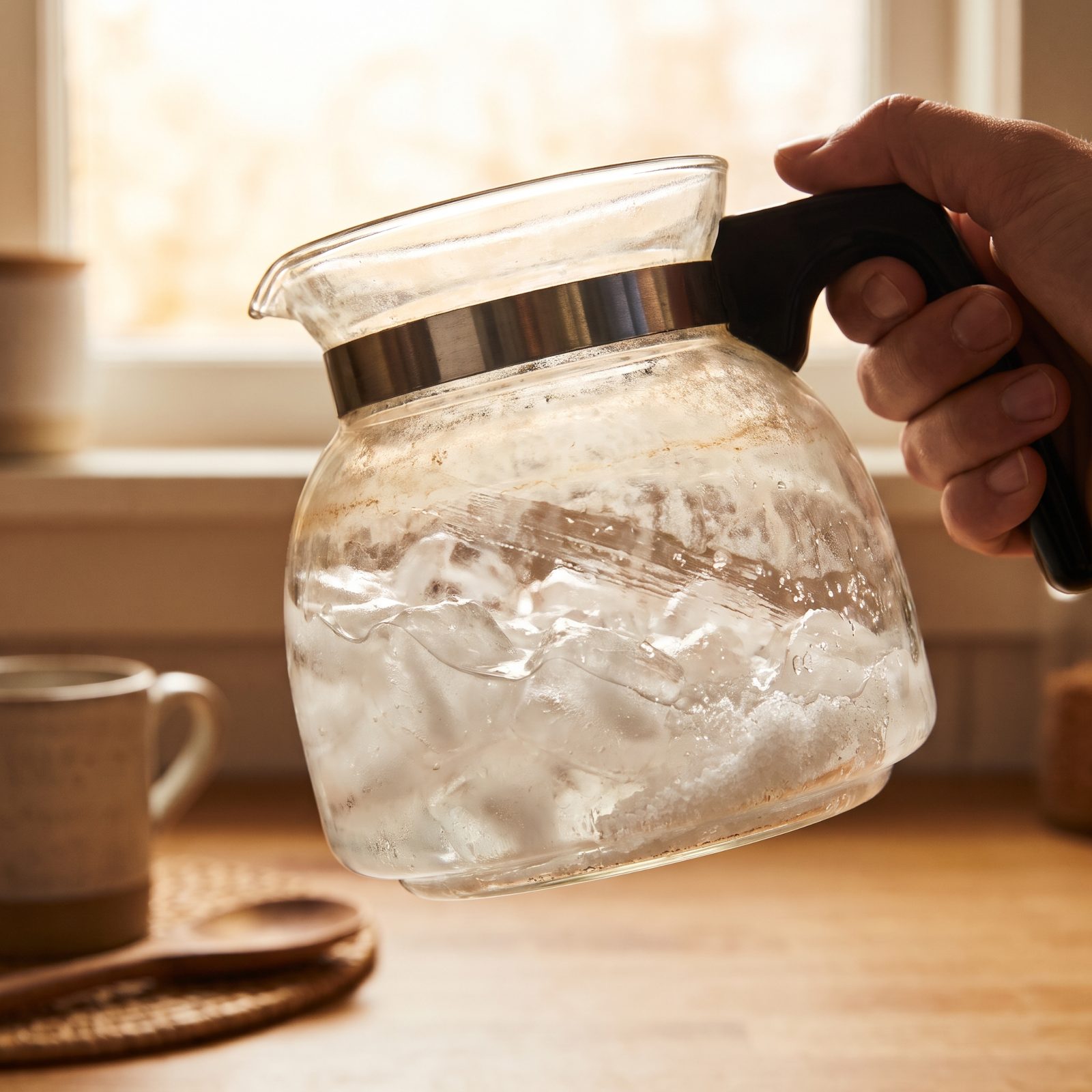
A glass coffee pot gets a brown film inside that a brush can’t reach, because it won’t bend into the curve.
Toss in a handful of ice and a couple spoonfuls of coarse salt. Stir it hard with a wooden spoon for a minute, pushing the ice and salt against the glass. The ice does the scrubbing the brush can’t, and the salt scours off the stuck coffee oils. Rinse and it’s clear again. Diner waitresses did this between pots when nobody was looking, and the coffee tastes cleaner for it.
17. Descale the Kettle With White Vinegar
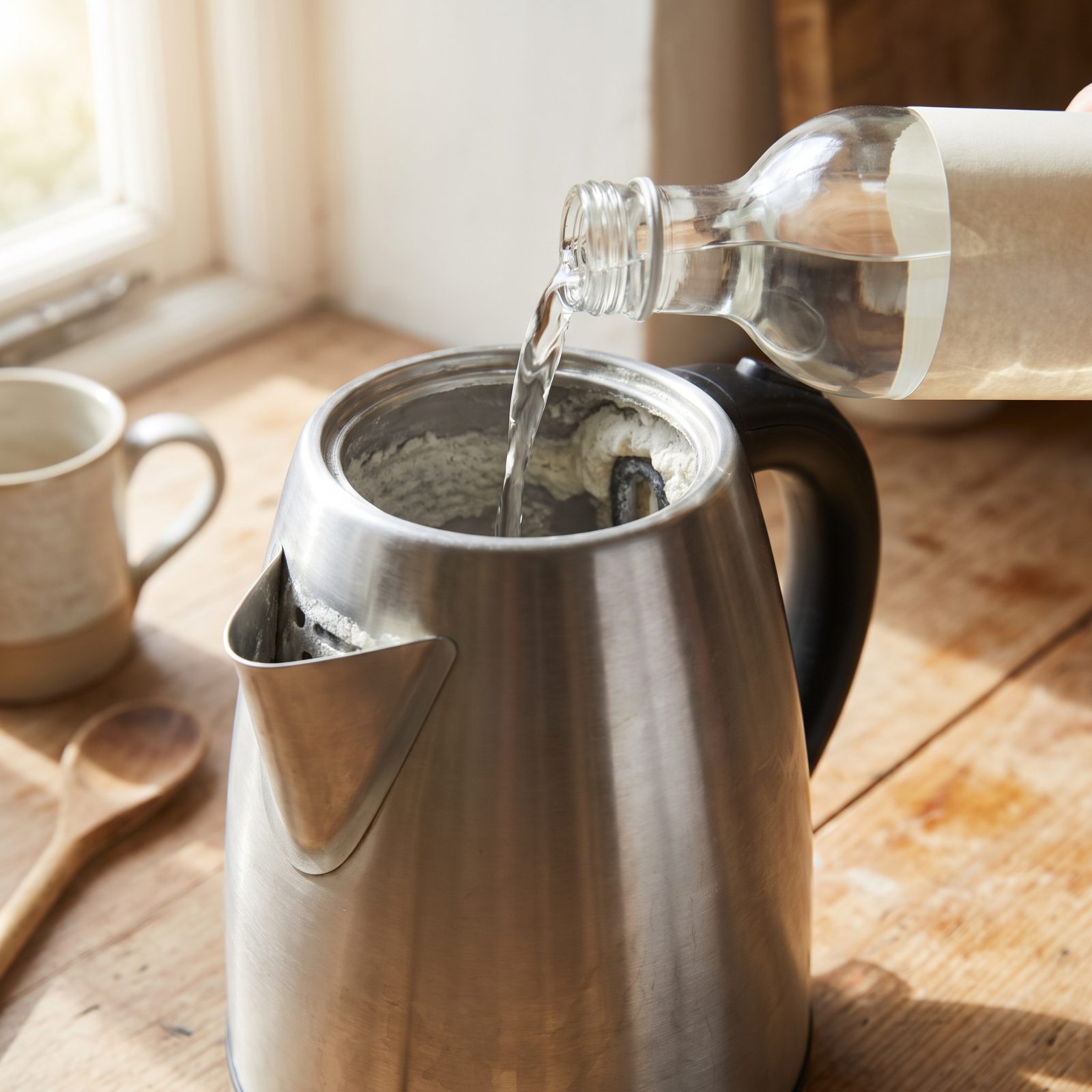
That chalky white crust building up inside the kettle is limescale. Over time it makes water taste flat and forces your kettle to work harder just to heat.
Fill it halfway with equal parts white vinegar and water, bring it to a boil, then switch off and let it sit an hour. The acid eats through the mineral deposits so they rinse right out. Boil a batch of plain water afterward to clear the vinegar smell. A bottle of vinegar costs next to nothing and handles this better than anything on the cleaning aisle.
16. Scrub Refrigerator Gasket Grooves With a Small Brush
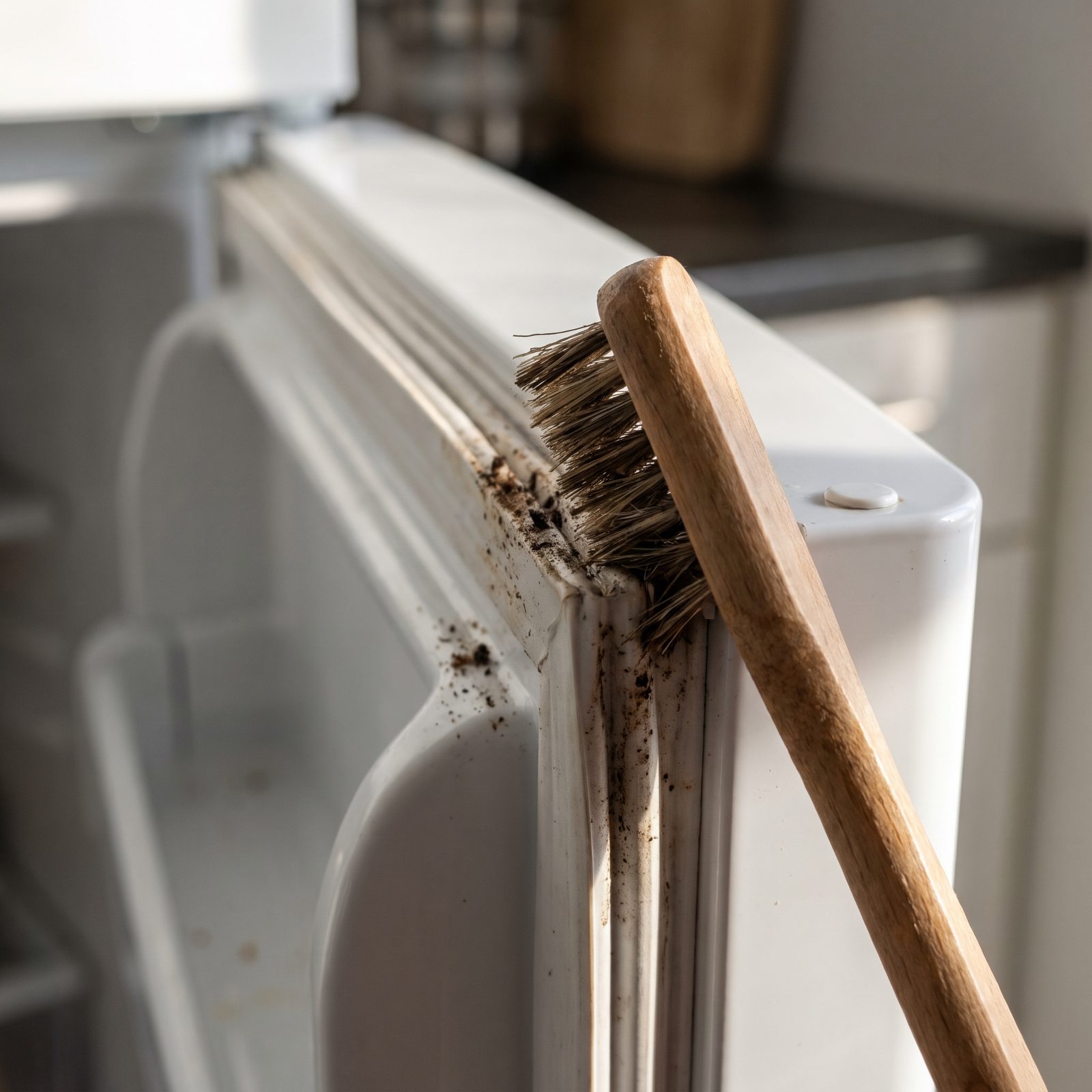
Open the fridge and run a finger along the rubber seal. The folds are where spilled juice, crumbs, and mildew collect, out of sight until the door starts to smell.
An old toothbrush dipped in warm soapy water gets into those grooves better than any sponge. Work the bristles along each fold, wipe with a clean damp cloth, then dry it well so moisture doesn’t sit in the creases. Skip harsh cleaners, because they can dry out and crack the rubber over time.
A clean gasket seals better too. Close the door on a slip of paper. If it slides out with no resistance, the seal isn’t gripping and your fridge is working harder than it should.
15. Defrost the Freezer Before Ice Becomes Thick
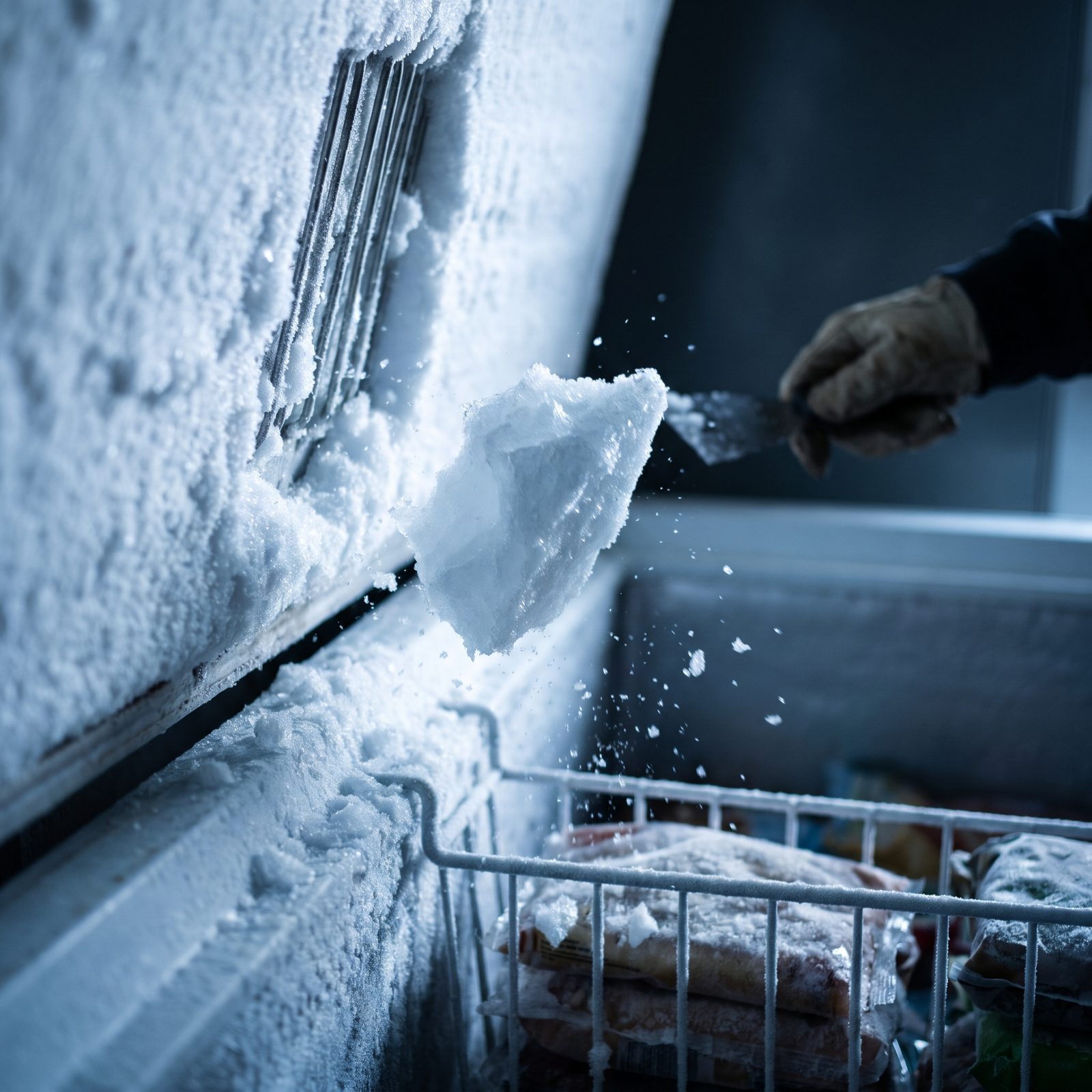
Older manual-defrost freezers grow a crust of frost, and every layer makes the motor run longer to keep things cold. The usual advice is to defrost before the ice gets much past a quarter inch thick, while it’s still a short afternoon job and not a weekend project.
Unplug the freezer and let the frost soften so it breaks away in chunks. If the food stays in its wire basket, keep it sealed in bags and work quickly so falling ice and melt don’t soak it.
If you lift the ice with a flat scraper, wear gloves and pry gently rather than chipping. One hard jab can puncture the cooling lines, and that’s the end of the freezer.
14. Unplug and Empty the Toaster Crumb Tray Weekly
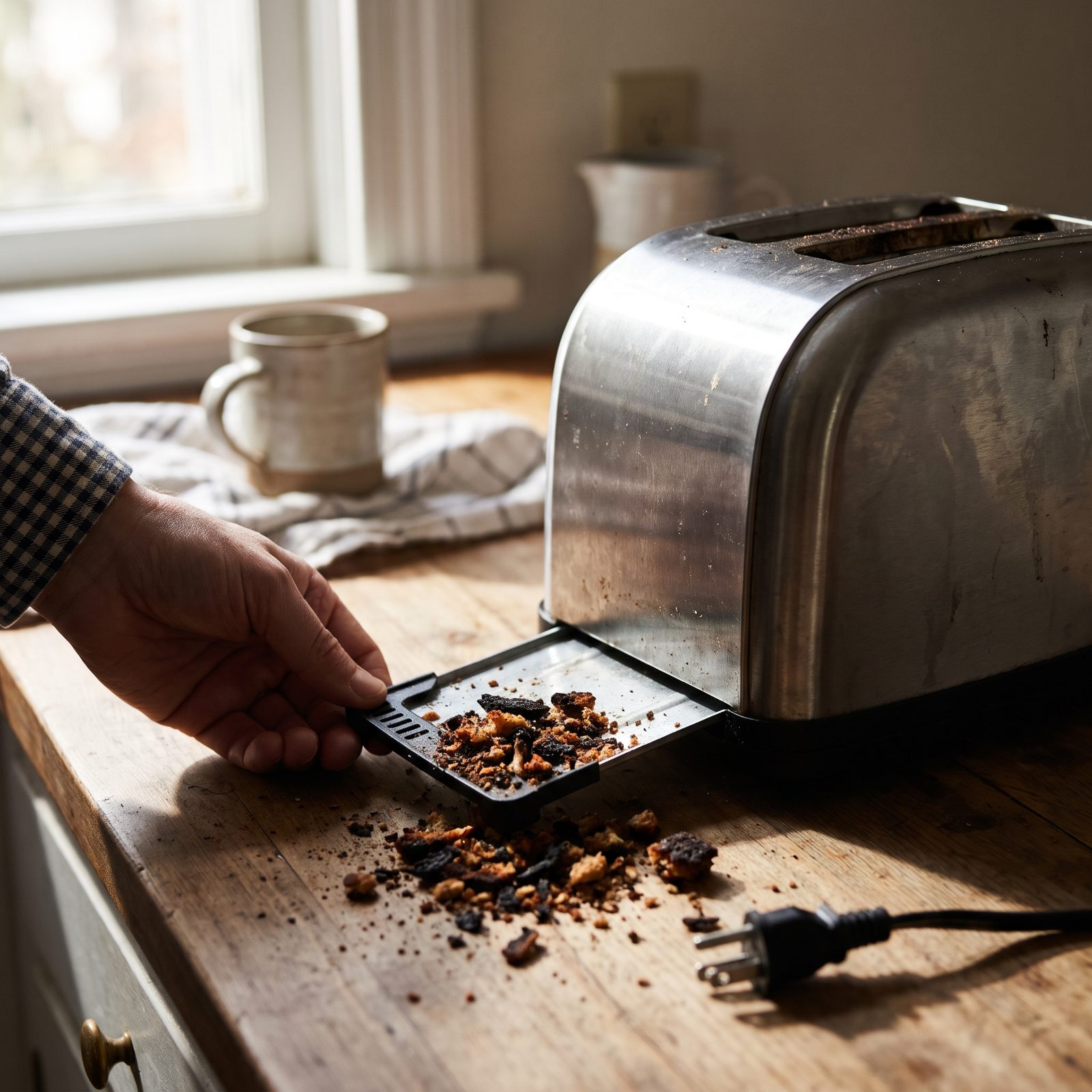
Nobody thinks about the crumb tray until the toaster starts smoking. Those crumbs sit right under the heating elements, and every morning they toast a little darker until they burn.
Once a week, unplug the toaster, slide out the tray, and dump it over the trash. Then turn the whole toaster upside down over the sink and give it a few gentle shakes for whatever the tray missed.
Never go poking inside with a fork or knife, plugged in or not. The elements are delicate, and a metal utensil and a live wire are a bad pair. Two minutes a week keeps the toast tasting like toast instead of last month’s burnt bagel.
13. Loosen Oven Grime Overnight With Baking Soda Paste
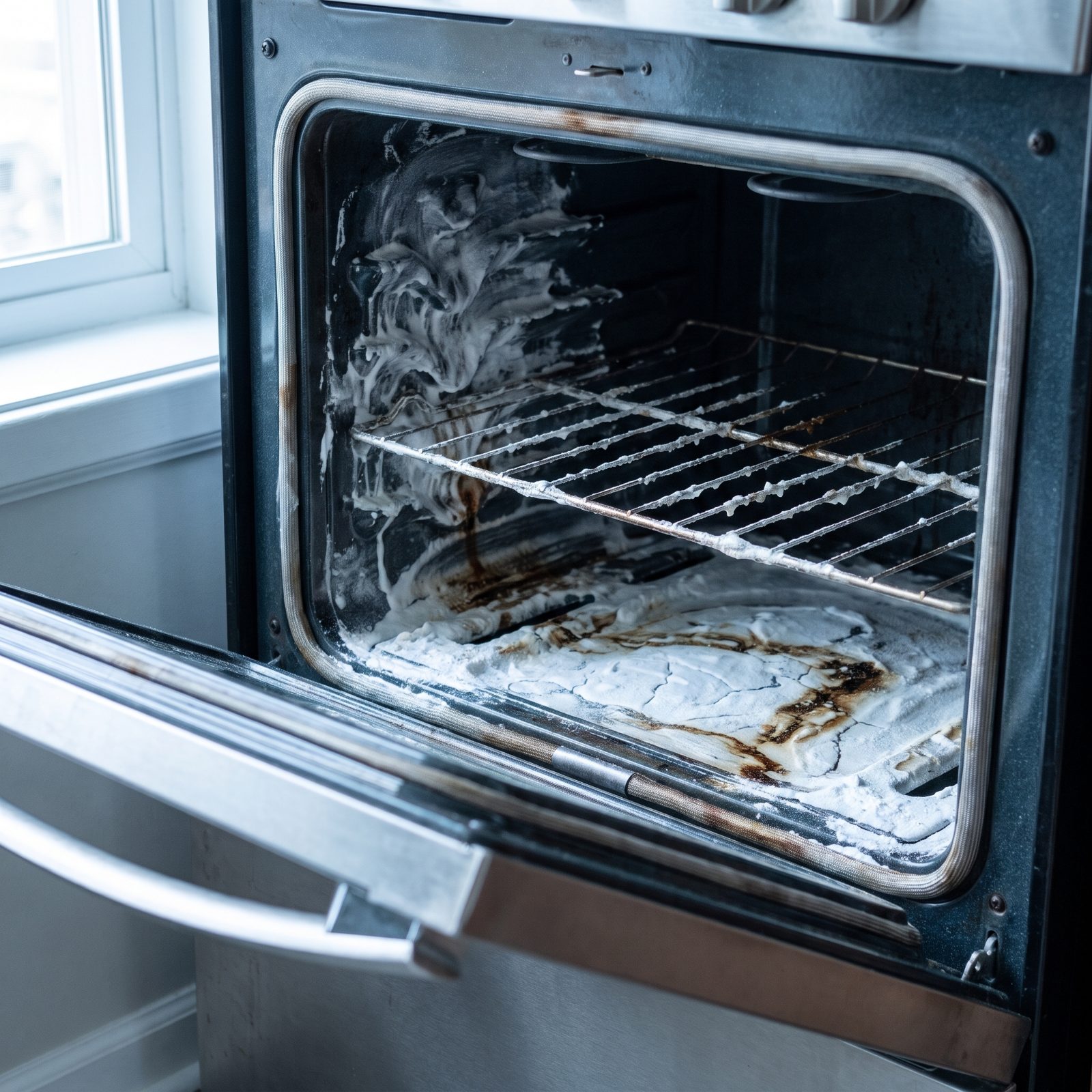
Spray-on oven cleaners work fast, but the fumes clear a room. Baking soda and water do the same job if you give them time to sit.
Stir baking soda with enough water to make a spreadable paste. With the oven completely cool, coat the walls and floor, steering clear of the heating elements, and shut the door overnight. By morning the baked-on grease has softened enough to come off with a damp cloth and a plastic scraper.
It takes patience instead of elbow grease. You do the work in five minutes before bed and let the dark hours handle the rest.
12. Scrub a Wooden Cutting Board With Lemon and Coarse Salt
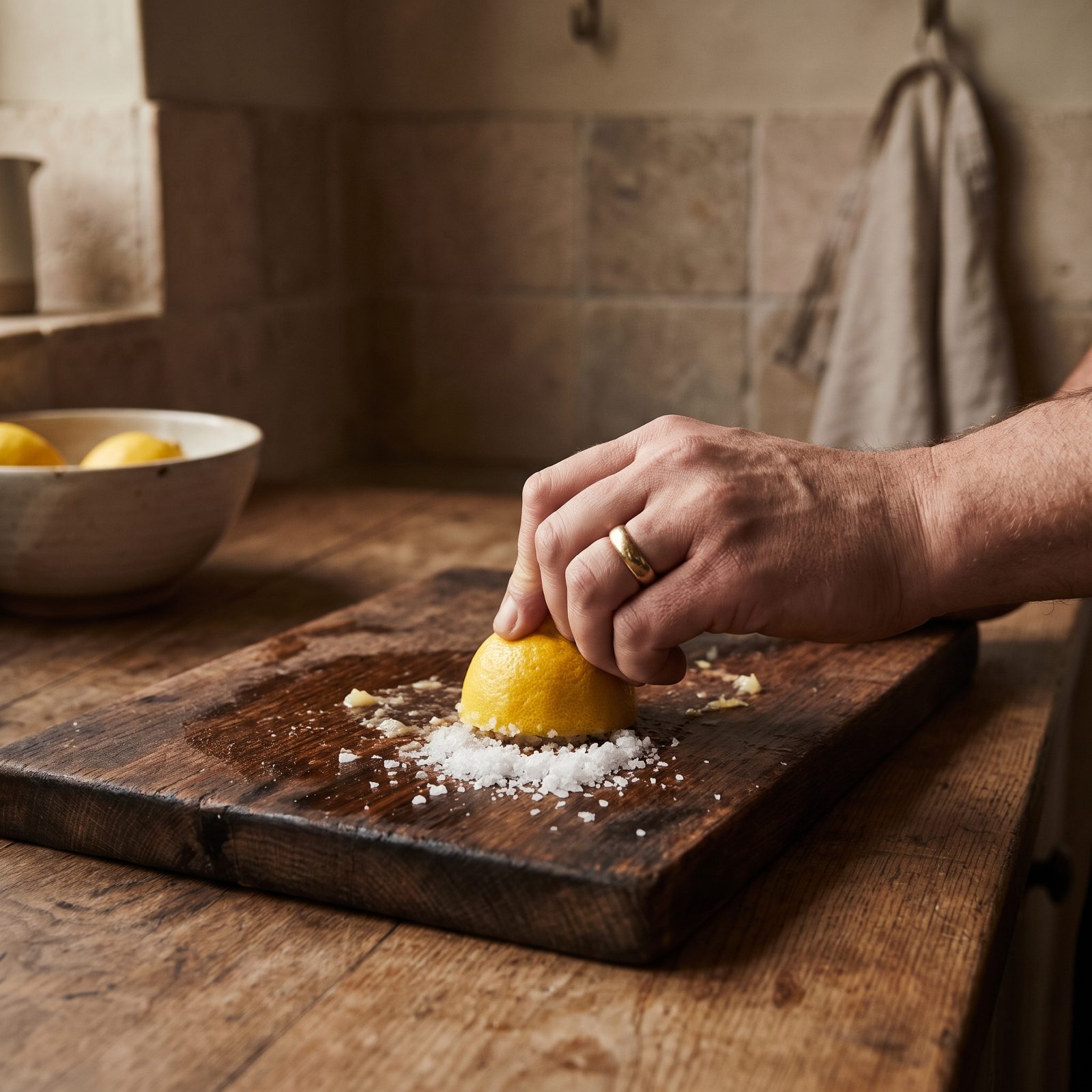
Wooden boards hold on to things. Garlic, onion, beet stains, that faint fishy smell from Friday night. A lemon and a handful of coarse salt take most of it out.
Sprinkle the salt over the board, cut a lemon in half, and scrub with the cut side down, squeezing as you go. The salt works as a gentle scrub and the lemon juice helps lift stains and odors. Let it sit a few minutes, scrape it off, rinse, and stand the board on its edge to dry.
Never leave wood soaking in the sink. Rub in a little food-grade mineral oil now and then and the board will outlast most of your other kitchen tools.
11. Clean Windows With Vinegar and Crumpled Newspaper
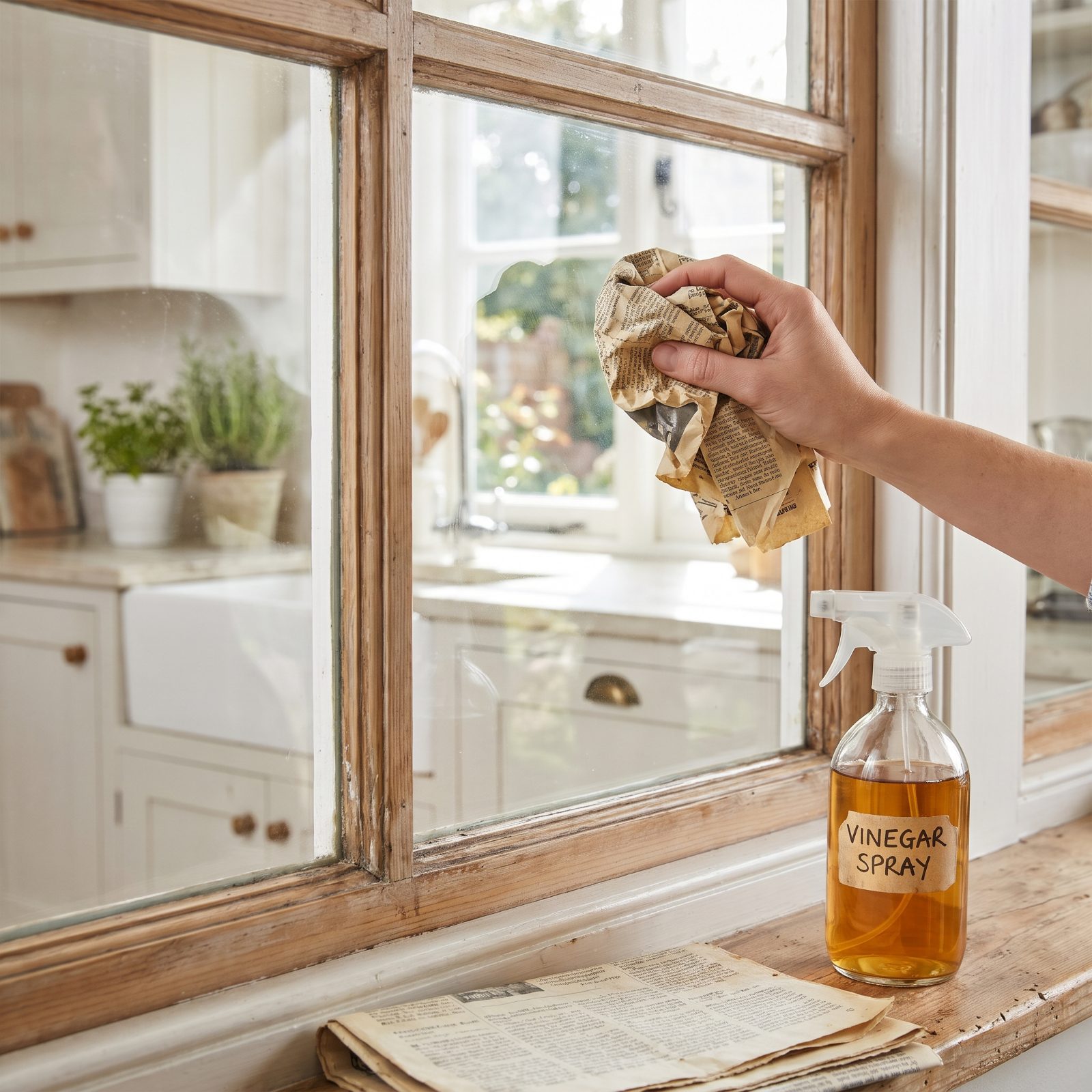
The kitchen window gets the worst of it. Steam, grease from the stove, little fingerprints. A spray bottle of amber apple cider vinegar cut with water gets through that film without leaving a perfumed residue behind.
The newspaper is the old part that people laugh at until they try it. Crumpled newsprint doesn’t shed lint the way paper towels do, so the glass dries clear instead of fuzzy. Wipe in circles, then finish with a dry sheet.
A bright, sunny morning is fine if you work one pane at a time. Don’t let the vinegar dry before you finish wiping, because that’s where streaks come from.
10. Brighten an Enamel Sink With Baking Soda
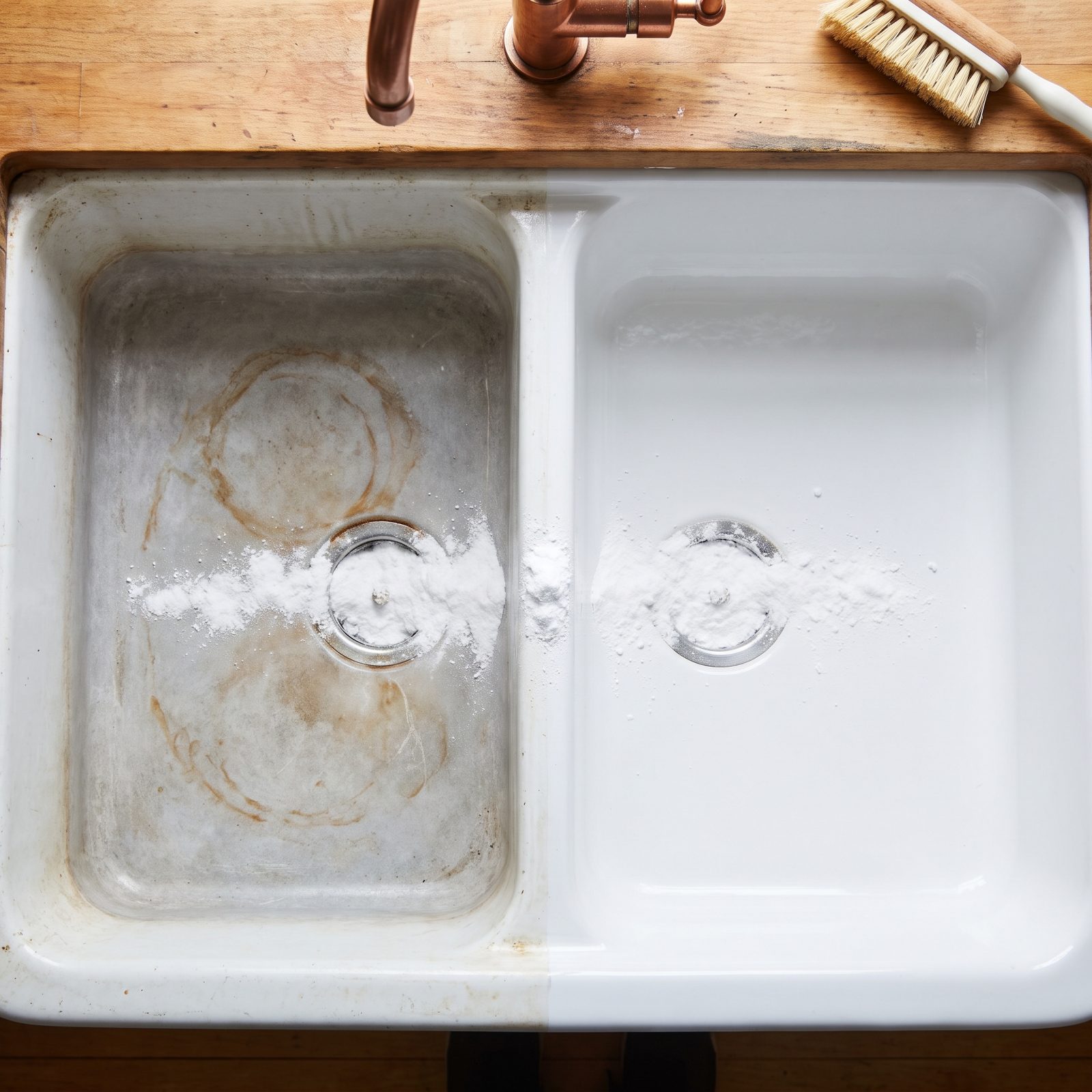
An enamel sink goes dingy fast. Coffee, tea, and rust leave gray rings and brown streaks, and harsh scouring powders can wear down the glossy finish until it stains even faster.
Baking soda is soft enough not to scratch enamel and gritty enough to lift what sits on top. Sprinkle it over a damp sink, scrub with a wet sponge, and rinse. For tougher marks, mix a thick paste, leave it on the stain for a little while, then scrub.
Keep steel wool and wire pads far away. Once enamel is scratched, every stain finds its way into the scratch, and you’ll be fighting it for years.
9. Dissolve Faucet Scale With a Vinegar-Soaked Cloth
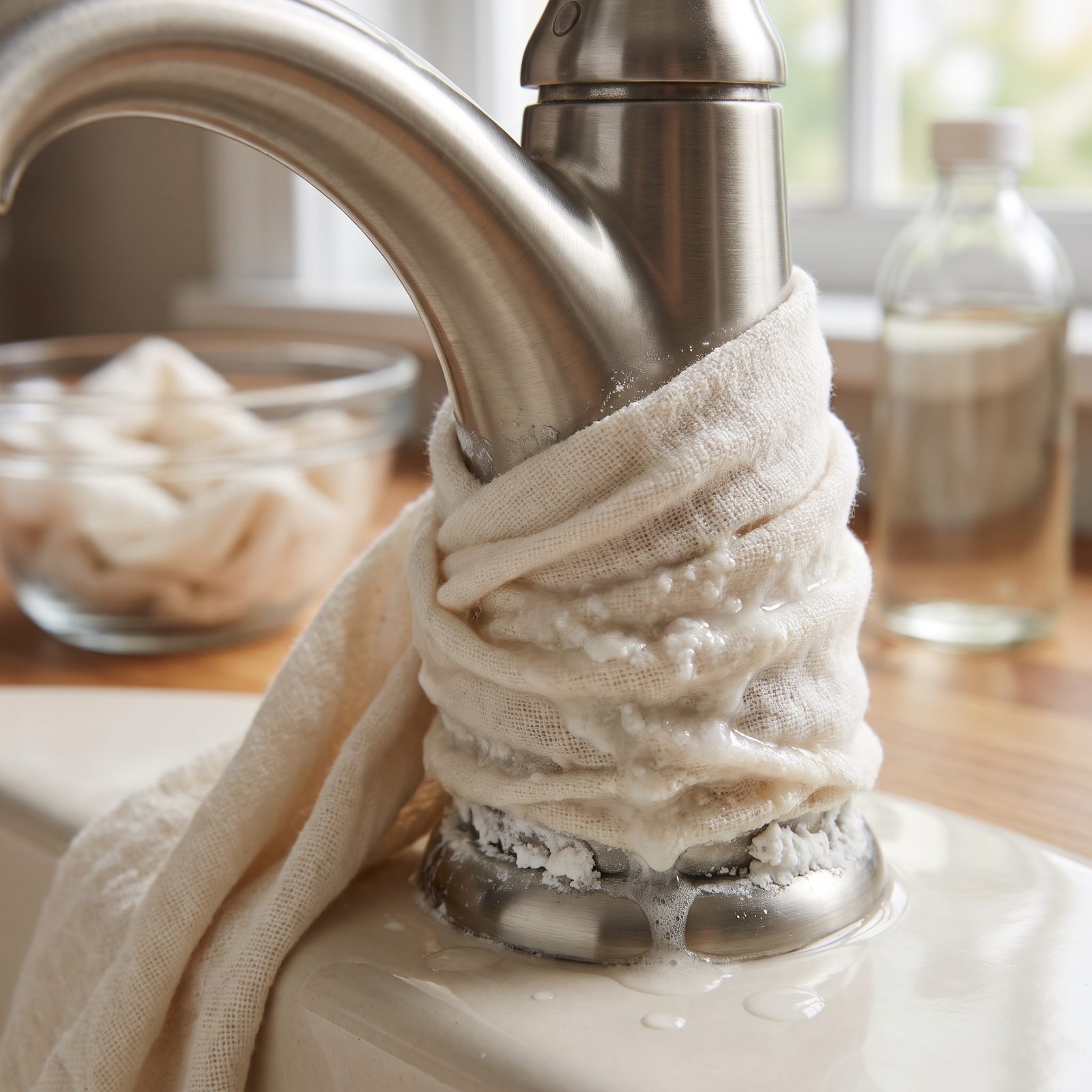
That crusty white buildup around the faucet base is mineral scale left by hard water, and scrubbing barely touches it. Vinegar breaks it down.
Soak a rag in white vinegar, wrap it snugly around the spout and base, and leave it for an hour or so. The acid softens the deposits until they wipe away. For a clogged aerator, fill a small plastic bag with vinegar, slip it over the spout, and fasten it with a rubber band.
One caution: keep vinegar off marble and other natural stone counters, since acid can etch them. Test on specialty faucet finishes first, too. On ordinary chrome, it works beautifully.
8. Soak the Range Hood Filter in Hot Washing-Soda Water
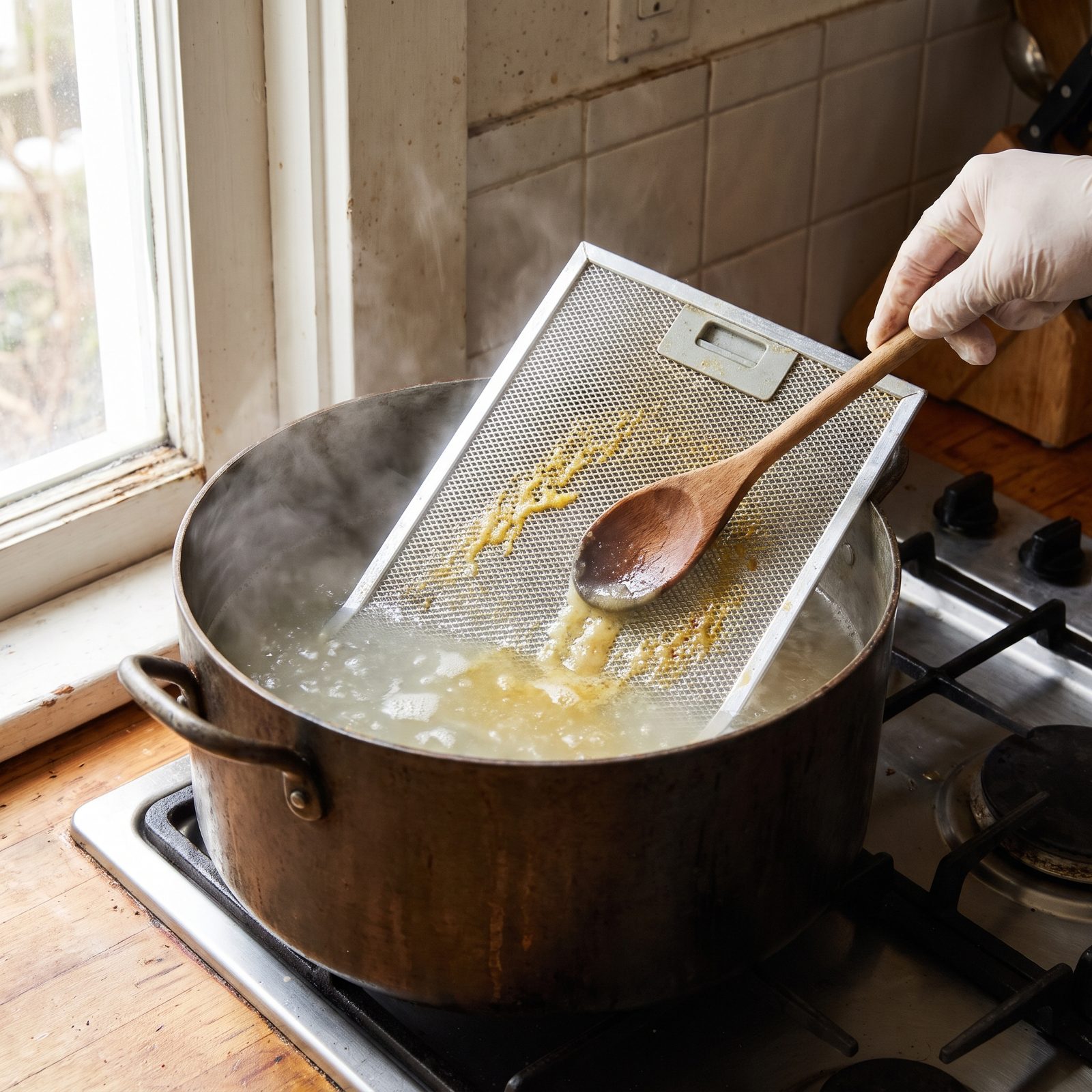
The metal mesh filter above the stove catches every bit of grease that rises off the skillet, and after a few months it’s coated in a sticky amber layer. Washing soda, the stronger cousin of baking soda, cuts it loose.
Bring a large metal stockpot of water to a boil, stir in a generous handful of washing soda, and lower the filter in, turning it so each section gets time in the bubbling water. Wear gloves, because washing soda is harsh on skin. After a soak, scrub gently with a soft brush, rinse well, and let it dry completely before you put it back.
If your filter is aluminum, keep the soak short, since strong alkaline solutions can dull it. Charcoal filters can’t be washed at all and need replacing.
7. Cover a Dropped Raw Egg With Salt Before Picking It Up
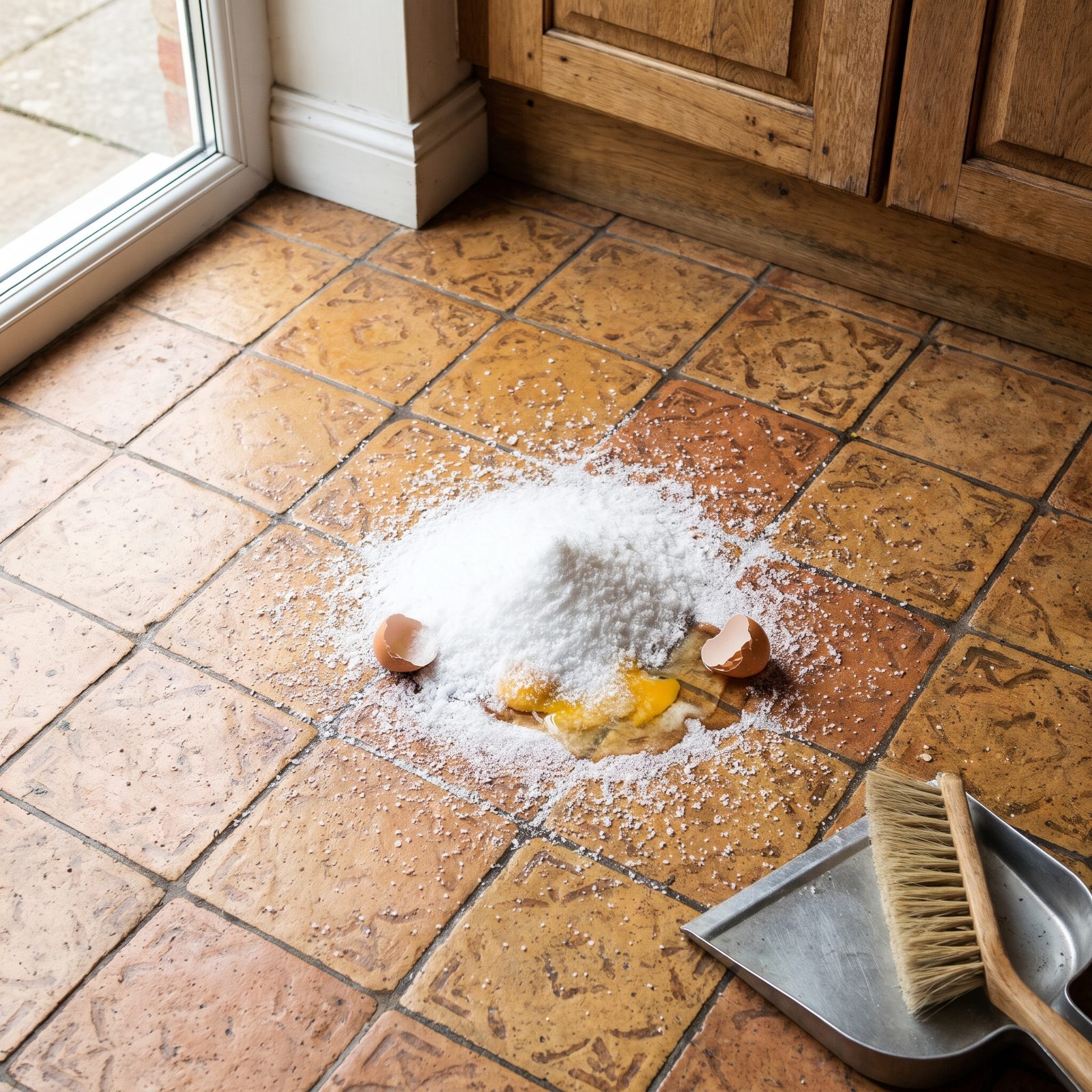
A raw egg cracked on the floor is one of the most maddening messes in the kitchen. Every swipe of the paper towel just spreads the slime wider.
Instead, pour a good layer of salt over the whole puddle and walk away for ten or fifteen minutes. The salt draws up the liquid and stiffens the egg into a clumpy mass you can scoop up in one or two passes with a brush and dustpan.
Finish by washing the spot with hot soapy water. Raw egg can carry bacteria, and a kitchen floor you walk across every day is the last place you want it lingering.
6. Absorb a Grease Spill With Cornstarch Before Sweeping
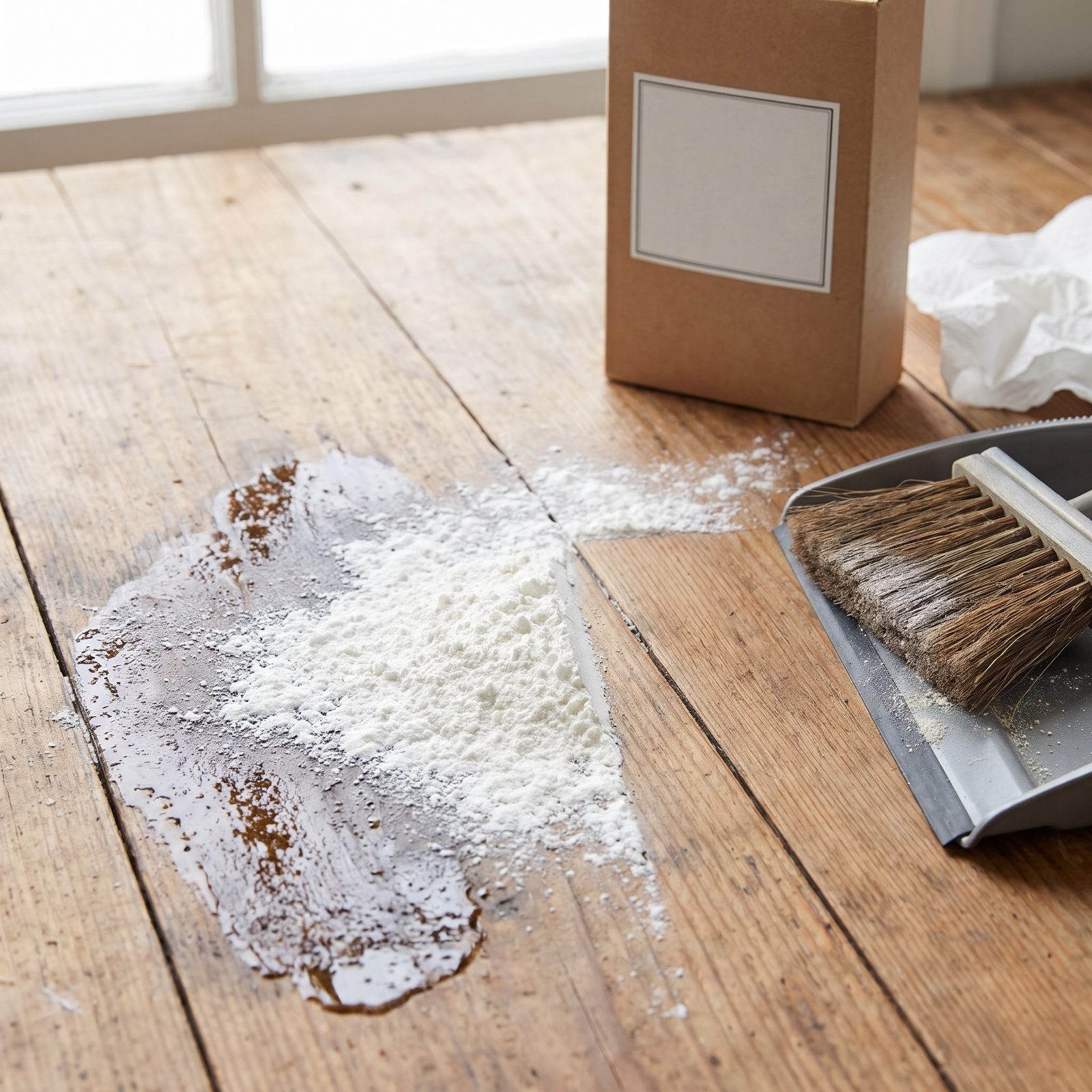
Knock a bottle of oil off the counter and your first instinct is to grab the paper towels. That usually just smears a thin, slippery film across twice as much floor.
Shake a generous layer of cornstarch over the spill instead, piling it thickest where the oil has pooled, then start working it with a hand broom from the edge of the puddle. Where the broom pushes the powder into the oil, it soaks up the grease and clumps into crumbs you can sweep into a dustpan, a little at a time, while you keep dusting more powder onto the glossy, still-bare stretches of the puddle until they’re covered too. Follow with hot, soapy water to take up the last of the film, and the floor stops being a hazard. Flour works in a pinch, but cornstarch is finer and pulls oil faster.
5. Harden Candle Wax With Ice Before Lifting It From a Tablecloth
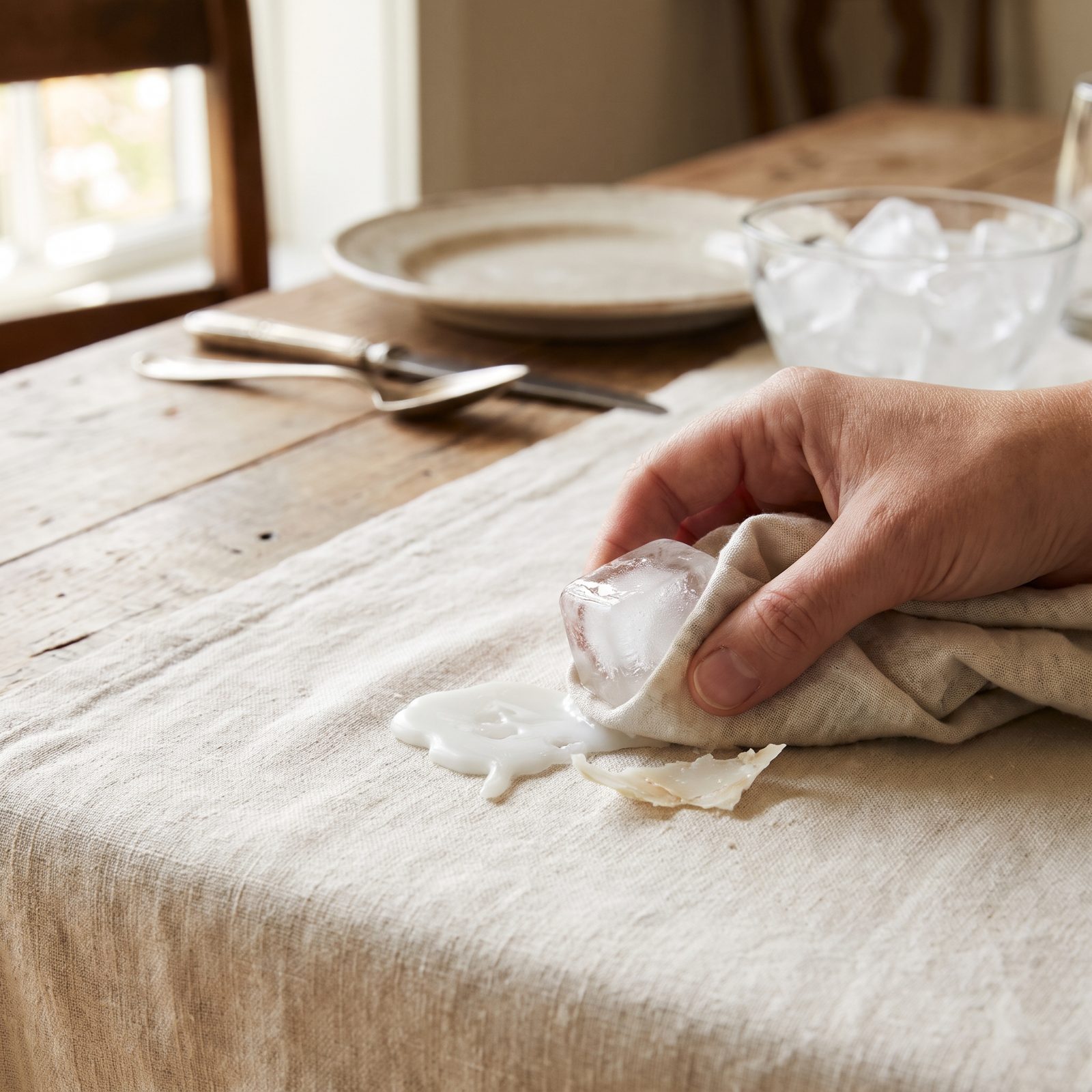
Candlelight at the dinner table is lovely until a taper drips onto the good tablecloth. Pulling at warm wax only pushes it deeper into the weave.
Fill a plastic bag with ice and hold it on the drip until the wax turns hard and brittle. The chilled edges flake off first with a butter knife or your fingernail. A glossy, still-soft pool that keeps spreading needs more time under the ice before it will lift. For the greasy shadow left behind, lay brown paper over the spot and press with a warm iron, moving the paper as it soaks up the melted residue.
No gadget required. Just a freezer and a little patience.
A good white tablecloth is worth rescuing, too: photos featuring one got more hearts from our readers than the other images in the same articles, 87% vs 78%.
4. Rinse Egg, Milk, and Blood Stains With Cold Water
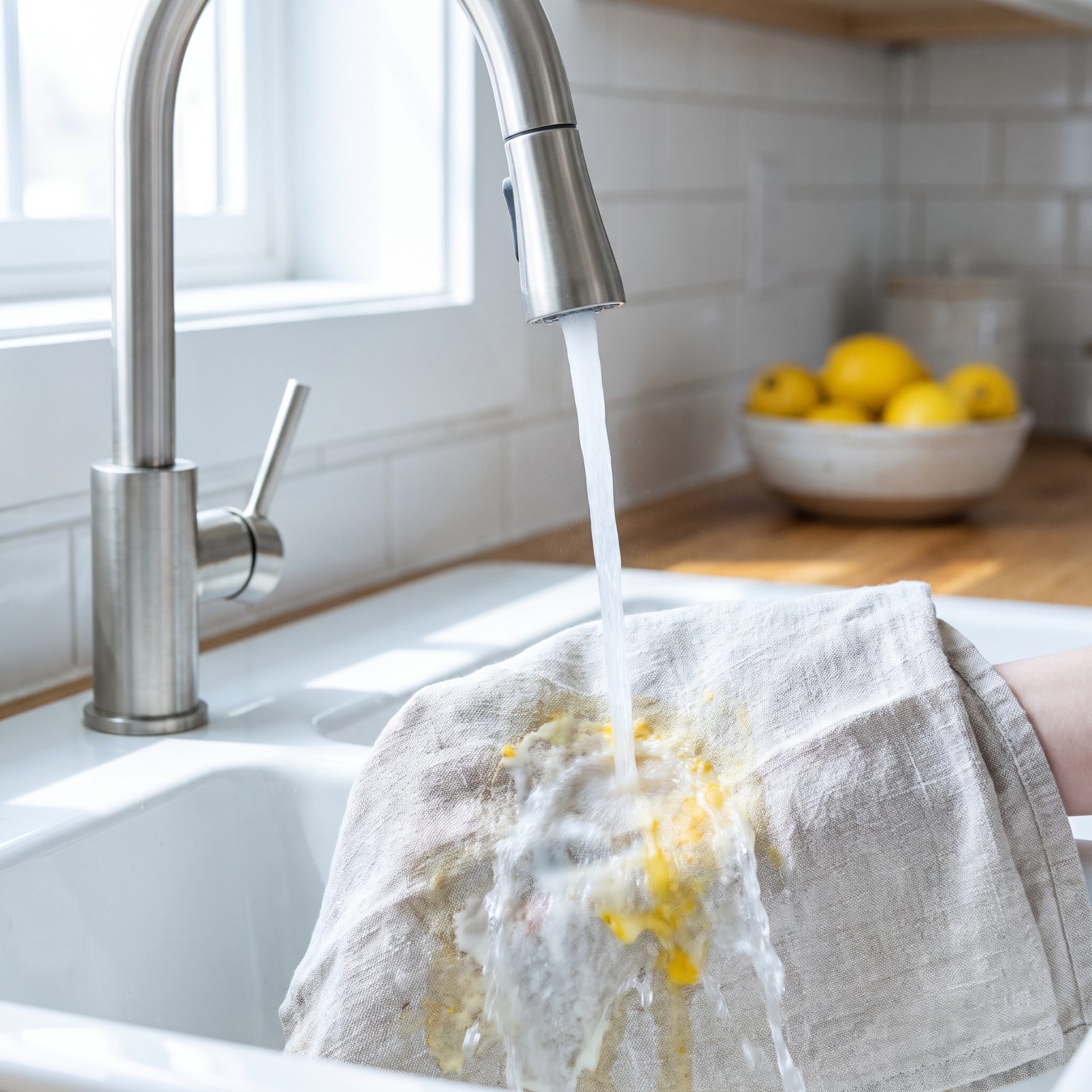
Hot water feels like the stronger choice, but on egg, milk, or blood it’s the worst one you can make. Those stains are protein, and heat cooks protein right into the fibers.
Hold the stained spot under cold running water as soon as you can, letting the stream flush the stain out of the fibers. Then work a little plain soap into what’s left and rinse again in cold. Once it’s gone, wash as usual. Our grandmothers kept this rule for aprons, napkins, and dish towels alike, and it’s why their linens didn’t carry ghost stains from every Sunday breakfast.
3. Press a Folded Damp Paper Towel Over Tiny Glass Shards
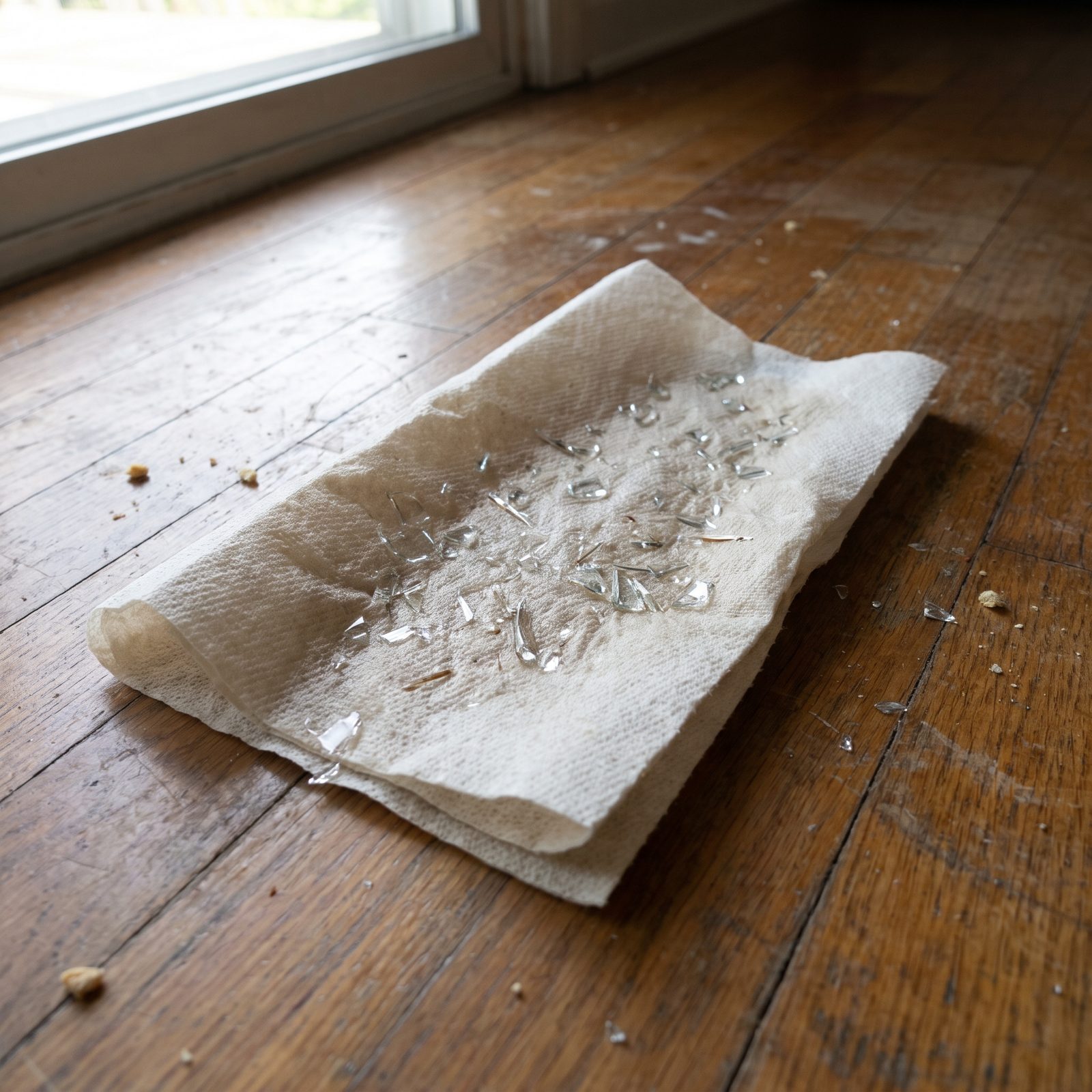
Sweep up a broken glass and you’ll get the big pieces. It’s the slivers you can barely see that end up in somebody’s bare foot a week later.
Fold a paper towel into a thick square, dampen it, and press it flat over the area where the glass landed. The moisture grabs the tiny shards and the glitter-fine dust a broom just scatters. Press, check, fold the dirty side inward, and repeat with a fresh one until nothing sparkles back at you. Wrap the used towels in newspaper before they go in the trash so nobody gets cut taking the bag out.
2. Line the Trash Can Bottom With Newspaper and Baking Soda
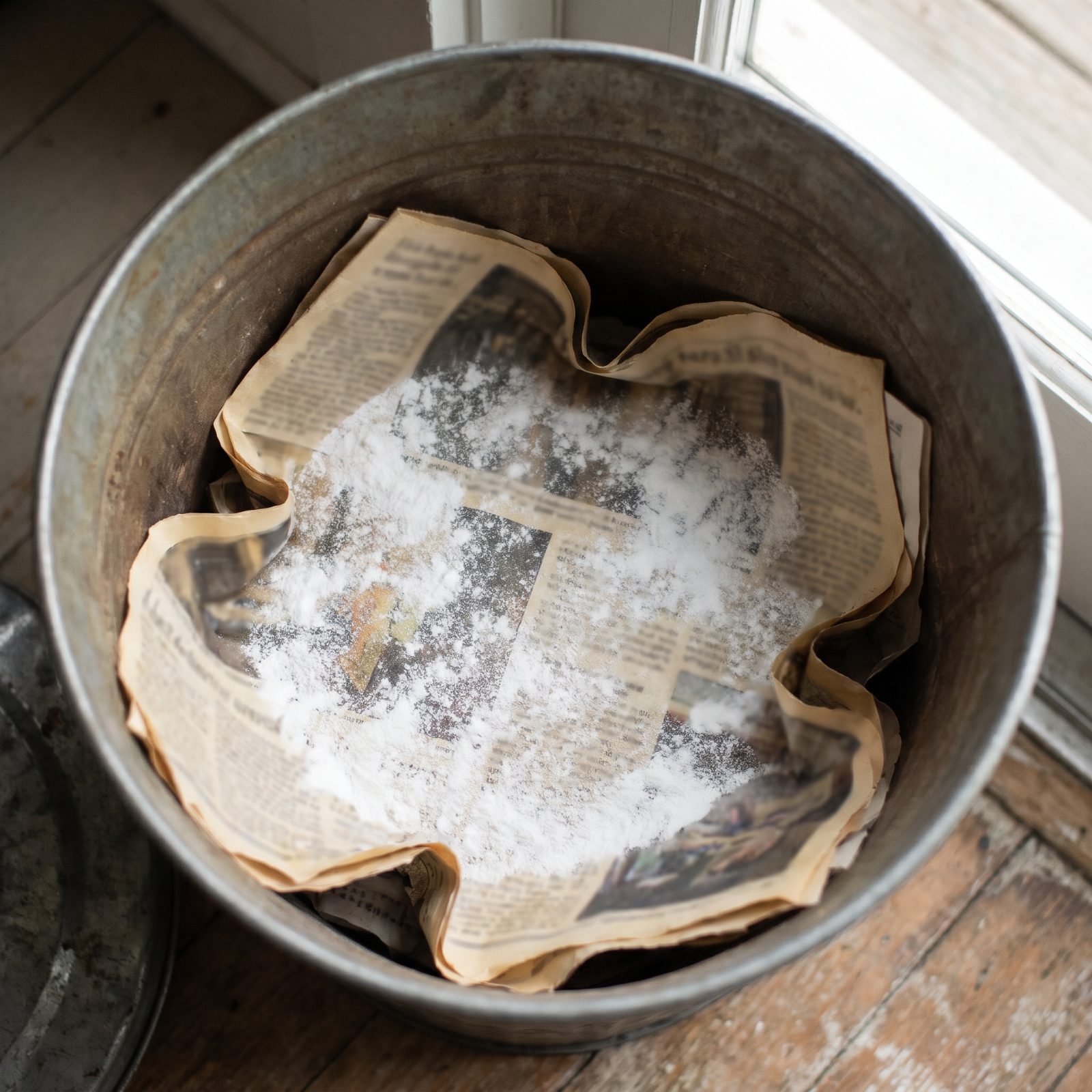
Trash bags leak. Not always, but often enough that the bottom of the can ends up with a sticky, sour puddle nobody wants to scrub.
Fold a few sheets of newspaper into the bottom of the can before you put the bag in, and sprinkle a spoonful of baking soda on top. The paper soaks up drips that escape through a small tear, and the baking soda helps keep odors down between trash days. When the paper gets damp or stained, toss it with the bag and lay down fresh. The can itself stays clean far longer, which means one less miserable chore.
1. Shake Raw Rice and Soapy Water Inside Awkward Bottles
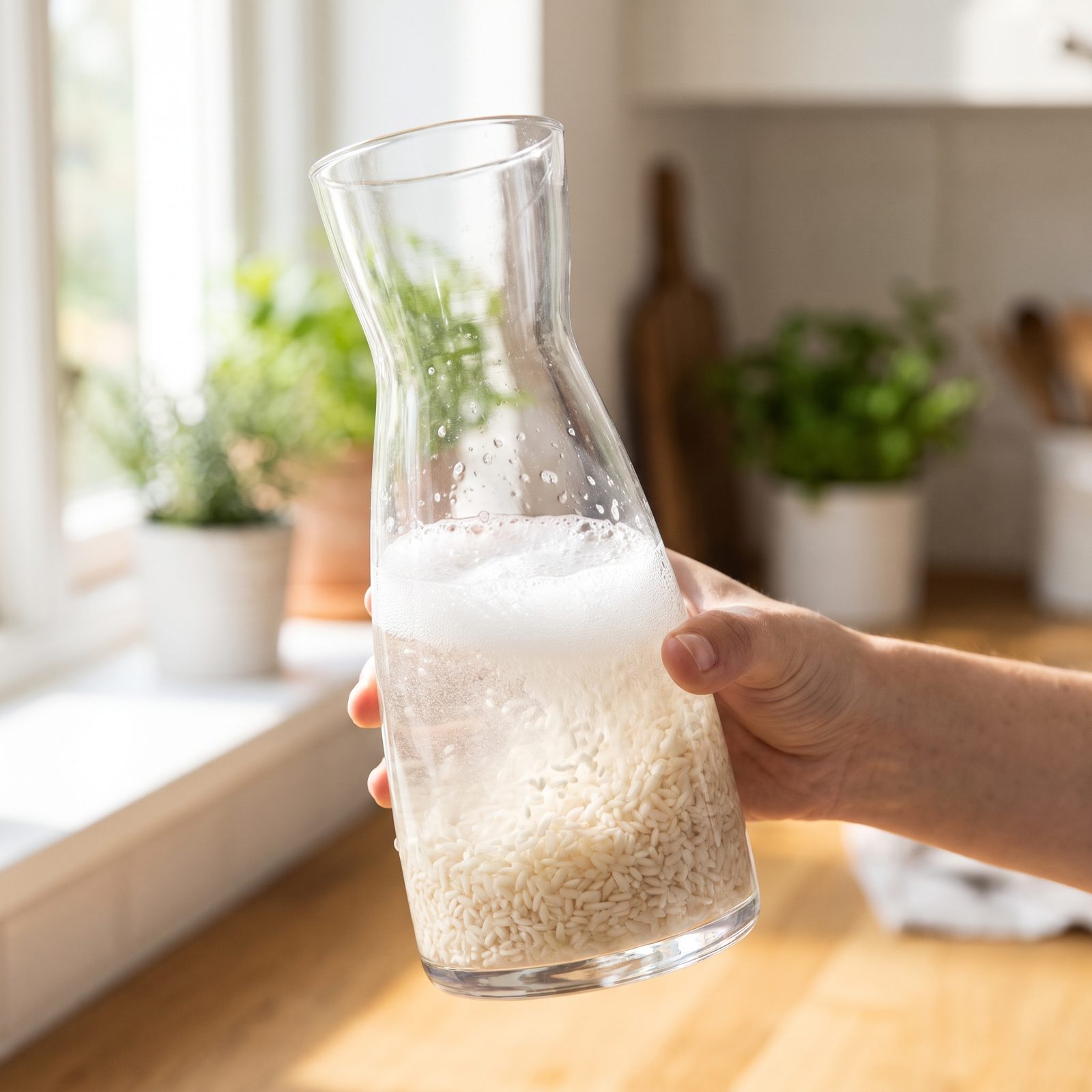
Some containers defeat even a bottle brush. A vase with a narrow neck and a wide belly, a cruet with a curve, a decanter with a film no brush can reach.
Pour in a handful of uncooked rice, add warm water and a drop of dish soap, cap it or cover the opening with your palm, and shake hard. The rice tumbles against every inner surface and scours off the residue like a thousand tiny scrubbers. Pour the rice out into the trash rather than the sink, since it can clog a drain, then rinse well and let the bottle dry upside down.