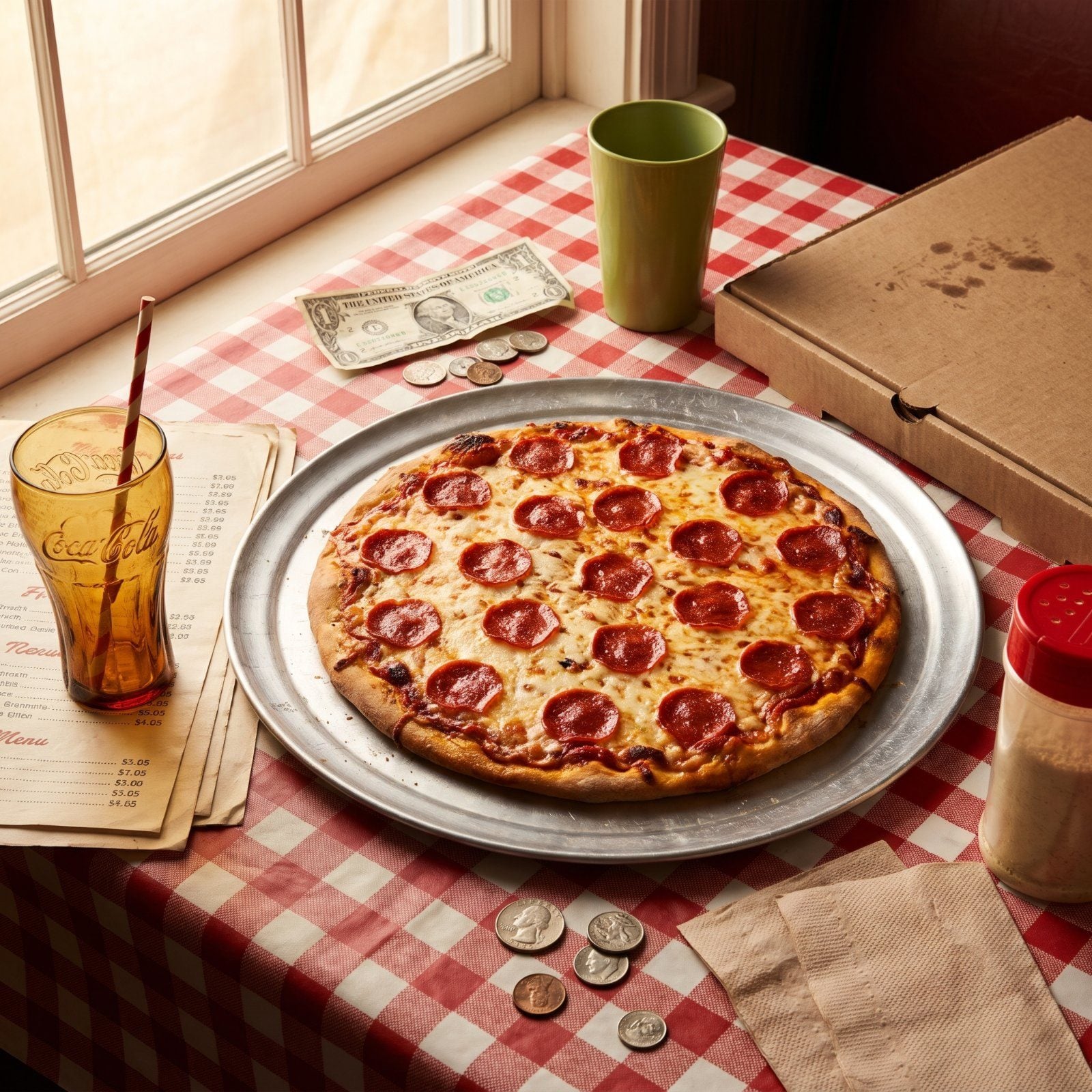
A dollar and change bought a whole large pepperoni pie in 1960. Not a slice — the whole thing. That number sounds like a typo until you remember the paycheck behind it was small too. A factory shift paid maybe two bucks an hour, and that pizza was still a real expense on a Friday night. What follows tracks the large pepperoni through every decade since, both the price on the menu and the price once you drag it forward into today’s money. The gap is where the story lives.
Please note that some of the images in this article were created with the assistance of AI.
1960 Baseline: The Corner Pizzeria’s Large Pepperoni for Around $1.25
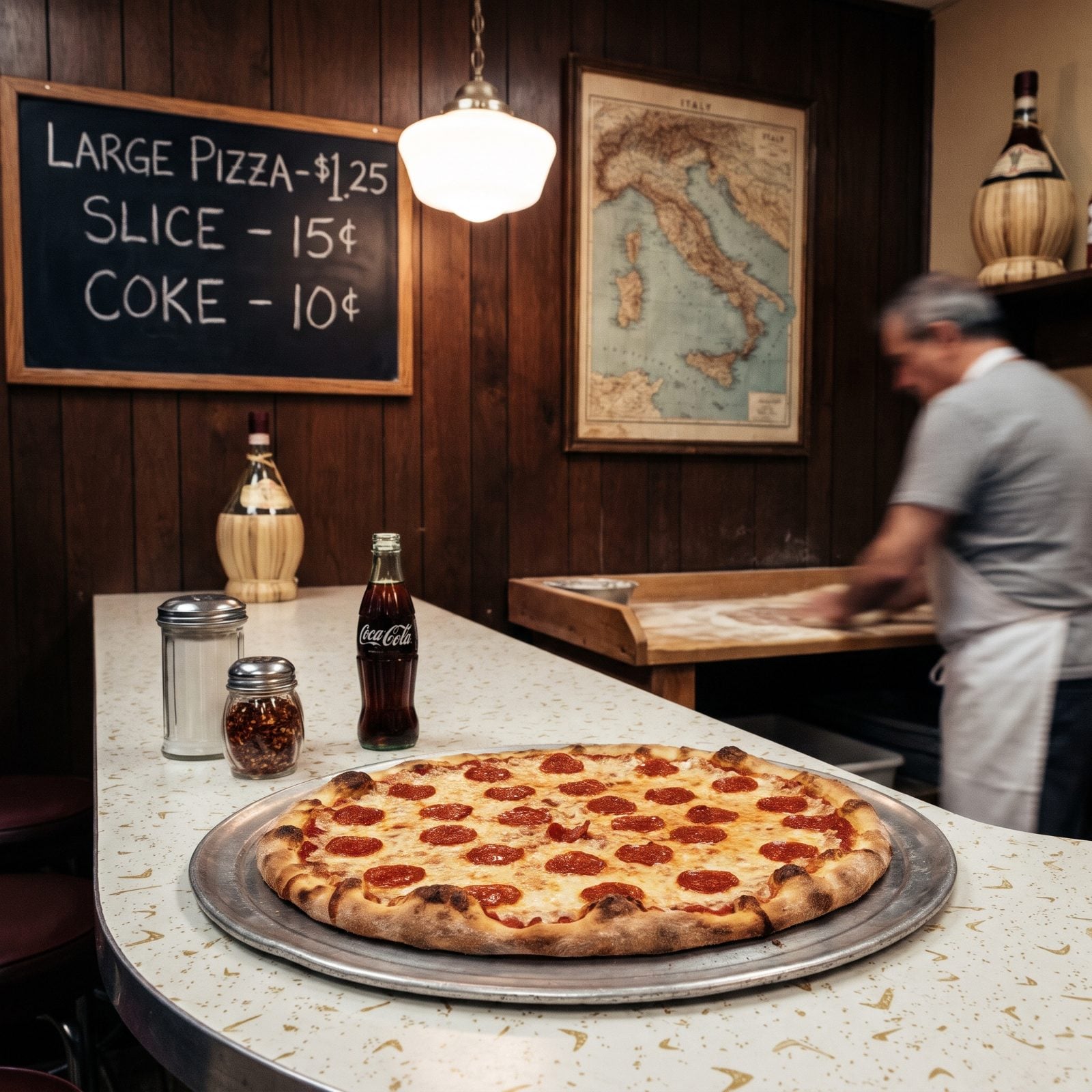
A large pepperoni in 1960 ran somewhere around a dollar to a dollar and a half, depending on the neighborhood and how generous the owner felt that week. Call it $1.25 as a fair middle. Drag that into today’s money and you’re looking at roughly thirteen dollars — not actually that far off a cheap chain pie now.
Here’s the part that surprises people. The wage behind it was tiny — minimum wage sat at a dollar an hour, so that pizza cost more than an hour of work for a lot of folks. A whole-family Friday pie was a small splurge, not a default.
Late 1960s: Pizza Parlors Travel to the Suburbs for About $1.75
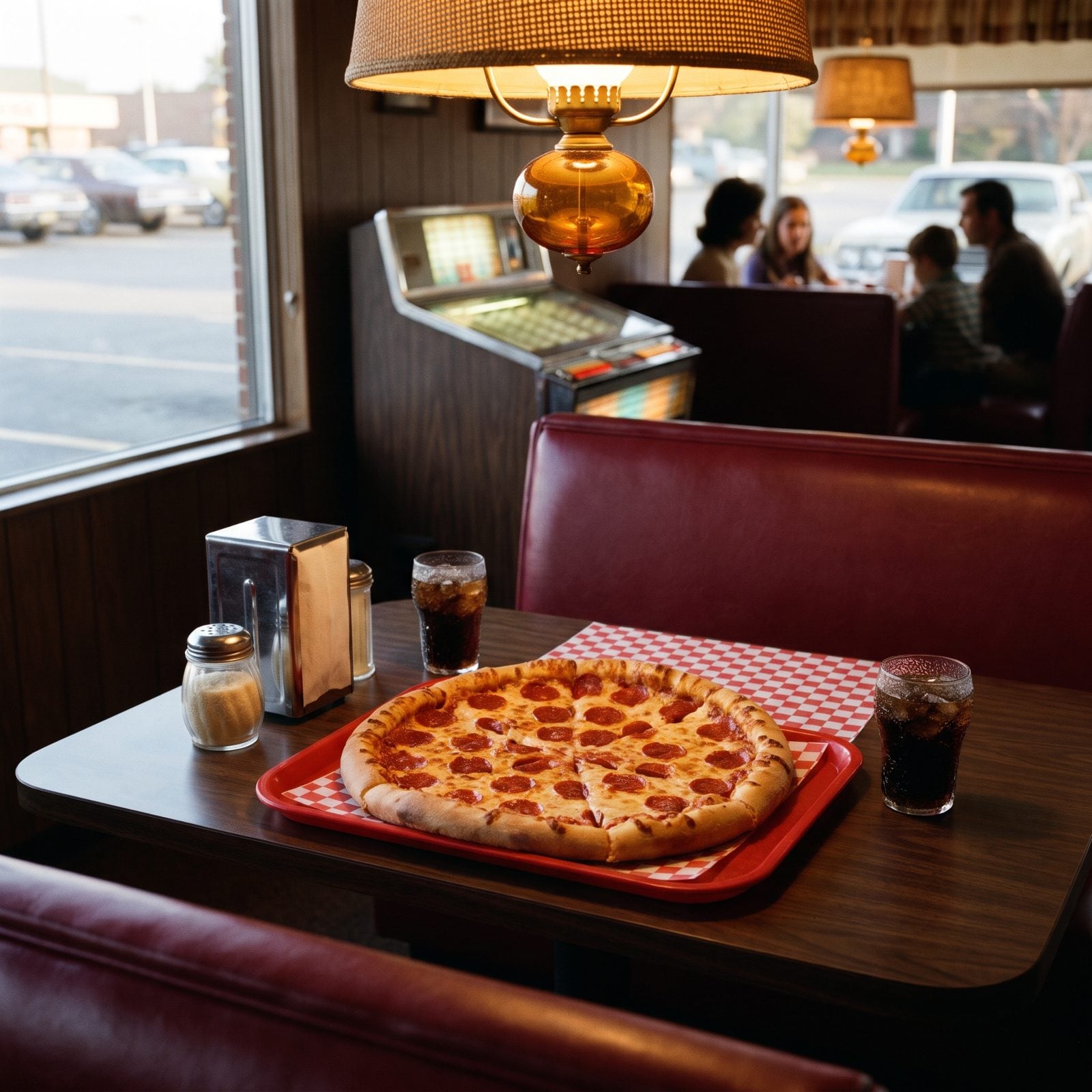
By the back half of the sixties the pie was following the highways out of the old neighborhoods and into strip-mall parlors with jukeboxes and red vinyl booths. The large pepperoni crept up to around $1.75, maybe two dollars in a fancier sit-down spot.
Inflation-adjusted, that’s roughly thirteen to fifteen dollars today. The pizza was becoming an outing — a destination with its own soundtrack and its own smell — and minimum wage had only inched to $1.60 by 1968, so the math stayed snug. You still felt it when you paid.
1970s: National Chains Standardize the Large Pepperoni at Roughly $3.50
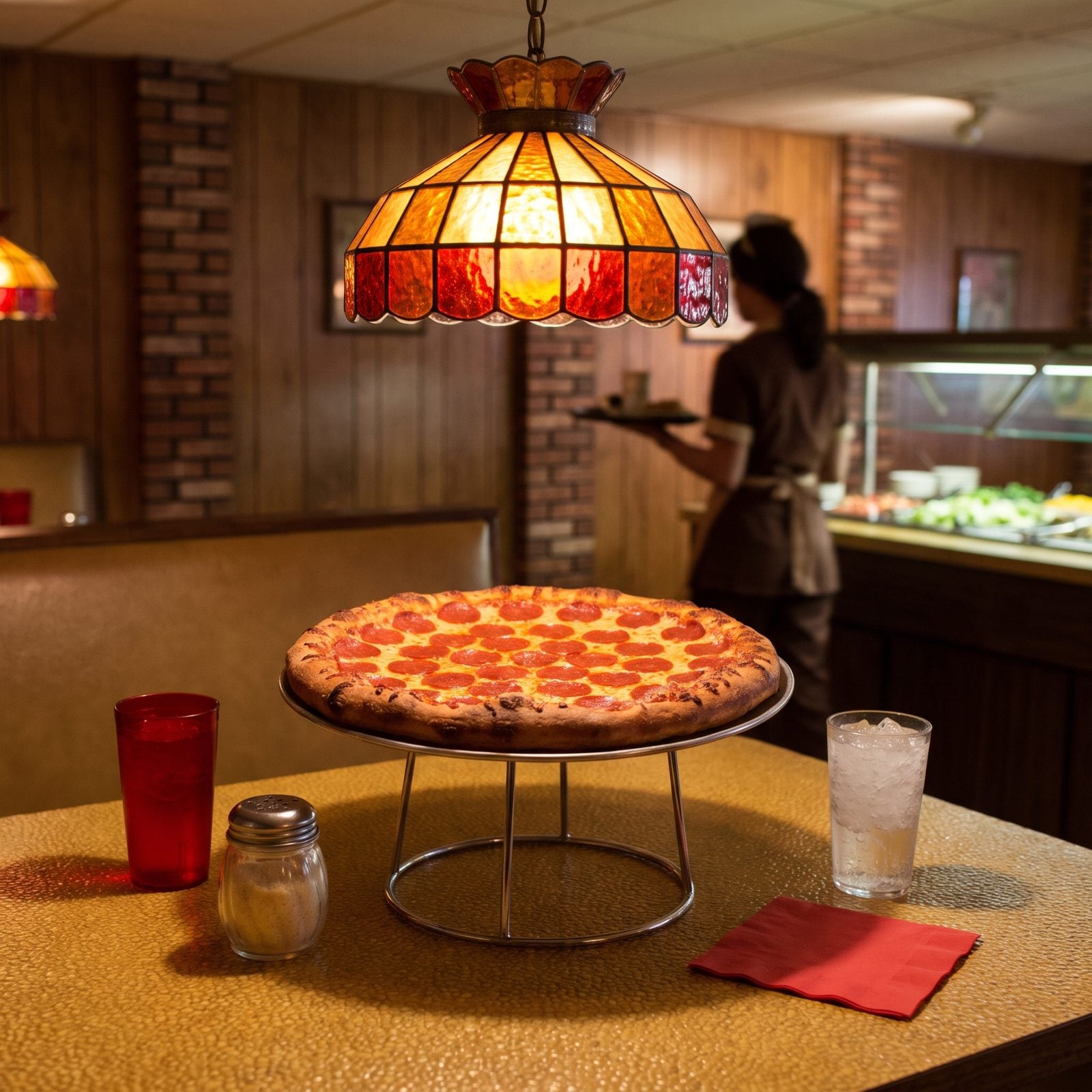
The seventies is when the pizza got a committee. National chains spread fast, and with them came a standard large pepperoni priced around $3 to $4. Say $3.50 for a clean round number.
That lands near twenty-five dollars in today’s money, which is more than a lot of chains charge now. The jump wasn’t greed so much as a bigger, cheesier pie and the cost of running a national operation with a salad bar and a uniform.
The pizza stopped being somebody’s recipe and became somebody’s product. For better and worse.
I’ll say it plainly. Something was lost when the pie got consistent — and I also ate a lot of those consistent pies as a kid and loved every one.
1970s Toppings: Thin Pepperoni, Honest Mozzarella, and a Crust That Cracked
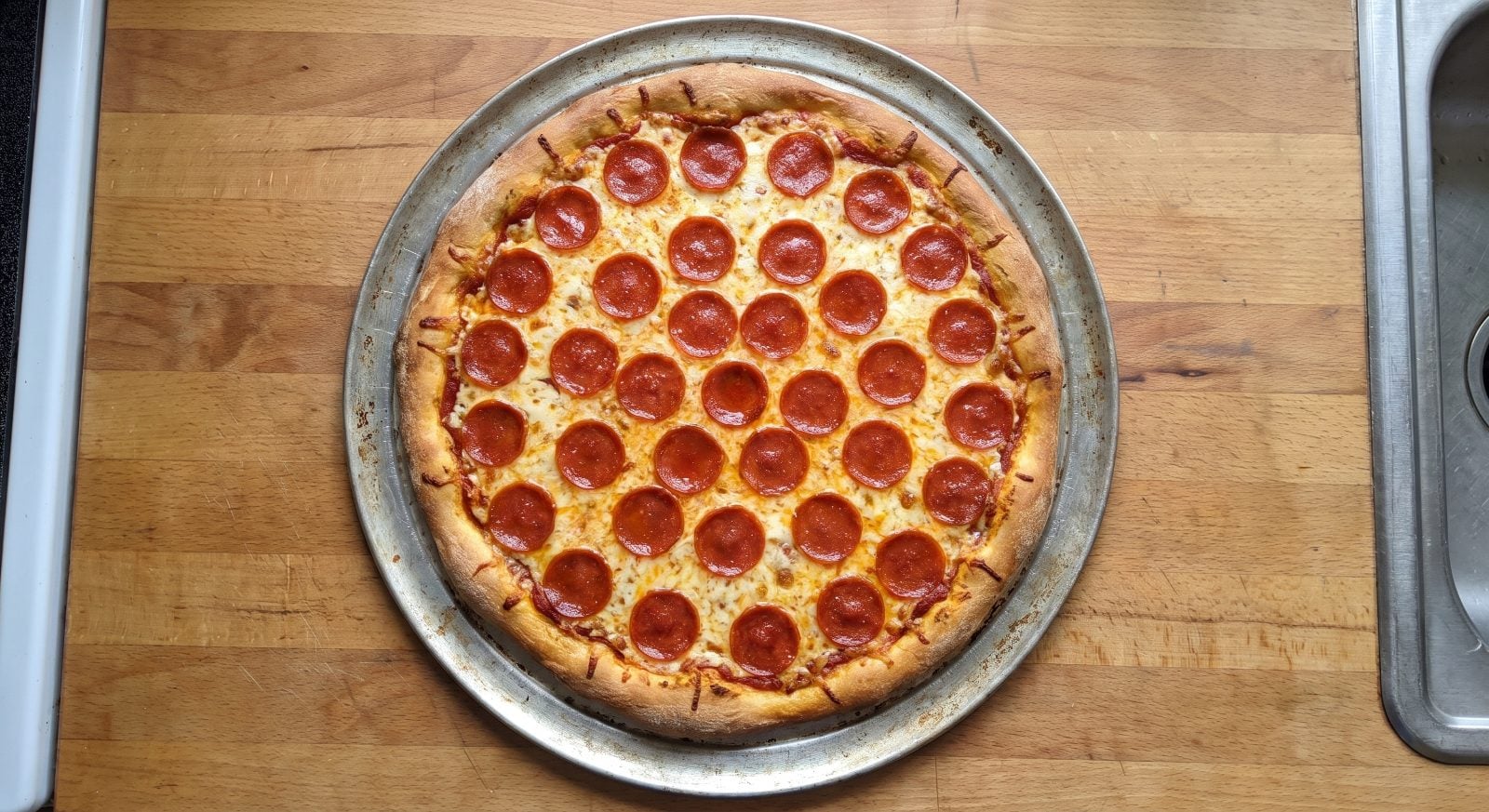
A seventies large pepperoni wasn’t buried in anything. The pepperoni was thin and wide, laid with daylight between the slices, and it baked completely flat, with no cupped rims, grease bowls or char. The mozzarella was a single believable layer, not the blanket you get now.
The crust mattered most. A crisp crust that cracked at the fold, puffed and browned at the edge. None of this was premium. It was just the recipe.
1980s: Delivery Turns the Large Pie Into a Family-Night Staple at About $8
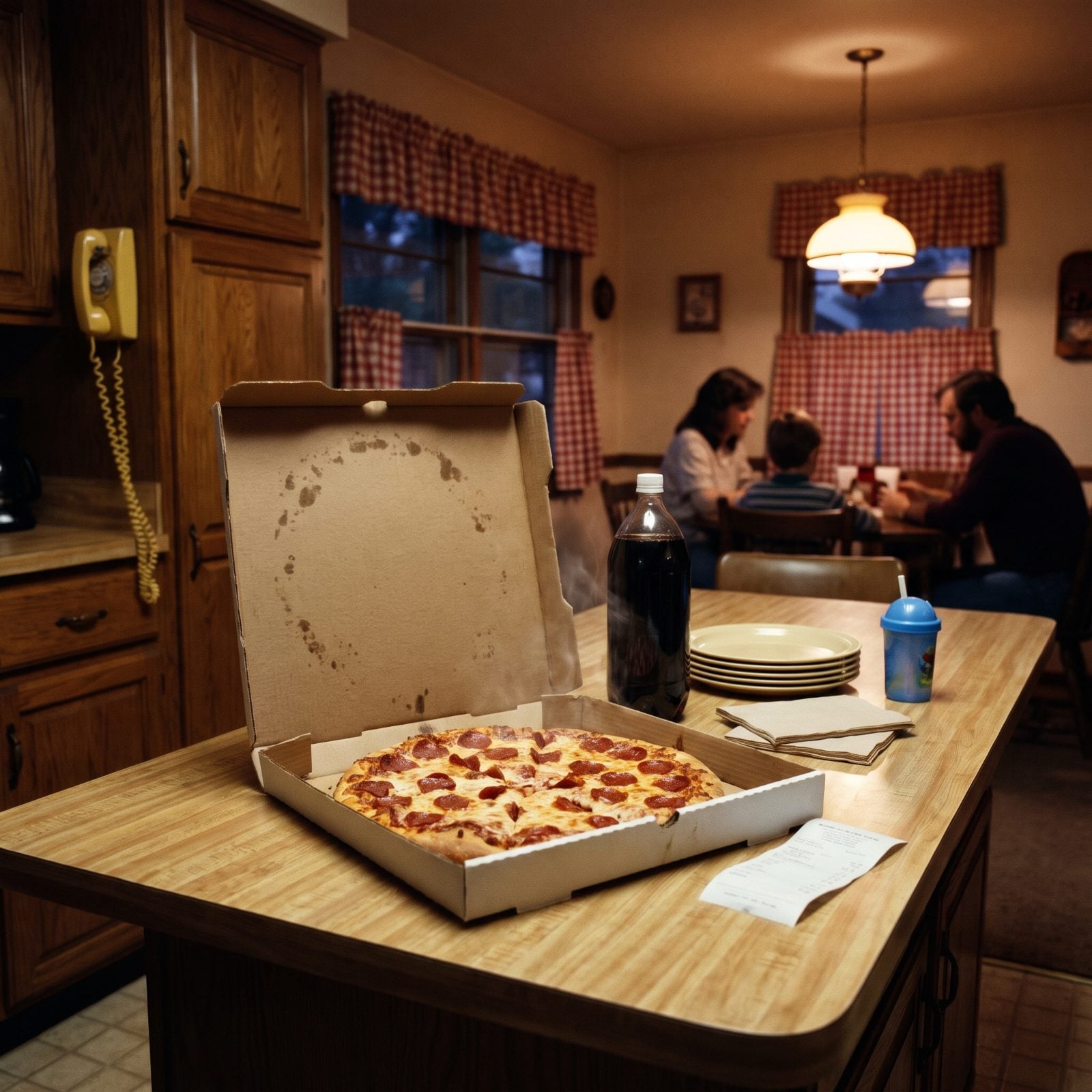
Delivery is the eighties story. The thirty-minute guarantee, the coiled kitchen phone, the headlights swinging into the driveway. A large pepperoni delivered ran roughly $7 to $9 depending on your town. Call it eight bucks.
In today’s dollars that’s around twenty-two to twenty-six. Not cheap. But you weren’t paying for pizza alone anymore — you were paying for not getting dressed, not driving, not cooking. The pie became the default Friday, the thing that showed up so dinner didn’t have to be decided.
1980s Pricing: When the Menu Number Started Buying Convenience
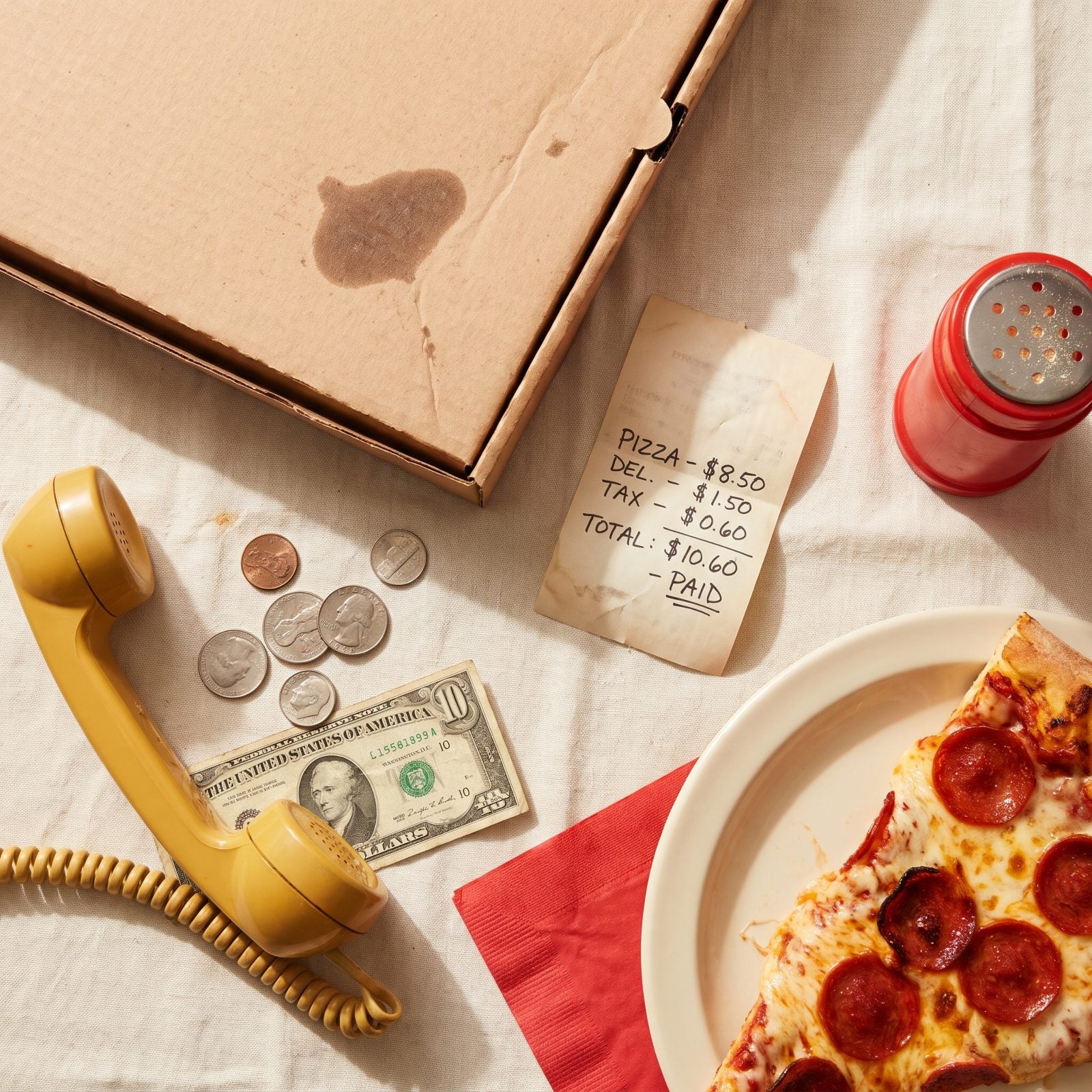
Here’s where the price tag changed what it meant. The eighties large pepperoni cost more than the seventies one in real dollars partly because the bill now covered a driver, a car, insurance, and the promise of speed.
You weren’t buying a bigger pizza. You were buying someone else’s gas and someone else’s time.
1980s Toppings: More Cheese, Edge-to-Edge Pepperoni, and Grease You Could See
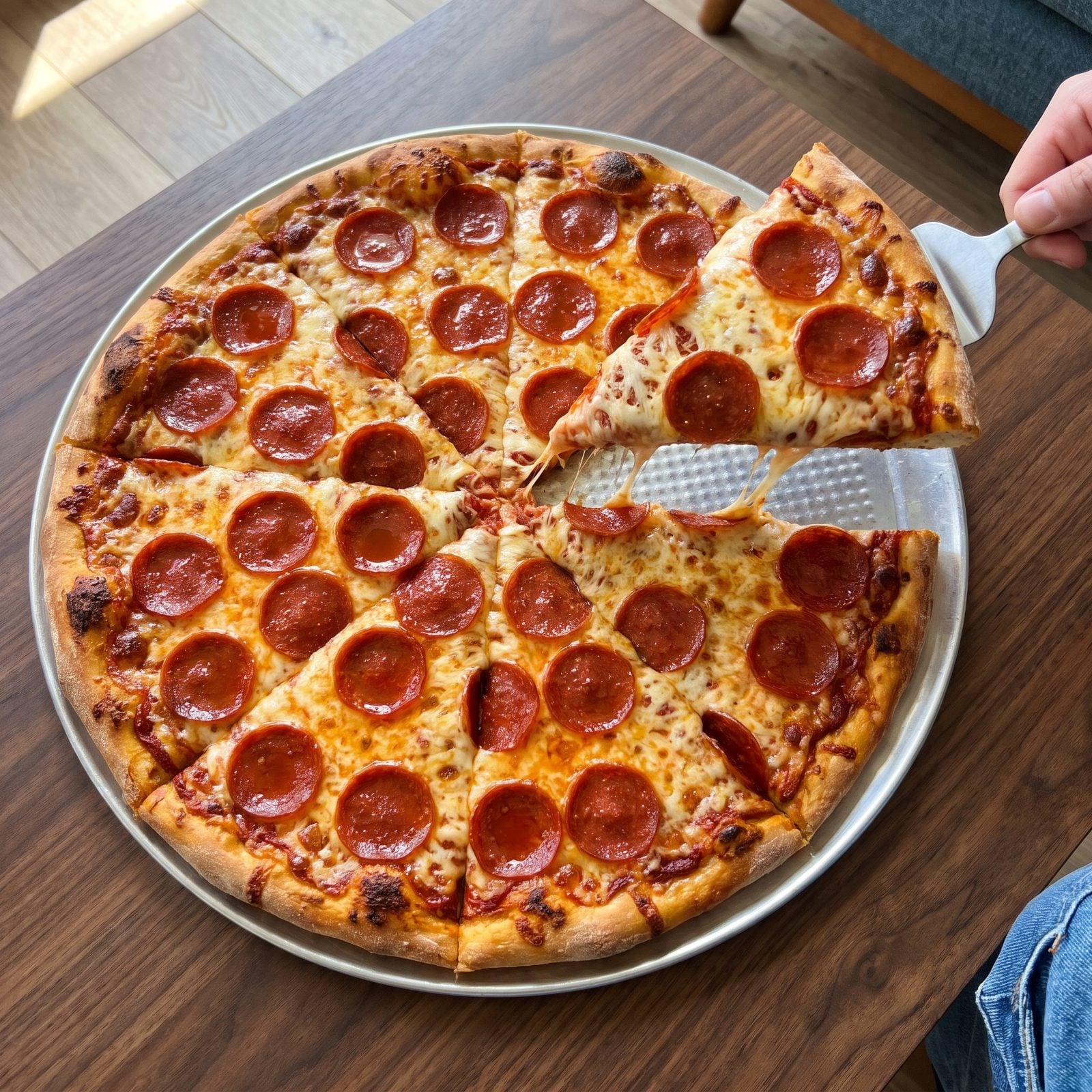
The eighties pie got loud. Cheese thickened into a bubbling blanket, pepperoni went bigger and covered nearly the whole surface, and the grease stopped hiding. You blotted your slice with a napkin and the napkin went translucent.
Was it better? Depends who you ask. It was definitely more — more cheese, more meat, more of everything, which is exactly what a decade raised on abundance wanted on its Friday pizza. The subtle thin pie of the seventies started looking downright shy by comparison.
1990s: Coupon Wars Push the Advertised Price Down to $5.99
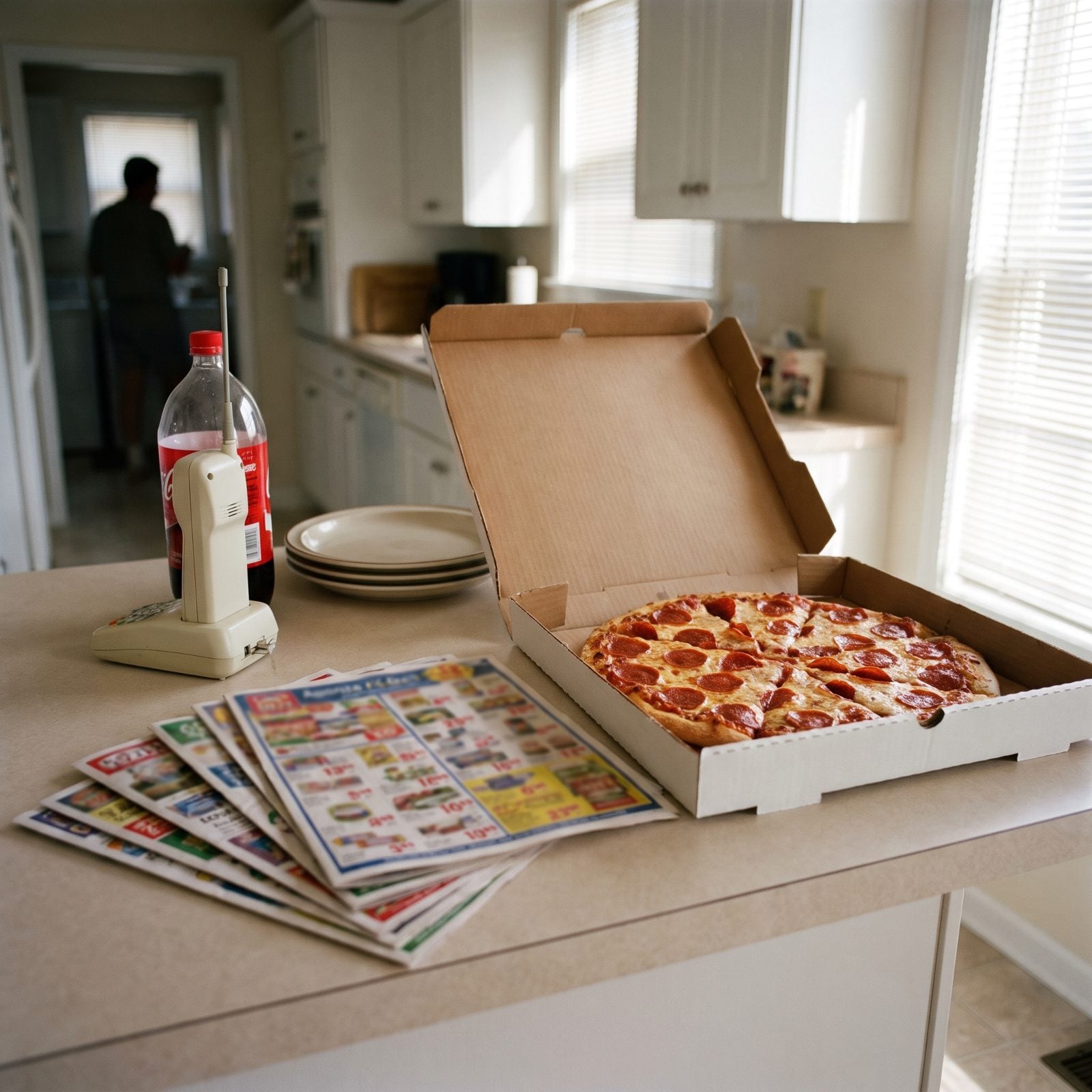
The nineties invented the pizza you never paid full price for. Chains went to war with each other through coupons, two-for-one deals, and those glossy inserts that fell out of the Sunday paper in a heap. The advertised large pepperoni dropped to $5.99, sometimes less with a second pie thrown in.
In today’s money that’s around eleven or twelve dollars. For two pizzas. The real menu price was higher, but nobody normal paid it. You kept a coupon in the junk drawer like it was currency, because it practically was.
1990s Upsells: Stuffed Crust, Extra Cheese, and Pepperoni That Cost Extra
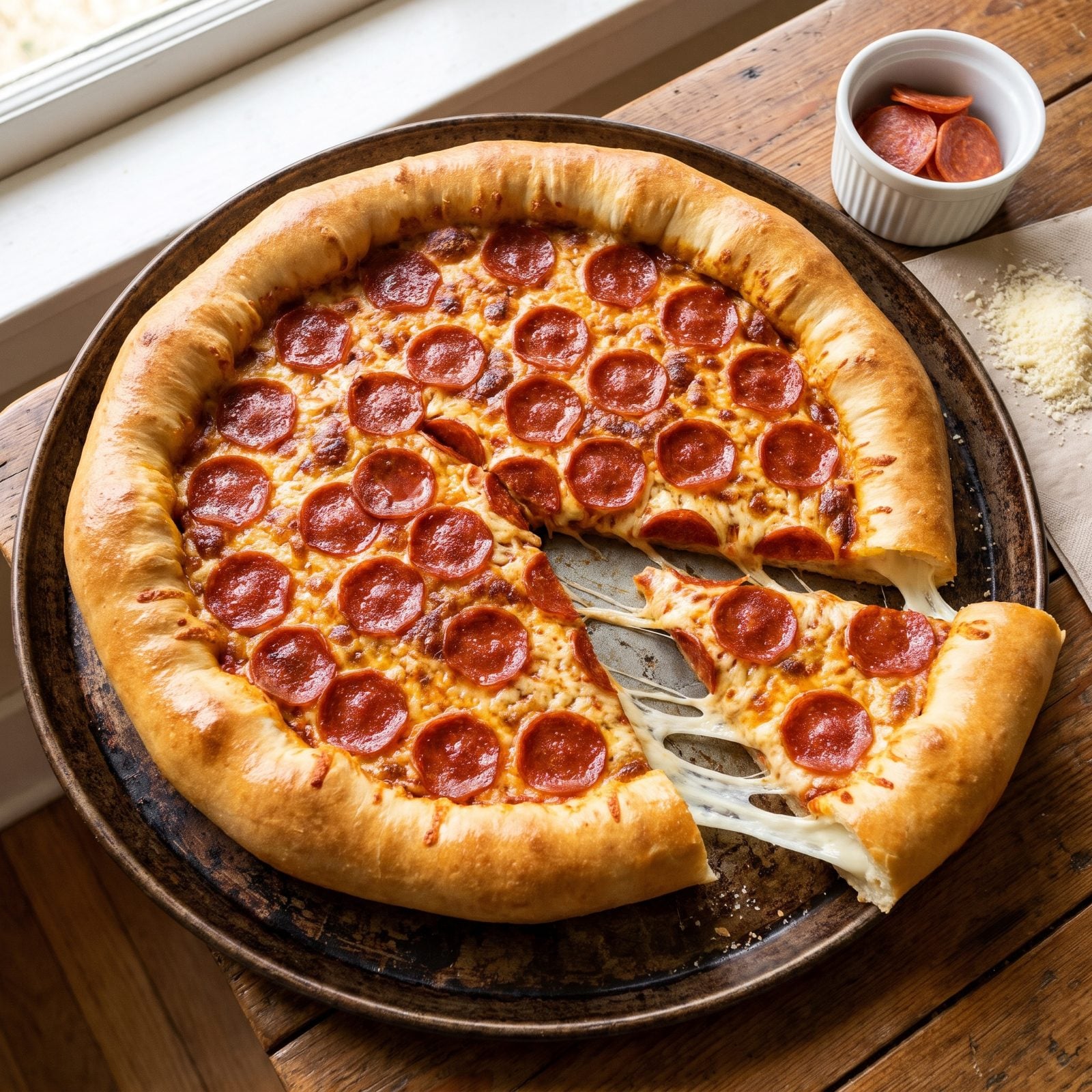
While coupons dragged the base price down, the chains quietly built a ladder of add-ons to climb back up. Stuffed crust arrived in 1995 and changed the game. Extra cheese was a dollar. Premium pepperoni, double meat, a second topping — each one nudged the ticket higher.
You walked in for the $5.99 special and walked out having spent twelve. Not because you were tricked. Because the stuffed crust genuinely ruled and you knew it the second you saw the ad.
1990s Reality Check: The Menu Price Was a Fiction and Everyone Knew It
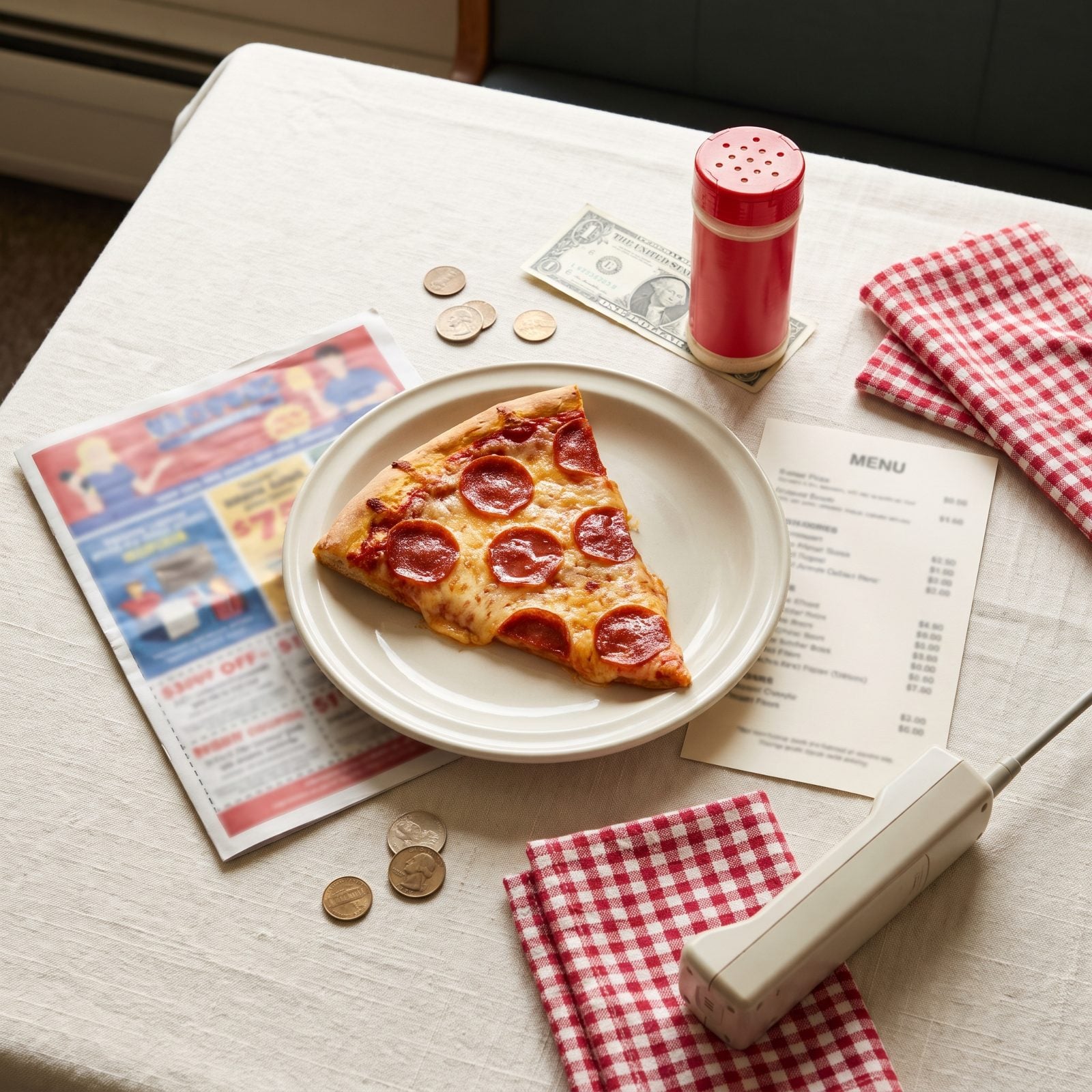
So what did a nineties large pepperoni actually cost? Two different answers, and the gap between them is the whole point. The menu price sat a few dollars above the advertised deal. The coupons promised a few dollars off. Almost nobody paid the first number.
Adjusted to today, those menu prices roughly double, which still lands below where a large pepperoni sits now. The coupons knocked something off even that. We spent a decade trained to believe pizza was practically free, and then slowly, quietly, the deals thinned out and the menu price became the real price again.
Line up sixty years of this pie and the lesson isn’t that pizza got cheaper or dearer. It’s that the number on the menu kept meaning different things — a splurge, then a product, then a convenience, then a decoy. The pizza changed, but we changed more.
2000s: The $10 Large Pepperoni Becomes the Number Everyone Remembers
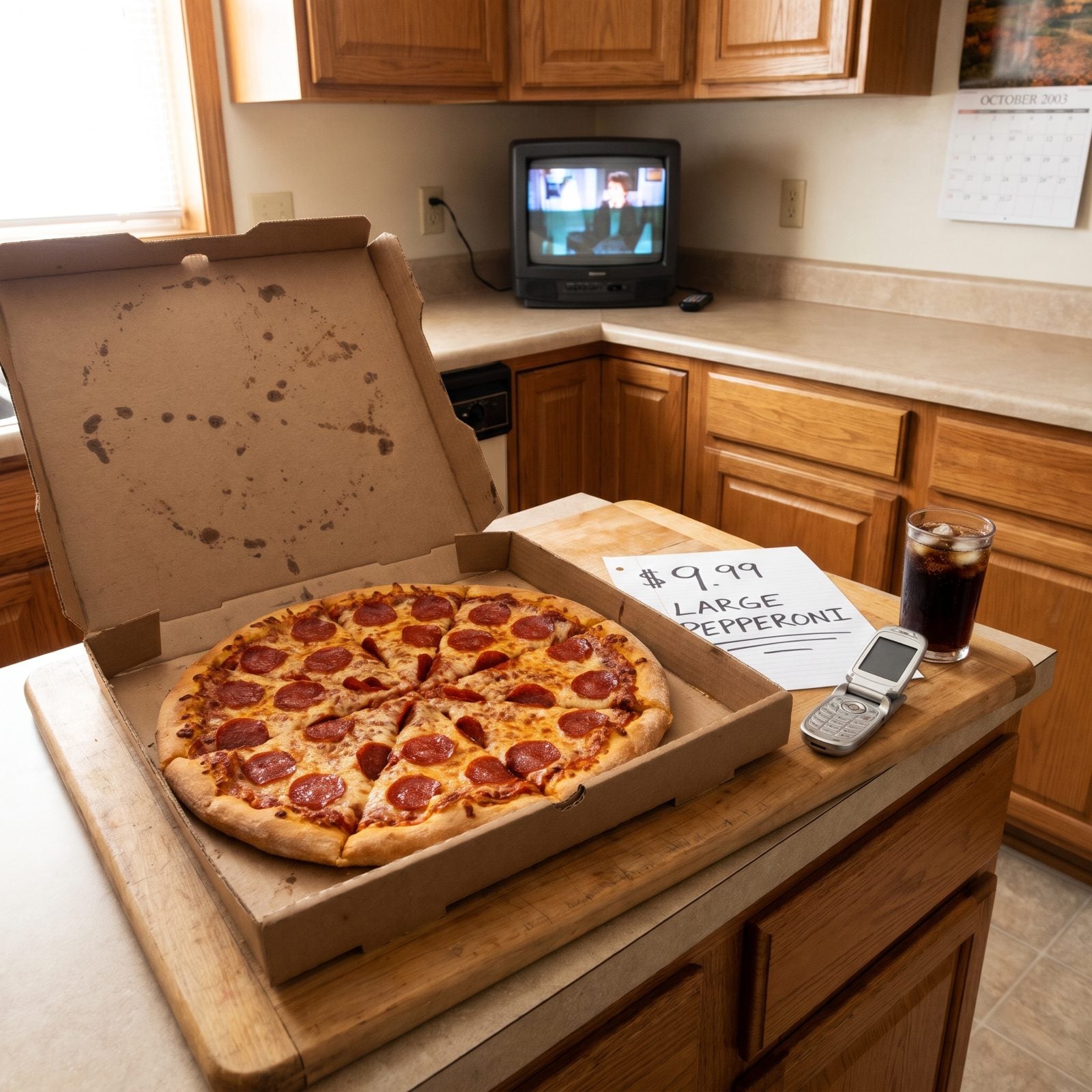
Somewhere around 2000, the large pepperoni settled into a nice round number: ten dollars. Not a coupon fantasy — an actual walk-in price at most chains. It felt like a deal and a splurge at the same time.
Put it against wages and the math gets friendlier. The federal minimum sat around $5.15, so a little under two hours of entry-level work bought the whole pie, and a worker earning closer to fourteen dollars an hour cleared it in about forty-five minutes.
Adjusted for inflation, that $10 pizza runs somewhere near $18 or $19 in today’s money — which, if you’ve ordered lately, is roughly what you still pay before fees. The ten-dollar pizza was never as cheap as it felt. It just wore the price well.
2000s Value Pies: Carryout Deals and the Portion Everybody Agreed On
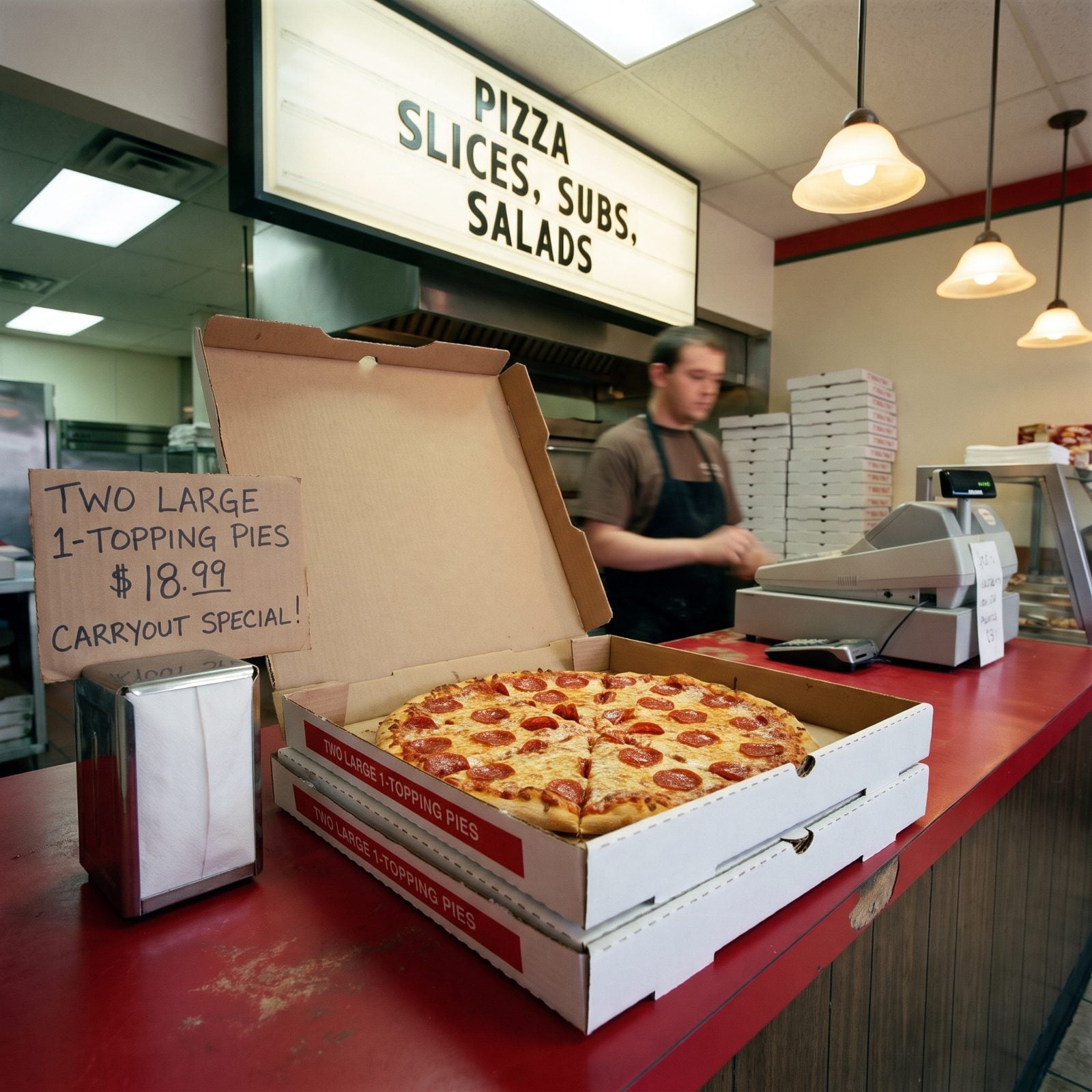
Carryout is where the 2000s got generous. Chains leaned hard into the two-for deals and the five-dollar carryout specials, and the large pepperoni was the default poster child. Skip the driver, save a few bucks, carry it yourself.
Portions standardized here too. A “large” meant roughly 14 inches across most national chains — eight slices, and a pepperoni count you could almost predict. That consistency is the quiet story of the decade. You knew what you were getting before the lid came up.
And the deals trained a whole generation to think ten bucks was the ceiling for a large. The chains would spend the entire 2010s trying to climb back out of that trap.
2000s Toppings: Thicker Crusts, Heavier Cheese, and the Rise of Build-Your-Own
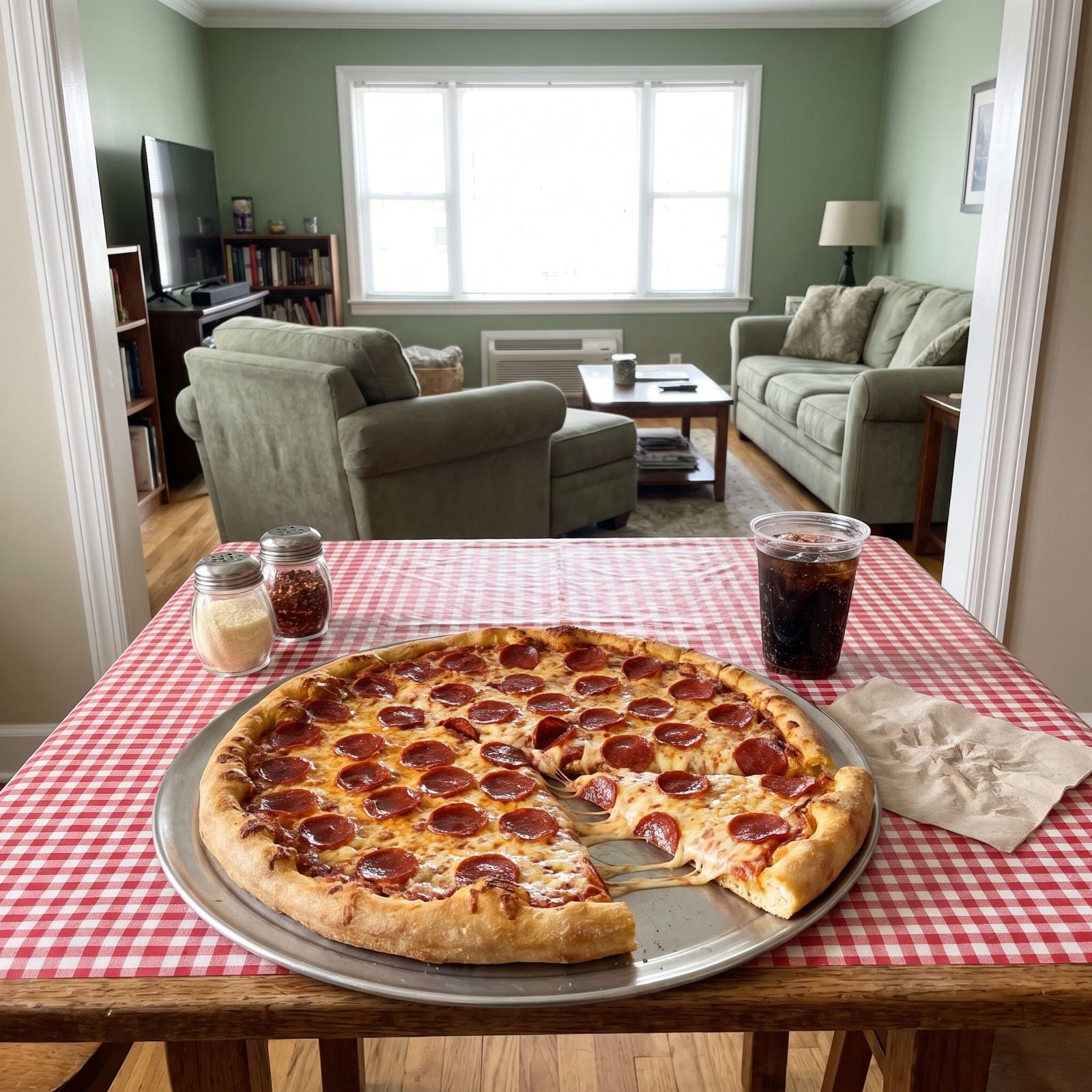
This is the decade the pizza got heavier. Pan crusts thickened, cheese got piled higher, and the menus sprouted a build-your-own grid that let you stack toppings until the box sagged.
Extra cheese and double pepperoni turned from oddball requests into standard checkboxes. The base large still hovered near ten dollars, but every add-on nudged you up a buck or two, and plenty of people happily paid it.
I’ll admit it — I thought stuffed crust was a gimmick when it rolled out. Dead wrong. I’ve eaten my words along with the crust many times since.
2010s: Ordering Apps Quietly Rewrote the Price of Pizza Night
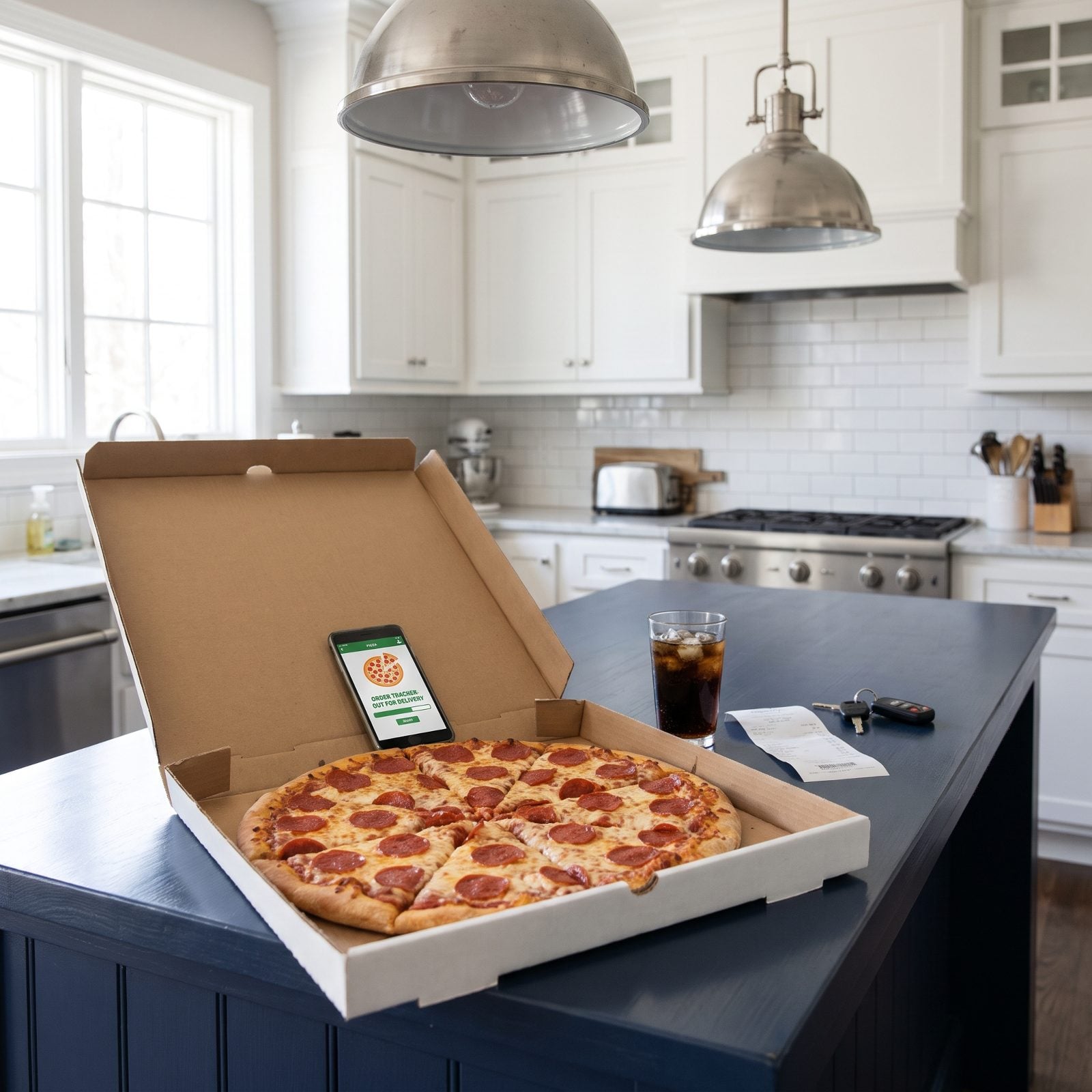
The app changed the whole ritual. No phone call, no reading your card number to a teenager, no busy signal on a Friday — you tapped, you tracked, and the pizza showed up.
Base prices crept into the twelve-to-fifteen dollar range for a large pepperoni through the decade, depending on chain and city. But the sticker stopped telling the whole truth. The deals moved into the app, hidden behind a login and a loyalty account.
Convenience has a cost that never appears on the menu. You ordered more often because it was easy, and the chains knew it.
2010s Premium Pies: Artisan Crusts and Pepperoni With a Backstory
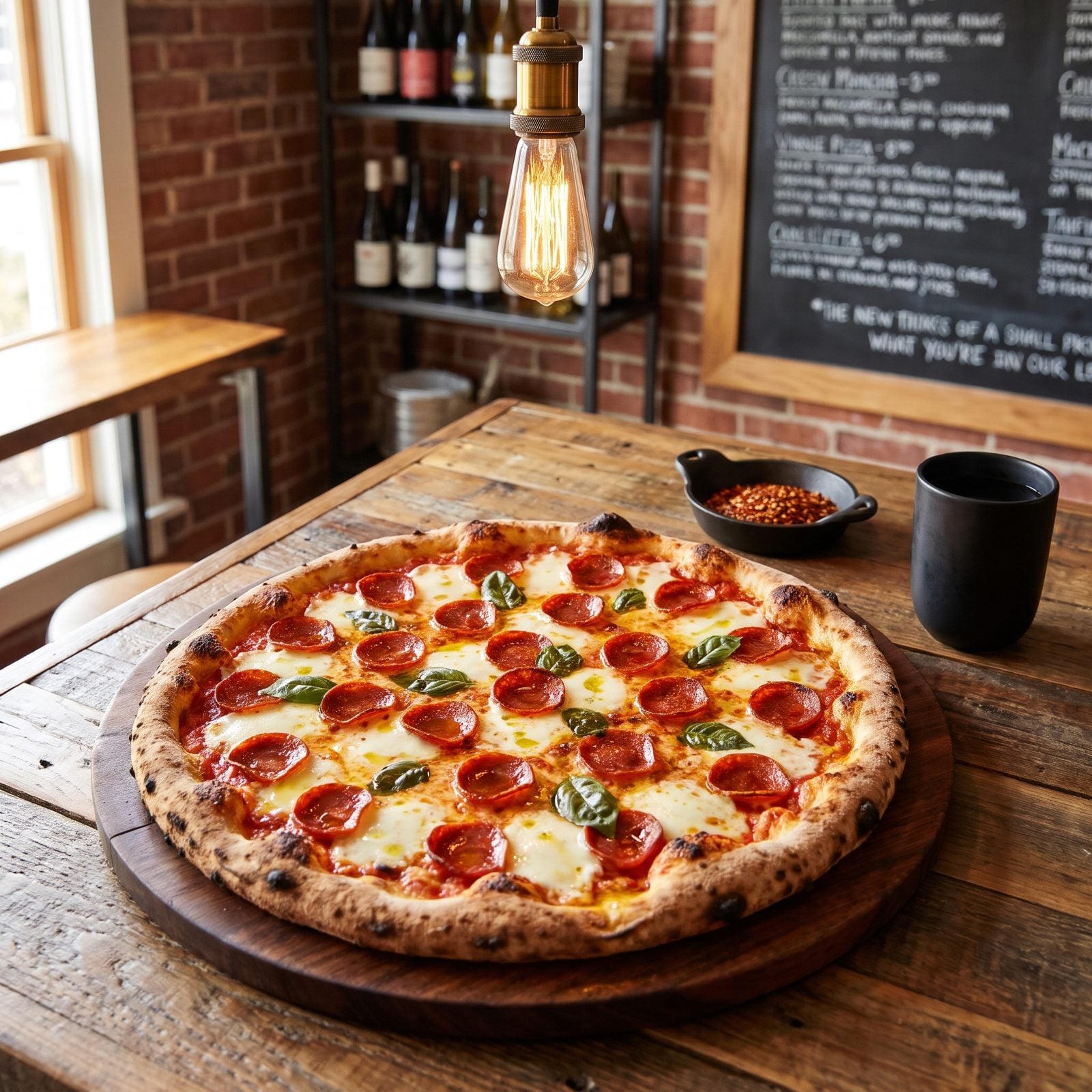
Then came the upmarket swing. Fast-casual and build-it-yourself shops sold the large pepperoni as a craft object: fermented dough, imported mozzarella, cured pepperoni that someone really wanted you to know the name of.
Prices climbed to match the story. A premium large could run eighteen to twenty-five dollars, which felt steep next to the memory of the ten-dollar pie. Adjusted for inflation, though, the leap wasn’t as wild as it looked.
And the pepperoni shrank in count while growing in character — fewer, bigger, cupped, crisped at the edges. Quality replaced quantity as the thing you paid for.
The ten-dollar pizza sold you dinner. The twenty-dollar pizza sold you a story about dinner.
2010s Checkout Costs: Where the Delivery Fee Started Doing Real Damage
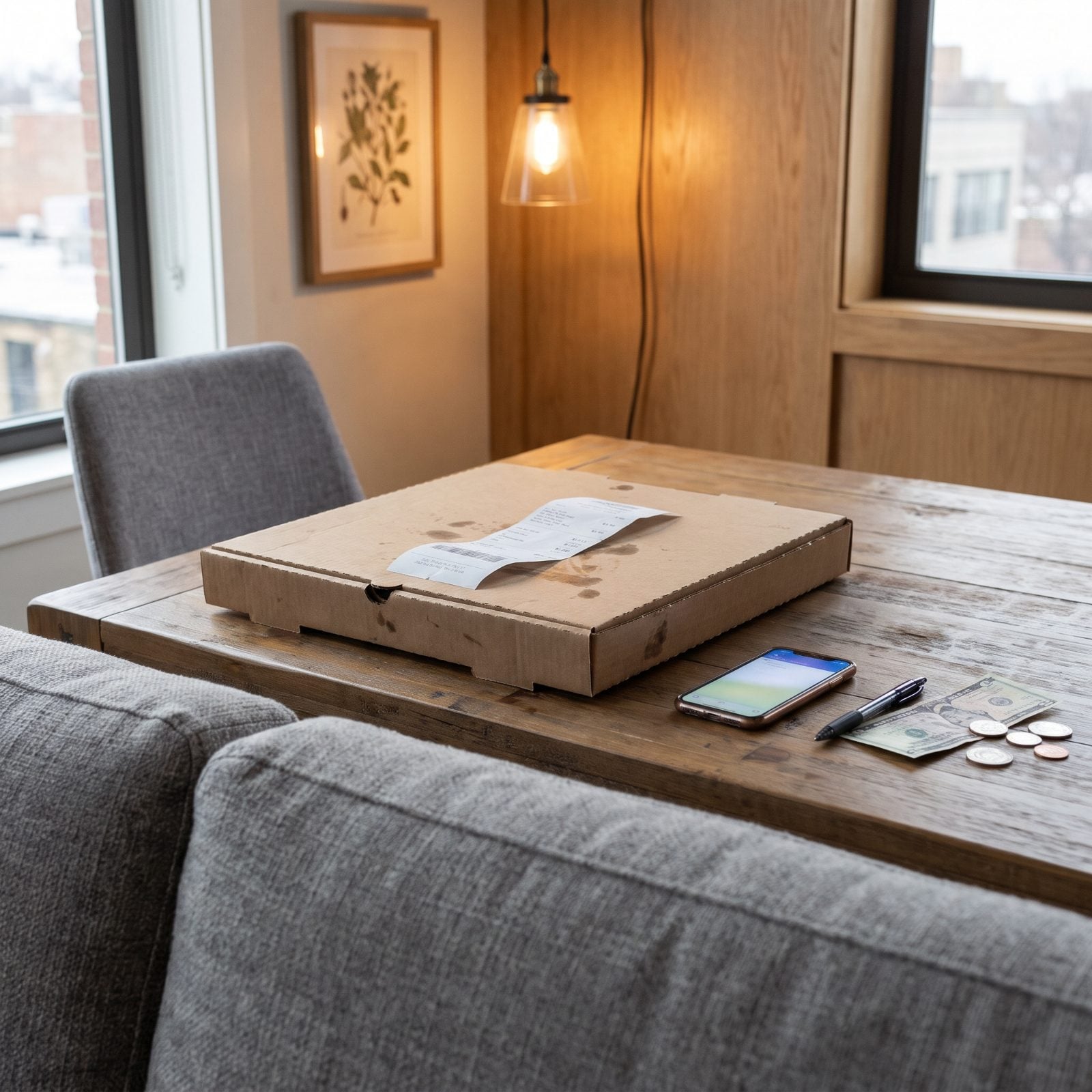
Here’s where the quiet inflation lived. The menu said fifteen. The checkout said something north of twenty.
Delivery fees became standard, usually two to four dollars, and almost none of it went to the driver. Then came the service fee — a second charge that confused everyone and benefited the chain. Then tax. Then the tip, which plenty of people assumed the delivery fee already covered. It didn’t.
Stack it all up and a mid-decade large pepperoni delivered could cross twenty dollars without anyone splurging on toppings. The base price became a starting bid.
Early 2020s: Inflation Climbs Into the Pizza Box
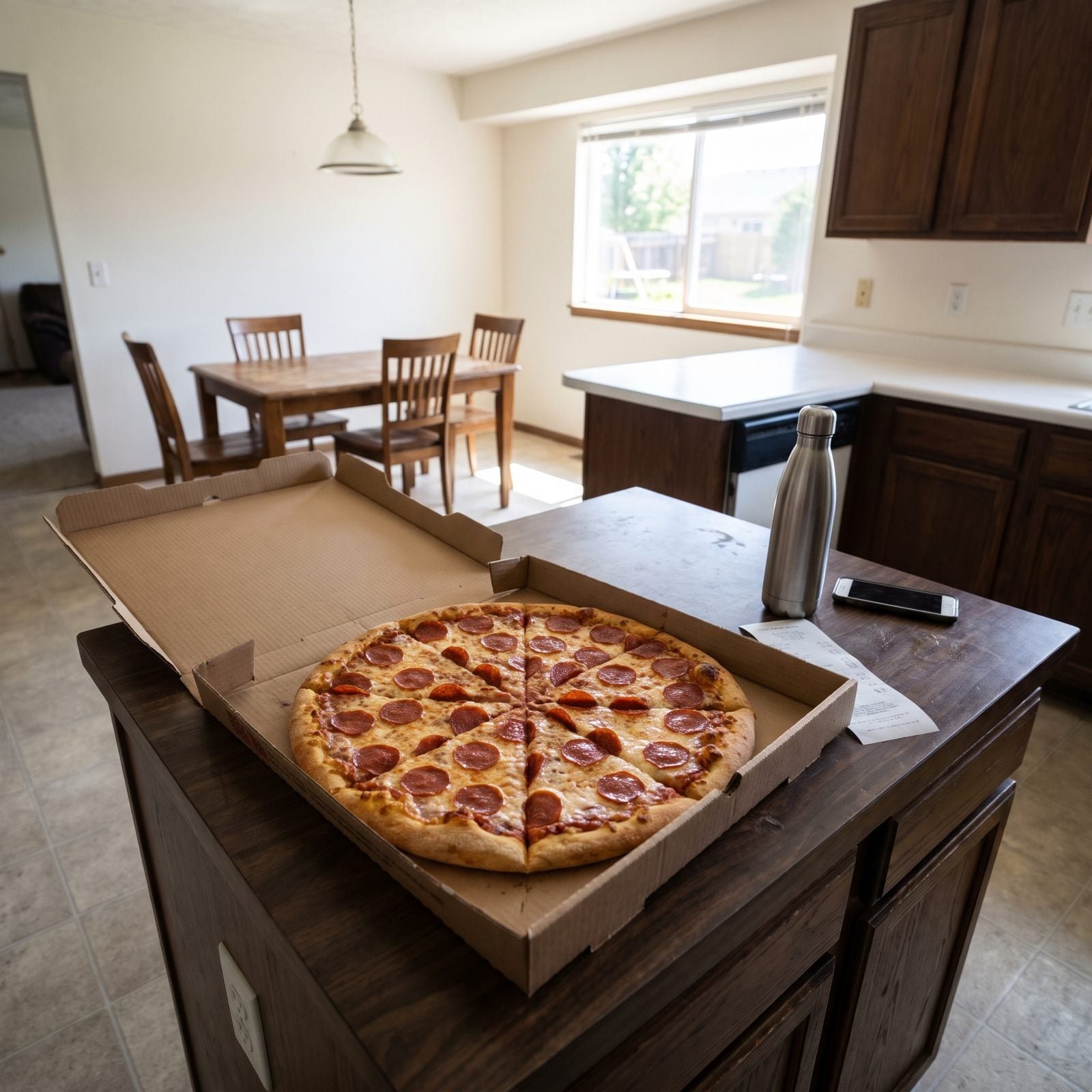
The 2020s brought the first real sticker shock since the ten-dollar era. Flour, cheese, and labor all jumped, and the box didn’t hide it — a large pepperoni that ran twelve or thirteen dollars suddenly carried a fifteen-to-eighteen dollar menu price, sometimes more.
Cheese was the loudest cost. Mozzarella prices swung hard, and chains answered the only way they quietly could.
Some pies got a little lighter. Fewer pepperoni, a thinner cheese pull, a slightly smaller diameter dressed up as the same “large.” You noticed, even if nobody said it out loud.
Early 2020s Toppings: Smaller Portions Meet Premium Add-Ons
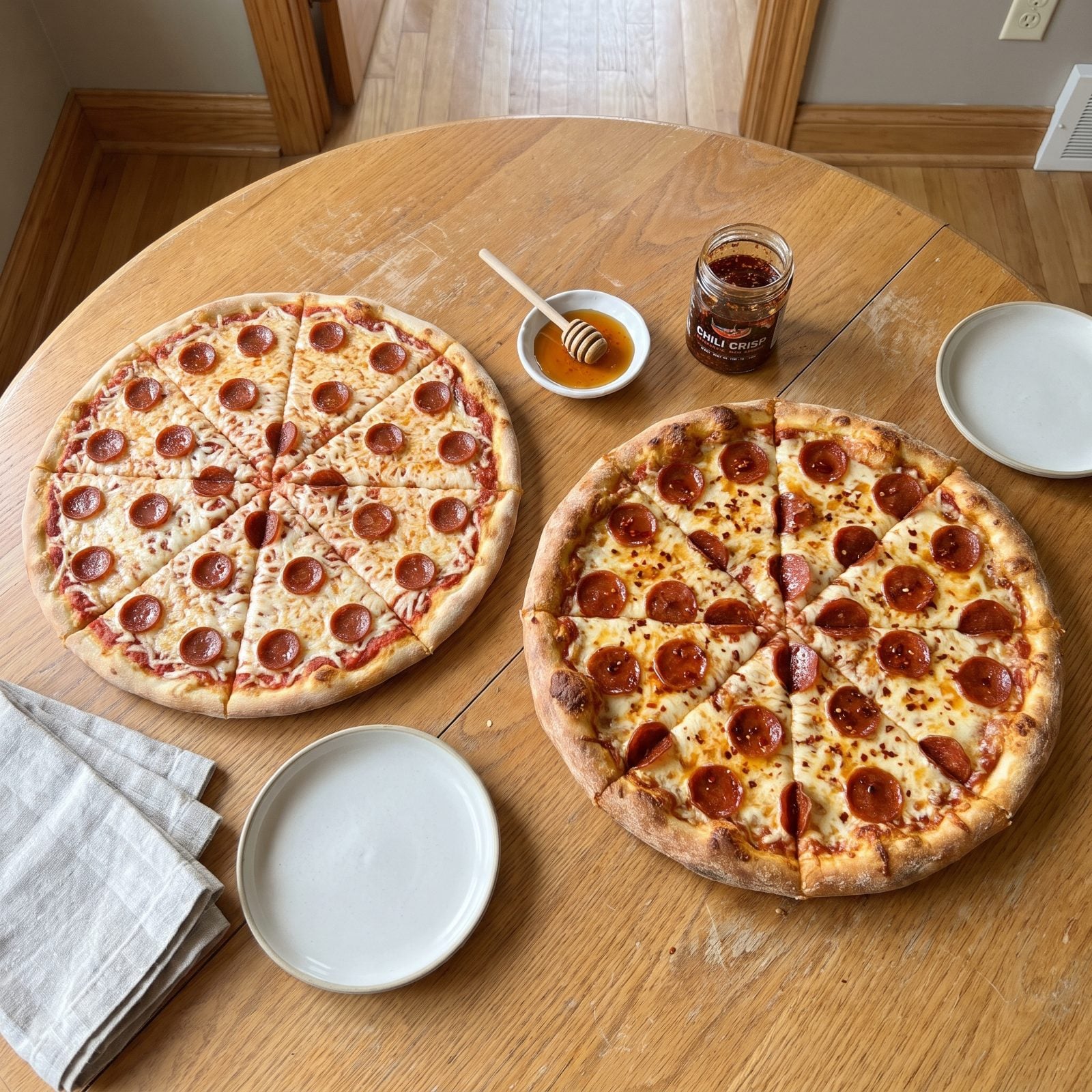
Two things happened at once, pulling in opposite directions. The base pie got a little leaner while the add-ons got fancier and pricier.
Hot honey showed up on half the menus in America. Chili crisp, mike’s-style drizzles, double-cup pepperoni, premium cheese blends — every one of them tacked on two or three dollars and made the leaner base feel generous again.
So the large pepperoni split into two animals. The standard one got trimmed quietly to hold the price. The loaded one? That’s where you willingly paid twenty-four dollars for a pizza your grandparents would have mistaken for a small miracle.
2026 Snapshot: What a Large Pepperoni Runs Right Now
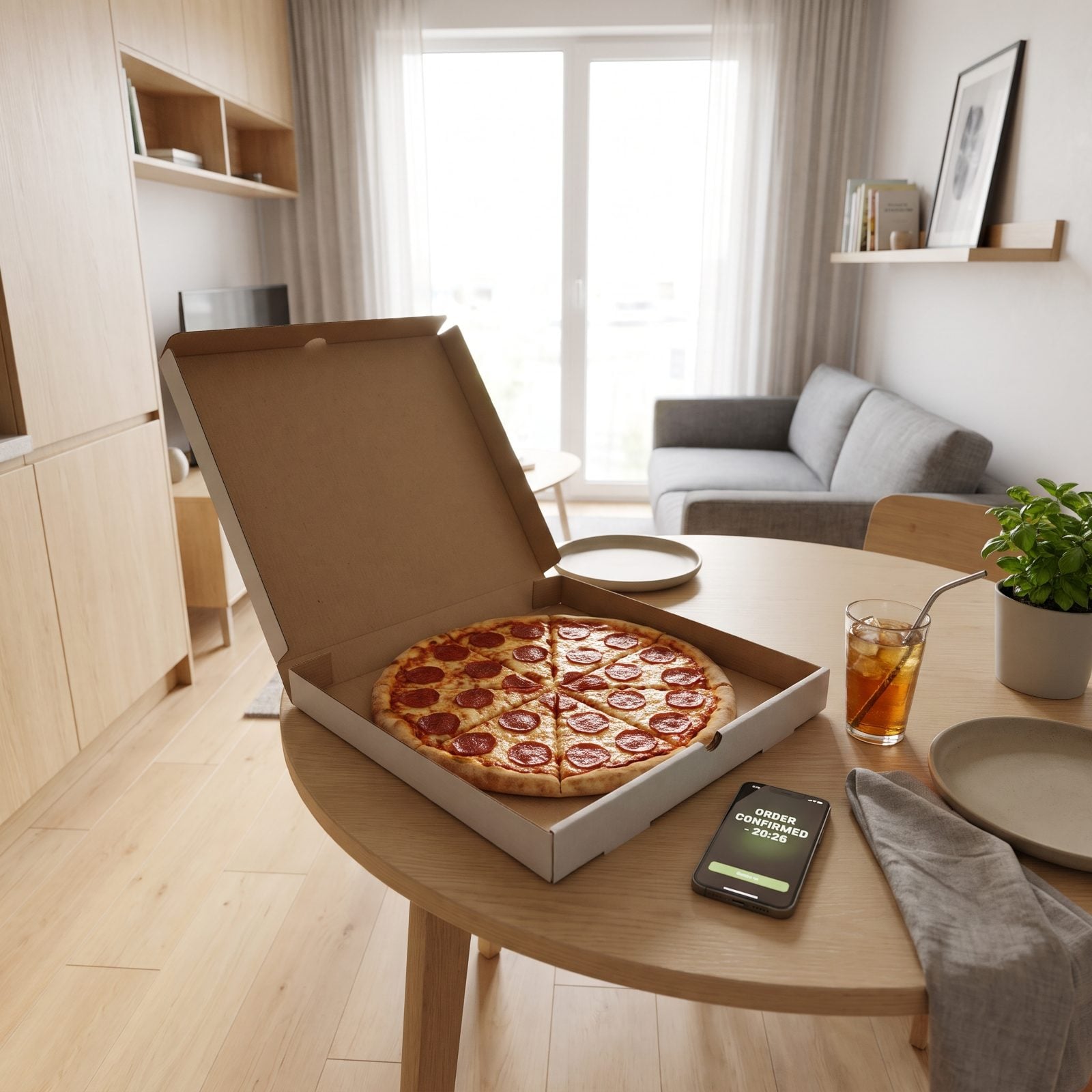
Pull up the menu in 2026 and a large pepperoni at a national chain generally lands between sixteen and twenty-two dollars before anything else gets added. Independent and craft shops push higher, often into the mid-twenties.
Run it against that old benchmark. The $10 pizza of 2001, adjusted, lands near nineteen dollars today. So the real price has crept up, but not as violently as the raw number suggests — most of the shock is just inflation catching up to a price we got comfortable with.
The pie itself is slightly leaner than its 2000s ancestor. A touch less pepperoni, a hair smaller, the same satisfying smell when the lid opens.
2026 Order Breakdown: Pizza, Tax, Fees, and the Tip That Adds Up
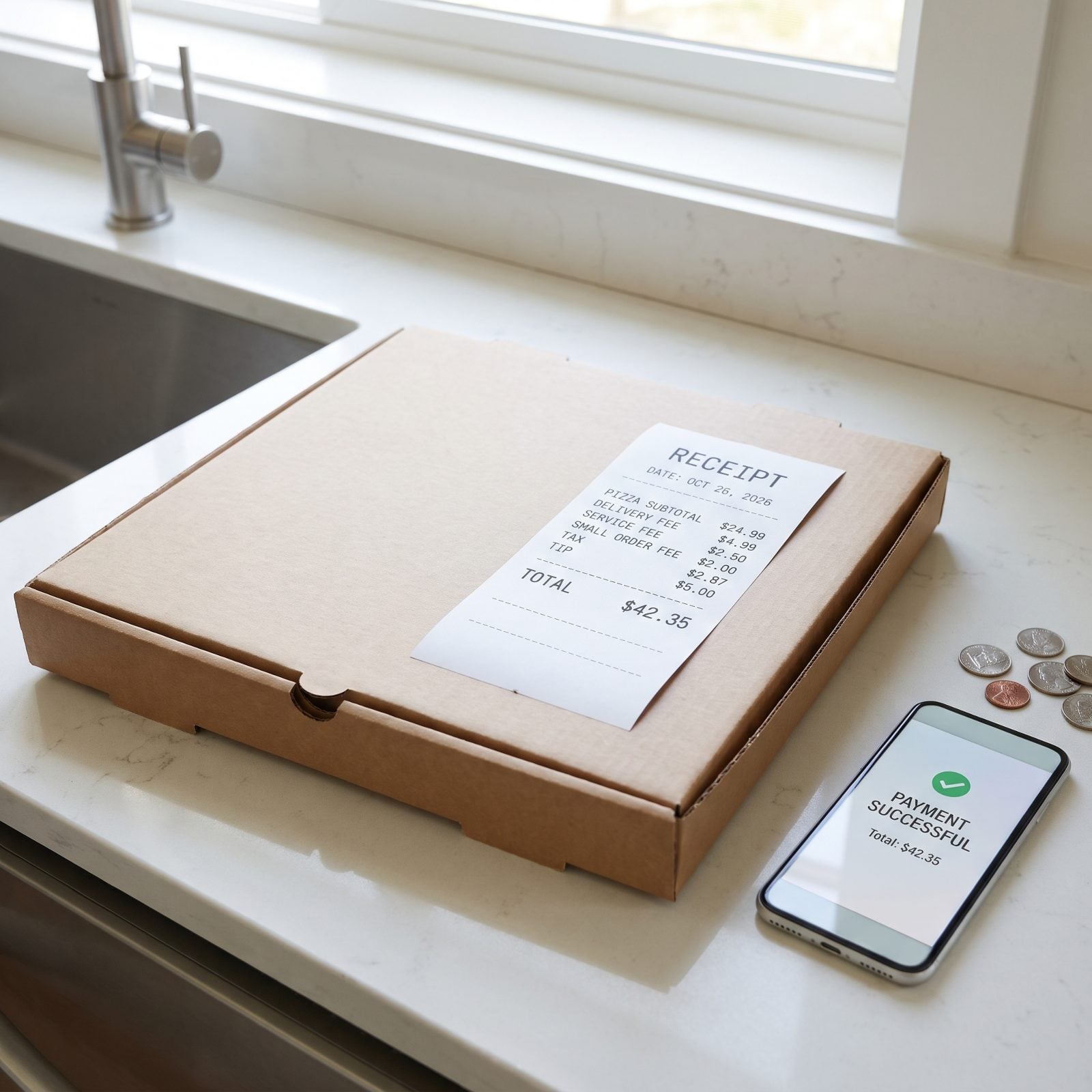
The menu price is the opening act. The receipt is the full show.
Start with a $24.99 subtotal for the pizza and a couple of add-ons. Add a delivery fee of $4.99. Add a service fee, because apparently that’s still a thing. Add a checkout or small-order fee if the app feels like it. Add tax. Then add a tip, because your driver is a real person doing real work in real weather.
The honest number lands at $42.35 for one pizza order delivered. That’s the part nobody puts on the sign.
- Order the carryout special and skip the fees entirely. The deals still live there.
- Tip the driver in cash so it actually reaches them.
- Read the fee lines once before you tap pay. You’ll order a little less often, and that’s fine.
The ten-dollar pizza is gone. But a warm pie on a Friday night, cut into eight triangles, still smells exactly like it did in 1985. That part never went up in price.
How the Diameter of a “Large” Quietly Shifted Since 1960
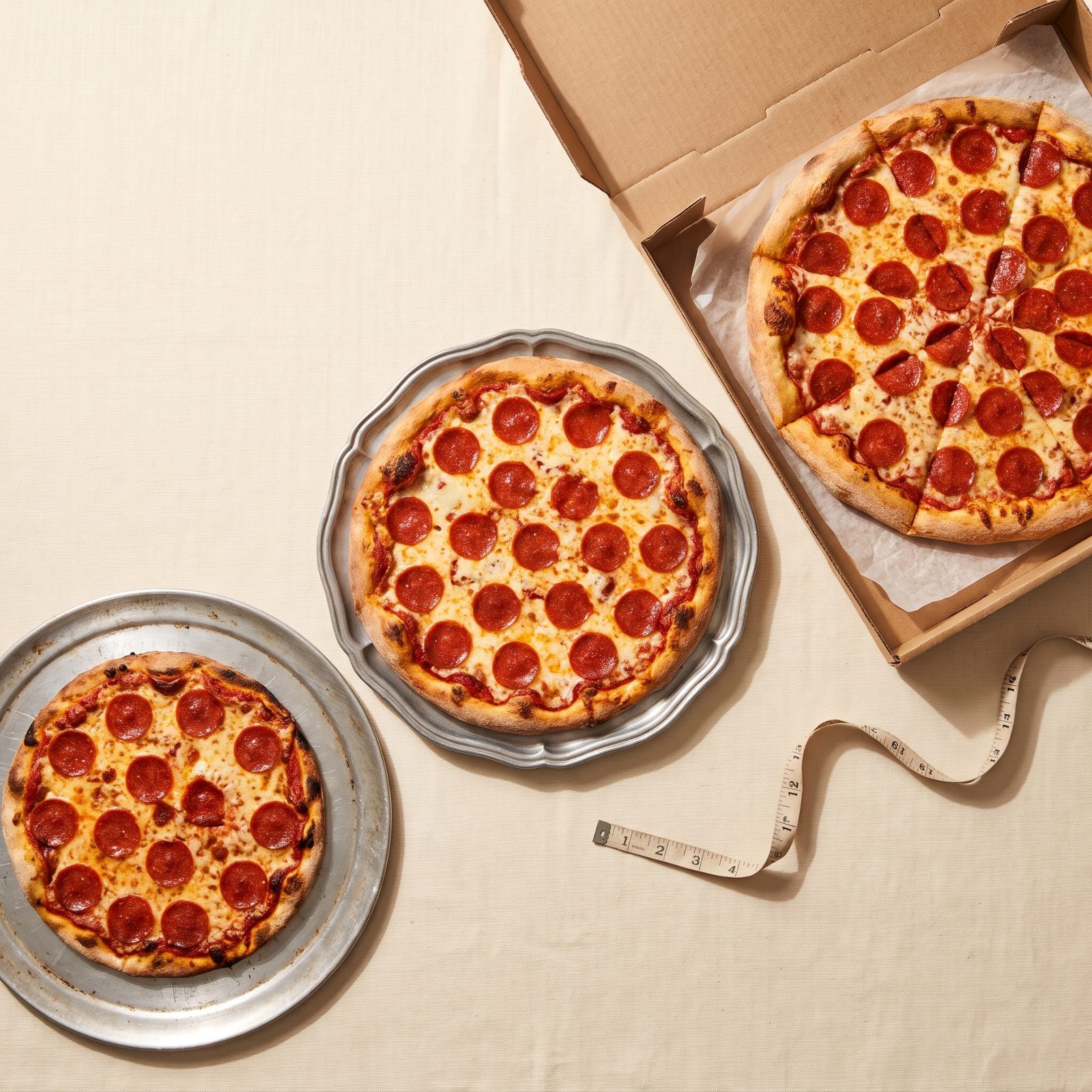
A “large” has always been a promise, never a measurement. In 1960, a large at most neighborhood spots meant 12 inches, sometimes 13 if the owner was feeling generous, and nobody thought twice about it.
The chains changed the math. As Pizza Hut and Domino’s spread through the 1970s and 80s, “large” crept up to 14 inches, and the biggest menus started calling 16 inches large just to make 18 feel enormous. The word stayed put. The pie grew by the width of a dinner plate.
And here’s what nobody tells you — a 14-inch pizza isn’t a little bigger than a 12-inch. It’s about a third more pizza by area. Diameter lies; square inches tell the truth. That quiet inch or two is a lot more dinner than it looks like on a menu board.
Crust, Sauce, and Cheese: Where the Pizza Actually Got Heavier
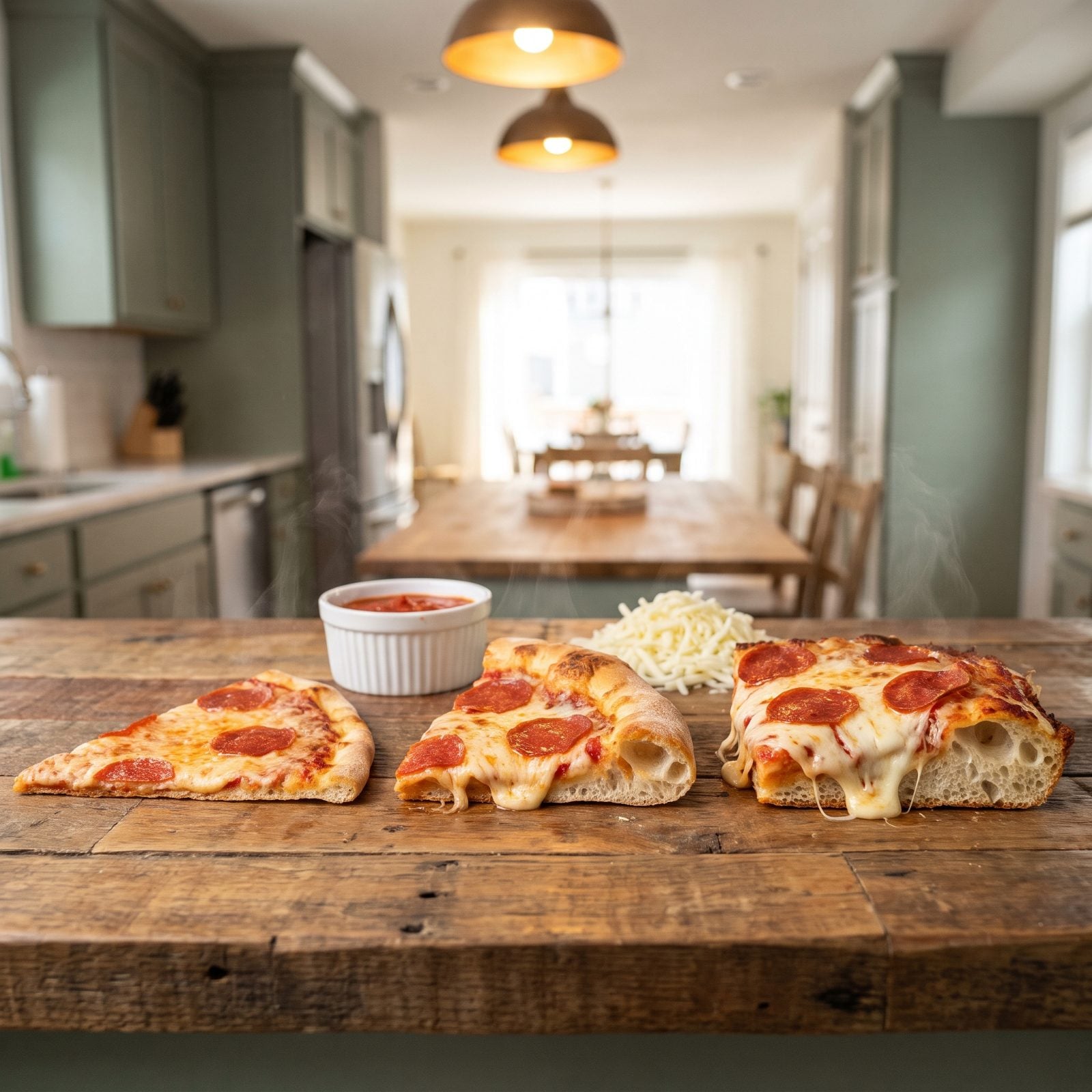
The original American pizza was a thin thing. Early 1960s pies ran crisp and restrained — a tidy layer of sauce, a modest blanket of cheese, crust thin enough to fold. Dairy was pricier relative to wages back then, so cheese got used like money.
Then everything got heavier. Pan pizza arrived. Stuffed crust followed. By the 1990s the chains were racing each other toward more cheese, thicker dough, and crust edges you could eat as a separate course.
The pizza didn’t just get bigger across the table. It got taller.
I’ll admit I miss the thin stuff. A good thin crust is a pizza that trusts itself. But I get why the industry went the other way — more dough and more cheese means more perceived value for a few cents of flour and milk, and value is what sells a family-sized pie on a Friday night.
The Pepperoni Itself: Smaller, Spicier, and Spread Thinner
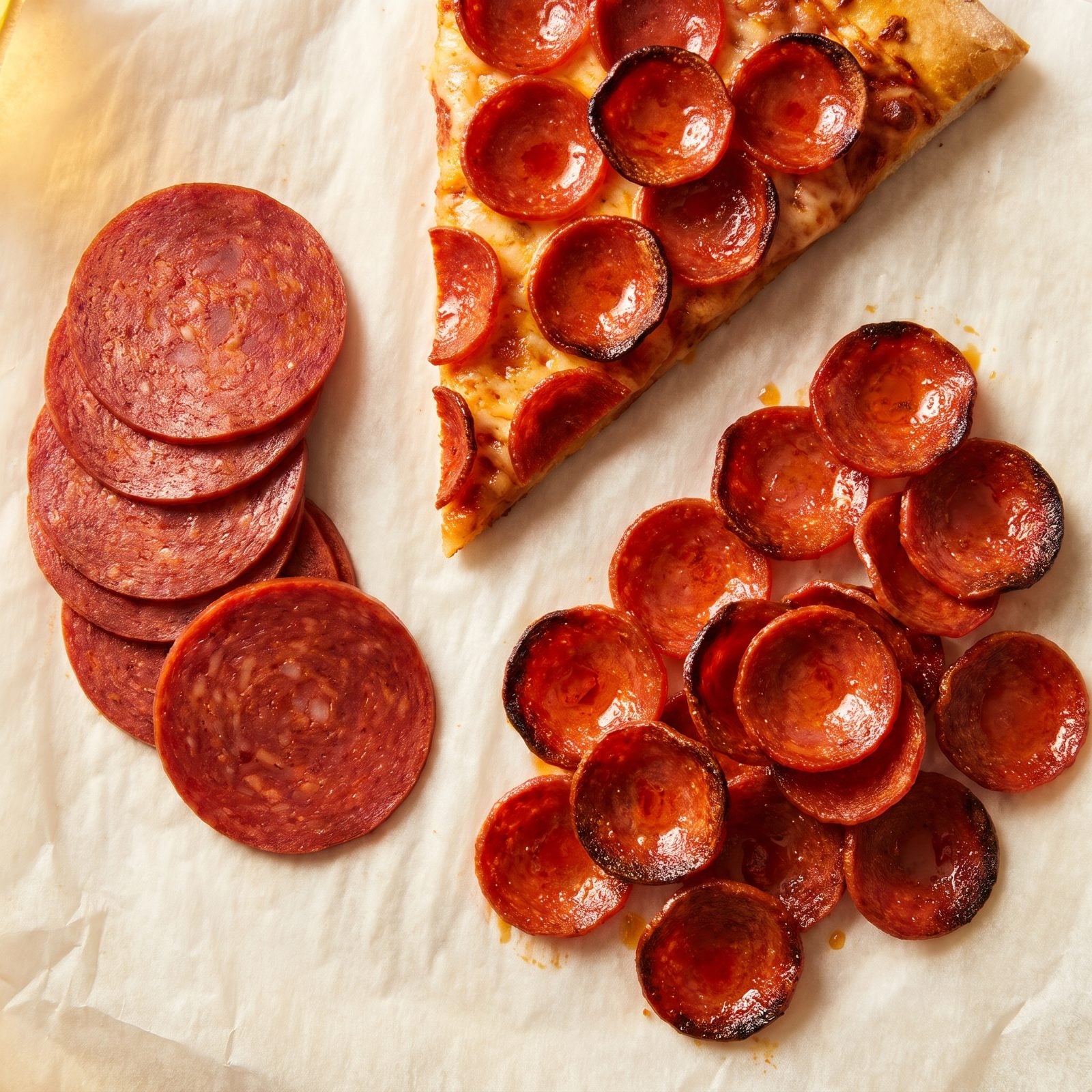
The pepperoni on a 1960s pizza was a different animal — bigger rounds, cut thicker, laid flat, often just a scattered handful across the pie. It sat there like coins. Didn’t curl, didn’t crisp. It mostly just warmed up and sulked.
Modern pepperoni went the opposite direction on every axis. The rounds shrank, the slices got thinner, and the casing changed so the edges cup and char in the oven, pooling a little spiced grease in each one. That crispy, curled cup pepperoni plastered all over menus now? Fairly recent obsession.
Coverage climbed too. A 1960s large might carry a dozen slices with gaps you could see sauce through, while a loaded modern large can run forty-plus overlapping cups. More pieces, smaller each, bigger total impression. The pepperoni got smaller so you could have more of it.
The Full Timeline, Every Decade’s Pizza and Price Laid Out Together
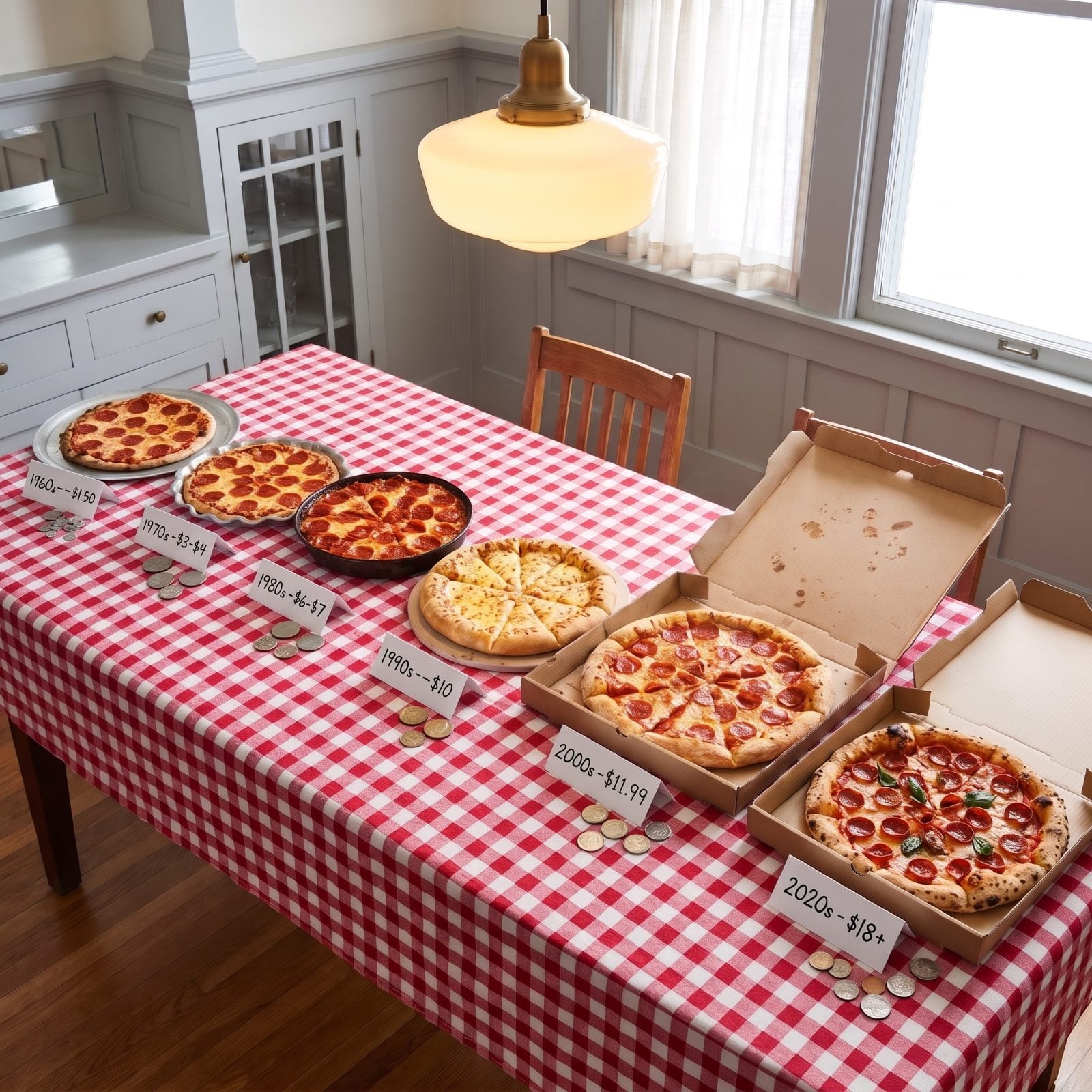
Lay it all out and the story reads clean. 1960: a 12-inch thin pie, flat deli pepperoni, around a dollar fifty, which is roughly sixteen of today’s dollars. 1970s: 13 to 14 inches, crisper crust, three to four dollars — call it twenty-five adjusted.
The 1980s brought the pan revolution: a deeper pie than the ’70s, heavier cheese, six to seven dollars delivered, roughly twenty today. Then the 1990s moved to a wider hand-tossed crust, about ten dollars with the coupon from the Sunday paper, roughly twenty adjusted. The 2000s put the large pepperoni on a thick-rimmed pie for $11.99. And now a loaded large runs eighteen dollars and up depending on whether you ordered it on an app with a promo code or walked in and paid full freight.
The honest takeaway surprises people. In real buying-power terms, pizza barely got more expensive across sixty-plus years. What changed is what you get for the money. You’re paying roughly the same slice of your paycheck — you’re just getting more cheese, more crust, more pepperoni, and a bigger circle than your parents ever did.