
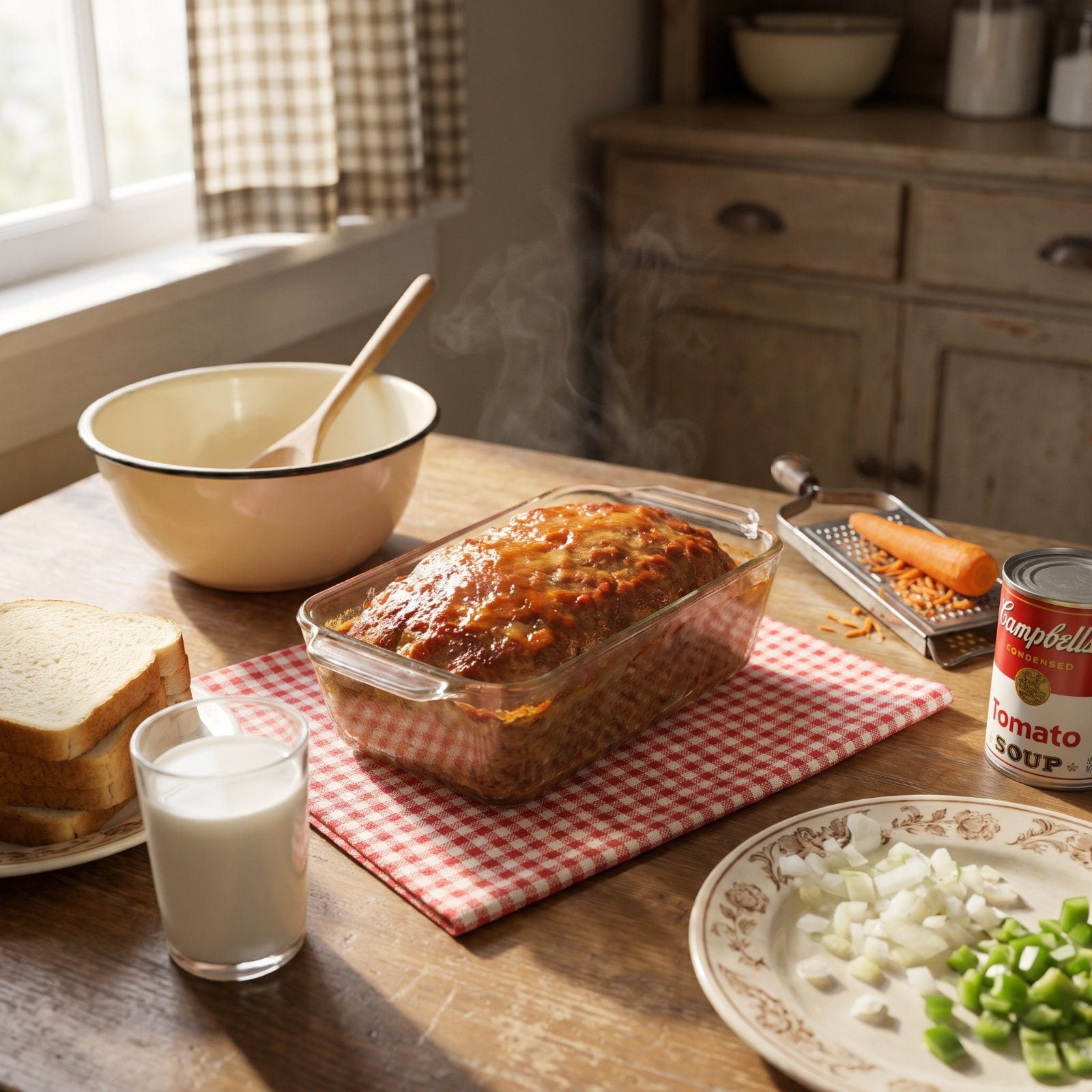
The best meatloaf you ever ate probably came out of a glass loaf pan in a kitchen that smelled like onions and Sunday. No thermometer, no cooking show, just a cook who knew dry meatloaf was a sin and had a dozen quiet tricks to make sure it never happened. Most of those tricks got lost somewhere between frozen dinners and air fryers. We went looking for them. Here’s what the women running mid-century kitchens knew about moisture, flavor, and shaping a loaf that held together on the plate.
Please note that some of the images in this article were created with the assistance of AI.
47. Soak White Bread in Milk for a Tender Loaf
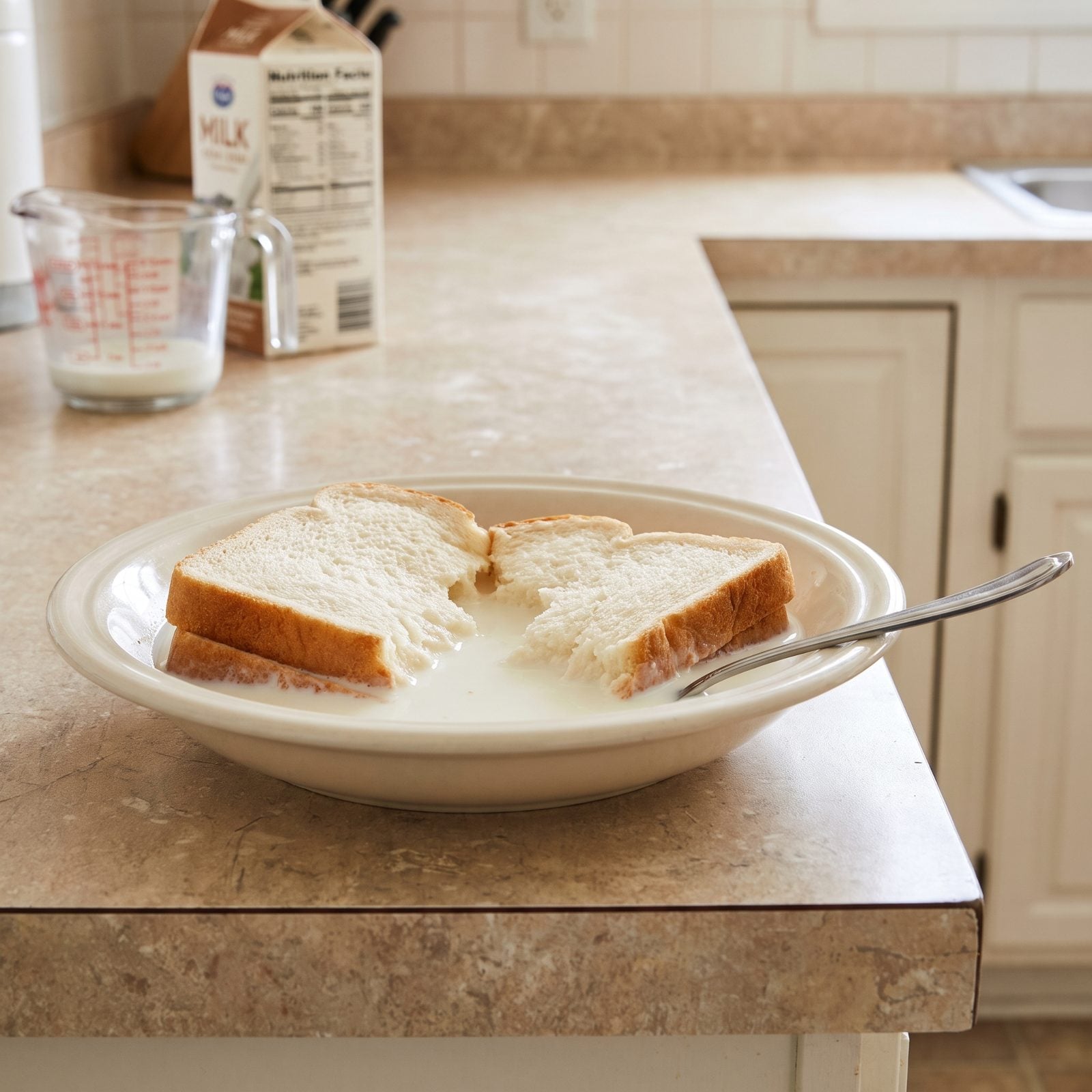
Dry breadcrumbs from a can will hold a loaf together. Soft bread soaked in milk makes it tender. Mid-century cooks rarely bought crumbs when the heel of a sandwich loaf was already sitting on the counter. They tore a couple of slices of plain white bread, crusts and all or crusts trimmed, into a bowl, poured milk over the top, and let it sit while they chopped everything else.
Give it five or ten minutes, then mash it with a fork into a soft, porridge-like paste before the meat goes in. Two or three slices and about half a cup of milk for every pound and a half of meat is a good starting point. The paste disappears into the mixture, so nobody bites into a soggy lump of bread. What you get is a loaf that slices clean but eats soft, with none of the tight, springy texture that makes meatloaf feel like a giant hamburger.
46. Blend Beef, Pork, and Veal for Fuller Flavor
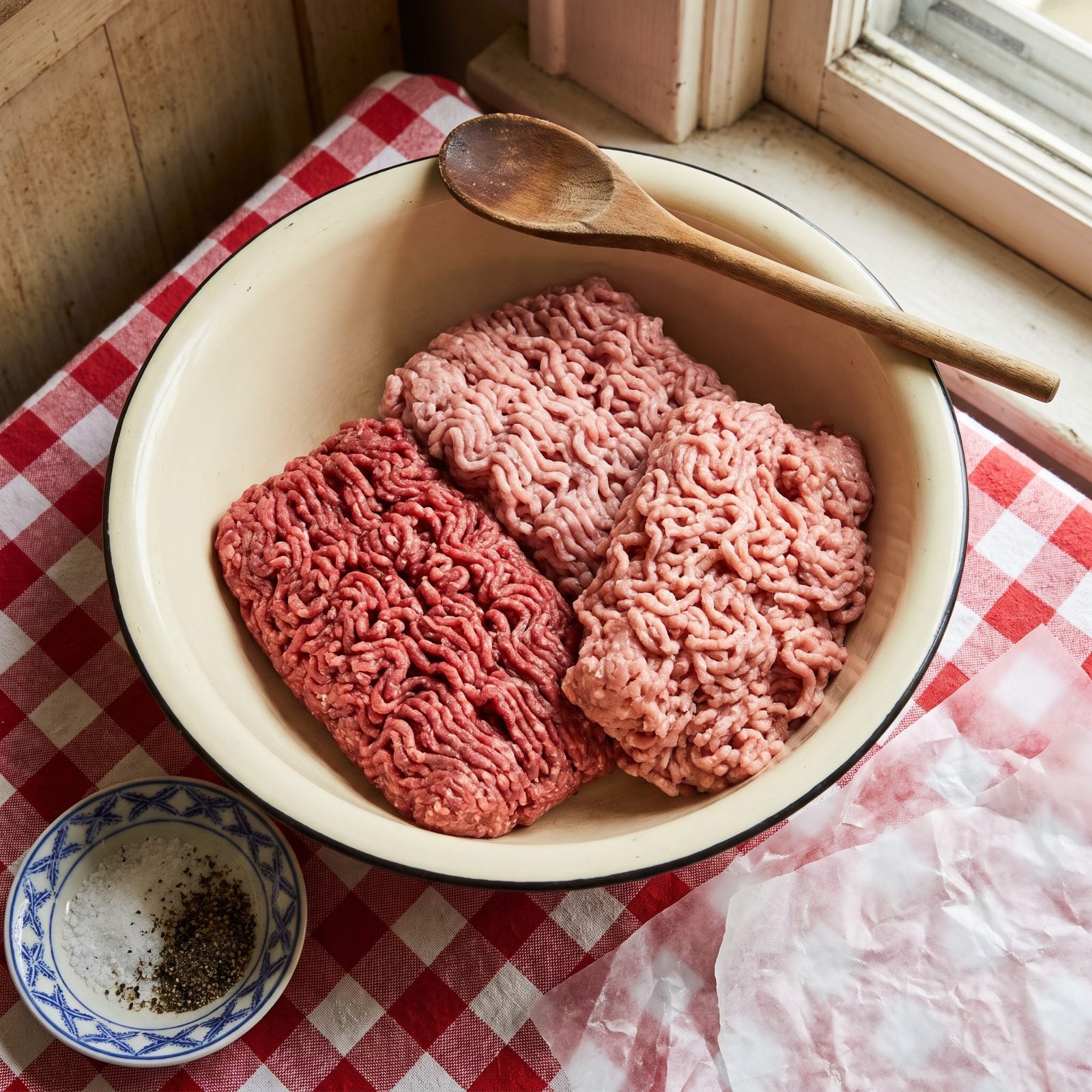
One meat makes meatloaf. Three meats make dinner people remember. Straight ground beef gives you flavor but can bake up dense and a little tired. Pork brings fat and a sweetness that keeps everything moist. Veal does the quiet work, lending a soft, almost silky texture that holds the loaf together without making it springy.
The old butcher-counter ratio was roughly equal parts, or two parts beef to one each of pork and veal if you wanted the beef out front. Ask your butcher for a “meatloaf mix” and half of them will still blend it on the spot. It costs a dollar or two more, and the loaf eats like it cost ten.
45. Use Evaporated Milk for Richness Without a Watery Loaf
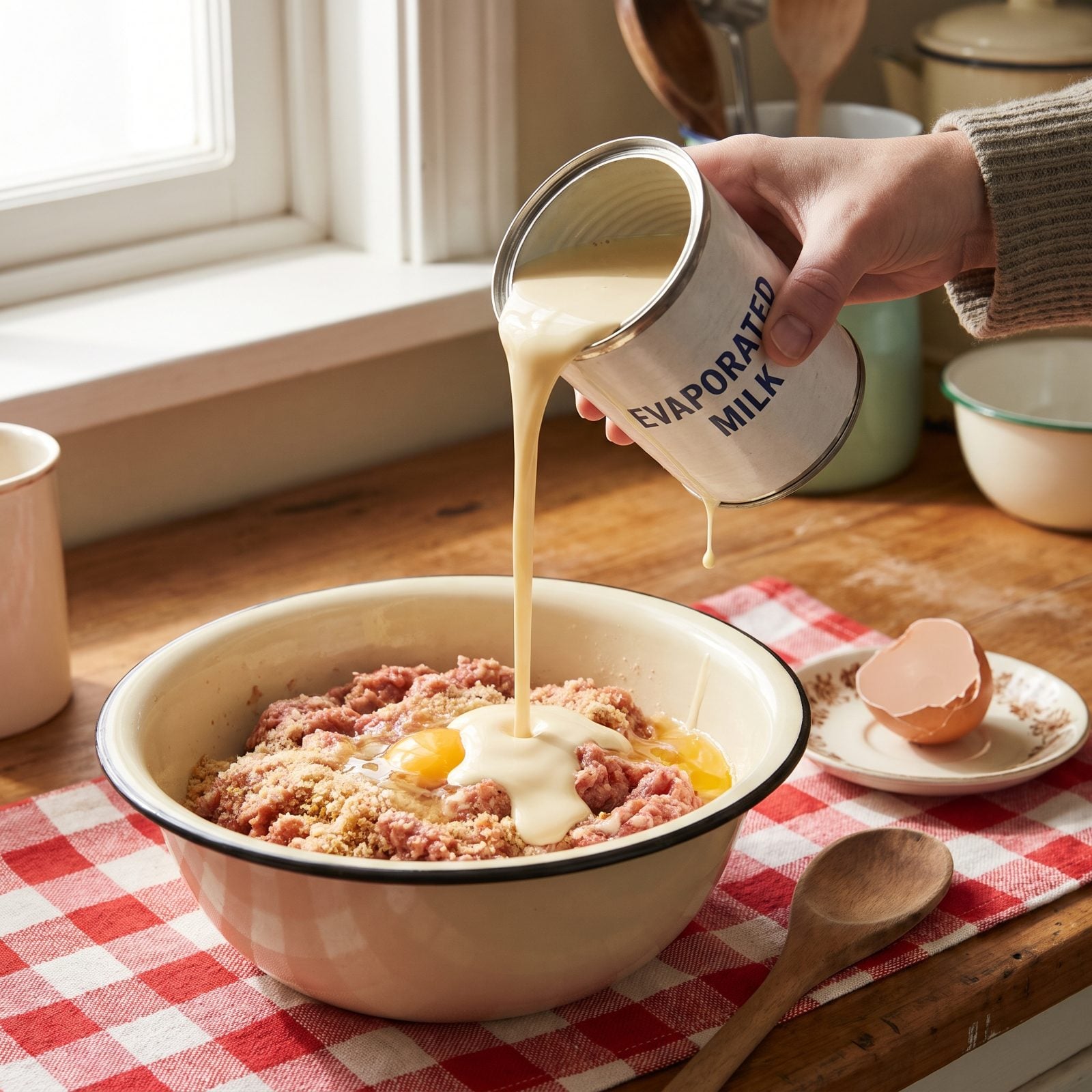
Regular milk is mostly water, and water in a meatloaf has one destination: out the bottom of the pan, taking flavor along for the ride. You end up with a loaf sitting in a gray puddle.
Evaporated milk had most of its water cooked off before it ever hit the can, so you get the creaminess and body without the leak. Swap it in wherever a recipe calls for milk, splash for splash. The crumb comes out richer, and the loaf holds its shape when you slice it. Pantry shelves back then always had a few cans, and this is exactly why.
44. Sauté Onion and Celery Before Adding Them
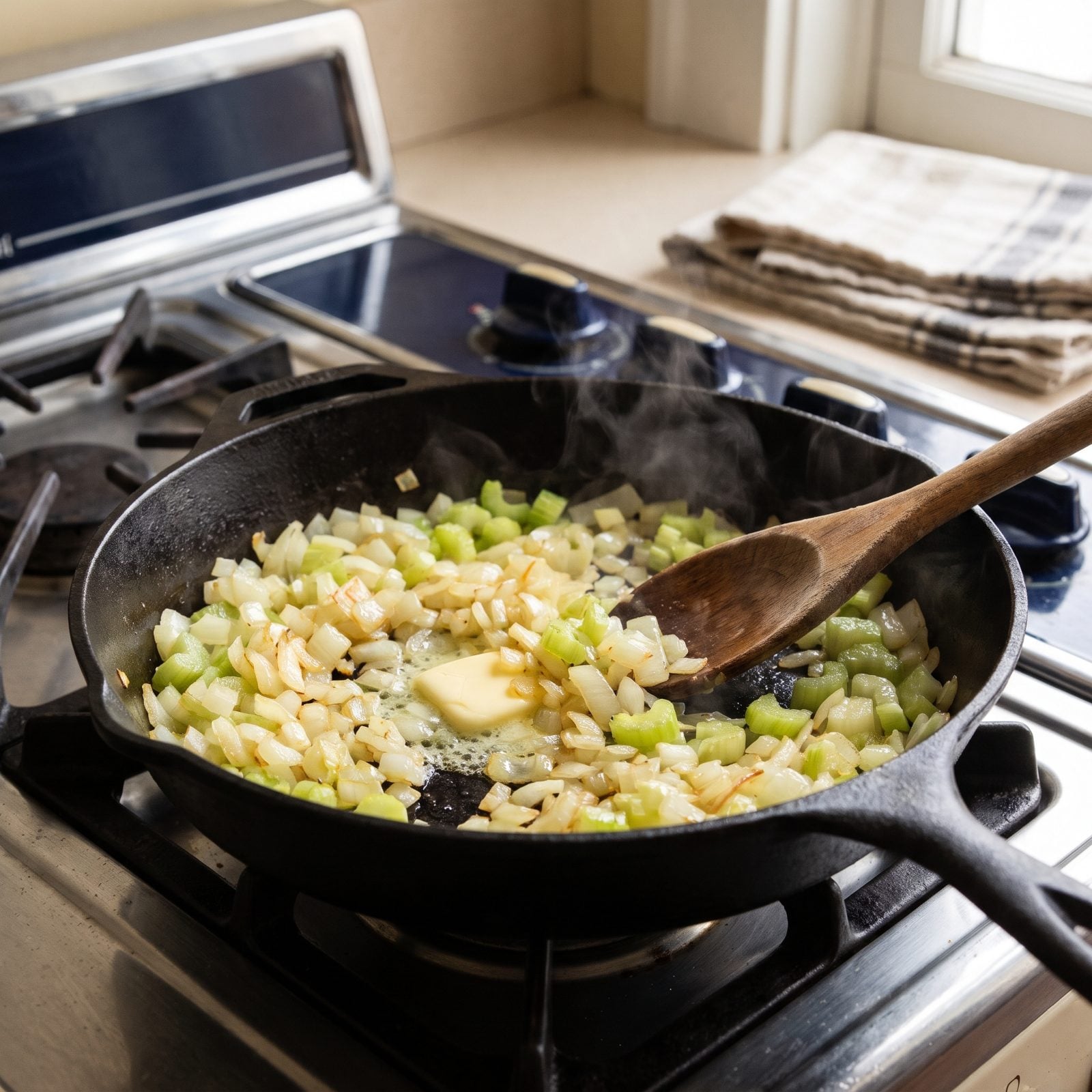
Raw onion and celery thrown straight into the bowl don’t have time to cook through in the oven. You bite into a slice and hit a sharp, crunchy, slightly bitter pocket that fights everything else on the fork.
Five minutes in a little butter fixes it. The onion turns sweet and translucent, the celery goes soft and mild, and both melt into the meat instead of standing apart from it. Let them cool before mixing so you don’t start cooking the egg early. Skip this step and your meatloaf tastes like it has attitude. It’s the onions.
43. Grate Carrot Into the Mixture for Extra Moisture
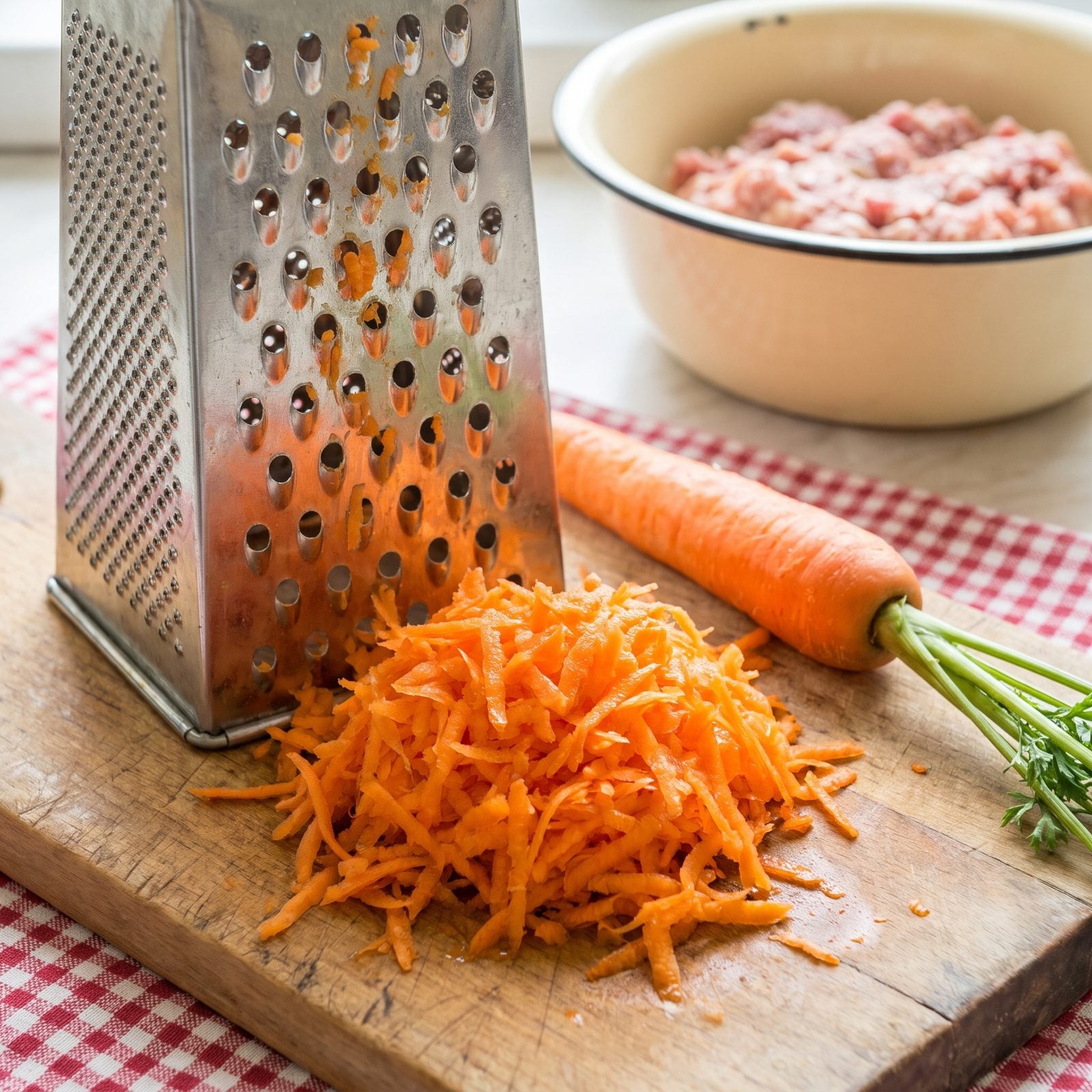
Finely grated carrot is the invisible trick. It practically disappears into the meat as it bakes, dissolving into little flecks nobody can name but everybody notices, because the loaf stays juicy all the way to the center.
Carrots hold their water inside a firm structure, so they let it go slowly during baking instead of all at once. One grated carrot per pound of meat is plenty. It sneaks in a little sweetness and color too, which is how plenty of kids back then ate a vegetable without ever knowing it.
What Our Readers Say
- When Piaci Pizza readers loved a food photo and tapped a reason, comfort came out on top at 30%, with nostalgic picked 16% of the time.
From Piaci Pizza reader polls and votes.
42. Add Condensed Tomato Soup for Built-In Flavor and Sauce
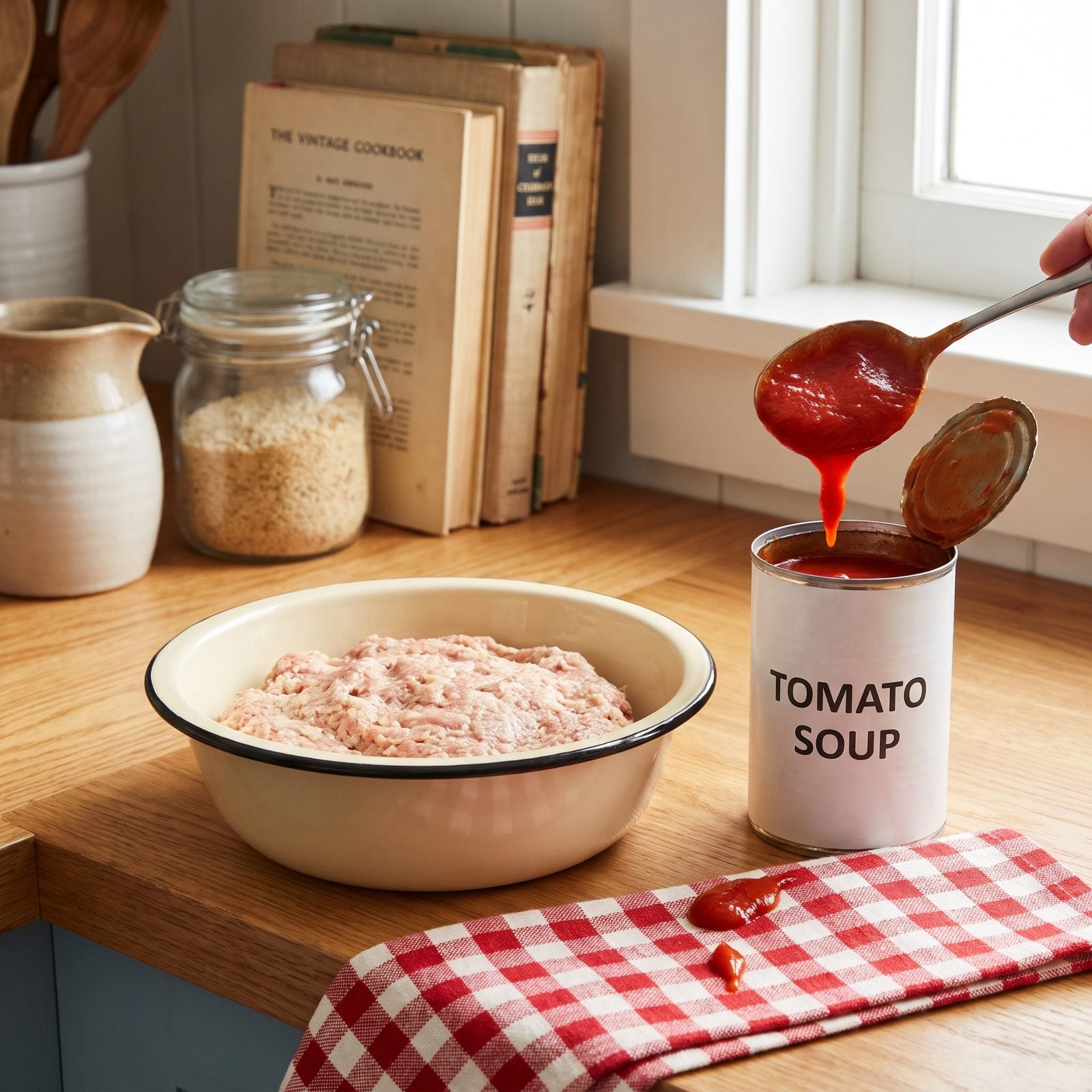
Half a can goes in, half a can goes on top. That was the whole strategy, and it’s still one of the smartest moves in the American meatloaf playbook.
Condensed tomato soup is already seasoned, thickened, and a little sweet, so it pulls double duty. Stirred into the mix it adds moisture and tang; spread across the top for the last stretch of baking it becomes a glaze that caramelizes into a tacky, savory crust. No ketchup, no separate sauce, and you get a loaf that practically sauces itself on the plate.
41. Deepen the Savory Flavor With Worcestershire Sauce
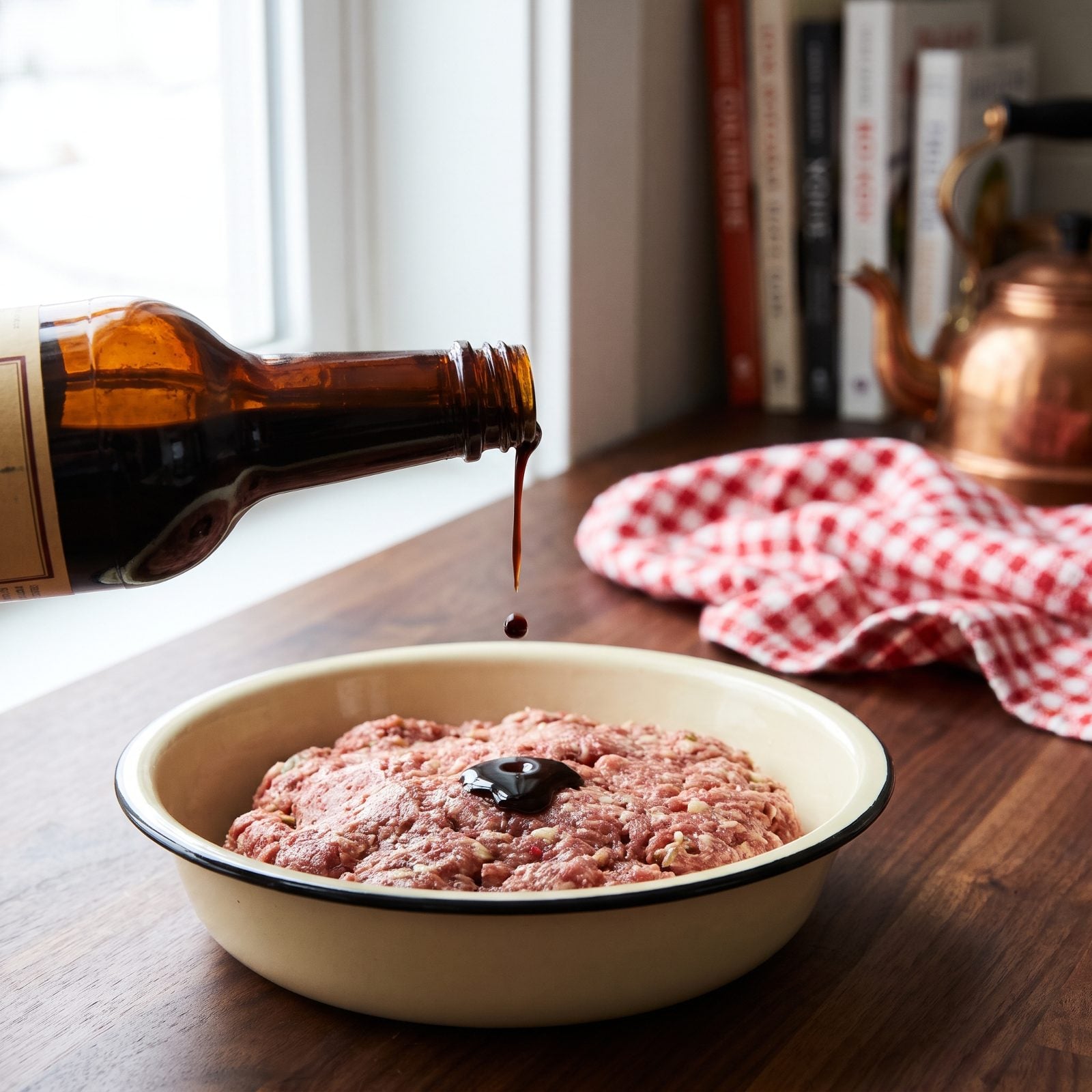
A loaf that tastes flat usually isn’t missing salt. It’s missing depth, that rounded savory bottom note that makes you take a second bite before you’ve finished the first.
Worcestershire delivers exactly that. Anchovy, tamarind, molasses, and vinegar aged together give it a fermented, almost meaty punch that disappears into the background and makes everything else taste more like itself. A tablespoon per pound is right. You won’t taste Worcestershire. You’ll taste a meatloaf that finally has a backbone.
40. Cut the Richness With Prepared Horseradish
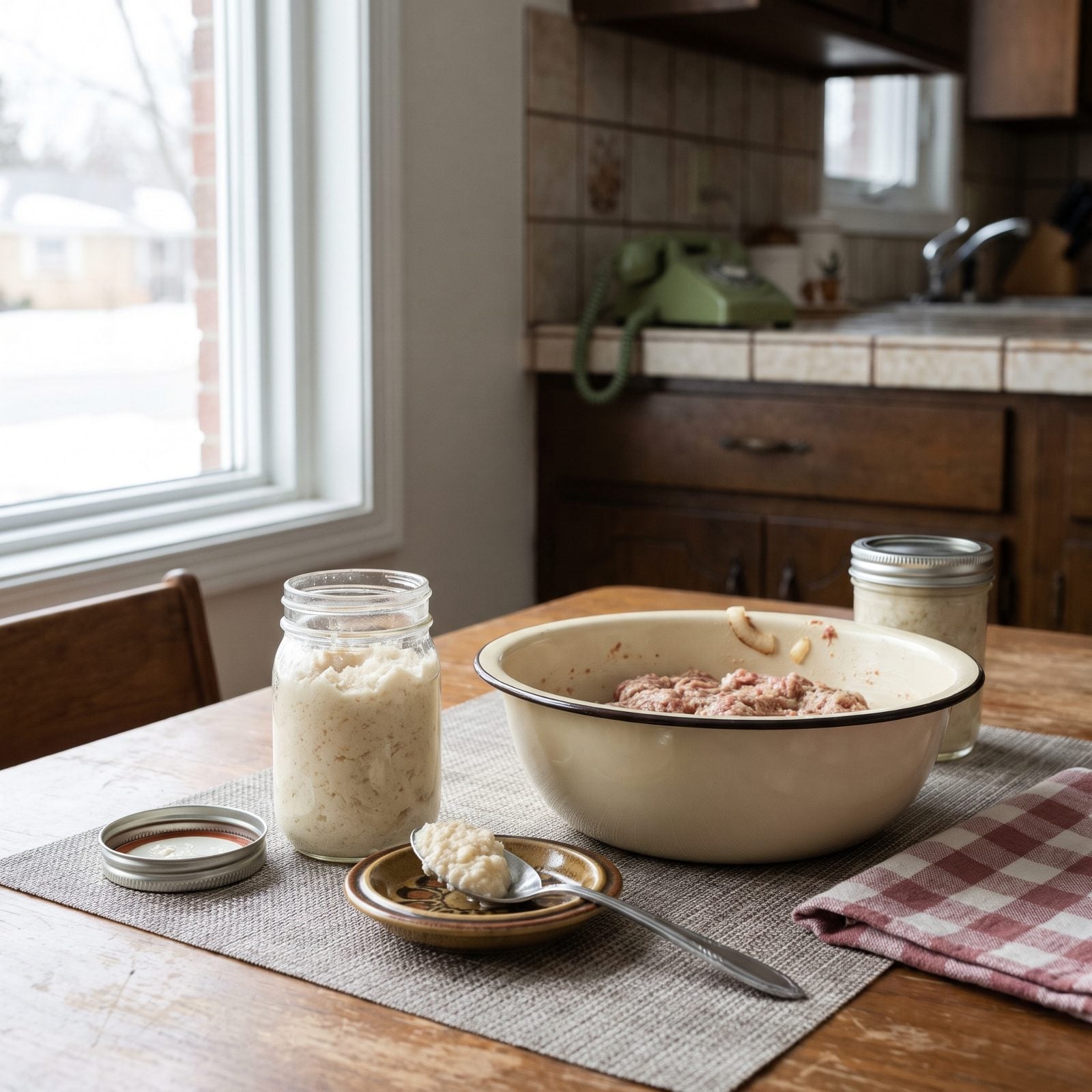
Most people skip this one because they assume horseradish will make their meatloaf taste like a cocktail party. It won’t. Baked into a loaf, prepared horseradish loses almost all of its nose-clearing heat and leaves behind a bright, tangy lift that cuts straight through all that beef-and-pork richness.
Picture what a squeeze of lemon does for a heavy dish. A tablespoon or two per two pounds wakes everything up without anyone identifying it. This was a quiet signature in a lot of mid-century kitchens, and it’s the trick most people have never heard of. Try it once. You’ll keep doing it.
39. Dissolve Beef Bouillon Before Mixing It In
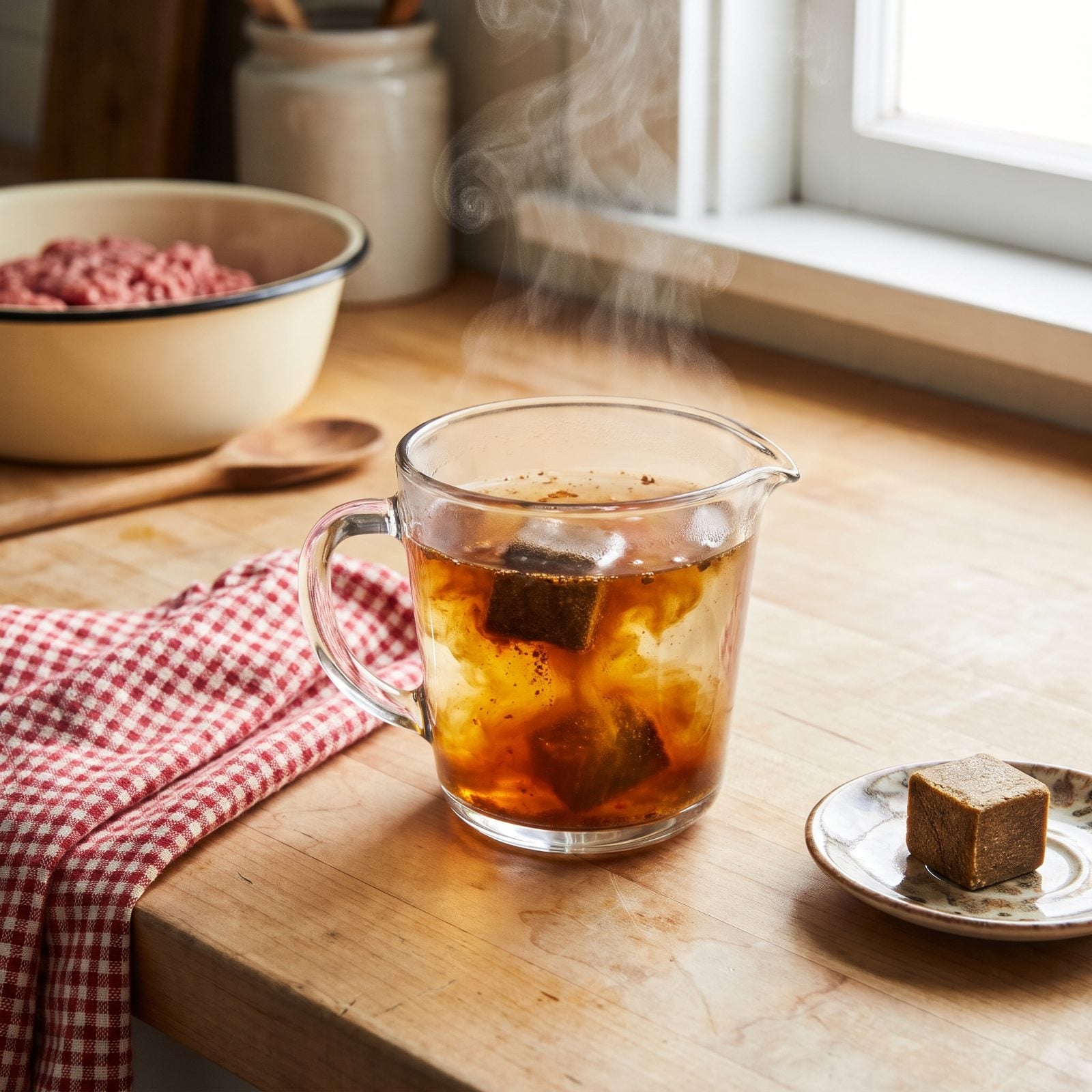
Crumbling a dry bouillon cube straight into the meat seems faster, but it doesn’t spread. You get salty, concentrated pockets where the cube landed and nothing in the spots it missed.
Dissolve it in a quarter cup of hot water first, let it cool, then pour that beefy liquid through the whole mixture. Now the seasoning reaches every corner, and you’ve added a little moisture while you’re at it. Cheap, shelf-stable, and a real way to pump up the meaty flavor, which mattered a lot when the budget meant stretching one pound of beef into a loaf that fed five.
38. Add Finely Chopped Green Pepper for Color and Crunch
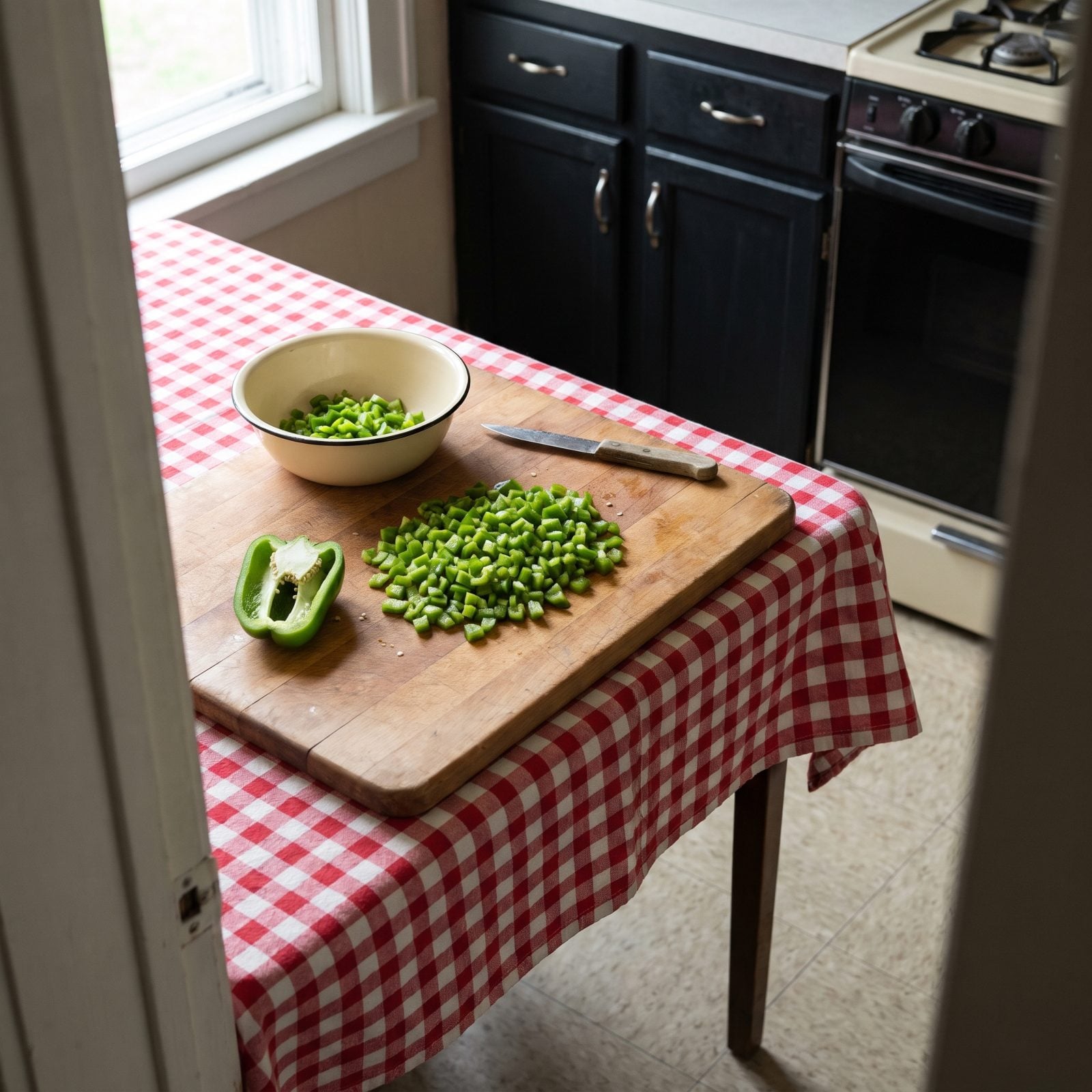
Slice into a meatloaf that’s all one shade of brown and your eye gives up before your fork does. Finely chopped green pepper scattered through the mix fixes that in one move, flecking every slice with fresh green and a little snap of texture.
Keep the dice small, about a quarter inch, so it softens in the oven but still holds a bit of bite. It brings a grassy, slightly sweet note that plays off the tomato and the beef. Half a pepper per two pounds is the sweet spot. Go heavier and you drift from meatloaf toward stuffed-pepper territory, which is a fine dish, just a different one.
37. Use Pickle Relish for a Sweet-Tangy Accent
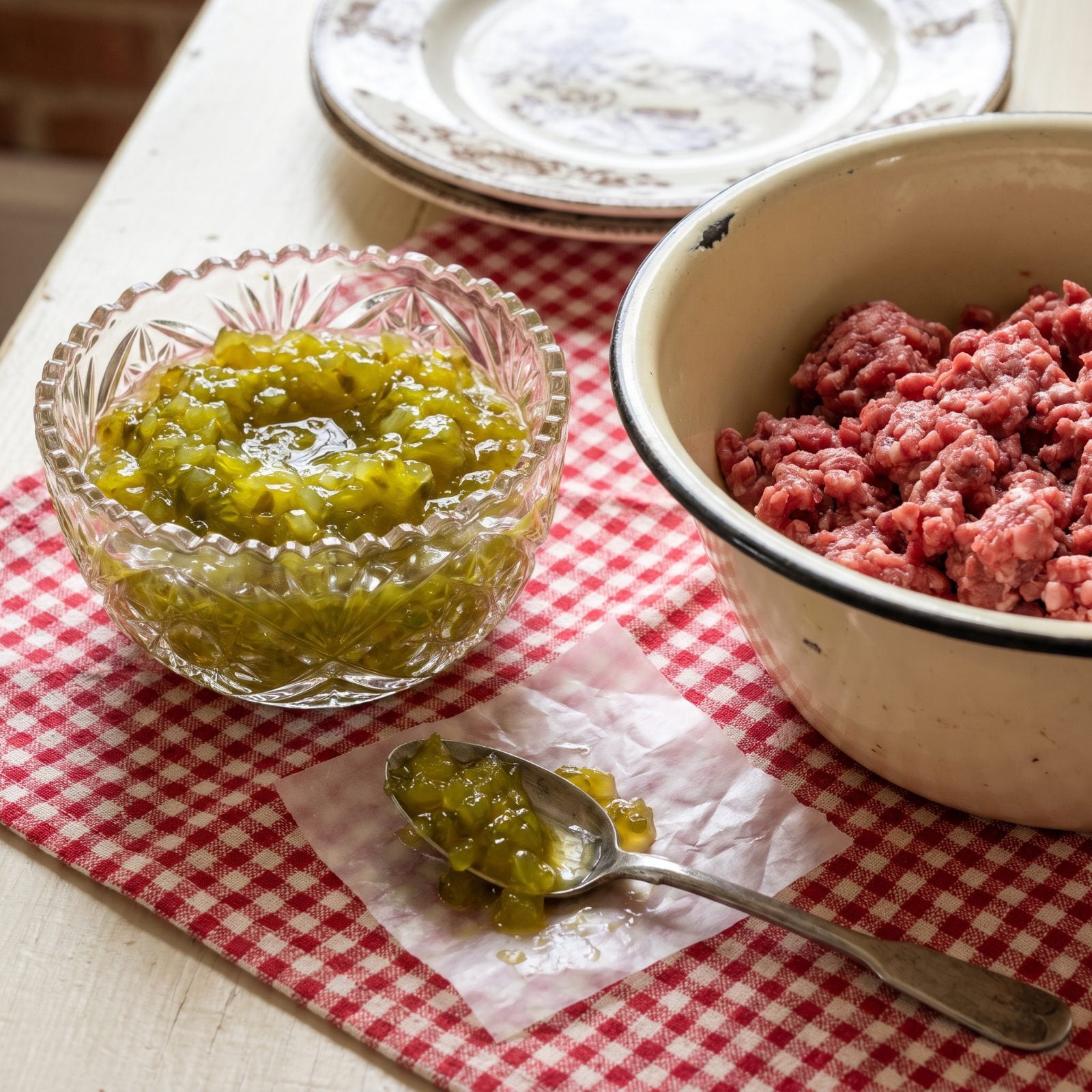
Open any 1950s icebox and the relish jar was right there in the door, doing double duty. A couple of spoonfuls stirred into the raw mix gives you a sweet-tangy backbone that store-bought meatloaf never has. The vinegar wakes up the beef, the sugar rounds out the edges, and the little bits of pickle melt in so nobody can quite tell what’s making it taste so good.
Skip it and your meatloaf tastes flat. One-note. All meat and no spark. Two tablespoons of sweet pickle relish per pound of ground beef is where you want to land — drain it a little first so you’re not adding extra water, then fold it in. That’s the whole move. Cheapest flavor upgrade in the kitchen.
36. Use Onion Soup Mix as an All-in-One Seasoning
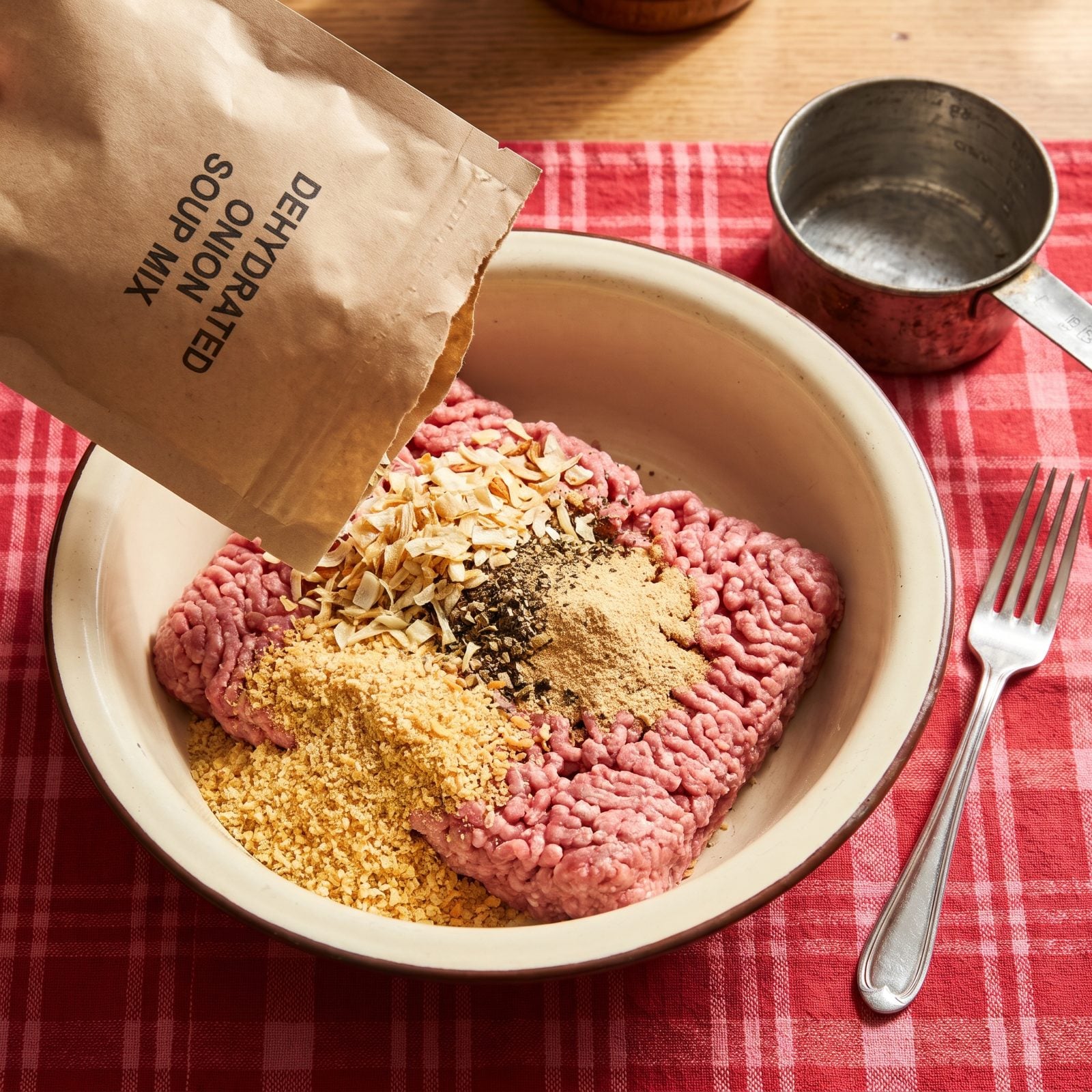
This is the shortcut that turned weeknight meatloaf into a non-event. One packet of dry onion soup mix carries dehydrated onion, salt, and a background savory punch that would otherwise cost you a cutting board, a frying pan, and watery eyes to build from scratch.
But here’s what nobody mentions: that mix is salty. Dump a packet in, then salt the loaf the way you usually would, and you’ve blown right past edible. Let the soup mix be your salt — not an addition to it. One packet per pound and a half of meat, no extra salt, and taste a patty before you commit. Dinner just got a lot shorter.
35. Stretch the Meat With Finely Chopped Mushrooms
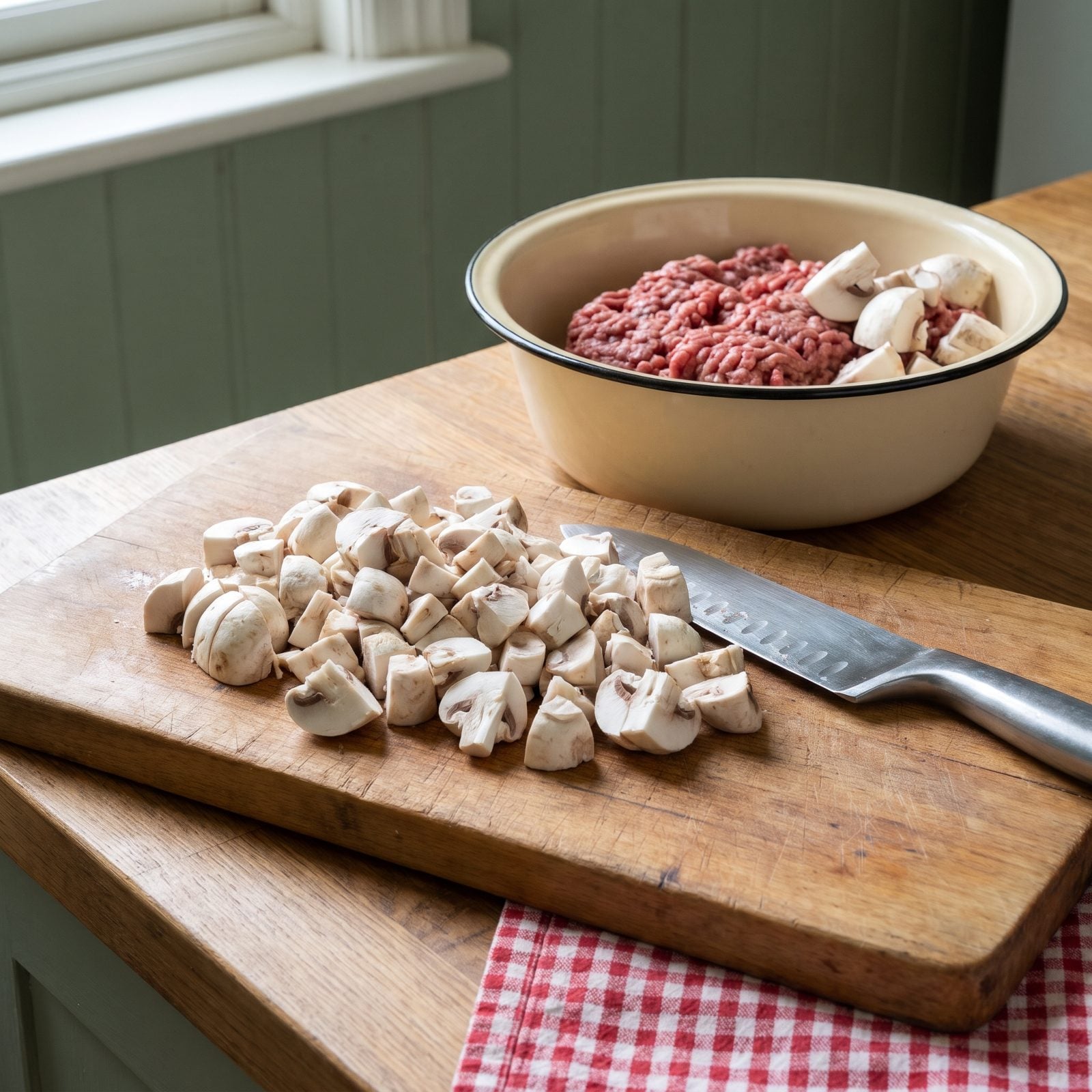
Mushrooms are mostly water and savor, which is exactly what tired meatloaf is short on. Chop them fine, and half a pound folds right into the meat while adding moisture and that deep brown-gravy flavor cooks call umami — long before anybody in Ohio knew the word.
The mistake is leaving them in big chunks. Large pieces stand out as rubbery lumps, while finely chopped mushrooms melt into the loaf and blend with the meat. So chop them small and add them raw, straight into the bowl with the ground beef. You’ll stretch a pound of beef to feed a crowd, and nobody clocks the swap.
34. Use Cooked Rice to Make a Small Package of Meat Go Further
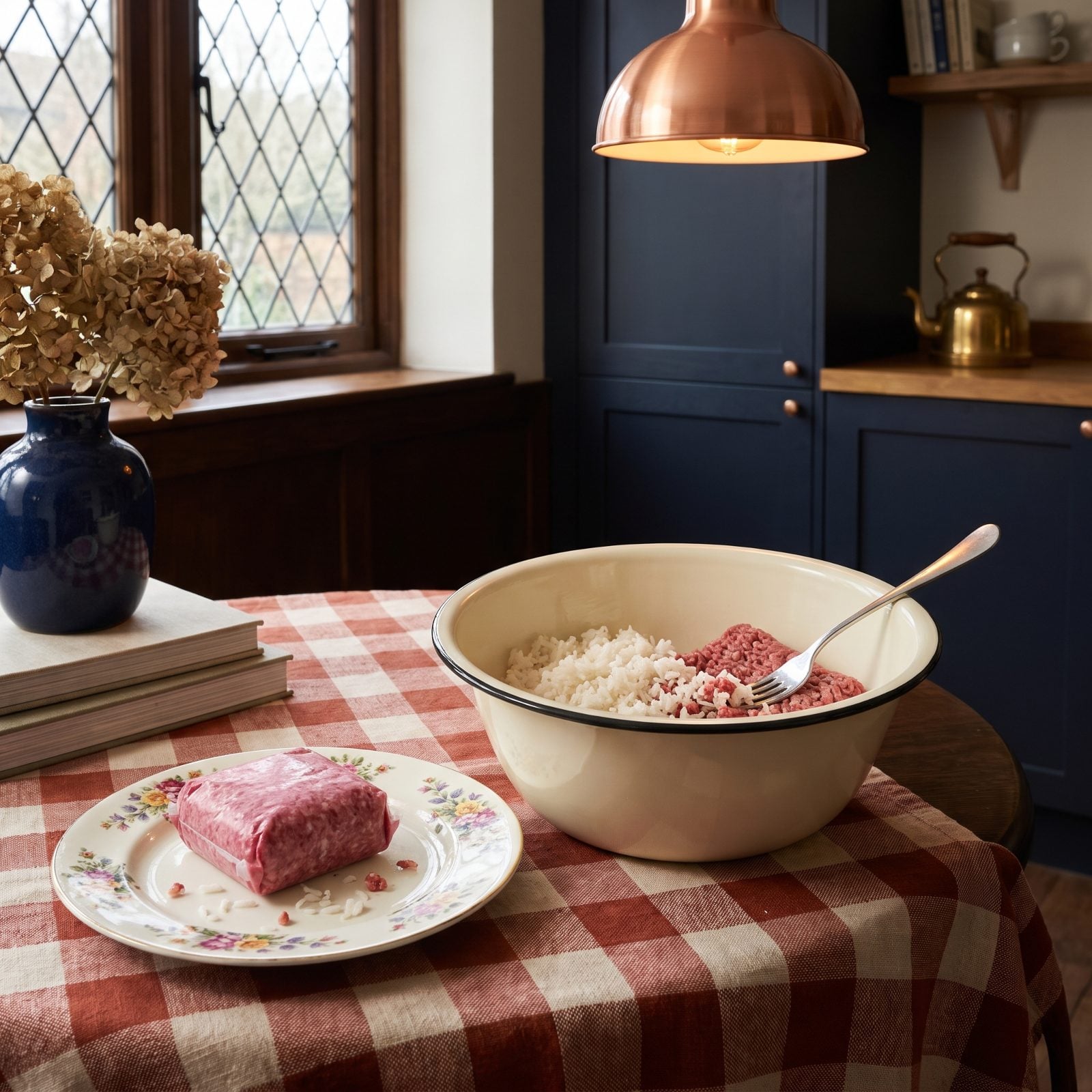
When the butcher’s package came out smaller than the family, rice closed the gap. A cup of leftover cooked rice folded into the mix lightens the texture and makes a scant pound of beef feed everybody around the table without a single growling stomach at the end of the meal.
Use cooked rice, never raw. Raw grains pull moisture straight out of the loaf and come out crunchy — a surprise nobody enjoys mid-bite. Day-old rice is even better because it’s drier and holds its shape, and a cup per pound keeps the loaf tender instead of pasty. Depression-era math that still works on a grocery budget.
33. Fry a Tiny Taster Patty Before Shaping the Loaf
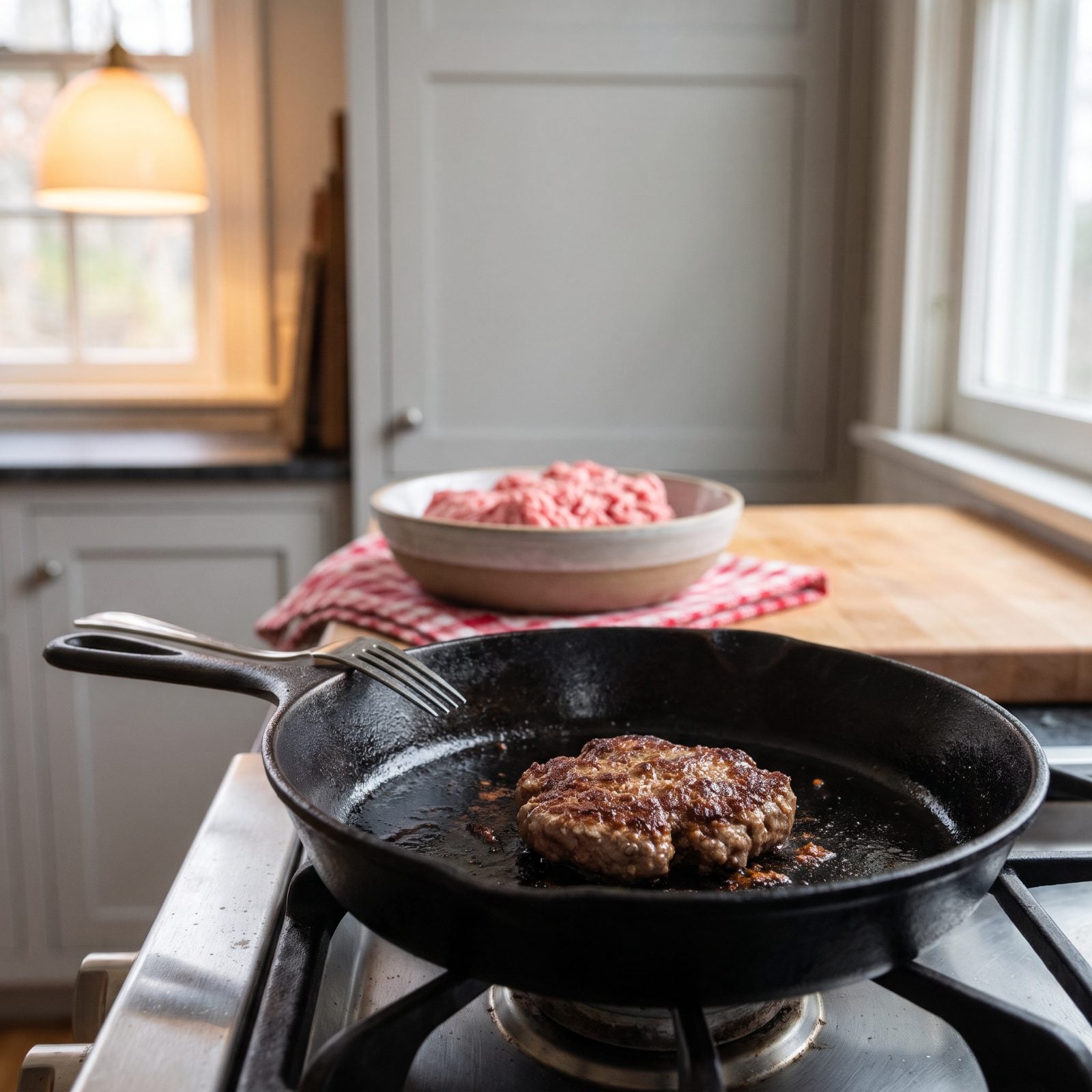
You can’t taste raw meatloaf. So the smart cooks pinched off a handful of mix, flattened it into a burger-sized patty, and fried it in a hot pan for a minute a side before committing the whole loaf to an hour in the oven.
Skip that and you’re gambling. Underseasoned meatloaf is a disappointment you can’t fix once it’s baked, and oversalted is worse. The taster tells you everything — too flat, add salt or soup mix; too salty, fold in a little more breadcrumb. A couple of minutes of frying saves you a dinner you’d have eaten out of nothing but politeness.
32. Mix With a Dinner Fork Instead of Compressing by Hand
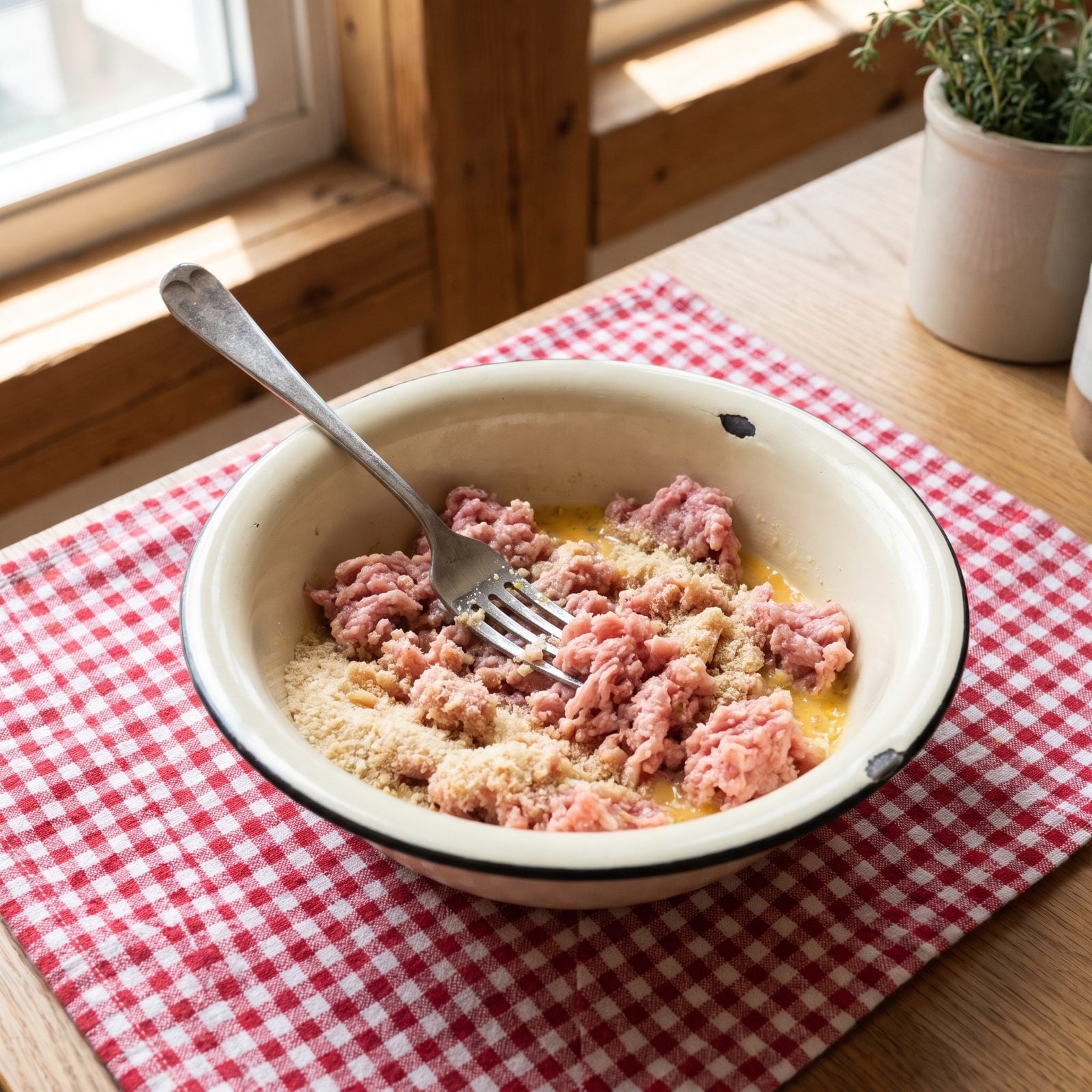
There’s a temptation to knead meatloaf like bread dough, squeezing and pressing until it’s one smooth mass. That’s how you get a loaf with the texture of a hockey puck.
Work the meat hard and you develop the proteins and pack out the air, so it bakes up dense and rubbery instead of tender. A dinner fork keeps your hands out of it and your mix loose. Toss the ingredients like you’re fluffing a salad, just until everything comes together, then quit. Looks a little craggy and uneven? Good. That’s a tender loaf. Gentle hands win — or in this case, a fork.
31. Tuck the Narrow Ends Under to Prevent Dry Tips
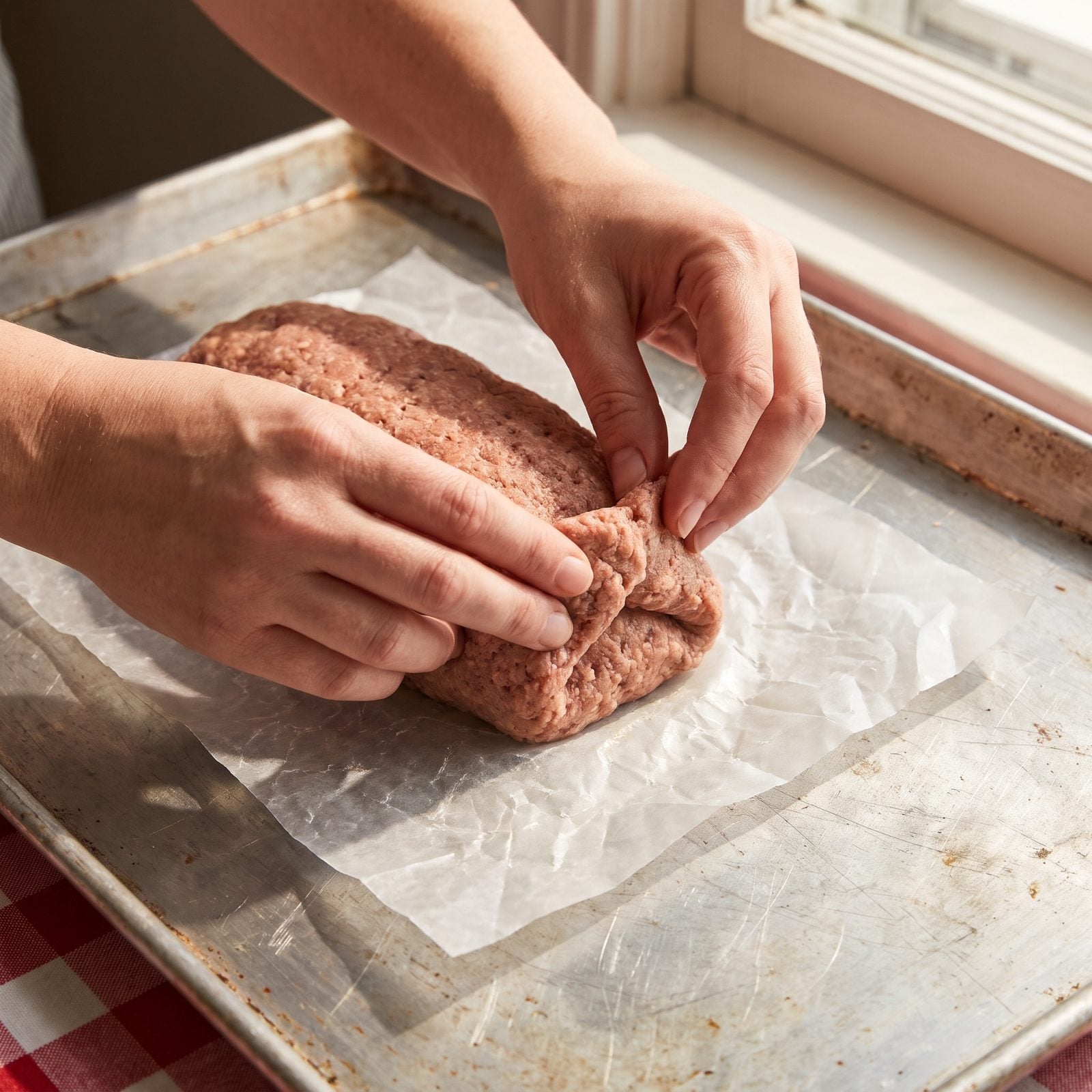
Everybody’s fought over the middle slice and nobody wants the ends, and the reason is pure geometry. A loaf that tapers to thin tips cooks faster at the edges, so those slices come out dry and overdone while the center’s still sitting pretty.
Shape your loaf with even thickness from one end to the other, then fold the last inch of each narrow tip back under itself. You end up with blunt, rounded ends that cook at the same rate as the middle. Now every slice is worth eating, and the end piece stops being the sad one abandoned on the platter.
30. Press a Shallow Groove Across the Top to Hold Glaze
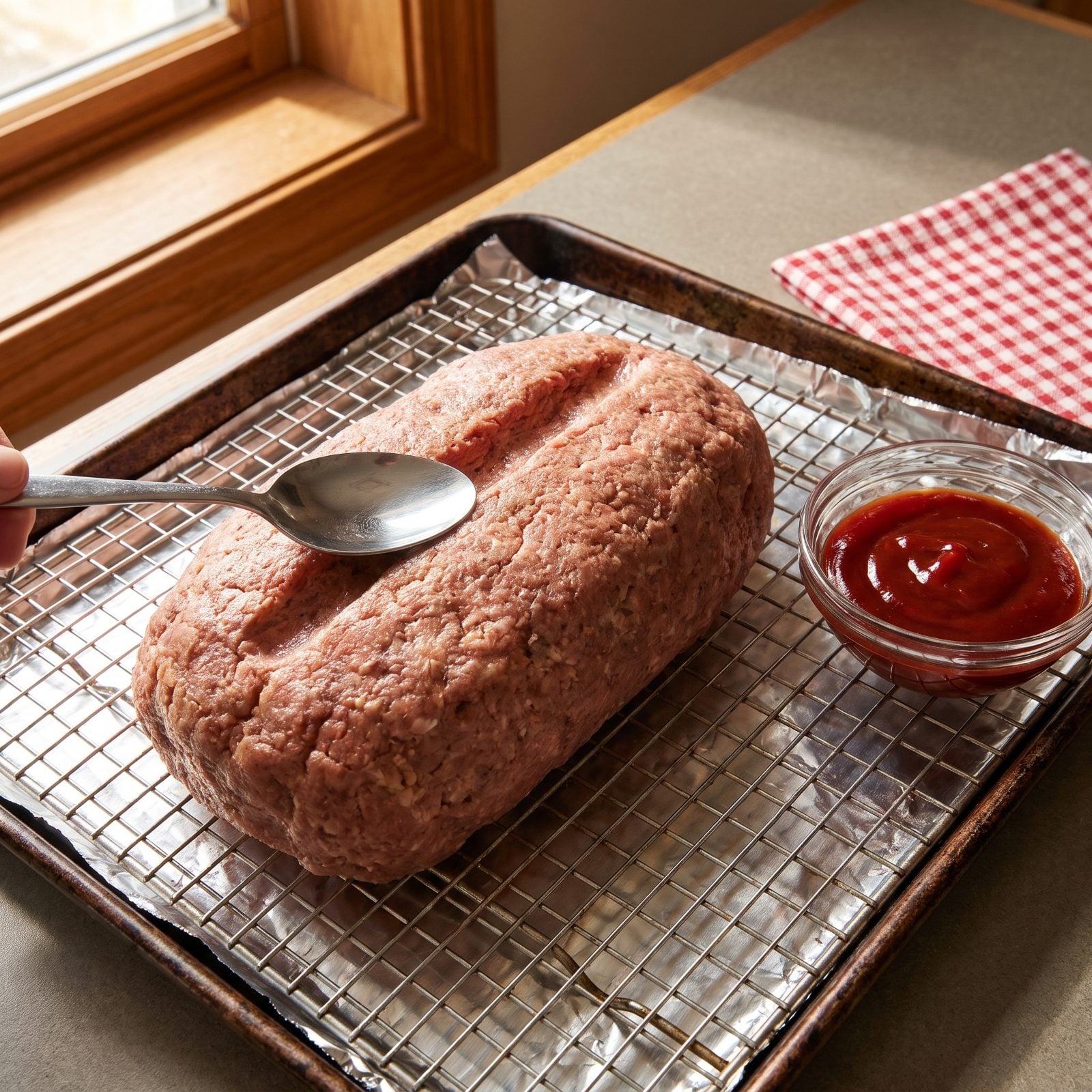
Glaze that slides right off onto the pan is a waste of good sauce. The 1950s fix was almost too simple. Before baking, press a shallow trough down the length of the loaf with the back of a spoon.
A flat or domed top sheds that ketchup-and-brown-sugar glaze the moment the loaf heats up and the fat starts moving. The groove gives it somewhere to pool and set, so you get a glossy stripe of sweet-tangy crust right where you cut your slices. Brush the glaze on in the last fifteen minutes, not at the start — put it on early and the sugar scorches before the loaf’s done.
29. Shape the Loaf Free-Form for More Browned Surface
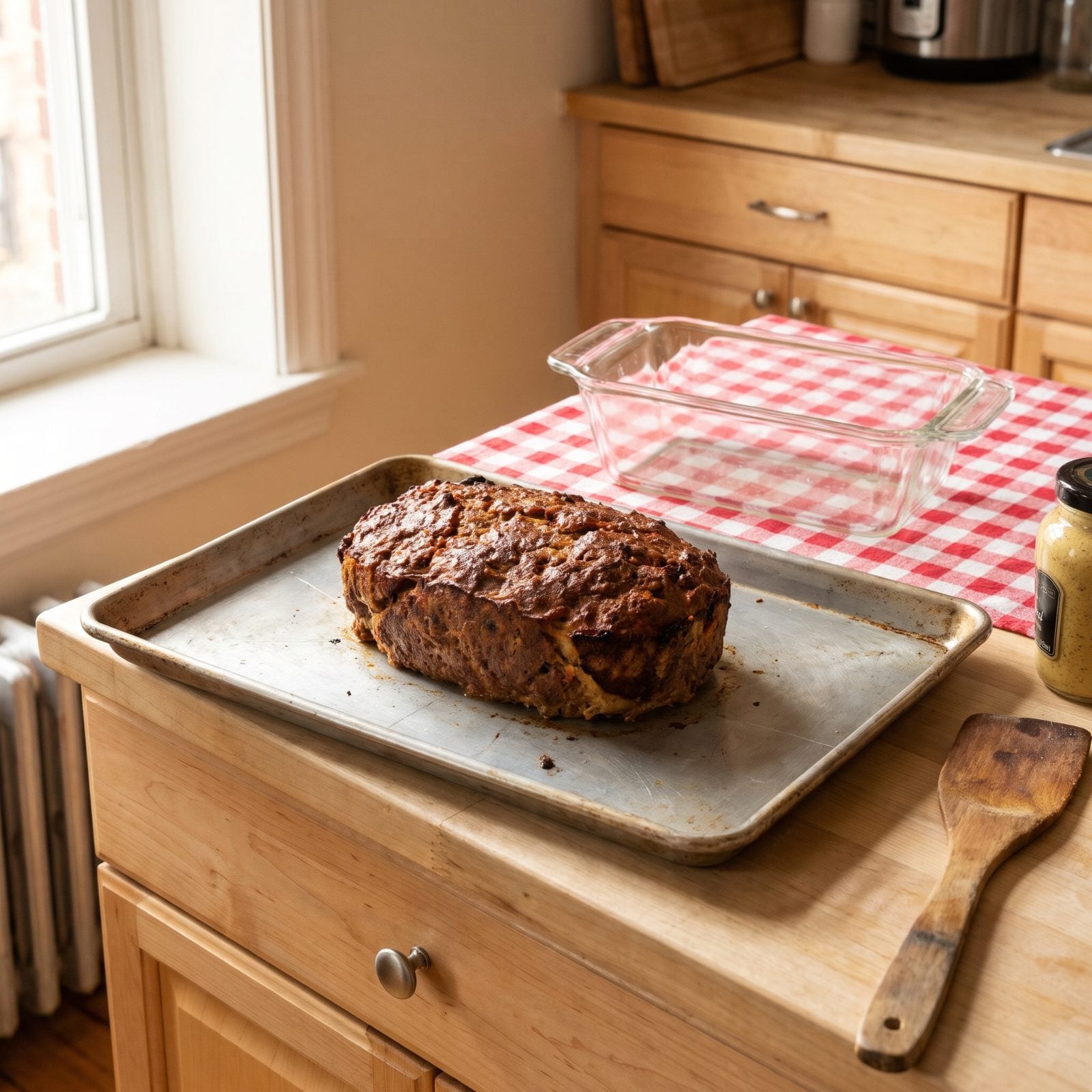
The loaf pan is comfortable, but it’s cheating you out of the best part. Packed into a pan, your meatloaf steams in its own juices and only the top ever browns.
Shape it free-form instead — an oval mound on a flat tray — and all four sides catch the heat. You get crust everywhere, that firm savory exterior that’s half the reason anyone likes meatloaf to begin with. It also lets the fat run off instead of pooling around the meat. Chill the mix and shape it firmly and the loaf holds just fine without the walls. Lose the pan, win the crust.
28. Bake the Meatloaf on a Metal Rack to Let Grease Escape
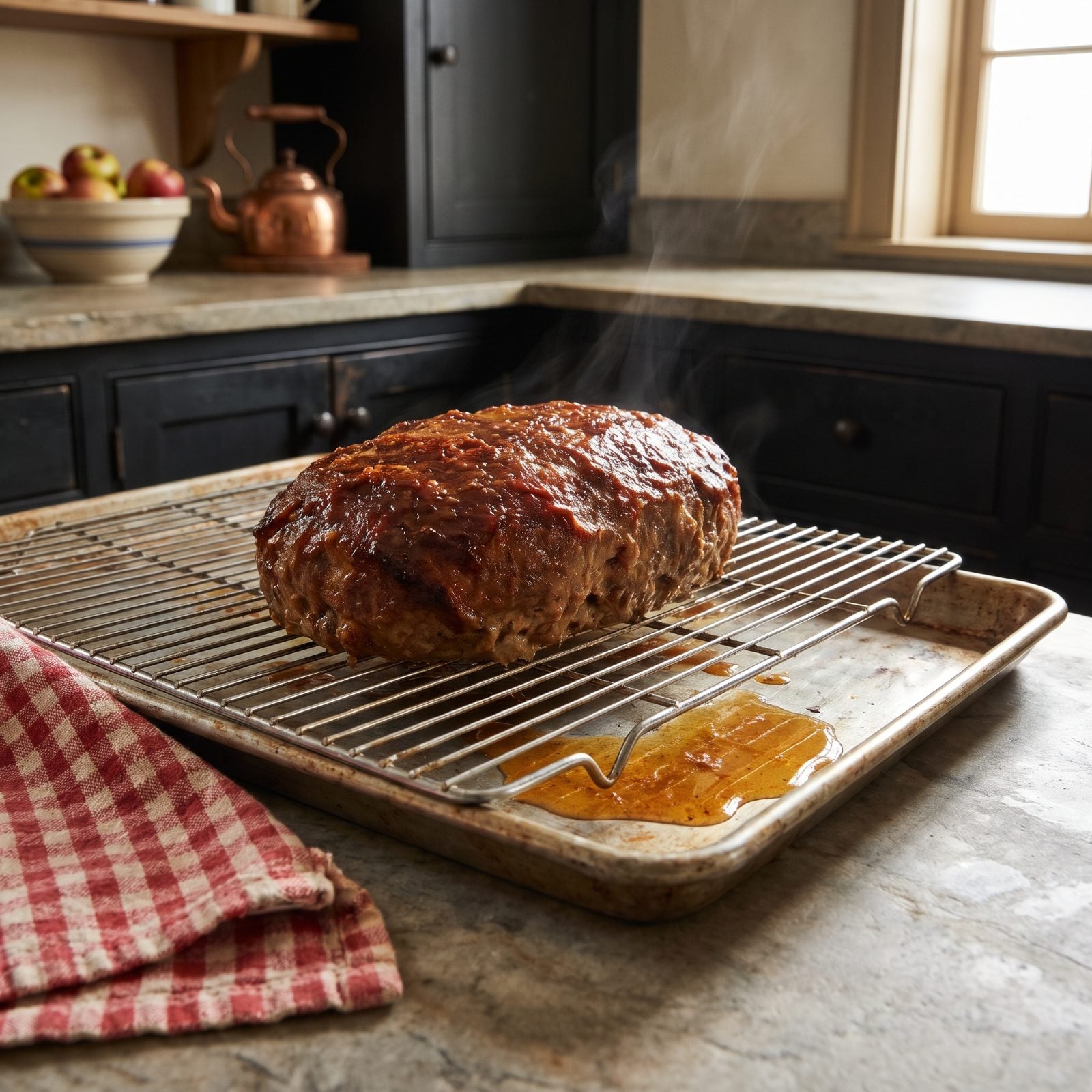
A meatloaf sitting in its own grease bath is a greasy meatloaf. No way around it. All that rendered fat has nowhere to go, so the bottom turns soft and slick and every slice leaves a shine on the plate.
Set a wire rack inside a shallow baking pan and perch the loaf on top. The fat drips straight through and collects below, well away from the meat, while air moves around the whole loaf for even cooking and better browning underneath. Cleanup’s easier too — you’re pouring off one pan instead of blotting a dozen paper towels.
27. Build a Foil Sling for Easy Removal From a Deep Pan
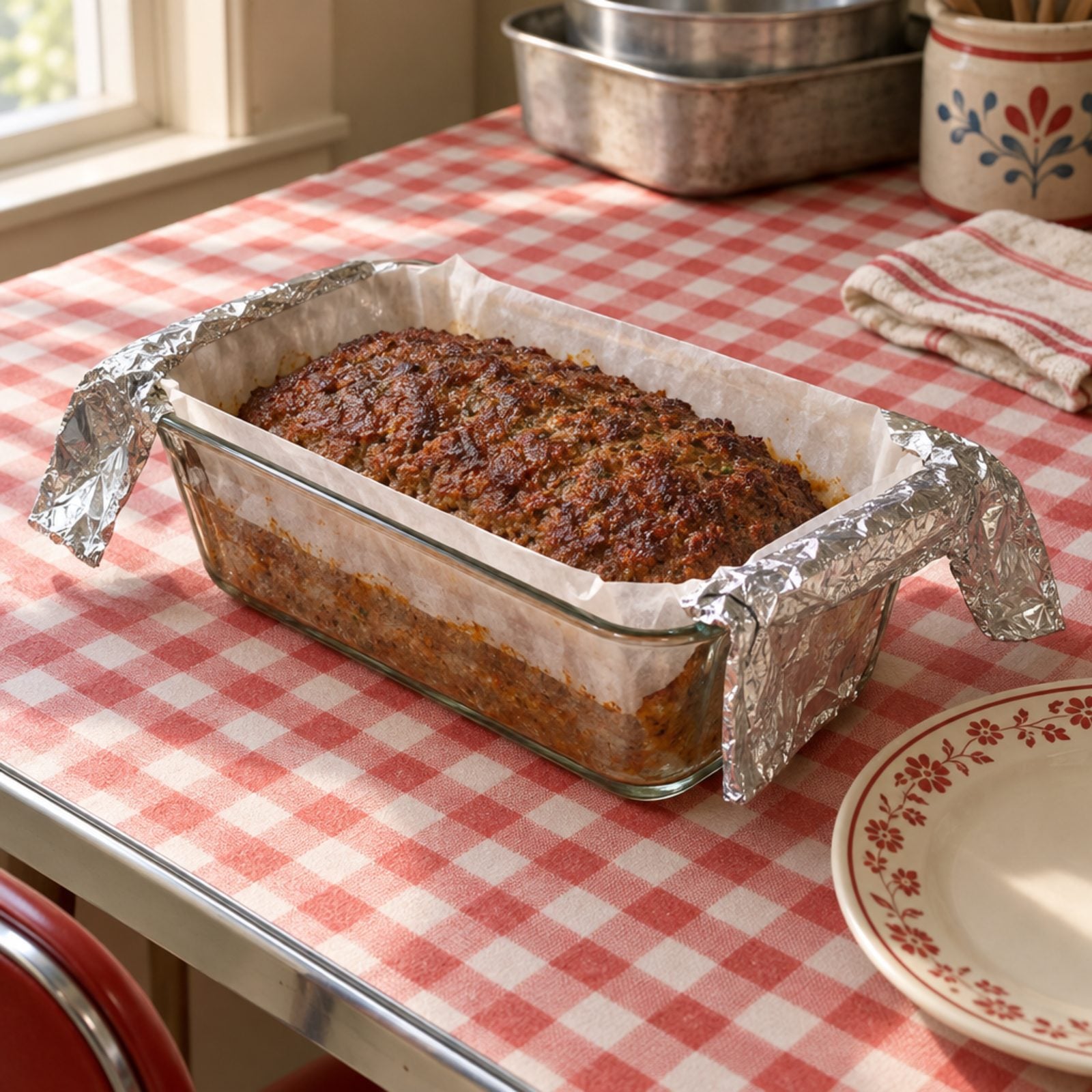
Ever tried to wrestle a hot meatloaf out of a deep glass pan with two forks and a prayer? It breaks apart right down the middle, every single time, and you end up serving the wreckage.
The 1950s fix is almost insultingly simple. Lay a long strip of foil across the pan before you pack in the meat, letting the ends hang over the sides like handles. When the loaf is done you grab those handles and lift the whole thing out clean — no cracking, no scooping, no sad crumbled corner that nobody wants on their plate. Bonus: the loaf gets to rest on a dish instead of stewing in its own grease, so the bottom never goes to mush.
26. Lay Bacon Strips Across the Top as a Moisture Shield
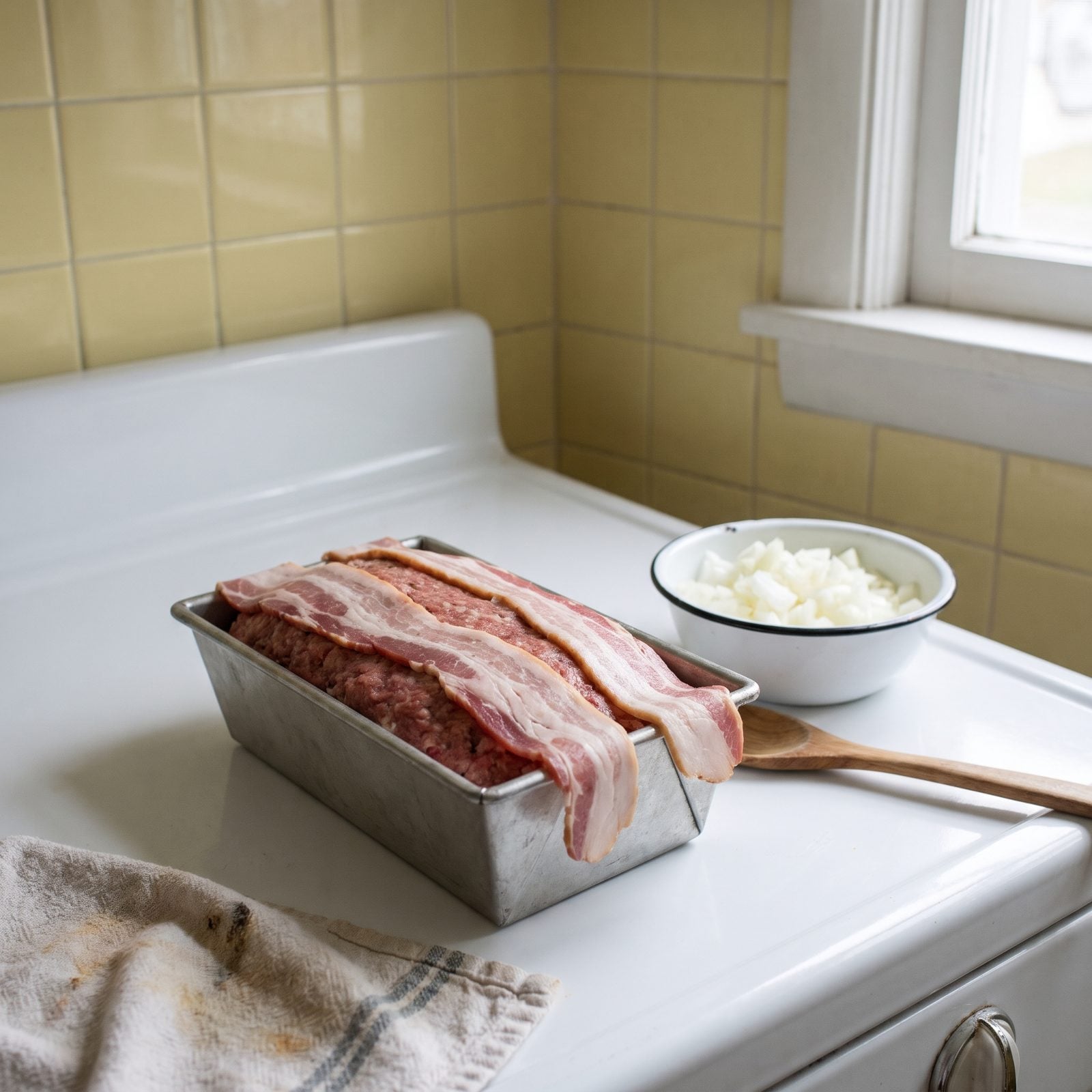
Lean ground beef bakes into a brick. Dry edges, a crumbly middle, that faint cardboard quality you remember from certain school lunches that nobody has ever once requested a second serving of.
Drape raw bacon strips across the top and the problem disappears, no fancy ingredient required. As the loaf bakes, the fat renders down and bastes the meat the whole way through, keeping the surface moist while adding a smoky, salty edge — and the strips crisp into a lid you get to eat. Overlap two or three slices lengthwise, tucking the ends down the sides.
Thick bacon? Give the loaf an extra ten minutes so it cooks through and renders properly. Thin slices crisp faster and look prettier at the table anyway.
25. Hide Hard-Boiled Eggs Down the Center for Striking Slices
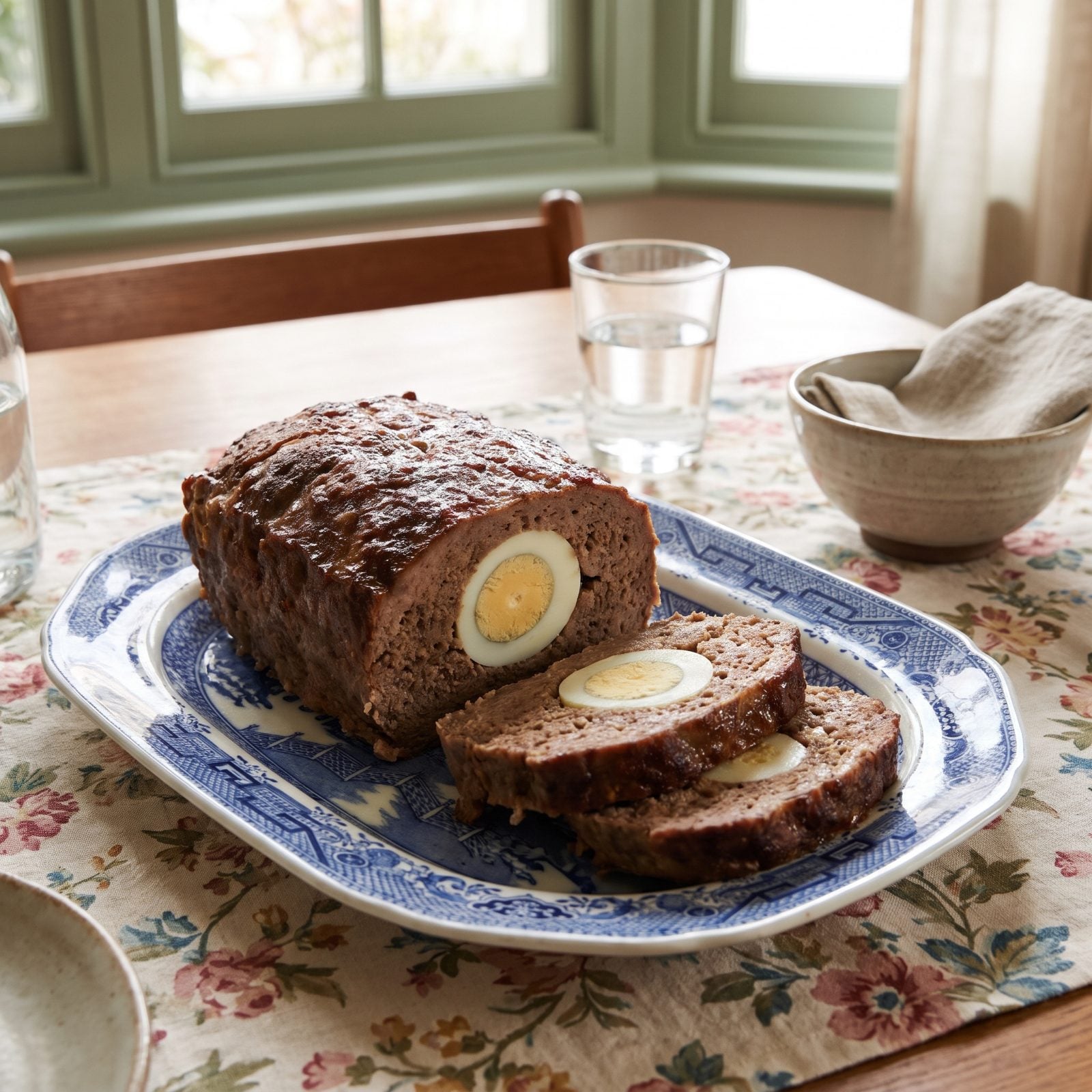
There was a stretch in the 1950s when nearly every church-supper meatloaf came with a secret. Slice into it and a ring of hard-boiled egg appeared, white against the dark meat, sometimes low in the slice, sometimes peeking from the edge.
Part of it was thrift, stretching a pound of beef a little further. But mostly? Theater. A plain loaf turned into a conversation piece the second the knife went through. Shell two or three boiled eggs, lay them end to end down the middle as you pack it, and mold the meat firmly around them. Don’t fret if they drift off-center as you pack; every slice still shows a little flash of egg, and that’s the whole trick.
24. Use Muffin Tins for Fast-Baking Individual Meatloaves
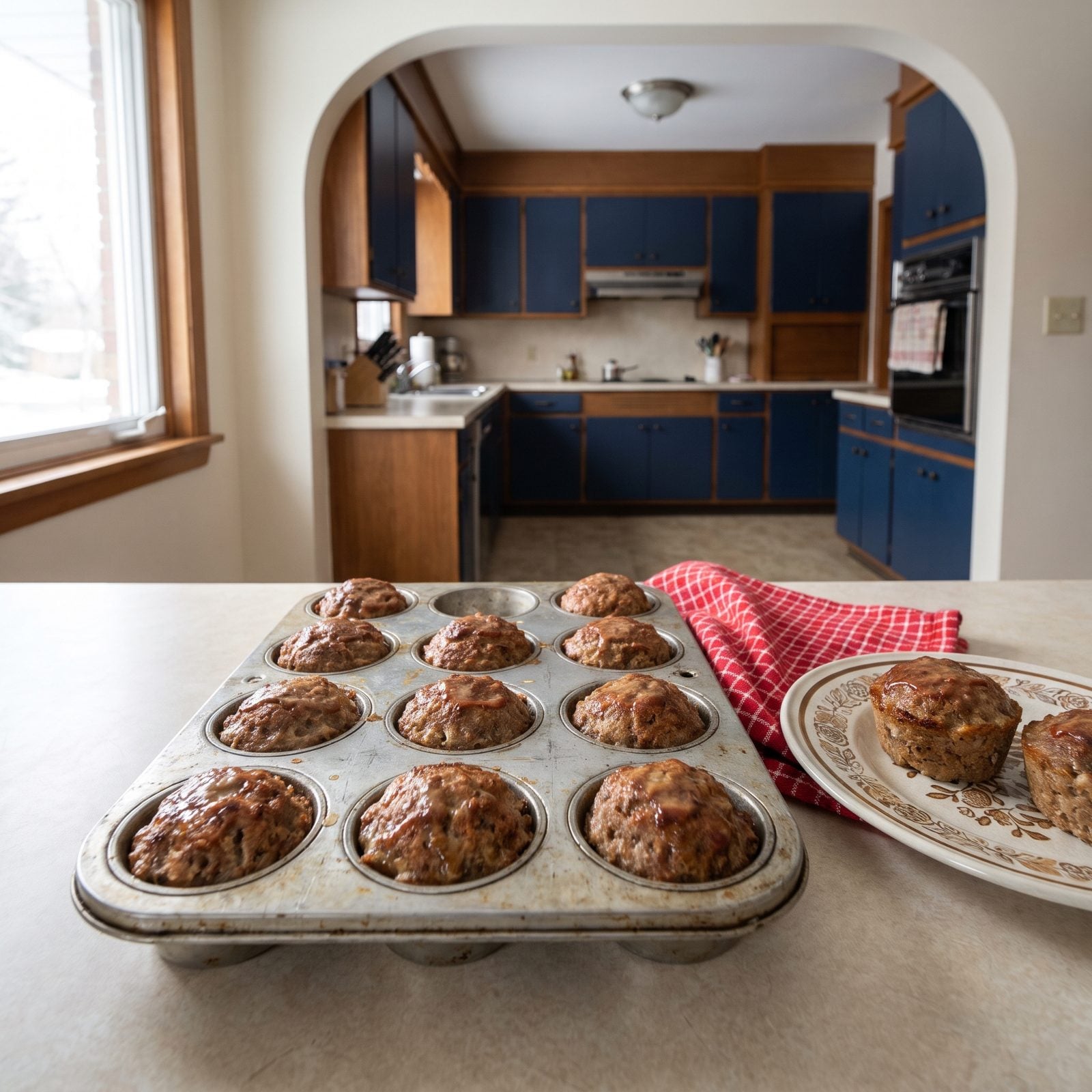
A full loaf wants an hour in the oven, sometimes more — which feels like an eternity on a weeknight when the kids are already whining about dinner.
Press the same mixture into a greased muffin tin and the math changes. More surface area, faster and more even cooking, little loaves usually done in about twenty-five minutes. Everybody gets their own, crispy edges all the way around. They freeze beautifully too. Keep a dozen in the freezer and pull two at a time, the kind of planning mid-century cooks did without ever calling it meal prep.
23. Add Ketchup Near the End So It Does Not Scorch
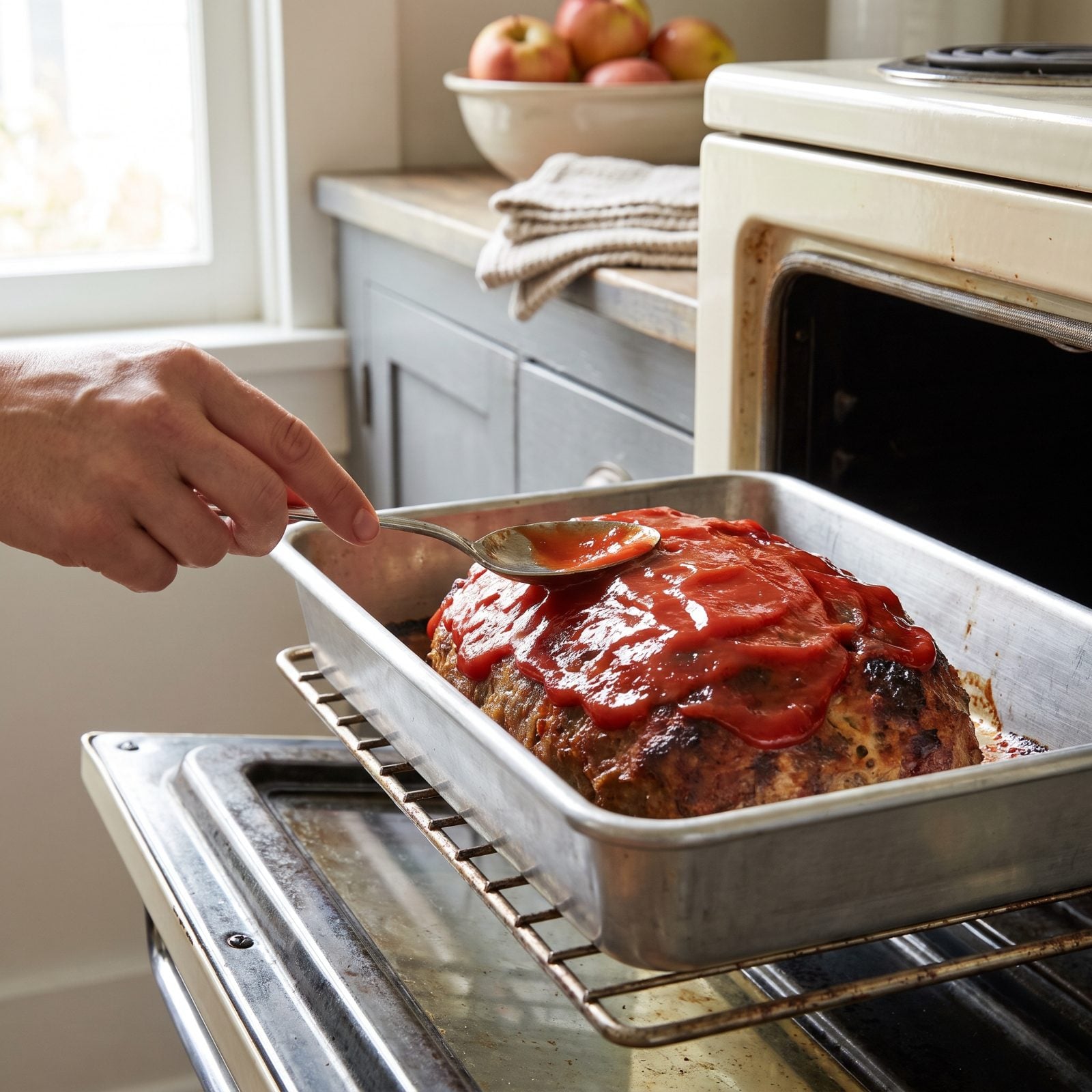
Smear ketchup over raw meatloaf, send it into the oven for a full hour, and you pull out something dark, dull, and a little bitter. The sugars burn long before the center is done.
Time it instead. Let the loaf bake naked for most of its run, then brush the ketchup on during the last fifteen or twenty minutes so the glaze sets into a glossy, tangy lid without crossing into scorched. This is the single most common meatloaf mistake I see, and the fix costs you nothing but a glance at the clock.
22. Sharpen a Sweet Glaze With Dry Mustard
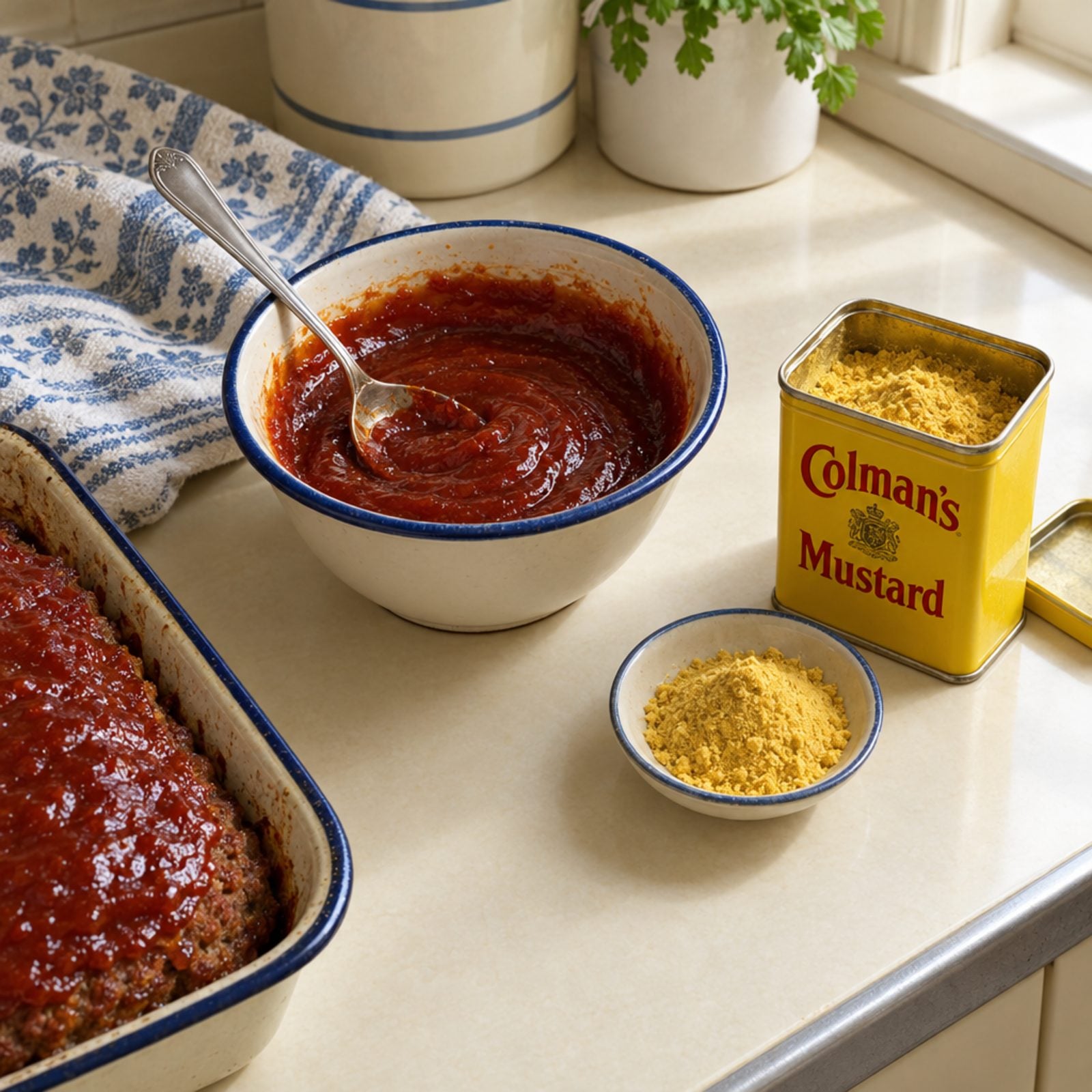
A glaze of just ketchup and brown sugar reads flat after a few bites. All sweet, nowhere to go.
A teaspoon of dry mustard changes the whole thing — a slow heat, a savory bite that cuts the sugar and makes the glaze taste cooked instead of candied. The old cookbooks called for it constantly, usually Colman’s, and they were right. Whisk it into your ketchup and brown sugar before brushing. Start with a teaspoon, taste, add more if you want a sharper finish. Dry mustard is quieter than it looks in the tin.
21. Add Vinegar to the Glaze to Keep It From Becoming Cloying
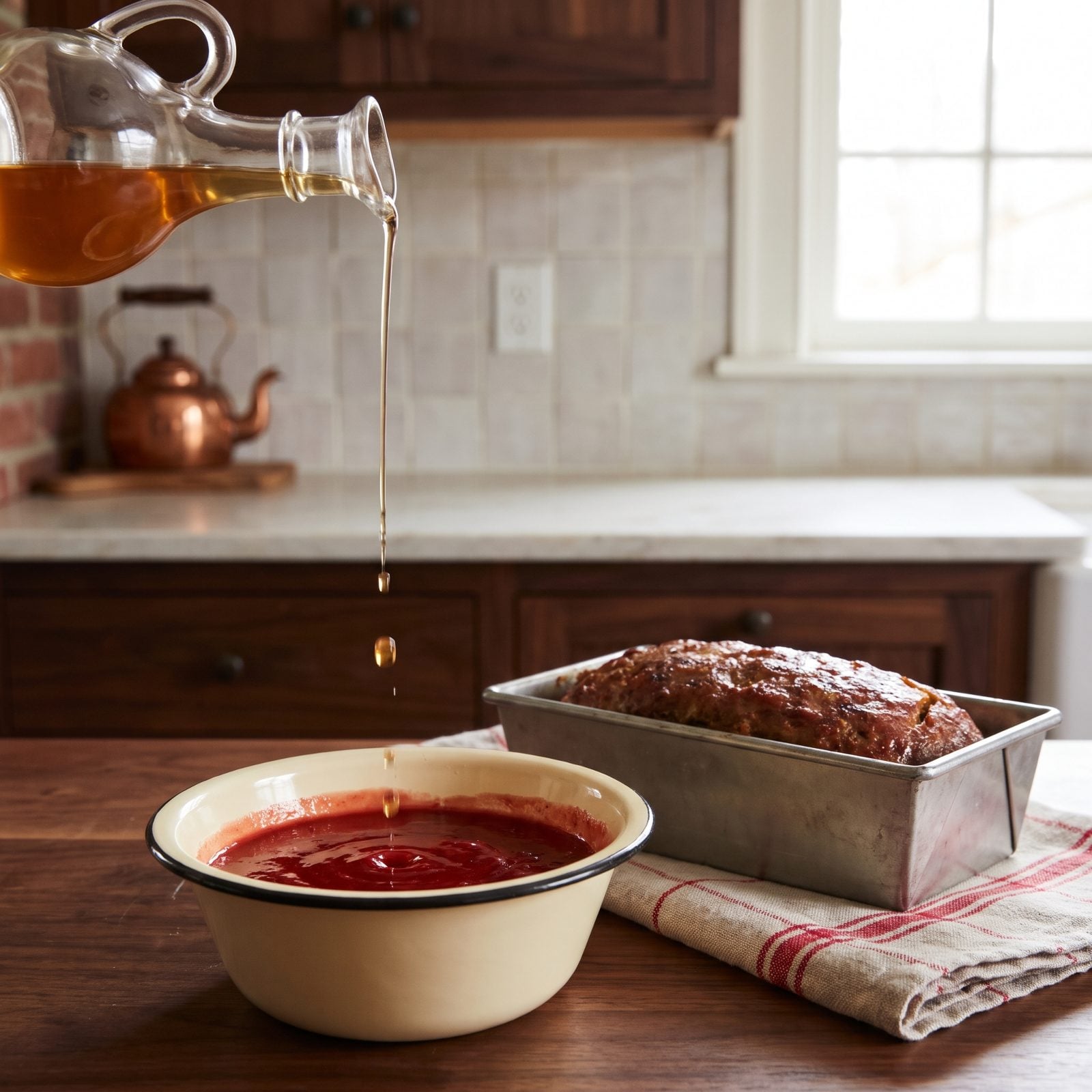
Sweet glazes have a tipping point. One bite is good. The third coats your mouth in sugar and sends you reaching for water.
A splash of vinegar pulls it back from the edge. Cider vinegar is the homey choice, and a tablespoon adds a bright, acidic lift that keeps every bite tasting fresh instead of syrupy — the same favor a squeeze of lemon does for anything too rich. Stir it in with the ketchup and sugar. If it tastes too sharp raw, don’t fret. It mellows in the oven.
20. Pour Tomato Juice Into the Pan for an Instant Sauce Base
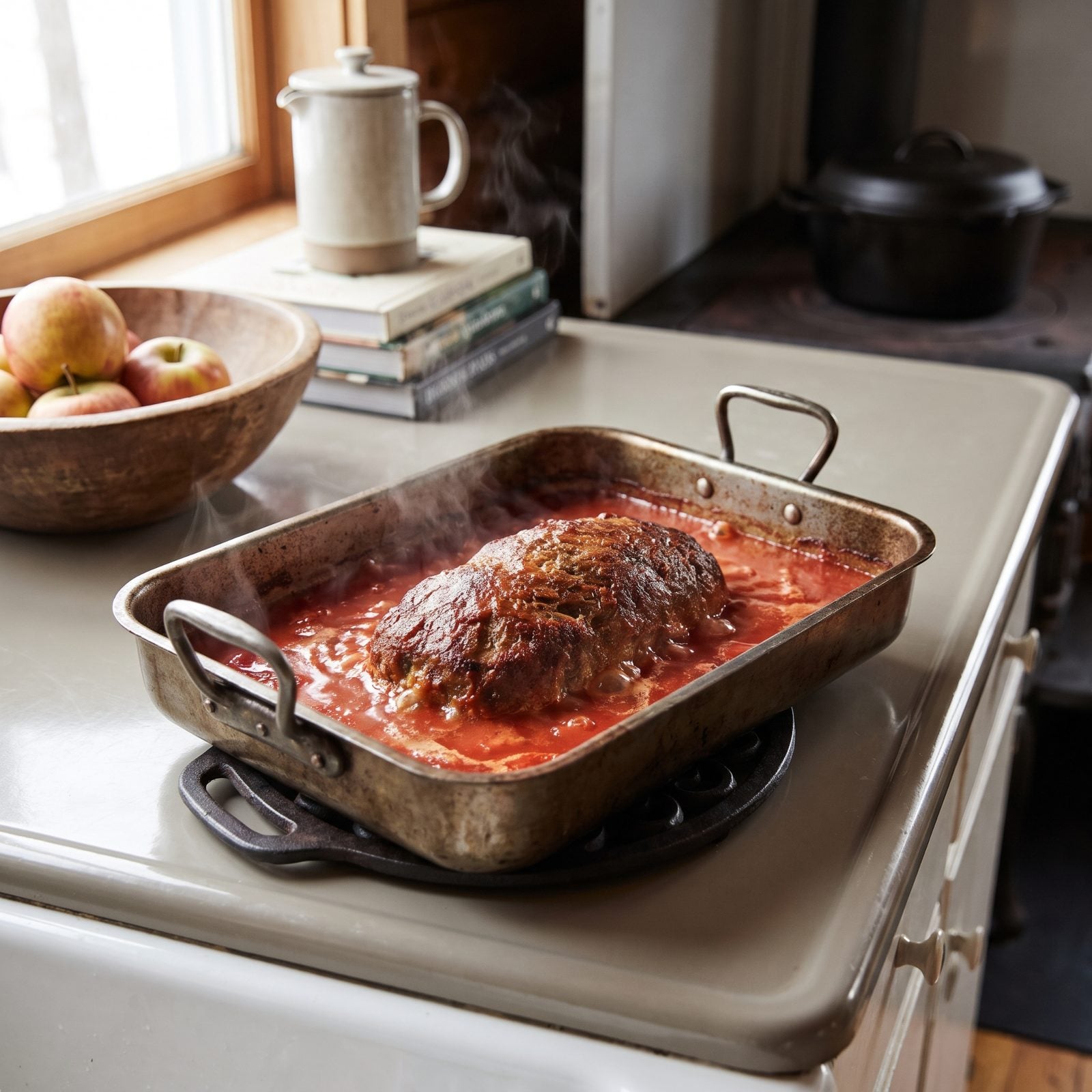
You’ve slaved over a loaf and then served it bone-dry, no sauce, because nobody had time to stand over a gravy. The 1950s cook had an answer sitting right in the icebox.
Pour a cup of tomato juice into the bottom of the pan before baking. As the loaf cooks, the juice catches the drippings, reduces, and turns into a loose, savory tomato sauce with zero extra effort — spoon it over the slices at the table. Season the juice first: a pinch of salt, some pepper, a dash of Worcestershire. Plain juice runs thin, but give it those drippings and half an hour and it becomes something worth ladling.
19. Cover the Loaf Early, Then Uncover It to Brown
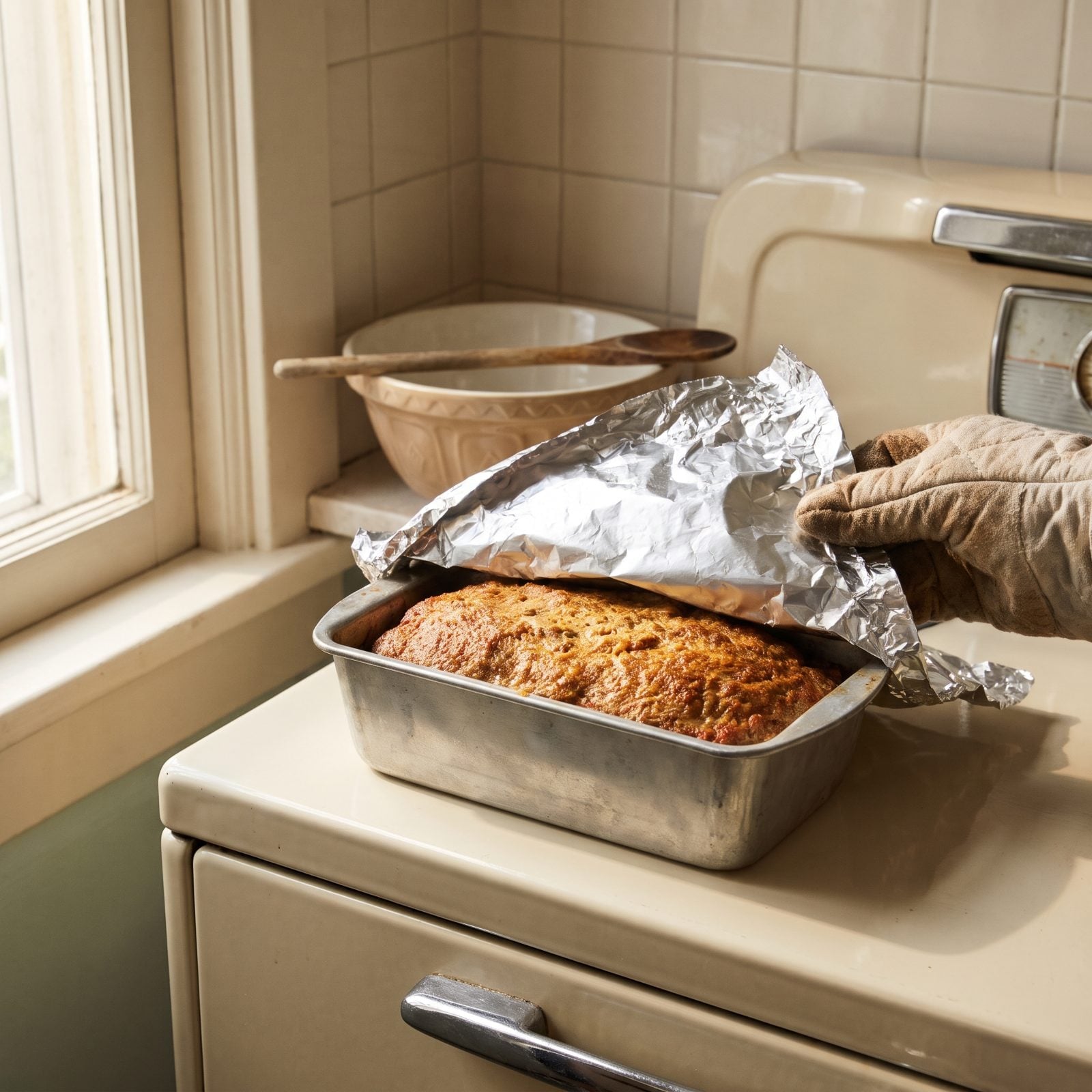
Leave a loaf uncovered the whole bake and the top firms up and darkens before the center is anywhere near done. Cover it the whole time and you get no crust at all, just a pale steamed brick.
So do both, in order. Tent the loaf loosely with foil for the first stretch so it cooks through gently and stays moist, then pull the foil off for the last twenty minutes or so to let the top brown and the glaze set. Same logic as covering a roast — you’re controlling when the surface gets heat instead of fighting it the whole way.
18. Drain Excess Pan Grease Partway Through Baking
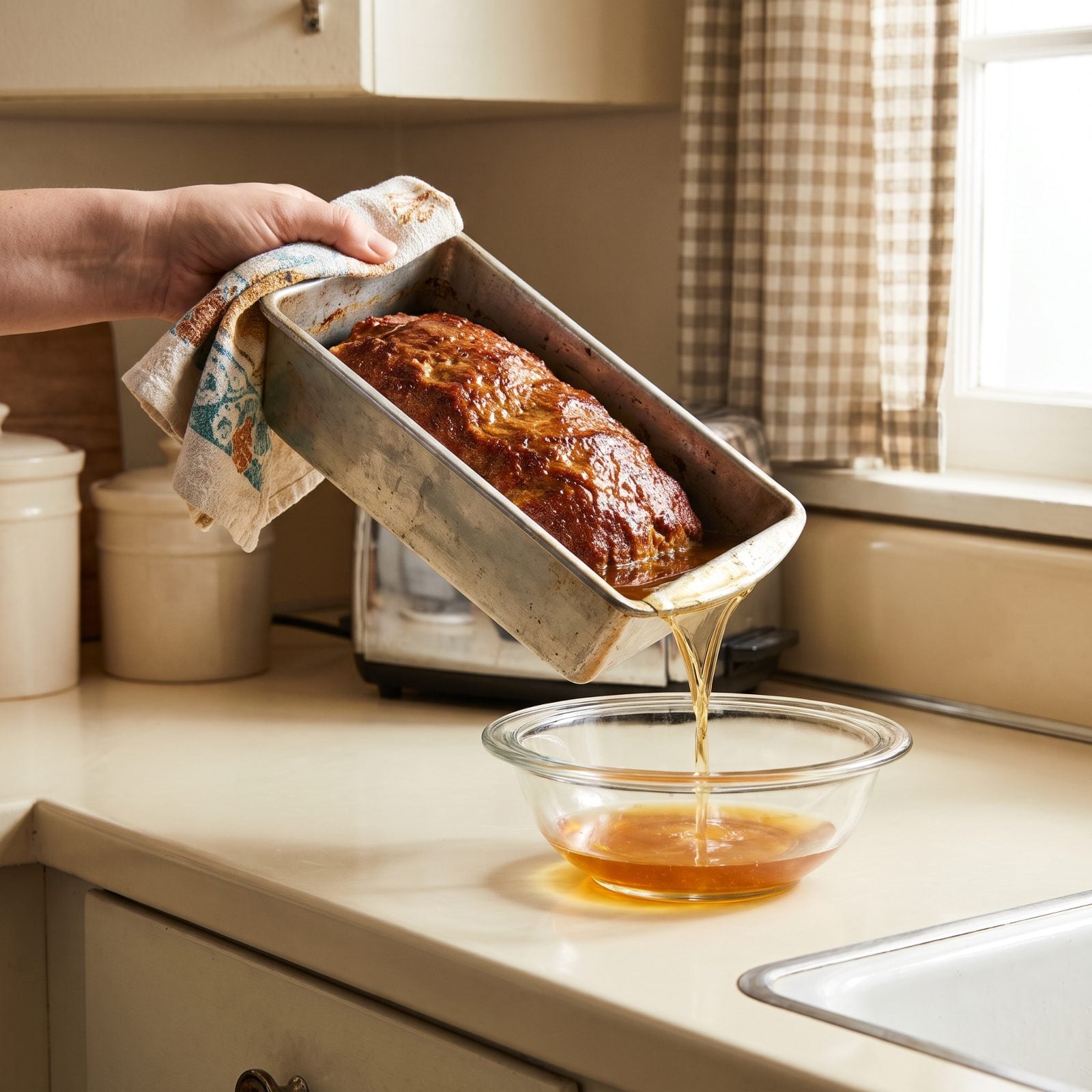
A loaf baking in its own puddle of fat comes out greasy on the bottom and limp no matter how good the meat was, because the underside never gets a chance to firm up and brown.
About halfway through, pull the pan, tilt it carefully over a heatproof bowl, and pour off the pooled grease. The loaf finishes cleaner and holds its slices better. Steady the pan with a folded towel so you don’t dump the whole thing into the sink. And please — don’t pour that grease down the drain. It cools, it hardens, it clogs. Let it set in the bowl and toss it.
17. Baste the Loaf With Its Tomato-Rich Pan Juices
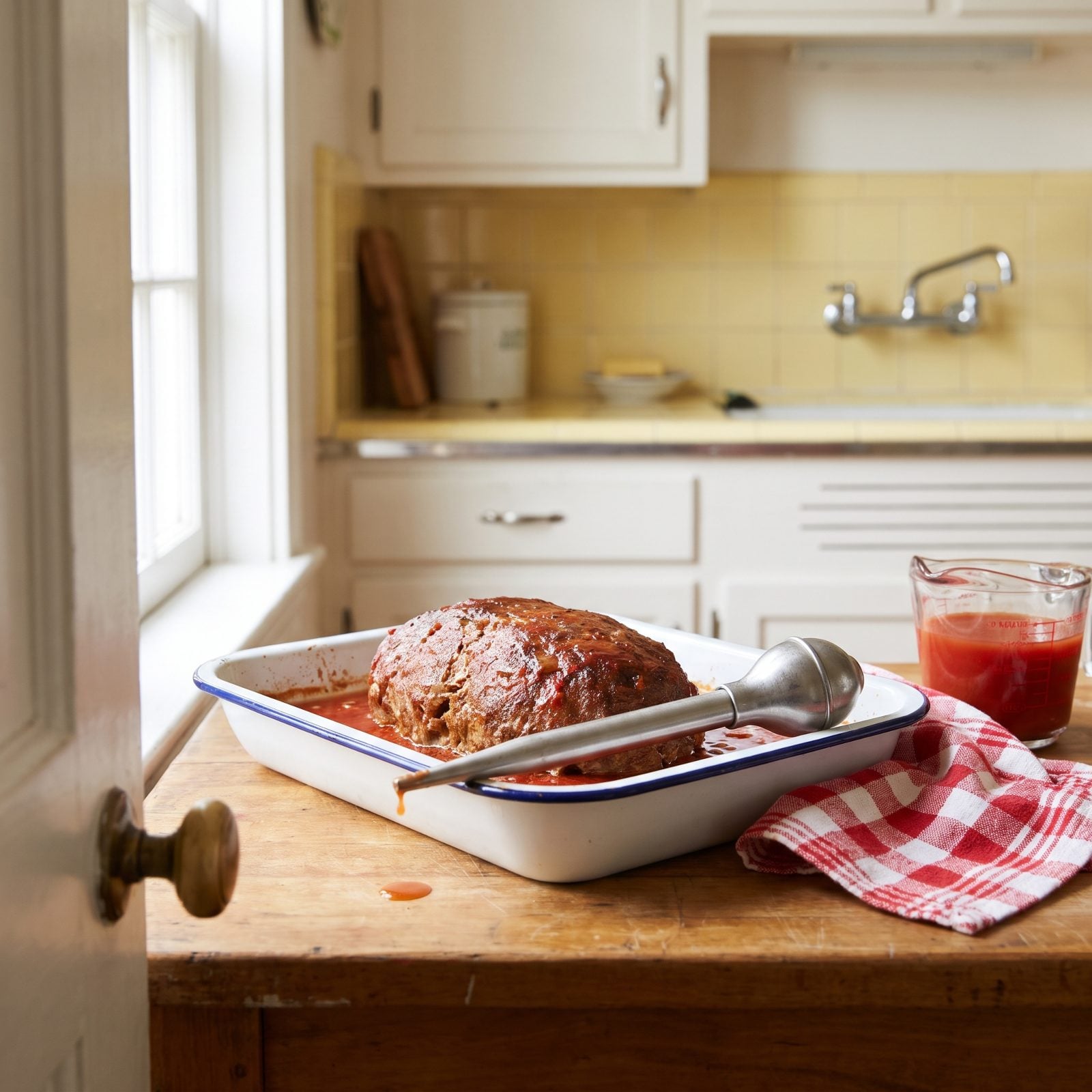
Dry meatloaf isn’t a recipe problem. It’s a neglect problem. You slide the loaf in, walk away, and leave all that tomato-and-fat liquid sitting in the pan doing nothing.
Those juices are flavor you already paid for. Every time you baste, you pull tomato, rendered fat, and onion back up onto the crust, which keeps the surface from drying into a leathery shell. Pull the pan out two or three times after the thirty-minute mark and spoon the juices over the top. A bulb baster works. So does a big spoon.
16. Use a Moderate Oven to Reduce Splitting and Dry Edges
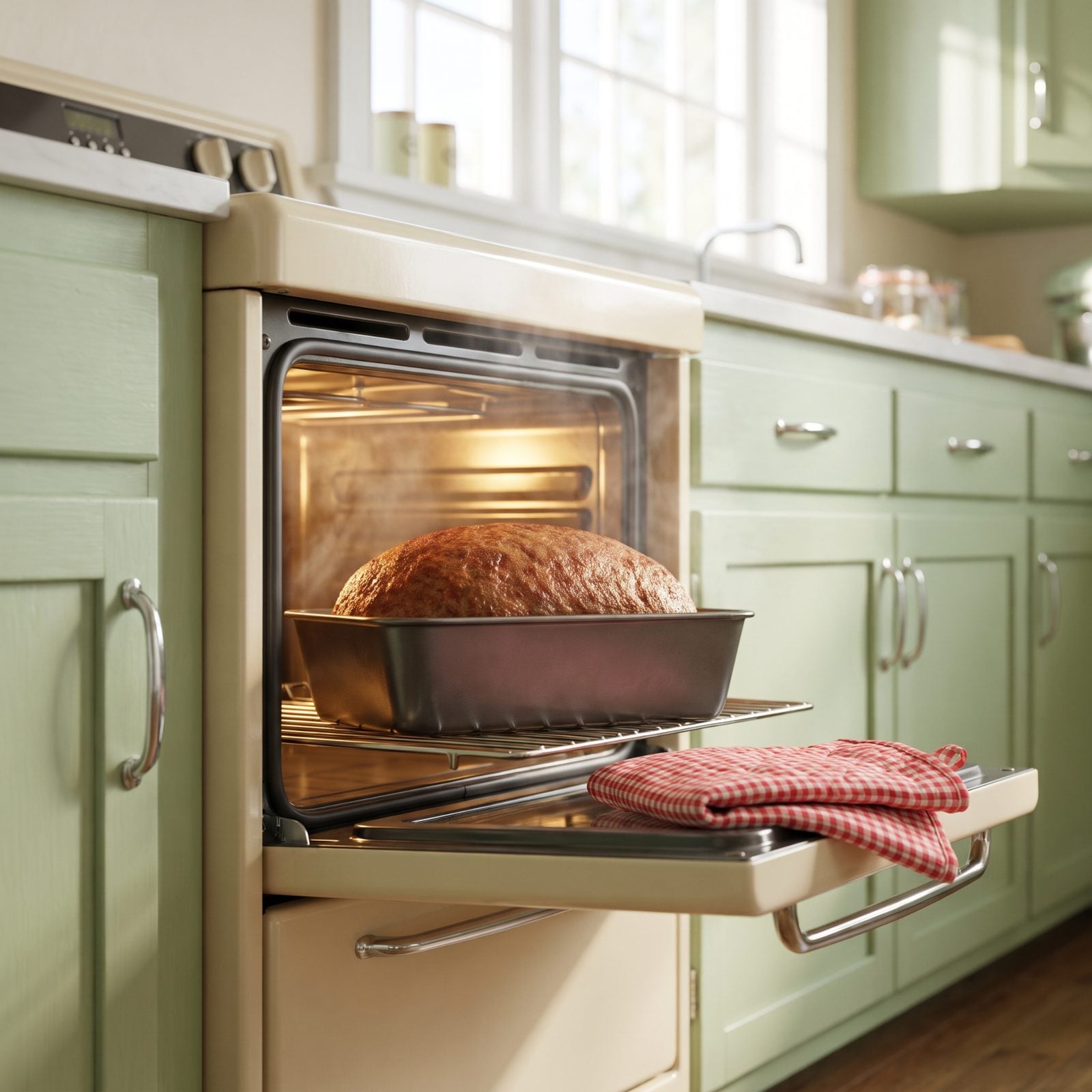
Crank the oven to 425 and here’s what you get: a cracked, hard shell, a crumbly dry rim, and a middle that’s still lagging behind. Those splits aren’t just ugly. They let moisture escape right where you want it to stay.
A moderate oven, around 350, cooks the loaf through at a pace the outside can actually keep up with. Nothing races ahead. The edges stay soft, the top domes gently instead of cracking open, and the center comes up to temperature without turning gray and pebbly at the corners. Give it the full time rather than rushing it with heat. Slow and steady was the whole 1950s oven philosophy, and it still holds up.
15. Roast Parboiled Potatoes Beside the Loaf in the Drippings
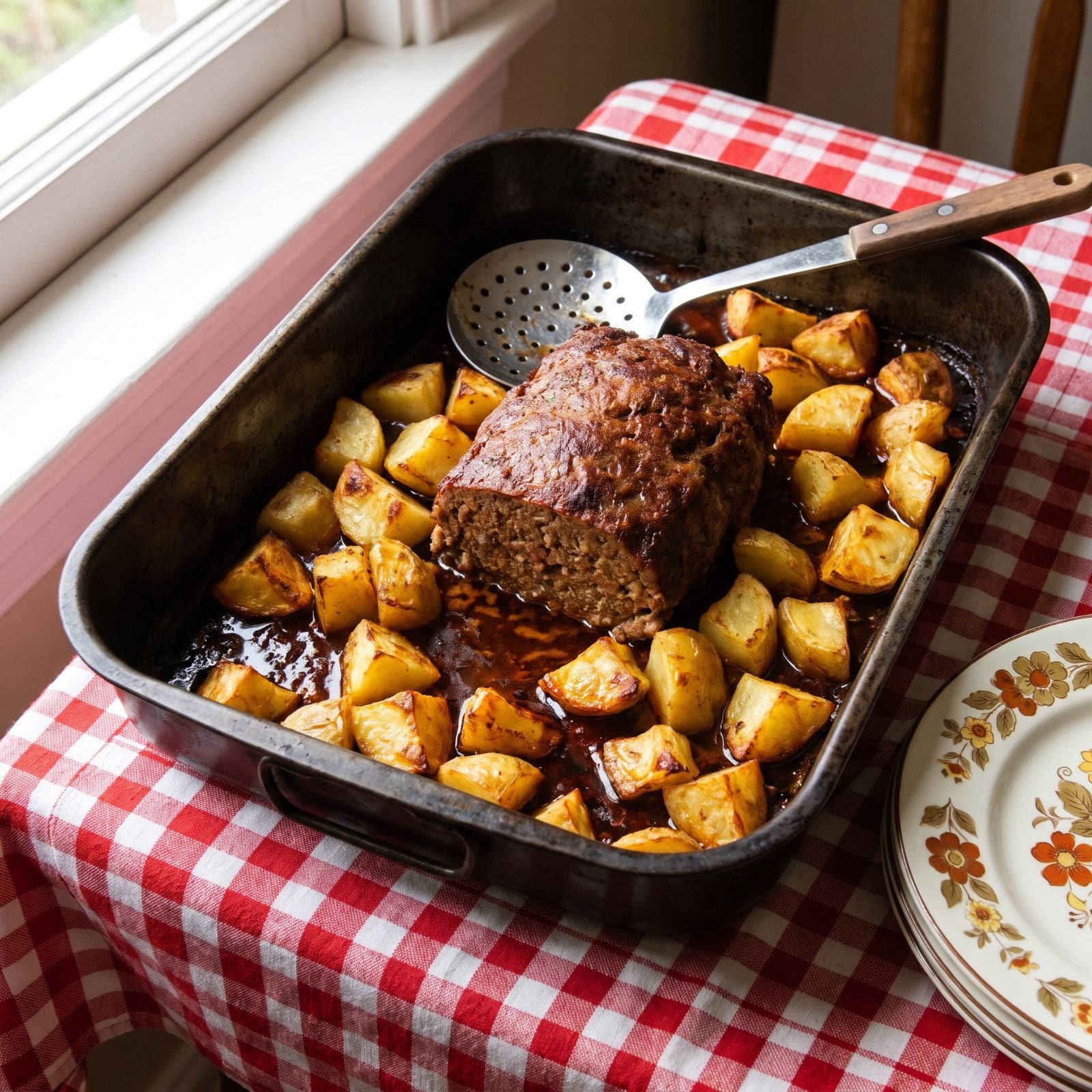
The drippings pooling around a meatloaf are the best cooking fat in the kitchen that day, and most people pour them straight down the drain. What a waste.
Parboil peeled potato chunks for about eight minutes, drain them well, rough them up a little in the colander, then arrange them around the loaf for the last forty-five minutes. They roast in the tomato-and-beef fat and come out crisp-edged and savory in a way plain roasted potatoes never manage. One pan, one oven, dinner handling itself.
14. Top the Loaf With Mashed Potatoes and Paprika Before Browning
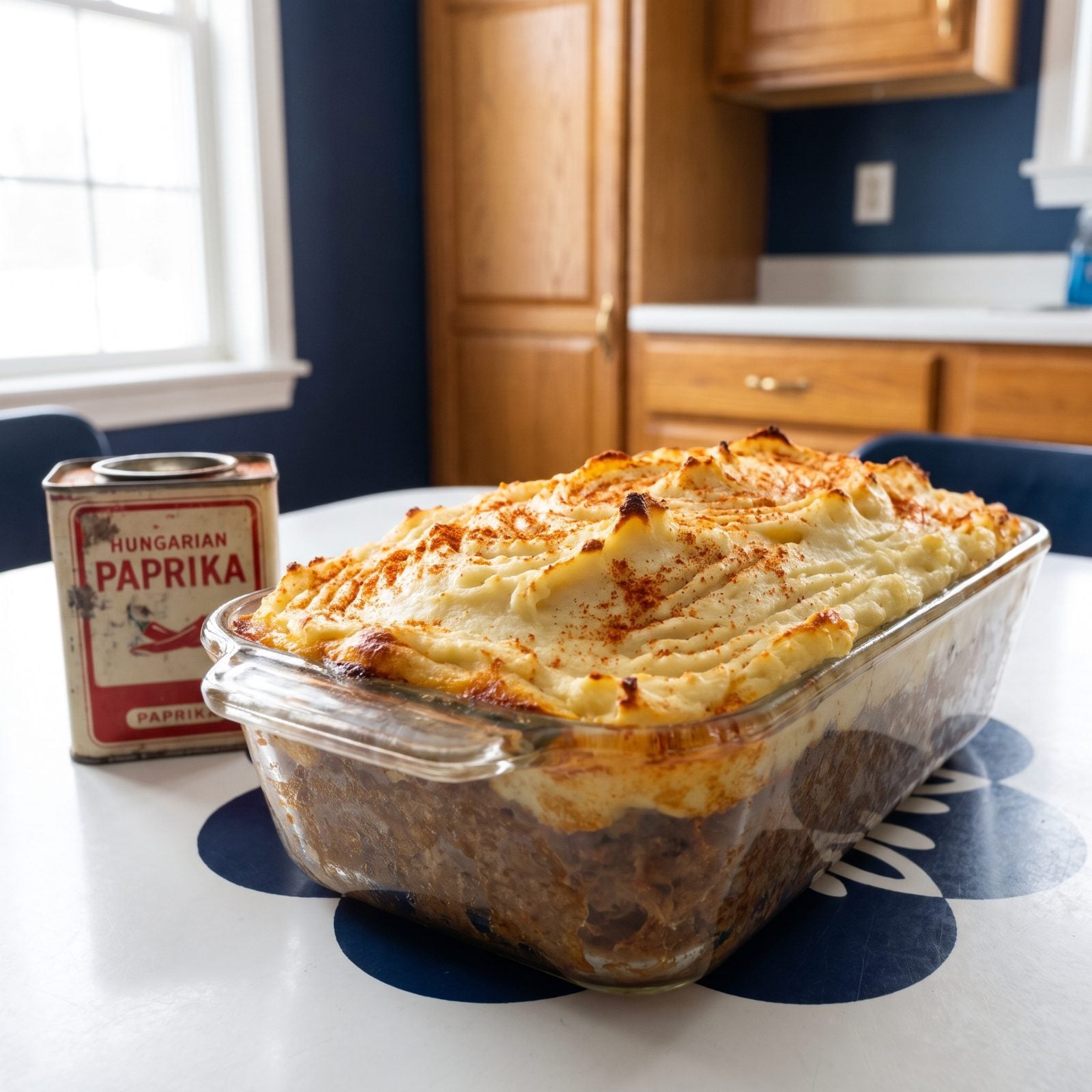
This is the trick that turned a weeknight meatloaf into something that looked like you tried. In the last fifteen minutes, spread a thick layer of mashed potatoes across the top of the loaf, run a fork through it to raise little ridges, dust it with paprika, and let the broiler brown the peaks.
Those raised edges catch the heat and go golden while the valleys stay creamy white under the red dust. Same reason a shepherd’s pie top looks so good. Pure visual payoff for about four minutes of work.
13. Let the Finished Meatloaf Rest Before Cutting It
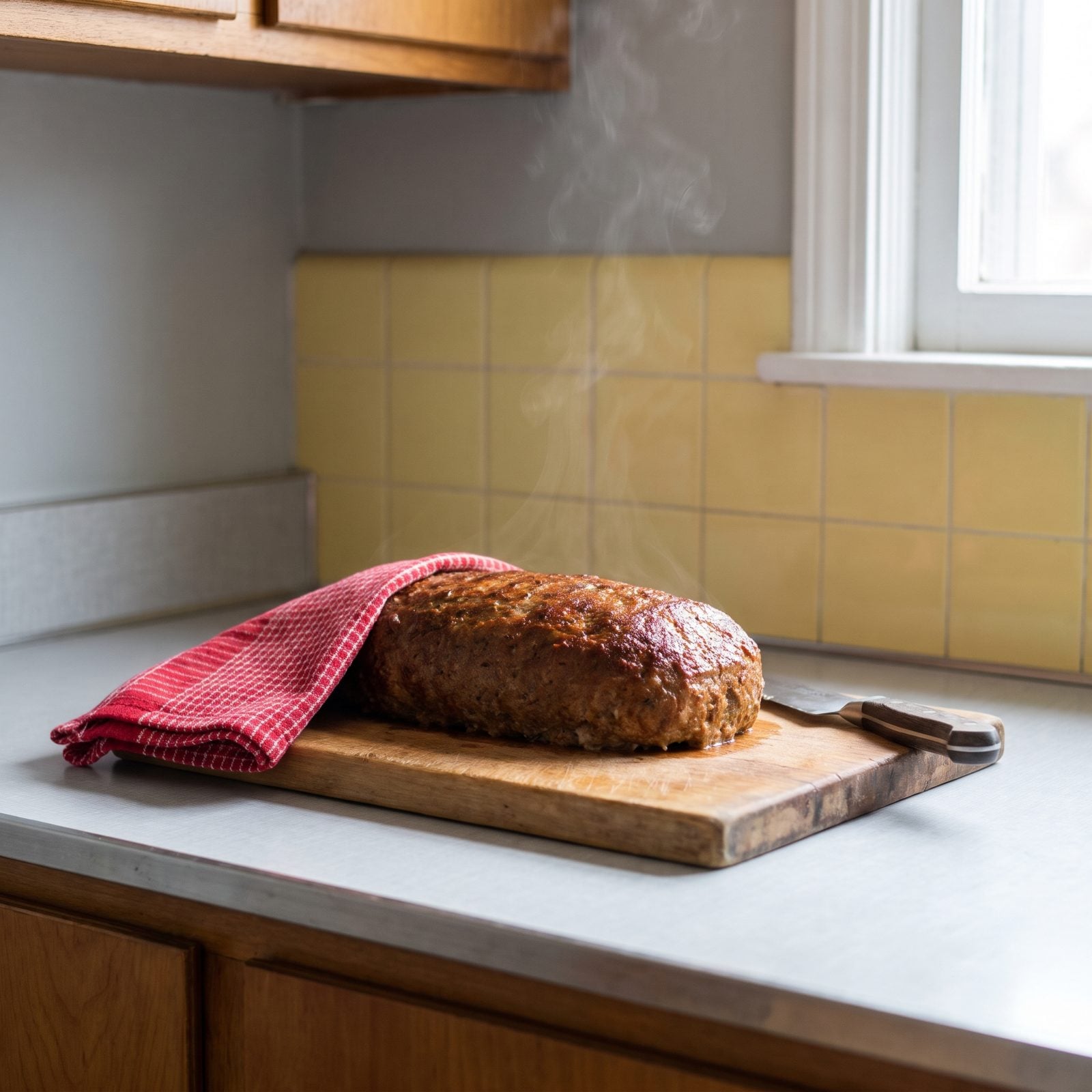
Cut into a meatloaf the second it leaves the oven and watch the first slice collapse into a wet pile while the juices run out across the board. All that moisture belonged inside the meat.
Let it sit ten minutes. The proteins relax, the juices redistribute, and the loaf firms up just enough to hold a slice. You’ll cut cleaner, lose less liquid, and the meat tastes moister because the moisture actually stayed put.
12. Use a Thin, Hot Knife for Clean Stuffed-Meatloaf Slices
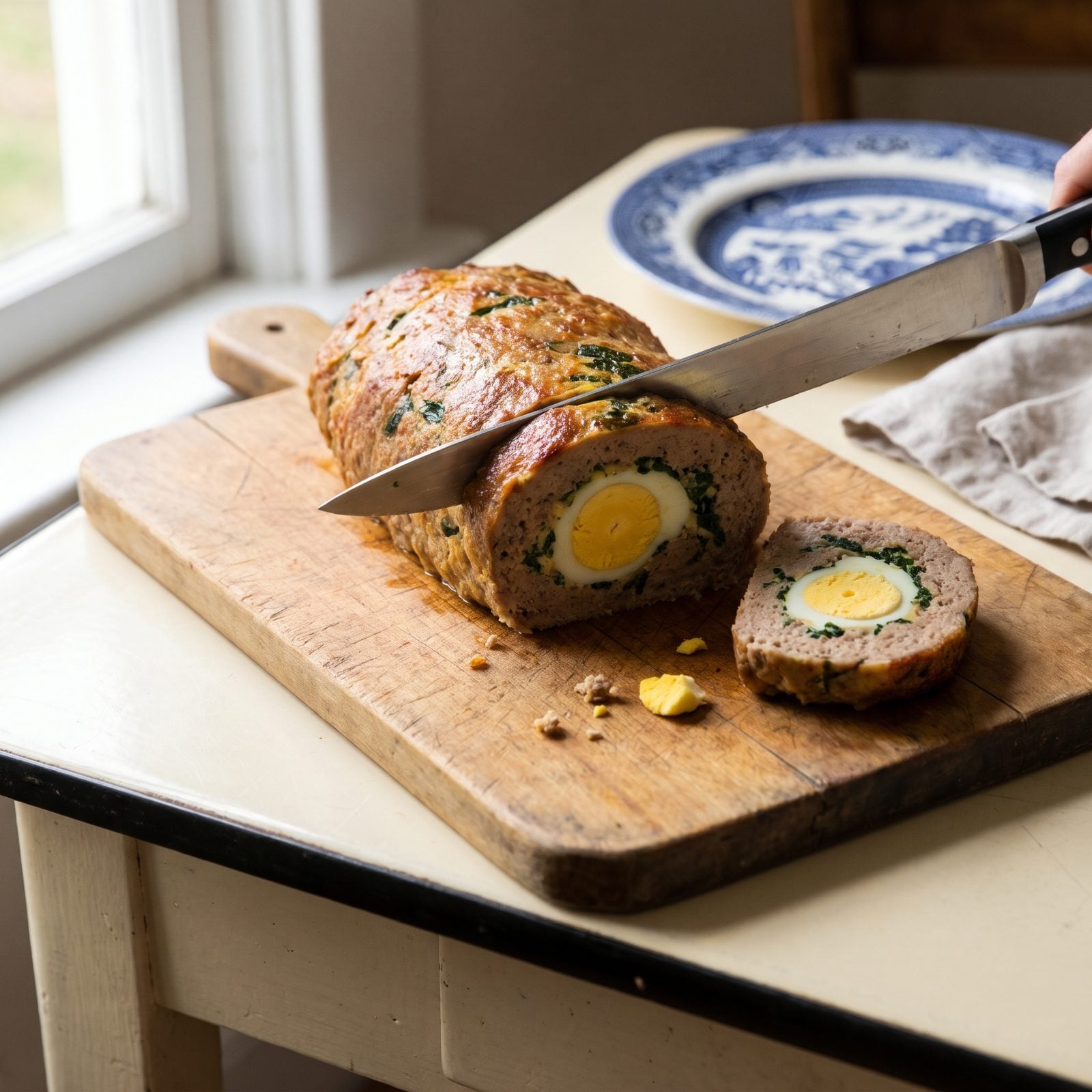
A stuffed meatloaf, the kind with a line of hard-boiled eggs or a spinach spiral running through the middle, looks fantastic until you saw into it with a dull knife and drag the whole center out sideways. Now it’s a mess, and the mess is the part you were showing off.
Run a thin-bladed knife under hot tap water, dry it fast, and draw it along the length of the loaf in one long, smooth pull rather than a sawing motion. The heat helps the blade glide past the softer stuffing without snagging, so the egg or filling stays centered in the slice. Wipe and re-warm the blade between cuts for a dinner-party loaf. Looks like you know what you’re doing, because now you do.
11. Turn the Drippings Into Brown Gravy With Flour and Stock
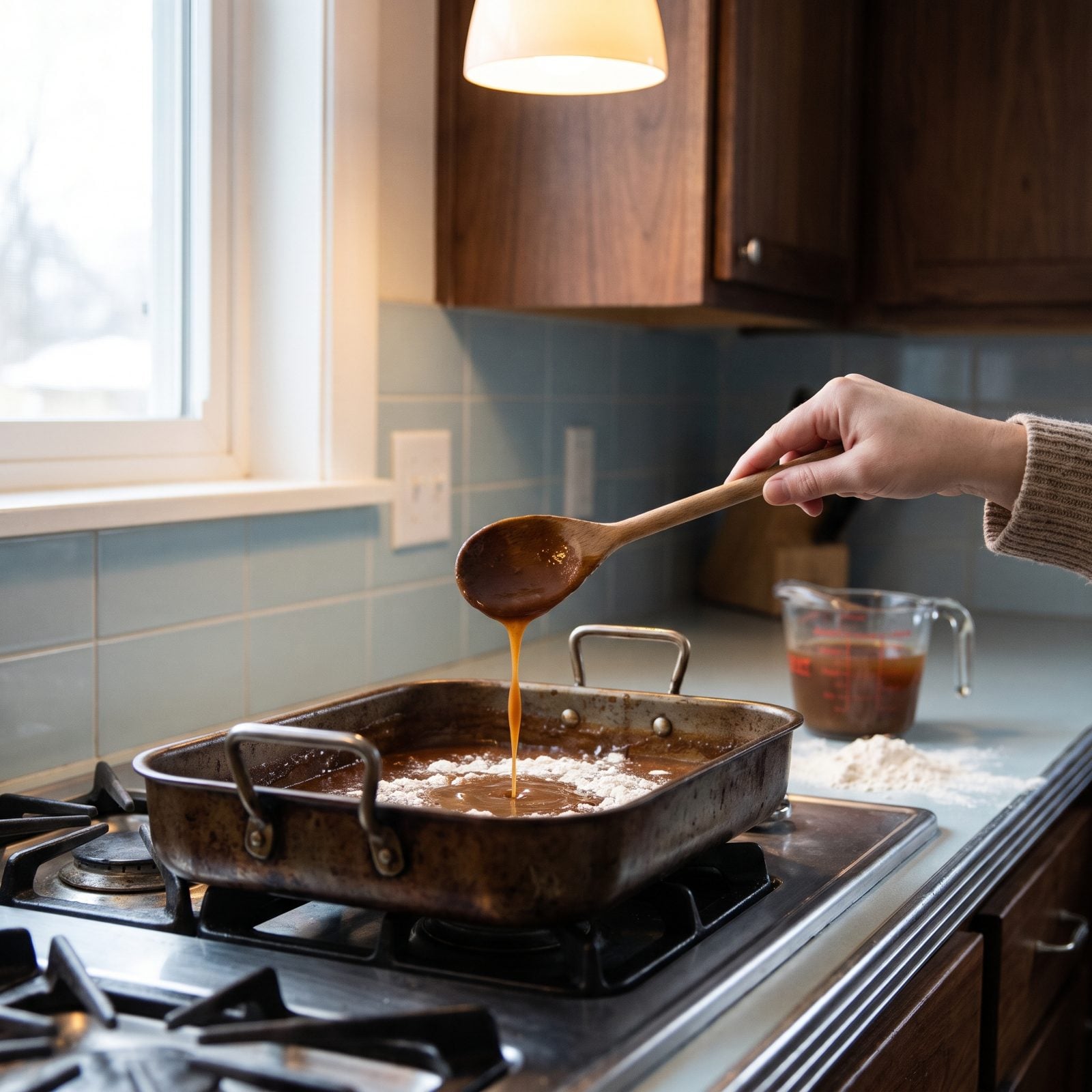
Every pan of meatloaf leaves behind a layer of browned, tomato-flecked fat and stuck-on bits welded to the bottom. Scrape that into the trash and you’ve just tossed out the makings of a real gravy.
Pour off most of the fat, leaving about two tablespoons. Whisk a couple of tablespoons of flour into what’s left over low heat until it smells nutty, then pour in a cup or so of warm beef stock a little at a time, scraping up every browned bit. Simmer until it coats the spoon. That’s dinner-table gravy, and it costs you five minutes and a whisk.
10. Chill Leftover Meatloaf Before Slicing It for Sandwiches
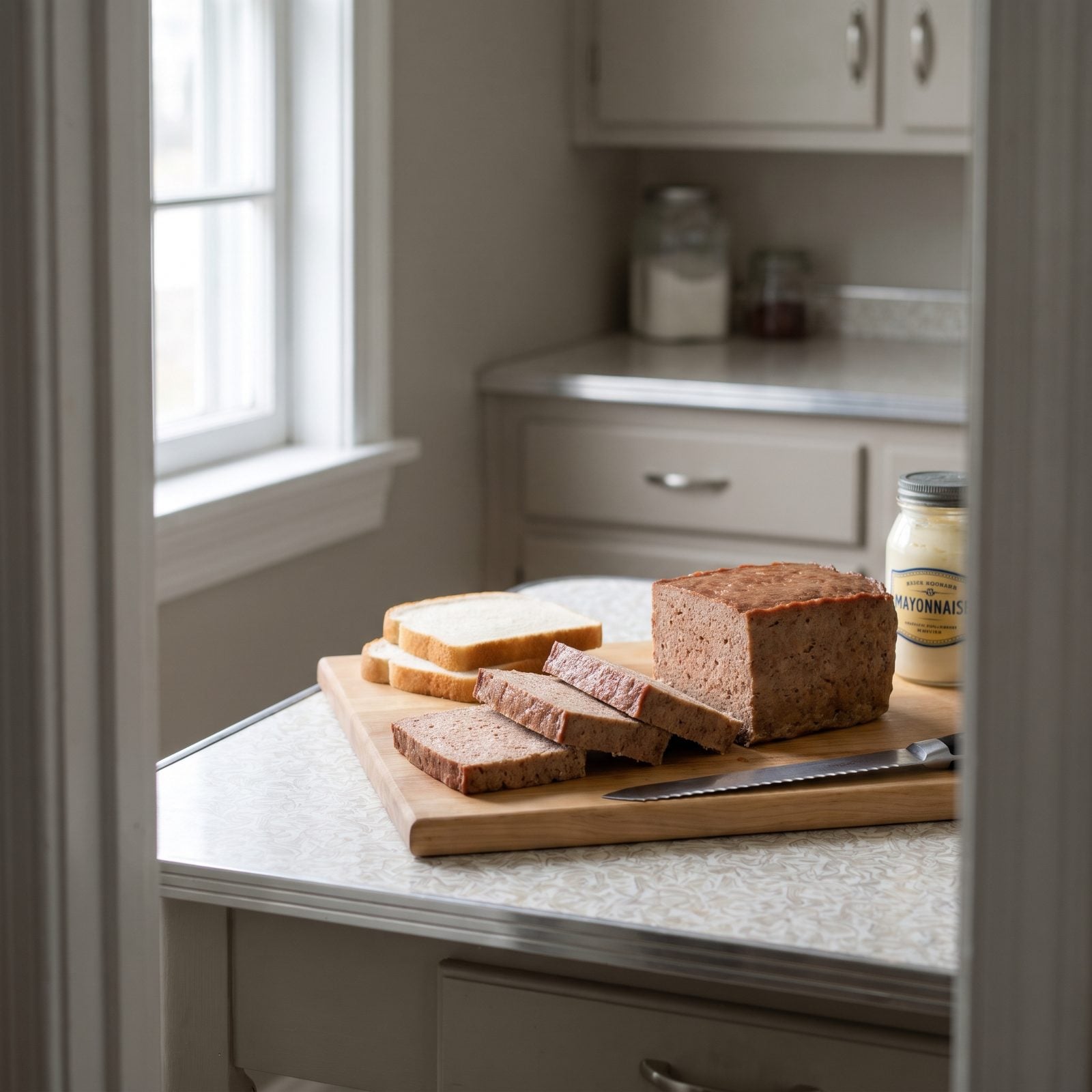
Warm leftover meatloaf crumbles the moment a bread knife touches it. You end up mashing it onto the bread instead of slicing it, and a crumbled sandwich is a sad lunch.
Chill it hard first. A cold loaf, straight from the refrigerator, cuts into clean square slabs that sit flat between two pieces of bread. The fat has firmed up, the meat holds together, and you get a real sandwich with real edges. Cold meatloaf on white bread with a swipe of mayo was the whole reason you made extra in the first place.
9. Separate Leftover Slices With Wax Paper
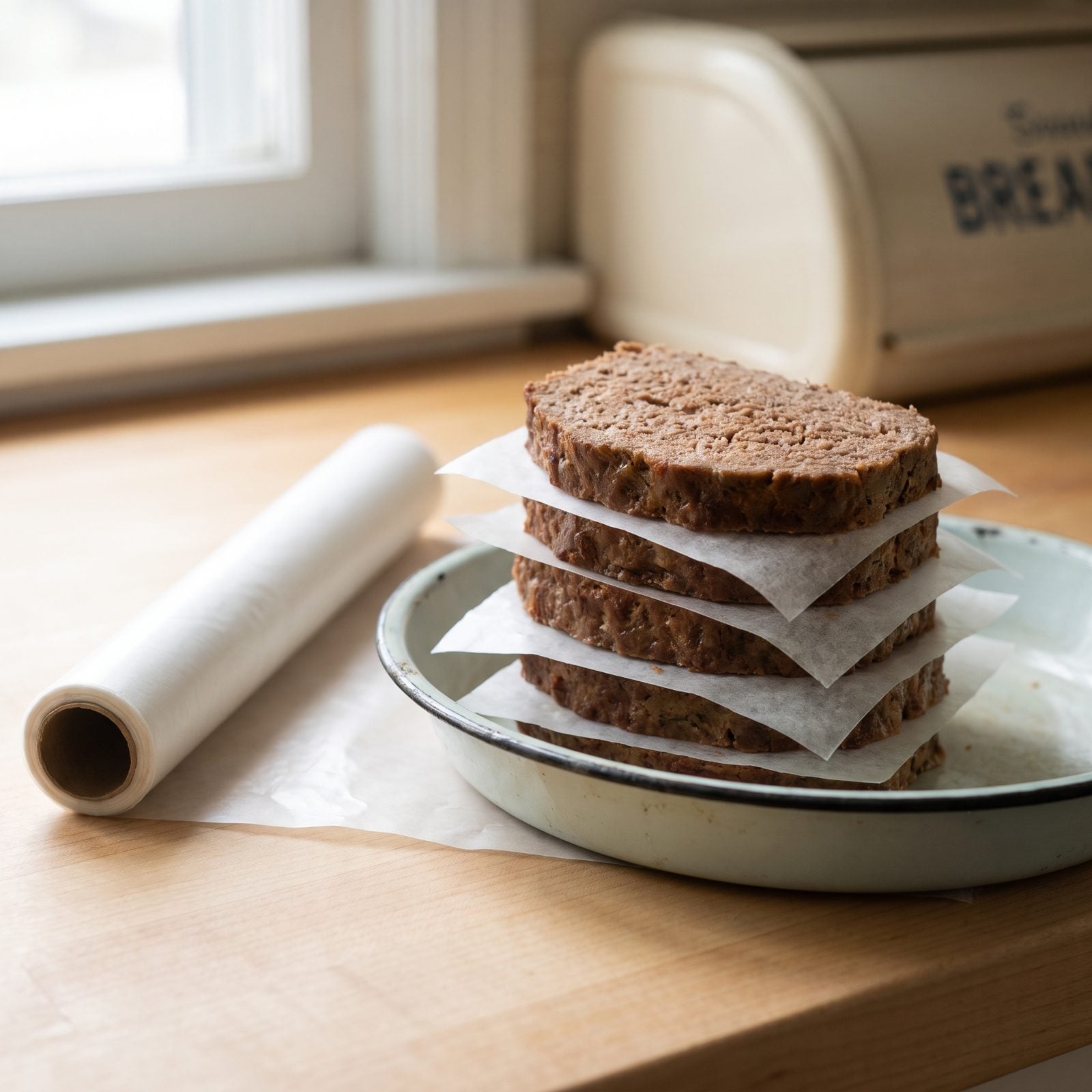
Stack leftover slices straight on top of each other and they fuse back into a single cold brick overnight. Try to peel them apart the next day and you’ll tear the surfaces to shreds.
Tuck a square of wax paper between each slice before you cover and refrigerate. They stay separate, lift out one at a time, and keep their clean faces for sandwiches or the frying pan. Same old lunchbox logic that kept two cookies from gluing together, and it works just as well on meat.
8. Pan-Fry Leftover Slices Until the Edges Turn Crisp
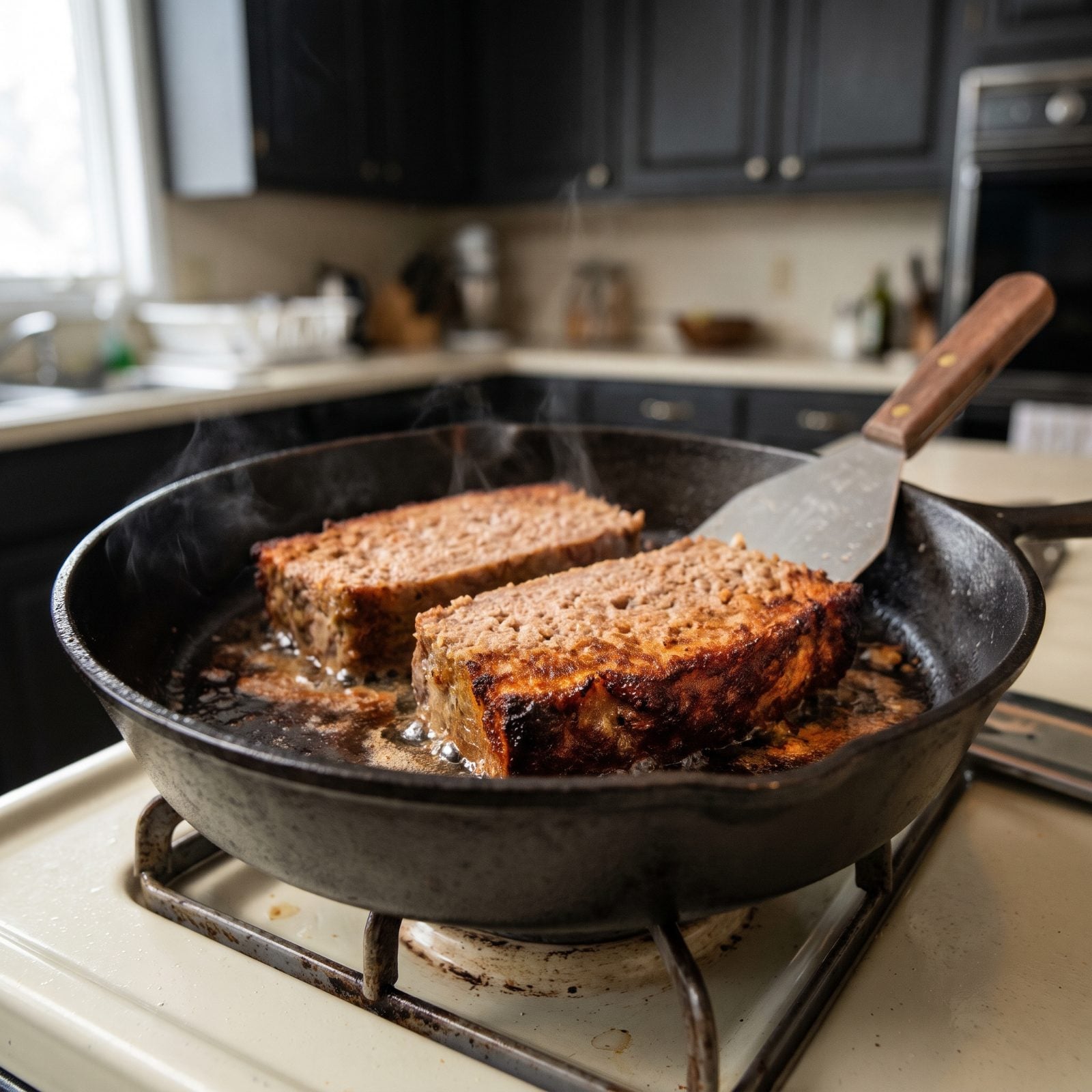
Reheated meatloaf in the microwave comes out rubbery and steamed, which is the opposite of what anyone wants. The best thing that ever happens to a leftover slice happens in a skillet.
Heat a little fat in a cast-iron pan over medium and lay the cold slices in. Don’t touch them. Let one side go deep brown and crisp, then flip and do the other. The outside turns into something almost like a crust while the inside warms through, and suddenly the leftover beats the original dinner. Slide it onto an egg for breakfast and you’ll start making extra meatloaf on purpose.
7. Broil an Open-Faced Meatloaf Sandwich With Cheese
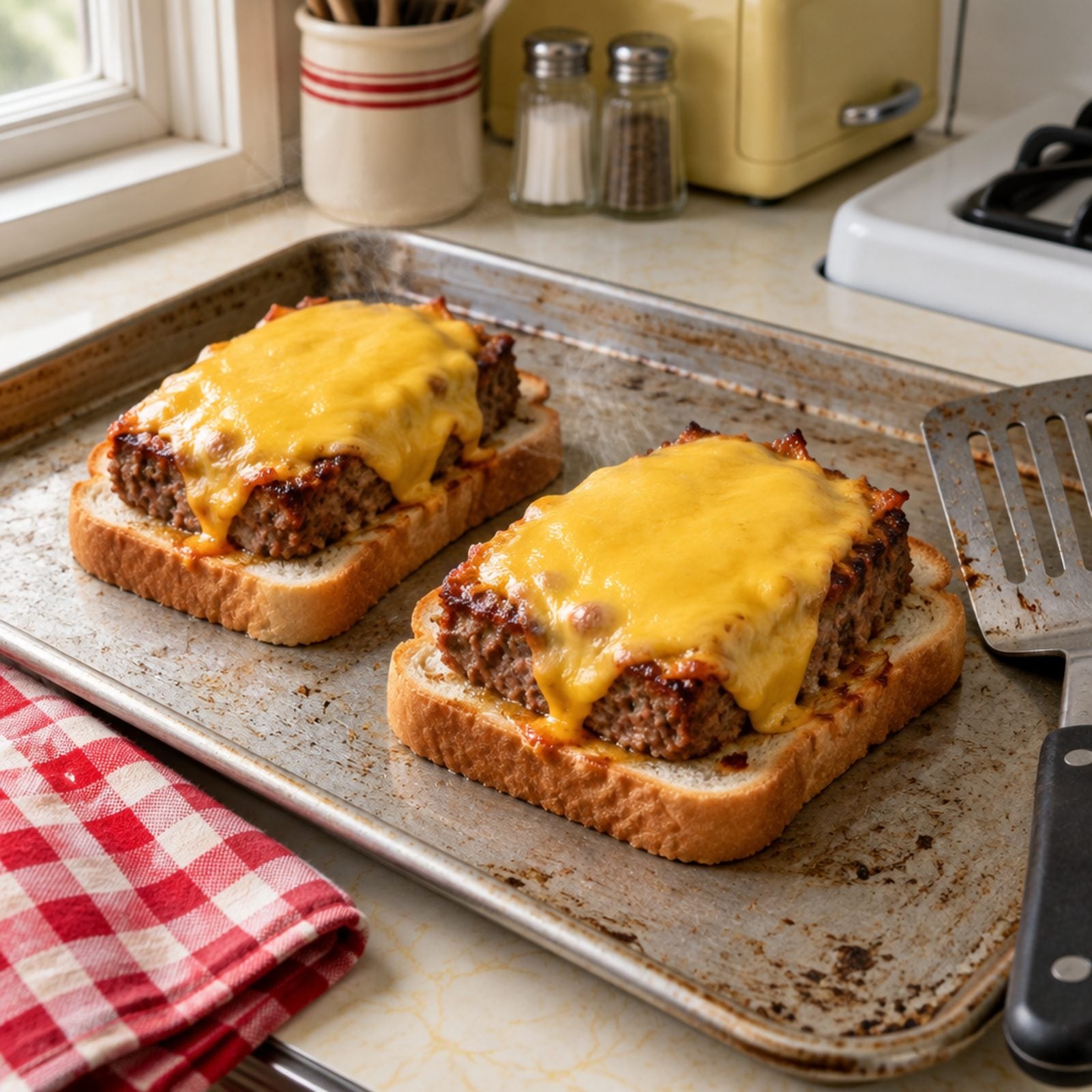
Cold meatloaf between two slices of bread is lunch. A warm slice open-faced under the broiler is something you plan your afternoon around. The trick the old cookbooks got right was going open-faced. A closed sandwich traps steam and the bread wilts; left open, the broiler crisps the top while the cheese melts down over the edges of the meat.
Slice the leftover loaf about three-quarters of an inch thick, lay it on bread, top with American or a little grated cheddar, and run it under the broiler four or five inches from the flame for two to three minutes. Watch it. Broilers turn on you the second you look away.
6. Dice Leftover Meatloaf Into a Breakfast Hash
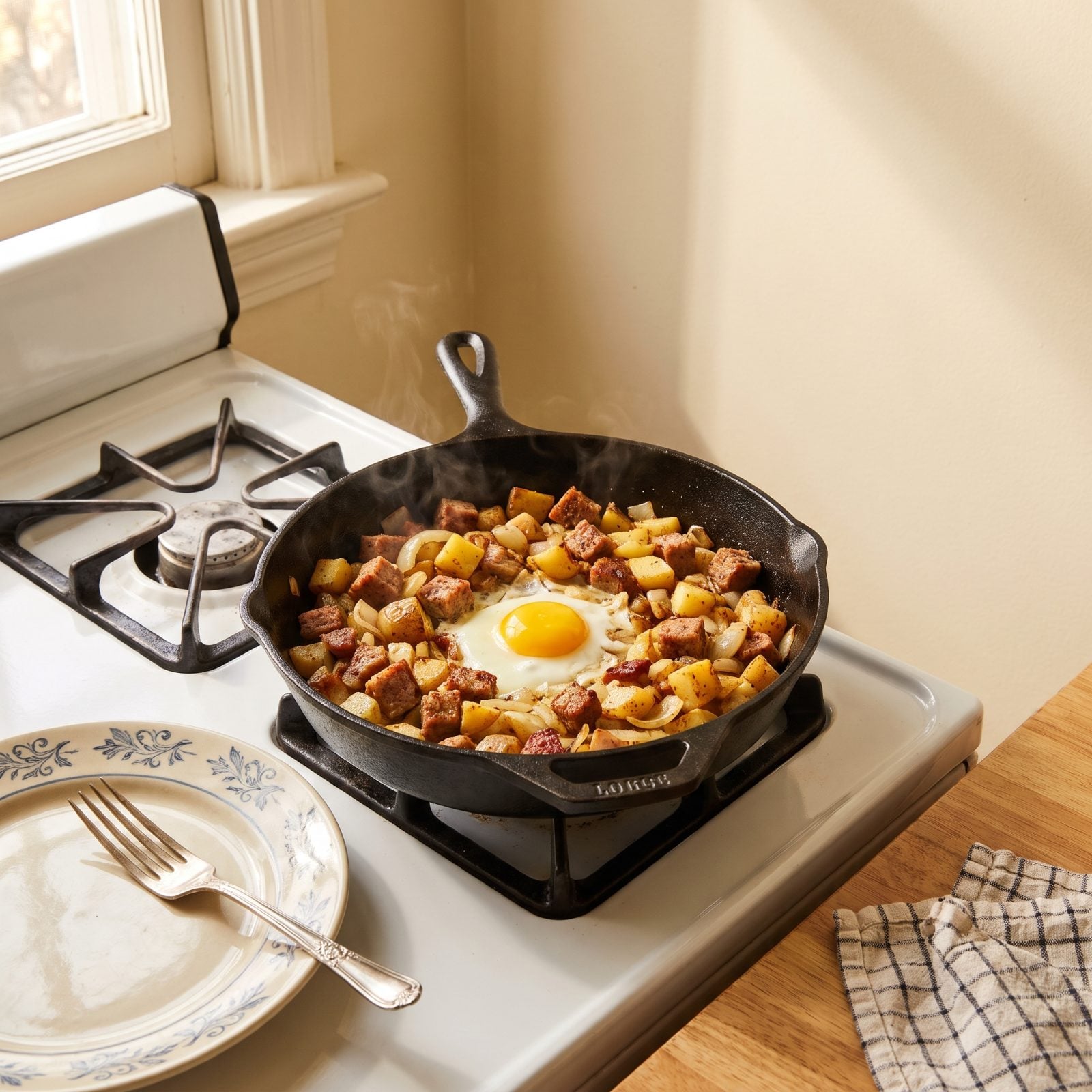
Hash was how a careful kitchen made Sunday’s loaf stretch into Wednesday’s breakfast. Dice the meatloaf into half-inch cubes and cut your potatoes the same size so everything cooks even and crisps together.
Here’s where people go wrong: they stir it constantly. Don’t. Press the hash flat into a hot buttered skillet and leave it alone for four or five minutes so a real crust forms underneath, then flip in sections. Crowd the pan and you steam it instead of browning it, and steamed hash is just sad warmed-over dinner. Finish with an egg on top and let the yolk do the work of a sauce.
5. Crumble Leftover Meatloaf Into Spaghetti Sauce
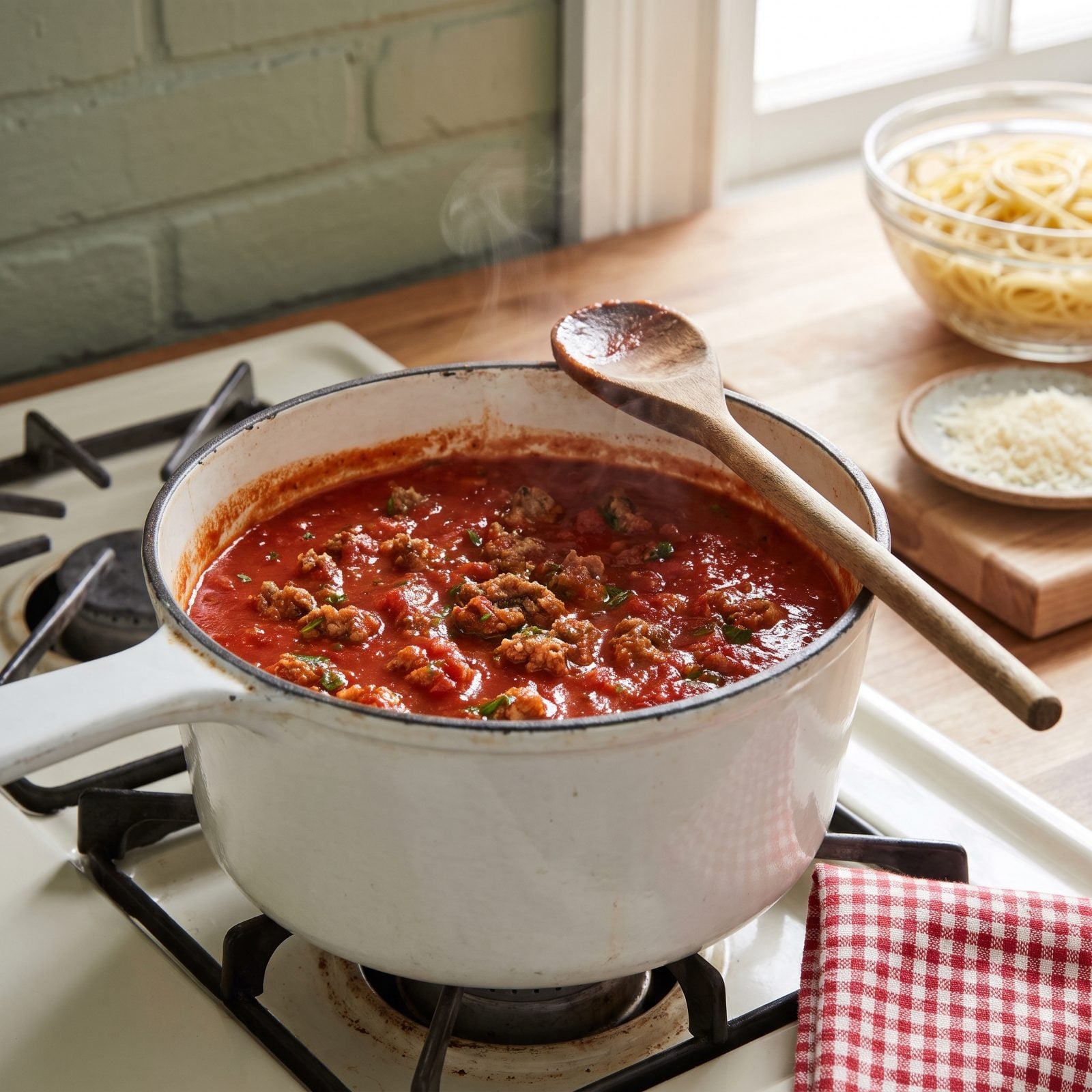
Meatballs take an afternoon. Leftover meatloaf crumbled into a jar of sauce takes fifteen minutes and tastes like you tried harder than you did. The loaf is already seasoned, already cooked, already full of onion and whatever your grandmother hid in there, so it bombs the sauce with flavor the moment it hits.
Break the cold loaf apart with your fingers into rough crumbles, not a paste. Stir it into simmering sauce and let it go gently for ten minutes so the meat loosens and the fat melts back into the tomato. Low heat only. Boil it hard and the crumbles toughen into little pellets.
4. Use Leftover Meatloaf as a Filling for Stuffed Peppers
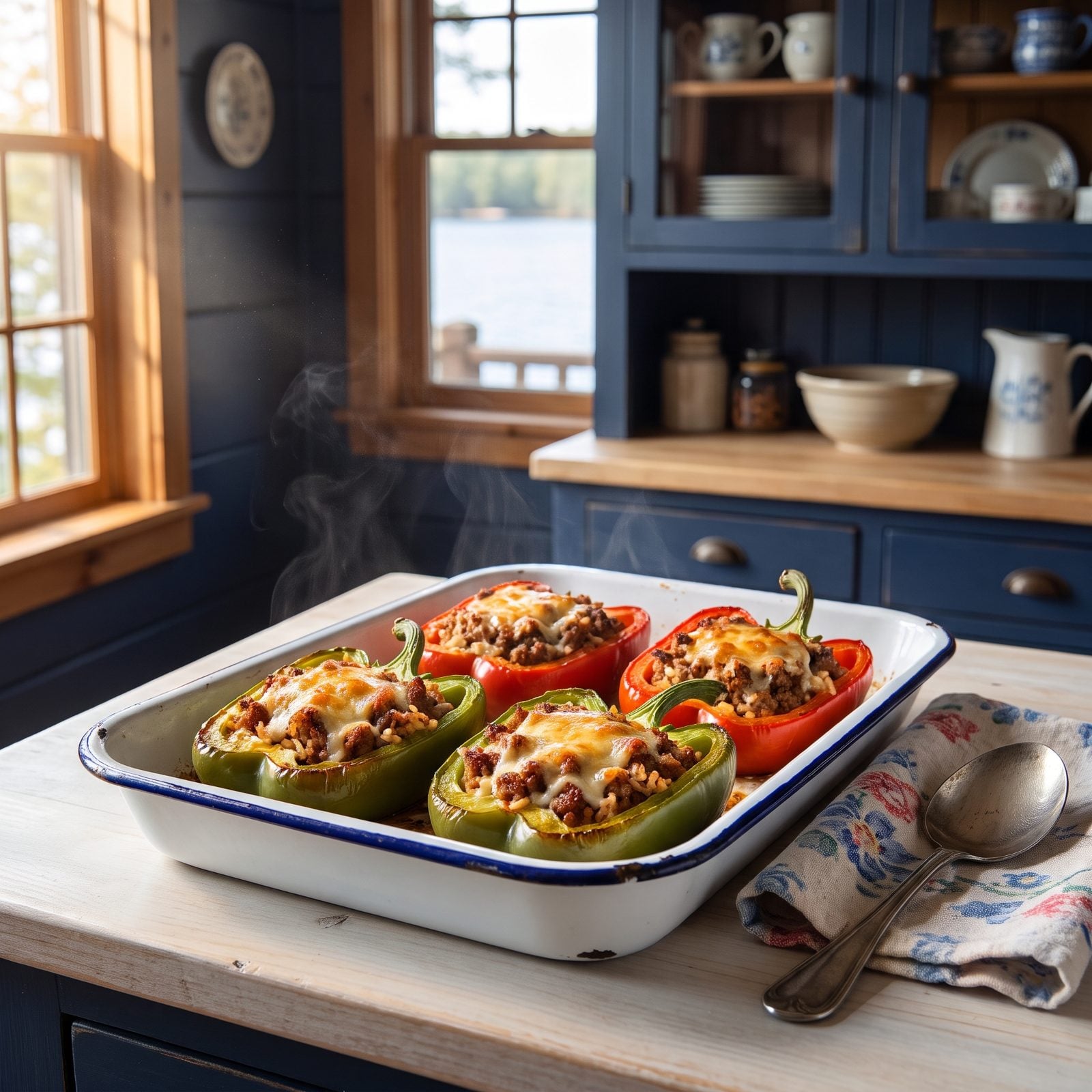
Stuffed peppers were a whole separate Tuesday project until someone realized the filling was basically meatloaf anyway. Skip the raw-meat-and-rice mixing. Crumble your leftover loaf, fold in a cup of cooked rice and a few spoonfuls of tomato sauce to keep it from drying, and you’ve got a filling that’s already cooked through.
Because the meat is done, these peppers only need to bake long enough to soften the pepper and heat the center, maybe twenty-five minutes at 375. Give the peppers a two-minute blanch in boiling water first if you like them tender. If you like a little bite left in yours, skip it; nobody at the table will complain.
3. Turn Crumbled Meatloaf Into a Shepherd’s Pie Base
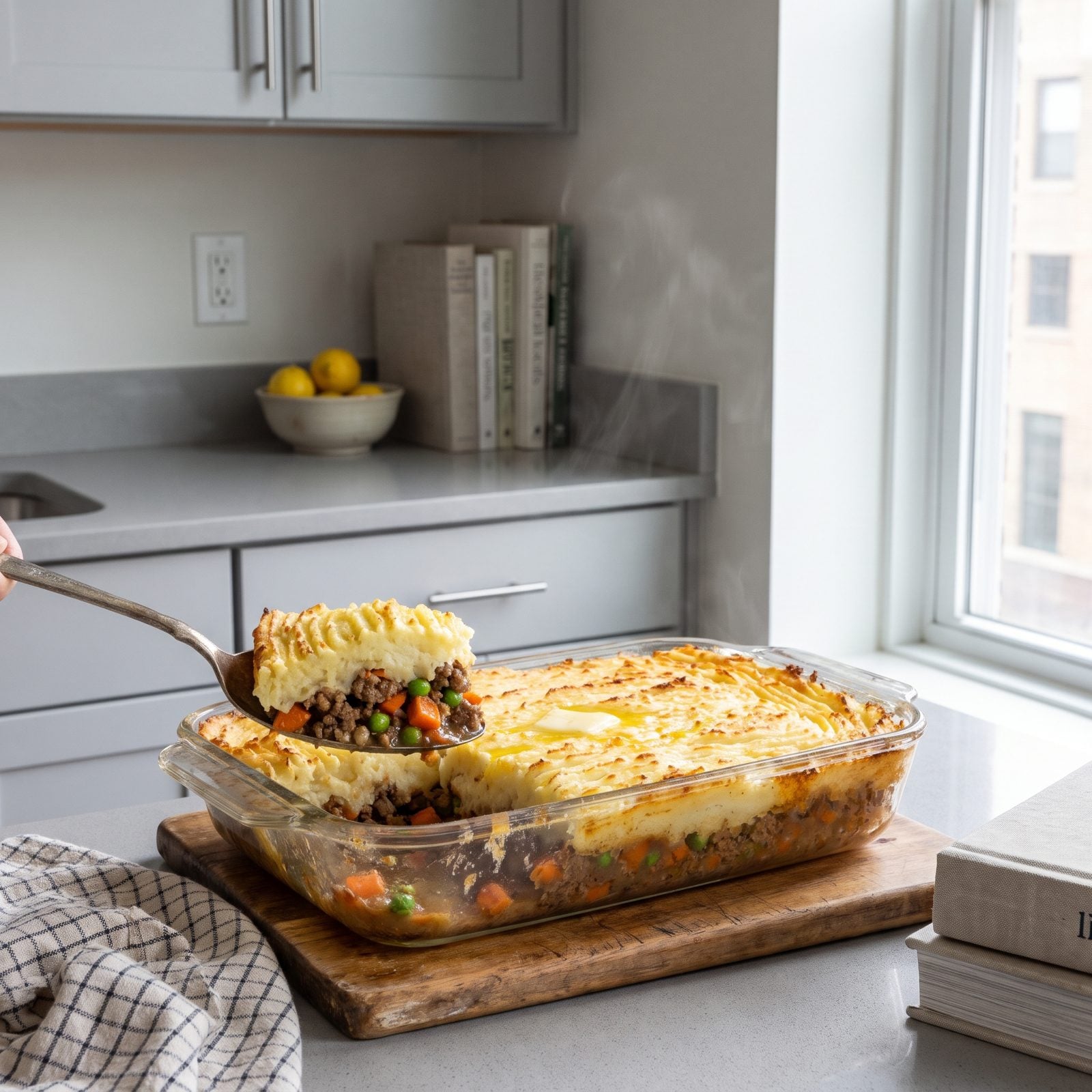
A proper shepherd’s pie starts with raw meat you brown and simmer in gravy for an hour. Leftover meatloaf jumps you straight to the good part. Crumble it into a baking dish, stir in a handful of peas and carrots and enough beef gravy to make it loose, then cap the whole thing with mashed potatoes.
Drag a fork across the potato top before it goes in. Those ridges aren’t decoration. They catch the heat and go crisp and golden, and the contrast between that crackly top and the soft meat below is what you’re after. Bake at 400 until the peaks brown, about twenty minutes.
2. Make Two Small Loaves and Freeze One for Later
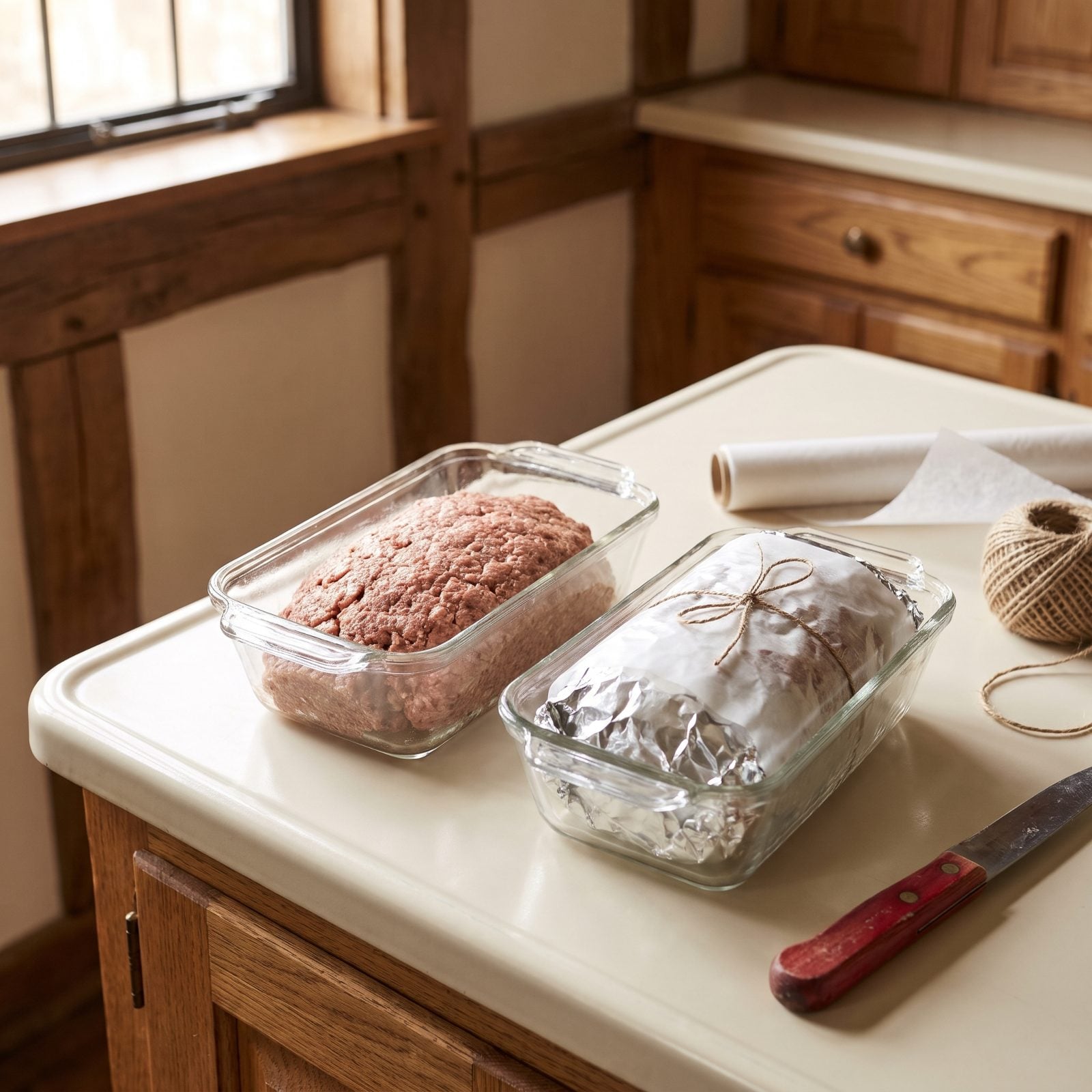
The same oven heat bakes one loaf or two. Nobody ever tells you that. You’ve already dirtied the bowl, chopped the onion, cracked the egg. Split the mix into two small loaves and you’ve banked a second dinner for the price of five extra minutes of shaping.
Freeze the second one raw, not baked. A baked loaf frozen and reheated goes dry and crumbly because you’re essentially cooking it twice. Wrap the raw loaf tight in wax paper, then foil, pressing out the air so it doesn’t frost over. Thaw it overnight in the fridge and bake it fresh, and nobody will guess it rode out January in the icebox.
1. Bake the Meatloaf in a Ring Mold and Fill the Center With Buttered Peas
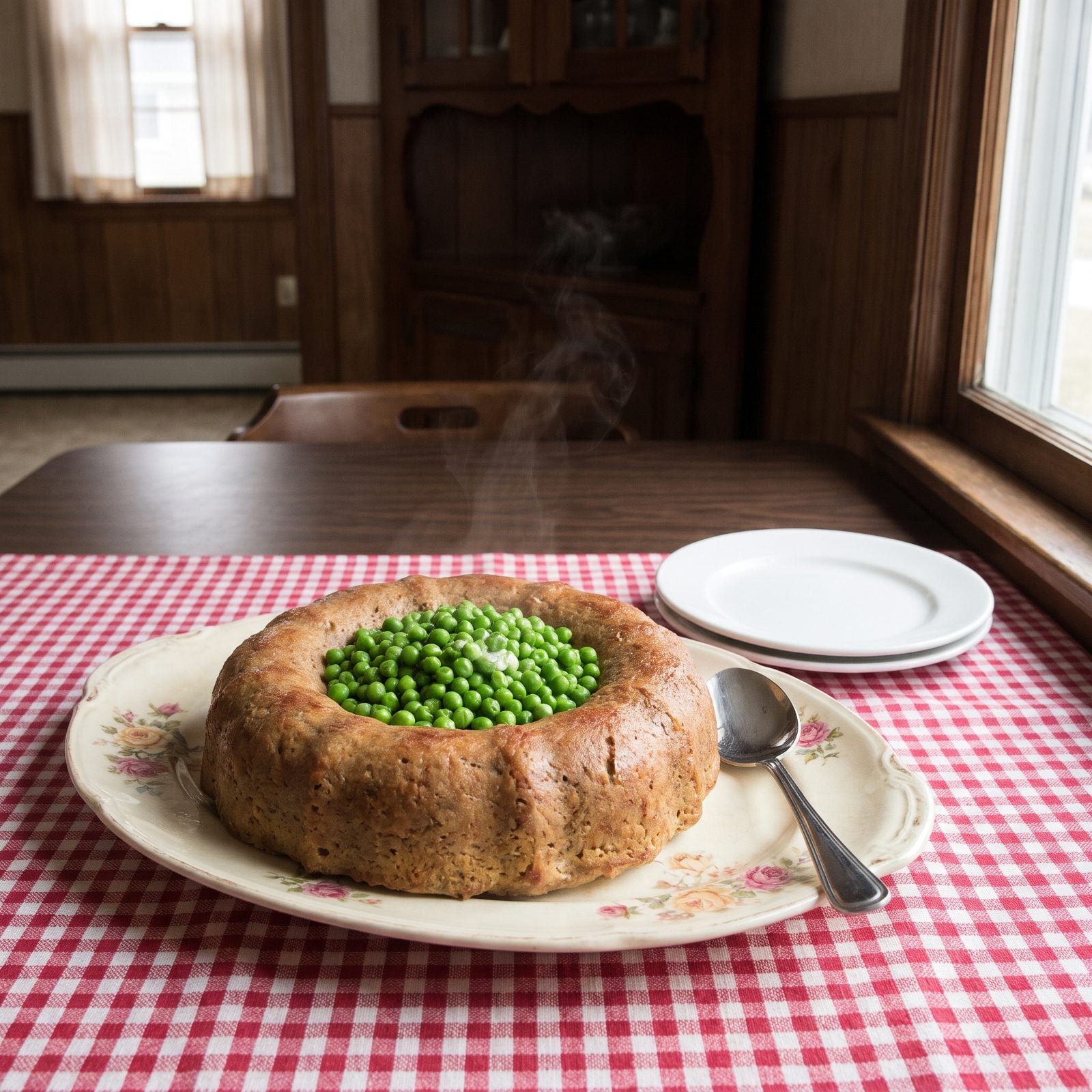
The ring mold was the 1950s hostess’s quiet show-off move. You bake the meatloaf in a ring pan, turn it out, and fill the hollow center with buttered peas so dinner arrives already composed. Meat and vegetable on one platter, nothing to juggle.
And there’s a practical payoff beyond looking sharp. A ring shape has no dense middle, so the meat cooks faster and more evenly, and the fat drains toward the center channel instead of pooling under the loaf. Butter your mold well, pack the mix in firmly, and bake at 350 until it pulls from the sides. Let it rest ten minutes before you invert it, or it’ll sag the second it hits the plate.