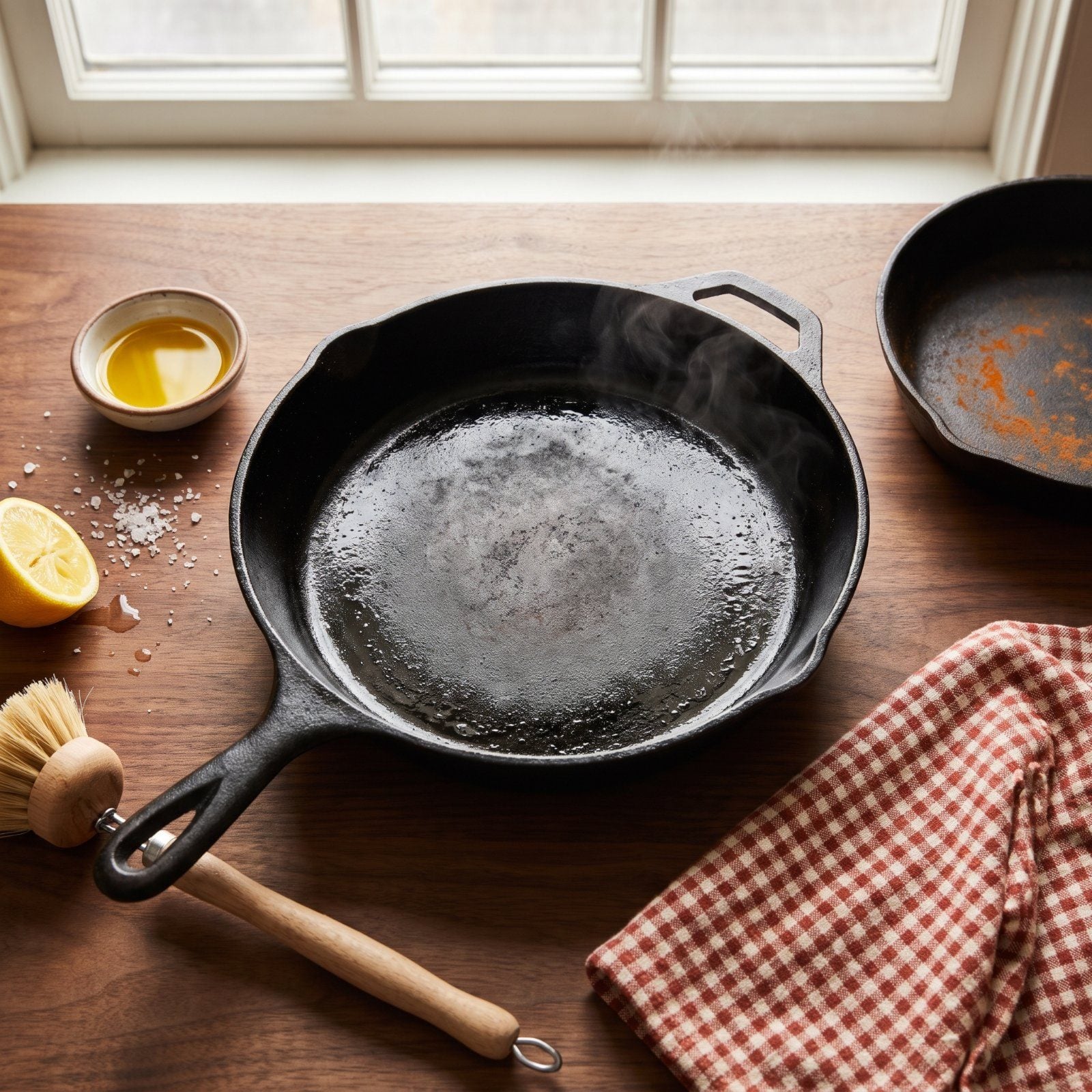
Your grandmother guarded that skillet like a family secret, and half of what she told you was wrong. The other half was dead right. Trouble is, nobody could tell you which was which. Cast-iron lore gets passed down like a smudged recipe card, and everybody adds a rule they can’t explain. So we took the old commandments and held them up to what actually happens on the surface of hot iron. Some crumbled. Some held firm. A few turned out to be the exact opposite of true. Here’s where the folklore ends and the chemistry begins.
Please note that some of the images in this article were created with the assistance of AI.
33. Myth: Soap Always Ruins Cast Iron. Fact: Modern Dish Soap Is Usually Fine
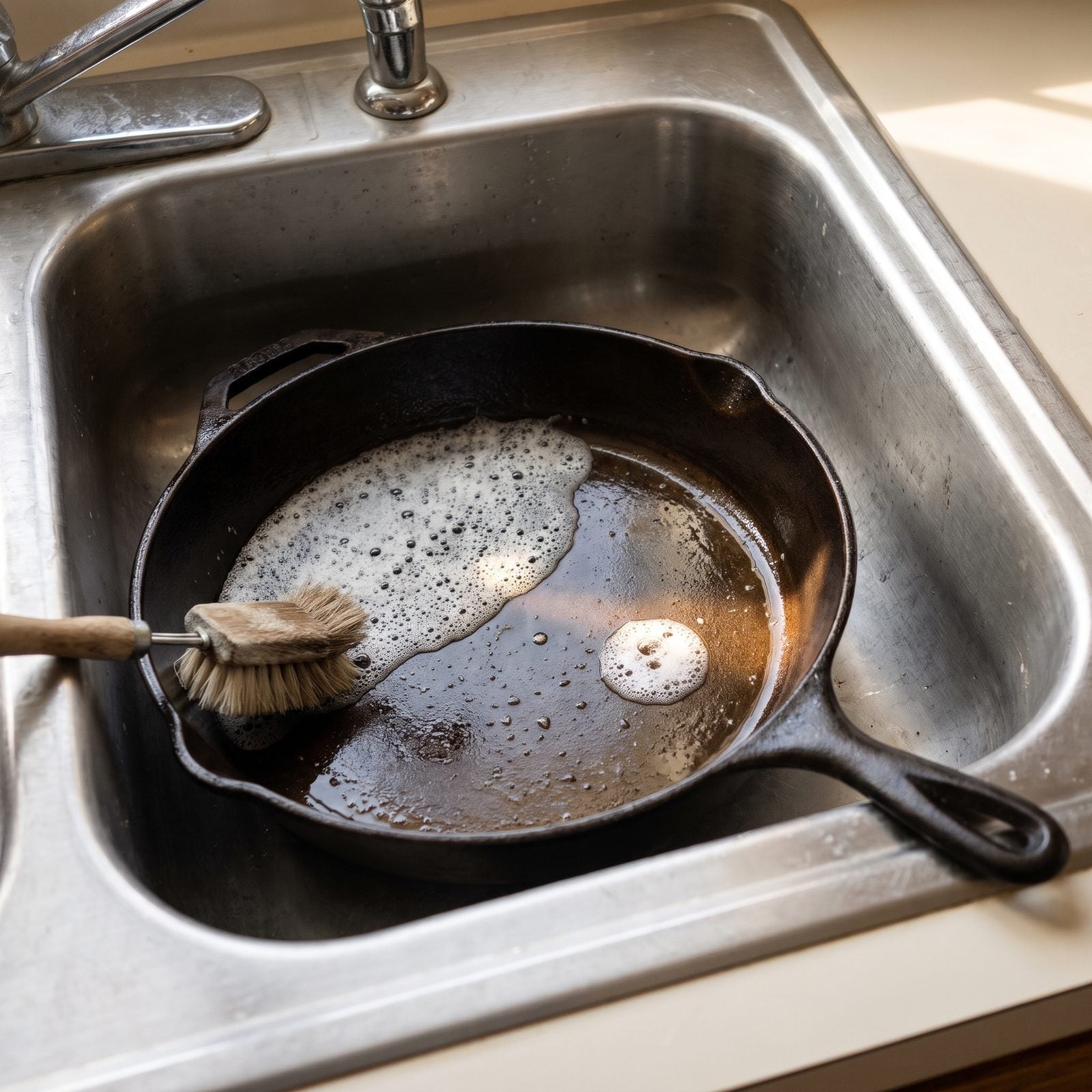
The soap rule comes from a real place, just an outdated one. Old-fashioned soaps were lye-based, and lye genuinely eats polymerized oil. But that’s no longer what sits under your sink.
Modern dish detergents are surfactants — they lift grease off a surface, they don’t dissolve a hardened, baked-on coating. A quick wash with a drop of the yellow stuff and a soft brush won’t touch properly cured seasoning. You know what actually ruins pans? Letting food crust on because you’re scared of the bottle.
32. Myth: Never Soak a Skillet. Fact: Five Minutes and Overnight Are Not the Same Crime
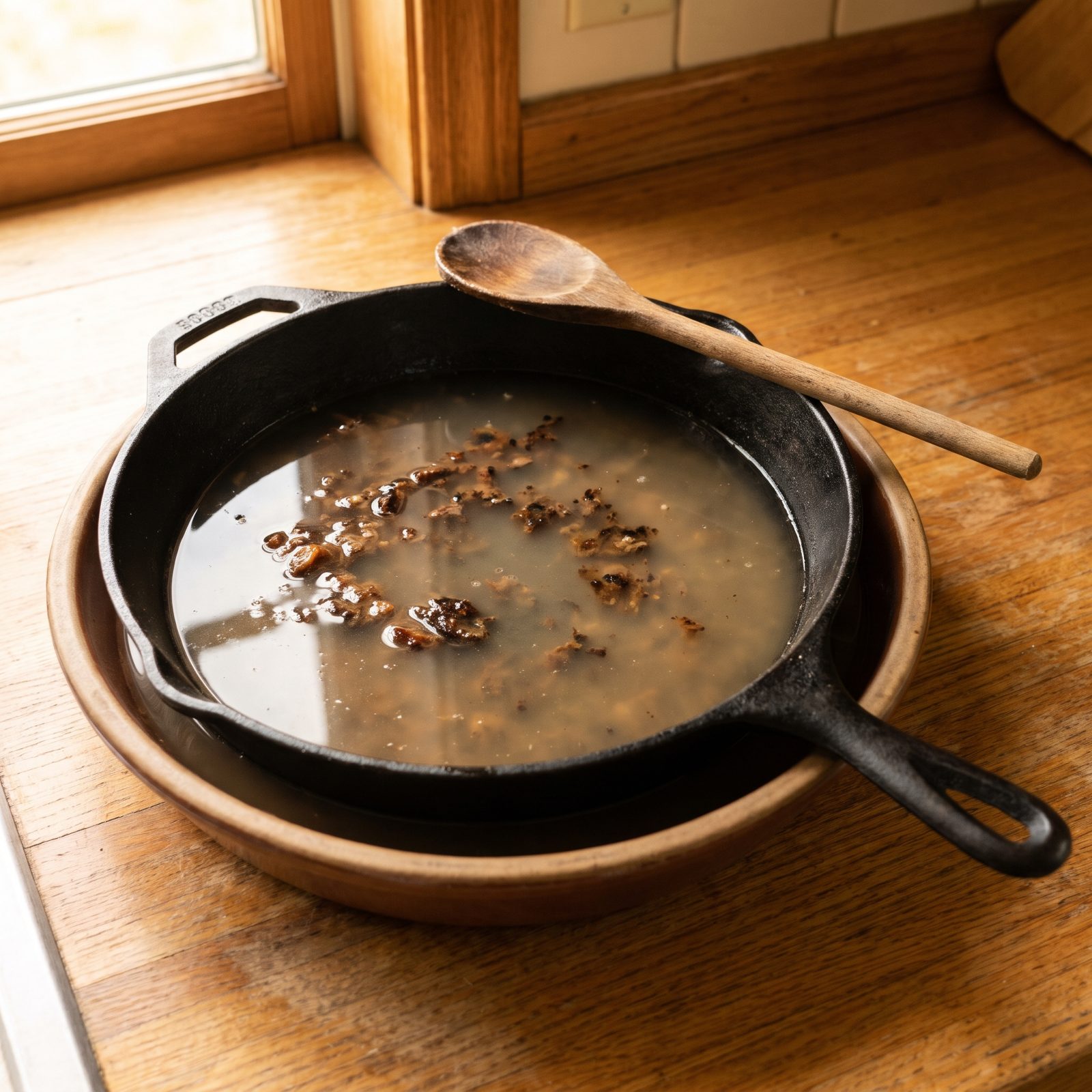
Soaking got banned as a blanket rule, which is like outlawing all driving because some people speed. A few minutes in warm water to loosen stubborn bits does essentially nothing to cured seasoning.
The real culprit is prolonged immersion. Leave iron sitting in water for hours and oxygen plus moisture kick off the rust reaction at any exposed or thin spot. The seasoning itself resists water for a short stint — it’s the all-night bath, forgotten in the sink until morning, that does the damage. Loosen, scrub, dry. You’ve got minutes, not seconds.
31. Myth: The Dishwasher Will Kill It. Fact: The Pan Lives, the Seasoning Dies
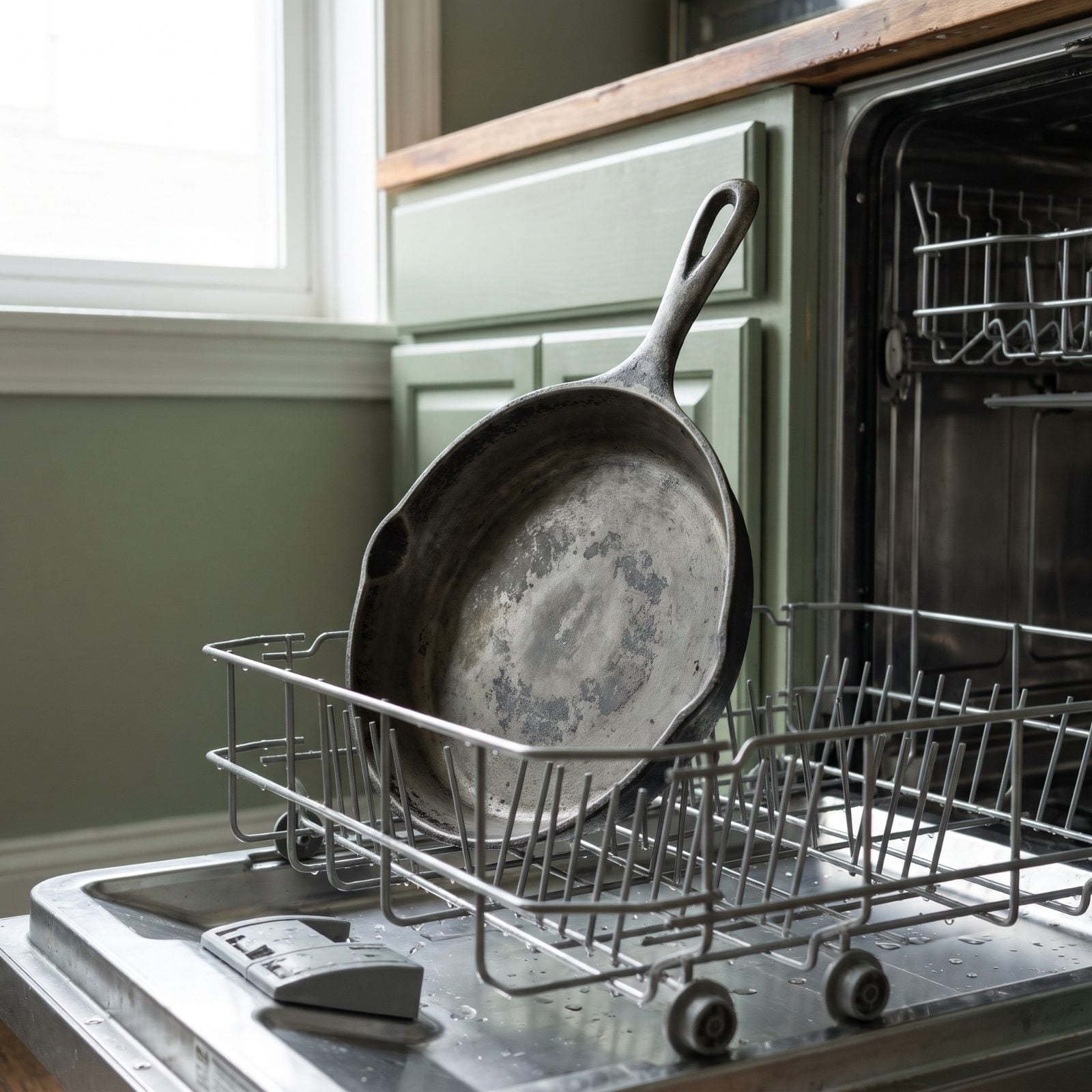
People say the dishwasher destroys cast iron. Half right. The iron itself is a nearly indestructible slab of metal, and it’ll come out the other side intact.
The finish is another story. Dishwasher detergents run harshly alkaline, built to break down fats, and the long hot-water cycle keeps the iron soaking the whole time. That combination strips seasoning and invites rust on the bare patches. You get your pan back looking gray, blotchy, and sad. Not ruined, exactly. Just back to square one — which after years of cooking feels close enough.
30. Myth: Steel Wool Means Starting a New Pan. Fact: You Can Always Rebuild
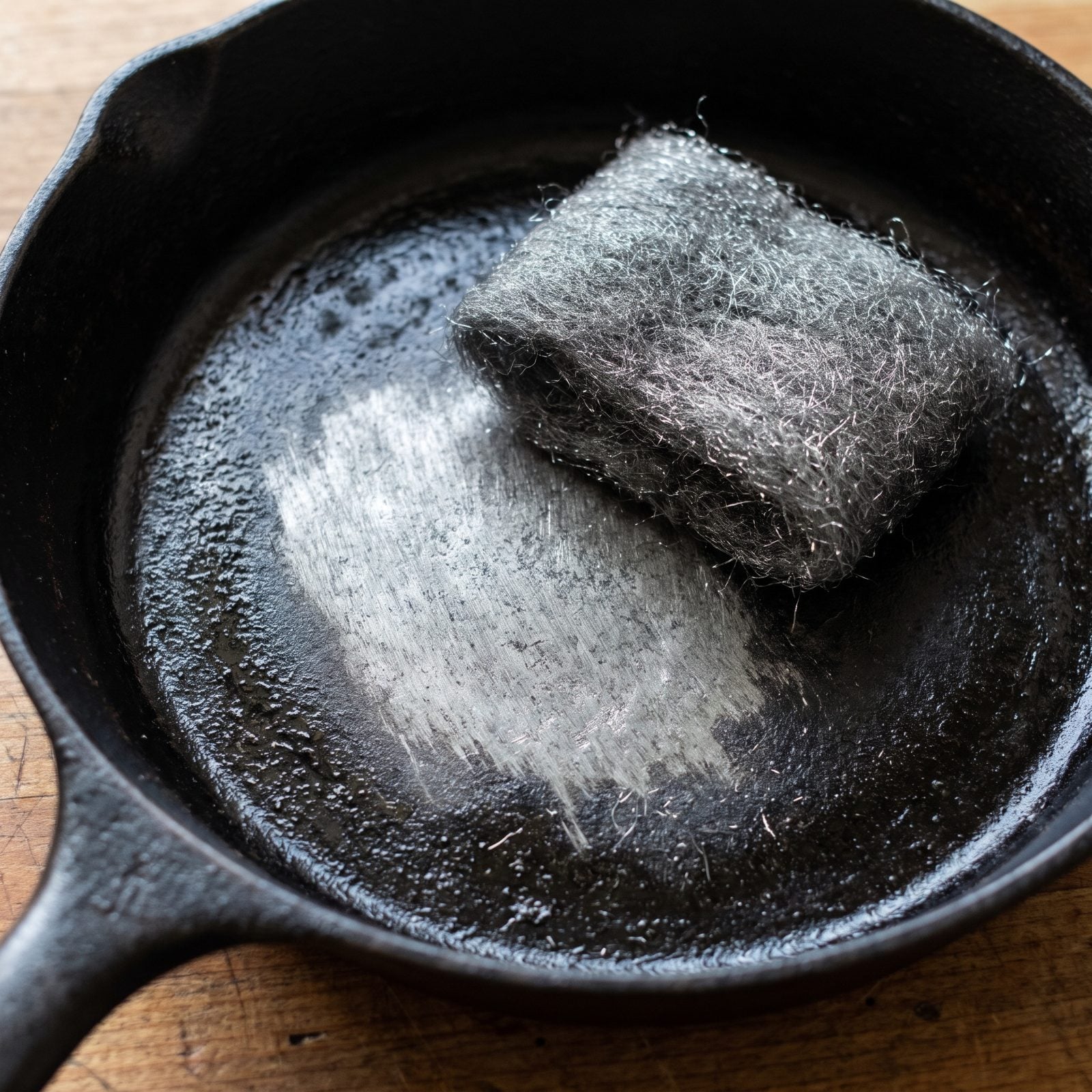
Steel wool gets treated like a death sentence. It isn’t. It’s a reset button.
Sure, it scrapes off seasoning, sometimes right down to bare metal. But seasoning isn’t a one-time blessing from a higher power — it’s a coating you can lay down again with oil and heat, as many times as you want. A skillet scoured raw is simply a skillet that needs re-seasoning, the exact process the factory or your great-aunt did the first time around. The iron underneath wasn’t harmed at all. People who panic at a shiny spot are mourning something that takes an afternoon to replace.
29. Myth: Rust Is the End. Fact: Surface Rust Scrubs Off and the Pan Comes Back
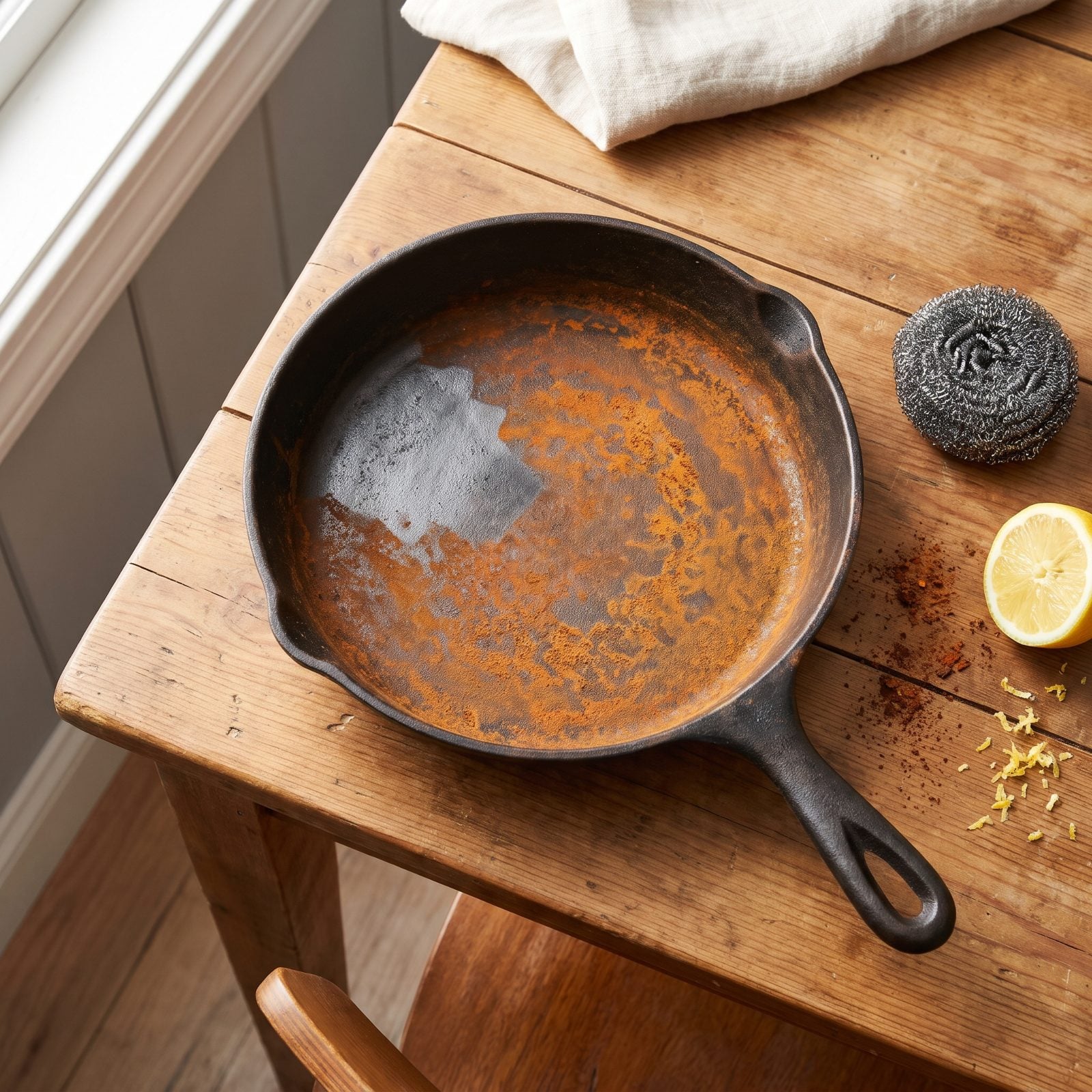
Find an orange bloom on a neglected pan and the instinct is to toss it. Hold on.
Surface rust is iron oxide sitting on top, and it comes off with a scrub, a little acid, and elbow grease. Underneath is solid metal, perfectly sound. Scrub it back to gray, dry it completely, re-season, and you’ve got a working skillet again. The only rust worth grieving is deep pitting that has eaten holes clean through the metal, and that takes real, years-long abandonment to pull off. A yard-sale pan crusted in orange is often the best deal in the room.
28. Myth: Vinegar Is the Perfect Everyday Cleaner. Fact: Acid Eats Iron and Seasoning Both
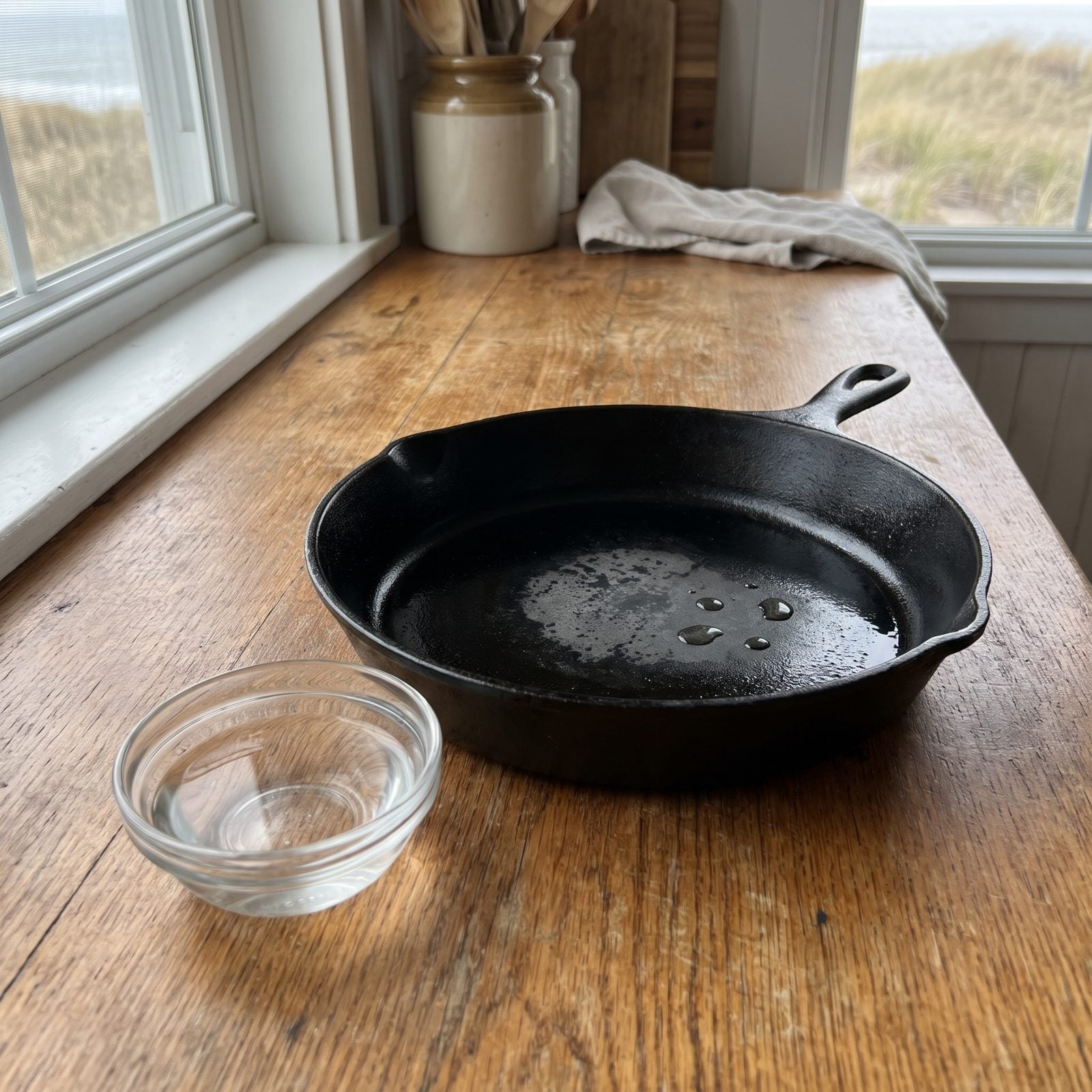
Vinegar earns its reputation for rust removal honestly. Which is precisely why it’s wrong as a daily cleaner.
Acid dissolves iron oxide — great for rust. But it doesn’t stop there. Leave vinegar in contact and it starts etching the metal and stripping the polymerized coating you worked to build. It’s a stripping agent wearing a cleaner’s badge. Save the vinegar soak for a full restoration, keep the contact time short, and re-season afterward. For everyday cleanup, warm water and a brush do the job without quietly undoing your seasoning one acidic rinse at a time.
27. Myth: Pile On the Oil for Stronger Seasoning. Fact: Thin Beats Thick, Every Time
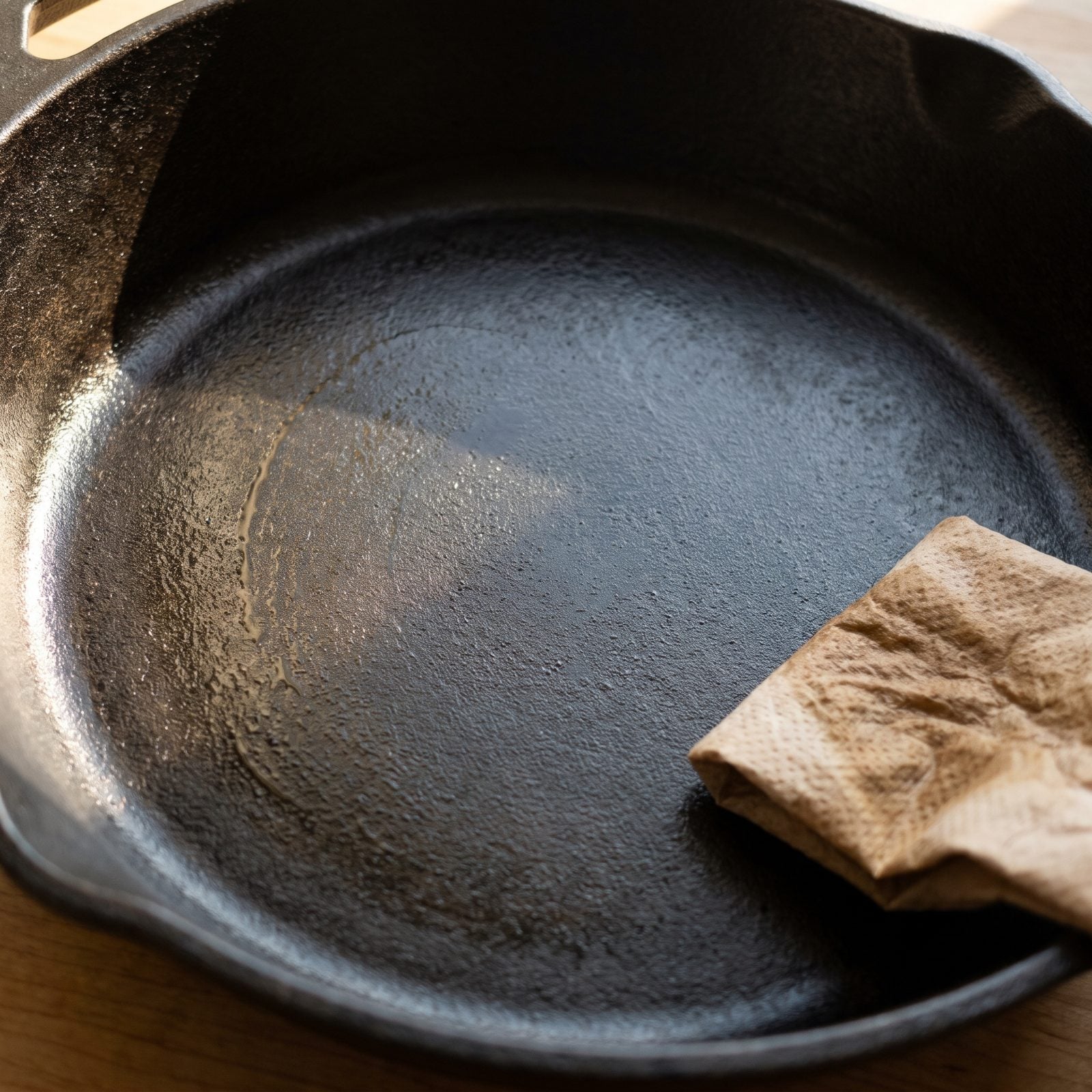
This is the single most common seasoning mistake, and we made it for years. More oil feels like more protection. It does the opposite.
A thick coat can’t cure evenly. The outer surface polymerizes while oil underneath stays gummy, and you wind up with a sticky, streaky finish that peels. The magic happens in layers so thin they look like you forgot to oil the pan at all. Wipe it on, then wipe almost all of it back off. That near-invisible film hardens into a tight, even bond. Repeat thin layers and you build strength. Pour it on and you build a mess.
26. Myth: Bacon Grease Builds the Toughest Coat. Fact: Unsaturated Oils Bond Better
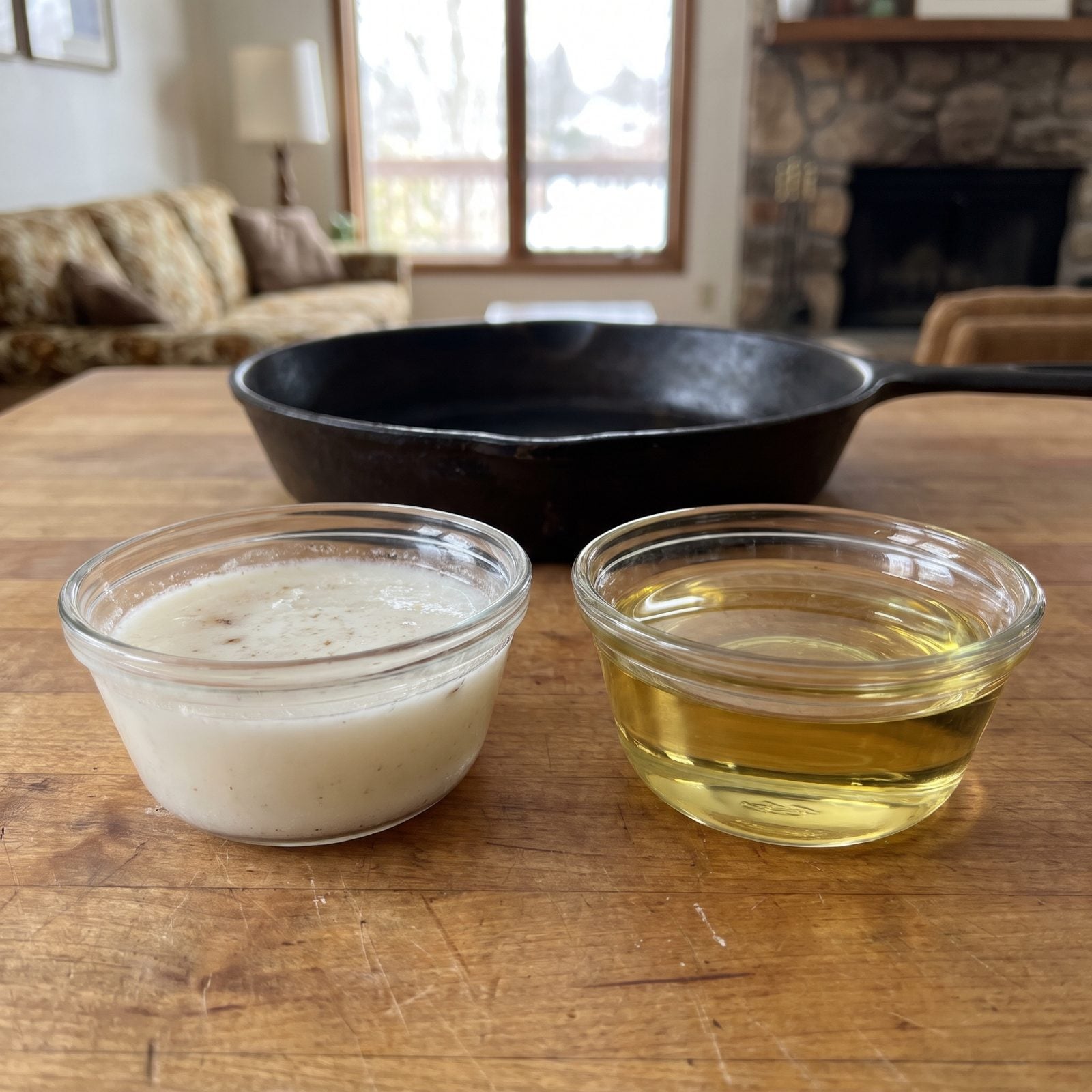
Cooking bacon in cast iron is a genuine joy, and it does leave a nice working surface behind. But the strongest cured seasoning is a chemistry story, not a flavor one.
Polymerization — the bonding of oil molecules into a hard coating — happens more readily with unsaturated fats, which carry reactive double bonds in their structure. Bacon grease is heavily saturated, so it’s more stable but slower to form those cross-linked bonds. Neutral vegetable oils harden into a denser, more durable layer. So cook with bacon all you want. For the base seasoning you build on purpose, reach for the plain oil.
25. Myth: Flaxseed Oil Is the Only Scientific Answer. Fact: It Flakes
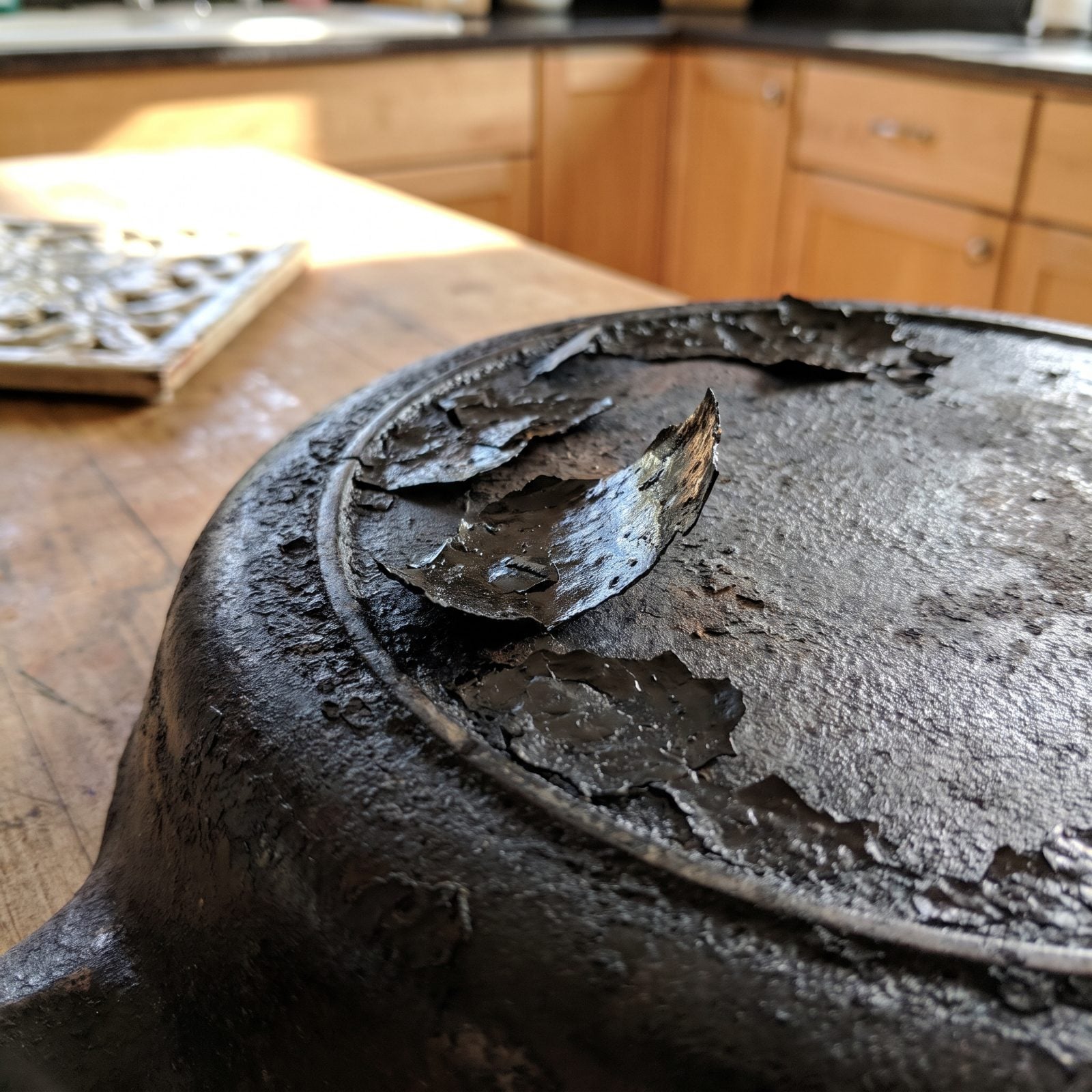
A few years back the internet decided flaxseed oil was the one true choice, backed by science, debate over. Flaxseed is a drying oil, highly unsaturated, so it polymerizes aggressively. On paper, ideal.
In the pan, that aggression backfires. The coating builds hard and glassy, then cracks and flakes off in sheets — usually after months of looking perfect. The very reactivity that makes it bond fast makes it brittle. Plenty of people learned this the hard way, us included, stripping a flaking pan back to metal and starting over. A balanced oil gives you a tougher, more forgiving layer. The research was real. The conclusion was premature.
24. Myth: Seasoning Is Just Baked-On Grease. Fact: It Is Polymerized Oil, a Real Material

Call seasoning “baked-on grease” and you’ve misunderstood what you’re cooking on. Grease is soft and wipes off. Seasoning does neither.
Seasoning is not oil that stuck. It is oil that chemically became something else.
When oil hits heat on iron, its molecules cross-link into long chains and form a hard, slick polymer bonded to the metal. That’s a genuine coating, closer in behavior to a finish than to a film of fat. It’s why water beads on a good pan and eggs slide loose. Grasp that one fact and every other rule here stops being superstition and starts making sense. You’re not maintaining grease. You’re protecting something you built with heat.
23. Myth: A Black Skillet Is Automatically Well Seasoned
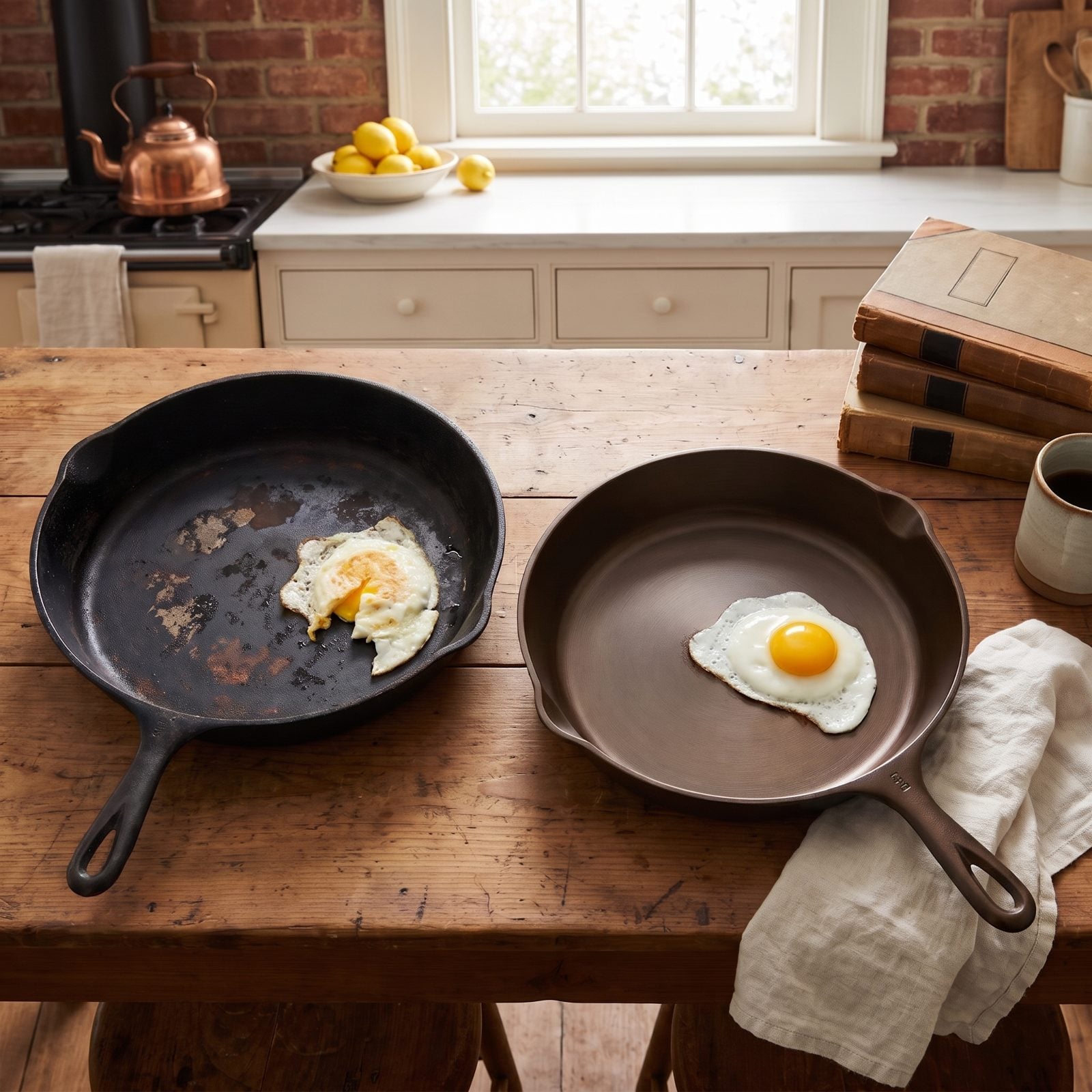
Black looks like proof. It isn’t. A skillet can turn jet black from carbon buildup, old grease, or a seasoning layer that’s thick but weak, and color only tells you the pan has seen heat and oil. It says nothing about whether that layer is bonded, smooth, or actually doing its job.
The real tell is how it feels and how food lets go. A properly seasoned pan has a slick, almost waxy-smooth face; a black-but-rough one grabs everything you set on it. So run your fingers across the surface. Tacky or gritty means the look is lying to you.
22. Myth: New Cast Iron Needs Hours of Seasoning Before Use
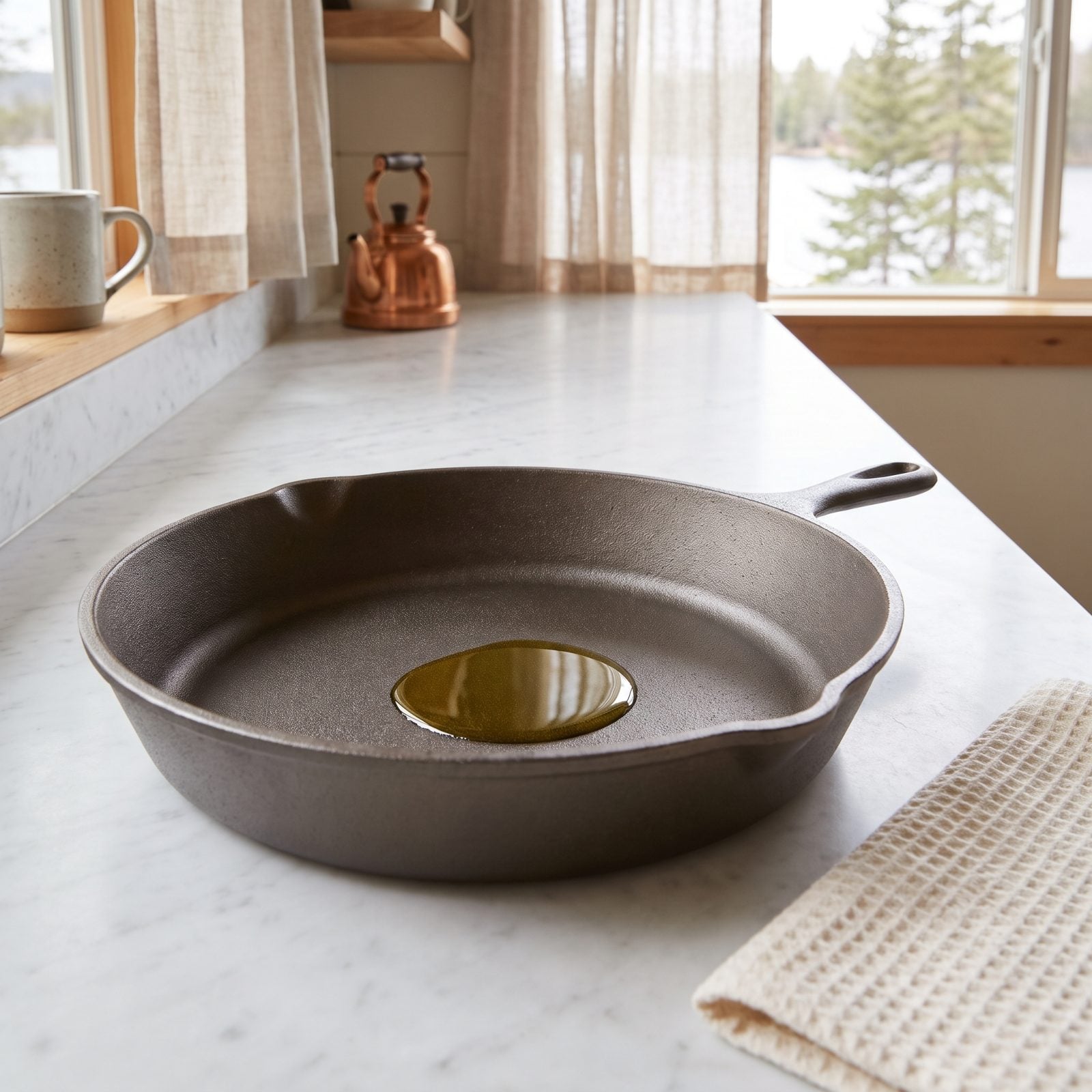
You bought it, you got home, and somewhere a voice told you to spend an afternoon baking oil onto it before you’re allowed to cook. Skip that for most modern pans. Nearly every one sold today arrives with a factory-applied preseasoned coat baked on in the foundry, and it’s thin, a little rough, and completely ready for a first meal.
Cooking fatty food on it is the easiest way to build the surface up. Bacon, sausage, anything that renders fat does more useful work than a solo bake-a-thon. The pan gets better by being used, not by being babied before you ever turn on the burner.
21. Myth: Seasoning Never Wears Out

Seasoning is tough, not immortal. Treat it like the finish on a hardwood floor: it holds up for years, then it doesn’t, depending on how you live with it.
Four things chew through it. High dry heat can scorch it, and acidic foods like tomato sauce or wine, left simmering long enough, slowly dissolve it. Metal utensils scrape it. Plain time thins the spots you touch most, usually leaving a bare patch right in the center. None of this ruins the pan. You just re-season the worn area and move on.
20. Myth: Flaking Black Specks Are Pieces of Iron
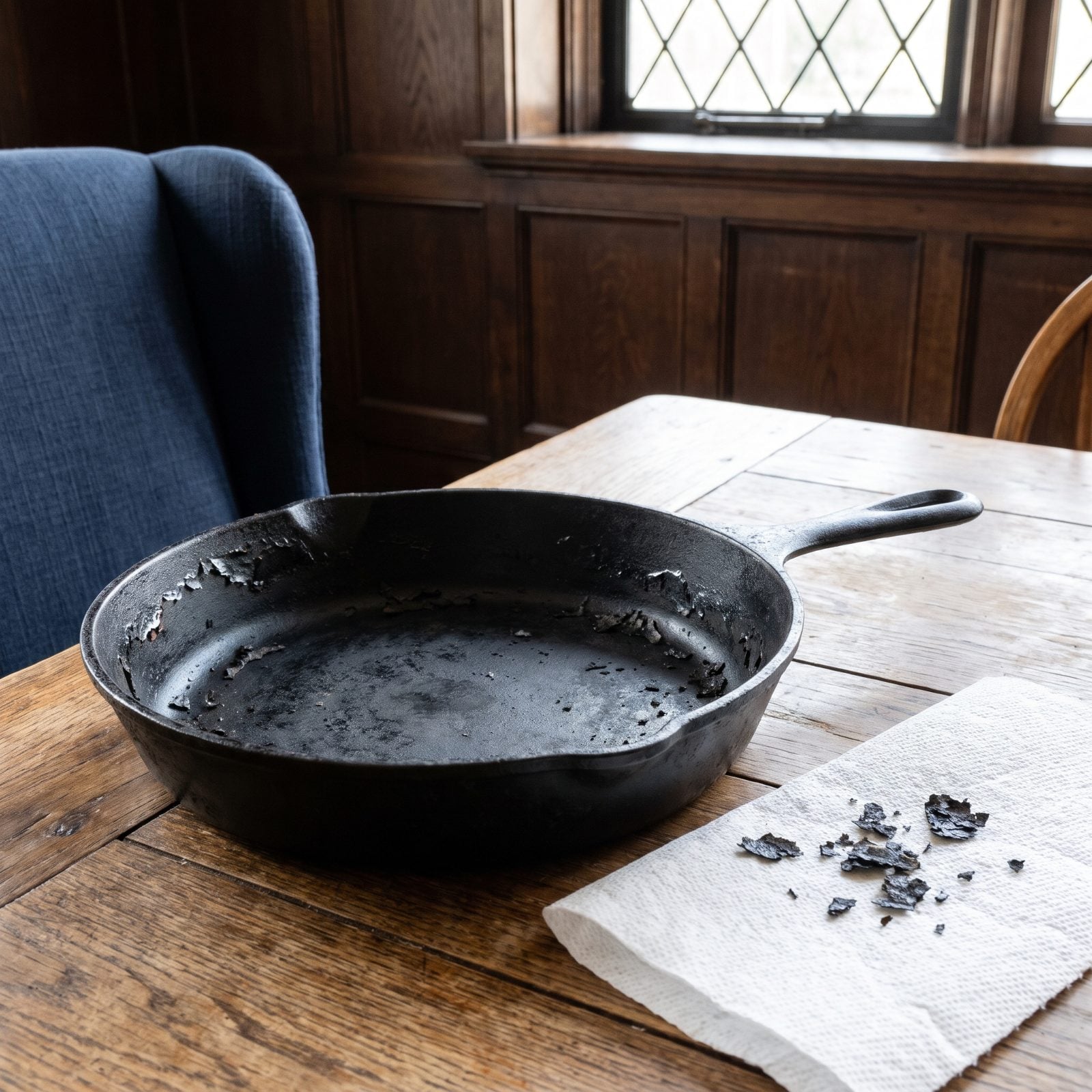
You see black bits in your eggs and assume the pan is shedding metal into your breakfast. Relax. Iron doesn’t flake off in little chips like that. What you’re seeing is carbonized gunk, or seasoning that was laid down too thick and never bonded right.
Overly thick seasoning cracks like old paint and lifts, and burnt food residue does the same. Both are harmless, if unappetizing. A quick scrub back to smooth iron and a thin re-season fixes it. Thin coats bond. Thick coats flake. That’s the whole lesson.
19. Myth: Sticky Seasoning Needs More Baking
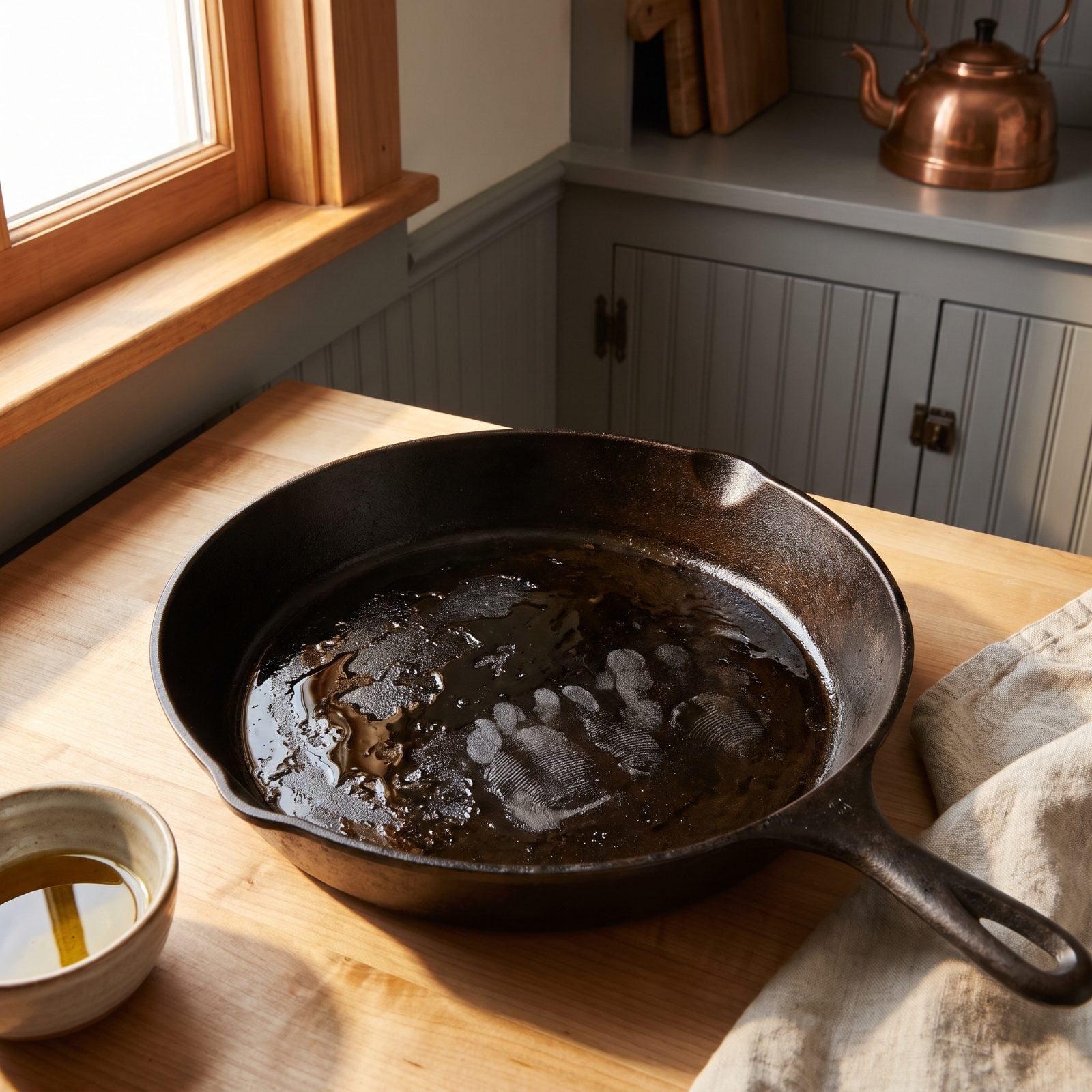
Sticky pan, so you figure it needs another round in the oven. That usually makes it worse. Tackiness means you had too much oil on the surface and not enough heat to fully polymerize it, so piling on more bake time over a thick layer just bakes the gum harder.
The fix runs the other direction. Scrub the sticky film back, apply oil so thin the pan looks almost dry, then season hot enough and long enough for the oil to actually convert. A wiped-nearly-bare pan beats a greasy one every time.
18. Myth: The Pan Must Smoke Heavily During Seasoning
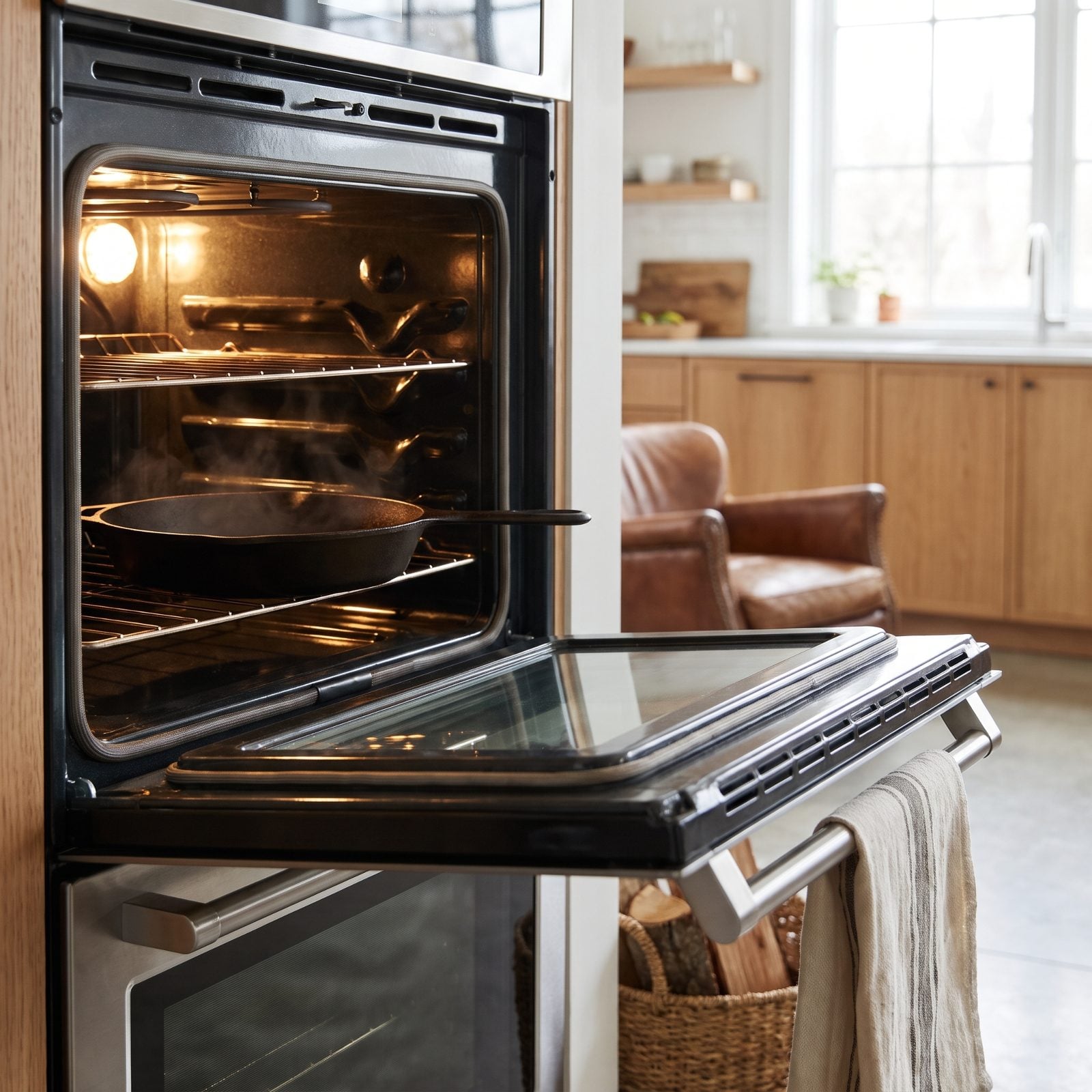
Somewhere the ritual became proof: if your kitchen isn’t hazy and the smoke alarm hasn’t gone off, you did it wrong. Not true, and honestly a little dangerous as advice.
Polymerization, the chemical hardening of oil into seasoning, happens across a range of temperatures. Heavy smoke just means the oil blew past its smoke point and is burning, which can leave that brittle, flaking layer nobody wants. What you want is heat sustained at or just above the oil’s smoke point, not a bonfire. A faint whiff is normal. A smoke-filled room means you overshot.
17. Myth: Cooking Eggs Is the Best Test of New Seasoning
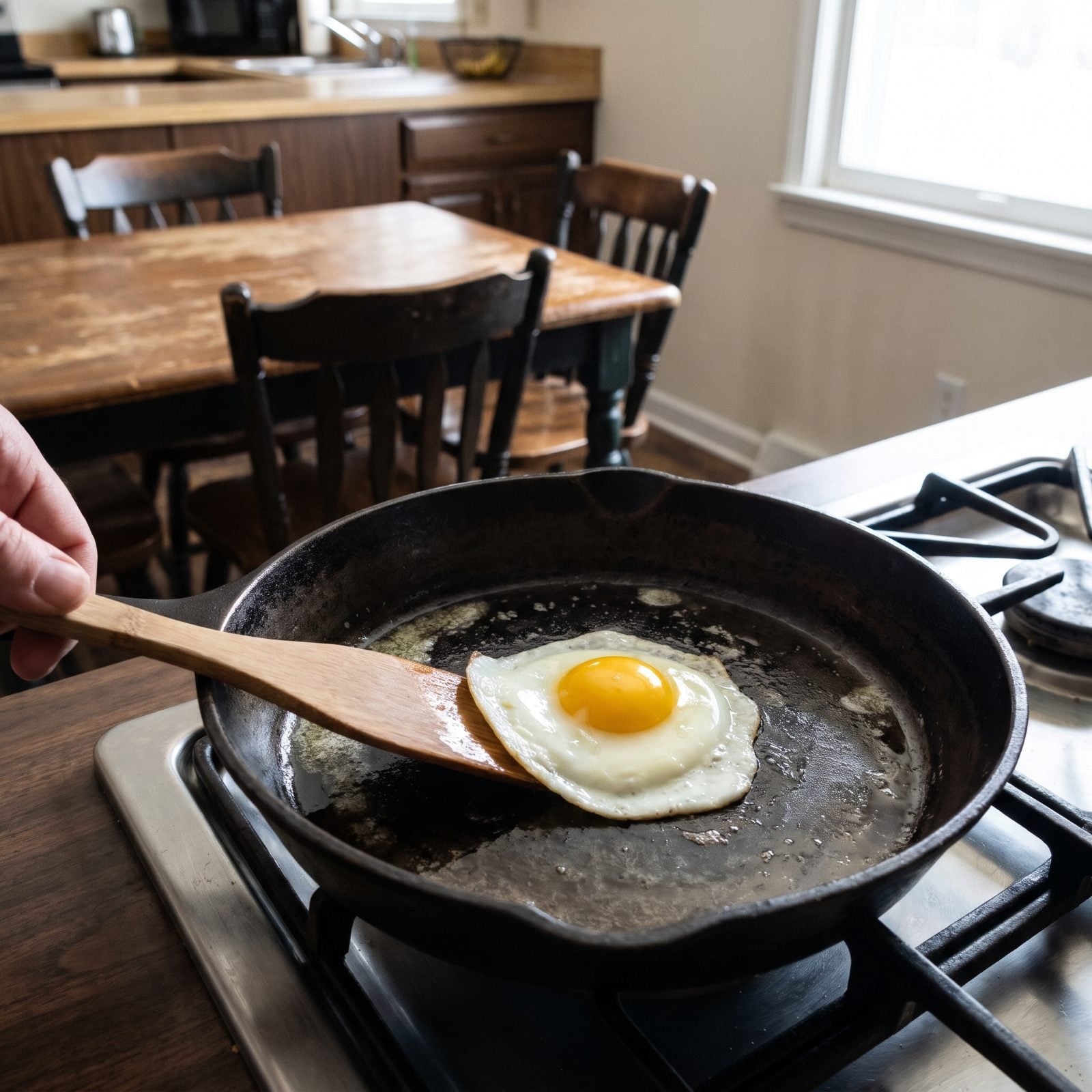
The egg test gets treated like a final exam for your seasoning. It’s a flawed exam. An egg can slide on a mediocre pan and stick on a great one, because the result depends just as much on how you cooked it.
Cold pan, egg hits it, protein bonds instantly to the metal. That’s a temperature problem, not a seasoning problem. Preheat the pan properly, add enough fat, keep the heat moderate, and even a young seasoning layer will let that egg go. Blame the method before you blame the pan.
A good cook can stick an egg to a flawless pan, and a careful one can free an egg from a rough one. The technique is half the test.
16. Myth: Cast Iron Is Naturally Nonstick
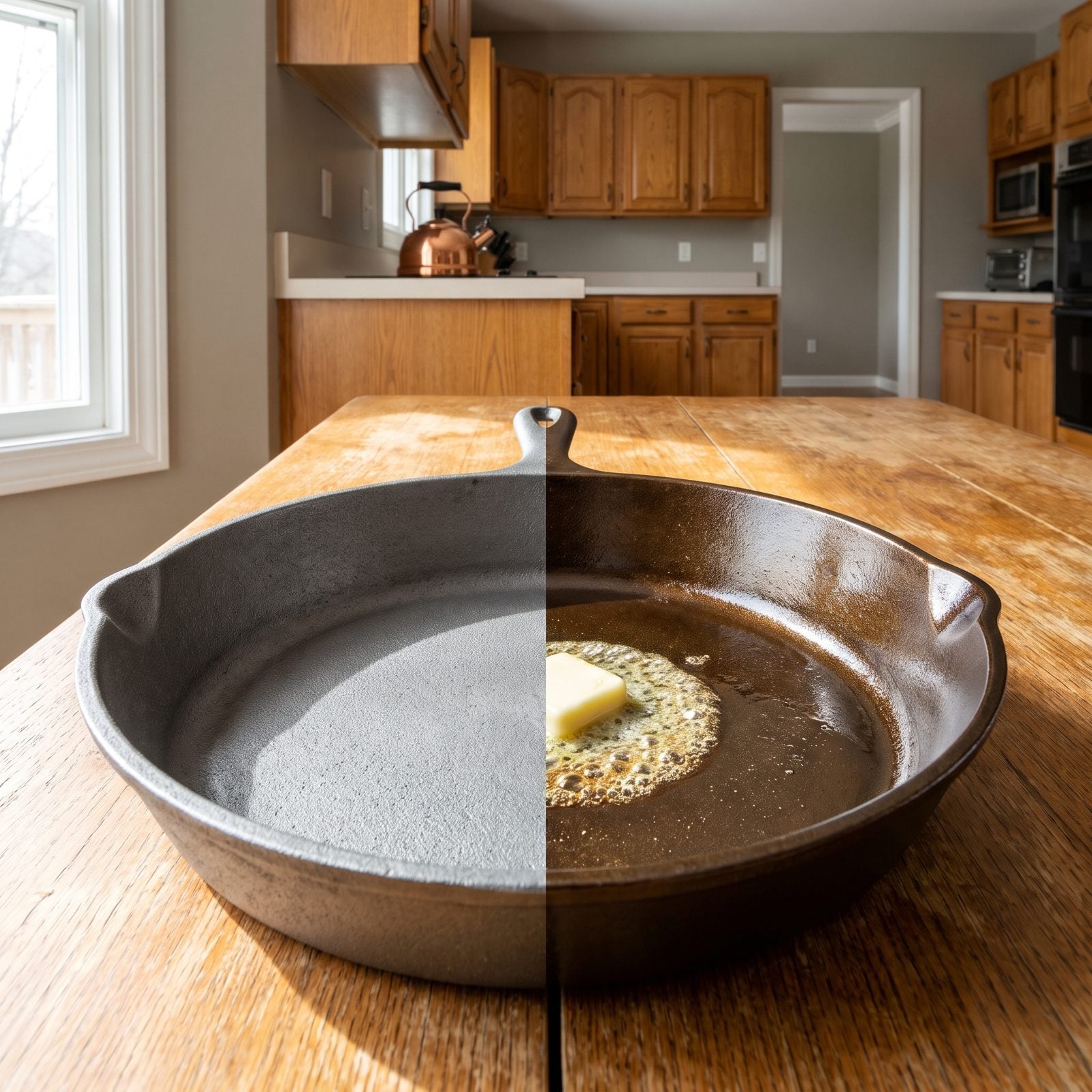
Raw iron, straight from the foundry before seasoning, is about as nonstick as a cinder block. Food welds to it. That release people love isn’t the metal’s gift; it’s three things stacking up.
First, the seasoning layer, a smooth polymerized film that food struggles to grip. Then proper preheating, which keeps proteins from bonding on contact. And a thin film of hot fat that does the real work between food and surface. Take any one away and the magic stops. Put all three together and it rivals the coated pans people swear by.
15. Myth: Food Sticks Because the Seasoning Is Bad
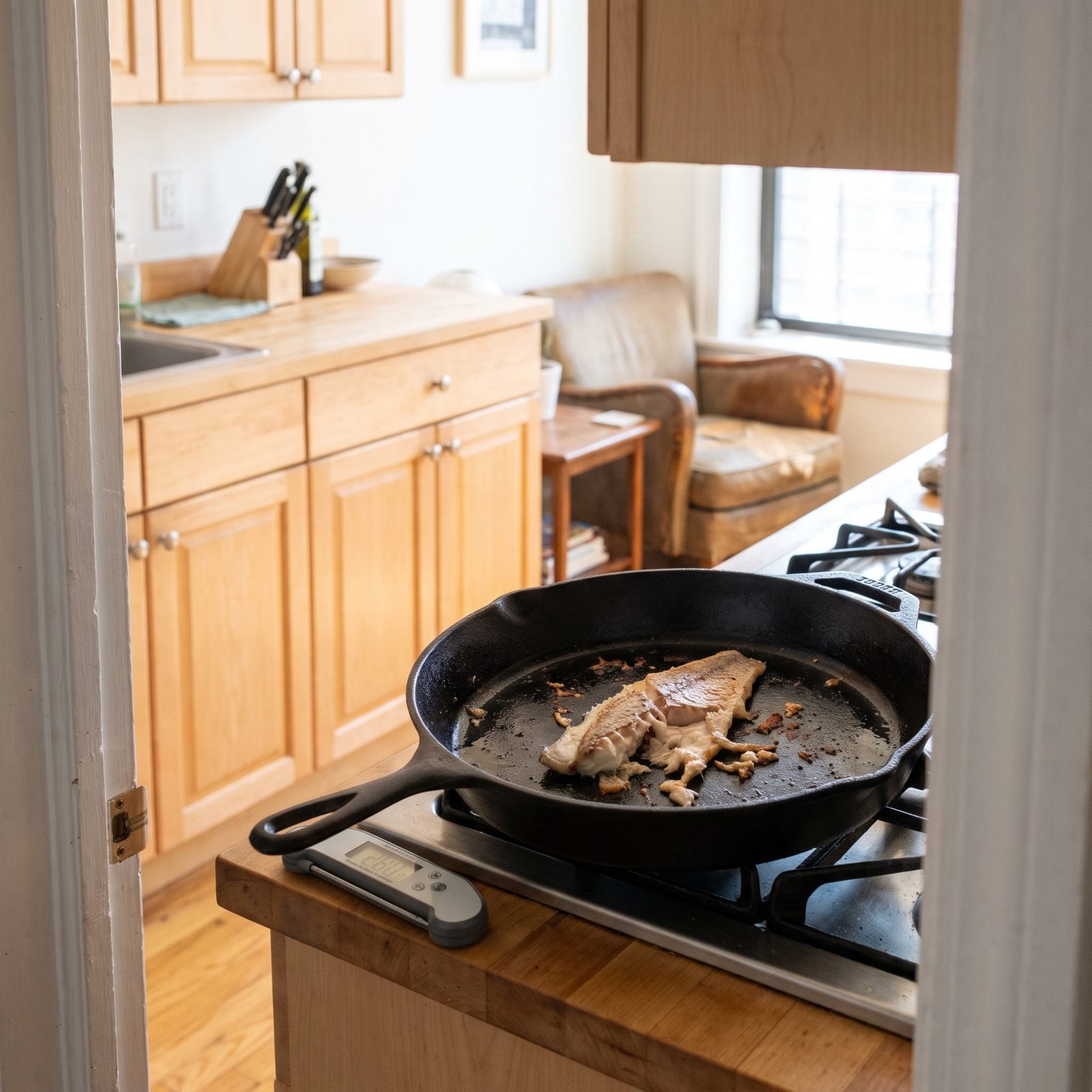
Something sticks, and the first instinct is to curse the seasoning and start over. Hold on. Incorrect heat is the usual culprit, not a failed finish.
Too cold and proteins grab the metal before a crust can form; too hot and the fat burns away and food scorches down. There’s a window, and most sticking happens because the pan was on the wrong side of it. Protein also releases on its own once it’s seared, so if you lift it too early, of course it tears. Let it tell you when it’s ready.
14. Myth: Cast Iron Heats Evenly
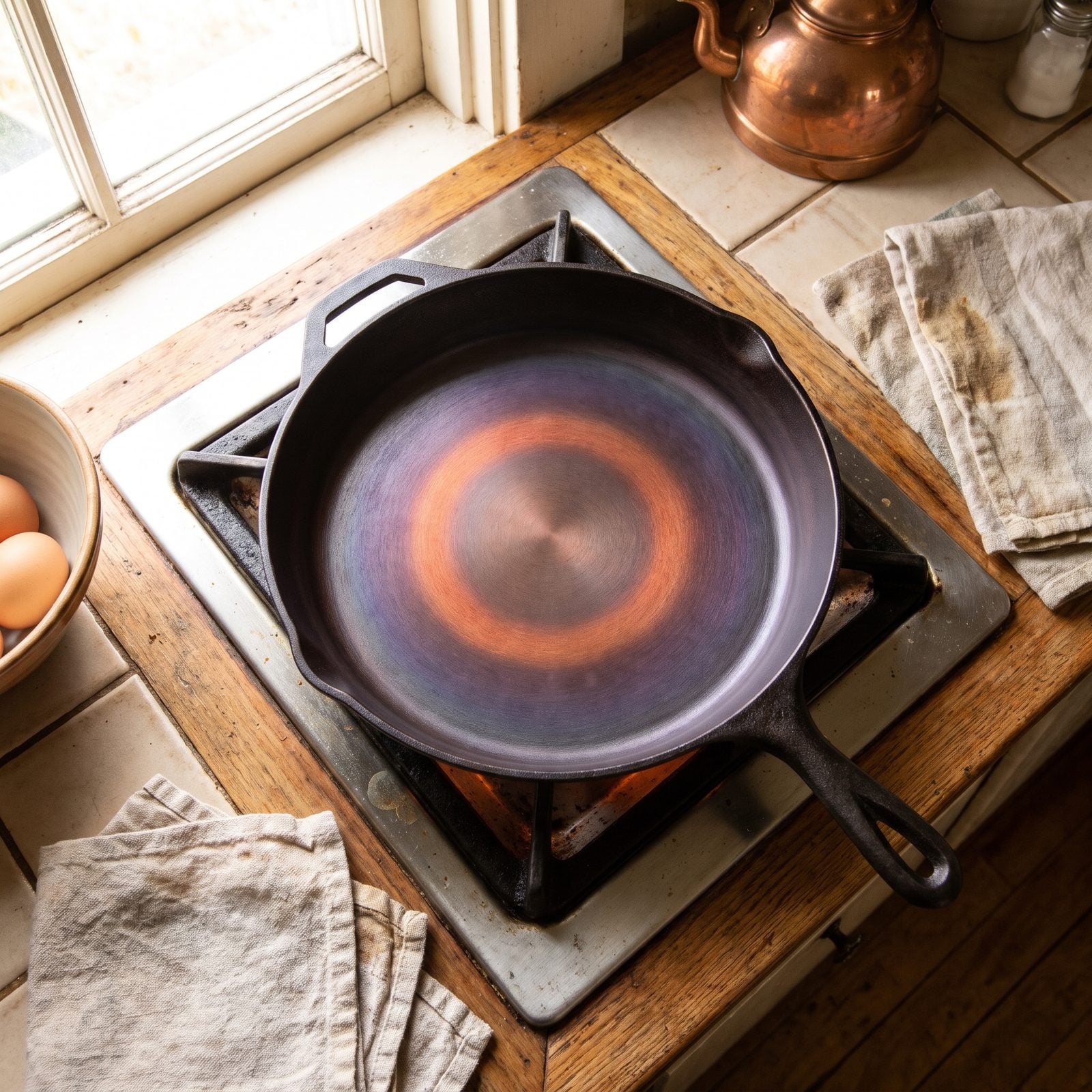
The old praise says cast iron heats like a dream, perfectly even edge to edge. It doesn’t. Iron is actually a poor conductor next to aluminum or copper, so park it over a single burner and you get a hot bullseye right over the flame with cooler zones drifting toward the rim.
What it does brilliantly is hold heat once it has it. That mass is why a steak keeps searing when you drop it in, instead of the pan temperature crashing. The trade-off for all that thermal memory is slow, uneven heating on the way up.
So preheat longer than feels necessary. Patience on the front end buys you even cooking later.
13. Myth: Cast Iron Cools Fast Once You Kill the Burner
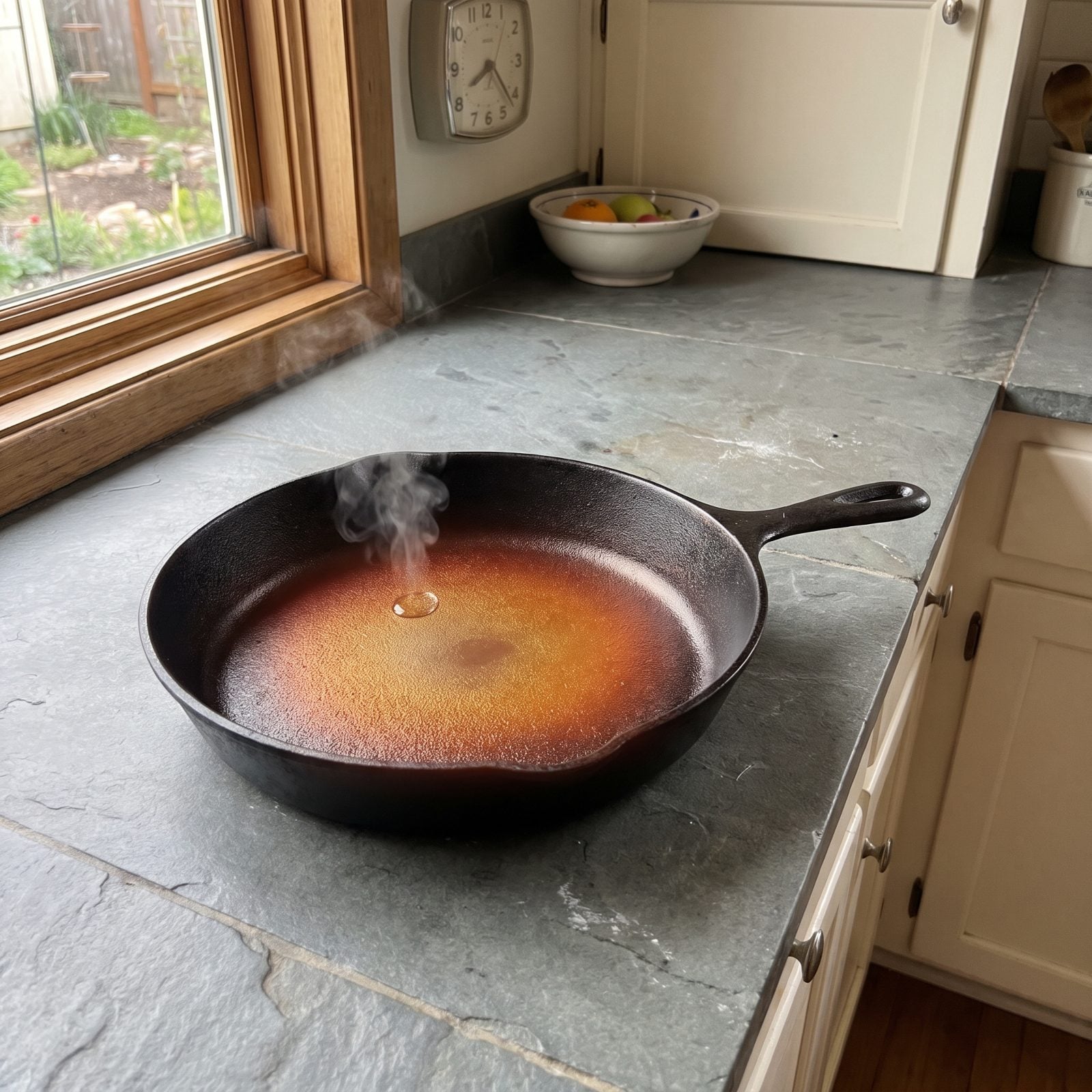
Turn off the flame and the pan keeps going — that’s the whole point of it. Cast iron has high thermal mass, meaning it holds a pile of heat relative to how fast it sheds it. A thin aluminum pan drops temperature the second the heat source dies. Cast iron doesn’t.
Which is why your cornbread keeps browning after it leaves the oven, and why a seared steak keeps cooking if you walk away from it. So plan around it: pull food a touch early and let the residual heat finish the job.
12. Myth: Hot Pan on a Cold Counter Will Always Crack It
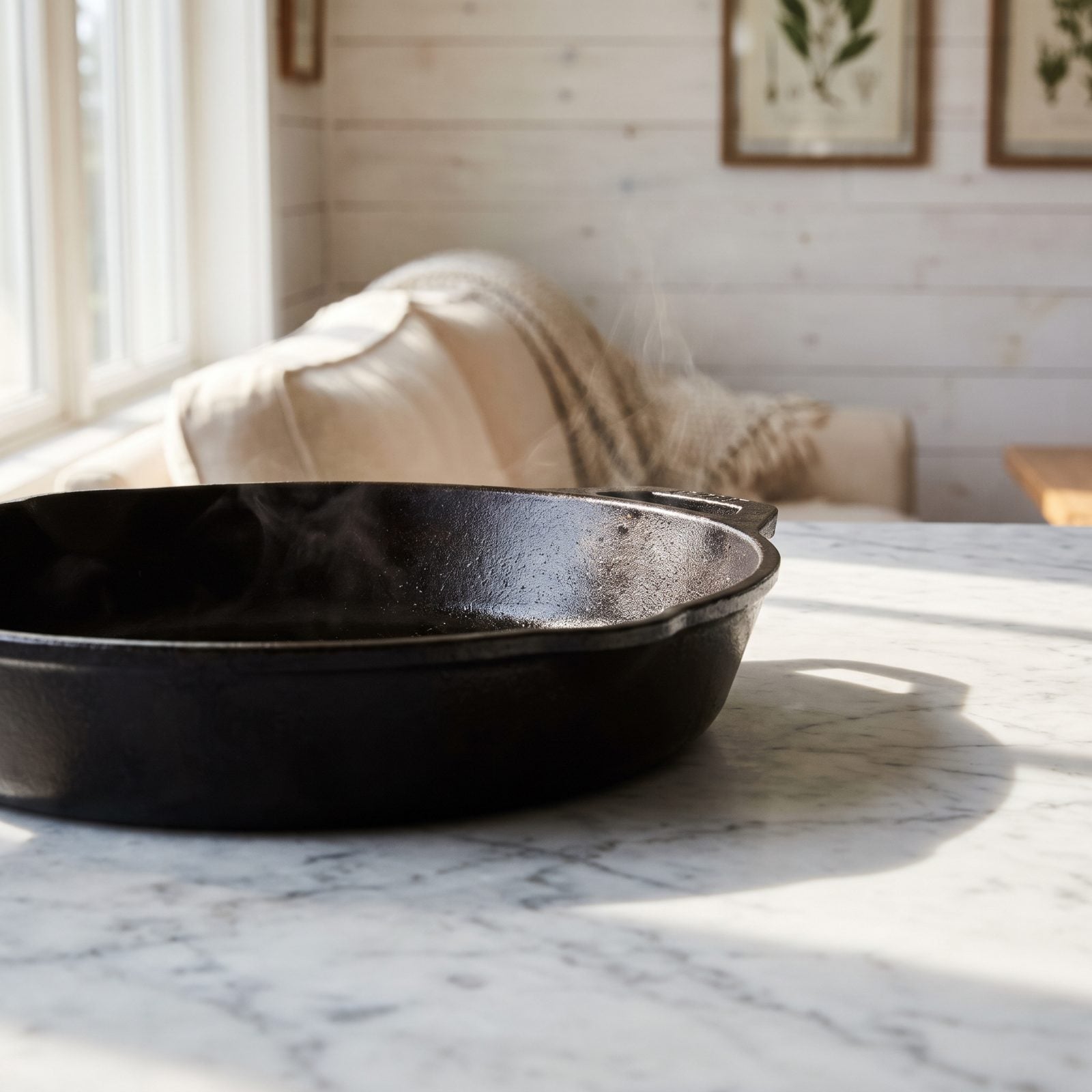
Thermal shock is real, but people treat it like a coin flip that always lands bad. It isn’t. Cracking happens when one part of the metal contracts fast while another part stays hot, and the stress tears it apart. A screaming-hot skillet plunged into ice water? Asking for trouble. A hot pan set on a dry room-temperature counter usually does nothing at all.
Enameled cast iron is the fragile one here, because the glass coating and the iron expand at different rates. Bare cast iron is far more forgiving. We used to baby ours like they were made of eggshell. They didn’t need it.
11. Myth: Cast Iron Can’t Take an Open Flame

Cast iron was practically invented for the fire. Hearths, campfires, wood stoves — that’s where these pans earned their reputation long before gas ranges existed. The one rule that matters is heating it gradually. Slam a cold skillet straight over a roaring fire and you build a steep heat gradient between the base and the walls, which is exactly how you warp one.
Let it come up to temperature with the fire, not against it. Nudge it in from the edge of the coals. Do that and it’ll outlast the trip, the car, and probably you.
10. Myth: Cast Iron Is Too Tough to Warp
Heavy doesn’t mean indestructible. Cast iron warps when part of it heats or cools dramatically faster than the rest. The classic culprit is a thin, cheap, modern pan blasted on a high burner that only touches the center while the rim sits cold. The metal expands unevenly and the pan goes slightly concave or convex.
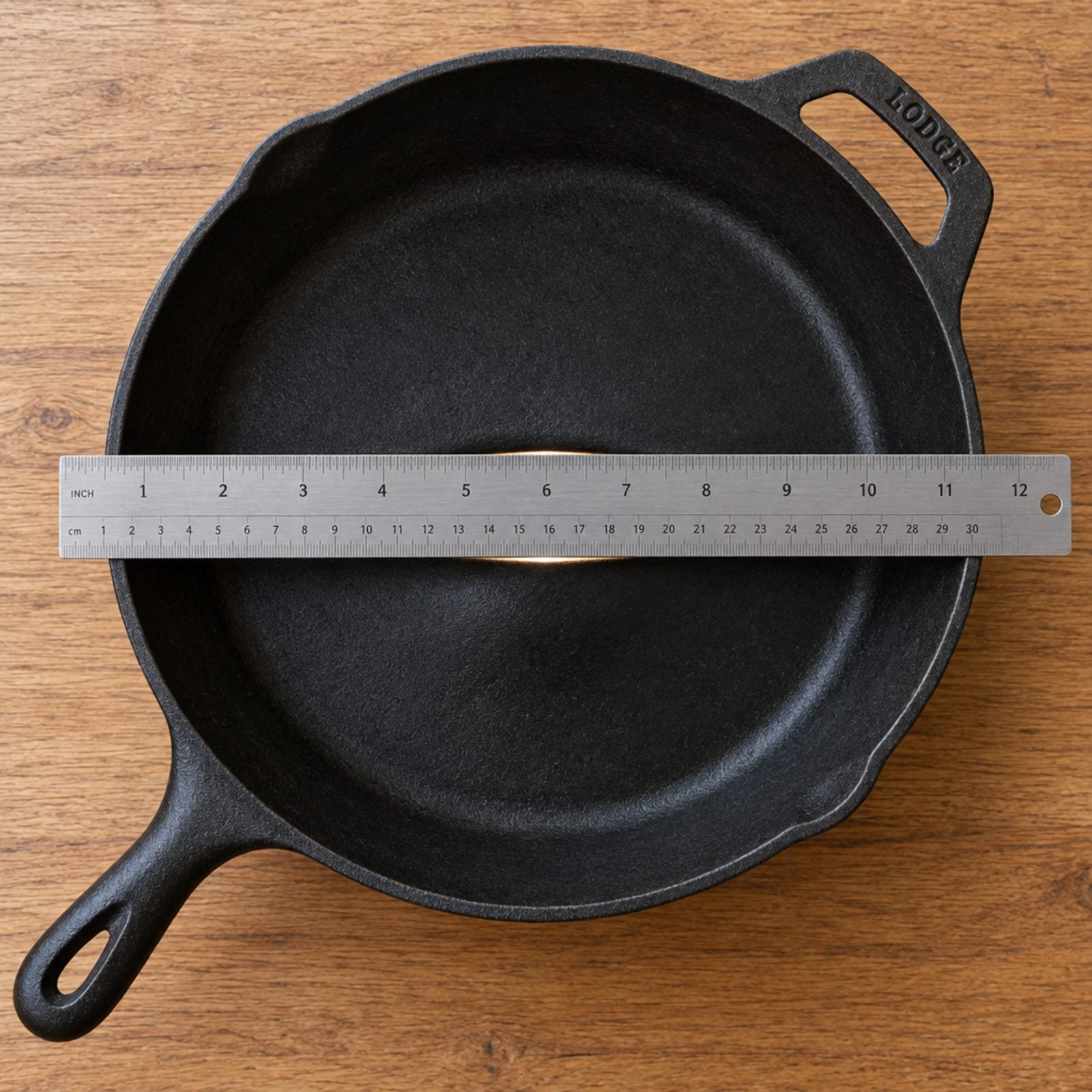
To check yours, lay a straightedge across the flat cooking surface or see if the pan rocks on a flat counter — a ruler resting on the rim can’t reveal warp. A warped skillet wobbles on the stove and pools oil to one side — maddening for anything you want evenly browned. Preheat slow and even, and don’t crank a cold pan straight to max heat. Thick vintage pieces hold up better. None of it is immune.
9. Myth: Drop It and Only the Floor Suffers
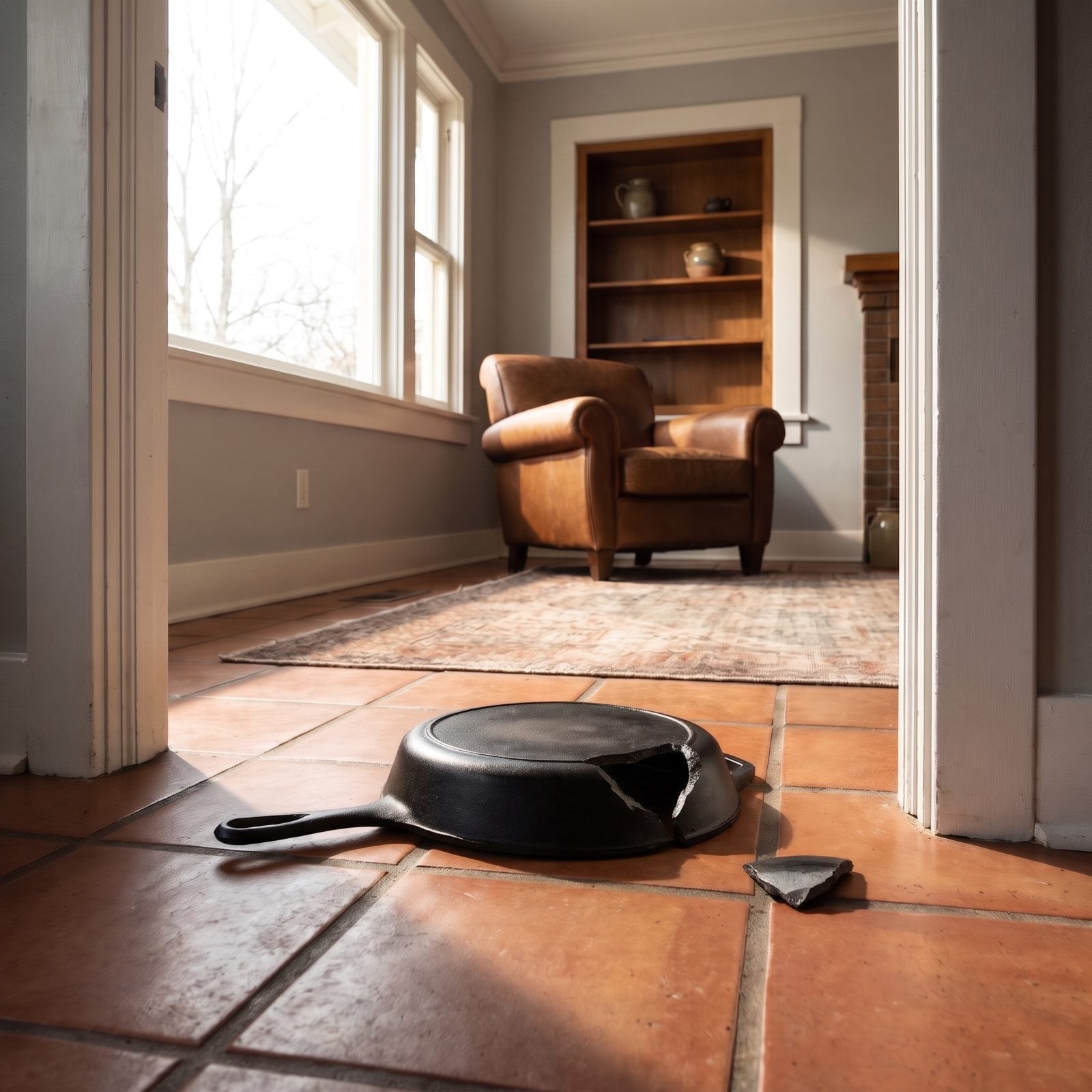
People picture cast iron as unbreakable because it’s heavy and old-fashioned. It’s actually brittle, with almost no flex. Steel bends and absorbs an impact. Cast iron would rather crack than bend, so a hard drop onto tile or concrete can crack it through the side wall and knock a chunk loose onto the floor.
The handle is often the weak point. A cracked pan is usually done — no reliable home fix makes it food-safe again.
8. Myth: Vintage Cast Iron Beats Everything New
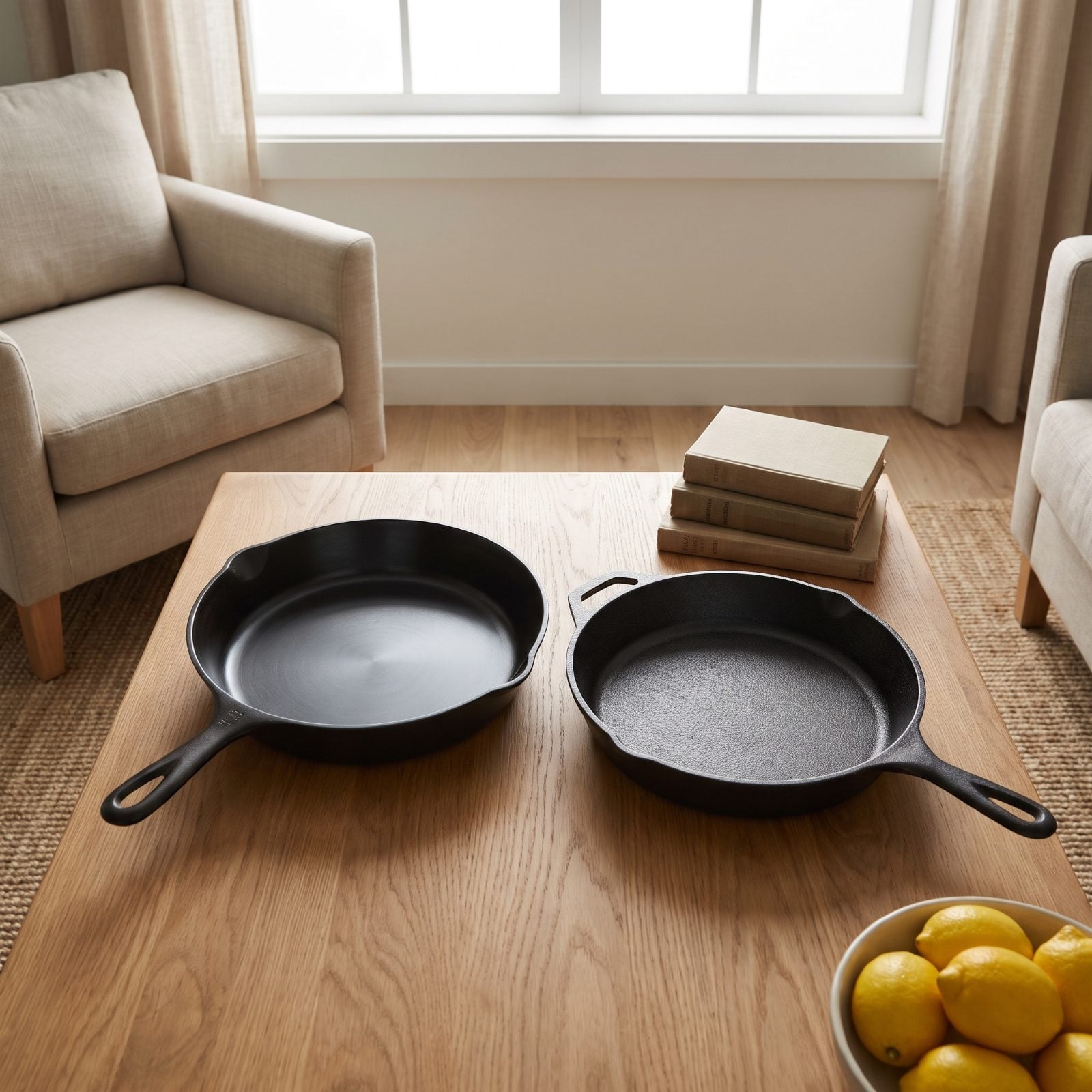
Old pans have a cult, and some of it is earned. Early-20th-century skillets were machine-polished to a glassy finish that releases food beautifully. But smoothness is one variable, not the whole scorecard.
Flatness matters too. A warped antique cooks worse than a true modern pan, full stop. Thickness, heat distribution, handle design, whether the thing even sits flat on your stovetop — all of it counts. A pitted, warped, rust-scarred vintage piece is not better than a sound new one just because it’s old. Buy the pan, not the nostalgia.
7. Myth: Rough Modern Pans Must Be Sanded Smooth
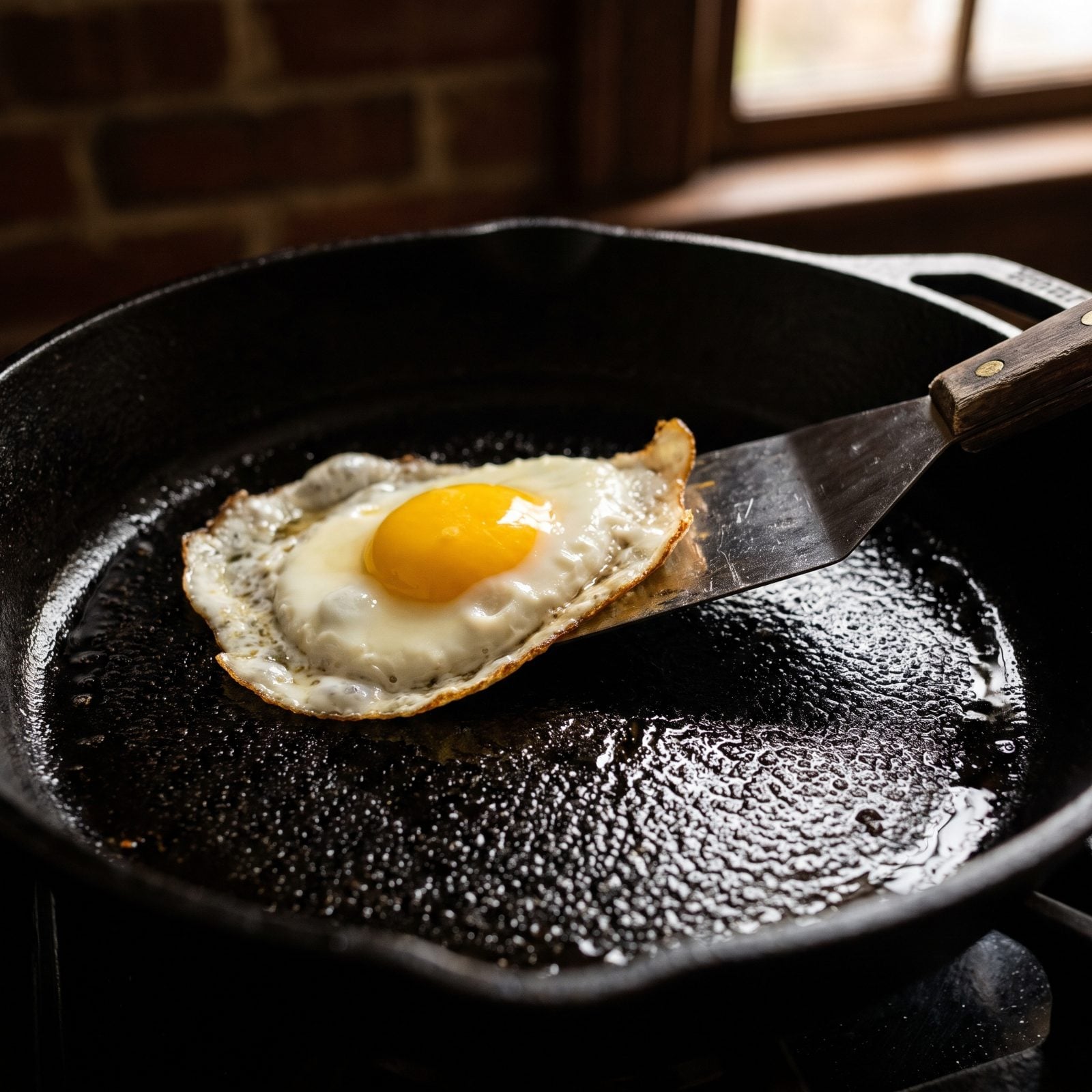
The internet loves telling you to take a sander to your new skillet. You don’t have to. A rough factory surface cooks perfectly well once it’s properly seasoned, because the polymerized oil layers build up and smooth the texture over time. Eggs release just fine from a pan that was never touched by sandpaper, provided it’s hot enough and the seasoning has matured.
Sanding can speed things along if you enjoy the project. Optional, not required. Plenty of folks grind down a pan that would’ve worked the day they stopped fussing with it.
6. Myth: The Heavier the Pan, the Better the Quality
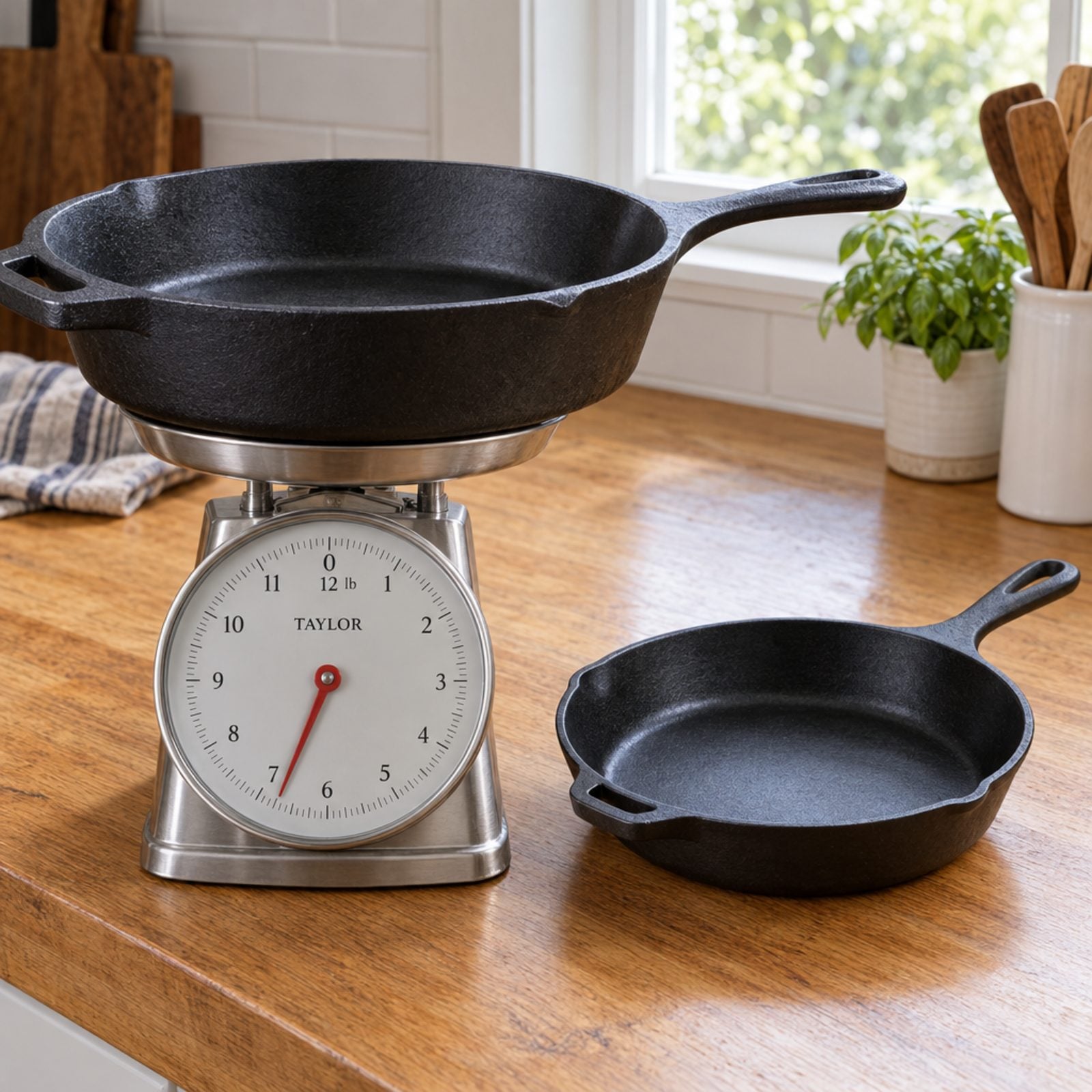
Weight gets treated like proof of quality. It’s really just proof of how much metal is in the pan. A thick, heavy skillet holds more heat — great for searing, rough on anyone with cranky wrists trying to lift it one-handed. A lighter pan heats and responds faster.
Quality shows up elsewhere: casting consistency, flatness, a smooth transition at the handle, even wall thickness. A clumsily cast heavy pan with a lumpy surface loses to a well-made lighter one every time. Pick the weight your hands and your cooking actually want.
5. Myth: A Clear Ring Means No Cracks
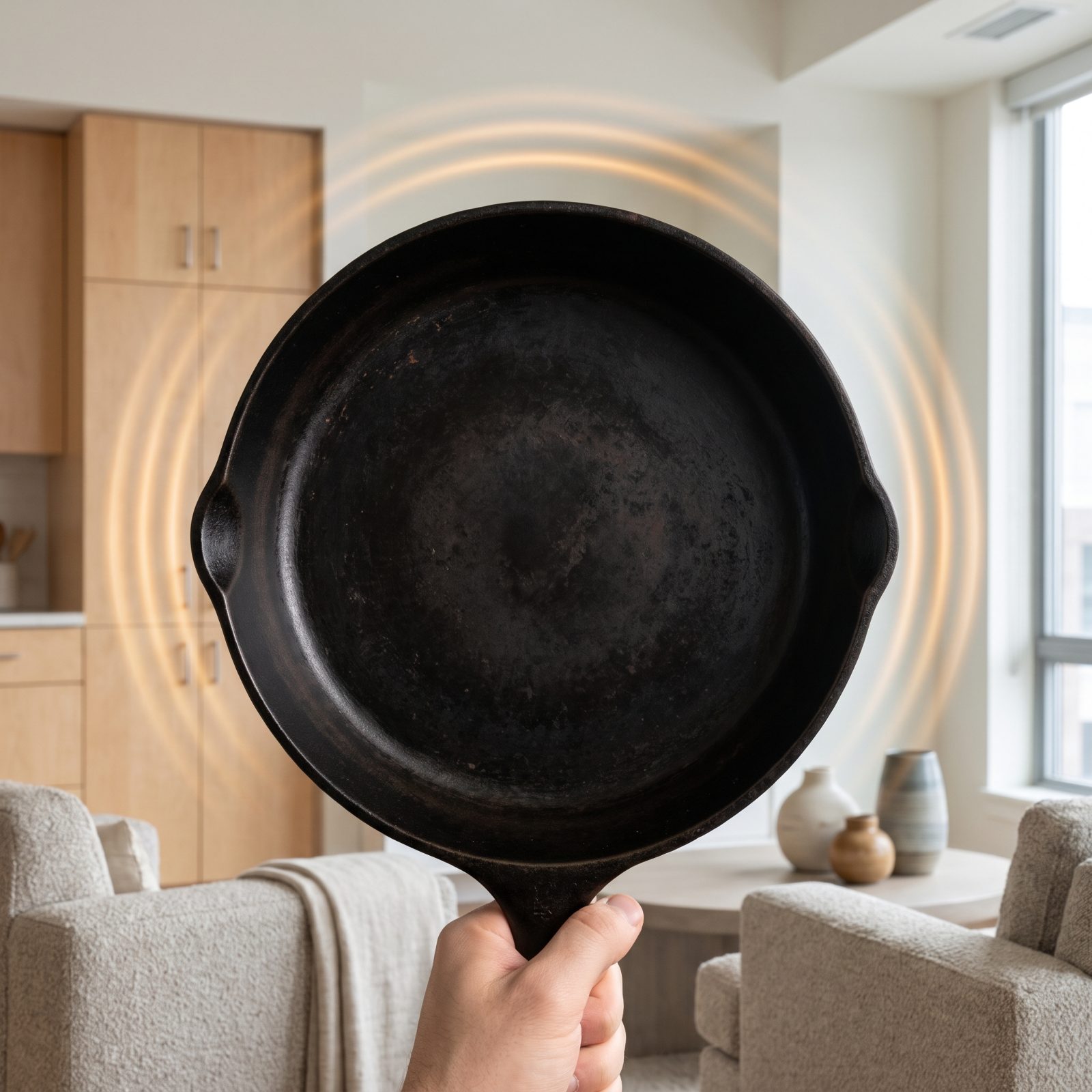
The old flea-market trick: tap the pan and listen for a clear, bell-like ring, where a dead thud supposedly means a hidden crack. There’s some truth to it. But it’s a crude test, not a guarantee. A clean ring can hang on even with a fine hairline fracture, and seasoning buildup, moisture, or how you’re gripping the pan all muddy the sound.
Trust your eyes first. Run a finger along the rim and the base, hold it to the light, hunt for hairlines and chips. The ear is a backup, not the verdict.
4. Myth: Cooking in Cast Iron Fixes Iron Deficiency
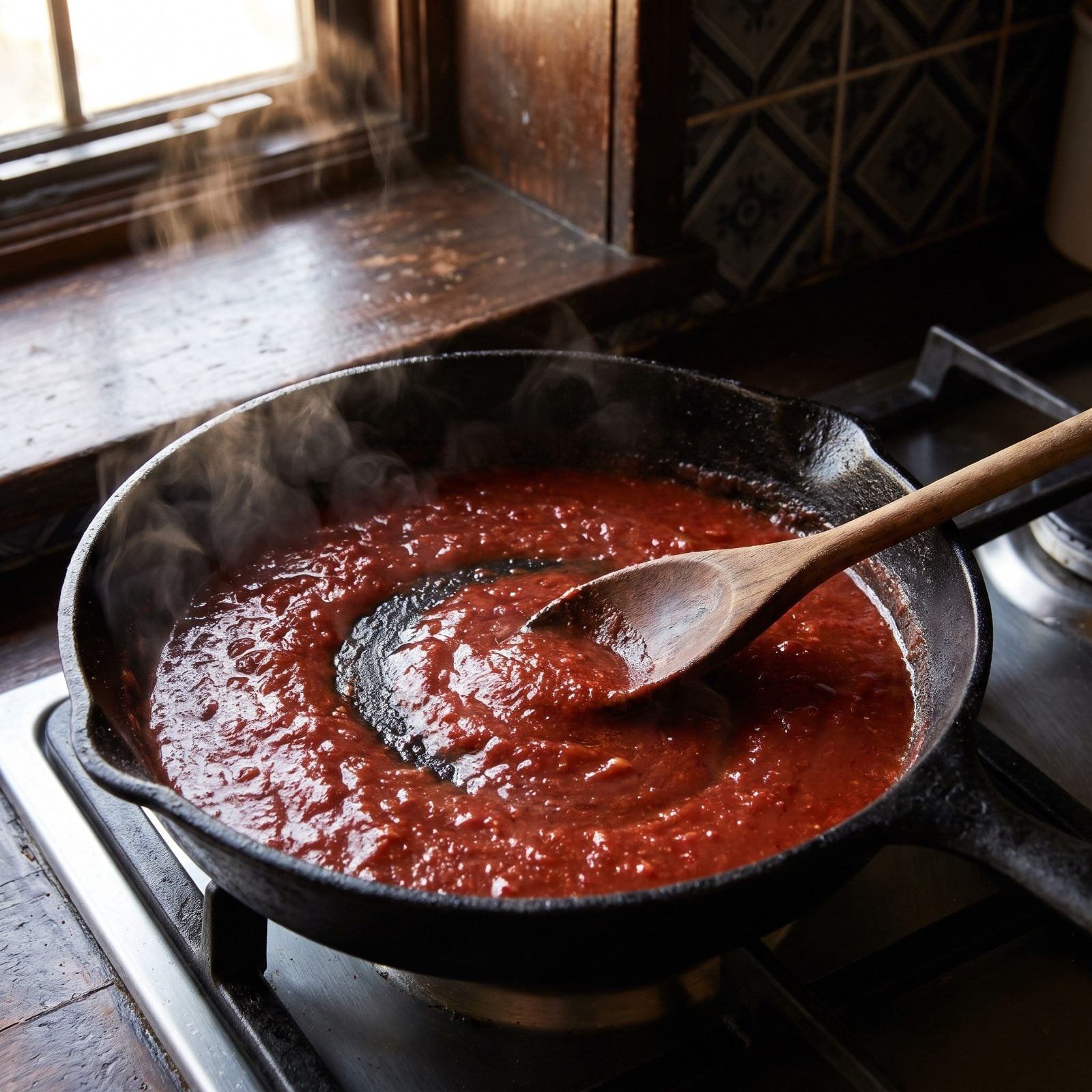
Yes, a little iron leaches into your food, especially with acidic dishes like tomato sauce simmered a long time. No, that doesn’t make your skillet a medical treatment. The amount that transfers is small, wildly variable, and impossible to control — it rides on cooking time, acidity, how worn the seasoning is, and what you’re making.
A well-seasoned pan actually transfers less, because the oil barrier parks itself between the food and the metal. Got genuine iron deficiency? That’s a conversation with a doctor, not a frying pan.
3. Myth: Tomatoes Will Wreck Your Skillet, Fact: A Quick Simmer in Solid Seasoning Shrugs It Off
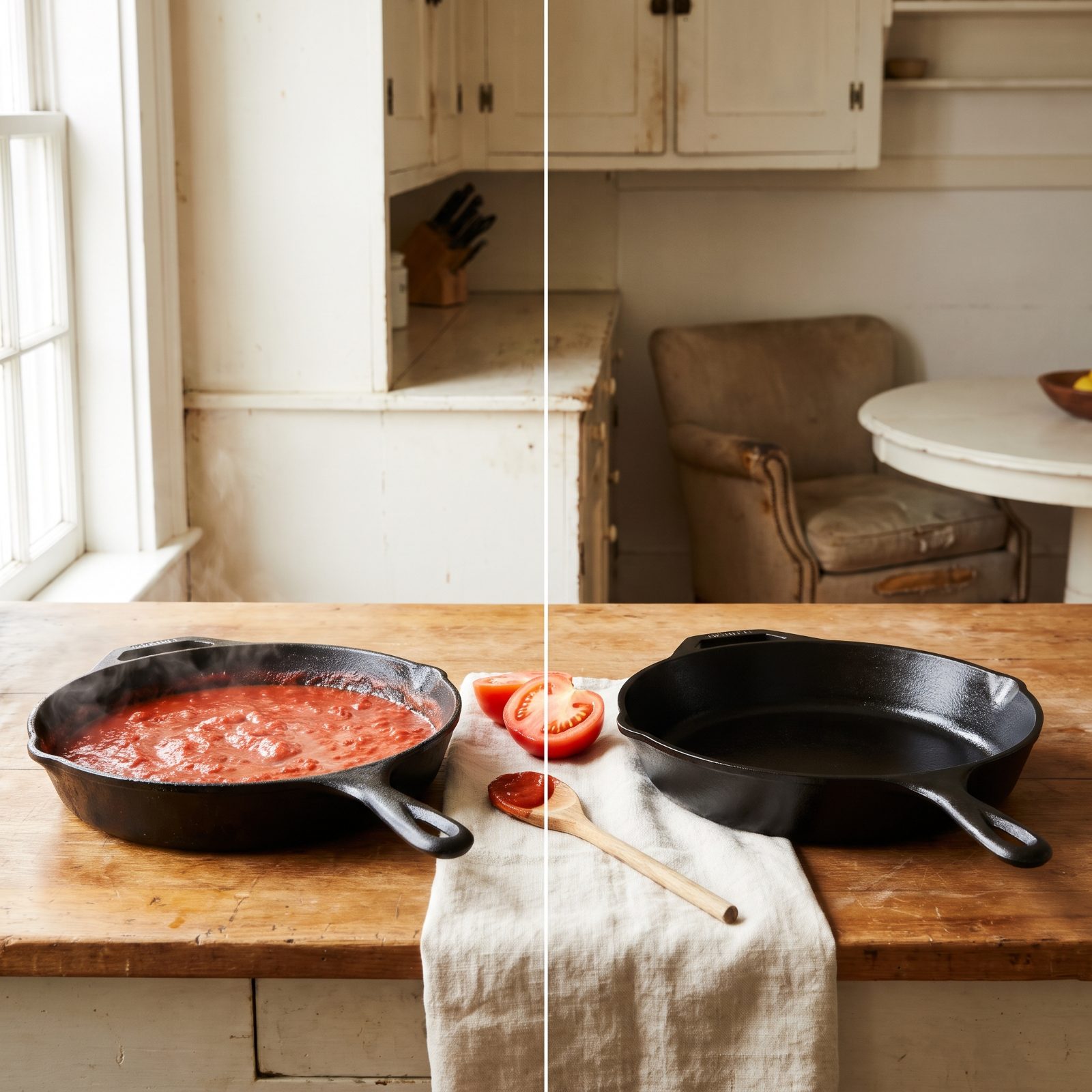
The fear is real chemistry, not superstition. Acid dissolves iron, so a long braise of tomato sauce strips a thin or shaky seasoning layer and picks up a metallic tang plus a little extra iron. That’s the kernel of truth the warning grew out of.
But the warning got inflated. A skillet with a solid, polymerized seasoning layer handles a short tomato cook fine. Sear your sausage, deglaze with a splash of marinara, finish the dish in twenty or thirty minutes, and you’ll see no damage worth mentioning. Trouble starts with hour-long simmers in a pan whose seasoning was never built up in the first place.
Rule of thumb we actually follow: if it’s done in half an hour, cook it. All-afternoon ragù goes in the enameled pot. Easy call.
2. Myth: Cast Iron Is a Great Fridge Container, Fact: Leftovers Invite Off-Flavors and Rust
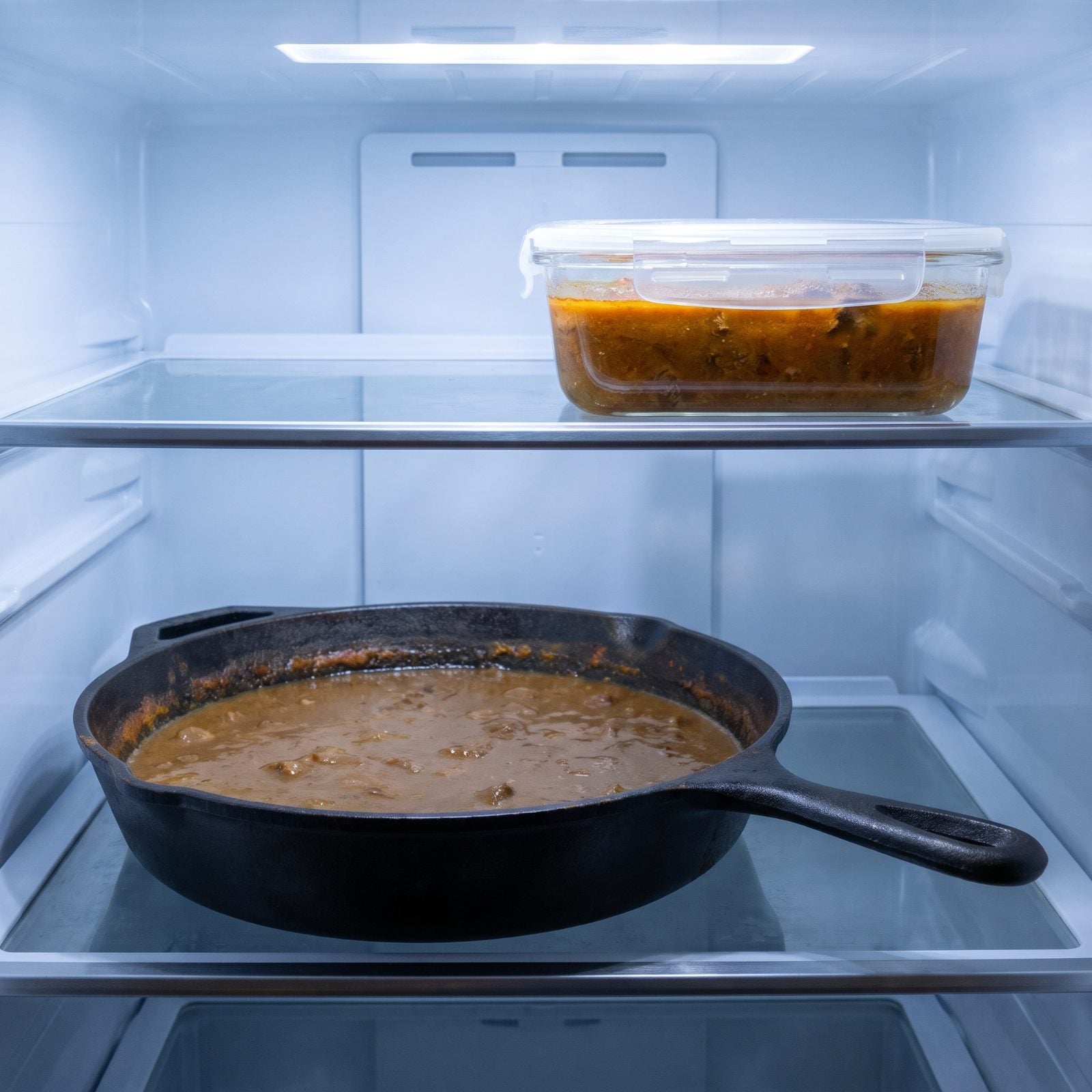
This one earns a flat no. Leaving food in the skillet overnight does two bad things at once: the moisture sits against the metal and breaks down your seasoning, and the salt and acid keep gnawing at the bare spots until rust blooms right where the food touched.
And the flavor suffers. Stored food in cast iron picks up a dull, slightly metallic edge that fresh food out of the same pan never has. Scoop it into glass or ceramic, dry the skillet, wipe it thin with oil. Done.
1. Myth: Cast Iron Burns Off All the Bacteria, Fact: Your Thermometer Decides That, Not the Metal
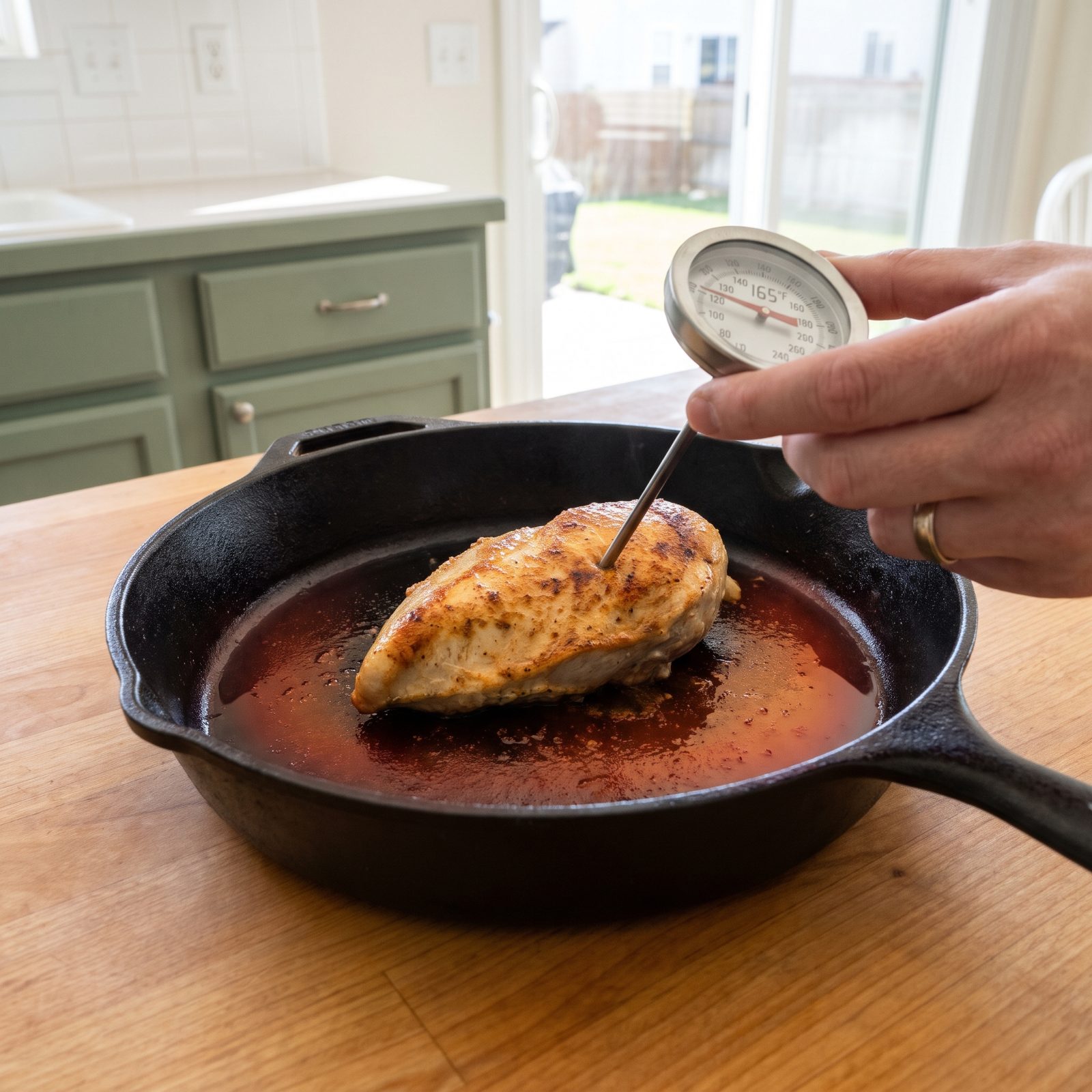
There’s a comforting idea that cast iron is somehow self-sanitizing, that the heavy metal and searing heat scorch away anything dangerous. The pan material does nothing of the sort. Bacteria die from temperature and time, full stop. Glass, steel, a clay pot — all of them kill pathogens at the same internal numbers if the food actually reaches them.
Here’s the twist that matters. Cast iron browns the outside beautifully, which fools you into thinking the inside is cooked through. A thick chop can look done and still sit pink and risky in the center.
Trust the thermometer, not the crust.