
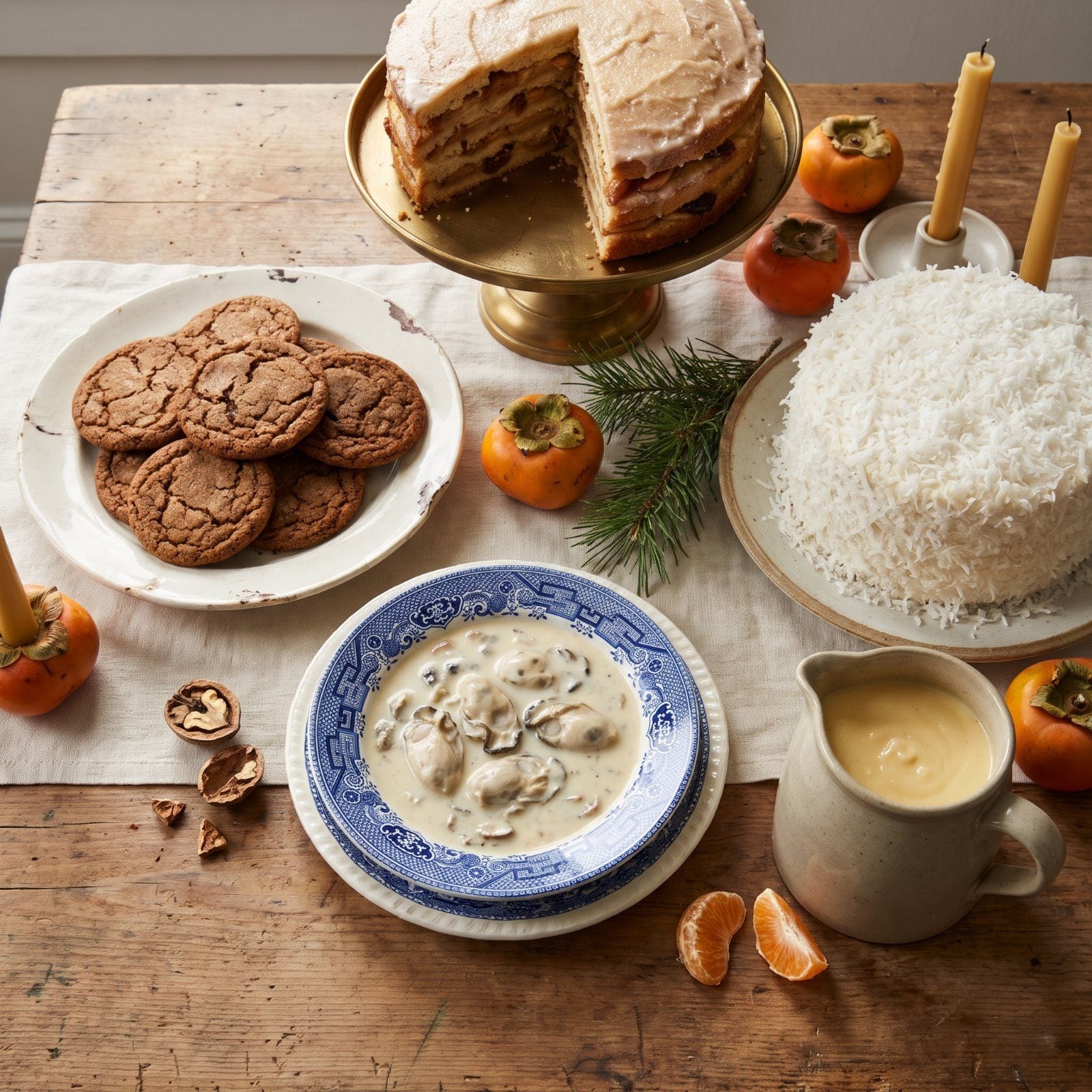
Somewhere in Winston-Salem right now, a baker is rolling Moravian spice dough so thin you could read a hymnal through it. Down on Hatteras, someone is shucking oysters for a stew that only shows up once a year. North Carolina doesn’t do one Christmas table — it does four, maybe five, each shaped by who settled where and what happened to grow nearby. These are the dishes that still carry the fingerprints of the people who first made them.
Please note that some of the images in this article were created with the assistance of AI.
16. Moravian Spice Cookies, Rolled Thin Enough to See Through
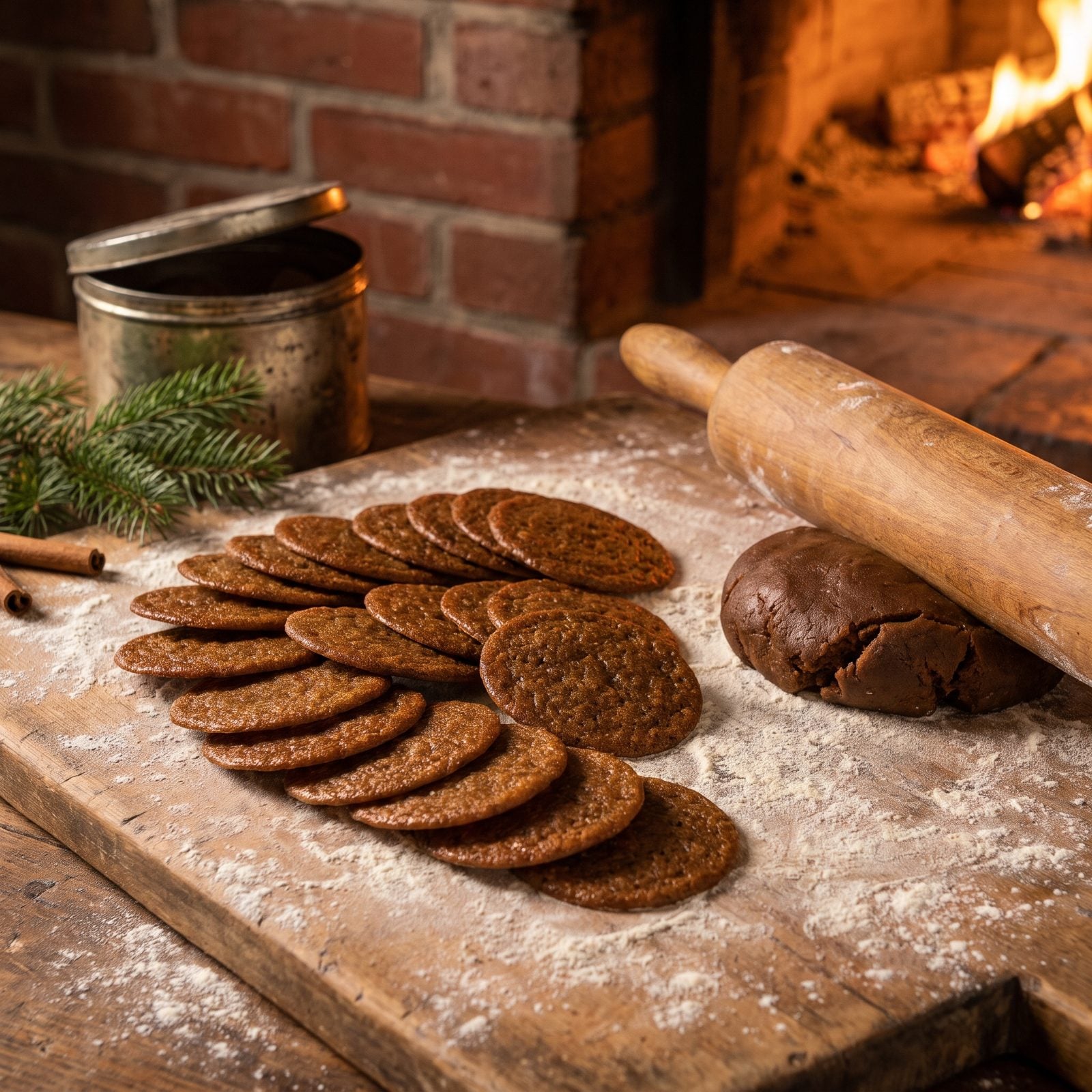
Hold one up to a candle and the light comes through. That’s the test. Moravian spice cookies are rolled almost impossibly thin, dark with molasses and ginger, and they snap like a communion wafer.
Winston-Salem has one of the two largest Moravian communities in the country, and the tradition runs deep. Mrs. Hanes’ Moravian Cookies, out on Friedberg Church Road in Clemmons, still bakes six flavors by hand and lets you walk through the place. Over at Old Salem, Winkler Bakery, in a building that dates to 1799, still turns these out, cranking up the holiday batches as the weather turns cold.
15. Moravian Sugar Cake, Poked Full of Holes and Flooded With Brown Sugar
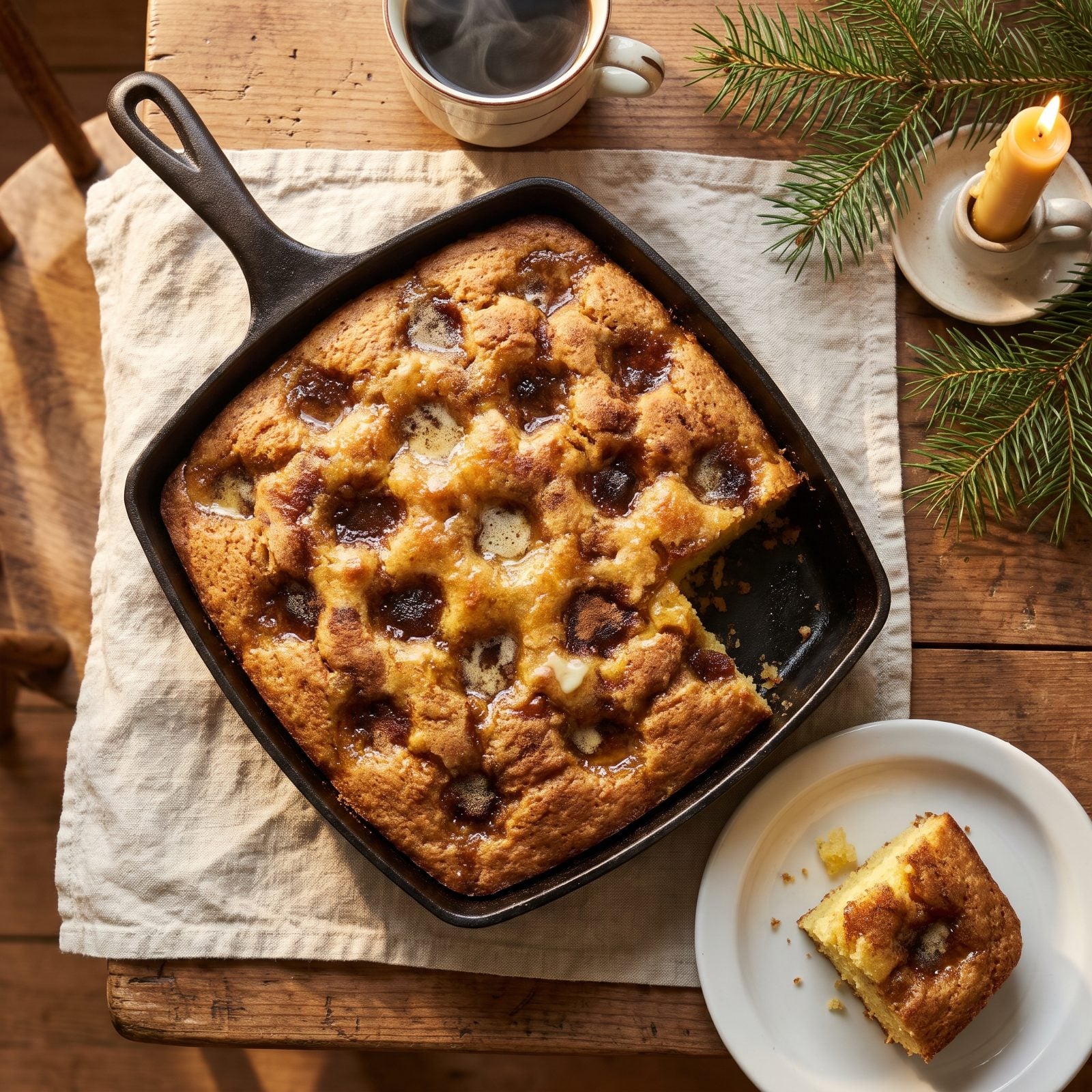
You poke the dough full of holes on purpose, then flood those holes with butter, brown sugar and cinnamon until the whole top goes glossy and dark. The sugar sinks in as it bakes. The crumb underneath stays tender.
It started as an Easter cake. But somewhere along the way plenty of Moravian families moved it to Christmas, and now it turns up as a gift as often as a dessert — it freezes beautifully, which is half the reason it travels so well. Wilkerson Moravian Bakery in Winston-Salem has been making it since 1925, and if you go to the Candle Tea at Old Salem, hosted by Home Moravian Church, you’ll be served a piece with coffee in the old kitchen.
What Our Readers Say
- Piaci Pizza readers gave baked desserts hearts 80% of the time, compared with 76% for the other food images in the same articles.
- When our readers loved a food photo, comfort was the top reason they tapped, and nostalgia also made their top four.
From Piaci Pizza reader polls and votes.
14. Lovefeast Buns and Coffee on Christmas Eve
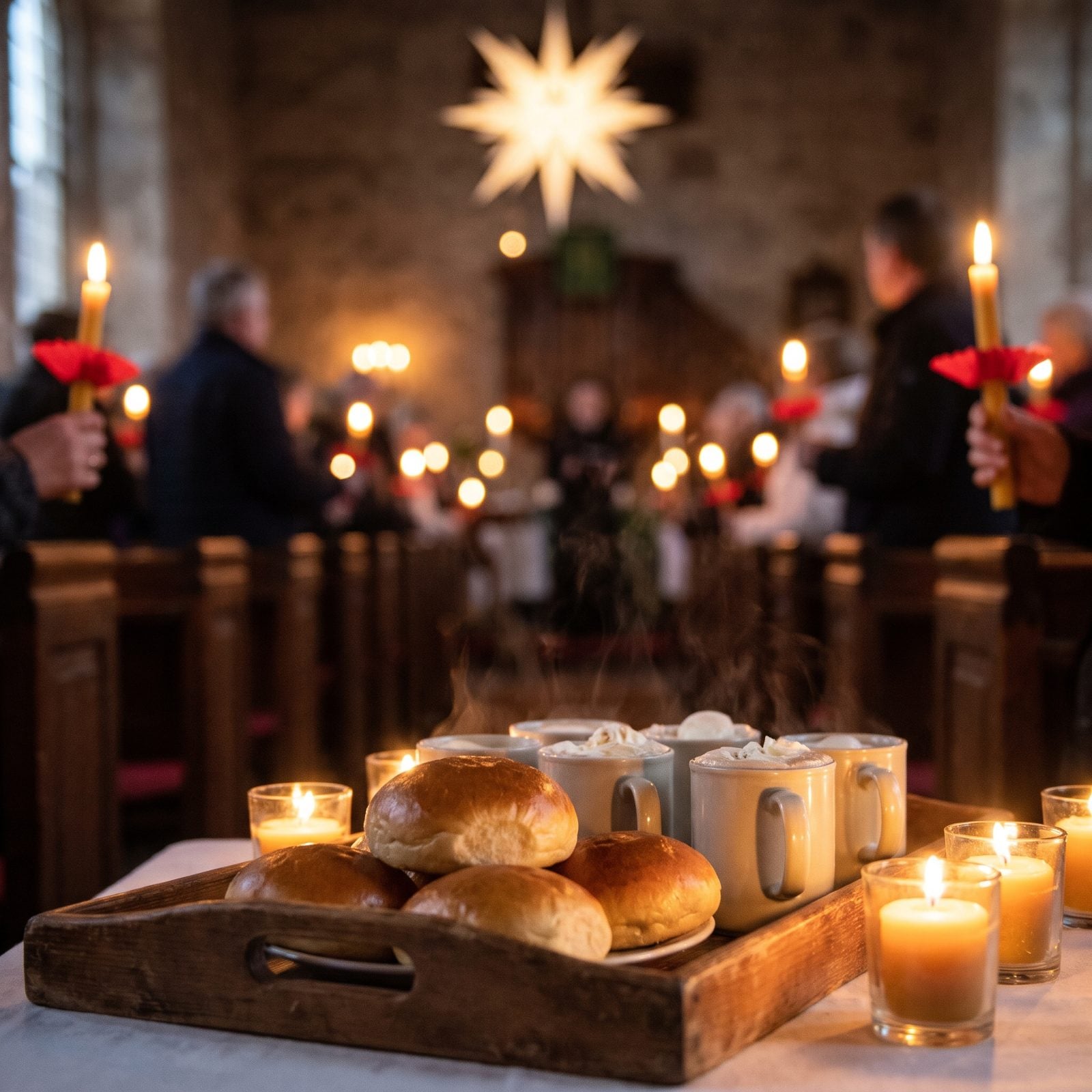
Picture a sanctuary lit mostly by beeswax candles, the pews full, and someone passing you a soft sweet bun and a mug of creamy coffee while the choir sings. That’s the lovefeast. Around Winston-Salem the Moravian churches welcome visitors to these free Christmas Eve services, usually at a few different times through the evening.
Winkler Bakery in Old Salem sells the buns, the sugar cake and the thin cookies all season long. That bakery building dates to 1799, and the oven is still fired with wood. Can’t get to a service? Wake Forest University hosts its own Christmas Lovefeast and even posts the bun recipe so you can bake them at home.
The whole point is sharing a simple meal while you sing. Nobody’s trying to impress anybody. That’s rarer than it sounds.
13. Country Ham Biscuits for Christmas Brunch
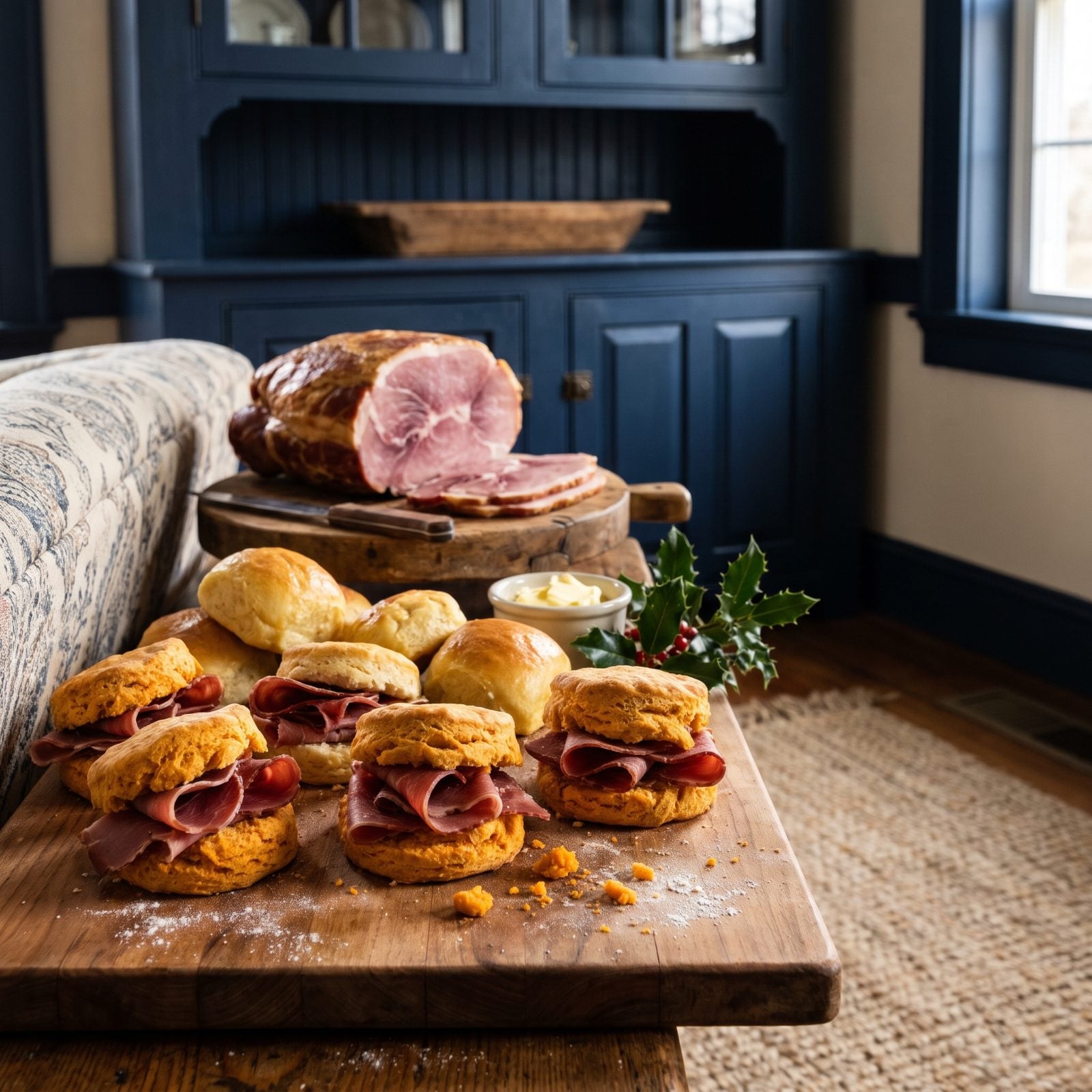
North Carolina country ham is dry-cured and aged, which means it’s already done. You’re warming it, not cooking it. Shave it thin enough and it turns almost silky — salty, deep red, a little dangerous to leave sitting out where people can pick at it.
On Hatteras Island, one columnist built her whole Christmas brunch around country ham tucked into sweet potato biscuits. Our State ran a piece about a writer whose annual Christmas party runs on ham shaved paper-thin and layered onto her mother’s yeast rolls. The State Fair even holds a Country Ham Competition and runs a Country Ham Trail, and one stop served it on a sweet potato biscuit they called the Ham and Yam. I’d drive for that.
12. Christmas Eve Oyster Stew From the Coast
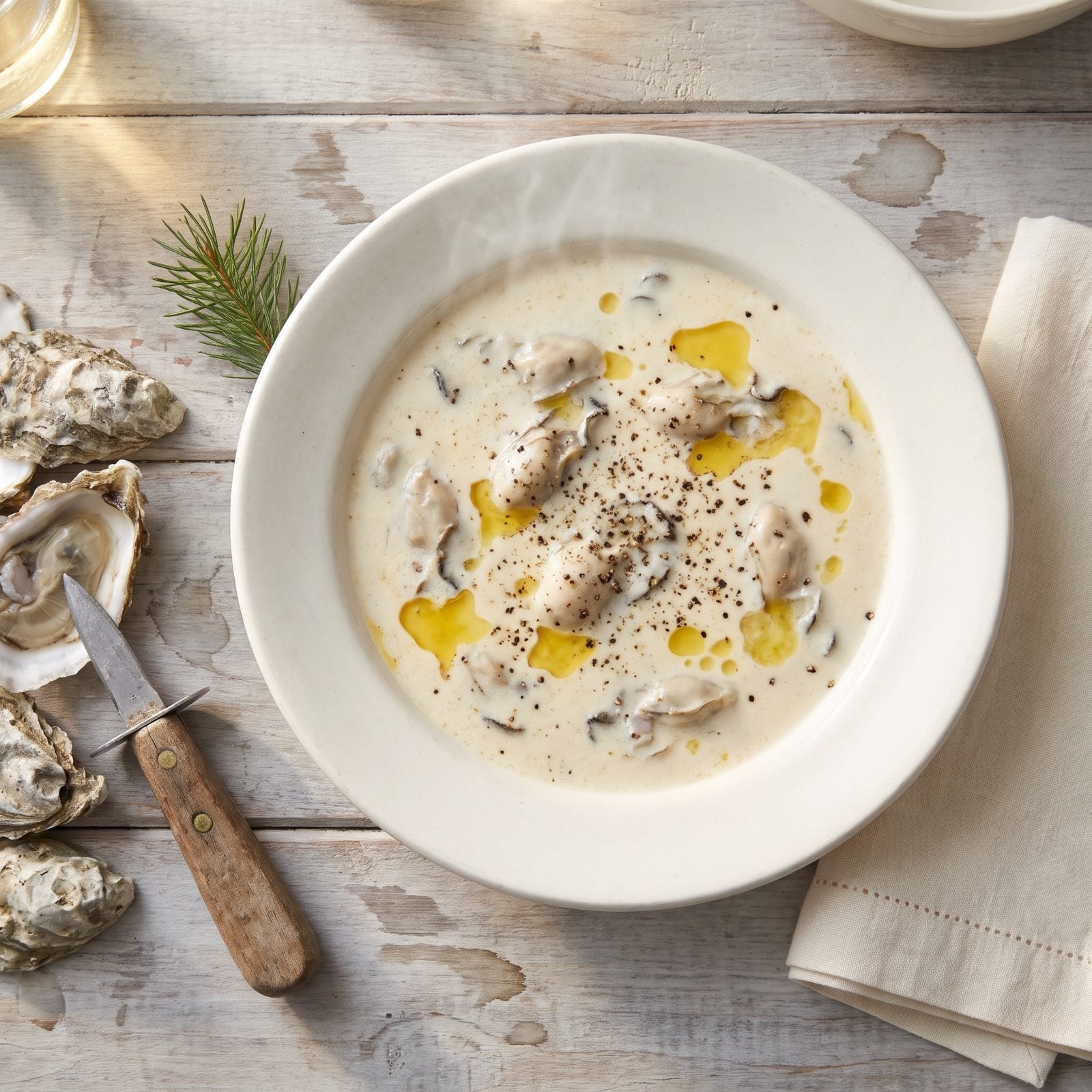
Oysters are at their best in North Carolina waters in the dead of winter, which is exactly when the holidays land. N.C. Sea Grant calls them a holiday staple for Eastern North Carolina families, and for a lot of them, oyster stew on Christmas Eve is the whole ritual.
In rural Orange County, one family’s patriarch shucked oysters for the stew every Christmas Eve while his wife made a coconut cake. Back then, as the family tells it, oysters only came around once a year for the holidays. There’s the thing about a once-a-year dish — the scarcity becomes part of the memory.
11. Oyster Dressing, Almost Required on an Eastern NC Table
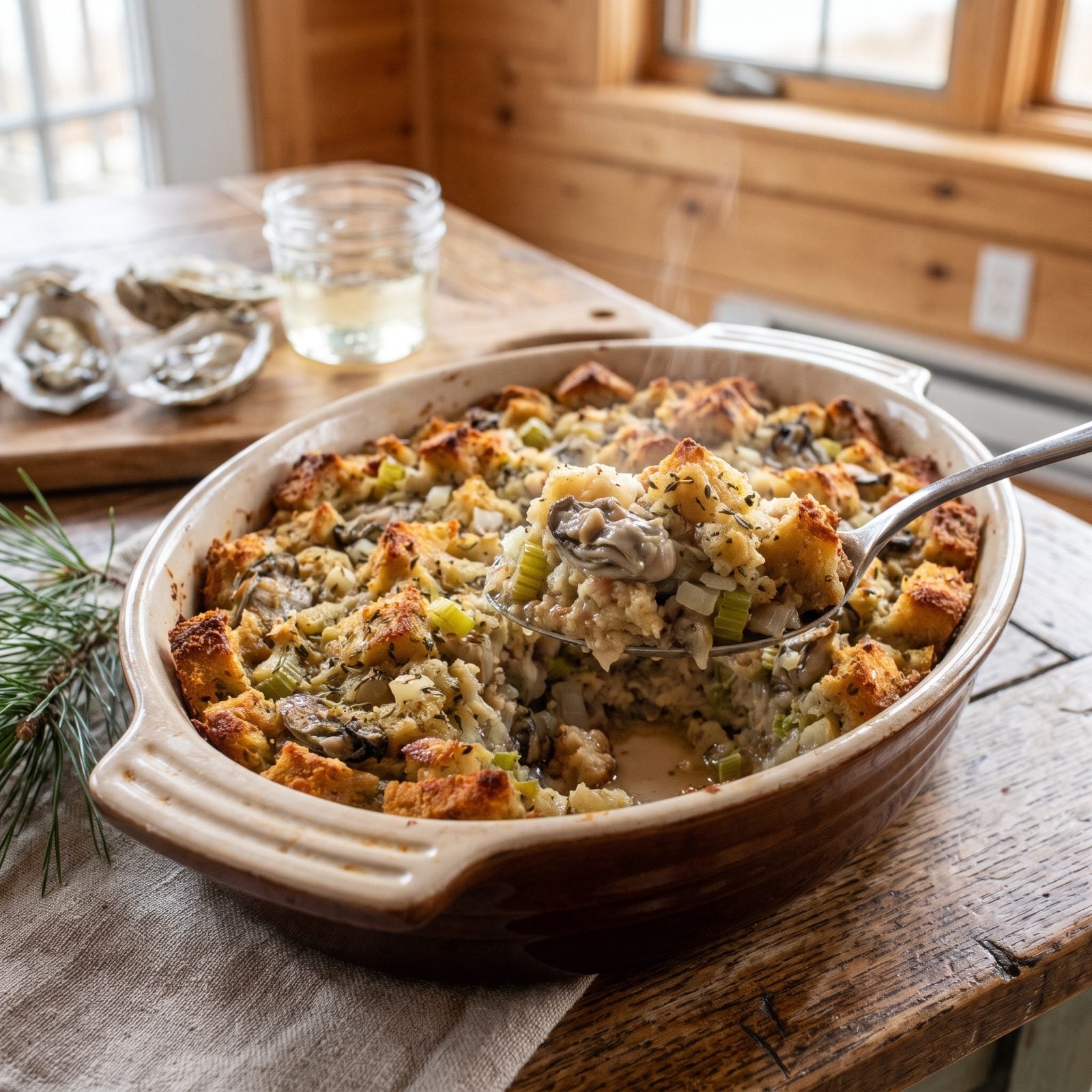
N.C. Sea Grant calls oyster dressing “almost ubiquitous” on Eastern North Carolina holiday tables, and that’s no exaggeration. Coastal families have folded oysters into their dressing for generations. It stretched the meal and fed more mouths.
The classic version runs on toasted French bread, celery, onion, thyme, and the reserved oyster liquid that carries all that briny flavor through the whole pan. Sea Grant’s own recipe tester said it sits right alongside the rest of the Christmas spread without fighting any of it. Smart cooking born out of necessity usually tastes that way.
10. Fresh Coconut Cake, Shipped In by Rail for the Holidays
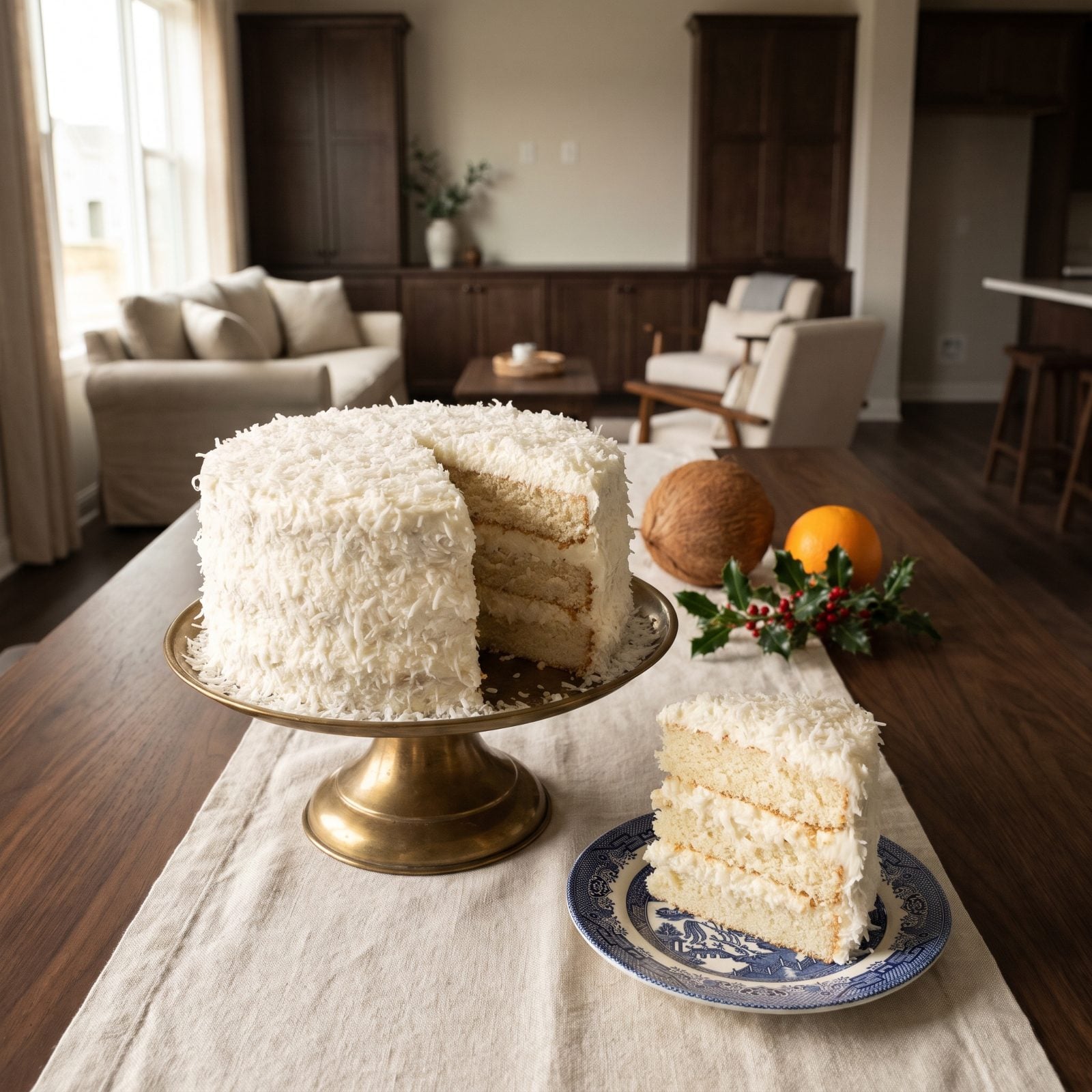
Coconuts don’t grow anywhere near North Carolina, which is exactly why the fresh coconut cake became a Christmas event. Our State describes coconuts riding the train and the truck all over the state, even up into the mountains, to become the holiday splurge. Shoppers at a Winn-Dixie in Boone would shake the fresh coconuts to hear the water sloshing inside before they bought one.
Chapel Hill cookbook author Nancie McDermott rebuilt her grandmother Miss Nannie’s Christmas Eve coconut cake from notes her older sister took down while talking with Miss Nannie. Miss Nannie baked one for each of her three daughters every year on the family’s Orange County dairy farm — the land that later became Mapleview Dairy.
9. Mountain Ambrosia, and the Fight Over What Belongs In It
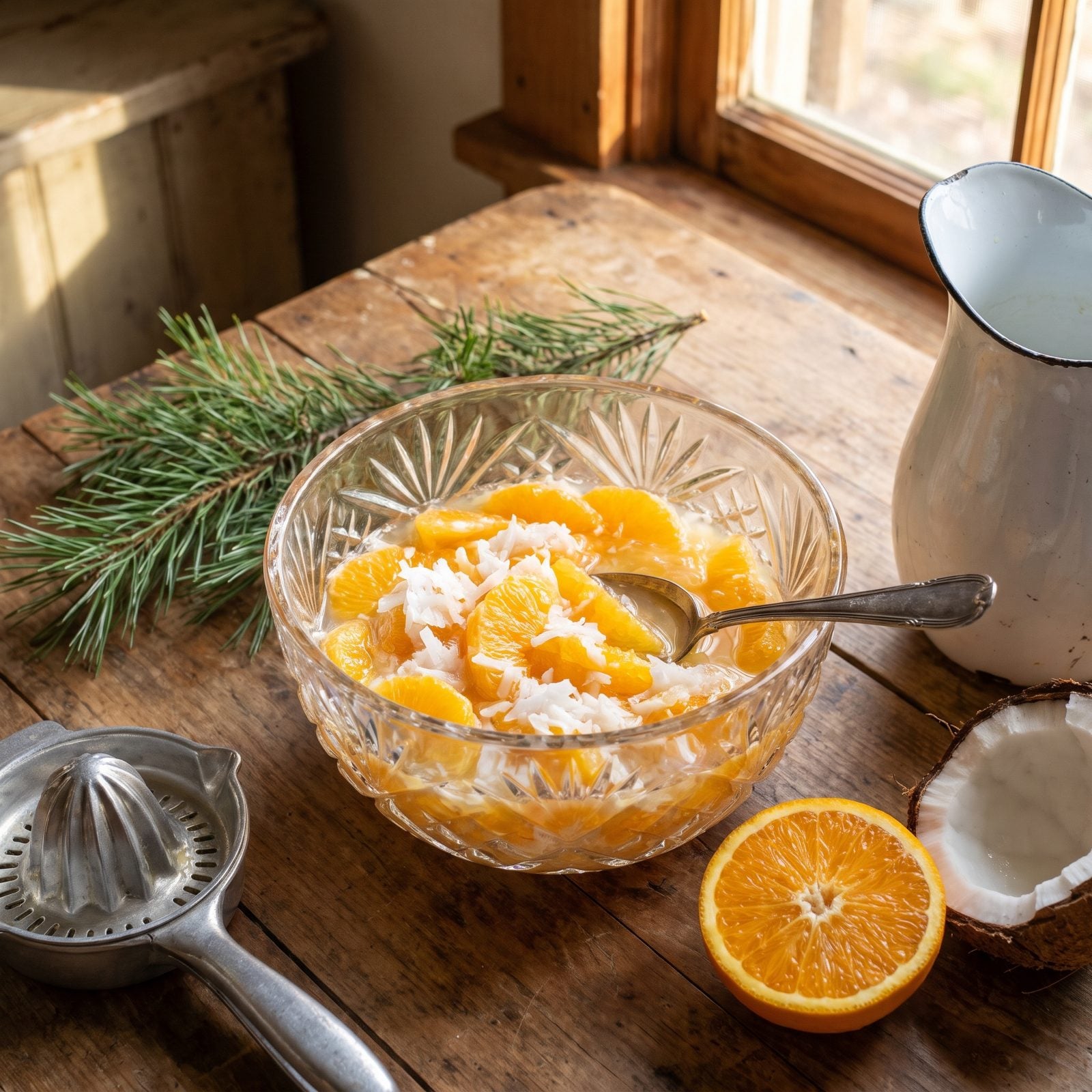
Up in Brasstown, over in Cherokee County, the folks behind the Blind Pig and the Acorn blog say a lot of mountain families don’t count it as Christmas without ambrosia. Simple as it sounds, people have opinions.
Western North Carolina writer John Parris laid down the law: true ambrosia is only fresh coconut, oranges and coconut milk, maybe a splash of sherry or rum if you’re feeling festive. Bananas, pineapple, grapes? He called those “a heresy.” Some mountain families went the other direction entirely and loaded theirs up, calling it Heavenly Hash. I’m team purist, for whatever that’s worth.
8. Japanese Fruitcake, Which Has Nothing To Do With Japan
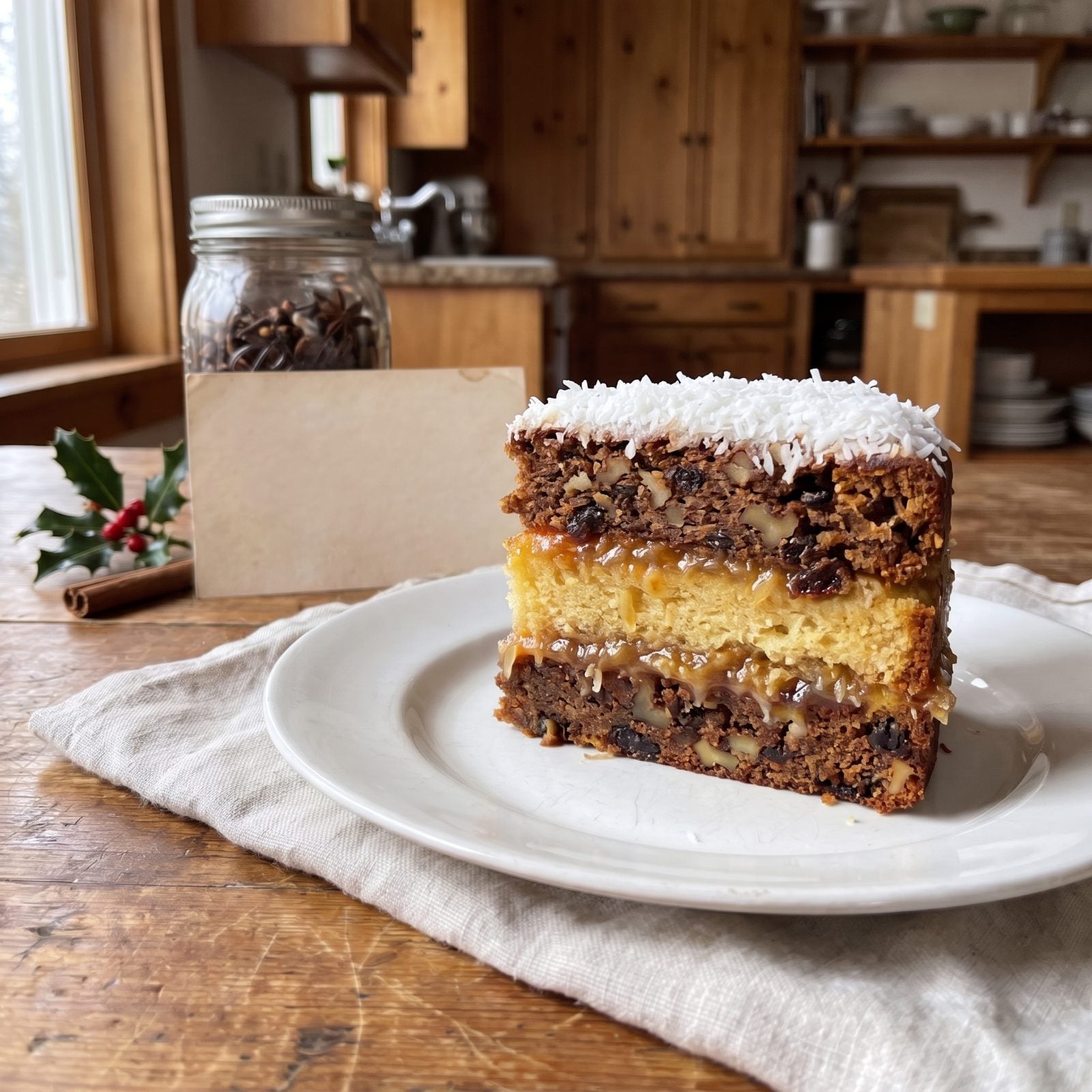
Nothing about it is Japanese, including the spices. Bill Neal, who wrote Biscuits, Spoonbread, and Sweet Potato Pie, pointed that out plainly, and food historians trace the whole thing straight to Southern Appalachia anyway.
What you actually get is a layered spice cake with a coconut filling or icing holding it together — the kind of cake that lands on a Southern holiday table and gets argued about. Smoky Mountain Living counts it among the old-fashioned must-haves. UNC Libraries’ North Carolina Collection blog has dug the recipes out of old community cookbooks, including a Japanese Fruit Cake shown alongside a White Fruit Cake and a Dark Fruit Cake (that one from the Historic Moores Creek cookbook).
7. Apple Stack Cake, Cured Two Days Before Anyone Cuts It
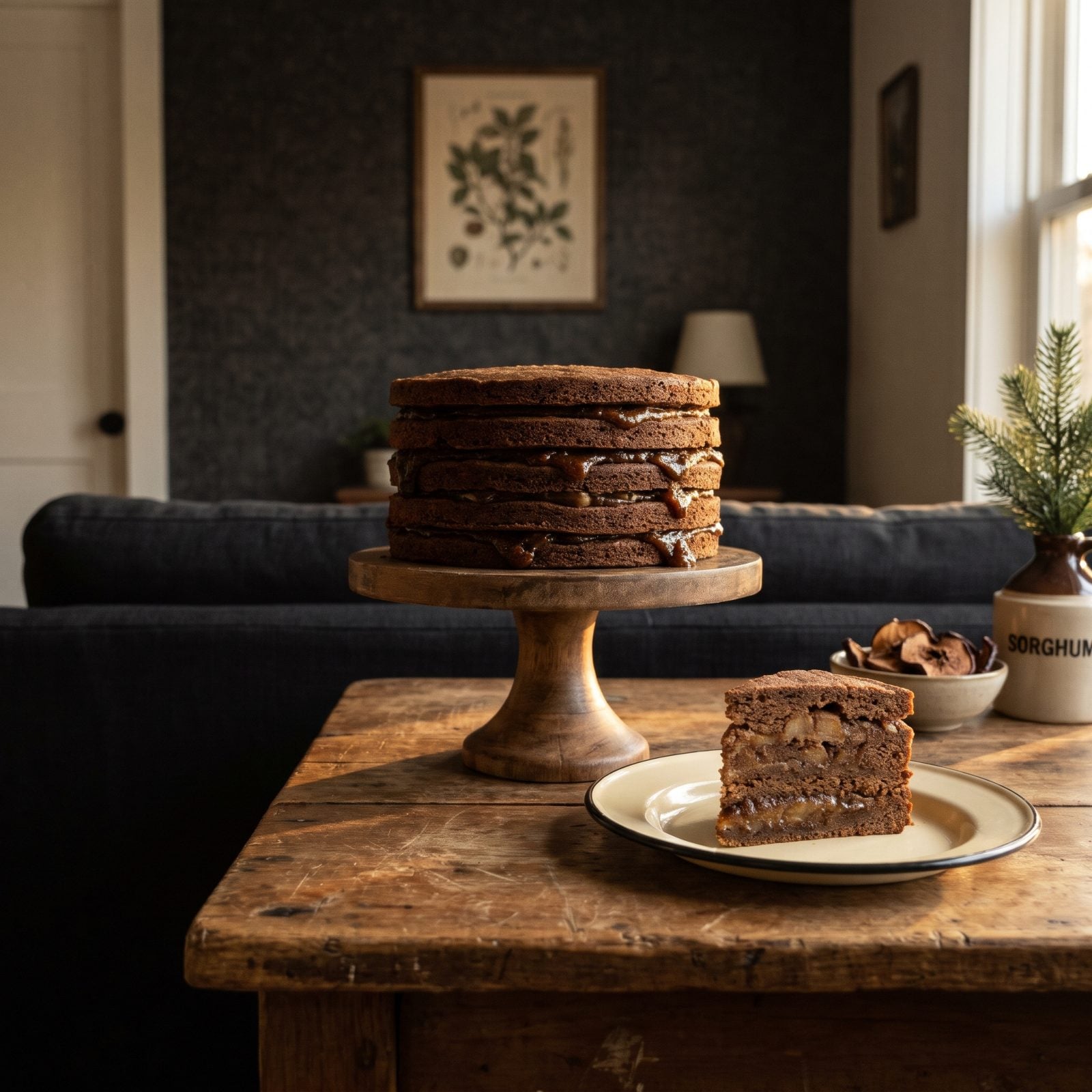
Thin layers, each one closer to a cookie than a cake, stacked with filling made from dried apples cooked down slow and sweetened with sorghum. Then you wait. The whole thing has to cure for a couple of days before you cut it, while the apple filling soaks into every layer and the stack goes from stiff to soft.
Our State calls it one of the most deeply Appalachian recipes there is. The N.C. Folklife Institute says it caught on in the mountains once flour became easy to get. And there’s a bit of folklore to it: wedding guests supposedly each brought a layer, so the taller the cake, the more popular the couple. Make this one early. The patience is the recipe.
A cake you can’t cut for two days is a cake made by people who understood that the best things don’t rush.
6. Sweet Potato Pie, the Eastern North Carolina Pie Nobody Lets You Skip
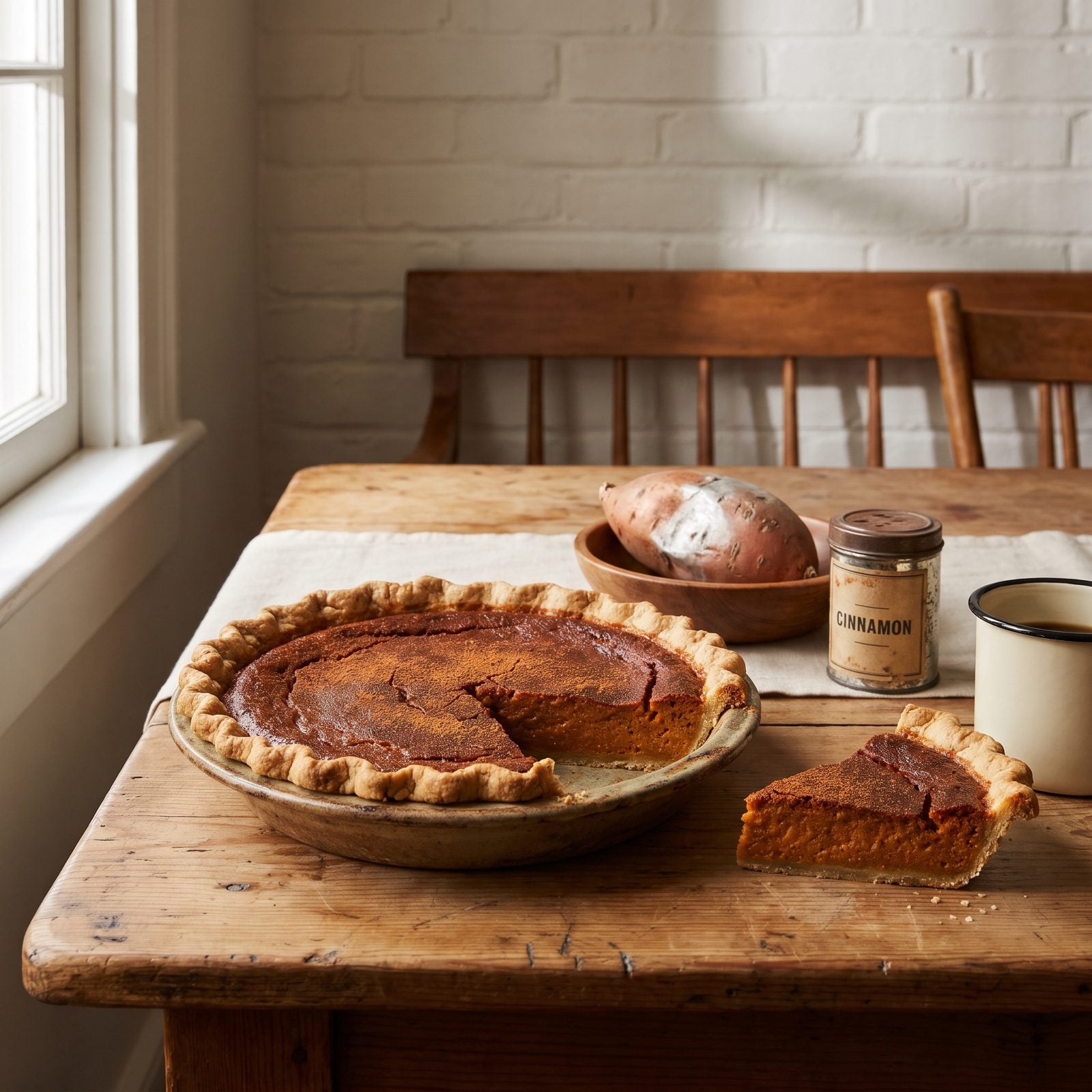
North Carolina grows most of the sweet potatoes in the country, so of course the holiday pie fight here isn’t pumpkin versus apple. It’s pumpkin versus sweet potato, and in the eastern counties, pumpkin loses.
The filling cooks down dense and almost custardy, darker and earthier than pumpkin, with cinnamon and a little nutmeg doing most of the talking. NC State researchers and a Benson farmer worked out storage methods that keep the crop coming year-round, which is why North Carolina sweet potatoes stay on shelves year-round, not just after the fall harvest.
5. Persimmon Pudding, the Piedmont Dessert That Waits for the First Frost
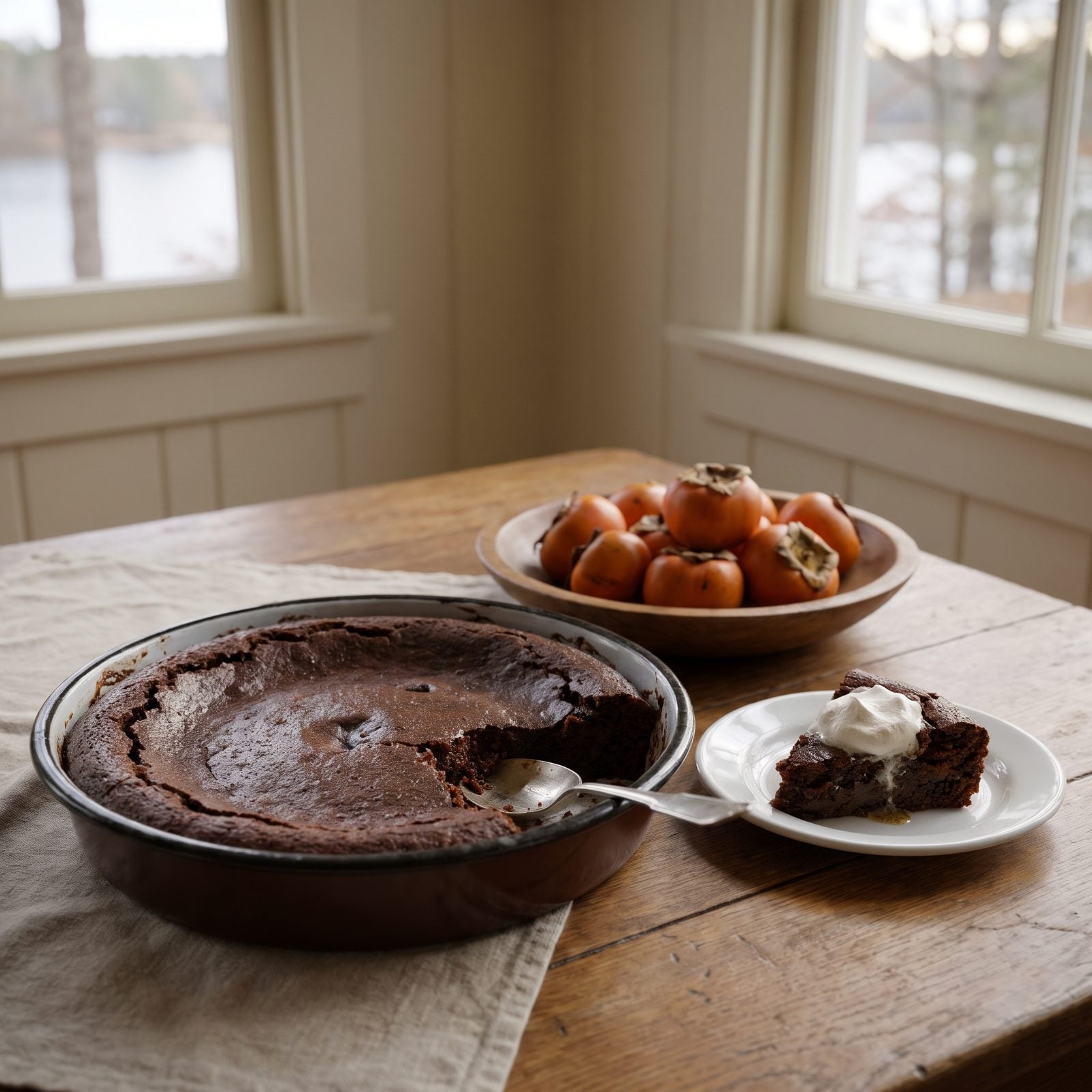
You can make persimmon pudding with store fruit. Big, glossy Hachiya-type persimmons from the grocery will do in a pinch, though tradition calls for the small native American persimmons, the ones that ripen and go soft right around the first frost and show up at Piedmont farmers markets for a few short weeks in fall and early winter.
Author Georgann Eubanks tracked it down as mostly a Piedmont family tradition, and Cardinal Pine flat-out calls it a uniquely North Carolina holiday dish. The Guilford County community of Colfax throws a whole Persimmon Festival around it, selling packages of persimmon pulp so folks can make theirs at home. It bakes up dark and dense, somewhere between a pudding and a spice cake, and it does not photograph like much. Doesn’t matter. The people who grew up on it would recognize the smell from the driveway.
4. Black Walnut Pound Cake, the Flavor You Either Grew Up On or Can’t Stand
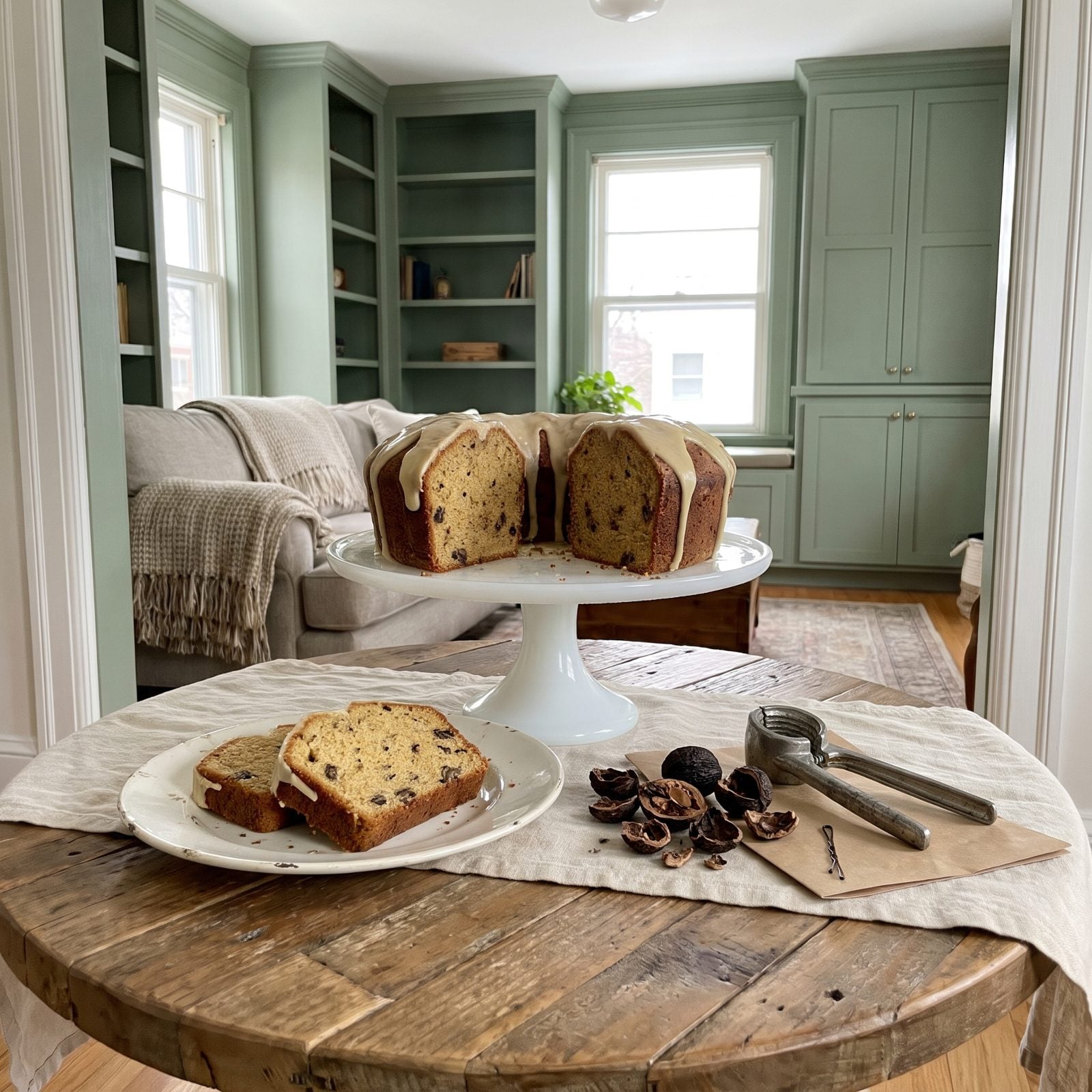
Black walnuts split families down the middle. The flavor is bolder, muskier, almost bitter next to the mild English walnut most people know, and holiday cooks who love it really love it.
The trees grow all over North Carolina, doing best in rich, well-drained bottomlands, mountain coves and moist, fertile hillsides. Our State describes the classic cake as a brown-sugar pound cake under penuche frosting, the kind of treat that counted as rare back when the nuts had to be gathered by hand every fall.
And gathering is the right word. One North Carolina cook on Taste of Southern tells of cracking black walnuts open with bricks, then digging the meat out of those deep ridges with a bobby pin. Hours of work for one cake. You can taste the patience.
That split shows up in our reader votes too: when readers disliked a food photo, the top reason was simply “not for me,” followed by the ingredients themselves.
3. Boiled Custard, the Drinkable Dessert Passed Down by the Spoonful
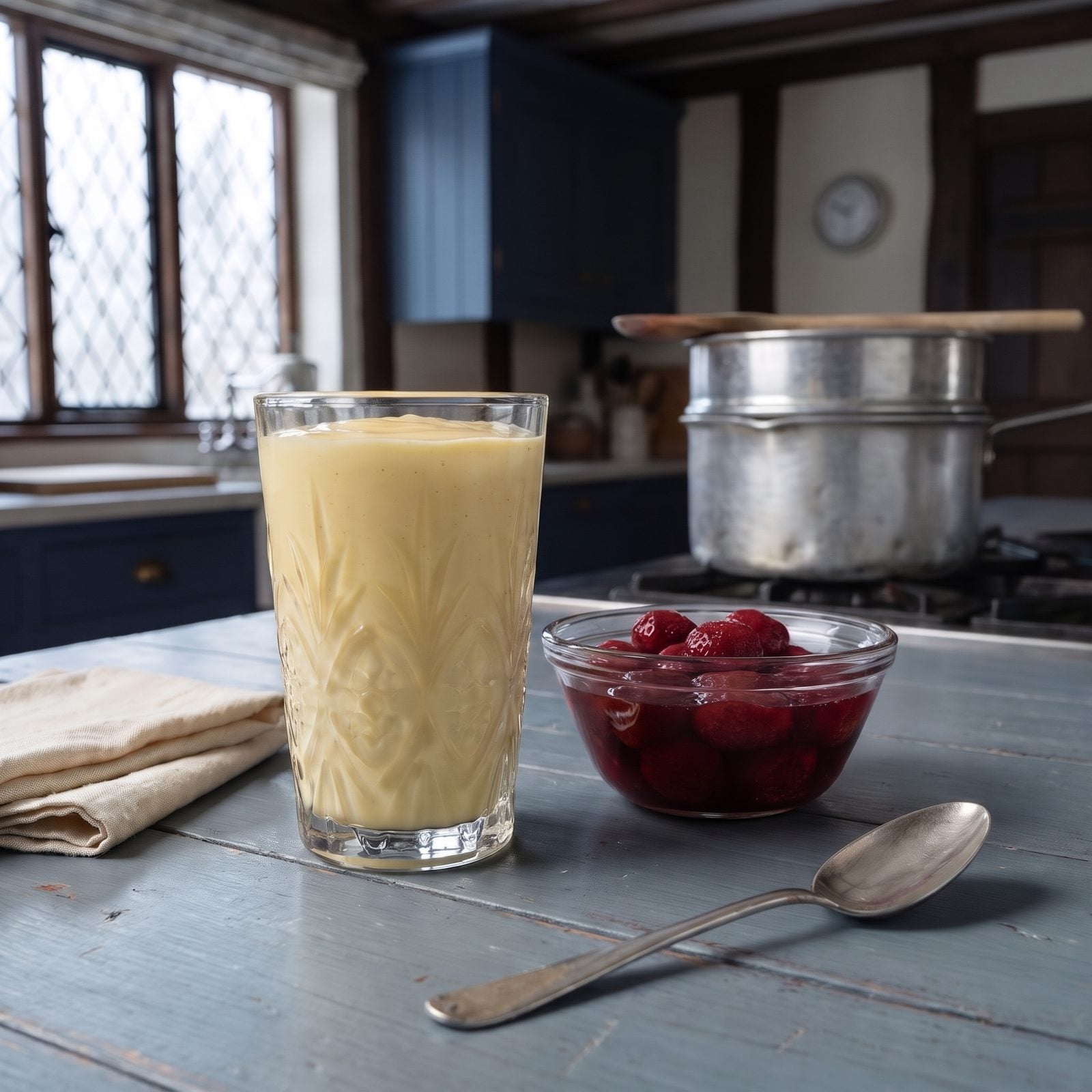
Half the state has never heard of it. The other half can’t imagine Christmas without it.
Boiled custard is a thick, pourable custard you drink, made from whole milk, Pet evaporated milk, sugar and eggs, cooked slow over a double boiler until it coats the back of a spoon. Carolina Country, the state’s electric co-op magazine, ran a version called “Ma Perry’s Boiled Custard” from the magazine’s own contributing recipes editor, Wendy Perry, whose family has made it every Christmas since before she was born.
In that family’s telling, the grandmother served it with home-canned strawberries spooned on top. That’s the detail that gets me. Somebody put up those strawberries in June knowing exactly what December was going to ask for.
2. Cheerwine Holiday Punch, Salisbury’s Cherry-Red Party in a Bowl
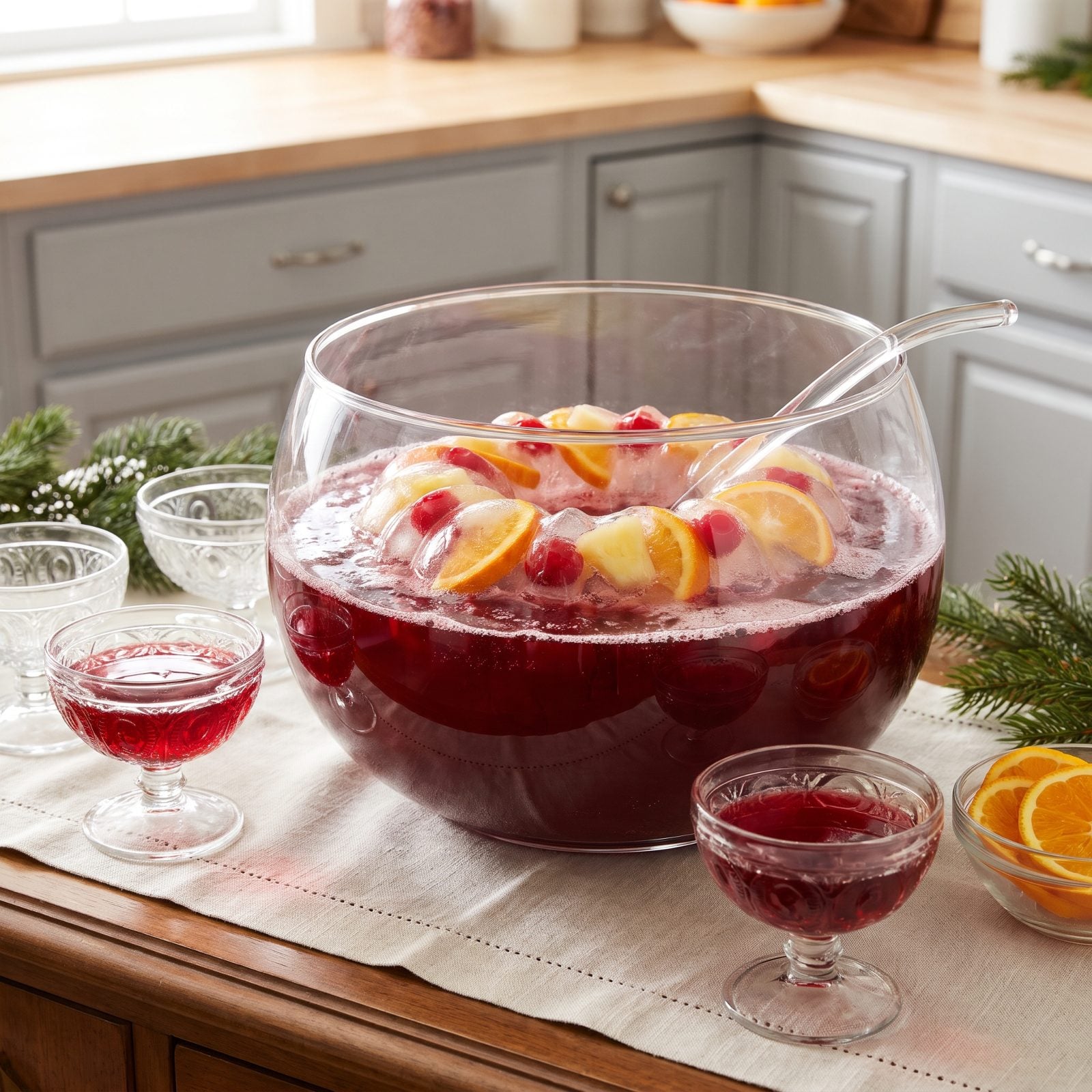
Cheerwine isn’t cherry-flavored cola. It’s its own thing, a cherry soft drink that’s been made by the same family in Salisbury for over a century, and locals get a little territorial about it.
The holiday punch is the party version: Cheerwine with ginger ale and a pineapple note, poured over a frozen fruit ice ring molded in a Bundt pan so it floats like a crown in the bowl. Carolina Country publishes a Christmas recipe for exactly that, built on the bottled Holiday Cheerwine Punch that the company still brings back to shelves for a limited time each holiday season.
The founding family says Cheerwine has been part of their own holidays since before the 1930s. That cherry red in a glass bowl is basically a Piedmont tradition wearing its Sunday clothes.
1. Chicken and Pastry, the Coastal Comfort Dish Tied to Old Christmas on Hatteras
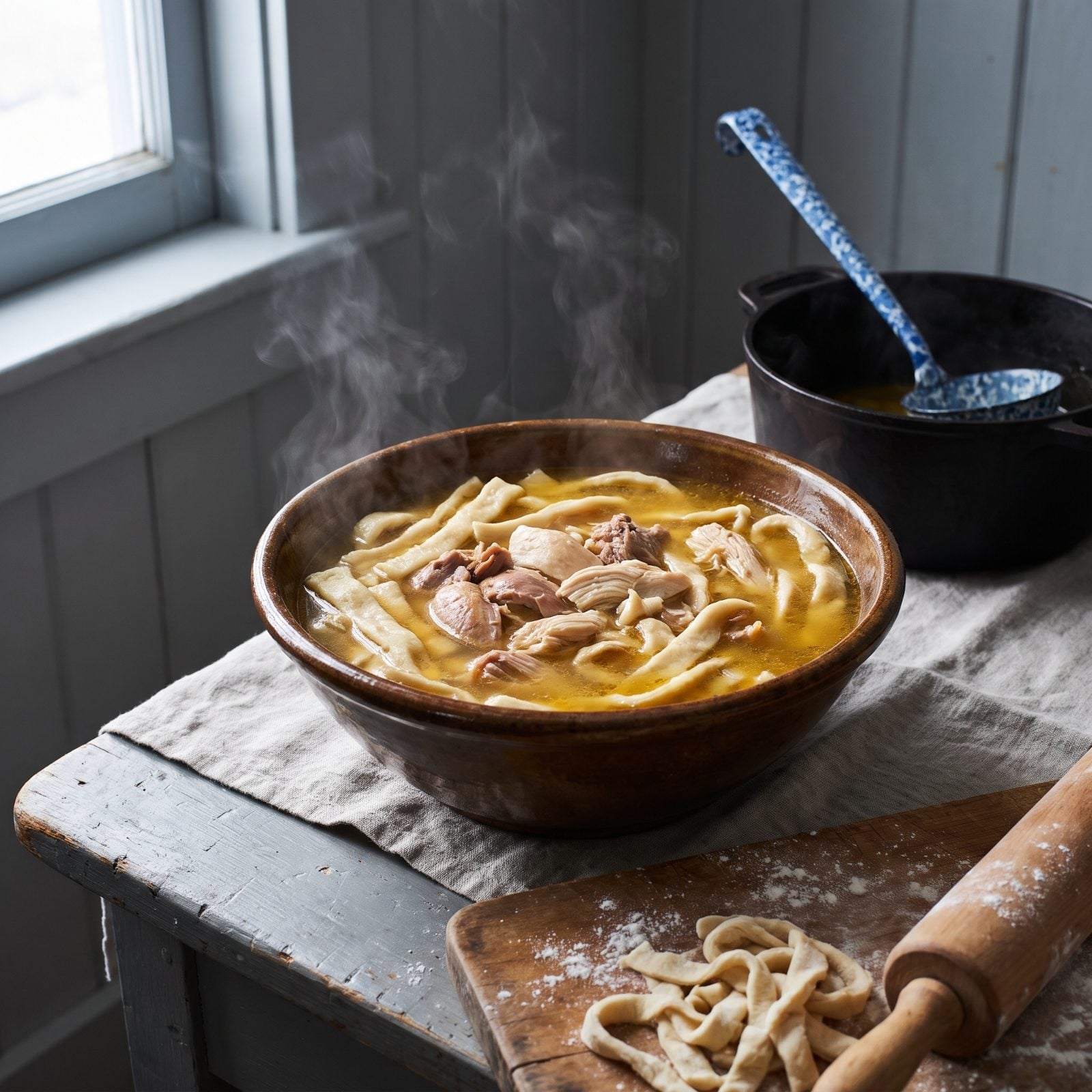
Call it dumplings anywhere else and an Eastern North Carolina cook will correct you. This is chicken and pastry: a whole chicken simmered down in its own broth, with thin strips of rolled flour pastry dropped in to go soft and silky.
Down on Hatteras Island, it’s bound up with Old Christmas, a celebration they’ve kept in early January for centuries. When the calendar changed in the mid-1700s, the island simply ignored it and kept celebrating in early January, 11 days after the new Christmas date, and chicken and pastry and oyster roasts were part of the feast.
Rodanthe still holds Old Christmas at the Rodanthe-Waves-Salvo Community Building, with oyster roasts, an oyster shoot, and the appearance of “Old Buck.”
Nothing fancy in the bowl. Flour, chicken, broth, salt. But it’s the kind of food that tastes like a place that held onto its own calendar out of pure stubbornness, and good for them.
Hearty mains like this tend to do well with our readers, with main course photos getting hearts 80% of the time versus 76% for other images in the same articles.