
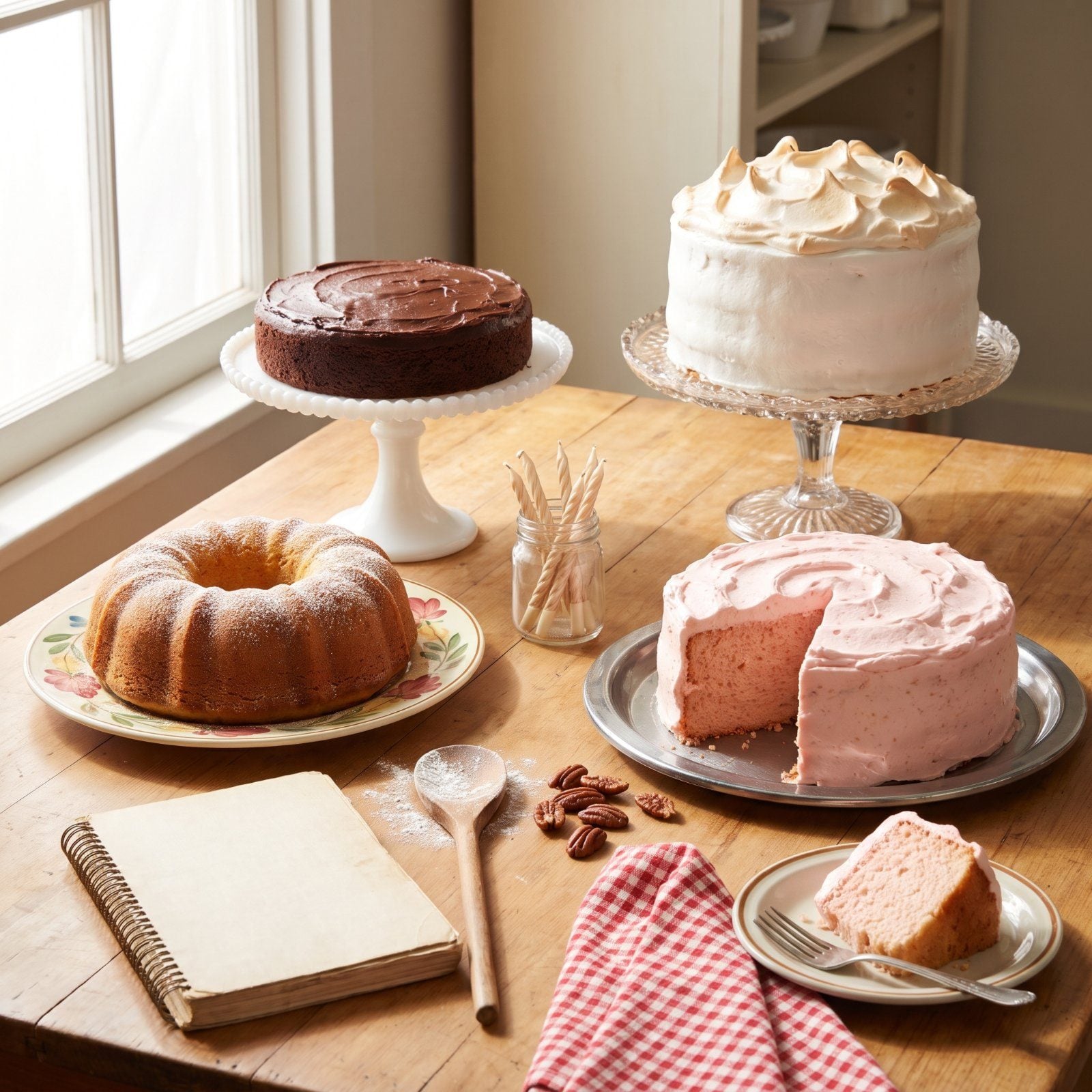
The best birthday cakes weren’t invented by chefs. They came out of ration books, church cookbooks, flour-sack recipe cards, and the test kitchen of a company trying to sell more Bundt pans. A cake tells you what a family could afford, what was rationed, and what the hostess wanted the neighbors to think when they walked in and saw it sitting there under a glass dome. We tracked down the real recipes — the dated ones, the ones that actually showed up on tables — and baked our way forward from the Depression. Candles optional. Second slice mandatory.
Please note that some of the images in this article were created with the assistance of AI.
1930s: The Depression-Era Wacky Chocolate Cake
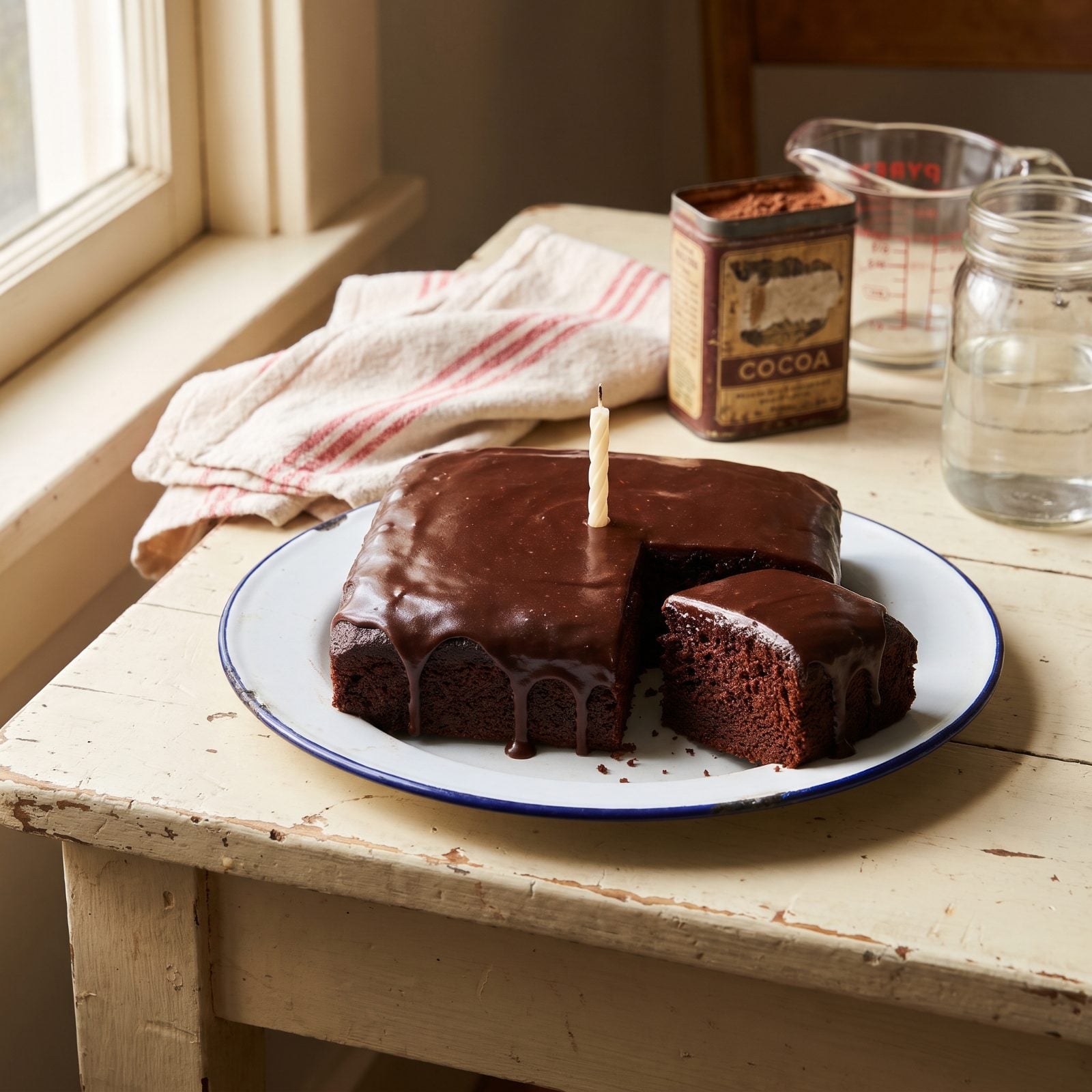
No eggs, no milk, no butter. That’s the whole trick, and it wasn’t a gimmick. When the pantry had cocoa, flour, oil, vinegar, and baking soda and not much else, this cake happened. Mix the vinegar and soda right into the batter and the reaction gives you the lift that eggs would have.
It shows up in community cookbooks and newspaper columns all through the 1930s, and bakers have never let it go. The crumb comes out damp and springy in a way that genuinely surprises people who sat down expecting a sad, apologetic little cake.
Modern note: use a neutral oil, don’t overmix once the vinegar goes in, and bake it in an 8-inch square. A plain cocoa glaze is the period-correct finish — nothing fancier.
1930s: Mahogany Cake With Boiled Ermine Frosting
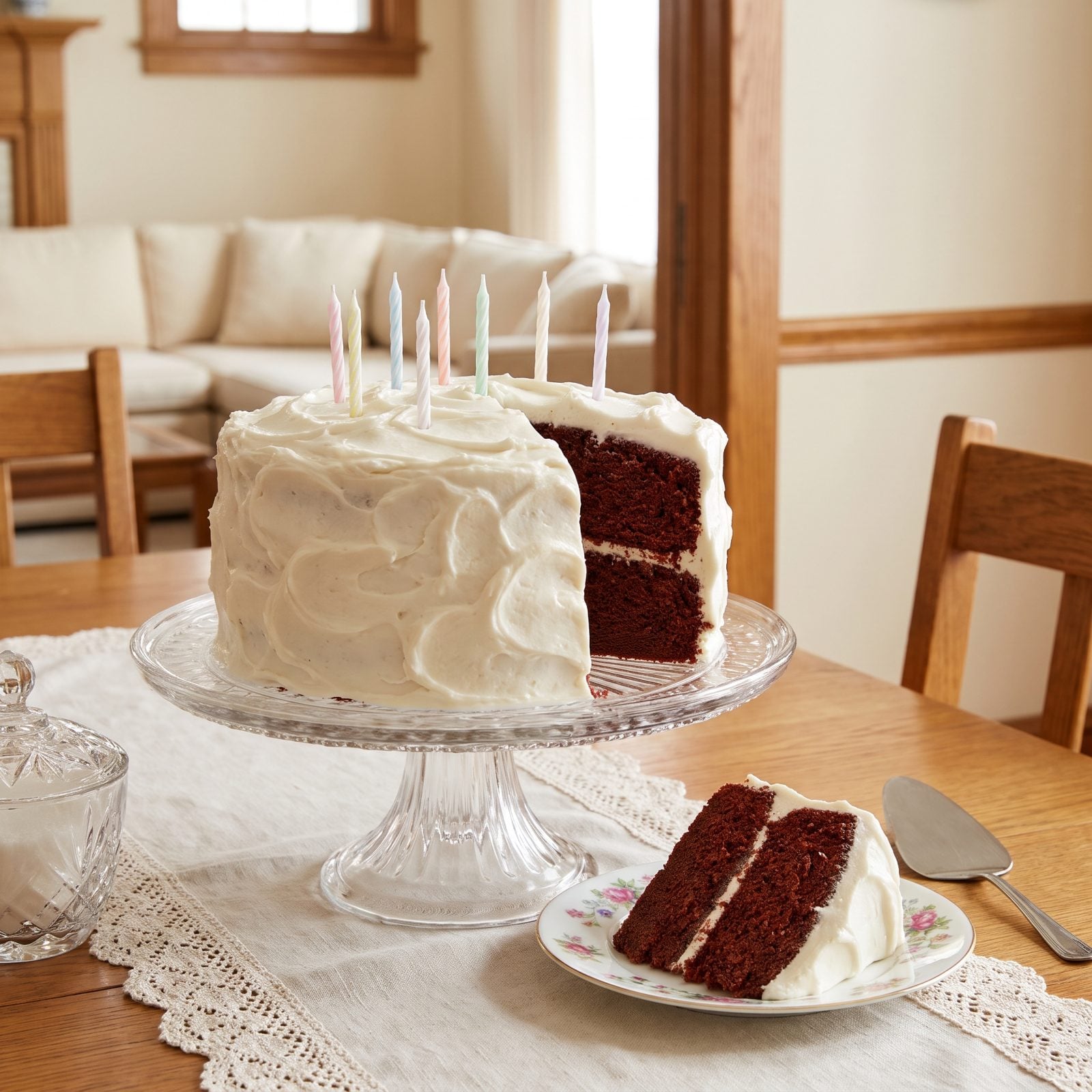
The color does all the talking. “Mahogany” came from cocoa reacting with buttermilk and baking soda, pulling a reddish-brown warmth out of the crumb long before anyone dreamed of dumping a bottle of red dye into a bowl.
But the frosting is the real star. Ermine — sometimes called boiled milk frosting or roux frosting — starts with flour and milk cooked into a thick paste, cooled, then beaten into creamed butter and sugar. The result lands somewhere closer to whipped cream than buttercream: silky, barely sweet.
Modern guidance: let that flour paste cool completely before it meets the butter, or the whole thing weeps and splits on you. And beat it long. It fluffs up right at the moment you’ve decided it never will.
1930s: Lady Baltimore Cake With Fruit-and-Nut Filling
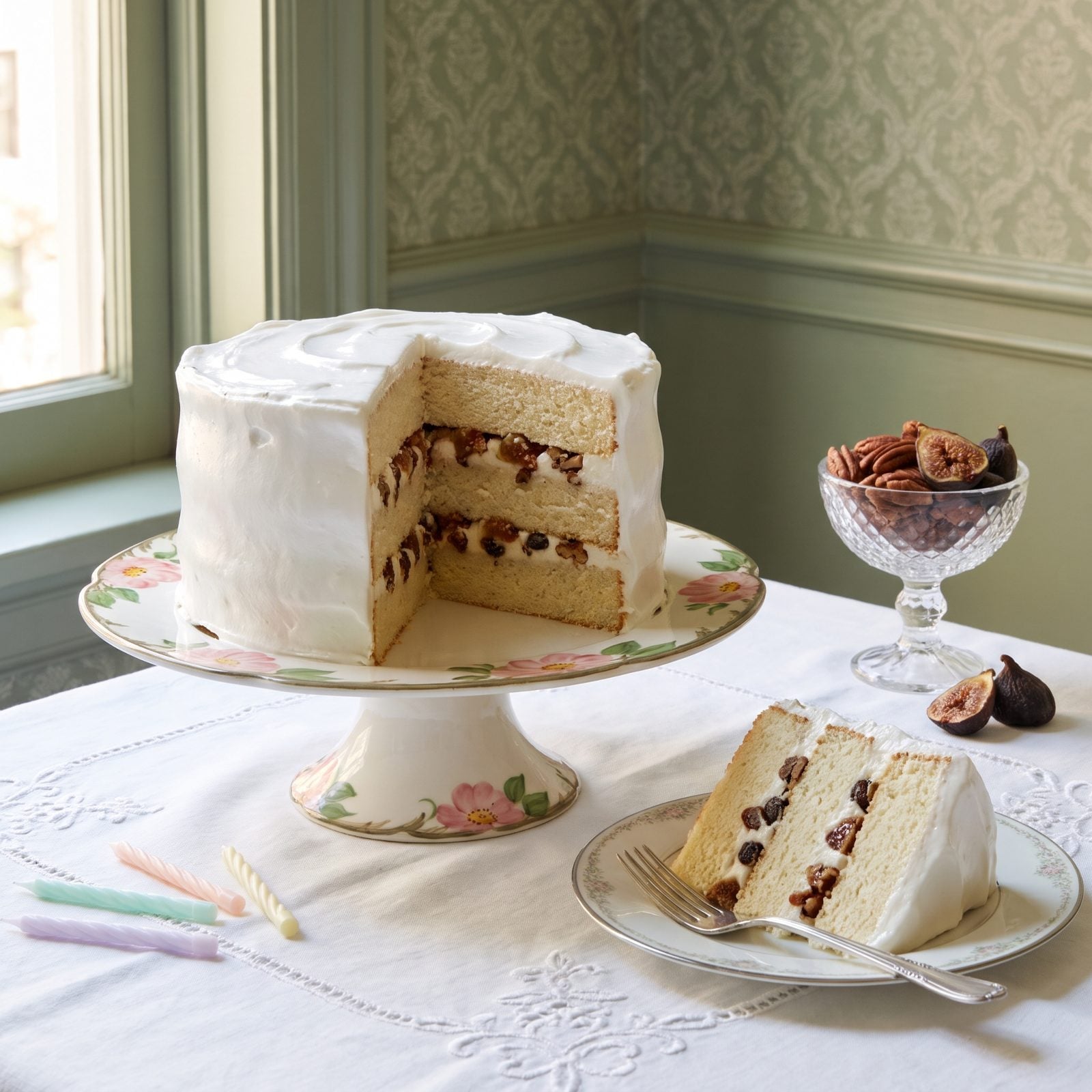
This was the cake you made when company mattered. Fluffy white layers, a cloud of boiled frosting, and a filling packed with chopped figs, raisins, and pecans soaked until the whole thing tasted faintly of something grown-up.
It carries an early 20th-century literary backstory from a Charleston novel, and it held its spot as a celebration cake well into the 1930s, especially across the South, where people saved it for birthdays, graduations, and anniversaries alike.
Modern tip: toast the pecans and give the dried fruit a soak in a little orange juice or sherry. Fold them into the frosting right before you spread it.
What Our Readers Say
- When Piaci Pizza readers loved a food photo and tapped a reason, comfort came out on top at 30%, with nostalgia picked 15% of the time.
- When our readers disliked a food photo, the top reason was simply “not for me” at 39%, followed by the ingredients at 29%.
From Piaci Pizza reader polls and votes.
1940s: Eggless Wartime Chocolate Victory Cake
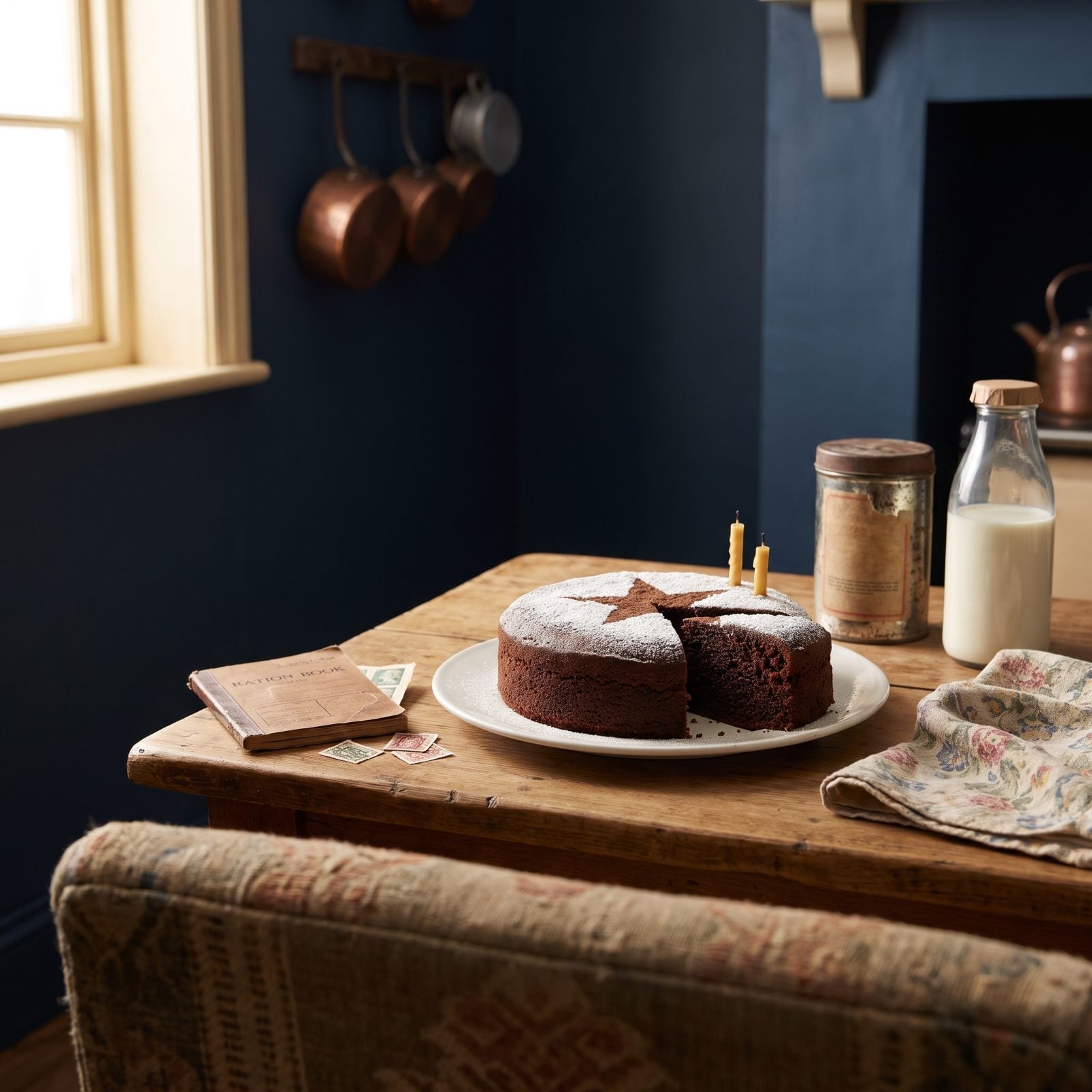
Eggs went to the war effort, so bakers went around them. Victory cakes leaned on cocoa, a little fat, and clever chemistry to rise without the eggs that had gone suddenly precious — or vanished from the icebox entirely.
These recipes filled the backs of ration-era pamphlets and women’s magazine columns, printed right next to tips on stretching sugar. What came out was darker and denser than peacetime chocolate cake, and nobody apologized for it.
Modern guidance: a tablespoon of vinegar with the baking soda does the lifting. Don’t skimp on the cocoa. A dusting of powdered sugar through a stencil was the thrifty, patriotic finish, and it still looks sharp.
1940s: Ration-Era Orange Cake With Mock Cream
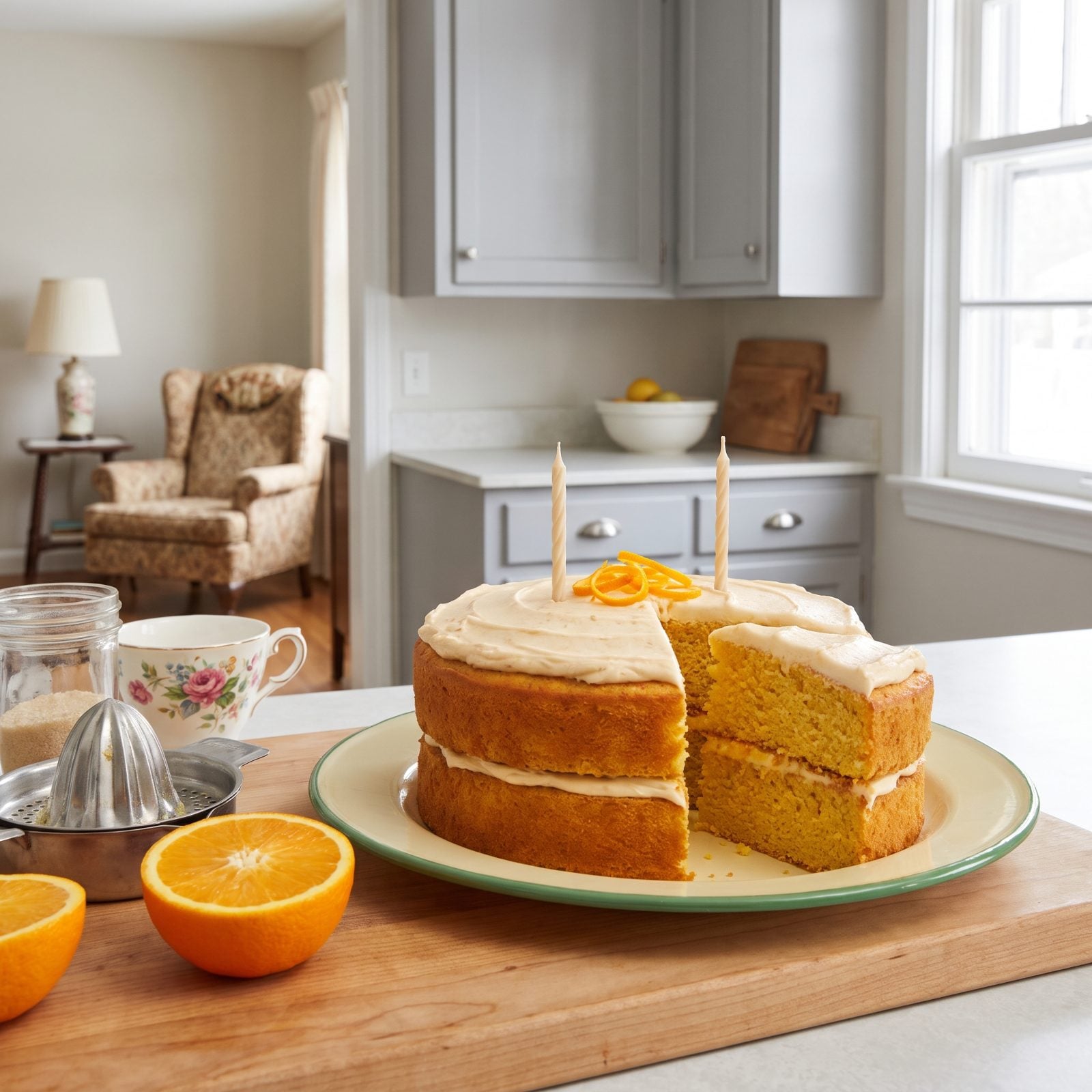
When butter was scarce, you made mock cream. Beat a little butter or margarine with sugar and milk until it fluffs into something that passes convincingly for whipped cream, and suddenly you had a filling without raiding the ration allotment.
The orange cake underneath used real juice and zest to carry flavor where richer fats couldn’t. Plenty of these recipes came out of Australian and British wartime kitchens and traveled, since everyone was rationing the same things at the same time.
Modern tip: dissolve the sugar fully into the mock cream or it stays gritty. A real orange, juiced and zested, beats any extract. Keep the sponge light and don’t overbake — orange cake dries out fast.
1940s: Wartime Spice Cake With Raisins
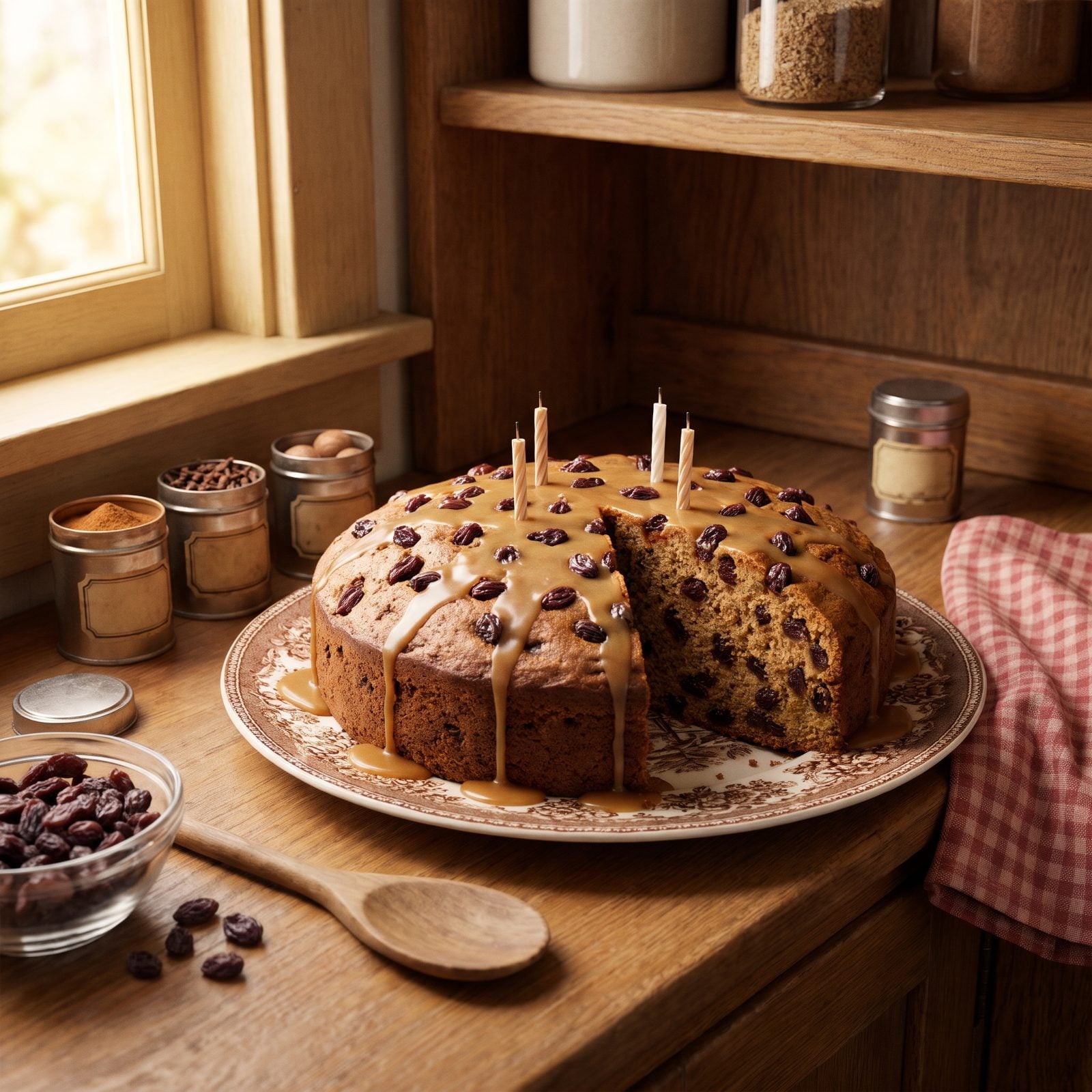
Boiled raisins did double duty. Simmering them released natural sweetness, so you could ease up on rationed sugar, and the soaking water went straight into the batter. Spice cakes thrived during the war precisely because cinnamon, cloves, and nutmeg made a thrifty cake taste rich.
This style became known as boiled raisin cake, or war cake, and versions of it reach all the way back to the first World War before returning in the 1940s. It keeps beautifully — which mattered when you baked ahead.
Modern note: let the boiled raisin mixture cool before adding the dry ingredients. A brown-sugar glaze suits it better than any fussy frosting.
1950s: Pineapple Chiffon Cake With Whipped Frosting
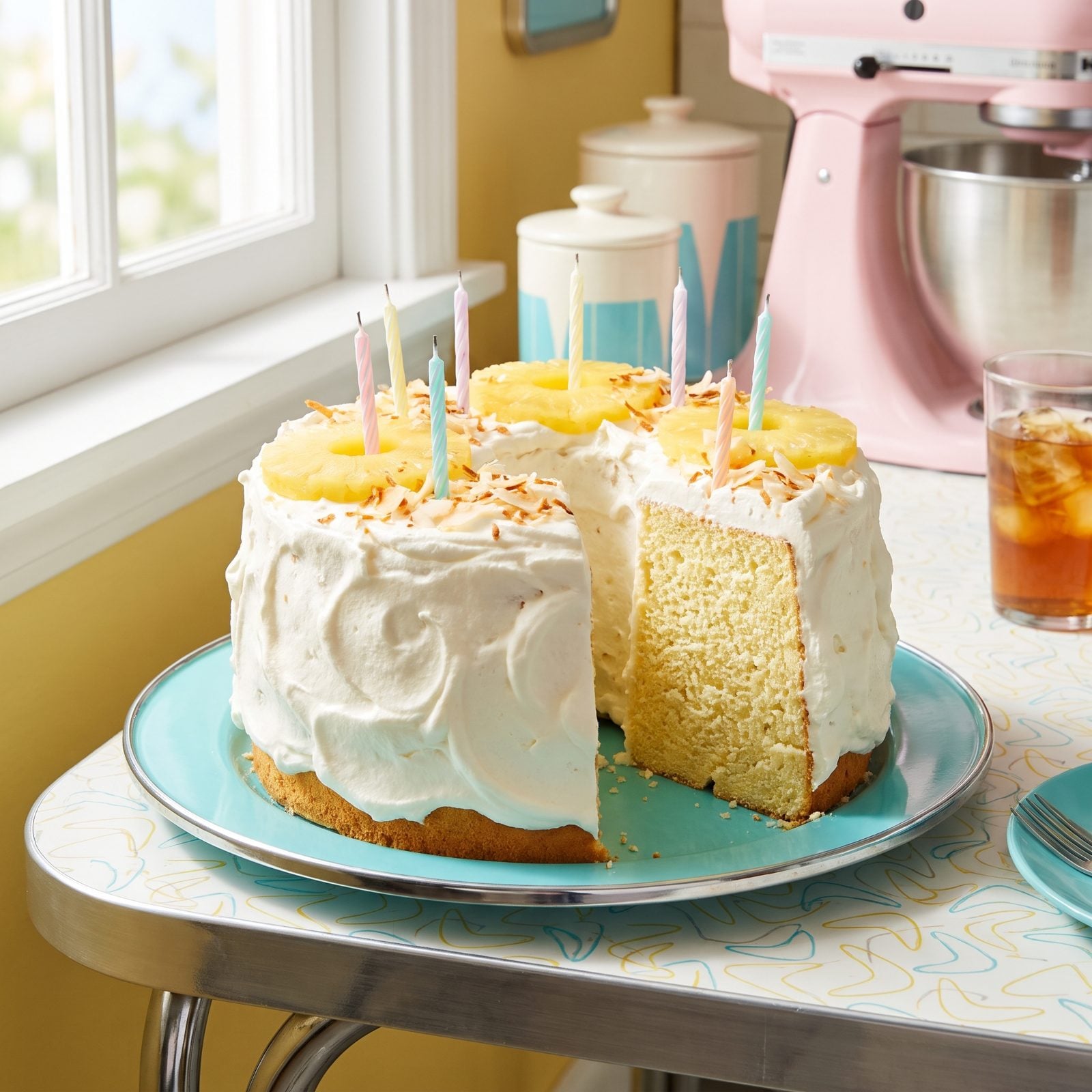
Chiffon cake was the modern marvel of the era. The secret was vegetable oil instead of butter, which gave you a cake that stayed tender and feather-light even straight out of the icebox. General Mills bought the formula from its inventor and published it in 1948, and the whole decade went chiffon-crazy.
The pineapple version leaned hard into the fruit-forward, tropical mood mid-century hostesses adored. Whipped frosting kept it from feeling heavy.
Modern tip: beat the egg whites to firm peaks and fold gently. Cool the cake upside down in the pan so it doesn’t collapse under its own lightness.
1950s: Silver White Cake With Seven-Minute Frosting
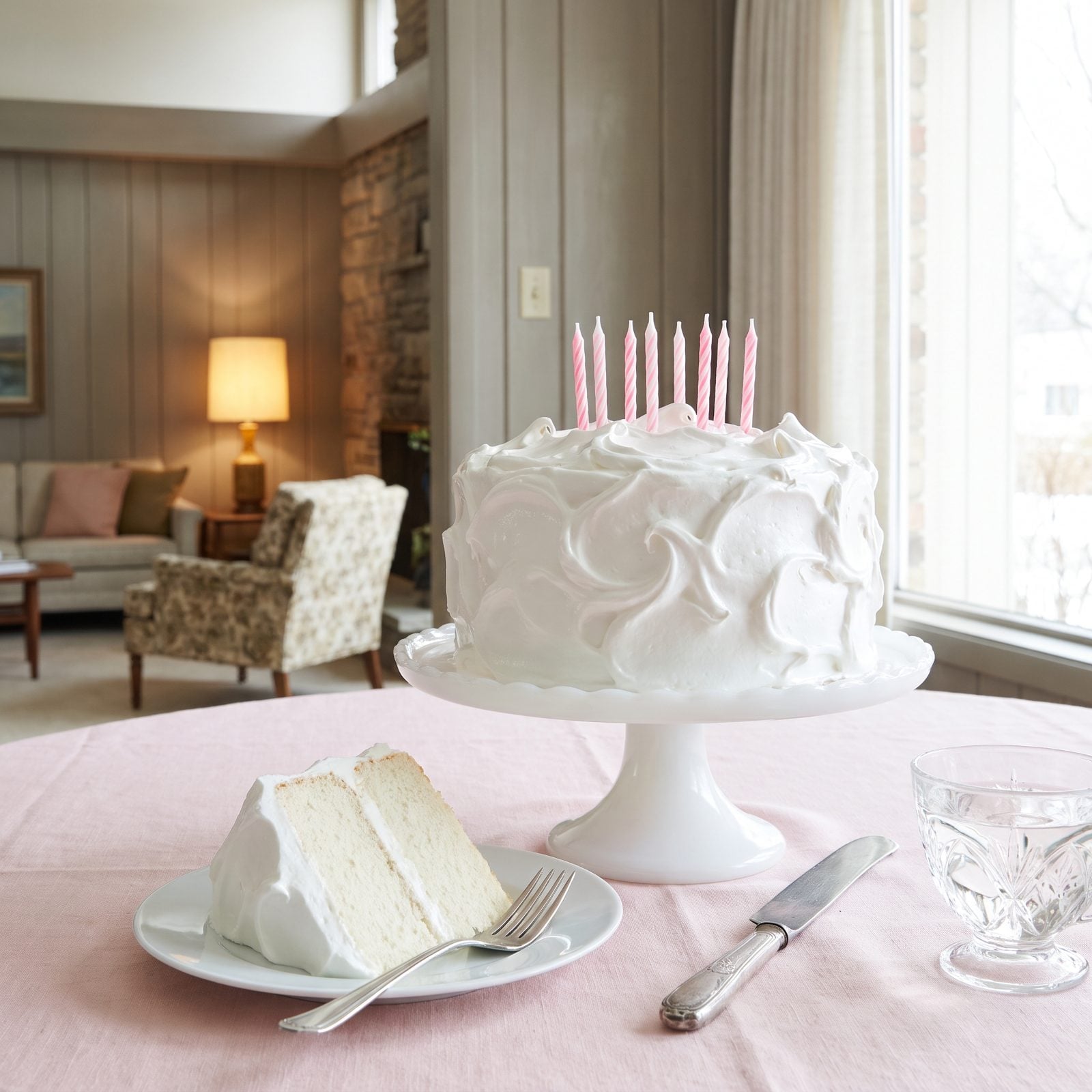
This was the birthday cake of the decade, the one that looked like it belonged in a magazine ad because it usually did. An egg-white-only batter gave a crumb so pale it earned the name silver cake, and seven-minute frosting gave it that glossy, marshmallow-soft shell on top.
You cook the frosting over a double boiler, beating the whole time until it holds a peak — which is roughly where the seven minutes comes from.
Modern guidance: use a candy thermometer, or at least commit to constant beating. Humidity is the enemy here. Don’t make this frosting on a muggy day unless you want it weeping by dessert, and serve it the same day it’s made.
1950s: Atomic Cake With Banana, Chocolate and Strawberry Layers
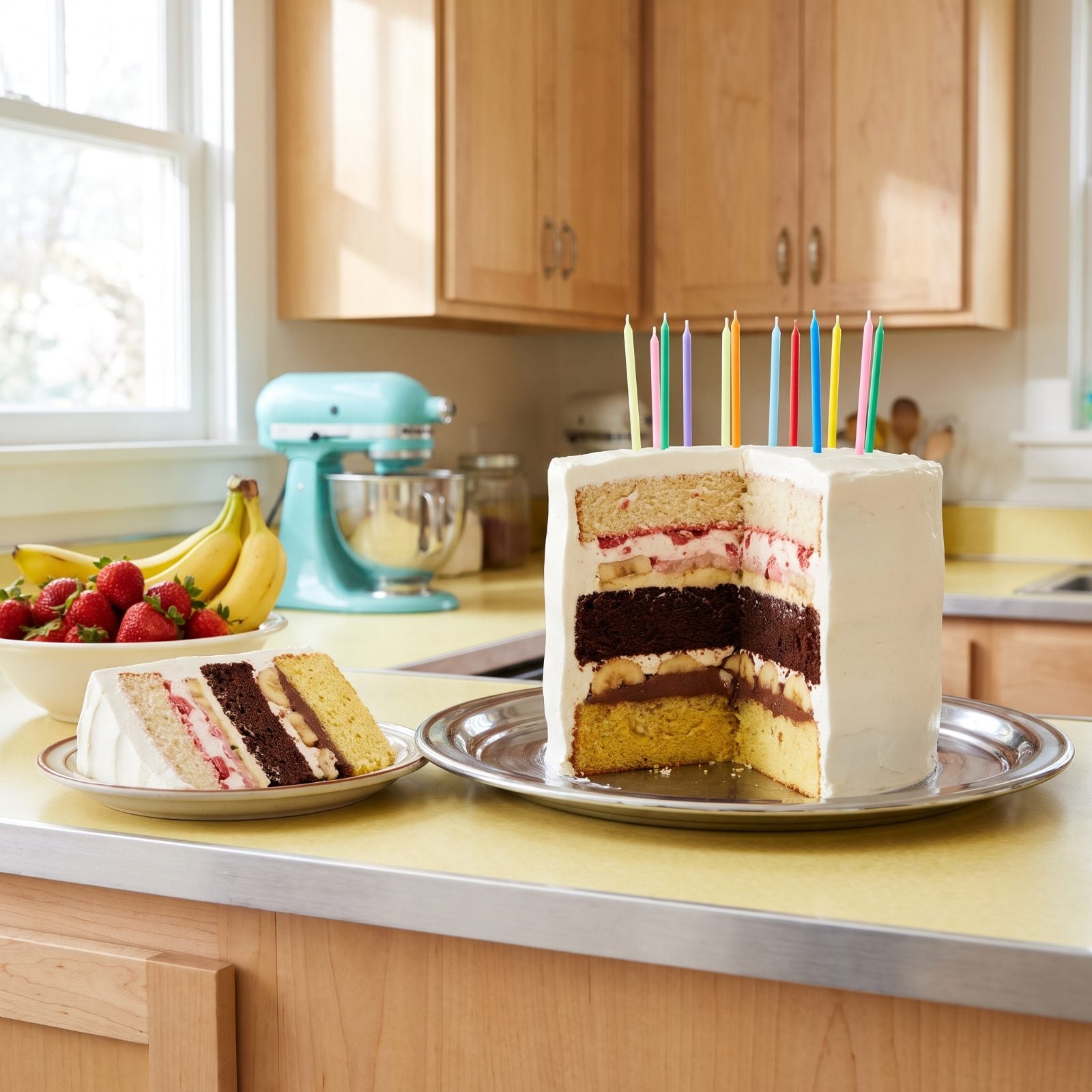
Chicago claims this one, and the name fits the era — a cake built like a tower of excess, named for the atomic age that birthed it. Banana cake, chocolate cake, strawberry layer, each with its own filling of pudding, fresh fruit, and whipped cream, all stacked tall and coated in white. Nobody makes this quietly.
It became a South Side bakery legend and the default birthday showpiece for generations of Chicago families.
Modern tip: this is an assembly job more than a baking job. Make the layers ahead, chill everything, and build it the day you serve it. Banana slices go in right before stacking so they don’t brown. It needs the fridge, and it needs to be eaten fast.
1960s: Tunnel of Fudge Bundt Cake
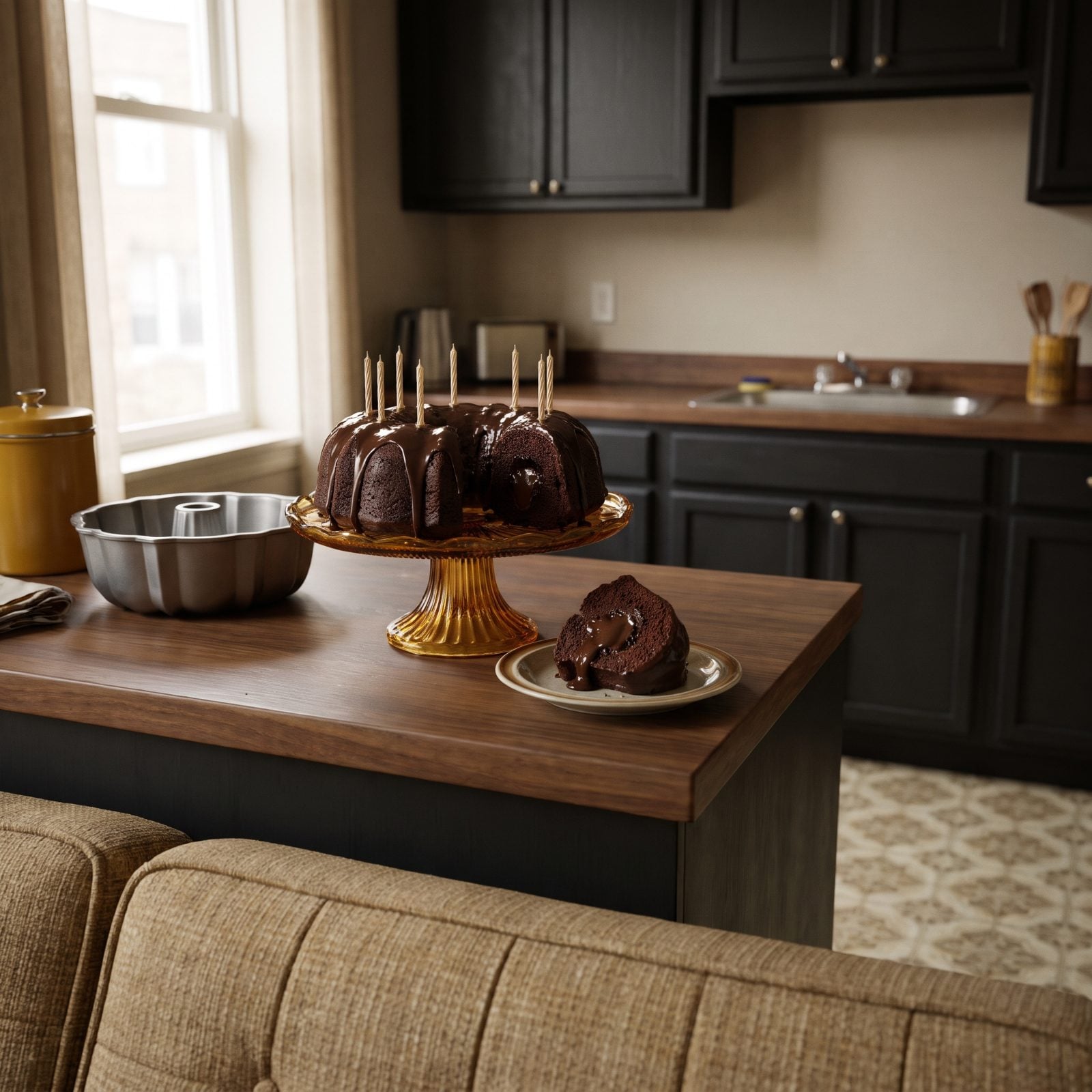
This cake launched a thousand Bundt pans. It took second place at the 1966 Pillsbury Bake-Off and promptly turned the fluted tube pan into a must-have in every American kitchen. The gooey center was no accident — it came from a specific ratio of chocolate frosting mix and nuts that stayed soft while the outside baked firm.
Here’s the catch for modern bakers: the original leaned on a dry frosting mix that no longer exists, so the recipe got reworked over the years using cocoa and sugar to recreate that fudgy tunnel.
Modern guidance: you can’t test for doneness with a toothpick — the center is supposed to stay molten. Go by time and a firm top crust, and let it cool before unmolding or the tunnel tears right open.
1960s: Pink Champagne Birthday Cake
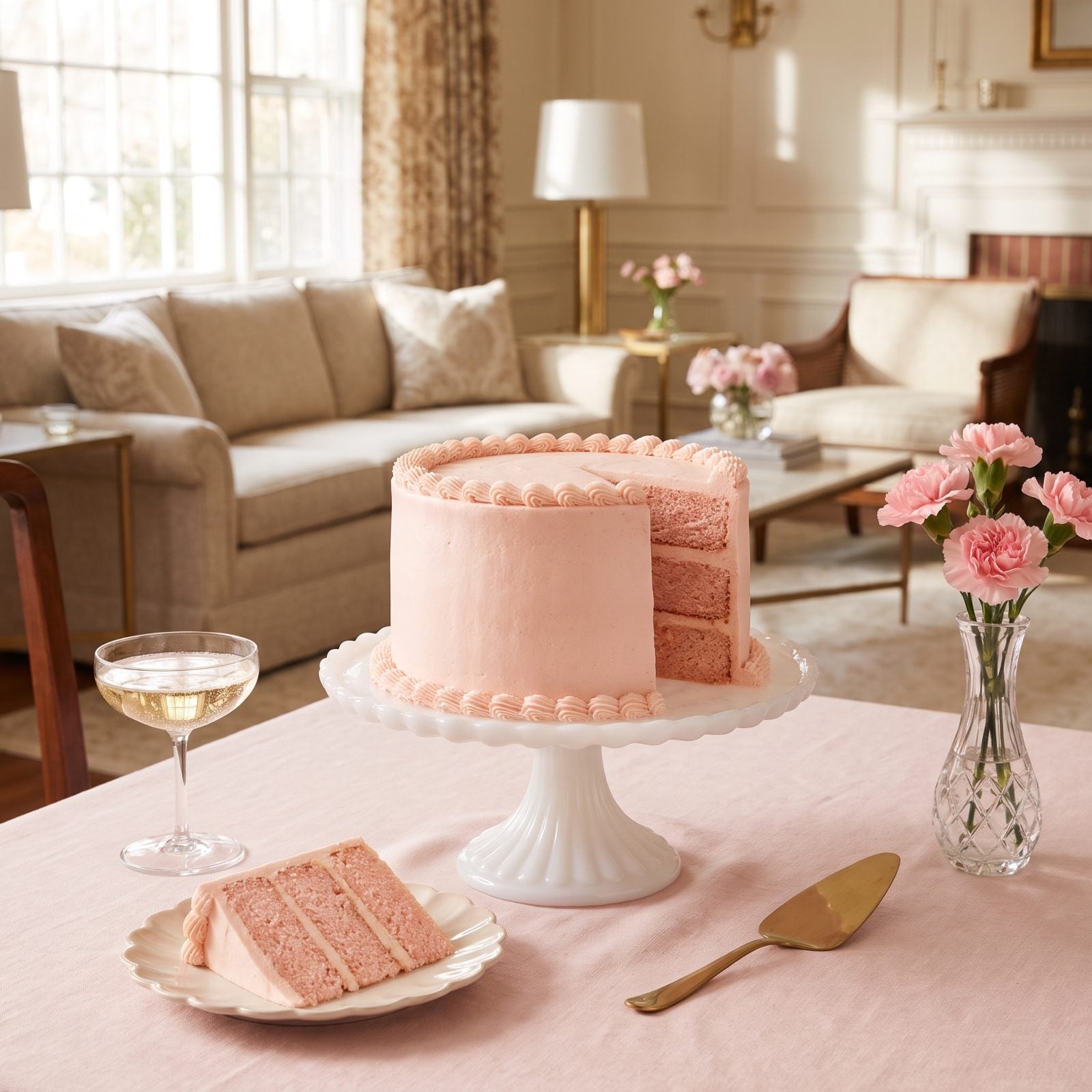
Pink champagne cake came out of California bakeries in the late 1950s and hit its stride through the 1960s, back when a cake tinted the color of a bridesmaid dress felt like the height of grown-up glamour. The sparkling wine mostly cooks off, leaving a tender crumb and a whisper of something fancy.
Most versions start from a white cake base, with champagne swapped in for part of the liquid and a few drops of pink coloring, and the buttercream gets the same treatment. Lighter than it looks. That’s the whole trick.
1970s: Watergate Cake With Pistachio Frosting
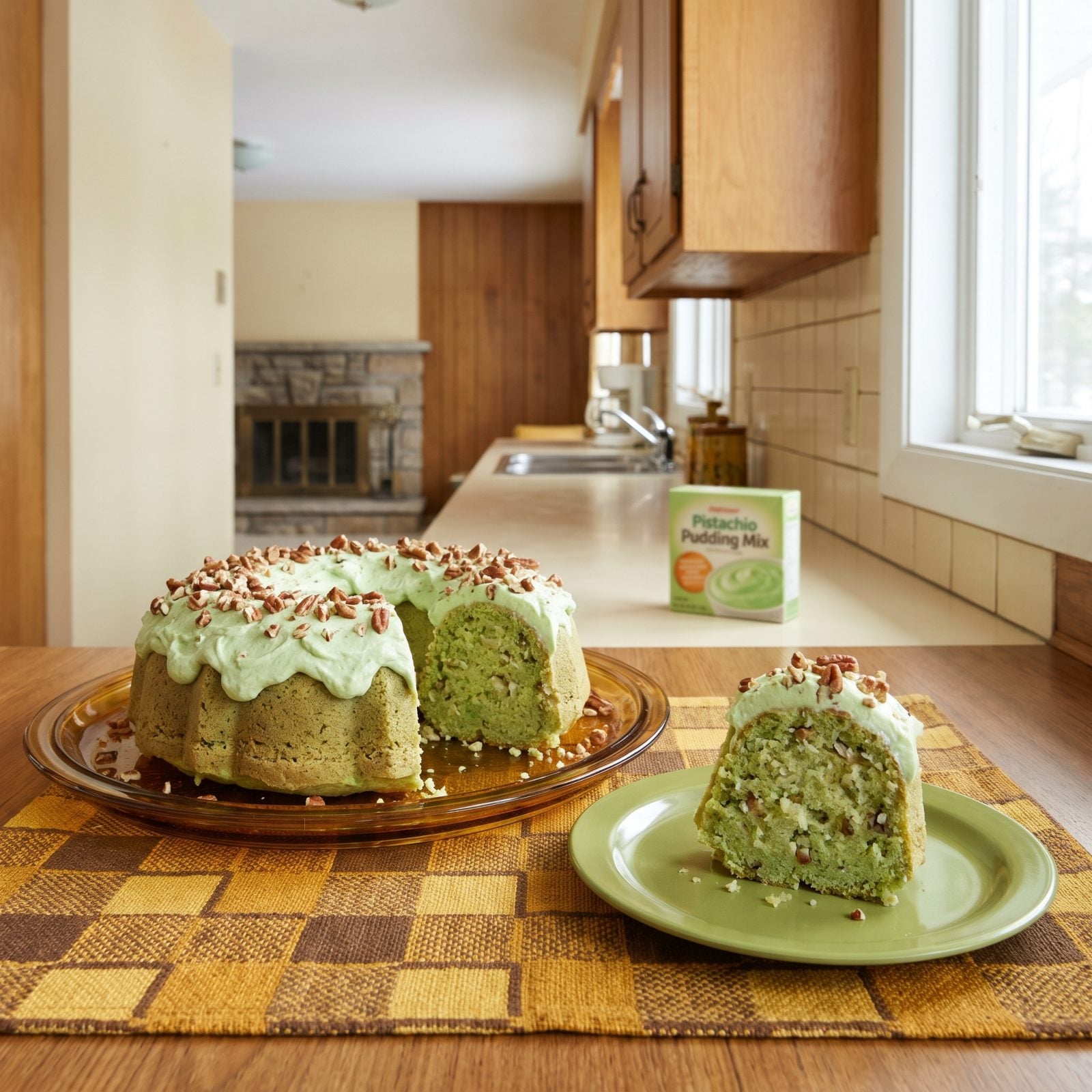
The name is a wink at the 1972 scandal, and the cake spread like gossip through church cookbooks and newspaper food pages across the decade. The joke was always that it was full of nuts and had a cover-up — namely, the frosting. Harmless, and it stuck.
A box of instant pistachio pudding mix does all the heavy lifting here, pulling double duty in both the batter and the whipped topping. That’s where the unmistakable pale green comes from, along with a dense, moist crumb shot through with coconut and chopped pecans.
It tastes exactly like 1974 smelled in a Formica kitchen.
Modern note: grab a boxed white cake mix, lemon-lime soda, pistachio pudding mix, oil and eggs, then fold a tub of whipped topping into more pudding mix for the frosting. Chill it before slicing.
1970s: Sock-It-to-Me Cake With Cinnamon-Pecan Filling
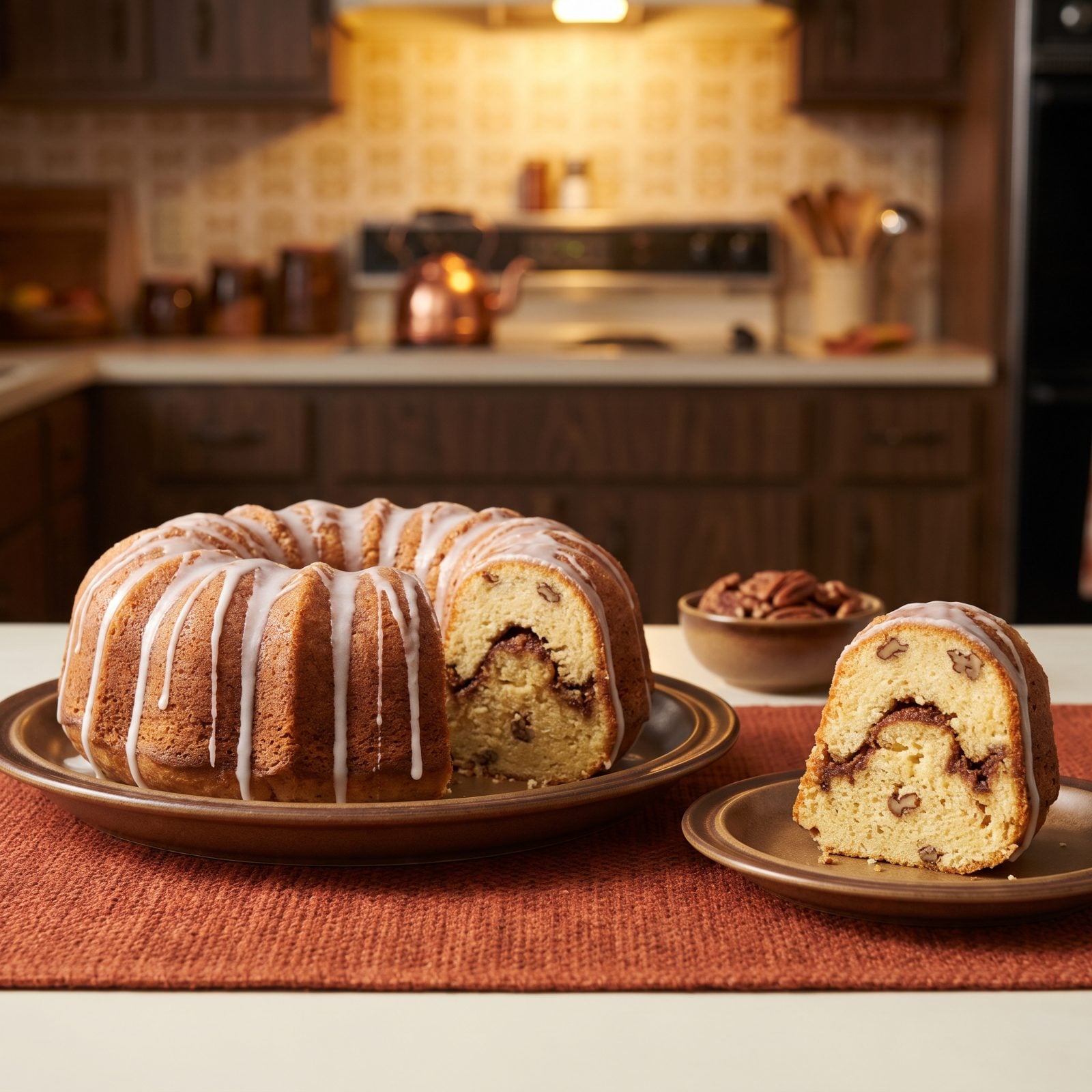
Named after the catchphrase from Rowan & Martin’s Laugh-In, this sour cream Bundt was everywhere in the 1970s, printed on the side of the Duncan Hines butter-recipe cake mix box for years. That’s where most families got the recipe. The box was the cookbook.
What makes it is the filling — a layer of brown sugar, cinnamon and chopped pecans swirled through the middle, so every slice carries a dark seam running through it. A thin powdered-sugar glaze finishes the job.
1980s: Black Forest Birthday Gateau
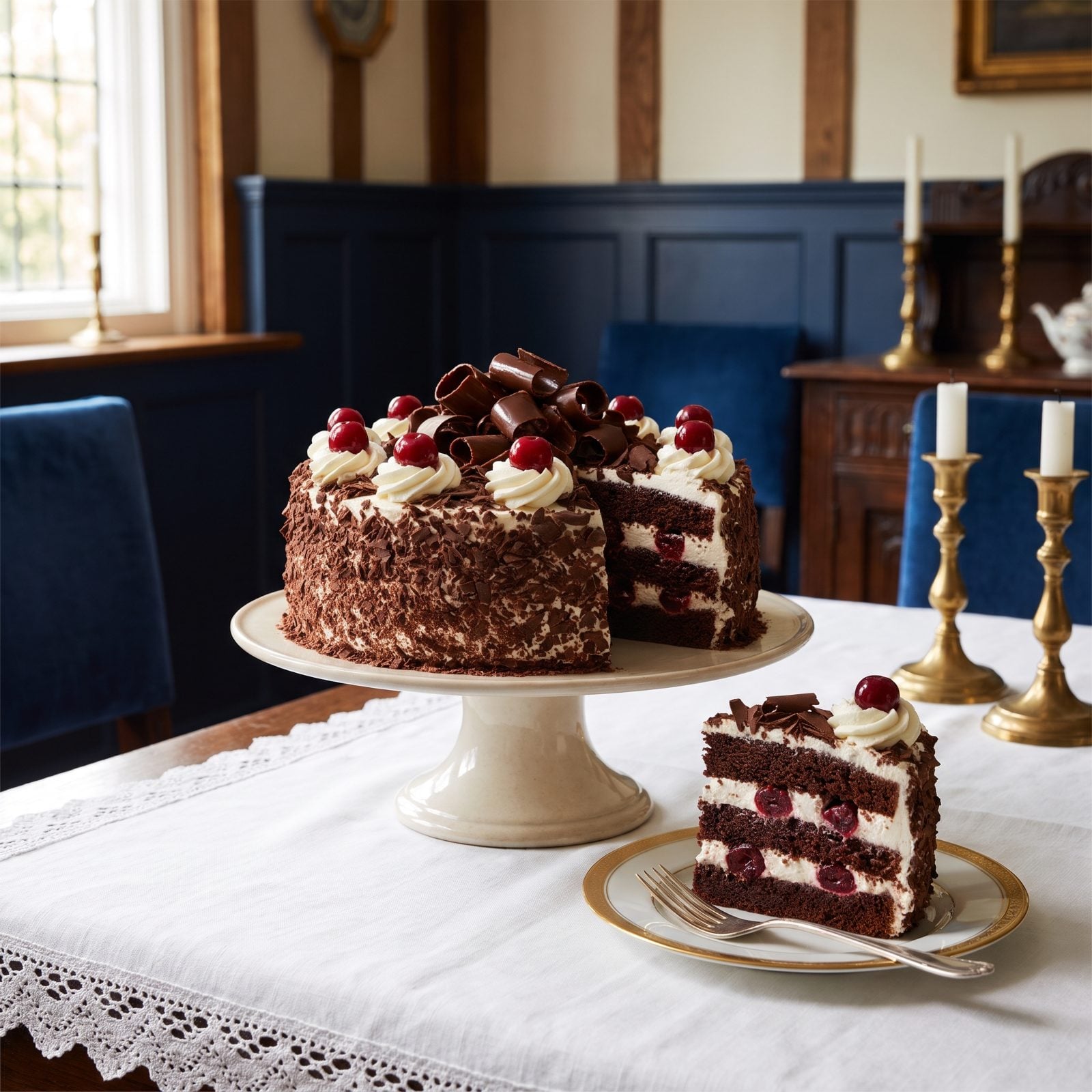
Black Forest cake is older than the 1980s by a long way, with roots in Germany’s Schwarzwald, but it became the go-to “fancy” birthday and dinner-party showstopper in American homes through the decade. If someone turned forty in 1985, odds are decent there was a Black Forest cake involved.
Chocolate sponge, whipped cream, dark cherries, chocolate shavings pressed into the sides. The traditional version leans on Kirsch cherry brandy, though most home bakers skipped it for a kid’s party and reached for the cherry syrup instead.
Keep it cold until you serve it. Whipped cream and a warm room are not friends.
1980s: Chocolate Cola Sheet Coca-Cola Cake
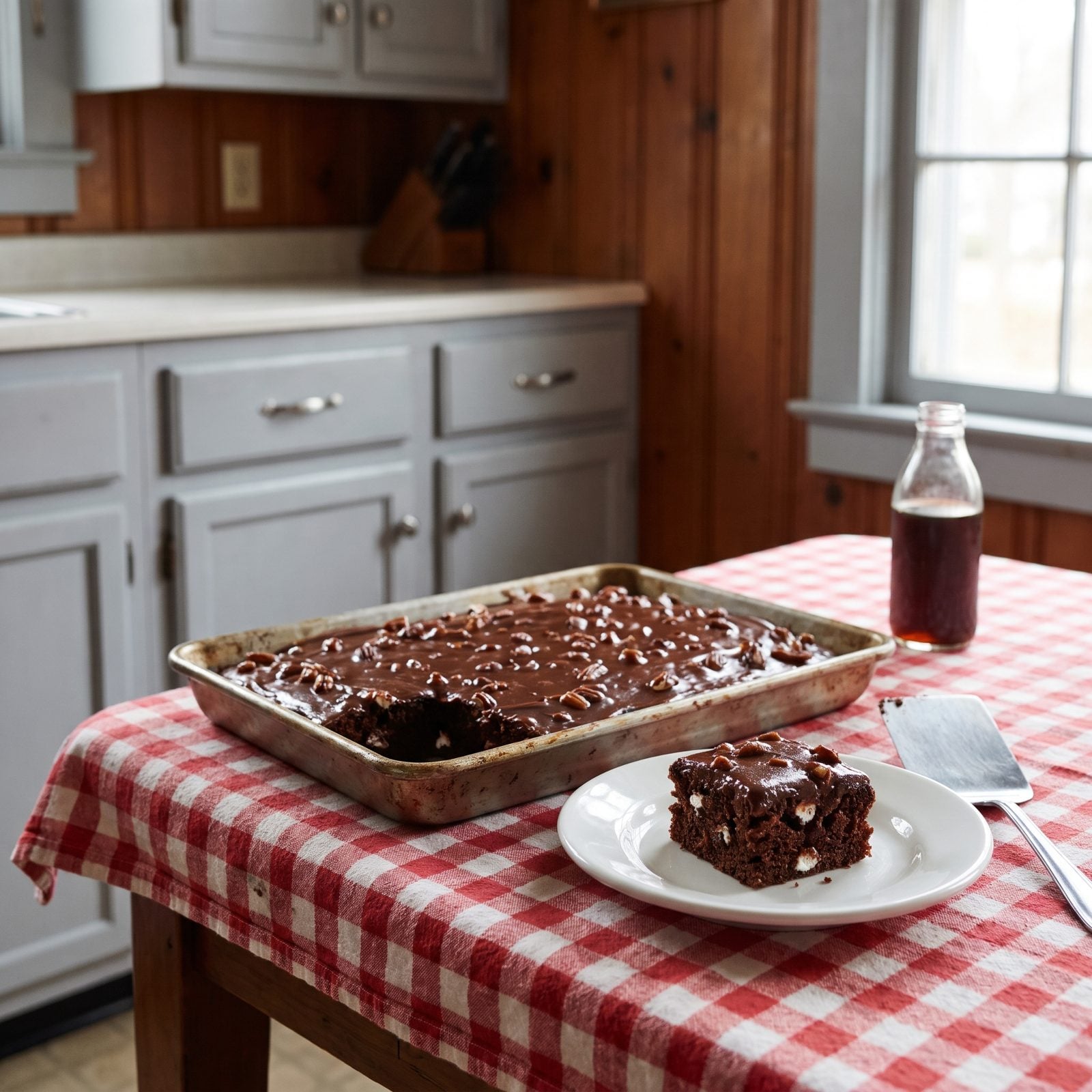
Cola cake earns its place in any Southern kitchen that ever hosted a potluck. A cup of cola goes into the batter, more into the warm poured-on icing, and the result is a sheet cake so moist it barely holds a fork. Miniature marshmallows melt into the batter as it bakes.
The icing is the real event. Butter, cocoa and cola get brought to a boil, mixed with powdered sugar and pecans, then poured over the cake while both are still warm so it soaks in at the edges.
1980s: Ice Cream Birthday Cake With Cookie-Crumb Crunch
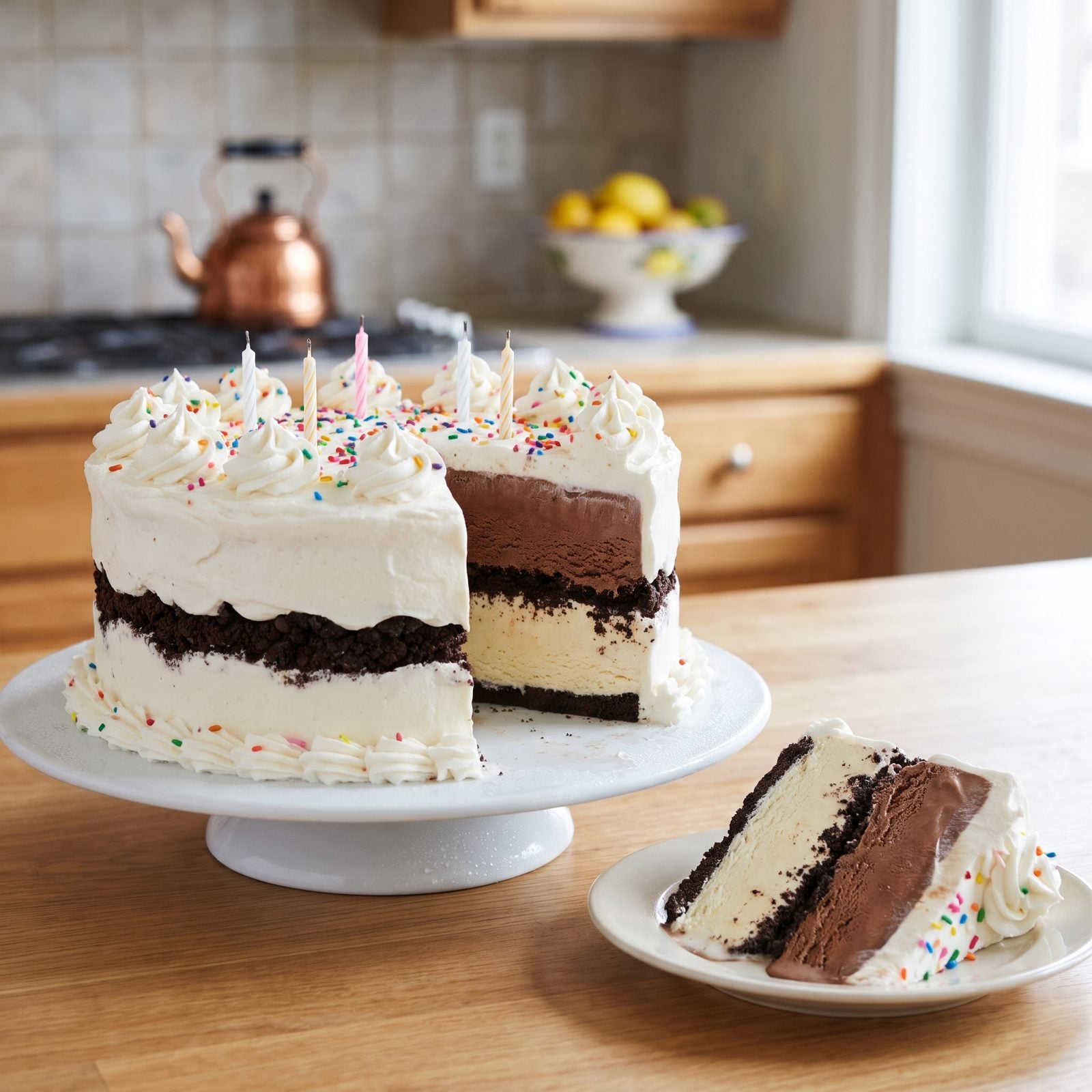
The store-bought ice cream cake with the layer of crunchy chocolate cookie bits in the middle became a birthday fixture in the 1980s as chains popularized the format. Plenty of families recreated it at home, stacking vanilla and chocolate ice cream over a chocolate cookie-crumb base and pressing a layer of chocolate cookie crumbs between them.
That crumb layer is why anyone bothers. It stays crunchy against the soft ice cream, and it’s the part everyone digs for.
Home method: press a thin layer of crushed chocolate sandwich cookies mixed with a little melted butter into a lined springform pan, spread softened vanilla ice cream over it and freeze. Add a layer of crushed chocolate sandwich cookies mixed with a little melted butter, then softened chocolate ice cream on top. Freeze solid, frost with whipped topping, and keep the thing in the freezer until the candles go in.
1990s: Funfetti Cake With Vanilla Buttercream
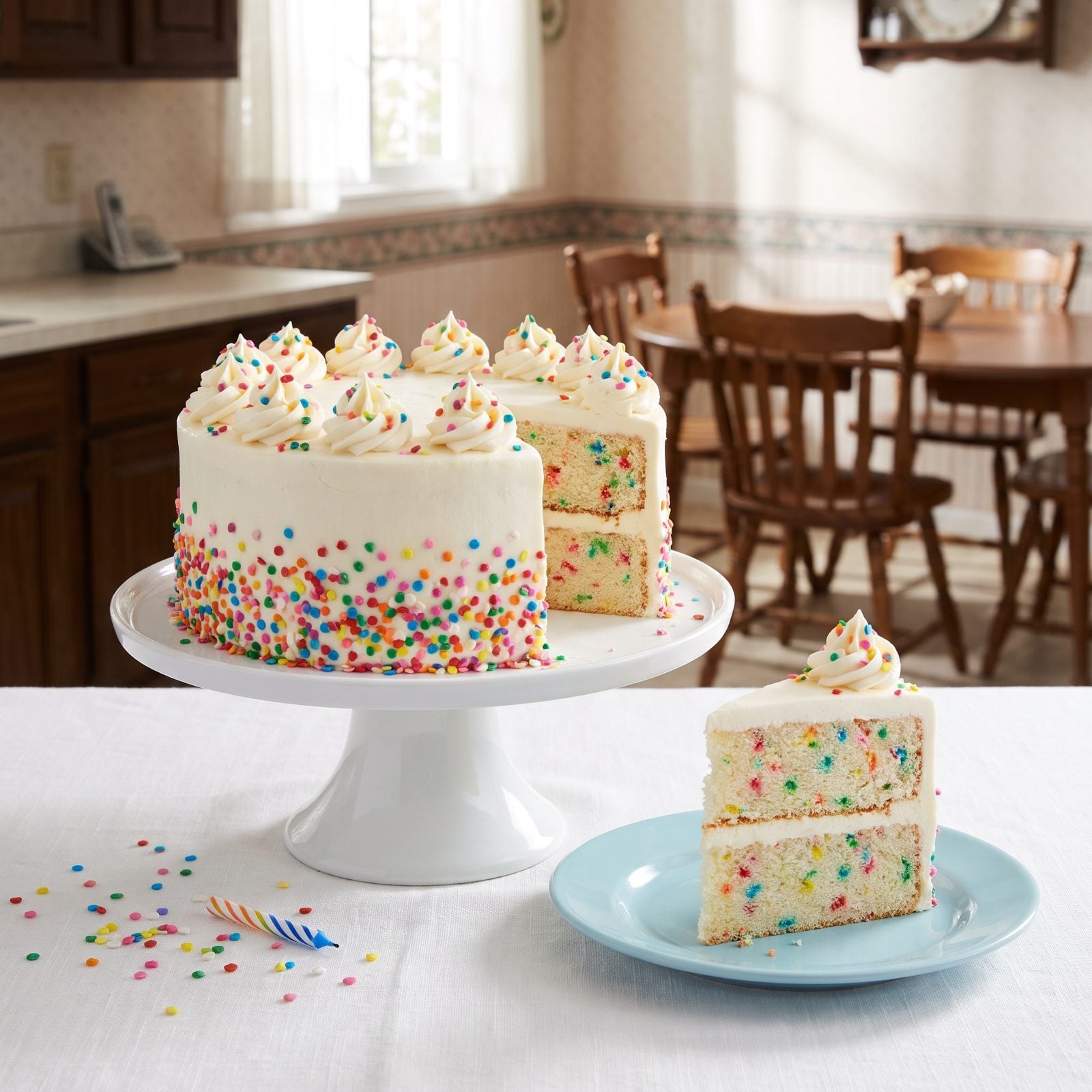
Pillsbury introduced Funfetti cake mix in 1989, and by the early 1990s it was the default birthday cake for a whole generation of kids. The sprinkles baked right into the batter, no decorating skills required, and a tub of the matching frosting with the little candy stars came in the kit.
Homemade versions skip the box: a plain white cake batter with rainbow jimmies folded in at the last second so they don’t bleed their color. Use jimmies, not nonpareils, or you’ll end up with a gray-tinted crumb.
1990s: Barbie Doll Birthday Cake With a Piped Icing Gown
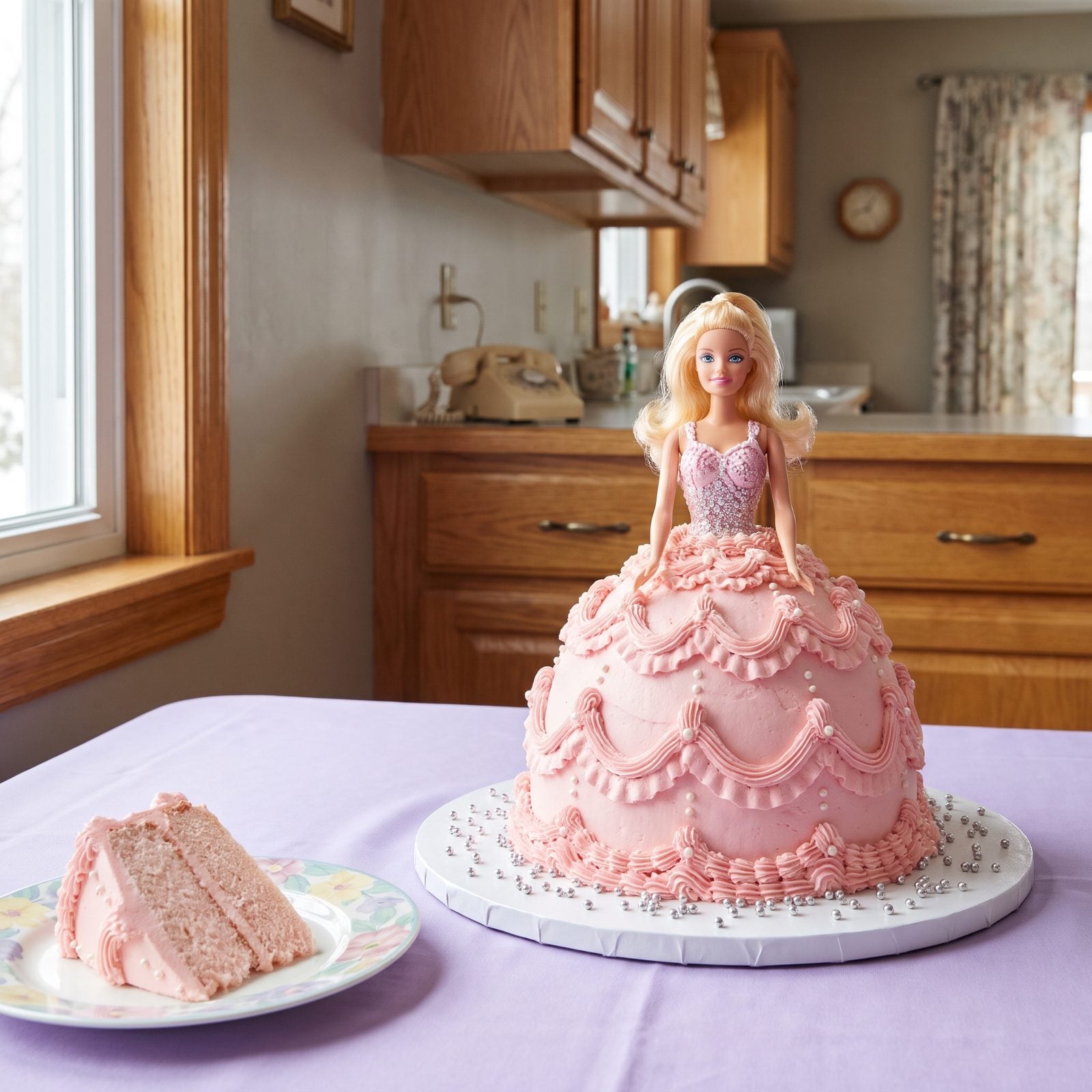
The doll cake peaked in the 1990s, piped high with a buttercream ball gown and a plastic fashion doll planted in the center as the torso. The Wilton cake-decorating books and dome-shaped Wonder Mold pans sold it to a generation of parents who stayed up past midnight piping ruffles.
You bake the cake in a deep oven-safe bowl or a dome mold, trim it flat, invert it, and stand the doll on top so the solid cake skirt flares out from her waist. Then you pipe, and pipe, and pipe.
1990s: Dirt Cake With Chocolate Cookie Crumbs and Gummy Worms
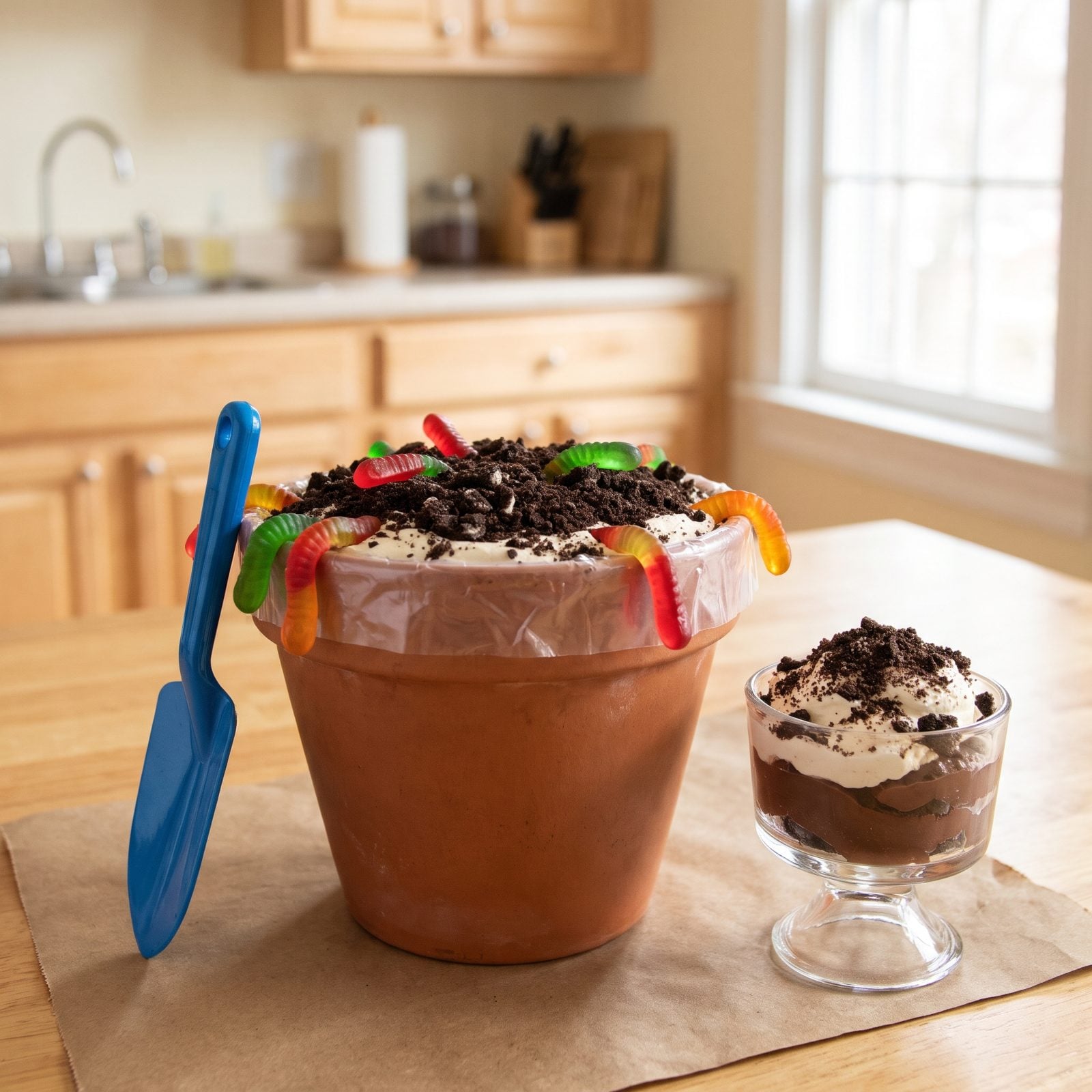
Dirt cake was less a cake than a dare, served out of a clean flower pot with a plastic trowel and gummy worms crawling out of the “soil.” It made the rounds through 1990s potlucks, Scout meetings and class parties, and the kids lost their minds over it every single time.
No baking required. Layer chocolate pudding folded with cream cheese, sugar and whipped topping, then crushed chocolate sandwich cookies for the dirt. The crumb on top hides everything underneath.
Half the fun was watching some adult eat soil out of a garden pot without flinching. That was the joke, and it worked on everyone under the age of ten.
2000s: Giant Cupcake Cake With Candy Sprinkles
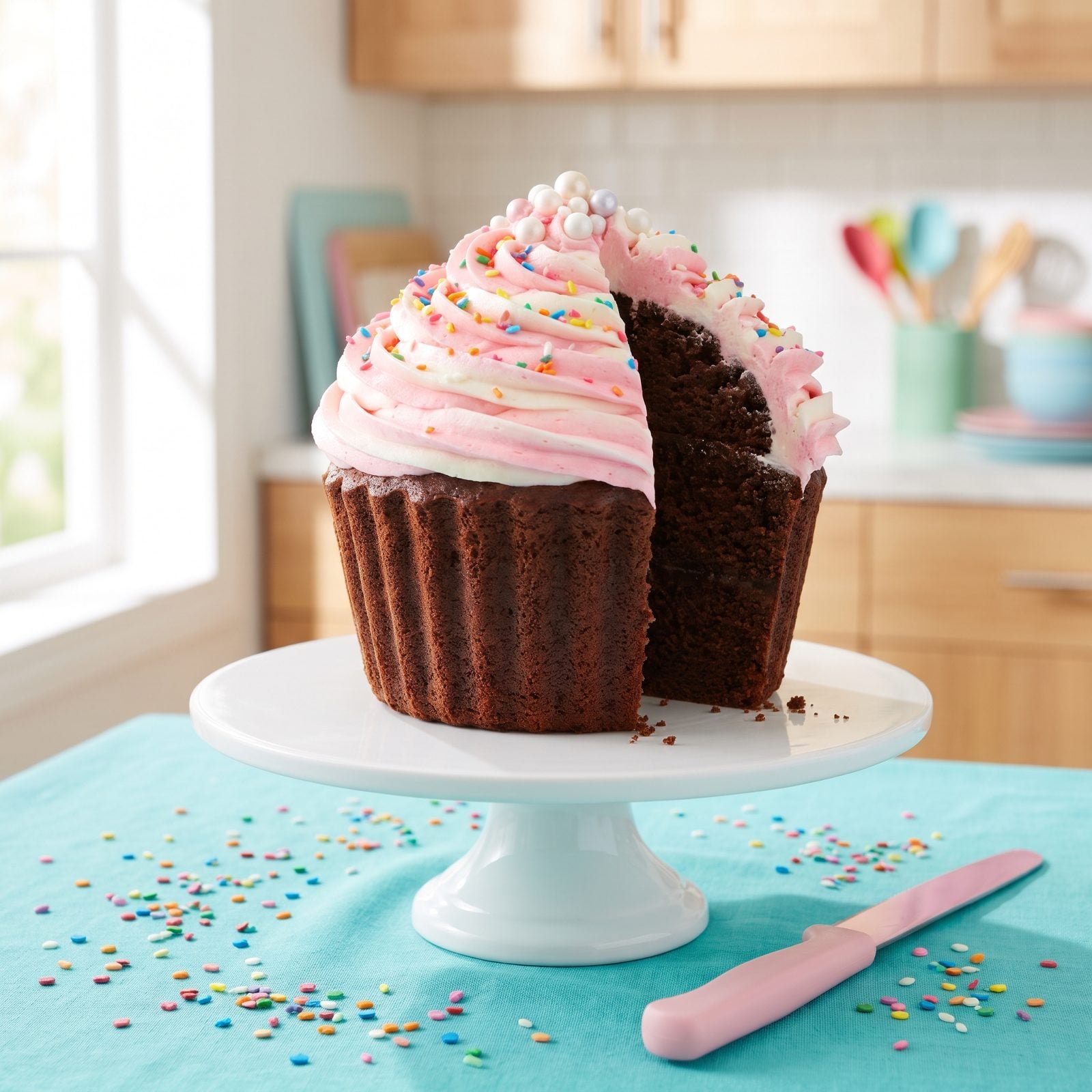
The giant cupcake cake belongs squarely to the 2000s, when silicone and cast-aluminum jumbo cupcake molds hit home kitchens and every birthday suddenly came supersized. Wilton and Nordic Ware both sold the pans, and the format spread fast through early food blogs and cake-decorating forums.
You bake the fluted base and the domed top separately, sandwich them with frosting, then pipe a tall swirl on top so the whole thing reads as one enormous cupcake. Sprinkles and candy pearls finish it.
From a blush champagne layer in the 1960s to a cupcake the size of a dinner plate, the cake was never really about the cake. It was about who gathered around it.
The 2000s Rainbow Layer Cake That Took Six Boxes of Food Coloring
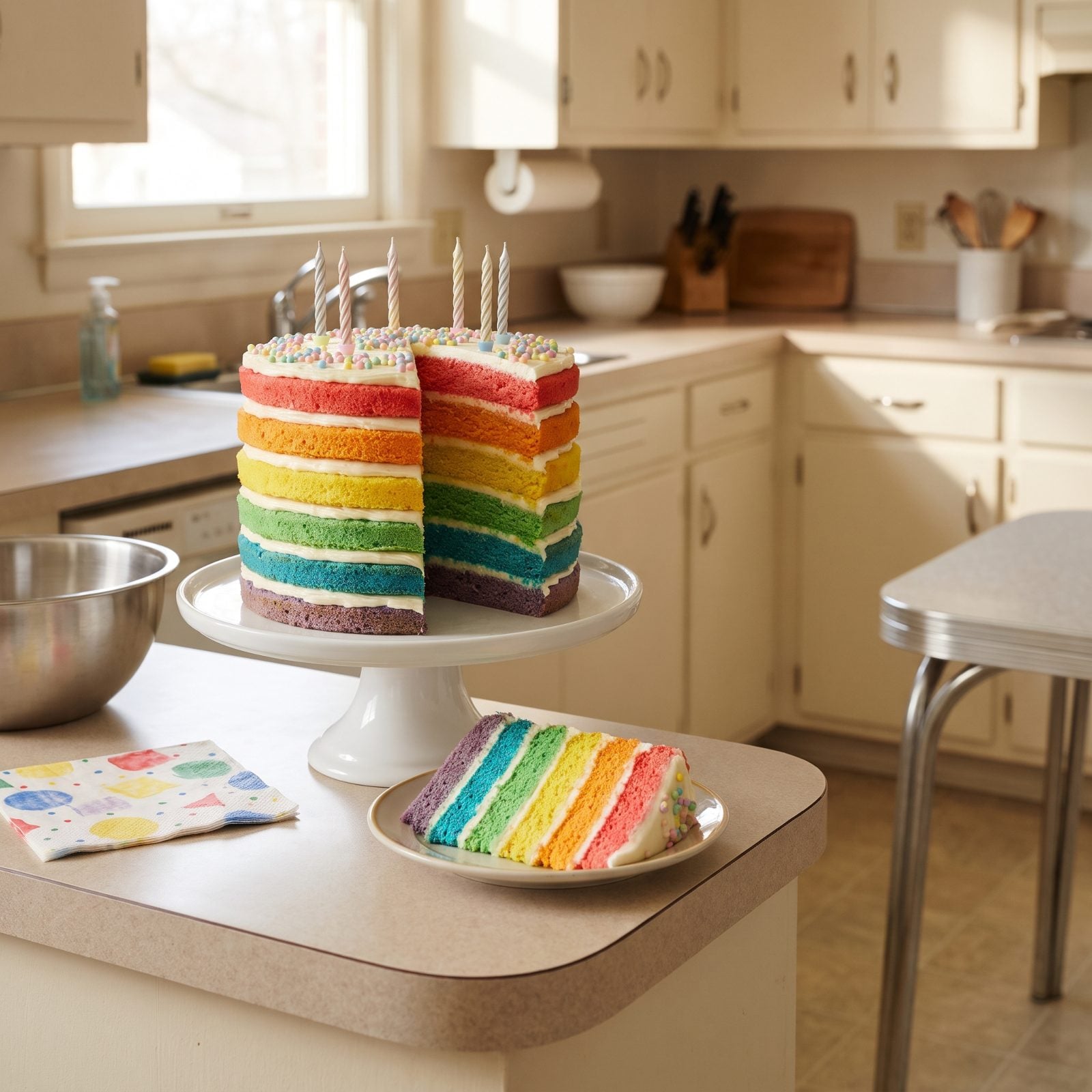
The internet taught everyone to make this at once. Around 2007 the rainbow layer cake showed up on early food blogs and Flickr, and by the time it hit the message boards every birthday party wanted one. The recipe was never fancy — a plain white batter split into six bowls, a few drops of gel in each, baked thin and stacked.
The buttercream had to be white, spread thin between the layers and left off the sides. That was the whole point. Every stripe shows from across the room, and the gasp comes before the knife even goes in.
Modern tip: use gel colors, not the little liquid bottles from the baking aisle. Liquid dye waters down the batter and the colors bake out muddy, while gel gives you that saturated band without thinning anything.
The 2010s Crumb-and-Sprinkle Cake That Milk Bar Put on Every Birthday Table
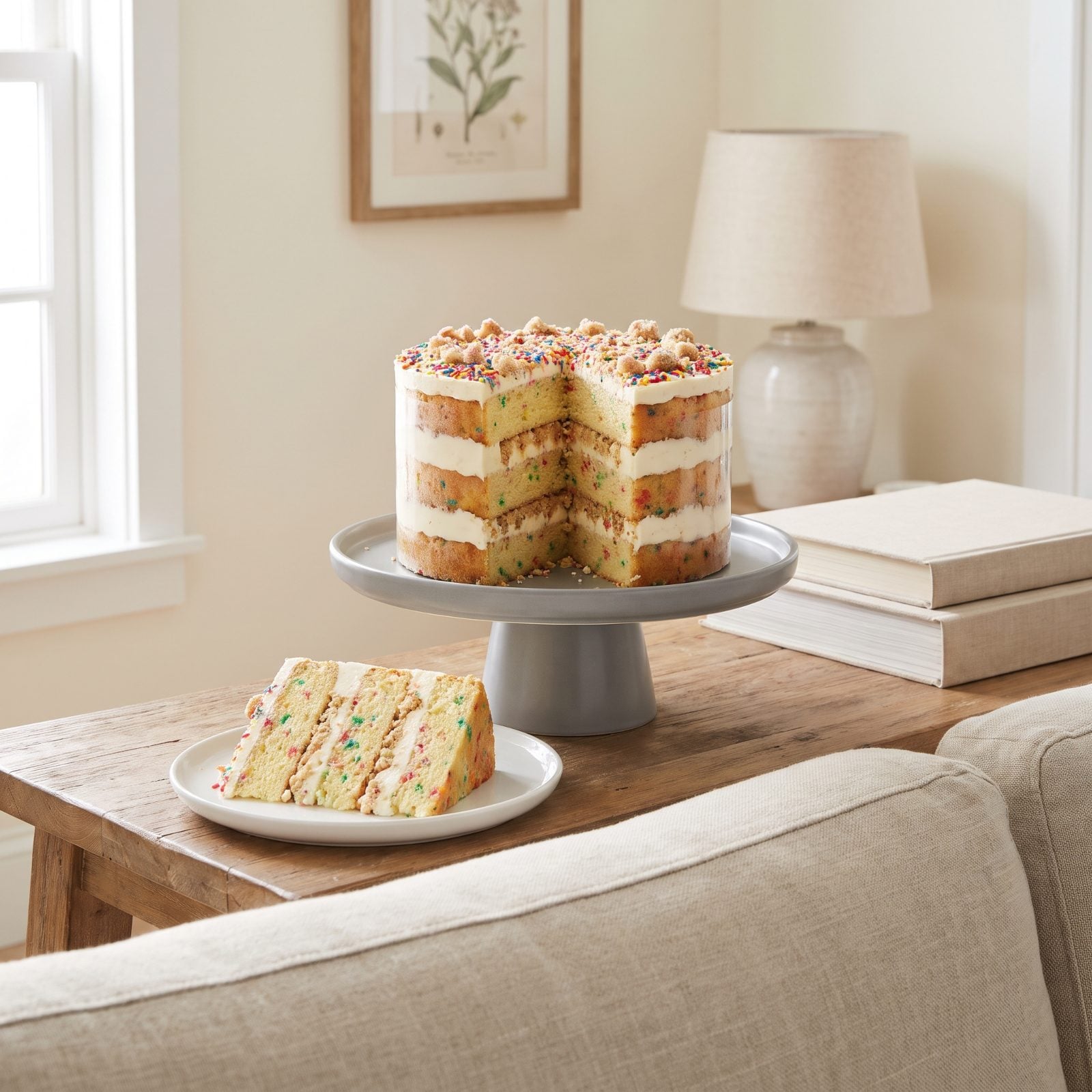
This was the cake that made the mess the point. Christina Tosi published the Milk Bar birthday layer cake in Momofuku Milk Bar in 2011, and within a couple of years the exposed-side, sprinkle-studded look was everywhere you looked. The sides stayed naked on purpose so you could follow the stacking: cake, frosting, a layer of what she called birthday crumbs, repeat.
The flavor was built around imitation vanilla and rainbow sprinkles baked right into a crumb, which gave it that unmistakable box-cake-but-better taste. People who grew up on the blue-can funfetti recognized it instantly, and that recognition was most of the magic.
The build takes patience. You assemble it inside an acetate collar set in a cake ring, which keeps the bare sides straight while it chills. Skip the chill and the whole thing slumps. We learned that the hard way with a cake that leaned like it had somewhere to be.
The 2010s Naked Cake Draped in Berries and Garden Flowers
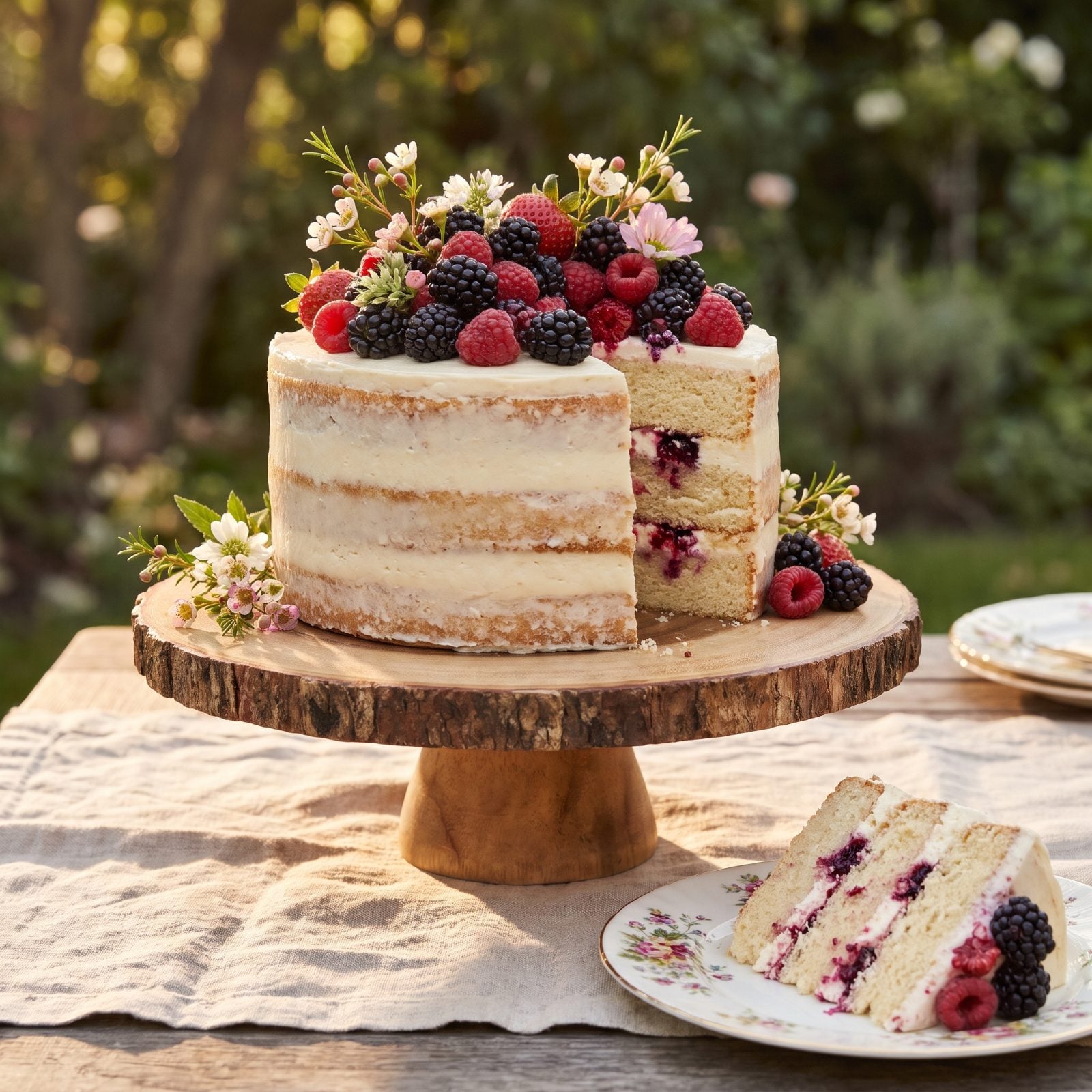
You saw this one at every backyard celebration between roughly 2014 and 2018. The naked cake stripped away the smooth fondant shell that had dominated the previous decade and left the sponge bare, bound with a thin layer of cream and crowned with whatever was fresh — berries, figs, herbs, unsprayed garden flowers.
It grew out of a reaction against the heavily decorated wedding cakes of the 2000s. People wanted something that looked like it came from a kitchen, not a factory, and that rustic, slightly undone look did all the work.
A real warning: not every flower belongs on a cake. Plenty of pretty blooms are toxic, and the floral-tape-and-wire ones from the craft store have no business near something you eat. Stick to known edibles, or at minimum wrap the stems and keep them off the surface people cut into. Dust the berries on right before serving so they don’t bleed into the frosting.
The 2020s Burn-Away Cake That Hid a Photo Under a Sheet of Edible Paper
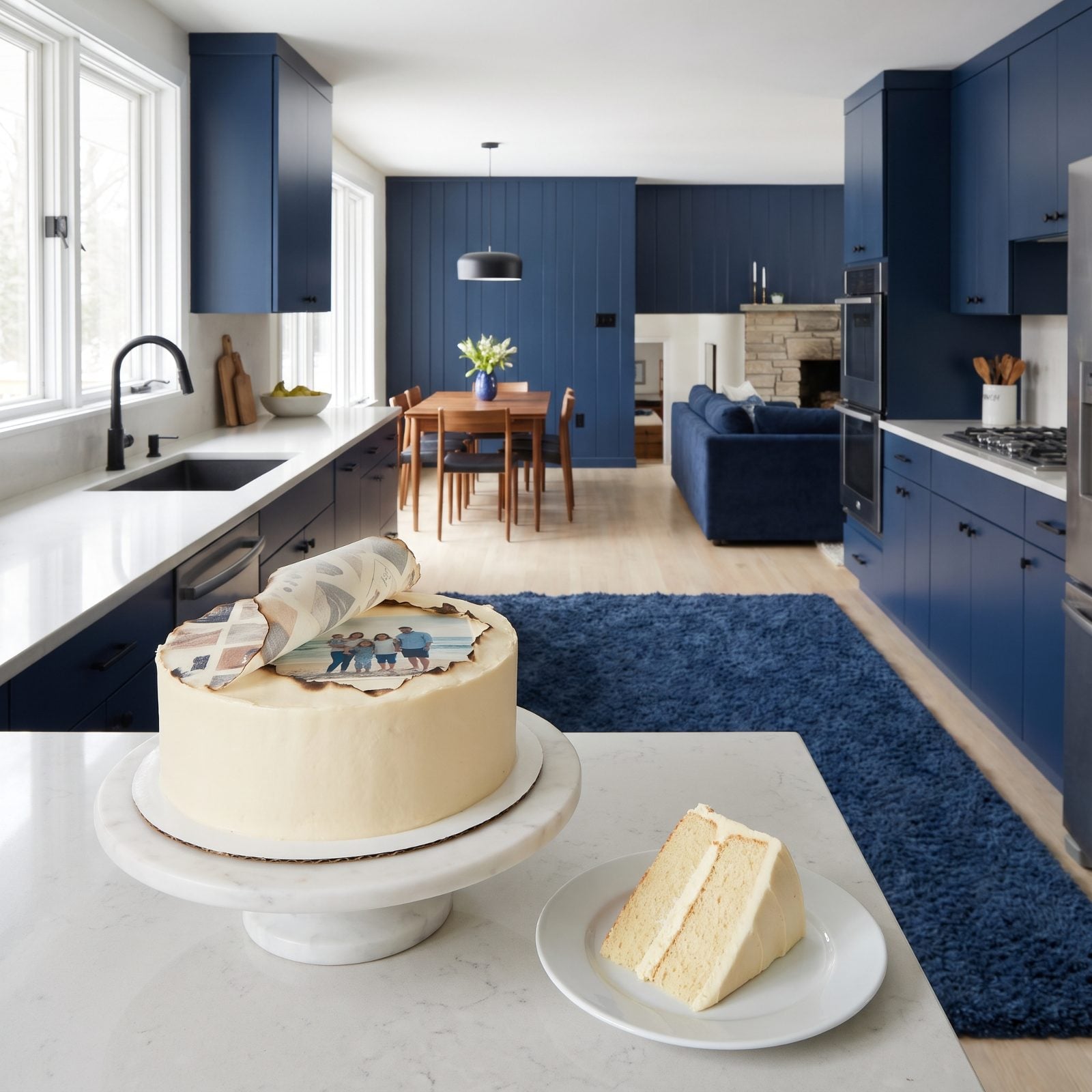
This one is barely four years old and it already feels like a staple. The burn-away cake went viral on short-form video in 2022, built entirely around a reveal: a printed sheet of edible wafer paper covers the top, and when you touch a flame to the edge the edges char and the sheet curls back in a stiff flap, uncovering a hidden photo or message underneath.
The trick is in the materials. You need rice wafer paper, which catches at the edge, blackens and curls up as it burns, plus an edible printer or a printed edible sheet for the image beneath. The buttercream has to be set firm so the brief flame never touches it.
It’s the first birthday cake designed to be filmed more than tasted, and it knows it.
Do a test burn away from the cake first. The paper scorches and lifts unpredictably — and you want to know how it behaves before you’re holding a lighter over someone’s dessert at the table.
The 2020s Vintage Heart Cake Piped in the Lambeth Style Your Grandmother Would Recognize
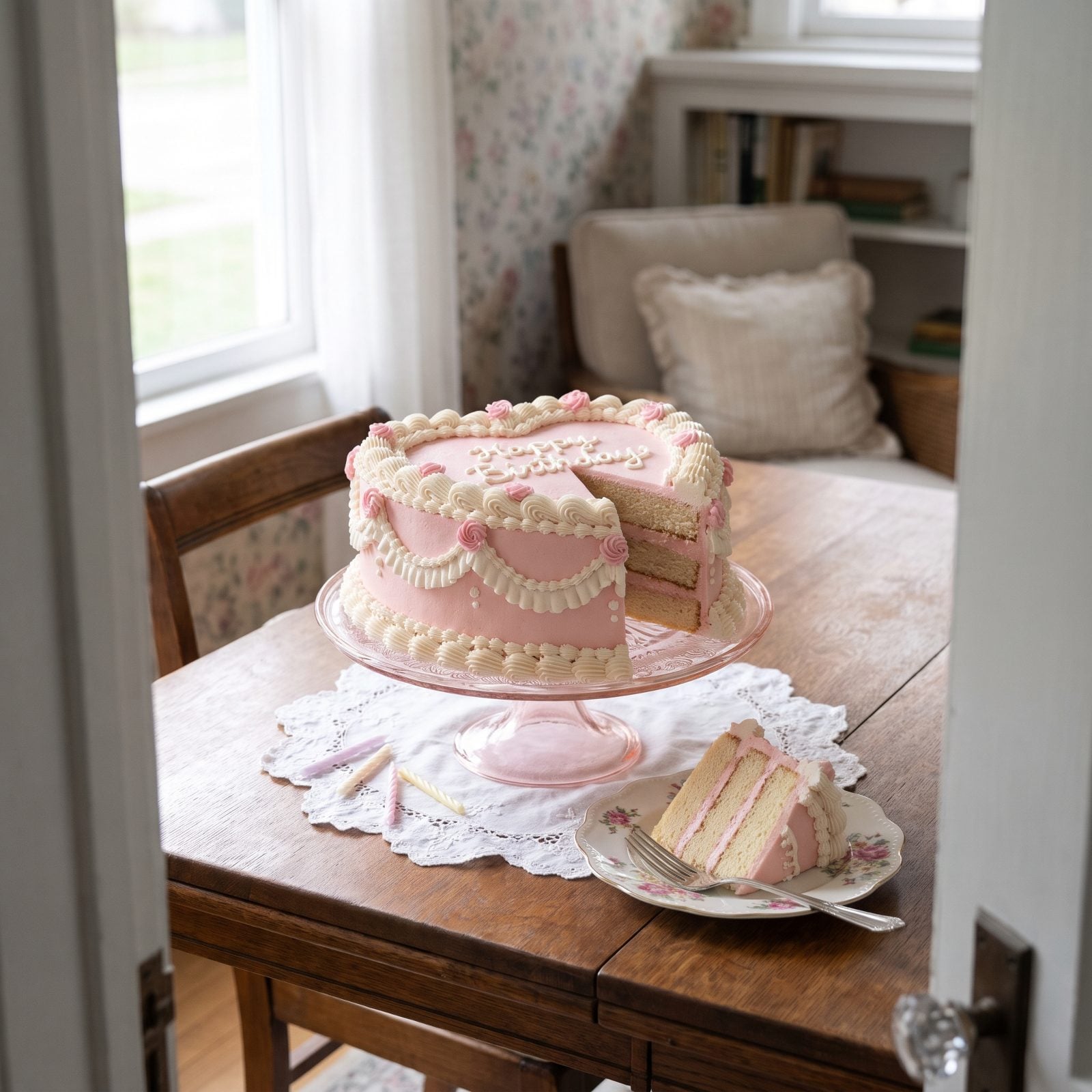
Everything old came back at once, and it came back in soft pastels. The vintage heart cake took over in 2022 and 2023, reviving the Lambeth piping technique that had its heyday in the 1980s. Shell borders, drop-string swags, overpiped scrolls, a chirpy little message across the middle in looping buttercream script — all done by hand with a piping bag and a steady wrist.
The method itself goes back over a century, named for Joseph Lambeth and his detailed overpiping work from the early 1900s. What the 2020s did was shrink it down, soften the palette to pastels, and put it on a heart pan.
Here’s the honest part: this is a skill, not a shortcut. The piping only looks right if your buttercream hits the right consistency — stiff enough to hold a shell but soft enough to flow a clean string. Too warm and it droops. Too cold and it tears. It can take a dozen wobbly borders before one looks like the picture, and that’s just the deal with this one.