Would you like to save this?
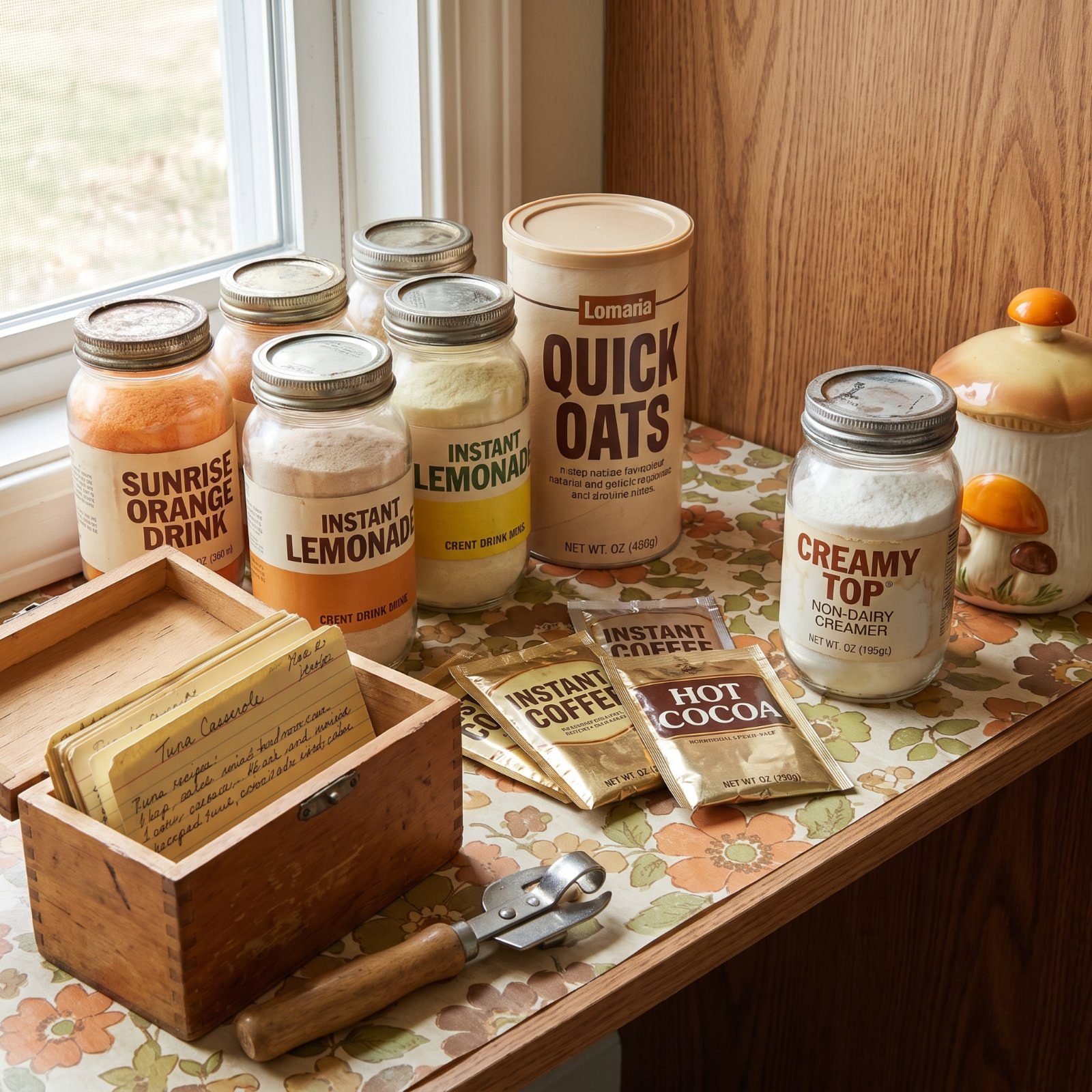
The spoon never quite dissolved it all. There was always that last little clump of orange powder stuck to the bottom of the glass, and you drank around it. Somewhere in every 1970s kitchen sat a lazy Susan of jars and foil packets that promised a meal out of water and a little stirring.
Please note that some of the images in this article were created with the assistance of AI.
Most of these are gone now, or shoved so far back on the shelf you forget they exist. The ones below built breakfast, dessert, and the after-school glass of something sweet. Open the cabinet.
48. Tang Orange Drink Mix in Its Glass Jar
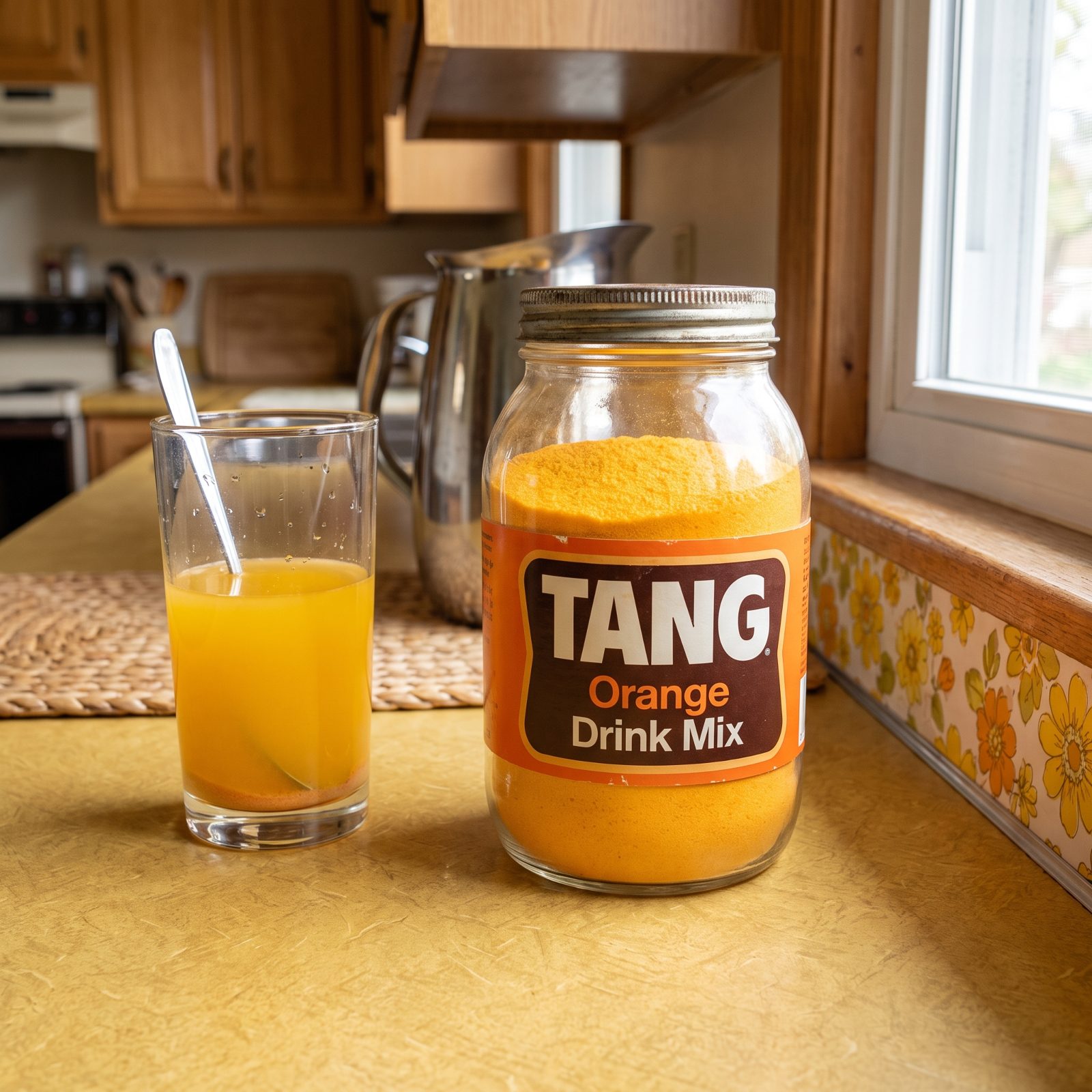
Astronauts drank it, and that was enough. Every kid in America knew the Tang-went-to-space story, which somehow turned a jar of orange powder into a mission control decision rather than a grocery run.
The ritual was all wrong by modern standards and perfect by 1970s ones. You spooned the powder into cold tap water, stirred until your arm got tired, then drank it before the sugar fully quit resisting. There was always sediment, and nobody minded.
47. Carnation Instant Nonfat Dry Milk
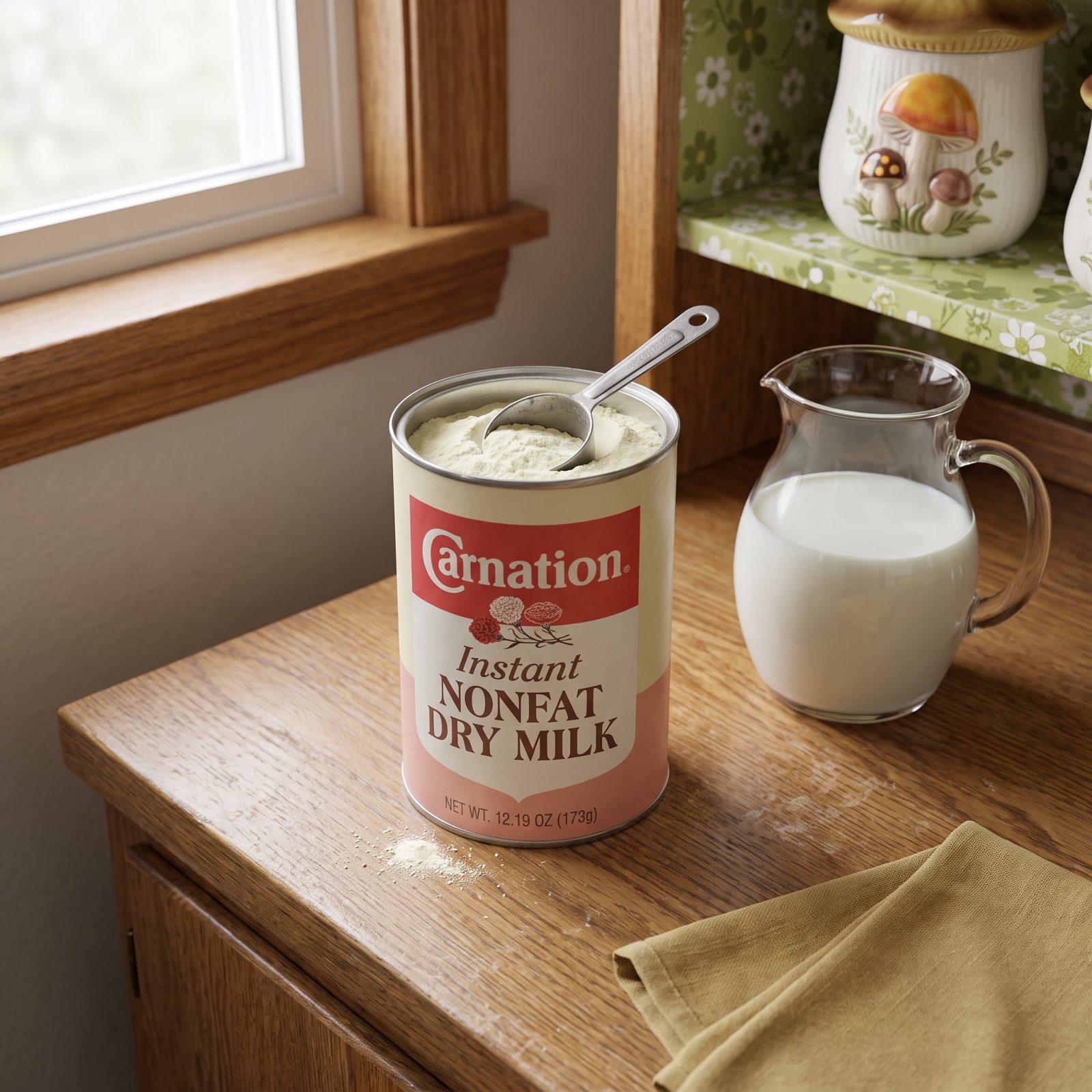
This was the milk you kept for when the real milk ran out, and you could always tell the difference. Reconstituted dry milk had a thin, faintly chalky quality that no amount of stirring fixed. Poured over cereal, it did the job. Barely.
Budget-minded households kept a canister going at all times, and a fair number mixed it half-and-half with fresh milk to stretch the carton. You learned to chill it hard before drinking, because cold hid a multitude of sins.
46. Sanka Instant Decaffeinated Coffee
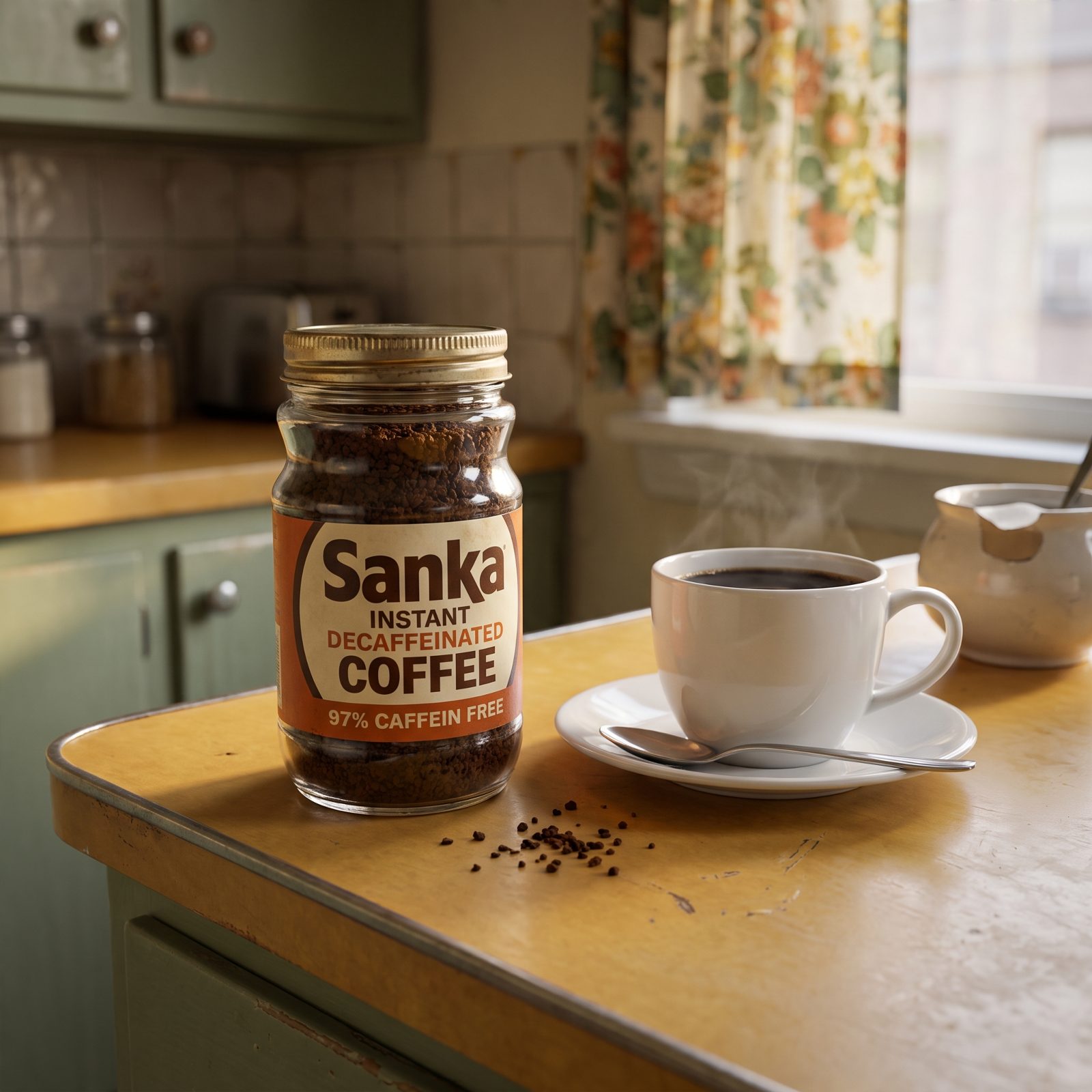
The grown-up coffee that wouldn’t keep you up.
45. Postum Roasted-Grain Beverage
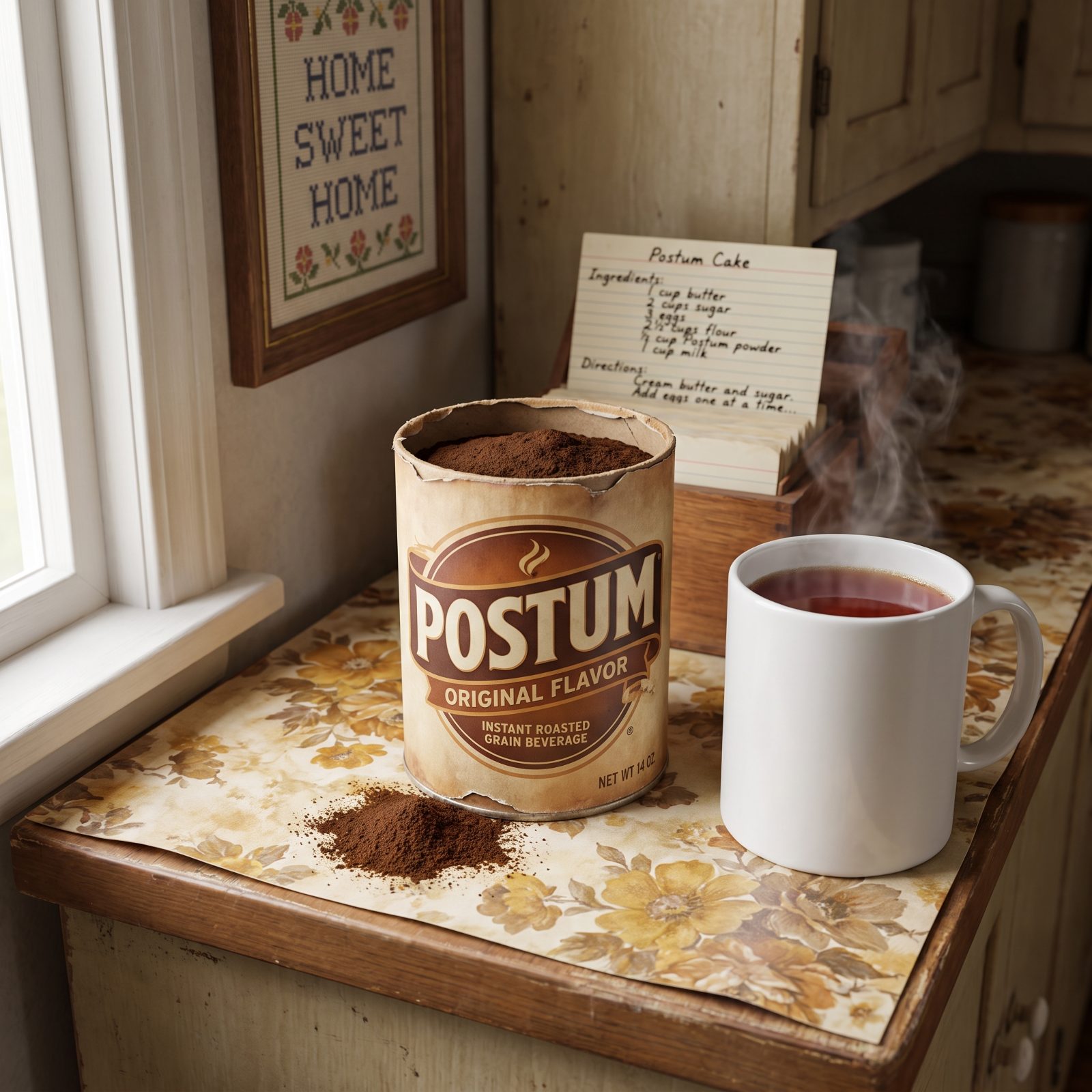
If you grew up in a house that didn’t do caffeine at all, this was what sat where the coffee should be. Postum was roasted wheat and molasses stirred into hot water, and it tasted like someone describing coffee to you over the phone.
Plenty of families drank it by conviction, plenty by habit, and a few kids drank it just to feel included at the breakfast table. It kept a loyal following that never quite faded, even after the brand briefly disappeared from shelves.
44. Powdered Coffee-Mate in the Flip-Top Jar
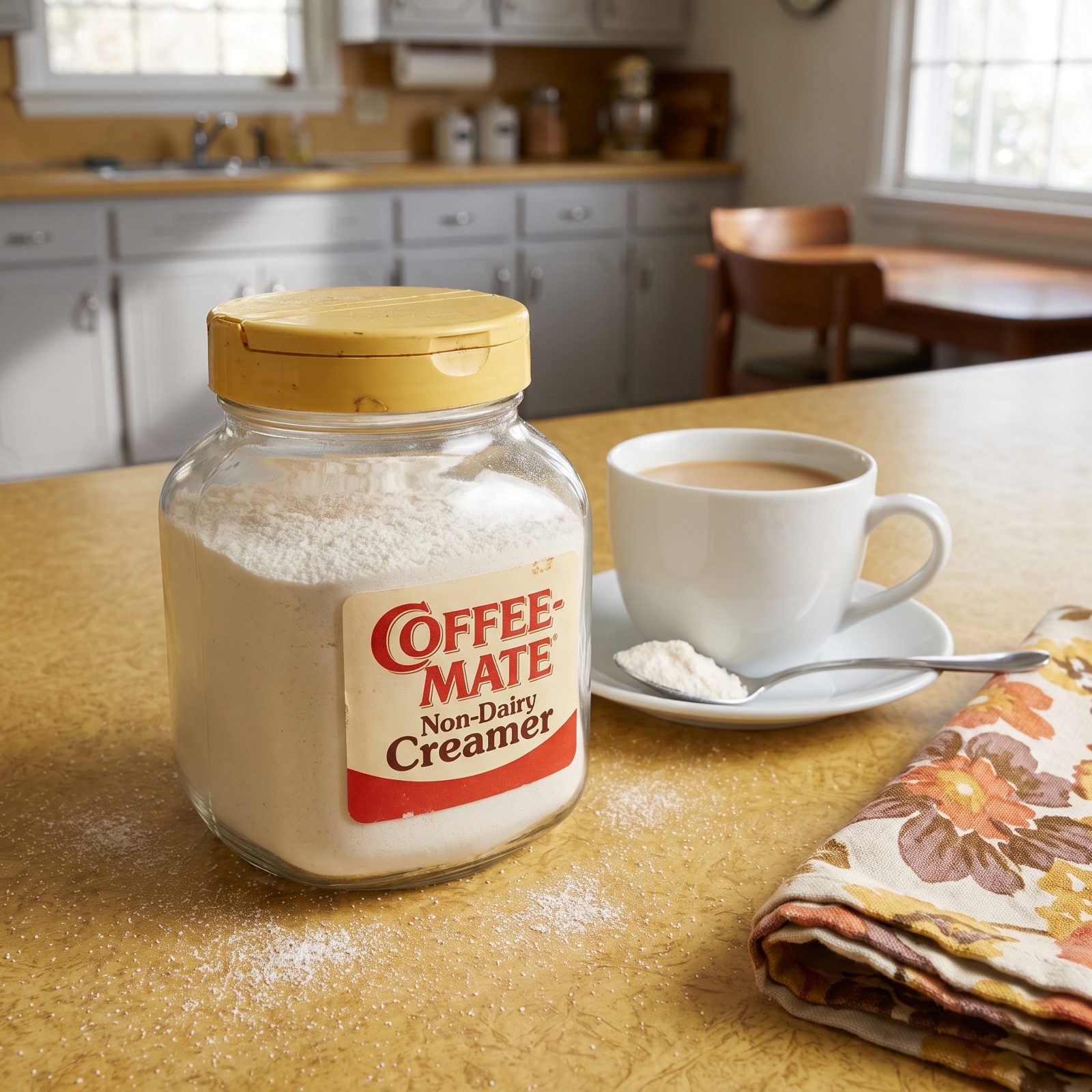
The flip-top lid made a specific plastic snap, and you heard it every morning before the coffee even got poured. Coffee-Mate was the shelf-stable answer to running out of cream, and it never went bad, which felt like a small miracle in a house where milk soured by Thursday.
It also never quite dissolved. There was always a ring of beige powder floating on the first sip, and you stirred it down and got on with your day. It made the coffee paler, sweeter, a little thicker — and a lot of people quietly preferred it to the real thing.
43. Carnation Instant Breakfast Packets
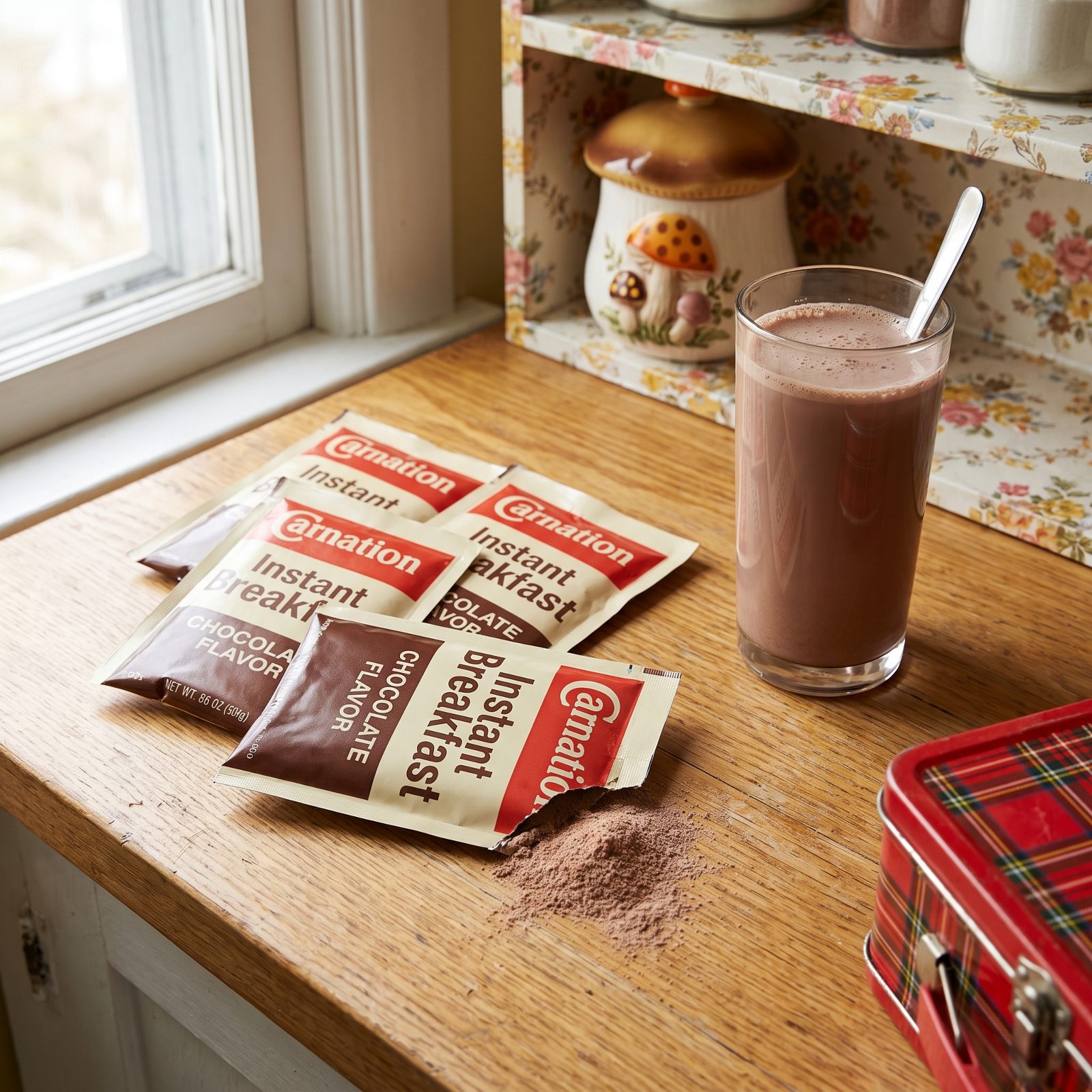
Breakfast in a glass, before anyone called it that. You tore open a foil packet, dumped the powder into milk, stirred until the chocolate clumps surrendered, and that was a complete morning meal for a kid running late.
The flavors stuck in memory: chocolate, chocolate malt, strawberry, vanilla. Strawberry turned the milk an unnatural pink that tasted exactly like you’d expect — and somehow nobody complained.
42. Nestea Instant Iced Tea Powder
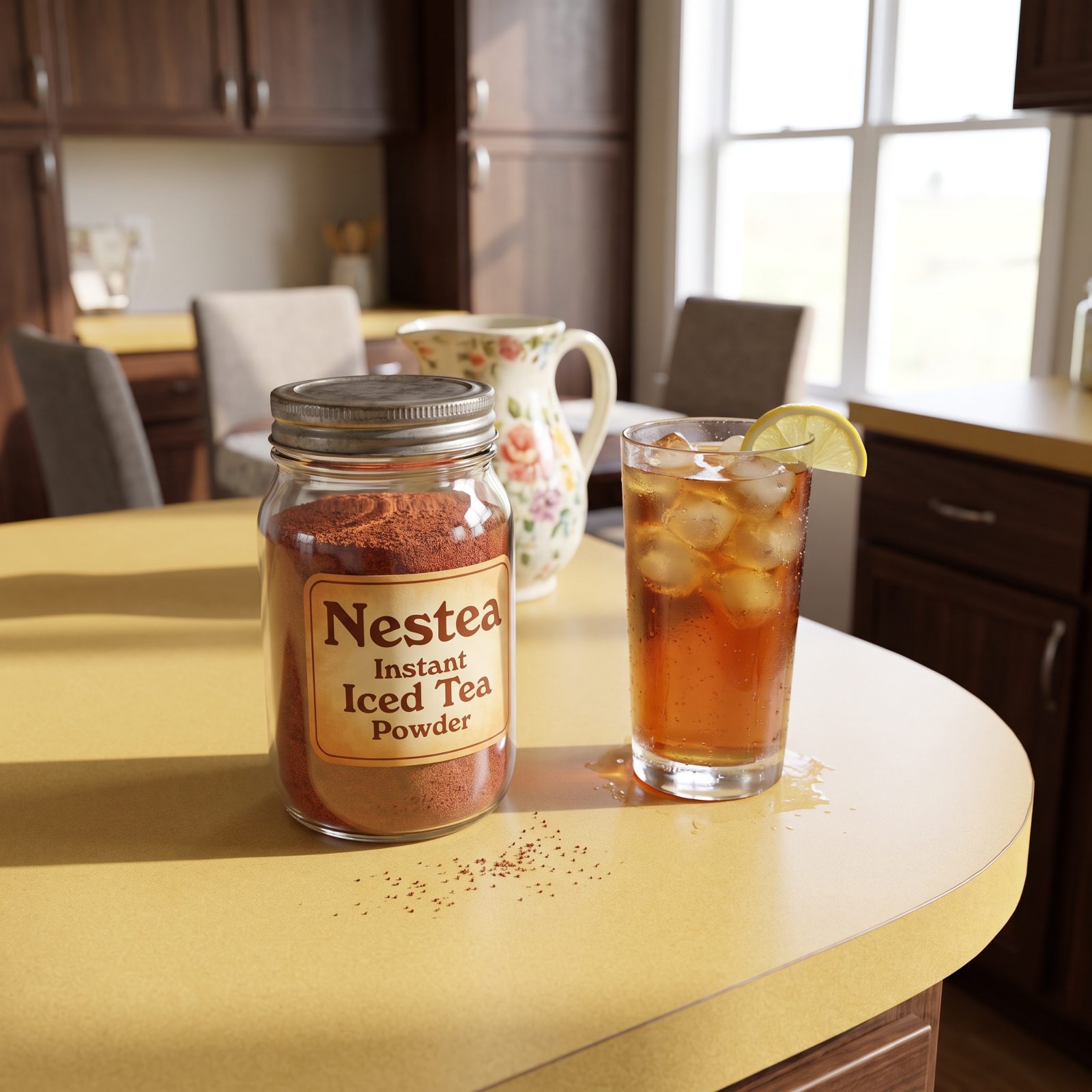
Summer came in a jar, and you measured it by heaping spoonfuls into a glass of cold water over ice. Instant tea dissolved faster than the drink mixes, which felt like progress, and the lemon-sweetened kind saved you the trouble of cutting a lemon.
There was a particular commercial where someone fell backward into a pool of it, arms out, pure relief. That image sold a lot of jars.
41. Wyler’s Powdered Lemonade Mix
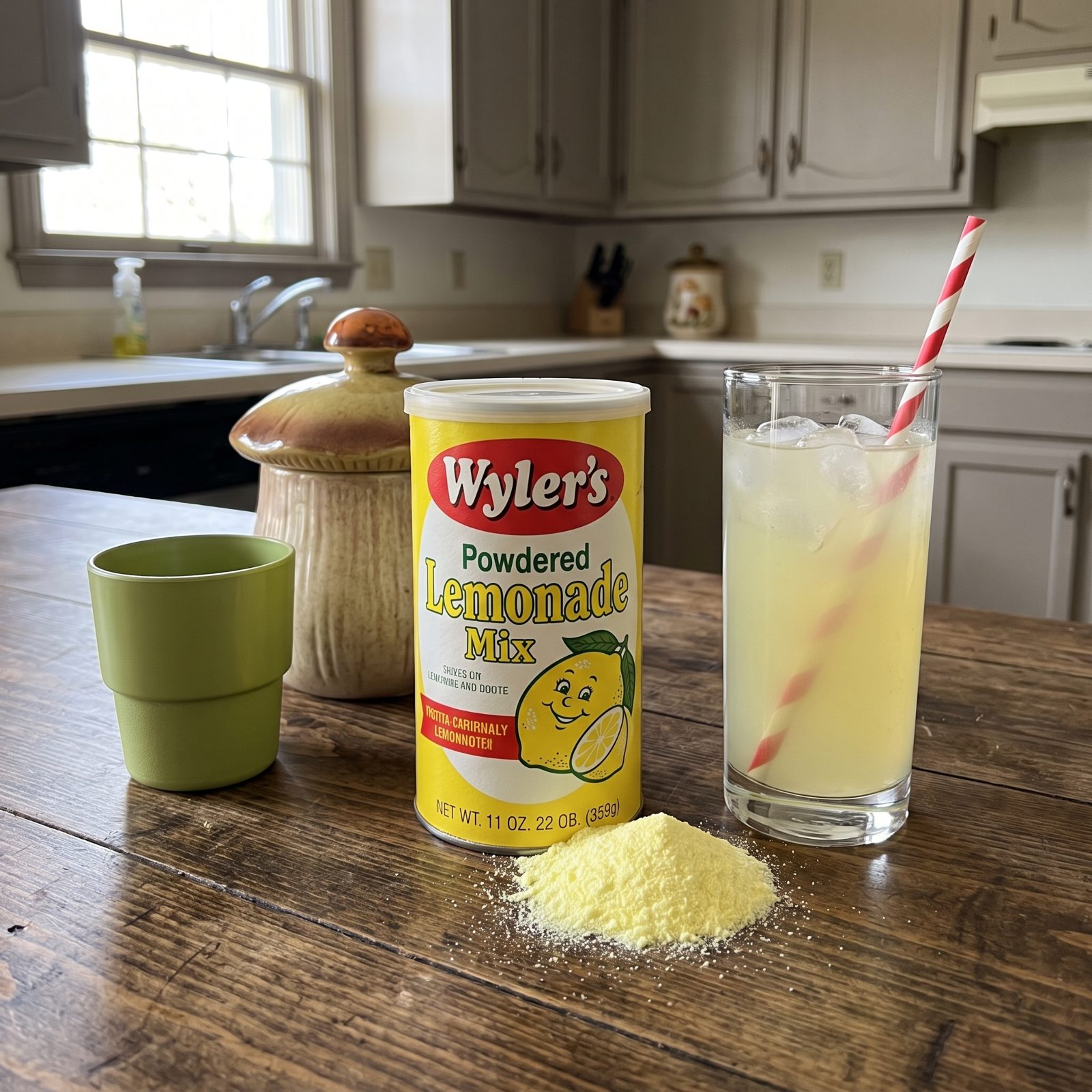
Pennies a glass, and it showed, but who cared.
Wyler’s was the lemonade of card-table stands and backyard hoses. You could make a whole pitcher for next to nothing, and the powder was so cheap it felt almost rude to measure it carefully. The flavor hovered somewhere near lemon without committing — more of a tart, sweet suggestion than the fruit itself.
It also came in grape and fruit punch, and the grape stained everything it touched. Lips, tongues, the kitchen counter, a white shirt if you weren’t careful. Worth it.
40. Tiny Bottles of Saccharin Tablets
Would you like to save this?
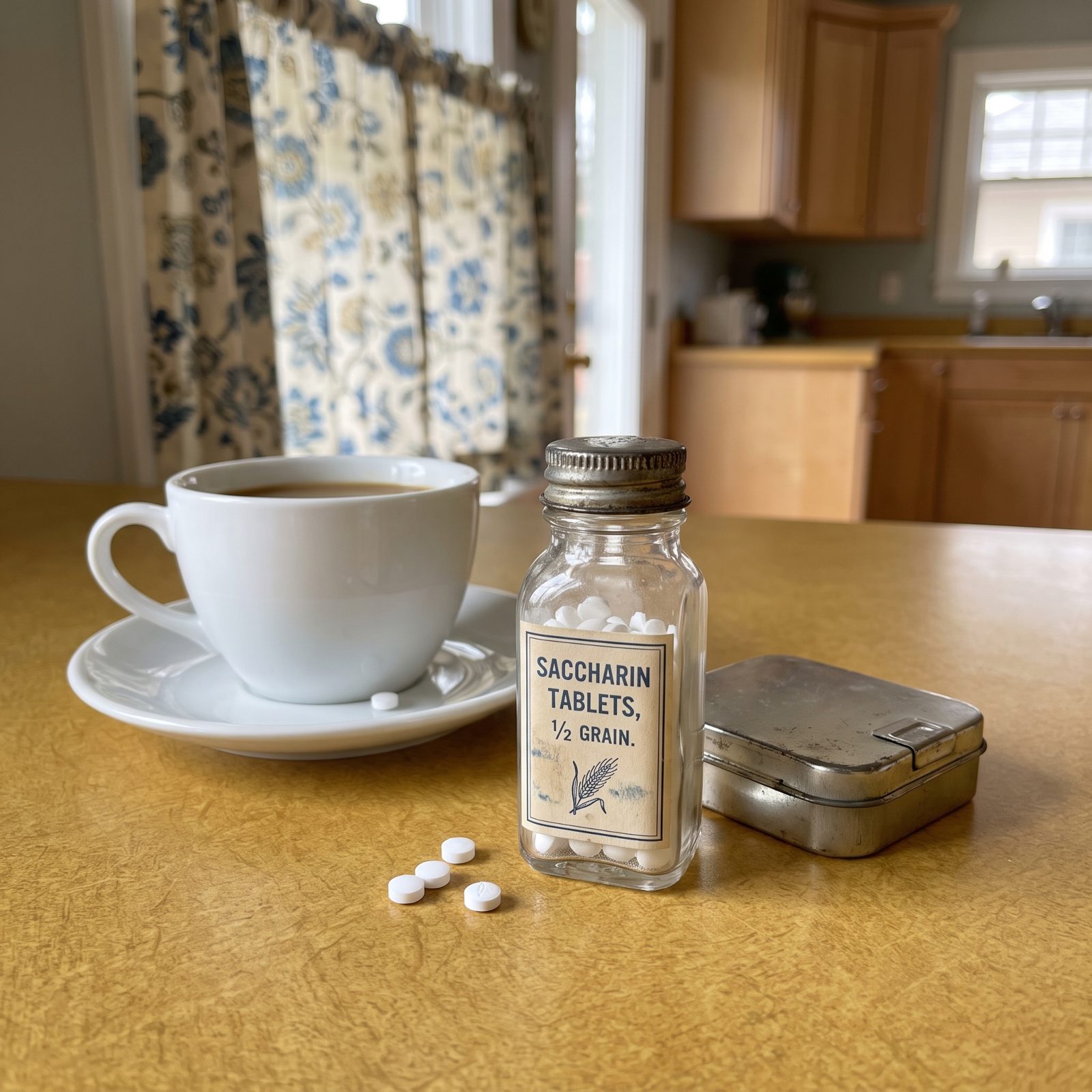
They came in a little glass bottle about as tall as your thumb. The tablets weighed next to nothing, and when you dropped one or two into a cup of coffee, they fizzed faintly as they dissolved, which was somehow the most satisfying part of the whole business.
Before the little pink and blue paper packets took over every diner table, this was how the calorie-conscious sweetened their coffee. The aftertaste was unmistakable — a metallic twang a whole generation learned to ignore. The bottle lived in a purse or a kitchen drawer, rattling.
39. Dream Whip Dessert-Topping Mix
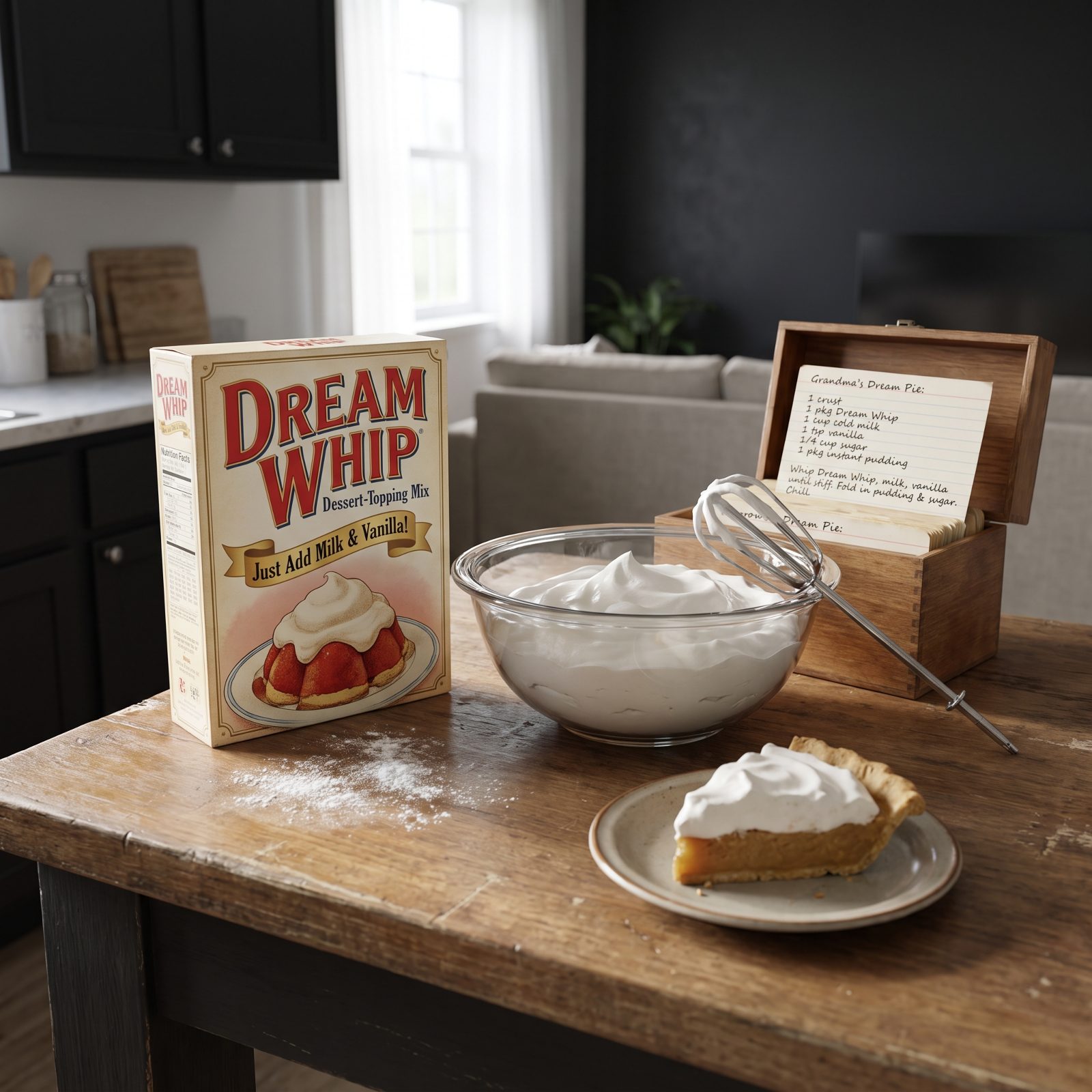
You whipped it yourself, and that was the appeal. Dream Whip came as a powder in a box, and you beat it with cold milk and vanilla until it climbed into soft peaks. For a minute there, you felt like you’d made something from scratch.
It topped the Jell-O, the pie, the trifle in the glass bowl brought out for company. Lighter than real whipped cream, it held its shape for hours on a dessert table without weeping, and that reliability earned it a permanent spot in the baking cabinet, right next to the gelatin boxes.
38. Junket Rennet Tablets for Homemade Custard
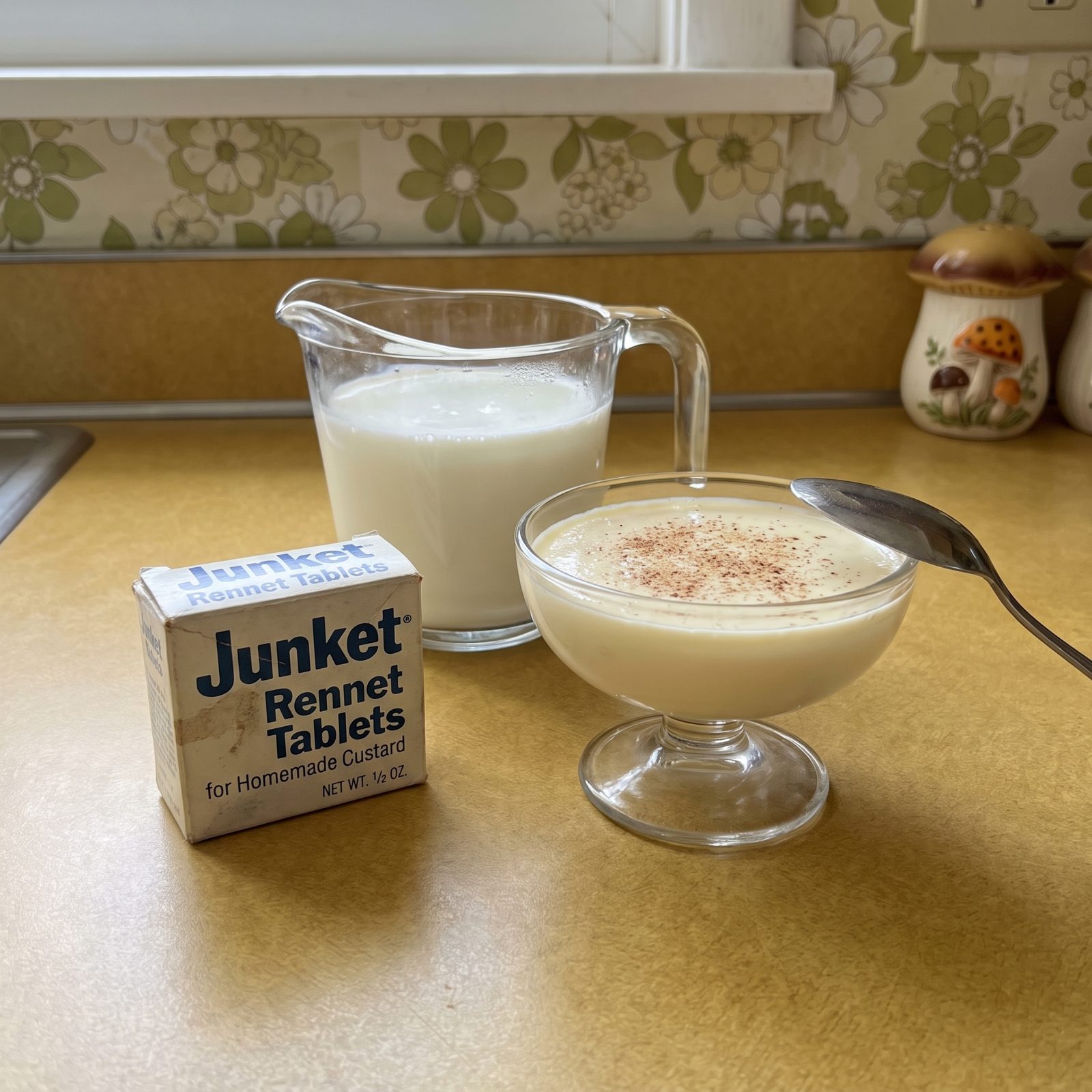
These tiny tablets turned a saucepan of warm milk into dessert, and almost nobody remembers them now. You crushed one, stirred it into barely-warmed milk, and walked away while enzymes did the setting. No oven, no fuss, just a soft wobbly custard waiting for a sprinkle of nutmeg.
Junket started as a proper brand with its own puddings and ice cream mixes, but the rennet tablets were the quiet workhorse — the thing grandmothers kept for upset stomachs and summer desserts alike.
37. Minute Tapioca in the Red Box
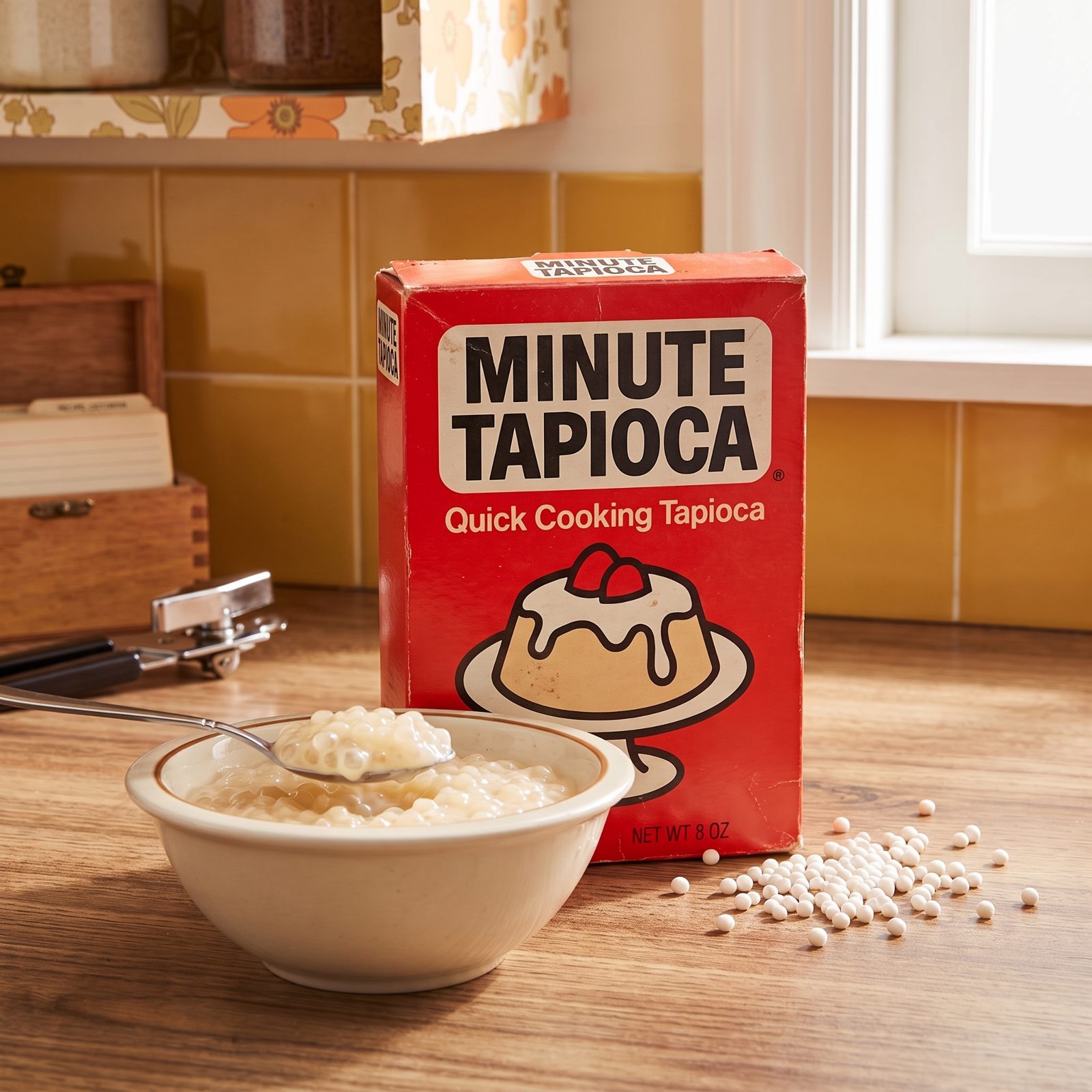
That red box lived in the back of the cabinet for years, pulled out whenever a recipe called for thickening or a craving hit for pudding with actual texture. The little pearls never fully dissolved, and that was the point. You chewed your pudding, and somehow that was wonderful.
It also quietly thickened half the fruit pies in America. Cornstarch got all the credit, but tapioca did the honest work and never clouded the filling.
Pudding you could chew felt like a reward, not a snack.
36. Jell-O Cook & Serve Pudding Mix
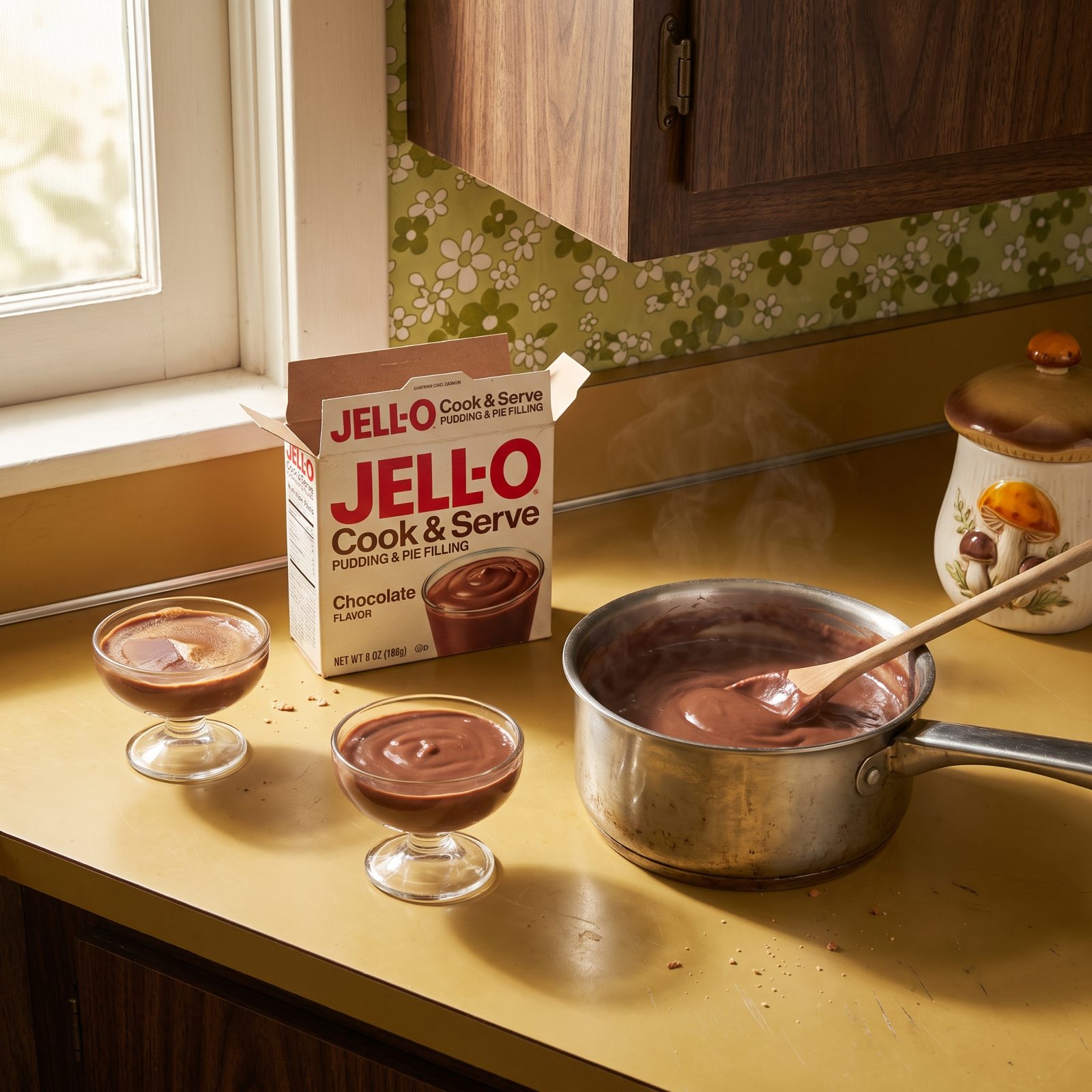
Before instant anything, pudding meant standing at the stove. The Cook & Serve box demanded a saucepan, constant stirring, and patience while the mixture thickened into something that actually tasted cooked. You earned that pudding.
And then came the great childhood divide: the skin. Some of us peeled it off in disgust. Some of us considered it the best part. We will not be taking questions on which camp was correct, but we had strong opinions at age eight and we have them still.
Instant pudding mostly won the convenience war. The cooked version had depth the instant stuff never matched.
35. Canned Fruit Cocktail in Heavy Syrup
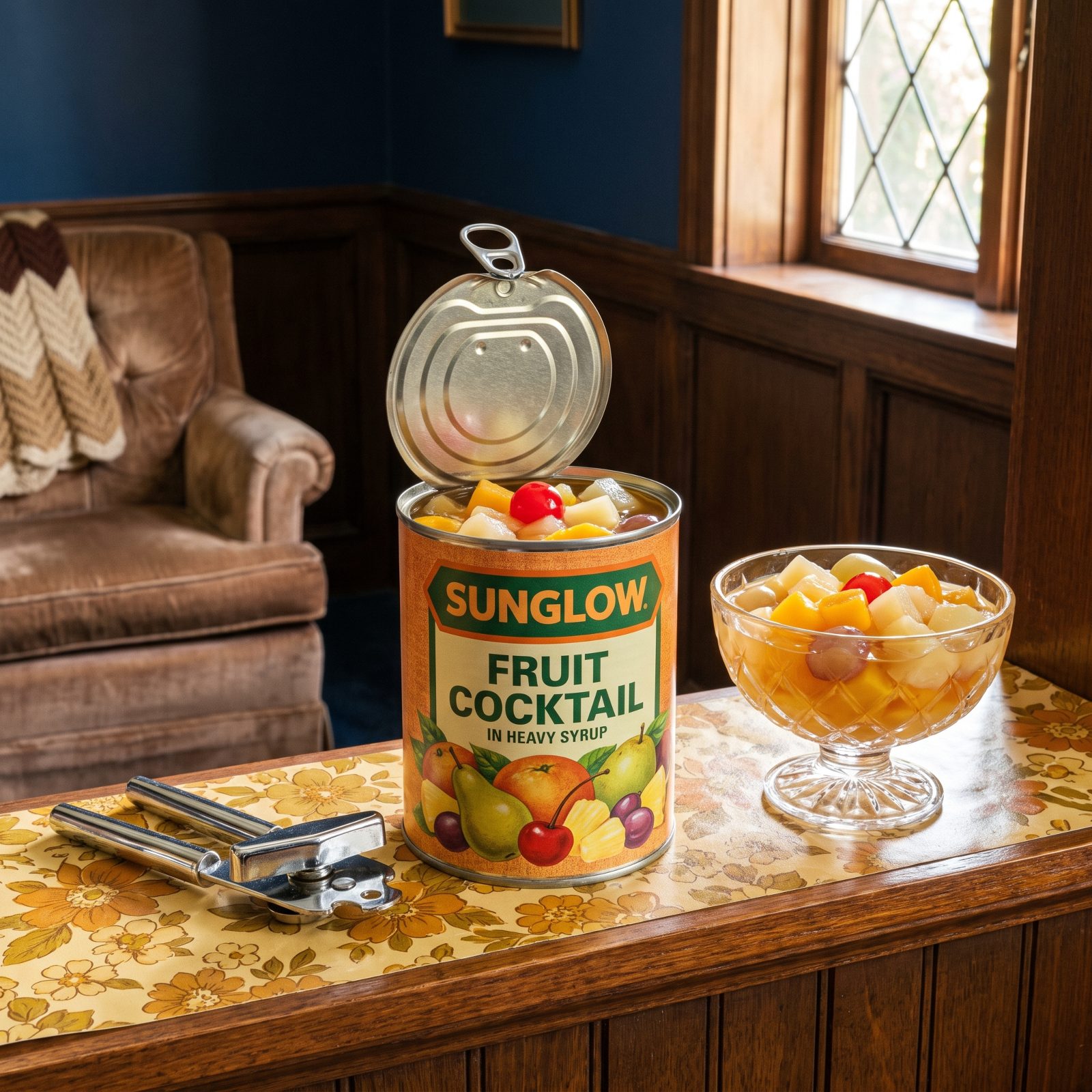
Every can held the same quiet drama: who got the cherry. There was usually one, maybe two, floating in a sea of diced peach and pear, and claiming it meant a small act of sibling warfare right there at the dinner table.
Fruit cocktail showed up on cottage cheese, in gelatin molds, over pound cake, and sometimes just spooned straight from the can over the sink. The heavy syrup made it, sweet enough to drink.
It still exists, but it rarely makes the grocery list now. Fresh fruit elbowed it out somewhere in the 1990s.
34. Jarred Mincemeat for Holiday Pies
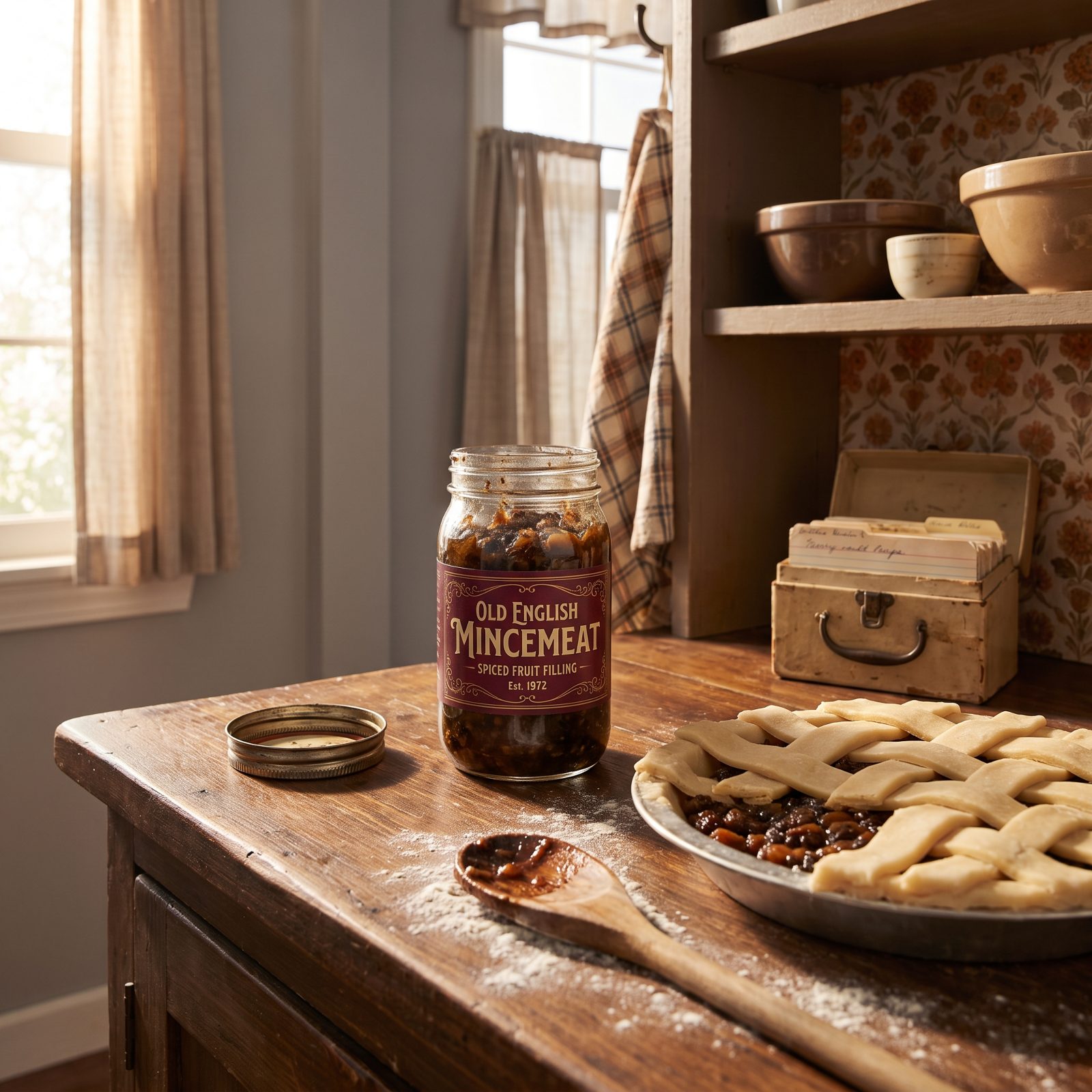
Pop the lid and the whole kitchen smelled like Christmas: cloves, cinnamon, dark fruit, and a boozy edge that made kids wrinkle their noses. Mincemeat was the dividing line between people who loved the holidays and people who really loved the holidays.
Most folks never knew it once contained actual meat. By the time it hit 1970s jars it was mostly apples, raisins, spices, and suet. Still, that one jar made the pie that sat untouched by half the table and got devoured by the other half.
33. Maraschino Cherries with Long Stems
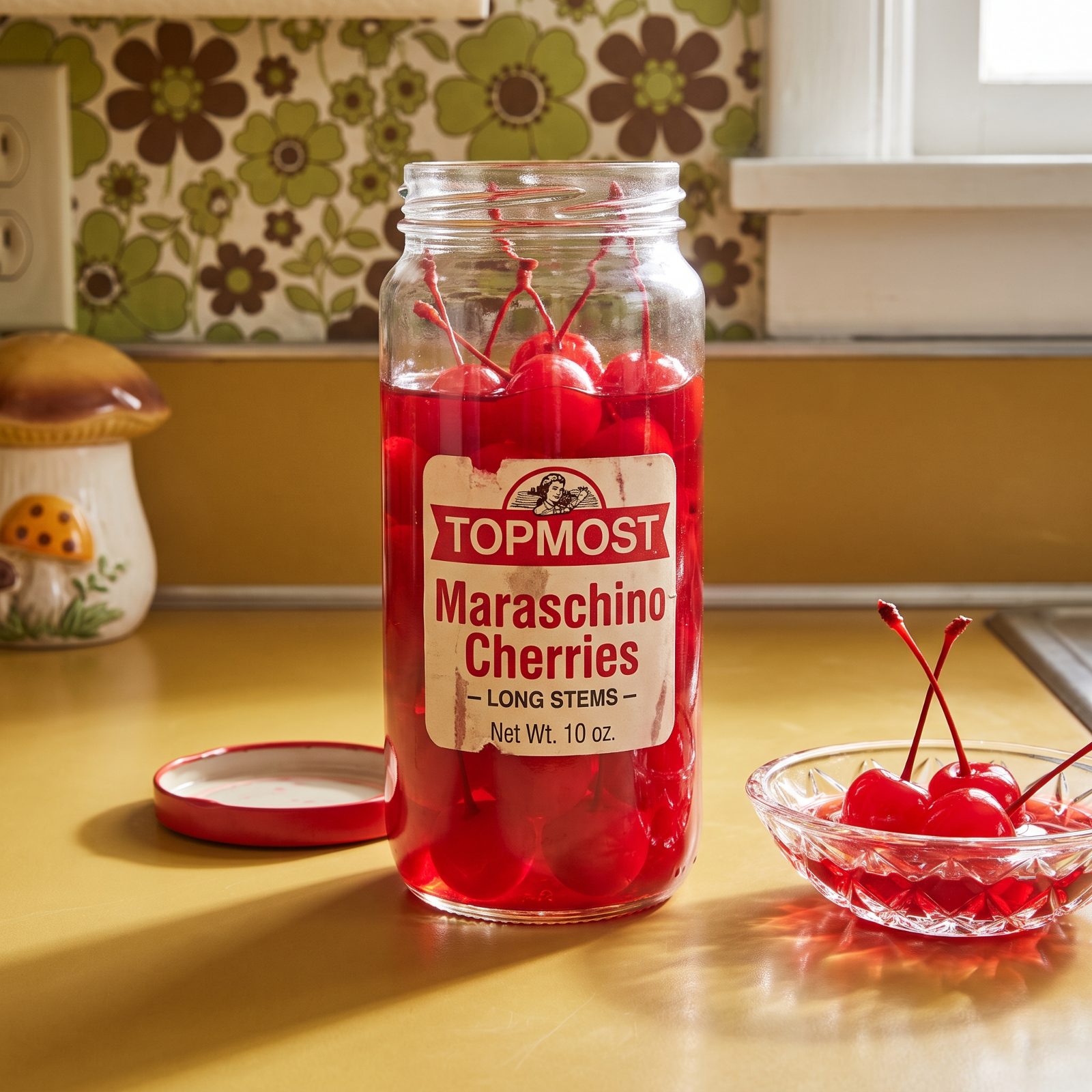
These were less an ingredient than a prize. A cherry on the sundae, the banana split, the holiday ham, the kiddie cocktail at the restaurant where the grown-ups ordered the real thing. And the long stem? That was for tying in knots, a party trick everyone swore they could pull off.
That unnatural red had nothing to do with the original Italian version. American processors bleached the cherries and dyed them to a shade not found in nature, and we loved them anyway. The jar lasted months in the fridge door, pulled out one cherry at a time.
32. Tubs of Candied Fruit for Fruitcake
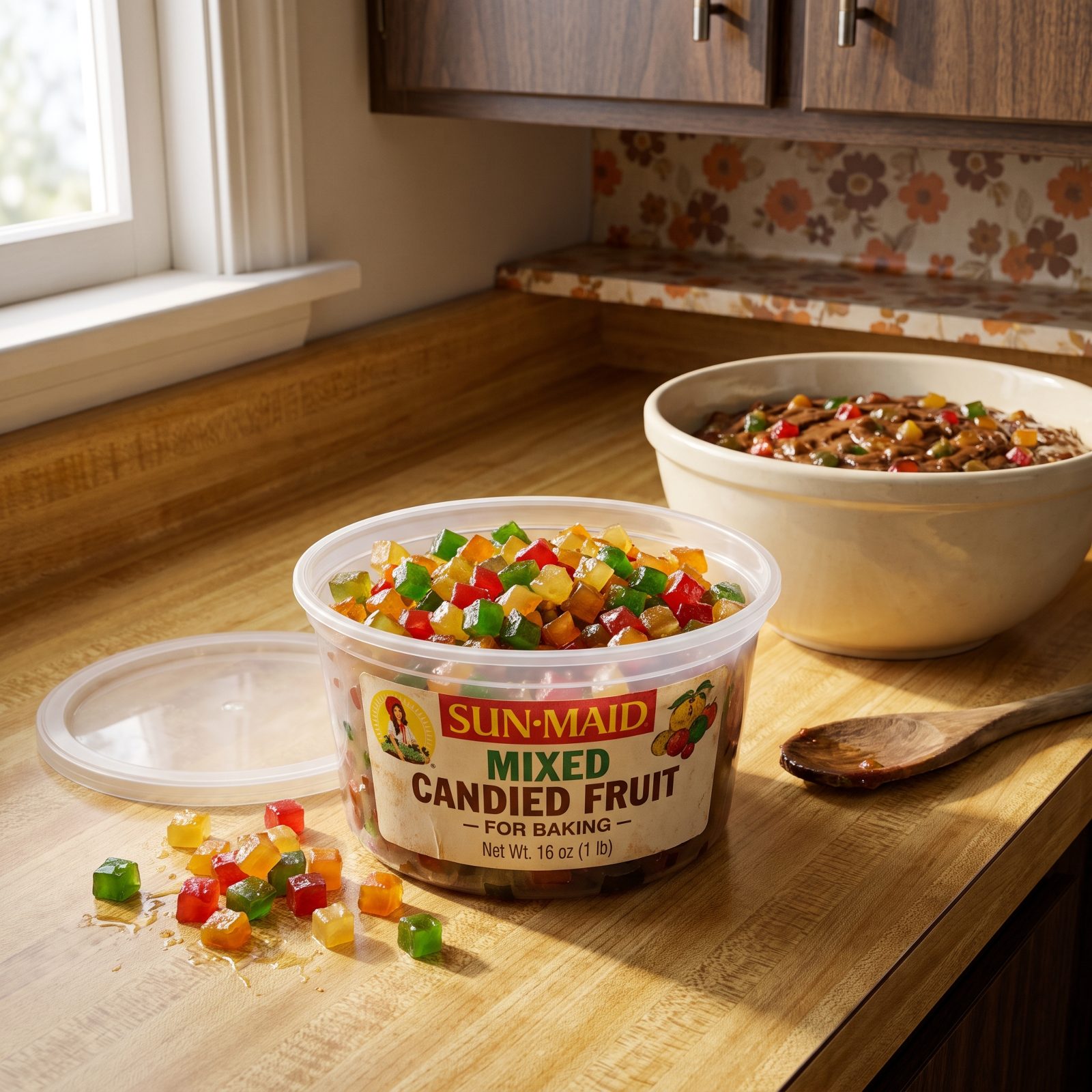
The candied fruit tub only appeared in November, and it appeared with purpose. Those neon cubes of green and red, glossy and slightly sticky, went into one thing and one thing only: the fruitcake nobody admitted to liking.
Here is our unpopular opinion. A good homemade fruitcake, soaked properly and given time, was never the dry brick the jokes made it out to be. The candied fruit was the whole personality of the thing.
31. Marshmallow Creme for Fudge and Sandwiches
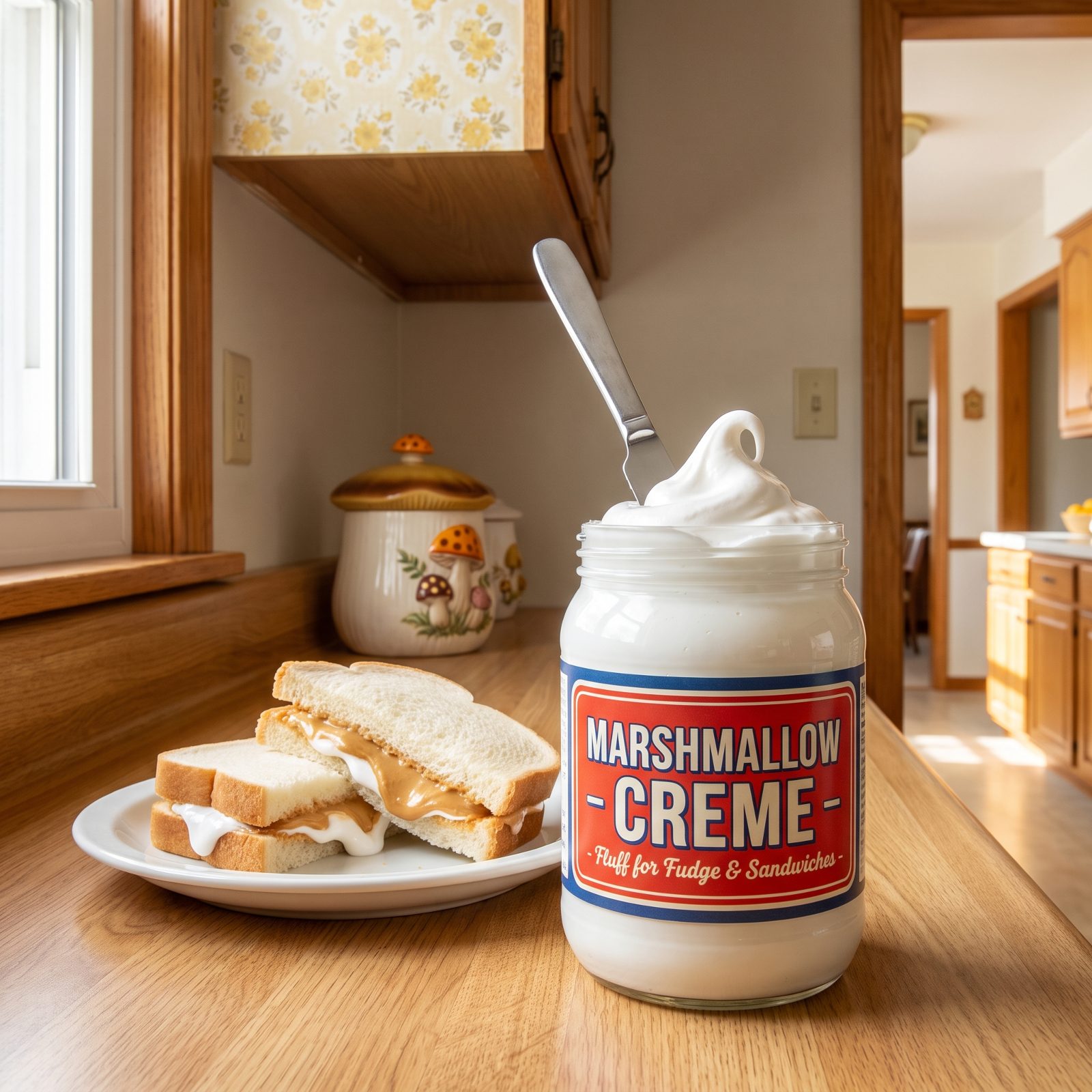
You couldn’t scrape the jar clean if your life depended on it, and that was part of the ritual. Marshmallow creme clung to the glass, stretched off the spoon in defiant sticky ropes, and ended up on the counter, the cabinet, and at least one child’s forehead.
Two destinies for a jar: fudge and fluffernutters. The fudge came out at the holidays. The sandwiches came out whenever white bread and a bored kid happened to be in the same room. Both felt like getting away with something.
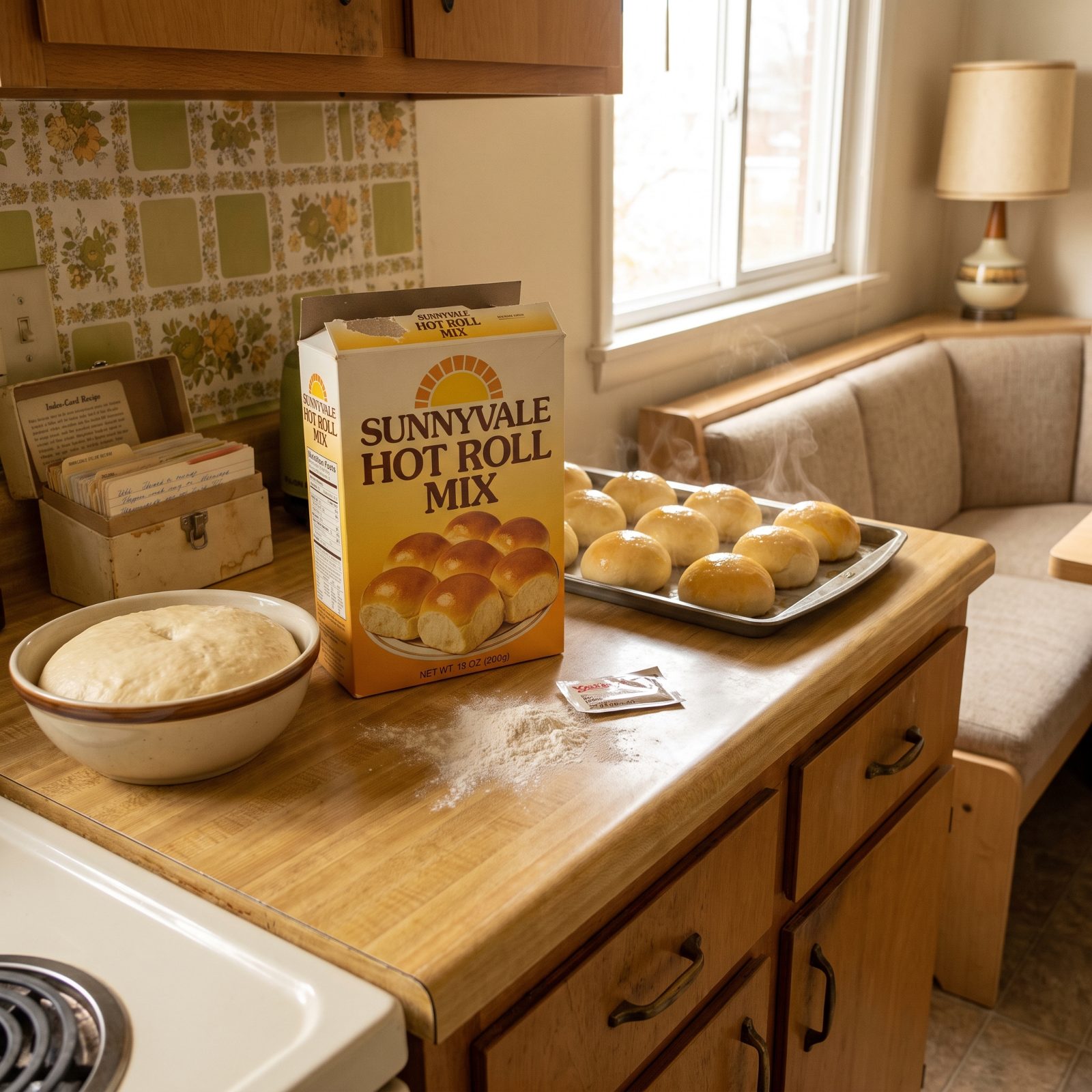
30. Boxed Hot Roll Mix
Would you like to save this?
This box sat somewhere between scratch baking and total shortcut, and that was exactly its appeal. The mix came with its own yeast packet, so you still kneaded, you still let it rise, you still smelled that unmistakable yeasty warmth fill the house. You just skipped the measuring and the guesswork.
Sunday dinners ran on these rolls. Pulled apart hot, brushed with butter, gone before the roast got carved.
Bread machines and the bakery aisle eventually made it feel redundant. For a while, though, it was how a lot of families got warm rolls on a weeknight.
29. Just-Add-Water Pie Crust Mix
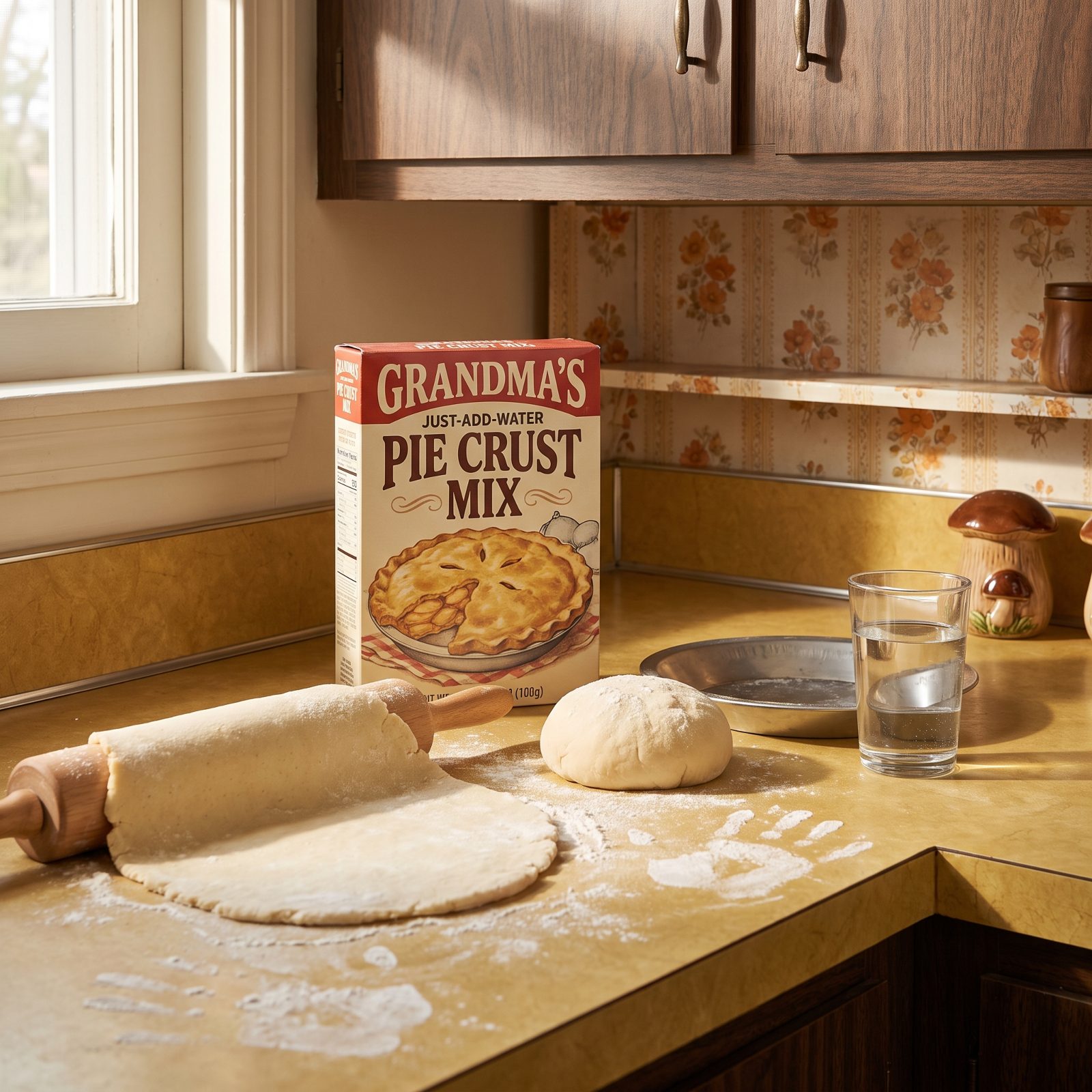
Pie crust intimidated people, and this box knew it. Cutting cold butter into flour, keeping everything chilled, not overworking the dough — that was the part that made home bakers sweat. The mix erased all of it. Add water, stir, roll, done.
Was it as good as a real butter crust? No, and we’ll be honest about that. But it turned out a flaky-enough crust at Thanksgiving for someone who was never going to make one from scratch, and that counts for something. A decent pie on the table beats a perfect pie you were too nervous to attempt.
It quietly disappeared as refrigerated roll-out crusts took over the job entirely.
28. Appian Way Boxed Pizza Kits
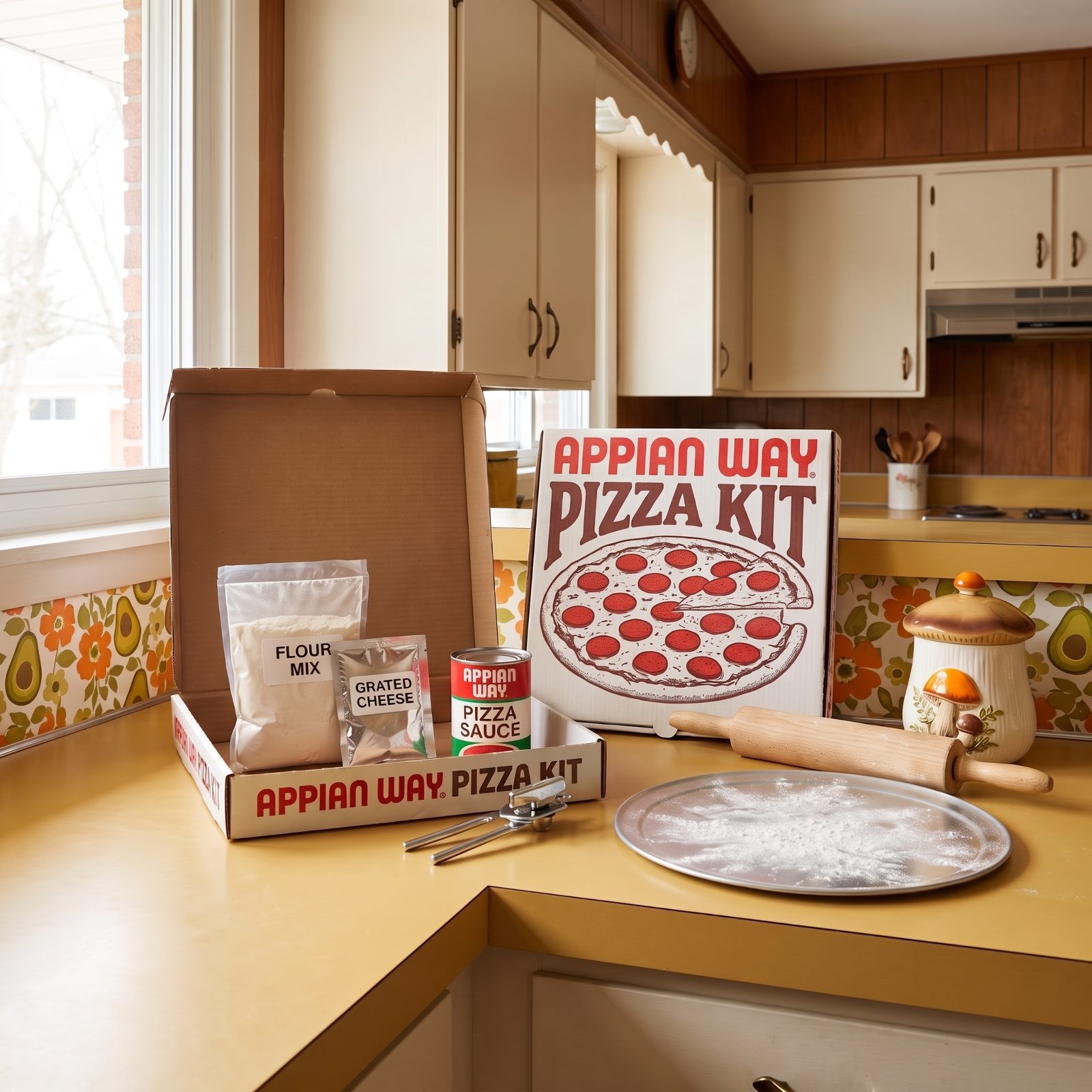
You didn’t buy a pizza in 1973. You built one. The Appian Way box showed up with a packet of pizza flour you mixed with water into a sticky dough, a tin of sauce, and a foil packet of sawdust-dry cheese that smelled faintly of a gym bag.
The crust came out cracker-thin and a little tough, usually pressed into whatever round pan Mom owned. Half the fun was the mess — flour on the counter, sauce on the apron, a kid standing on a chair to help spread it. For a lot of families, fresh pizza delivery was still a special-occasion thing, so this box was Friday night.
27. Shake ‘N Bake Seasoned Coating Mix
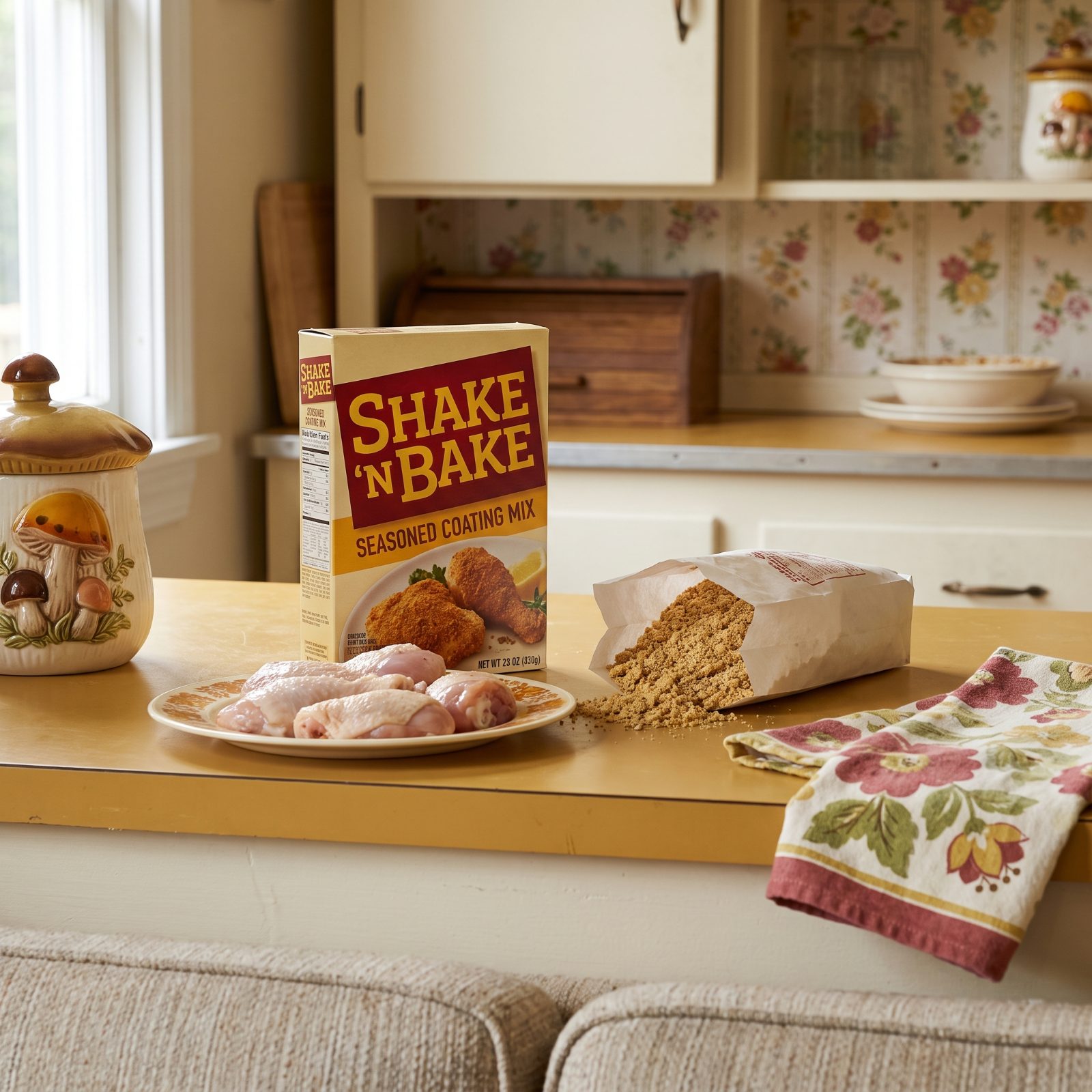
“And I helped!” The whole genius was the bag. You dropped a chicken thigh in, folded the top, and shook it like a maraca while the seasoned crumbs did their work.
It gave weeknight chicken a crisp orange jacket without the splatter of a frying pan. Pork chops, same deal. The smell of it baking filled the whole house — part paprika, part celery salt, part childhood.
You can still buy it. It’s just not the automatic move it used to be, back when it lived in nearly every cabinet in the country.
26. Hamburger Helper in Its Original Flavors
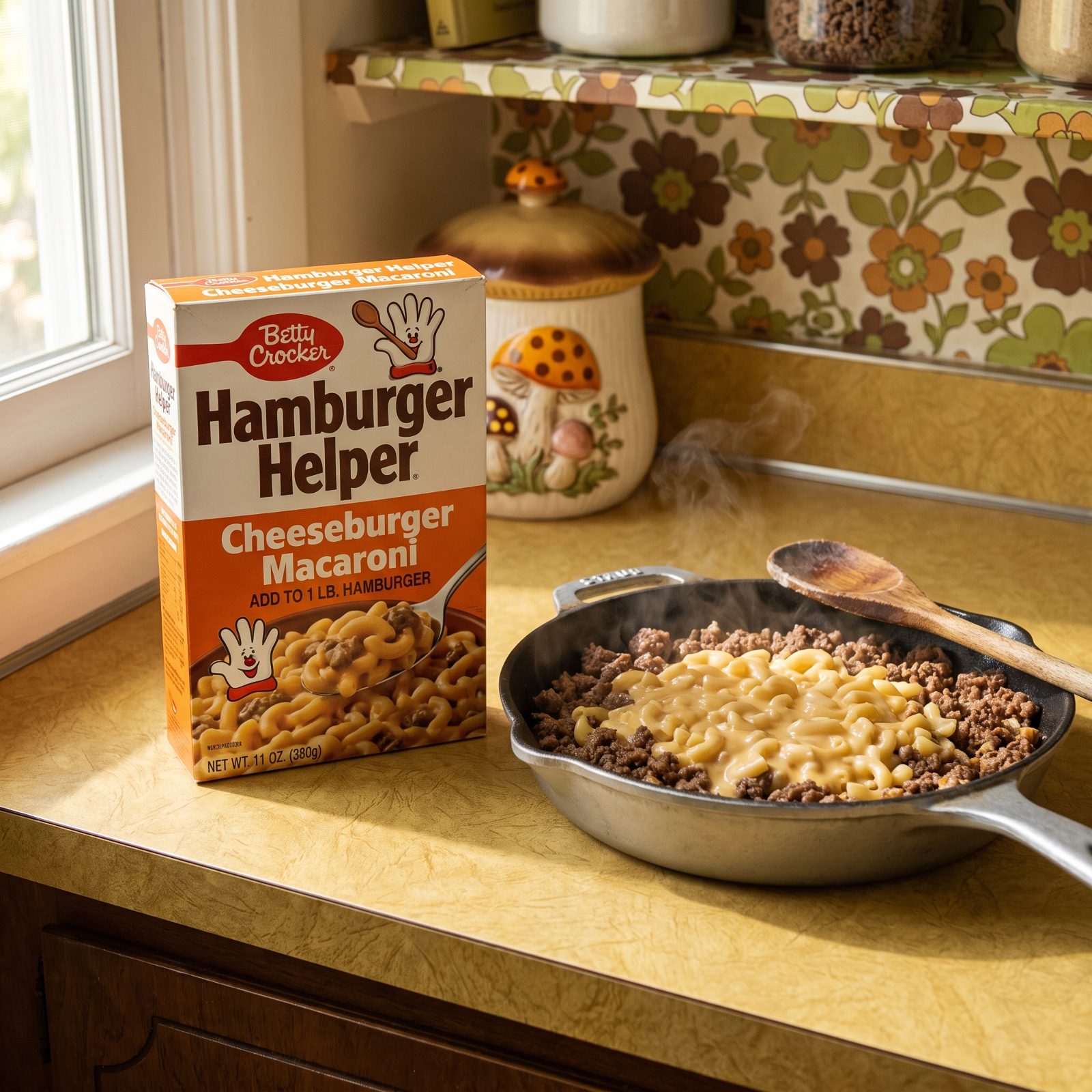
One box, one pound of ground beef, one skillet. That math fed a family of five and left the kitchen with a single pan to wash, which is exactly why it landed in 1971 and never left the cart.
The early flavors were simple: Cheeseburger Macaroni, Beef Noodle, Potato Stroganoff. You browned the meat, dumped in the pasta and the sauce packet, added water and milk, and let it bubble. The little white glove mascot waved at you from the box like he already knew dinner was handled.
25. Kraft Spaghetti Dinner in a Box
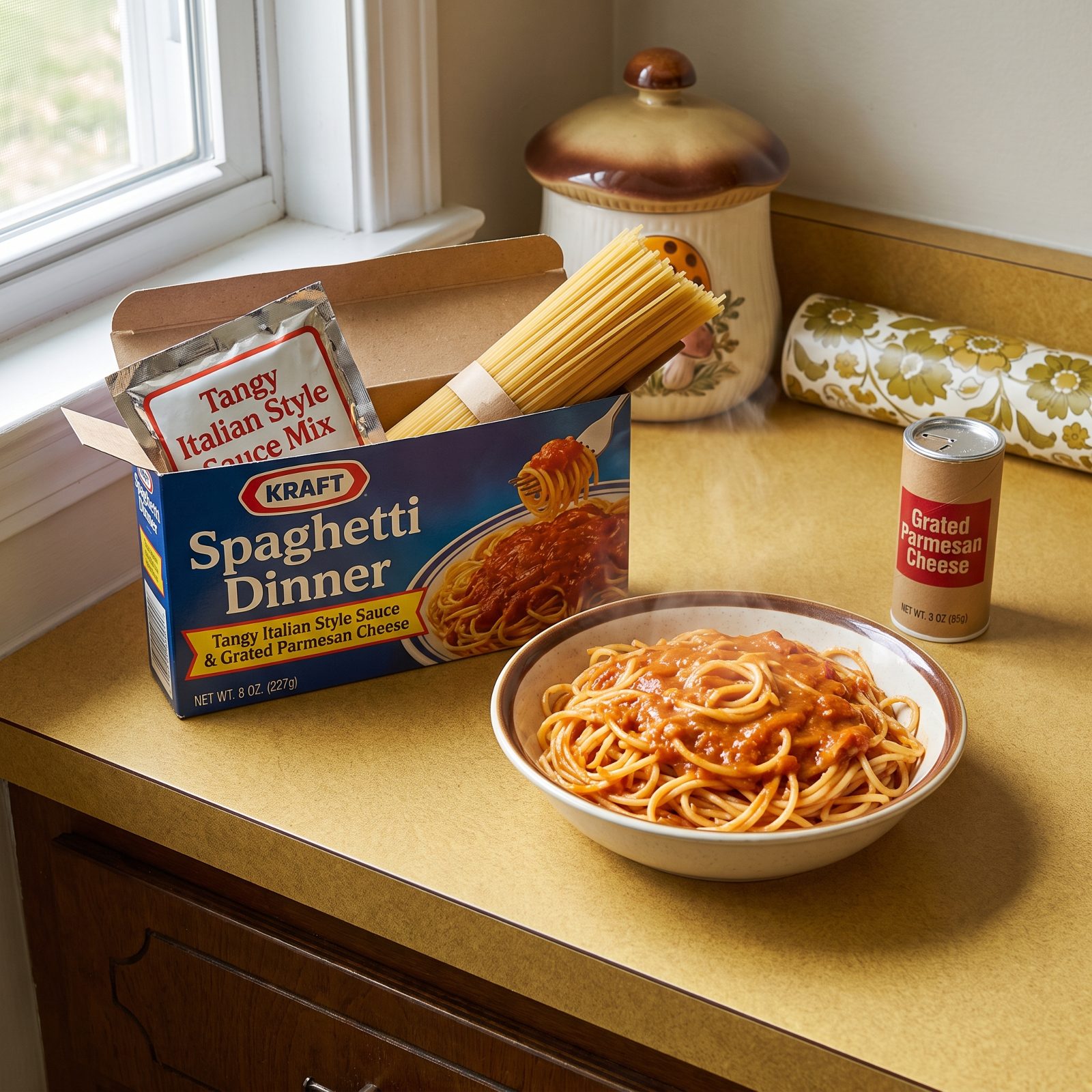
The spaghetti came in the box too, a tidy full-length bundle poking well out of the top. You boiled it, drained it, then stirred in a powder sauce made from a mystery packet and a can of tomato something.
The flavor landed somewhere between tomato soup and Italian ambition. It wasn’t Nonna’s. Nobody pretended it was. But on a Tuesday with homework looming, it got dinner on the table before the news ended — and that little cardboard cheese shaker tasted like exactly what it was.
24. La Choy Chicken Chow Mein Dinner
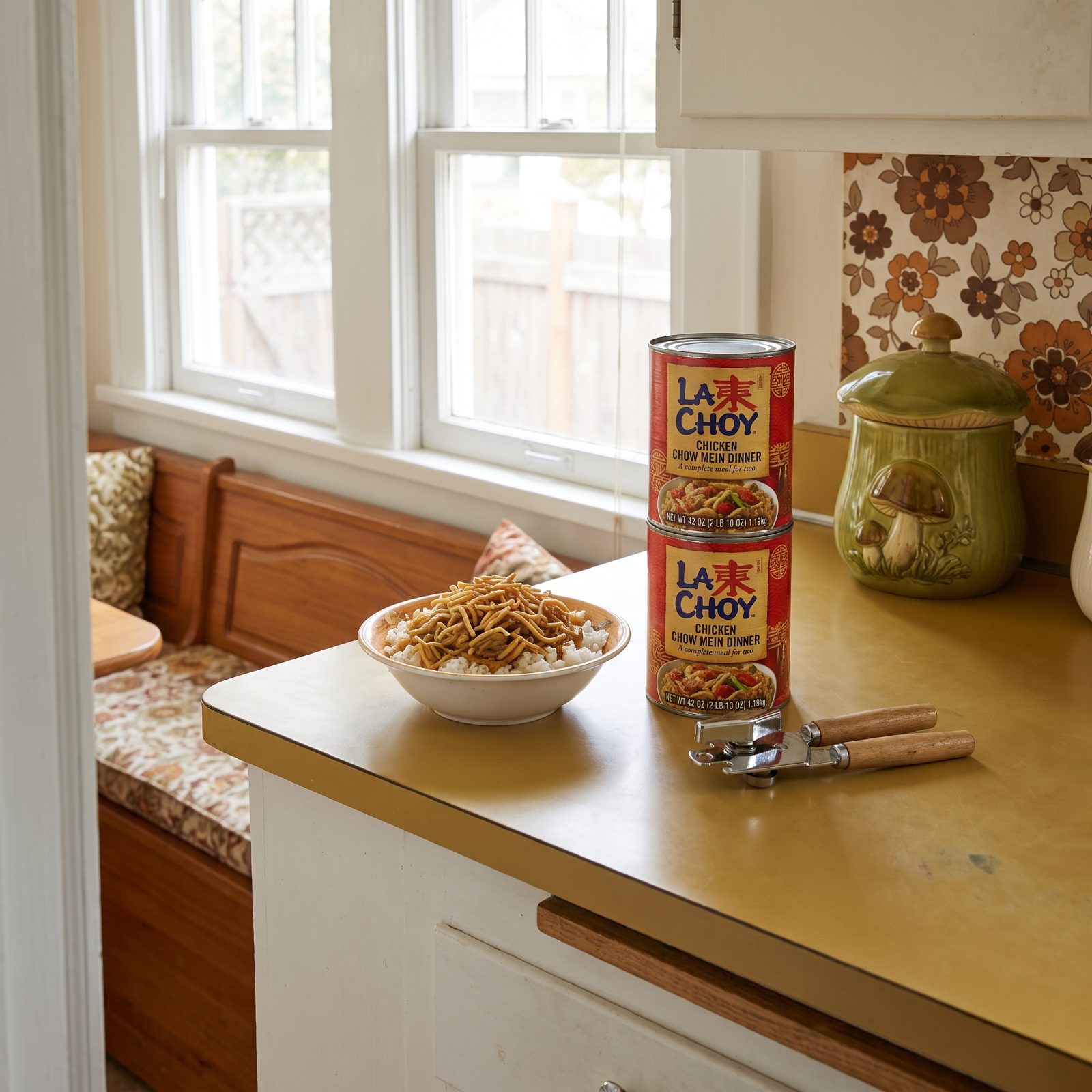
Dinner from two cans. The famous La Choy Chicken Chow Mein Dinner came in big cans you could stack two high in the pantry, promising an exotic meal with nothing more than a can opener and a saucepan.
For most families, this was the first brush with “Chinese food” — long before takeout containers ever showed up at the door. A tangle of golden-brown noodles, heaped over a bed of white rice. The crispy noodles went on last so they’d still crunch.
23. Cans of Crispy Chow Mein Noodles
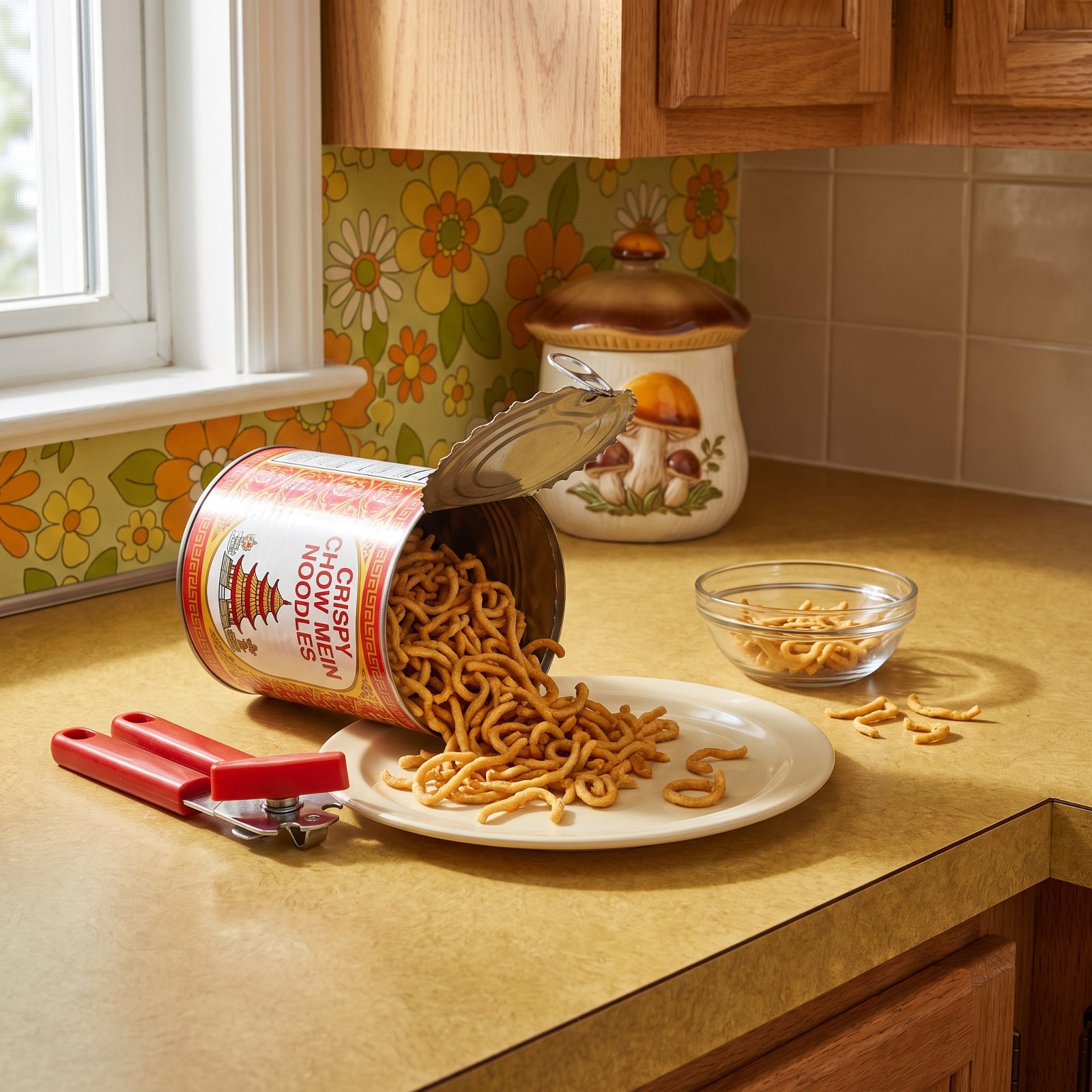
You snuck these straight from the can when nobody was looking. Dry, salty, impossibly crunchy, they were technically a topping but functionally a snack.
Sure, they crowned the chow mein. They also went into haystack cookies, got tossed into salads, and disappeared by the handful between meals. The can sat in the cupboard looking patient, always half-empty, and nobody ever admitted why.
22. Canned Bean Sprouts and Water Chestnuts
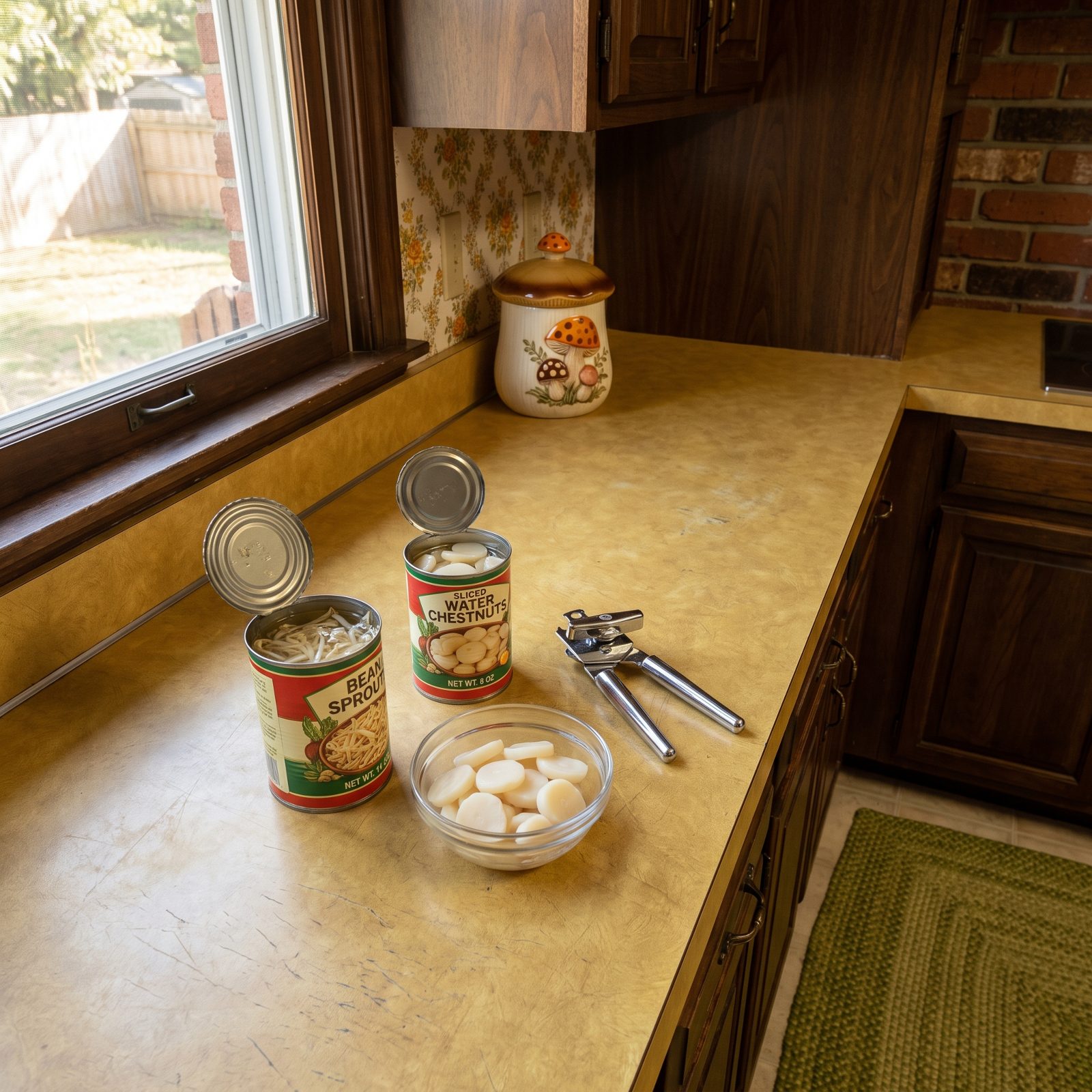
The water chestnut was the fanciest thing in a 1970s cupboard. That faint crunch in a stir fry or a dip felt sophisticated, and it came out of a tin with a sound like coins hitting a dish.
Canned bean sprouts rode along in the same recipes, pale and a little limp, nothing like the fresh ones you’d get now. Both leaned hard into the era’s fascination with casseroles and “Oriental” dishes. And here’s a secret every hostess kept: spinach dip got its texture from a can of chopped water chestnuts.
21. Canned Asparagus Spears
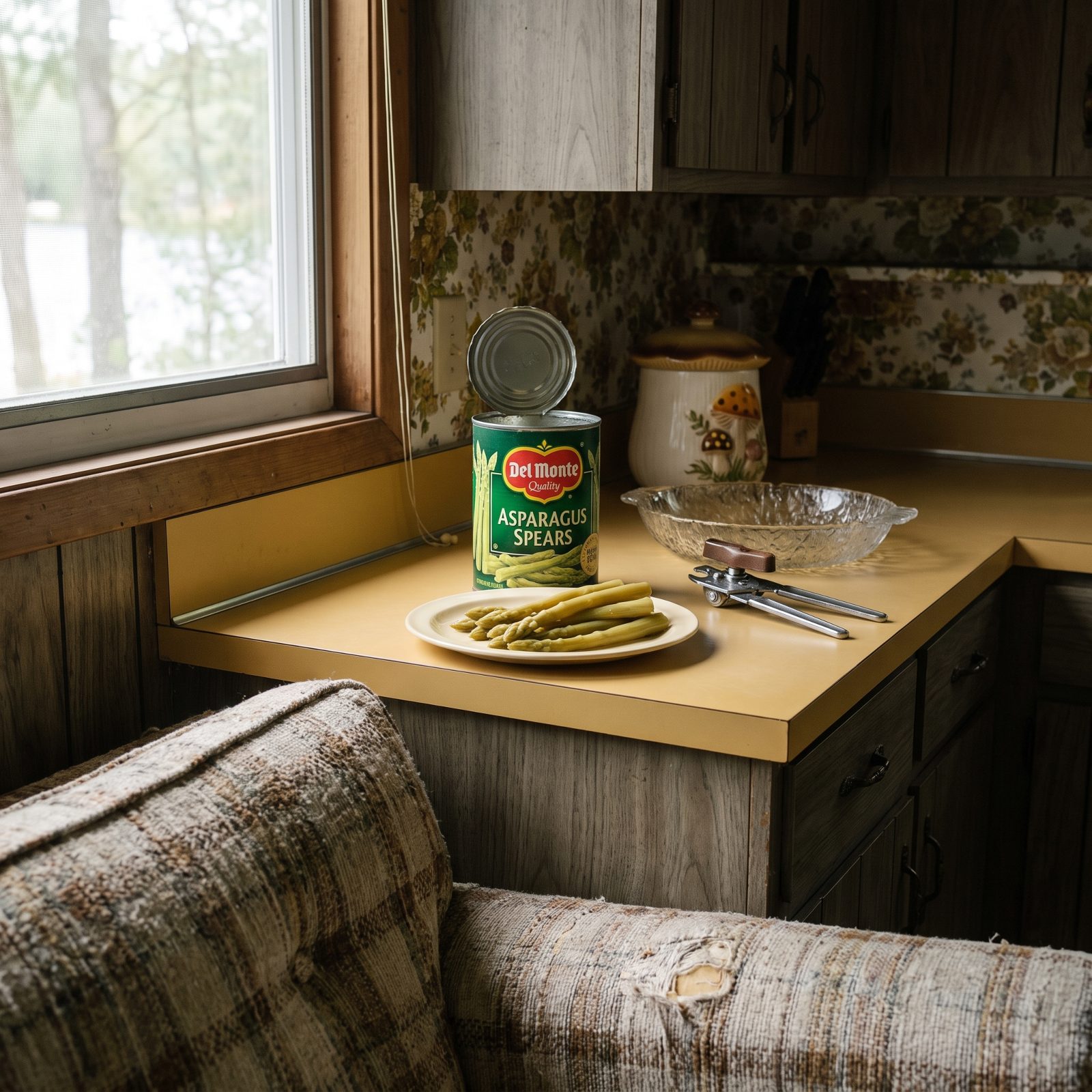
Soft, pale, and sold in a tall can built just for their length. Canned asparagus had a droop to it that fresh never does, and a color closer to army green than garden green.
It showed up on the “good” plates when company came, often draped over toast with a cream sauce, or folded into a molded salad that would horrify a kid today. Fresh asparagus was seasonal and pricey back then, so the can was always there, waiting to dress up a Sunday.
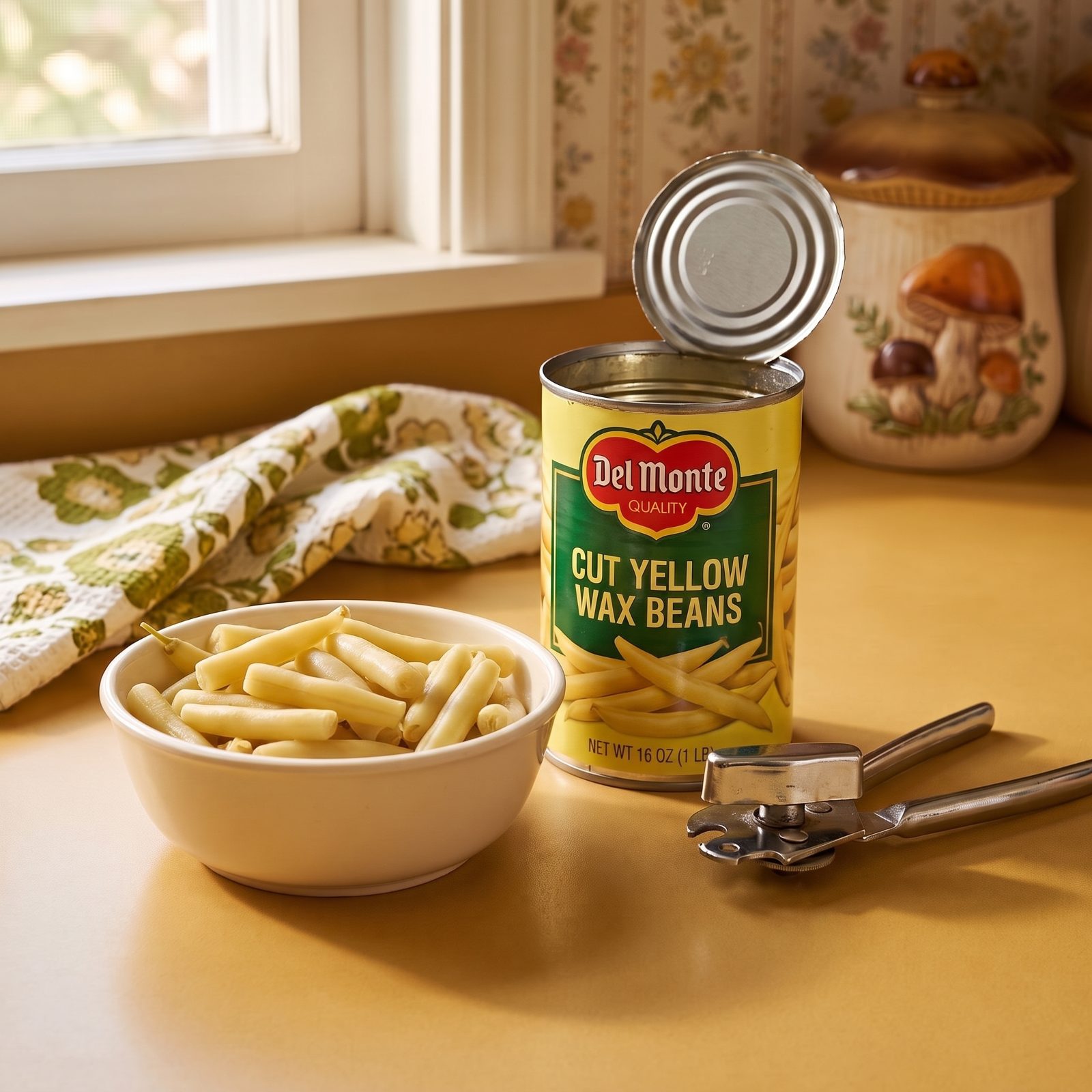
20. Canned Yellow Wax Beans
Would you like to save this?
Green beans had a quieter cousin, and it was yellow. Wax beans came out of the can the color of weak butter, soft enough to cut with a fork, mild enough that kids ate them without a fight.
They turned up in the three-bean salad at every potluck, swimming in sweet vinegary dressing next to kidney beans and green beans. On their own? A pat of margarine, a shake of salt, and you called it a side dish. You rarely see them canned anymore.
19. Canned Succotash
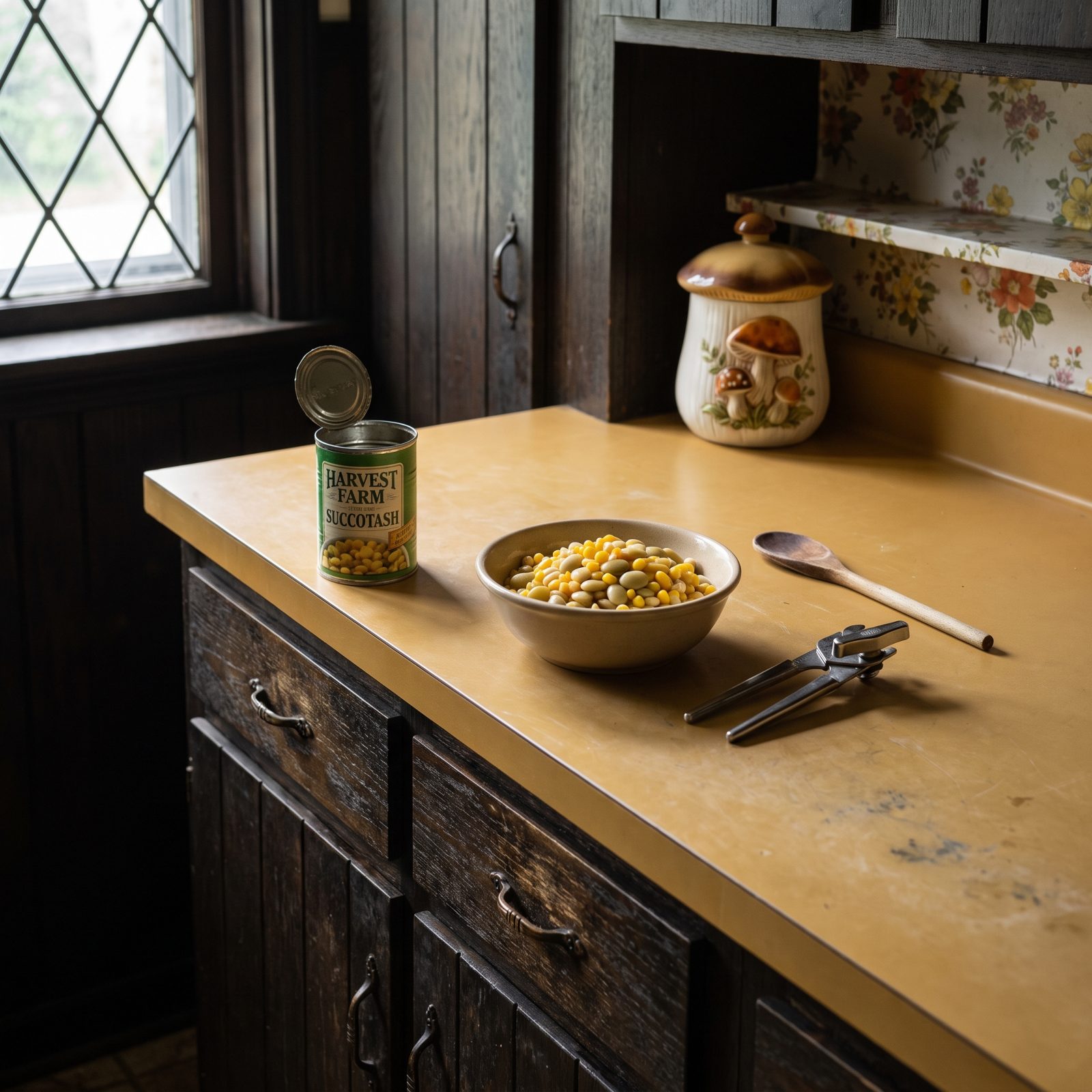
Corn and lima beans, together in one can, because somebody decided they belonged that way. Succotash was the side dish you got served and the word you loved to say out loud.
That mealy, mild quality split every dinner table down the middle. You either happily shoveled it or pushed the lima beans to the edge of the plate hoping no one noticed. It landed beside a pork chop or a meatloaf on a weeknight, warmed in a saucepan with a little butter.
The name goes back centuries to Native American cooking. The can made it a 1970s regular, then it quietly slipped off the weeknight rotation and never really came back.
18. Canned Tamales Wrapped in Little Paper Jackets
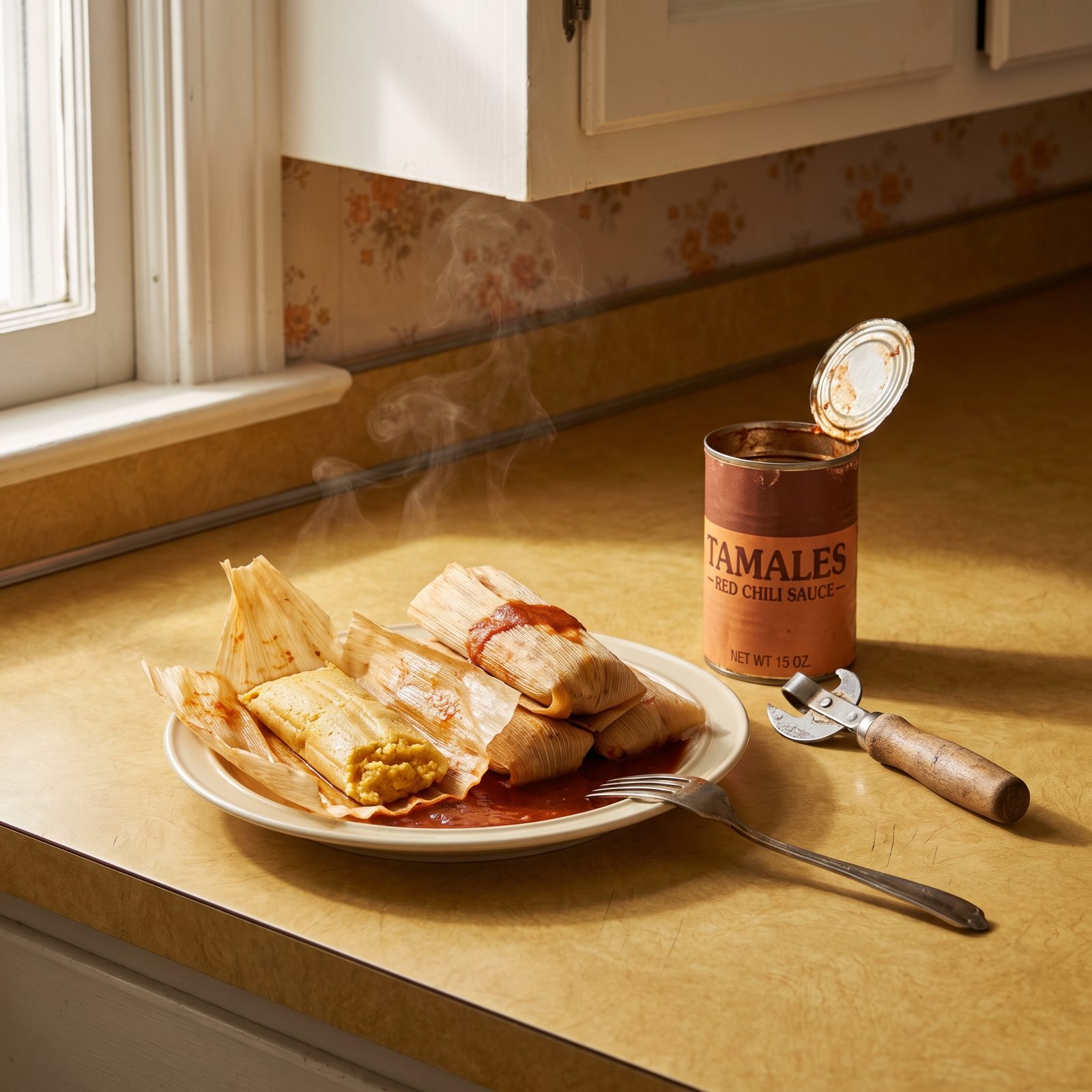
The whole thing hinged on the paper. You slid the tamales out whole, these soft pale-yellow cylinders, and each one came wrapped in a thin paper sleeve you had to peel before eating. Kids thought that was the strangest part — dinner that came pre-swaddled.
They went straight from the can into a saucepan, sauce and all, heated until steam curled off the paper, then served over nothing in particular. Just a plate, a fork, and that sweetish cornmeal give.
17. Canned Chicken à la King, Poured Straight Over Toast
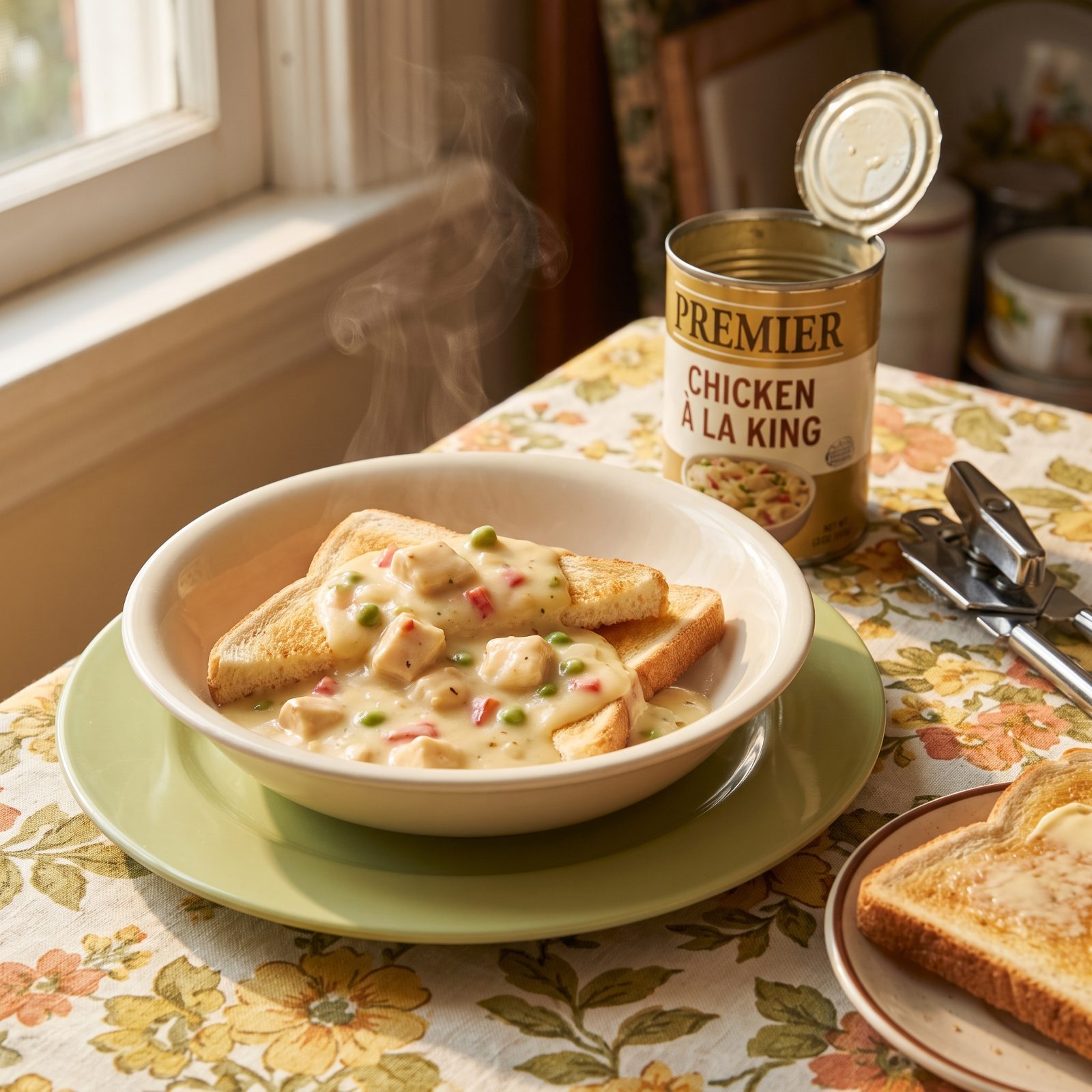
Fancy, by the standards of a Tuesday. The name alone made it sound like you were doing something special, when really you were opening a can and warming it through while the toast popped.
Pale cream sauce, bits of chicken, those red pimento specks and the odd pea. It went over toast points, over rice, over split biscuits. The sauce was the point. Everything underneath was just there to catch it.
16. The Little Jar of Dried Beef for Creamed Beef on Toast
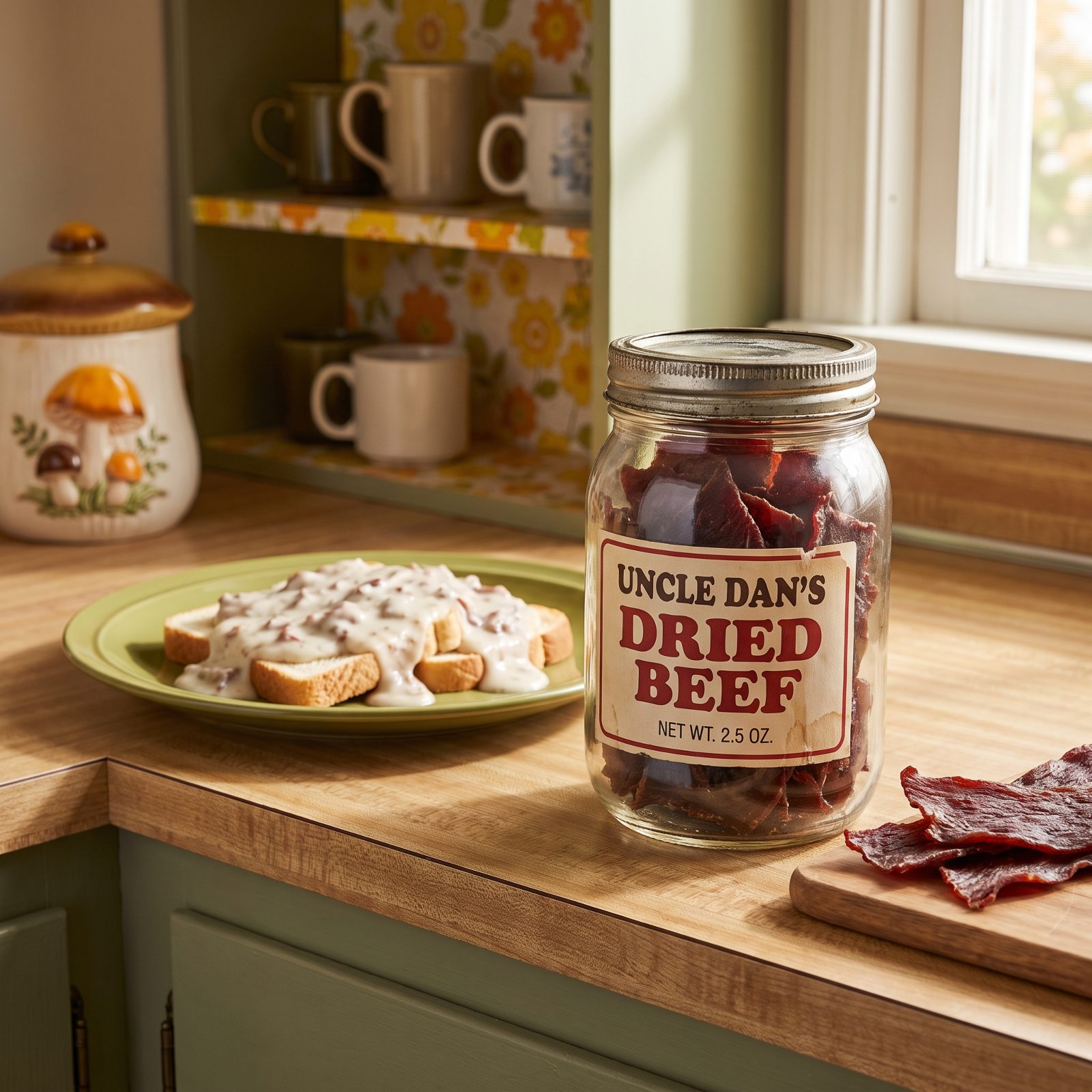
They called it worse things than creamed beef on toast, and you probably know the nickname. The military name stuck to it like the gravy stuck to the plate.
The dried beef came in a squat little glass jar — thin, papery slices of salty reddish meat you tore up and stirred into a white sauce. Spooned over toast, it fed a whole family off one jar. Cheap, filling, salty enough to make you reach for your milk. A lot of households kept it going long after they could afford something else, out of plain habit.
15. The Shelf-Stable Canned Ham With the Key on Top
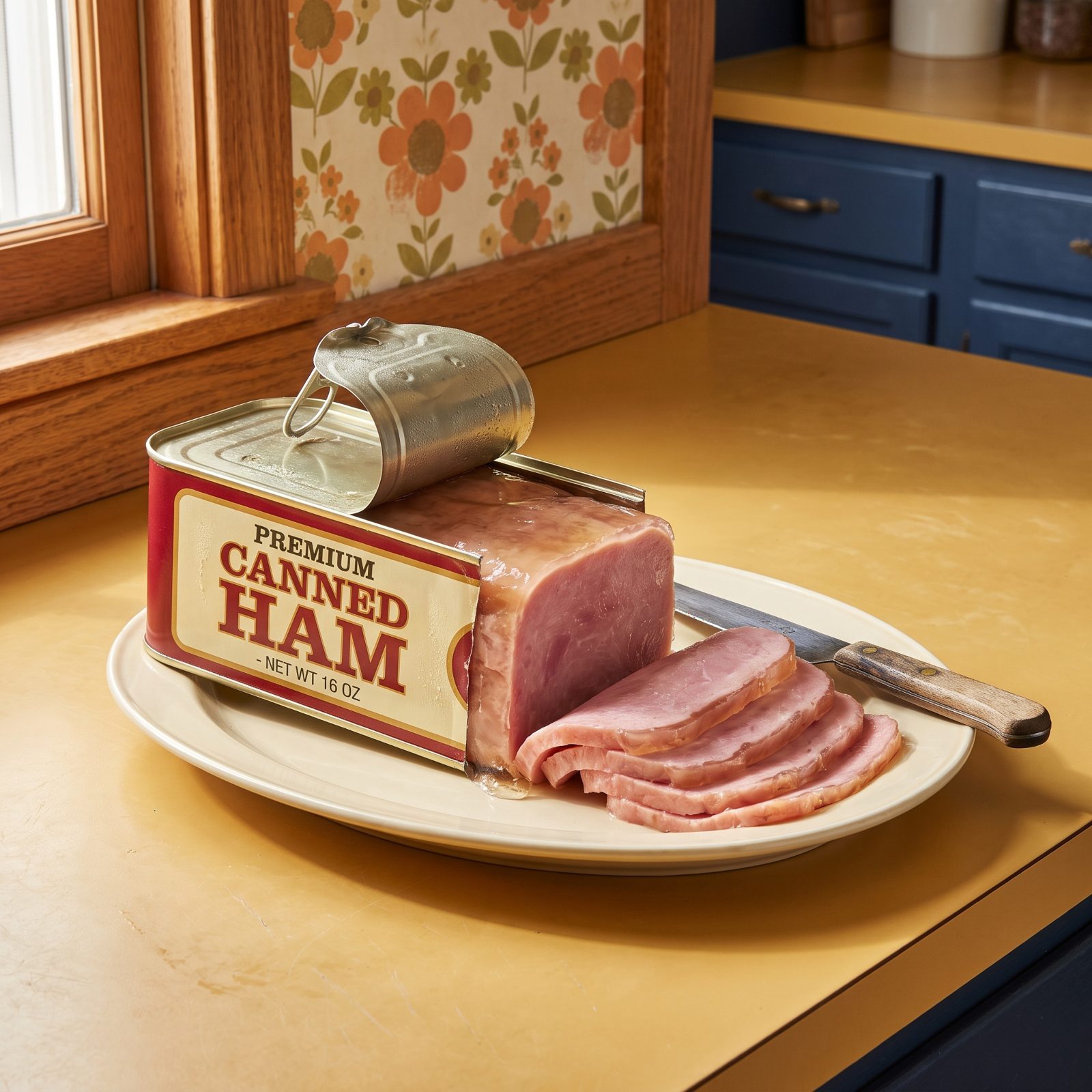
It lived in the pantry, not the fridge, which felt like a small magic trick. A whole ham on the shelf, waiting. You opened it with the little key and the lid peeled back in a curl you had to be careful not to cut yourself on.
Out slid the ham in one pink rectangular block, slicked with a layer of clear jelly nobody quite loved. You wiped that off, carved it into slices, and there was Easter dinner or a week of sandwiches, depending on the size of the tin.
14. Underwood Deviled Ham in the Paper-Wrapped Can
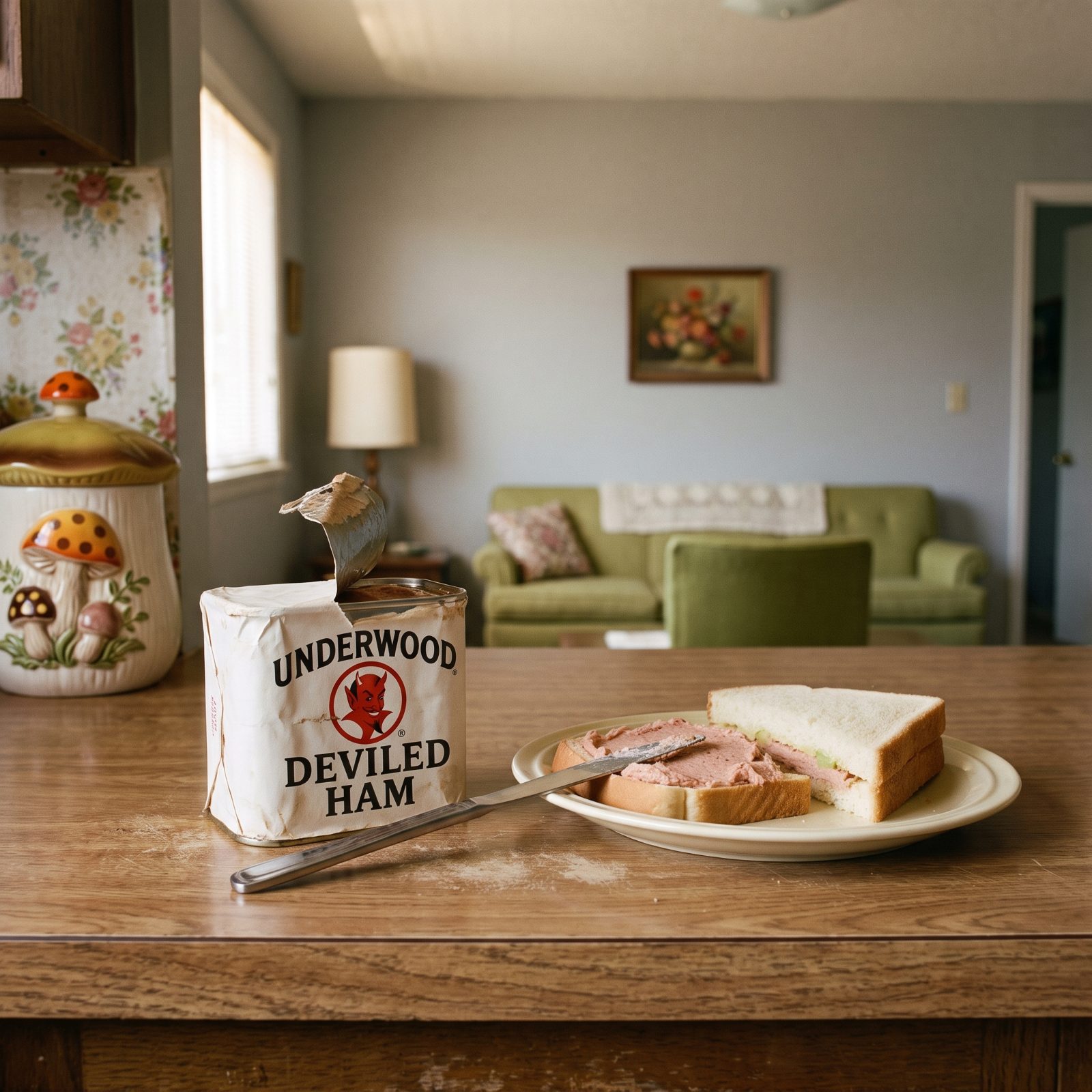
The paper wrapper was the giveaway. That little can came dressed in white paper printed with the red devil, and you peeled it off before you ever reached for the opener.
Inside was a soft pink spread — finely ground ham with a mustardy bite, meant for sandwiches and crackers and stuffing into celery sticks when company came. It’s one of the few on this whole list you can still find, if you know which low shelf to check.
13. Potted Meat for the Quickest Sandwich in the House
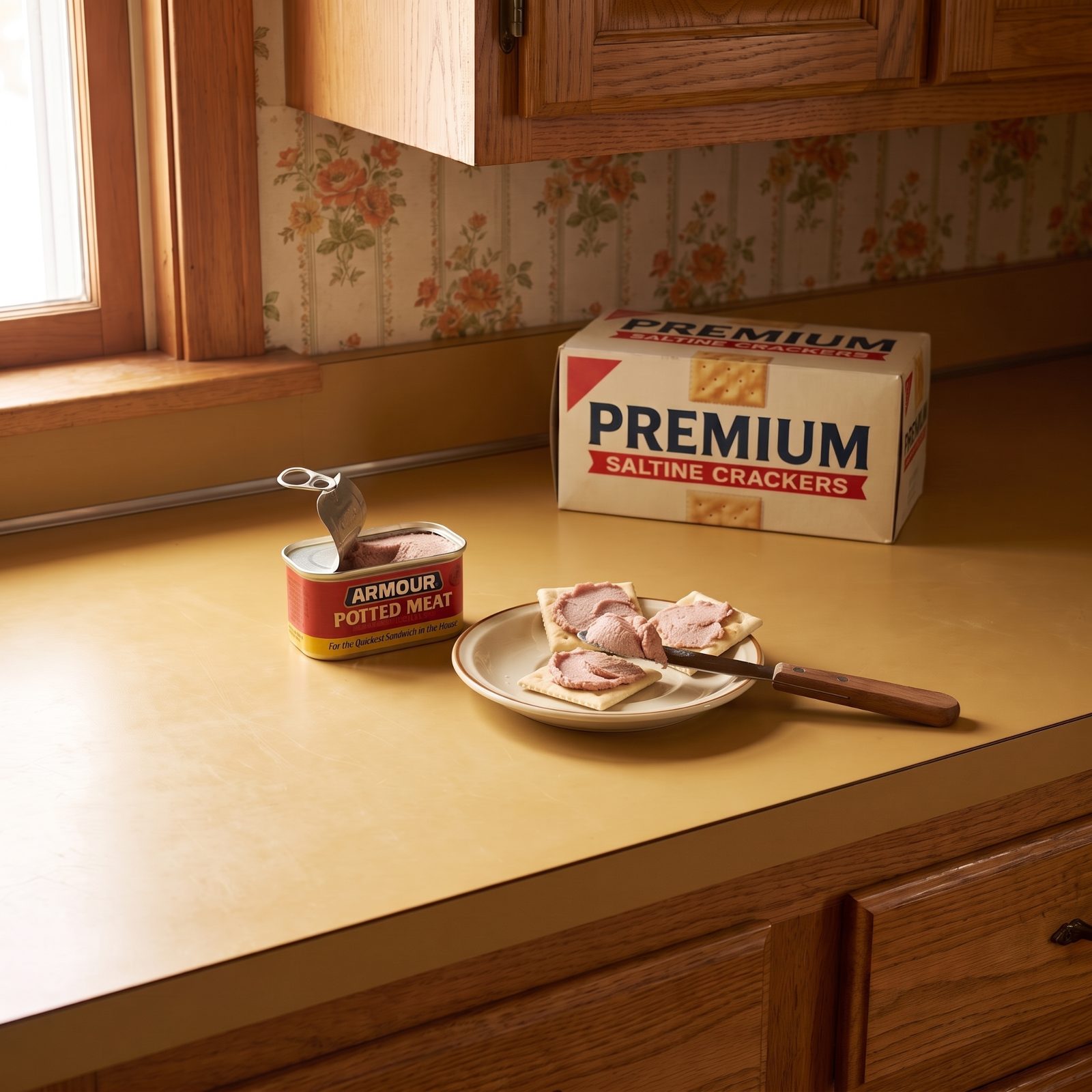
Nobody asked too many questions about potted meat, and honestly that was part of the deal. You opened the flat little can, spread the soft paste on white bread or a cracker, and lunch was done in under a minute.
It had a salty, smoky, hard-to-place flavor that kids either loved or wouldn’t touch. Camping food. Lunchbox food. Keep-it-in-the-cupboard-for-emergencies food, cheap enough that there were always a few stacked behind the soup.
12. Vienna Sausages in the Pull-Top Tin
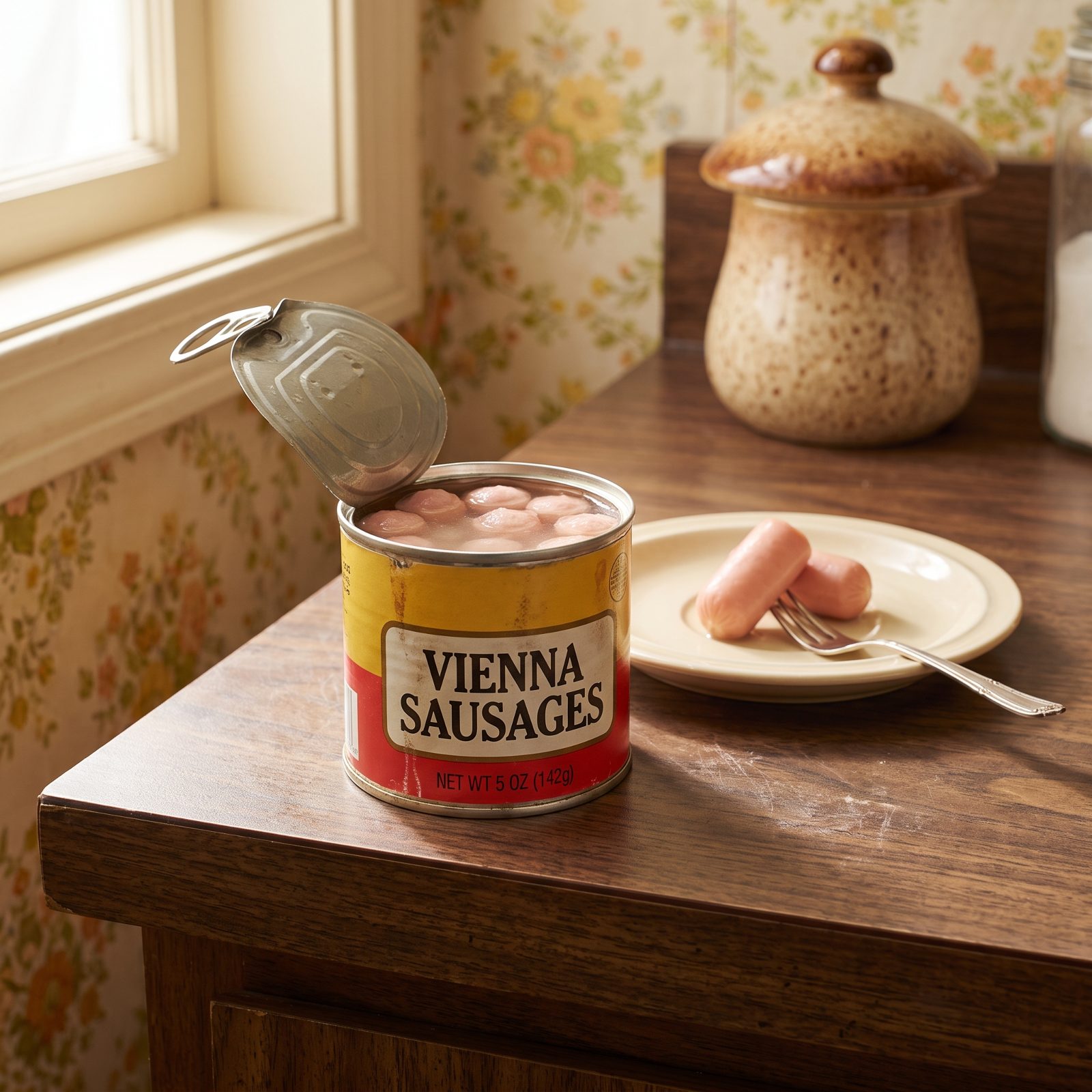
The pull-top ring was the thrill. You hooked a finger in, peeled the lid back in one satisfying motion, and there they were, tumbled together in the broth in a jumbled little heap.
You ate them with a fork straight from the can, or stabbed with a toothpick, or wrapped in a slice of white bread. Pale, soft, a little salty. They turned up at road-trip rest stops and fishing trips and in the hands of kids raiding the pantry after school.
11. Canned Corned Beef With the Key Soldered to the Bottom
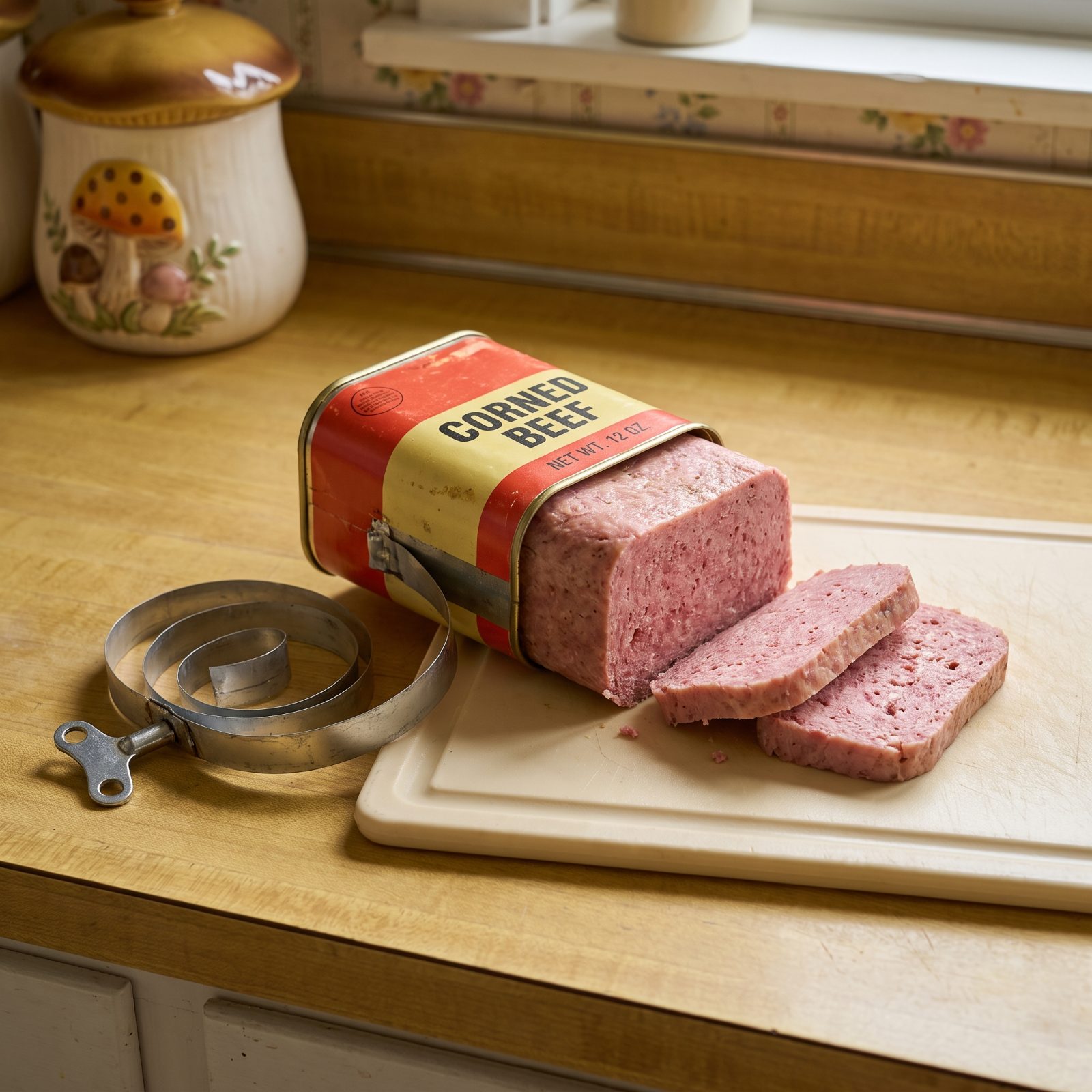
This one fought back a little. The rectangular can came with a flat metal key you had to thread onto a tab, then wind and wind, peeling a thin ribbon of metal off the side as you went.
Most times the strip snapped halfway, muttering and all, which is why later cans also got a ring-pull lid on top that peeled back in one tug. Out came the corned beef, pink and smooth and faintly spiced, bound for hash with potatoes in a hot skillet.
10. Canned Brown Bread That Slid Out as a Cylinder
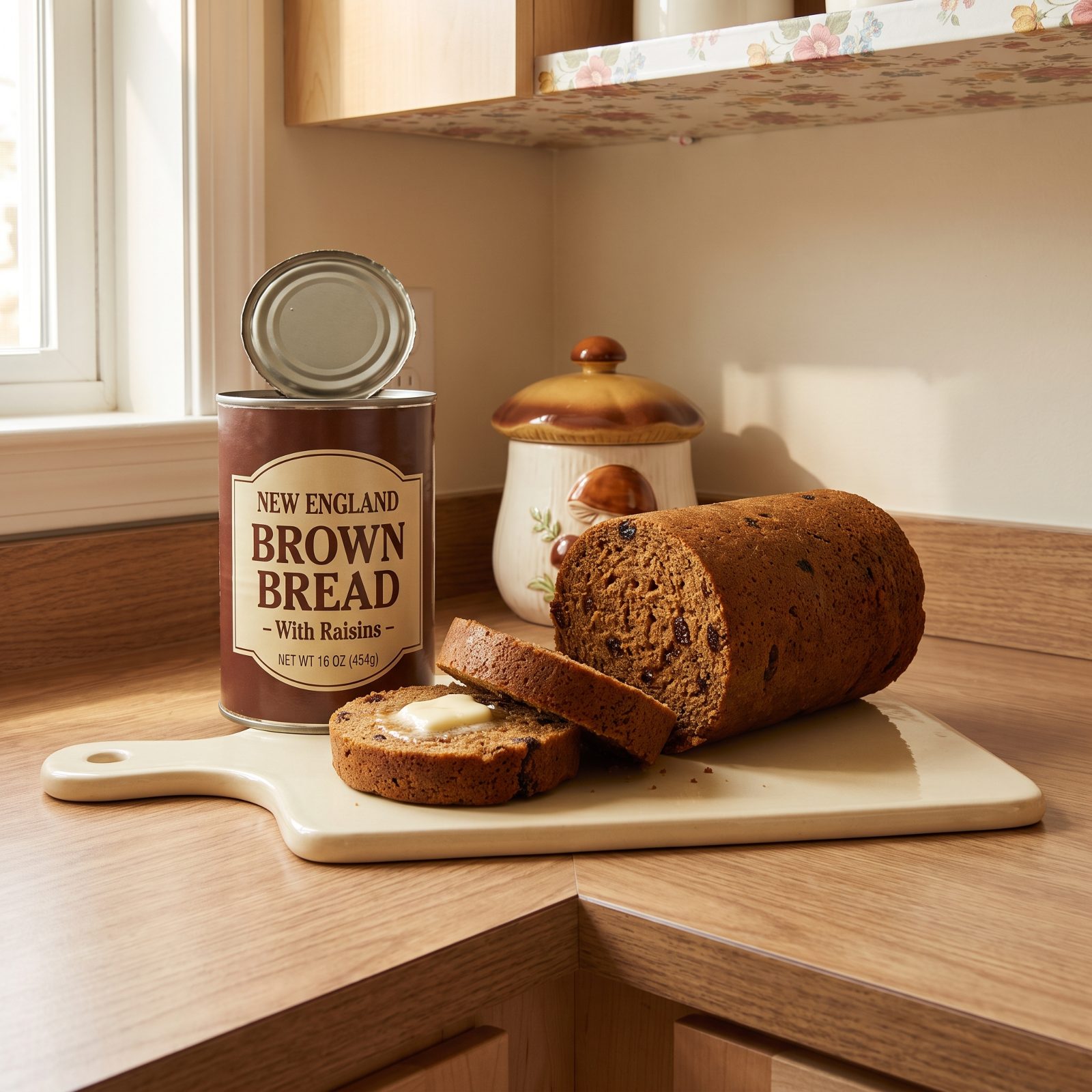
Bread that came out of a can shaped exactly like the can. You opened both ends and pushed, and this dark, dense, molasses-sweet cylinder slid out onto the cutting board in one piece.
You cut it into round slices, buttered them warm, and ate it alongside a pot of baked beans on a Saturday night in New England especially. Studded with raisins, heavy as a brick, sweet in a deep brown way. There was nothing else in the pantry quite like it, and there still isn’t.
9. Bac-Os, the Imitation Bacon Bits Made From Soybeans
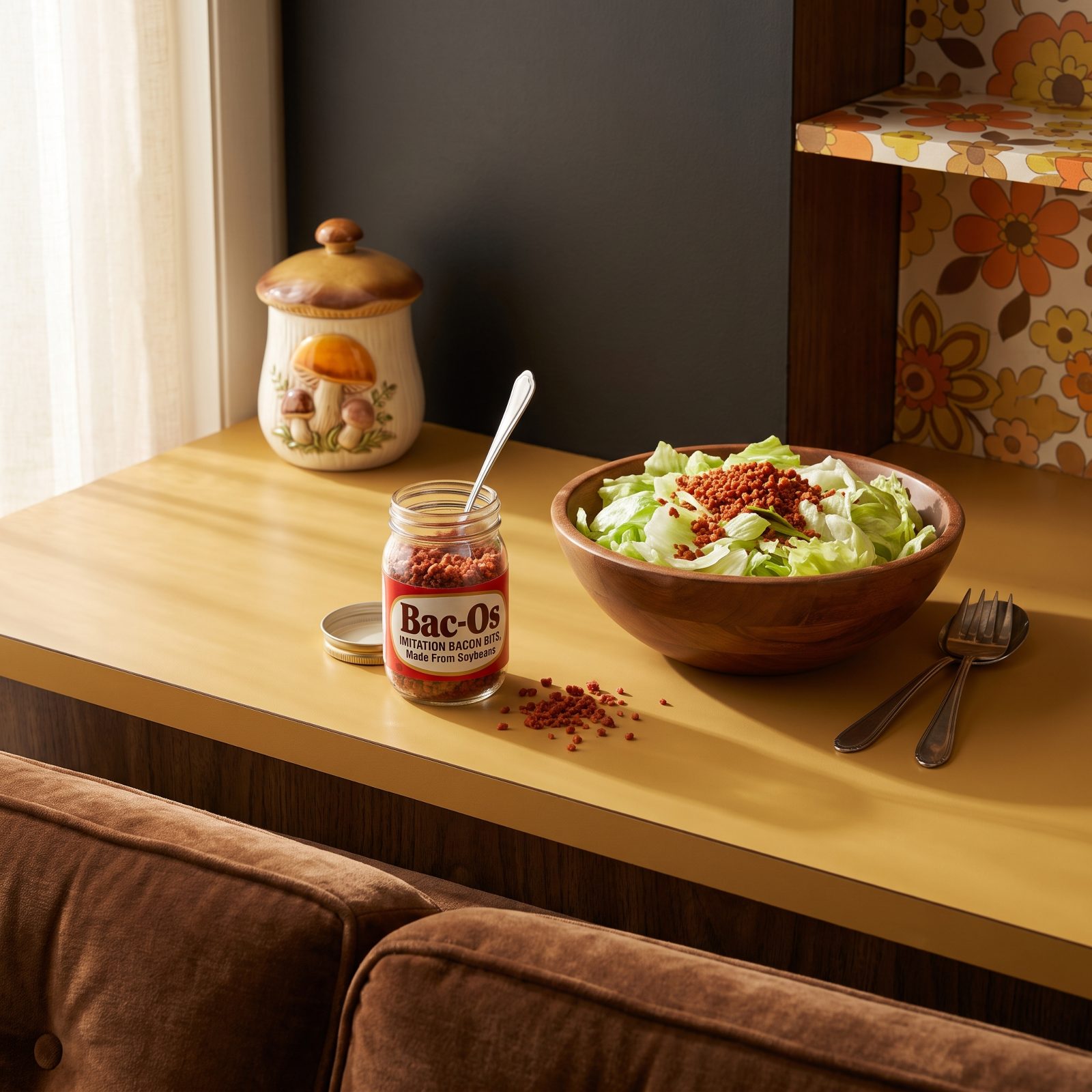
No bacon in them at all, and everybody knew it, and they went on the salad anyway. These crunchy red-brown bits came in a little jar and tasted like a smoky guess at the real thing.
You shook them over iceberg wedges, baked potatoes, deviled eggs, anything that needed a hit of salt and crunch. And the surprise was always the same when someone turned the jar around and read that the first ingredient was soy flour. Pure 1970s kitchen ingenuity, and somehow the jar never ran out.
8. Accent Flavor Enhancer in the Yellow-and-Red Shaker
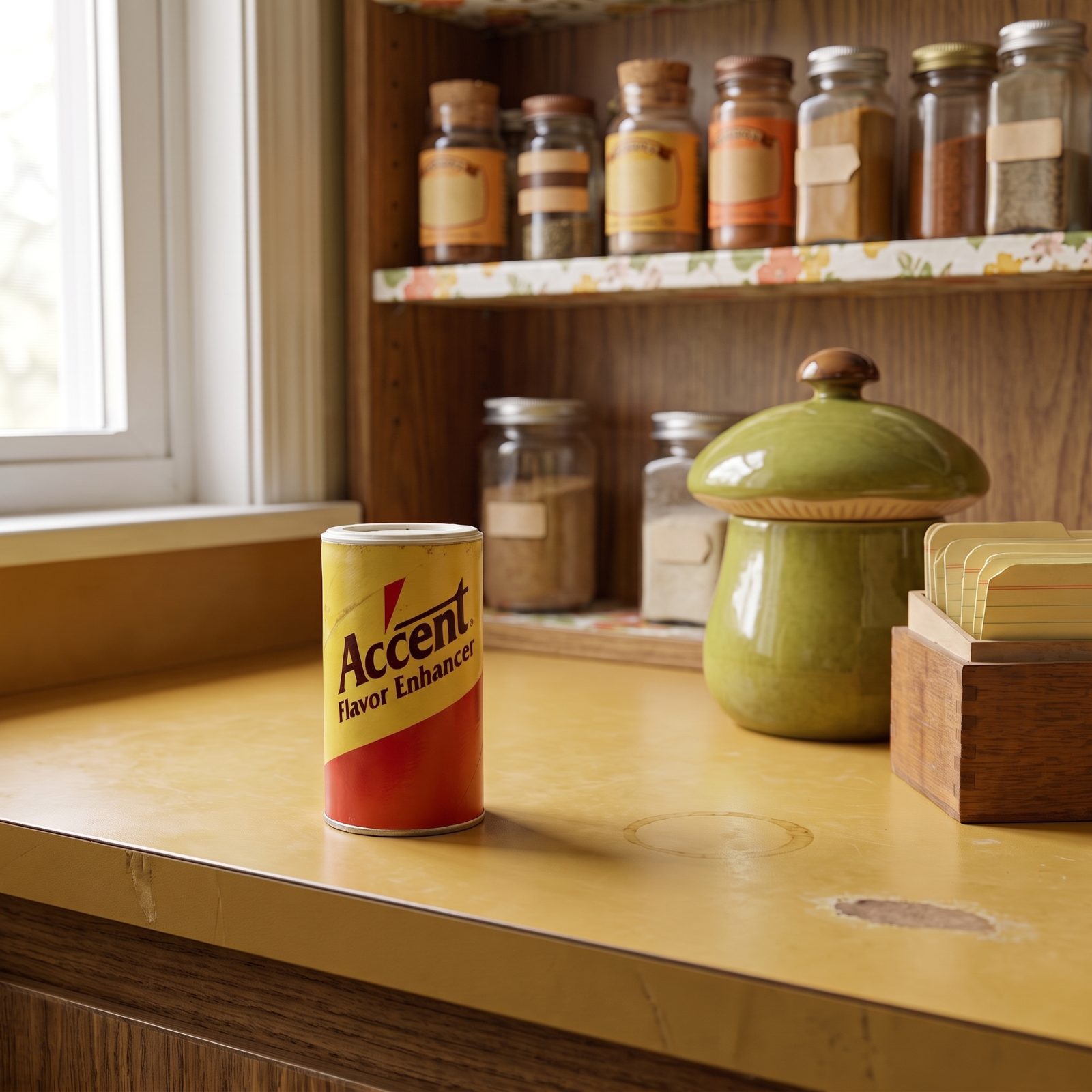
Every family had one, crammed between the salt and the paprika where nobody thought about it until Mom reached for it mid-stew. Accent was pure monosodium glutamate, and in the 1970s that counted as a selling point rather than a warning. The commercials promised it would “wake up” whatever you shook it over.
You never tasted Accent itself. You tasted everything else, louder. A dash in the meatloaf, a shake over the green beans, and dinner suddenly had an edge it hadn’t owned a minute before.
7. Kitchen Bouquet, the Dark Little Bottle That Made Gravy Look Right
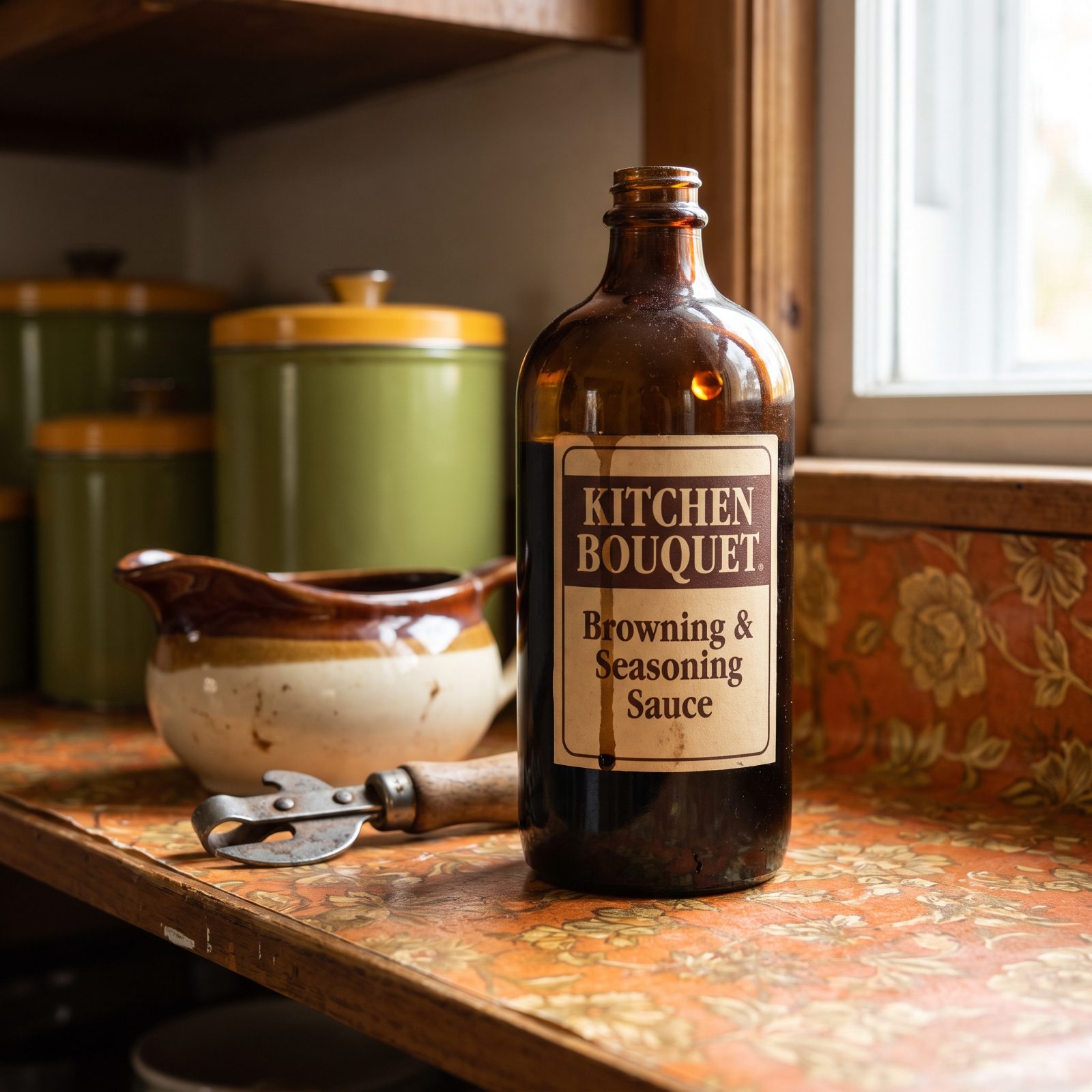
The trick nobody admitted to. Your gravy came out of the pan looking pale and sad, and a few drops of Kitchen Bouquet turned it the deep, roasty brown it was supposed to be all along. Part caramel, part vegetable base, all optics.
Thanksgiving ran on this stuff, and so did pot roast Sundays and the beef stew that simmered all afternoon. The bottle lasted years because you only ever needed a trickle, which is exactly why it survived at the back of the cabinet long after anyone remembered buying it.
6. Adolph’s Meat Tenderizer, the Can That Promised to Fix a Cheap Cut
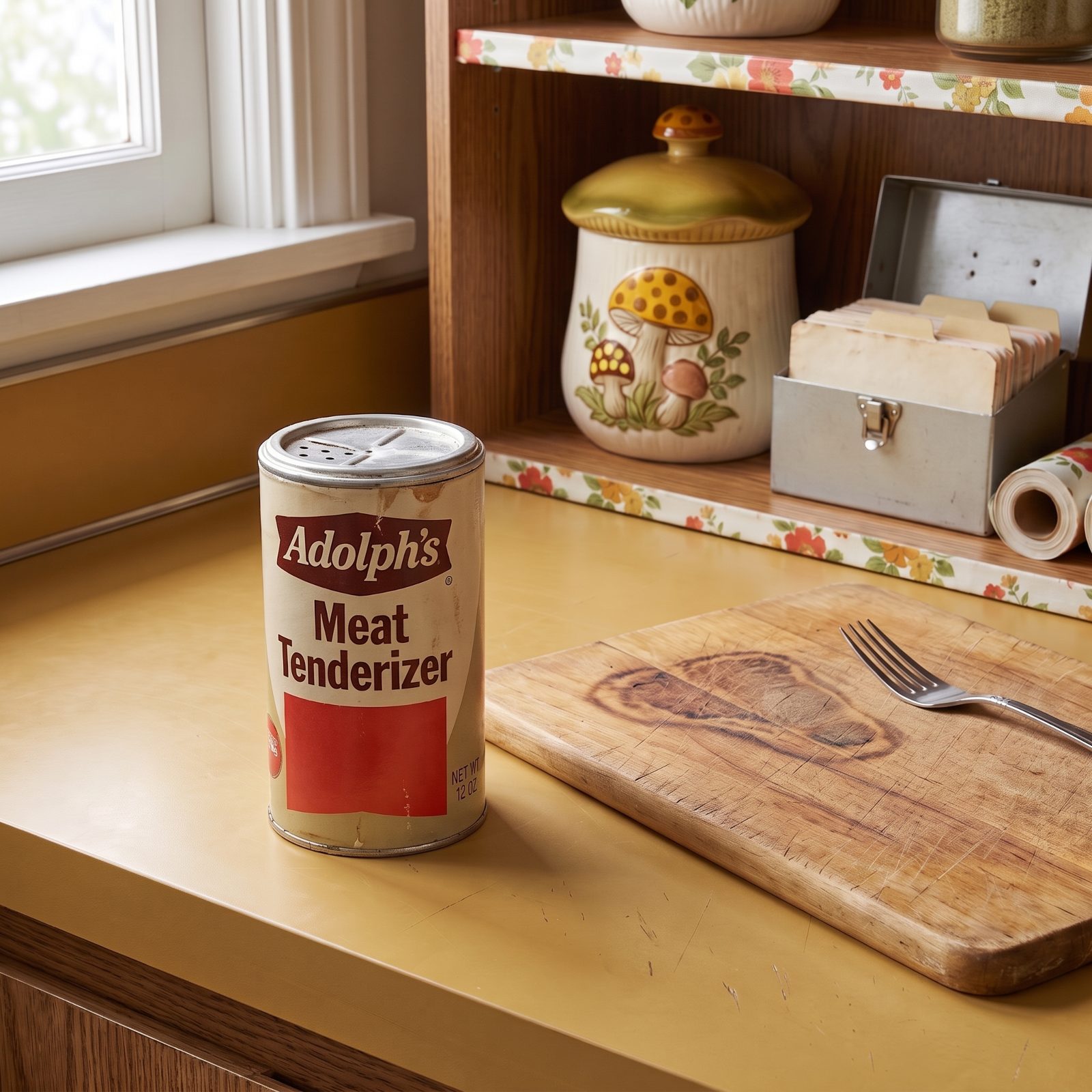
This was the great equalizer of the 1970s meat counter. You bought the tough, cheap cut because it was what the budget allowed, then shook Adolph’s over it, poked it with a fork, and let the enzymes do their quiet work while you set the table. Papain, from papaya, chewing through the fibers so you didn’t have to.
Half the households used it faithfully. The other half swore it turned a good steak to mush if you forgot about it, and honestly, they had a point.
5. Cheez Whiz in the Squat Glass Jar
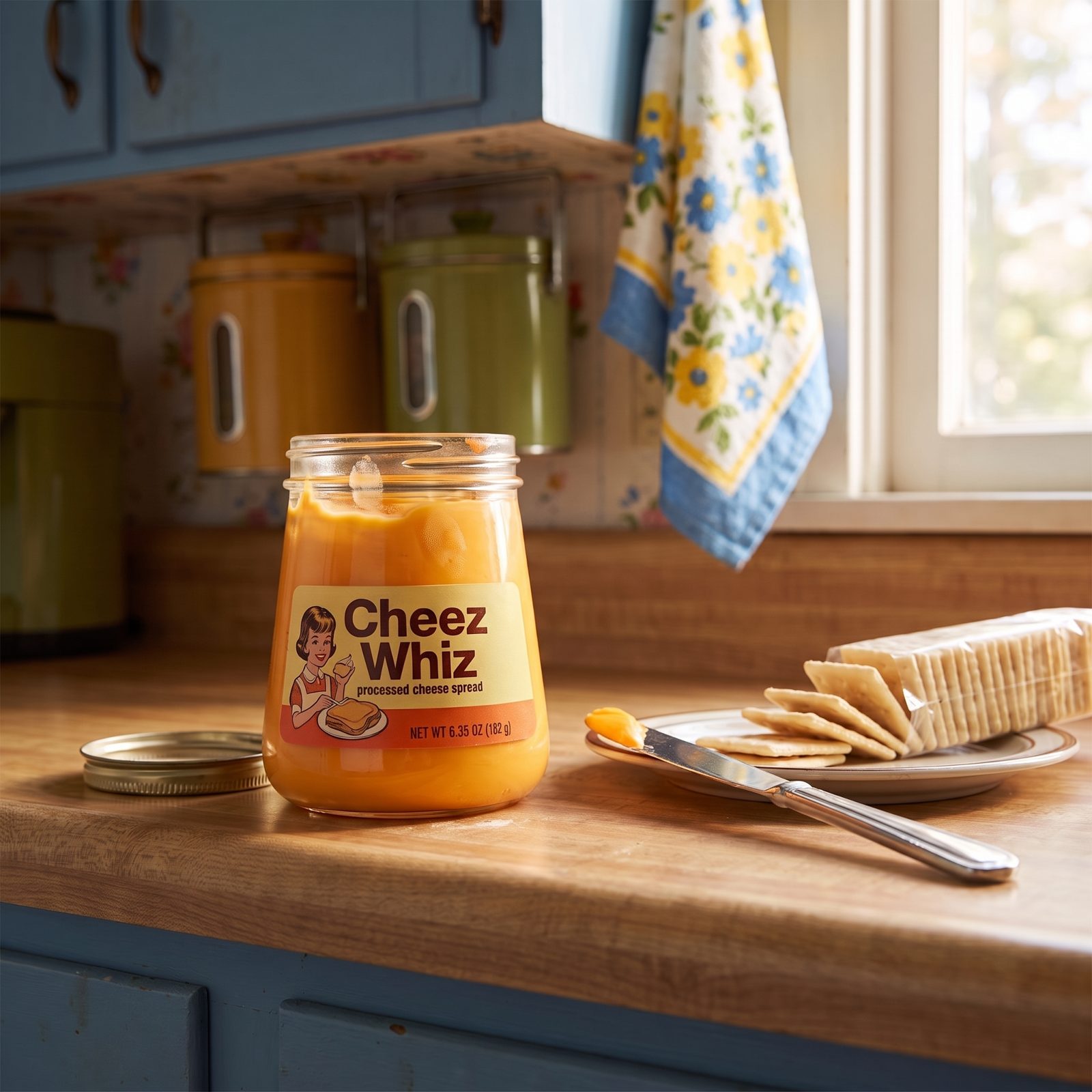
Before the plastic jar, Cheez Whiz lived in a glass jar with a metal lid you had to thwack against the counter edge to crack open. The cheese inside was a shade of orange that exists nowhere in nature and apologized for absolutely nothing.
It went on celery sticks for the after-school crowd, got melted into broccoli, and became the sauce on a Philly cheesesteak long before anyone thought to call that gourmet.
The jar never fully emptied. There was always a half-inch of hardened Whiz welded to the bottom that nobody could reach.
4. Bottled Sandwich Spread, the Pink-Flecked Jar in the Fridge Door
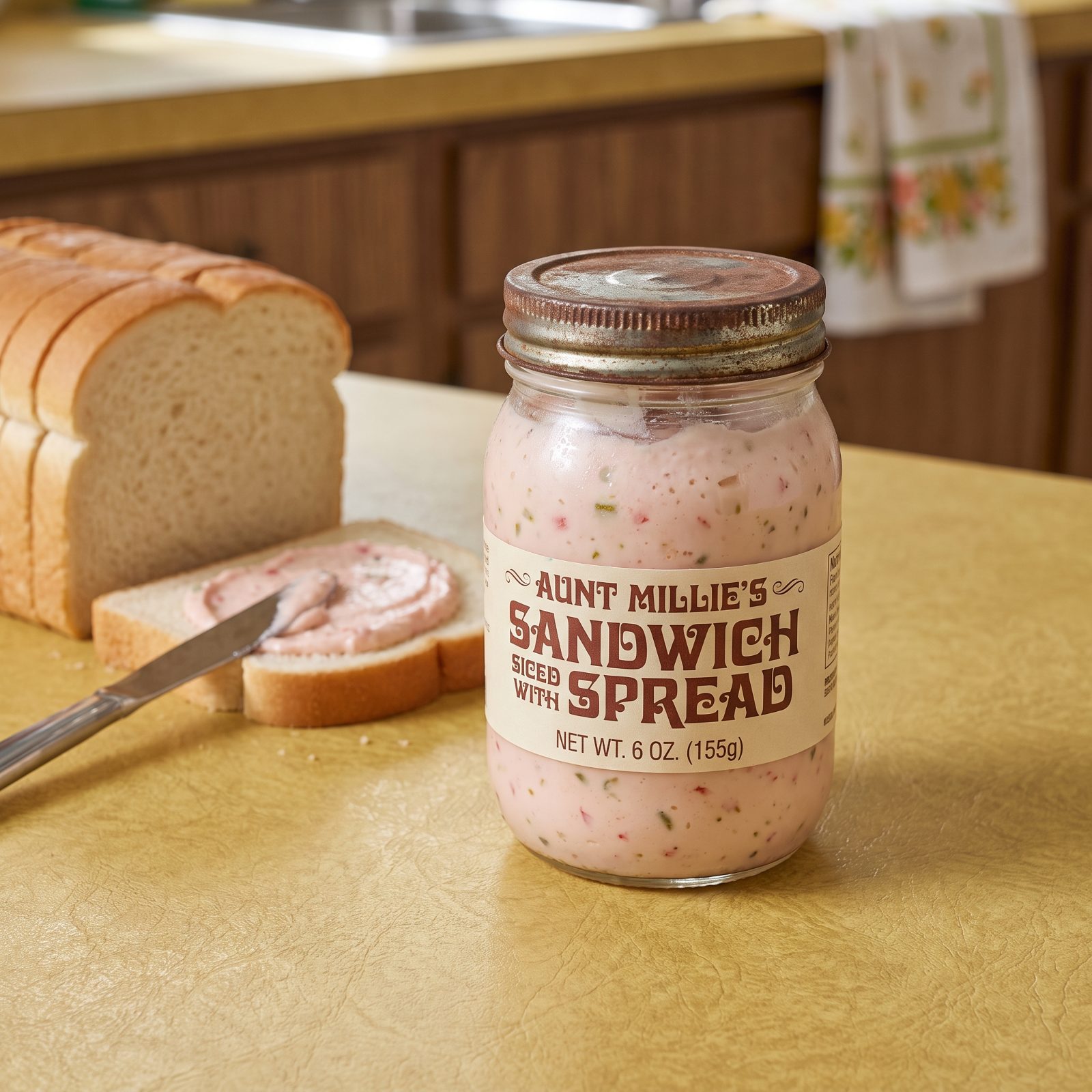
Sandwich spread was mayonnaise that had made some decisions. Somebody chopped sweet pickle relish and pimento into the jar, sweetened the whole thing, and sold it as the shortcut to a decent lunch. You slathered it on white bread, maybe tucked in a slice of bologna, and that was a packed lunch in 1974.
It had a tang, sweet and sour at once, that plain mayo never managed. The jar lived in the fridge door for months because a sandwich a day barely dented it.
3. Crisco Shortening in the Big Blue Metal Can
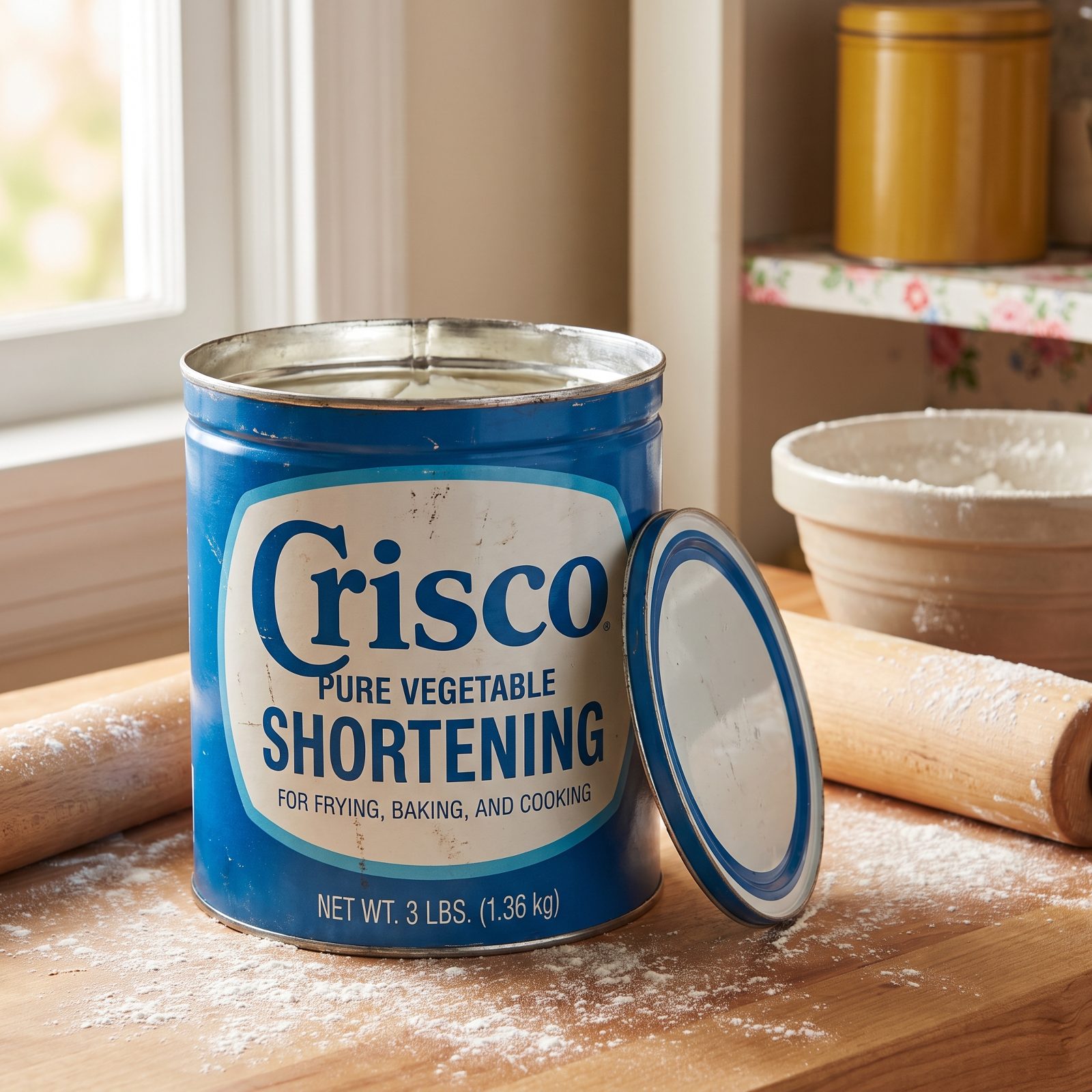
Pie crust came from this can. So did the fried chicken, the biscuits, and the greasing of every cake pan in the house. The big metal Crisco can sat in the cupboard like a small blue drum, and you dug into the smooth white shortening with a knife or a spoon depending on how hungry the recipe was.
Once it emptied, the lid turned into a dog-food scoop or a drip catcher under the sink. Nothing in that kitchen got thrown away if it could be repurposed, and that can was prime real estate.
2. Boxed Dehydrated Scalloped Potatoes, the Side Dish That Came Flat
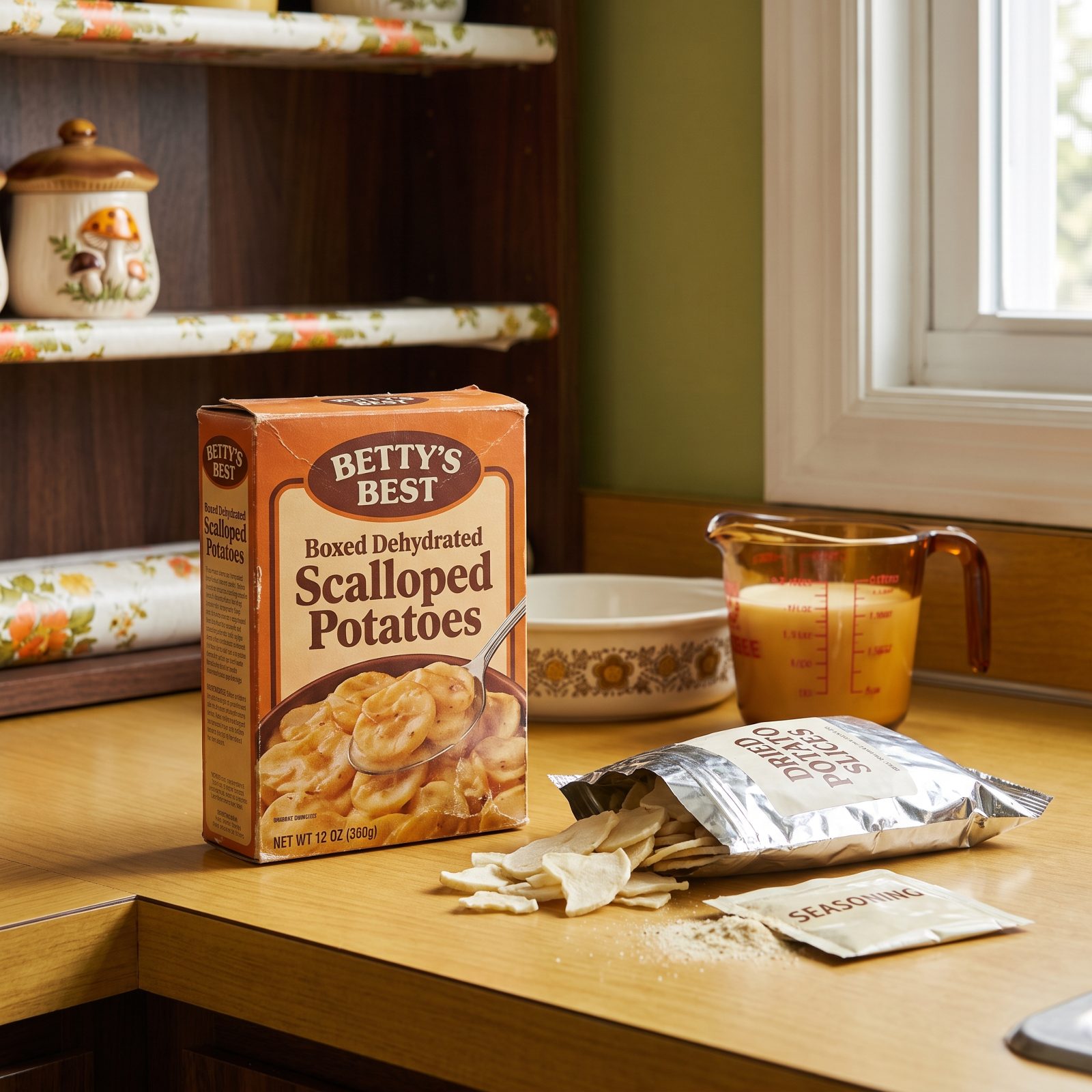
You opened the box and out slid a pouch of pale, papery potato slices that looked like kindling. Add milk, tear open the seasoning packet, drop in a pat of butter, and forty-five minutes later the oven handed back a bubbling dish that tasted shockingly close to the real thing.
This was the weeknight hero. No peeling, no slicing, no standing at the counter cursing at a mandoline. Just a box, a casserole dish, and the faith that dried potatoes would somehow come back to life.
1. Pillsbury Space Food Sticks, the Chewy Snack Astronauts Made Cool
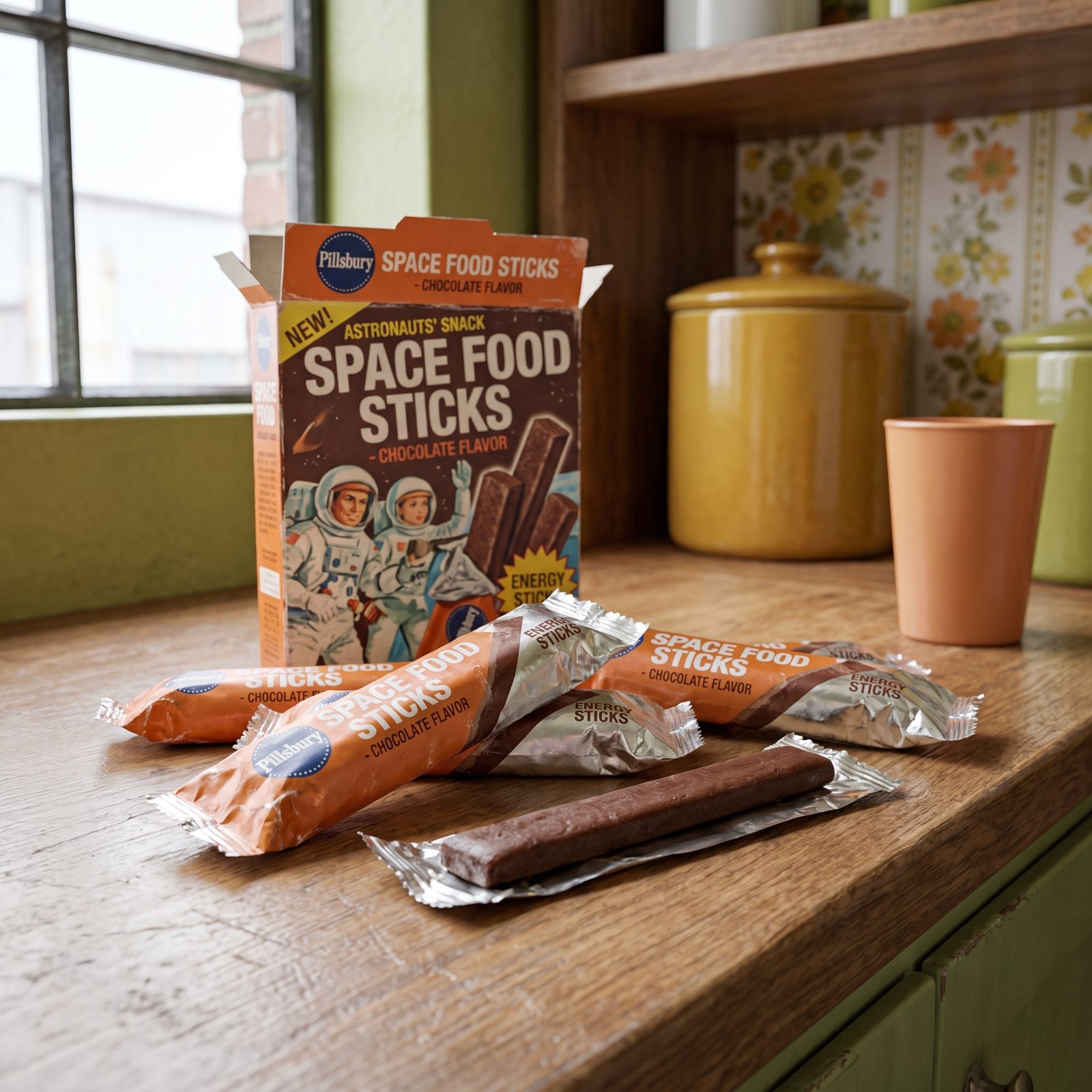
The snack that rode the moon landing straight into the pantry. Pillsbury cooked up Space Food Sticks with the space program in mind, then sold the chewy, dense little bars to kids who wanted to feel like astronauts between meals. Chocolate, peanut butter, caramel, every one of them wrapped in foil like it mattered.
Half candy, half meal, and entirely a product of a decade that couldn’t stop daydreaming about the future. You chewed one slowly because it genuinely took commitment, and for a few minutes the kitchen was a capsule.