Would you like to save this?
There’s a quiet moment at every pizza table. Someone reaches. Someone waits. Someone folds the slice in half without thinking about it, the way their grandfather did, the way an entire city does. Nobody announces any of this. But it’s all data.
Please note that some of the images in this article were created with the assistance of AI.
The way you handle a pizza is a behavioral fingerprint you’ve been leaving your whole life, and it maps onto real research into novelty-seeking, comfort-processing, risk tolerance, and where you sit in the pecking order of your own friend group. The crust you save. The ranch you dip in. The one topping you always pick. These aren’t random.
Below, we read the whole order, from first slice to last. Some of it will make you laugh. Some of it will land a little too close. Keep going. By the end, you’ll never order the same way without noticing yourself.
16. What Your Habit of Eating the Crust Last Says About How You Handle Everything Else in Your Life
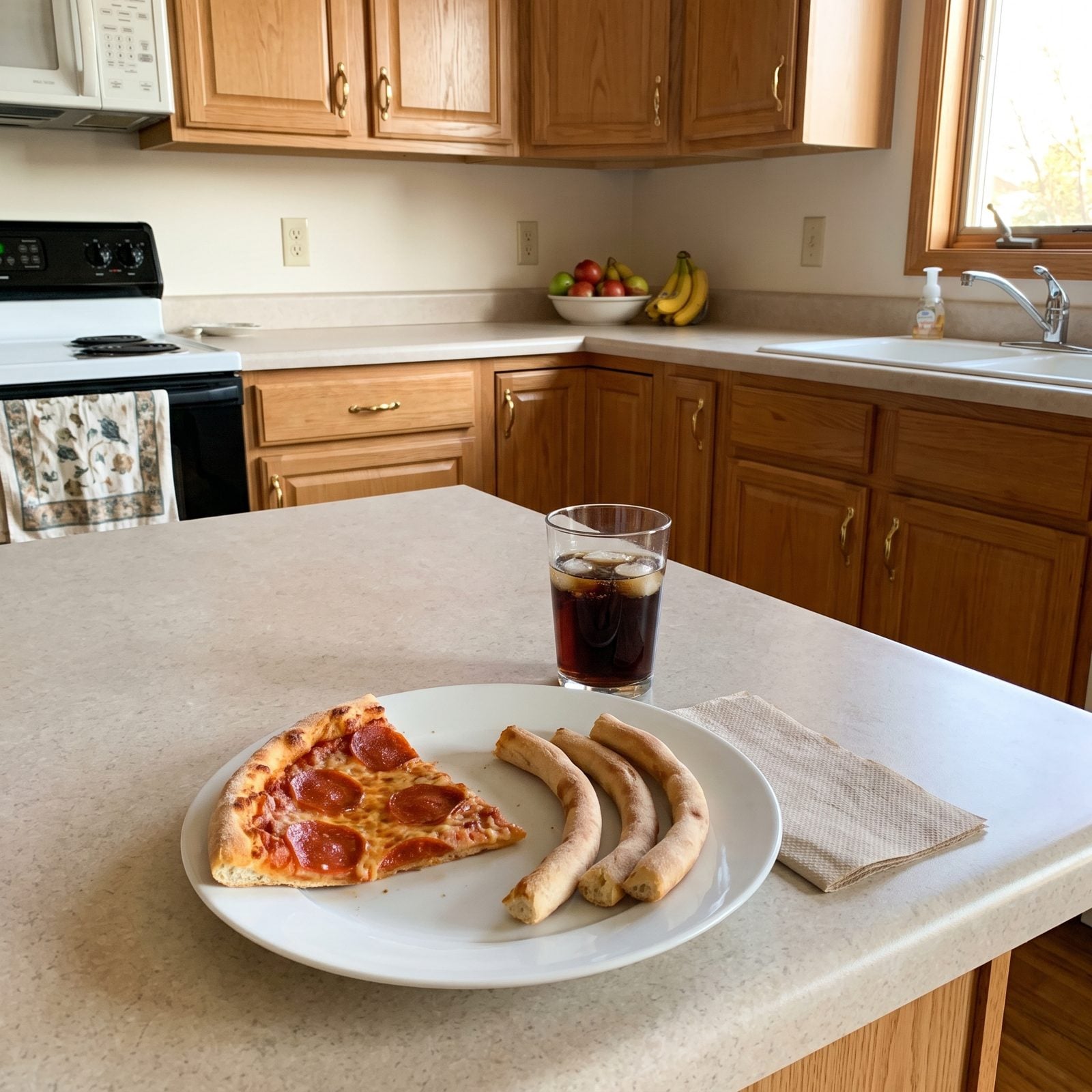
You’ve watched someone work a slice down to a bare rim of crust, then set that crust on the plate edge like a trophy before starting the next piece. Saving the end for last isn’t a quirk. It’s a tiny window into how a person sequences pleasure.
The people who go cheese-first and crust-last are usually the ones who delay the good part, or in this case, the dry part. But flip it. For plenty of folks the crust IS the good part, the chewy bread anchor, and leaving it for the end is a kind of self-reward that researchers who study delayed gratification would recognize instantly. You’re negotiating with yourself over a single slice.
There’s no clean study that says crust-savers balance their checkbooks better. What there is: a long literature on how people structure rewards over time, and how some of us front-load and some of us bank. Watch a table of eight and you’ll spot the bankers. They’re the ones with a little pile of rims, saved for a moment that may never come.
15. The Topping Choice That Psychologists Link to Novelty-Seeking (And Why the Pepperoni Loyalists Are Quietly Judging You)
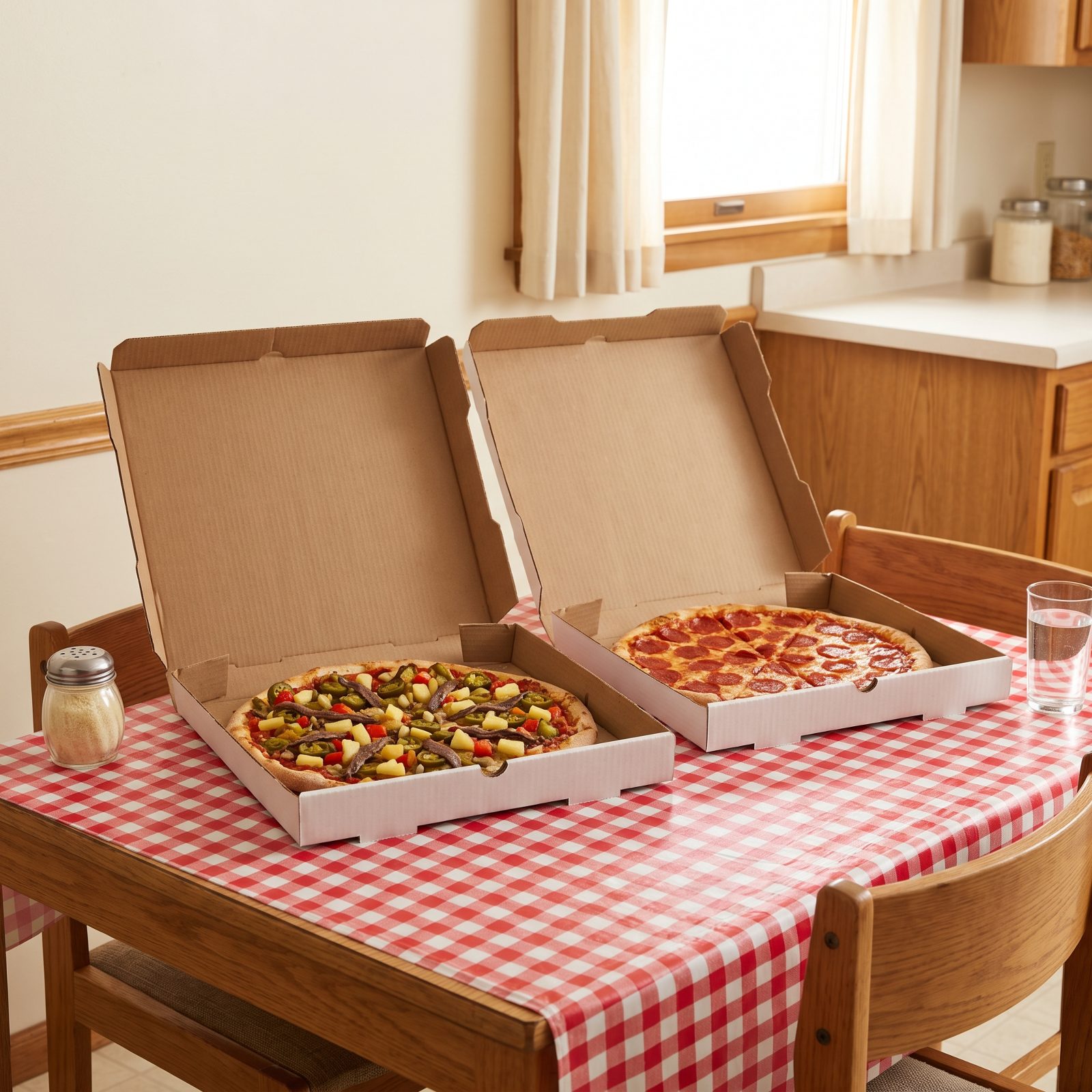
Order the giardiniera. Order the anchovy. Order the thing with a name the teenager at the counter has to repeat back to you. That instinct has a research label, and it’s older than any pizza menu you’ve ever read.
Food psychologists split eaters along a spectrum of neophilia and neophobia, the pull toward new foods versus the pull away from them. Source One review found that openness to novel experiences tracks with a preference for spicy, sour, and bitter foods, the flavors most people meet with suspicion. Source The person reaching for the weird topping is often running a general personality setting, not a taste preference.
Food neophiles, the adventurous end of the scale, get described in the literature as people who value food, host friends for dinner, and connect to their heritage through cooking. Source So the jalapeno-and-pineapple orderer isn’t just showing off. There’s a documented profile under there.
And the pepperoni loyalist? Not boring. Possibly just running a different setting. We’ll get to them.
14. Why the Person Who Always Orders Plain Cheese Isn’t Boring, According to Comfort-Food Research
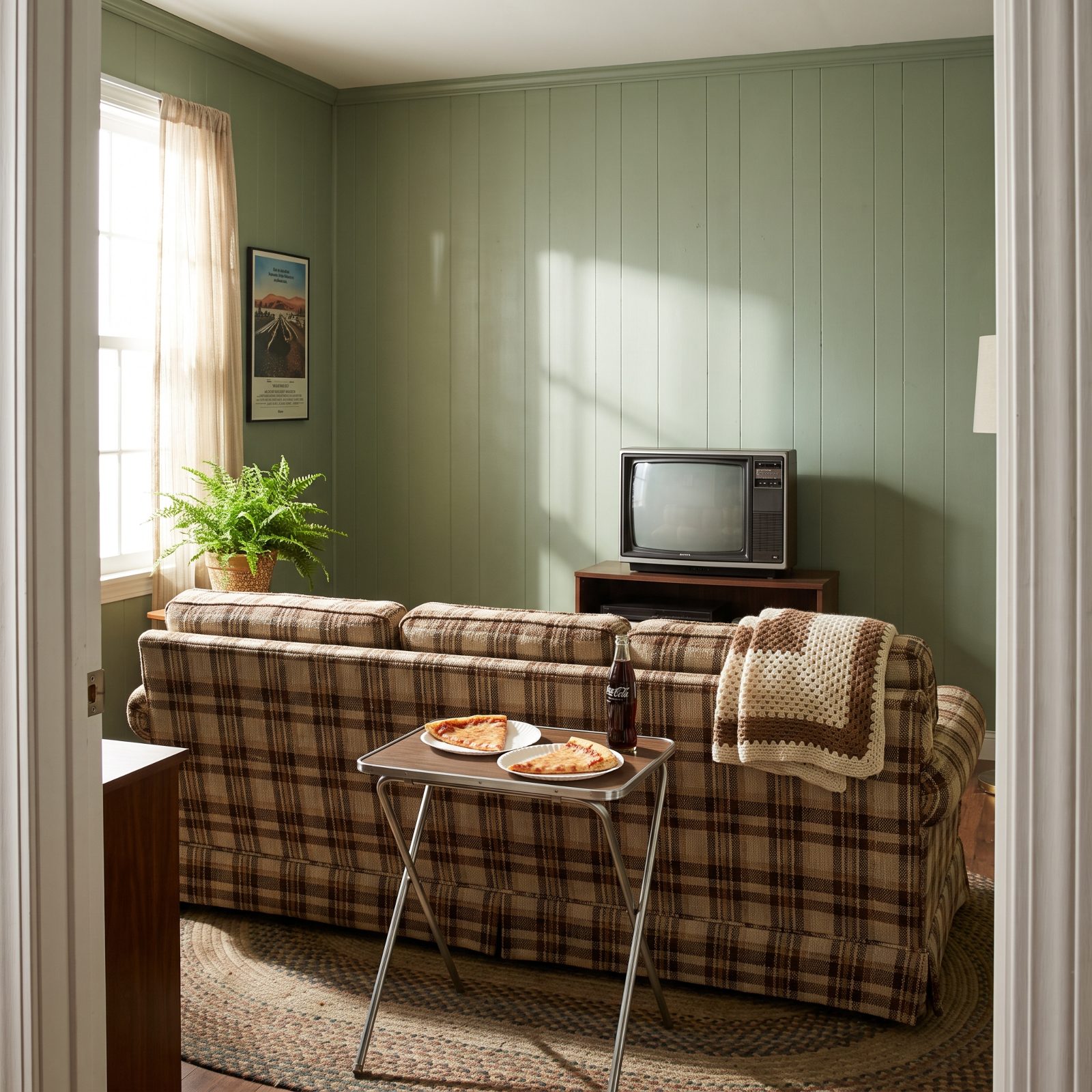
Plain cheese gets mocked at every group order. The safe pick. The kid’s pick. The pick of someone with nothing to prove and, supposedly, nothing interesting to say.
Wrong read. Comfort-food research keeps finding that our go-to familiar foods aren’t about flavor at all. They’re about people. A set of 2025 studies found that nostalgic foods boost comfort specifically by strengthening a sense of social connectedness, reminding us of the people we ate them with. Source Earlier work showed that securely attached people reached for comfort food more when they felt isolated, using it almost as a stand-in for a relationship. Source
So the plain-cheese orderer may be the person at the table with the most stable early food memories. The cheese slice is a Friday-night living room, a grandmother’s kitchen, a specific couch. They’re not avoiding adventure. They found what they wanted a long time ago and saw no reason to keep looking.
13. The Ordering Ritual That Reveals Whether You’re a ‘Taster’ or a ‘Supertaster’ Without You Ever Knowing It
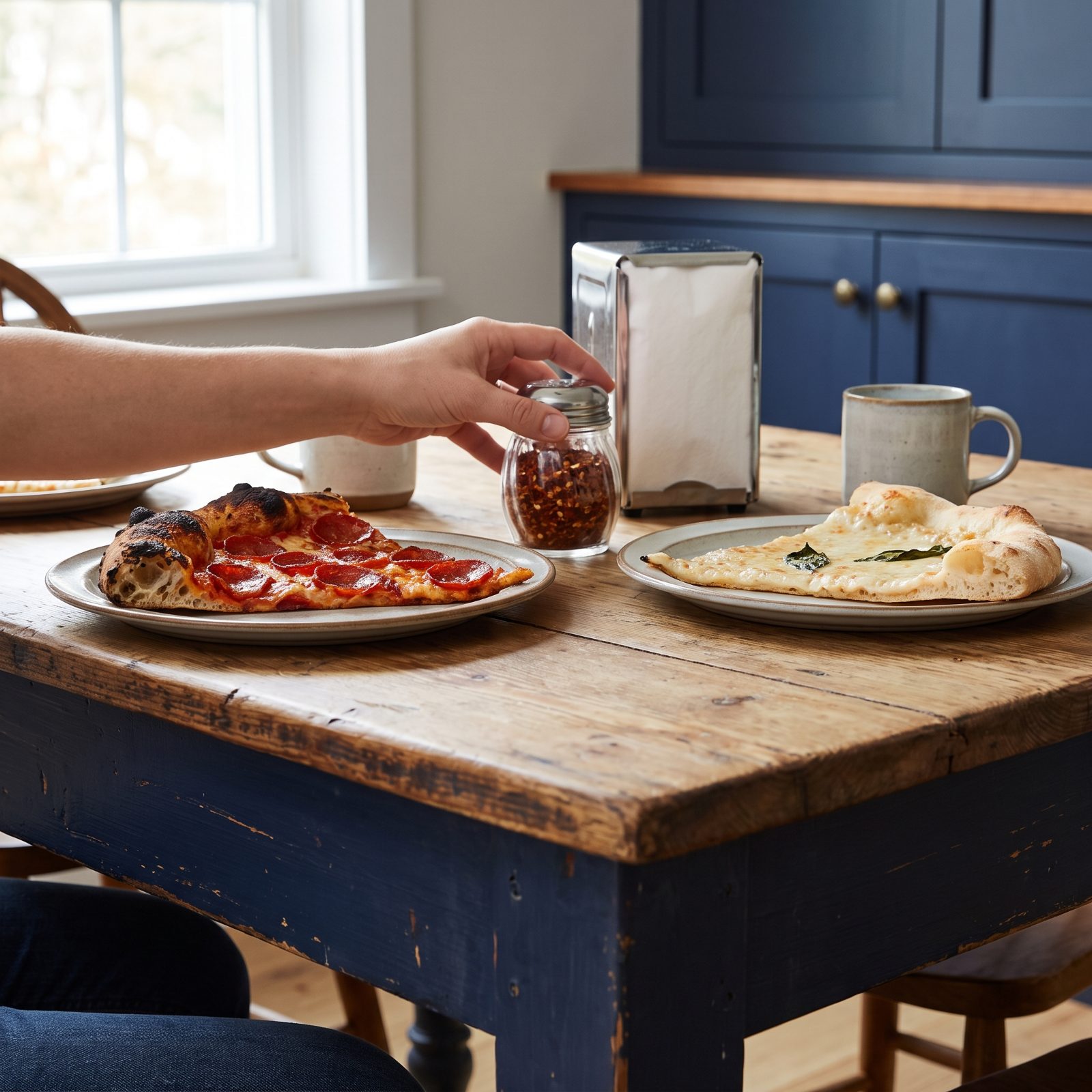
Watch who loads the red pepper flakes and who waves them off like a threat. There’s a hidden genetic draft happening at every pizza table, and nobody at it knows they’ve been sorted.
About 25 percent of people are supertasters, folks who carry a version of the TAS2R38 gene that makes bitter compounds taste overwhelming. Source The term came from Yale researcher Linda Bartoshuk, who noticed some people found the compound PROP almost unbearably bitter while a quarter of people tasted nothing at all. Source
Here’s how it shows up in your order. Supertasters tend to find vegetables, char, and bitter greens unpleasantly strong, and they’re less likely to pile on salt. Source The person who asks for light-bake, no burnt edges, no arugula, extra cheese to mute everything? Possibly tasting a louder pizza than you are. The one dumping on crushed pepper and ordering the blackened crust is probably a non-taster running the volume up.
One more wrinkle, and it’s a good one: food adventurousness can override the gene. A supertaster who loves intense flavor seeks out the exact bitterness the biology flags as a warning. Source The tongue sets the floor. Personality decides what you do about it.
12. What It Means When You Fold Your Slice Instead of Eating It Flat (The Regional Identity Hiding in Your Hands)
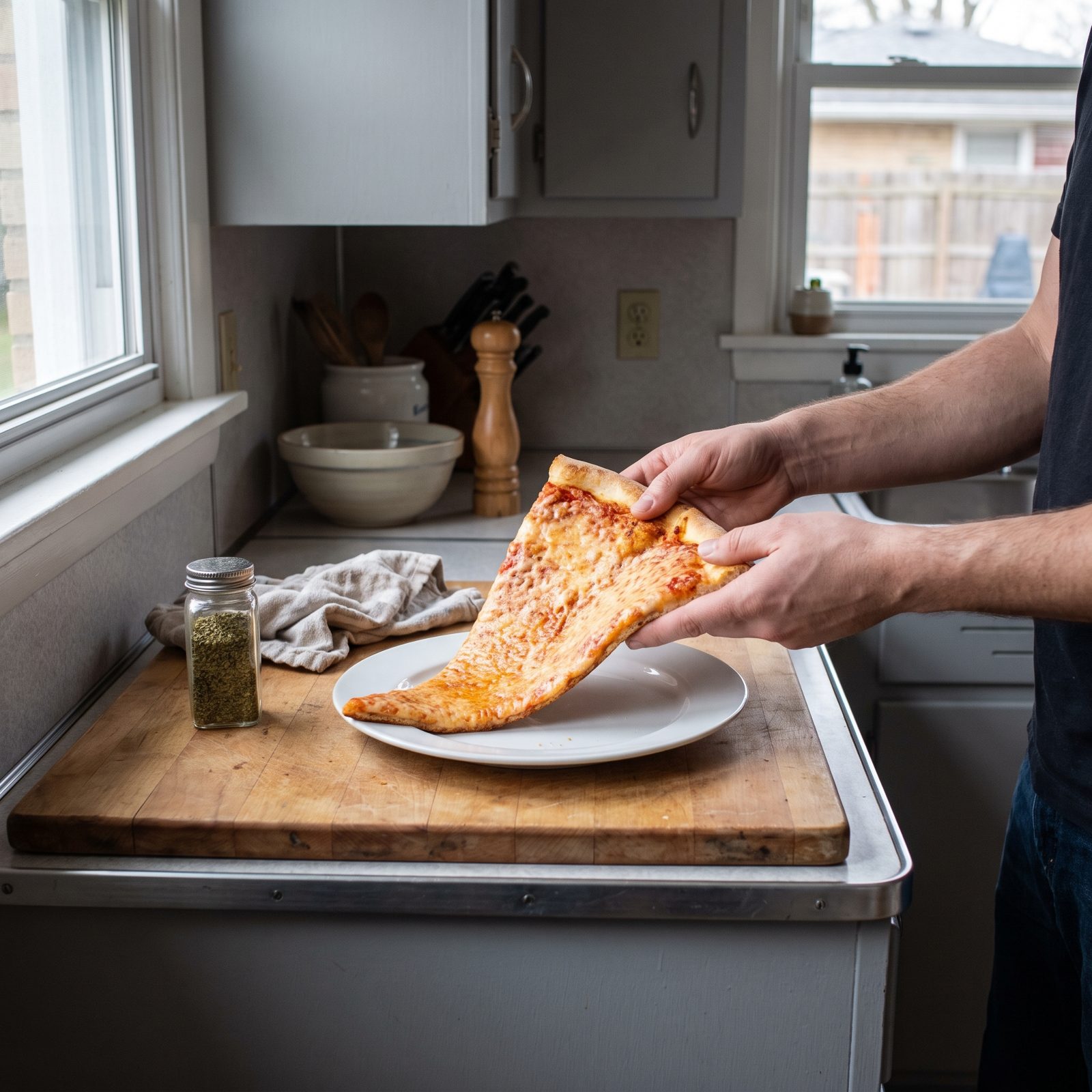
The fold isn’t a vibe. It’s engineering, and it’s geography wearing a disguise.
Pizza historian Scott Wiener puts it plainly: New York slices are wide, bigger than the plate they’re served on, so without the fold you get the flop, the tip bending down and dumping its toppings. Source Give the crust some architecture and it holds. The move spread from Italian-American communities in New York, where a reheatable, foldable, thin slice could be sold over a counter and eaten on the move. Source
So the fold tells on you. Fold instinctively and your hands learned on wide, thin, East Coast slices, the kind that demand it. Eat flat with a fork and knife and you likely grew up on a sturdier square, a deep dish, a Midwestern tavern cut that never needed rescuing. Neither is wrong. But the grip is a regional passport, stamped before you were old enough to know you were being issued one.
11. The Pineapple Question Nobody Asked For, and the Surprising Personality Split It Actually Predicts
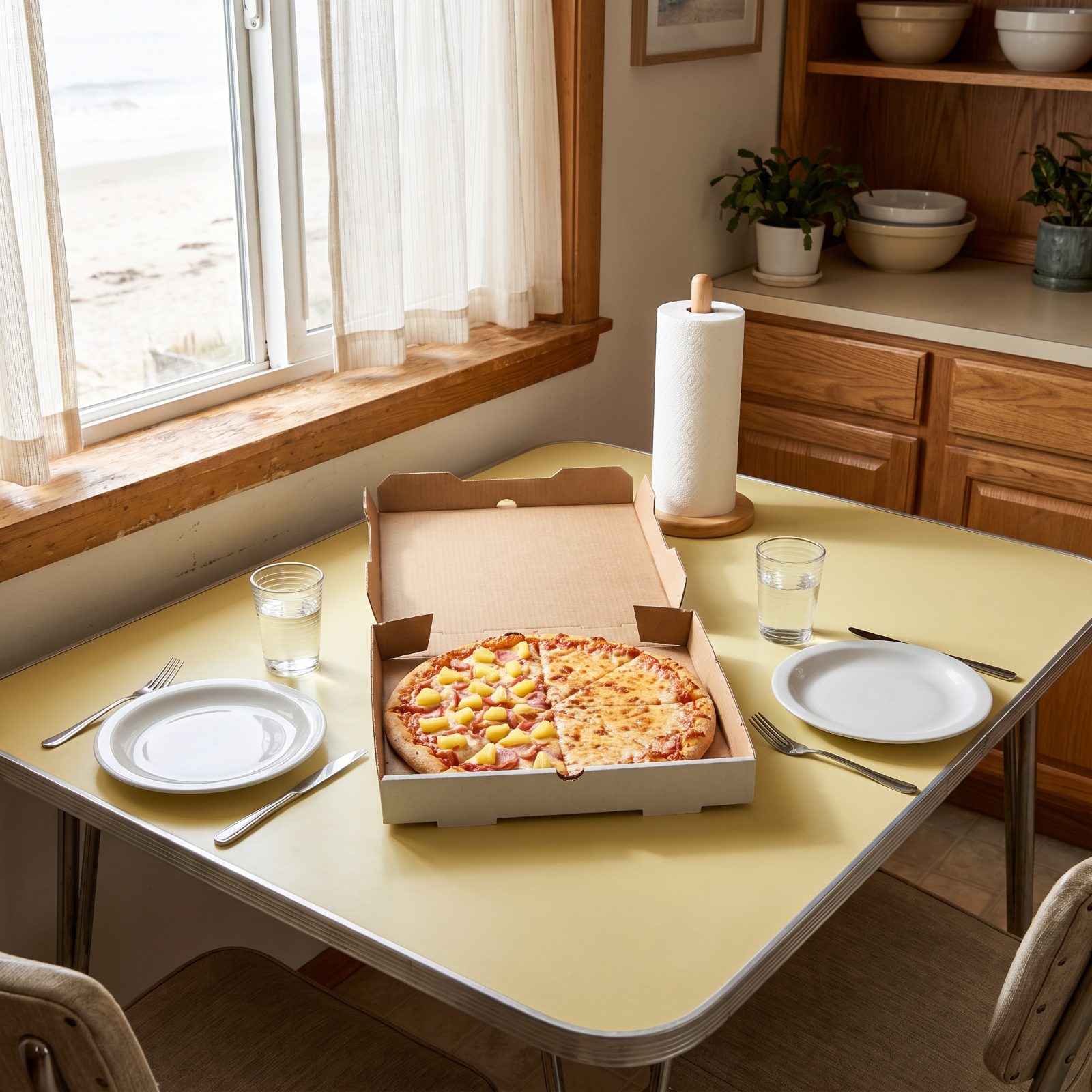
No topping starts more arguments per capita than pineapple. People who are easygoing about everything else will draw a hard line here, and the line itself is the interesting part.
Strip away the shouting and pineapple is a neophilia test in sweet-and-savory clothing. The willingness to put fruit on a savory pie tracks with openness to novel flavor combinations, the same trait that shows up in people who like sour, bitter, and spicy foods others reject. Source One study of adventurous eaters found that food neophiles favor a wider range of flavor combinations overall. Source Pineapple just happens to be the combination that forces a public vote.
The split it predicts isn’t good taste versus bad taste. It’s how comfortable you are when a food breaks a category. Some people need sweet and savory to stay in their lanes. Some people light up when the lanes cross. That’s a personality setting, and it was probably set long before you had opinions about Hawaiian pizza.
10. Why Dipping Your Crust in Ranch May Say More About Your Childhood Than Your Taste Buds
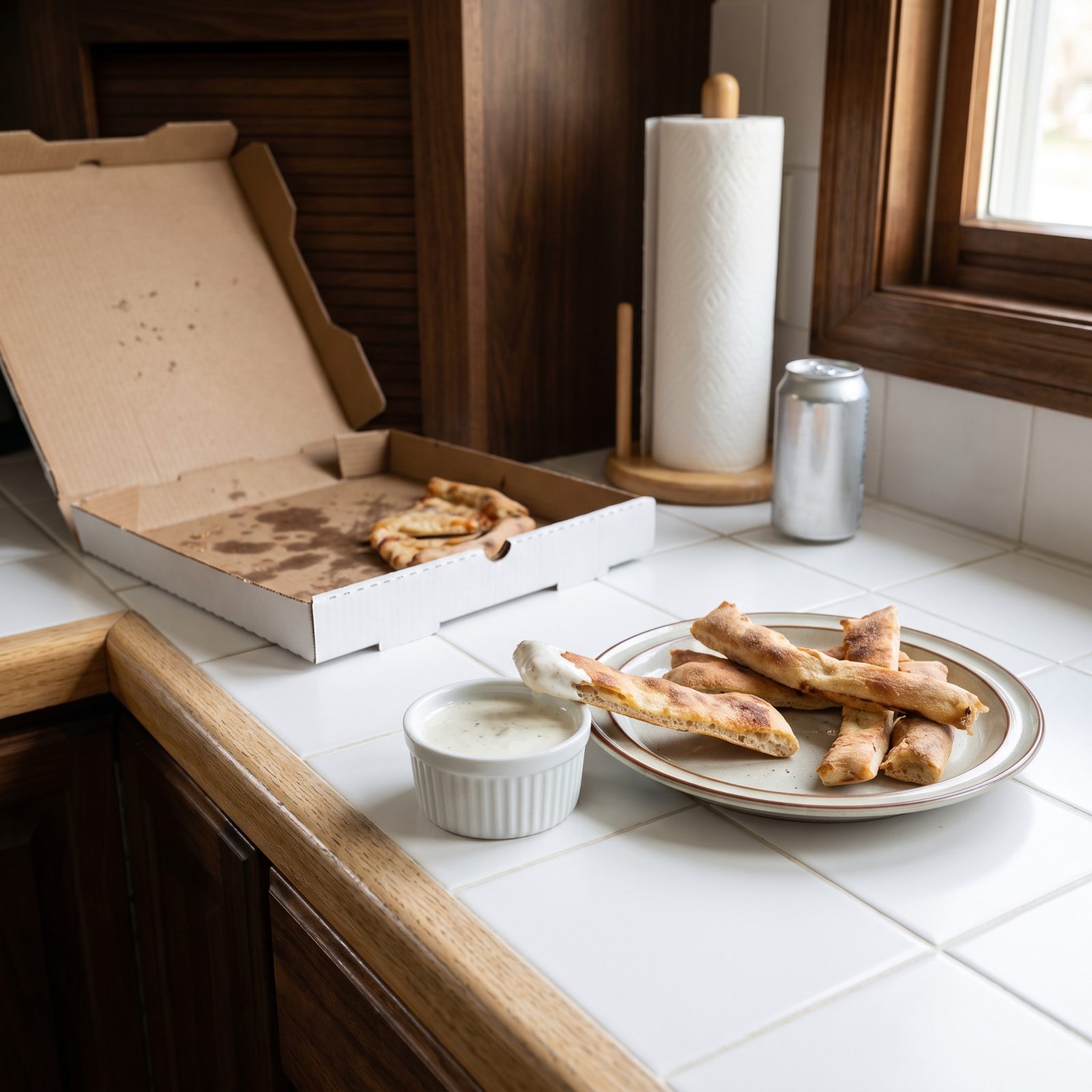
There’s a specific gesture, the crust dragged through a little cup of ranch, that reliably outs a certain generation and a certain kind of upbringing.
Ranch dipping isn’t really about flavor improvement. It’s about a food ritual that got encoded young. Comfort-food research shows that the foods we return to carry the people and settings we first ate them with, and that nostalgia itself lifts our mood by reconnecting us to those relationships. Source For a lot of people who grew up in the ranch-everything era, that cup of dressing is a sleepover, a pizza-party classroom, a buffet with a ranch pump by the breadsticks.
The smell-memory link runs deep here. The olfactory bulb sits inside the limbic system, the brain’s emotion-and-memory wiring, which is why a familiar food scent can hand you a whole childhood scene unasked. Source Dunk the crust and you’re not fixing the bread. You’re visiting someone.
9. The Group-Order Negotiator: What Happens Psychologically When One Person Decides the Toppings for Everyone
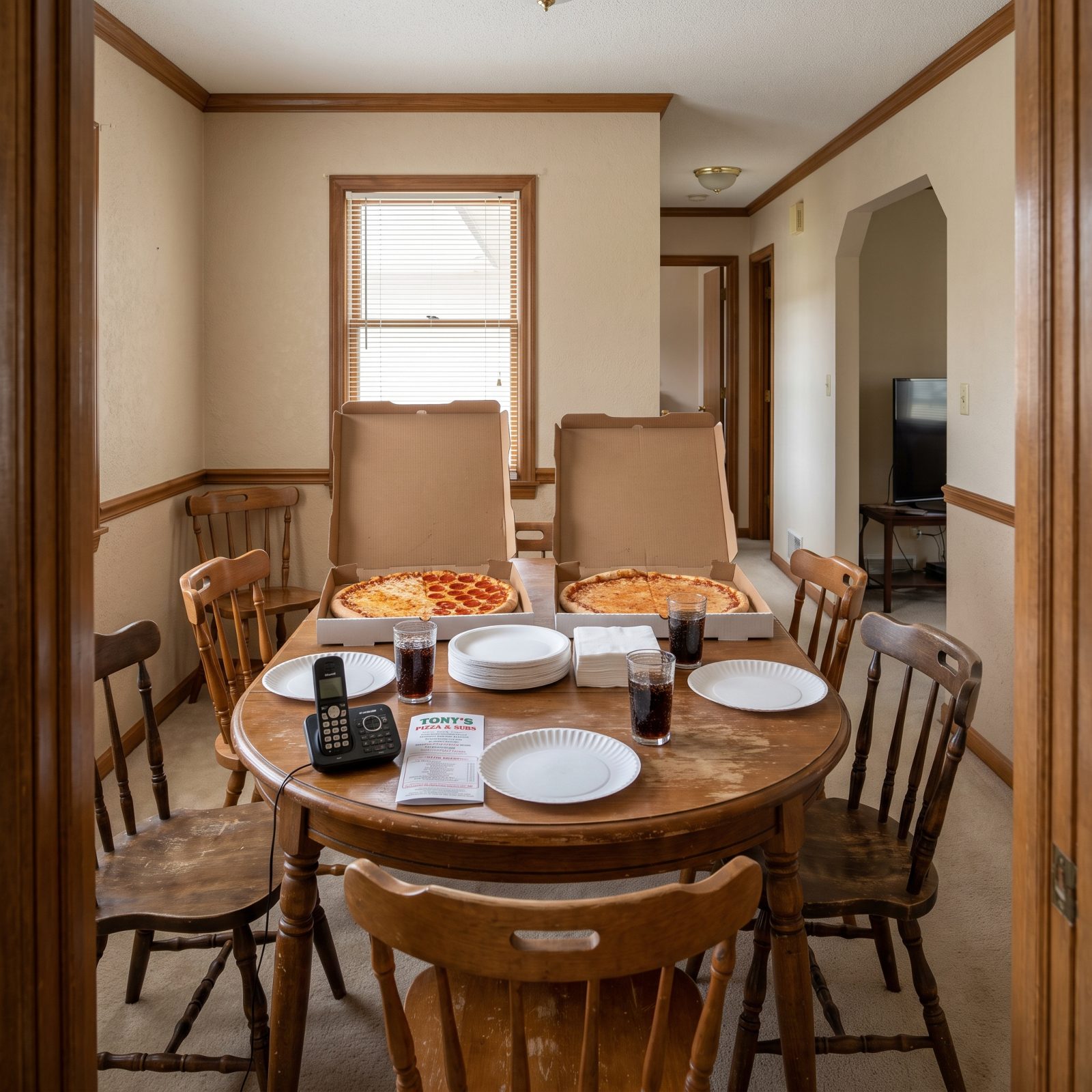
Every group pizza order has one. The person who picks up the phone, reads the room, and announces the toppings for six people as if it were a settled matter. Watch closely and you’ll see a small act of leadership play out in real time.
The negotiator is running a belonging calculation whether they know it or not. Comfort food is deeply social, and shared meals do real work in holding a group together. One set of studies found that food nostalgia increases comfort precisely by strengthening social connectedness, the felt sense of being bonded to the people around you. Source The person ordering is managing exactly that bond, usually by defaulting to half-cheese, half-something, the diplomatic split that leaves nobody out.
There’s a quieter tension underneath. The group-orderer takes on the risk. If the pie’s wrong, it’s their fault, and they know it. That willingness to absorb the blame for the table’s sake is its own personality tell, the same instinct that makes someone pick the restaurant, plan the trip, book the thing nobody else wanted to book.
So who really decides the toppings? Not the loudest voice. Usually the one most afraid of someone going home unfed and quietly unhappy. The whole puzzle, it turns out, keeps pointing back to the same place: the people, not the pizza.
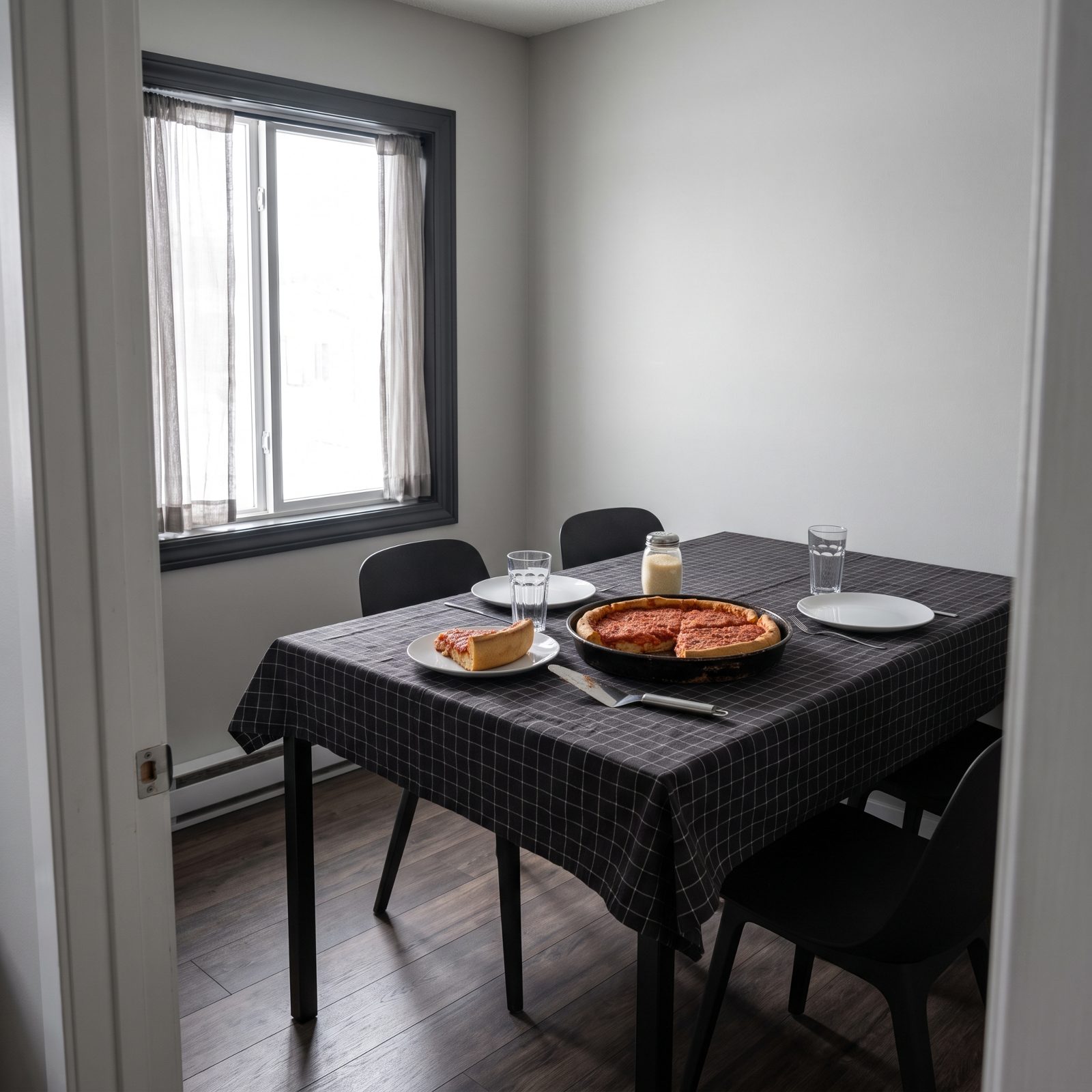
8. The Deep-Dish vs. Thin-Crust Divide and the Patience Trait It Quietly Measures
Would you like to save this?
Thin-crust people check the clock. Deep-dish people have made peace with the wait.
A Chicago deep-dish takes forty-five minutes to bake, sometimes longer, because the thing is less a pizza than a casserole wearing a crust. You order it knowing you will sit there, hungry, watching the kitchen door. A New York slice is the opposite logic: folded, eaten standing up, gone in ninety seconds. One style is built around delayed gratification. The other is built around right now.
That split isn’t nothing. The capacity to wait for a better payoff is one of the most studied traits in psychology, and food preference turns out to be tangled up with sensation and reward processing in ways researchers keep confirming. Penn State work on food liking (Source) found that how people weigh reward against effort shapes which foods they chase. Source
Nobody’s running a controlled trial on deep-dish patience, to be clear. But stand in a Chicago pizzeria at 7pm and watch who fidgets and who settles in. The crust told you something before the first bite.
7. Why ‘Extra Sauce’ People and ‘Light Sauce’ People Process Comfort Completely Differently
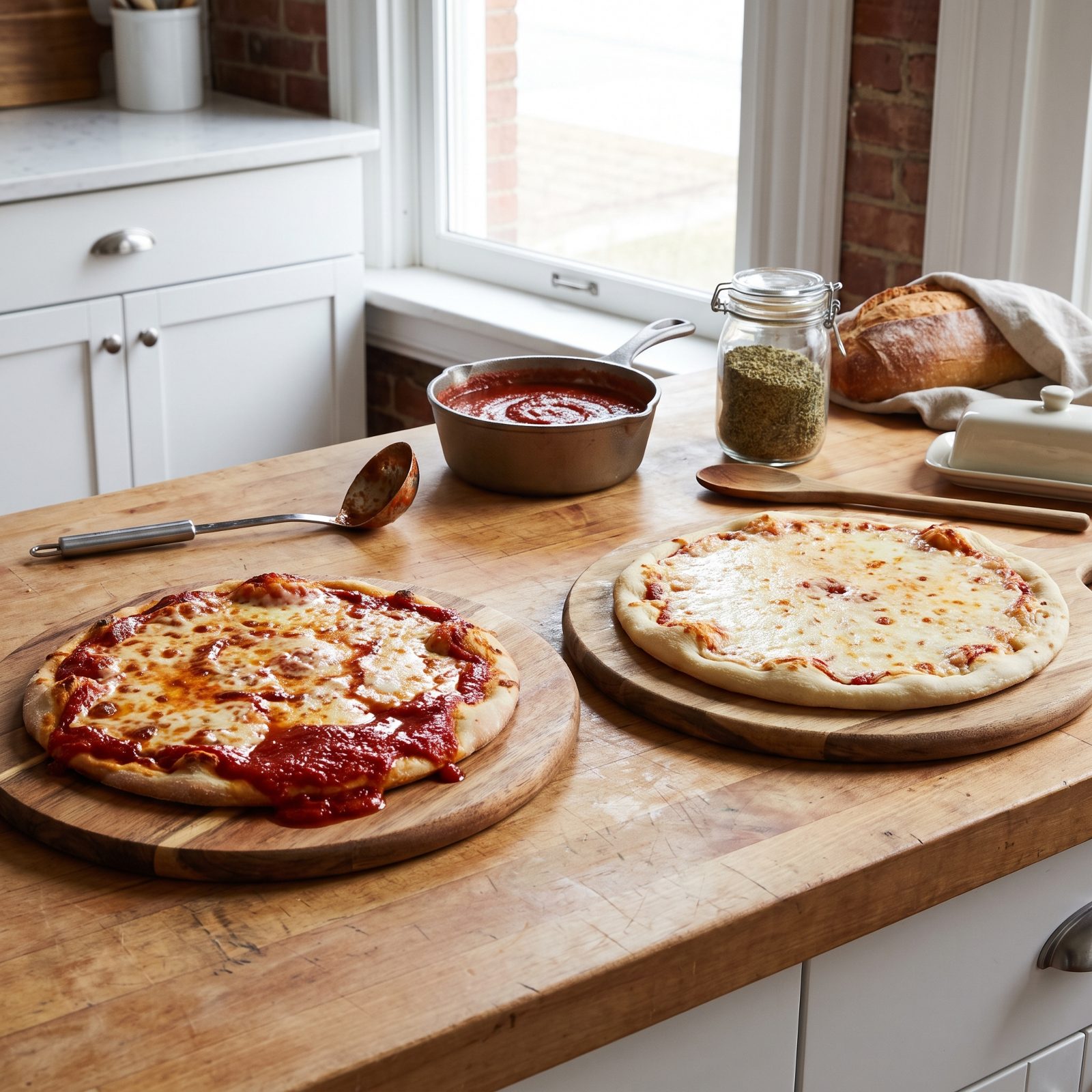
Sauce is the most emotional part of the pizza. Cheese is texture, crust is structure, but sauce is the taste that pulls you straight back to a kitchen you grew up in. So when someone asks for extra, they’re usually asking for more of a memory, not more tomato.
Here’s the thing comfort-food research keeps landing on. The soothing part was never really the flavor. Four 2025 experiments led by social psychologist Chelsea Reid (Source), published in Cognition and Emotion, found that nostalgic foods lift mood mainly by making people feel connected to others, with the comfort flowing through that sense of connection rather than through taste alone. Source
So the extra-sauce person may be chasing the wet, red, Sunday-gravy feeling of a full table. The light-sauce person often wants the ingredients to stay distinct, each thing itself, nothing drowning anything else. One leans into the warm blur of the past. The other keeps a little clarity. Neither is wrong. They’re just comforted by different things.
6. The Psychology of the Person Who Removes Toppings They Could Have Just Left Off the Order
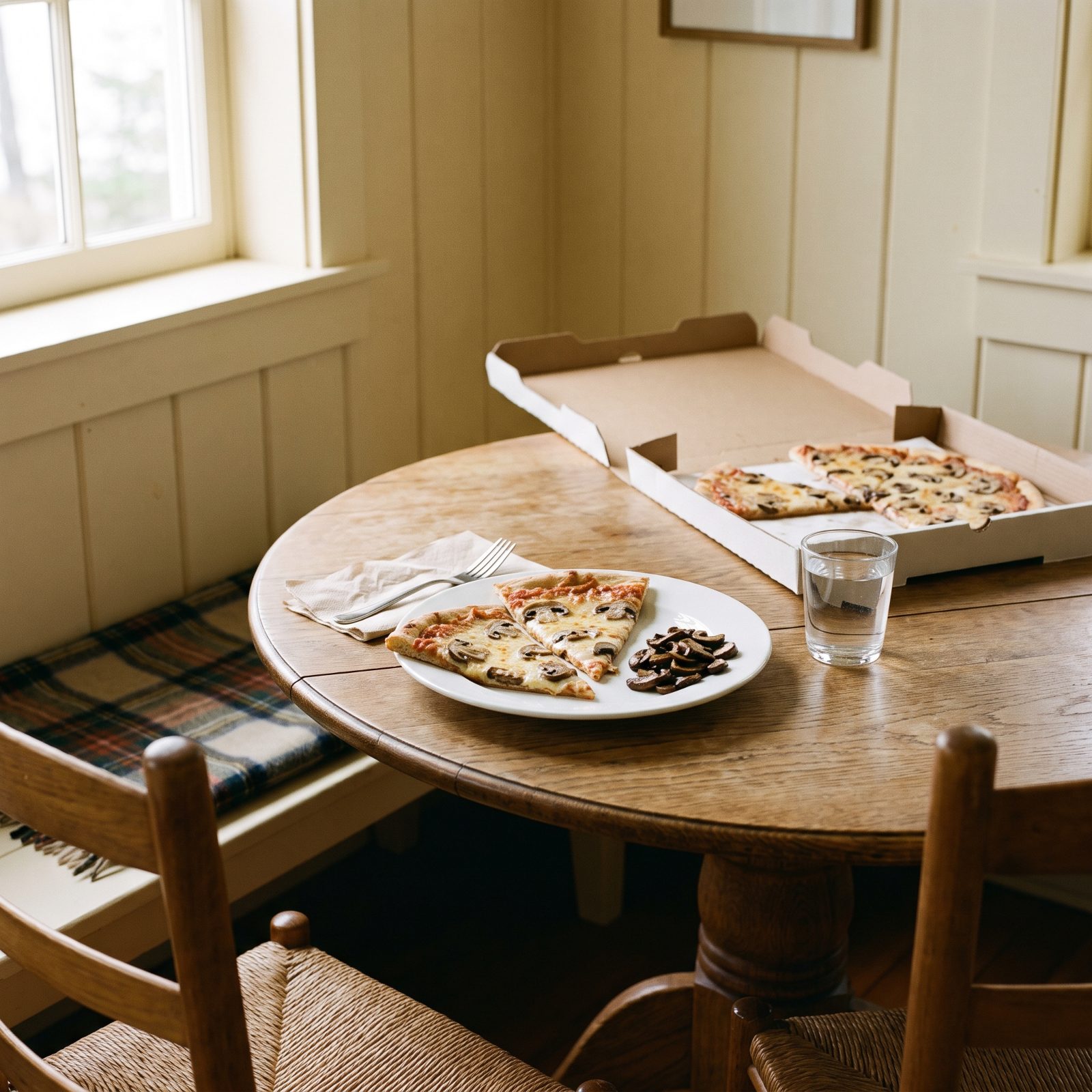
Picture it. The pizza arrives loaded with mushrooms, and one person at the table plates two slices still fully covered in mushrooms, with a little side pile of extra brown caps next to them, and you just know the picking-off is about to begin. And you think: you could have asked for no mushrooms. It was free. It was easy. Why do this the hard way?
Because for some people, the control has to happen in their hands, not in the ordering. Removing a topping is a visible, physical act of making the food yours. It’s the same instinct as a kid who won’t let the peas touch the potatoes. Food neophobia and picky eating have been linked to feelings of disgust and a strong need to vet what goes in, and a review of picky and fussy eating (Source) noted how closely disgust sensitivity and this sorting behavior travel together. Source
There’s also a social piece. Ordering a plain pizza for yourself can feel like making the whole table bend to your preferences. Quietly de-mushrooming your own slices asks nothing of anyone. It’s picky and polite at the same time, which is a very specific kind of person.
5. What Your Side Choice (Breadsticks, Wings, or Nothing at All) Says About How You Define a Meal
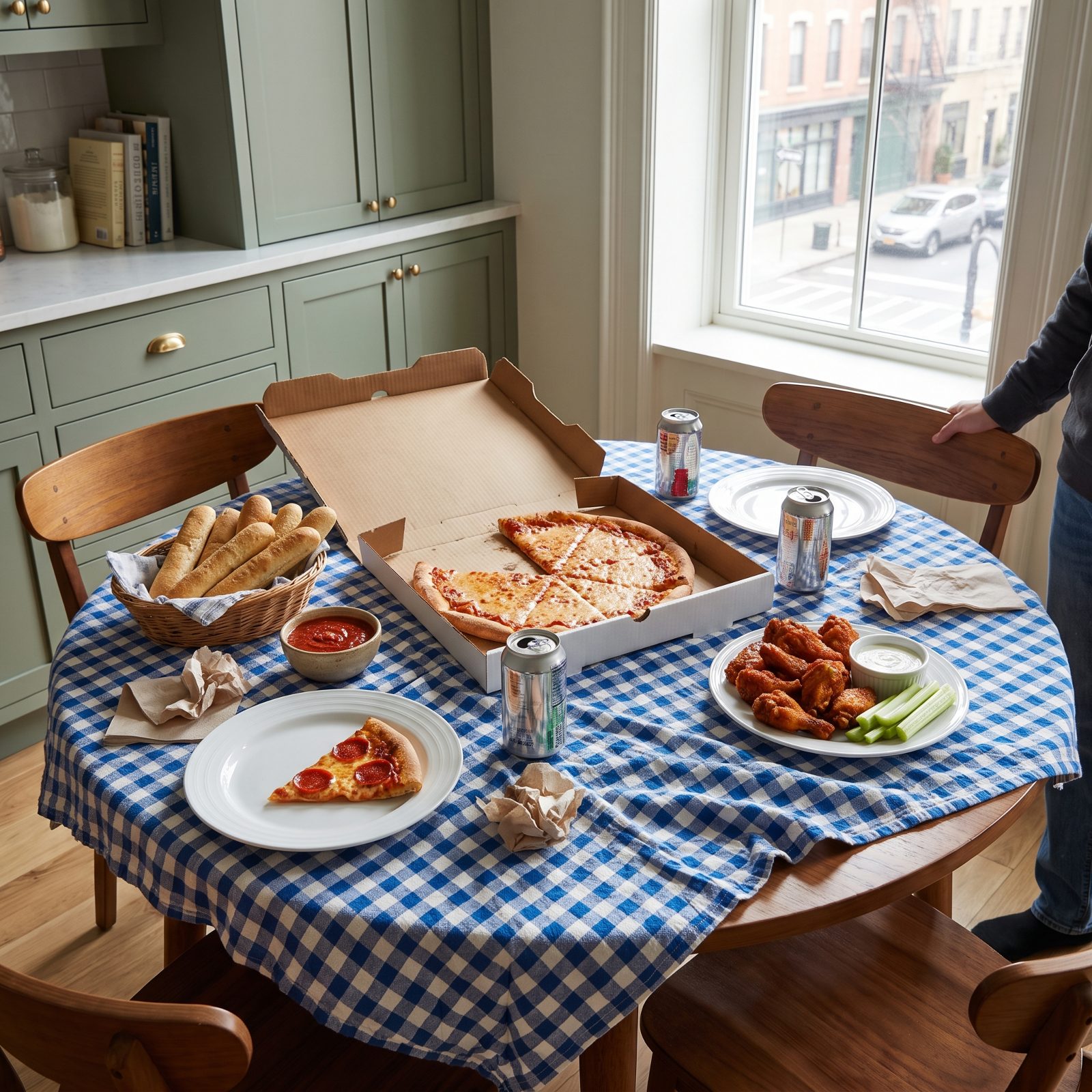
Three people order pizza. One adds breadsticks. One adds wings. One adds nothing and looks at you like you’re strange for asking. Watch what they just told you about what a meal even is.
The breadsticks person treats pizza as an event. More bread on a bread night is pure abundance, the buttery, garlicky extra that says tonight is a little celebration. The wings person wants contrast, a second texture and a different heat, a meal with range rather than one note repeated. And the nothing-at-all person has a clean definition in their head: pizza is the meal, the meal is complete, why are we gilding it.
Food choices sit inside personality more than we admit. A study of adolescent eating habits (Source) found that the structure of how people eat, including regular shared meals, tracked with higher extraversion, agreeableness, and openness. Source
4. The Social Signal Hidden in Whether You Reach for the First Slice or Wait for Everyone Else
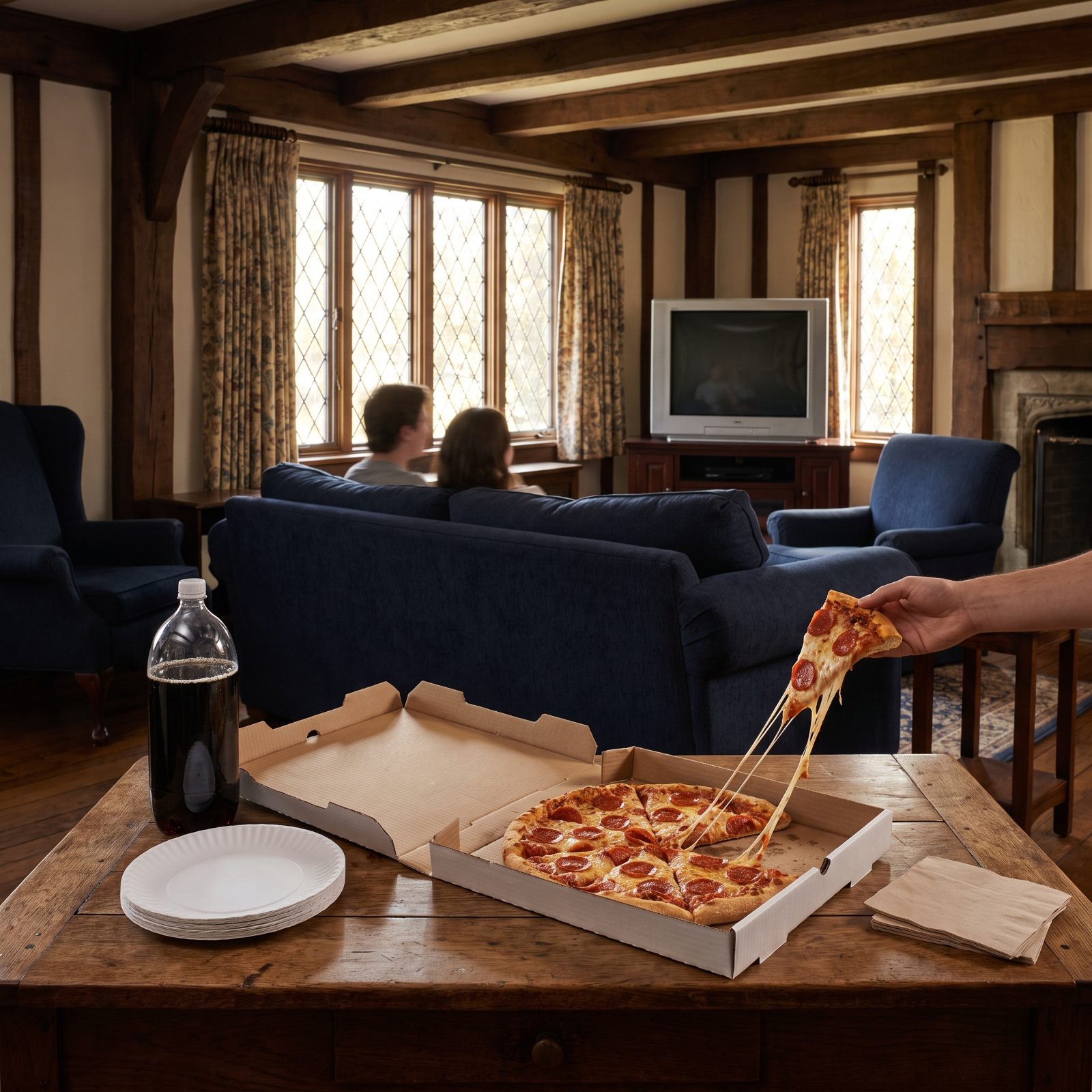
The box opens. Steam comes up. And there’s a half-second where everyone’s hand hovers, and somebody goes first.
That person is telling the table something. Reaching first can read as confidence, appetite, ease in your own skin, no apology for wanting the thing you came for. Waiting reads differently: a check on the room, a quiet counting of who hasn’t been served, the conscientious instinct to make sure the kids and the grandmother have theirs before you take yours.
Neither is better. They’re different settings on the same social dial. What’s genuinely interesting is how much the shared meal itself does for the people around the table. Research on family meal frequency found that eating together regularly was linked with improved extraversion, agreeableness, conscientiousness, and emotional stability. Source
So the slice-grab ritual, the hovering and the going-first and the waiting, is a tiny live negotiation of generosity and want, played out over an open box, every single pizza night, and most of us never notice we’re reading it.
3. Why Spicy-Topping Lovers Score Higher on One Specific Personality Trait, According to Sensation-Seeking Studies
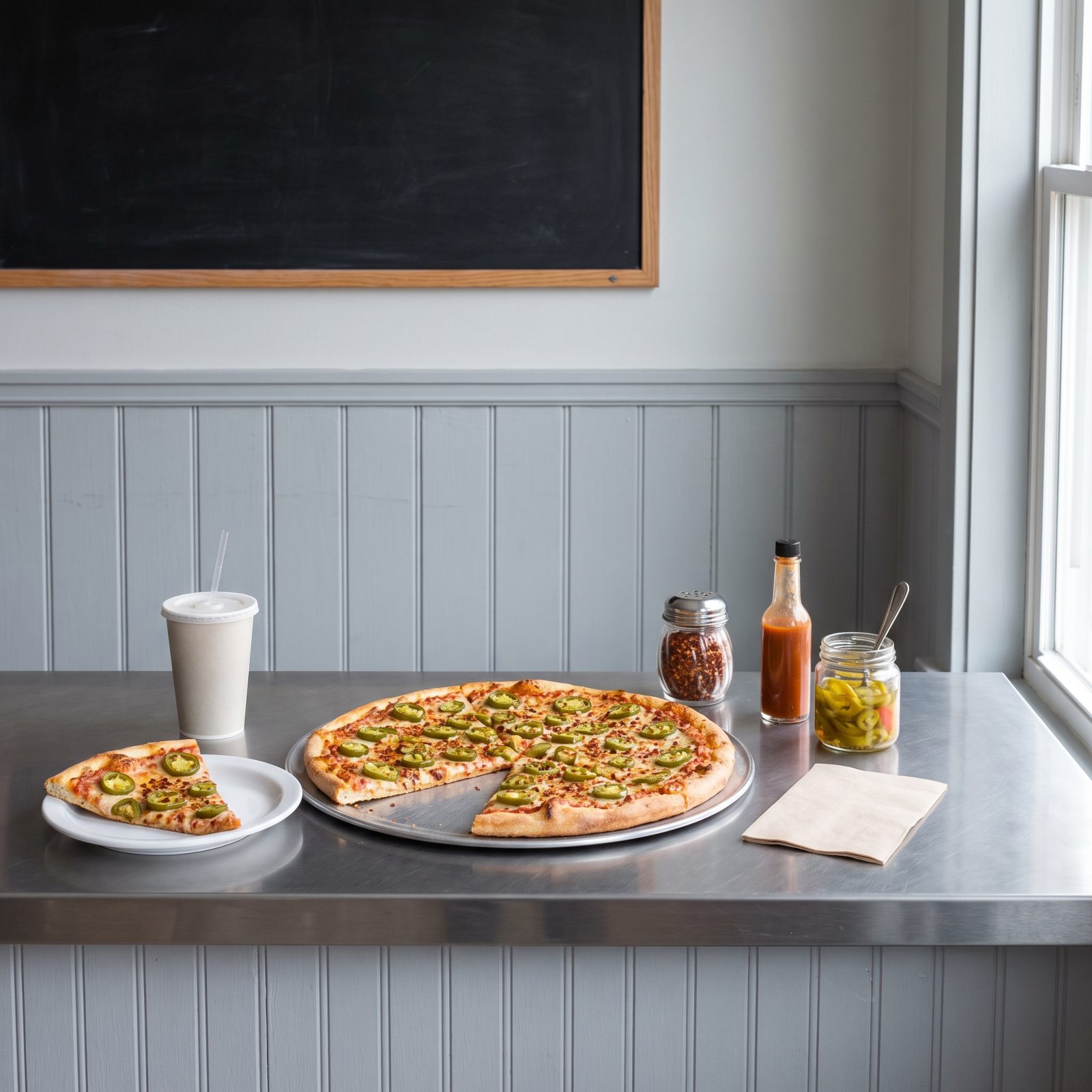
The jalapeño people. The crushed-red-pepper-until-it’s-a-dusting-of-crimson people. The ones who ask if the kitchen has anything hotter. There’s real science on them, and it’s better than you’d guess.
Capsaicin, the compound that makes chili burn, is sending your brain a danger signal. Your mouth thinks it’s being hurt. Some people hate that. Some people love it, and the ones who love it keep scoring high on the same trait. Penn State researchers Nadia Byrnes and John Hayes (Source) found that sensation seeking predicted both how much people liked spicy food and how often they ate it, and it did not predict a general love of non-spicy food. In other words, chili-heads like the burn more, they don’t just feel it less. Source
Sensation seeking is the trait behind roller coasters, loud music, and booking the trip without a plan. The person dumping chili flakes on a perfectly good slice is running a tiny version of the same thrill, a controlled little danger with a cheese backdrop.
2. The ‘Everything Pizza’ Orderer and the Fear-of-Missing-Out Research That Explains Them
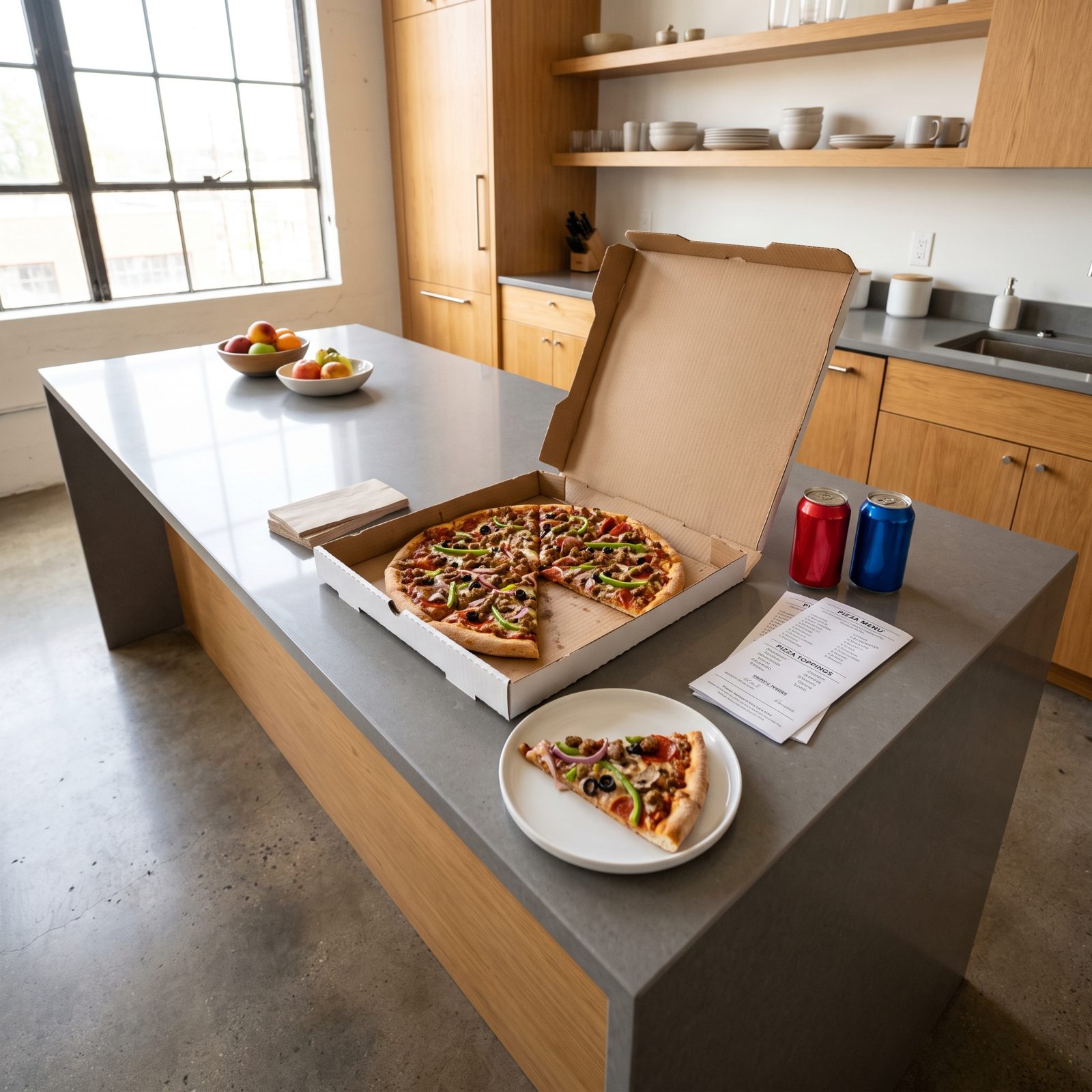
Supreme. The works. Everything on it. Sausage and pepperoni and onions and peppers and olives and mushrooms, a pizza that refuses to choose. And the person who orders it will tell you, cheerfully, that they just didn’t want to leave anything off.
That instinct has a research literature now. A set of three surveys on fear of missing out and decision-making (Source) found that trait FOMO correlates with maximizing, the drive to get the best possible option, and with rating the options you didn’t pick as more attractive and regretting your choice afterward. Source
The everything-pizza solves that problem by not choosing. You can’t regret leaving the sausage off if the sausage is right there. You can’t envy the table that got mushrooms if you also got mushrooms. It’s FOMO handled at the ordering stage, elegantly, with extra toppings.
We’ll admit we’re one-topping people who find the everything-pizza slightly stressful to look at. But we understand it now. It’s not greed. It’s a person who truly cannot bear to pick, solving it the only way a menu allows.
1. What Saving the Last Slice (Or Claiming It Immediately) Reveals About Your Place in the Group
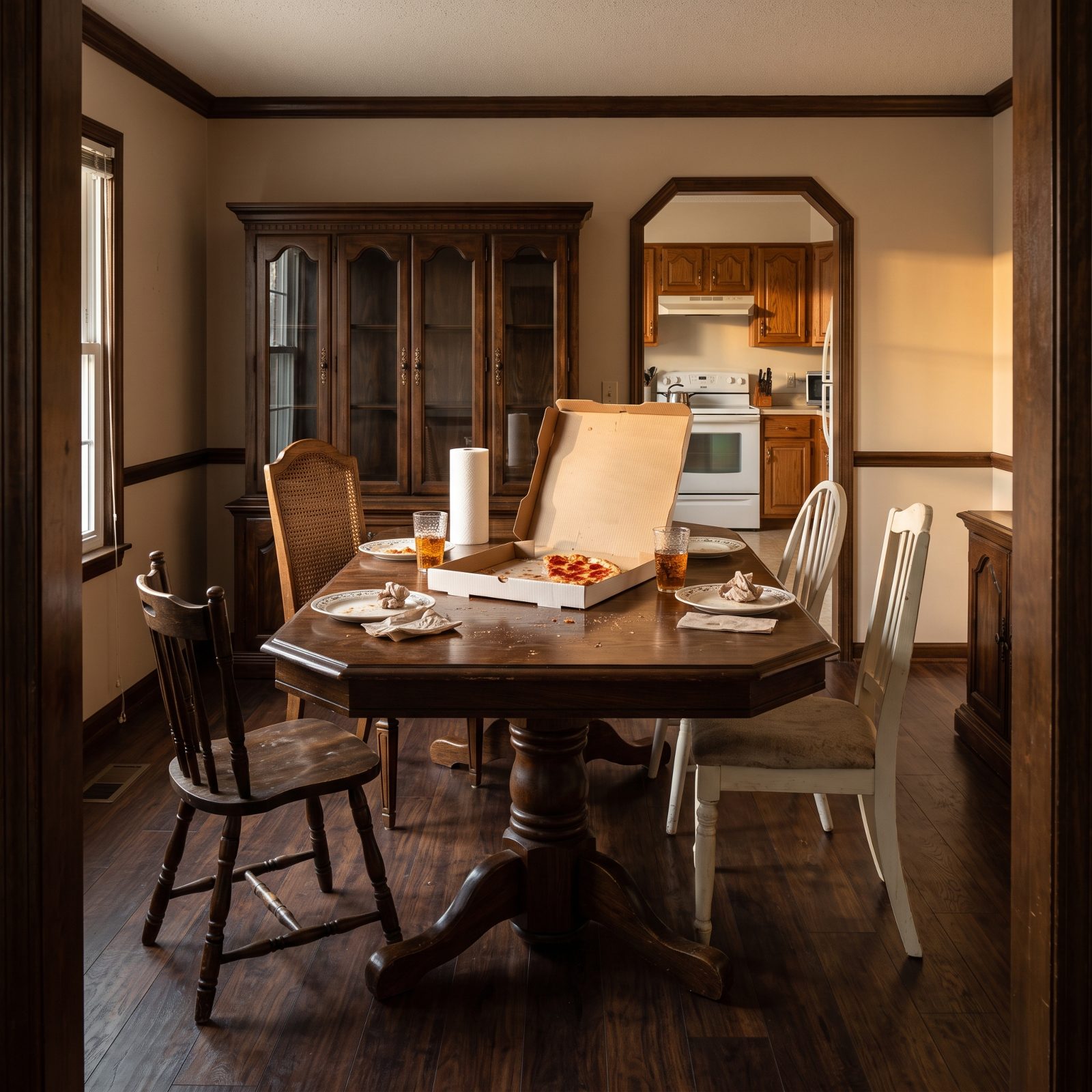
There’s a slice sitting alone in the box. The cheese has set. Nobody’s talking about it, but everybody’s tracking it. You know this moment. You’ve lived it at a hundred Friday-night tables.
Here’s the thing almost nobody admits: leaving that slice isn’t really manners. Research on food sharing finds that even a single shared-food moment bumps up oxytocin and pushes a group toward cooperation. The pizza was doing social work the whole night. That lonely slice is just the moment the work becomes visible.
A 2019 study in Psychological Science found that people eating from one shared plate cooperated more and negotiated faster (Source) than people with separate plates. One pizza box is the ultimate shared plate. You’ve been running a quiet fairness tally since slice one, pacing your reaches against everyone else’s, whether you noticed or not.
So who grabs the last slice fast? Usually the person who feels safest in the group. The one who knows nobody’s keeping score against them. And who hangs back, offers it around, waits to be told it’s theirs? Often the one still reading the room for their standing. Plenty of us were that kid for years. The offer-it-around kid. It can take a long time to just take the slice.
The last slice is a tiny status map. Where you sit on it says more than your topping order ever will.
The Bottom Line
Here’s what your pizza order actually reveals: your relationship with comfort and control, how much novelty you can tolerate, how safe you need to feel, and how much you’ll bend your preferences for the people at the table. Every choice you make, from the crust to the last slice, is a small negotiation between the part of you that craves certainty and the part that craves surprise. Next time you order, notice which one wins, and ask yourself whether that’s the person you’re being everywhere else, too.