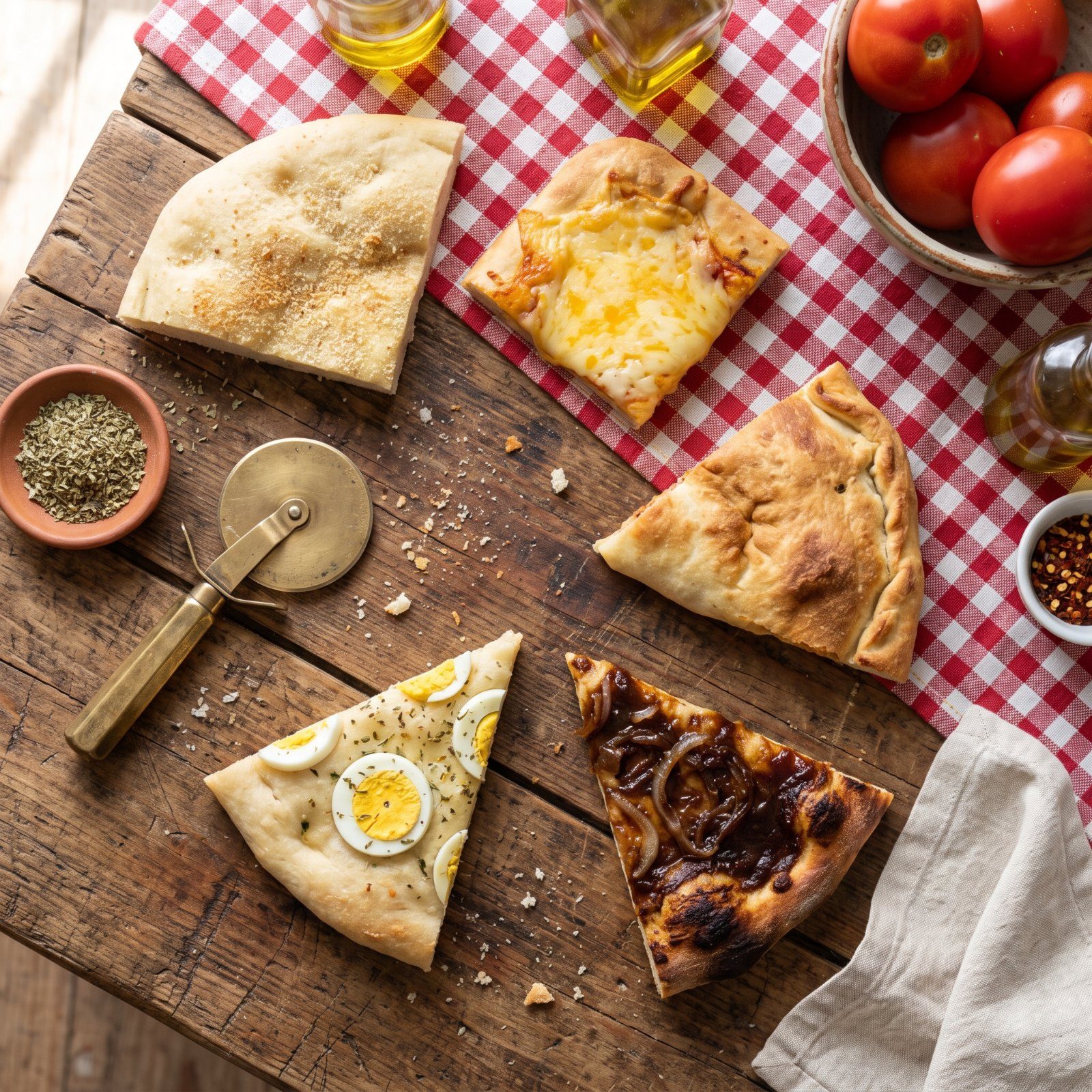
Pepperoni and mozzarella get all the glory. Meanwhile, somebody in Nova Scotia is eating a brown-sauce pie that would confuse half of New York, and a guy in Pesaro is topping his pizza with hard-boiled eggs and mayo. The pizza world is weirder and wider than the chains let on. Here are the regional oddities worth knowing about.
Please note that some of the images in this article were created with the assistance of AI.
34. Pizza Rossini from Pesaro
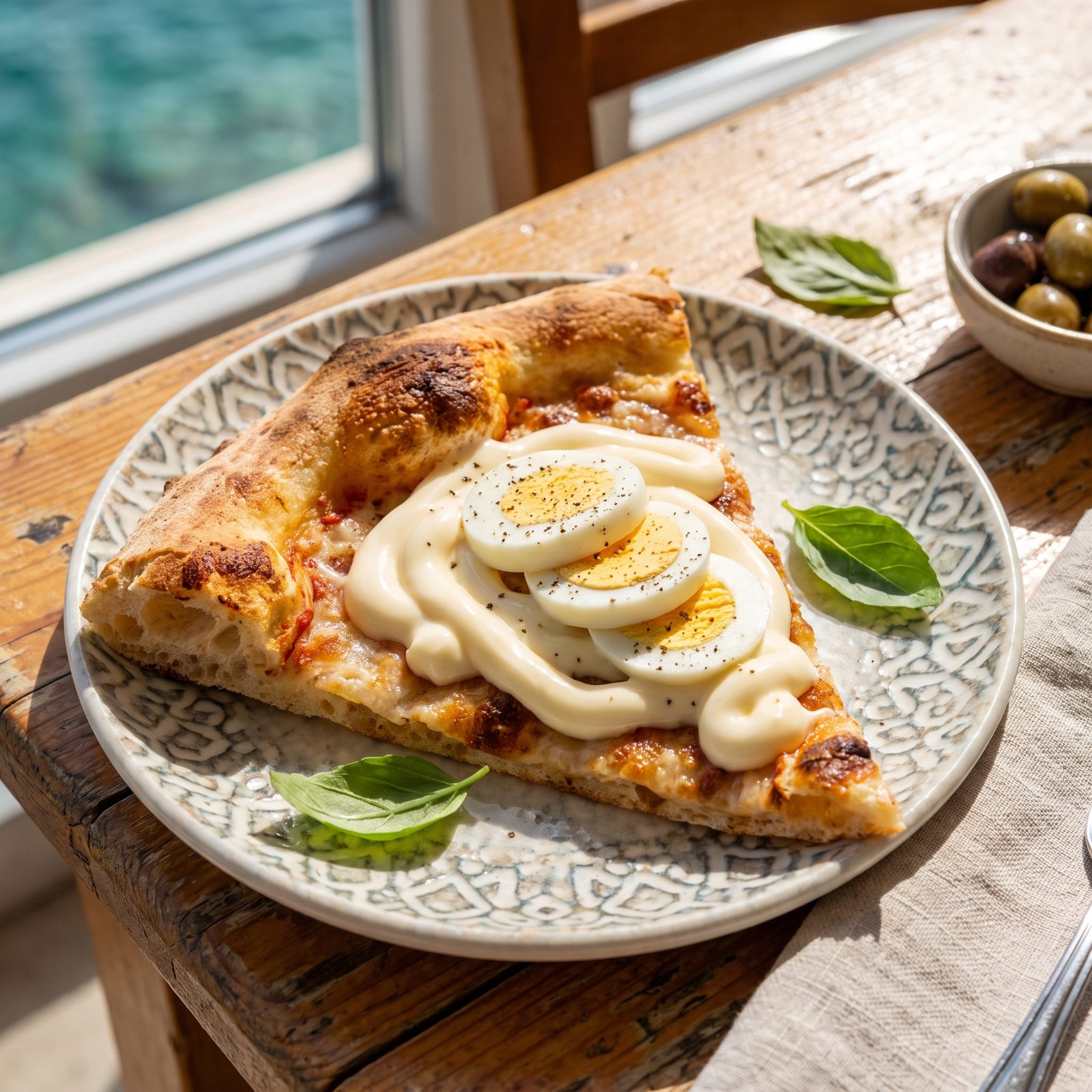
Mayonnaise on pizza sounds like a dare. In Pesaro, on the Adriatic coast, it’s just dinner. Pizza Rossini starts life as an ordinary thin Margherita, baked properly, then gets finished off the heat with sliced hard-boiled egg and a generous swirl of mayo. The name honors the composer Gioachino Rossini, born in town, a man who loved rich food more than most people love anything.
What you get is cold-meets-warm, creamy against acidic tomato, the egg adding a soft bite. Subtle it is not. Order it in Pesaro and nobody blinks; order it anywhere else in Italy and you may get a lecture.
33. Ohio Valley-Style Pizza
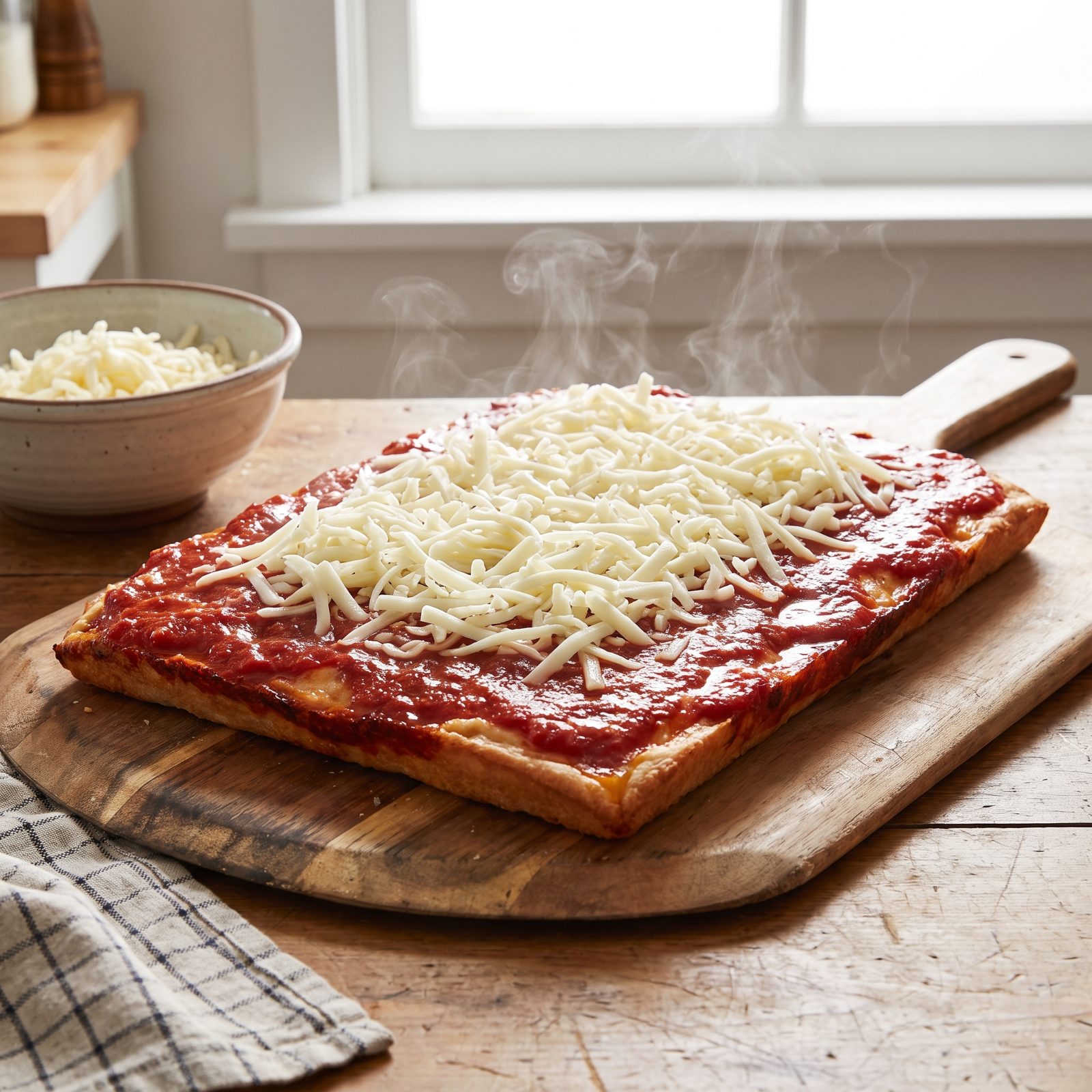
Here’s the trick that separates the Ohio Valley from everybody else: the cheese never sees the oven. Crust and sauce bake alone. Then the hot pie comes out, the shop piles on cold shredded provolone and the toppings, and the leftover heat warms them just enough to soften without fully melting.
Steubenville, Ohio and Weirton, West Virginia both claim it, and DiCarlo’s is the name everybody drops. Sounds strange on paper. In practice you get this contrast of crackly hot crust and cool, almost raw cheese that locals will defend to the grave. It’s a texture thing. You either get it or you argue about it.
32. Altoona-Style Pizza
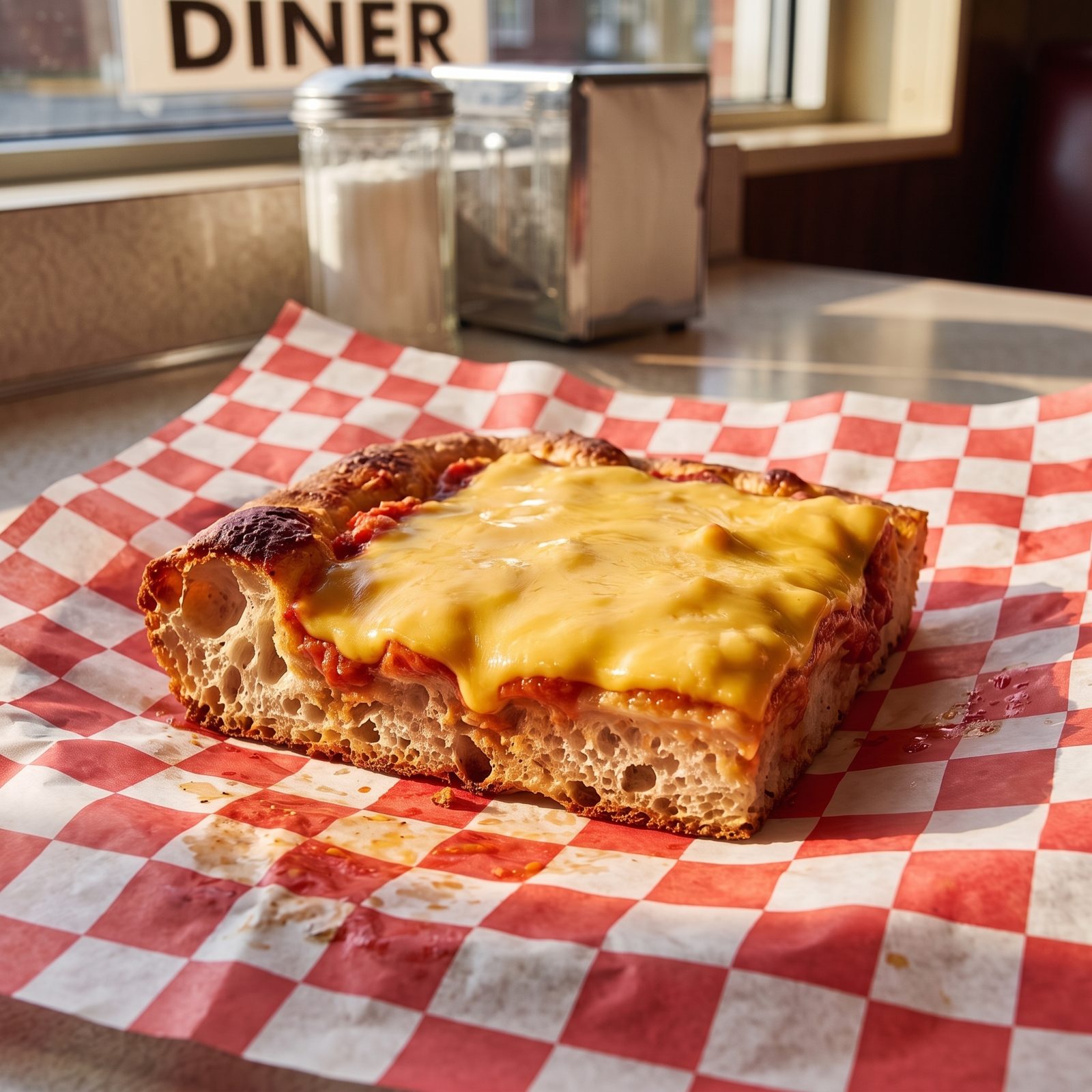
Ask a pizza purist about Altoona-style and watch the color drain from their face. This central Pennsylvania square breaks almost every rule at once: a thick focaccia-ish crust, a chunky, sweet tomato sauce, and — the part that triggers people — bright yellow American cheese on top. The kind you’d put on a burger.
The Altoona Hotel gets credited as the origin. It’s divisive even in Pennsylvania, which is saying something for a state that argues about cheesesteaks. But the people who grew up on it don’t want it any other way. That’s regional pizza in a nutshell. It tastes like home to somebody.
31. Pizzolo di Sortino
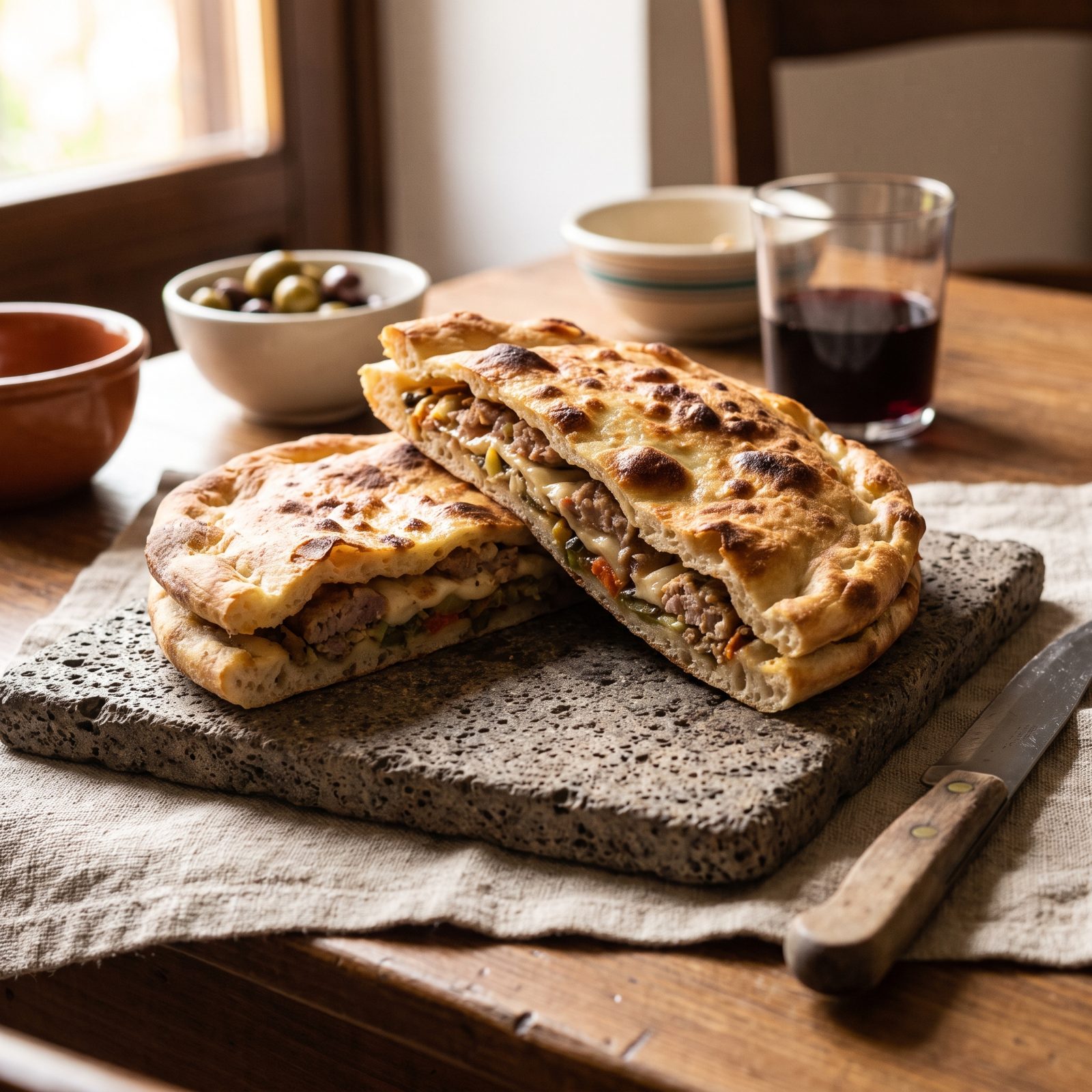
Half pizza, half savory pie, the pizzolo comes from Sortino in the province of Syracuse. Two discs of dough, a filling in the middle, sealed around the edges and baked until golden. Inside you might find cheese, wild greens, sausage, or cured meat, depending on the maker and the season.
It eats more like a stuffed bread than a flat pizza, and that’s exactly why it survives. In a region where every town guards its own version of filled dough, Sortino’s earns a certain local pride. Cut one open. The steam that escapes tells you everything you need to know about why people drive out there for it.
30. Scaccia Ragusana
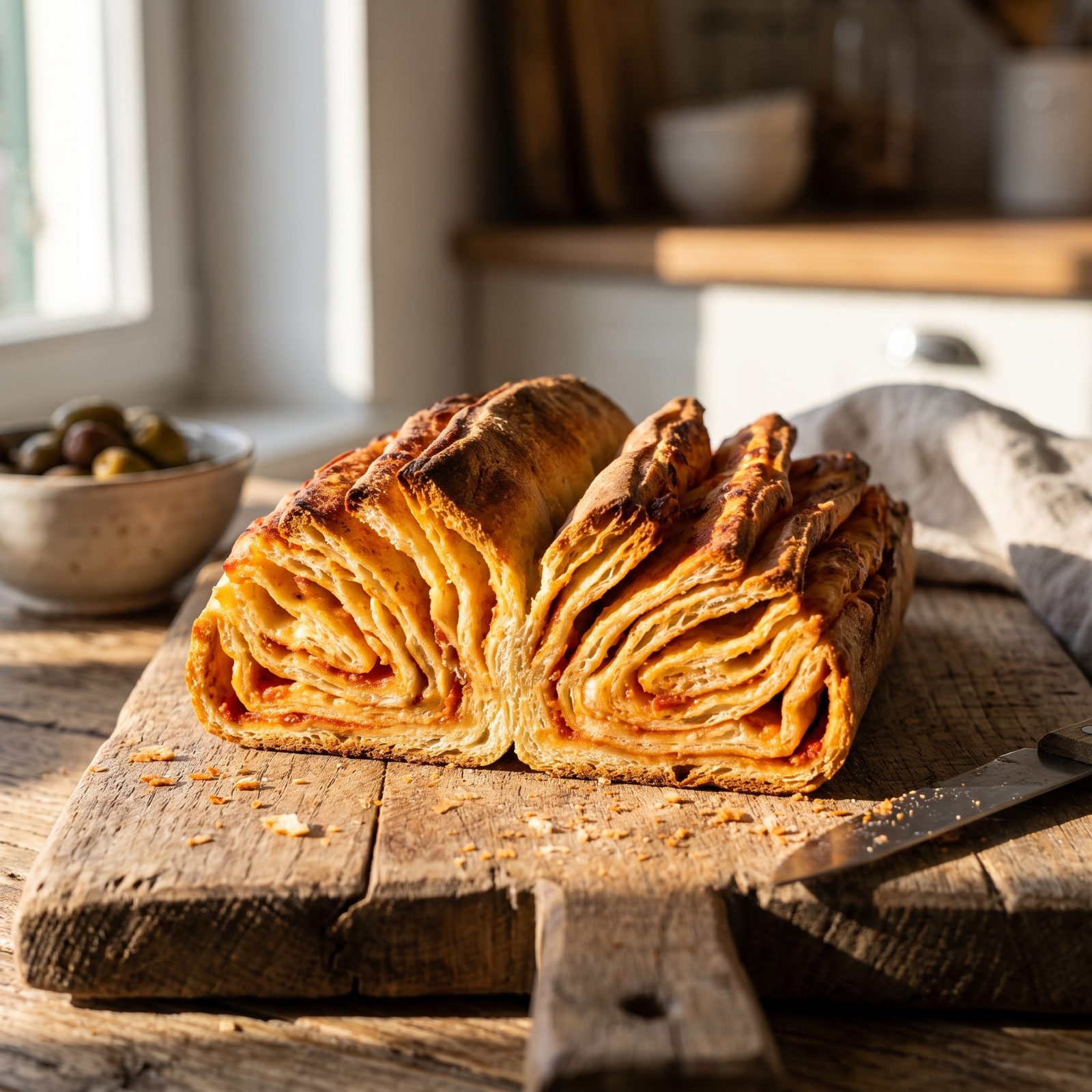
Imagine a pizza folded into a book. That’s the scaccia from Ragusa, down in southeastern Sicily. You roll the dough paper-thin, spread it with tomato and caciocavallo cheese, then fold it over itself again and again until you’ve built a loaf of layered dough and filling. Baked, it slices open to reveal those stacked ribbons inside.
The classic filling is tomato and cheese, but you’ll find versions with eggplant, onion, broccoli, or ricotta. It travels well, which is why it became a field lunch and a road-trip food long before anyone thought to put it on a menu. Every slice gives you a different ratio of crust to filling, and the corners are what everybody fights over.
The scaccia is proof that the best regional foods were invented by people figuring out what to pack for lunch.
29. Sfincione Bagherese
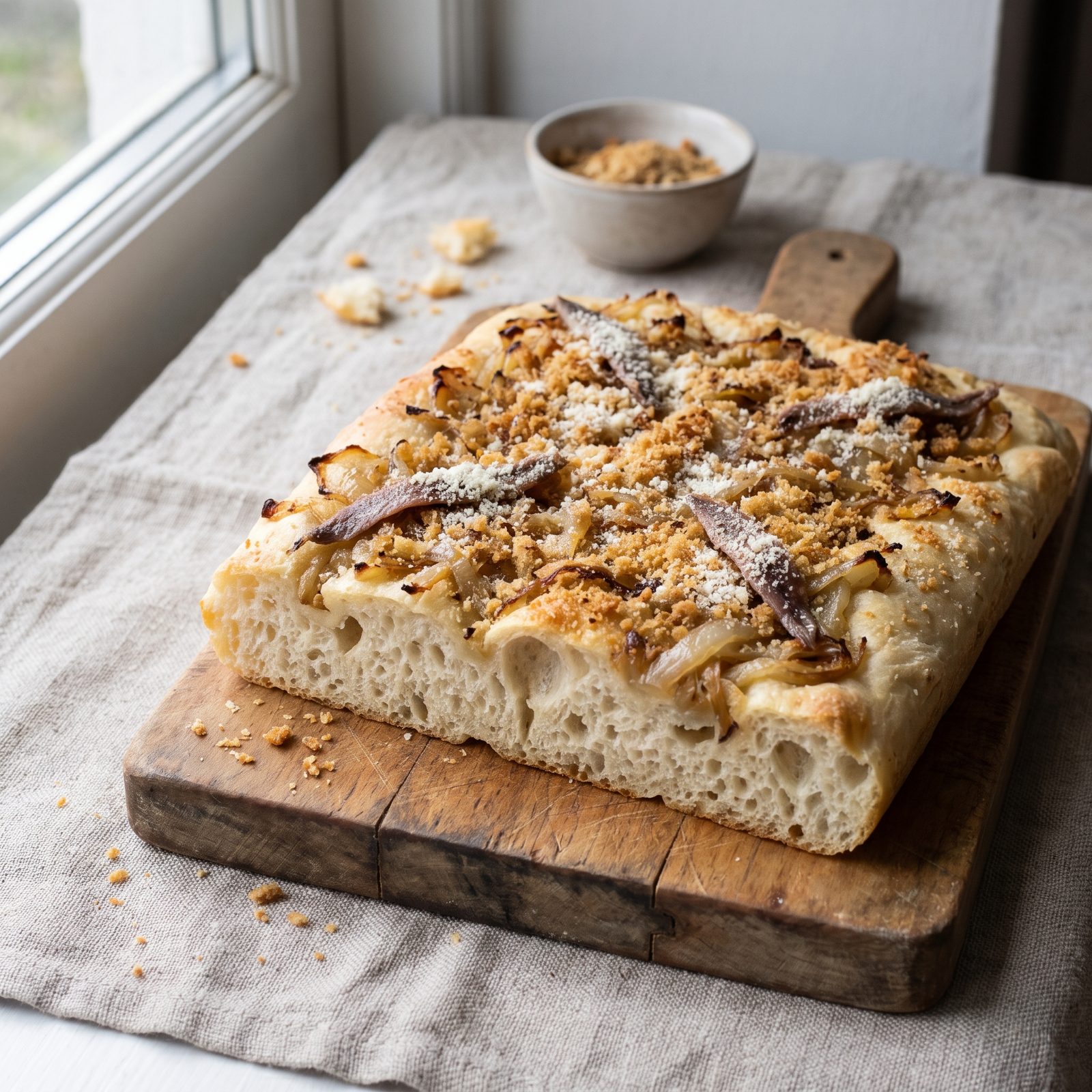
Forget everything you know about a crisp Neapolitan base. Sfincione is a pale, spongy, pillowy slab, and the Bagheria version leans into that softness without apology. From the town of Bagheria near Palermo, it layers caramelized onions, anchovies, soft tuma cheese, and a thick blanket of toasted breadcrumbs over the top. Tomato plays a minor role, if it shows up at all.
This is Palermo’s street food, sold by weight, eaten standing up, tied to Christmas tables across western Sicily. The breadcrumb crust gives a savory crunch against the soft interior. It’s bread-forward in a way that makes most American pizza look like a cheese delivery system.
28. Swedish Africana Pizza
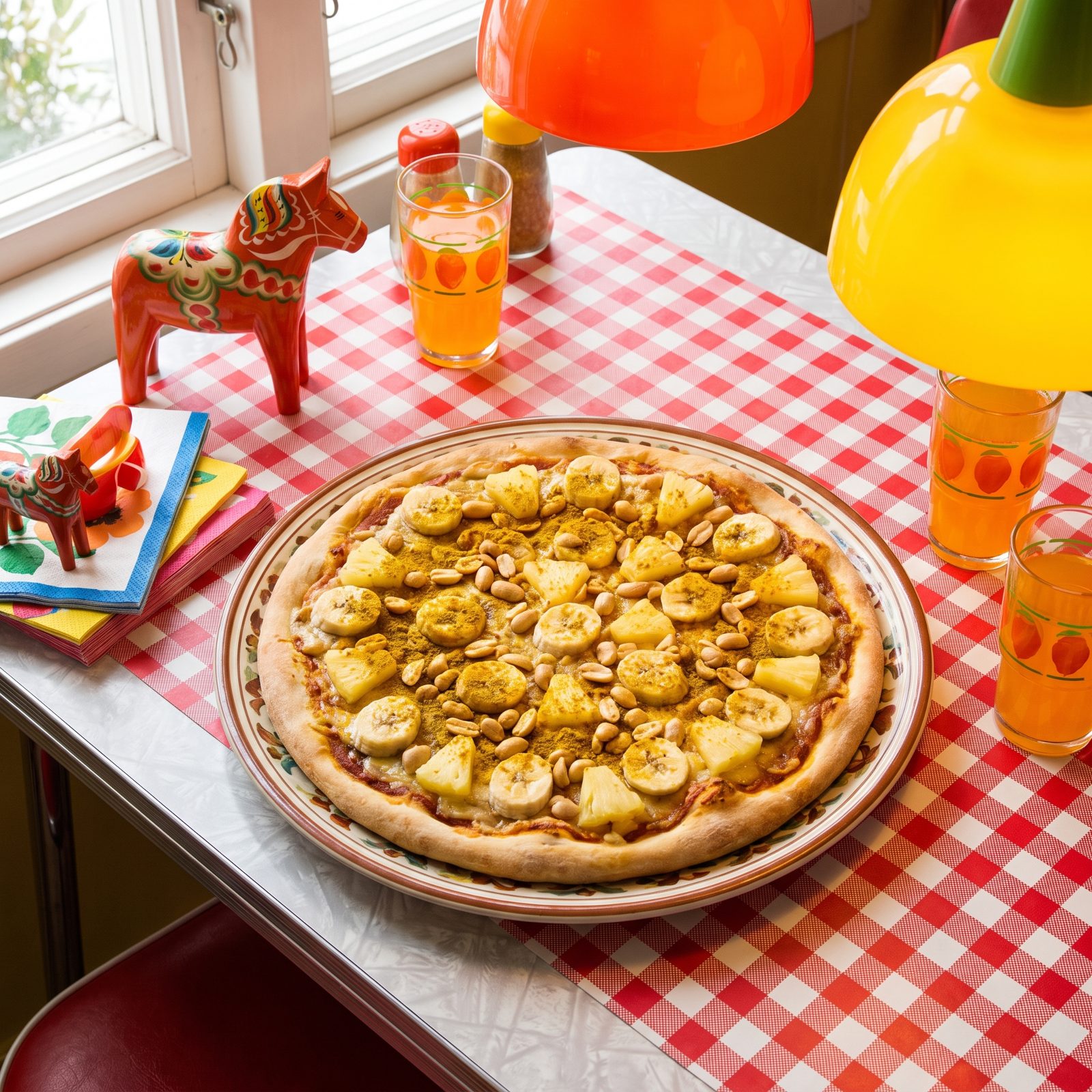
Sweden’s pizzerias run on a logic that would baffle Naples. The Africana is a house staple: banana, curry powder, peanuts, usually over ham and cheese, sometimes with pineapple thrown in for good measure. Sweet, savory, a little nutty, and completely unbothered by Italian tradition.
It came out of the wave of pizzerias opened by Italian and later immigrant cooks in Sweden through the second half of the twentieth century, cooks who adapted fast to a local taste for sweet-and-salty combinations. Swedes don’t consider it exotic. It’s just what you order on a Friday. The curry-and-banana thing sounds like a fever dream until you taste it and realize it’s basically a mild curry sauce in pizza form.
27. Philadelphia Pizzaz Pizza
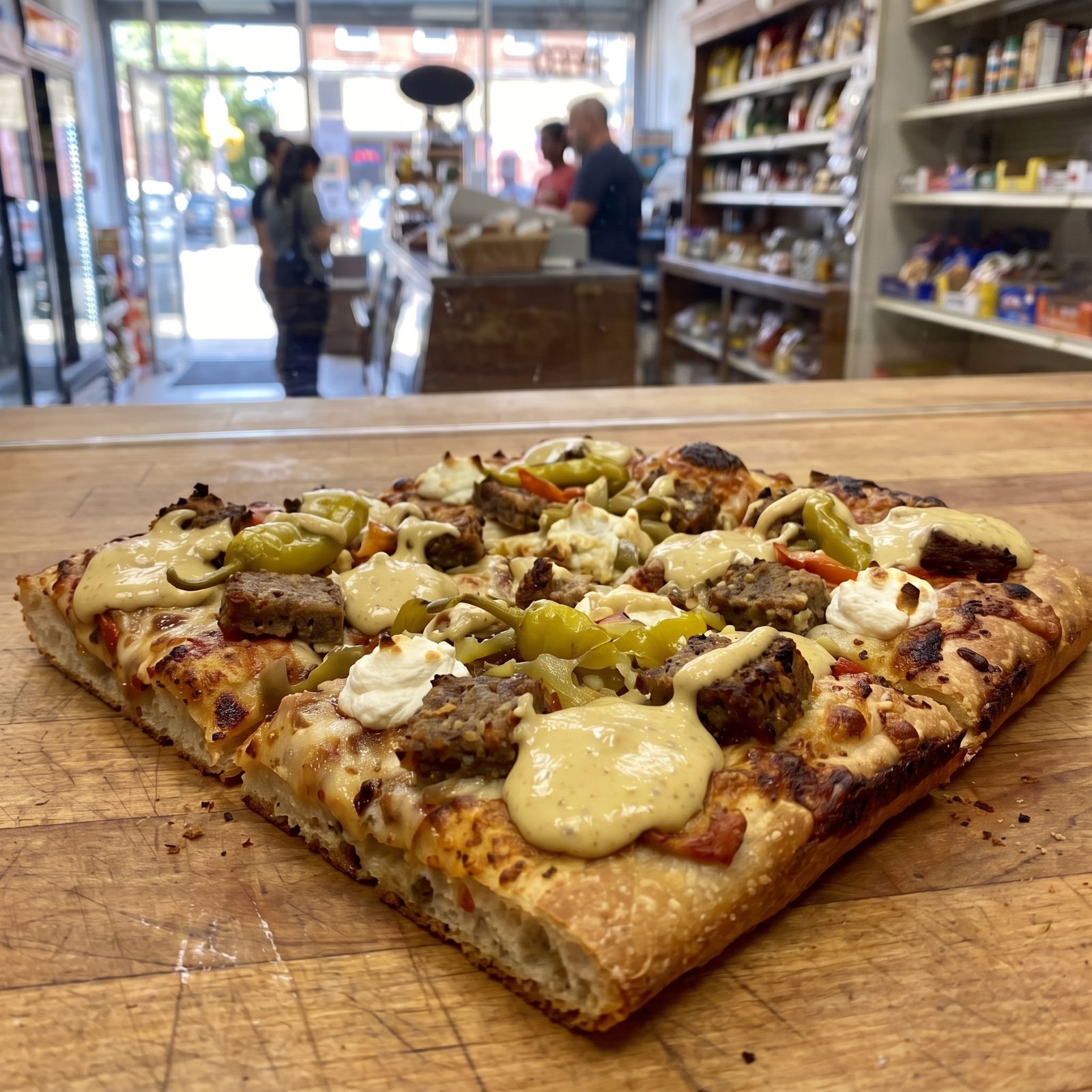
A hyperlocal Philly oddity that swaps out nearly every expected ingredient. Instead of red sauce and mozzarella, the Pizzaz runs on melted American cheese, hearty chunks of ground meat, dollops of ricotta, and banana peppers. It’s the kind of pie that exists in one neighborhood, gets passed around by word of mouth, and makes outsiders tilt their heads.
The American-cheese base gives it that salty, almost diner-grilled-cheese quality, while the cool ricotta and the pickled bite of the peppers cut through the richness of the meat. Less pizza-as-Italy, more pizza-as-sandwich. Philadelphia, a city that built an identity on improvised sandwiches, somehow produced the sandwich version of a pizza. Makes sense when you think about it.
26. Pictou County Pizza
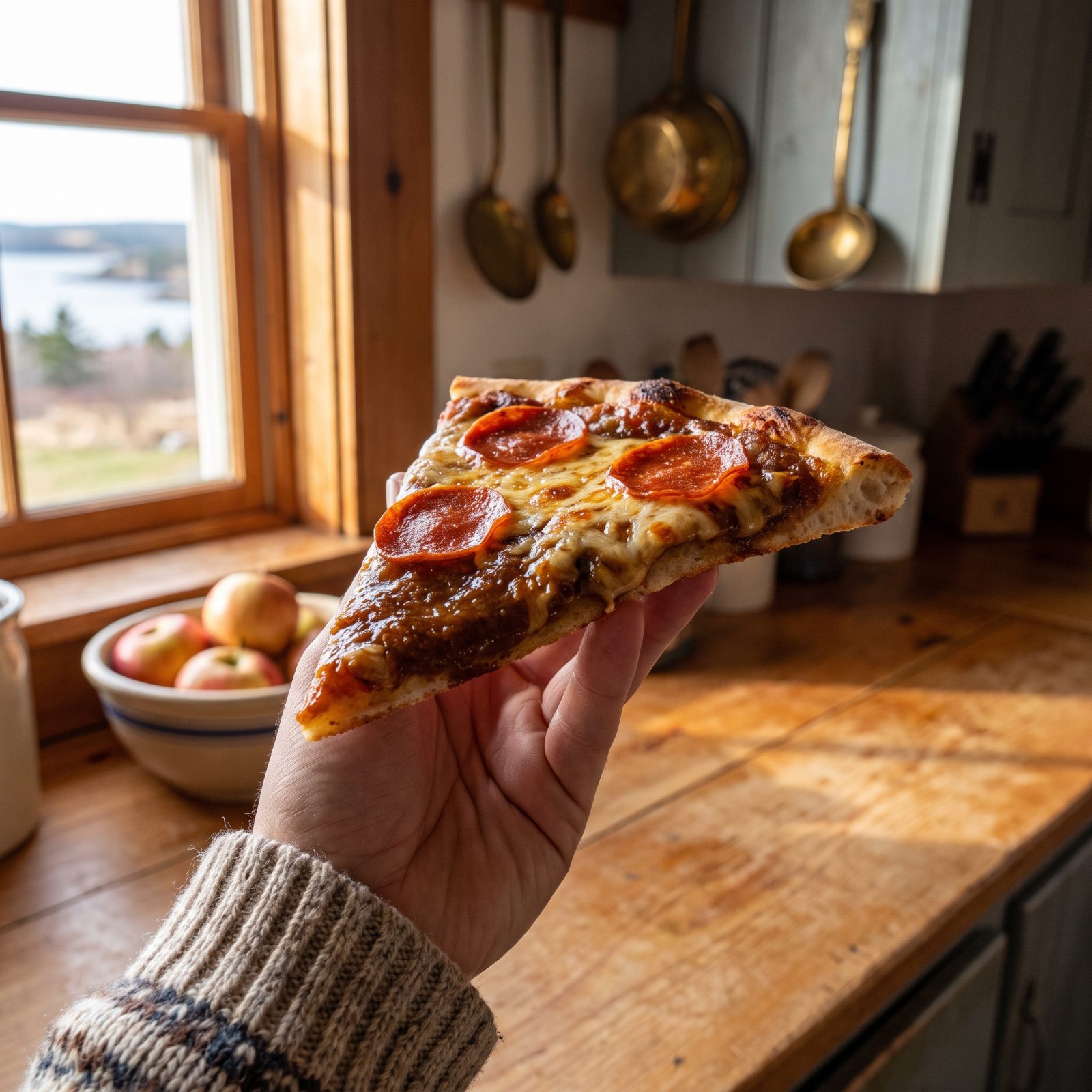
Up in Pictou County, Nova Scotia, the pizza comes with a secret. The sauce is brown, spiced, darker than any marinara you’ve met — closer to a seasoned meat gravy than a tomato base. Alongside it comes a specific local cheese blend that shops guard like a family recipe.
Nobody fully agrees on what’s in the sauce, which is half the fun. A small-region specialty that rarely travels past the county line, it’s one of those foods you have to go there to properly understand. Locals who move away talk about it the way other people talk about a lost love.
25. Windsor-Style Pizza
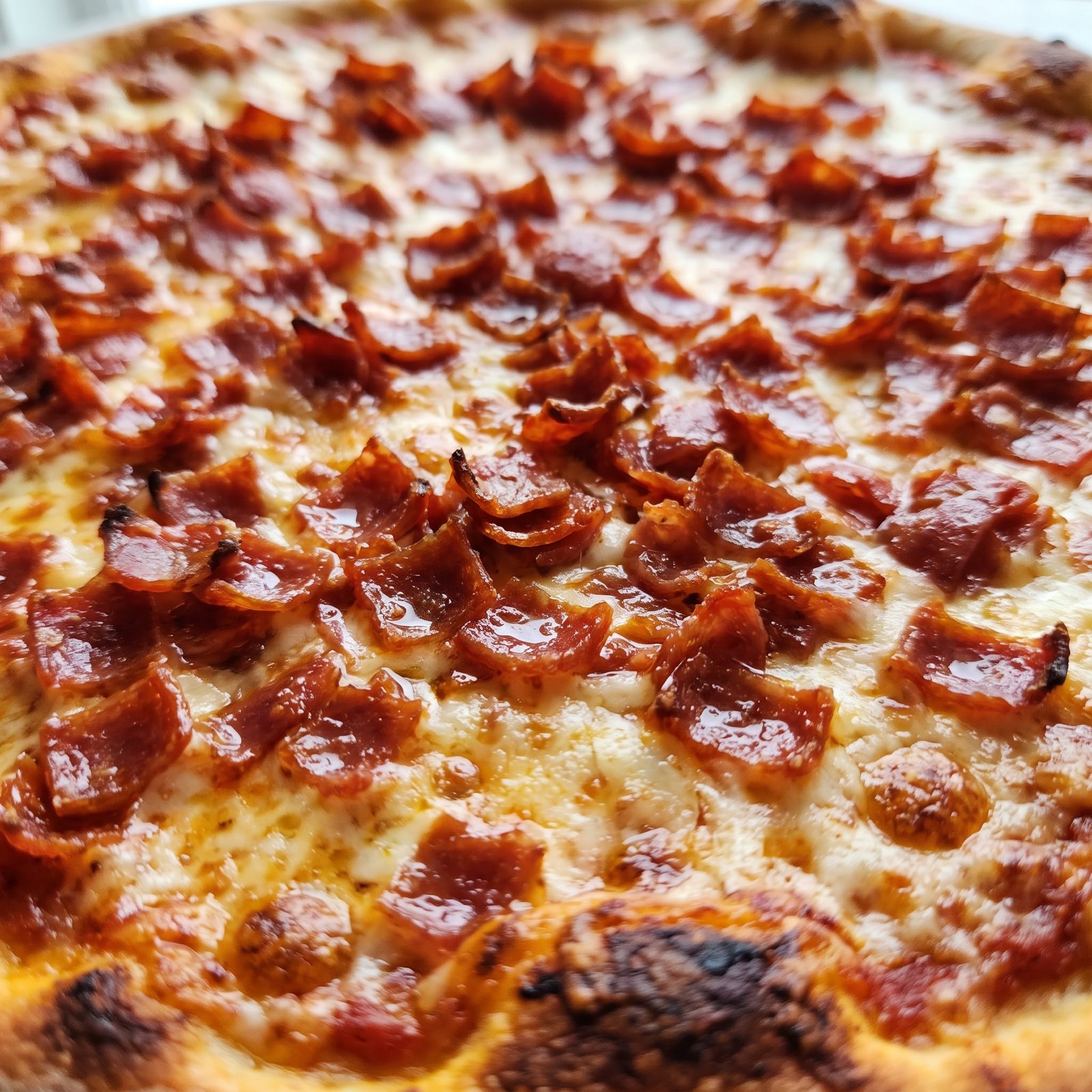
Windsor, Ontario does pepperoni differently, and once you notice it you can’t unsee it. The pepperoni comes chopped, scattered across the pie in chunky little pieces that curl and crisp at the edges instead of neat circles. Add a particular cheese blend and a crust dusted underneath with cornmeal for that gritty bottom crunch.
That chopped pepperoni is the signature move, the thing that marks a true Windsor pie. Local chains built the style decades ago, and it stuck so hard that Windsorites judge pizza everywhere else by whether it measures up. It rarely does, in their opinion. And the cornmeal bottom? That’s the detail most visitors miss until their first bite tells them something’s different down there.
24. Cuddiruni Lentinese: Sicily’s Onion-Heavy Folded Bake
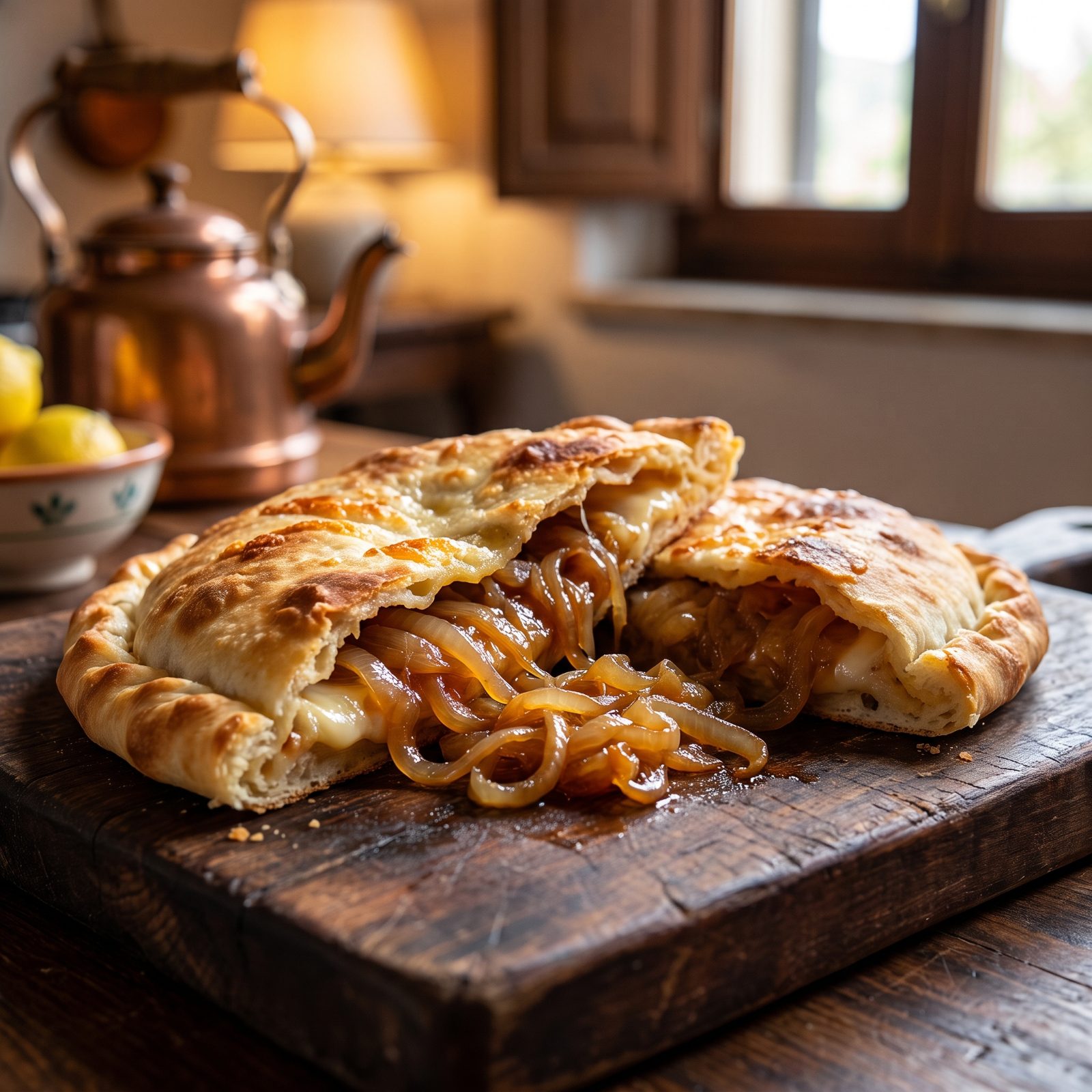
Start in the town of Lentini, in eastern Sicily, where pizza means something closer to a stuffed flatbread than anything you’d recognize from a chain menu. Cuddiruni is thick, the dough enriched and almost bready, with a border folded and crimped up around a generous bed of slow-cooked onions. Tomatoes, caciocavallo cheese, sometimes anchovies, all pressed into that onion sweetness.
This is cold-weather, feed-the-table food. The onions go soft and almost jammy in the bake while the folded edge gives you something to grip and the center stays rich and yielding. You eat it in wedges, warm or at room temperature, standing up more often than sitting down.
23. Pizza Chiena: Campania’s Stuffed Easter Giant
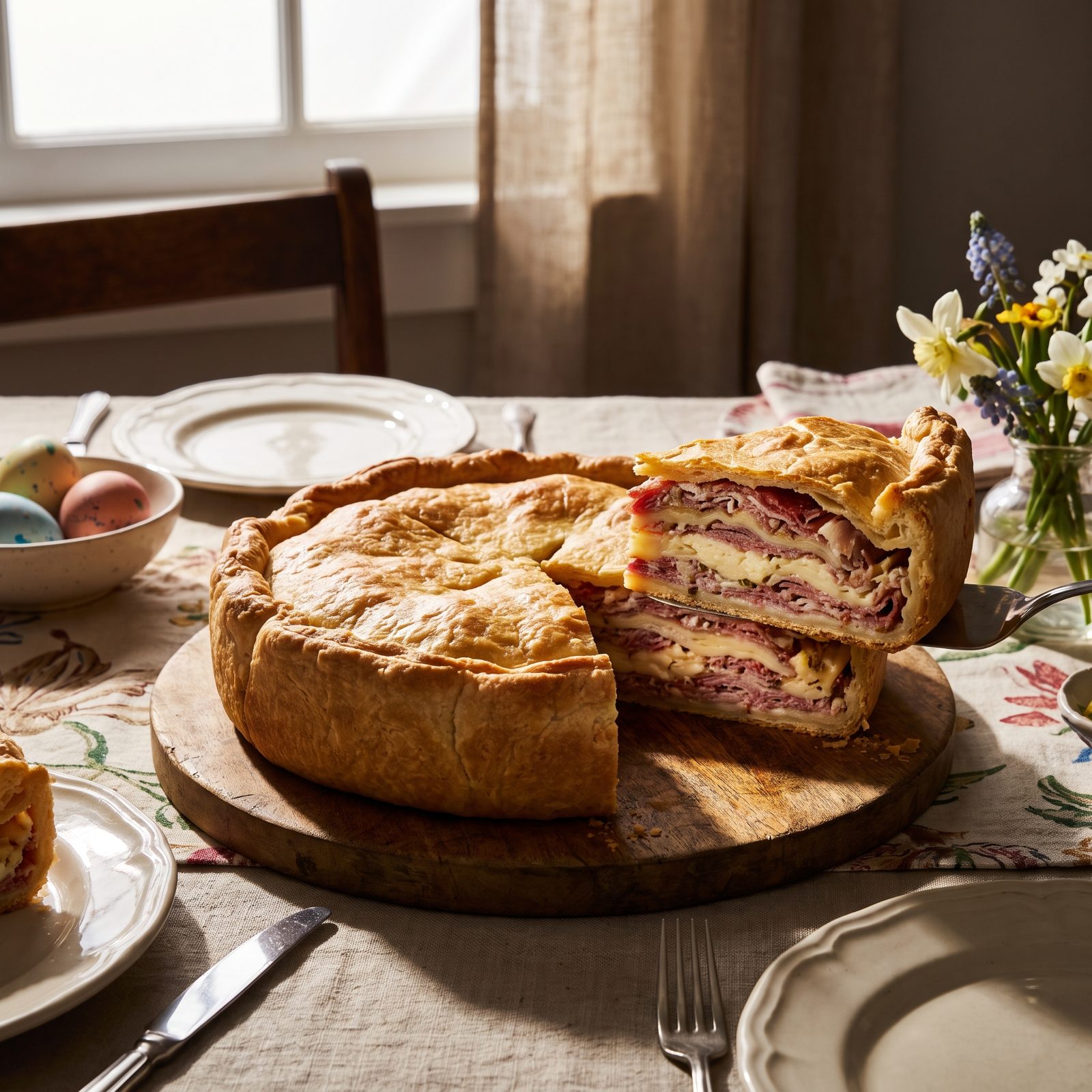
Calling this a pizza is almost a stretch, and that’s exactly why it earns a spot here. Pizza Chiena — the dialect swallows the “ripiena,” meaning filled — is a towering stuffed pie from Campania, baked for Easter to break the Lenten fast with a vengeance. Double crust, dense interior, a filling that reads like a charcuterie board set in savory custard.
Chopped hard-boiled eggs, salami, provolone, ricotta, pecorino, sometimes sausage, all bound and baked until a slice holds its shape standing up. It’s heavy. It’s meant to be. You eat it cold or barely warm, in thin wedges, and one slice carries a full meal’s worth of protein.
Where a Neapolitan pie is all air and restraint, this is its opposite — abundance dressed up for the holidays. Families guard their recipes the way others guard sauce.
22. Pizza Mastunicola: Naples Before Tomatoes Existed
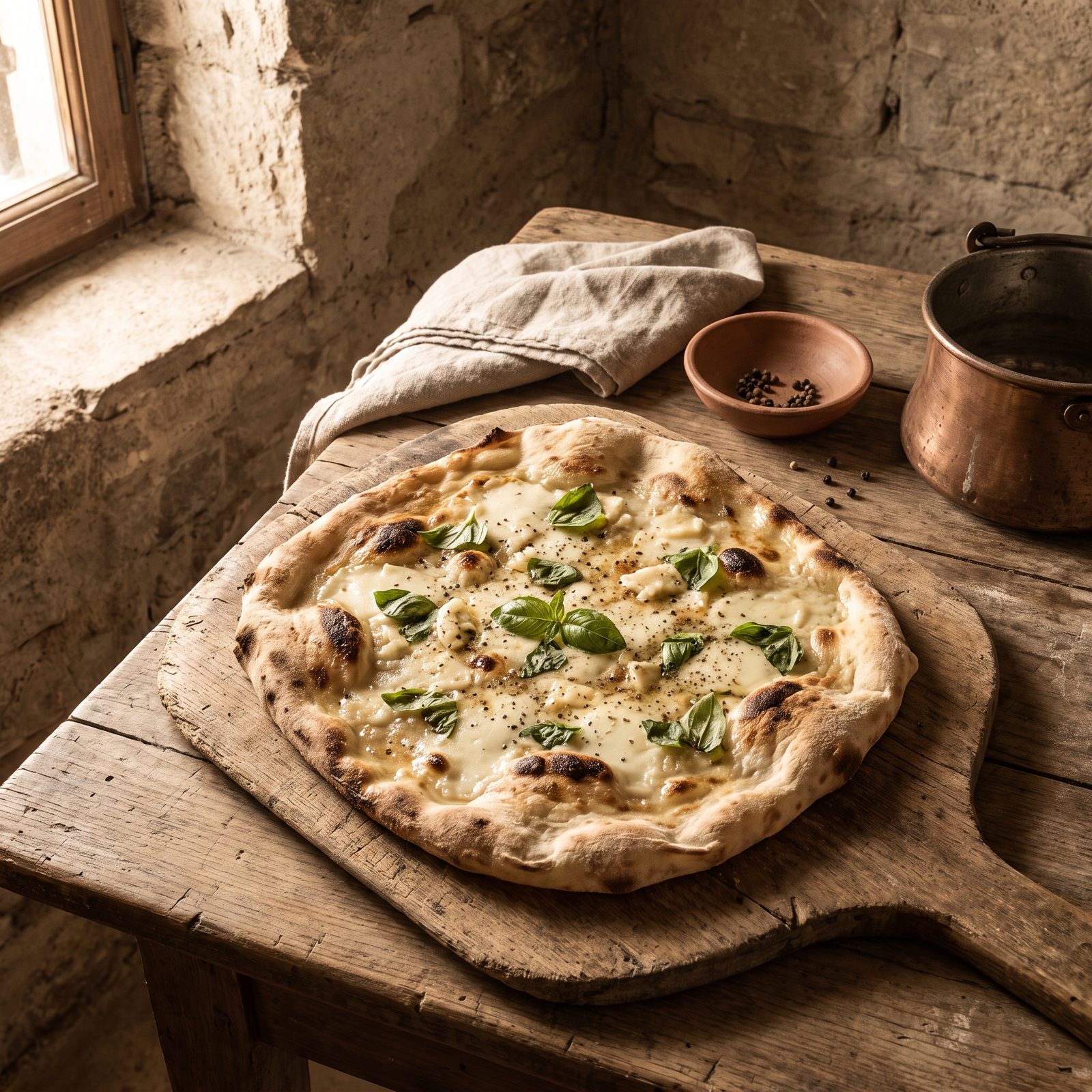
Here’s the one that reminds you tomatoes are a latecomer to pizza. Mastunicola predates the red sauce entirely. Before Naples got its hands on New World tomatoes, this was the pie: lard brushed over thin dough, pools of melted milky-white cheese, fresh basil leaves, a hit of black pepper. That’s it. No red sauce at all.
The flavor is creamy and salty, the lard giving a richness cheese alone can’t manage, and the basil cuts right through it. It tastes old, in the best sense — like eating a piece of history that still works.
A few historically minded Naples pizzerias still bake it. Order one next to a Margherita and you taste the whole evolution of pizza in two bites.
21. Pizza al Padellino: Turin’s Little Pan Pie
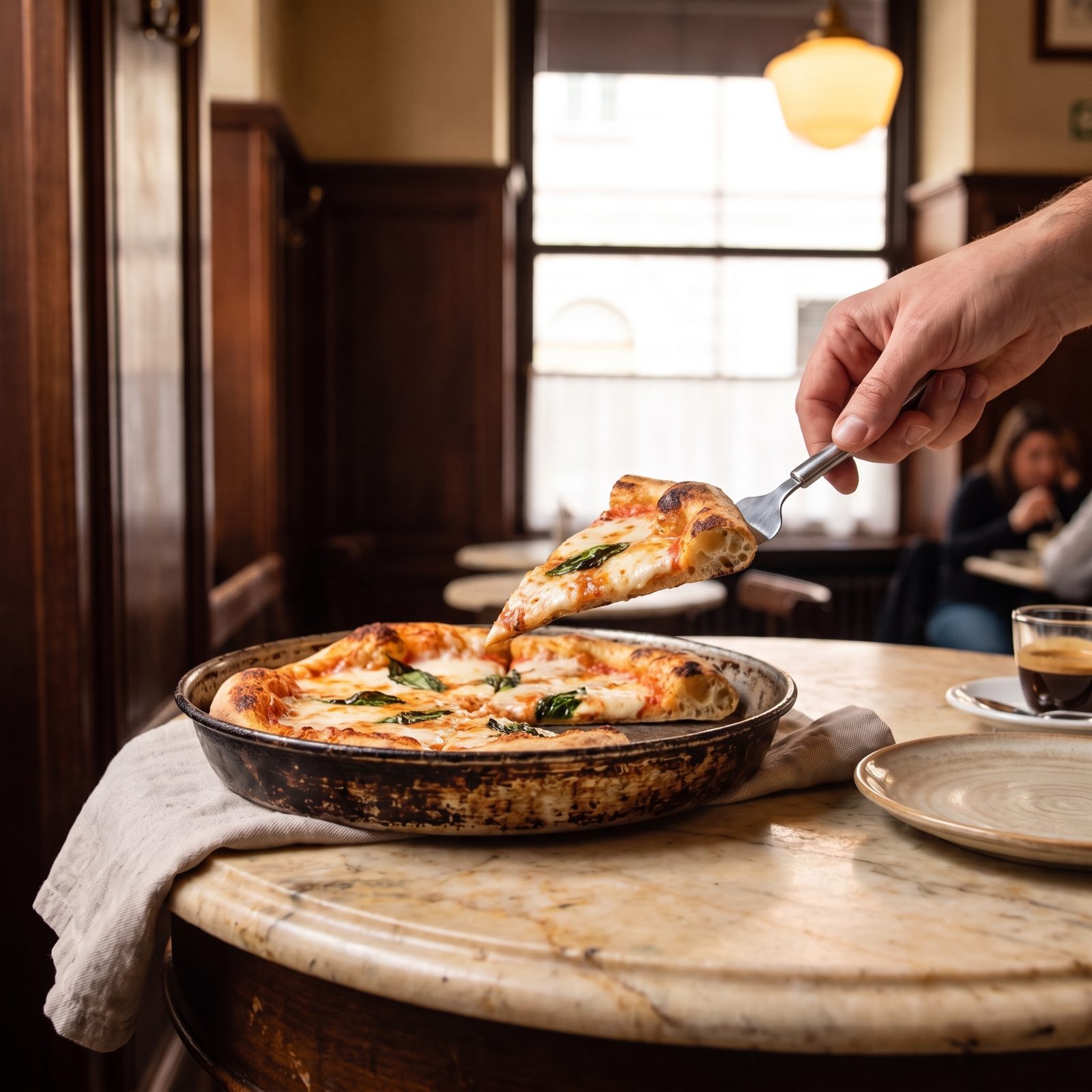
Turin does pizza quietly, in a small round pan, one per person. Pizza al padellino — “little pan” — bakes in its well-worn dark pan with a thin base and a puffy, char-spotted rim. Lift a slice and you’ll see the airy, open crumb of the rim beside melted mozzarella, tomato and basil.
It’s personal food, literally. Each one serves a single diner, baked in its own pan, topped without fuss. No sharing, no fighting over the last slice.
Come to Piedmont and you’ll find it on menus where the rest of Italy would list Neapolitan. It suits anyone who loves a thin slice with a bit of chew at the edge. And it’s light, thanks to that thin base and airy rim.
20. Pizza al Trancio Milanese: Milan’s Tall, Cheese-Laden Slice
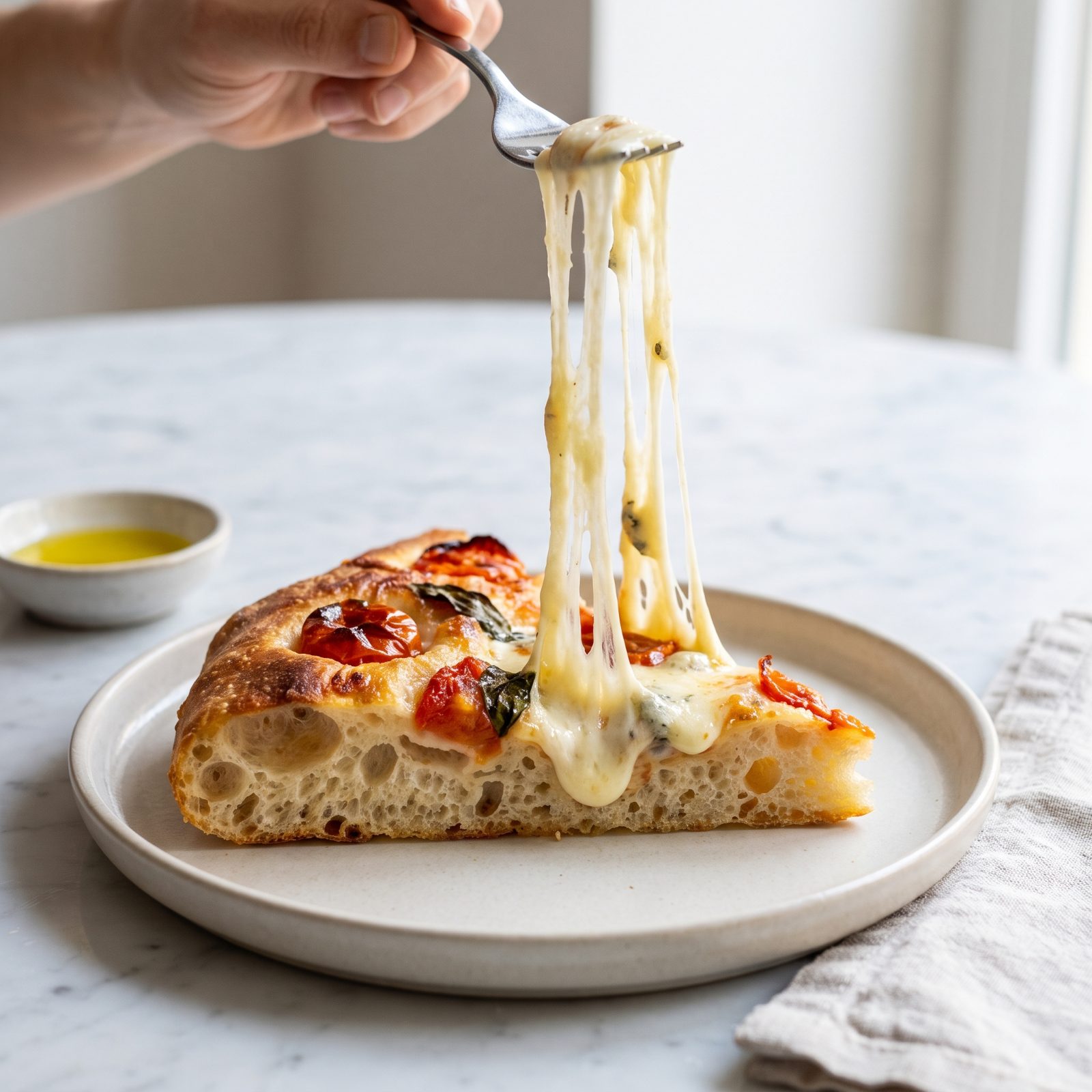
Milan keeps its pizza tall. Baked in large round pans, pizza al trancio rises into an airy, focaccia-like slab, then gets cut into thick wedges — a “trancio” — and topped with a molten blanket of white mozzarella and fresh basil leaves. Lift a piece and it stretches. This is the city’s everyday lunch-counter pizza, sold by the slice and eaten standing or folded in a napkin.
The appeal is the height and the generosity. Where Naples prizes restraint, Milan swings the other way with a thick base, a crisp golden crust, and molten mozzarella that pulls out in long strands. It fills you up fast.
19. Sardenaira di Sanremo: Liguria’s Anchovy-and-Olive Tray Bake
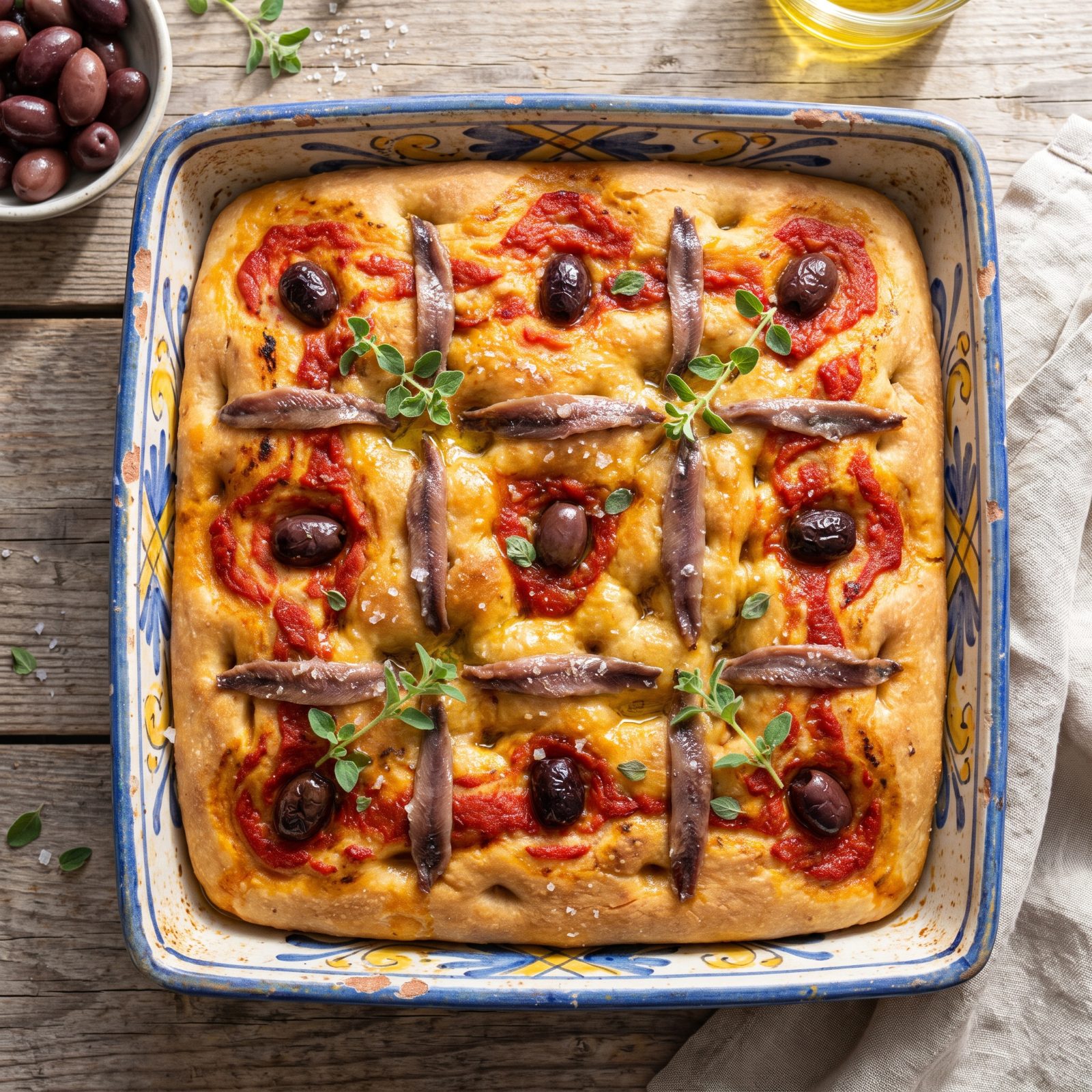
No cheese on this one, and it doesn’t miss it. Sardenaira comes from Sanremo on the Ligurian coast, a tray-baked flatbread drowned in cooked tomato and dressed with the Mediterranean’s saltiest treasures — anchovies, little black Taggiasca olives, capers, whole garlic cloves, oregano.
It’s bold and briny, the tomato going almost jammy in the oven while the anchovies dissolve into salty depth. The crust sits somewhere between pizza and focaccia, thick enough to soak up the sauce.
This is seaside snacking food, cut into squares, eaten warm or at room temperature. Its cousin across the French border, pissaladière, swaps the tomato for onions. Same coastline, same instinct: build a flatbread around whatever the sea and the olive grove happen to provide.
18. Fugazzeta Porteña: The Onion-Buried Stuffed Pie of Buenos Aires
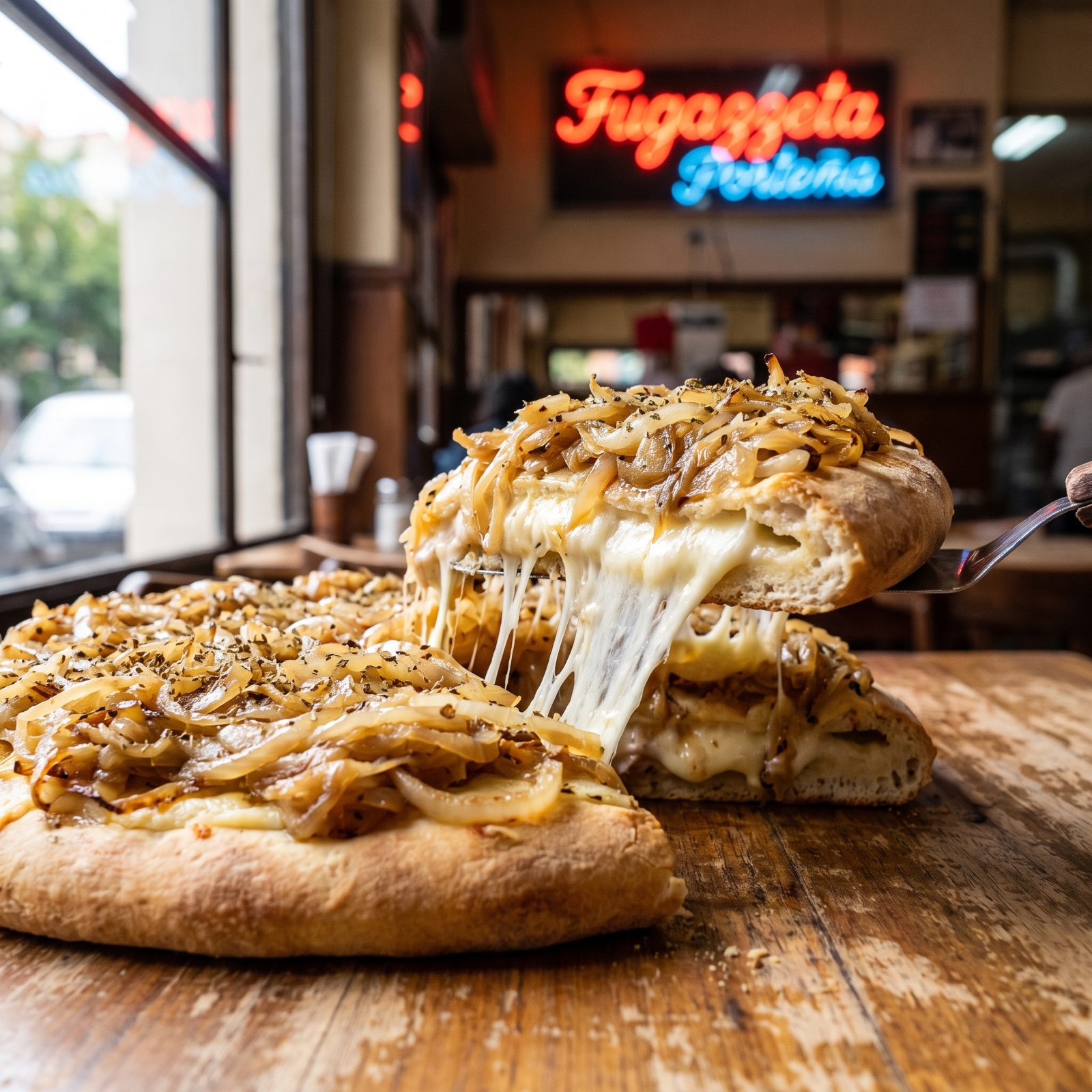
Argentina took Italian pizza and made it louder. Fugazzeta is the stuffed version of the Buenos Aires classic: two sheets of dough sandwiching a thick layer of melted mozzarella, then the whole thing buried under a mountain of softened onions and oregano. No tomato required.
What you get is a cheese pull that goes on for days and an onion sweetness that balances all that richness. Porteño pizzerias — many of them Italian-immigrant institutions running since the early 1900s — serve it in thick wedges at the counter, often standing up with a glass of moscato on the side.
In Buenos Aires, the cheese is the point, and the onions are the applause.
17. Pizza de Cancha: Argentina’s Thick-Crust Stadium Slice
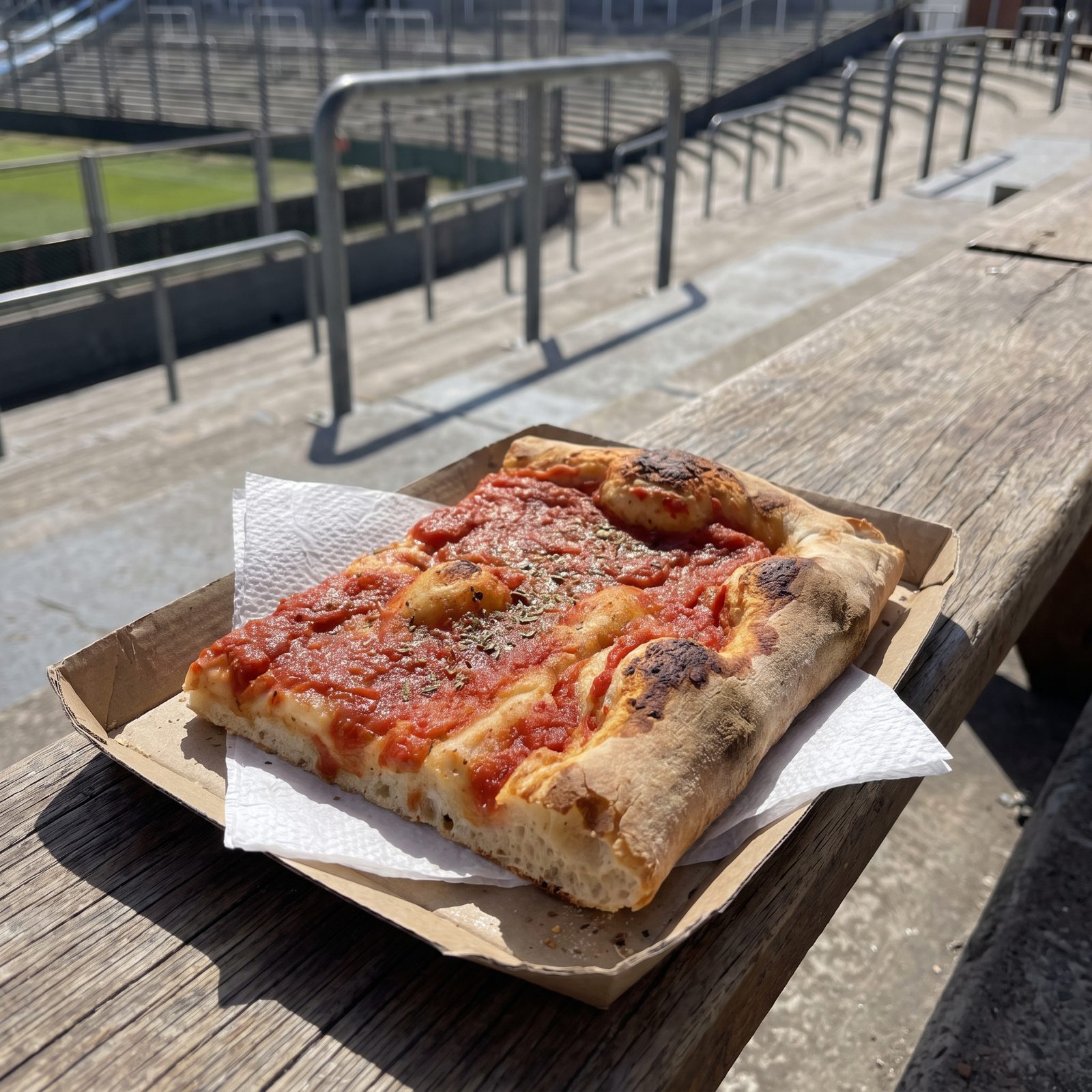
Stripped down to almost nothing, and beloved for it. Pizza de cancha — “field pizza,” as in football field — is the Argentine stadium and street staple: a thick, bready base topped with nothing but a generous layer of heavily seasoned tomato sauce and oregano. No cheese. No frills.
It’s cheap, portable, and built for crowds. You buy a wedge, you eat it folded, you get back to the match.
Often it’s sold alongside its cheesier siblings and paired with fainá, a chickpea flatbread laid right on top of the slice. Humble doesn’t begin to cover it, but that heavily herbed sauce on soft dough has kept it in business for generations.
16. Pizza a la Parrilla: Charred Straight Off the Grill
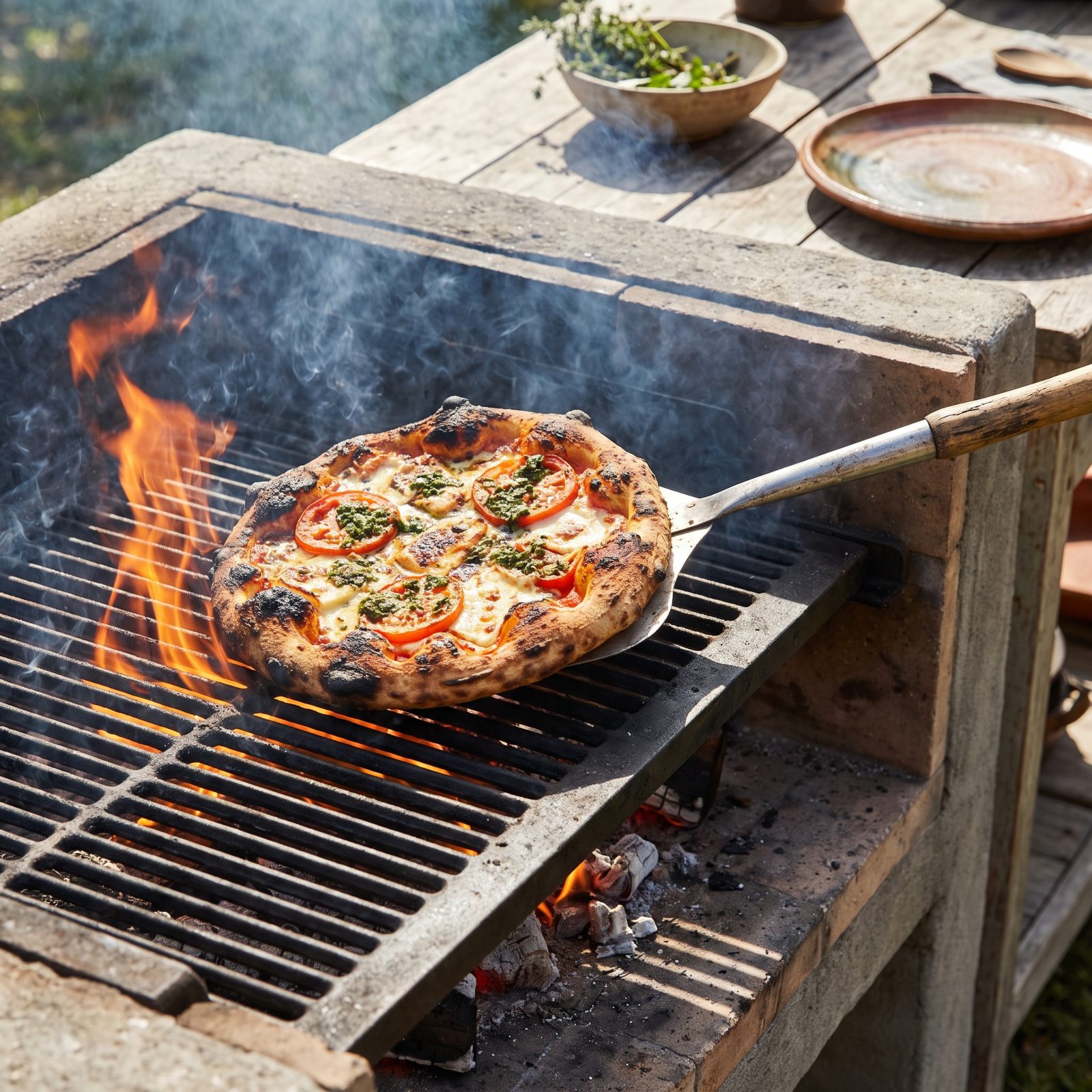
Argentina lives by the grill, so of course the pizza went on it too. Pizza a la parrilla skips the oven entirely. The dough goes straight onto the grates over coals, picking up char and smoke, crisping into something thin and blistered before the toppings even hit.
The result is crackly and lightly smoky, with dark grill lines striping the underside. It cooks fast and light — the opposite of the thick fugazzeta tradition from the same country.
It’s fashionable in Buenos Aires grill houses now, but the idea is old and simple: good fire, thin dough, a little char.
15. Brazilian Chicken and Catupiry Pizza: Frango com Catupiry
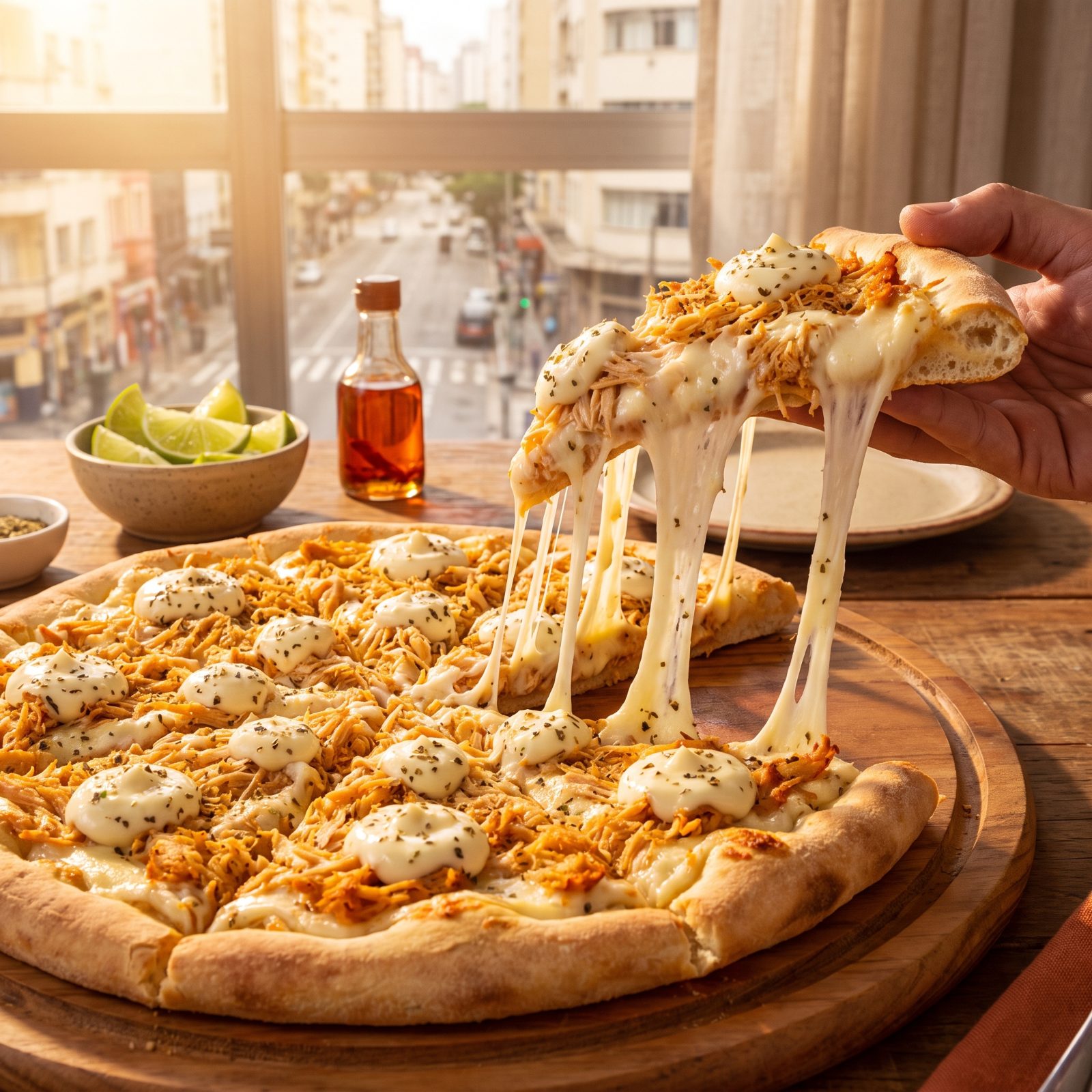
São Paulo claims one of the biggest pizza scenes on earth, and this is the slice that defines it. Frango com Catupiry pairs shredded seasoned chicken with Catupiry, a soft, tangy Brazilian cream cheese that goes molten and silky in the oven. The combination is impossibly creamy — indulgent enough to feel like a different food group.
Catupiry is the secret. It’s a requeijão-style cheese invented in Brazil over a century ago, and Brazilians put it on everything, pizza especially. Spread thick, it blankets the chicken in a richness no mozzarella can match.
Brazilian pizza runs wild with toppings that would raise eyebrows in Naples: corn, catupiry, hearts of palm, even sweet dessert pizzas with chocolate. This chicken version is the gateway, the one that converts skeptics fastest. Creamy, savory, comforting — the taste of a Sunday pizza night in São Paulo.
14. Swedish Kebabpizza: The Pie That Conquered Scandinavia
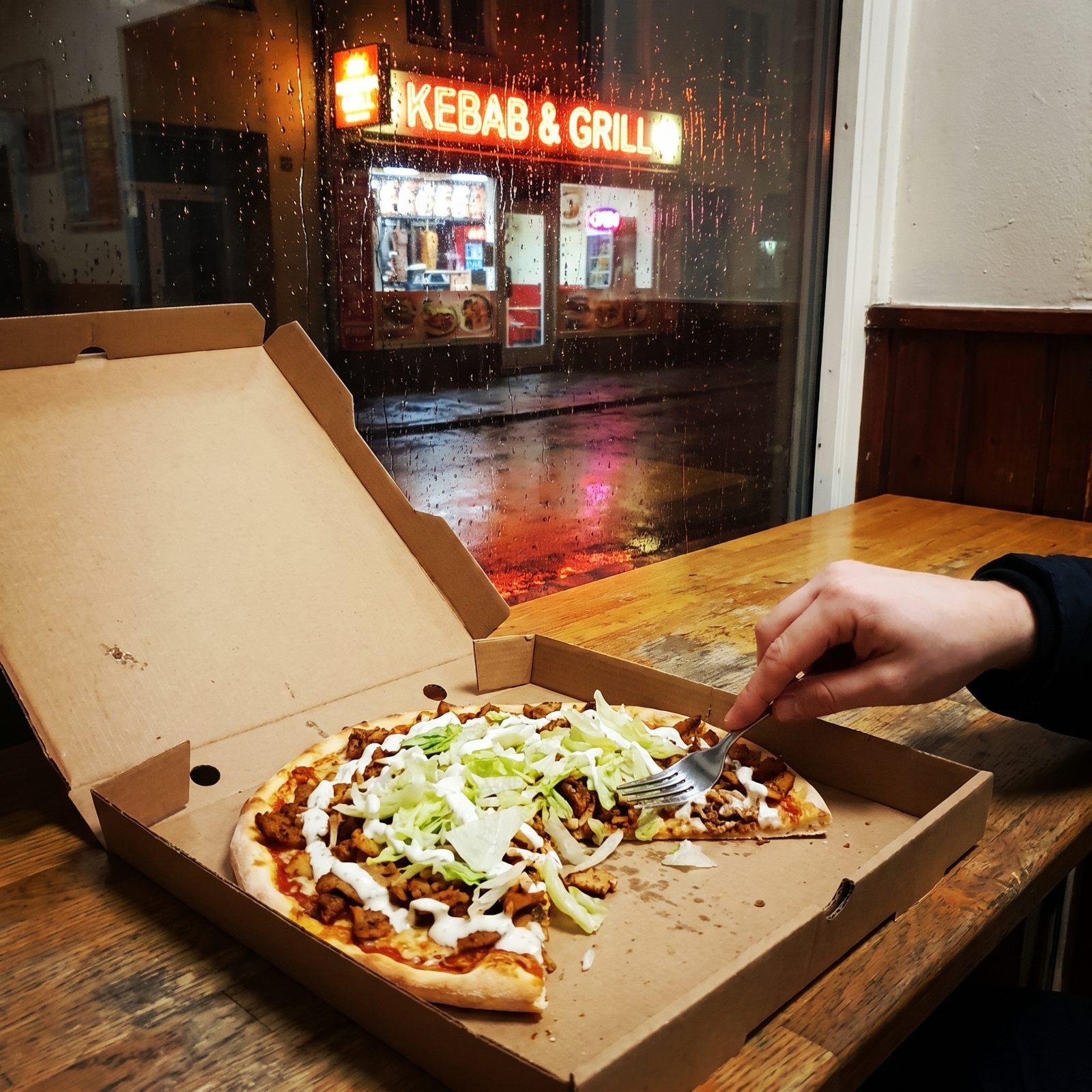
Ask any Swede what they order after midnight and there’s a solid chance the answer involves shaved kebab meat sitting on a pizza. Kebabpizza showed up in the 1980s as immigrant-run pizzerias started folding döner into the menu, and it became a national obsession almost by accident. The base is simple pizza. What makes it is the pile of brown spiced meat up top, the fistful of lettuce and onion, and the garlic-and-yogurt sauce squeezed over everything at the very end.
Honestly, it eats more like a kebab wrap that forgot to fold than a pizza. The sauce carries the whole thing. And there’s a running feud over regional tweaks, where some towns add pepperoncini or a sweeter chili sauce they call “kebabsås.”
13. Regina-Style Pizza: Saskatchewan Under a Blanket of Cheese
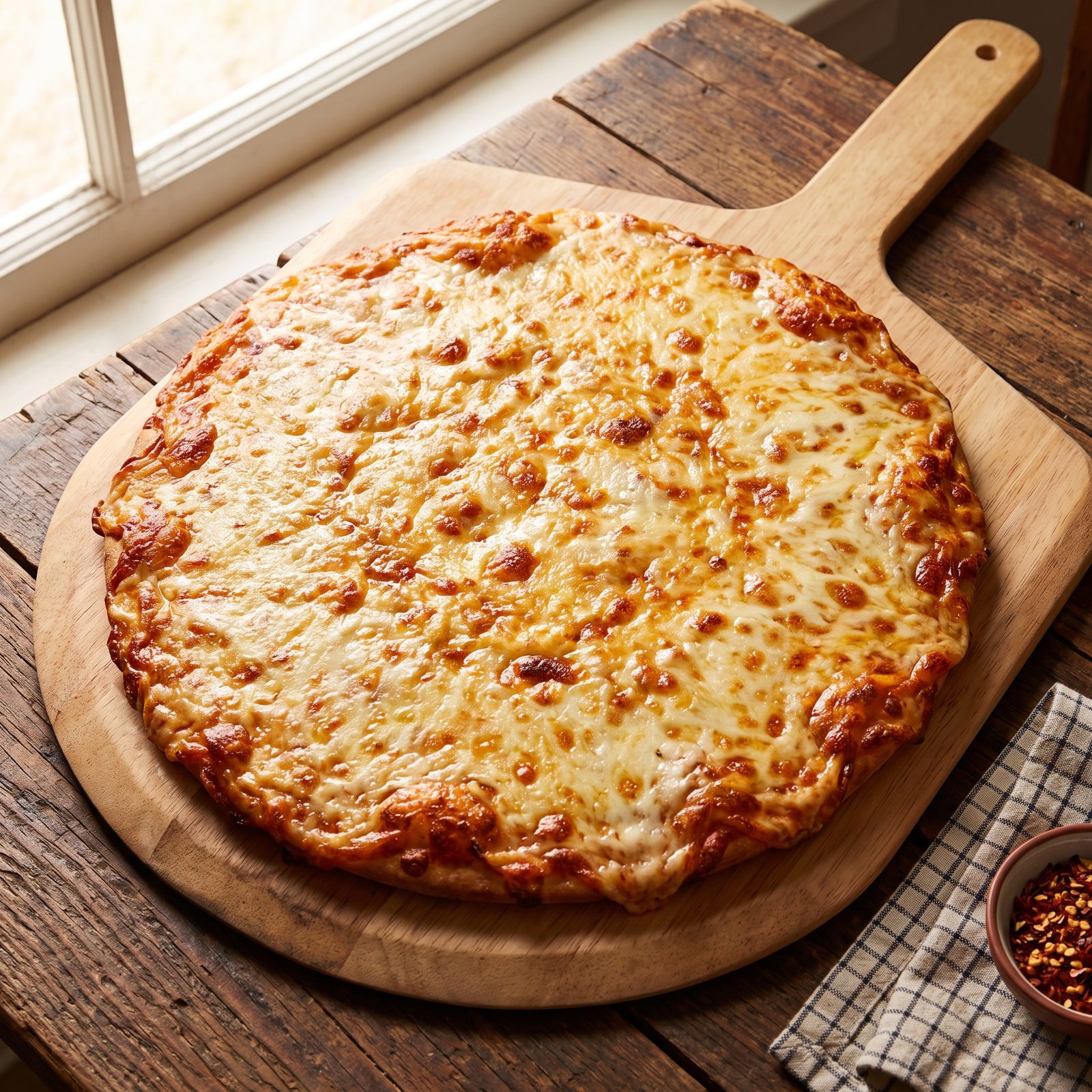
Order a loaded pizza in Regina and you may never actually see the toppings. That’s the point. Regina-style pizza, a staple across Saskatchewan and tied to local chains running since the 1960s, buries everything under a cheese layer so generous that the top looks like one solid golden sheet.
Underneath that blanket, the pie is packed. Pepperoni, sausage, mushrooms, peppers, the works, all tucked in and sealed under mozzarella. The cheese protects the toppings and keeps the whole thing steaming hot and heavy. This is prairie comfort food, built for cold nights and big appetites, cut into squares as often as wedges. It was never trying to be delicate.
12. Halifax Donair Pizza: The Sweet-Sauce Oddity of the Maritimes
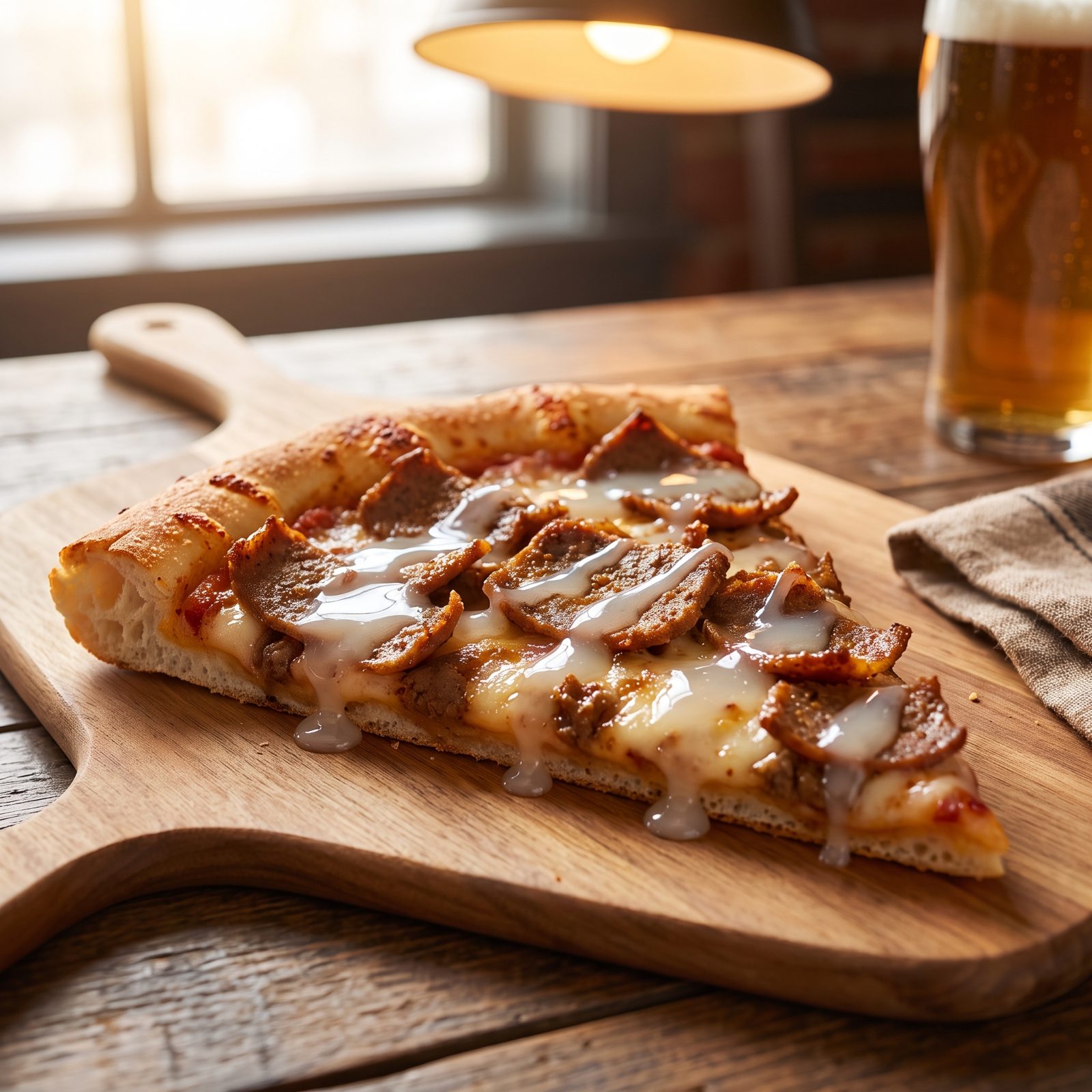
The donair is Halifax’s official food, and putting it on a pizza was inevitable. For the uninitiated: a Halifax donair is spiced beef shaved off a spit, served with raw onion and tomato and a sweet garlicky sauce made with condensed milk. Yes, sweet. On a pizza, that sauce is the thing that stops first-timers cold.
Thin seasoned beef, sharp raw onion, and then that sweet sauce squeezed over the whole business. Salty, sweet, and a little weird in the best way. Nova Scotians will defend it to the death.
11. Rhode Island Pizza Strips: The Cheeseless Bakery Classic
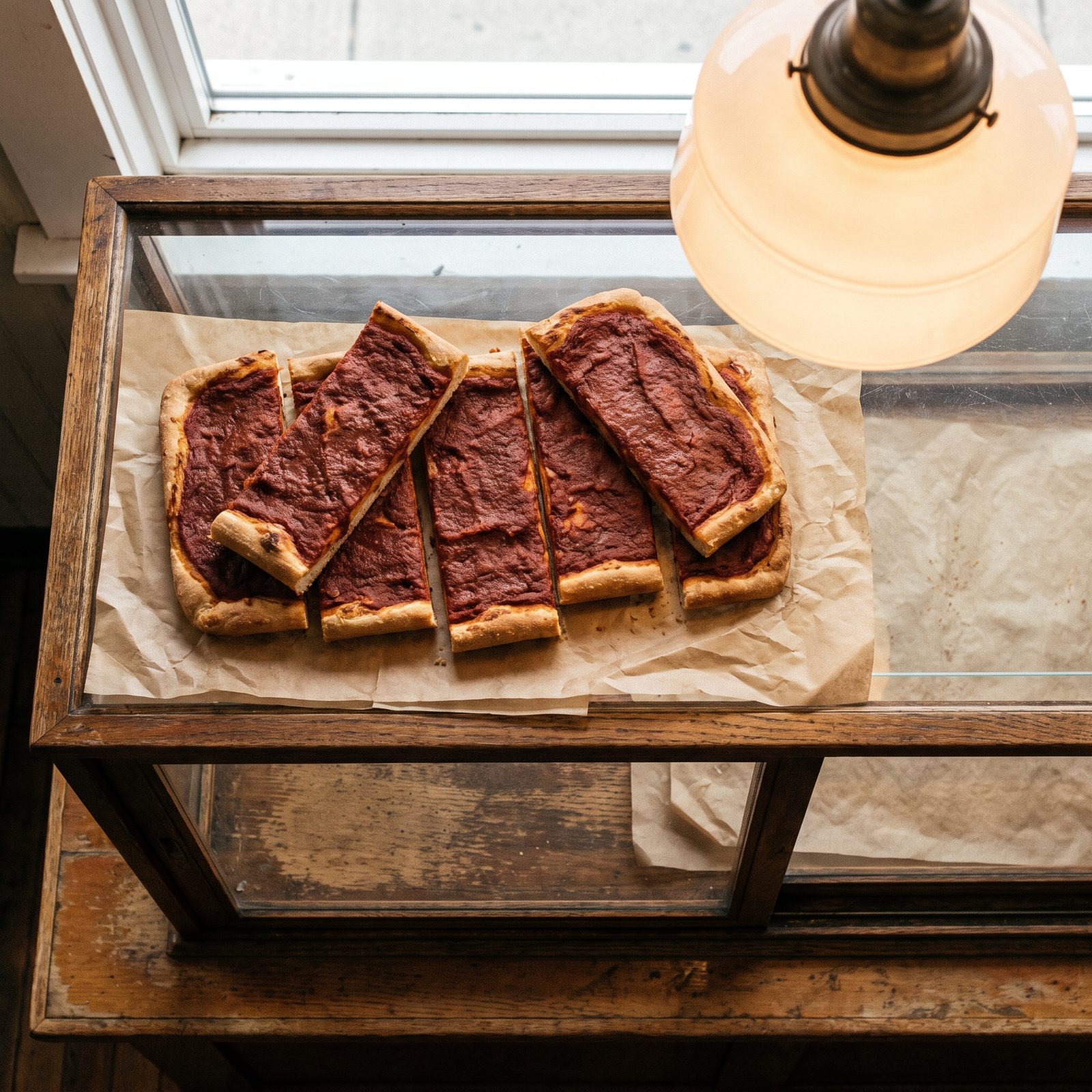
No cheese. None. Rhode Island pizza strips, also called party pizza or bakery pizza, break the one rule most people think pizza can’t live without. These come from Italian-American bakeries, not pizzerias, and they’re sold cold or at room temperature, cut into long chewy strips.
The dough is thick, soft, and a little bready, closer to focaccia than to a thin crust. On top sits a thick band of sauce, faintly sweet, seasoned with oregano, and that’s the whole show. The sauce has time to soak in and set. You’ll find a tray of these at every Rhode Island cookout, graduation party, and wake, bought by the dozen strips from a bakery that’s been slinging them for generations.
They taste like somebody’s grandmother’s kitchen. And honestly, the missing cheese grows on you fast.
10. New England Beach Pizza: Sweet Sauce and a Lonely Provolone Slice
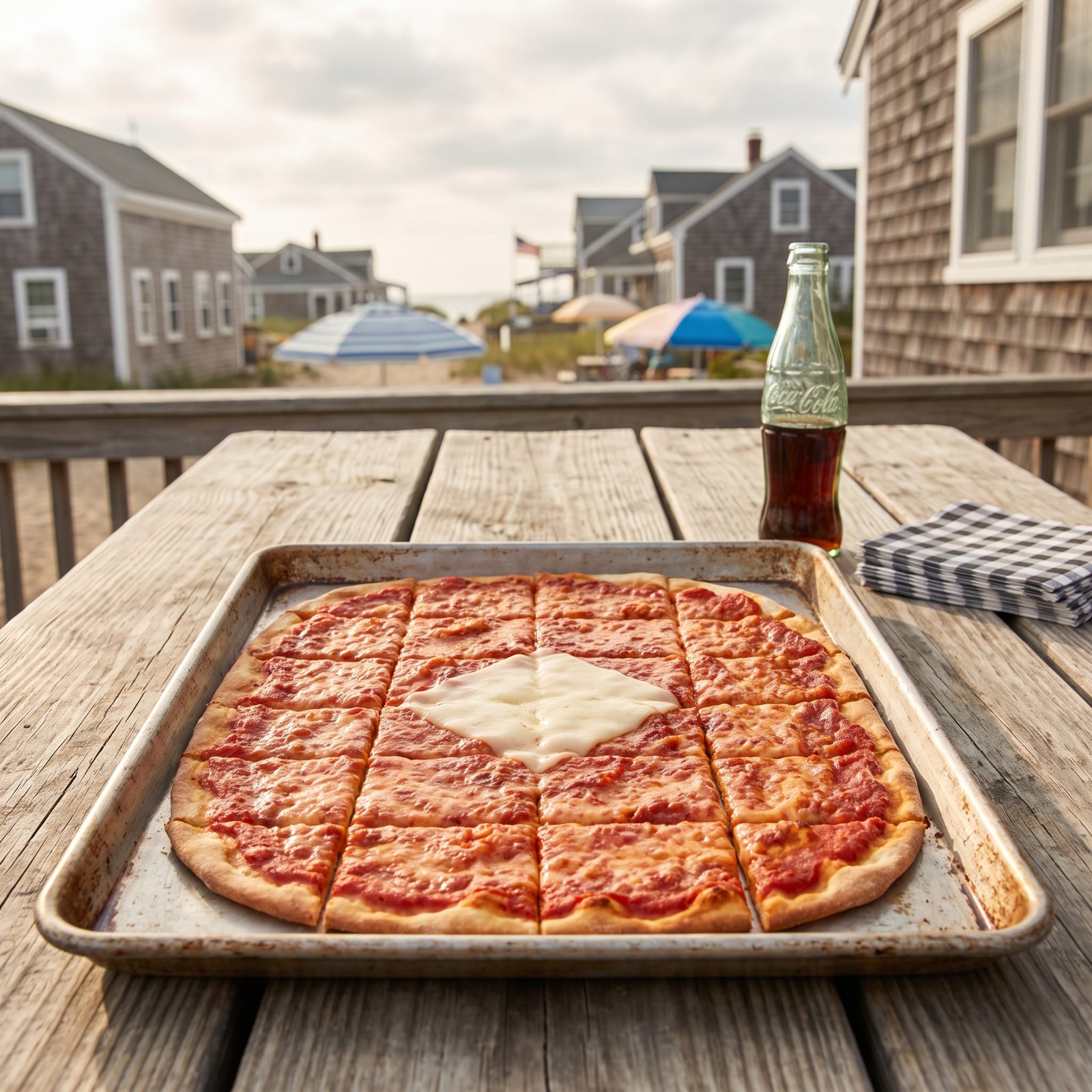
If you grew up summering on the New Hampshire or northern Massachusetts coast, beach pizza needs no introduction. Thin, flat, oval with rounded ends, cut into squares, defined by a sweet tomato sauce and a cheese layer so sparse it’s almost a suggestion. The famous version comes from a seaside arcade strip where people have been eating it on the sand since the 1960s.
The move is to order it “with cheese,” which means a single slice of provolone laid diamond-wise across the center so it melts over four squares. One slice. That’s the upgrade. It sounds strange written down and makes perfect sense the second you’re eating it with salt air in your hair.
9. Utica Tomato Pie: The Room-Temperature Upstate Staple
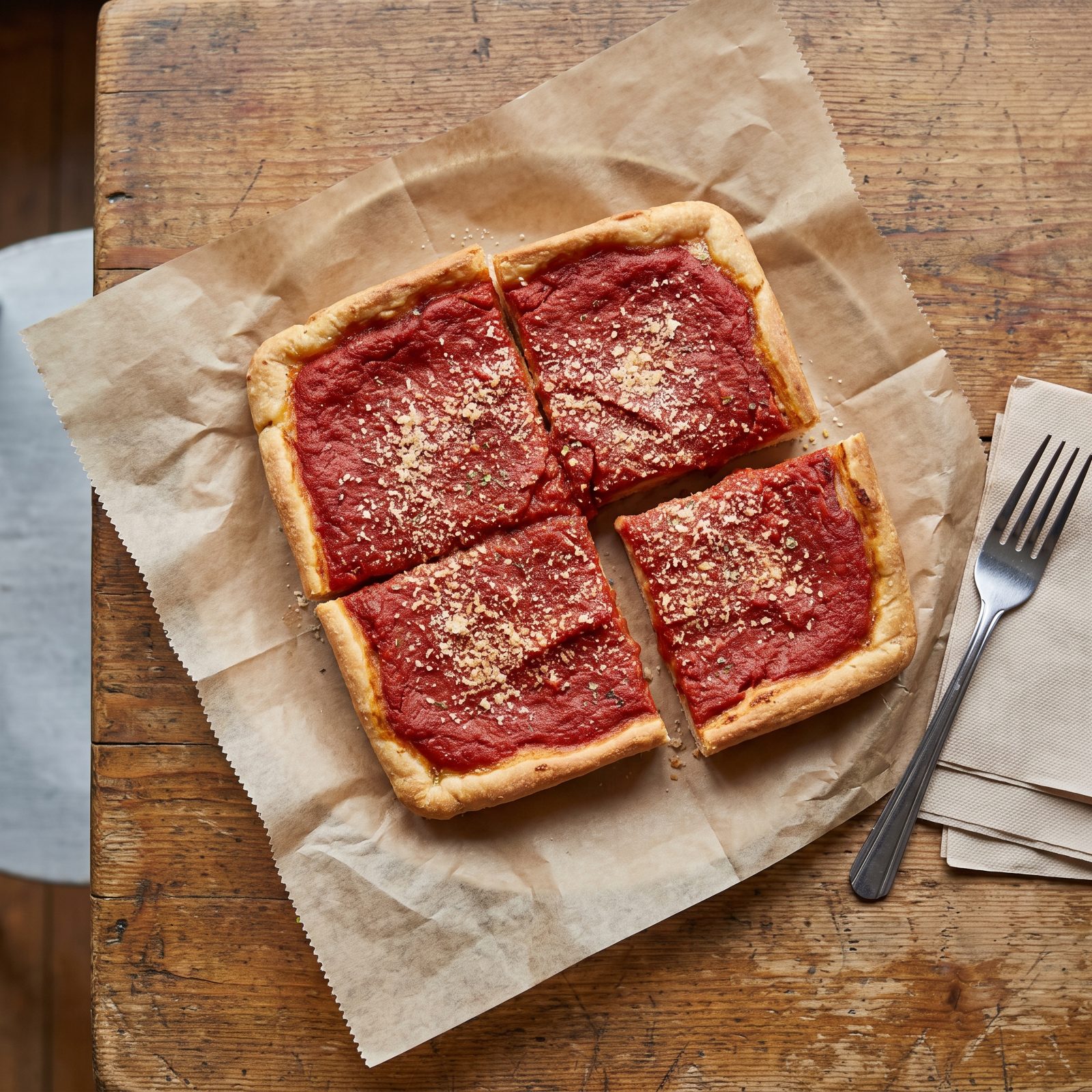
Confusingly, the Utica tomato pie has almost nothing in common with the Philadelphia or Trenton tomato pies, and upstate New Yorkers will correct you on this. Here it’s a thick-crusted sheet affair, baked, then topped with a chunky room-temperature tomato sauce and finished with a shower of grated Romano. No melted mozzarella. It gets served cool or at room temp and sold by the square from Italian bakeries around Utica and Rome.
Spongy, substantial crust, nearer to focaccia than a pizza shell. The sauce sits on top rather than melting in. It’s the kind of thing that shows up at a christening, a funeral, and a Sunday backyard all in the same week, stacked in white bakery boxes. Simple, cheap, and oddly addictive.
8. Old Forge Pizza: The Self-Proclaimed Pizza Capital’s Trays and Cuts
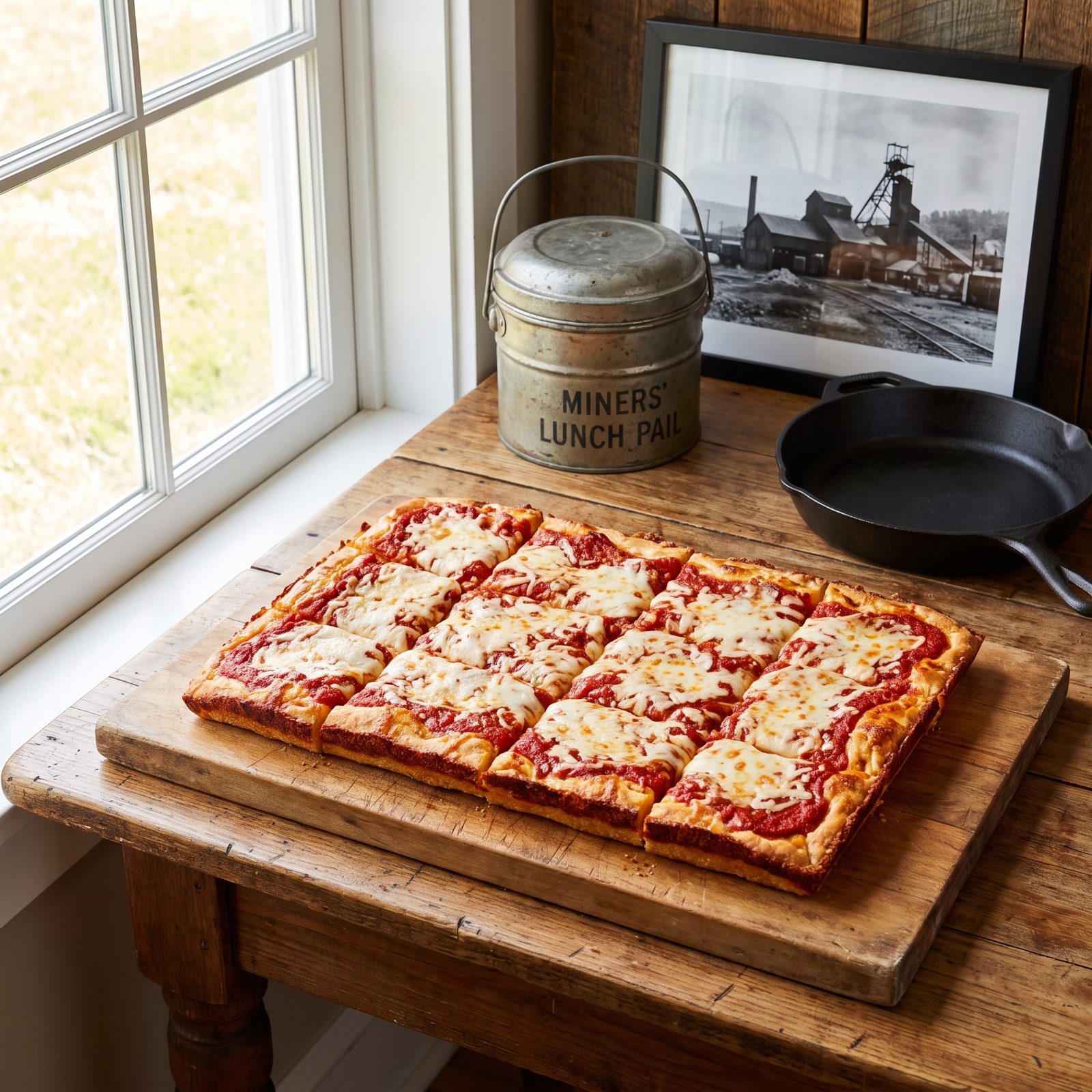
Old Forge, Pennsylvania calls itself the Pizza Capital of the World, and in that little coal-country town they don’t even call it pizza. They call it a tray, and the pieces are cuts. You order a whole tray or a half tray and it comes rectangular, with a tender crust somewhere between a thick and a Sicilian, and a cheese blend that leans on a pale, American-style white cheese alongside mozzarella.
There’s a double-crust version too, stuffed like a pie and often loaded with onions or broccoli, that locals swear by. Milder and creamier than your typical pizzeria pie. Around Scranton, a tray from the corner spot is its own food group.
In Old Forge, you don’t say slice. You say cut. Get it wrong and everyone in the booth knows you’re from away.
7. Briar Hill Pizza: Youngstown’s Red Pie With Peppers and Romano
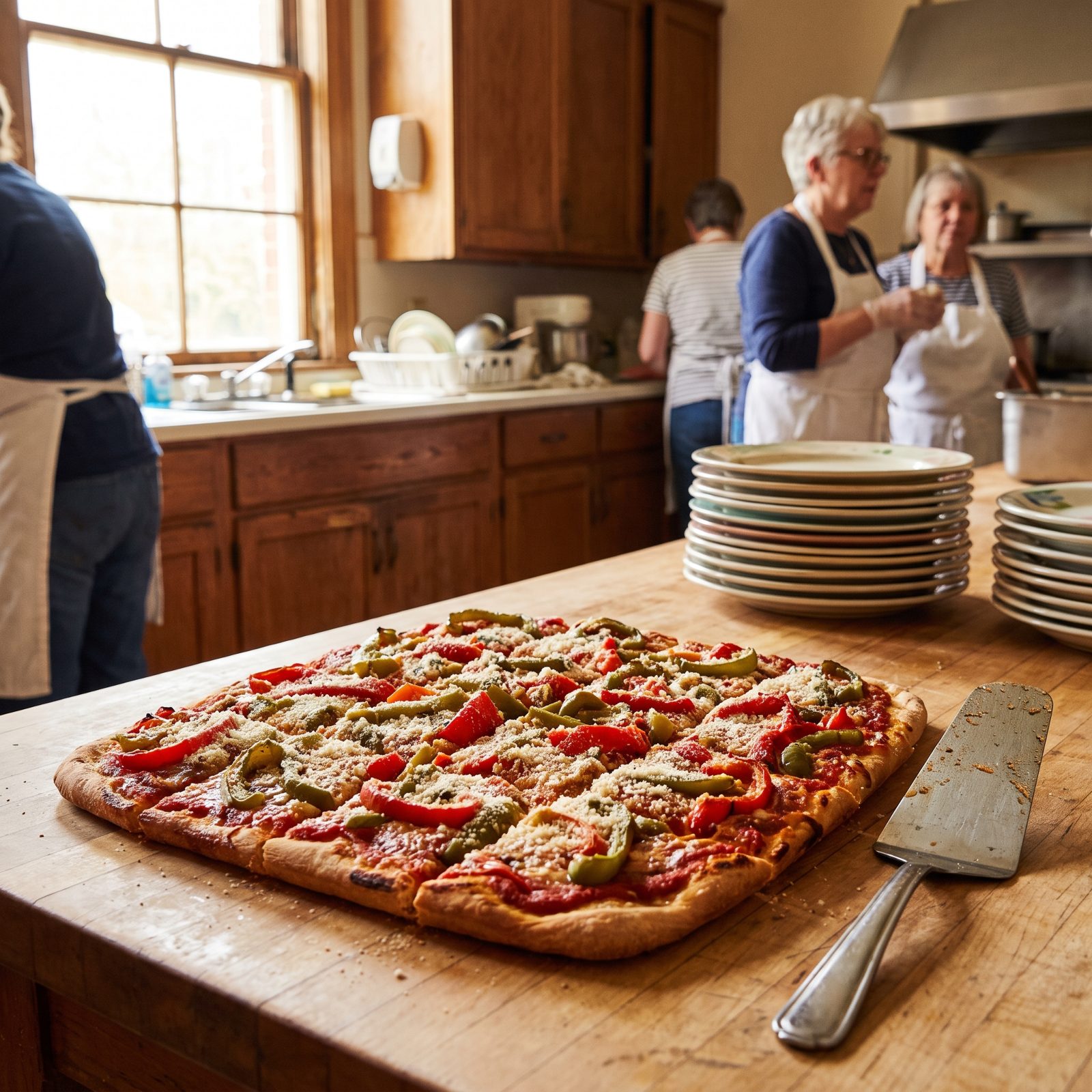
Youngstown, Ohio gave the world a red pizza born in a neighborhood church kitchen. Briar Hill pizza comes out looking almost all sauce, a thick layer of bright red tomato scattered with bell peppers and dusted with grated Romano instead of a mozzarella blanket. The result reads red, not golden.
The peppers soften into the sauce while the sharp Romano cuts through the sweetness. It traces back to the St. Anthony’s church festival and an Italian immigrant community that made this pie for fundraisers and feast days. A handful of Youngstown shops still make the real version, and locals can taste the difference between a Briar Hill and a generic peppers-and-cheese pie immediately.
6. Quad Cities-Style Pizza: Malty Crust and Sausage Cut Into Strips
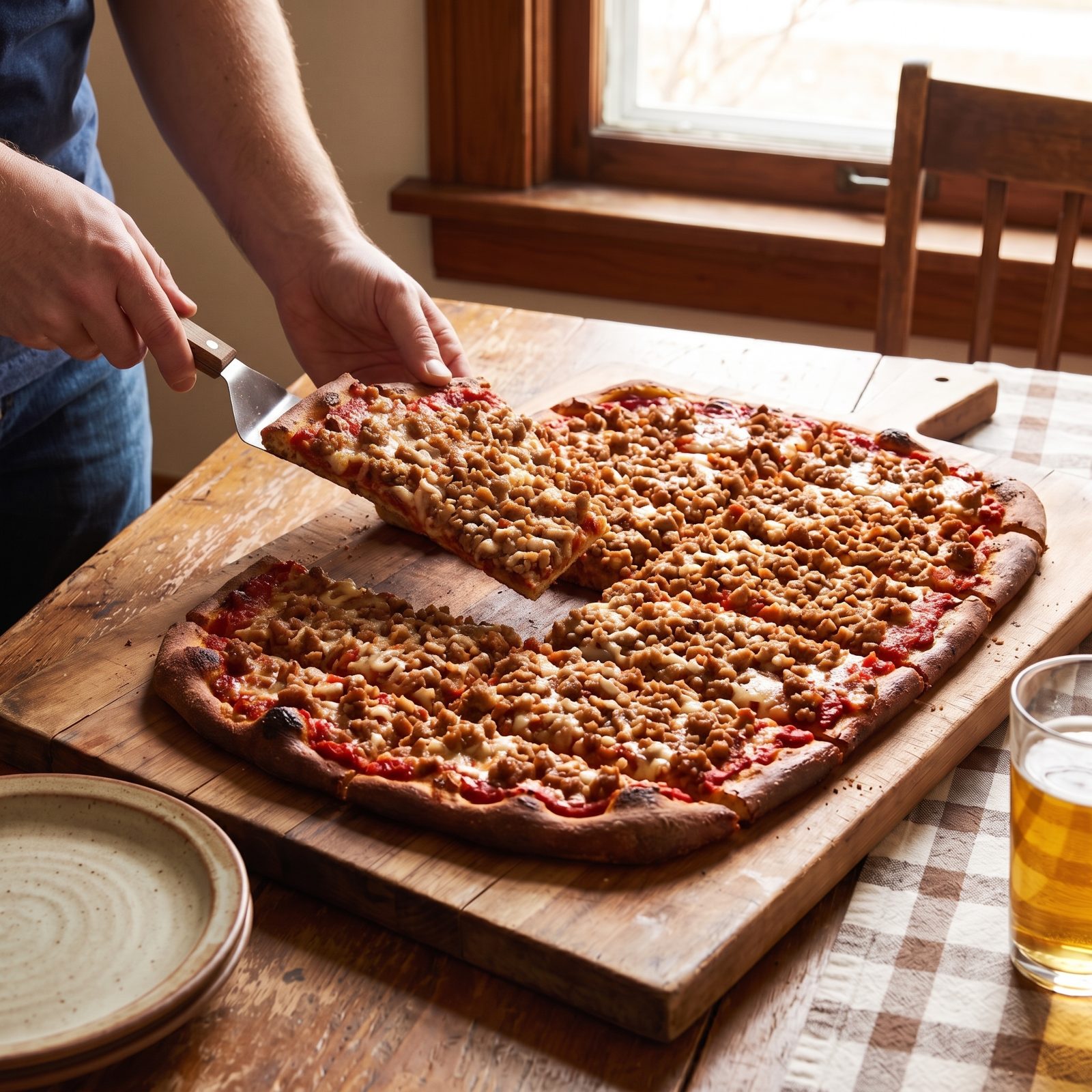
Two things set Quad Cities pizza apart from anything else in the Midwest, and the first is the crust. It’s made with malt, which gives it a nutty, almost toasty sweetness and a deeper color than standard dough. The second is the cut: instead of wedges, the pizza gets sliced into long strips running across the whole pizza with a shears-style cutter.
The sauce runs spicy, often shot through with chili and crushed red pepper, and the sausage is ground fine and spread edge to edge so every piece gets a bite. A crisp, lightly charred border frames the whole pie, straight from the Iowa-Illinois river towns. It rewards people who like a little heat and a crust with actual flavor.
5. Colorado Mountain Pie: The Honey-Finished Heavyweight
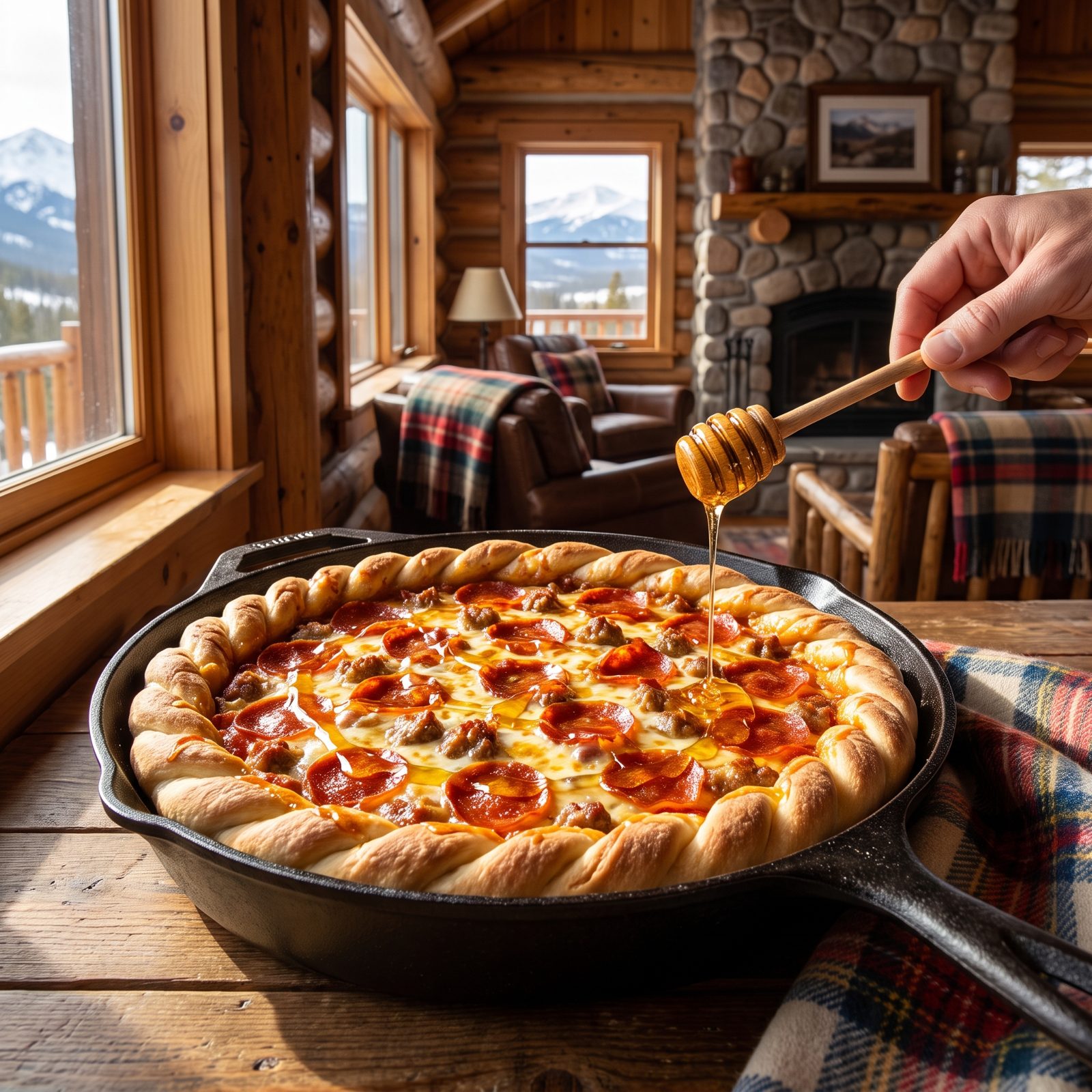
Colorado mountain pie is a big, dramatic thing. The signature is the crust: a thick, hand-braided rope of dough running around the whole rim, tall enough to hold a heavy pile of toppings without spilling. A mountain-town invention, built hearty for people coming off the slopes or the trail, and it does not pretend to be dainty.
Then comes the part that throws first-timers. Honey. It arrives with a squeeze bottle or a little pot, and you drizzle it over the thick braided crust, usually once the toppings are gone. Sweet honey on a savory pizza crust sounds off and tastes right. Beau Jo’s in Idaho Springs made the style famous starting in the 1970s, and the honey-drizzle ritual spread across the state from there. You eat it slowly, in a lodge, usually after a long cold day.
4. South Shore Bar Pizza (Massachusetts)
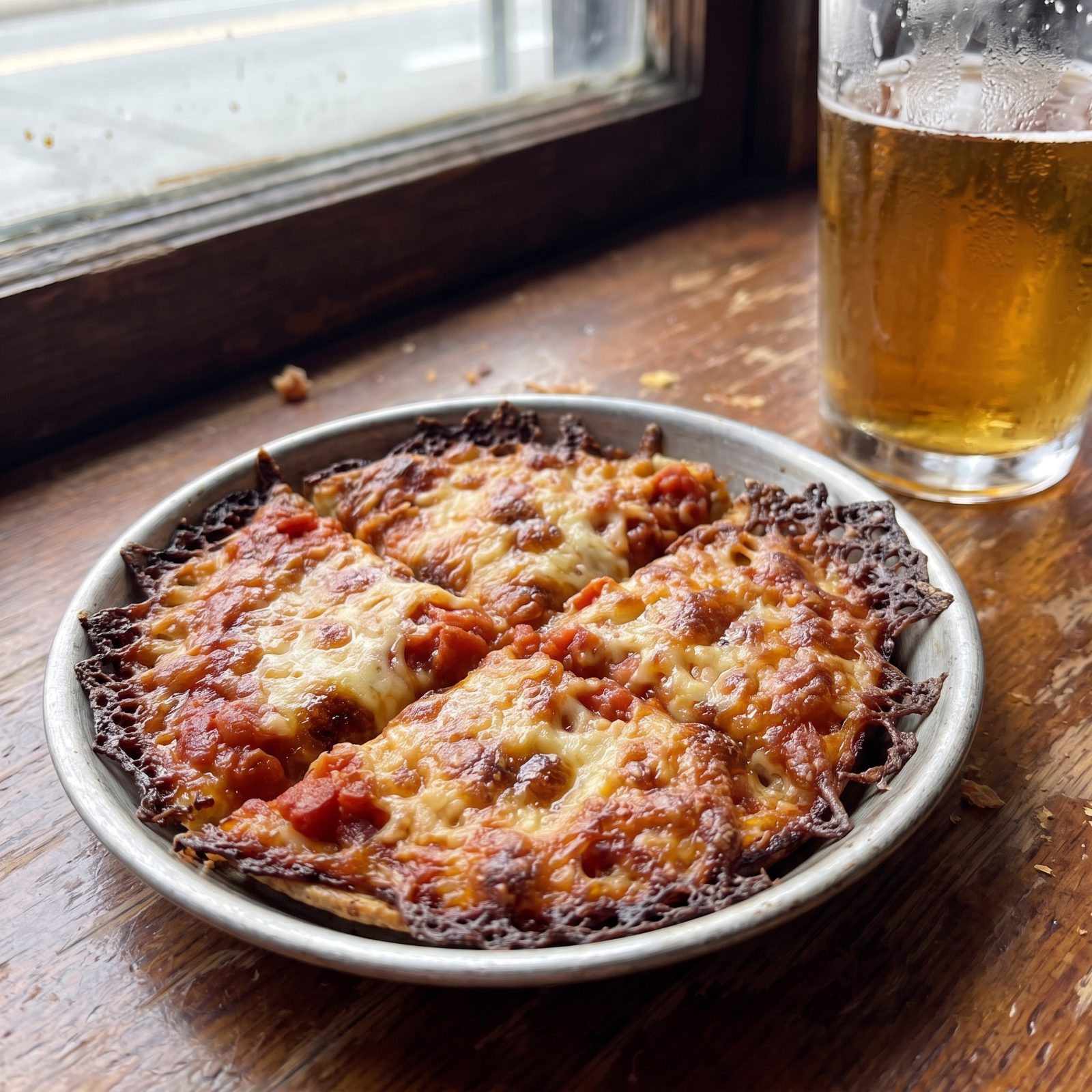
The crown of burnt cheese is the whole point. South Shore Bar Pizza runs cheese right up to the lip of a shallow, well-worn steel pan, so when it bakes, the edge scorches into a lacy, almost brittle ring the locals call the “laced” or “burnt” edge — and that dark frill tastes like the best part of a grilled cheese, concentrated down to its essence.
It’s thin. A small, shallow pan like this is meant for one hungry person. This one bakes up low and flat, the cheese settling just below the rim, while the sauce leans sweet enough that your first bite surprises you. You find it in dive bars and family taverns south of Boston, places that have been making it the same way since the 1950s. Order linguica if you want the regulars to nod at you.
3. Montanara (Fried Neapolitan Pizza)
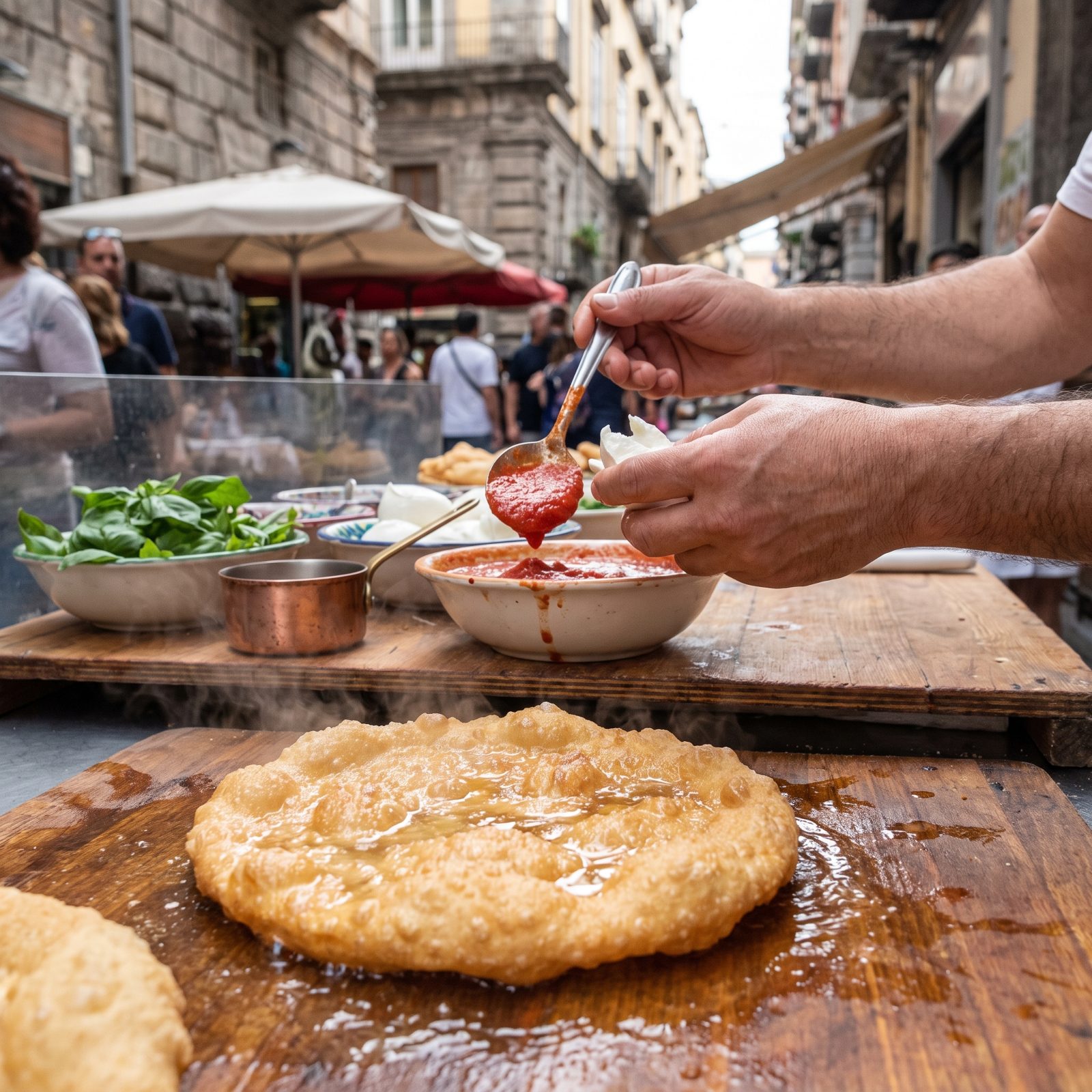
Fry the dough first, then dress it. That single reversal separates montanara from every baked Neapolitan pie you know. The disc drops into hot oil until it puffs and blisters and picks up a shattering golden crust, then gets a quick finish under heat with tomato, fior di latte, basil and oil.
Lighter than it sounds, honestly. The frying sets the structure so fast that the crumb stays airy — picture a savory doughnut that decided to grow up and become dinner. The underside carries a faint toasted-oil flavor baked crust can’t fake. Street vendors in Naples sold these for generations before anybody slapped the word “artisan” on them.
The frying isn’t a gimmick. It’s the oldest trick in Neapolitan street food, back when ovens were a luxury and a pot of oil was not.
Order it as an appetizer or a shareable first act. It gets heavy fast, so one between two people beats one each.
2. Pizza a Ruota di Carro (Cartwheel Pizza)
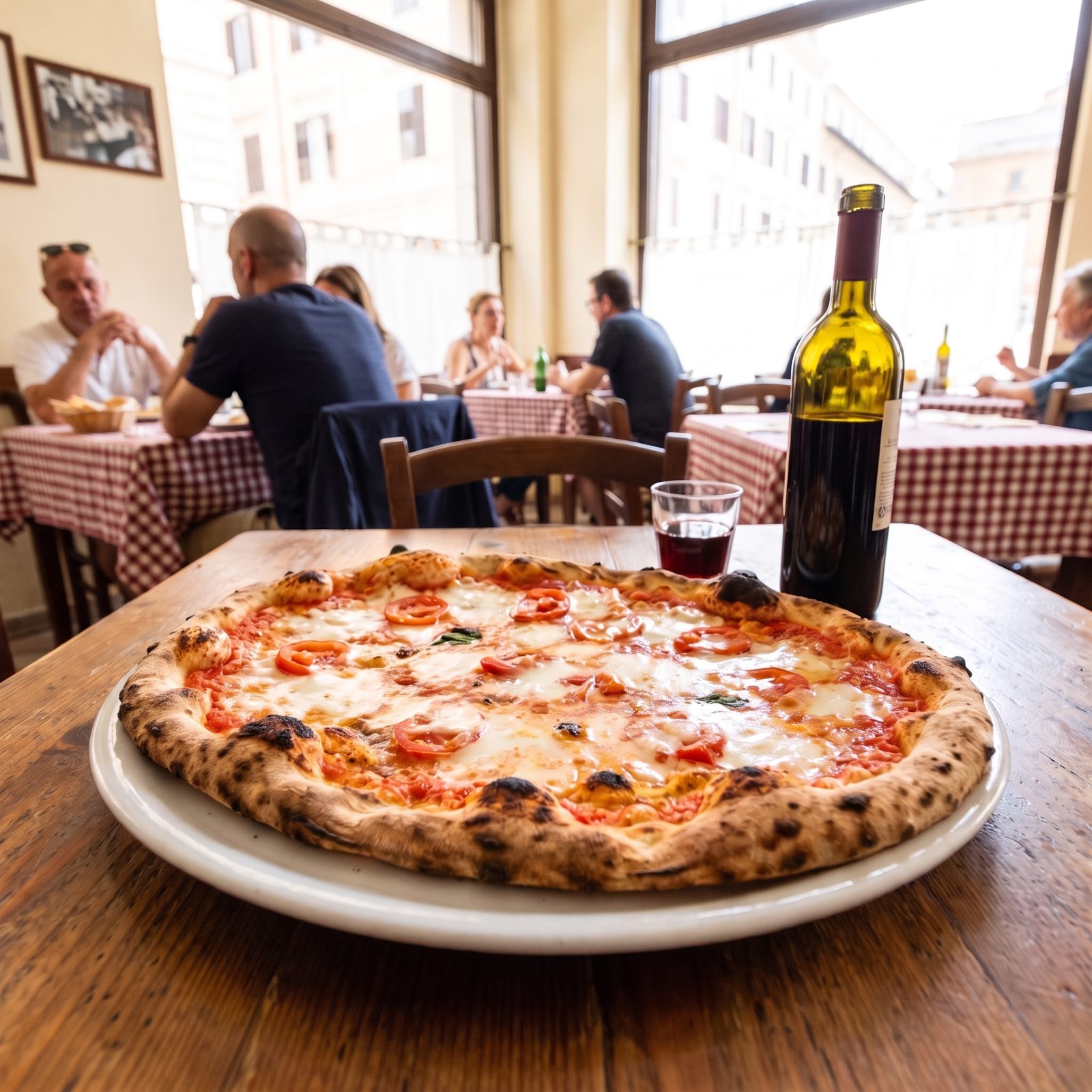
Named for a wagon wheel, and nobody’s exaggerating. Pizza a ruota di carro gets stretched so wide and so thin that it fills the plate it arrives on almost to the rim. This is the everyday Neapolitan pie, the one working families ate, ringed by a raised, blistered cornicione.
The centre is thin — a stage for a layer of tomato and scattered cheese — framed by a raised, airy cornicione. It bakes fast and hot, catches leopard-spot char, and holds its shape, flat and sturdy enough to slice and eat by hand. Enormous and delicate at the same time, which shouldn’t work but does.
1. New Haven White Clam Apizza (Connecticut)
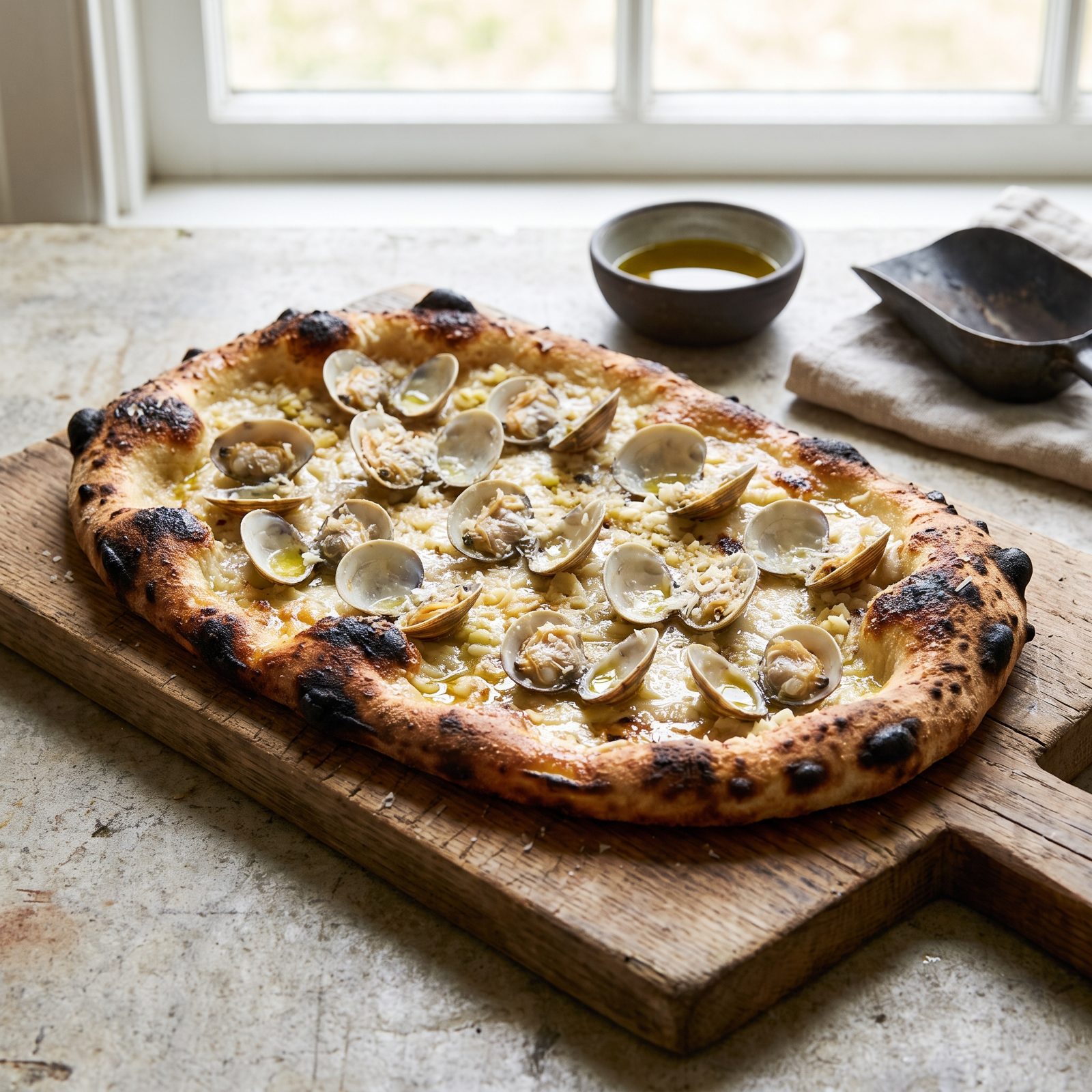
No tomato. No mozzarella blanket. Just clams, garlic, oregano, pecorino and a slick of good olive oil over a coal-blackened crust. The New Haven white clam apizza breaks every rule a Pizza Hut kid grew up with, and it stands as one of the great American pizzas anyway.
The crust defines it as much as the topping does. Coal-fired ovens run blistering hot, so the edge comes out puffy, charred, and pillowy, with blackened bubbles that taste more like smoke than burn. Against that backdrop the briny clams and raw garlic hit hard, pecorino adds salt, oregano throws in a dusty green note, and the oil pulls it all into one thing.
Purists want fresh littlenecks shucked to order and scattered over the pie. Never canned — don’t even bring it up. If a pie comes out looking a little scorched and a little sparse, resist assuming the kitchen botched it. That’s the tradition, cooked exactly right.