
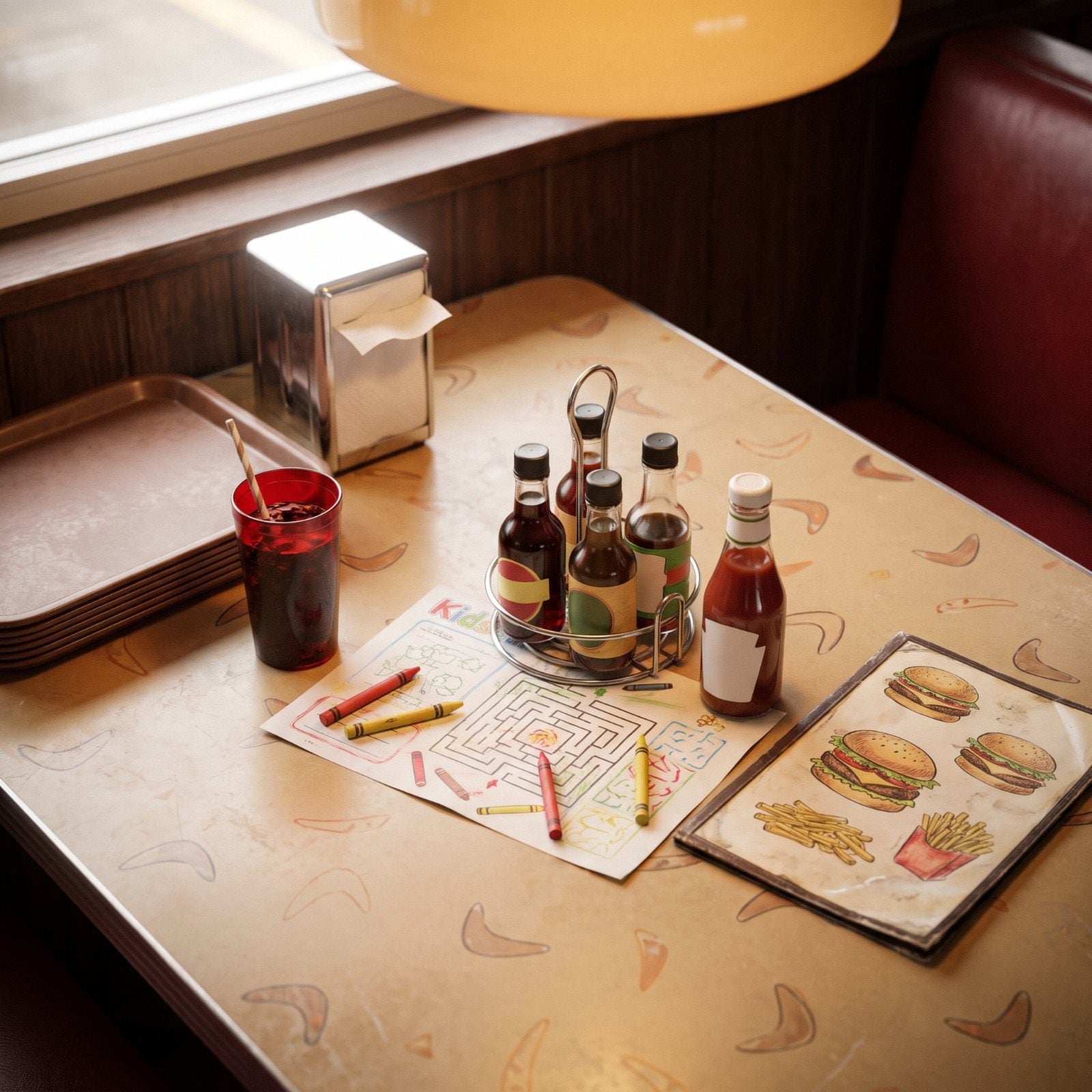
The vinyl booth stuck to the backs of your legs in summer. The paper placemat had a word search and a maze that dead-ended on purpose, somewhere a milkshake machine groaned, a kid cried near the bathroom, and the whole place smelled like griddle grease and fresh coffee at the same time.
Please note that some of the images in this article were created with the assistance of AI.
That was dinner out in 1980. Not an event — a ritual. These were the chains that fed American families on report-card nights and after-church Sundays, and some of them are gone now in ways that still sting.
42. Pizza Hut, Red Roofs, Pan Pizza, and Stained-Glass Lamps
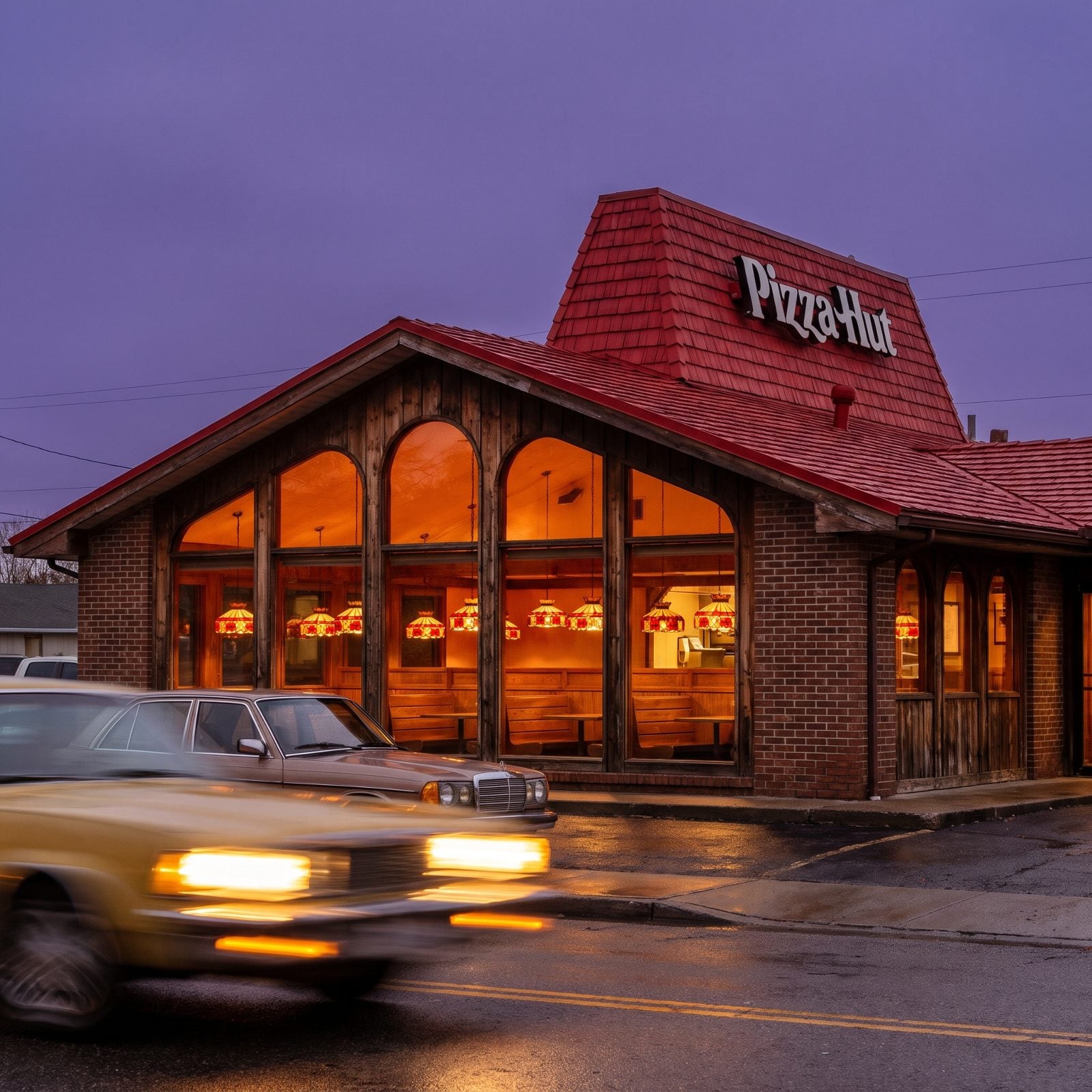
You knew the night was good when the car turned toward the building with the red roof glowing against the dusk. Inside, the lamp over your booth threw red and amber light across the table, and you slid onto vinyl that squeaked.
The pan pizza came out blistering, with that fried-crust ring around the edge where the oil caught the dough. Everyone burned the roof of their mouth and nobody cared. The red pebbled glass sweated in your hand.
Pizza Hut survived. But the dine-in red-roof buildings got sold off, converted into taquerias and churches and payday-loan offices. The brand made it. The room you remember didn’t.
41. McDonald’s, Golden Arches, Hamburglar Trays, and Birthday Parties
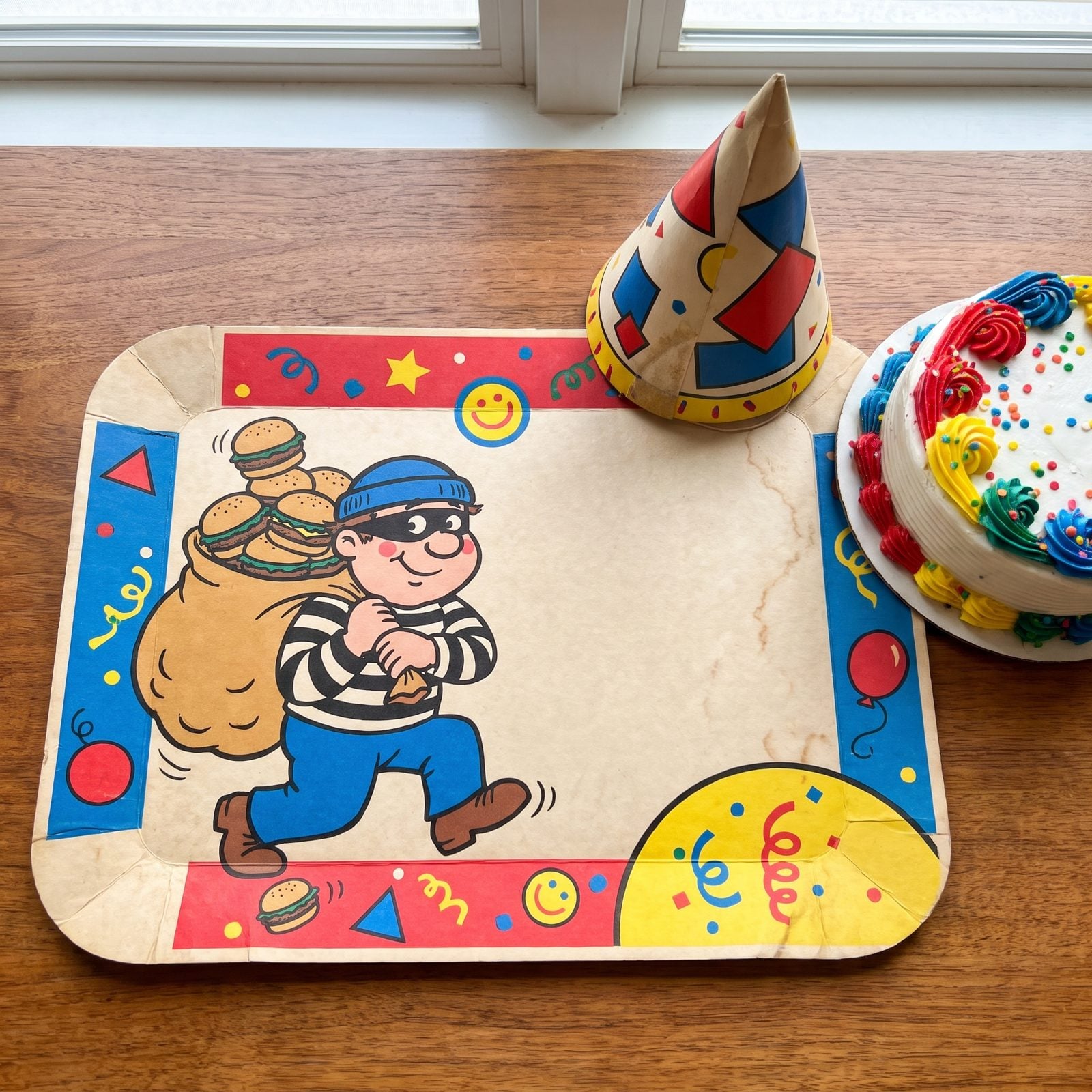
A McDonald’s birthday party was the social event of first grade. The swivel seats spun, the trays had a cartoon burger burglar on them, and you got a paper party hat and a cake somebody’s mom carried in — because the restaurant didn’t do the cake back then, just the room and the fries.
Those cream cardboard trays with the fold-up, red-and-blue confetti-printed sides. The grease spot soaking through the paper under the fries. The straw you blew the wrapper off across the table.
McDonald’s is one of the few chains here bigger now than it was in 1980. But the tile-mosaic walls and the bolted-down tulip seats got remodeled into the gray minimalist order-kiosk boxes of today. You can still buy the burger. You can’t sit in that room anymore.
40. Kentucky Fried Chicken, Family Buckets Under the Colonel’s Striped Roof
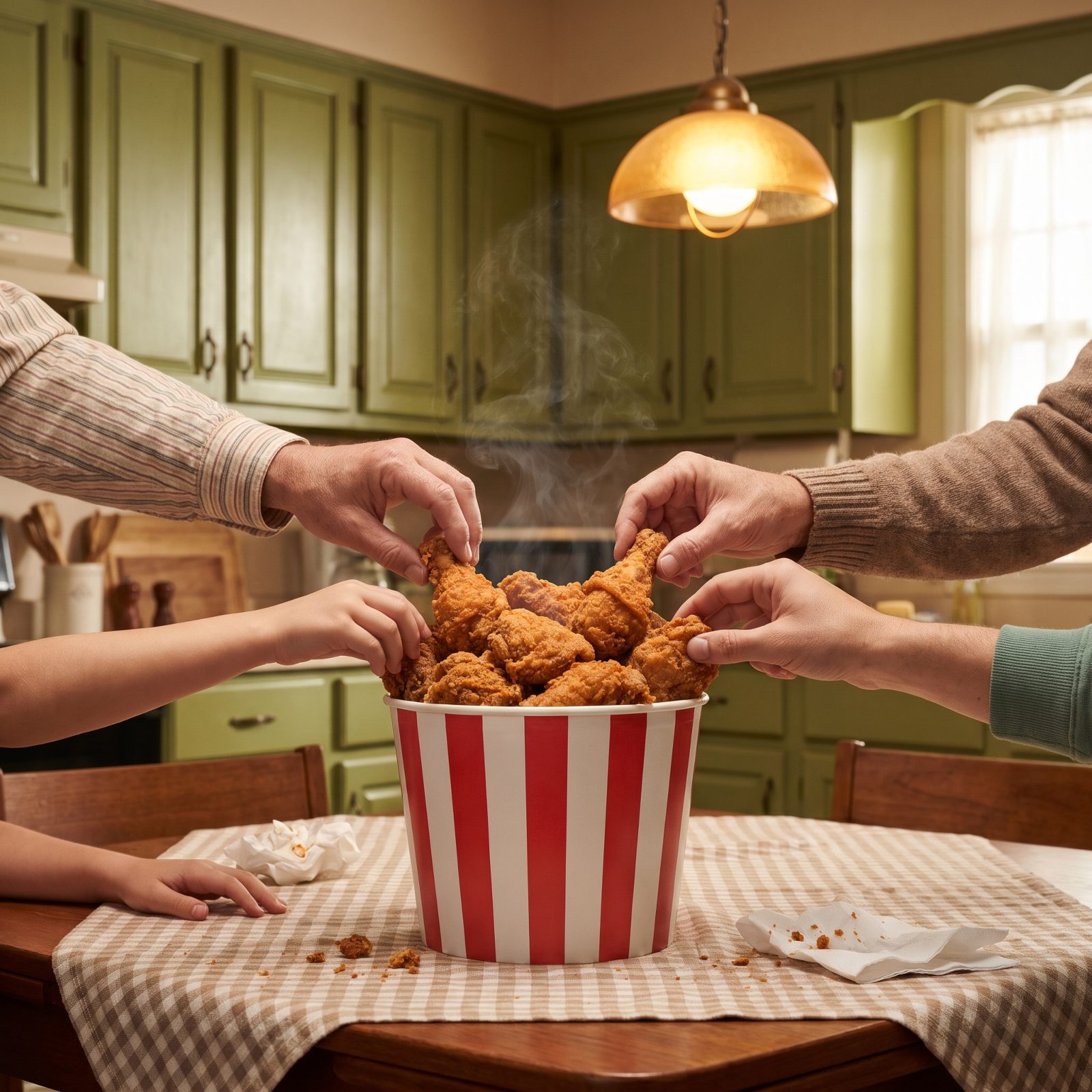
Dad brought it home in the striped bucket, and the whole car smelled like fried chicken for a week after. Friday nights, nobody cooked. The bucket landed on the checkered tablecloth, the lid came off, and it was every kid for himself.
The mashed potatoes came in a little cardboard tub with gravy already on top. The coleslaw was too sweet in the best way. And there were never enough drumsticks, which everyone knew going in.
They shortened the name to KFC in the 90s, partly to drop the word fried. The buildings with the striped A-frame roof mostly got torn down or reskinned, the Colonel still on the bucket, the sit-down version under that striped roof long faded.
39. Big Boy, Double-Deck Burgers and a Famous Fiberglass Mascot
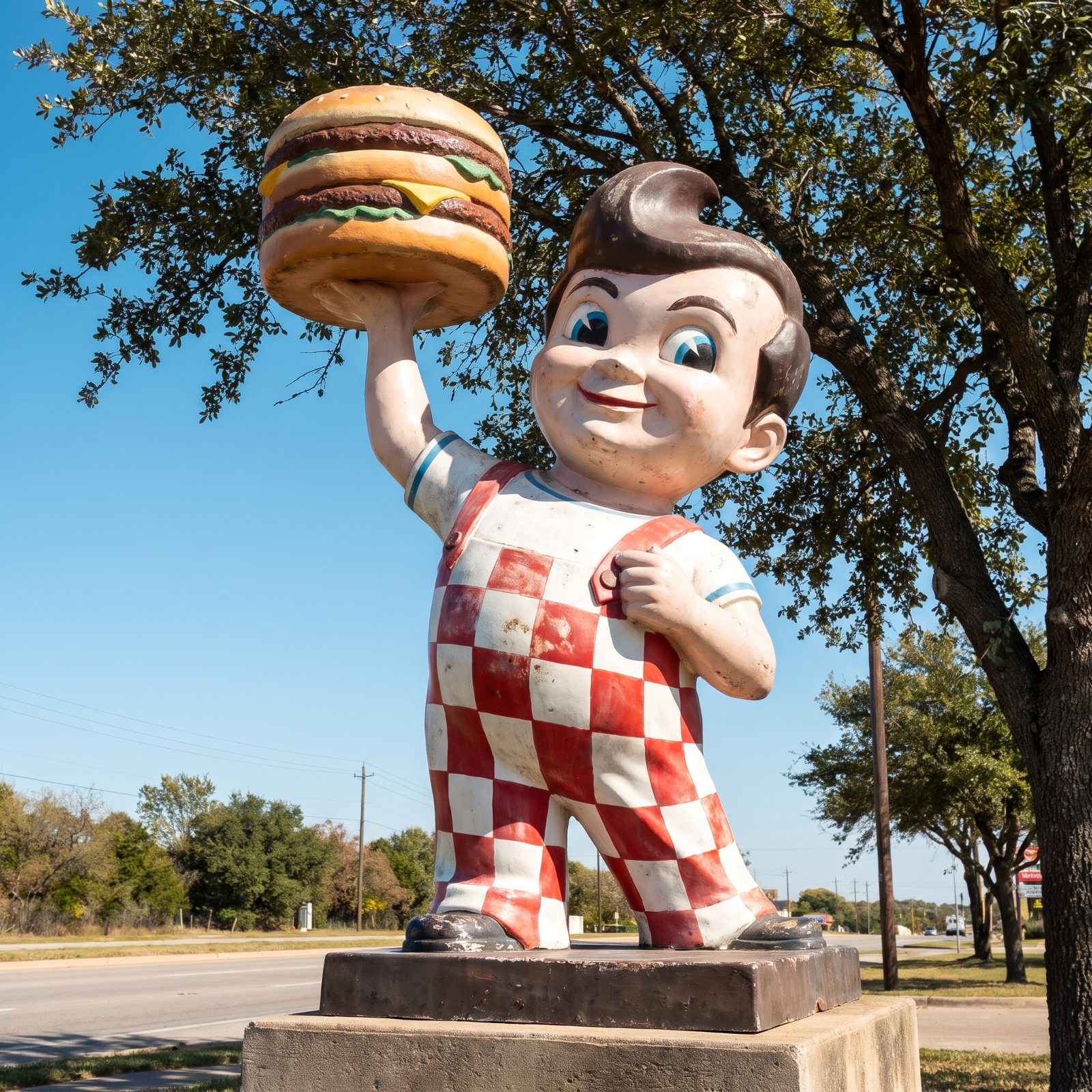
The statue got you before the food did. A fiberglass boy in checkered overalls out front, holding a burger over his head like a trophy, and every kid in the backseat pressed to the window to see him.
Inside, the Big Boy burger had two patties and a middle bun, three decades before the Big Mac borrowed the idea. You got the comic book at your table. And the strawberry pie was the move if the grown-ups were feeling generous.
Big Boy franchised under a dozen regional names: Bob’s, Shoney’s, Frisch’s, Elias Brothers. Most of those split off or folded. A handful still stand in Michigan and the Midwest, statue and all, run by people who flat-out refuse to let the boy go.
What Our Readers Say
- Photos of restaurant scenes get more hearts from Piaci Pizza readers than the other images in the same articles, 79% versus 71%.
- When our readers love a food photo, the top reason they tap is comfort at 30%, and nostalgic also makes the list at 15%.
From Piaci Pizza reader polls and votes.
38. Denny’s, Grand Slams in Wood-Paneled Dining Rooms
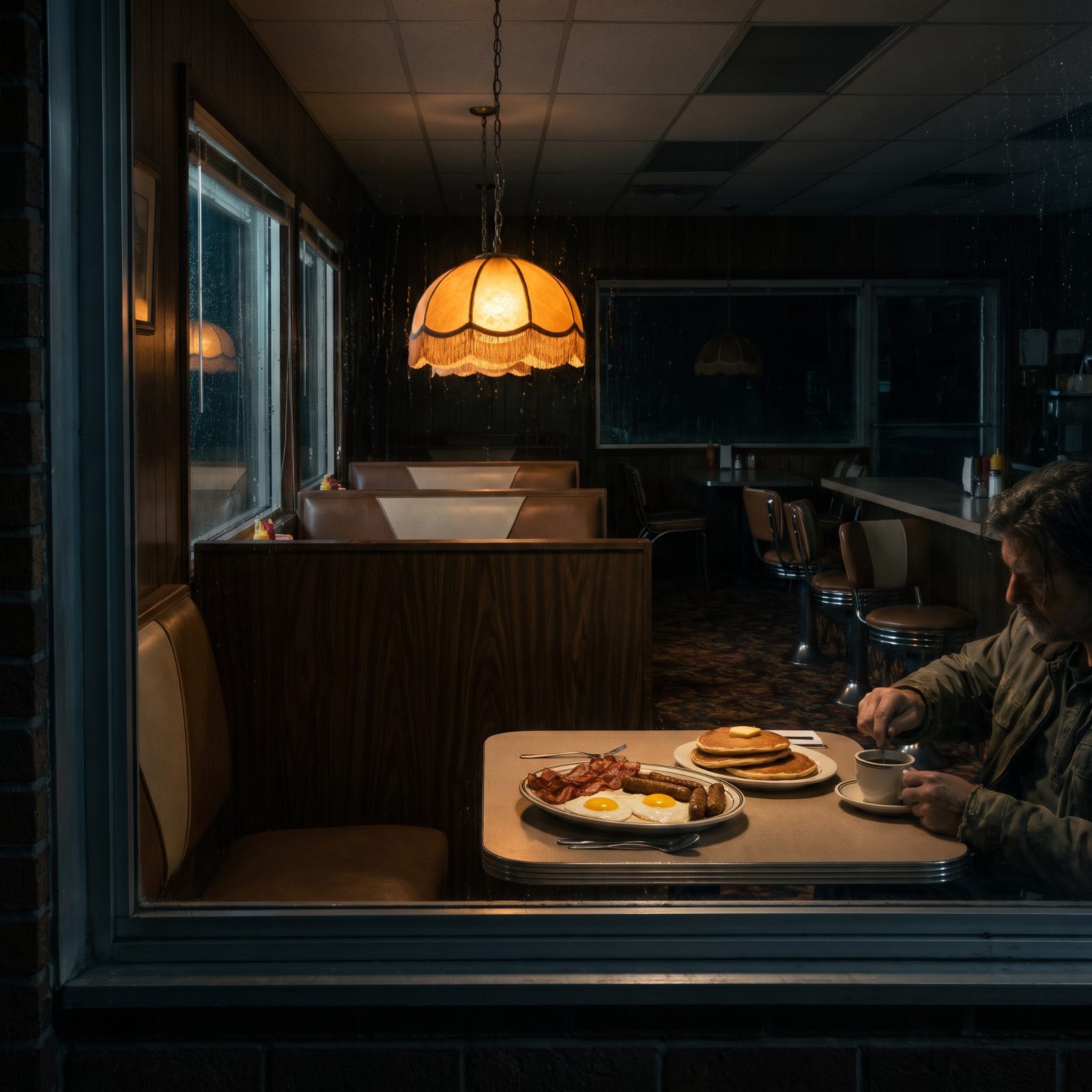
Denny’s was where you ended up at odd hours — after the movie, after the shift, after the long drive when nothing else had its lights on. The wood paneling, the amber lamps, the coffee that never stopped refilling.
The Grand Slam landed in 1977 and became the reason to go. Two of everything. Pancakes, eggs, bacon, sausage, on a plate that took both hands.
Denny’s is still open, still 24 hours in a lot of towns, which makes it a survivor. The brown-paneled 1980 version got brightened into something blander over the years. The late-night ritual, though — that part held on.
37. Waffle House, Open Kitchens and Hash Browns Around the Clock
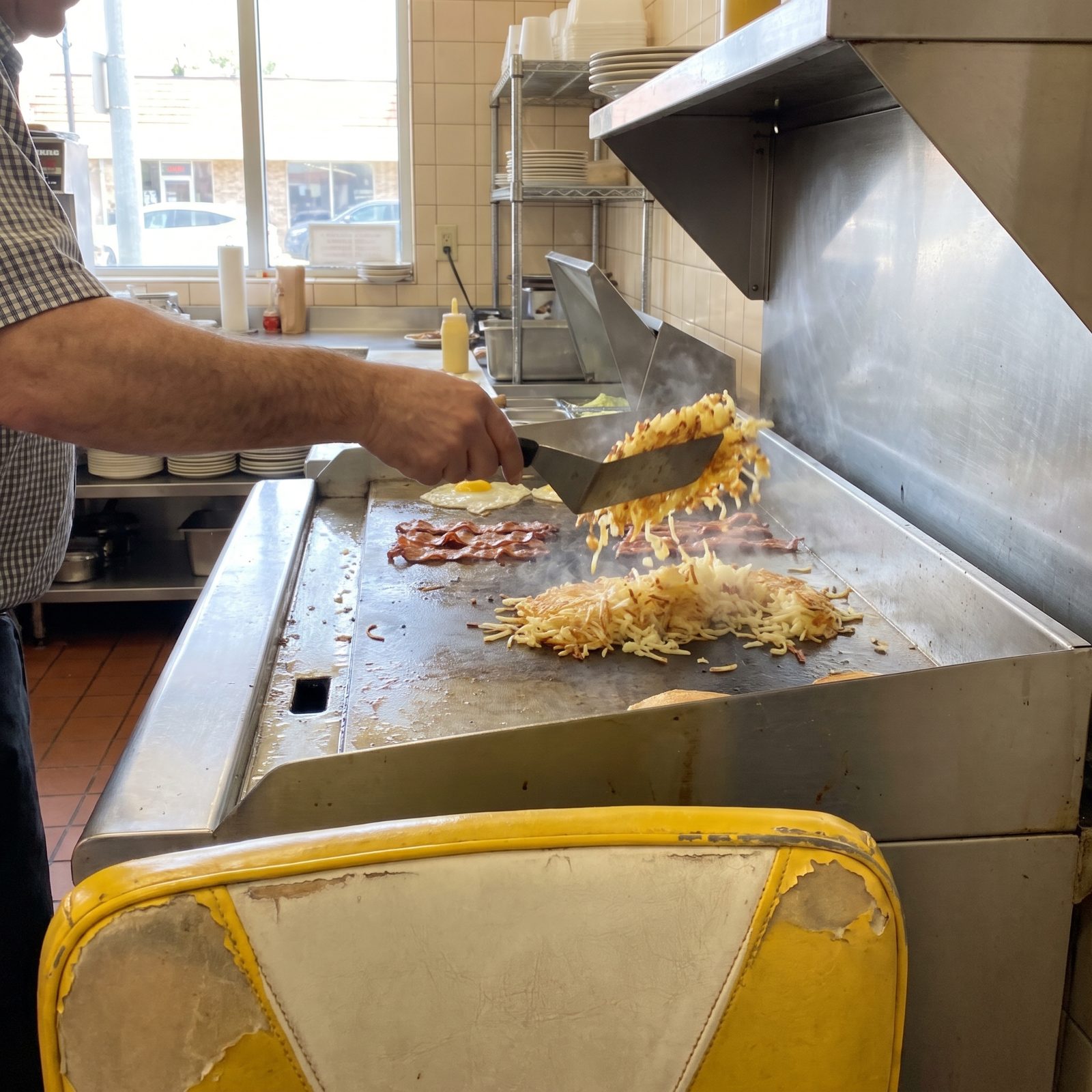
You sat at the counter and watched the whole show. The cook never looked at a ticket, just heard the waitress call it out and started slapping things on the grill. Scattered, smothered, covered — a whole language.
The hash browns were the point. Griddle-crisped, loaded however you asked, with the waffle coming off the iron golden and the coffee never once letting up.
Waffle House still looks exactly like it did in 1980. Same yellow sign, same open kitchen, same counter. They famously never close — not for hurricanes, not for holidays. Want 1980 back for a minute? Order the hash browns at 3 a.m.
36. Friendly’s, Patty Melts Followed by Fribble Milkshakes
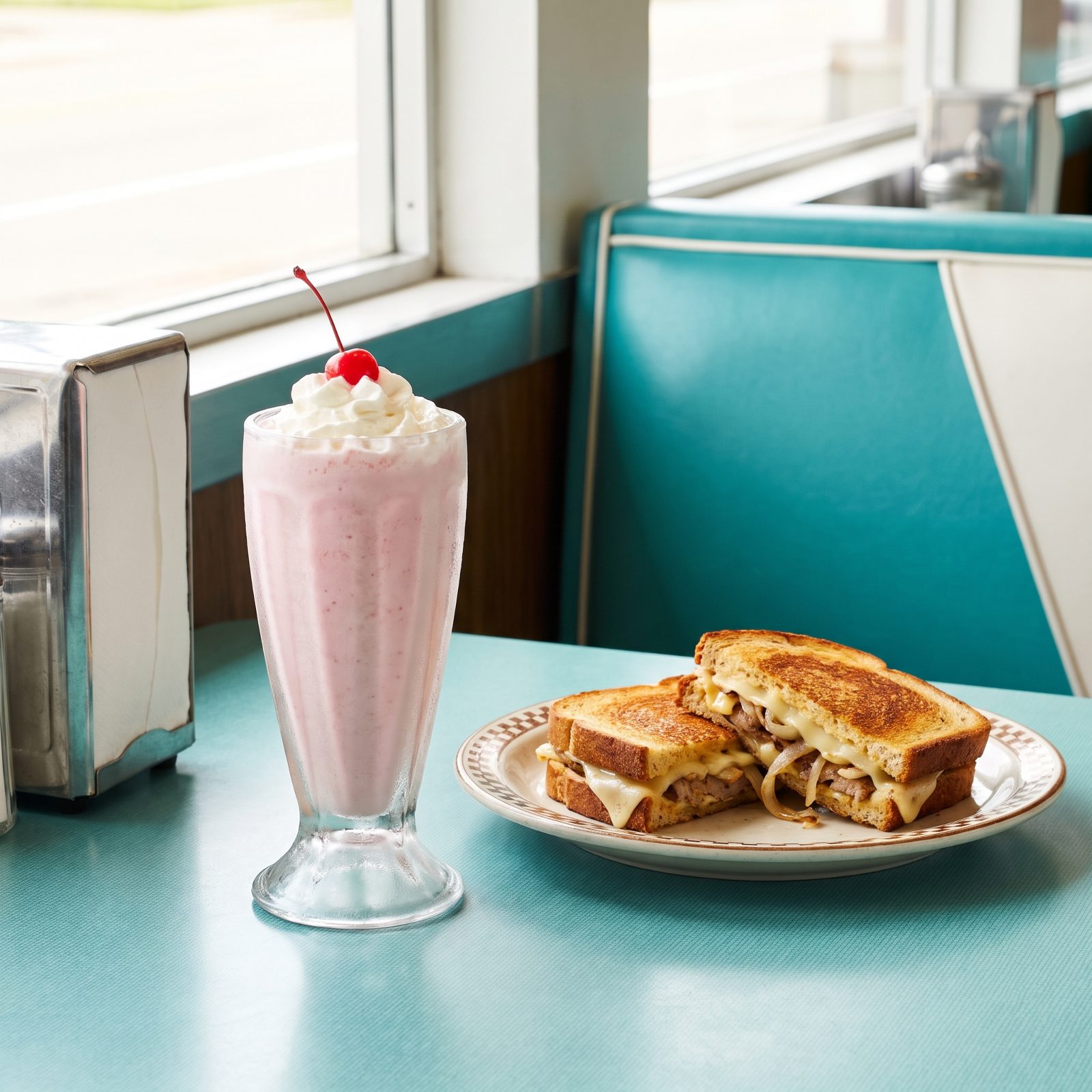
The deal with Friendly’s was that you ate dinner so you could get the ice cream. The patty melt was fine, the clam roll was a New England thing, but every kid was running the mental math on dessert the whole time.
Then the Fribble came. Thick enough that the straw stood up, thick enough that you couldn’t really drink it and had to spoon the top. A sundae in a tulip glass if you cleaned your plate.
Friendly’s hit hard times and shrank fast, closing hundreds of locations and filing bankruptcy more than once. A few New England holdouts remain. For a certain age of kid who grew up in Massachusetts, losing them felt personal.
35. Sambo’s, Pancakes Beneath the Orange-and-Brown Sign
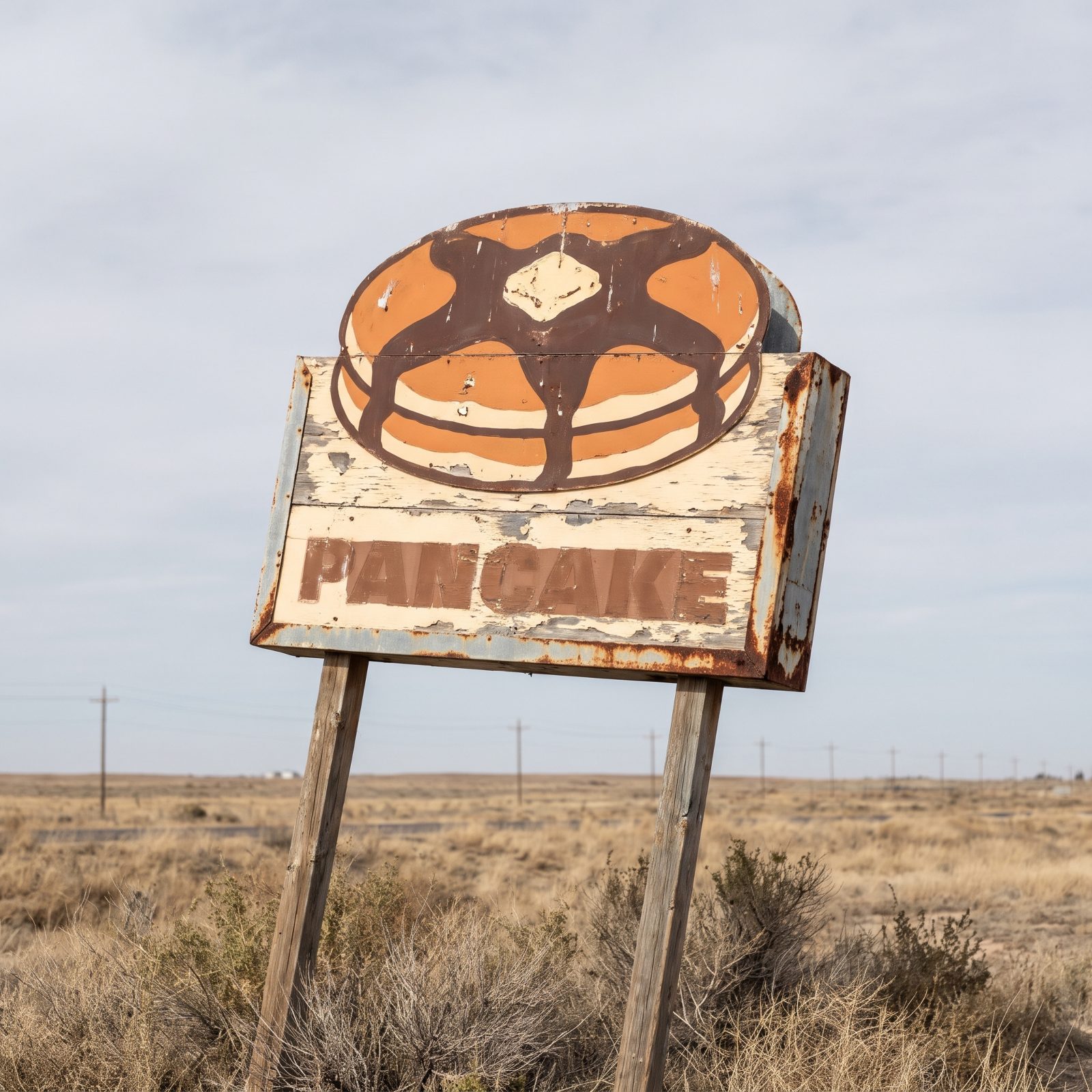
For a stretch of the 1970s, Sambo’s was one of the biggest pancake chains in the country — orange-and-brown signs up and down the highways, more than a thousand of them. You ordered a short stack and the coffee came fast.
The name and the theming drew protests that grew through the decade, and rightly so. The chain tried renaming individual stores, but the damage was done and the business collapsed. By the early 80s it was basically finished.
Most Sambo’s buildings became Denny’s. One original hung on in Santa Barbara for decades before it, too, finally changed its name. A real piece of American roadside history — and a reminder that not every nostalgic brand earned a soft landing.
Looking back at the chain’s 1979 opening in his hometown, a sociologist notes that it kept expanding “Despite a growing clamor to change its racist name (the interiors of the restaurants were also decorated with images from the story)”
34. Lum’s: Beer-Steamed Hot Dogs Under the Red-and-White Sign
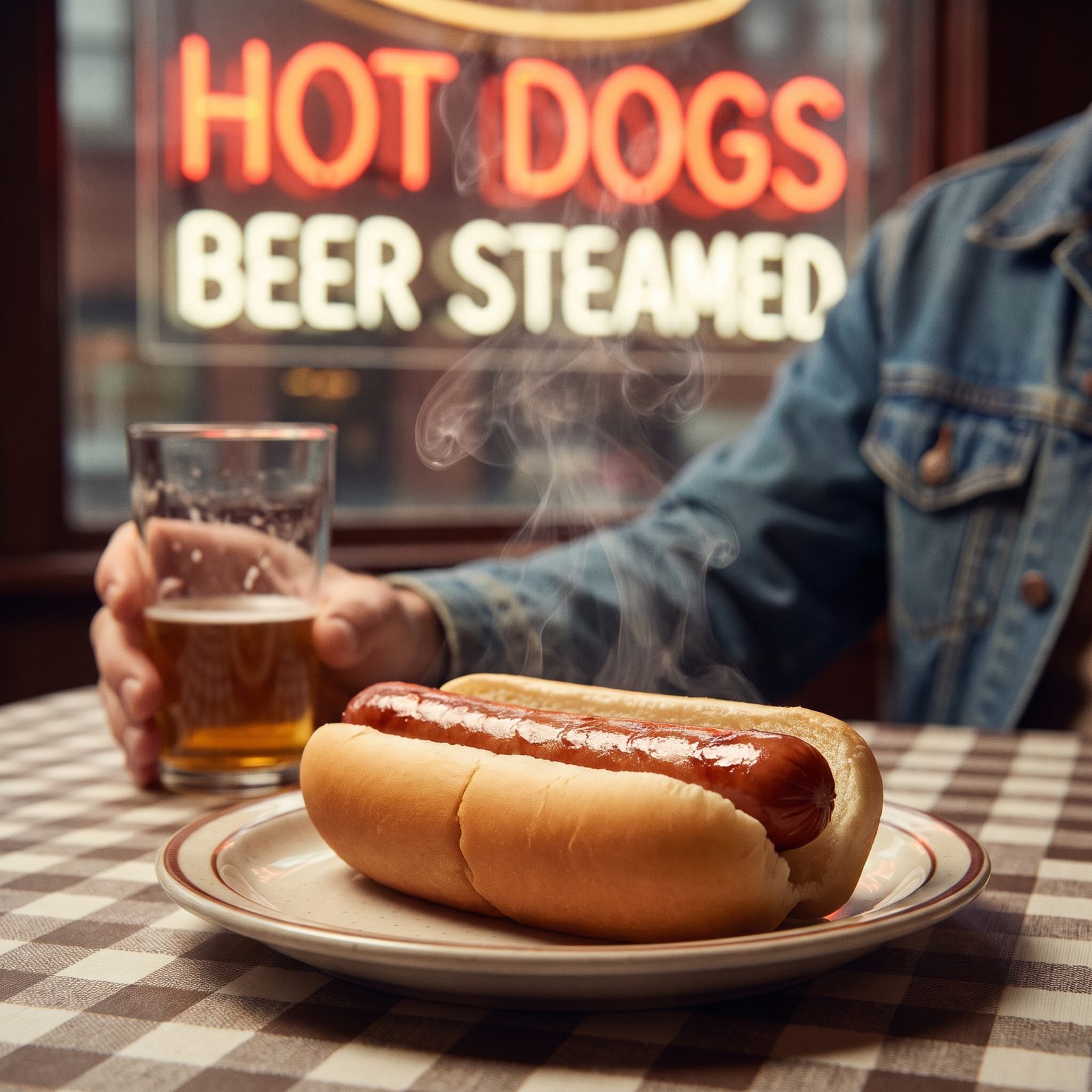
The hot dogs were steamed in beer, and that was the whole personality of the place. You could smell it the second the door swung shut behind you. Lum’s took a ballpark food, sat it down at a table with fries and a frosty mug, and for a good stretch there it worked beautifully.
By 1980 the chain was already slipping. It had peaked in the early ’70s at hundreds of locations, then got sold off, bought again, and slowly thinned through the decade until the last one closed in the ’80s. Now the name mostly lives in memory.
33. Ground Round: Peanut Shells on the Floor and Pay-What-You-Weigh Kids’ Nights
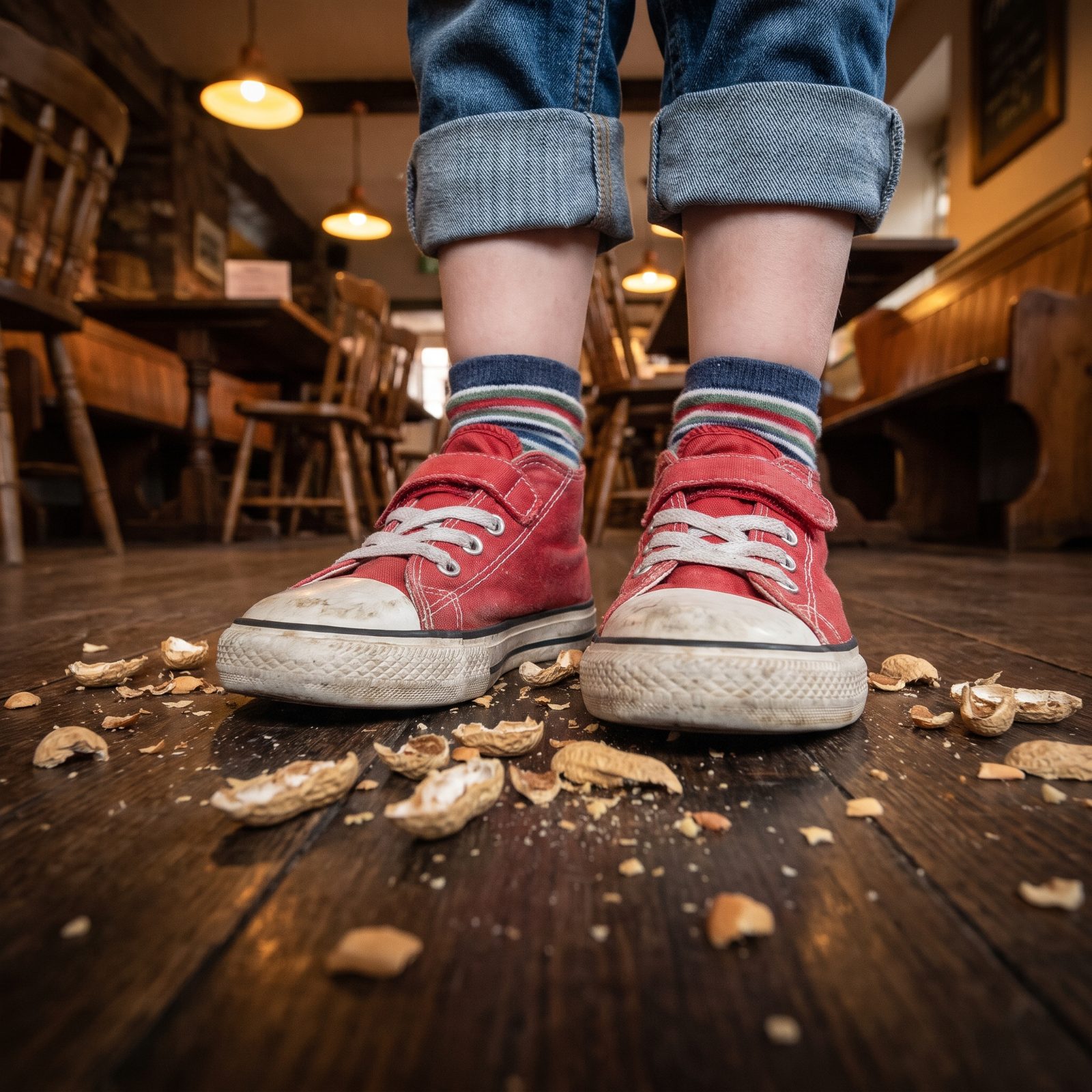
Peanut shells on the floor, on purpose. That alone made it feel like you’d been let off the leash. Ground Round handed you a basket, told you to drop the shells wherever, and ran silent Charlie Chaplin films on a screen while you ate your burger in the half-dark.
Then there was the pay-what-your-kid-weighs promotion, which is the kind of gimmick nobody forgets. A forty-pound kid ate for forty cents.
This chain outlasted most of the others on the list, thinning out through the 2000s before the last holdouts gave up. A few franchised spots lingered in New England. The peanut baskets did not.
32. Steak and Ale: Tudor Beams, the Salad Bar, and a Sirloin You Could Afford
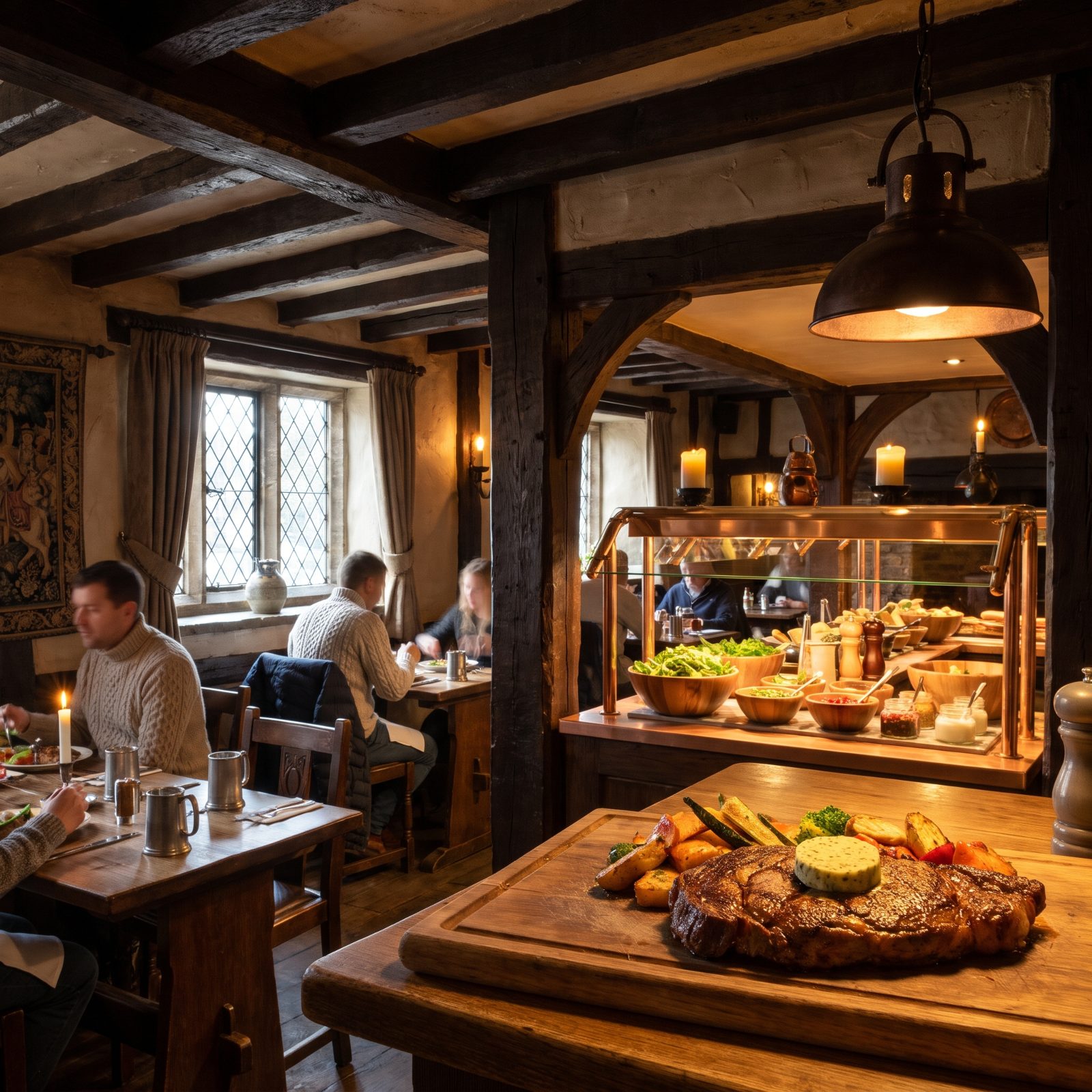
You walked in and it was dark, warm, and pretending to be sixteenth-century England. Steak and Ale sold the idea that a regular family could afford a candlelit steak dinner, and in 1980 it absolutely could.
The salad bar pulled a lot of people in. Loading your own chilled plate felt like abundance. Add the dark bread, the foil-wrapped potato, the goblet of wine for the grownups, and you had an evening.
For a lot of families, this was where you went when a steakhouse still felt like an event.
The parent company declared bankruptcy in 2008 and shuttered every location at once. One day the Tudor beams were full, the next the lights were off.
31. Beefsteak Charlie’s: All the Salad, Shrimp, and Sangria You Wanted
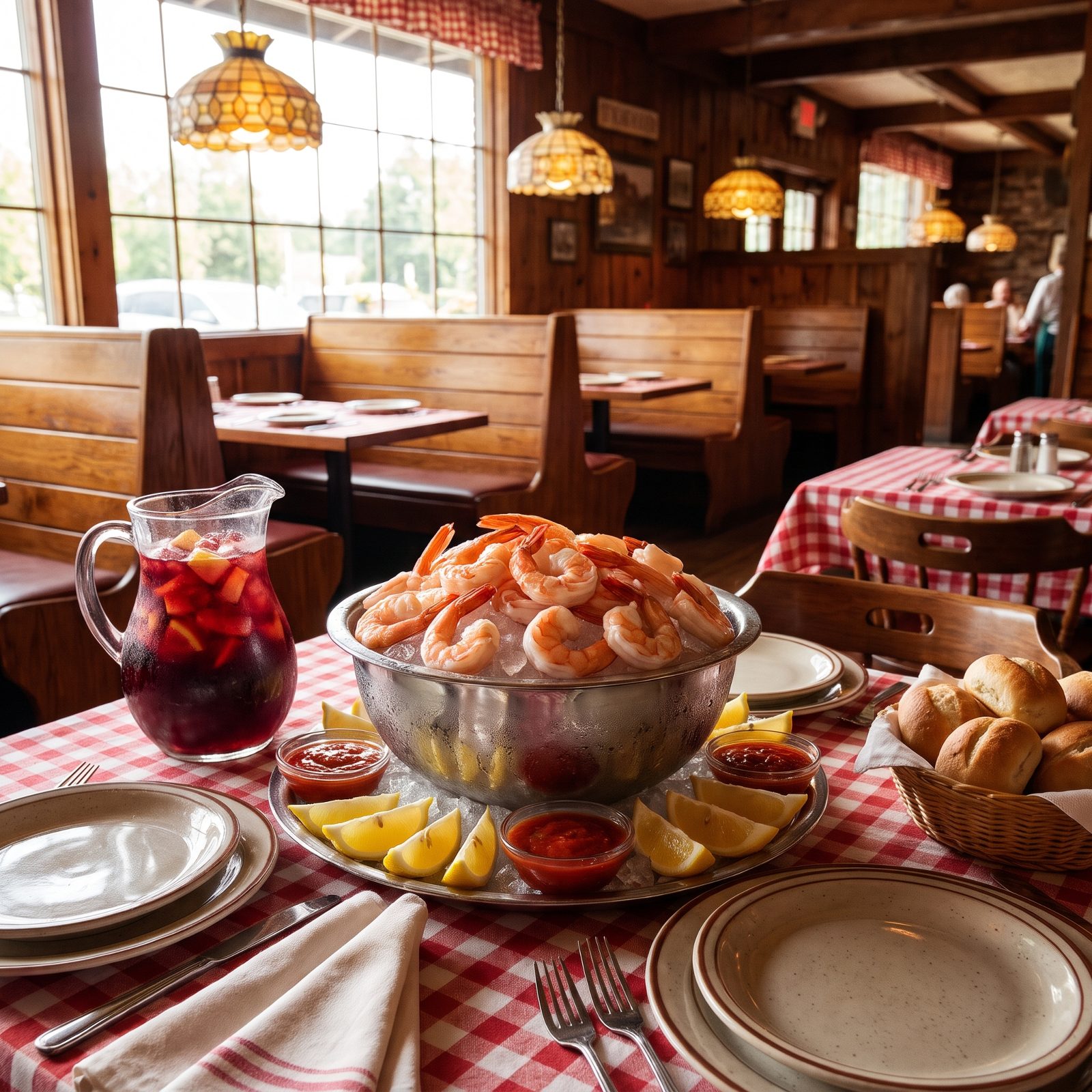
The pitch was right there in the ads: all the salad, all the shrimp, all the sangria you wanted. To a kid, free shrimp was wild. For the adults, it was the bottomless sangria with the orange slices bobbing on top.
Beefsteak Charlie’s was a New York and East Coast fixture, loud and generous, built on one simple bet. Unlimited anything brings people through the door, and it worked for a while.
Most locations were gone by the early ’90s. The brand got sold around and faded out.
Today, salad photos get fewer hearts from Piaci Pizza readers than the other dishes in the same articles, 49% versus 68%, so maybe the shrimp was always the real draw.
30. Sizzler: Steak-and-Shrimp Platters That Arrived Still Spitting
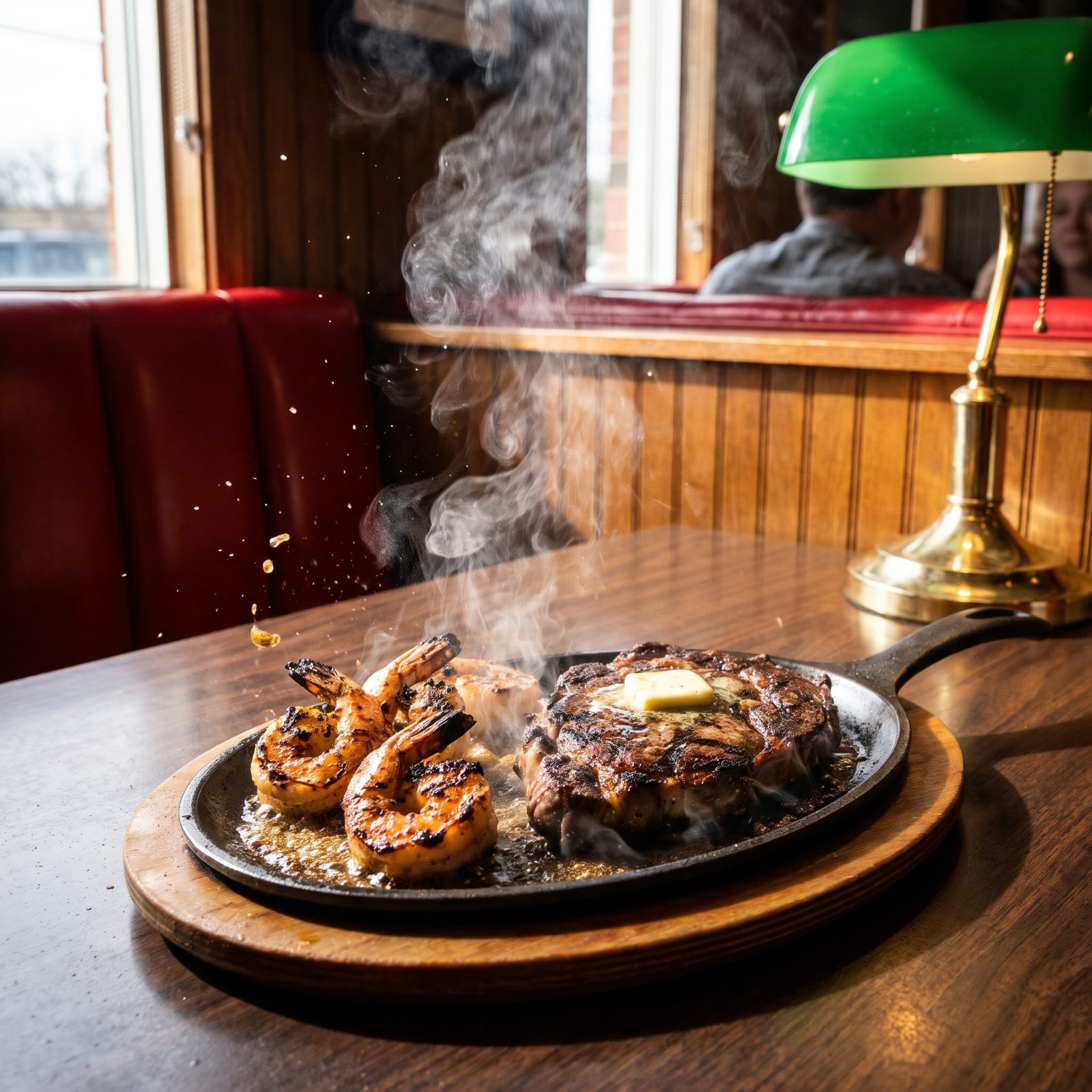
The platter came to the table still spitting, that metal sizzle underneath an actual sound and not just a name. Sizzler turned the steak-and-seafood combo into something a family of five could pull off on a weeknight.
The cheese toast alone could start arguments about who got the last piece. You ordered at the counter, grabbed a number, and the food found you.
Unlike most names here, Sizzler is still technically alive, though a shadow of its 1980 self. It filed bankruptcy during the pandemic, and the hundreds of locations from its peak have dwindled hard. Find one open now and it feels like running into an old classmate.
29. Ponderosa: The Cafeteria Line and the Wild-West Dining Room
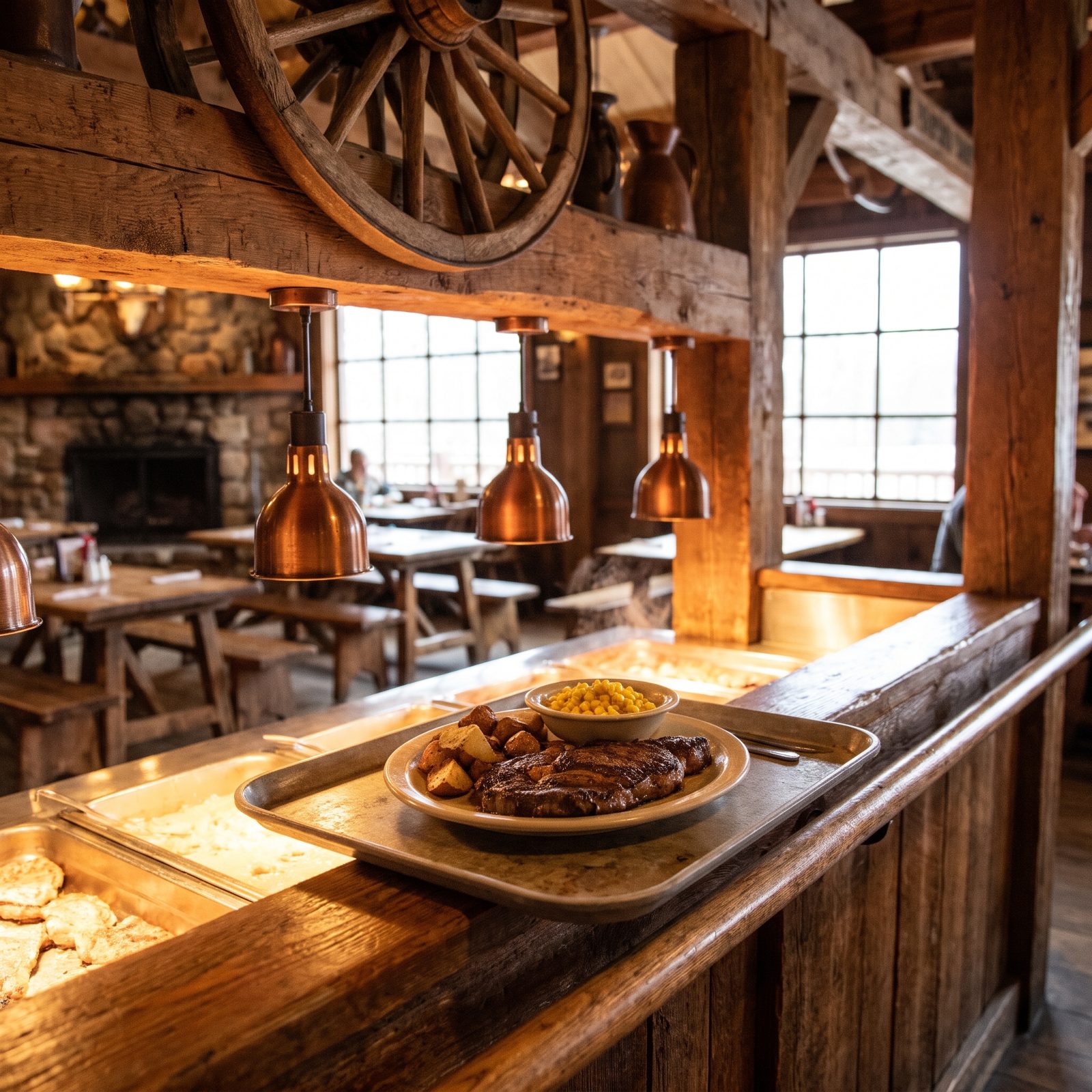
You grabbed a tray and shuffled down the line like the school cafeteria, except this time you were choosing your own steak and nobody was rushing you. Ponderosa (and its cousin Bonanza) made steak feel like something you could do casually, in sneakers, with a wagon-wheel lamp glowing overhead.
The all-you-can-eat buffet eventually became the real star. But in 1980 the draw was still the cheap sirloin and a Western theme that leaned all the way in.
The chain contracted dramatically over the decades. A handful of locations hang on under the same ownership as Bonanza. The buffet tongs outlasted the steak.
28. Victoria Station: Prime Rib Served Inside an Actual Railroad Car
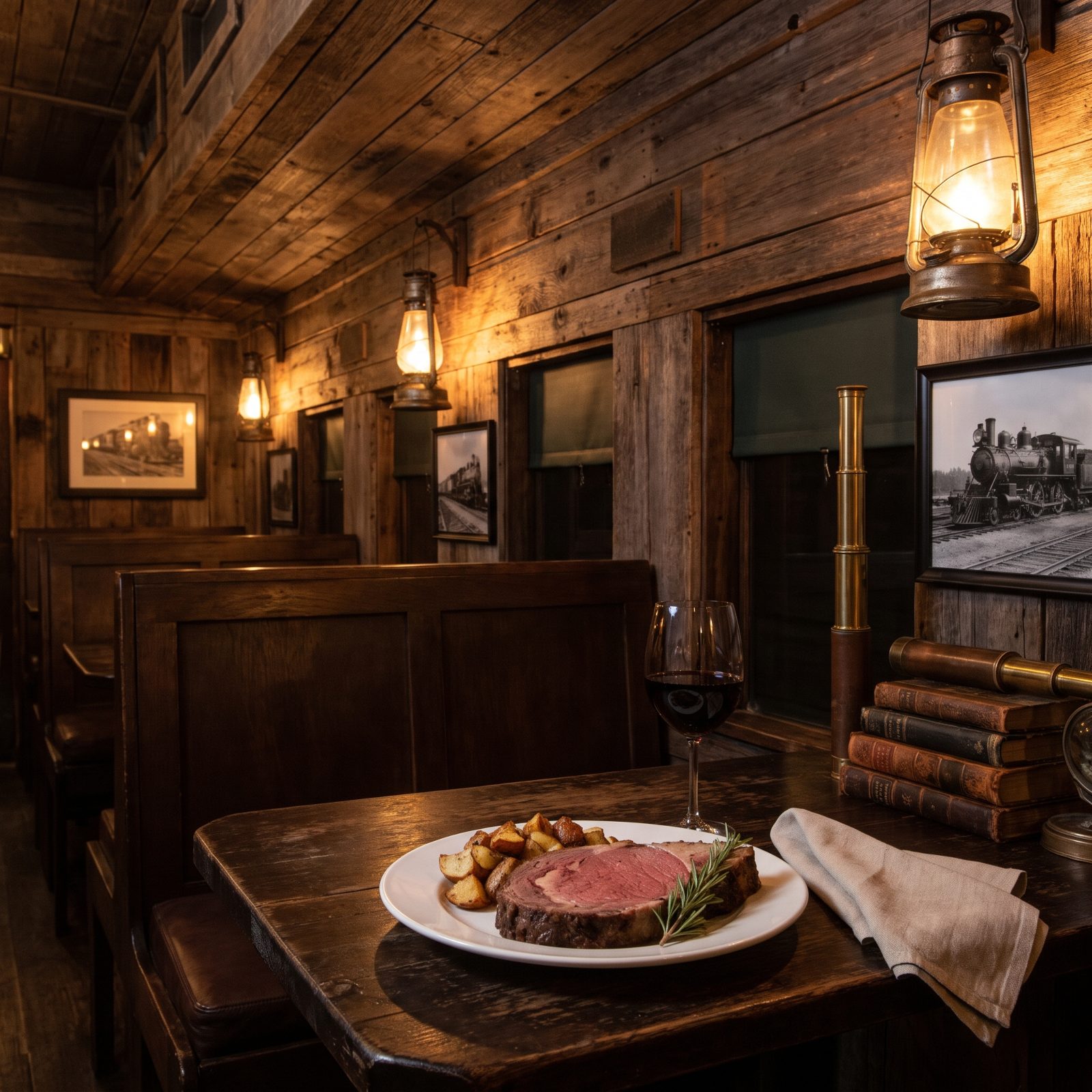
They served you prime rib inside a real railroad car. Victoria Station bought up actual boxcars and cabooses, bolted them together, and filled them with English railway signage and the smell of slow-roasted beef. Eating there felt like dinner on a train that never left the station.
Prime rib was the whole menu’s reason to exist, carved thick and served with au jus. The theme did most of the heavy lifting, and for a decade it packed people in.
Explaining how the restaurants were put together, a local history columnist says “they clustered old boxcars and a caboose around a central building which served as the lobby, filled the cars with booths and tables, tucked a spacious bar into the caboose”
27. Red Lobster: Popcorn Shrimp and the Dinner That Meant Something Special
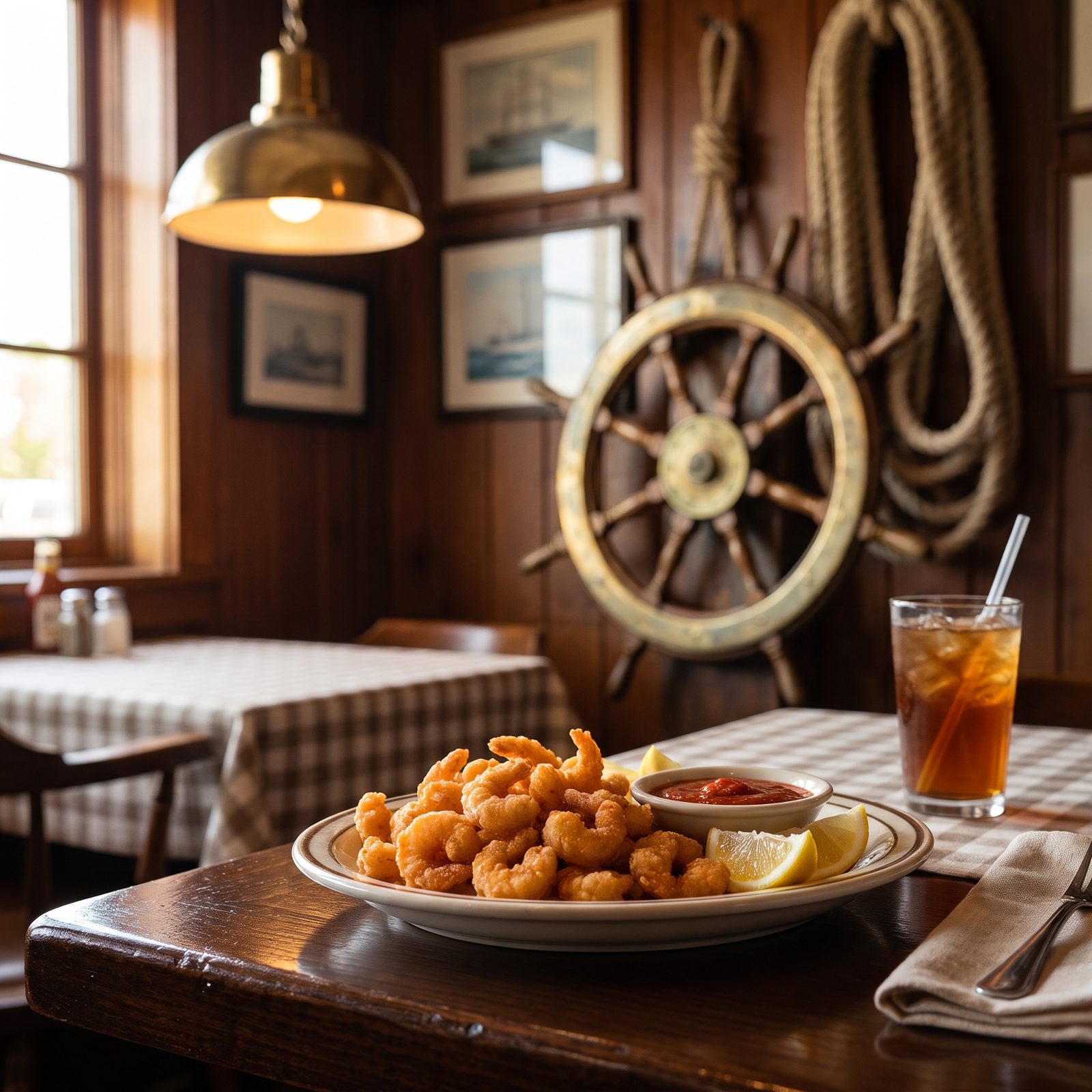
For a lot of families, Red Lobster was where you went when there was something to celebrate. A birthday. A good report card. The kind of night where you wore a collared shirt and ordered the popcorn shrimp because it was yours and you’d fight for it.
In 1980 this was aspirational seafood for the middle of the country, places nowhere near an ocean. The cheddar biscuits came later and became the legend, but the shrimp and that special-occasion feeling came first.
Red Lobster is still around, though it went through a brutal bankruptcy in 2024 and closed dozens of locations. The brand that defined special-occasion seafood is still fighting to stay one.
26. Long John Silver’s: Crispy Fish, Hush Puppies, and a Dining Room Built Like a Ship
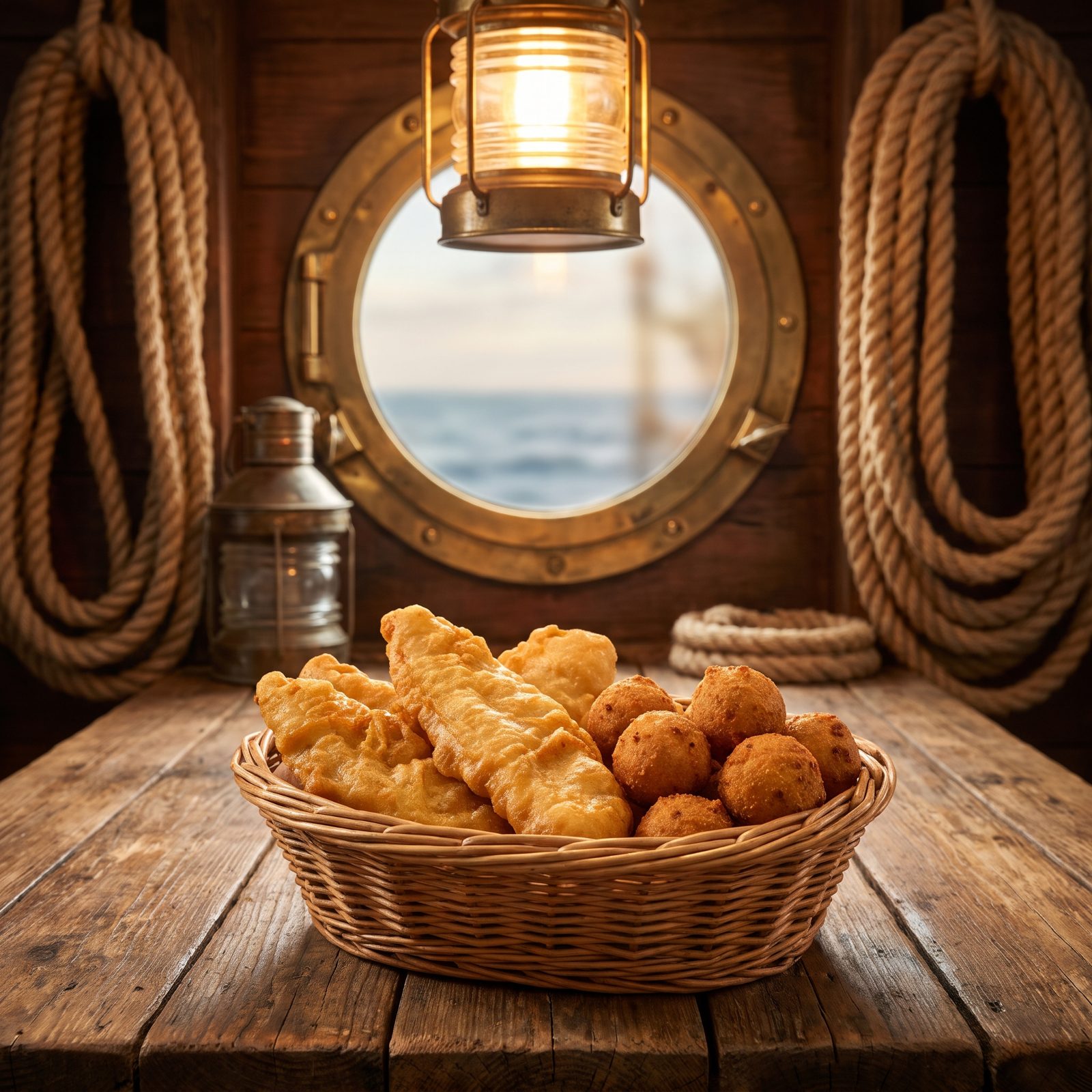
The hush puppies were the thing. Fried little orbs of cornmeal you got whether you wanted them or not, and you always wanted them. Long John Silver’s wrapped a fish-and-chips supper in full pirate-ship theater, with ropes and barrels and paper captain’s hats behind the counter.
Crispy battered fish in a wicker basket, piled beside a heap of golden hush puppies. Fast food that felt like a small voyage.
The chain shrank a lot but refused to disappear. You can still find one, usually sharing a building with an A&W, serving the same crunch you remember.
25. Arthur Treacher’s: British-Style Fish and Chips in a Striped Paper Box
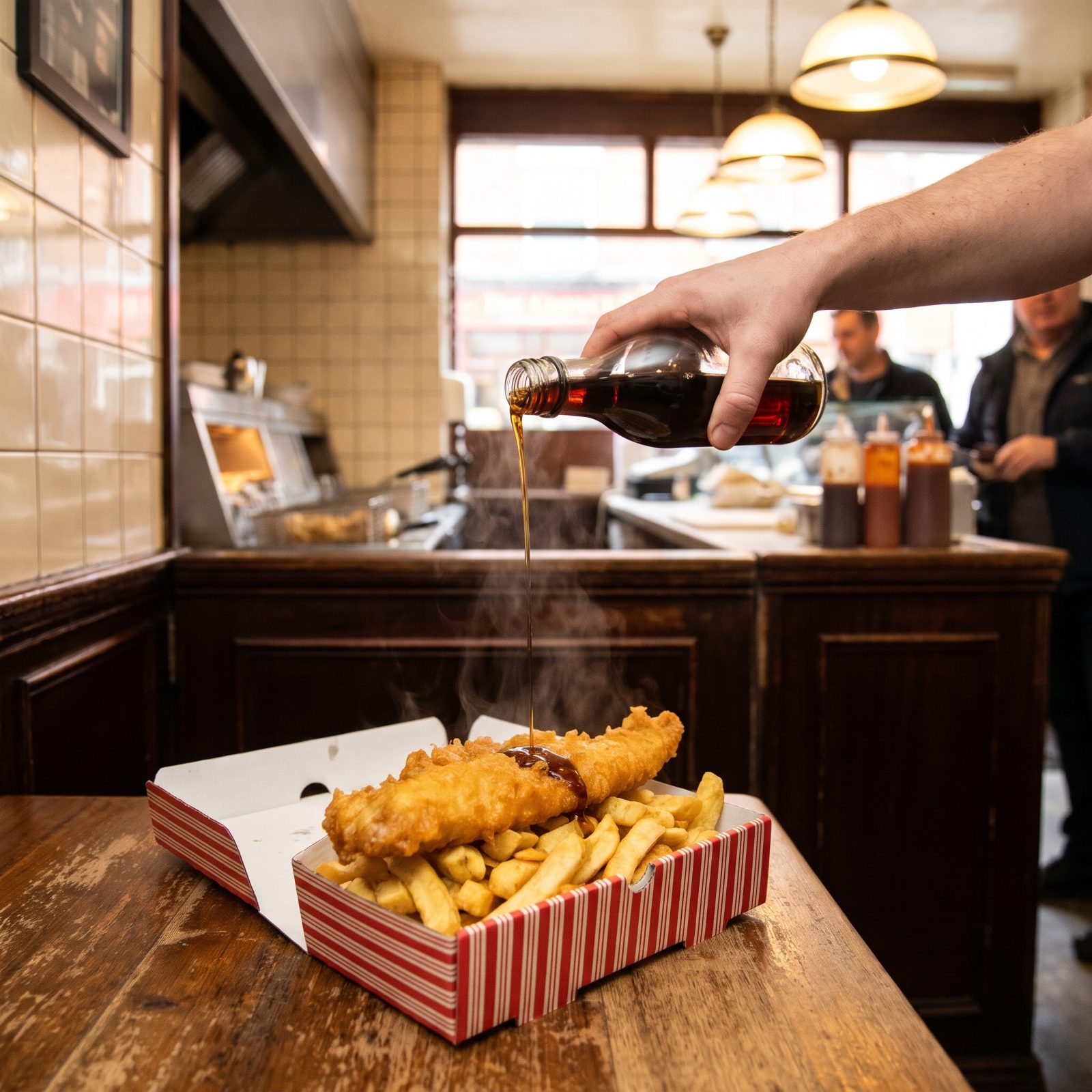
Malt vinegar on fries was a revelation if you grew up on ketchup. Arthur Treacher’s leaned hard into the British chip-shop idea: striped boxes, the crunch of proper battered fish, the whole operation named after a stuffy English actor who played butlers in the movies.
In 1980 you could find them all over the Midwest and East Coast, a tidy little fish supper in a box you could eat in the car.
The vinegar packet was the part that made it feel foreign, and that was the whole point.
The chain all but vanished over the years, down to a handful of locations, some tucked inside Nathan’s stands. Honestly? You’d assume they were long gone until you spot one still standing. A few are. Go find the vinegar.
24. Shakey’s Pizza: Banjo Music, Long Tables, and Mojo Potatoes
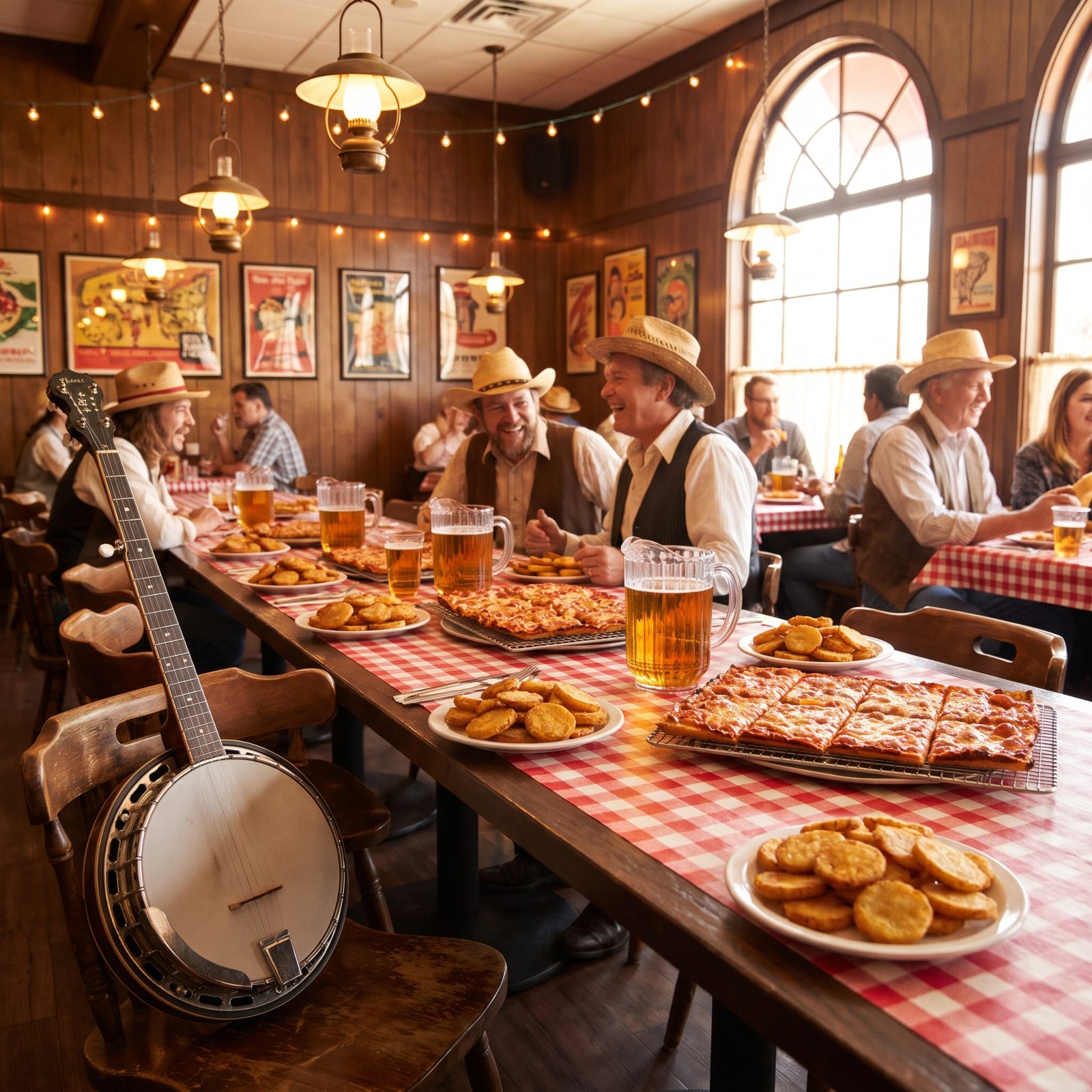
Shakey’s felt like a party you’d wandered into. Long wooden tables meant you sat next to strangers, a banjo or ragtime piano was going somewhere in the room, and the grown-ups had pitchers of beer while the kids watched the pizza makers through the window.
The pizza was thin and cut into squares, but the real prize was the Mojo potatoes. Thin round slices, seasoned and fried until the edges crackled, piled on plates that emptied fast. Half the table came for the Mojos and pretended it was for the pizza.
Shakey’s started in Sacramento in 1954 and was one of the first pizza chains in the country. The American side shrank hard after the 1980s, down to a small cluster of locations mostly in Southern California. The strange twist is that the brand is huge in the Philippines, where Shakey’s is a mainstream family restaurant. The banjo nights, though, are mostly a memory.
23. Godfather’s Pizza: Thick Pies and Mobster-Themed Advertising
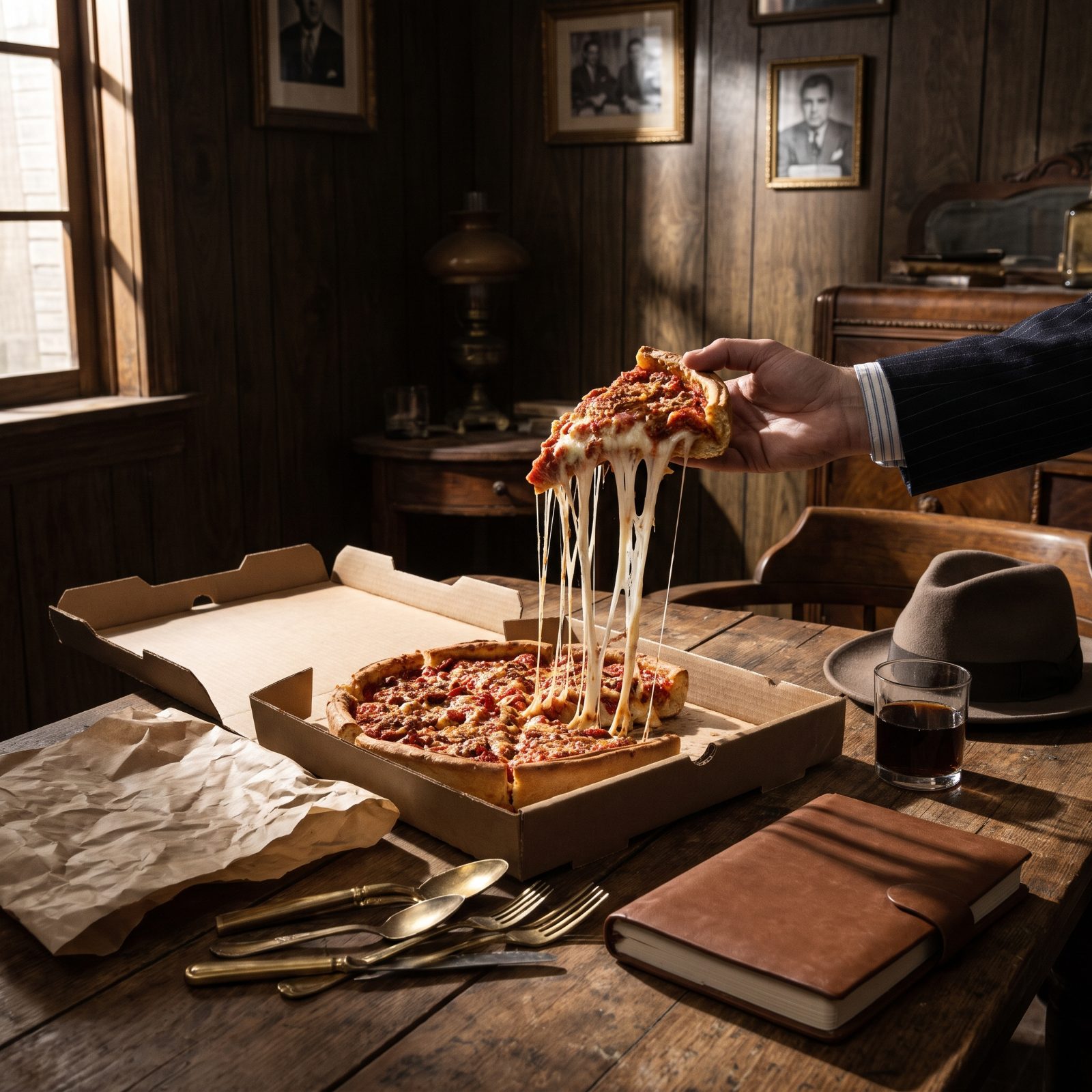
Godfather’s sold pizza the way a heavyweight throws a punch. The crust was thick, the toppings went all the way to the edge, and a single slice had real weight to it. Nobody left hungry, and nobody finished the leftovers until breakfast.
The advertising leaned all the way into Mob-movie jokes. Gangster accents, fedoras, deals you couldn’t refuse. In the years after the movie everyone’s parents had seen, it landed, and kids repeated the lines without knowing where they came from.
The chain started in Omaha in 1973 and grew fast through the early 1980s, at one point counting hundreds of restaurants across the Midwest and beyond. It’s still around, but much smaller, and a lot of what’s left are express counters inside convenience stores and gas stations. The pies are still heavy. The sit-down pizza nights mostly moved on.
22. Chuck E. Cheese’s Pizza Time Theatre: Pizza, Arcade Tokens, and Animatronic Shows
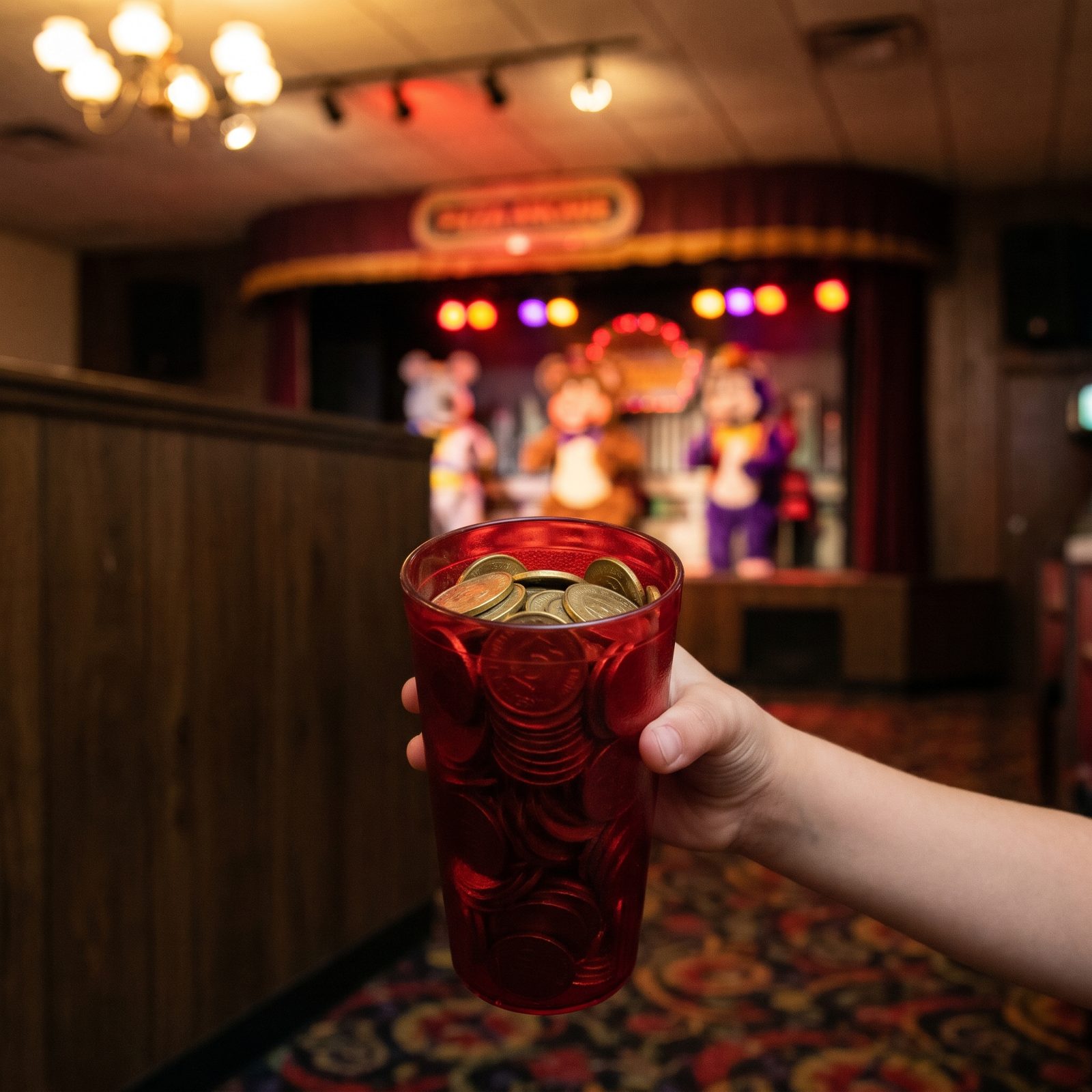
The pizza was beside the point and every kid knew it. You walked in clutching a cup of tokens, the arcade was ringing and flashing, and somewhere in the back a curtain was about to open on a band of singing robots.
Chuck E. Cheese’s Pizza Time Theatre opened in San Jose in 1977, the idea of Atari’s founder, and the animatronic show was the main event. A rat in a vest, a hound dog with a guitar, a chef named Pasqually, a hen in a feather boa. Some kids loved them. Some kids hid under the table. Both were valid.
The original company went bankrupt in 1984, and rival ShowBiz Pizza bought it, eventually folding everything under the Chuck E. Cheese name. Tokens gave way to game cards, and in recent years the chain pulled the animatronic bands from nearly every location, keeping only a tiny handful. The robots that scared a generation are now museum pieces.
Describing how the original robot band worked, a technology history professor writes “The characters performed six two-minute shows per hour. Banks of pneumatic valves caused the players to wave their arms, blink their eyes, and move their heads.”
21. Casa Bonita: Cliff Divers, Sopapillas, and Indoor Caves
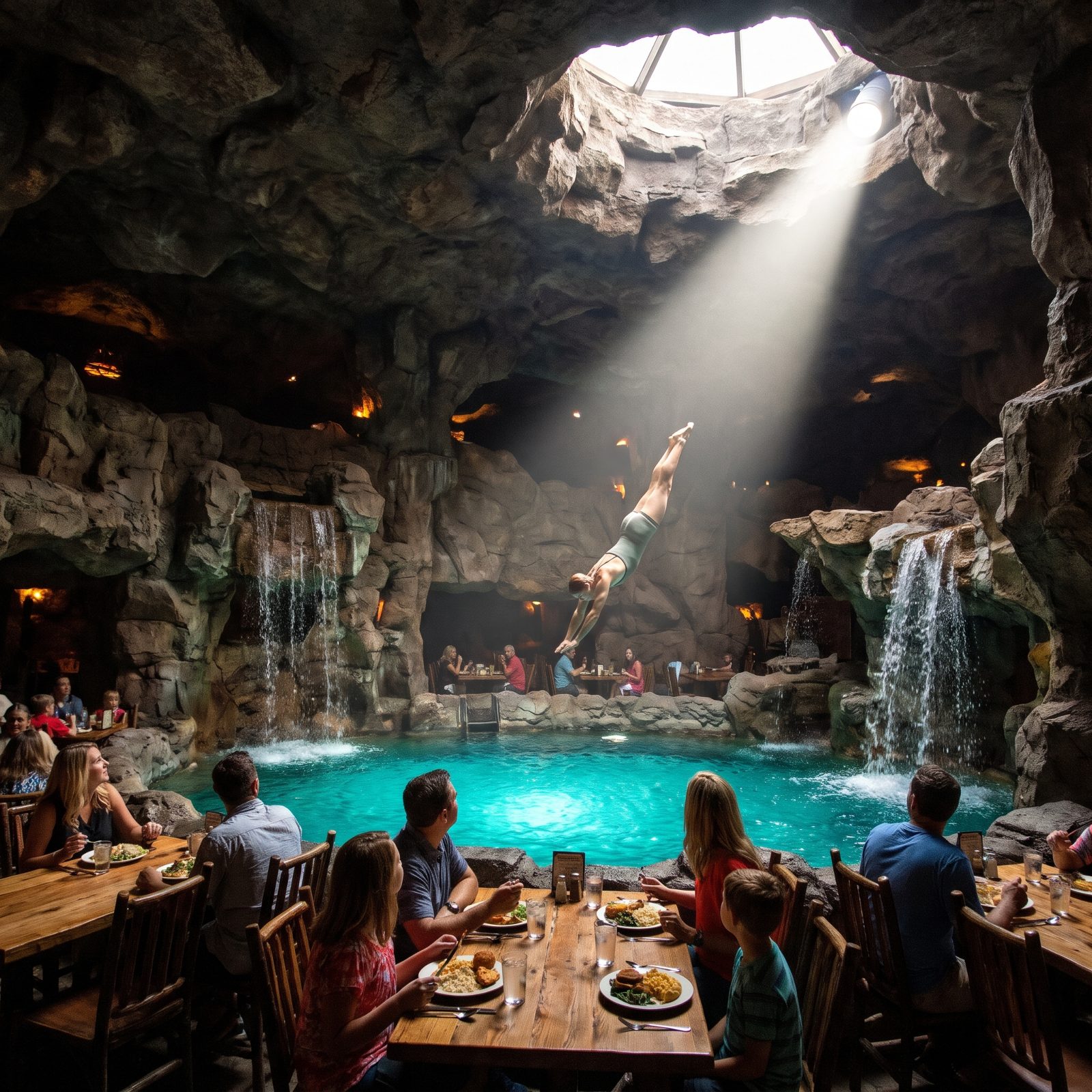
Nothing else on this list had cliff divers. Casa Bonita did. You ate your combination plate in a dim, cave-like dining room while divers plunged off a fake rock face into a pool, and between shows you explored Black Bart’s Cave and got lost on purpose.
The food was never the point, and the adults knew it. What everyone remembers are the sopapillas, warm and puffy, drizzled with honey, and the little flag on the table you raised when you wanted more. Raising that flag felt like real power.
The chain started in Oklahoma City and spread to a few other cities, but the Lakewood, Colorado location with its pink tower became the legend. The others closed over the years. Lakewood shut down during the pandemic and went bankrupt, then the creators of South Park bought it, renovated it top to bottom, and reopened it in 2023 with much better food. The divers are still diving.
Asked what keeps him climbing the rocks night after night, a current cliff diver at the restaurant says “The rush of falling through the air and doing your flipping and moving.”
20. Chi-Chi’s: Festive Mexican Dining and Fried Ice Cream
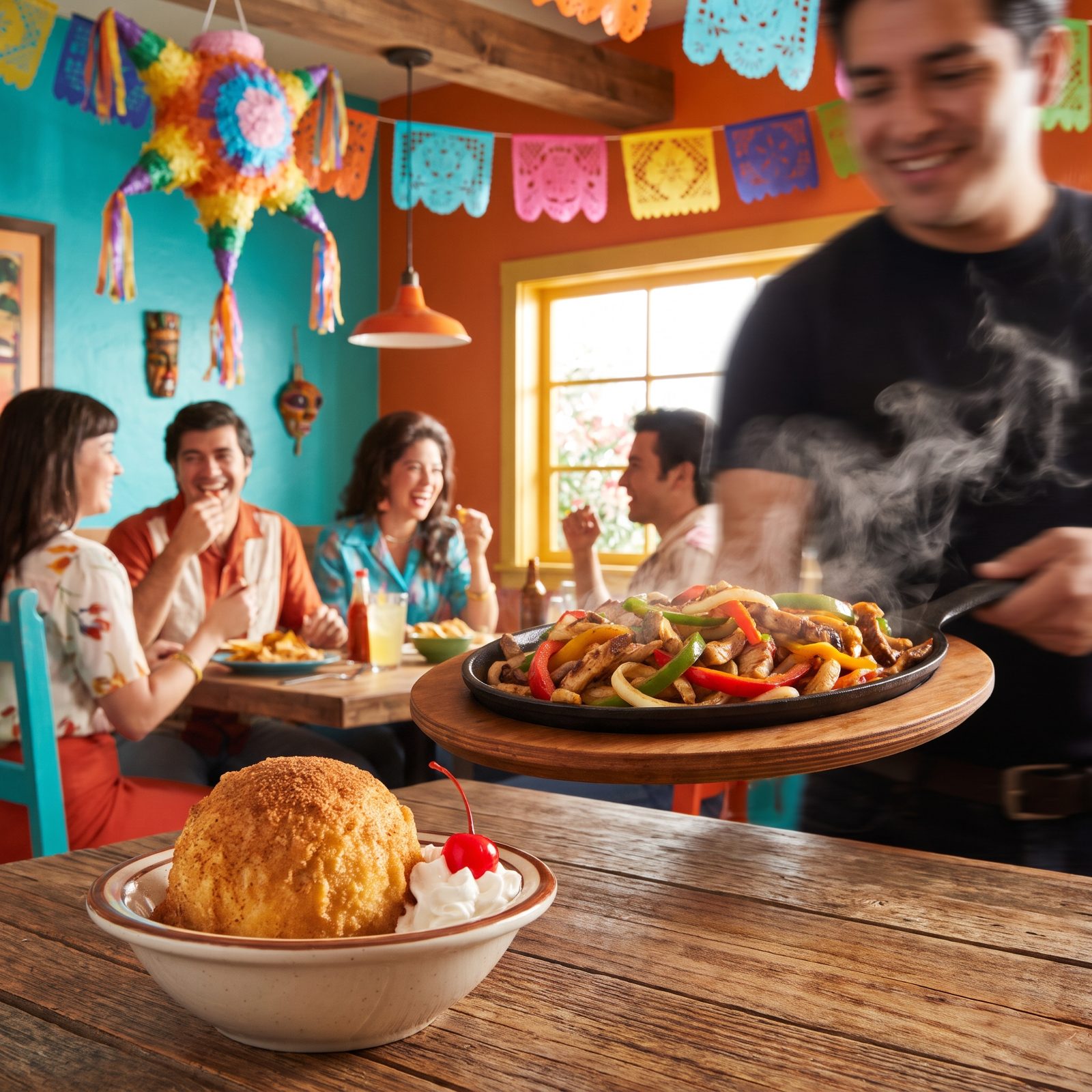
Chi-Chi’s was loud in the best way. Bright colors, piñata-style decorations, sizzling platters crossing the room, and a margarita glass the size of a fishbowl in front of every adult. For a lot of Midwestern families, this was the first Mexican food they ever ate sitting down.
The menu ran heavy on chimichangas and cheese, but the finale was fried ice cream. A scoop rolled in crunchy coating, flash-fried, served with whipped cream and a cherry. Hot outside, cold inside. It felt like a magic trick every single time.
The chain started in Minnesota in 1975 and grew into a national fixture through the 1980s. Then it slid, and in 2003 a deadly hepatitis A outbreak traced to green onions at a Pennsylvania location crushed what was left. The company was already in bankruptcy, and by 2004 the American restaurants were gone. The name lives on as a salsa brand on grocery shelves.
19. Taco Bell: Mission-Style Buildings and the Bell Beefer Sandwich
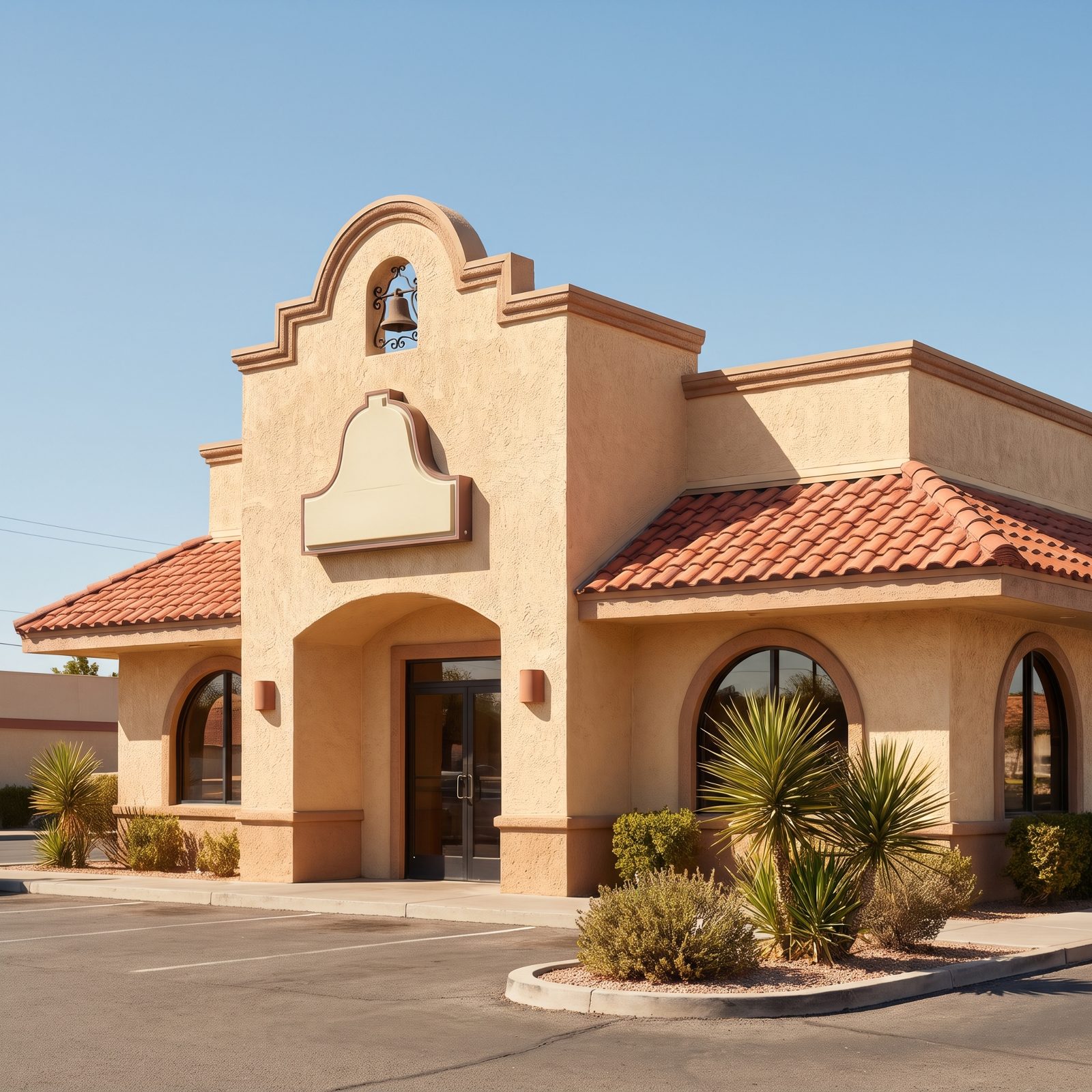
In 1980 a Taco Bell looked like a little Spanish mission dropped beside the highway. Stucco walls, arched windows, a clay-tile roof, and a real bell hanging out front. It felt exotic in towns where tacos were still a novelty.
The menu had oddities that later vanished, and the Bell Beefer is the one people still bring up. Seasoned taco meat on a hamburger bun with lettuce, tomato, and cheese, basically a sloppy joe with a south-of-the-border accent. It sounds strange now. It made perfect sense to a kid who wanted a burger at Taco Bell.
PepsiCo bought the chain in 1978, and the decades that followed brought purple-and-pink redesigns, a talking Chihuahua, and a menu that reinvents itself constantly. Taco Bell is now one of the biggest fast-food brands in the world. The mission buildings got remodeled away, and the Bell Beefer slipped off the board long ago.
18. Burger King: Paper Crowns and Flame-Broiled Whoppers
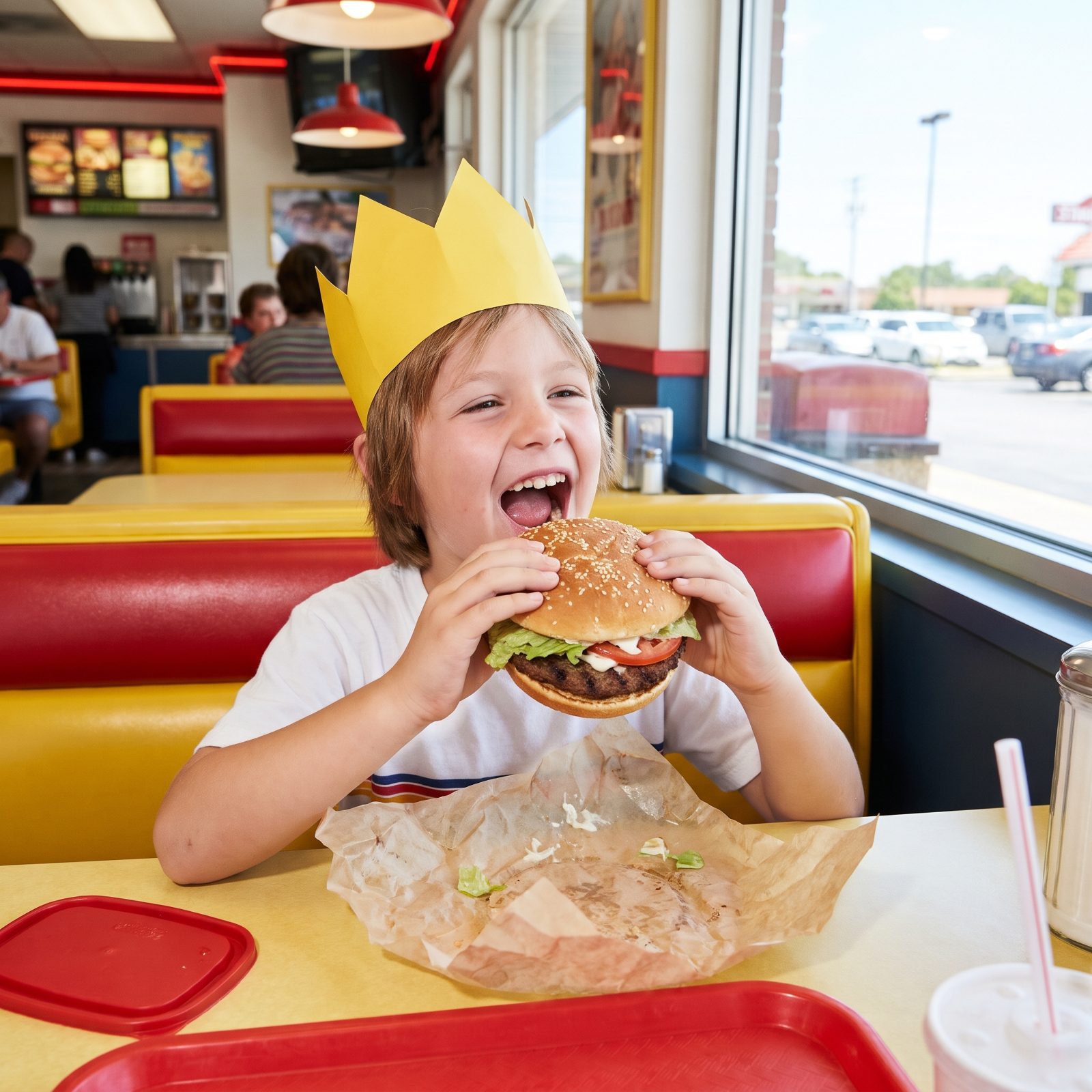
The crown was the whole reason to go. A paper crown, folded and fit to your head at the counter, worn through the meal and usually the whole ride home. Nobody was too cool for it at seven.
The grown-ups came for the Whopper, flame-broiled and noticeably bigger than anything at the place with the arches. The “Have It Your Way” jingle promised you could hold the pickles and hold the lettuce, and that felt like a real deal back then. Burger King was also running its own cast of characters, a magical king and his court, to compete for kids’ attention.
By the early 1980s Burger King was firing open shots at McDonald’s in TV ads, the start of the burger wars. It’s changed owners several times since and now sits under a big restaurant holding company. The Whopper is still the flagship, and yes, you can still get the crown.
17. Burger Chef: Funmeals, Works Bars, and Jeff the Talking Burger
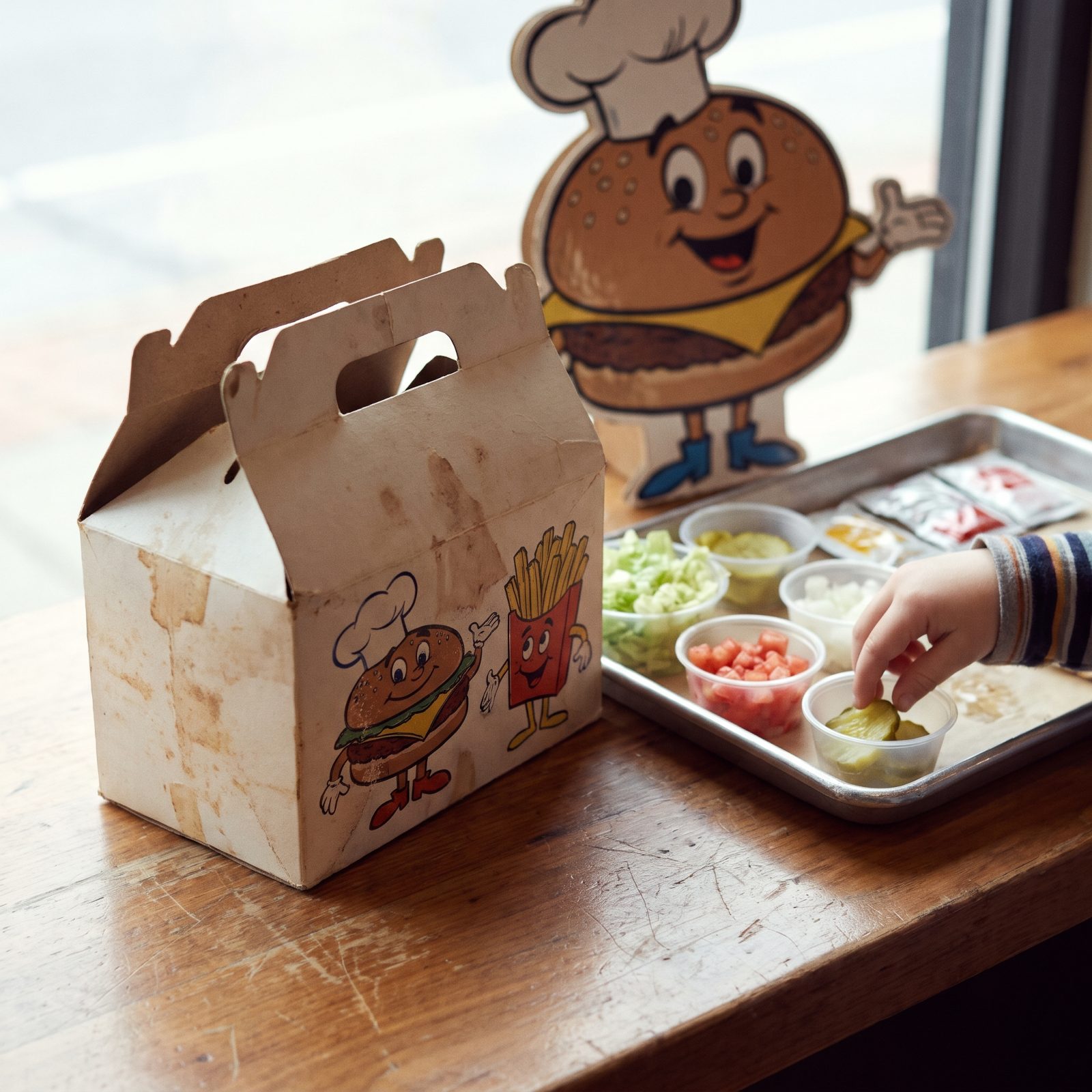
Burger Chef was the chain that got there first and lost anyway. In 1973 it rolled out the Funmeal, a kid’s meal with a burger, fries, a drink, and a little prize, years before McDonald’s built an empire on the same idea.
The Works Bar was the other draw. You got your burger plain and dressed it yourself at a station loaded with toppings, piling on as many pickles as you dared. The mascots were Burger Chef and his young sidekick Jeff, who showed up on the Funmeal boxes and in the commercials.
At its peak in the early 1970s Burger Chef was one of the biggest chains in the country, with more than a thousand restaurants. Then the money ran thin, and in 1982 it was sold to the company that owned Hardee’s. Locations were converted one by one, and the last one closed in the 1990s. For many families, the burger just stopped existing.
16. Wendy’s: Square Hamburgers and Old-Fashioned Dining Rooms
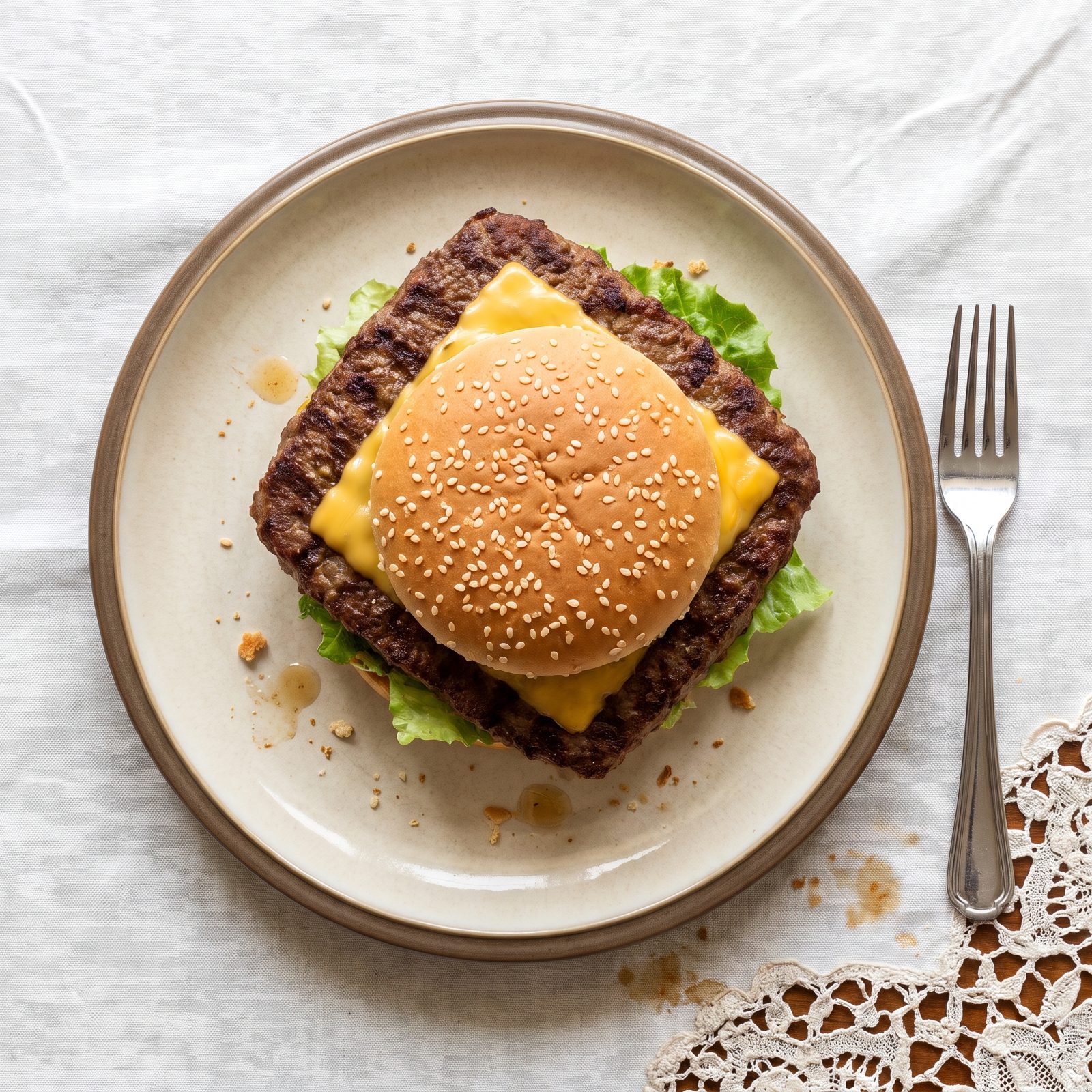
The burgers were square, and that was the pitch. The patty hung over the edges of the round bun so you could see the meat sticking out. It was a small trick that made the burger look like it was bursting.
Inside, Wendy’s dressed itself up like an old-fashioned parlor. Tiffany-style lamps, carpet, bentwood chairs, and tables printed with old-timey newspaper ads you read while you waited. You dipped your fries in a Frosty, thick enough to bend the straw, and acted like you’d invented it.
Wendy’s opened in Columbus, Ohio, in 1969, and by 1980 it had already pioneered the pickup window and added a salad bar. A few years later, a TV ad asking “Where’s the beef?” made the chain a national catchphrase. It’s still one of the biggest burger chains in the country. The patties are still square, even if the old parlor dining rooms are long gone.
15. Hardee’s: Huskee Burgers and Made-From-Scratch Biscuits
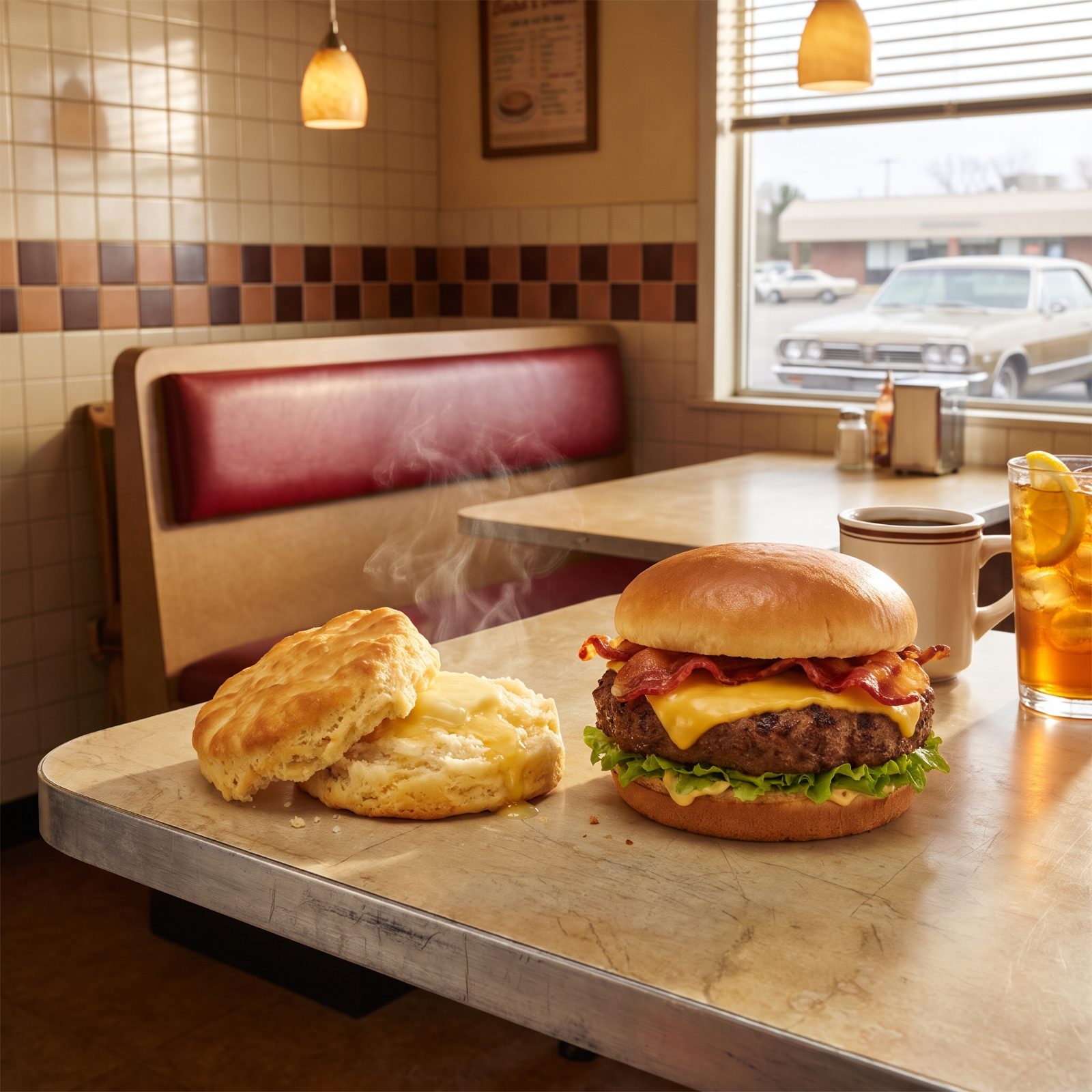
Hardee’s was a Southern drive-in turned regional powerhouse, and in 1980 it was riding two things: burgers with names like the Huskee, and biscuits. The biscuits changed everything.
The made-from-scratch biscuits, rolled out in the late 1970s, turned breakfast into the main event. Flaky, buttery, split and stuffed with sausage, ham, or fried chicken, they pulled in a morning crowd that the burger joints down the road couldn’t touch. You ate one in the car on the way to school and wiped your hands on your jeans.
Hardee’s started in North Carolina in 1960 and swallowed Burger Chef in the early 1980s, converting those restaurants into its own. In the late 1990s it was bought by the company behind Carl’s Jr., and the two now share a menu, with Hardee’s mostly in the Midwest and Southeast. The Huskee is long gone. The biscuits are still made by hand.
14. Jack in the Box, The Clown Speaker Box and the Jumbo Jack You Ordered Through a Grinning Head
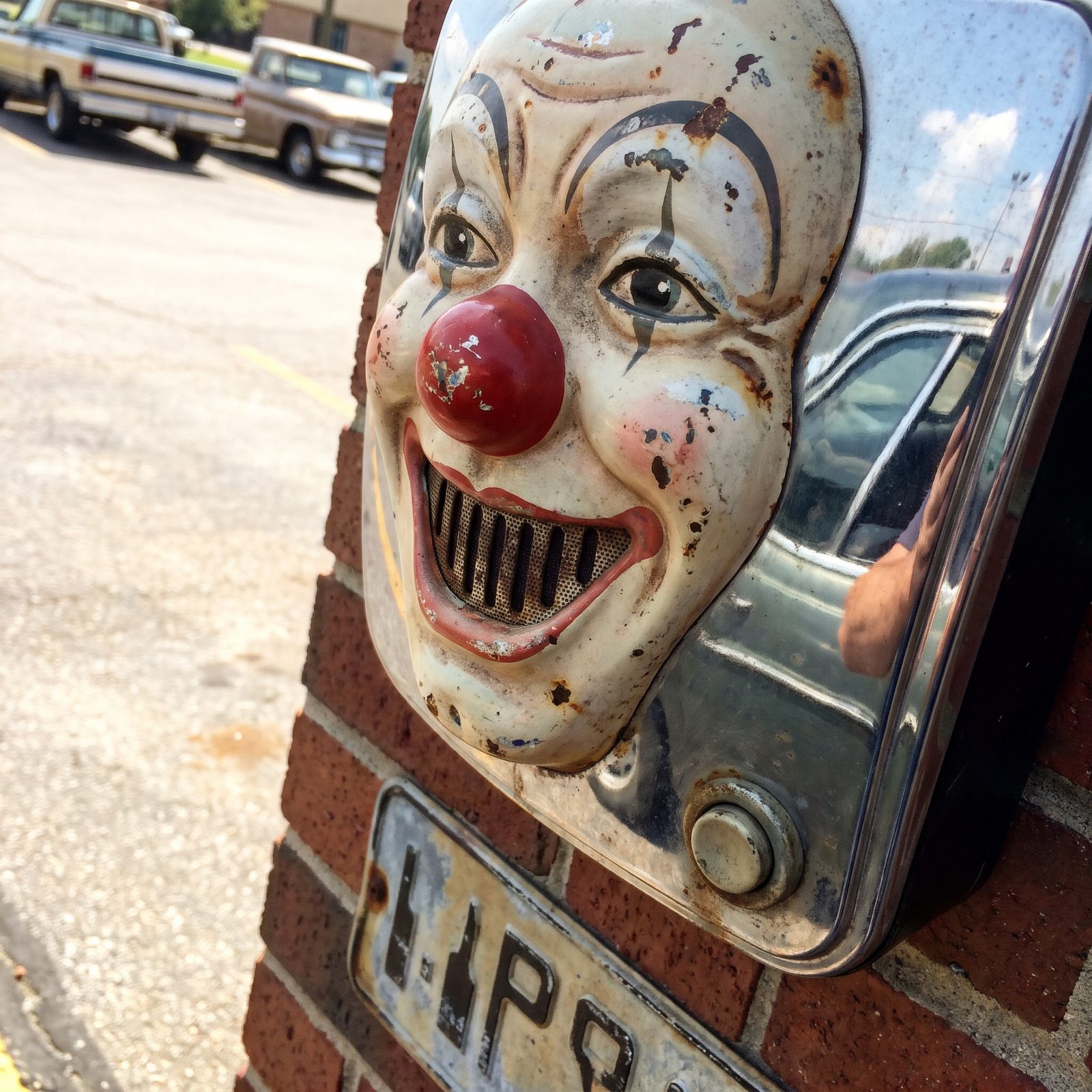
You ordered your burger by talking into a clown’s face, and in 1980 nobody found it strange. You pulled up, the speaker crackled, and somewhere a teenager in a paper hat asked if you wanted fries.
The Jumbo Jack showed up in 1971 and never left — big sesame bun, thin patty, the kind of thing you ate one-handed on the way to a Little League game. Jack in the Box leaned hard on that drive-through convenience while everyone else was still building dining rooms.
The clown head got blown up in a 1980 ad campaign, literally, in a stunt meant to signal the chain was growing up, and it backfired for years. Then in 1995 Jack came back as a wisecracking CEO with a round white head, and the brand found its footing again. Still around. Still slinging tacos nobody can explain but everybody orders.
13. Whataburger, Orange-and-White A-Frames You Could Spot From the Highway
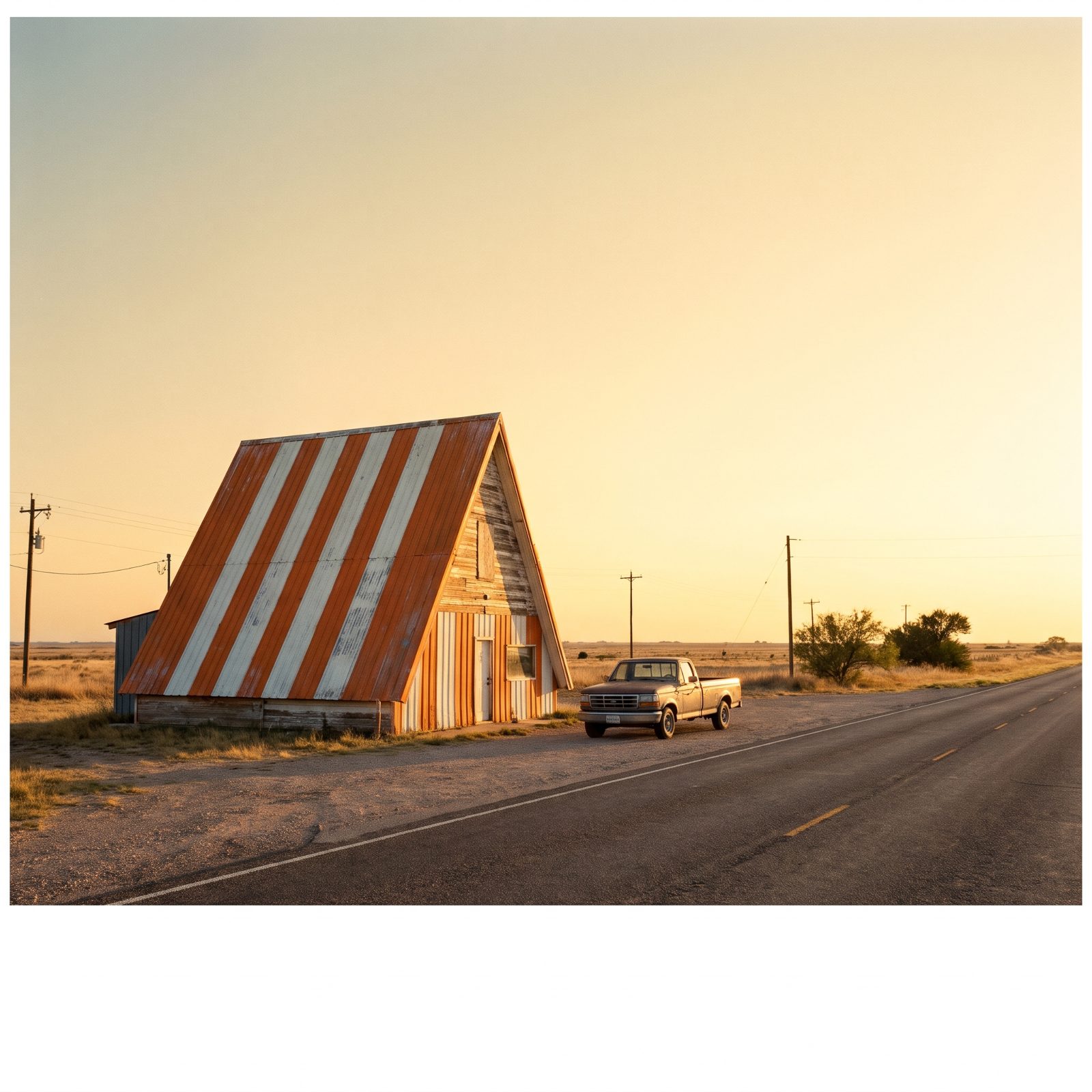
You knew you were close when the orange-striped A-frame broke the horizon. That roof did all the work. In flat Texas country you could see it coming for a mile, a candy-striped beacon promising a burger bigger than your two hands.
The burger came wrapped in orange paper, folded tight, and you tore into it in the parking lot because waiting felt impossible. Wide bun, wide patty, built to order. Whataburger opened late, stayed open late, and became the thing you craved at two in the morning.
Most of these chains thinned out or vanished. Whataburger did the opposite — it spread across the South, got fiercely defended by anyone who grew up with it, and in 2019 sold a majority stake to a Chicago investment firm, which caused a minor regional panic. Still orange. Still a religion in Texas.
12. White Castle, Porcelain Castles and Sliders Bought by the Sack
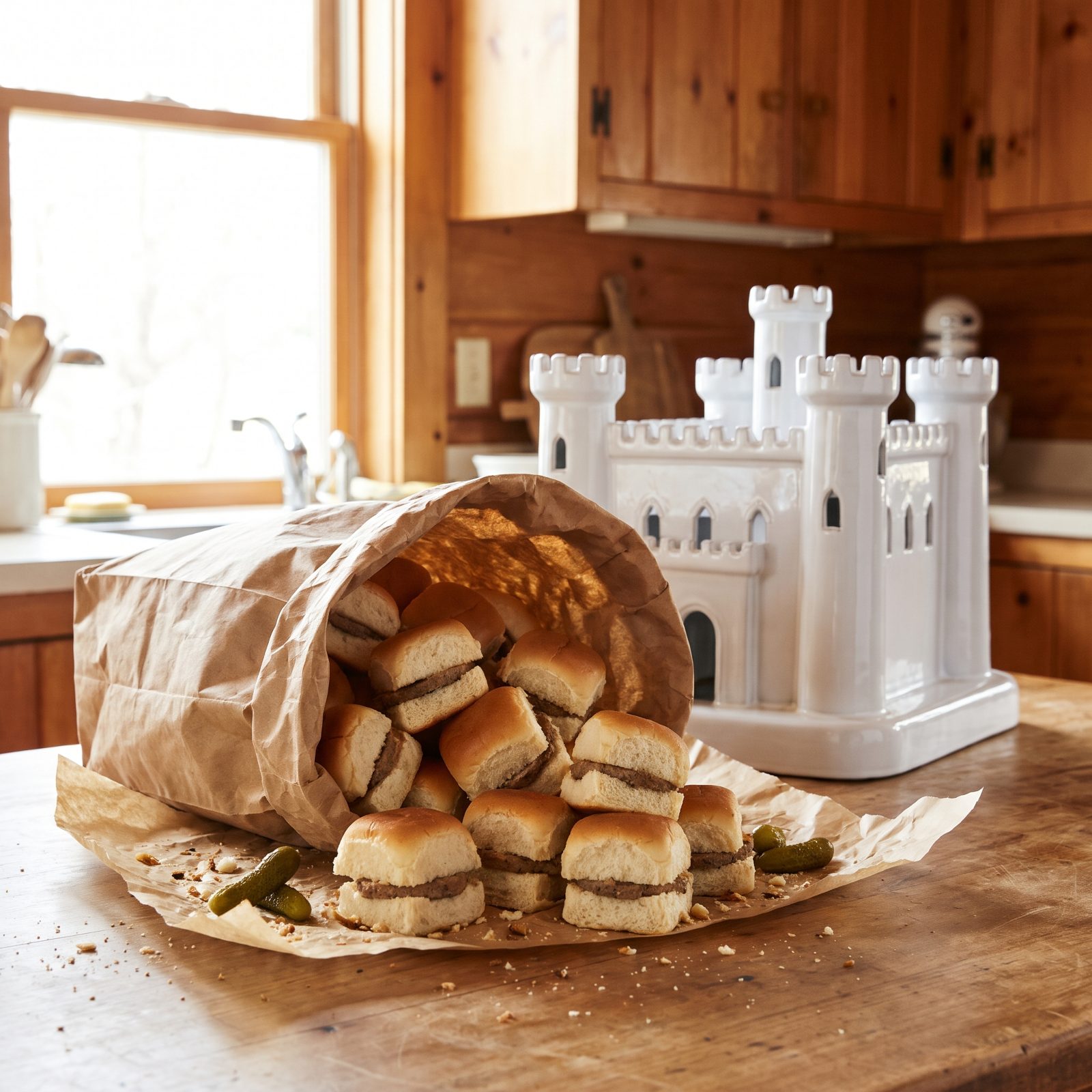
Nobody orders one slider. That was the genius. The burgers were small and square, five holes punched in each patty so they steamed on a bed of onions, and you bought them by the sack because a single one was a tease.
White Castle started in 1921 in Wichita, which makes it the oldest fast-food burger chain in the country. Those porcelain-enamel castle buildings were built to look clean and permanent, a direct answer to a public that didn’t trust ground beef back then.
By 1980 it was a Midwest and East Coast institution, the 3 a.m. sack of sliders already folklore. Still family-owned to this day, still cranking out Crave Cases, still refusing to franchise. You can buy the frozen ones now, but it isn’t the same and you know it.
11. Roy Rogers, Roast Beef, Fried Chicken, and the Fixin’s Bar Where You Built Your Own Sandwich
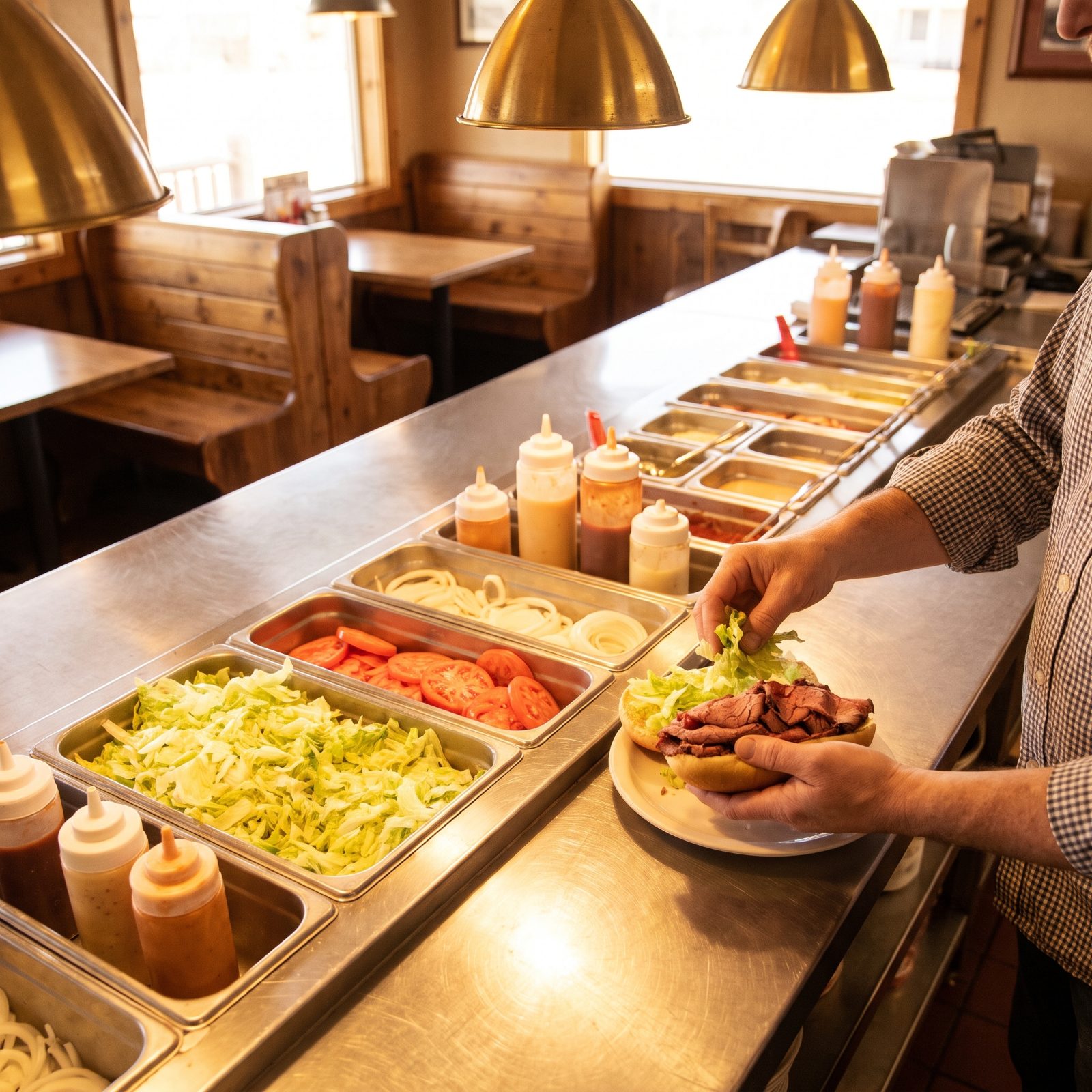
The fixin’s bar was the magic. You got your roast beef sandwich handed over plain, then walked to a long steel counter and loaded it yourself — lettuce, tomato, pickles, three kinds of sauce, as much as you dared pile on.
For a kid, that autonomy felt enormous. Roy Rogers, named for the singing cowboy, split its menu between thin-sliced roast beef and fried chicken, and somehow pulled off both. The Western theme ran through the whole place, wood paneling and all.
Here’s the sad part. Marriott owned the chain and sold most of it off in the 1990s, converting hundreds of locations to Hardee’s and Wendy’s. A handful survive today, mostly in the Mid-Atlantic, kept alive by a single family-owned company and a loyal crowd that drives out of its way for one. The fixin’s bar is still there. Go build a sandwich while you can.
10. Red Barn, The Barn-Shaped Building and the Big Barney Burger
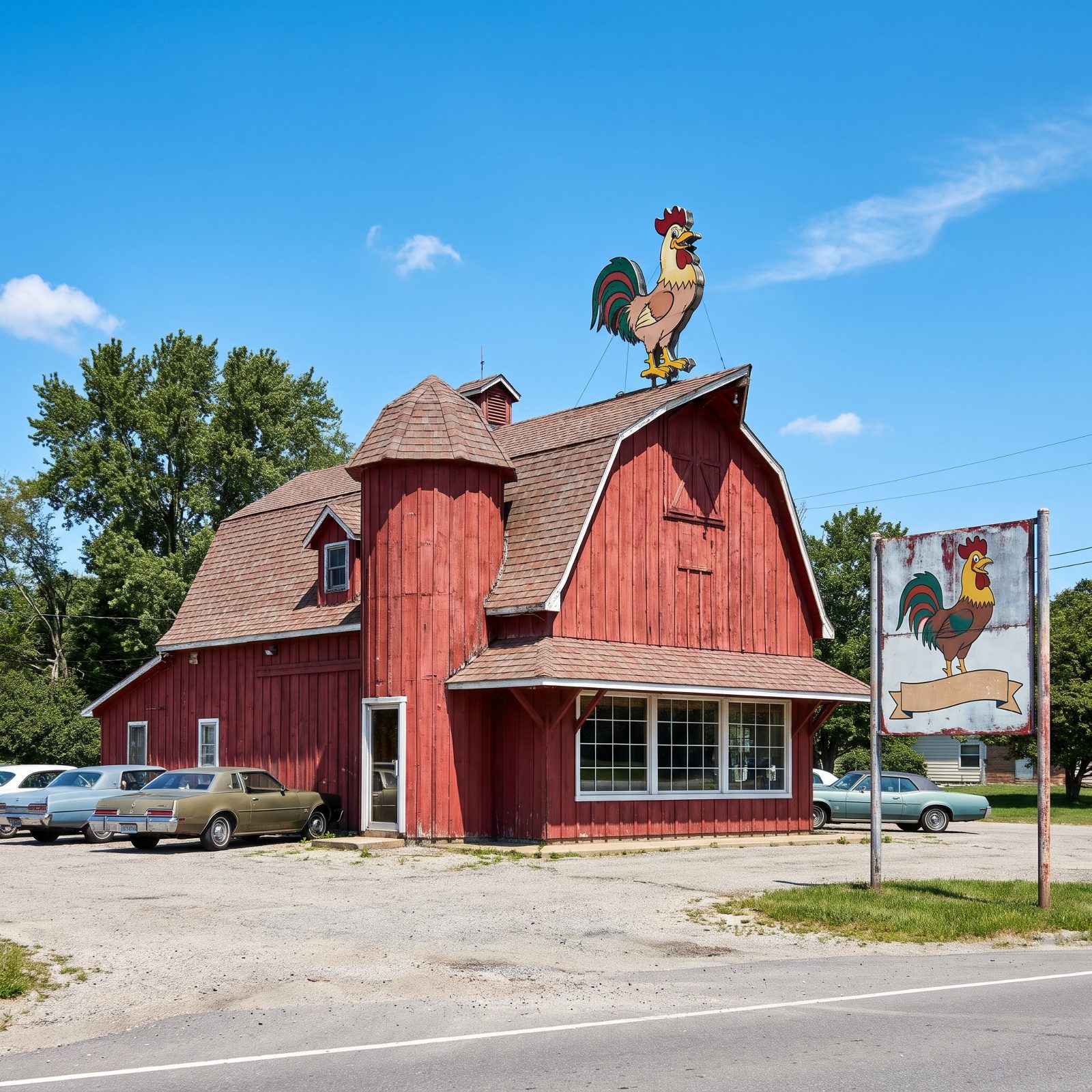
The building was a barn. Not barn-ish, not barn-inspired — an actual red barn with a peaked roof and a giant rooster weather vane on top. You couldn’t miss it, which was the entire idea.
Red Barn ran the Big Barney, a double-decker that showed up a year before the Big Mac did, plus the Barnbuster and one of the earliest self-serve salad bars in fast food. Ahead of its time, and nobody remembers.
That’s the tragedy here. Red Barn was sold, passed between owners, and by the mid-1980s the franchise agreements simply ran out and weren’t renewed. The barns closed one by one. A few of the buildings still stand as other restaurants, the gambrel roof giving them away to anyone who knows. A chain that vanished completely, loved fiercely by the people who had one down the street.
9. Arby’s, The Giant Cowboy Hat Sign and Thin-Sliced Roast Beef
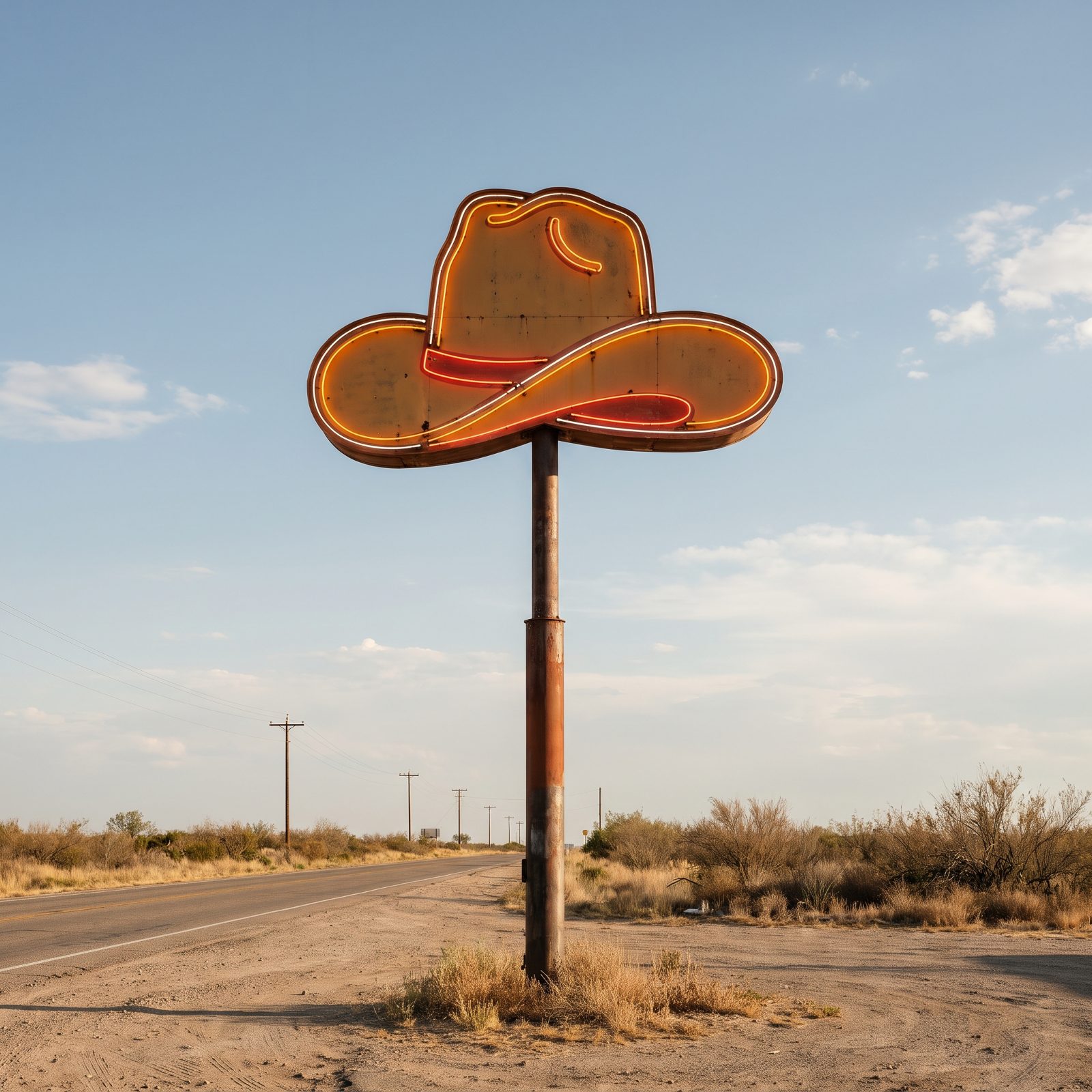
You spotted the hat before you spotted the building. That ten-gallon cowboy hat glowing on a pole was pure 1960s roadside Americana, and by 1980 it still marked the spot where you got roast beef instead of burgers.
Arby’s did one thing differently and committed to it hard. Thin-sliced roast beef piled on a small sesame bun, served warm, with that strange tangy Horsey Sauce if you were feeling brave. Opened in 1964 in Ohio, named loosely for the Raffel Brothers who founded it.
Of this whole list, Arby’s had the happiest ending. It grew, held on, and remains a national chain today with thousands of locations. The giant hat signs got mostly retired for cleaner modern ones, which is a small loss. But the roast beef is the same, and you can still walk in and order the sandwich your dad ordered.
8. A&W, Frosty Mugs of Root Beer Carried Right to Your Car Window
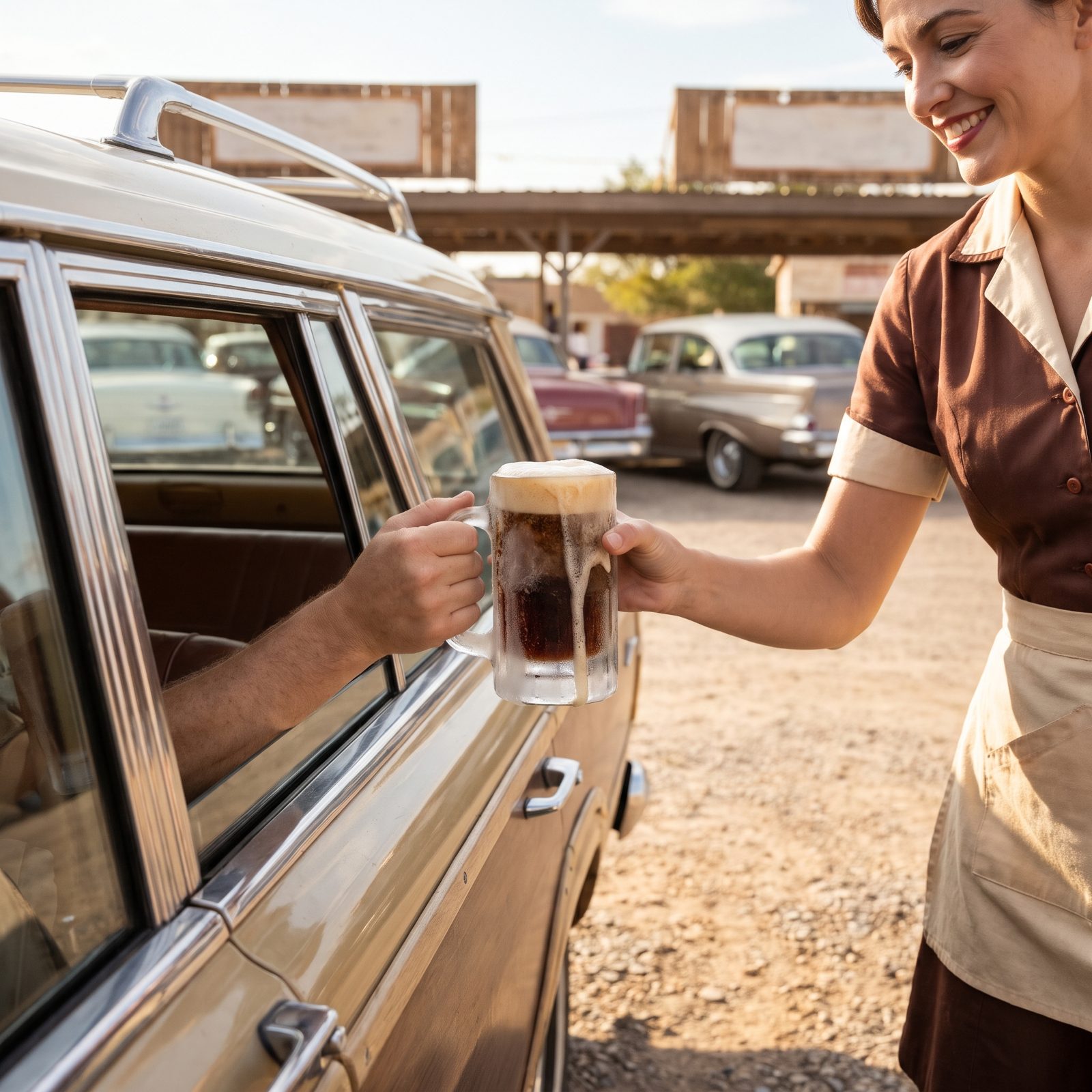
The mug was frozen. That’s the detail everyone remembers. A&W served its root beer in a heavy glass mug pulled straight from the freezer, so frosted it clouded over, and a carhop clipped a tray to your car window and brought it out.
You drank root beer in your car on a summer night, condensation running down the glass, and somewhere a Papa Burger or a Mama Burger waited on the tray. A&W started in 1919 as a root beer stand and built an empire of drive-ins on that cold mug.
The full carhop drive-ins mostly faded as fast food moved to counters and windows. A&W survives, often sharing buildings with other brands now, and a few standalone root beer stands still pour into frozen mugs if you hunt for them. The root beer is still the real draw. Nothing in a plastic cup tastes like it did in that frozen glass.
7. Dairy Queen, The Brazier Burger First, the Dipped Cone Always
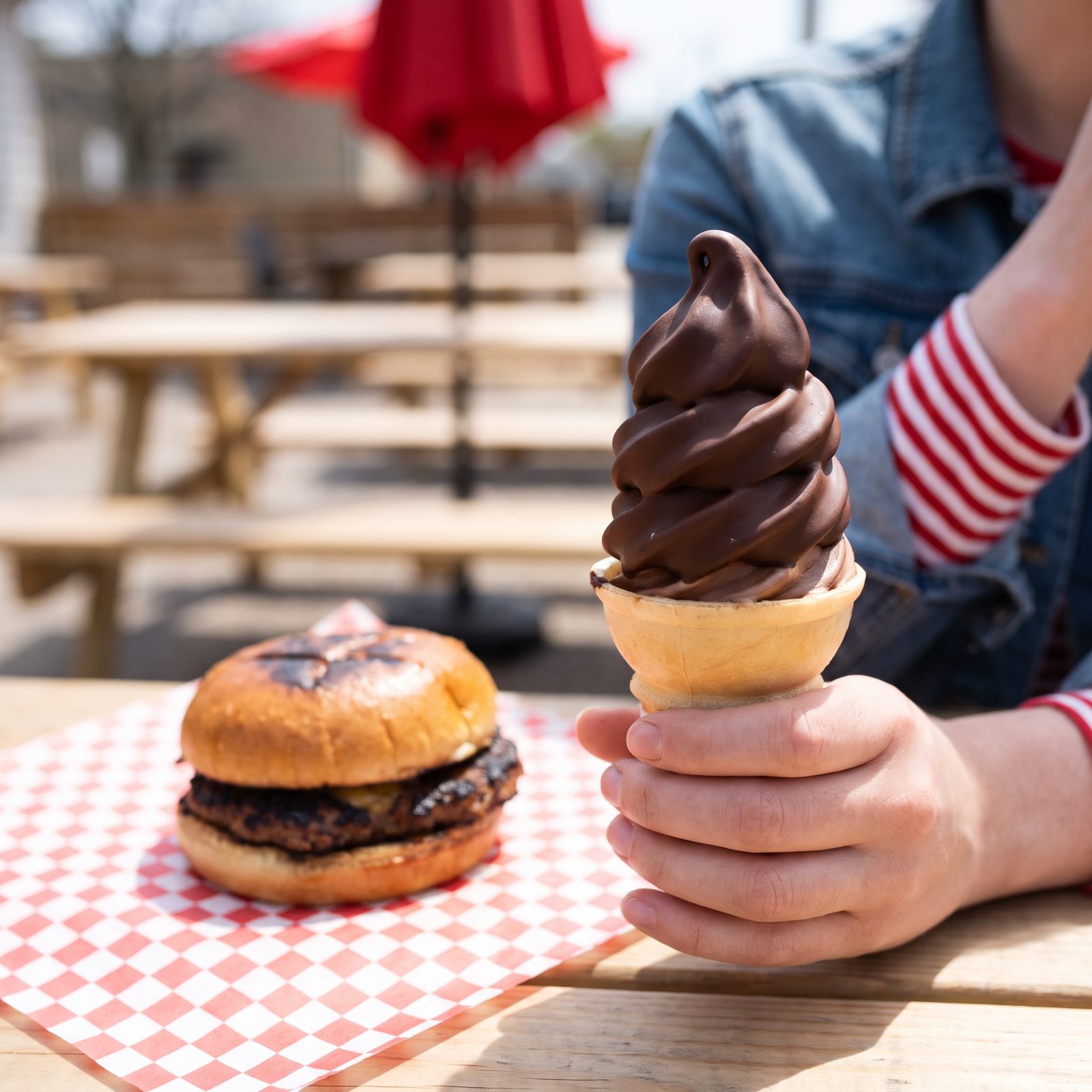
People forget Dairy Queen sold burgers. The Brazier line was the whole savory half, char-flavored burgers and crinkle fries, and in 1980 a DQ dinner was a real family outing, not just dessert.
But the dipped cone is what you actually came for, and you knew it. Soft serve plunged into a vat of chocolate that hardened into a shell the second it hit the cold, cracking under the first bite. That gravity-defying curl on top was a point of pride.
Dairy Queen is still everywhere, a genuine survivor, though the Brazier name faded out and most locations lean on the Blizzard now. The dipped cone never left. Walk up to any DQ window today and the chocolate shell still cracks exactly the way it did when you were eight.
6. The Magic Pan, Crepes Folded in an Open Kitchen You Could Watch
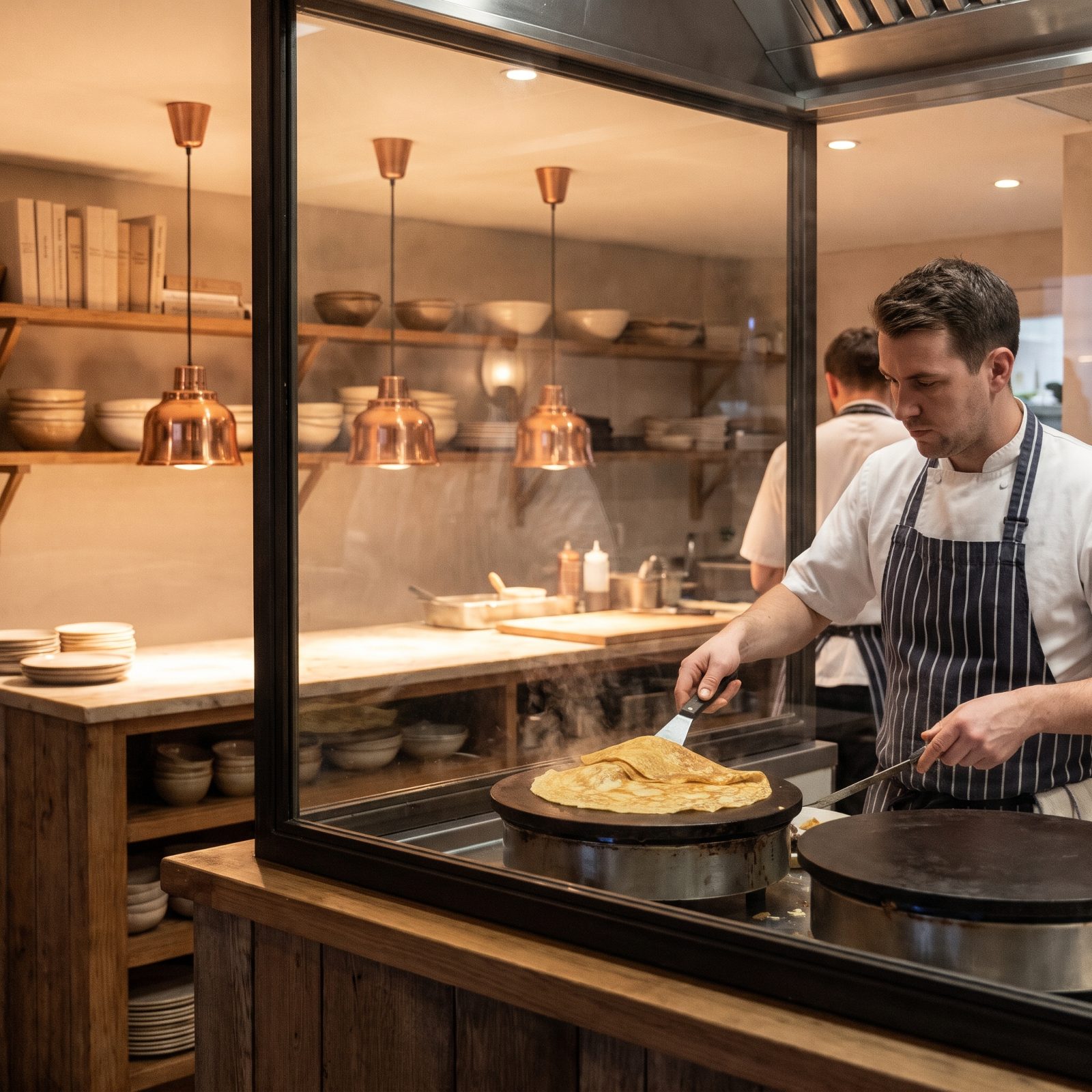
This one felt fancy. The Magic Pan served crepes — savory ones stuffed with chicken and mushroom, sweet ones folded over strawberries and cream — and it was where your family went when the occasion called for cloth napkins.
The theater was the open kitchen. Batter was spread thin across big, flat round griddles, then lifted and folded with a metal spatula in full view, and you watched your dinner get made. In 1980 that felt sophisticated, a little taste of French bistro dropped into a shopping mall.
The Magic Pan grew to dozens of locations, got bought by Quaker Oats, then changed hands and slowly closed through the 1980s and 90s until it was gone entirely. It’s the one on this list people remember with real tenderness, the slightly grown-up restaurant of their childhood. No frozen version brought it back. It just ended.
5. T.G.I. Friday’s, Tiffany Lamps, Striped Canopies, and the Potato Skins That Started a Trend
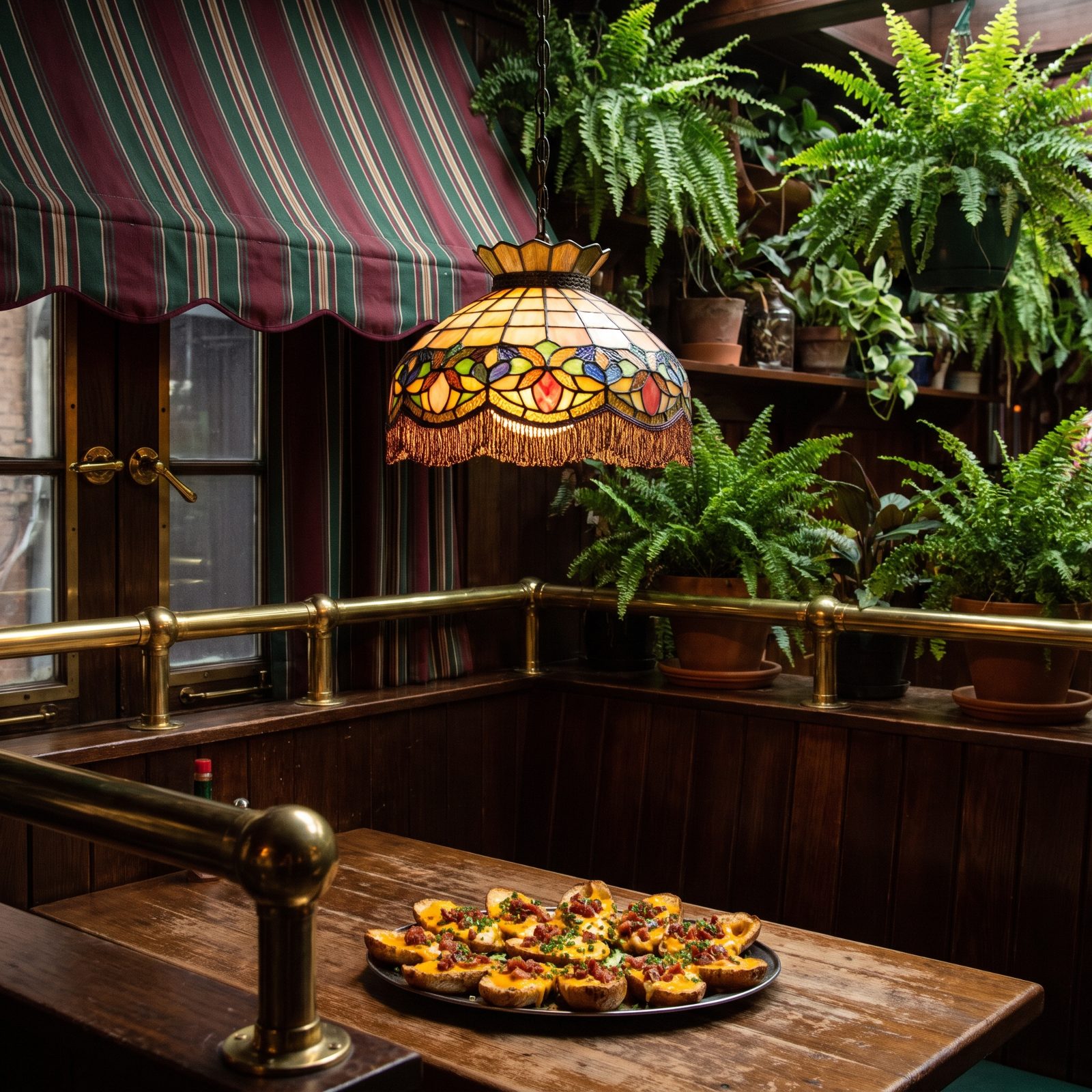
The potato skins came from here. Crisp shells loaded with cheddar, bacon and a scatter of chives, now a standard appetizer at every bar in America. T.G.I. Friday’s put them on the map, and in 1980 that plate was the reason you asked to sit in the bar section.
The look was unmistakable — Tiffany-style stained-glass lamps, burgundy, green and cream striped canopies, brass rails, and walls crammed with antique junk. It was the original fern bar, loud and social, where young adults went to actually have a good time on a Friday.
Friday’s grew into a global casual-dining giant, then hit hard times. The chain filed for bankruptcy in recent years and shrank dramatically, closing scores of U.S. locations. The stained glass and the striped awnings mostly got remodeled away decades ago. But the potato skins outlived the decor, and you’ve eaten a version of them somewhere just this year.
4. Farrell’s Ice Cream Parlour: The Drum-Beating Zoo and the Birthday Sundae Carried Over Someone’s Head
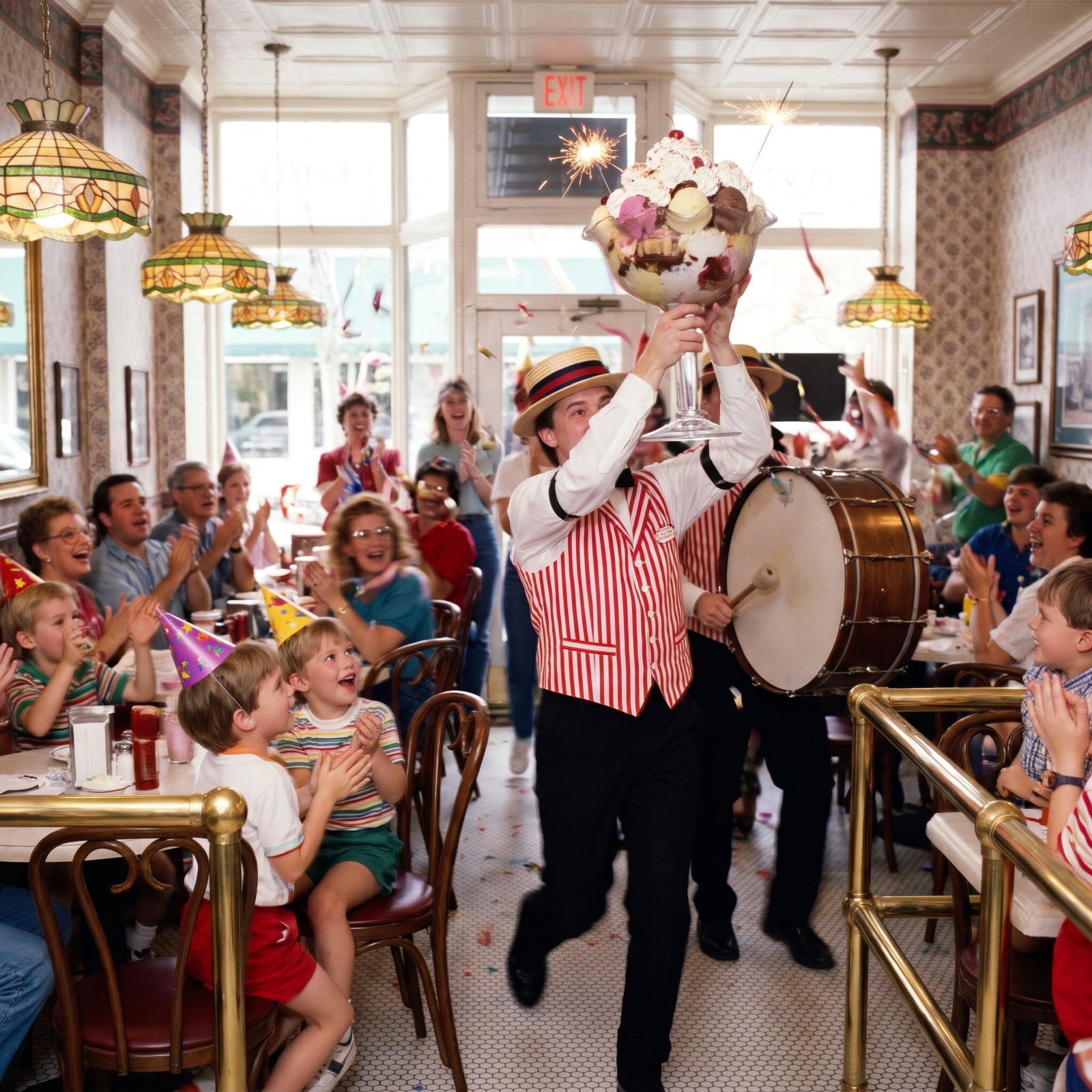
You heard Farrell’s before you ever saw your table. A siren, a drum, a server bellowing somebody’s name, and then here came The Zoo — a sundae the size of a small sink, held high over one server’s head in a giant glass goblet while the whole parlor turned to watch. For the birthday kid, that was the whole reason you came.
Striped wallpaper, stained glass, servers in straw boaters and garter sleeves. The place dressed like a soda fountain that never got the memo about the twentieth century. You ordered a Pig’s Trough and they handed you a certificate if you finished it. Nobody finished it.
3. The Old Spaghetti Factory: Spumoni, a Minestrone Start, and Dinner Inside a Real Trolley Car
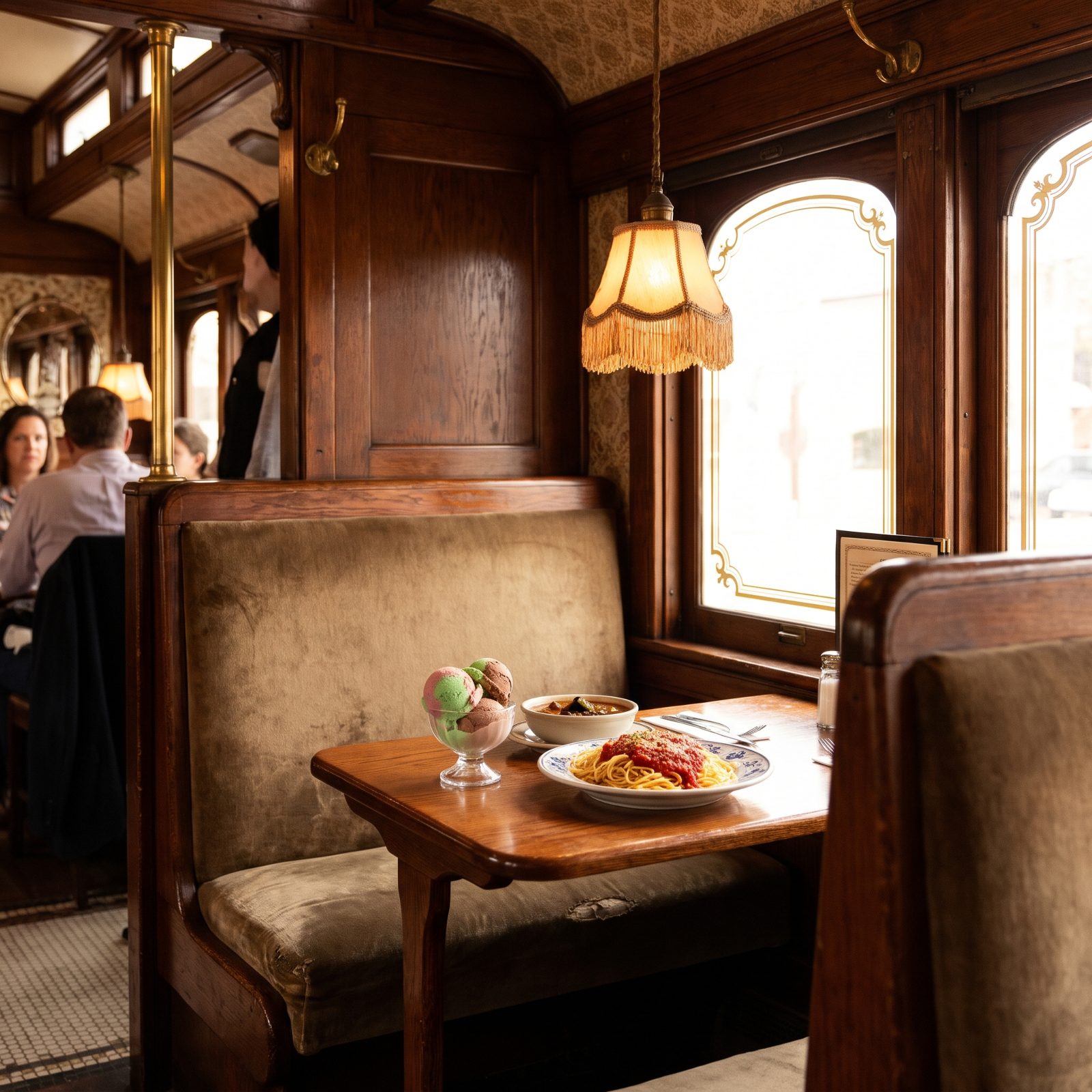
Dinner came with the whole arc. A cup of minestrone, bread, a heaping plate of spaghetti, and a scoop of spumoni to close it out — all of it for a few bucks. The order a lot of us landed on was the one drowned in browned butter and mizithra cheese, nutty and faintly weird and impossible to stop eating.
Then there was the trolley. An actual antique streetcar parked inside the restaurant, and if your name got called for a table in it, you felt like you’d won a prize. Stained glass hanging everywhere, cast-iron headboards bolted to the walls, the whole room looking like a Victorian attic somebody decided to serve dinner in.
The happy twist? The Old Spaghetti Factory is still open. Family-owned since 1969, still ladling spumoni, still parking kids in that trolley. One of the few on this list you can walk into tonight.
2. Luby’s Cafeteria: The LuAnn Platter and Sliding Your Brown Tray Down the Rail
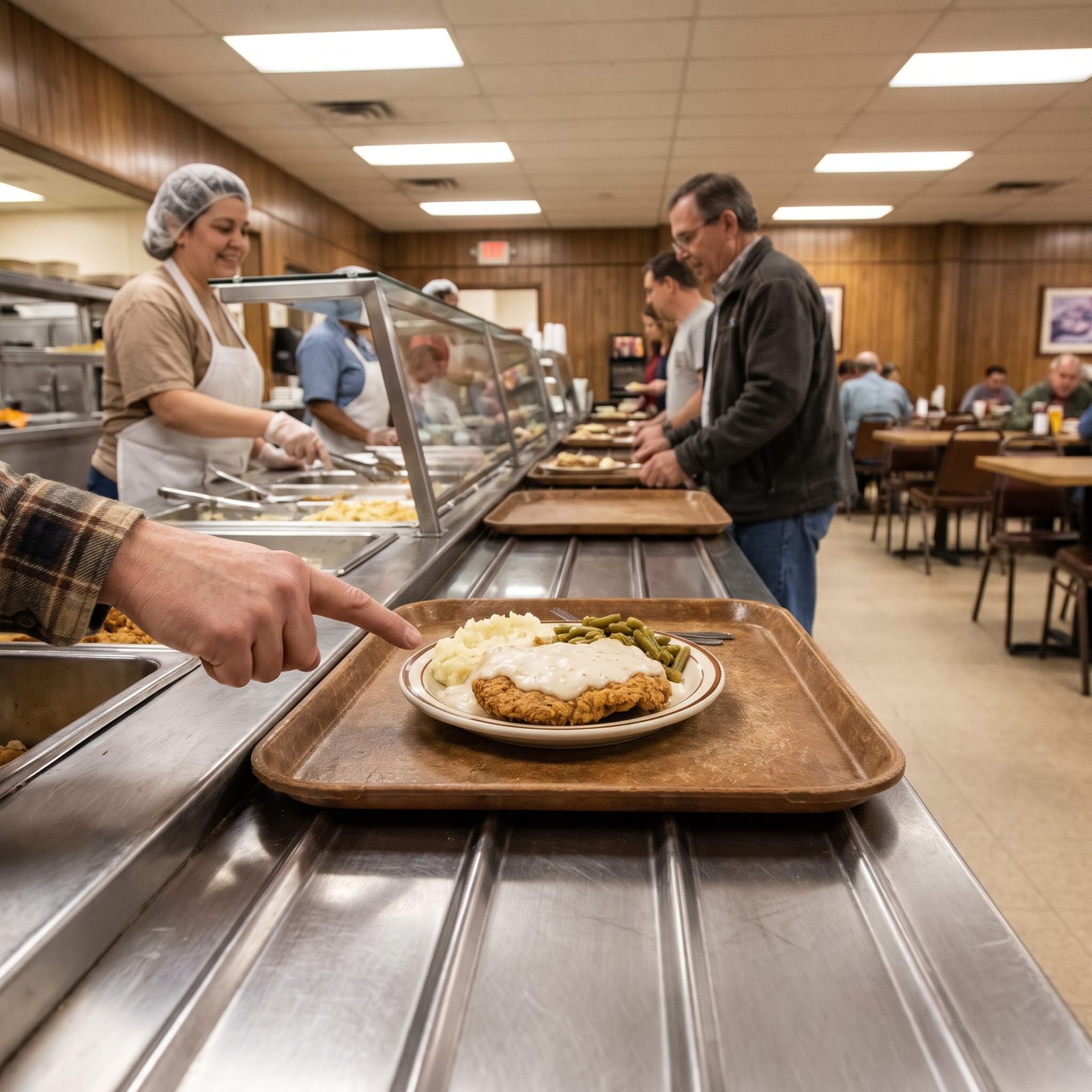
The tray made the sound. That slow grind of brown plastic along the stainless rail while you pointed and a server in a hairnet loaded your plate. You could see everything before you picked it, which is a kind of honesty most restaurants never bother to offer.
The LuAnn Platter was the move for anyone watching their money or their appetite — a smaller portion, a meat, two sides, a roll. Built for Sunday lunch after church and for grandparents everywhere. Fried fish, chicken-fried steak, a wobbling square of Jell-O to finish.
We’ll just say it: the carrot-and-raisin salad had no business being as good as it was.
1. Howard Johnson’s: The Orange Roof You Spotted From the Highway and 28 Flavors of Ice Cream
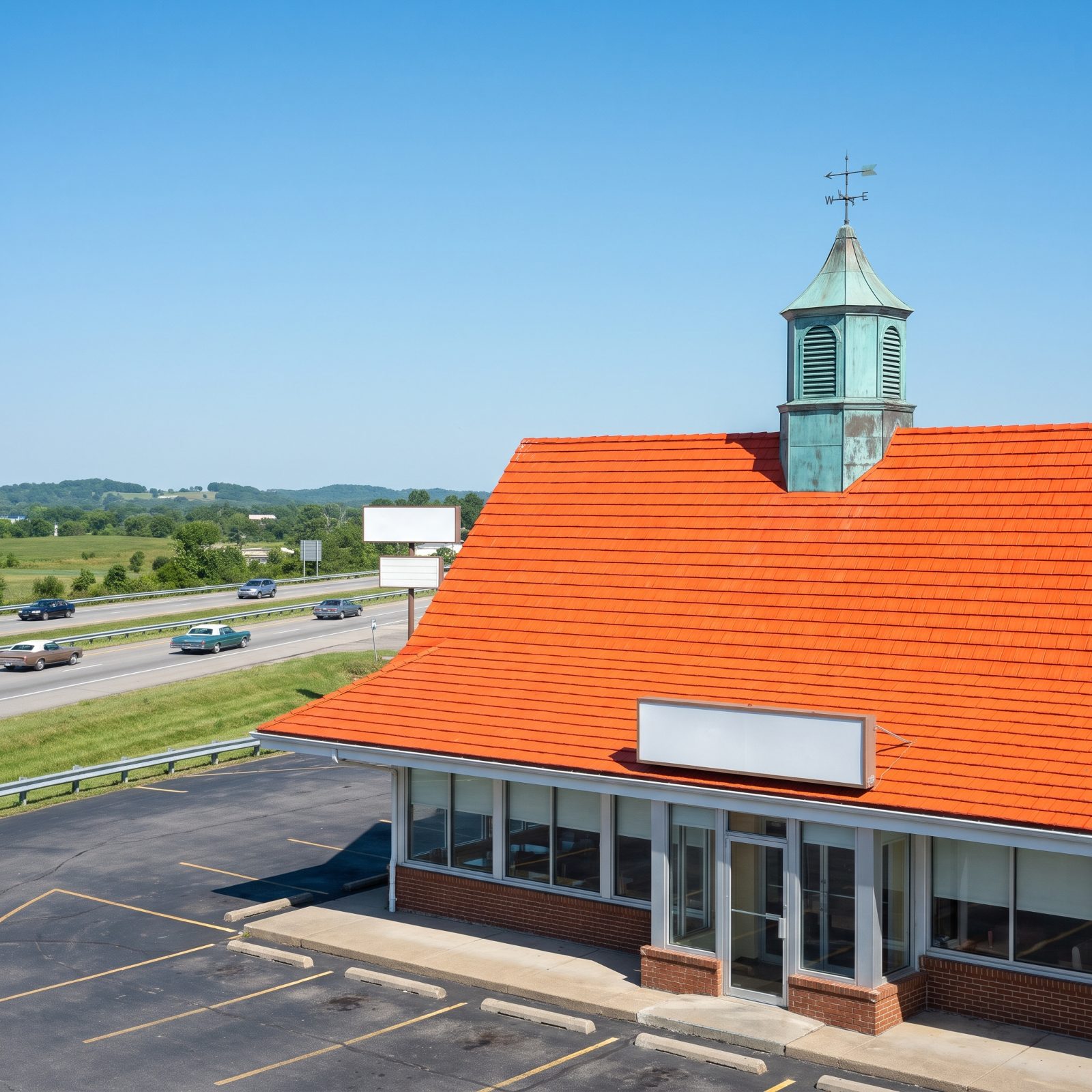
That orange roof was a promise you could read from a mile down the interstate. Teal cupola, weathervane spinning on top, and inside: air conditioning, clean bathrooms, fried clam strips, and 28 flavors of ice cream lined up behind glass. For a station wagon full of kids running low on patience, Howard Johnson’s was rescue.
The ice cream was the headline. Twenty-eight flavors landed like an outrage back when most places offered three, and standing there deciding felt like a genuine fork in the road. Frozen pudding. Burgundy cherry. Pistachio for the brave.
At its peak, HoJo was the largest restaurant chain in America, bigger than McDonald’s.
And then it wasn’t. The chain shrank through the 80s and 90s as the interstates it was built for simply passed it by. The very last Howard Johnson’s, in Lake George, New York, closed in 2022. The orange roof lives in memory now, which is a shame — nobody’s made clam strips taste like a road trip since.