
Would you like to save this?
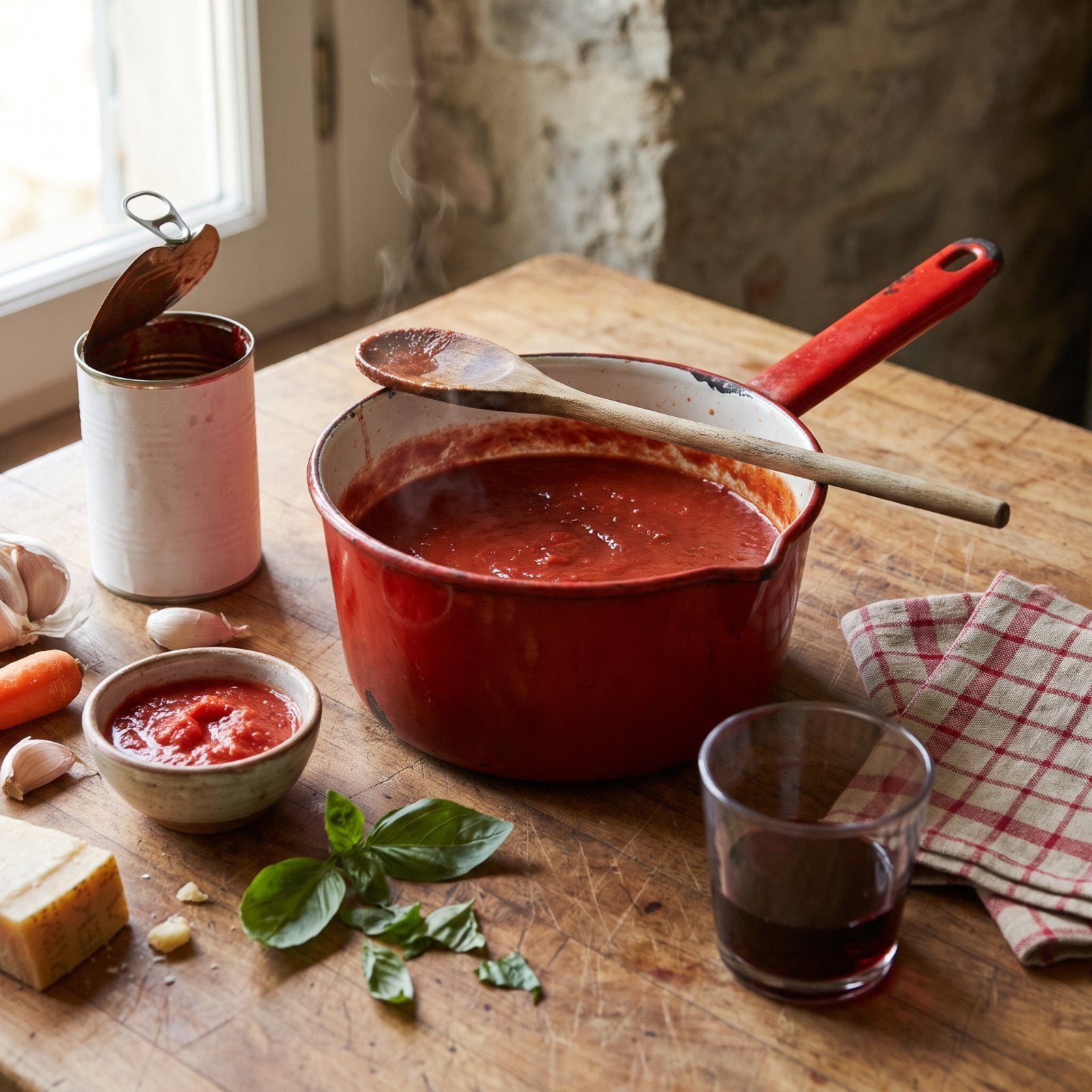
The best spaghetti I ever ate came out of a kitchen with one dented pot and a wooden spoon worn smooth on one side. No fancy equipment, no shortcuts dressed up as technique — just a handful of habits passed down so quietly nobody wrote them down. And that’s the problem. The women who cooked this way assumed you were watching, and most of us weren’t. So here are the moves that make homemade sauce taste like it simmered all afternoon, even when it didn’t.
Please note that some of the images in this article were created with the assistance of AI.
48. Build Tomato Sauce Around a Soffritto
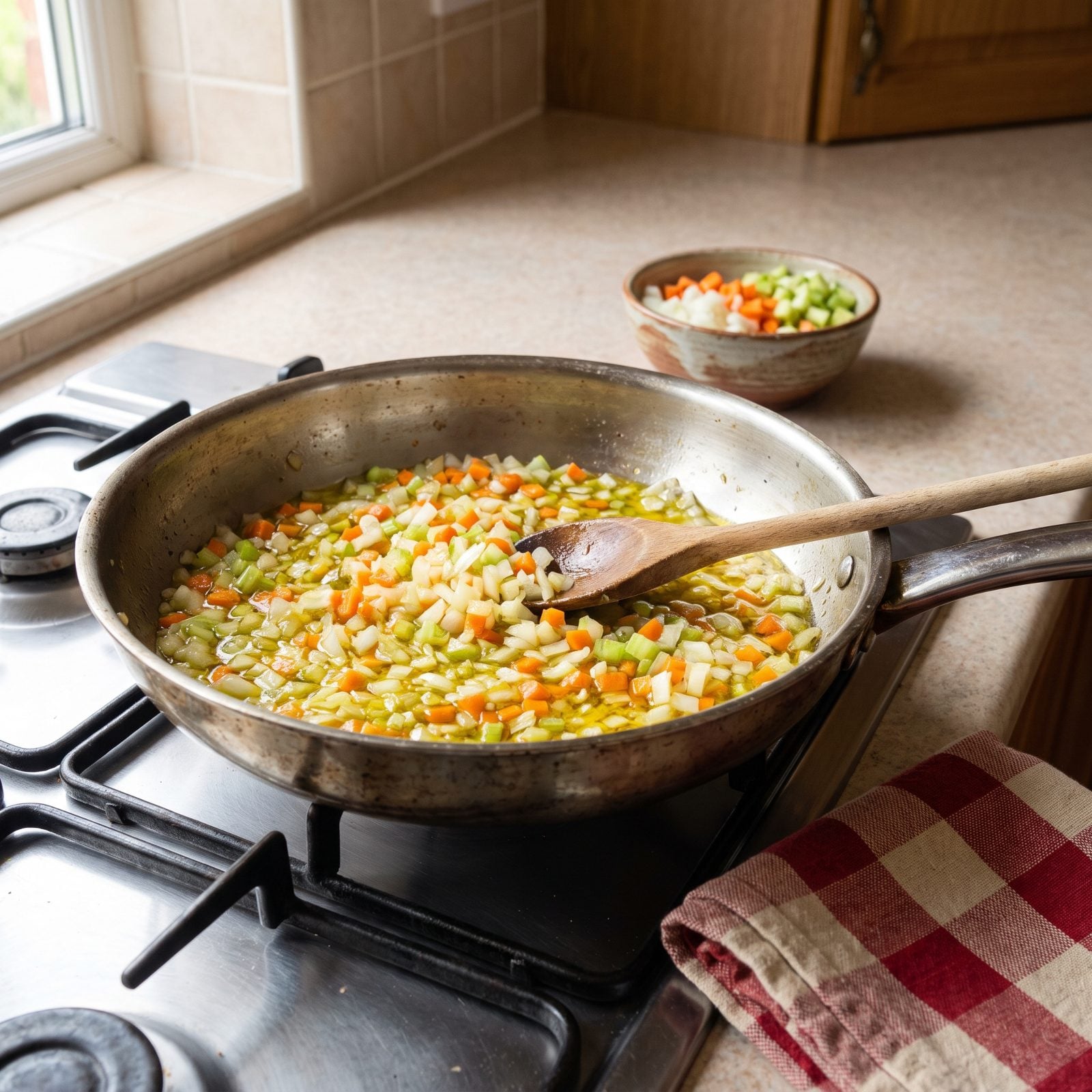
Most people start sauce by dumping tomatoes in a pot. The grandmothers started twenty minutes earlier, with onion, carrot, and celery diced small and sweated slow in olive oil until the whole kitchen smelled like somebody meant business. That base is the soffritto, and it’s the floor the entire sauce stands on.
Skip it and your sauce tastes thin. One note. Tomato and not much else. A proper soffritto builds a quiet, savory depth underneath the brightness so the finished sauce has somewhere to go.
Dice everything small and roughly equal, then cook it over medium-low in a good glug of oil for fifteen minutes before anything else goes in. Low heat — you want soft and sweet, not browned and bitter. Build on top of that.
47. Bloom Garlic Gently Instead of Browning It
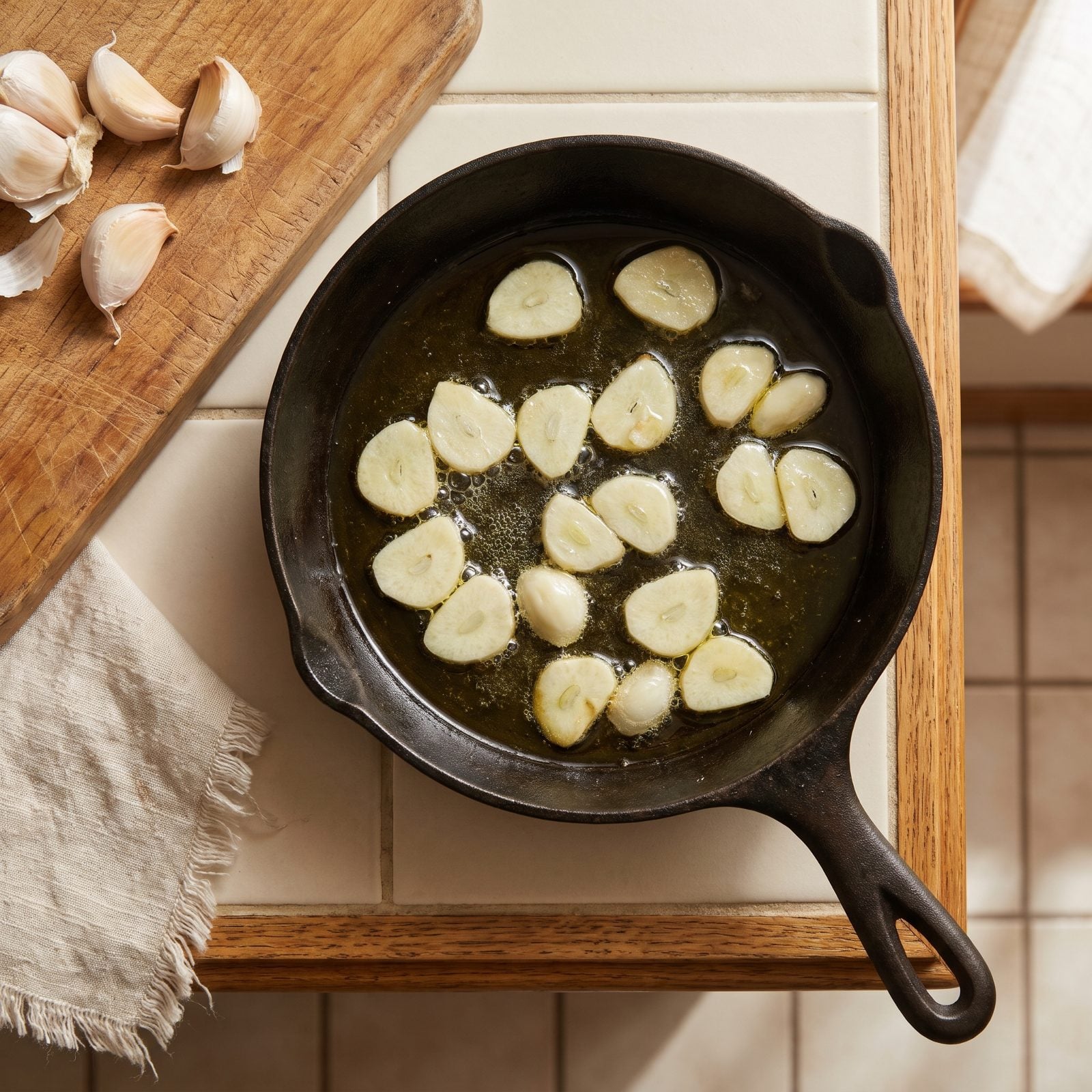
Burnt garlic is the fastest way to ruin a pot of sauce, and it happens in about eight seconds. One minute it’s golden, the next it’s brown and acrid, and that bitterness sits in the sauce for the rest of its life. No amount of simmering pulls it back out.
Grandmothers knew to keep the heat down and the garlic moving. You want it sweet and mellow, soft at the edges, barely blond.
Add sliced or crushed garlic to warm oil over low heat and let it sizzle gently for a minute or two, just until it turns fragrant and pale gold. The second you smell it, it’s ready. Don’t wait for color — color means you waited too long.
46. Crush Whole Canned Tomatoes by Hand
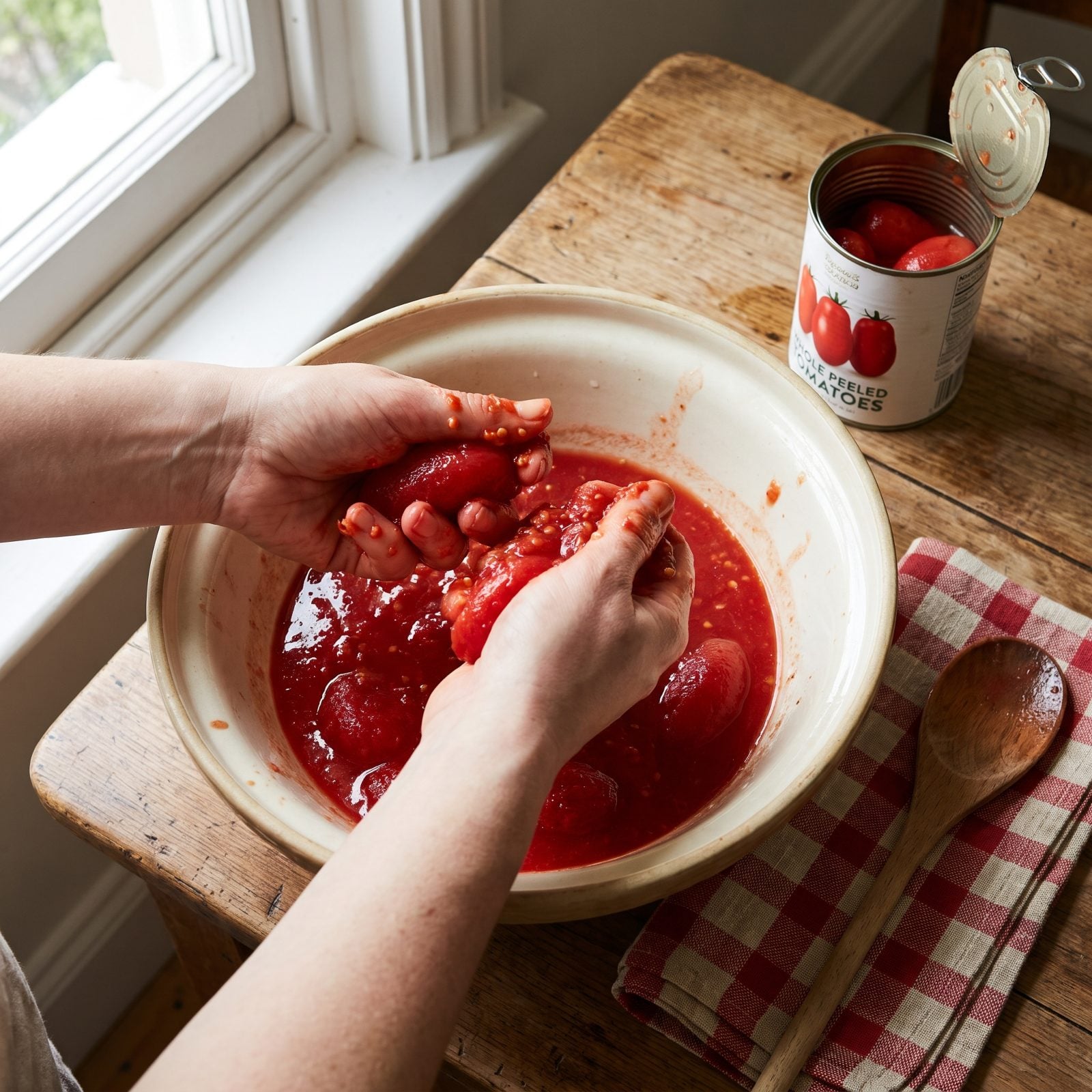
There’s a reason old Italian kitchens never owned a tomato blender. Running canned tomatoes through a machine whips air into them, turns the color pink, and gives you a smooth, flat, almost soupy sauce with no character.
Hand-crushing leaves texture — little ragged chunks that hold their shape through the simmer and give the sauce body you can feel on a fork.
Open a can of good whole peeled tomatoes, San Marzano if you can get them, and crush them right in the bowl with your fingers. Pull out the hard stem cores as you go. Messy, yes. But you decide how rustic it stays.
45. Let Tomato Paste Caramelize Before Adding Liquid
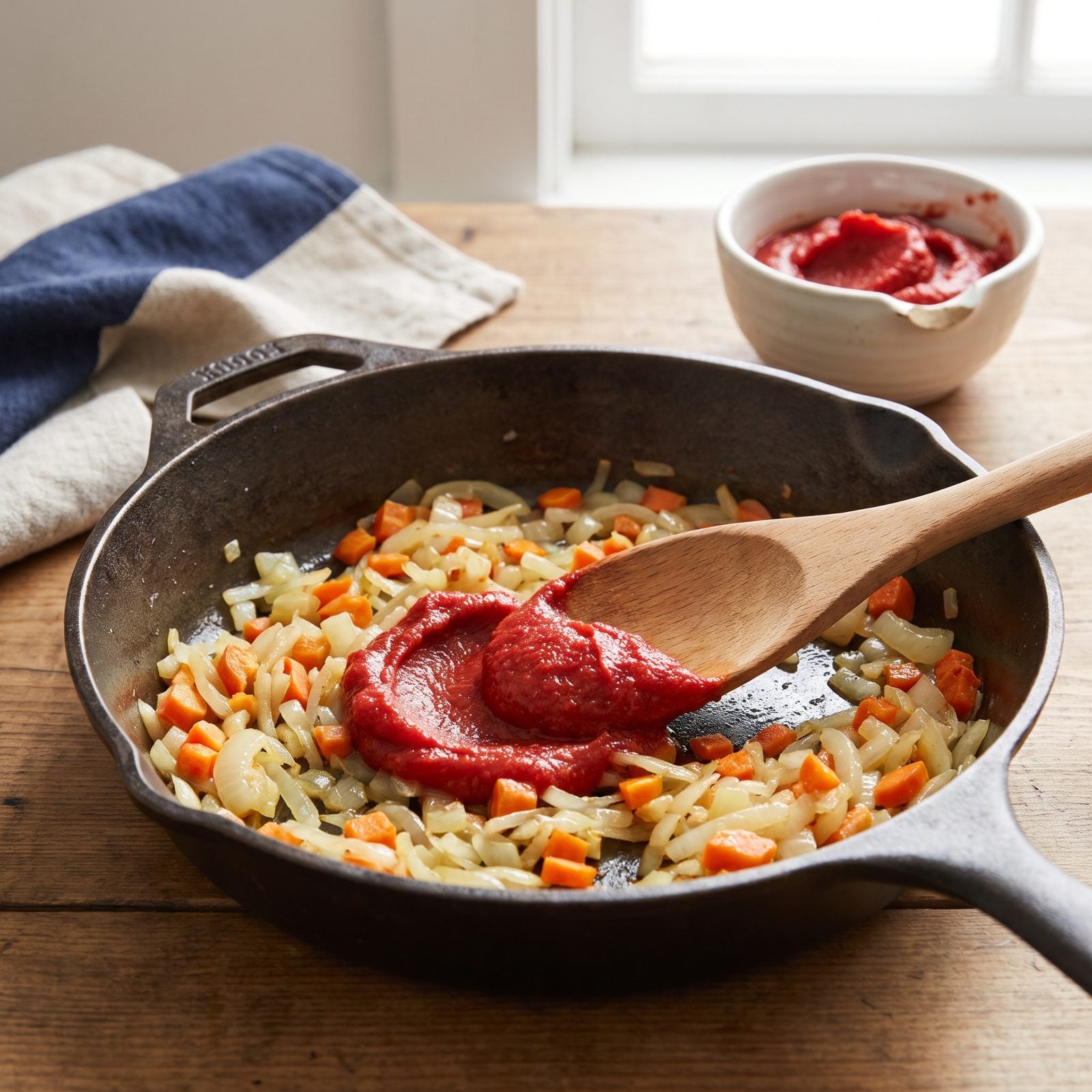
Tomato paste straight out of the tube tastes tinny and raw. Dollop it into sauce at the last minute and that’s exactly the flavor you’ll get — a sour metallic edge sitting on top of everything.
So cook it first. Push a couple of tablespoons into the hot oil and soffritto and fry it for two or three minutes, stirring, until it darkens from bright red to a deep rust brown and starts to stick to the pan. That browning is the sugars caramelizing, and it turns the paste sweet, deep, almost meaty — the kind of backbone that makes people ask what your secret is.
Then deglaze with your tomatoes or a splash of wine, scraping up every stuck bit. Nothing on the bottom of that pan is garbage. It’s all flavor.
44. Simmer Sauce With a Parmesan Rind
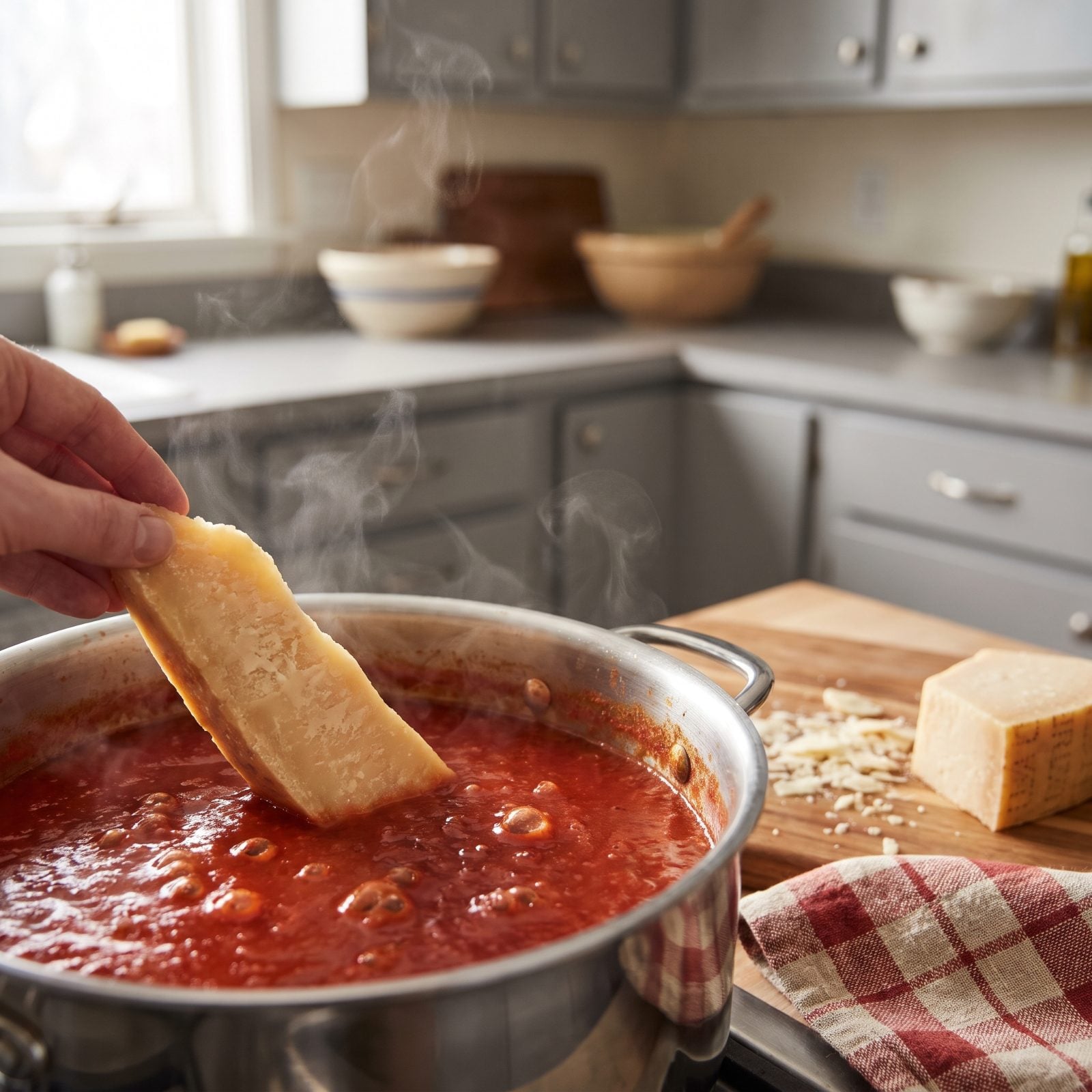
The rind of a Parmesan wedge is the piece most people throw away, and that’s a small tragedy. It’s packed with the same savory punch as the cheese itself, just concentrated and dense.
Drop one into the pot as the sauce simmers and it slowly melts at the edges, releasing a deep, salty, almost nutty undertone into the whole batch. It’s the quiet trick behind sauces that taste like they have a secret ingredient. They do.
Toss a two-inch piece of rind into the pot once the tomatoes are in, then fish it out before serving — or dice the softened bit and stir it back through. Keep a bag of rinds in the freezer. Every time you finish a wedge, the end goes in the bag, and the bag keeps you in free flavor forever.
43. Sweeten Acidic Sauce With Carrot, Not Sugar
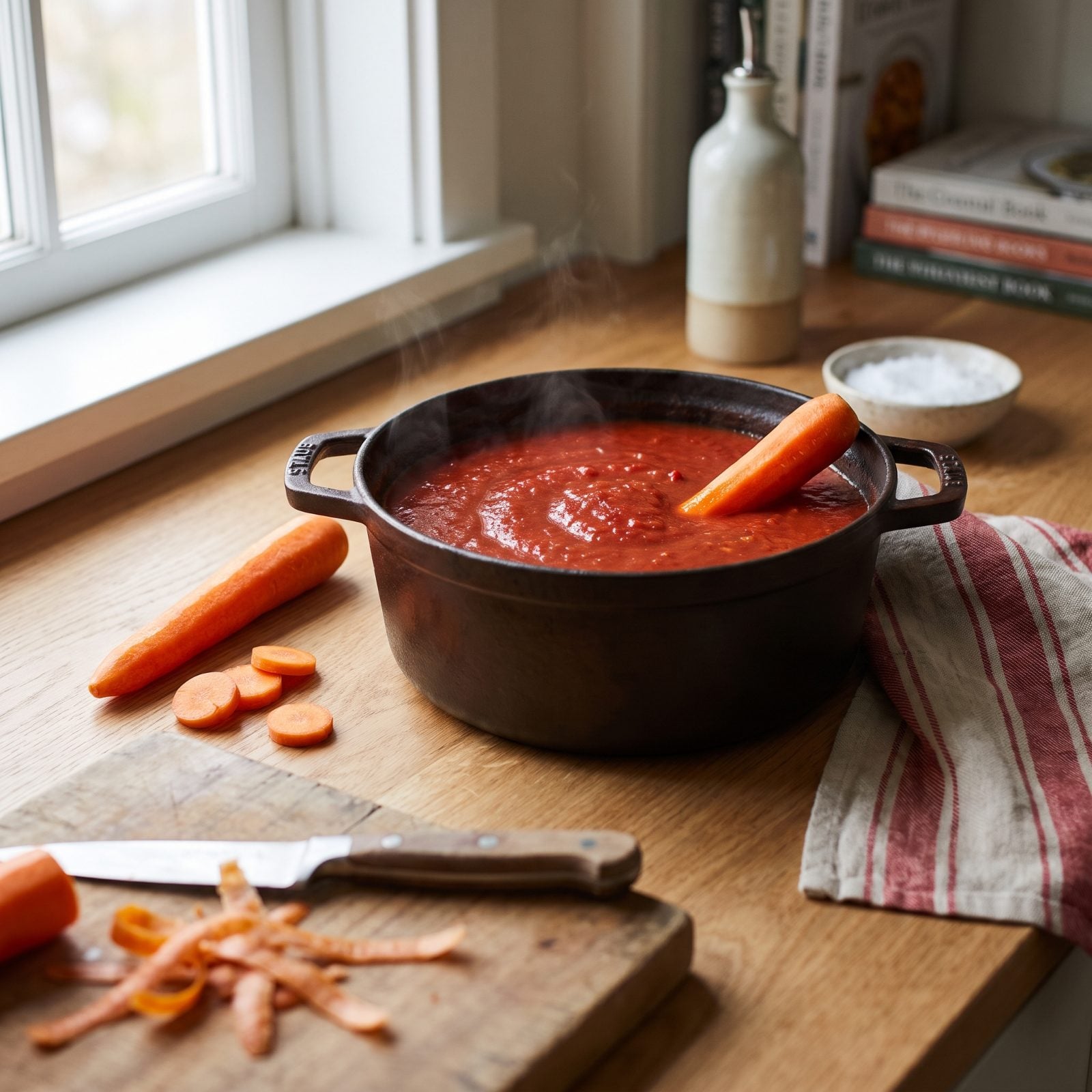
When sauce tastes sharp and acidic, the instinct is to reach for the sugar jar. The grandmothers reached for a carrot instead.
Sugar covers acidity with a flat, candy-like sweetness that sits apart from everything else. A carrot does something gentler — as it simmers, it gives up its natural sugars slowly, rounding off the sour edge without announcing itself. You get balance, not dessert.
Drop a whole peeled carrot into the pot and let it cook along with everything else. Pull it out at the end, or mash it and stir it back in for a touch more body. I quit the pinch-of-sugar habit years ago and never looked back. The carrot does it better and leaves no trace.
42. Add a Splash of Red Wine to Meat Sauce
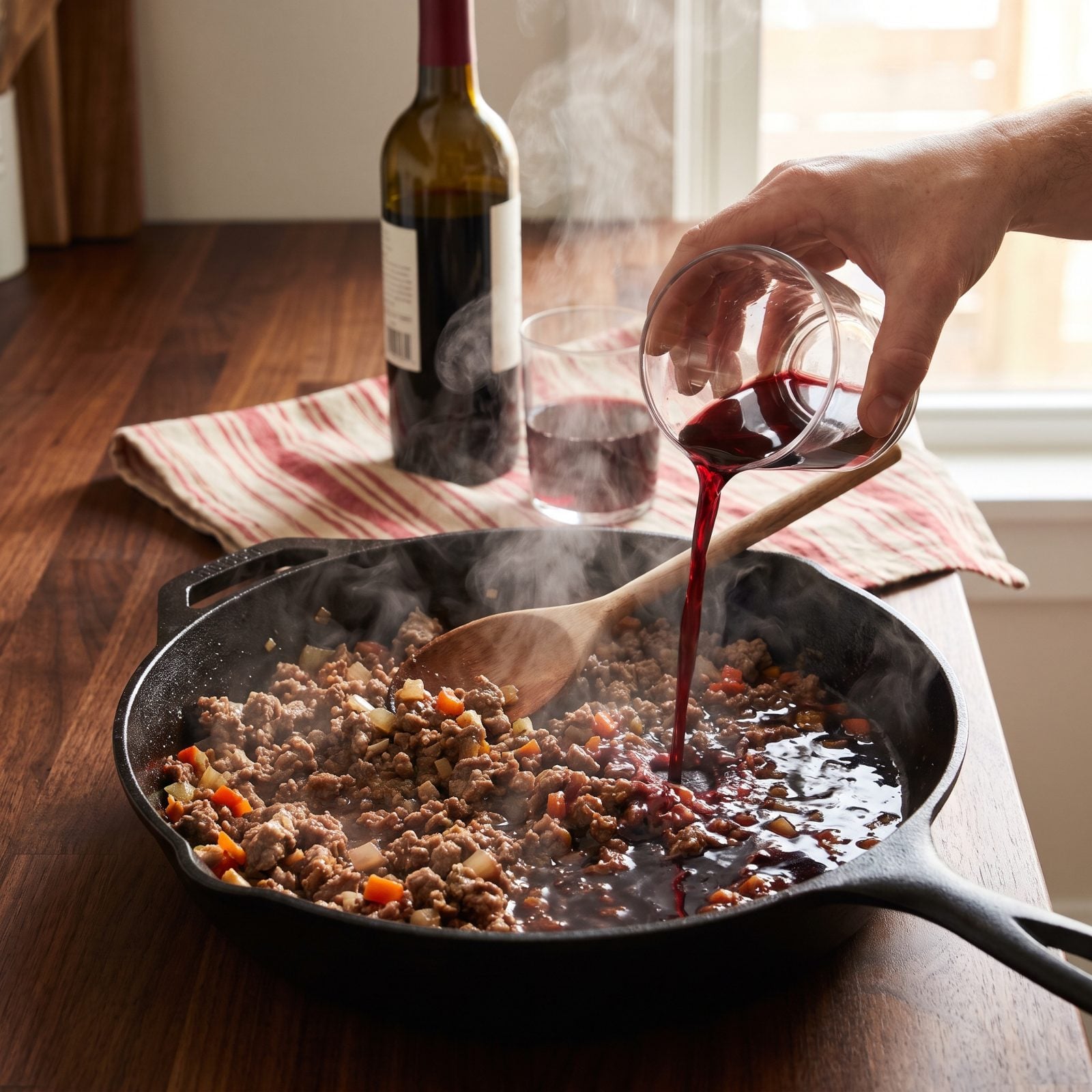
A good meat sauce has layers, and wine is one of the oldest ways to add them. Pour a splash into the pan right after the meat browns, while the bottom is sticky with all those caramelized bits, and let it bubble and reduce.
The wine lifts the stuck-on flavor off the pan and cooks down into something deep and faintly fruity that threads through the whole sauce. Much of the alcohol cooks off as it simmers. What stays behind is complexity.
Use a dry red you’d actually drink — not the dusty cooking wine from the back of the cabinet. About half a cup for a family-sized pot. Let it simmer until the sharp smell of alcohol is gone before the tomatoes join.
If the wine isn’t good enough to pour in a glass, it isn’t good enough to pour in the sauce.
41. Cook the Sauce Low and Slow
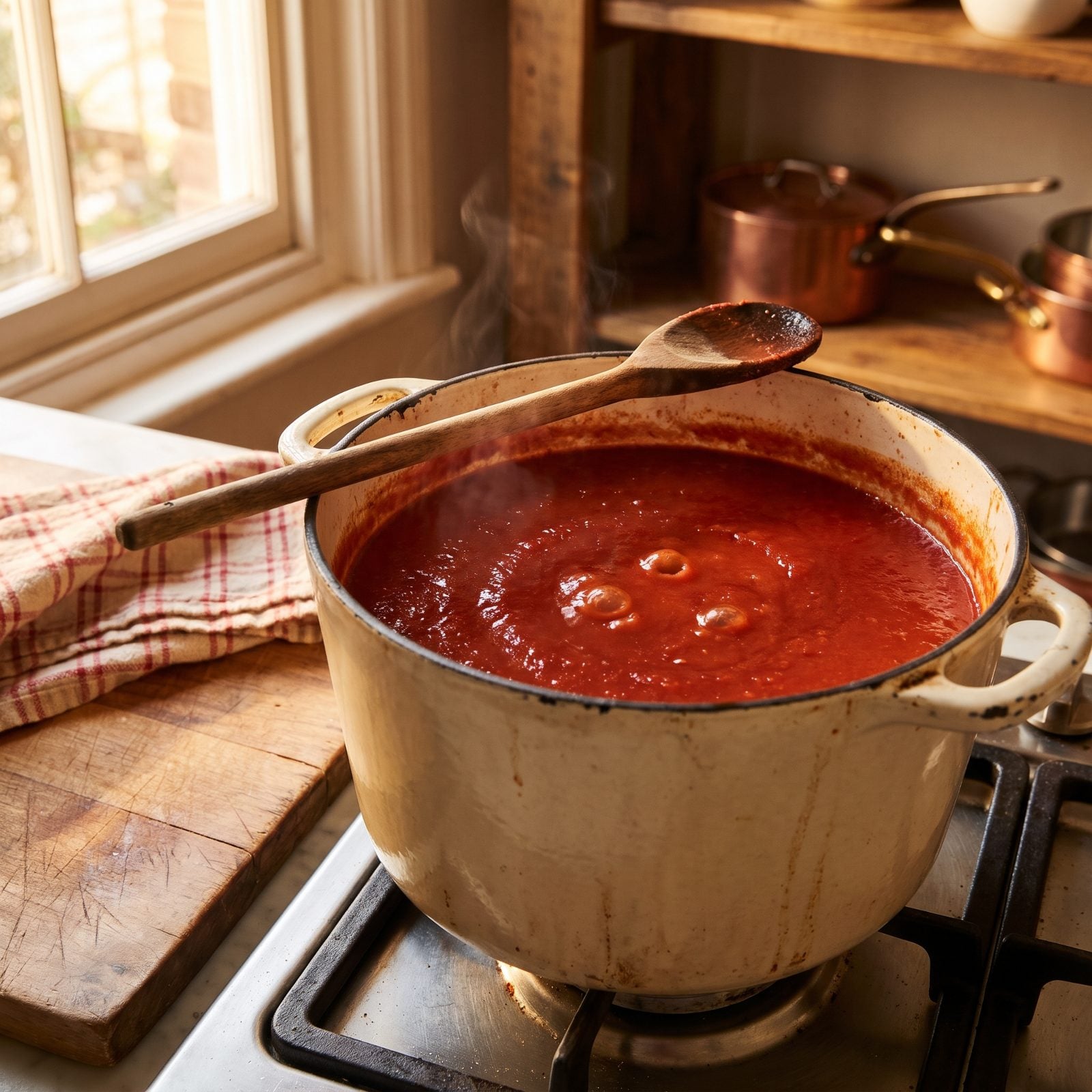
You’ve seen someone crank the burner to high to rush dinner, sauce spitting red dots all over the stove and the cook. Fast heat boils tomatoes hard, drives off the brightness, and leaves you with something harsh and one-dimensional.
Slow is where the good stuff lives. A bare simmer, the surface just barely blipping, lets the flavors marry and the sauce reduce to a silky thickness that clings to pasta instead of sliding off it.
Drop the heat until you see one lazy bubble every few seconds. Partially cover the pot and let it go — forty-five minutes for a simple sauce, a couple of hours for a Sunday ragù. Stir now and then so the bottom doesn’t catch. And honestly? The smell that fills the house is half the reward.
What Our Readers Say
- When Piaci Pizza readers loved a food photo, comfort and nostalgia were the top two reasons they tapped, at 25% and 20%.
- In our readers’ votes, photos showing cooking in progress got hearts 86% of the time, compared with 82% for the other images in the same articles.
From Piaci Pizza reader polls and votes.
40. Make Quick Fresh-Tomato Sauce in a Wide Skillet
Would you like to save this?
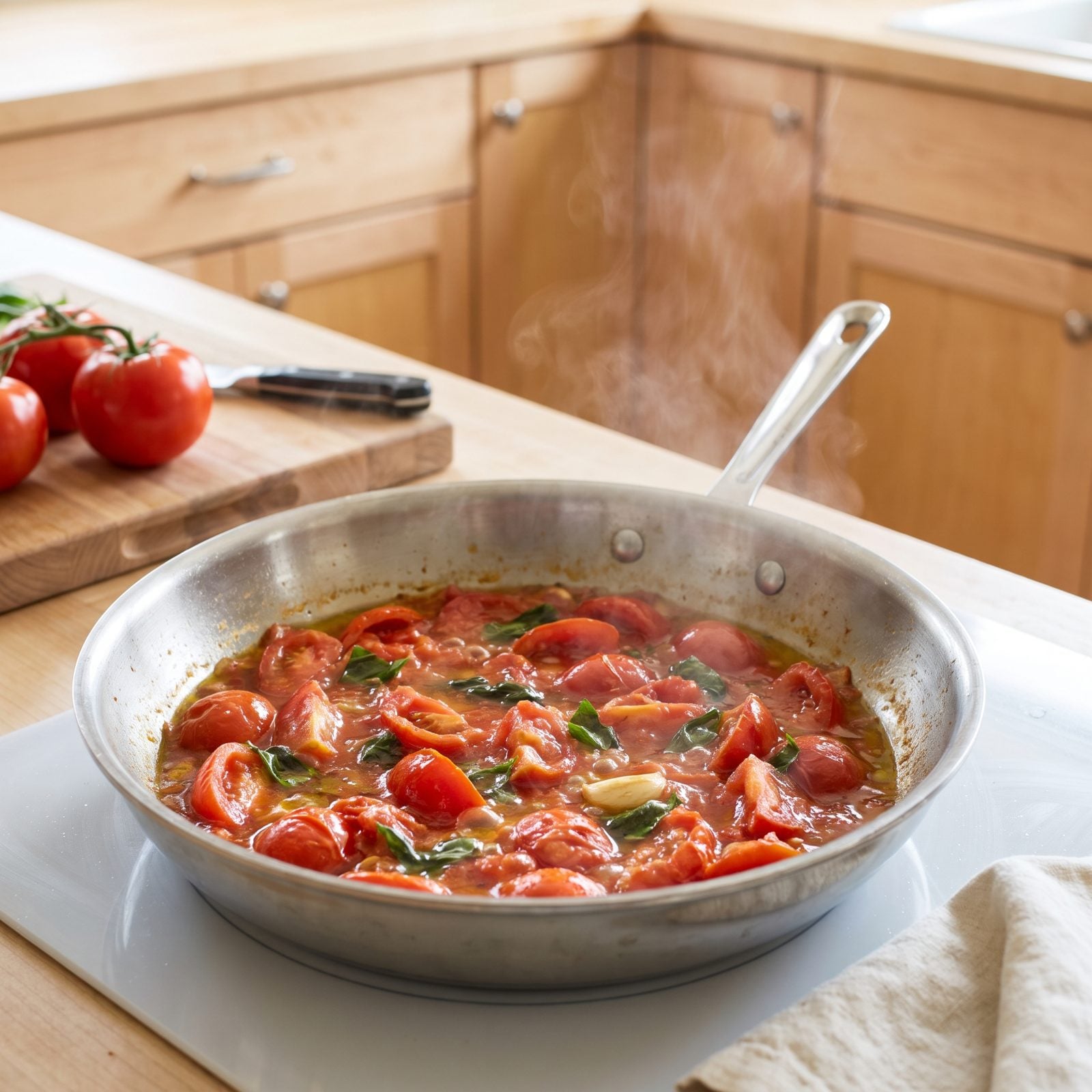
Not every sauce needs to simmer for hours. When summer tomatoes are at their peak, long cooking actually works against you, dulling that fresh, sun-warm flavor you bought them for.
Here’s where you reach for a wide skillet instead of a tall pot. More surface area means the water evaporates fast, so the tomatoes concentrate in fifteen or twenty minutes without overcooking. What you get is a loose, bright, barely-cooked sauce that tastes like the garden.
Halve ripe tomatoes, toss them into olive oil with a little garlic, and cook over medium-high in a big pan, smashing them as they soften. Season, tear in basil, done. Toss it with hot spaghetti and a splash of pasta water — a whole dinner in the time it takes the pasta to boil.
39. Finish Tomato Sauce With Torn Basil
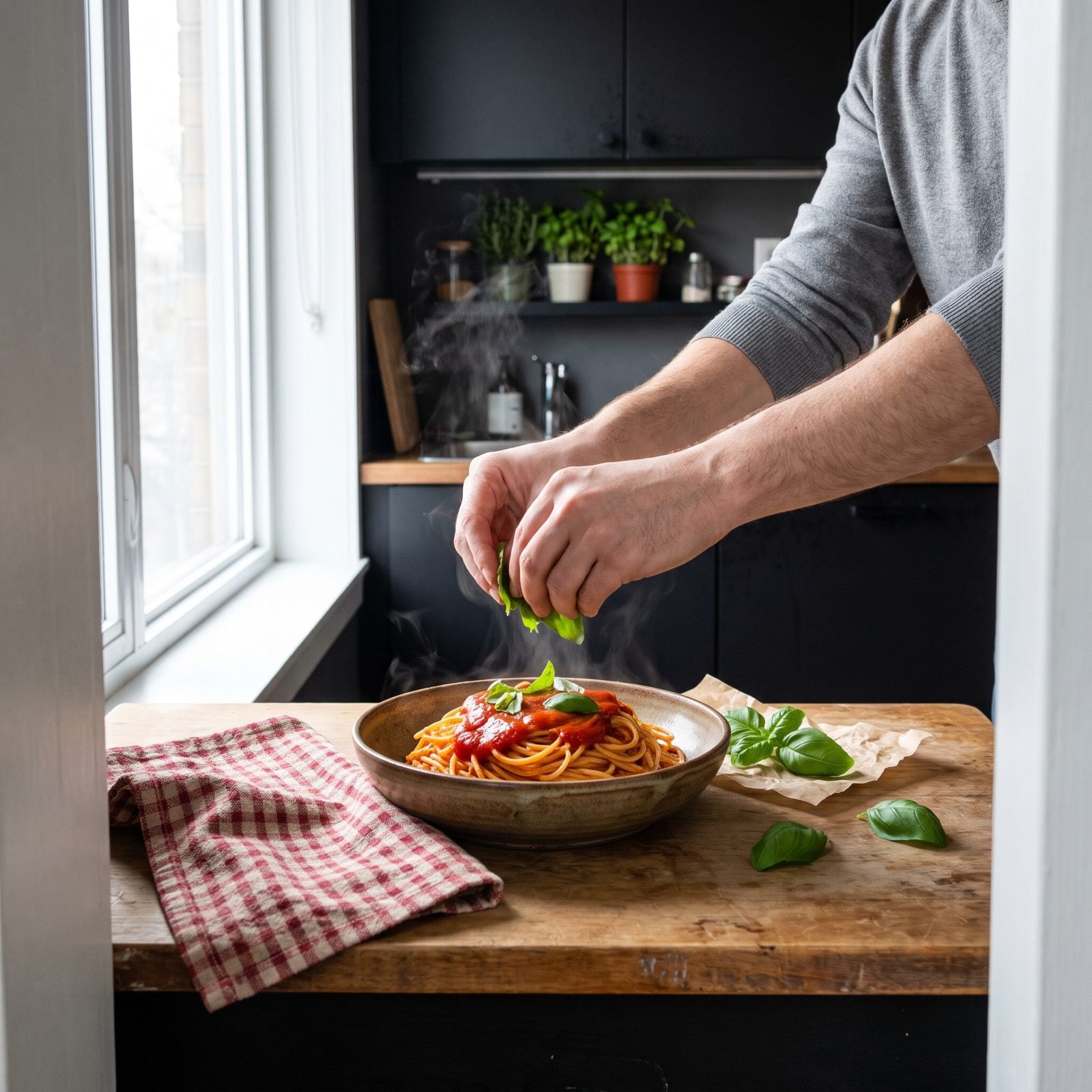
Basil goes in at the end. Always. Toss it in early and the heat cooks the life right out of it, turning the leaves black and the flavor to nothing.
Added at the last moment, off the heat or just before serving, torn basil stays bright and perfumed and lifts the whole dish with that sweet, peppery aroma. It’s the difference between sauce that smells good and sauce that smells alive.
Tear the leaves by hand instead of chopping. A knife bruises the edges and leaves them to blacken; tearing keeps them fresh and releases the oils cleanly. Stir in a handful right before the pasta hits the plate, and save a leaf or two to drop on top.
38. Add Dried Oregano Early, Not at the End
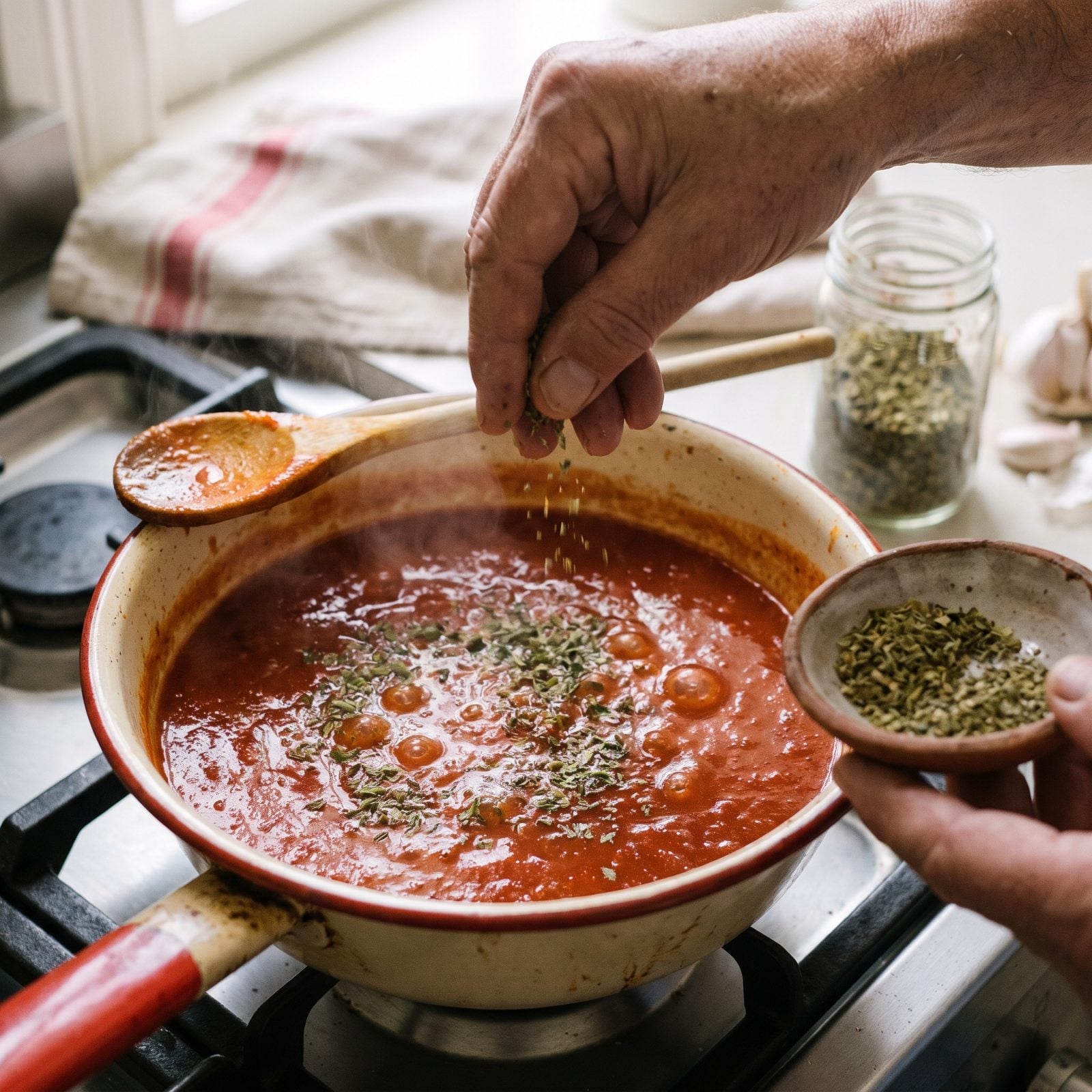
There’s a reason your sauce tastes flat next to the one you remember from the corner red-sauce joint. You’re waving oregano over the pot at the last second like a garnish, and dried oregano is no garnish. It’s a slow-release flavor that needs heat and time to bloom.
Toss it in during the first ten minutes of the simmer. The warm fat pulls the oil out of those crumbled leaves and spreads it through the whole pot. Add it at the end and you taste dusty confetti instead of that round, savory warmth.
37. Infuse Olive Oil With Garlic and Chili
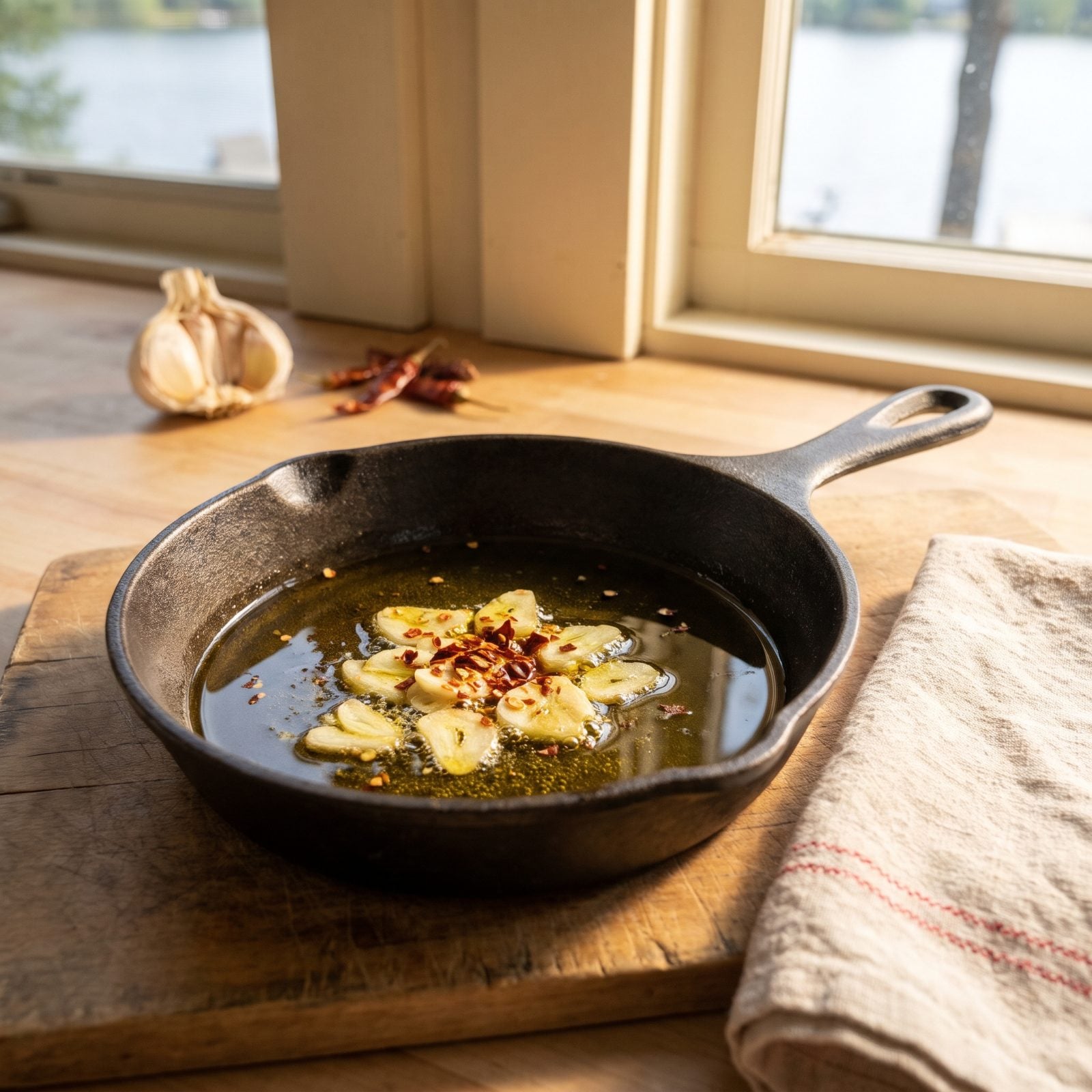
Dumping raw garlic straight into cold sauce is a missed opportunity. Before anything else goes in the pan, slice your garlic thin and let it sweat in good olive oil over low heat until it just turns pale gold. A pinch of chili flakes goes right in there too.
That oil becomes the backbone of the whole dish. The garlic goes sweet and mellow instead of sharp, and the chili releases its heat slowly into the fat. Toss cooked spaghetti straight into that infused oil and you’ve got aglio e olio before you’ve added a single other thing.
Burn the garlic and you start over. There’s no saving bitter garlic, and I’ve learned that the expensive way more than once.
36. Toast Black Pepper for Cacio e Pepe
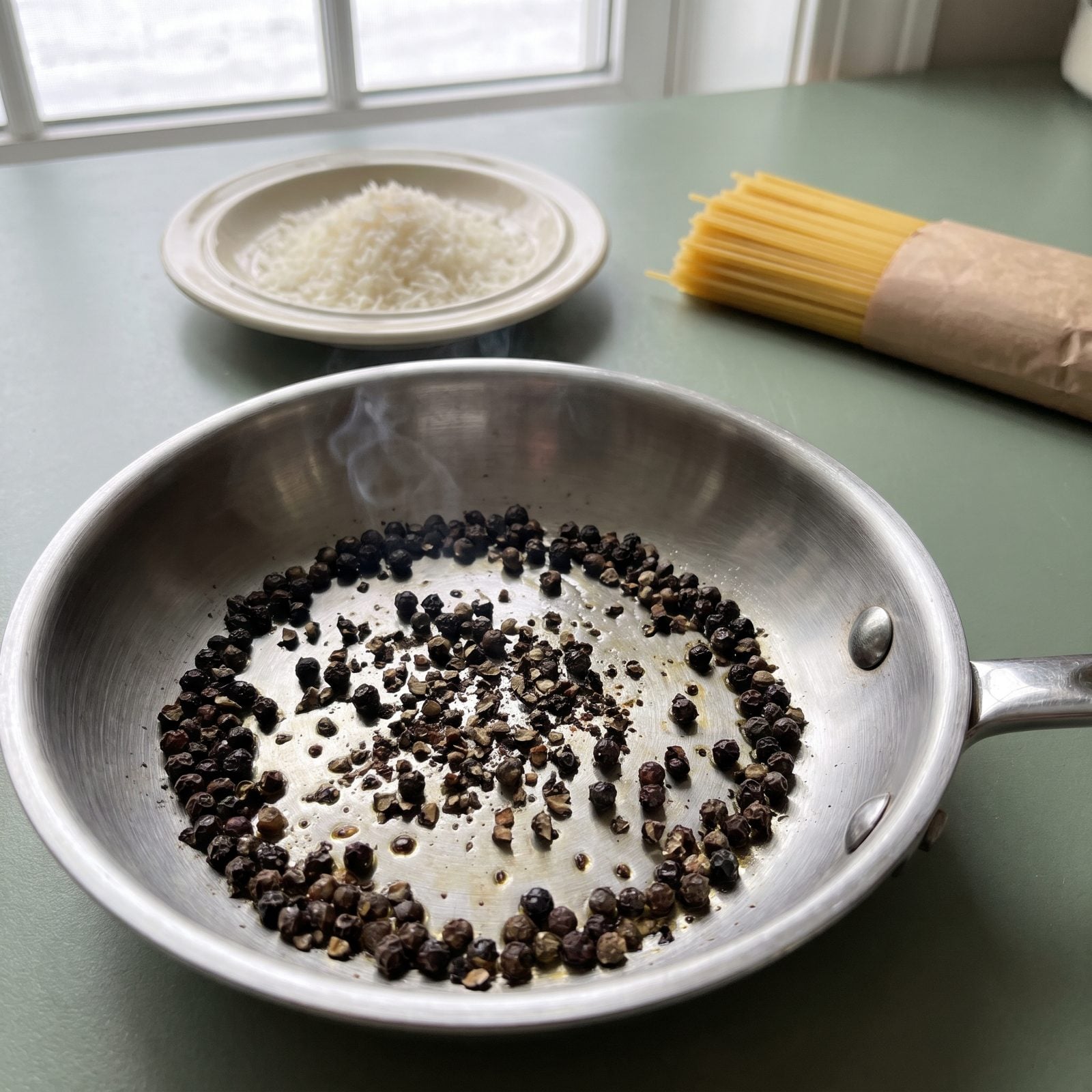
Pre-ground pepper tastes like dust. Freshly cracked pepper that you’ve toasted tastes like a different spice entirely.
Cacio e pepe lives and dies on the pepper. Crack it coarse, then toast it in a dry pan for half a minute until it smells sharp and almost piney. That quick heat wakes up the volatile oils that make pepper taste like pepper instead of brown powder.
Then you build the sauce with starchy pasta water and Pecorino right there with that toasted pepper. The grind matters too, honestly. Too fine and it muddies everything. You want visible flecks that catch between the strands.
35. Melt Anchovies Into the Sauce
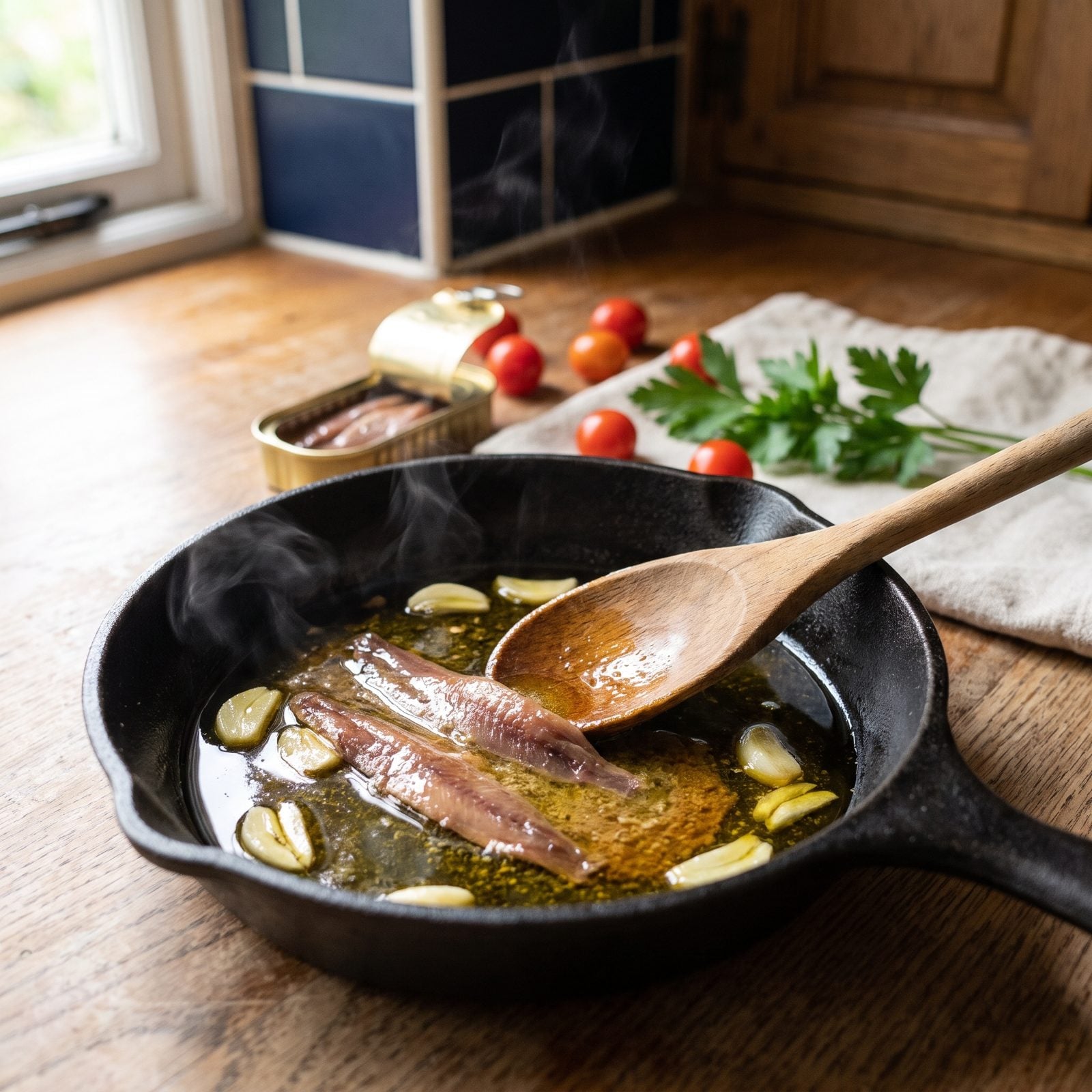
Say the word anchovy at the dinner table and watch half the room flinch. Here’s the secret the grandmothers kept: melted anchovies don’t taste like fish. They taste like a depth you can’t quite name.
Drop two or three fillets into warm garlic oil and mash them with a wooden spoon. In under a minute they vanish completely, leaving behind a savory undertow that makes tomato sauce taste like it simmered all day.
Nobody will know they’re there. They’ll just ask why your sauce got so much better.
That flinch is real: when our readers disliked a food photo, ingredients were the second most common reason, at 27%, behind a simple “not for me”.
34. Fry Capers Until They Turn Crisp
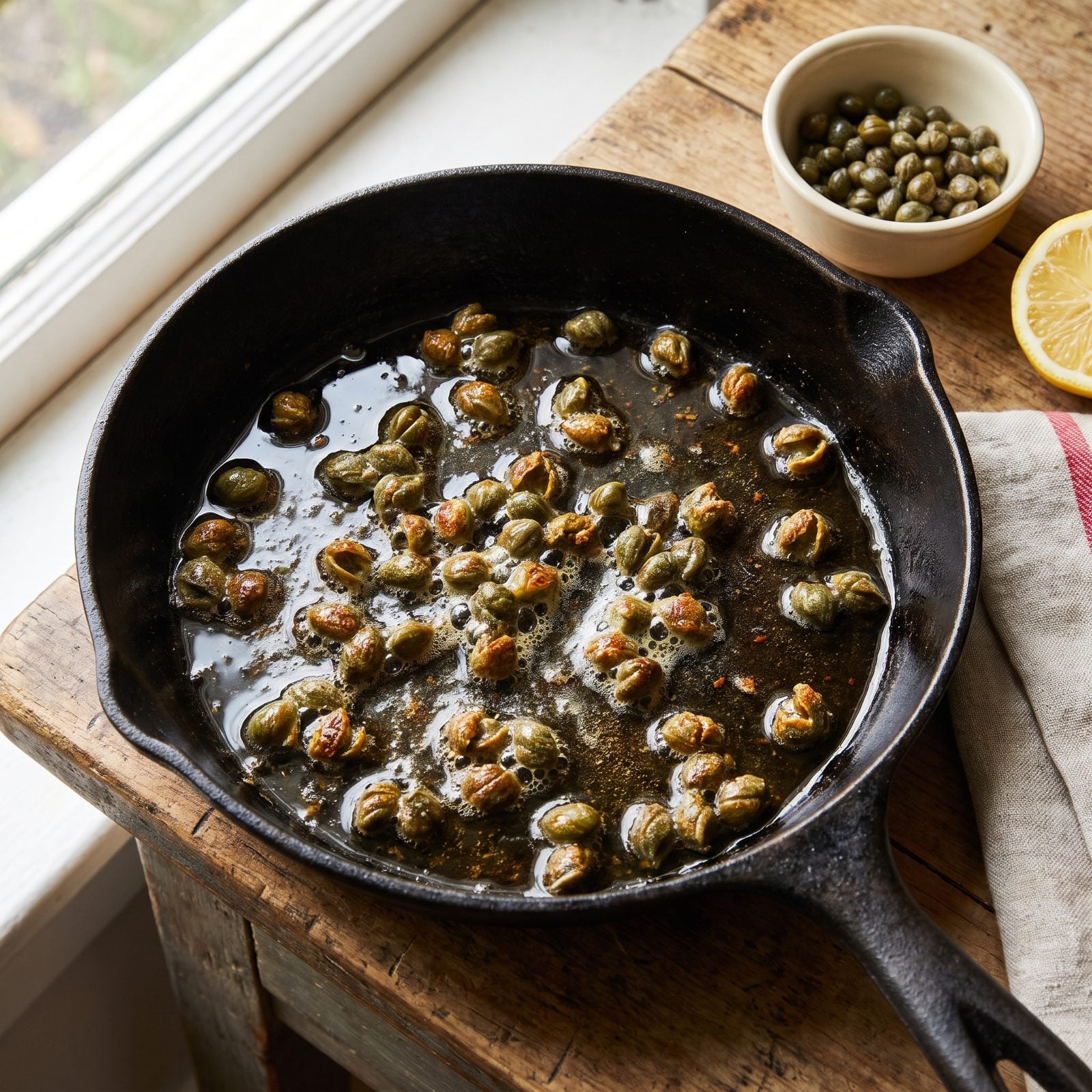
Capers straight from the jar are briny little bombs, sure, but soft. Fry them and they open up like tiny blossoms and go crisp, and suddenly you’ve got crunchy bursts of salt and tang scattered through your pasta.
Drain them well, pat them dry, and drop them into hot olive oil for a minute until they splay open and turn golden. Scatter them over the finished plate.
Texture does the work here. Soft pasta, silky sauce, then these crackly little pops of concentrated flavor. It’s the difference between a dish that’s fine and one people remember.
33. Add Briny Olives for Puttanesca-Style Depth
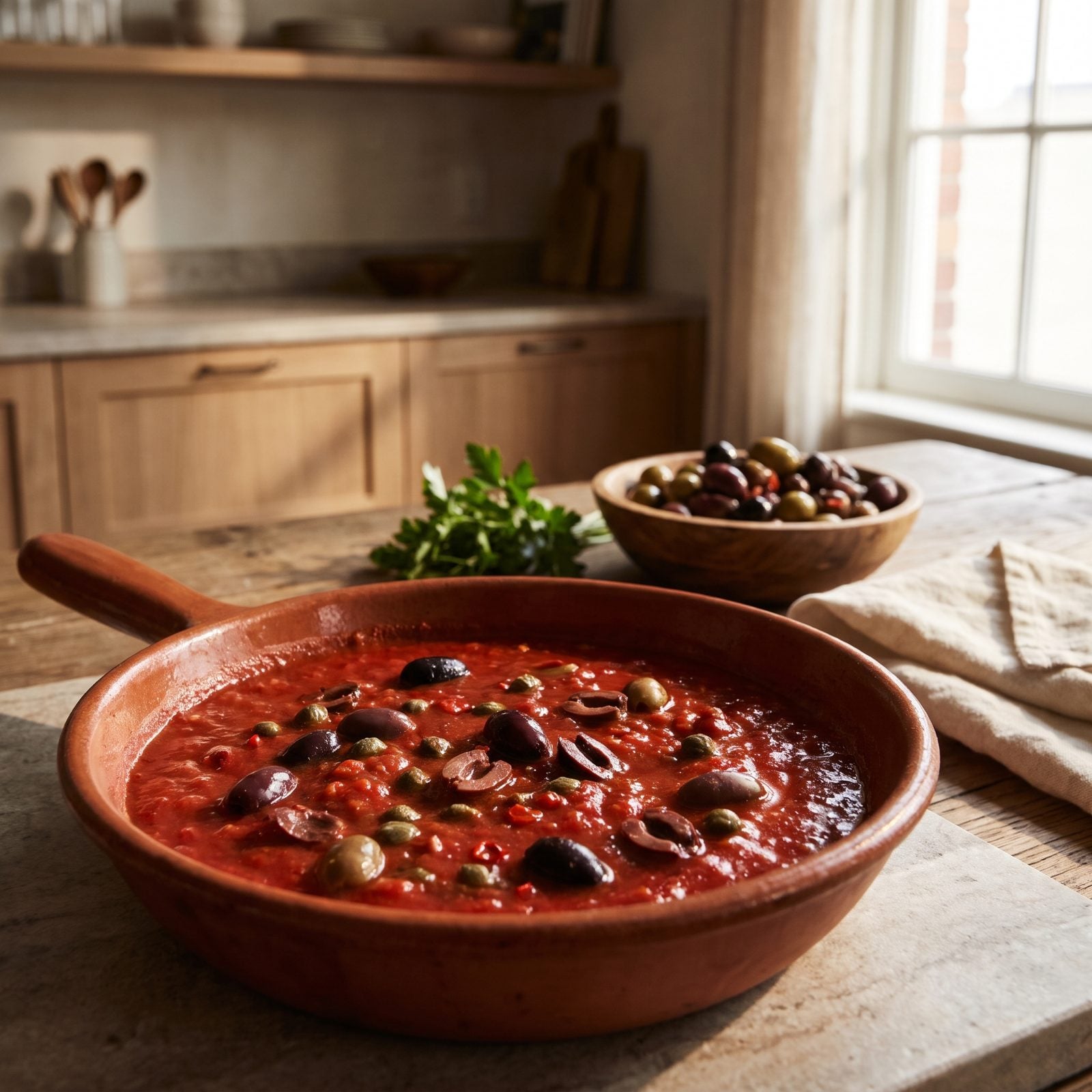
Puttanesca is what happens when a pantry becomes dinner. Olives, capers, anchovies, chili, tomatoes. No cream, no cheese, no fuss. And the olives do heavy lifting most people never credit them for.
Use real olives, not the sliced ones swimming in a can. Kalamata or oil-cured, pitted and torn roughly by hand so they bleed their brine into the sauce. They bring a salty, almost meaty richness that balances the acid of the tomatoes.
32. Season Toasted Breadcrumbs With Citrus Zest and Parsley
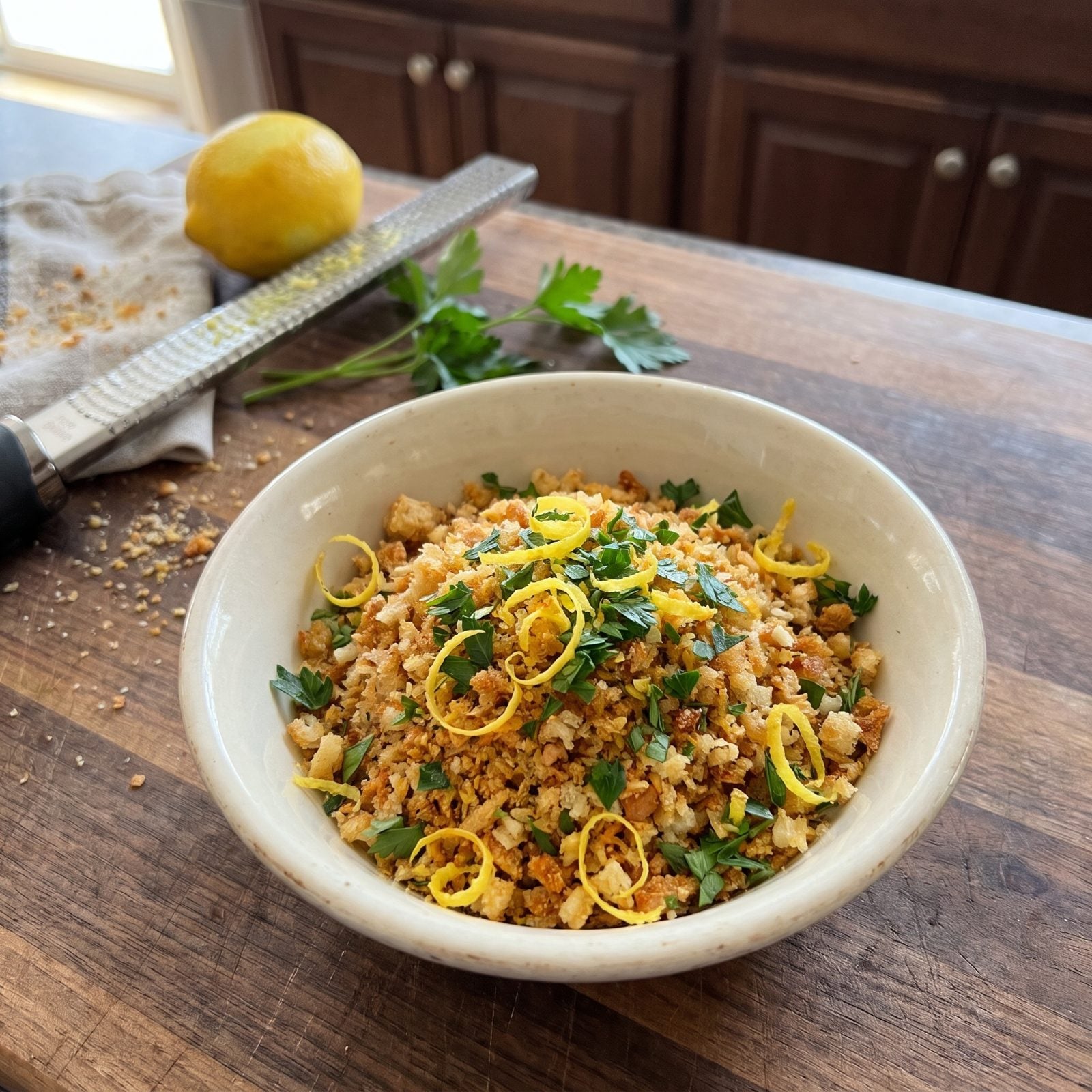
Down south they call it pangrattato, and for a lot of families it was the poor man’s Parmesan. Toasted crumbs scattered over pasta where cheese was too dear to spare. Turns out it was never a compromise at all.
Toast stale bread crumbs in olive oil until deep gold, then off the heat stir in lemon zest and chopped parsley. The citrus cuts through rich sauce, the parsley keeps it fresh, and the crumbs add crunch where cheese would only melt.
31. Add Raisins for a Sicilian Sweet-Savory Contrast
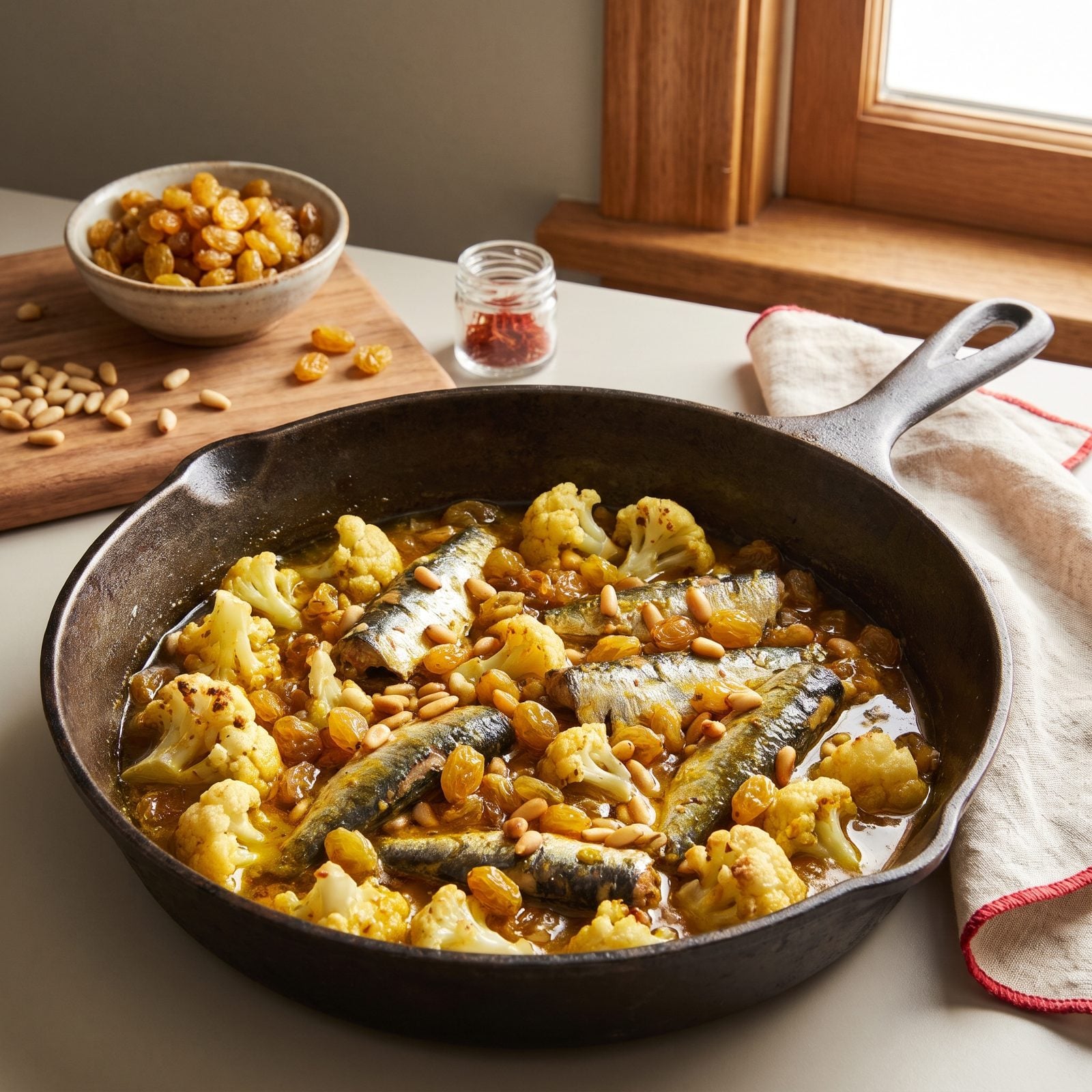
Raisins in pasta sounds wrong until you taste pasta con le sarde and understand what the Sicilians figured out centuries ago. A little sweetness against salt and brine is no mistake. It’s the whole trick.
Plump golden raisins in warm water for a few minutes, then stir them into the sauce with toasted pine nuts. They melt into soft pockets of sweetness that play off anchovy, sardine, or a savory tomato base, and each bite swings between salty and sweet while your tongue keeps chasing the next one.
I fought this for years. Figured sweet belonged in dessert. I was wrong, flatly, and the first real plate of it changed my mind in one forkful.
30. Cook Fennel Until It Turns Silky
Would you like to save this?
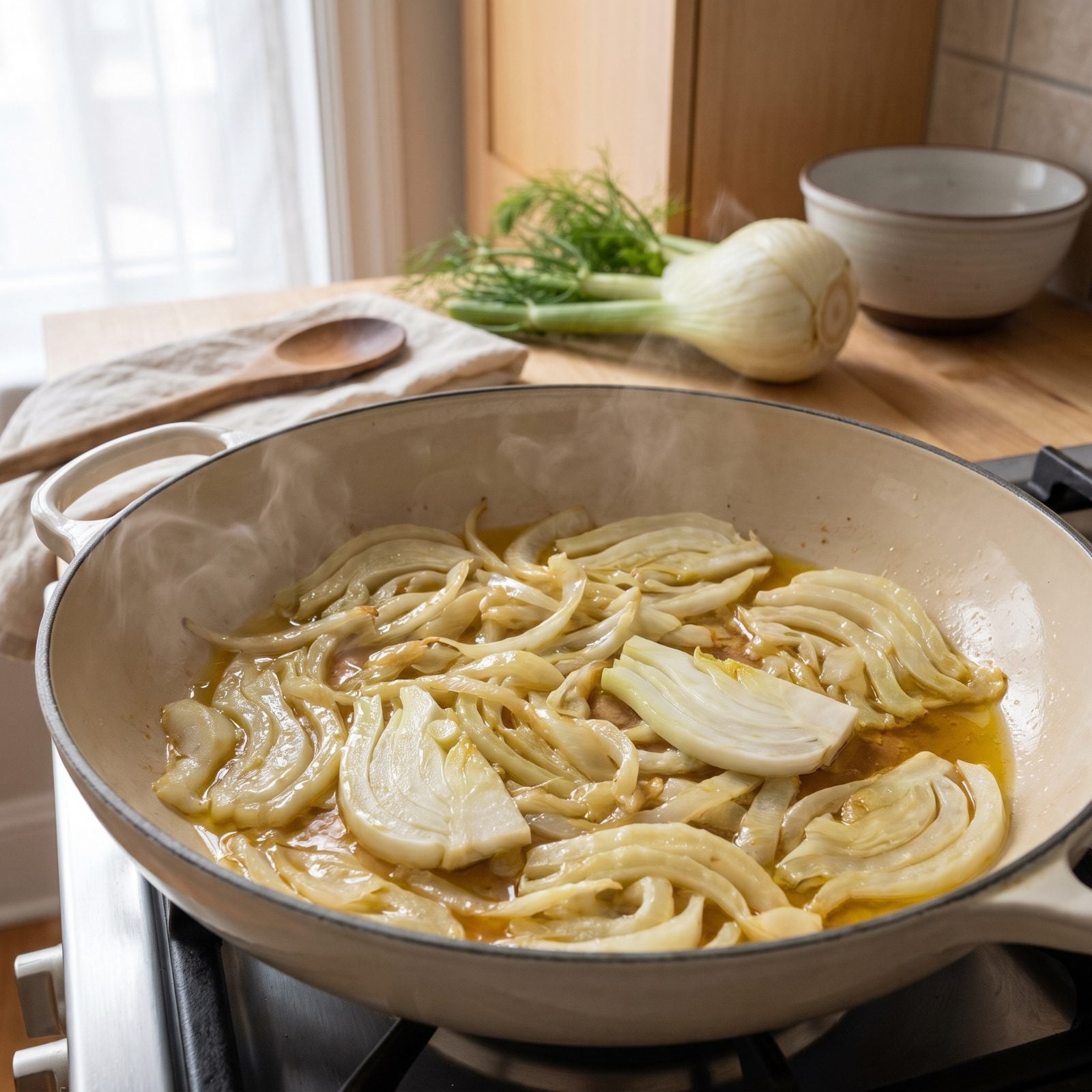
Raw fennel is crisp and loud with licorice, and nobody wants that in their spaghetti. Cook it low and slow, though, and something else happens entirely.
Slice the bulb thin and let it soften in olive oil over gentle heat for fifteen or twenty minutes, stirring now and then. The sharp anise mellows into something sweet and almost buttery, the texture goes silky, and it melts into the sauce rather than fighting it.
29. Brown Mushrooms in Batches Before Making the Sauce
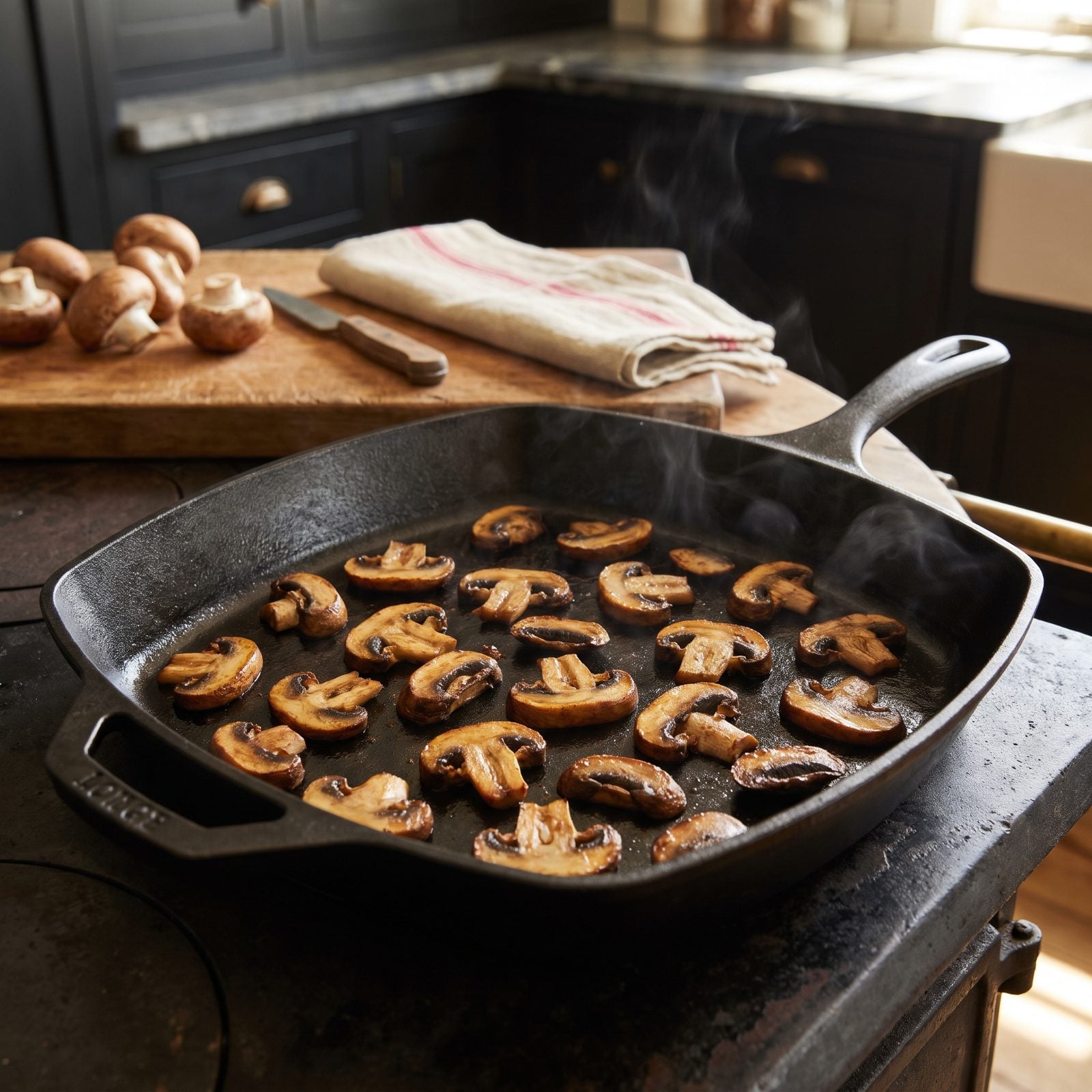
This is where almost everyone goes wrong. You pile every mushroom into the pan at once, they crowd each other, and in two minutes they’re swimming in their own water. What you wanted was browning. What you got was boiling.
Mushrooms are mostly water. Crowd them and they steam into grey, rubbery sadness, but give them room and that water evaporates, the sugars caramelize, and you get a deep, nutty, almost meaty flavor.
So work in batches. A single uncrowded layer, high heat, and don’t stir for a minute or two so they can take color. It takes longer and dirties the pan more, I know. Do it anyway.
Crowd the pan and you boil. Give them room and you brown. That one choice is the whole difference.
28. Slow-Cook Eggplant Until It Melts Into the Tomatoes
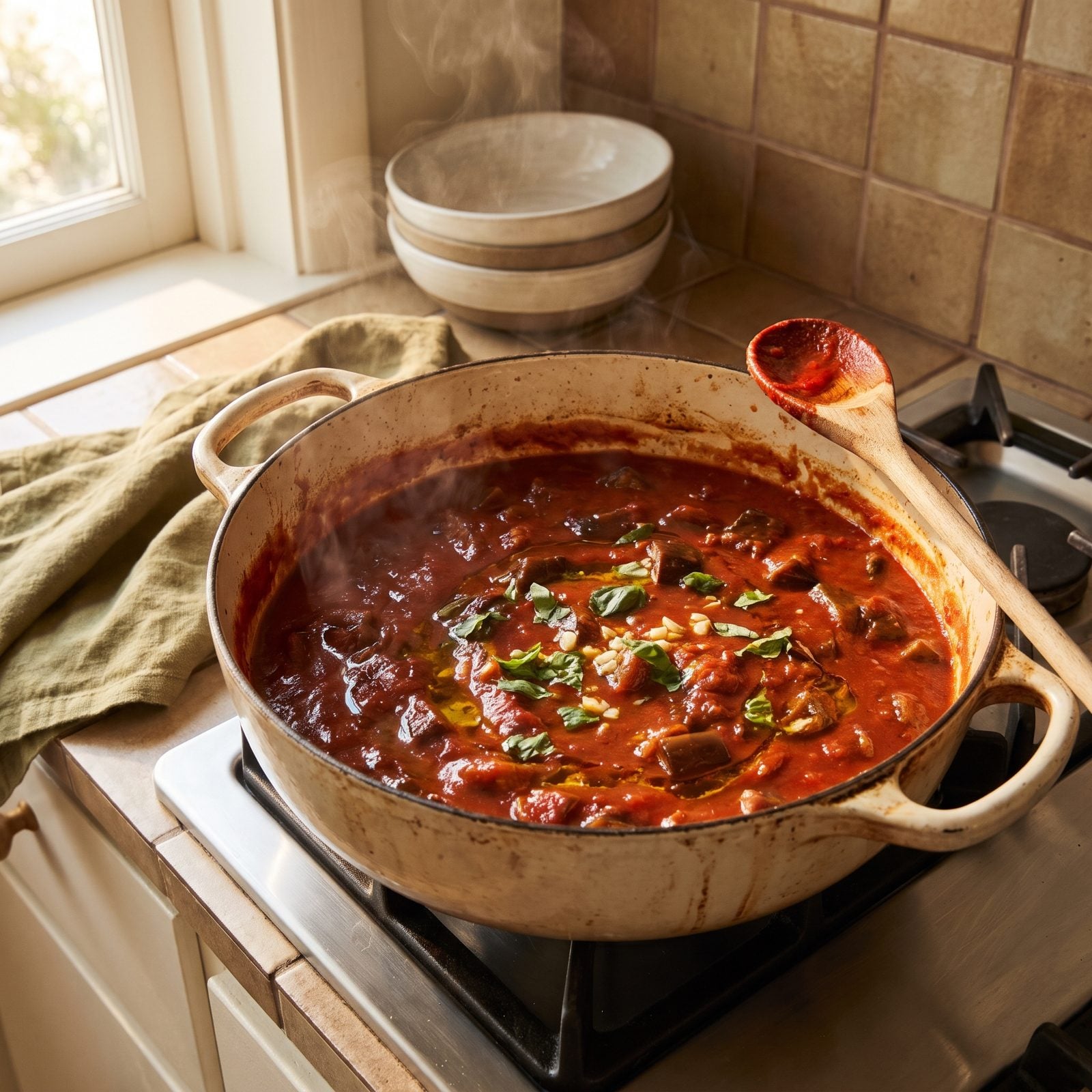
Most people cook eggplant too fast and too hot, so it stays spongy and a little bitter, with that squeaky texture that never fully gives up. You bite into a cube and it fights back. That’s the giveaway it didn’t spend enough time in the pot.
Eggplant needs patience. Salt it, let it sweat for twenty minutes, pat it dry, then cook it low and slow right in the tomatoes until the cubes dissolve. What you’re after is collapse. The flesh melts away and leaves behind a velvety body that coats every strand of spaghetti.
Give it forty-five minutes on a gentle bubble. You won’t see eggplant anymore — you’ll taste it in everything.
27. Blister Cherry Tomatoes Until They Burst
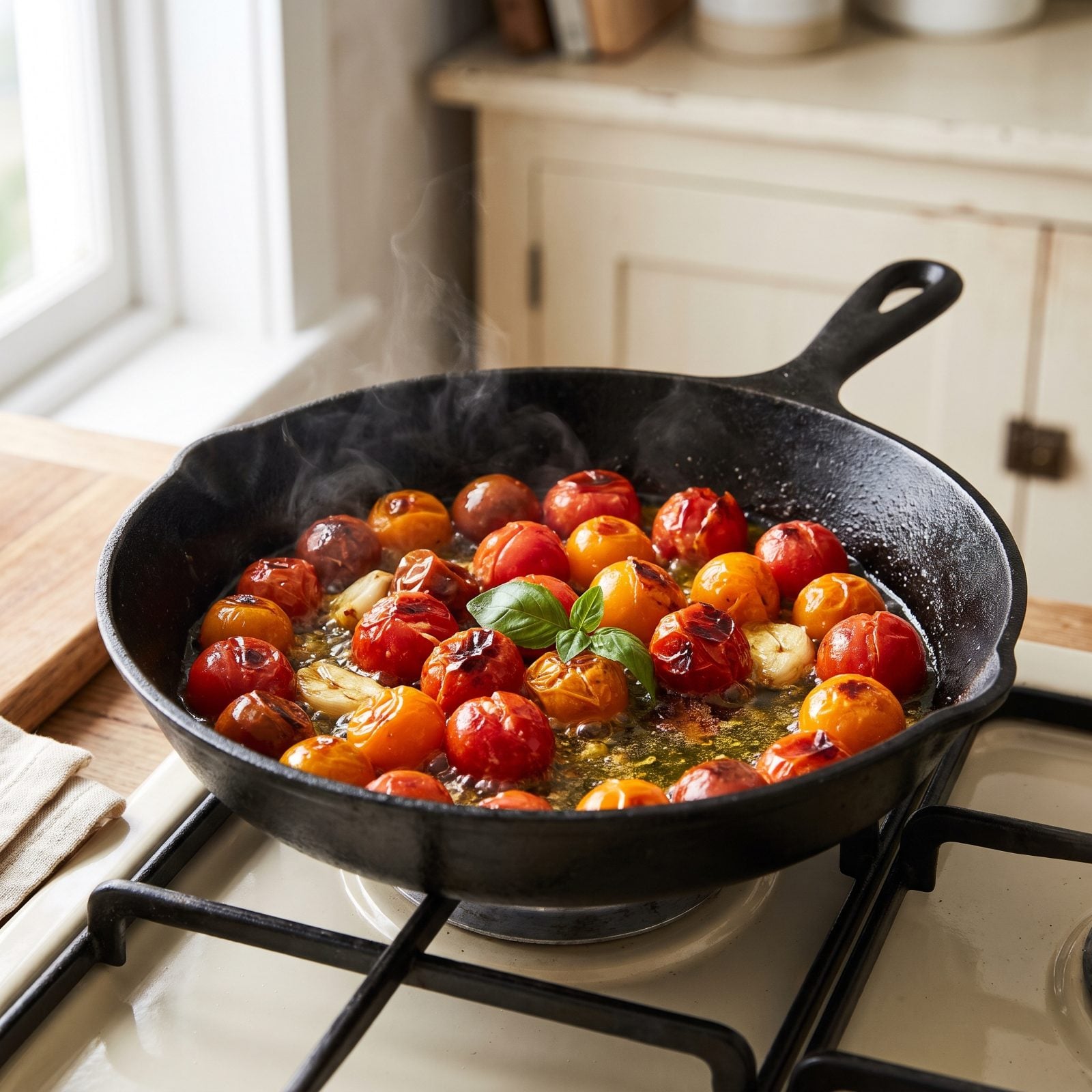
There’s a moment when a cherry tomato gives up. The skin splits, the juice floods the pan, and the whole thing goes from fruit to sauce in about four seconds. That’s the sound you’re listening for.
Toss whole cherry tomatoes into a hot skillet with good olive oil and leave them mostly alone. Let them blister, char a little, and pop. Press the stubborn ones with the back of a spoon. Fifteen minutes later you’ve got a fresh, bright sauce with pockets of concentrated sweetness you simply cannot pull out of a can.
26. Wilt Bitter Greens Directly Into the Pasta
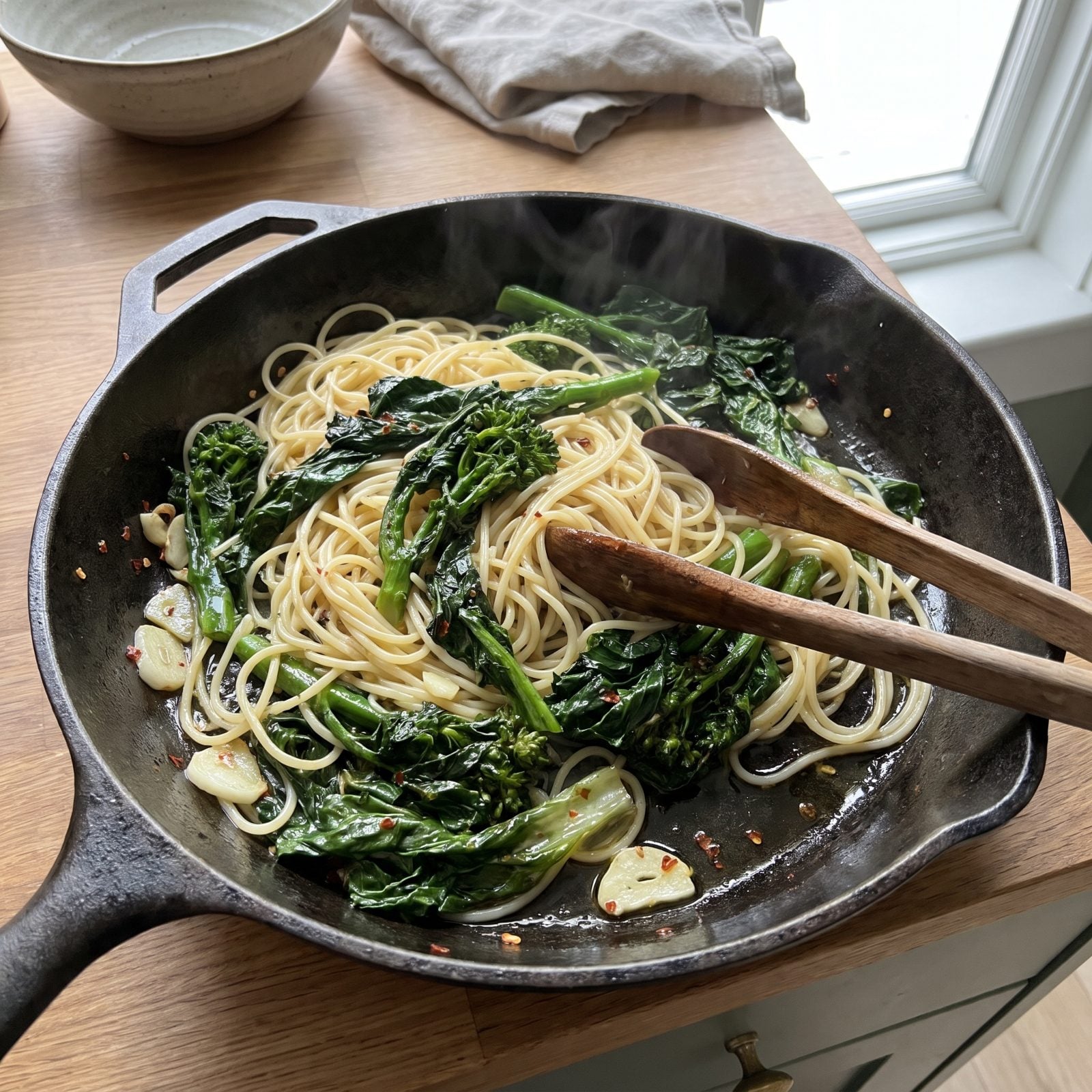
Bitter greens belong in the pasta, not on the side. Broccoli rabe, escarole, dandelion, even the tough outer leaves off a head of chard. Cooked separately they turn into a vegetable you have to think about. Wilted straight into the noodles, they become part of the dish.
Blanch them for a minute, then finish them in the pan with garlic and a hit of chili oil while the spaghetti joins them. The bitterness mellows against the olive oil and the starch, and you get this savory, grown-up edge that plain sauce never delivers.
25. Mash White Beans Into the Sauce for Body
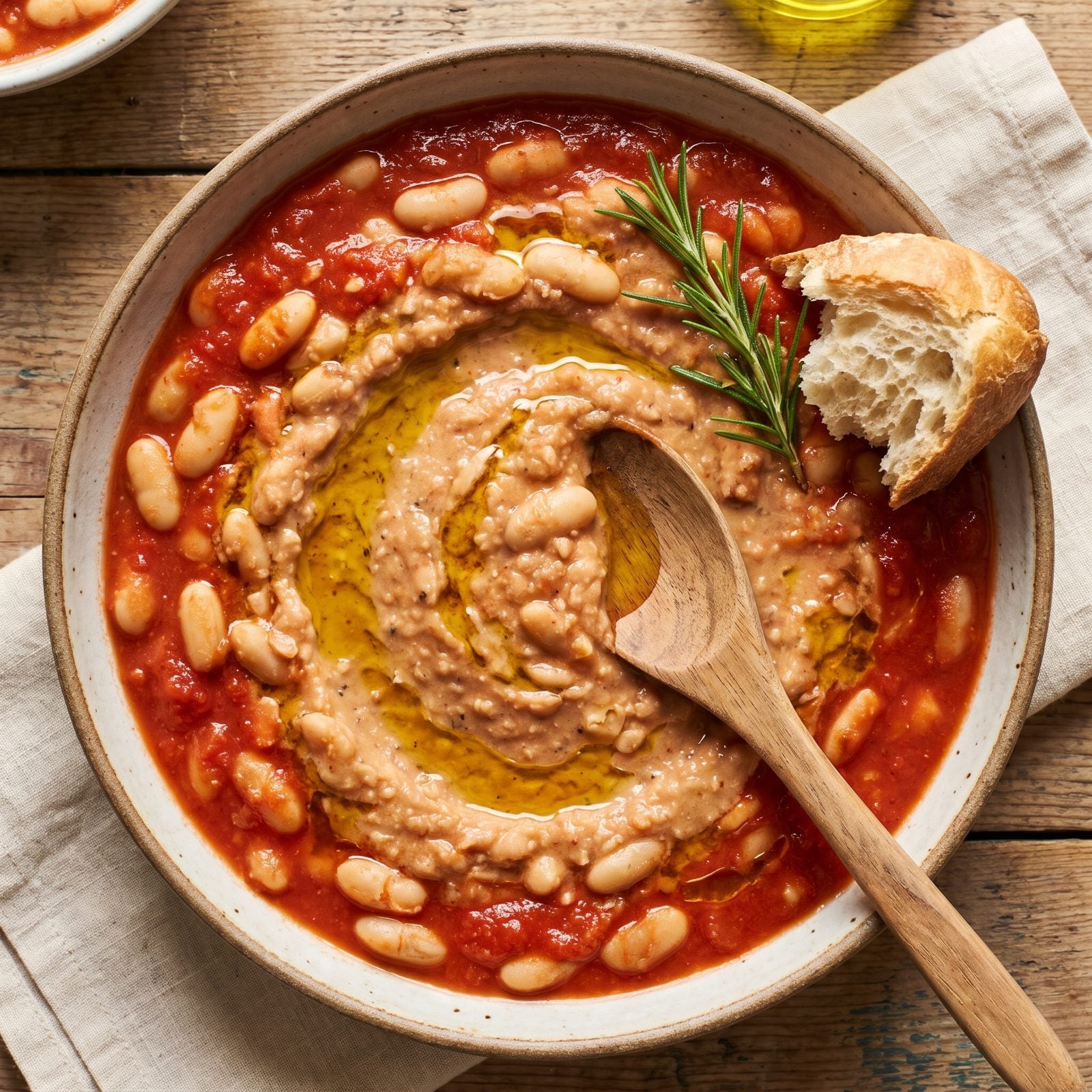
You want a sauce that clings instead of sliding off the fork, but you’d rather not reach for cream or a cornstarch slurry. So mash a cup of cannellini beans right into the pot.
Half of them disappear and thicken the sauce with a soft, almost buttery body. The rest stay whole and give you little pockets of creaminess as you eat. It’s an old trick from cooks who stretched a pot to feed more people, and it happens to make everything taste richer than it has any right to.
24. Brown Sausage Before Building the Sauce
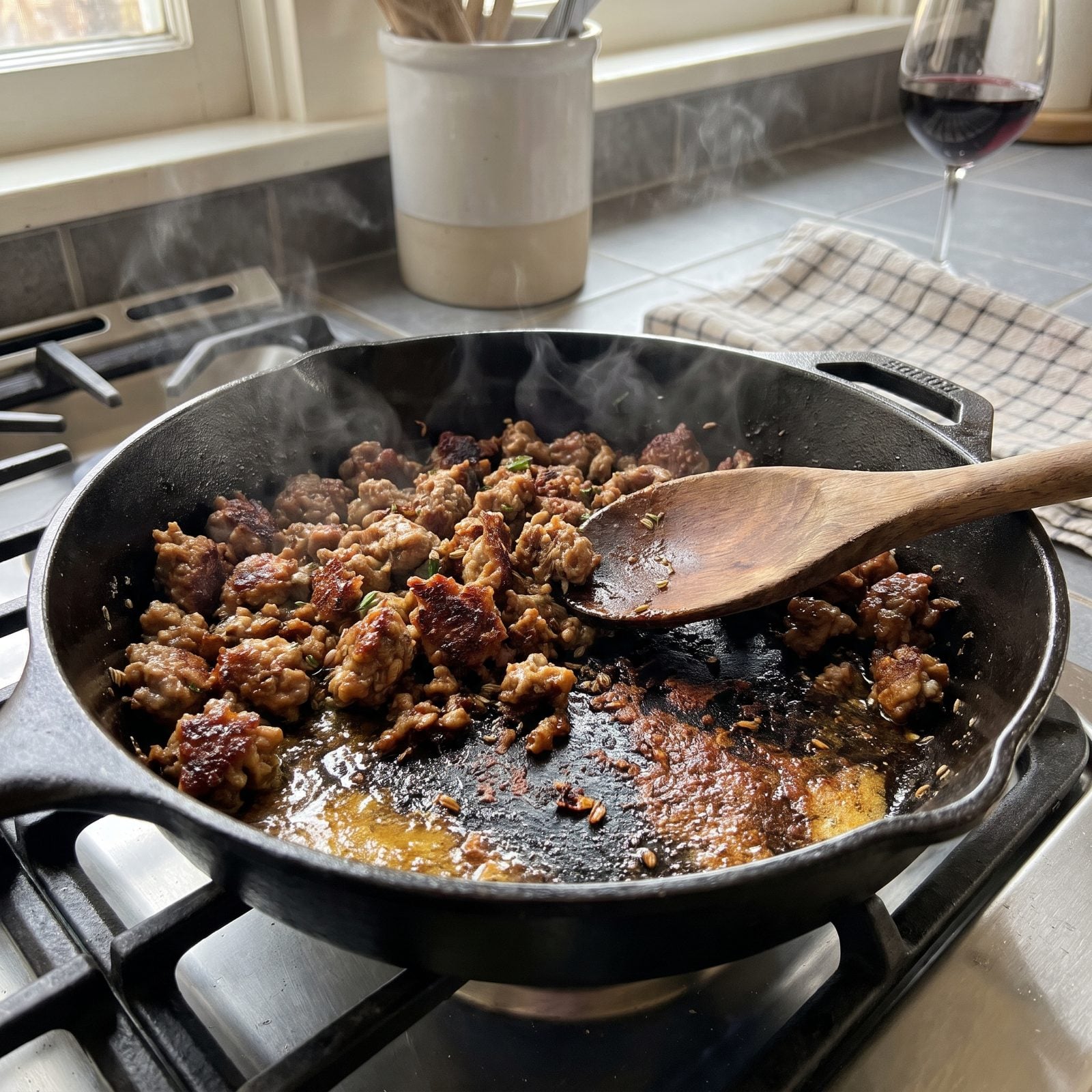
Sausage dropped into already-simmering sauce poaches. It turns gray, loses its edges, and gives you soft, flavorless lumps. The flavor you’re missing is on the bottom of the pan you never used.
Brown it hard first. Break the sausage into a dry-ish skillet and let it sit long enough to build a real crust before you stir. Those browned bits, the fond stuck to the pan, are pure savory depth. Deglaze with a splash of wine, scrape it all up, and that becomes the foundation of your sauce.
Color is flavor. A gray crumble tastes like nothing. A browned one tastes like dinner.
23. Combine Beef and Pork for a More Flavorful Ragù
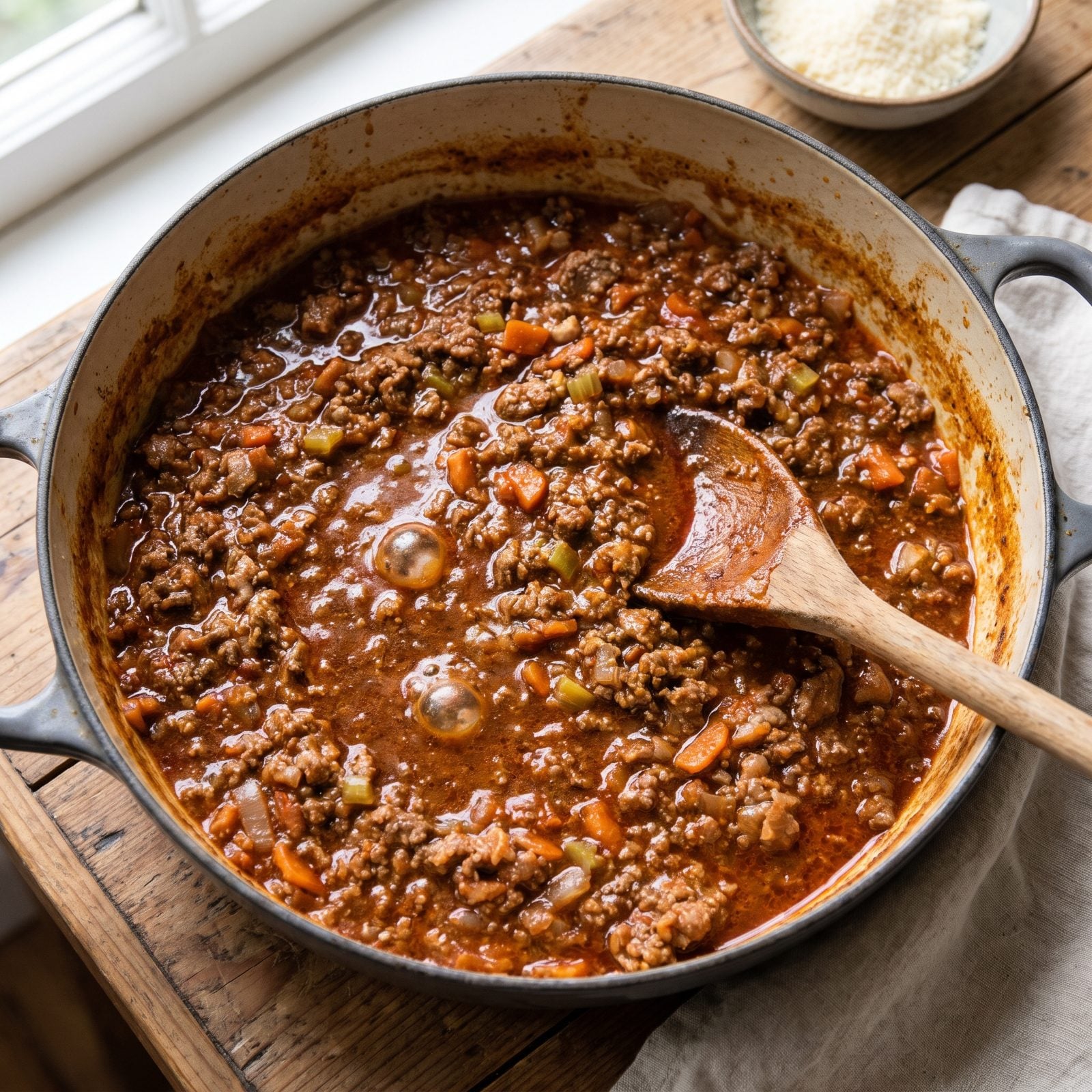
All beef makes a ragù that’s heavy and a little one-note. All pork makes it soft and sweet but thin on backbone. The grandmothers knew to split the difference.
Half ground beef for structure and that mineral, meaty depth. Half ground pork for fat, sweetness, and tenderness. Together they cook down into a sauce with more dimension than either one alone — the kind that tastes like it’s been going all afternoon even when it hasn’t.
22. Braise Meatballs in the Sauce
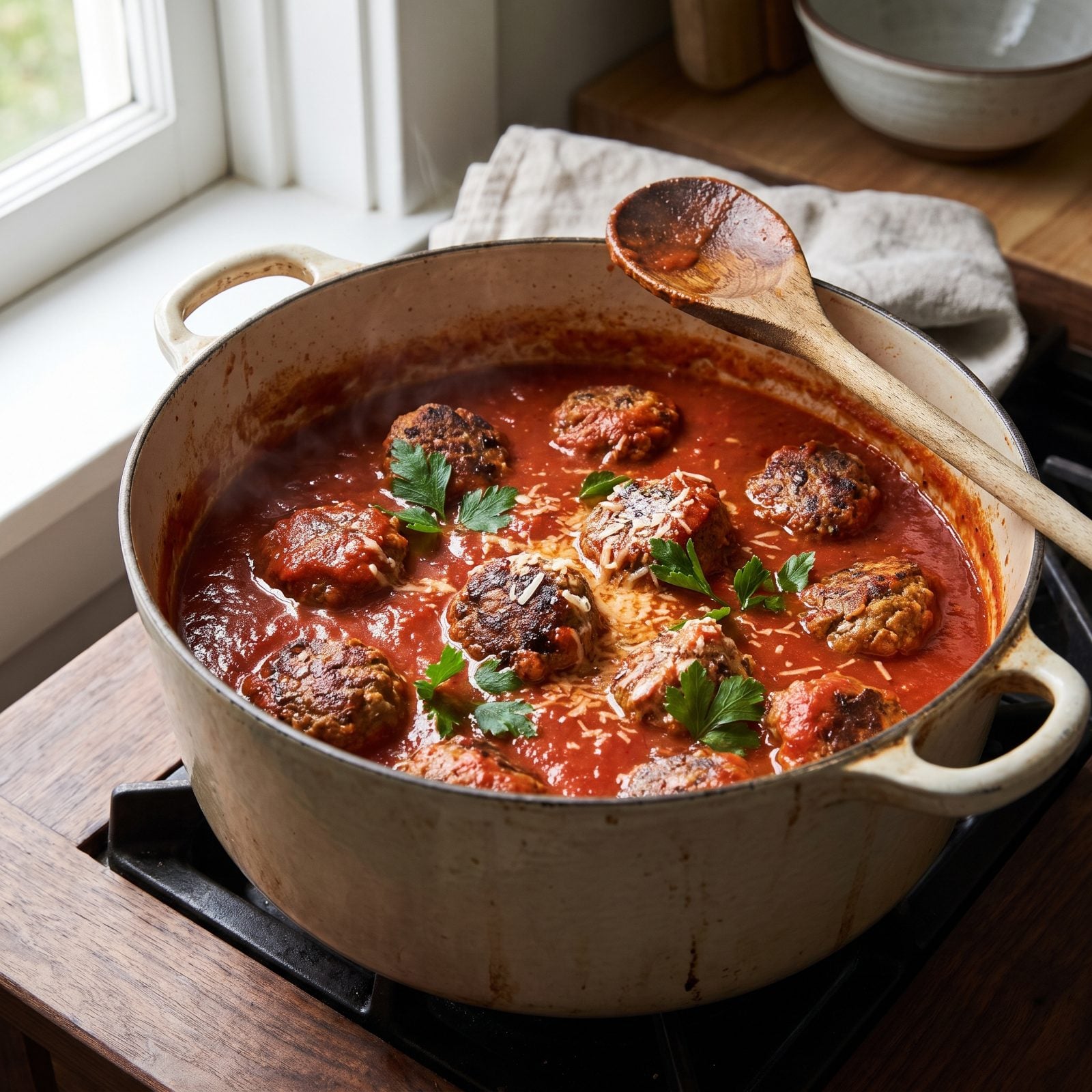
A meatball cooked all the way in the oven is a fine meatball. One that finishes in the sauce is a different animal.
Sear them first for color, then lower them into the simmering pot and let them finish there for forty minutes or so. They stay tender because the gentle liquid keeps them from drying out. More than that, they give flavor to the sauce and the sauce gives flavor back. By the time they’re done, the two taste like they were made for each other, because they were.
21. Turn Leftover Roast Into a Sunday Ragù
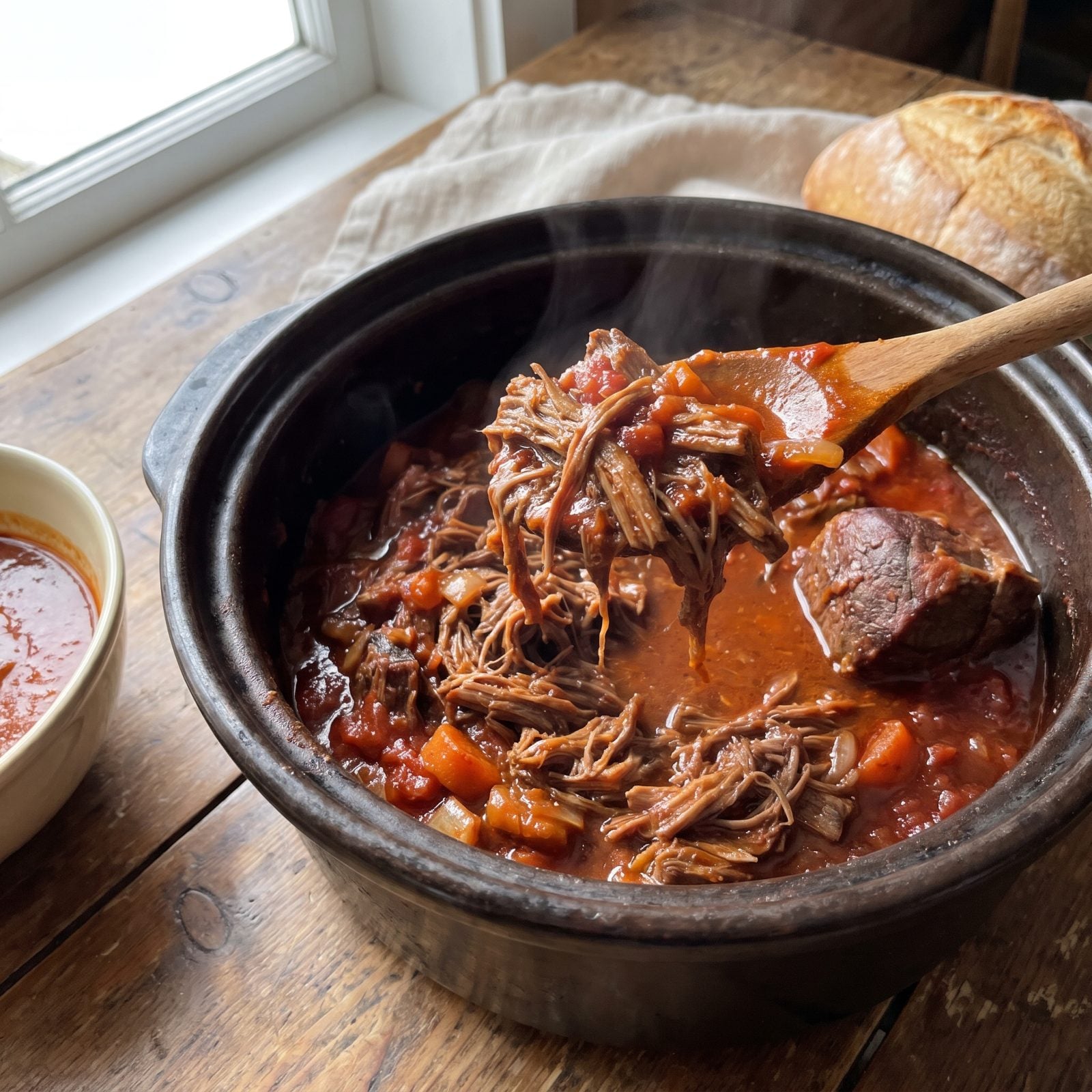
That leftover pot roast or Sunday pork shoulder sitting in the fridge is the start of the best sauce of the week. Shred it, don’t chop it. Long, soft strands fold into tomato sauce and spaghetti like they always belonged there.
Simmer the shredded meat in the sauce for half an hour with a little of its own drippings. The meat gives up its roasted flavor and the sauce turns deep and savory. This is thrift dressed up into something you’d happily serve company, no apologies for the humble start.
20. Salt the Pasta Water Generously
Would you like to save this?
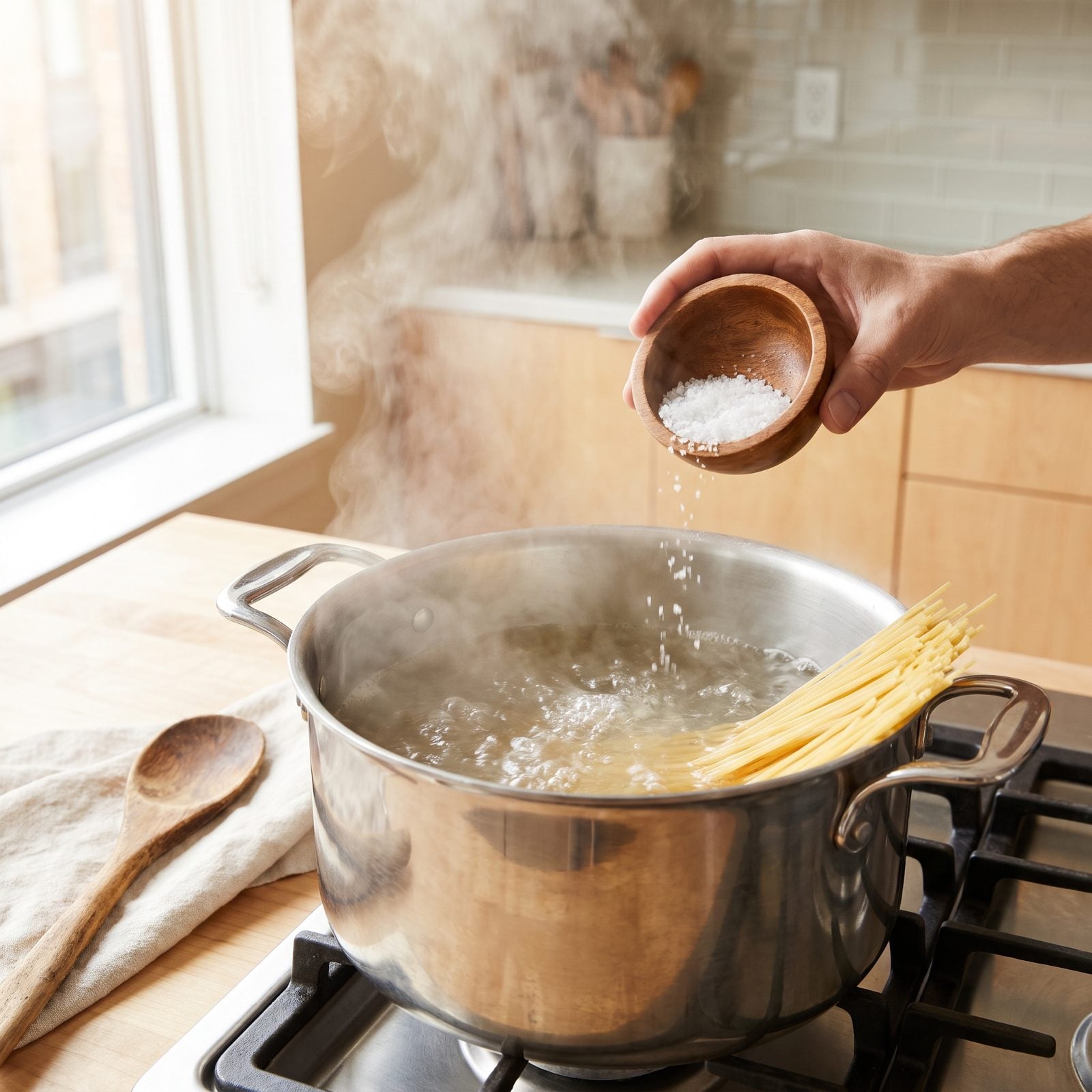
Underseasoned pasta water is the single most common fix nobody makes. The noodles come out tasting like nothing, and no amount of sauce on top ever catches them up, because the pasta itself was never seasoned from the inside.
The water should taste like the sea. A big handful of coarse salt per large pot, in once it hits a rolling boil. The pasta drinks that seasoning as it cooks, so every strand tastes like something before the sauce even shows up.
19. Keep Spaghetti Whole Instead of Snapping It
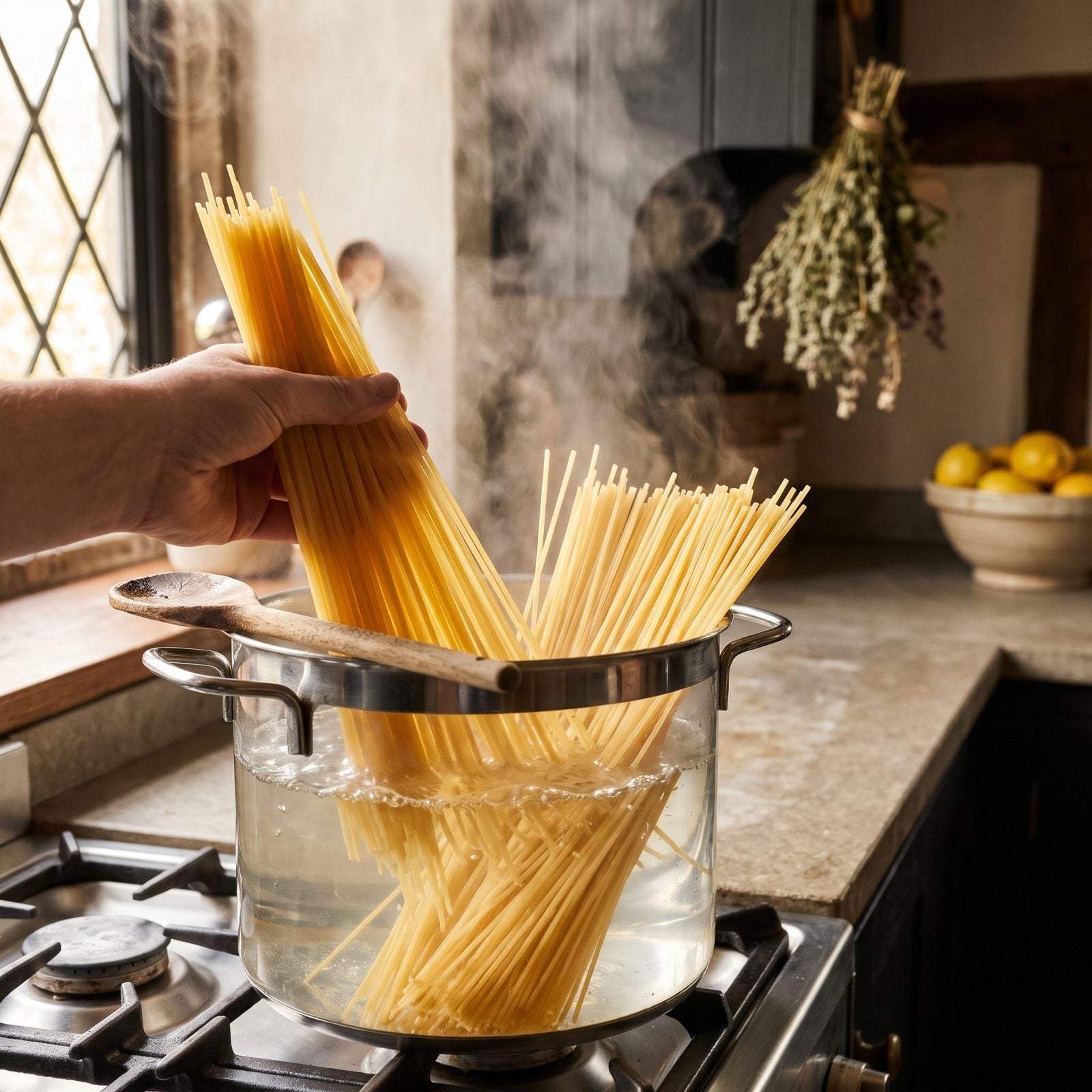
Snapping spaghetti to make it fit the pot is a habit worth breaking, and not for snobby reasons. Short broken strands don’t hold sauce the way a full length does, and they rob you of the whole point of spaghetti: the twirl.
Use a taller pot or a wide one, hold the bundle at one end, and press the submerged half gently as it softens. In about fifteen seconds the whole thing slides under. A real forkful of long spaghetti wrapped around the tines carries sauce in a way a plate of fragments never will.
18. Stir During the First Minute to Prevent Clumping
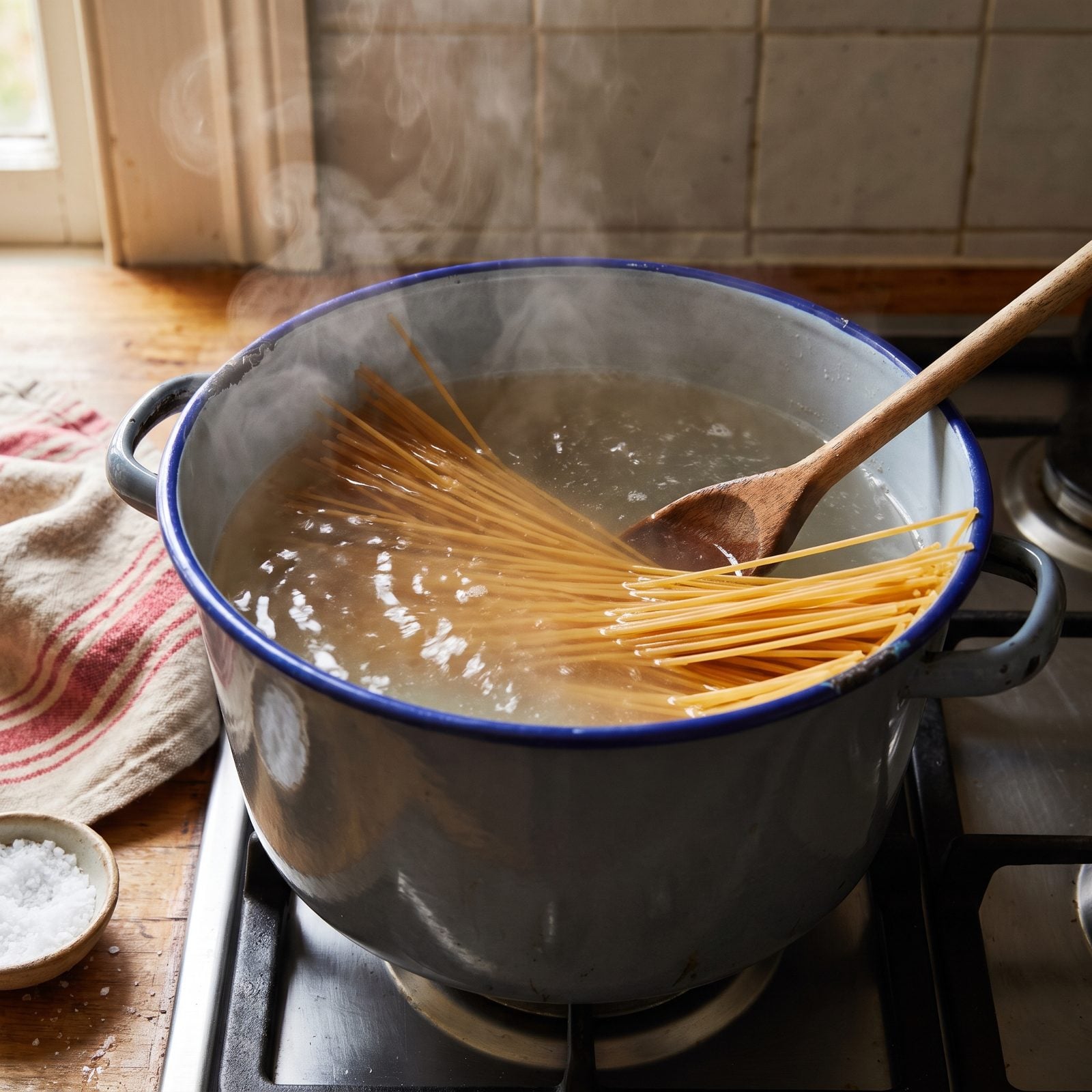
The first sixty seconds decide everything. Drop spaghetti into the pot and walk away, and the strands settle to the bottom, press together, and glue themselves into a pale brick you’ll be prying apart with a fork later.
Dry pasta releases surface starch the moment it hits hot water, and if the strands are touching while that happens, they cement together. So stir them for the first minute — a few lazy passes with a wooden spoon — and the starch washes off into the water instead of settling between the noodles.
That’s the whole trick. No oil, no fancy pot. Just one minute of your attention while the water climbs back to a boil.
17. Cook Spaghetti Just Shy of Al Dente
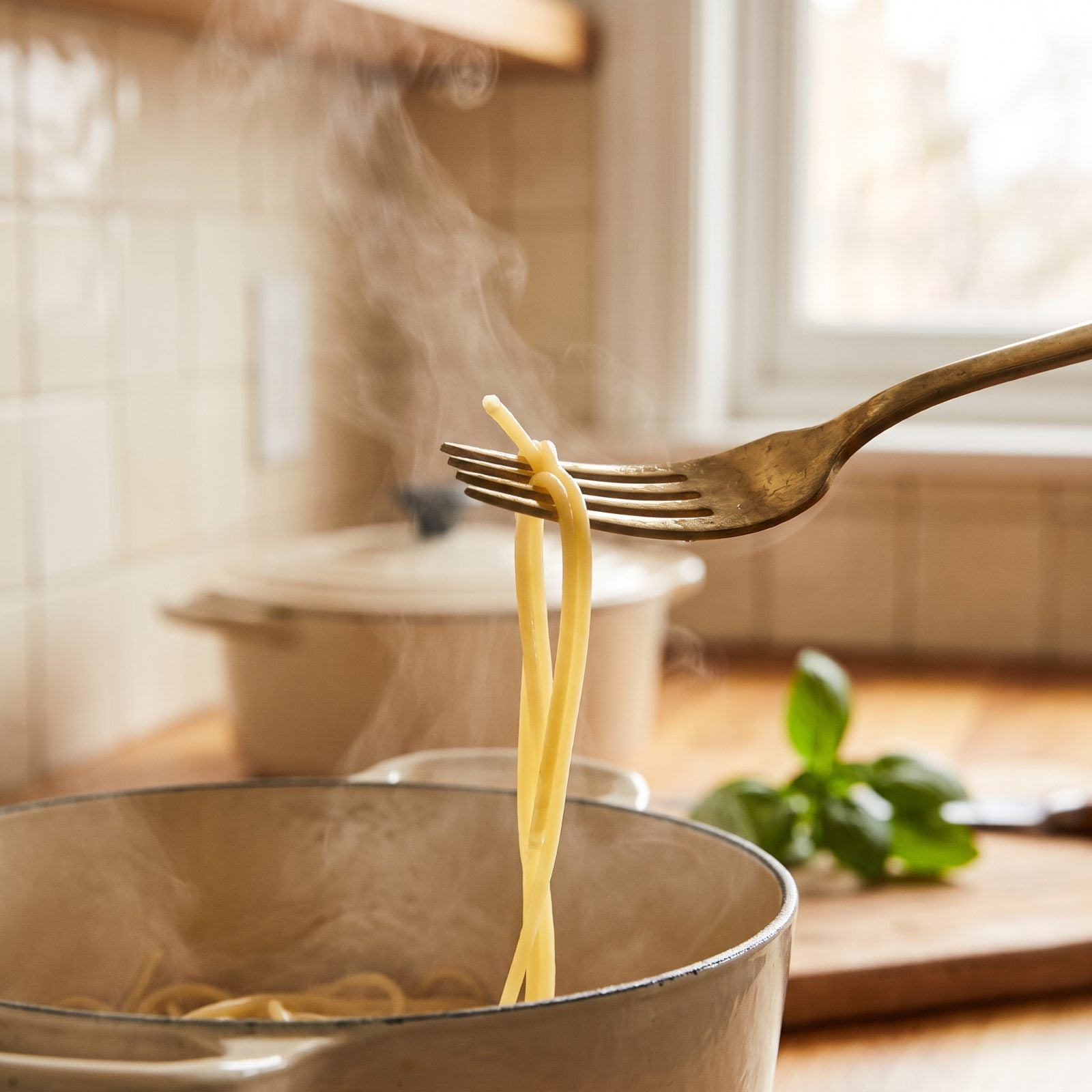
Pull the pasta a couple of minutes before the box says. Not at al dente. Before it.
Box times assume the spaghetti goes straight from pot to plate. But you’re finishing it in the sauce — you should be — so those last couple of minutes happen in the skillet. Cook to the box time first and you’ll overshoot into soft, swollen noodles that have lost their spine. Nobody’s nonna served mush.
Bite a strand around the two-minutes-left mark. You want a firm, almost chalky center, a thin pale line running down the middle, because the skillet finishes that part. Drain it there and move fast.
16. Reserve Pasta Water and Use It to Loosen the Sauce
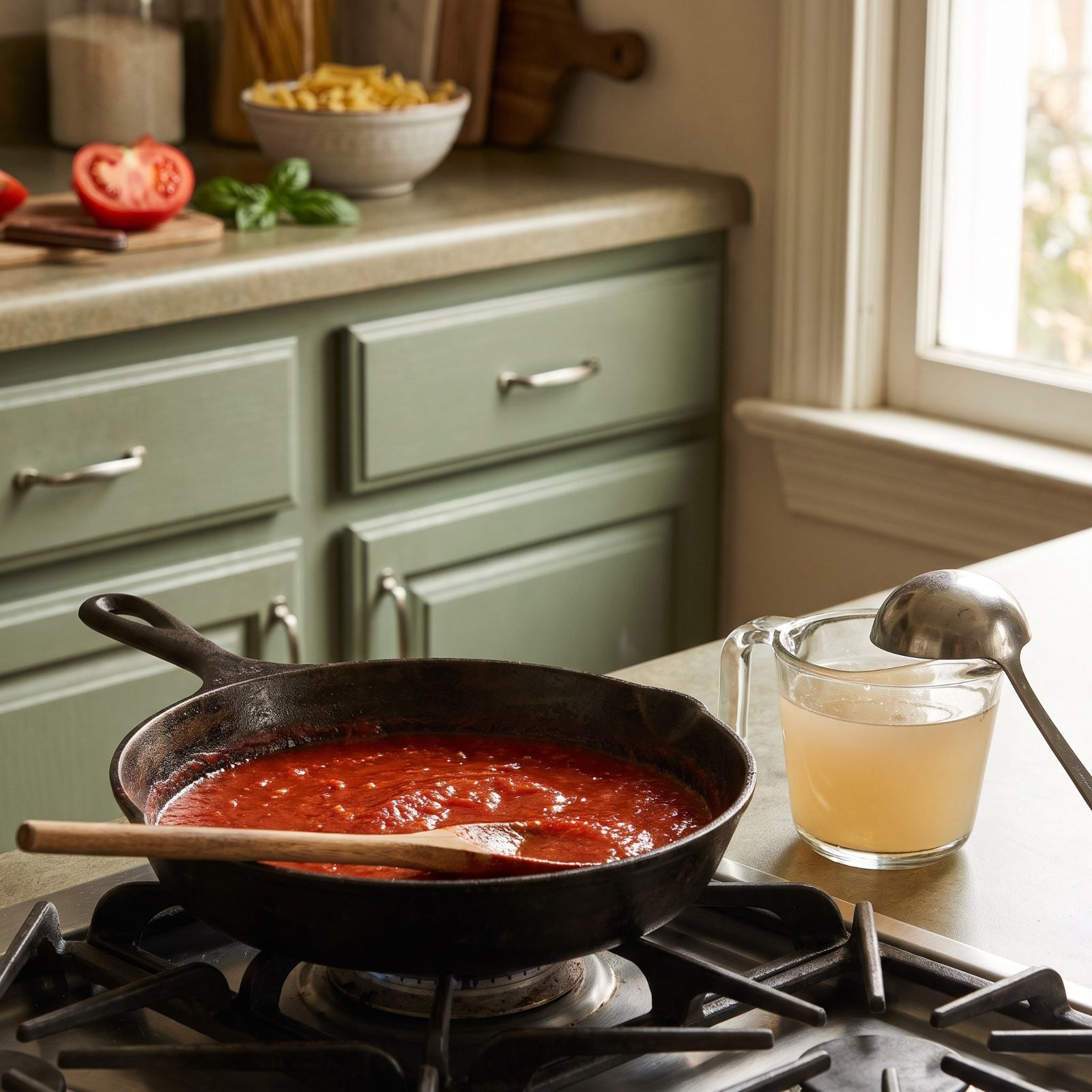
Before you drain, scoop out a cup of that cloudy water. I forgot this for years and poured liquid gold down the sink every single time.
Pasta water isn’t just hot water. It’s loaded with dissolved starch, which is exactly what a sauce needs to grip the noodles instead of pooling at the bottom of the plate. A splash loosens a sauce that’s gone tight and thick, and the starch helps it cling.
Add it a few tablespoons at a time as you toss. You’re after a loose, glossy coating that slides — not a paste, not a puddle.
15. Lift Spaghetti Straight Into the Skillet to Finish Cooking
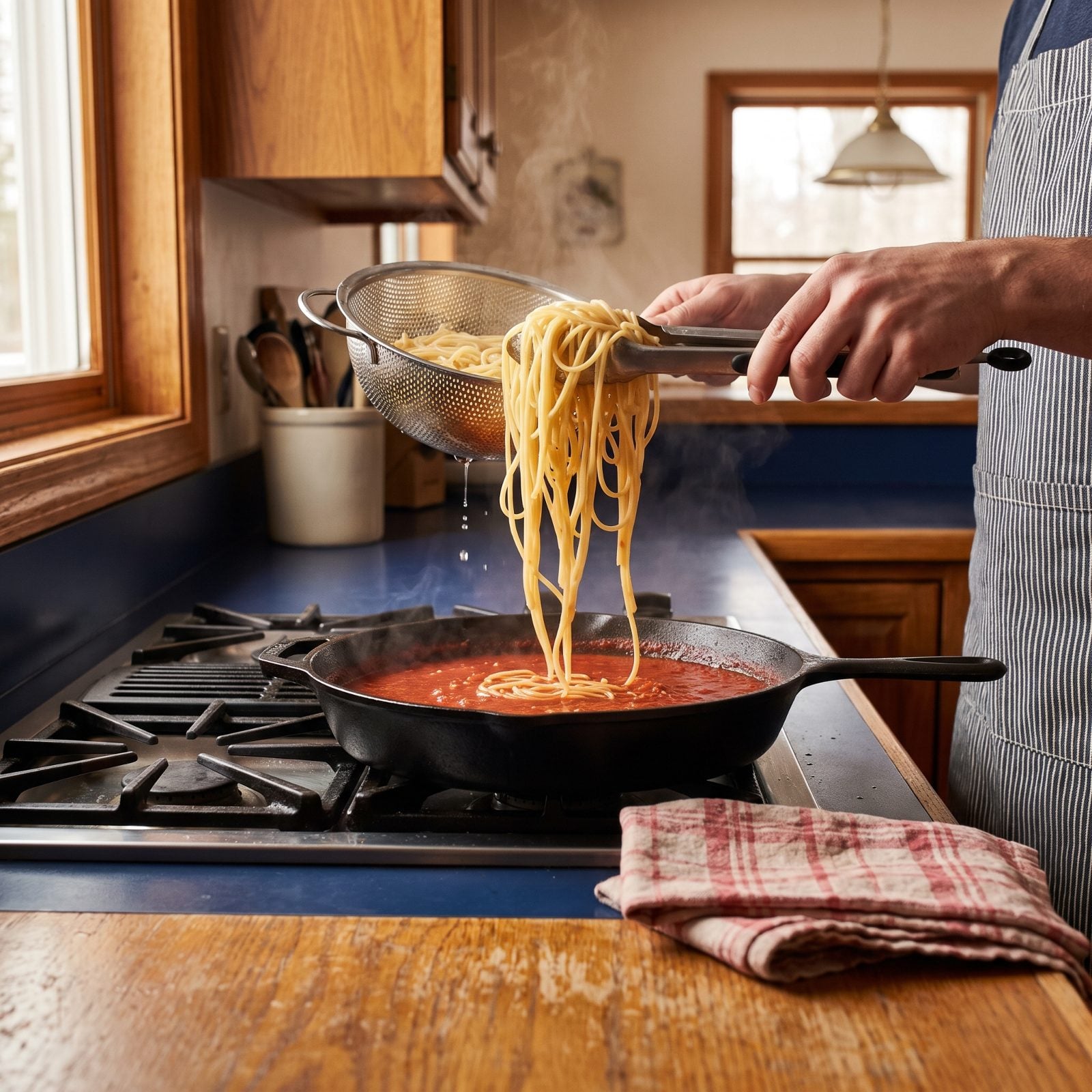
Don’t let spaghetti sit in a colander going cold and gummy while you fuss with the sauce. Give it a quick drain, then grab it with tongs and lift it hot, straight from colander to skillet, dripping a little pasta water on the way.
Those last two minutes of cooking belong in the sauce, not in plain water. As the noodles finish in the skillet they drink up the flavor instead of just wearing it like a coat — tomato, garlic, salt, all of it soaking into the strand.
Keep the heat at a gentle simmer and toss constantly. A minute or two, and the pasta hits that firm-tender place with flavor running all the way through.
14. Toss Vigorously to Emulsify the Sauce
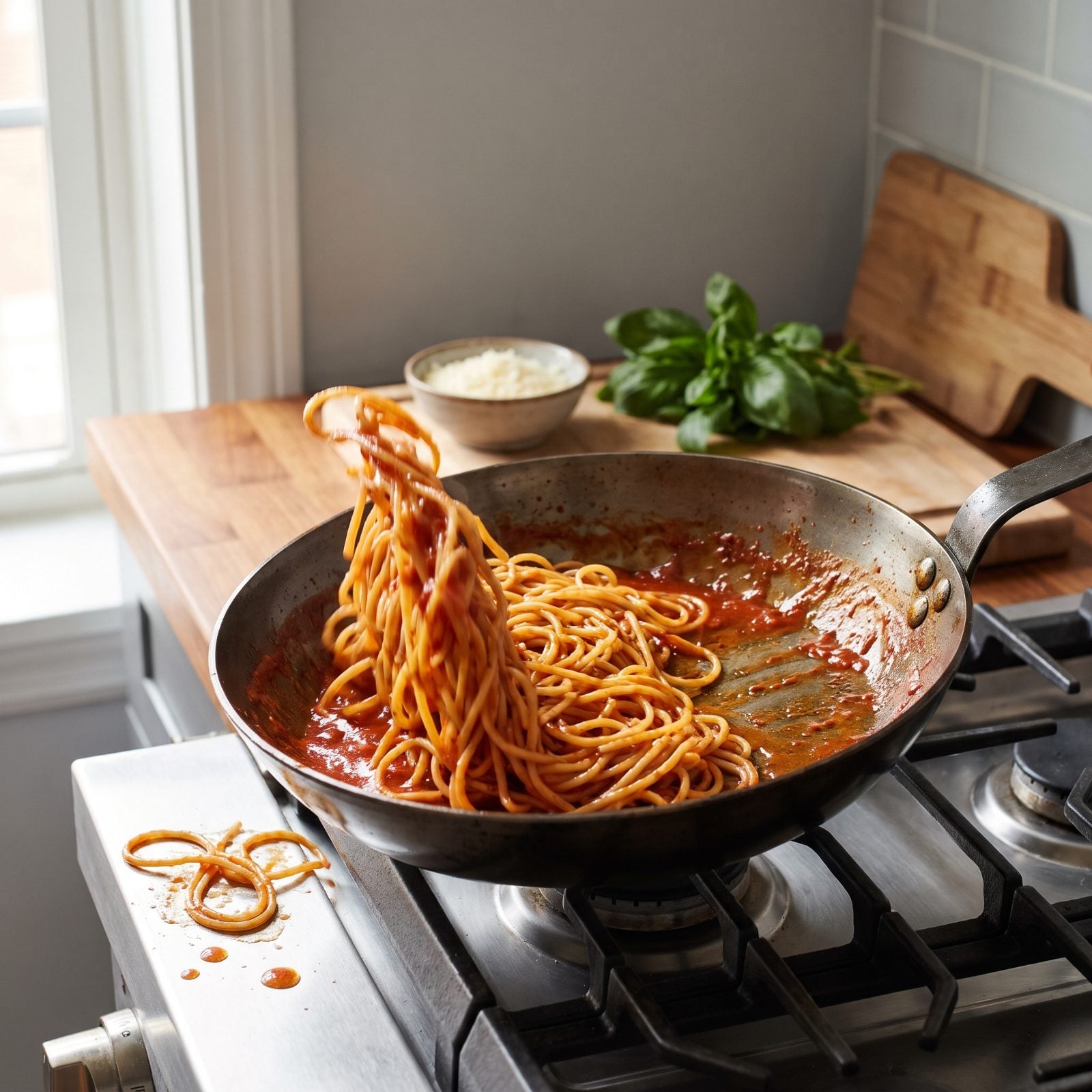
Here’s where a thin, watery sauce turns into a glossy one that hugs every noodle. Tossing does it. Keep the pan moving, lifting and folding the pasta through the sauce, until the texture shifts under your hands.
What you’re really doing is forcing the starch, the fat, and the water to bind into a single creamy coating. That binding is the whole difference between sauce that sits on top and sauce that becomes part of the dish. No cream, no roux — just elbow grease and a little pasta water.
The sign you’re not there yet: the sauce sits pooled and separated on one side of the pan, oily and grainy, instead of turning satiny and moving with the strands.
13. Add Olive Oil After Emulsifying, Not to the Boiling Water
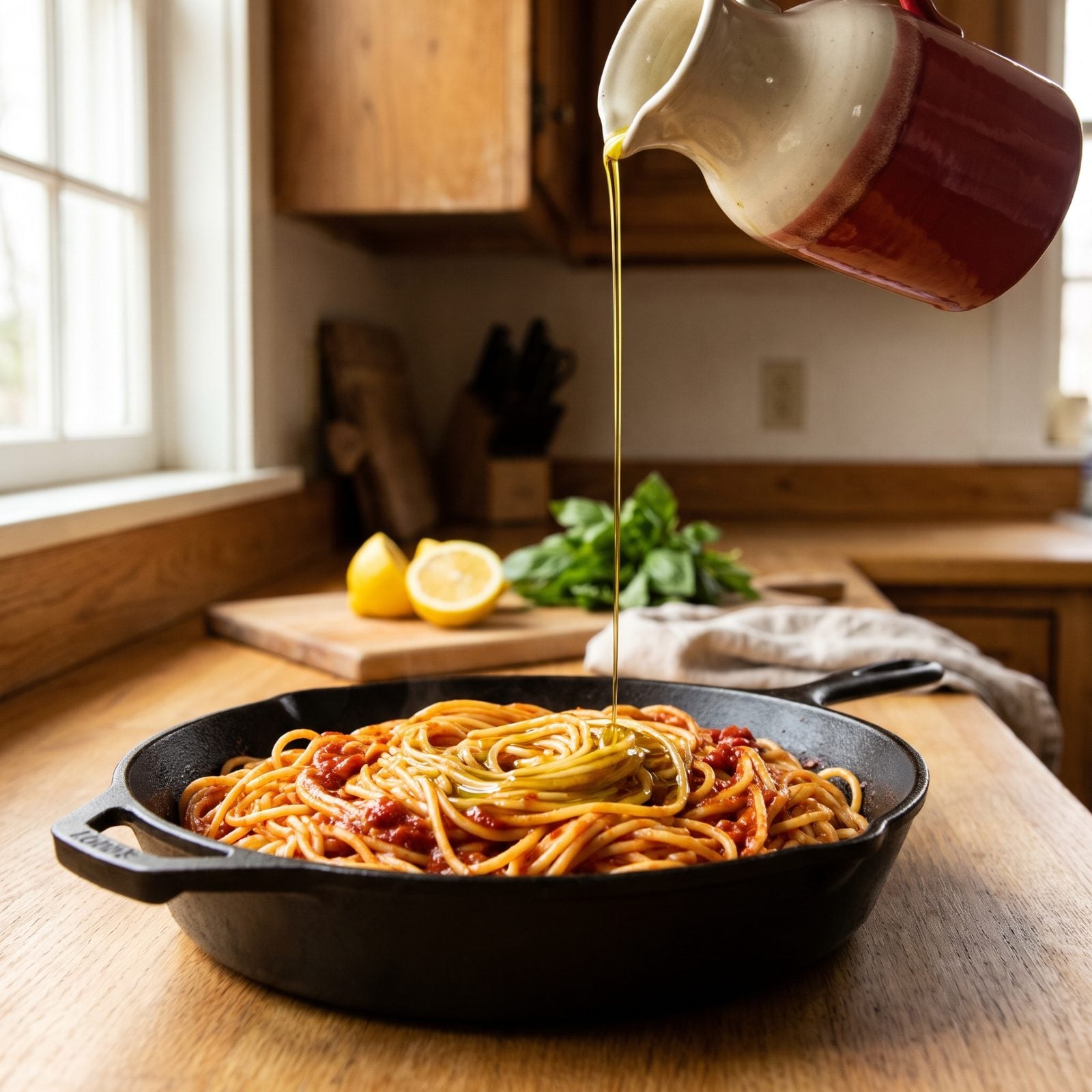
Oil in the pasta water is a myth that refuses to die. It does nothing. The oil floats on top, never touches the noodles, then coats them on the way out so the sauce slides right off. I did this for a decade because some cookbook told me to.
Good olive oil belongs at the end, raw. A thread drizzled over the finished, emulsified pasta brings a peppery, grassy finish that cooking would have scorched right out of it.
Use the real stuff, extra virgin, the bottle you’d dip bread into. A tablespoon off the heat, one last toss, done.
12. Mount the Finished Sauce With Cold Butter
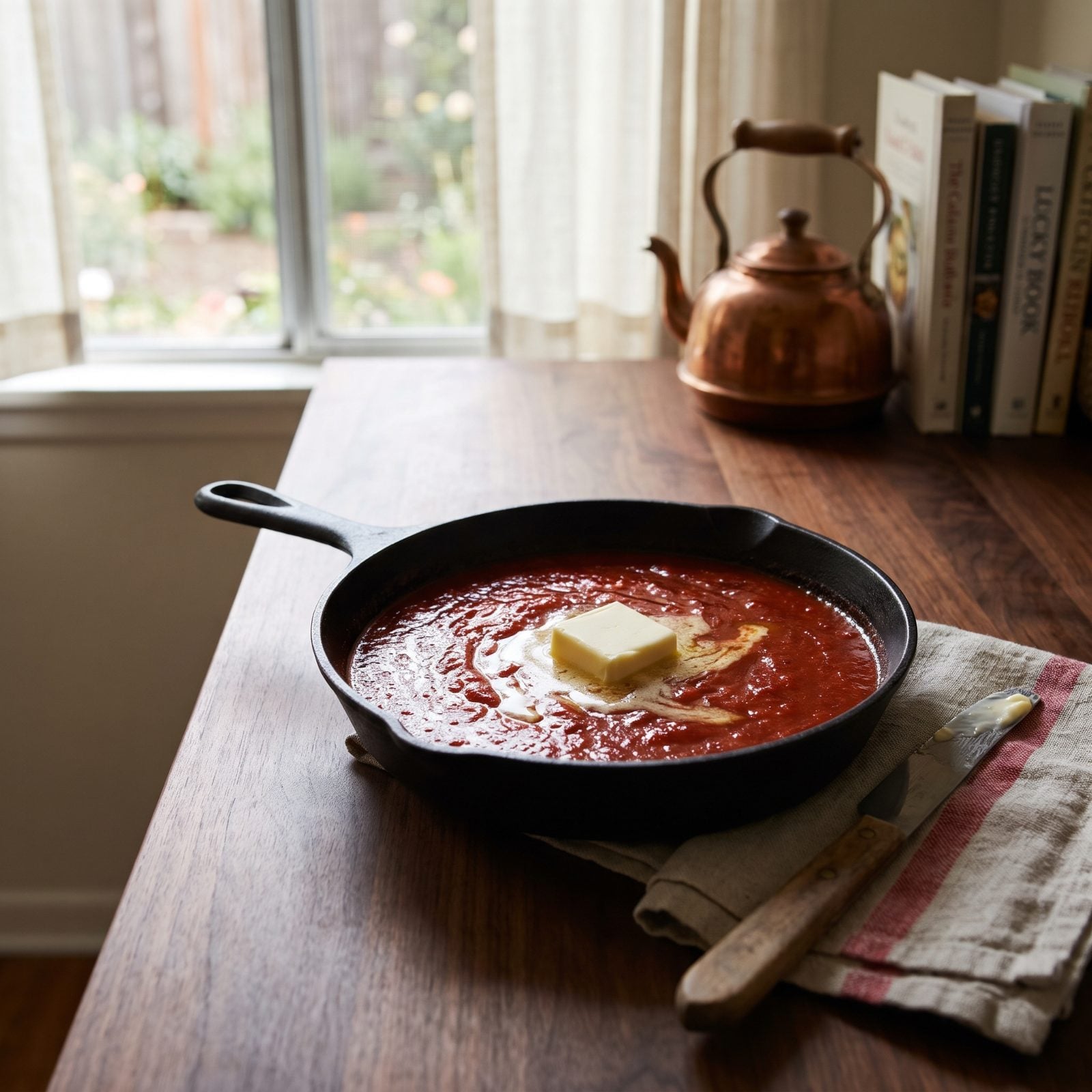
A cold knob of butter stirred into the finished sauce, off the heat, is the oldest trick in the book — and the one people skip. It’s called mounting, and it does more than add richness.
As the cold butter melts slowly into the warm sauce, its fat works into the liquid and gives the whole thing a rounder mouthfeel and a soft shine. The sharp edges of a bright, acidic tomato sauce go gentle. It tastes more finished, more restaurant, more like somebody who actually knew what they were doing.
One tablespoon per two servings. Pan off the burner, butter in, swirl until it disappears. That’s it.
11. Grate Cheese Off the Heat to Prevent Clumps
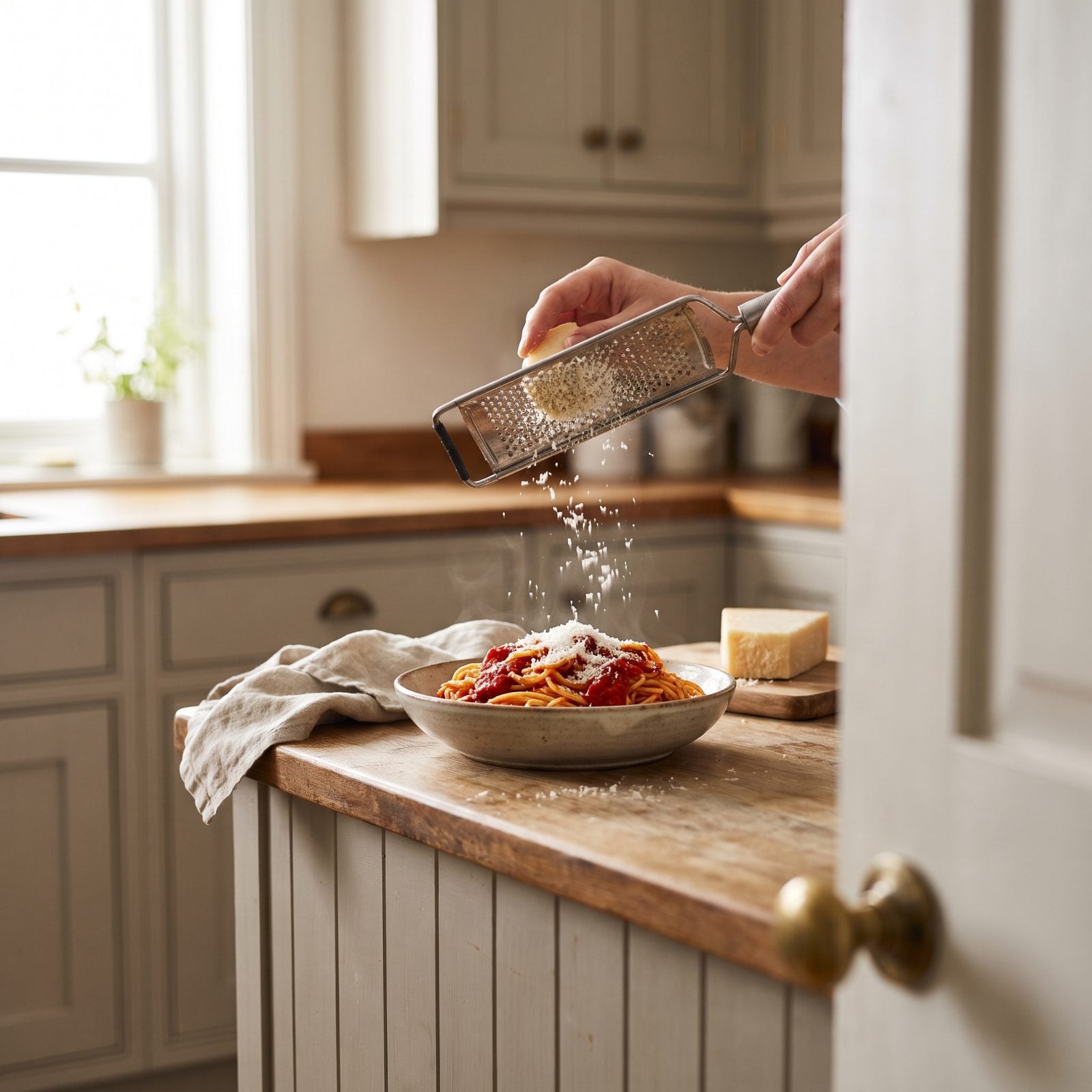
Pull the pan off the heat before the cheese goes anywhere near it. Dump grated cheese into a bubbling, screaming-hot pan and you’ll get a rubbery clump welded to the bottom instead of a creamy coating.
Hard cheeses seize and split when they hit high heat too fast. The proteins tighten, squeeze out the fat, and your lovely cheese knots up into something stringy. Let the pan cool for thirty seconds, then add the cheese in handfuls, tossing between each.
And grate it fine — as fine as you can manage. Fine cheese melts evenly into the residual warmth and disappears into the sauce. A coarse grate just sits there in lumps.
10. Use Pecorino Romano for a Sharper Finish
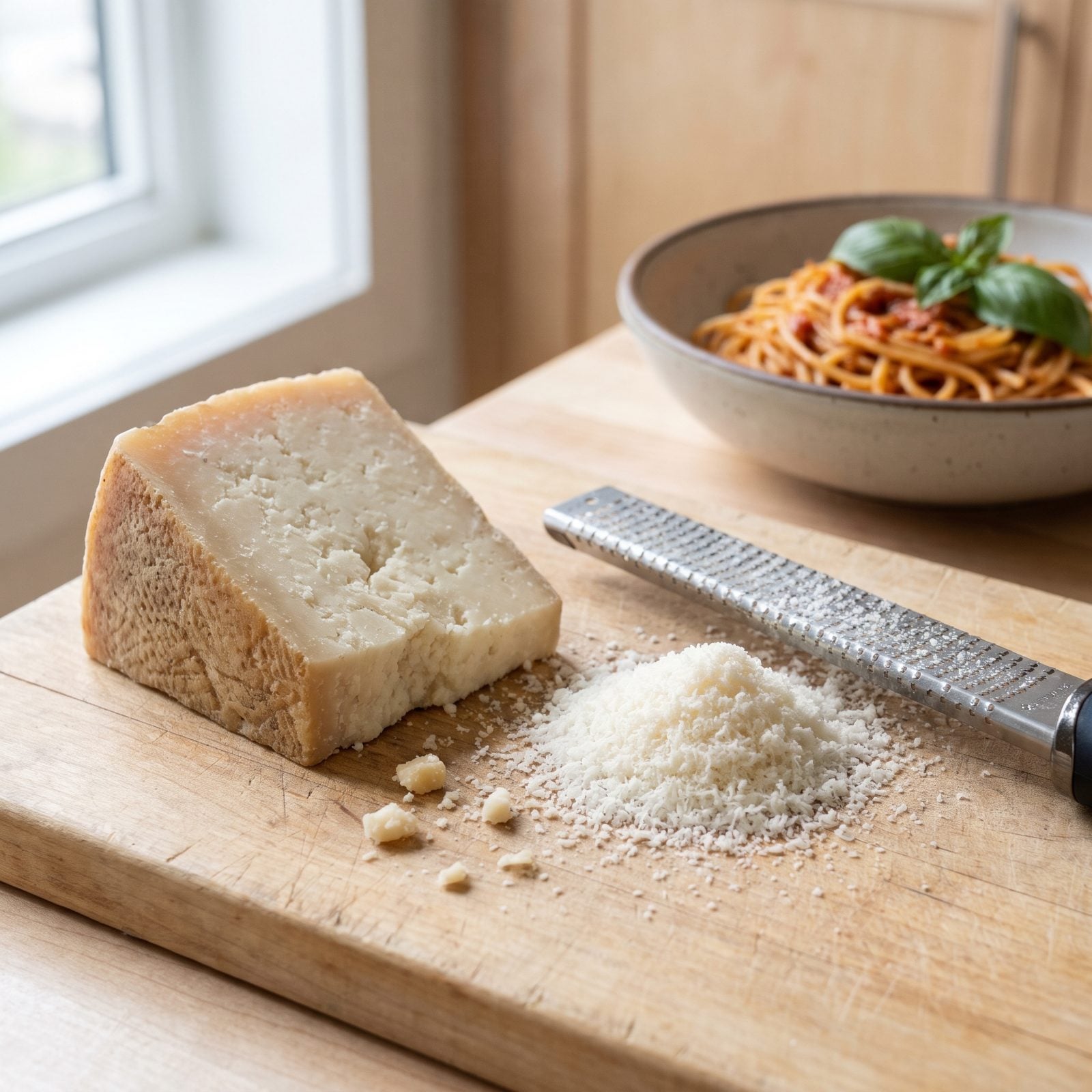
Parmigiano-Reggiano gets all the fame, but for a tomato-based spaghetti, Pecorino Romano earns its spot. It’s a sheep’s milk cheese — saltier, sharper, with a tang that cuts through sweet tomato in a way the nuttier Parmesan never quite manages.
That sharpness wakes the whole dish up. A pile of fine-grated pecorino over red sauce reads brighter, louder, more alive. Rome has built entire dishes around this cheese, and not by accident.
Buy the real wedge, DOP stamped on the rind, and grate it yourself. The pre-grated stuff in the green can is a different food entirely, cut with anti-caking powder that keeps it from ever melting right.
9. Serve Spaghetti in Shallow, Warm Bowls
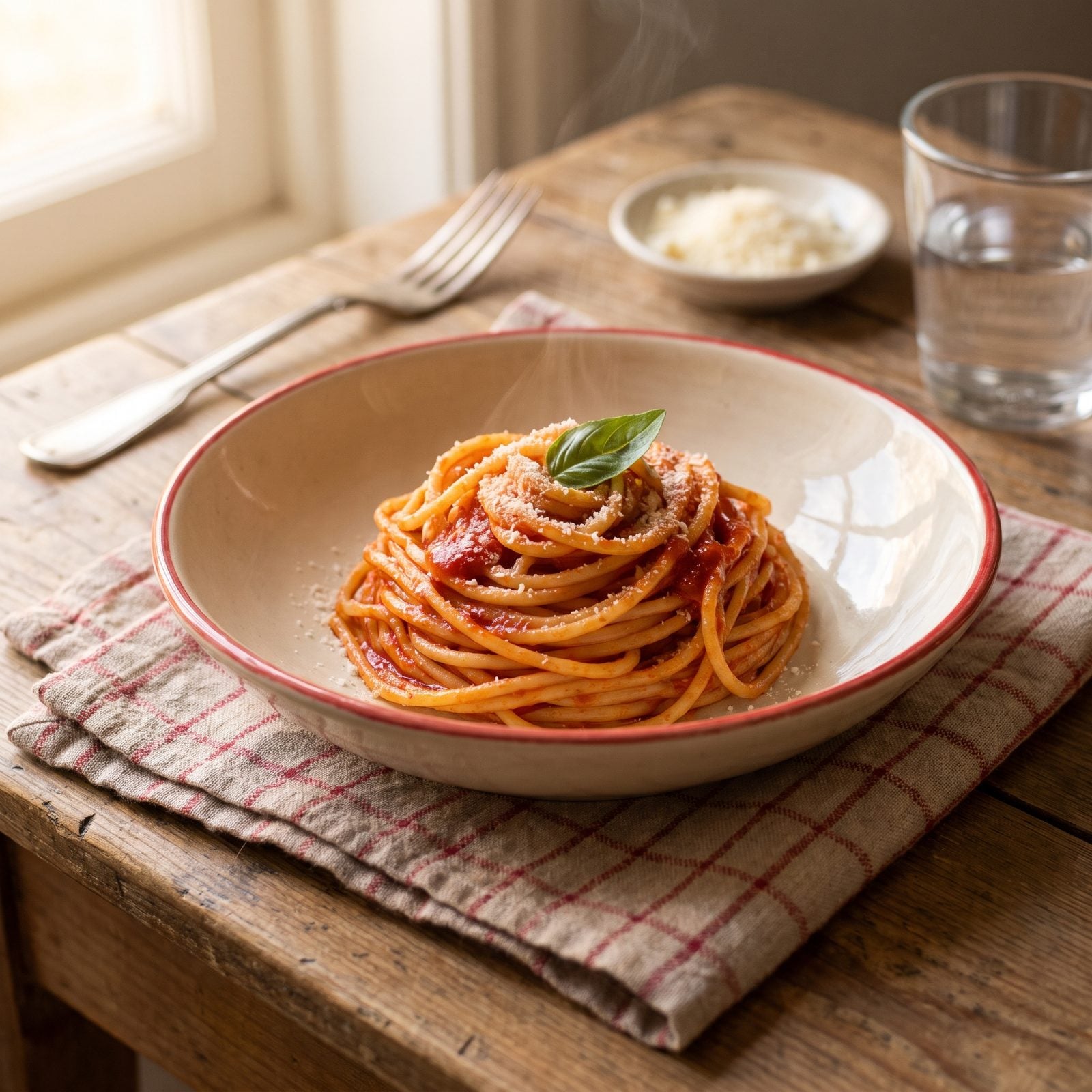
The bowl matters more than anyone admits. A cold, flat dinner plate drains the heat out of spaghetti in about a minute, and the flat surface lets the sauce run off to the edges where it pools and separates.
So warm the bowls first. Run them under hot tap water, or stack them over the draining pasta pot for a minute. A shallow, wide bowl holds the heat and corrals the sauce around the pasta instead of letting it escape to the rim.
Twirl a nest into the center with tongs, spoon a little sauce over, one more shower of pecorino, a single basil leaf. That’s the plate a grandmother sets down in front of you. Now go make it.
8. Rub the Serving Bowl With a Cut Garlic Clove
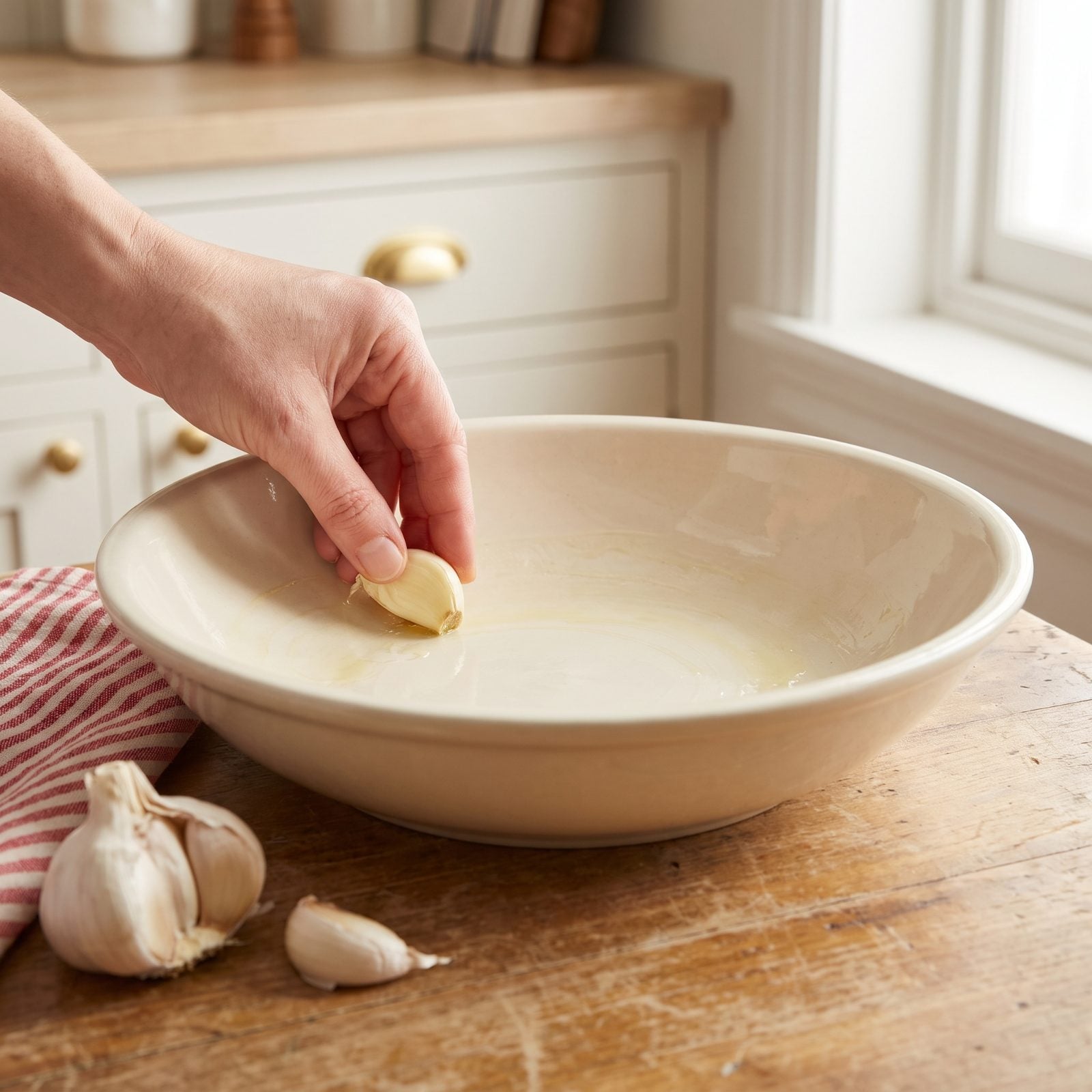
Old trick. Almost invisible, and it changes the whole plate. Before the pasta ever lands, cut a clove in half and rub the raw face around the inside of the warm serving bowl, which grabs just enough garlic oil to perfume everything that touches it.
You get the aroma without the bite — no burnt bits, no raw bulb trampling a delicate sauce. A whisper instead of a shout. It shines with a plain oil-and-cheese spaghetti where chopped garlic would steal the show. I ignored this for years and figured people were just being fussy. They weren’t.
7. Add Lemon Zest at the Last Second
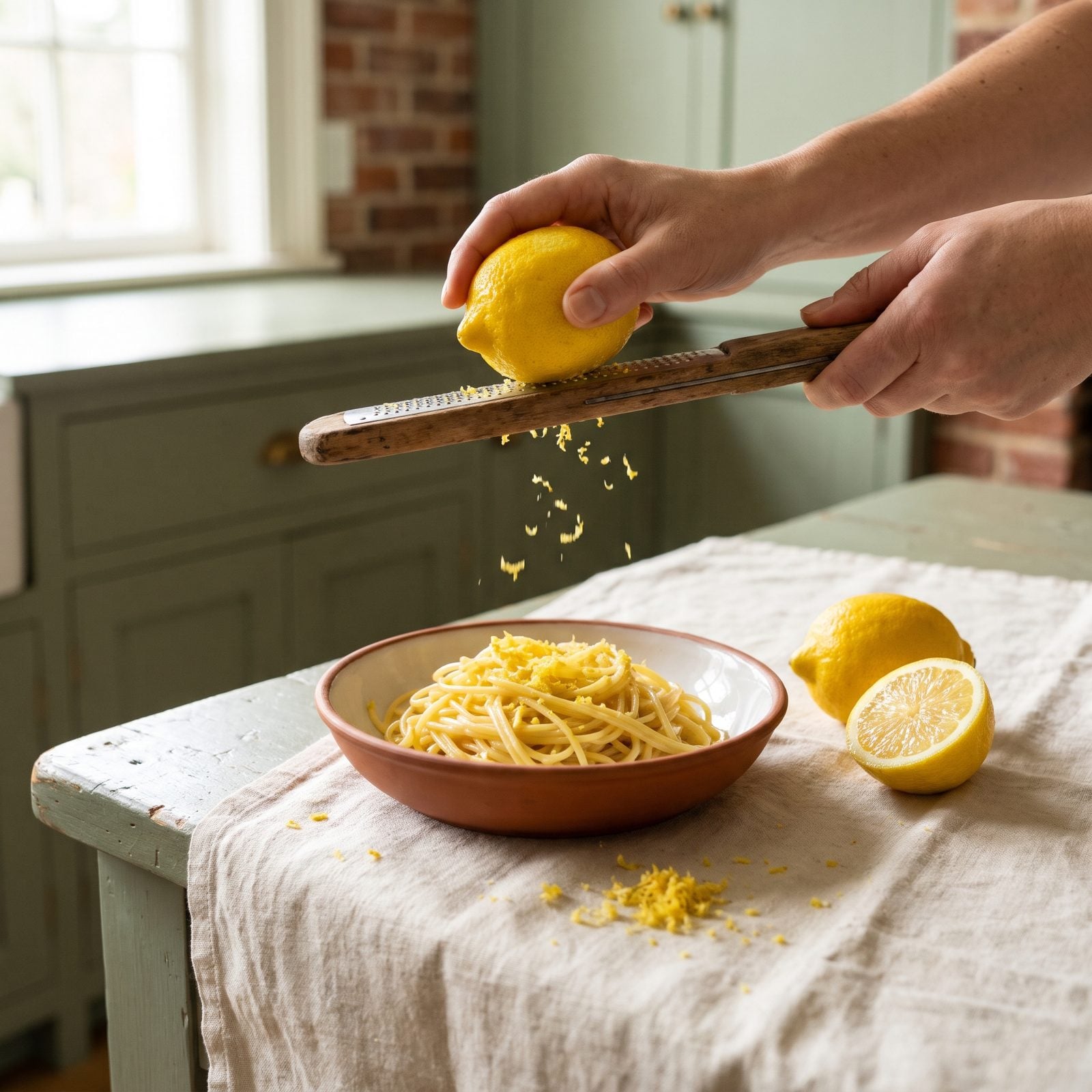
Zest cooked into a sauce disappears. All that fragrant oil in the peel cooks off and you’re left wondering where the lemon went — you killed it on the stove, that’s where.
Zest over the plate instead, after the heat is off. Use a microplane and only the yellow, never the bitter white pith underneath. A pass or two over each bowl does it. The brightness lifts cream, cuts through butter, wakes up anything heavy. One sauce sits there; the other gets up and moves.
6. Cook Clams Just Until They Open, Then Add Their Liquor to the Sauce
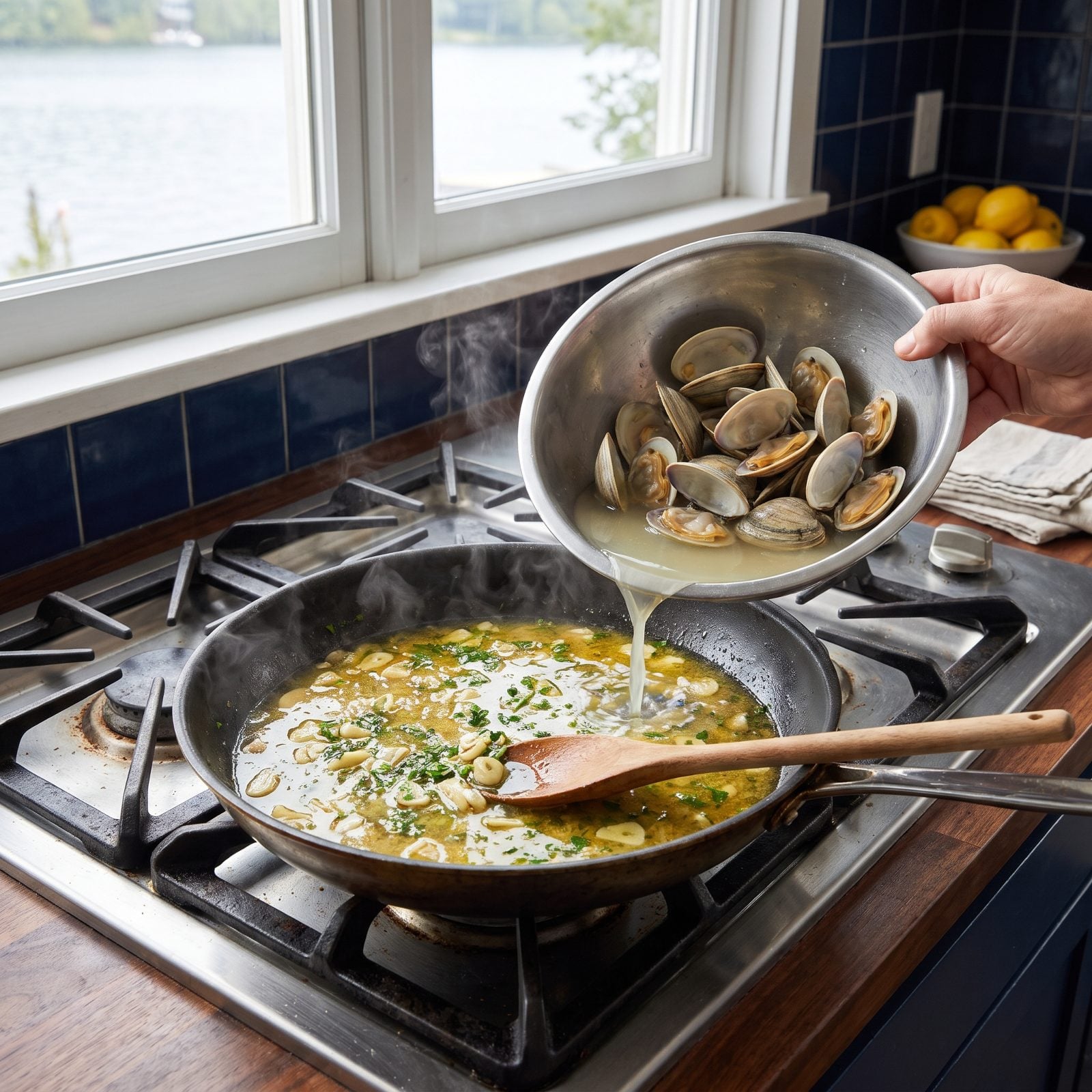
The second a clam opens, it’s done. Leave it another minute and the meat seizes into a rubber pencil eraser. You’ve probably chewed one and blamed the clam. Wasn’t the clam.
Pull each one the instant it gapes, set it aside, and keep going until they’ve all opened. Then comes the real move. That pool of briny liquid they released is pure flavor, more concentrated than any broth you could buy, so strain it to catch the grit and pour it into your garlic-and-oil base. Toss the spaghetti through that, then return the clams at the very end just to warm through.
5. Make Spaghetti al Limone With Pasta Water and Cheese
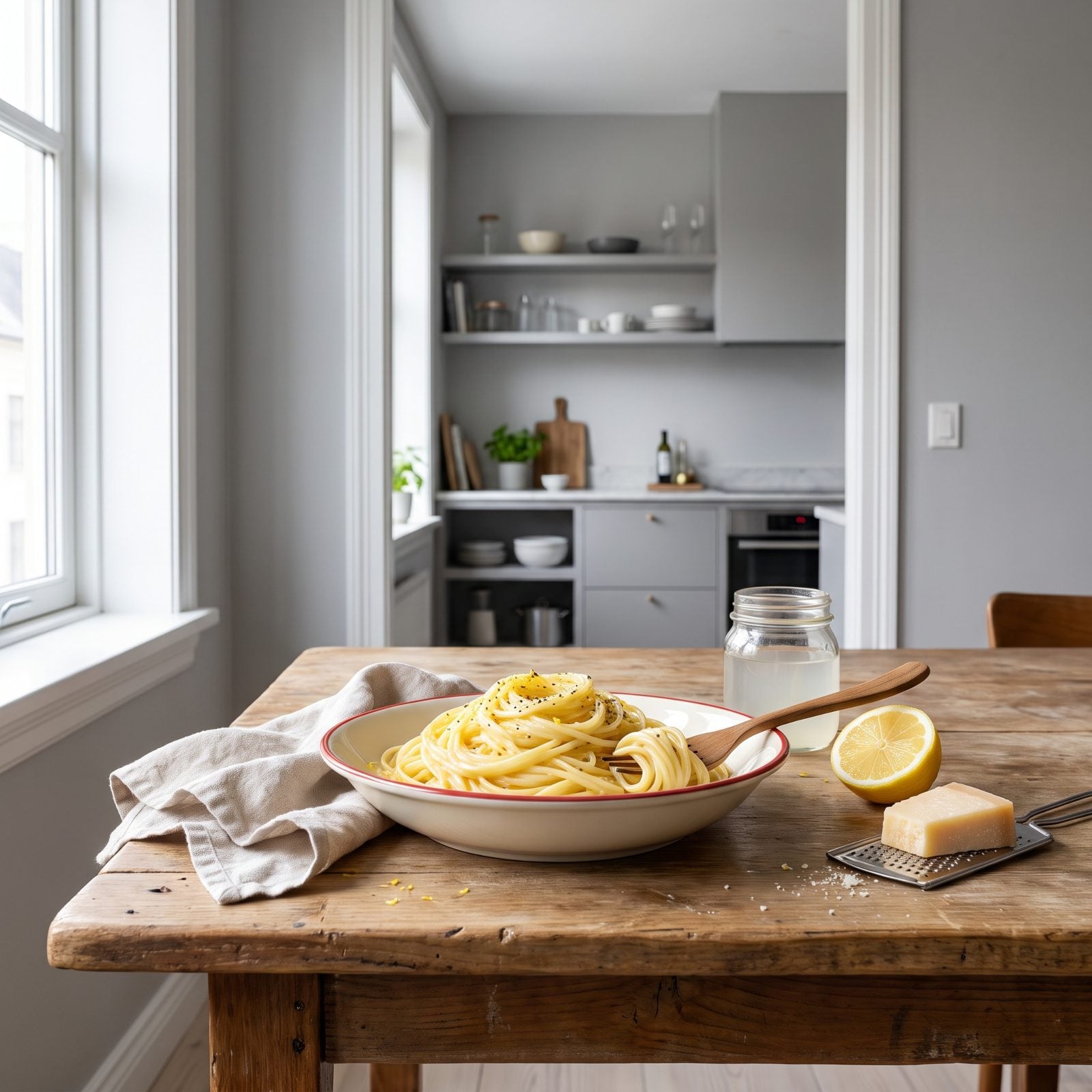
No cream in a real al limone, which surprises people. The silk comes from an emulsion — starchy pasta water whisked with grated cheese and olive oil until it turns glossy and clings to every strand.
Grate a hard pile of Parmigiano or Pecorino, add the juice of a lemon, a good glug of oil, and a ladle of hot pasta water. Whisk hard off the heat until it’s a loose sauce, then drag the just-drained spaghetti through it, tossing the whole time. If it tightens up, more pasta water. A handful of ingredients, fifteen minutes, and it tastes like something you’d fight for a reservation to eat.
The starch in pasta water is not a byproduct. It’s the sauce you’ve been throwing down the drain.
4. Pair Spaghetti With Slow-Roasted Garlic and Oil
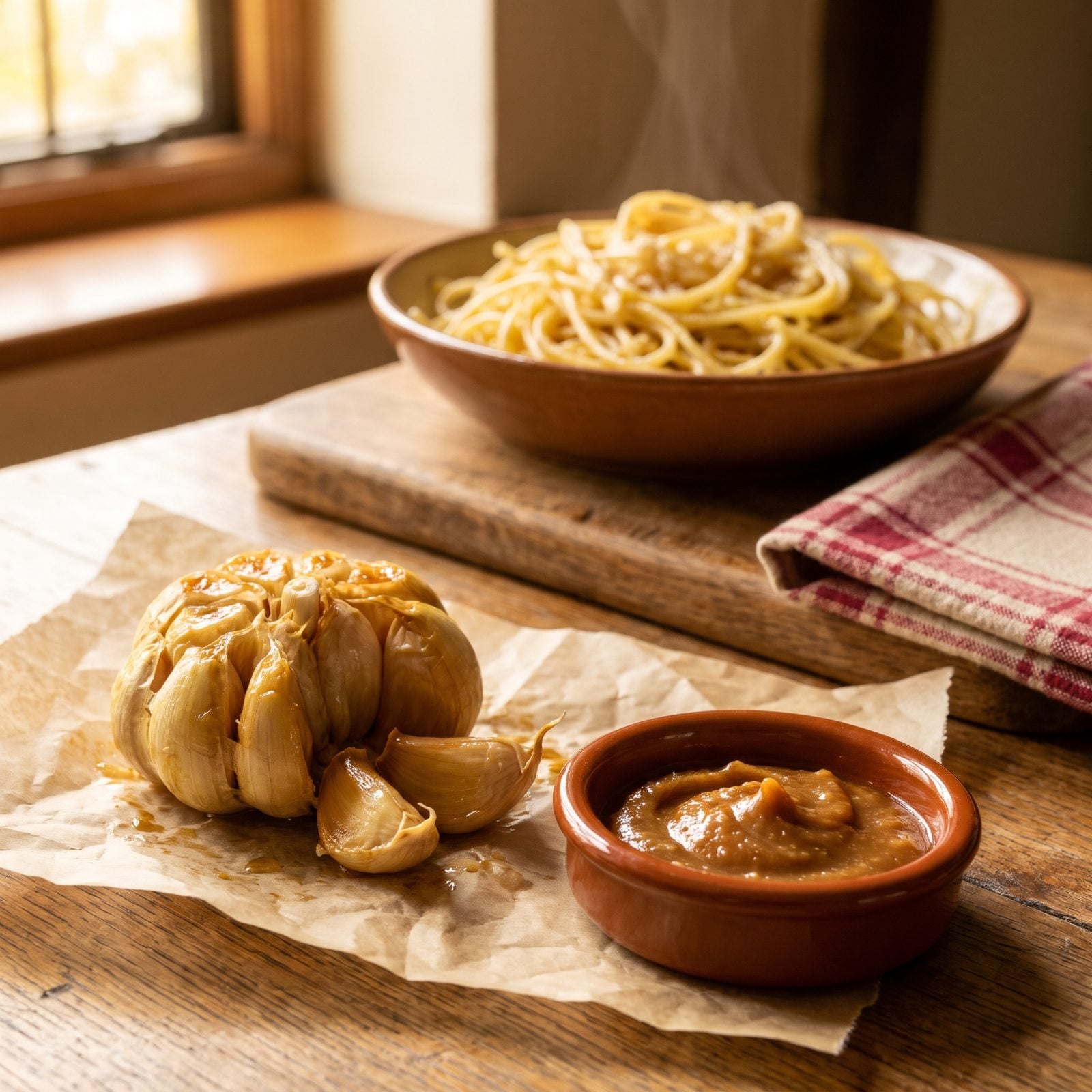
Raw garlic fights you. Roasted garlic surrenders. An hour in a hot oven turns those sharp cloves sweet and nutty, almost like caramel, and they melt straight into warm oil instead of biting the back of your throat.
Wrap a whole head in foil with a splash of oil, roast it at 400°F until the cloves go soft enough to squeeze out like paste, then mash them into a few tablespoons of your finishing oil, loosen with pasta water, and toss with spaghetti. That’s the whole recipe. The plainest dish in the book, and one of the most satisfying. A nonna move if there ever was one — costs almost nothing and tastes like patience.
3. Bake Leftover Spaghetti Into a Crisp-Edged Frittata
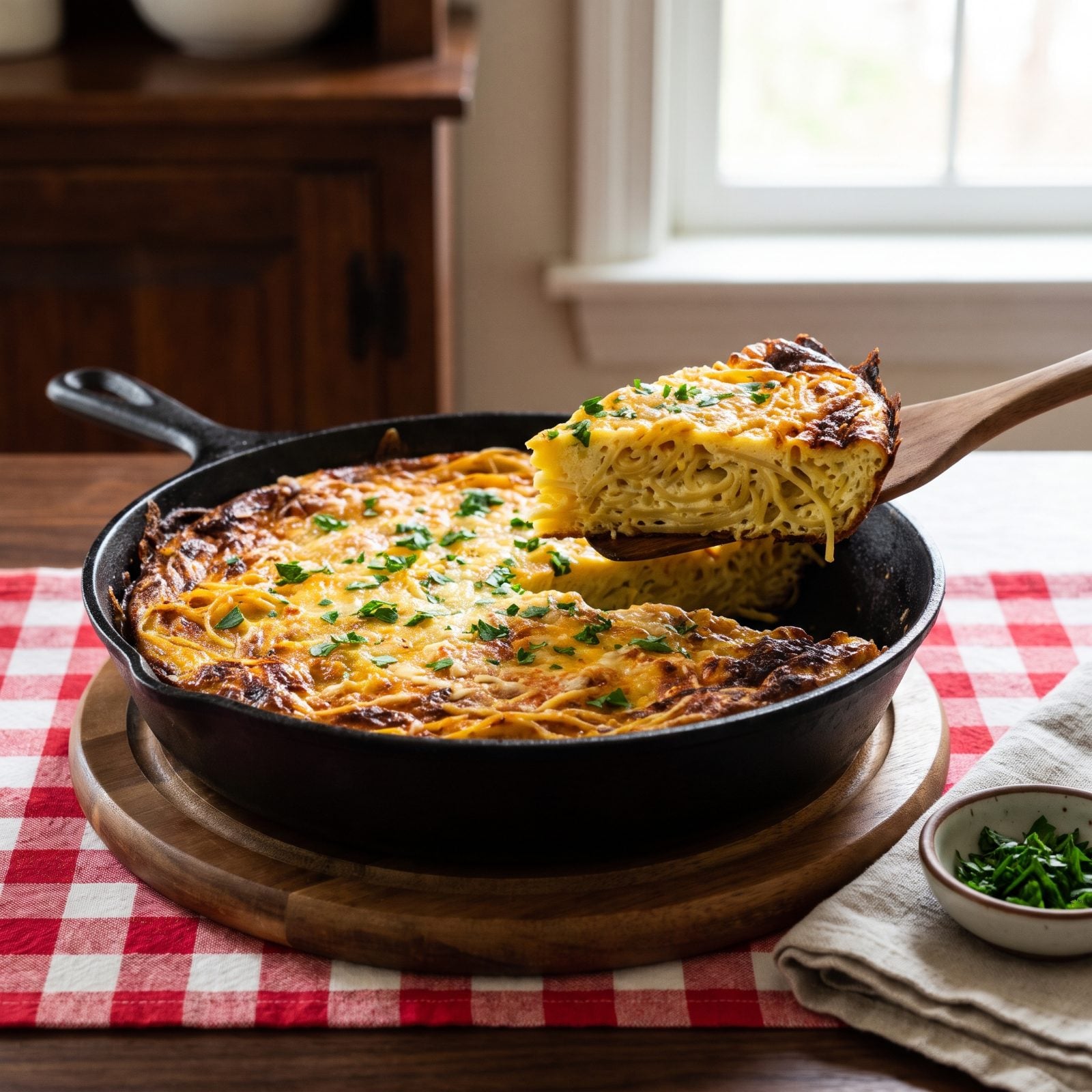
Cold spaghetti in a container nobody wants to eat. We’ve all opened that fridge. Throw it in a pan instead.
Beat four or five eggs with a fat handful of grated cheese and some pepper, fold in the leftover pasta — sauce and all — and pour it into a hot oiled skillet. Let the bottom set and crisp without touching it, because that golden crust is what you’re after, then flip it or run it under the broiler to finish the top. The edges go lacy and crunchy while the inside stays tender. It’s a Neapolitan tradition, frittata di spaghetti, and honestly it beats the pasta the first night around.
2. Layer Spaghetti With Cheese and Sauce for a Timballo-Style Bake
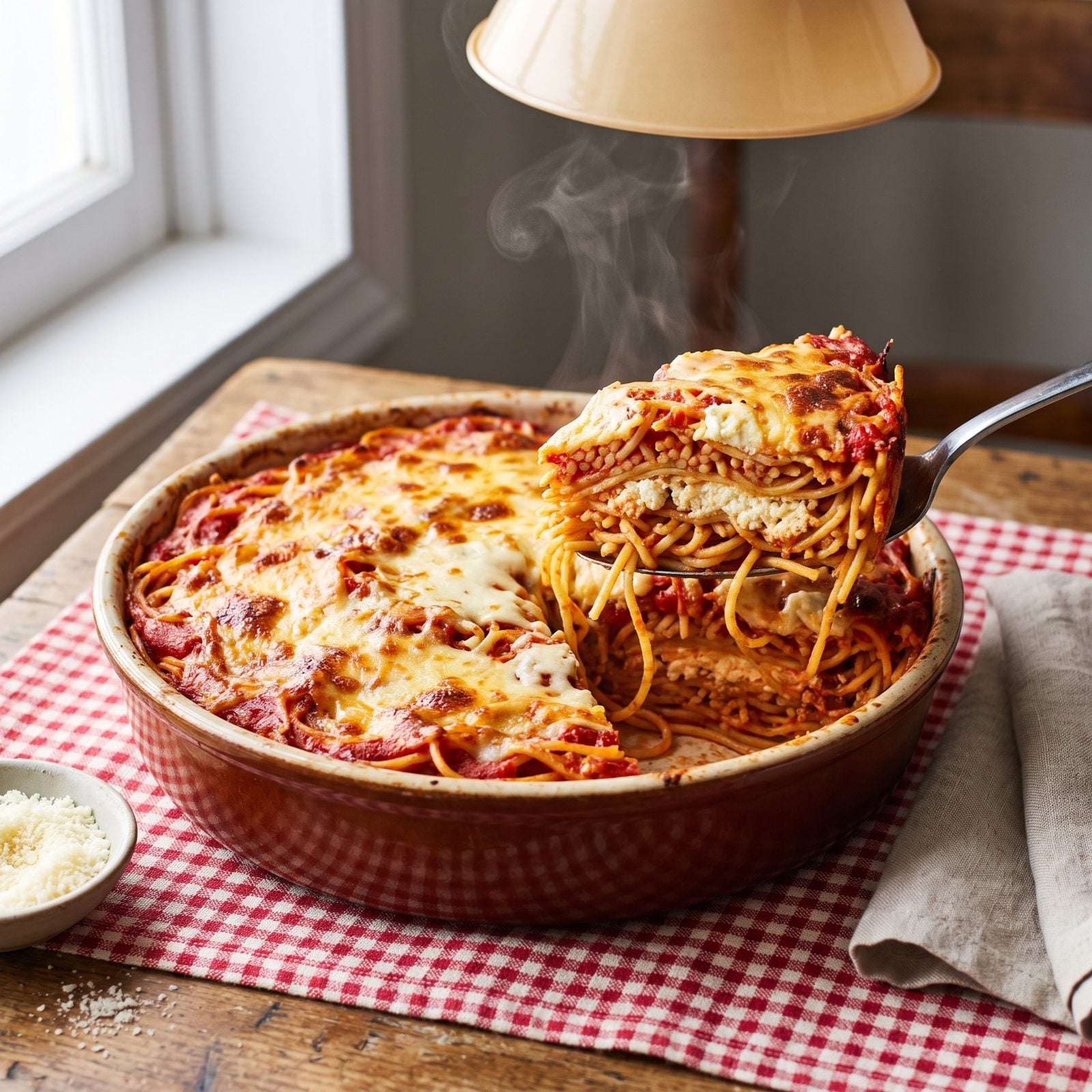
Baked spaghetti sounds like a church-basement casserole. Done the old way it’s a showpiece — the kind of dish that used to come out for Sundays and feast days wrapped in its own browned crust.
You don’t just dump sauced pasta in a dish. You build it. Spaghetti tossed with sauce, a scatter of torn mozzarella and dollops of ricotta, another layer of pasta, more cheese, a dusting of Parmigiano over the top. Bake at 375°F until the surface blisters and the edges pull away from the dish.
1. Taste the Sauce and Pasta Together Before Final Seasoning
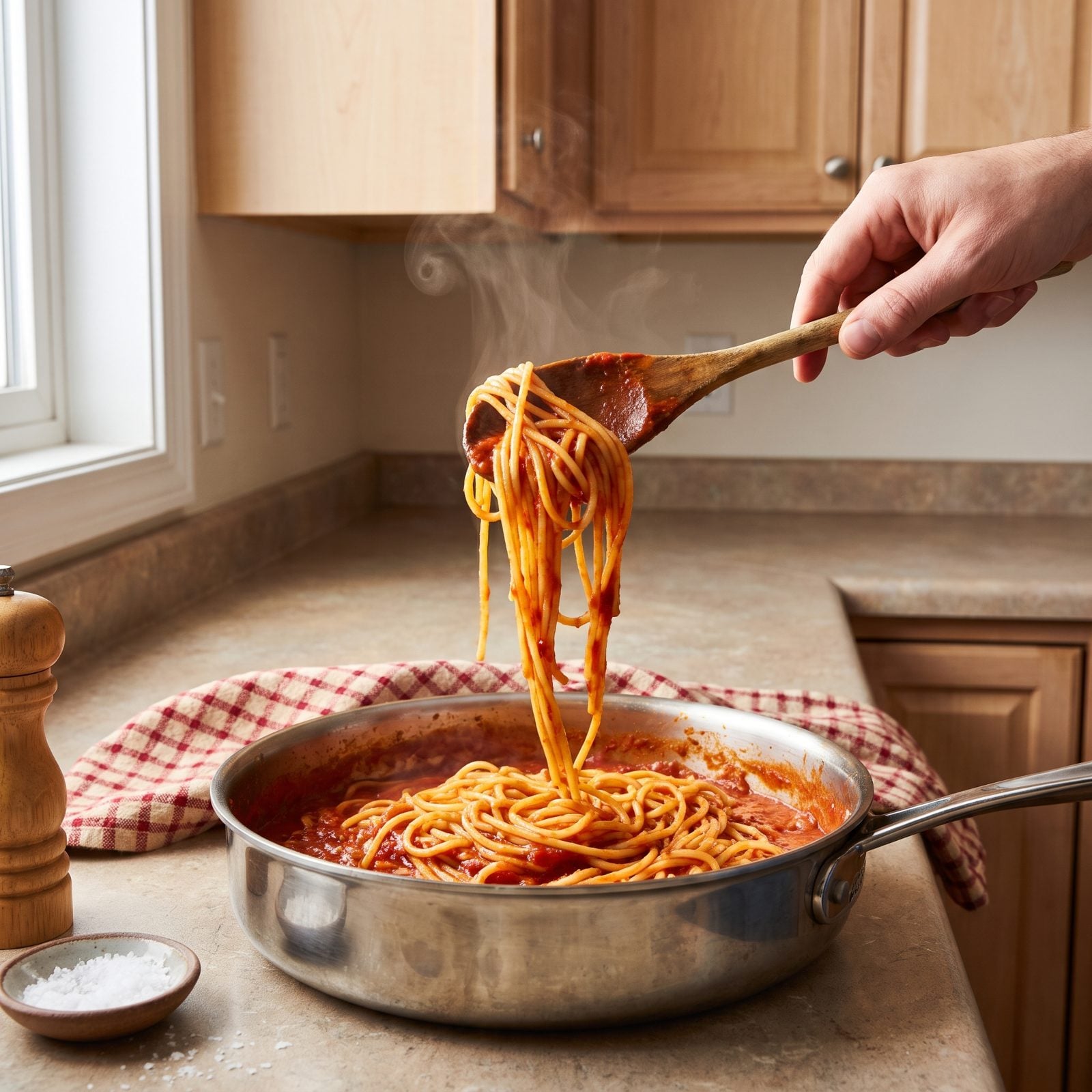
Everyone salts the sauce in the pot and calls it done. But the pasta carries its own salt, the water had salt, the cheese has salt, and once it all comes together on the strands the balance shifts. A sauce that tasted right alone can go flat or sharp the moment it meets the noodles.
So wait. Toss the drained spaghetti into the sauce, let it marry for a minute over the heat, then lift out one twirl and taste that — the whole thing together, the way it’ll hit the plate. Now adjust. A pinch more salt, a crank of pepper, maybe a last drop of oil. Season the finished dish, not the component. It’s the single habit that rescues more flat dinners than any recipe will.