
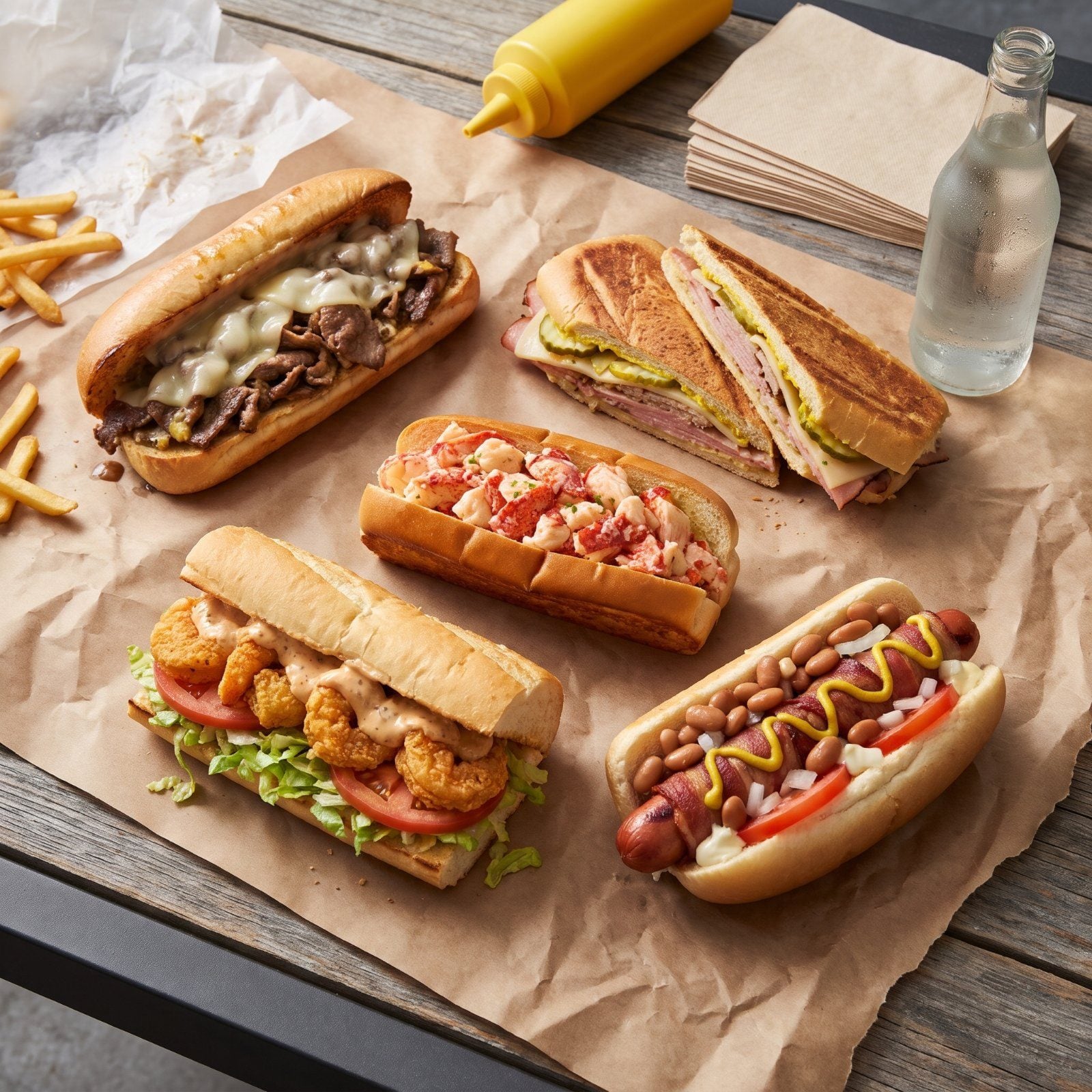
Ask ten people for the best sandwich in America and you’ll start a fistfight. Good. That means they care. Every state has that one handheld meal locals defend like family, the kind of thing you drive forty minutes and wait in line for because the place three blocks away just isn’t the same. These are sandwiches with origin stories, arguments over the right bread, and rituals nobody wrote down but everybody somehow follows. Grab a stack of napkins. We’re going coast to coast, one state and one legend at a time.
Please note that some of the images in this article were created with the assistance of AI.
39. Pennsylvania: The Philly Cheesesteak Nobody Agrees On
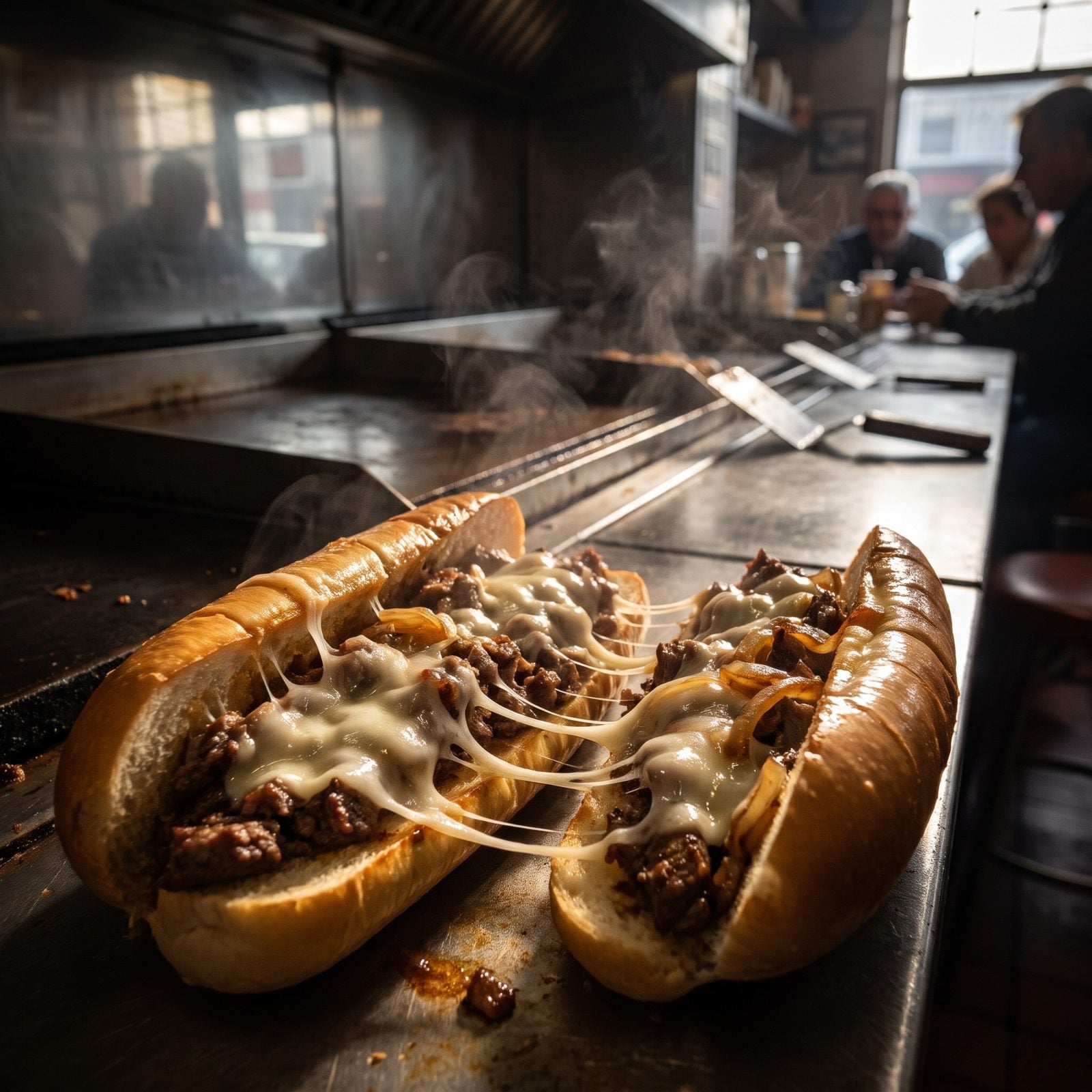
Chopped ribeye on a long roll. That’s the foundation, and that’s where the peace ends. The eternal war is Whiz or provolone, and asking which is correct in the wrong neighborhood is a good way to lose a friend. Onions are the quiet standard — say “wit” and you get them, say “witout” and you don’t.
Born in the 1930s when a South Philly hot dog cart threw some grilled beef on a roll, it became a city’s edible identity. The real tell of a good one? The bread holds together just long enough to finish before it surrenders to the grease.
38. Florida: The Cuban Sandwich, Pressed Flat and Fought Over
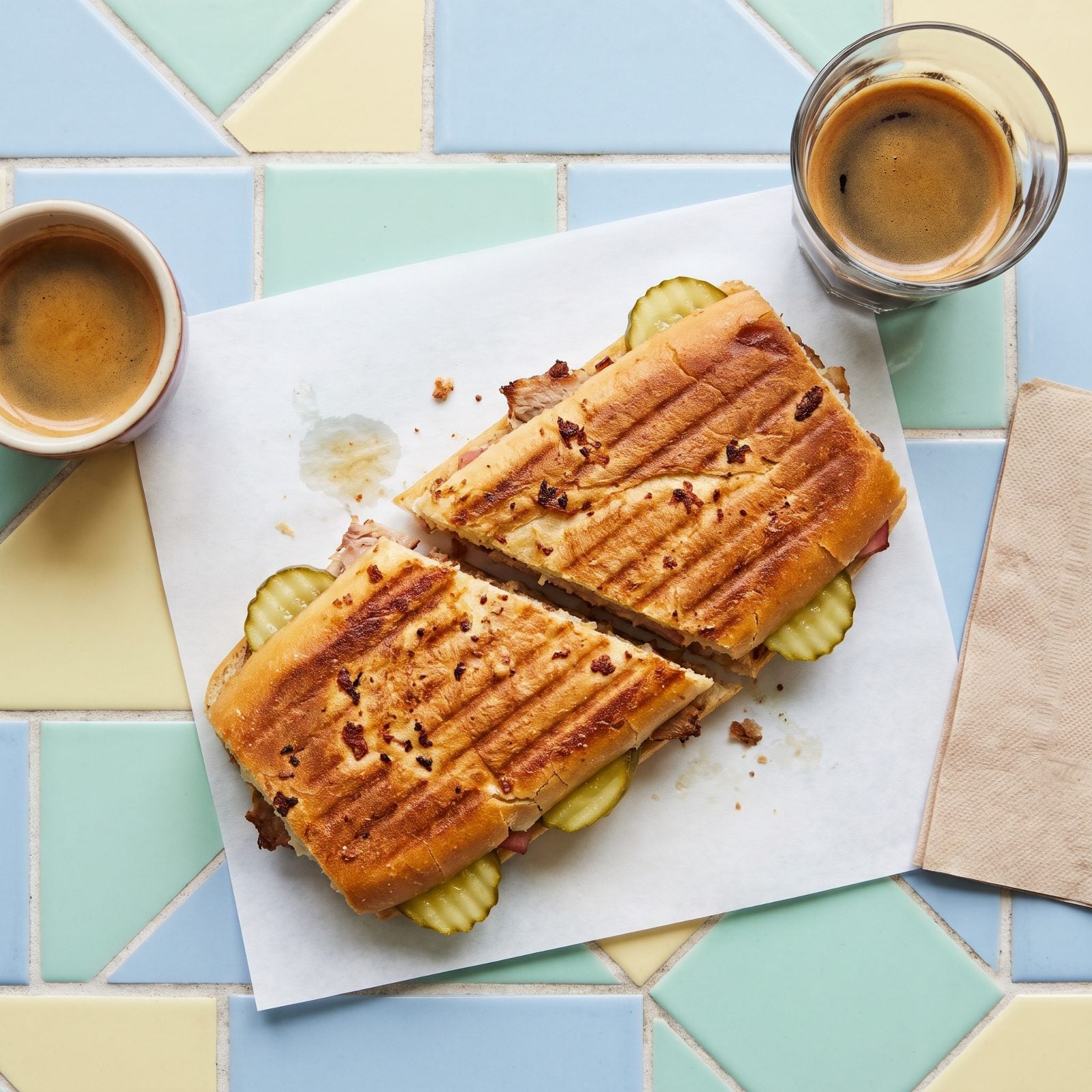
Roast pork, ham, Swiss, pickles, mustard, pressed on Cuban bread until the whole thing goes flat and crackling. Simple to list, impossible to settle. Tampa insists on Genoa salami in the stack, a nod to the Italian immigrants who worked beside Cubans and Spaniards in Ybor City’s cigar factories, while Miami leaves it out and considers the Tampa version heresy.
No lettuce. No tomato. No mayo. Mess with the formula and a Floridian will correct you with the patience of someone who’s corrected plenty of tourists before. And the press? That welds the layers into one hot, compact thing — skip it and you’ve just got a cold sandwich with ideas above its station.
37. Illinois: The Chicago Italian Beef, Dripping and Proud
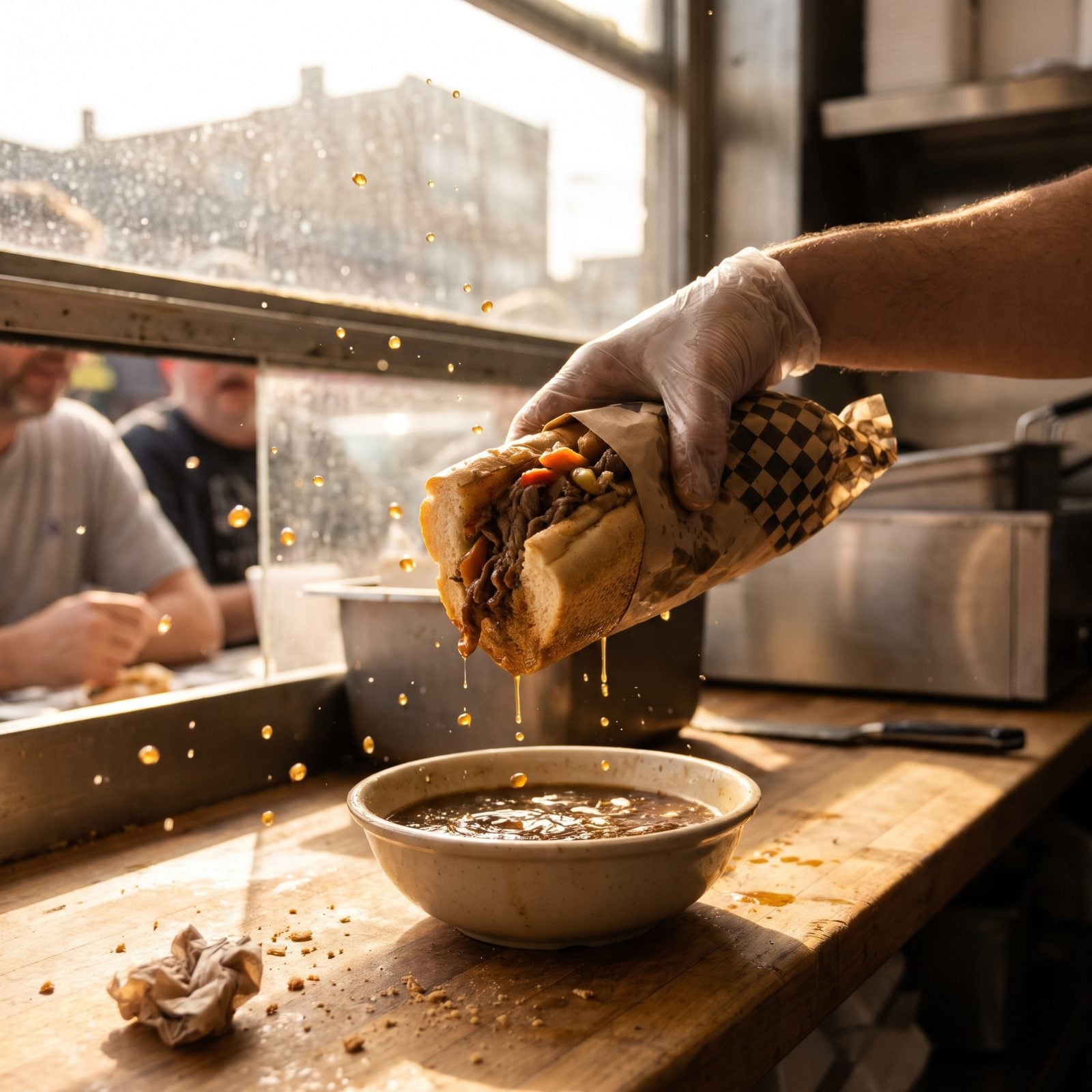
Thin-shaved roast beef, slow-cooked, piled on a roll, then the whole sandwich gets dunked back in the jus. Order it “wet” or “dipped” and they’ll submerge the entire thing, bread and all. Top it with hot giardiniera for the vinegar bite or sweet peppers for the mellow version. Both have defenders, and neither side is backing down.
There’s a stance for eating this. Feet apart, elbows on the counter, leaning forward so the gravy hits the floor and not your shirt. Nobody teaches it. Everybody knows it.
It came out of Depression-era Chicago, when cooks stretched a cheap cut of beef across a crowd at weddings and banquets — thin slices and a vat of jus fed more people. Necessity made it, and the city never let it go.
What Our Readers Say
- When our readers loved a food photo and tapped a reason, comfort came out on top at 30%, with nostalgia close behind at 16%.
- When Piaci Pizza readers disliked a food photo, the top reason was simply “not for me” at 40%, ahead of ingredients at 30%.
From Piaci Pizza reader polls and votes.
36. Tennessee: Nashville Hot Chicken, Served With a Warning
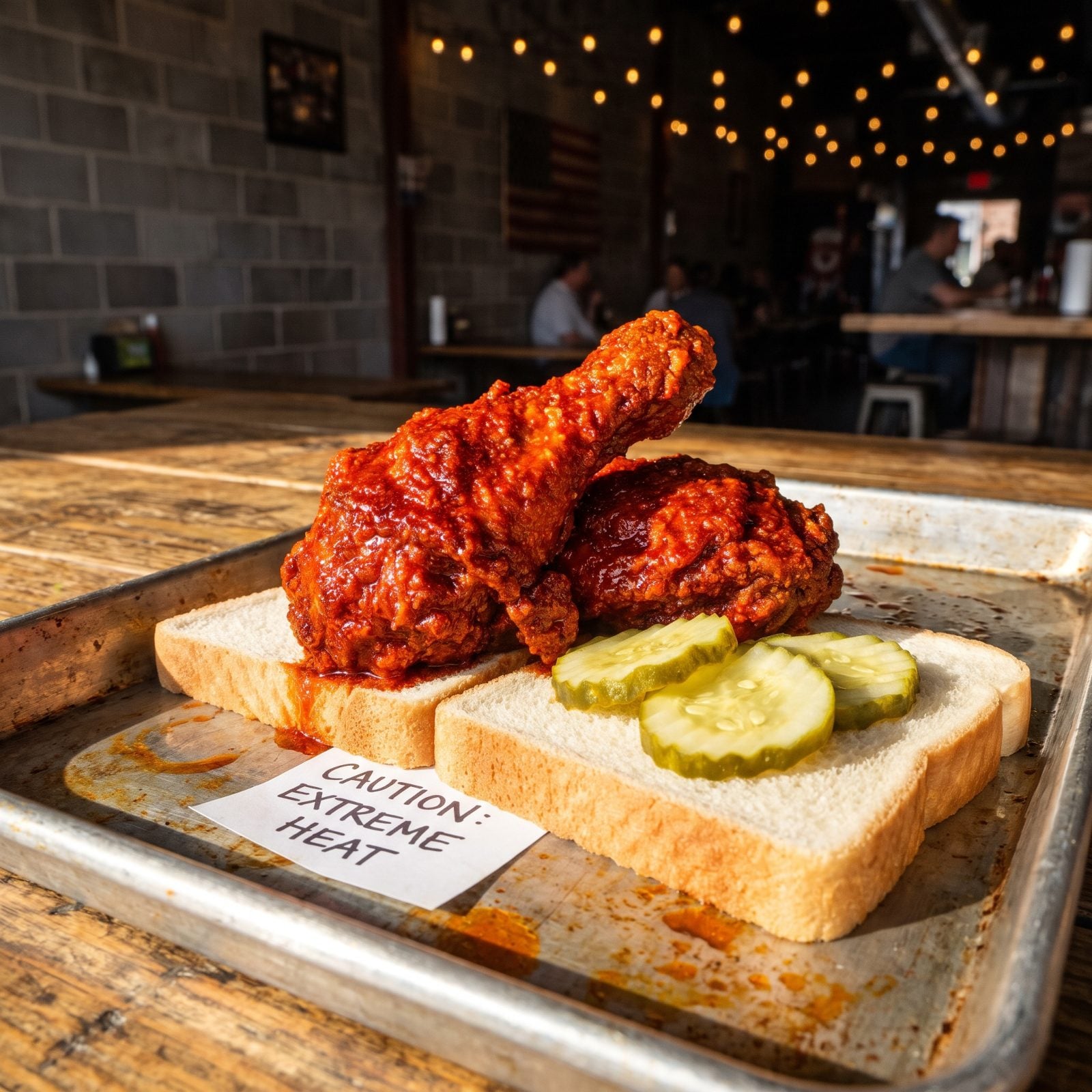
Fried chicken painted with a cayenne-and-lard paste so hot it stains the plain white bread beneath it orange. The pickle chips on top aren’t garnish. They’re mercy. This is heat with a grudge.
Legend says a scorned girlfriend tried to punish her man by over-spicing his fried chicken, and he loved it so much he opened a restaurant. Gospel or folklore, the Nashville ritual is real: order your heat level honestly, because the kitchen takes you at your word.
35. New York: Pastrami on Rye, Cut by Hand and Piled High
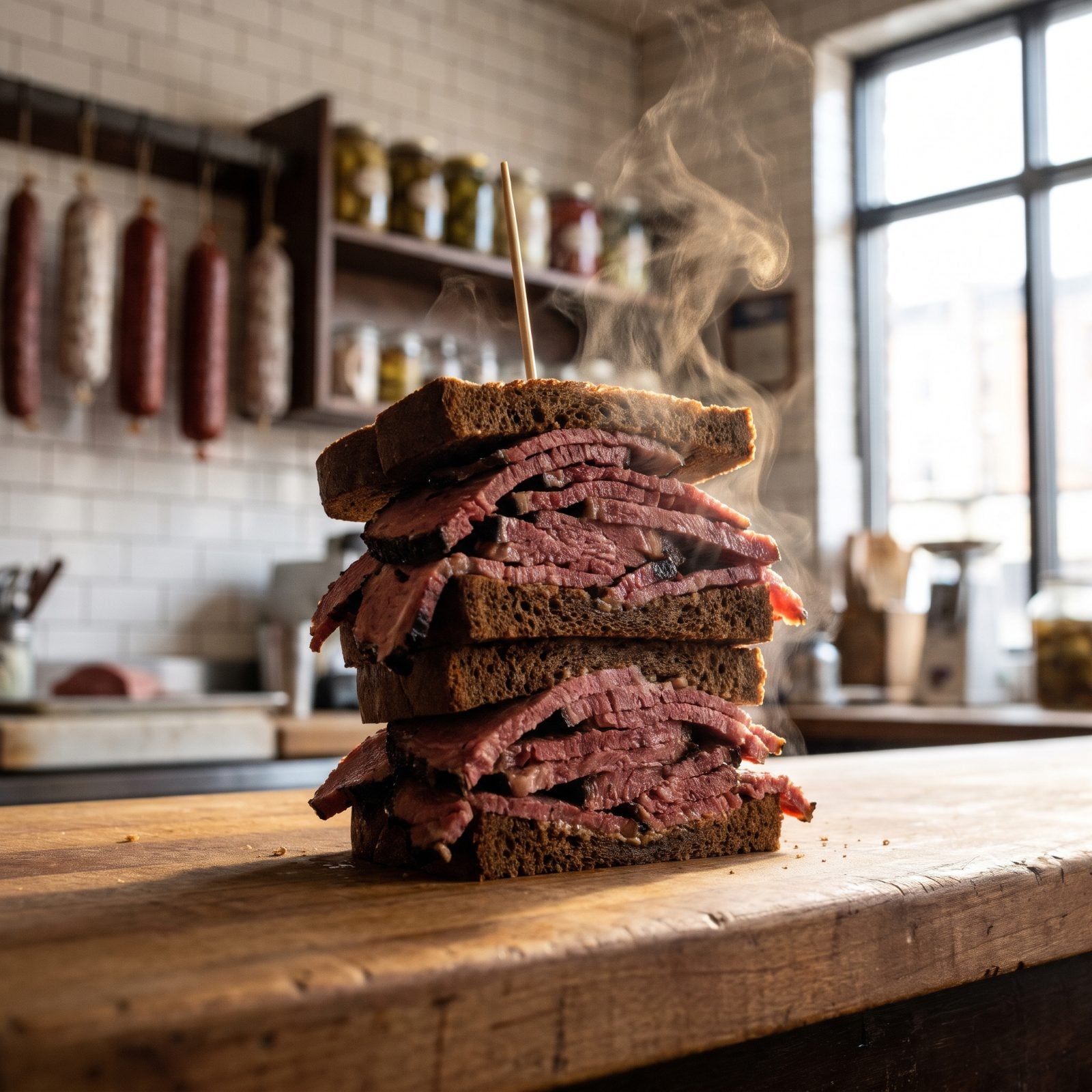
Brisket cured, smoked, steamed, and hand-sliced into a stack tall enough to make a first-timer laugh. On rye, with yellow mustard. That’s the whole order, and adding anything else — especially mayo — marks you as a tourist faster than a subway map.
Katz’s on the Lower East Side has been at it since 1888, and the carver slipping you a warm scrap off the knife is part of the deal. The meat should be moist, warm, and so tender it nearly falls apart when you pick the sandwich up.
34. Maine: The Cold Lobster Roll, Dressed Simply and Served on a Dock
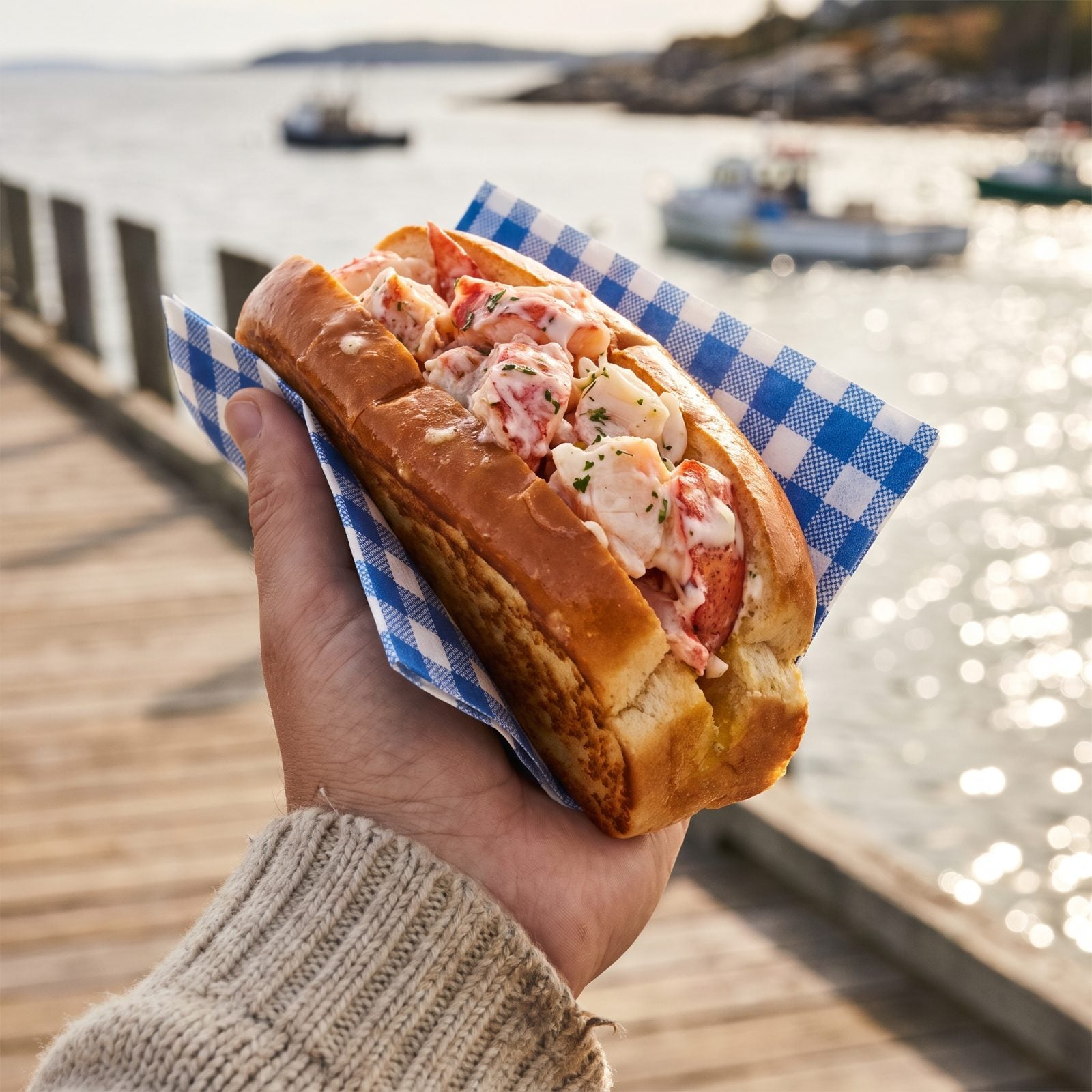
Cold lobster meat, barely dressed in mayonnaise, tucked into a buttered and griddled split-top bun. That’s it. Maine doesn’t gussy it up, and the restraint is the flavor. Let the lobster be lobster.
The split-top bun matters more than outsiders realize. Its flat sides get buttered and toasted on the griddle, giving you crisp golden edges and a stable boat for the meat. Connecticut serves theirs warm with drawn butter and calls that the original. Maine shrugs and keeps eating cold.
33. Indiana: The Breaded Pork Tenderloin That Dwarfs Its Bun
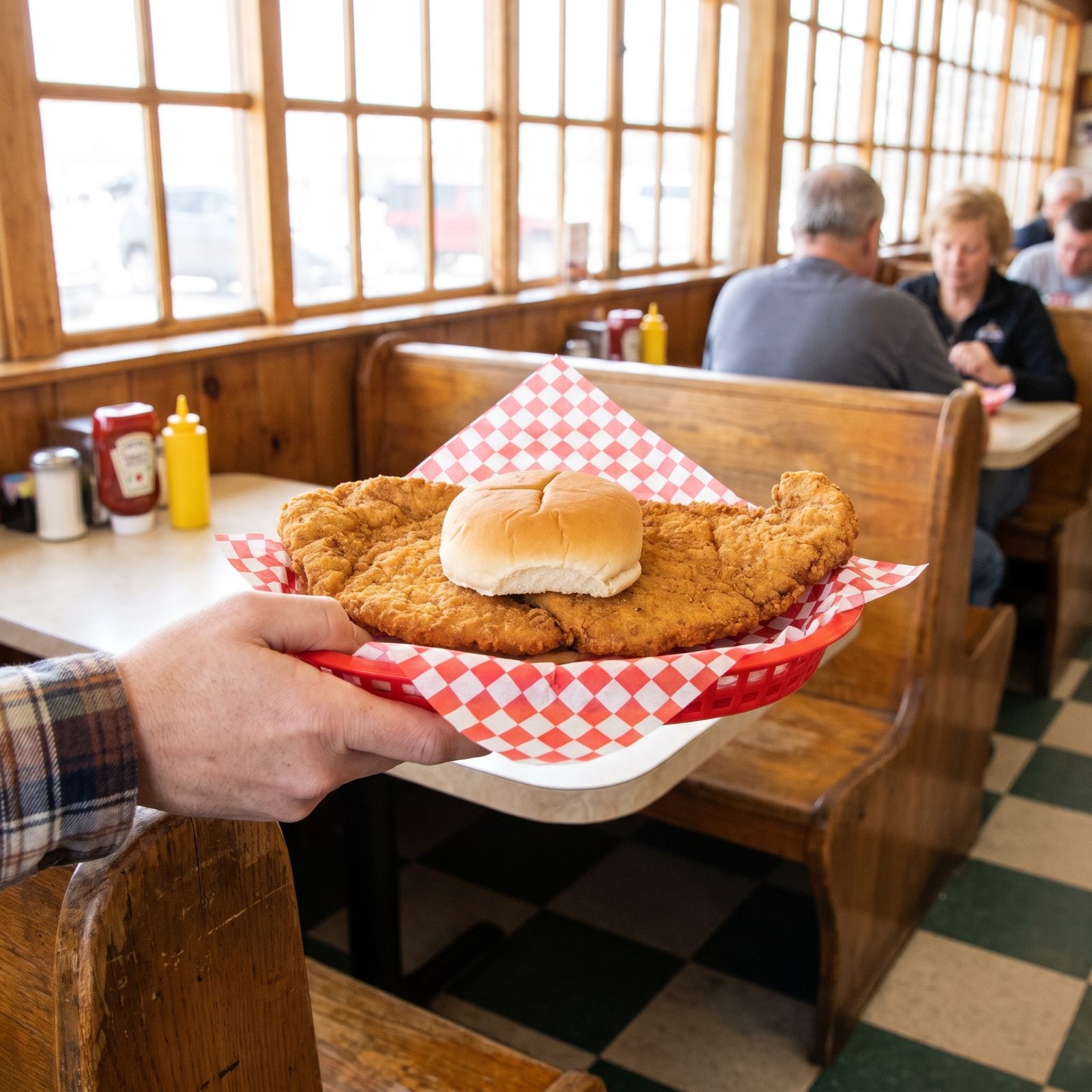
A pork cutlet pounded paper-thin, breaded, fried, and plopped onto a bun roughly half its size. The spectacle is the point. The meat hangs over the edges like a dinner plate wearing a yarmulke, so you eat the overhang first and work your way to the actual sandwich part.
Toppings stay humble — mustard, pickle, onion, maybe lettuce. Hoosiers treat tenderloin size the way other states treat barbecue: a matter of local pride and bragging rights. Descended from the German schnitzel immigrants carried over, it got bigger, got a bun, and became Indiana’s own.
32. Louisiana: The Gulf Shrimp Po’boy, Dressed and Overflowing
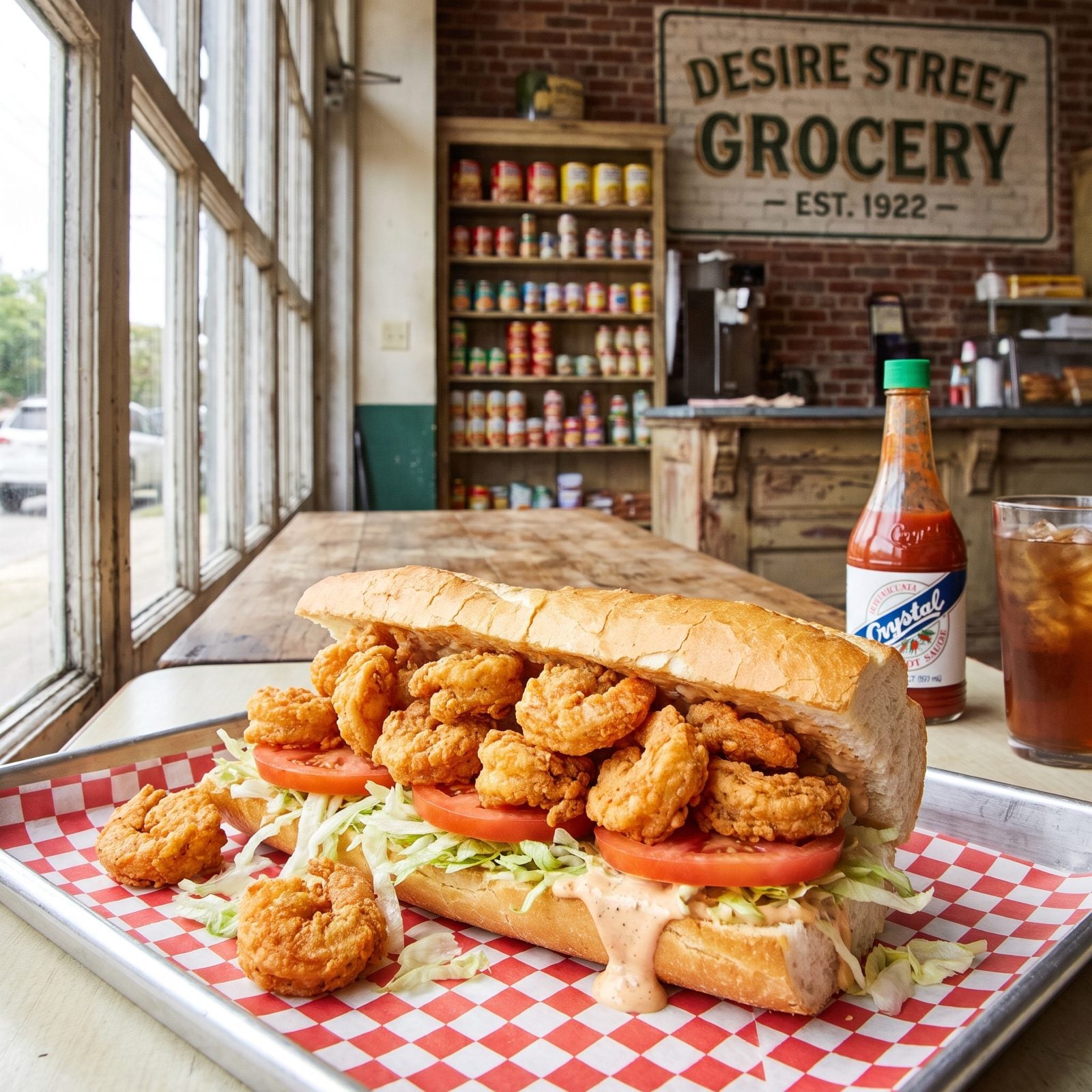
Crispy-fried Gulf shrimp packed into airy New Orleans French bread, the kind with a shatter-thin crust you can’t get anywhere else. Order it “dressed” and you get lettuce, tomato, pickles, and mayo. The word is practically a reflex at a Louisiana counter.
The name comes from Depression-era New Orleans, when a restaurant run by former streetcar workers fed striking “poor boys” free sandwiches on that cheap long loaf. The bread’s the soul of it. Too dense and it’s just a sub. Light and crackly, and it’s the real thing.
31. New Jersey: Pork Roll, Egg and Cheese, the Breakfast That Divides a State
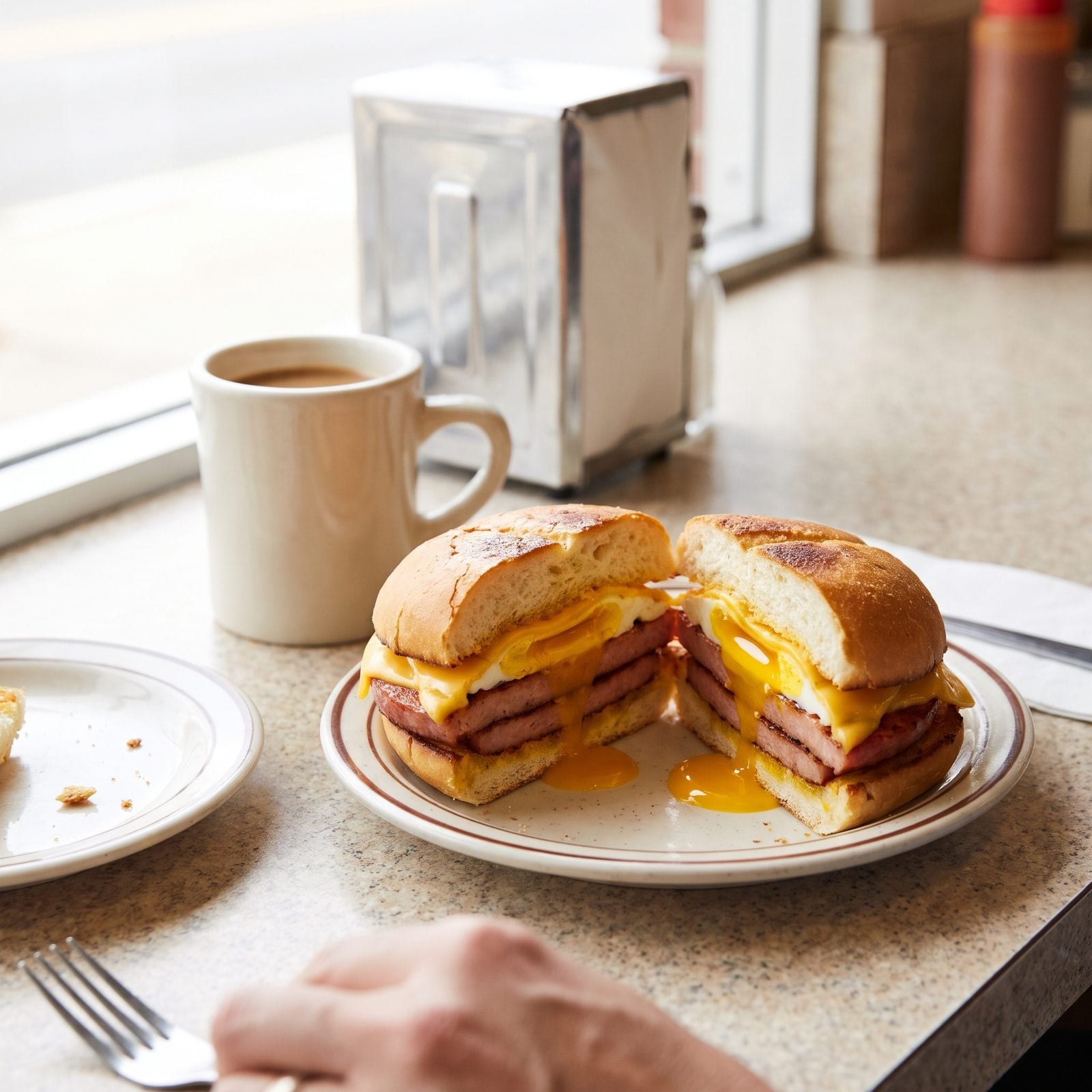
Griddled pork roll, a fried egg, melted American cheese on a Kaiser roll — salt pepper ketchup if you want it. The breakfast of the Garden State, and the subject of its most pointless, most beloved argument: is it pork roll or Taylor ham?
North Jersey says Taylor ham. South Jersey says pork roll. Both are talking about the exact same processed pork product, sliced and fried with little cuts in the edges so it crisps up and curls at the corners. Nobody’s winning this debate, and that’s sort of the point. You order it the way your corner of the state orders it, and you mean it.
30. Arizona: The Sonoran Hot Dog, Wrapped in Bacon and Loaded Sky-High
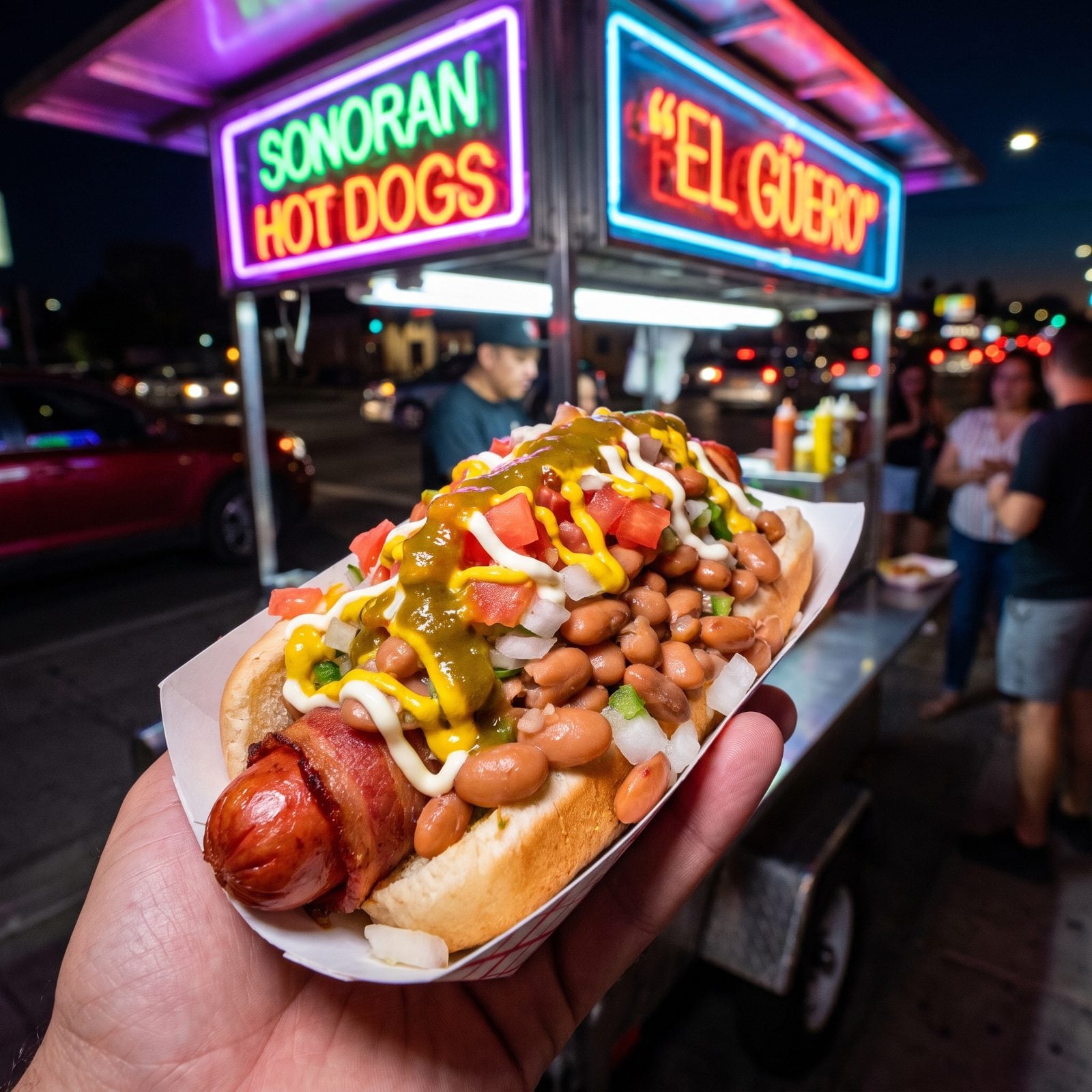
A hot dog wrapped in bacon, griddled until the fat renders crisp, then buried in a puffy bolillo-style roll under pinto beans, tomatoes, onions, mustard, mayo, and a hit of salsa or a roasted güero chile on the side. It eats more like a loaded taco than a ballpark dog.
It crossed the border from Sonora, Mexico into Tucson and Phoenix, where carts and late-night stands made it a border-town staple. Bacon crisping against the griddle, beans soaking into that soft roll, the whole overloaded thing somehow holding together — that’s the magic.
29. New Mexico: The Green Chile Cheeseburger That Ruined Plain Burgers Forever
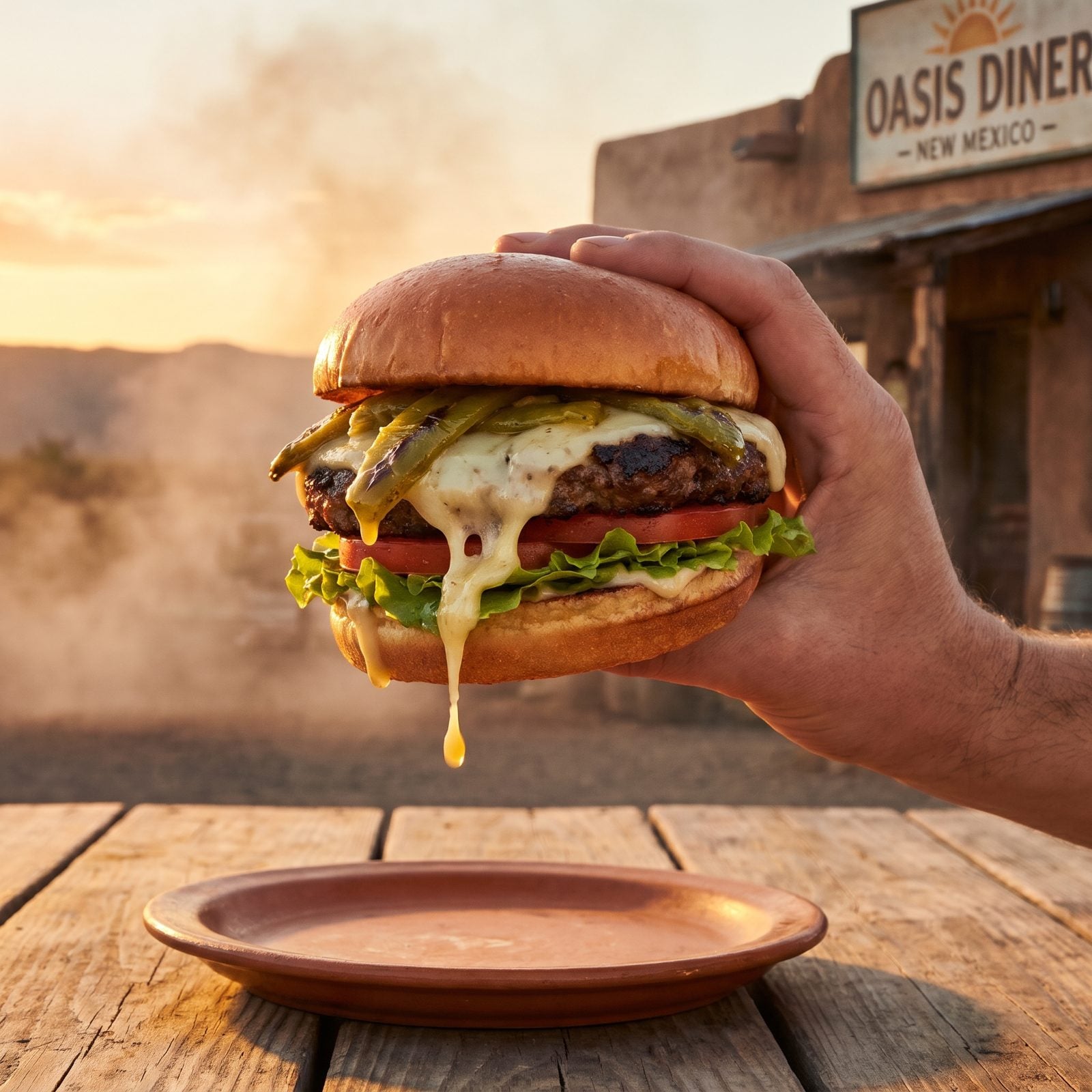
Nobody agrees on which town invented it, and that’s half the fun. Santa Fe, San Antonio (the New Mexico one), and a dozen roadside joints all stake a claim. What they do agree on: roasted Hatch green chiles, laid in long strips over a griddled patty, with pepper-flecked jack cheese doing the melting.
The chile isn’t a topping here — it’s the reason you’re eating. Order one and you’ll be asked “red or green?” like it’s a moral question. It is. Green chile has a slow, grassy heat that creeps up the back of your throat, and after that, a plain cheeseburger just tastes like something that forgot the good part.
28. Nebraska: The Omaha Reuben, Still Fighting Over Who Built It
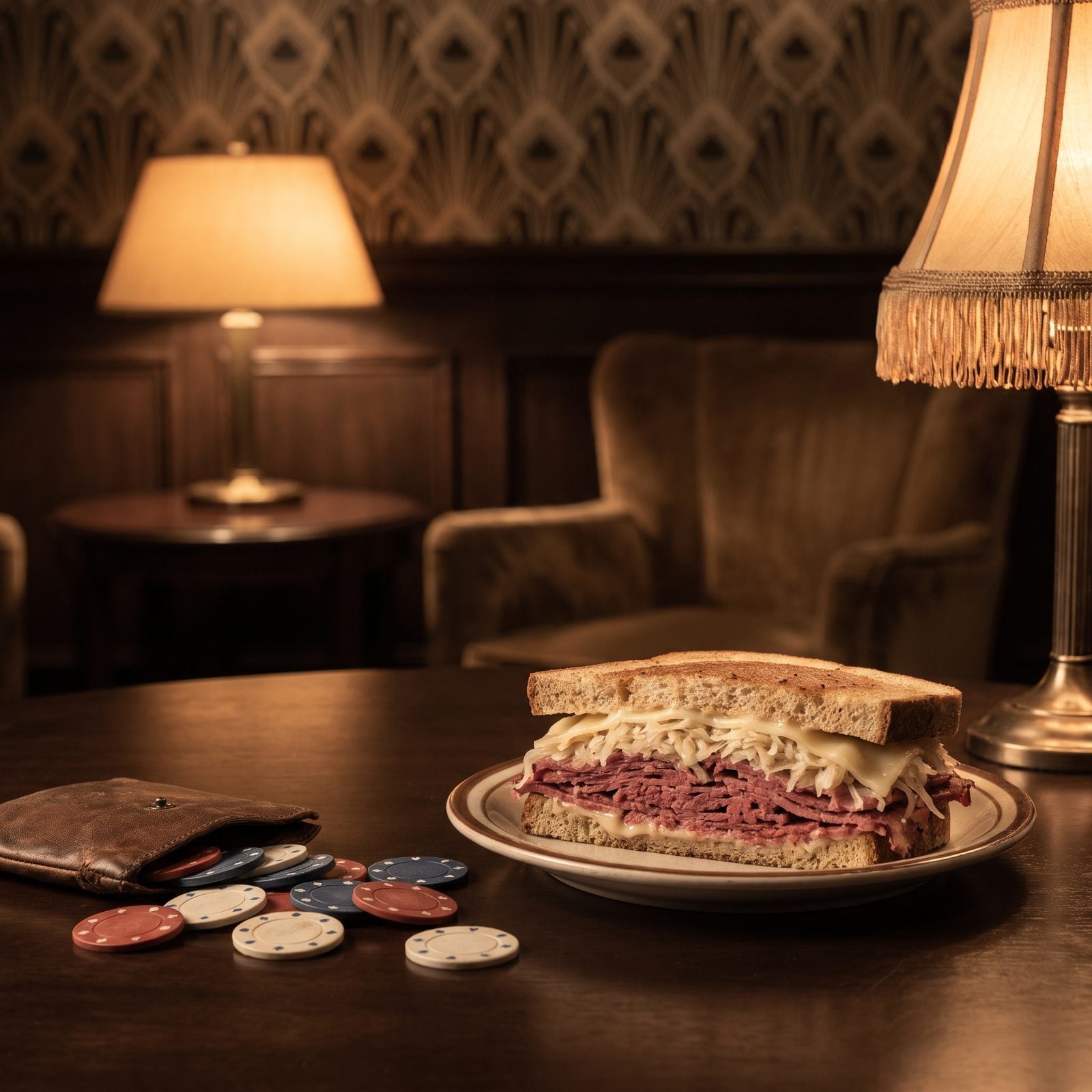
Omaha insists the Reuben was born there, at the old Blackstone Hotel in the 1920s, invented for a late-night poker game by a grocer named Reuben Kulakofsky. New York insists just as hard that it came from a deli there instead. The fight has never ended and probably never will.
Grilled dark rye, corned beef, Swiss, sauerkraut, Russian dressing, pressed until the cheese gives up. The Nebraska version leans generous on the kraut and makes no apology for the dressing that ends up on your wrist.
A Reuben should require a second napkin before you’ve finished the first bite.
27. Texas: The Chopped Brisket Sandwich, Where Burnt Edges Are the Reward
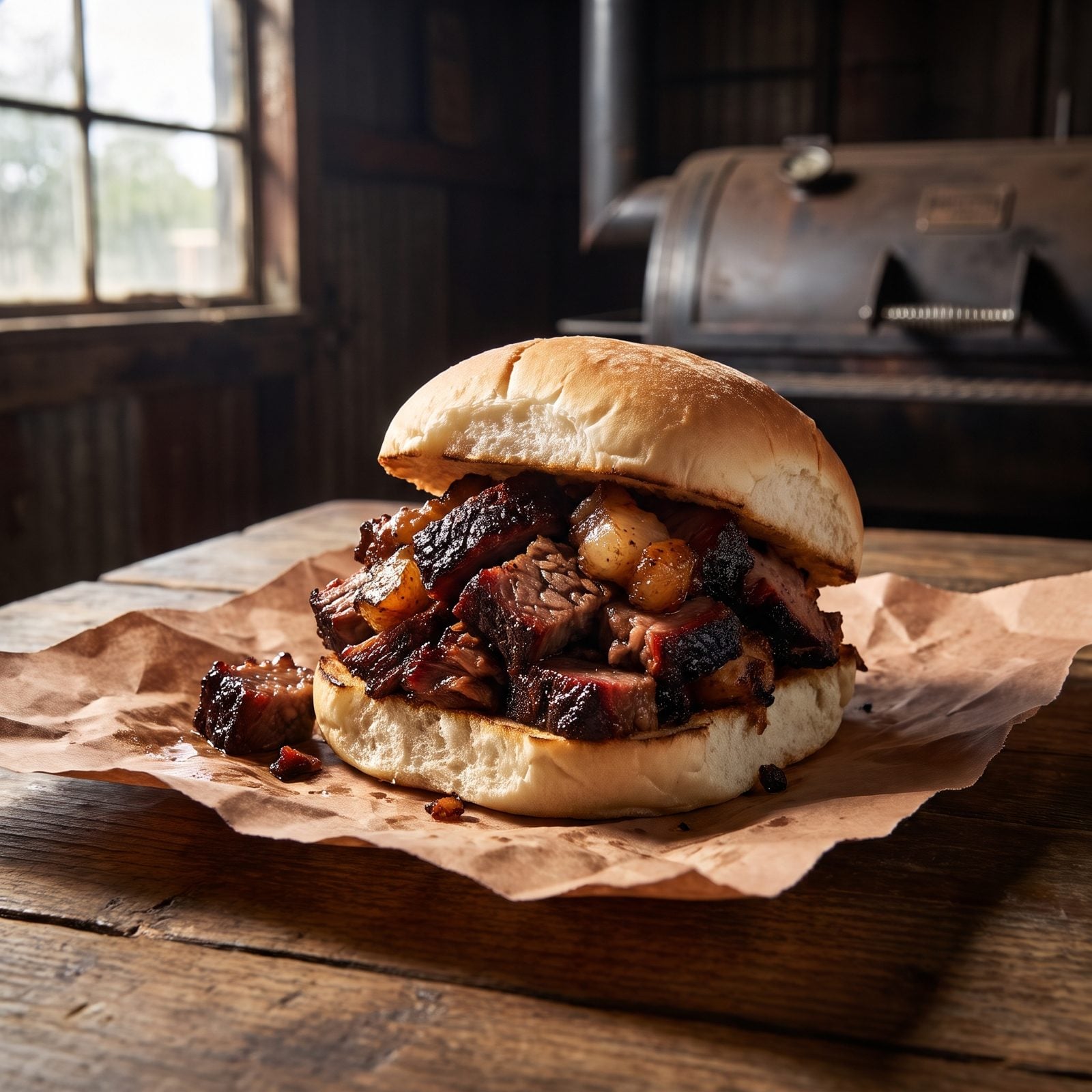
Texas purists will tell you brisket belongs sliced, naked, on butcher paper with nothing but a pickle. They’re not wrong. But the chopped sandwich is where the scraps become something greater than themselves.
Chopped brisket pulls the bark, the fatty point, and the lean flat into one tangle, hits it with a thin tomato-vinegar sauce, and stacks it on a cheap soft bun that exists only to hold it. The bun doesn’t matter. The meat does. Central Texas joints will hand it to you on butcher paper with raw onion, pickles, and a couple slices of white bread on the side — no plate required, no plate wanted.
26. Maryland: Baltimore Pit Beef, the Sandwich That Doesn’t Believe in Low and Slow
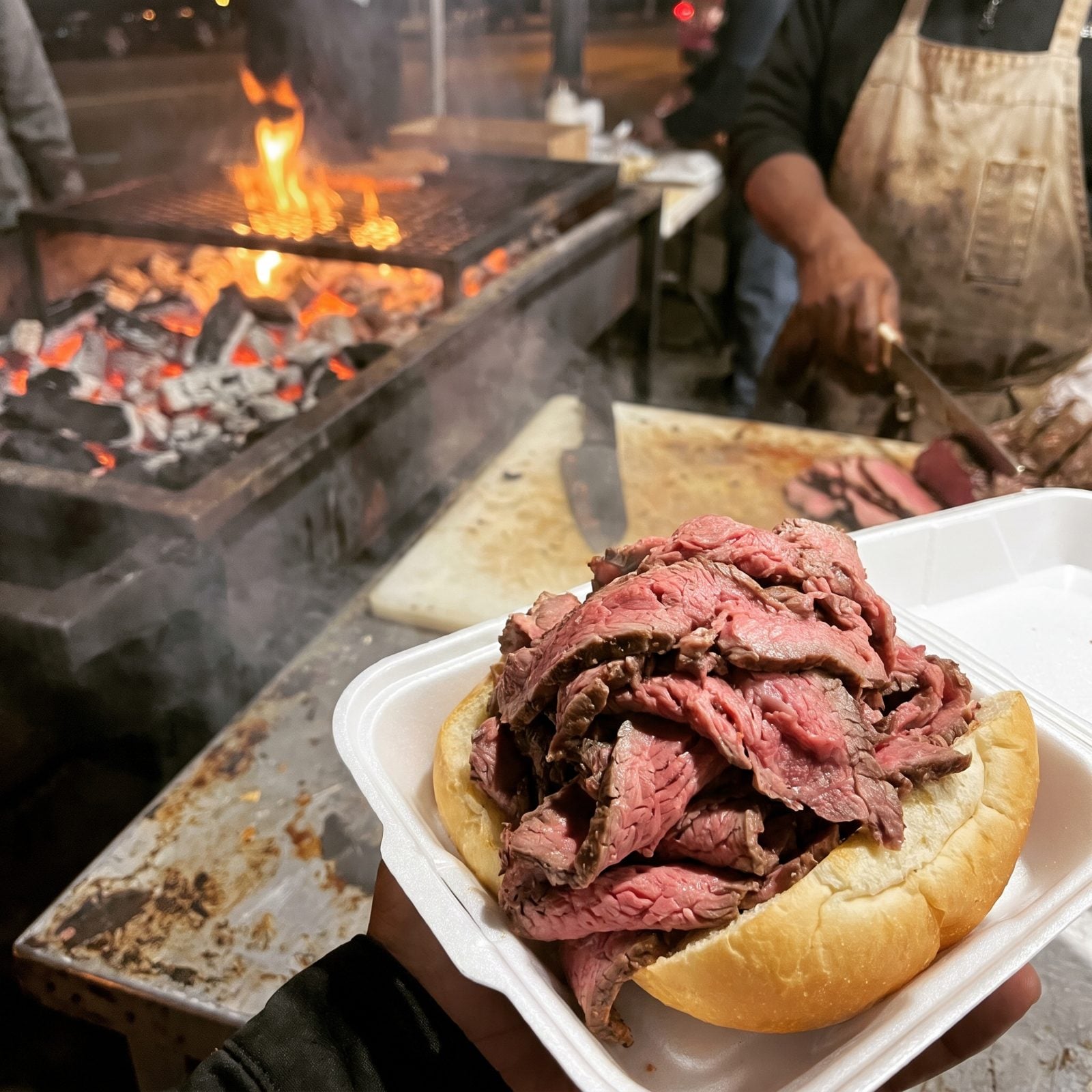
Forget everything barbecue taught you about patience. Pit beef is grilled hot and fast over charcoal, sliced thin against the grain while the middle is still rare, and crammed onto a kaiser roll.
What makes it Baltimore is the pairing of raw onion and “tiger sauce,” a fierce blend of mayonnaise and horseradish that goes up your nose before it ever reaches your tongue. You get it from a parking-lot stand or a roadside trailer, never a sit-down restaurant. That’s the tradition. And a real pit beef sandwich should be eaten leaning over the counter so the drippings miss your shoes.
25. North Carolina: Chopped Pork With Red Slaw and a 200-Year Grudge
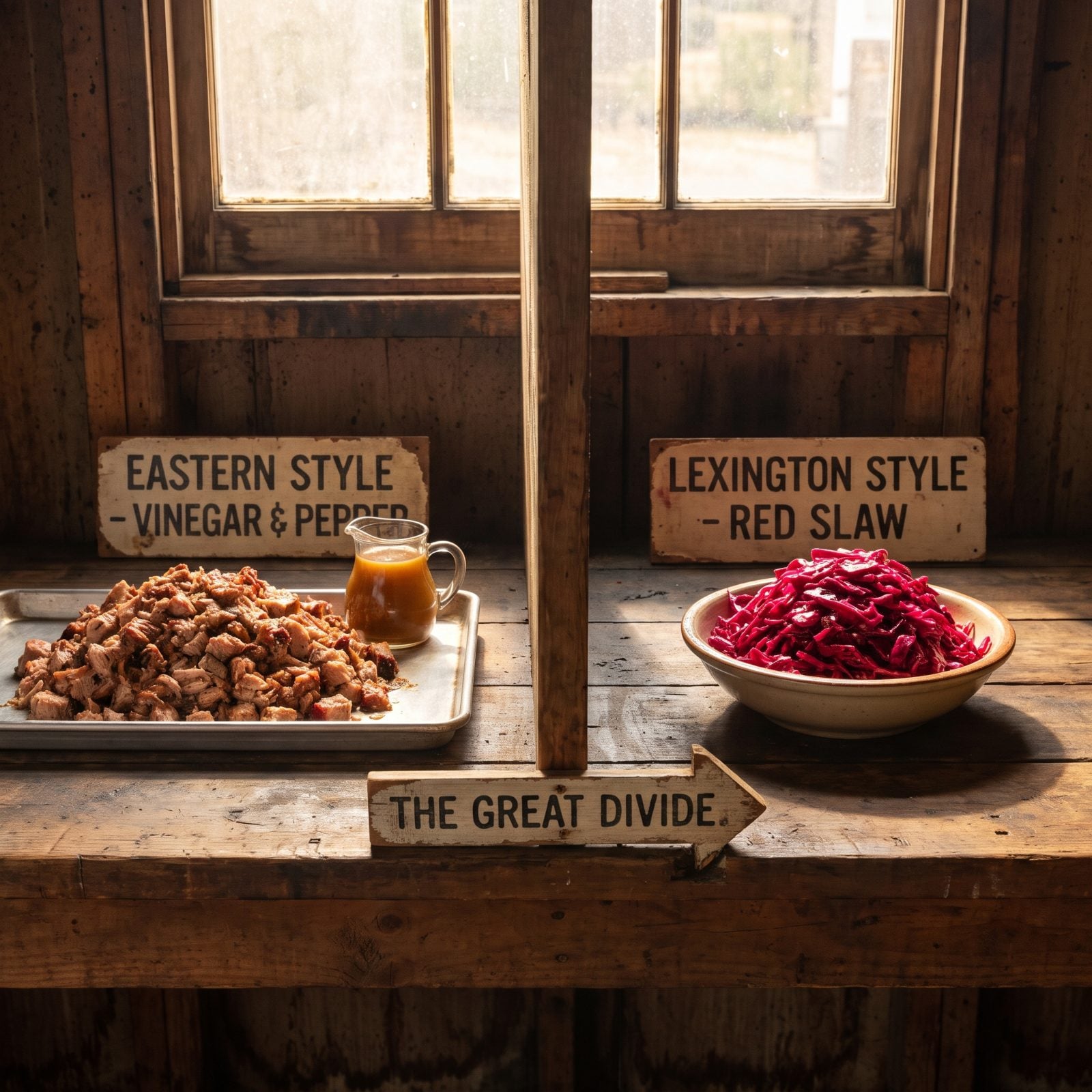
North Carolina is two barbecue states pretending to be one. The eastern half does whole-hog with a vinegar-pepper sauce and no tomato in sight. The Lexington-style west adds a little ketchup to the sauce and, crucially, piles red slaw right on top of the chopped pork.
Red slaw is the tell. No mayonnaise anywhere near it. It’s chopped cabbage tossed in the same ketchup-tinged vinegar dip, reddish and sharp like a quick pickle, so the whole plate sings one note, loudly and well. Chopped pork, thin sauce, red slaw, plain metal plate — the vinegar cuts the richness so clean you’ll reach for a second before you’ve decided you want one.
24. Alabama: Smoked Chicken Drowned in White Sauce
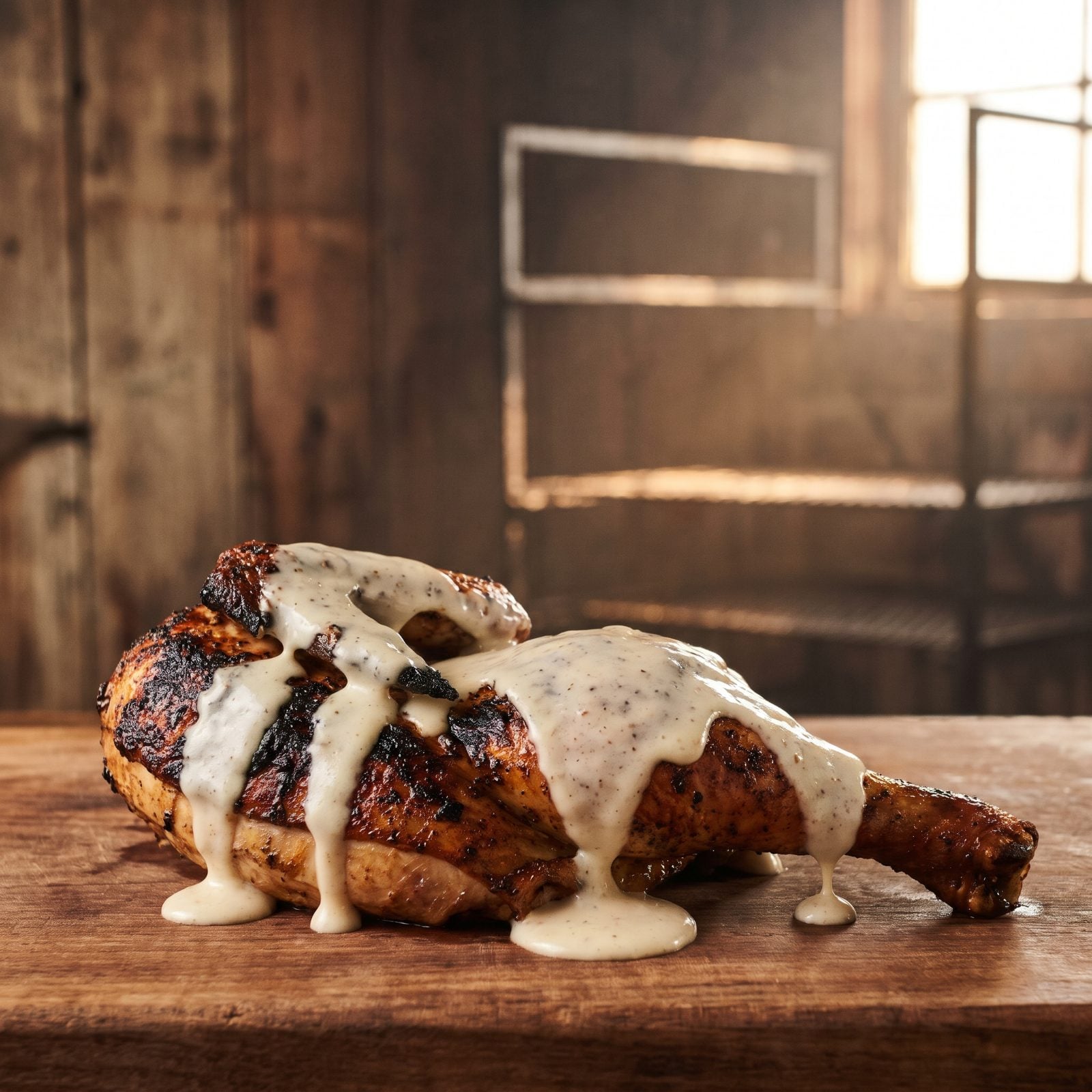
White barbecue sauce confuses everyone the first time. It’s mayonnaise, vinegar, black pepper, and a little heat, and it looks all wrong — right up until it hits smoked chicken and suddenly makes perfect sense.
Credit goes to a place in Decatur that’s been dunking whole smoked chickens in the stuff since the 1920s. North Alabama ran with it. The plate is simple: a smoky, char-blistered half chicken, breast and drumstick, drowned until the sauce pools on the board, tangy and sharp, cutting through the smoke the way lemon cuts cream. Order it in Birmingham and you’ll get a shrug. Order it up near the Tennessee line and you’ll get the real thing.
23. Oklahoma: The Fried Onion Burger, Born From the Great Depression
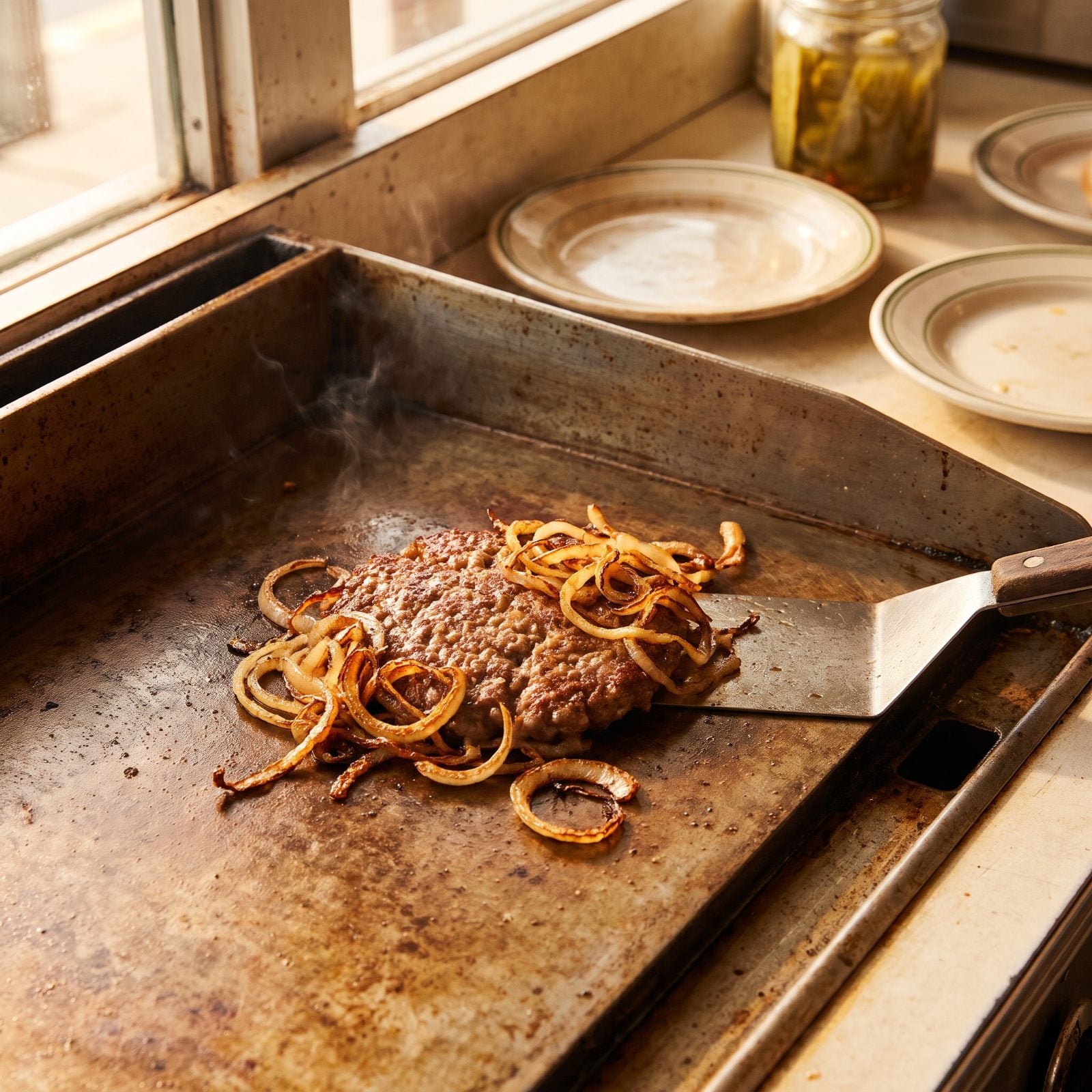
This one has a hard-times origin you can taste. During the Depression, cash-strapped Oklahoma grills stretched their beef by smashing a mound of thinly sliced onions into the patty on the griddle. Less meat, more onion, same price. Depression math.
Then something happened. The onions fried into a crispy brown lace welded to the beef, and the burger came out better than the all-beef version it was replacing. Thin patty, griddle-onion crust, cheese, mustard, pickle, steamed bun. El Reno still throws an onion burger festival every year and grills one the size of a manhole cover.
22. Rhode Island: The New York System Hot Wiener, Named After the Wrong State
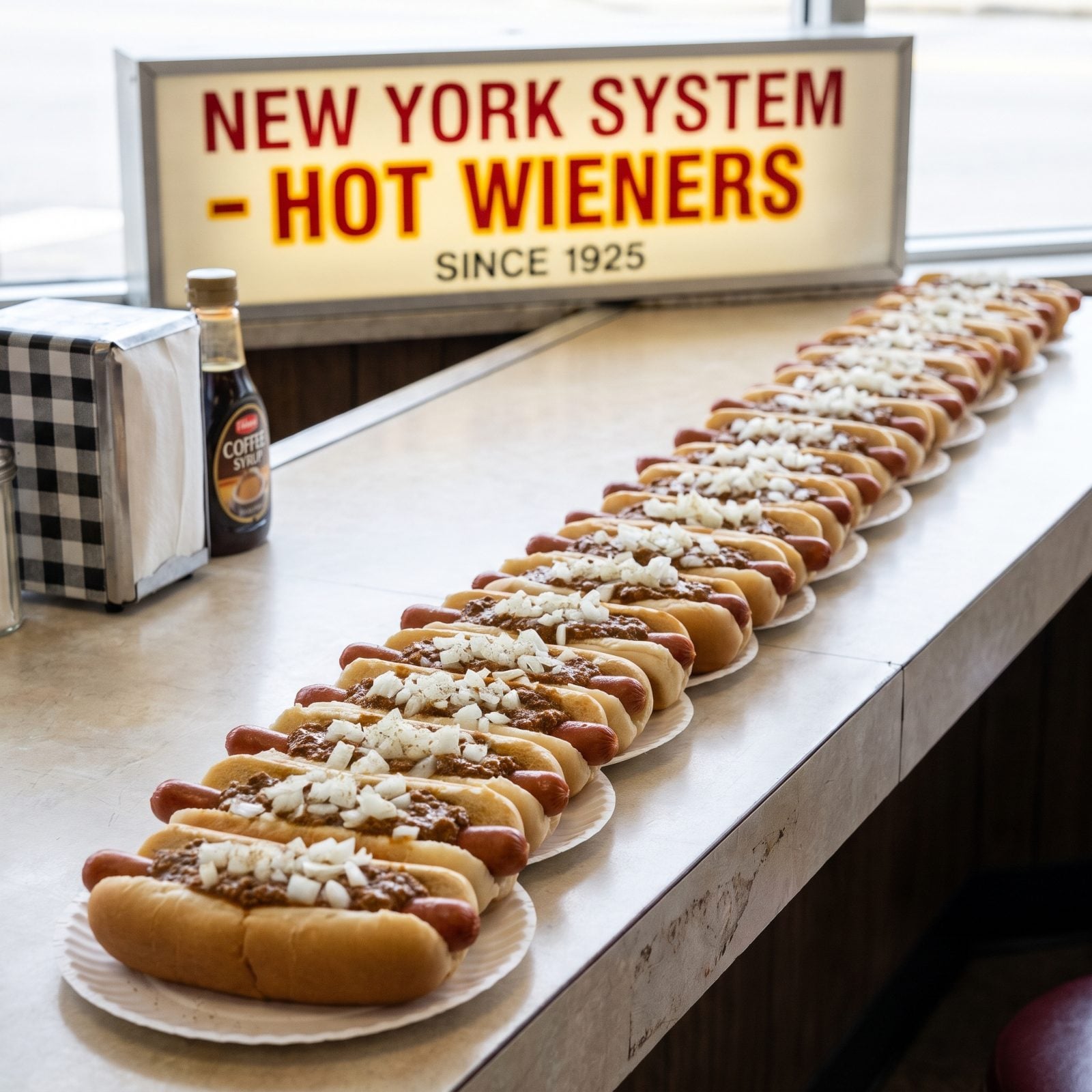
The name is a prank history played on everyone. These are a Rhode Island institution, served nowhere near New York, created by Greek immigrants who named their stands “New York System” because New York sounded like the big time.
A small, skinny frank tucked into a steamed bun, topped “all the way”: mustard, meat sauce, chopped onion, and a shake of celery salt. You order them by the row. The counterman lines the buns up his bare forearm, loads them one-handed, and calls it art. And nobody orders just one. You get three minimum, usually at two in the morning, usually not entirely sober.
21. Ohio: The Cleveland Polish Boy, a Four-Food-Group Emergency
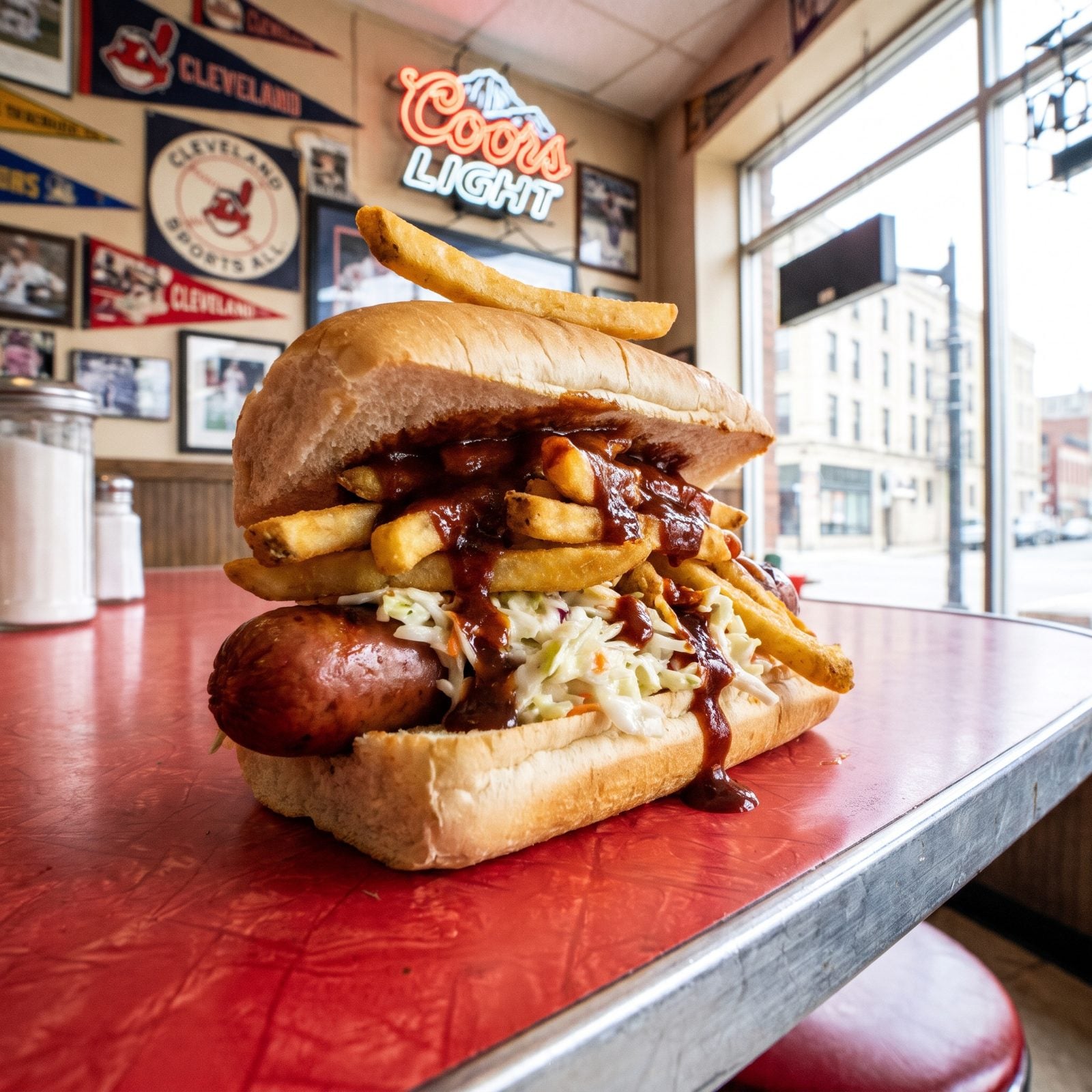
A Cleveland cook once looked at a kielbasa and decided it needed slaw on top. Then fries. Then sauce. What came out is less a sandwich than a structural dare.
Grilled kielbasa, a bun, coleslaw piled right on the sausage, a fistful of french fries stacked on the slaw, and barbecue or hot sauce poured over all of it. You cannot eat it cleanly. Nobody has. It’s a soul-food-barbecue staple on the East Side, and the slaw is the only thing even pretending to be a vegetable.
Starch on protein on starch, held together by sauce and optimism.
20. Utah: The Pastrami Burger, Where Two Great Ideas Collide
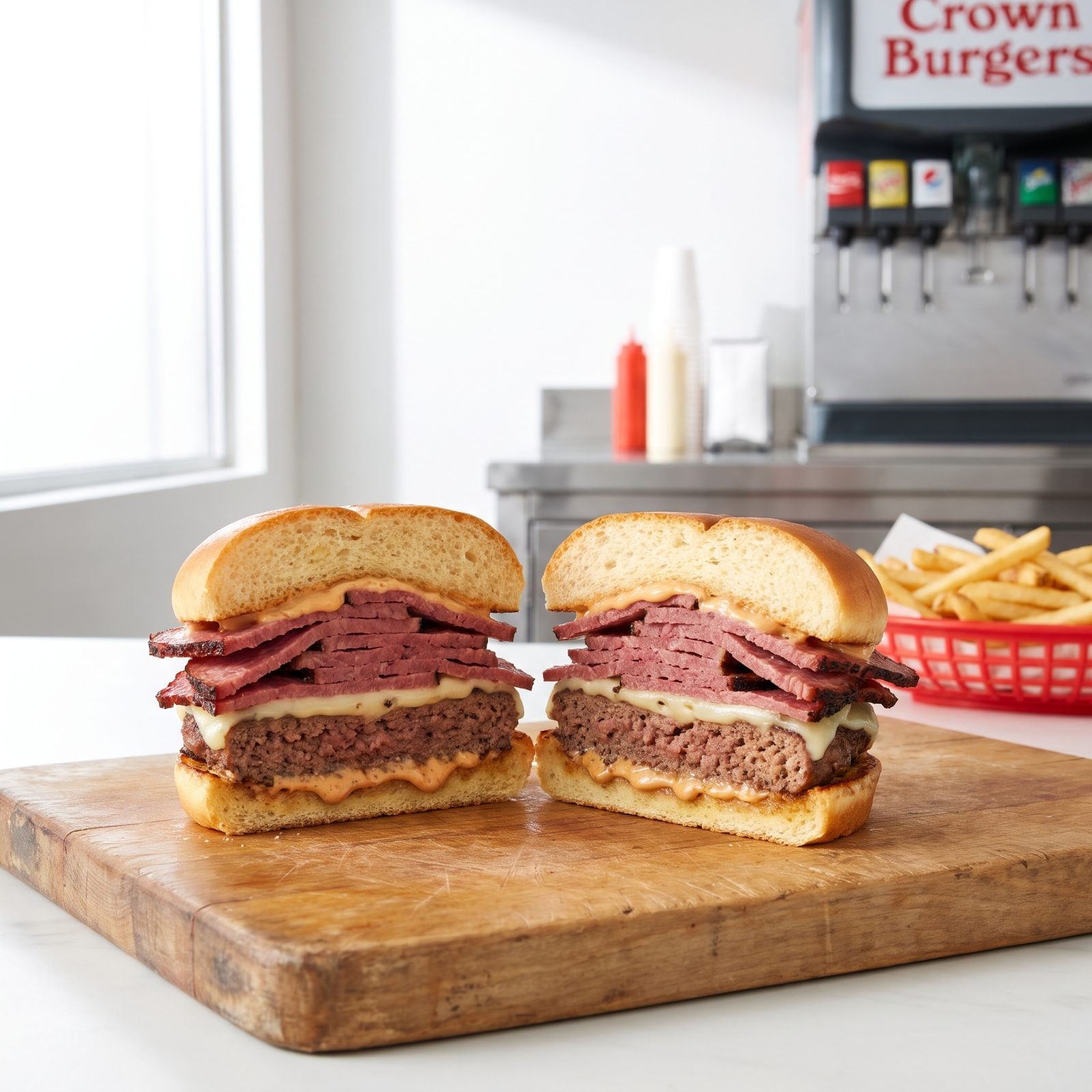
Someone in Salt Lake looked at a cheeseburger and a pastrami sandwich and refused to choose. Smart.
A beef patty, a generous pile of hot thin-sliced pastrami, melted cheese, and fry sauce — Utah’s beloved pink blend of mayonnaise and ketchup that outsiders mock until they taste it. The style traces back to Greek-American drive-ins in the Salt Lake Valley mid-century and spread fast from there. It shouldn’t work. Two big meats, two textures, too much of everything. It works anyway, and once you’ve had one you start eyeing every plain burger with mild disappointment.
19. Washington: The Seattle Dog and Its Cream Cheese Secret
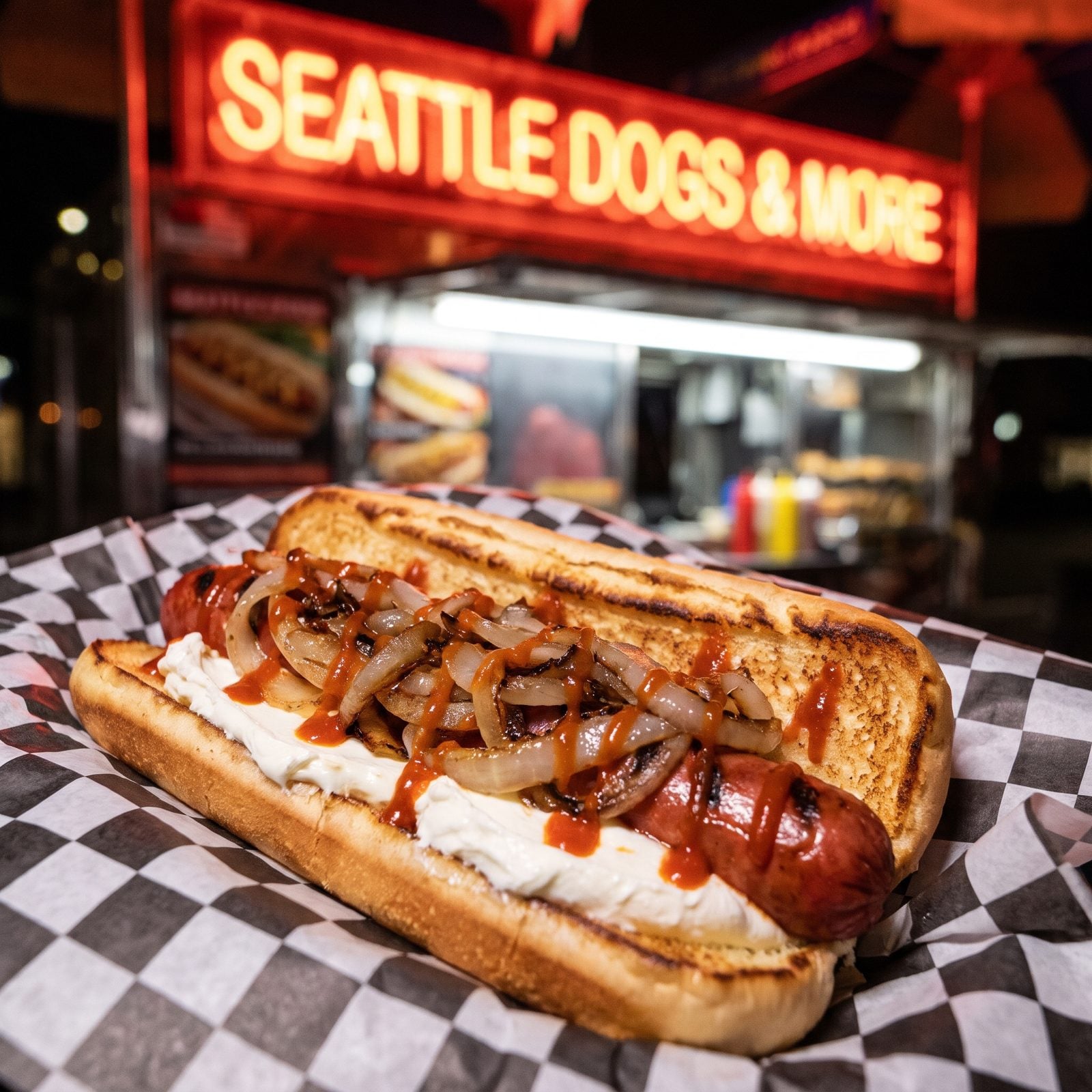
Cream cheese on a hot dog sounds like a dare. In Seattle it’s dinner. The story goes that late-night bagel carts outside the clubs started slathering cream cheese on dogs in the early ’90s because it was what they had on hand, and the city never looked back.
The build is simple: grilled frank, soft bun, cream cheese, griddled onions, a hit of sriracha. And the cream cheese does something the ketchup crowd won’t admit, cooling the whole thing down and giving the onions something to cling to.
18. Iowa: The Loose-Meat Sandwich Nobody Can Keep Together
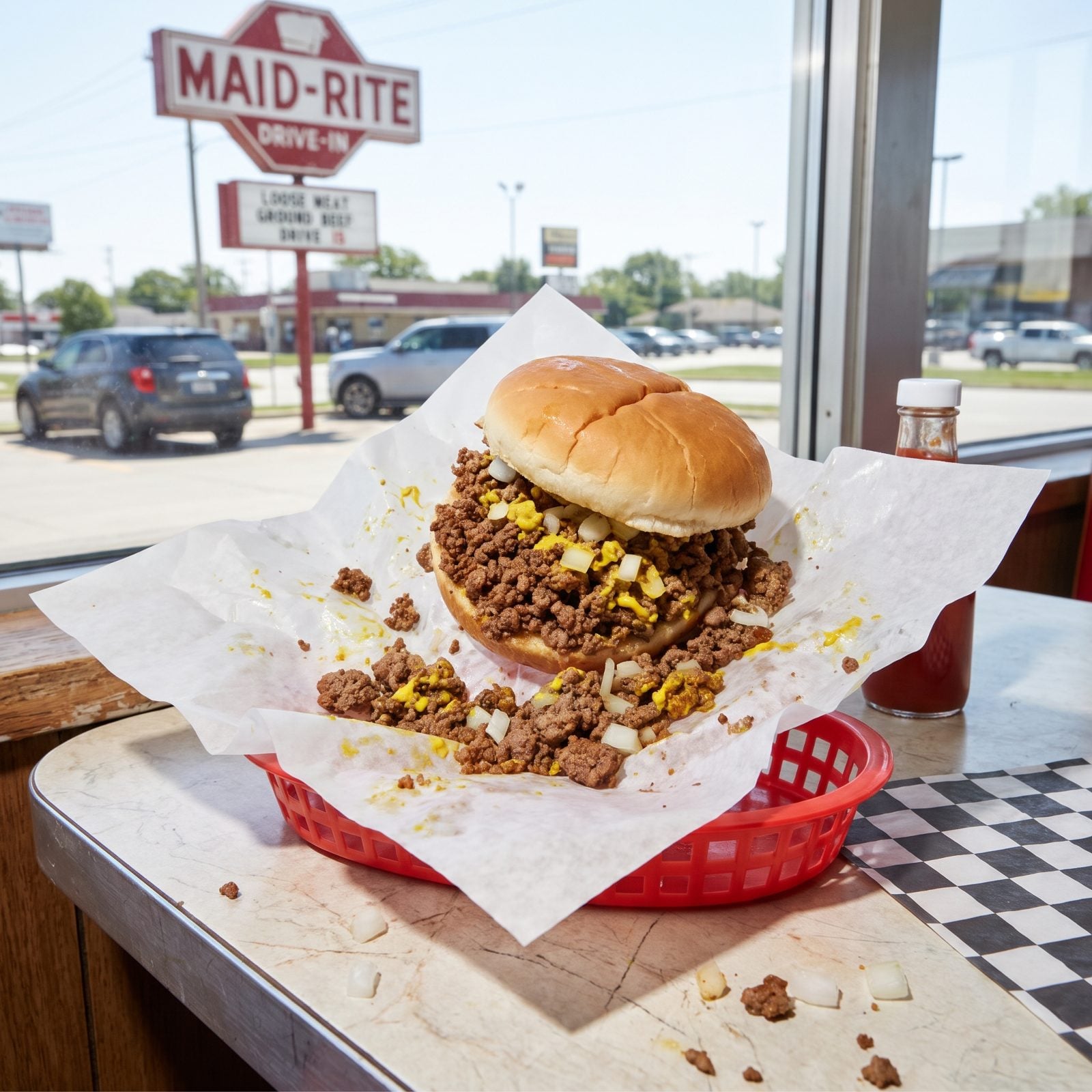
It looks like a sloppy joe that forgot the sauce. It is not a sloppy joe, and you will be corrected if you say so in Iowa.
The loose-meat sandwich is seasoned ground beef, steamed until it falls apart and piled on a bun with mustard, onion, and pickle. No tomato, no sweetness, nothing to hold it together, so you eat it over the wrapper because half of it ends up there. Maid-Rite restaurants have been selling versions since the 1920s, and generations of Iowans have learned to eat one with a spoon in the other hand.
17. Mississippi: The Slugburger, Depression Thrift Turned Local Pride
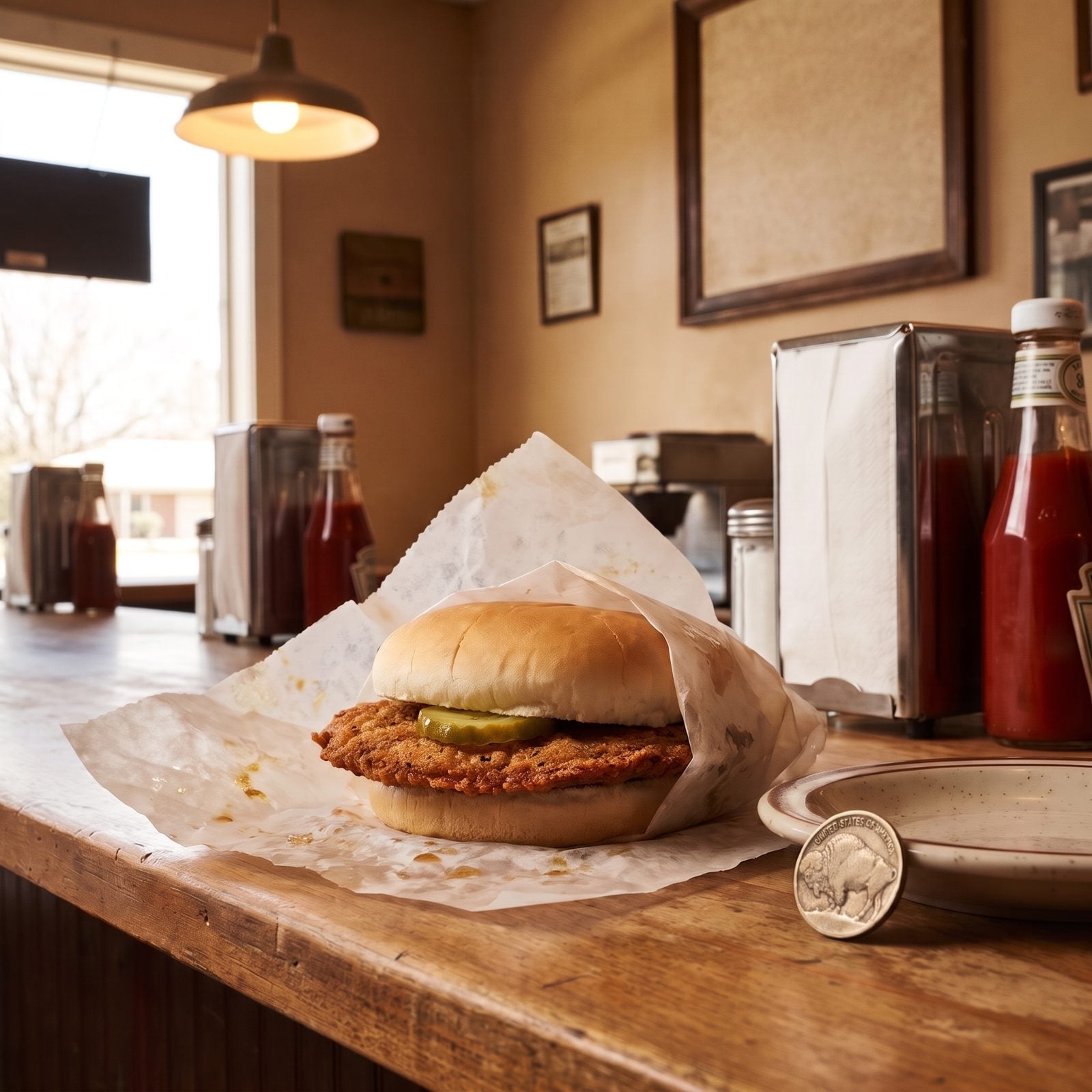
The name has nothing to do with slugs. It comes from “slug,” old slang for a nickel, which is what one of these cost during the Depression.
Corinth, Mississippi claims it hardest. The patty stretches ground meat with soy or potato flour, then fries it in a thick, crisp, golden crust. A pickle slice on a soft bun. That’s the whole thing. It was invented to make a little meat go a long way, and the town liked it enough to throw it an annual Slugburger Festival. Thrift became tradition, and nobody wants to retire it.
16. West Virginia: The Pepperoni Roll Built for a Coal Miner’s Lunch Pail
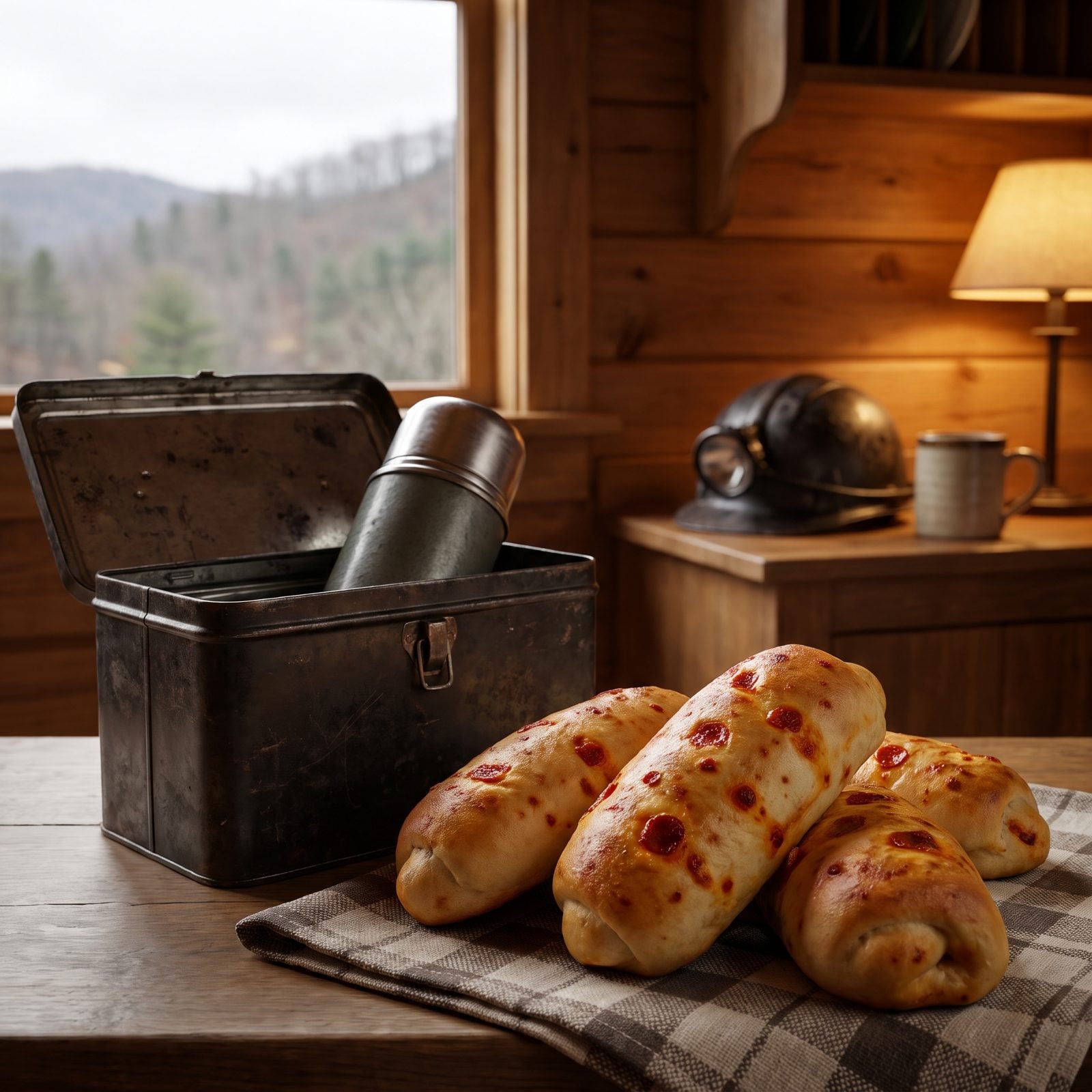
No refrigeration required. That was the whole idea.
The pepperoni roll came out of the coal towns around Fairmont in the early 1900s, when Italian immigrant bakers packed sticks of pepperoni inside soft bread so miners had a lunch that could ride down the shaft and back without spoiling. The grease soaks into the dough. That’s not a flaw. It’s the best part.
15. Wisconsin: The Sheboygan Brat on a Hard Roll, Double-Patty Style
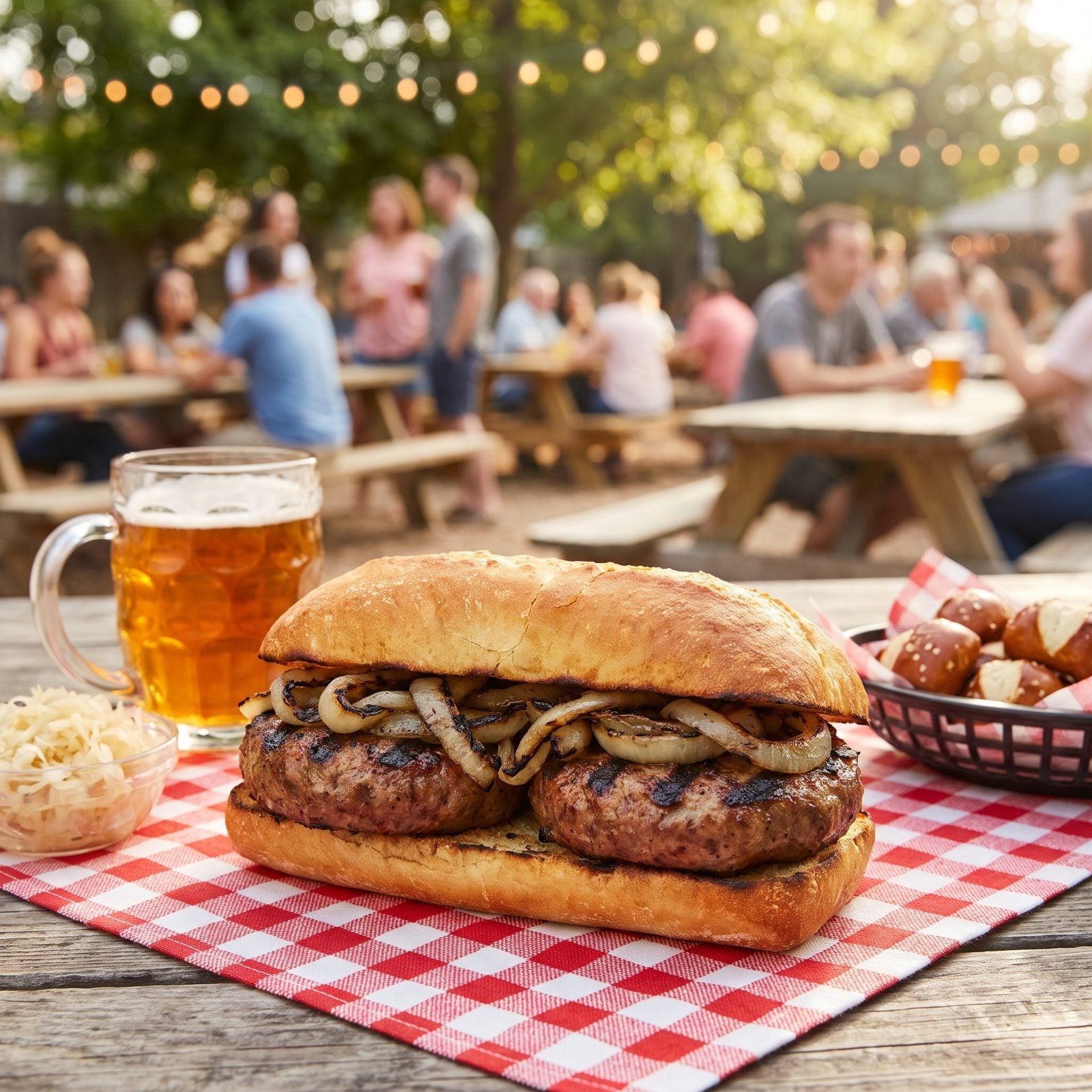
One patty is a snack. In Sheboygan you order a double.
The city calls itself the Bratwurst Capital of the World and backs it up. The brat patties get grilled over hardwood charcoal and loaded two at a time onto a long, crusty ciabatta-style roll. Butter on the roll is standard, then a heap of charred grilled onions. And the hard roll matters, because a soft bun would collapse under two juicy patties and a slick of butter.
This is tailgate food in its native habitat, eaten standing up with grease running down your wrist.
14. Massachusetts: The Fluffernutter, a Lunchbox Classic Born in a Factory Town
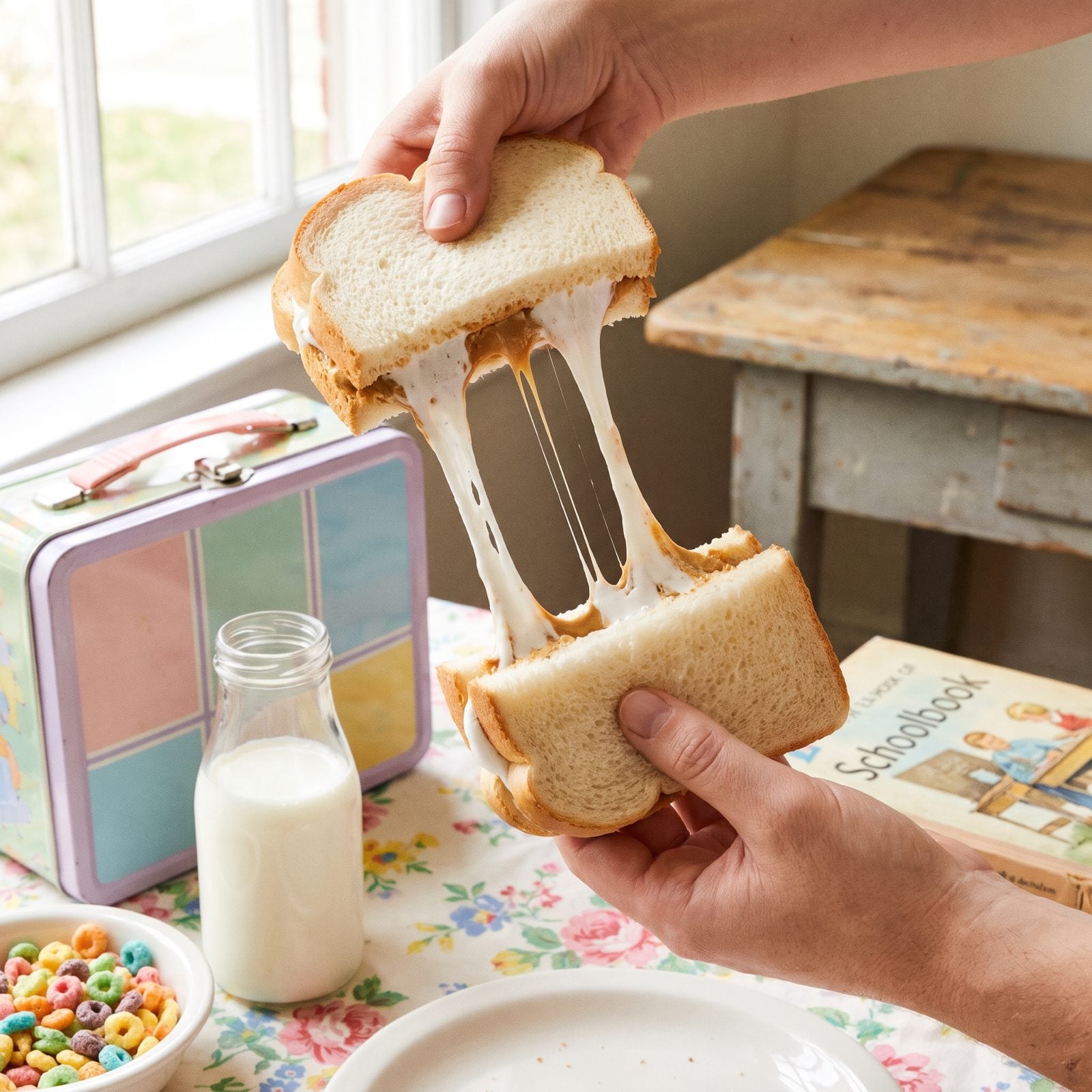
Peanut butter and marshmallow fluff on white bread. It sounds like a kid invented it, and a kid-sized sweet tooth basically did.
Marshmallow Fluff was created in Somerville, Massachusetts in 1917, and the pairing with peanut butter followed soon after. The name “Fluffernutter” came along in the 1960s. Generations of New England kids opened their lunchboxes to one of these, the bread slightly squished, the fluff stuck to the wrapper.
13. Delaware: The Bobbie, Thanksgiving Dinner You Can Hold
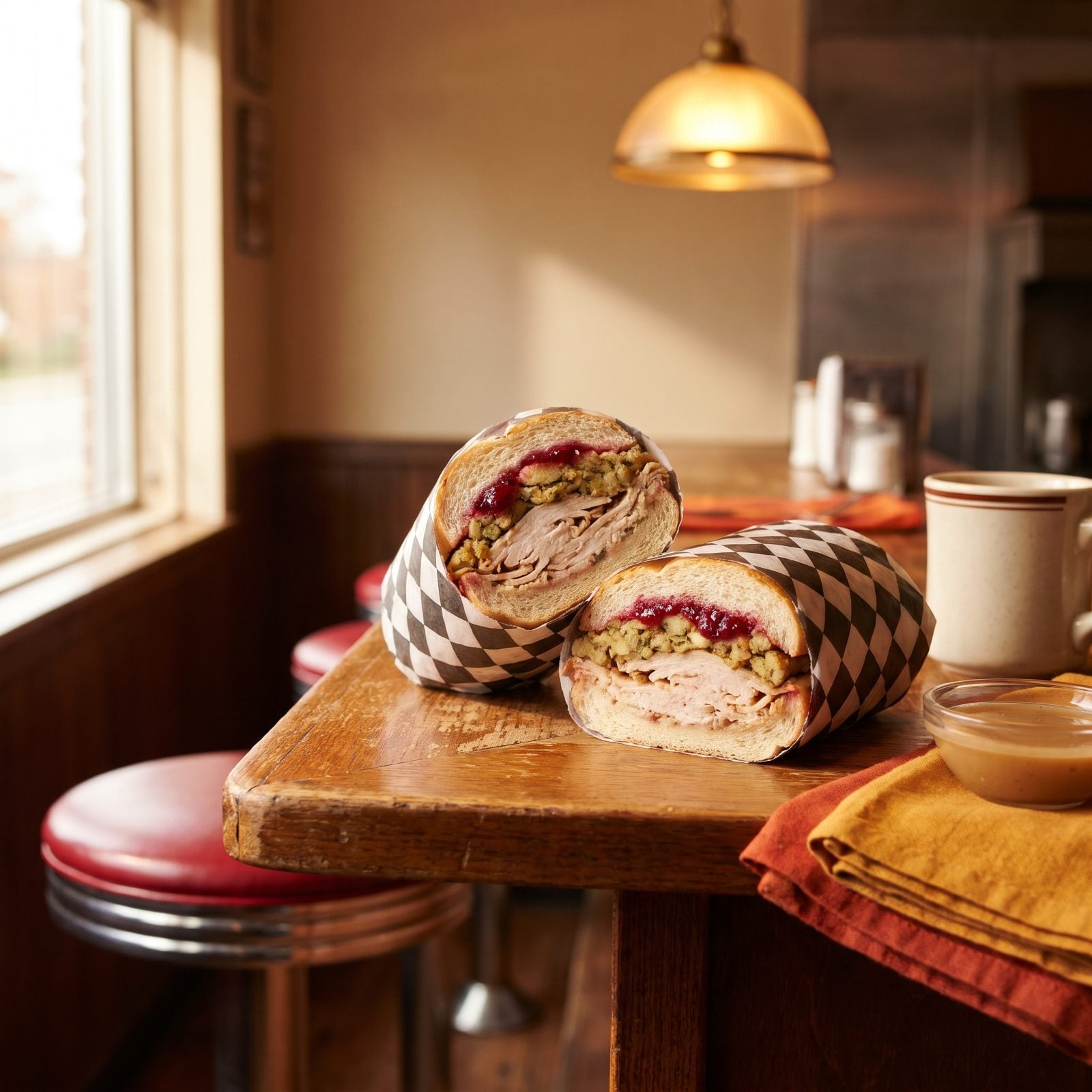
Picture the best plate from Thanksgiving dinner, pressed into a hoagie roll and handed to you in June. That’s the Bobbie.
Roasted turkey, cranberry sauce, stuffing, and mayo, all layered into a long Italian roll. Capriotti’s, a sub shop founded in Wilmington in 1976, made it famous and named it after an aunt who loved the holiday. The cranberry is what pulls it off. Sweet-tart and loud, it cuts through the turkey and stuffing so the whole thing doesn’t go to mush. You can get Thanksgiving in a wrapper any day of the year here, and Delaware takes that privilege seriously.
12. Georgia: The Pimento Cheese Sandwich, the South’s Smooth Operator
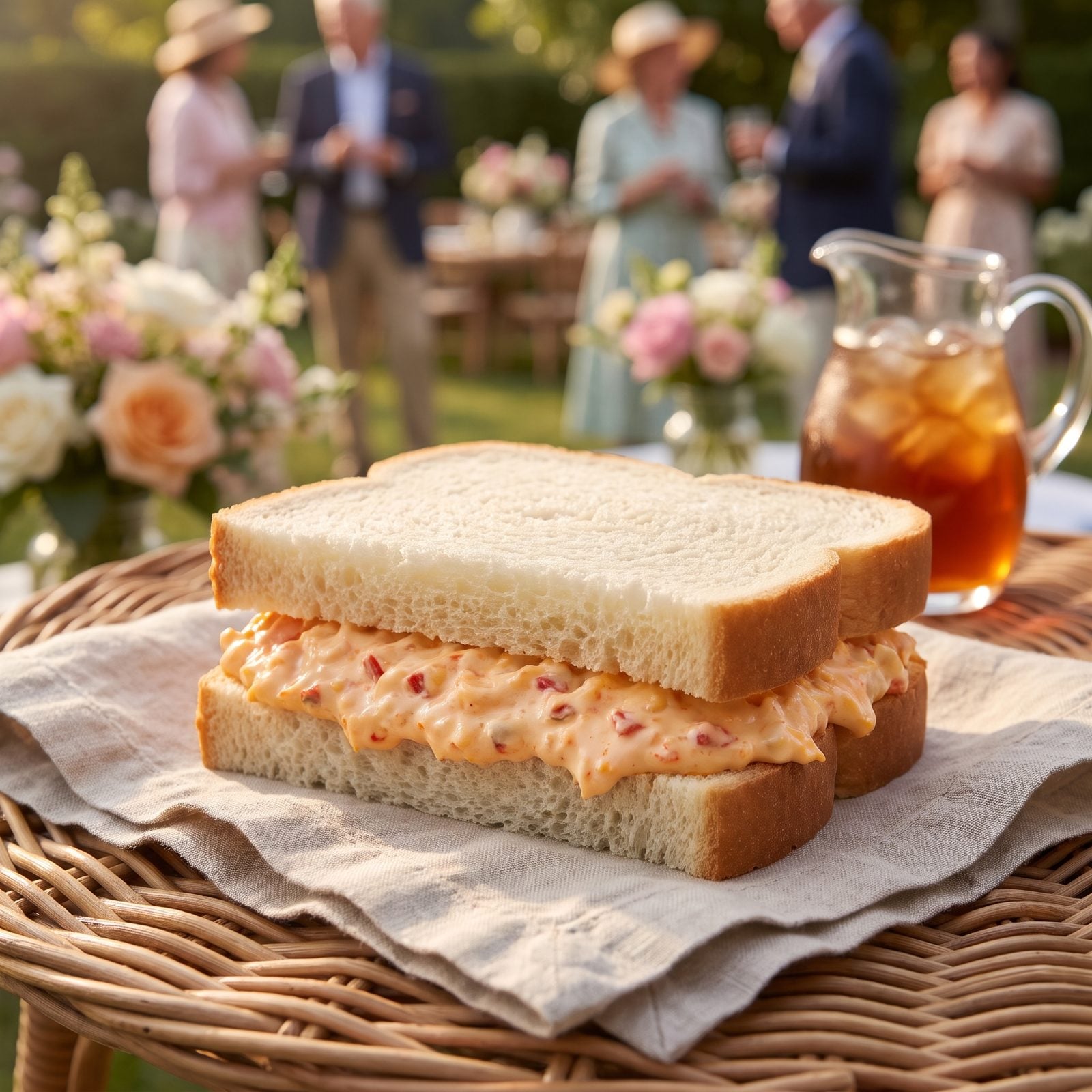
They call it the caviar of the South, and down there they mean it.
Pimento cheese is grated cheddar, mayonnaise, and diced pimento peppers whipped into a spread, then packed between soft white bread with the crusts often cut off. It turns up at church potlucks, backyard gatherings, and most famously the Masters golf tournament in Augusta, where the pimento cheese sandwich has been a cheap concession-stand fixture for decades.
Everybody’s grandmother had a recipe and everybody’s grandmother’s recipe was the correct one. That argument will outlive us all.
11. Hawaii: The Kalua Pork Sandwich, Luau Smoke Between Two Buns
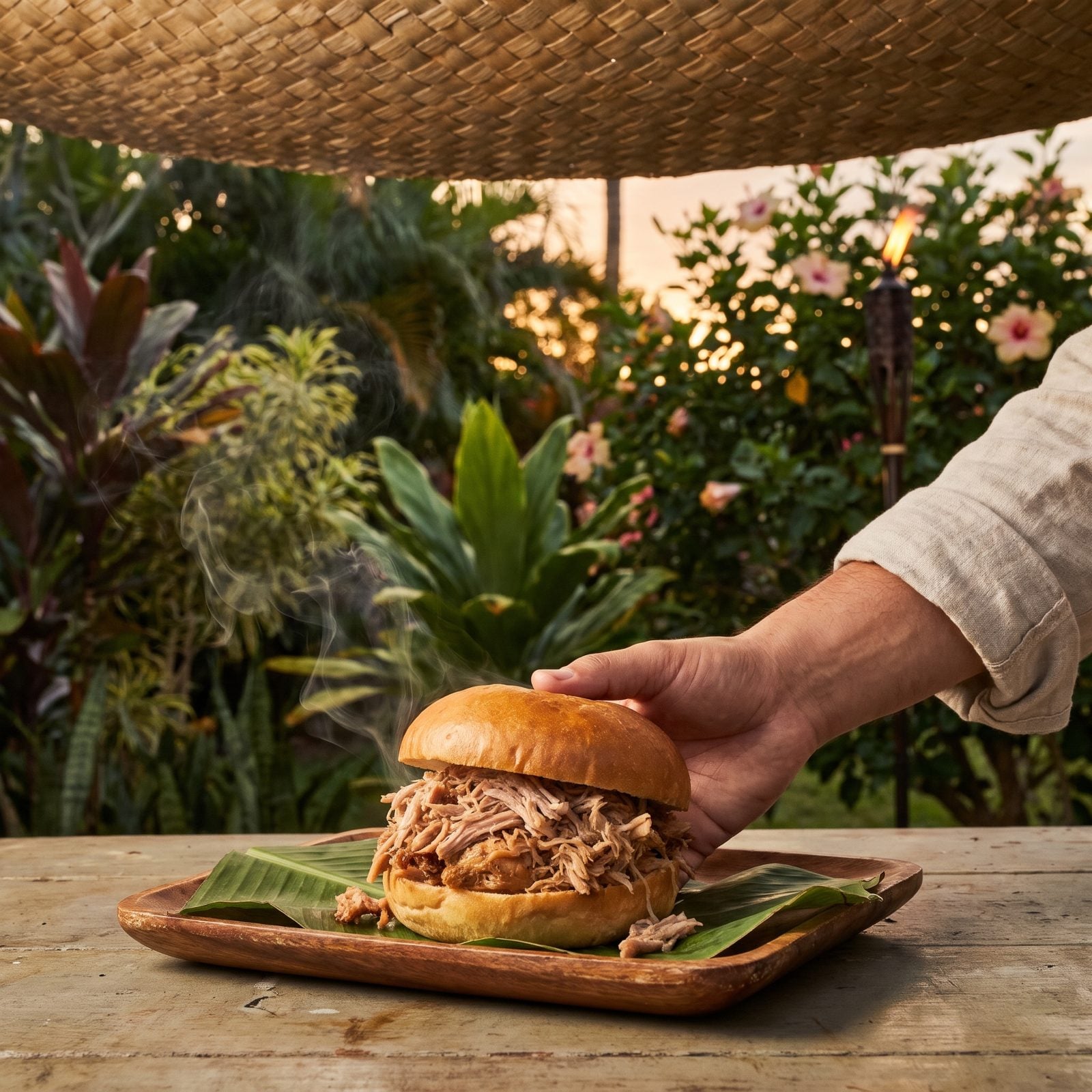
The flavor starts underground. Kalua pork is traditionally cooked in an imu, an earthen pit lined with hot stones, where a whole pig smokes for hours until it falls off the bone.
Pile that smoky, salty pork onto a soft sweet Hawaiian roll, add a little slaw or pickled cabbage, and a plate-lunch staple goes handheld. The sweetness of the bun against the salt and smoke of the pork is the whole conversation.
10. Michigan: The Cudighi, the Upper Peninsula’s Best-Kept Secret
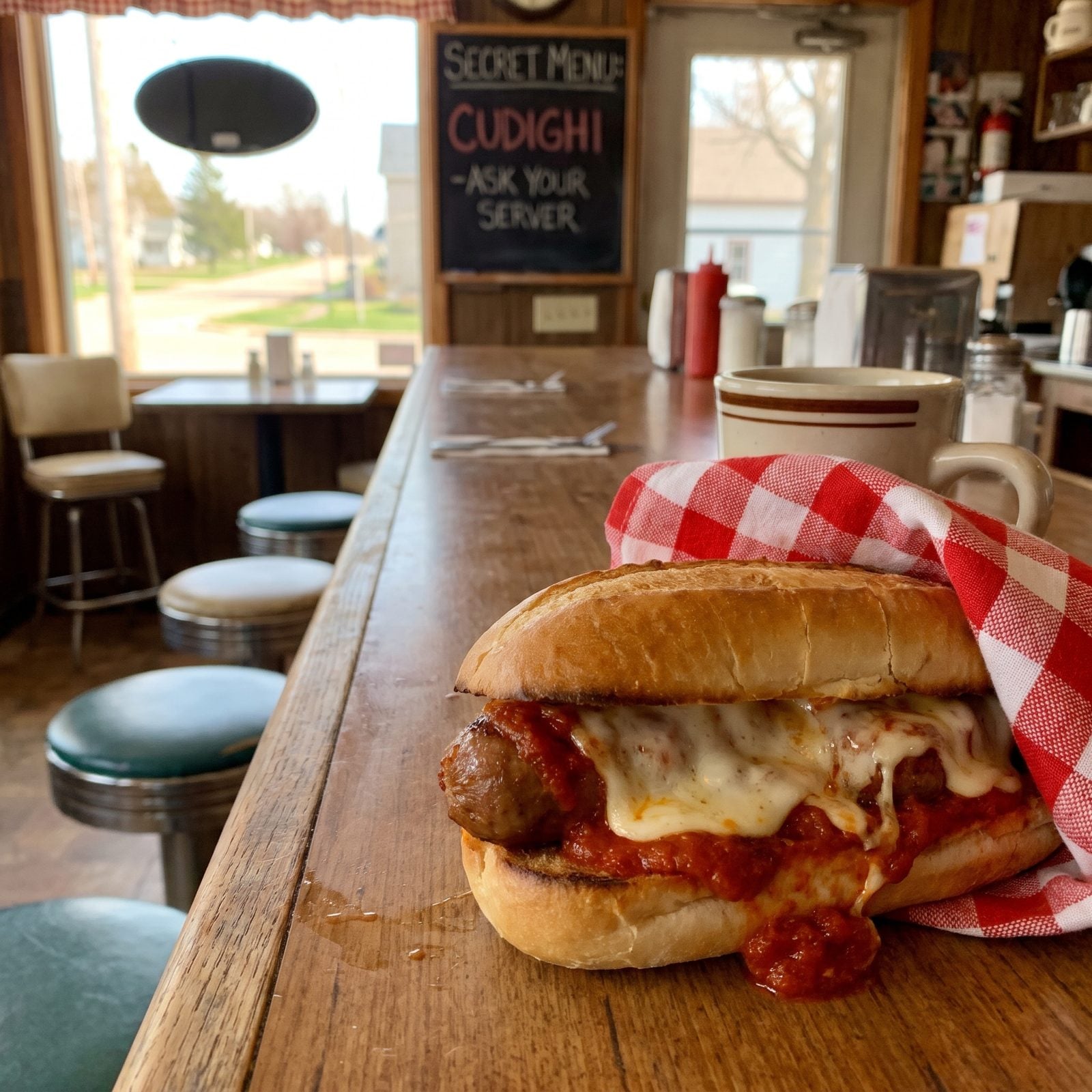
Ask someone from downstate Michigan about cudighi and you’ll likely get a blank stare. Ask anyone in Marquette and you’ll get directions.
Cudighi is a sweet-spiced Italian sausage seasoned with cinnamon, nutmeg, and clove, brought to the Upper Peninsula by Italian immigrant miners. Grilled as a link and loaded onto a bun with melted mozzarella and plenty of marinara, it eats like a sausage sub with a secret. The warm baking spices are what throw you. You expect pizza and get something richer and stranger. It barely exists outside the U.P., which is exactly how the locals seem to like it.
9. Minnesota: The Fried Walleye Sandwich Straight Off the Lake
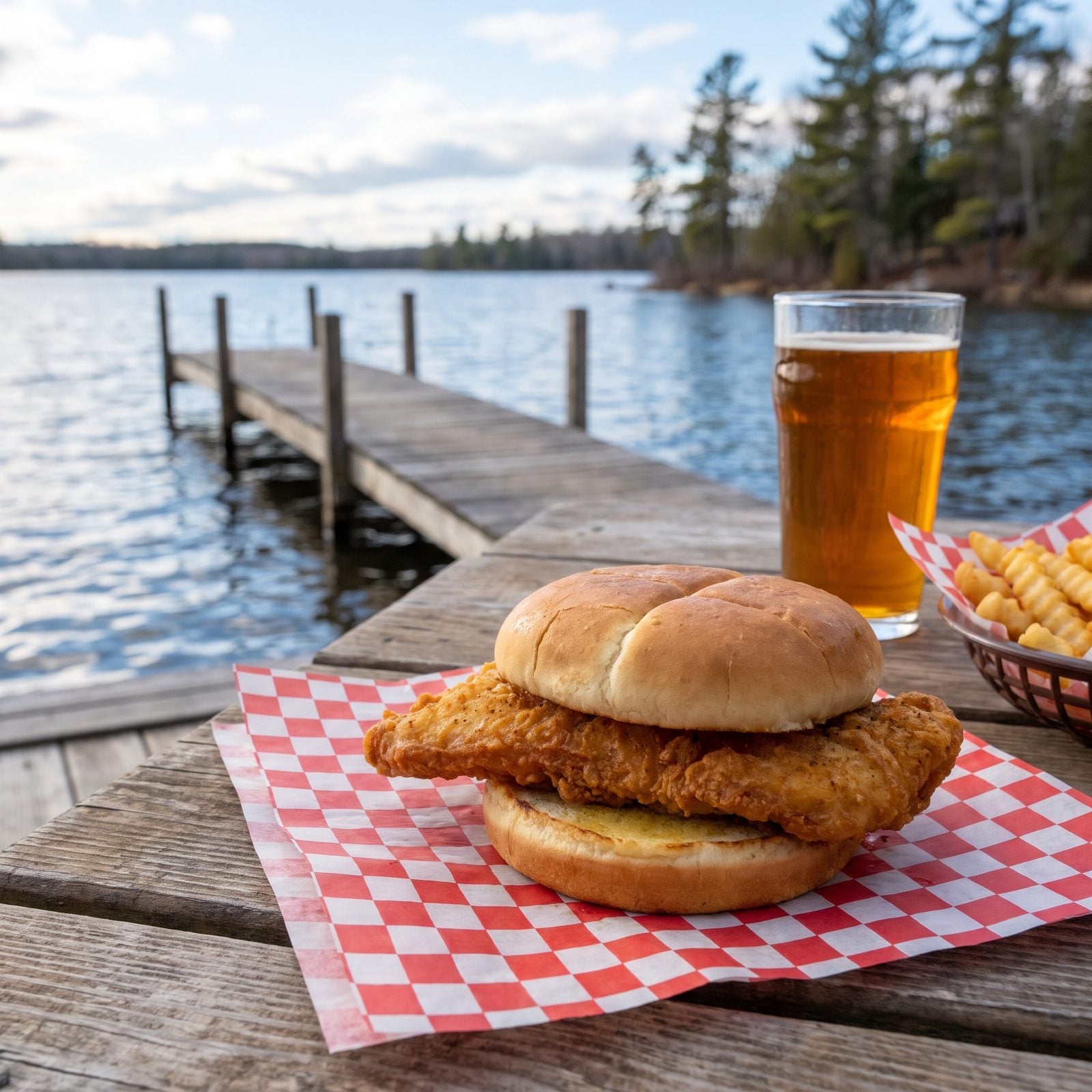
Walleye is Minnesota’s state fish, and up north a Friday fish fry means walleye or it means nothing. The fillet gets a light cornmeal or cracker-crumb dredge and a quick fry, then lands on a plain bun so the fish does the talking. Tartar sauce, a lemon wedge, lettuce, and that’s the whole operation.
Here’s what nobody warns you about. A proper walleye fillet overhangs the bun on every side, and if it fits neatly, somebody skimped. The supper clubs along the lakes have served these since the shore-lunch tradition wandered onto a menu, and the best ones still smell faintly of the boat.
8. Missouri: The St. Louis Gerber, a Happy Accident on an Open Face
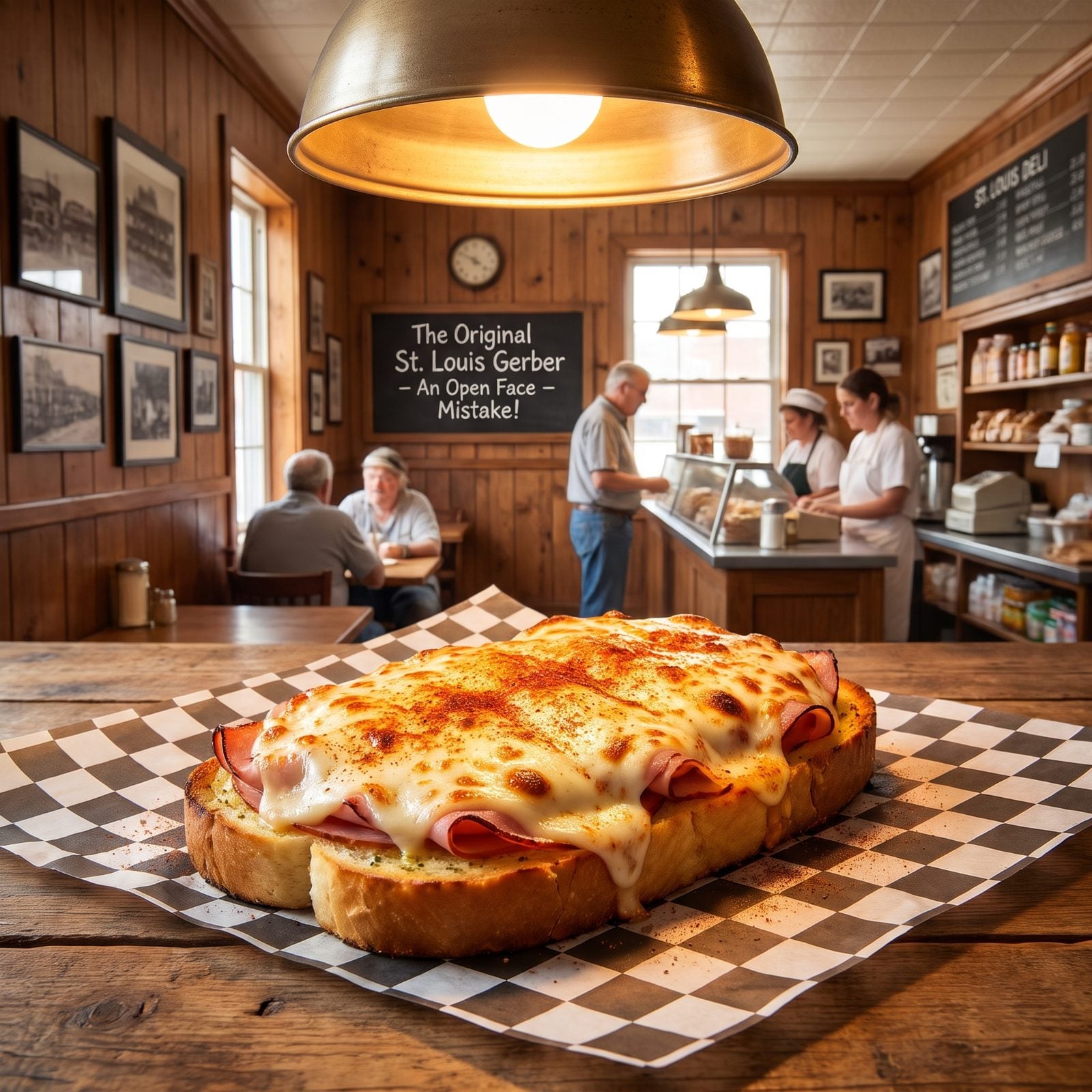
Legend says a St. Louis deli owner named it for a customer, Dick Gerber, who kept ordering ham and cheese on garlic bread until the thing went permanent. Open-faced, broiled, built on Provel, that processed cheese blend St. Louis treats as a local religion and everybody else finds baffling.
Provel melts into a buttery smear instead of pulling into strings, which is the whole point. The browned blisters on top? Tradition, not just looks. Pull it from the broiler pale and a St. Louisan will catch it before you’ve taken a bite.
7. Montana: The Butte Pork Chop Sandwich, Mining-Town Ingenuity on a Bun
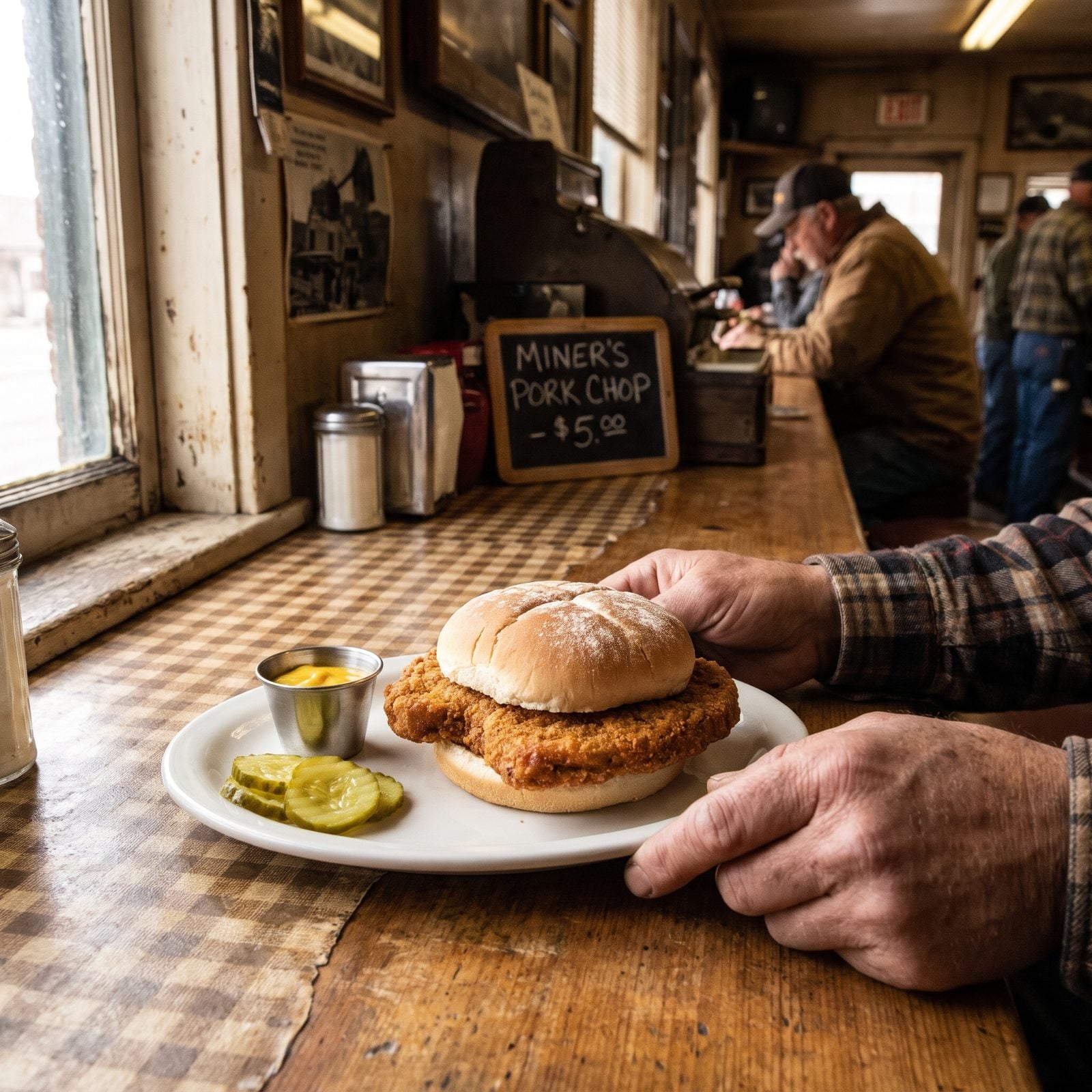
This sandwich was built for people who worked underground. Butte’s copper miners needed something cheap, filling, and easy to carry, so a local family pounded pork loin thin, breaded it, fried it, and slapped it on a bun with mustard and pickle. No frills. Frills cost money nobody had.
The original is still served at the counter where it started, and the ritual hasn’t budged: mustard and pickles, nothing more. Ask for mayo and lettuce and you’ve just announced to the room that you don’t get it.
6. Nevada: The Reno Awful Awful, a Burger Named With Honesty
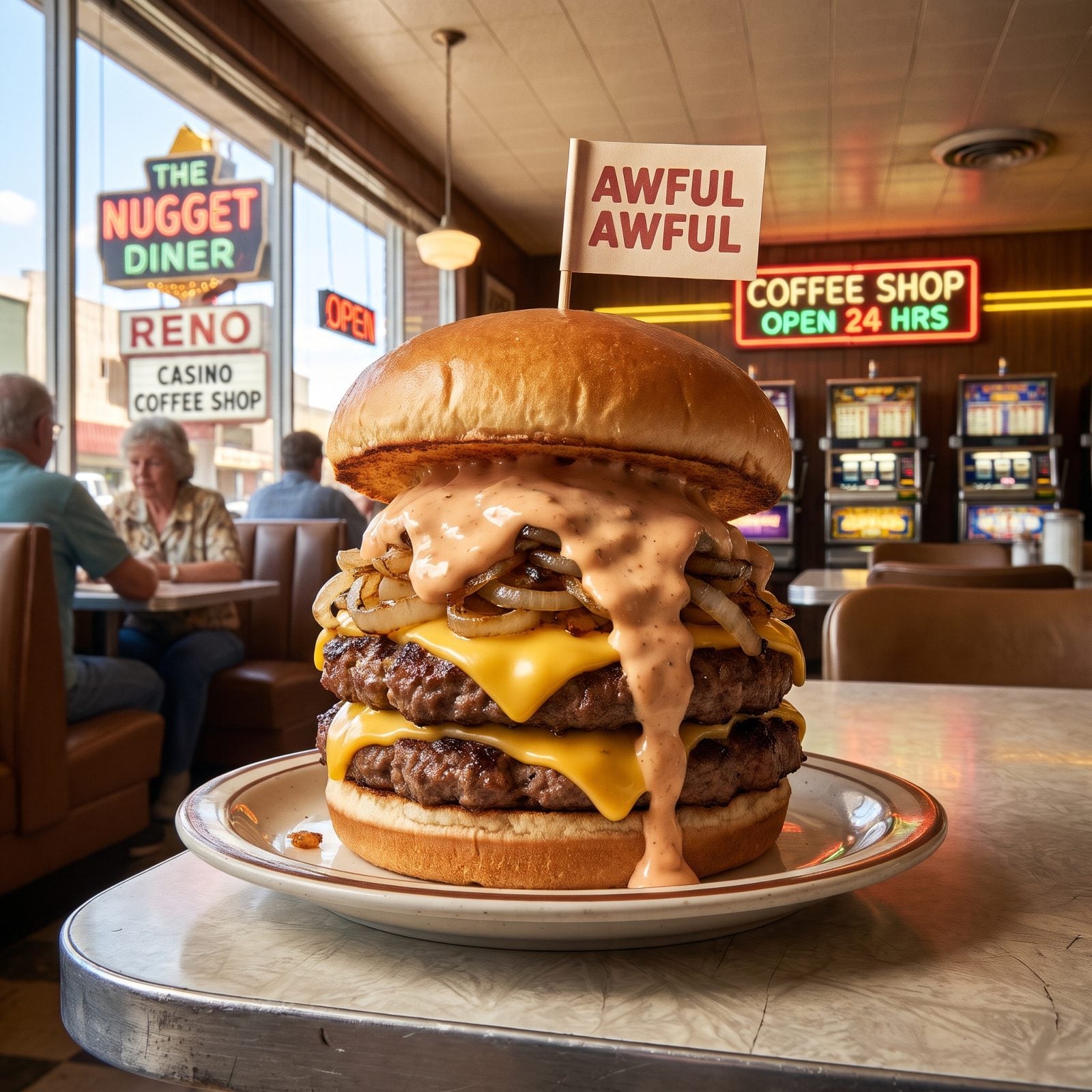
The name stands for “Awful Big, Awful Good,” which is precisely the brand of blunt a Reno casino coffee shop specializes in. A tall griddle burger loaded with grilled onions, cheese, and a sauce the regulars will not let you photograph the recipe of.
What turns it into a Reno institution is the stack of four patties, melted cheese, and grilled onions, piled so high it amounts to a second dinner. Gamblers, truckers, and night-shift casino workers have been ordering these at three in the morning for generations. A burger that respects an appetite, and not much else.
5. California: The French Dip, Two L.A. Delis Still Arguing Over Who Invented It
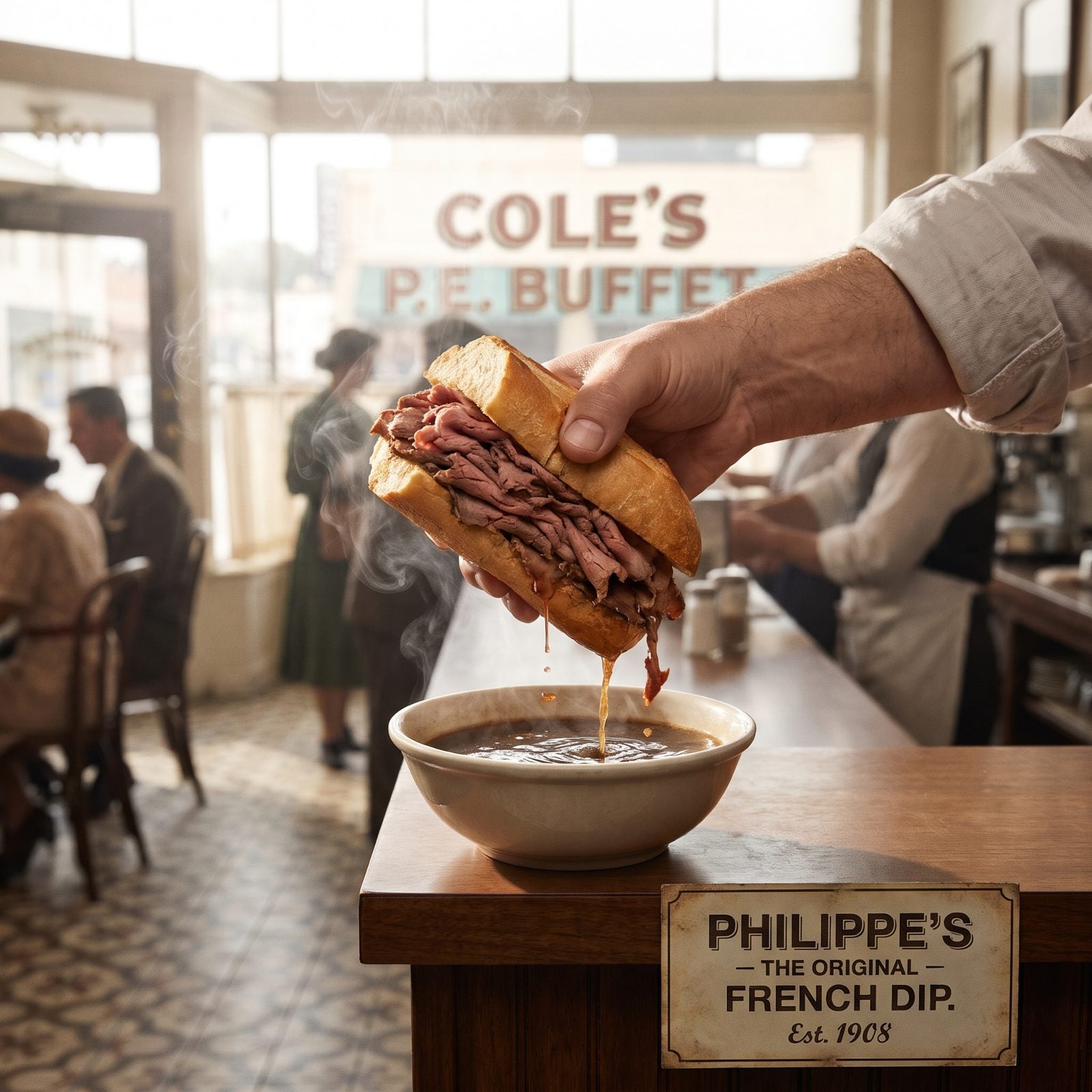
Two downtown Los Angeles institutions, Philippe the Original and Cole’s, have both claimed the French dip for over a century, and neither is backing down. One story says a sandwich fell in the drippings by accident. The other says a cook soaked the roll for a customer with sore gums. Both opened around 1908. Pick a side at your own risk.
The sandwich itself is austere. Roast beef, a crusty French roll, a cup of beef jus. No cheese, no lettuce, nothing hiding the meat. The jus does the heavy lifting, and dunking isn’t optional.
A French dip without the dip is just a roast beef sandwich having an identity crisis.
4. Vermont: The Vermonter, a Sandwich Dressed Entirely in Local Pride
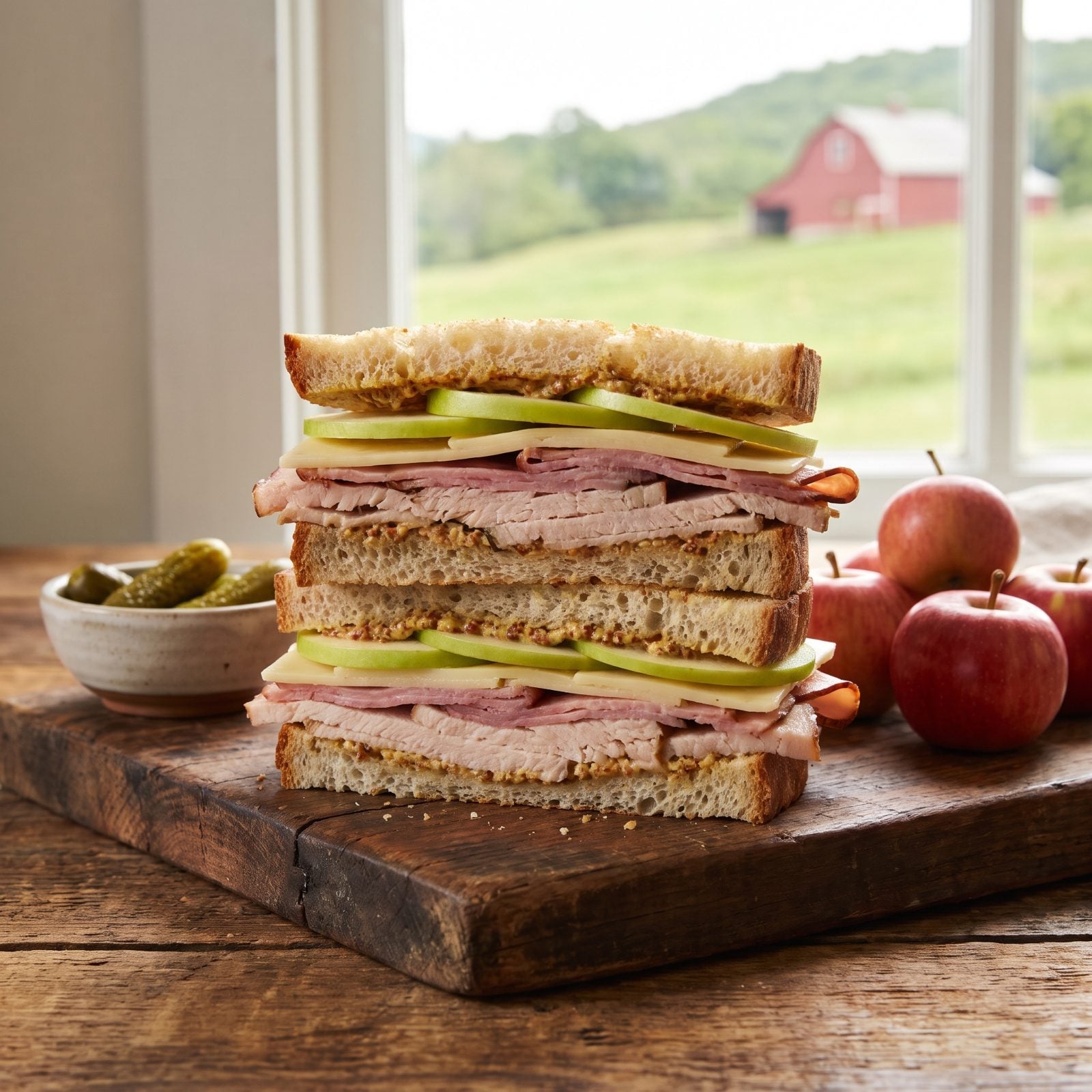
Vermont packed its whole pantry between two slices of bread. Roast turkey, smoked ham, sharp cheddar, thin green apple, and a little maple, usually grilled on something hearty. It reads like a dare to fit every state symbol into one sandwich, and somehow it lands.
The apple is the move. It cuts the richness of the cheddar and ham and keeps the whole thing from sitting like a brick. Country stores and deli counters across the state each do their own take, and the maple content is where polite neighbors turn into enemies.
3. Virginia: The Country Ham Biscuit, Small, Salty, and Serious
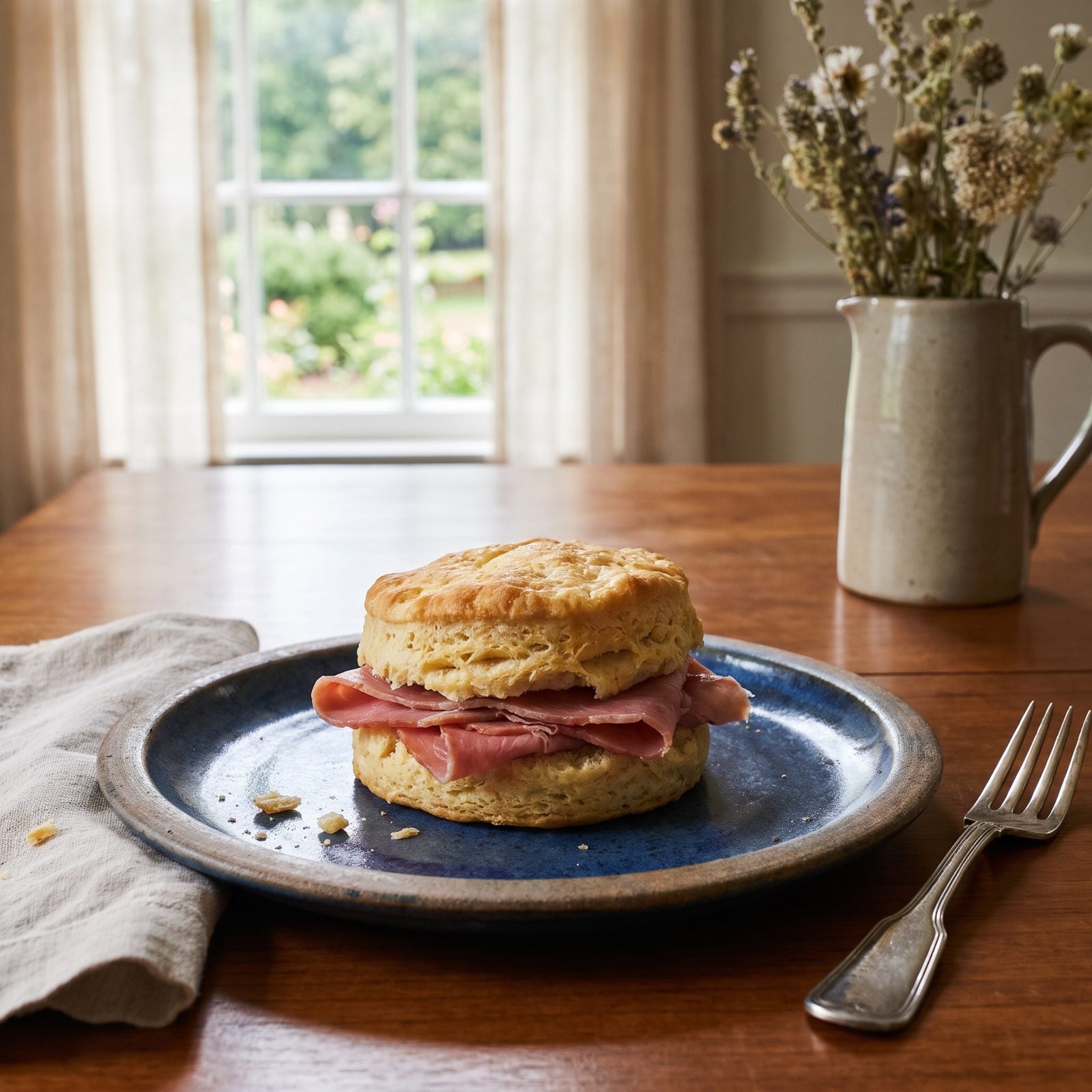
Don’t let the size fool you. A country ham biscuit is a flaky buttermilk biscuit holding a generous fold of pink Virginia ham, and it carries more flavor per ounce than almost anything else on this list. Here the ham is sliced thin, deep red and intensely cured, closer to prosciutto than to the deli stuff, and it is salty on purpose.
You’ll see these stacked on platters at weddings, funerals, church breakfasts, holiday mornings, pretty much any gathering across Virginia. Nobody eats just one. The cure means a single biscuit vanishes in two bites and leaves you reaching for the next.
2. Kansas: The Kansas City Burnt Ends Sandwich, Barbecue’s Best Mistake
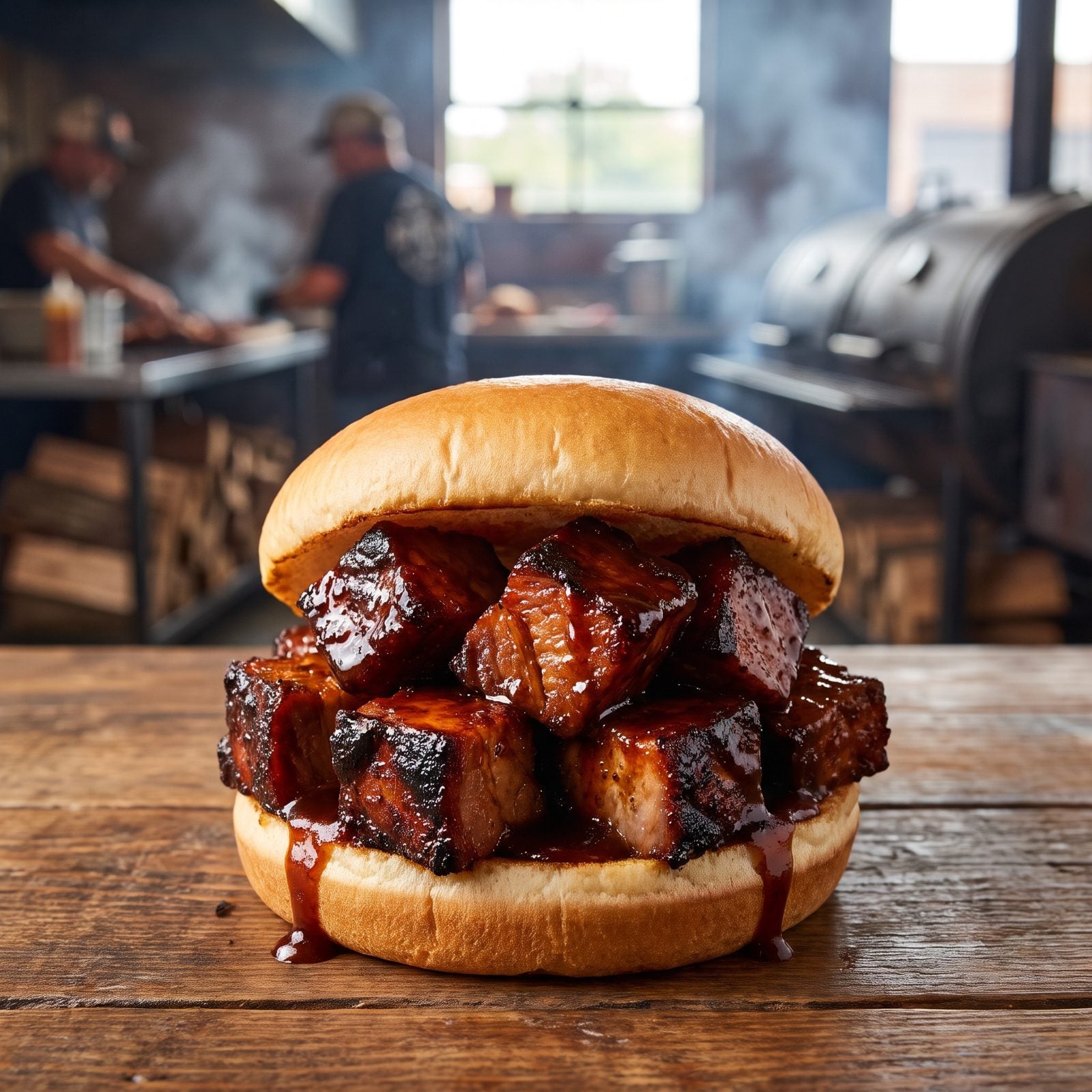
Burnt ends started as the free scraps counter workers handed out, the charred tips of the brisket point nobody wanted to sell. Then somebody actually tasted them. Now they’re the most prized cut in a Kansas City smokehouse, piled onto a bun with sauce and pickles.
It all comes down to the bark, that dark caramelized crust earned over hours in the smoker. Each cube is part tender meat, part crisp edge, all slicked in a thick tomato-and-molasses sauce. Show up late and the burnt ends are gone, because every regular already knows to get there early.
1. Kentucky: The Hot Brown, Louisville’s Open-Faced Midnight Rescue
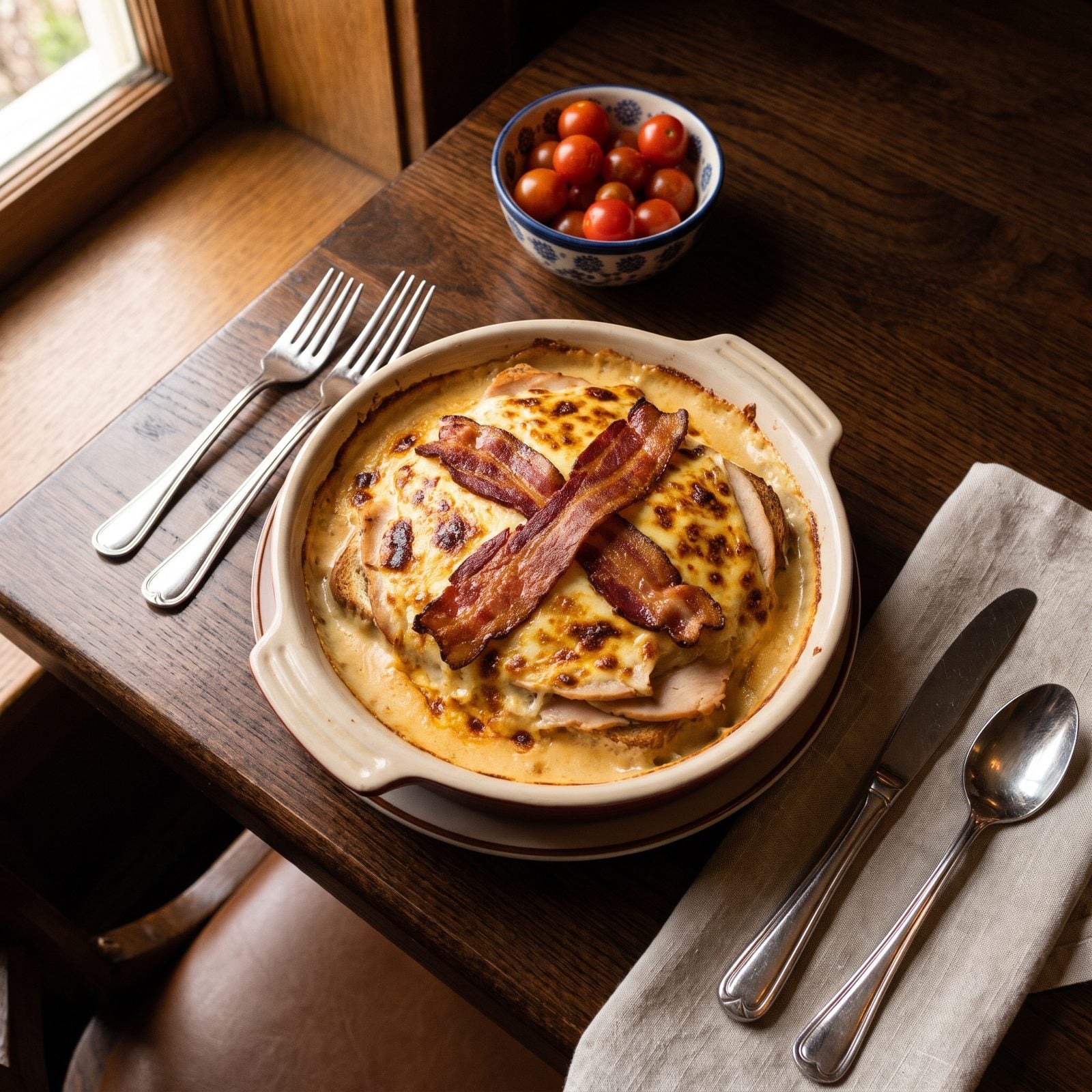
Born at the Brown Hotel in Louisville in 1926, invented to feed dancers who’d worn themselves out at the hotel’s nightly dinner dances and wanted something better than ham and eggs. Open-faced turkey on toast, drowned in Mornay cheese sauce, broiled until bubbling, crowned with two crossed strips of bacon.
You eat it with a fork, never your hands. Rich enough to end an evening, heavy enough to start a nap. The Brown Hotel still serves the original, and purists insist the real version uses pecorino in the sauce and demands the broiler. No microwave. Ever.