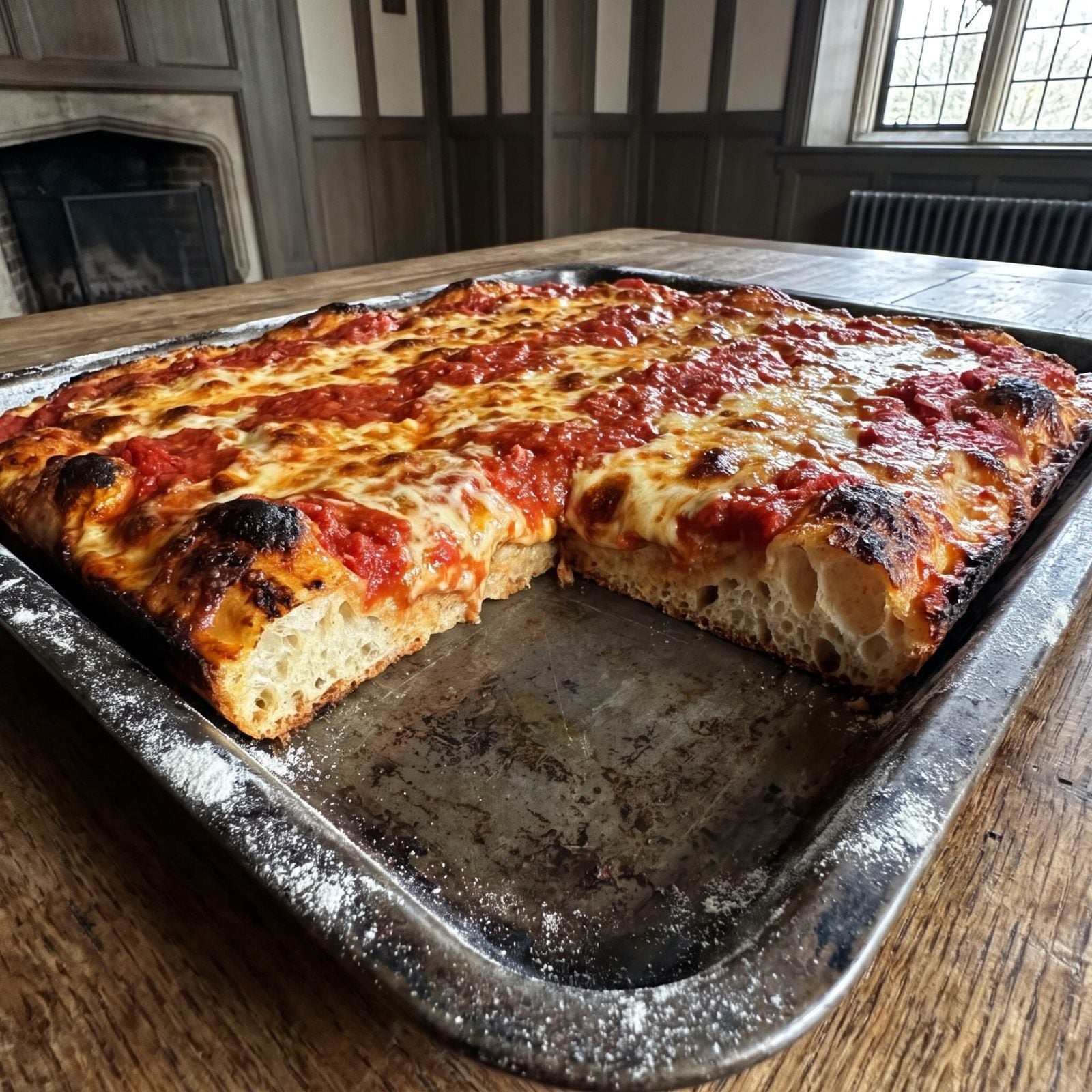
The oregano hit you before the door even closed behind you. That smell lived in the walls, in the vinyl, in the paper napkins stuffed into the dented chrome dispenser. Your family had a pizzeria, not a chain with a mascot and a ball pit but the real thing, run by a guy who kept your usual in his head and never once wrote it down. The place was small and worn, a little sticky in spots, and completely yours. These are the sights and rituals that meant home back when home smelled like a wood-fired Friday night.
Please note that some of the images in this article were created with the assistance of AI.
41. Red Vinyl Booths Patched with Silver Tape
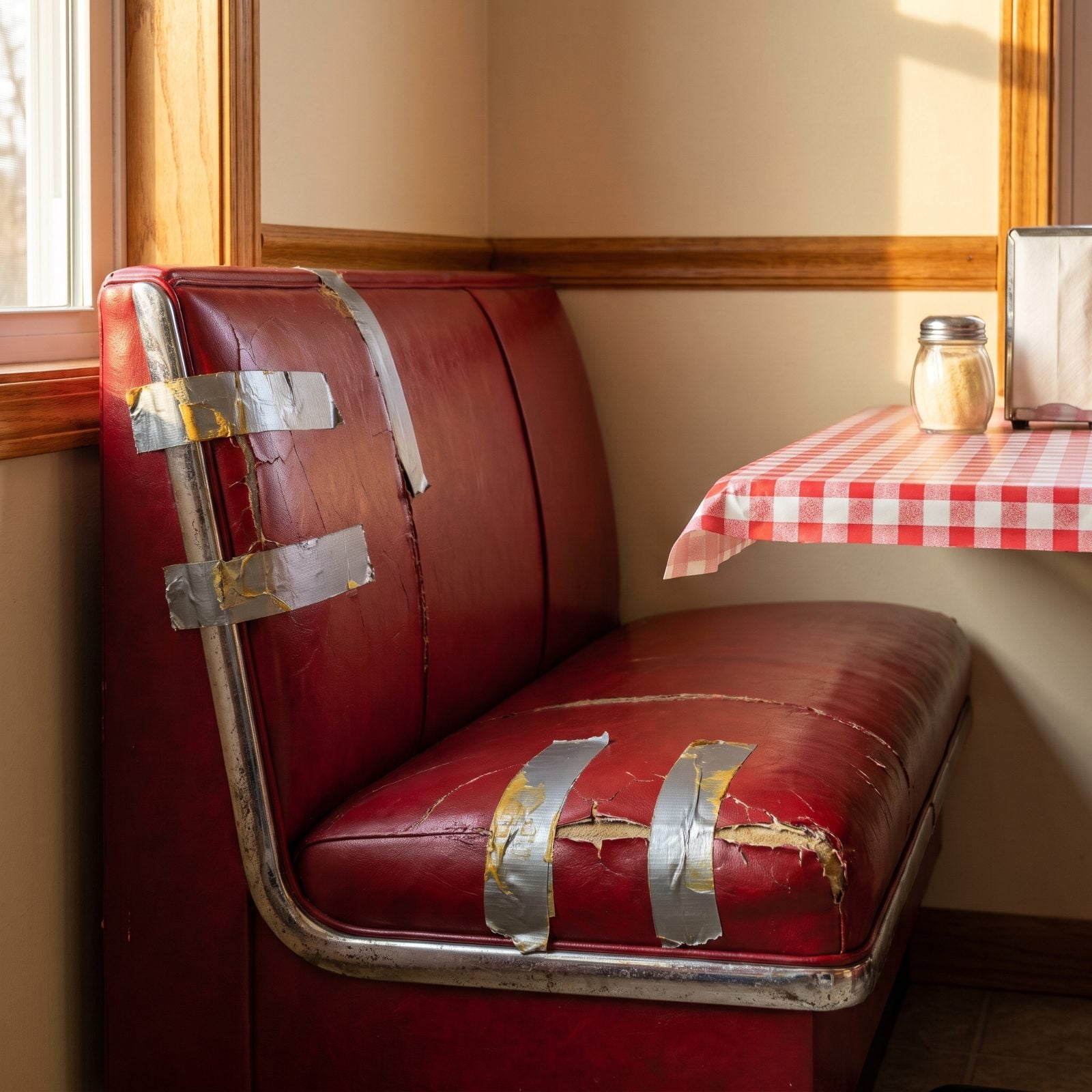
The tape was never meant to be permanent. Nobody ever got around to reupholstering, so the silver strips stayed, crinkling under your legs every time you slid in, cold through your shorts in summer.
You knew which booth was “yours” by its particular pattern of patches. The one by the window had a tear shaped like a lightning bolt. You’d pick at the tape edge while you waited, and get your hand slapped away by whoever you came with.
40. Pizza Boxes Stacked Almost to the Ceiling
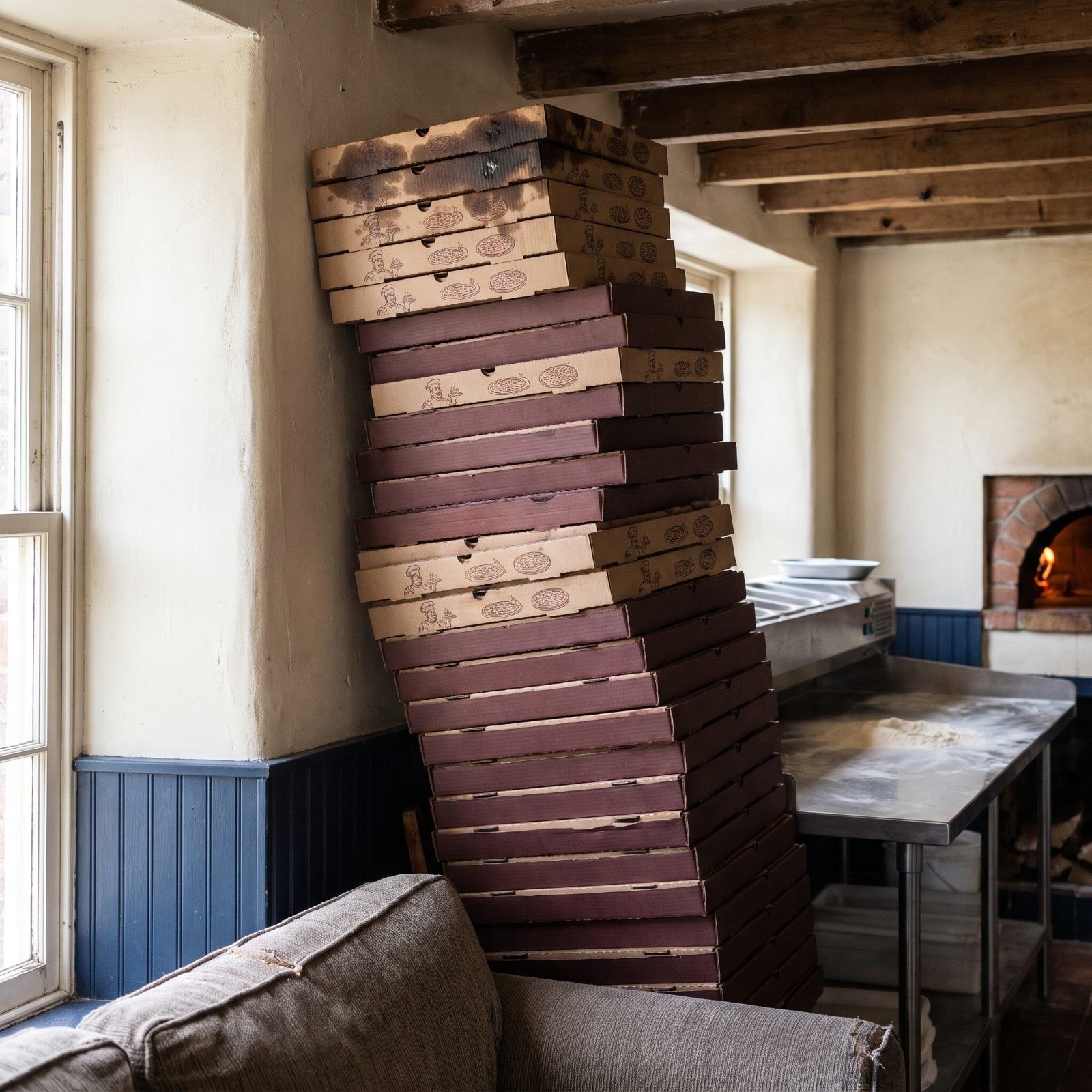
That tower behind the counter leaned at an angle that defied physics, and it swayed every time the front door slammed. You were convinced it would topple someday and bury somebody in corrugated cardboard.
The boxes at the top had been there so long they’d gone scorched and stained from oven heat and humidity. New ones got added faster than they ever emptied, so the stack only grew — a quiet monument to a thousand Friday nights.
39. A Payphone Beside the Restrooms
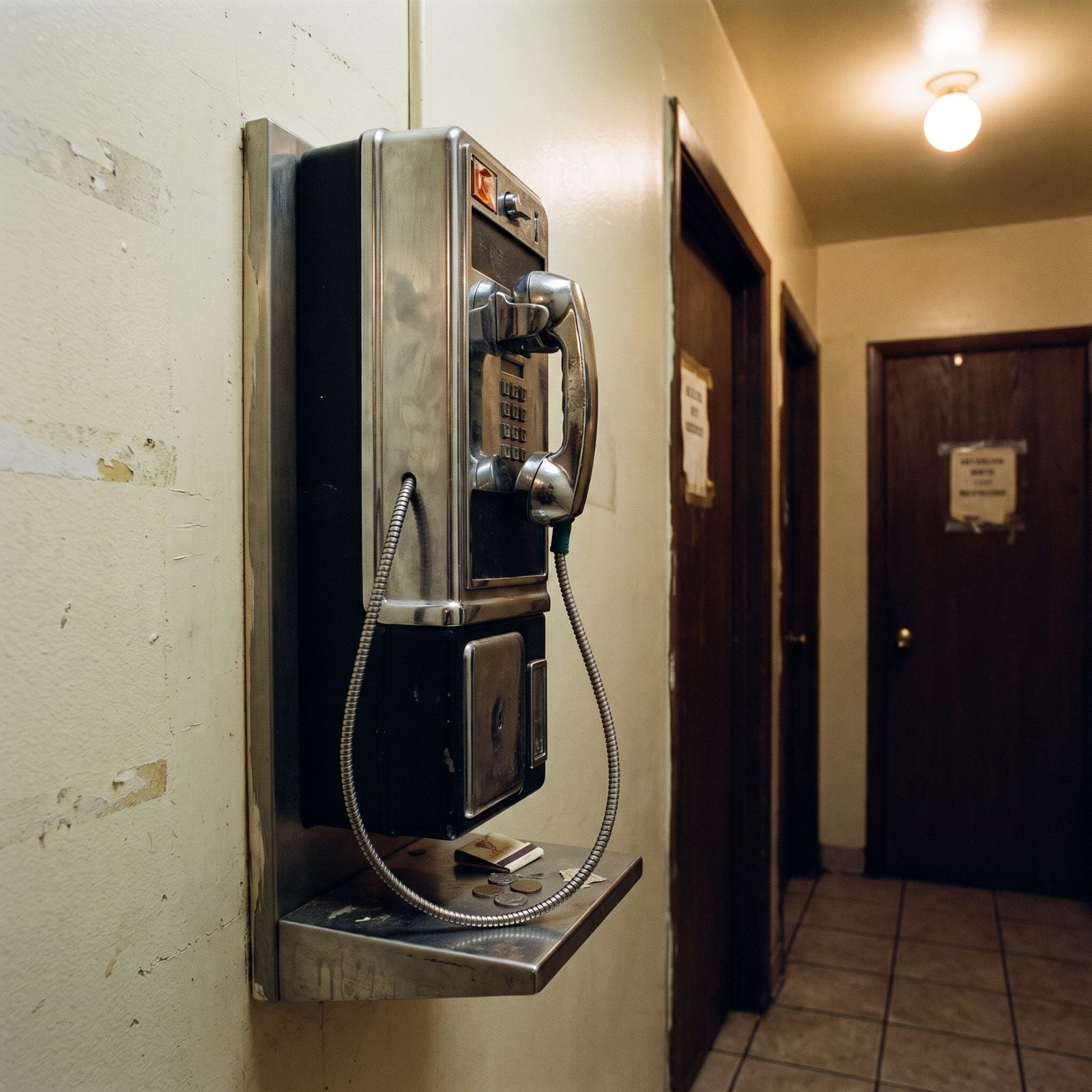
A dime, then a quarter, to tell your mom you’d be ten minutes late. The receiver was heavy and still warm from the last person’s hand.
You scrounged the coin return out of habit every single time, and once in a great while you hit the jackpot of a forgotten dime. That phone was the whole world’s connection, parked between the bathrooms, smelling faintly of pepperoni and ammonia.
38. One Arcade Cabinet with a Sticky Joystick
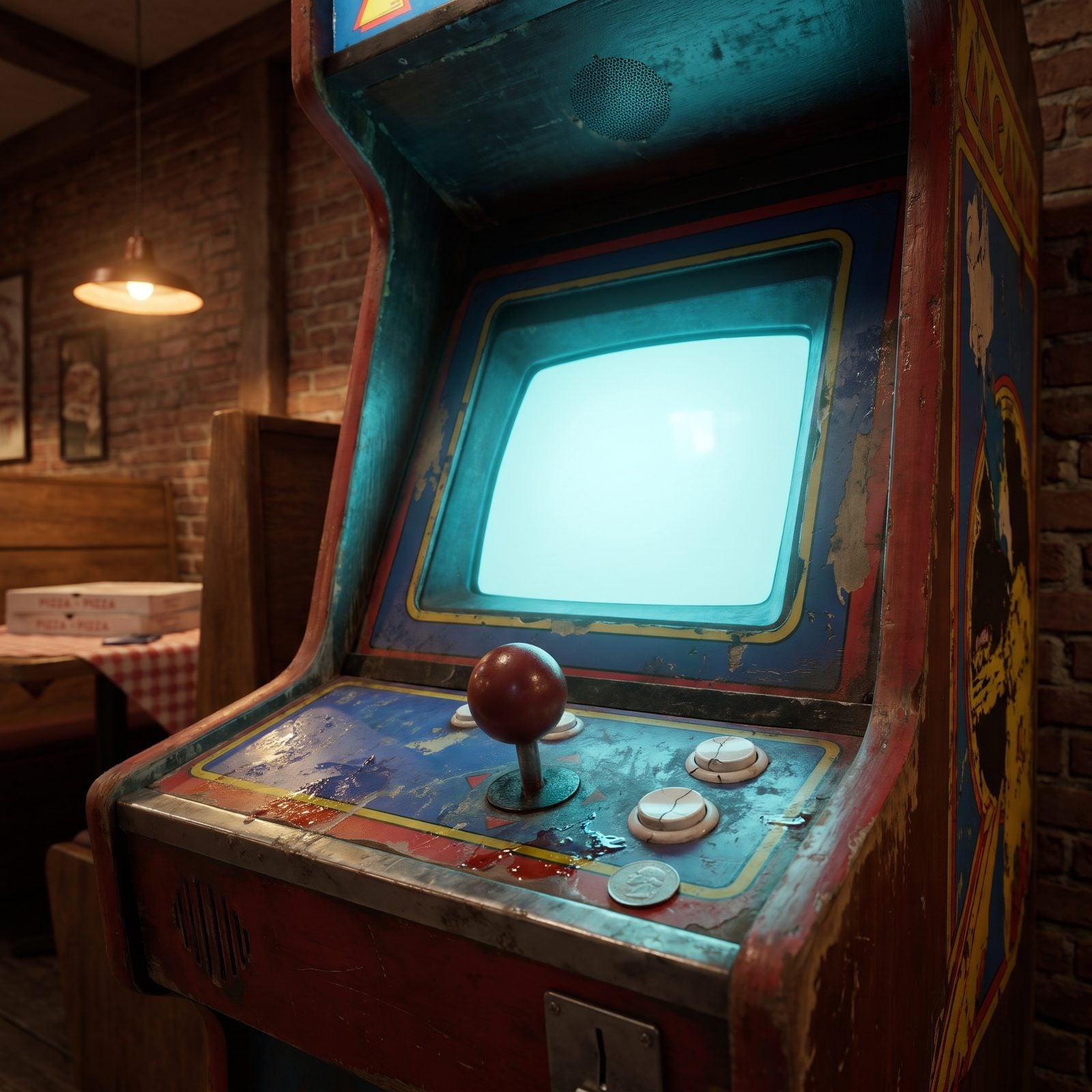
The screen flickered. The joystick stuck slightly left, so you learned to overcorrect, and that handicap made you a legend to exactly nobody.
One cabinet. That’s all you got, and it drank quarters while spilled soda glued the buttons into a permanent half-mush. You’d play standing up in your sock feet while the pizza baked, and when your name finally scrolled onto the high-score screen, that corner of the room was yours.
37. A Tabletop Jukebox That Took Quarters
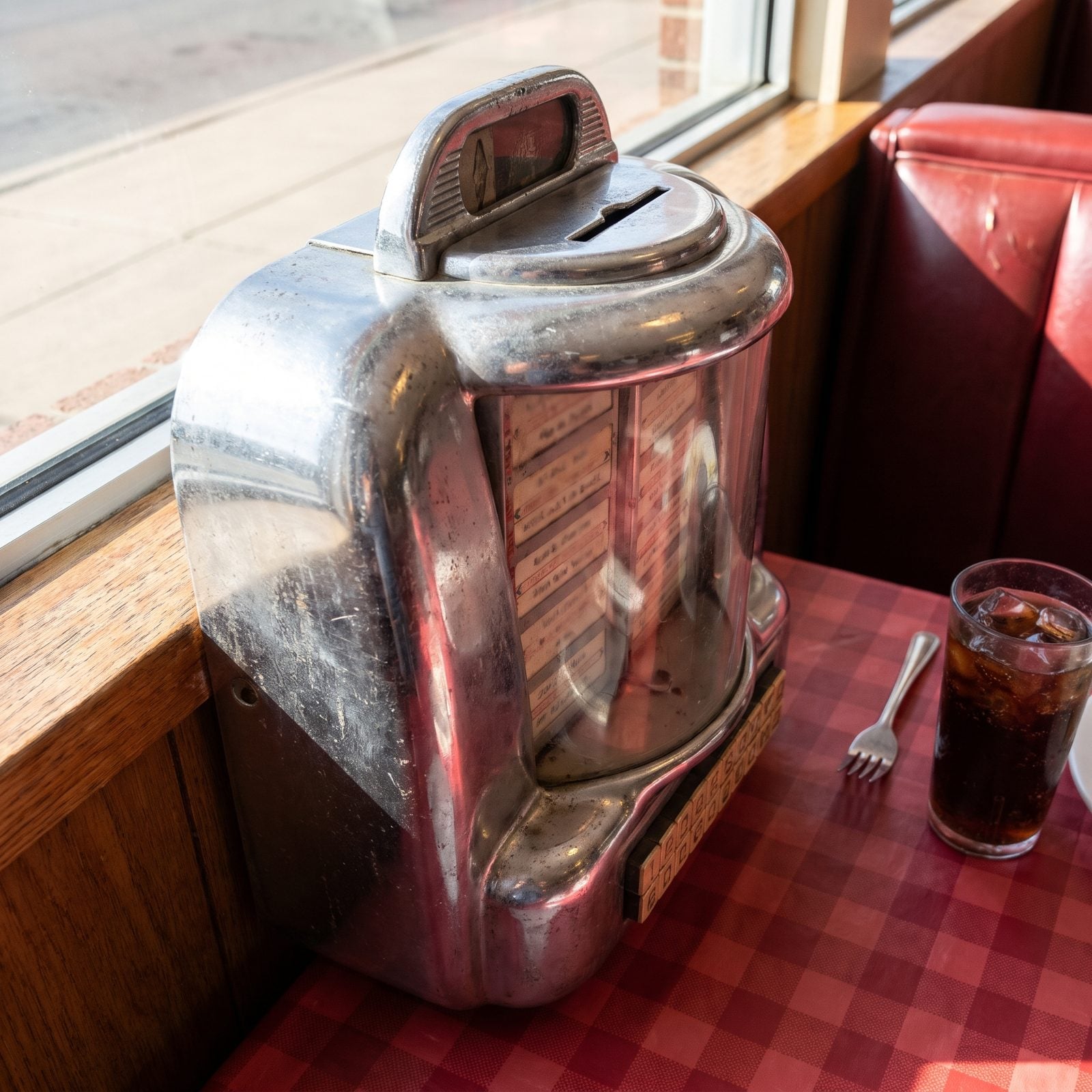
You flipped those little metal pages back and forth, reading song titles you half-recognized, hunting for the one worth a quarter. The chrome had worn down to brass where a thousand thumbs had pushed.
Half the selections didn’t play anymore, which you only learned after the coin dropped. When one did work, the whole booth went quiet and felt important, your song filling the room between bites of crust.
36. Polaroids of Customers Covering One Wall
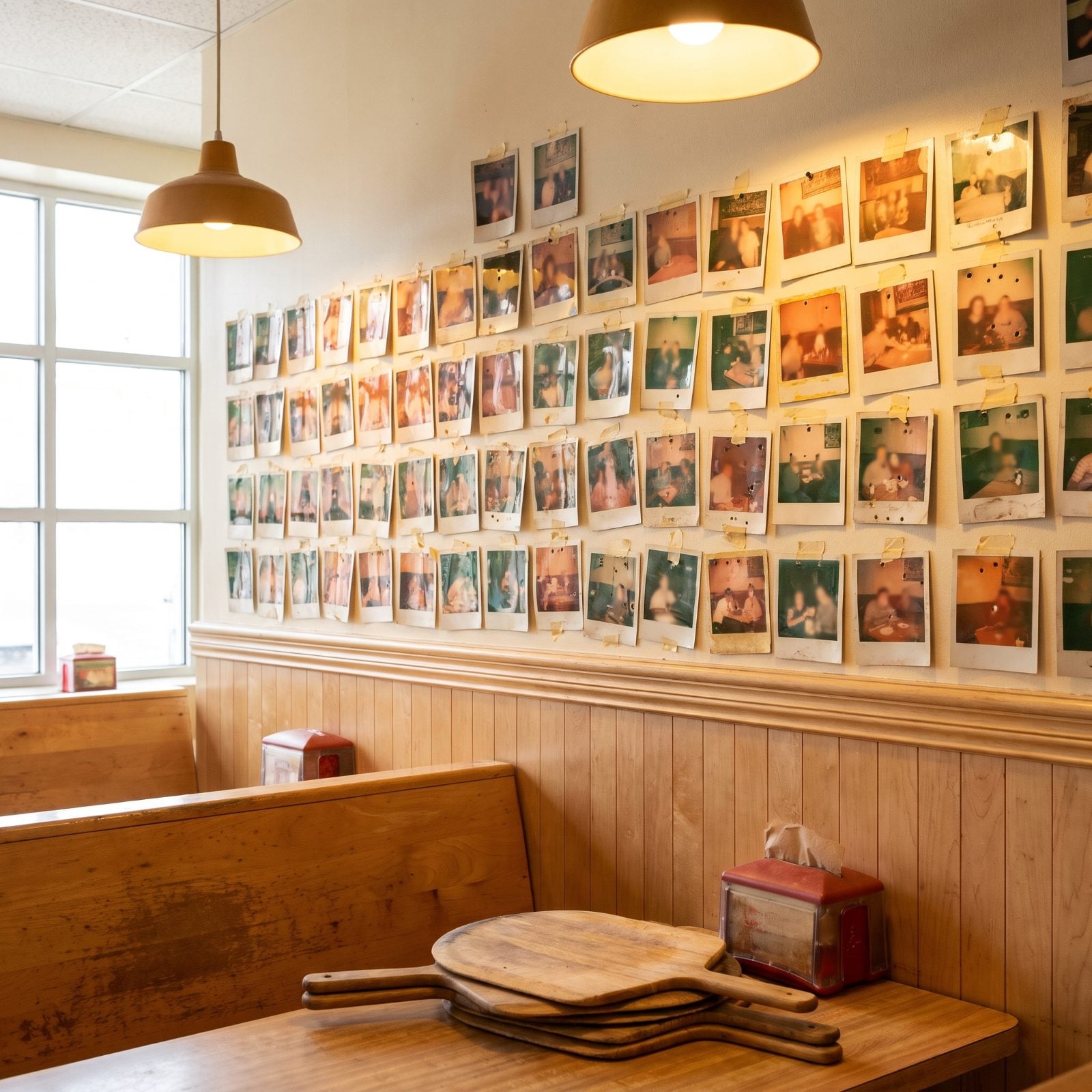
The wall by the register was papered in Polaroids gone slightly orange with age. Birthday parties, Little League teams after a win, a bride still in her dress stopping for one last slice.
You hunted for your own photo every single time — the one from the night you lost your first tooth in a slice. The faces blurred and curled at the edges, but the wall told everyone who walked in the same thing: this place was full of people, and you were one of them.
35. Booth Backs Carved with Generations of Initials
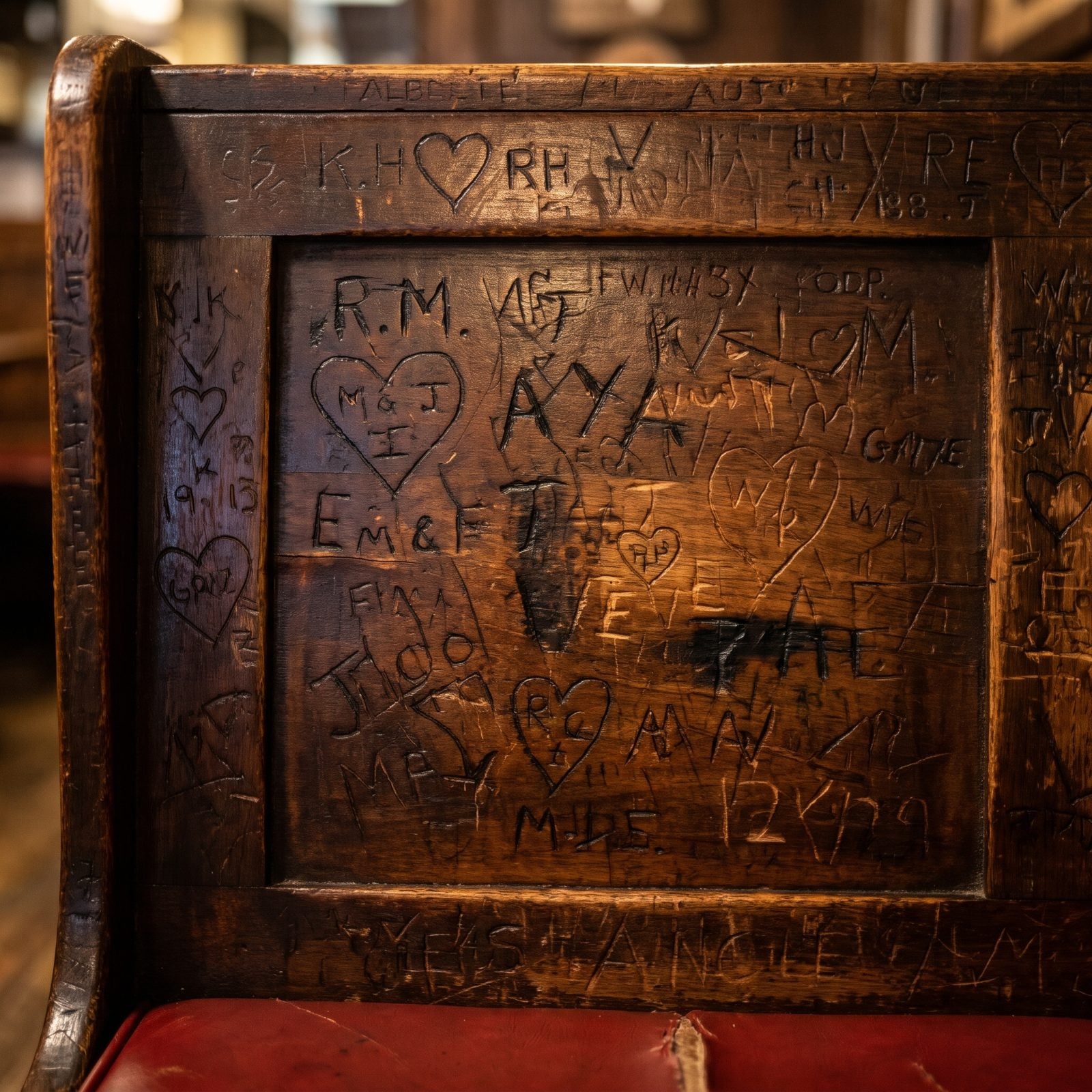
Somebody carved their initials into that booth back in 1971, and somebody’s kid carved theirs right next to it twenty years later, never knowing.
The wood was a diary nobody was supposed to write in. Hearts around two sets of letters, the romance long since fizzled. A pocketknife’s worth of boredom from a slow Tuesday. You ran your thumb over the grooves while you waited, reading a whole neighborhood’s history in the dark, smoothed grain.
What Our Readers Say
- When Piaci Pizza readers loved a food photo and told us why, comfort was the top reason at 30%, and another 15% simply called it nostalgic.
- Polished, restaurant-style food photos got fewer hearts from our readers than the other images in the same articles, 64% against 71%.
From Piaci Pizza reader polls and votes.
34. Dough Balls Rising Slow in Oiled Plastic Trays
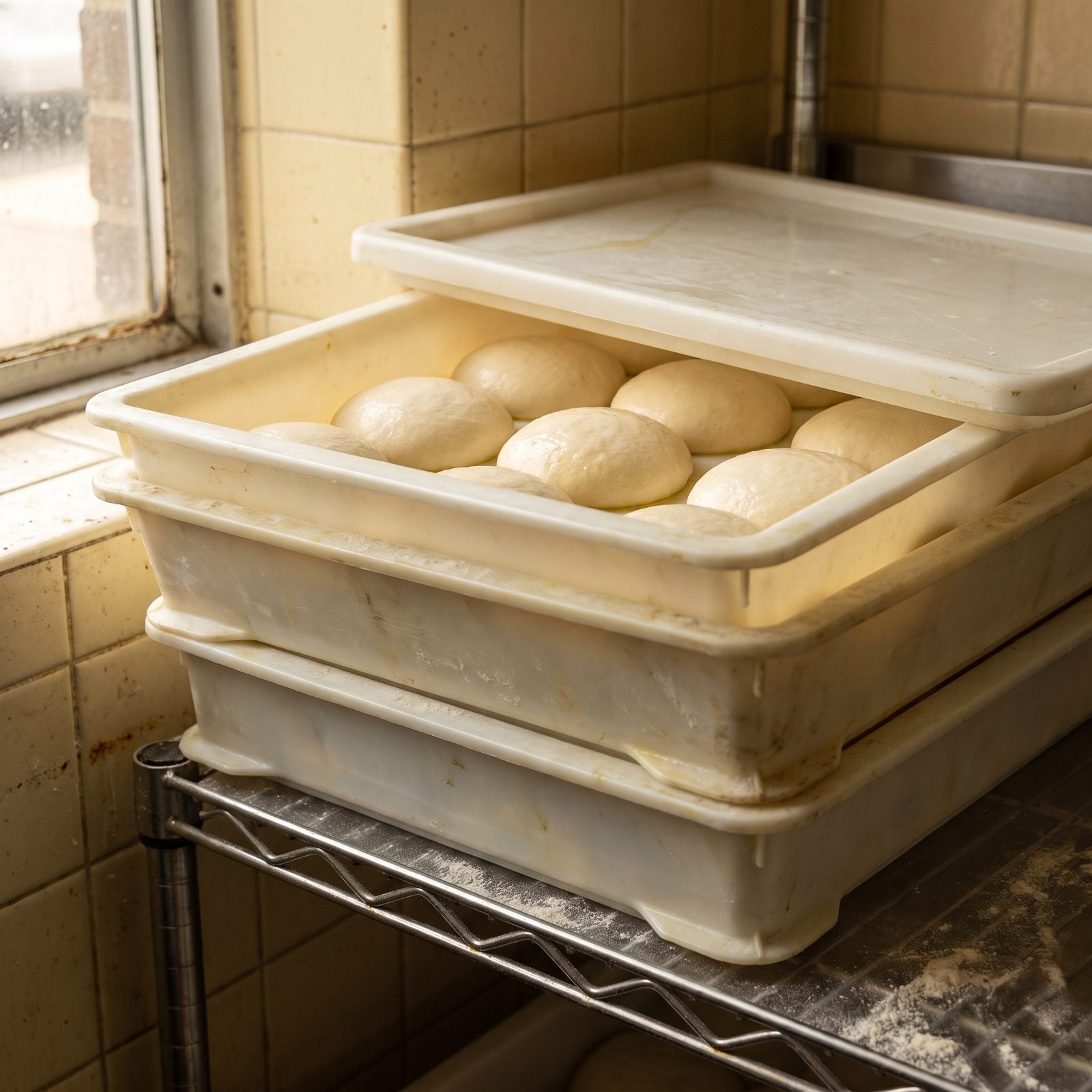
Good dough is lazy. It wants time, not speed, so the trays went into the walk-in the night before, and by the next afternoon those tight little balls had gone soft and slack, pressing against each other like they were trying to get comfortable.
You could always tell a serious place by how they stored it — oiled plastic trays, stacked and lidded, nothing rushed. A chain proofed on a schedule. The corner shop proofed on a feeling, and the cook knew by a single poke whether the dough was ready to stretch or needed another hour of sitting there doing its slow quiet work in the cold.
33. Sauce Ladled Straight from a Dented Stainless Pot
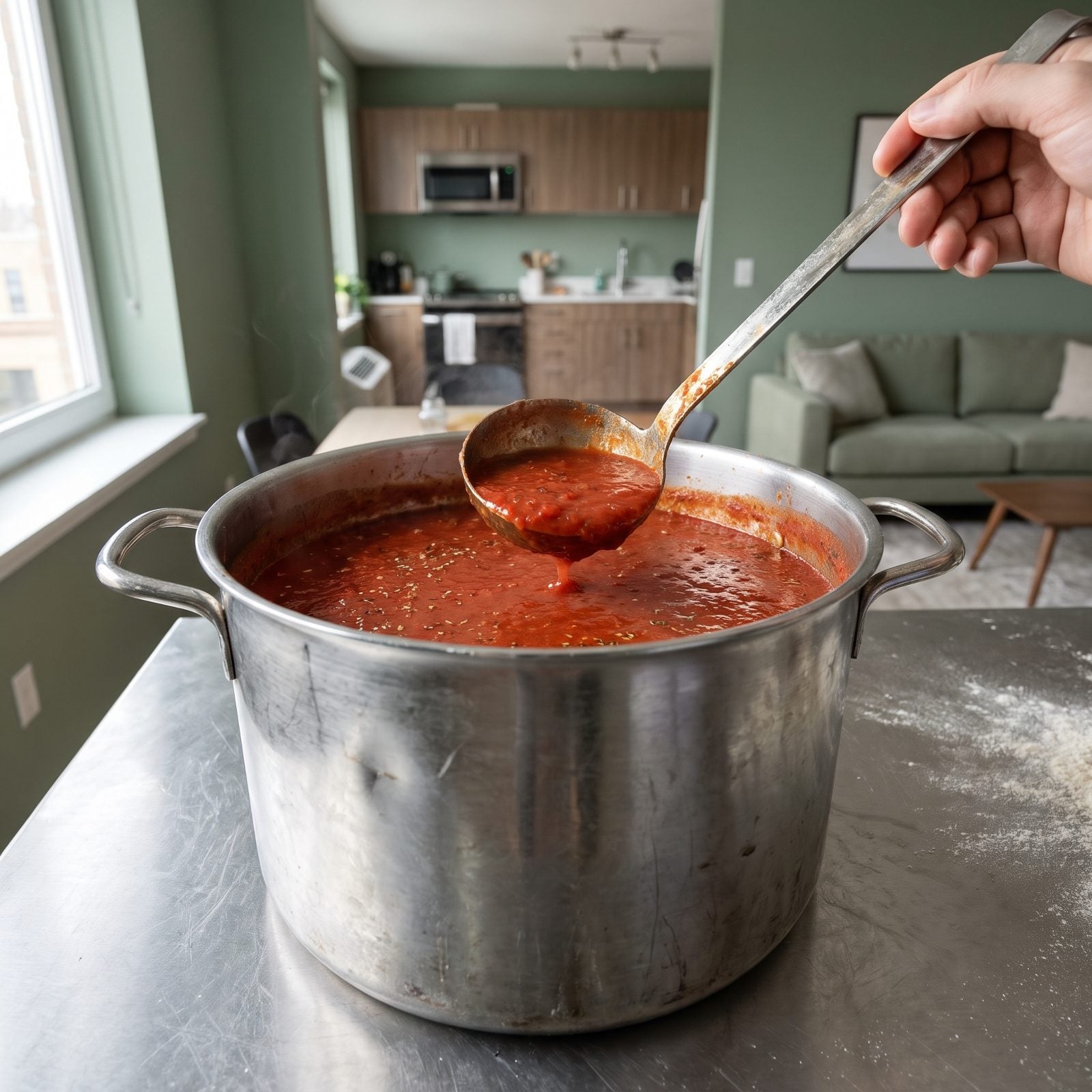
No squeeze bottles. No portion cups. The sauce lived in a dented pot on a flour-dusted steel counter by the oven, and the cook ladled it onto each round with a quick swirl and a spread of the spoon’s back — thin in the middle, thinner at the edge.
That pot never got fully empty either. A new batch went in on top of the old, which meant Thursday’s sauce carried a little of Monday in it. I’m told that’s bad practice. I’m also told it tasted better than anything measured out of a bag, and I believe that part.
The best sauce in the building was never written down. It was in someone’s wrist.
32. Whole Mozzarella Blocks Grated Fresh Behind the Counter
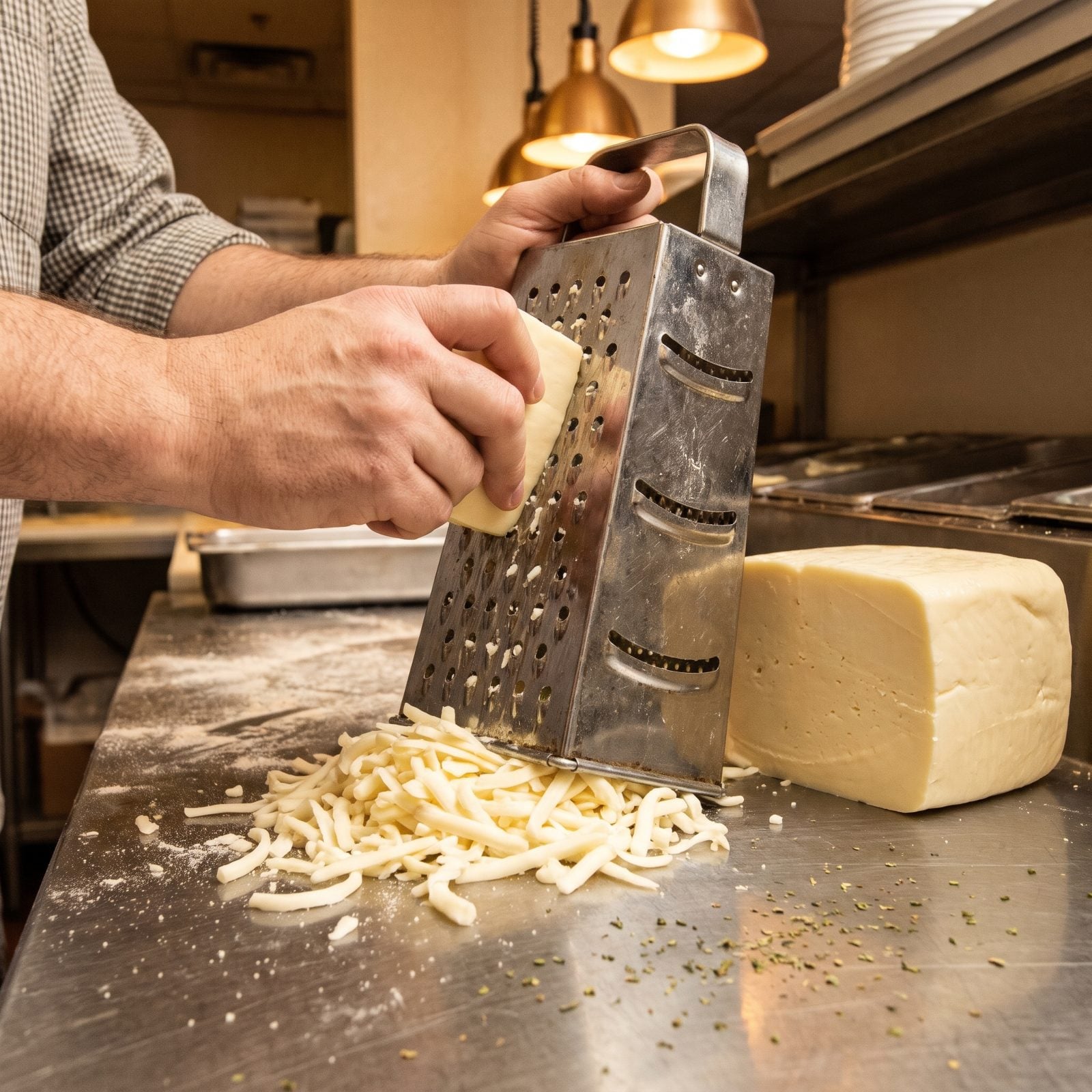
Pre-shredded cheese comes dusted in anti-caking powder so it won’t clump in the bag, and it won’t melt the same, either. The corner shop never bothered with it. They bought whole blocks and ran them across a box grater all afternoon, shreds piling up in a steel bin.
You could hear it from the dining room — that steady rasp against the metal. Fresh-grated mozzarella melts into one glossy sheet instead of little separate strands, and that sheet is the whole difference between a slice that pulls and a slice that flakes apart in your hand.
31. A Deck Oven with Dark, Seasoned Stone Floors
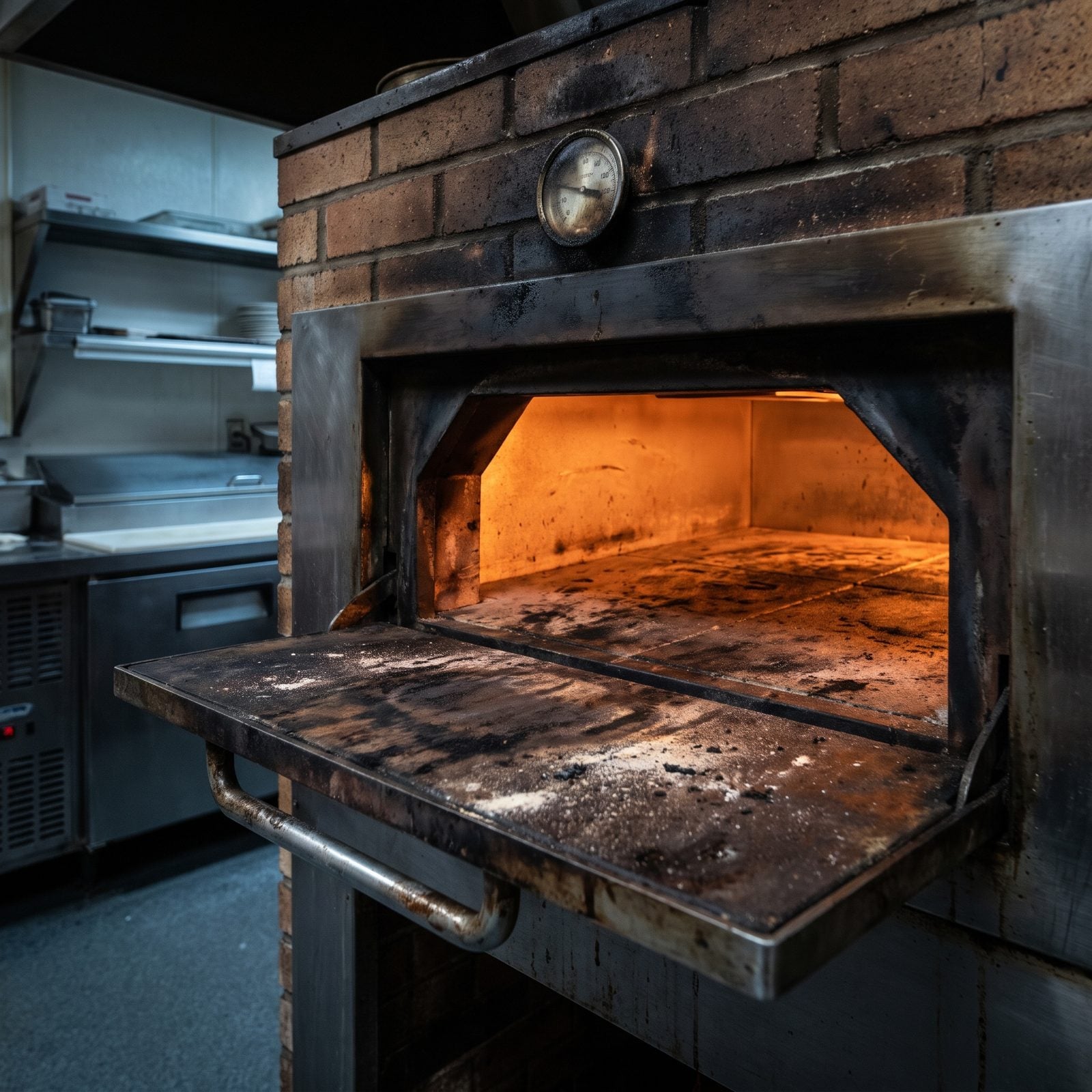
The floor of a deck oven starts pale and ends up nearly black. Years of flour burning off, cheese dripping and charring, dough touching the same spots over and over. That seasoning isn’t dirt — it’s what gives the bottom crust those leopard-spot char marks you simply can’t fake in a conveyor oven.
The stone held heat like a battery. Open the door and it hit you square in the face. Somehow the cook worked around that blast all day and barely flinched, reaching in bare-handed for a slice and back out again before you finished blinking.
30. Long Wooden Peels Scorched Black at the Edges
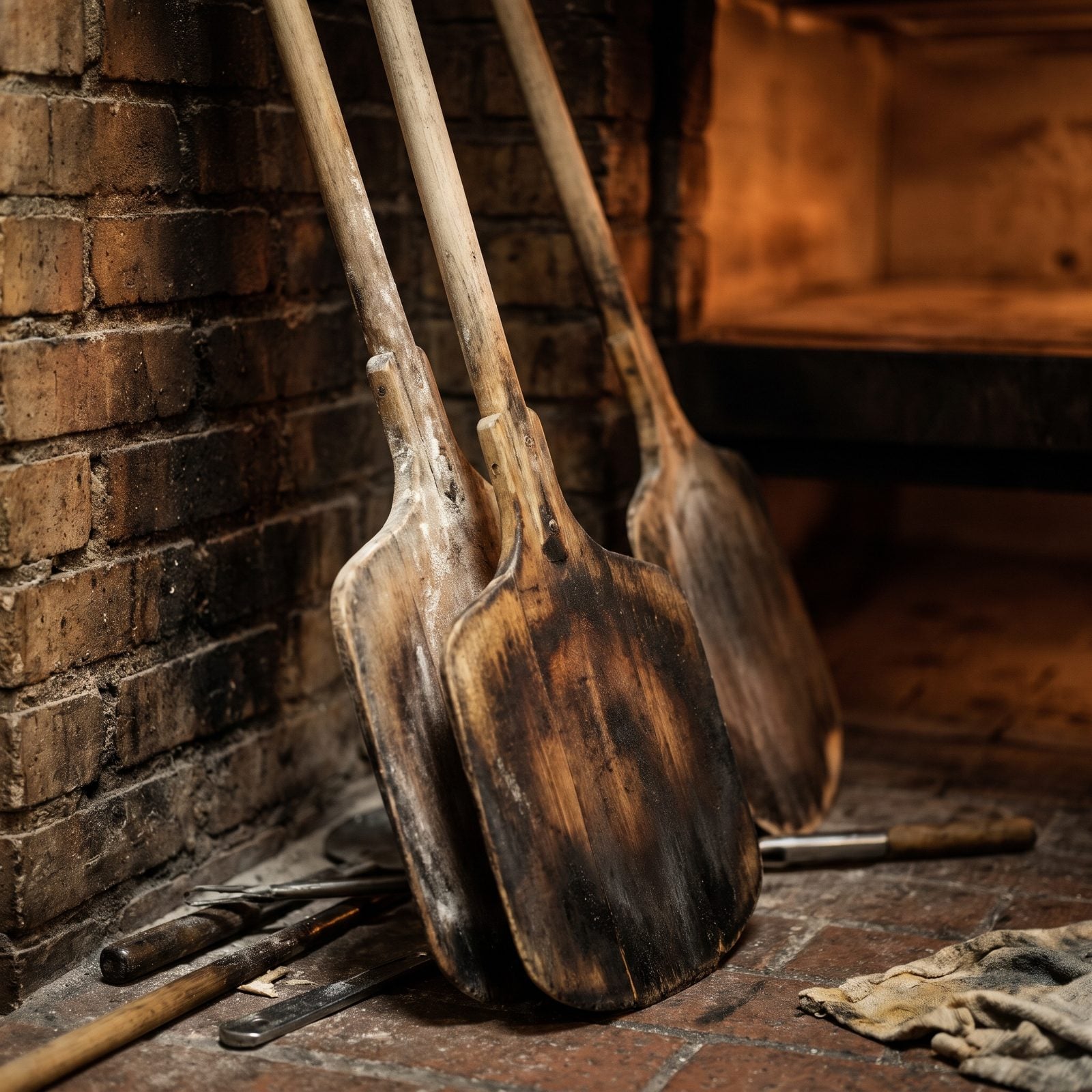
The business end of a wooden peel told you everything about the oven’s temperature. Those edges went black because the cook left the peel in the heat a half-second too long, pie after pie, year after year. Nobody sanded them down. The char was a résumé.
Wood over metal for the launch, because dough doesn’t stick to wood the way it grabs steel. A quick dusting of cornmeal, a sharp little shimmy, and the pie slid off onto the stone clean every time.
29. Cold Slices Reheated Right on the Oven Deck
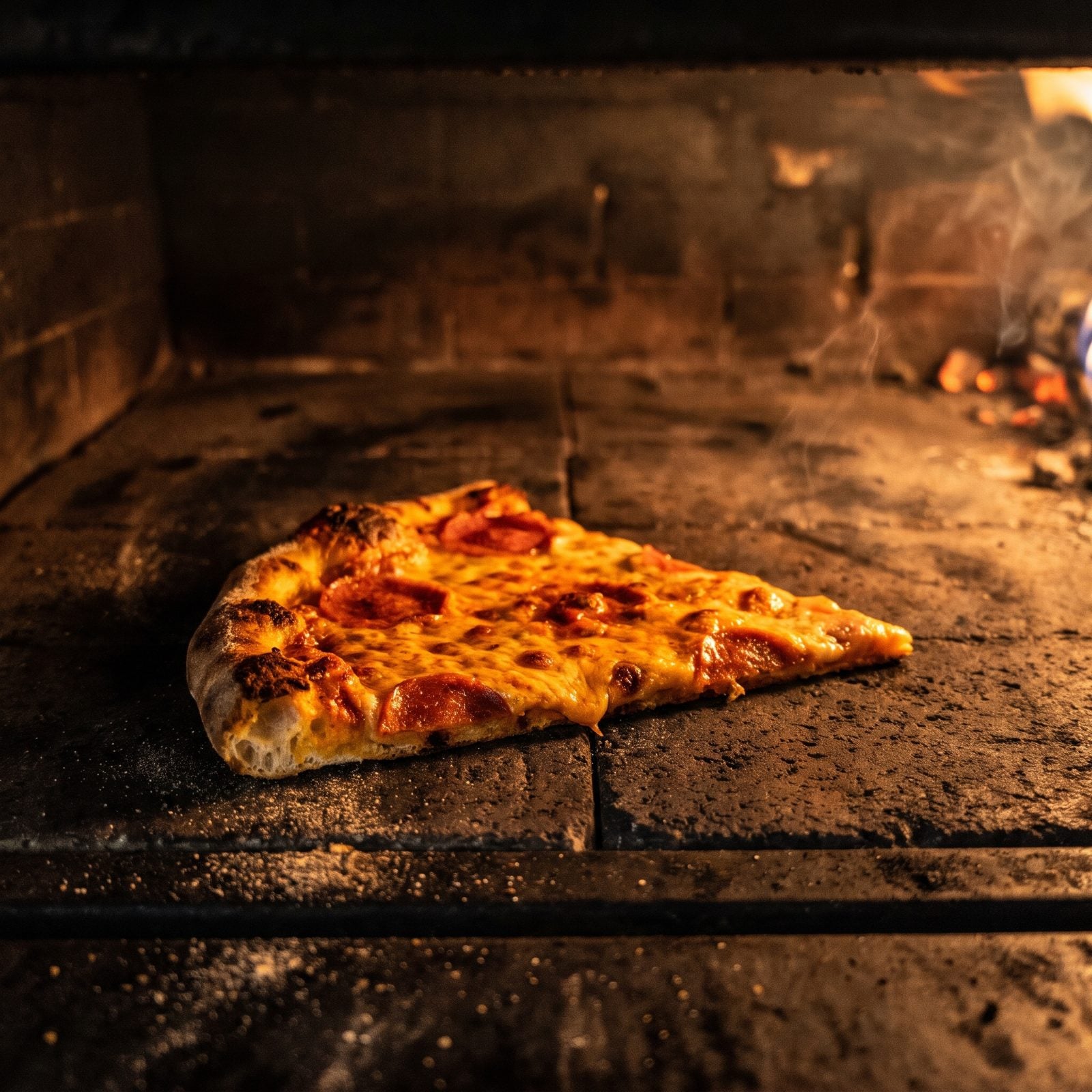
A slice ordered single didn’t go anywhere near a microwave. The cook slid it straight onto the oven deck, no pan, and let the stone re-crisp the bottom while the cheese went soft again on top.
Thirty seconds, maybe a minute. The result beat the slice the first time around — crisp underneath, molten on top, a few new char spots along the edge. A microwave hands you a limp, rubbery, steaming disappointment. The deck gives you back the actual pizza.
28. The Cook Judging Doneness Without a Single Timer
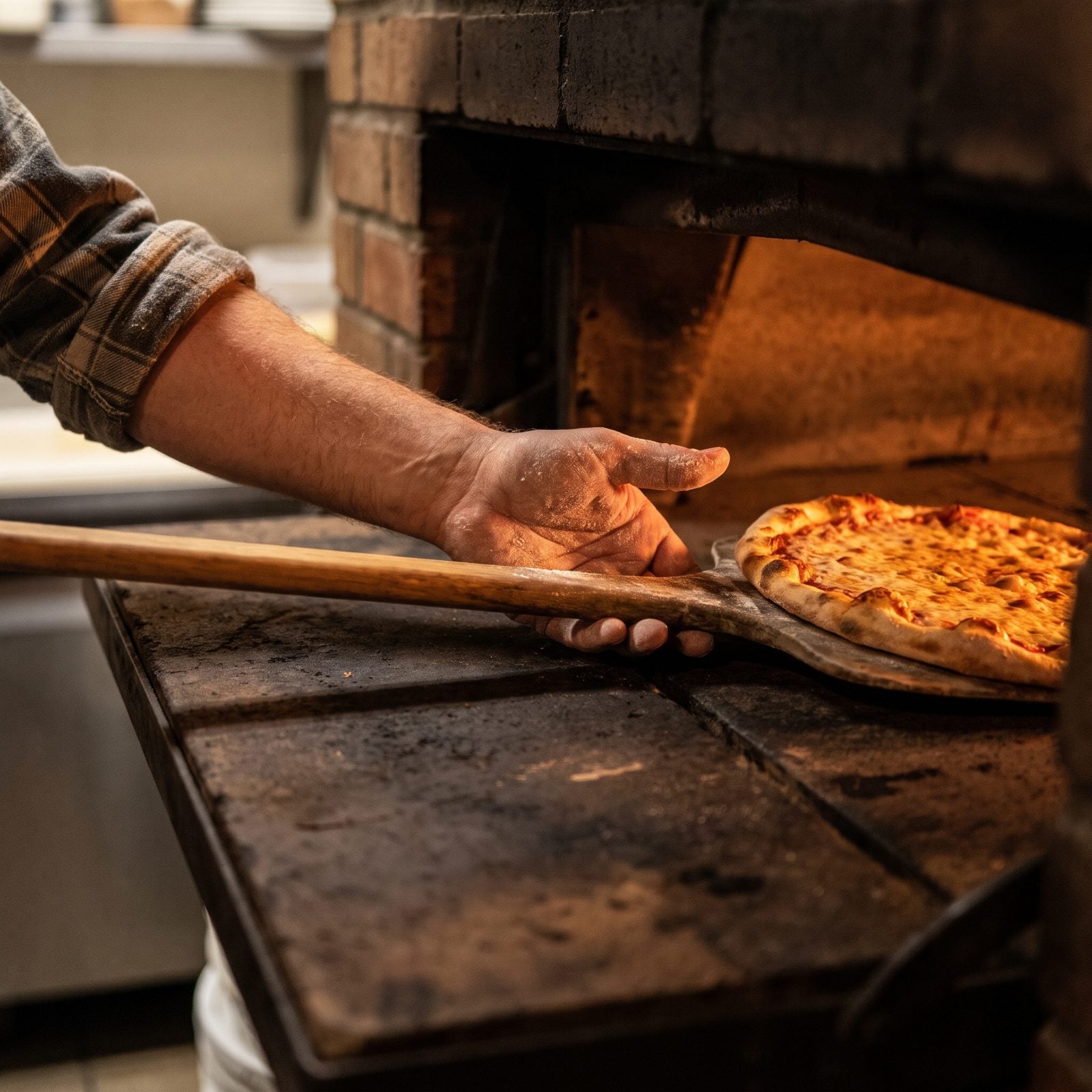
No buzzer. No phone alarm. The cook glanced at the color of the cheese, the brown creeping up the crust rim, the way the whole pie firmed up, and just knew. You learn that by burning a few hundred pizzas first, which is a tuition nobody warns you about.
It’s a kind of intelligence we’re busy automating out of existence now — sensors, timers, cameras watching the bake. The old cook did all of it with two eyes and a nose, and he was rarely wrong.
Our readers like watching the work too: photos of cooking in progress got hearts 86% of the time, versus 79% for the other images in the same articles.
27. The Heavy Steel Wheel Thumping Through Every Pie
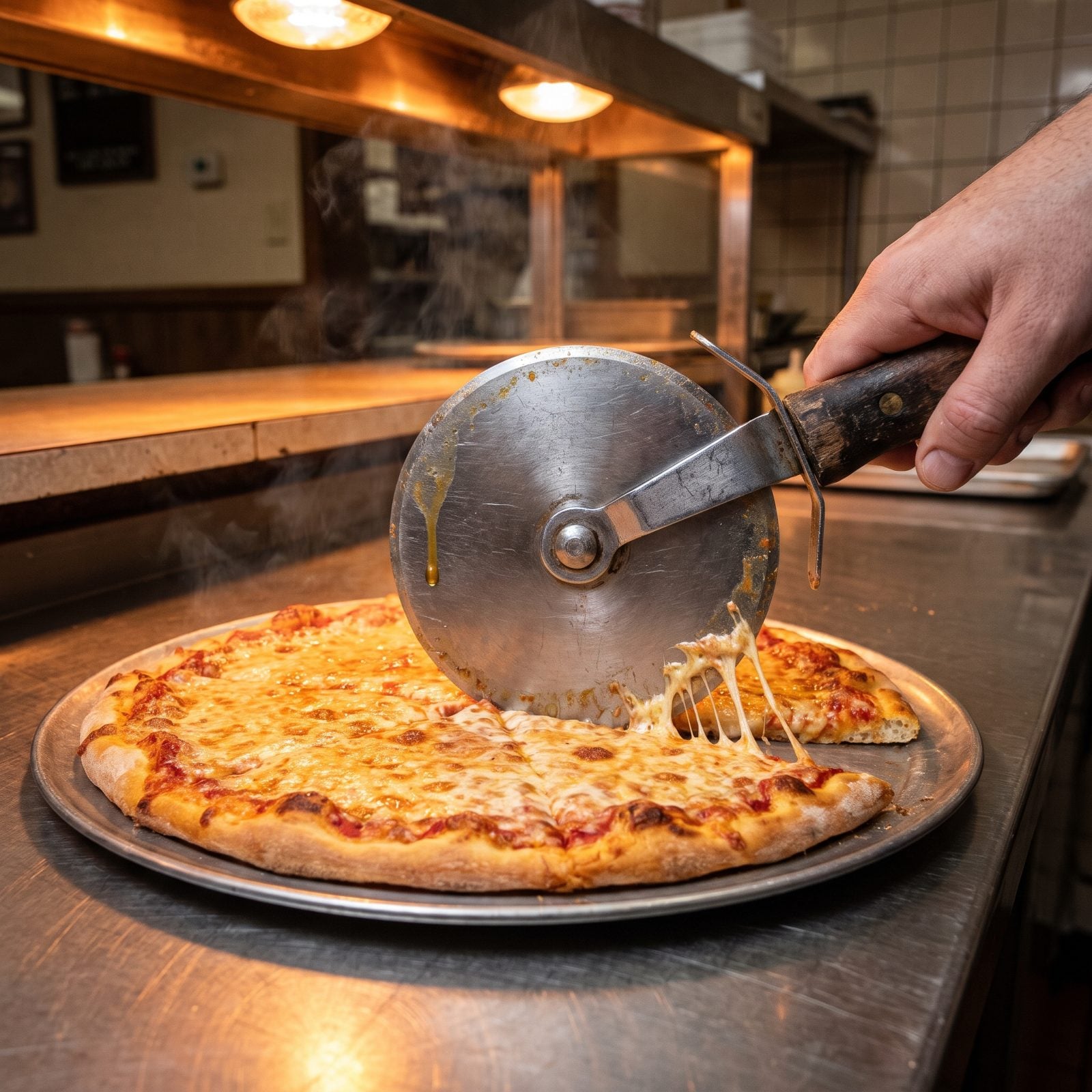
That wheel had weight to it. A real one, chrome, a fist-sized handle worn smooth from years of hands. The cook pressed down and rolled it clean across the pie in two or three firm strokes, and you heard it thump against the pan at the end of each pass.
Even done right, the hot cheese stretched up in thick, gooey strings, clinging to the blade as it rolled through. A few passes, done. There was a rhythm to it a kid waiting for their slice could feel right in their chest.
26. The Counter Phone That Rang Clean Through Your Meal
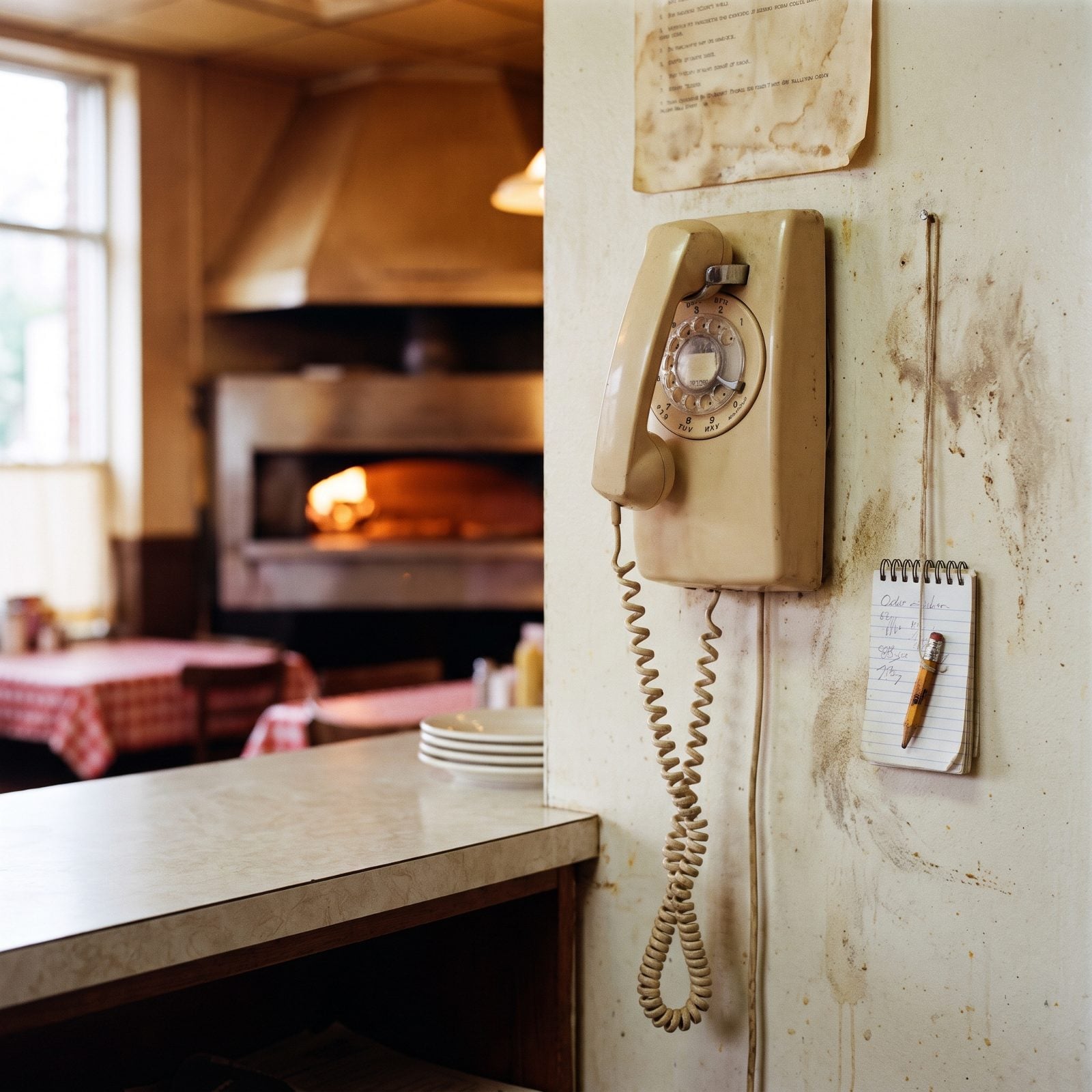
One phone, mounted on the wall by the register, cord stretched out of shape from being dragged the length of the counter. It rang constantly — during your meal, over your conversation, right as your slices landed. Nobody ever apologized for it.
The cook would answer with a shoulder-pinned handset, scrawl an order on a greasy pad, and never stop moving. That ring was the sound of the place being wanted. You ate to a soundtrack of other people’s dinners being ordered, and somehow that made your own taste a little better.
25. Orders Scrawled on Carbon-Copy Pads
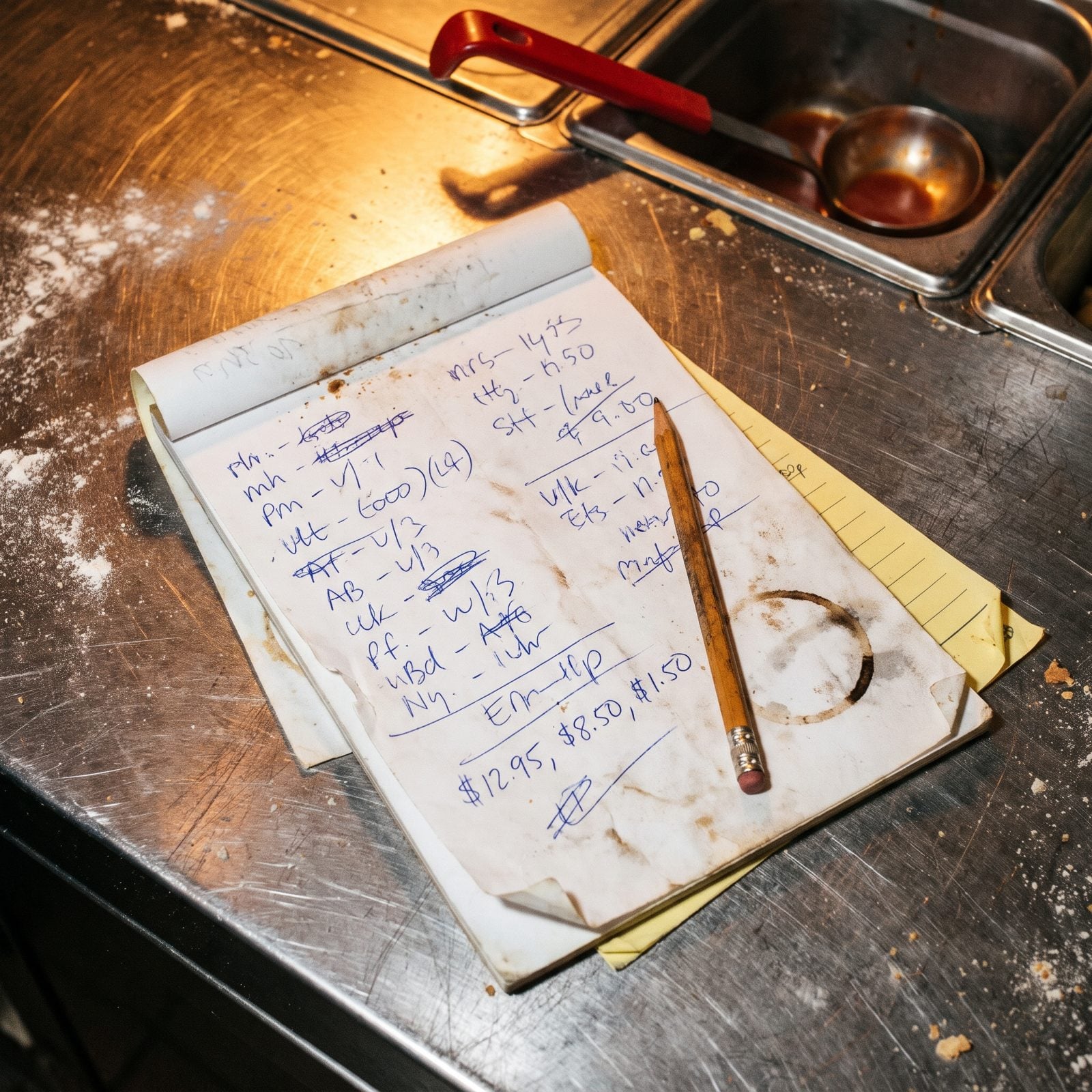
No screens. No beeping. Just a guy with a stub of pencil behind his ear, translating your order into a shorthand only he could read, the top sheet going to the kitchen while the yellow carbon stayed clipped to a spike by the register. Somehow nothing got lost.
Those pads ran the whole place. Mess one up and you ate the wrong pie — but they rarely did, because the person taking it had been doing this since before you were born and could spell your name before you finished saying it.
24. Friday Tabs Settled in Pencil and Trust
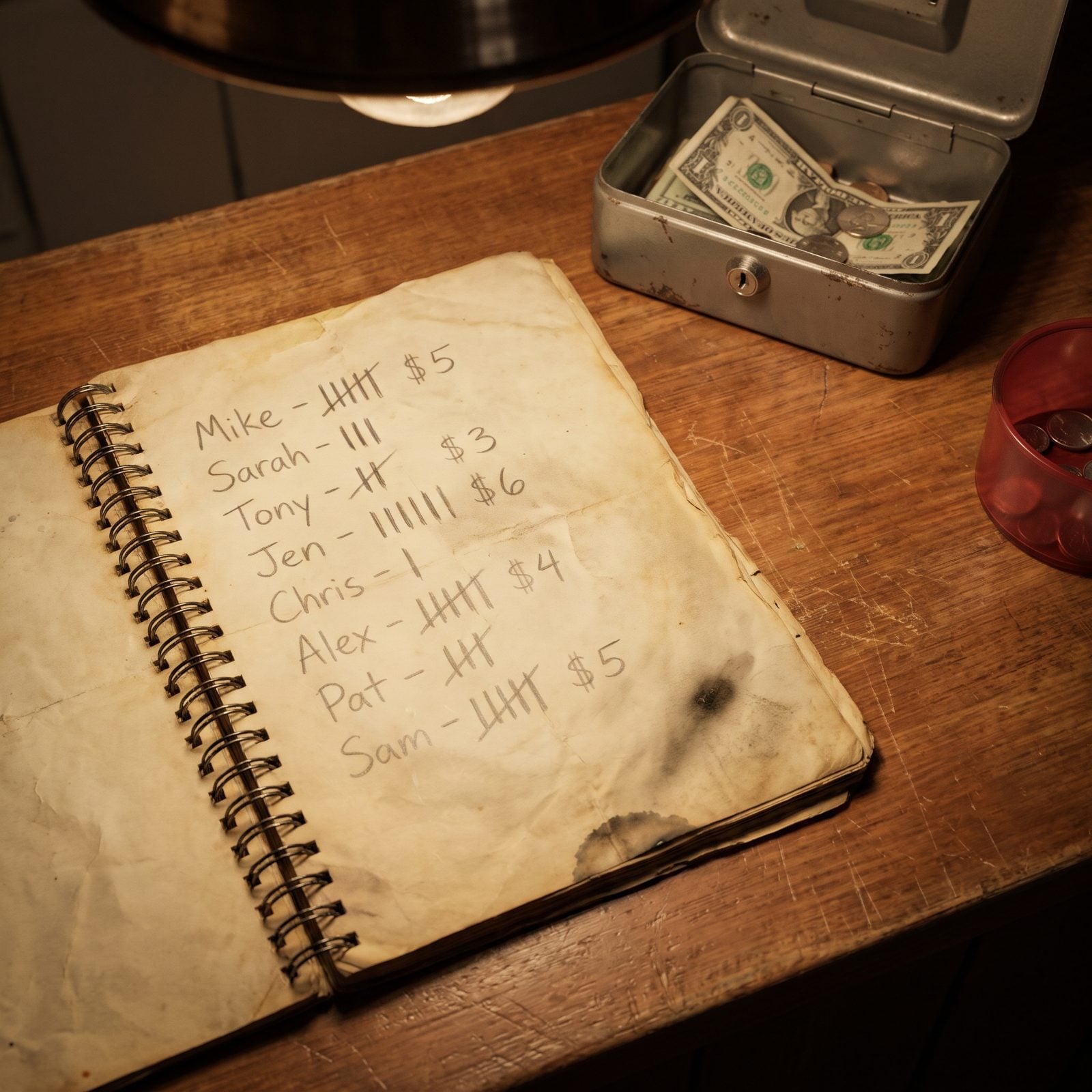
Certain regulars never paid at the counter. They ate all week and squared up Friday, because the owner kept a running tab in a dog-eared notebook and trusted a handshake more than a receipt.
Try explaining that now — a business extending credit on nothing but your face and your father’s name. It worked because the neighborhood was small enough that stiffing the pizza man meant everybody knew by Sunday.
23. Soda in Those Pebbled Red Tumblers
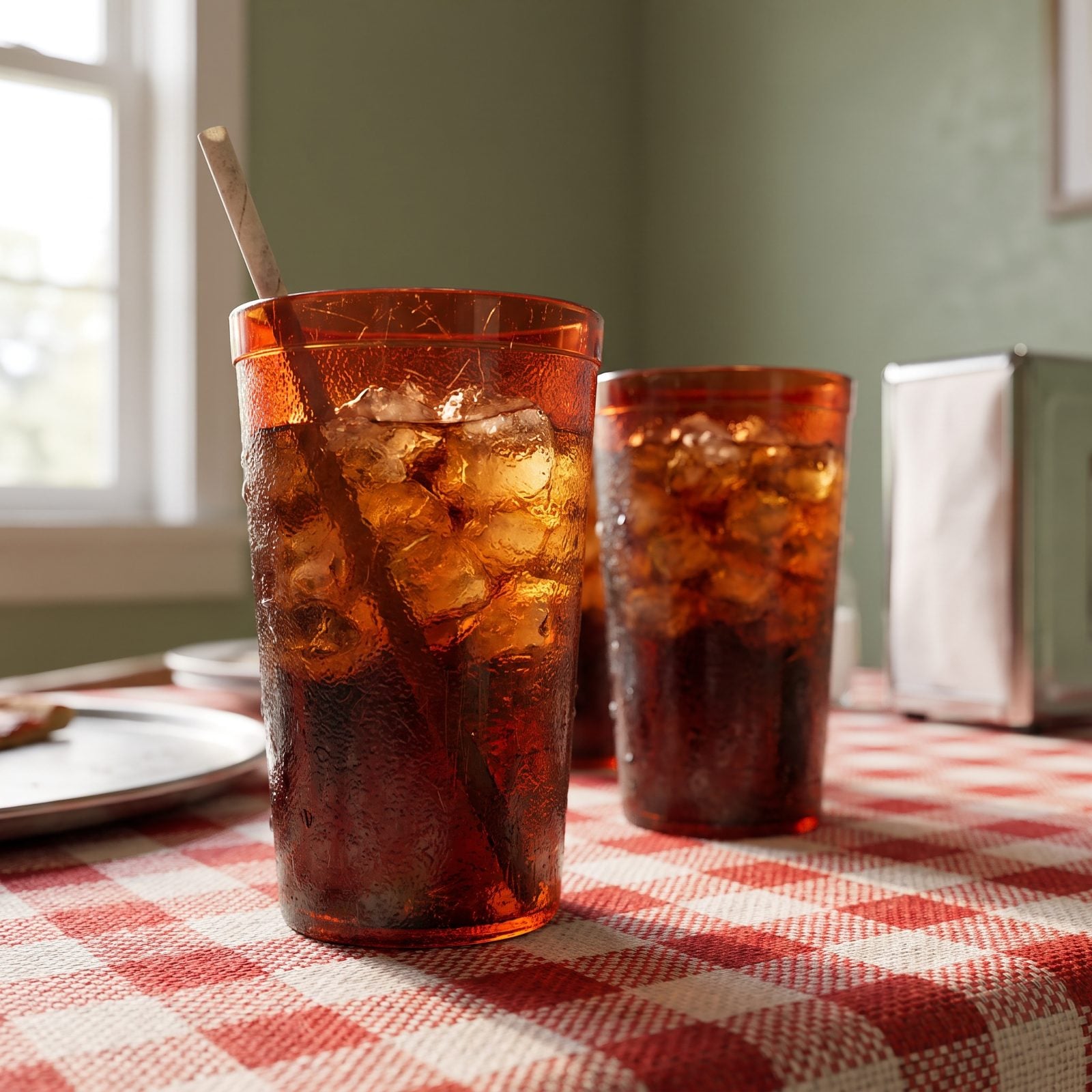
Indestructible. That was the point. You could knock one off the table and it bounced, which is exactly why every pizzeria owned a stack of them in that same bruised shade of red.
The pebbled texture hid the scratches of countless dishwasher cycles, and the cola always tasted a little better in them — colder somehow, though that was probably just the ice and the heat of the room doing their thing. I’ll never be talked out of it.
22. Slices on Plates Too Thin to Trust
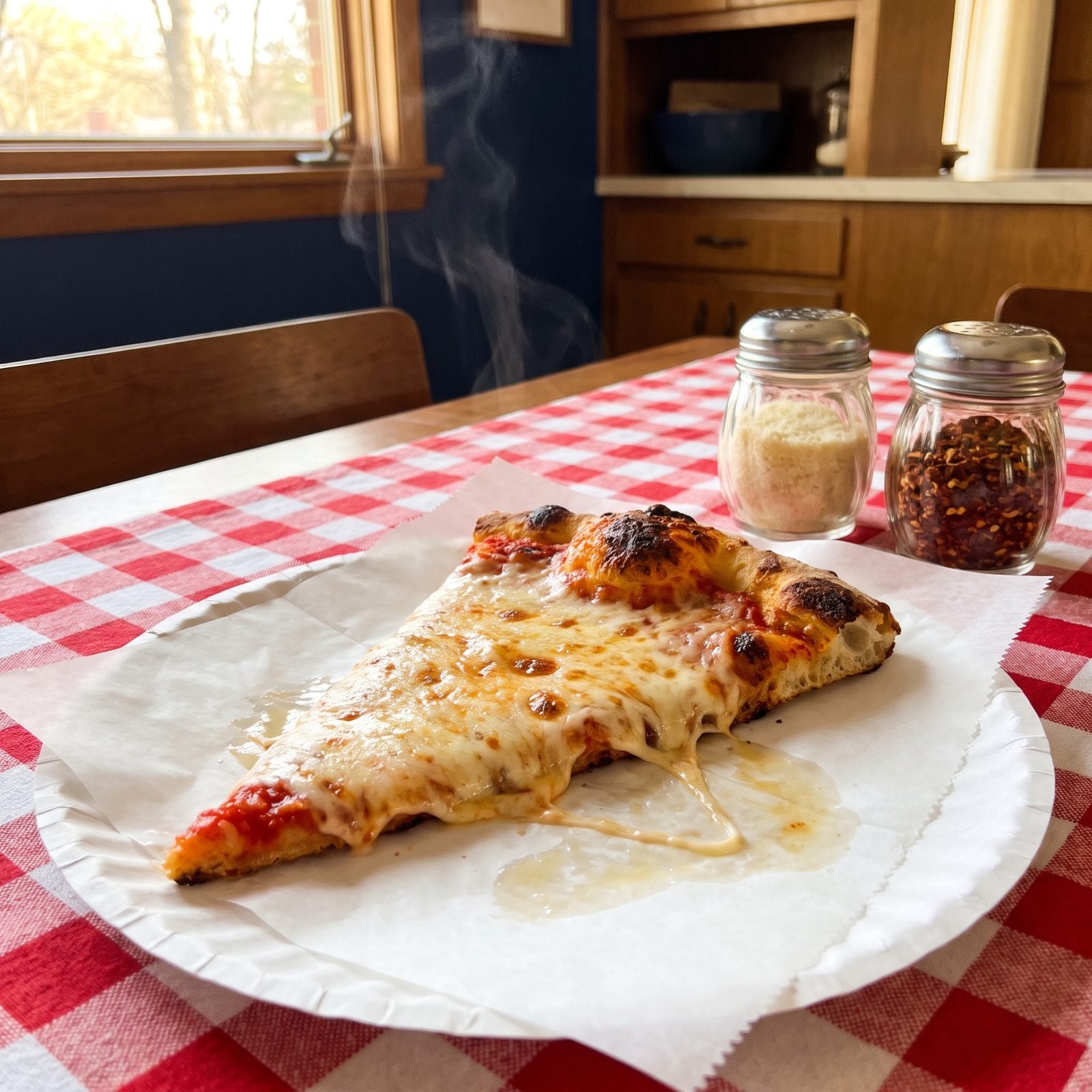
The plate had one job and it barely did it. Thin as a church bulletin, going translucent with grease before you reached the register, folding in half the second you lifted it wrong.
So you learned to palm it flat, two fingers under the point, the way you’d carry something alive. The grease soaking through was part of the deal. A slice that didn’t ruin the plate wasn’t worth eating.
21. Whole Pies Perched on Raised Metal Stands
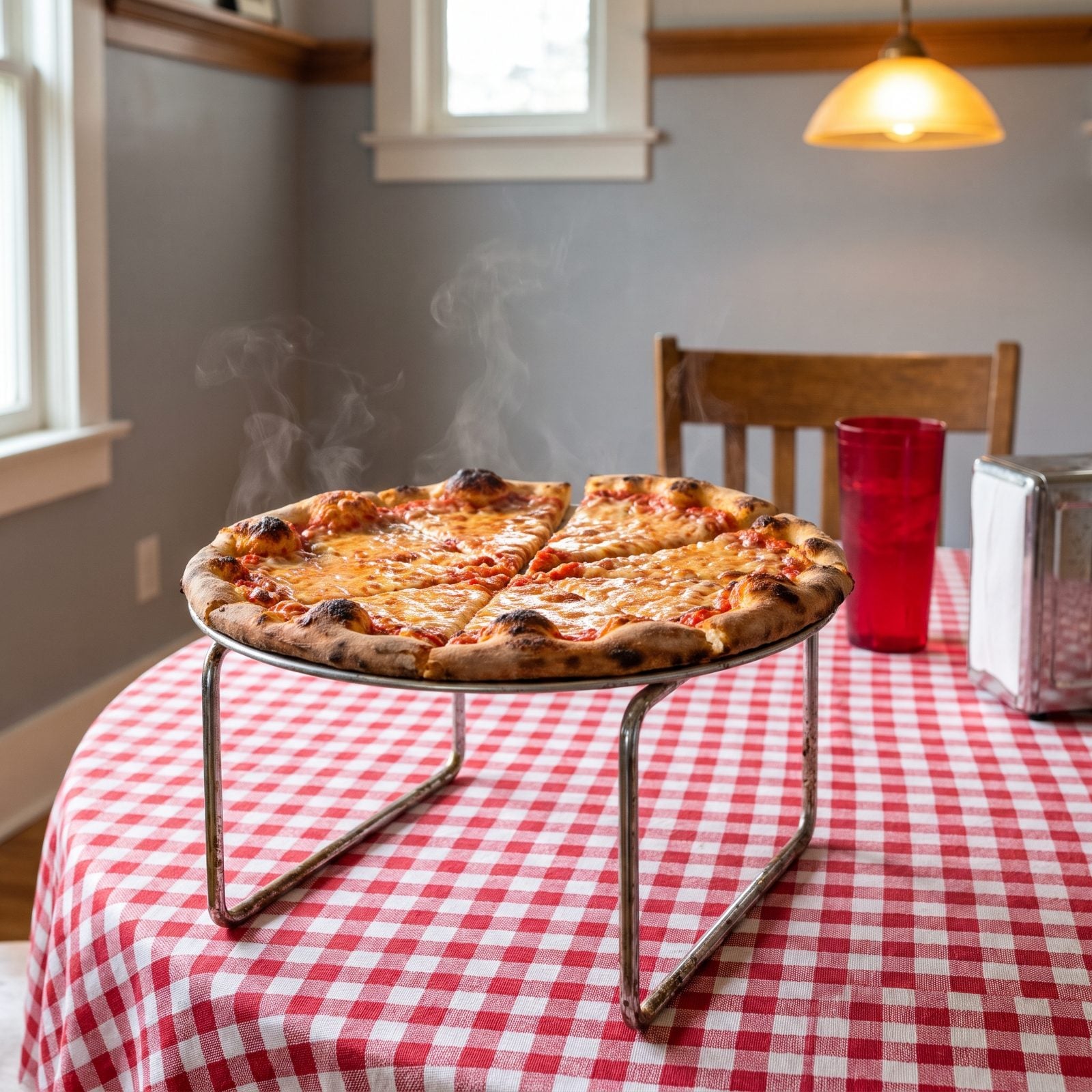
Up on the little chrome stand so the air underneath could circulate and the crust stayed crisp instead of steaming itself soggy. A small thing. A brilliant thing.
It also raised the pie at the near corner of the table like a trophy, legs splayed over the checkered cloth, right beside the napkin dispenser, waiting for everybody to sit down. The stand meant this was a sit-down night, not a grab-and-go. You noticed that as a kid even if you couldn’t say why it mattered.
20. Takeout Boxes Tied Off with Baker’s String
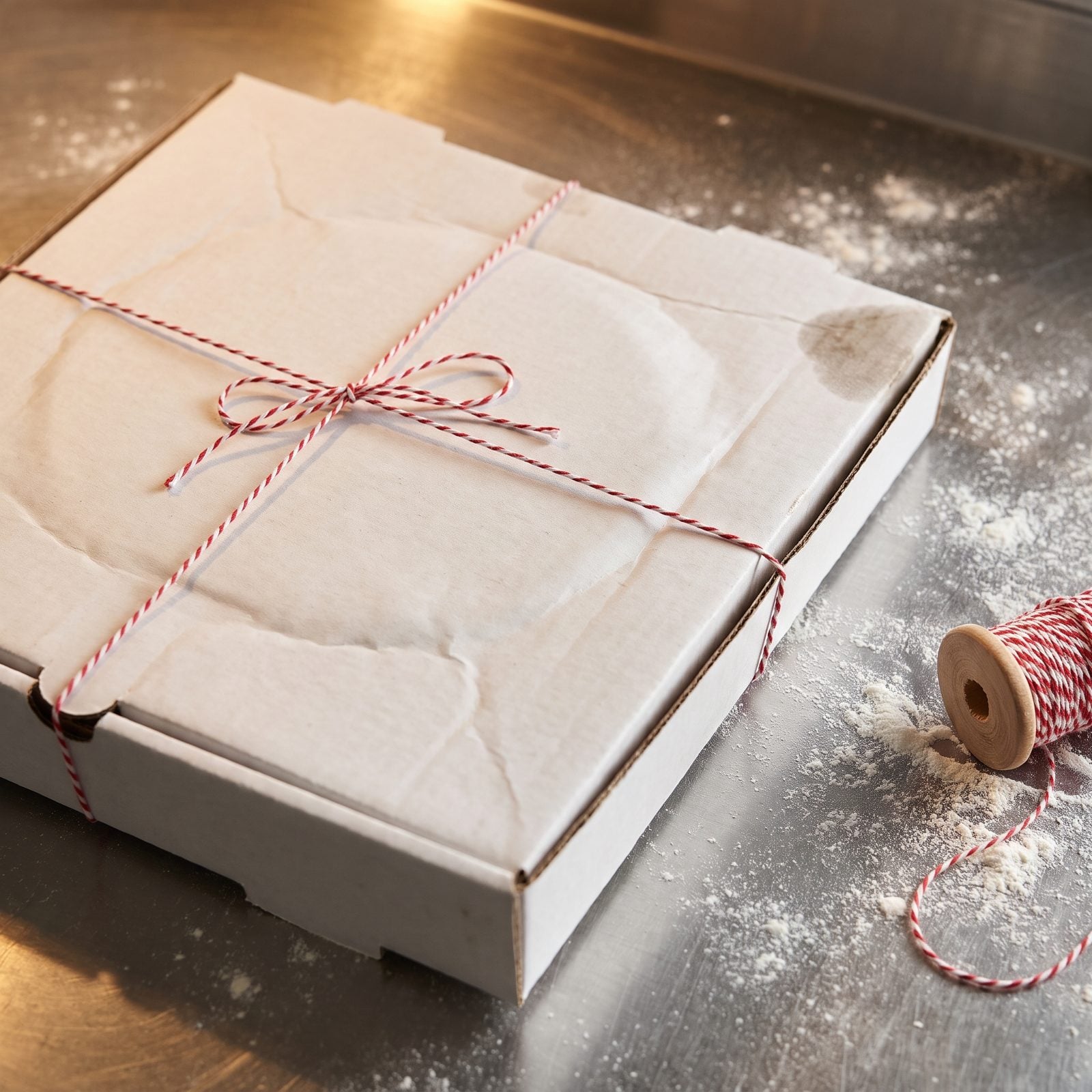
Before the box had a tab that tucked itself, they tied it — a quick loop of thin red-and-white twine off a spool by the register, knotted with one hand while the other grabbed your change.
You carried it home swinging a little from that string, warmth soaking through the cardboard into your palm, and cutting the twine at the kitchen table was the signal dinner had officially arrived. That sound of the loop snapping. I can still hear it.
19. Drivers Grabbed the Soft Red Insulated Bags
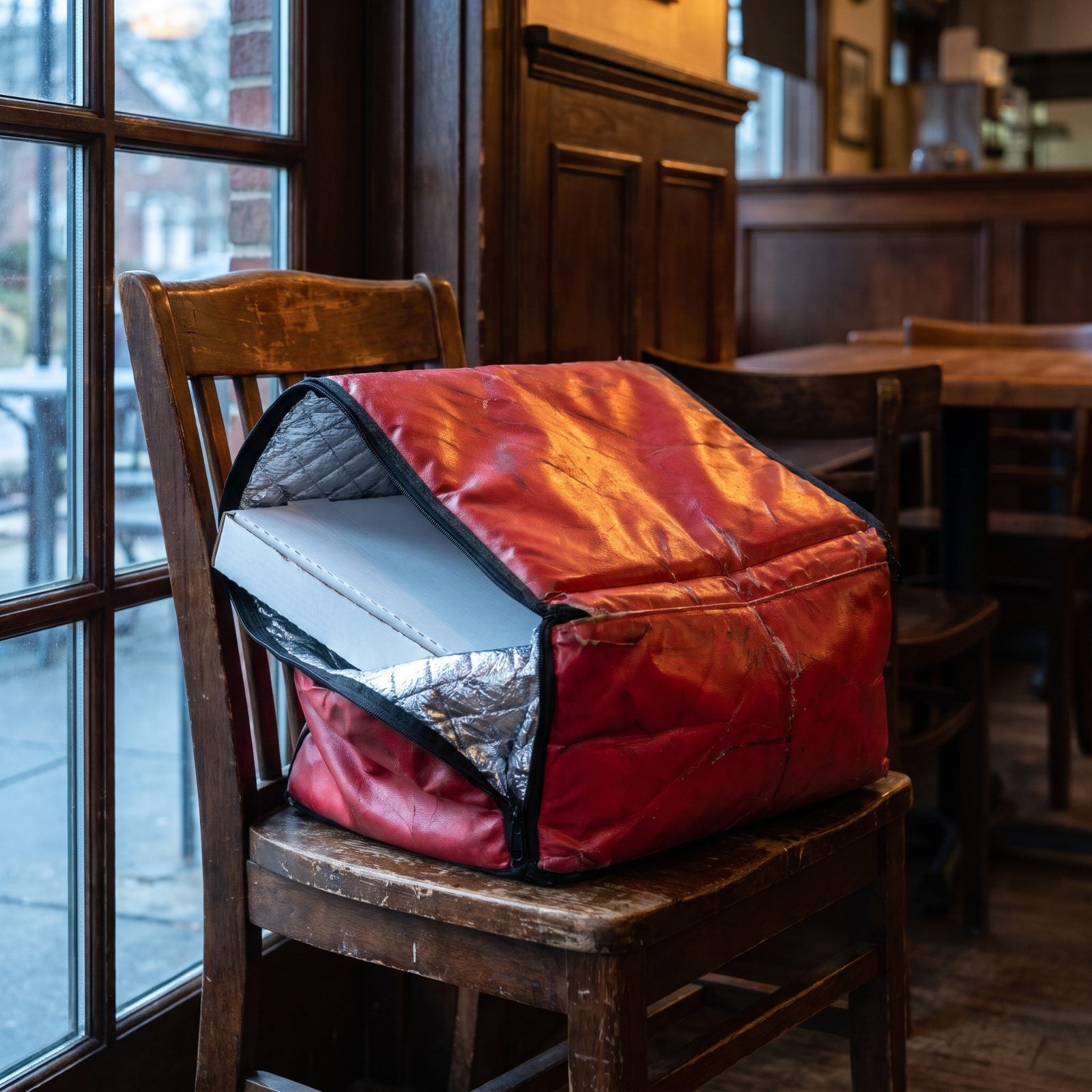
Those soft red bags lived by the front door, zippered, quilted inside, smelling permanently of oregano. The driver grabbed one, slid two or three boxes in, and was gone before the door finished closing.
If you were the kid of the house, you learned the delivery car by its headlights in the driveway and the specific rattle of its muffler. The bag came in, got unzipped on the counter, and the whole kitchen leaned toward it.
The red bag by the door meant someone, somewhere, was about to have a good night.
18. A Pinch of Dough to Keep Kids Quiet
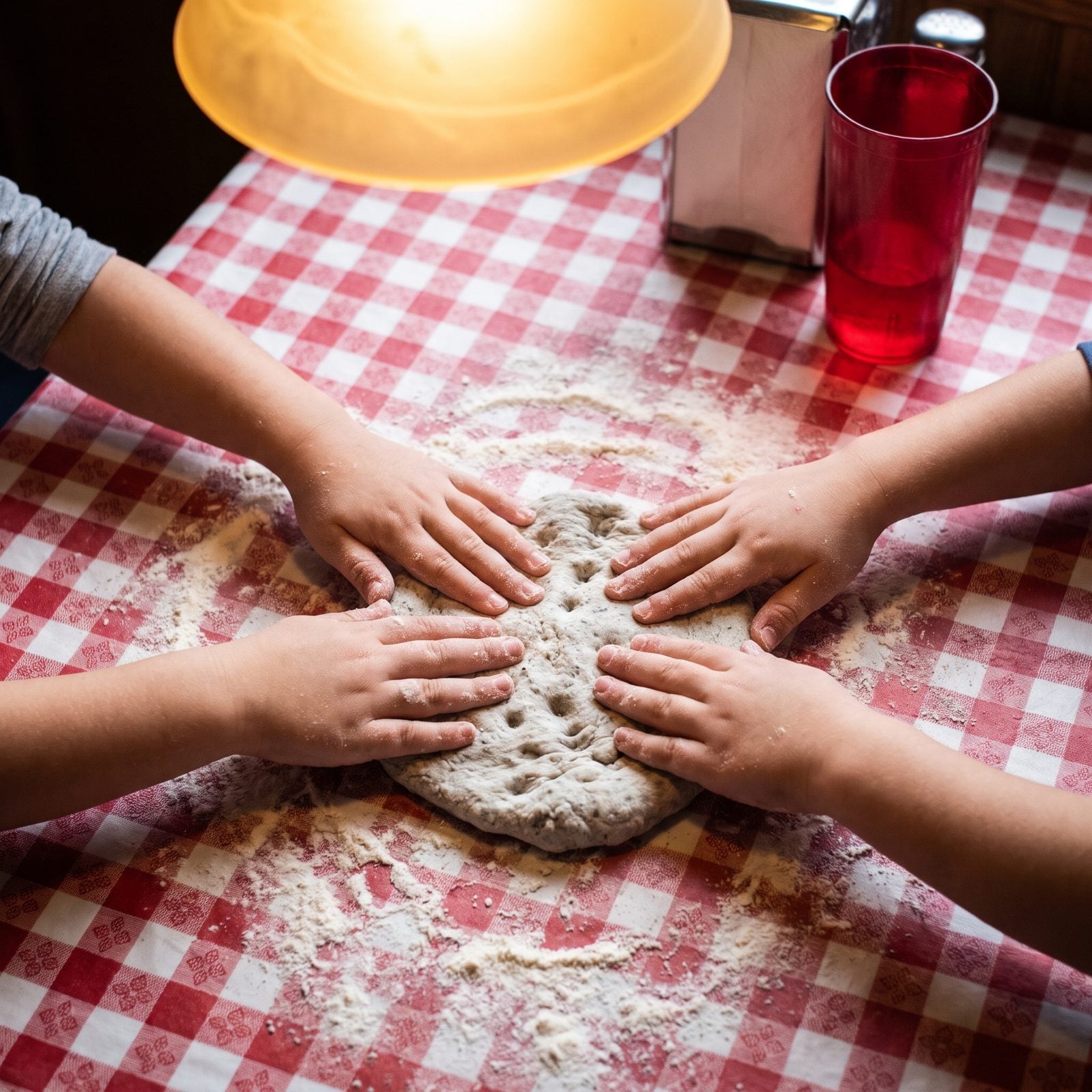
Smart move, handing a restless kid a knob of raw dough. It bought the grown-ups twenty minutes of peace and cost the owner nothing but a pinch off the day’s batch.
You’d poke it, roll it, flatten it gray with your not-clean hands, maybe sneak a taste you immediately regretted. It never became anything, and that wasn’t the point. The point was that the pizza place had a job for you too, and that mattered more than you knew at the time.
17. The Cheese Slice You Had to Fold
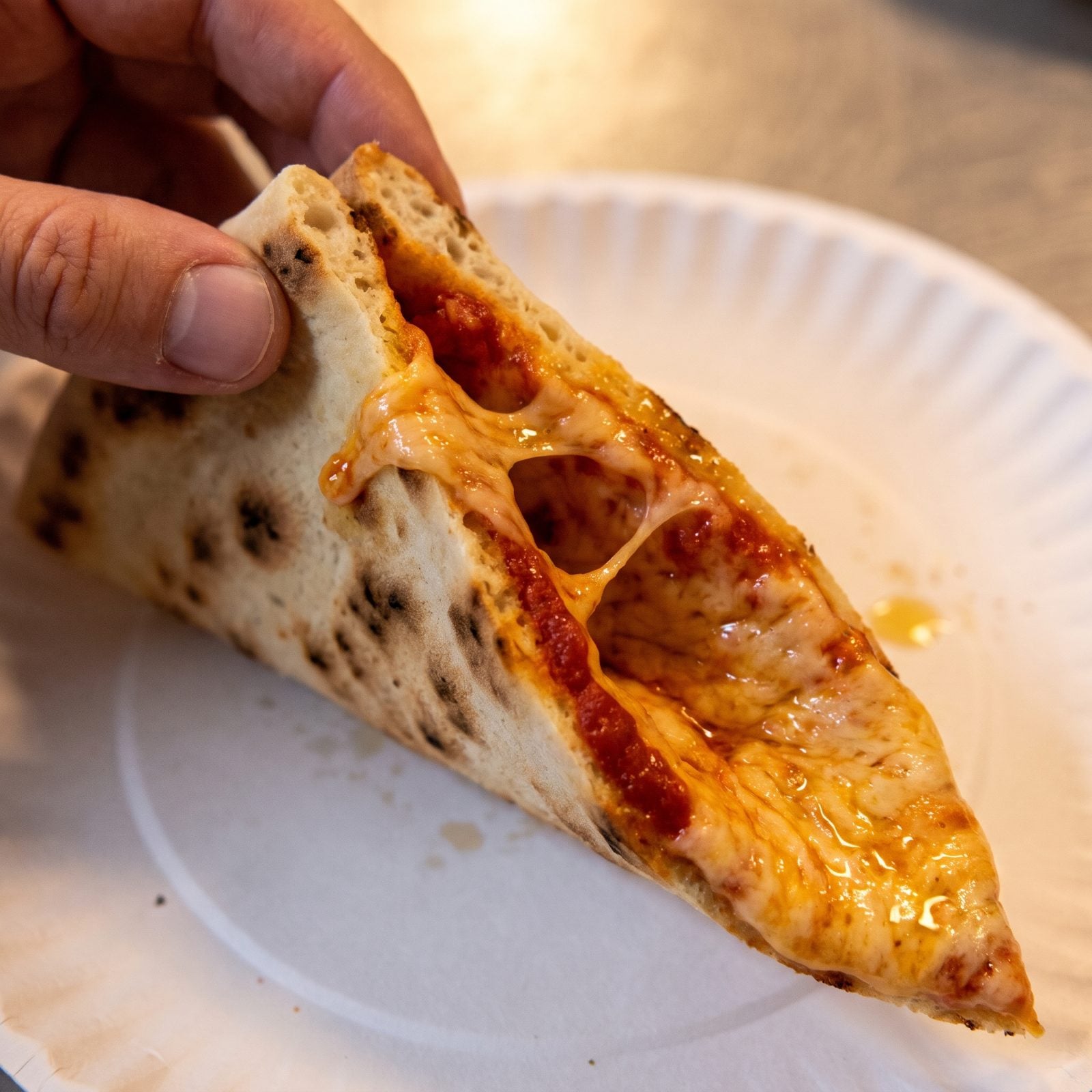
A proper slice was too big and too floppy to eat flat, so you folded it lengthwise, crust to crust, which stiffened the whole thing into something that could actually reach your mouth.
The fold channeled the grease down the center seam, which you either tipped onto the plate or, if nobody was watching, straight into your mouth. A slice you ate flat with a fork came from somewhere that didn’t understand pizza.
16. The Sicilian Corner That Vanished First
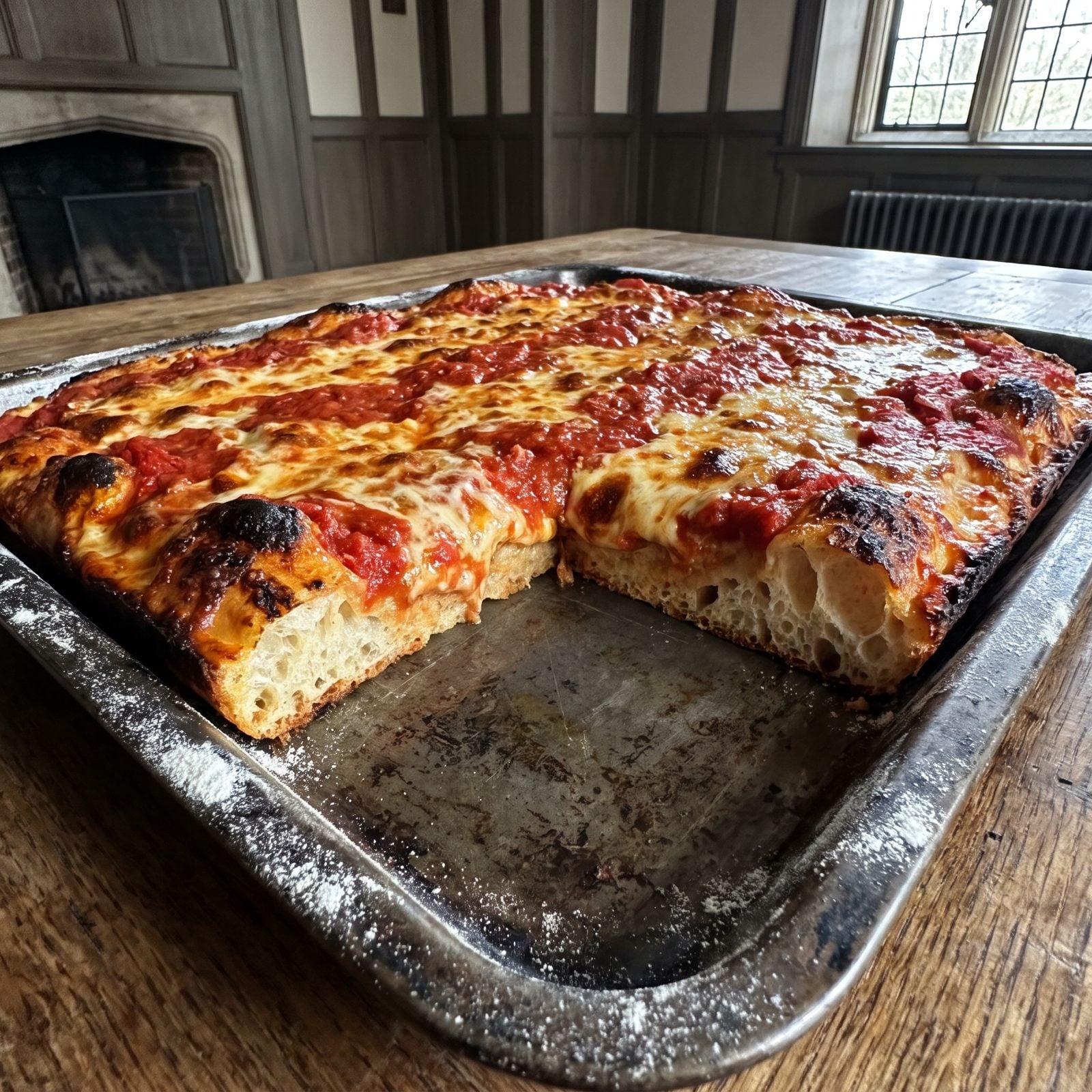
Everyone knew the corners went first. Two crisped edges instead of one, more pan char, that extra chew where the dough caught the oil and the heat — people circled the Sicilian tray waiting for a corner to open up.
Get there late and you got a middle piece, soft and fine but not the prize. The corner was the reward for showing up early, and if your family had a regular table, the counter guy sometimes set one aside. You never asked. You just hoped.
15. Garlic Knots Arrived Shiny with Oil and Parsley
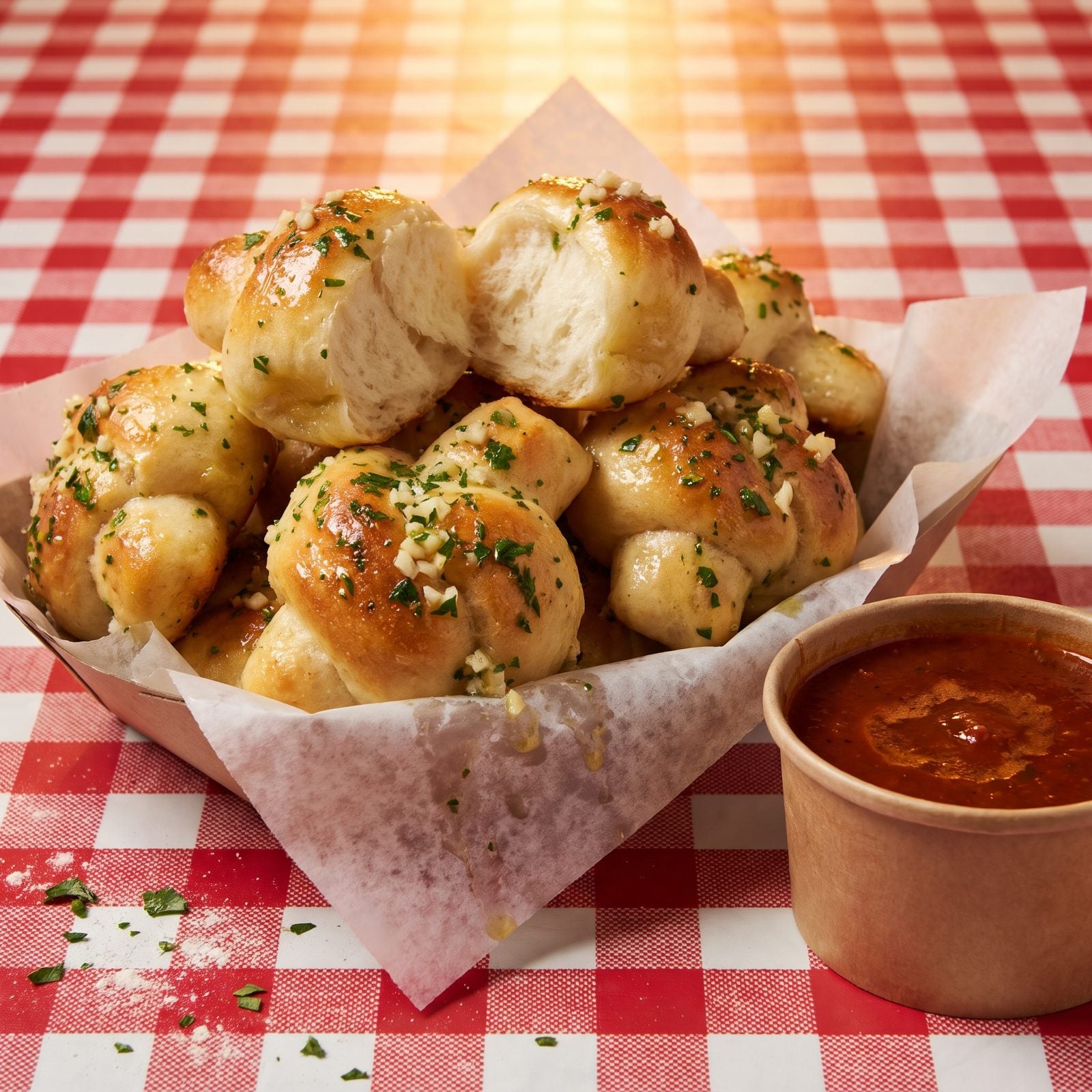
Garlic knots were never on the menu. Not really. They were what happened when there was leftover dough and somebody decided you shouldn’t go home hungry — tied by hand, brushed heavy with oil, showered in garlic and parsley until your fingers were slick before you took a bite.
The good ones left a shine on the paper boat. If the boat stayed dry, something was wrong. These came hot, usually free with a pie, and you ate them in the car before you got home because waiting felt like a crime.
14. Antipasto Salad Came Buried Under Rolled Deli Meat
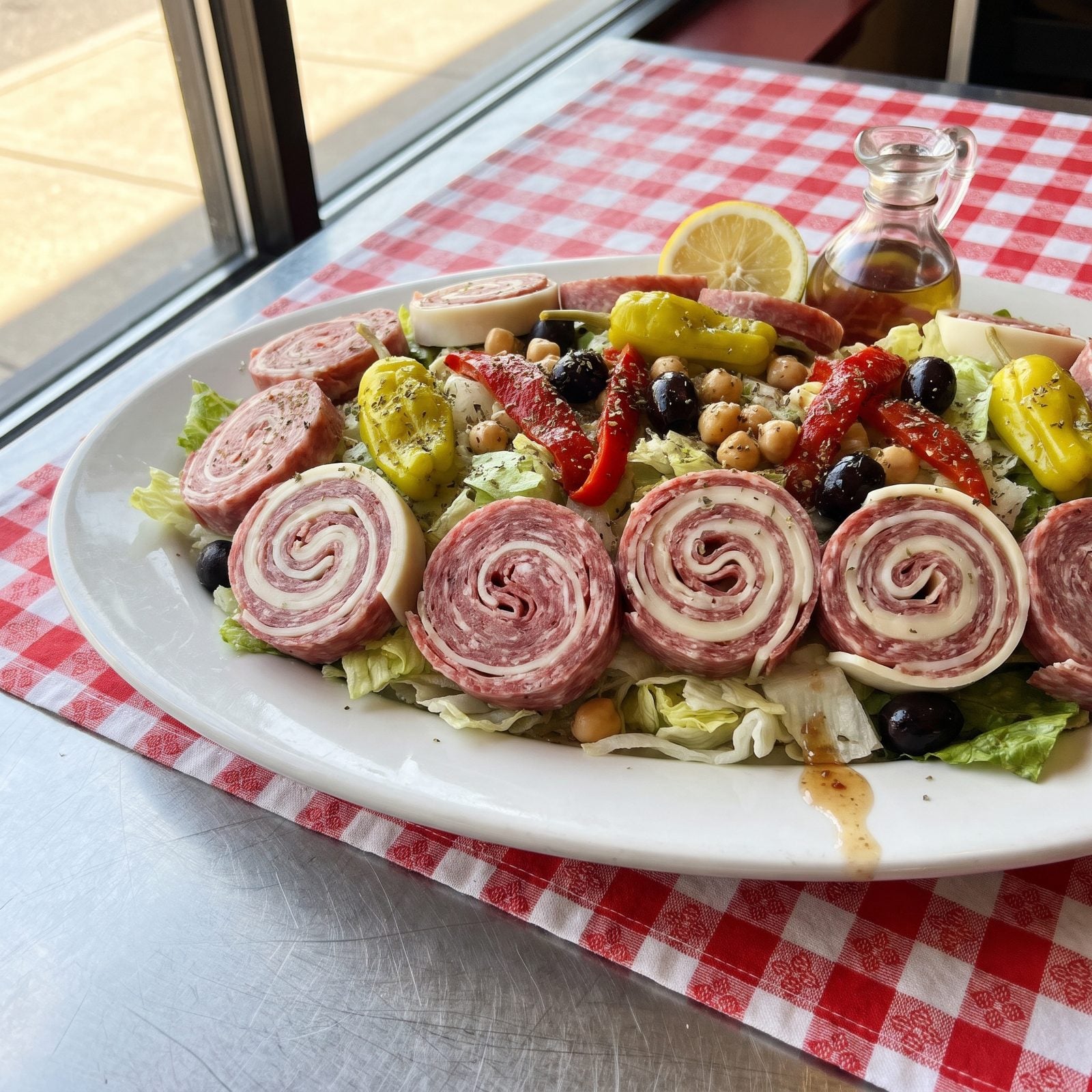
Lettuce was an afterthought. The antipasto was really about the meat — plenty of it, salami rolled up and piled high over a thin bed of shredded lettuce. Capicola, salami, provolone cut thick enough to fold.
You poured the oil yourself from a little glass jug, usually too much, and the pepperoncini at the bottom stung in the best way. This was the “healthy” option your mother ordered to feel responsible, then picked the salami off of anyway.
Piaci Pizza readers seem to side with the meat-first approach: salad photos got hearts only 48% of the time, against 68% for the other images in the same articles.
13. Meatball Parm Overflowed Its Toasted Roll
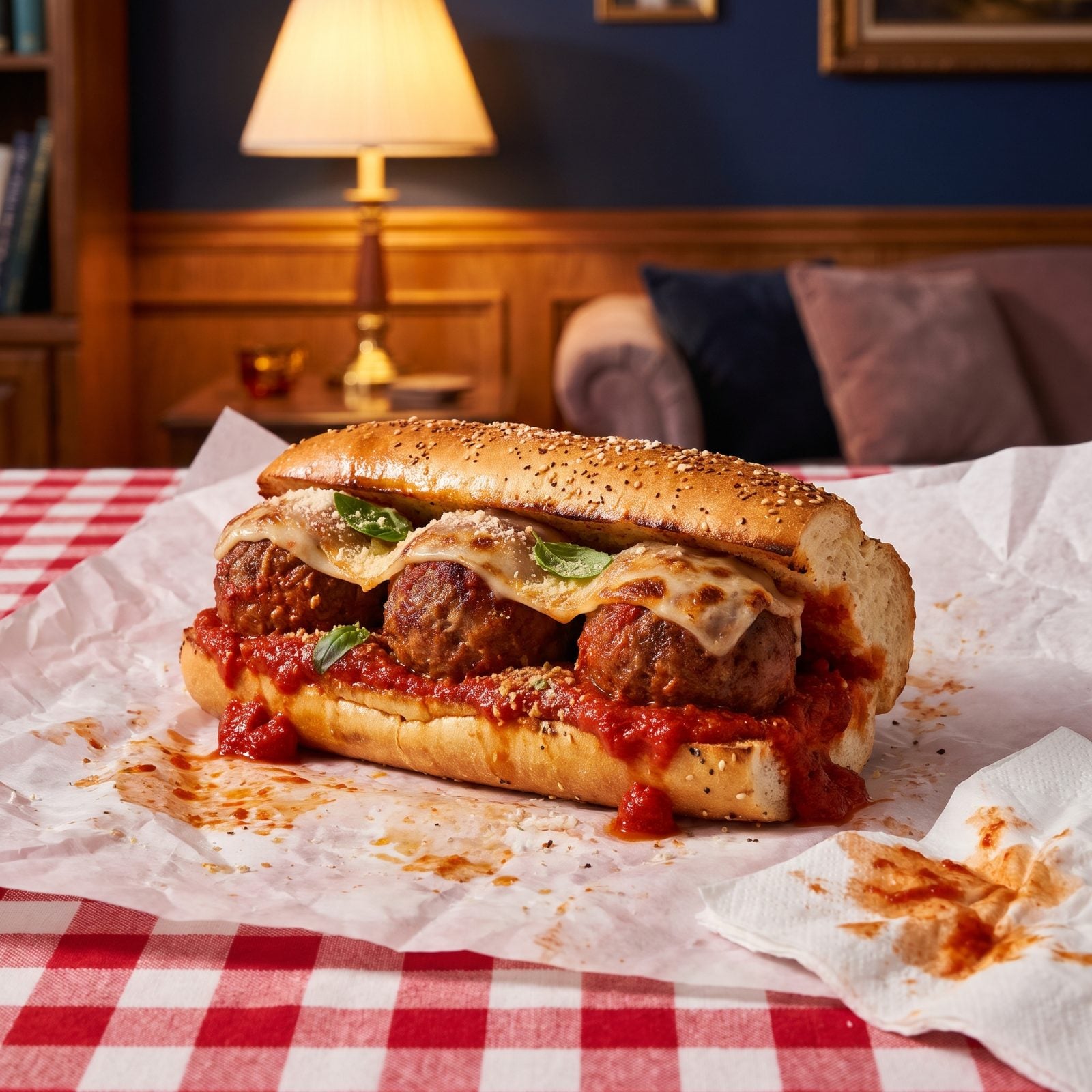
No roll ever contained it. The meatballs were bigger than the bread, so sauce ran out both ends onto the paper and then onto your shirt, which is why your grandmother handed you a napkin before you even sat down.
They toasted the roll so it held up for about four bites before surrendering completely. You ate the last third with a fork. The cheese was broiled right onto the top, blistered and clinging, and the whole thing weighed as much as a brick.
A meatball parm you could eat neatly was a meatball parm that had failed you.
12. Calzones Were Heavy with Ricotta, Not Empty Air
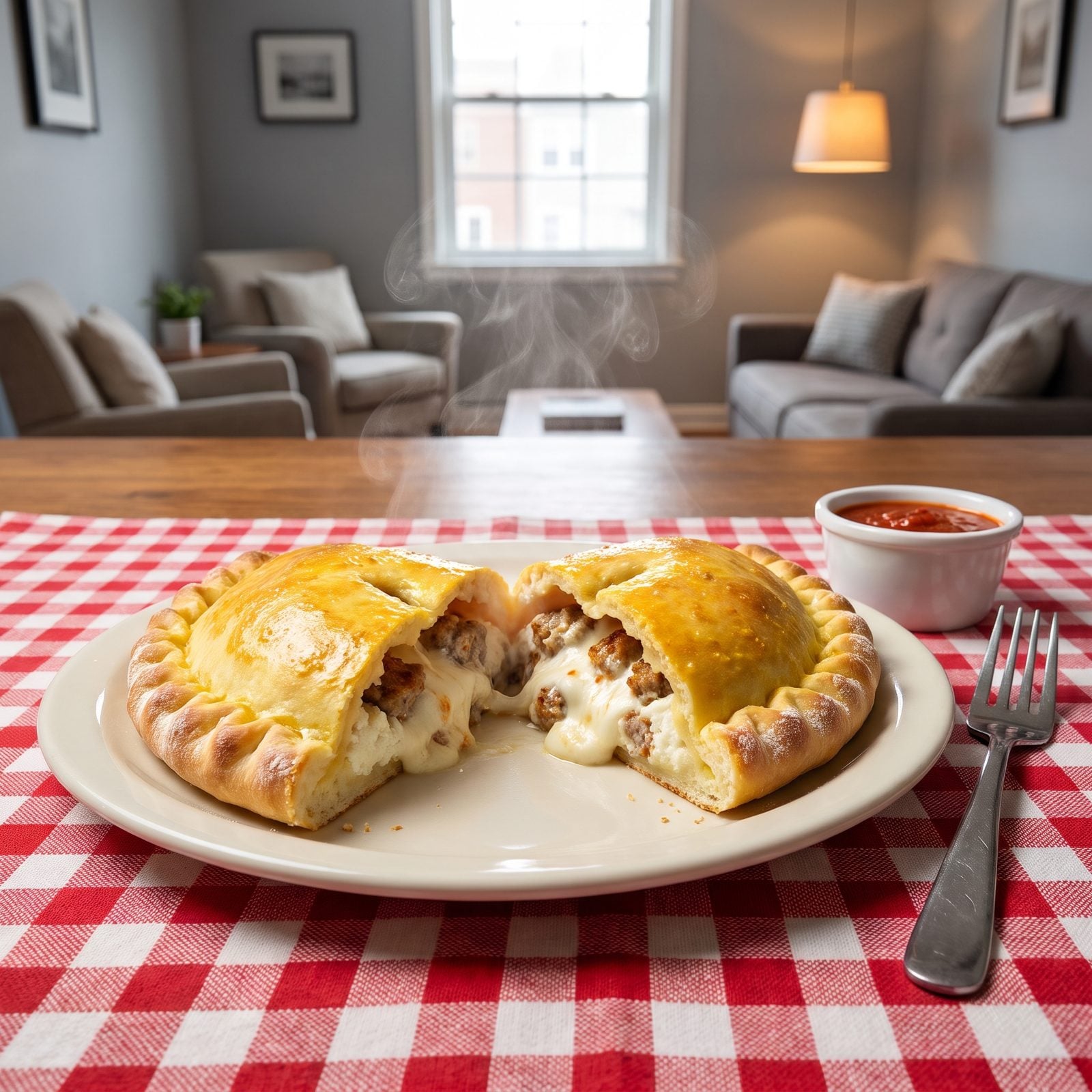
You could feel the weight before you cut into it. A real calzone had heft, because it was packed with ricotta that held its shape when you split it open — not a pocket of hot air pretending to be dinner.
The crimped edge was pinched by a thumb, uneven and a little thick. Inside it was dense: ricotta, mozzarella, maybe sausage, all of it stretchy and serious. Marinara on the side, always on the side, because the inside had no room for sauce.
11. Zeppole Shook Around in a Powdered-Sugar Paper Bag
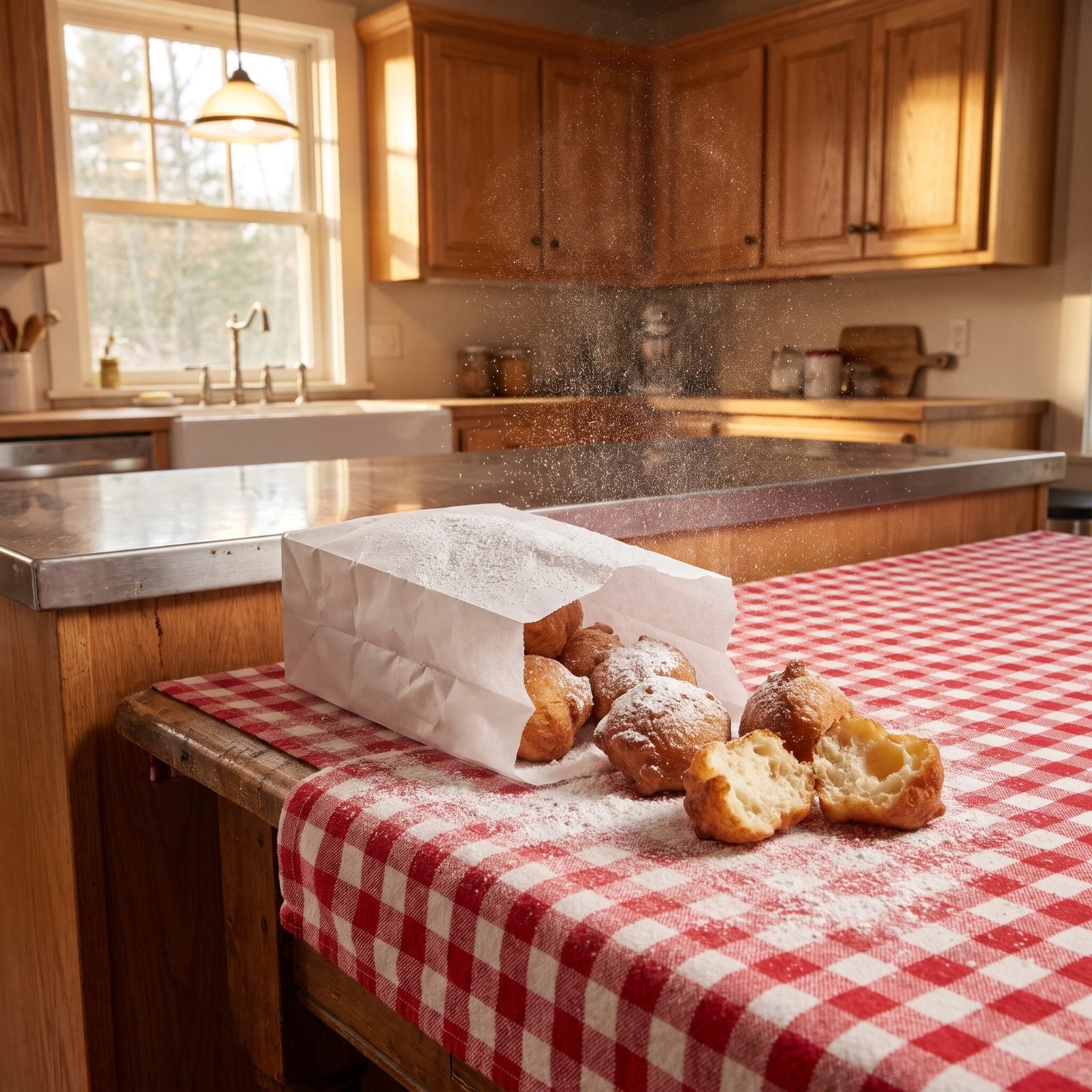
They came in a white paper bag, dumped in hot, and then you shook it yourself. You folded the top, shook like you were mixing a drink, and opened it to a cloud of powdered sugar that went up your nose and all over your lap. That was the ritual, and skipping it felt like cheating.
Zeppole were irregular and cracked and never the same size twice. The sugar at the bottom of the bag was the reward. You ate them walking out the door, burning your fingers, not caring one bit.
10. Anchovies Were Available Without an Apology
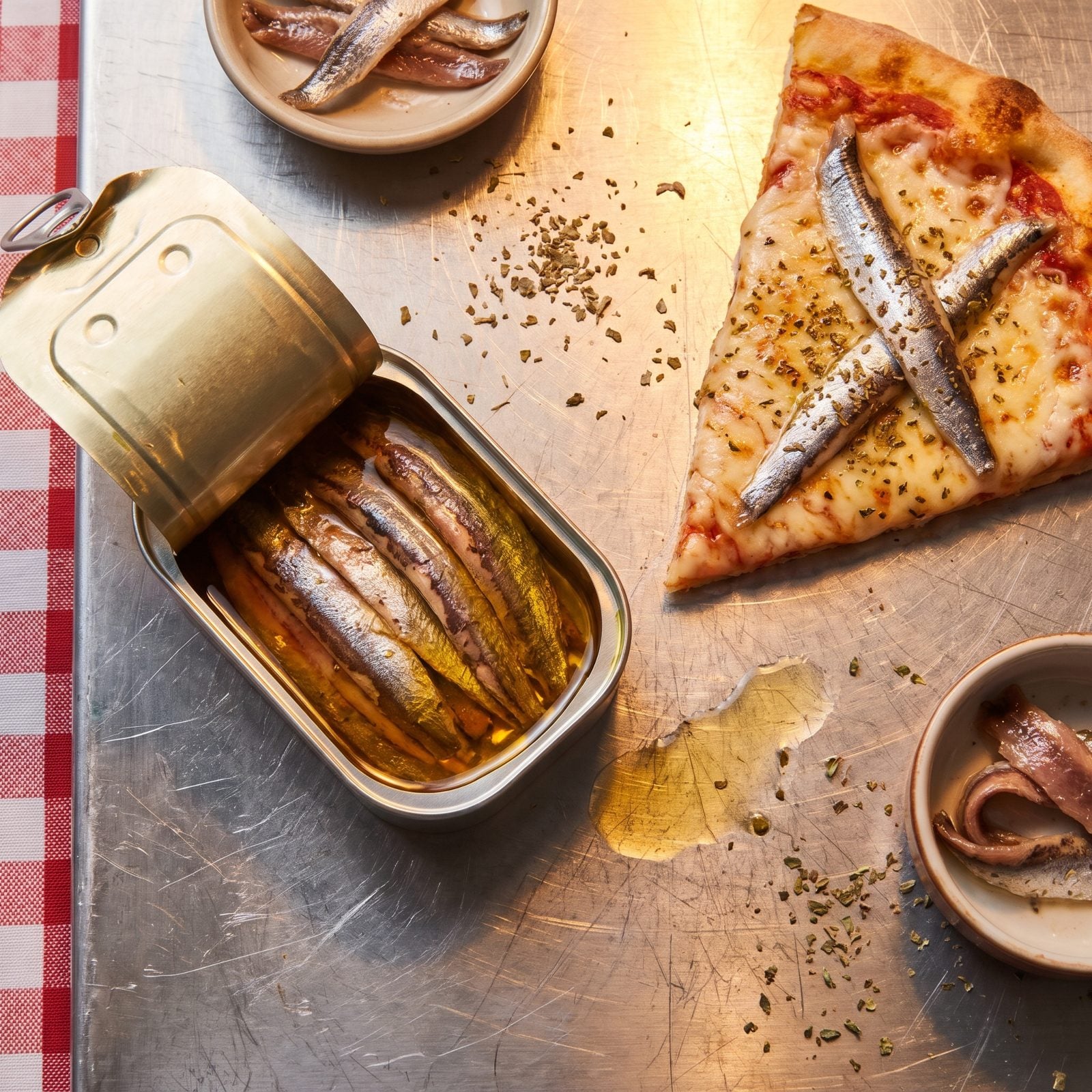
Half a pie with anchovies, half without. That was a normal order in a house where the grandfather had opinions. Nobody at the counter flinched when you asked. The tin sat right there, silvery fillets in oil, and they draped them across your slice like it was the most natural thing in the world.
Somewhere along the line anchovies became a punchline. Not here. Here they were a topping, listed plainly, no squeamishness, no eye-roll. You either wanted them or you didn’t, and plenty of people did.
9. Sausage Came in Rough, Hand-Pinched Chunks
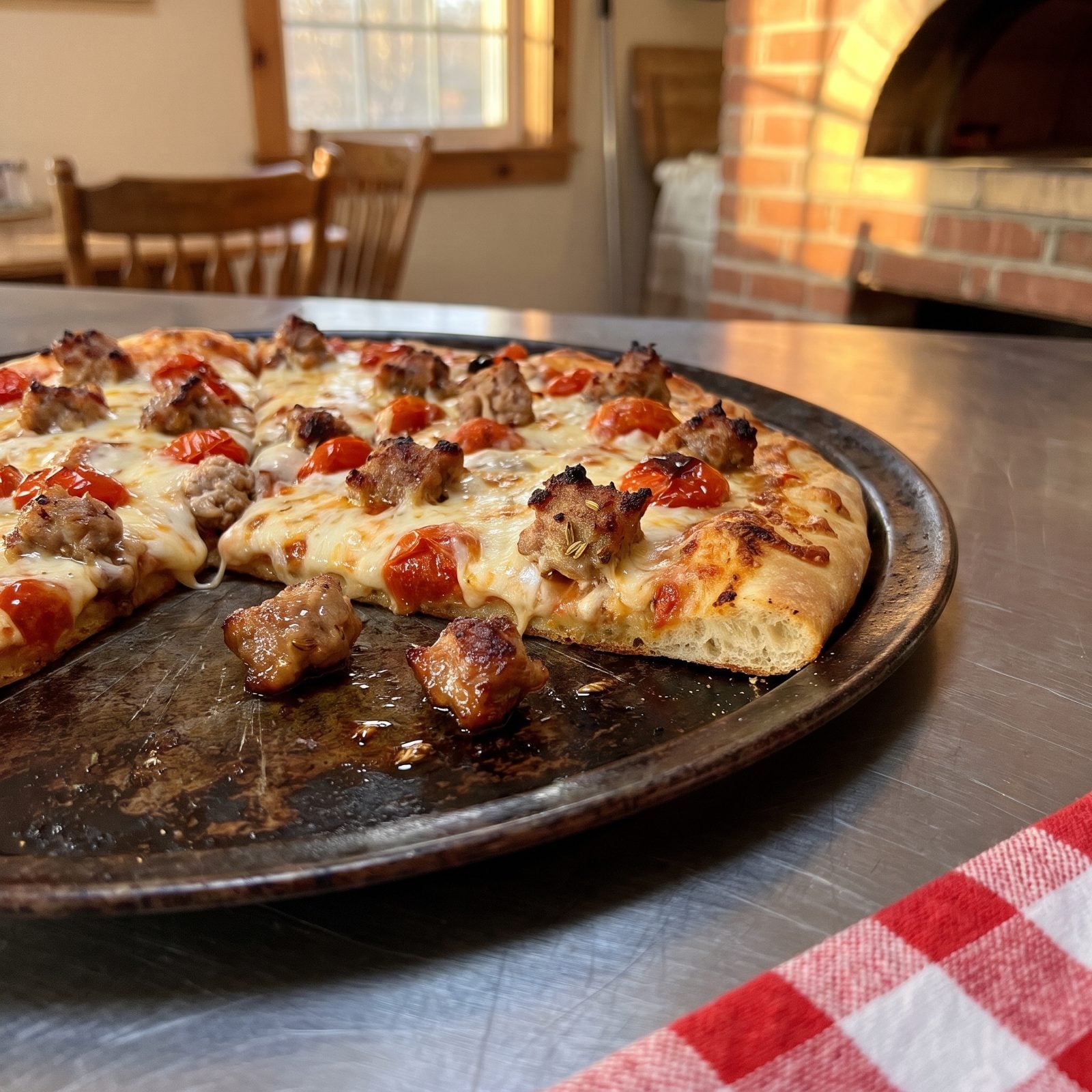
Not little discs. Not a neat uniform crumble from a bag. The sausage was pinched off by hand and dropped onto the pie in rough, uneven lumps that crisped and caramelized at the edges in the oven.
You got fennel in some bites and not in others. The chunks had character, which is a polite way of saying they looked a little wild — the tell of a kitchen that made its own and didn’t buy pre-cooked. The fat rendered out and crisped the cheese underneath, and those were the best bites of the whole slice.
8. Oregano and Baking Dough Scented the Sidewalk
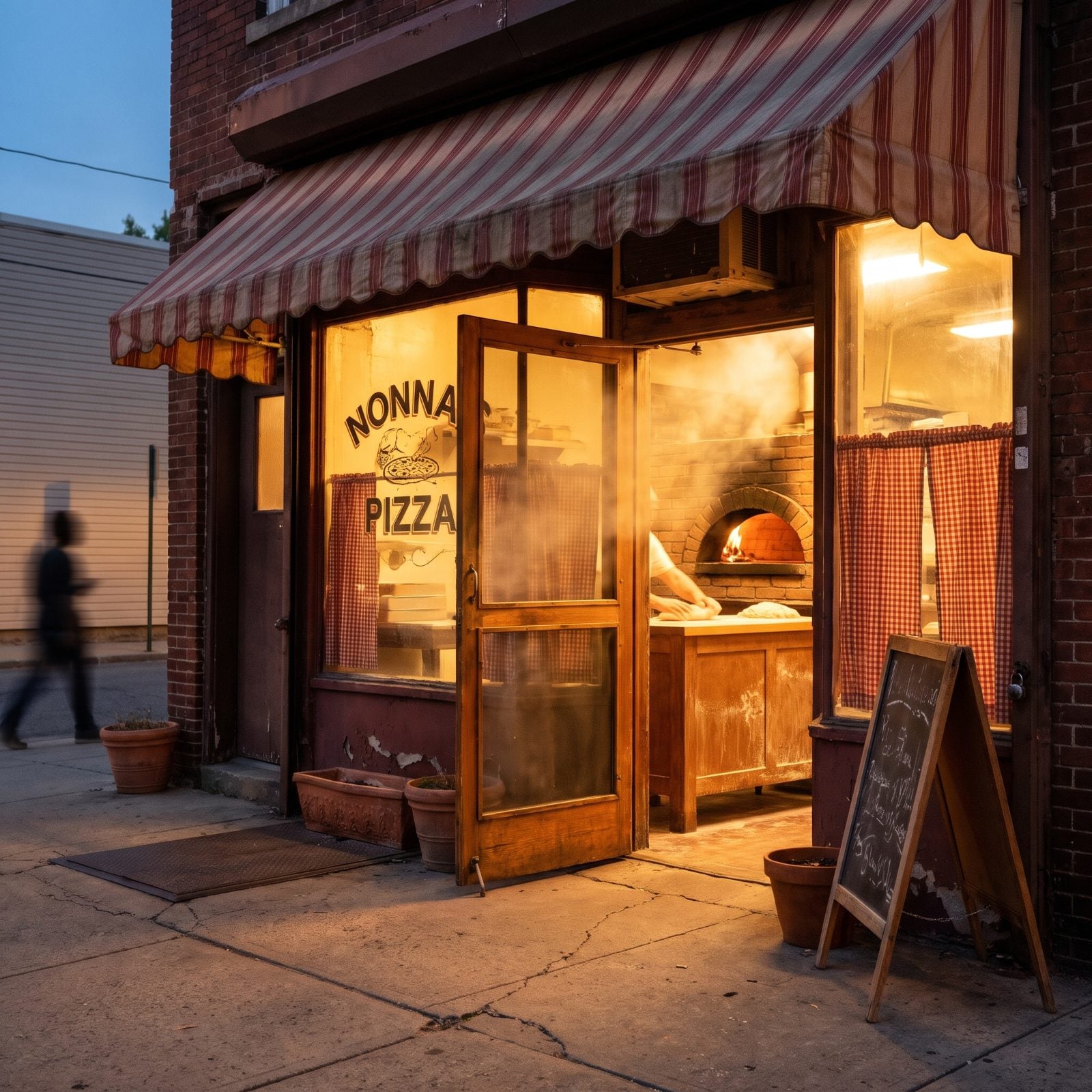
You knew you were close before you could see the sign. The smell got you half a block away: oregano, baking dough, garlic, something sweet from the sauce simmering all day. It hung on the sidewalk like a welcome mat you could breathe.
That smell is impossible to fake and impossible to forget. It meant the oven was going, the day was winding down, dinner was handled. Walk past that corner twenty years later, and if the place is still there, the smell does something to your chest you weren’t prepared for.
7. The Owner’s Child Did Homework in the Back Booth
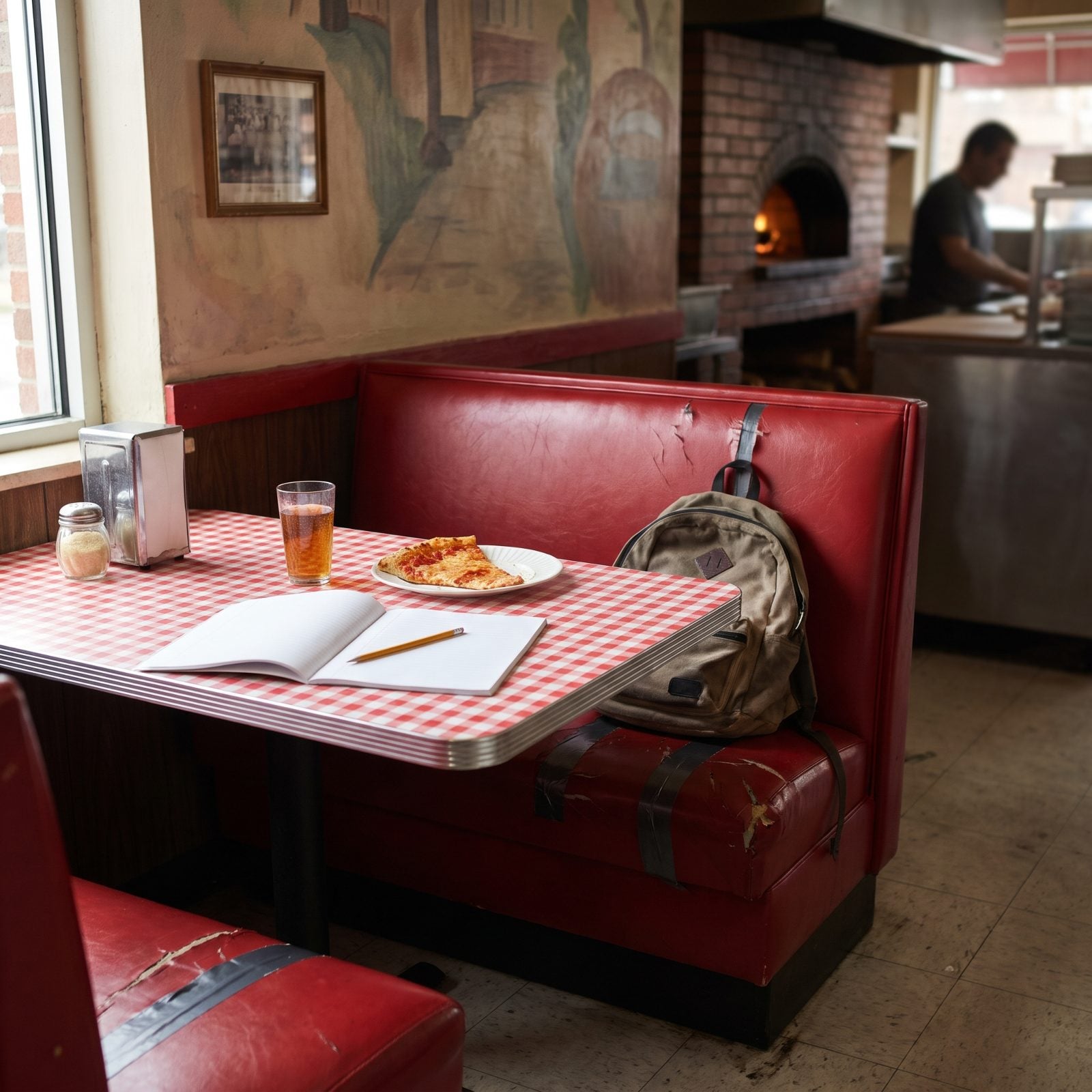
Every real pizzeria had one: a kid parked in the back booth doing long division while the dinner rush built up front. Soda refilled without asking. A slice appearing around six whether anyone ordered it or not.
That booth was an office, a classroom, and a babysitter all at once, and the whole neighborhood watched that kid grow up one grade level at a time. You’d come in for a pie and clock that the homework had gone from crayons to algebra to, eventually, nobody in the booth at all — because the kid was behind the counter now.
6. Little League Team Photos Filled the Dining Room Walls
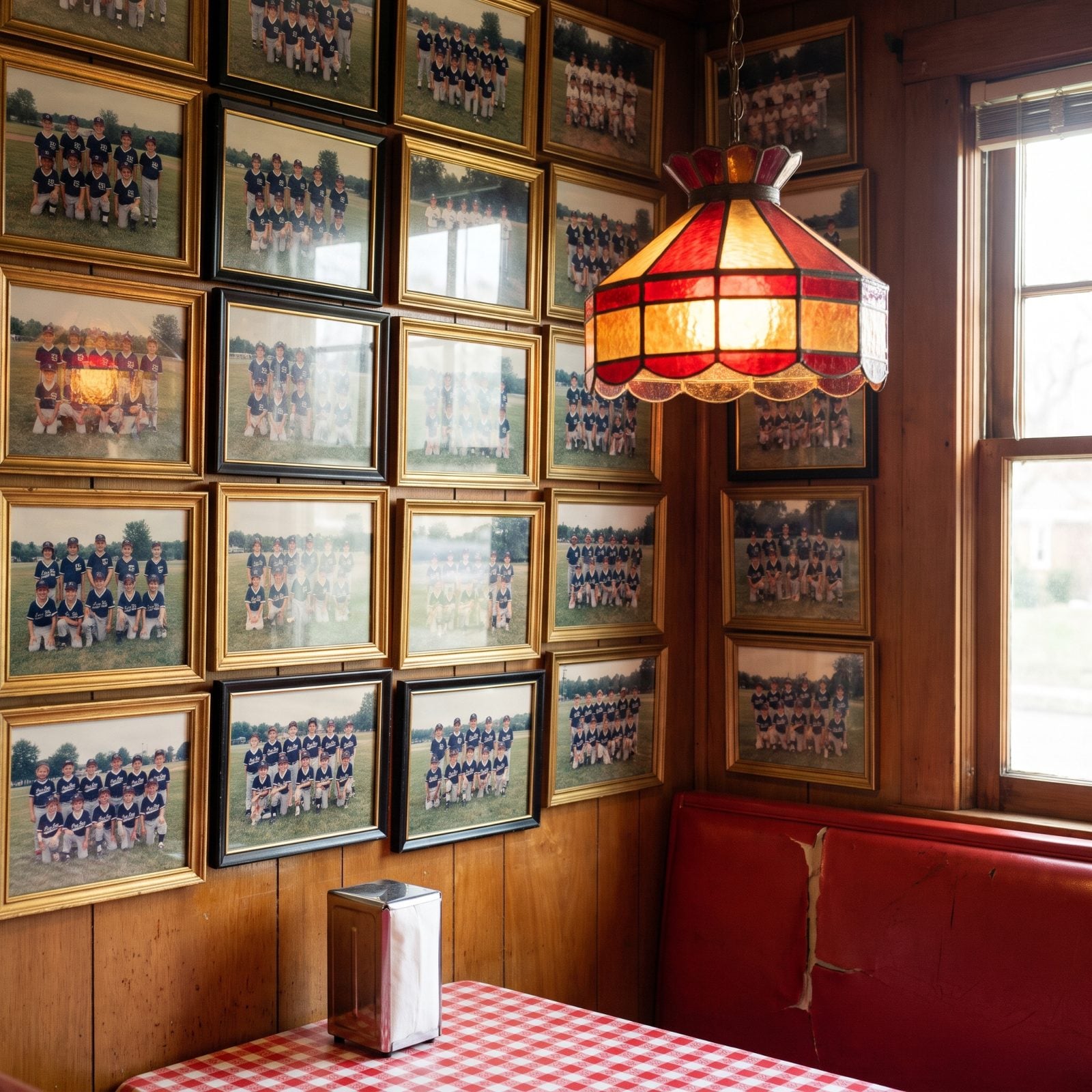
Every pizzeria worth its sauce sponsored a team. They paid for the jerseys, and your squad got immortalized on the wall by the bathroom in return — rows and rows of them going back years, the uniforms slowly shifting color as the decades crept up.
You could find yourself up there if you knew where to look. Third row, squinting, missing a front tooth. Those photos never came down. They just got crowded by the next season, and the one after that, until half the neighborhood was watching you eat dinner.
5. Kids Counted Coins on the Counter for an After-School Slice
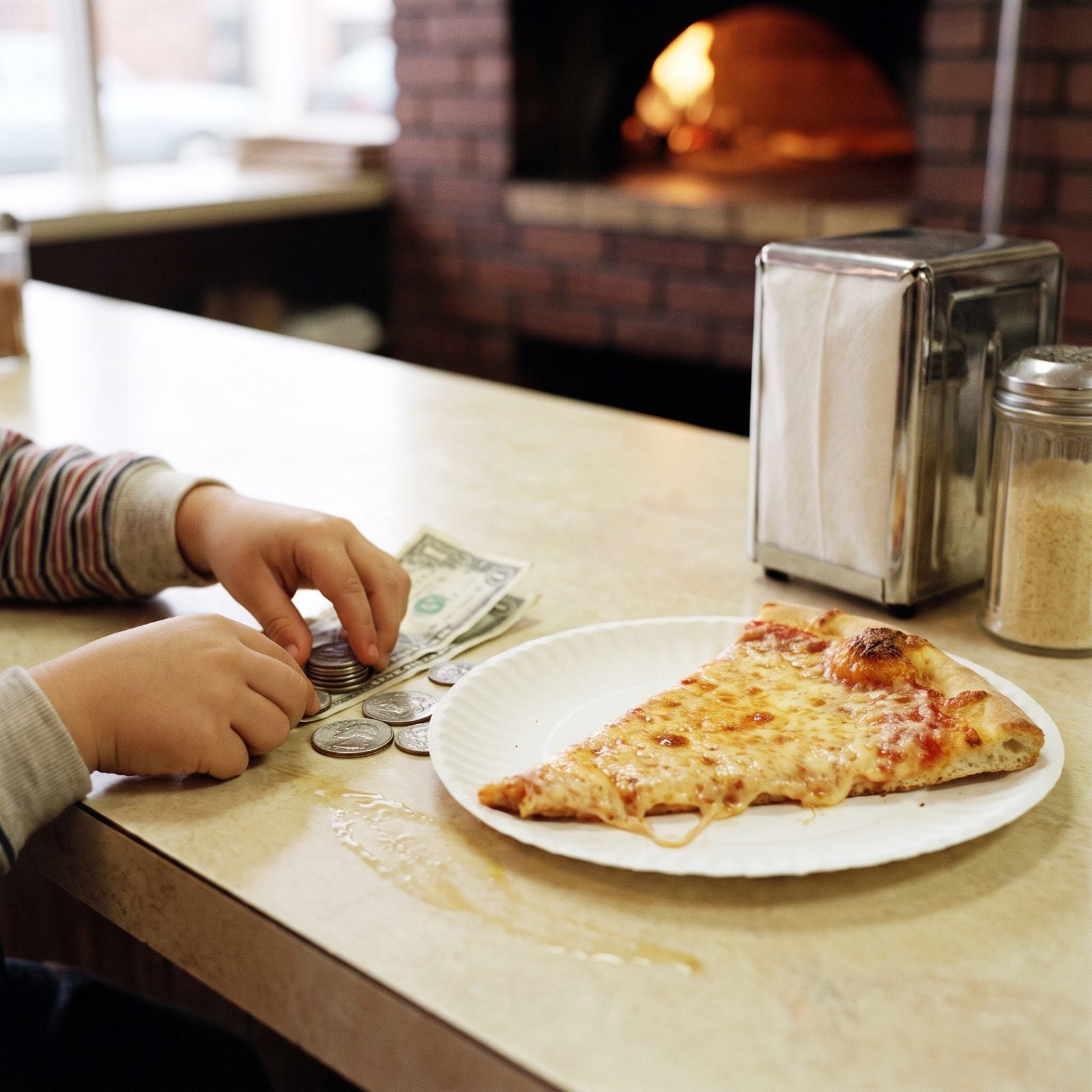
The after-school crowd ran on nickels and whatever fell out of a backpack. You’d dump it on the counter, the counterman would glance at it, and somehow the math always worked out even when it didn’t.
A dollar got you a slice and a paper cup of soda most places. Come up a dime short and the guy behind the register waved you off like it was nothing — not charity, exactly. More like knowing you’d be back tomorrow with the rest.
4. Utility Crews Ate Lunch in Work Boots at the Counter
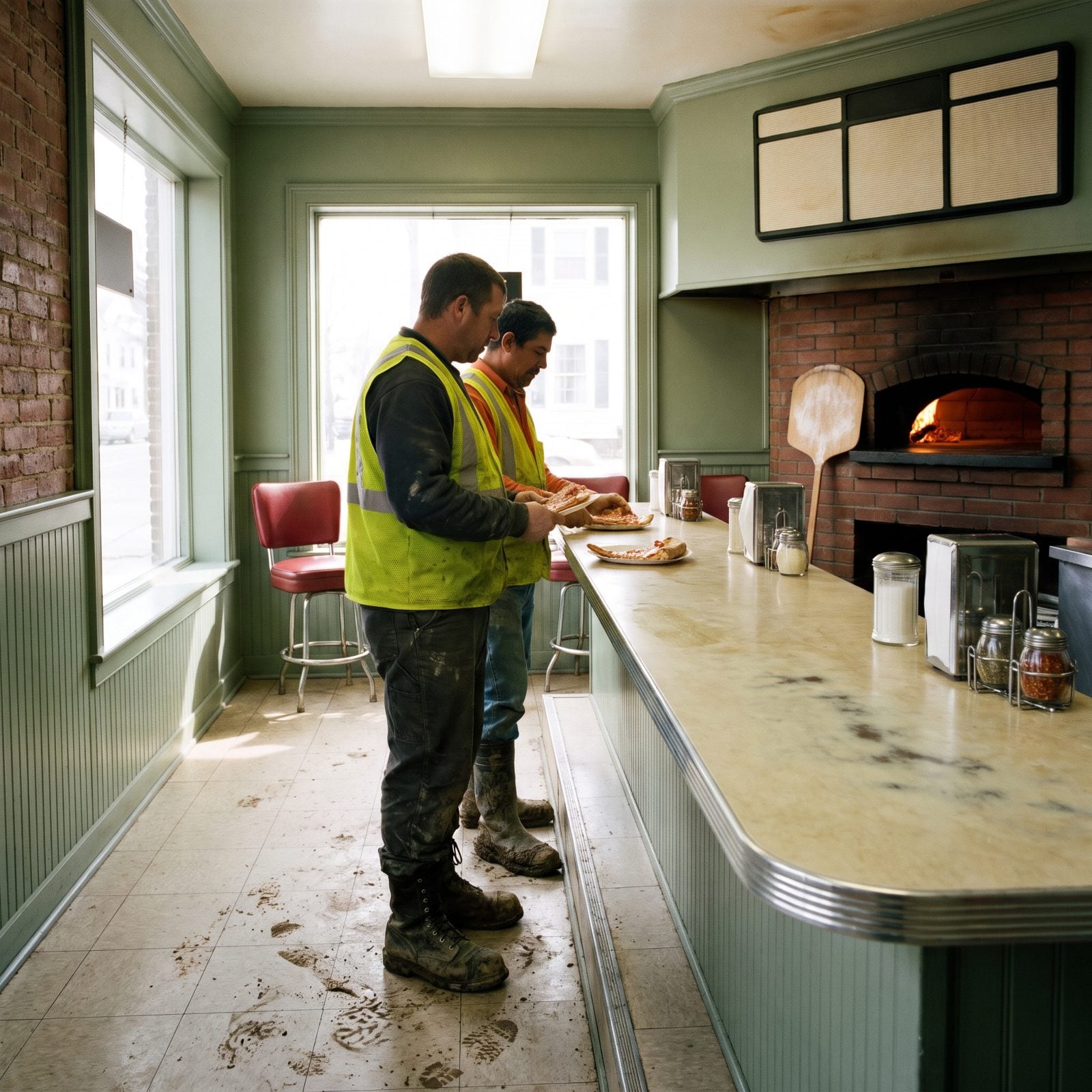
Noon brought a different crowd. The guys who dug the street open or strung the lines, boots tracking mud, yellow-green safety vests still on. They ordered two slices apiece and ate fast at the counter, because the job wasn’t going to wait.
You learned a lot watching those lunches. The counterman had their orders down too. White collar and blue, the place fed the whole working rhythm of the block, and nobody thought twice about it.
3. Postgame Teams Took Over Every Pushed-Together Table
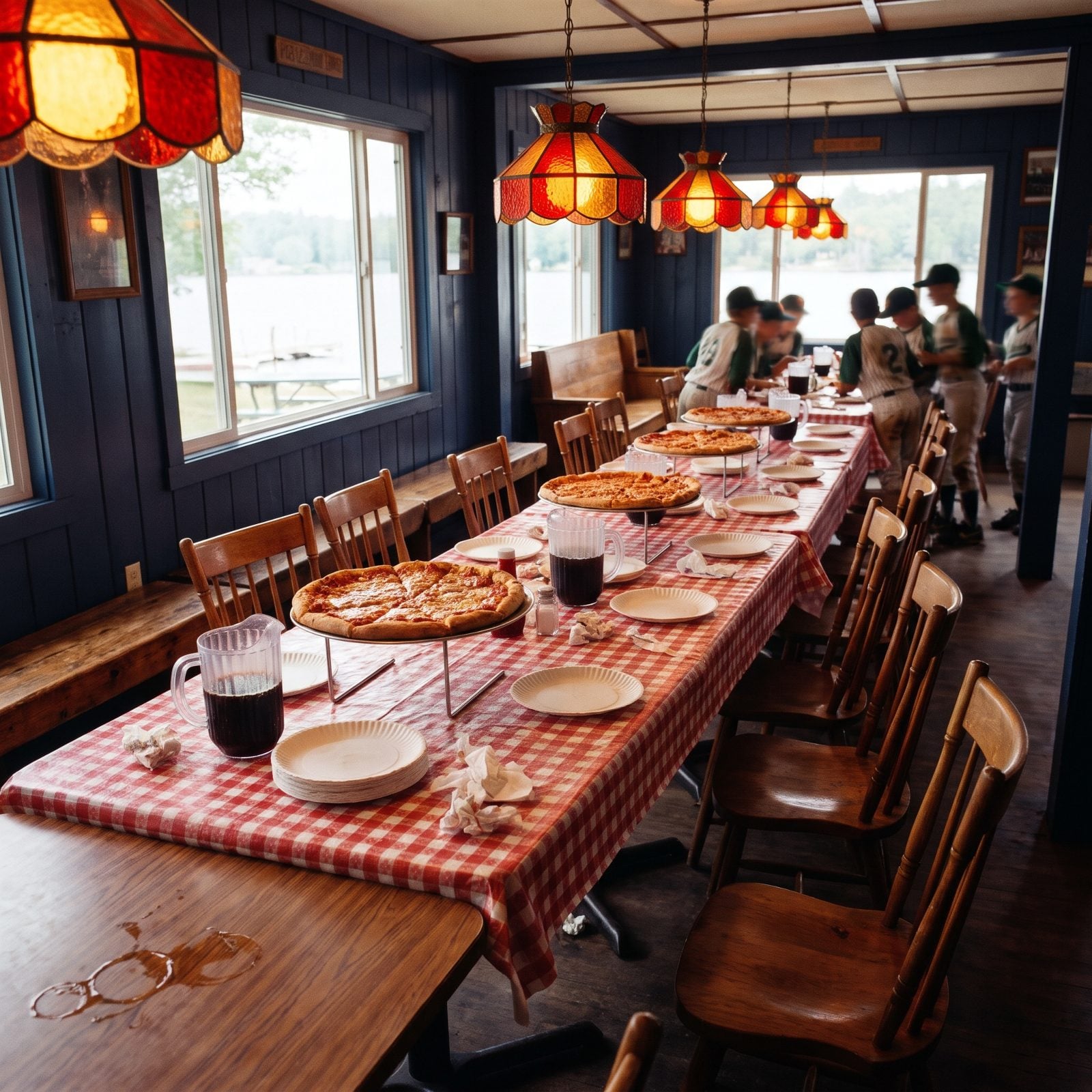
The sound hit you before the door even closed.
A whole team, still in grass-stained uniforms, win or loss, descending on the place at once. Tables got shoved together into one long runway. Chairs scraped. The coach counted heads and ordered pies by the stack.
Win and it was a celebration. Lose and it was still pizza, which has a way of fixing most of what a bad inning broke. You sat elbow to elbow, cleats clicking on the tile, and the place just swallowed the whole chaotic scene like it had done it a thousand times. Because it had.
2. A Snowstorm Still Brought a Handwritten OPEN Sign in the Window
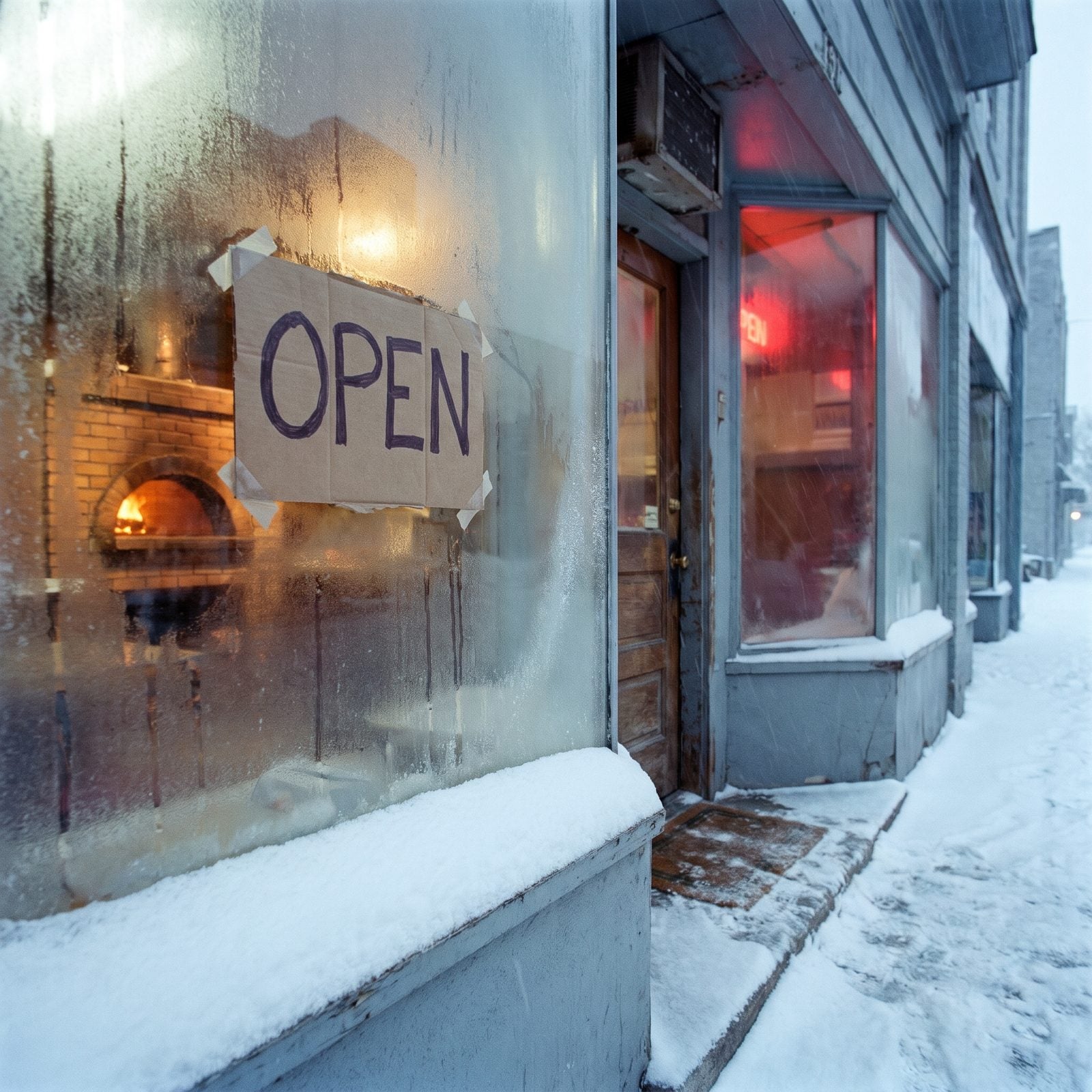
Schools closed. The bank closed. The supermarket closed. And there in the window, through a wall of falling snow, hung a piece of cardboard with OPEN scrawled on it in marker.
Somebody had shoveled the walk at six in the morning and fired the oven anyway. Maybe three customers came all day. Didn’t matter. The light was on and the sign was up, because closing on a storm day felt like breaking a promise nobody had ever spoken out loud.
1. A Framed Photo Honored a Regular Who Had Passed
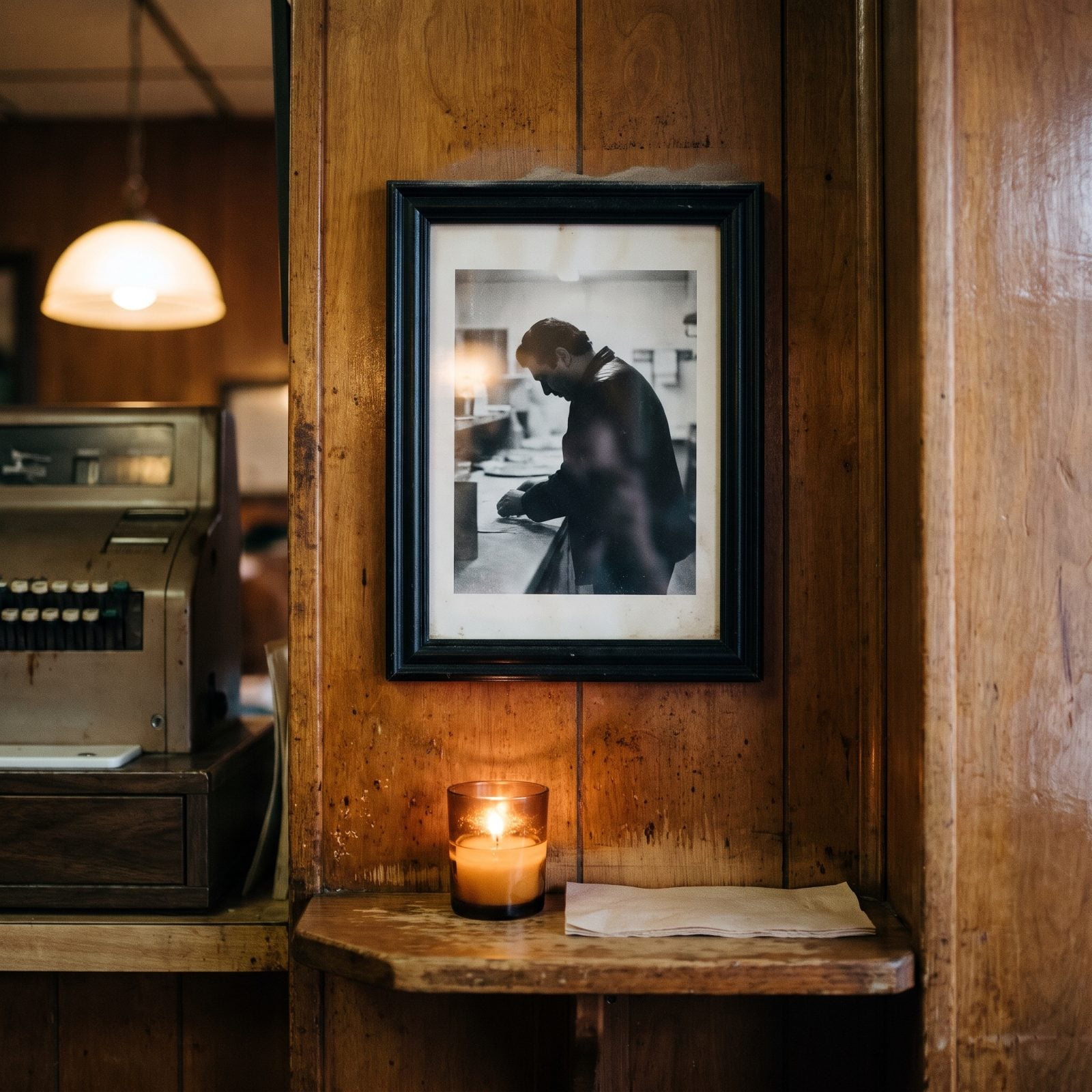
Every long-running pizzeria eventually had one. A photo tucked near the register of a man who sat at the same stool for twenty years, gone now, framed by the people who used to pour his coffee.
You’d ask who it was. The counterman told you, short and plain, and went back to work. That seat stayed half-empty in everyone’s memory. Last long enough and a pizzeria stops being a business and becomes a keeper of the block’s record — the weddings and the funerals both.