Would you like to save this?
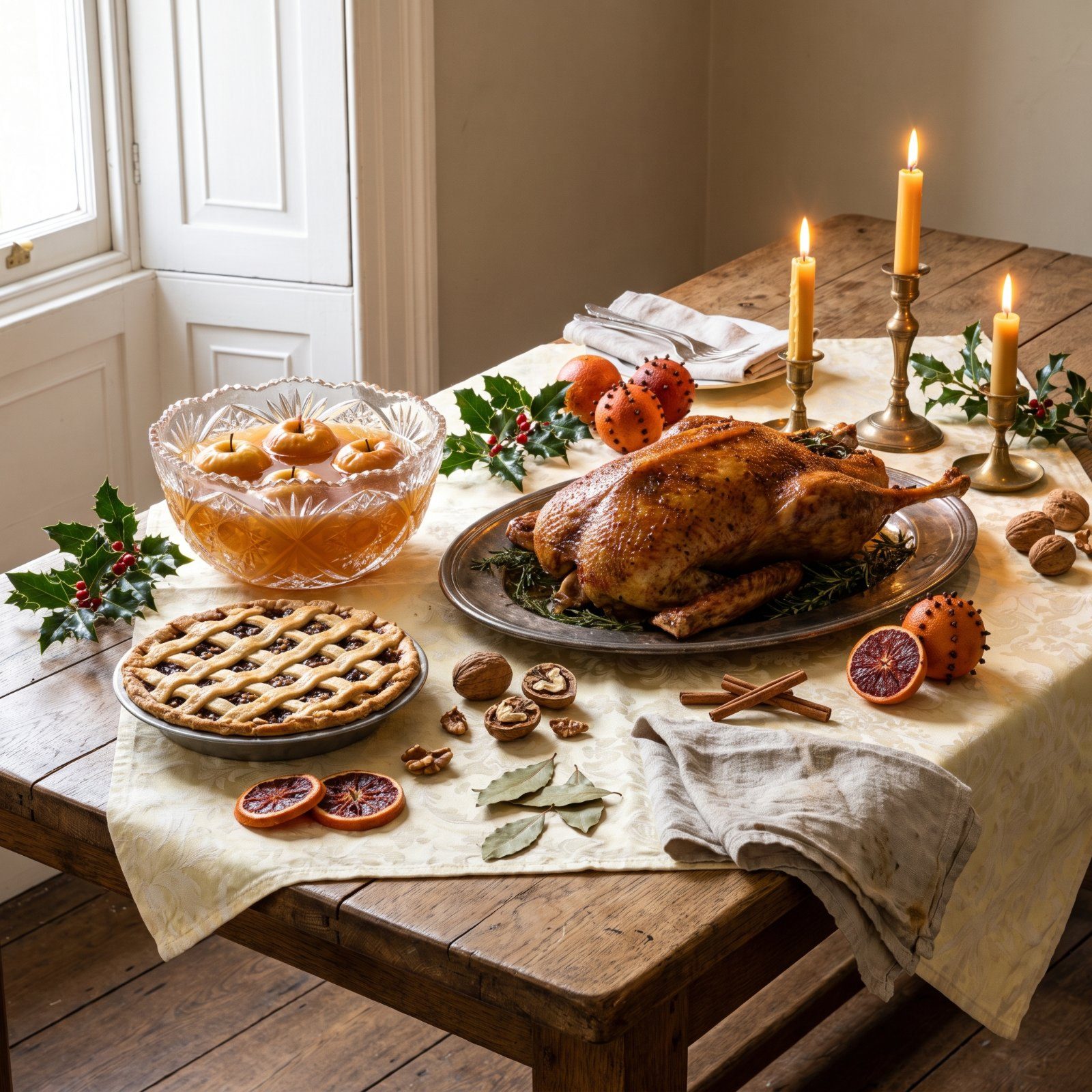
Somewhere between the canned cranberry sauce and the honey-glazed ham, we lost the strange and wonderful. The boar’s head carried in on a platter. Oyster stew so pale it looked like fog in a bowl. And the hidden bean that crowned a king for one riotous night. These weren’t quaint footnotes — they were the main event, the reason people sat down together in December at all. Then they slipped off the menu one by one, and nobody rang a bell about it. What follows are the ones worth remembering.
32. Oyster Stew Served on Christmas Eve
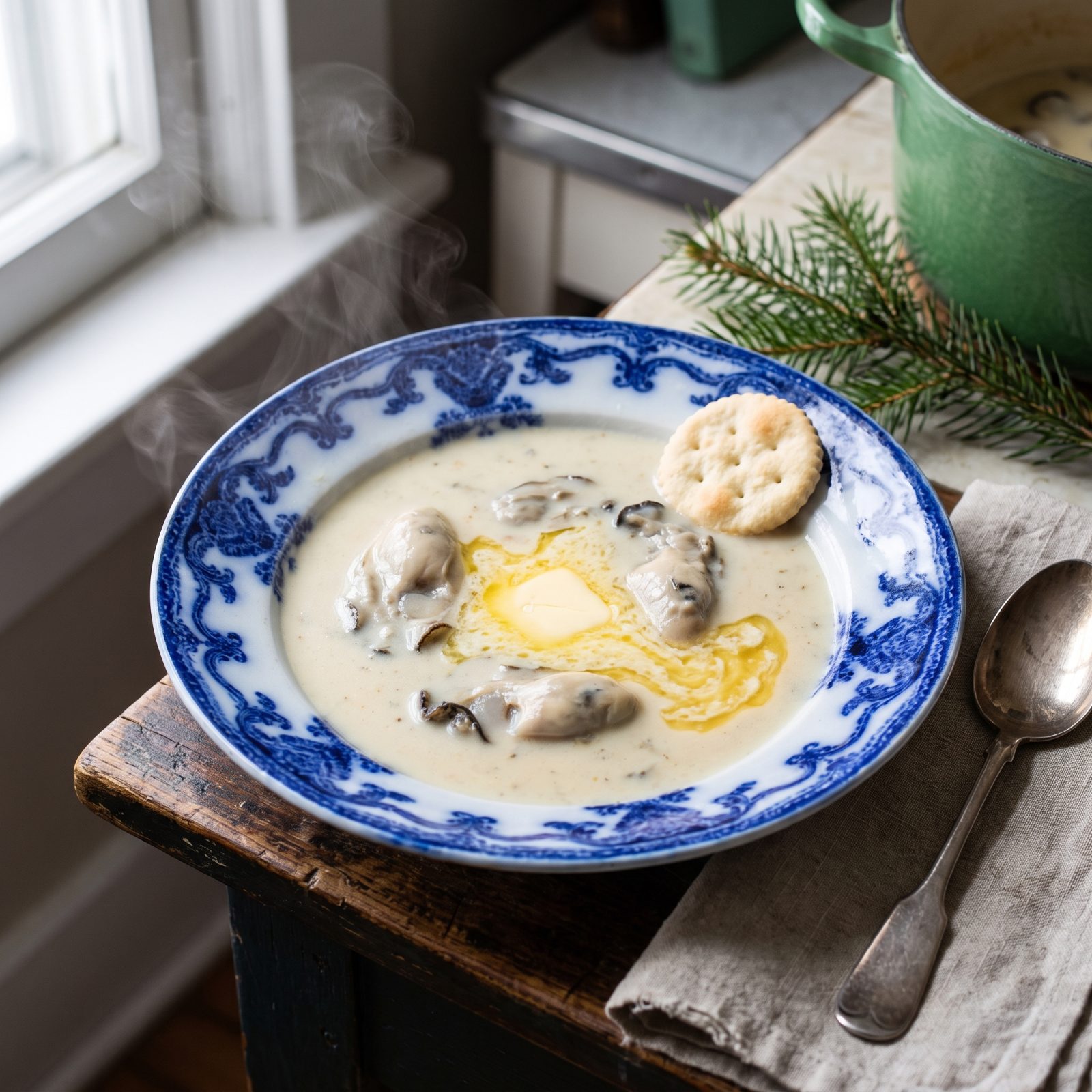
Before the ham, before the turkey, there was a bowl of pale broth with oysters bobbing in it. Milk, butter, a whisper of pepper, and bivalves poached just until their edges curled. For generations of American families — the Catholic ones especially, keeping the meatless vigil — that was Christmas Eve.
It made sense once. Oysters were cheap and plentiful, shipped inland by the barrel all through the 1800s, a luxury that somehow wasn’t. Then the great oyster beds thinned out, prices climbed, and a dish that had fed whole neighborhoods turned into a curiosity.
31. A Boar’s Head Platter With an Apple in Its Mouth
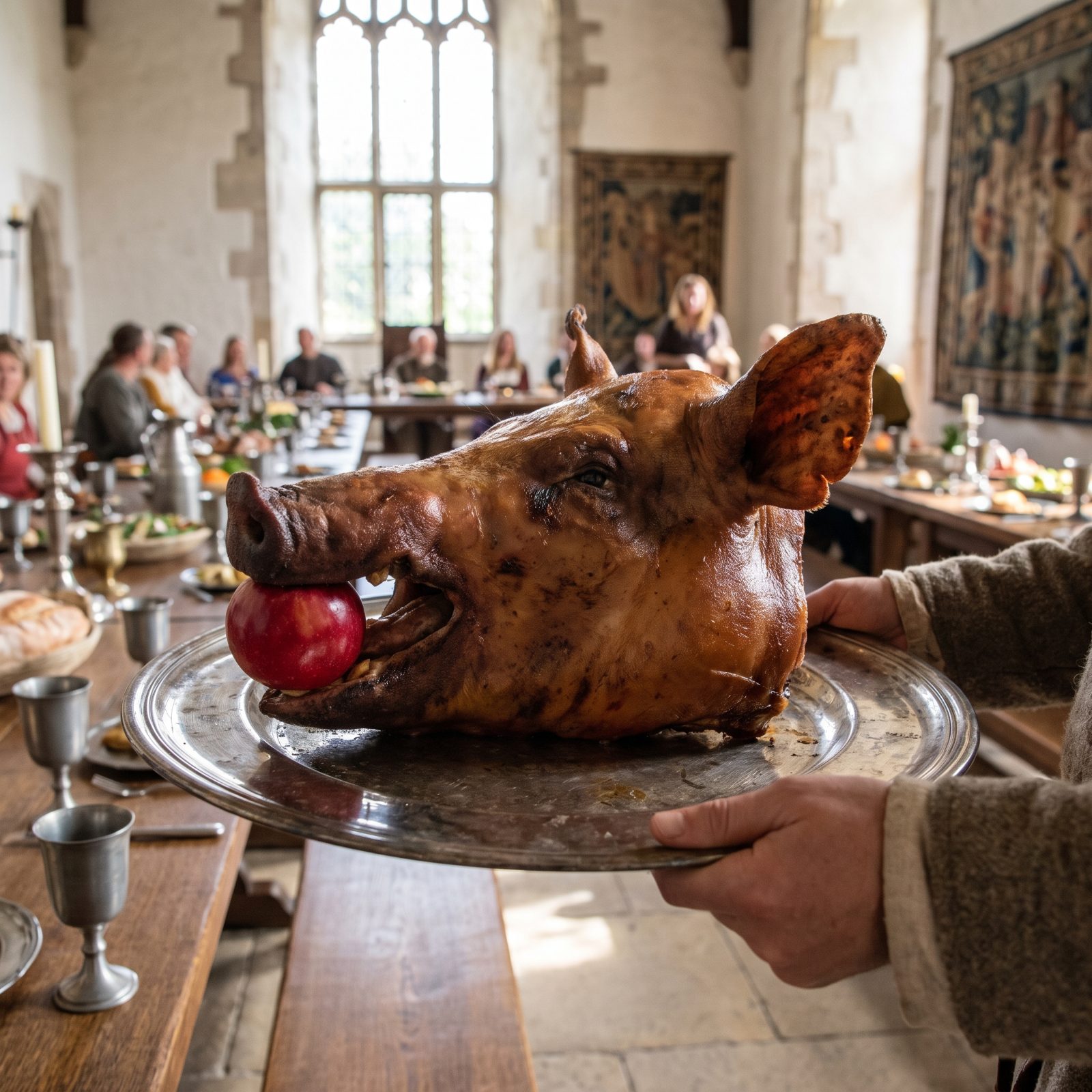
Nothing announced a feast quite like a pig’s head carried in on a silver platter — tusks out, apple wedged in its jaws. The boar’s head was the showstopper of medieval and Tudor Christmas banquets, paraded through the hall while carolers belted out the centuries-old “Boar’s Head Carol.”
It survived at Oxford’s Queen’s College and a handful of grand houses well into modern times. Most tables quietly retired it, though. A whole roasted head demands a cook willing to brine it, glaze it, and set down a thing that stares right back at the guests.
The boar’s head in hand bear I, bedecked with bays and rosemary.
Few sights at a holiday table ever committed harder to spectacle.
30. Roast Goose With Sage and Onion Stuffing
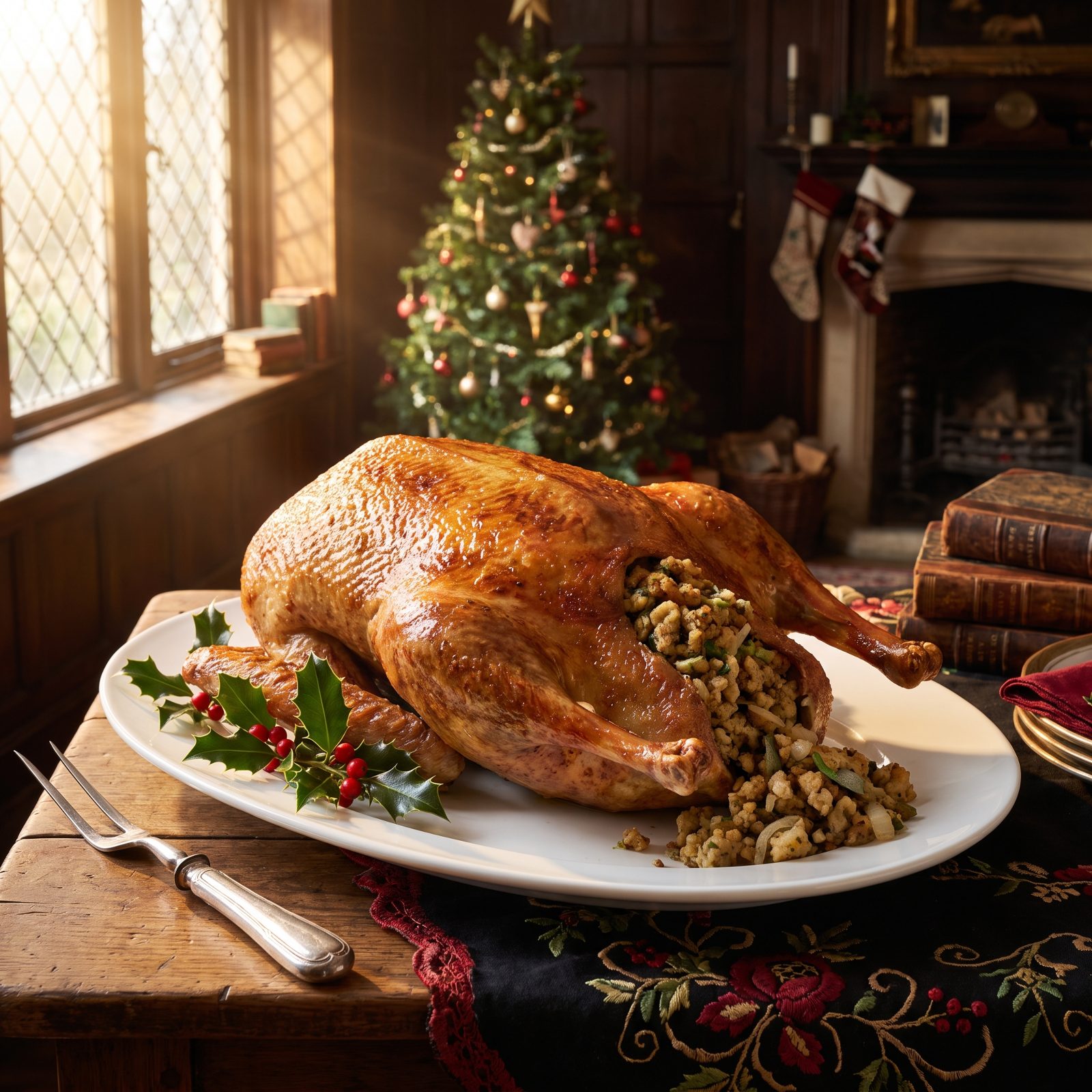
The Cratchits made a feast of one in A Christmas Carol, and for good reason. Goose was the Christmas bird across England and much of Europe for centuries, long before turkey muscled its way to the center of the table.
The appeal was the fat. A goose renders cups of it — enough to roast the potatoes golden and keep for months afterward. Stuffed with sage and onion, the dark, rich meat tasted of something older than the holiday itself.
Turkey won on size and price. A goose feeds six, maybe eight; a turkey feeds a crowd for less. The math was never close, and the goose slipped away.
29. Mincemeat Pie Made With Traditional Suet
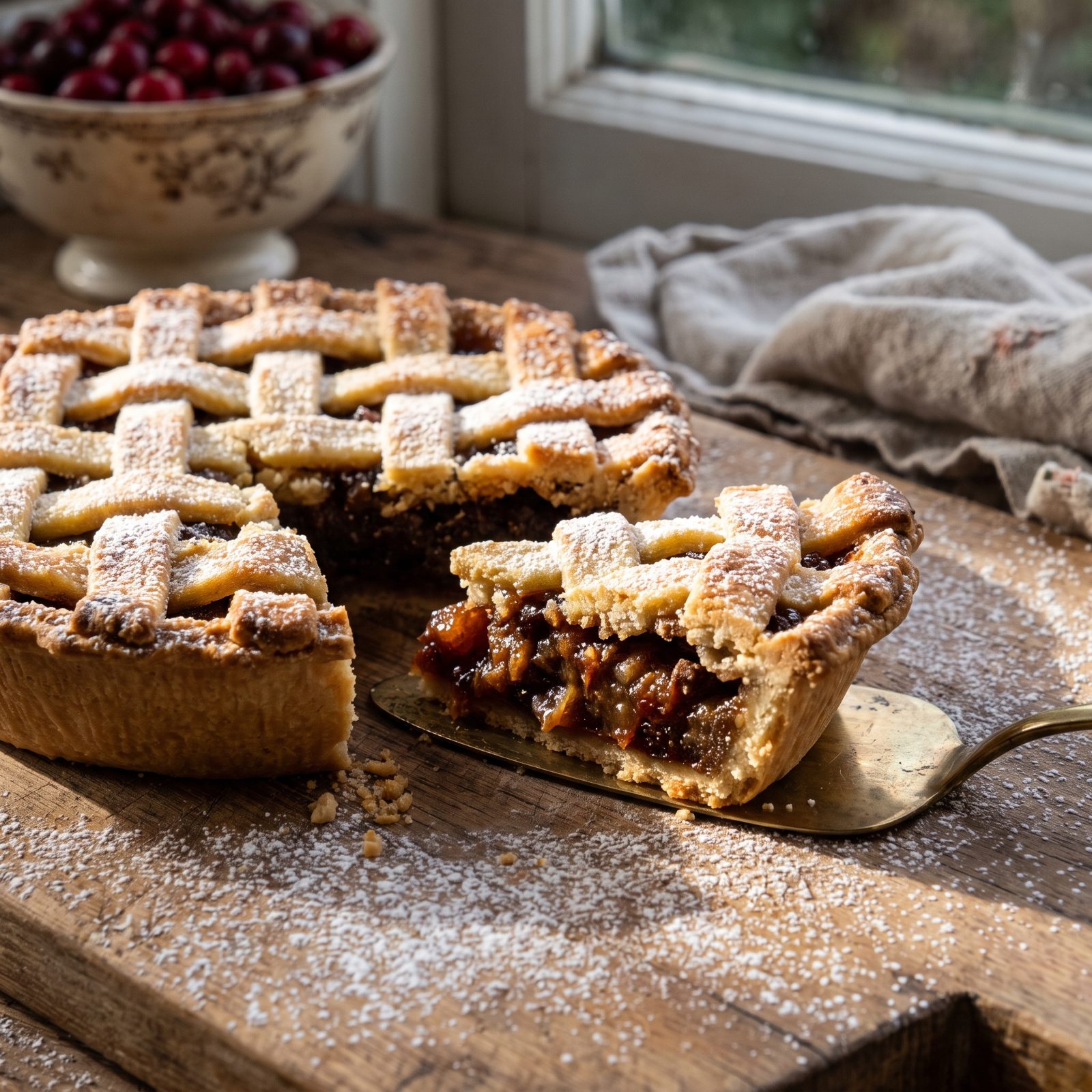
Peel back the lattice and the filling looked almost black. Real mincemeat once held actual minced meat, bound with beef suet and steeped for weeks in brandy, dried fruit, and spice.
By the Victorian era the meat mostly dropped out, but the suet stayed, lending the pie that dense, glossy heft. Families made it in autumn and let it mature in crocks until Christmas came around.
Then vegetable shortening replaced suet, jars replaced crocks, and the pie got sweeter and smaller with every passing decade.
28. Wassail Poured From a Communal Bowl
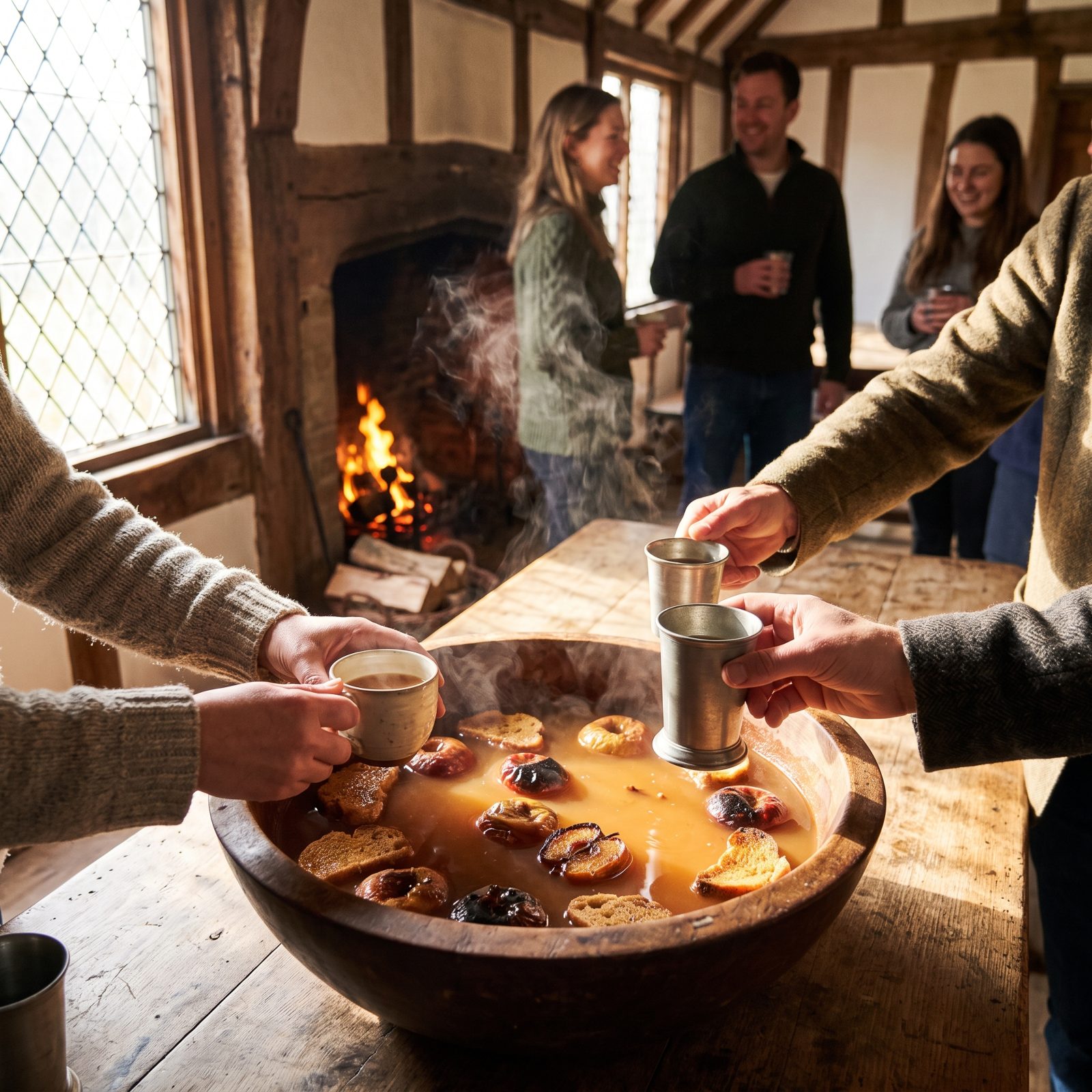
One bowl. Everybody drank from it. Wassail was warm ale or cider spiced with nutmeg and ginger, topped with a cap of foamy beaten eggs and set floating with roasted crab apples that burst into “lamb’s wool” froth.
The word came from the Old English wæs hæil, meaning “be in good health.” You passed the bowl, drank, and toasted the orchard trees to bless next year’s harvest.
Shared drinking vessels fell out of favor for reasons you can probably guess. The communal bowl became individual cups, then store-bought eggnog, then nothing at all. A ritual built on everyone leaning into the same bowl was never going to survive the modern age.
27. A Twelfth Night Cake With a Hidden Bean
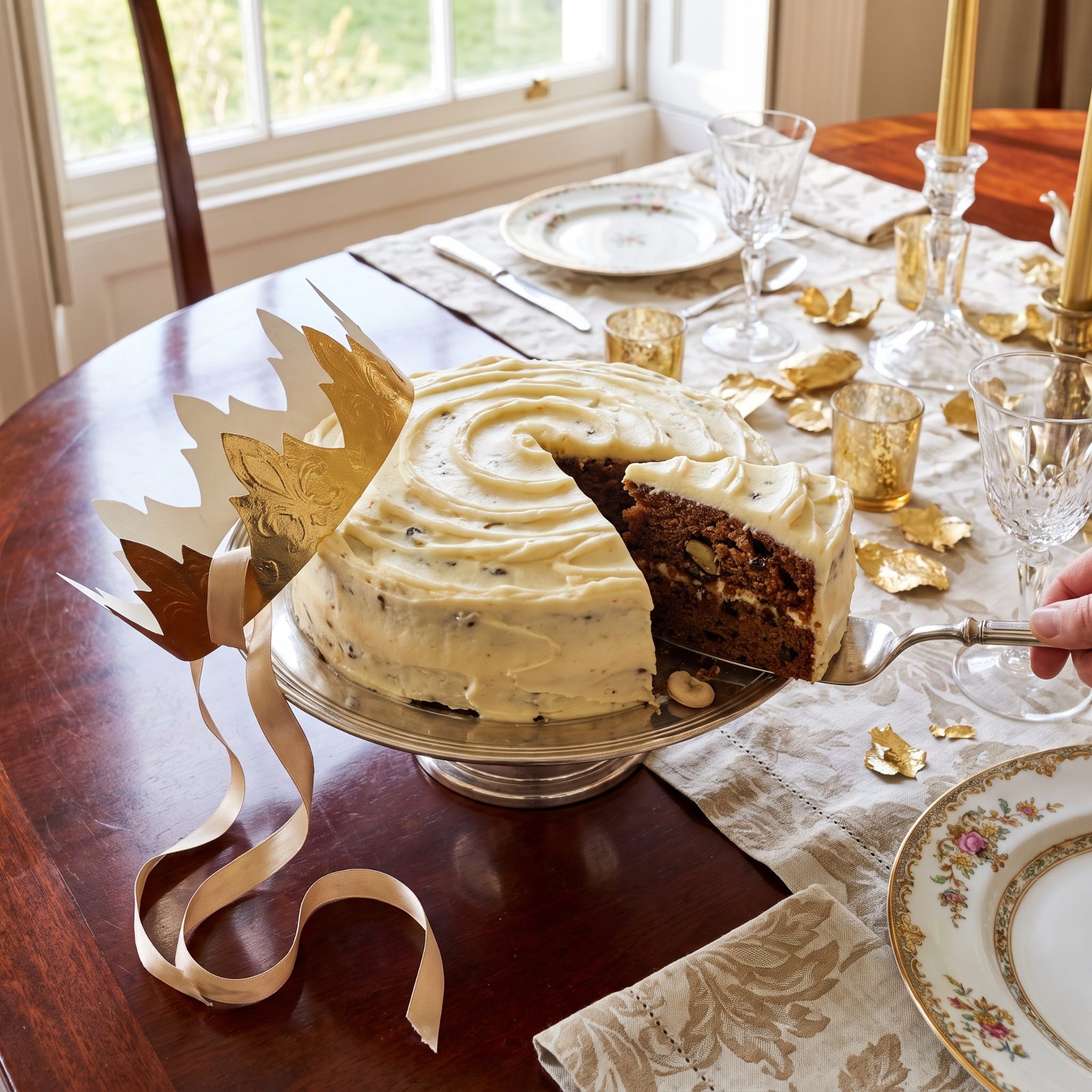
Whoever found the bean became king for the night. The Twelfth Night cake ruled the close of Christmas on January 6th — a dense spiced fruitcake with a dried bean baked inside, and sometimes a pea for the queen.
Find the bean in your slice and you reigned over the evening’s games, misrule, and nonsense. The French kept the whole thing alive as the galette des rois, swapping the bean for a tiny porcelain charm.
In England and America, Twelfth Night faded through the Victorian era as Christmas Day took over as the main event. The cake lost its crowd, and the bean lost its king. A perfectly good excuse for crowning someone at random, just gone.
26. Salt Cod Brandade for Christmas Eve
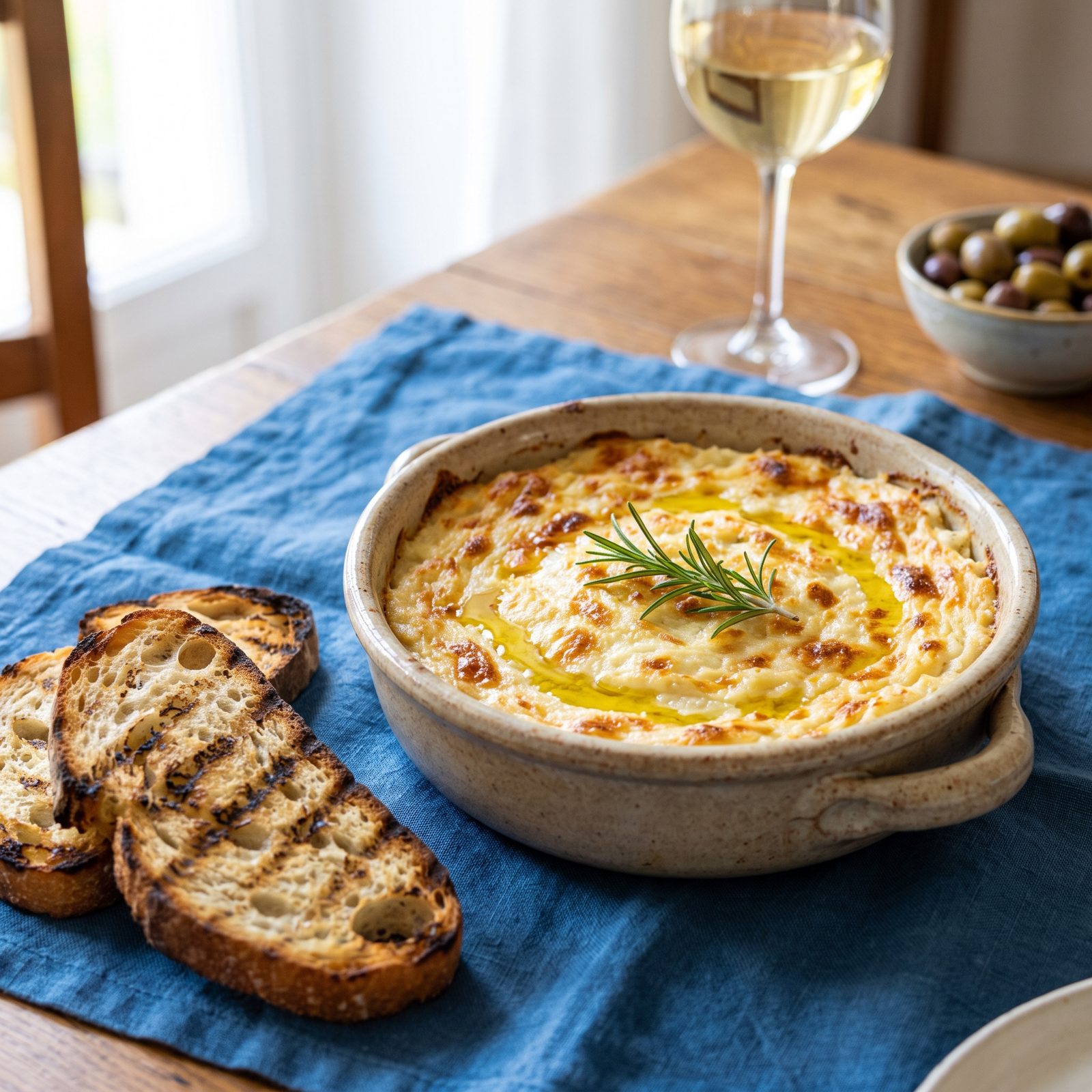
Whipped salt cod doesn’t sound like Christmas until you’ve had it. Brandade folds reconstituted salt cod with potato, garlic, and olive oil into something cloud-light, then bakes it golden to spread on toast.
In Provence it anchored the gros souper, the great Christmas Eve supper served alongside the famous thirteen desserts. Across the Mediterranean, salt cod meant Christmas because it honored the meatless vigil while still feeling like a feast.
25. A Crown Roast of Pork With Apple Stuffing
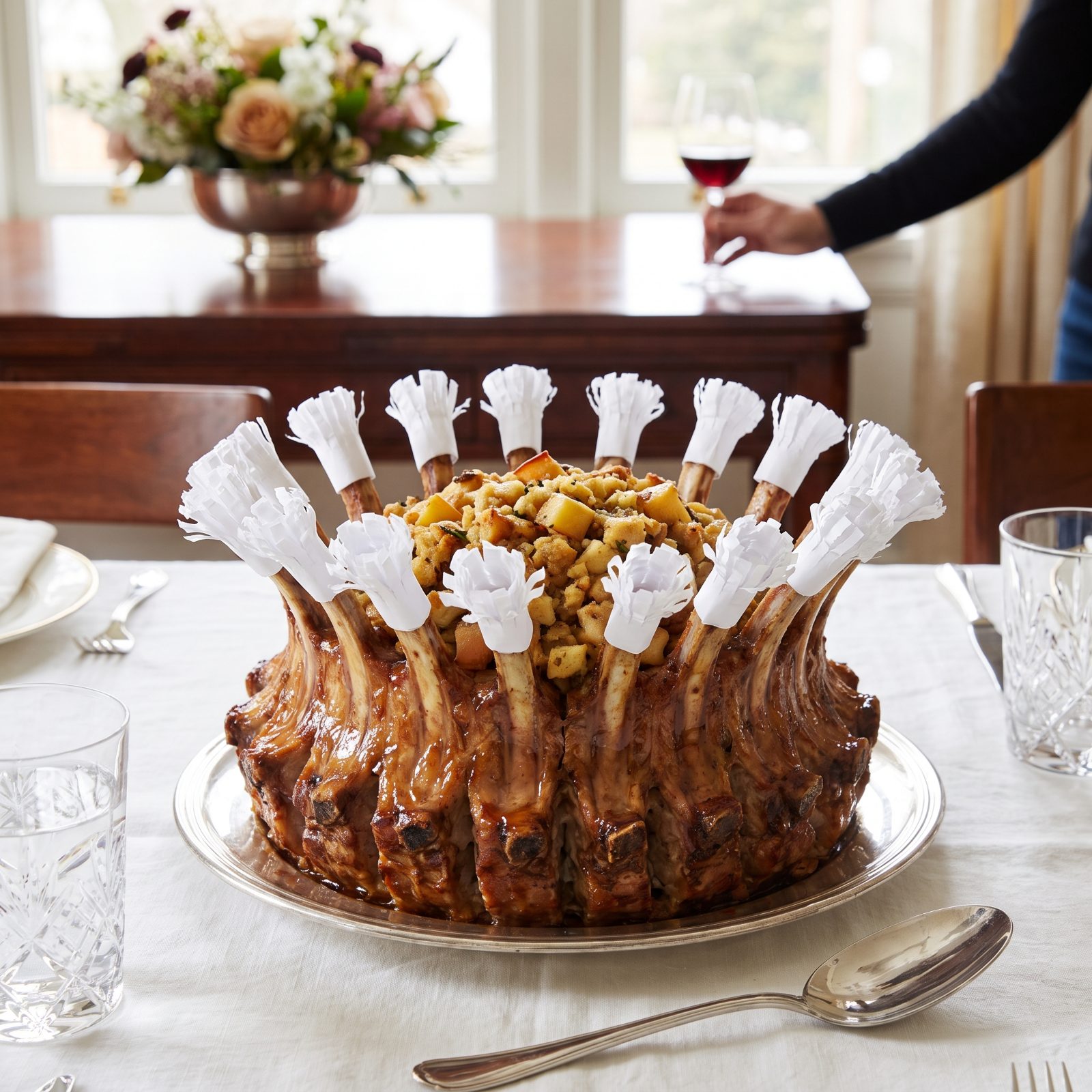
You needed a butcher for this one, and a reason. A crown roast is a rack of pork curved into a ring, ribs standing up like a crown, each bone tipped with a little paper frill and the hollow center packed with apple stuffing.
It was the centerpiece of aspirational mid-century entertaining — the dish that said you’d arrived. Gourmet magazines put it on their December covers. Hostesses planned whole parties around it.
Then home cooks stopped breaking down whole racks, butchers’ counters shrank, and the showpiece became too much work for a Tuesday or a Christmas. The frills went back in the drawer.
24. Creamed Oysters in Puff Pastry Cases
Would you like to save this?
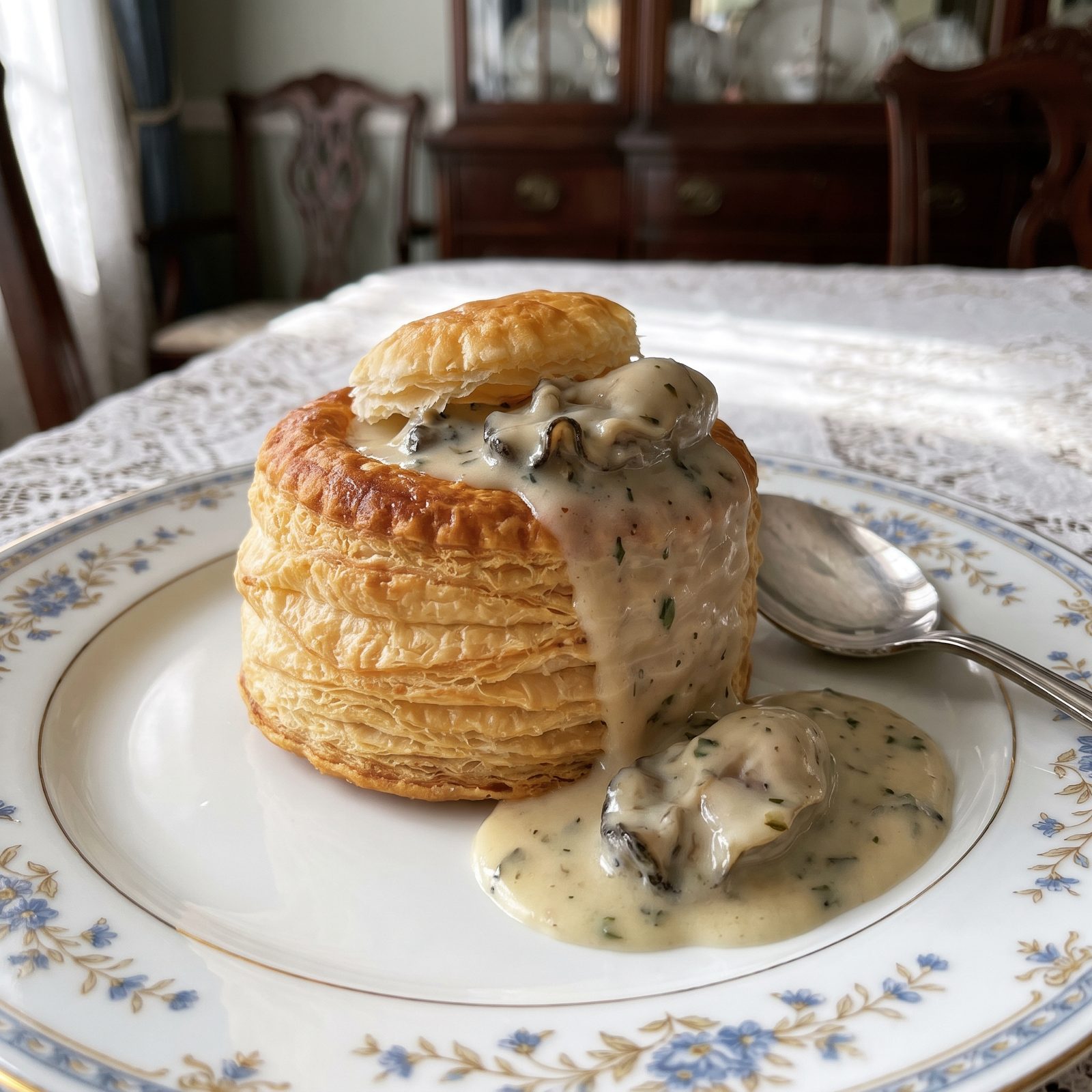
Picture a vol-au-vent the size of a teacup, its lid lifted, cream sauce and oysters spilling out the top. Creamed oysters in puff pastry cases were the elegant answer to a holiday first course — all richness and restraint in a crisp golden shell.
They turned up at Christmas dinners and New Year’s parties through the first half of the twentieth century, back when a sauced oyster in pastry read as the absolute height of refinement.
Then nouvelle cuisine made cream sauces unfashionable, oyster prices climbed, and the fiddly work of filling fragile pastry cases to order fell to nobody. A genuinely good dish, lost to the tyranny of the easier appetizer.
23. A Savory Yorkshire Christmas Pie
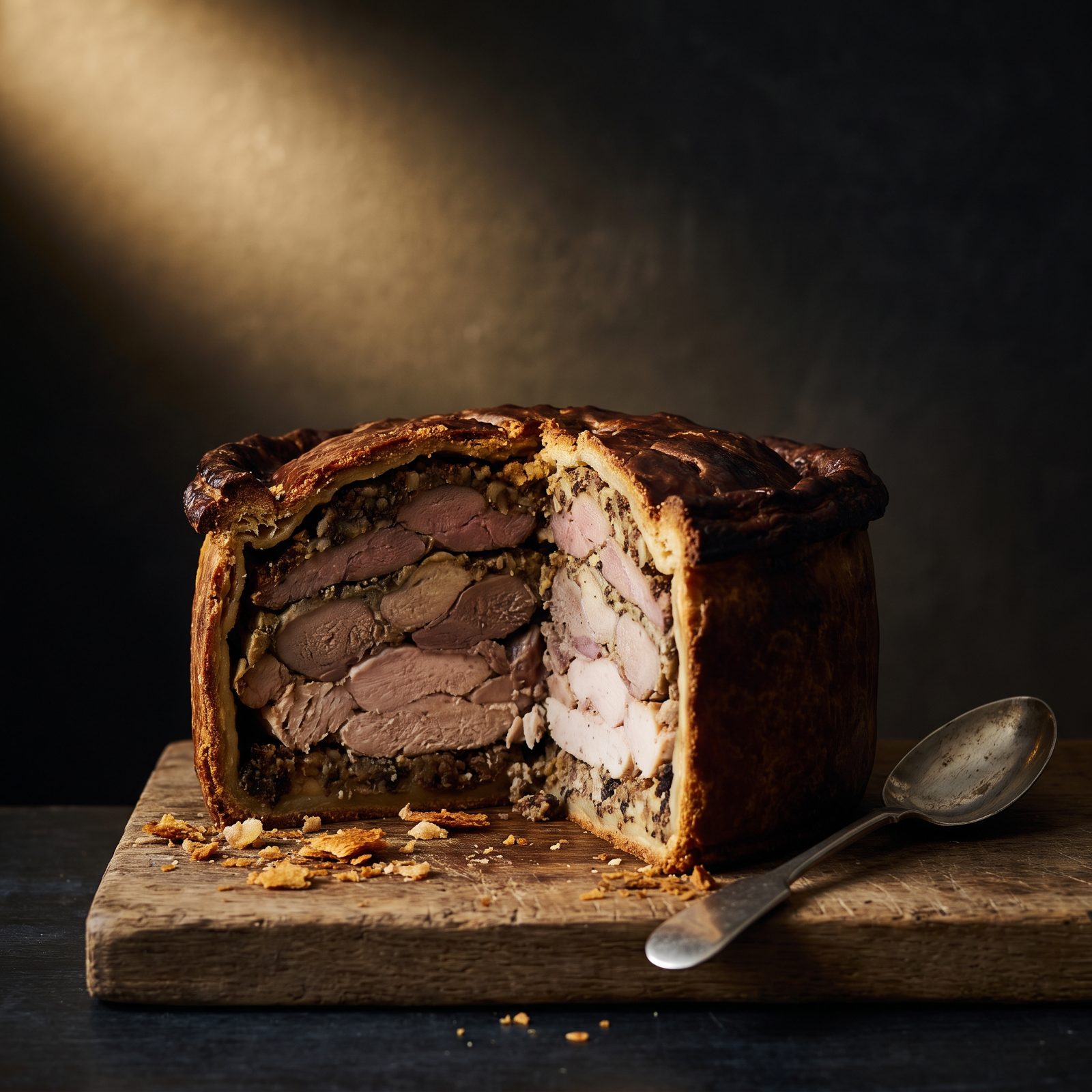
This was the pie to end all pies. The Yorkshire Christmas pie packed a turkey, a goose, a chicken, a partridge, and a pigeon one inside the other, all boned, layered, and sealed in a towering hot-water crust built to survive a journey.
Georgian families shipped them by coach to relatives in London as Christmas gifts, the sturdy crust acting as armor. Hannah Glasse published the recipe in 1747, and it called for a bushel of flour just for the pastry.
Nobody has the days, the birds, or the coach anymore. So the great pie became a legend instead of a dish.
22. Plum Porridge Thick With Dried Fruit
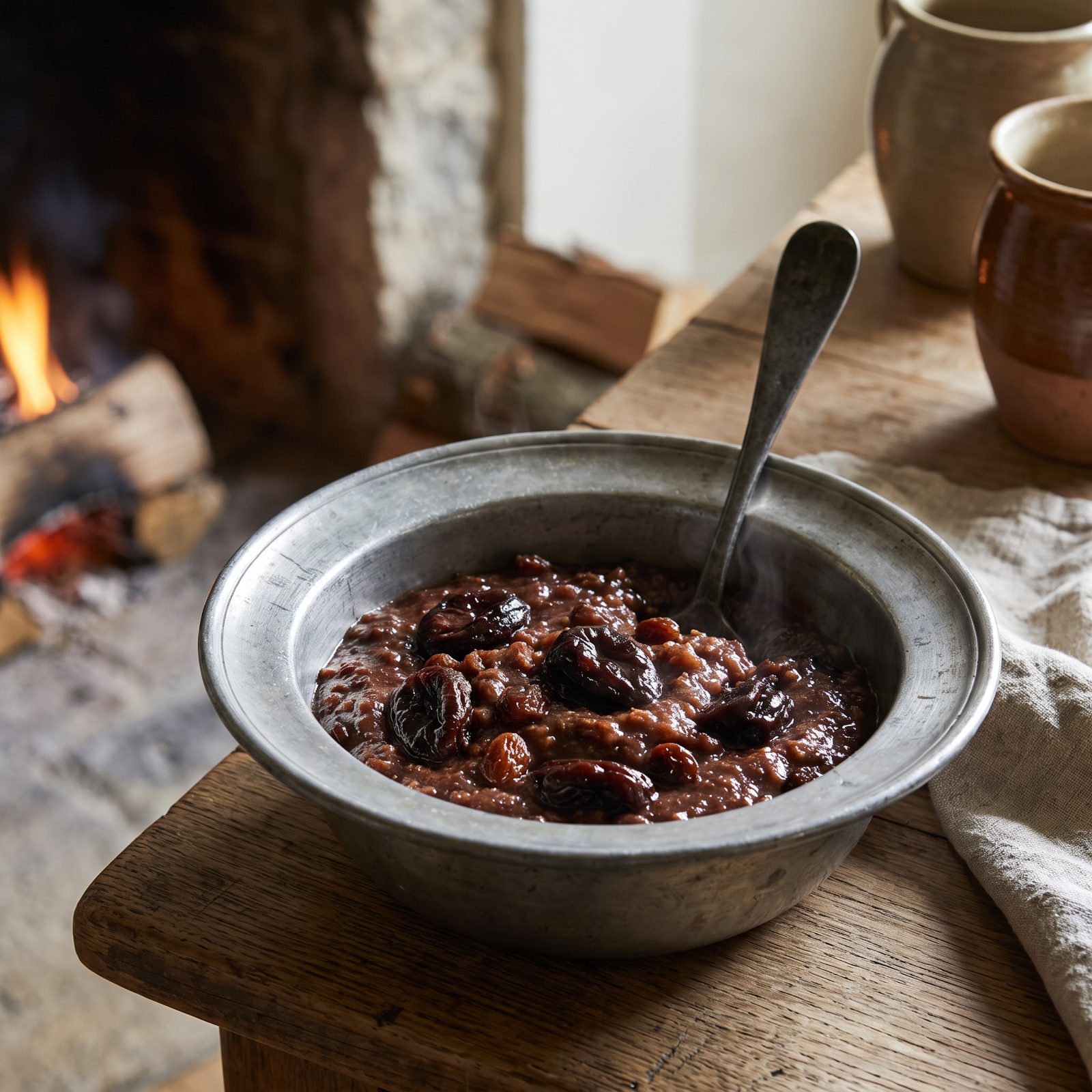
Before Christmas pudding took the crown, there was plum porridge, and it barely resembled anything we’d call pudding now. Beef broth, breadcrumbs, dried fruit, wine, and a storm of spices, all simmered into a thick spoonable mess that landed somewhere between soup and dessert. The Victorians ate it to open the meal, not close it.
The “plum” was a lie, by the way. No plums anywhere. For centuries people called prunes and raisins plums, which sent generations hunting for stone fruit and turning up shriveled grapes instead.
21. A Whole Fish Presented in Aspic
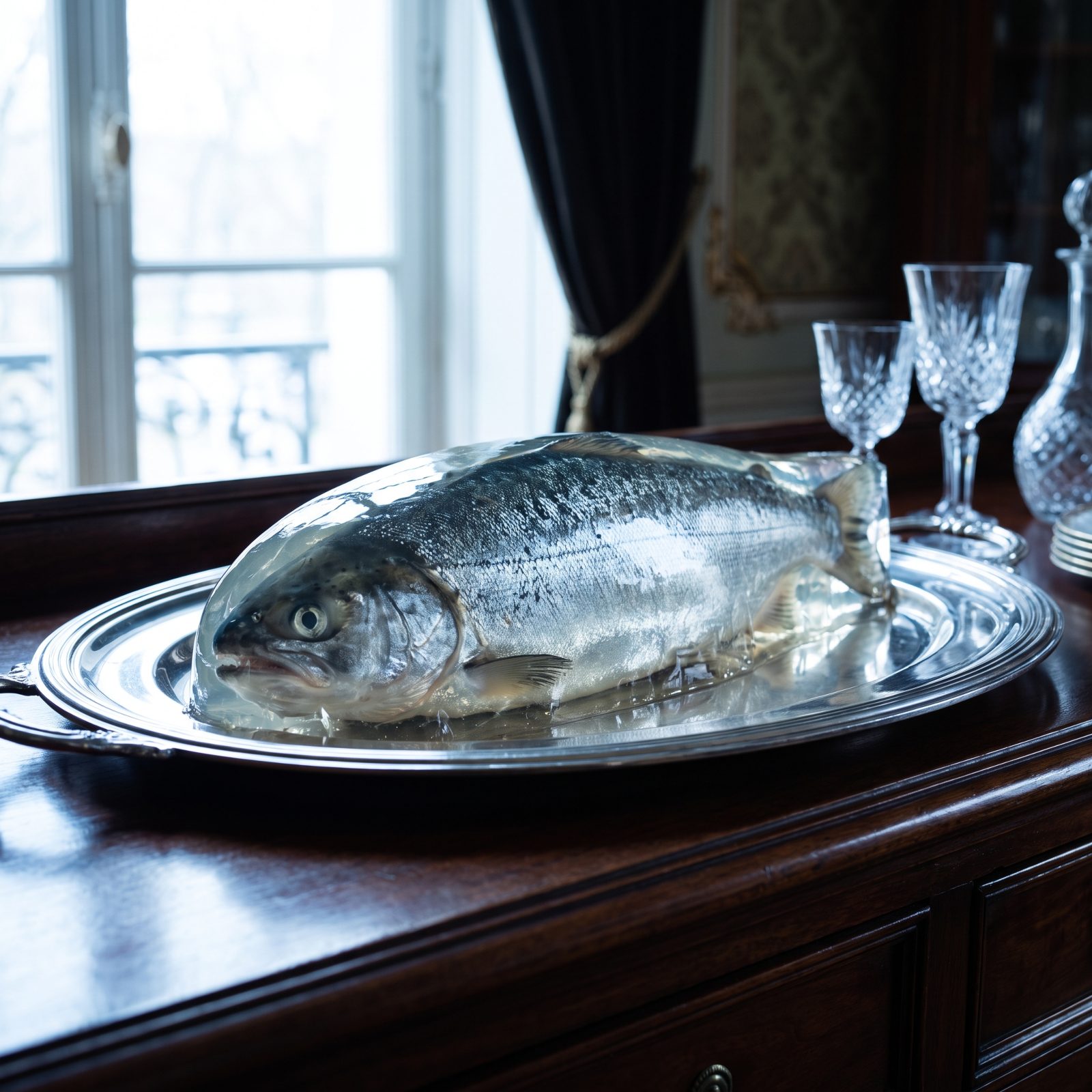
A whole fish suspended in trembling jelly announced a host with money and patience. Aspic took real skill. You clarified the stock until it ran crystal clear, poached the fish without breaking it, then built the glaze in thin layers, chilling between each coat until the whole thing gleamed like a frozen pond.
Cold centerpiece for a cold season, usually salmon or a fat pike, dressed up with cucumber scales and little egg-white flowers. Beautiful on the sideboard. Gone from nearly every table now, mostly because almost nobody wants to clarify stock for six hours anymore, and honestly I can’t blame them.
20. Sugarplums Made From Nuts and Dried Fruit
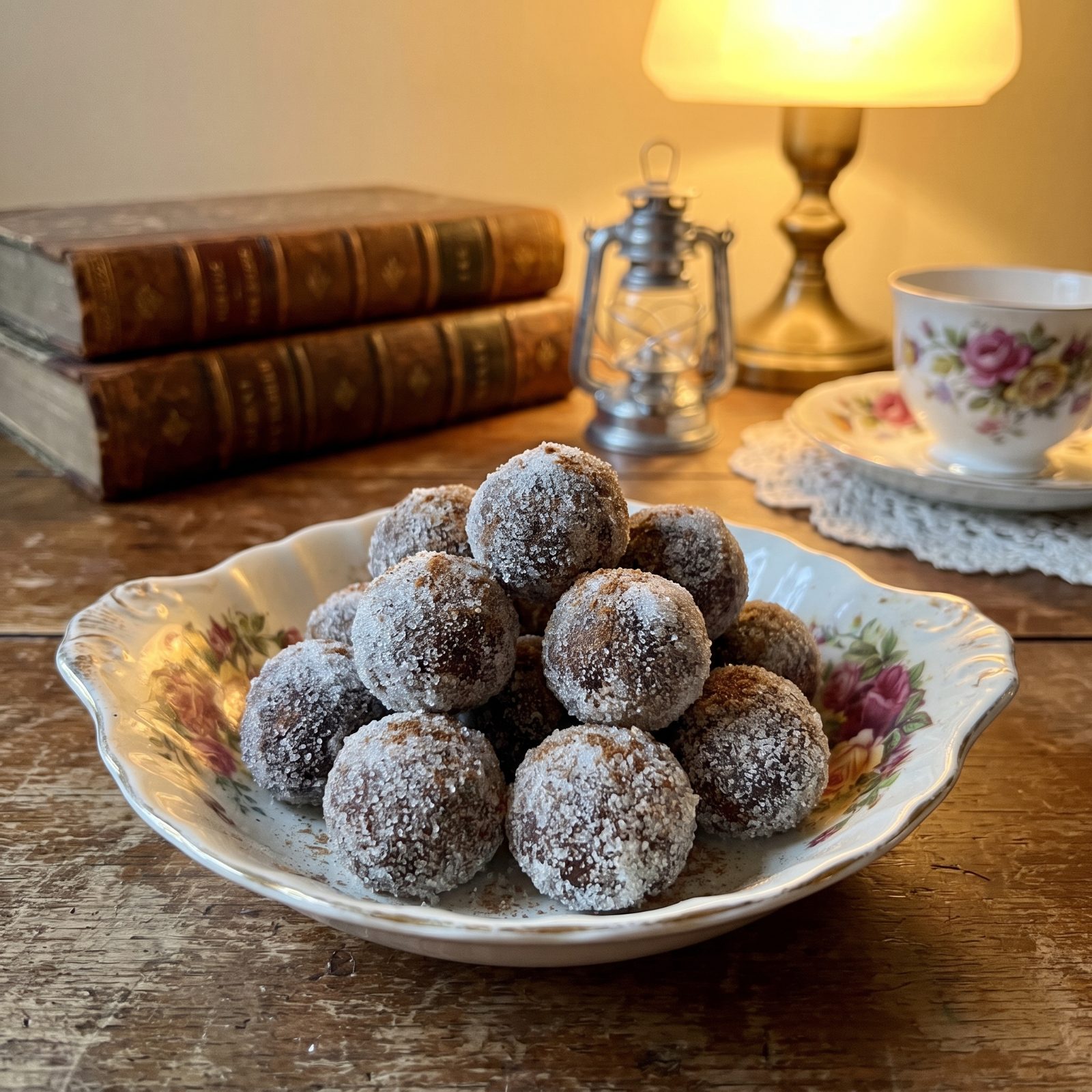
Visions of sugarplums danced through everyone’s heads for roughly two hundred years, and almost nobody today could tell you what one actually was. Not candy-coated plums. Not gumdrops. A real sugarplum was a dense little ball of chopped dried fruit, ground nuts, honey, and warm spices, rolled in sugar until it sparkled.
Children hung their stockings hoping for a handful. They kept beautifully, which mattered in a house with no refrigeration. The name survived in poems and carols long after the thing itself quietly disappeared from the Christmas table.
19. A Decorated Marchpane Christmas Centerpiece
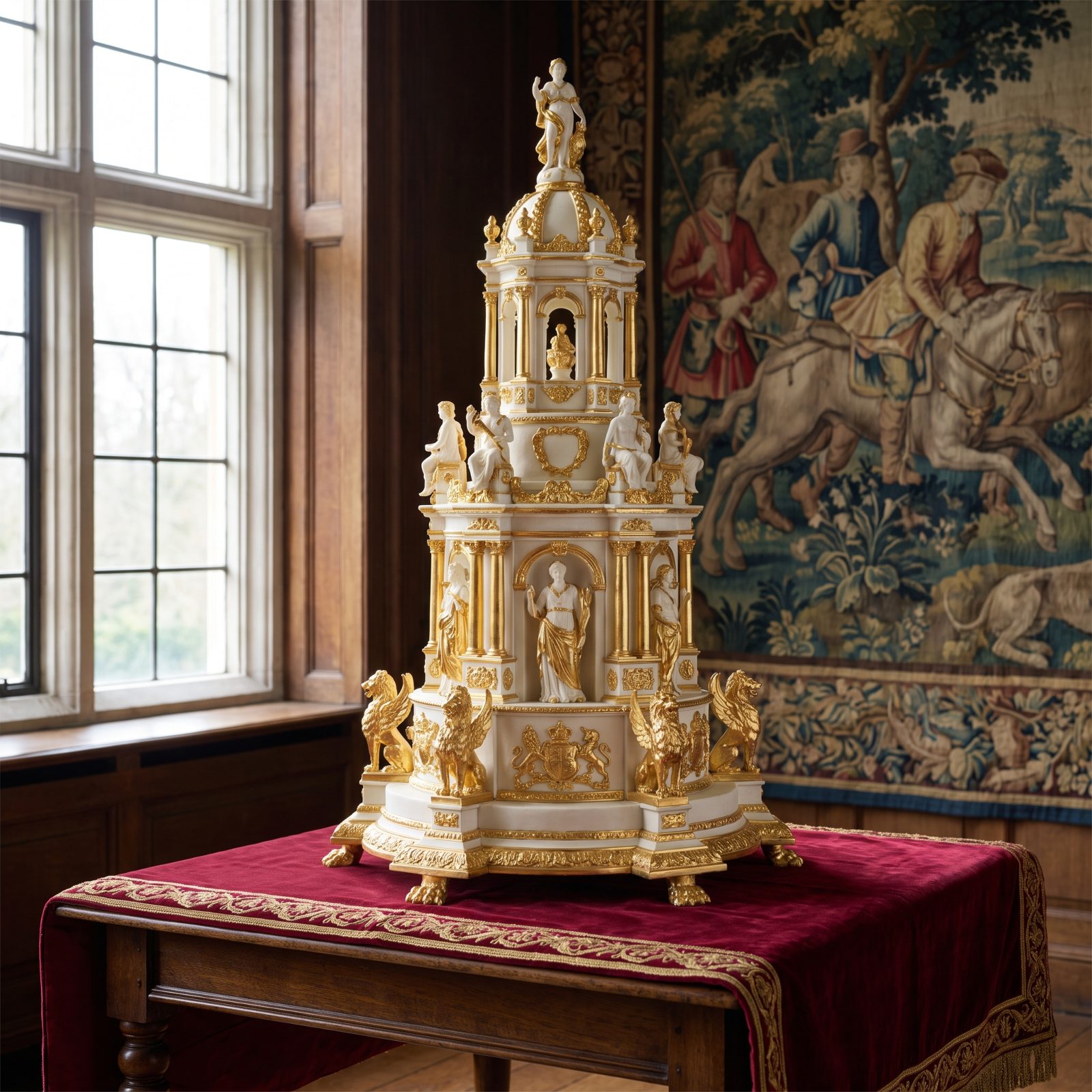
This was the showstopper of the Tudor and Stuart Christmas, and it has all but evaporated. Marchpane was an early marzipan, ground almonds and sugar beaten into a stiff paste, then shaped into an elaborate disc and gilded with actual gold leaf. It sat at the center of the feast as pure spectacle.
Cooks molded it into coats of arms, flowers, and lattice borders, baked it just until the surface set, then decorated it like a jeweler fussing over a brooch. It was meant to be admired first and eaten last. Modern marzipan survives as a thin layer under fruitcake icing, but the grand gilded version? Long gone.
18. Game Pie With a Raised Hot-Water Crust
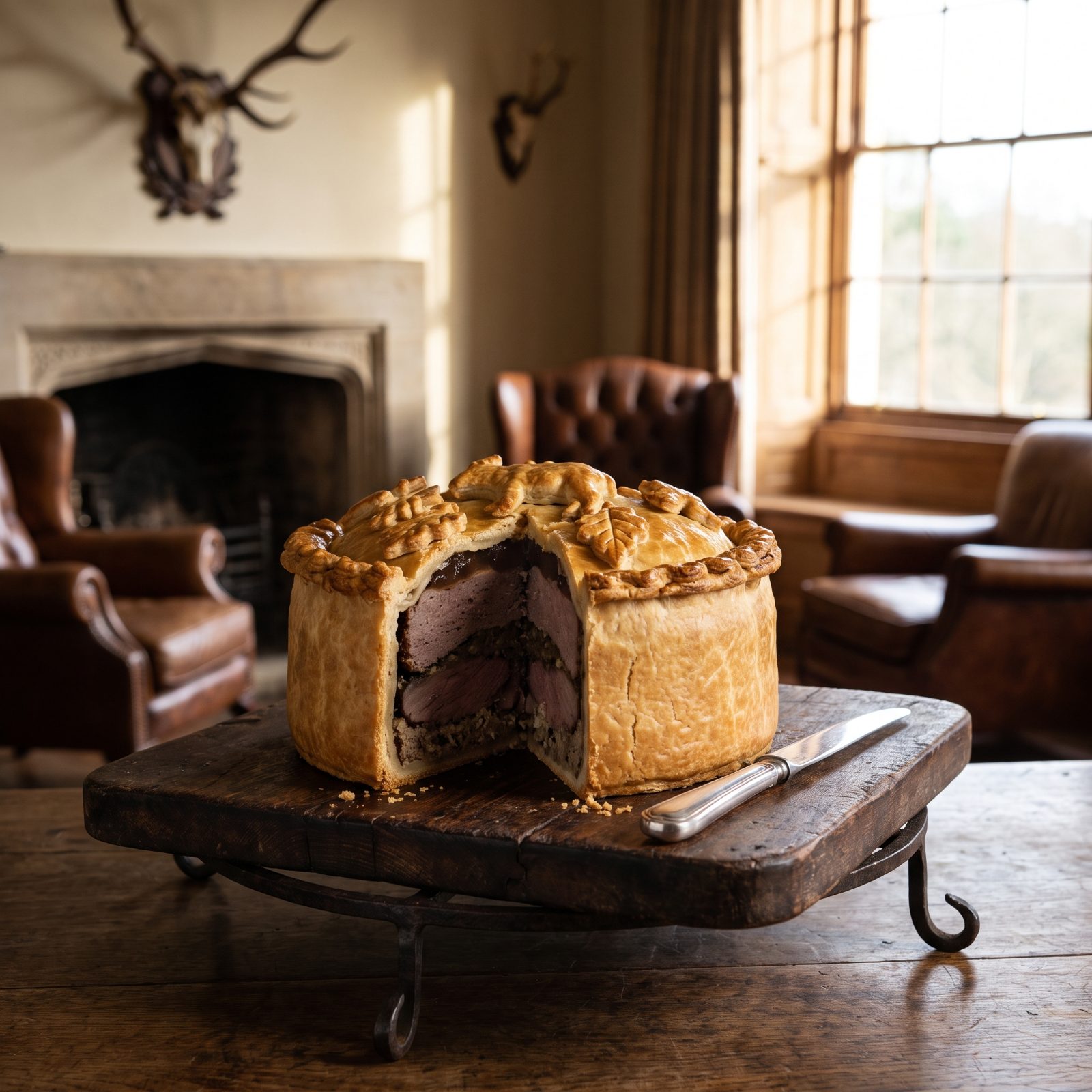
A proper raised game pie stood up on its own, no tin required. The secret was hot-water crust, a sturdy pastry made with lard and boiling water that you molded around a wooden block while warm, then packed with venison, pheasant, hare, whatever the hunt brought in.
After baking, cooks poured hot savory jelly through a hole in the lid to fill the gaps as the meat shrank, and the thing carved into clean slices showing off the layers inside. A holiday fixture on country tables for generations. Built to sit on the sideboard and feed a crowd over several cold days.
17. A Molded Cranberry and Celery Salad
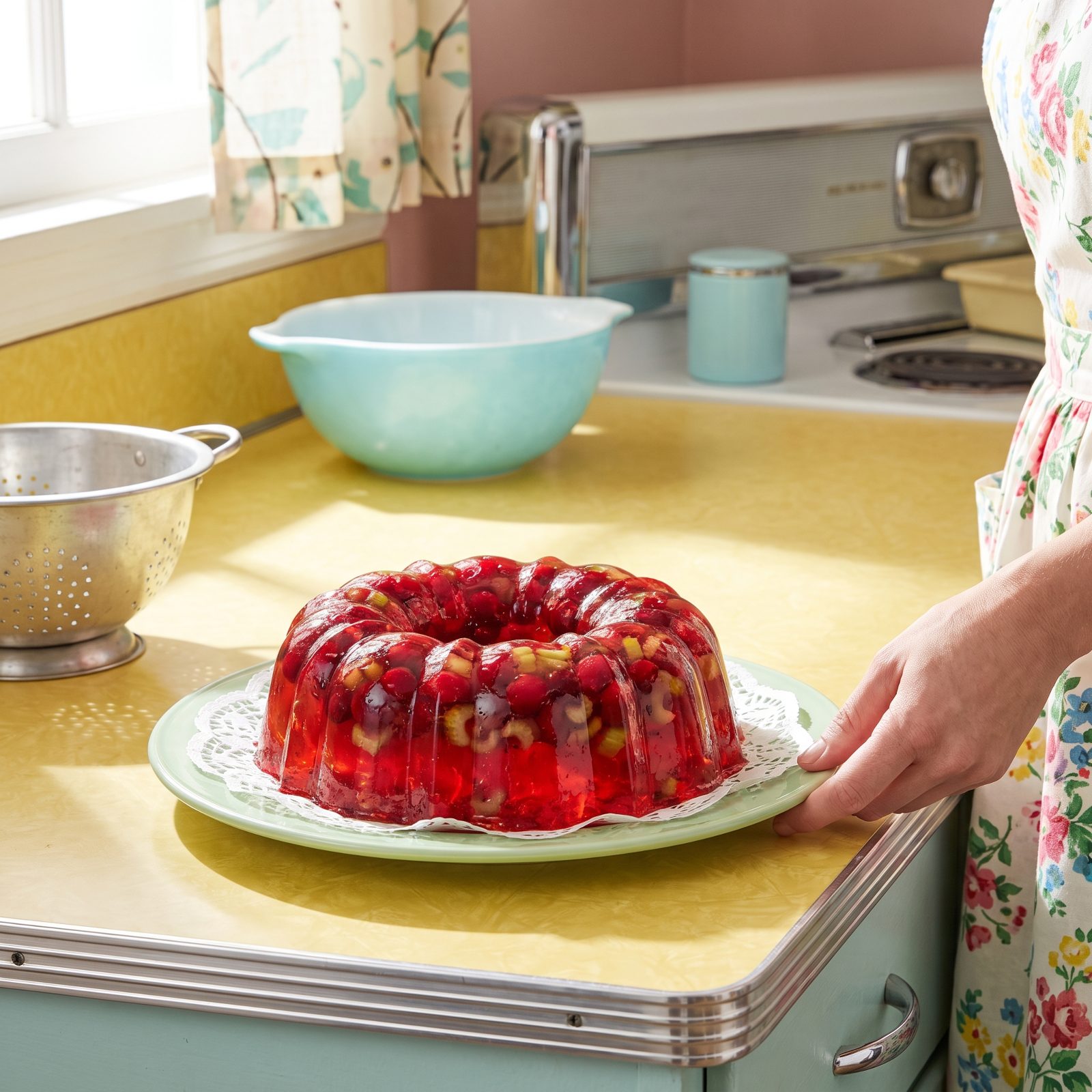
Somewhere between the 1920s and the 1960s, nearly every holiday table carried something trembling in a ring mold, and the cranberry-celery salad ruled the genre. Tart cranberry gelatin set with crunchy diced celery and walnuts, unmolded onto lettuce, crowned with a spoonful of dressing in the hollow center.
Salad, side, and conversation piece, all at once. The mold made it look fancy with almost no effort, and that was really the draw. Today cranberries show up as a canned log or a fresh relish, while the suspended-in-jelly version lingers mostly in church cookbooks and fond memory.
16. Pickled Peaches Served With Holiday Ham
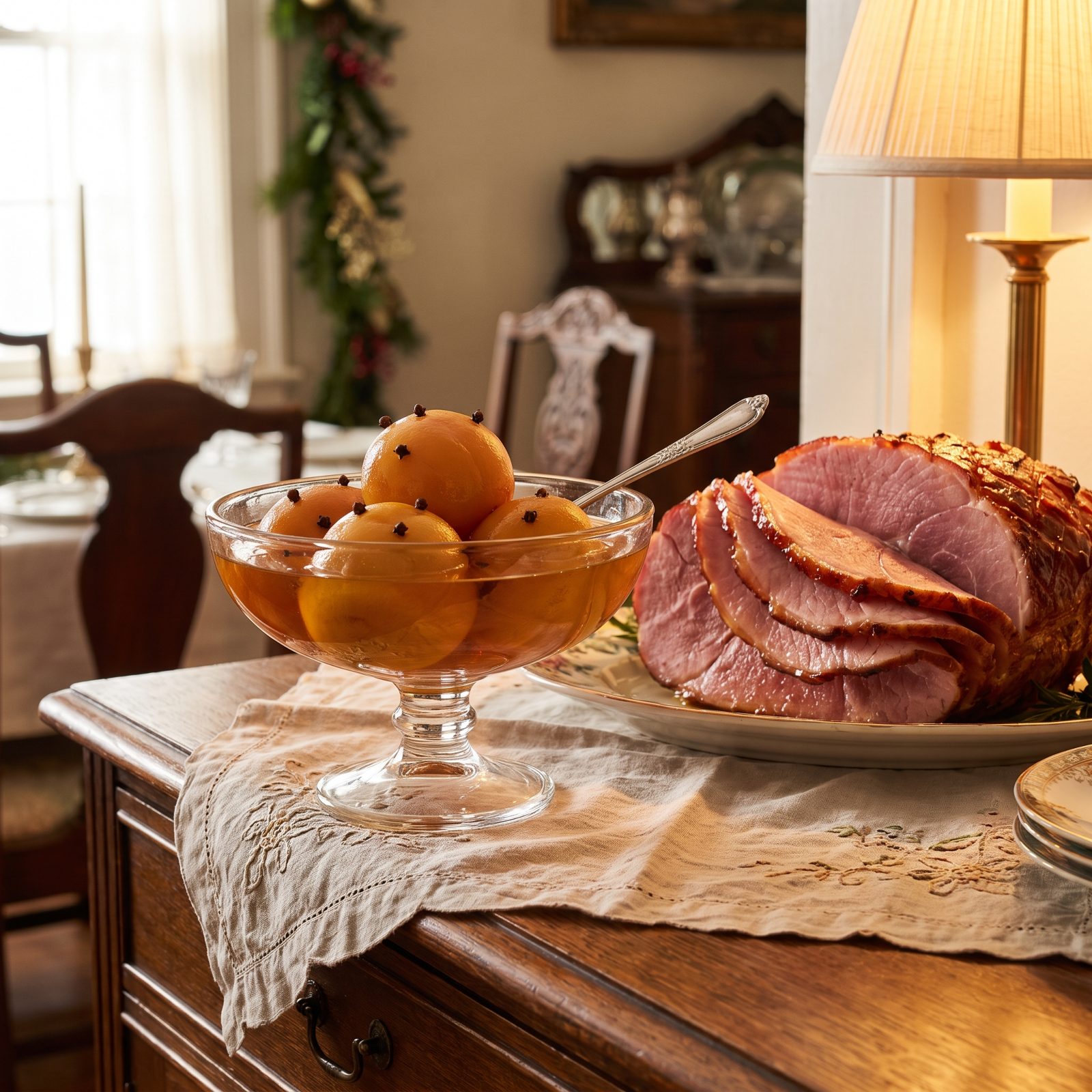
Pickled peaches and holiday ham went together like they’d signed a contract. Whole peaches, each stuck with cloves, simmered in a syrup sharp with vinegar and cinnamon, then put up in jars weeks ahead so that by Christmas they’d mellowed into something sweet, spiced, and just tart enough to cut through a fatty slice of ham.
Every Southern grandmother kept a jar in the pantry for exactly this moment. The sharpness against the salt of the ham was the reason they existed. Most people reach for a store-bought chutney now, or nothing at all, and a genuinely good pickled peach has become a rare thing to find on a holiday plate.
15. Mock Turtle Soup as the Opening Course
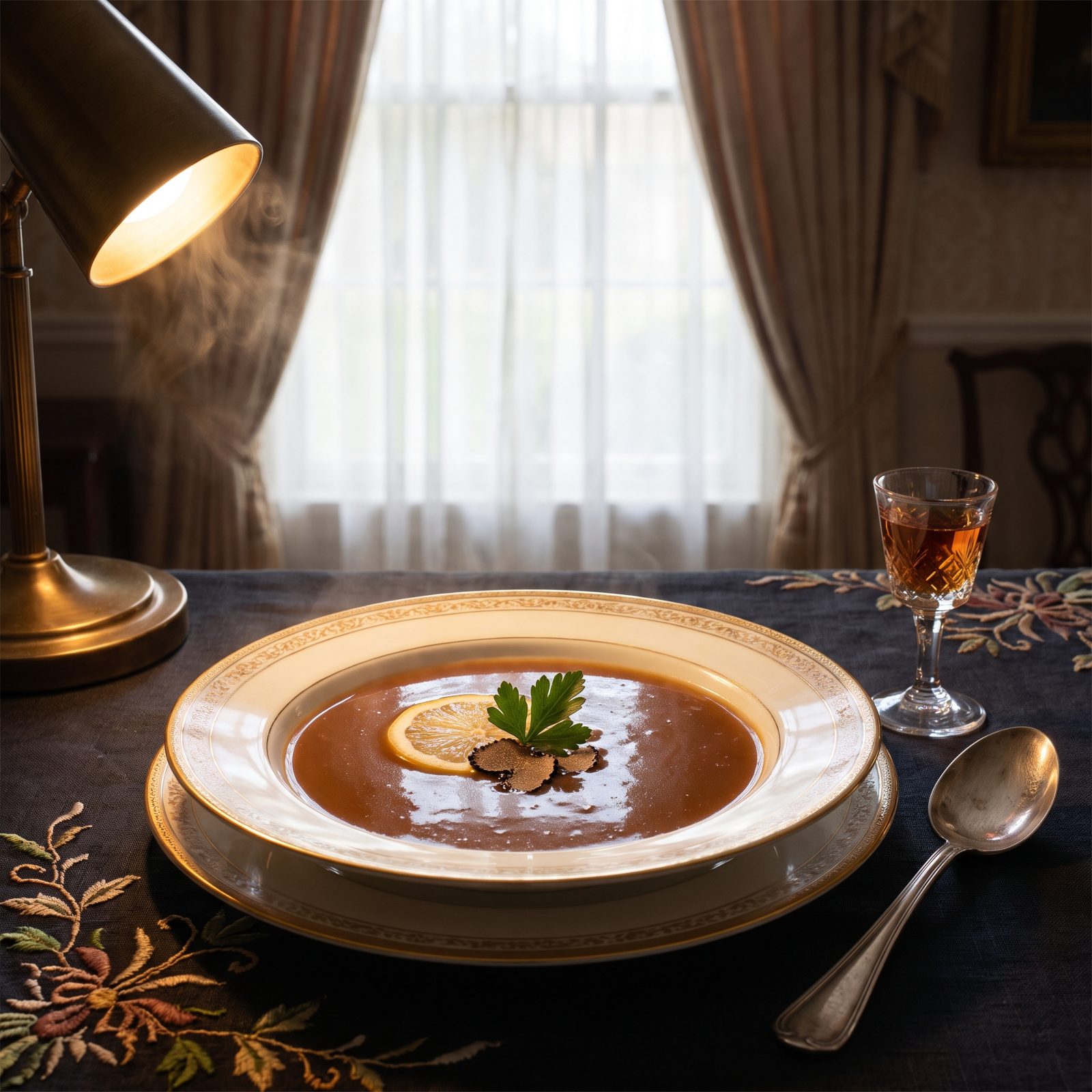
No actual turtle, which was the joke buried in the name. Mock turtle soup used a calf’s head to mimic the texture and richness of real green turtle soup, a luxury only the wealthy could afford. Clever cooks took an unfashionable cut and turned it into a dish that mingled at fine holiday tables.
It opened grand dinners for most of the nineteenth century, dark and gelatinous, laced with sherry and dotted with egg. Then Lewis Carroll gave it a sobbing cartoon face, and the name stuck in the culture long after the soup left the menu.
A whole dish built to imitate a luxury most diners had never tasted, and it outlived the original by a century in name alone.
14. Consommé Served in China Bouillon Cups
Would you like to save this?
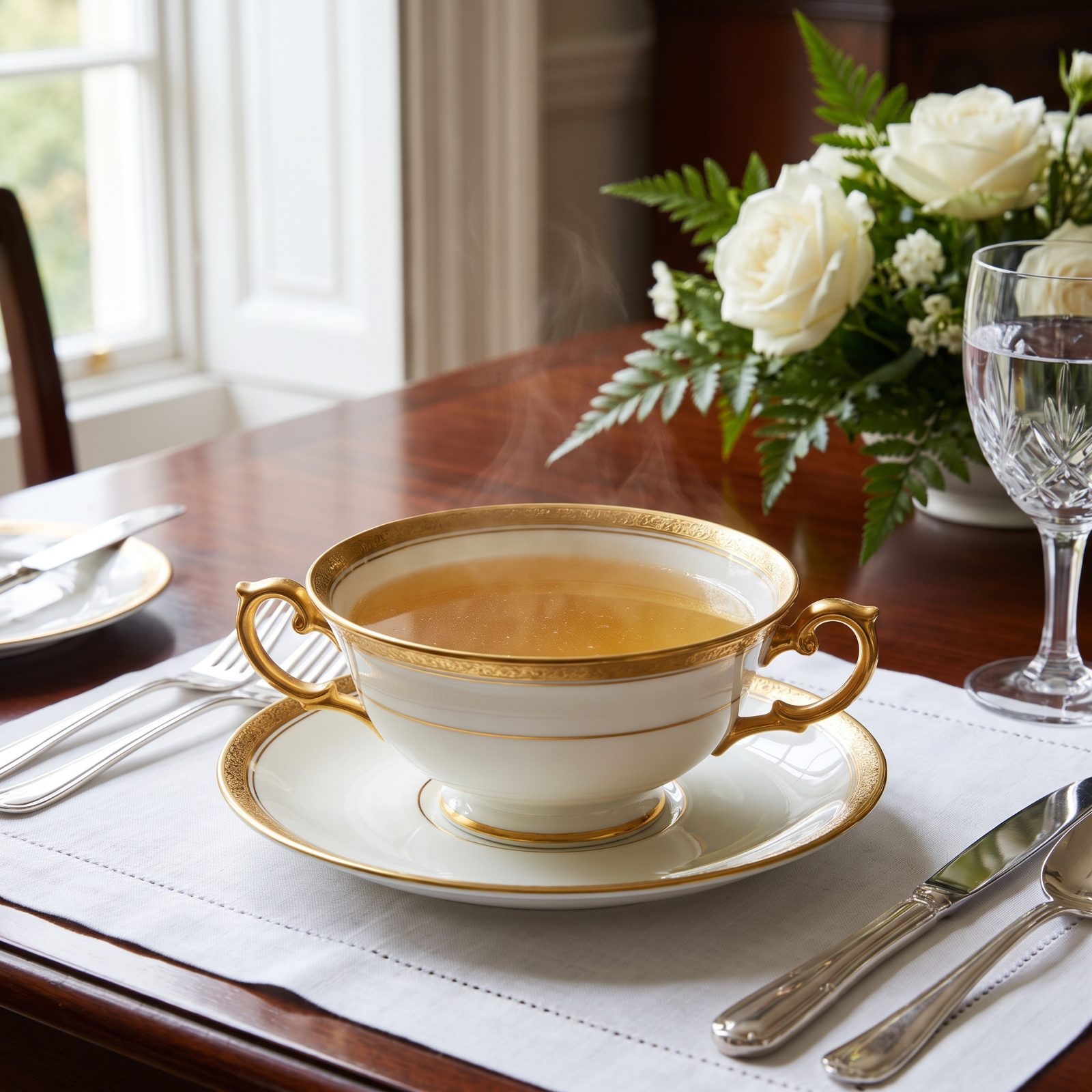
A clear golden consommé in a dainty two-handled bouillon cup was how a serious host opened a holiday dinner, and the clarity was the whole flex. Getting a broth perfectly transparent meant hours of simmering and clarifying with egg whites, and everyone at the table knew it.
You sipped it from the cup or used the little round bouillon spoon, a piece of silverware that has basically ceased to exist. Light on purpose, a graceful start before the heavy courses crowded in. The soup course as its own event has largely vanished, and those delicate cups now live in china cabinets nobody opens.
13. A Holiday Turkey Galantine Served Cold
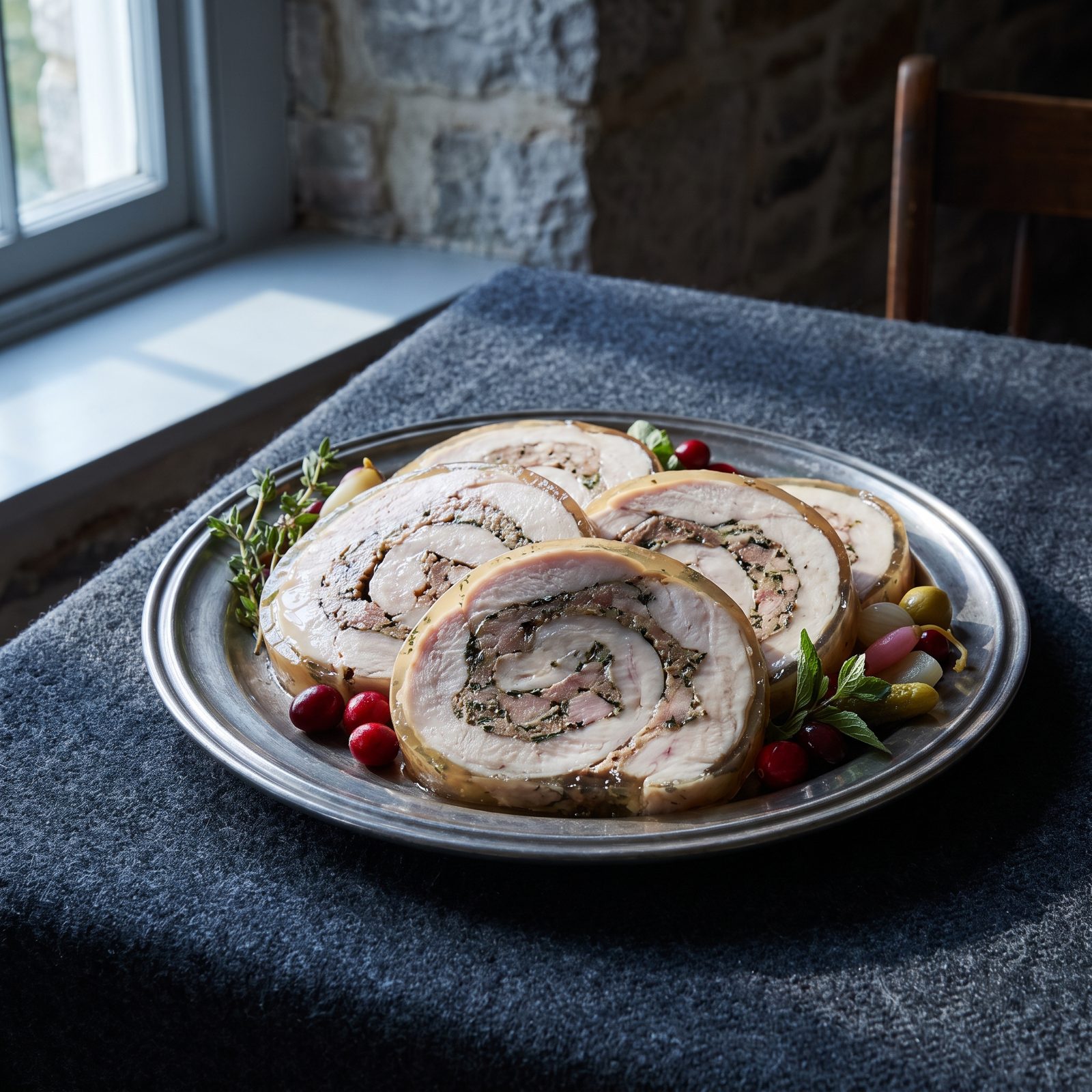
The galantine was the kitchen’s grand finale, and it took nerve. You boned a whole turkey without tearing the skin, laid in a forcemeat studded with truffles, pistachios, ham, and bright vegetables, rolled the whole thing tight, poached it, then chilled it under a glaze of clear aspic.
Sliced cold, each round showed a mosaic cross-section like stained glass. This was the dish that announced a cook at the top of their game. Boning a turkey whole is a skill almost nobody learns now, which is why the galantine, once the proudest thing on a festive sideboard, has slipped almost entirely out of our Christmas memory.
12. The Christmas Eve Eel Pie That Anchored the Old Feast of the Seven Fishes
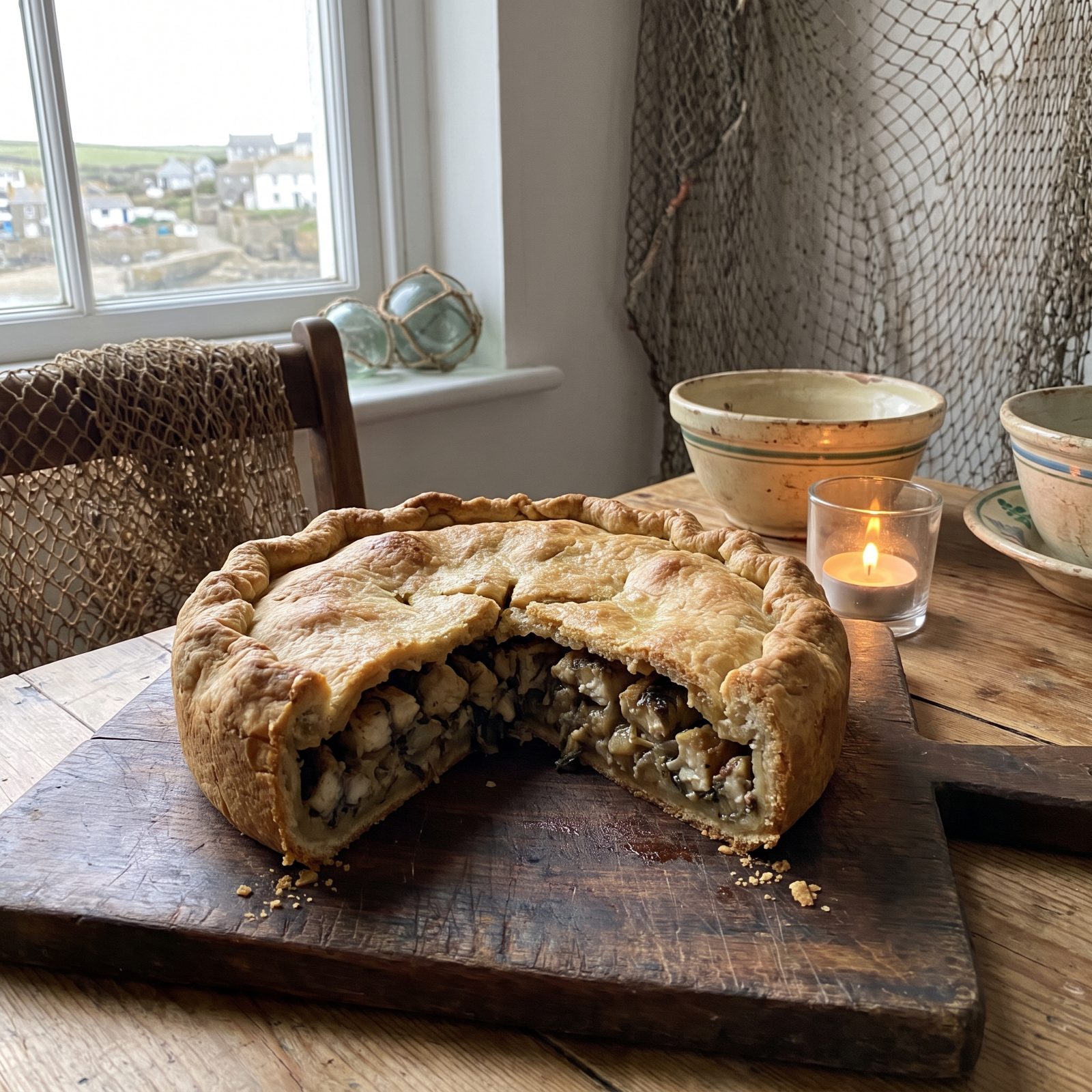
Before salt cod and fried smelts became the headline act of the Italian-American Christmas Eve, the eel held the center of the table. Stewed, jellied, or baked into a pie with cream and parsley, it was the fish you ate the night before Christmas because meat was forbidden and eel was cheap, fat going into winter, and easy to come by.
The pie version had a quiet dignity: a short pastry crust, chunks of eel poached soft, a pale sauce thickened with egg. Grandmothers swore by it. Grandchildren, less so.
11. Nesselrode Pudding, the Chestnut-Studded Showpiece Nobody Makes Anymore
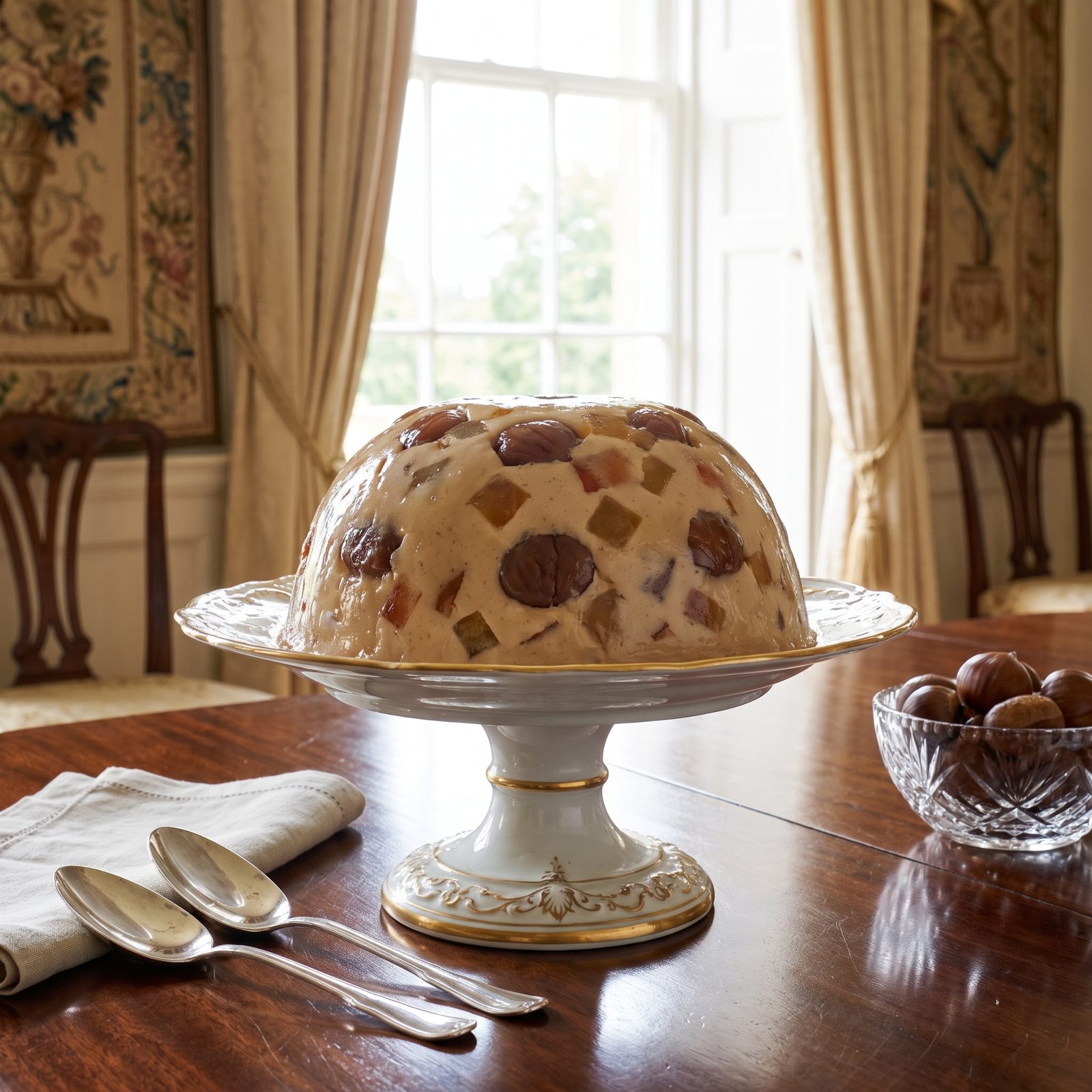
Created by a Russian count’s chef in the 1800s and named for the count, Nesselrode pudding was once the dessert you served when you wanted the whole table to go quiet. Picture a frozen custard folded with chestnut purée, candied fruits, currants soaked in maraschino, and sometimes a shot of rum, molded tall and turned out in one triumphant shiver.
It took days. You candied your own chestnuts, strained custard through cloth, and prayed the mold held. By the 1960s almost nobody had the patience, and the thing faded into cookbook footnotes and the occasional “Nesselrode pie” at an old-line diner.
It was the dessert that announced the host had money, time, and something to prove.
10. A Christmas Charlotte Built From Apples and Buttered Bread
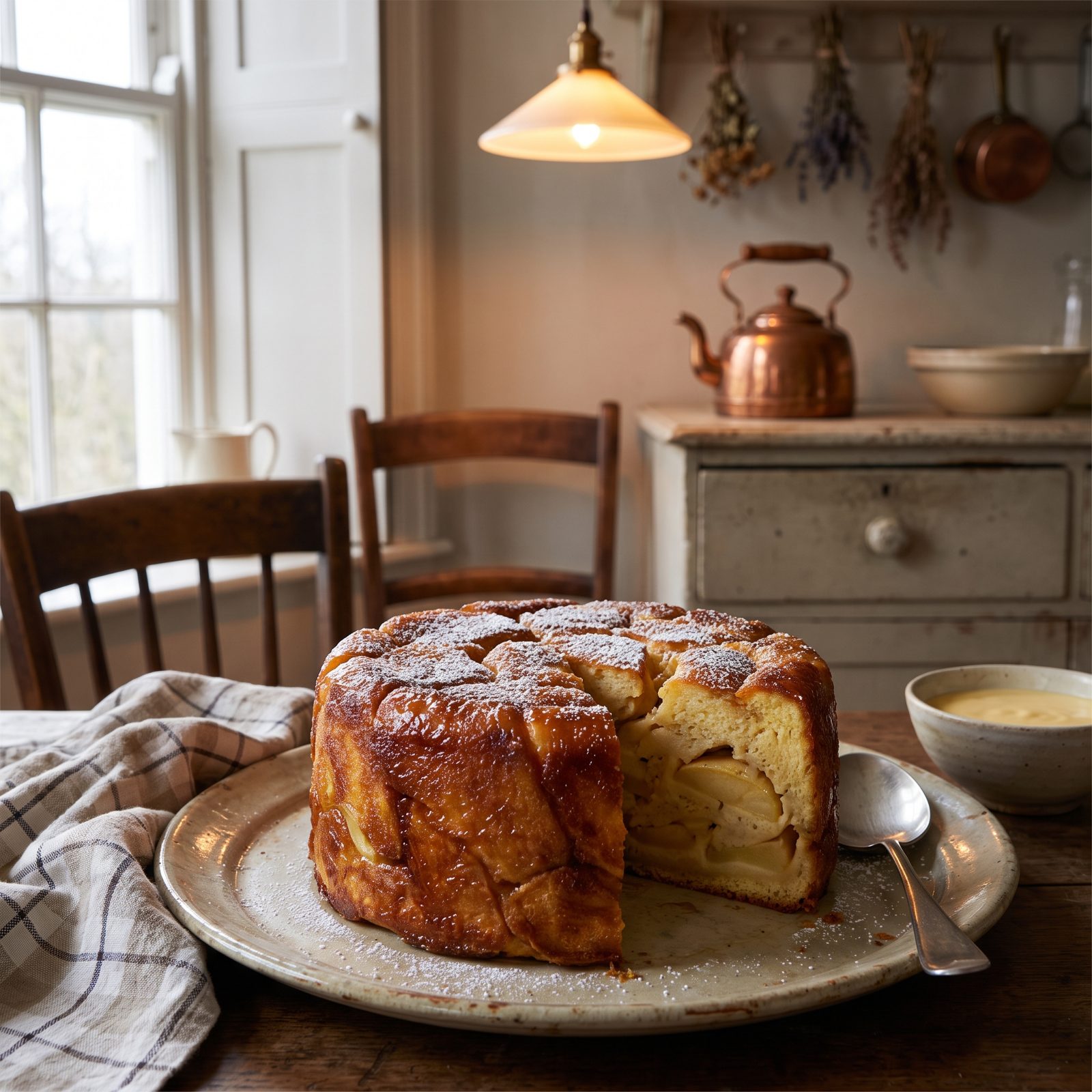
The apple charlotte was thrift dressed up for company. You took stale bread, sliced it thin, dipped it in melted butter, and pressed it into a mold to form walls and a lid, then packed the whole thing with apples cooked down with cinnamon and lemon until they turned almost to jam. Bake it, turn it out, and the bread crisps into a golden drum around the spiced fruit.
Served warm with custard on Christmas night, it used up the week’s leftover loaf and still managed to feel like an occasion.
Somewhere along the way the apple pie won, and the charlotte quietly left the table.
9. The Snowy Coconut Lane Cake That Ruled the Southern Christmas Sideboard
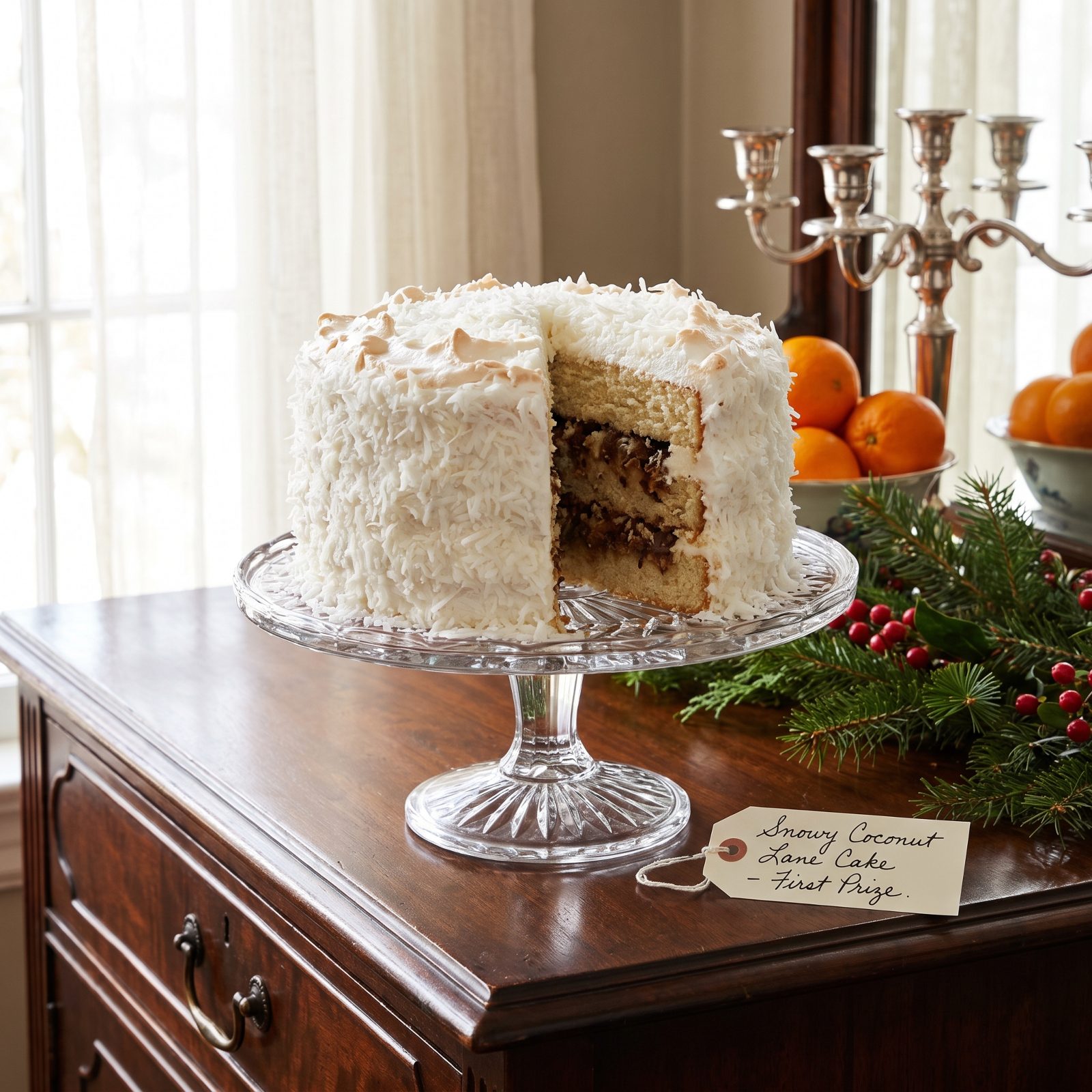
This was the cake that showed up on the good glass stand once a year. Emma Rylander Lane’s prize-winning recipe came out of turn-of-the-century Alabama, white as a snowbank from boiled icing and coconut, hiding a boozy filling of pecans, raisins, cherries, and enough bourbon or brandy to make the whole thing keep for days.
Harper Lee loved it enough to put it in a novel. Southern aunts loved it enough to guard the recipe with their lives. And yet the Lane cake has thinned out to near extinction, crowded off the sideboard by sheet cakes and store-bought pies.
8. The Dense Black Bun That Carried the Scottish New Year
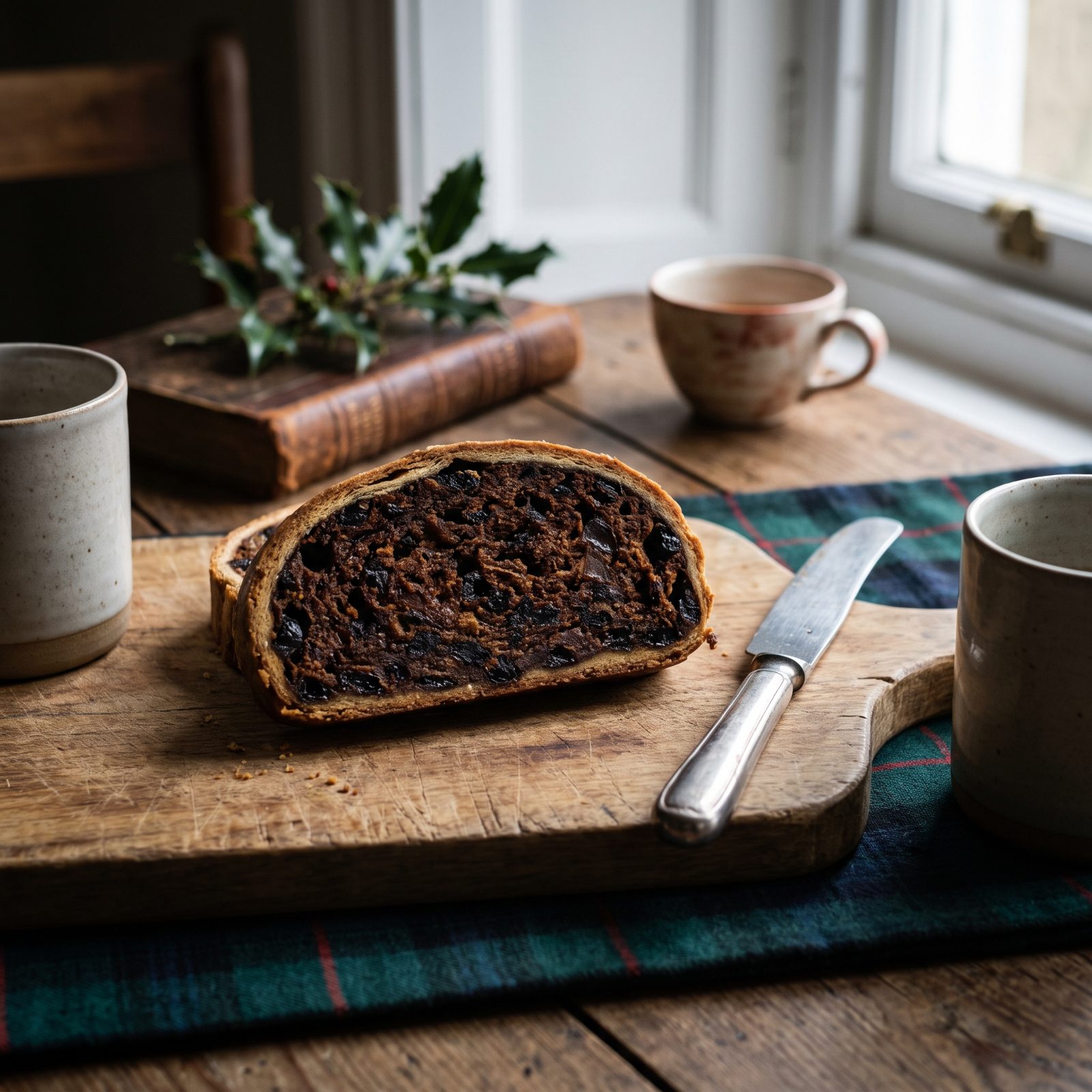
Black bun looks like a brick and tastes like a spice cupboard emptied into one loaf. A thin plain pastry wrapped around a near-solid mass of currants, raisins, almonds, peel, and whisky, it was the cake Scots cut at Hogmanay and pressed on the first visitor to cross the threshold in the new year.
It kept for weeks, and it needed to. You baked it well ahead and let the fruit do its slow work in the dark.
Outside Scotland it barely registers now, and even in Scotland it’s more supermarket curiosity than homemade ritual.
7. Brandied Peaches Decanted From a Jar Put Up in July
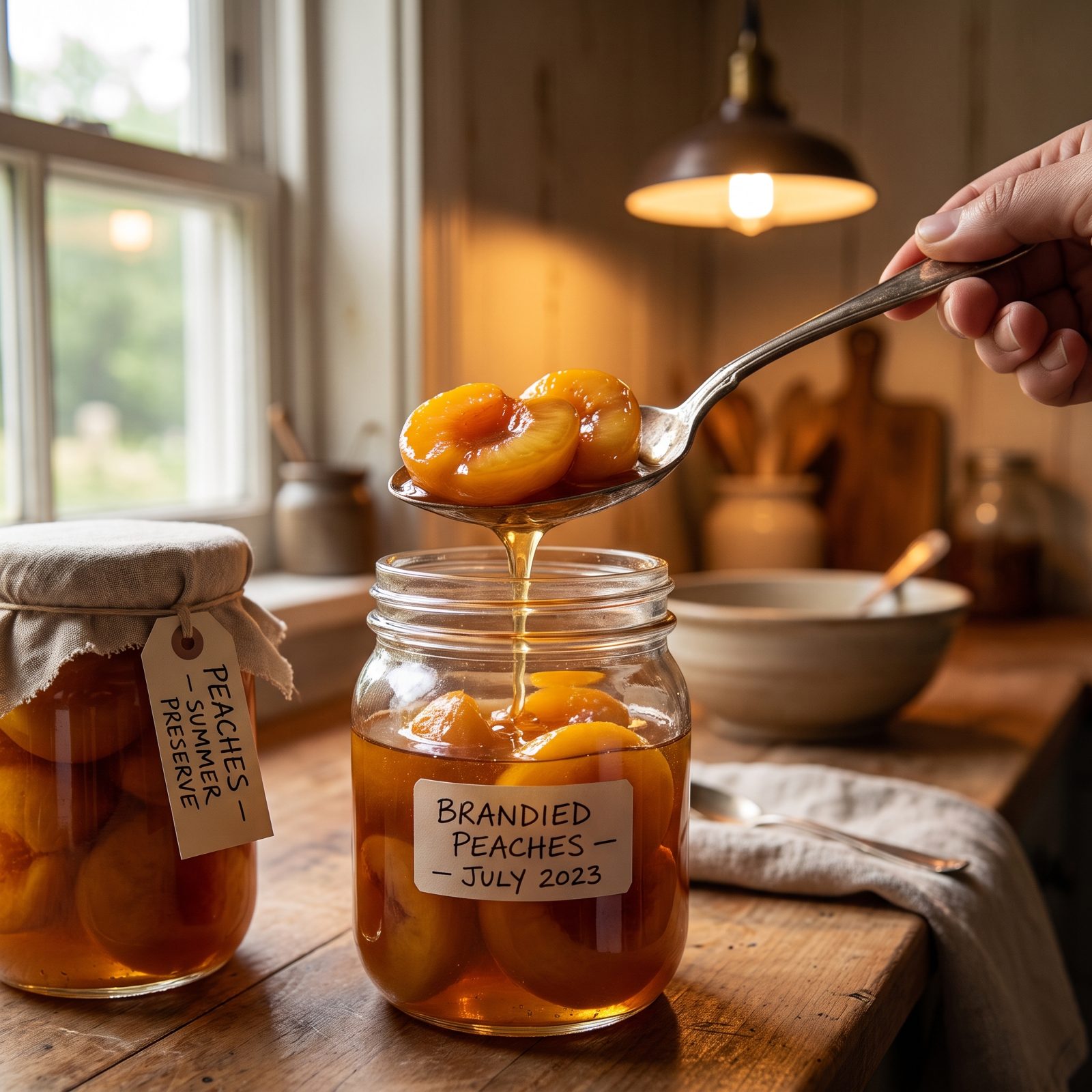
Opening the brandied peaches was a small ceremony. You’d put them up in high summer, whole or halved, in sugar syrup laced with brandy, and set the jars in the cellar to wait out the heat. On Christmas you decanted them into the cut-glass compote and spooned them, warm and boozy, over cake or ham or just into a dish on their own.
The smell alone, peach and alcohol and sugar, was the point.
6. Stuffed Dates Rolled in Coarse Granulated Sugar
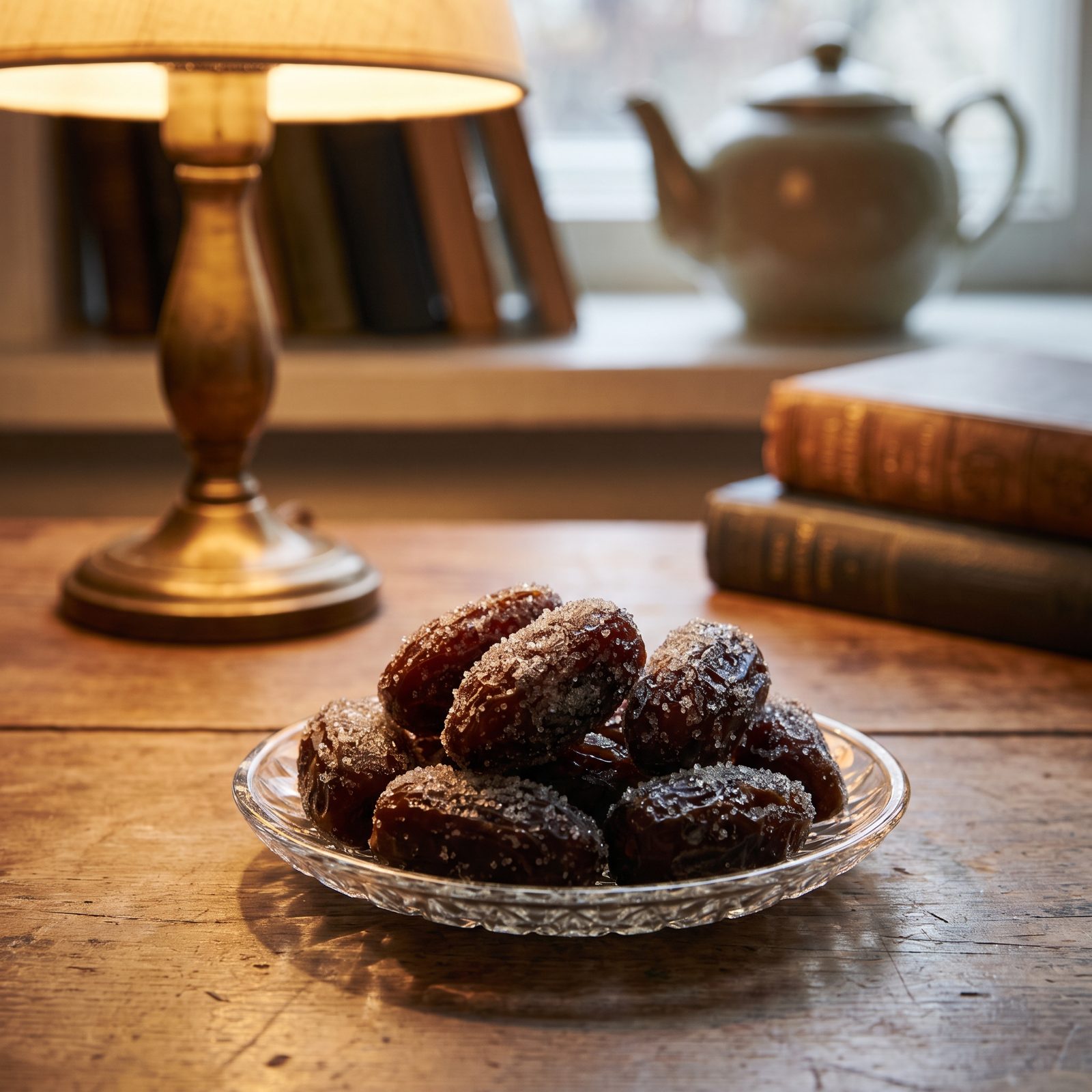
Someone’s grandmother always made these. Medjool dates slit down the side, pitted, and stuffed, sometimes with a walnut half, sometimes with a fondant or cream cheese filling, then rolled in granulated sugar until they wore a frosty coat.
They lived on the sweets tray next to the ribbon candy. Sticky, chewy, almost too sweet, and gone by the second day.
They cost almost nothing and took real patience to make, which is probably why they vanished the moment holiday candy got easy to buy by the bag.
5. Ribbon Candy Folding in a Cut-Glass Dish
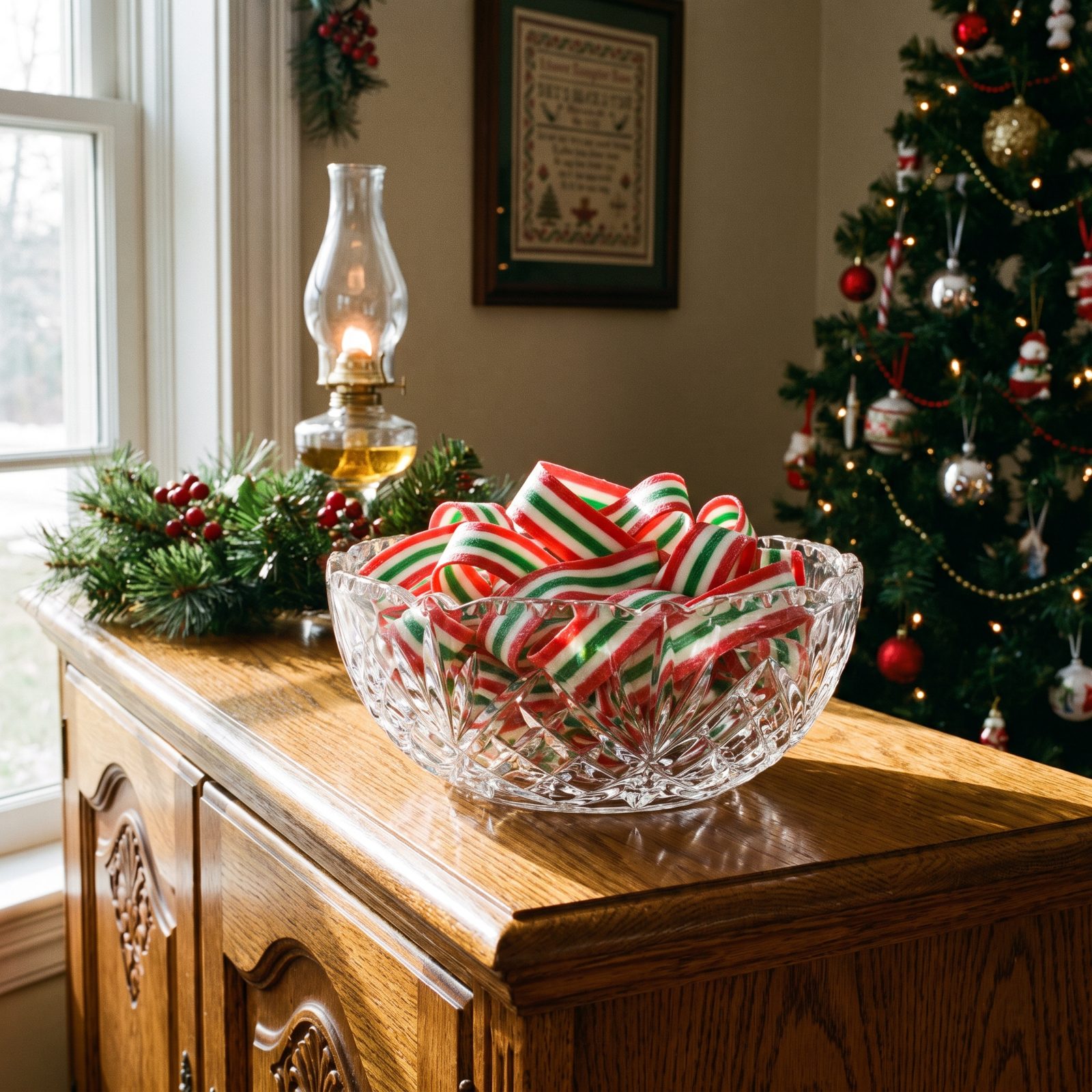
Ribbon candy was more decoration than dessert. Thin wavy sheets of hard candy, pleated into folds and striped in red, green, and white, it sat in the good cut-glass dish and dared you to take a piece without shattering the whole stack.
It stuck together in humid rooms and cut the roof of your mouth. The littlest kids coveted it; the adults mostly let it sit.
Nobody really ate it. Everybody remembers it.
Pulled and folded by hand in the old candy shops, it got expensive to make and fragile to ship, and it slid off the table into pure memory.
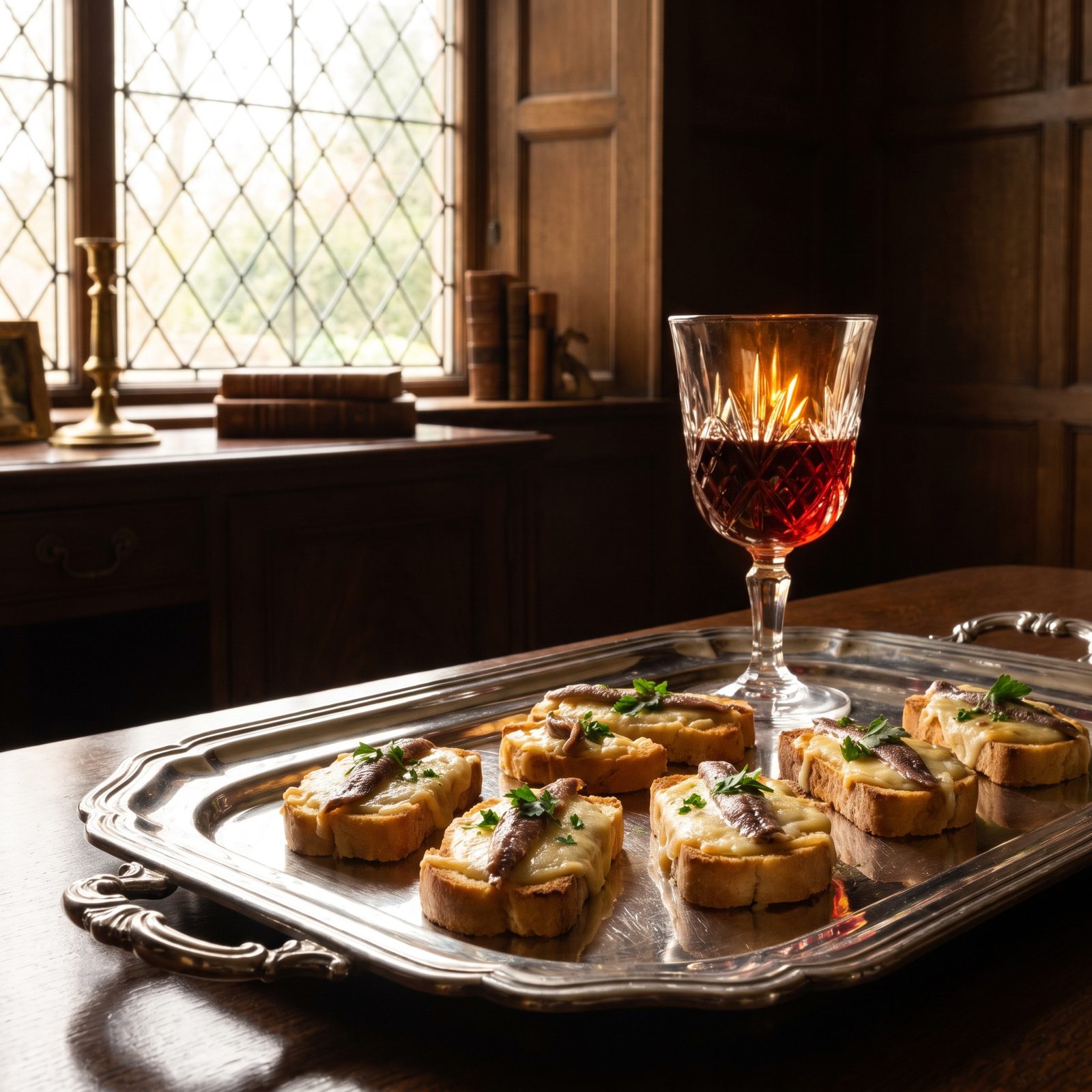
4. A Silver Tray of Hot Anchovy Toasts, the Savoury Course Time Forgot
Would you like to save this?
The savoury was a whole course that quietly disappeared. After the sweets and before the port, a small hot bite meant to clear the palate and keep the men at the table a little longer. Anchovy toasts were the classic: buttered toast, anchovy fillets, a crack of pepper, served hot off a silver tray.
Angels on horseback and devils on horseback belonged to the same tradition.
The savoury course belonged to a world of long formal dinners that modern holidays simply don’t have time for, and the anchovy toast went down with it.
3. Calf’s Foot Jelly, the Trembling Citrus Dish That Fed the Victorian Christmas
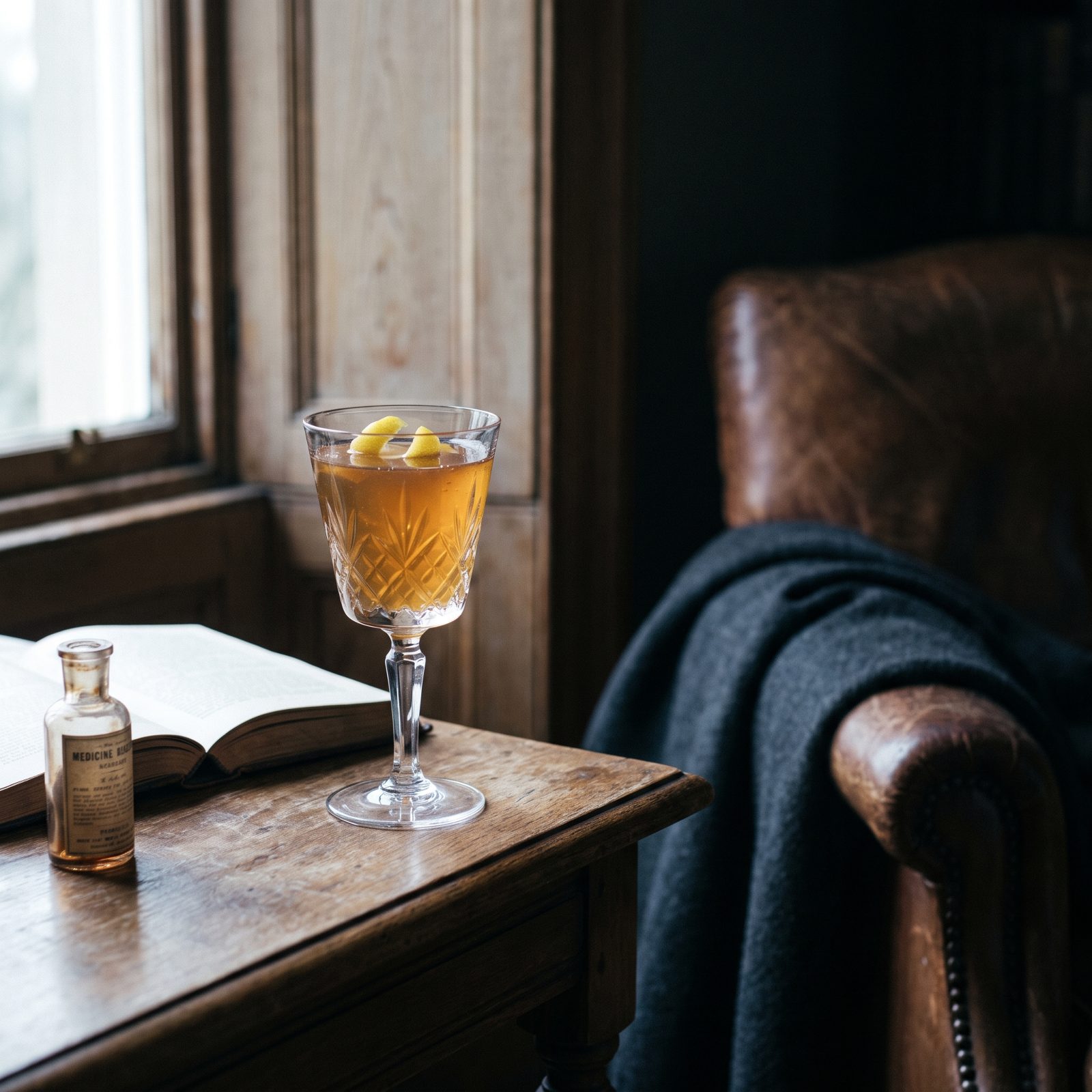
Calf’s foot jelly started as sickroom food, a clear amber set made by simmering a calf’s foot for hours and clarifying the gelatin with egg white, then brightening it with lemon, sugar, and a little sherry. Dressed up for the holidays, it became a trembling, citrus-scented delicacy, spooned into glasses or molded tall.
Dickens mentions it. So does nearly every Victorian cookbook that mattered.
Powdered gelatin killed it. Once you could set a jelly from a box in minutes, the all-day labor of a calf’s foot made no sense, and the dish slipped off the table for good.
2. The Smoking Bishop Punch Bowl That Warmed Every Hand in the Room
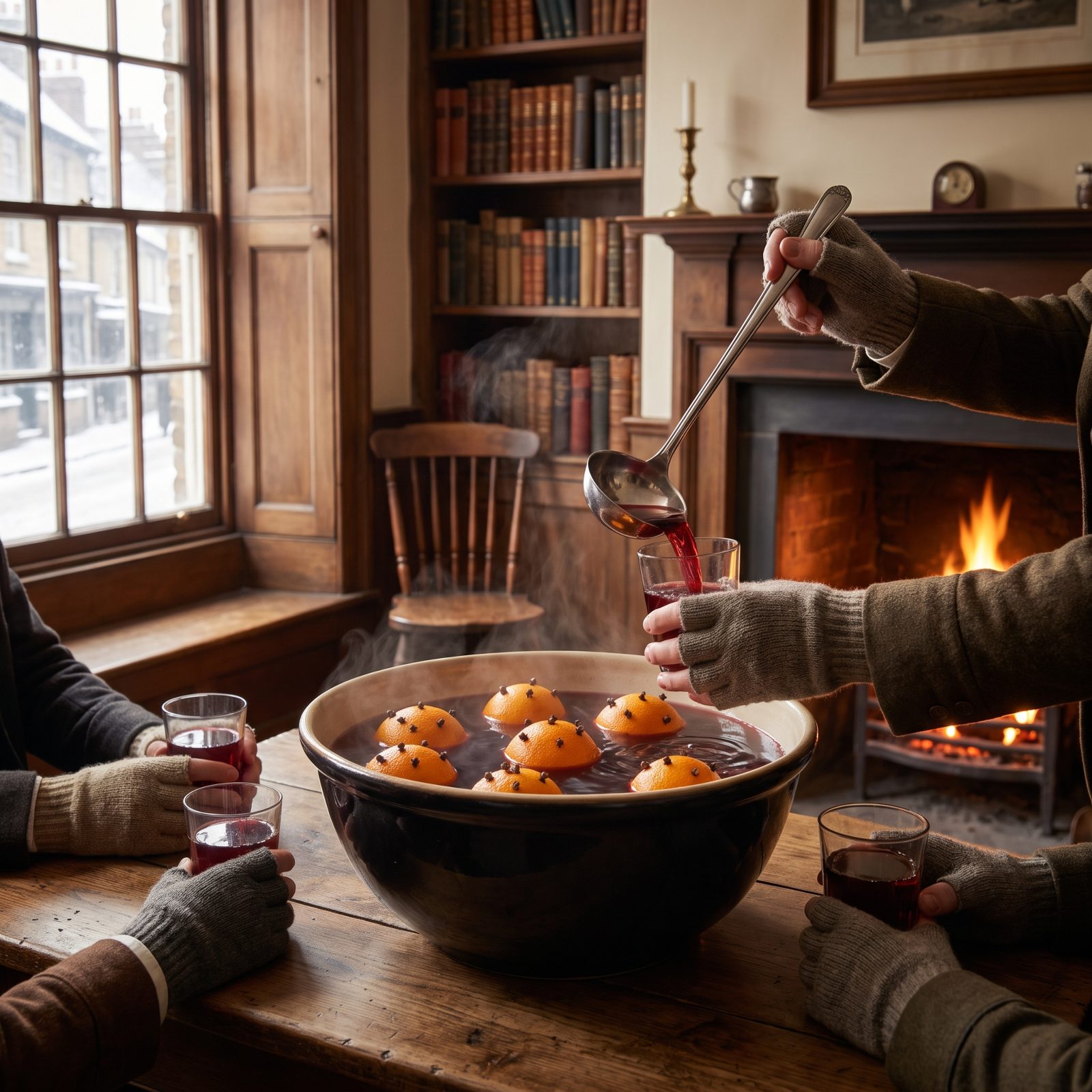
Dickens handed this one down to us and then we quietly let it go. The Smoking Bishop closes A Christmas Carol — reformed Scrooge promising Bob Cratchit a bowl of it over a warm fire. English and American households took that cue seriously for a century afterward.
It was a mulled punch built on red wine and ruby port, with oranges and a grapefruit roasted until their skins blistered, then studded with cloves and left to steep. The “smoking” was just the steam coming off the hot bowl. You ladled it into little cups and it warmed your hands before it ever reached your throat.
The whole thing took a day of patience: roast the fruit, let it sit overnight, warm the wine slow so it never boiled. Nobody has that kind of afternoon in December anymore, so the bowl got swapped for store-bought eggnog and the bishop retired.
1. The Whole Steamed Christmas Pudding That Arrived at the Table on Fire
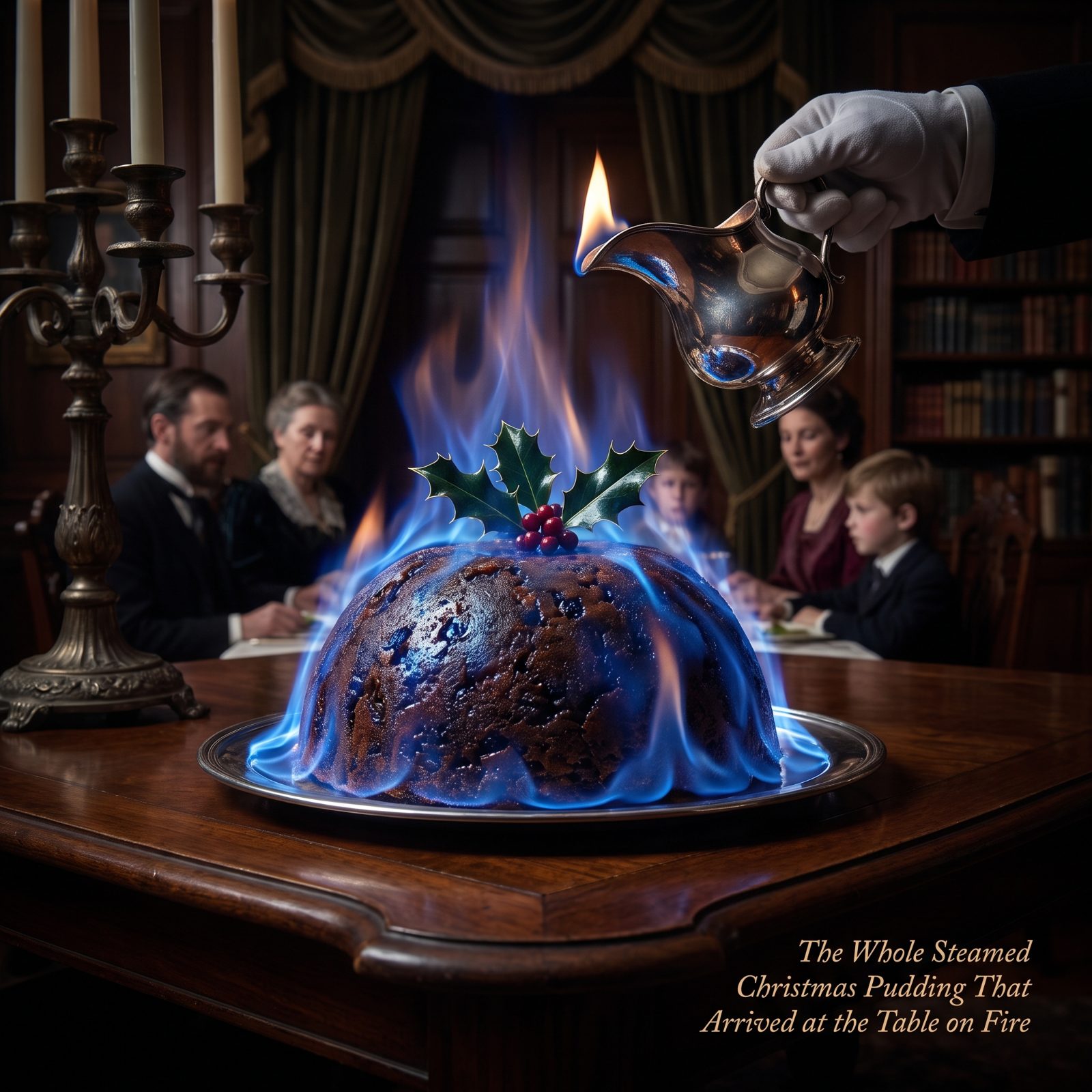
You dimmed the lights for this one. The cook carried in the dark domed pudding, poured warm brandy over it, struck a match, and the whole thing went up in a low blue flame that danced for a few seconds while the room went quiet.
The pudding itself had steamed for hours, sometimes made weeks ahead and “fed” with more brandy as it waited. Heavy with raisins, currants, suet, candied peel, and spice — the kind of dessert that sat in your stomach like a brick, in the best way.
Someone always hid a silver coin inside, and the lucky soul who found it was promised good fortune for the year.
It was a whole production, and that was the appeal: the flame, the holly sprig on top, the dish of brandy butter melting down the side. Modern tables traded all that ceremony for a store pie you slide out of a box. Nothing wrong with pie. But nobody dims the lights for it.