
Would you like to save this?
Nobody taught these tricks in a cooking class. They got passed across a kitchen table, usually while someone was already stirring a pot and not really looking at you. A metal spoon pulled from a glass of ice, a pinch of flour on raw bacon, a spoonful of mayonnaise going into a cake batter with zero explanation. Half of them sound like mistakes. And all of them solve a real problem a modern kitchen still runs into every week. Here are the ones worth stealing, starting with the ones almost nobody remembers.
Please note that some of the images in this article were created with the assistance of AI.
34. Skim Soup Fat With an Ice-Filled Metal Ladle
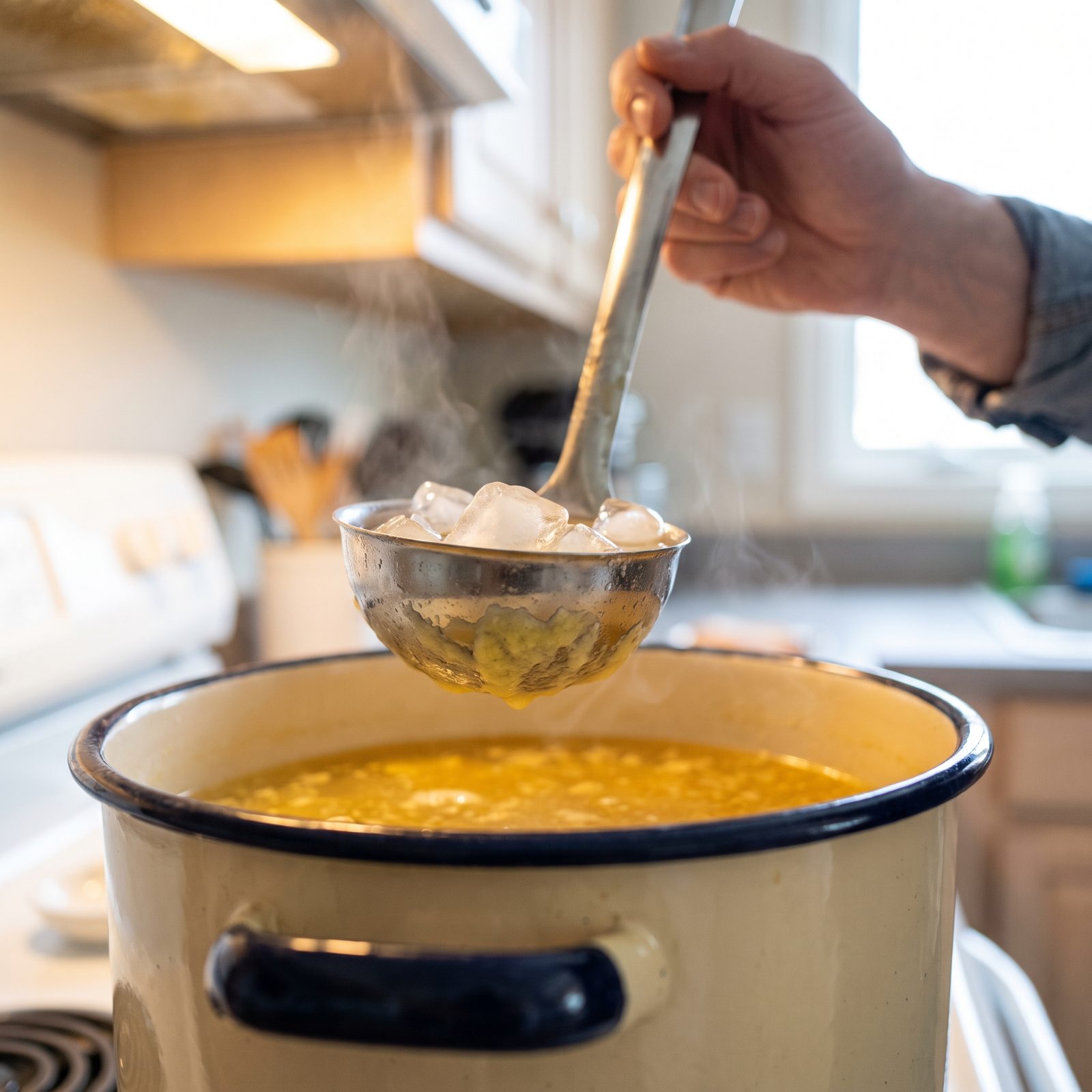
Fat clings to cold metal. That’s the whole trick. Fill a metal ladle or large spoon with ice cubes, skim the back of it just across the top of hot soup, and the fat chills instantly and gathers in a thick white mass on the underside. Wipe it off quickly, before it starts dripping back into the pot.
It works faster than chasing grease droplets with a paper towel, and it doesn’t drag your broth along the way a regular spoon does. The soup stays put while the fat ends up on the ladle. Pull it off every few passes and keep going until the surface runs clear.
33. Dust Bacon With Flour Before It Hits the Pan
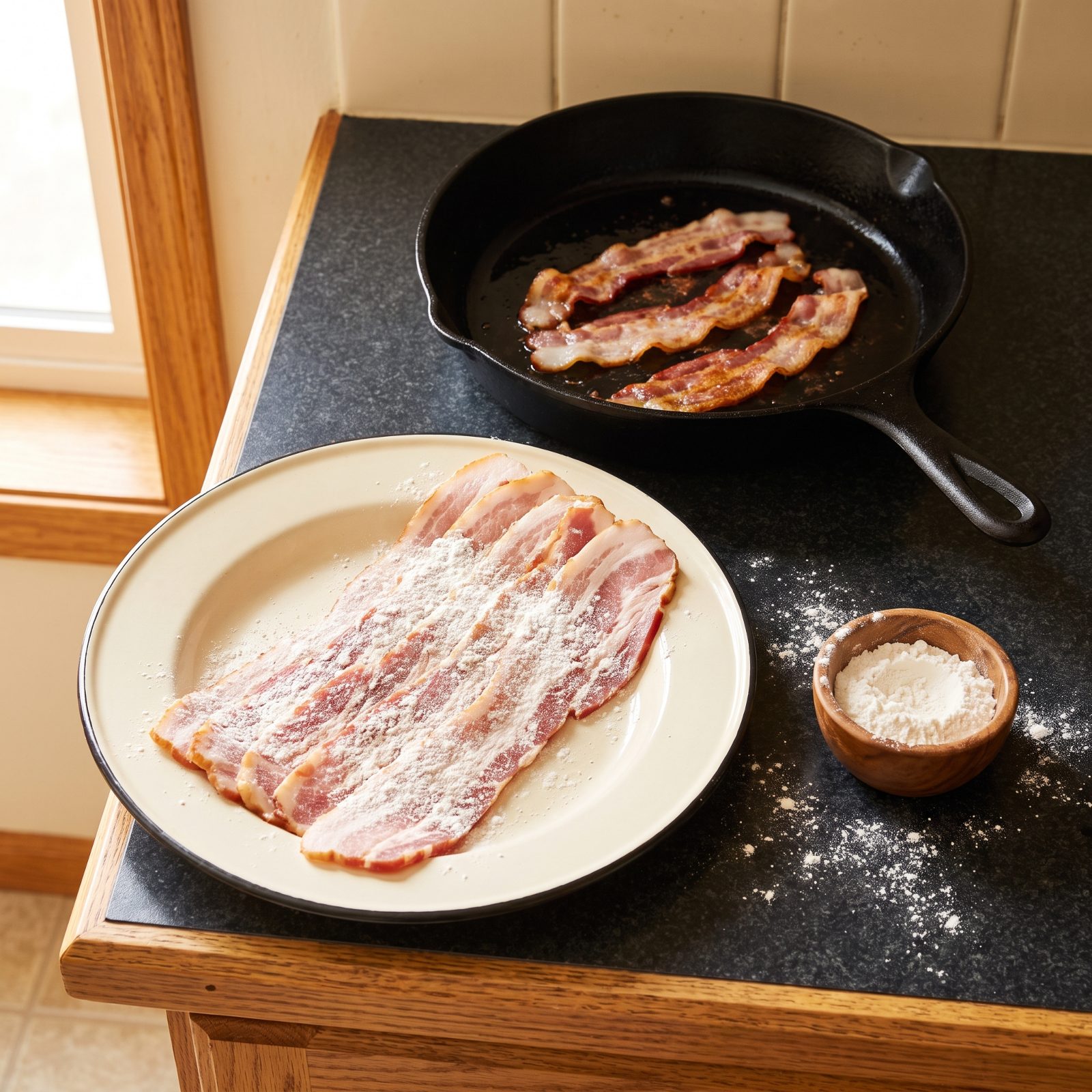
A light dusting of flour on raw bacon does two jobs at once. The flour pulls up some of the surface moisture, which is what sets off most of the angry splattering, and it gives the fat something to crisp against as it renders. Flatter strips, crunchier edges, and a stovetop you won’t have to scrub.
Keep it light, though. A heavy coat turns gummy and you’ll taste it. A whisper of flour, not a breading.
32. Whisk Dry Mustard Into Dressing So It Never Separates
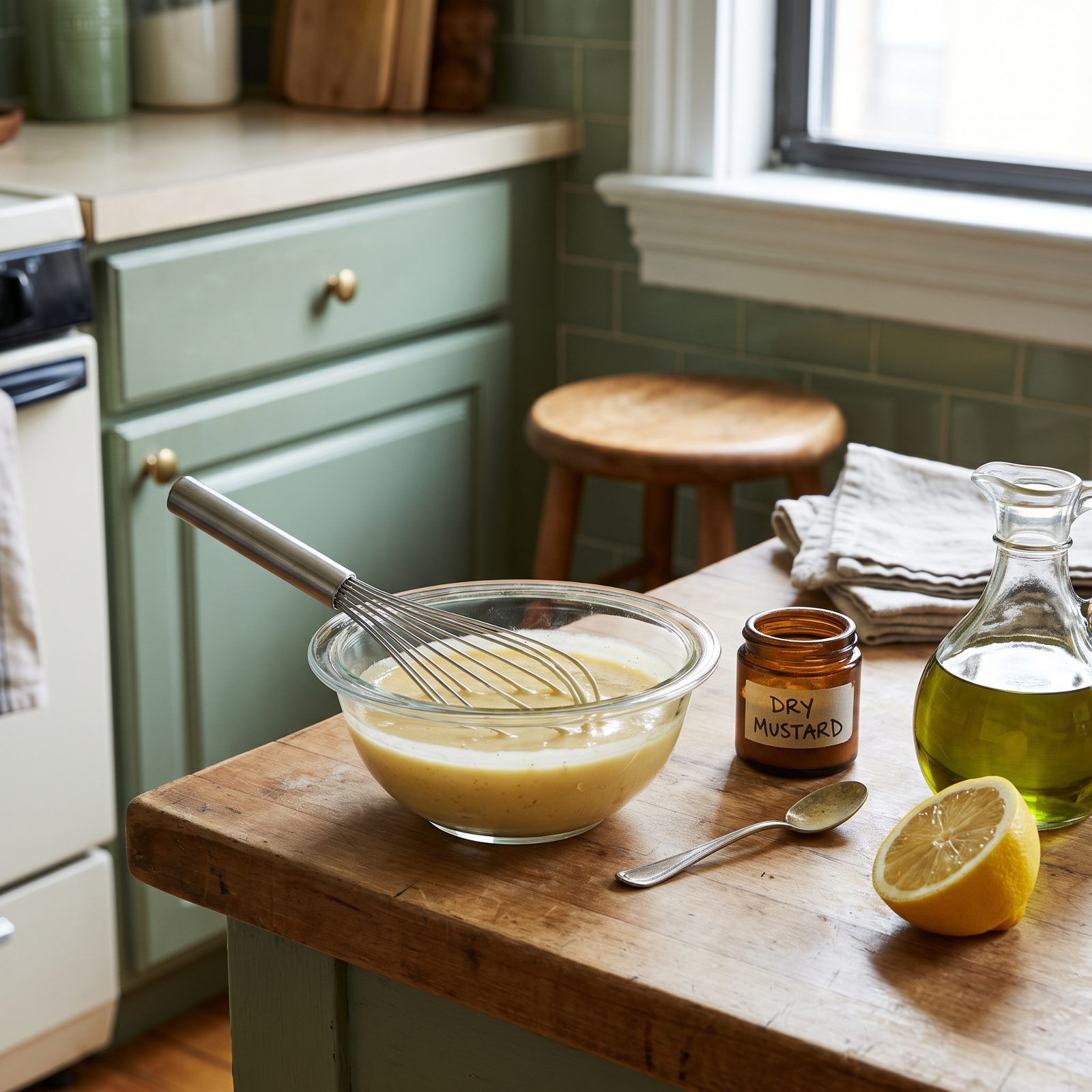
Homemade dressing splits because oil and vinegar don’t want to be friends. Dry mustard is the chaperone. A small spoonful of mustard powder whisked into the vinegar before the oil goes in holds the two together into something thick and clingy that coats the leaves instead of pooling at the bottom of the bowl.
It also adds a faint warmth you won’t quite be able to name. People will ask what’s in it. You don’t have to tell them.
31. Save the Potato Water for Softer Homemade Bread
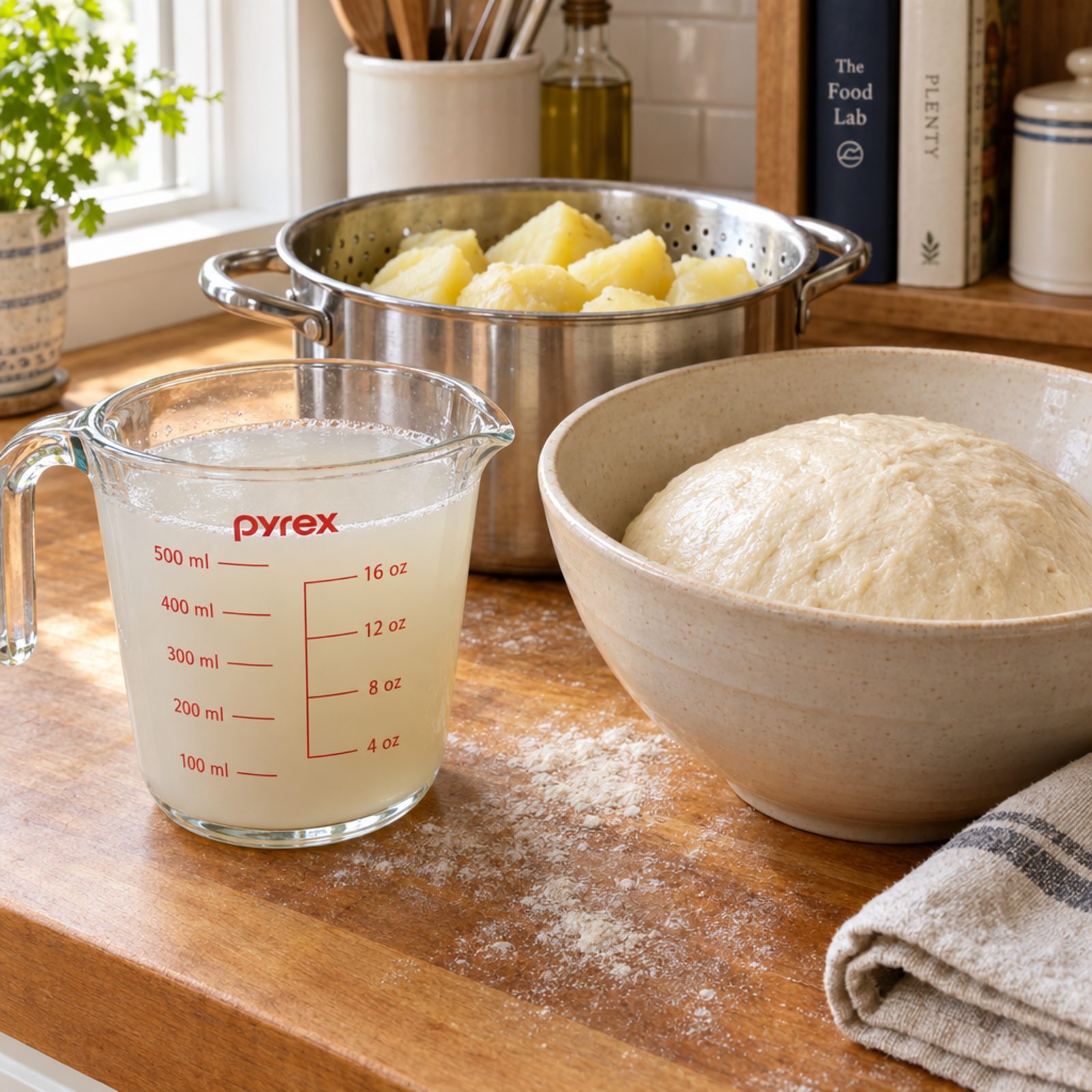
Before you dump that cloudy pot of potato water down the drain, stop. That starchy liquid is one of the oldest baking secrets going. Used in place of plain water in a bread dough, it makes a loaf that stays soft and moist longer, with a slightly larger, more tender crumb. The potato starch feeds the yeast and clings onto moisture that ordinary water just lets escape.
Let it cool to lukewarm first so you don’t kill the yeast. Old-timers who baked every week swore their rolls went stale slower because of this one habit, and they were right.
30. Stir Powdered Milk Into Mashed Potatoes for Richness Without the Slop
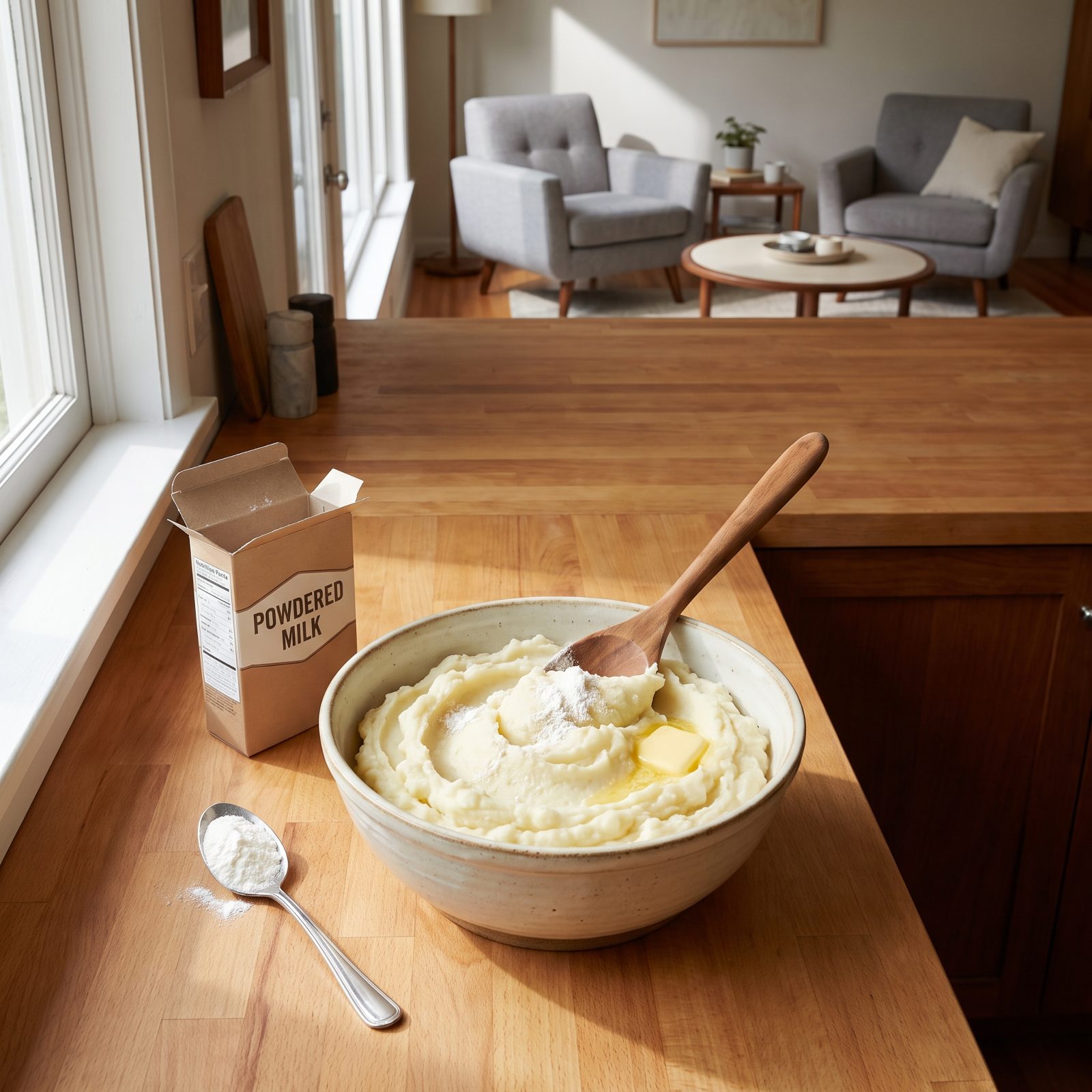
Here’s the trouble with making mashed potatoes richer: every creamy thing you add is also a liquid, and too much liquid turns the whole bowl into soup. Powdered milk sidesteps that. It brings concentrated dairy flavor and body without thinning the texture, so you end up with something that tastes like it’s half butter and still holds a peak.
Fold it in near the end with the real butter. You’ll be surprised how much better plain potatoes get from a trick that costs almost nothing.
29. Add Lemon Juice to Cauliflower Water to Keep It White
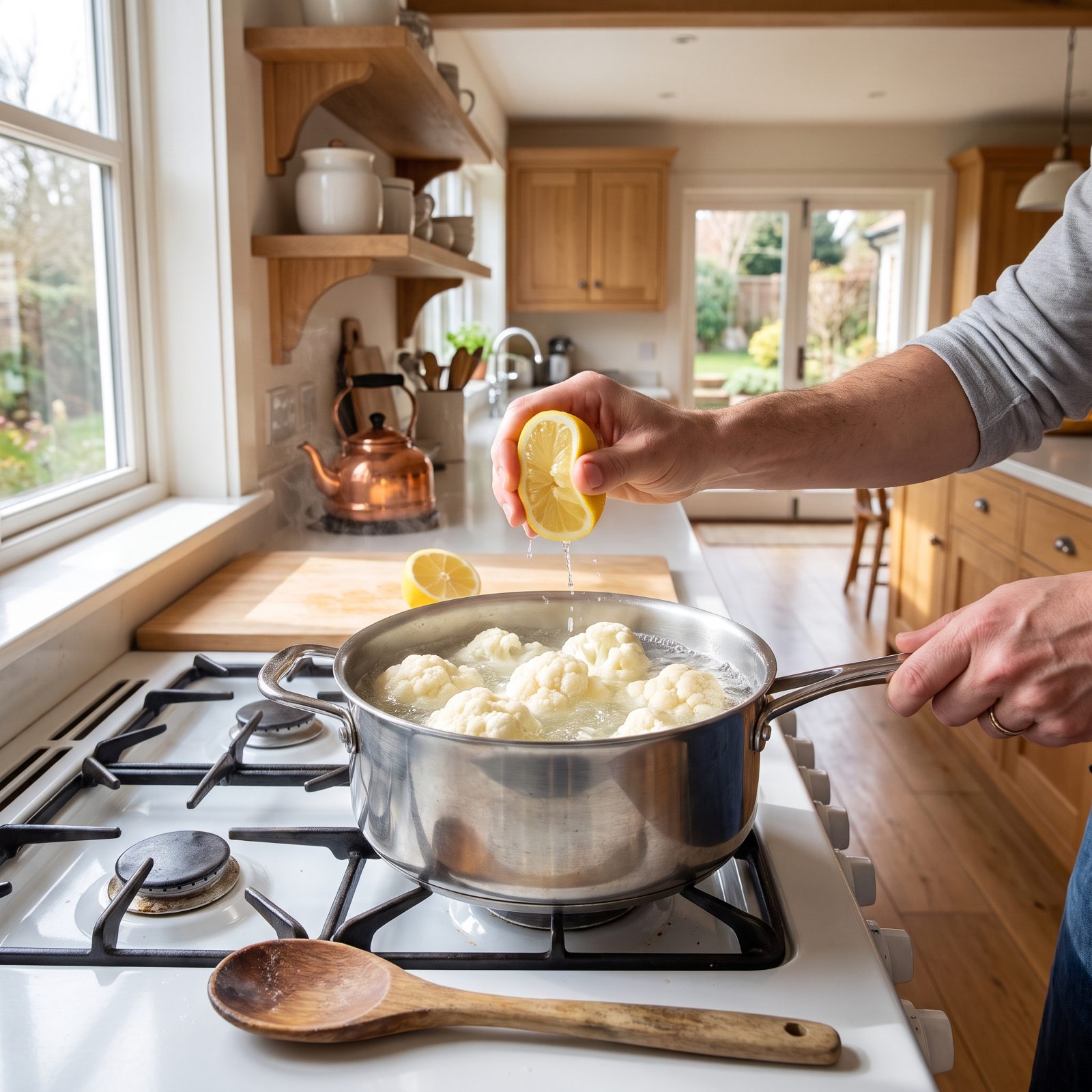
Cauliflower turns a sad gray in the pot thanks to its own natural pigments reacting with hard water and heat. A splash of lemon juice or a spoonful of milk in the cooking water keeps it bright white instead, because the acid stabilizes the compounds that would otherwise dull it down.
Matters more than it sounds. Gray cauliflower on the plate looks tired before anyone takes a bite, and people eat with their eyes first.
28. Melt an Anchovy Into Your Stew and Tell No One
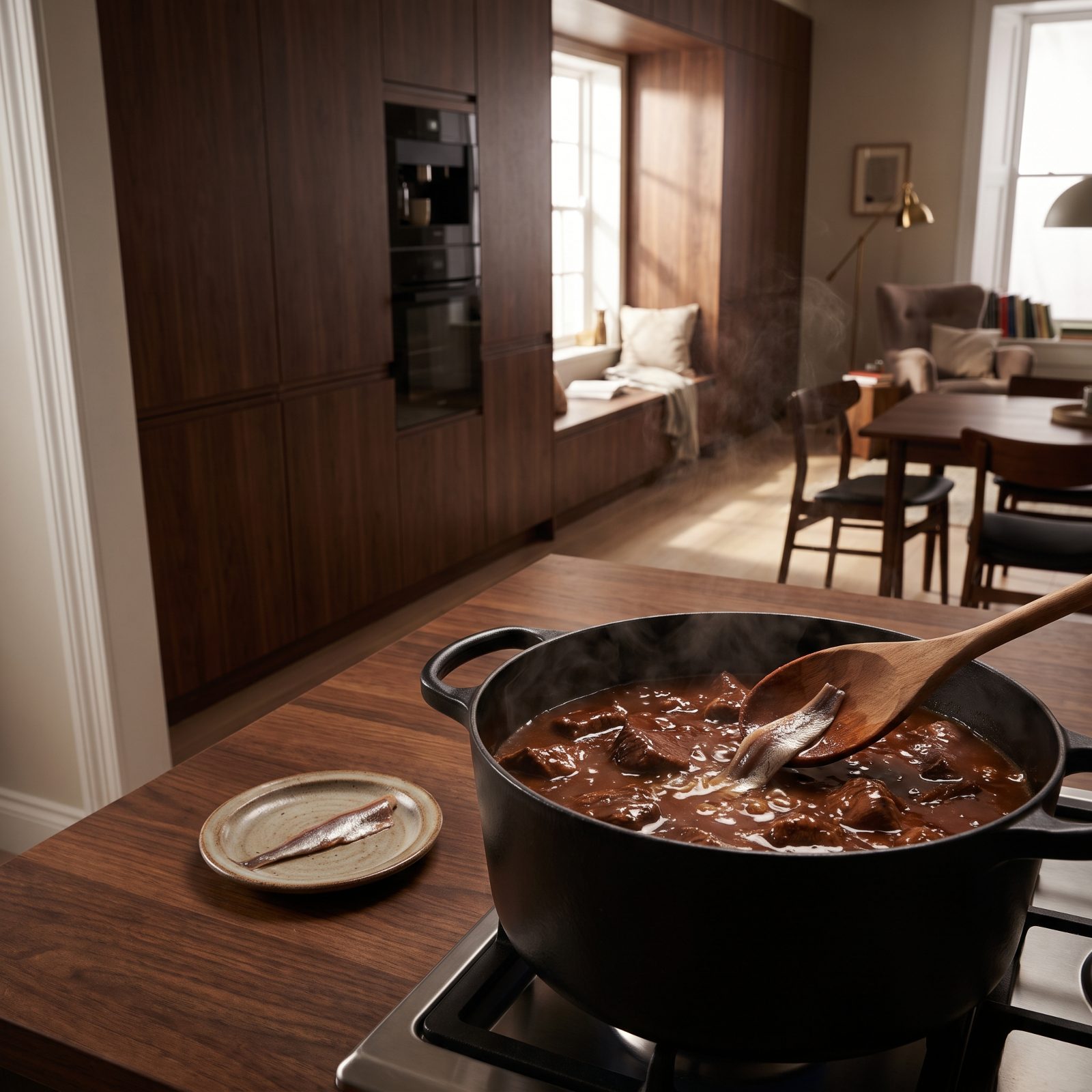
Nobody believes this one until they try it. An anchovy fillet or two, melted into the base of a stew or a pot of gravy, disappears completely. No fishiness. None. What’s left is a deep savory backbone, that meaty, round, hard-to-place flavor that sends someone back for a second bowl without knowing why.
Anchovies are loaded with natural glutamates, the same savory building blocks found in aged parmesan and good broth. They stop tasting like the sea the second they break down into hot liquid. They taste like you’re a better cook than you are.
27. Add Mayonnaise to Chocolate Cake for a Tender Crumb
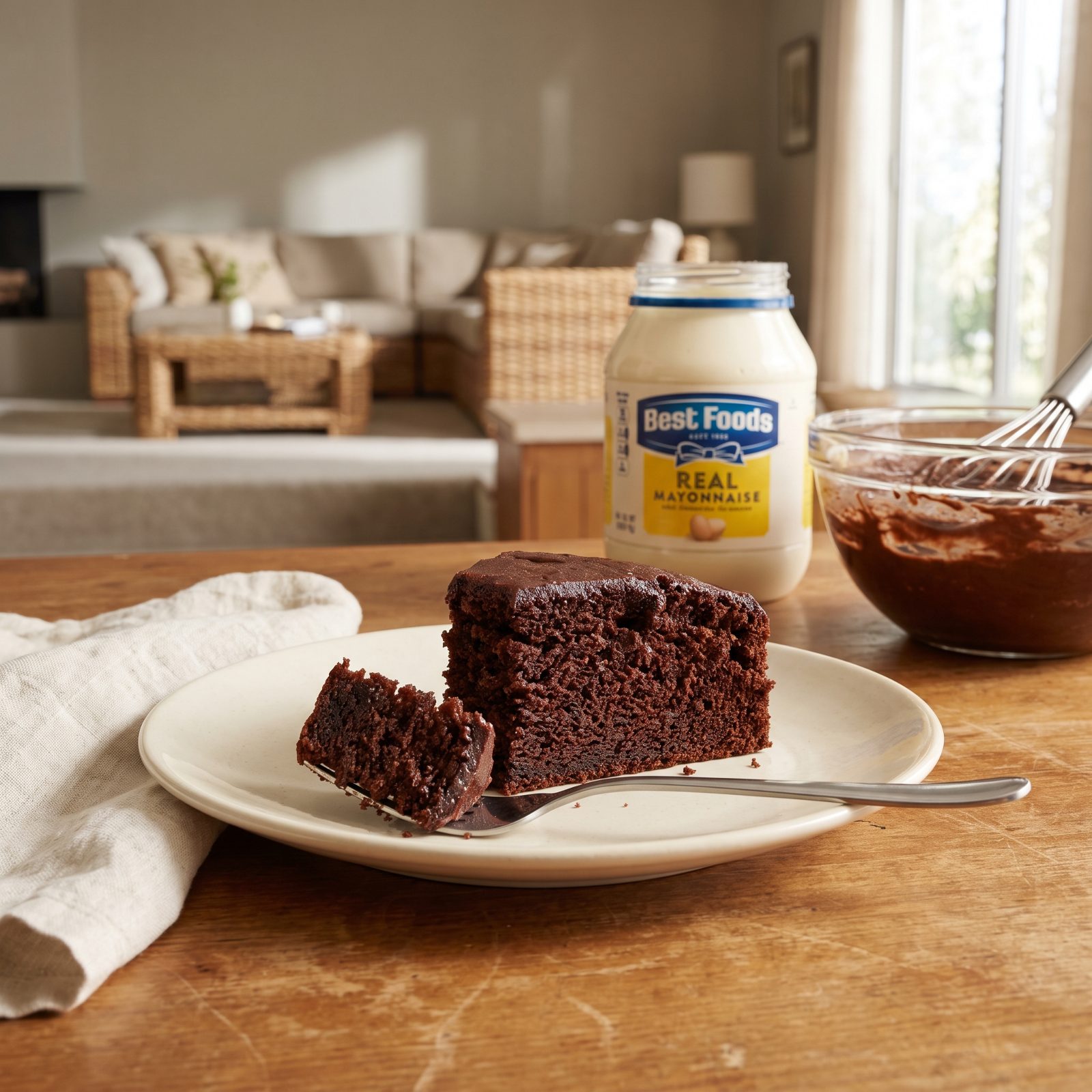
Mayonnaise is just oil and eggs beaten together, which happens to be exactly what makes a cake tender and moist. Swap a portion of the fat in a chocolate cake for mayo and you get a crumb so soft it borders on fudgy, with none of the dryness that plagues most from-scratch chocolate cakes.
You will not taste mayonnaise. The chocolate flattens it completely. The recipe got invented during the Depression, when every ingredient had to pull double duty, and it stuck around for the simplest reason: it works.
26. Use Evaporated Milk for Stovetop Mac and Cheese That Never Grains Out
Would you like to save this?
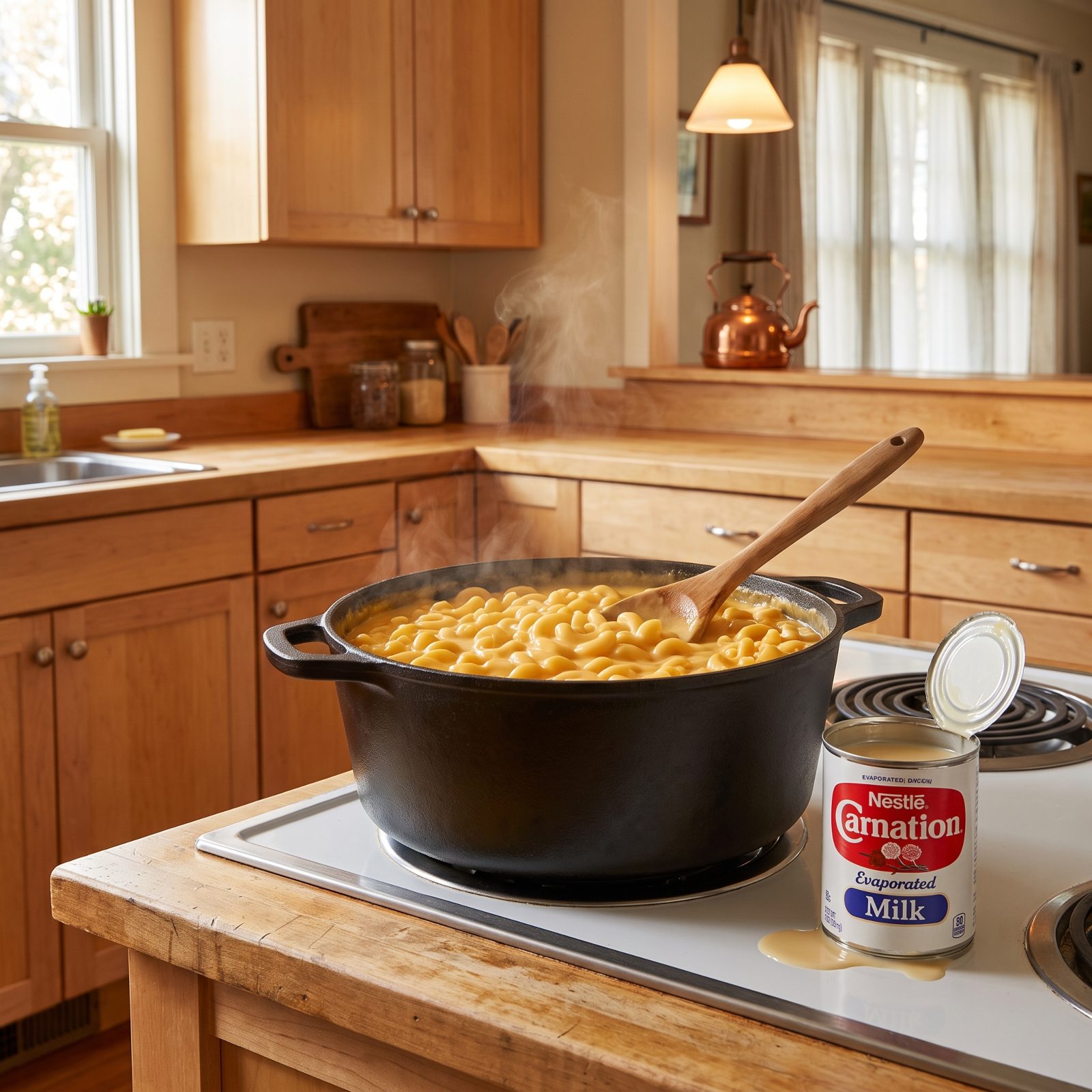
Grainy, broken cheese sauce is the curse of homemade mac and cheese. Regular milk curdles if the heat runs too high and the cheese seizes into gritty lumps. Evaporated milk fixes that. The gentle processing that removes its water also makes its proteins far more heat-stable, so the sauce stays smooth and glossy even when you get careless with the burner.
Stir shredded cheese into warm evaporated milk off the heat. It turns into a silk sauce. No flour, no roux, no stress.
25. Add Vinegar to the Pot So Boiled Potatoes Hold Their Shape
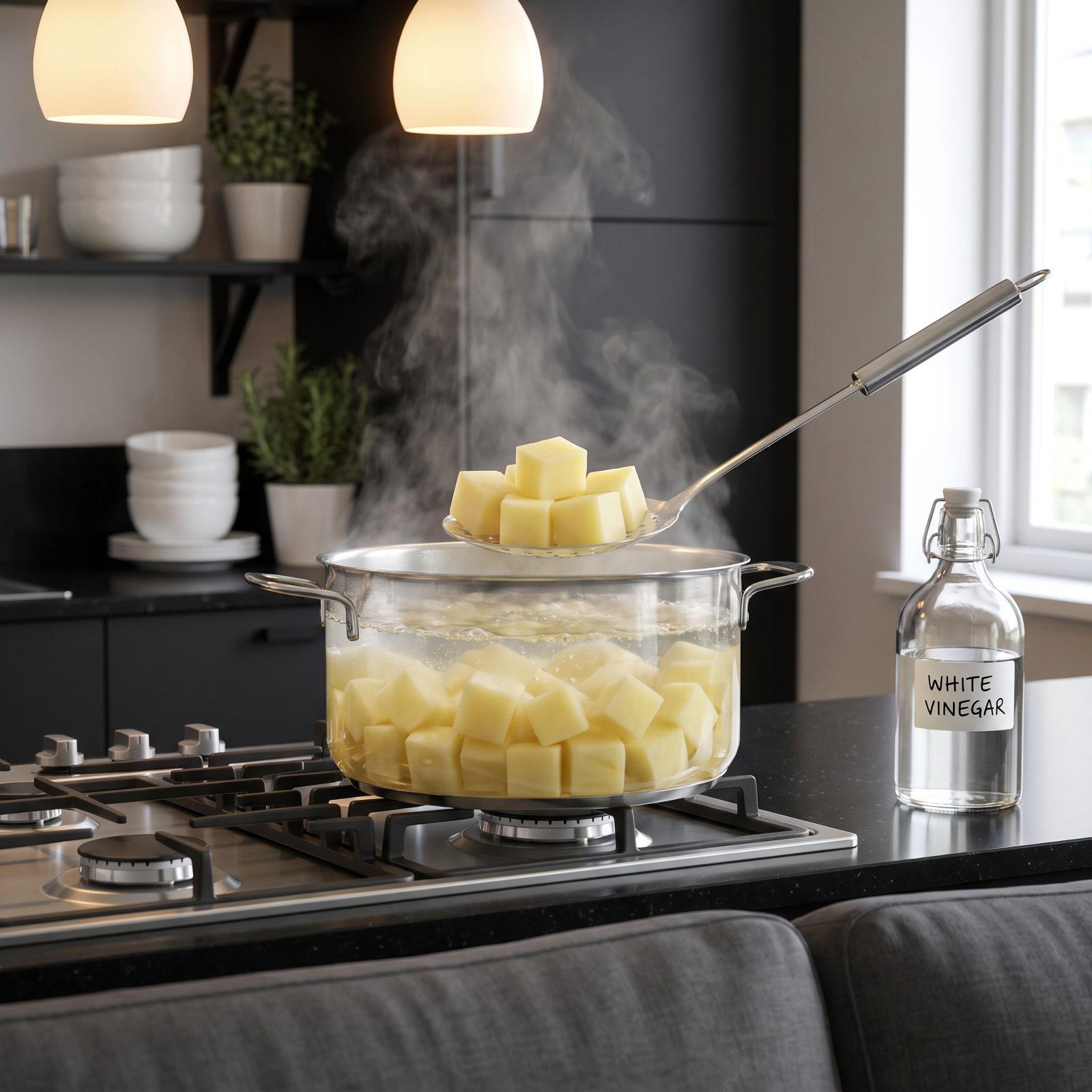
Potato salad falls apart when the cubes turn to mush in the pot, and a splash of vinegar in the boiling water prevents it. The acid reinforces the pectin in the potato walls so the cubes hold their edges and stay firm, even when you push the boil a little longer than you meant to.
Save this for anything where shape matters: potato salad, home fries, roasted cubes that need a sear. For mashed potatoes you want the opposite, so skip it there.
24. Treat Ground Meat With a Pinch of Baking Soda for Better Browning
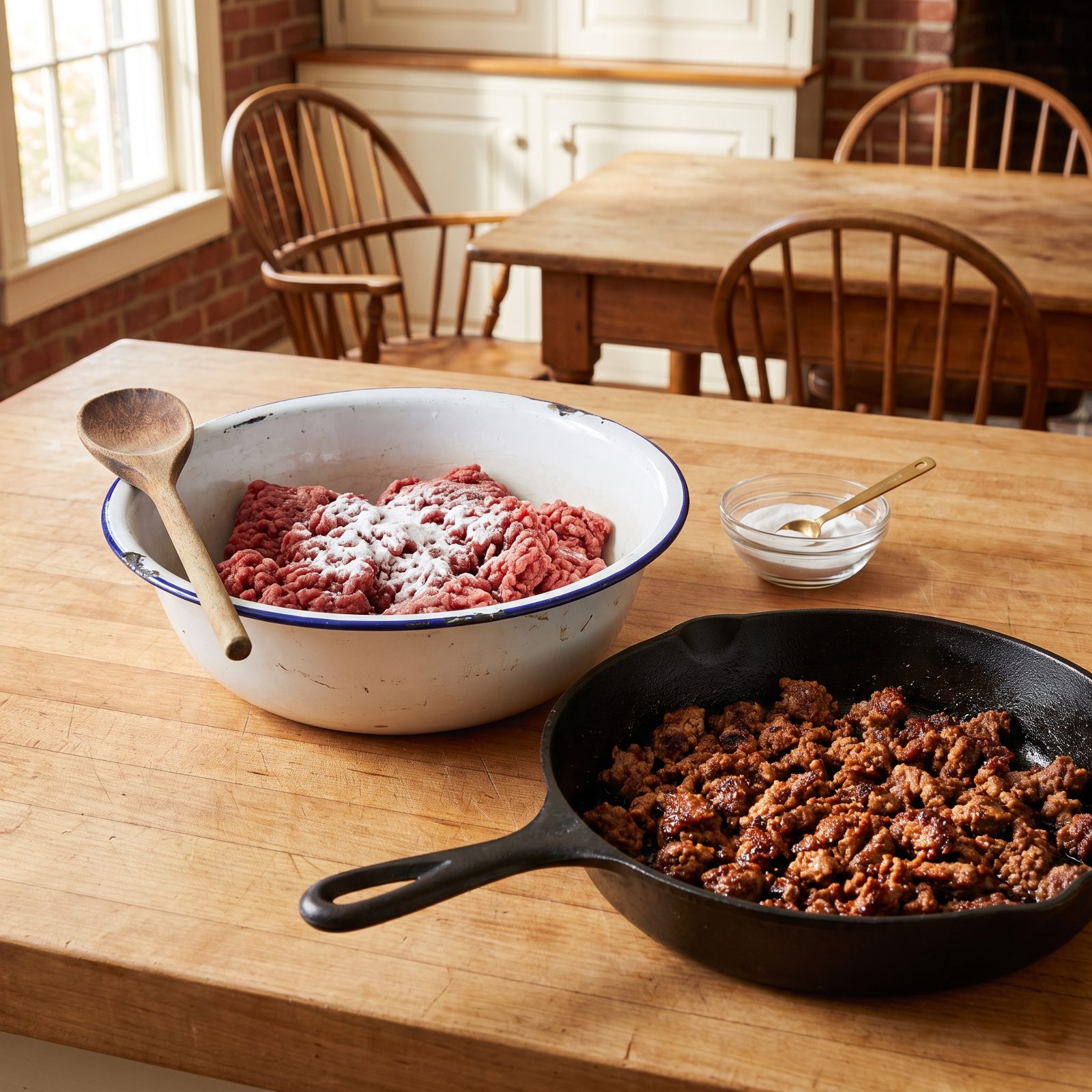
Browning ground meat usually turns into a steamy gray mess, because the water trapped inside boils off before the surface ever gets hot enough to brown. A small pinch of baking soda raises the pH, which helps the proteins hold onto moisture while they brown faster.
Work it in thoroughly, though. Leave pockets of powder and the meat tastes soapy and feels slick; mix it evenly and the crust forms in half the time, carrying that deep savory flavor you only get from real browning.
23. Use Pickle Brine as a Ready-Made Poultry Marinade
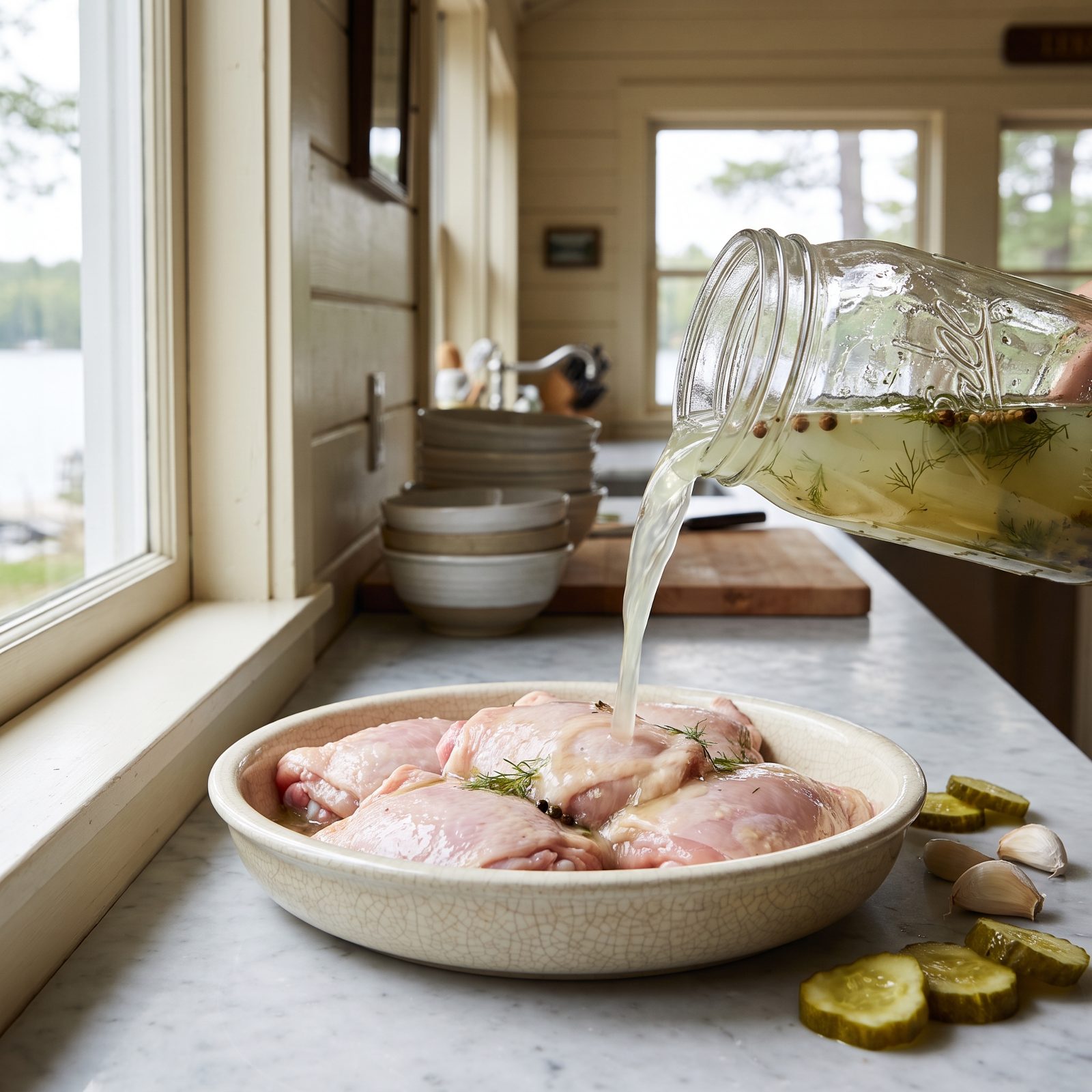
That jar of brine hiding at the bottom of the fridge is a marinade somebody already made for you. It’s salted, acidic, and loaded with garlic, dill, and spice — which is most of a brine recipe done and sitting right there.
Soak chicken thighs or pork chops in it for a few hours and you get meat seasoned clear through, tender from the salt, tangy on the surface. Dill pickle juice is the classic. But spicy brine does wonderful things to fried chicken, so don’t pour it down the drain. It already did the work.
22. Stir Unsweetened Cocoa Into Chili to Deepen Its Flavor
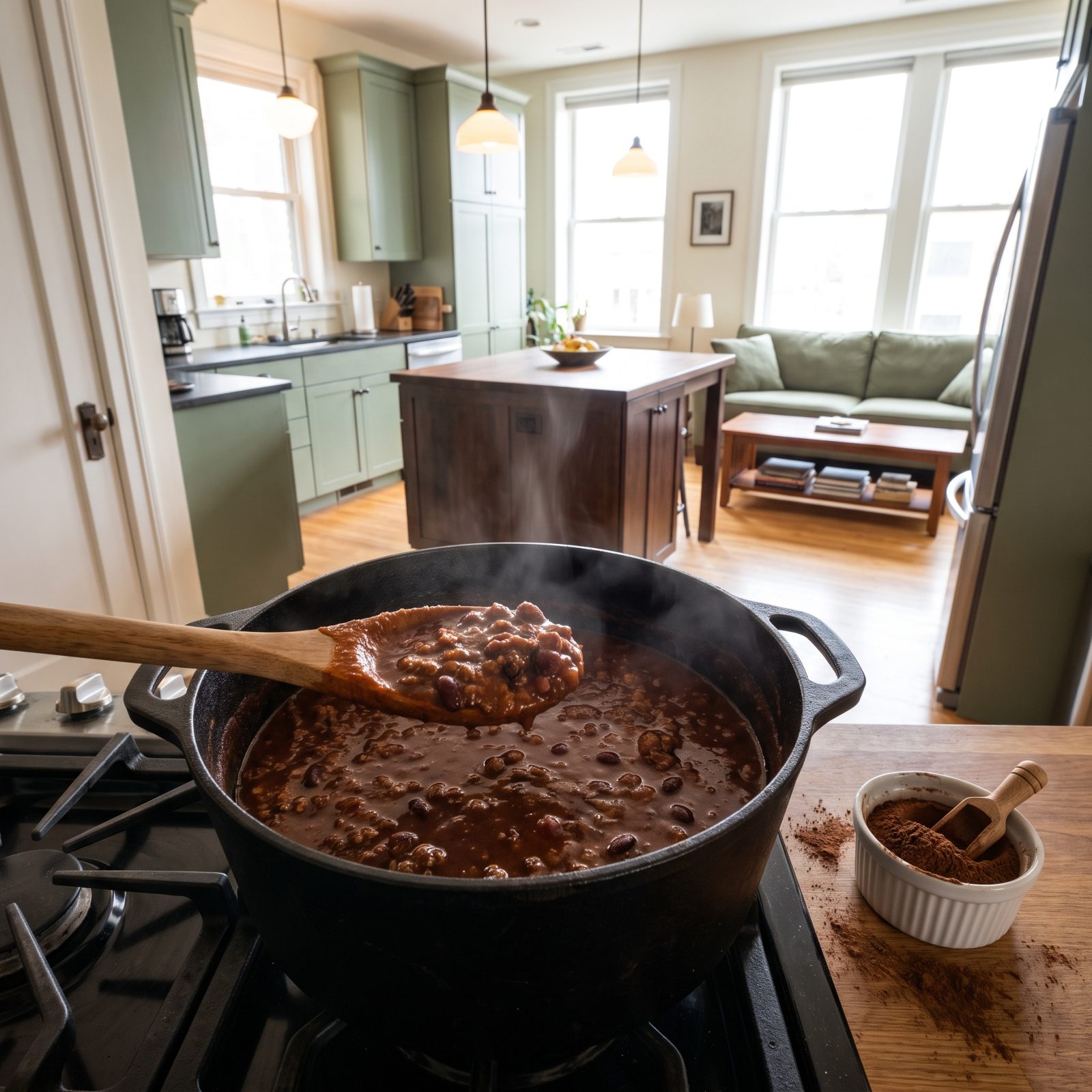
A tablespoon of unsweetened cocoa in a pot of chili tastes nothing like chocolate. It adds a dark, earthy bottom note that makes the whole thing richer and more roasted, the way a long slow simmer does.
Same principle as a square of bitter chocolate stirred into Mexican mole. The cocoa fills in the gap under the chili powder and tomato, giving the pot a depth most people can’t name but can absolutely taste.
21. Stabilize Whipped Cream With a Little Dissolved Gelatin
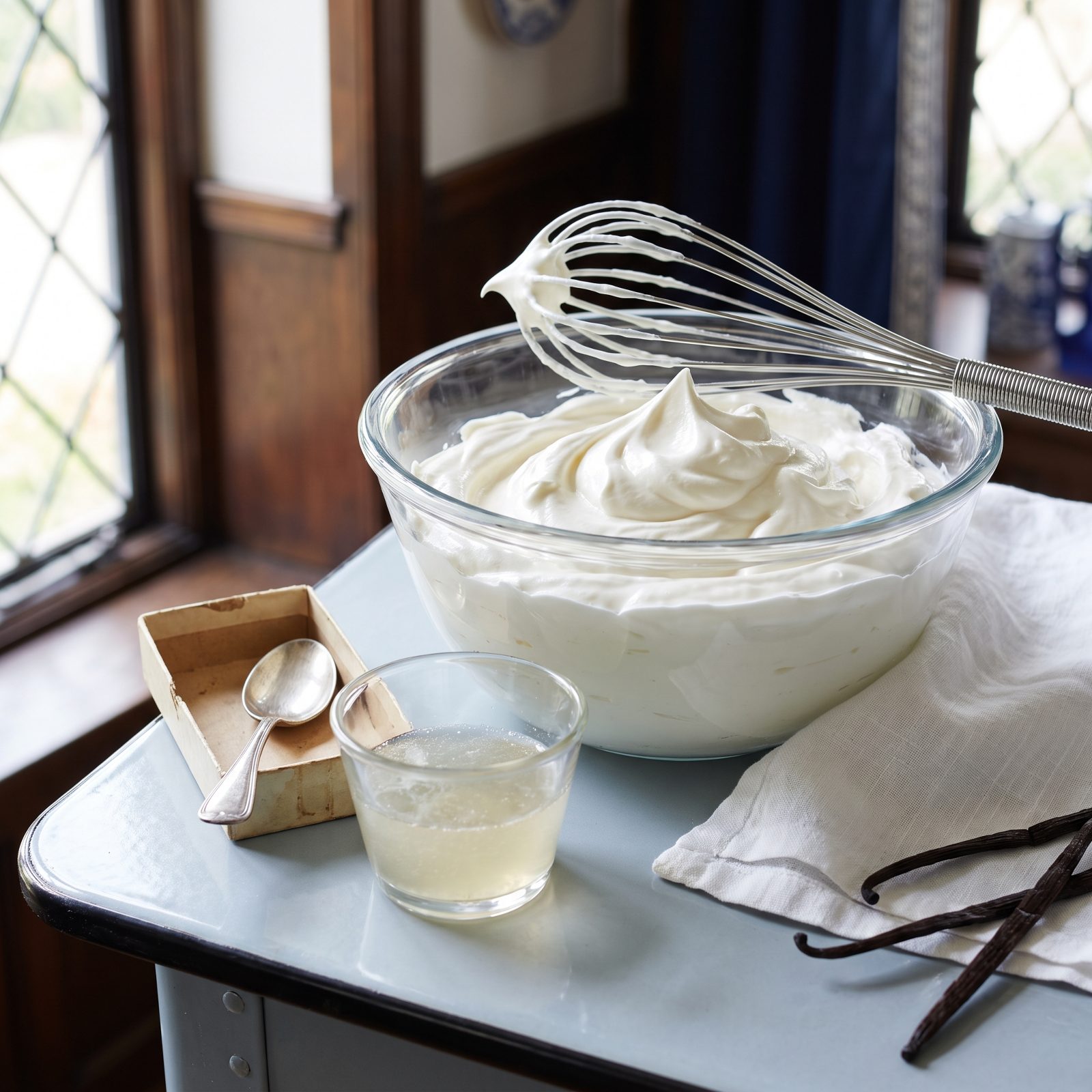
Whipped cream weeps. Pipe it onto a pie in the morning and by supper it’s a sad puddle sliding off the slices. A little gelatin fixes that.
Dissolve a small amount of unflavored gelatin in warm water, let it cool so it’s still pourable, then drizzle it into the cream as it thickens. Now it holds its peaks for days, stays firm in the fridge, and survives a car ride to the potluck without collapsing.
Temperature is everything here. Pour the gelatin in too hot and it melts the cream back down; too cold and it sets into little rubbery threads instead of blending in smooth.
20. Knead Butter and Flour Together for a Lump-Free Gravy Fix
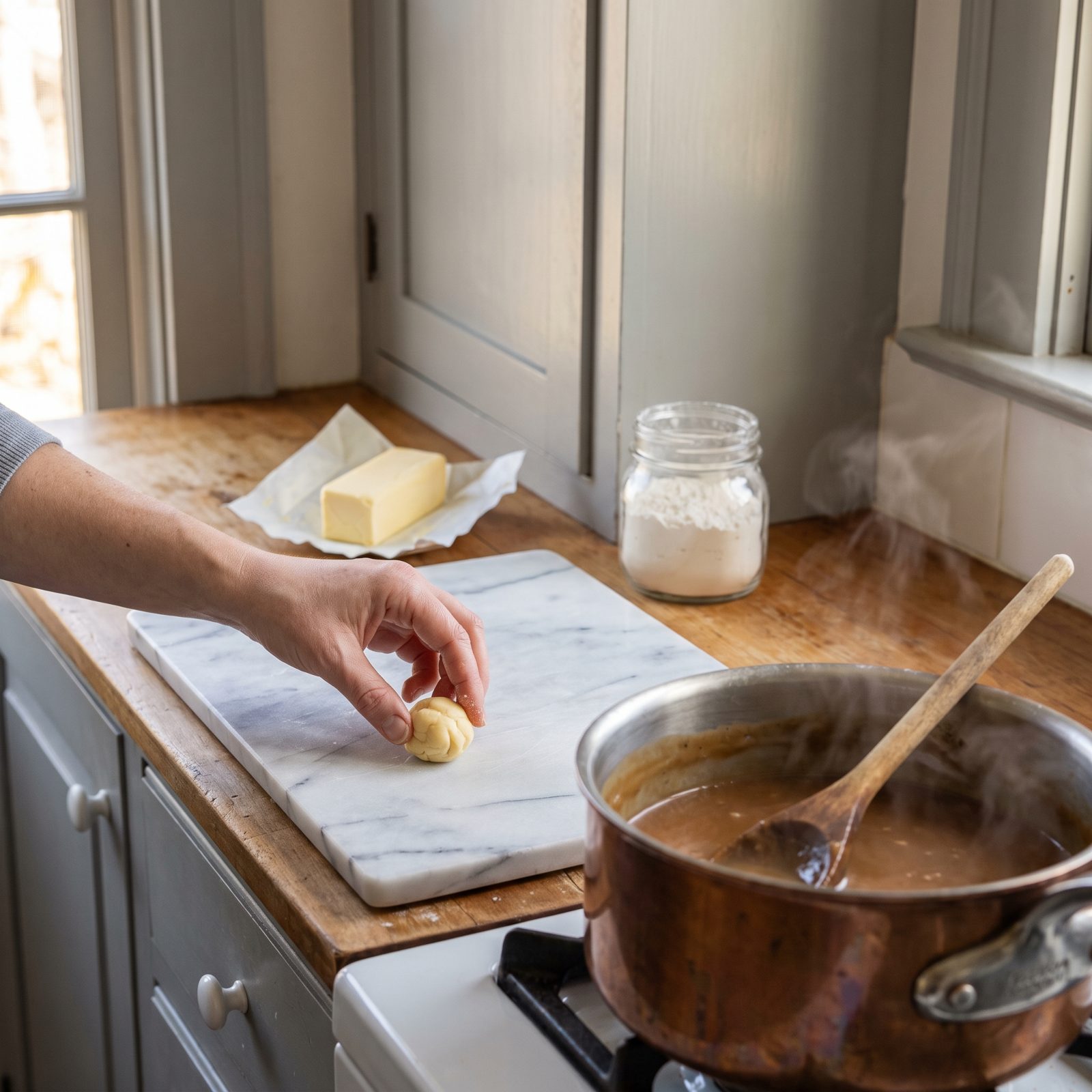
Gravy went thin and you’ve got twenty minutes till everyone sits down. Dumping dry flour in now just gives you pale lumps bobbing in brown liquid.
Instead, knead equal parts soft butter and flour into a smooth paste with your fingers. The butter coats every speck of flour so it can’t clump. Drop small pieces into the simmering gravy, whisk, and watch it thicken out smooth — no lumps, no raw-flour taste.
French cooks call it beurre manié. Your grandmother probably just called it fixing the gravy. Same thing, and it has saved more holiday dinners than anyone will ever admit.
19. Grate Cut Tomatoes on a Box Grater and Leave the Skins Behind
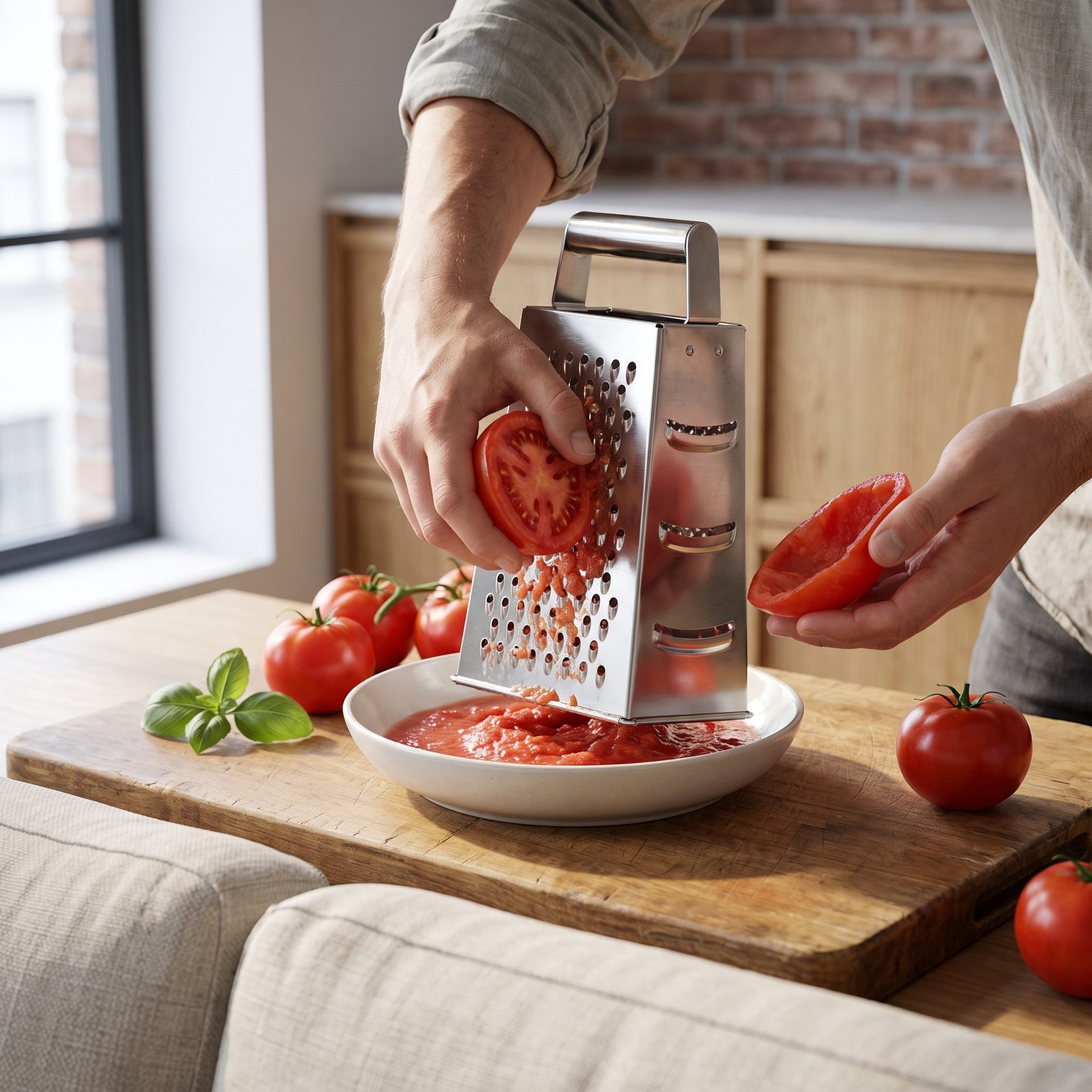
Peeling and seeding tomatoes is a chore nobody enjoys — the boiling, the ice bath, the slippery skins. Skip all of it.
Cut a ripe tomato into thick pieces, hold one by its skin, press the flesh against the big holes of a box grater, and grate. The flesh turns to pulp and falls through while the tougher skin is left behind, so you end up with fresh puree and a thin skin you just toss. No blanching. No mess.
18. Rest Cooked Rice Off the Heat Under a Towel to Catch Condensation
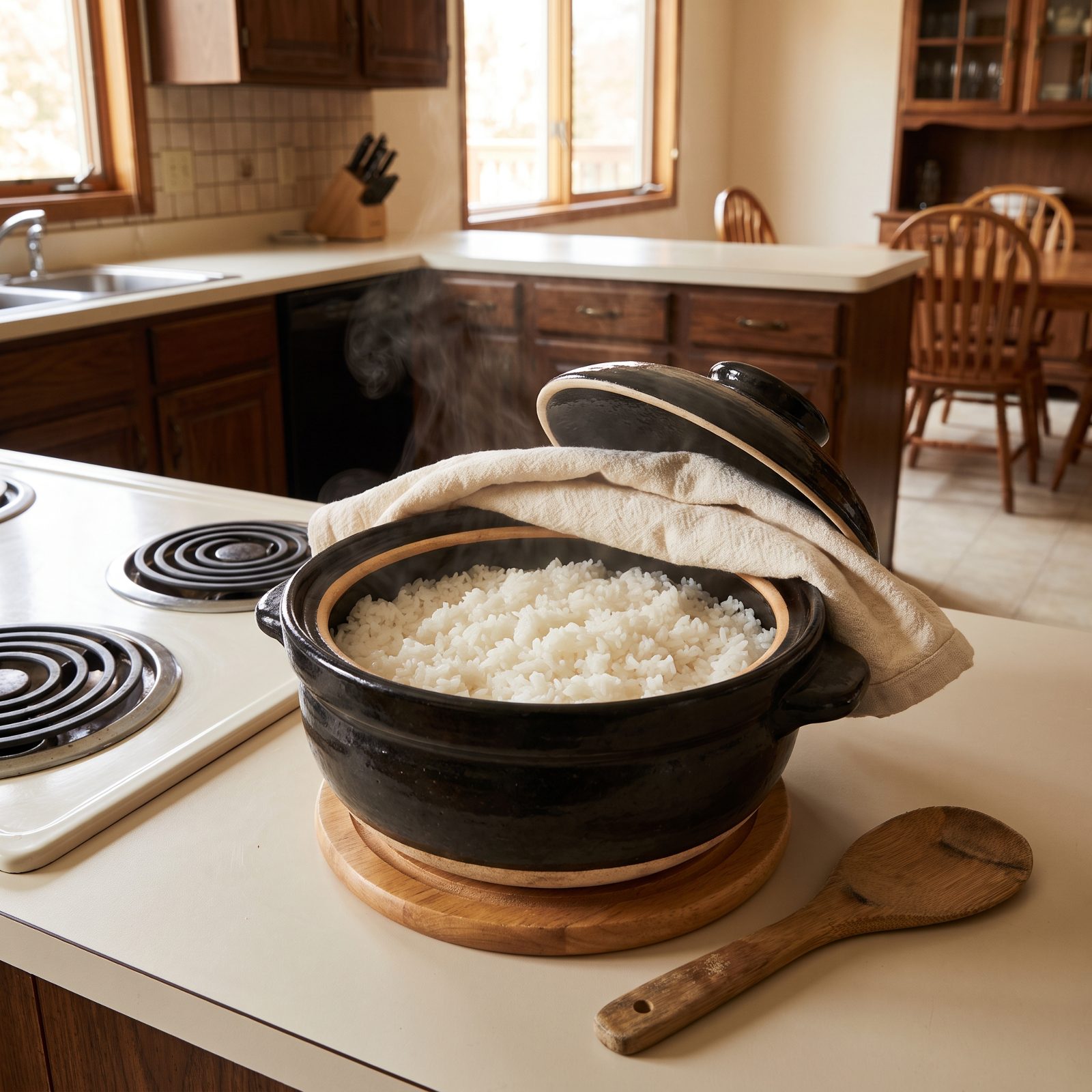
Perfect rice turns gummy in the last ten minutes, and almost always it’s the lid’s fault. Steam hits the cold lid, drips back down, and leaves the top layer soggy.
Pull the pot off the heat when the rice is done. Drape a clean kitchen towel across the back half of the pot, prop the lid at an angle on top of the towel at the rear, and let it sit ten minutes. The towel soaks up the falling condensation instead of letting it rain back onto the grains, and you’re left with rice that’s dry, separate, and fluffy.
17. Stir Instant Potato Flakes Into Thin Soup as an Emergency Thickener
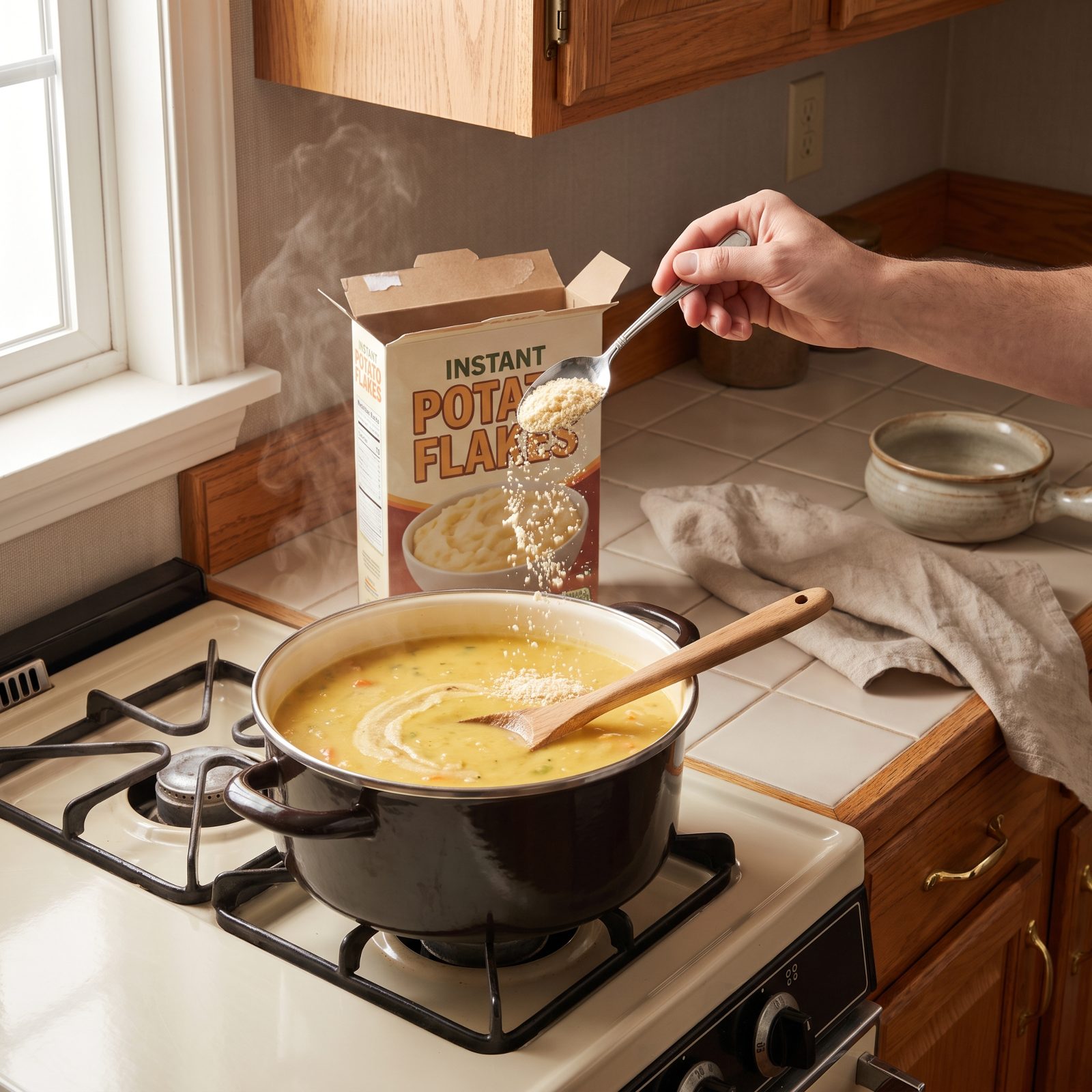
Watery soup is a quiet disappointment. You simmered all afternoon and it still runs off the spoon like broth.
Instant mashed potato flakes save it. Stir in a small handful at a time, let it sit a minute, and the soup bodies up — no raw flour taste, none of the lumps you fight with cornstarch slurries. It adds a little starchy richness too, which is exactly what thin soup is missing.
Potato leek, corn chowder, creamy anything. A box of flakes in the pantry is an insurance policy. Just go slow, because the thickening sneaks up on you and there’s no easy way to undo it.
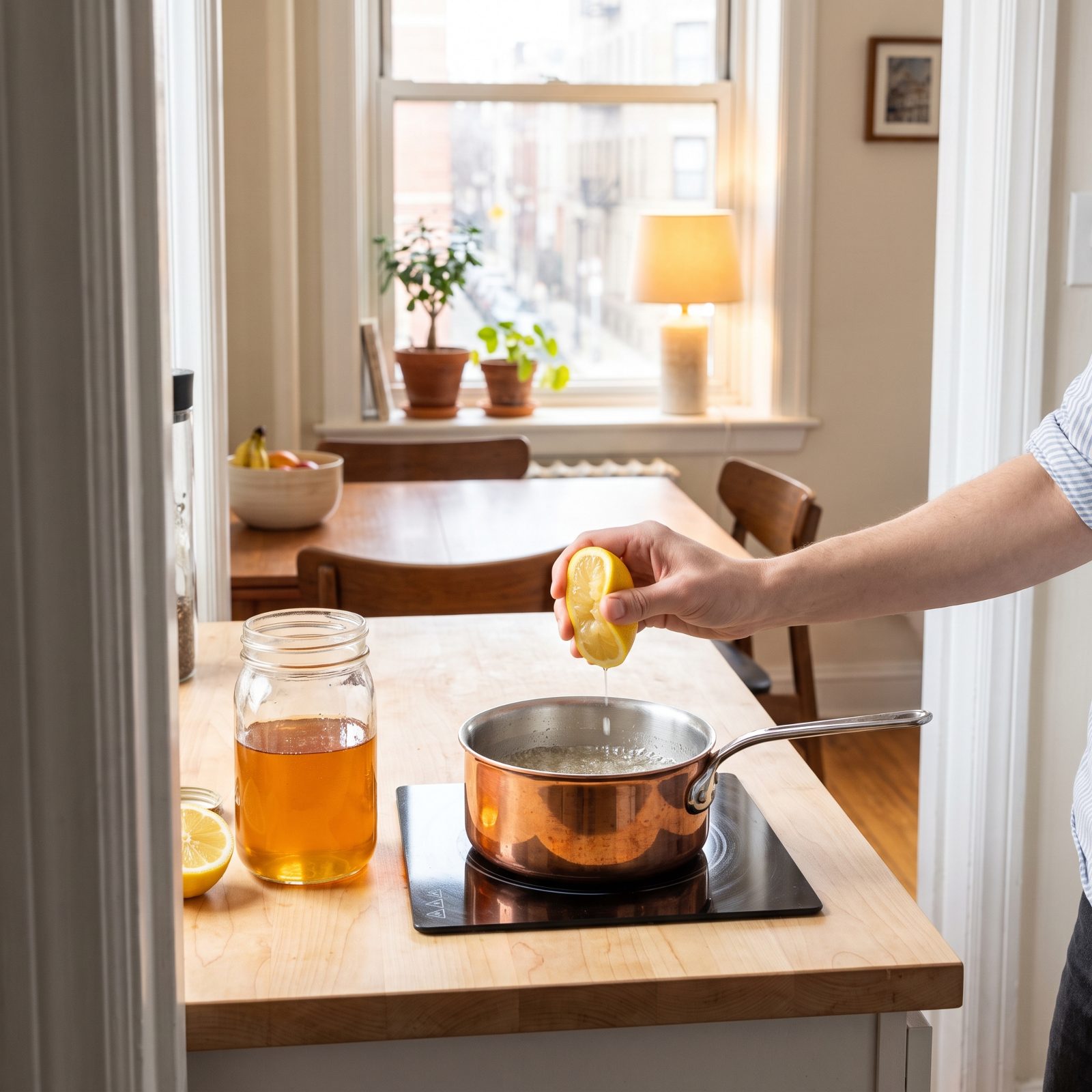
16. Add Lemon Juice to Sugar Syrup to Discourage Crystallization
Would you like to save this?
Sugar syrup wants to turn grainy. The sugar molecules find each other, link up, and before long your smooth syrup is full of hard crystals and your candy is ruined.
A splash of lemon juice stops it. The acid breaks some of the sugar down into forms that won’t lock together, so the syrup stays clear and smooth as it cools.
15. Use a Larger Eggshell Piece to Lift Tiny Shell Fragments
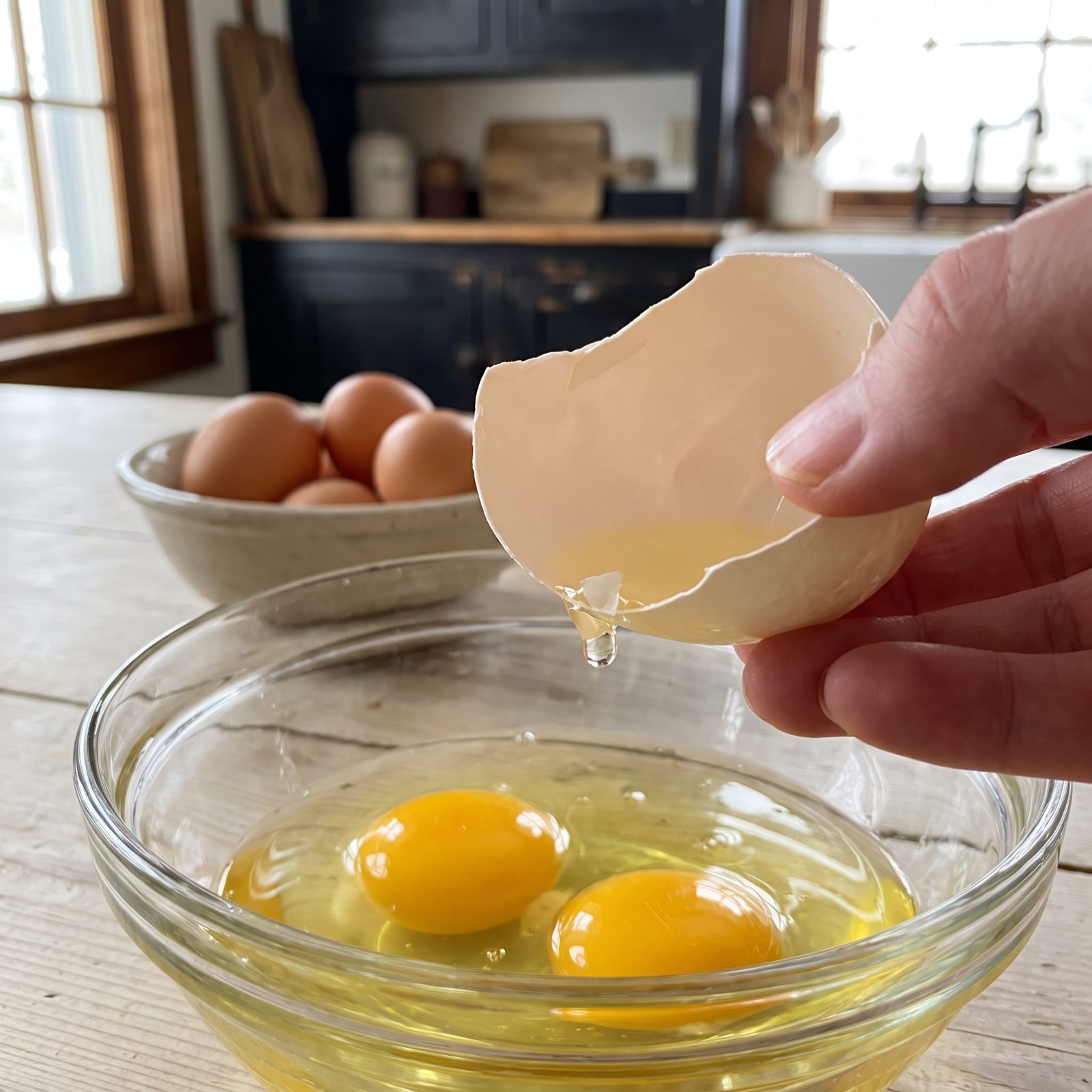
A fleck of shell lands in the bowl and your finger chases it around the slippery whites forever, nudging it away every time you close in. Stop using your finger.
Grab a larger piece of the broken shell instead. The sharp edge slides right under the fragment and pulls it in where your soft fingertip just skates over it. One scoop and it’s out.
14. Crush Garlic With Salt Until It Becomes a Silky Paste
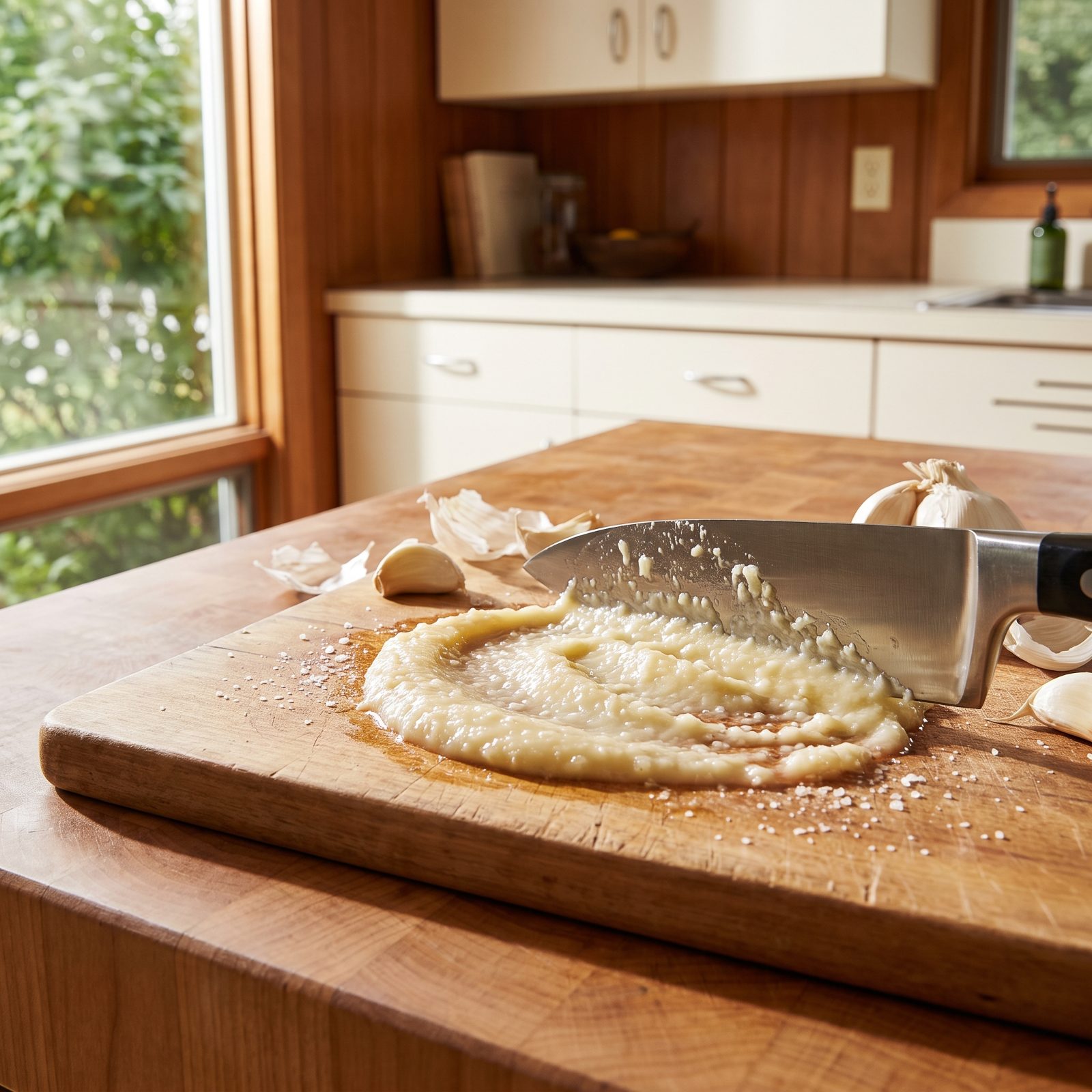
The salt isn’t there for flavor. Those coarse grains act like tiny ball bearings, grinding the garlic cells apart as you work the angled blade back and forth through the pile, and what you get is a smooth paste instead of stubborn little chunks that scorch before they soften.
It melts into salad dressing, aioli, or a pan of greens without a single raw bite left behind. Thirty seconds, once you get the motion down. And since the salt you’d have added anyway is already in it, dial the recipe back to match.
13. Drop a Marshmallow Into Your Brown Sugar So It Never Turns to Brick
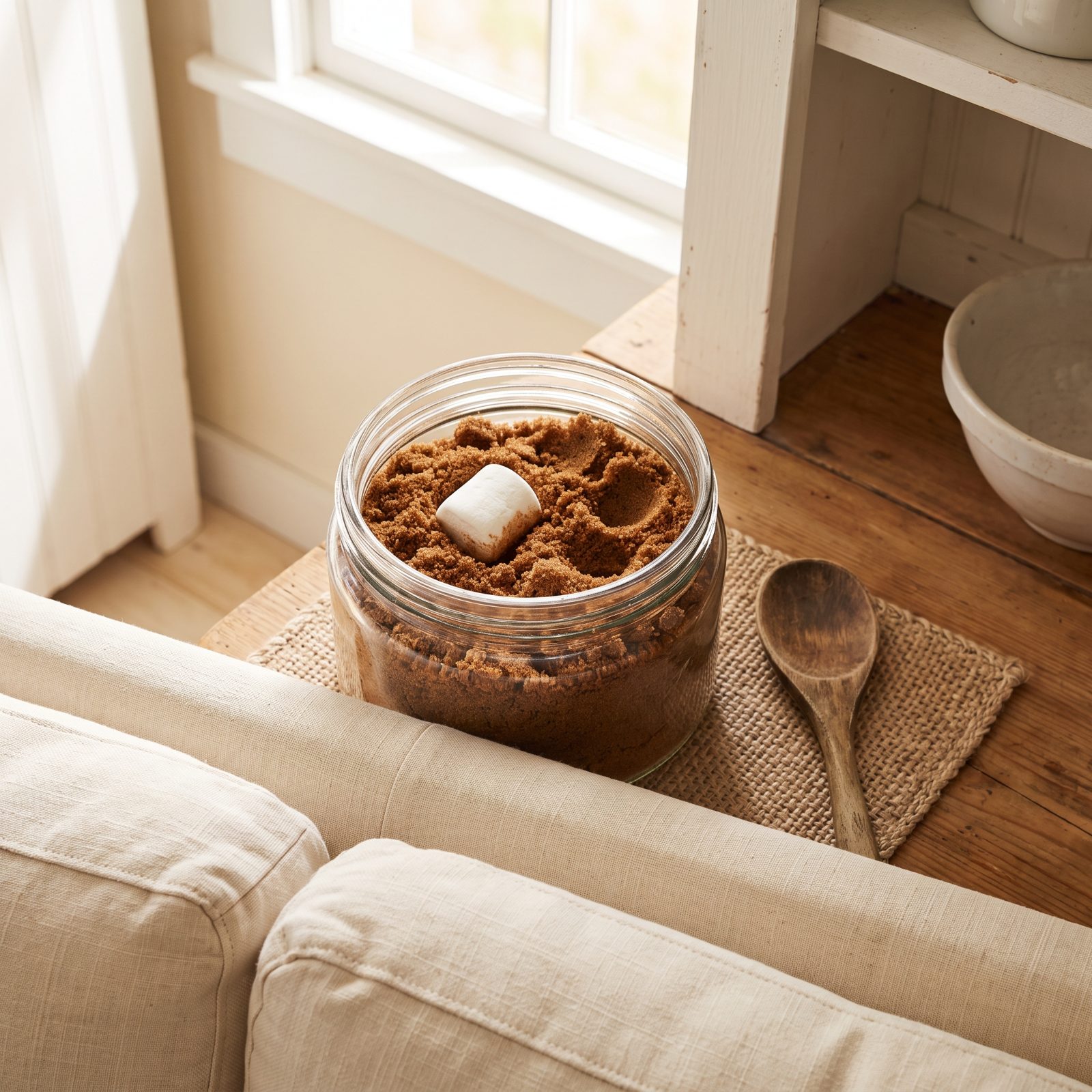
Brown sugar hardens because it dries out. The molasses that keeps it soft surrenders its moisture to the air, and you’re left with a rock you have to stab at with a fork.
A marshmallow in the jar holds just enough humidity to keep the whole thing scoopable for weeks. A slice of bread does the same job, but it goes stale and a little sad on you. The marshmallow lasts longer and won’t mold. Already-hardened sugar is a different fix — keep it soft from the start and you’ll never need one.
12. Shake a Little Black Pepper Over Strawberries to Wake Them Up
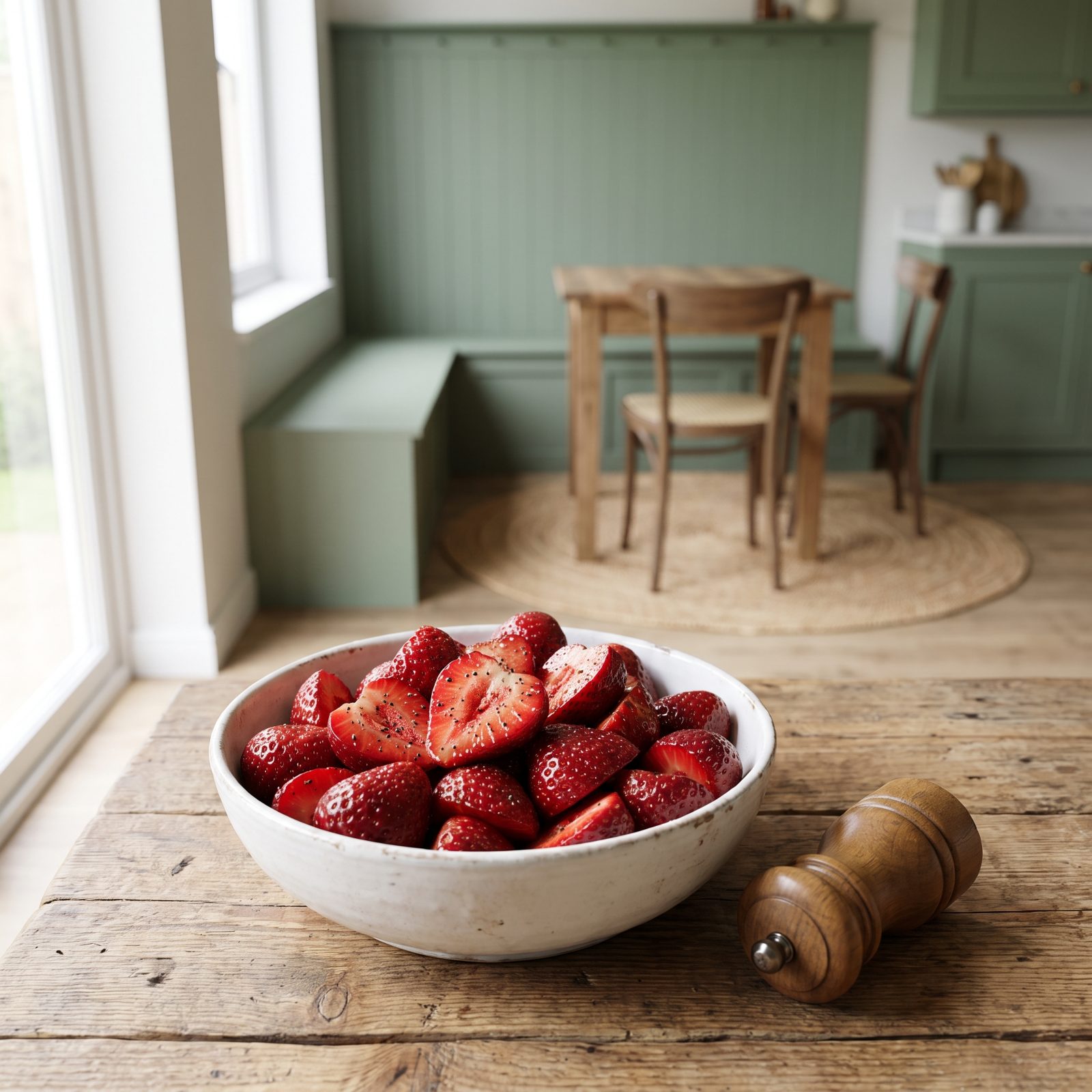
Sounds like a mistake until you try it. A grind of fresh black pepper over sliced strawberries doesn’t make them taste peppery — it makes them taste more like strawberries.
The pepper’s warmth and faint heat throw the fruit’s sweetness, and that bright almost-floral note, into sharper relief. Italian cooks have done this for ages, sometimes with a splash of balsamic too. Try it on berries that are a touch underripe and watch them come alive.
11. Wrap Celery in Aluminum Foil and It Stays Snappy for Weeks
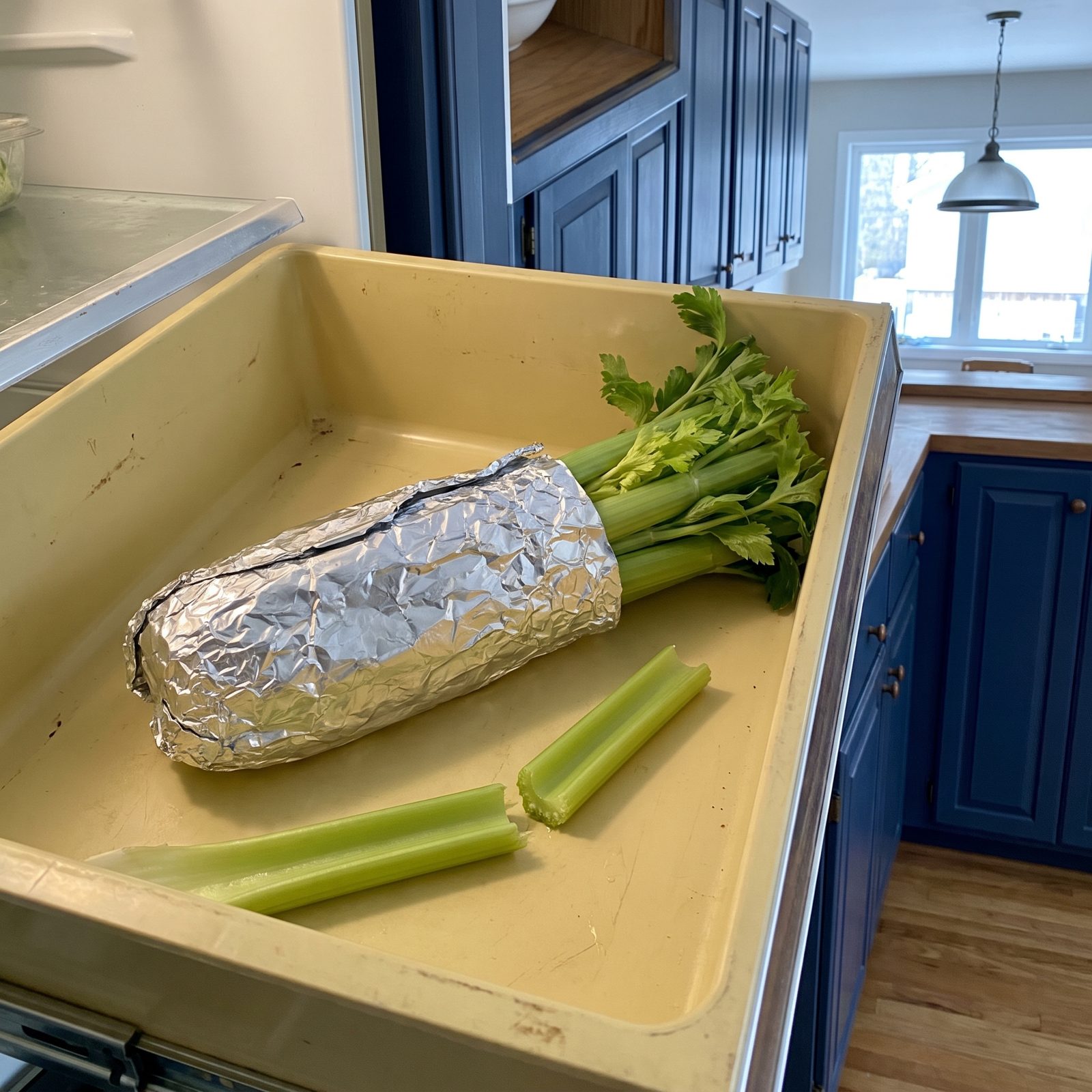
Celery left in its store plastic goes limp in days. You know those rubbery stalks that bend in half instead of snapping? That’s trapped ethylene gas with nowhere to escape to.
Foil lets the celery breathe while still holding moisture in, so the gas can leave and the stalks stay rigid enough to snap clean two weeks later. It feels too simple to work. Works anyway. Swap the plastic for foil the day you bring it home and forget about it.
10. Store Mushrooms in a Paper Bag and Say Goodbye to Slime

Plastic punnet plus plastic wrap equals a sweaty, slimy mess by day three. Mushrooms are mostly water, and they need somewhere for it to go.
A paper bag wicks away the excess while keeping the caps from drying out completely, so they stay firm and dry to the touch instead of tacky. Fold the top over loosely and tuck it in the fridge. Easiest upgrade your produce drawer will ever get, and the mushrooms will outlast the plastic-wrapped ones by days.
9. Freeze New Flour for a Few Days to Kill Off Pantry Pests
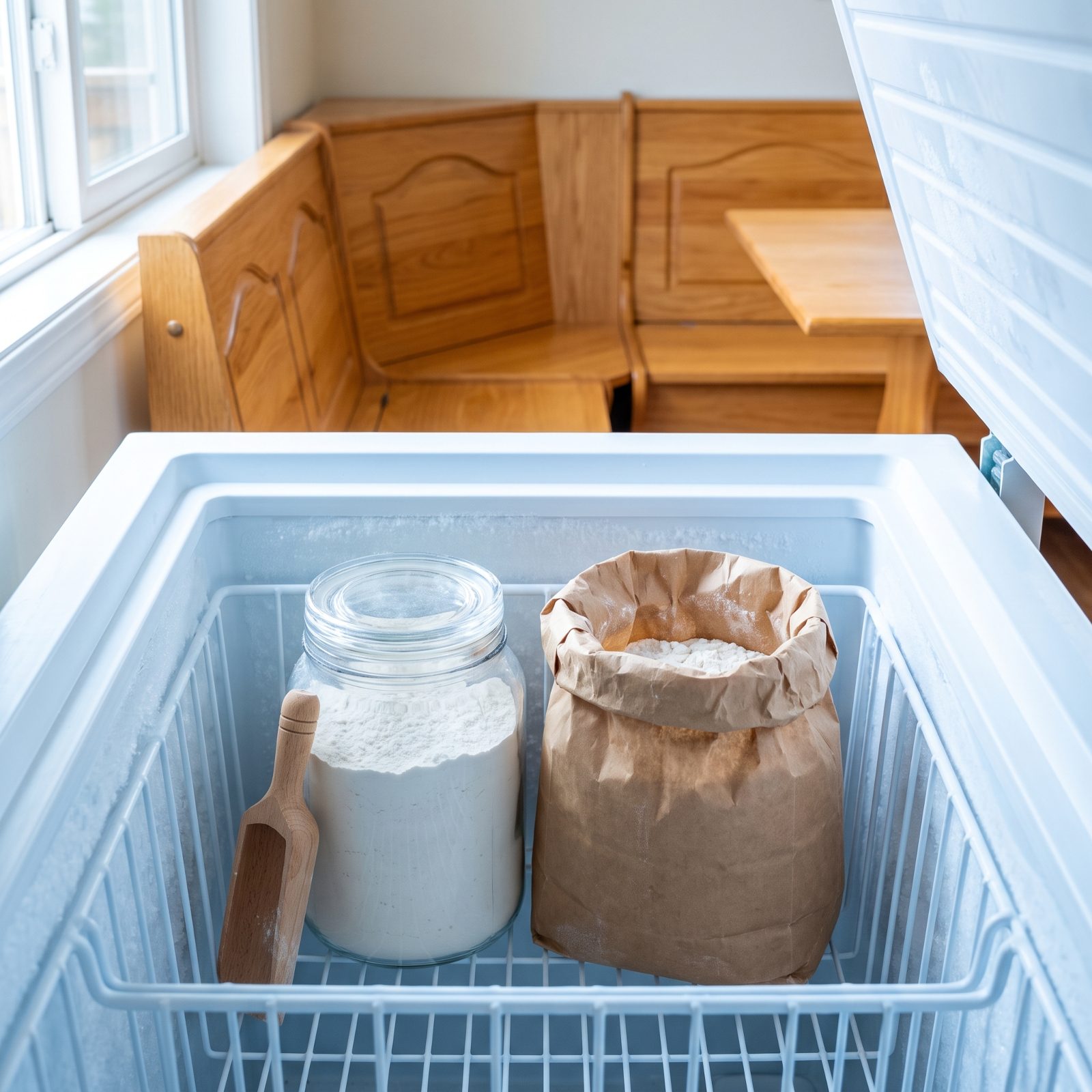
Nobody mentions this part. Flour often leaves the mill with insect eggs already in it, too small to see, and a warm pantry is all they need to hatch into weevils. You find out when you open the bag to webbing and movement — enough to make you swear off baking altogether.
A few days in the freezer kills the eggs before they get the chance. After that it’s shelf-stable. Do it the day you carry the flour home and you’ll never lose a bag to pests again.
8. Set Eggs Pointed End Down to Keep the Yolks Sitting Pretty
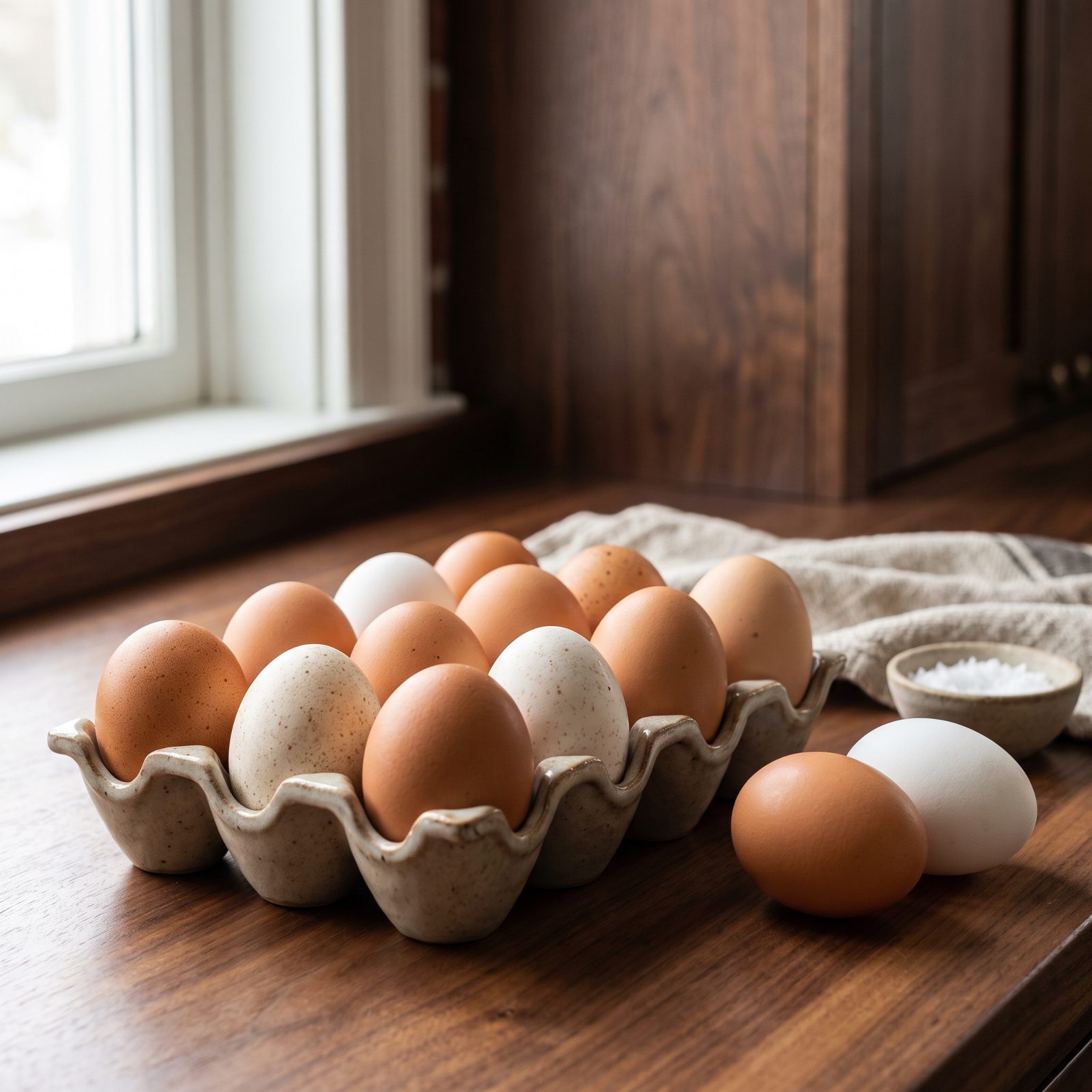
The fat end of an egg holds an air pocket. Store the egg with that end up and the pocket stays put, which keeps the yolk cradled dead center in the white where it belongs.
Pointed end down also buys the egg a little more freshness, since the air cell isn’t pressing on the yolk. Centered yolks matter when you’re deviling eggs or slicing hard-boiled ones for a salad and want them to look right. Small habit, costs you nothing.
7. Bathe Apple Slices in Lightly Salted Water to Hold Off the Brown
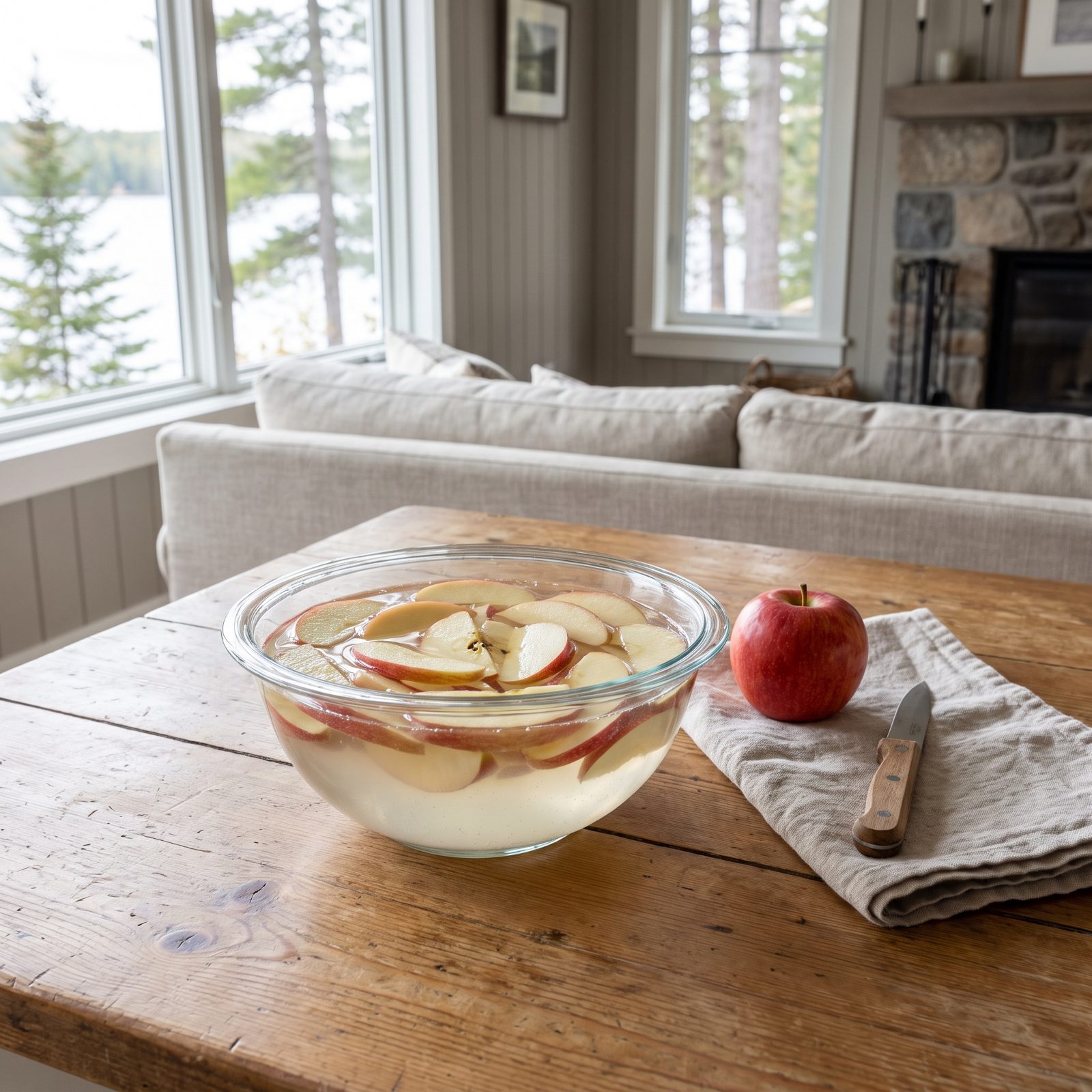
Cut an apple and the browning clock starts, the flesh reacting with oxygen the second the knife goes through. Lemon juice works, sure, but then your slices taste like lemon.
A short soak in mild salt water — a light pinch, not the sea — slows the reaction and leaves nothing behind. Five minutes is plenty. Rinse, and the slices stay pale in the lunchbox for hours. Go heavy on the salt and you’ll taste it, so stay gentle.
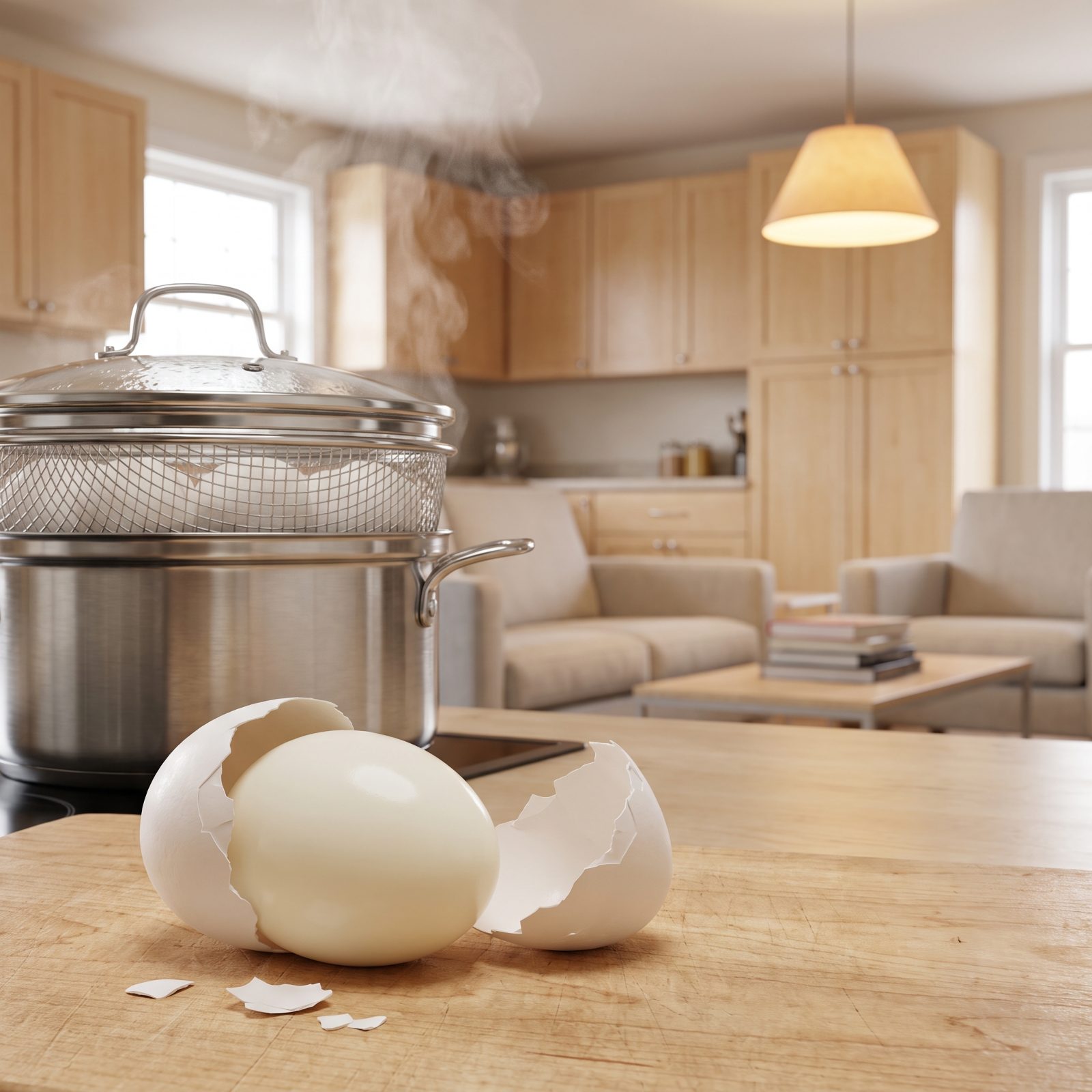
6. Steam Your Eggs Instead of Boiling and Watch the Shells Slide Off
Would you like to save this?
Peeling a boiled egg and surrendering half the white to the shell is one of those small daily indignities that shouldn’t still exist.
So steam them. An inch of water, a steamer basket, lid on, and the gentle heat sets the membrane differently so the shell releases in big satisfying pieces. Brand-new eggs are notoriously hard to peel, which is exactly where steaming earns its keep over boiling. Shock them in cold water the second they’re done and they practically peel themselves.
5. Grate Frozen Butter Into Your Dough for Flakier Biscuits and Pie Crust
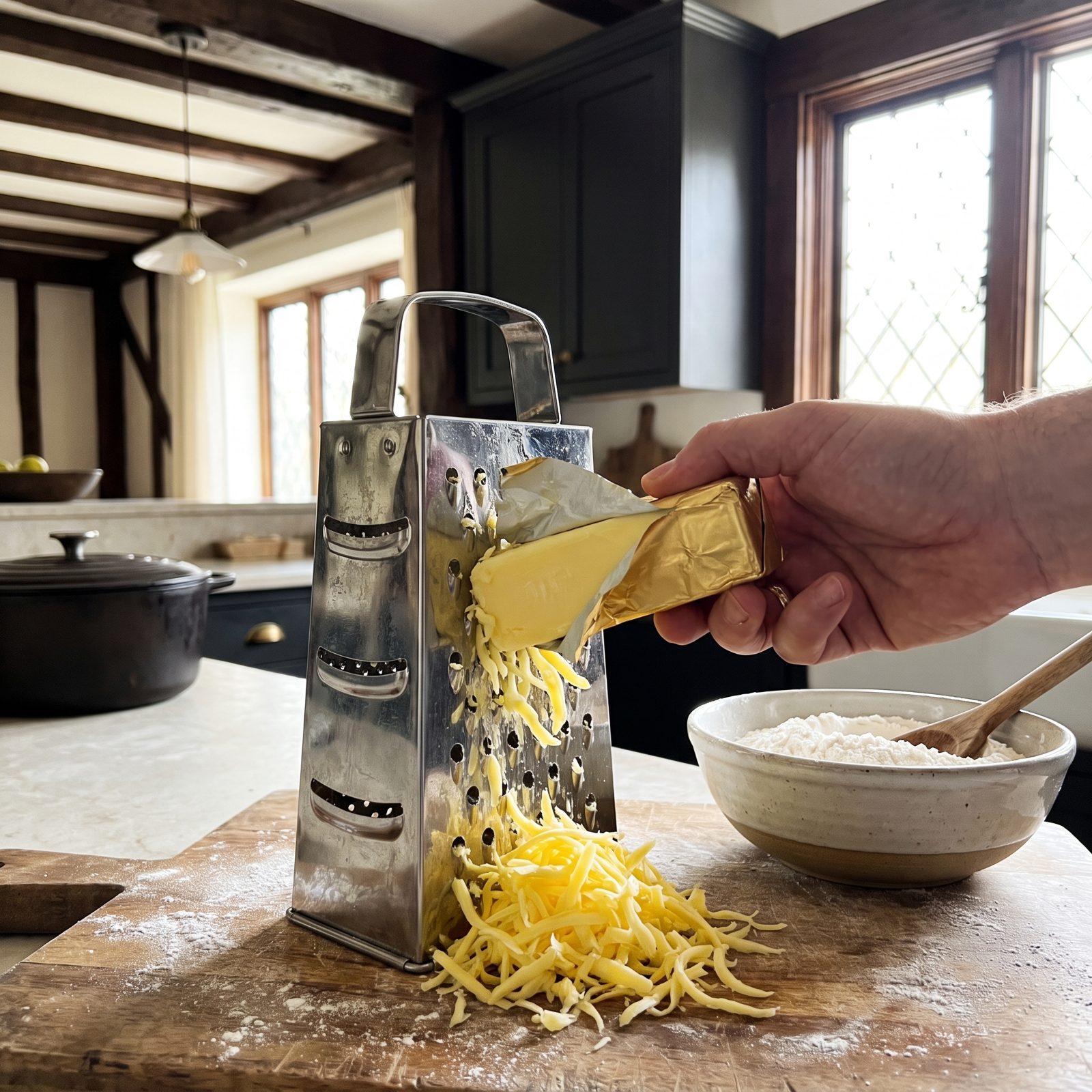
Flaky isn’t about technique. It’s temperature. Those little pockets of butter have to stay solid until the oven hits them, then burst into steam that props the layers apart.
Cutting cold butter in by hand warms it the whole time your fingers are working it. Grate a frozen stick instead and you get long, thin, bright-yellow shreds that scatter through the flour in seconds without ever softening. Toss, don’t knead. Bakers who brag about their pie crust almost always do this, and almost never cop to it being the whole trick.
4. Slice Soft Layer Cakes With Unflavored Dental Floss
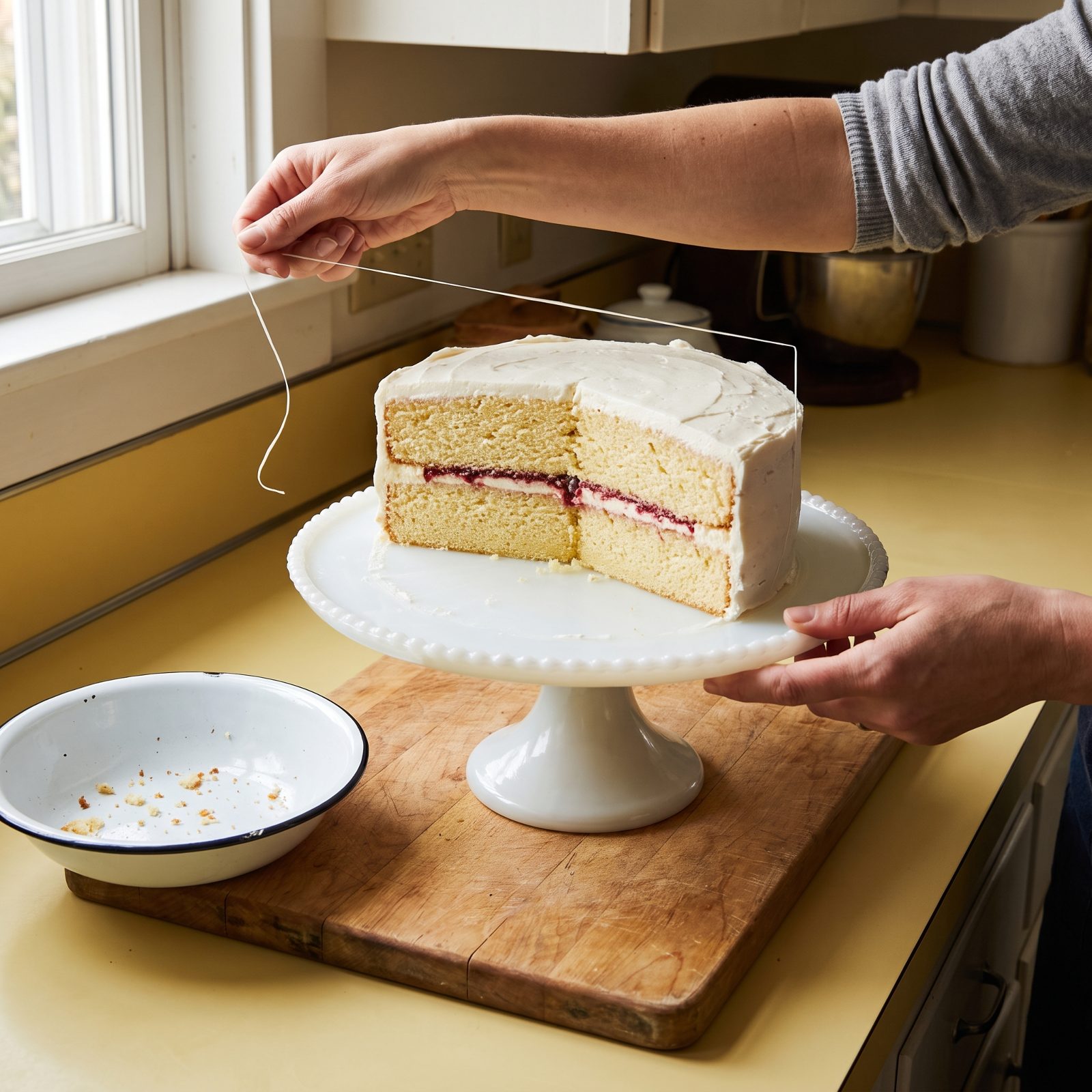
A good chef’s knife is the worst tool for a soft cake. It drags, compresses, and turns a clean slice into a smeared wedge that looks like it lost a fight. Grandmothers knew better. A length of plain dental floss, held taut between both hands and pressed straight down through the cake, glides through sponge and cream without shoving the layers around.
Why does it work? The floss has almost no surface area, so there’s nothing to stick and nothing to drag. It shines on angel food, chiffon, and any cake you’re splitting horizontally for filling.
3. Use an Empty Butter Wrapper to Grease a Baking Pan
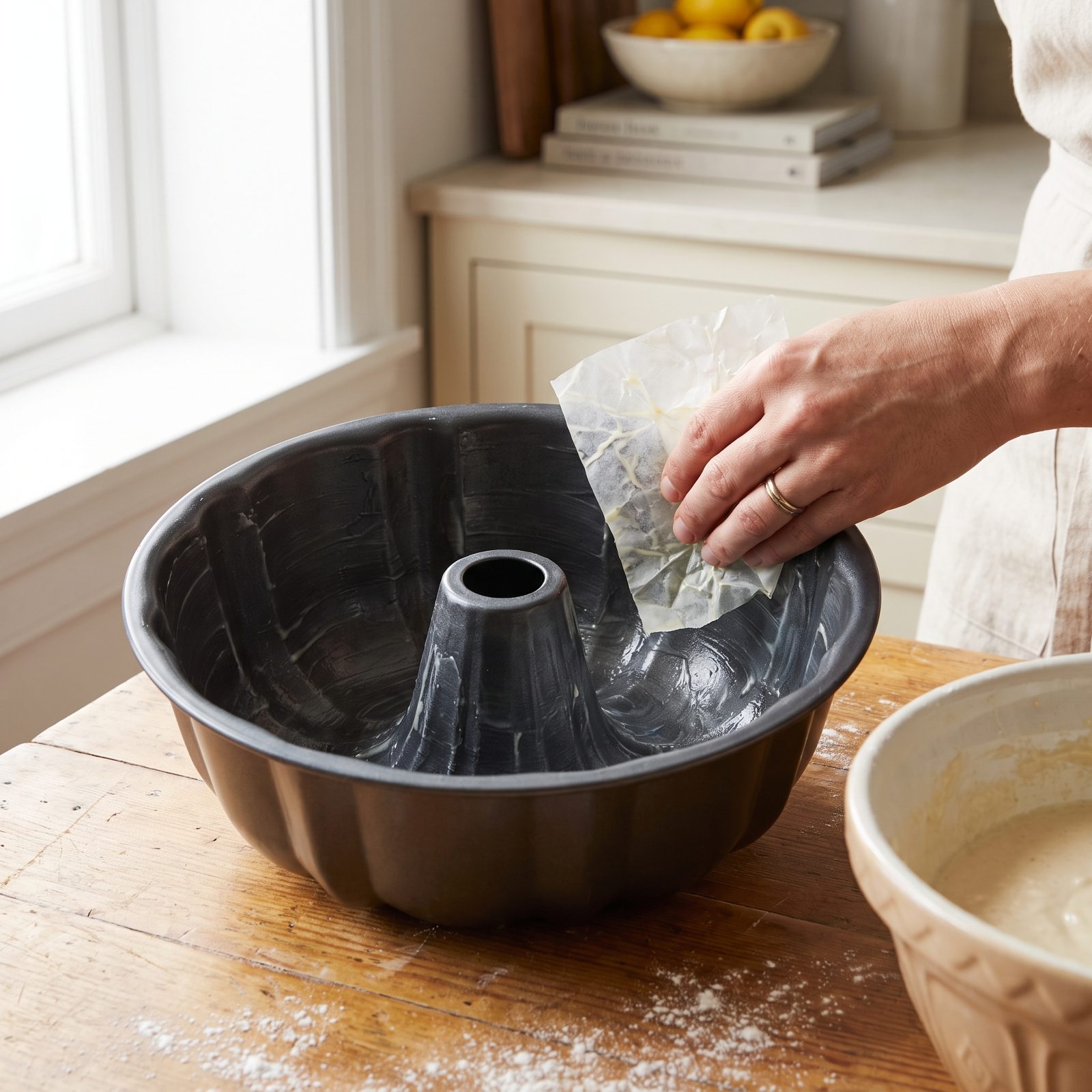
There’s always enough butter clinging to the wrapper to grease a cake pan, and your grandmother never let it hit the trash. She’d tuck the folded paper in the fridge door and pull it out whenever a recipe said “grease the pan.”
The waxed paper spreads a thin, even film into every corner and down every flute of a bundt mold, which is exactly where cakes love to stick. No paper towel wasted, no separate stick of butter sacrificed. Thrift, sure. But it also gives you better coverage than a crumpled napkin ever will.
2. Wet a Stale Loaf Lightly and Bake It to Restore the Crust
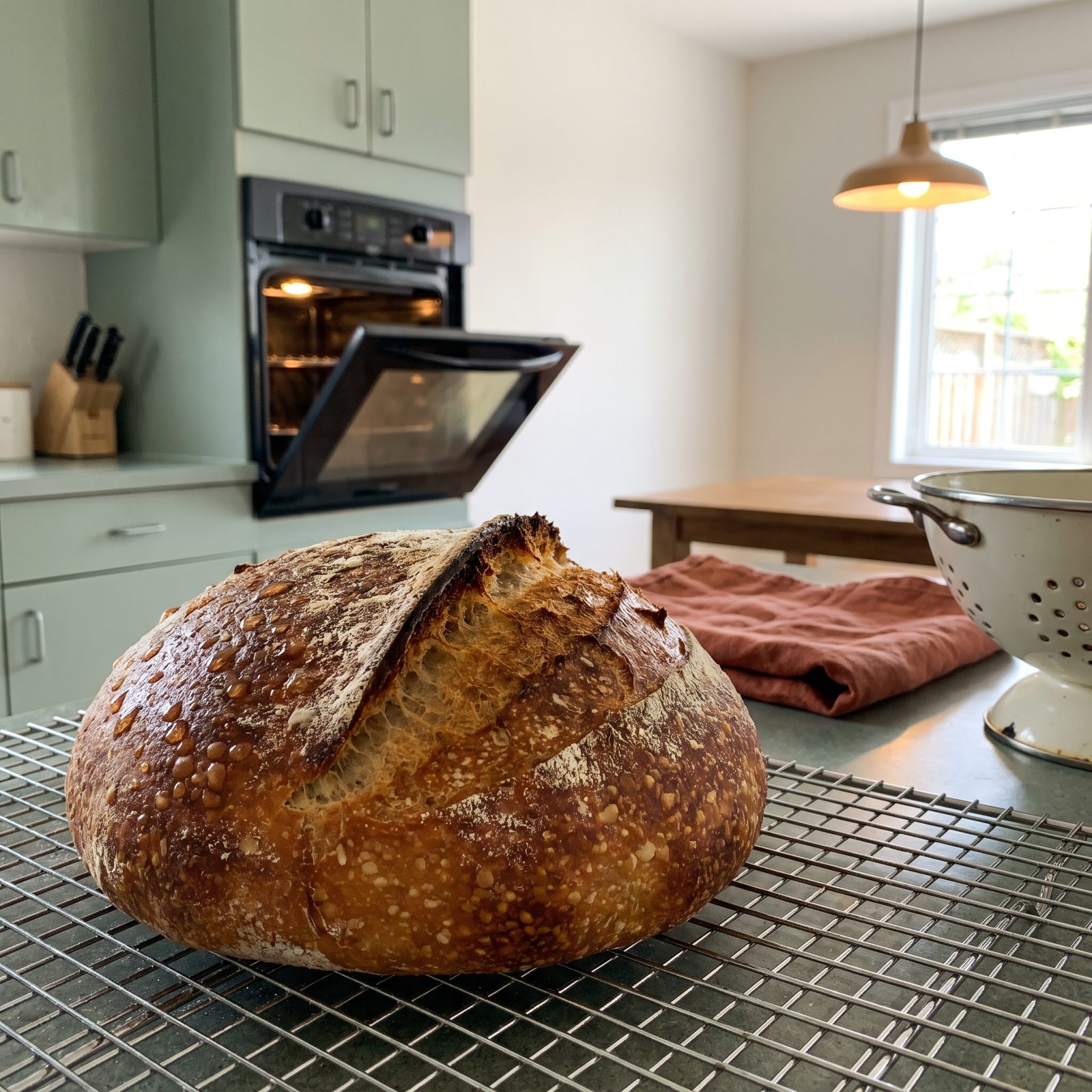
Stale bread isn’t dry bread, and that distinction is the whole secret. Bread goes stale because the starches recrystallize and tighten up, not because the moisture left town. Heat reverses it.
Run the loaf briefly under the tap or mist it, then put the damp loaf straight into a hot oven for a few minutes. The water turns to steam inside, loosens the crumb back to soft, and the crust crackles up like the bread came out of the bakery that morning. Yesterday’s baguette, rescued from the bin.
One catch: this buys you a couple of hours, not a second life. Refreshed bread goes stale again fast, so slice what you need and eat it warm.
Stale is a texture problem, not a moisture problem. Heat fixes texture.
1. Warm Crystallized Honey in Water to Make It Pourable Again

That jar of honey turned to sugary cement in the back of the cupboard isn’t spoiled. Crystallization is natural and completely reversible, which is why grandmothers never tossed a cloudy jar.
Stand the open jar in a bowl of warm water, not boiling, and walk away for a bit. The gentle heat dissolves the sugar crystals and the honey flows clear again within minutes. Boiling water or a blast in the microwave scorches the delicate flavor and kills off the raw enzymes, so patience wins.