Would you like to save this?
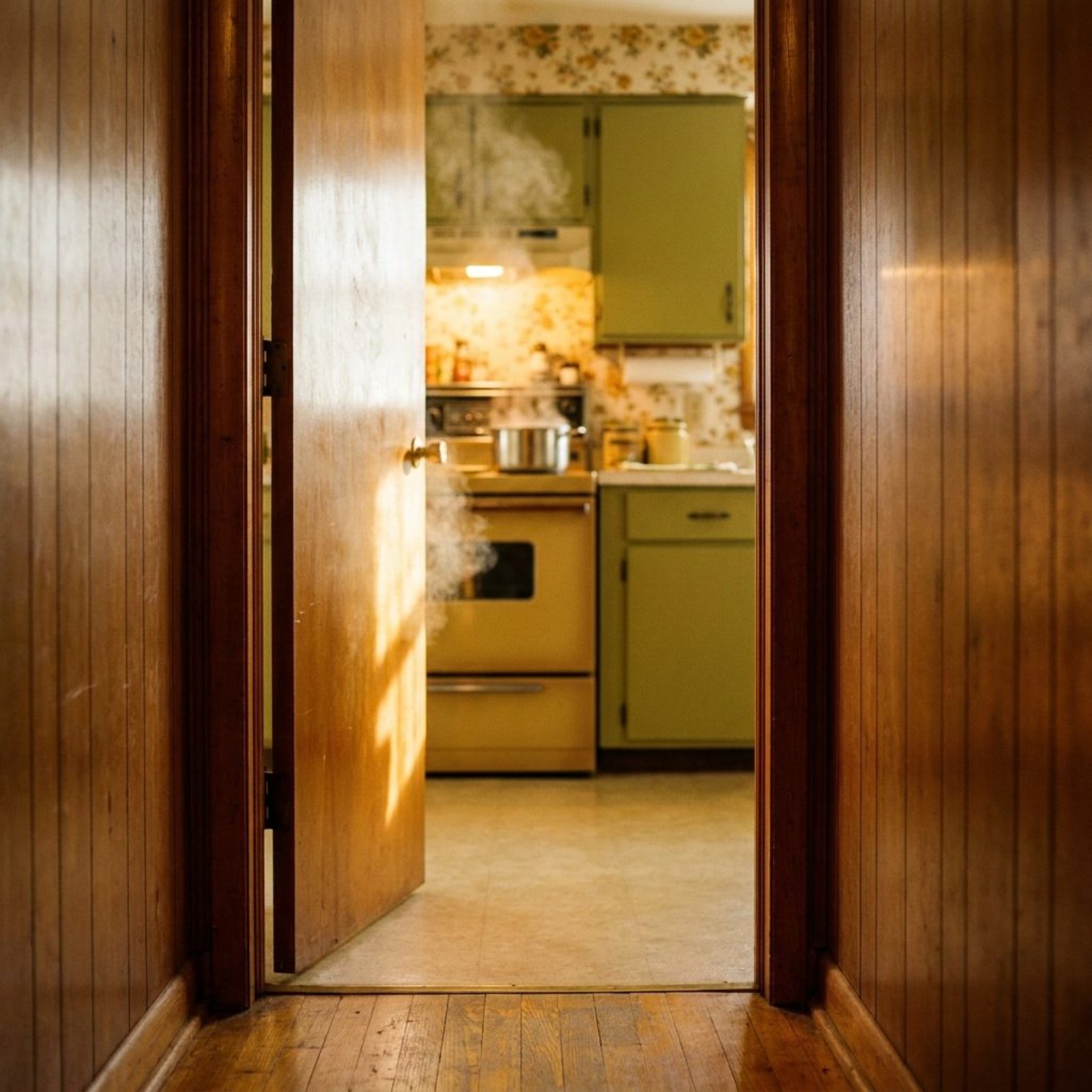
You knew what was cooking before you reached the porch. Garlic, tomato and something baking low and slow drifted through the screen door and down the steps. Sunday dinner at Grandma’s was never just a meal. It was a full production, with aunts, uncles, cousins and a dog that was not supposed to be in the kitchen but always was.
Every family had its own version, but the rhythm barely changed: bread first, pasta before anyone was ready, coffee that never stopped, leftovers packed before you had officially left. Here is how the whole Sunday unfolded.
26. The Good Tablecloth That Only Came Out on Sundays
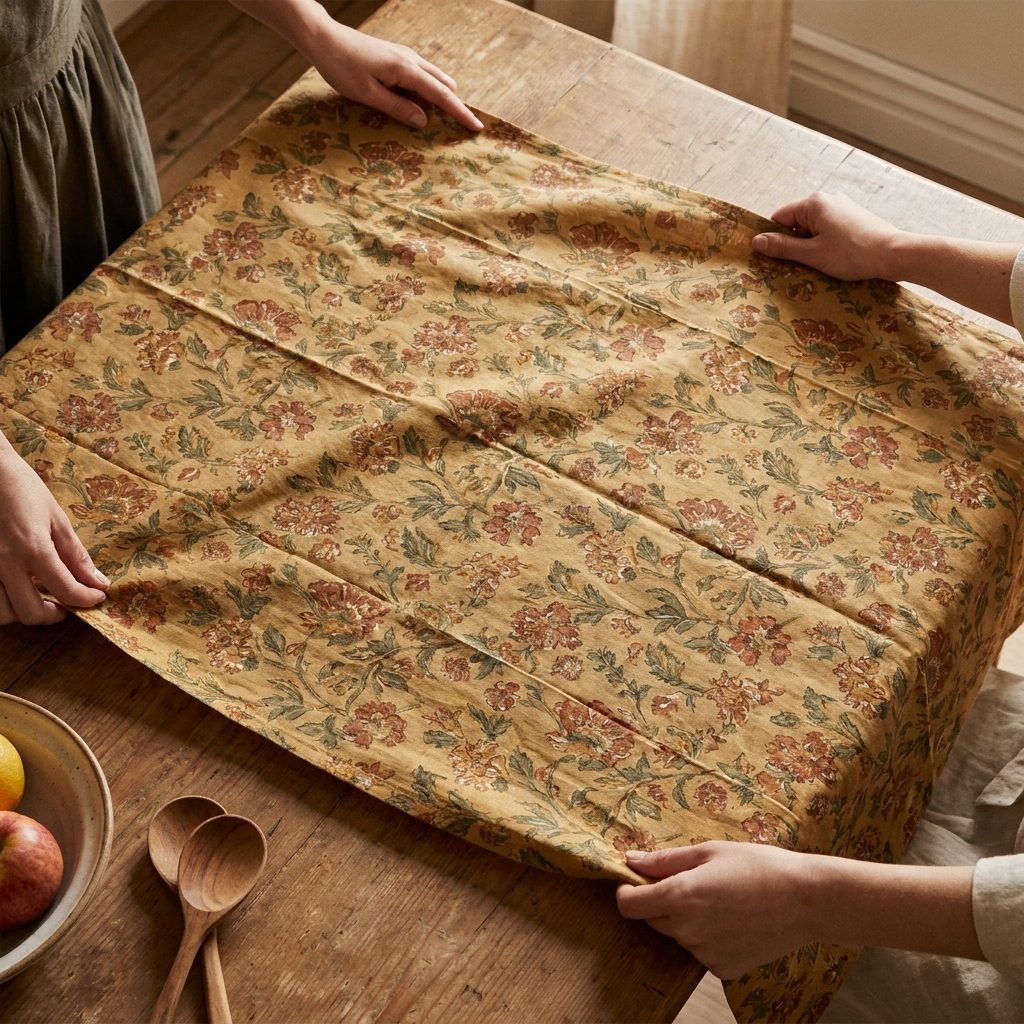
It lived in the cedar chest in the spare room eleven months of the year. On Sundays it came out, got ironed while still slightly damp, and went on the table with the ceremony of something that mattered. If the good tablecloth was on the table, this was not a regular meal.
It had a stain near one corner, something from a holiday in the mid-sixties, origin disputed by every living family member. Nobody ever talked about it directly. Nobody ever fixed it. It was just part of the cloth now, the way certain things just become part of the family.
25. The Big Pot of Gravy That Was Actually Sunday Sauce
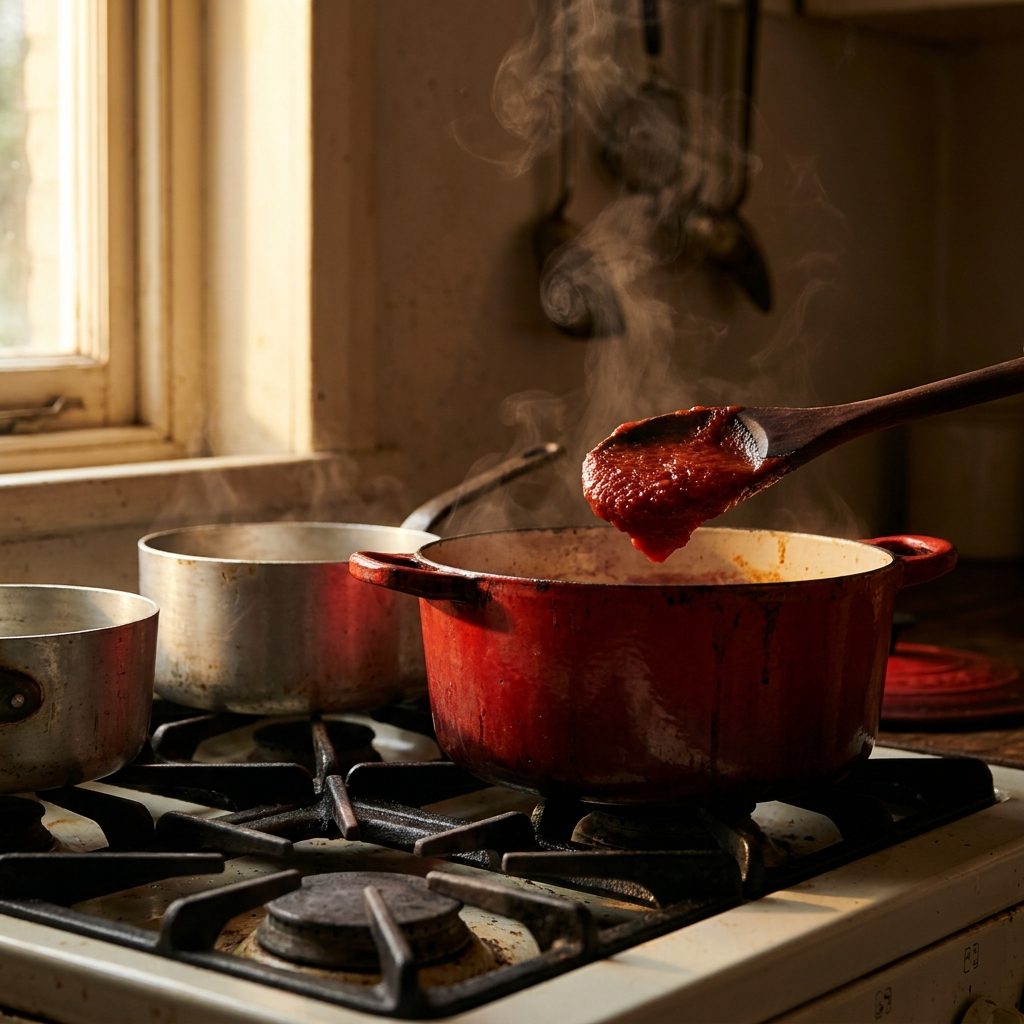
In plenty of Italian-American households, especially in parts of the Northeast, somebody’s grandmother called it gravy. Not sauce. Not marinara. Gravy. Other families called it sauce, and the argument has been running for generations.
What it was, regardless of terminology, was a pot that had been going since before you were awake. Meatballs in there. Sausage in there. Pork neck bones, sometimes. The whole thing collapsing into itself over four or five hours until it barely resembled anything that started as separate ingredients. You stirred it with a long wooden spoon that had been stained red for twenty years.
24. The Bread Basket That Hit the Table First and Emptied Fast
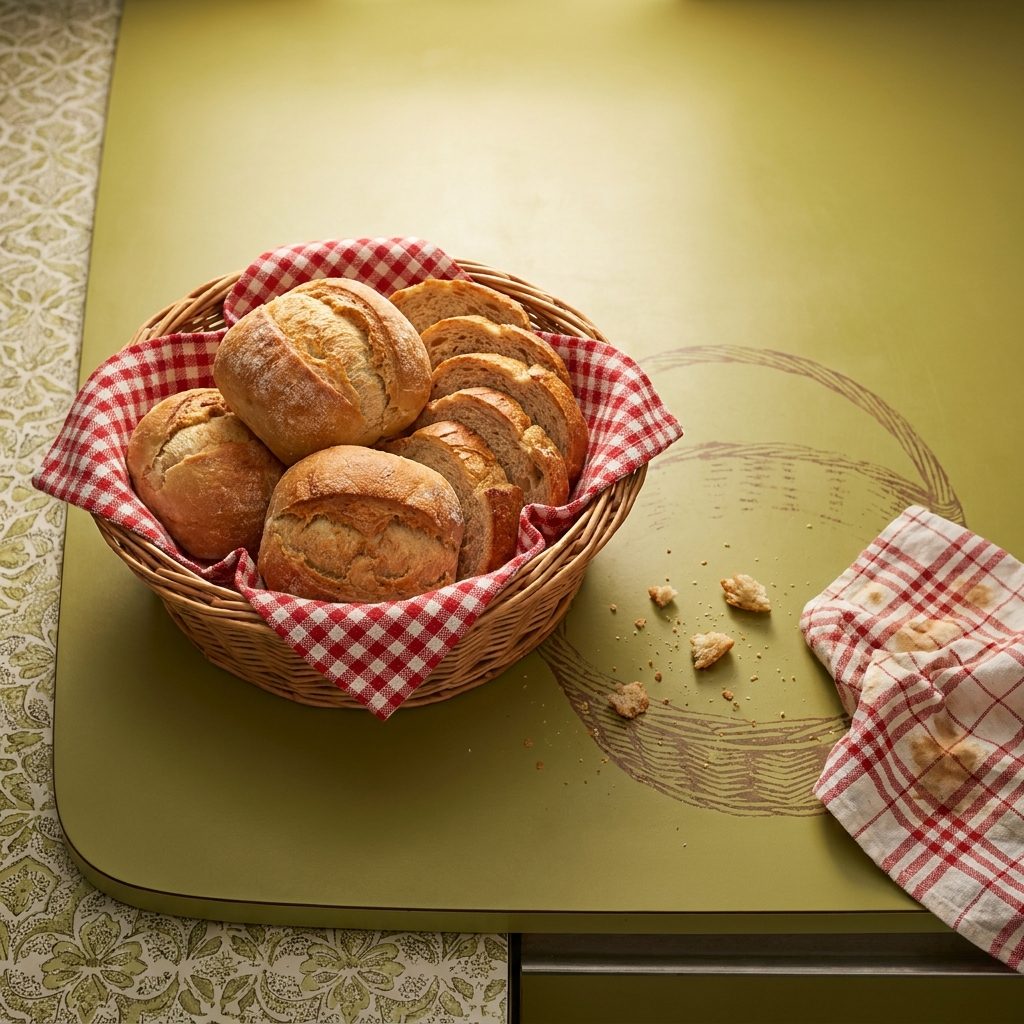
It was on the table before the pasta, before the salad, before anything. And it was gone before the pasta arrived. Every time. Without fail. Someone always said don’t fill up on bread, and nobody ever listened, because the bread was warm and the butter was soft and the sauce was still another ten minutes away.
The bread itself wasn’t anything fancy. An Italian loaf from the neighborhood bakery or the supermarket, depending on the week. But torn and dipped into whatever pooled at the bottom of the sauce pot, it was its own course. Grandma knew this. She made extra.
23. The Relish Tray Nobody Was Hungry Enough to Finish
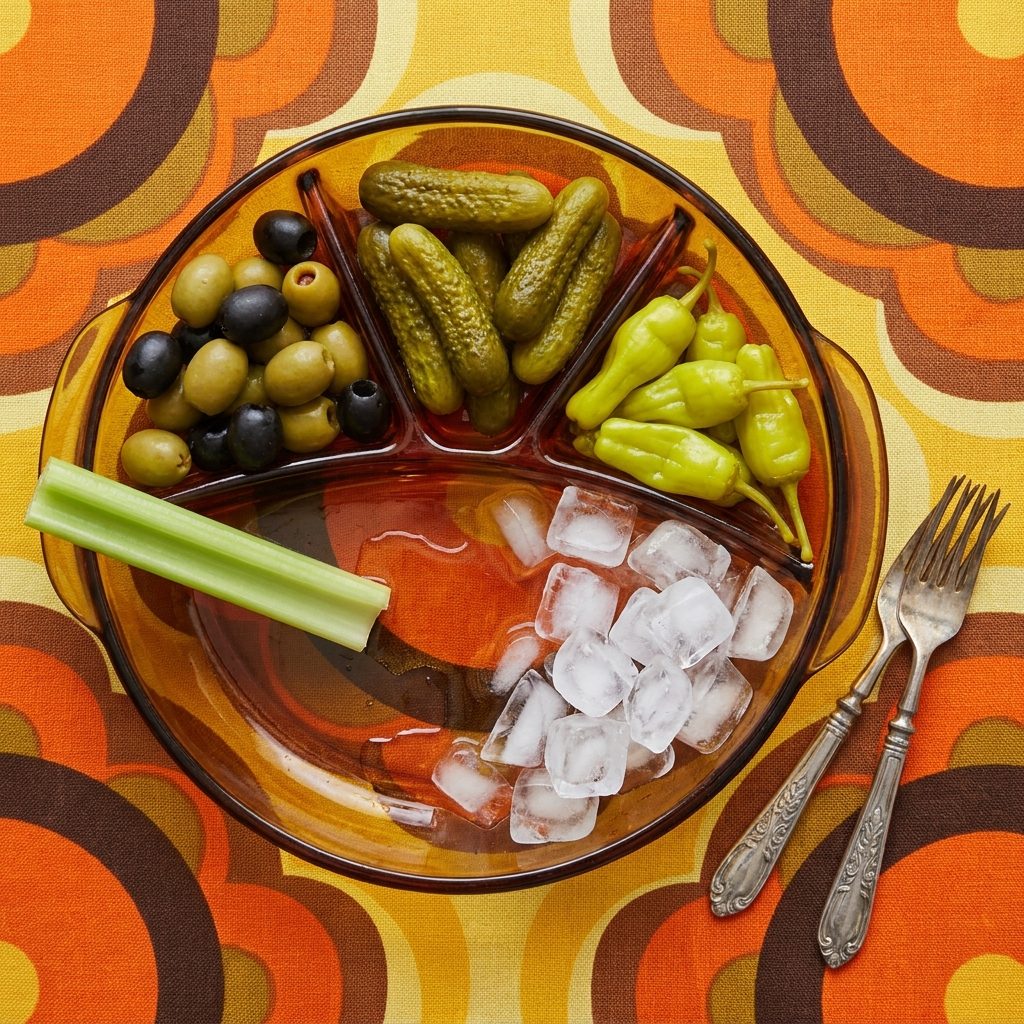
The relish tray existed in a category of food that was neither appetizer nor side dish but simply there, on every table, at every gathering, without anyone ever explaining who it was for. Someone would eat the black olives. Someone would take a celery stick. The pepperoncini would sit until the end of the meal, glistening and slightly accusatory.
The pressed-glass tray itself probably came from a bridal shower gift circa 1958 and would outlast everyone at that table by fifty years.
22. The Pasta Course That Was Just the Beginning
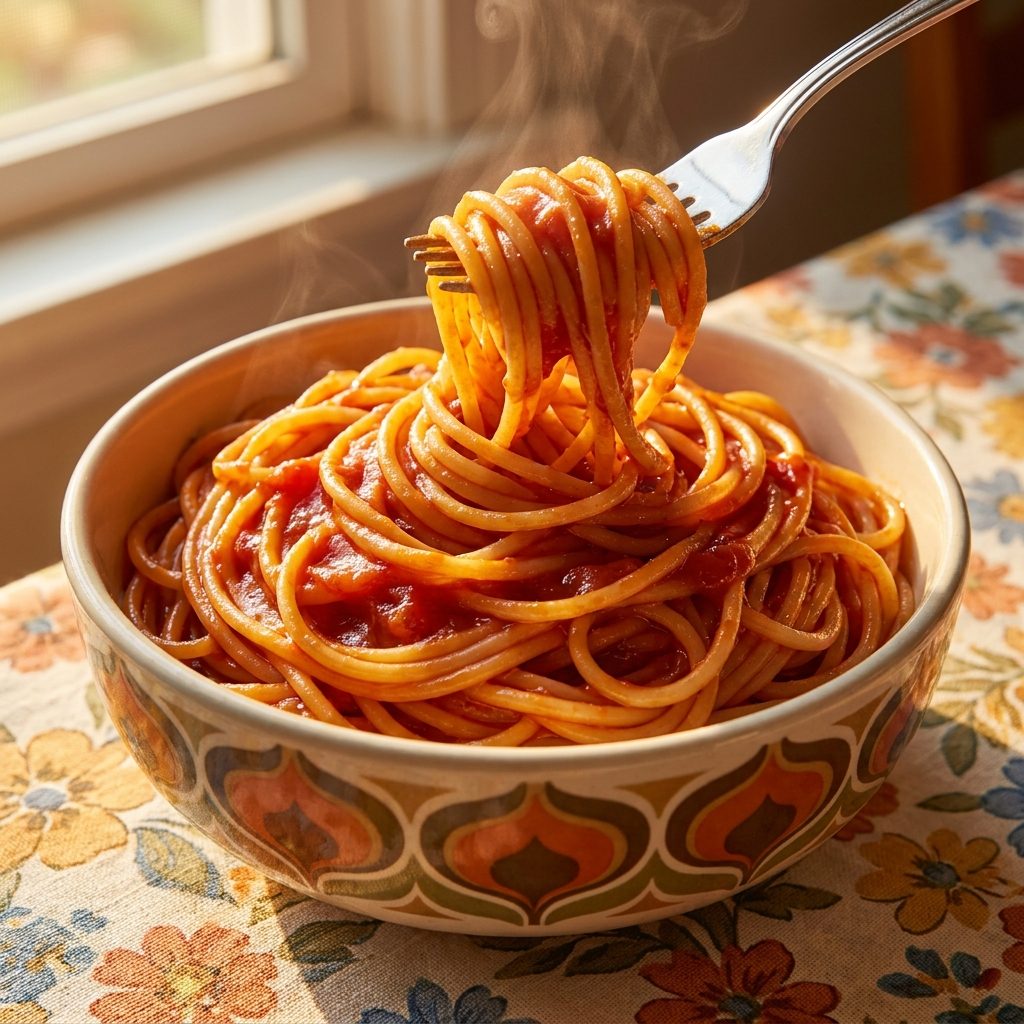
This was the first course. Not the main. The first course, served in the kind of portions that would be called a main course anywhere else in the world. And after this, there was still chicken or sausage or braciole or all three coming from the oven.
You didn’t know this as a kid. You ate the pasta like it was the meal. Every single Sunday. And every single Sunday, halfway through the meatball, the oven timer went off and more food arrived and somehow everyone ate that too.
21. The Green Salad That Arrived After the Pasta, Not Before
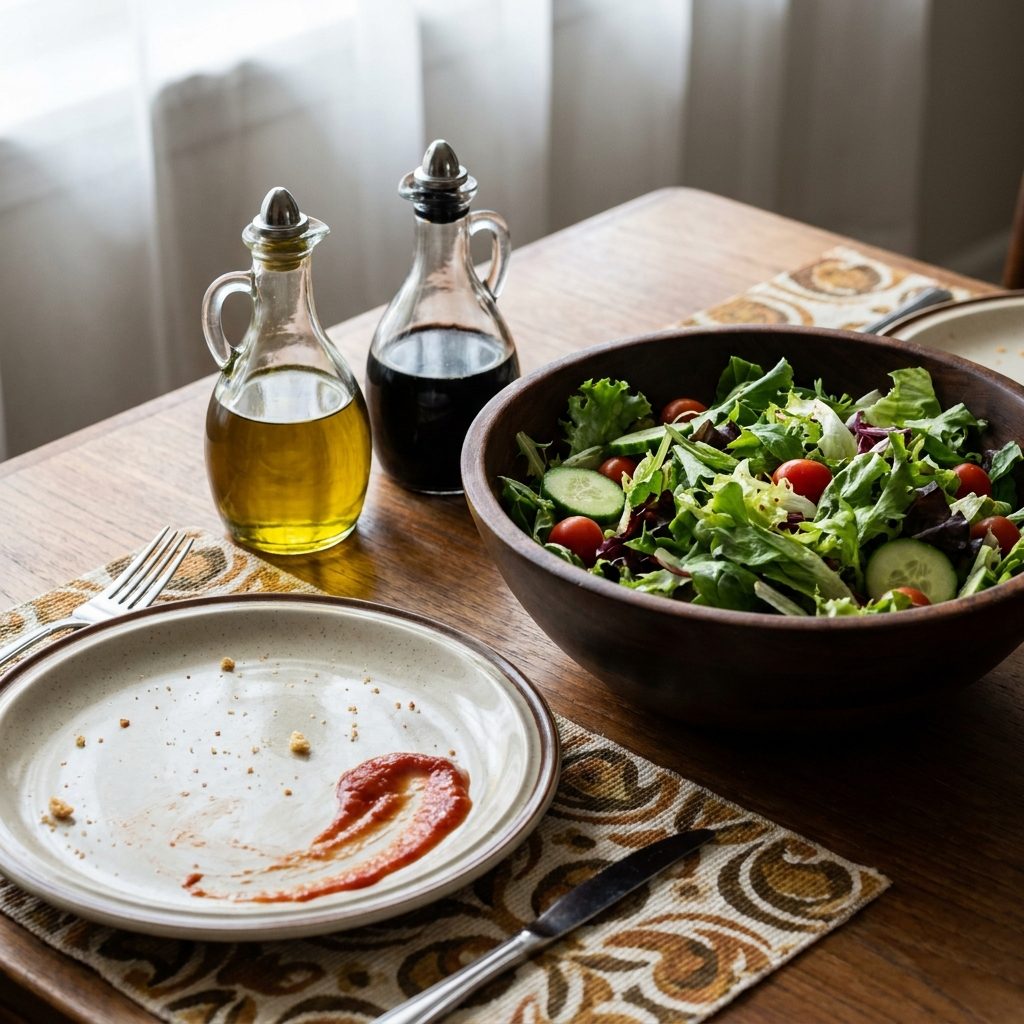
In many Italian households, salad arrived with the meat course or after the pasta rather than before everything. Grandma was not interested in the restaurant rule that salad had to open the meal.
It was always iceberg. Always tomato. Always a dressing that was more olive oil and red wine vinegar than anything else, poured directly from the cruets and tossed at the table. And it was the best salad you had all week, because by the time it arrived you had already eaten a pound of pasta and your body genuinely wanted something cold and sharp. Grandma knew the sequence. It worked.
20. The Percolator on the Counter That Never Seemed to Turn Off
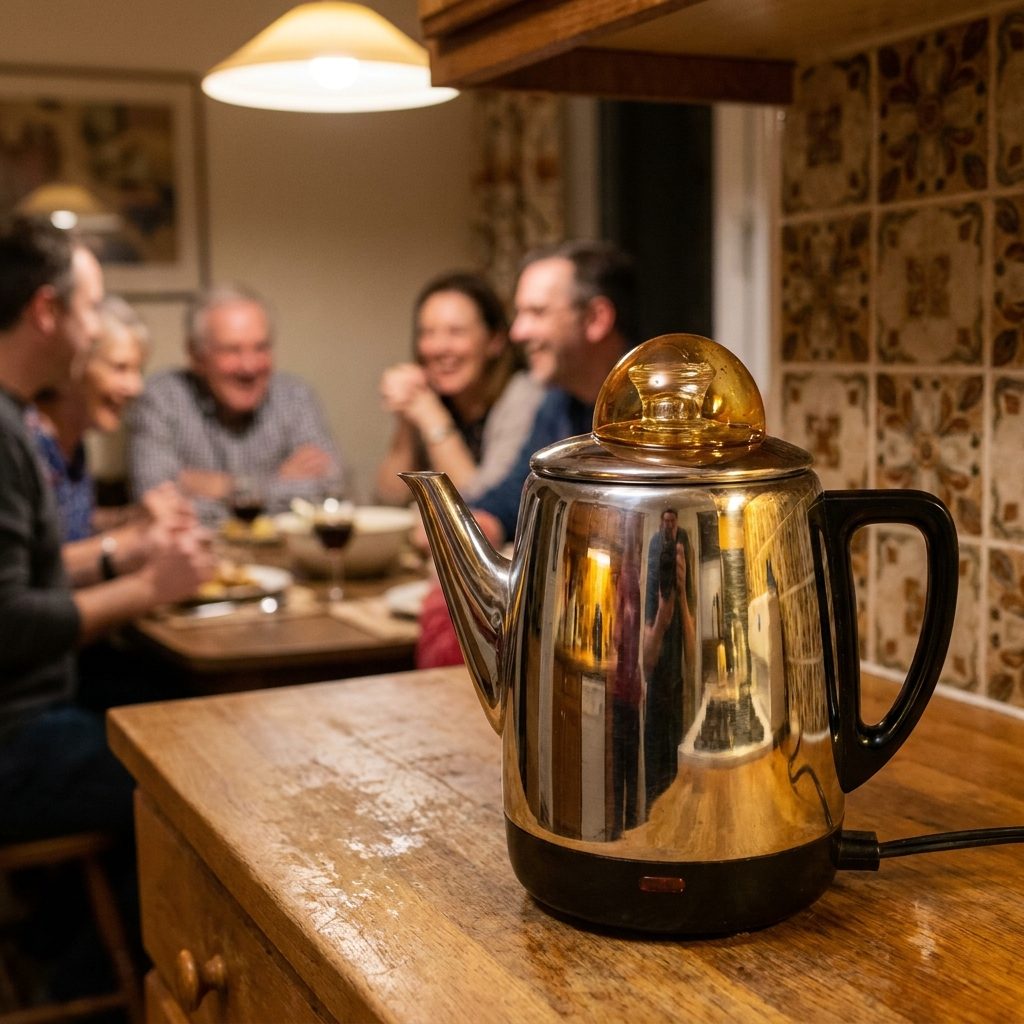
It was on when you arrived. It was on during dinner. It was on when the dishes were being done and on when the men moved to the living room and on when someone put out the cookies. The percolator was the constant. The kitchen’s heartbeat.
The coffee it produced was strong and slightly bitter and served in cups that were never more than three-quarters full because that was how you left room for the cream. The children got a little in a cup with a lot of milk, which was a serious honor and tasted like belonging somewhere.
19. The Pyrex Dish That Never Fully Cooled Down Before Someone Asked for Seconds
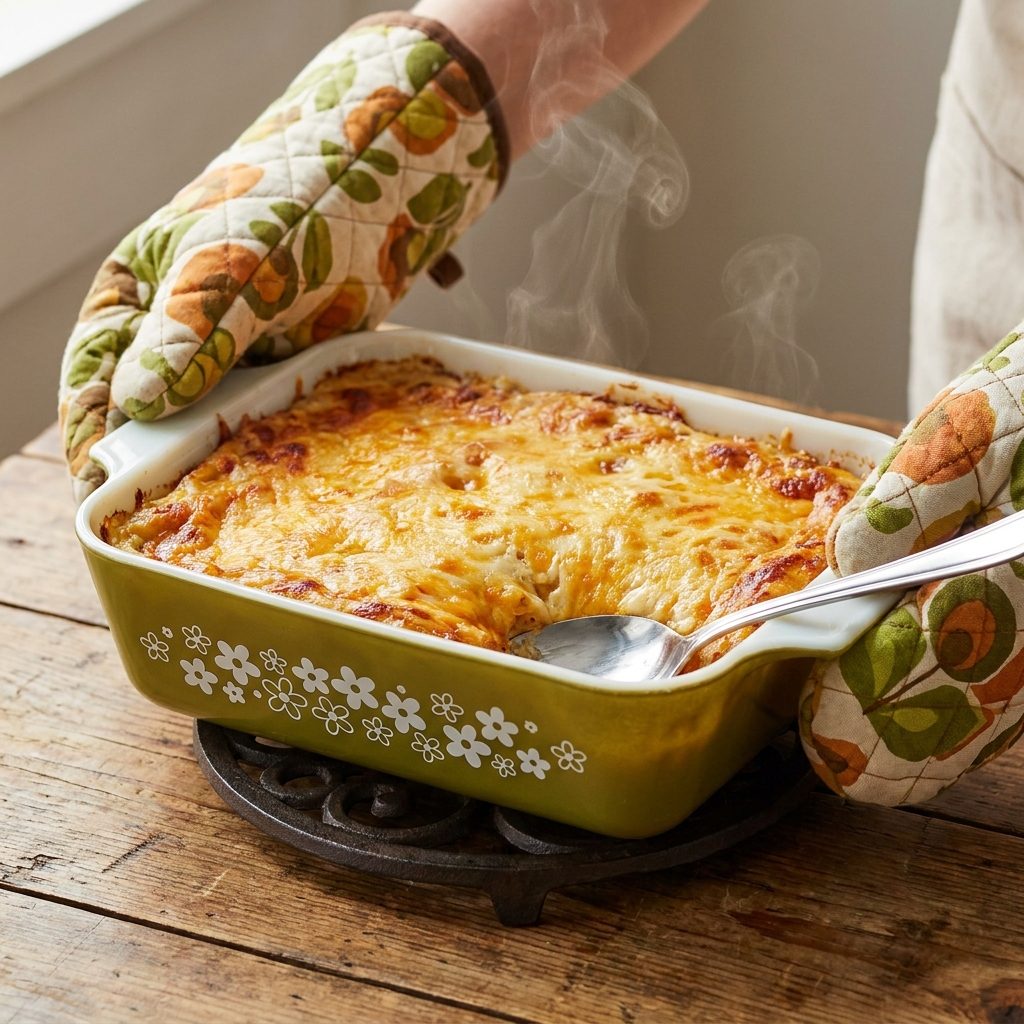
Grandma pulled it from the oven at 1:15 and set it on the trivet with the instruction that nobody touch it for ten minutes. By 1:17, someone’s fork was already testing the edge. Baked ziti was the workhorse of the Sunday table, not as ceremonial as lasagna, not as delicate as stuffed shells, just deeply satisfying and nearly impossible to ruin. The Pyrex dish was probably a wedding gift. It will outlive everyone at that table.
The corners were the prize. That ring of cheese that fused directly to the glass and came up in one crispy, sauce-darkened slab, someone always claimed it before the dish even made it to the table. The center was soft and giving. The edges were a completely different dish. Nobody ever agreed which was better, and that argument has probably never been fully resolved in any Italian-American family.
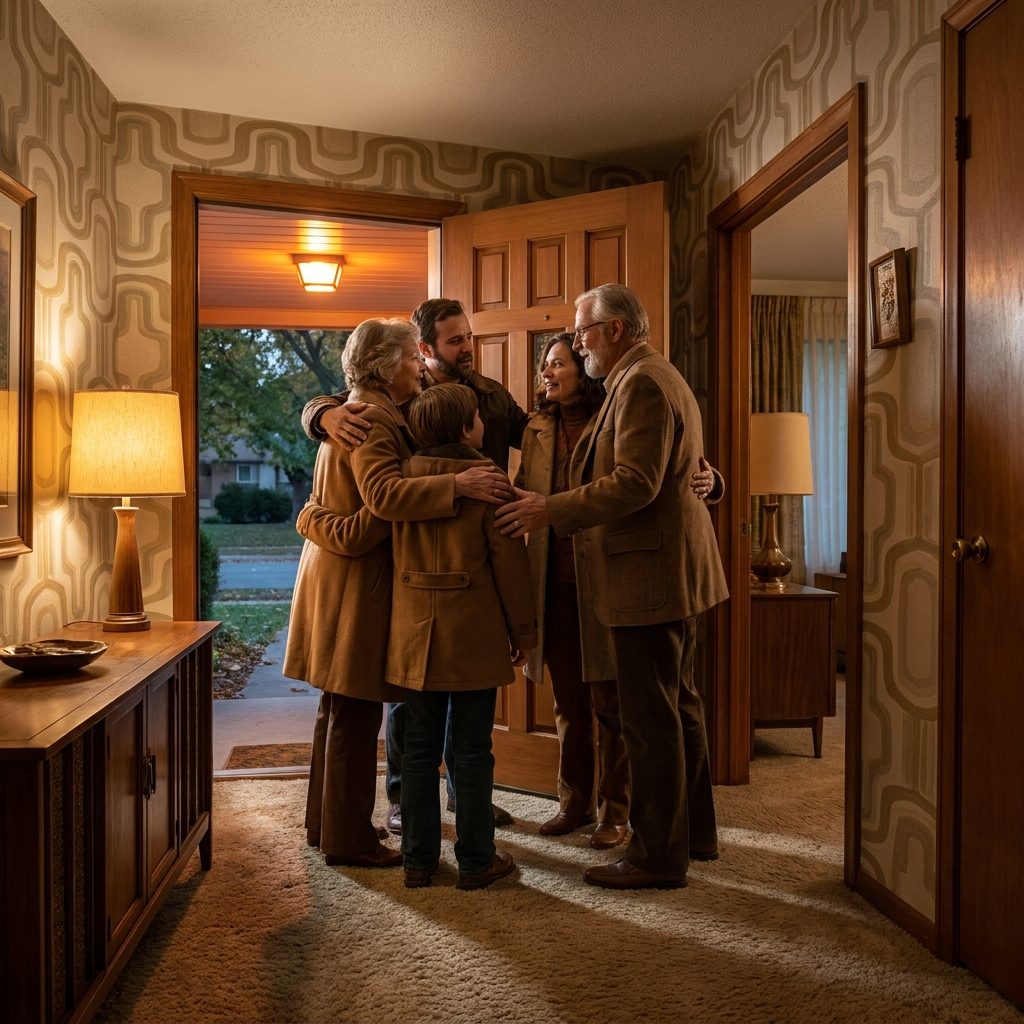
18. The Goodbye at the Door That Took Forty-Five Minutes
Would you like to save this?
Nobody left Grandma’s house in under forty-five minutes from the moment someone first said “we should get going.” That sentence was an opener, not a conclusion. It was followed by the clearing of a few more plates, another offer of coffee, the production of the foil-wrapped plate you were taking home, the locating of someone’s sweater, and at least two re-sittings at the kitchen table before anyone actually moved toward the door.
The door itself was just the halfway point. The porch added another fifteen minutes. Goodbyes happened in rounds, like innings. Someone would get to the car and come back because they forgot the sauce jar. Grandma stood in the doorway until the last set of taillights disappeared around the corner, and she was probably already thinking about next Sunday before she closed the screen door.
17. The Plastic-Covered Couch in the Living Room You Weren’t Allowed to Sit On
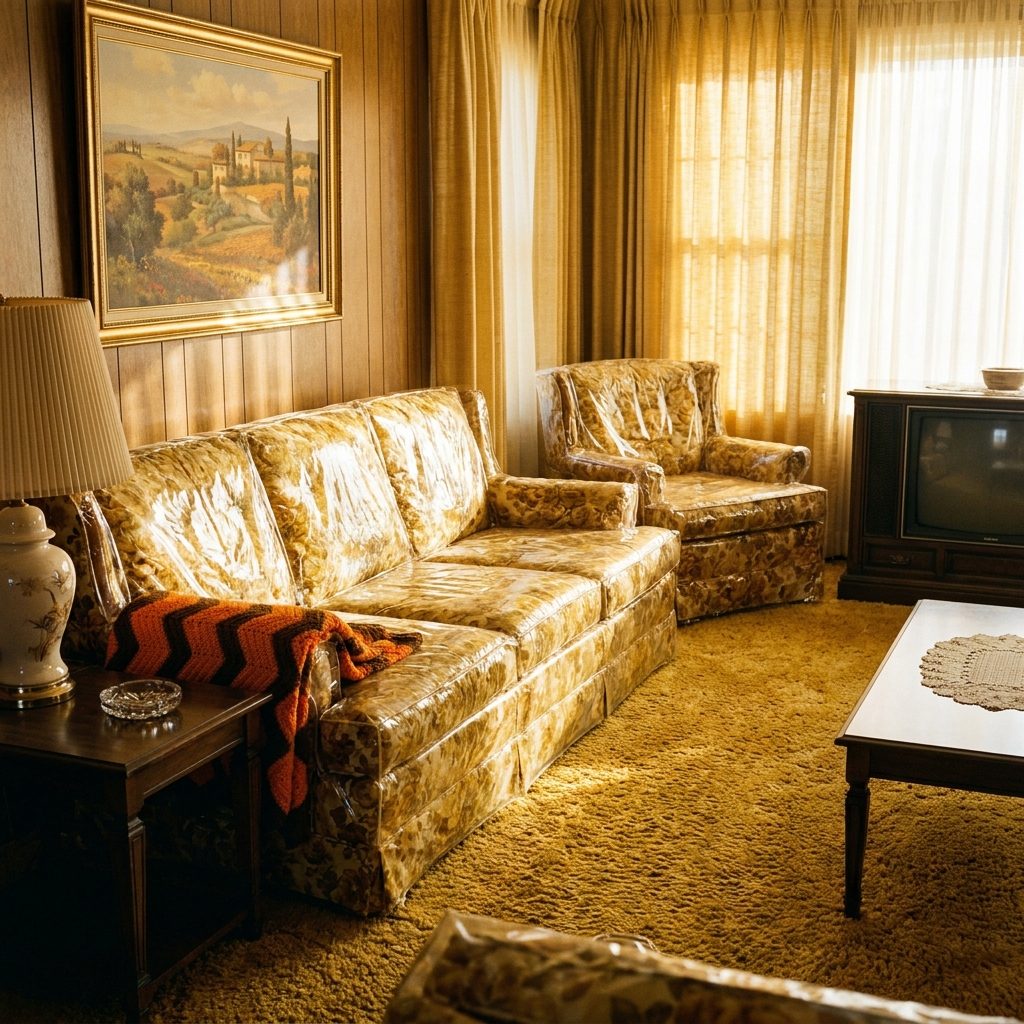
The living room was a museum, and you knew it the second you walked past the doorway and saw the vinyl gleaming under a lamp Grandma never turned off.
That plastic squeaked if you leaned on it, and it stuck to the backs of your legs in July — which is how you learned the room was not for you. It was for company. Company that never came, because Sunday dinner happened at the kitchen table anyway.
16. The Cousins Who Showed Up in a Station Wagon and Doubled the House Population
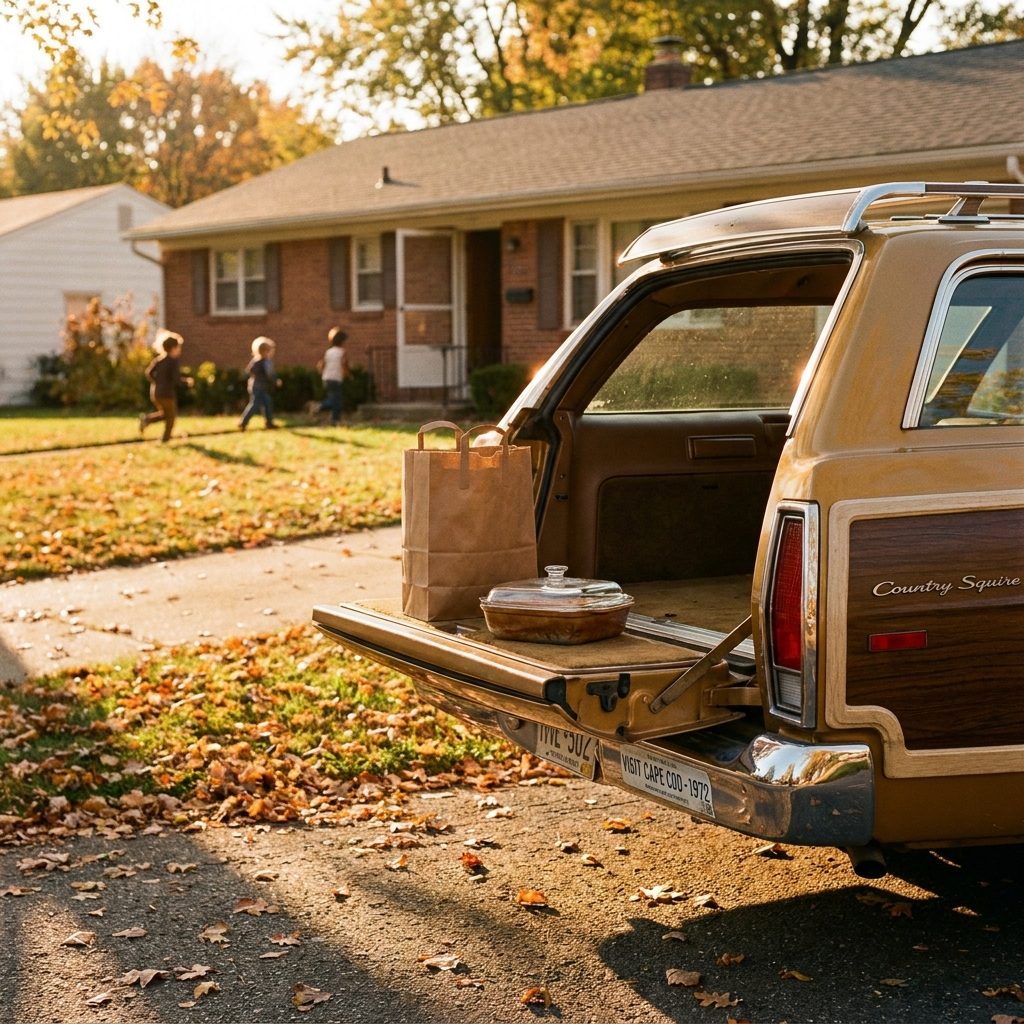
They came in one enormous car with fake wood paneling on the sides and enough kids to field a baseball team. Aunt up front holding a Jell-O mold on her lap, uncle behind the wheel with one arm hanging out the window even in October.
For the next twenty minutes the screen door slapped open and shut as each cousin trickled in with a hug for Grandma and a beeline for whatever was on the stove. Quiet to loud in one afternoon.
15. The Smell That Hit You Before the Door Even Opened
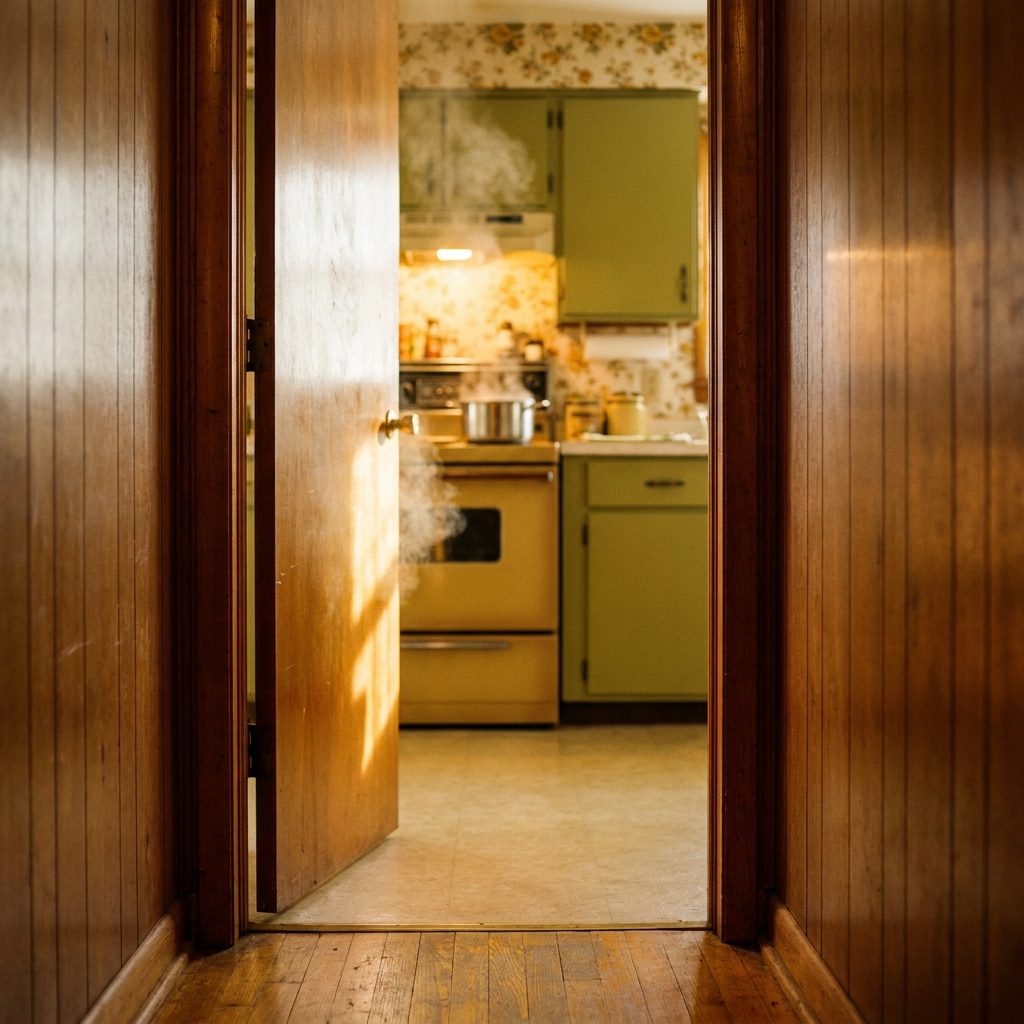
It was tomato and garlic and something deeper than both. Bay leaf, maybe. Browned meat. The particular sweetness of onions that had been going since ten in the morning. You caught it on the porch before your hand even touched the door handle, and your body just settled. There was nowhere else to be.
No candle, no reed diffuser, no kitchen spray has ever come close to replicating it. That smell was a Sunday in 1974 and it belonged to one specific kitchen and one specific woman who never once wrote the recipe down.
14. The Kids’ Table Set Up in the Kitchen With the Card-Table Legs That Never Locked Right
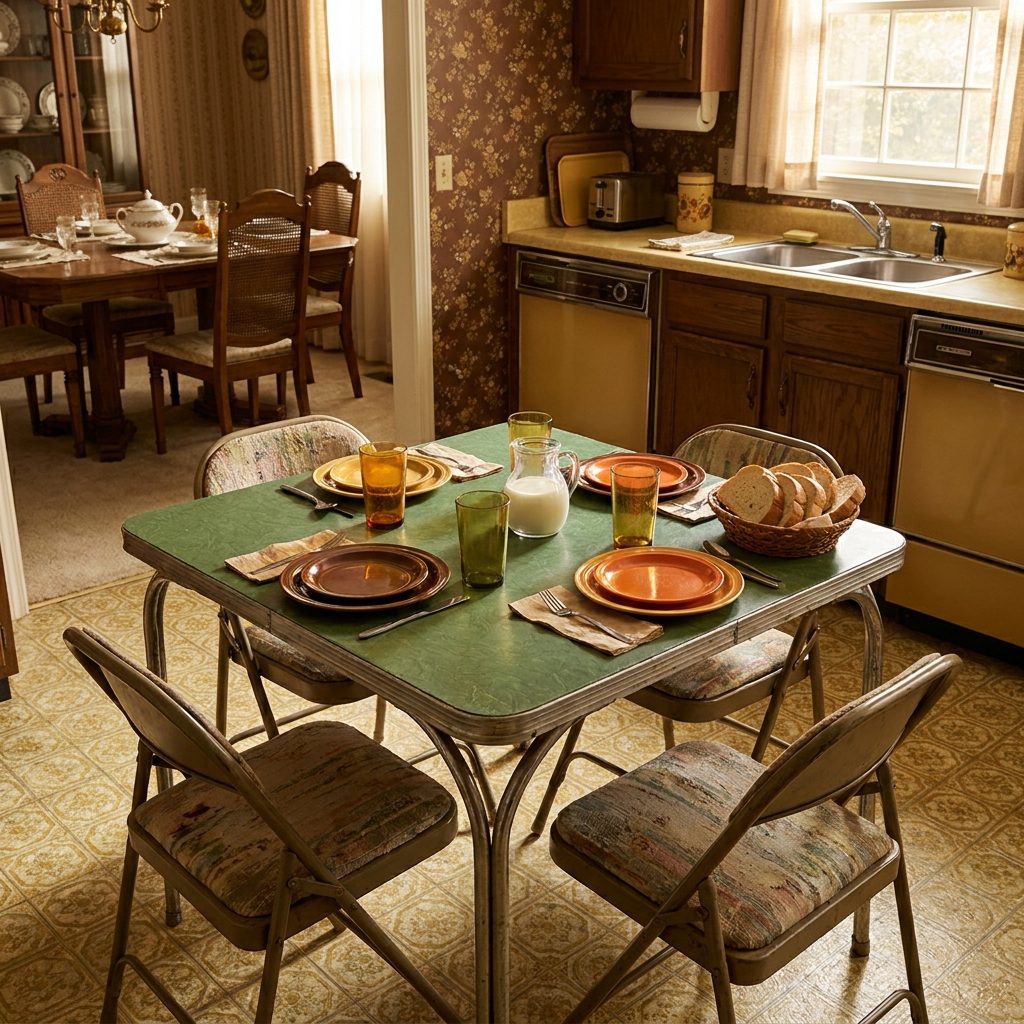
Somewhere between the ages of seven and thirteen, you served time at this table — green vinyl top, metal legs that pinched your fingers if you touched them wrong, one leg always a quarter-inch shorter than the others so your milk slid toward the west side of the room.
You couldn’t hear the grown-ups from over there. But you knew when they were laughing, because the whole house shook a little, and graduation to the big table felt like getting a promotion at a job you didn’t apply for.
13. The Uncle Who Fell Asleep in the Recliner Before Dessert
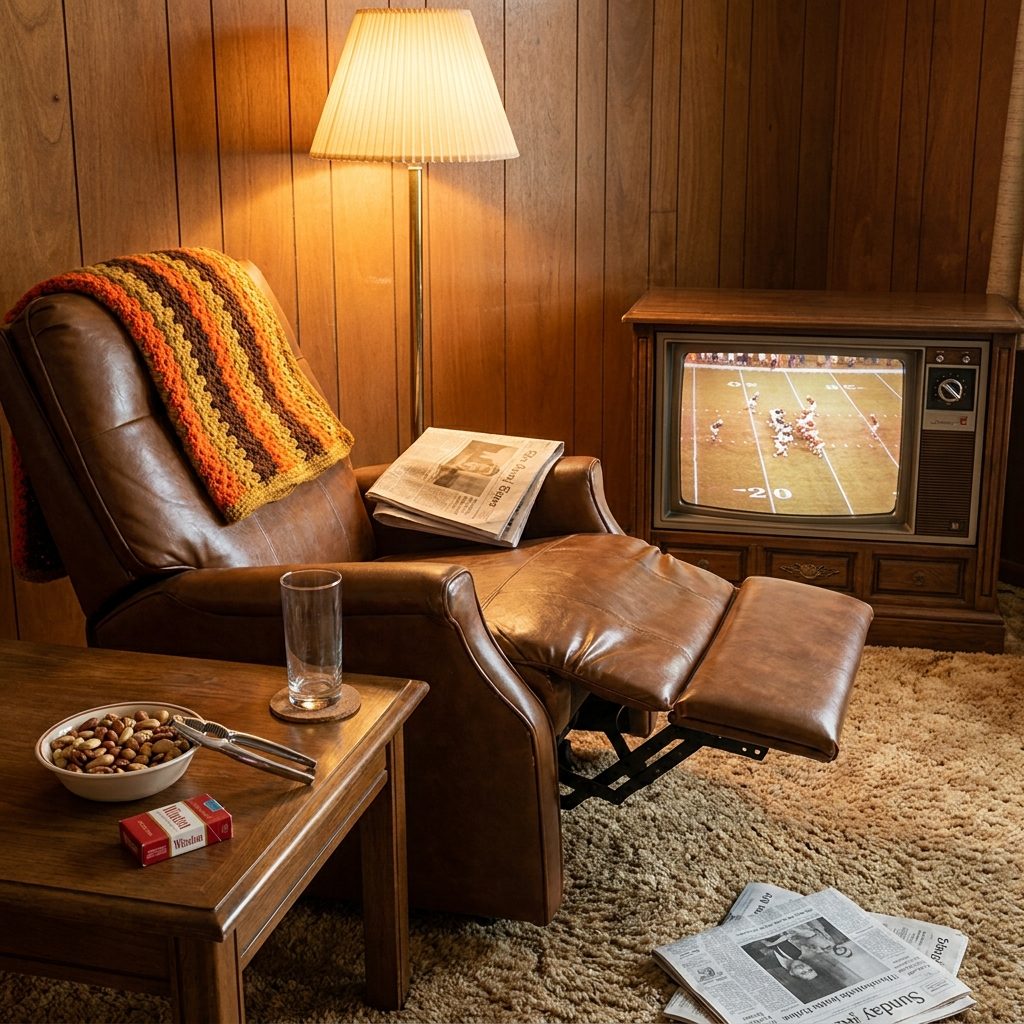
He’d worked all week and eaten three plates of pasta. Football was on. It was over.
By the time the coffee percolator started up, he was fully horizontal in the recliner with the newspaper on his chest and his mouth slightly open, and nobody woke him. He’d surface on his own around the time the pignoli cookies came out, ready to argue about whether the Giants had a chance this year.
12. The Meatballs You Were Allowed to Steal From the Pot If You Were Fast Enough
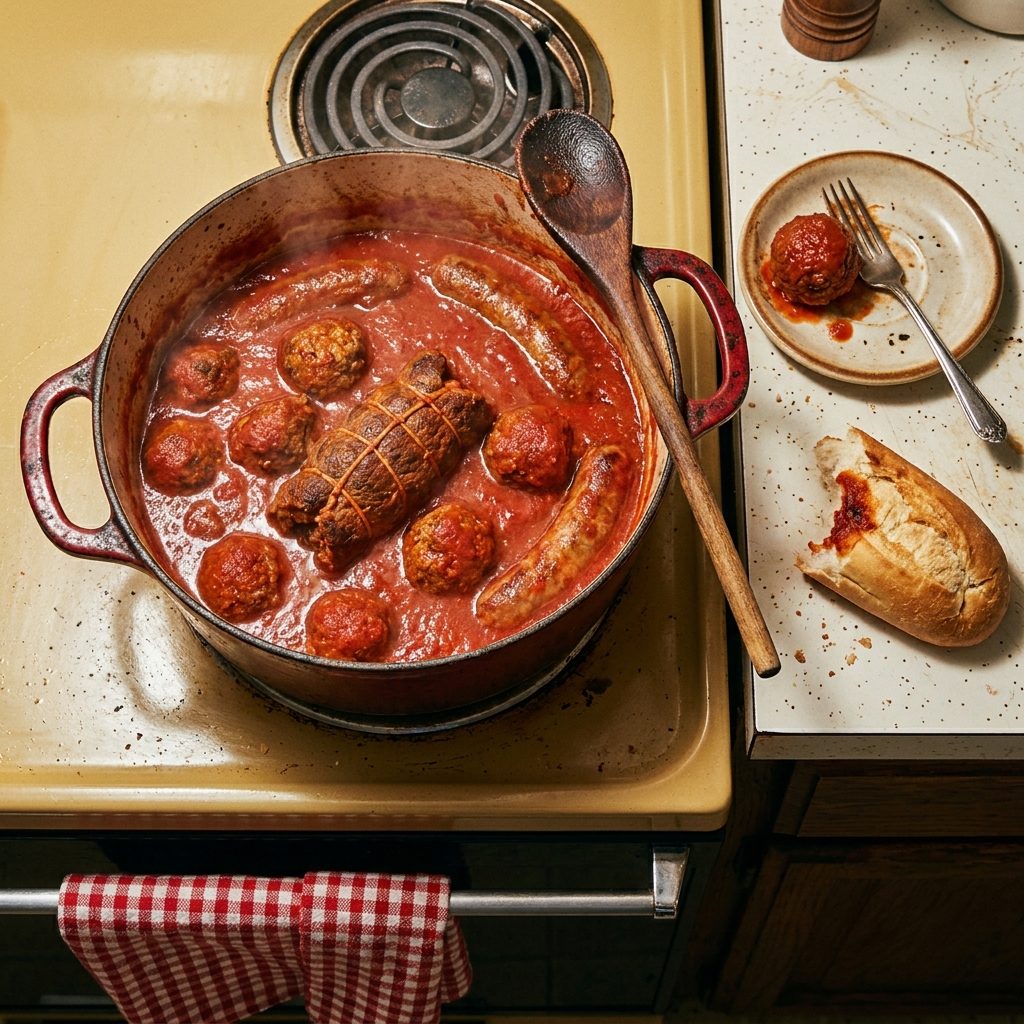
The rule was you didn’t touch the pot.
The actual rule, understood by everyone including Grandma, was that if you could sneak a meatball out with a slice of heel bread and get out of the kitchen without dripping sauce on your shirt, you had earned it. She’d swat at you with a wooden spoon that never actually made contact. The count was off by a few by the time dinner was served, and nobody said a word.
11. The Wine Bottle With No Label That Somebody’s Uncle Made in His Basement
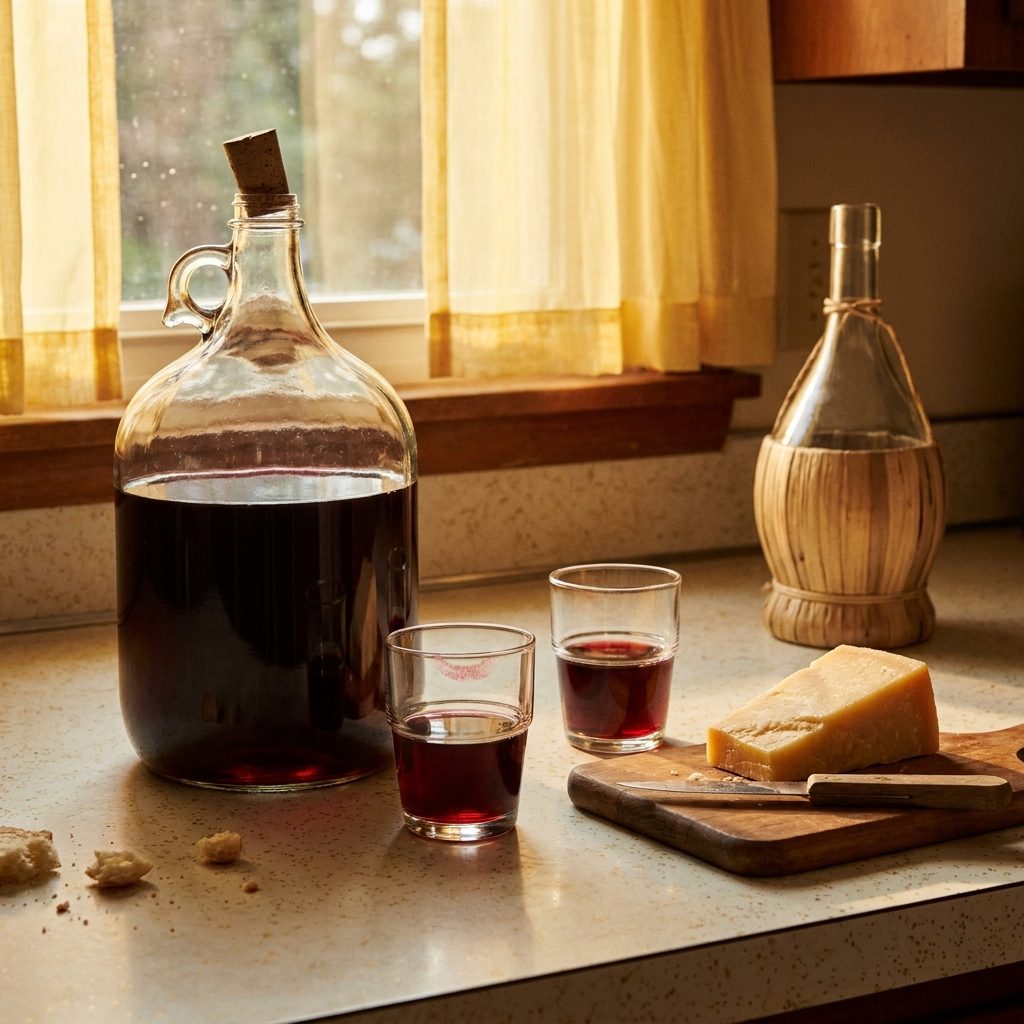
It arrived in a gallon jug with no label. Somebody’s uncle two towns over made it in his basement, and it was either exceptional or undrinkable — no in-between.
The men drank it out of juice glasses. The women had a splash mixed with cream soda or 7-Up, which was scandalous to the men and delicious to everyone else. By the third glass, someone was singing.
10. The Kids Sent Down to the Basement to Play While the Grown-Ups Talked
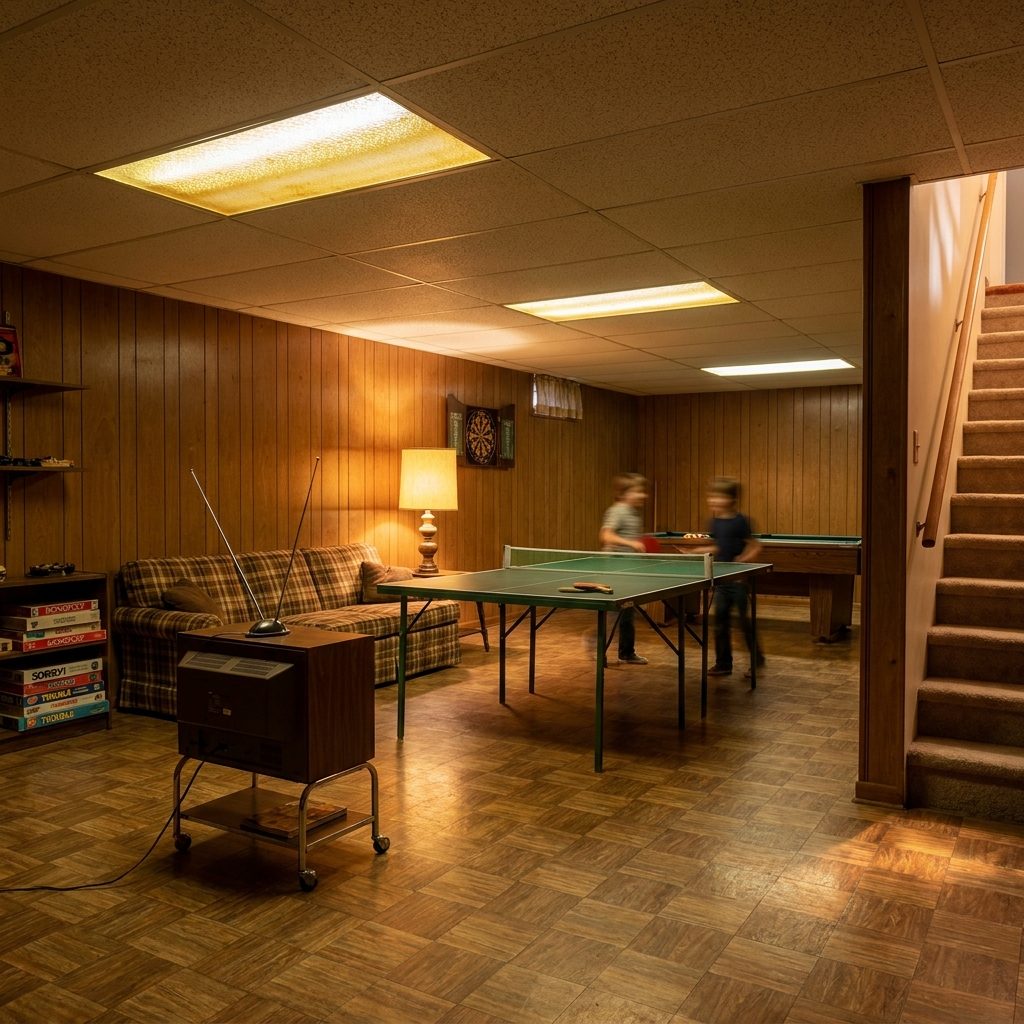
Down the carpeted stairs, past the water heater, into the world of wood paneling and folding chairs — the basement had its own weather. Cooler in summer, weirdly humid in fall, always slightly damp-smelling in a way that meant home.
Ping-pong. A busted pool table with felt worn to the wood in one spot. Board games with pieces missing. Overhead you could hear the grown-ups through the ceiling tiles, laughing and yelling in a rhythm that meant everything was fine.
9. The Second Round of Coffee That Was Really an Excuse to Keep Everyone at the Table
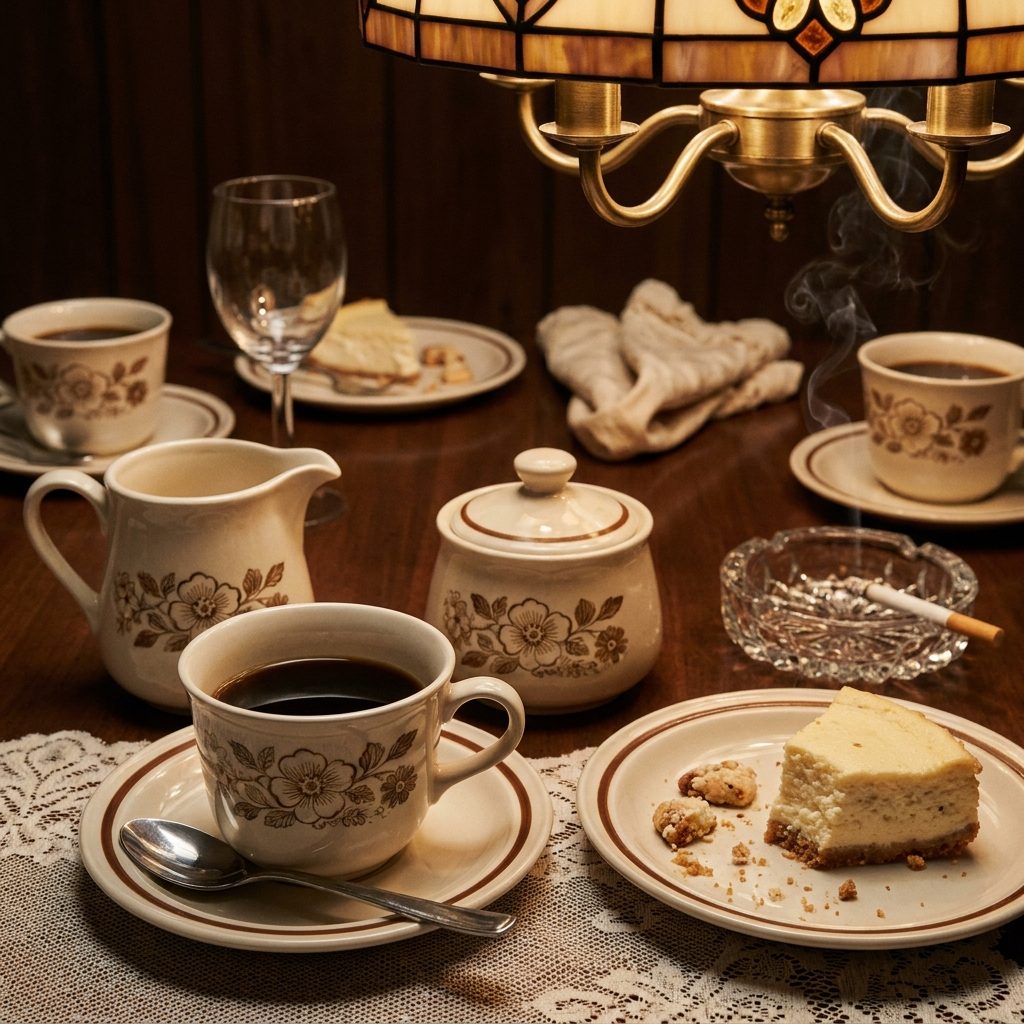
Nobody actually needed more coffee. They needed a reason to stay another forty-five minutes at the table because leaving felt like a betrayal.
Grandma put the percolator on again without asking. Someone would say oh just a half cup, and she’d fill it to the brim. Then the conversation shifted into the older stuff — stories about the old country, the old neighborhood — and the kids at the edges sat very quietly so nobody remembered to send them away.
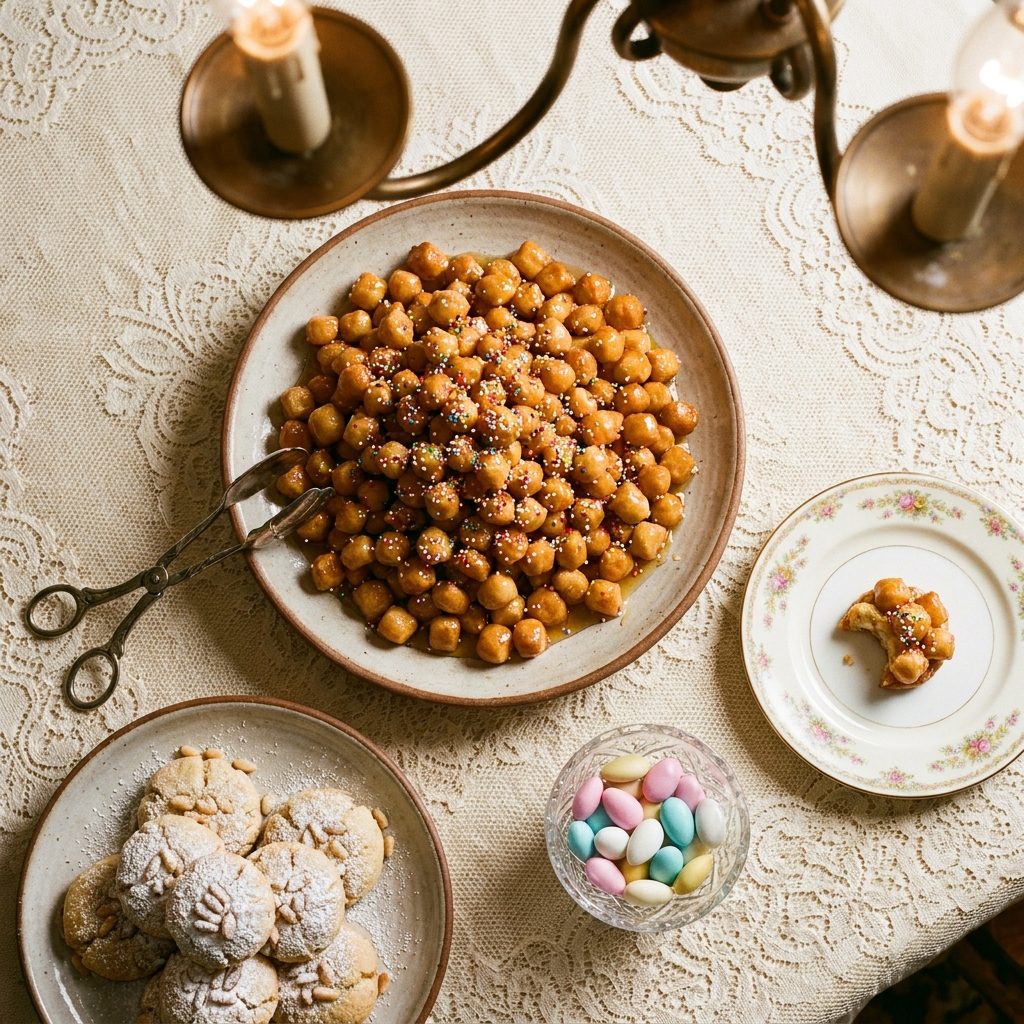
8. The Struffoli or Pignoli Cookies That Only Came Out for Company
Would you like to save this?
They lived in a tin on top of the refrigerator for the other six days of the week. Sunday, they came down on the good platter with the gold rim.
Struffoli were the best of it — honey-sticky little dough balls with sprinkles that stuck to your fingers for the rest of the afternoon. The pignoli cookies were softer than they had any right to be, and if you didn’t grab one in the first pass, an aunt would wrap the last three in a napkin and drop them in her purse.
7. The Leftovers Packed Up in Cool Whip Containers to Take Home
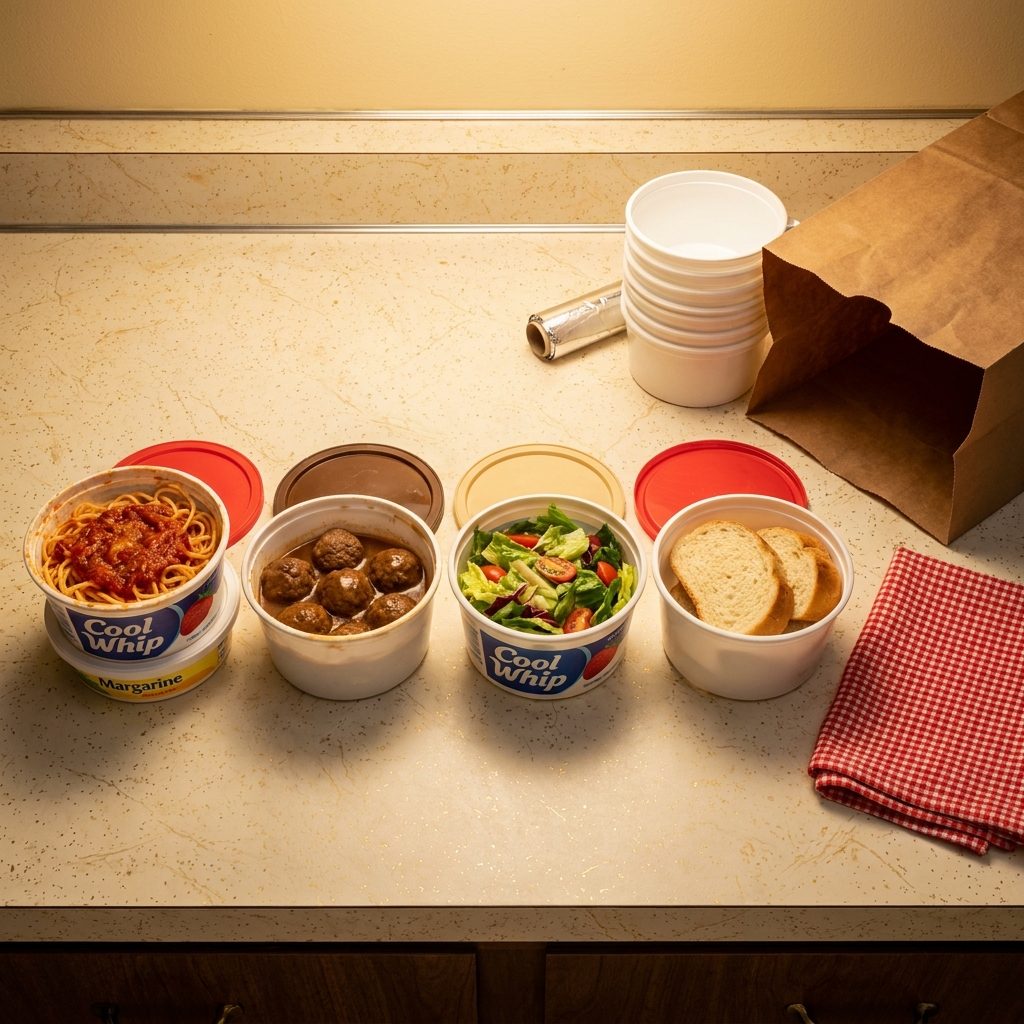
Nobody threw away a Cool Whip container. They lived in a specific cabinet with their mismatched lids, waiting for their real purpose.
By the time you were leaving, Grandma had lined up six of them on the counter and was portioning out meatballs, sauce, salad, bread, and whatever else you hadn’t finished. She’d send you home with more food than you’d eaten. Not optional. Trying to refuse was insulting, and everyone knew it.
6. The Antipasto Platter That Was Half Meal, Half Centerpiece
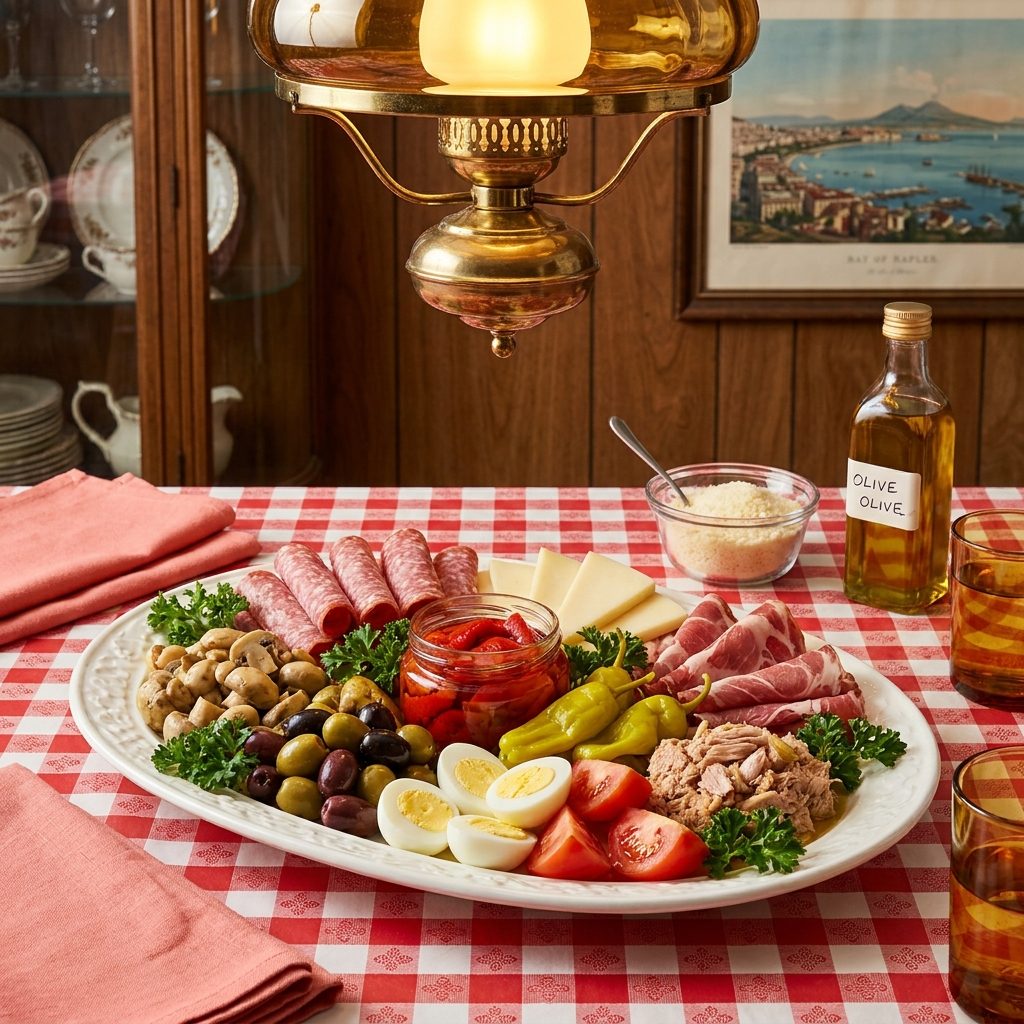
The antipasto platter came out before anyone had officially sat down — less a course than a holding pen, something to graze while Grandma finished whatever was still going on the stove.
The rules were unwritten but strict. One piece of provolone. One roll of salami. One pepperoncini, one olive, per pass. Anyone caught building a small sandwich got flicked on the ear, and the tuna in oil in the middle was for the adults. Don’t ask why.
5. The Radio Playing Italian Music from a Station Only Grandpa Could Find
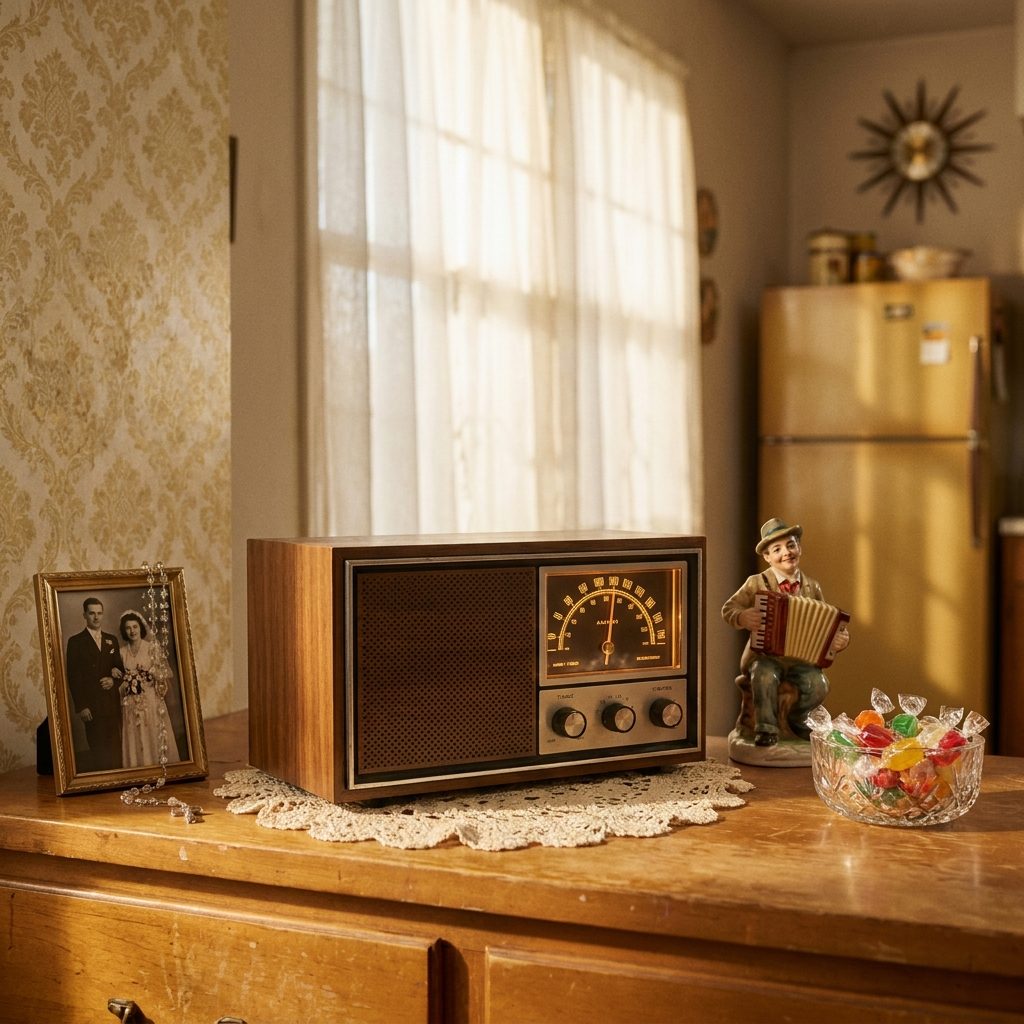
Somewhere in the house, always, an Italian-language station played at a volume nobody could quite agree on. Grandpa turned it up. Grandma turned it down when she needed to hear the sauce. Nobody ever turned it off.
Mostly old songs, occasional news read too fast to follow, and a Sunday-afternoon program of dedications where people called in to greet their cousins in Brooklyn or Providence or wherever the family had scattered to.
4. The Braciole That Took Three Hours and Disappeared in Twenty Minutes
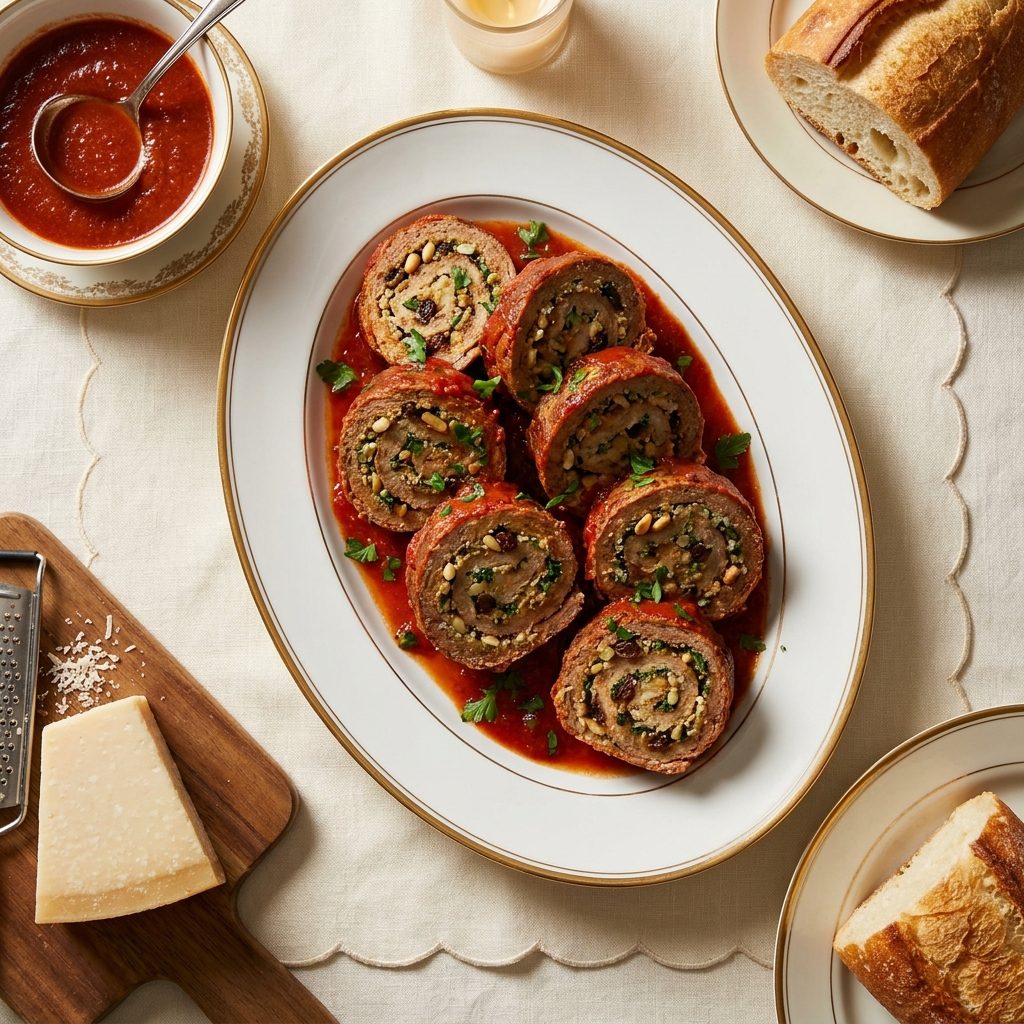
Braciole was proof that Sunday was serious.
Thin slices of beef pounded flat, laid out on the counter like a paper route, layered with breadcrumbs and garlic and parsley and pine nuts and raisins if your grandmother was that kind of grandmother — then rolled and tied with kitchen twine and dropped into the sauce hours before anyone else was awake.
By the time it hit the table, the meat was so tender you cut it with the side of a fork. The twine was pulled off at the last second. There were never enough slices, and everyone pretended not to be counting.
3. The Escarole and Beans Somebody Insisted On Even Though the Kids Wouldn’t Touch It
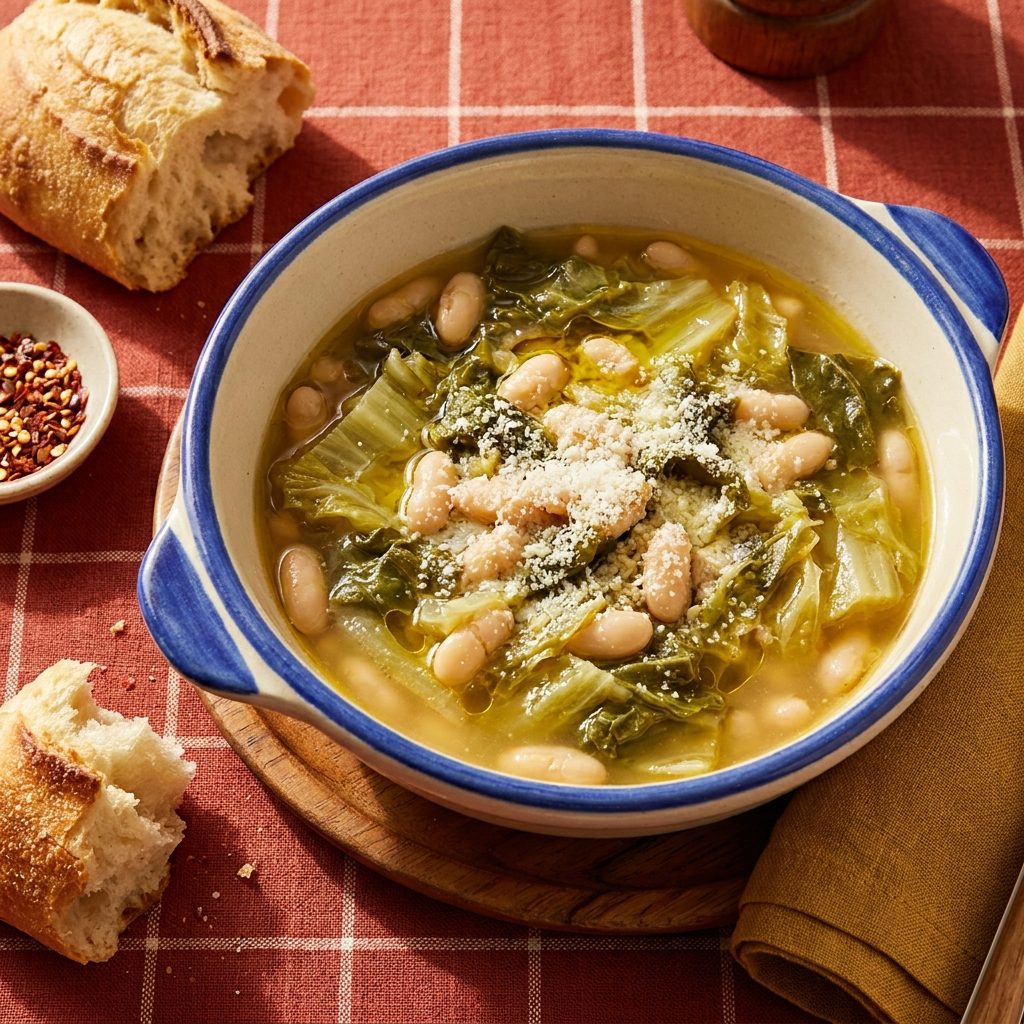
There was always one dish on the table that the kids refused and the grandparents defended like a matter of national honor. Escarole and beans usually got the assignment.
Someone’s aunt would ladle a small amount onto a kid’s plate anyway, whispering that it was good for you, that it was how her mother made it, that you at least had to try one bean. The bean was tried. The face was made. The rest got scraped onto a cousin’s plate under cover of a passed bread basket.
2. The Sunday Suit and Sunday Dress Nobody Was Allowed to Get Sauce On
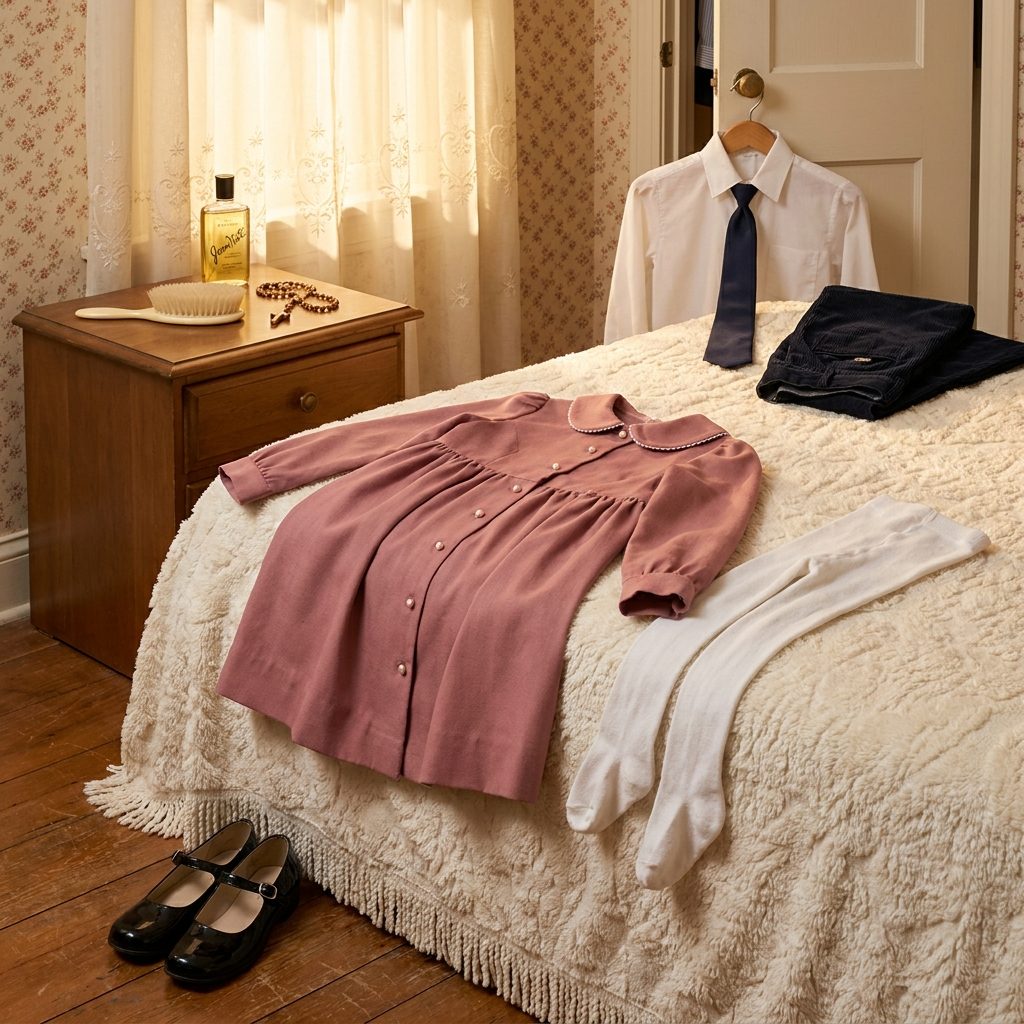
You didn’t show up to Grandma’s in a t-shirt. Church clothes stayed on through dinner, which meant a whole meal spent trying not to sneeze red sauce onto a white collar. Napkins were tucked into necklines, sleeves rolled up, and small children were fitted with a dish-towel bib whether they wanted one or not.
The threat was never yelled. Just delivered in a low voice from across the table. Watch your dress. That’s all it took.
1. The Ride Home in the Dark With the Sauce Smell Still on Your Clothes
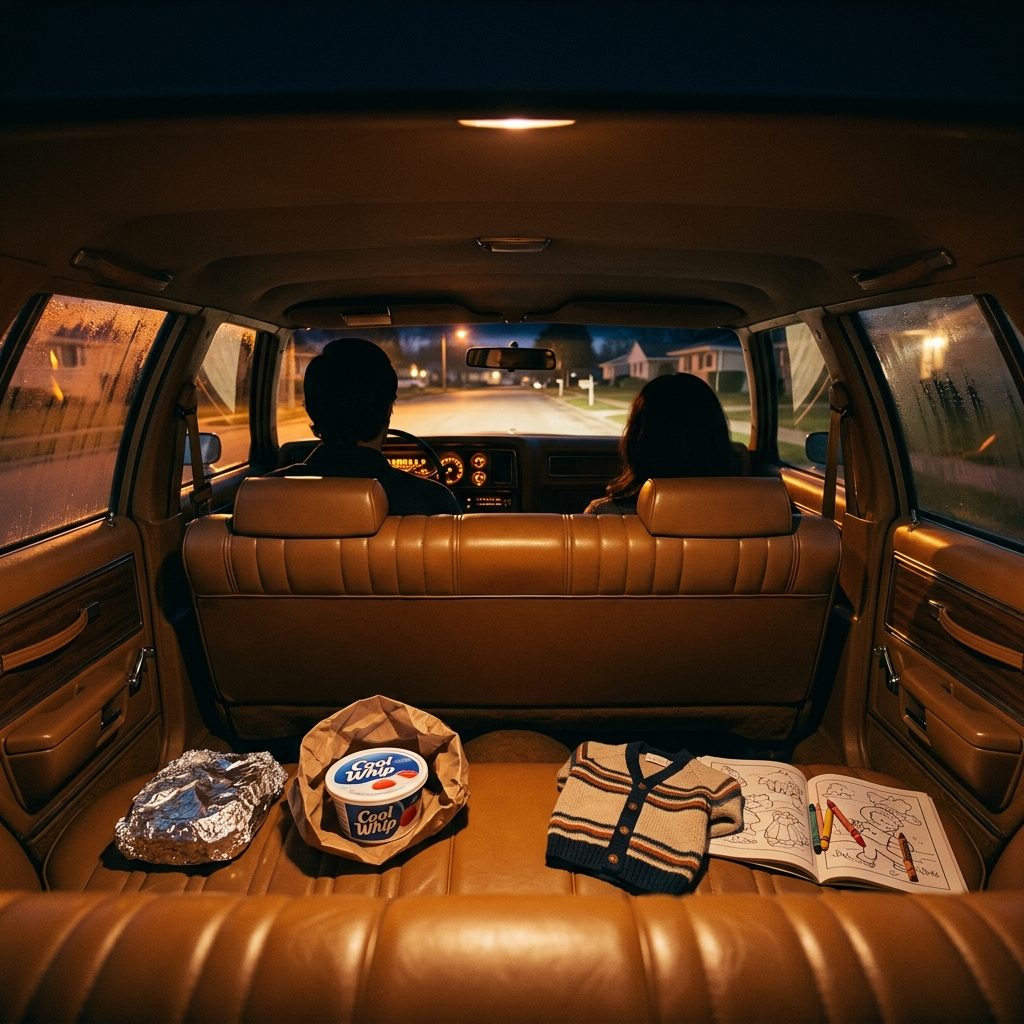
You climbed into the back seat full, tired, and slightly overheated in your Sunday clothes. The car smelled like garlic and coffee and whatever perfume your mother had put on that morning, and somebody handed you a foil-wrapped meatball for the ride.
Streetlights came in through the window in that slow rhythm they have on a quiet Sunday night, and you fell asleep somewhere between Grandma’s block and yours. When you woke up in your own driveway, your clothes still smelled like her kitchen — and that was the smell you carried up to bed.