
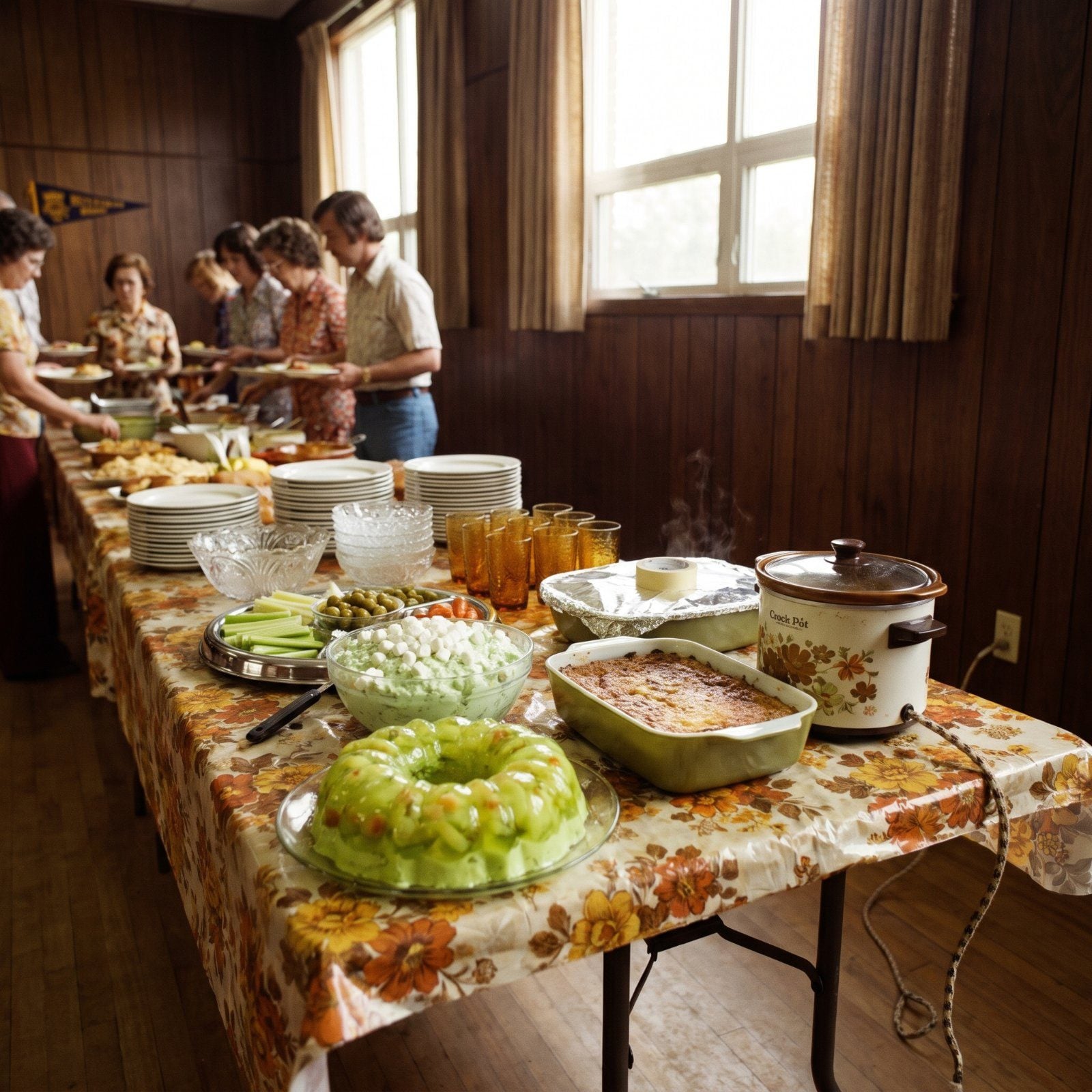
The folding table sagged a little in the middle, right where somebody set down a glass bowl of something green and jiggling. The air smelled like Sterno and cut grass and a Crock-Pot that had been running low since nine that morning. Everybody brought a dish, and nobody labeled the recipe — just the dish, with masking tape and a ballpoint pen. What landed on those floral plastic tablecloths would stop a modern guest cold. Here’s what we all passed down the line without blinking.
Please note that some of the images in this article were created with the assistance of AI.
40. The Wobbling Lime Jell-O Salad Mold With Things Suspended Inside
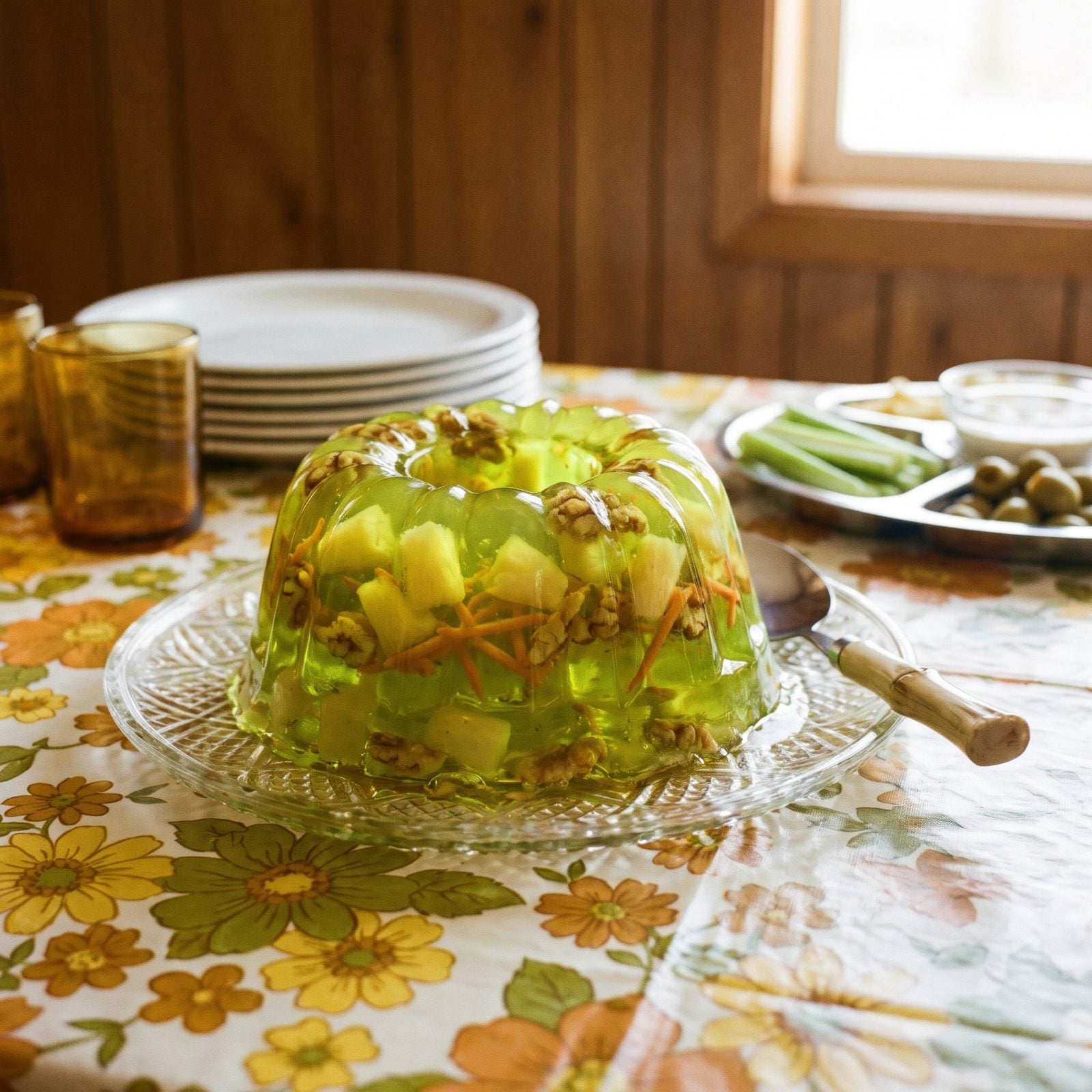
You could set a glass of it on the table and watch it keep moving for three full seconds. Lime Jell-O was the base, but it was never just dessert. Shredded carrot went in, and sometimes crushed pineapple, sometimes a can of fruit cocktail drained halfway and dumped in before the gelatin set. This was a salad. It said so on the recipe card.
The mold was the point. Somebody owned a copper ring pan or a fluted plastic one, and the whole thing got turned out onto a plate with a little prayer that it wouldn’t slump. Half the time it slumped anyway. Nobody minded.
39. The Savory Tomato Aspic Ring Nobody Admits to Making Anymore
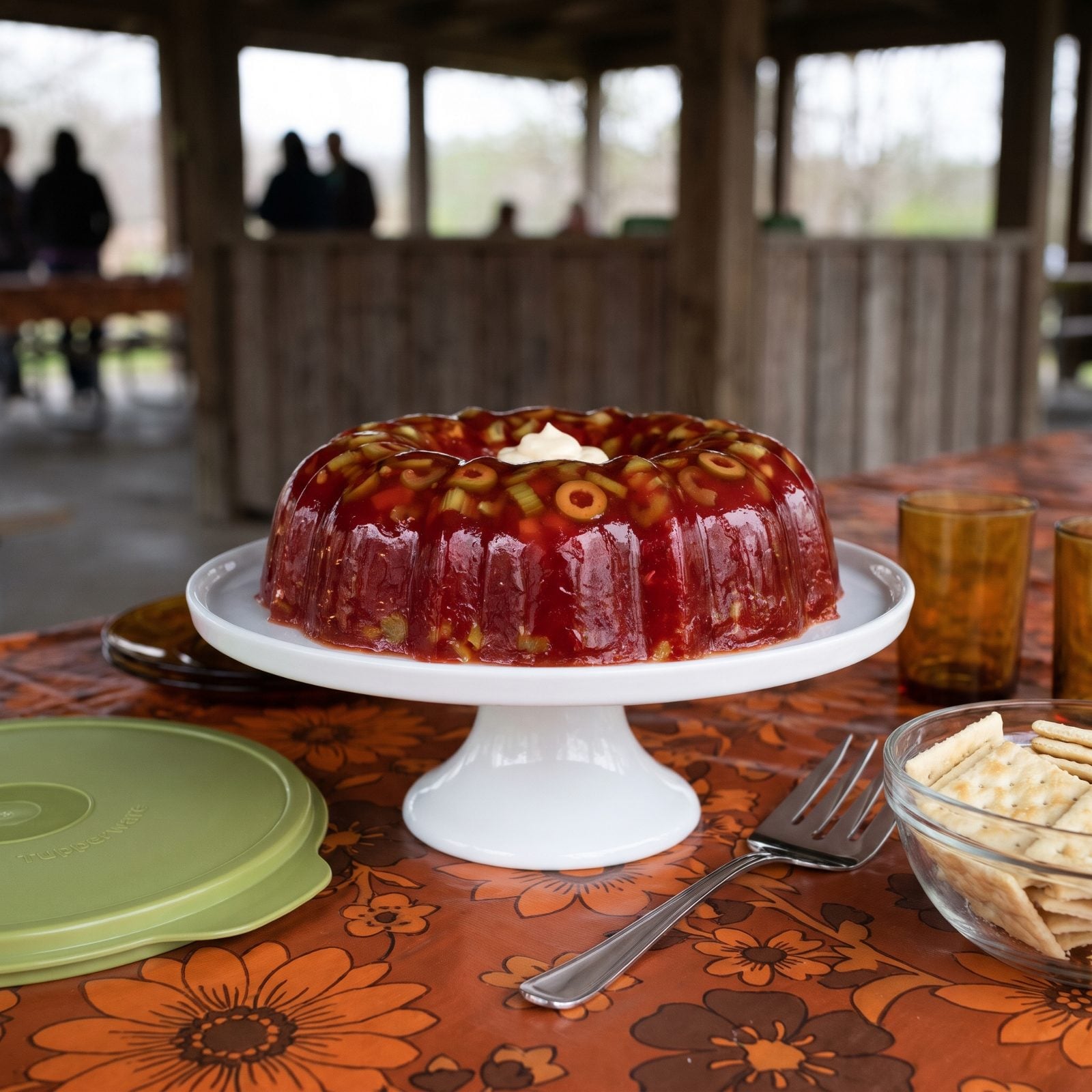
Red, molded, glistening like a stoplight that had decided to become jewelry — aspic stopped kids dead in their tracks. It looked like a dessert. It tasted like cold tomato soup that had been dared to go solid. Tucked inside: diced celery, chopped olives, maybe a little horseradish for the brave.
Someone’s aunt swore by it. She brought it every year on a footed glass stand, and it occupied a strange middle ground between salad and ambition. I’ll say it plainly. Aspic was gorgeous to look at and genuinely hard to love, and that’s exactly why it deserves remembering.
Explaining why savory gelatin dishes once took over postwar tables, a local history museum curator says “Jell-O was very appealing because it was quick and easy—you could just throw it together and put fruit or your savories in and have a dessert or additive to dinner.”
38. The Pear Halves Topped With Mayonnaise and a Cube of Cheese
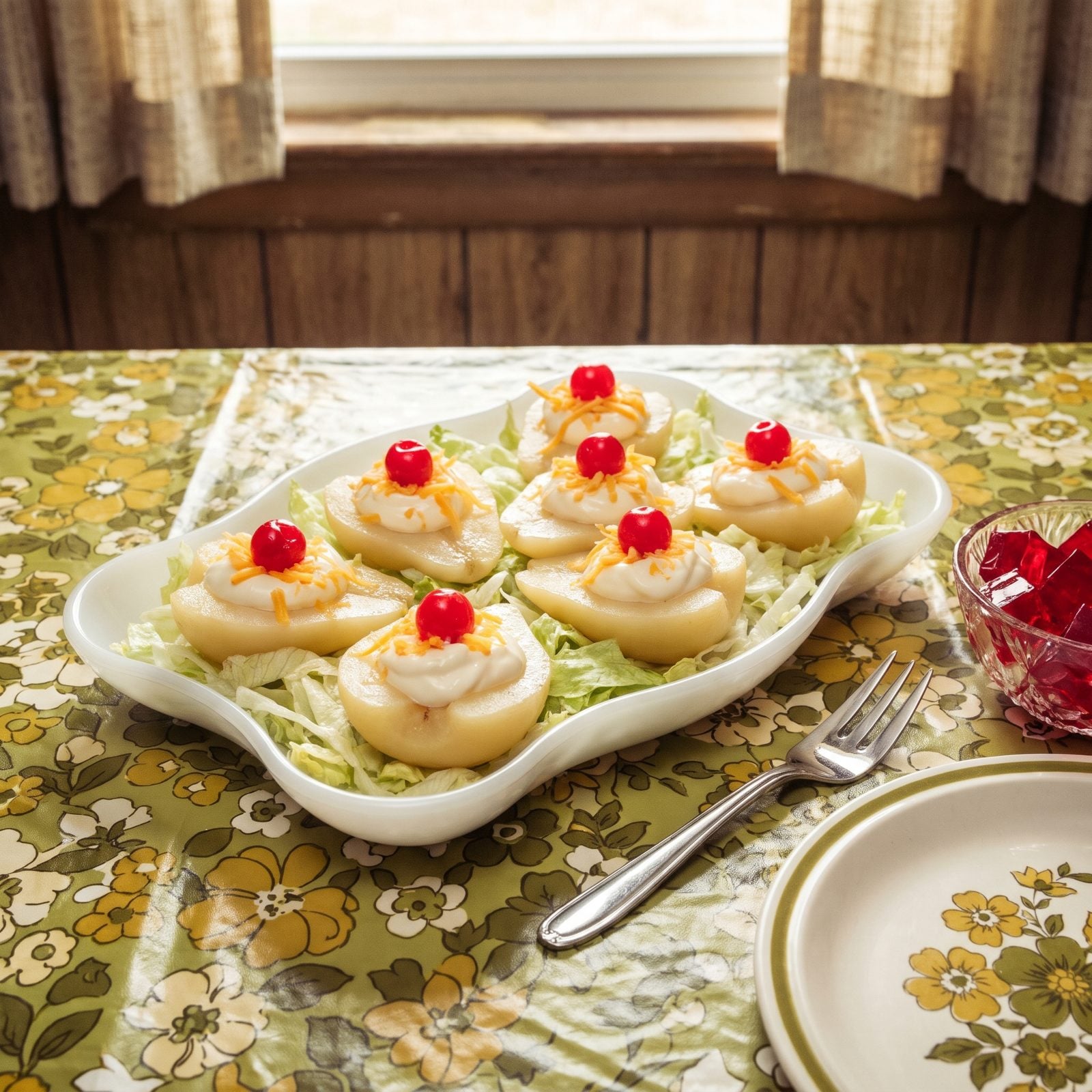
A canned pear half, flipped cut-side up on a leaf of iceberg, with a white dollop of mayonnaise riding in the hollow and a cube of cheddar or a sprinkle of grated cheese on top. A cherry if the cook was feeling festive.
This was considered a fancy salad. Serving it meant you’d thought about presentation. Modern guests look at the mayonnaise-on-fruit combination and quietly put their fork down. We ate it. Some of us even asked for seconds.
What Our Readers Say
- When our readers loved a food photo, comfort was the top reason they tapped at 30%, and 15% said it simply felt nostalgic.
- When Piaci Pizza readers disliked a food photo, the top reason was a plain “not for me,” with the ingredients themselves coming second at 30%.
From Piaci Pizza reader polls and votes.
37. The Avocado-Green Tupperware Cake Carrier With the Suction Burp
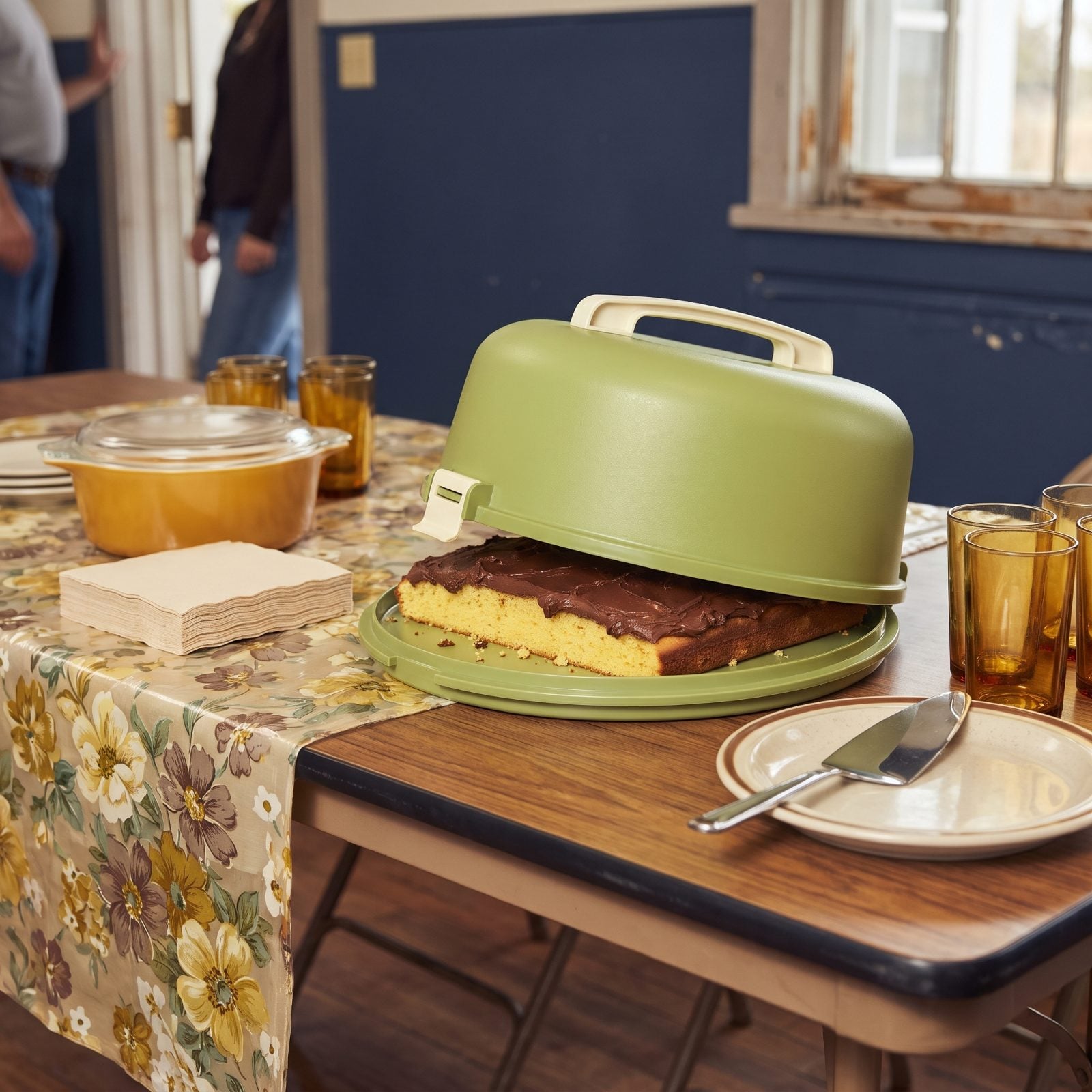
You knew the sound. That rubbery burp as somebody pressed the center of the lid to seal it, then the reverse hiss when it got pried open across the table.
The cake carrier was avocado green, almost always, and it had traveled. It rode in the back seat wedged against a cooler, survived twenty reunions, and never stained, cracked, or once got thrown out. Somebody in your family still has it in a cabinet. That domed lid and the handle on top made it the unofficial trophy case for a sheet cake with chocolate frosting.
36. The Harvest Gold Pyrex Casserole That Went From Oven to Table to Trunk
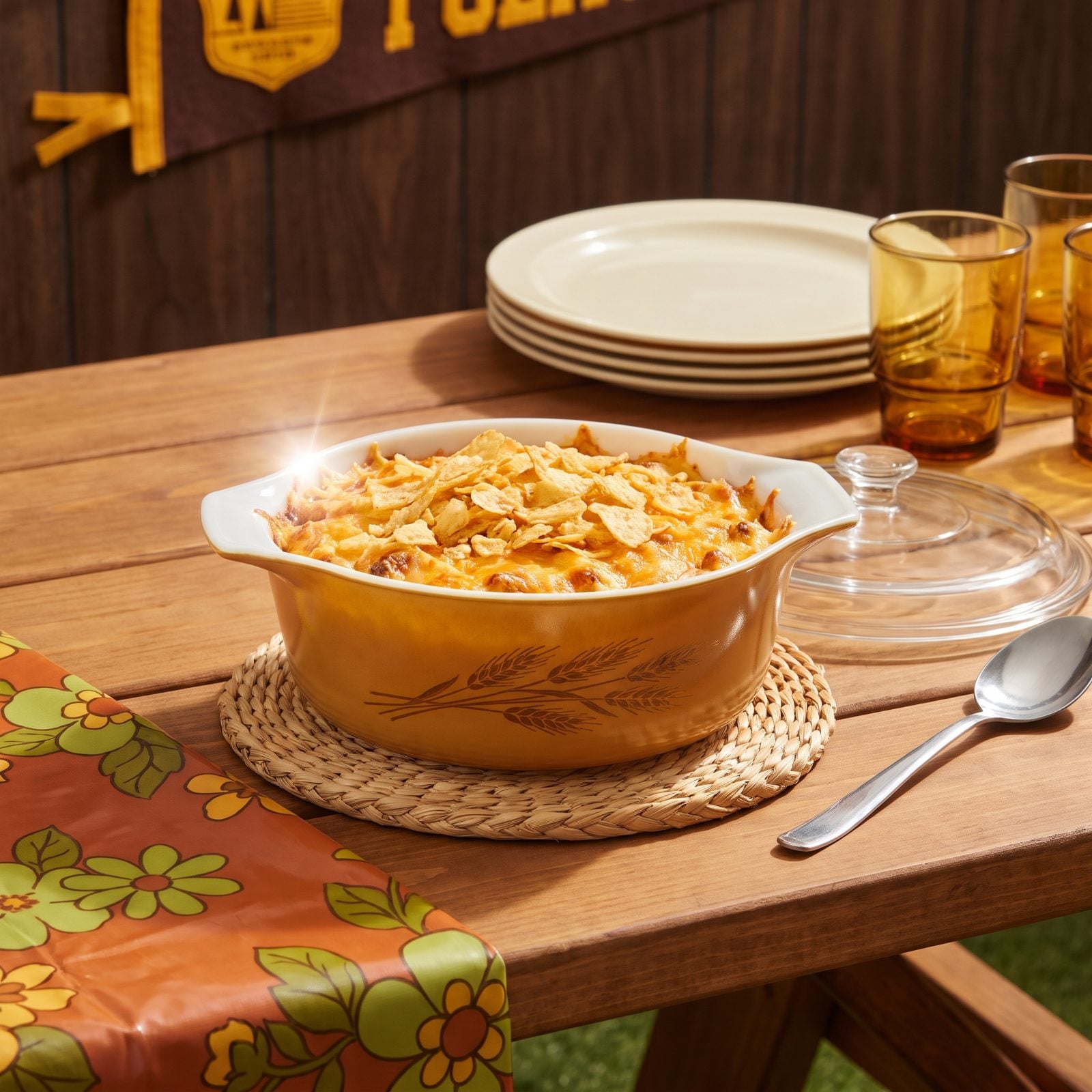
Bubbling, cheese-topped, finished with a lid of crushed potato chips, carried in with two pot holders because the handles got hot. The harvest gold Pyrex dish was the workhorse of the entire spread.
It came with a matching lid that fit in only one orientation, and the pattern on the side — wheat, usually, or a brown floral — marked it as yours in a sea of identical dishes. These things were close to indestructible. Plenty are still making tuna casserole today, and there’s a strong case that food tastes better out of old Pyrex.
35. The Foil-Covered Dish Labeled With a Strip of Masking Tape
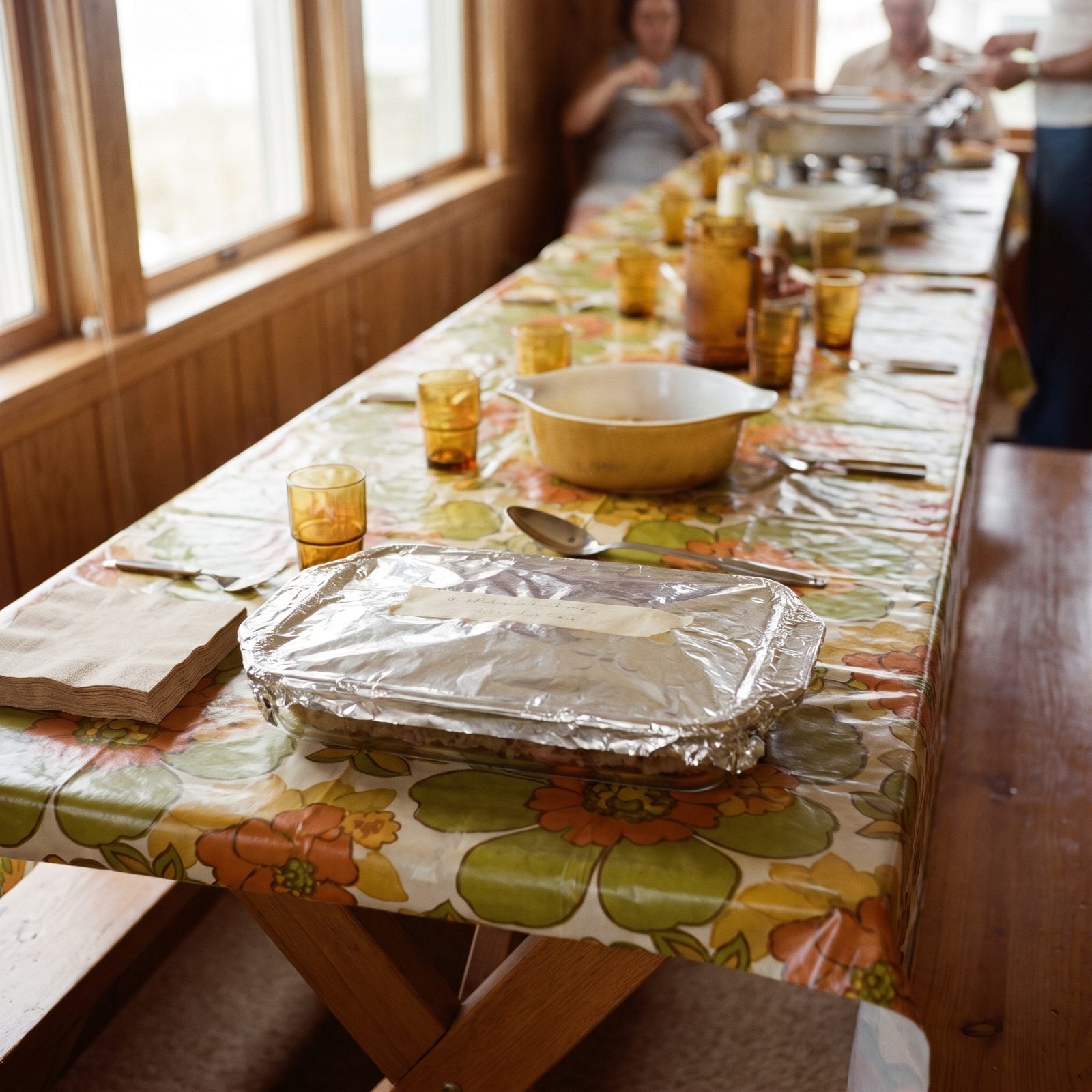
The label told you nothing about the food. It told you who to return the dish to. A hurried scrawl in dark ink, barely legible, pressed onto a strip of masking tape that would leave a sticky ghost when peeled off weeks later.
This was the whole insurance system of a potluck. Bring a dish, tape your name to it, get it back at the end. Half the time the tape outlasted the memory of what had been inside. You’d find a dish in your cabinet in October with that same illegible scrawl still on it and no idea how it got there.
34. The Floral Crock-Pot Plugged In With Its Cord Stretched Across the Table
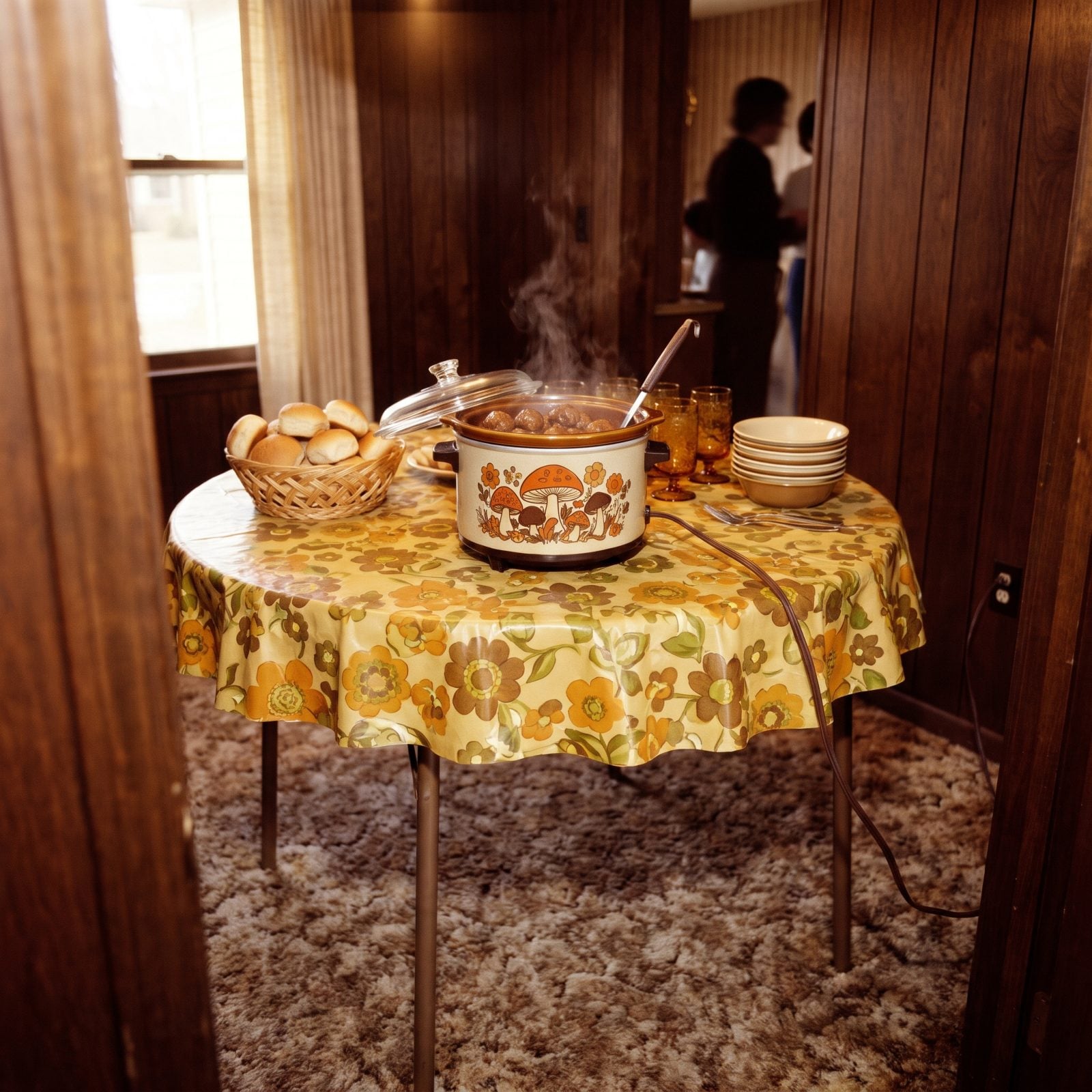
Nobody thought twice about it. A brown cord ran straight across the serving table, past the rolls and the relish tray, to the one outlet on the wall. People reached over it, and somebody always tripped the plug loose so the meatballs went lukewarm by two o’clock.
The Crock-Pot itself had an orange floral or little-mushroom design baked right into the stoneware. Inside: Swedish meatballs, or little smokies drowning in grape jelly and chili sauce, a combination that sounds alarming and tasted like heaven. The cord across the table was a safety hazard we all simply agreed to ignore.
Low and slow since nine in the morning, and not one person questioned the extension cord running through the green beans.
Today, our readers still warm to food served straight from the pot or skillet: those photos got hearts 85% of the time, versus 80% for other images in the same articles.
33. The Pistachio-Green Watergate Salad That Was Neither Green Nor Salad
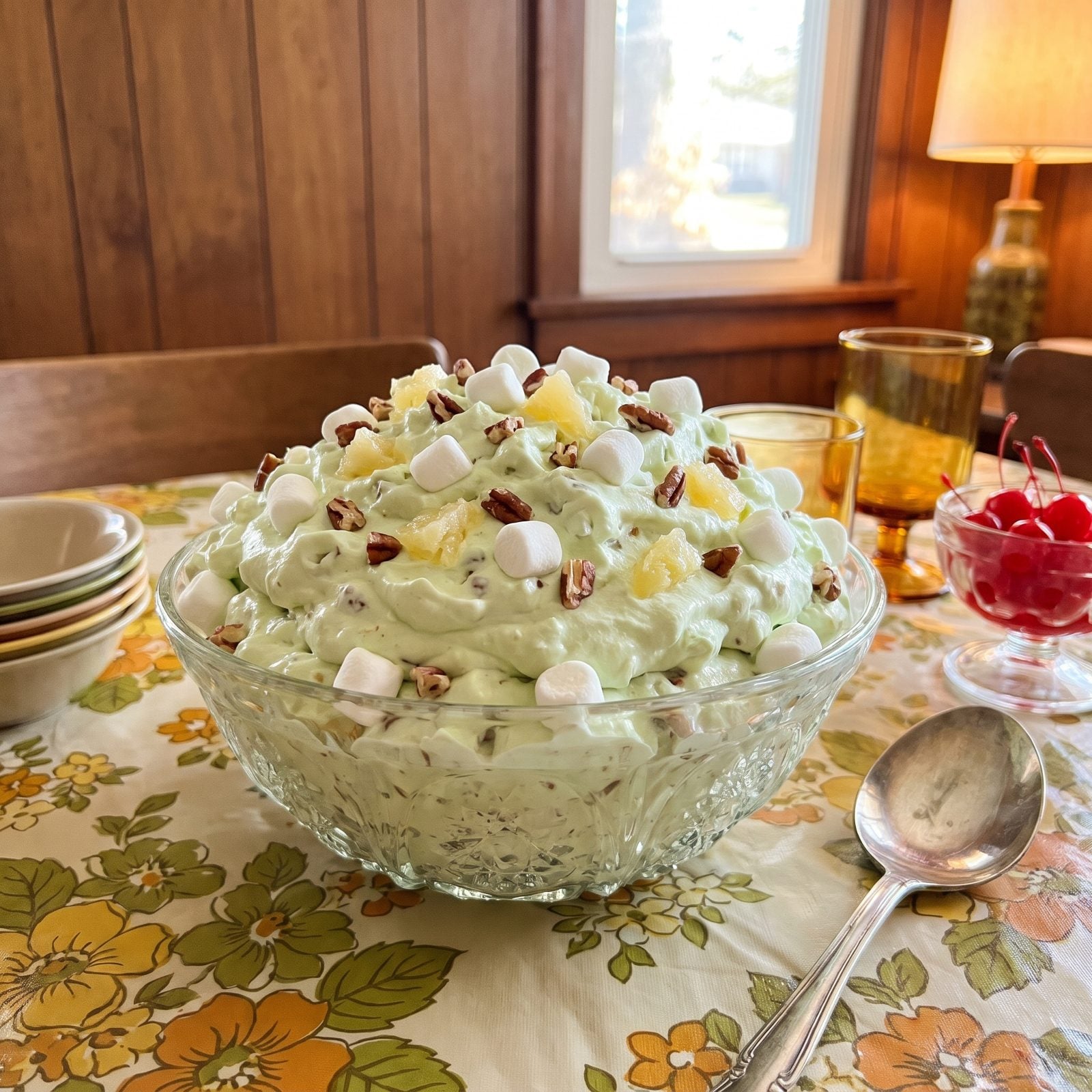
Pale green, fluffy, and sweet, it got called a salad on faith alone. Pistachio pudding mix, whipped topping, crushed pineapple, mini marshmallows, and a handful of pecans folded together in a bowl. No lettuce ever came near it.
The name was a running joke even then, pinned to the scandal in the headlines, and it stuck. It landed on the table right between the actual salads and the actual desserts, confusing everybody and getting eaten anyway. A dish this sweet masquerading as a side course tells you everything about how loosely the 1970s defined the word salad.
32. The Marshmallow-Filled Ambrosia Bowl That Closed Out Every Table
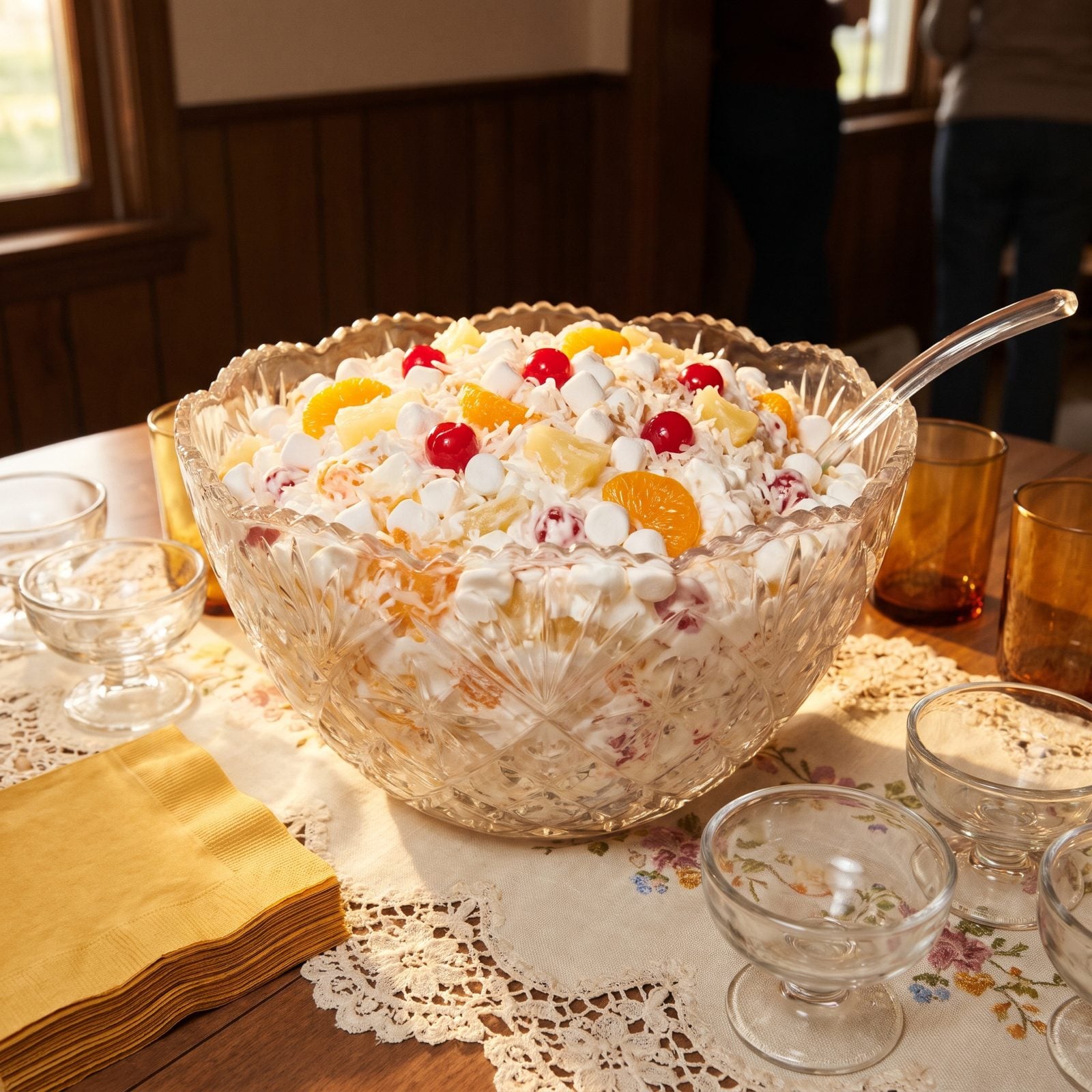
The last bowl on the table, and the one the kids circled all afternoon. Ambrosia was mandarin oranges and pineapple and shredded coconut and a heavy snow of mini marshmallows, all bound together in whipped cream and a scoop of sour cream nobody mentioned.
It came in the good cut-glass bowl, the one that only came out for reunions and holidays. People ate it as dessert, as a side, as a snack when they walked past it. It never once got finished, and somebody always took the leftovers home in a Tupperware with their name taped to the lid.
31. The Bologna-and-Pickle Roll-Ups Held With Toothpicks
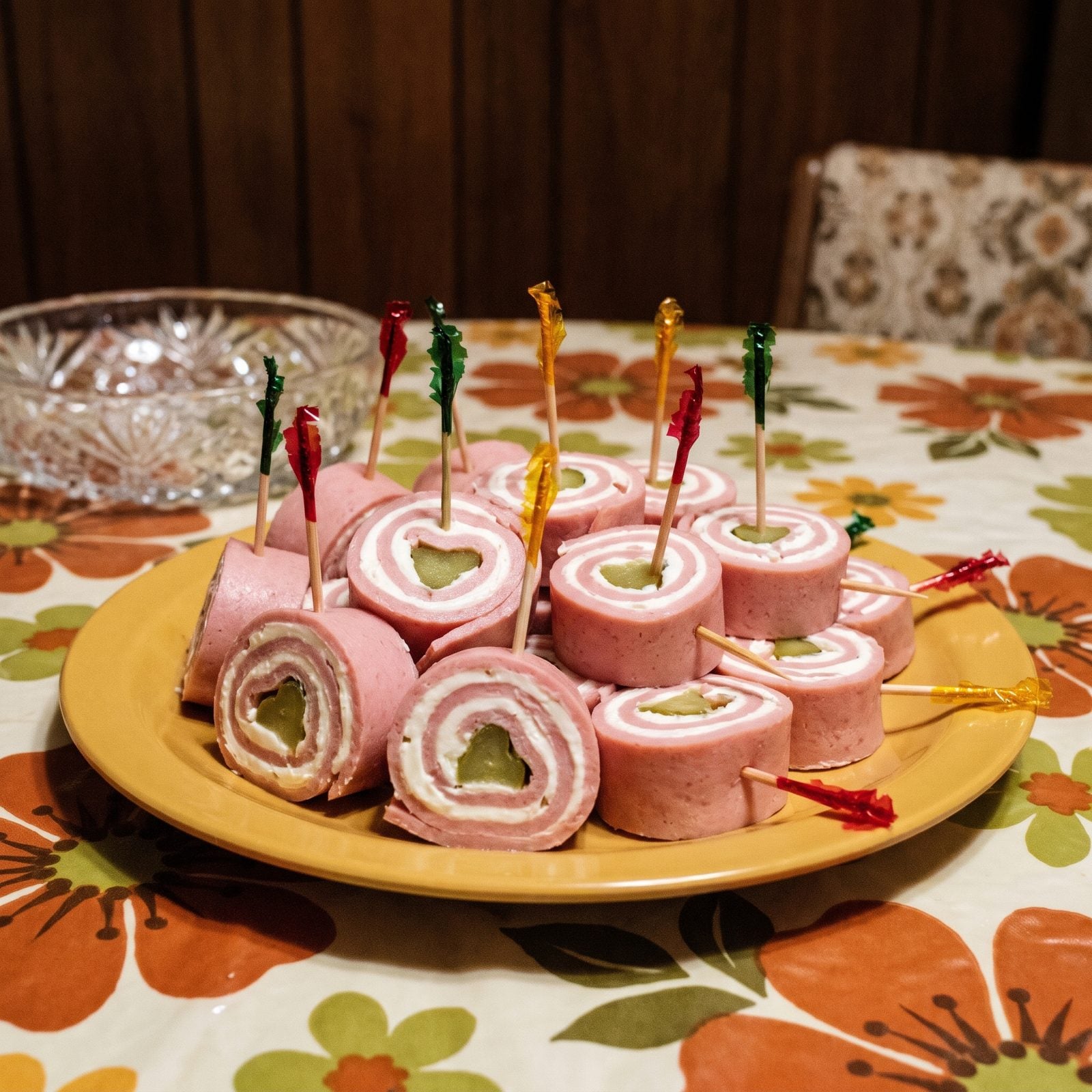
Pink bologna, a smear of cream cheese, a whole pickle spear rolled up in the middle, sliced into pinwheels and stuck with a frilly toothpick. That was an appetizer, and nobody blinked.
The toothpick was the whole point. It meant you could grab one without a plate and keep moving down the table. A kid today would look at that spiral of pink and green and ask what on earth it is — but back then the plate was empty by one o’clock.
30. The Seven-Layer Salad in a Glass Bowl
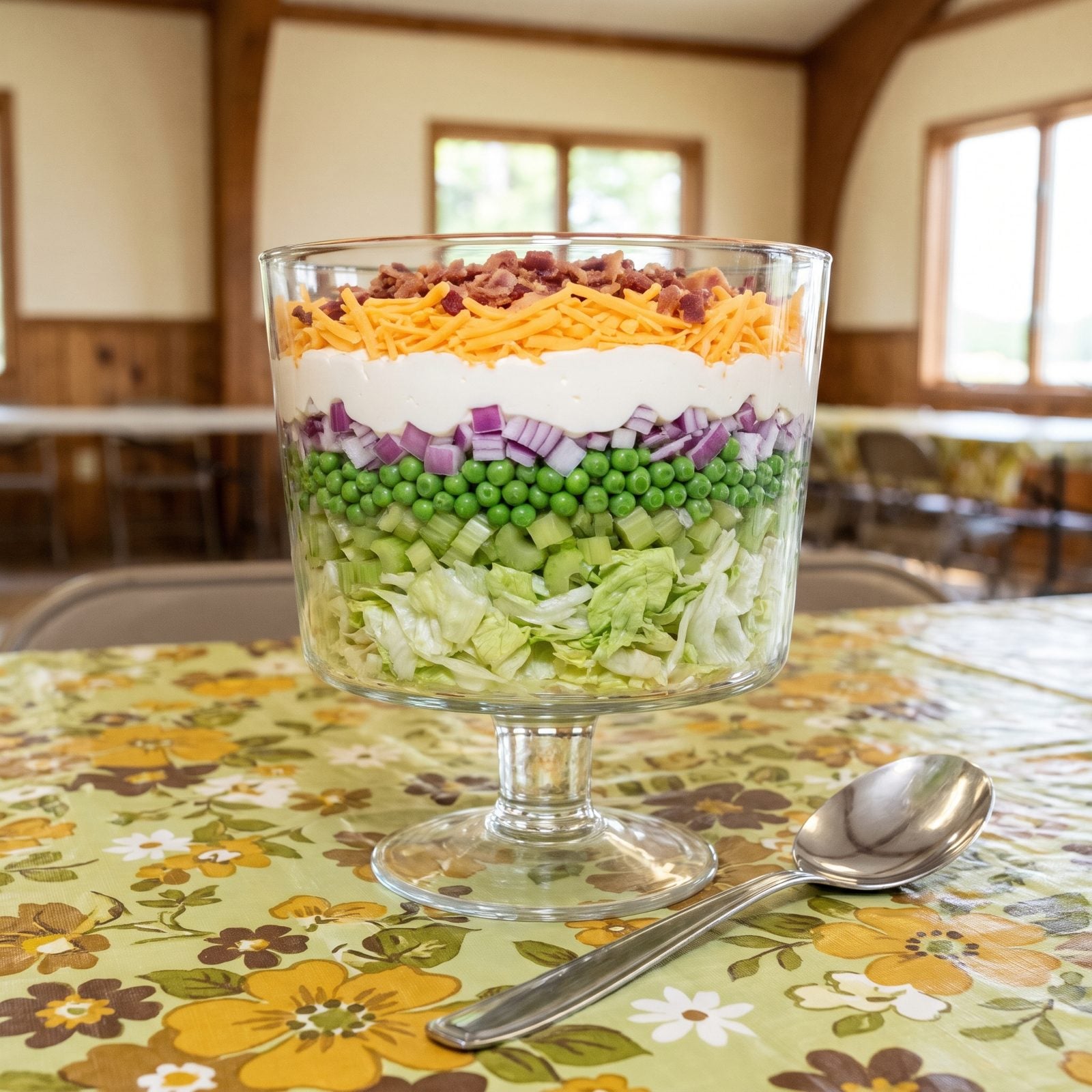
The glory of this one was visual. You built it in a clear glass bowl so everyone could admire the stripes — lettuce, peas, onion, a thick seal of mayonnaise across the top, then cheddar and bacon. And you did not stir it until it hit the table.
That mayo lid was a feature, not a mistake. It kept the whole thing from going soggy overnight in the fridge, which meant you made it the day before and had one less job reunion morning. A modern guest sees a bowl capped in white and hesitates. The people who grew up on it went straight for the spoon.
Salads are a tougher sell with Piaci Pizza readers now: salad photos got hearts only 48% of the time, compared with 68% for other images in the same articles.
29. The Paprika-Dusted Deviled Egg Tray
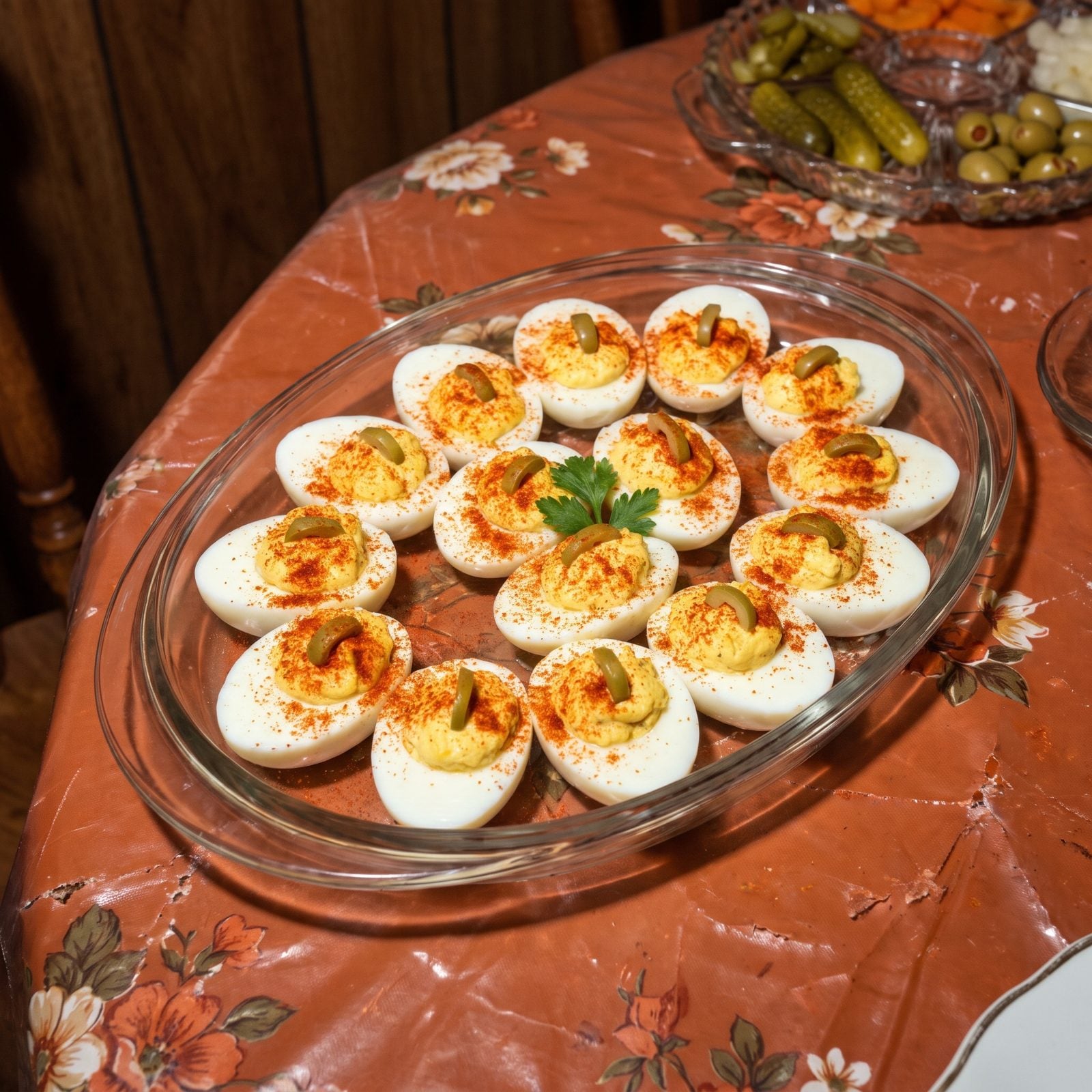
Someone always brought the special dish — that plain oval glass platter, crowded with fifteen-odd egg halves jostling shoulder to shoulder, dusted with paprika that added color and almost no flavor. It lived in the back of a cupboard and came out twice a year.
These vanished first, every time. No mystery, no confusion for a modern guest, just one nagging question: why did the paprika go on at all? For the red. Purely for the red.
28. The Divided Relish Tray With Radishes and Olives
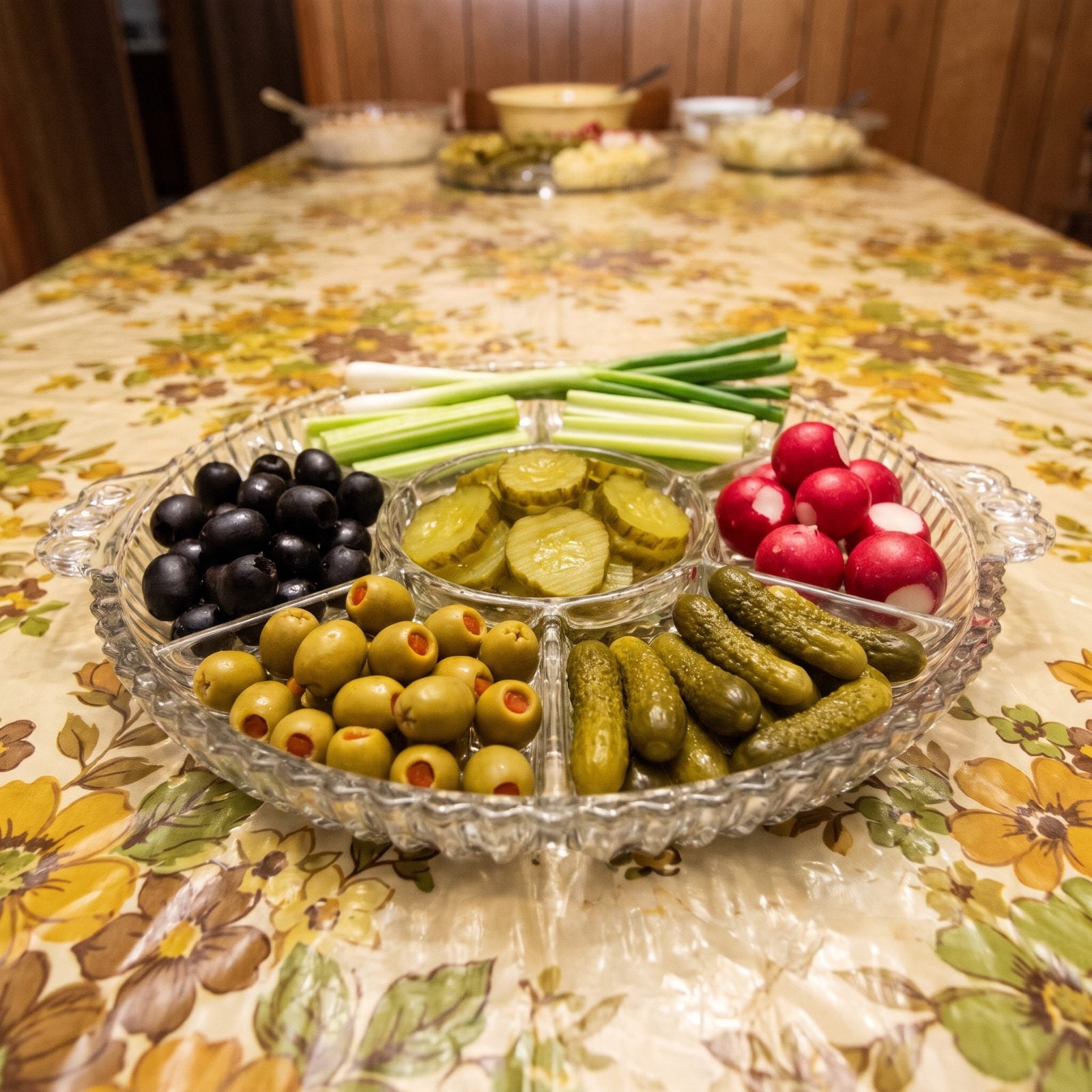
Heavy pressed glass with little walls dividing it into sections — one for black olives, one for green, one for radishes, one for sweet pickles, maybe celery or green onions down the long middle trough. This was the vegetable course, such as it was.
Kids wore the black olives on their fingertips. That was the main use, honestly. A guest today might wonder about the whole dish of radishes nobody finished, but the relish tray was never really about eating. It was about having something to pick at while the adults talked and the coffee urn gurgled.
27. The Celery Sticks Stuffed With Peanut Butter
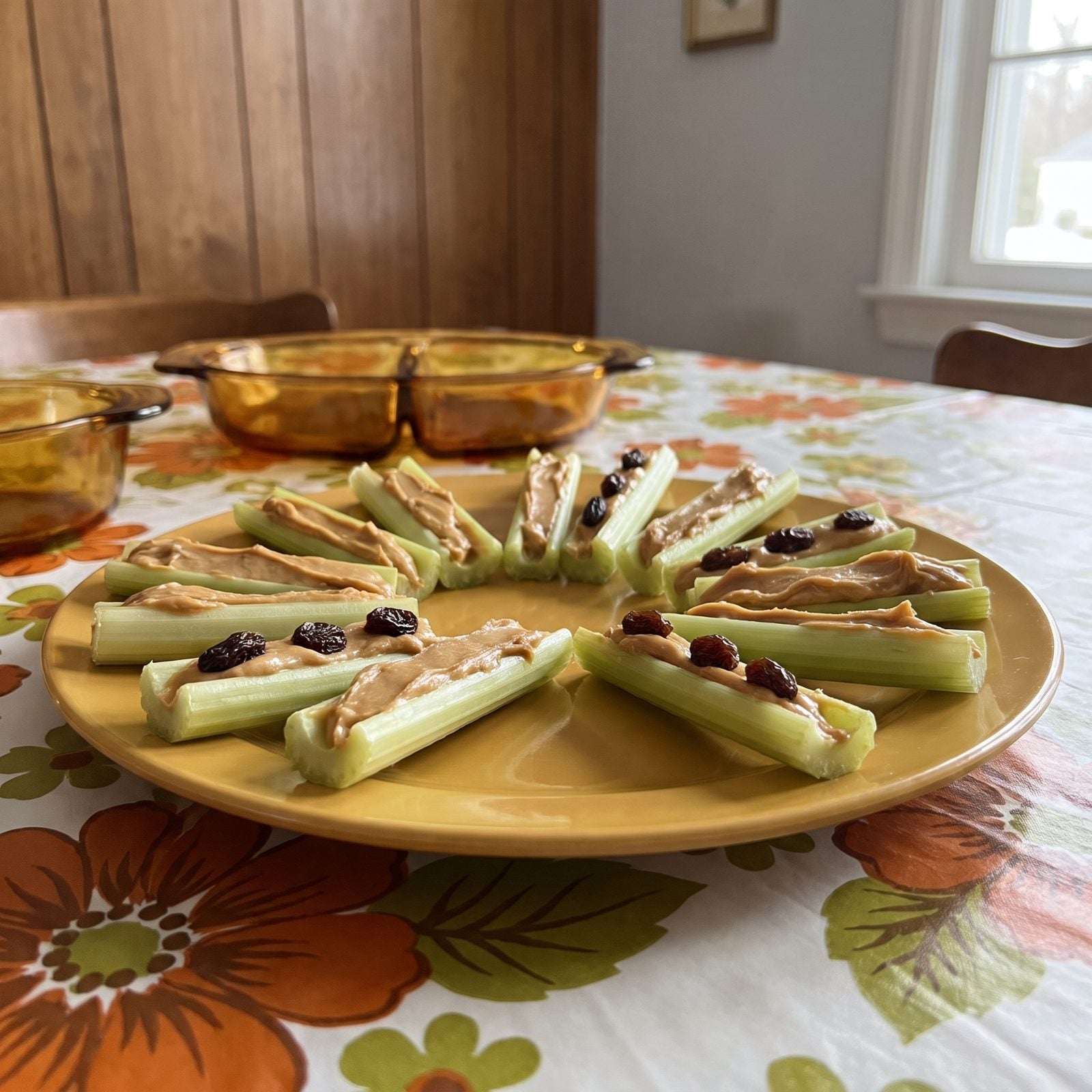
Celery cut to finger length, the hollow packed with peanut butter, sometimes a row of raisins pressed on top. Call it ants on a log if the grandkids were around. Otherwise it was just the thing you set out so the kids had something crunchy to chew on.
Sweet and savory and vegetable all at once, which made exactly zero nutritional sense and total toddler sense. A modern guest circling the table would walk right past it. The under-ten crowd knew better.
26. The Nut-Covered Cheese Ball Surrounded by Crackers
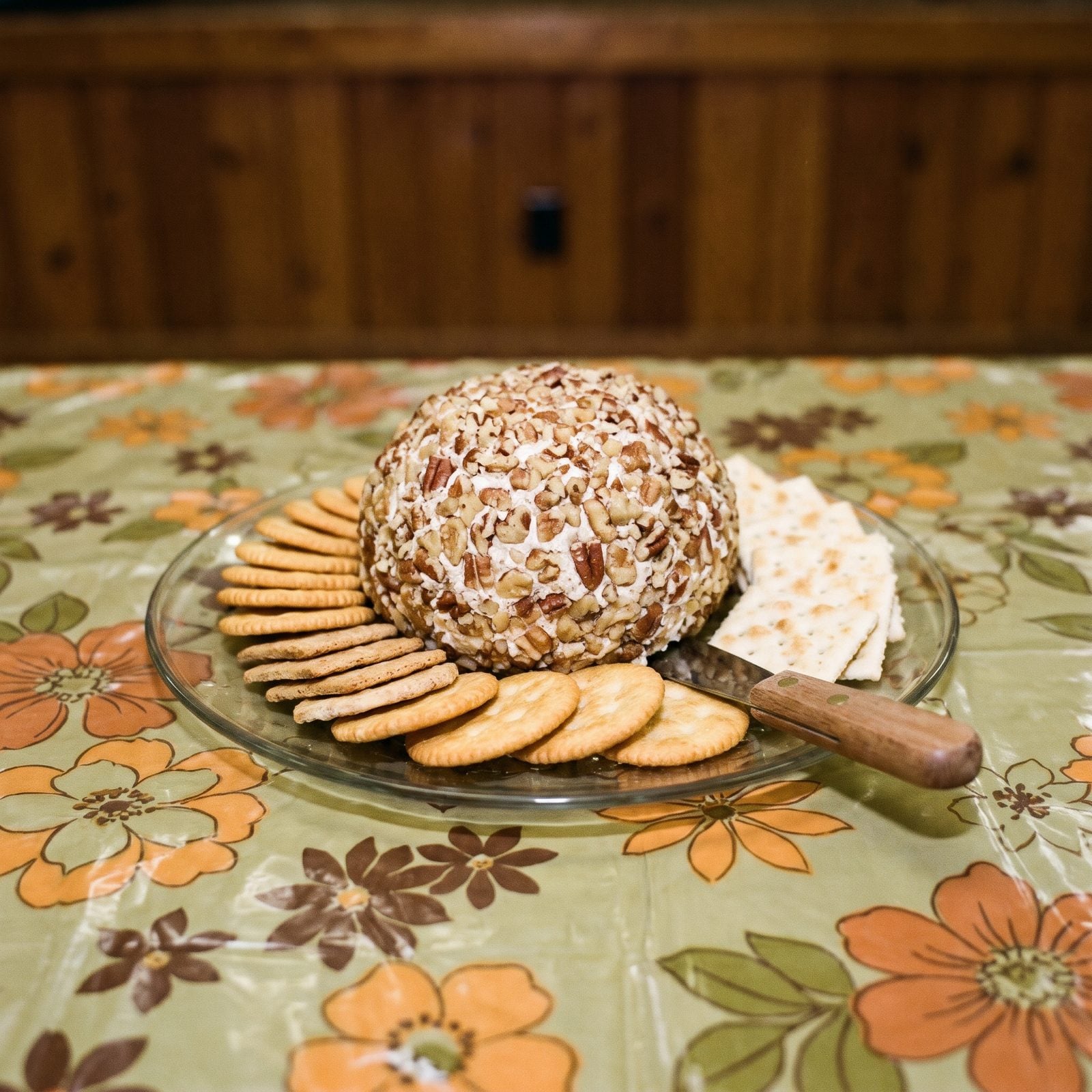
The centerpiece of the appetizer end. A cantaloupe-sized ball of plain white cream cheese, rolled in crushed walnuts, parked on a glass plate with a moat of crackers and one dedicated spreading knife everybody shared.
And it held its shape all afternoon, which was the small miracle of it. You chipped away at one side and by evening it looked like the surface of a small pale moon. The cracker ring? Non-negotiable. No ring, and people didn’t know where to start.
By the end of the day it looked like the surface of a small pale moon, and that was exactly how you knew the reunion went well.
25. The Lipton Onion Soup Mix Dip
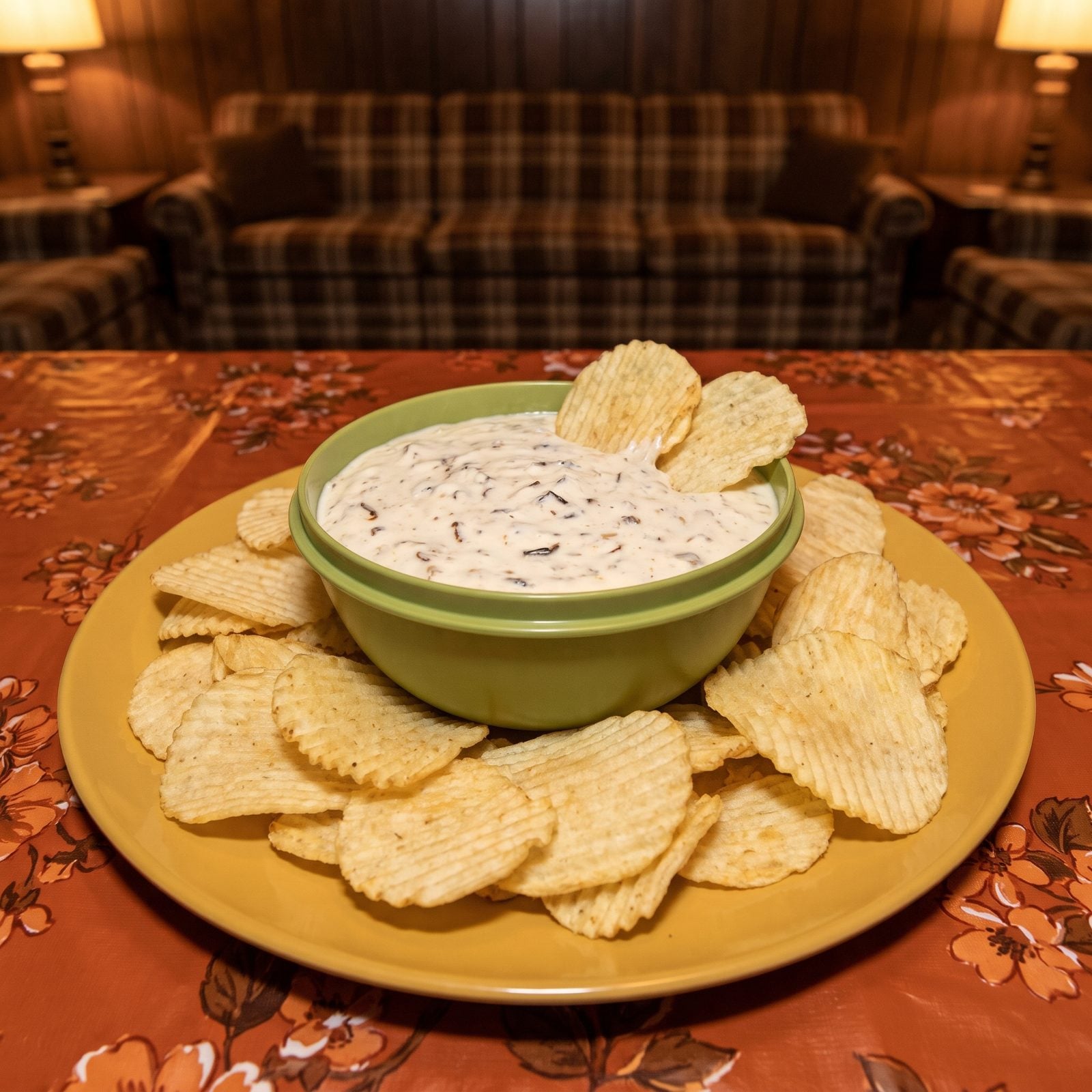
A tub of sour cream, a packet of dry onion soup mix stirred in, left to sit so the dried onions softened up. That was the entire recipe, and it fed a crowd with ridged chips for next to nothing.
This one puzzles people less, because the flavor still turns up today. But the method would stop a younger cook cold. Soup mix? In dip? Yes. And it beat most things you’d pay money for.
24. The Pineapple-Ring-Glazed Ham
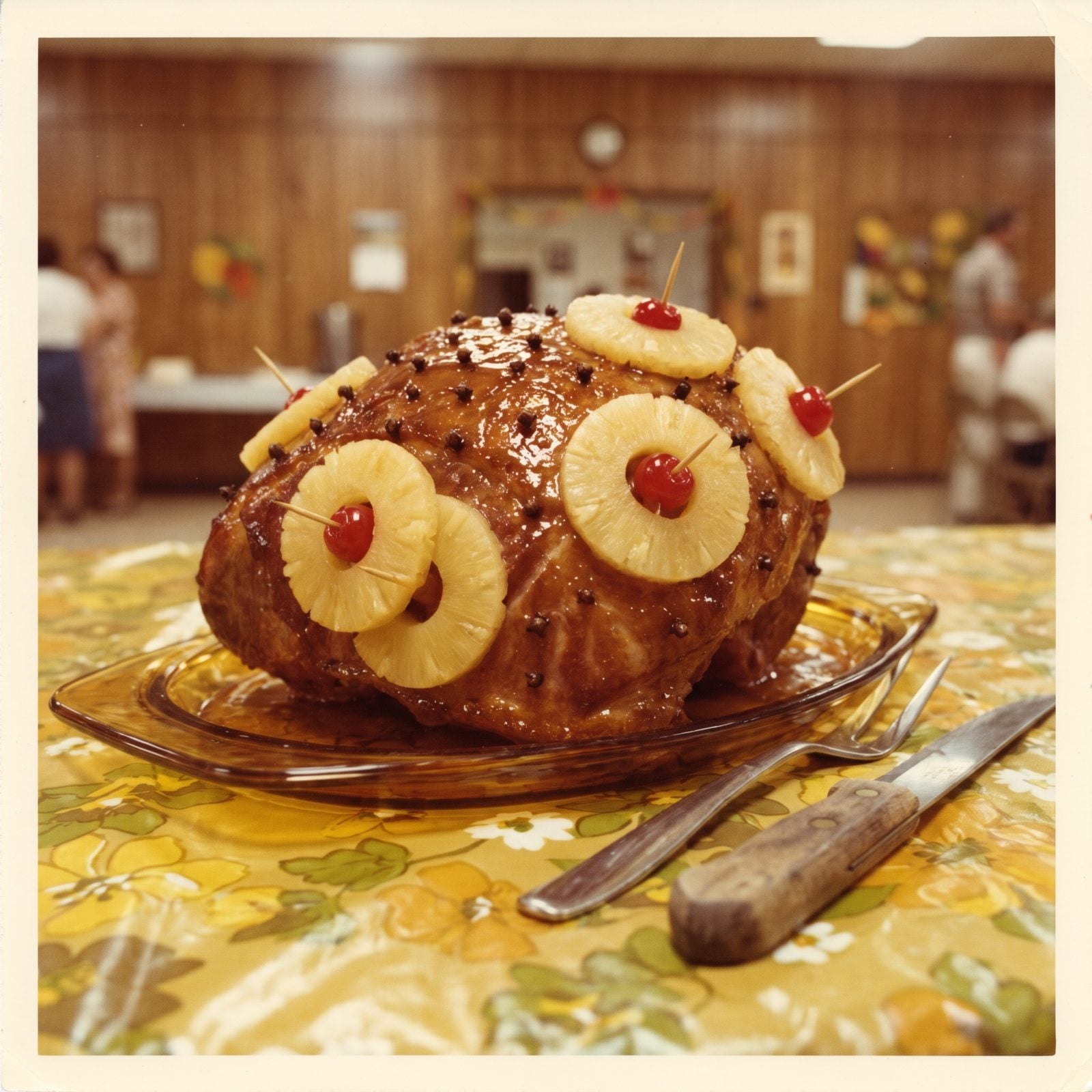
The showpiece. A ham scored in a diamond pattern, studded with whole cloves, then decorated with canned pineapple rings pinned on by maraschino cherries and the occasional toothpick. In the oven the glaze went sticky and dark.
Whoever carved it was the person in charge. That was simply understood. A modern guest might squint at the fruit-and-clove decoration and wonder whether it was even meant to be eaten — and the answer was: the cherries, maybe, if you got to them first. The pineapple went soft and caramelized and was the best part of the whole plate.
23. The Potato Chip-Topped Tuna Noodle Casserole
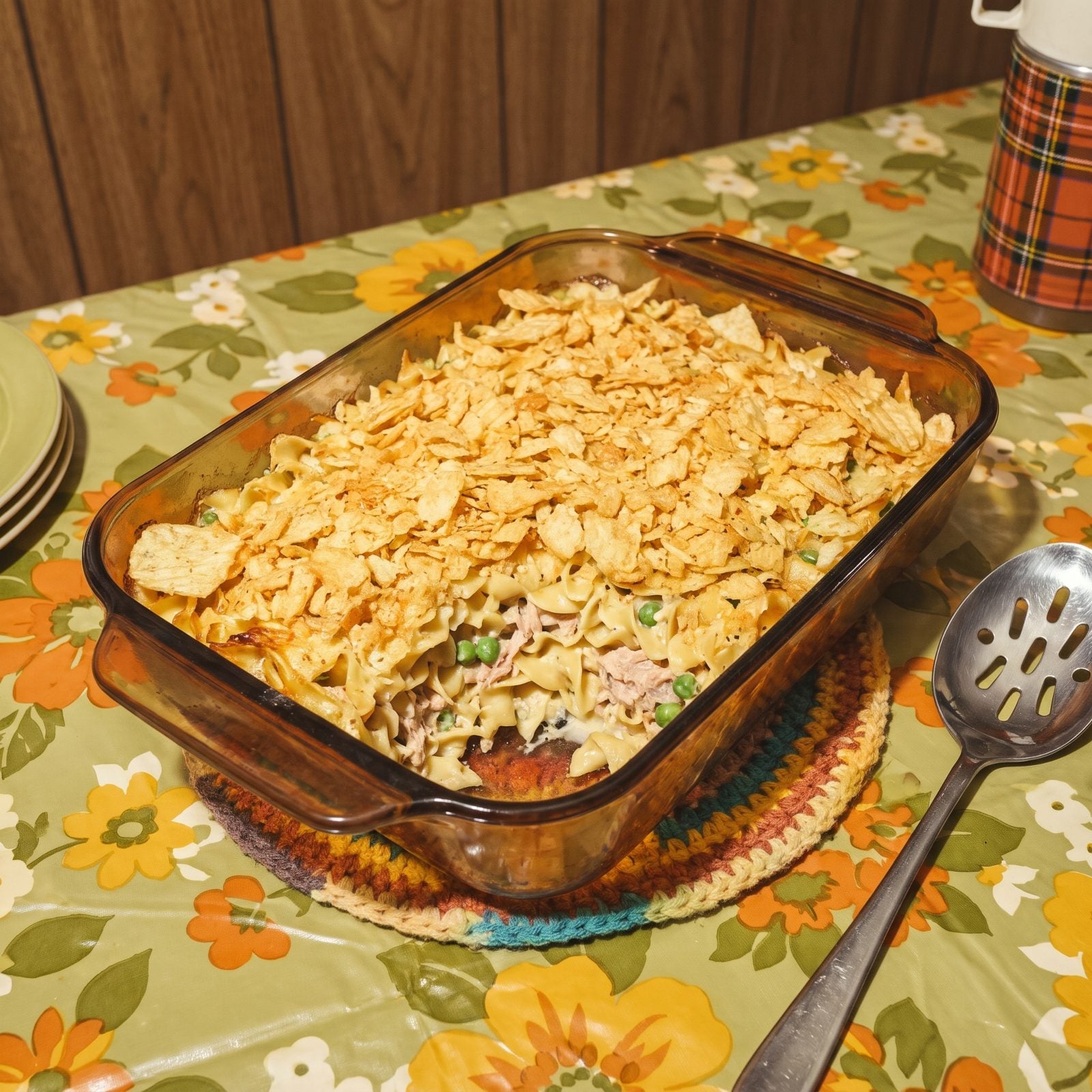
Egg noodles, canned tuna, a can of cream-of-mushroom soup, peas, all baked in an amber Pyrex dish with crushed potato chips on top for crunch. It arrived warm in the dish it was cooked in, wrapped in a tea towel for the car ride over.
What a modern guest wouldn’t catch is that the chip topping was the upgrade. The fancy version used chips instead of plain breadcrumbs. Comfort and thrift in one pan — and the corner pieces, the ones with the most crust, always went first. If you got the corner, you won.
22. The Basket of Brown-and-Serve Rolls
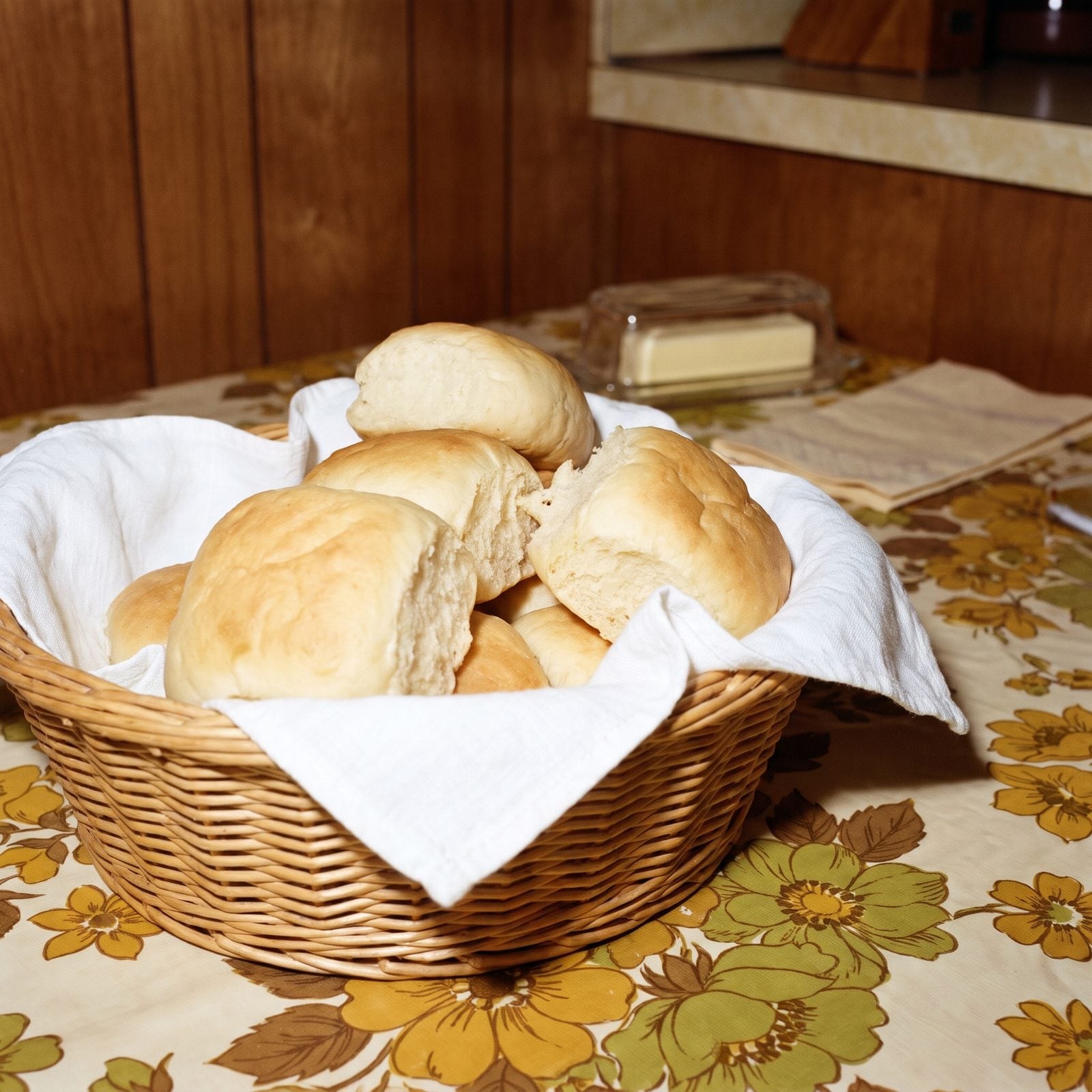
You pulled them apart at the seam where they’d baked together, and the inside was so soft it barely counted as bread. Brown-and-serve rolls came mostly cooked already, and somebody’s aunt finished them in the hall’s borrowed oven ten minutes before the blessing — the smell hit before the covered dishes even came out.
A modern guest expecting a bakery loaf would be confused by how pale and pillowy these were. That was the point. They existed to carry margarine and sop up the last of the pickled beet juice, and they did both jobs without complaint.
21. The Tub of Margarine Set Out for Everyone
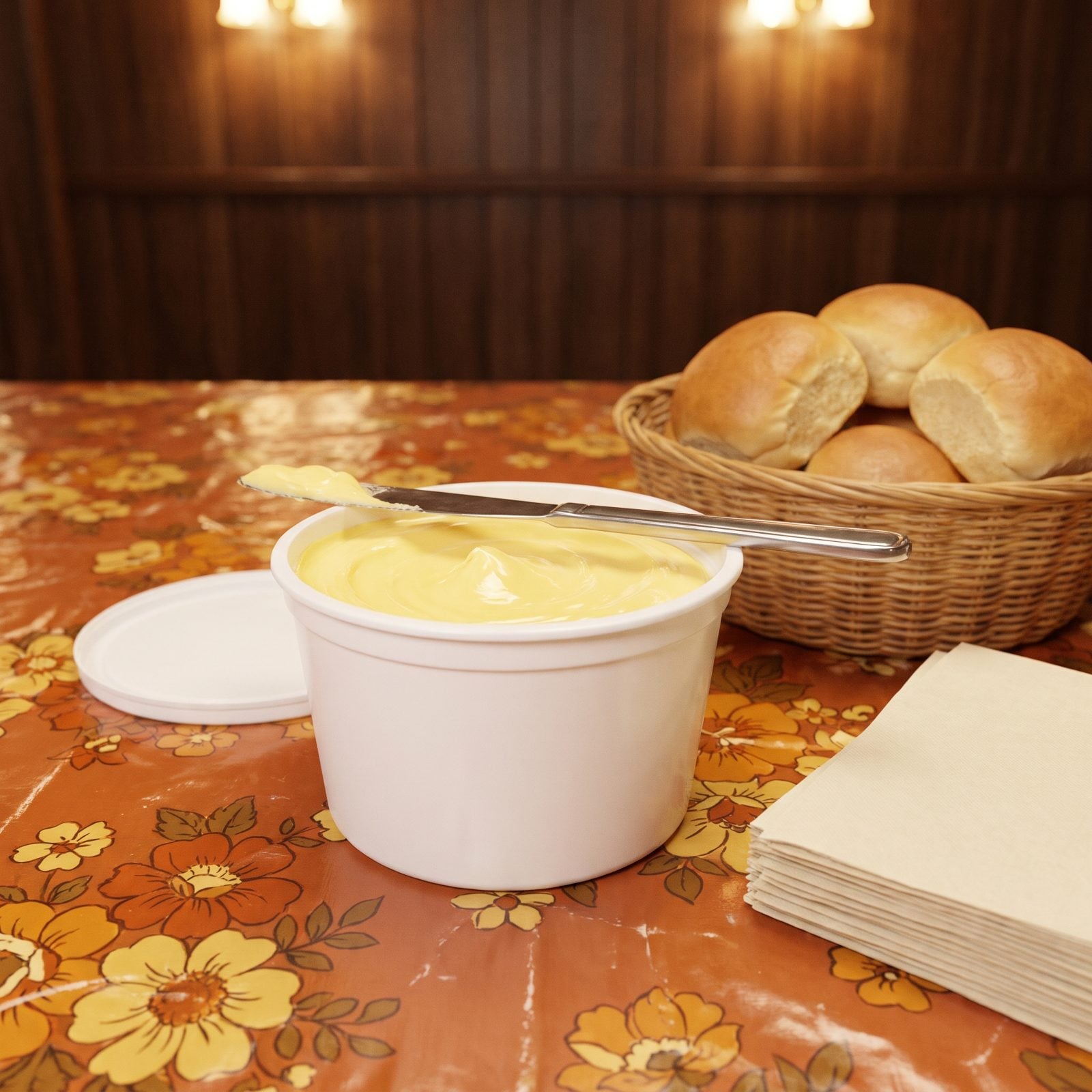
One tub. Everyone’s knife. That was the arrangement, and nobody thought twice.
The margarine sat out all afternoon, going soft and glossy in the warm hall, a communal dip for rolls and corn and anybody’s leftover biscuit. A modern guest would recoil at the shared tub and the crumbs floating in the surface by hour two. We just reached in. Margarine was the default fat of the decade, cheaper than butter and always on the table, and the tub was built for exactly this kind of crowd.
20. The Open Jar of Miracle Whip Beside the Salads
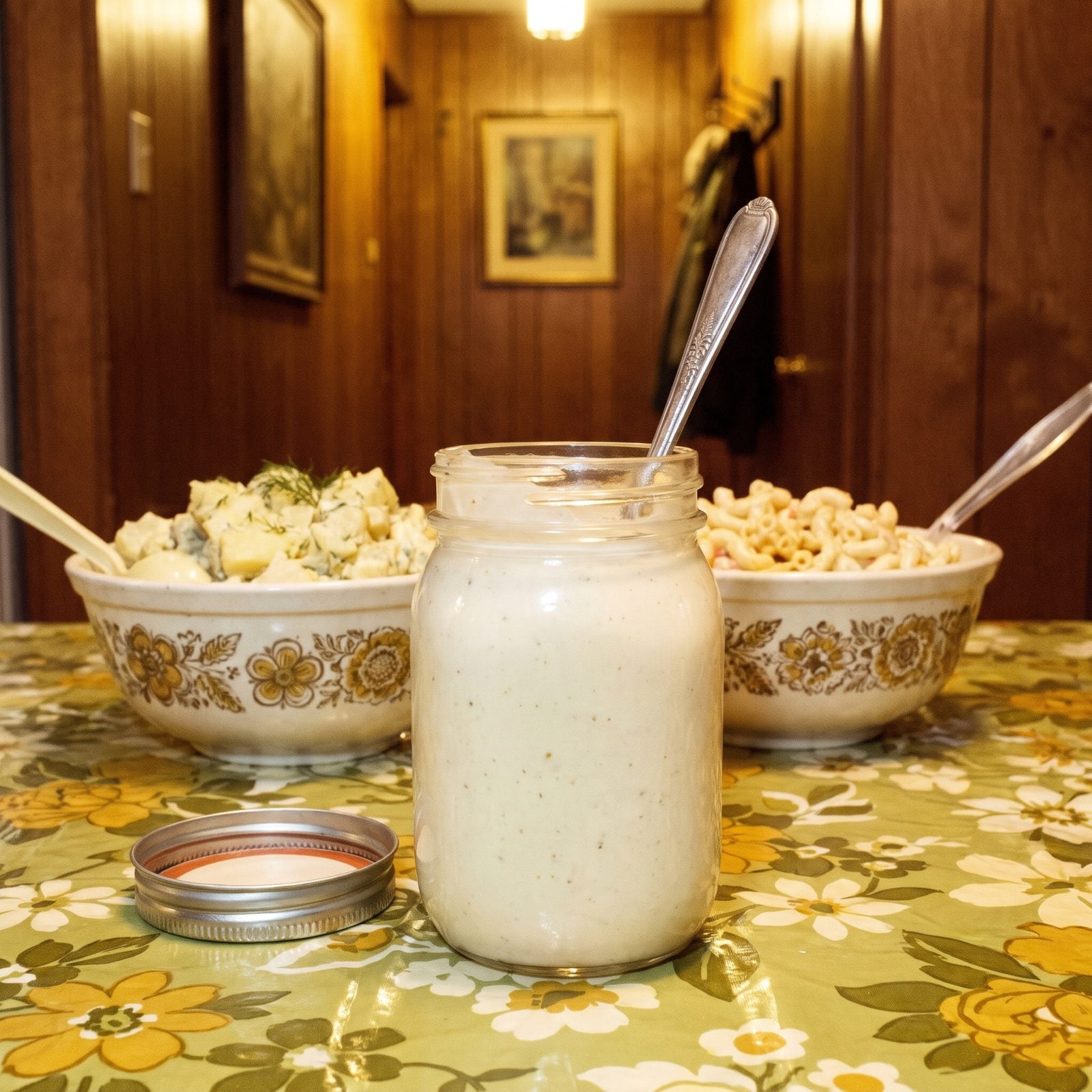
It was never mayonnaise. Say that to the wrong relative and you’d get a lecture. Miracle Whip was tangier, sweeter, a little zippy, and it was the binding agent of every important salad on the table.
The potato salad, the macaroni salad, the deviled eggs all traced back to that jar. It usually showed up open with a knife already standing in it, ready for the one cousin who liked an extra dollop. A modern guest raised on aioli and fancy spreads wouldn’t understand how a jar of sweet-tart dressing could anchor an entire buffet. It did. Quietly, thanklessly, every single year.
19. The Bowl of Pickled Beets Staining Everything Purple
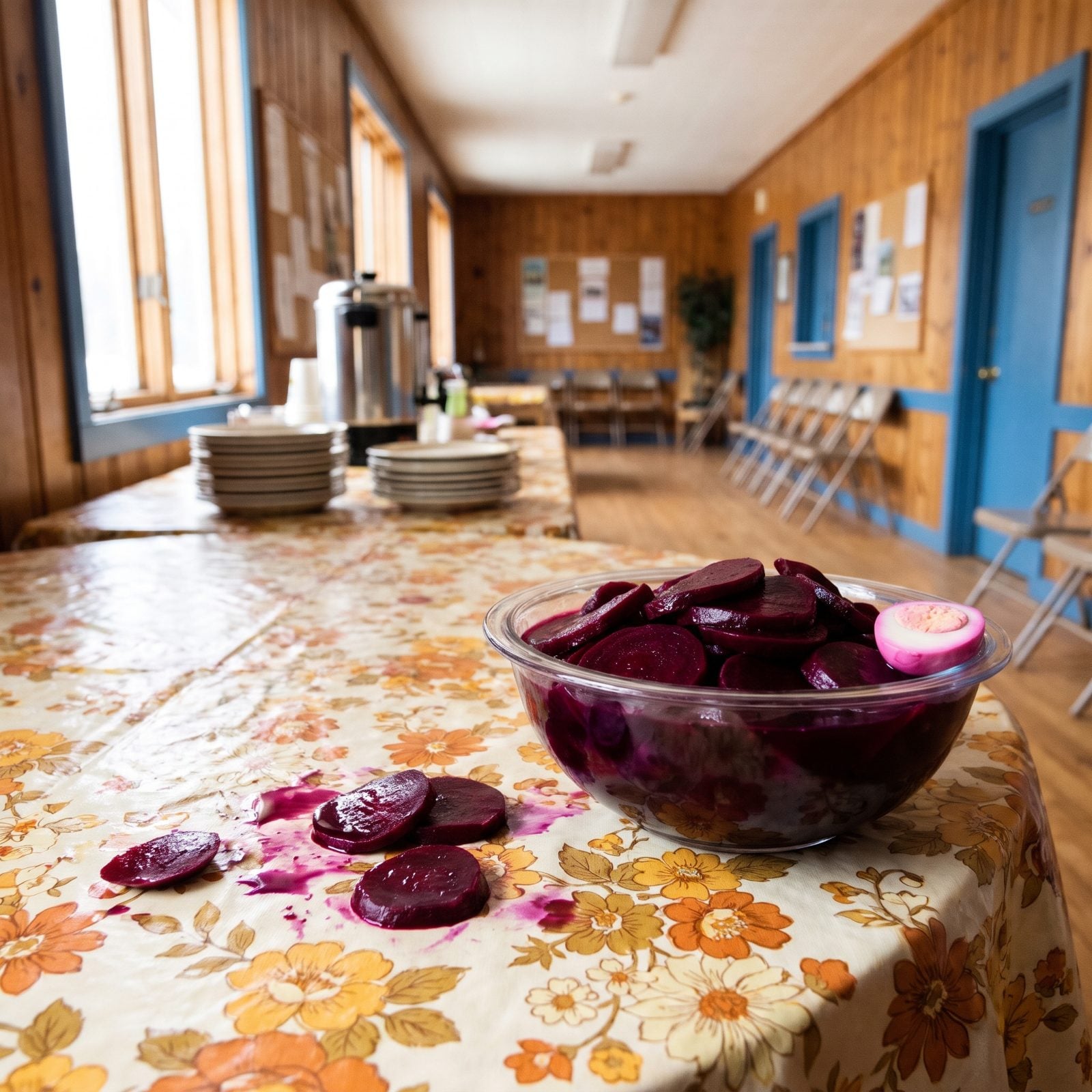
The beets came in a bowl of brine so purple it looked almost electric, and that color went everywhere — onto the plate, onto the roll, onto the mashed potatoes if you weren’t careful. There was always one slice that had migrated across your whole plate before you noticed.
Somebody always dropped a hard-boiled egg in the jar too, which came out dyed shocking pink. A modern guest would wonder why anyone ate something that stained like dye. But those beets were sharp and sweet and cut right through a plate of heavy casseroles, and the purple splash was half the fun.
18. The Jar of Homemade Chow-Chow Relish
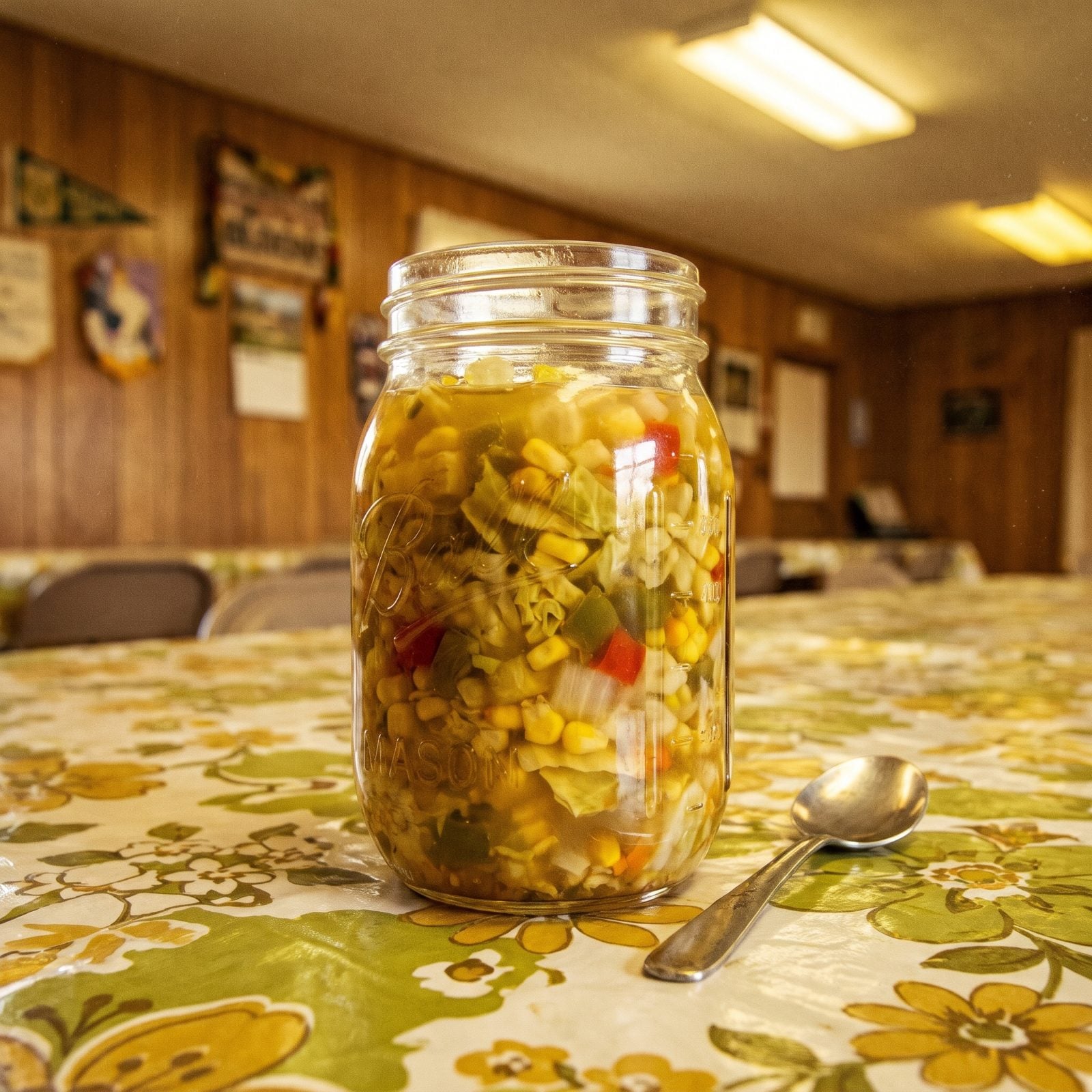
Chow-chow puzzled even some of the kids back then, so a modern guest doesn’t stand a chance. A chunky relish of chopped cabbage, corn, peppers, and onions put up in a jar, tangy and a little sweet, spooned over pinto beans or pork like it was the most natural thing in the world.
Every family had their own version, and whoever made it would tell you theirs was the real recipe. You spooned a little onto the side of your plate and dragged forkfuls through it.
17. The Pineapple Upside-Down Cake With Maraschino Cherries
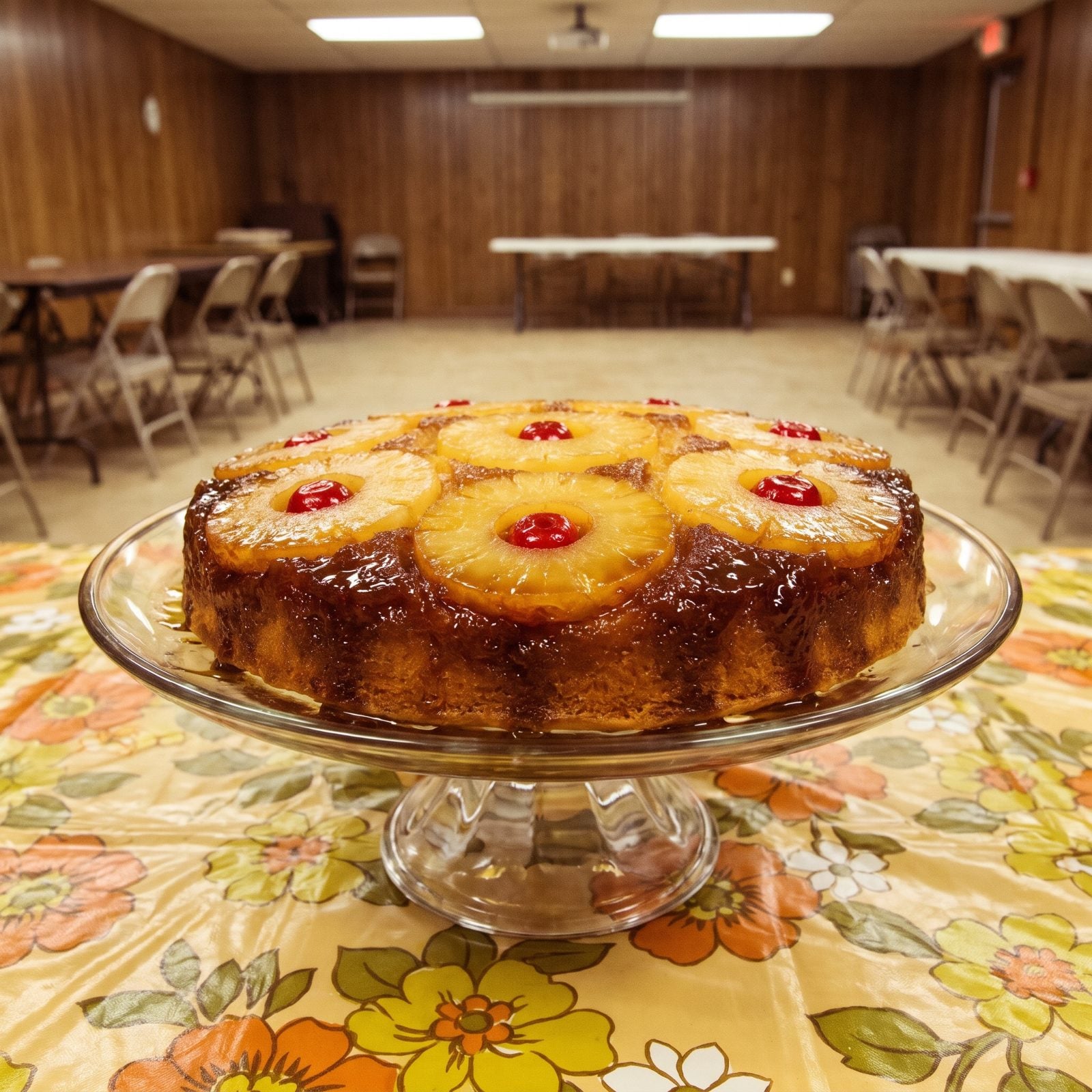
This was the showstopper that arrived flipped, and the big reveal was the pattern on top: golden pineapple rings arranged in a grid, each one with a maraschino cherry glowing red in its center, all of it glazed with caramel that pooled at the edges.
It came from a skillet most of the time, baked with the fruit on the bottom and turned out onto a plate at the last second. A modern guest might find the canned pineapple and neon cherries quaint. We thought it looked like dessert from a magazine. The sticky caramel corners were gone first.
16. The Gelatin-Soaked Poke Cake
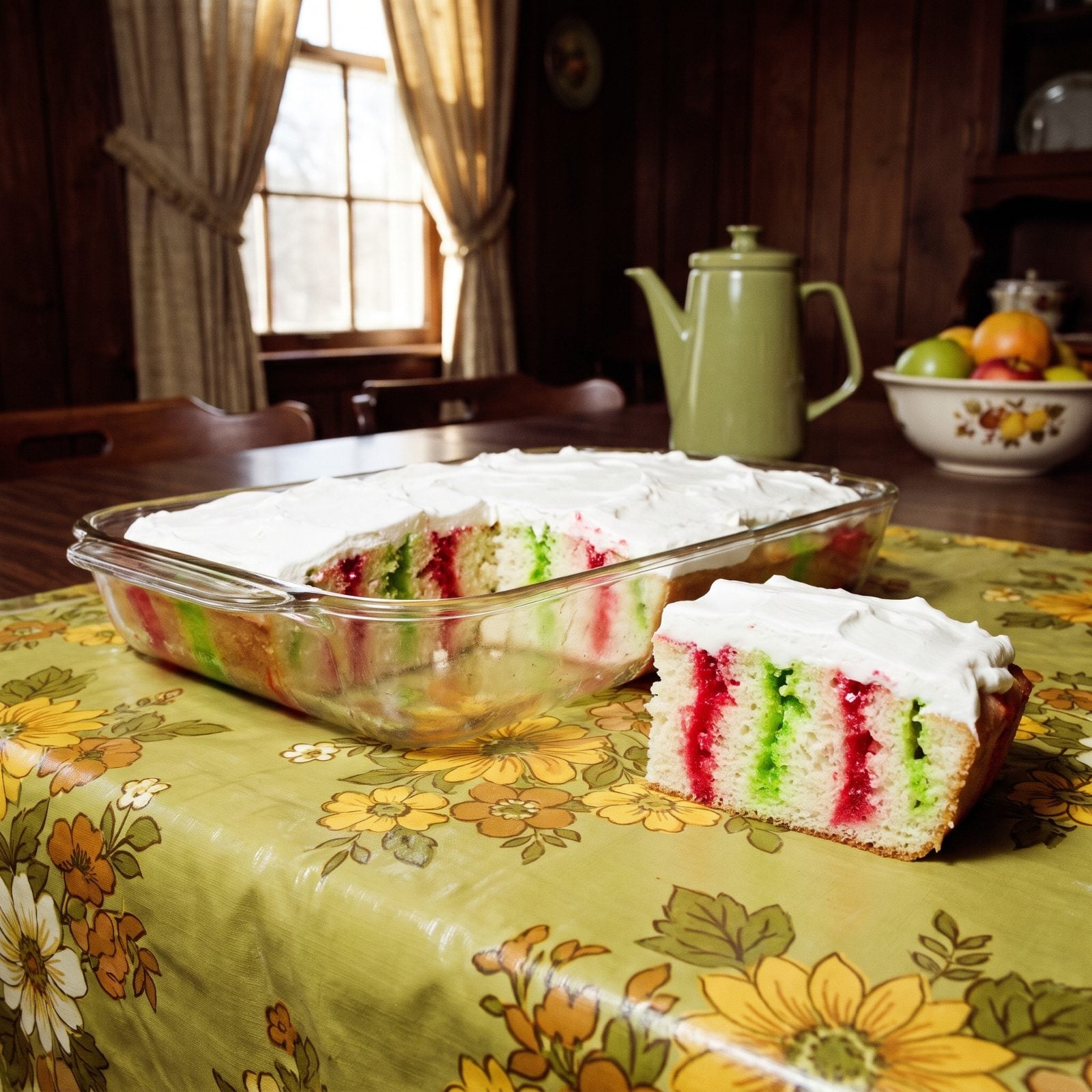
Someone poked holes in a plain white cake with the handle of a wooden spoon, then poured liquid gelatin over the whole thing so it ran down into the holes and set. Cut a slice and you got stripes of red and green running through pale cake, hidden until that first knife went in.
Topped with whipped topping from a plastic tub, it jiggled a little when you carried it. A modern guest would stare at the colors and wonder what they were looking at. The surprise inside was the whole draw, and kids lined up to see which color they’d get.
15. The Canned-Fruit Dump Cake
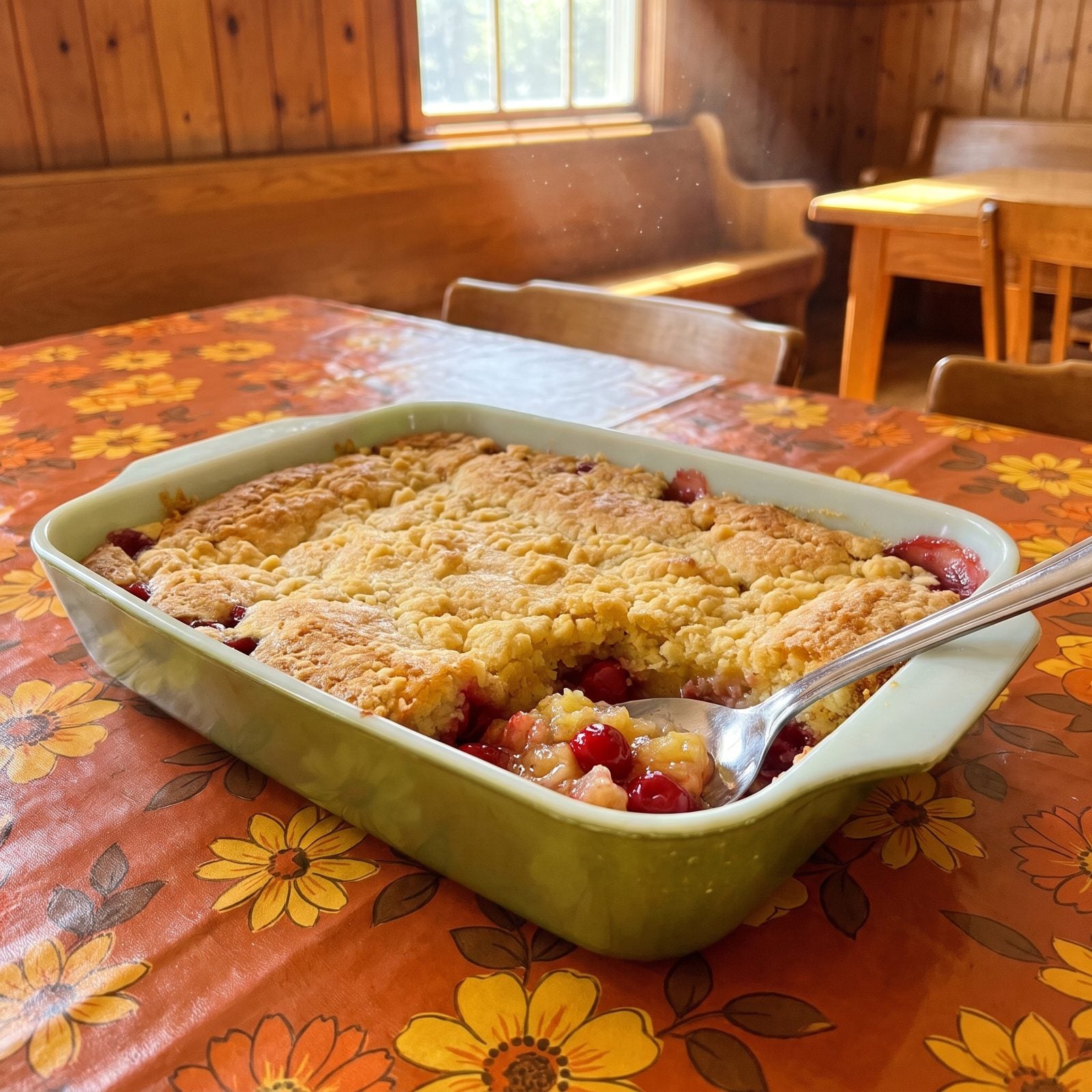
No mixing bowl, no measuring, barely a recipe. You dumped canned fruit into a dish, shook a box of dry cake mix over the top, sliced butter across the whole thing, and let the oven sort it out.
What came out had a crumbly golden crust with fruit bubbling up through the cracks, and nobody could tell you the exact proportions because there weren’t any. A modern guest used to recipes with technique would be baffled that this counted as baking. It didn’t, really. It was assembly. And it disappeared faster than cakes that took three times the effort.
14. The Sock-It-to-Me Bundt Cake
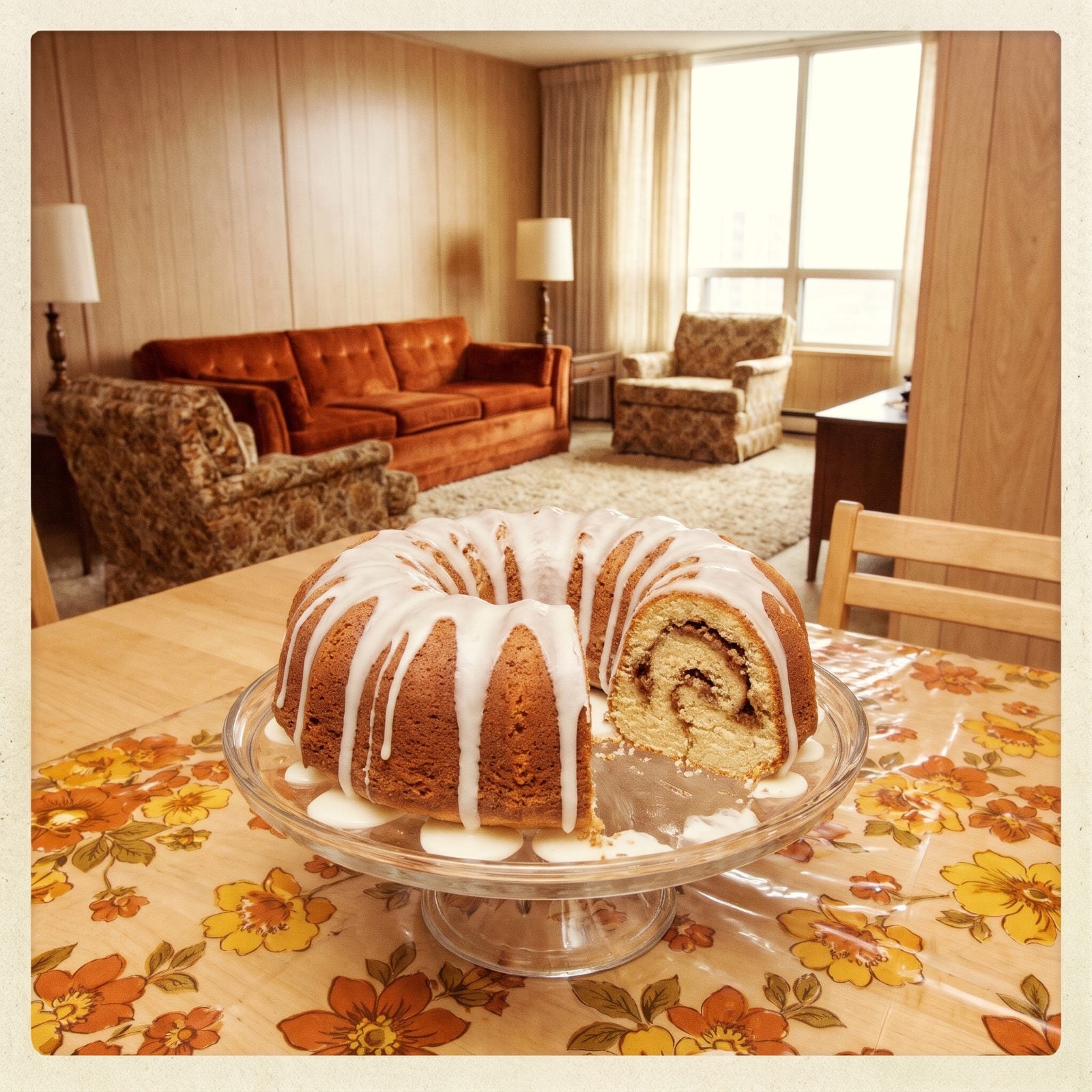
The name alone would stop a modern guest cold. Sock-it-to-me cake borrowed its name from a catchphrase off the TV, and it stuck around long after the show did.
Underneath the goofy name was a dense sour cream bundt with a cinnamon-pecan swirl running through the middle and a white glaze drizzled down the ridges. It kept well, traveled well, and looked impressive sitting on its own cake stand — one of those desserts that proved whoever made it had put in a real morning’s work.
13. The Banana Pudding Layered With Vanilla Wafers
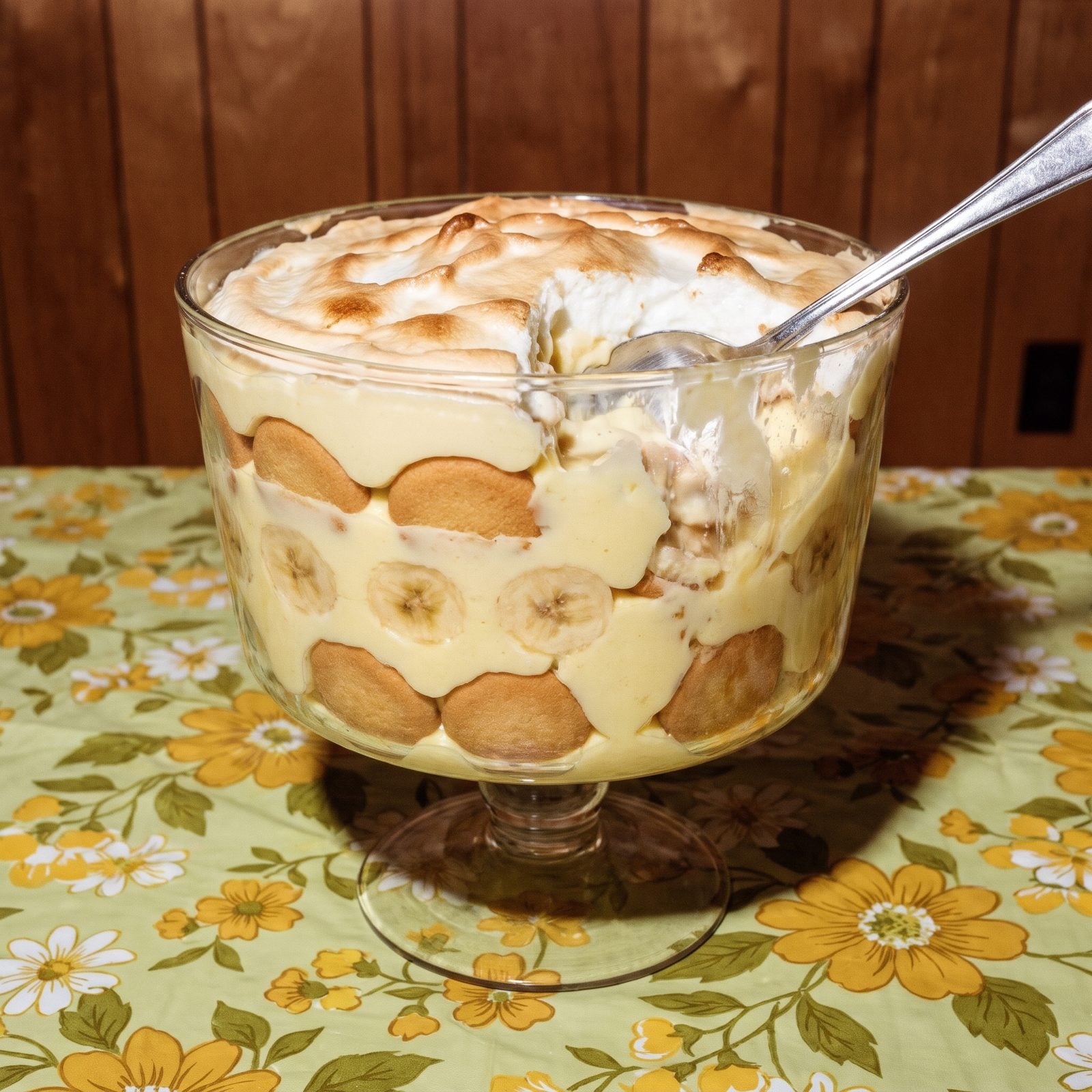
You could see the layers through the glass bowl, and that was part of the ceremony. Custard, sliced bananas, and vanilla wafers stacked up over and over, with the wafers pressed against the sides so they softened into something between cookie and cake.
By the time the blessing was done and the line reached the dessert end, the wafers had gone soft all the way through, exactly as intended. A modern guest might expect crunch. There wasn’t supposed to be any.
This was always the one that got finished. The bowl came home scraped clean, and somebody always said they should’ve made two.
12. The No-Bake Cheesecake With Canned Cherry Topping
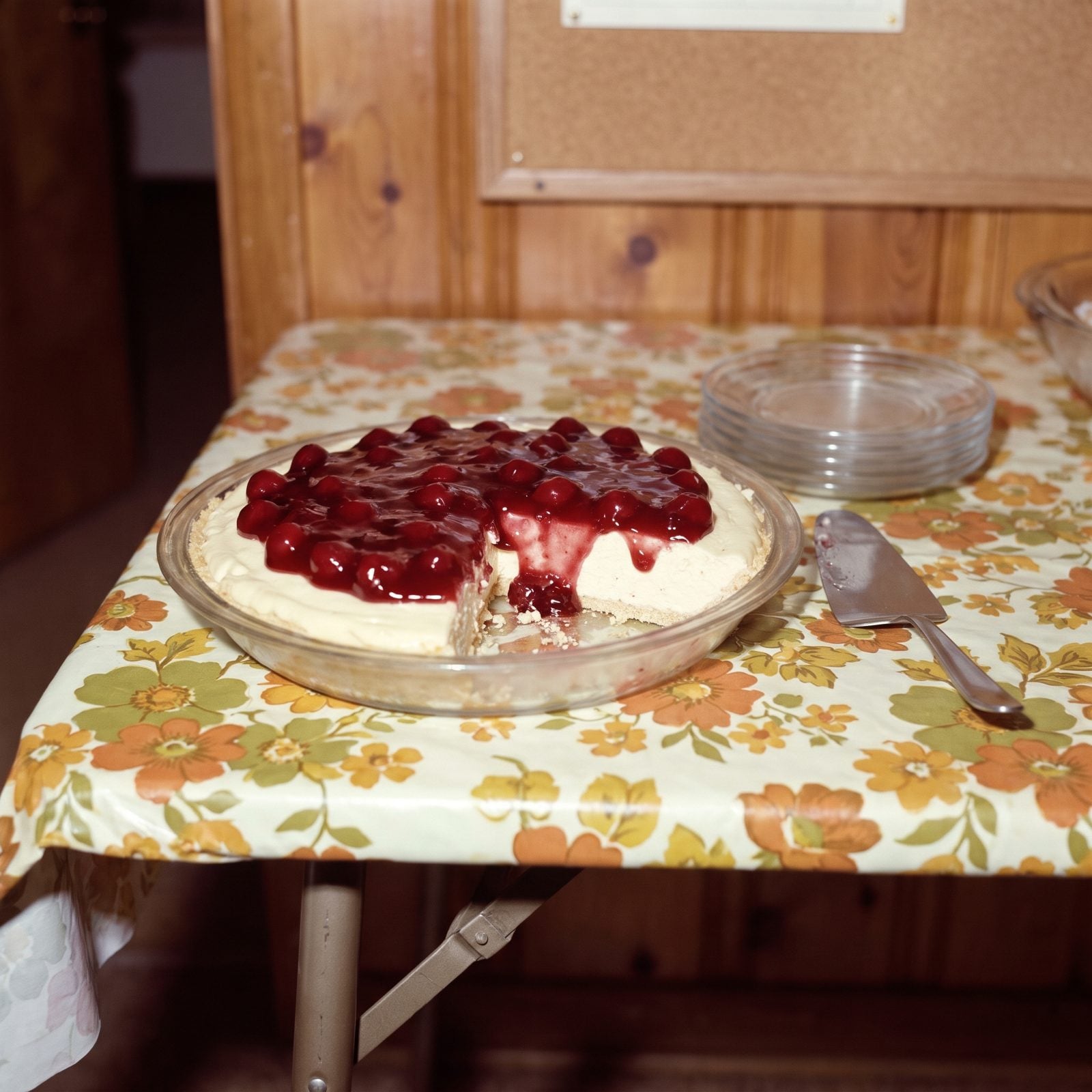
Somebody’s aunt made this, and she made it every single year. The filling never fully set, which was the whole charm — you cut a slice and it slumped sideways on the plate before your fork ever got near it.
The cherries came from a can with a pull-ring lid, poured straight over the top in one gelatinous sheet. No fresh fruit anywhere near it. That red, syrupy glaze was the point. Modern guests squint at a cheesecake that never saw an oven and wonder if it’s safe to eat. It was. It was also gone by two o’clock.
11. The Cut-Glass Dish of Butterscotch Hard Candies
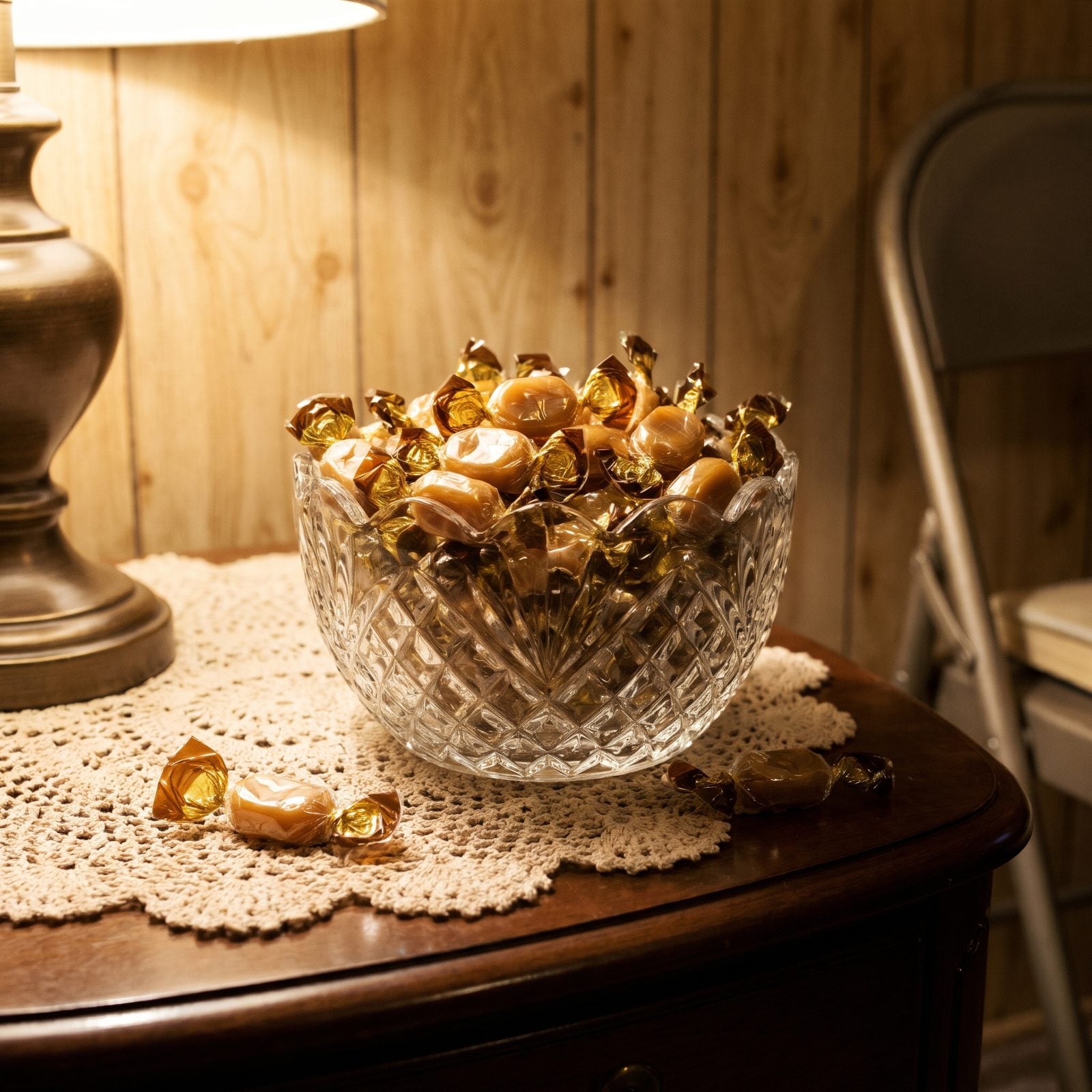
Every reunion had one, usually parked near the coffee and manned by nobody. The cut-glass dish was heavy enough to hurt if it fell on your foot, and it held a mound of butterscotch disks, each in a gold cellophane wrapper with twisted ends.
No child wanted them. They were hard as glass, they lasted forever, and they tasted faintly of the dish itself. But you took one anyway, because the dish was there and that was the custom. You’d unwrap it slow — that crinkle loud in a quiet room — and tuck it in your cheek while the grown-ups talked about people you’d never met.
10. The Sherbet Punch Floating in a Glass Bowl
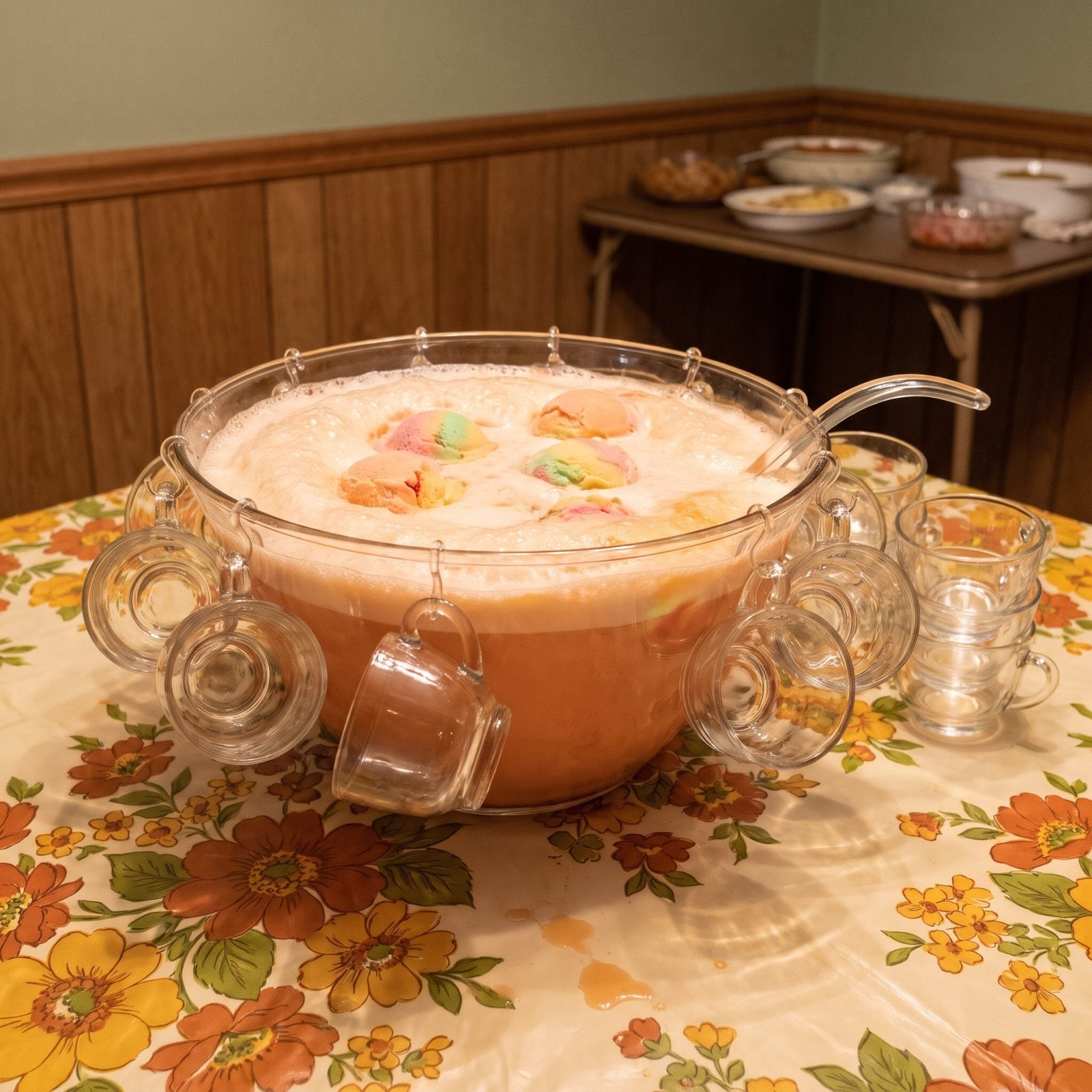
The foam was the magic. Someone dropped scoops of rainbow sherbet into ginger ale and it fizzed up into a creamy orange froth that kept bubbling all afternoon.
By the time you got to it, the sherbet had half-melted into pastel swirls and the whole thing looked like a dessert and a drink arguing. You ladled it into a little glass cup with a hook handle and the foam left a mustache on your lip. Nobody minded. The bowl was the heart of the drink table, and when the sherbet ran out, so did the party’s good mood.
9. The Pitcher of Bright Orange Tang
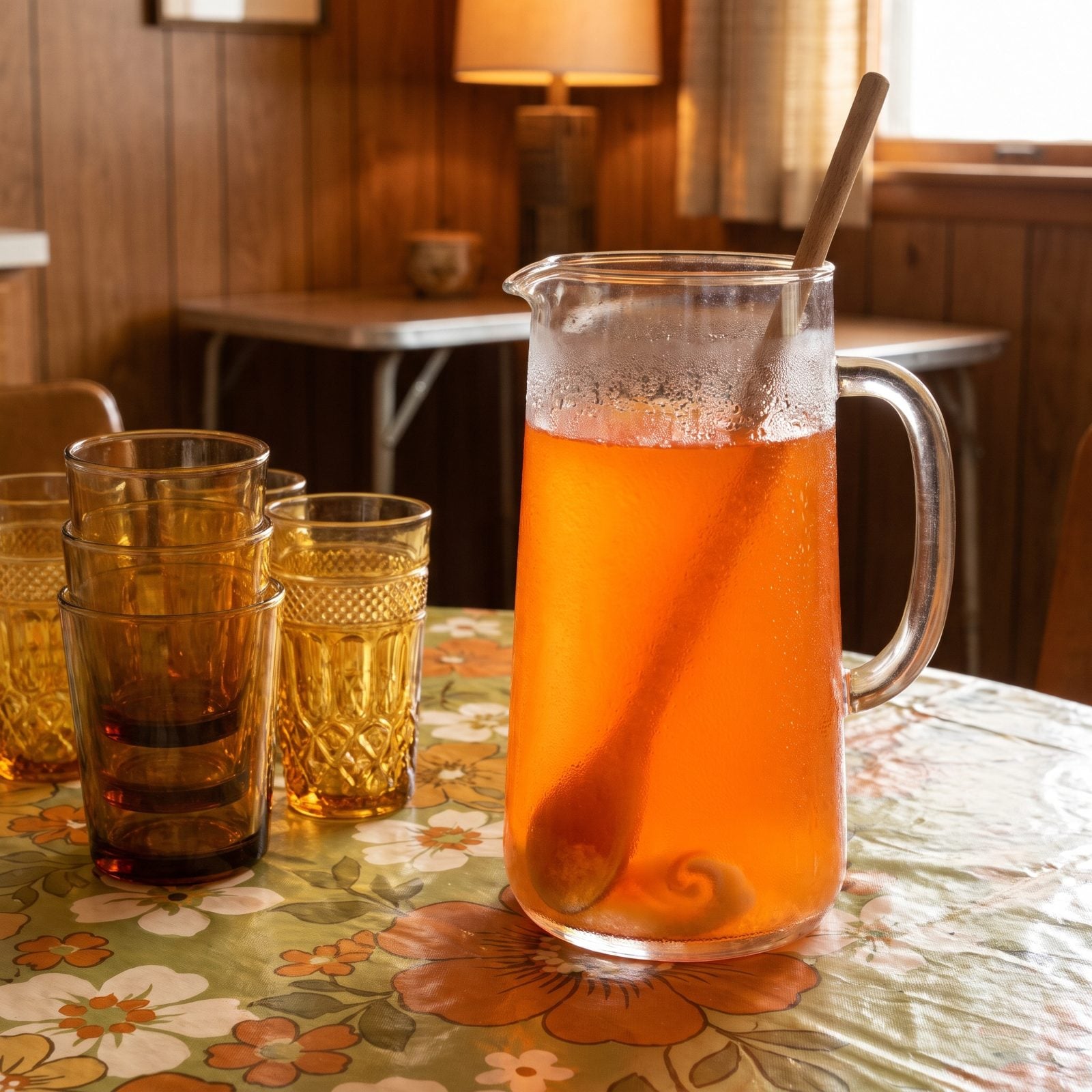
No orange juice ever glowed like this. Tang was a shade of orange that doesn’t appear in nature, mixed from a powder that promised the astronauts drank it — which, to a seven-year-old, was the only endorsement that mattered.
You’d stir it with a wooden spoon and swear you could still see crystals spinning at the bottom. Sweet and sharp, it left a faint chalk on your tongue. The adults got coffee and Tab. The kids got Tang, poured into amber smoked-glass tumblers, and we thought we got the better deal.
Even though the drink was marketed with a space-age image, one Apollo astronaut later admitted he disliked the taste of Tang.
8. The Sun Tea Jar With a Metal Spout
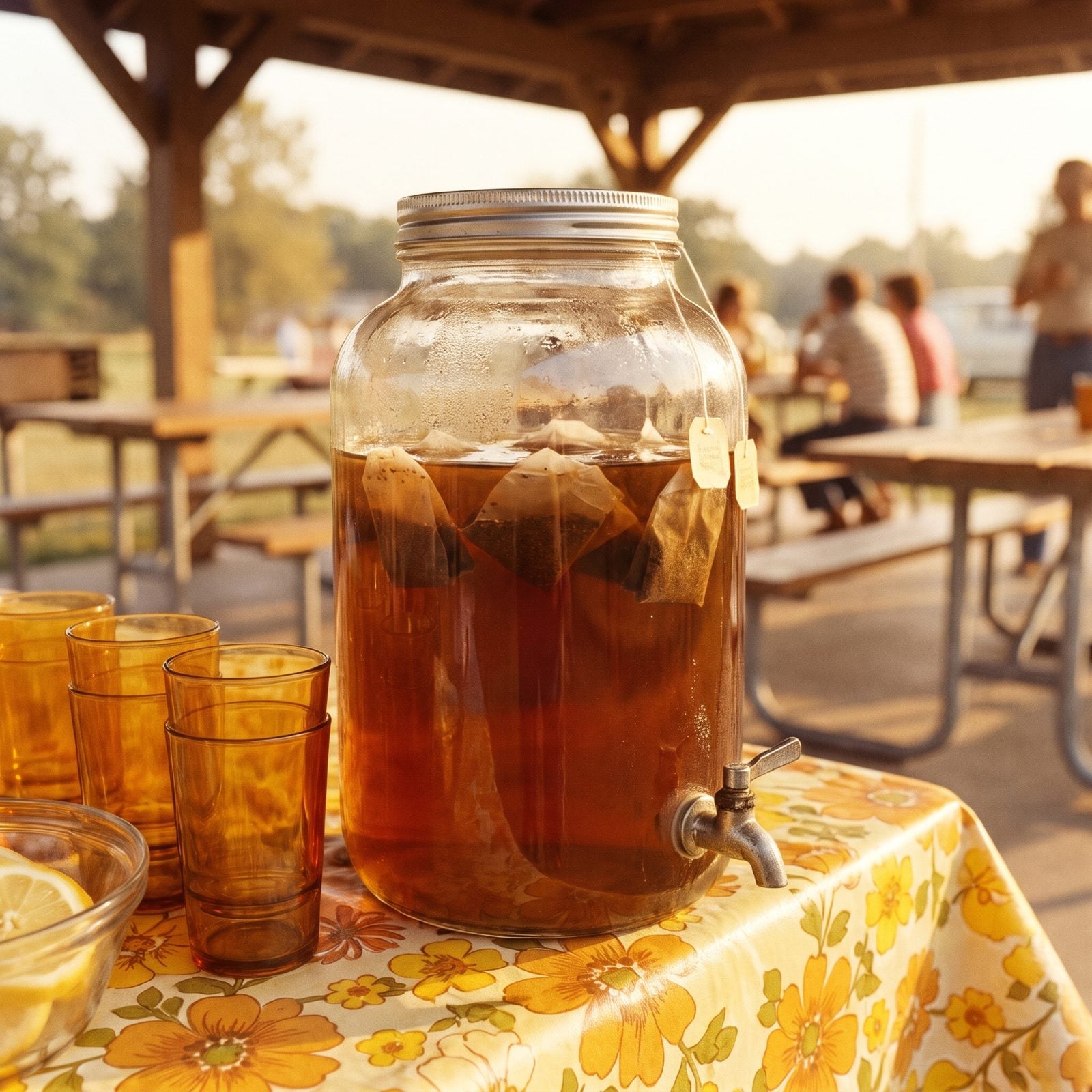
You weren’t allowed to touch it while it was working. The jar sat on the picnic table in the full sun all morning, tea bags bobbing, their little paper tags hooked over the glass rim, the water turning from pale to deep amber hour by hour.
The spigot was the prize — a small metal spout near the bottom you pushed to fill your cup, which felt like operating a machine. Someone always warned it needed more sun. Someone else said it was plenty. Nobody debating sun tea has ever been in a hurry, and that patient squabble was the whole afternoon in one warm jar.
As a university extension educator puts it, “The water simply doesn’t get hot enough to kill potential microorganisms that can be found in tea leaves, leaving a petri dish of tiny microbes just waiting to get you sick.”
7. The Giant Percolator of All-Day Coffee
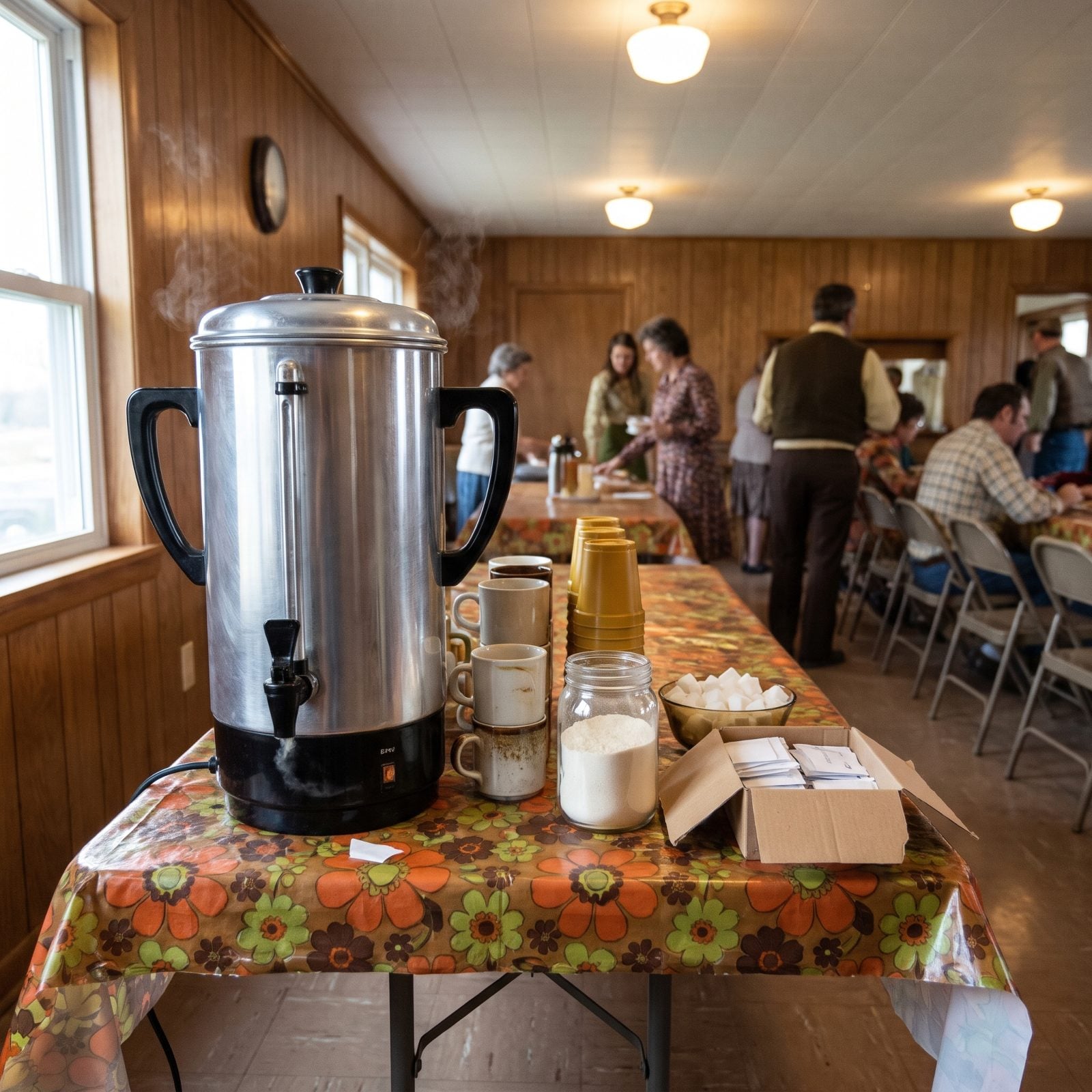
It held thirty cups and it ran from morning to the last goodbye. The big aluminum percolator gurgled away in the corner under its own power, that black knob on its lid rattling every few seconds like it was breathing.
The coffee was strong, then stronger, then something closer to a dare by four o’clock. Grown-ups topped off their mugs all day without thinking. The hiss of the spigot, the clink of a spoon against a sugar cube, powdered creamer clumping on the surface — that was the soundtrack of the room once the food got cleared.
6. The Returnable Glass Soda Bottles
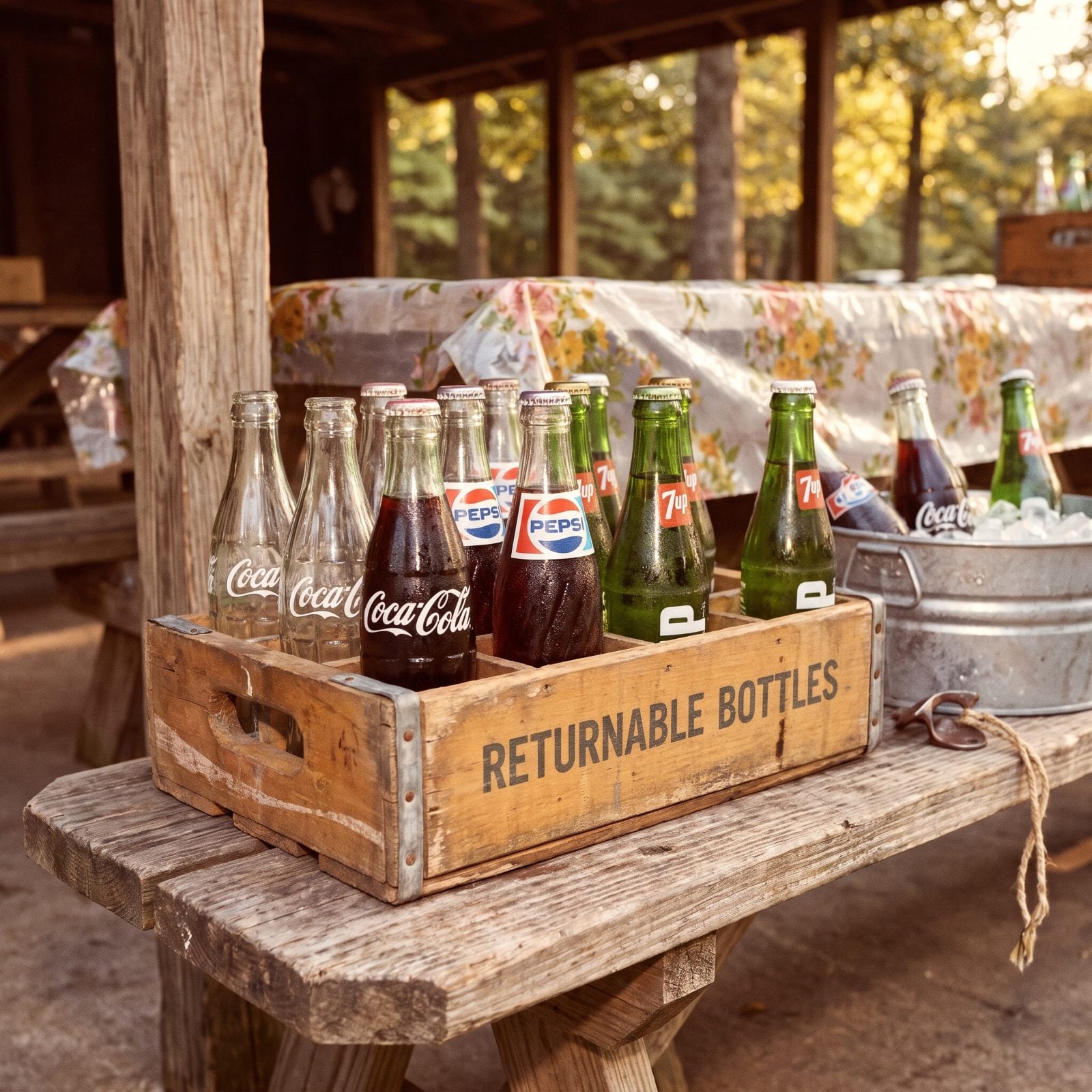
These bottles had a second life and everybody knew it. The soda came in heavy glass bottles with painted labels, sold by the wooden crate, and when they emptied, they went right back into that crate to be returned for the deposit.
A nickel a bottle. Enough that kids volunteered to collect the empties, hauling the crate around the picnic shelter like it was treasure. You drank your root beer and handed the bottle over, no argument. Throwing one away would’ve gotten you a look.
5. The Flimsy Divided Paper Plates
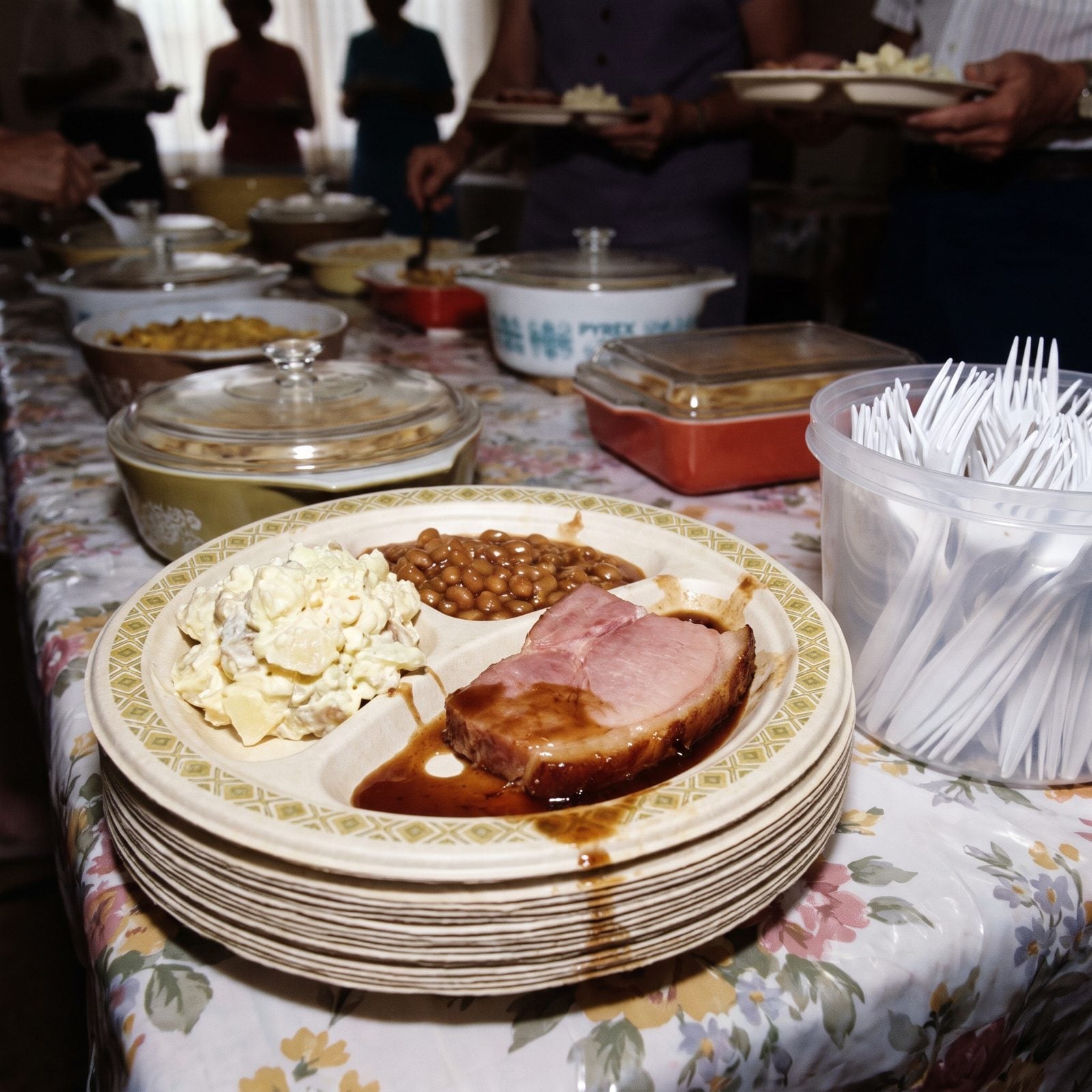
Three compartments, the structural integrity of a wet newspaper. The divided paper plate was built to keep your beans away from your Jell-O, a mission it failed the instant anything warm touched it.
You loaded it at the buffet, the grease started seeping through before you reached your folding chair, and by the time you sat down the whole thing had gone limp in your hand. So you learned to carry it flat on an open palm, like a waiter. One wrong tilt and your supper was in the grass.
4. The Wicker Holders Made for Paper Plates
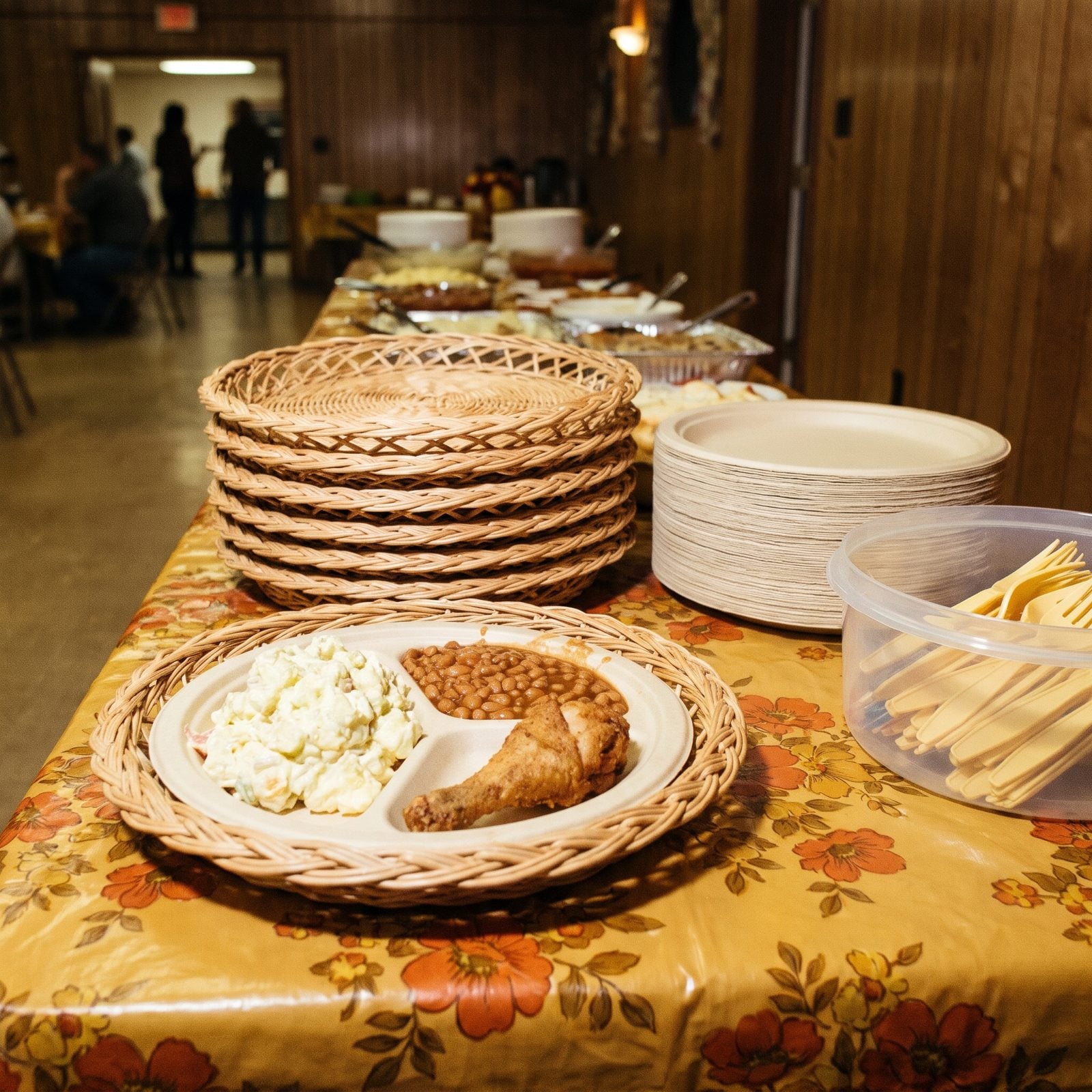
And here was the answer to the flimsy plate problem: a set of woven wicker baskets, plate-sized and shallow, that held a paper plate rigid so your potato salad stood a fighting chance.
They came in a stack of natural tan rattan and got rinsed and reused for decades. You slid a fresh paper plate into one, loaded it up, and the whole balancing act was solved. Modern guests see them and have no idea what they are. They were the quiet genius of the reunion table — the thing nobody noticed until you’d eaten off a plate without one and spent the whole meal defending your supper.
3. The Jewel-Toned Aluminum Tumblers That Froze Your Fingers
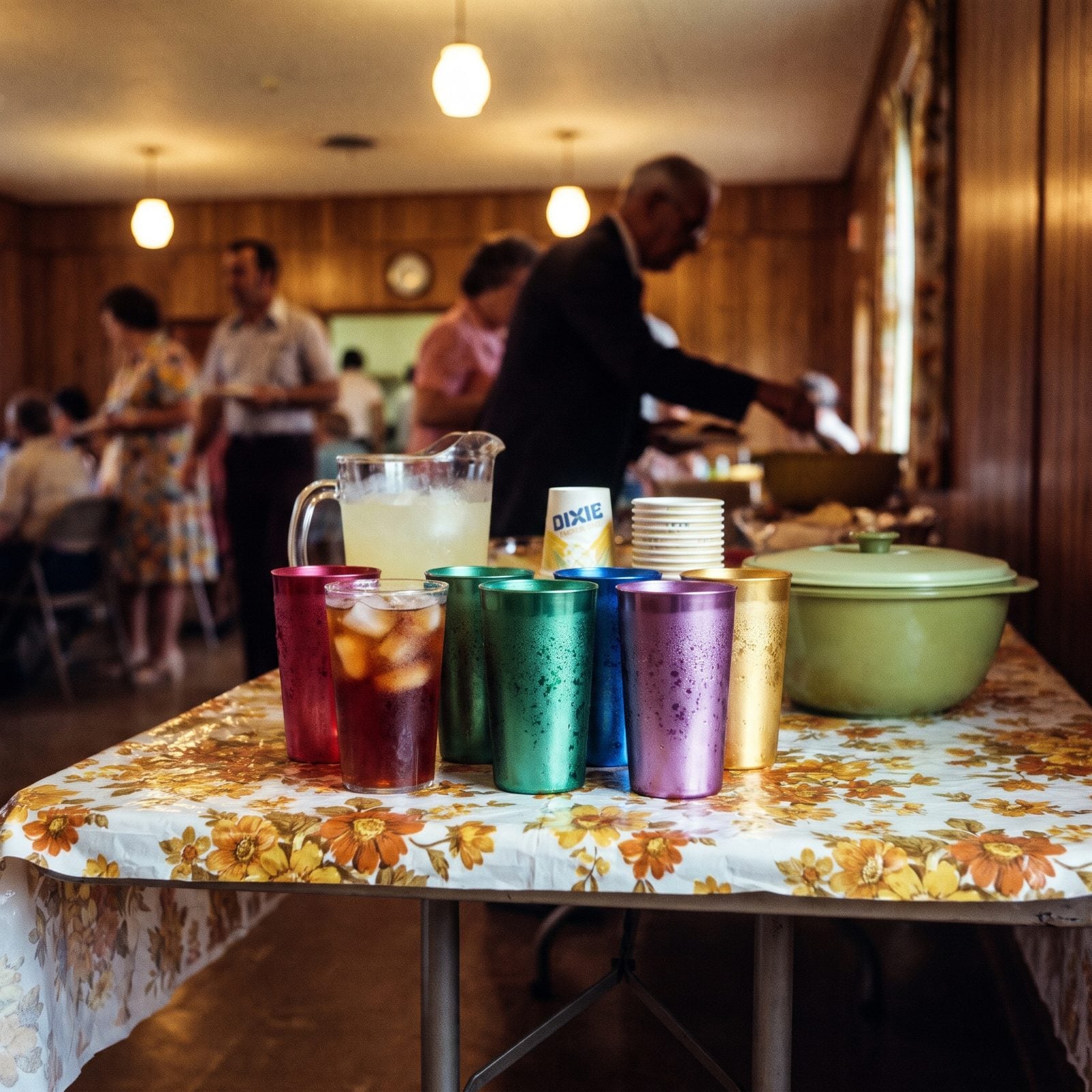
Pick one up on a hot July afternoon and your fingers went numb — and that was the appeal. Those anodized aluminum tumblers in ruby, emerald, sapphire, and gold got so cold they practically bit back, and the iced tea inside stayed frigid long after the ice melted away to nothing.
Every family had a set, usually missing two colors because somebody carried theirs home from a reunion by accident. Guests today would wonder why on earth you’d drink from metal, and you’d tell them the metal was the whole idea. Nothing since has made cheap lemonade feel that cold.
2. The Spring-Loaded Toothpick Dispenser That Launched a Pick at You
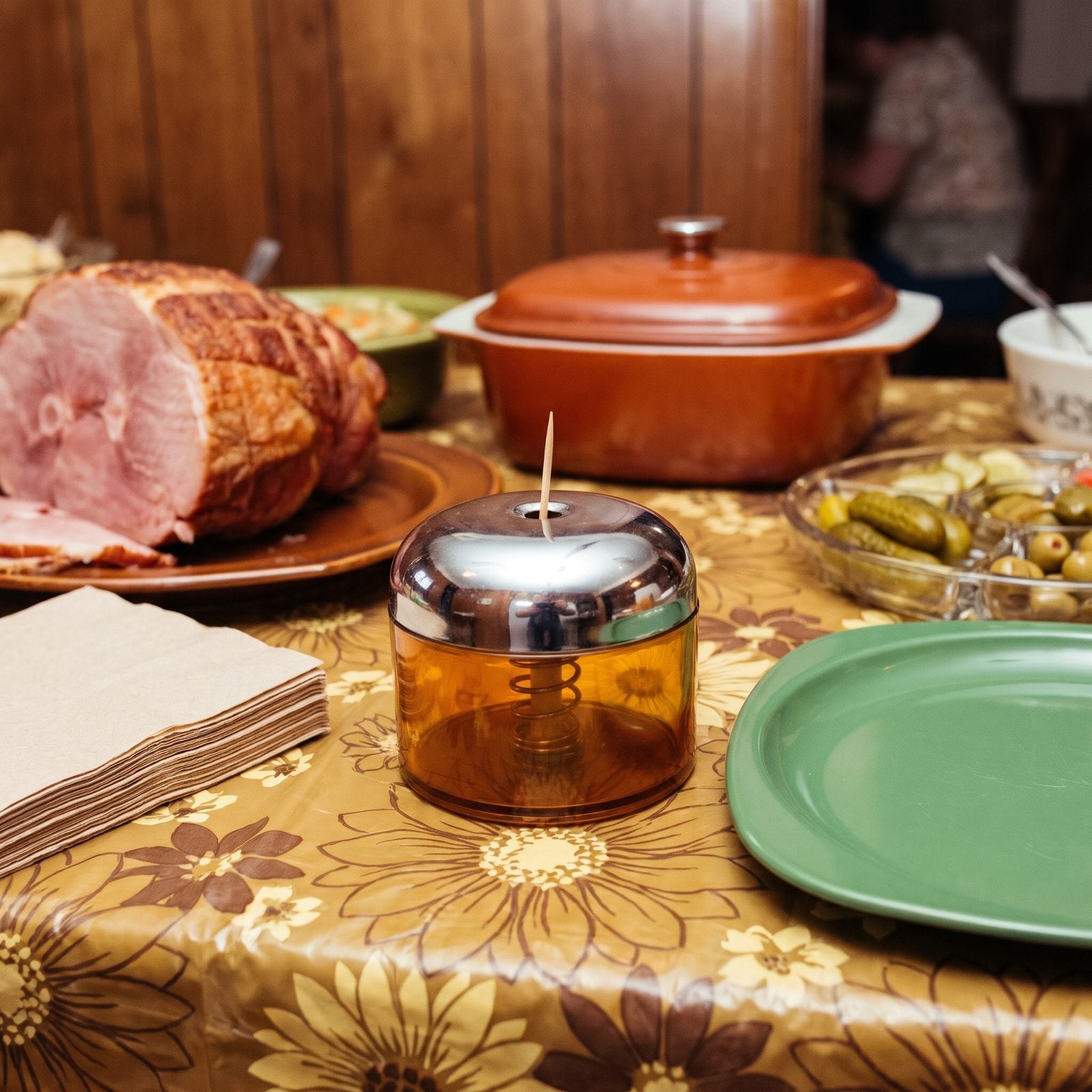
You pressed the little dome, a toothpick sprang straight up, and half the time you pinched it wrong and sent it skittering across somebody’s deviled eggs. A contraption nobody asked for. Yet every reunion table had one standing guard near the ham.
The whole trick was that nobody’s fingers touched the other picks, which passed for good hygiene in 1975. A guest today picks it up like a curiosity salvaged from a flea market. Back then it was simply how a civilized post-dinner mouth got cleaned, usually by a man leaning back in a folding chair with one eyebrow raised.
1. The Glass Ashtrays Parked Right Between the Serving Bowls
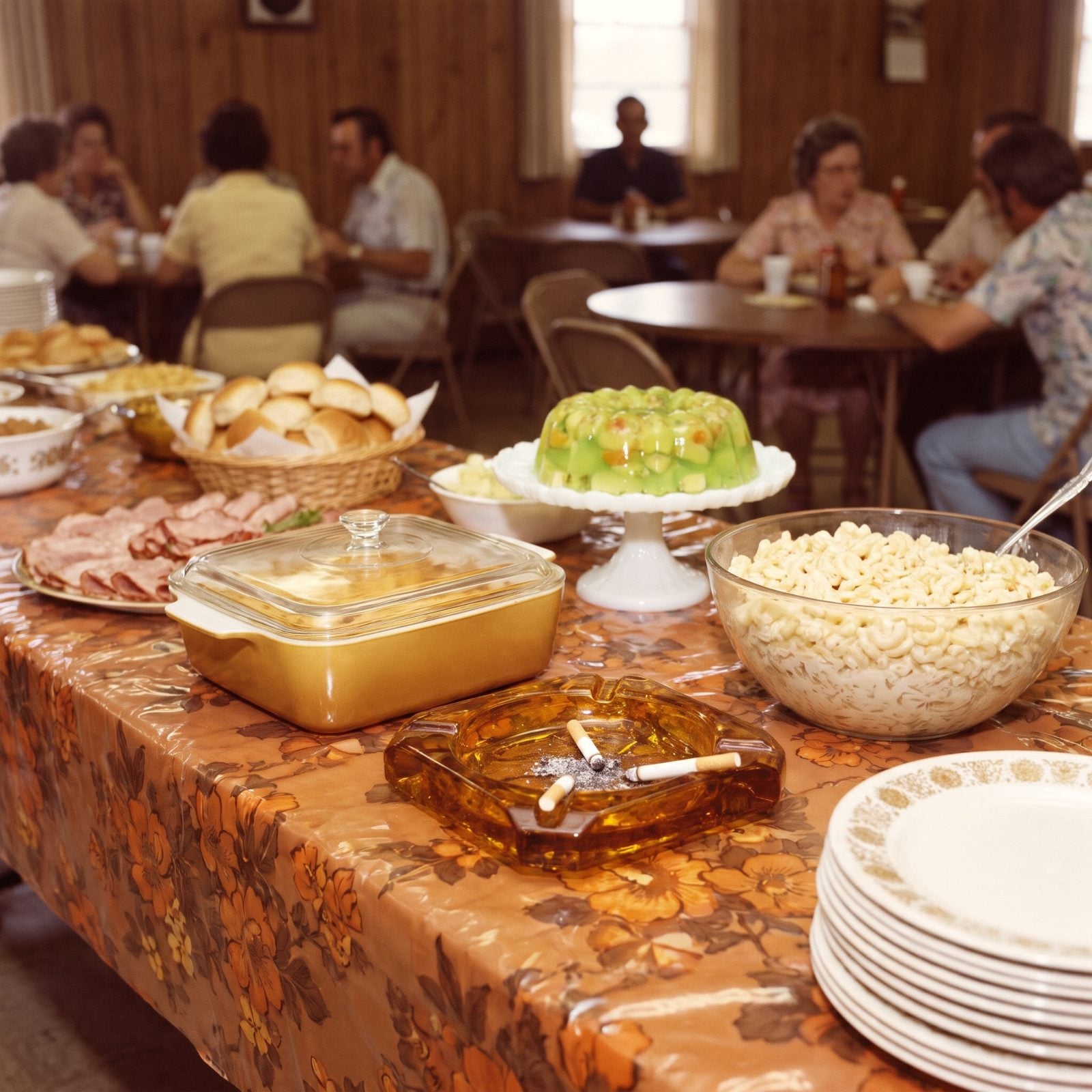
Nobody blinked at an ashtray sitting between the potato salad and the rolls. It belonged there, as expected as salt and pepper — usually a heavy amber or smoky-glass number that doubled as a paperweight the other 51 weekends of the year.
Half the relatives smoked, and the haze drifting over the buffet was just what a family gathering smelled like. A guest today would quietly back away from it. We flicked ash a foot from the deviled eggs and thought nothing of it.