
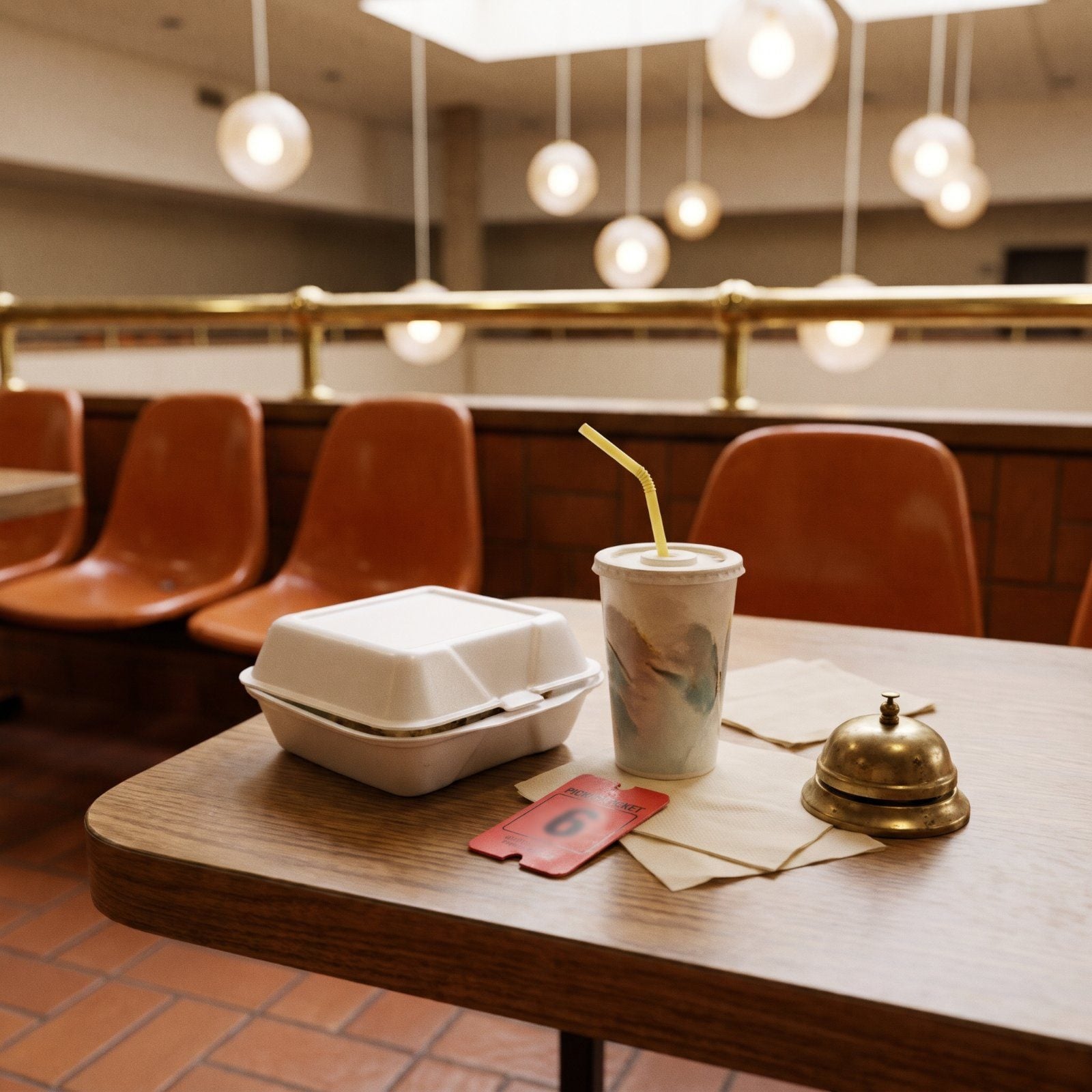
The smell hit you before anything else — hot pretzel salt, fryer grease, and somebody’s cinnamon roll icing all fighting for the same square foot of brown-carpeted air. You had four dollars, a pack of friends, and a whole Saturday to kill under the skylight. The food court wasn’t a place you ate. It was headquarters. Here are the fixtures, foods, and little rituals that made it feel like the center of the world when you were fourteen.
Please note that some of the images in this article were created with the assistance of AI.
32. The Smoking Section With Pedestal Ashtrays
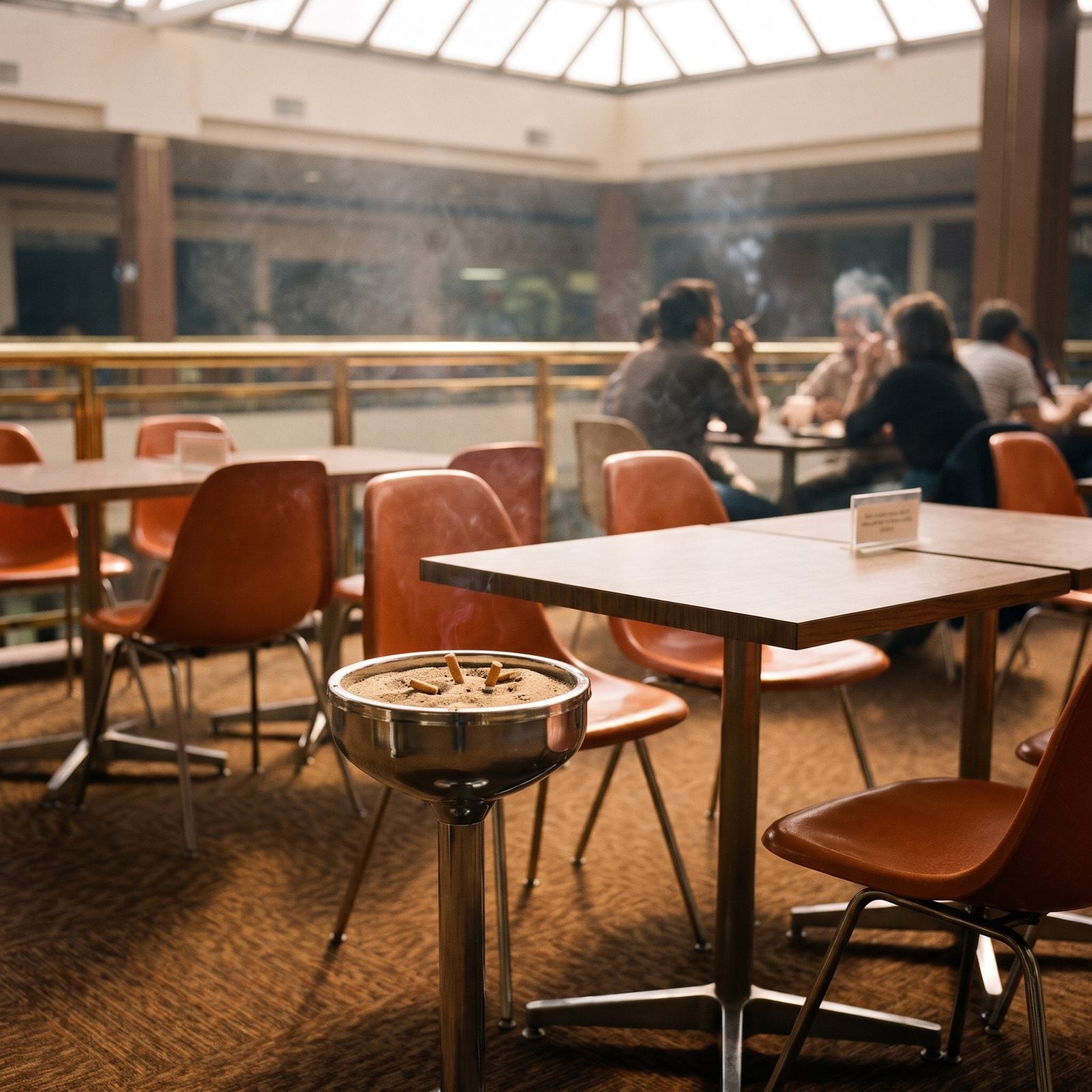
There it stood, right out in the open: a chrome pedestal ashtray planted between the tables like a little monument. You’d settle in with your fries two feet from a cloud of Marlboro smoke and think absolutely nothing of it.
Nobody questioned it. The smoking section and the eating section shared the same air, divided by a sign and a polite fiction — grown-ups tapping ashes into the sand-filled top while teenagers at the next table unwrapped burgers.
31. An Orange Julius Blender Whirring Behind the Counter
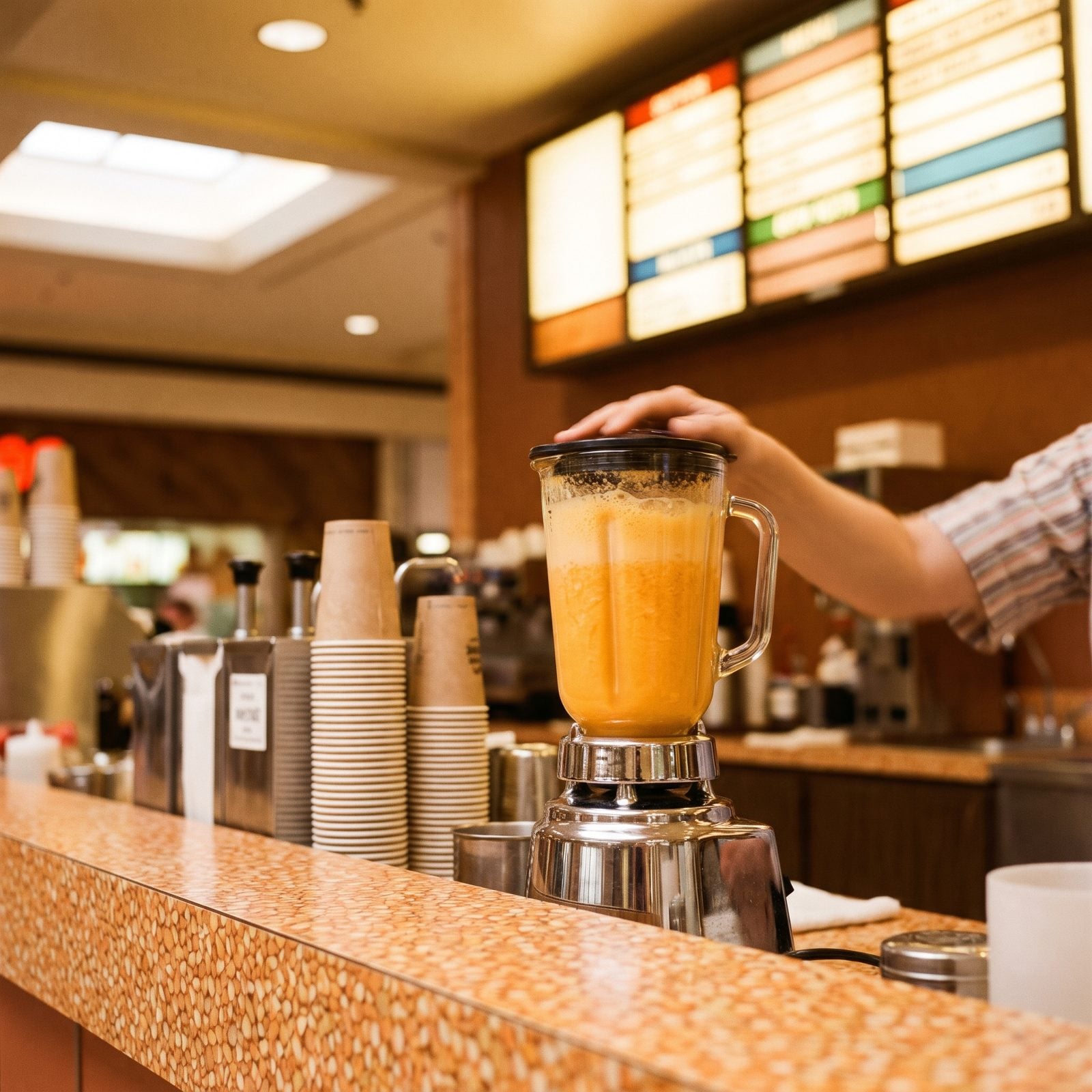
That sound. The high mechanical scream of the blender crushing ice and orange into froth, loud enough to cut through the whole food court din. You ordered one just to watch the foam climb the sides of the jar.
It tasted like orange sherbet had decided to become a drink — sweet, foamy, a little eggy in a way you never examined too closely. And it cost you most of your allowance, which somehow made it better.
30. A Soda Fountain Offering Tab Alongside Regular Cola
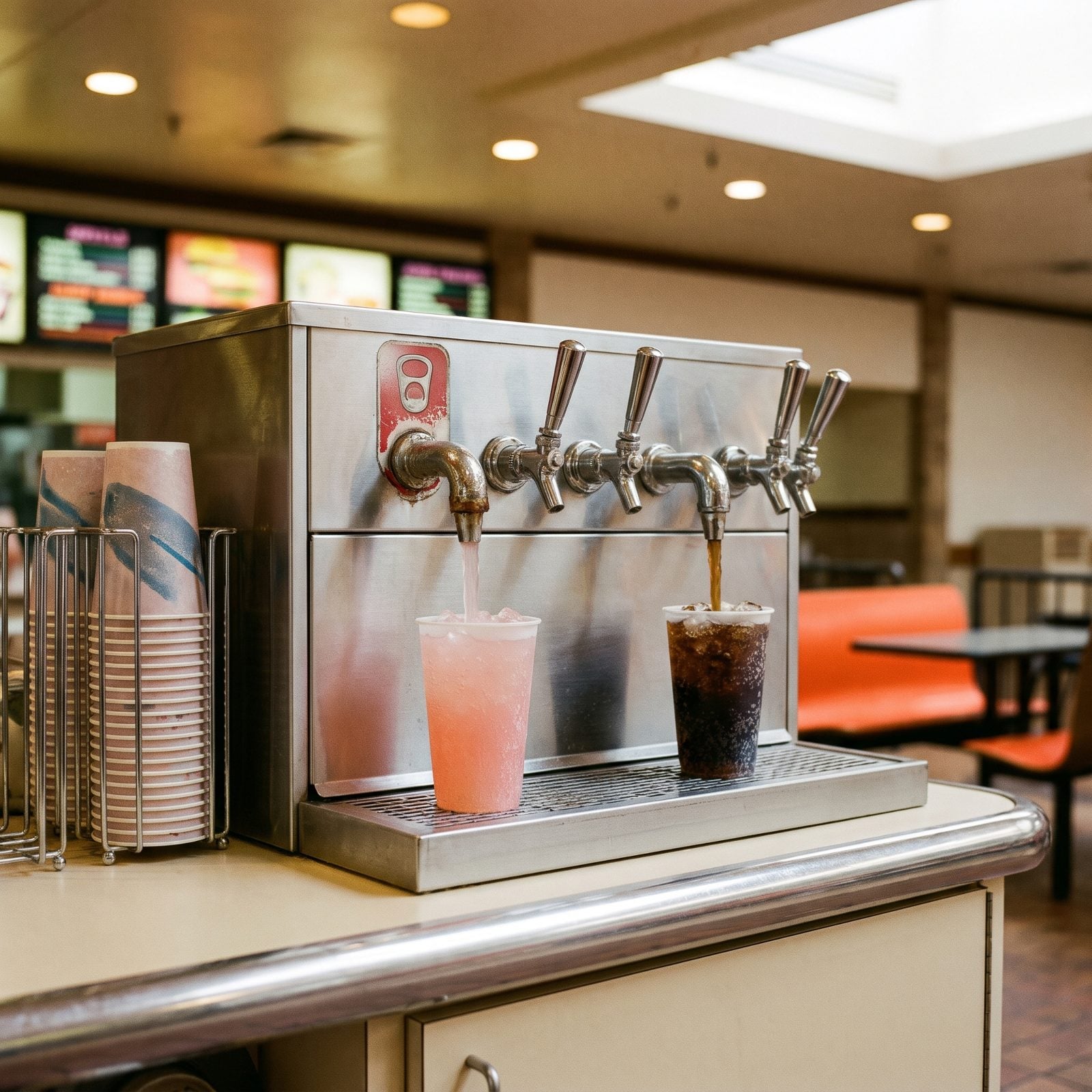
Diet soda had a different name back then, and it came in a pink can. The fountain poured Tab right next to the regular cola — the dark, saccharine stuff your mom drank, with that unmistakable aftertaste you learned to recognize blindfolded.
You usually went for the real thing. But you’d think of Tab and the word alone felt adult, a little glamorous, the drink of women who wore shoulder pads and meant business.
29. A Cash-Only Register With Chunky Mechanical Keys
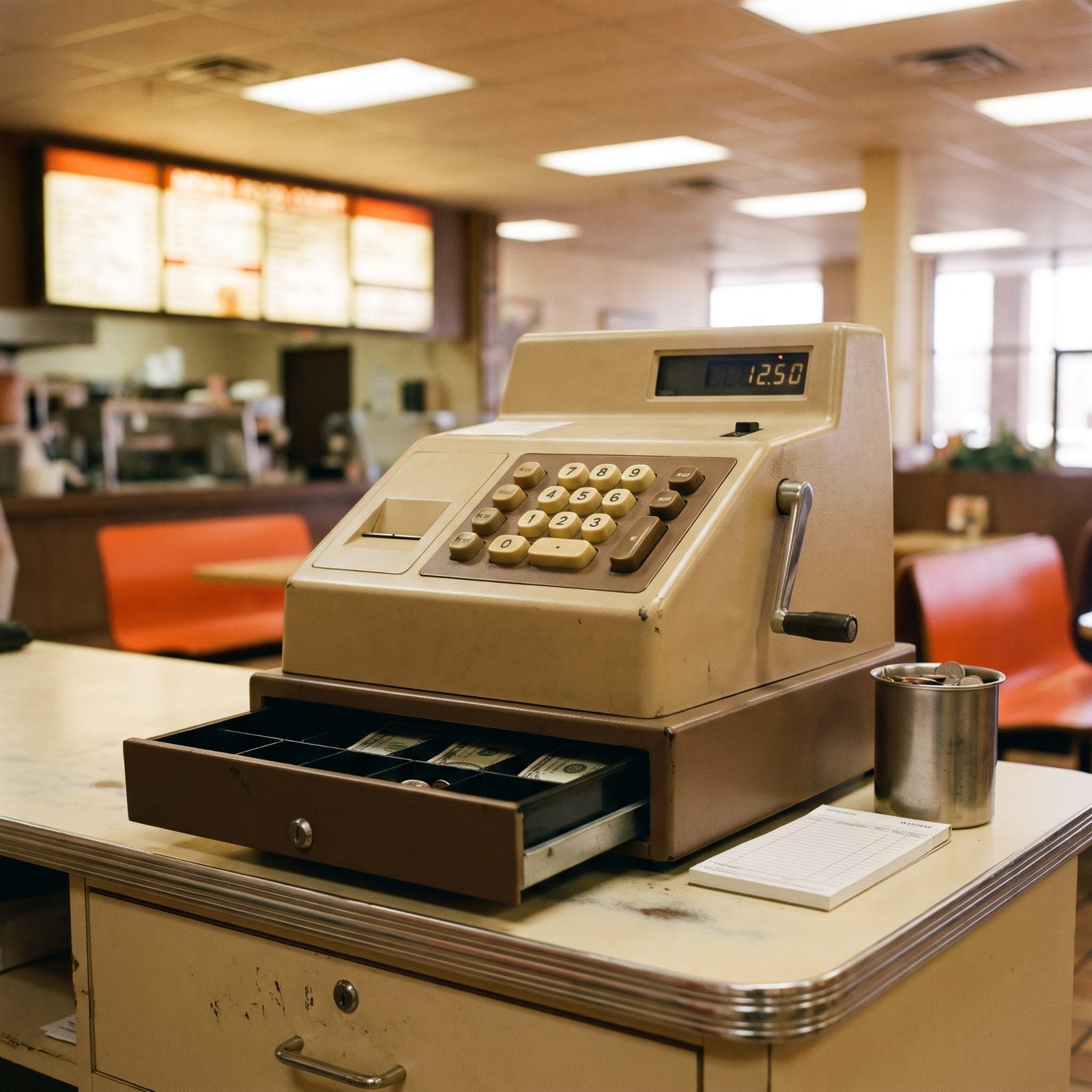
No card readers. No pin pads. Just a heavy register with keys the size of chocolate squares that went chunk when the clerk punched in your total.
The drawer sprang open with a bell-ding and a slam, and your change got counted back into your palm coin by coin. You handed over a wrinkled five and waited. Everyone paid cash because there was no other way to. I kind of miss the ritual of it, honestly.
28. Glowing Menu Boards With Snap-In Letters and Prices
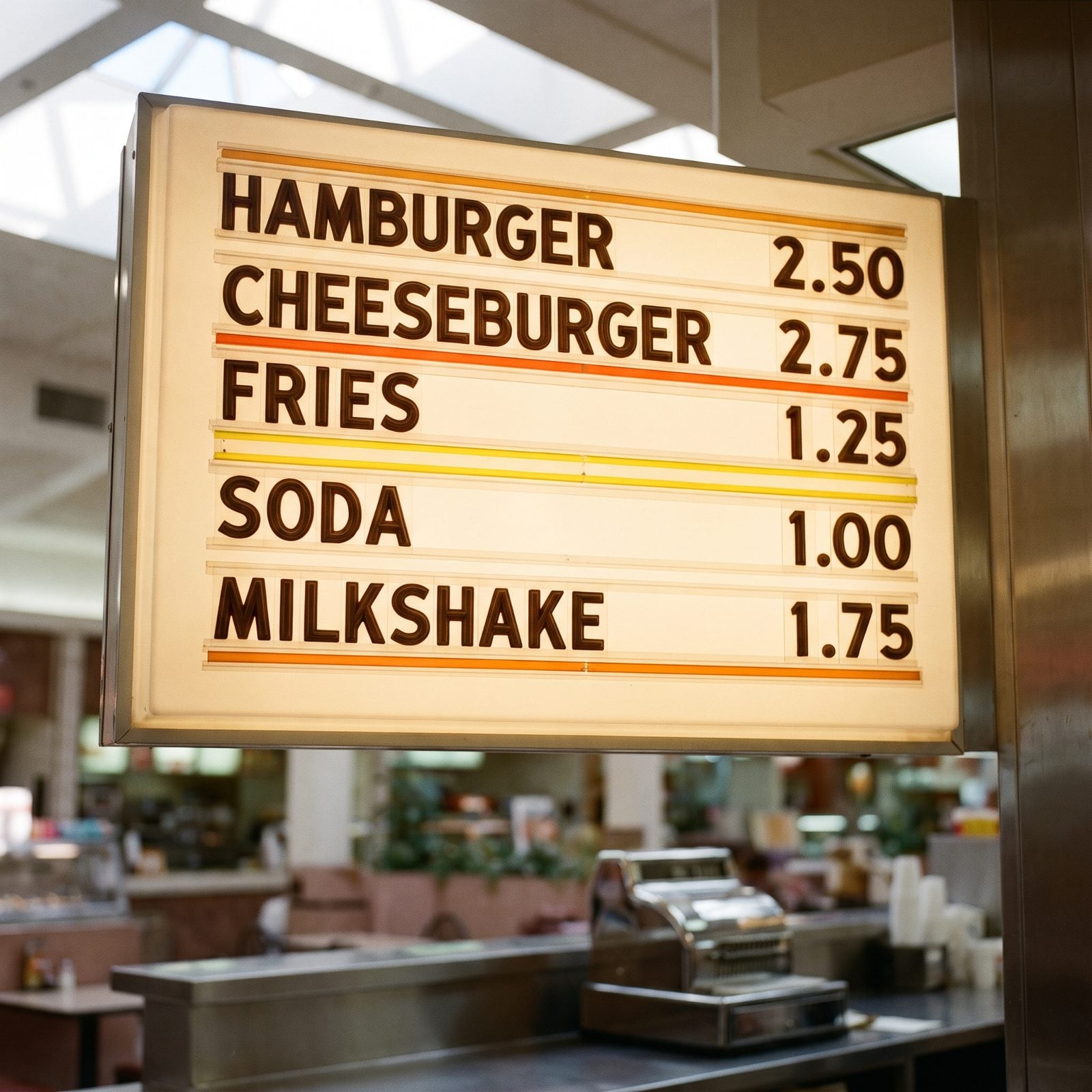
They glowed from the inside, those menu boards, lit panels with every item spelled out in little snap-in plastic letters pressed into grooves. Half the time one letter sat crooked and nobody fixed it for weeks.
Prices changed the hard way. Somebody climbed a stepladder, popped out the old numbers, and clicked in new ones by hand. And you’d stand there squinting up, deciding between a combo and a side, the whole decision glowing above your head.
27. Teenage Employees in Striped Uniforms and Paper Visors
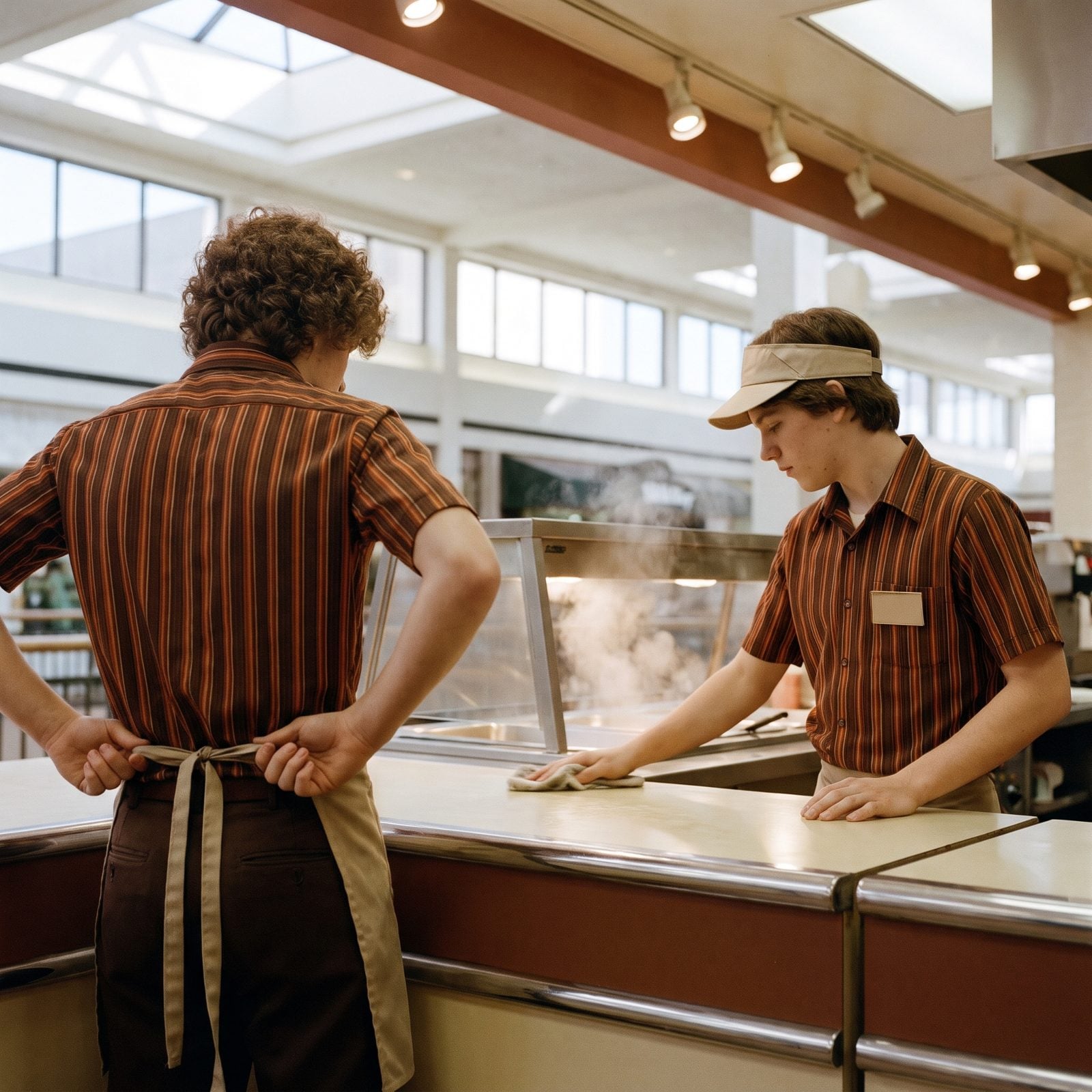
The uniform was a committee decision nobody enjoyed: brown-and-orange polyester stripes, a clip-on name tag, and a paper visor that folded flat and fit nobody’s head right.
Behind that counter stood somebody from your own high school — sixteen, mortified, scooping fries while classmates sauntered by. Half the social drama of the food court happened across that counter. Getting hired there was a genuine rite of passage, visor and all.
26. Foam Clamshell Boxes That Squeaked When Opened
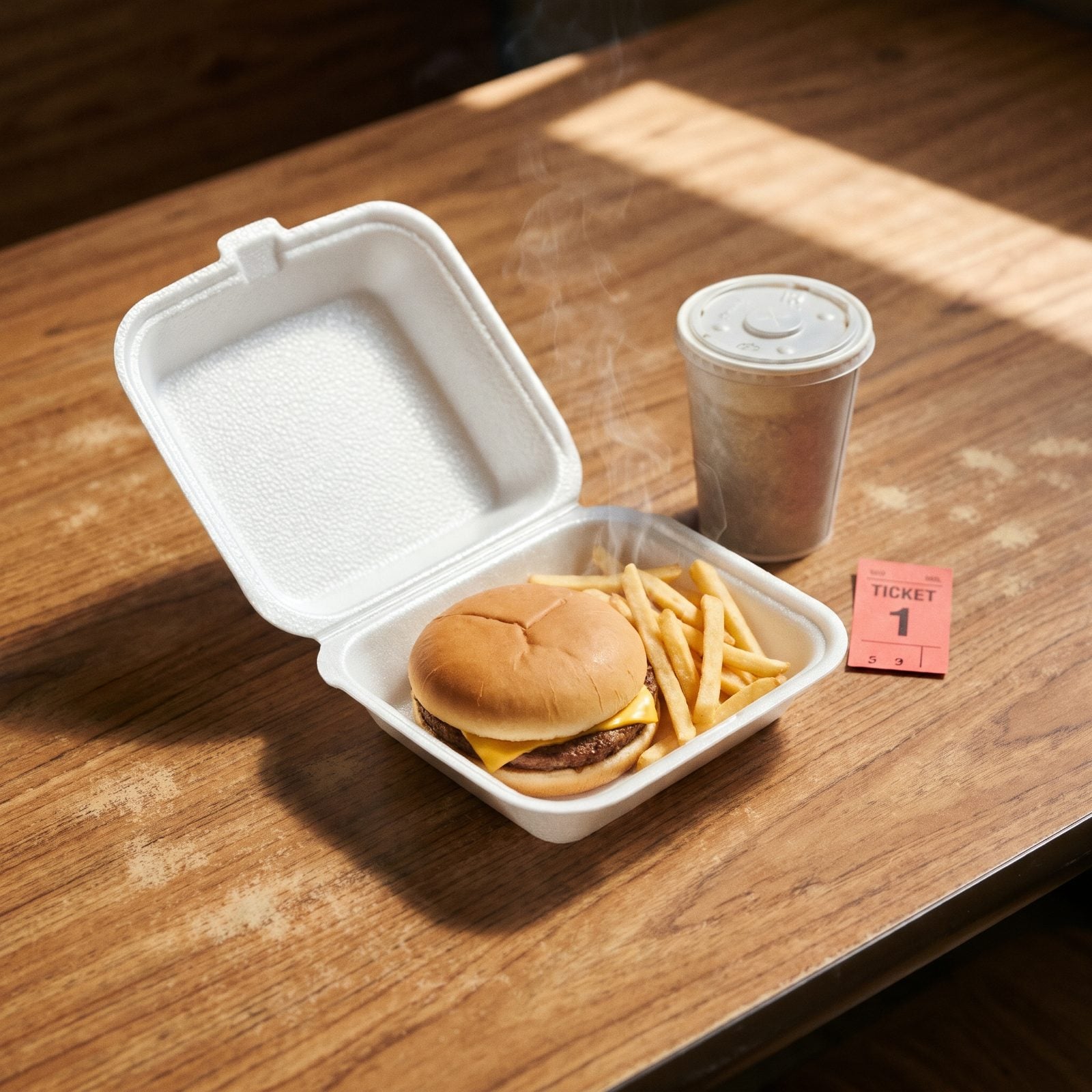
White foam, hinged in the middle, and that specific squeak when you pried it open, like two pieces of styrofoam arguing. The burger sat inside steaming up the lid.
You could fog the whole thing shut and open it again just to hear the noise. It kept everything warm and smelled faintly of hot plastic — a smell I can summon instantly even now, years and a hundred better burgers later.
Explaining the 1990 decision to drop the foam boxes, a fast-food company lawyer said “The clamshell package was the symbol that everyone glommed onto.”
What Our Readers Say
- When Piaci Pizza readers loved a food photo and tapped a reason, comfort topped the list at 30%, with nostalgic not far behind at 15%.
- Not everyone gets misty-eyed, though: in our readers’ votes, photos that look like the 1980s got hearts 47% of the time, versus 60% for other images in the same articles.
From Piaci Pizza reader polls and votes.
25. Red Numbered Tickets for Picking Up Orders
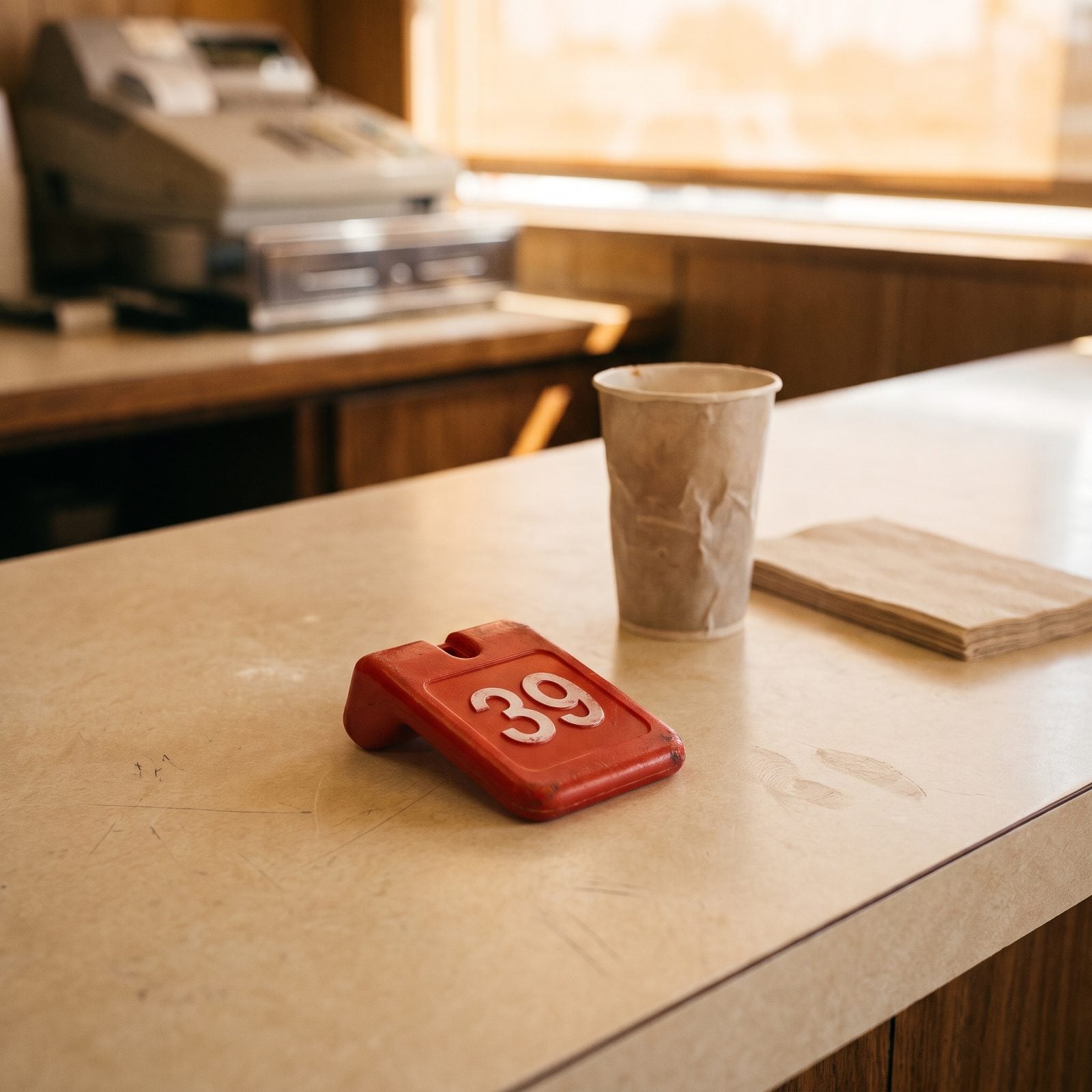
You paid, and they handed you a red plastic tent with a number stamped on it. Thirty-nine. You carried it back to your table like a tiny flag and set it where the runner could see.
Then the waiting, glancing up every time someone in a visor came out carrying a tray, hoping it was yours. Dead simple, and it worked — which is more than I can say for a lot of things that replaced it.
24. A Brass Bell Announcing That an Order Was Ready
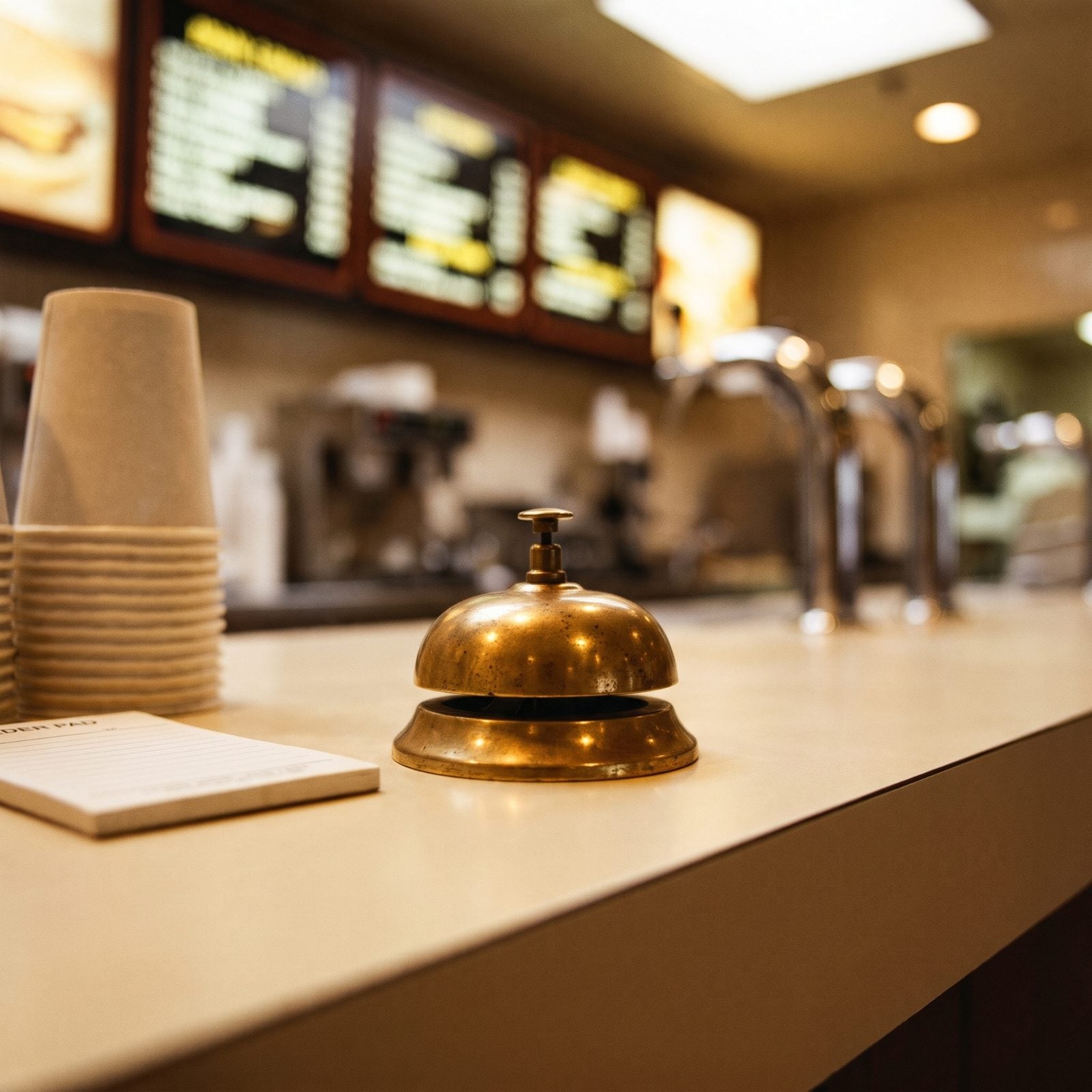
Ding. One clean note cut through the hum, and somewhere a tray was ready. Your head snapped up on instinct, trained like a dog hearing the can opener.
It lived on the counter, a little dome of worn brass pressed a thousand times a day. The original notification sound. No buzzer, no beeper, just metal and a thumb and the promise that your food had arrived.
23. Molded Fiberglass Seats Bolted to the Floor
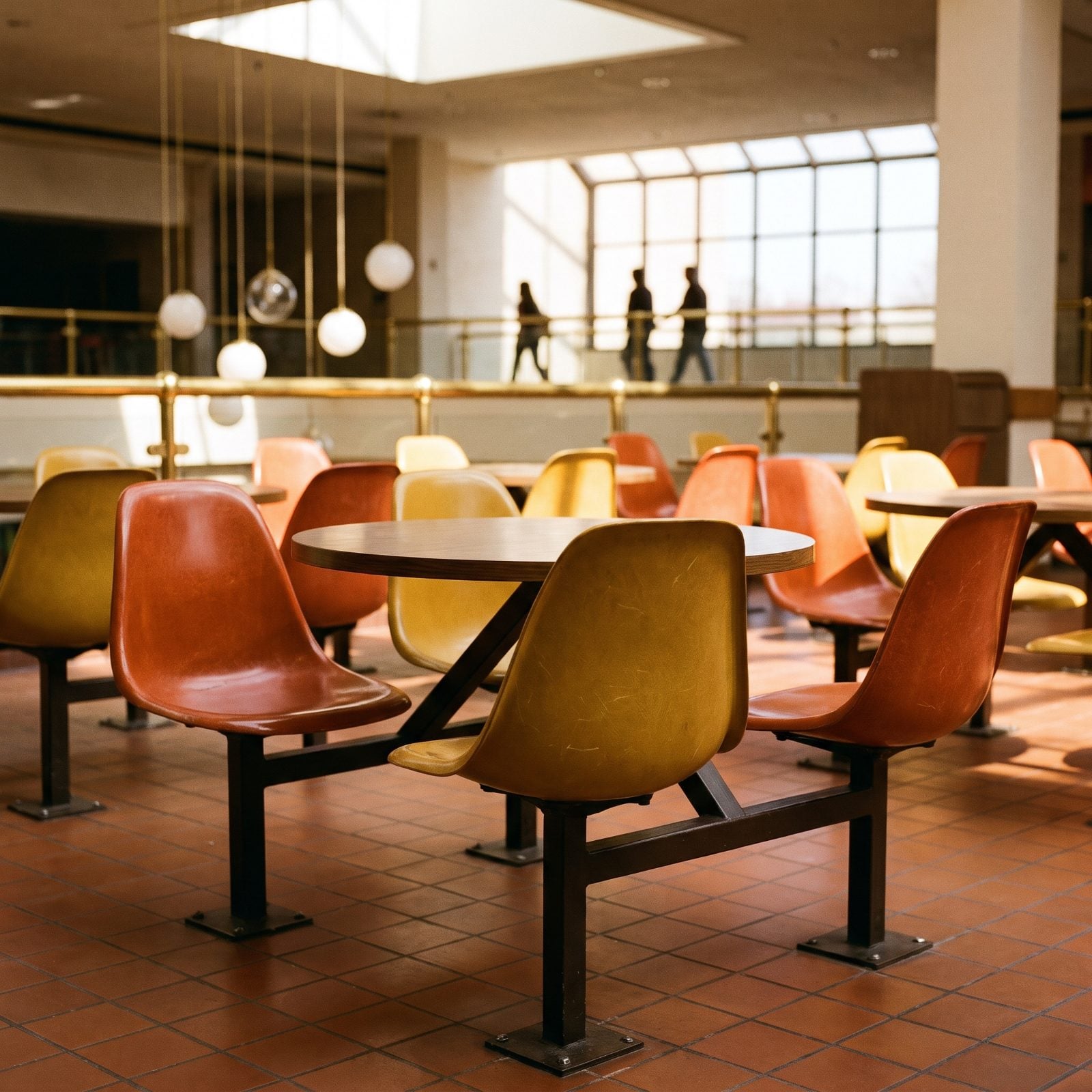
The chairs didn’t move, and that was the whole design. Molded fiberglass shells in orange and mustard, bolted to pedestals bolted to the floor, so you couldn’t drag one over to a friend’s table no matter how hard you yanked.
Some of them swiveled — its own entertainment when you were young and bored. They were hard, a little cold, and built to survive a nuclear event. You sat in one for three hours nursing a single soda and called it a day well spent.
22. Geometric Floor Tile in Brown and Burnt Orange
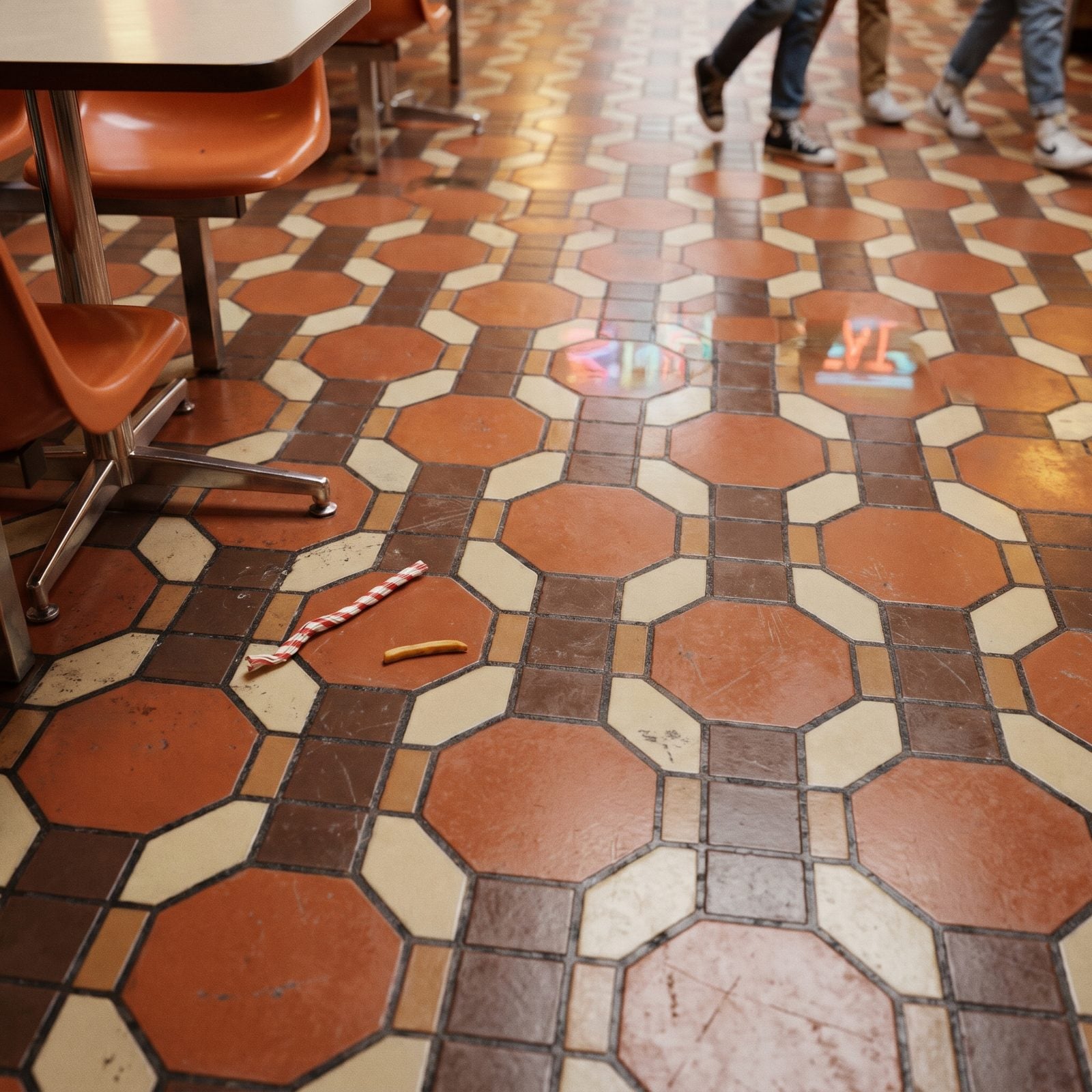
Nobody ever looked at the floor on purpose, which is exactly why it was brown and burnt orange and busy as a migraine. The pattern wasn’t decoration — it was camouflage for spilled Orange Julius and the occasional dropped slice.
Hexagons, squares, the odd diamond, all in cocoa and rust and a cream that gave up looking clean around 1983. You walked across it in high-tops a thousand times and never registered it. Pull up a photo now and your whole chest aches.
21. Neon Stripes Running Around the Food Court Soffit
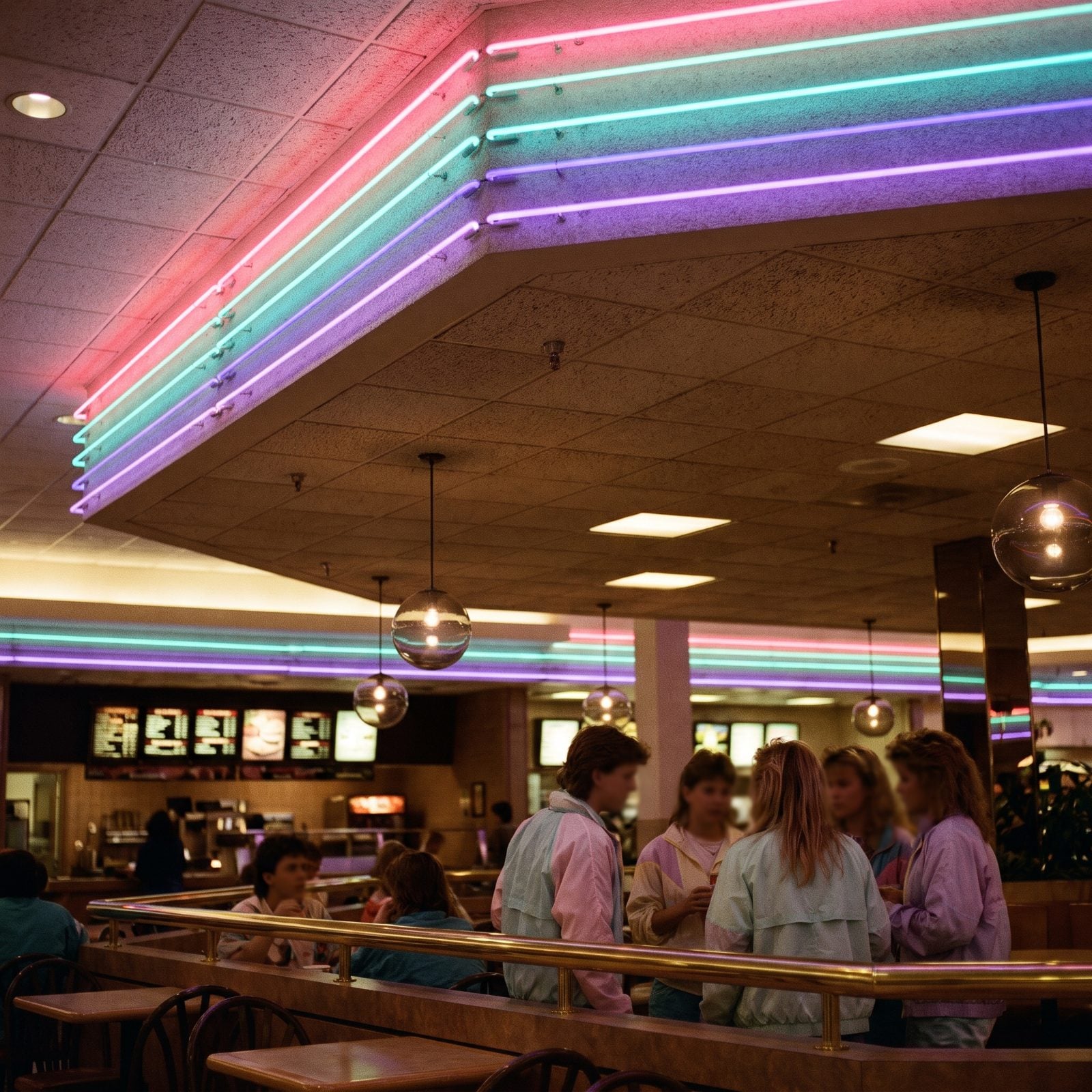
The neon never fully registered until the sun went down. During the day it was just thin glass tubing hugging the ceiling edge. At night it hummed to life in pink and teal and that electric purple, racing stripes circling the whole court like a frozen go-kart track.
It bounced off the brass and the tabletops and turned a plate of nachos into something cinematic. You weren’t eating at a mall. You were eating inside a music video, and you didn’t even know it was special yet.
20. A Vast Skylight Over the Seating Area
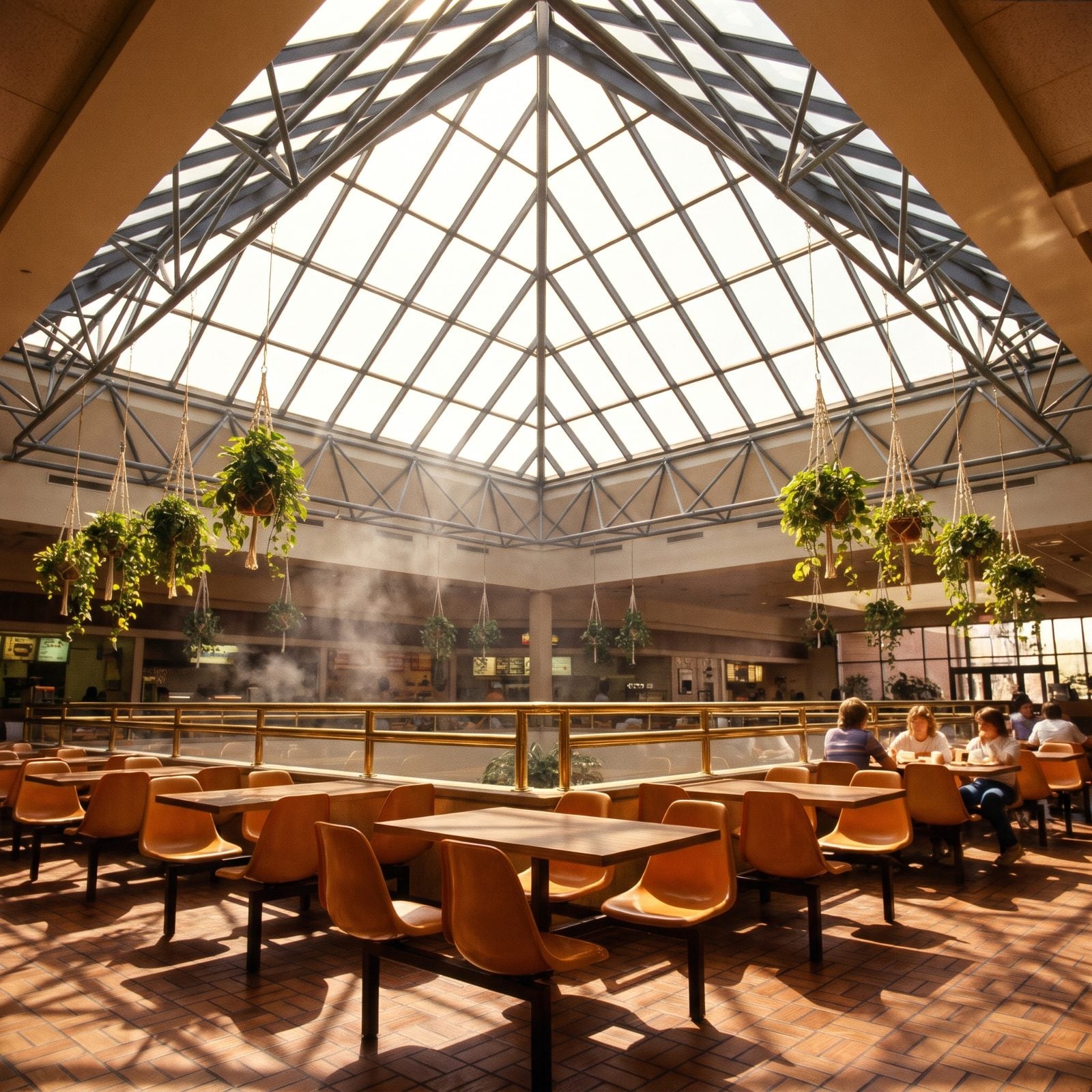
Up there, two stories of steel and glass let in actual weather. You could tell it had started raining outside by the sound and the way the light went gray over your tray of teriyaki.
On a clear afternoon the sun poured straight down onto the tables, warmed your soda cup, and threw sharp diamond shadows across the floor. It was the one spot in a windowless mall that remembered the outside world existed.
Developers loved these things. They made a cavern of chain stores feel like a plaza, and they made a kid nursing a single cookie feel like sitting in a greenhouse.
19. An Indoor Fountain Loud Enough to Hear While Eating
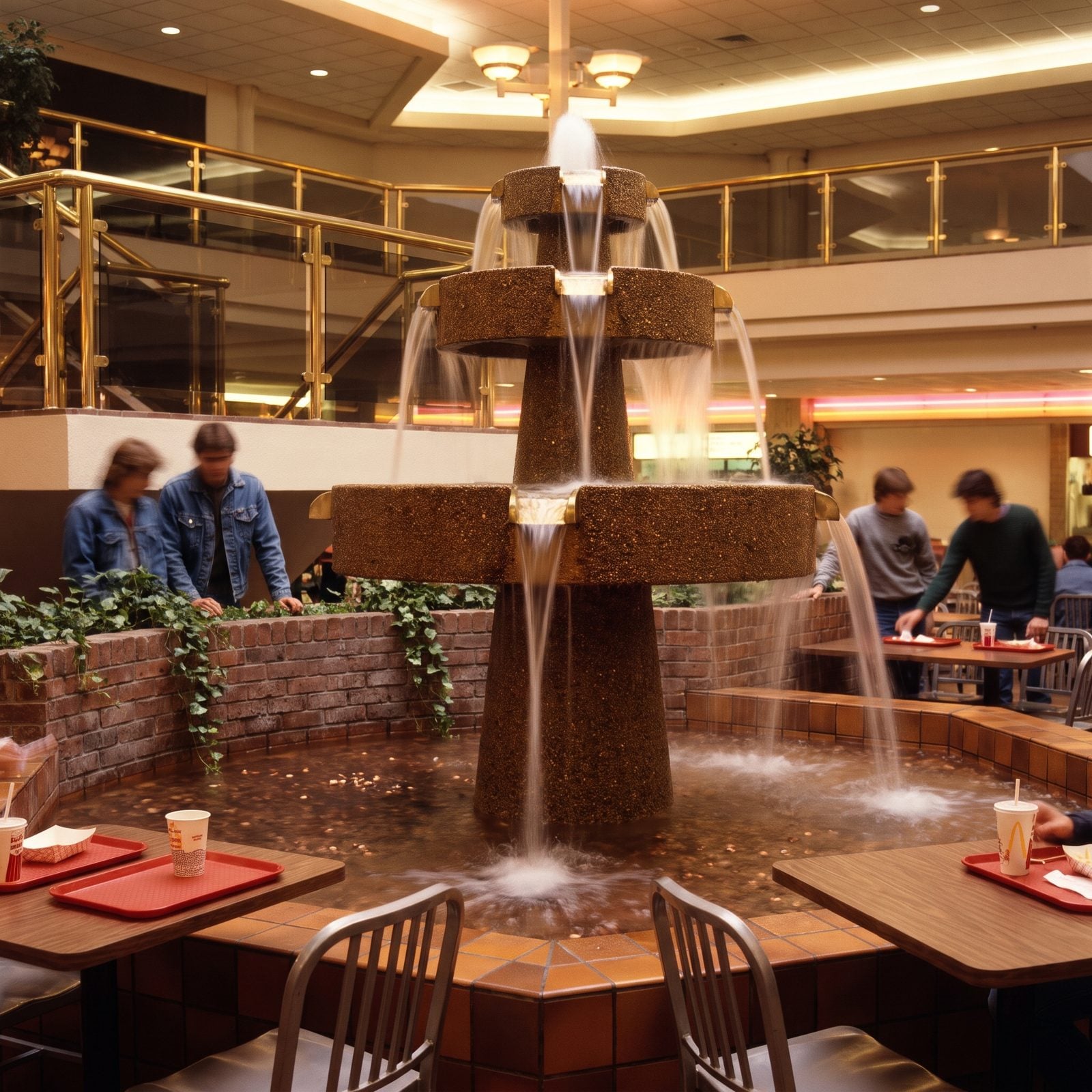
You could hear it the whole meal. A constant rush of water tumbling over concrete tiers into a basin full of pennies, loud enough that you had to lean in a little to talk over it.
Every kid flicked a coin in at some point. The bottom of that basin held a thousand wishes and a maintenance guy’s monthly windfall — brass spouts, aggregate concrete, a ring of ivy, the works.
18. Planter Boxes Filled With Fake Ficus Trees
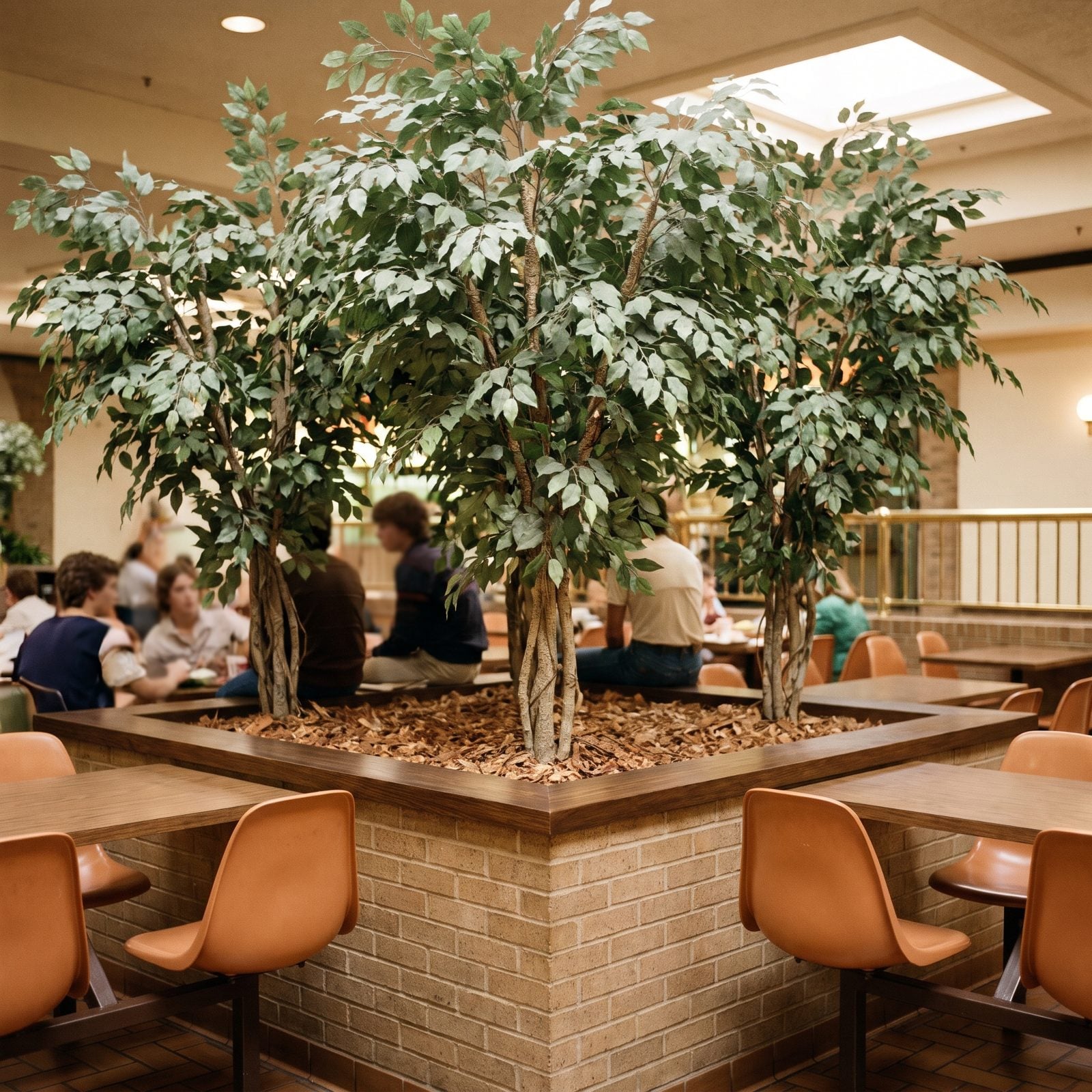
They never grew and they never died, which was sort of the point. Clustered in brick planter boxes the size of a loveseat, those silk ficus trees stood guard between the tables and the main concourse, leaves gathering a fine gray dust nobody ever wiped.
The wide planter rim doubled as extra seating when the tables filled up. You’d perch on the wood cap with your cookie, a plastic tree leaning over your shoulder like a chaperone who wasn’t paying attention.
Real plants would have needed light and water and someone who cared. These needed nothing. They just stood there being vaguely green, and somehow that reads as home now.
17. Brass Railings With Smoked-Glass Panels
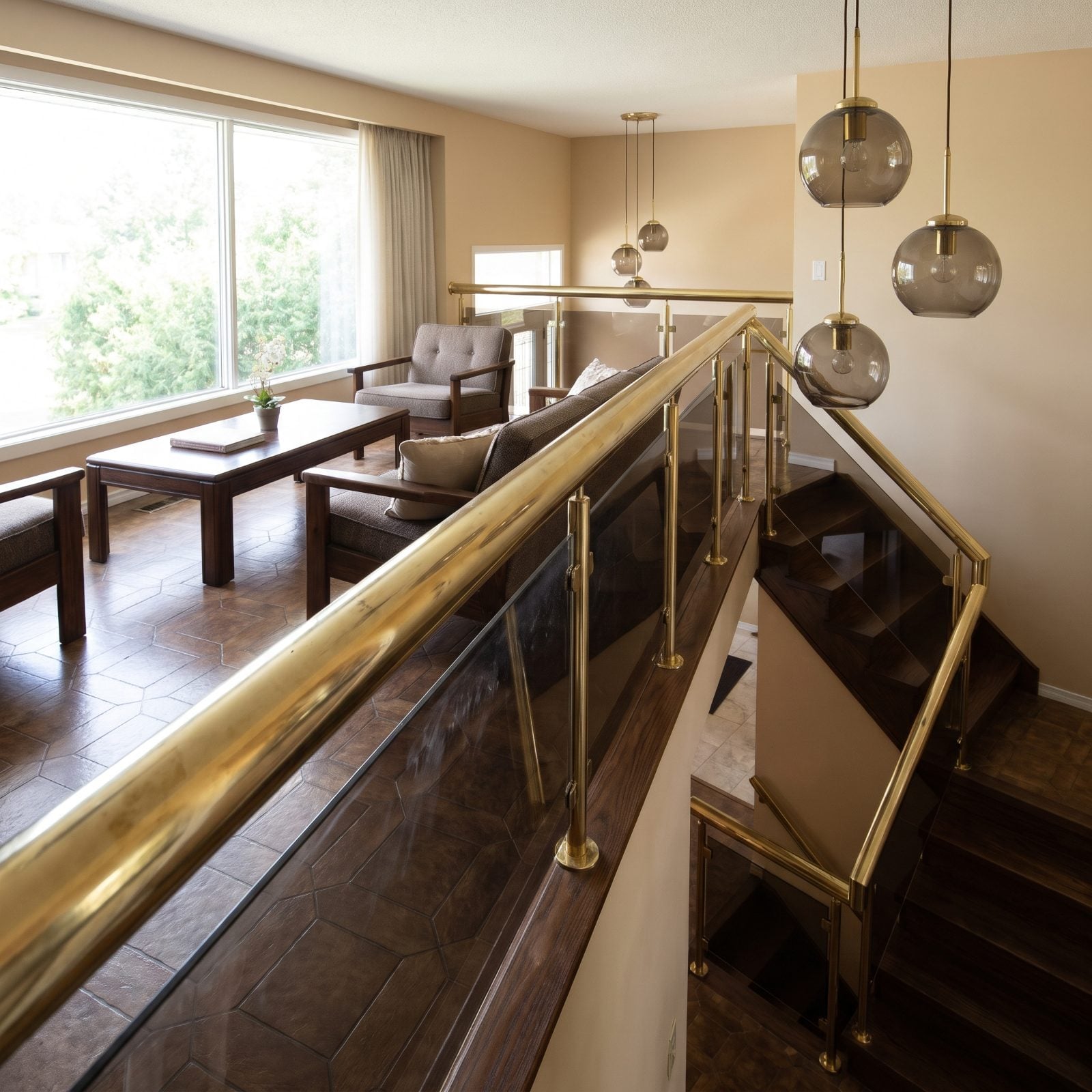
Brass was the official metal of the decade, and this food court wore it proudly. Railings polished to a warm gold, strung with panels of smoked glass tinted just dark enough to make everyone on the other side look mysterious.
You leaned on that rail from the stair landing to watch the food court below, elbows on brass, breath fogging the bronze glass. Every panel wore a constellation of fingerprints that the cleaning crew fought and never won.
Brass and smoked glass was the 80s saying, out loud, that it had money and wasn’t going to be quiet about it.
16. Mirrored Columns Reflecting the Entire Food Court
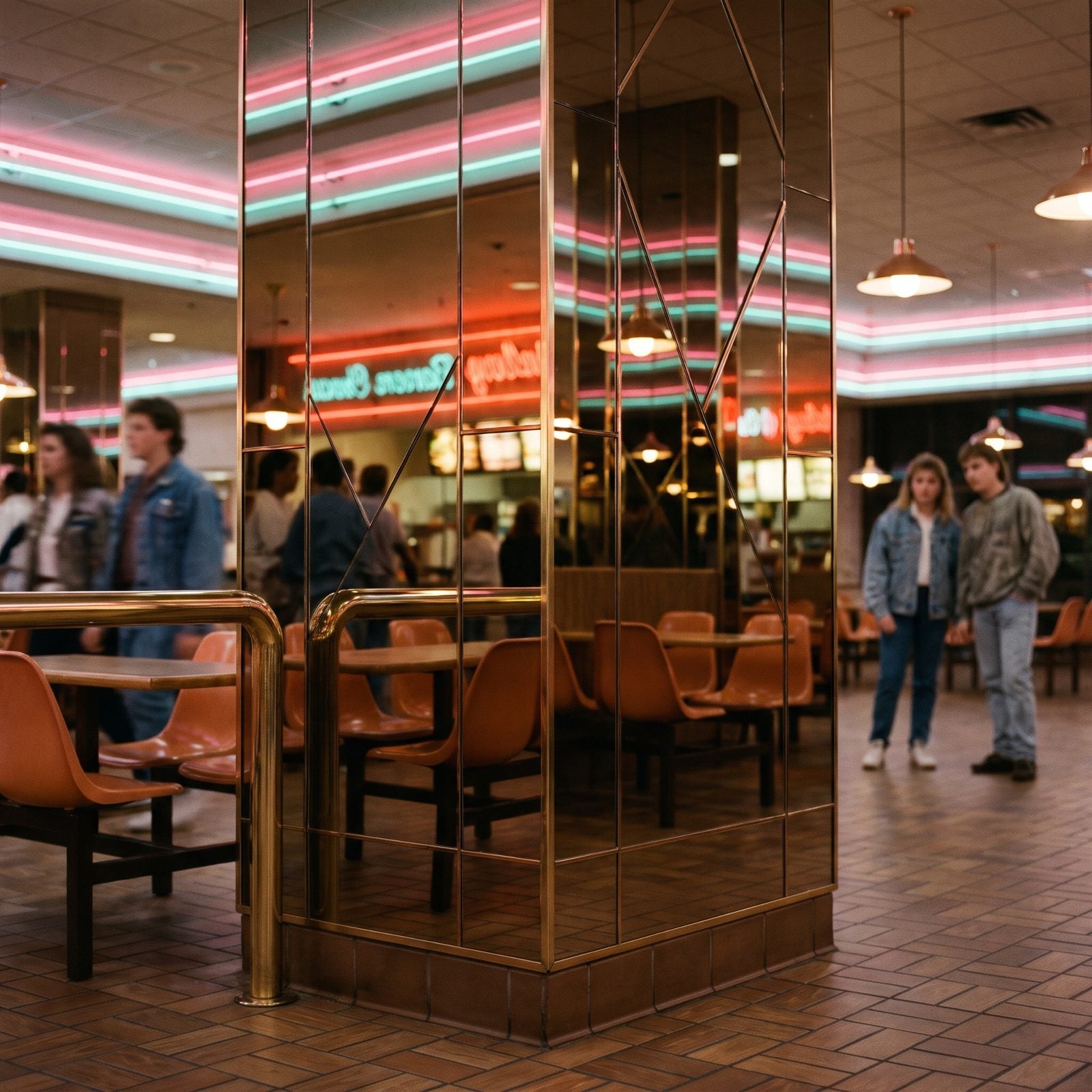
Half the mall was covered in mirror, and the food court columns were the worst offenders. Floor-to-ceiling mirrored panels wrapped around structural posts, so the whole court got reflected back at you in slightly wavy, bronze-seamed slices.
They made a cramped space feel double-sized. That was the architect’s trick. They also made every passing teenager slow down and check their hair in the reflection, pretending to look at something else.
15. Amber Plastic Cafeteria Trays
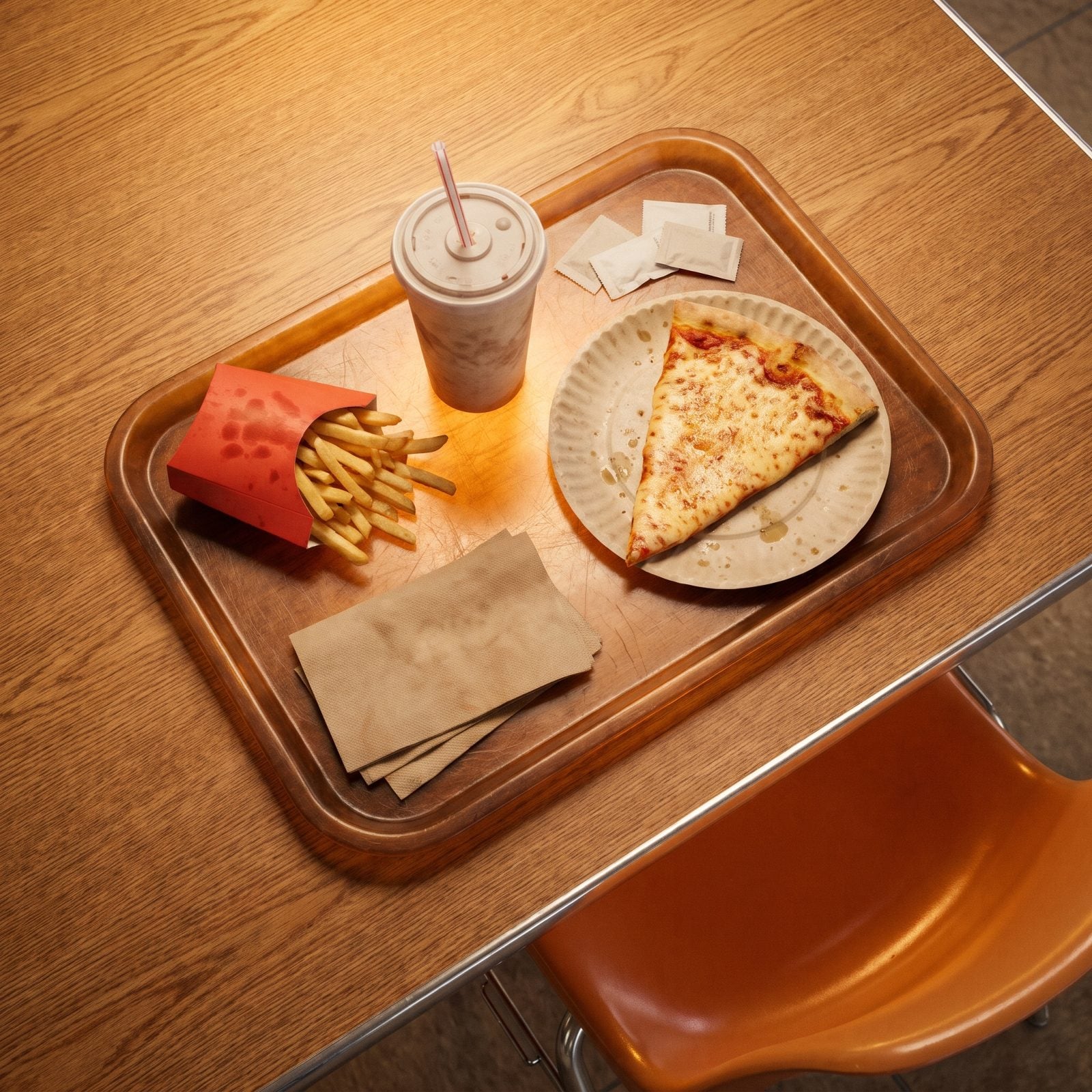
Every stall handed your food over on the same tray: translucent amber-brown plastic, scratched to a soft haze, warm where the light came through it. You carried it two-handed across a crowded court praying nobody bumped your soda.
They stacked a hundred high behind the counter and clattered when a bus crew hauled them off. The color landed somewhere between weak iced tea and a cough drop, and you’d know it anywhere.
I’d still rather eat off one of those than any modern compostable thing. They had heft. They felt like the food meant something.
14. A Pizza Counter Displaying Whole Pies Behind Glass
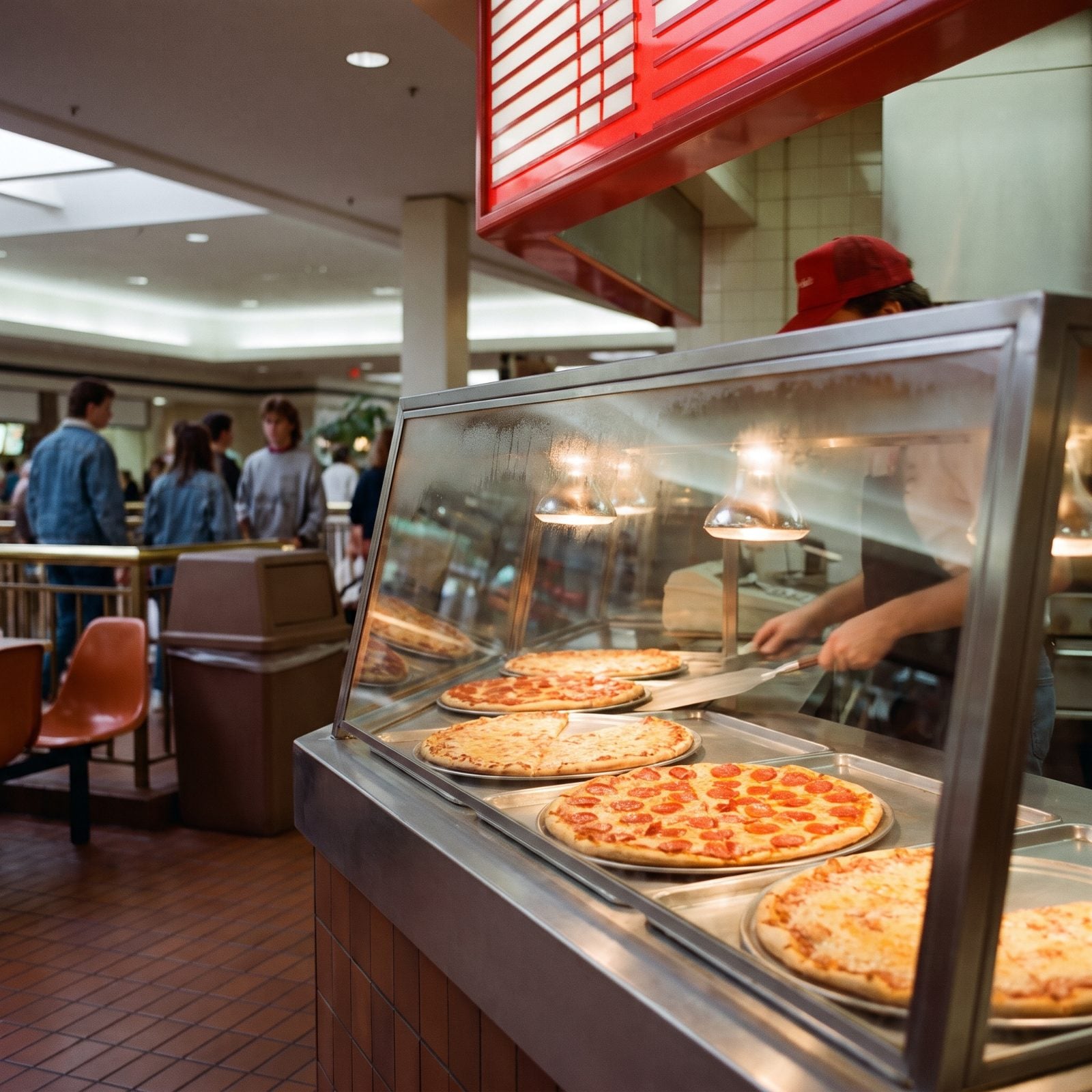
The pies sat on flat metal trays behind a slanted sheet of glass tilted toward you so you could see every pepperoni, and the heat lamps turned the cheese a shade of orange that doesn’t exist in nature. You pointed at the one you wanted. They slid it out, cut your slice with a rolling wheel, and set it on a plain white plate from the stack on the counter.
Two slices and a wax-cup Coke. That was lunch. The slice was always wider than the plate, always drooping off the front edge, and you walked to a table holding it level like you were carrying something precious.
13. A Rotating Pretzel Warmer With Fogged-Up Glass
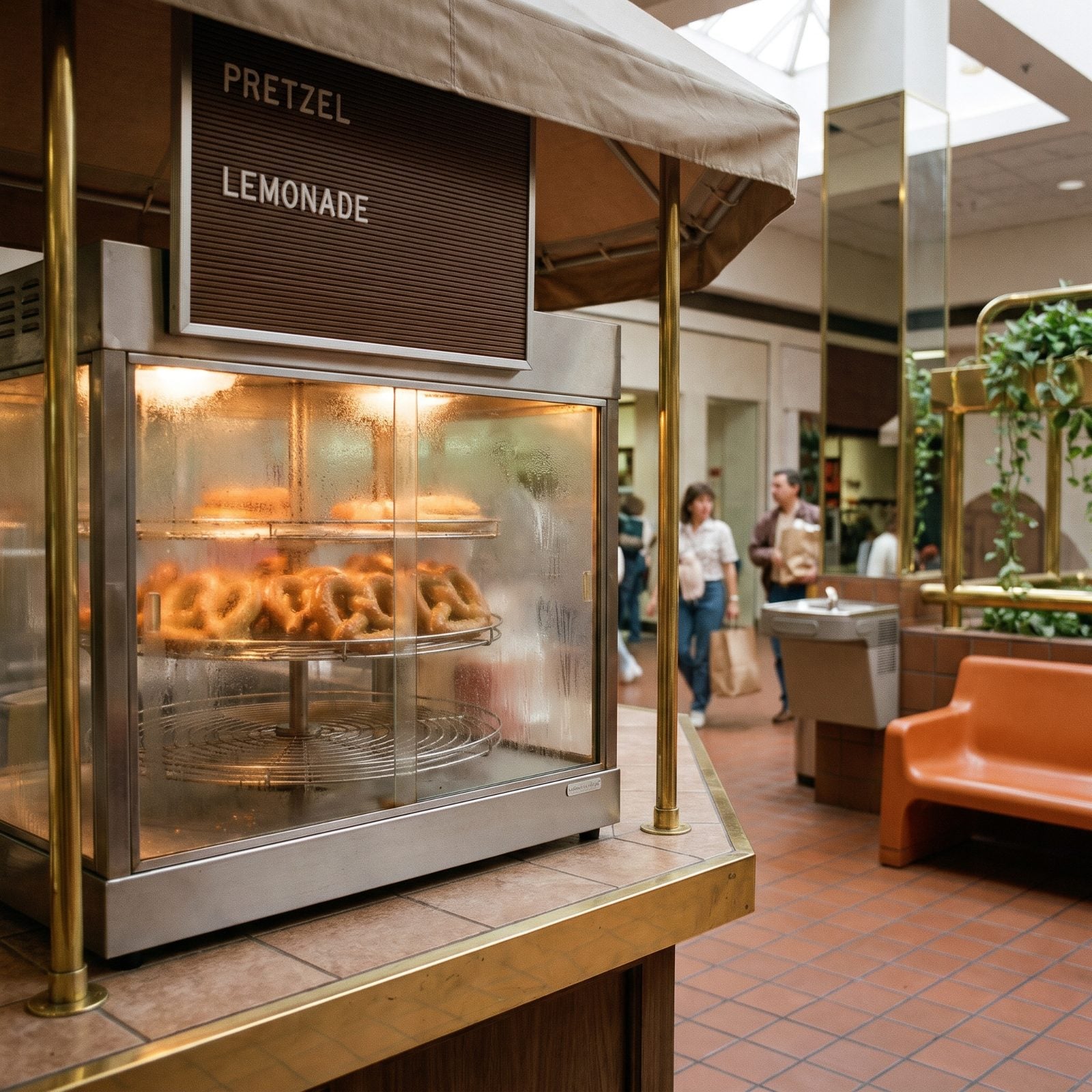
The glass was always fogged. You’d stand there squinting through the condensation at the pretzels turning on their little wire carousel, trying to spot the one with the most salt. They came out warm and chewy in the knot, handed over in a square of thin wax paper.
Plain, or the little tub of neon-yellow mustard — there was a hard divide between the two camps. The mustard people were right. I’ll take the heat for that.
12. Hot Dogs Turning Slowly on Metal Rollers
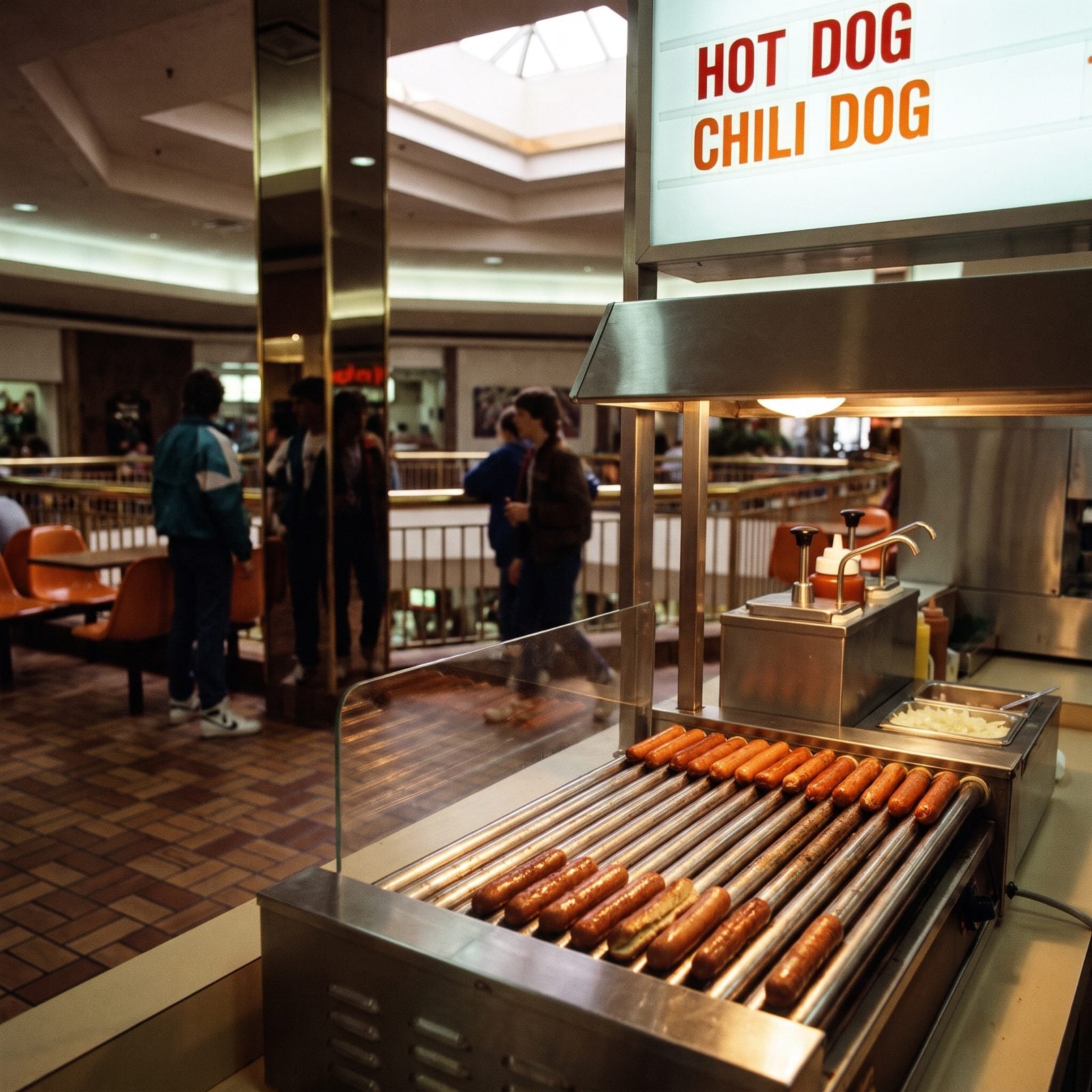
You could hear them before you saw them — that faint squeak of hot dogs rolling over chrome. Some had been turning so long the skins had split and curled, and those were somehow the good ones. You pointed, they tonged one into a soft bun, and you loaded it yourself at the pump station.
Nobody asked how long that particular dog had been going around. It was lunch, it was cheap, and the onions were free.
11. A Baked-Potato Counter With Tubs of Toppings
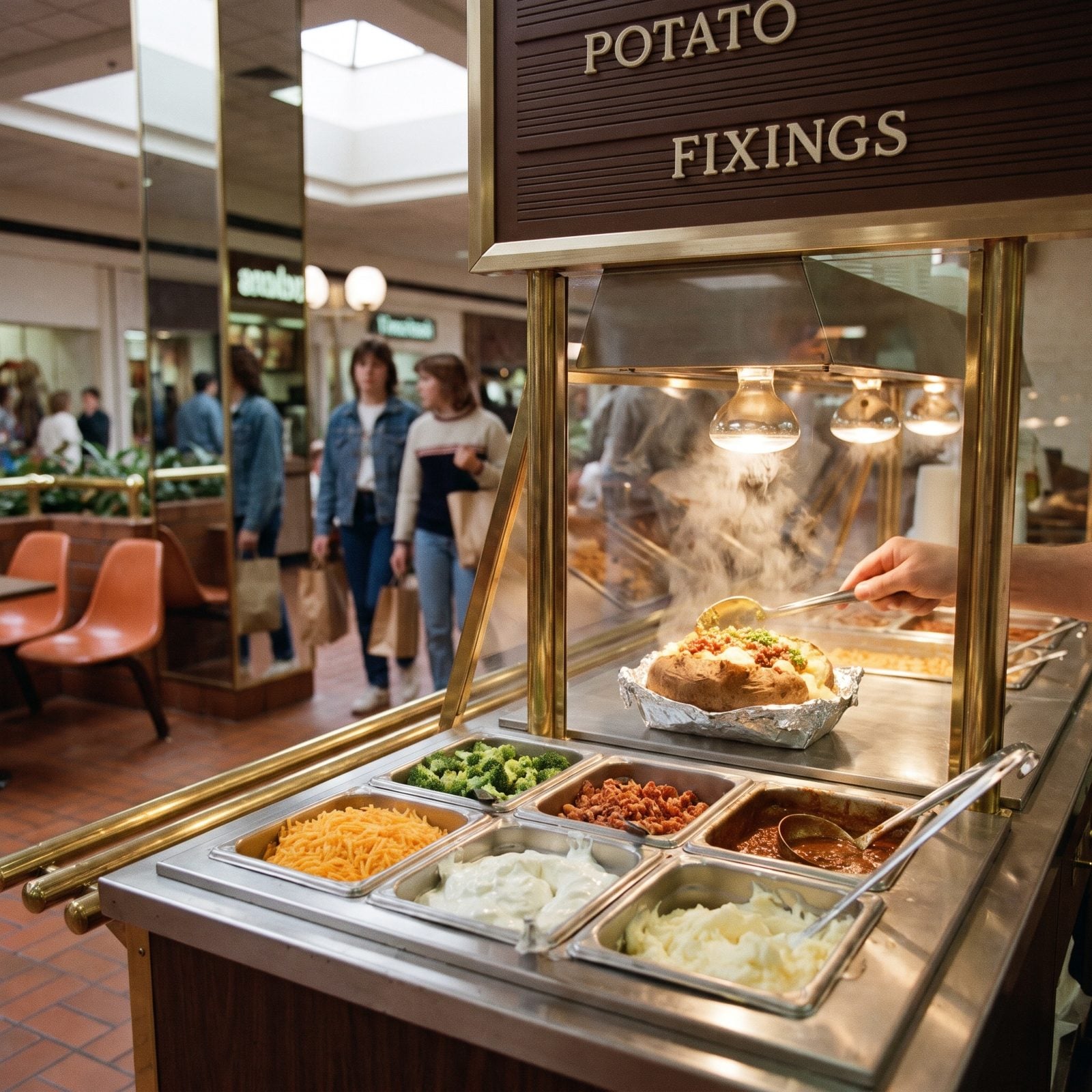
This was health food in 1985, or so we told ourselves. A potato the size of a softball, split down the middle, then buried under cheddar, sour cream, bacon bits, broccoli, and a ladle of chili if you were feeling brave.
The move was to pile on more than the little paper boat could hold. You’d carry it back with a plastic fork already sinking into the side and cheese dripping over the edge. Somehow it was both the most and least virtuous thing in the court, and nobody could ever decide which.
10. A Frozen-Yogurt Counter Covered in Pastel Graphics
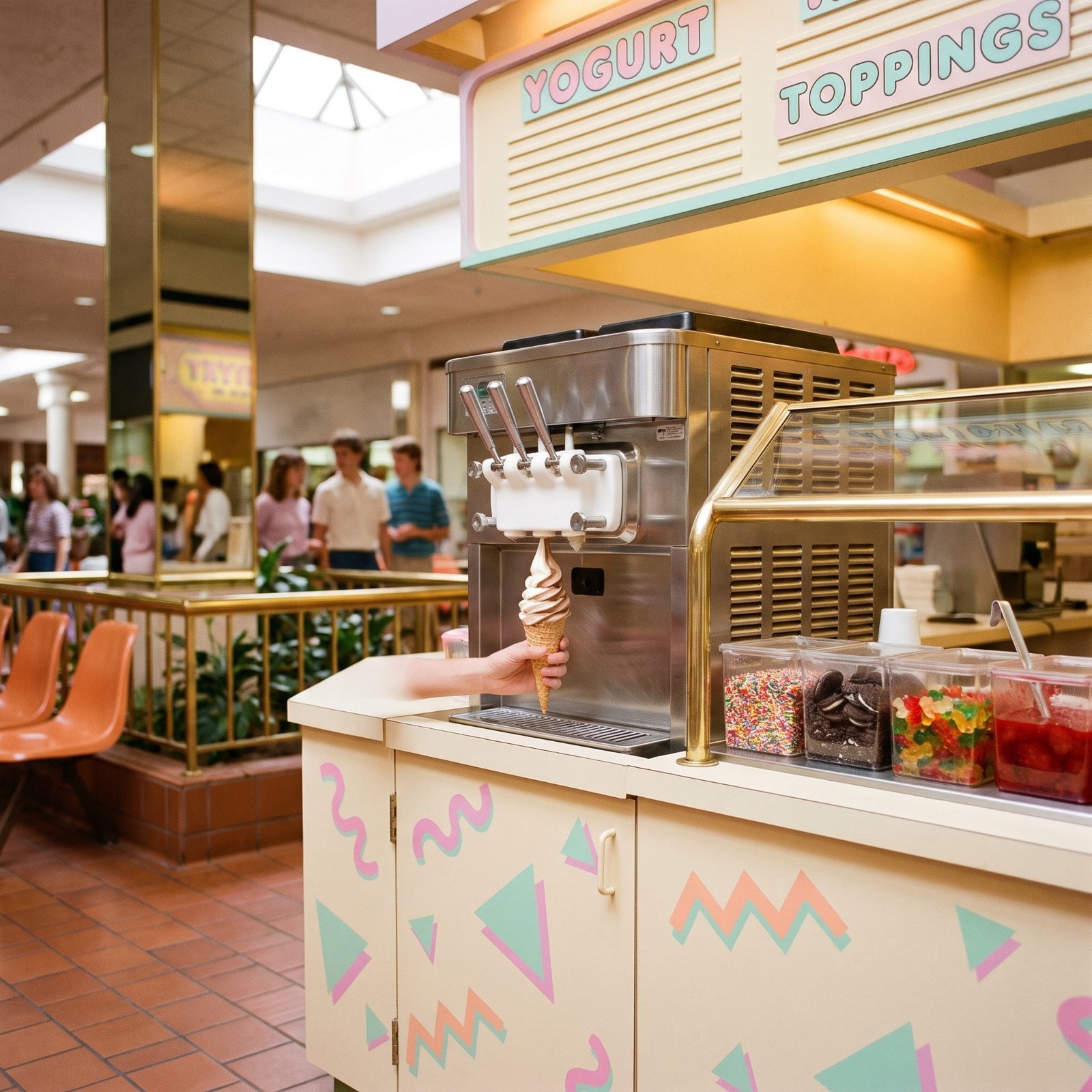
Pink and mint and peach, all squiggles and triangles, like someone had wallpapered the counter with a geometry test. The soft-serve came out in a tall twist with a little curl on top, and you watched the machine do it like it was a magic trick.
The topping bar was the real event. Rainbow sprinkles, crushed cookies, gummy bears going hard under the lights. You paid by weight — nobody understood the weight thing — so you just loaded it up and hoped for the best at the scale.
9. A Self-Serve Salad Bar Beneath a Plastic Sneeze Guard
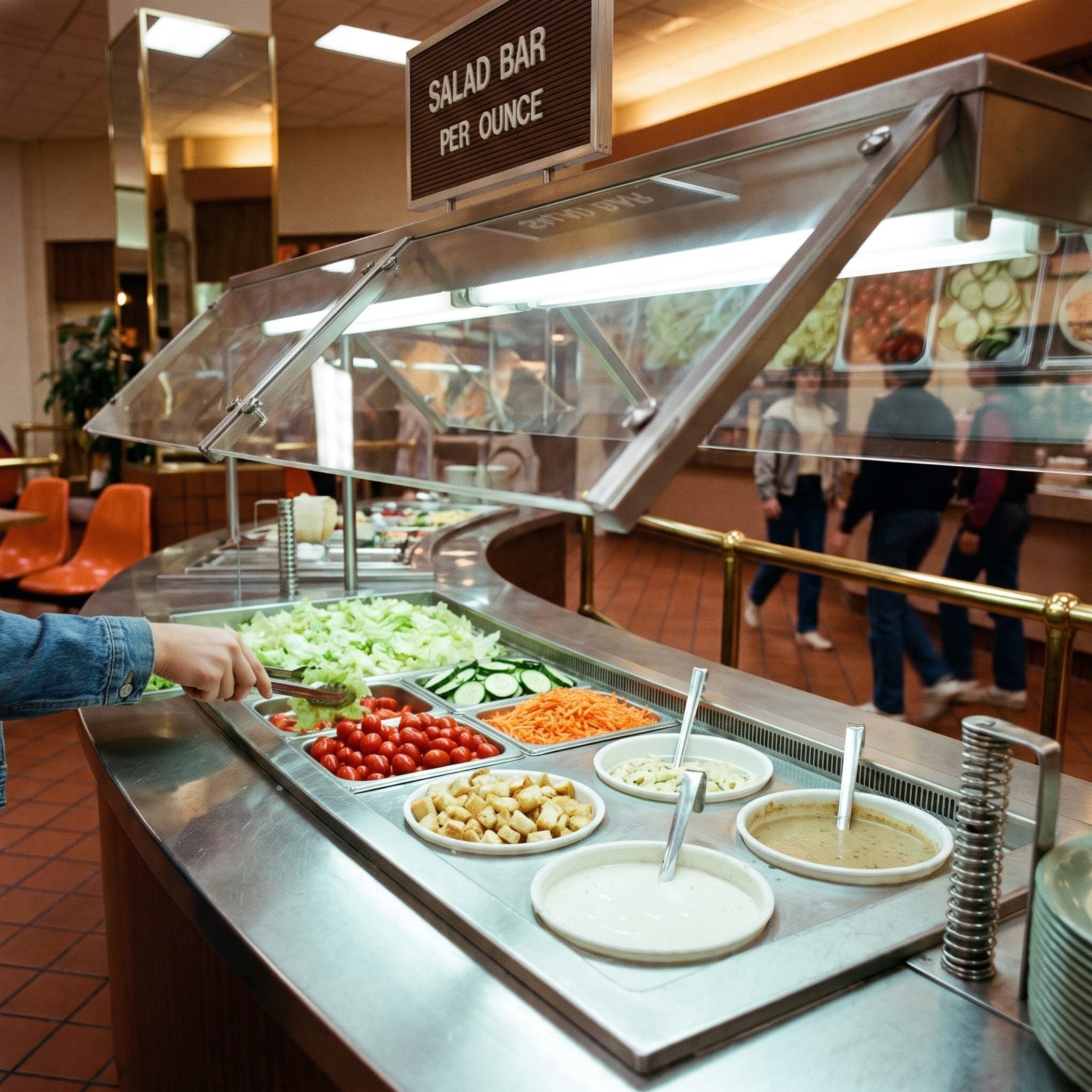
The sneeze guard was a sheet of angled plexiglass you had to duck under slightly, tongs in hand, to reach the good stuff. Iceberg shredded to confetti, a few cherry tomatoes, croutons that had gone soft from sitting out, and a ladle of ranch thick enough to stand a fork in.
They charged by the ounce, so the whole thing turned into a quiet negotiation with the scale at the end. Everybody packed the bottom of the bowl with lettuce to look responsible, then crowned it with croutons and cheese.
Tracing the invention back to a 1950s buffet owner, a history museum publications director describes the sneeze guard as “the angled plate of glass or plexiglass that shields your food from others’ airborne germs”
For what it’s worth, salad photos still get fewer hearts from Piaci Pizza readers than the other meal images in the same articles, 48% versus 68%.
8. Giant Cinnamon Rolls Glazed in the Display Window
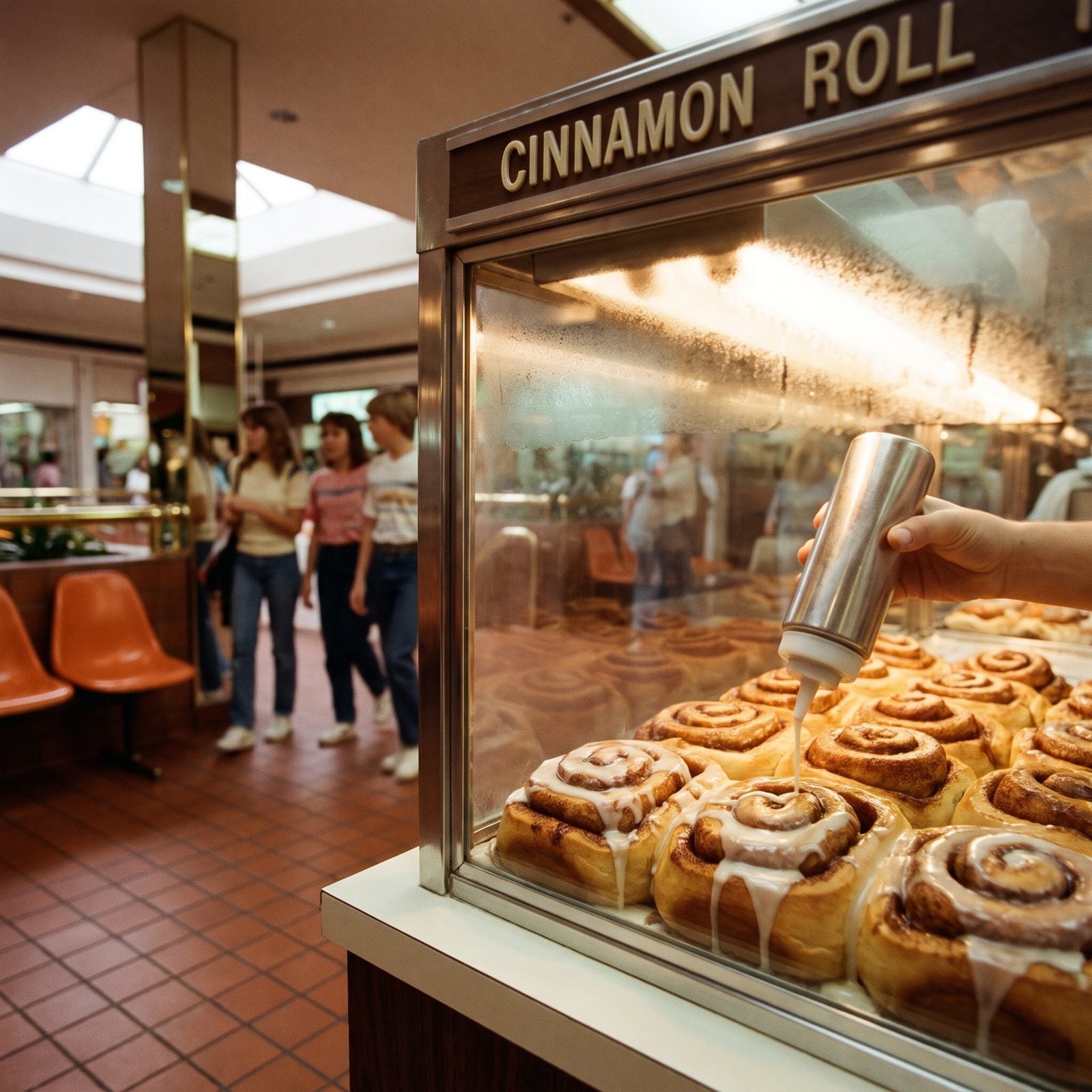
You smelled it from two stores away. That’s not an exaggeration — that was the entire business model. Cinnamon and sugar pumped into the air, and your feet turned toward it before your brain caught up.
The rolls sat in the window the size of a dinner plate, spirals deep with cinnamon and glaze pooling in every crease, and you’d watch them squeeze another ribbon of frosting over the top with a steel bottle. It came in a paper tray with a flimsy plastic fork you abandoned within two bites. Hands worked better. You licked your fingers after.
7. A Busser Pushing a Cart Loaded With Dirty Trays
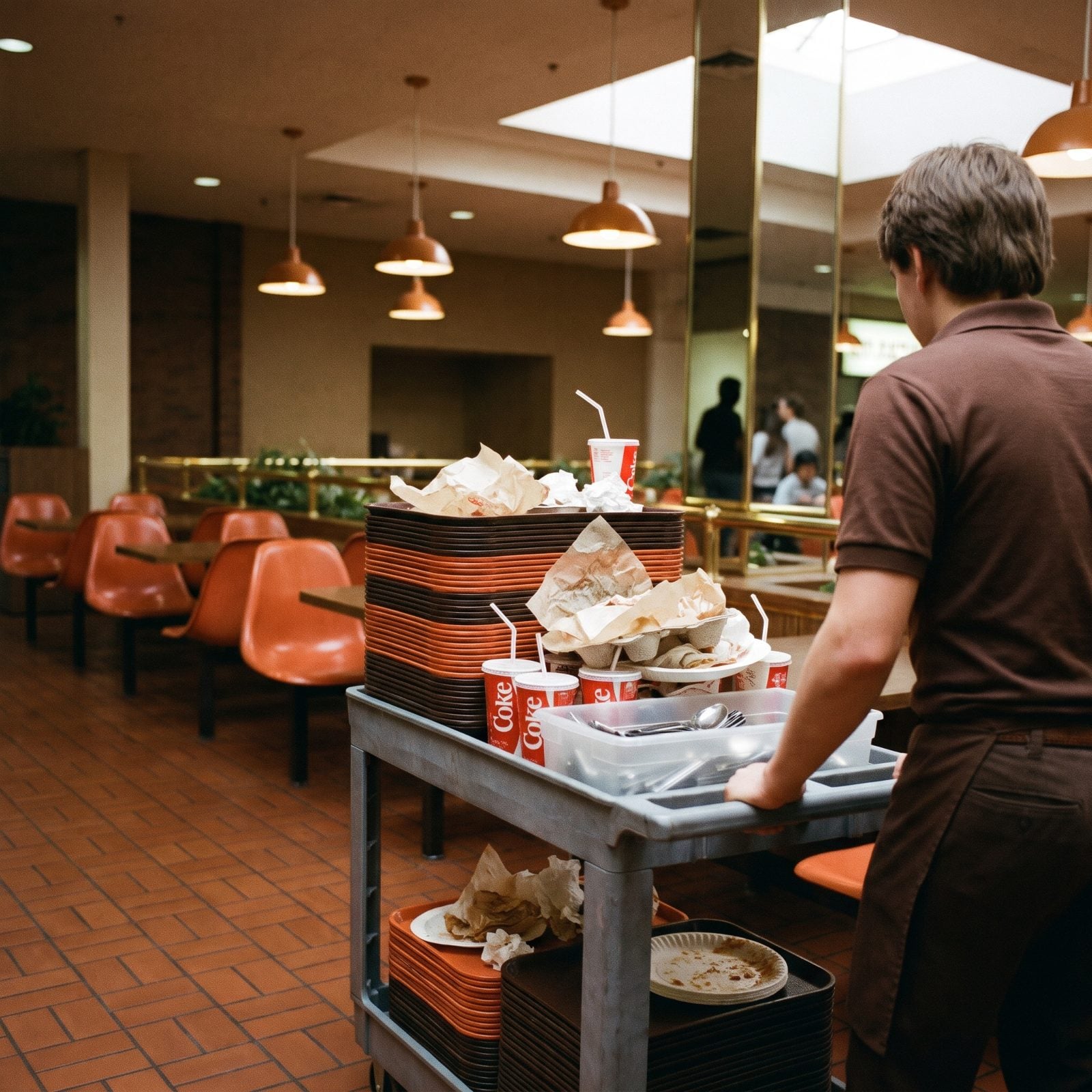
Somebody always materialized the second you stood up. A gray plastic cart, trays stacked and leaning, a tub of greasy forks, wax cups collapsing under the weight of melted ice. You’d nudge your own tray toward the edge of the table and they’d sweep it up without breaking stride.
That cart was the quiet machinery that kept everything moving. You never thought about it then. But the food court only worked because someone was always clearing the wreckage behind you, table after table, hour after hour, so the next kid could sit down and start the mess all over again.
6. The Arcade Entrance Flashing Beyond the Tables
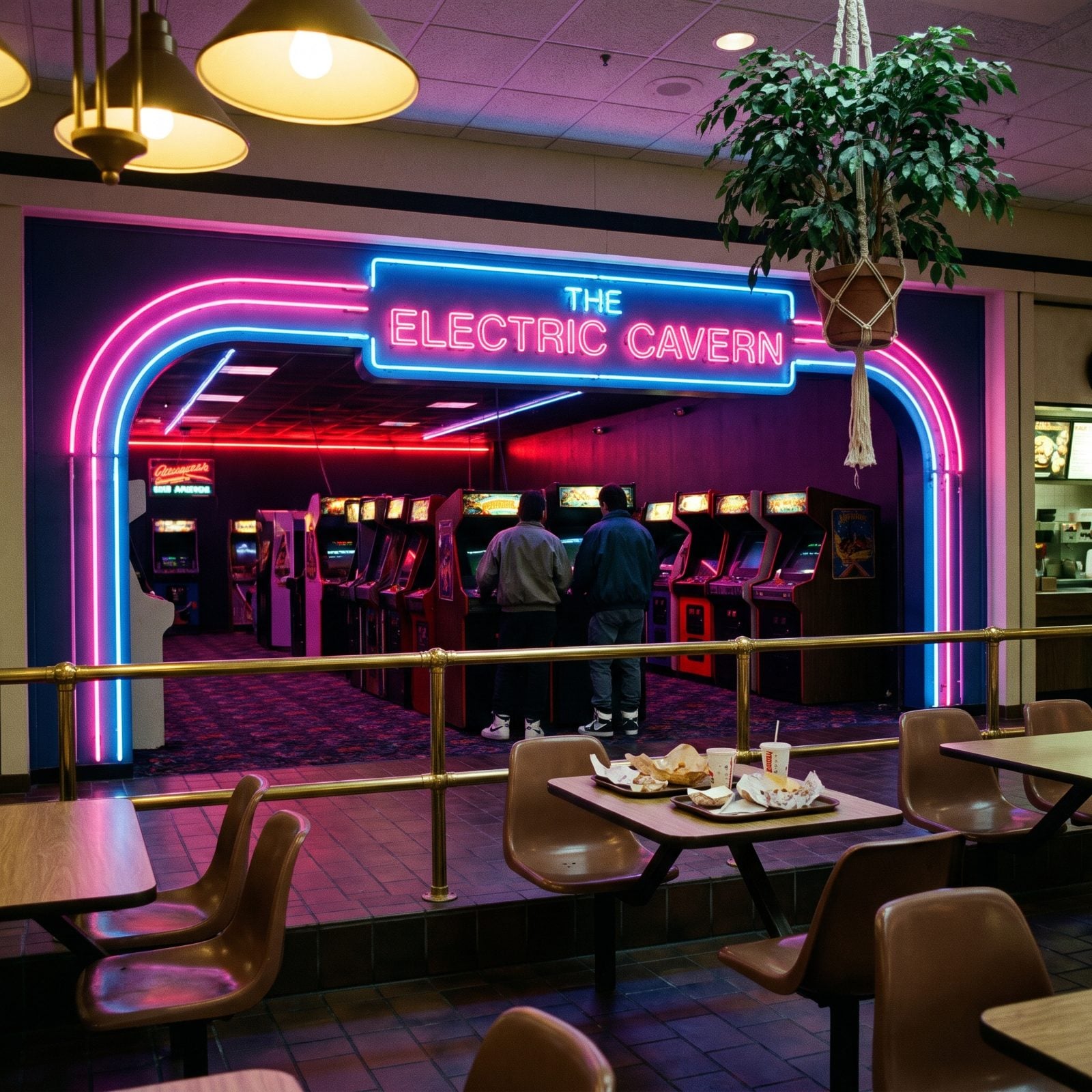
The arcade was right there. You could see the neon from your table and hear the bleeps and the digitized explosions leaking out every time someone pushed through the entrance.
That glow did something to a teenager. You’d be halfway through a slice, one eye on your fries and the other on that flashing doorway, calculating how long you could stretch lunch before the quarters in your pocket started burning a hole.
Food court lunch was just the staging ground. The arcade was the destination, and everyone knew it.
5. Record-Store Bags Propped Against the Chair Legs
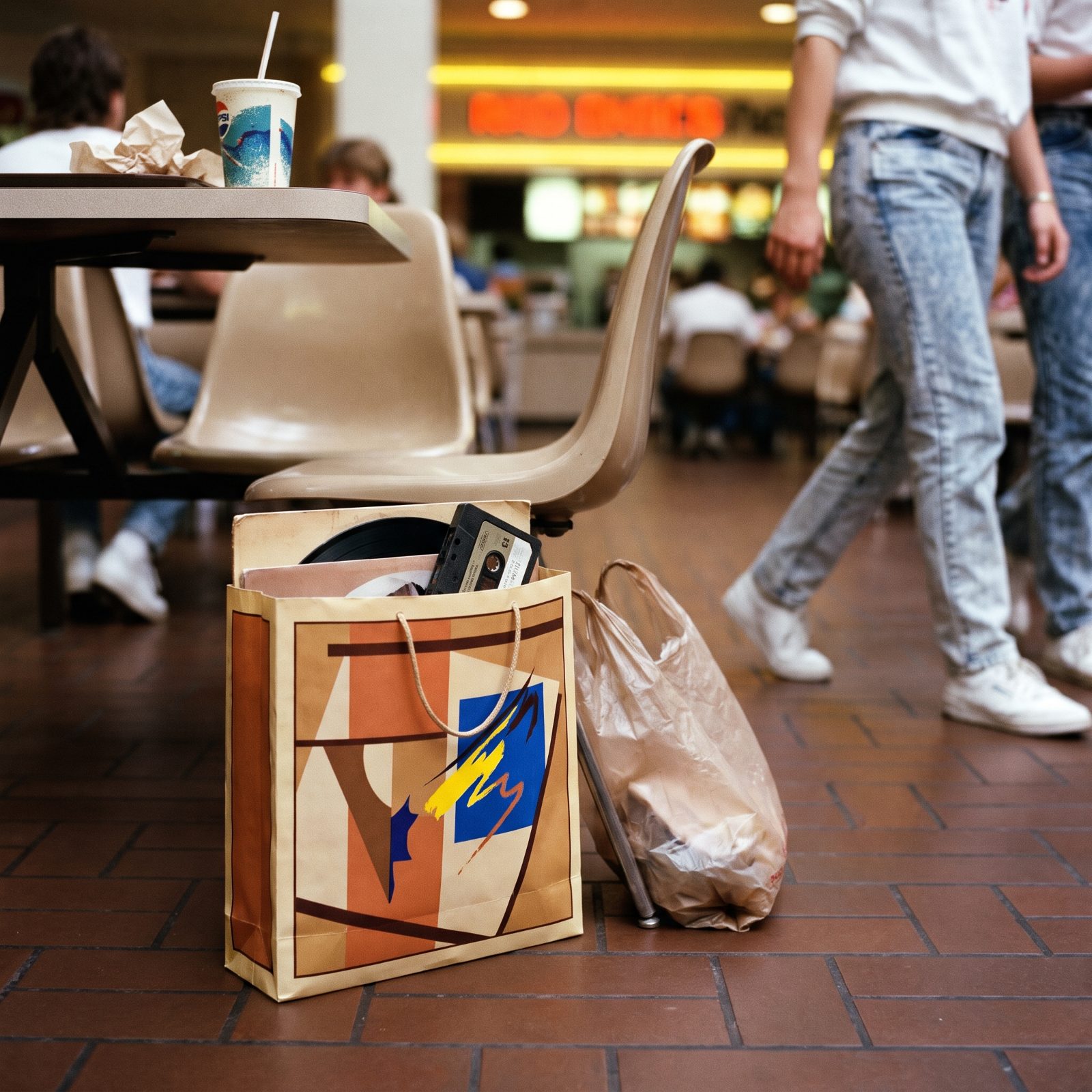
Half the status at that table came from what was sitting on the floor next to it. A fresh record-store bag, stiff paper, folded over at the top, leaning against a chair leg like a trophy.
You didn’t buy much at fifteen. A cassette single, maybe a record if you’d saved up. But the bag said you’d been somewhere, bought something, had taste, and everyone clocked each other’s bags without ever admitting it.
4. A Walkman and Foam-Covered Headphones Resting Beside Lunch
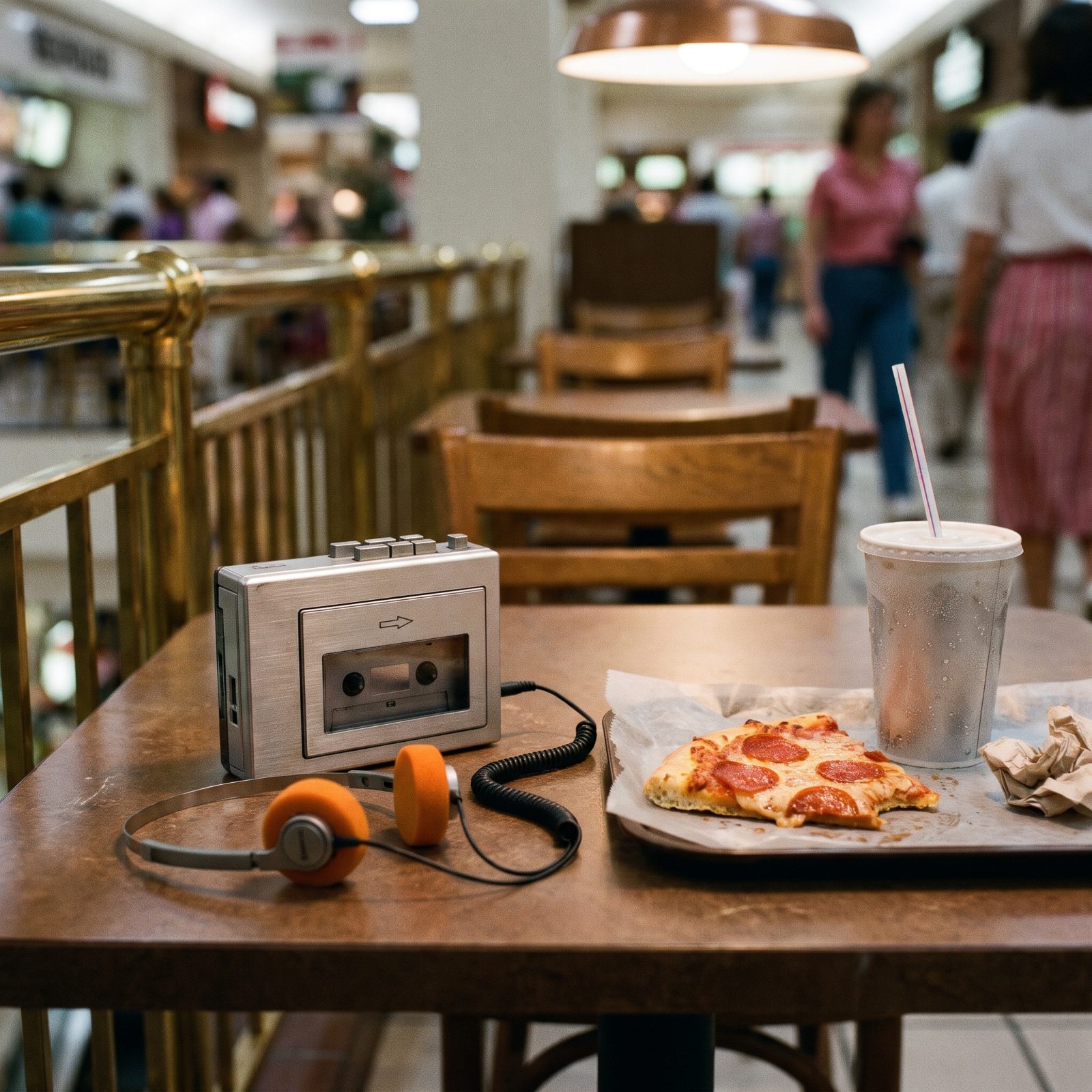
The Walkman sat next to the food like it owned the table. Brushed silver, buttons that clicked down hard, a cassette spinning behind a little window, and those headphones with the orange foam pads cracking at the edges.
There was a whole ritual to it. You’d pop one pad off your ear to talk, then slide it back on when the conversation got boring. And handing someone your headphones so they could hear the one song that mattered that week? That was trust.
3. The Hoard of Quarters Saved for the Arcade
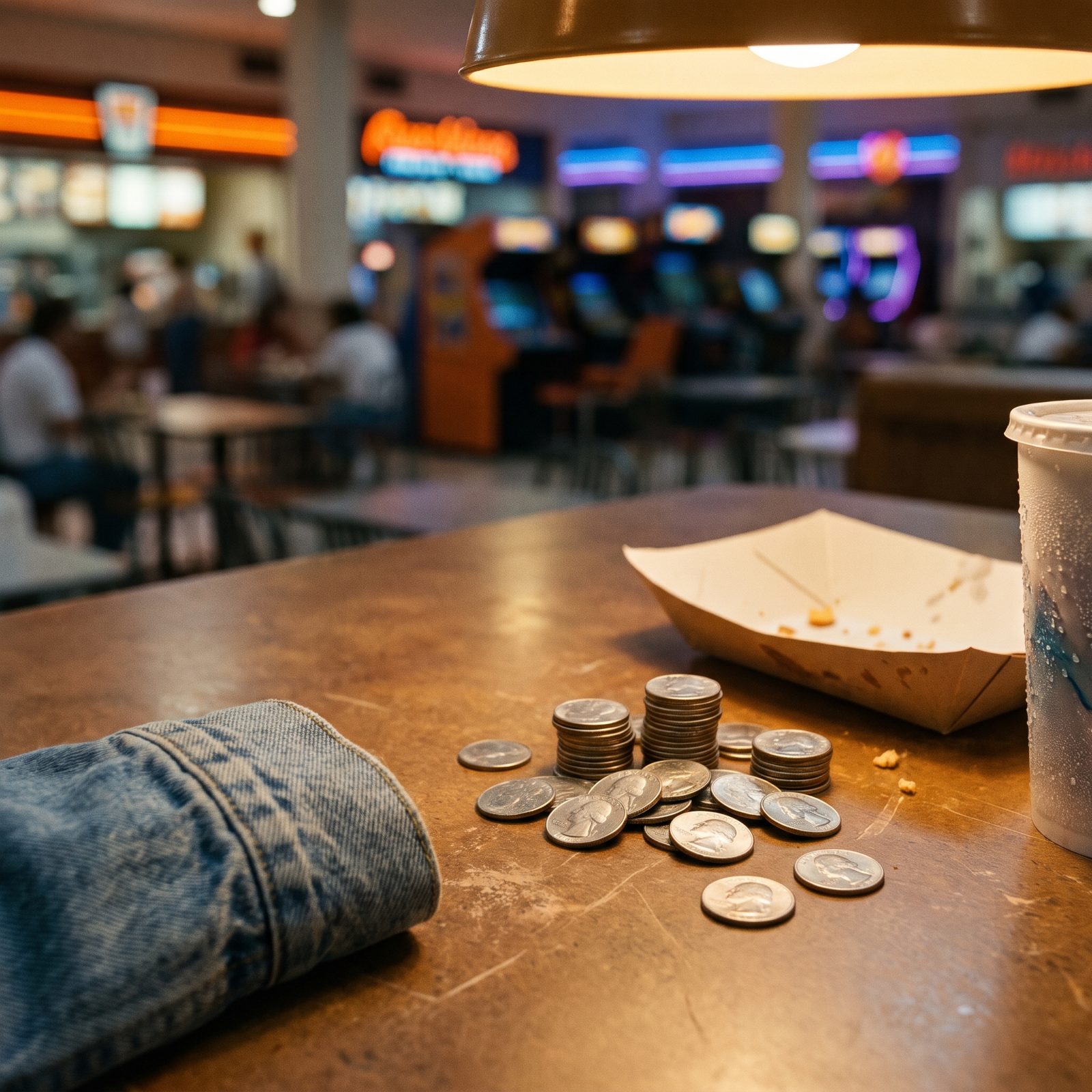
Quarters were the real currency of the day. Not for the food. The food was fuel. The quarters were for the machines, and you guarded them like a squirrel in October.
You could watch a kid do the math across the table, counting the little stacks of worn, mismatched coins with a thumb. Eight quarters meant eight lives, or four if the games ran fifty cents. Breaking a bill at the change machine and hearing that cascade of coins hit the tray felt like being handed the keys to the afternoon.
2. A Whole Table Claimed Over One Shared Soda
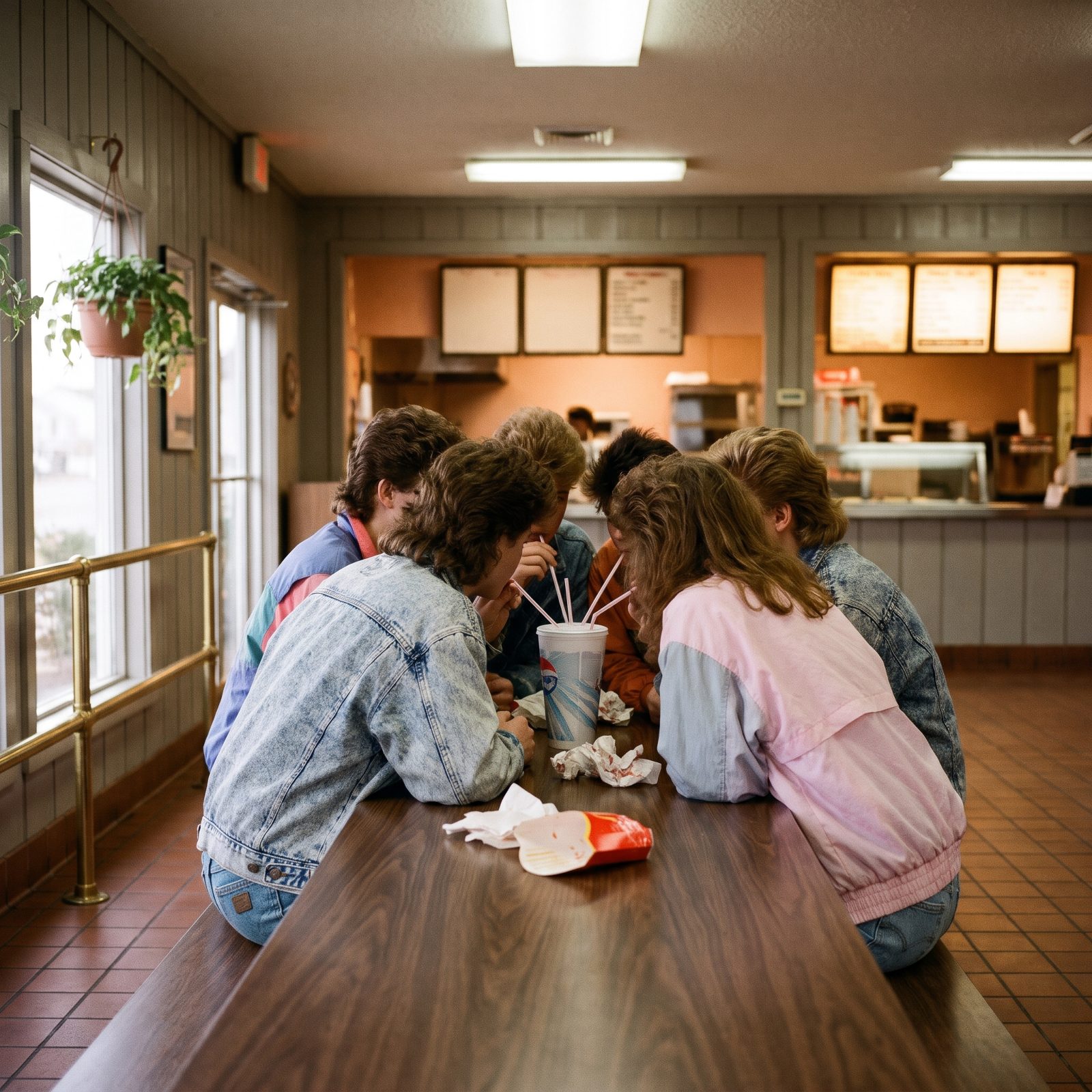
Two benches, one soda, five straws. That was the math of a broke teenage afternoon, and nobody questioned it.
You weren’t there for the food. You were there to be there, and the table was everything, a little patch of territory you held for three hours on the strength of a single refillable cup passed around like a peace pipe. Mall security would do a lap and leave you alone. What were they going to do, charge you rent?
A Federal Reserve economic history reports that a pioneering mall developer who first put a food court into a mall believed it could give teenagers a relatively safe place to hang out together.
1. The Bank of Payphones Just Outside the Seating Area
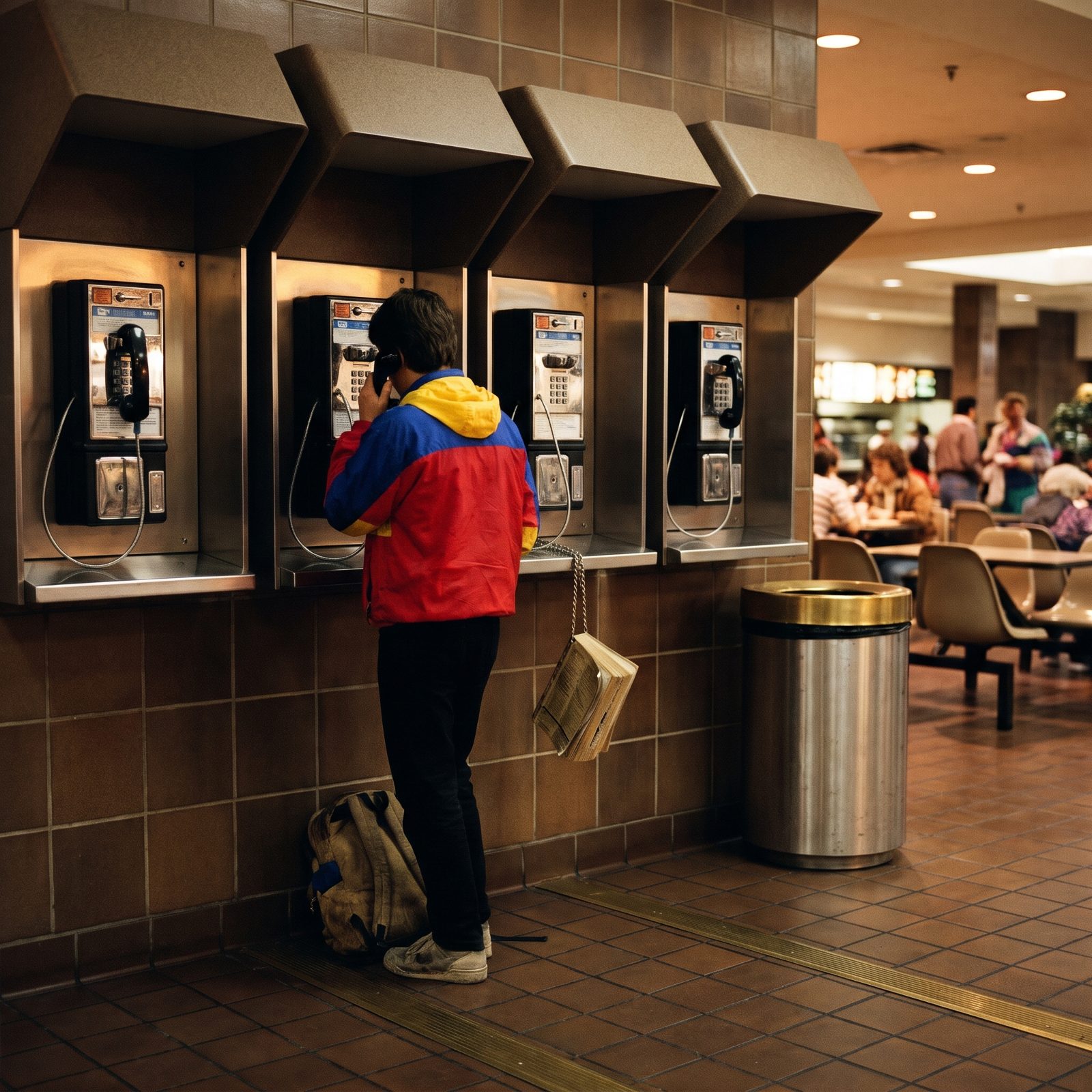
Right outside the seating area sat that row of payphones under the little sound hoods, chrome cords coiled so tight you could barely pull the receiver to your ear.
This was the lifeline. You called home for a ride, dropping a quarter in and reading the number off your hand. You called the other group of friends to find out which entrance they were loitering at. And if you were really broke, you’d dial collect and talk fast before anyone could accept the charges.
A city history museum curator said an exhibit built around the last Times Square pay phone explains how people made plans and found their way around before cellphones. (via a city history museum curator)