
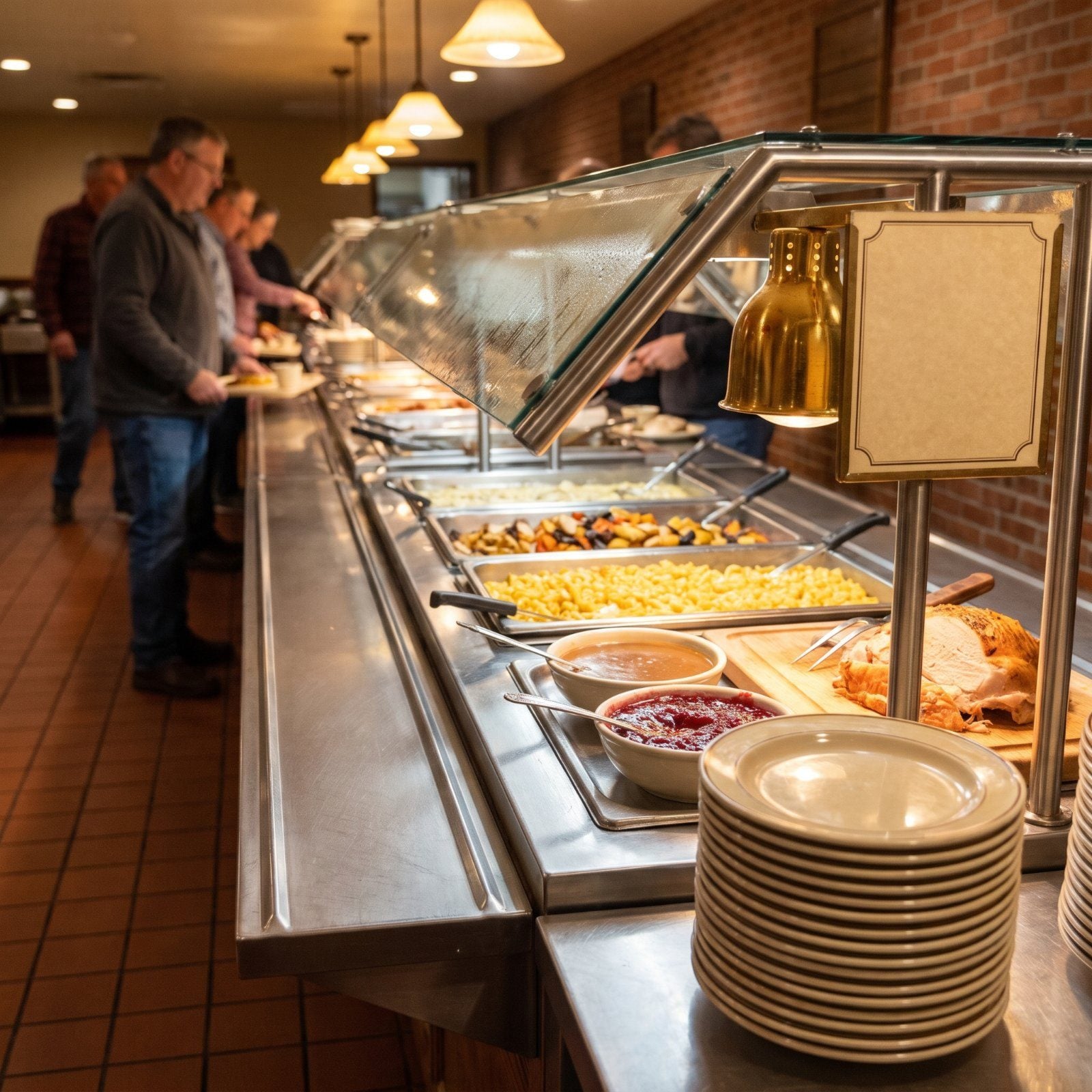
The sneeze guard isn’t the only thing protecting the restaurant. Everything on that line was arranged by someone who did the math, from the stack of plates to the order you hit the pans. Buffets live and die on cost per cover, and the whole floor is built to nudge you toward the cheap stuff and slow you down on the expensive stuff. None of it is sinister. It’s just a business keeping the lights on while feeding you until you tap out. See the moves once and you’ll never walk a buffet line the same way again.
Please note that some of the images in this article were created with the assistance of AI.
42. The Smaller Dinner Plate Is a Portion Tool in Disguise
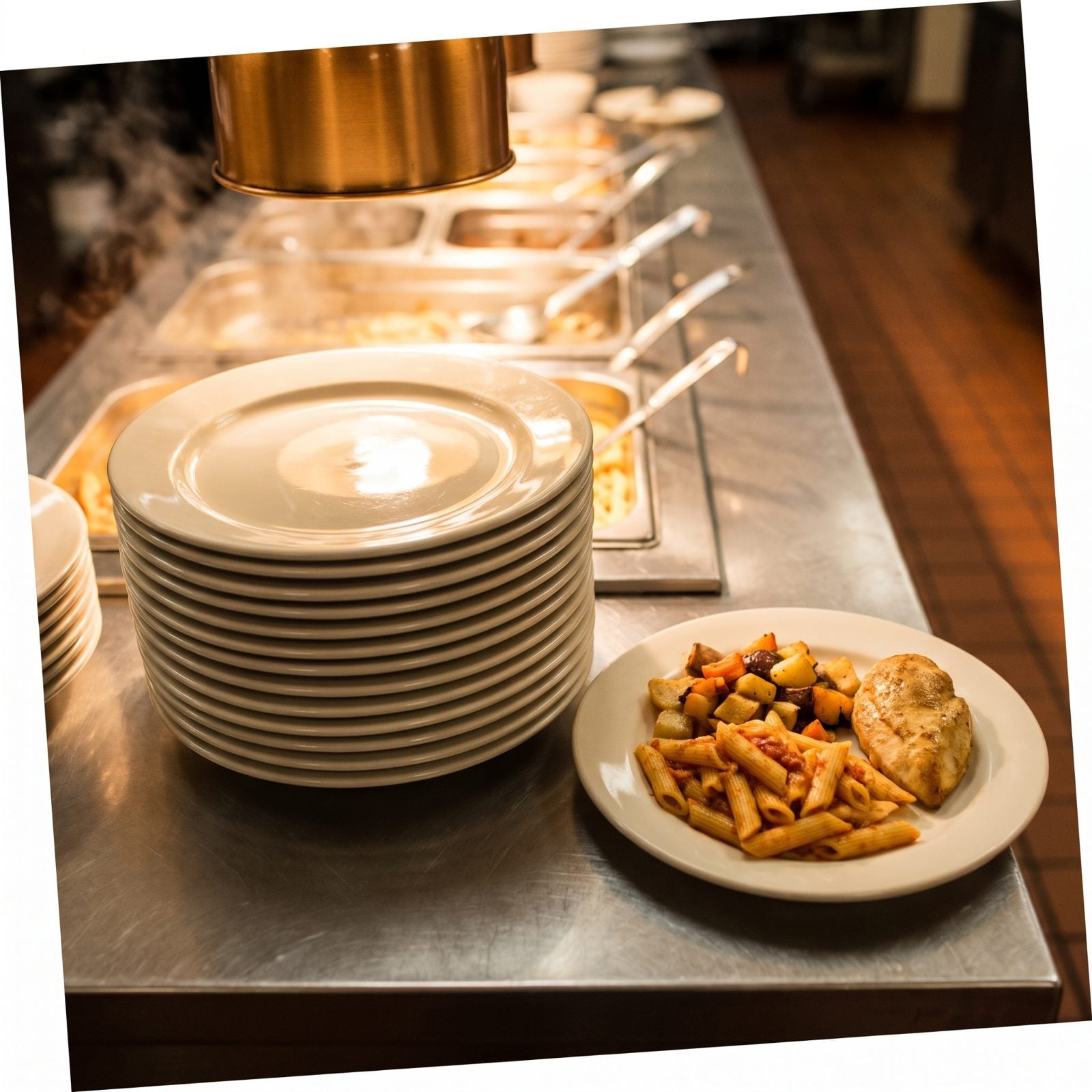
Notice the plate before you notice the food. Most buffets run a plate around nine inches, not the eleven or twelve you’d set at home — smaller surface, same hunger. You pile it up, it looks full, your brain registers a big meal, and you’ve eaten less than you think.
One of the oldest nudges in the business, and nobody bothers hiding it. The plate does the talking.
41. Why the Cheap Starches Always Come First
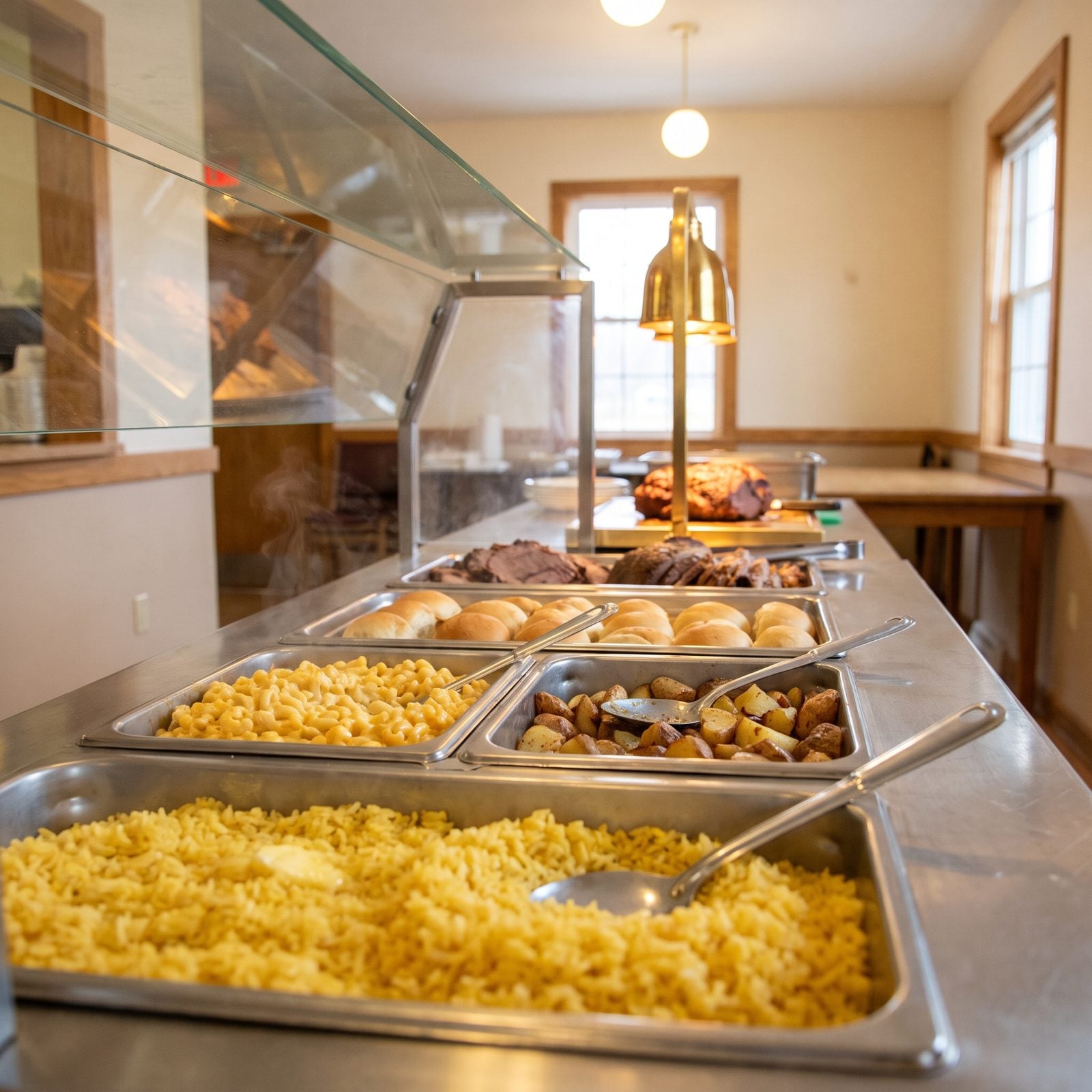
Walk any buffet and the order is never random. Rice, potatoes, pasta, and bread sit near the front, where your plate is still empty and your eyes are still big. The carved beef and the shrimp wait at the far end, by which point you’ve already committed real estate to the stuff that costs the kitchen pennies.
Carbs are the cheapest filler in the building. Put them where hungry people load up first, and the expensive proteins get rationed by your own plate space. You did it to yourself, and the margin thanks you.
40. Salad and Soup: The Opening Act That Fills the Room’s Stomach
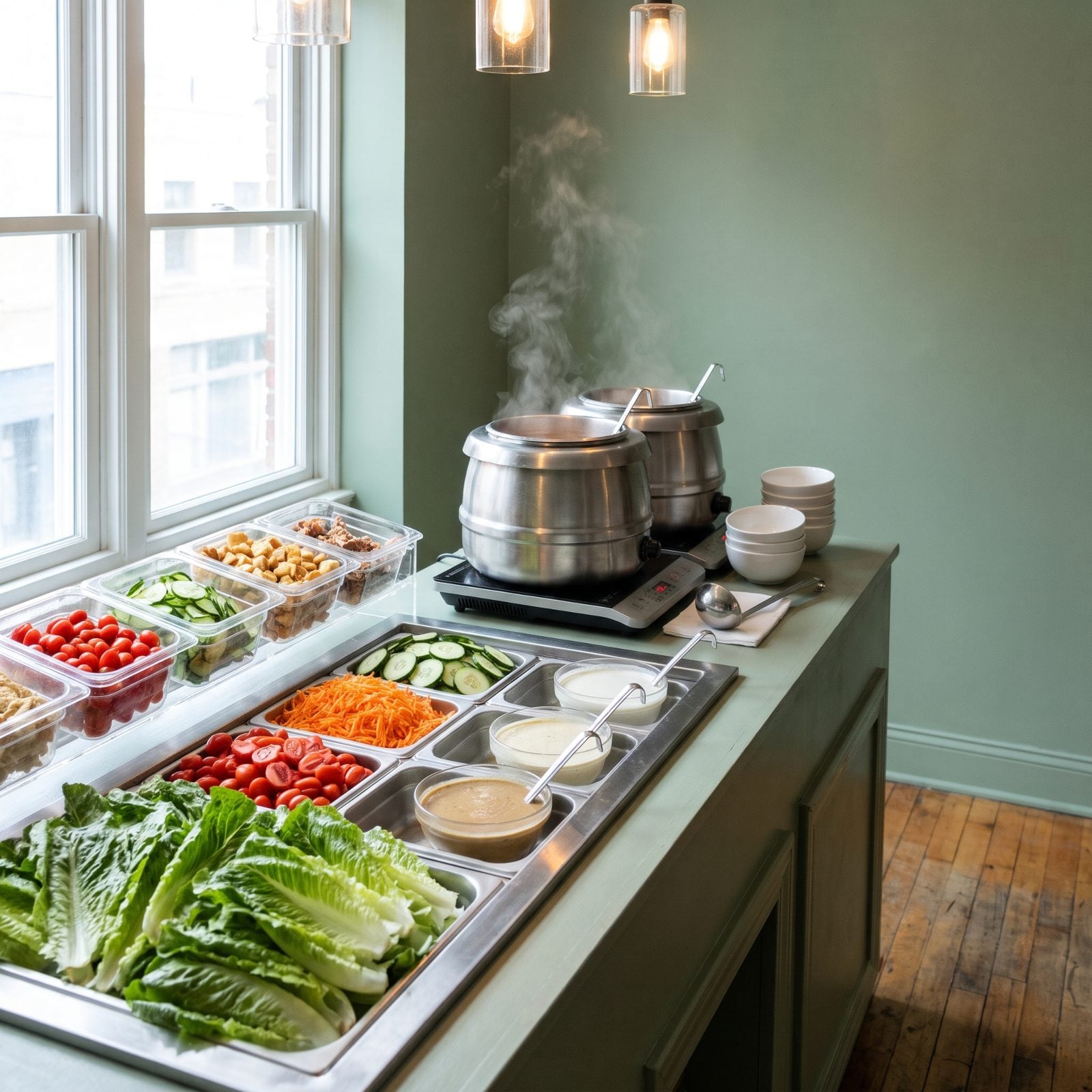
Ever notice the salad bar greets you at the door? That’s not hospitality. Greens and broth are cheap, filling, and heavy with water, and a bowl of soup plus a plate of lettuce before you ever reach the hot line takes the edge off your appetite for next to nothing.
Soup is the sleeper. Hot liquid tells your stomach it’s working on something long before the solid food lands, so by the time you reach the proteins you’re already a third full on water and romaine.
39. Warm Rolls Right Where You Can’t Miss Them
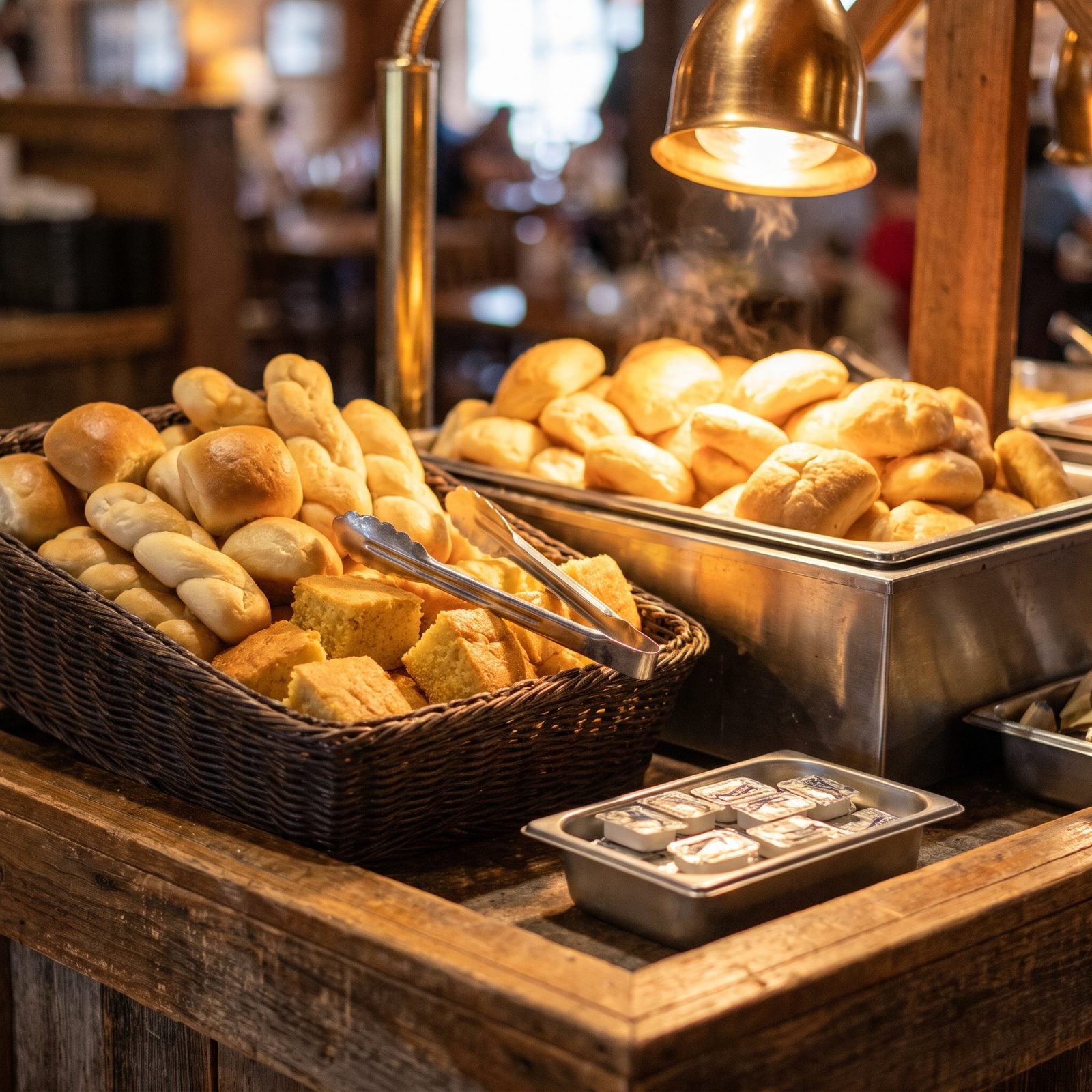
The bread basket gets the good lighting for a reason. Warm rolls under a heat lamp, placed at eye level near the plates, are the cheapest thing on the floor and the hardest to resist when they smell like a bakery.
Flour, water, yeast. Pennies a roll. And bread fills a stomach like nothing else, which means every roll you grab is one less scoop of the expensive stuff you’ll have room for. Make the cheapest item the most tempting and let your appetite do the rest.
What Our Readers Say
- When Piaci Pizza readers loved a food photo and tapped a reason, comfort came out on top at 30%, ahead of ingredients, good looks and nostalgia.
From Piaci Pizza reader polls and votes.
38. Dessert Comes Pre-Cut So You Take Three, Not One Big Slab
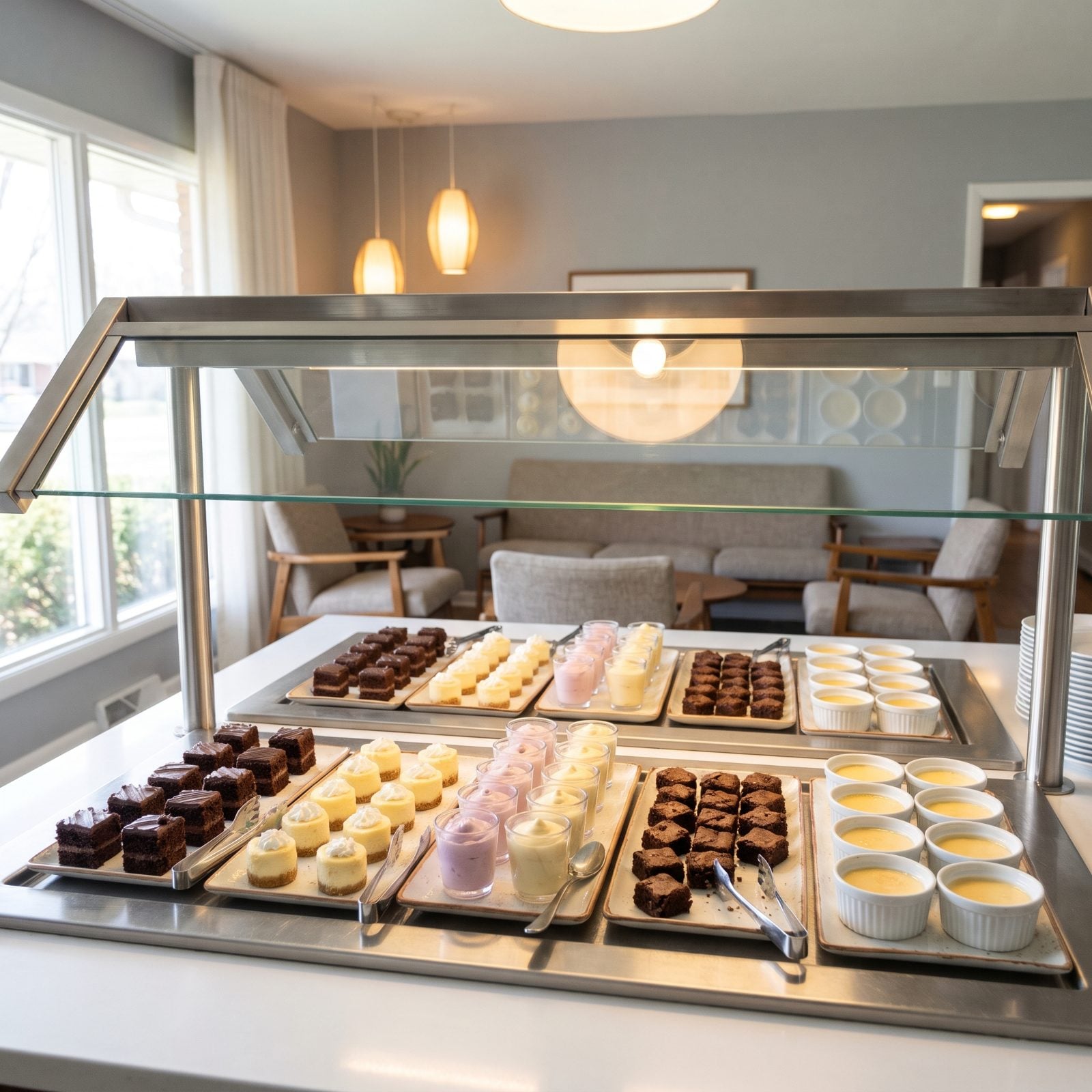
The desserts shrank on purpose. Instead of letting you cut your own wedge of cake, the kitchen pre-portions everything into little squares, tiny cups, bite-sized brownies. Feels generous. You take three.
Here’s the quiet math, though: three tiny pieces almost always total less than the one honest slab you’d have carved yourself. Pre-portioning caps waste and controls cost while making you feel like a kid who got away with something.
37. The Roast Beef Sliced Whisper-Thin Against the Grain
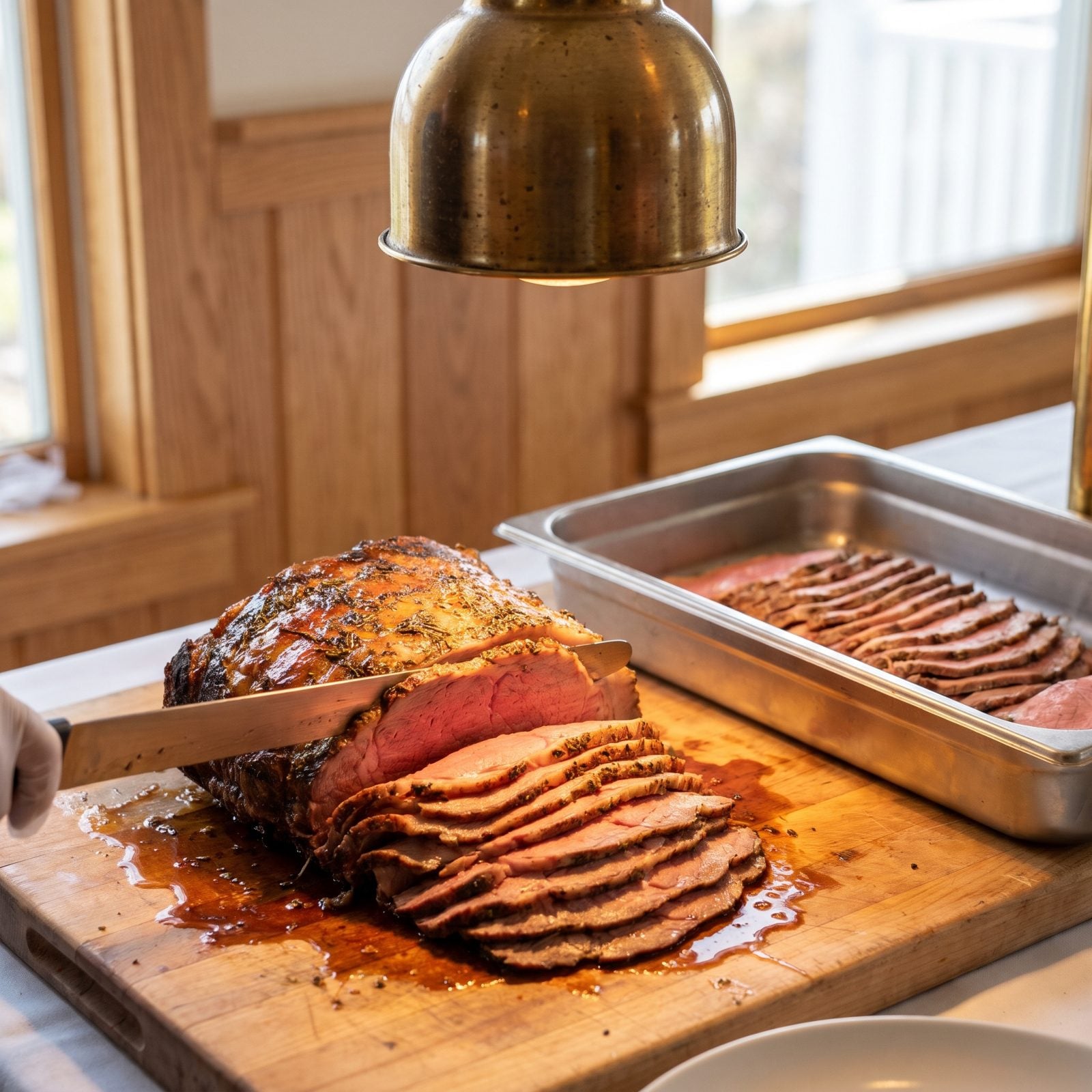
Watch how the carver cuts. Thin ribbons, always against the grain, fanned out so a few ounces look like a mountain. Beautiful work — and portion control with a knife.
Slicing thin across the grain does two jobs at once. It stretches an expensive cut across more plates, and the cross-grain cut makes cheaper beef chew tender, so nobody complains. You feel like you got a real carvery serving while the kitchen got three servings out of what looked like one.
36. Pizza Cut Into a Dozen Little Wedges
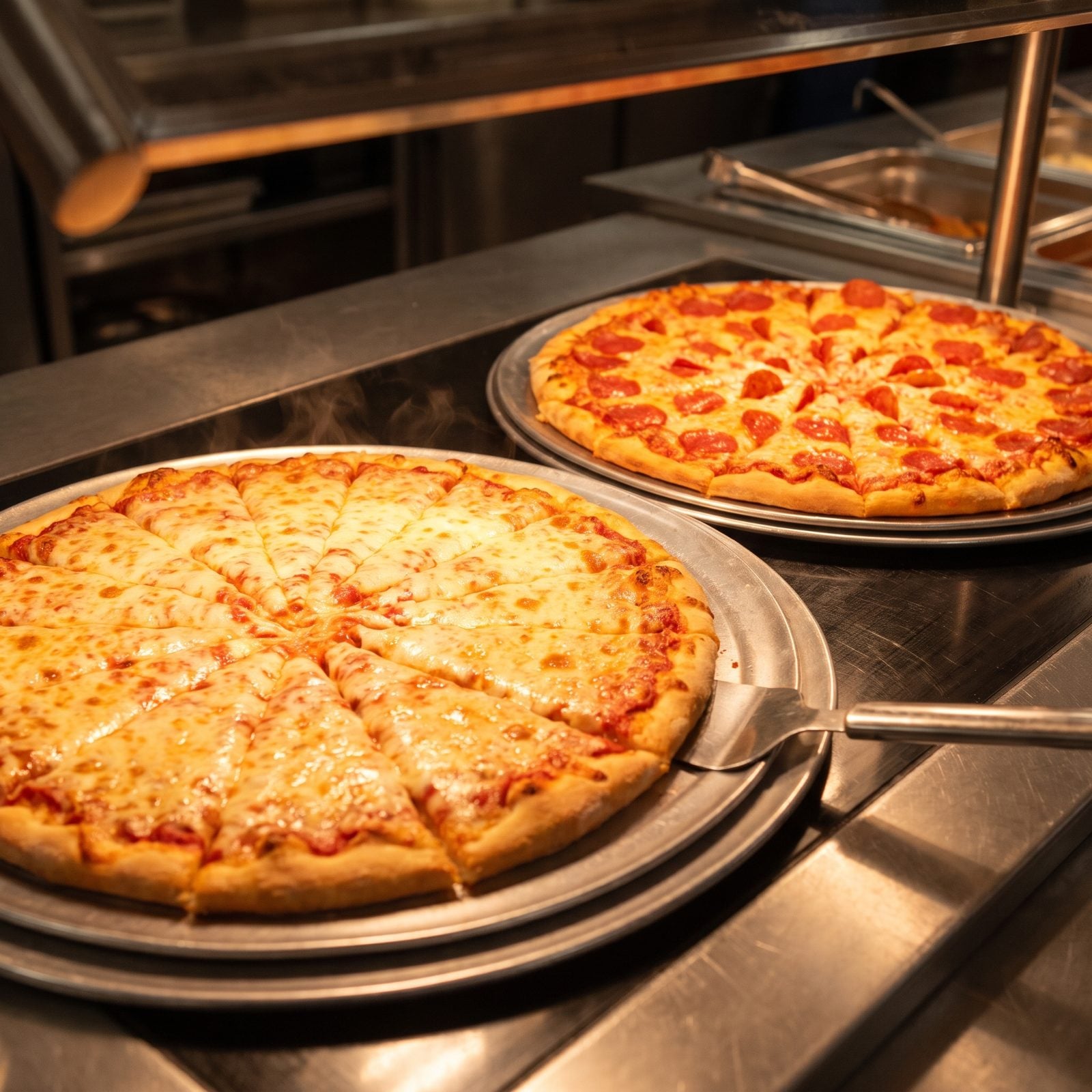
That pizza didn’t get cut into slivers by accident. More cuts, smaller wedges, and suddenly people take two or three skinny pieces instead of one big one. Same amount of pizza, but it moves slower and spreads further across the crowd.
Small slices also reclaim the abandoned slice. Grab a giant piece, eat half, leave the rest — pure loss. A sliver gets finished or skipped entirely. Dough is cheap, but waste is still waste, and tiny wedges waste almost nothing.
35. The Shell-On Shrimp and Crab Legs That Make You Work
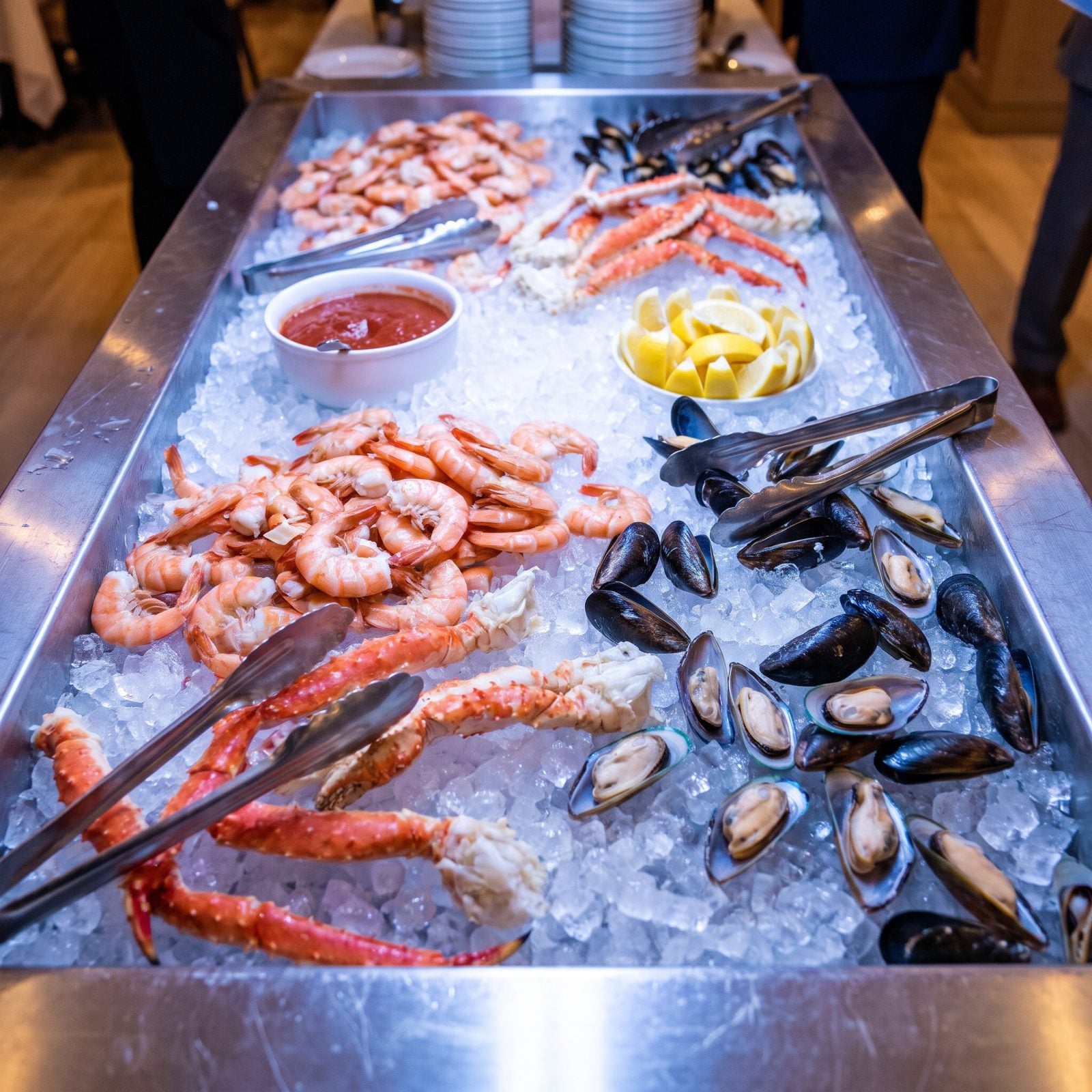
Shell-on seafood is clever on two fronts. It feels like luxury, which is why buffets advertise the crab legs on the sign out front. And it takes forever to eat.
Peeling shrimp, cracking crab, picking out the meat — all that labor slows your intake to a crawl. You spend a good twenty minutes on what amounts to a few ounces of actual seafood. By the time you’re done fighting the shells, you’re full, and the pound of crab legs you eyed stays mostly in the ice.
A former casino buffet manager has said buffet crab legs aren’t worth the mess they make or the time diners spend eating them. (via a former casino buffet manager)
34. The Prime Rib and Lobster You Have to Ask For
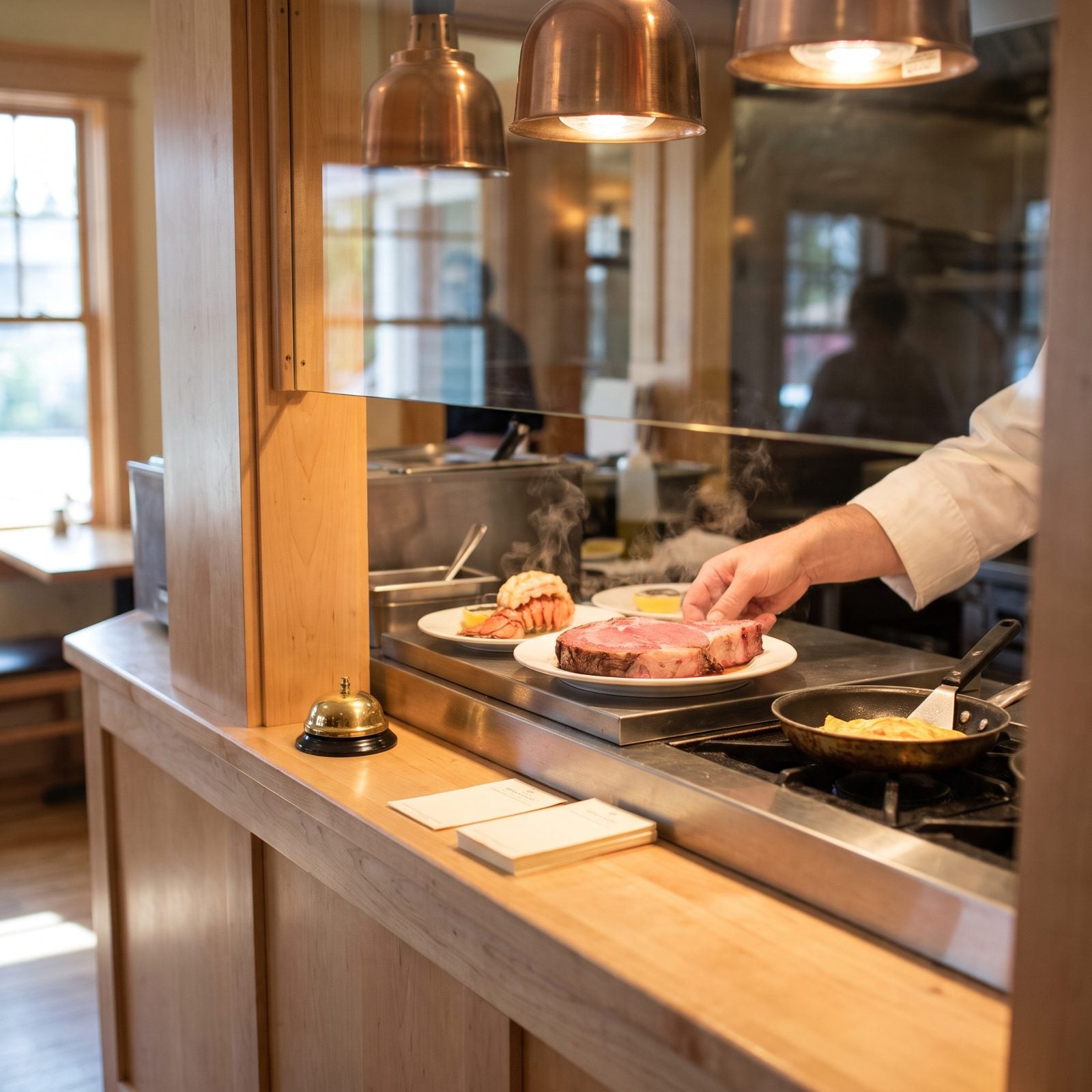
Some items never sit out on the line at all. Prime rib, lobster tail, certain steaks — you have to flag someone down and request them, often one portion at a time.
That little barrier does heavy lifting. It stops you from grabbing six lobster tails on a whim, it keeps the pricey stuff from drying out under a heat lamp, and it adds a flicker of self-consciousness. Asking a human for your third piece of prime rib feels different than scooping it yourself. The friction is the point.
Explaining why diners now have to ask staff for his crab legs, one buffet owner says “I just decided to move them behind the counter and give two to everybody so we can make everybody happy”
No wonder the mains get guarded: in our reader votes, main course photos picked up more hearts than the other images in the same articles, 79% versus 75%.
33. The Carver Behind the Station Is Watching the Meat Go
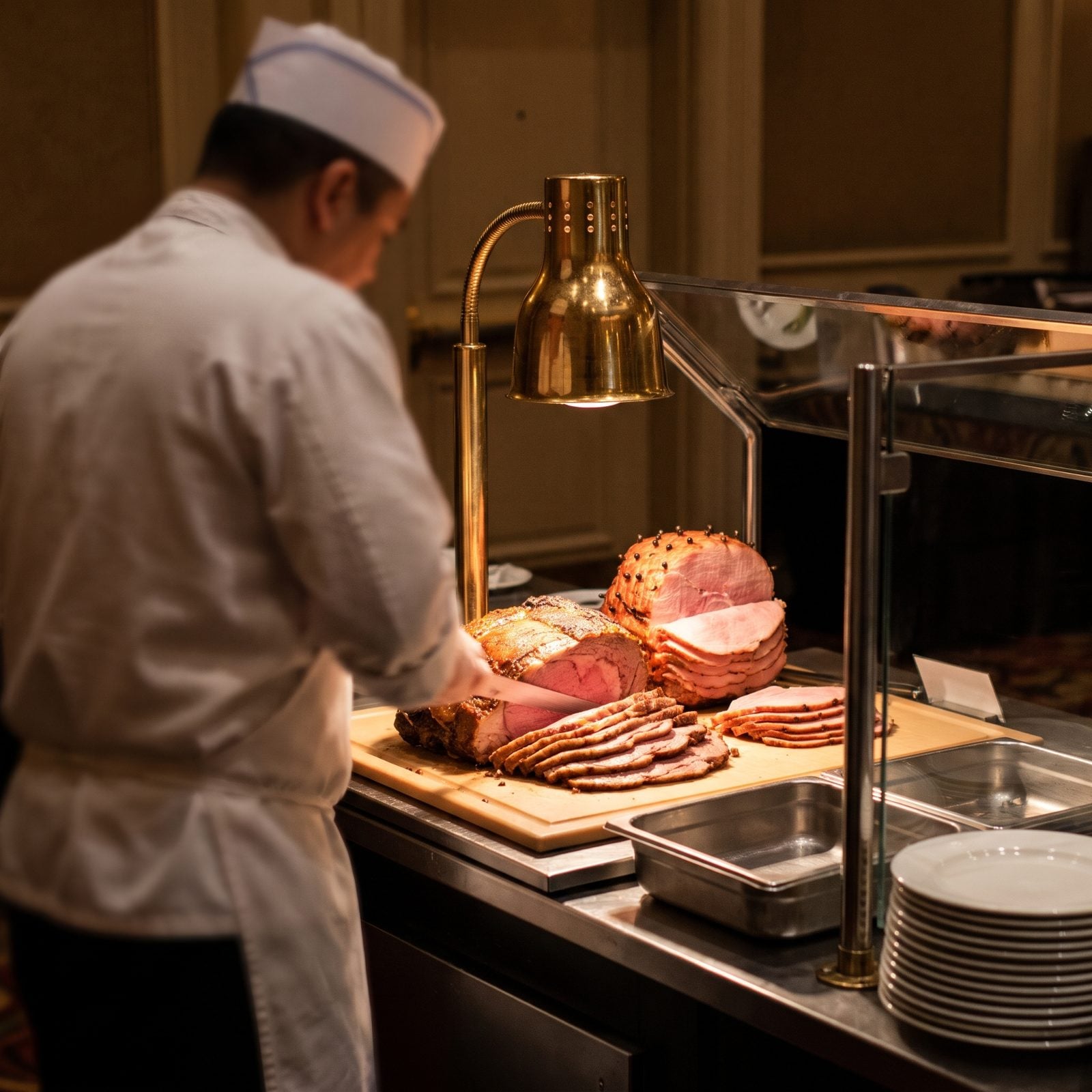
Why pay someone to stand there and carve all night? Because a person behind the station is the cheapest insurance the buffet owns.
The carver sets the serving size, cuts to order, and keeps the expensive pan from being self-looted. There’s a social cost to asking a smiling stranger for a fourth helping, and the restaurant knows it. Looks like service. Works like a gentle, human speed bump between you and the most costly protein in the room.
32. Pumps and Sized Ladles Quietly Standardize Every Scoop
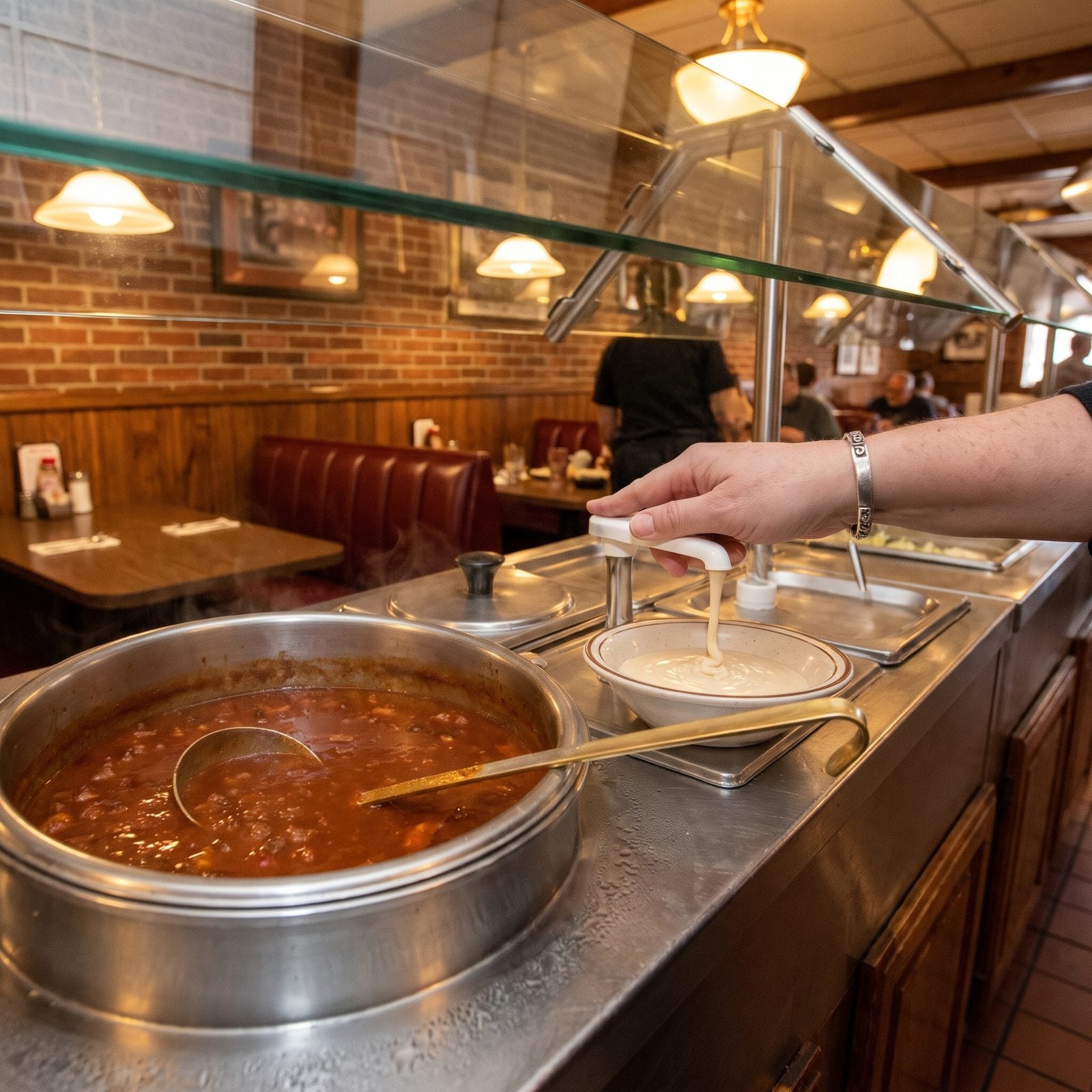
That ladle isn’t random. It holds a specific amount, and so does the pump next to the ranch. Swap a four-ounce ladle for a six and your chili cost jumps by half across a busy night. Nobody tells you, because you don’t notice a smaller spoon until you’re on your third trip.
The pump is the real operator here. One push, one portion, every time — no guessing, no gravy-boat generosity. Control dressed up as convenience.
31. Shallow Pans Make the Pricey Stuff Look Plentiful
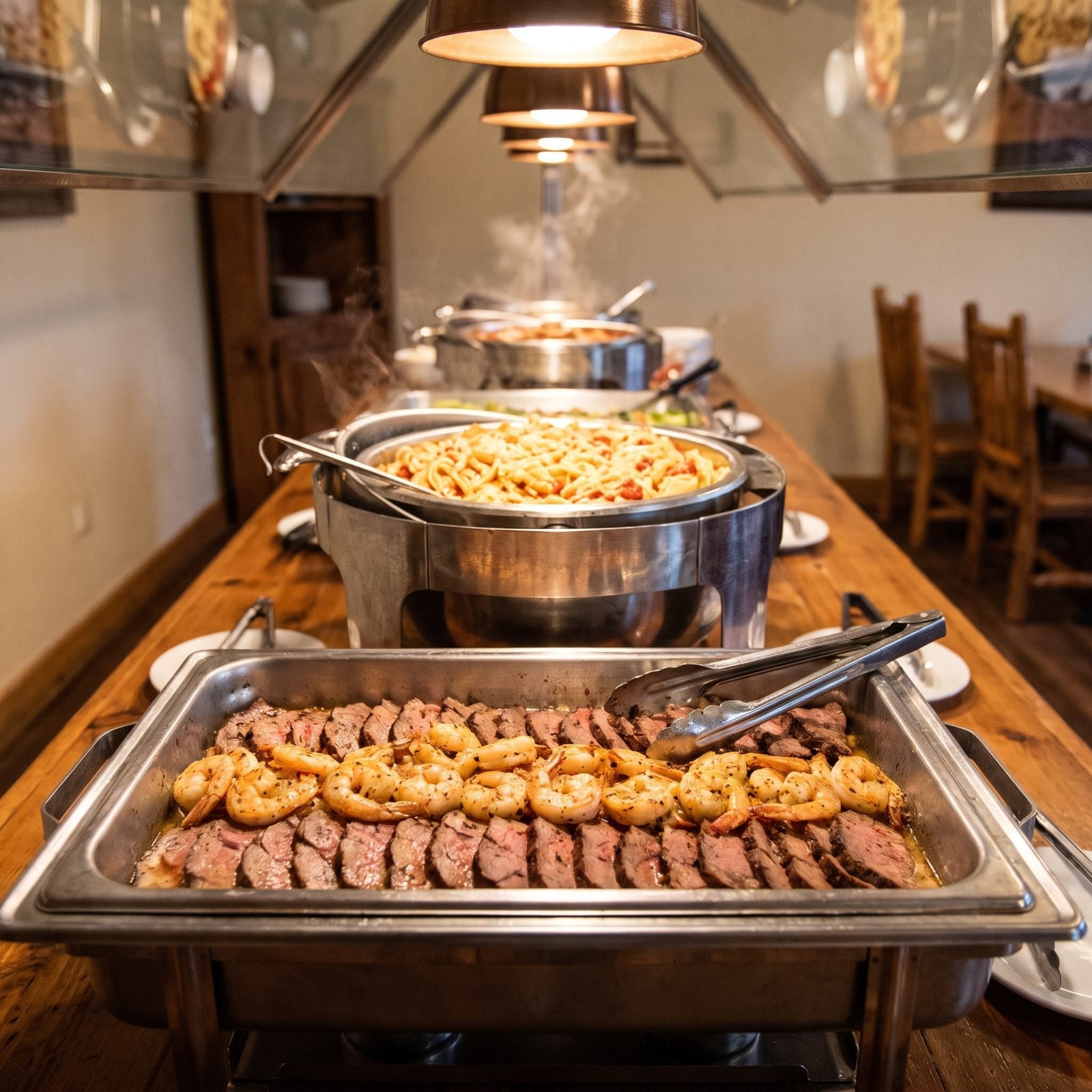
Shrimp, beef, salmon — the expensive proteins live in shallow pans. A half-inch of food reads as a full tray because your eye only sees the top surface, and deep pans get saved for the cheap carbs, where volume costs pennies.
It’s an honest illusion, mostly. The pan looks full. The food is fresh. You just happen to be staring at a thin layer spread over a lot of empty steel.
30. Smaller Pans Slide In When the Dining Room Goes Quiet
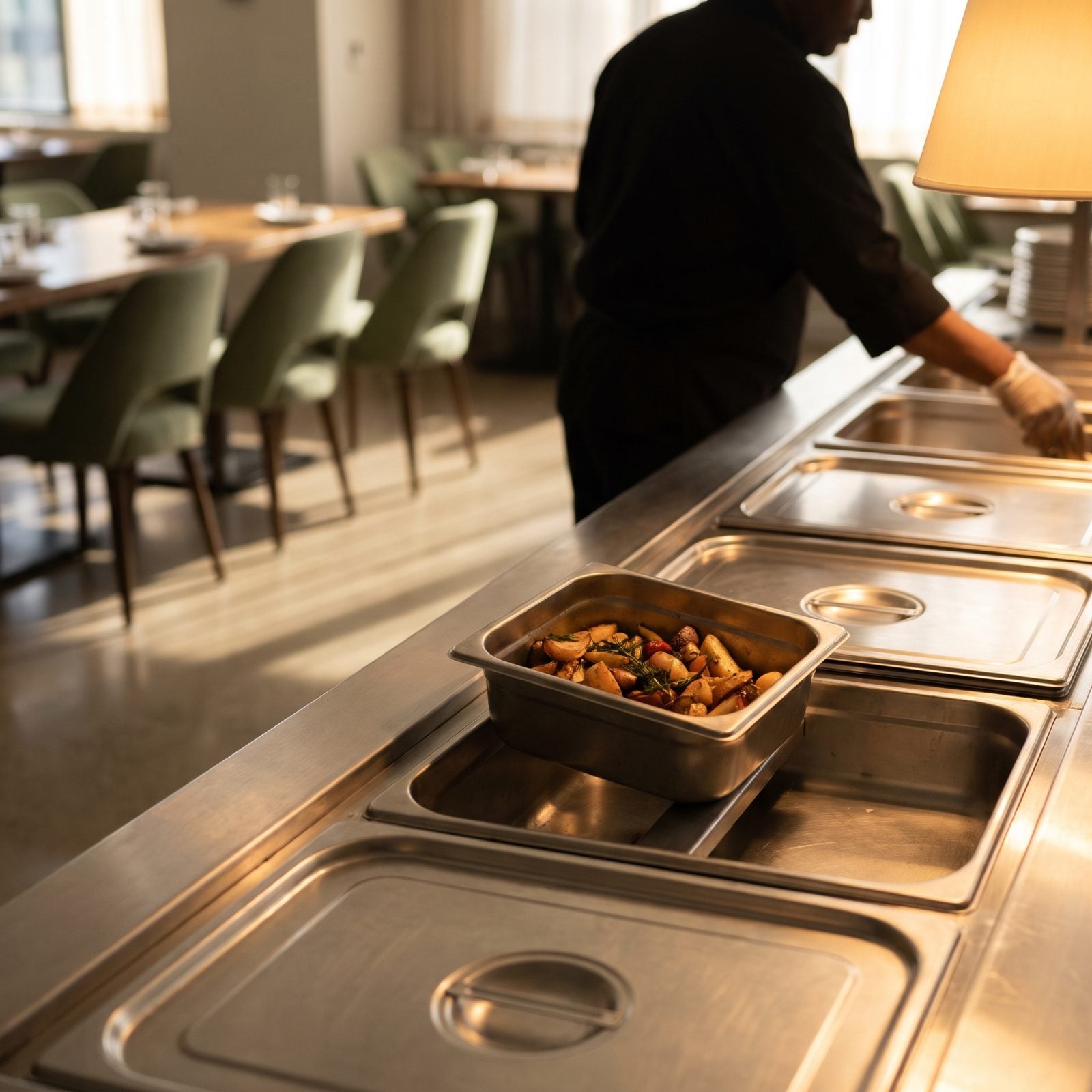
Hit a buffet mid-afternoon on a weekday and watch the pans shrink. The full-size trays get swapped for half and third pans, dropped into the same wells with little metal adapter bars.
Why? A big pan holding for three slow hours either dries out or gets dumped. Smaller batches mean less waste and fresher turnover when only six people are grazing. So here’s your move: eat during the shift-change rush, not the dead zone.
29. Small Fresh Batches Beat One Giant Tray
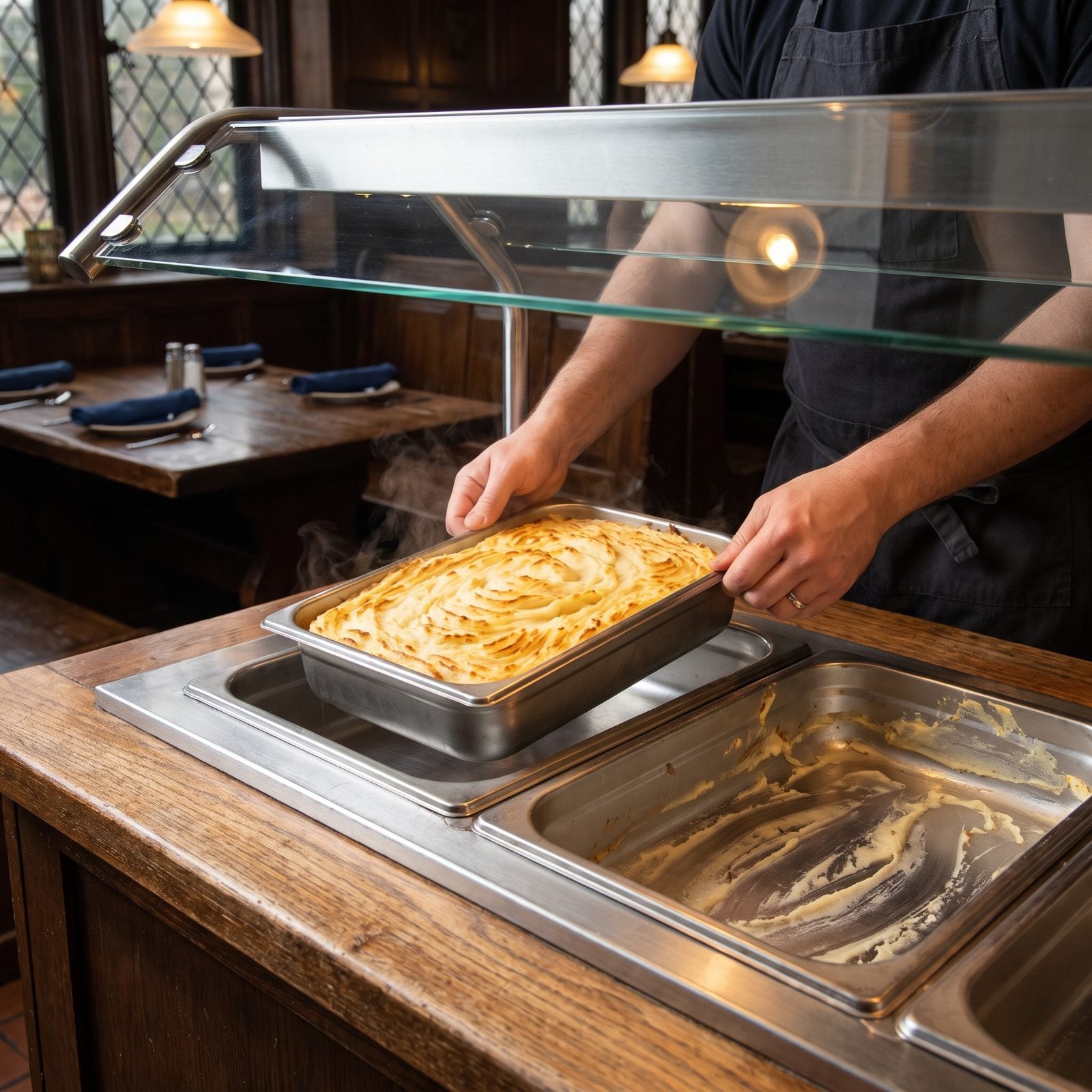
The whole line runs on frequent small refills, not one mountain of food dumped out at open. A small batch spends less time under heat lamps, so it looks and tastes closer to just-cooked.
And there’s a trick tucked inside the trick. A pan swapped out every twenty minutes always looks cared for. Diners read freshness as management paying attention, and they trust the entire room because of it.
A buffet is judged not by its best dish but by its worst-looking pan.
As one buffet kitchen manager puts it, “You just have to be very careful about how much you put out, because once it’s out, it can’t go back into circulation”
28. Empty Pans Get Replaced, Not Topped Off
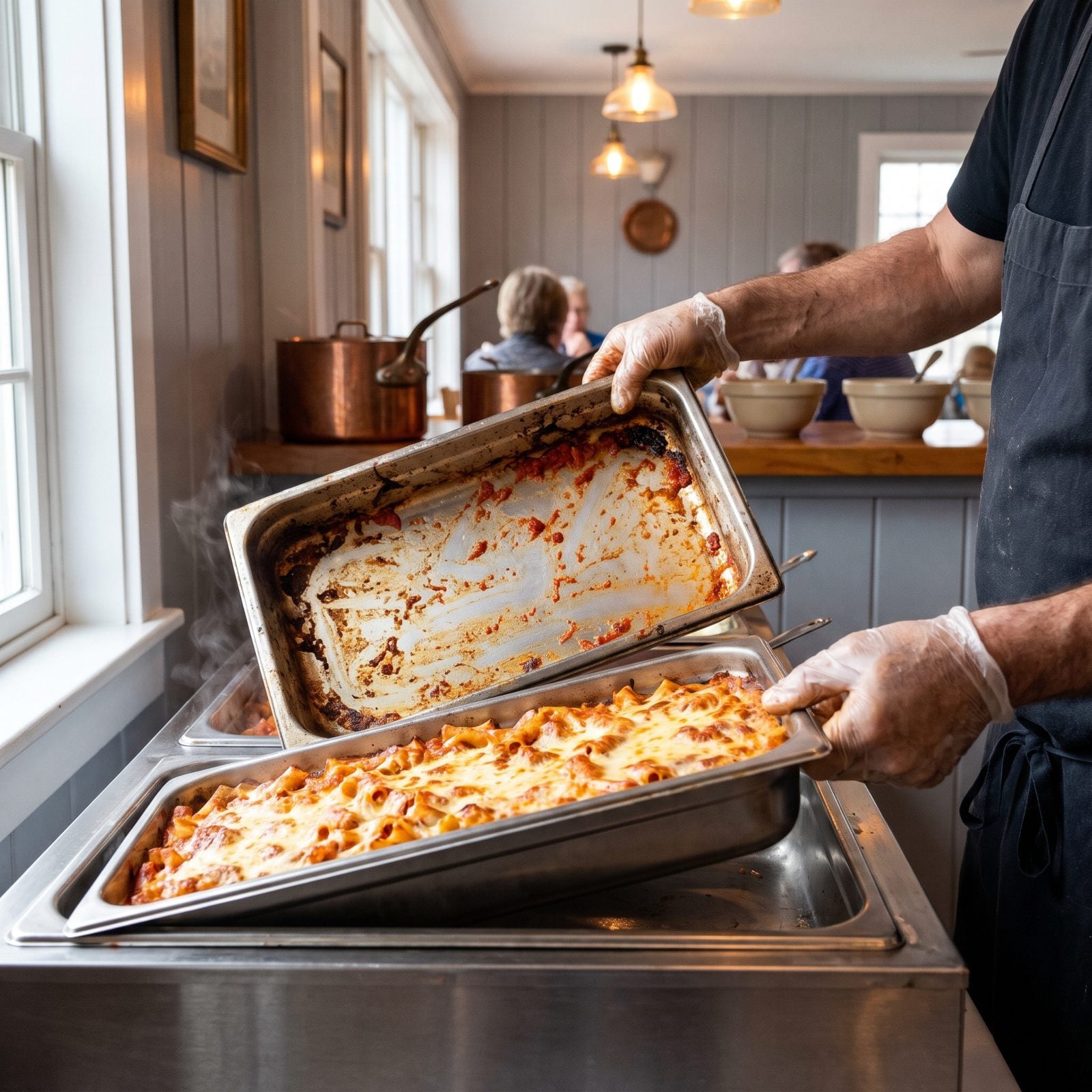
Good operations never dump fresh pasta on top of the crusty leftovers in a near-empty pan. They pull the whole thing, clean it, bring a new one. Old food stuck to the pan walls has been drying under heat for an hour, and it tastes exactly like that.
Topping off is the lazy shortcut, and you can spot a place that does it. Look at the pan edges. Dark, scabby corners mean nobody’s swapping. Clean rims mean somebody back there actually gives a damn.
27. Steam Wells Keep the Saucy Dishes from Drying Out
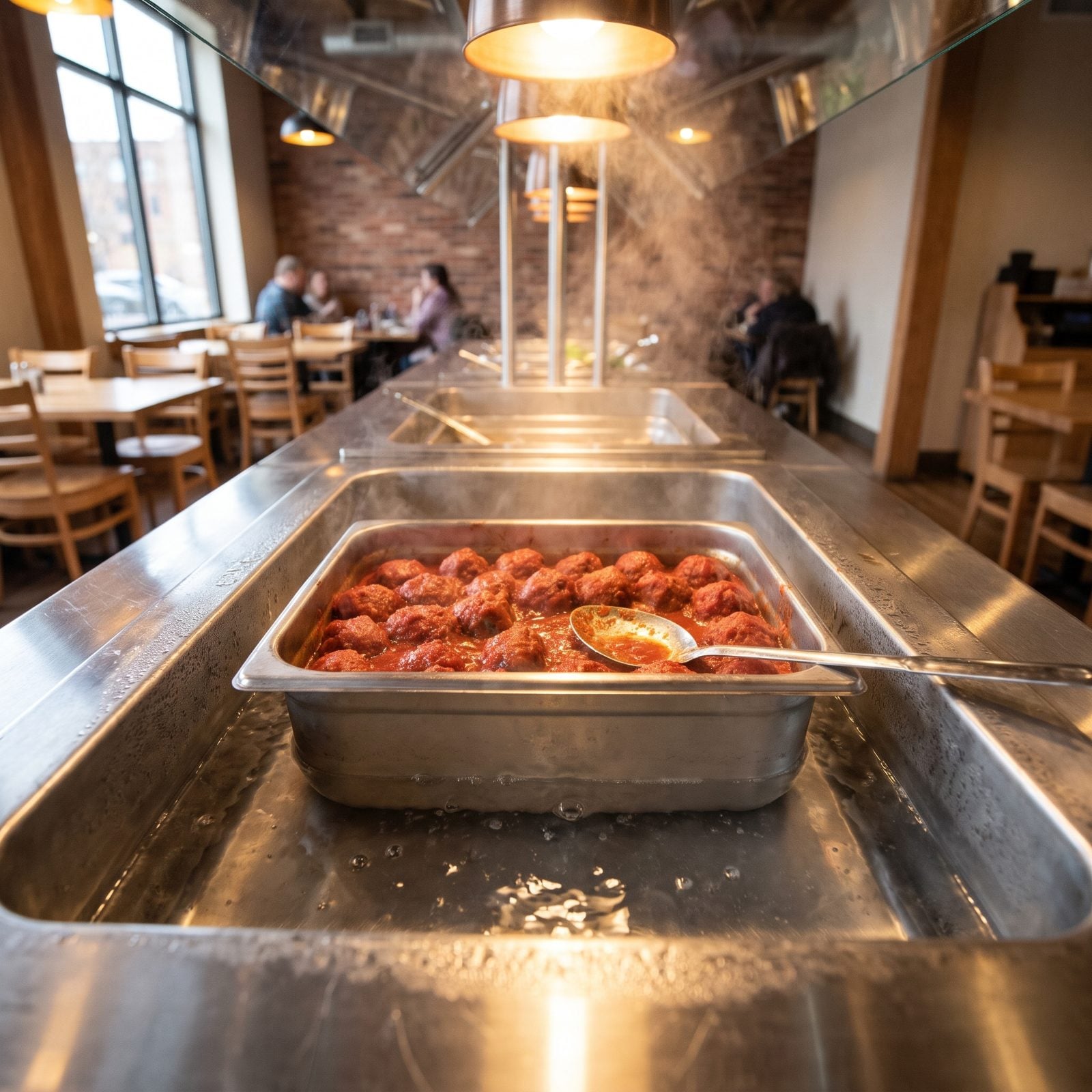
Anything wet lives over a water bath — meatballs, gravy, saucy vegetables, mac and cheese. The steam locks moisture into the pan so the sauce stays loose instead of turning into a skin you could roll up like old carpet.
Water temperature matters more than people think. Too hot and the bottom scorches. Too cool and you’re sliding into the danger zone where bacteria throw a party. That quiet bubbling underneath is working the whole shift.
26. Dry Heat Protects Anything That’s Supposed to Crunch
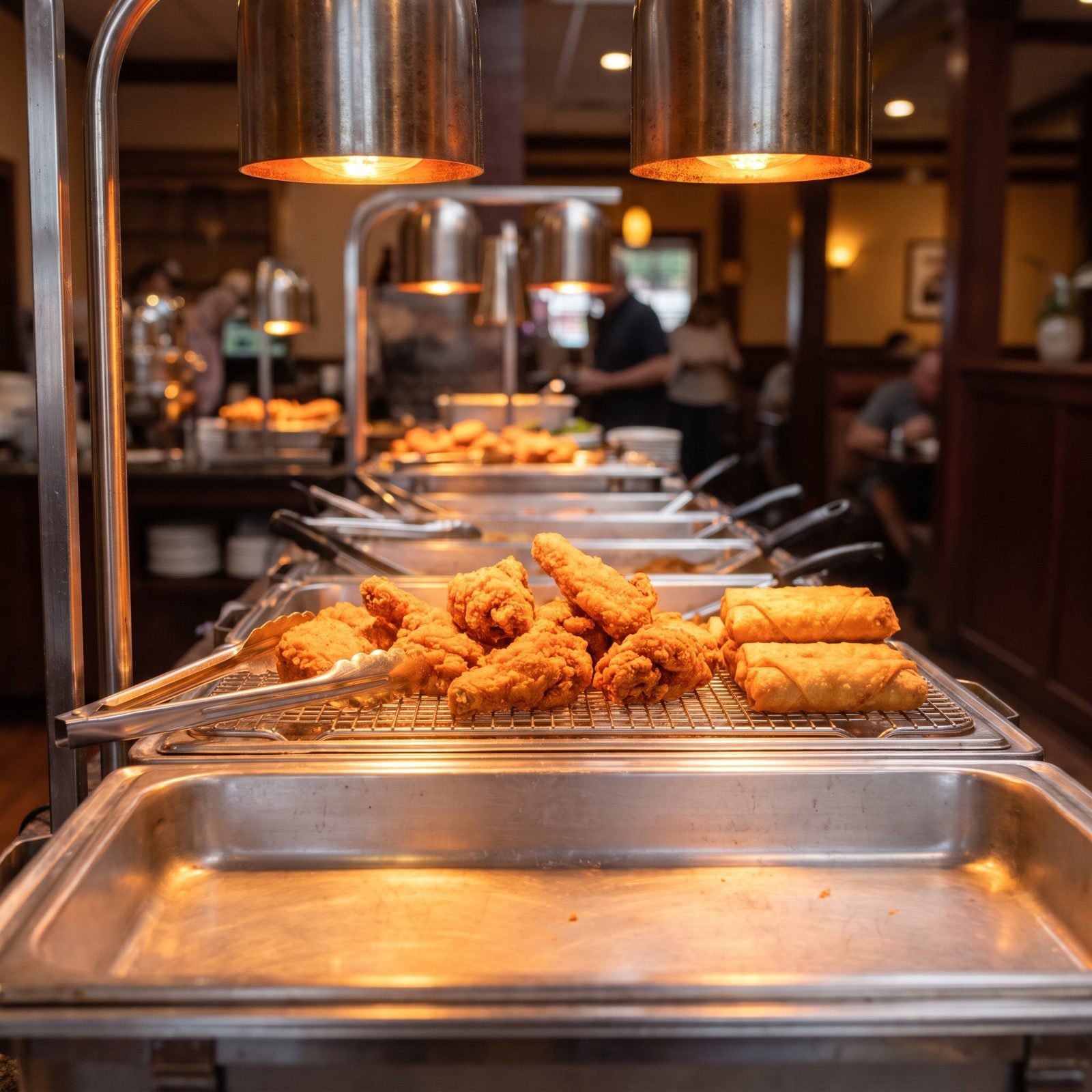
Fried chicken and egg rolls never go over water. Steam is the enemy of crisp, so these sit under heat lamps on open racks where dry warmth holds them without softening the coating.
But here’s the catch nobody mentions. Dry heat holds crunch and kills juiciness fast, which means crispy food has the shortest honest shelf life on the whole line. If the fried stuff isn’t moving, it’s a gamble. Grab it right as a fresh batch lands and you win.
25. Cold Dishes Nest Down Into Refrigerated Wells
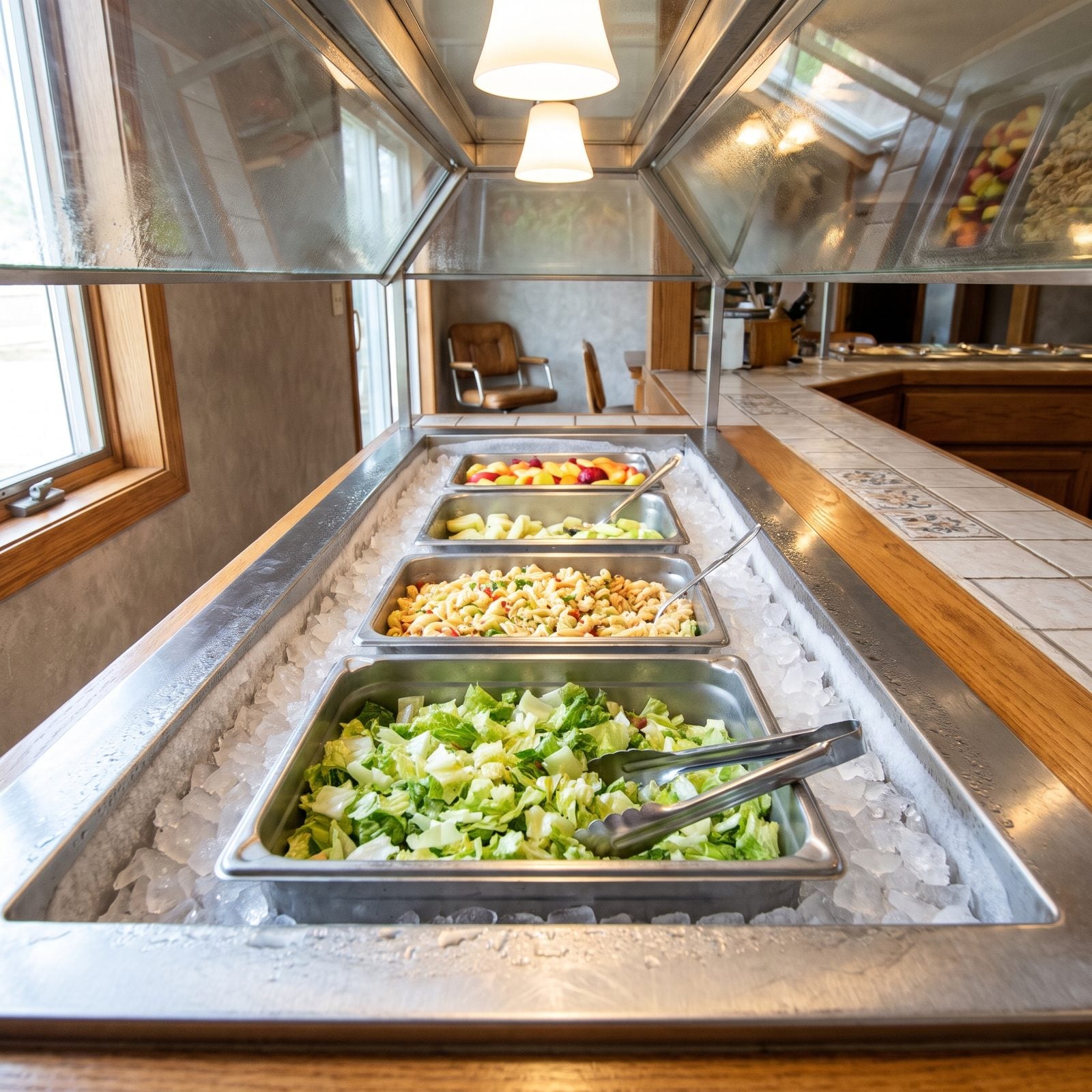
The salad bar isn’t sitting on ice for looks. Those pans nest down into refrigerated wells, dropped low so the cold air and chilled metal wrap all the way around the food instead of just chilling the bottom.
Shallow nesting gives away a well-run cold line. Pile a salad pan too high and the top layer sits in room-temperature air, wilting and warming while the bottom stays cold. Check the frost line on the rim — it tells you who’s doing it right.
24. Perforated Pans Let the Soggy-Makers Drain Away
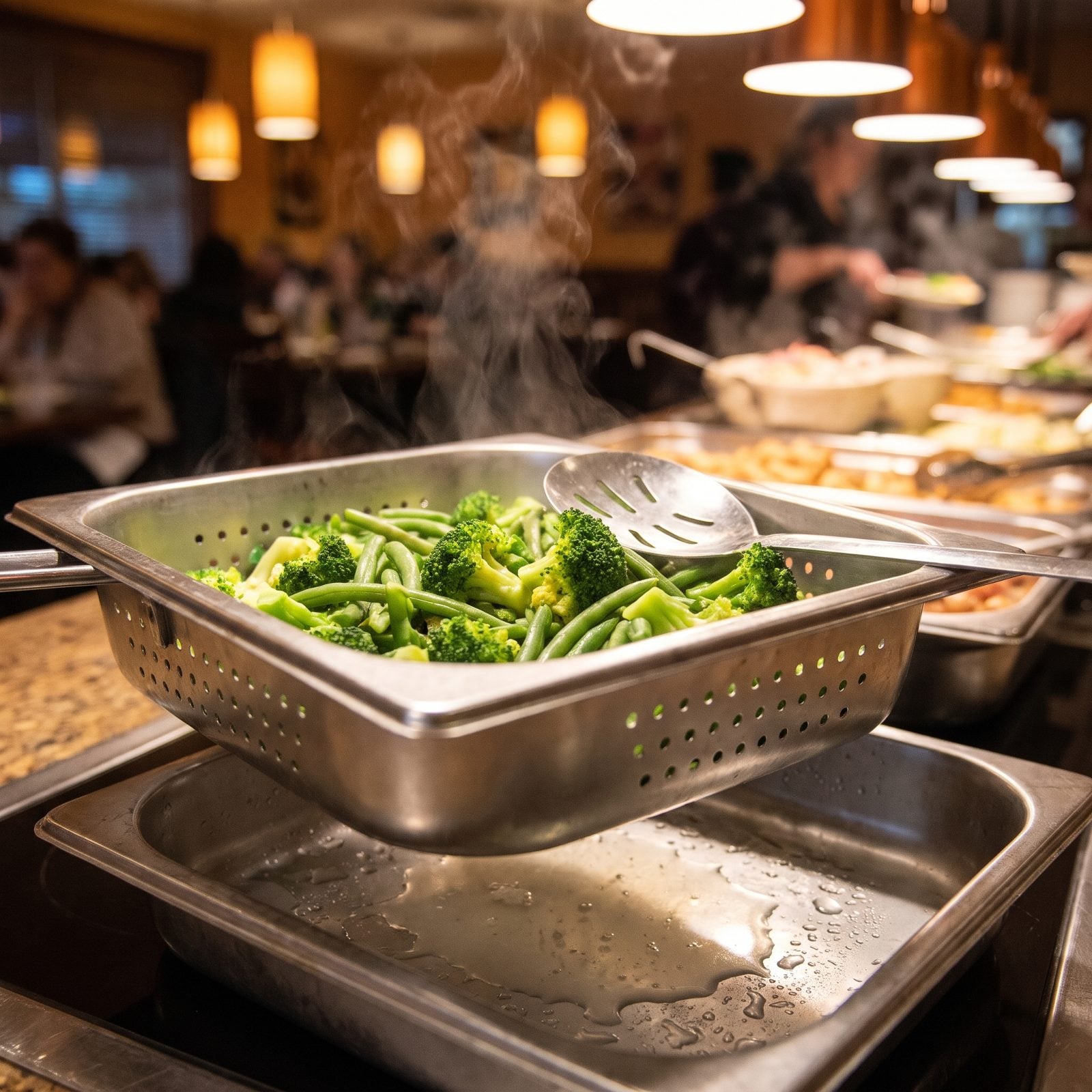
Steamed vegetables sit in pans full of tiny holes, raised above a solid pan that catches the runoff. The water they shed drains down instead of pooling, so your broccoli doesn’t end up swimming in a gray puddle.
Small thing, big difference — it’s what separates a decent veg station from a depressing one. Vegetables left in their own liquid go limp and waterlogged in under an hour. The perforated pan buys them time, and a little dignity.
23. Pasta Gets Pulled Early Because the Steam Table Finishes It
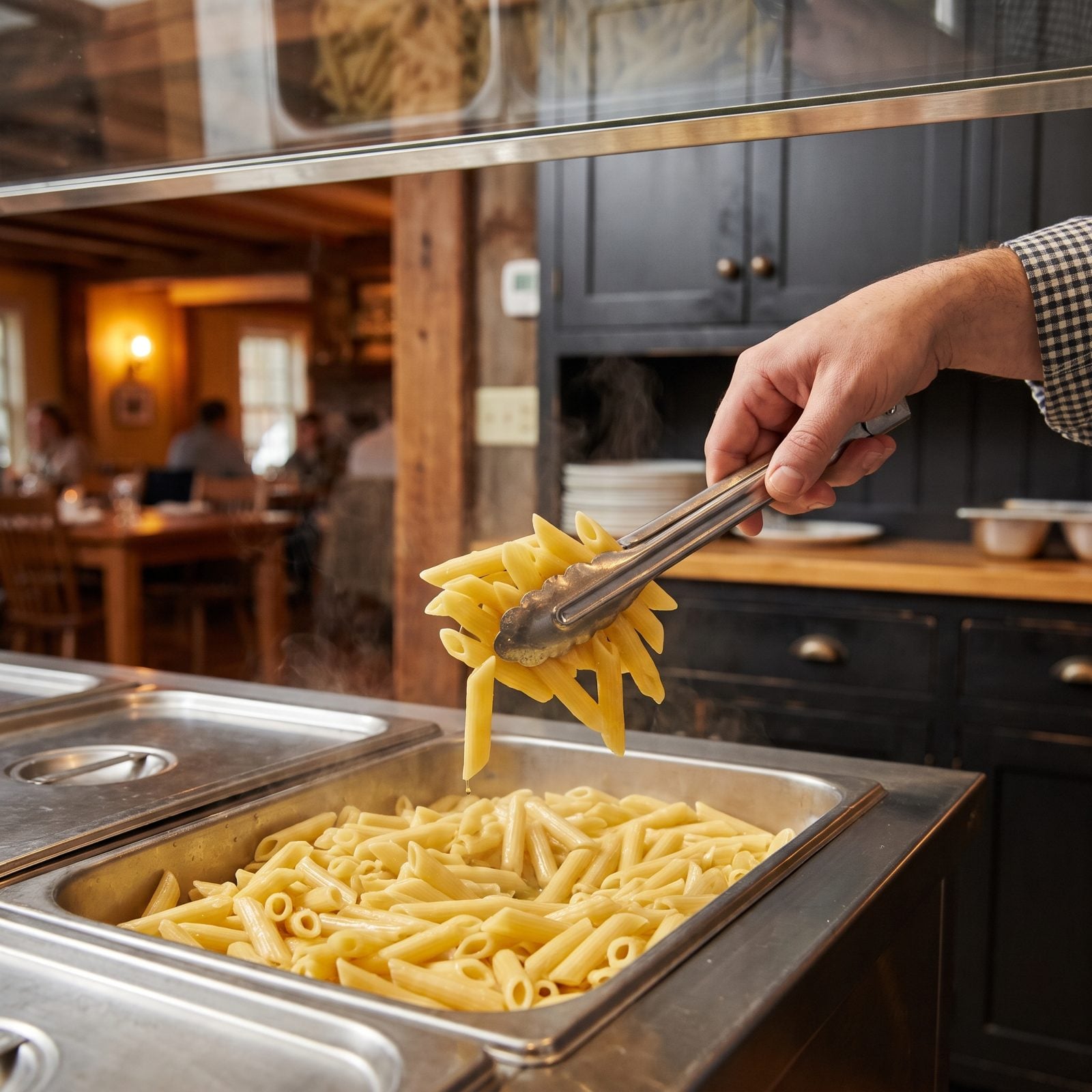
The kitchen pulls the pasta a minute or two shy of done. It has to. The moment it hits the steam table it keeps cooking in all that held heat and moisture.
Cook it to perfect in the back and by trip number two it’s a mushy mess falling apart on the serving spoon. Slightly firm going in means edible coming out an hour later. That’s the whole difference between pasta and wallpaper paste.
22. Hold the Sauces Separately Until the Last Minute
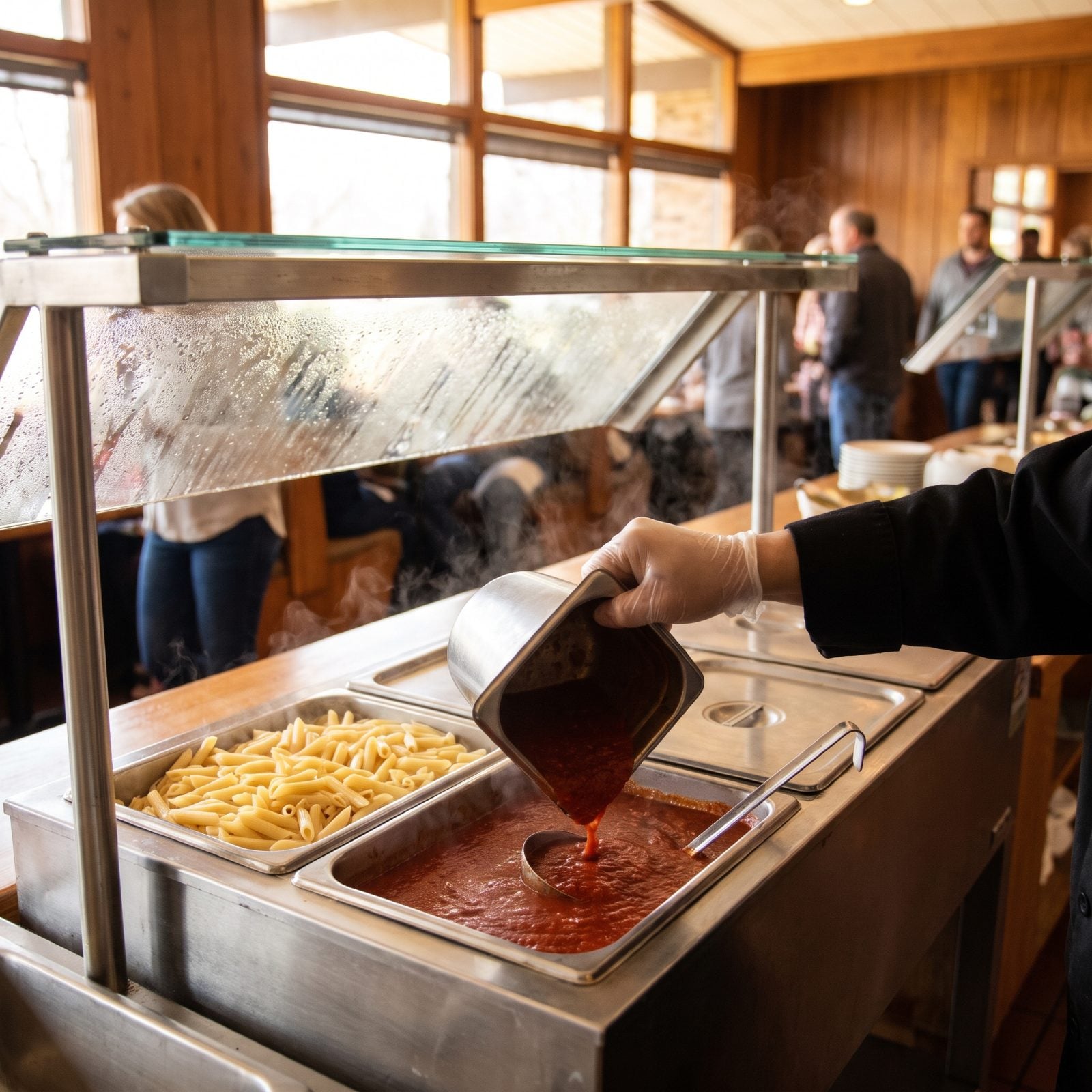
Noodles sitting in sauce for an hour turn to paste. Keep the two apart and the pasta still has bite when you serve it, while the sauce only coats what leaves the pan. That’s why the good buffets park the marinara in its own little chafing dish with a ladle instead of drowning everything in one soupy tray.
It also saves a fortune. Sauce costs less than meat and vegetables, so the longer the expensive stuff stays dry and presentable, the less ends up scraped into the bin at close.
21. Fry in Small Batches, More Often
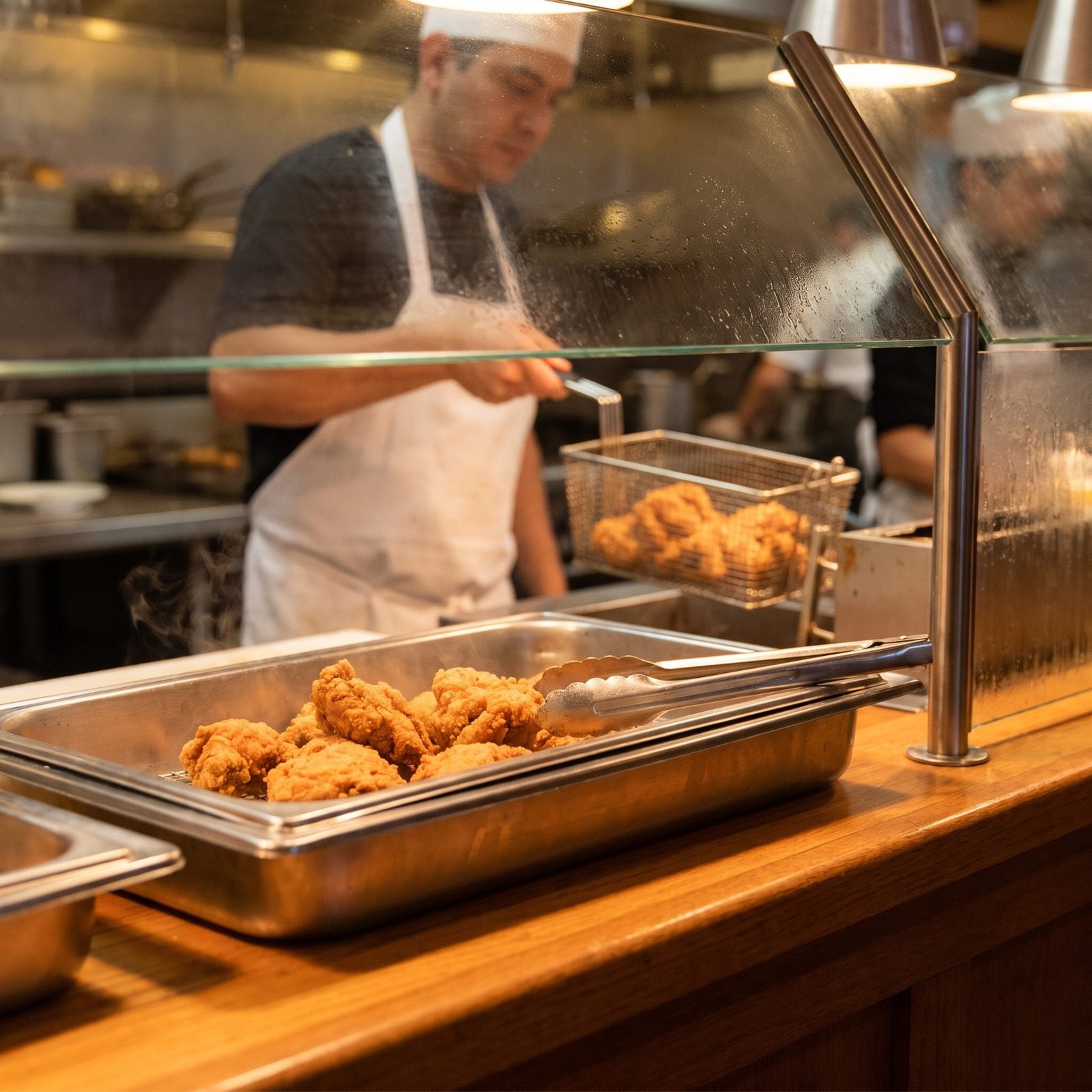
A mountain of fried chicken under a heat lamp looks generous for about twenty minutes. After that it’s rubber, because the steam trapped against the crust turns crisp into soggy, and everybody can taste it.
So the smart kitchens run half-full pans and refill constantly. Looks a little less abundant — on purpose. Smaller batches keep the crust almost always within half an hour of the fryer, and less of it ever reaches the point where someone has to throw it out.
20. Rest the Carved Meat Before It Hits the Line
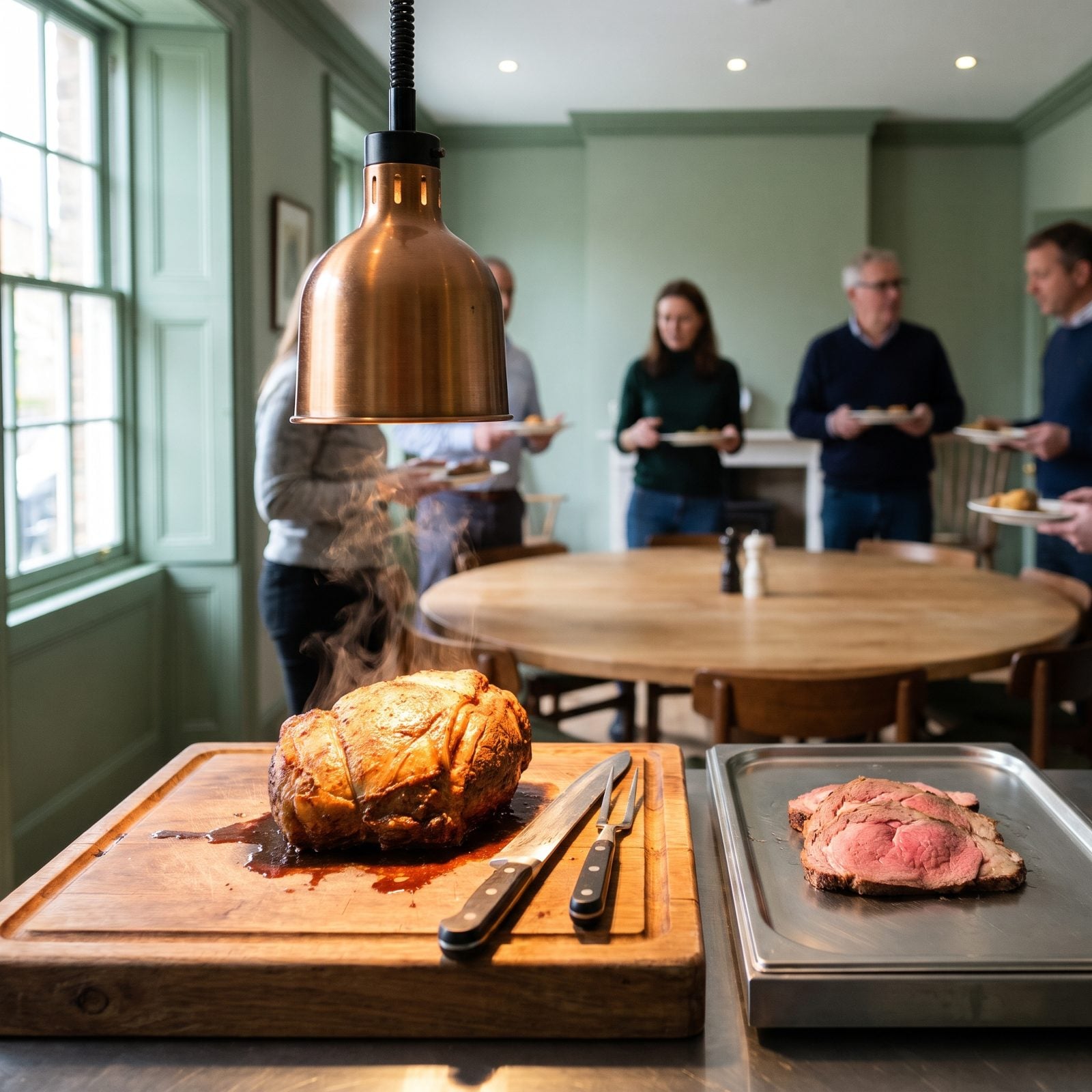
Slice a roast the second it leaves the oven and you watch the juice run out onto the board. That moisture is flavor leaving the meat, and it leaves a drier slice on your plate.
Let it rest and the juices settle back in. On a buffet that pays off twice over: the meat holds better under the lamp, and it carves into cleaner, thinner slices. Thinner slices stretch one roast across far more plates, which is exactly the point.
19. Break the Long Line Into Food Islands
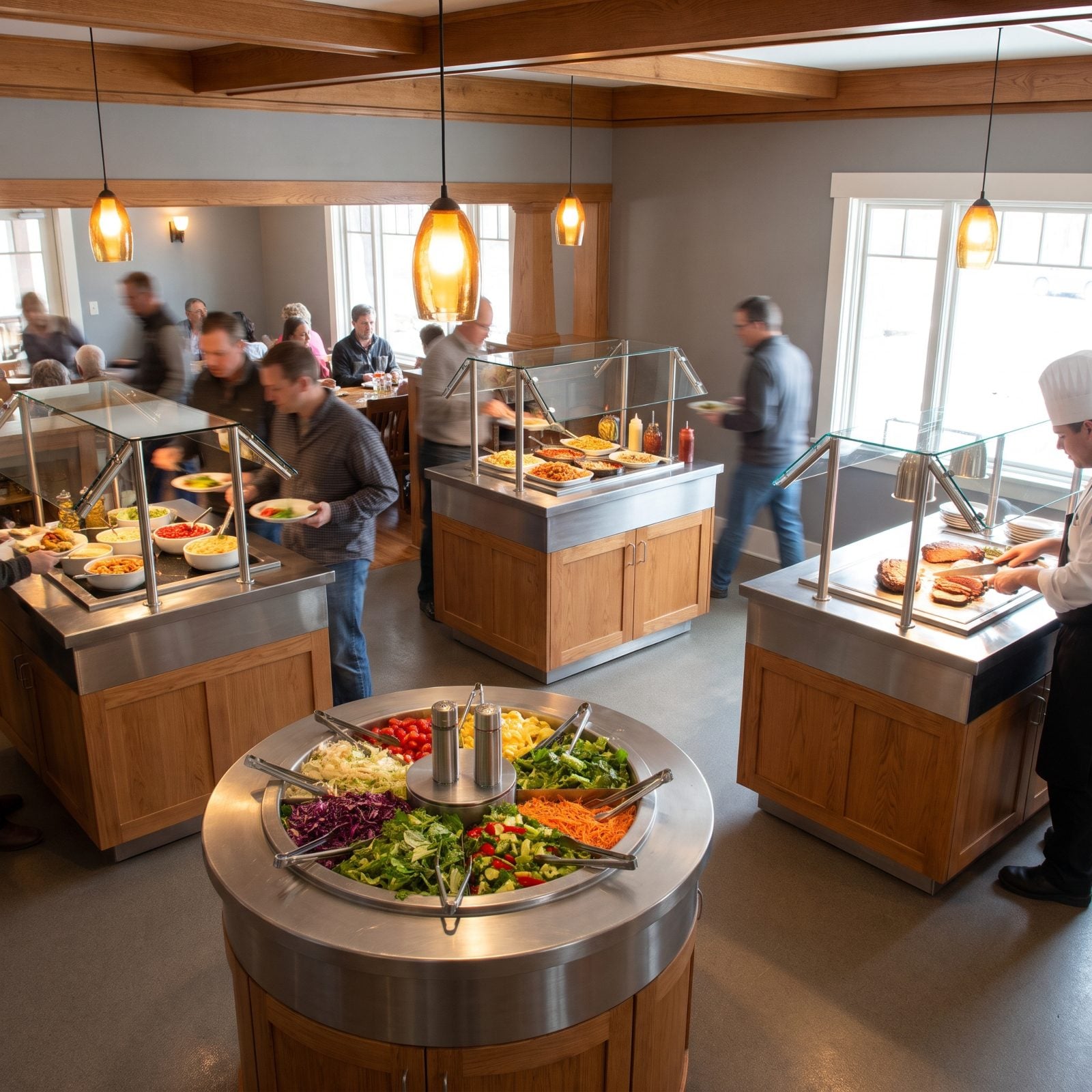
One long straight line is a traffic jam waiting to happen. Somebody dithers over the lasagna and the whole queue backs up behind them.
Split the food into separate islands and the crowd scatters. People drift to whatever they want in any order, nobody’s stuck shuffling single file, and the room moves faster. Faster turnover means more tables served in the same two hours, which is the whole economics of the place.
18. Repeat the Crowd Favorites at Two Stations
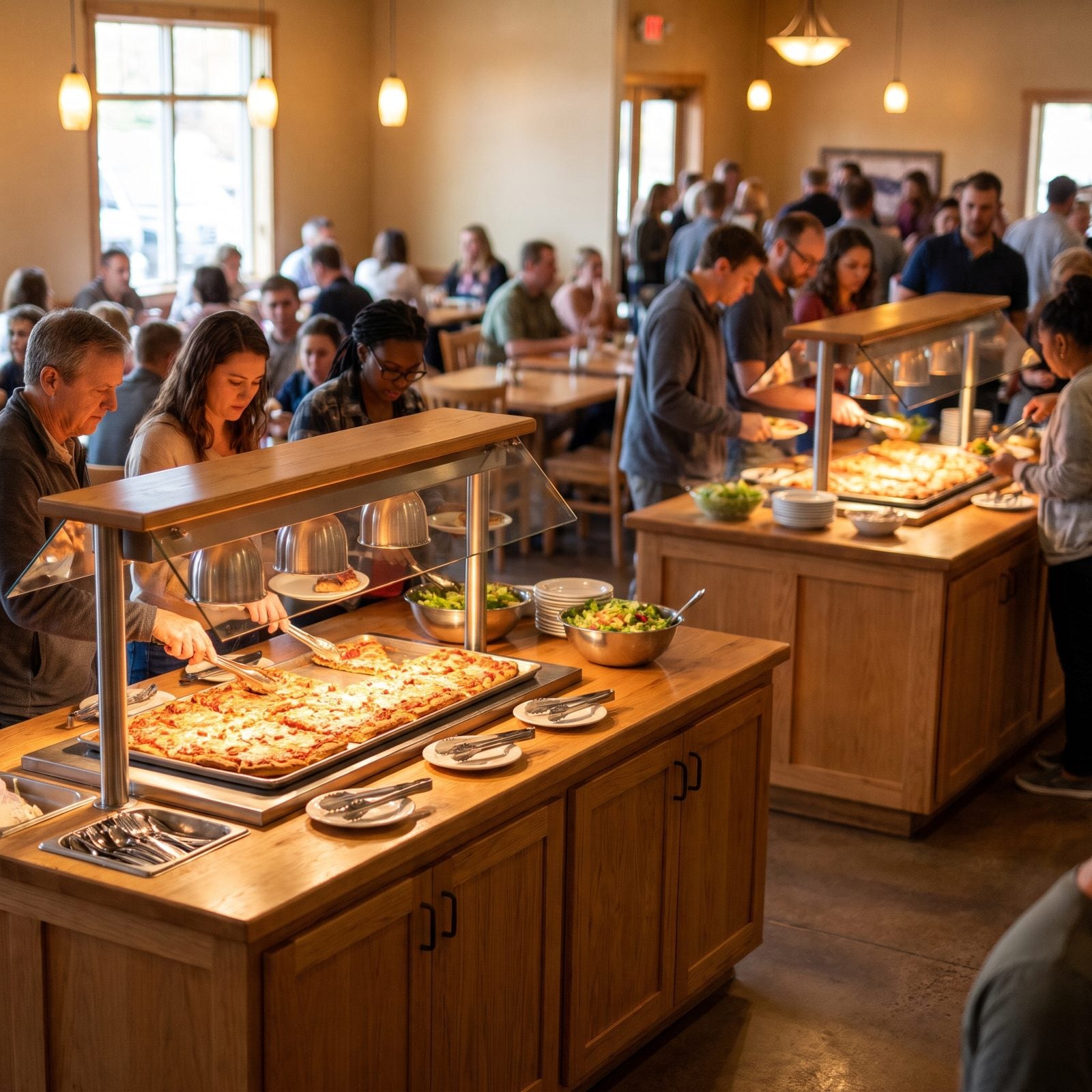
If one tray of pizza is the only pizza in the building, a line forms, the tray empties, and people stand around waiting. Both bad.
Put the same crowd-pleaser in two spots and you split the demand down the middle. No single pan drains faster than the kitchen can refill it, no clump of hungry people clogs one corner of the room. The food that vanishes fastest is exactly the food you want in more than one place.
17. Seat New Tables in Waves, Not All at Once
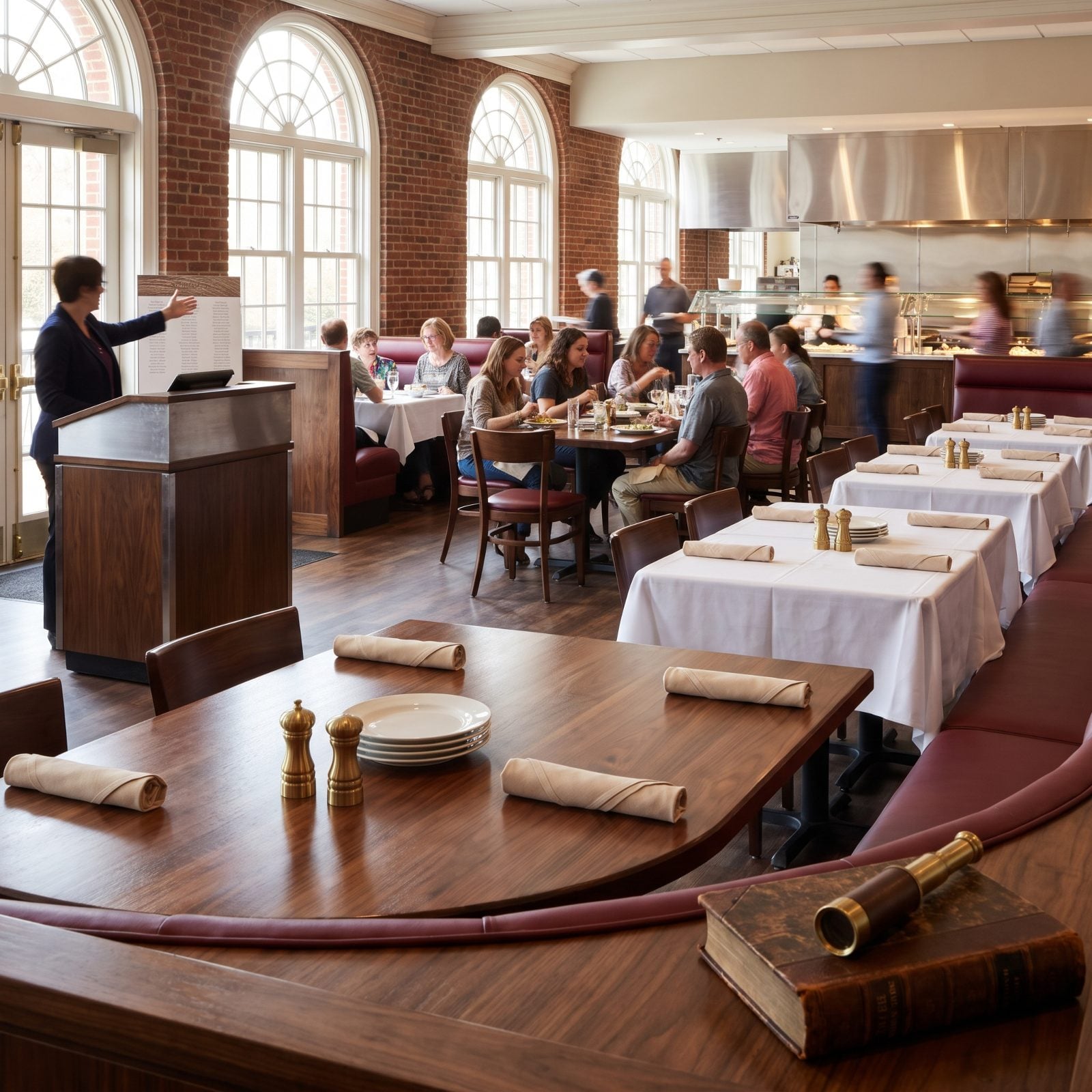
Seat a dozen tables in the same five minutes and you’ve sent a stampede at the buffet. The line clogs, the pans empty faster than anyone can refill them, and the first-timers get the worst view of the food.
Stagger the seating and you get a steady trickle instead of a surge. The kitchen keeps pace, the pans stay stocked and presentable, and the room never feels like a mob scene even when it’s full.
16. Shrink and Consolidate the Buffet Near Closing
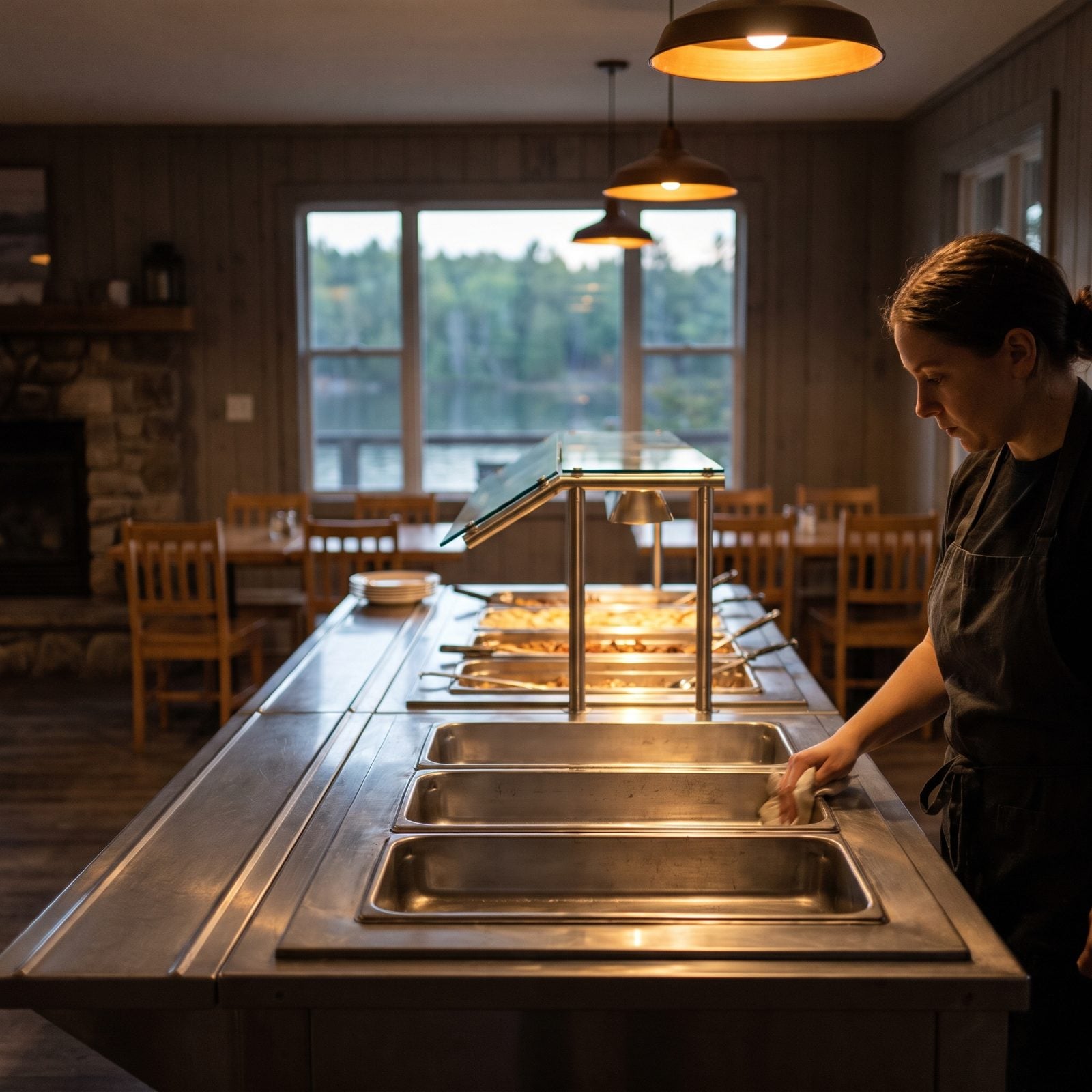
Notice how the buffet seems to shrink in the last half hour? Deliberate. As closing nears, the staff stop refilling everything and start pulling the near-empty pans, sliding what’s left into a tighter cluster.
It keeps the remaining food looking stocked instead of sad, and it means fewer full pans get cooked right before close only to hit the bin. The late diner still sees a decent spread. The kitchen just stopped making food it knows won’t sell.
15. Keep Flatware and Napkins at the Table, Not the Line
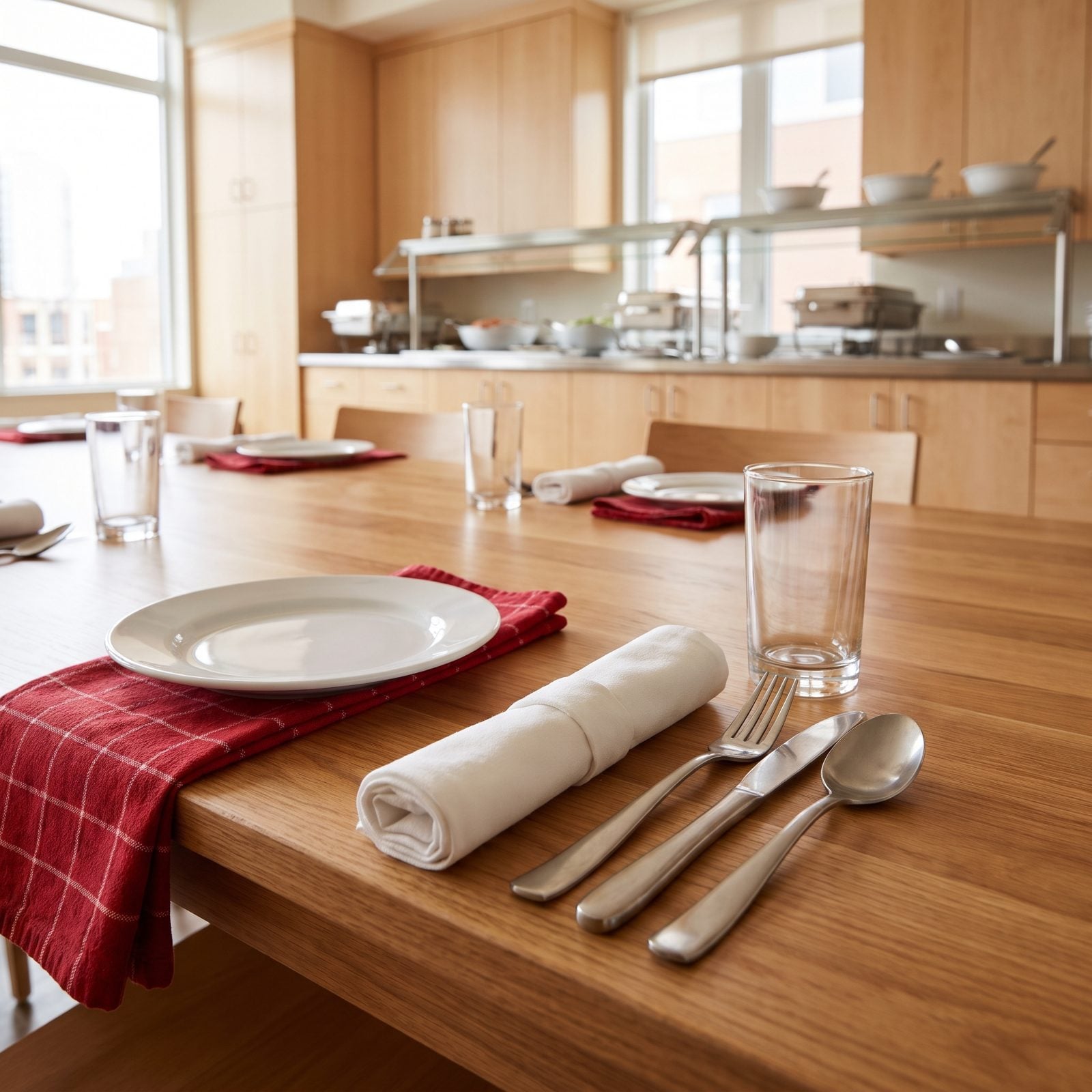
Ever juggle a hot plate, a drink, and a fistful of silverware on the way back from the line? The better-run buffets spare you that, and it’s not just courtesy.
Flatware set at the table keeps the line moving. Nobody stops to paw through a cutlery bin at the exact spot where a backup starts. It also keeps the serving area cleaner and cuts down on people grabbing three forks they’ll never use.
14. Put the Condiments After the Main Food
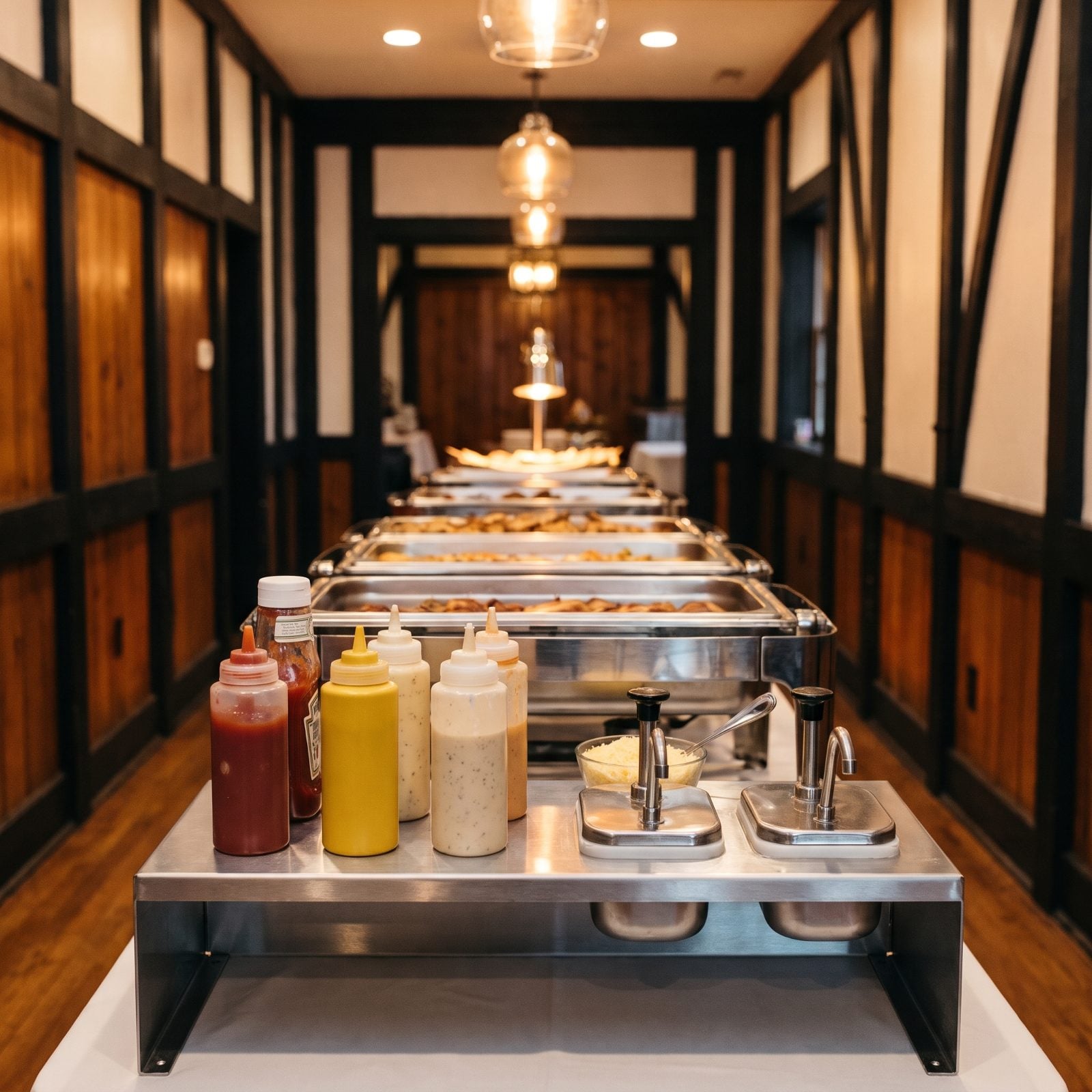
Condiments live at the very end of the line on purpose. You can’t sauce a plate you haven’t filled yet, so there’s no reason to let them cause a bottleneck up front where everyone’s deciding and scooping.
Park them last and people only stop once they know what they’re dressing. The line flows cleaner, the dressing drips land near the trays instead of all over the hot food, and the fiddly little station sits where it slows no one down.
13. Keep Beverage Traffic Away From Hot-Food Lines
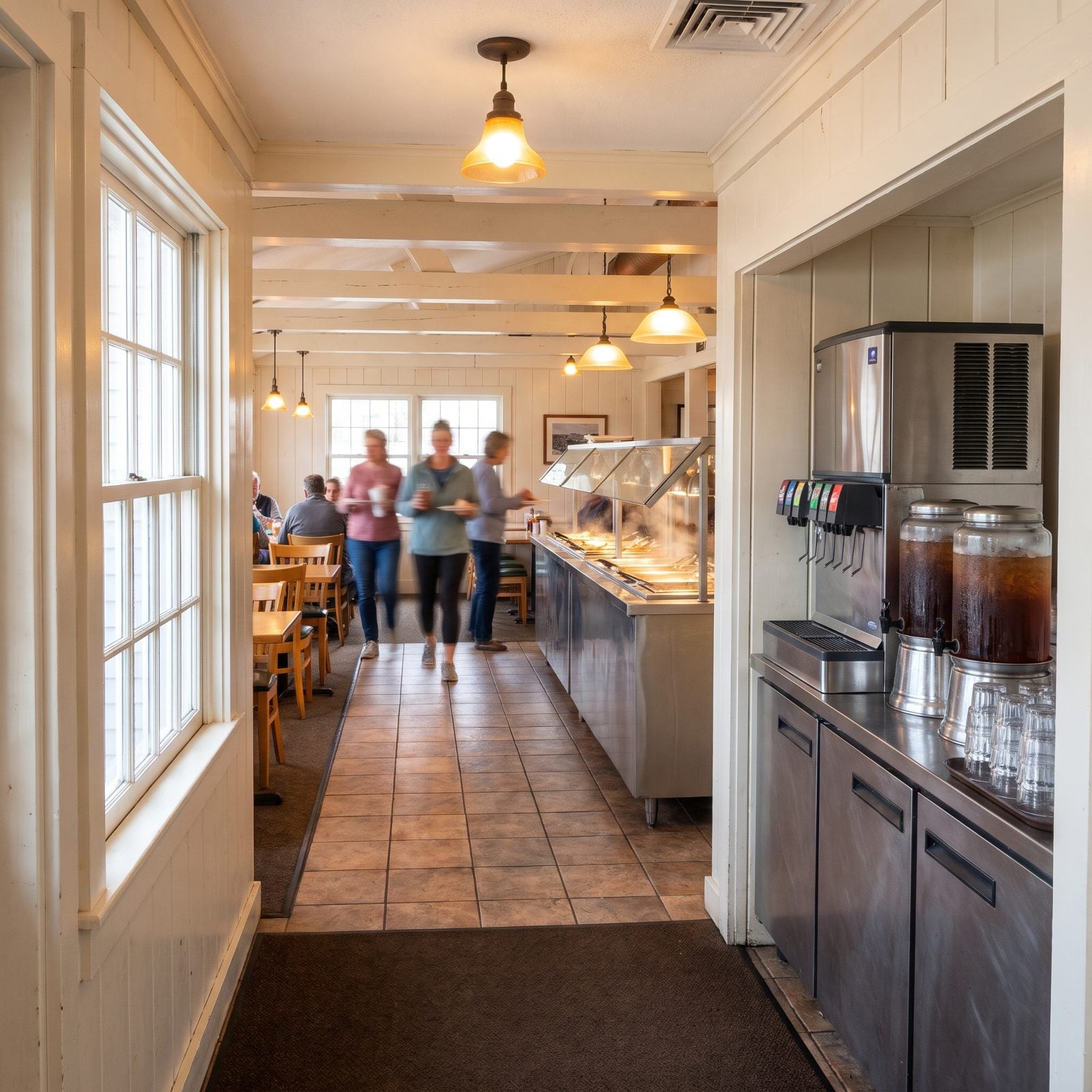
Watch where the drinks live. In a poorly planned buffet, the soda fountain and tea urns sit directly across a narrow aisle from the carved roast and the pasta pans, sharing the same walkway. That setup causes trouble, and here’s why.
Beverage stations create slow, fumbling traffic. People refill, they spill, they stand there forever deciding between lemonade and root beer. Park that bottleneck next to the hot line and the whole room jams, and a dripping cup of ice water ends up dangling over the green beans. Separate them, and the eating lanes flow.
12. Turn Every Utensil Handle Toward the Guest
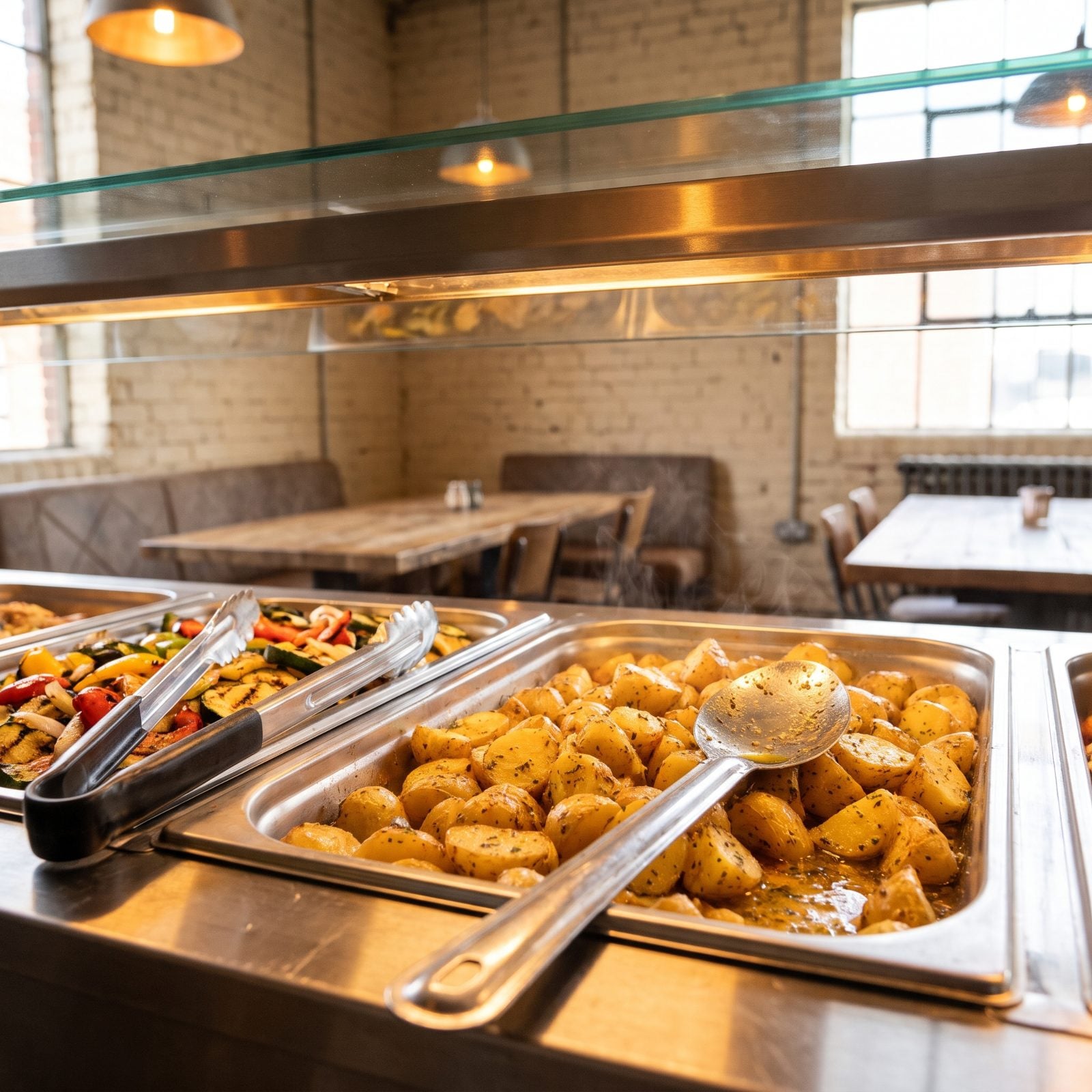
Every spoon, every pair of tongs, turned so the handle faces you. Looks like politeness. It’s actually hygiene and speed rolled into one quiet habit.
Handle-out means your hand grabs the clean grip, not the business end, and not the food itself. It also shaves a half-second off every serving, which stacks up fast across a Friday rush. A good attendant resets those handles constantly, nudging each one back toward you between passes. A spoon buried bowl-up in the mashed potatoes is a spoon somebody’s going to grab wrong.
11. Assign Separate Utensils to Allergen-Sensitive Dishes
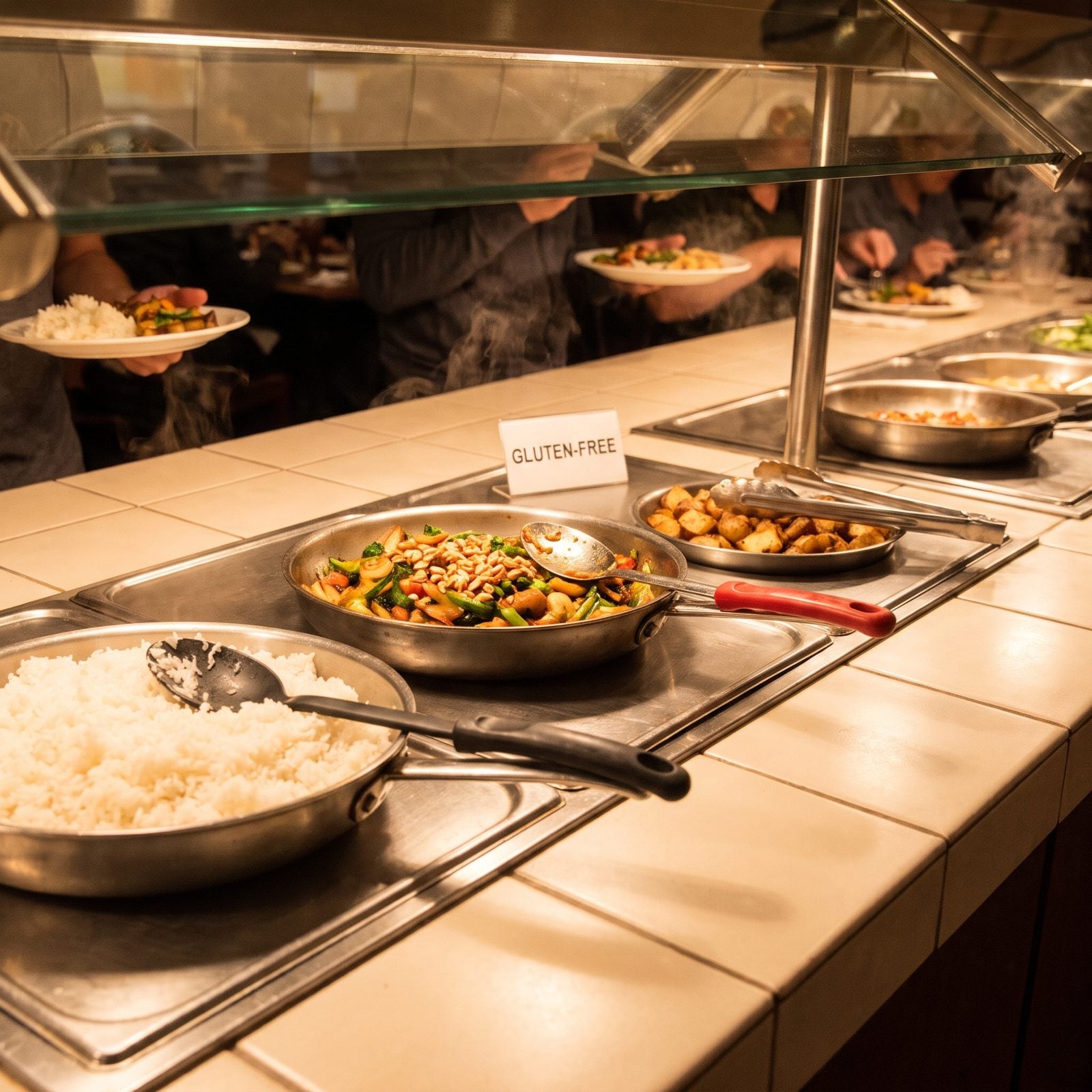
Cross-contact is the thing buffets fear most, and the fix is almost embarrassingly simple. Give the allergen-sensitive dishes their own dedicated utensils and never let them wander.
The gluten-free pasta gets its own tongs. The nut-free dessert gets its own spoon. One stray scoop carrying crumbs from the breaded chicken into the plain rice can turn somebody’s dinner into an emergency room visit. Good operations color-code or physically separate these tools so a rushing attendant can’t grab the wrong one on autopilot.
10. Require a Fresh Plate for Every Return
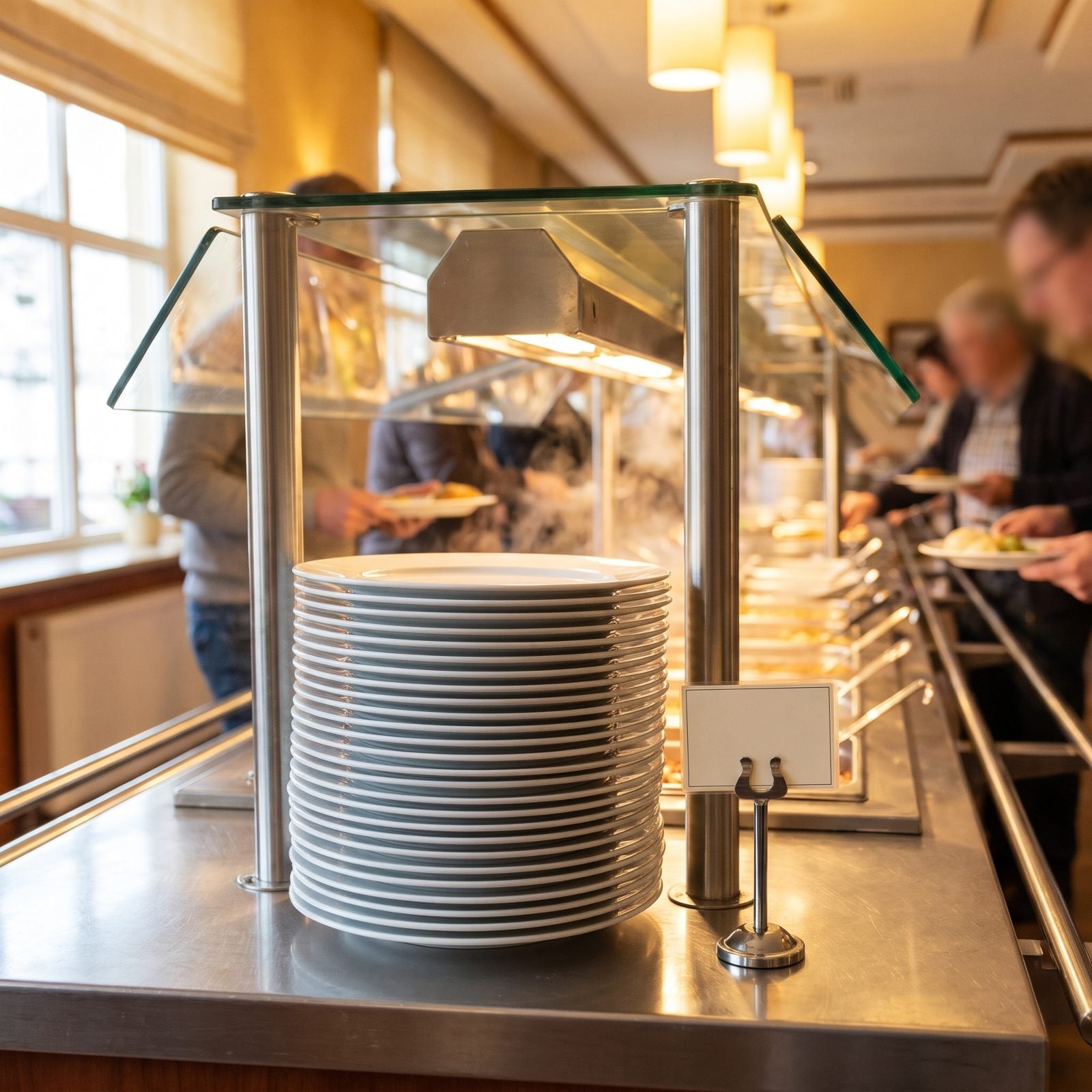
Back for seconds? Grab a clean plate. That little rule, posted on a card by the plate stack, happens to be one of the hardest-working health measures in the building.
A used plate carries everything your fork touched back toward the serving line — exactly where you don’t want it hovering over shared food. Fresh plate every trip breaks that loop. It also slows people down, quietly. A second plate is a second decision, and some folks skip the third trip entirely once they’d have to start over with clean ceramic.
9. Clear Used Plates Quickly
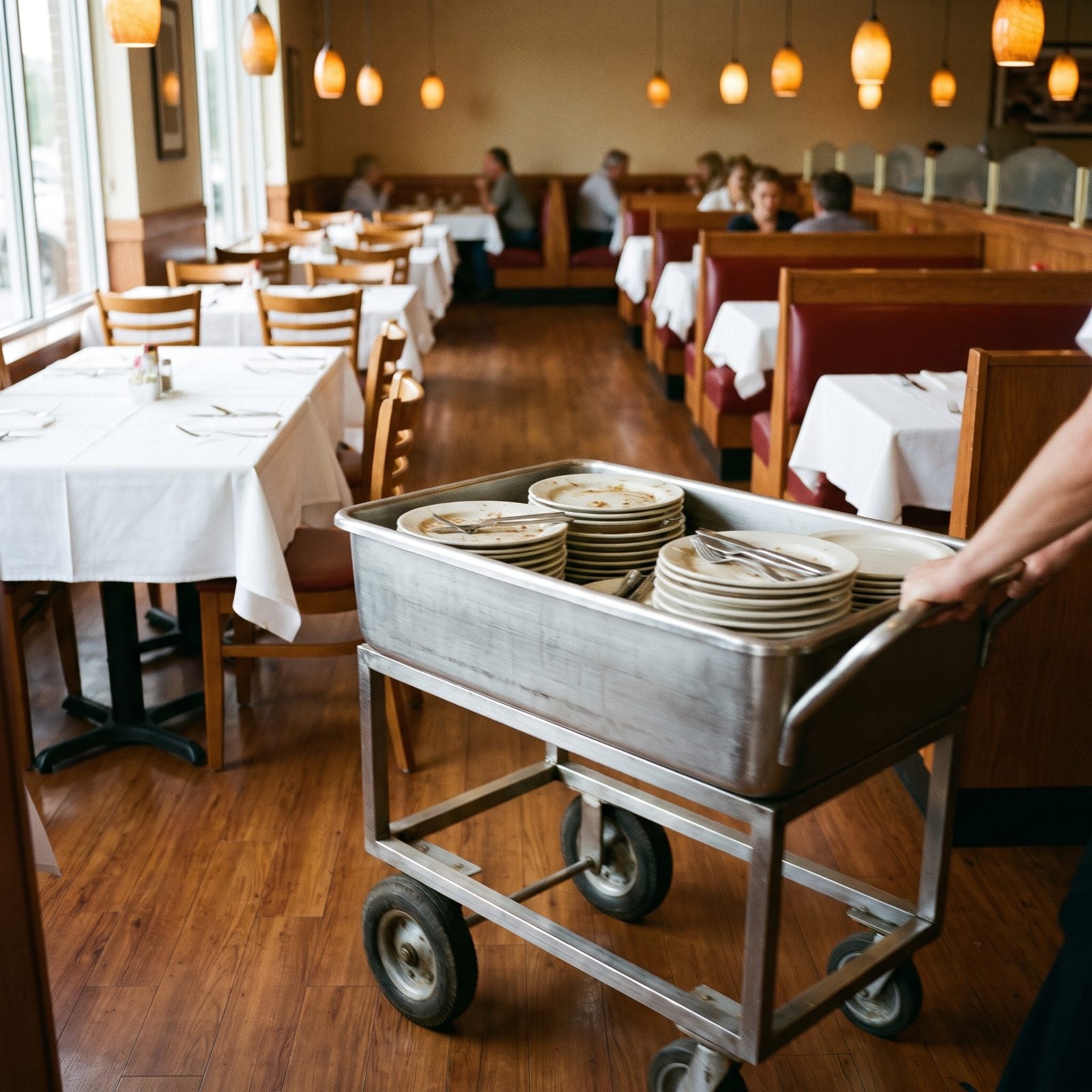
The empty plate disappears fast — sometimes before you’ve fully pushed it aside. Call it turnover psychology, not just tidiness.
A table buried in dirty dishes reads as finished, both to you and to the room. Clear it quickly and the table feels fresh and open, like you’ve still got runway. That keeps you relaxed, and it quietly resets the table for the next group. A visibly stacked, messy table sitting out at a buffet signals congestion, and congestion kills the whole sense of abundance the place is selling.
8. Price Takeout Buffet Boxes by Weight
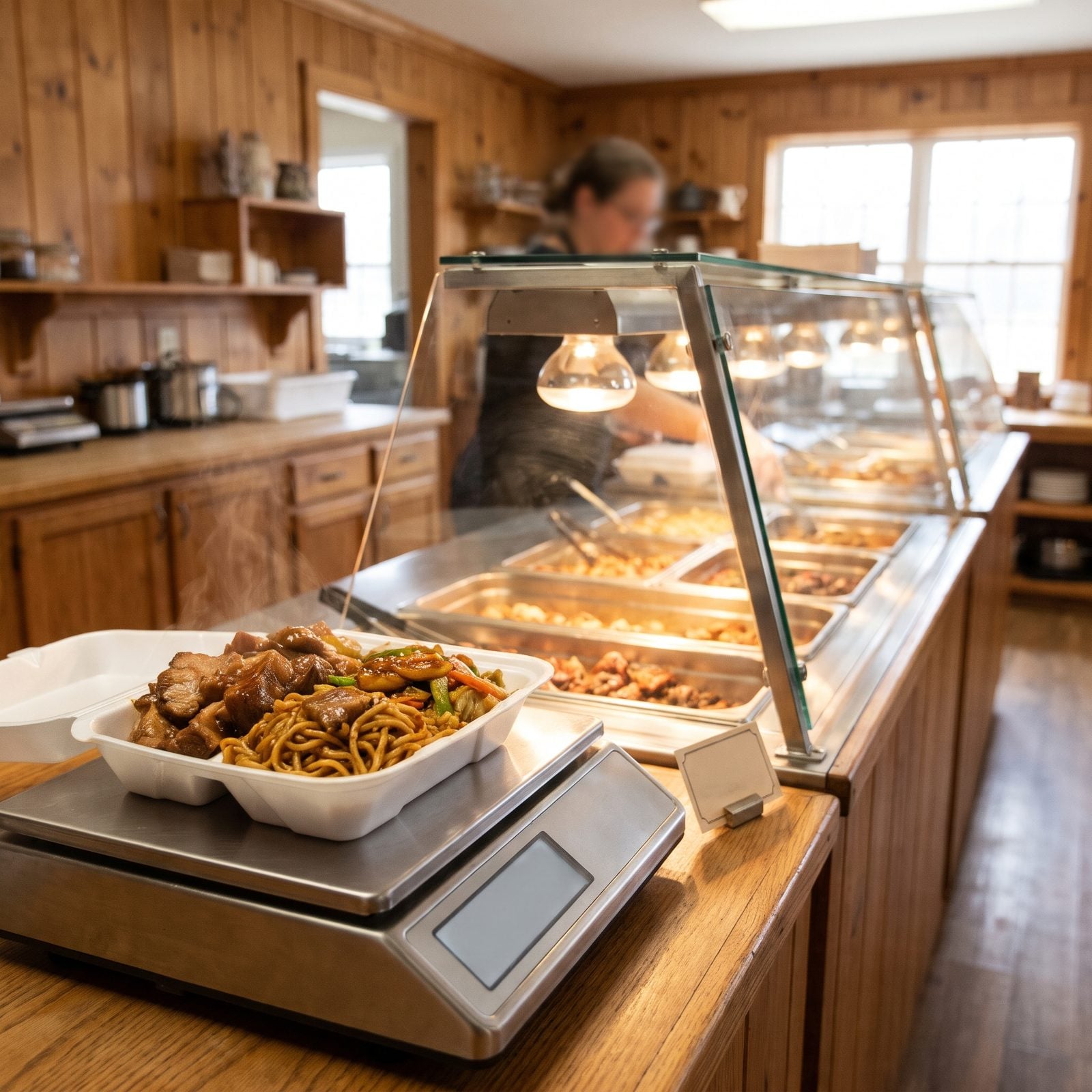
The by-the-pound takeout box is the most honest math a buffet runs. No all-you-can-eat gamble, no averaging across heavy and light eaters — just a scale and a per-ounce rate.
And here’s the quiet trick most people miss. Dense, wet foods weigh the most and cost the restaurant the least, so when you pile your box with saucy noodles and rice, you’re paying premium per-pound pricing on the cheapest items on the line. Lighter proteins and leafy things cost you fewer ounces but more actual food value. The scale doesn’t care what’s expensive to make. It reads weight, full stop.
7. Mound Food to Make Pans Look Abundant
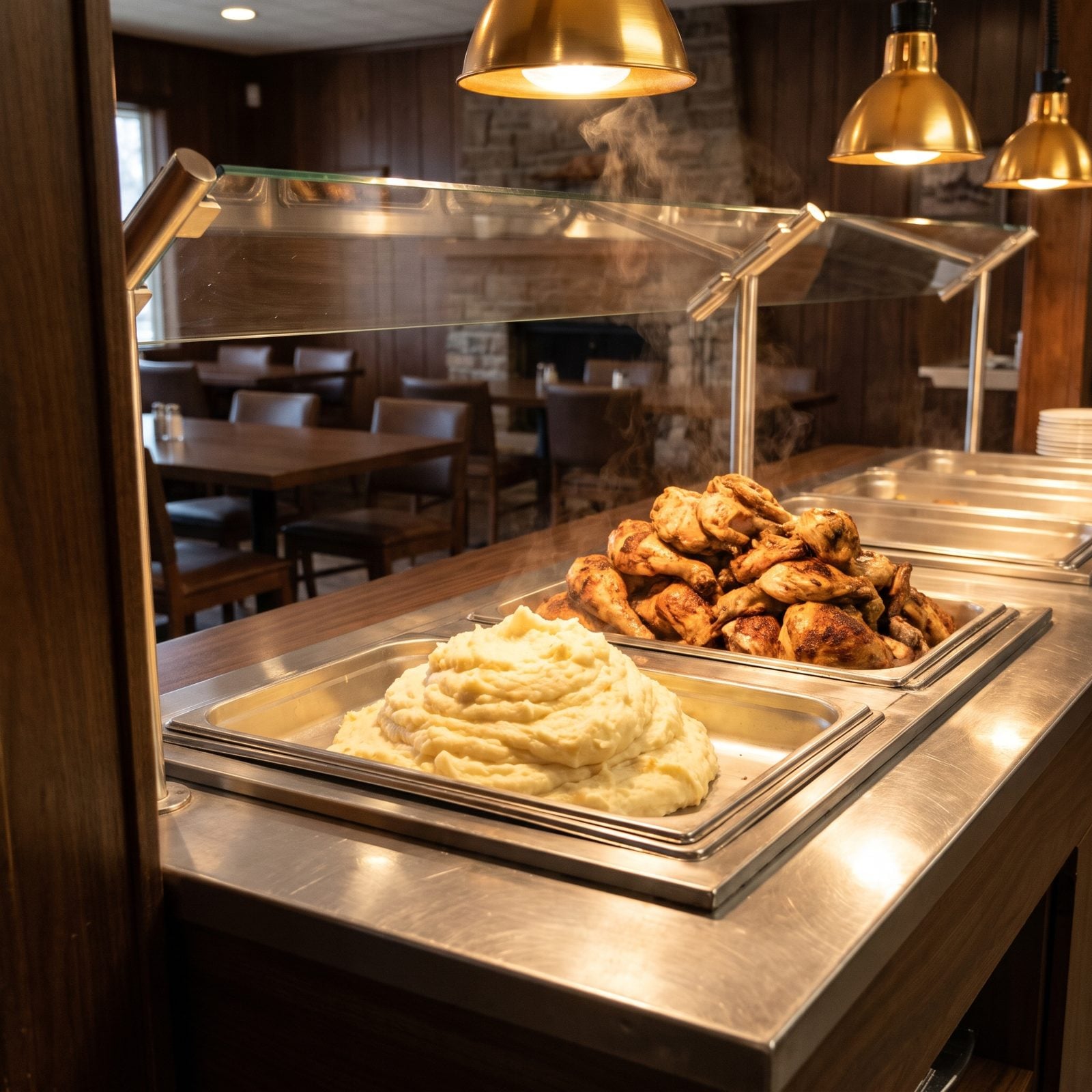
That mountain of mashed potatoes isn’t a full pan. It’s maybe a third of one, heaped into a peak so your eye reads plenty instead of running low.
Mounding is the oldest sleight of hand on the steam table. A flat, half-empty pan looks picked-over and sad, and a sad pan makes people grab more while they still can. A tall center pile reads as fresh and bottomless, so nobody panics and over-serves. It also stretches smaller batches further, which cuts waste near closing time when nobody wants to fire up another full tray.
6. Light Carving and Dessert Stations Warmly
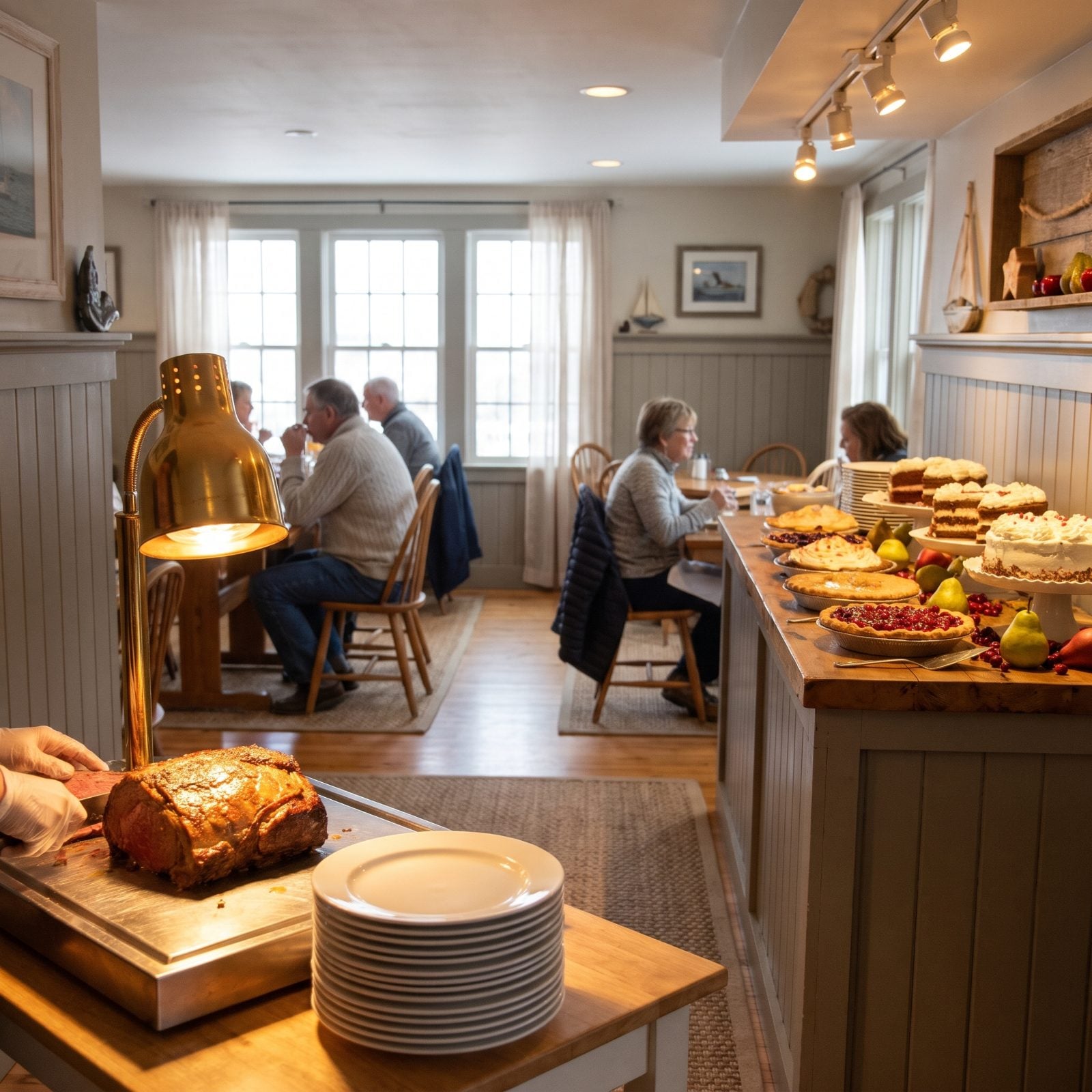
Notice how the carving station glows. That warm amber light pouring over the roast beef isn’t only a heat lamp doing its job — it’s making the meat look juicier and more inviting than cool overhead fluorescents ever could.
Warm light flatters food. It deepens the browns, makes glazes gleam, turns a decent pie into something you suddenly need. The high-value, high-impression stations get this treatment because they’re where the buffet earns its reputation. Nobody brags about the steamed carrots. They talk about the carving station, so that’s where the lighting budget goes.
5. Use Open Ovens and Griddles to Create Aroma
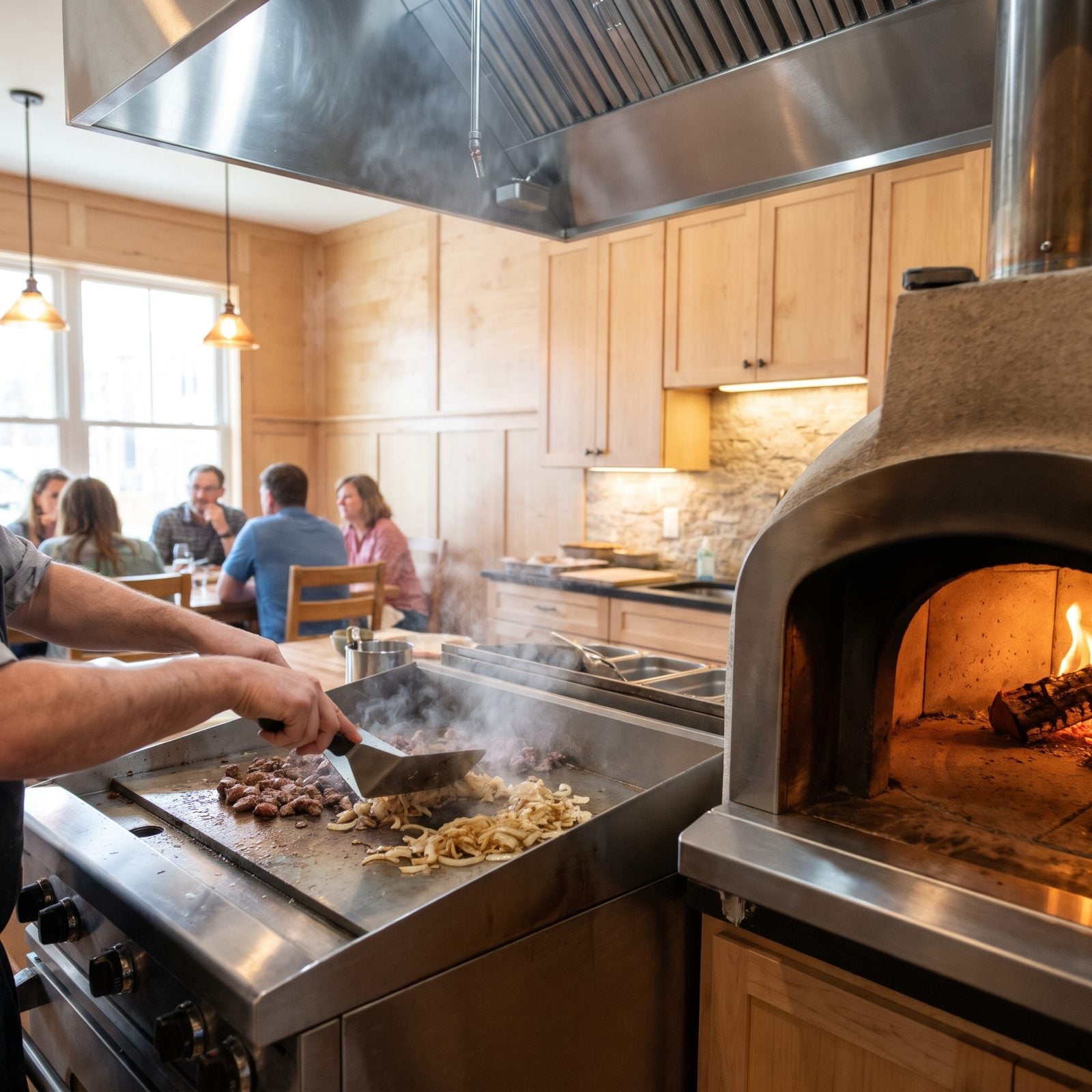
Smell sells harder than sight. The open griddle searing onions, the pizza oven with its door cracked, the live-action station throwing steam into the air — all of it is aroma marketing you can’t opt out of.
You walk in and the smell of browning meat lands before you’ve seen a single pan. That scent primes your hunger, pulls you toward whatever’s actively cooking, and makes the room feel alive instead of like reheated trays slumped under lamps. A griddle sizzling in the open is pure theater, and it goes to work on your stomach before your eyes catch up.
4. Give Familiar Dishes More Specific Names
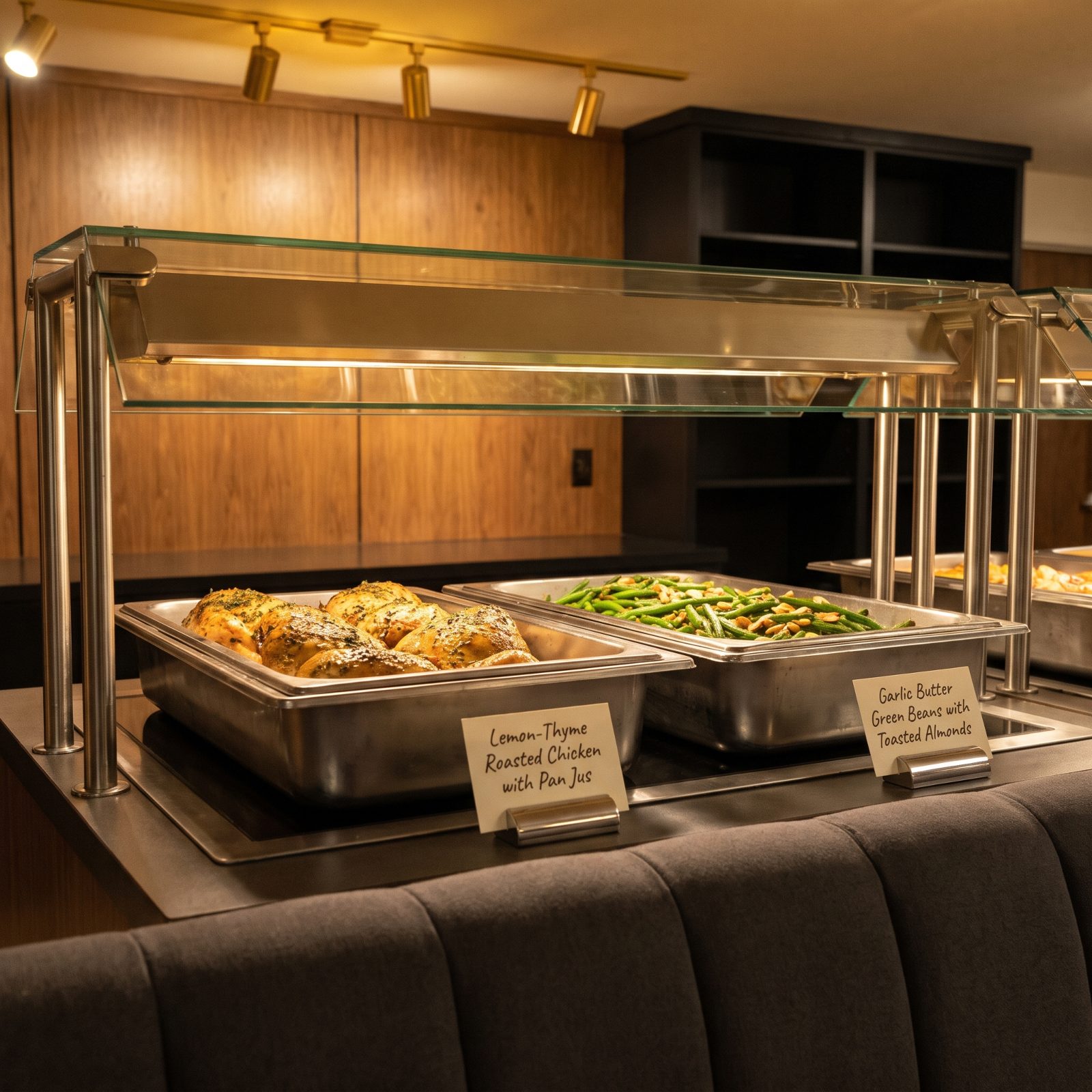
It’s not just chicken. It’s herb-roasted farmhouse chicken. Same bird, better card. And the naming does real work on how it tastes to you.
Descriptive labels raise your expectations, and — oddly enough — they raise your satisfaction too. Call green beans “garden green beans with toasted almond” and people rate them higher than plain old green beans sitting in the identical pan. A buffet can’t plate every dish with a flourish, so the placard carries the story instead. The words do the garnishing the kitchen never has time for.
The same dish with a more specific name doesn’t just sound better. People consistently report it tasting better too.
3. Stagger Pizza Releases to Prevent Simultaneous Gaps
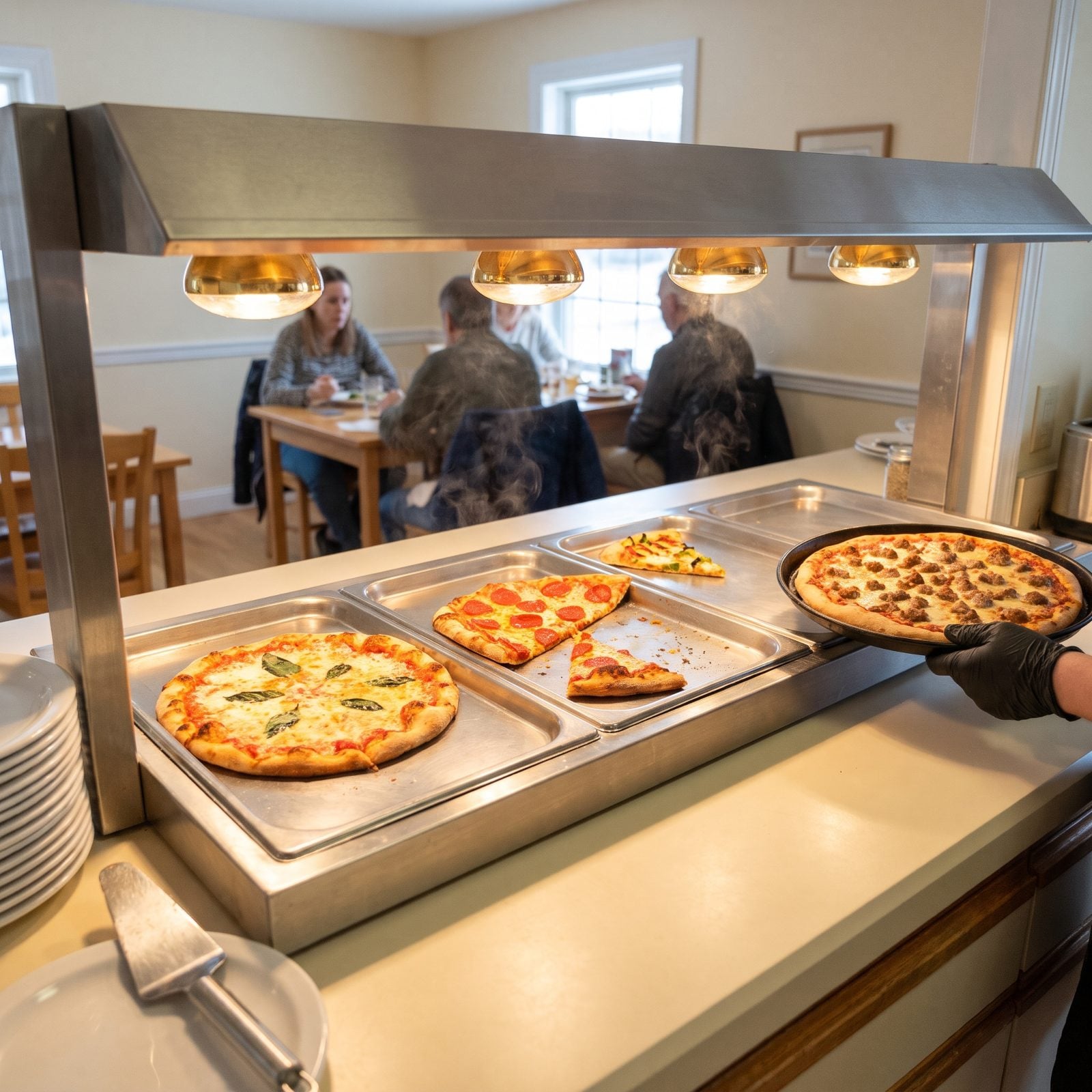
You’ve stood at a pizza buffet staring at four empty pans at once. That’s a kitchen that lost the rhythm, and the fix is one of the oldest moves in the business.
Rather than pulling four fresh pies together, they let them out on a rolling clock. One comes up, another follows a beat behind, and there’s always a full pan waiting when the line hits. No single pan ever empties by itself.
Cost control is the hidden half of it. Spacing the releases means fewer pizzas drying out under the lamps, which means fewer scraped into the bin at close. A steady trickle beats a flood.
2. Log Holding Temperatures on a Schedule
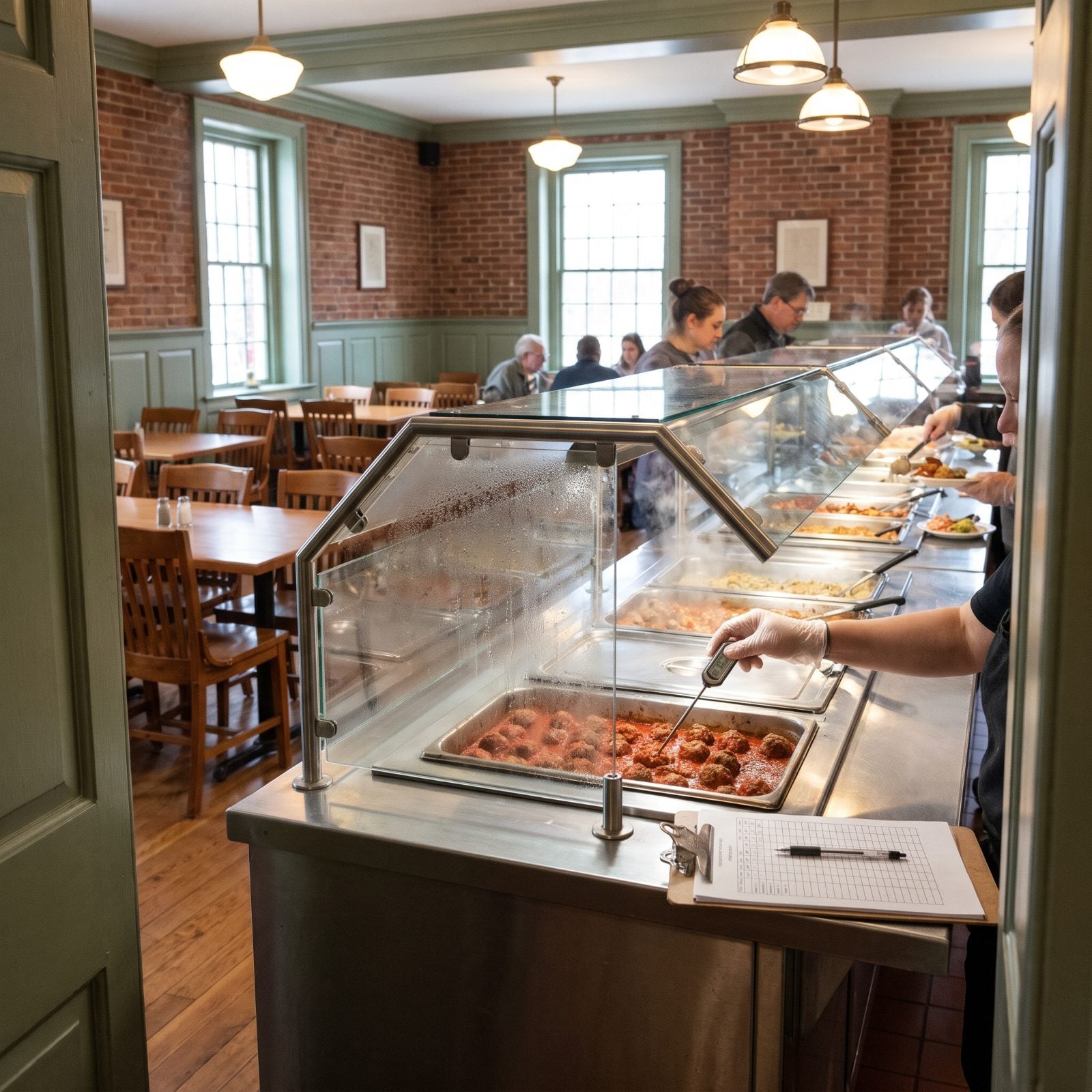
The danger zone is real, and the clipboard proves they’re staying out of it. Hot food has to hold above 140 degrees Fahrenheit, because below that, bacteria wake up.
So staff probe the pans on a set schedule and write down what they find. The log isn’t bureaucracy — it’s the paper trail that saves them when an inspector walks in, and it flags a failing warmer before a tray of chicken alfredo turns into a problem.
Honestly? The diners who march past the steam table muttering that buffet food is always lukewarm would eat their words if they watched how often the sharp operations run that probe.
1. Weigh Plate Waste After Service
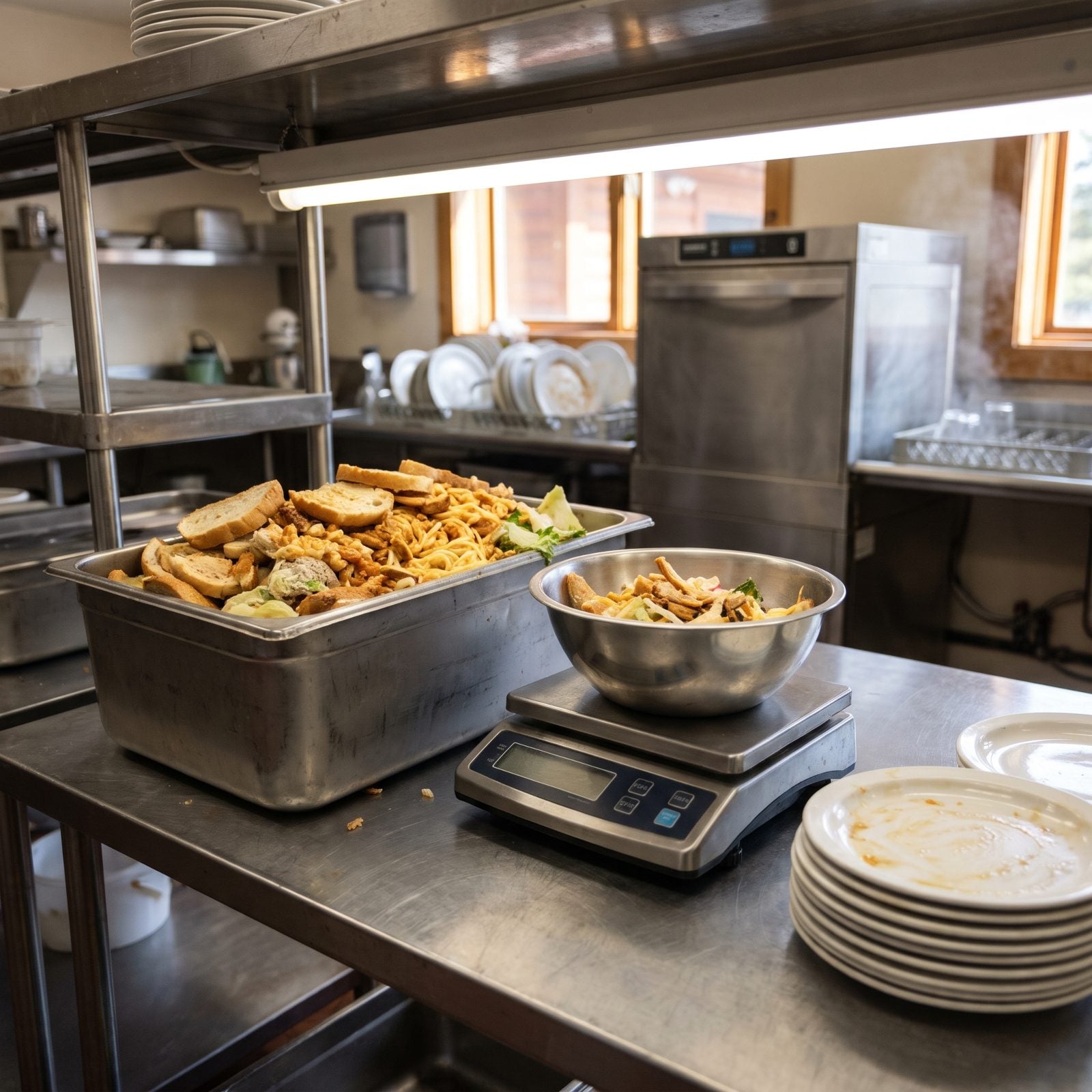
Here’s the number nobody at the table ever thinks about: whatever gets scraped off the plates at the end of the night.
Operations that run the math actually weigh it. That tub of leavings tells them which dishes people pile high and then abandon, which ones vanish clean, and where the money quietly leaks out. When the baked ziti keeps coming back half-eaten, the problem is the ziti, not the diner. So they taste it, tweak it, or kill it.
One ugly scale shapes the entire lineup. Pan sizes shrink or grow, the crowd favorite gets refilled faster, and the dud slips off the table without ceremony. What you find on the buffet next month was decided by a bowl of scraps.