
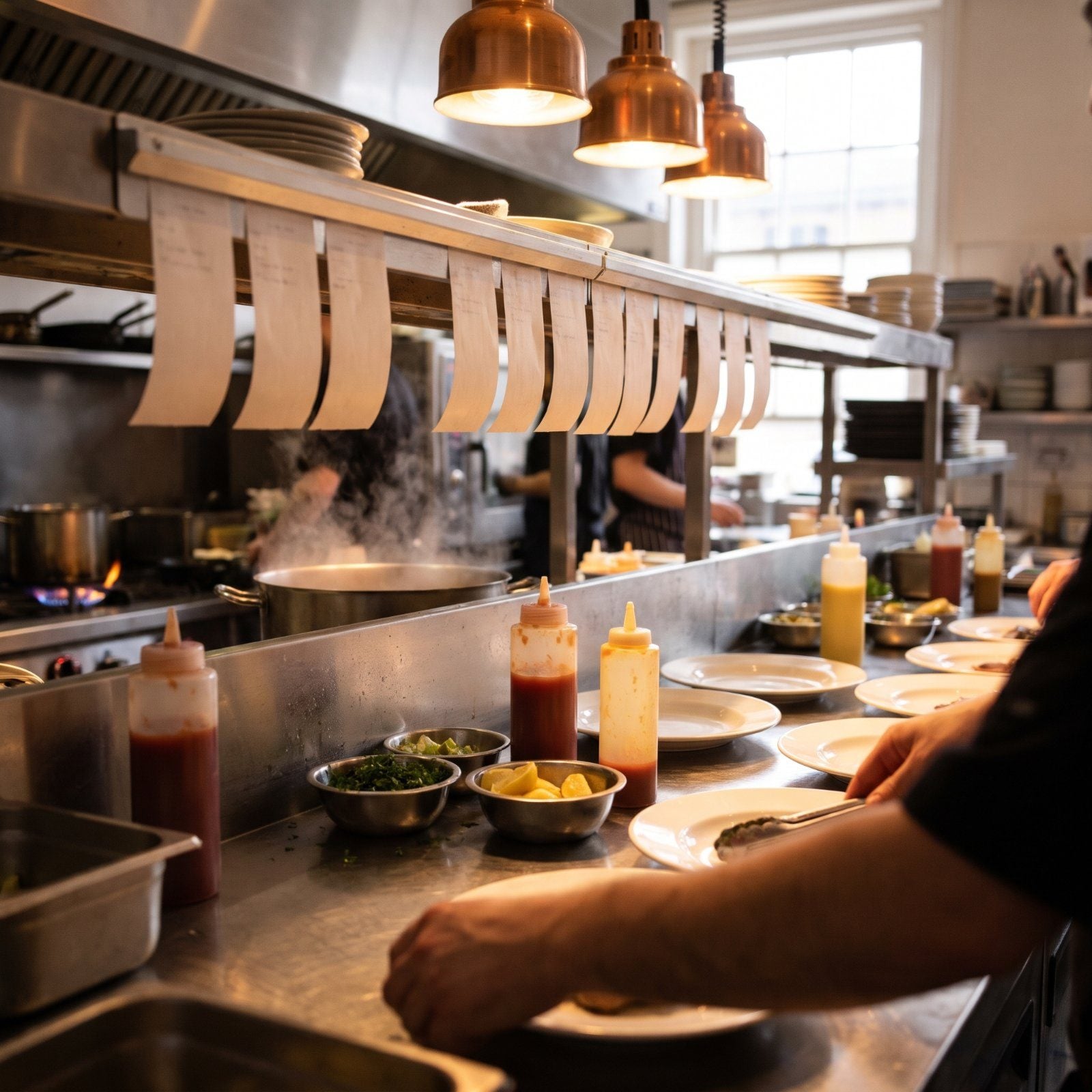
The food comes out looking calm. Golden, plated, garnished, set under the pass like it never fought for its life. But it did. Behind that plate is a cook reading a wall of tickets, doing timing math most people never think about, and solving three small crises before the first one even finishes. A busy service is less about cooking and more about air-traffic control with knives. These are the tasks nobody at the table ever sees — the ones separating a smooth Saturday night from a kitchen that eats itself alive by eight o’clock.
Please note that some of the images in this article were created with the assistance of AI.
41. Reading the Ticket Rail Four Orders Deep
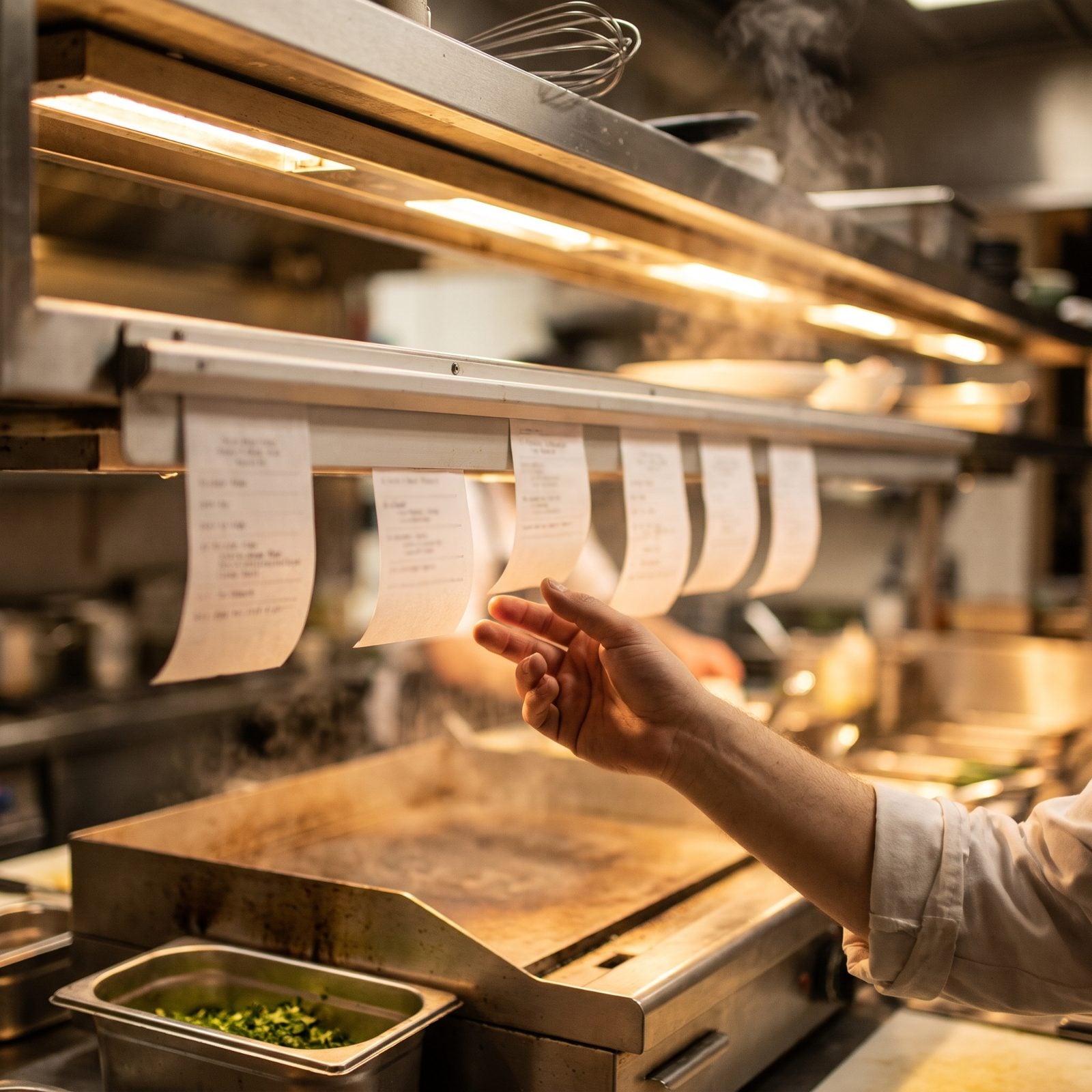
The new cook reads the ticket in front of them. The good cook reads the whole rail — and before the first plate is even started, a strong line cook has already clocked what’s landing in five minutes, which station is about to get buried, and where the next bottleneck will form.
That forward read is the entire game. Cook only what’s in your face and you’ll be chasing the night by seven, but cook with the rail in your head and you stay ahead of it.
40. Decoding the Shorthand Scrawled Across Every Ticket
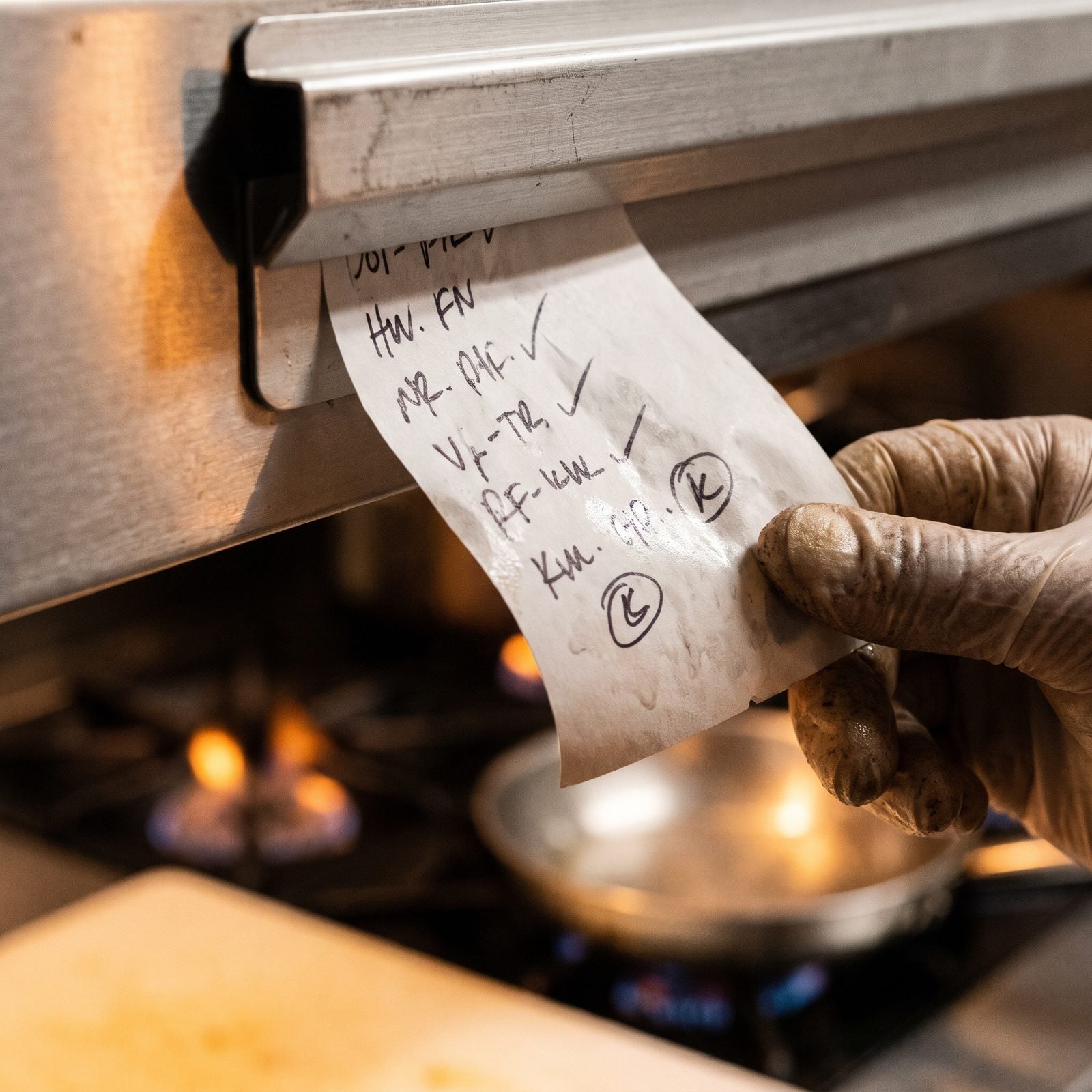
A typical ticket — a scrawled first line, items ticked off with checkmarks, a pair of circled K’s and a column of cryptic abbreviations — means nothing to a civilian and everything to a line cook. What’s been killed, how many of what, what’s still live. Read in under a second, no pausing.
Every kitchen writes its own dialect. The abbreviations differ, the server handwriting is a crime, and the modifiers hide in the margins where you’ll miss them if you’re rushing. Miss one circled mark and you’ve got a remade plate and a four-minute hole in your night.
39. Sorting the Tickets by When They Actually Need to Fire
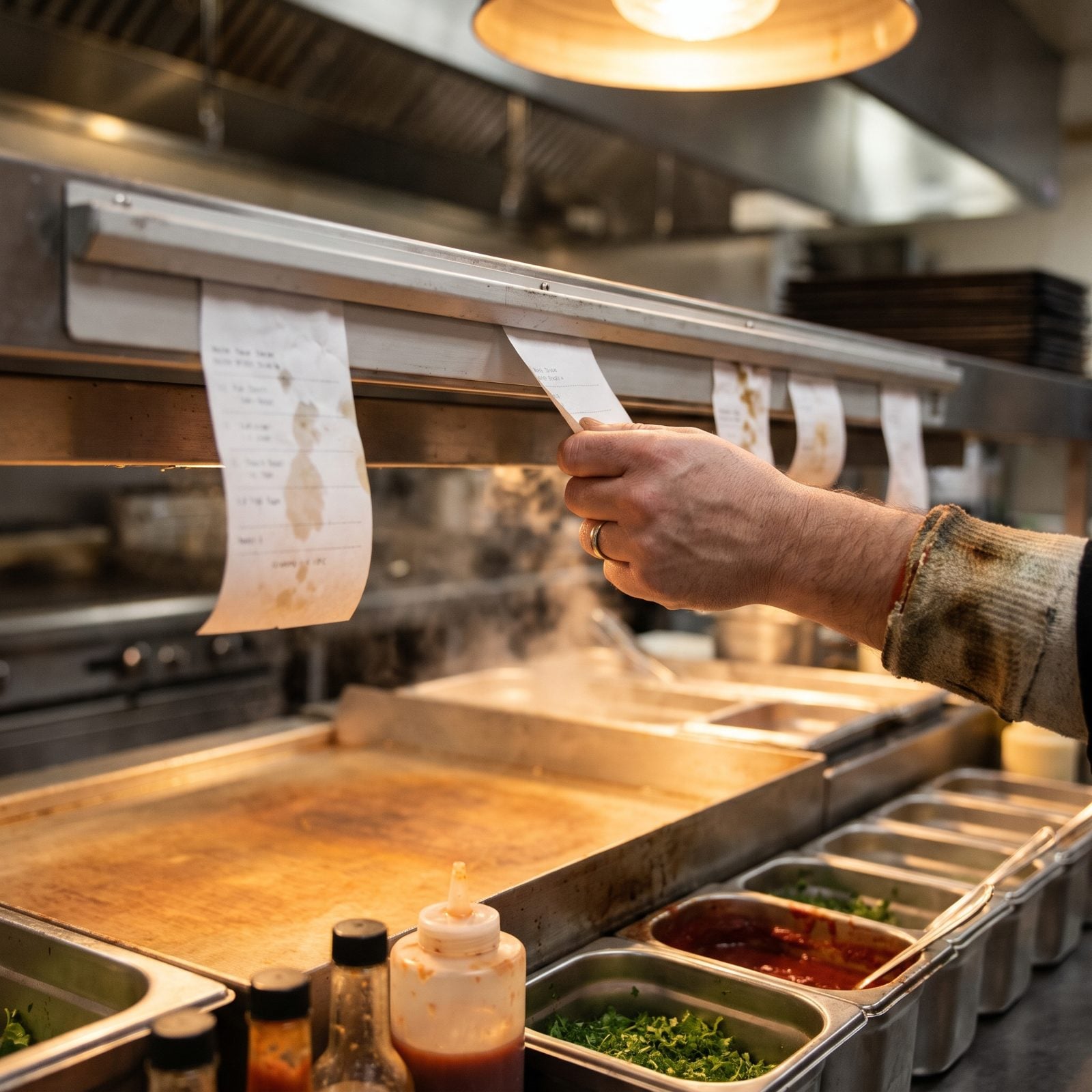
Tickets don’t come in cooking order. They come in whatever-order-the-table-ordered, which has nothing to do with how long each dish takes.
So the cook re-sorts — in their head, or by physically sliding tickets along the rail — so the fire times line up. The steak that needs twelve minutes starts before the pasta that needs four, even though the pasta ticket came in first. Get it backwards and half the table eats while the other half watches. And nobody wants to be the one staring at an empty placemat while their spouse’s plate goes cold out of politeness.
38. Batching Six Identical Dishes Without Scrambling Whose Is Whose
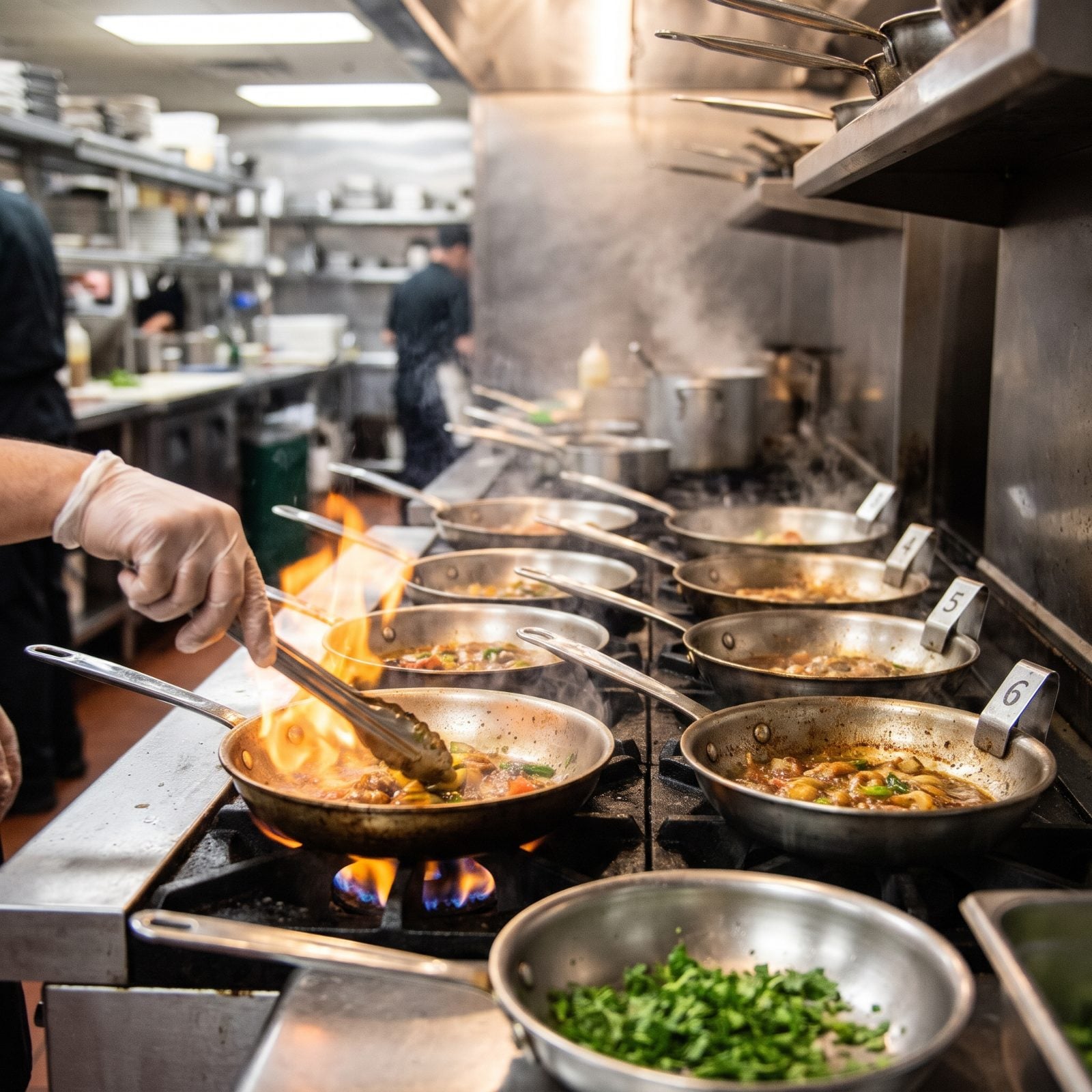
Six orders of the same onion stew is a gift and a trap. The gift: cook them together and save time. The trap: one has no cheese, one has extra garlic, and one belongs to an allergy table clear across the room.
So the cook batches the base work but keeps every modified version separate, tracked by pan position on the station. Left pan is the no-cheese. Right one is the allergy order. Lose that map and you’re not plating six dishes — you’re guessing.
37. Keeping Seat Numbers and Courses Straight in Your Head
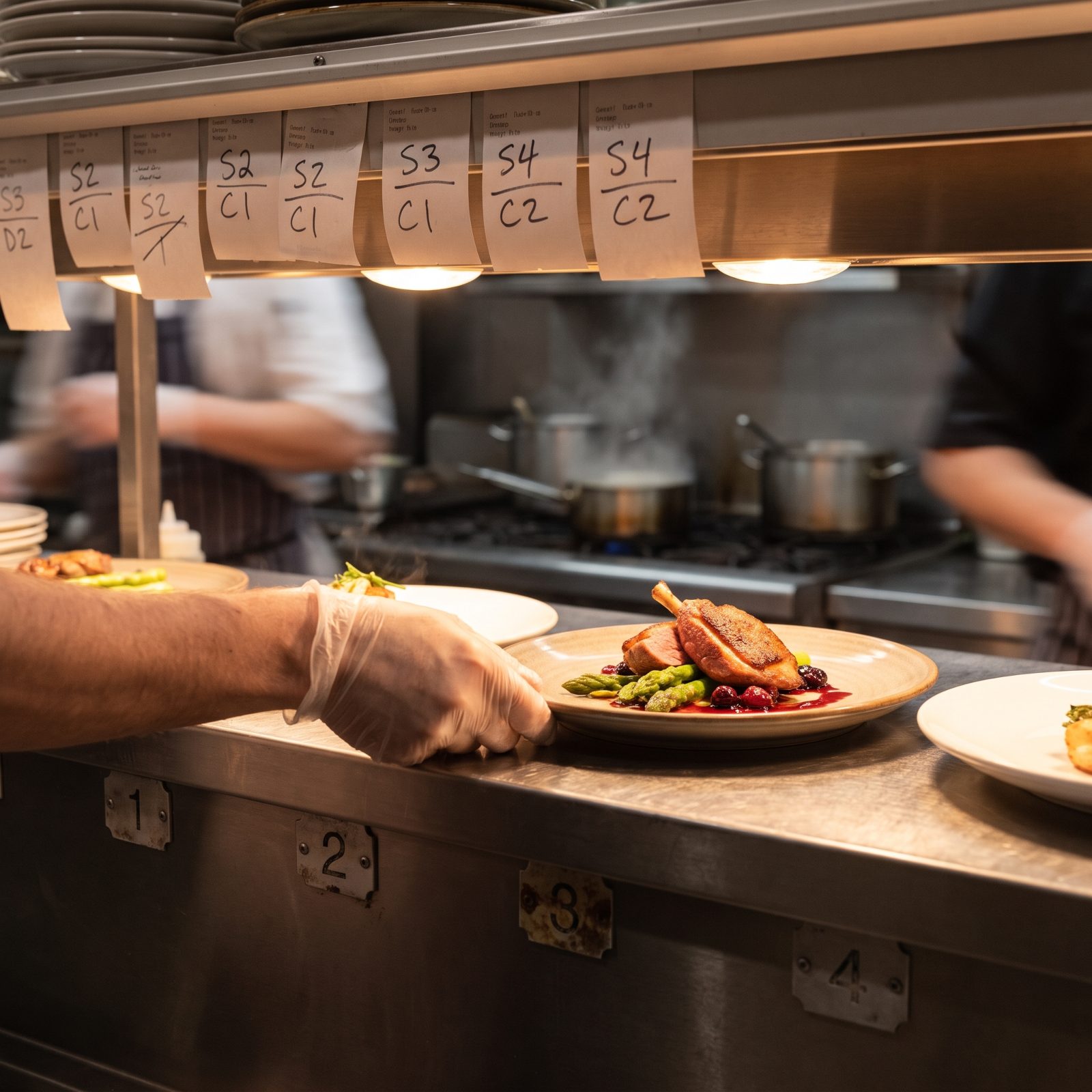
Seat two wants the fish, seat four is the vegetarian, and both of those sit inside a four-course tasting that has to land in order. The cook never lays eyes on the table, yet they’re tracking who sits where so the right plate reaches the right person without the server playing twenty questions over the guests’ heads.
Courses matter just as much. Fire the mains while the appetizers are still being eaten and you’ve bulldozed the pacing of someone’s entire evening.
36. Flagging an Allergy Ticket and Scrubbing the Station Clean
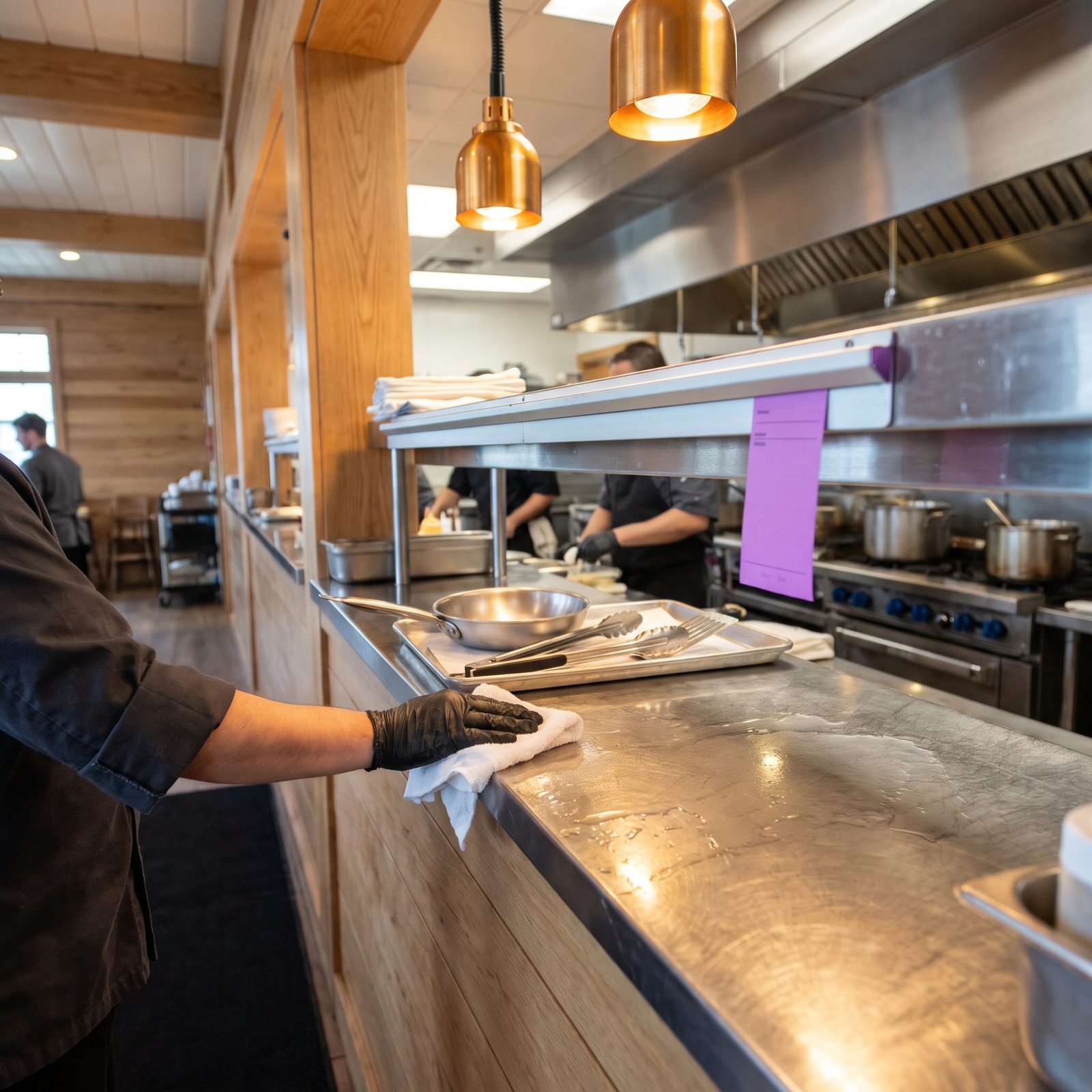
An allergy order stops the normal flow cold. A serious cook treats it like a small emergency, because it is one.
Fresh gloves. A clean pan that hasn’t touched the allergen. Wiped-down cutting board, dedicated utensils, a clear patch of station. The ticket gets flagged so loudly nobody on the line can pretend they didn’t see it. And all of this happens in the middle of a rush, when the easiest thing in the world would be to grab the pan that’s already hot.
35. Getting the Grill, Fryer and Sauté to Land at the Same Second
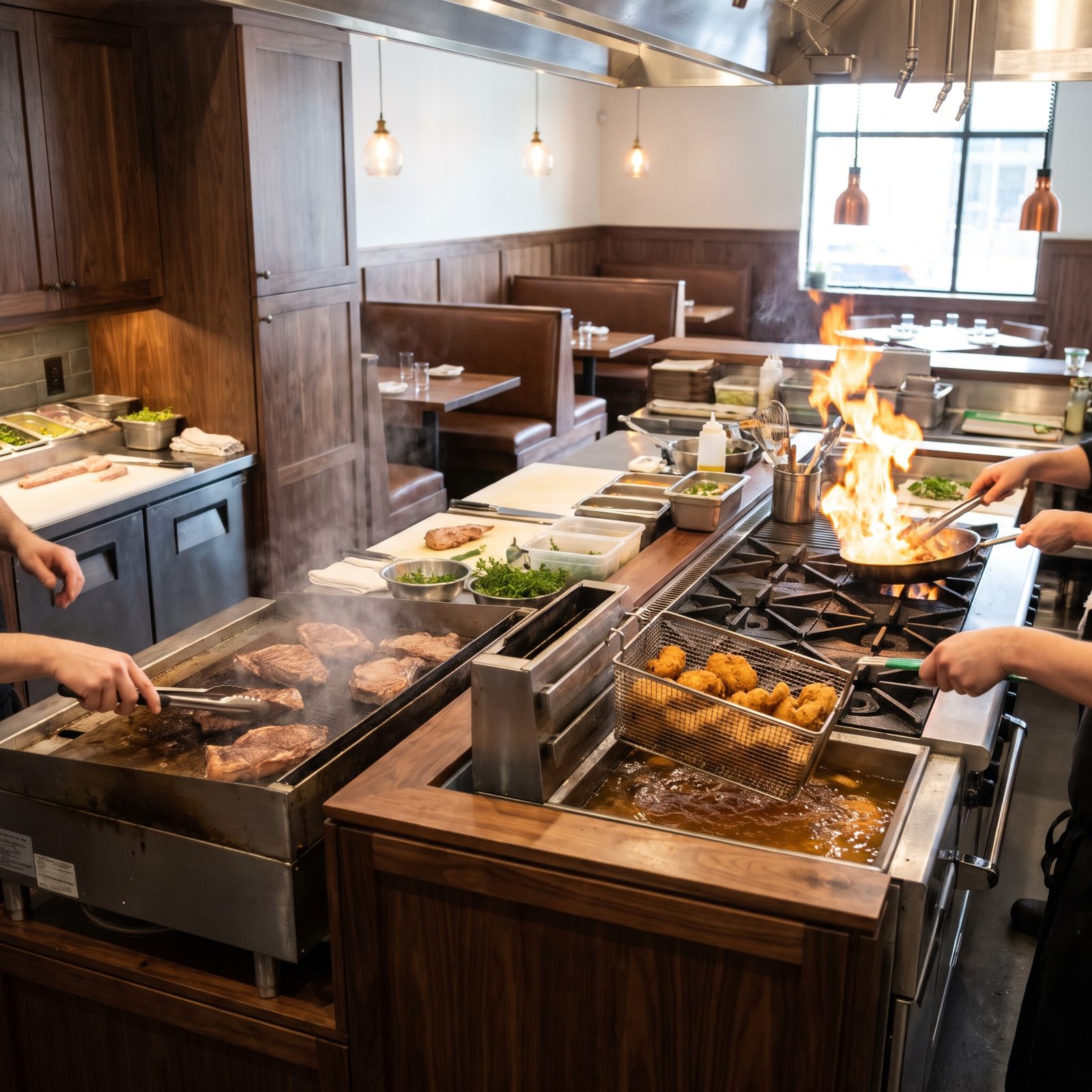
A single plate might need a seared chop off the flat-top griddle, breaded bites out of the fryer, and a sauce finished in the sauté pan. Three stations, three different clocks, one plate that has to come together hot and all at once.
That coordination is the hardest thing on the line to teach. The griddle cook calls out timing, the fry station answers, the sauté cook adjusts. Miss the sync and the fried bites go limp by the time the chop rests — or the chop sits losing heat while the sauce catches up.
34. Holding the Fries Until the Rest of the Plate Catches Up
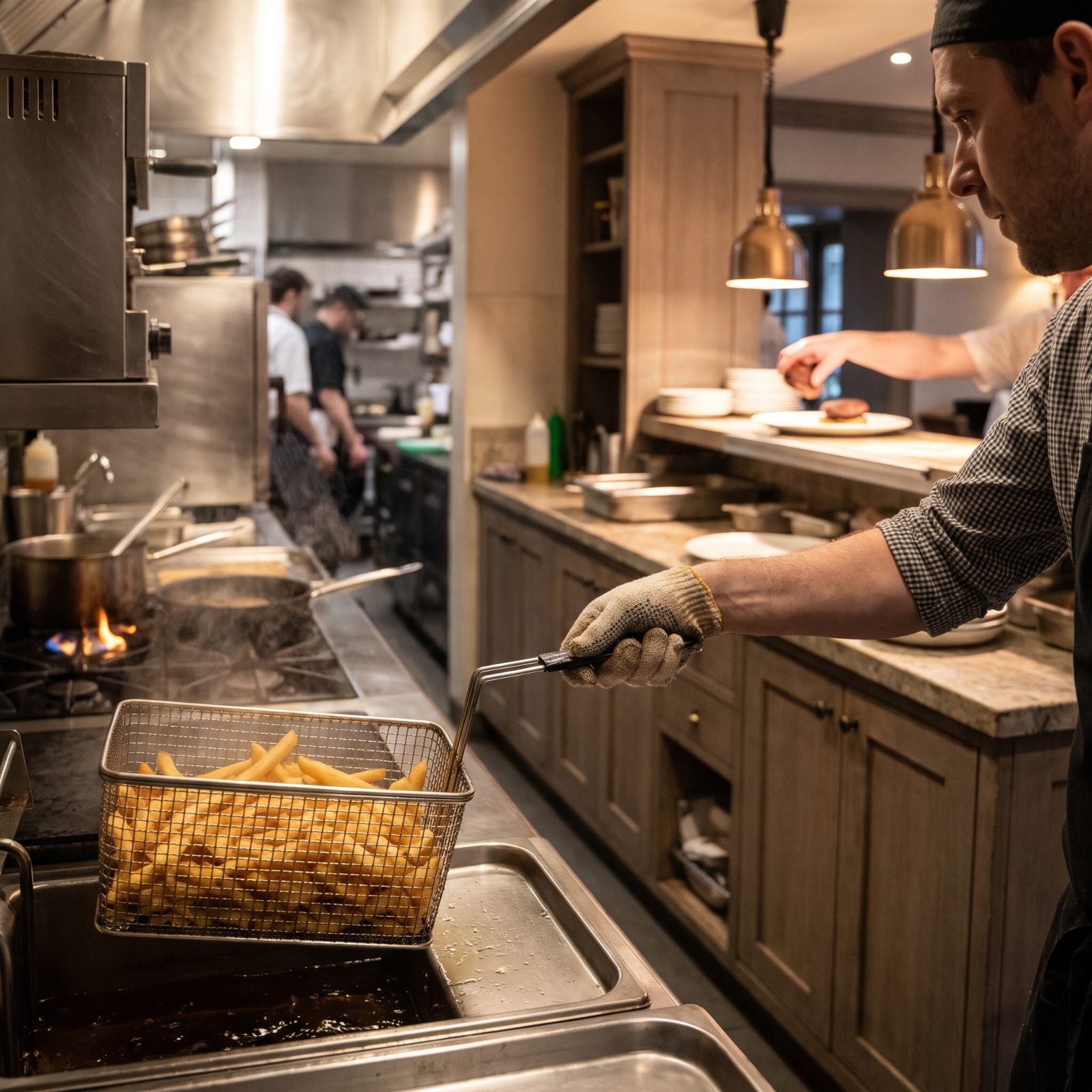
Timing isn’t only about speeding things up. Sometimes the skill is holding one piece back so the whole plate leaves together.
The protein’s rested and ready, but the risotto needs another ninety seconds. So the cook holds, keeps it warm, and fights the pull to plate it now just to feel productive. A component that’s ready too early causes as much trouble as one that’s late. Cold steak under a lamp while the starch finishes helps nobody.
33. Warning the Expo Before a Dish Falls Behind
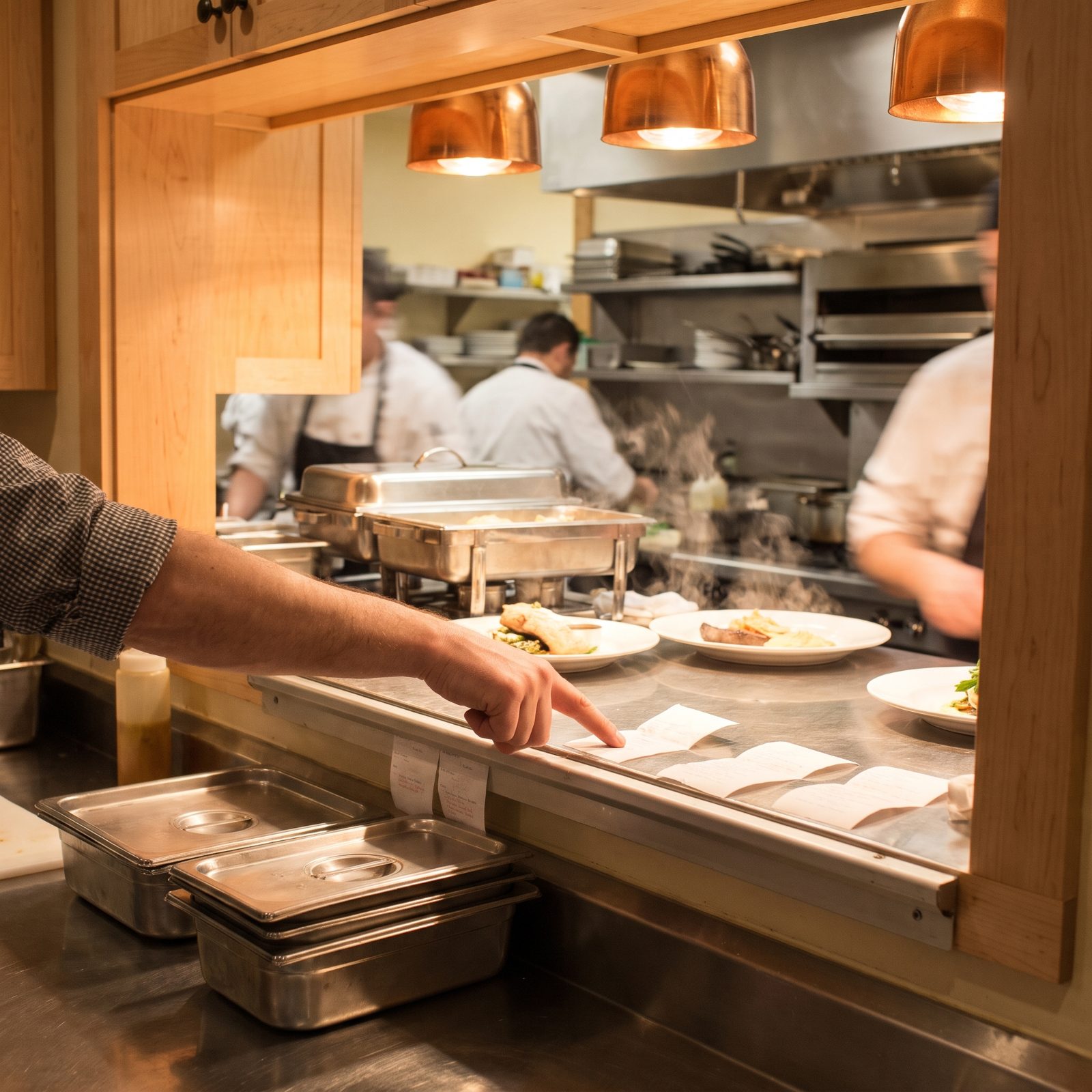
The worst surprise in a kitchen is the one that arrives at the pass. A smart cook calls a delay early, out loud, before it becomes a hole the expo can’t fill.
“Table six is gonna be two minutes behind, the duck needs more time.” That one sentence lets the expo re-time the whole table — maybe hold a sister dish, maybe warn the server. Say nothing and they find out when nine plates land and one doesn’t. That’s how a table ends up half-fed and a server ends up apologizing for something that was fixable ten minutes earlier.
32. Calling for Hands When the Plates Hit the Pass
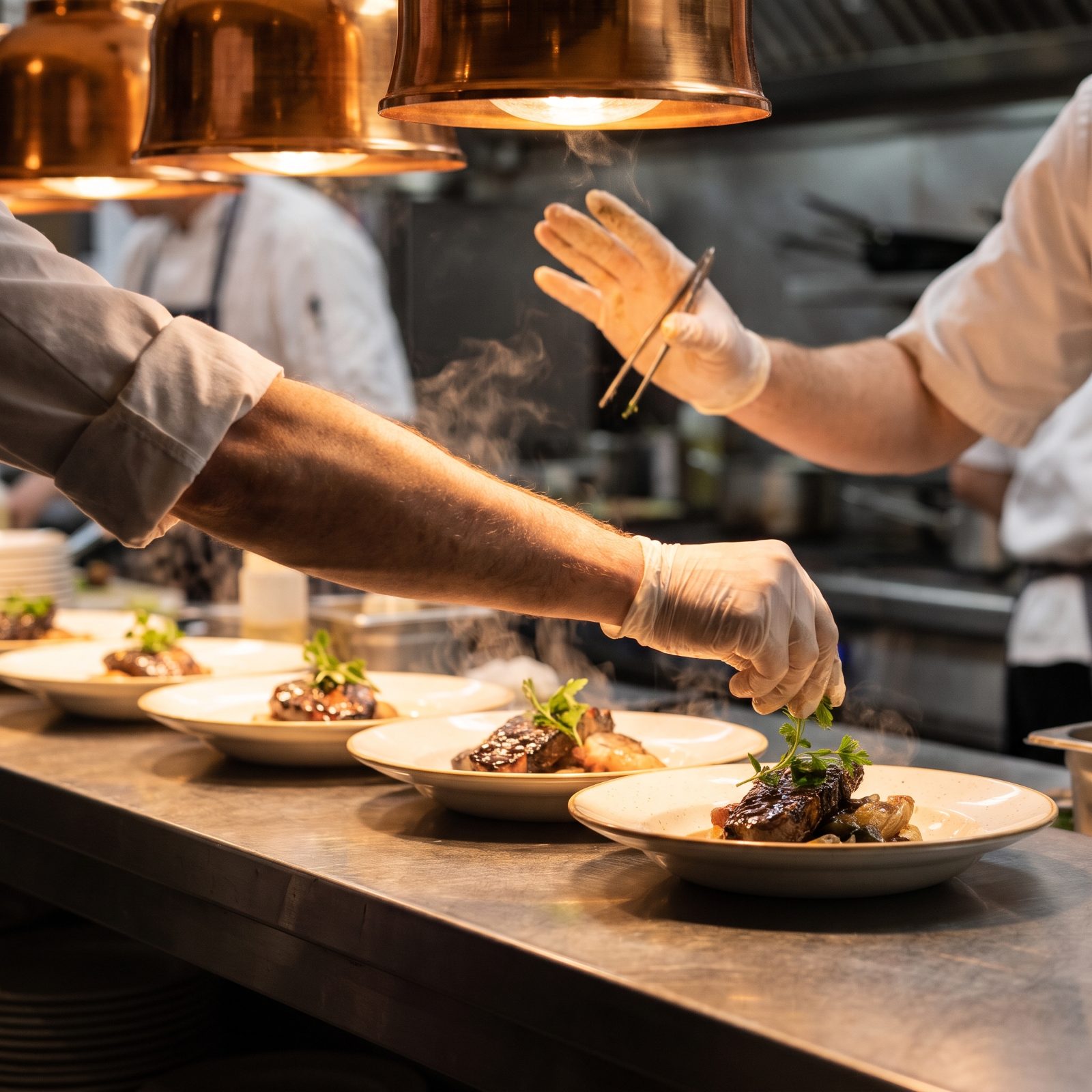
A plate at the pass is on a clock the second it lands there. Garnish wilts, sauce skins over, hot food goes lukewarm. So the cook calls “hands” the moment a table is ready, and bodies appear to run it before it dies under the lamp.
Sounds simple, right? It’s actually the last link in a chain that started four orders ago on the ticket rail. The sorting, the timing, the holding, the warning — everything that came before exists so that at this one exact moment the whole table walks out together, hot, in a single trip.
That’s the invisible job finishing itself. The guest just sees dinner arrive. They never see the two hours of quiet problem-solving that made it look easy.
Explaining why expo starts yelling for runners, a longtime professional cook notes “Because after a minute under a heat lamp, vegetables can dry out, sauces can crust up and meats can overcook.”
What Our Readers Say
- When Piaci Pizza readers loved a food photo and tapped a reason, comfort came out on top at 30%, ahead of ingredients and simply looking good.
- When our readers disliked a food photo, the top reason was “not for me”, with ingredients next and “unappetising” picked 23% of the time.
From Piaci Pizza reader polls and votes.
31. Jumping In to Help a Buried Station
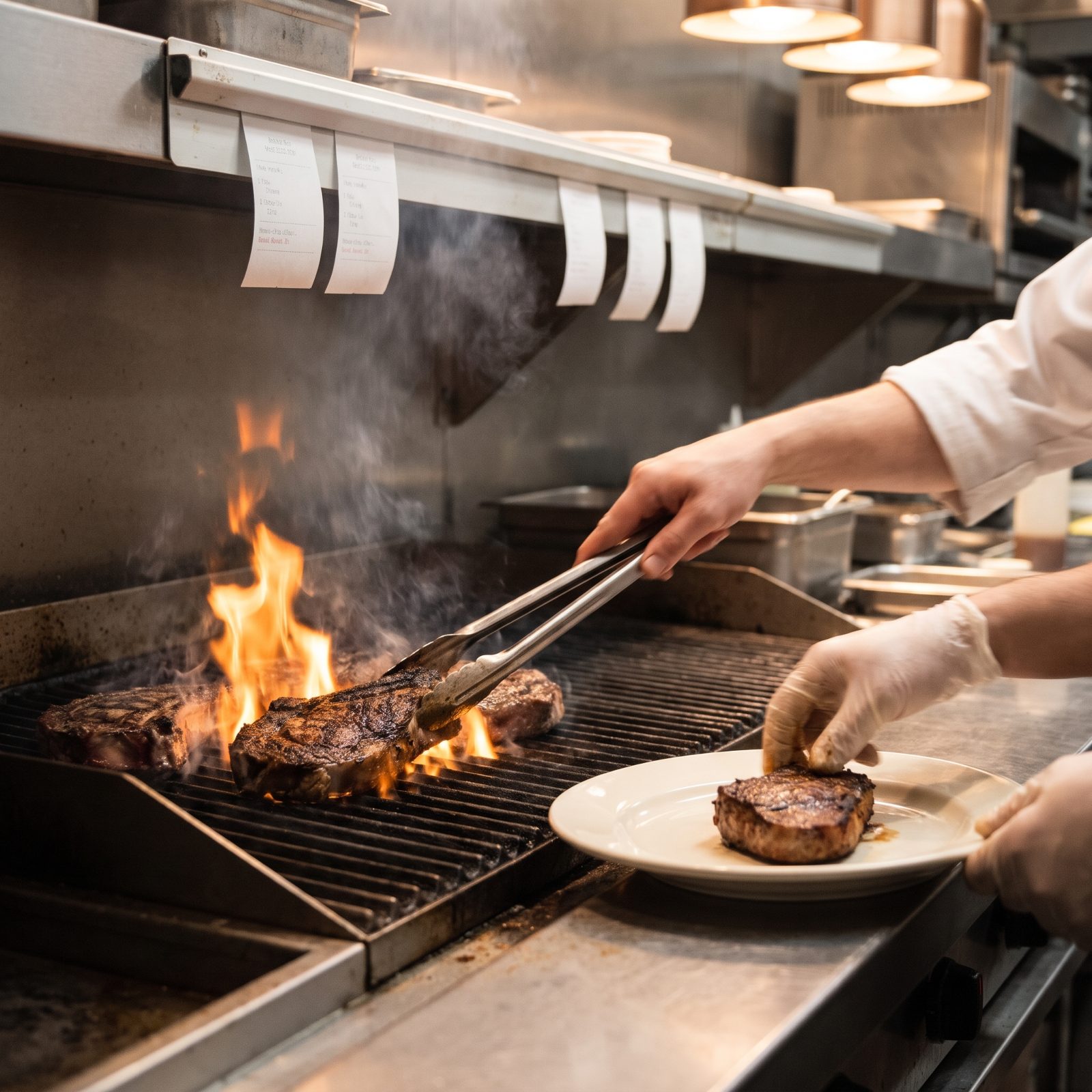
Nobody calls for it. A cook glances left, sees the grill cook drowning under a wall of tickets, and just steps in. No announcement — tongs appear, plates get wiped, and the buried station digs out without anyone saying a word.
That’s the whole game in one gesture. A kitchen that survives a rush isn’t a line of individuals; it’s a group of people who can feel when one spot is sinking and shift weight before it goes under. The best cooks have a sixth sense for the station about to collapse, and they’re already walking over.
30. Prioritizing a Refire Without Derailing Other Orders
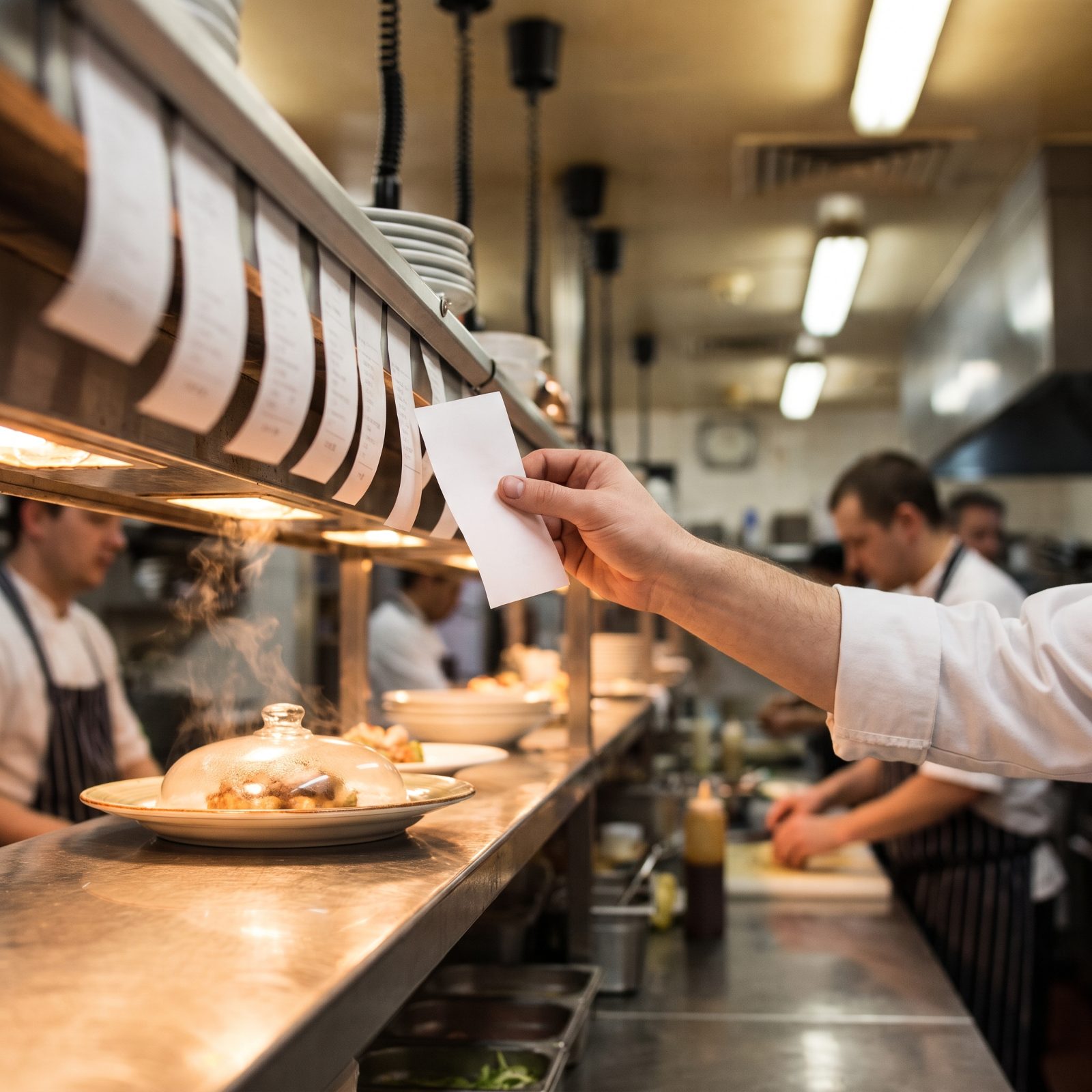
A steak comes back. Overcooked, and the table’s waited long enough already. Now the cook has to drop a new one and make it jump the line without stranding the other tickets hanging on the rail.
Call it triage, decided in about three seconds. Refire the steak, keep its table’s sides warm, and don’t let the refire shove everyone behind it into the weeds. Get it wrong and one unhappy table becomes four.
Breaking down the calls used between the line and the floor, a veteran restaurant chef explains “A refire usually goes “on the fly,” meaning it jumps ahead of everything else because a guest is already waiting.”
29. Balancing Dine-In Tickets With Takeout Orders
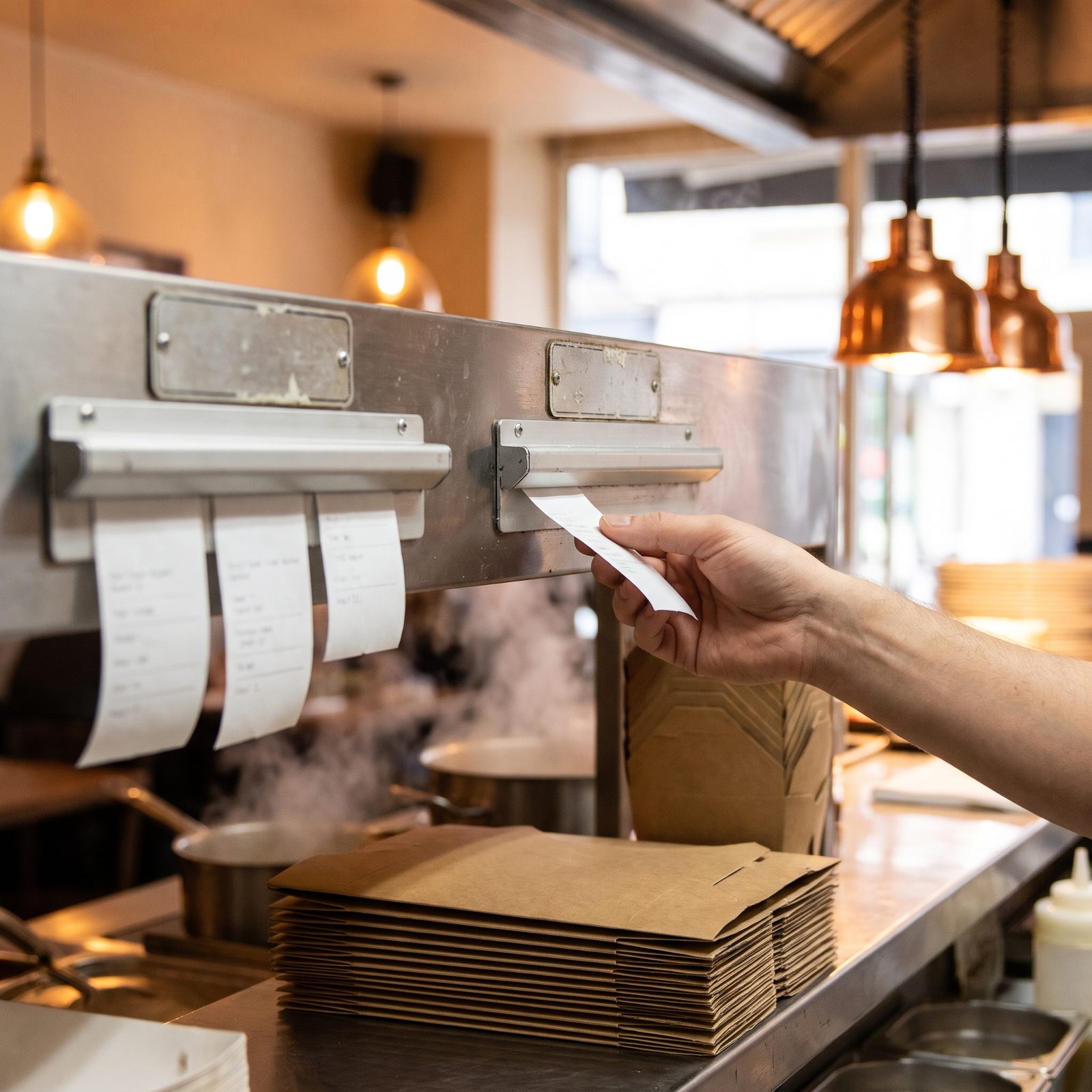
The dine-in table wants everything at once, hot, together. The takeout order has to hold its heat through a car ride and a doorstep. Same kitchen, two different clocks running side by side.
A good cook paces them differently on purpose. The dine-in fish hits the pass right as the table’s ready, while the takeout version is timed so it survives the box, the bag, the twelve-minute drive. Fire them identically and one of the two arrives wrong.
28. Counting Specials and Calling a Sellout Before the Next Ticket
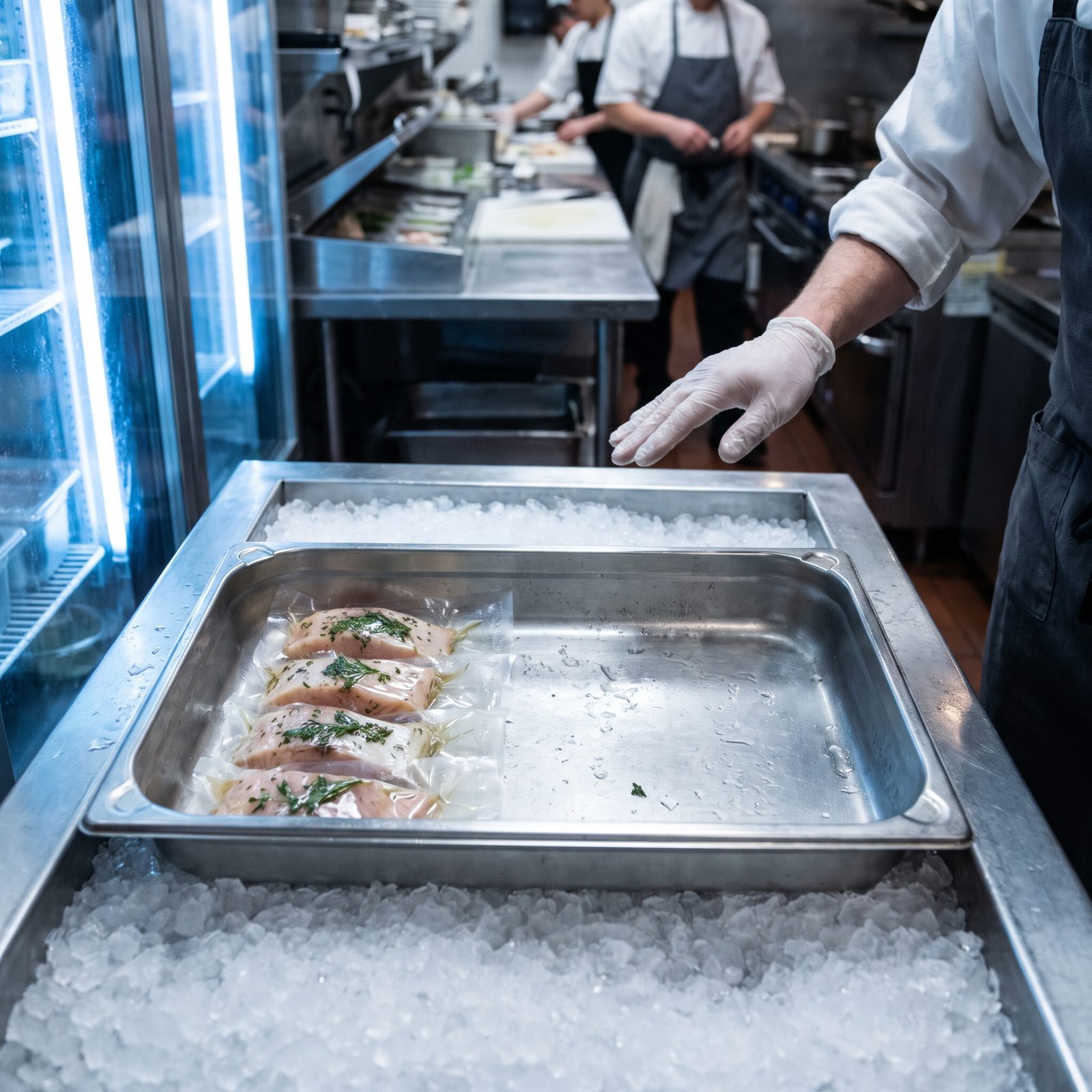
There were twenty vacuum-sealed, herb-topped fish specials on ice when the night started. Somewhere in the rush, a cook has to clock that it’s down to four and holler it to the servers before a fifth table orders one.
Miss that window and a server promises a dish that no longer exists. Now a table’s been told no after they’d already decided yes — a worse feeling than if the special had never been on the board at all. Counting down in your head while cooking everything else is a quiet kind of math nobody notices until it fails.
27. Retrieving Backup Ingredients From the Walk-In
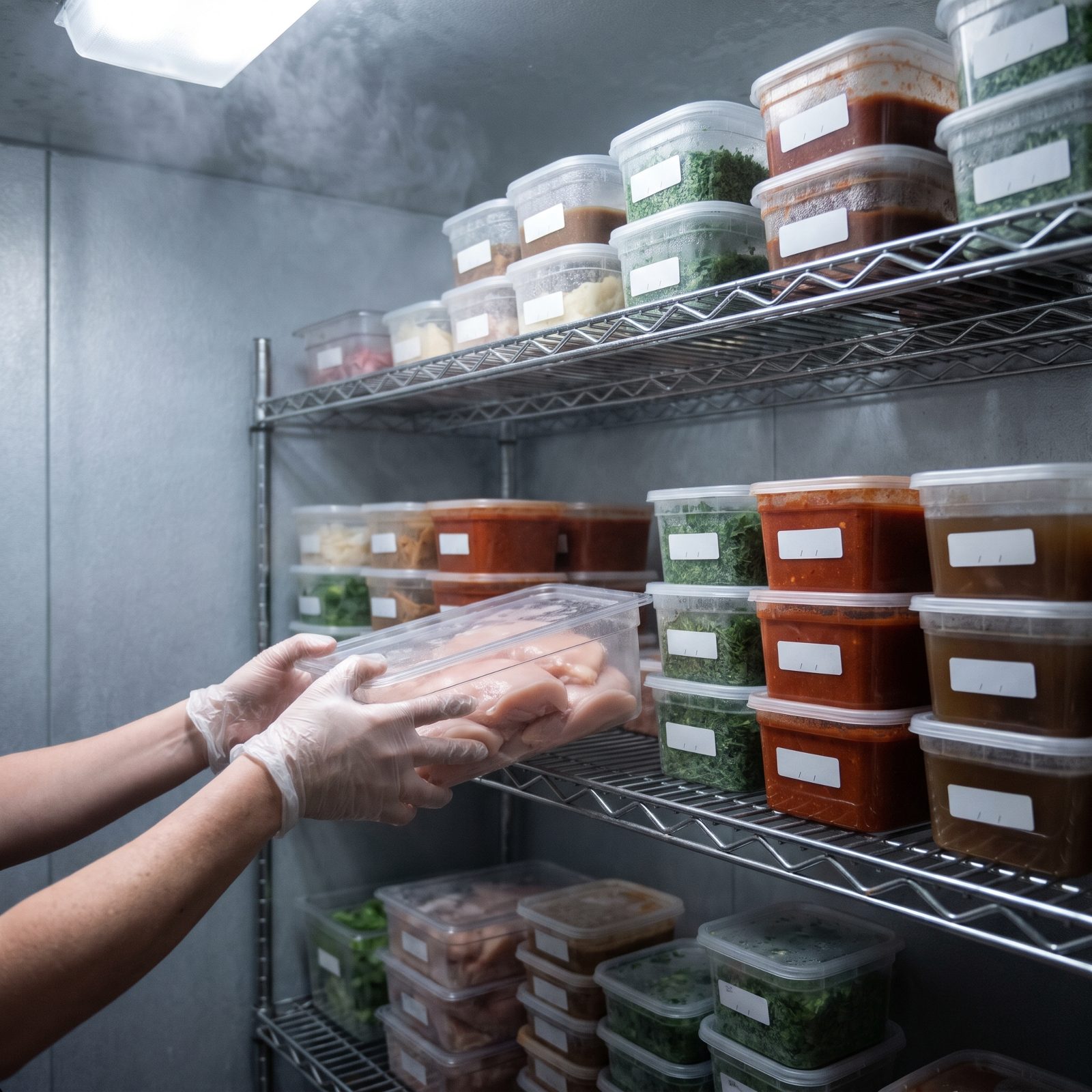
The line runs out of something mid-service. Somebody has to leave their station, speed-walk to the walk-in, find the backup on a shelf in the cold, and get back before their own tickets pile up and go cold.
Every second in that cooler is a second their station runs blind. The fastest cooks know exactly where everything lives — which shelf, which container, dated and labeled — so the trip is thirty seconds instead of two minutes of digging. A messy walk-in bleeds you one frantic hunt at a time.
26. Replenishing Mise en Place Pans Mid-Rush
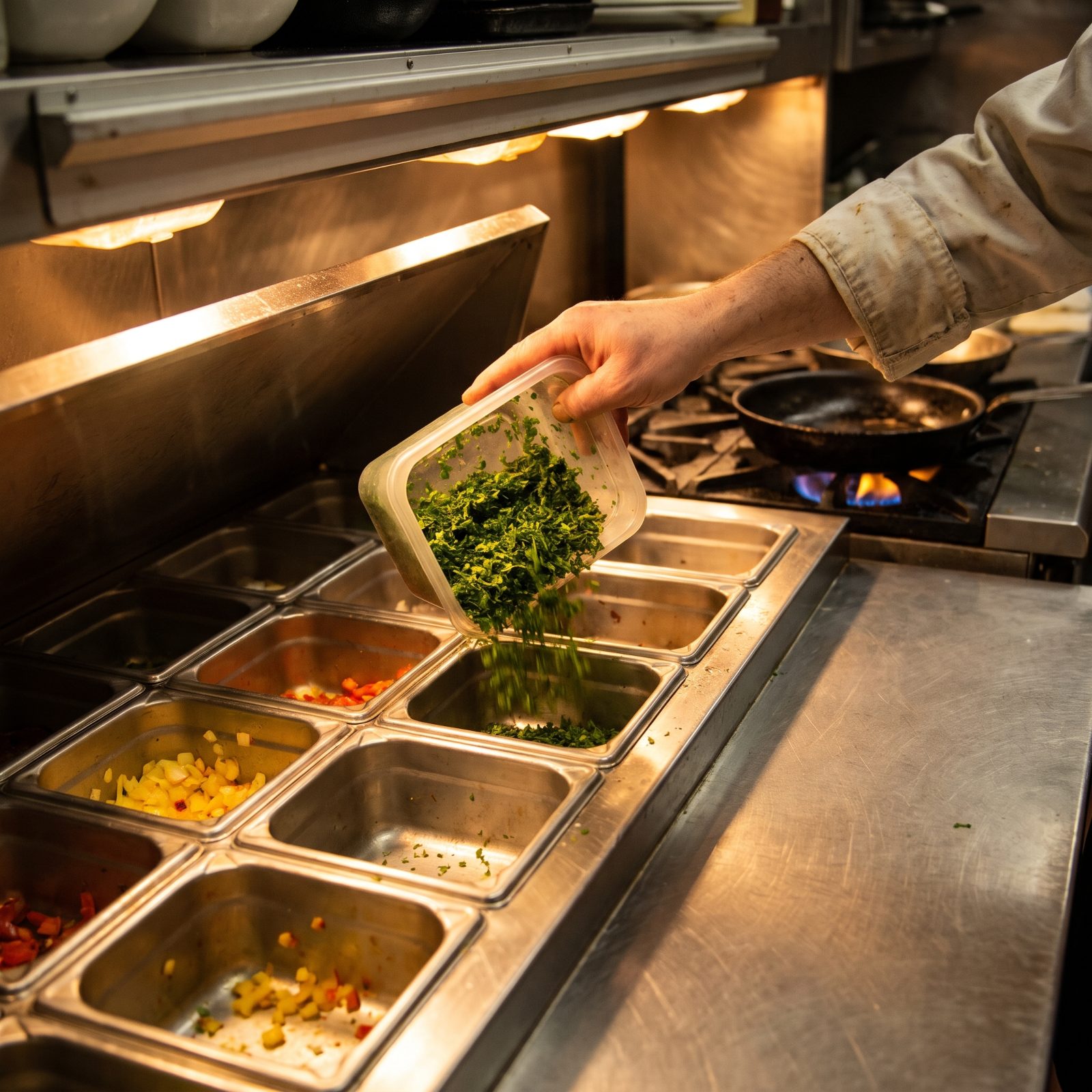
The little pans run dry fast — chopped garlic, diced shallot, the herb mix, the portioned sauce. A cook has to catch each one going empty and refill it between tickets, so a hand never dives into an empty pan mid-cook.
Picture a gas tank hitting E on the highway with no exit in sight. Reaching for garlic that isn’t there mid-sauté means the dish stalls, the pan scorches, and you’re starting over. Topping off before empty is the difference between smooth and scrambling.
25. Measuring Consistent Portions Without Slowing the Line
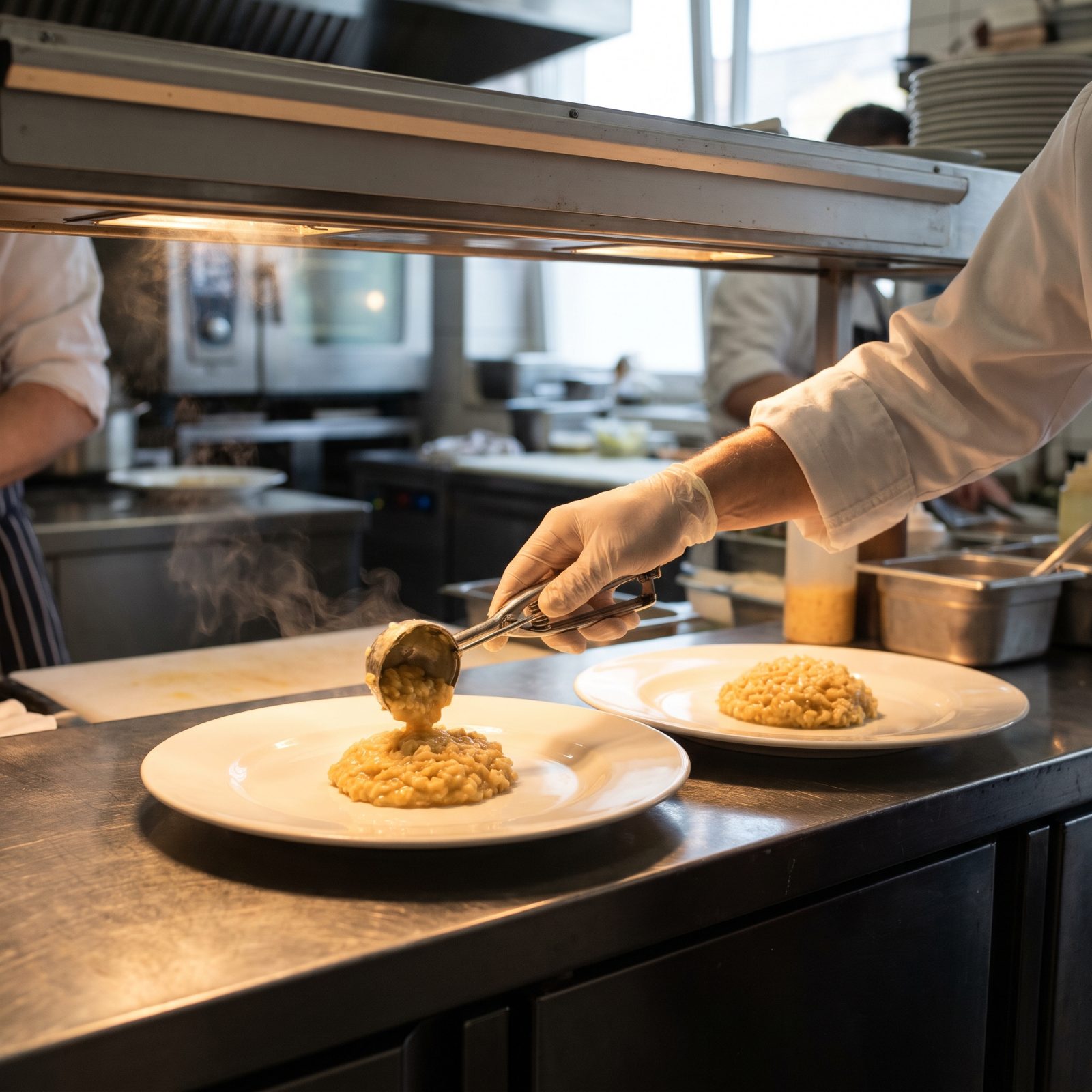
Every plate of pasta leaves the kitchen the same size. Not measured on a scale — measured by a hand that’s done it ten thousand times and knows the weight of a correct portion by feel.
This matters more than diners realize. The table next to you ordered the same dish, and if their plate’s noticeably bigger, you notice, and suddenly your dinner feels like a short pour. Consistency is a trust thing, and a good cook holds it without ever slowing down to check.
24. Setting Several Overlapping Timers
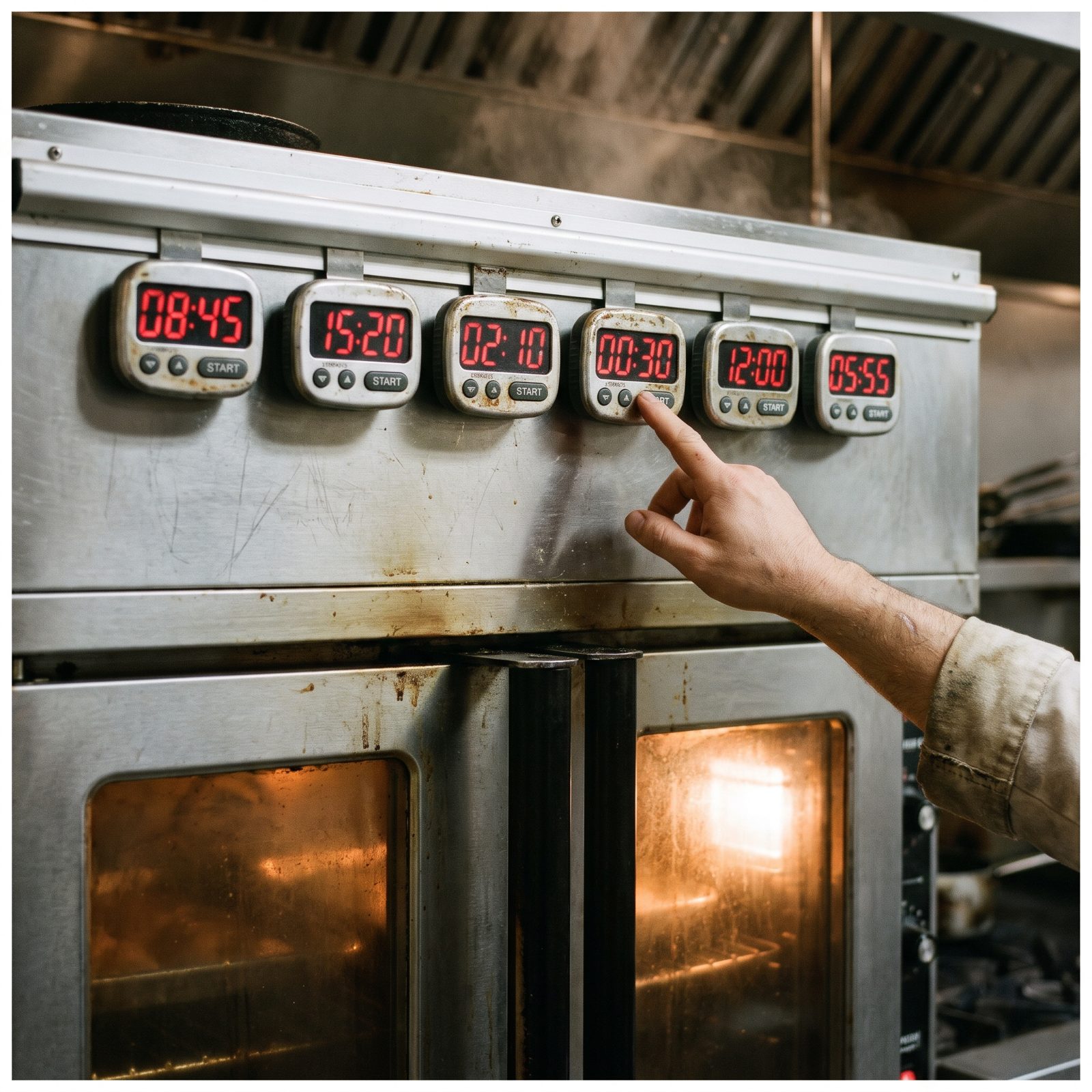
Four things in the oven, all started at different minutes, all finishing at different times. The cook runs the whole stack in their head and on a bank of timers at once, and none of it can beep too late.
Lose track of one and something burns — or worse, sits done and dying under a lamp while the rest of the ticket catches up. Juggling overlapping clocks is less about memory than rhythm. The good ones barely glance at the timers. They just know.
23. Staggering Fryer Baskets for Separate Pickup Times
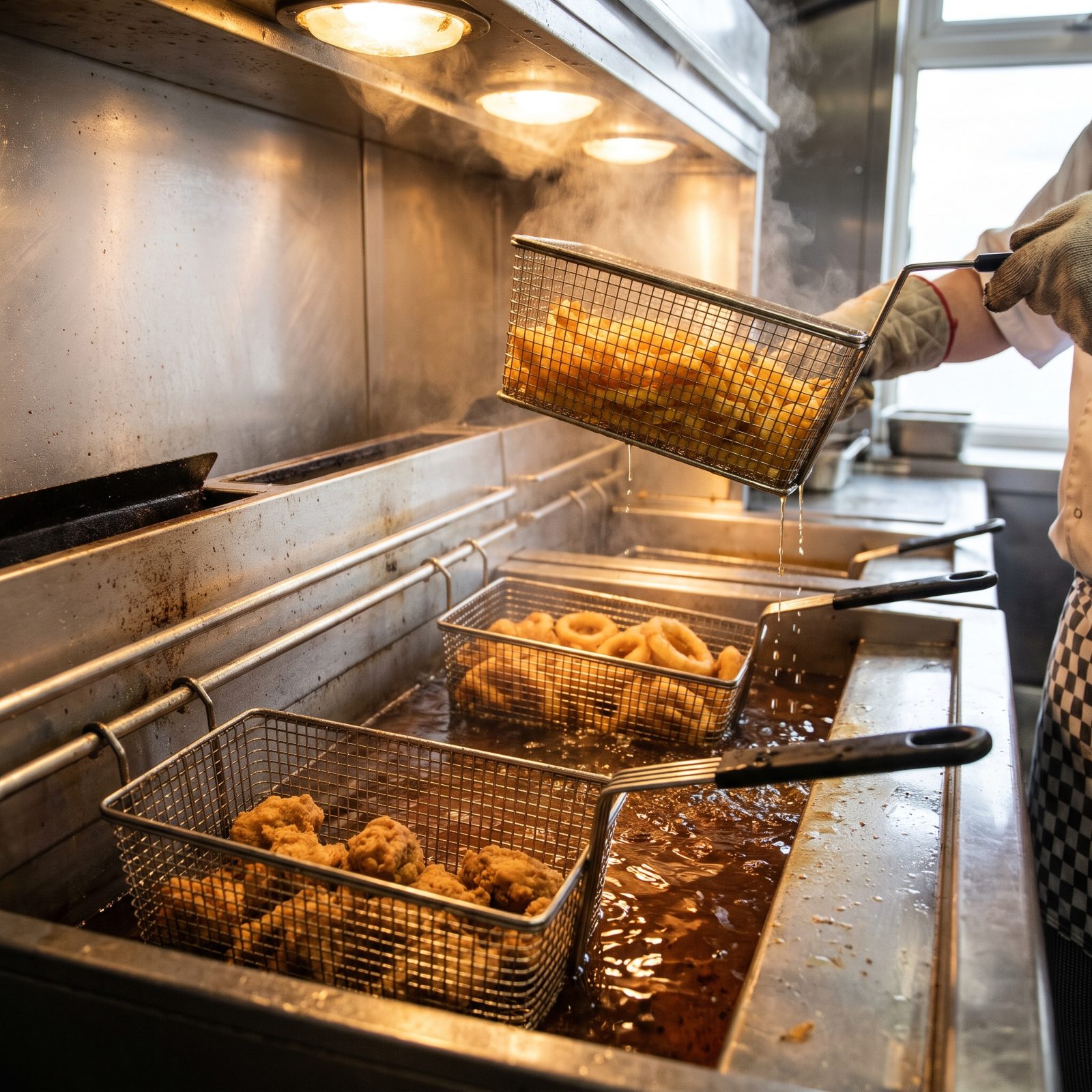
The fries for table six come up first, dripping oil. The other baskets sit loaded in the fryer, holding the calamari rings for table nine and the chicken tenders for the bar, each timed to come out at its own moment and land on its plate hot.
So the cook loads and drops each basket on a stagger, timing them backward from when each plate hits the pass. Pull them all at once and somebody’s fries wait five minutes and show up sad and limp. One fryer feeding three tables is a scheduling puzzle solved in hot oil.
22. Shaking Fryer Baskets to Prevent Food From Clumping
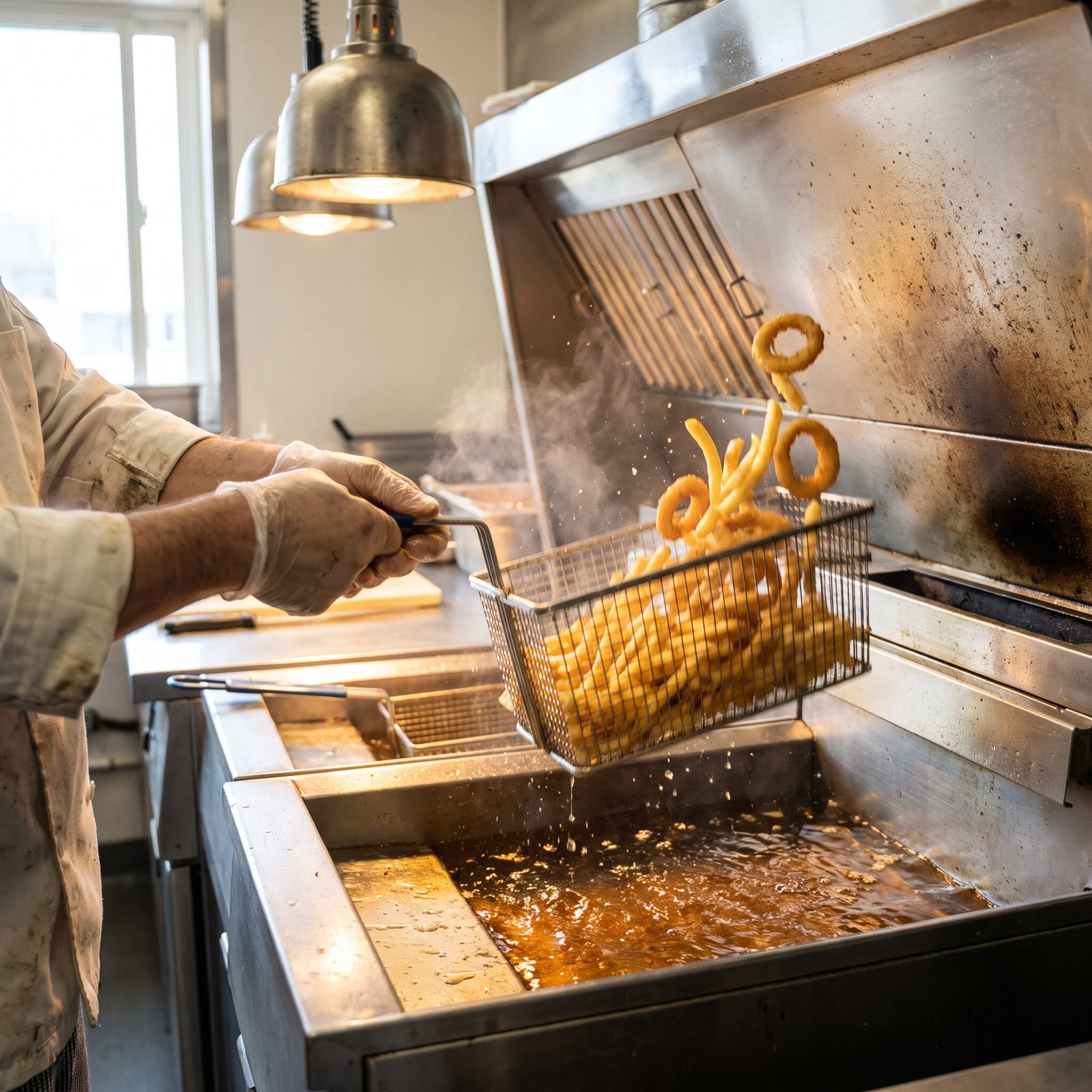
Drop breaded food in hot oil and leave it still, and it welds itself into one giant lump. So the cook shakes the basket — a quick flick every so often — to keep every piece separate and frying evenly.
It looks like nothing. A guy jiggling a basket. Skip it, though, and a plate of calamari becomes a single fried brick, half of it raw inside. That little shake is why your fried food comes out as pieces instead of a clump. Nobody’s ever thanked a cook for it. They should.
21. Skimming Burnt Crumbs From the Fryer
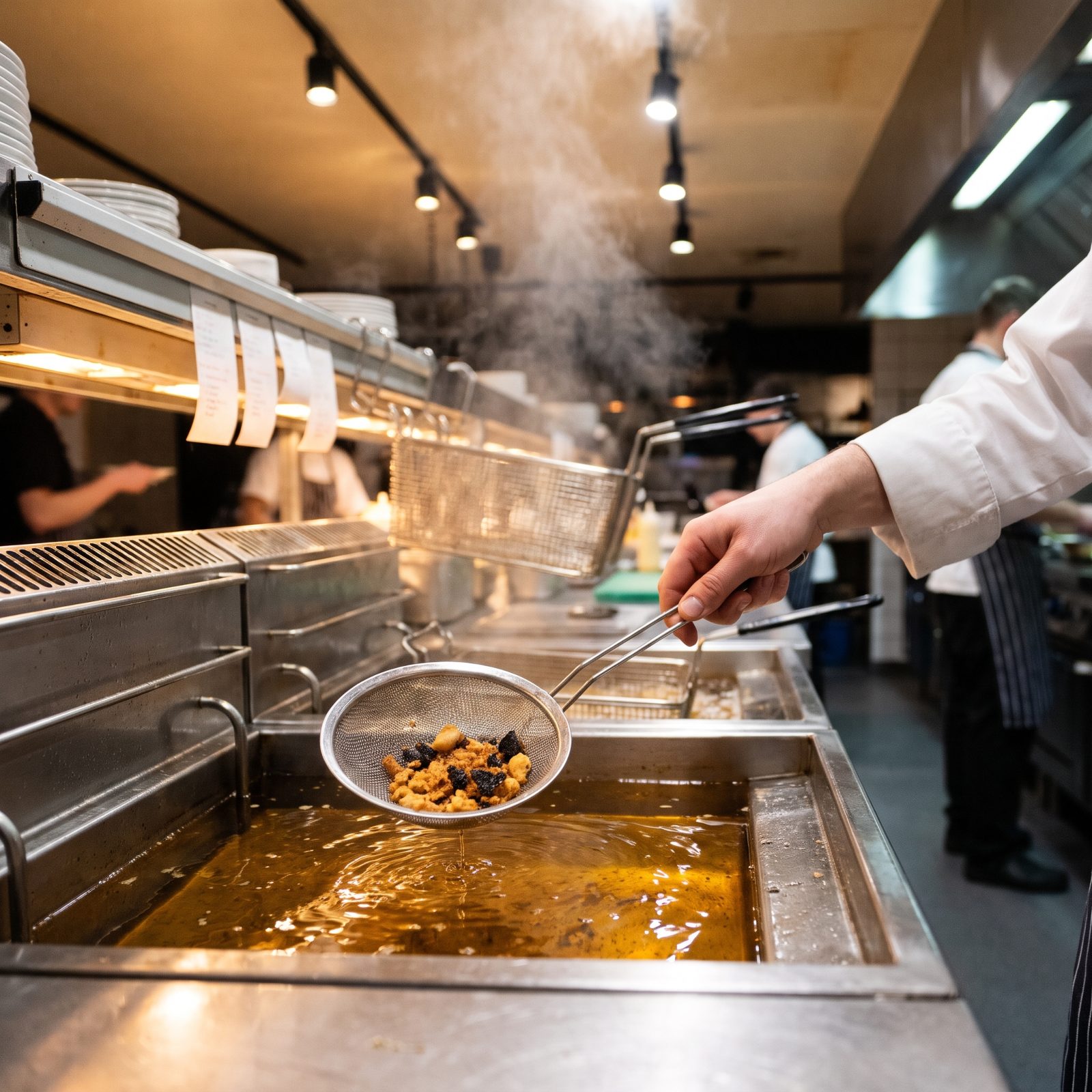
Those dark flecks floating in the oil aren’t harmless. Left alone, they burn again every time the basket drops, and they carry that scorched taste straight into your fries. A cook skimming the fryer between orders is doing flavor control, not tidiness — and burnt crumbs break the oil down faster, so it turns dark and bitter hours before it should.
You taste the difference immediately. Clean oil gives you a clean fry. Neglected oil gives you that acrid, dusty edge that no amount of salt fixes.
20. Protecting the Oil Temperature by Limiting Each Fryer Drop
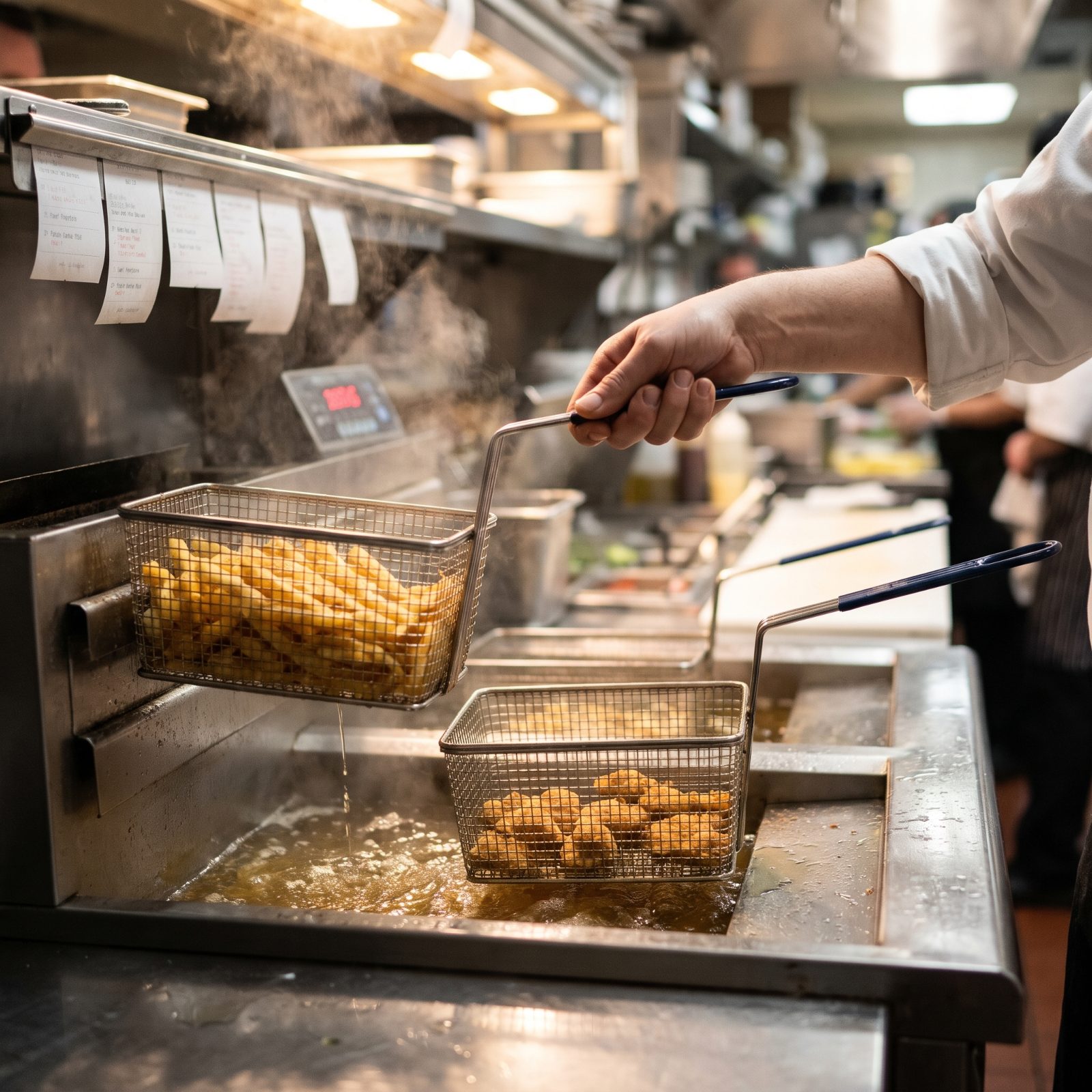
Dump too much into the fryer at once and the oil temperature crashes. Cold food soaks up oil instead of crisping, and you get that greasy, limp result everyone pretends is fine but nobody actually enjoys. A good cook portions each drop and fights the pull to clear the whole ticket in one go.
It feels slower. It isn’t. Two clean drops beat one soggy one you have to re-fire.
Warning against loading too much food into the oil at once, a restaurant culinary R&D director says “An overcrowded fryer will drop the temperature too quickly, resulting in a slow recovery of the oil’s temperature.”
19. Moving Proteins Between Hot and Cool Grill Zones
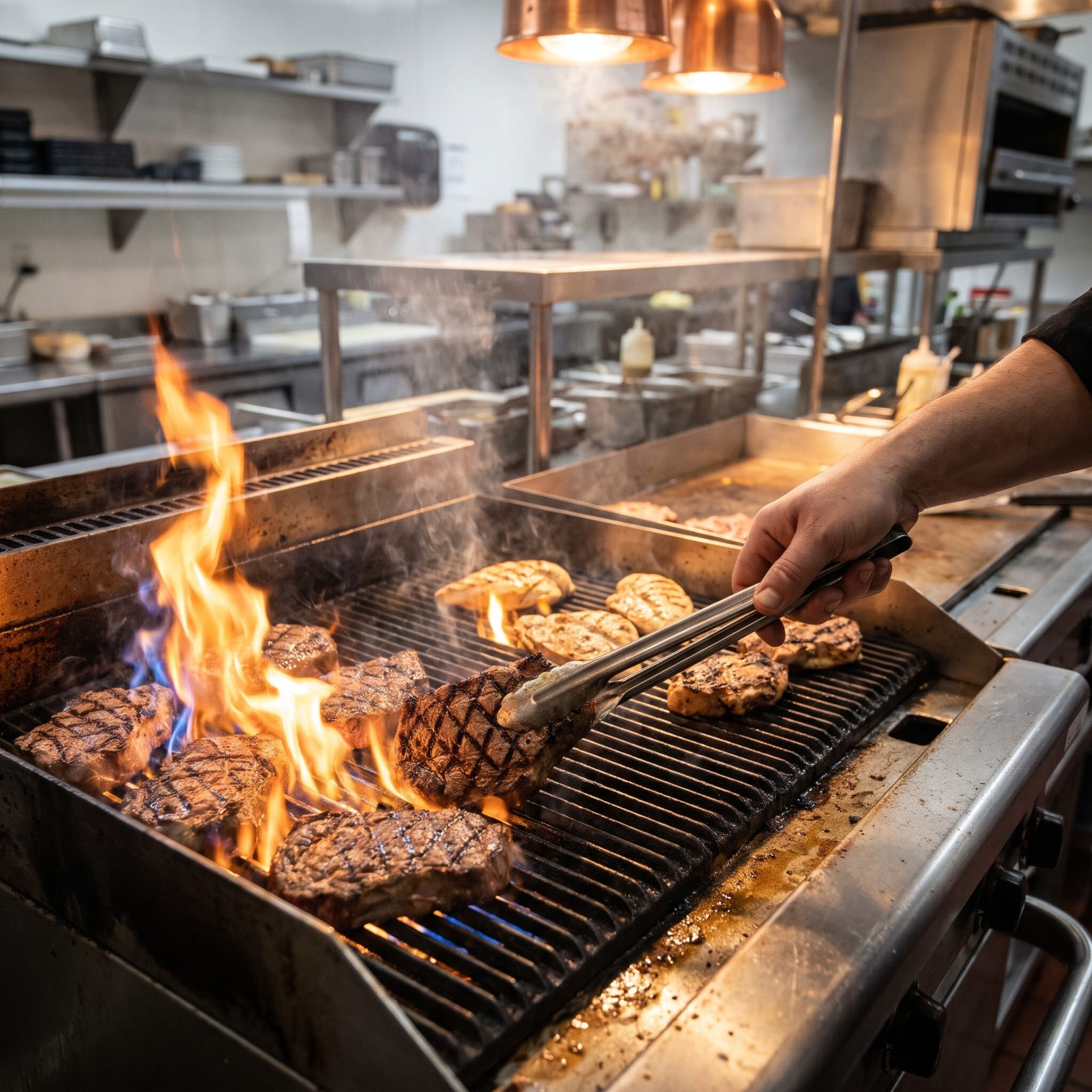
A grill isn’t one temperature. The front rages, the back idles, and a cook reads those zones like a map. Sear a steak hard up front, then slide it back to coast to the right doneness without the outside turning to charcoal. Delicate fish lives in the cool corner. A thick chop needs both.
Get it wrong and you’ve got a burnt crust around a raw center, or a gray, overcooked edge. This shuffle happens constantly — a dozen moves a minute, all tracked in the cook’s head alongside every other piece on the fire.
18. Scraping the Grill Between Waves of Orders
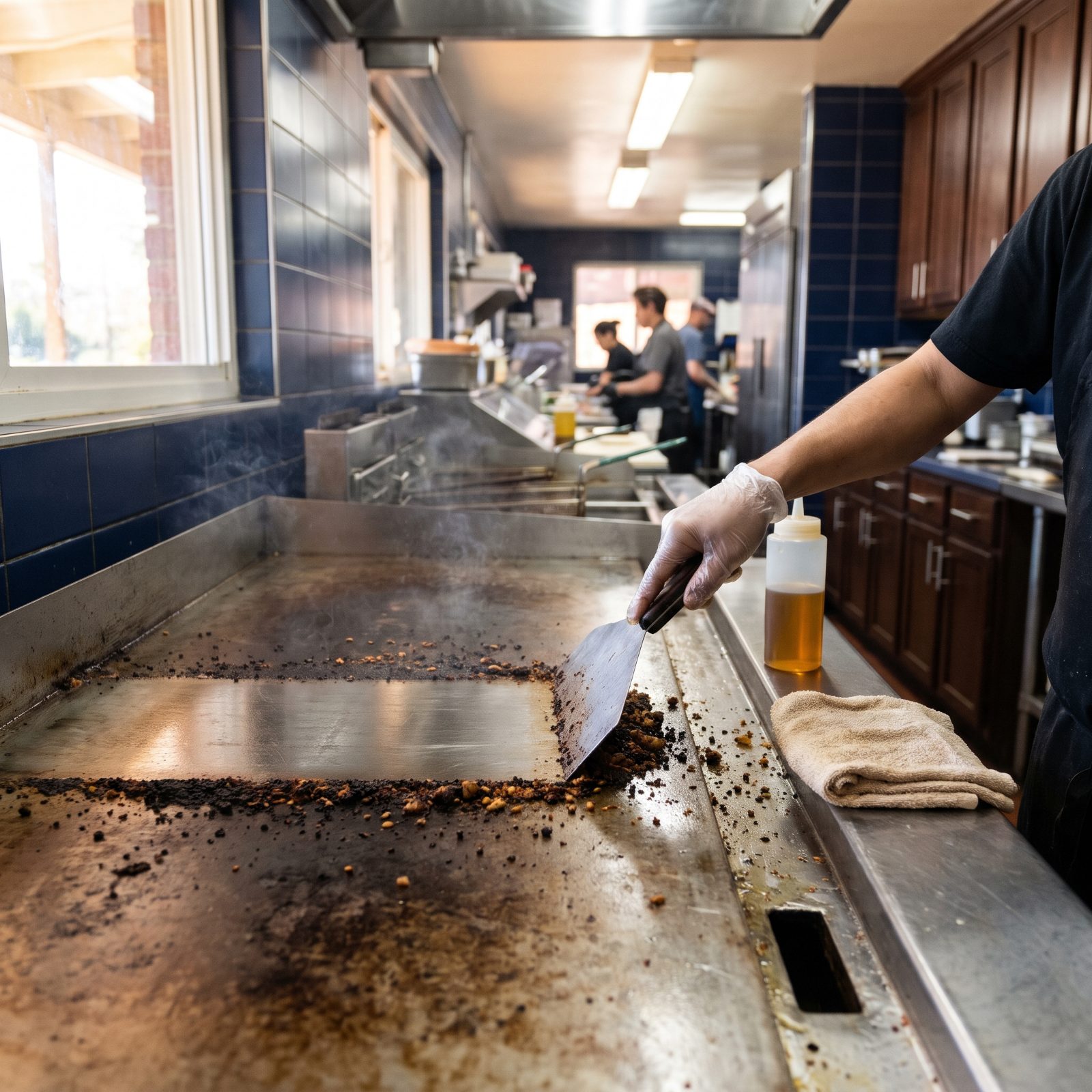
Char builds up fast. The scraps left from the last six steaks will stick to the next one, turn it bitter, and leave ugly black smears across a fish fillet. So between waves, the cook scrapes down to clean steel, wipes it with oil, and resets.
Nobody notices this when it’s done. Everybody tastes it when it isn’t.
17. Adjusting Burner Flames Under Several Pans
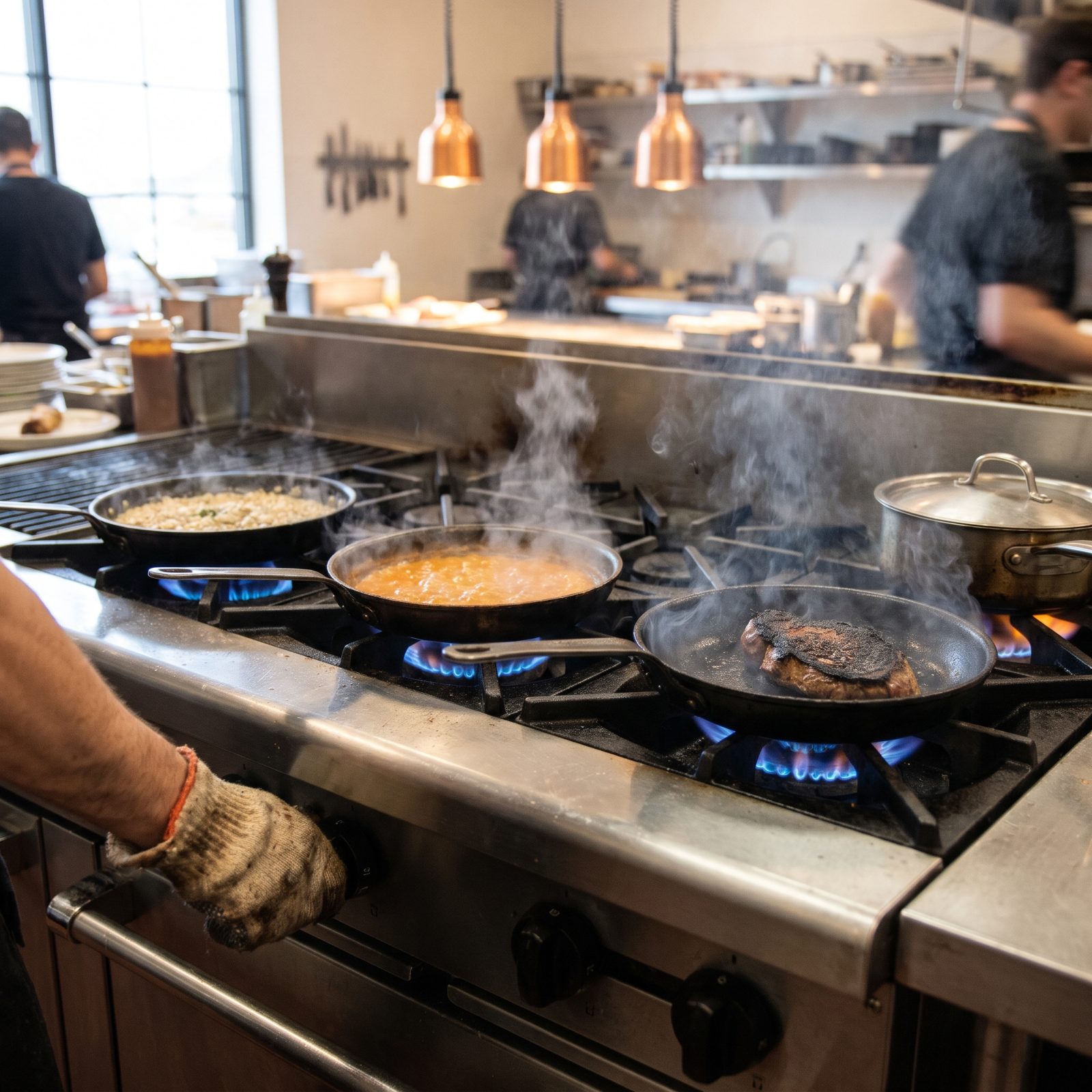
A line cook works four burners at once, and every pan wants something different. The sear needs full flame. The pan sauce needs a bare whisper. The one holding food just needs enough to stay warm without cooking any further. The hand is always on a knob, nudging flames up and down.
From the outside it looks like chaos. To the cook it feels like driving. You’re reading sound and smell more than sight — the pitch of a simmer, the smell of butter about to tip from brown to burnt.
16. Rotating Sheet Pans Through Uneven Oven Hot Spots
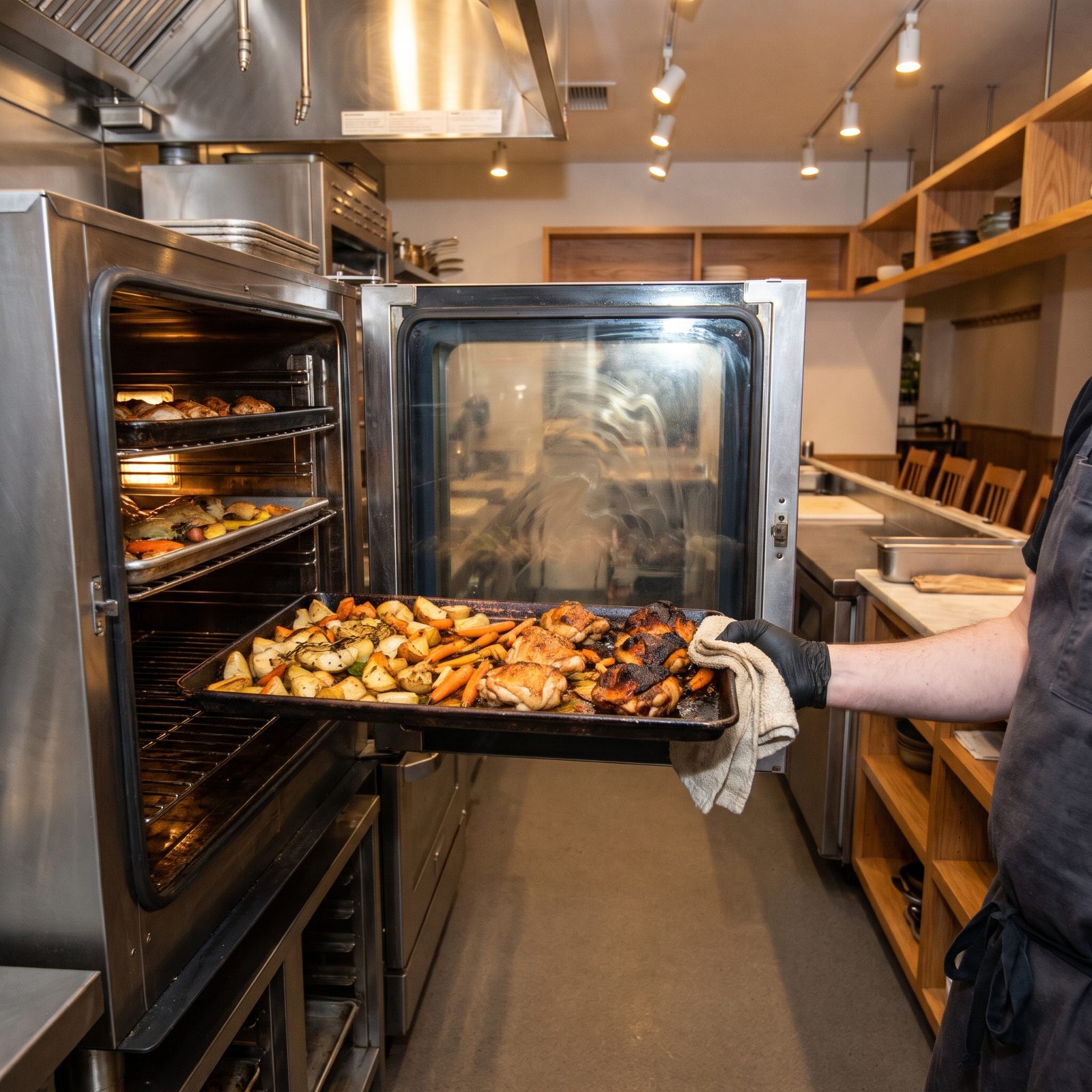
Ovens lie. They say 400 and deliver 420 in the back left corner and 380 by the door. A cook who doesn’t rotate pans ends up with one side of the tray dark and the other pale, so the pans get spun, back to front, every few minutes during a push.
Plenty of cooks ignore this early on and wonder why half their roasted vegetables come out perfect and half come out sad. It was always the oven. Never the recipe.
Explaining why sheet pans need turning partway through, a personal chef writes “I’ve learned from years of cooking in different kitchens that even the best ovens can have variations in heat distribution, with some areas being hotter than others.”
15. Basting Proteins While Managing Other Pans
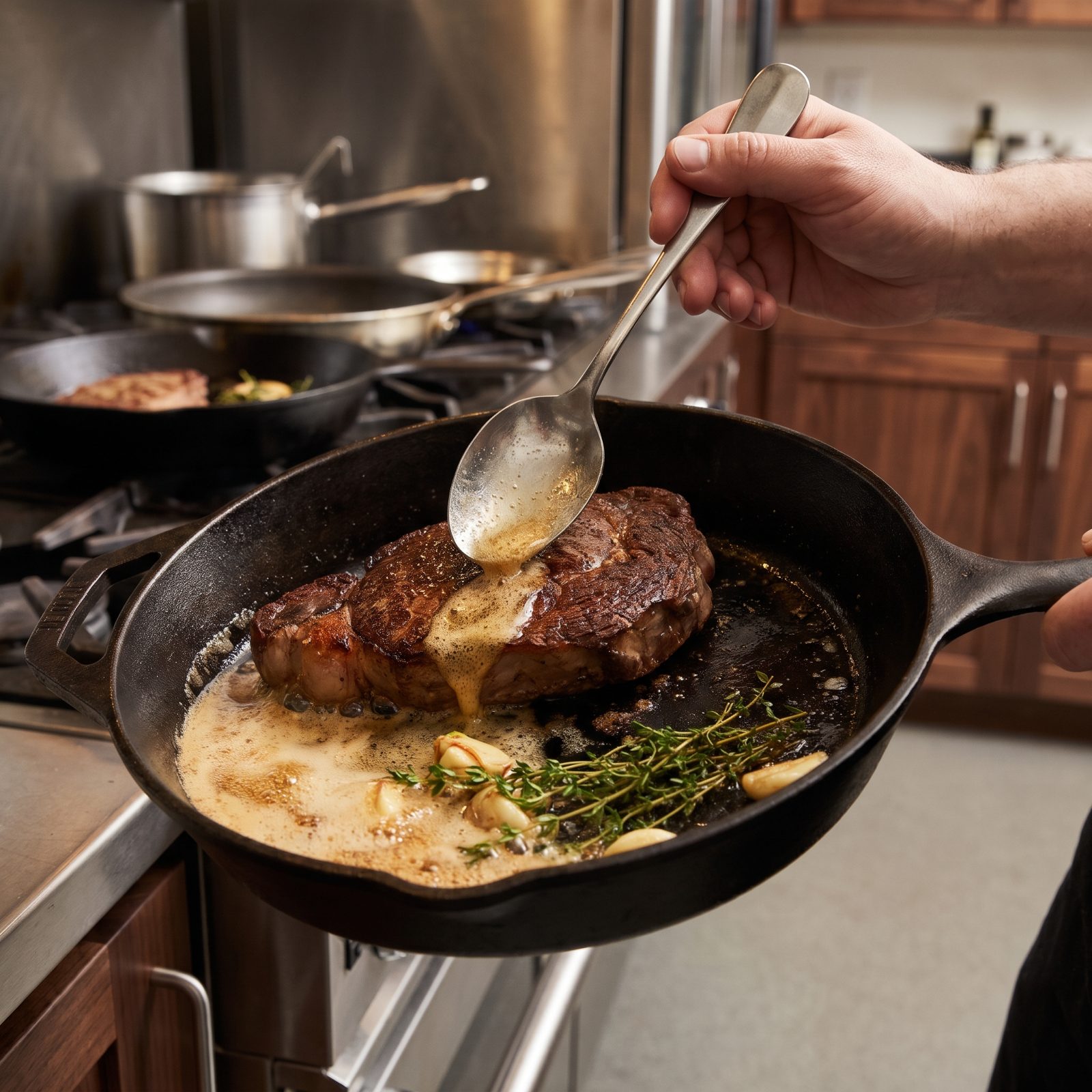
Basting looks like a show-off move. It isn’t. Spooning foaming butter over a steak cooks the top gently, builds color, and drives the flavor of garlic and thyme into the meat. The catch is that the cook pulls this off with one hand while three other pans scream for attention.
That’s the real skill. Not the basting itself, but basting this pan without burning that one.
One good cook running five pans beats three mediocre cooks running one each. The coordination is the whole job.
14. Checking Internal Temperatures With a Thermometer
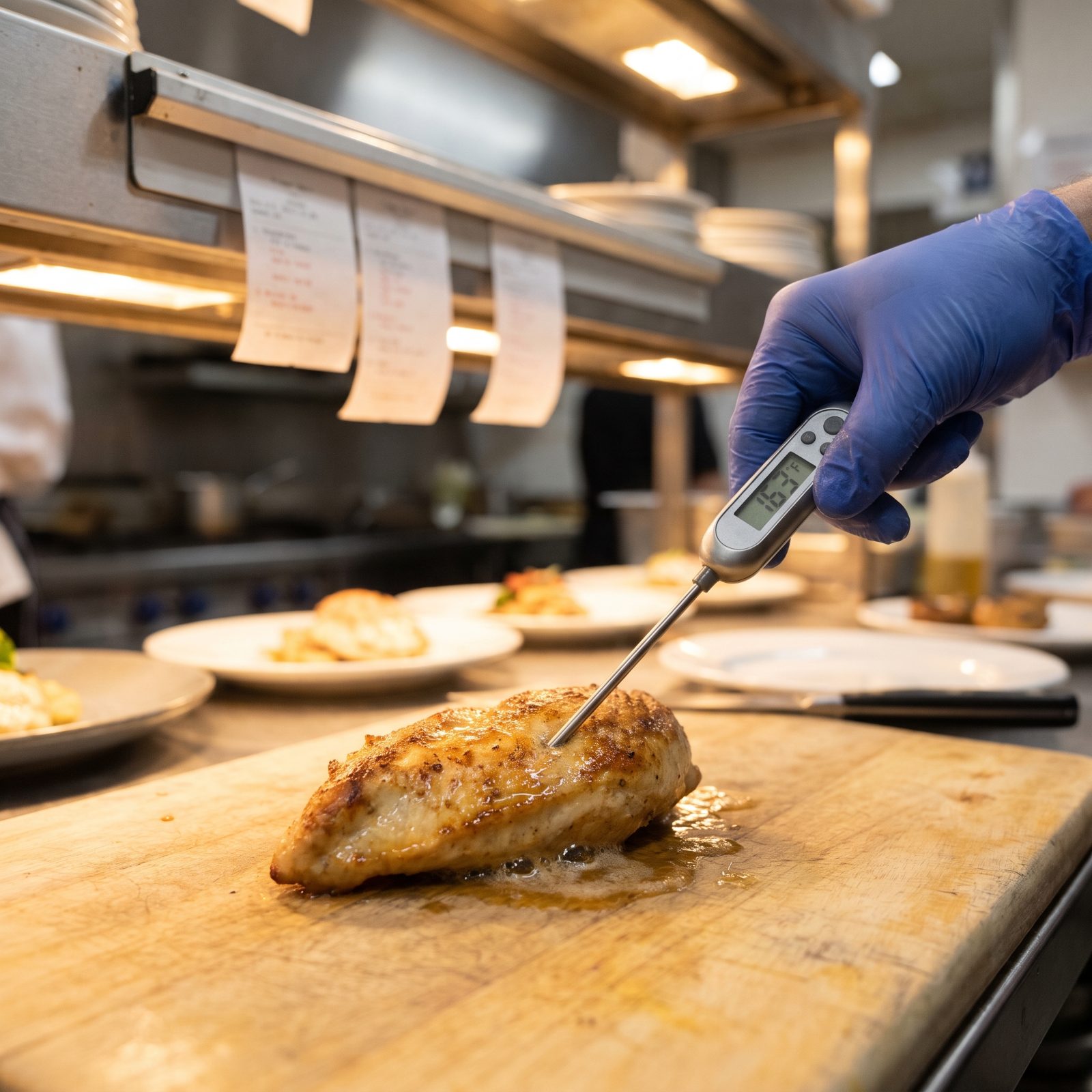
Color and touch get you close. The thermometer gets you sure. A cook slides a probe into the thickest part of a chicken breast or a pork chop not because they’re guessing, but because the margin between safe and overcooked can be ten degrees.
During a rush, the pull is to eyeball it and move on. The cooks who skip this are the ones who eventually send out a raw center or a hockey puck — and either one comes back to the kitchen with a very unhappy note attached.
13. Tasting and Correcting Seasoning Between Ticket Runs
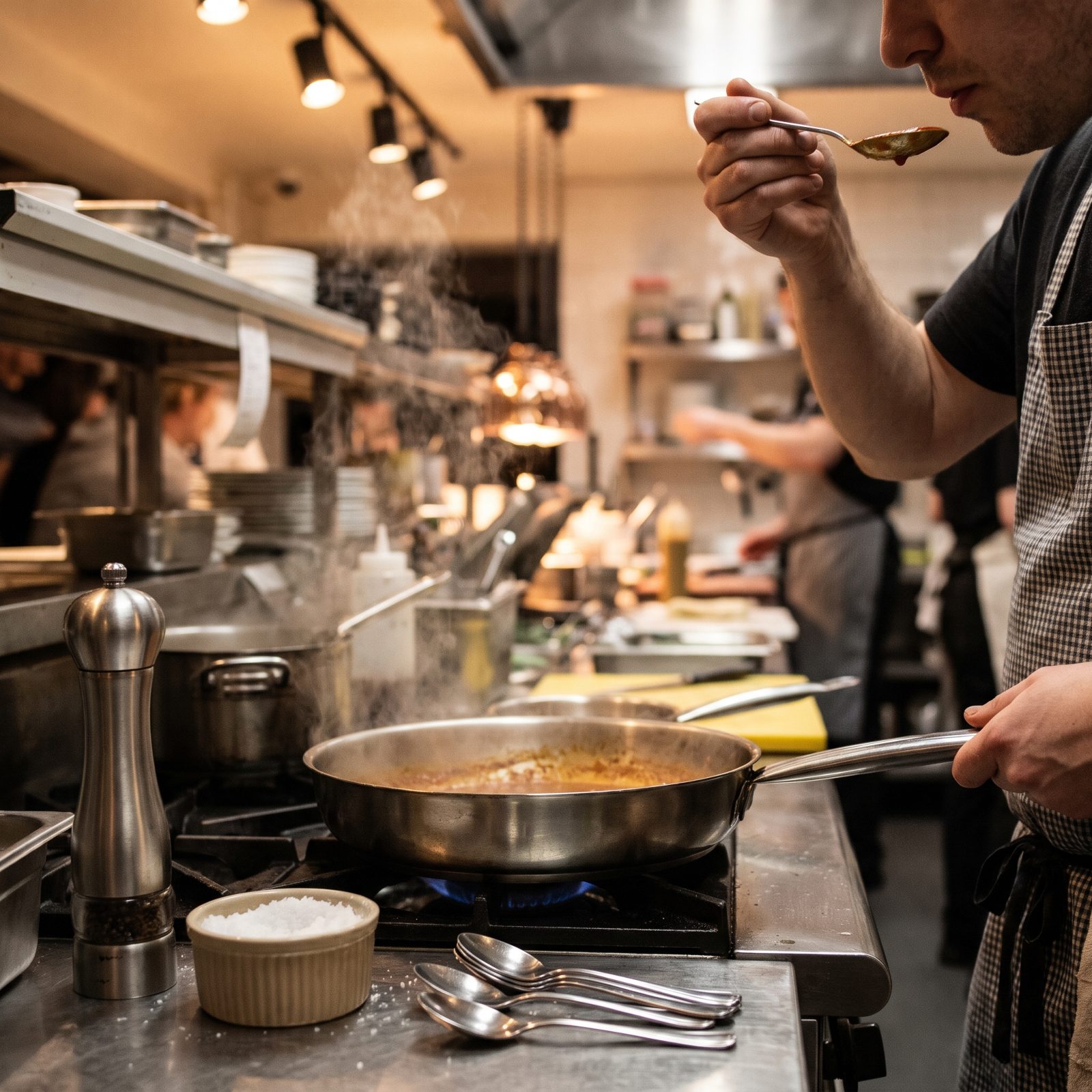
A sauce that tasted right at four o’clock tastes different at eight. Reduction concentrates salt, and a new batch of stock shifts everything. So between runs of tickets, a cook grabs a clean spoon, tastes, and corrects — a pinch of salt, a squeeze of acid, a crack of pepper.
This is the difference between food that’s cooked and food that’s seasoned. Most home cooking that falls flat isn’t undercooked. It’s under-tasted. The pro tastes constantly, fresh spoon every time, and fixes it before you ever get near the plate.
12. Loosening a Sauce That Reduced Too Far
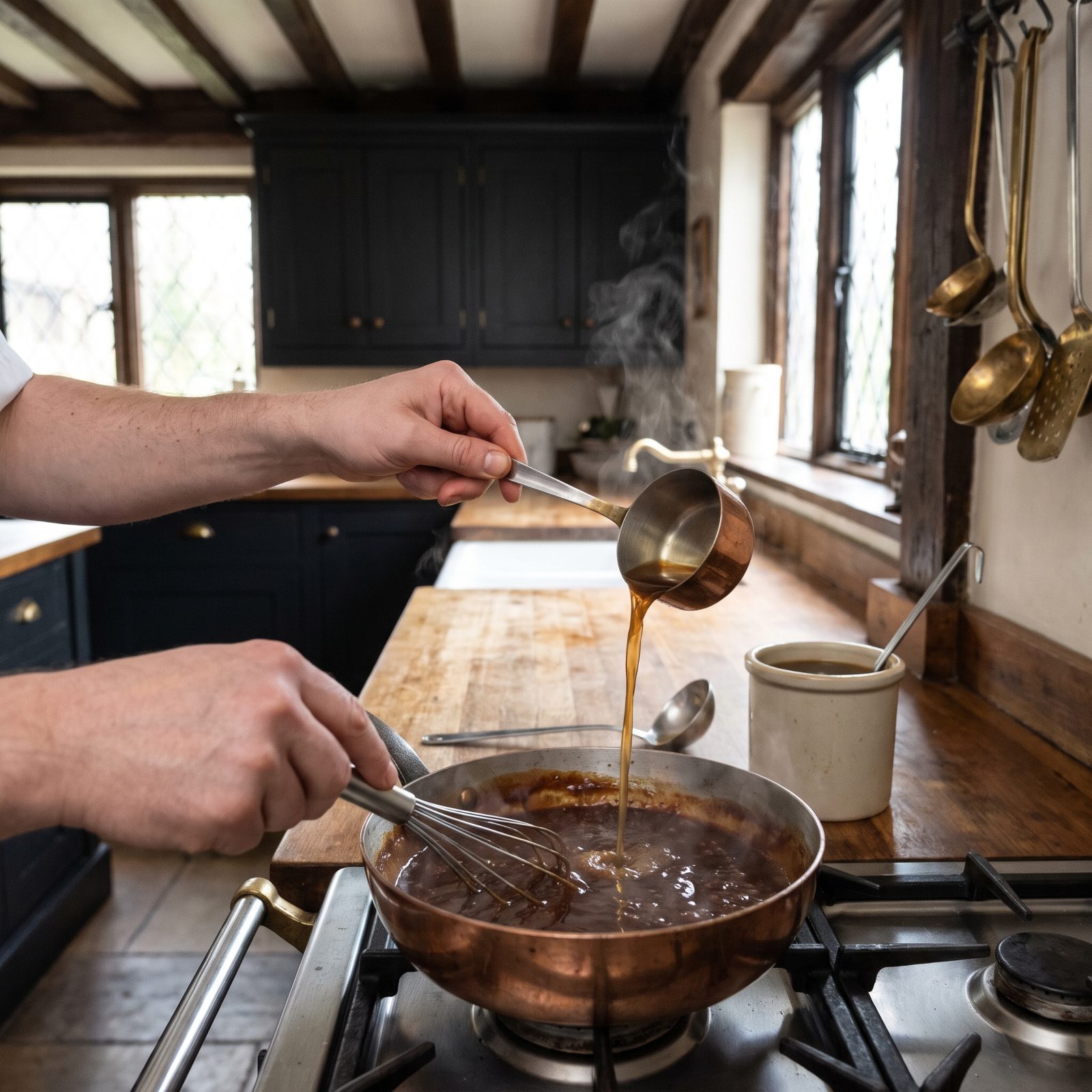
You step away for ninety seconds. You come back and the sauce has gone from silky to tar. Happens to everyone, and panicking only makes it worse. The fix is calm: a splash of warm stock, water, or cream, whisked in to bring the body back.
Warm liquid, not cold — cold shocks the fat out and splits the whole thing. A cook who has done this a thousand times saves the sauce in ten seconds and nobody at the table ever knows how close it came. That quiet save, over and over, is what a dinner service actually is.
11. Rebuilding a Plate From Scratch After It Hit the Floor
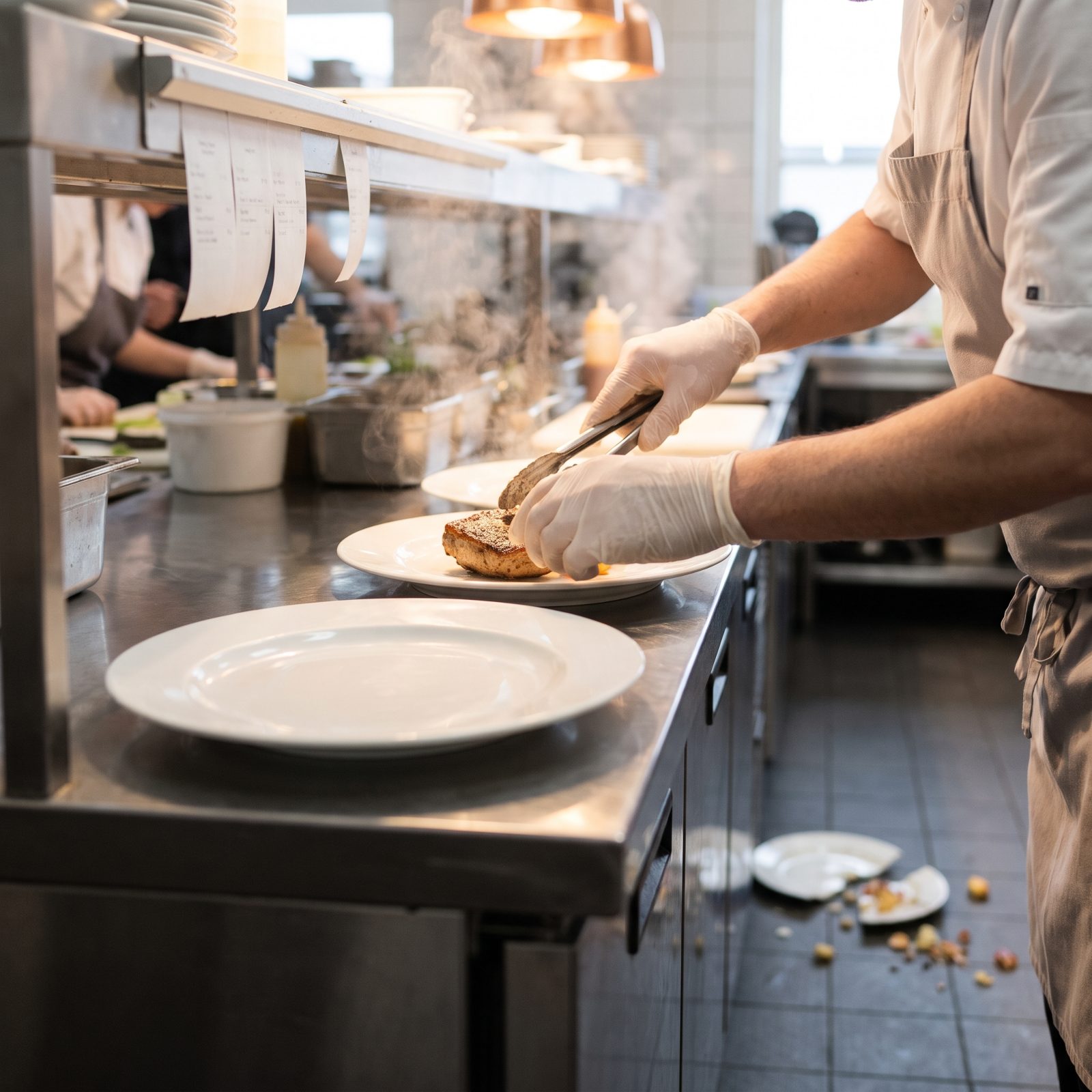
Something slides off a plate and hits the floor. The clock doesn’t care. That table’s been waiting, the rest of their food is up, and now one cook is rebuilding the dish from scratch while the whole order sits under the heat lamp going from hot to lukewarm.
The quiet skill is doing it without a word, without panic, without making the mess anyone else’s problem. The guest just thinks their food took a minute longer than the table beside them. It took a whole lot more than that.
10. Timing the Bun So It Toasts, Then Rides the Pass for Seconds
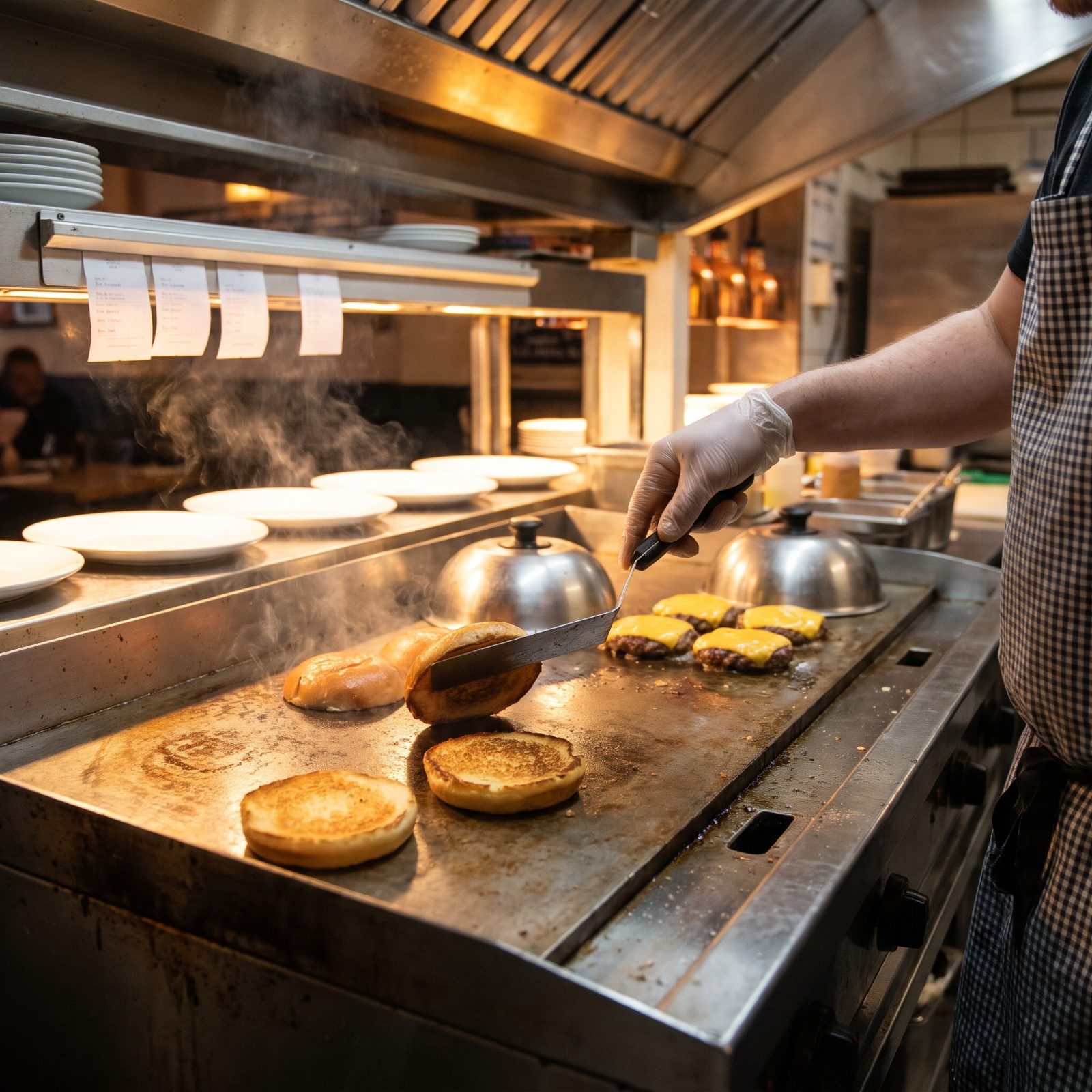
A toasted bun has a shelf life of about ninety seconds. Too early and it steams itself soft inside the heat window; too late and the whole ticket backs up behind one piece of bread.
So the cook holds it until the patty’s nearly up, drops the bun on the flat-top, and counts in their head while doing four other things at once. That golden, crisp face that holds up against the juices? It almost didn’t survive the trip from griddle to plate.
9. Hitting the Surface With One Last Blast of Heat Before Pickup
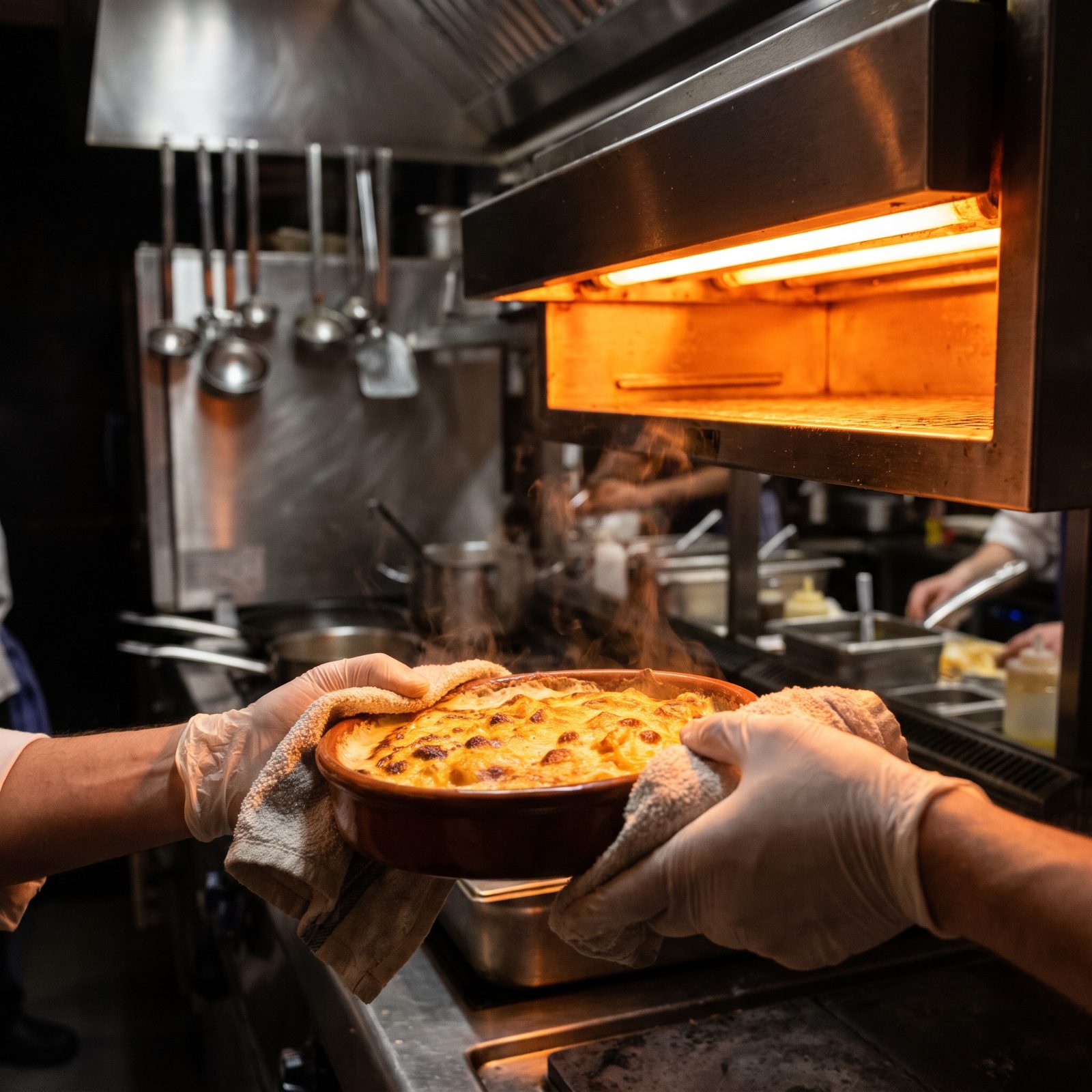
What separates a dish that looks alive from one that looks tired is often the last five seconds under the salamander. A quick blast to blister the cheese, crisp the top of a gratin, bring a glaze back to a shine.
You’ve seen the opposite. A plate that sat too long before it came out — flat, matte, a little sad. The cook who gives it that final hit of direct heat is buying back the freshness the ticket time stole.
8. Draining the Grease So the Fry Lands Crisp, Not Soggy
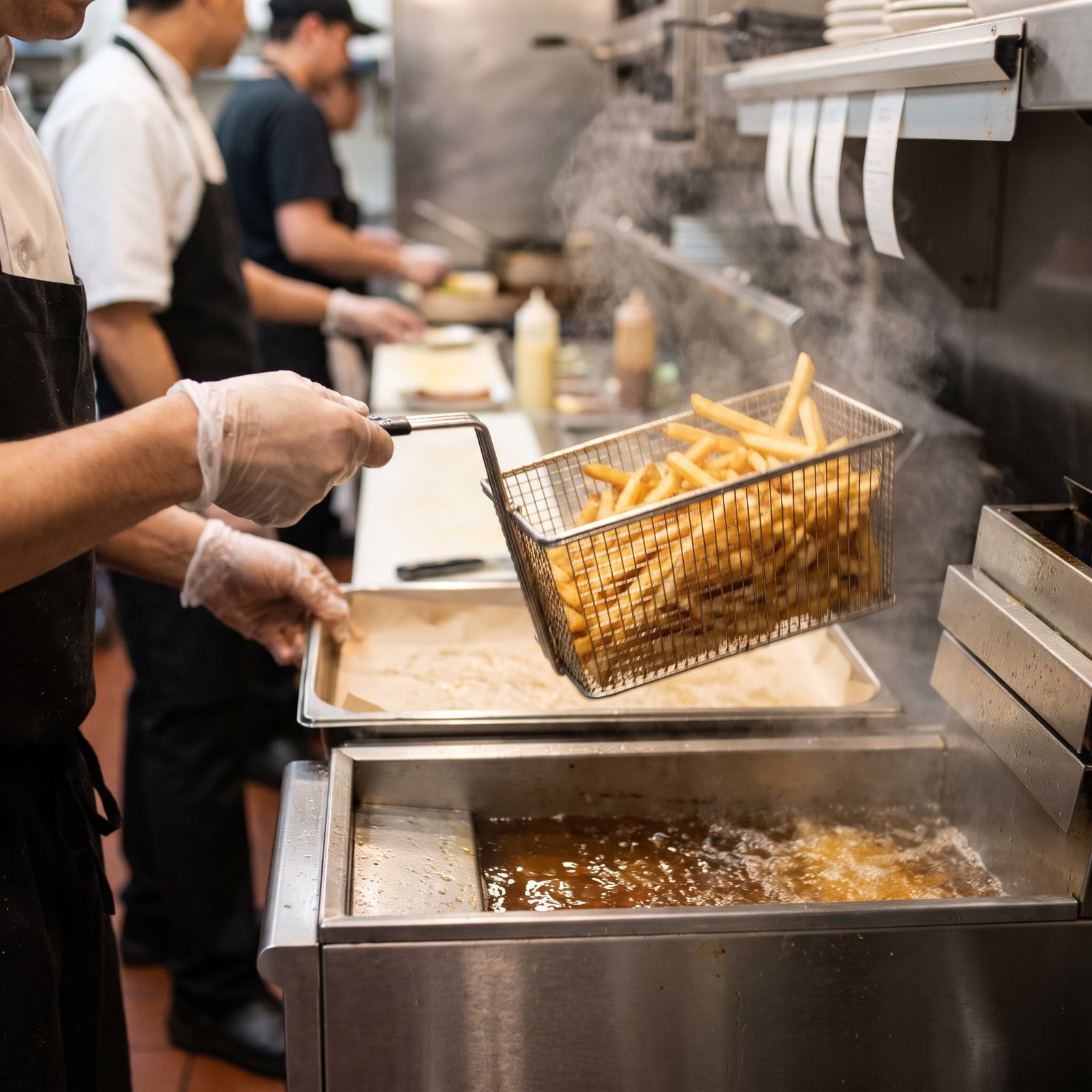
Fried food gets about a minute of glory before the trapped oil and steam turn it to mush. The cook shakes the basket hard over the fryer, tips everything onto paper or a rack, lets it breathe a second, then salts it while it’s still hot enough to grab the seasoning.
Skip that drain and the fries go limp before they reach the table. Least glamorous move on the line. One of the most decisive.
7. Smelling a Pan Going Too Far Before Anyone Sees Smoke
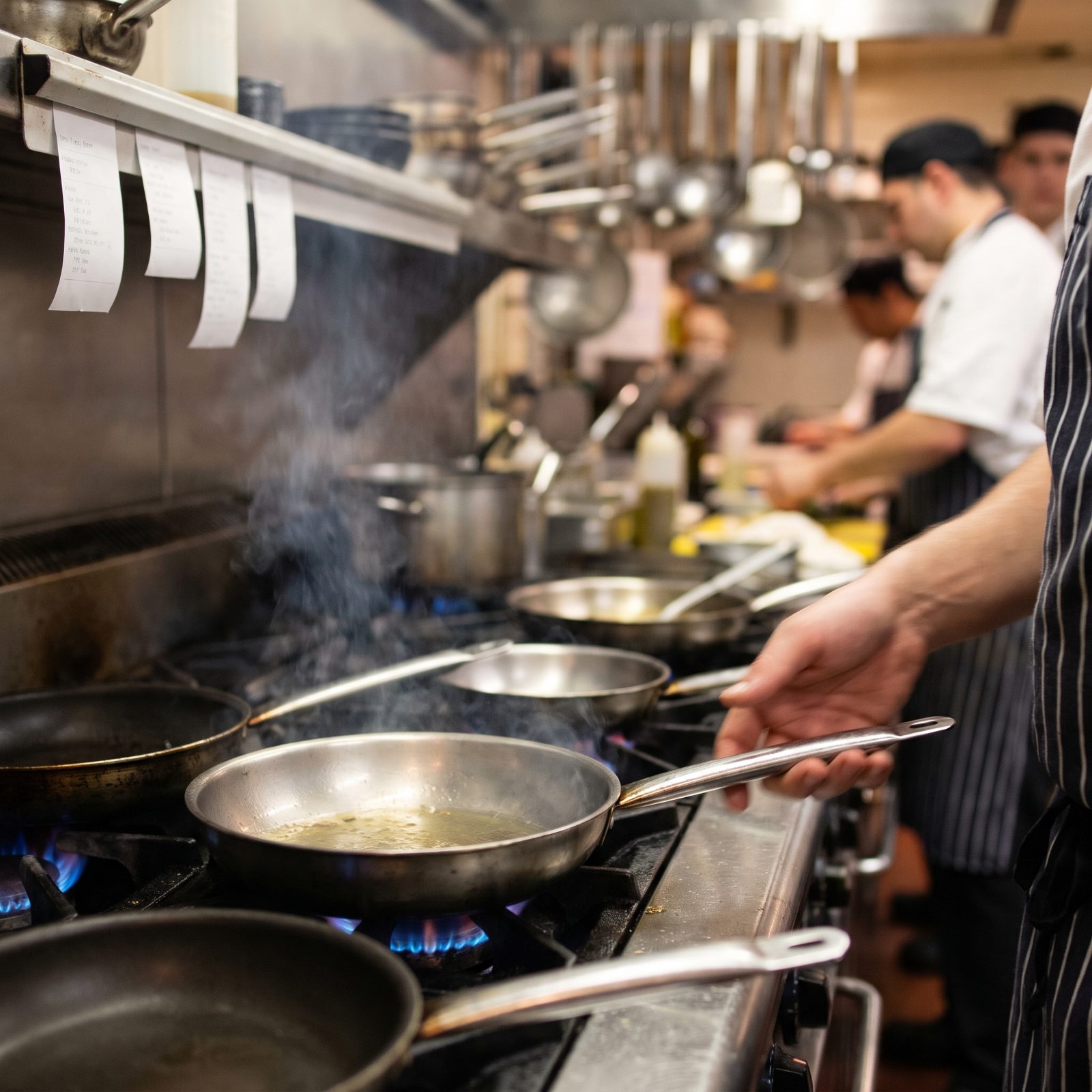
On a loud, crowded line you can’t see every burner. But you can smell one going. Garlic turning from sweet to sharp, butter sliding from nutty to acrid, the specific tang of oil about to pass the point of no return.
A cook working six pans will catch that smell and pull one off the flame without ever turning to look at it. Nose over eyes. It saves the dish and, more than once, it’s the first warning before something actually catches fire.
6. Wiping the Rim Clean Before the Plate Hits the Pass
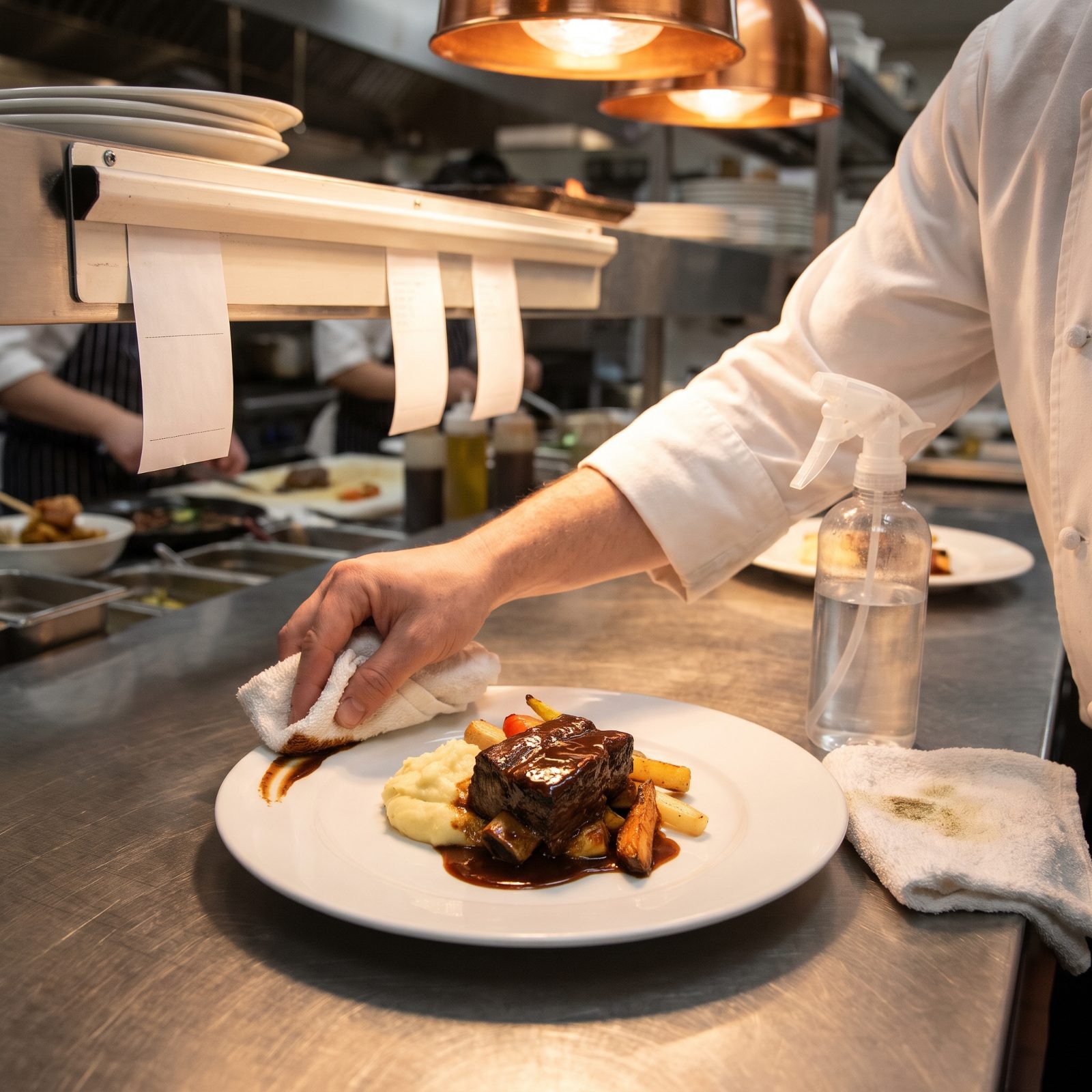
The food can be perfect and a thumbprint of sauce on the rim will undo all of it. So before any plate leaves, somebody runs a folded towel, its edge already stained brown from the last plate, around the edge, picks off a stray crumb, lines up the garnish.
Two seconds. And it’s the thing that separates a kitchen that cares from one that’s just shoving food out the window. The rim is the frame, and nobody wants to notice the frame.
Describing the mindset needed to run the pass, a veteran expo and chef advises “Touch every plate that leaves. Wipe the rims and check it against the spec.”
5. Keeping Every Special Request Tied to the Right Plate
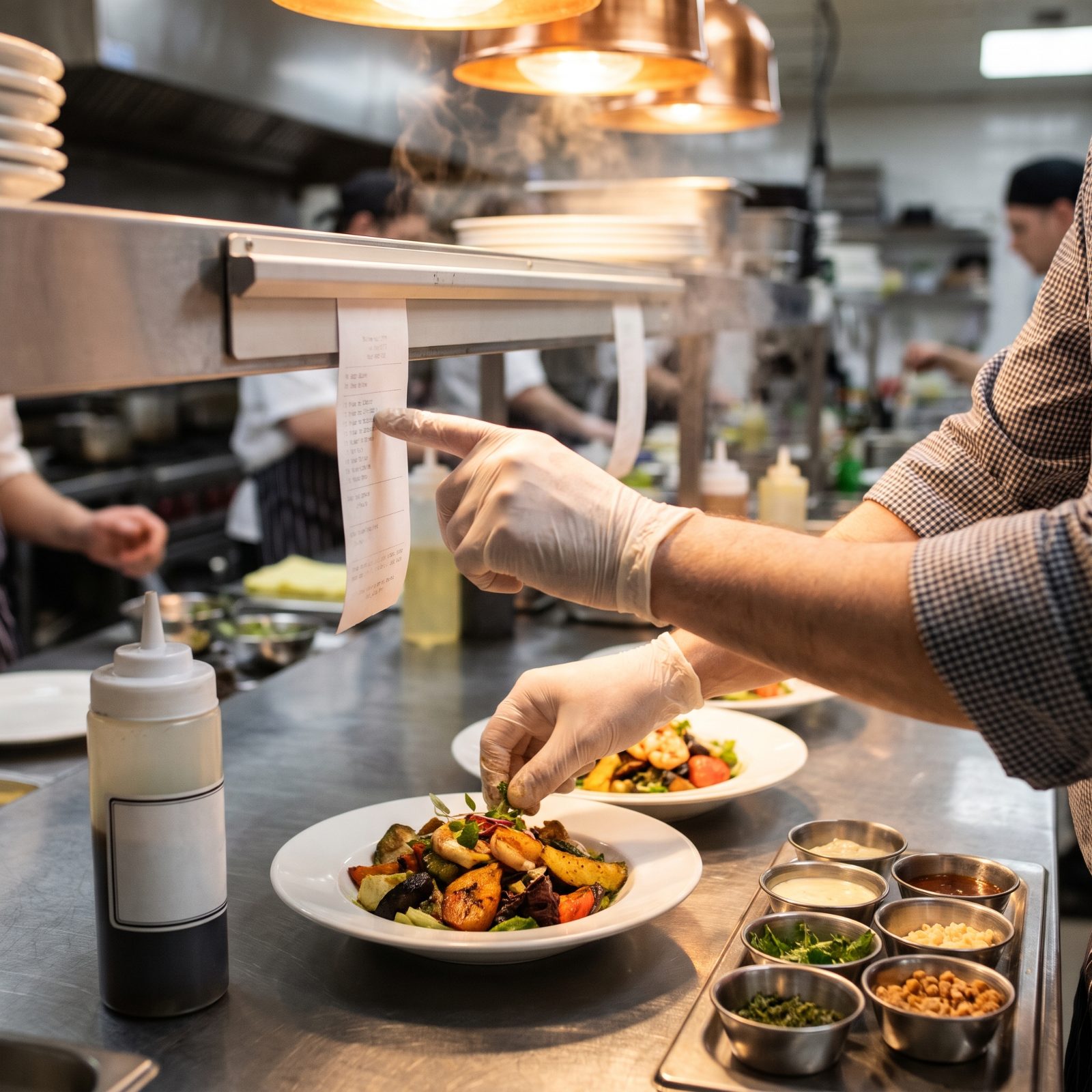
Two of the same dish come up at once. One has no onions — the allergy table. The other’s fine. They look nearly identical on the pass, and mixing them up isn’t a minor error; for somebody with a serious allergy it’s a hospital trip.
So the cook tracks which plate is which from the moment it fires, keeps the modified one separate, re-reads the ticket before it goes anywhere. On a busy night with forty tickets flying, holding every modification to the right plate is a feat of memory most guests never imagine happened.
4. Catching the Missing Side Before the Order Walks Out the Door
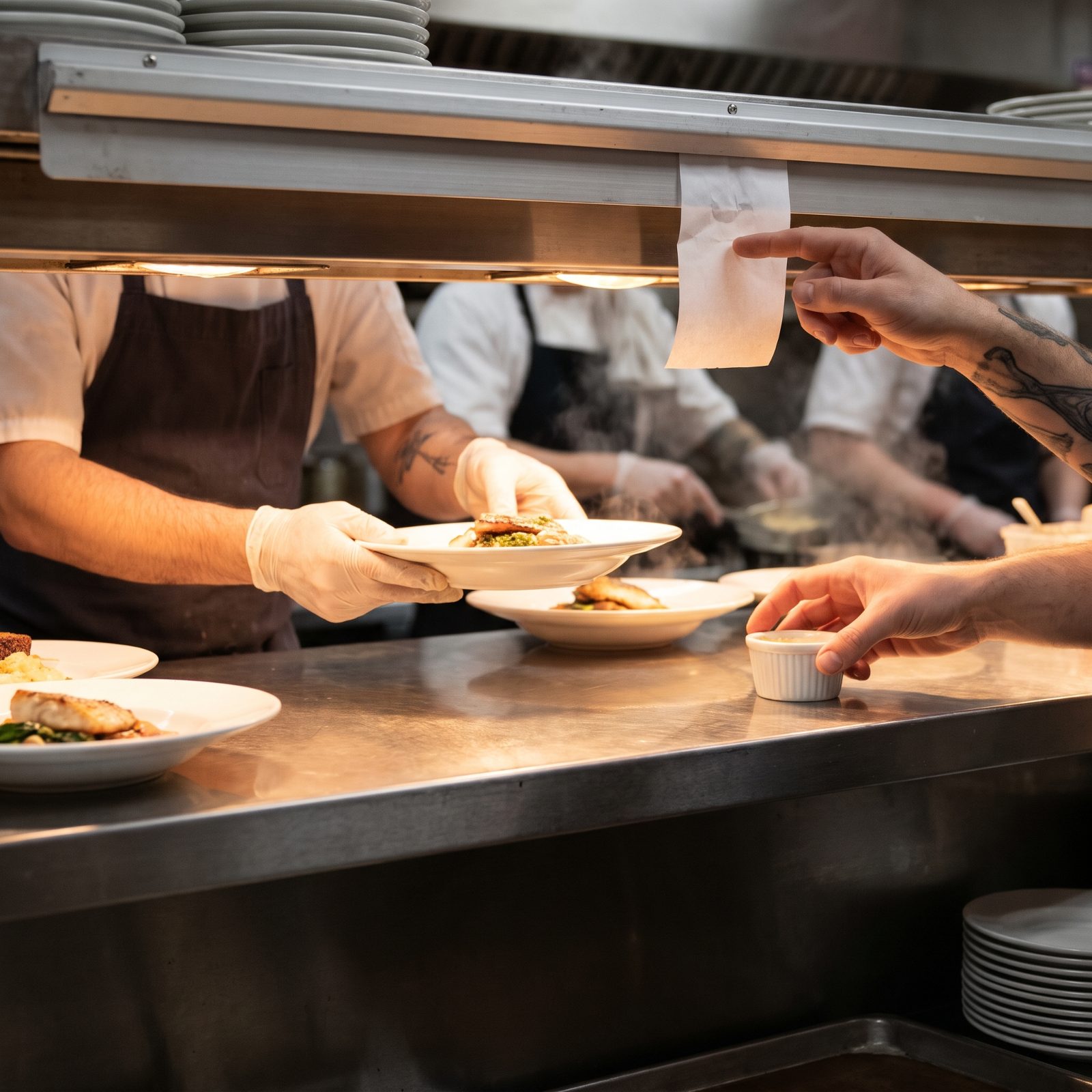
The plate’s up, it looks complete, the server’s reaching for it. Then a cook glances at the ticket one more time and sees it — the side of aioli, the extra lemon, the soup that was supposed to come first. One last read against the paper before anything leaves.
That’s the final checkpoint, and it’s why you got everything you ordered instead of flagging down a server two minutes into your meal. The whole line runs on people who look twice when it would be so much easier to just let it slide.
3. Replacing One Overcooked Component Instead of Refiring Everything
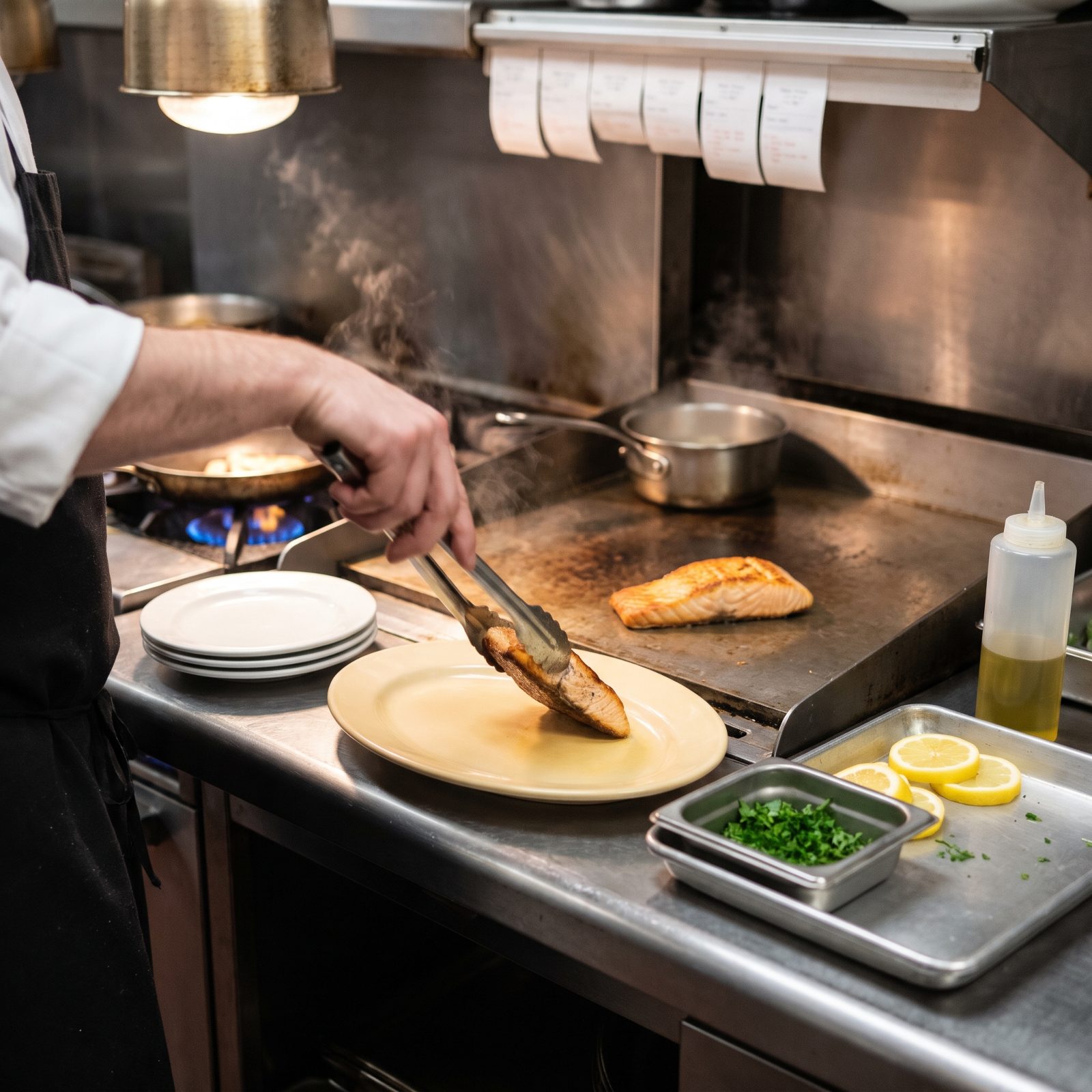
The table has been waiting eleven minutes. Three plates are up, perfect and warm, but the fourth protein caught an extra thirty seconds and sailed past where it should have stopped. A rookie dumps the whole order and starts from zero. A cook who’s done this a thousand times runs the math in half a second: hold the three, fire one replacement, lose ninety seconds instead of nine minutes.
None of that shows up on a receipt. The guest just gets food that lands together and tastes right. And nobody ever tells you how much of good cooking is just damage control done fast.
2. Calling Out ‘Behind,’ ‘Hot’ and ‘Sharp’ Without Looking
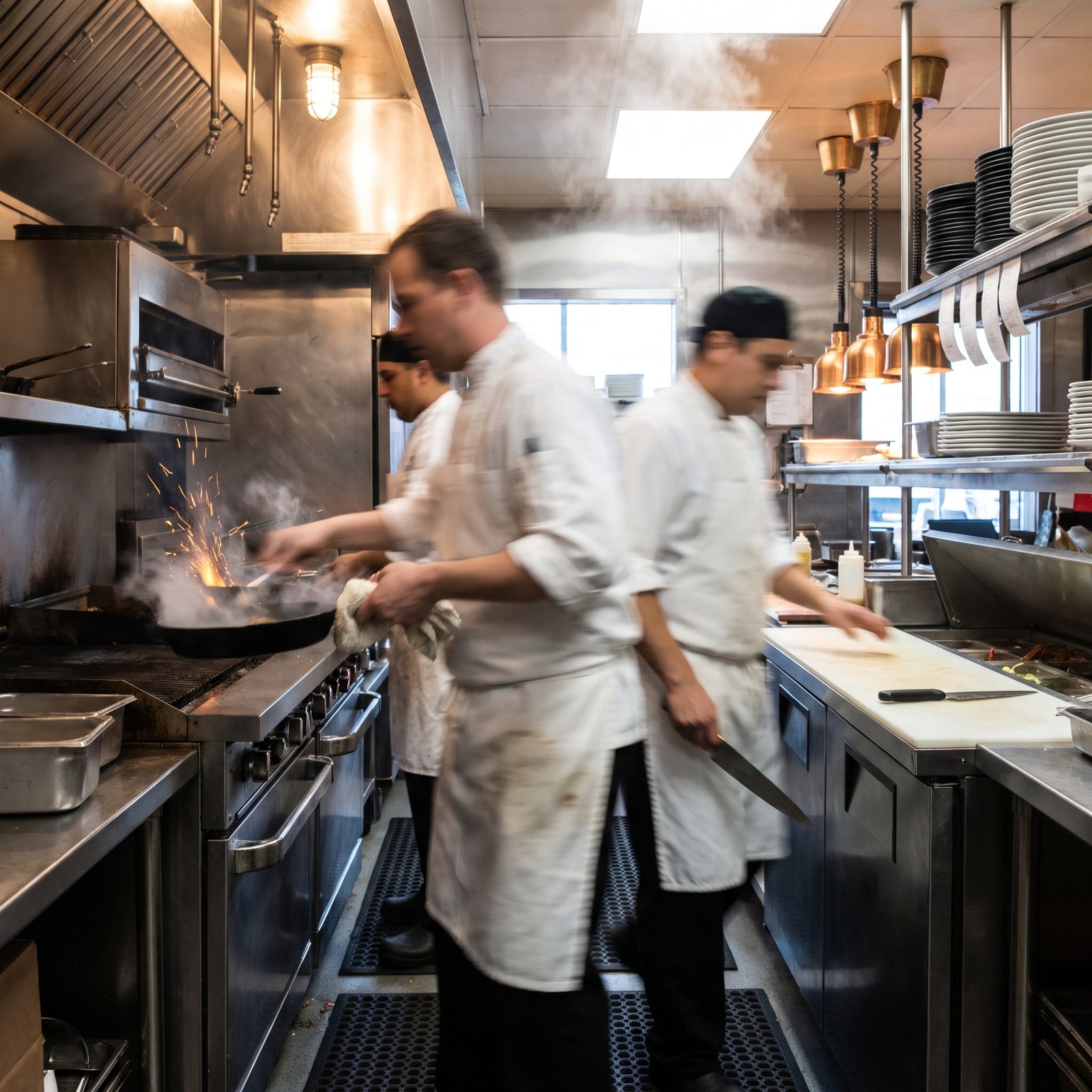
A kitchen line is maybe thirty inches wide, and everything in it is either hot, sharp, or both. The words that keep it from becoming an emergency room are small and constant. “Behind.” “Hot behind.” “Sharp.” “Corner.” You say them whether anyone answers or not.
Silence on a line isn’t calm. It’s the sound right before someone gets burned.
Good cooks call it out even when they’re dead on their feet, even when the person behind them obviously heard, because the one time you assume is the time a pan of frying oil meets somebody’s forearm. It sinks into muscle memory. They do it in their own kitchens at home and their families look at them funny.
Translating the kitchen’s shouted warnings, a cook since age fourteen says “Every one of these calls exists because somebody got burned, cut, or knocked down before people started saying them.”
1. Rebuilding Every Open Order From Memory When the Ticket Printer Dies
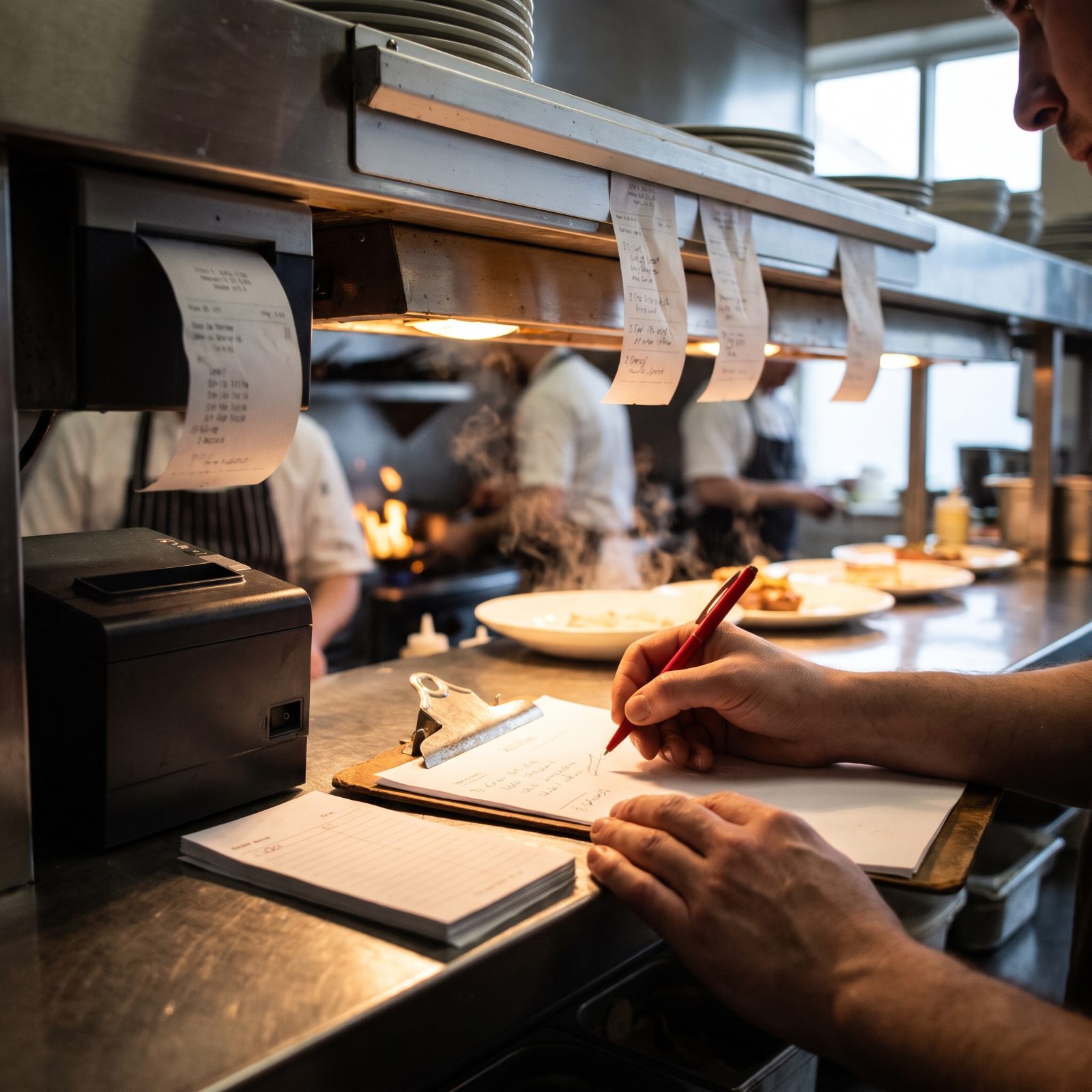
The printer at the pass just stops feeding. No error, no beep. It goes quiet while the dining room is slammed and fourteen tables sit mid-meal. Now somebody has to rebuild every order in flight from memory and from the half-torn tickets still clipped to the rail.
This is where a cook’s head becomes a filing cabinet. Who’s on apps, who’s on entrees, which table’s still waiting on the kid’s pasta, which refire goes out next. They carry all of it, scribble it onto scrap paper, and keep sending food while someone crawls under the pass to reseat the printer cable.