Would you like to save this?
A menu is a confession. Long before the food lands, that laminated sheet in your hands has already told you whether somebody back there is paying attention or just phoning it in. The giveaways are small. A fish with no name, a steak with no weight, “seasonal vegetables” in January that happen to be the exact same vegetables they slung in July. You learn to read these the way you learn to read a tired diner at midnight. Here are the tells, split between the kitchens that care and the ones that quit, and what each line of copy is quietly admitting about the stove.
40. Doesn’t Care: The Eight-Page Menu That Crosses Six Cuisines
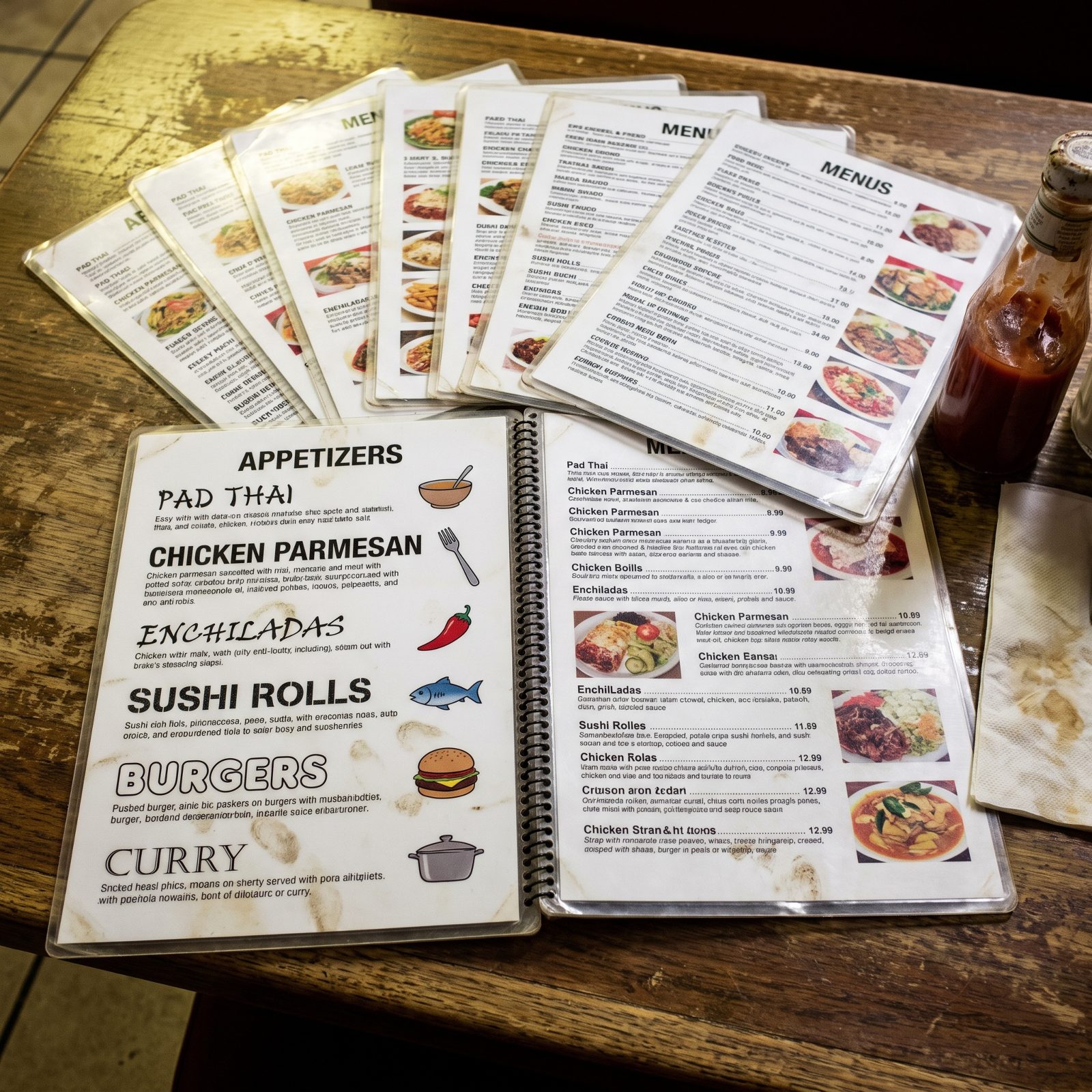
No kitchen is great at everything. A line that promises pad thai, chicken parm, enchiladas, and salmon teriyaki on the same page is telling you it buys most of that frozen and reheats on demand. Nobody is pulling fresh lemongrass, fresh mozzarella, and fresh masa out of one walk-in. The math doesn’t work.
Range costs money and labor, and eight pages across six cuisines means the real menu is a microwave and a fryer. Order the thing the place was obviously built around — assuming you can even find it in the pile.
39. Doesn’t Care: Stock Photos That Don’t Match the Written Dish
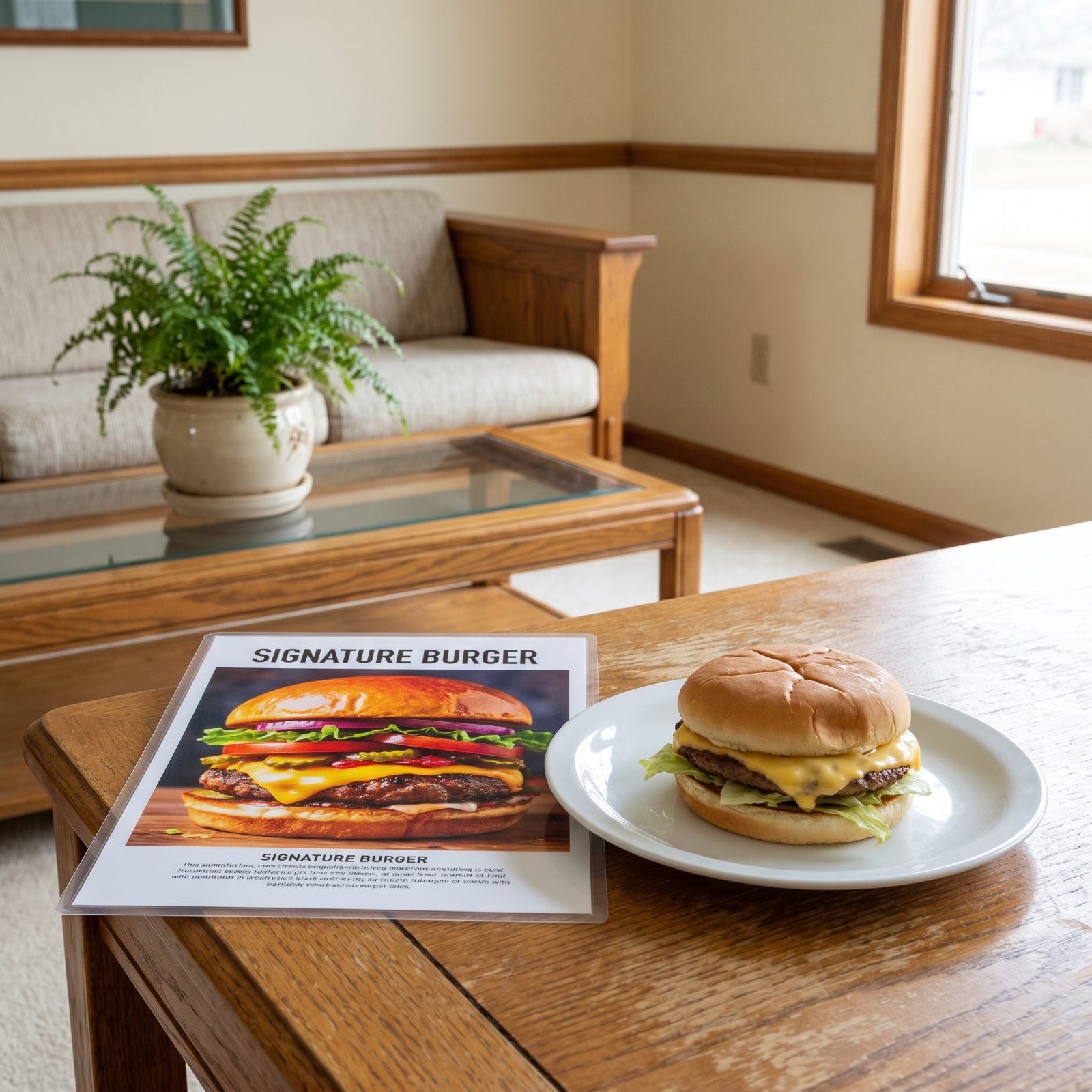
Here’s the tell most people miss. The photo shows sesame-seed brioche, the text says “served on a kaiser roll.” The picture has a fried egg; the description never mentions one. That mismatch means nobody at the restaurant took the photo — they licensed it from a stock library and never bothered to read their own copy against it.
A kitchen that cares shoots its own food or skips photos entirely. Those generic glamour shots? A billboard for indifference.
38. Doesn’t Care: Old Prices Buried Under Tape and Correction Fluid
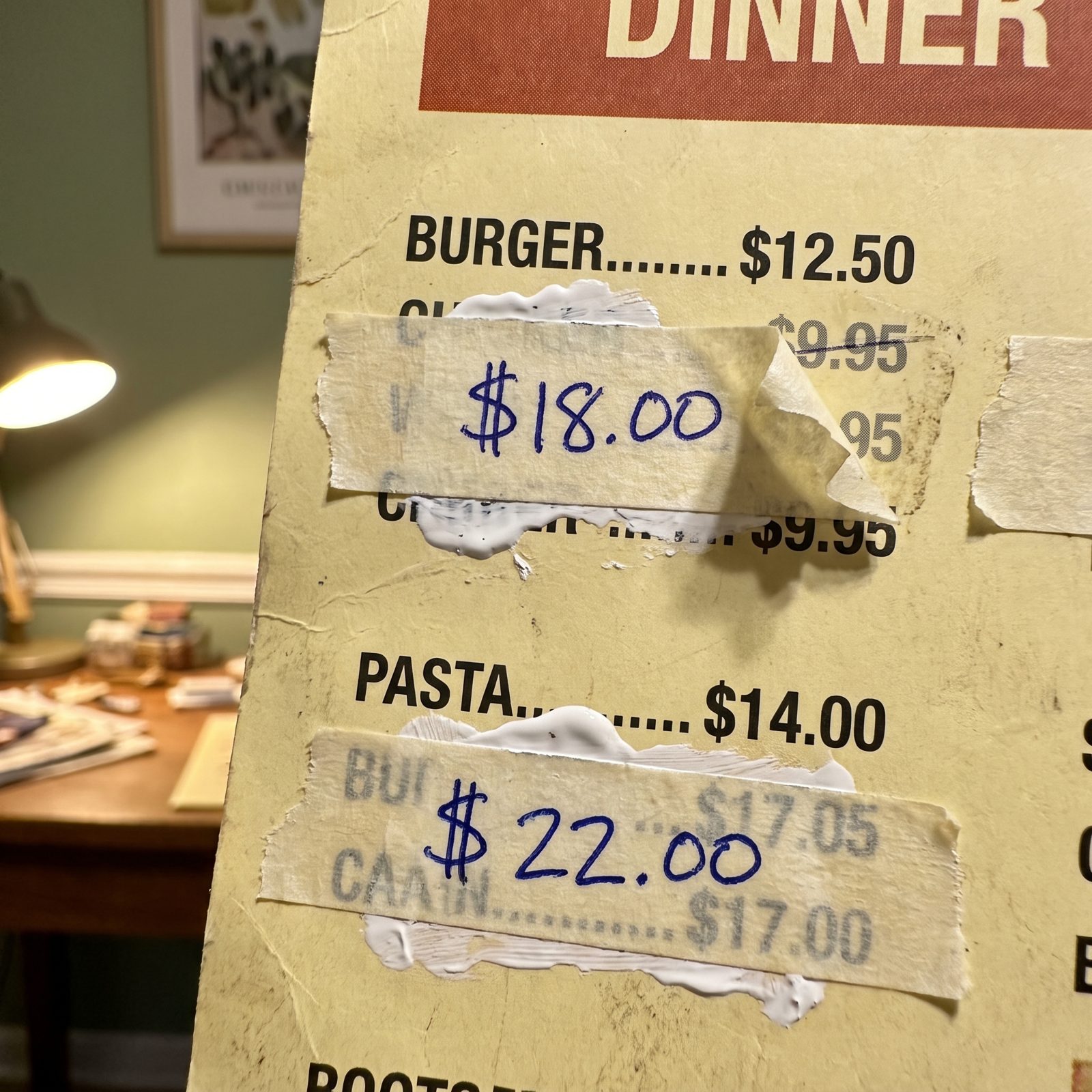
Tape over a price is understandable once. Costs move. But a whole menu scarred with correction fluid, three generations of pen scribbles, and peeling labels is a different story.
It says they won’t spend forty bucks to reprint, which makes you wonder what else they won’t spend on. The menu is the cheapest thing in the building to fix. A dining room that lets it rot into a layered mess has made peace with good-enough, and that peace travels straight back to the stove.
37. Doesn’t Care: Allergen Claims That Fight the Ingredient List
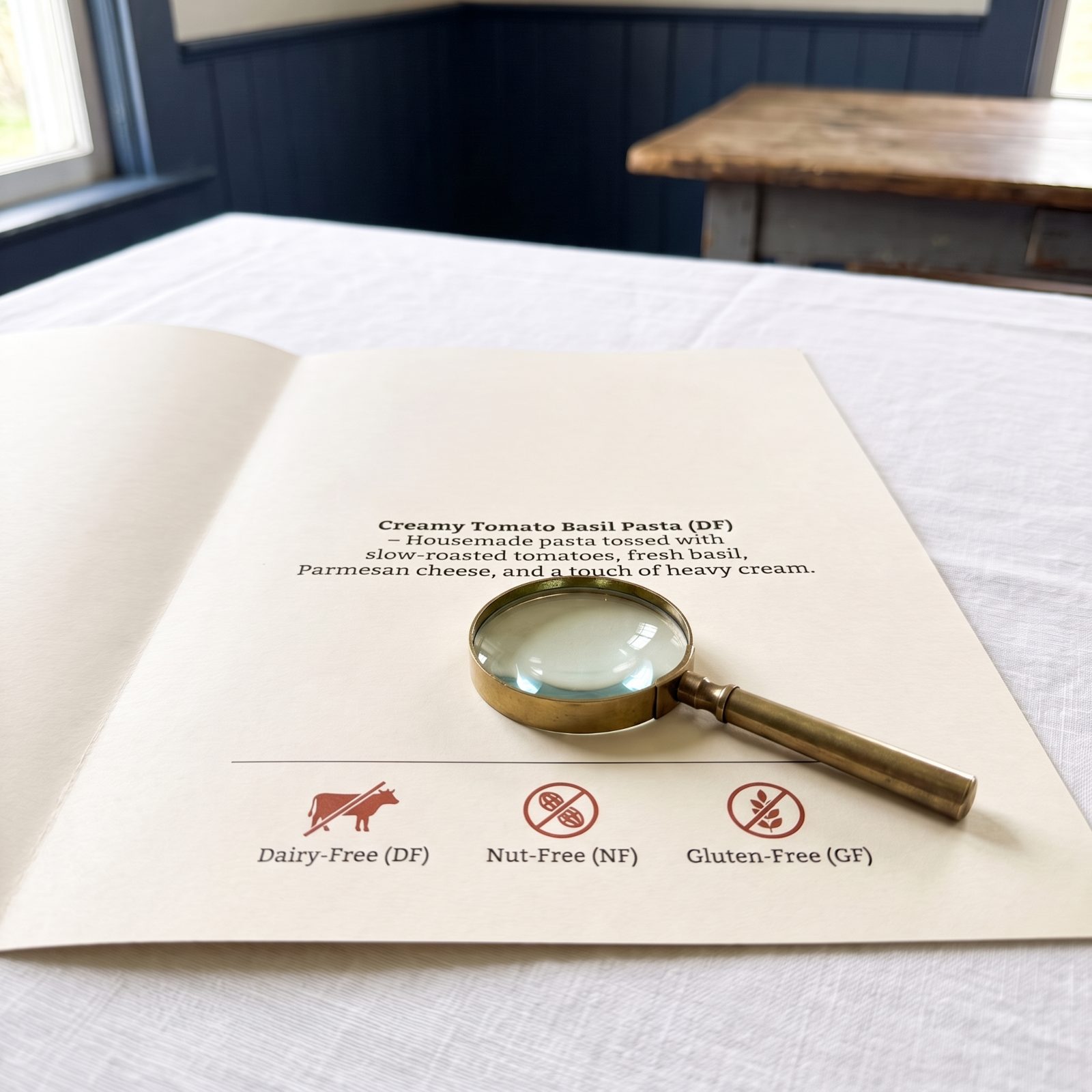
This one isn’t just sloppy. It’s dangerous. A dish flagged with the little (DF) dairy-free code, then described three lines down as tossed with Parmesan cheese and a touch of heavy cream, means the allergen key and the dish copy were written by two different people who never once spoke to each other.
If they can’t keep their own printed page consistent, trust nothing a server tells you about cross-contact. For someone with a real allergy, that contradiction is the whole decision. Walk, if it matters.
36. Doesn’t Care: Gluten-Free Fried Food With No Shared-Fryer Warning
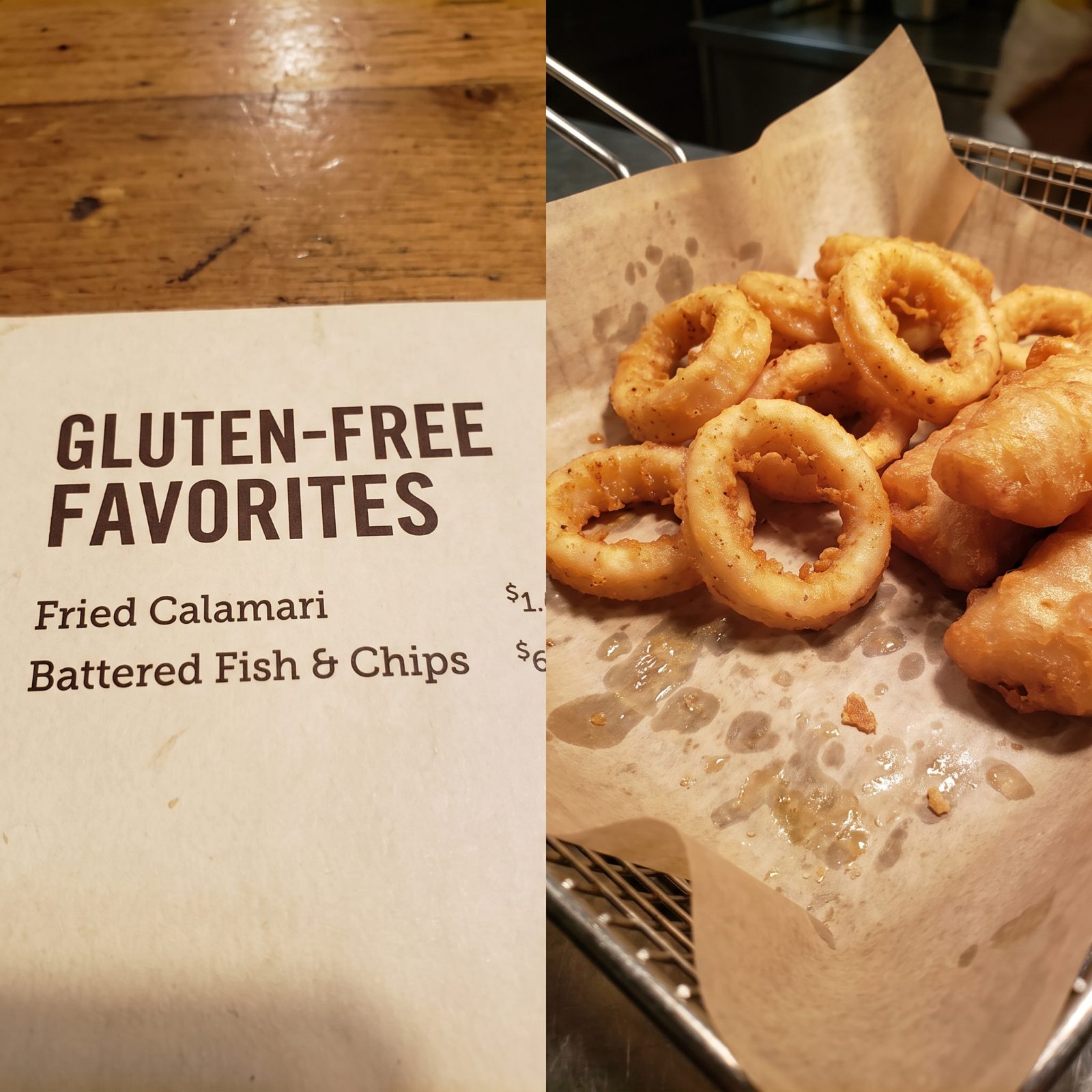
A gluten-free fried item with zero mention of the fryer is a kitchen that doesn’t understand what gluten-free means to the person ordering it. Changing the breading does nothing if the oil is shared with regular batter. Any serious operation says so plainly, right on the menu: “fried in dedicated oil” or “shared fryer, not suitable for celiac.”
Silence on the fryer when gluten-free is a selling point isn’t modesty. It’s a kitchen that labeled the dish for marketing and never thought past the label.
35. Doesn’t Care: One Dish, Two Descriptions, Two Sections
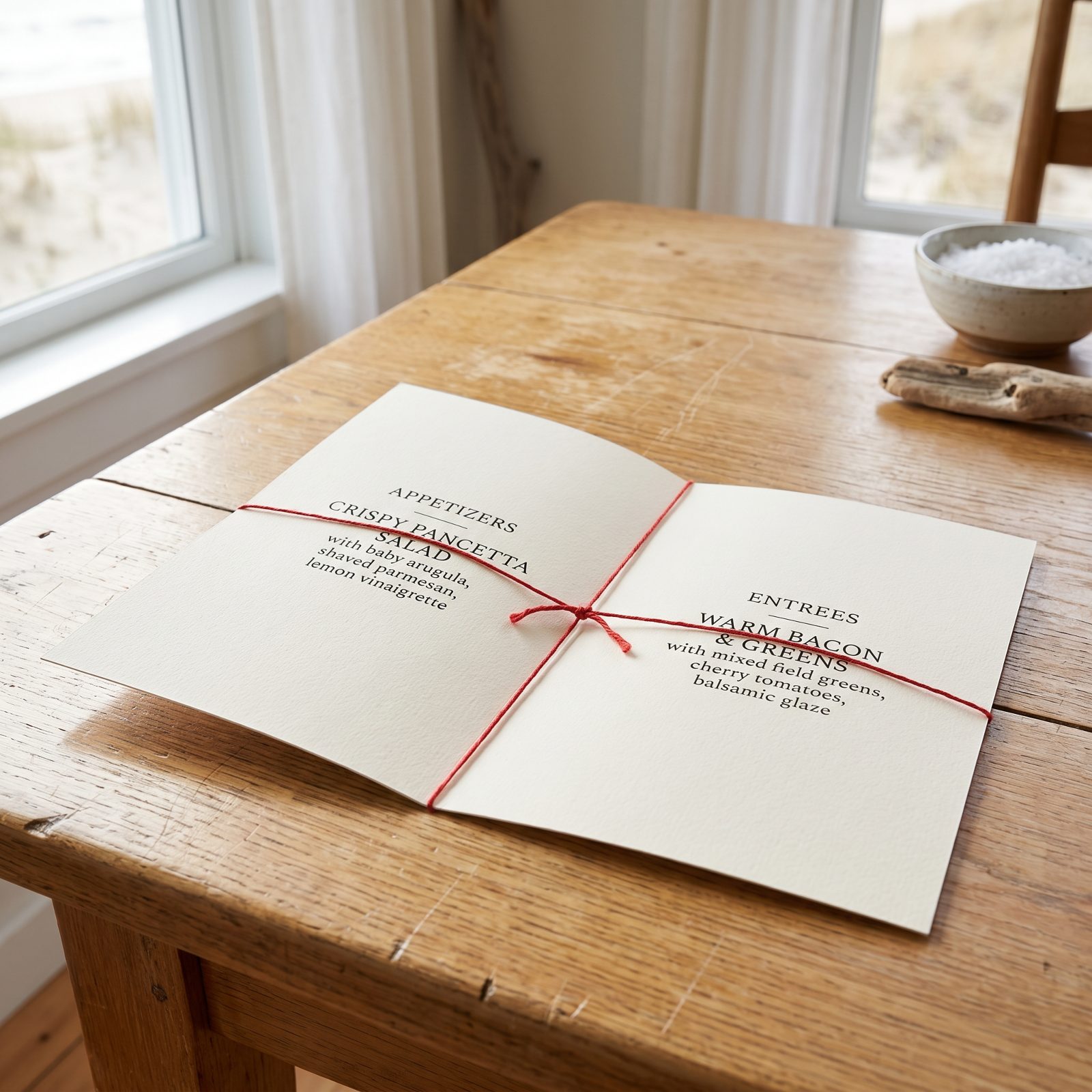
Find the same dish in two spots on the menu, then read both descriptions. One says pancetta, the other says bacon. One lists arugula, the other mixed greens. Same plate, two completely different stories.
That means the menu got assembled by copy-paste and nobody ever proofed the thing as a single document. Small, sure. But a kitchen that doesn’t know whether it uses pancetta or bacon in its own signature dish is a kitchen running on autopilot, and autopilot shows up on the plate eventually.
34. Doesn’t Care: Fish Listed Only as “White Fish”
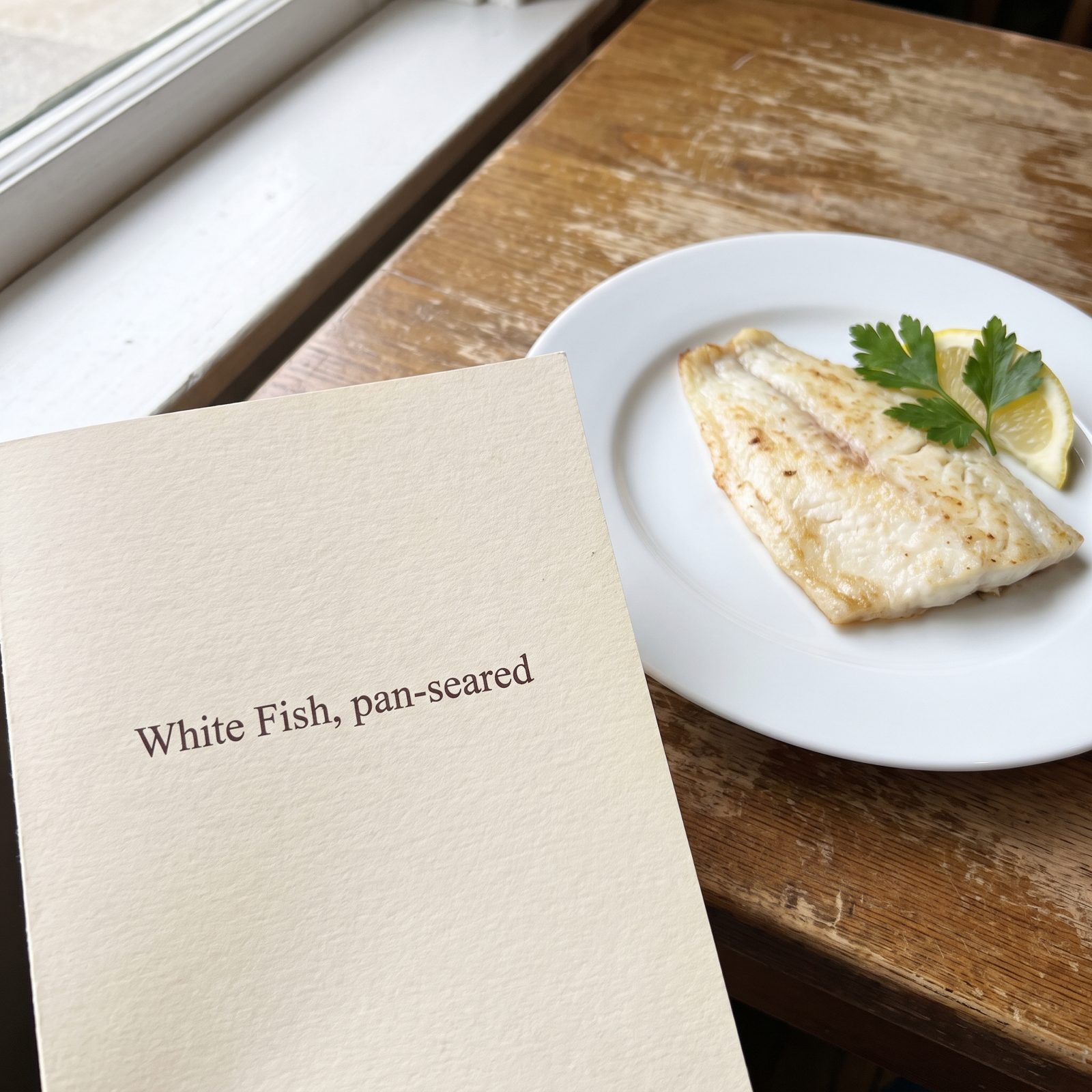
“White fish” is not a fish. It’s a shrug. Cod, haddock, pollock, tilapia, swai, basa — these are different prices, different textures, different places on the ocean and the planet. A kitchen that names the species is proud of its sourcing. A kitchen that writes “white fish” bought whatever was cheapest at the distributor that week and is hoping you won’t ask.
Good seafood menus read like a tide chart. Lazy ones read like a grocery list somebody forgot to finish.
33. Doesn’t Care: Steak With No Cut, No Weight, No Sides
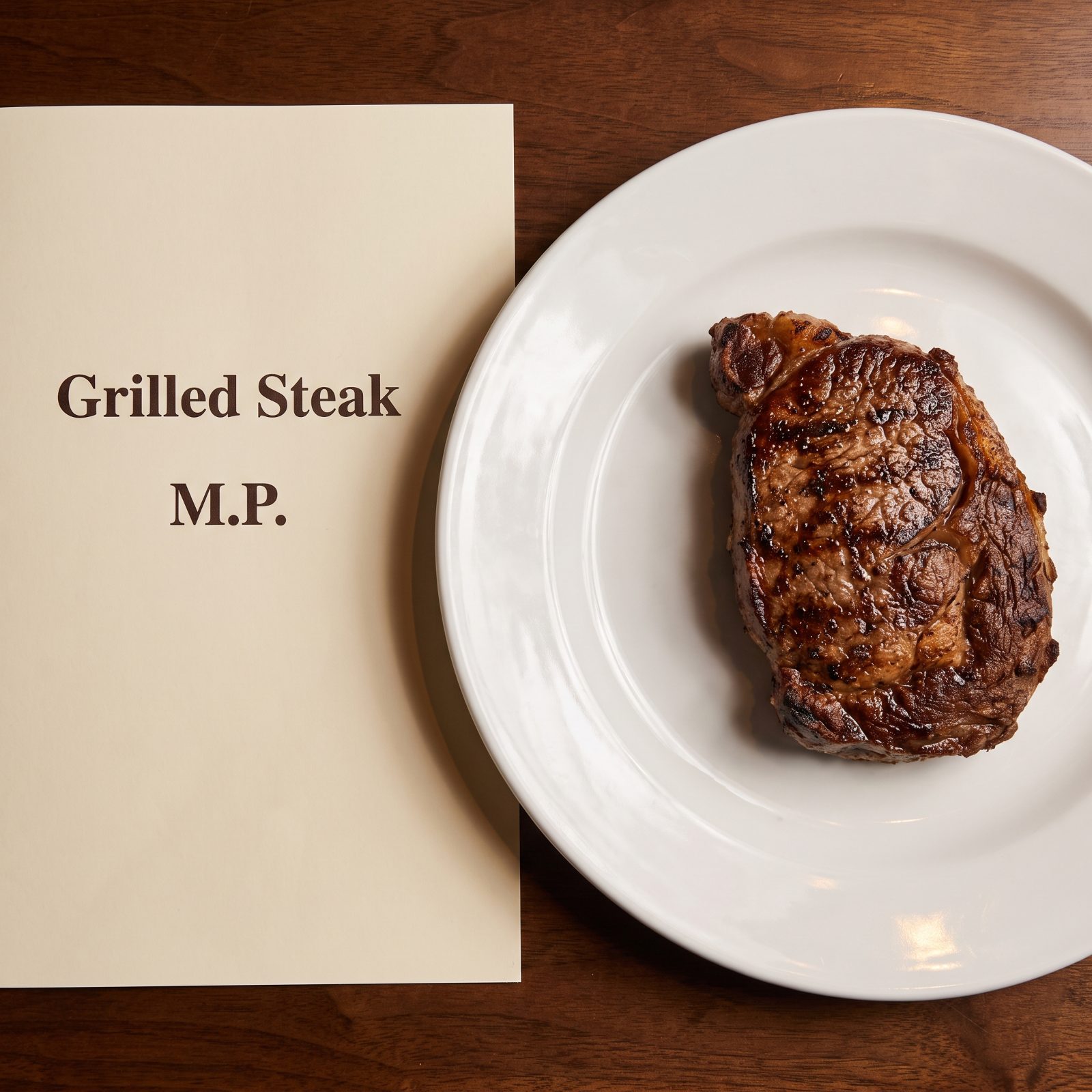
A serious steakhouse tells you everything — the cut, the weight, often the grade, and exactly what lands next to it. “Grilled Steak, M.P.” tells you nothing, and the silence is the message.
Is it a 6-ounce sirloin or a 14-ounce ribeye? Does anything come with it, or are the potatoes another nine dollars? A kitchen that respects beef respects the detail. One that writes “steak” the way a gas station writes “sandwich” is counting on you not knowing a chuck eye from a strip.
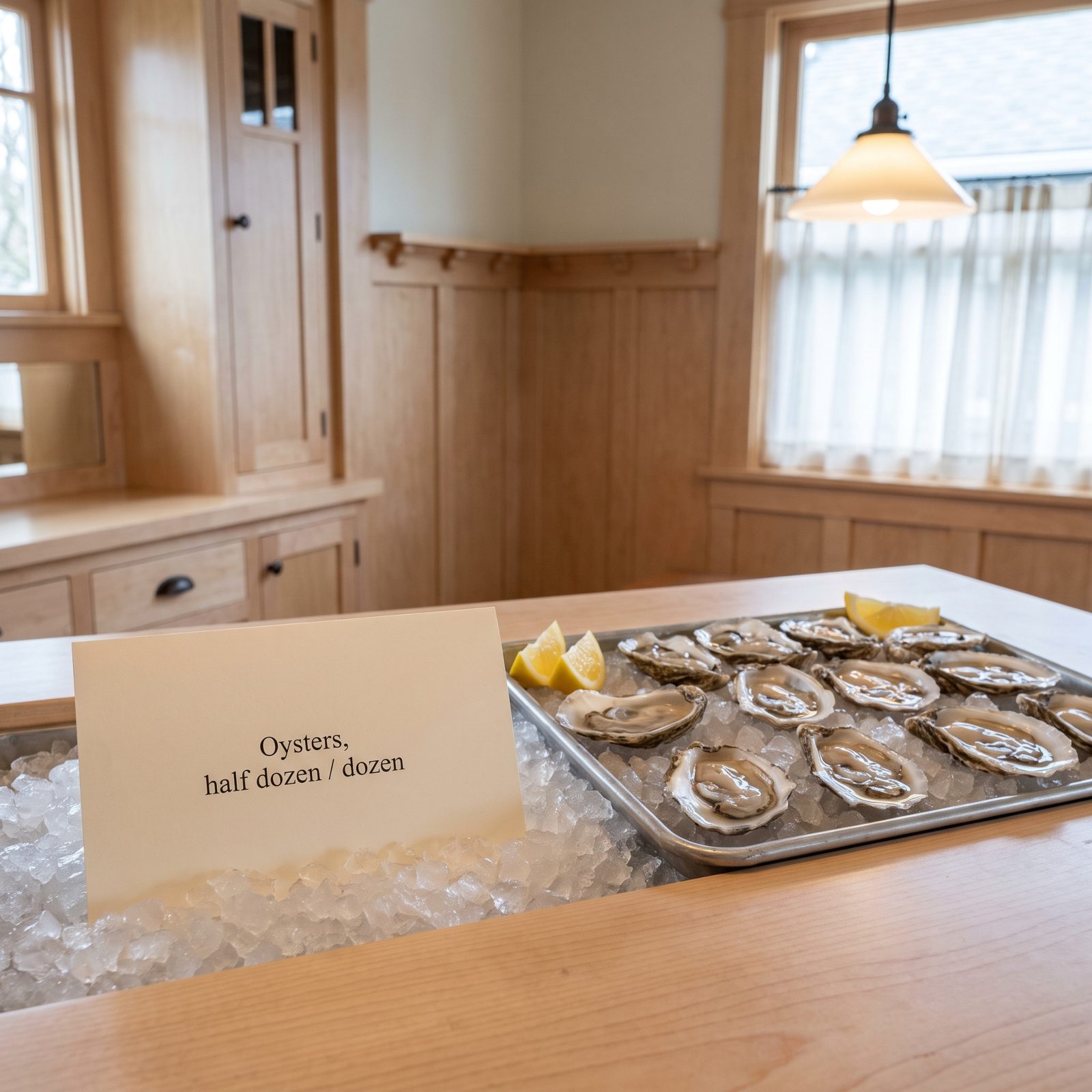
32. Doesn’t Care: A Raw Bar With No Oyster Names or Origins
Would you like to save this?
Oyster people are show-offs, and that’s the good news. A real raw bar names them — Kumamoto, Wellfleet, Blue Point — and tells you the bay, the state, sometimes the very day they came in. That specificity is the whole pleasure, because each one tastes like the water it grew in.
“Oysters, half dozen” with no names is a kitchen that doesn’t know or doesn’t care where its raw shellfish came from. And with something you eat alive and cold, where it came from isn’t a flourish. It’s the safety margin.
Name the oyster or don’t serve it. There’s no middle ground with something you eat raw.
31. Doesn’t Care: “Seasonal Vegetables” That Never Change Season
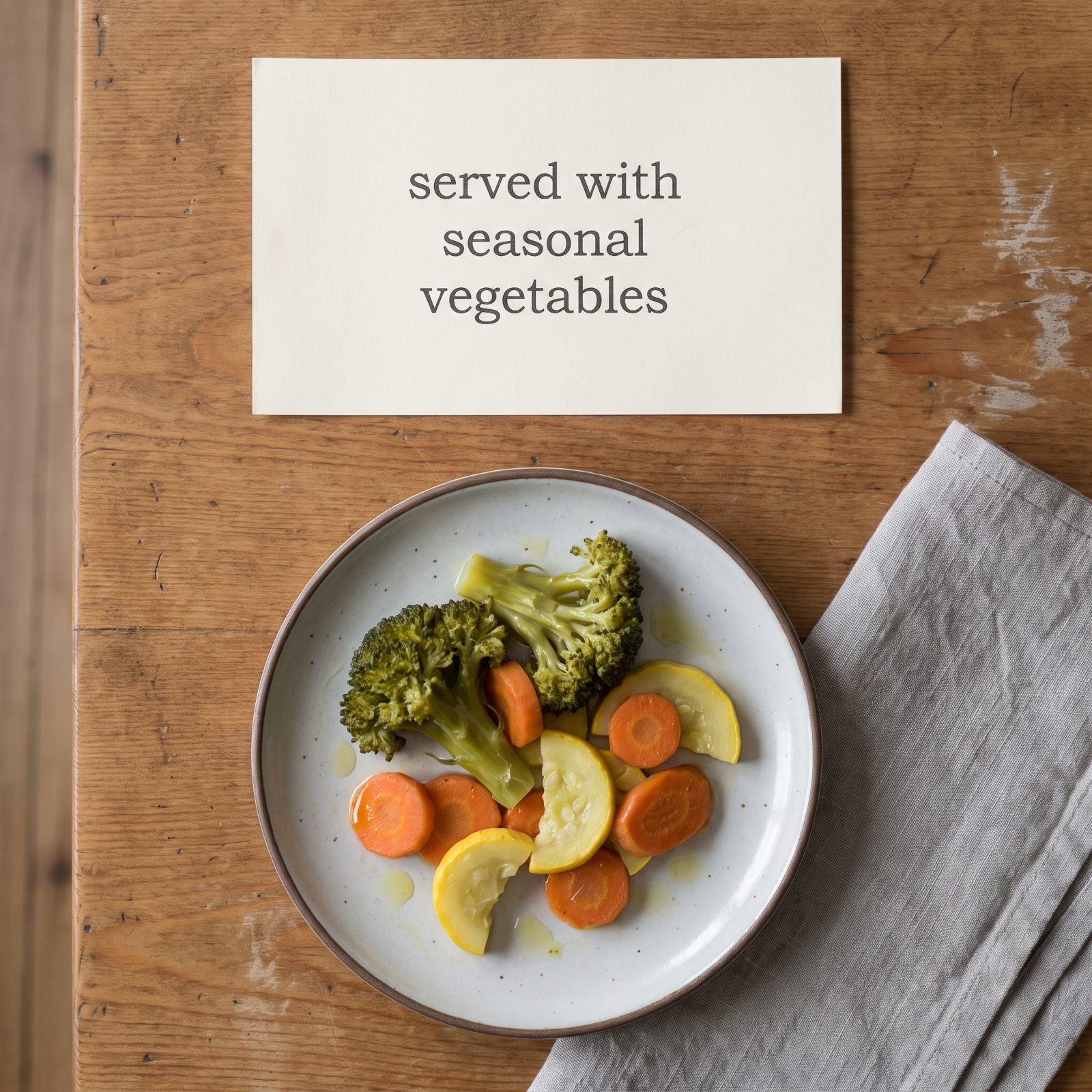
Walk in during January and again in July and order the thing with “seasonal vegetables.” If it’s the same broccoli, carrot, and zucchini both times, the word “seasonal” is just decoration.
Real seasonality means the plate changes. Asparagus in spring, corn in summer, squash come fall. A kitchen that actually shops the market will usually name the vegetable because they’re proud of it this week. “Seasonal” with no specifics, served the same way all year, means a bag from the same supplier twelve months straight.
30. The Faded Summer Menu Still in Rotation in January
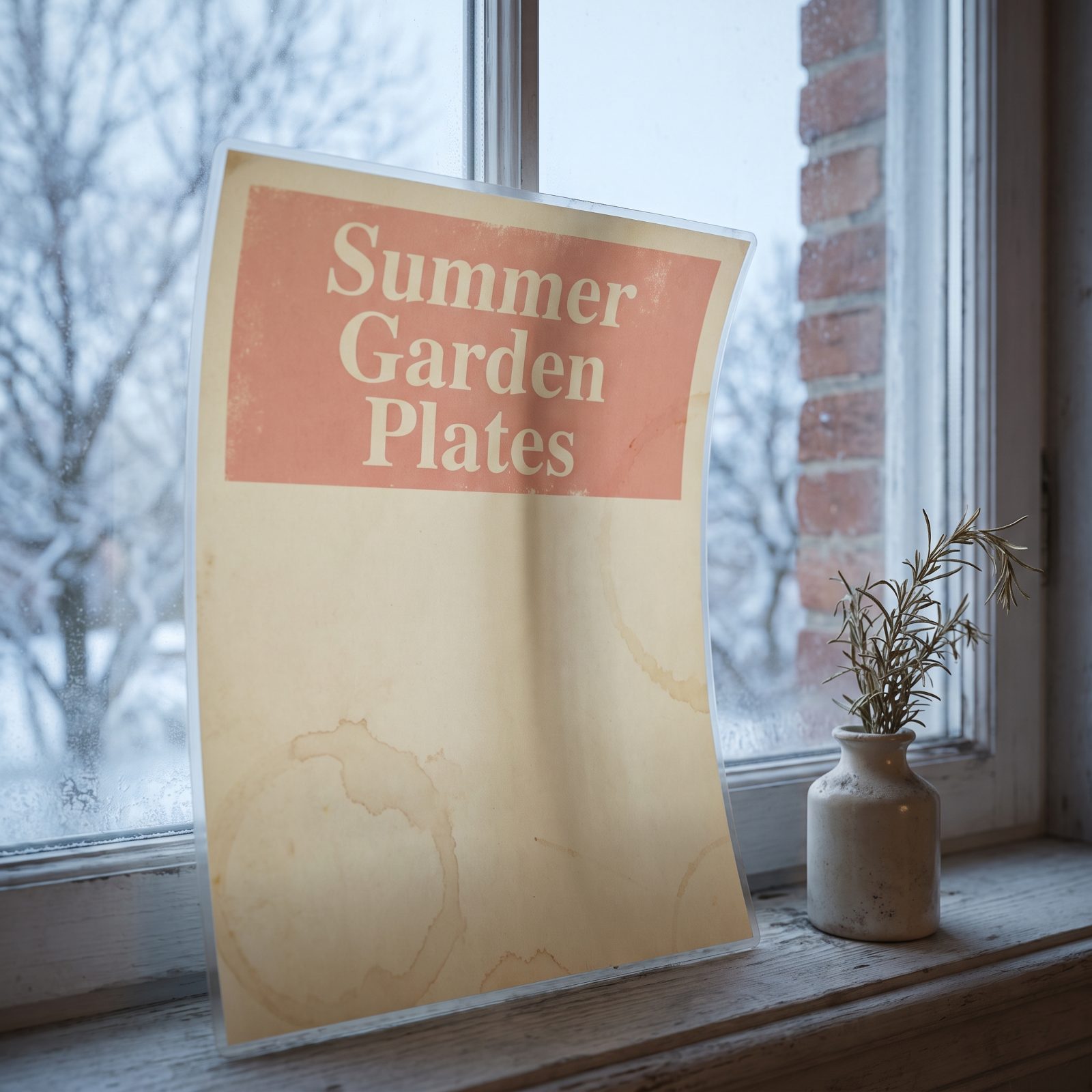
A menu that still pushes heirloom tomato salad and chilled corn soup in January is telling on itself. Produce that peaks in July doesn’t exist in January, so either the kitchen is buying mealy hothouse tomatoes at a premium or it never swaps the menu at all. Both are bad signs.
And the faded lamination? That’s the real giveaway. Sun does that over months. If nobody noticed the top panel going the color of old newspaper, nobody’s paying attention to much else back there.
29. The ‘Everything House-Made’ Claim Nobody Could Possibly Keep
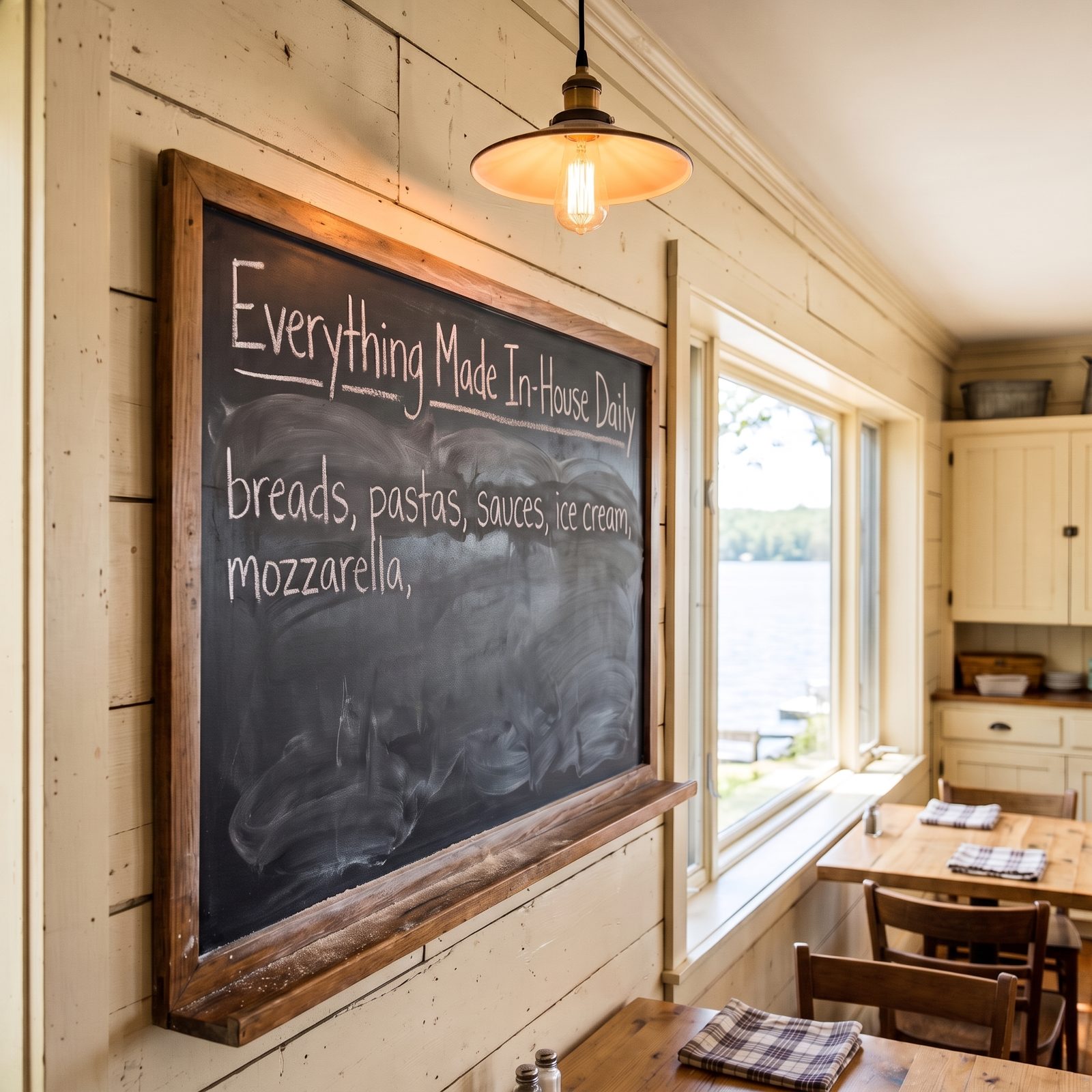
Read the line that swears the bread, the pasta, the sauces, the ice cream and the mozzarella are all made from scratch on the premises. Now picture the walk-in and the labor that would take. A small kitchen pulling its own fresh mozzarella while churning gelato and curing sausage isn’t running a dinner service — it’s running a factory.
Honest kitchens brag about the one or two things they actually nail. ‘House-made focaccia’ is believable and probably delicious. ‘Everything house-made’ is a slogan, and slogans come from the same place frozen mozzarella sticks do.
28. One Grilled Chicken Breast Wearing a Dozen Different Costumes
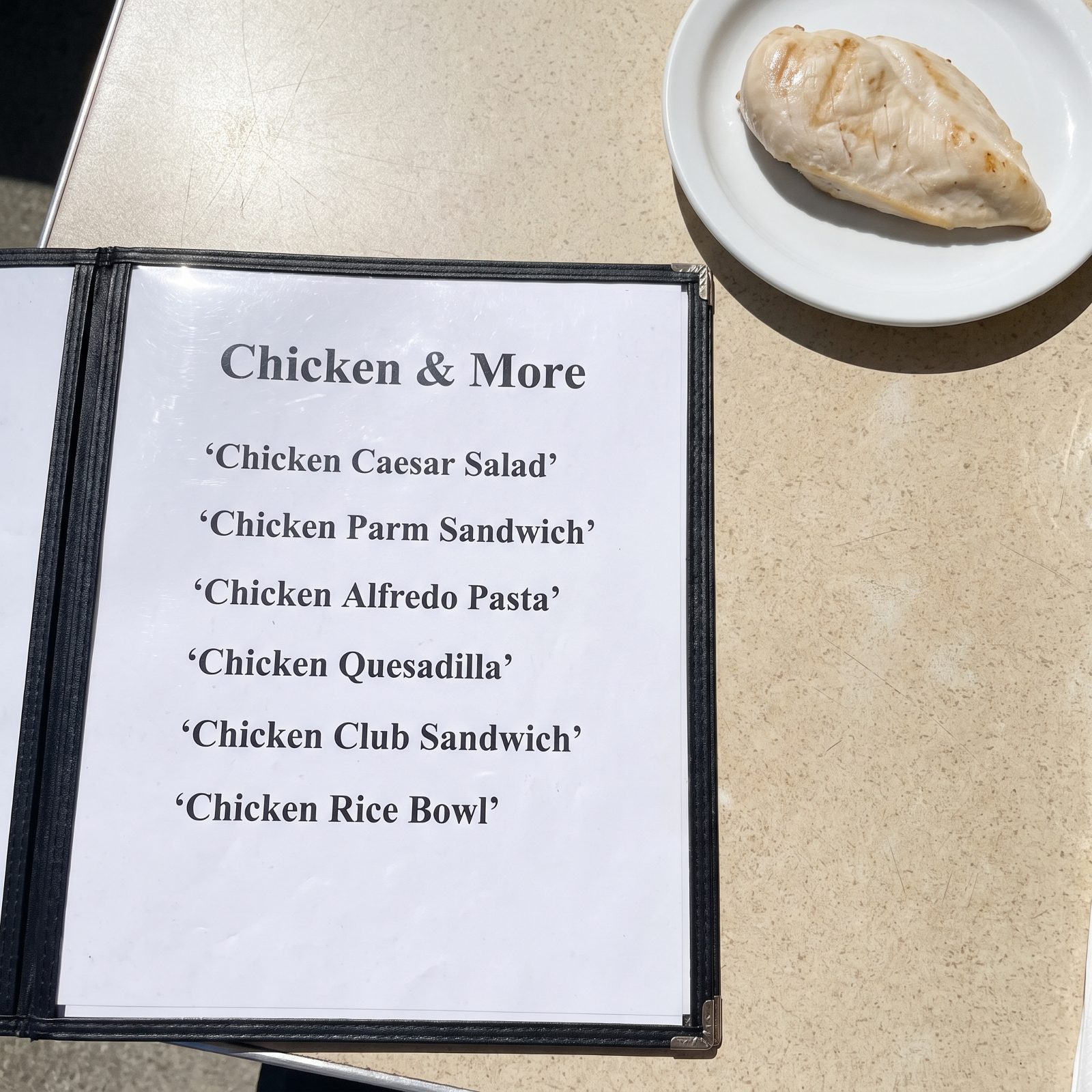
Scan the menu for the word ‘chicken’ and count. If the same grilled breast turns up as a salad topper, a parm, an Alfredo, a wrap, a quesadilla and a rice bowl, you’re looking at one prep stretched across the whole book — one batch seasoned once in the morning and then dressed up twelve ways to fake variety.
It’s not a crime. It’s just not cooking. A kitchen that treats chicken six genuinely different ways — brined, braised, spatchcocked, confit — builds those dishes from the bird up. A kitchen that treats it one way is managing inventory and hoping you don’t notice.
27. The Protein Grid Where Anything Can Be Grilled, Fried, Blackened or Broiled
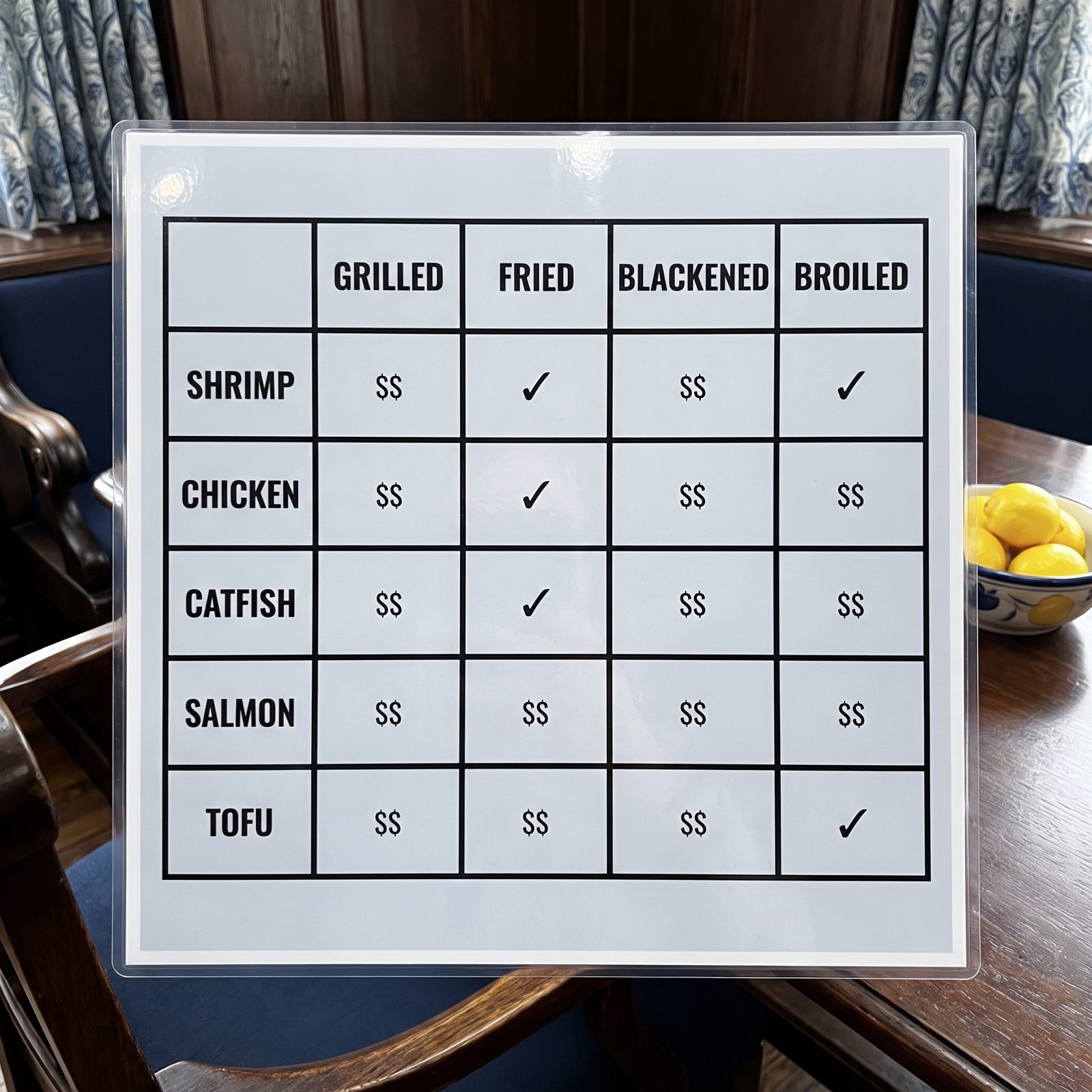
A menu laid out like a spreadsheet — pick a protein from one column, a cooking method from another — is being honest about one thing: there’s no dish here, only interchangeable parts. ‘Blackened’ from a place like this usually means a dusting of Cajun powder on a sad fillet, not a seasoned cast-iron sear with a real spice blend.
Good preparations fit the ingredient. You blacken catfish because it suits catfish. You don’t blacken everything just because the menu has a column for it.
26. Every Pasta Shape, Every Sauce, No Rules Whatsoever
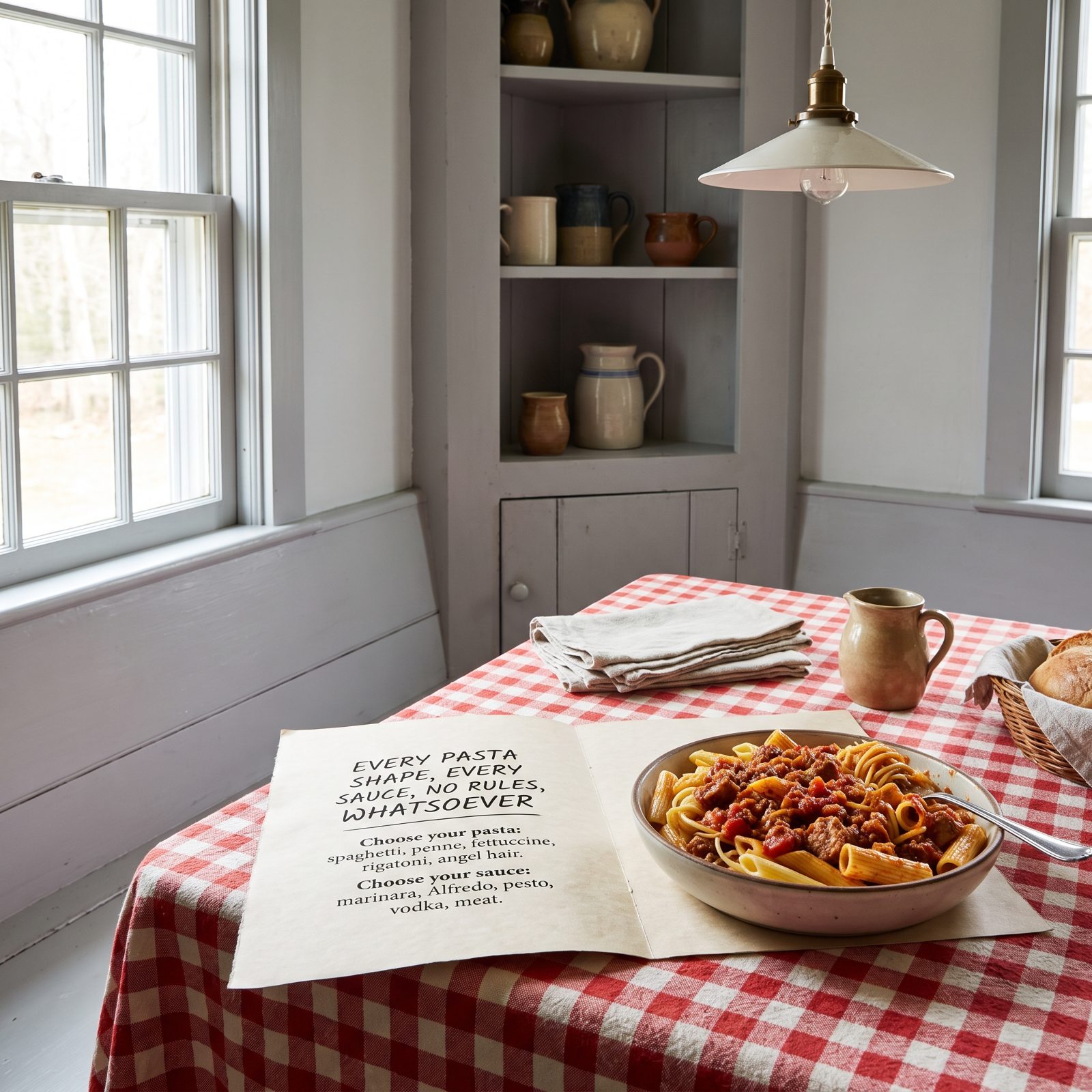
Any Italian cook will tell you sauce and shape are married for a reason. Thin ribbons want silky sauces that cling. Tubes and ridges want chunky meat and vegetables that catch in the grooves. Angel hair under a heavy ragu is a texture crime.
So a menu that lets you pour vodka sauce over angel hair, or Alfredo over rigatoni, isn’t being generous. It’s confessing that nobody back there thinks about why pairings exist. The pasta gets dumped from a bag of frozen portions into boiling water and ladled with whatever you point at.
25. Carbonara, Alfredo and Cacio e Pepe All Described as ‘Creamy Parmesan Sauce’
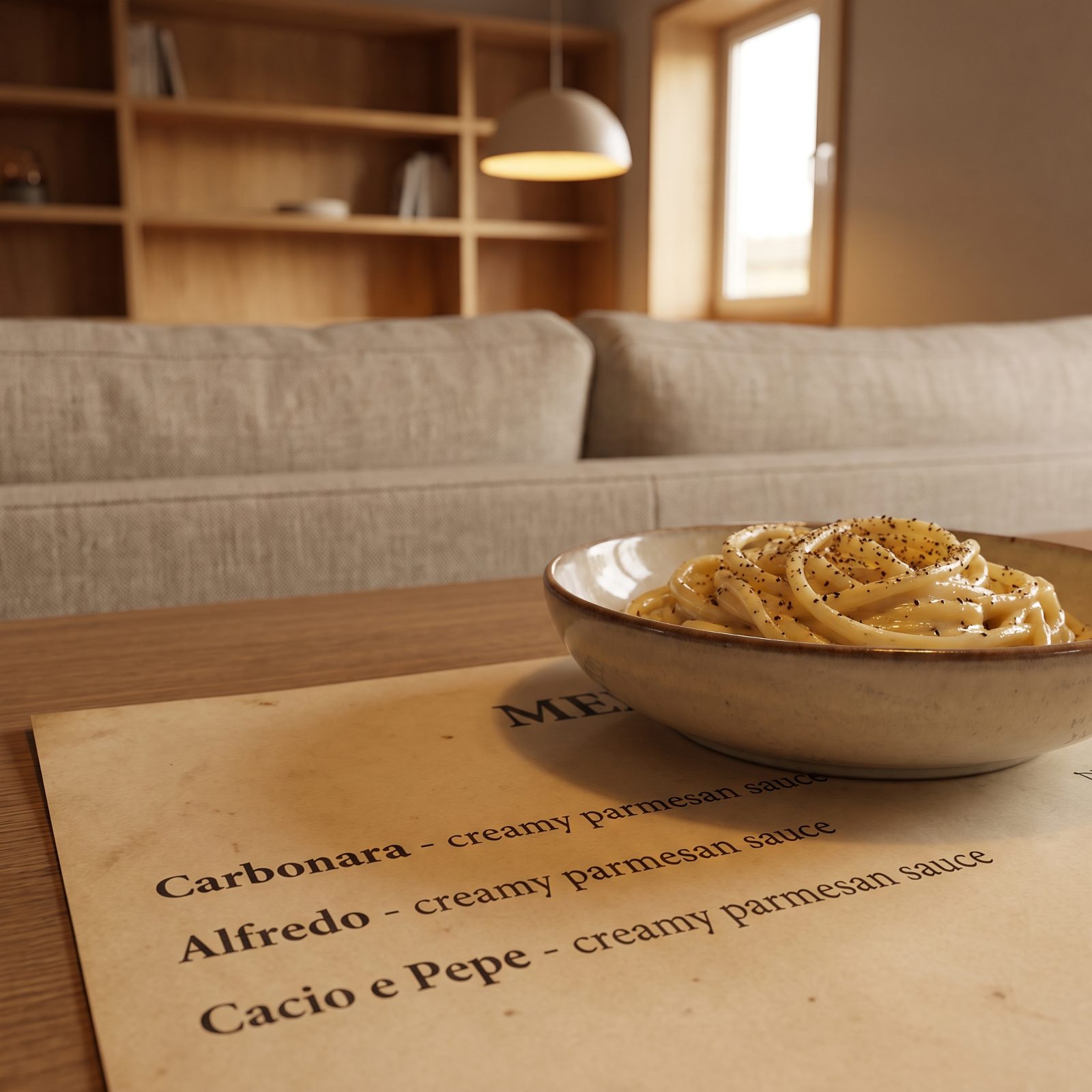
This is the tell that separates people who cook from people who assemble. These three dishes are not the same sauce. They’re not even in the same neighborhood.
- Carbonara is eggs, cured pork, pecorino and pepper. No cream, ever.
- Cacio e pepe is pecorino and black pepper emulsified with pasta water. Four ingredients, no cream.
- Alfredo, in its real Roman form, is butter and parmesan. The cream-drowned American version came later.
When a menu flattens all three into ‘creamy parmesan sauce,’ it’s admitting they all come out of the same vat. A kitchen that doesn’t know carbonara has no cream doesn’t know much.
24. The Sandwich That Admits It’s Built on a Preformed Patty
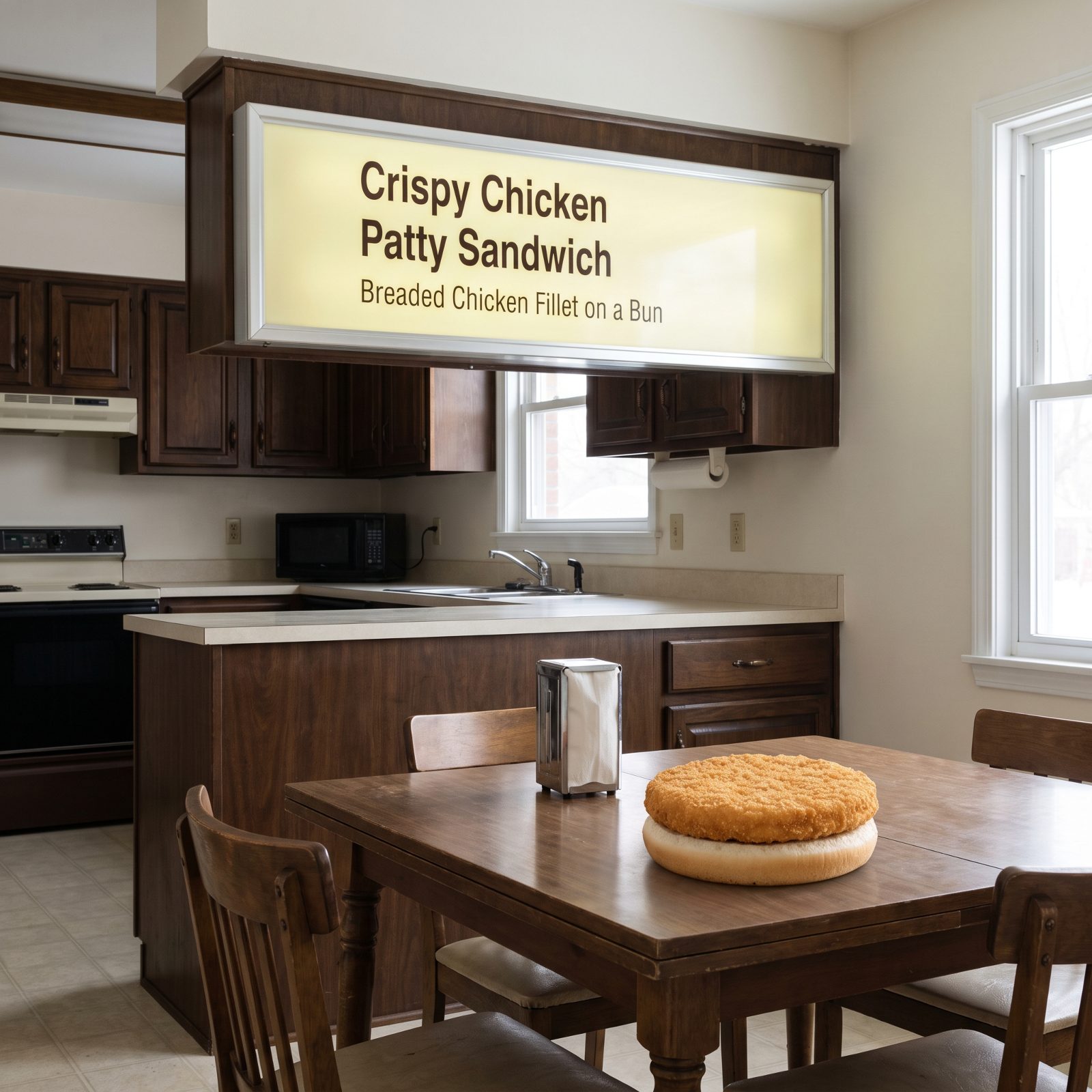
Give the menu credit for honesty when it says ‘chicken patty.’ That word tells you everything. A patty is preformed, breaded and frozen, dropped from a case into a fryer. The perfectly round edge and uniform thickness are the fingerprints of a factory, not a knife.
Now compare a menu that says ‘hand-breaded chicken cutlet’ or ‘fried chicken thigh.’ Those words describe an actual piece of meat someone touched. The gap between ‘patty’ and ‘cutlet’ is the gap between a vending machine and a kitchen.
23. Imitation Crab Dressed Up in a Fancy Seafood Name
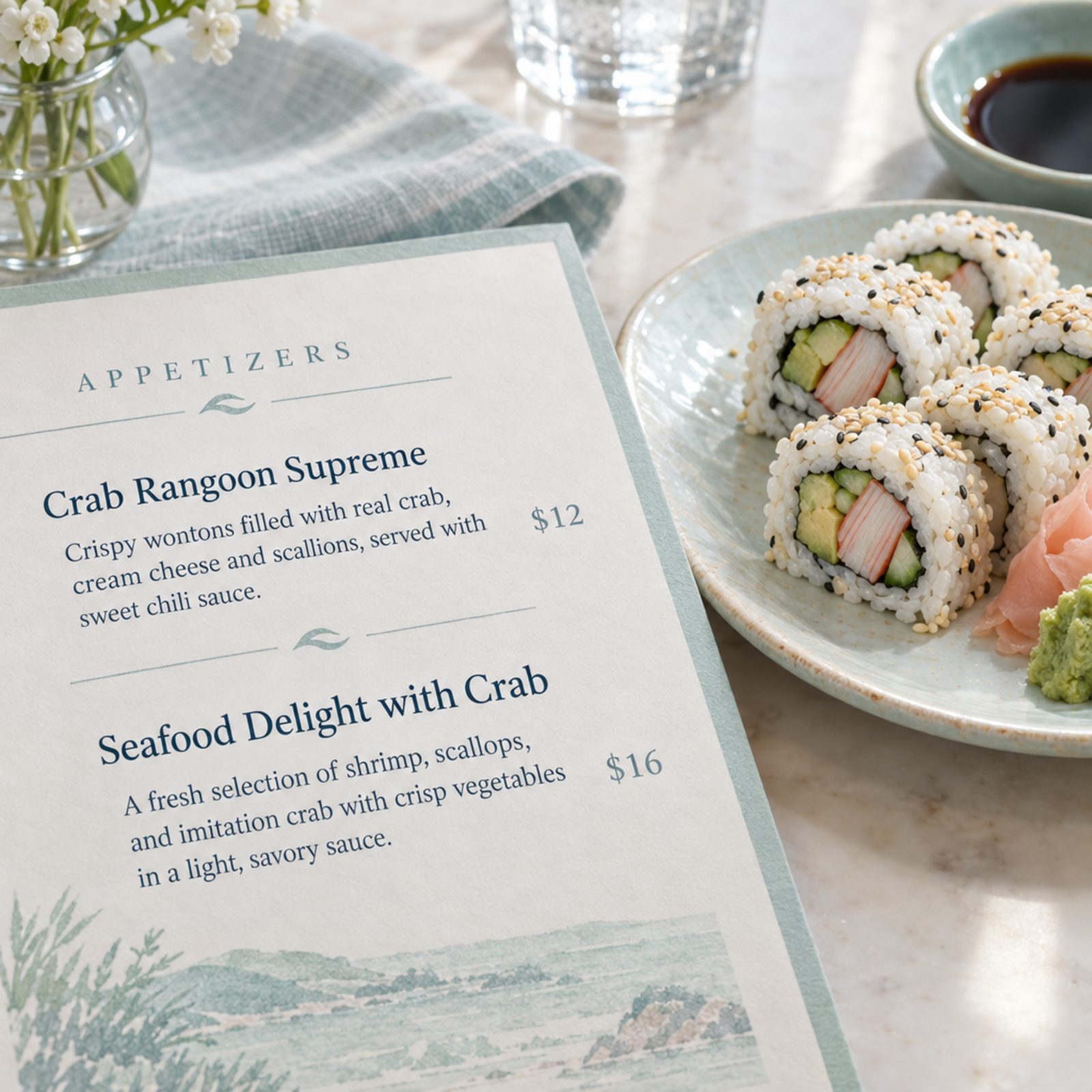
Watch the wording closely on anything with crab. Real crab is expensive and menus say so proudly: ‘jumbo lump crab,’ ‘blue crab,’ ‘Dungeness.’ When the menu just says ‘crab’ with no qualifier, or hides behind a flourish like ‘seafood delight,’ you’re usually getting surimi — that pink-edged pollock paste shaped and dyed to resemble a crab leg.
Surimi isn’t evil. It earns its keep in a budget California roll. But when a kitchen charges crab-cake prices and quietly serves imitation under a grand name, that’s a lie told in menu copy.
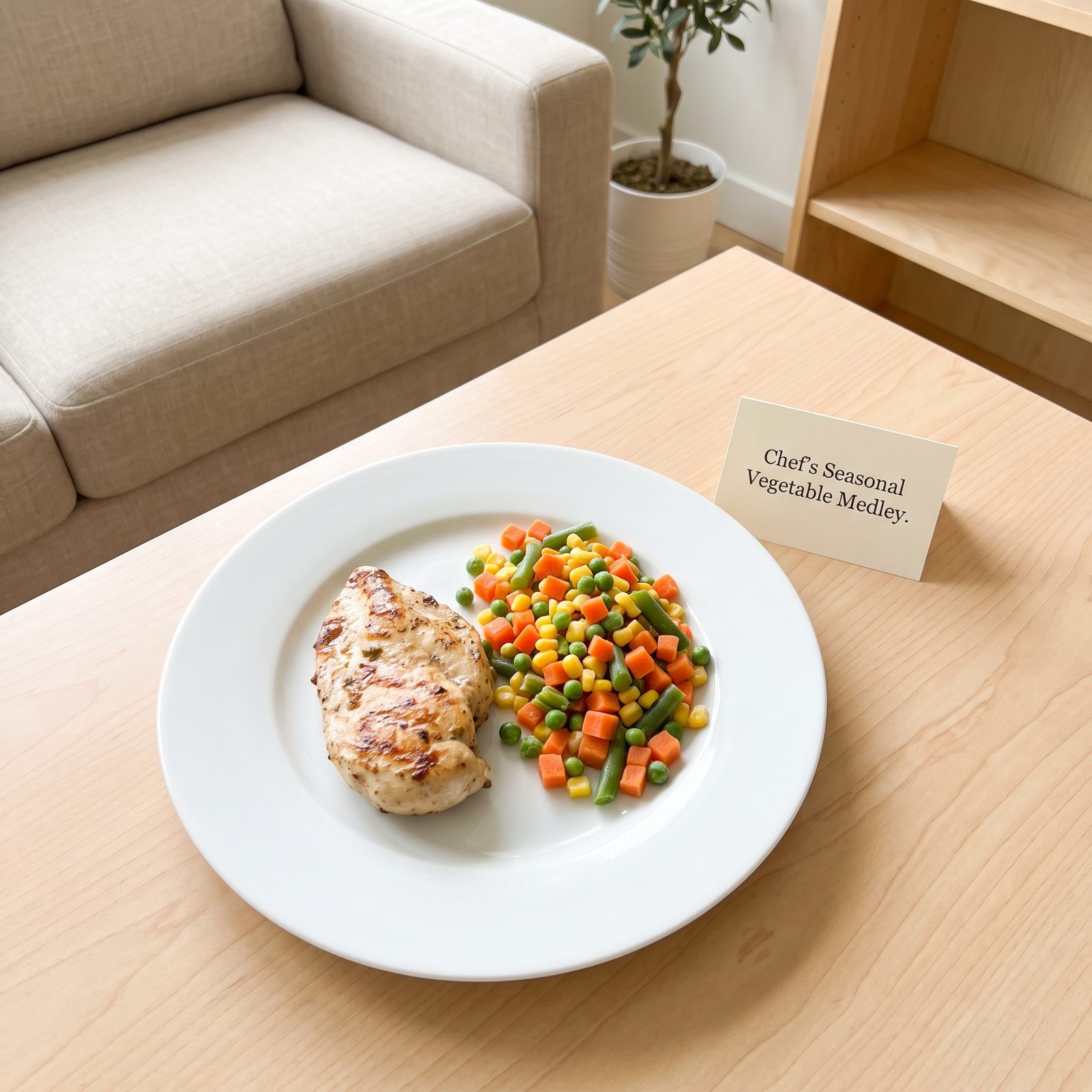
22. Frozen Mixed Veg Rebranded as the ‘Chef’s Vegetable Medley’
Would you like to save this?
Those perfect little cubes of carrot, the peas all the same size, the corn kernels identical — that uniformity only comes from a freezer bag. Real vegetables are irregular. Machine-diced ones aren’t. When a menu calls this ‘the chef’s seasonal medley,’ the only seasonal thing about it is which bag was on special.
A kitchen that cares names the vegetable. Charred broccolini. Roasted carrots with cumin. Sautéed rapini. Specificity is the whole signal, and ‘medley’ is what you write when you’d rather not say.
21. The Appetizer Section That’s Entirely Beige and Entirely Frozen
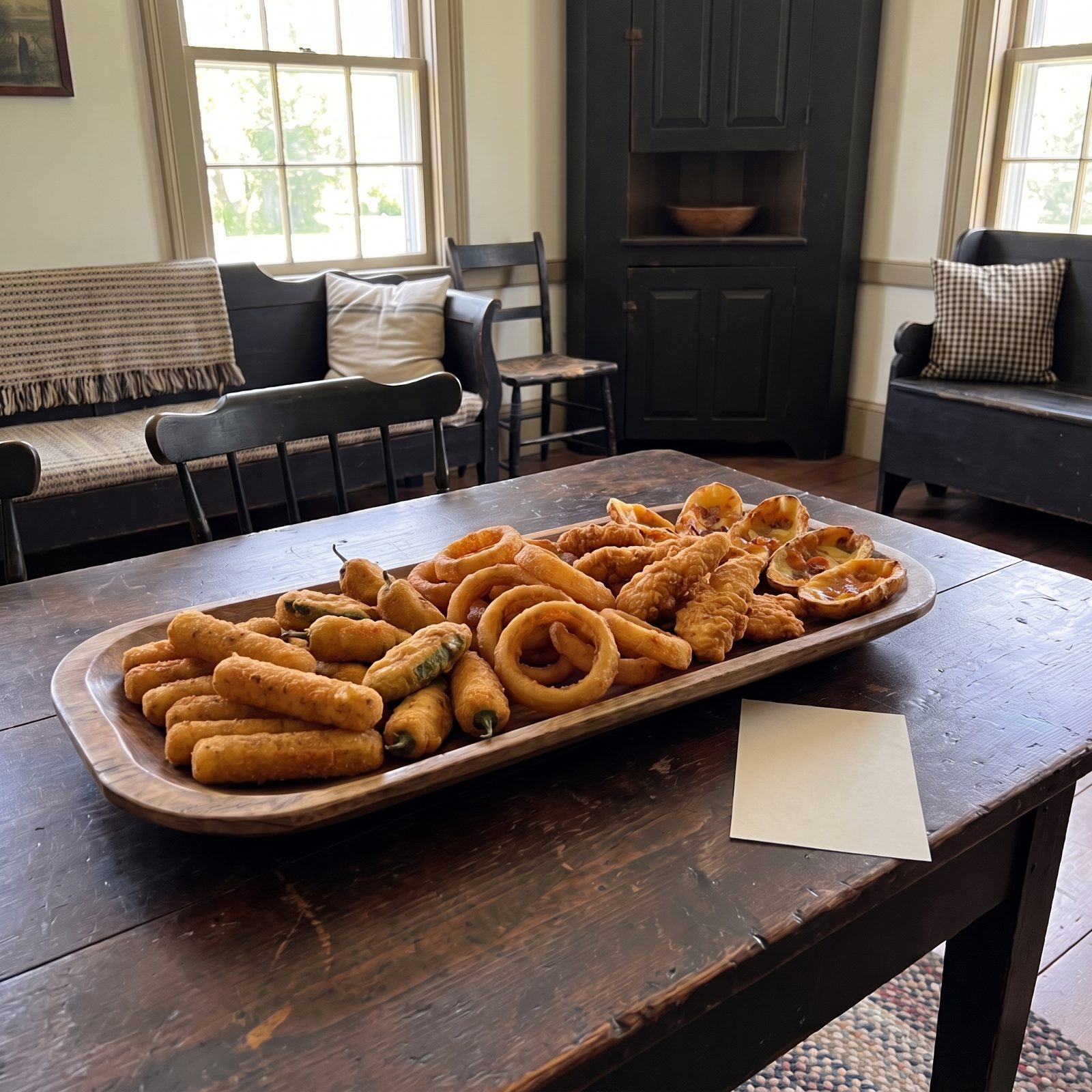
Look at the appetizer list as a color wheel. If every single item is some shade of golden brown — mozzarella sticks, poppers, tenders, onion rings, breaded mushrooms, potato skins — you’re reading a freezer inventory. All of them arrive breaded and frozen, and the kitchen’s entire contribution is a fry basket and a timer.
There’s a place for this stuff. Late night, a pitcher, a game on the TV. Nobody’s pretending it’s cooking. The problem shows up only when a restaurant that bills itself as a kitchen can’t put a single fresh, knife-touched thing in the first section you read. The starters tell you who’s back there.
20. Twenty Flavored Sauces Offered With Every Possible Dish
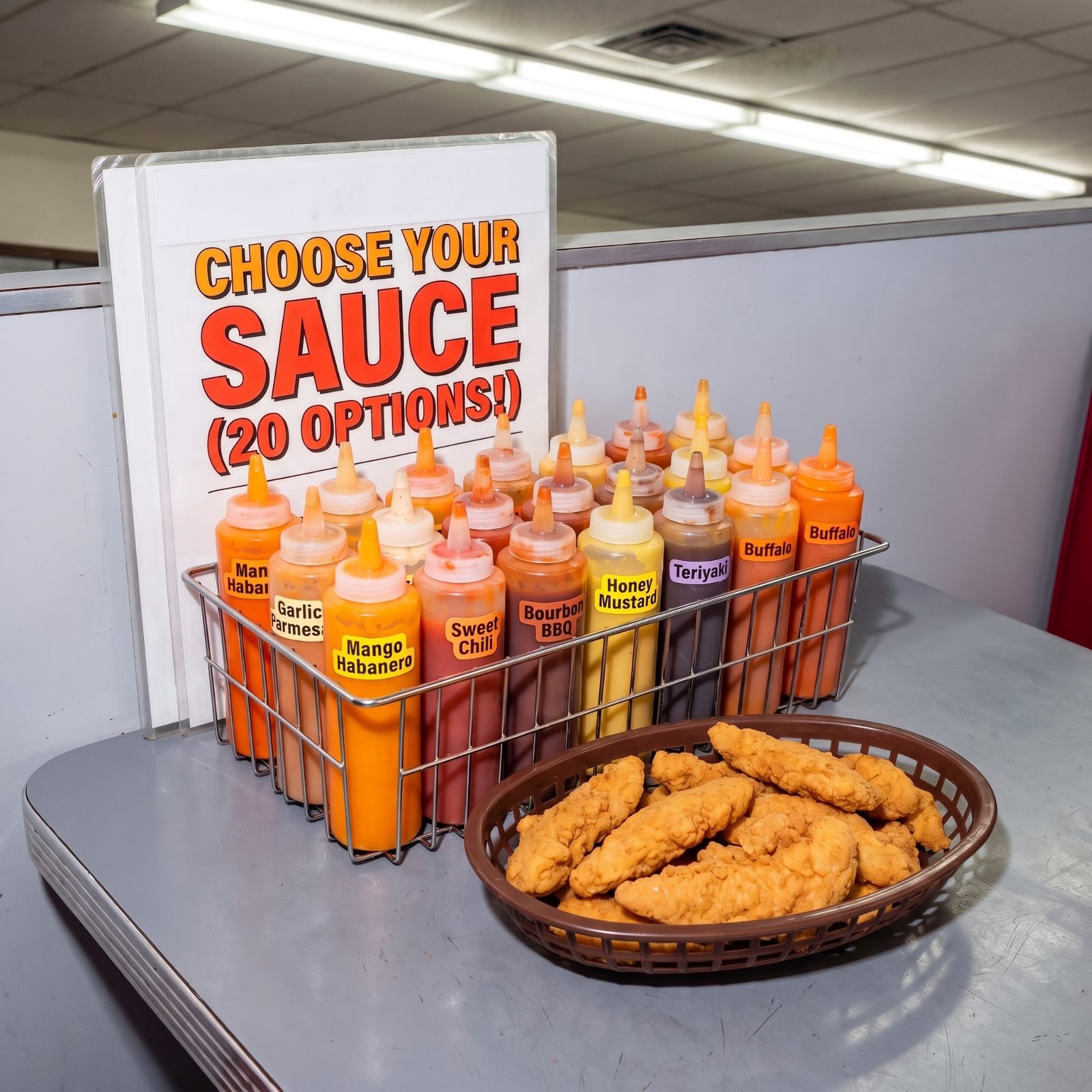
When a menu offers twenty sauces for everything, it’s telling you the kitchen can’t make one thing taste right on its own. The sauce is the apology. Wings, tenders, fries, burgers, all routed through the same squeeze-bottle lineup because the base product is the same frozen nothing underneath.
A kitchen that cares picks three sauces and makes them count. One house hot, one creamy, one sweet, each built for a specific dish. Twenty choices feels generous until you realize nobody committed to a single flavor.
19. Truffle Oil Added to Burgers, Fries, Pasta and Pizza
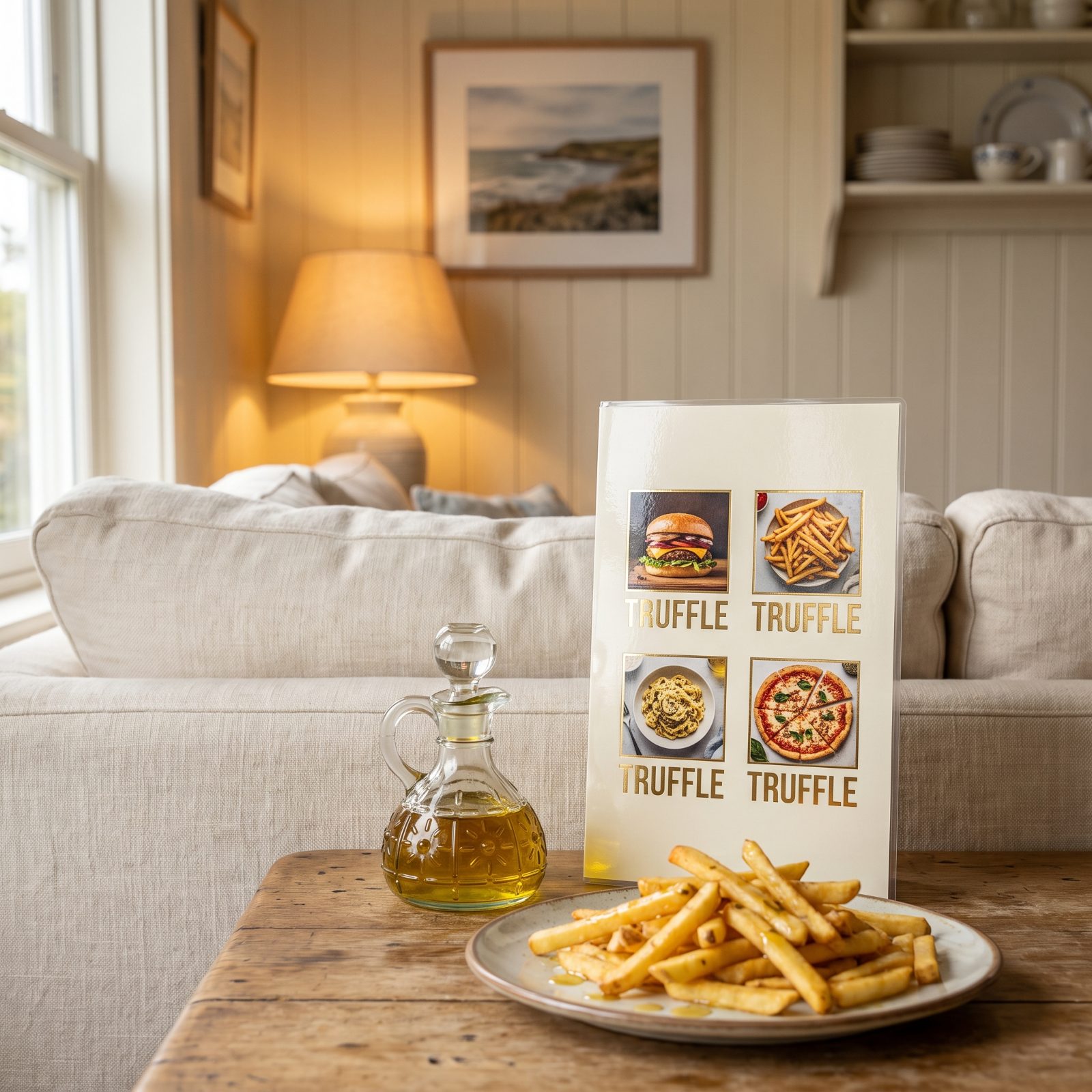
Truffle oil on four unrelated dishes is the culinary equivalent of spraying cologne on everything in the room. Most of it contains no truffle at all, just a lab-made compound called 2,4-dithiapentane. Kitchens reach for it because it reads expensive on paper and costs almost nothing.
Real attention shows up when a dish uses one luxury ingredient on purpose. It doesn’t show up when the same oily note haunts the burger, the fries, the pasta, and the pizza like a rumor nobody can confirm.
18. The Same Two Sides Clinging to Every Entrée
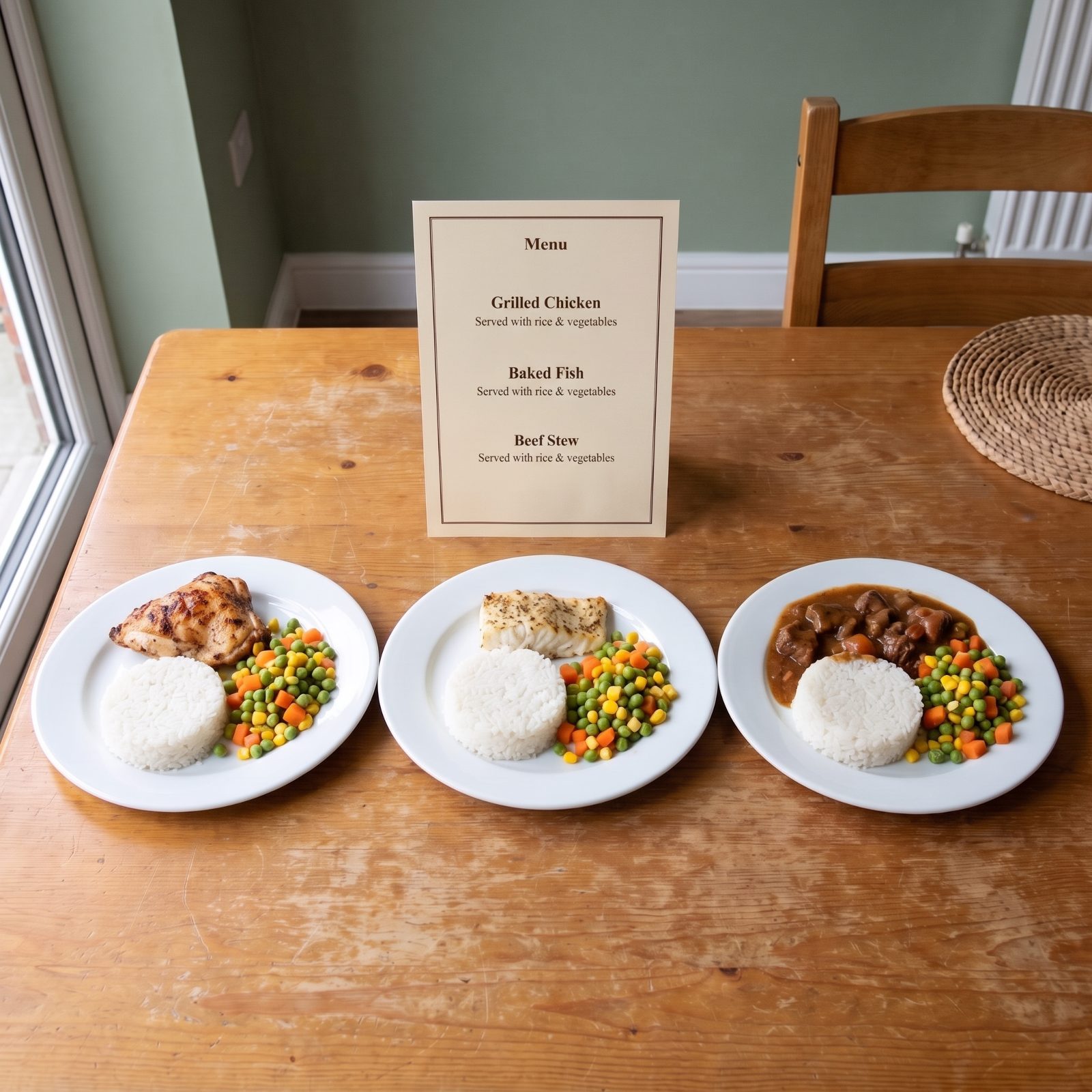
Flip the menu over and watch the sides. If grilled chicken, baked fish, and beef stew all arrive with the identical scoop of rice and the same bag of frozen medley, the kitchen built one assembly line and runs every plate down it.
Good pairing is a decision. A dish gets the starch that belongs to it, the vegetable in season, the thing that makes the center of the plate better. When every entrée wears the same two sides, nobody in that kitchen ever asked what the fish actually wanted.
17. Every Salad Built on the Identical Iceberg-Tomato-Cucumber Floor
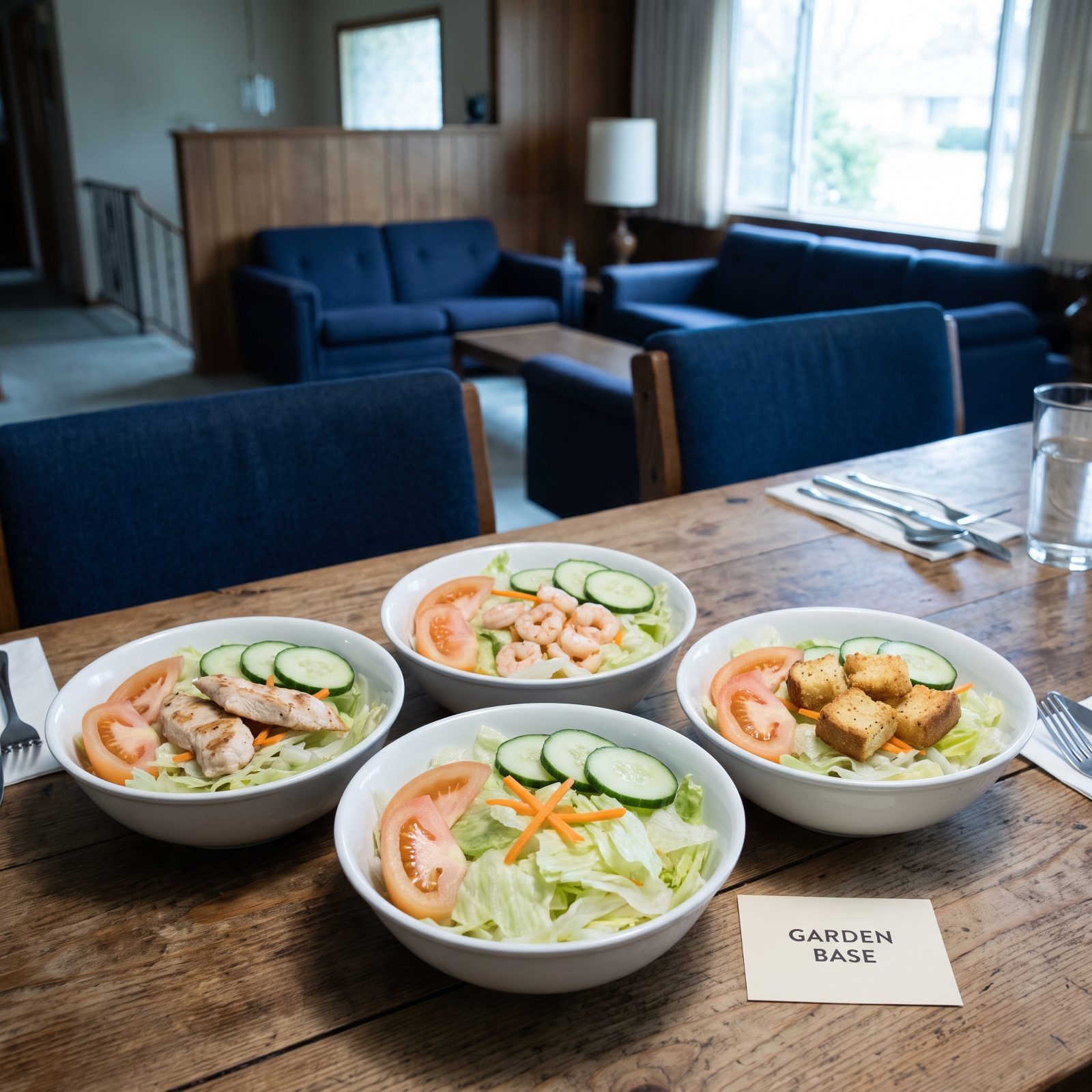
Every salad standing on the same iceberg-tomato-cucumber floor is a tell you can taste before you order it. Iceberg is cheap, holds for days, and brings almost nothing to the plate. The toppings change but the foundation never does.
A kitchen paying attention treats greens as the point, not the packing material. You see it in the mix.
16. Every Entrée Buried Under the Same Melted Cheese Blend
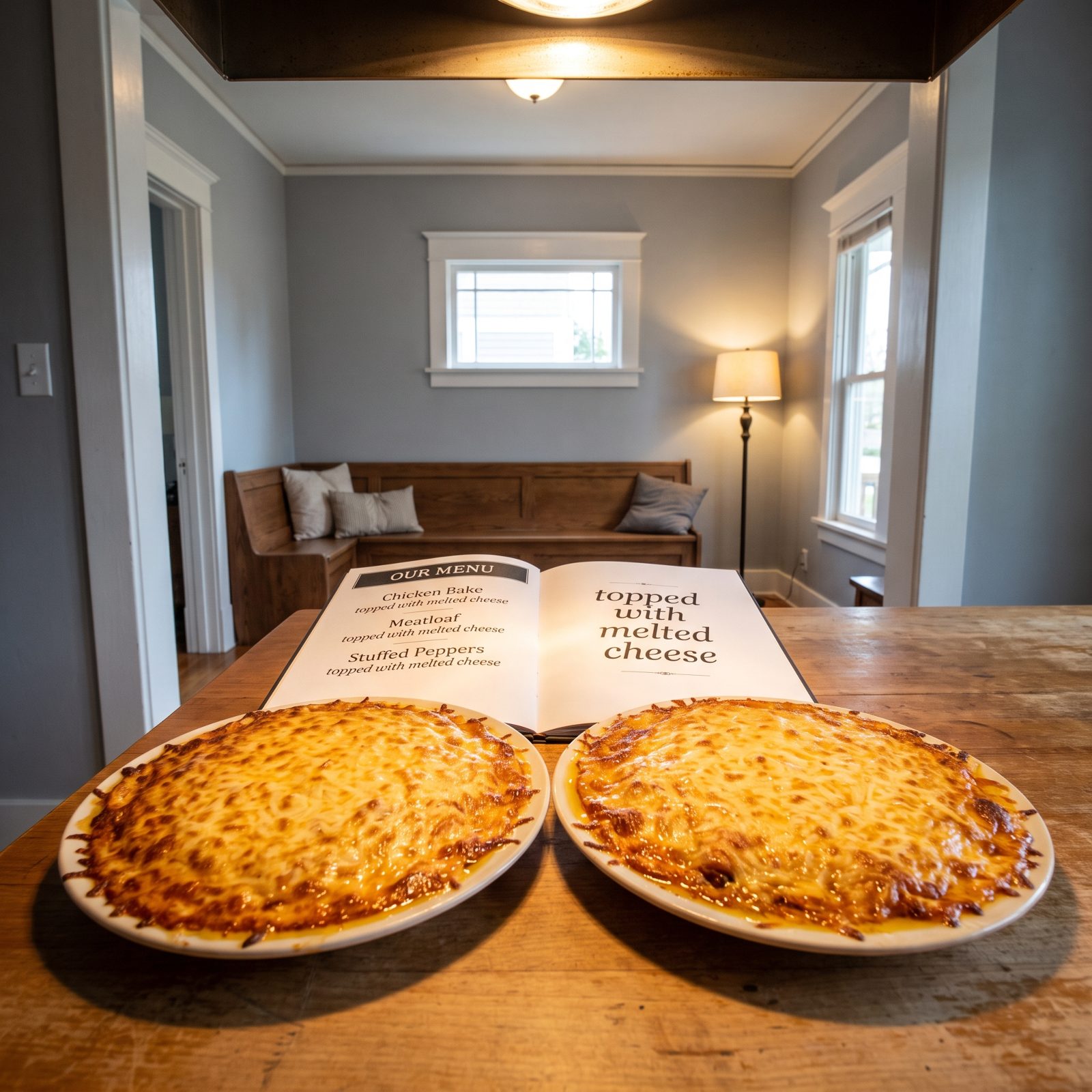
Cheese is a great cover-up and lazy kitchens know it. Bury a dry chicken breast, a reheated eggplant, a tired pasta bake under the same shredded blend and the broiler does the lying for you. By the time it hits the table, every item looks the same and tastes like melted bag.
Cheese used with care has a name and a job. Fresh mozzarella that stretches. A sharp pecorino grated to order. A careful hand that lets the food under it still exist.
15. The Only Vegetarian Main Is a Side Salad Made Bigger
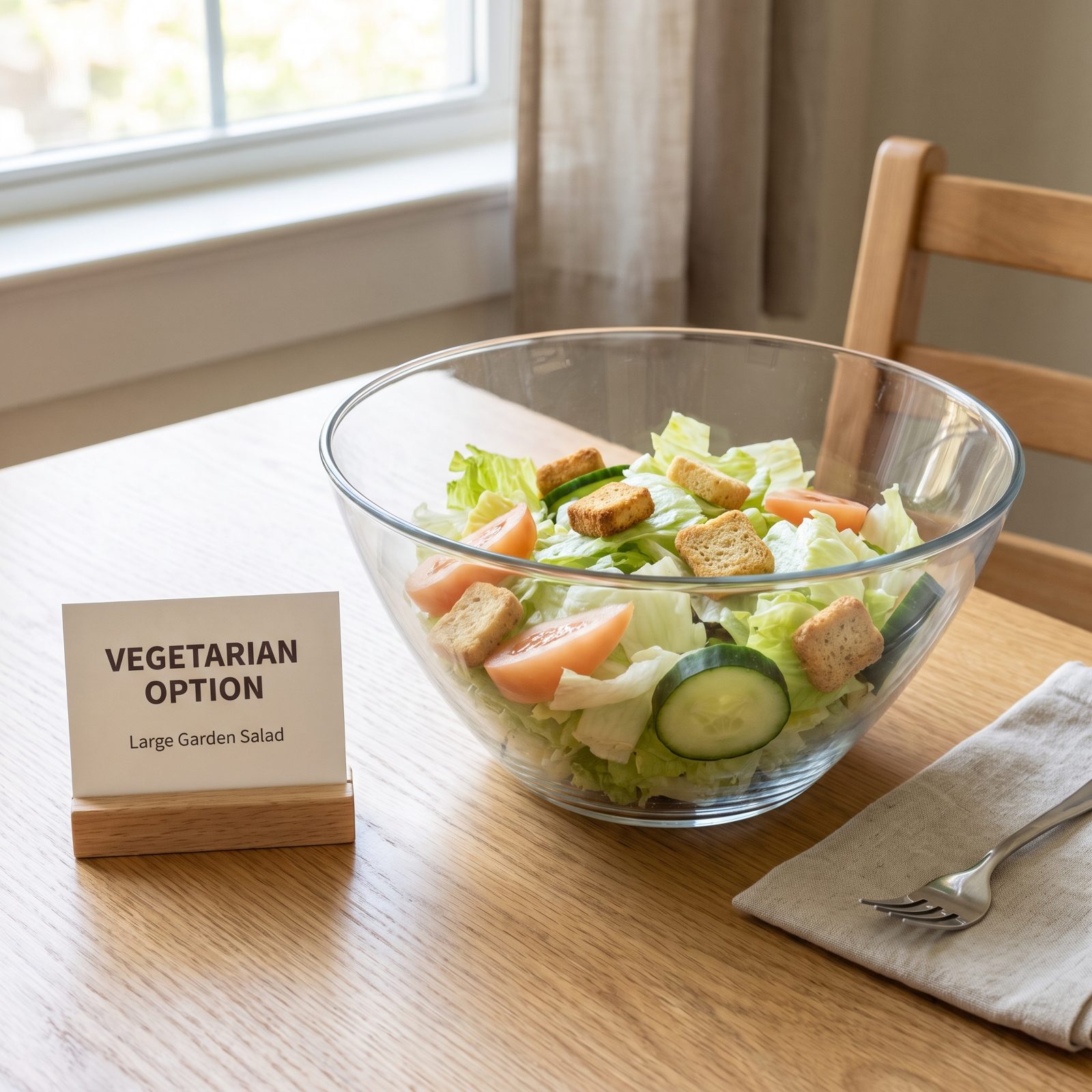
When the lone vegetarian main is a side salad with the price doubled, you’re looking at an afterthought wearing a dinner jacket. No thought went into the dish. Somebody just typed ‘large’ in front of the cheapest thing on the line.
A kitchen that respects its range builds a vegetable dish on purpose, something a meat-eater might order by accident. The number of restaurants that still treat an entire category of customer as a rounding error is the quiet shame of the business.
14. “Loaded,” “Ultimate” and “Extreme” Standing In for Actual Words
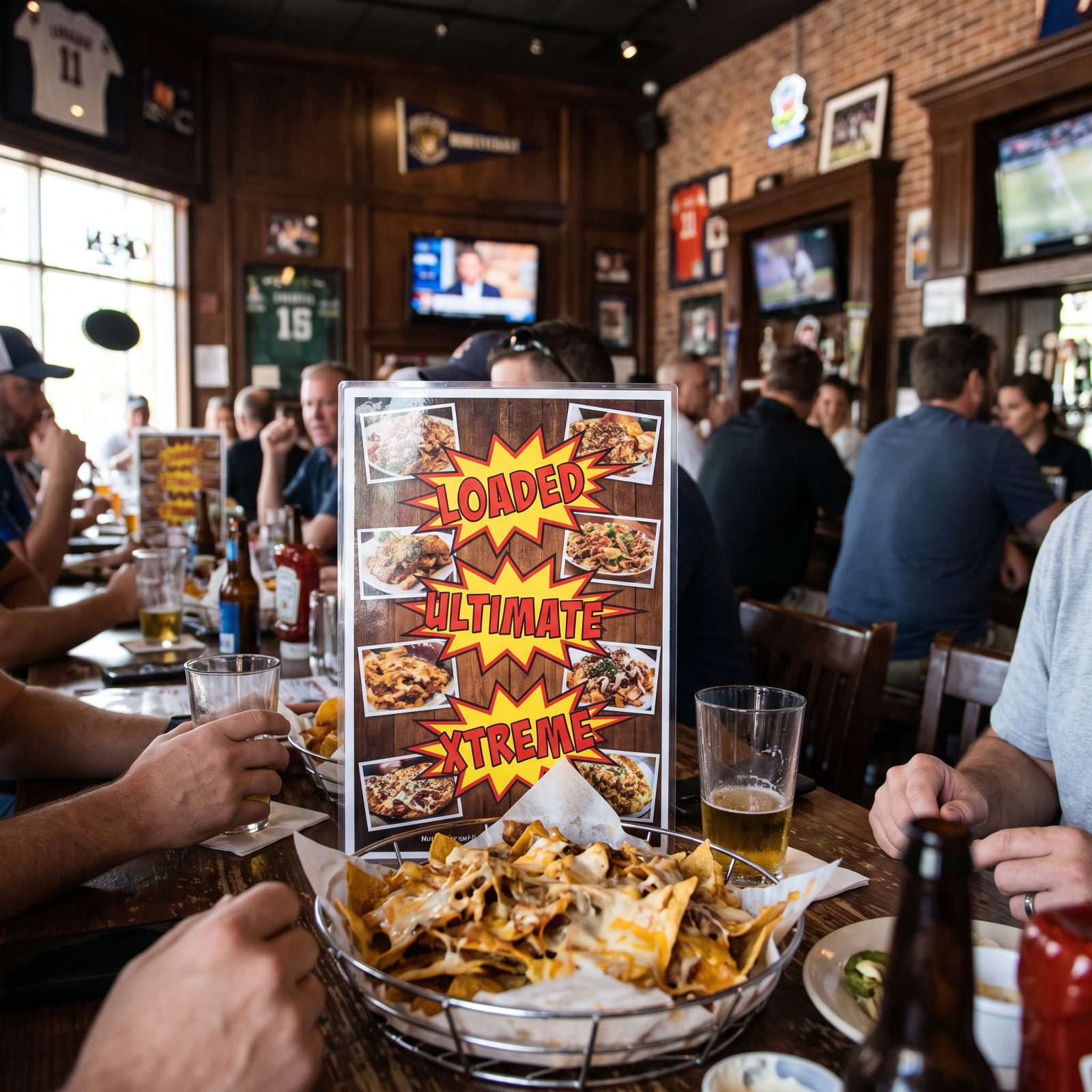
Adjectives are hiding the facts. ‘Loaded,’ ‘Ultimate,’ ‘Extreme’ exist because the real description would be boring or embarrassing. Loaded with what? Extreme in what direction? The menu shouts so you stop asking.
Now compare that to a line that just tells you the ingredients, the method, where it came from. Nouns that mean something. A kitchen proud of what’s on the plate names it, and a kitchen hoping you won’t look closely turns up the volume instead.
The louder the adjective, the quieter the ingredient list.
13. Branded Snack Foods as the Main Selling Point of Multiple Dishes
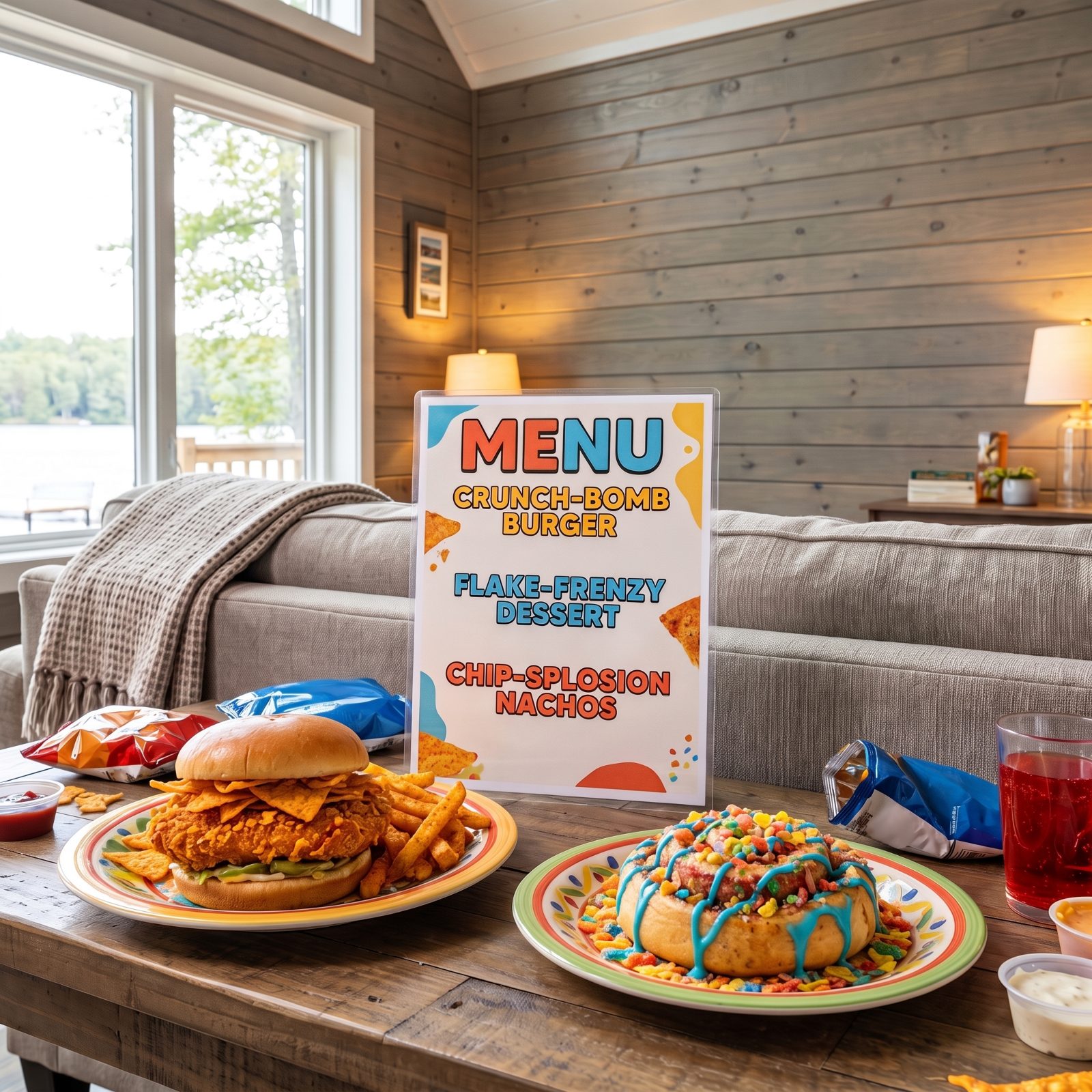
When three dishes are built around a bag of branded chips or a breakfast cereal, the kitchen isn’t cooking. It’s licensing nostalgia and hoping the packaging does the work. The crunch is borrowed, and the flavor comes from a factory two states away.
There’s a difference between a playful one-off special and an entire menu leaning on snack-aisle recognition because nobody back there can build crunch or color from scratch.
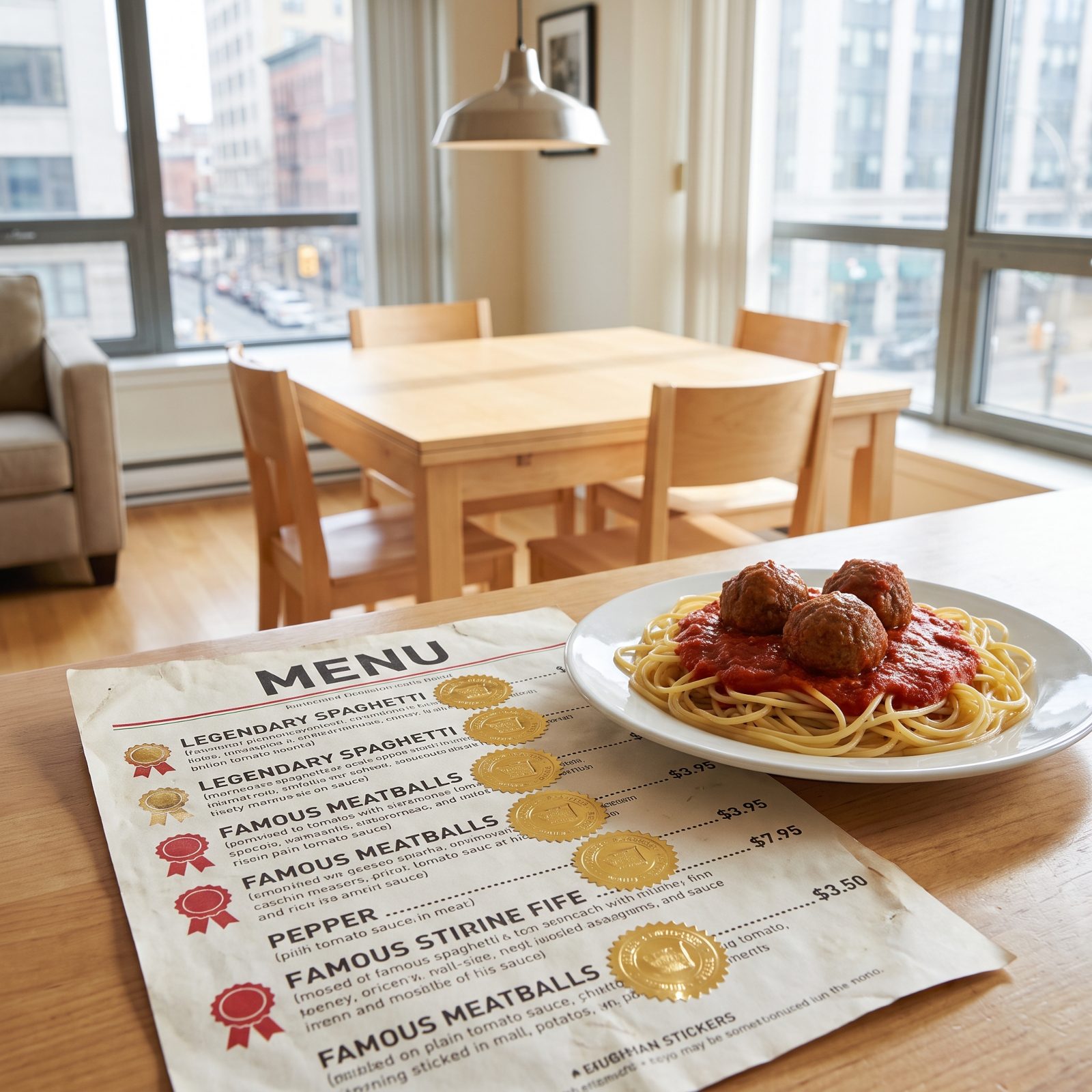
12. Every Other Dish Declared Famous, Legendary or Award-Winning
Would you like to save this?
If half the menu is ‘famous’ and the other half is ‘award-winning,’ ask yourself: famous to whom, and which award? The honors never come with a year, a name, or a source. They’re printed, not earned.
A dish that’s actually known for something doesn’t need the word next to it. The regulars already order it, and the reputation lives in the room, not in a gold starburst beside the price.
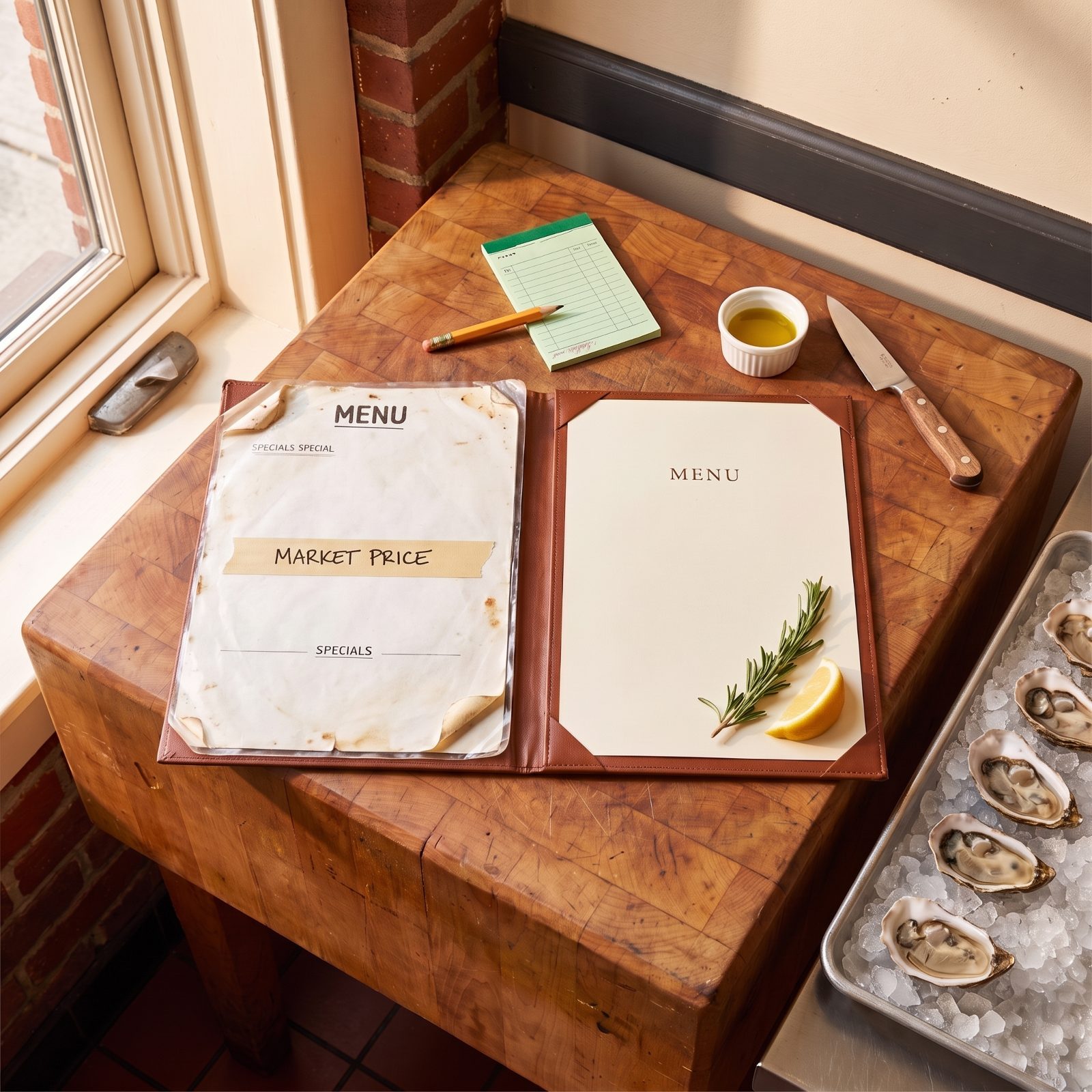
11. “Market Price” Stamped on Ordinary, Stable-Cost Ingredients
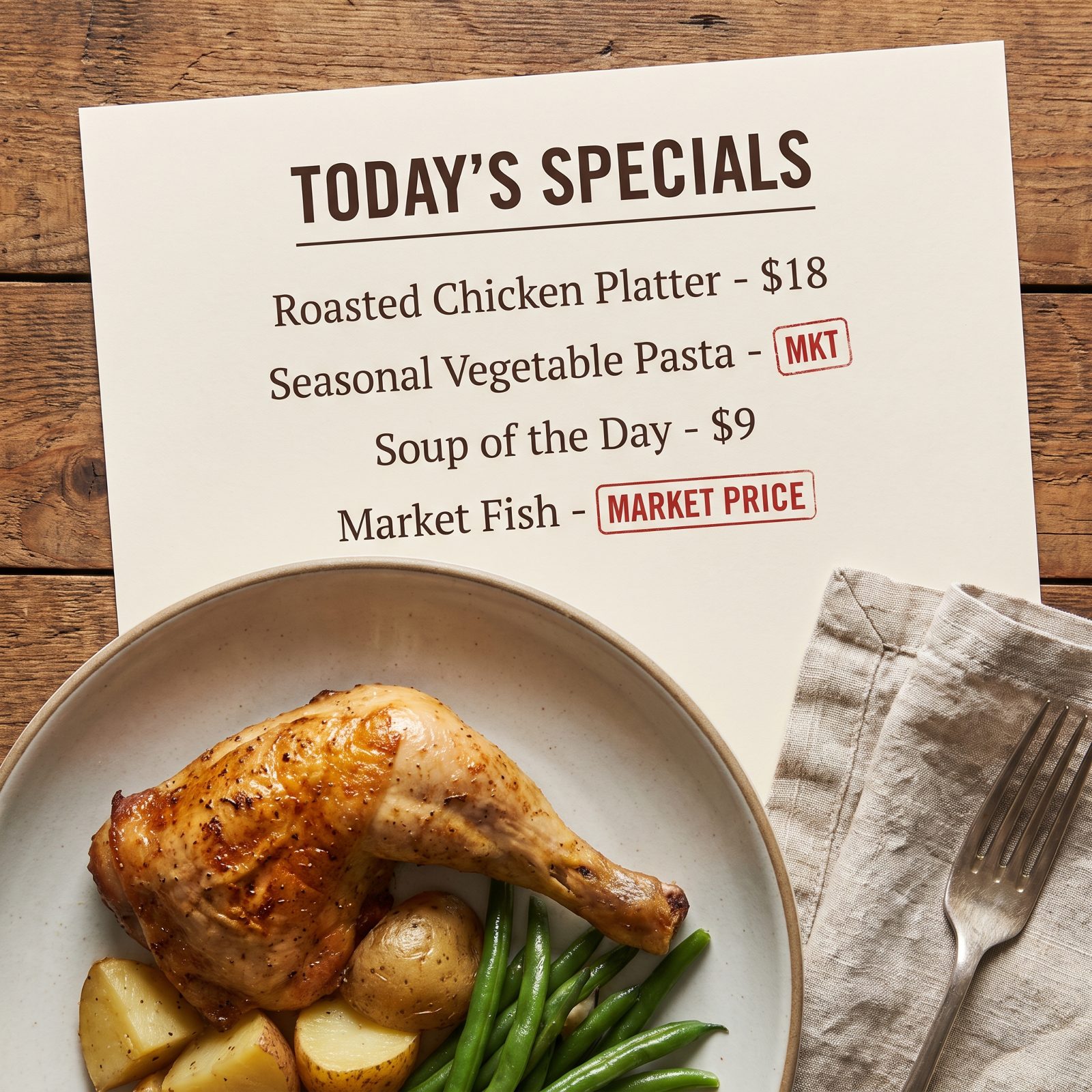
Market price belongs to things whose cost genuinely swings: live lobster, soft-shell crab, the day’s fresh catch. When it shows up next to chicken, pasta, or a vegetable plate, it isn’t tracking anything. It’s leaving the door open to charge whatever the room will bear while dodging a number on paper.
A confident kitchen prints the price. It knows its costs because it knows its sourcing. ‘Market price’ on a stable ingredient is a shrug dressed up as sophistication, and honestly it’s the one that bugs me most. Just tell me what it costs.
10. Doesn’t Care: An Upsell and Modifier List Longer Than the Dish Itself
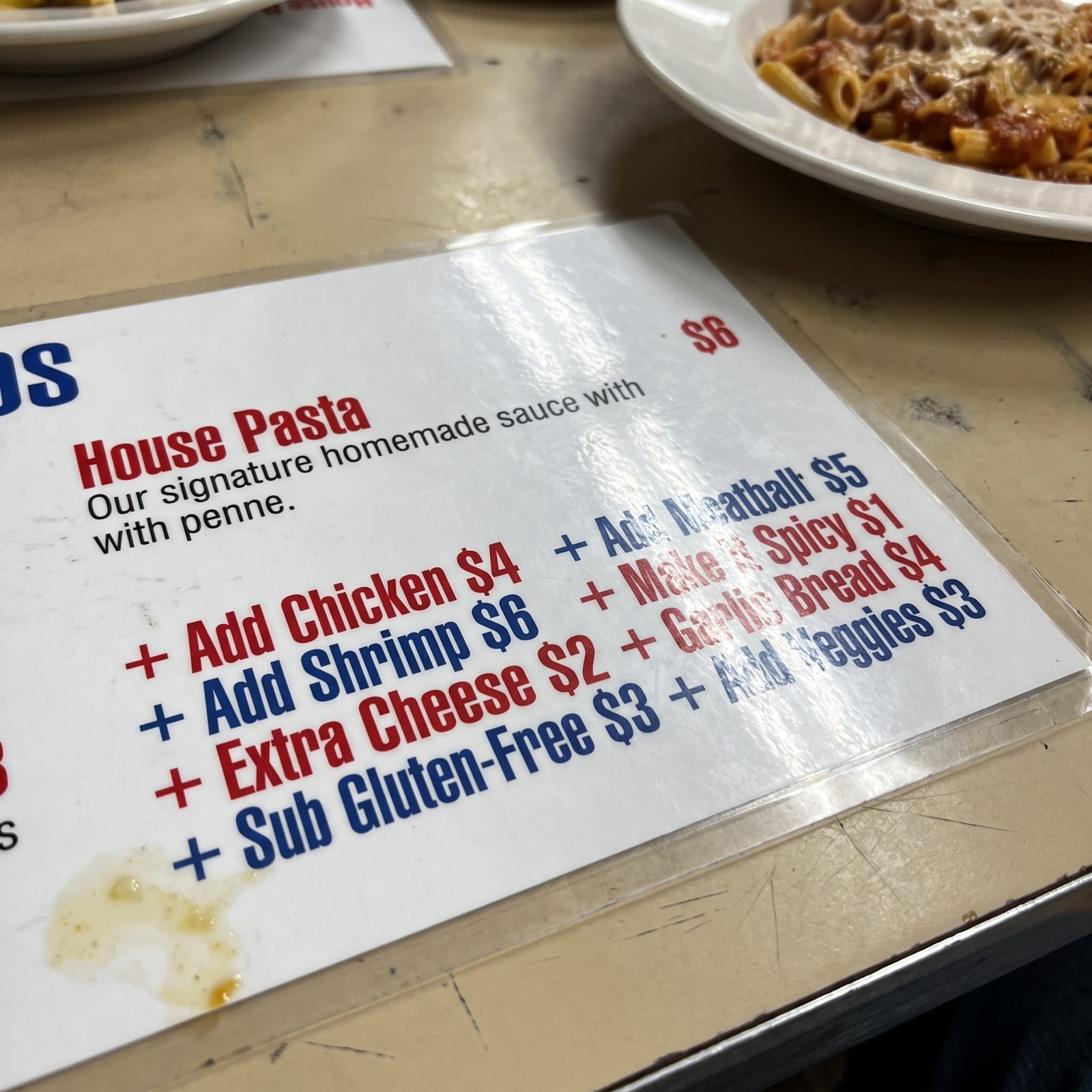
You can feel the strategy. The dish barely gets a sentence, but the add-ons go on for a paragraph — protein up-charges, premium cheese up-charges, “make it a combo,” sauce swaps at a dollar a pop. A kitchen confident in a plate doesn’t need to sell you four upgrades to make it worth ordering.
The base dish was built to be incomplete. The margin lives in the modifiers, not the cooking. A short, declarative description comes from a kitchen that already decided the dish is good. A wall of checkboxes is one hedging its bets.
9. Doesn’t Care: A QR Menu Full of Broken Links and Placeholder Text
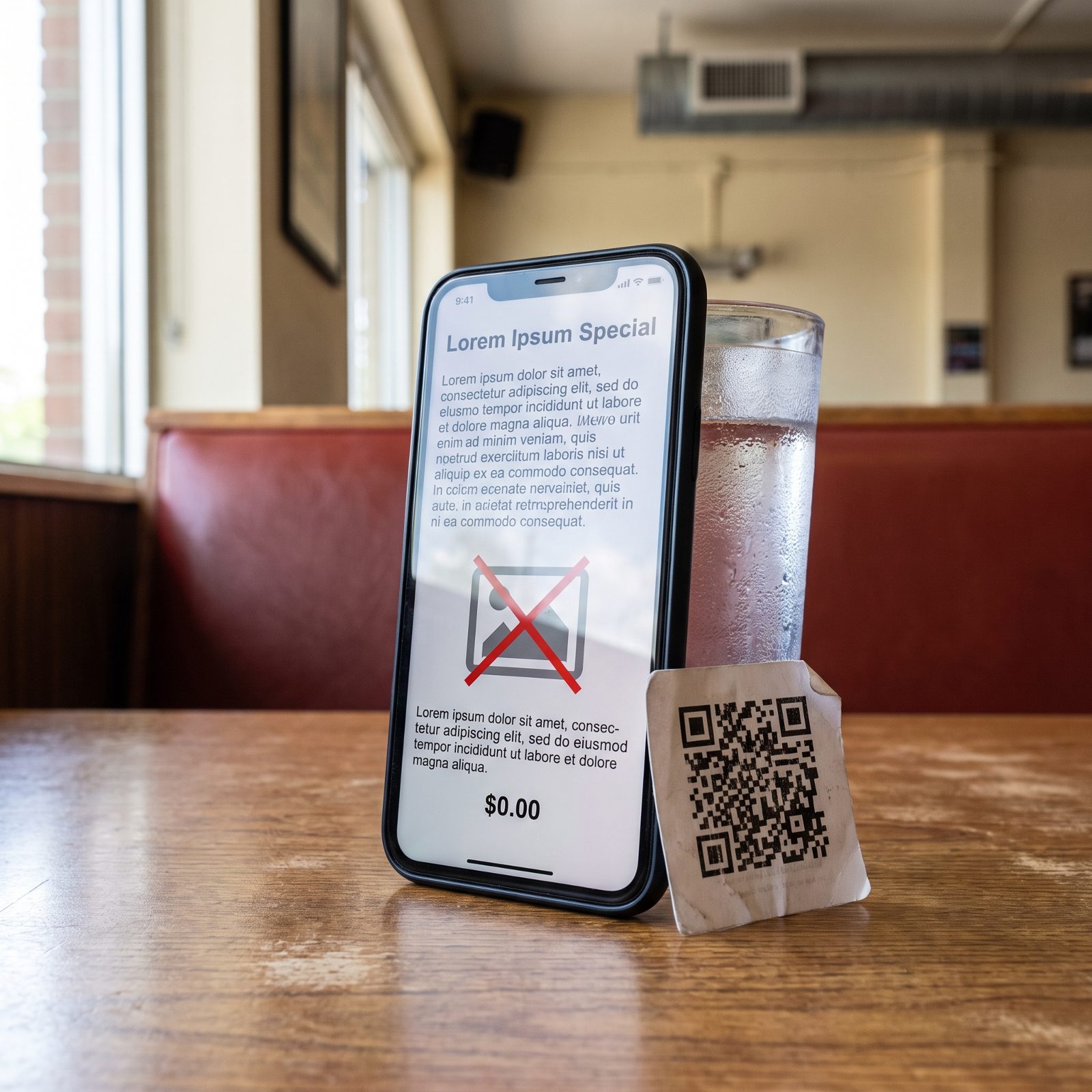
Scan the code and the truth spills out. A category that says “Desserts” linking to nothing, a dish described with grey filler text somebody forgot to replace, prices reading “$0.00” or vanishing on half the items.
The menu is the one document a restaurant updates most. If it’s broken on your phone, picture the walk-in cooler. Picture the prep list. The same hands that ignored the dead link ignored the lettuce.
8. Proves It Does: A One-Page Menu Built Around a Single Specialty
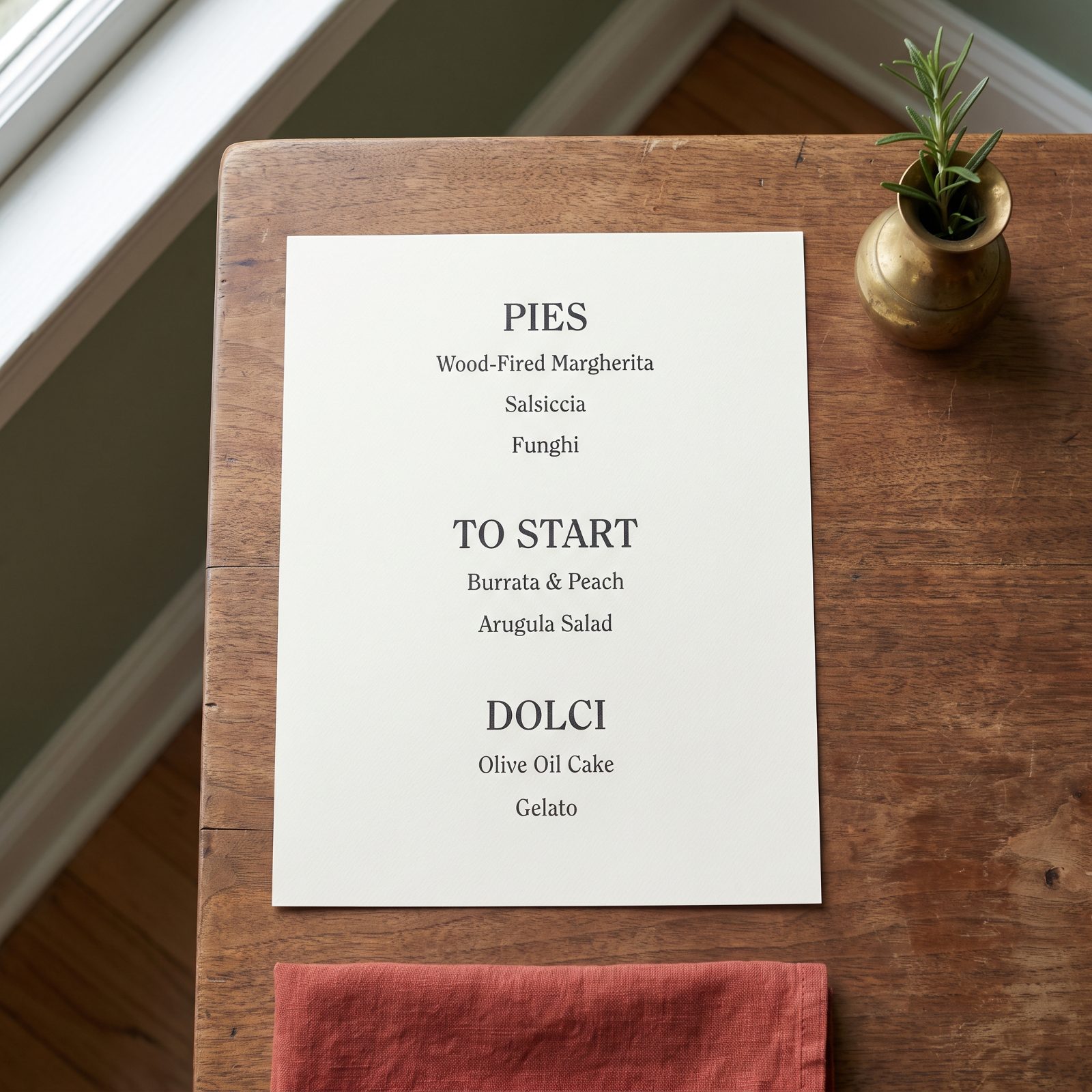
Eight dishes. Maybe ten. Everything circling one thing the kitchen actually knows how to do. A short menu is terrifying for the restaurant and a gift to you, because nobody’s hiding behind variety.
A sixty-item menu promises everything and commits to nothing. Think about it. All those dishes, all those ingredients, all that prep, from one line cook and a reach-in — the math never works. A tight menu means fresher mise, faster turnover, and a chef who’d rather do three things right than forty things frozen.
A short menu is a kitchen telling you exactly what it’s proud of, and refusing to pretend about the rest.
7. Proves It Does: Local Farms and Bakeries Named Right on the Page
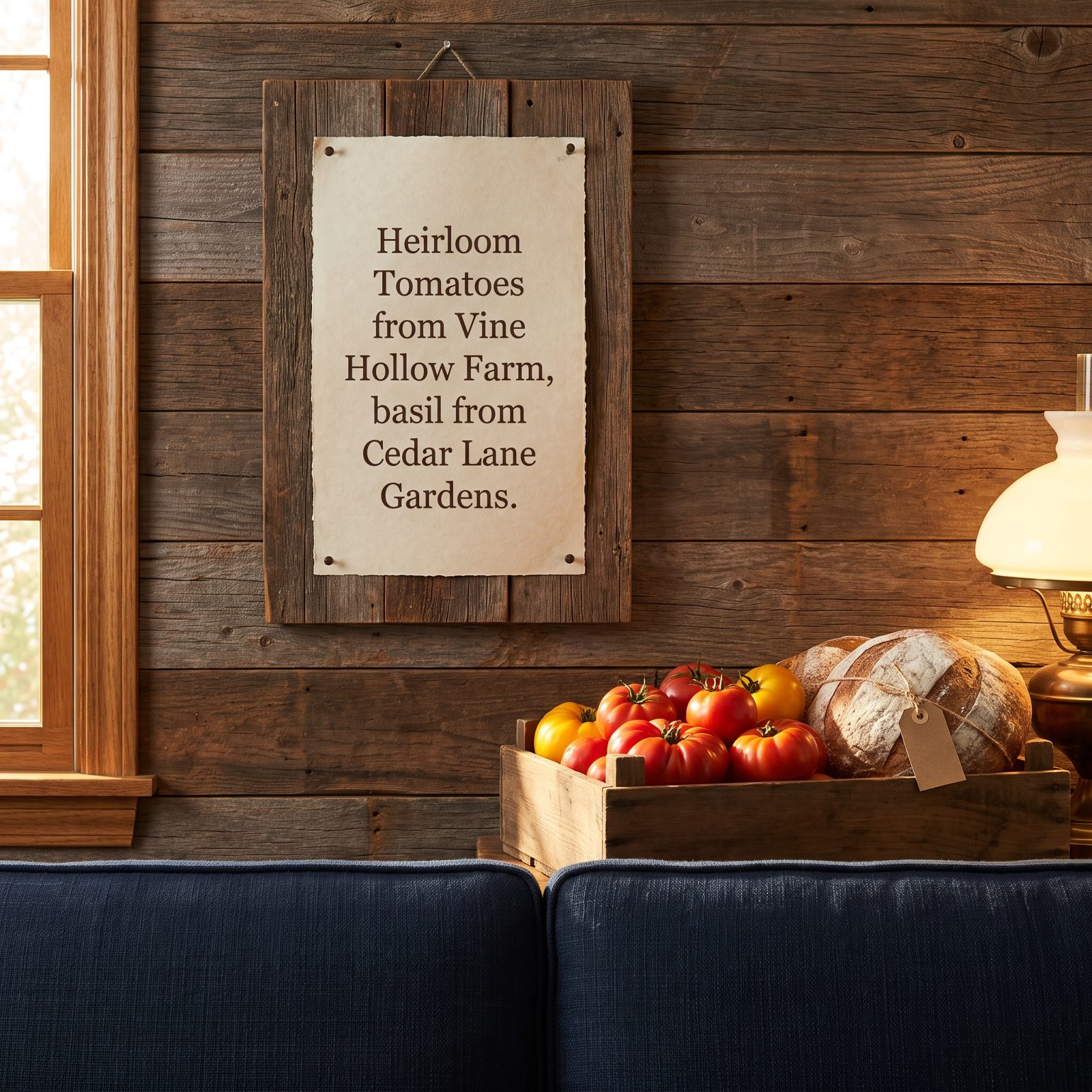
“Vine Hollow Farm.” “Cedar Lane sourdough.” Specific names, not vague adjectives like “farm-fresh” or “locally-inspired.” A real name is a receipt. The kitchen is putting a supplier on record, and that supplier can be checked.
Anyone can print the word “artisan.” Only a restaurant with actual relationships names the bakery across town. It’s a small act of accountability, and careless kitchens never bother.
6. Proves It Does: Fish Named by Species, Origin, and How It Was Caught
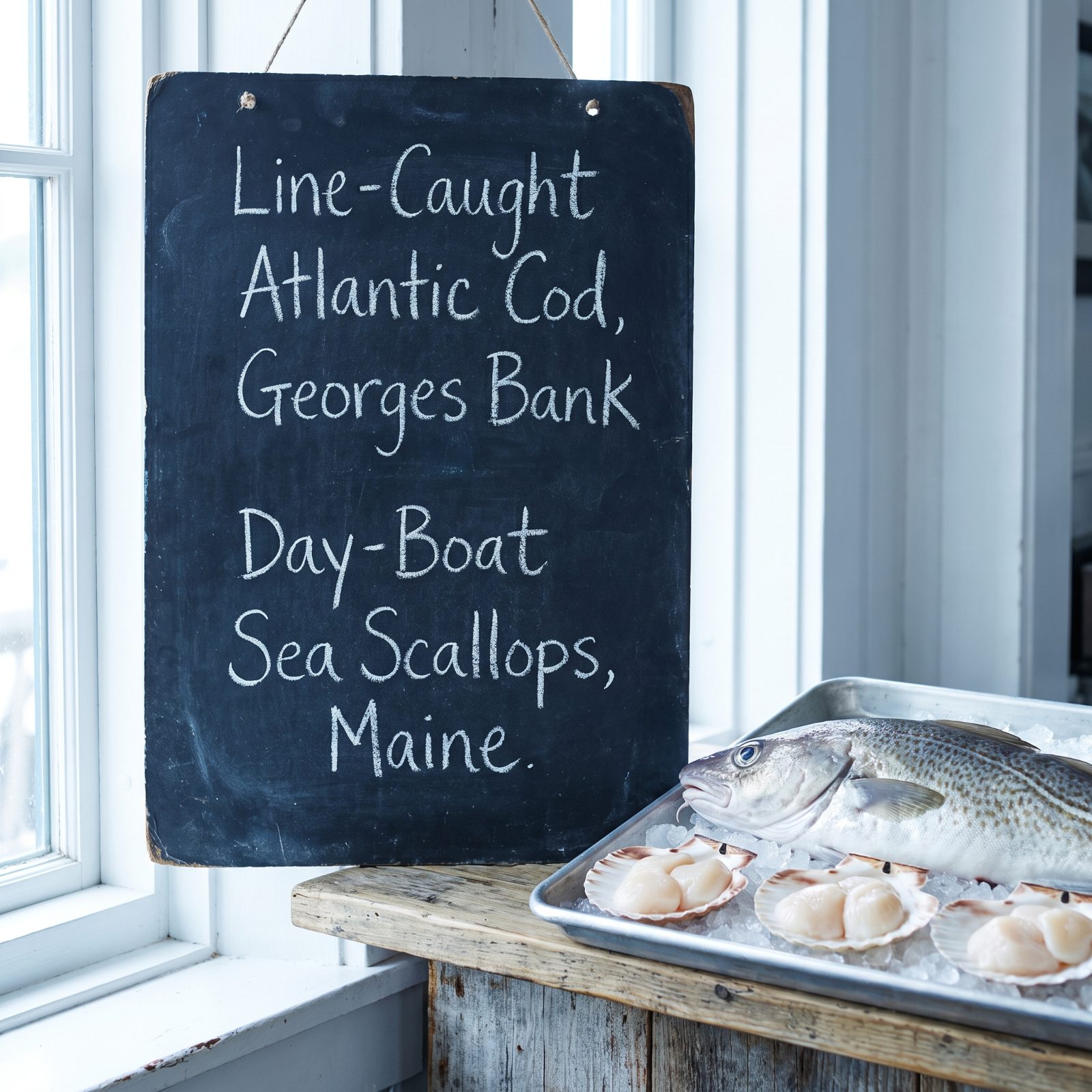
“Fish of the day” tells you nothing. “Line-caught Atlantic cod, Georges Bank” tells you everything — species, water, method. That’s a kitchen that knows what it bought and isn’t afraid to commit it to writing.
Vagueness around seafood usually hides something: frozen filets, a questionable source, a species swap. Precision is the opposite. Write “day-boat scallops” and you’re telling me the boat went out and came back the same day. You can taste the difference, and they know you can.
5. Proves It Does: Pizza Dough Described by Its Flour and Fermentation Time
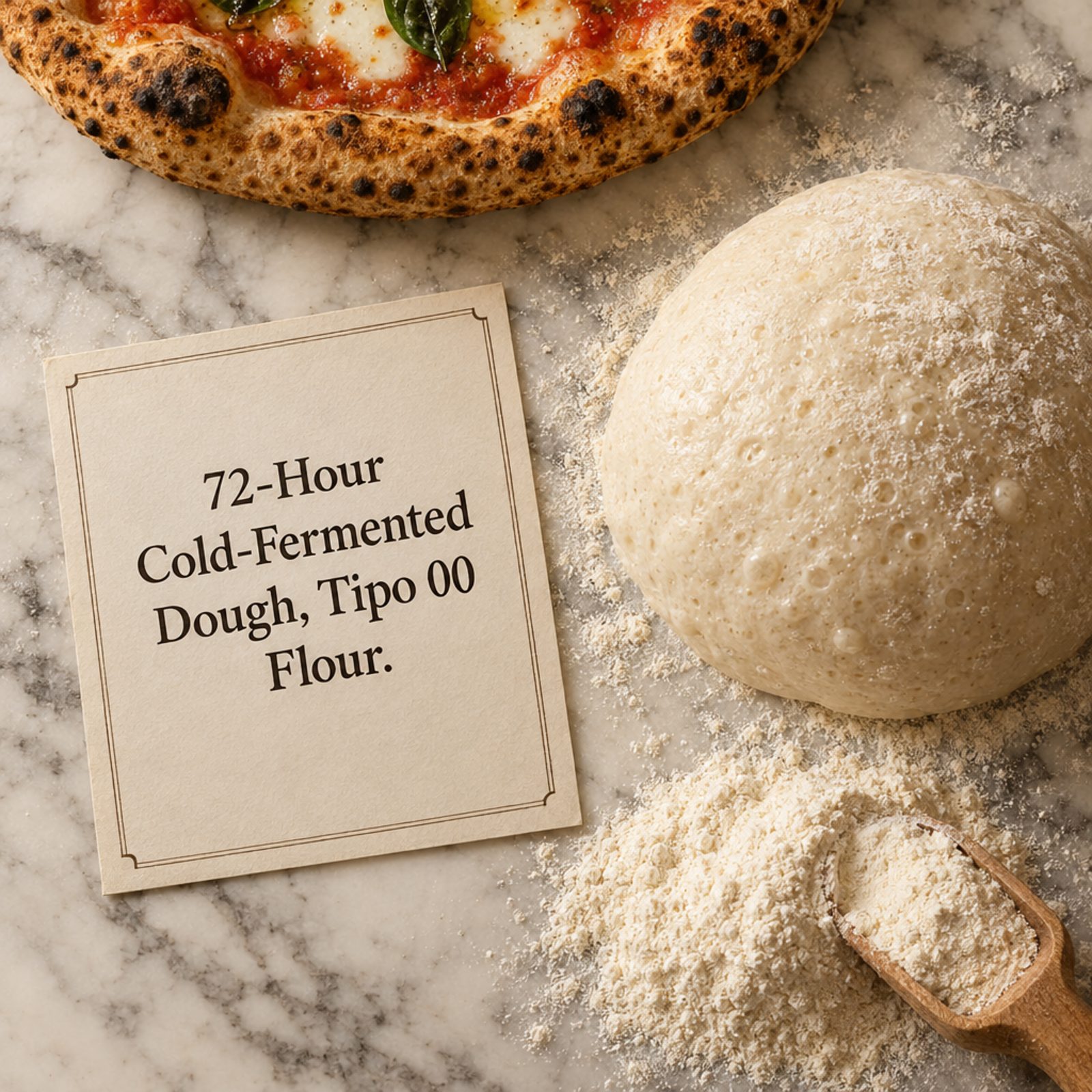
This one’s personal, because dough is where pizza lives or dies. A menu that names the flour — Tipo 00, say — and the fermentation time, 48 hours or a 72-hour cold-proof, is run by people who argue about dough at family dinners. In the best way.
You don’t write “72-hour cold ferment” unless you actually do it. The time is the whole game. It’s where flavor develops, where the crust gets that blistered, digestible chew instead of bread-flavored cardboard. A kitchen that times its dough tells you so, loudly, because it’s the hardest part and the part they’re proudest of.
4. Proves It Does: Small-Batch Dishes Honestly Marked “Limited Quantity”
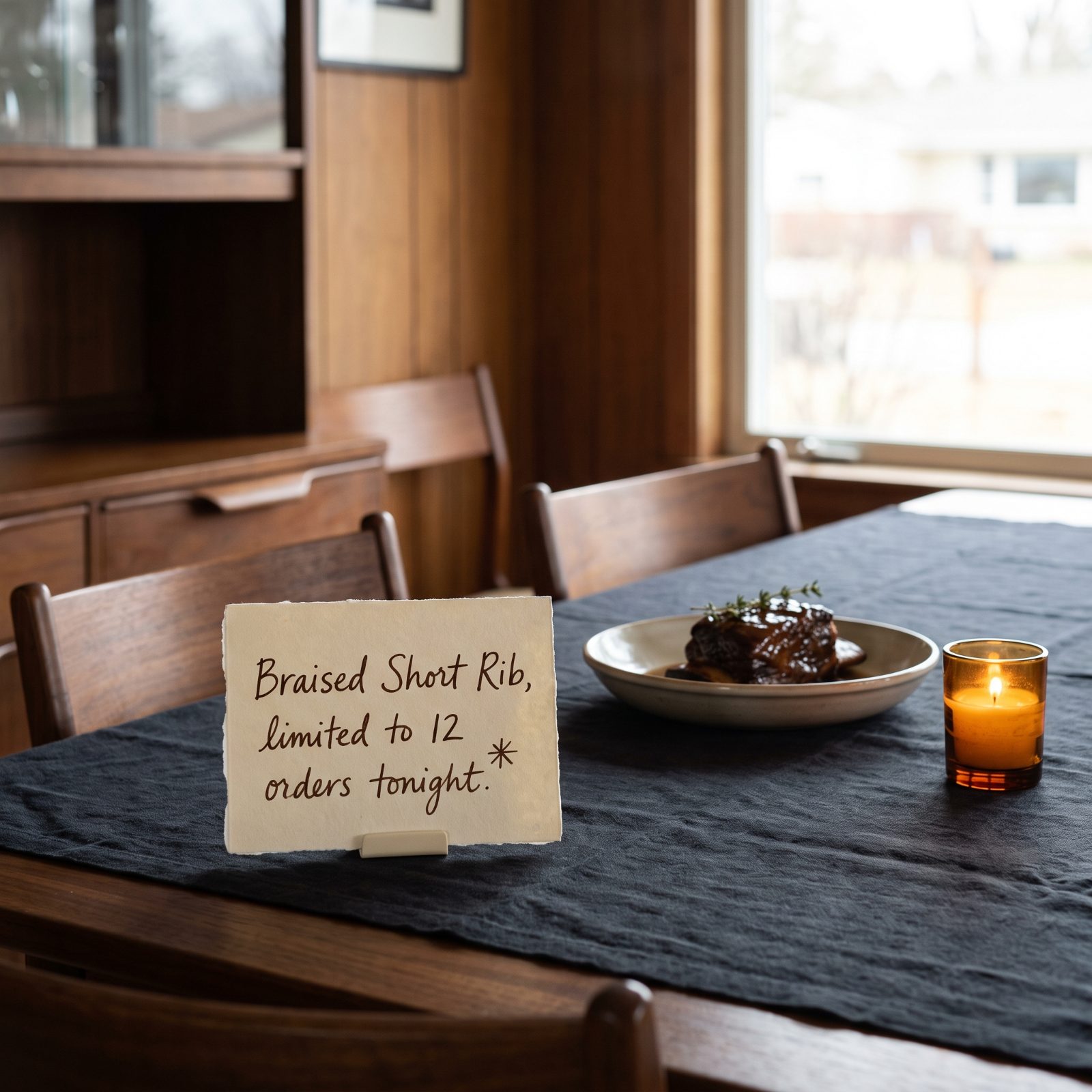
“Limited to twelve orders tonight.” Most restaurants would never admit they might run out. This one does, on purpose. It’s a confession that the dish is made in a real batch, by hand, and when it’s gone it’s gone.
Compare that to the place where every item is available every day forever. That consistency is a warehouse, not a kitchen. Scarcity written honestly means somebody actually braised those short ribs this morning.
3. Proves It Does: A Different Side Chosen for Each Main, Not One Blanket Garnish
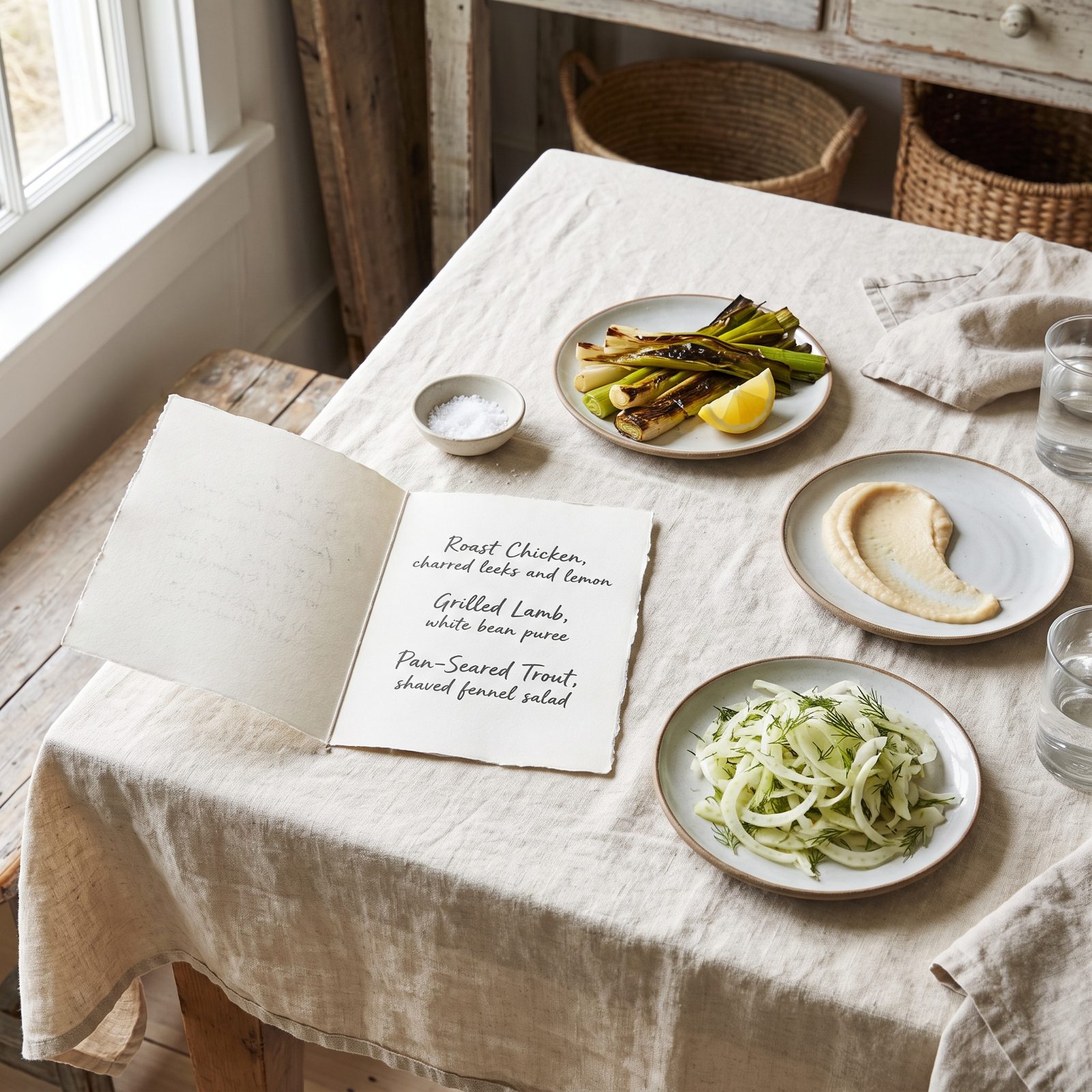
Scan down the mains. If every plate comes with “choice of fries or house salad,” the kitchen built a protein factory and bolted the same sides onto all of it. Fine. Just know what it is.
Now look at a menu where the chicken gets charred leeks, the lamb gets white bean puree, the trout gets shaved fennel. Each main was plated by someone who thought about what belongs next to it. That’s cooking, not assembly. Sides are where you catch a kitchen either thinking or phoning it in.
2. Proves It Does: An Allergen Key That Actually Stays Consistent
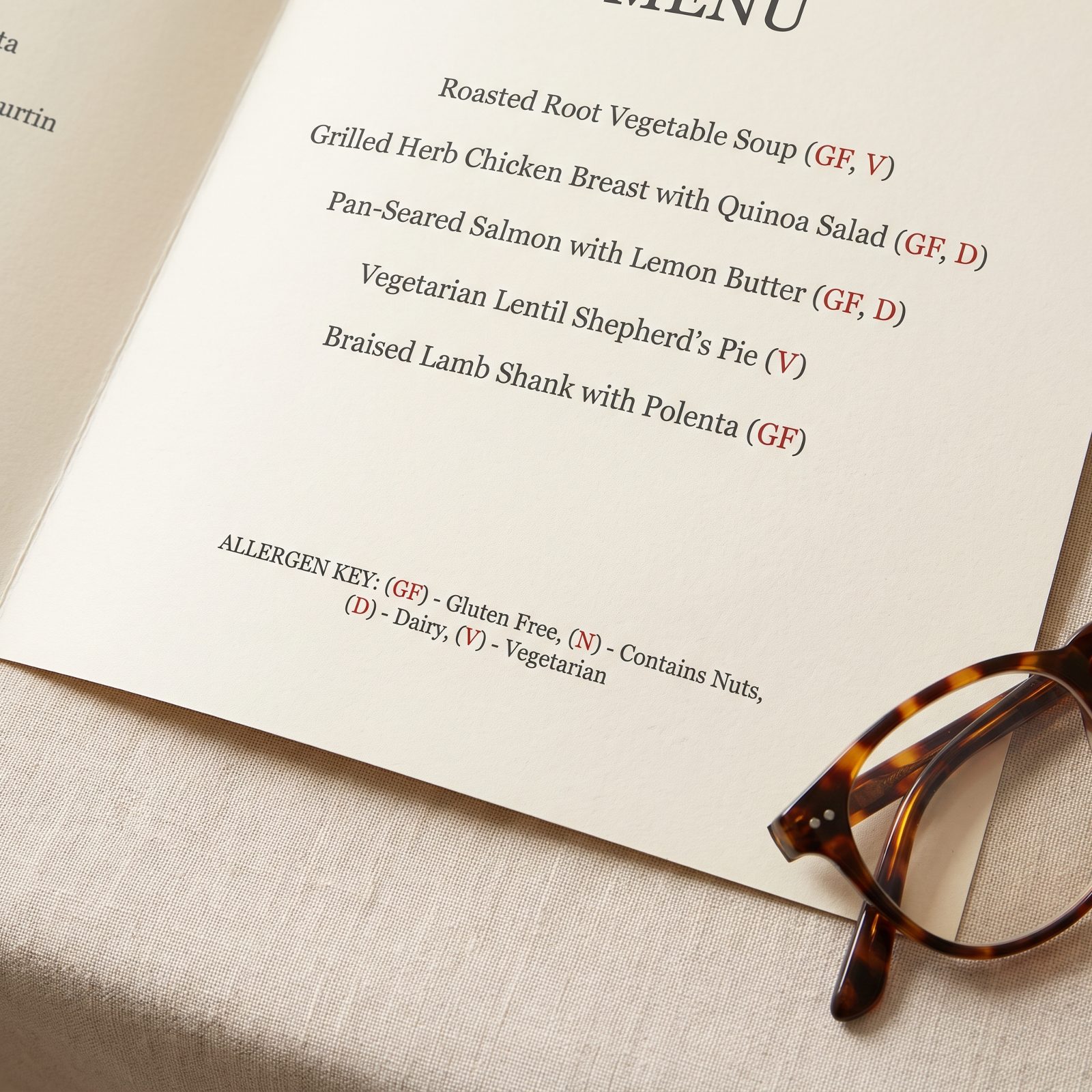
Not glamorous. Deeply telling. A kitchen that keeps a clean allergen key — the same symbols defined once and used reliably on every dish — is a kitchen that runs on systems, and that same discipline is why your order comes out right.
Sloppy labeling, a nut symbol on one dish and missing on the next identical one, means nobody owns the details. And details, in a kitchen, are the whole job.
1. Proves It Does: One Precise Daily Special Based on What Arrived That Morning
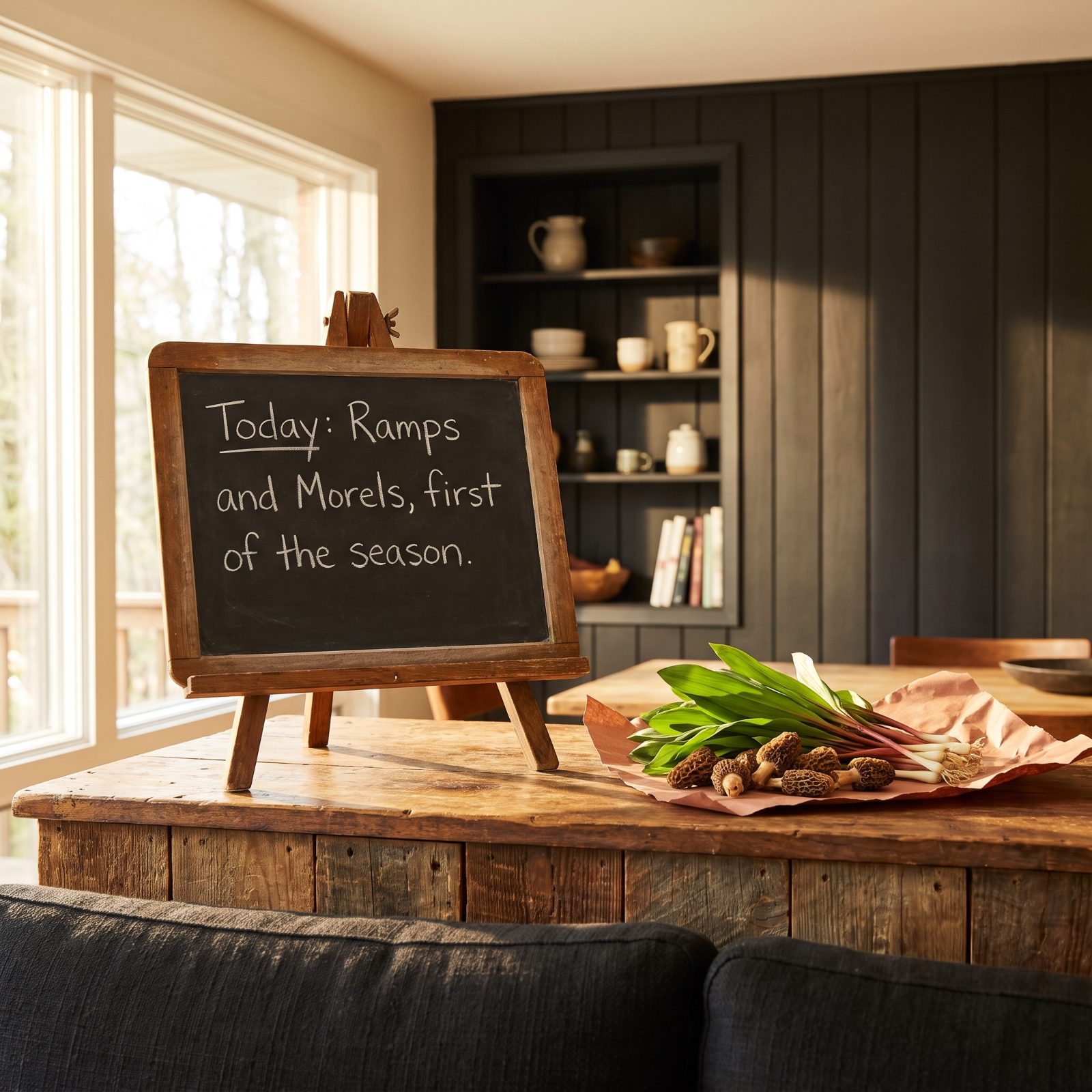
One special. Not a laminated card of eight “specials” that have been the same for two years. A single line, in chalk, naming something that showed up that morning: “Ramps and morels, first of the season.”
Someone opened a crate at dawn, saw what was good, and built a dish around it before lunch. It’s the most honest sentence a kitchen can write, because it can’t be printed in advance — it only exists because the day exists. Pick the place with one true special a day over the place with forty permanent dishes. Every single time.