Would you like to save this?
A line cook once kept an entire Saturday rush moving with a sheet pan, a felt-tip marker and a plastic bottle with the tip cut at an angle. No secret recipe, no fancy gear. Just systems built by people who got burned, fell behind, dropped tickets and decided never again. Restaurant kitchens run on a thousand small habits most diners never see — habits that turn chaos into rhythm and shave seconds that add up to a service that actually ends on time. Here are some of the sharpest, and why they work.
Please note that some of the images in this article were created with the assistance of AI.
42. Ice Paddles Cool Deep Pots of Stock From the Inside Out
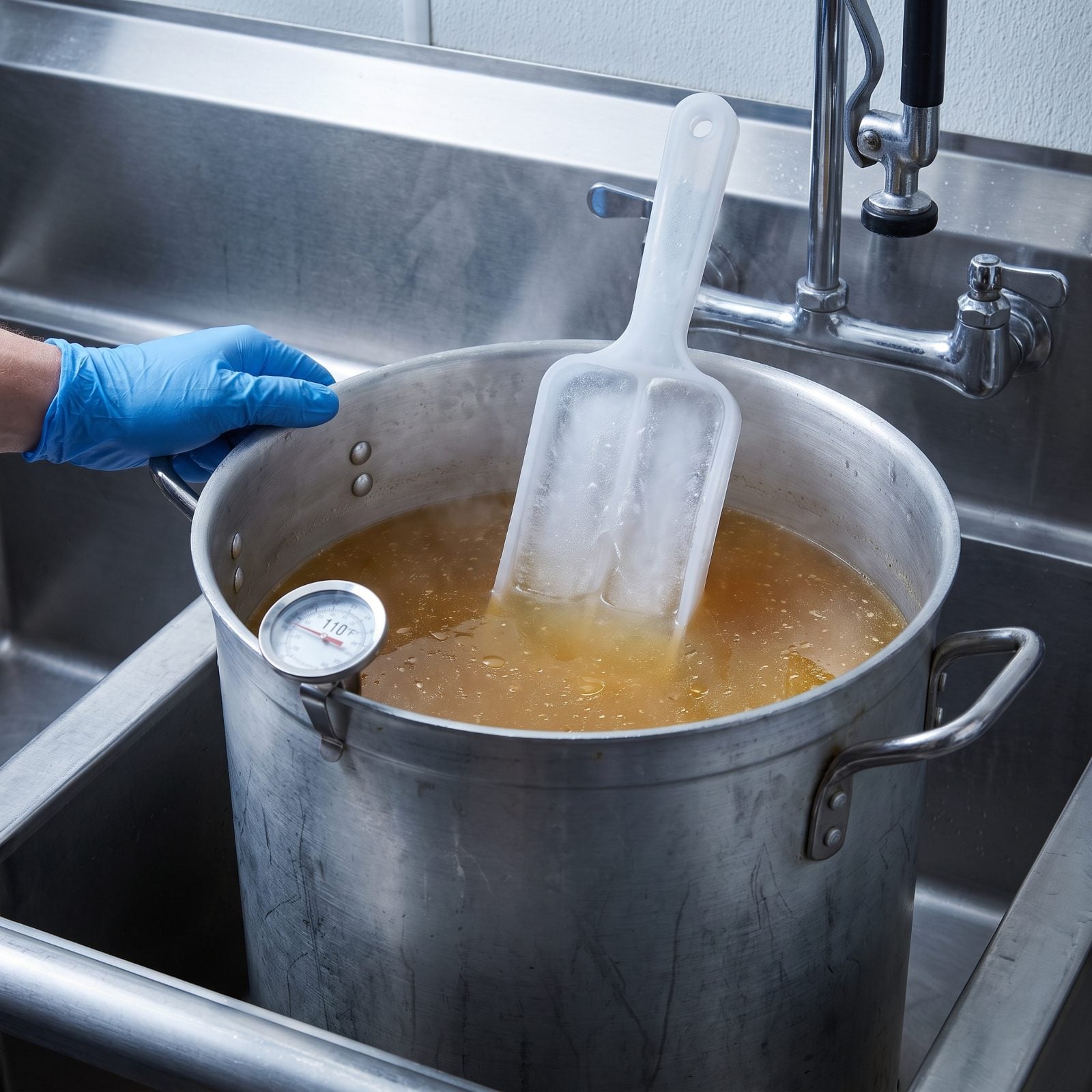
A pot of hot stock cooling on a counter is a food-safety time bomb. The outside chills while the center sits in the danger zone for hours, breeding whatever it feels like. An ice paddle fixes that from the middle out.
It’s a sealed plastic wand full of frozen water. You stir it through the stock and it pulls the core temperature down fast — no dilution, no watery stock. Health inspectors love them because they turn a slow, risky cool-down into a quick one.
41. Lowboy Refrigerators Are Organized Around Each Cook’s Hand Movements
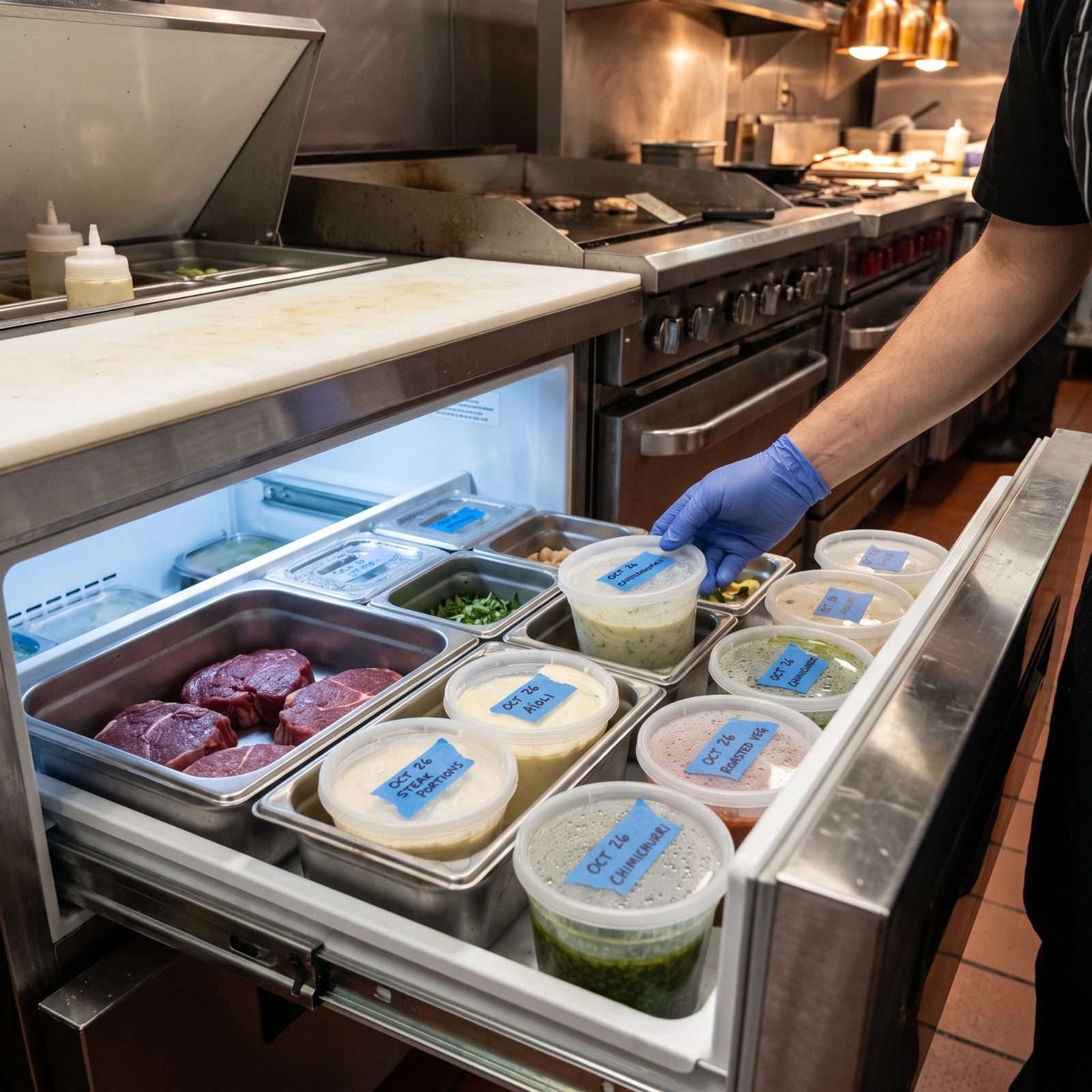
Watch a good cook during a rush and notice something strange. They almost never look down. They reach, grab, close, cook. That only works because the lowboy under their station is mapped to muscle memory, not logic.
The most-grabbed item sits closest to the dominant hand, and the thing you touch twice a night lives in the back. Nobody reorganizes it on a whim either, because the second you move the butter, the cook reaches into empty air mid-ticket and loses three seconds they didn’t have. Boring, repetitive, and completely on purpose.
40. “All Day” Counts Track Every Active Order for the Same Dish
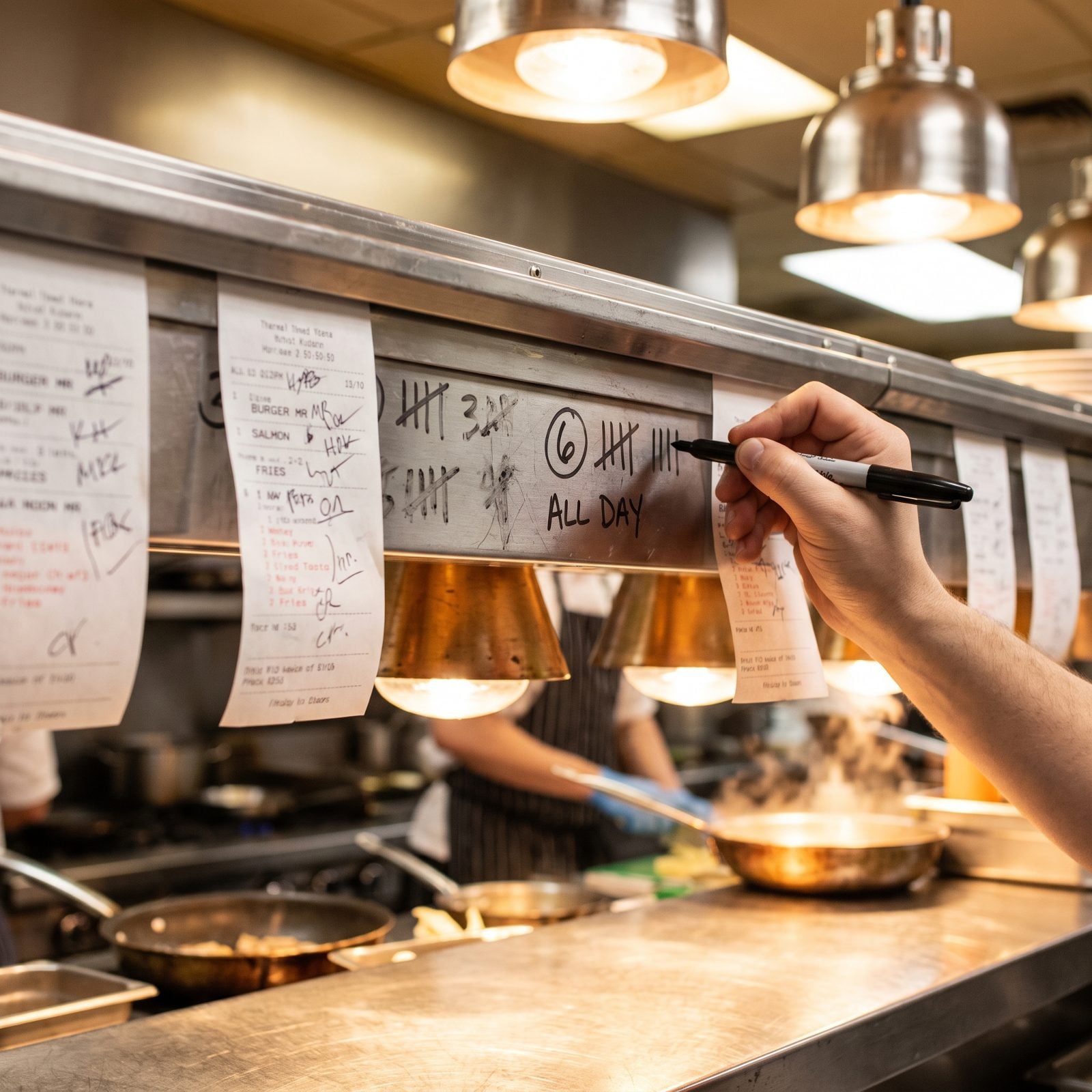
“Six salmon all day.” It means six orders of salmon are live across every open ticket, right now, total. Not per table. The whole floor.
Why does the number matter? A cook fires to the count, not to each slip. Instead of reading twelve tickets and counting salmon twelve times, they trust one running tally the expediter keeps in tally marks with a marker right on the steel ticket rail, which keeps the station from double-firing or running short mid-service.
The “all day” count is the single most important number on the line, and it lives in marker tally marks on the stainless steel ticket rail.
39. Cooking Starts Are Staggered So Every Part of a Table’s Order Lands Together
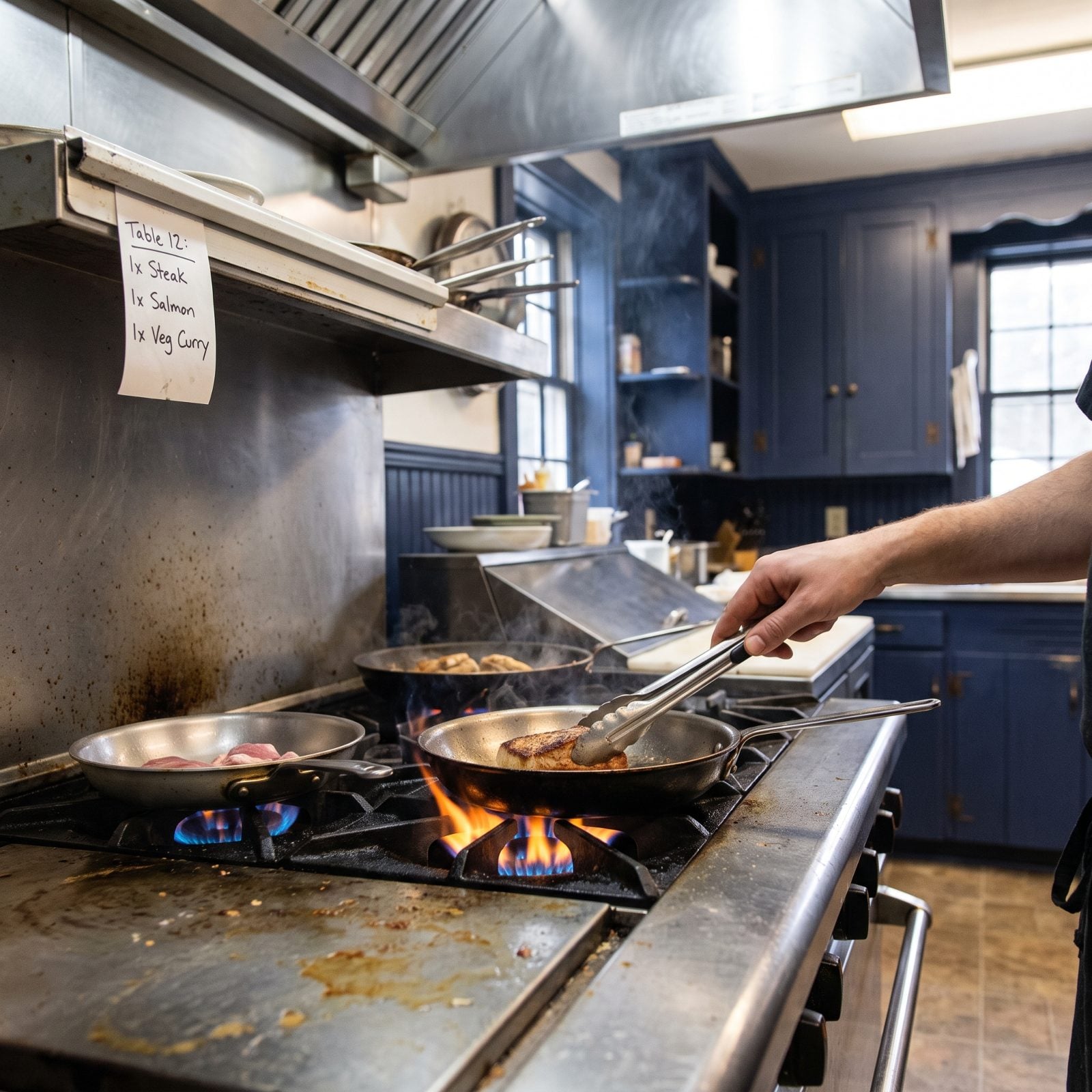
A steak needs ten minutes and a rest. The scallops need four. Start both at once and the steak is still resting while the scallops die under the heat lamp. So they don’t start at once.
This is “timing the table,” and it’s the part of cooking that has nothing to do with taste. It’s arithmetic done backward from the plate-up moment. Everything on one table’s order finishes within the same thirty seconds, which is why four dishes can hit a window hot and together.
38. Mise en Place Is Arranged in Pickup Order, Not Ingredient Type
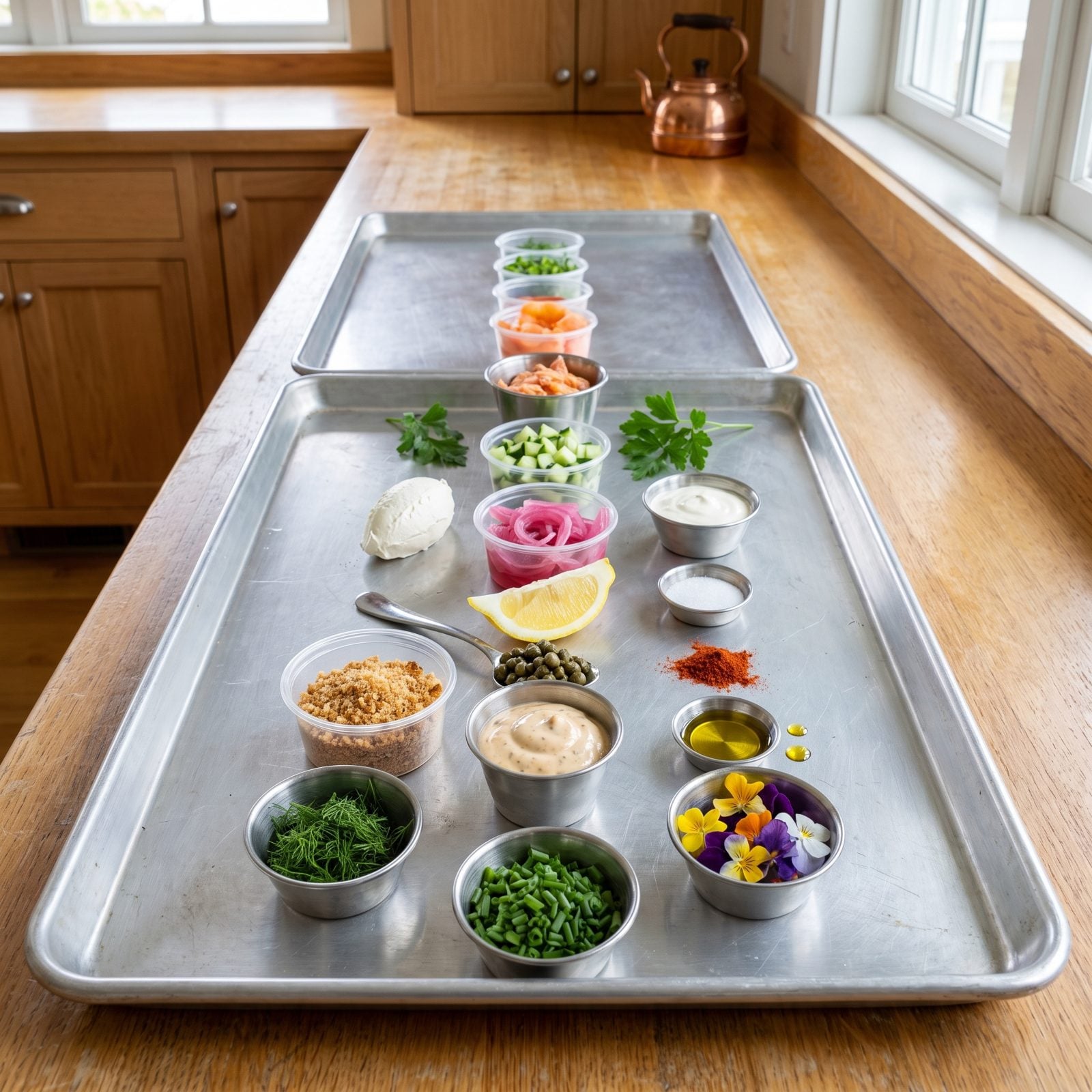
Home cooks group their prep by what it is. All the herbs together, all the sauces together. Makes sense in the abstract. Falls apart on a line.
Restaurant mise is lined up in the order a dish gets built, left to right, first touch to last — protein, then starch, then vegetable, then sauce, then garnish, in the same sweep every single time. The hand learns the path and stops thinking about it. That’s the whole game: turning decisions into reflexes so the brain is free for the fire instead of the finding.
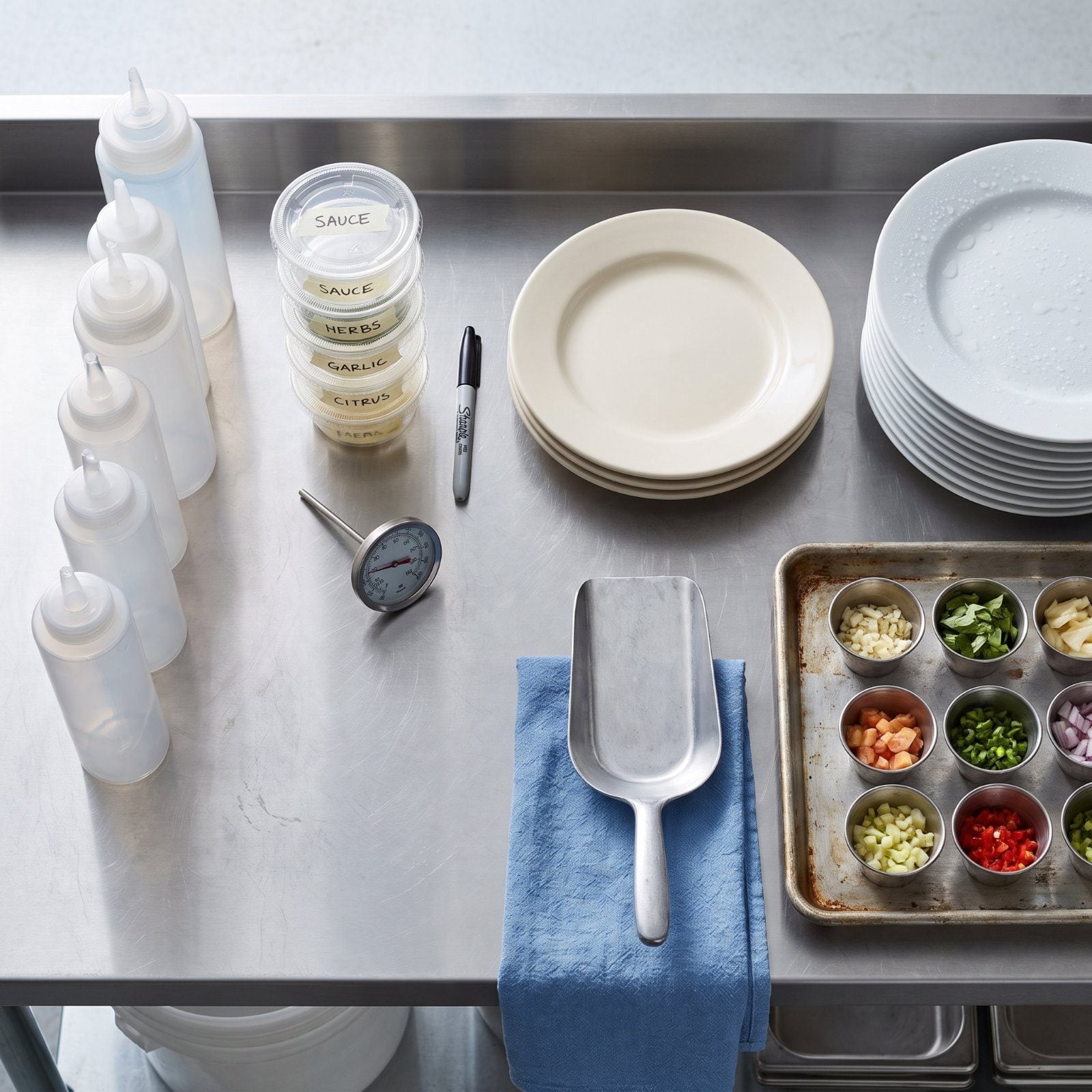
37. Squeeze-Bottle Tips Are Trimmed to Match Each Sauce’s Thickness
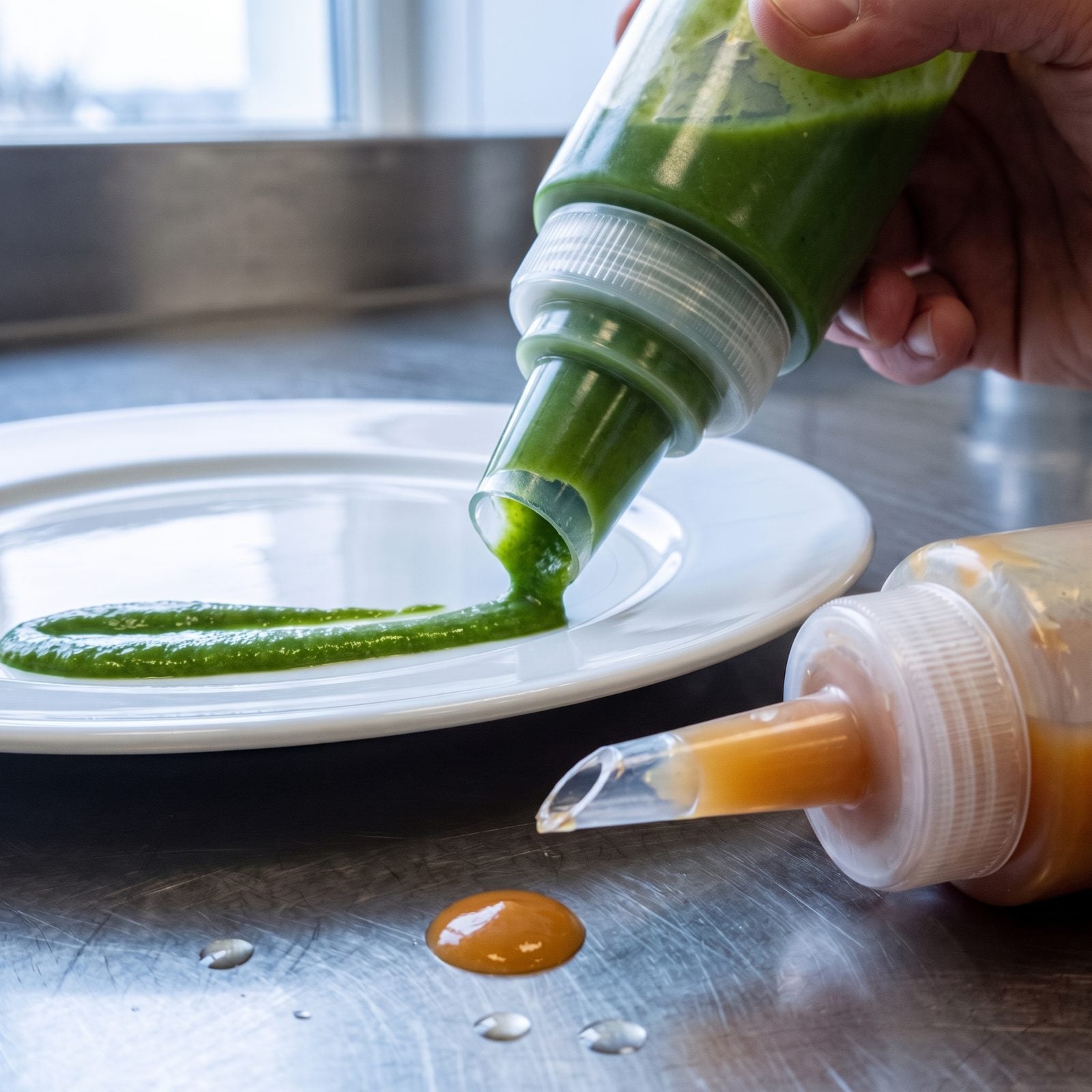
The little detail nobody tells you: that squeeze bottle came with a tapered tip, and the cook decides whether to trim it with scissors or leave it as is.
A thin vinaigrette needs a pinhole so it drops in clean dots instead of flooding. A thick purée needs a tip cut back to a wide, blunt opening so it lays a bold ribbon without gurgling and sputtering mid-stroke. Match the opening to the viscosity and you get a clean plate; get it wrong and you get a Jackson Pollock accident. Some cooks keep a labeled bottle for each sauce and never swap them, because re-cutting a tip every service is how you lose your rhythm.
36. Entire Station Kits Travel Together on Sheet Pans
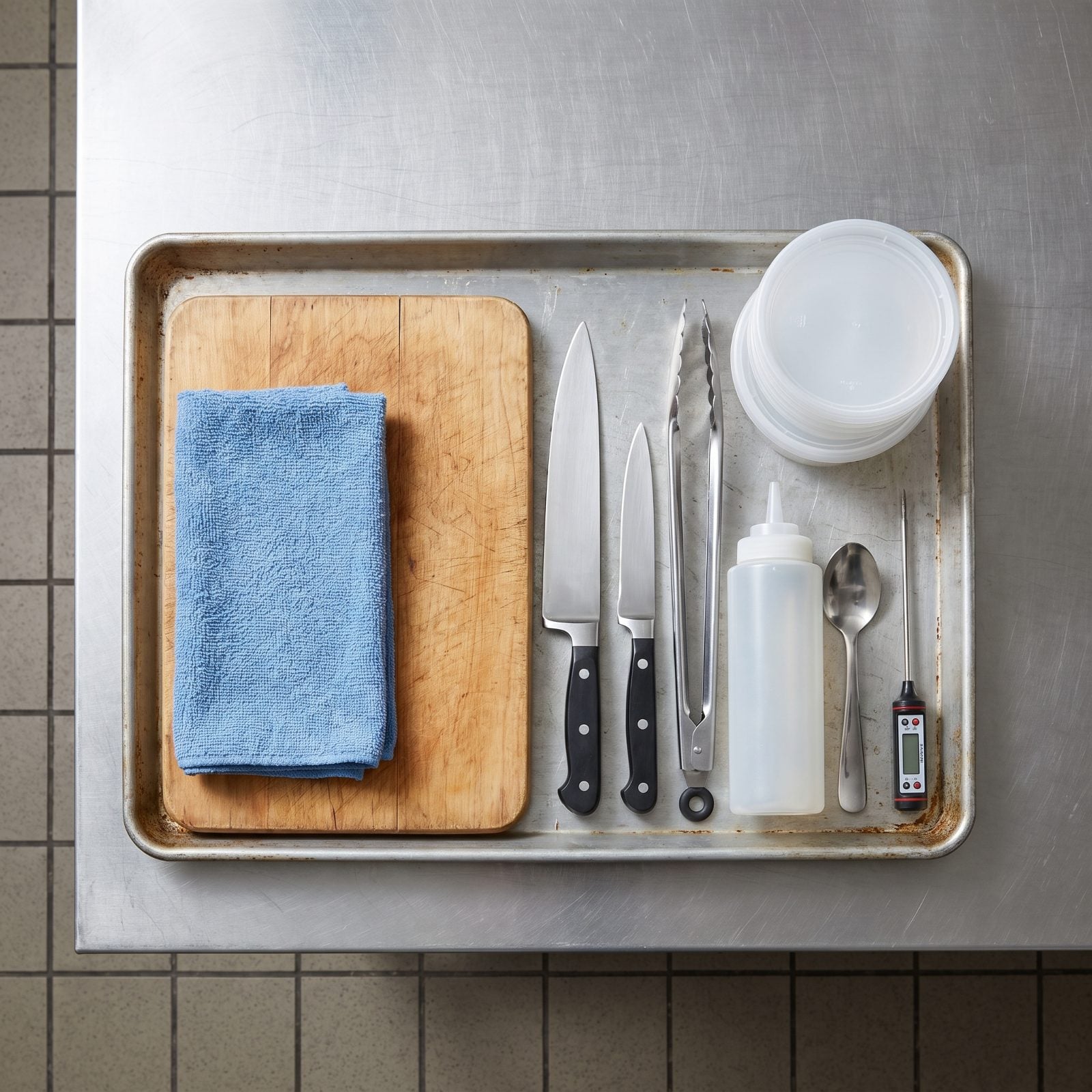
A sheet pan isn’t just for roasting. It’s the kitchen’s suitcase.
At the start of a shift, a cook builds their whole station on one pan: board, knives, towels, tongs, bottles, backups. When they need to move, change stations, or set up the line, the entire kit travels in one trip instead of ten, and nothing gets forgotten because nothing left the pan. Same instinct as a surgeon’s tray — everything in its spot, visible at a glance, and you know the second a tool goes missing.
35. Dinner Plates Are Warmed While Dessert Plates Are Chilled
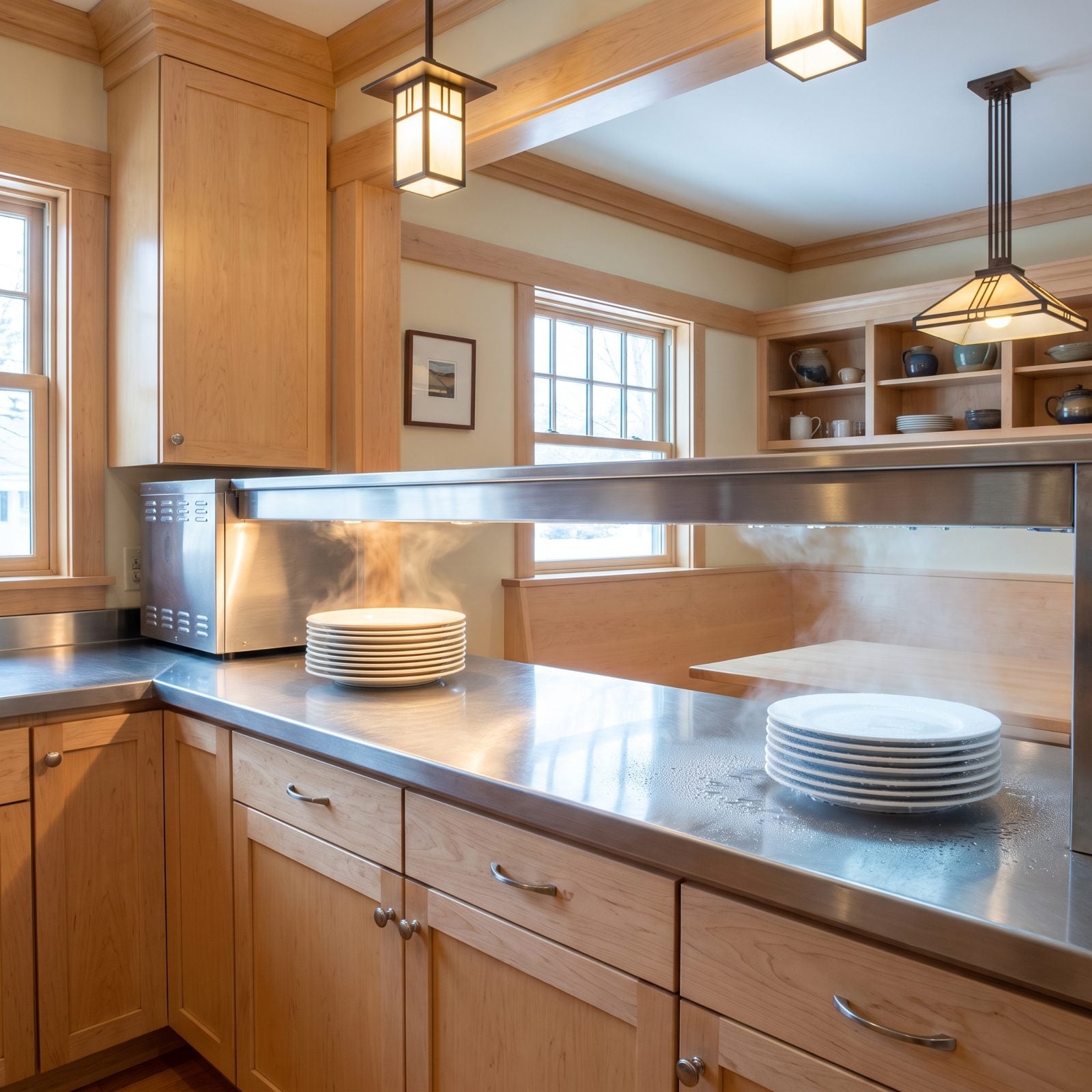
Temperature of the food gets all the attention. Temperature of the plate quietly decides whether that food survives the walk to the table.
A hot dish on a cold plate sheds its heat in seconds, so good kitchens warm dinner plates in a cabinet or under a lamp. Cold desserts go onto chilled plates so the ice cream doesn’t surrender before it reaches the guest. Same mindset, opposite directions. Nobody at the table ever notices plate temperature, which is exactly the point — they only notice when it’s wrong.
34. Risotto Can Be Partially Cooked, Spread Out and Finished to Order
Would you like to save this?
Classic rule says risotto must be stirred from start to finish, all at once, served immediately. True for Nonna. Death for a restaurant that gets eight orders at seven o’clock.
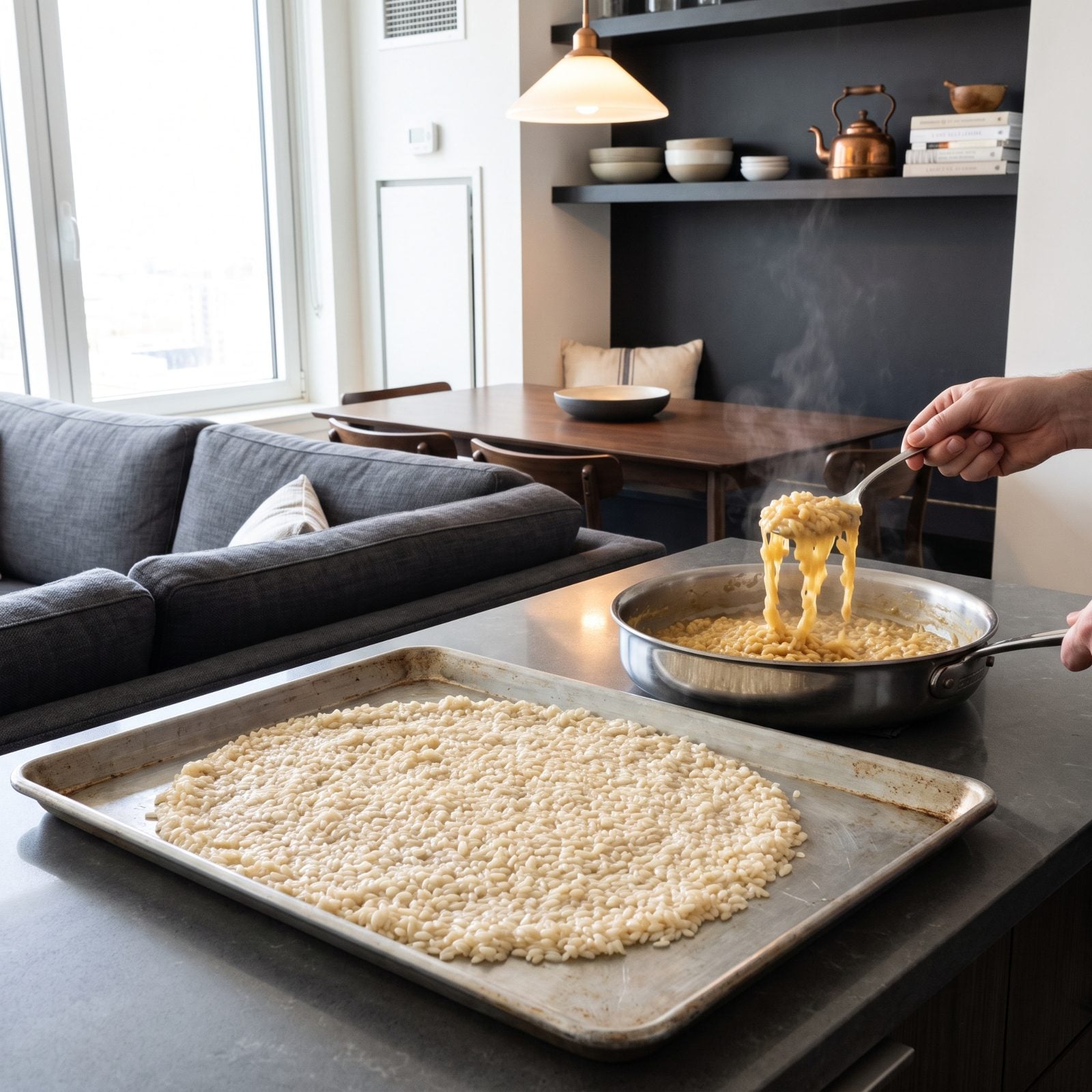
So kitchens cheat, honestly. They cook it about three-quarters of the way, then spread it thin on a sheet pan to stop the cooking fast and cool it down. At service, a single portion goes into a pan with hot stock and finishes in a few minutes — loose and glossy, with nobody waiting twenty.
Purists will tell you it isn’t real risotto. The purists have never worked a Saturday.
33. Poached Eggs Get Chilled, Then Rewarmed to Order
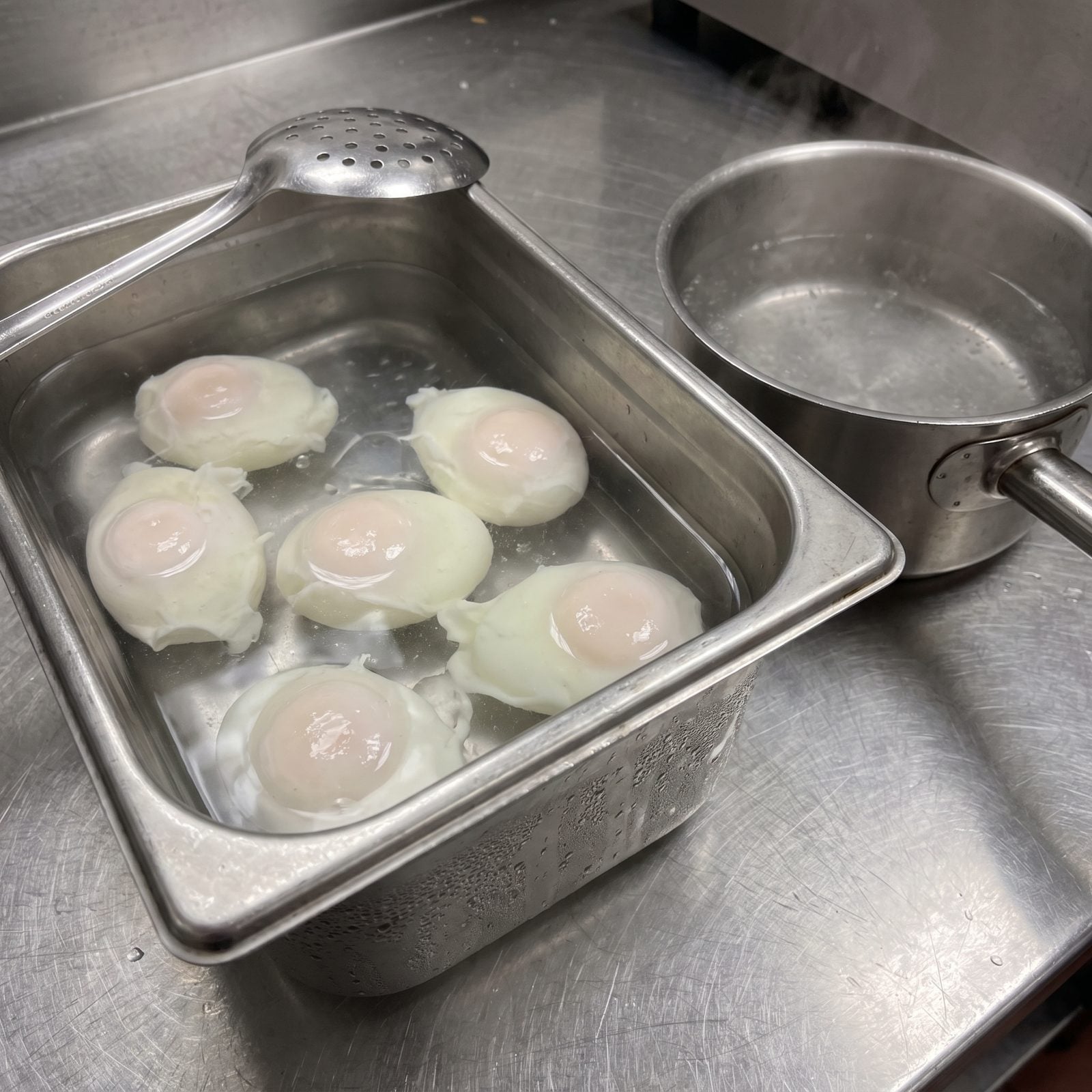
Here’s a brunch secret that feels like cheating. You cannot poach forty eggs to order while tickets stack up, so you don’t. Cooks poach them in a slow morning batch, slide them straight into ice water to stop the cook, and trim the ragged edges with scissors so they can sit chilled through the whole service.
When the ticket fires, the egg drops into hot water for about a minute, warming through without cooking further. The yolk stays loose, the white stays tender, and a dish that would’ve taken four minutes à la minute goes out in sixty seconds.
32. Yield Tests Tell You What’s Actually Left After Trimming
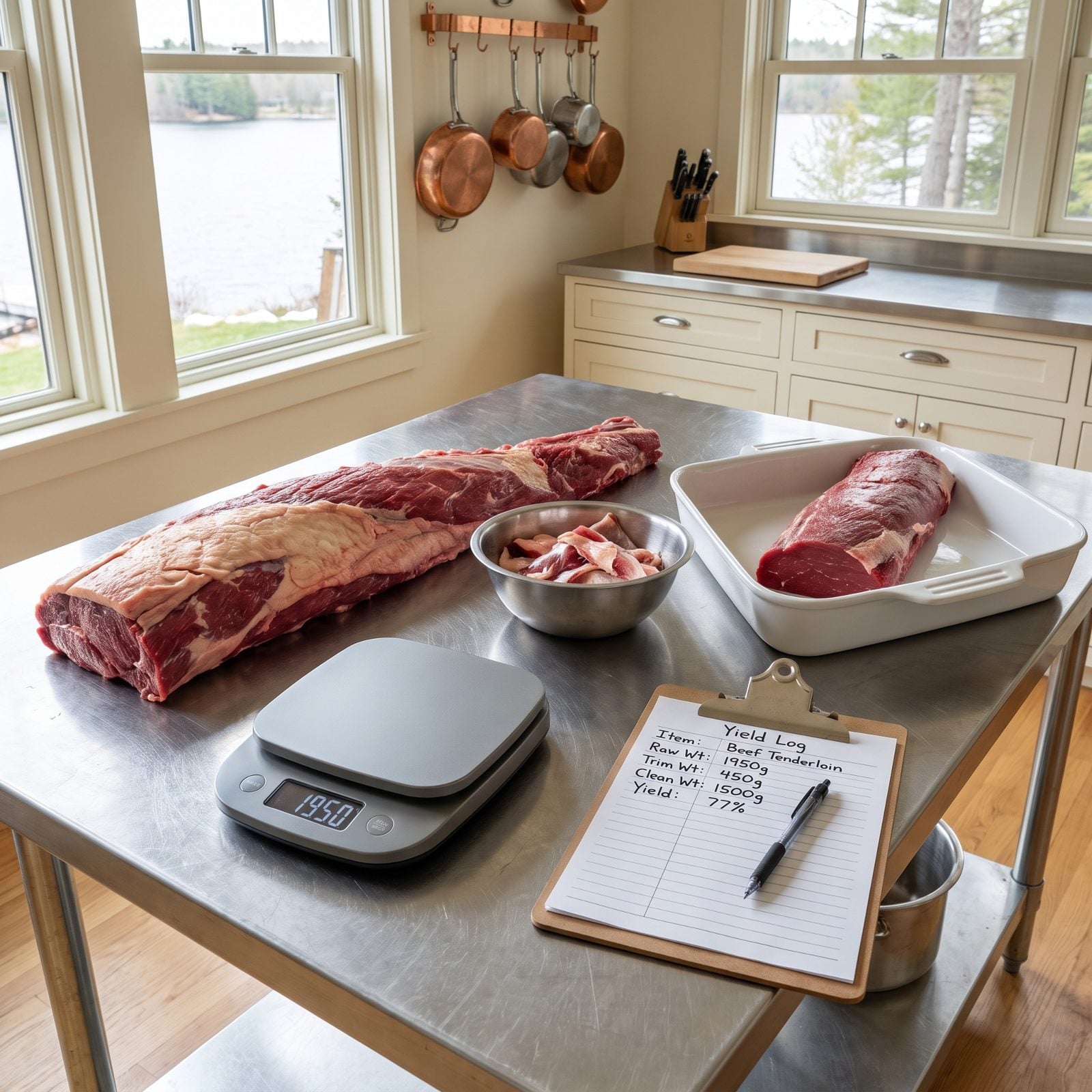
Buy ten pounds of whole tenderloin and you do not get ten pounds of steak. You get a good bit less once the silverskin, chain and fat come off, and less again when it cooks and loses moisture. A yield test weighs the raw product, weighs it after trimming, and weighs it after cooking, so the kitchen knows its true cost per portion.
That’s the difference between a menu that makes money and one that bleeds it quietly. Without it, you’re pricing a dish on a number that was never real.
31. Prep Pars Get Set by Reservations, the Day and Last Week’s Sales
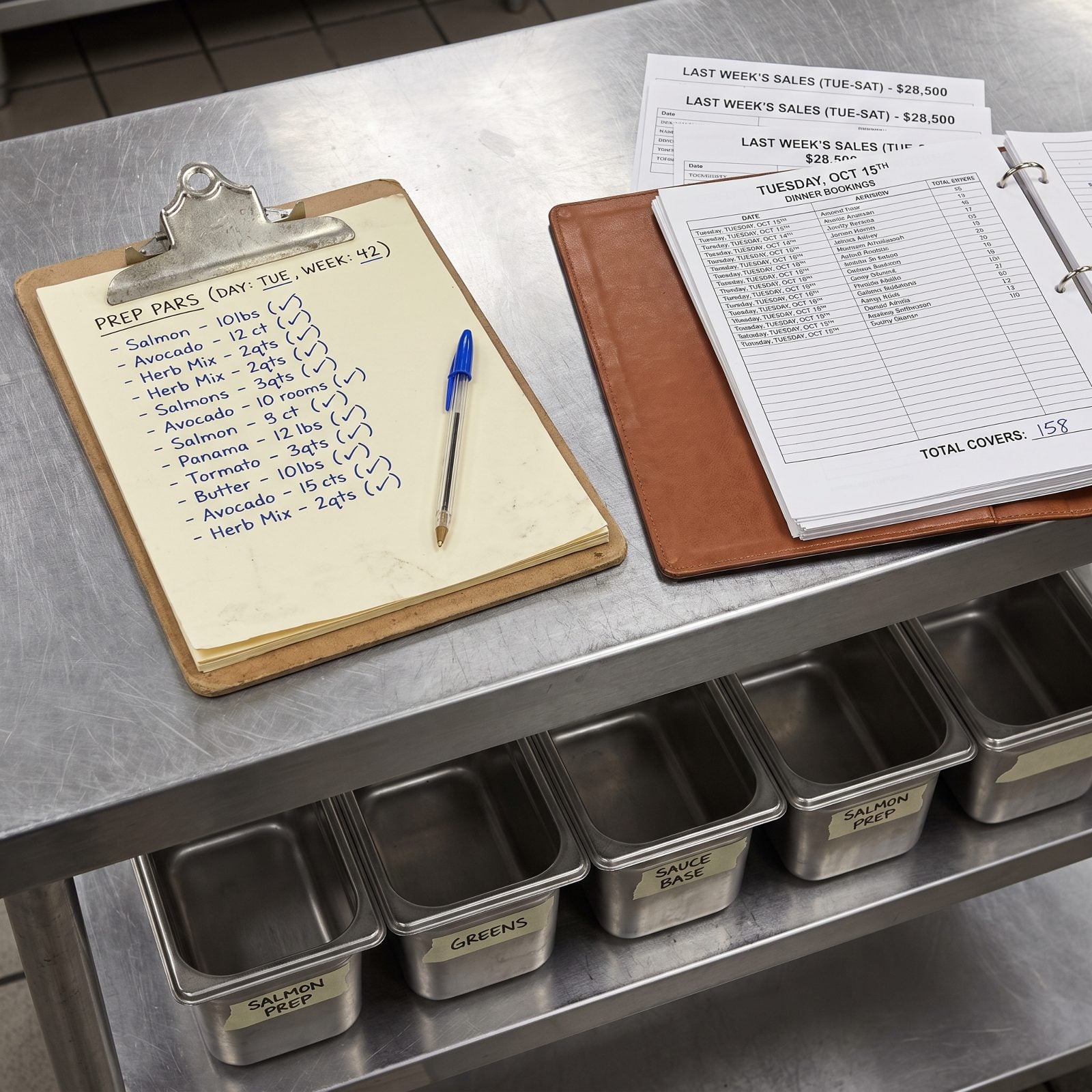
A prep par is just a target: how much of each thing to have ready before doors open. The trick is where the number comes from. A good kitchen doesn’t guess. It reads the total covers written at the bottom of the bookings sheet, knows Fridays run heavier than Tuesdays, and pulls last week’s sales for the same night to see how many of each dish actually sold.
Under-prep and you’re in the weeds by eight, chopping shallots mid-rush. Over-prep and half of it hits the waste log in two days. The par sheet is boring — it’s also the one document that decides whether service feels calm or feels like a house fire.
30. Measured Ladles and Numbered Dishers Make Portions Identical
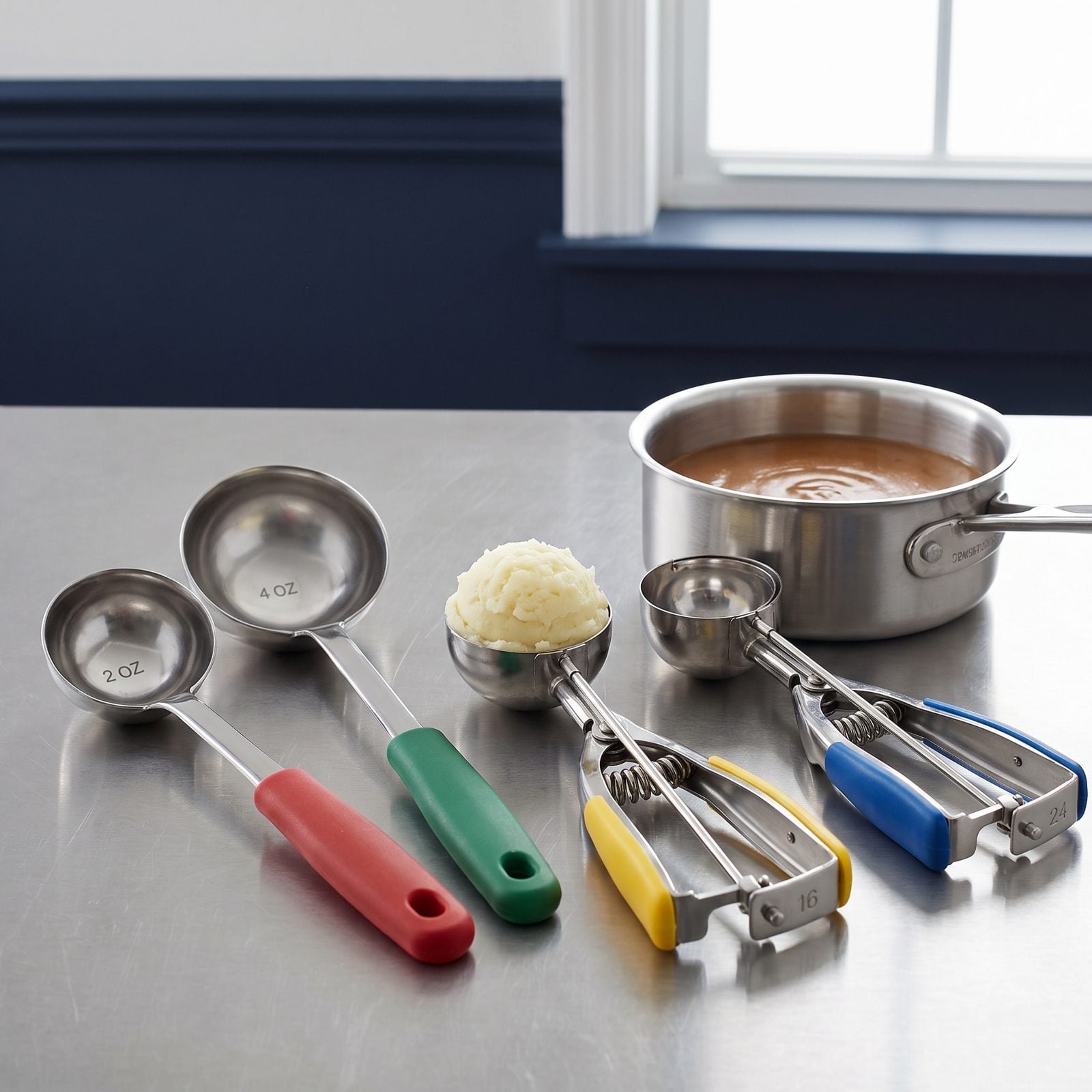
The customer at table nine can’t know the customer at table four got more. Consistency is a promise, and eyeballing breaks it every time. So the line runs on measured tools: a two-ounce ladle for this sauce, a four-ounce for that one, dishers numbered by scoop size for everything round.
That little number stamped on the disher handle — a #12 versus a #16 — tells a new cook the exact portion with zero explanation. Hire someone Monday, and by Wednesday their plates look like they’ve worked there a year.
29. Waste Logs Catch the Ingredient You Keep Overprepping
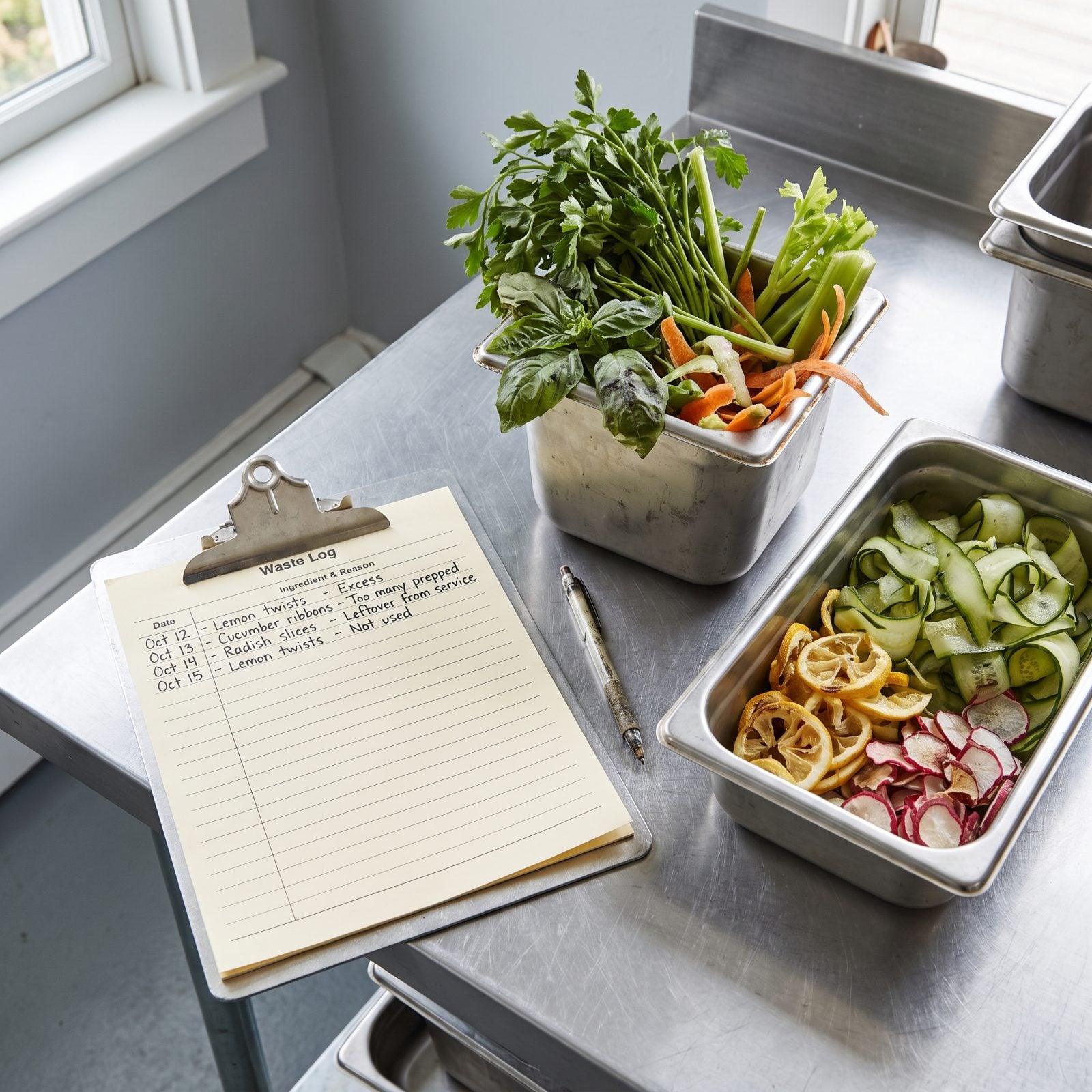
Every kitchen throws food away. The smart ones write it down. A waste log records what got dumped and why, and over a couple of weeks the patterns scream at you — that herb garnish nobody orders, the soup prepped for forty when thirty sold.
Honestly? Most cooks hate filling it out, and I get it. Nobody wants to document their own over-ordering. But the log doesn’t lie, and it pays for itself the first time it shaves a recurring over-prep off your par sheet.
28. Plating Maps Fix the Exact Spot for Every Component
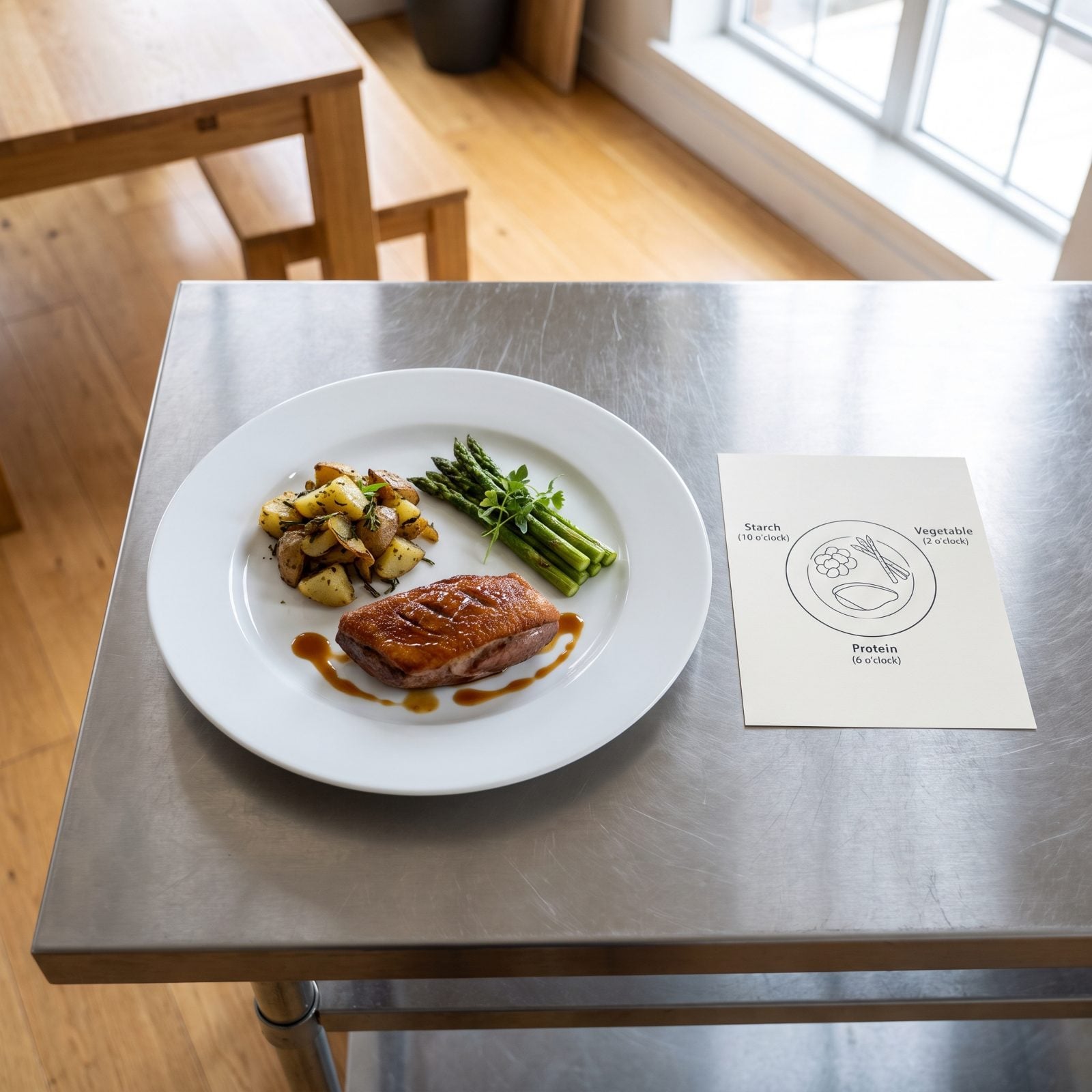
Protein at six o’clock. Starch at ten. Vegetable at two. Sauce underneath, never on top. A plating map is a photo or diagram taped near the pass showing exactly where each element lands, so the dish looks the same on a slow Tuesday as it does on a packed Saturday.
Feels rigid until you’ve seen the alternative. Three cooks on the line means three ideas about where the asparagus goes, and the customer notices even when they can’t name what’s off.
A recipe tells you how to make it. A plating map tells you how to send it.
27. The Expo Checks Every Plate’s Portion, Garnish and Rim Before It Leaves
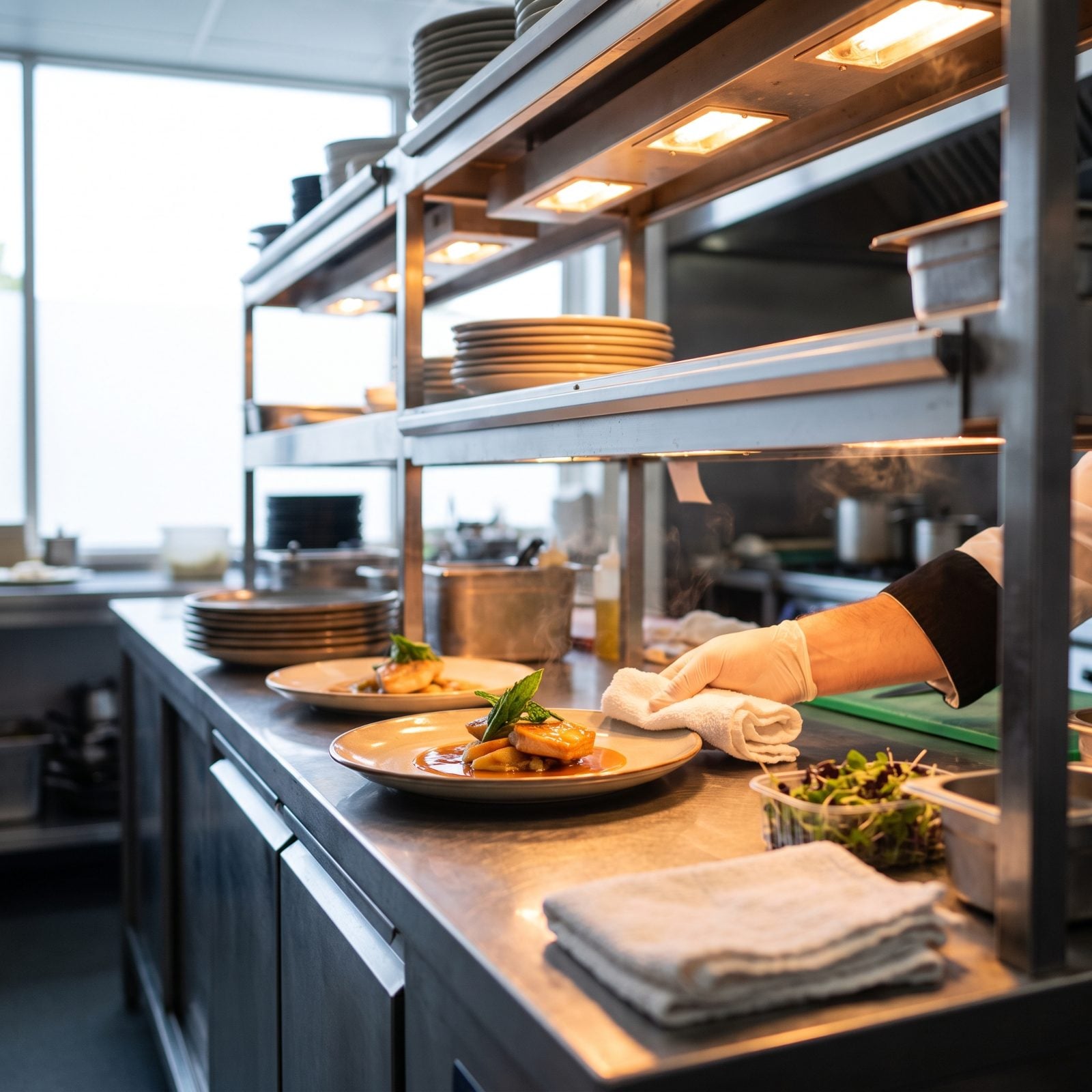
The expo stands at the pass — the last pair of eyes before a plate reaches a table. Portion looks short? Back it goes. Garnish missing? Fixed. Sauce smeared across the rim? Wiped with a damp towel before anyone picks it up.
This is a psychological play as much as a quality one. Every cook falls into tunnel vision after two hours on the same station, where you stop seeing your own plates because you’ve made four hundred of them. The expo breaks it. A fresh set of eyes catches what tired hands stopped noticing.
26. Warm Sauces Hold in Temperature-Controlled Water Baths
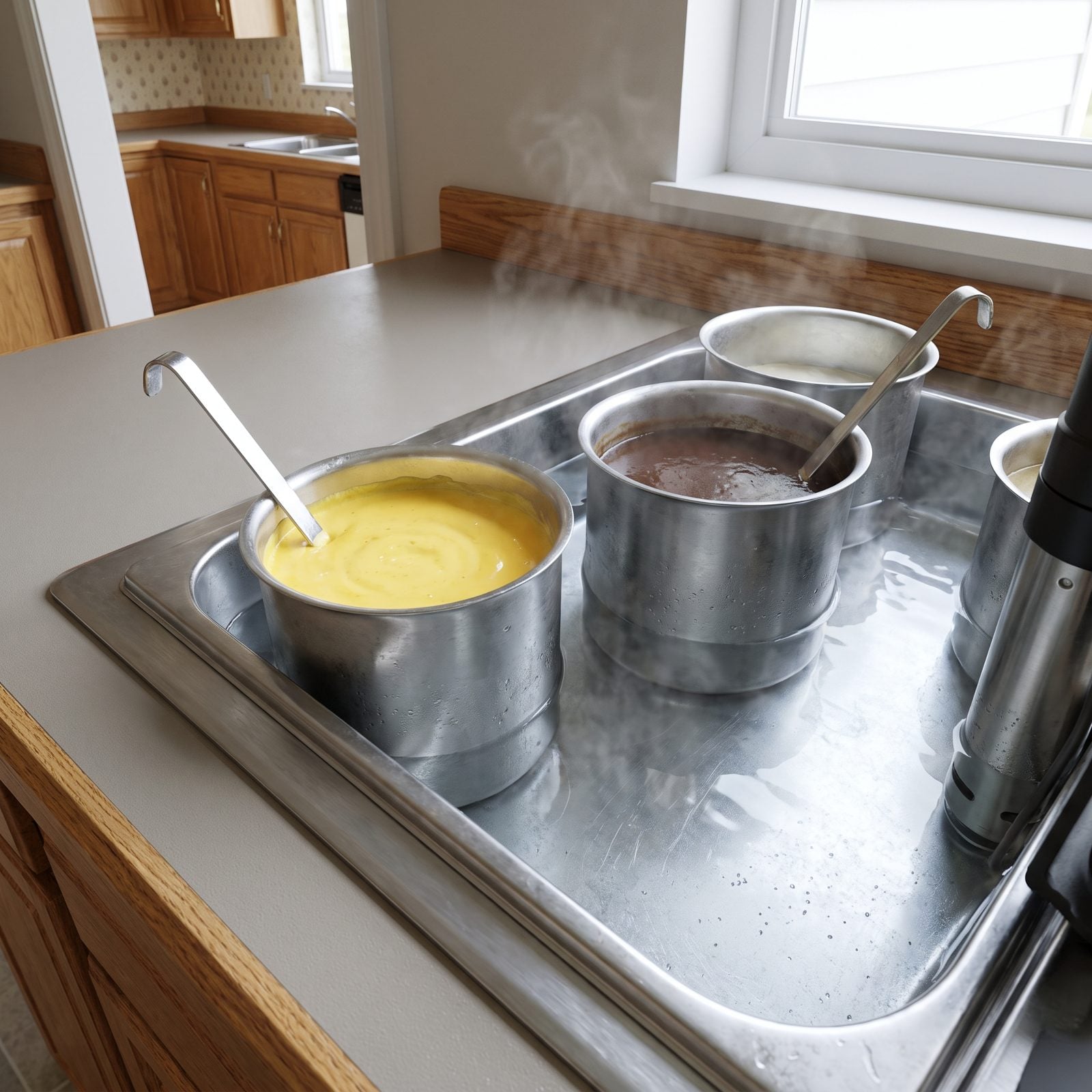
Delicate sauces are divas. Push a hollandaise too hot and it breaks. Let it cool and now it’s a food-safety problem sitting in the danger zone. The fix is a water bath held at a steady warm temperature, so the sauce stays ready without cooking further or dropping cold.
Held in gently warmed water, a sauce that would curdle over direct heat sits happily for the length of a service, portioned to order with a measured ladle. Same spoon, same temperature, same plate, every single time.
25. Allergen Kits Keep Separate Pans, Boards and Utensils on Standby
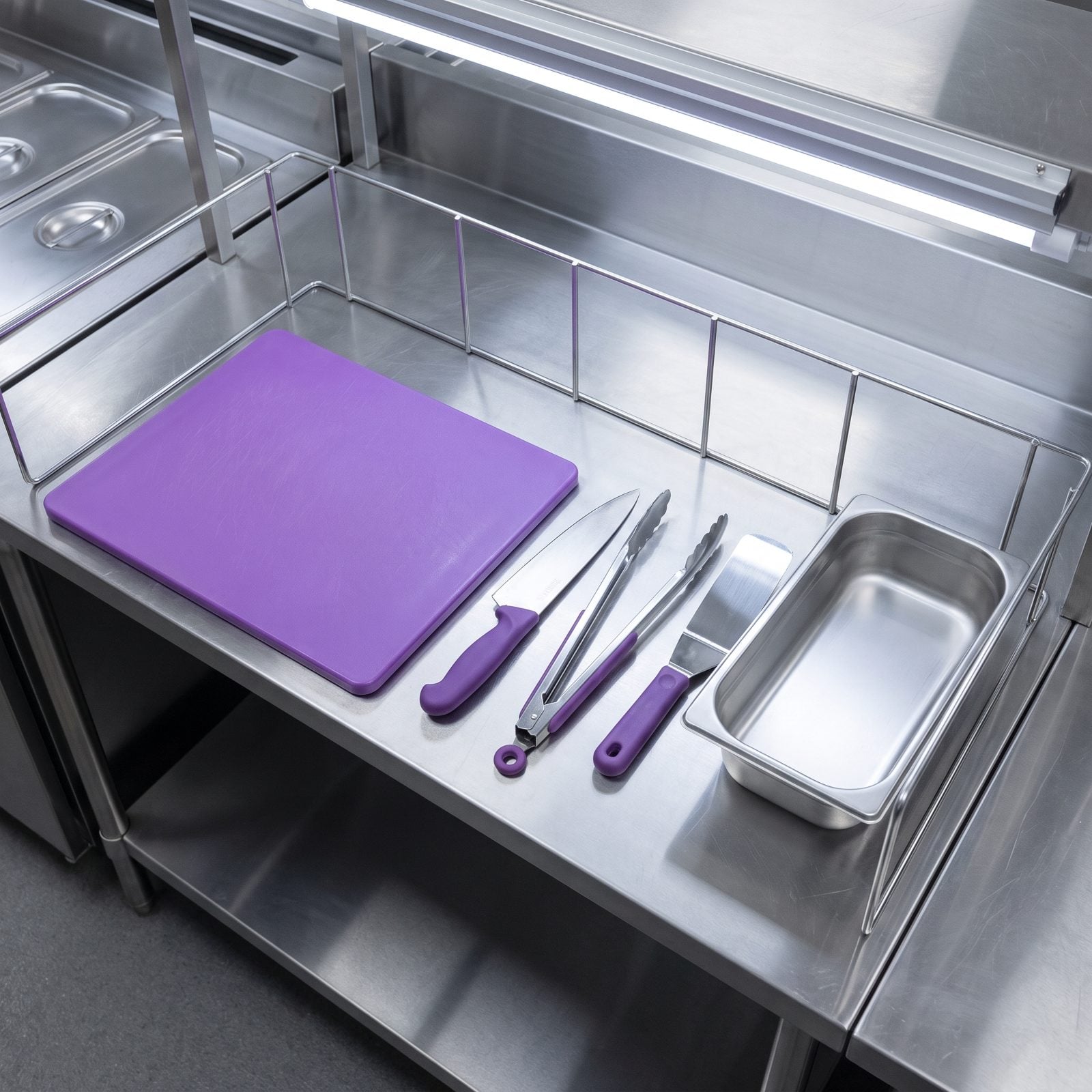
A ticket comes in flagged for a nut allergy and the line doesn’t scramble. It reaches for the allergen kit: a set of pans, boards and utensils kept apart and often color-coded purple so nobody confuses them for the general line gear.
Cross-contact is invisible. A trace of peanut off a shared spatula won’t change how a dish looks or tastes, and for the person eating it, that trace is everything. Keeping dedicated tools ready means the kitchen can honor the request fast, under rush pressure, without a cook stopping to scrub down mid-service.
24. Raw Foods Get Shelved by Their Required Cooking Temperature
Would you like to save this?
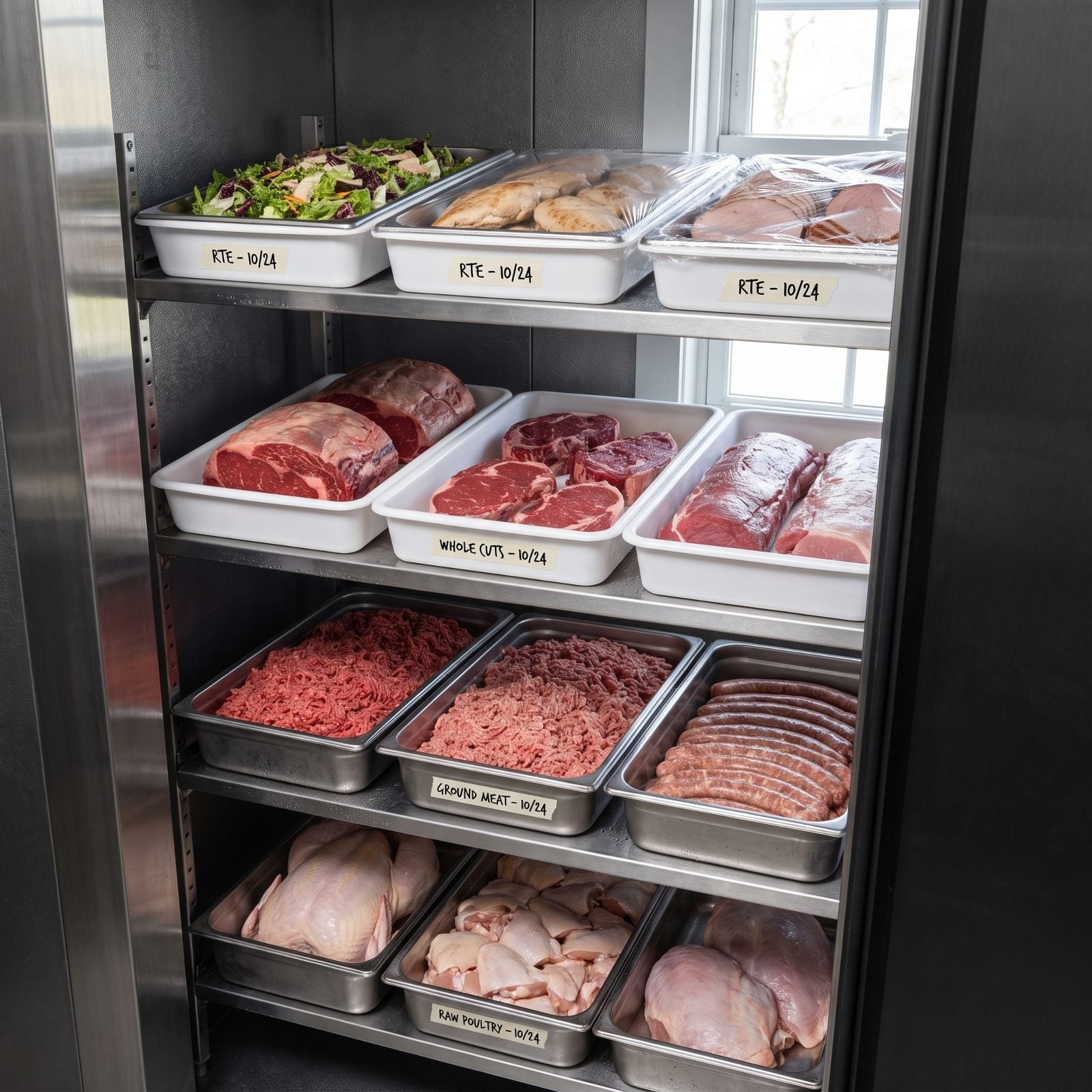
There’s a logic to how food gets stacked in a walk-in, and it has nothing to do with convenience. Items that need the highest cooking temperature to be safe go on the bottom. Poultry sits lowest, then ground meats, then whole cuts, with ready-to-eat food up top.
The reason is gravity. Nothing dripping off a raw chicken can land on a salad or a cooked item below it. Flip the order and a drop of juice from the top shelf hits something that never gets cooked again — that’s how outbreaks start. The order of the shelves alone prevents it.
23. Hot Food Spread Thin in Shallow Hotel Pans to Cool Fast
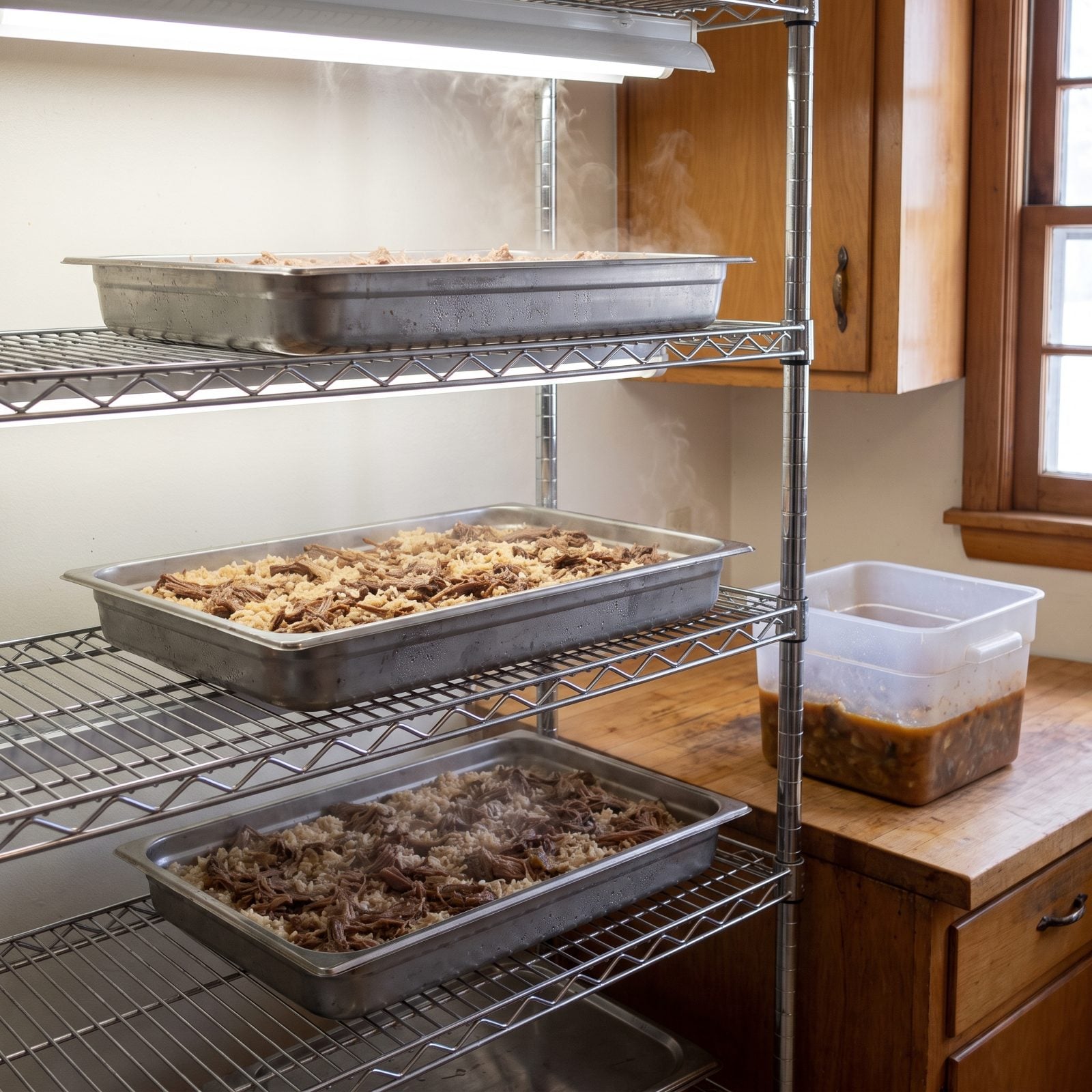
Heat escapes from surface area, not from hope. Pile hot chili four inches deep into a bus tub and the middle stays in the danger zone for hours, breeding whatever happens to be floating around. Spread that same chili thin across a couple of shallow hotel pans and it drops through the risky temperature range in a fraction of the time.
Home cooks almost always get this wrong. They cool a big pot by leaving the big pot out, and the pot just insulates itself. Shallow and wide beats deep and hopeful every time.
22. Sanitizer Strength Checked With Test Strips, Not Guesswork
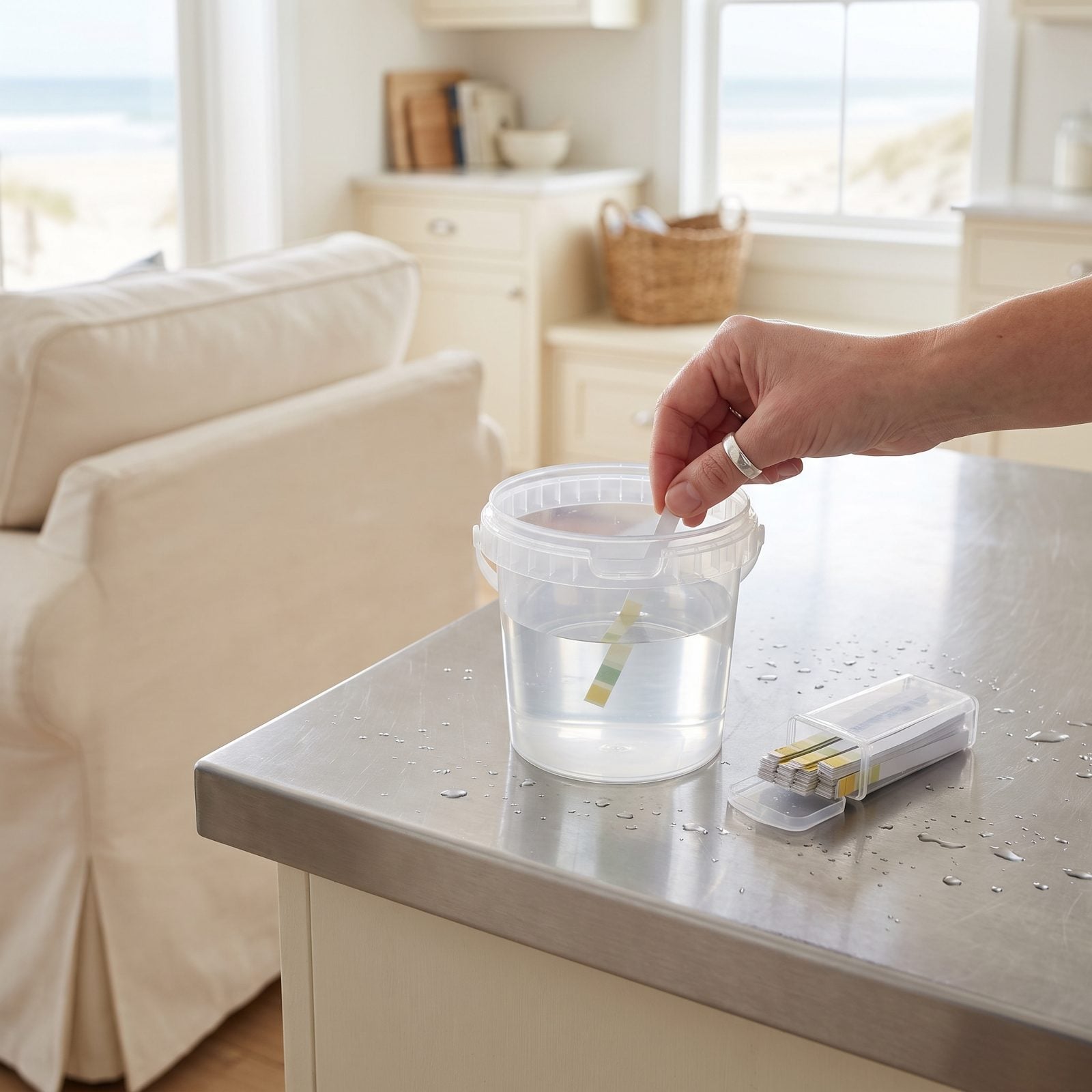
A sanitizer bucket that looks fine can be useless. Too weak and it does nothing; too strong and you’re wiping chemical residue onto cutting boards. Nobody can eyeball parts per million, so good kitchens dip a test strip and read the color against the chart.
Four seconds. That’s the whole trick. Even a crystal-clear bucket that looks freshly poured tells you nothing, and its strength drops as it gets used and watered down, which is exactly why the strip matters more as the night wears on.
21. Probe Thermometers Calibrated in a Glass of Ice Water
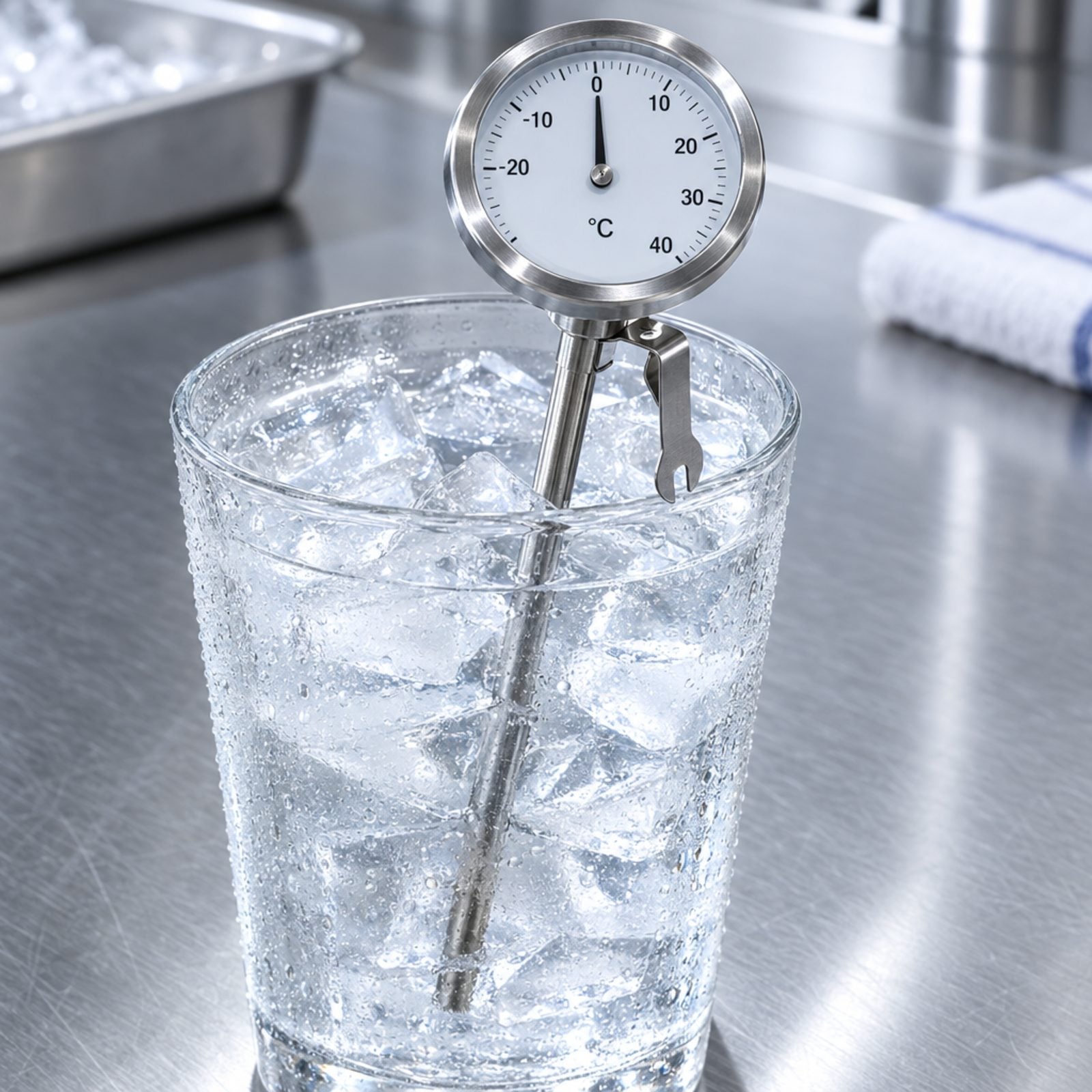
A thermometer that reads wrong is more dangerous than no thermometer, because it hands you false confidence. The fix costs nothing. Fill a glass with ice cubes, top with water, stir, and the slurry settles at exactly 32°F (0°C). Drop the probe in without touching the sides. If the needle doesn’t settle cleanly on freezing, adjust it.
Most people buy a thermometer and never check it once, ever. A probe reading five degrees high means you’re pulling chicken off the heat while it’s still raw inside.
20. Every Container Labeled With Item, Date and the Cook’s Initials
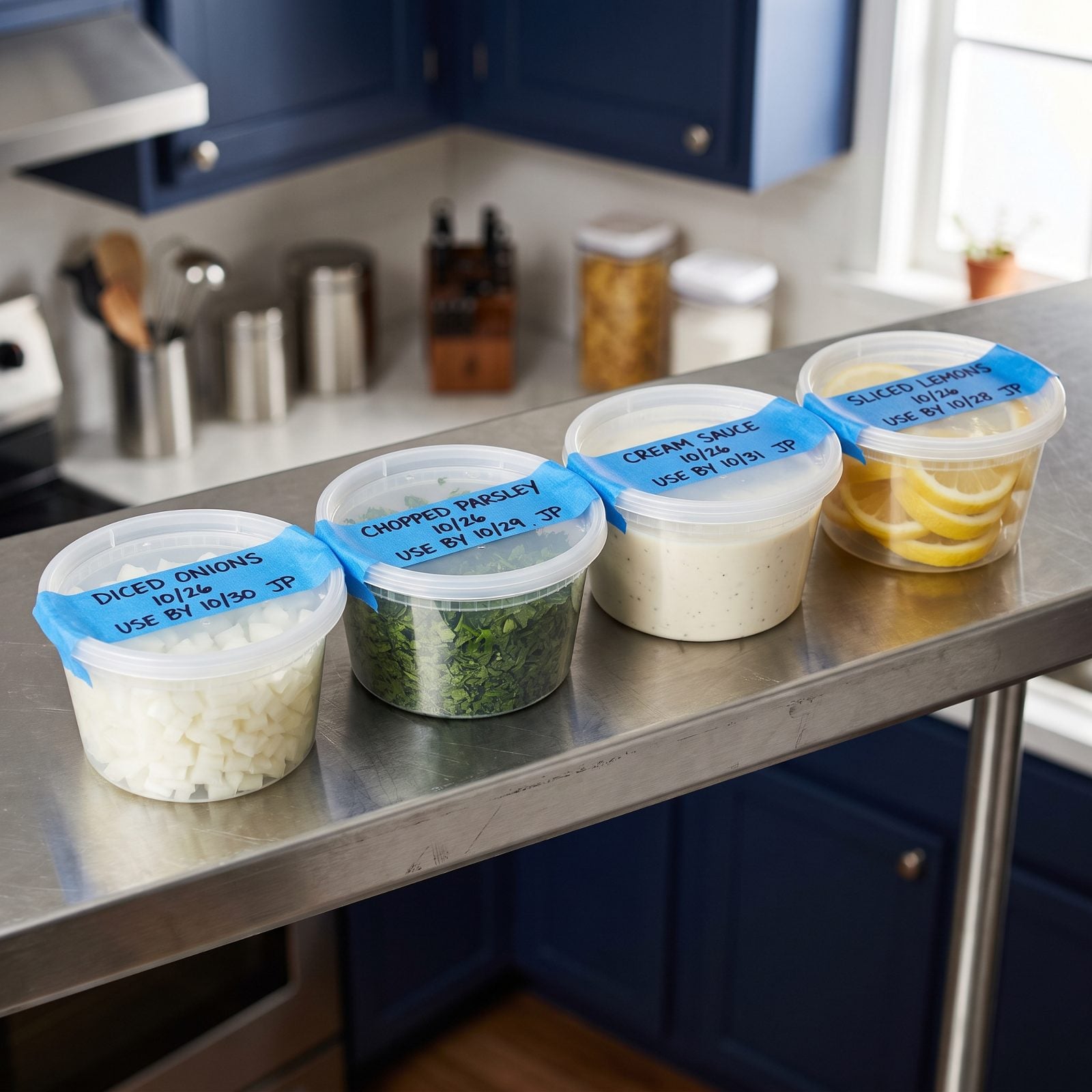
An unlabeled container is a landmine. Nobody knows what it is, when it was made, or whether to trust it, so it either gets tossed while still good or used while already gone. The label settles all of it: what it is, when it was made, when it dies, and who to ask.
The initials are the part people skip and shouldn’t. When a sauce tastes off or a date looks wrong, you want a name, not a shrug. Accountability travels on a strip of tape.
A kitchen with no labels isn’t organized. It’s just betting nobody gets sick this week.
19. A Fresh Tasting Spoon Every Single Time
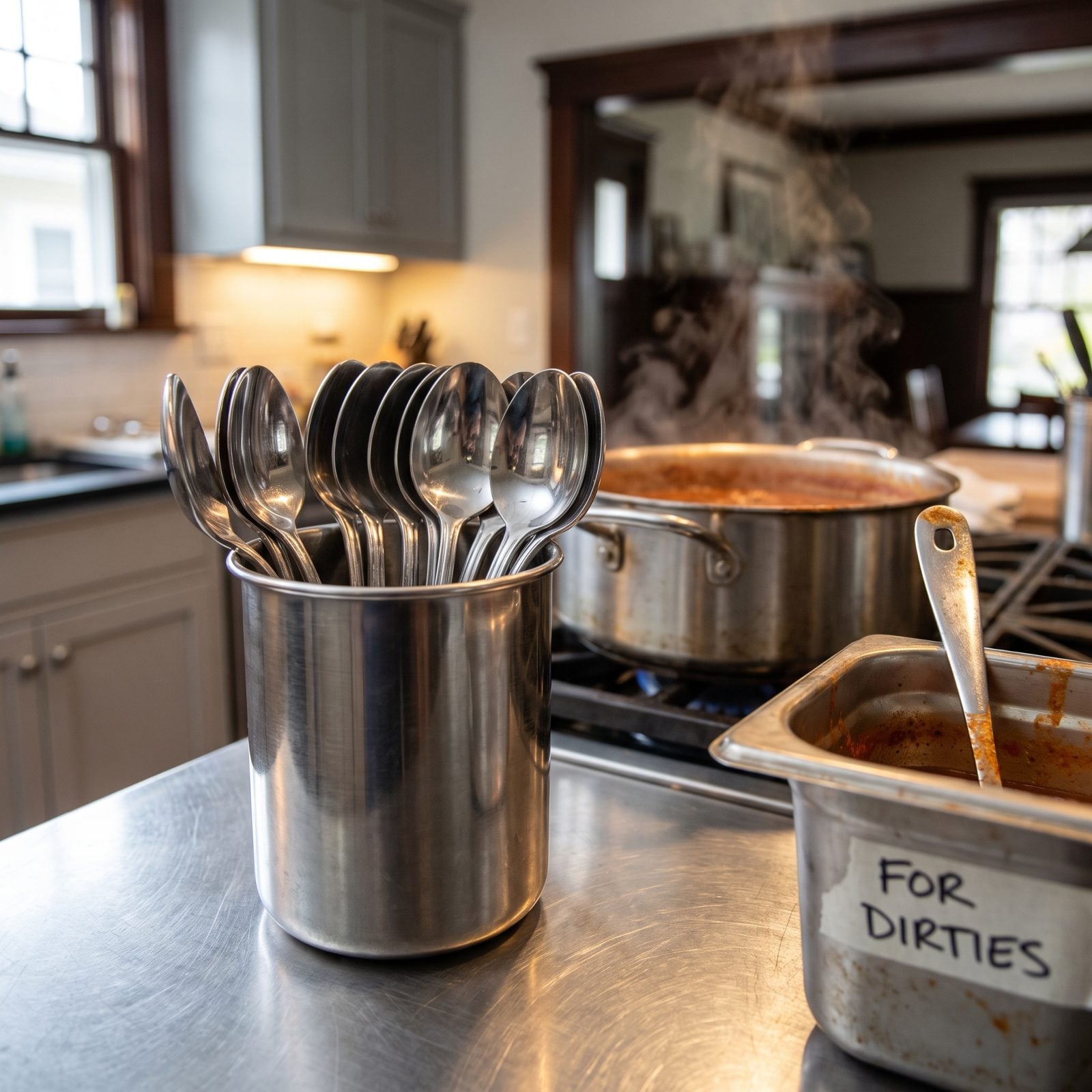
Dip, taste, dip again with the same spoon and you’ve just introduced your mouth to the whole batch of soup. Fastest way there is to ruin a sauce, and the easiest habit to catch yourself breaking. The pros keep a cup of clean spoons within reach and a bin for the used ones.
One spoon per taste. No exceptions. It feels wasteful right up until you’ve watched someone double-dip into the stock that’s feeding two hundred people.
18. Side Towels Assigned to Hot Pans, Wiping and Drying Separately
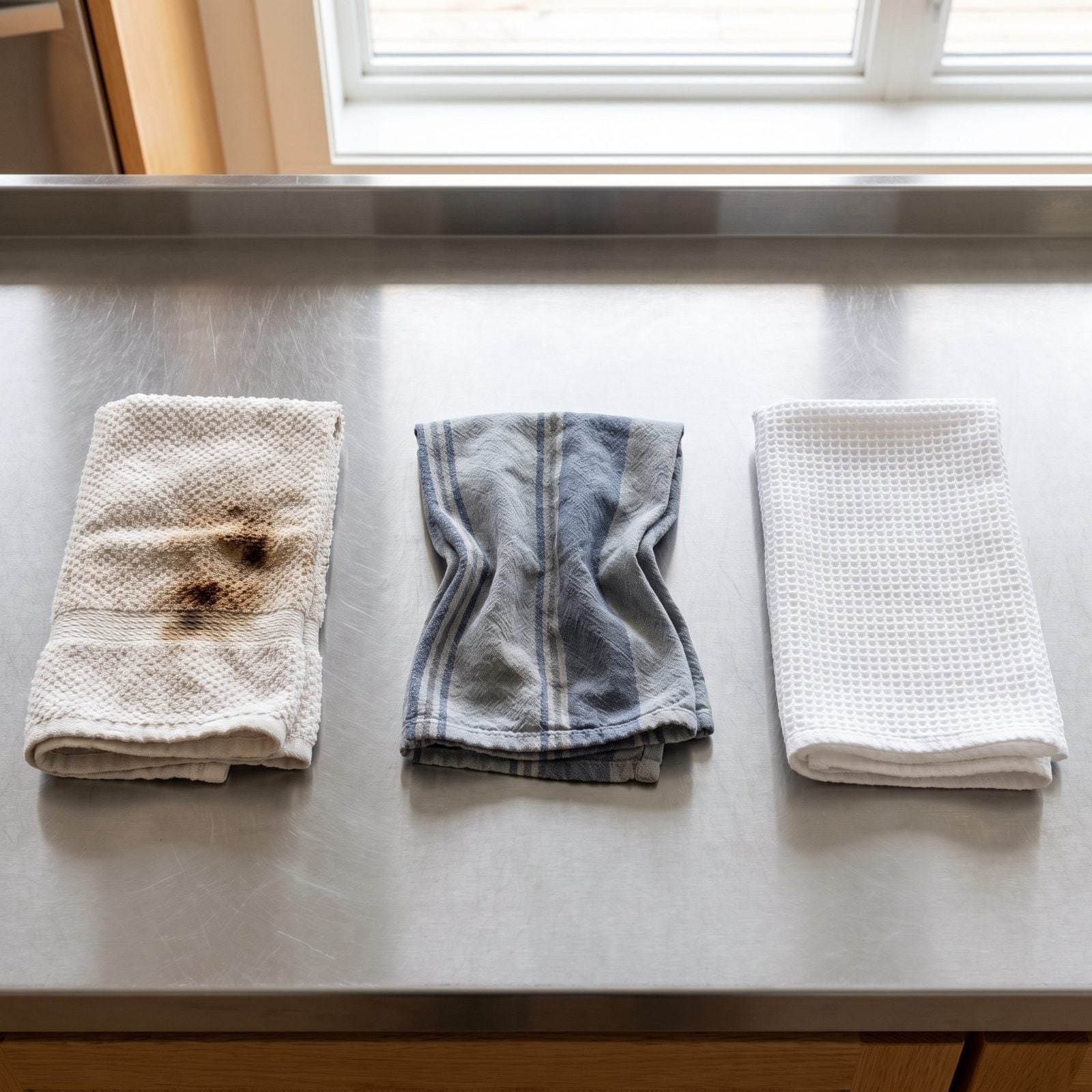
One towel doing everything is a towel doing nothing well. A wet towel grabbing a hot pan handle sends heat straight to your palm, which is how line cooks earn that scar across the base of their fingers. So the jobs get split.
Dry towel for hot pans. A damp one for wiping plate rims. A clean one for drying. Mix them and you either burn yourself or smear grease across the dish that’s about to go out. I’ll die on this hill: a good towel system is half of staying calm on the line.
17. Dirty Pans Land in One Spot, Far From Finished Food
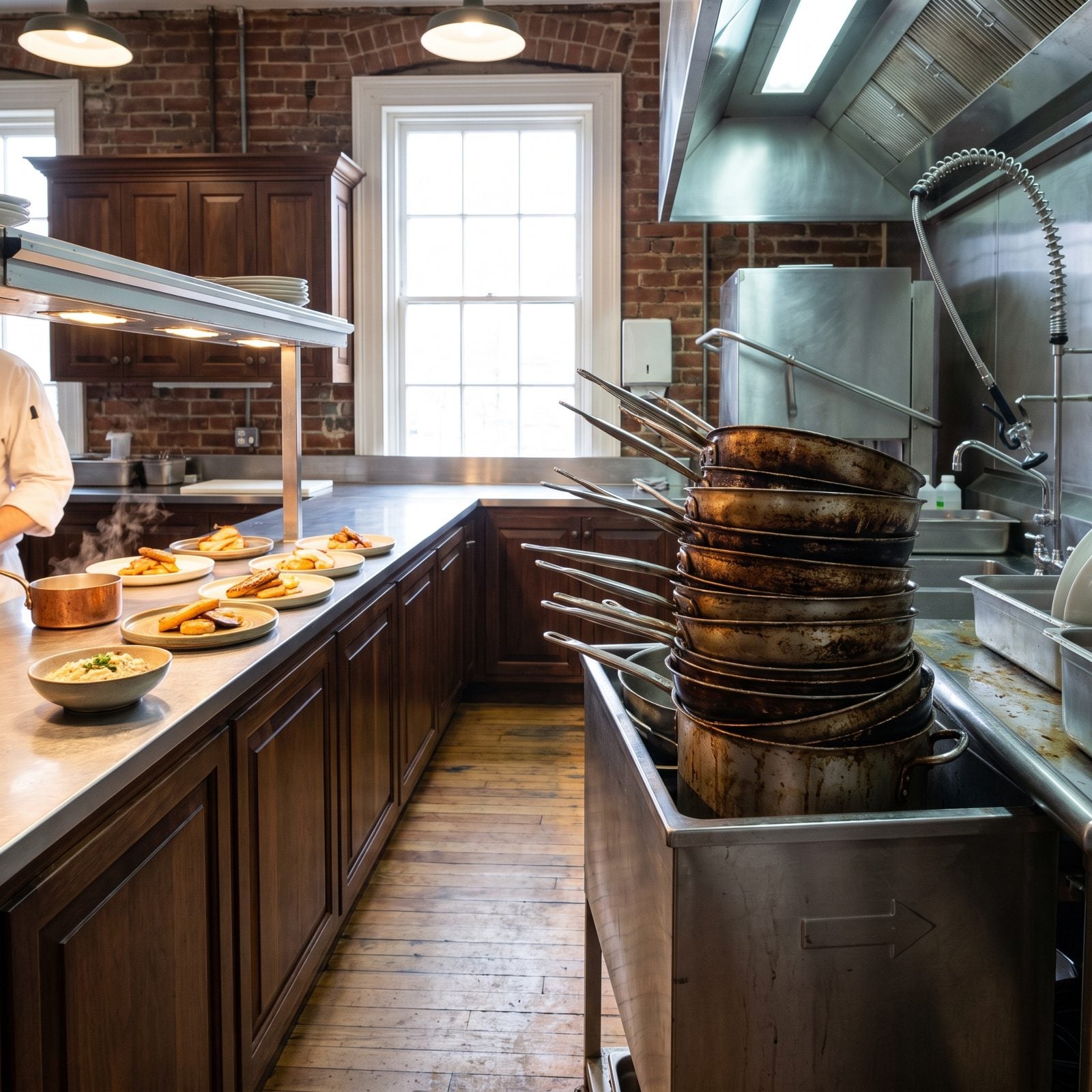
Finished food and dirty pans do not share real estate. The grease, the scraps, the raw drippings clinging to a used pan have no business within reach of a plate about to leave the pass. So every station gets a landing zone for dirties, nowhere near the clean side.
Sounds obvious until the rush hits and a cook sets a raw-chicken pan down two inches from the garnish because it was closer. The designated spot removes the decision. That’s why it exists.
16. Stations Reset Completely Between Rushes, Not Patched Piecemeal
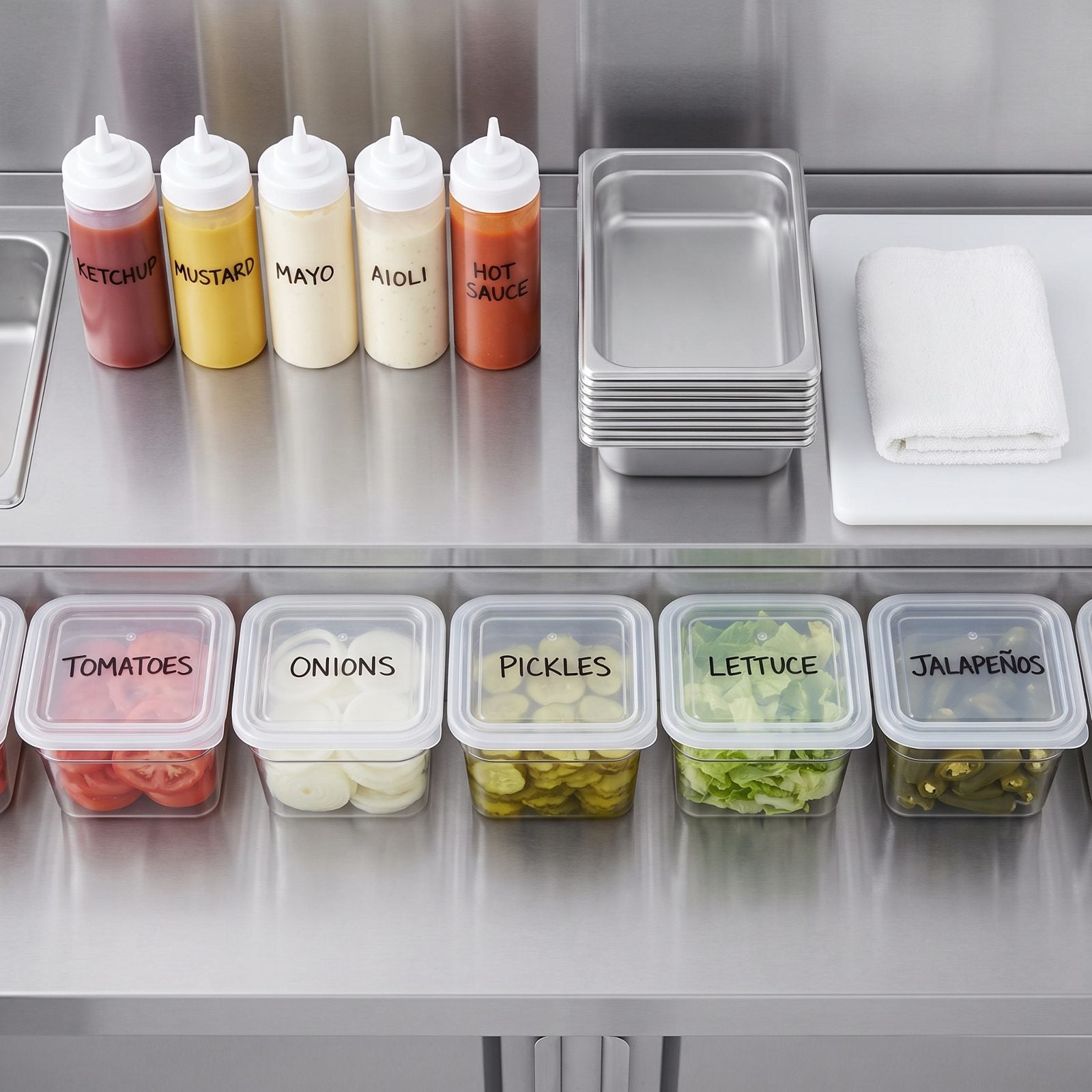
There are two ways to restock a beaten-down station. You top off the one thing you’re out of, over and over, and limp through the night. Or you clear the whole station, wipe it down, and build it back fully stocked in a single pass.
Full reset wins because it catches the problems before they catch you — the nearly-empty squeeze bottle, the board that needs flipping, the container running low on parsley. Patch-fixing hides all of that until you’re slammed and reaching for something that isn’t there.
15. Matching Deli Containers for Painless Stacking and Portioning
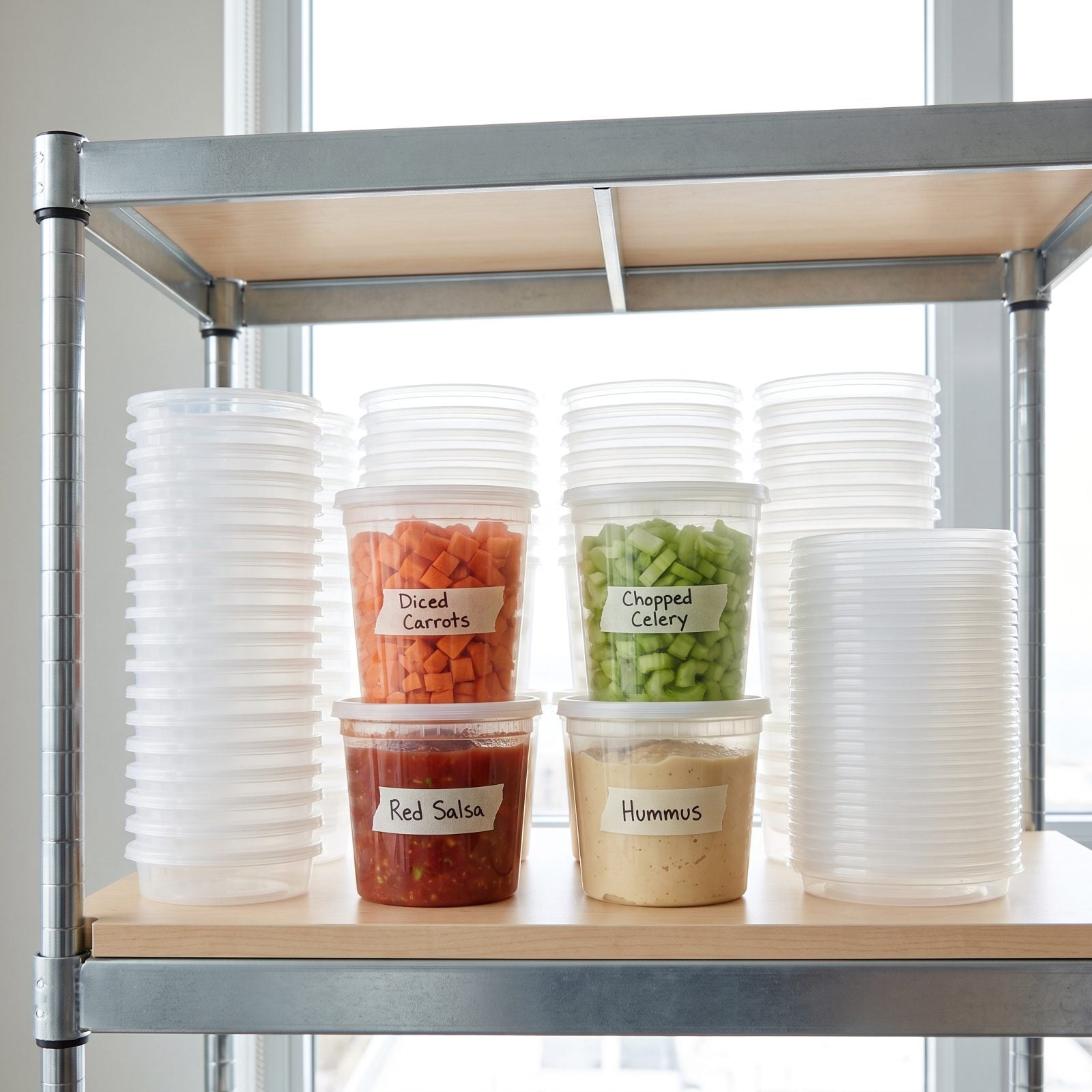
Mismatched containers are a slow tax you pay all day. Wrong lid, won’t nest, tips over in the walk-in, swallows fridge space. Standardize on one or two sizes with interchangeable lids and the whole headache disappears.
Same size means stackable. One lid fits everything, so you stop hunting. And since the containers hold a known volume, portioning gets easier — a quart is a quart, and you learn to read the level at a glance.
14. Wide Rondeau Pans Reduce Sauces Faster Than Tall Narrow Pots
Would you like to save this?
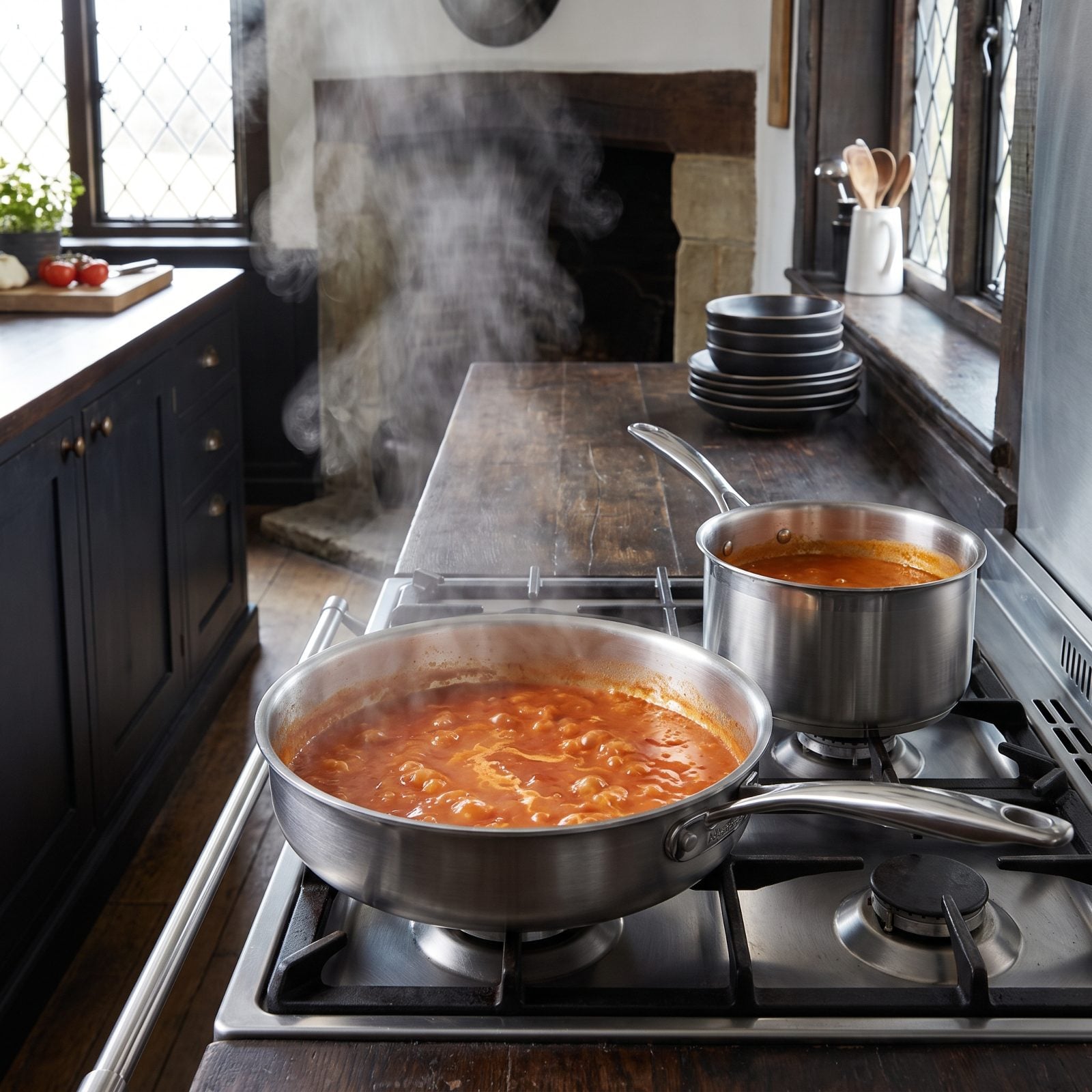
Reduction is just evaporation, and evaporation happens at the surface. A tall narrow pot gives the liquid almost nowhere to escape, so your sauce sits there sulking while you wait. Pour that same sauce into a wide rondeau and the surface area doubles or triples, so it tightens up in a fraction of the time.
Here’s the pan trick that separates cooks who understand physics from cooks who just crank the heat and scorch the bottom. Wider pan, faster reduction, far less chance of burning. Next time a sauce drags, pull out the biggest shallow pan you own and watch it finally cooperate.
13. Parchment Cartouches Control Evaporation While Sauces and Braises Cook
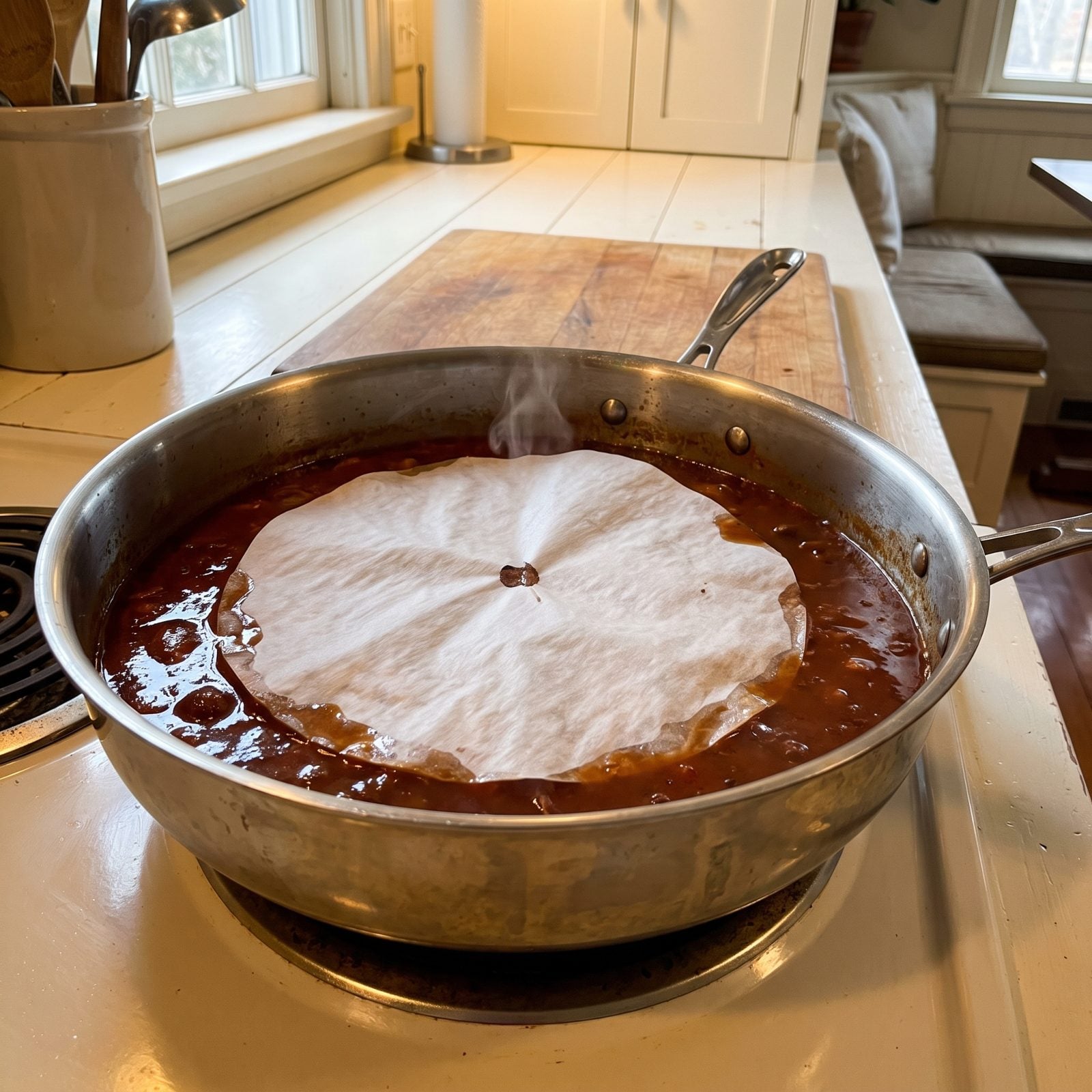
A cartouche is just a circle of parchment laid right on top of the liquid, with a little hole cut in the middle. Sounds fussy. It does real work.
The paper slows evaporation so your braise doesn’t cook down to glue, while that vent hole lets just enough steam out to keep the sauce reducing and concentrating. You get both at once: tender meat that stayed submerged, and a sauce that actually tightened instead of staying watery. A regular lid traps everything, and you end up with a flabby, diluted mess.
12. Sauces and Purées Pass Through a Chinois or Tamis for a Finer Texture
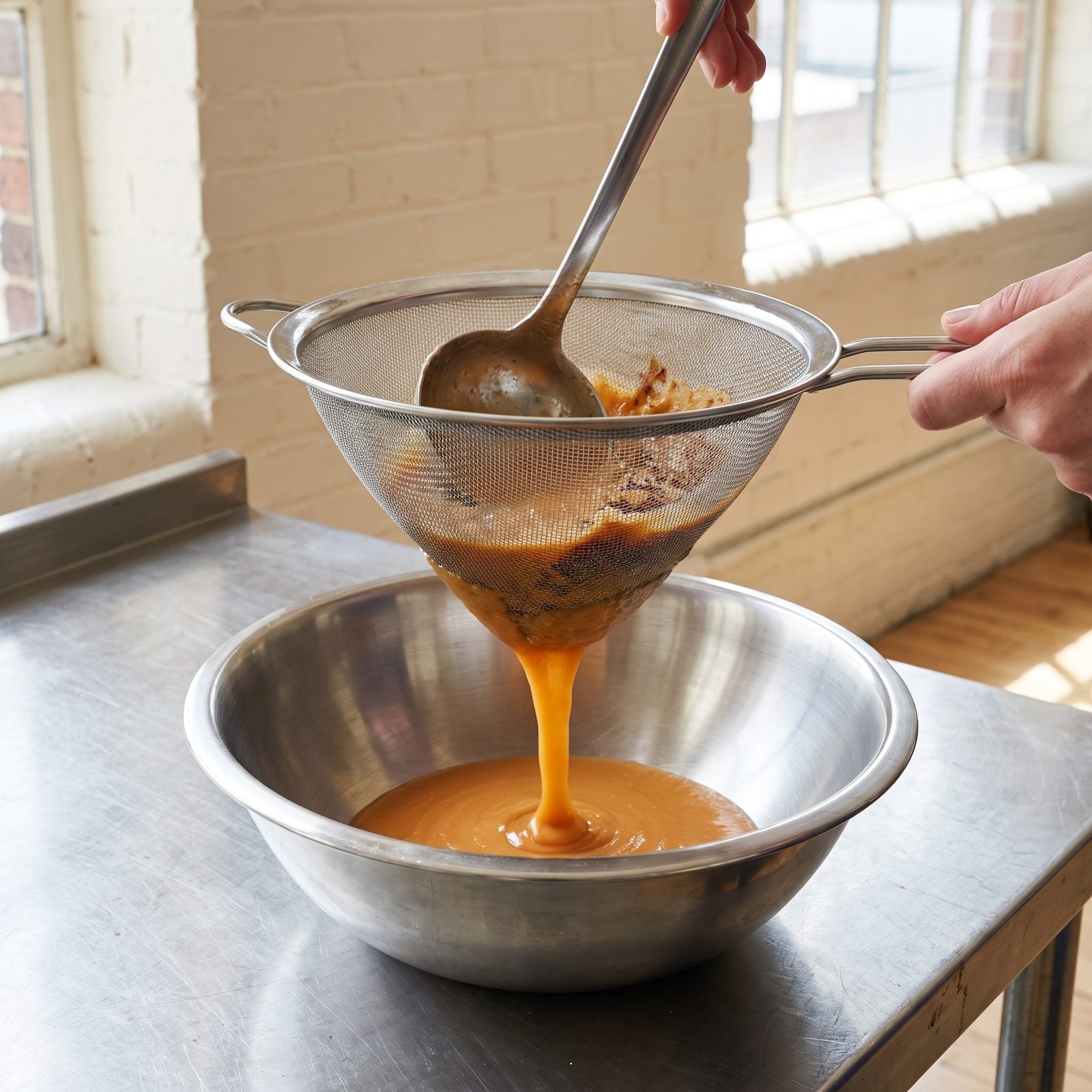
Push a sauce through a chinois once and you’ll never trust a blender to do the whole job again.
No matter how long you run the machine, there are always stray fibers, skins, and tiny lumps the blade can’t catch. The fine conical sieve catches all of it, and what drops into the bowl is pourable, glossy, smooth on the tongue in a way you can taste before you can name it. A tamis does the same for drier things like potato or pastry cream, pushing them through with no grain left behind. That’s the gap between homemade and restaurant, and it costs you two extra minutes.
11. Immersion Blenders Are Tilted to Create a Vortex Without Pulling In Excess Air
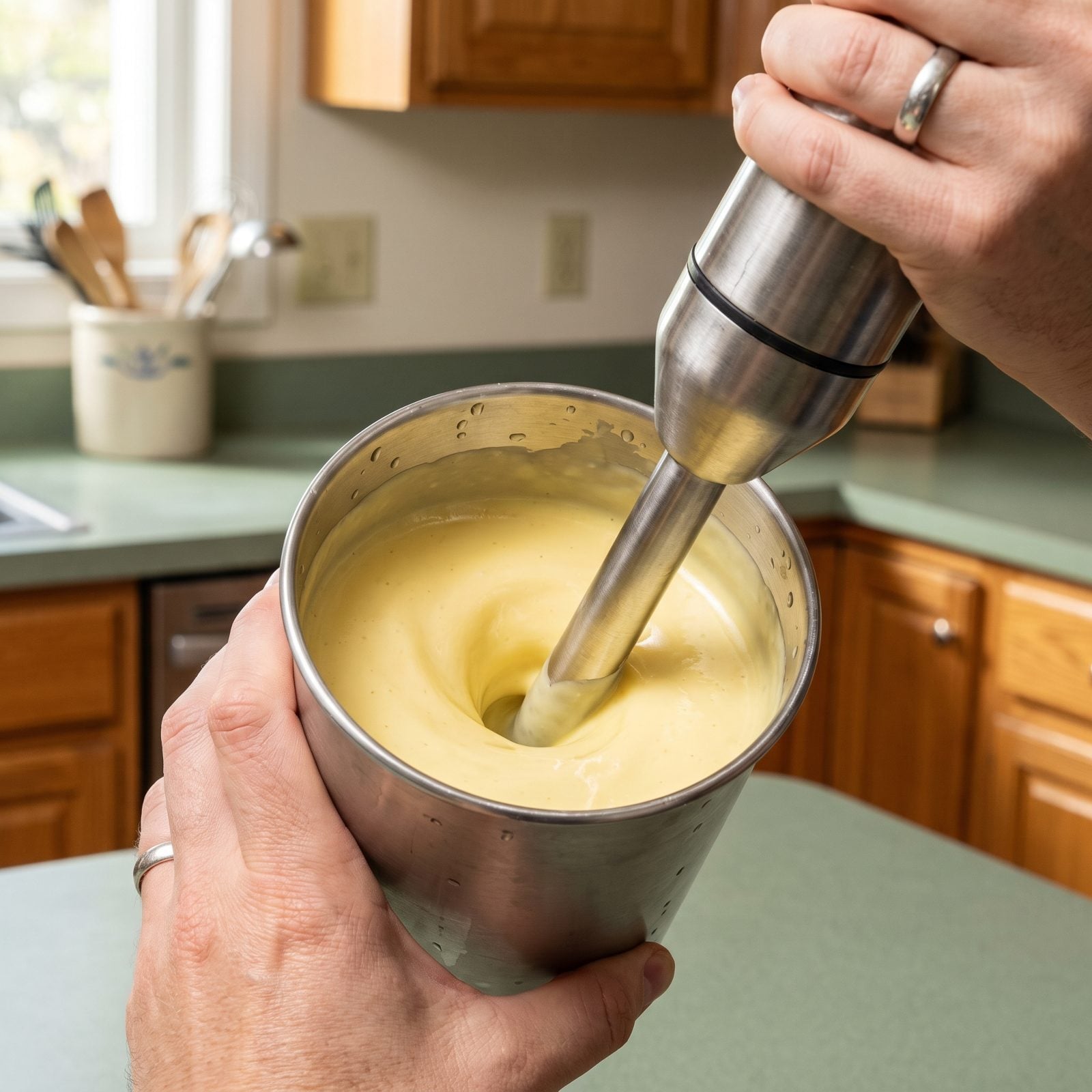
Keep the blender flat on the bottom and you beat air straight into the sauce. Foam. Bubbles. A broken, frothy disaster.
Tilt the head slightly instead and walk it along the bottom. That angle sets up a vortex that pulls everything down through the blade in a smooth loop, so you emulsify without whipping in air. Out comes a sauce that’s tight and shiny rather than aerated and pale. Same tool, same motor, completely different result. Most people never figure out why their restaurant-style velouté looks like dish suds, and this is why.
10. Cold Butter Is Whisked Into Sauces After the Pan Leaves the Heat
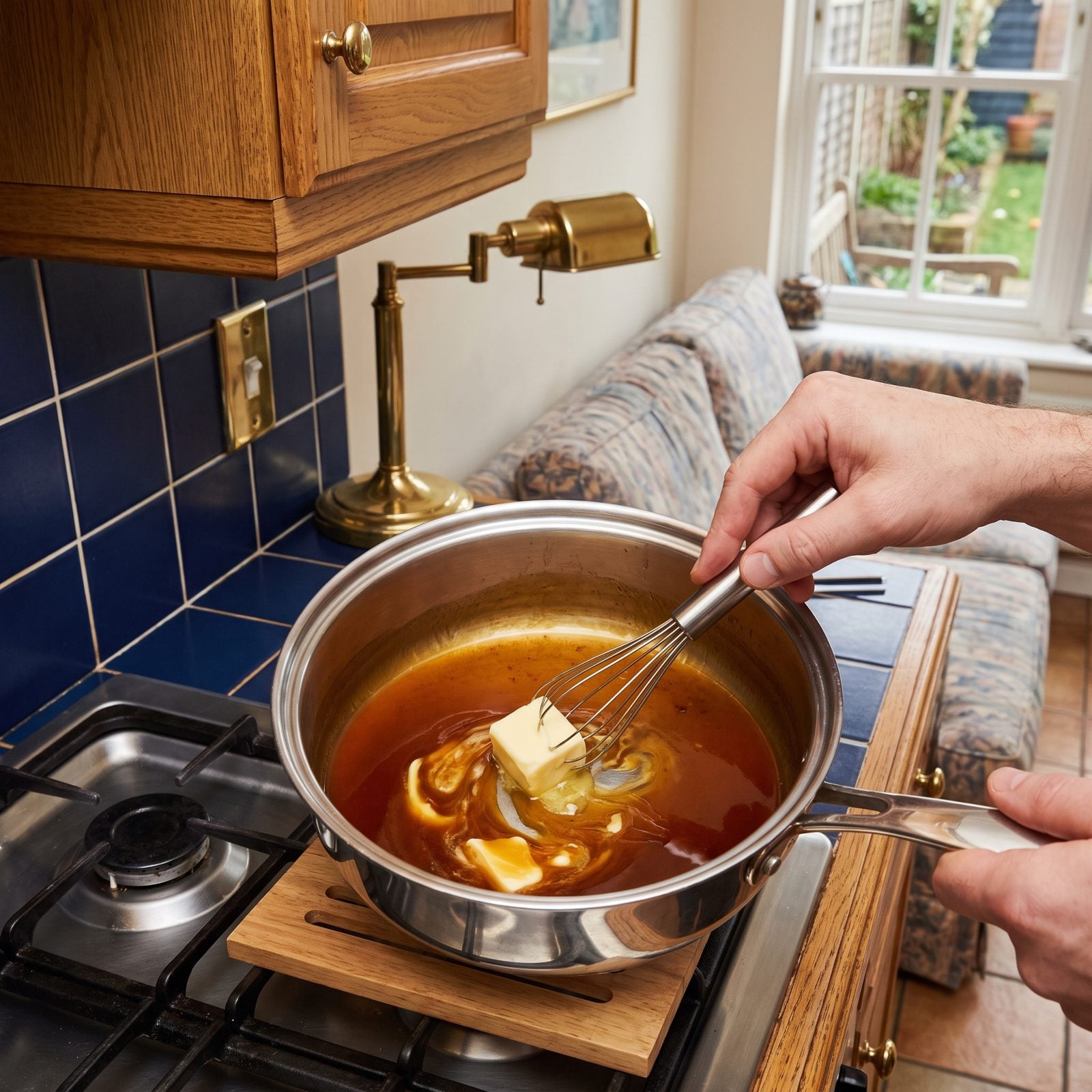
This is monter au beurre, and it’s why restaurant sauces look like someone buffed them to a shine.
Cold butter whisked into a sauce off the heat melts slowly and stays emulsified, coating everything in a glossy, rounded richness. Add it over high heat and the butter breaks, splitting into greasy oil and sad watery flecks. Off the flame, it binds. The sauce goes from thin and sharp to thick enough to coat a spoon, with a gloss you can spot across the room. One cold tablespoon at the end beats any amount of reducing.
9. A Final Taste for Acidity Can Matter More Than Another Pinch of Salt
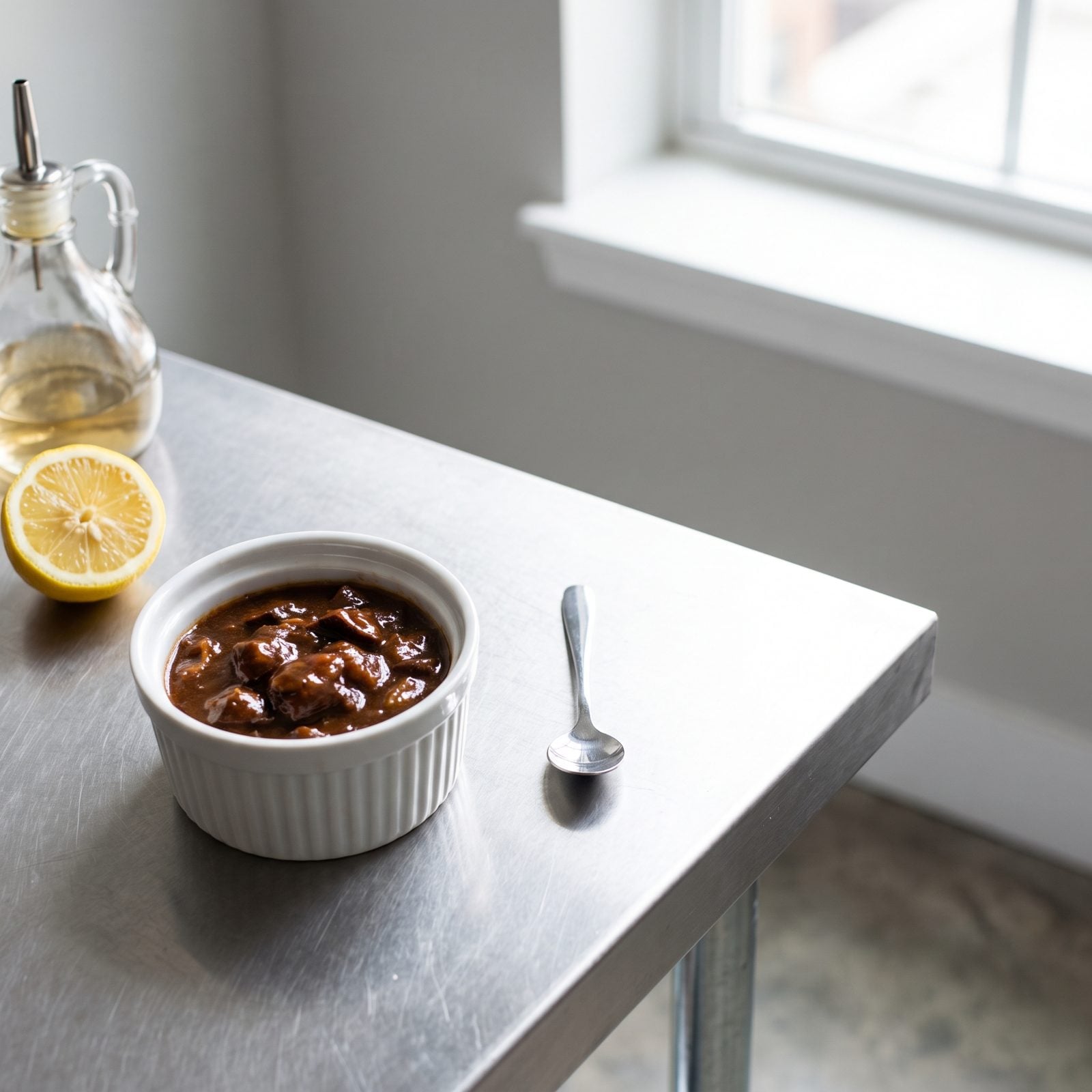
When a dish tastes flat and dull, the reflex is to reach for more salt. Half the time it needed acid.
A squeeze of lemon or a splash of vinegar at the very end wakes up a sauce, a soup, a braise — it cuts through richness and makes every other flavor sharper. Salt and acid do different jobs, and cooks who only ever think about salt plateau early. A finishing acid is the move that makes people say a dish tastes bright without knowing why.
8. Proteins Are Salted Ahead and Refrigerated Uncovered
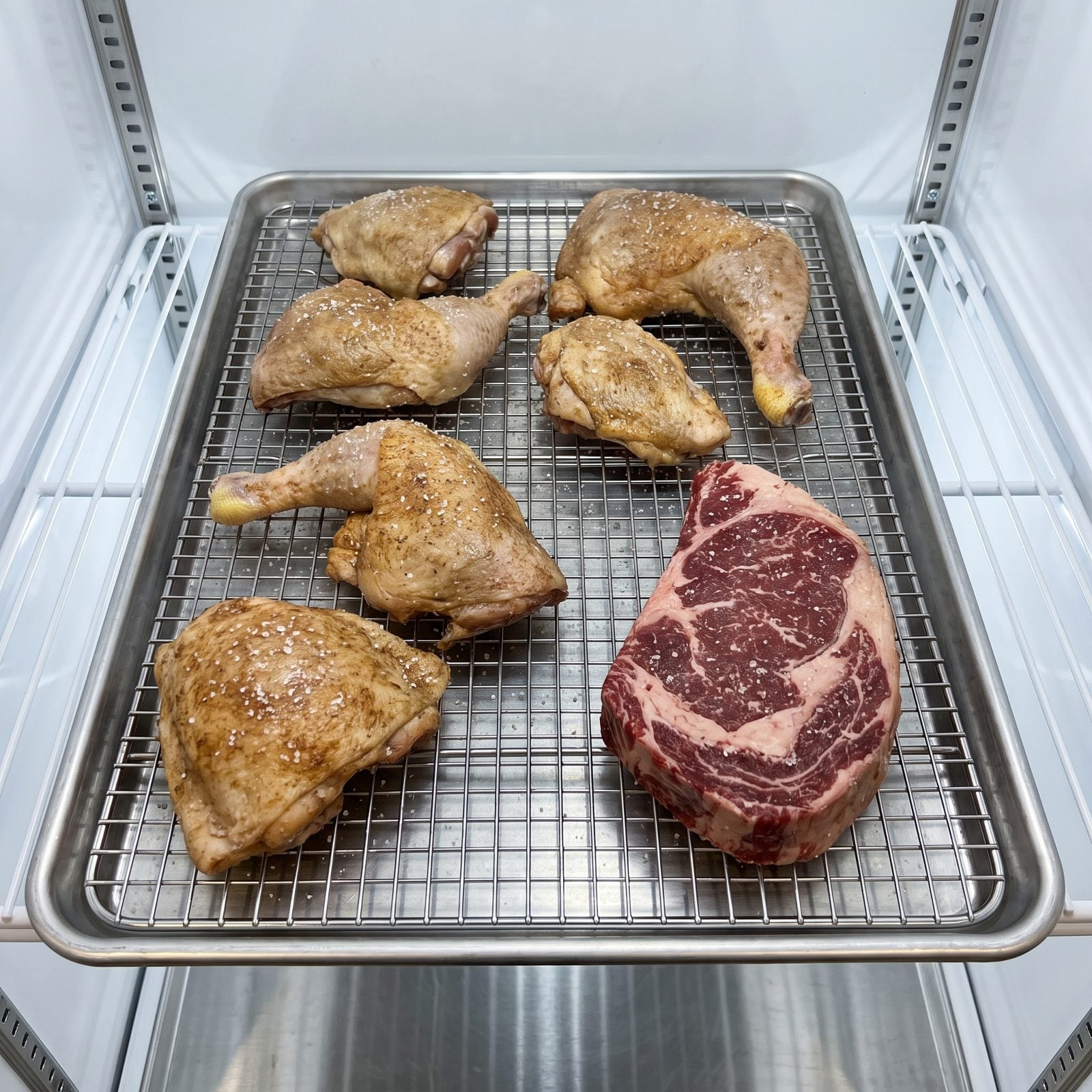
Salt early, then leave it open to the cold air. Two things happen at once.
The salt works inward and seasons the meat all the way through, not just on the surface, and the uncovered fridge time dries the exterior so the protein browns fast and hard instead of steaming in its own moisture when it hits the pan. Wet skin never crisps. A dry-brined bird roasts up with shatter-crisp skin and juicy meat that a last-minute salting can’t touch.
7. Wire Racks Keep Roasted and Fried Foods Above Trapped Steam
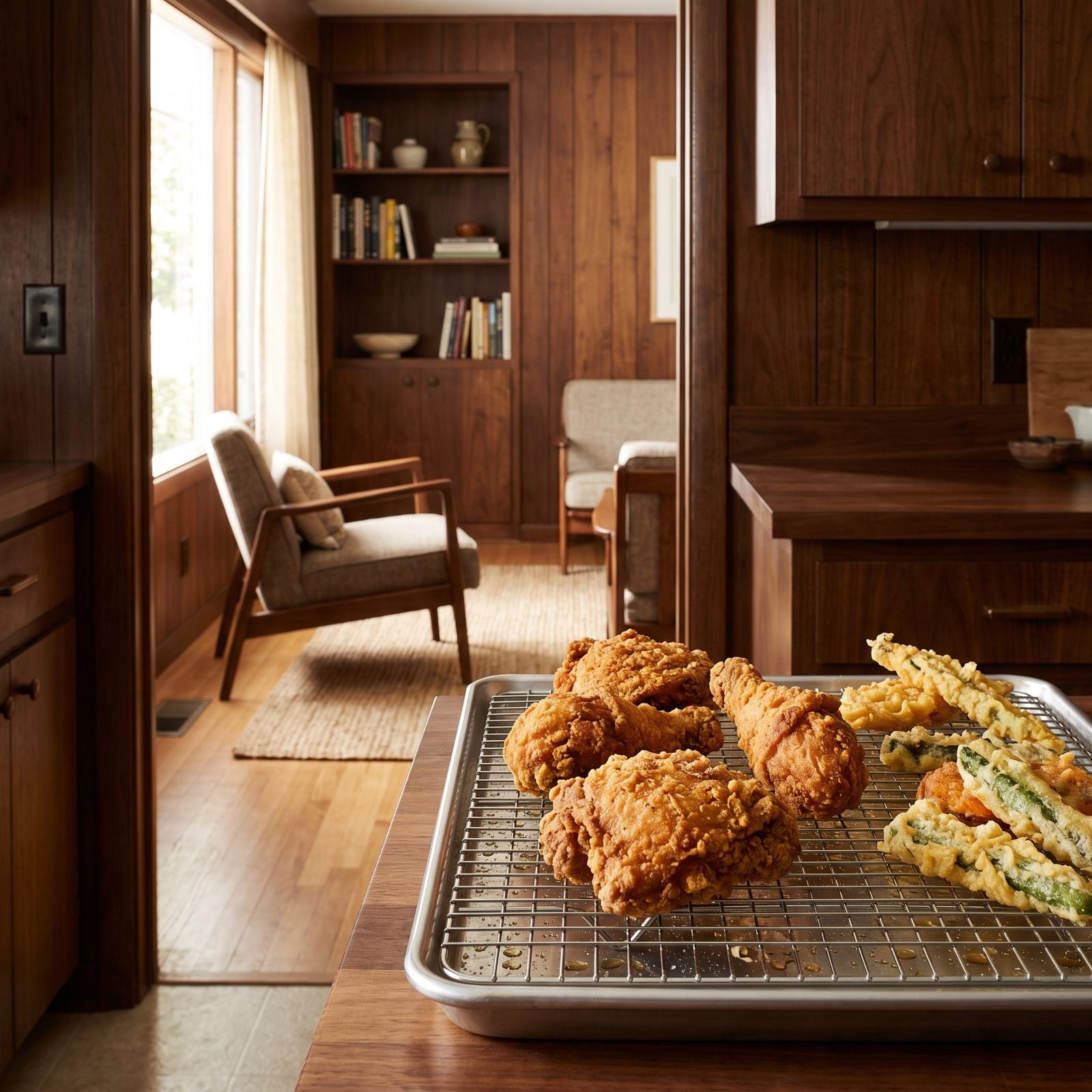
Set a roast or a batch of fried food straight onto a plate and the bottom steams itself soggy within minutes. All that work on the crust, ruined by trapped moisture.
A wire rack lifts the food so steam escapes underneath and air circulates on every side. The crust you earned stays crisp. Same logic covers cooling cookies, resting a steak, holding fried chicken before service — flat surface traps steam, elevated rack lets it go. Cheap insurance for anything you wanted crunchy.
6. Green Vegetables Are Blanched and Shocked Before Final Cooking
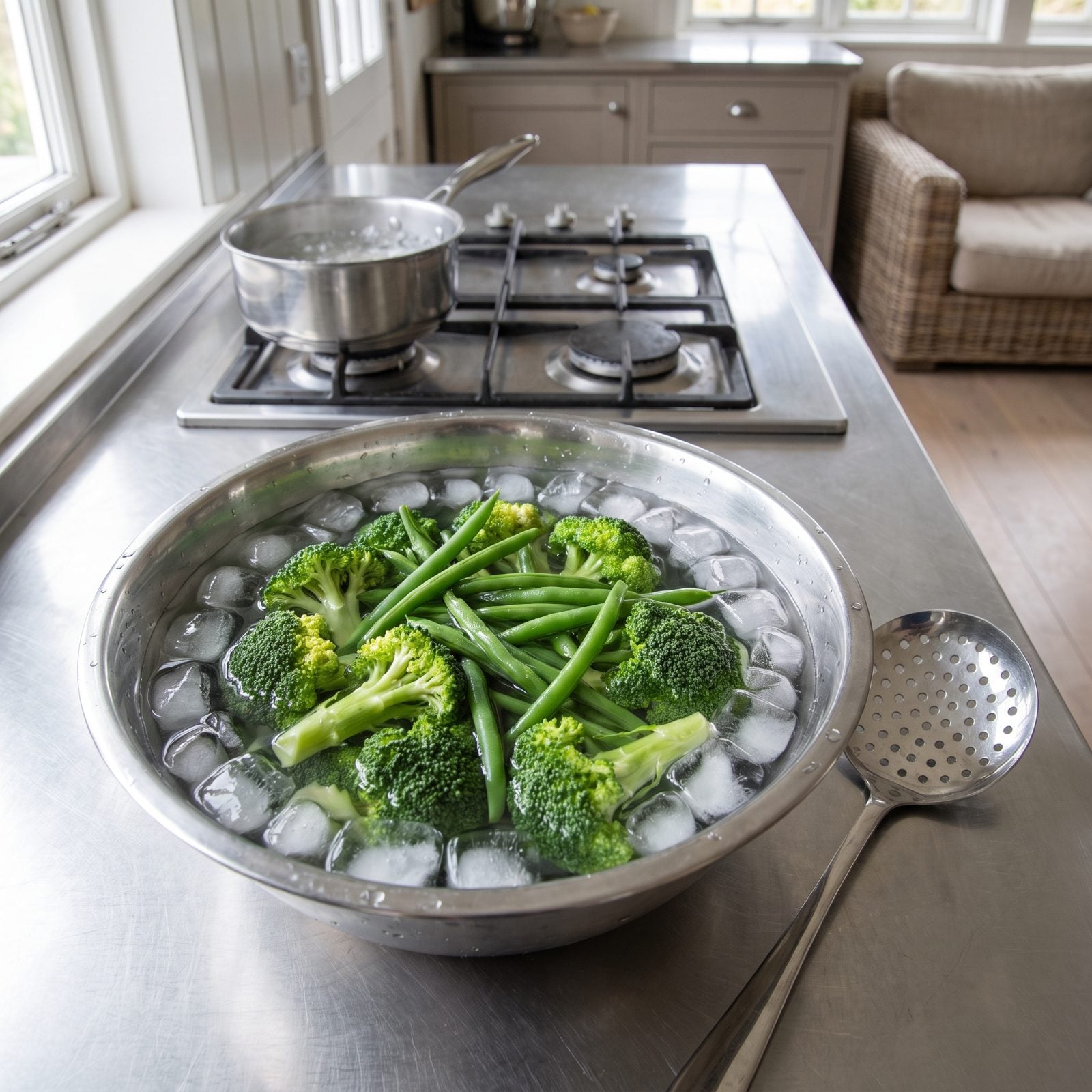
Drop green vegetables into heavily salted boiling water, pull them just before done, then plunge them straight into ice water.
The boil sets a bright, almost electric green and cooks them to a snap, and the ice bath stops the cooking dead so they never turn that dull army drab. On service you just reheat them fast in butter or the pan, done in seconds with the color and bite locked in. This is how a kitchen plates perfect green beans across a two-hundred-cover night. Overcook them once at home and you’ll understand why nobody skips the shock.
5. Pasta Finishes in the Sauce With a Measured Splash of Pasta Water
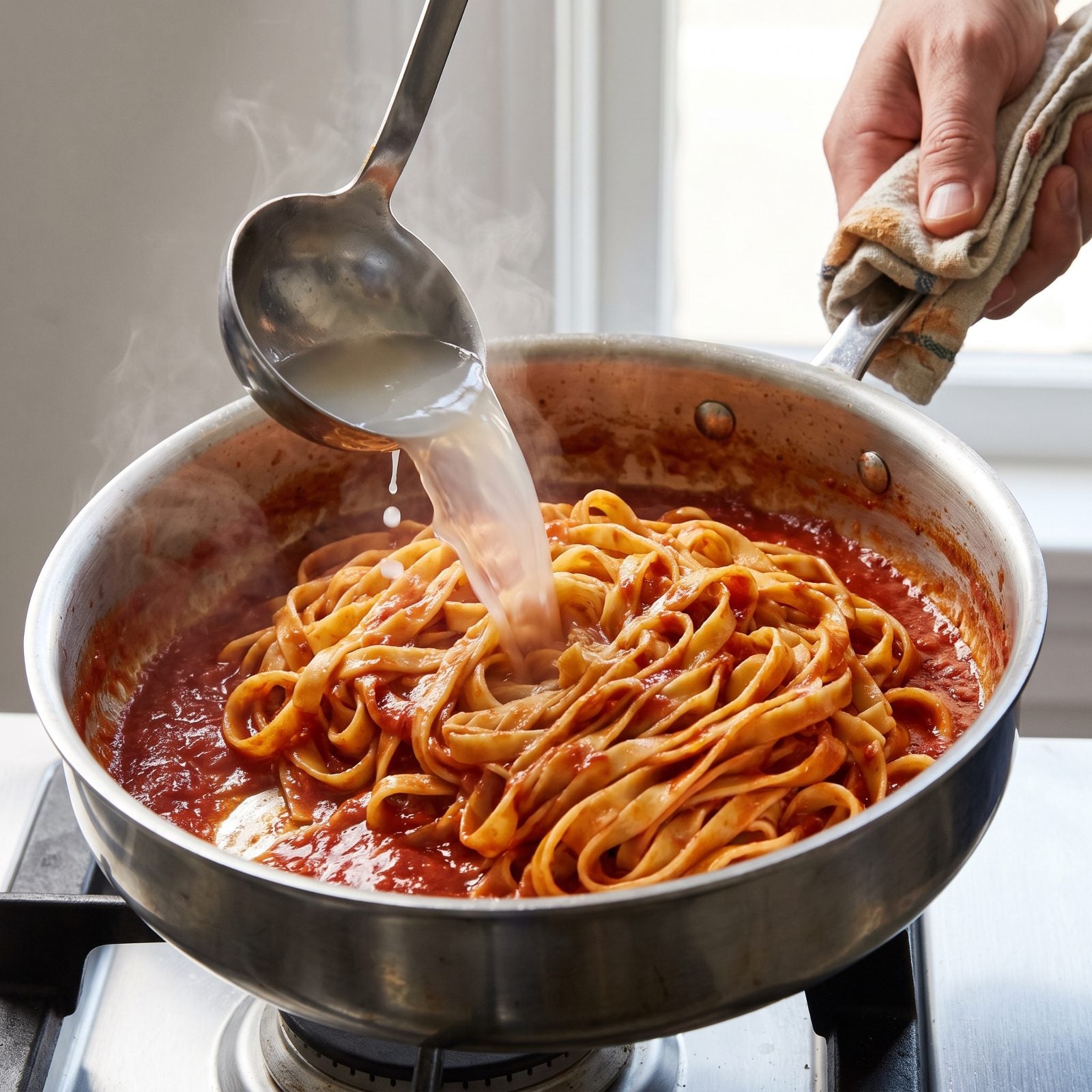
Draining pasta, plating it, then ladling sauce on top is the home-cook default, and it’s exactly why the sauce slides off instead of grabbing on.
Finish the pasta in the pan with the sauce instead. Pull it a minute shy of done so it absorbs flavor as it finishes. The starchy pasta water is the secret here — a splash of it emulsifies the fat and liquid into something that coats every strand. That cloudy water is liquid gold, and the people who dump it all down the drain never understand why their cacio e pepe won’t come together.
The pasta should finish cooking in the sauce, not meet it on the plate like strangers.
4. Potatoes Are Cooked Once for the Interior and Again for the Crust
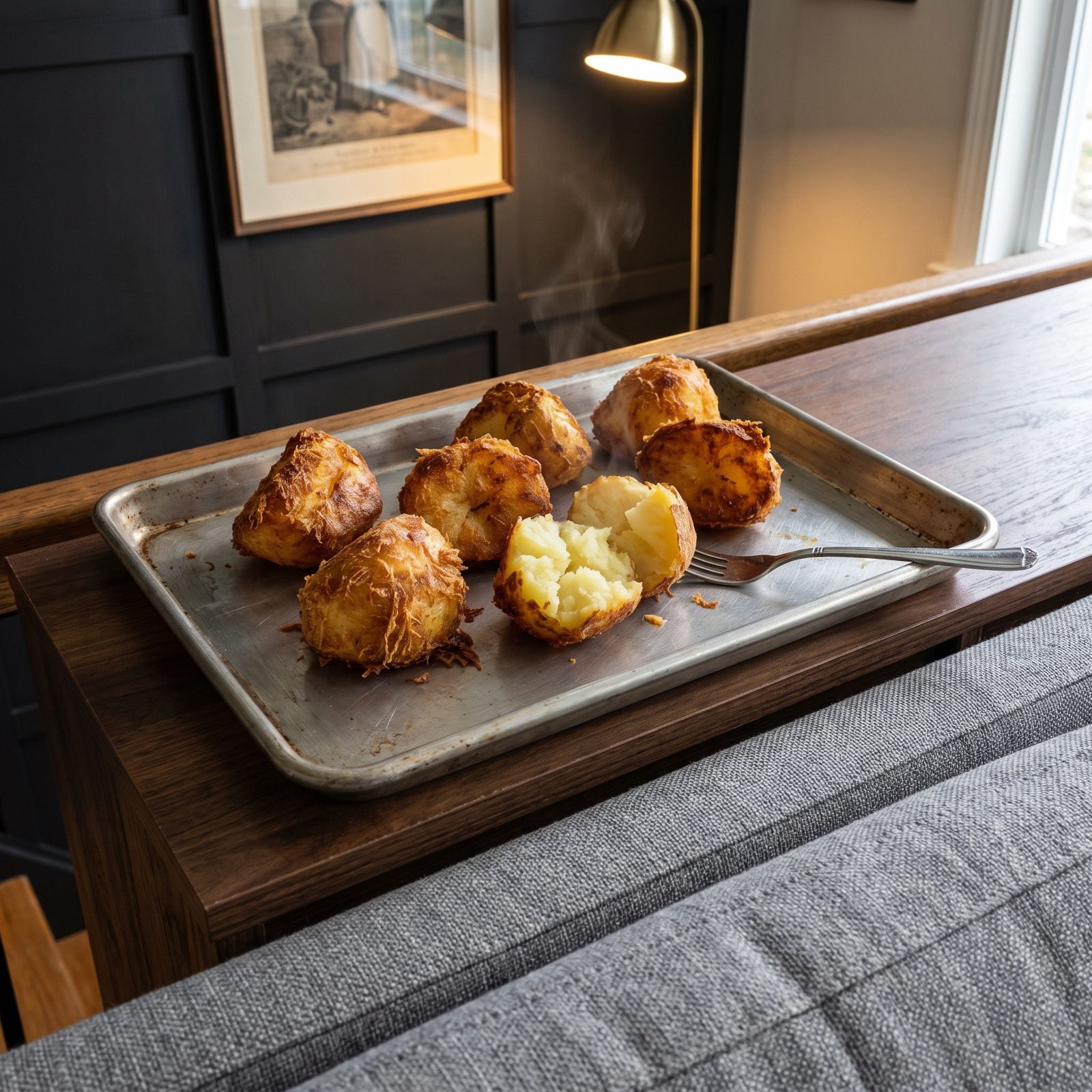
The crispest potatoes on earth are never cooked just once.
First a gentle cook — a parboil or a low fry — brings the inside to fluffy and done. Then a second blast at high heat does nothing but build the crust. Try to do both at once and you get either a burnt shell around a raw middle or a soft potato with no edges. Split the jobs. Rough up the parboiled edges before the second cook and you get those shaggy, lacy bits that shatter. Same with fries: a low blanch fry, then a hot finish fry. Two steps, and the gap between them is the whole trick.
3. Washed Greens Get Spun Bone-Dry Before They Hit the Walk-In
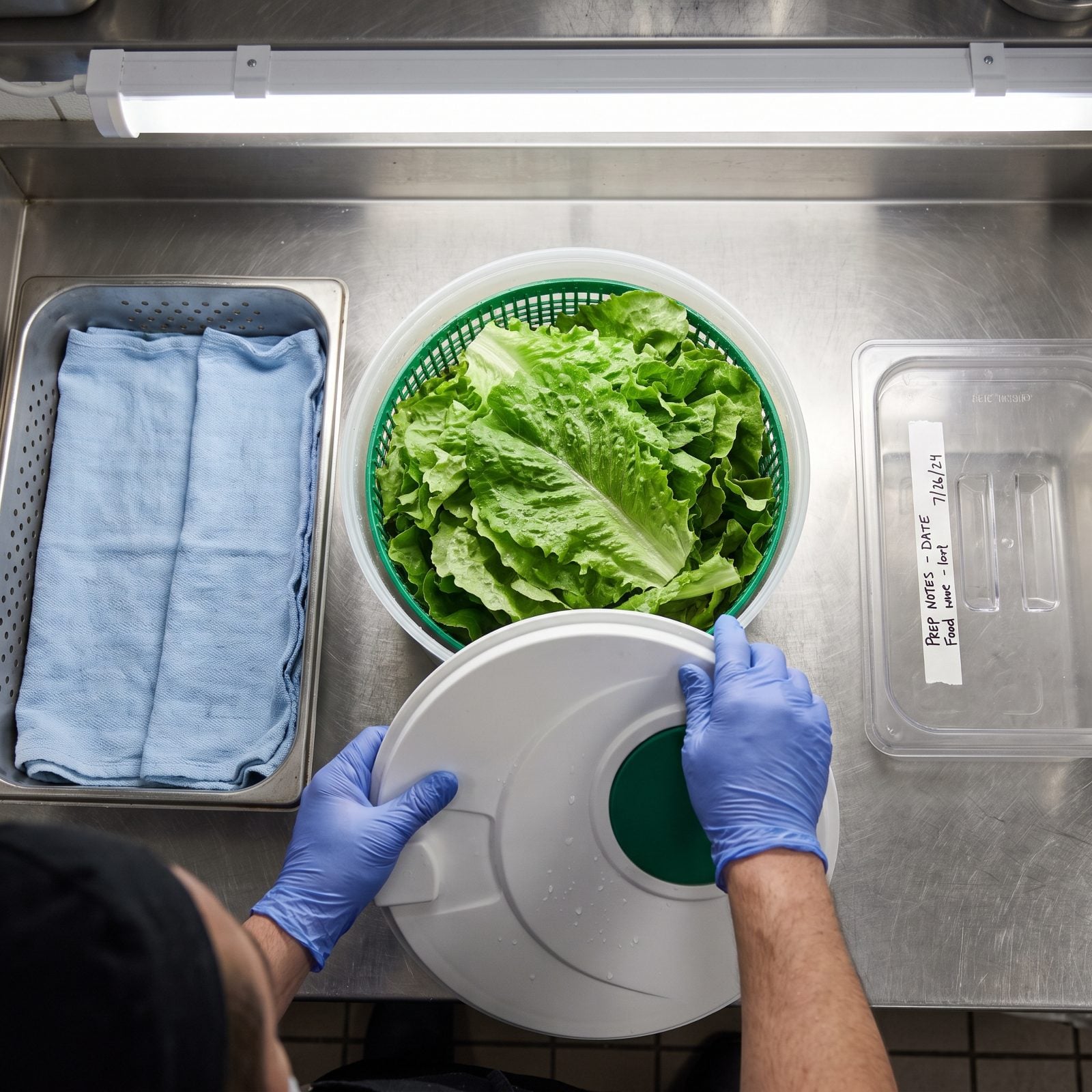
Wet greens are a death sentence for dressing. Water sheets off the leaf and drags every drop of vinaigrette to the bottom of the bowl, leaving the top half naked and the base a swamp. So the spinner runs until the basket rattles dry, then runs again.
The best kitchens take it further. Spun greens go onto towel-lined trays and rest uncovered for a few minutes before boxing, so the last of the surface moisture evaporates instead of sweating inside a sealed container overnight. Dry greens keep days longer, too — moisture is what turns a crisp leaf into brown slime by Thursday.
2. Salads Are Tossed in a Bowl Three Sizes Too Big on Purpose
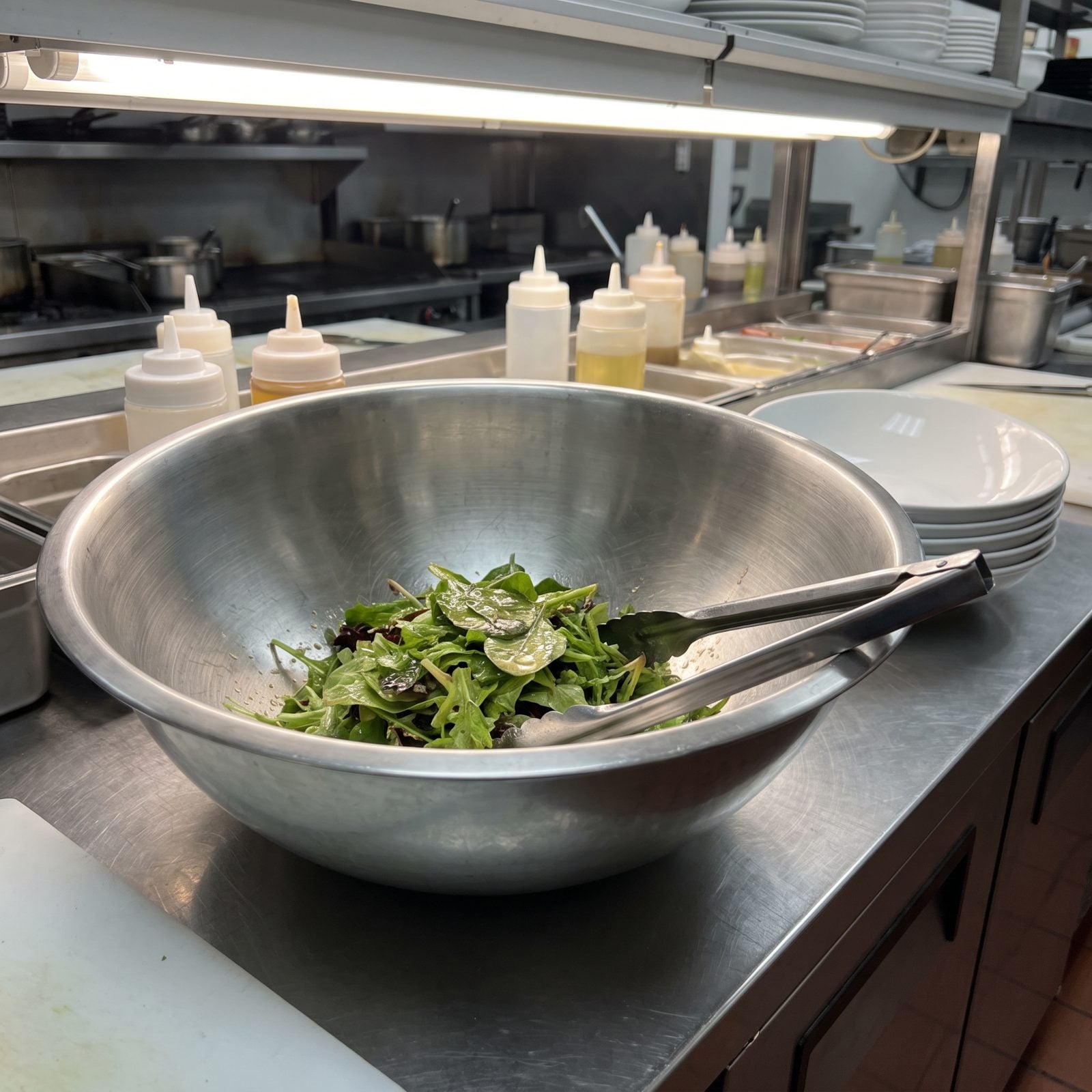
A salad for one gets mixed in a bowl built for ten. Looks absurd until you watch it work.
Toss greens in a tight bowl and half of them never move. The dressing pools, the leaves at the bottom drown, and the ones on top stay bone dry. But give the greens room to fly and every leaf tumbles through the vinaigrette instead of sitting in it, so you get an even, barely-there coating on all of it — which is nearly impossible to pull off in a crowded container.
Less dressing, better coverage. That’s why a line cook will dirty a mixing bowl the size of a drum just to plate a side salad.
1. Fryer Oil Gets Filtered Nightly So Stray Crumbs Can’t Burn
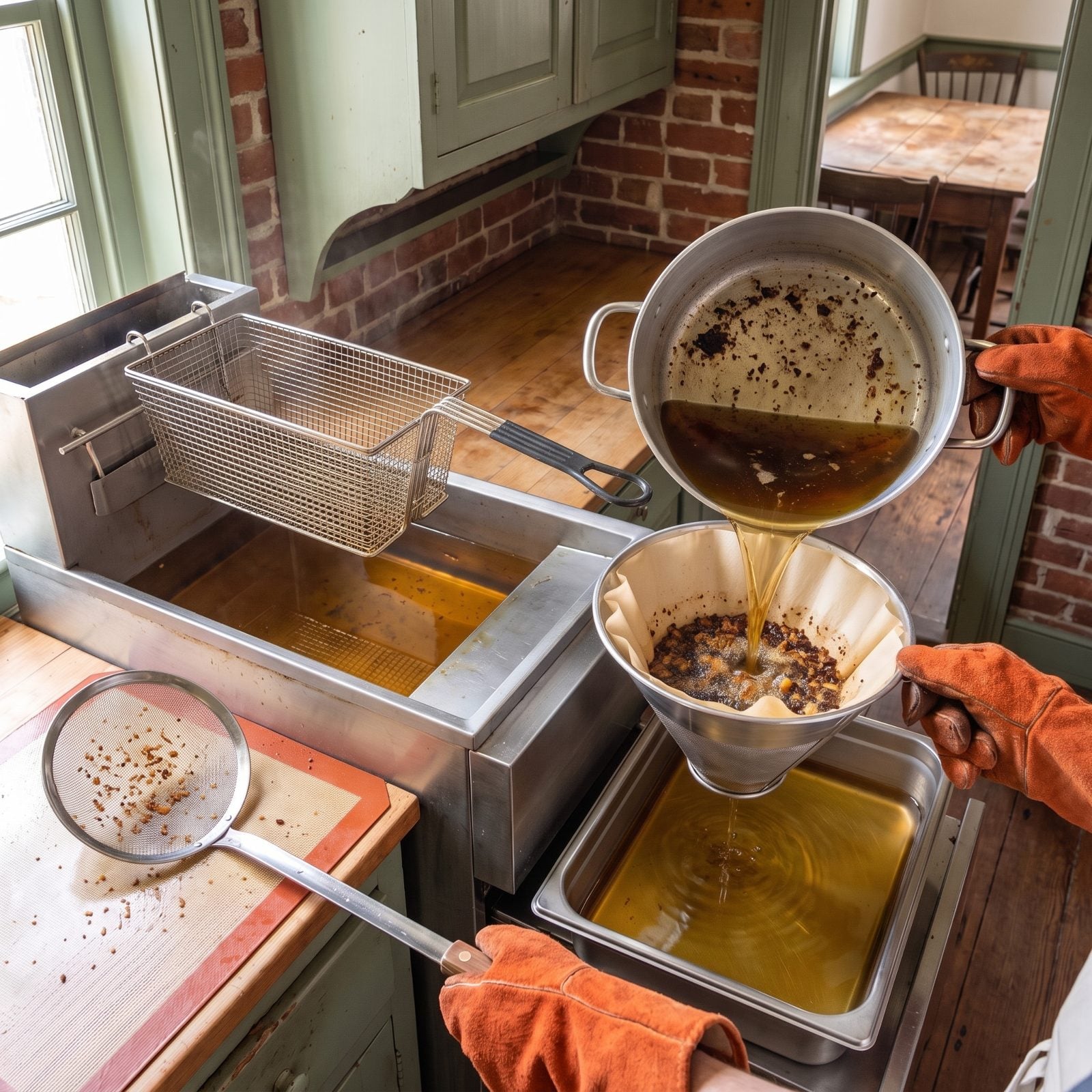
Every stray crumb in the fryer is a tiny timer counting down. It sits in the oil, cooks, cooks some more, and eventually carbonizes into a bitter black speck that clings to the next basket of fries and tints the whole vat.
So the oil gets skimmed between orders and filtered at close, poured through a mesh strainer and a paper-lined funnel to strip out the sediment before it burns. The catch pan has to start clean, too. Clean oil fries lighter, browns more evenly, and lasts far longer before anyone has to dump it. The crumbs break it down, not the heat alone.
Least glamorous job on the closing list. Also the one that quietly saves a kitchen the most money.