
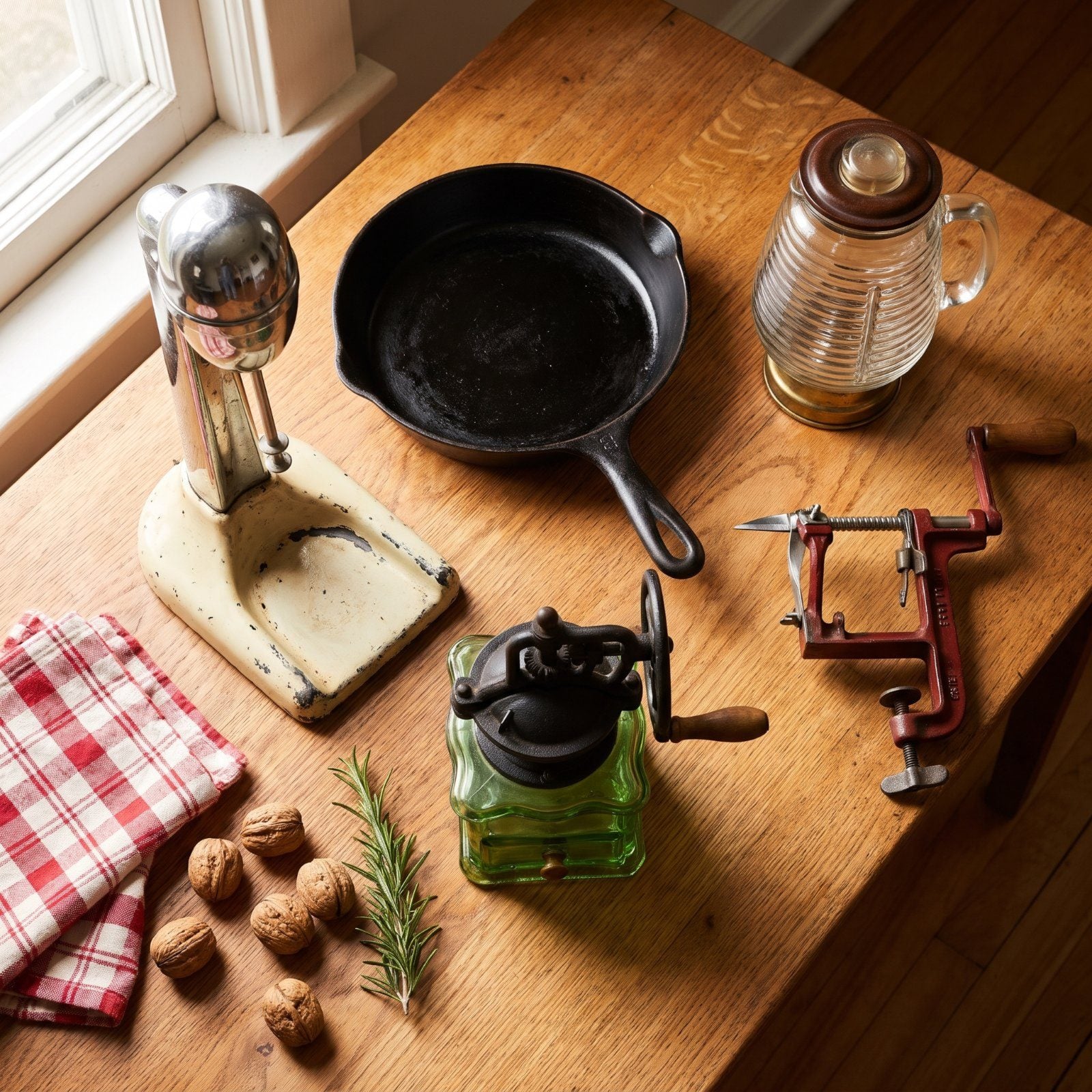
That heavy skillet in the back of the cabinet might outvalue your microwave. Most people clearing out a parent’s kitchen move fast, and the real money leaves in a black trash bag or a cardboard box marked “free.” Nobody taught us what to look for. A maker’s mark, a casting number, a particular shade of green glass — these are the tools worth pausing over before anything gets hauled off. Flip them, read them, look them up.
Please note that some of the images in this article were created with the assistance of AI.
37. The Griswold “Erie” Cast-Iron Skillet Hiding Under Your Cornbread Pan
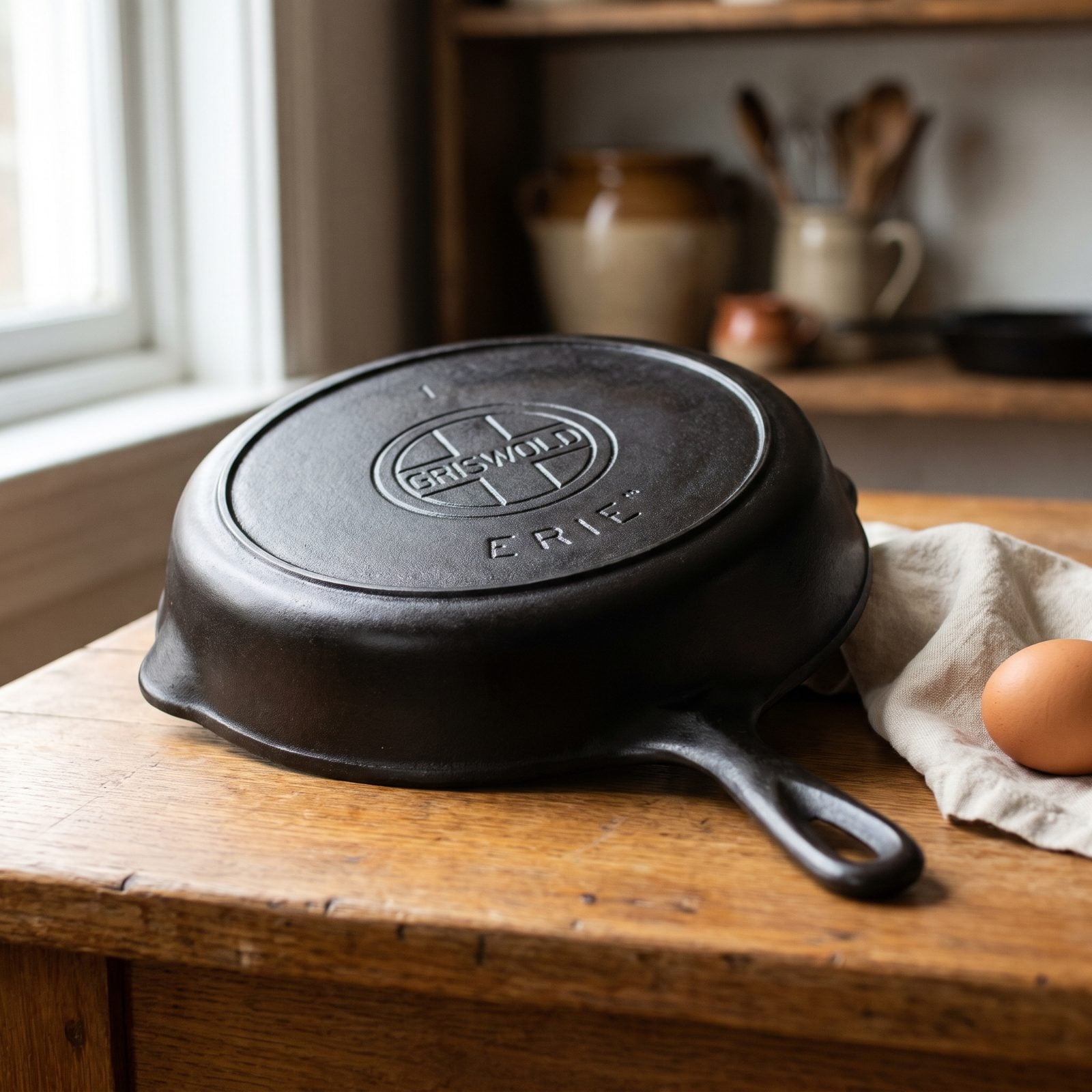
Turn it over. That’s where the money lives. A Griswold skillet has a smooth, almost glassy cooking surface that newer pans never match, and the bottom carries a raised logo plus a casting number. The early “Erie” marks — made in Erie, Pennsylvania before the big cross logo took over — are the ones collectors chase.
Here’s why it matters. People see a dark, used pan and assume it’s junk. But a clean Griswold in the right size and era regularly sells for well over a hundred dollars, and the rare spider-logo pieces climb much higher.
So read the underside under good light, note the number and any “ERIE” or cross mark, then search that exact wording before anything leaves the house. Clean it with hot water and a chain-mail scrubber. Never the dishwasher.
Writing in a Griswold identification guide, a vintage cast-iron collector notes “Erie cast iron is one of the most sought-after vintage cast iron brands you can collect. Griswold used this logo between 1880 and 1907.”
A good skillet earns its keep at the table too: meal photos served straight from a skillet or pot got hearts from our readers 85% of the time, versus 79% for other images in the same articles.
36. The Dazey Glass Butter Churn People Mistake for a Mason Jar
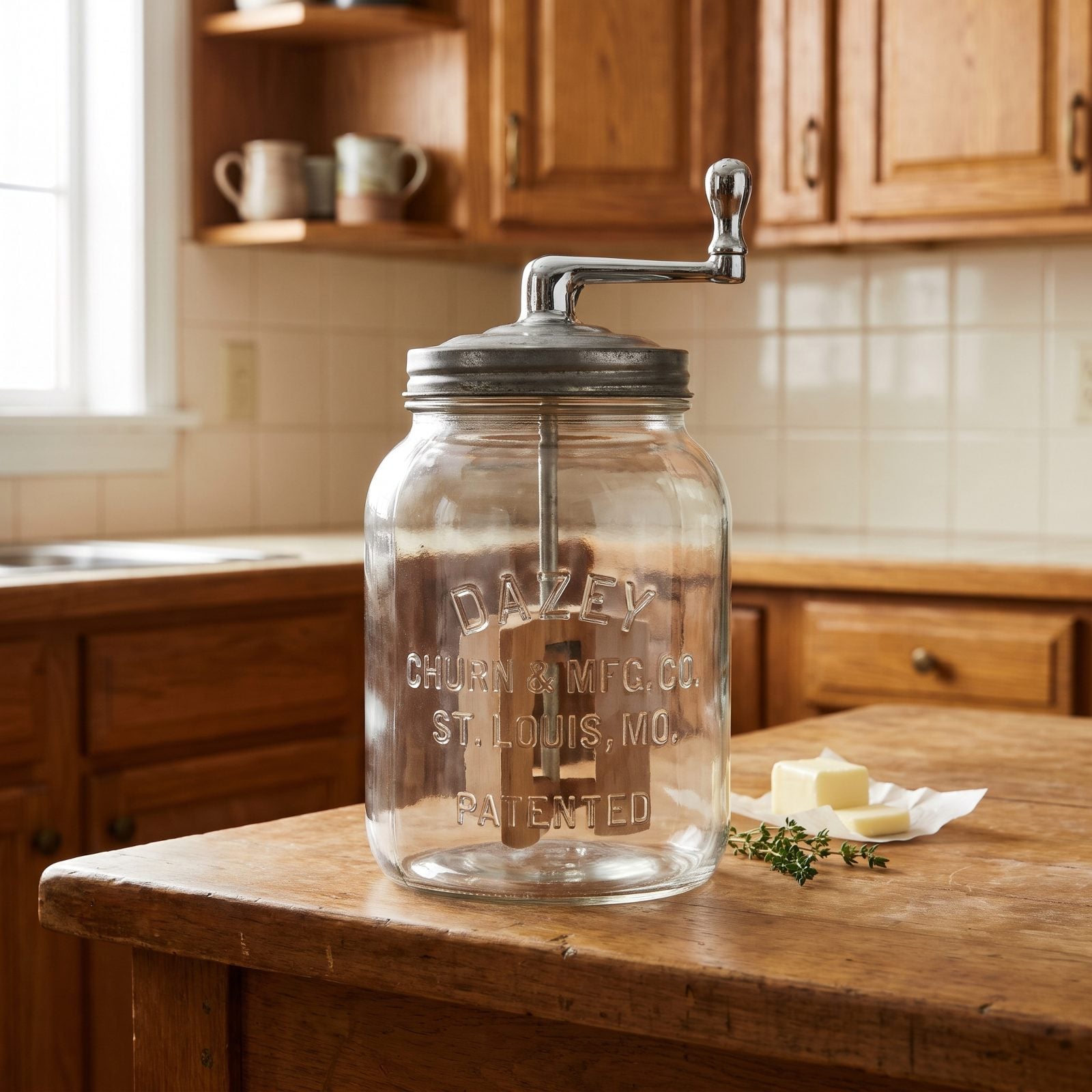
You’ve seen one of these on a windowsill holding dried flowers, nobody realizing it once made breakfast. A Dazey churn is a heavy glass jar topped with a hand-crank and a wooden-paddle mechanism, and the size number stamped on the lid changes everything about its worth.
Small sizes — the hard-to-find No. 10 and the tiny salesman samples — bring serious money from collectors. Larger, common sizes bring far less. Reproductions flooded the market in the 1970s, so the mark and the glass quality are what separate the real thing from a gift-shop copy.
Check the lid for the Dazey name and patent dates. Confirm the glass is embossed rather than a plain jar with a swapped lid. Then look up that exact size number.
35. The Arcade Crystal Coffee Grinder Bolted to Grandpa’s Wall
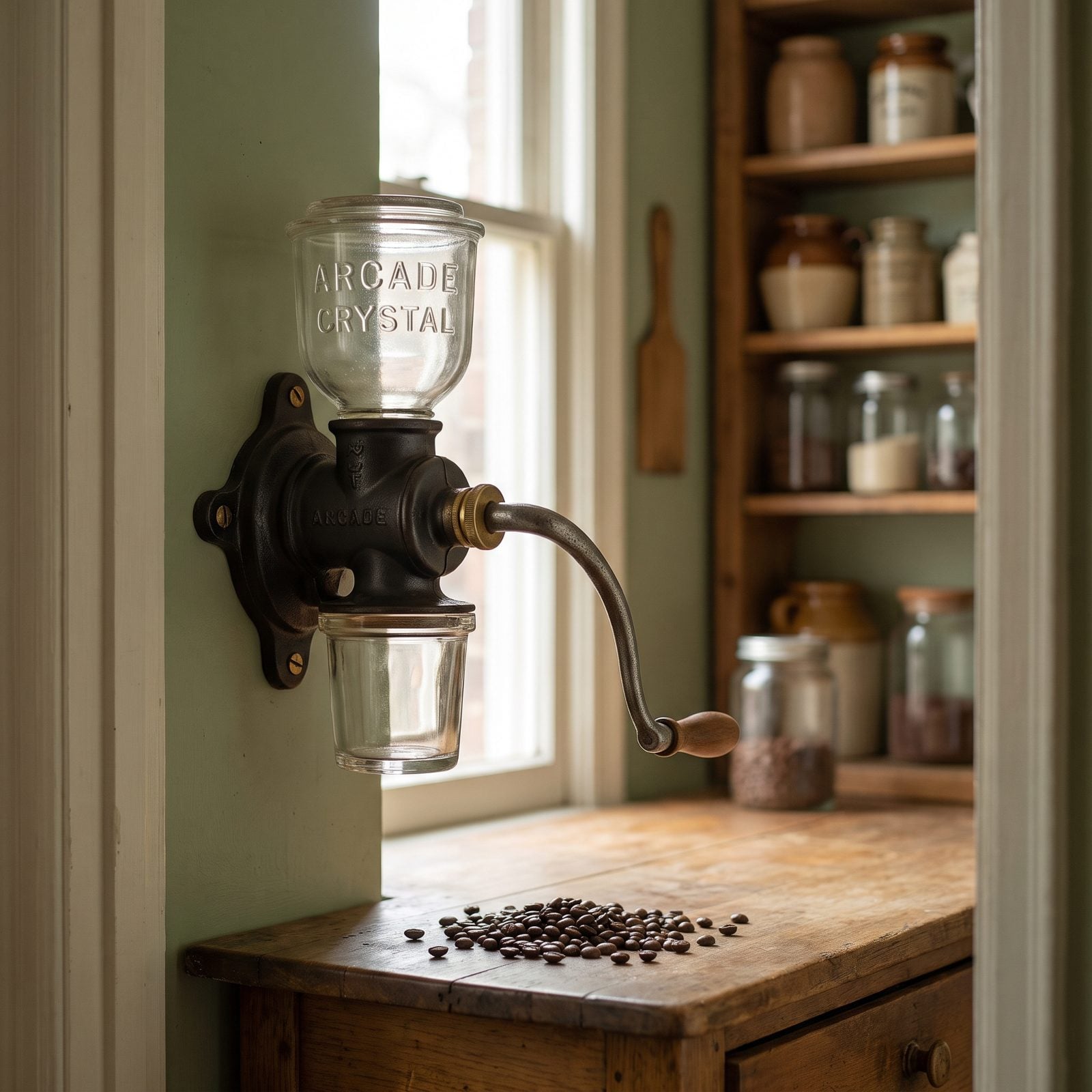
Most of these get pried off the wall and dumped straight into the scrap pile. The Arcade Crystal grinder has a clear glass hopper up top, embossed with the maker’s name, feeding into a cast-iron grinding body with a hand crank and a glass cup that catches the grounds below.
The glass is the whole game. An intact, embossed Crystal hopper with no chips, matched to its original cast base, is what buyers pay for. Cracked or mismatched examples drop in value fast.
Before it goes, run a finger along every edge of the glass for chips, confirm the “Arcade Crystal” embossing is present, and check that the crank arm is sized to its pivot and can clear the wall post and cup tray through a full turn. The ones that still grind coffee are worth holding onto.
What Our Readers Say
- When Piaci Pizza readers loved a food photo and tapped a reason, comfort topped the list at 30%, and nostalgia still made the top four at 15%.
From Piaci Pizza reader polls and votes.
34. The Raadvad Guillotine Bread Slicer That Looks Like a Prop
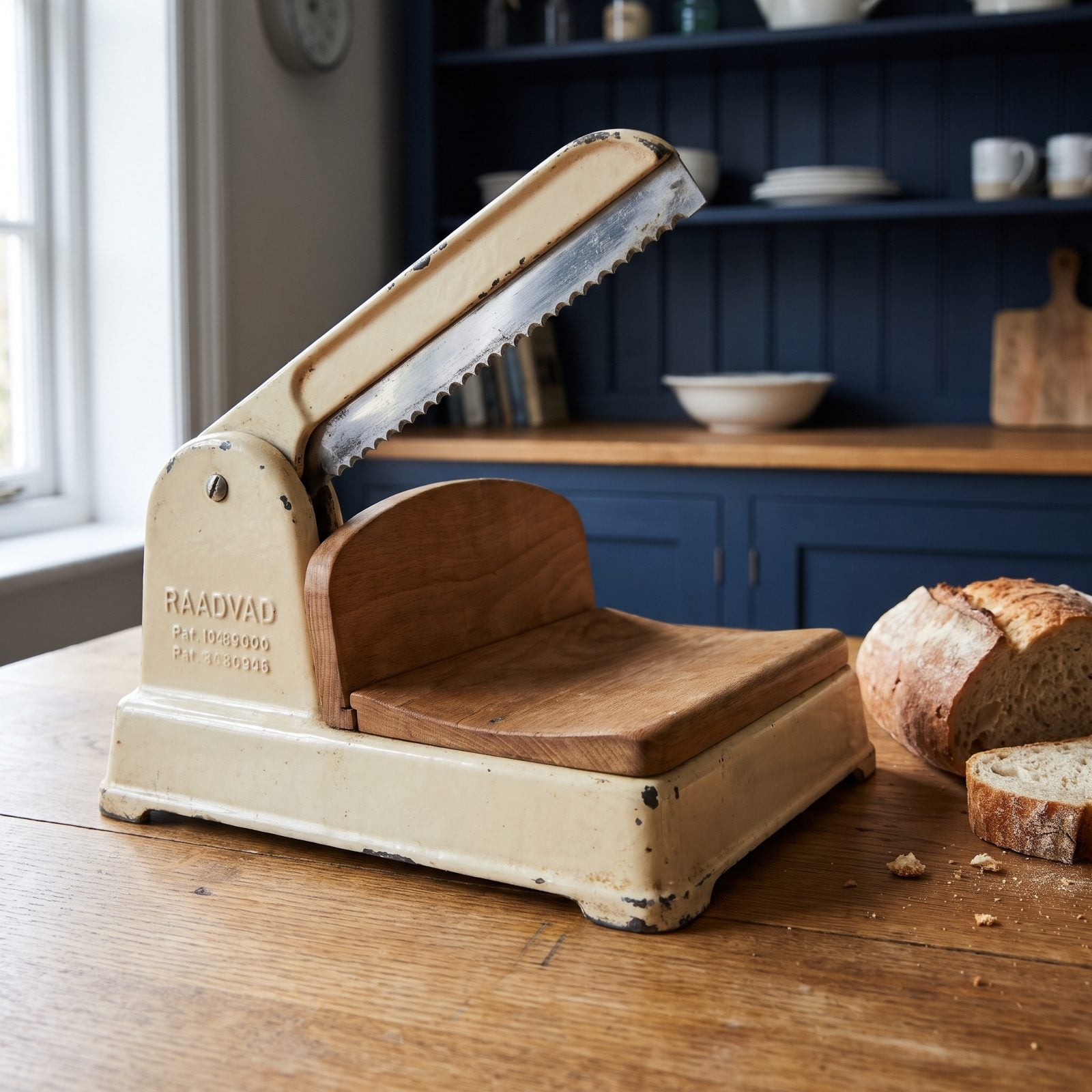
It looks like something from a design museum, and that’s exactly why it sells. The Raadvad slicer is a Danish cast-metal contraption with a hinged serrated blade that comes down like a tiny guillotine onto a curved bread platform.
Here’s the catch most sellers miss. The midcentury Danish originals in good enamel colors are the ones with real value, while later copies and tired, rusted examples are worth a fraction. Collectors of Scandinavian design will pay well for a clean red or cream one with a sharp blade.
Look for the Raadvad name stamped into the base, check the enamel for anything beyond honest wear, and test that the blade still bites. These rarely make it to the donation box once someone recognizes the shape.
33. The Enterprise Cast-Iron Sausage Stuffer Rusting in the Basement
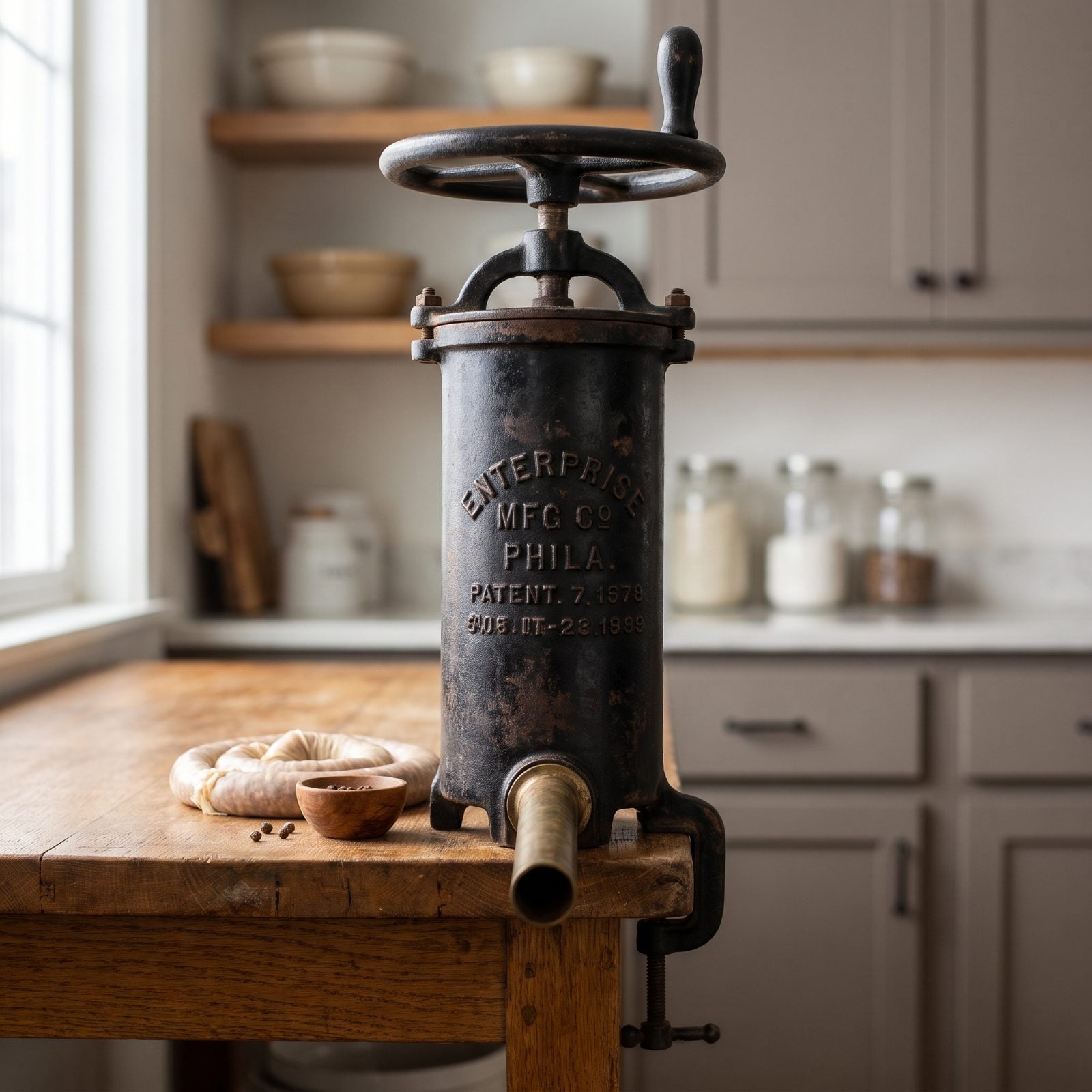
This is the heavy, intimidating one — a cast-iron cylinder with a crank wheel and a brass tube — and plenty of people haul it straight to the metal recycler without a second look.
Enterprise Manufacturing out of Philadelphia built these to outlive everyone, and they cast their name and city right into the body, though the patent lines below are often too worn to read.
Larger sizes with intact brass fittings and the original clamp fetch strong prices from home charcuterie folks and iron collectors alike. Missing parts and a cracked base kill the value.
Wipe it down, find the Enterprise mark and the “Phila.” casting, confirm the brass tubes are there, and check that the crank mechanism still drives. A complete one deserves a careful listing, not a scrap bin.
32. The Goodell Lightning Apple Peeler That Still Spins
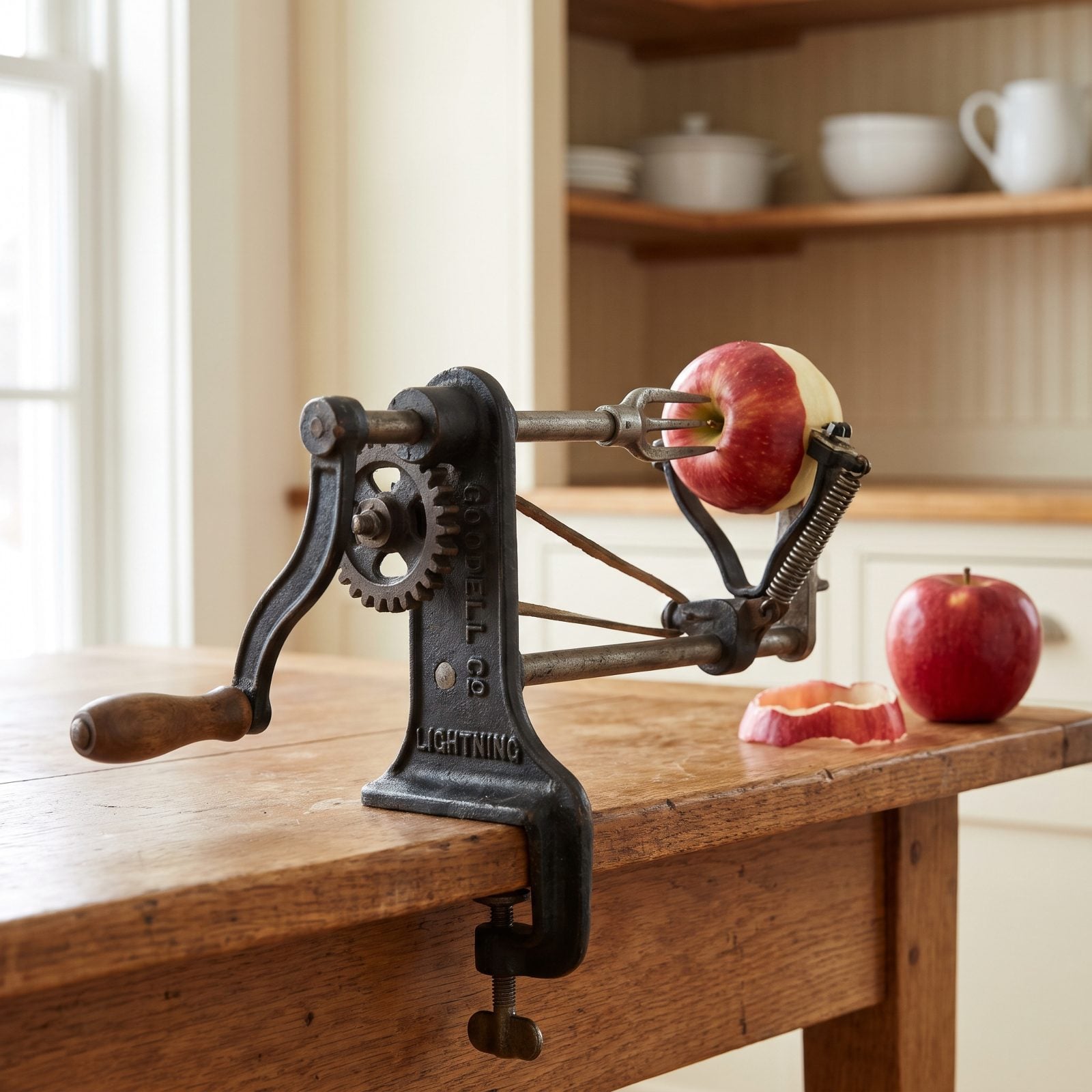
Small, geared, and often dismissed as rusty scrap, the Goodell Lightning peeler is a clockwork of cast iron that clamps to a table and strips an apple in seconds.
Goodell of Antrim, New Hampshire made several models. The earlier patent-dated versions, with their gear wheel and original parts intact, are the collectible ones. A missing part or a seized mechanism drops the price to almost nothing.
Find the Goodell mark and any patent date, confirm the forks and arm are present, then give the crank a turn to make sure it spins freely and the big gear wheel has no cracked teeth. Honestly? I’d keep one that works. They’re more satisfying to use than anything with a cord.
31. The De Laval Cream Separator That Looks Too Big to Be Worth Anything
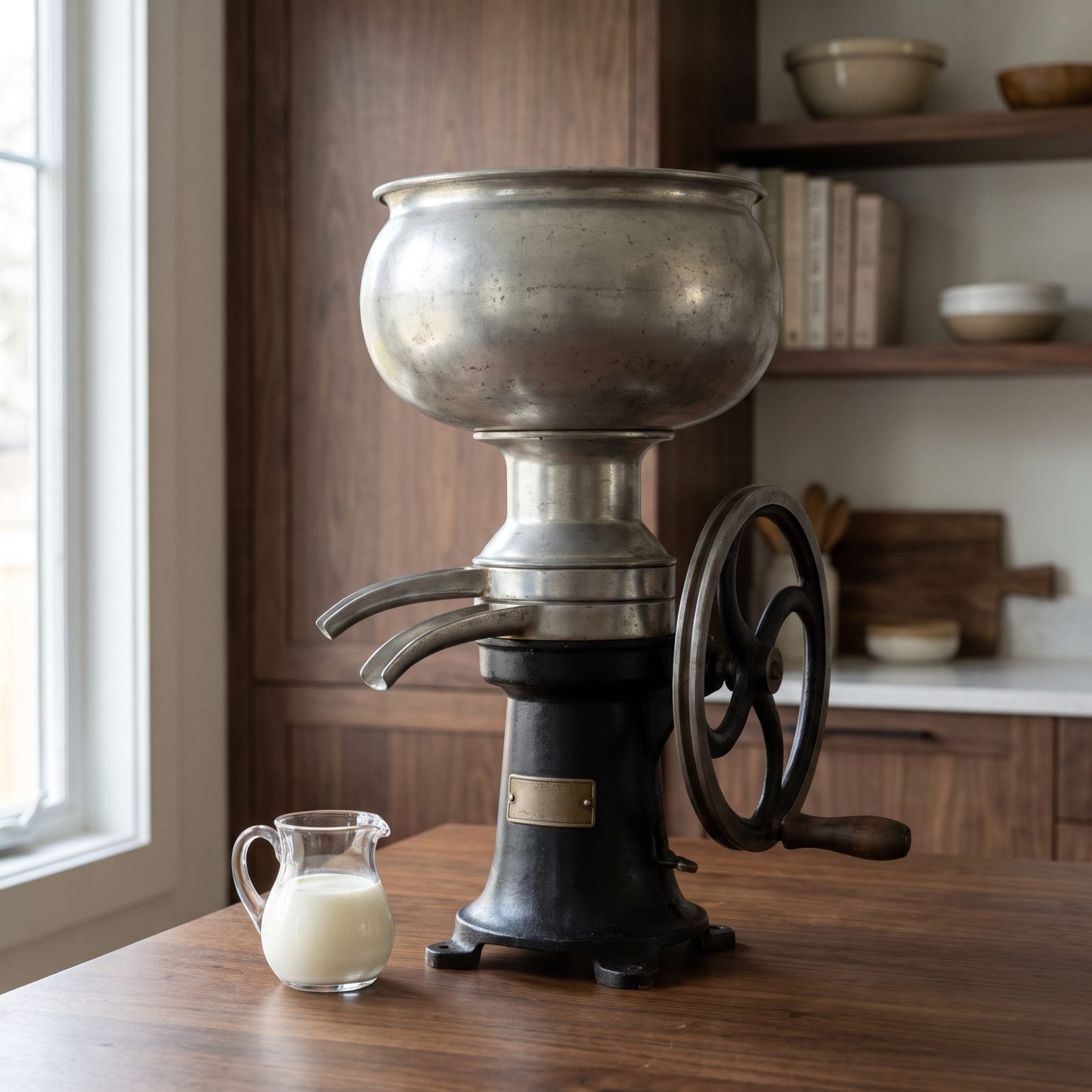
Big, odd, and usually the first thing the cleanup crew gives up on. A De Laval tabletop cream separator is a tin-and-iron machine with a crank, a tall feed bowl, and two spouts that split cream from skim milk.
De Laval was the name in dairy equipment, and collectors want complete, clean tabletop models with the maker’s plate and the internal disc stack intact. The tabletop sizes move better than the enormous floor units, which are a nightmare to ship and often worth more as decor than hardware.
Look for the De Laval badge, check that the disc stack inside is present, and confirm the crank turns the bowl. Even incomplete, the enameled signs and badges tied to these fetch their own money.
30. The Hamilton Beach Porcelain-Base Drink Mixer From the Soda Fountain Era
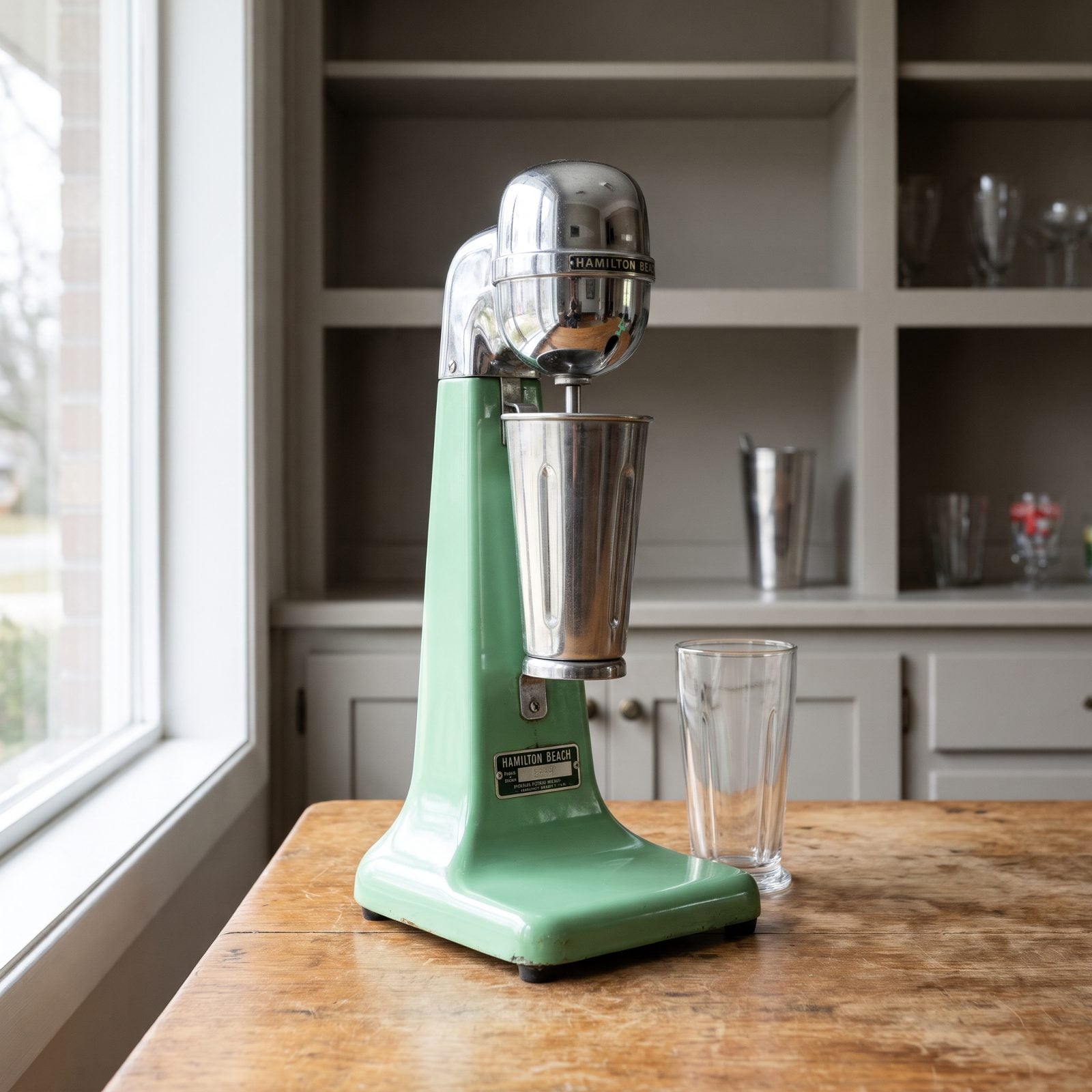
Picture the back counter of an old soda fountain, the whir of a malt spinning up. That machine was very likely a Hamilton Beach with a glossy porcelain-enamel base, and the survivors carry real nostalgia value.
The jadite-green and bright white porcelain bases are the prizes. Collectors of soda-fountain and diner memorabilia pay well for a complete mixer with its original chrome, spindle, and metal cup, especially if the porcelain shows no chips.
Inspect the enamel closely under light for chips and crazing, and test the motor if you can do it safely. A working green-base Hamilton Beach is a centerpiece, not a giveaway.
29. The Oster Beehive Blender Everyone Underestimates
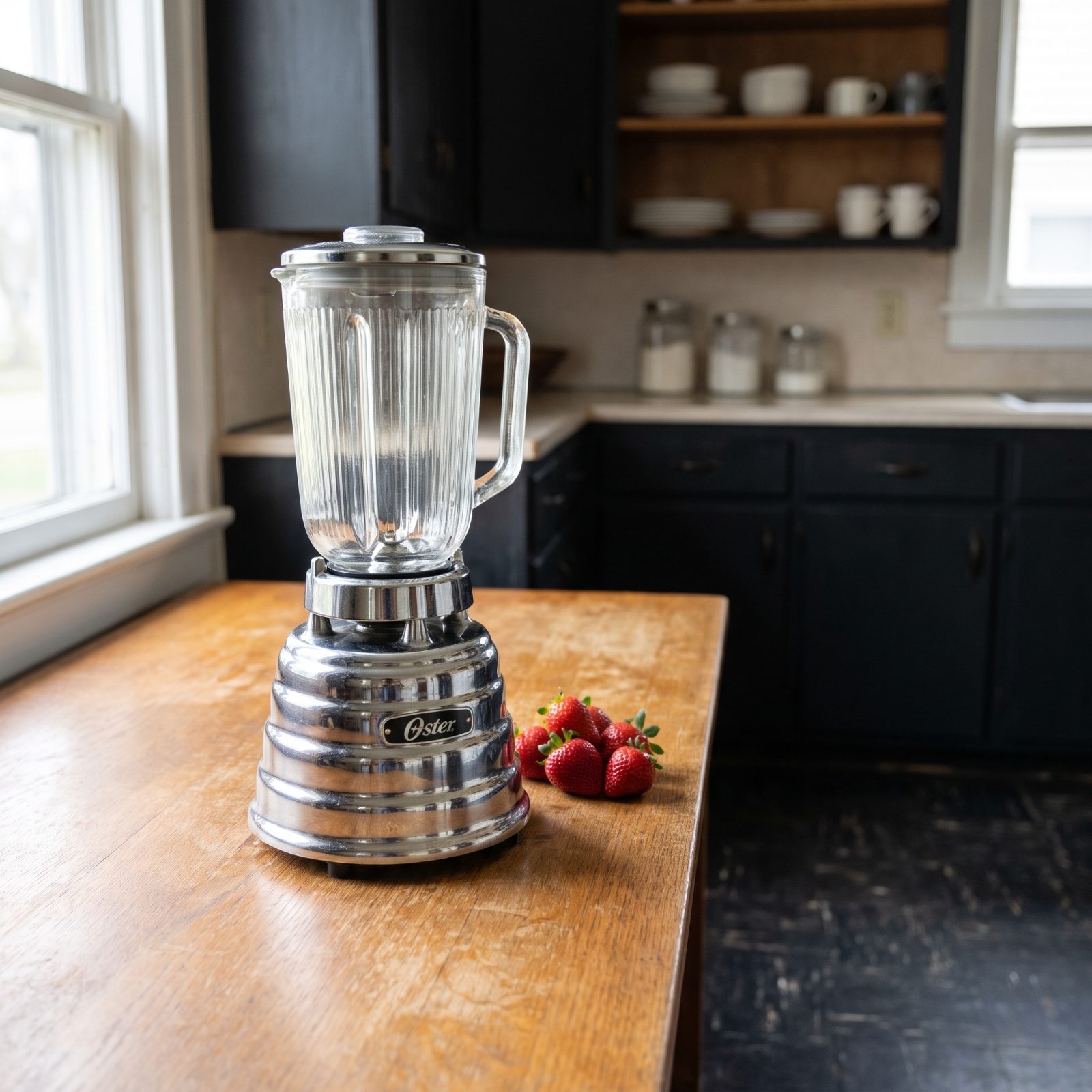
That ridged chrome base shaped like a stack of rings is one of the most recognizable kitchen silhouettes ever made. People still donate them for five dollars.
The Oster Beehive earned its reputation on a metal base heavy enough to anchor a boat and a motor that keeps running for decades. A clean chrome base with its original ribbed glass jar, matching lid, and a working blade assembly is a design object collectors actively hunt. Cloudy jars and cracked lids drag the price down.
Polish the chrome gently, check the glass jar for cracks and clouding, confirm the lid fits, and plug it in to hear that motor. Of everything here, this one hides in plain sight the most.
28. Toastmaster Chrome Pop-Up Toaster
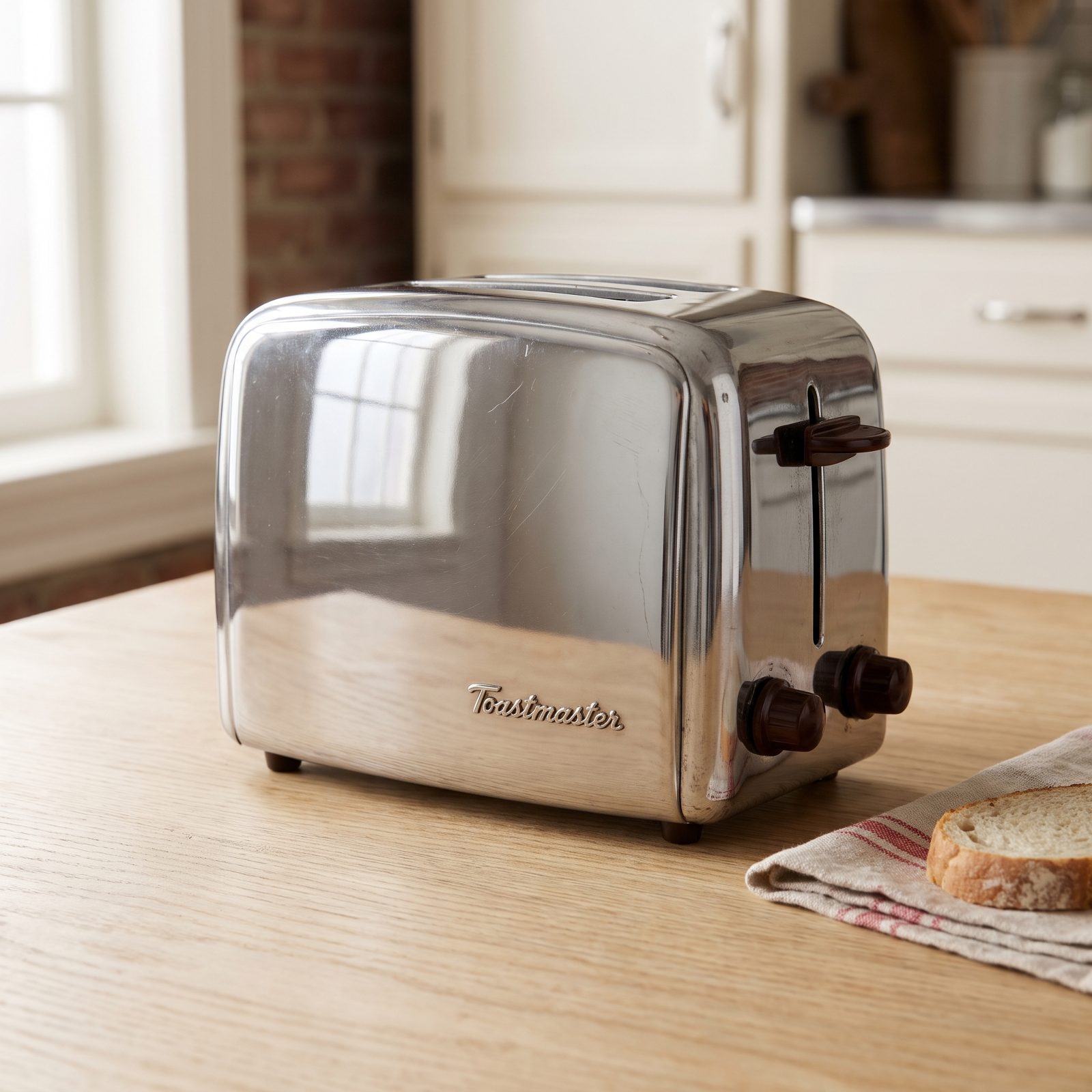
That heavy little chrome loaf sitting at the back of a relative’s counter is probably a Toastmaster, and people hand them to Goodwill every week without a second look. The early automatic pop-up models from the 1920s through the 1940s are the ones that matter — they were among the first toasters that timed themselves and spat the bread up on their own. At a breakfast table used to charred toast and swearing, that was a small miracle.
Check the base for a model number and a patent date. The Model 1A1 and the rounded deco bodies with bakelite knobs are the collectible ones. A clean, working example with intact cord and crisp chrome can bring real money. A dented, rusted one is a paperweight. Condition is everything.
27. Silex Glass Vacuum Coffee Maker
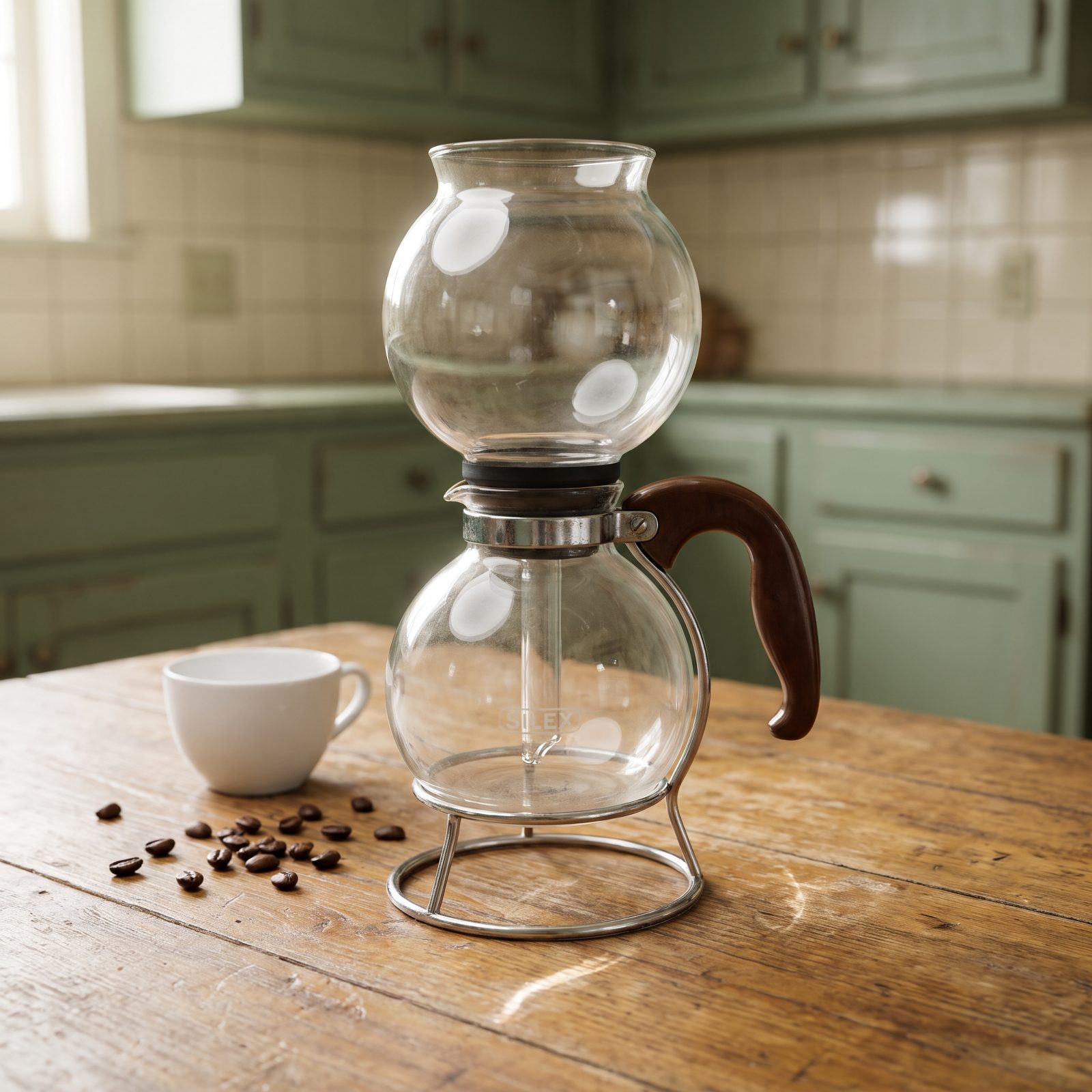
You’ve seen one of these and assumed it was a laboratory flask somebody kept for decoration — two glass globes stacked like an hourglass, a chrome stand, a little side handle. It’s a Silex vacuum coffee maker, and it made some of the best coffee anyone brewed before the drip machine flattened the whole category.
Water boils in the bottom, vapor pressure pushes it up through a cloth or glass filter, then, as the bottom globe cools, the vacuum pulls it back down. The ones from the 1920s and 1930s with the original filter rod and intact glass are worth researching before they hit the donation box. Cracked glass kills the value instantly, so hold them to the light and check the seams.
26. Atomic Stovetop Espresso Maker
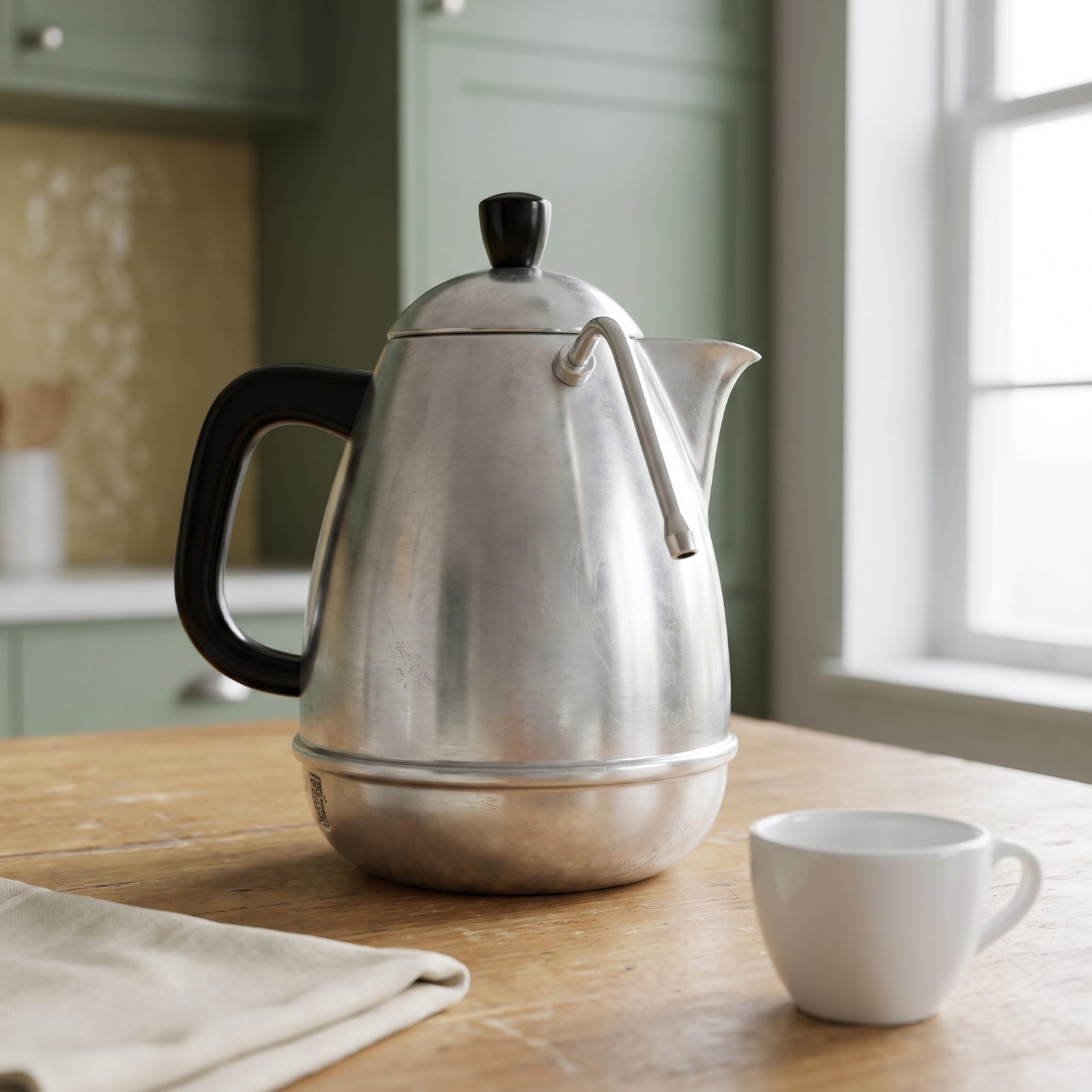
This is the gadget that fools everyone.
It looks like a prop from a 1950s science fiction set, all rounded aluminum and chrome steam spouts, and most people have no idea it’s a serious piece of espresso history. Styled after postwar Italian designs, it’s a sealed stovetop machine that builds steam pressure to brew espresso and froth milk at home. It predates nearly every countertop machine in your neighbor’s kitchen.
The original Italian-made versions with the correct steam wand and intact gaskets get snapped up by collectors and restorers who will happily rebuild them. Reproductions exist. Look for the maker’s casting marks and the quality of the aluminum before you decide what you’ve got.
25. Russel Wright Spun-Aluminum Tea Kettle
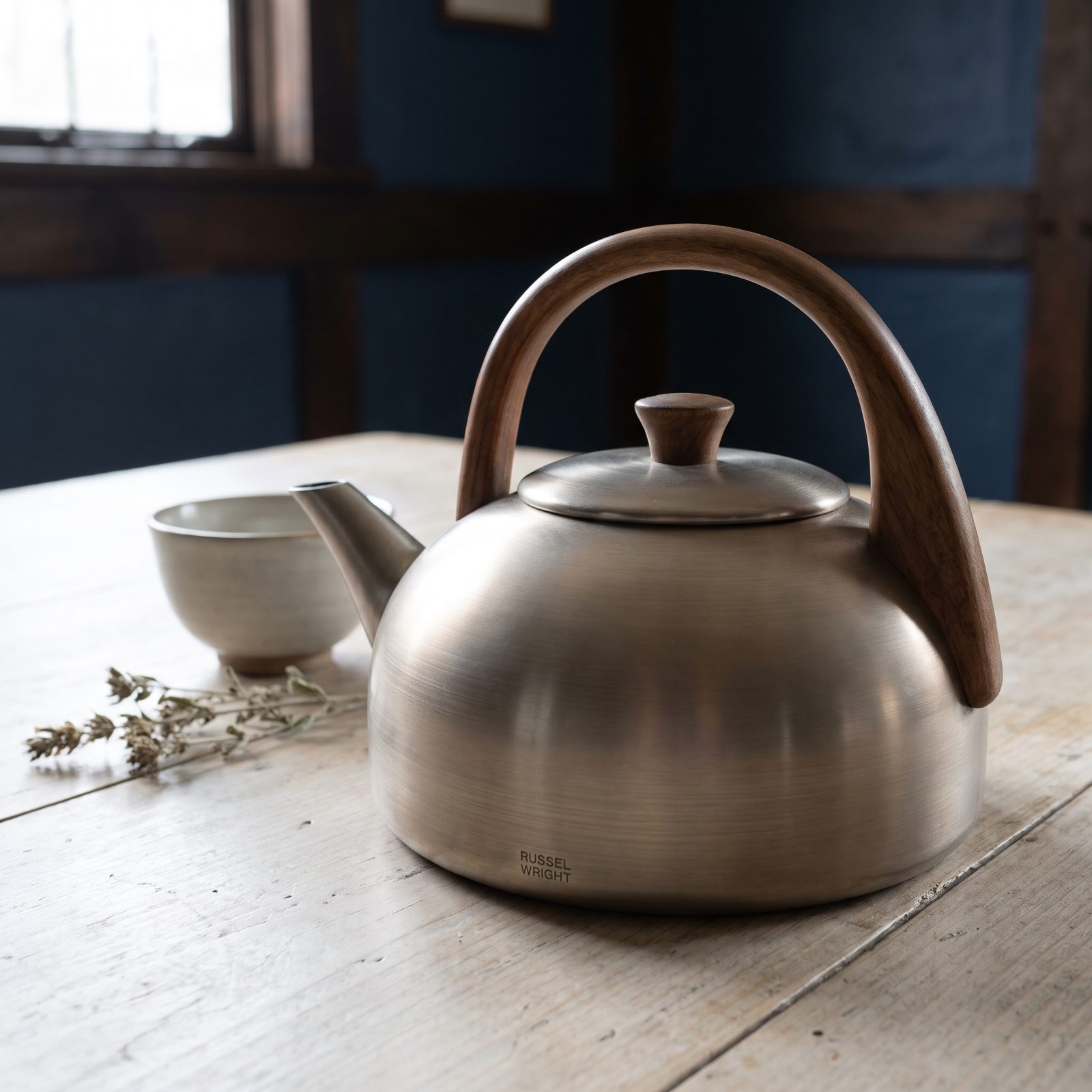
Russel Wright is a name most people in the kitchen never learned, and that’s exactly why his pieces slip out the door for a dollar at estate sales. He was one of the first American industrial designers to become a household name, and his spun-aluminum kettles and serving pieces from the 1930s are collected hard today.
Look for his signature stamp on the base. The spun aluminum has a soft hand-turned quality, and the handles were often sculpted wood. A marked Wright piece in honest condition deserves a proper identification before anyone treats it as scrap metal. I’ve watched people toss these because the aluminum “looked cheap.” It wasn’t. It was ahead of its time.
24. Gorham Sterling-Silver Tea Strainer
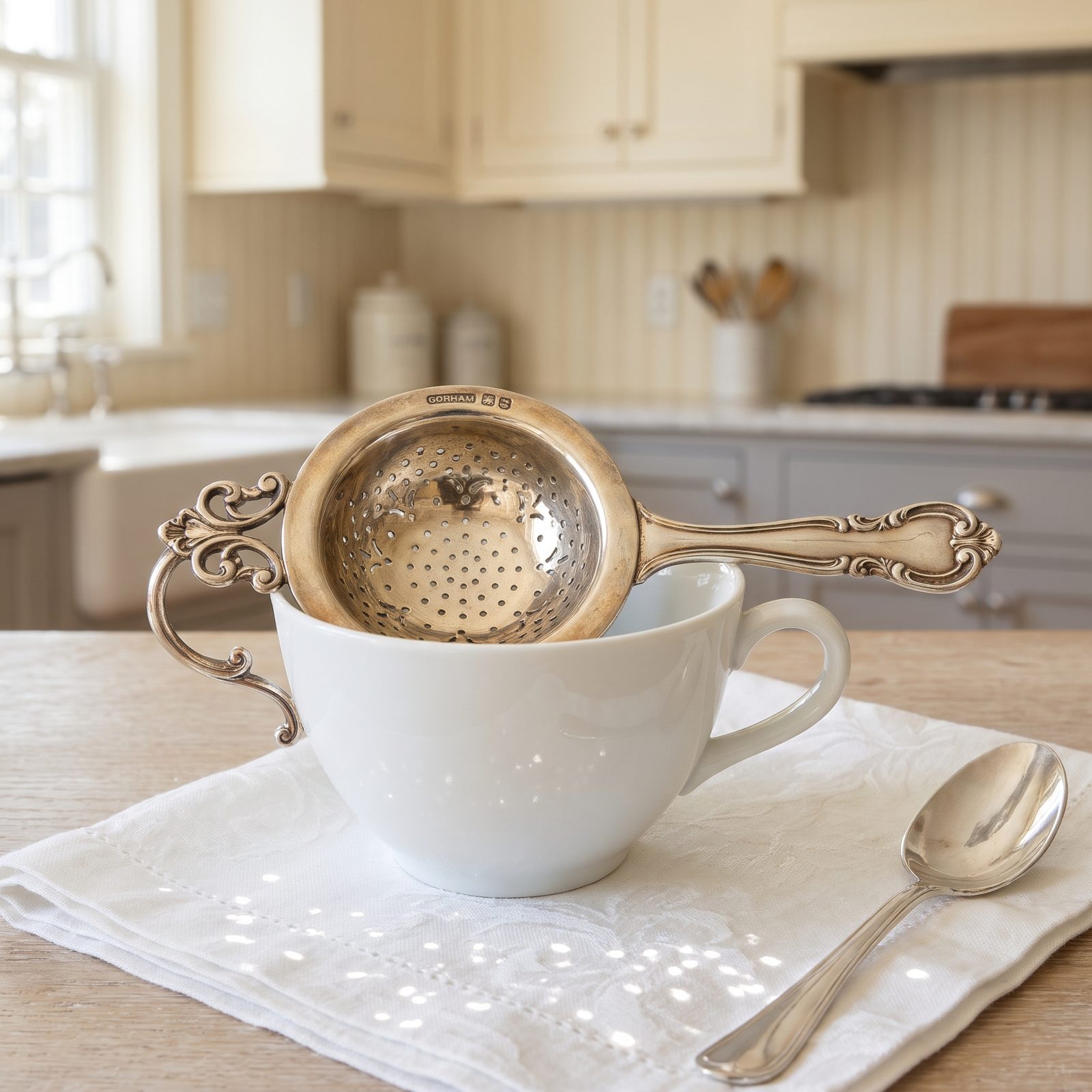
A little pierced silver bowl with a handle, sitting loose in a drawer of mismatched flatware. People assume it’s plated junk and run it to the donation bin with the rest. Flip it over and look for the Gorham lion-anchor-G mark and the word Sterling. If it’s there, you’re holding solid silver.
Sterling tea strainers from the late 1800s and early 1900s carry value as both antiques and scrap, which means they almost never belong on the thrift-store table. The pierced patterns were done by hand, and a marked Gorham example in good shape finds buyers fast.
23. Victorian Steel Sugar Nippers
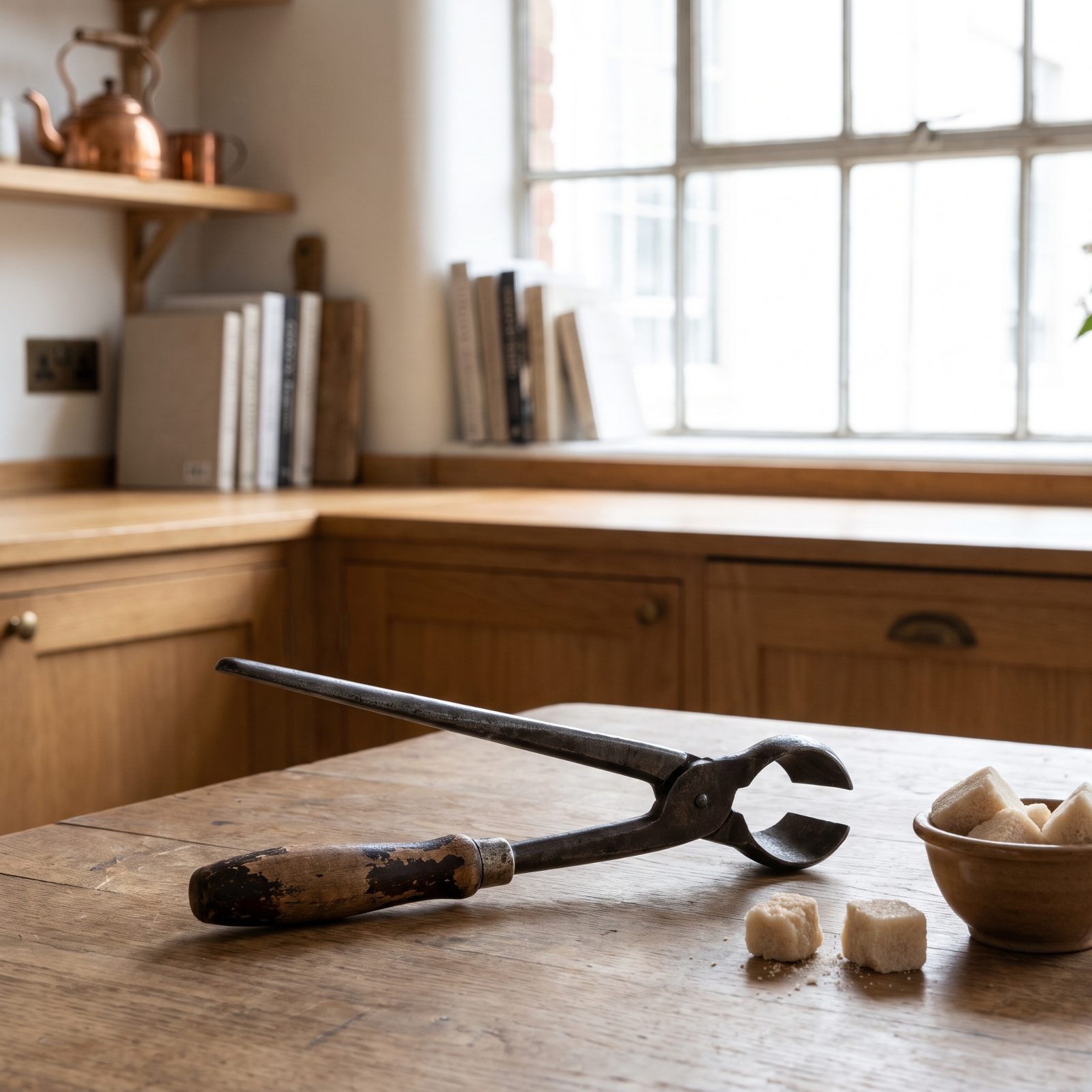
Here’s a tool nobody recognizes anymore, because the thing it was built for vanished. Sugar used to come as a hard cone — a sugar loaf — and you broke pieces off with these heavy steel pincers. They look like strange pruning shears or pliers, which is exactly why they get mistaken for garage junk and tossed.
Victorian examples, hand-forged with decorative handles, are collected by people who research kitchen history. The nicer ones have shaped grips and fine jaws. A good antique pair is worth identifying before it goes to the metal recycler as mystery iron.
22. French Zig-Zag Concertina Corkscrew
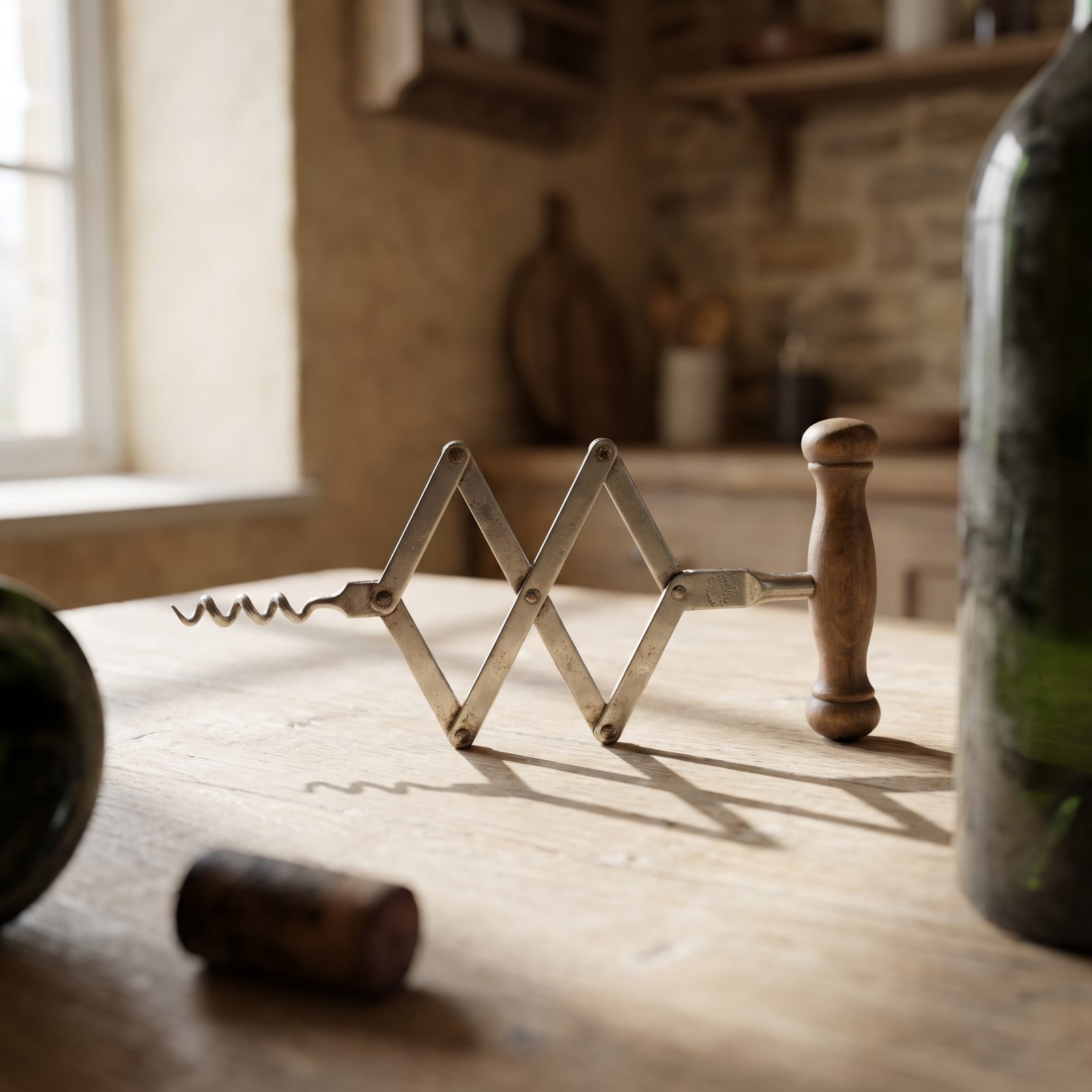
The one that looks like a tiny accordion.
Collectors call it the Zig-Zag, a French concertina corkscrew patented in the early twentieth century that opens into a lattice of folding steel arms. You plant the worm, squeeze the handles, and the lazy-tong mechanism walks the cork straight out. It’s one of the cleverest bits of kitchen mechanics ever to end up misidentified in a junk drawer.
Antique corkscrews are their own serious collecting field, and the mechanical ones bring the strongest prices. Check the stamped bracket near the handle for patent and maker’s marks. A working Zig-Zag with its original finish is never a throwaway.
21. Cast-Iron Rapid Bottle Capper
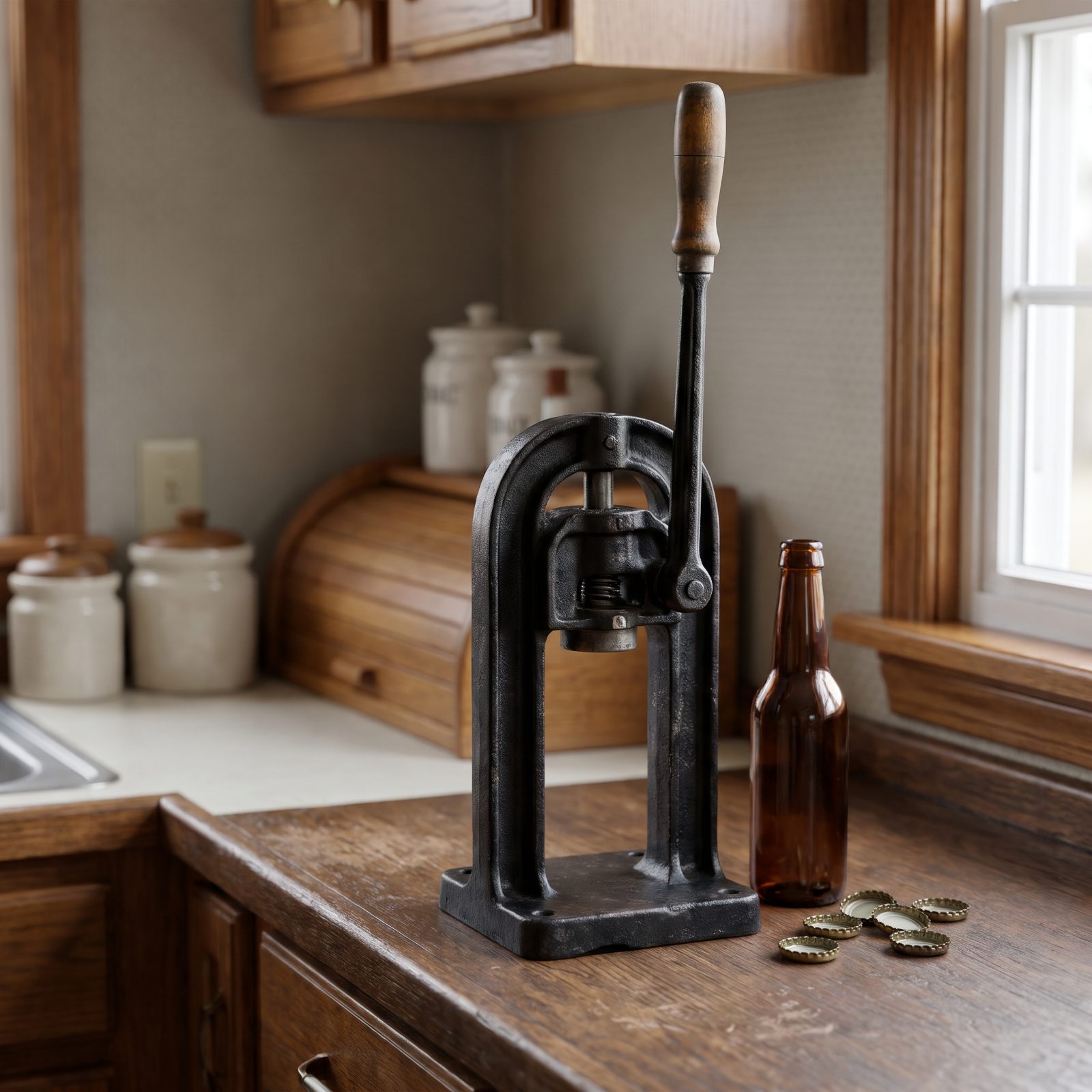
A chunk of black cast iron with a lever arm, rust-freckled and heavy, usually written off as a broken press or part of a vise. It’s a bottle capper — the kind that crimped crown caps onto home-bottled beer and soda back when people did that in the kitchen. These show up in basements and barns constantly.
The marked bench-mount models from the early 1900s carry collector interest, especially with the home-brewing revival. Look for raised maker names and patent dates cast into the frame. Clean off the surface rust gently, read the markings, and figure out what you have before it becomes scrap weight.
20. Champion Cast-Iron Lemon Squeezer
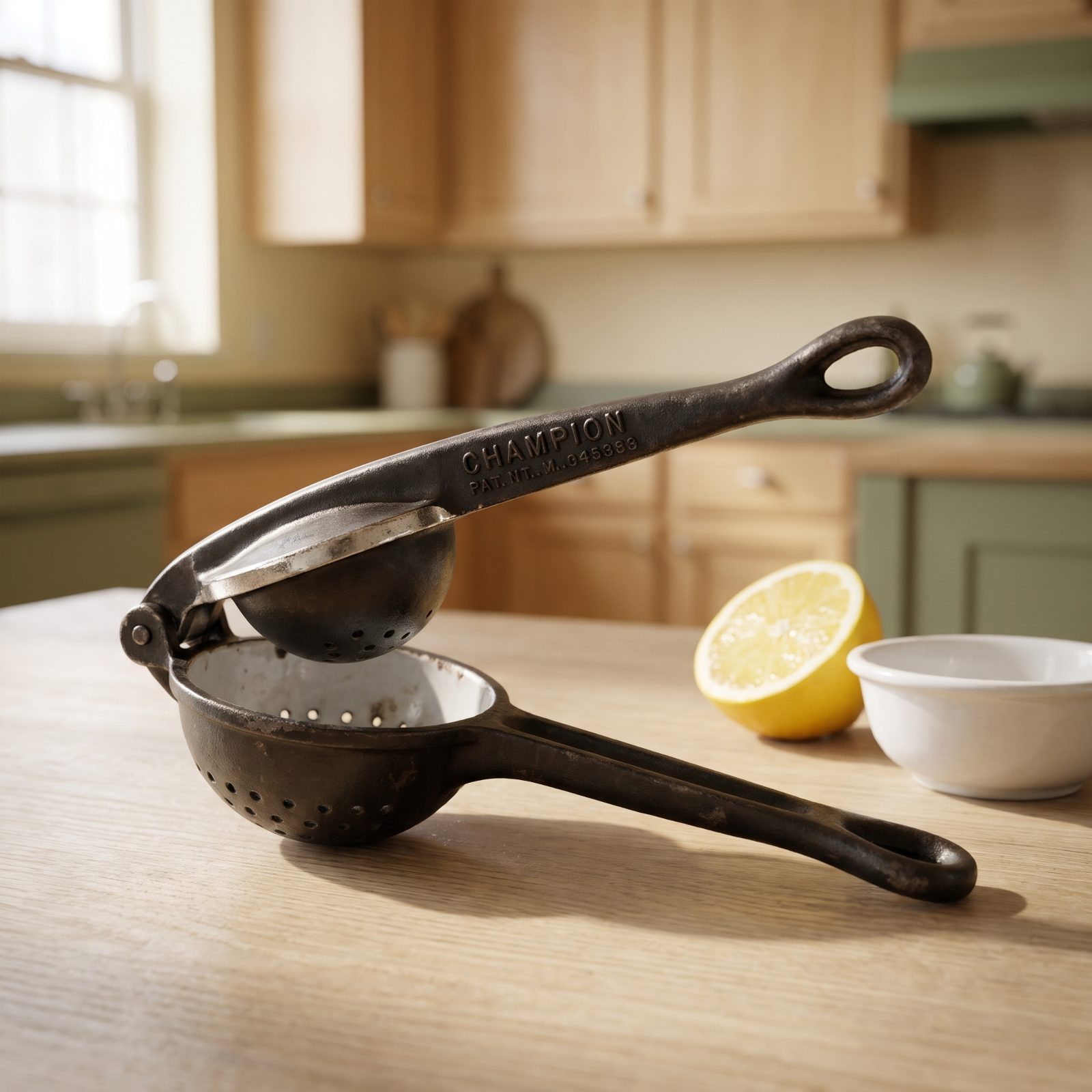
Cast-iron hinged squeezers turn up all the time, most of them unmarked and fairly common. The one worth stopping for carries a name like Champion or Arcade cast right into the arm, often with patent markings beneath it and sometimes a white porcelain-enamel lining in the juicing cup.
These late-1800s squeezers are collected both for kitchen nostalgia and for the quality of the casting. The enamel-lined versions in good shape are the keepers, since cracked or missing enamel drags the value down. Read the raised name on the arm before you decide it’s a worthless old hunk of iron.
19. Gilchrist No. 22 Ice Cream Scoop
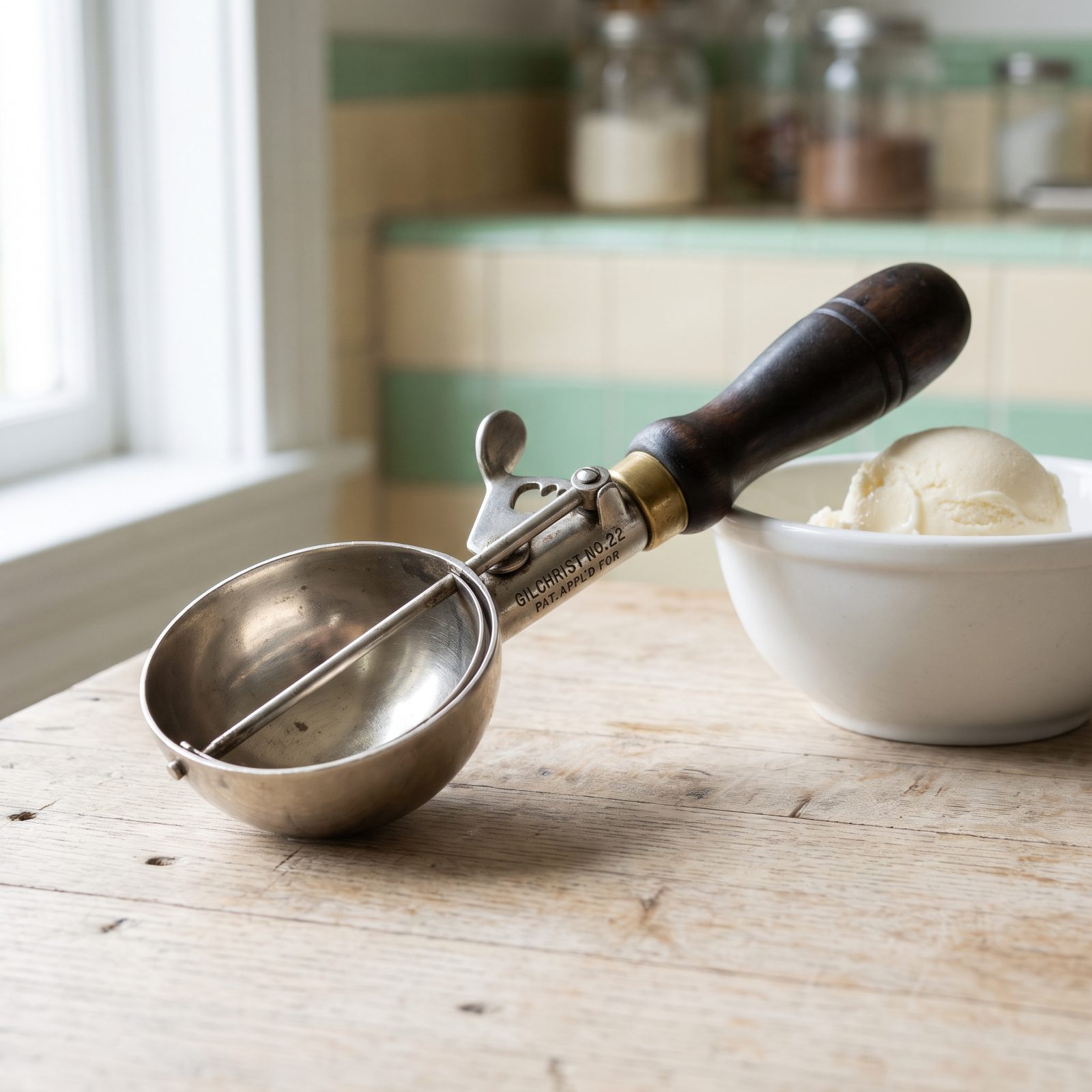
The soda-fountain scoop with the little thumb key on top of the handle is the one to catch before it disappears into a donation bag. Gilchrist made the famous No. 30 and No. 31, and the heavier No. 22 and other numbered models carry the same thumb-lever sweeper that cleared the ice cream out in one clean turn.
These early-1900s nickel-plated scoops are collected for their mechanical charm and their tie to the lost soda fountain. The handle carries a stamped mark, and that stamp is a good place to start. A working Gilchrist with a smooth key action deserves a proper look before anyone writes it off.
I’ll admit it — this is the one I’d keep for myself rather than research and resell. Some tools are just too good at the one thing they do.
A tool that still does its one job perfectly after a hundred years is not scrap. It’s a survivor, and it deserves someone who knows what it is.
18. White Mountain Hand-Crank Ice Cream Freezer
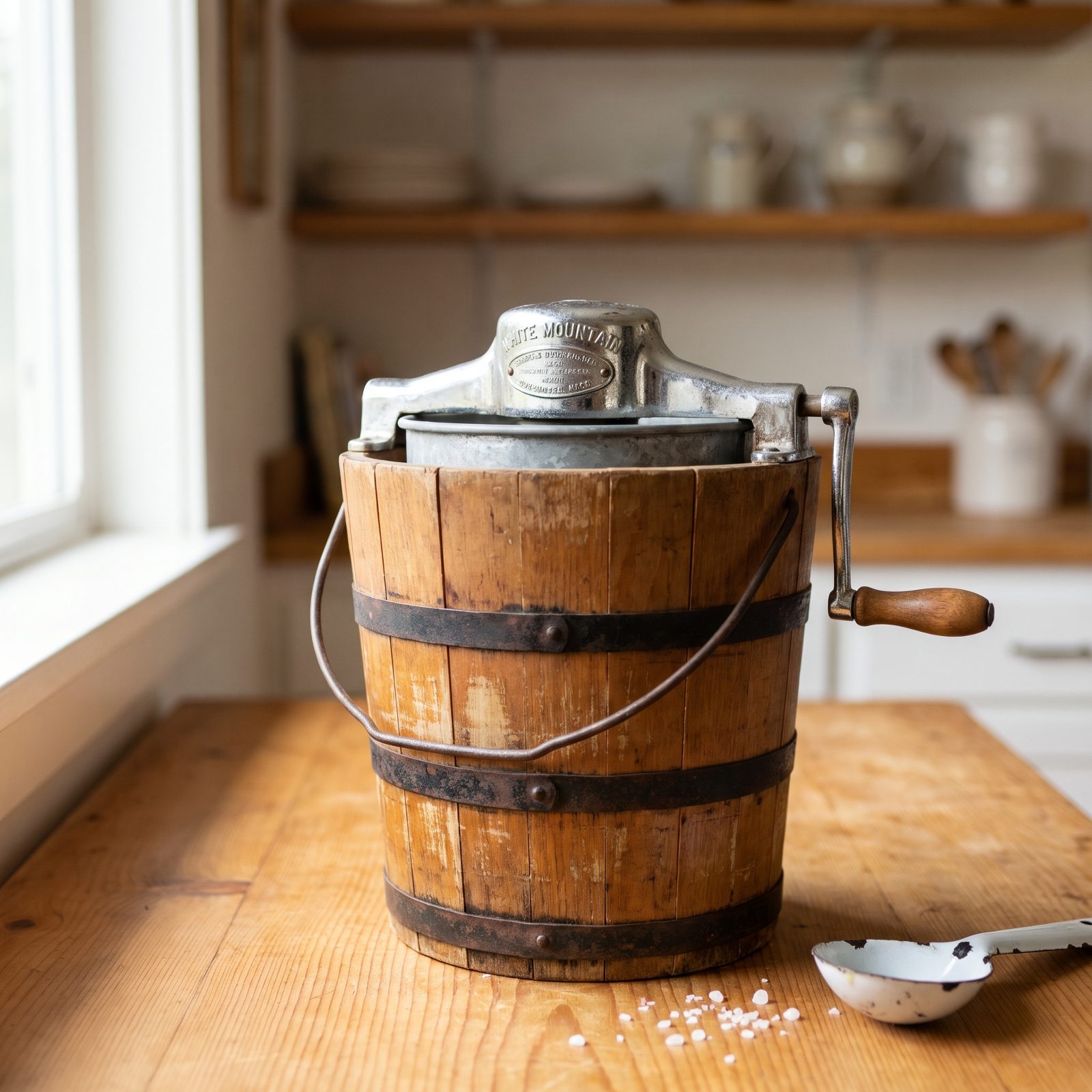
Spin the gear housing and it still turns. That slow churn of the snug-fitting canister in its wooden bucket is the whole reason Sunday afternoons slowed down in a lot of houses. White Mountain built these from 1853 onward in Nashua, New Hampshire, and collectors chase the wooden-bucket models with the triple-action gearing.
Check the gear housing for the embossed WHITE MOUNTAIN name cast across the top. A complete freezer with its original dasher, lid and galvanized canister runs well into three figures. Reproductions flooded the market in the eighties, so the giveaway is casting weight and hand-fitted wood staves. Light, thin wood and a stamped-steel crank? Later copy. Heavy, dense, slightly uneven staves mean you’re holding the real thing.
17. Wear-Ever Aluminum Cookie Gun
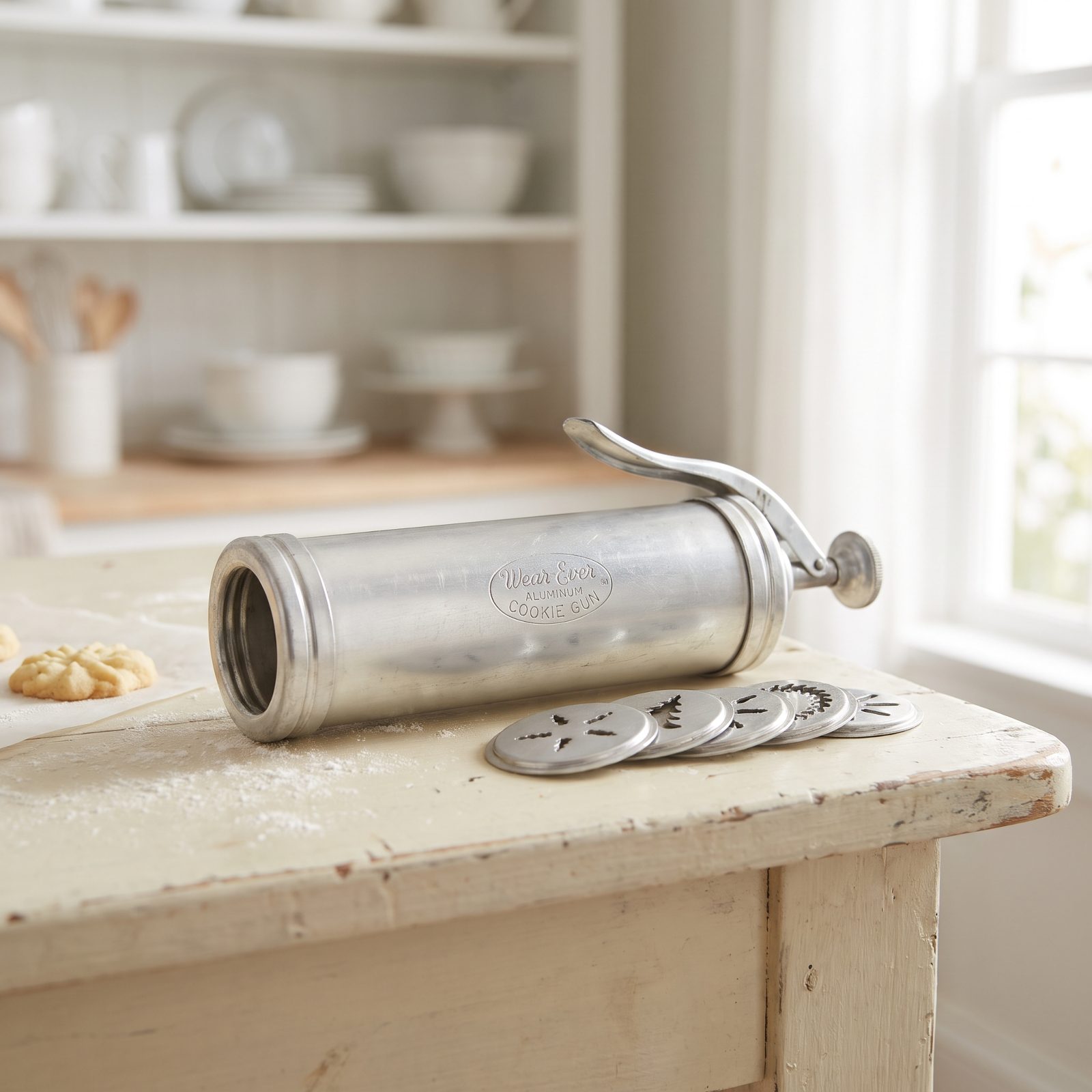
Most people see a dented aluminum tube and a bag of mystery metal discs and set it on the donate pile. Big miss. Wear-Ever, made by the Aluminum Cooking Utensil Company, turned out some of the best spritz presses of the mid-century, and a complete boxed set with all the original die discs and icing tips is harder to find than you’d think.
Value lives in completeness. Count the discs, check for the original tin or box, and look for the screw-type plunger versus the later trigger models. A full set with box and papers climbs past a parts-only find in a hurry. I passed on one years ago thinking it was junk aluminum, then watched a complete one sell for real money. Still annoyed about that.
16. Complete Figural Tin Cookie-Cutter Set
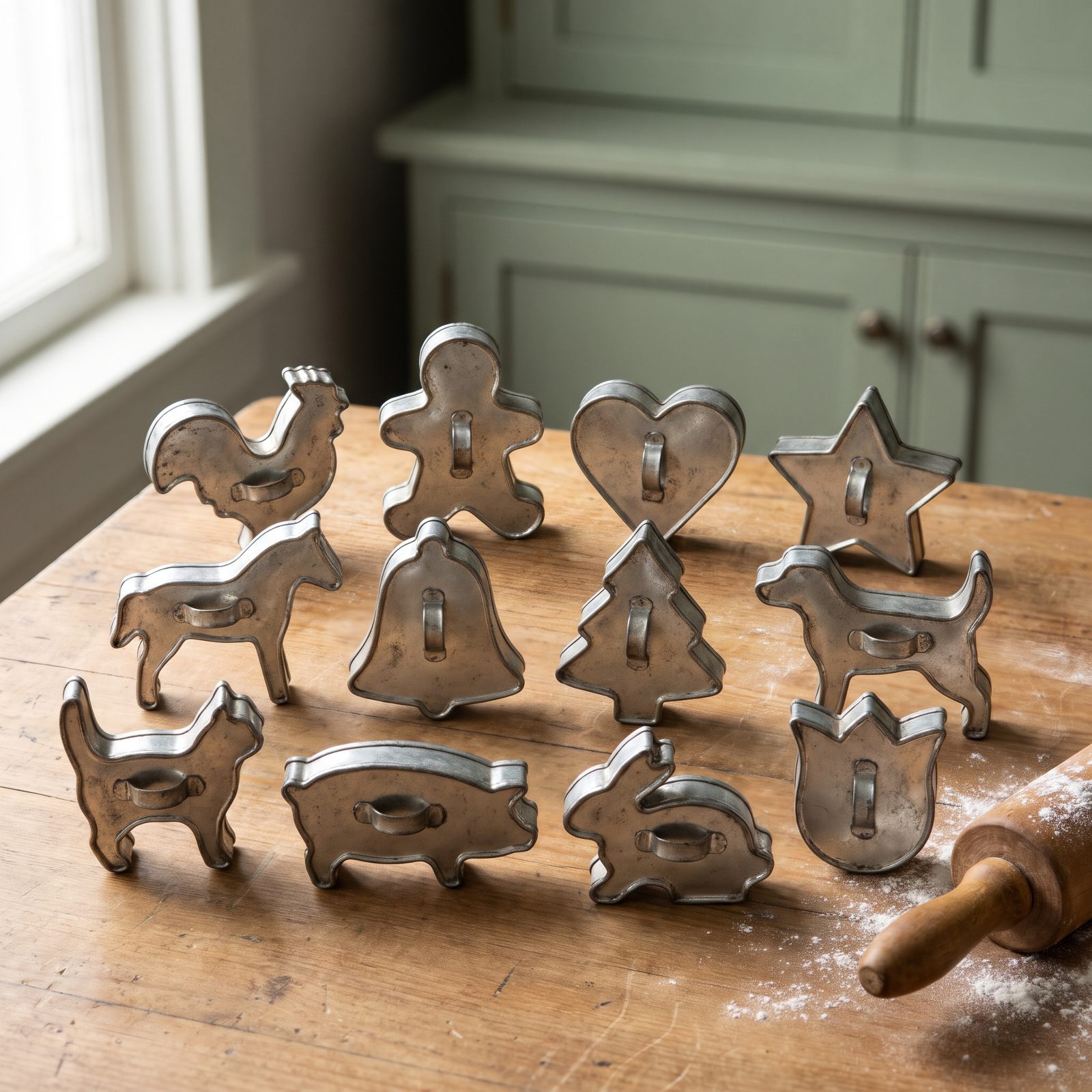
Hand-soldered tin cutters feel almost weightless, with a little strap handle brazed onto the back and seams you can see if you tip them to the light. Those are the old ones. The giveaway is the solder: early cutters were joined by hand with visible beads of metal, while later mass-produced ones have crisp machine seams and often an aluminum or plastic feel.
Figural shapes drive the value. Animals, people, hearts, and especially odd regional motifs. A matched set still in its original card or box is worth researching before it leaves the house, because Pennsylvania German tinsmith pieces can surprise you.
15. Hand-Carved Wooden Springerle Mold
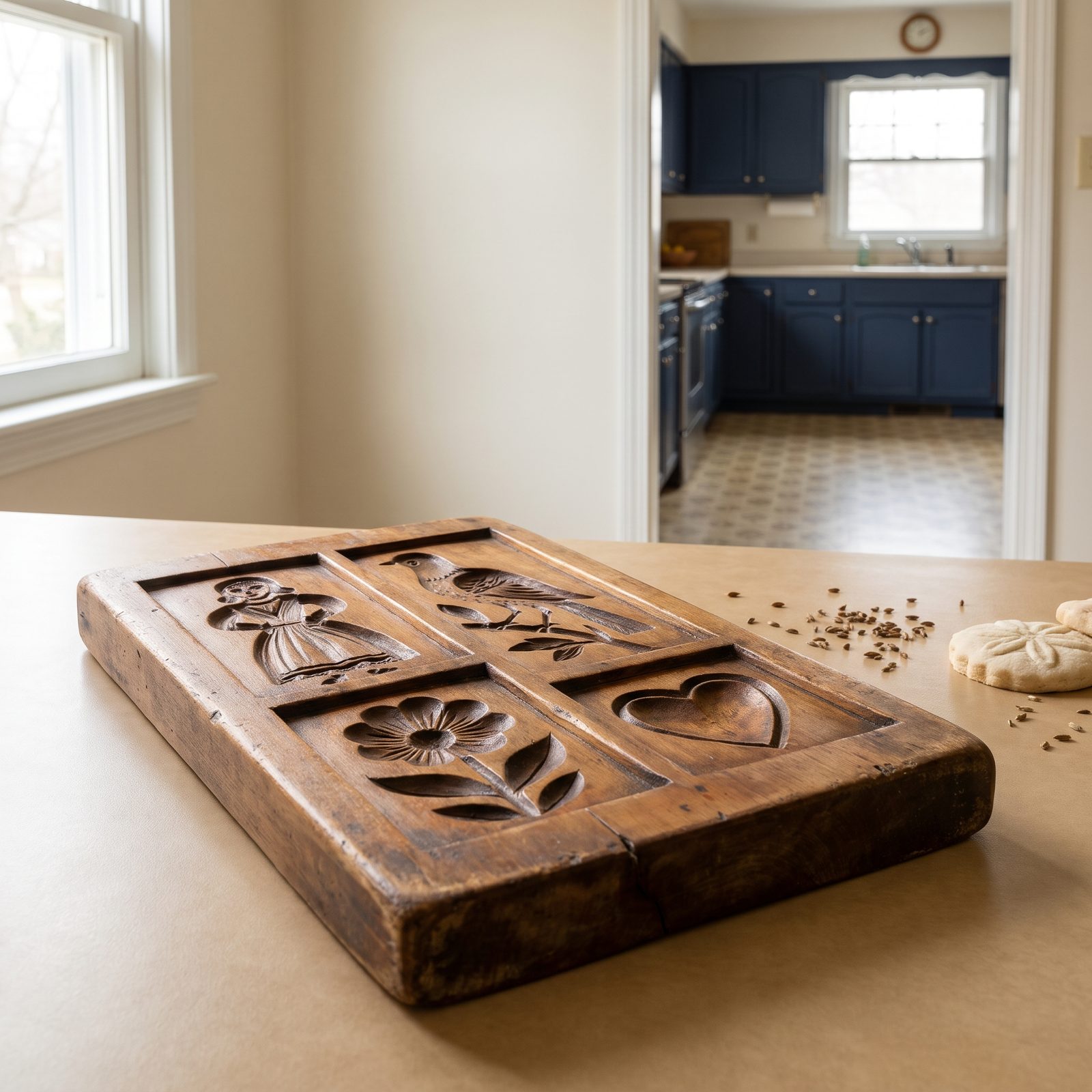
Run your thumb across a real springerle mold and you feel generations of anise dough in the worn hollows. These carved fruitwood boards, German and Alsatian in origin, pressed designs into dense cookies that held their picture through baking. The hand-carved antiques are getting rare, and people confuse them with modern resin and factory copies all the time.
What to look for: crisp carving, whether cut deep or left raised in relief, honest tool marks, a board darkened unevenly from handling and oil, and age-appropriate wear in the figures’ high points. Dated or signed examples from the eighteenth and nineteenth centuries are genuine collector pieces. Even an unsigned older board carries real value if the carving is fine and the subject is interesting.
14. Swedish Cast-Iron Rosette Set
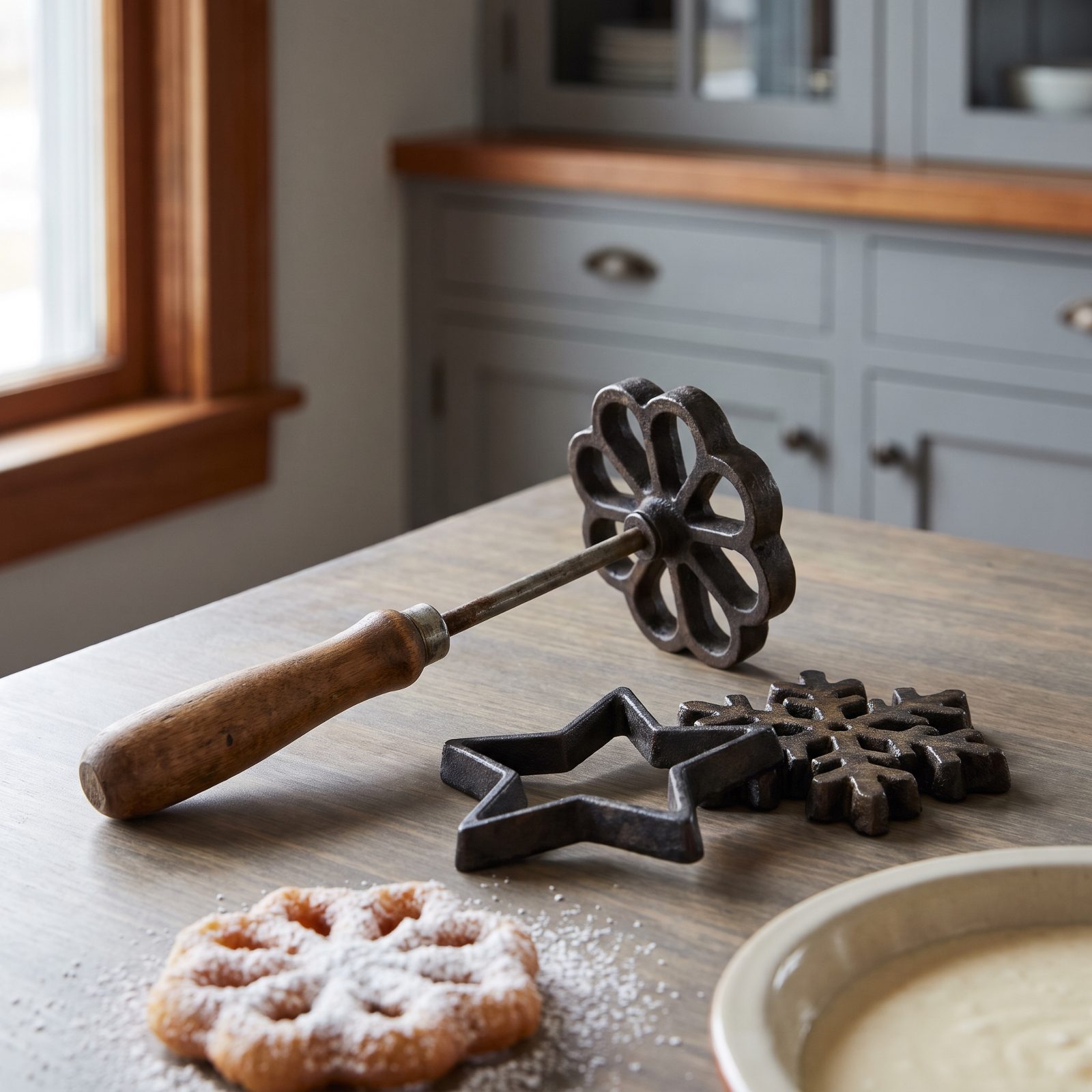
Those wafer-thin fried rosettes at Christmas came off irons exactly like this. A long handle, a threaded tip, and a set of ornate cast-iron forms you dip in batter and plunge into hot oil. Scandinavian kitchens leaned on them hard, and complete sets with multiple interchangeable shapes are worth a closer look before they get tossed.
Value sits in the full set: the handle, the collection of iron forms, and ideally the original tin or box. Older cast-iron forms with crisp detail beat the thin stamped-aluminum successors every time. Make sure the threads still mate and that no forms are missing from the carrier.
13. Ornate Victorian Copper Food Mold
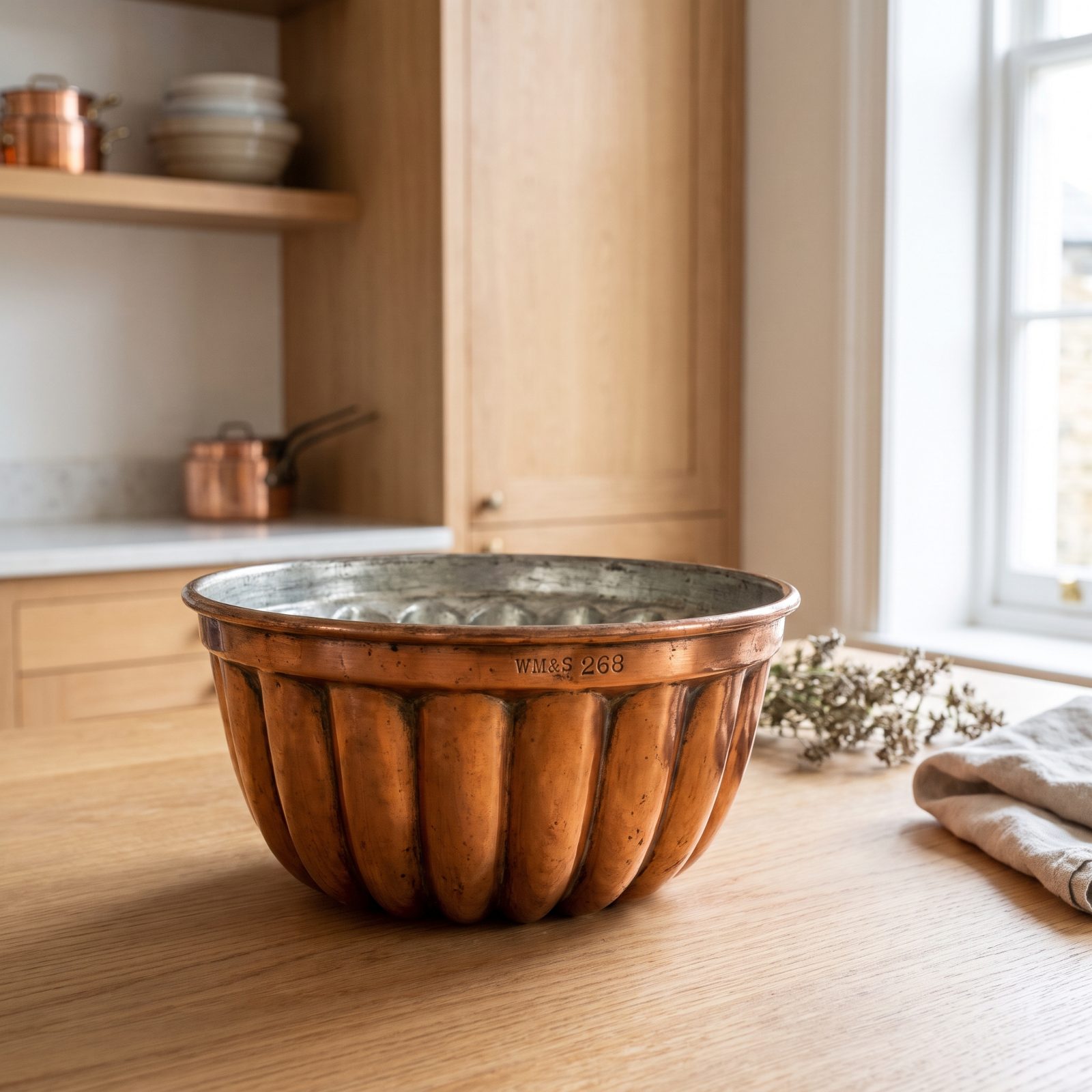
Heft tells the story first. Pick up a real Victorian copper mold and the weight surprises you. Heavy gauge copper, a tinned interior gone soft silver, often a maker’s stamp and a number pressed into the rim. Crowns, wheat sheaves, fish, and architectural shapes turned molded aspics and puddings into the centerpiece everyone stared at before dinner.
English makers like Benham & Froud and Jones Brothers command serious money, and the stamp is where the research pays off. Weigh it, read the rim, look for retinning history, and never let anyone talk you into stripping the patina. These get mistaken for decorative wall copper constantly, and the good ones are genuine antiques.
12. Carved Wooden Butter Mold and Press
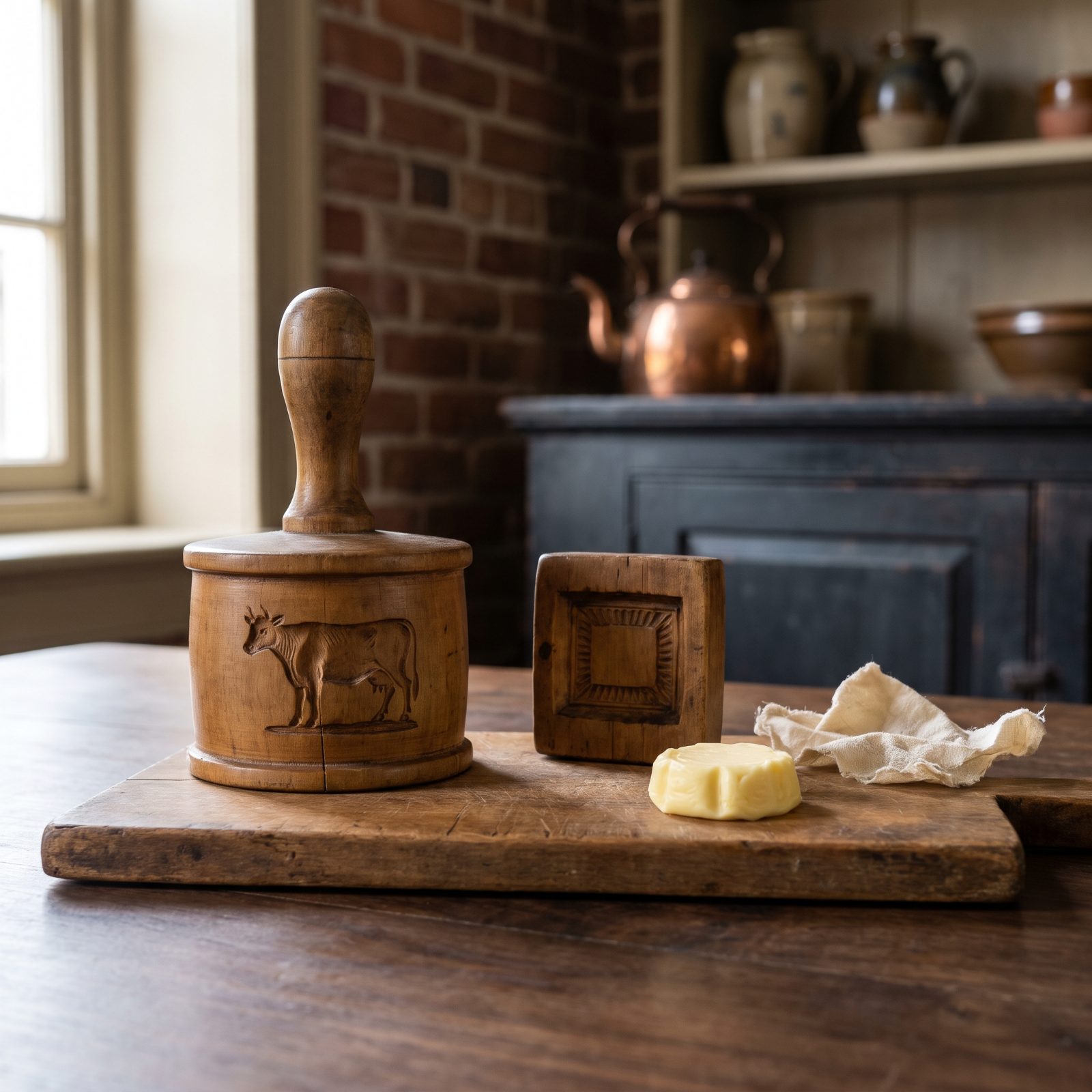
A farm family stamped its own mark on every pound of butter, and the mold that did it carried the household signature. Carved wooden presses, the plunger type with a design set into the face, pushed a picture into fresh butter before it went to market or the Sunday table. Cows, wheat, acorns, pineapples, and swans are the usual motifs.
Hand-carved examples with crisp detail and honest wear outvalue the turned factory ones. Look at the underside of the carved face: real age shows tool marks, darkened grain, and the faint sheen that only years of butterfat leave behind. Unusual subjects and regional patterns push the price past the common cow print.
11. Enterprise Tabletop Raisin Seeder
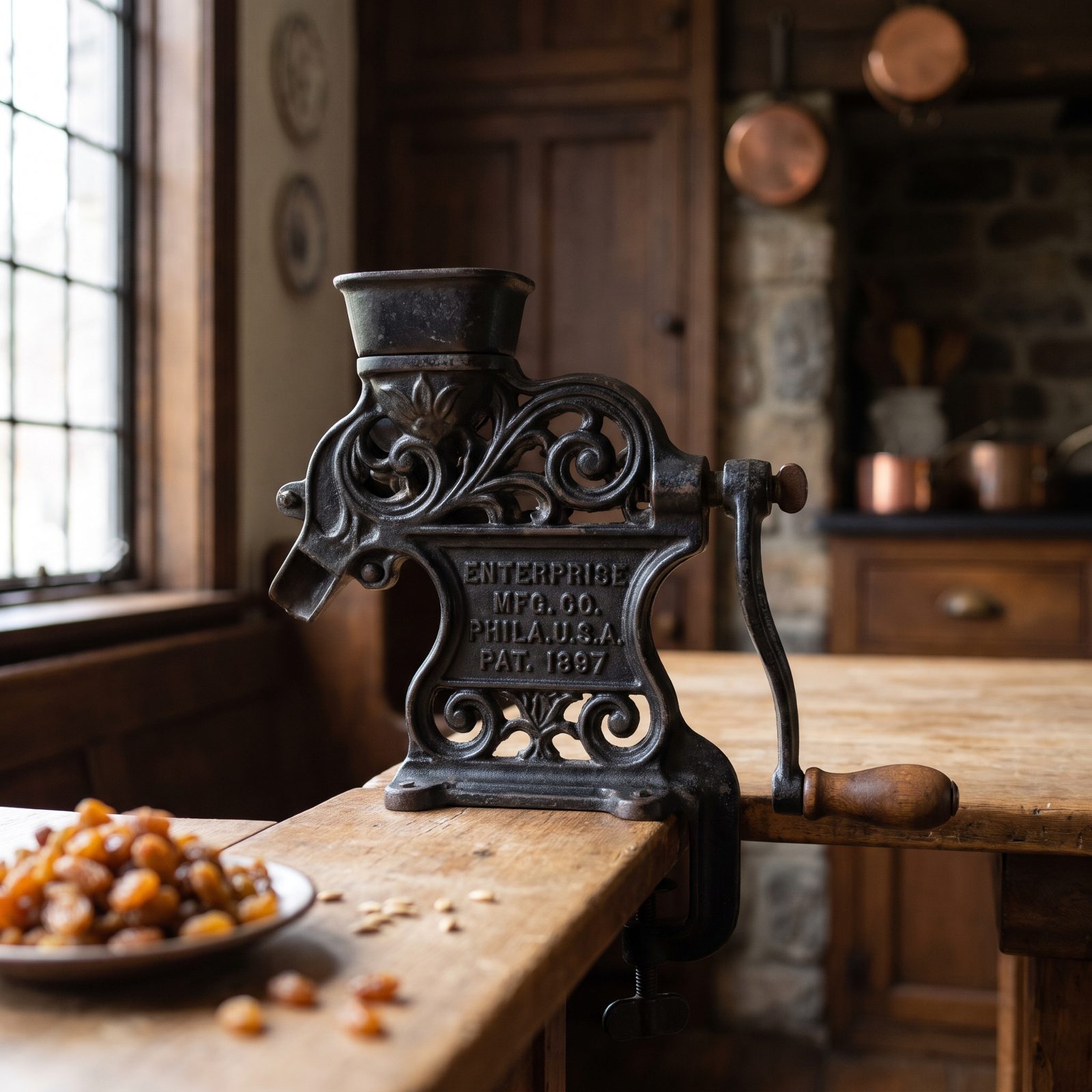
Half the people who find one of these can’t even tell you what it does. A raisin seeder, clamped to the table edge, cranked by hand, pulling seeds out of raisins back when raisins came with seeds in them. Enterprise Manufacturing of Philadelphia made the best-known examples, and the embossed name and patent date sit right on the body.
Odd function is exactly why they’re collectible. Enterprise kitchen gadgets, their cherry stoners, coffee mills, and seeders, have a devoted following, and the clamp-on cast-iron pieces with legible markings and a working crank hold steady value. The mechanism is simple, so the ones that still turn freely bring more than seized-up examples.
10. Black Hawk Hand-Crank Corn Sheller, Still Turning After a Century
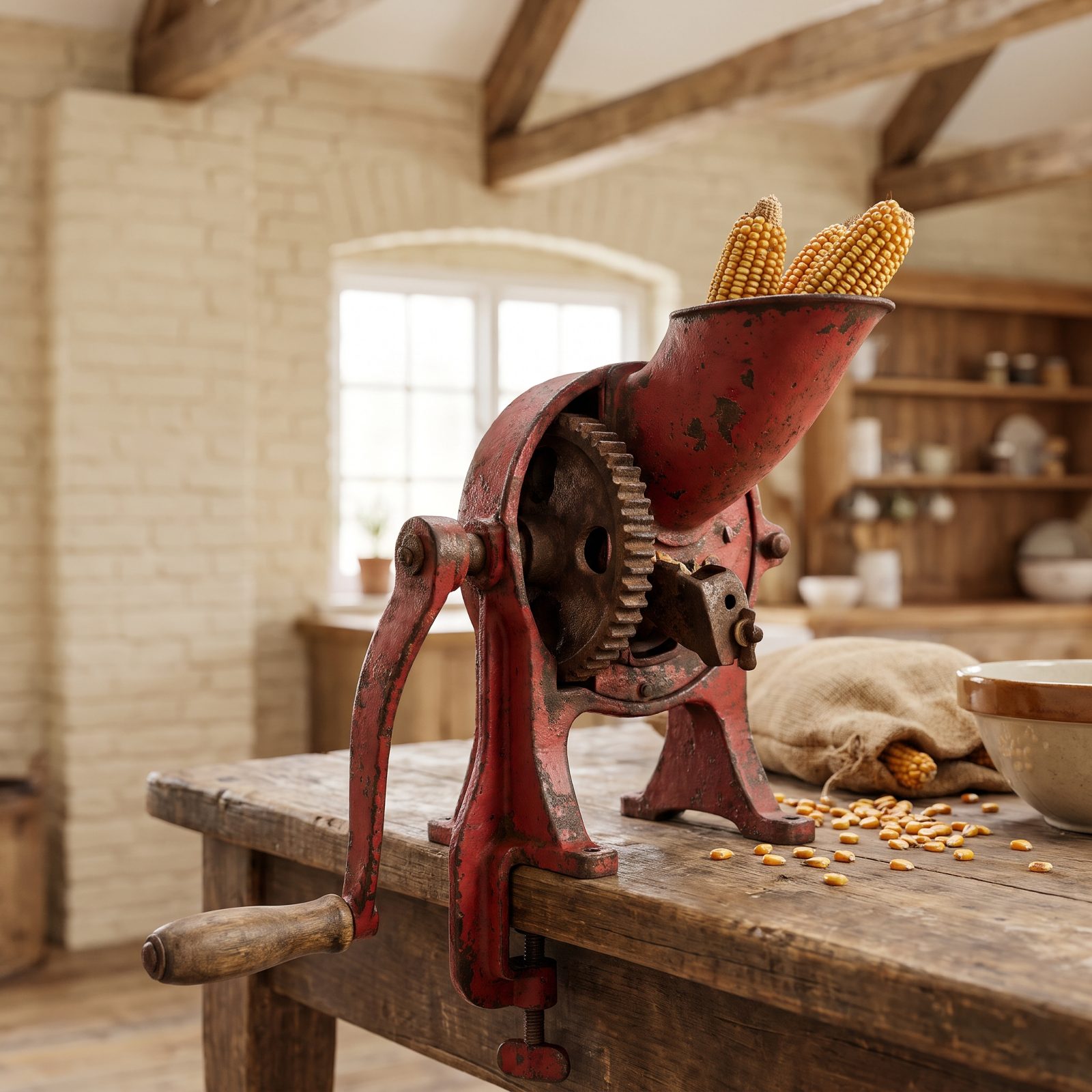
Found one of these clamped to a barn beam? The Black Hawk sheller strips kernels off a dried cob with one crank and a satisfying rattle, and collectors of farm primitives know exactly what they’re looking at.
People donate them for a dollar because they look like rusty gears. Big error. Original paint, a wooden handle that hasn’t split, and a free-spinning wheel can triple the value over a seized, repainted unit, and restorers absolutely hate when someone sands off the original factory finish.
Leave the paint alone. Oil the mechanism, confirm it turns, photograph the cast lettering before you decide its fate. A quick search of the model name tells you whether you’re holding ten dollars or a hundred.
9. The Wooden Cabbage and Kraut Cutter Pretending to Be a Cutting Board
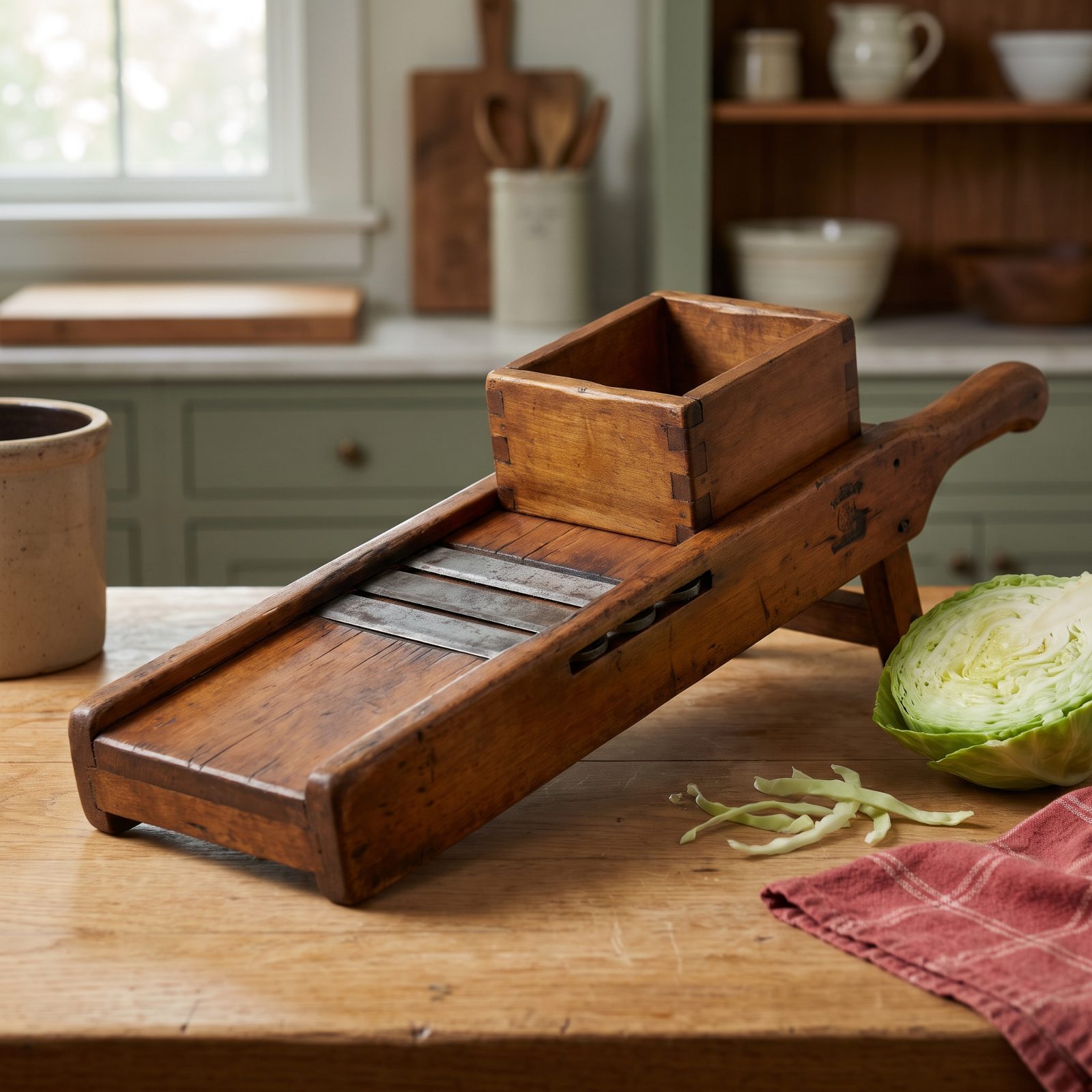
Long board, angled steel blade across the middle, a little sliding box that rides over the top. People assume it’s a homely cutting board and chop vegetables right on it. Wrong. It’s a kraut cutter, built to shred cabbage into a crock for fermenting, and the good ones carry a maker’s stamp burned or struck into the handle, with blades that should still bite.
Painted folk-art examples with carved hearts or dated inscriptions jump in value fast.
Whatever you do, don’t scrub it to bare wood. Check the handle for a mark, check the blade for a maker, and photograph any carving before it ends up holding tomatoes.
8. Cast-Iron Coconut Grater That Looks Like a Torture Device
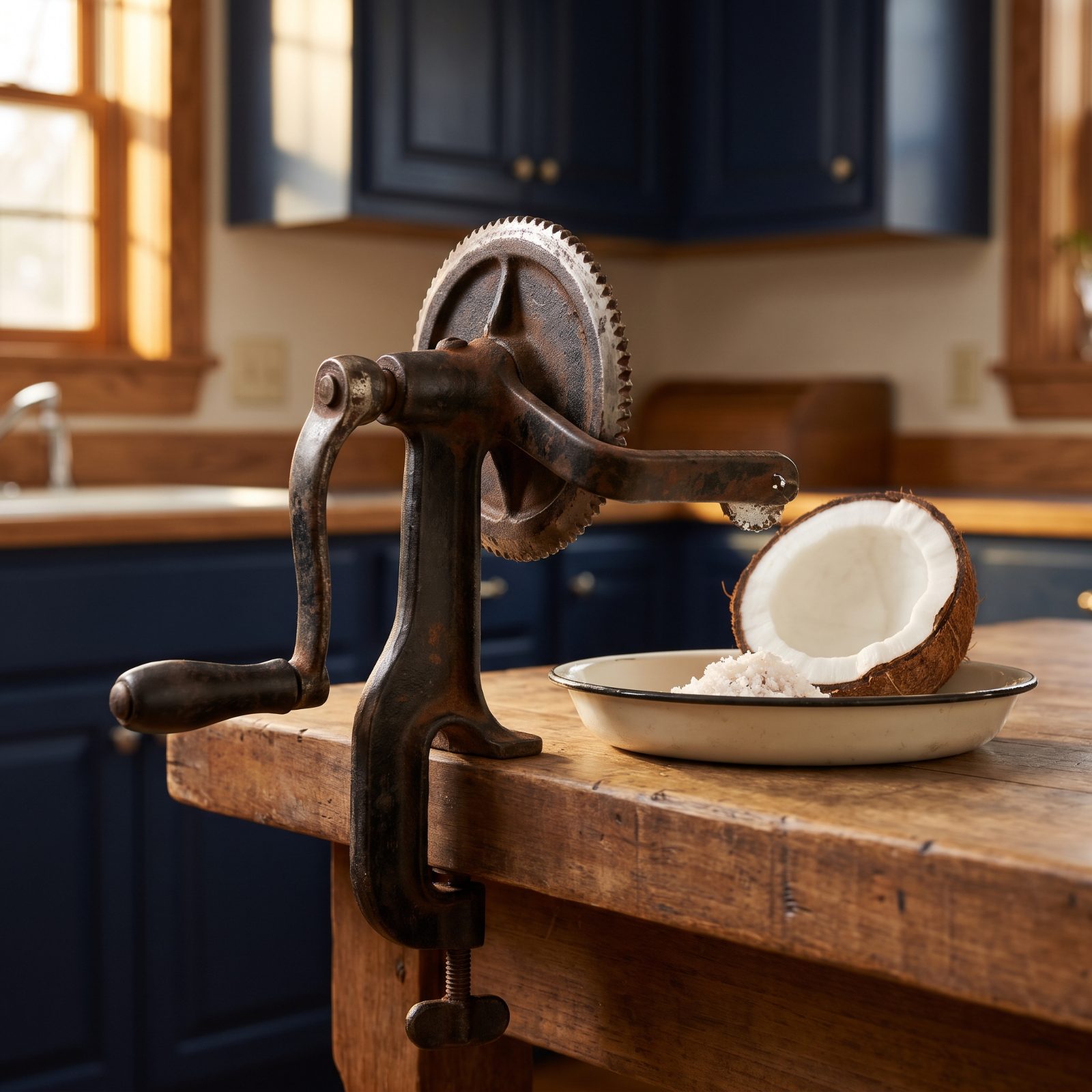
A C-clamp, a crank, and a wicked little serrated disc on an arm. More than one of these has gone in the donation box labeled “old meat grinder, parts missing.” It’s a coconut grater. You clamp it to the table and shred fresh coconut straight out of the shell.
They turn up in old island and immigrant kitchens, and the hand-forged or named cast-iron versions have a devoted following. Reproductions flood the market now, which is exactly why the real aged ones are worth identifying.
Look for genuine casting marks, worn-smooth working surfaces, and a clamp screw that still bites. A modern repro has crisp edges and no patina. The old one tells on itself in the wear.
7. The Victorian Oyster-Shucking Clamp Nobody Recognizes Anymore
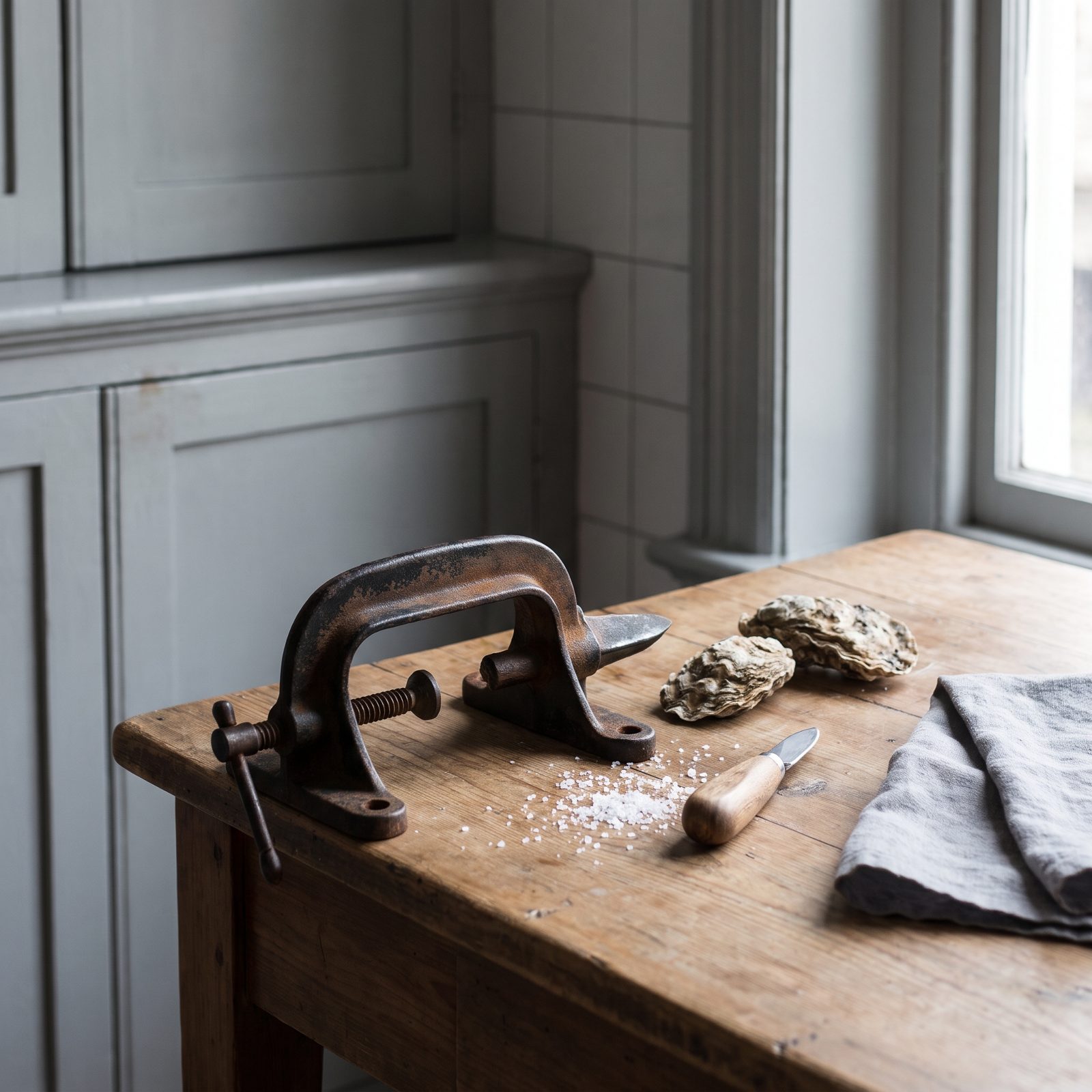
Small iron clamp, a little cradle, maybe a lever. Without the oyster in it, the thing is a riddle, and riddles get donated for a quarter. These Victorian shucking clamps held the shell steady so the knife could do the work, and hardly anyone today can name one on sight.
That mystery is your opening. Patent-dated examples, and ones tied to a known maker or restaurant supply house, interest both kitchen-tool collectors and seafood-history buffs who treat them like little found puzzles.
Check the underside for a patent number. Photograph it, search it, and you’ll know in minutes whether you’re holding scrap or a small treasure.
6. An Enterprise-Style Duck Press Worth More Than the Dinner It Made
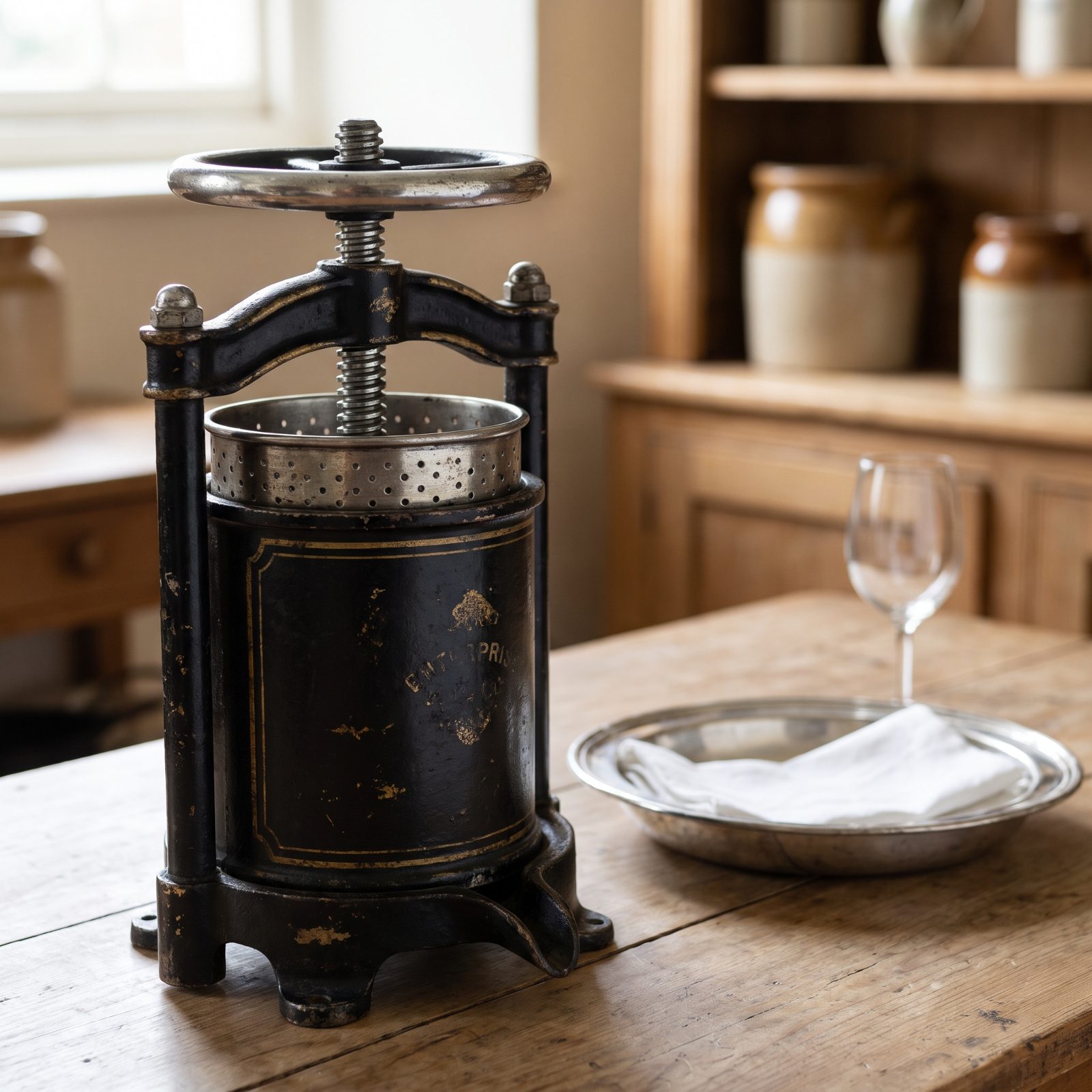
Heavy, cylindrical, a big screw wheel on top and a spout at the bottom. This one earns a double take. The duck press belongs to grand restaurant cooking, the sort used to crush the carcass and wring out juices for a classic pressed-duck sauce most people have never even tasted.
Serious chefs and high-end collectors chase these. A good cast-iron or silver-plated press in working order can be the single most valuable thing in a whole kitchen of inherited gadgets, and almost nobody realizes it before it’s gone.
Got one? Do not clean it aggressively or send it off blind. Photograph every mark, note whether it’s iron, plate, or solid silver, and get it appraised. This is the one on the list most likely to be badly underpriced at an estate sale.
5. The Spong Table-Mounted Knife Sharpener That Outlived Its Owner
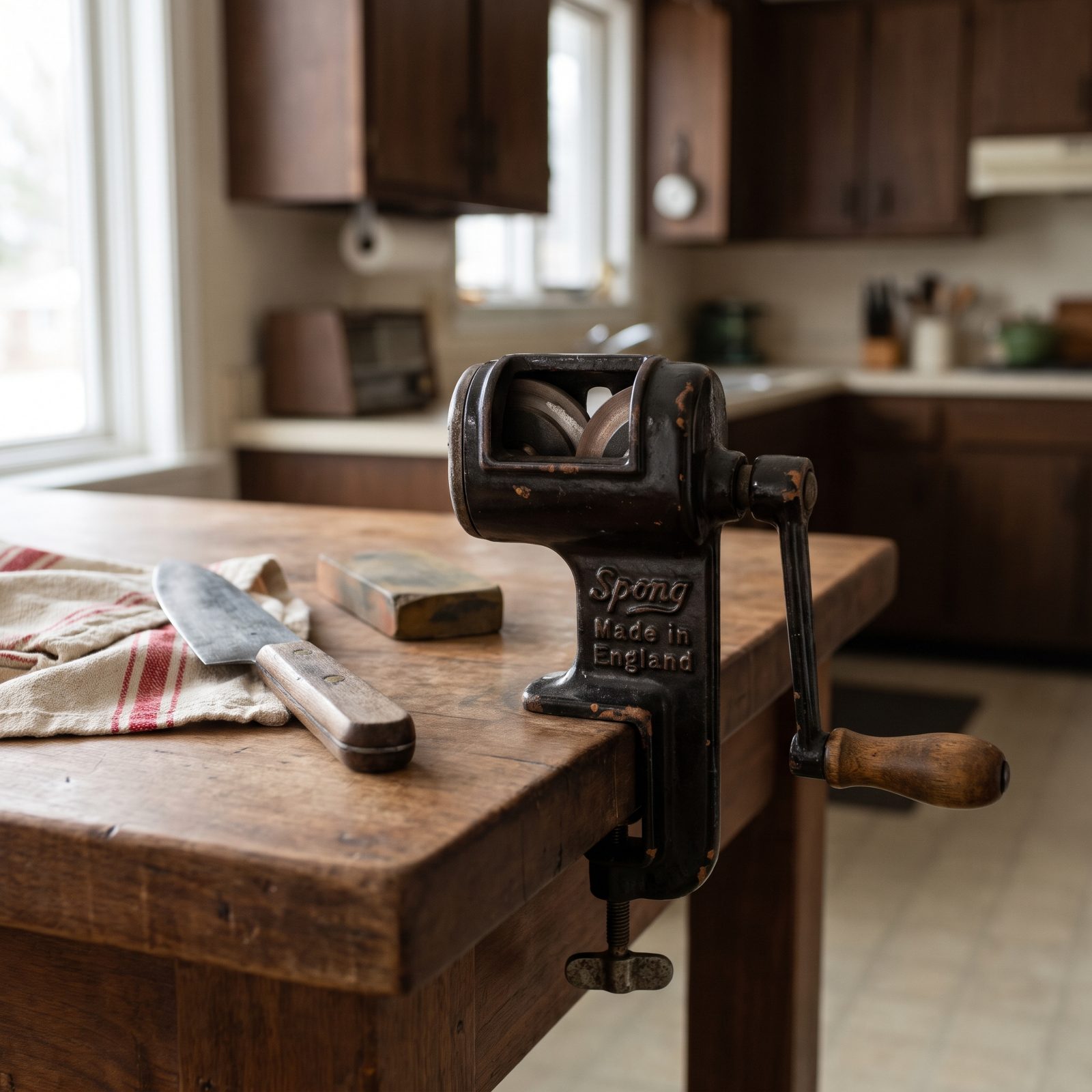
Little cast-iron box, a crank on the side, a slot for the blade. Spong of England made thousands, and they bolted to the kitchen table of nearly every proper British household for decades. You drew the knife through, turned the handle, and the wheels did the sharpening.
Common enough that many get tossed. Clean examples with intact lettering and a smooth crank still sell steadily, though, to collectors of English kitchenalia and to people who genuinely use them.
The ones with the original paint and a crisp Spong mark deserve a spot on the shelf. The seized, rusted ones are worth a photo and a search before you decide.
Confirm the maker, test the crank, don’t strip the finish. A tidy Spong is a small, honest piece of kitchen history.
4. First-Generation Rival Crock-Pot in Avocado and Harvest Gold
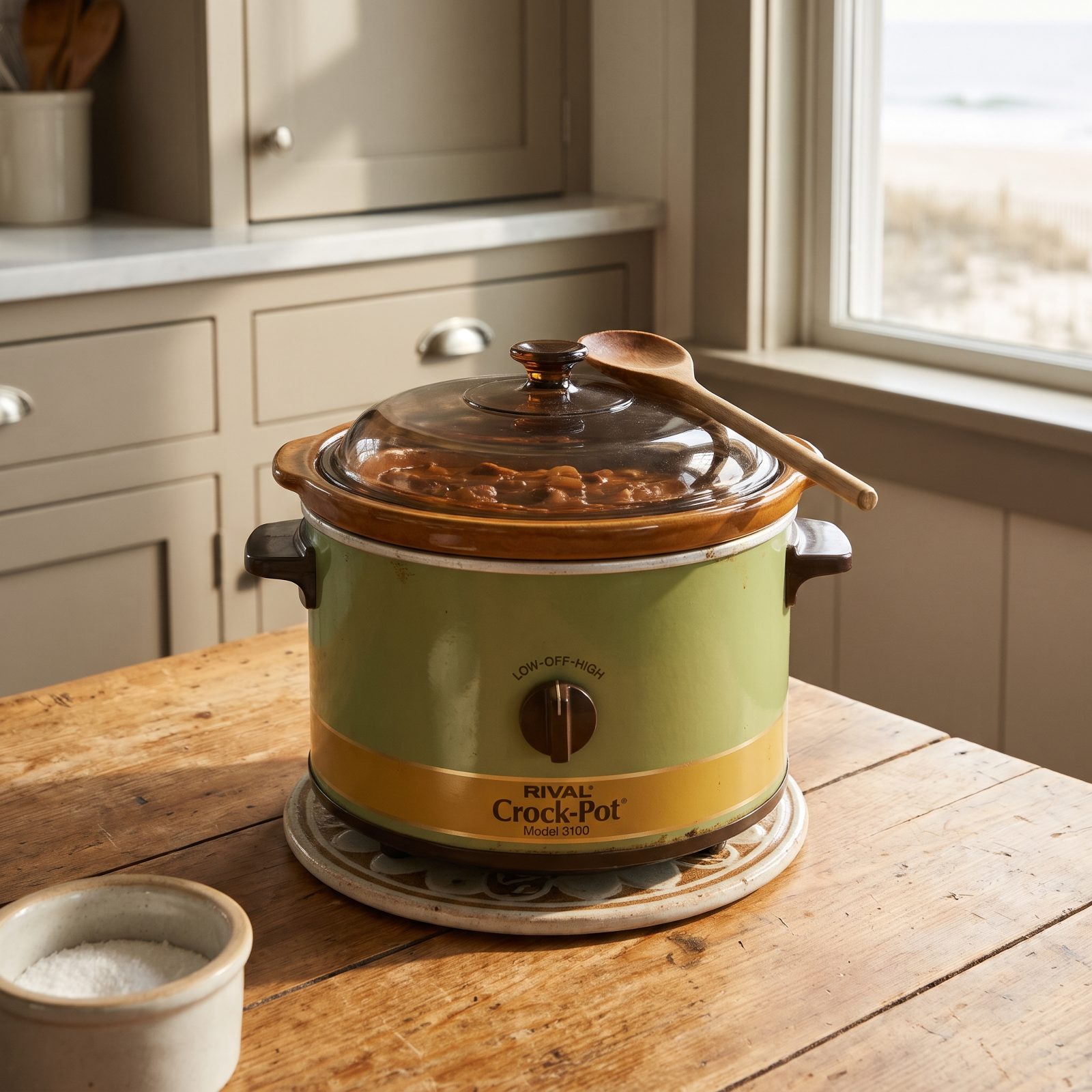
Avocado green, harvest gold, that low-high dial, and a stoneware crock that weighs a ton. The early Rival Crock-Pots from the early 1970s practically invented the set-it-and-walk-away dinner, and the first-generation models in original colors have crossed into genuine nostalgia-collectible territory.
The trap is assuming it’s worthless because it’s “just an old slow cooker.” Working units with the original lid, no cracks in the crock, and that unmistakable period finish sell well, especially to people furnishing a retro kitchen down to the last cabinet pull.
Test the heat, inspect the crock for hairline cracks, keep the matching lid with it. A complete, working original is worth far more than a mismatched one.
3. Farberware Open Hearth Rotisserie, the Countertop Workhorse
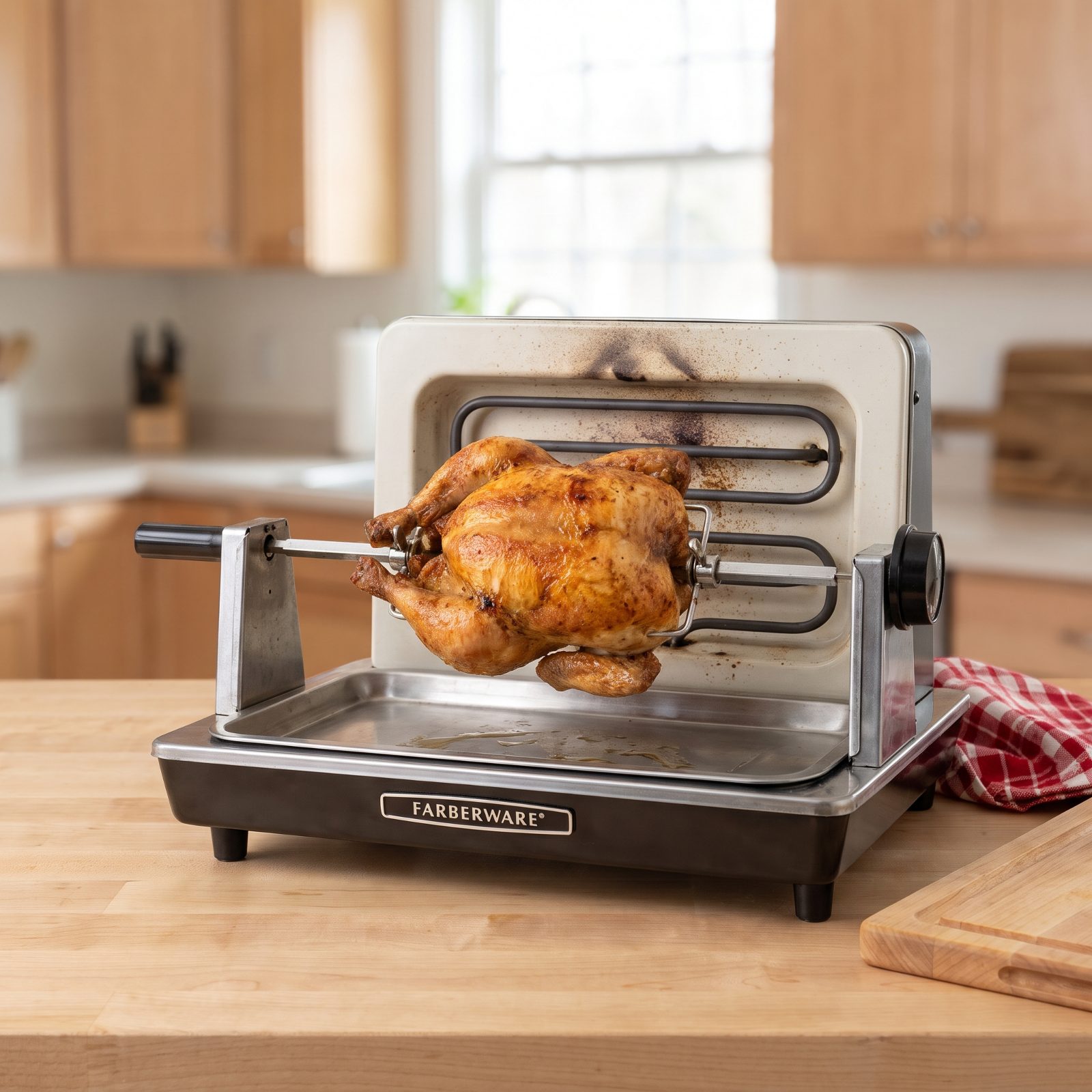
Boxy chrome unit, an open grill front, a spit that turns a chicken slowly until the skin crackles. The Farberware Open Hearth broiler-rotisserie sat on countertops through the 1960s and 70s and cooked more Sunday birds than anyone could count.
People donate them because they’re bulky and dated. But the spit, forks, and drip pan are what matter, and a complete set in working order appeals to nostalgia buyers and to cooks who swear these old rotisseries still outbrown a modern oven.
Gather every accessory before it leaves the house. A bare unit missing its spit and forks loses most of its value. Confirm the motor turns, confirm the elements heat, and keep the Farberware name clean and visible.
2. Dansk Kobenstyle Fondue Pot: The Blue Enamel That Gets Pitched for Scrap
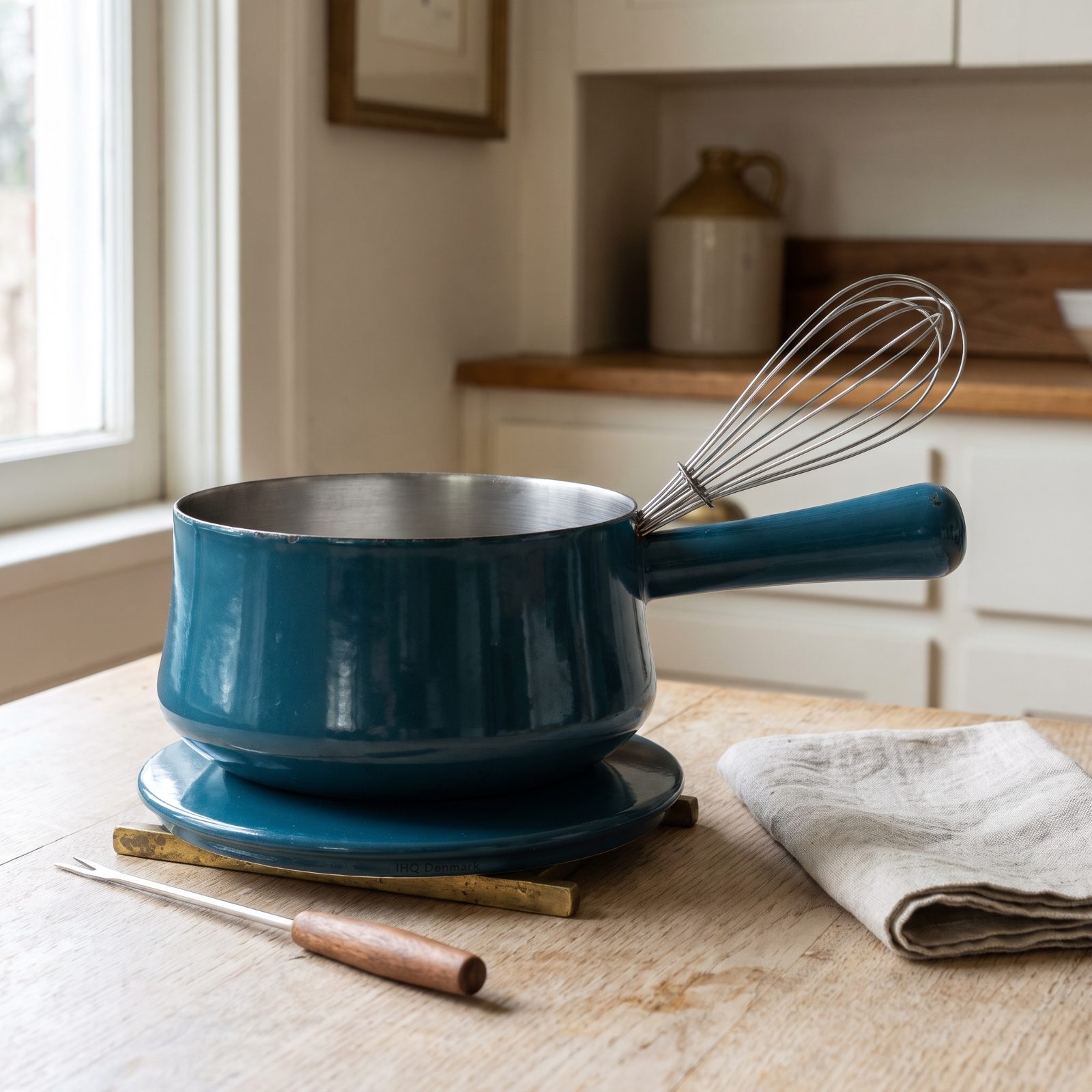
That electric teal-blue enamel is the tell. Jens Quistgaard designed the Kobenstyle line for Dansk in the mid-1950s, and the fondue pot is the one people mistake for a dented old saucepan and ship off in a box of mixed cookware. The flat lid nests into a trivet, which is the giveaway, and the color reads almost cobalt in daylight before it goes darker under a bulb.
Collectors hunt the early France-made and Denmark-made pieces hard. Check the base stamp before anything leaves the house. A clean example in that blue, with the original stand and fork set, moves for serious money — far more than any thrift shelf would ever ask.
1. Decoware Triple-Roll Kitchen Dispenser: The Tin Wall-Hanger Nobody Reads
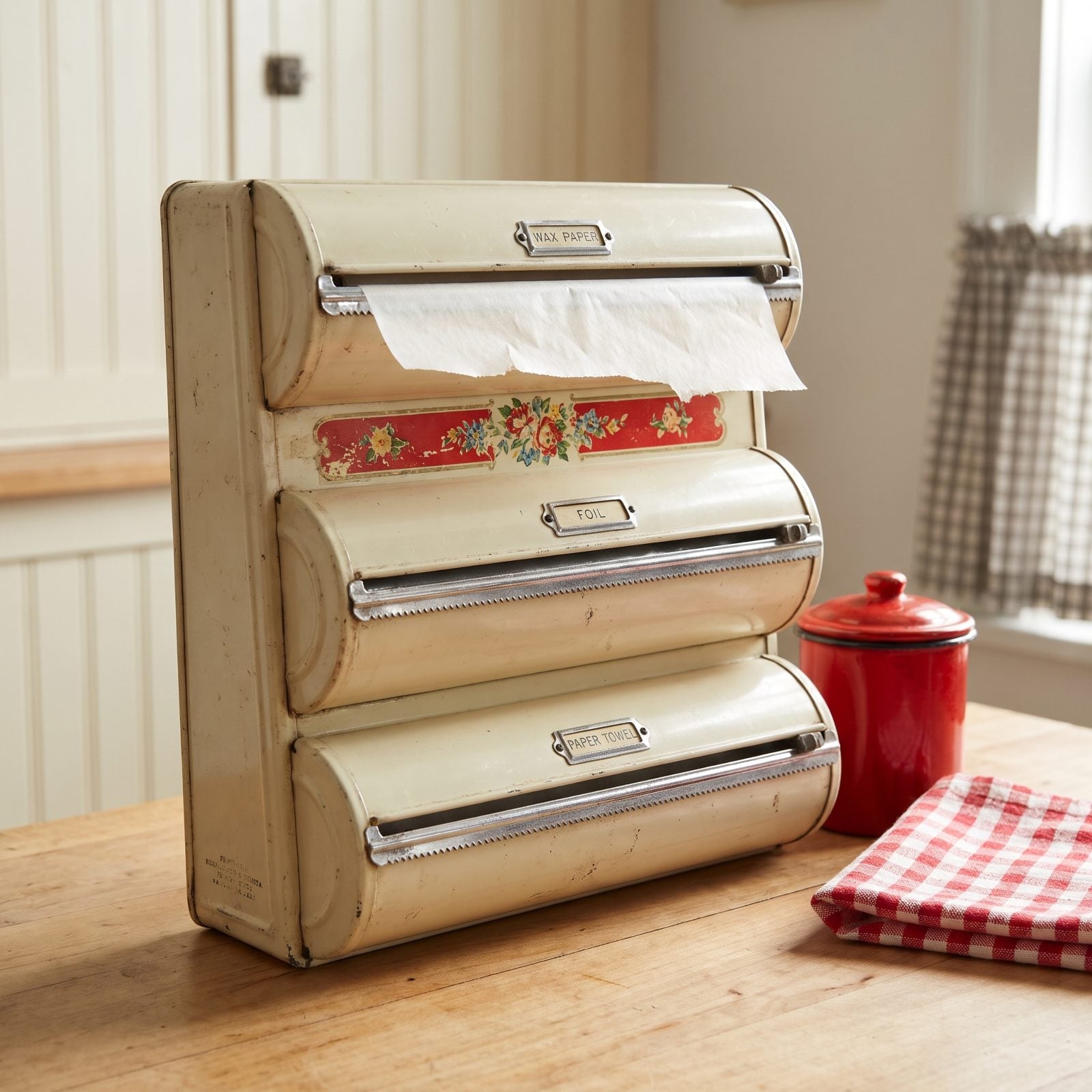
These hung on the back of a pantry door in a lot of midcentury kitchens, and most people today see three empty tin tubes and a bent chrome blade. Decoware cranked out decorated tinware from the 1930s into the 1950s, and the triple-roll dispensers carry those cherry-and-floral decals that date them in a glance.
I passed on one of these for a dollar once because I figured it was a towel holder gone wrong. Learned my lesson. The value lives in the decal. Crisp, unflaked artwork plus an intact maker stamp pulls real collector interest; a scratched one is just a cute decorator piece. Either way, two minutes of searching beats letting the donation pile swallow it.