Would you like to save this?
The Pyrex was already stacked on the folding table before the closing hymn ended. Somebody’s aunt had claimed the outlet by the coffee urn for her Crock-Pot, and the casseroles came in waves—each one riding a tide of cream-of-something soup and a topping that crunched. Here are the eight dishes that seemed to show up in church basements across America, more or less on schedule.
8. Tuna Noodle Casserole
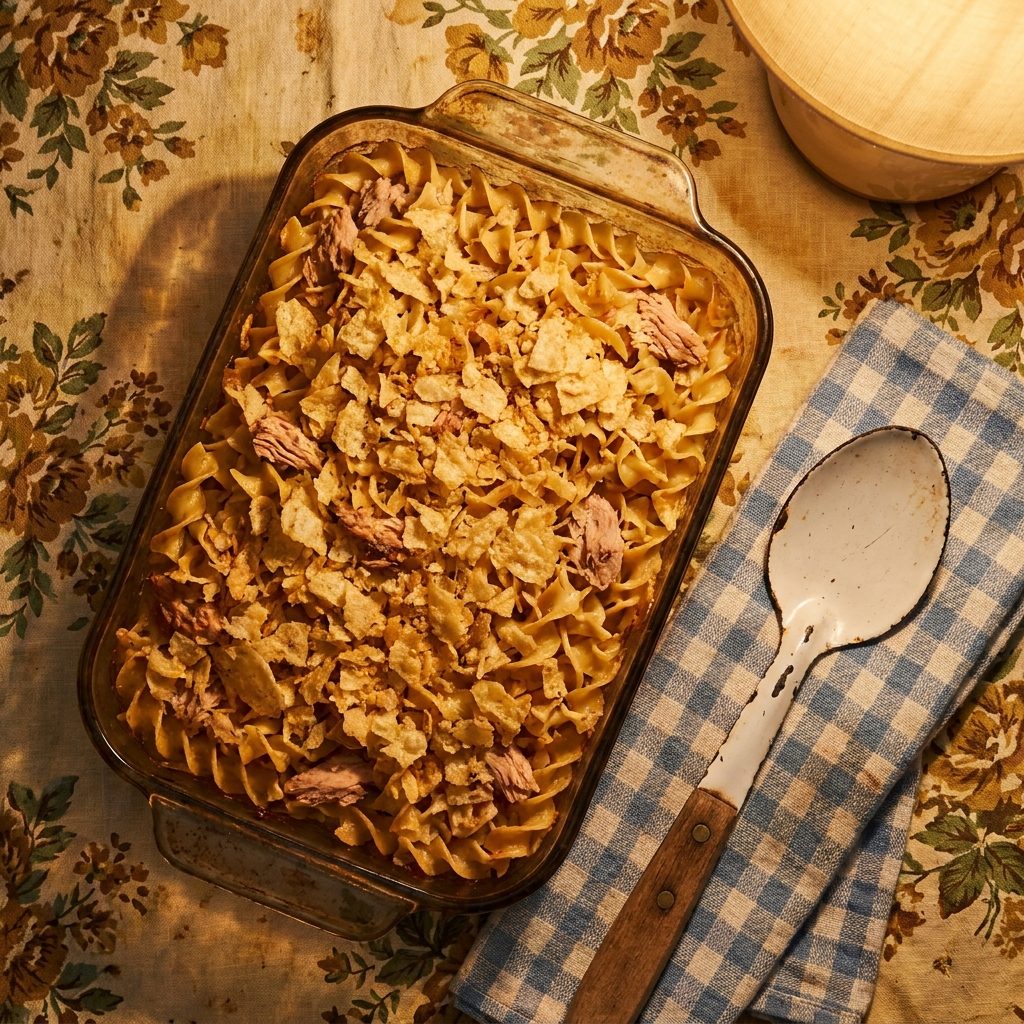
The workhorse. Made Wednesday, refrigerated, and reheated in the church oven at 4:45. Egg noodles, a can of tuna in oil—drained, mostly—a can of cream of mushroom soup, frozen peas, and a topping of either crushed potato chips or crushed Ritz, depending on the household’s position in the great crunch debate.
What made it a potluck fixture was thrift. It fed a crowd for very little money, traveled well in a Pyrex, and could be secured with a rubber band around the glass lid. The peas were common enough to feel nearly mandatory. Without them, it was mostly wet noodles.
7. Green Bean Casserole
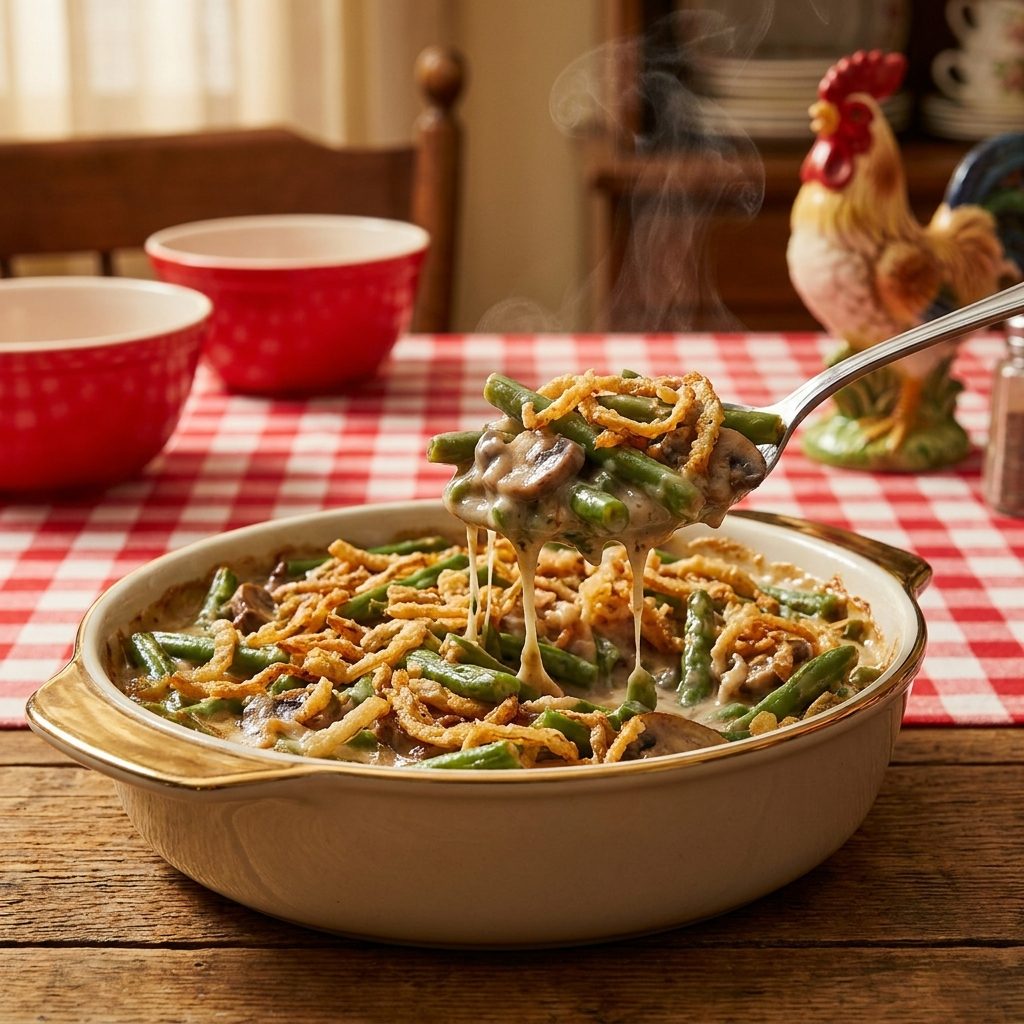
Invented by Campbell’s test-kitchen employee Dorcas Reilly in 1955. By 1975, it felt like a moral obligation.
Cream of mushroom soup, cooked green beans, a little milk, a splash of soy sauce, and the crown jewel: French’s fried onions, some stirred in and the rest scattered over the top near the end so they crisped instead of soggifying. You knew whose was whose by the ratio. Some cooks were generous with the onions. Some rationed them like wartime sugar, and the generous ones usually took home the emptier dish.
6. Chicken and Rice Casserole
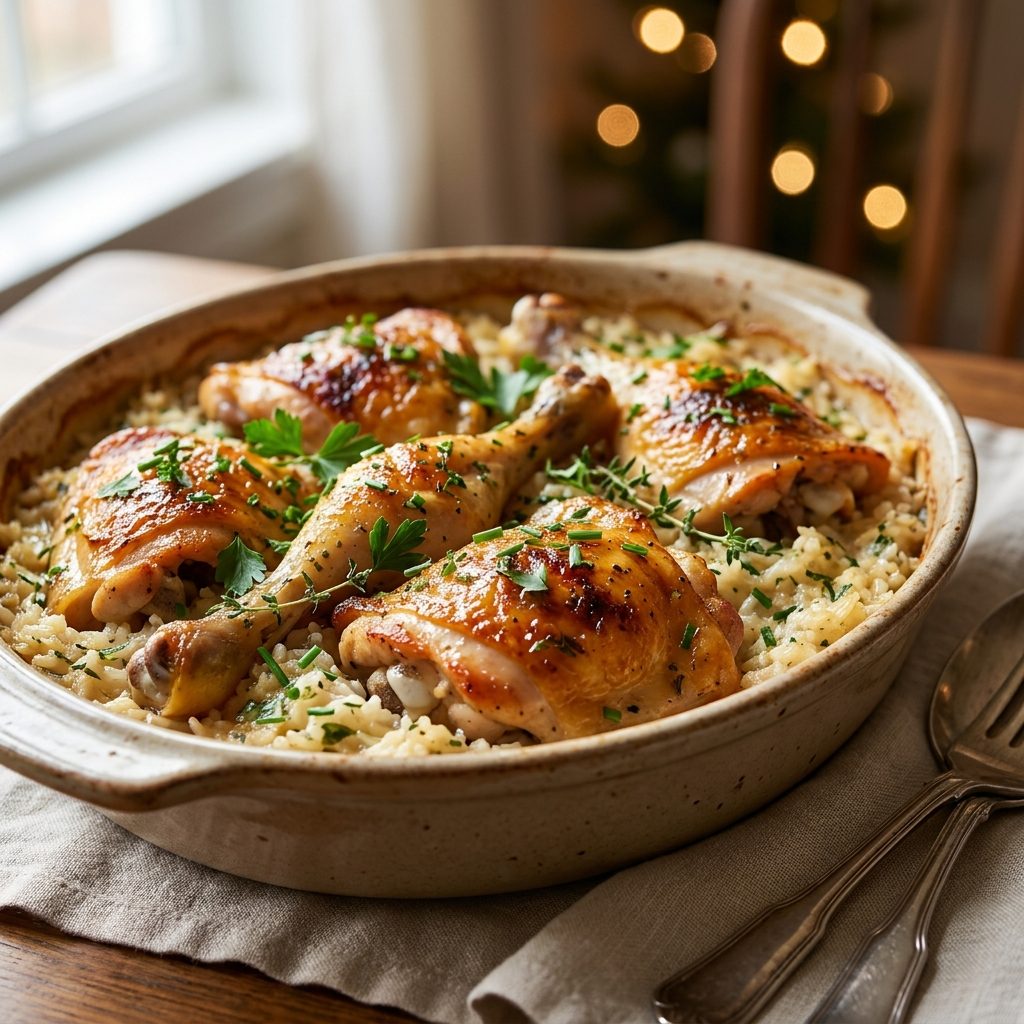
Raw long-grain rice, chicken pieces laid on top, a can of cream of chicken soup, water, and a packet of dry onion soup mix scattered over the whole business like snow. Cover with foil, put it in the oven for about an hour, and leave it alone.
The rice cooked in the soup and chicken juices while the meat browned above it. It came out looking as though it should not have worked, and somehow it usually did. If a young couple brought this to potluck, it meant they had crossed the invisible line into knowing how to make dinner.
5. Hamburger Hotdish
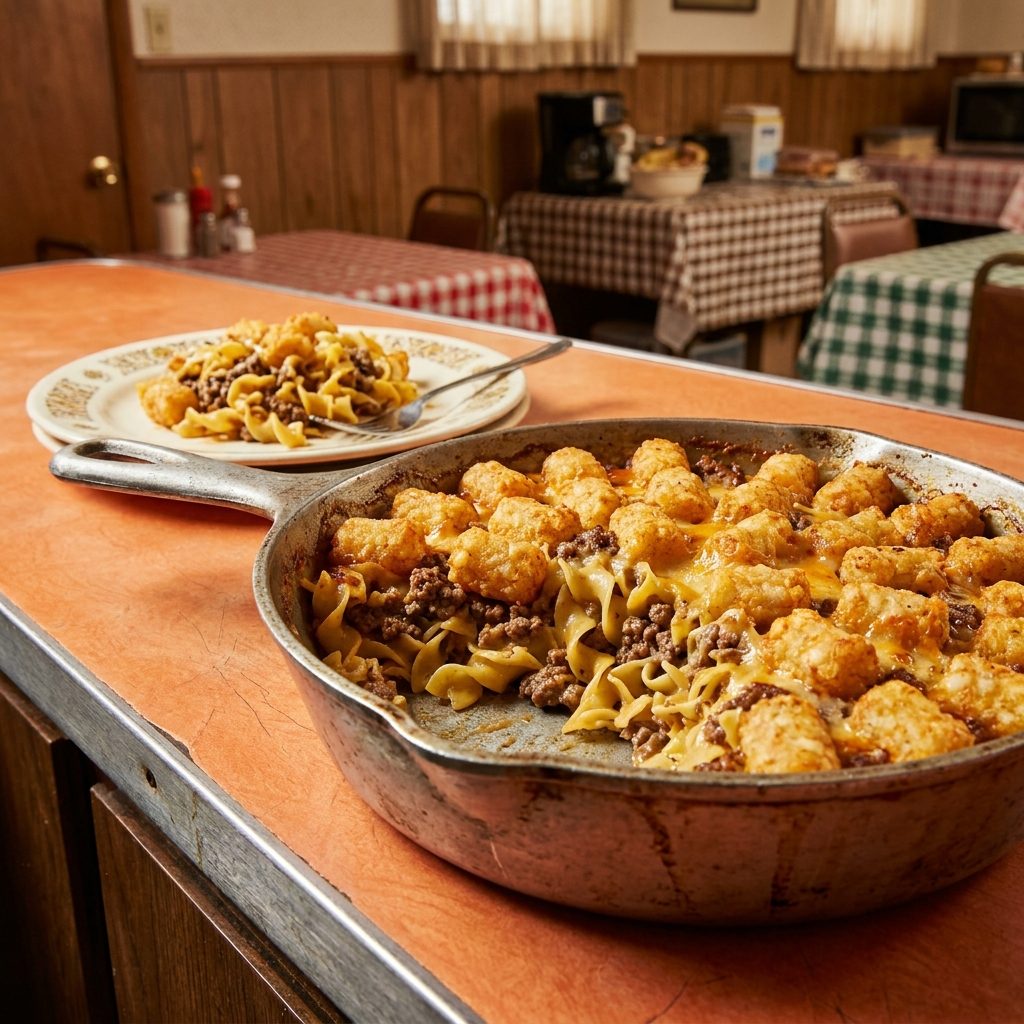
Called “hotdish” in much of the Upper Midwest and “casserole” in plenty of places beyond it, but the same animal either way. A pound of browned ground beef, elbow macaroni or egg noodles, a can of stewed tomatoes, a shake of Worcestershire, and slices of American cheese laid over the top in a grid.
Some cooks added corn. Some added kidney beans and called it chili mac, which was cheating a little. The Lutherans of Minnesota will still fight you about the tater tot version, which gets its own entry next.
4. Tater Tot Hotdish
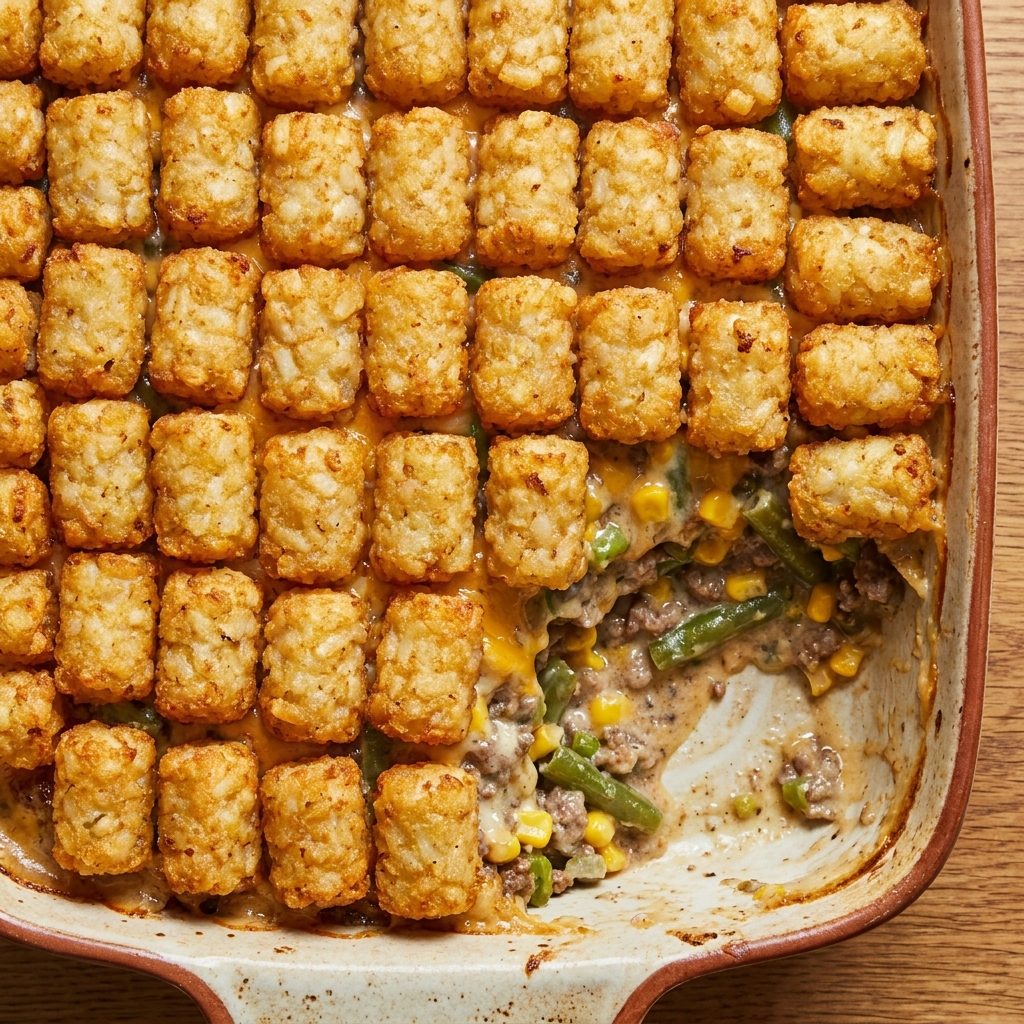
The Upper Midwest’s contribution to American civilization. Ground beef, cream of mushroom soup, a bag of frozen mixed vegetables, and a full bag of tater tots laid across the top in disciplined rows. The rows mattered. A haphazard arrangement suggested somebody had assembled dinner with one eye on the clock.
It reheated well and children ate it without argument. Few dishes on the table could claim both. Ownership was tracked by masking-tape labels on the bottom of the dish—first name and last initial in ballpoint pen.
3. Broccoli Cheese Rice Casserole
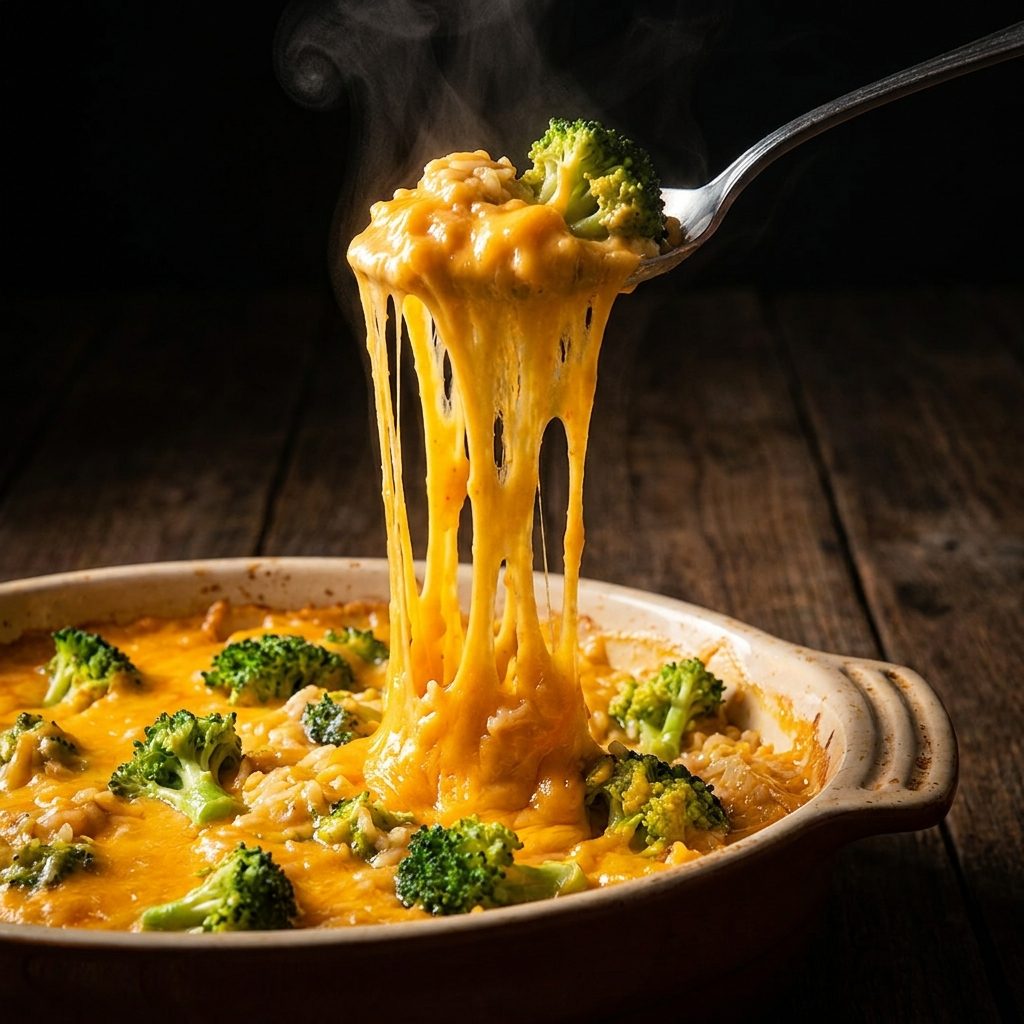
Frozen chopped broccoli, Minute Rice, a jar of Cheez Whiz, and a can of cream of mushroom or cream of chicken soup, depending on the household. Sometimes a stick of melted butter got involved. Sometimes it did not, and you could tell.
This was often the “vegetable” at potluck, which tells you everything about the era’s definition of the word. It disappeared quickly anyway. The bright orange color and the fact that a child could recognize it as safe made it move faster than the ambrosia salad farther down the table.
2. Scalloped Potatoes and Ham
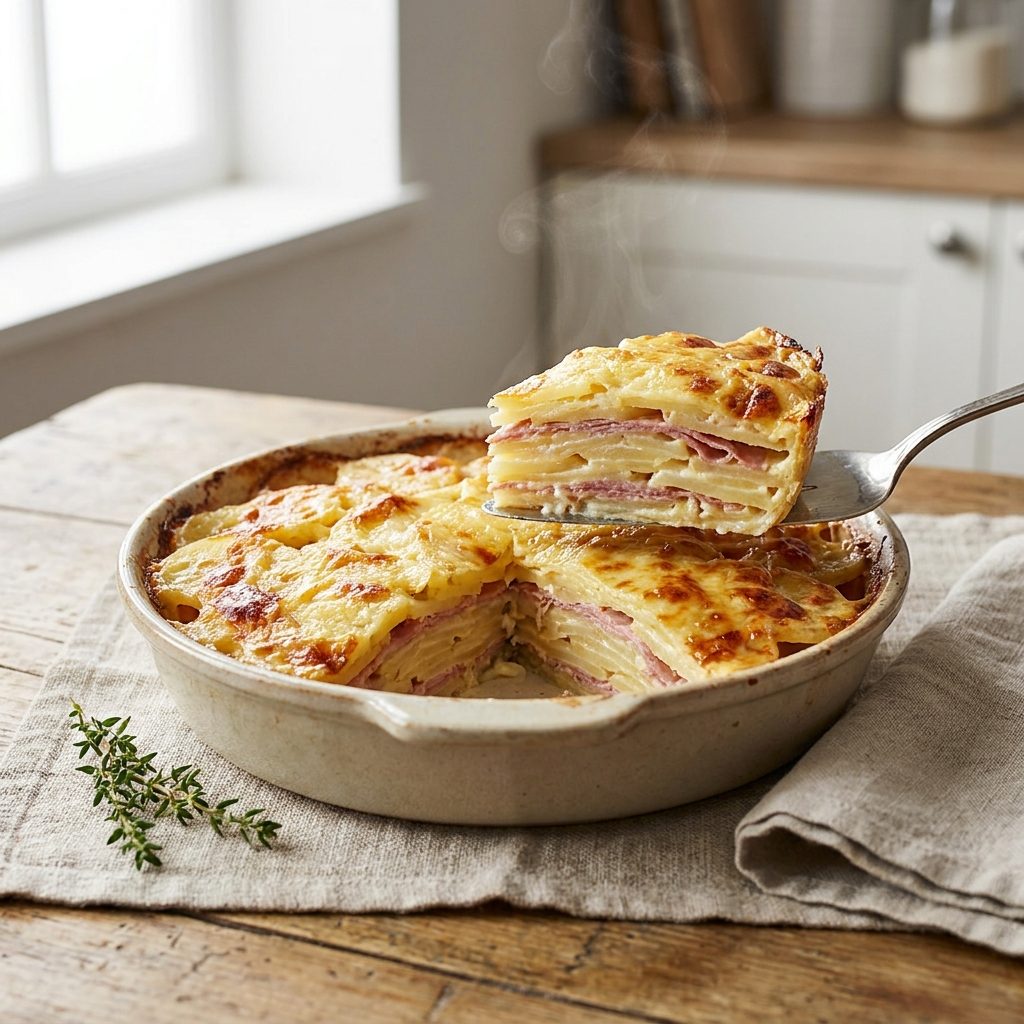
The potatoes had to be sliced thin, layered with flour, butter, milk, and leftover Easter ham cut small, then baked long enough for the top to brown and the middle to turn tender. It could occupy the oven for the better part of two hours. A rushed scalloped potato was a rubbery scalloped potato, and the women at the potluck knew the difference.
Whoever brought this one had planned ahead. It was the casserole of the well-organized. It also solved the eternal question of what to do with the last several cups of Easter ham after the holiday.
1. King Ranch Chicken
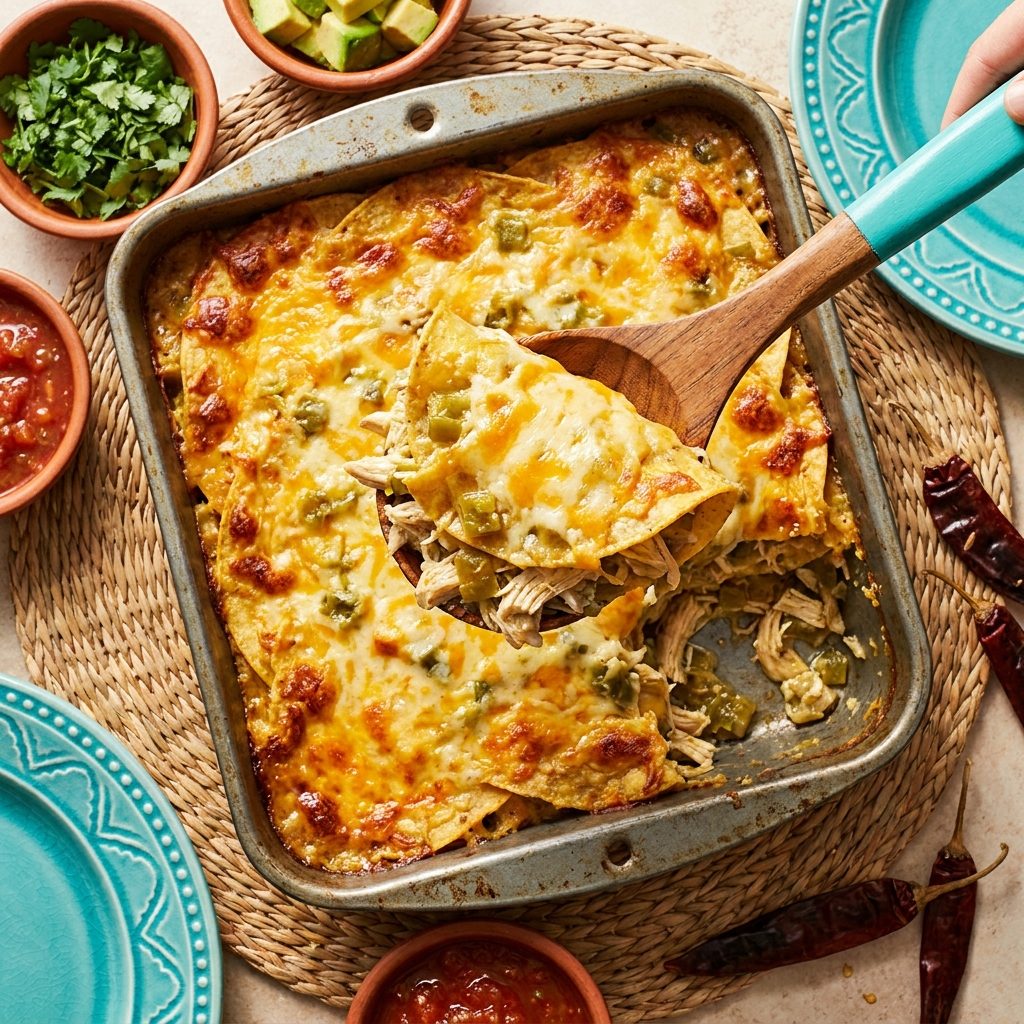
The Texas contribution—and do not let anyone tell you it is not Texan. Cooked chicken, usually left over from Sunday dinner, corn tortillas torn into pieces, cream of chicken soup, cream of mushroom soup, a can of Ro-Tel tomatoes with green chiles, and a mountain of shredded cheddar. Layered, baked, and served with the unspoken understanding that seconds were expected.
Nobody has ever agreed on where the name came from. King Ranch itself does not claim to have invented it. That never stopped the casserole from becoming a fixture at church suppers and community tables across Texas.
If you grew up going to a Southern Baptist potluck south of Dallas in the ’70s, there was a good chance this was on the table, and it was usually gone before the fellowship-hall coffee got cold.