
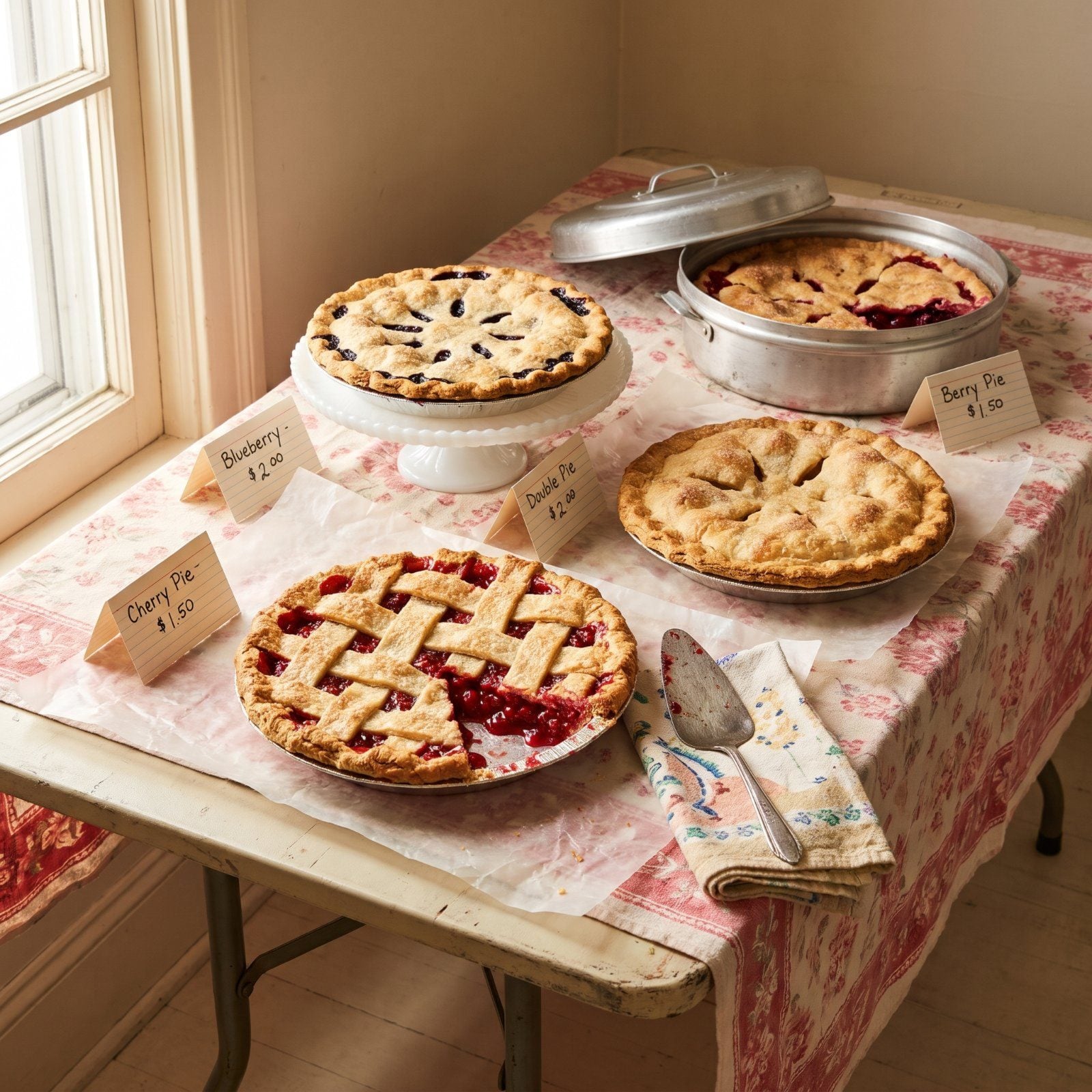
The folding table went up at 8 a.m. and the apple pies were gone by 9:15. That was the rhythm of a church basement bake sale, a school gymnasium, a VFW hall. Pies arrived in aluminum carriers with handwritten price cards leaning against them, and somebody’s grandmother guarding the cash box. Here are the pies that defined those tables.
Please note that some of the images in this article were created with the assistance of AI.
42. The Classic Double-Crust Apple Pie
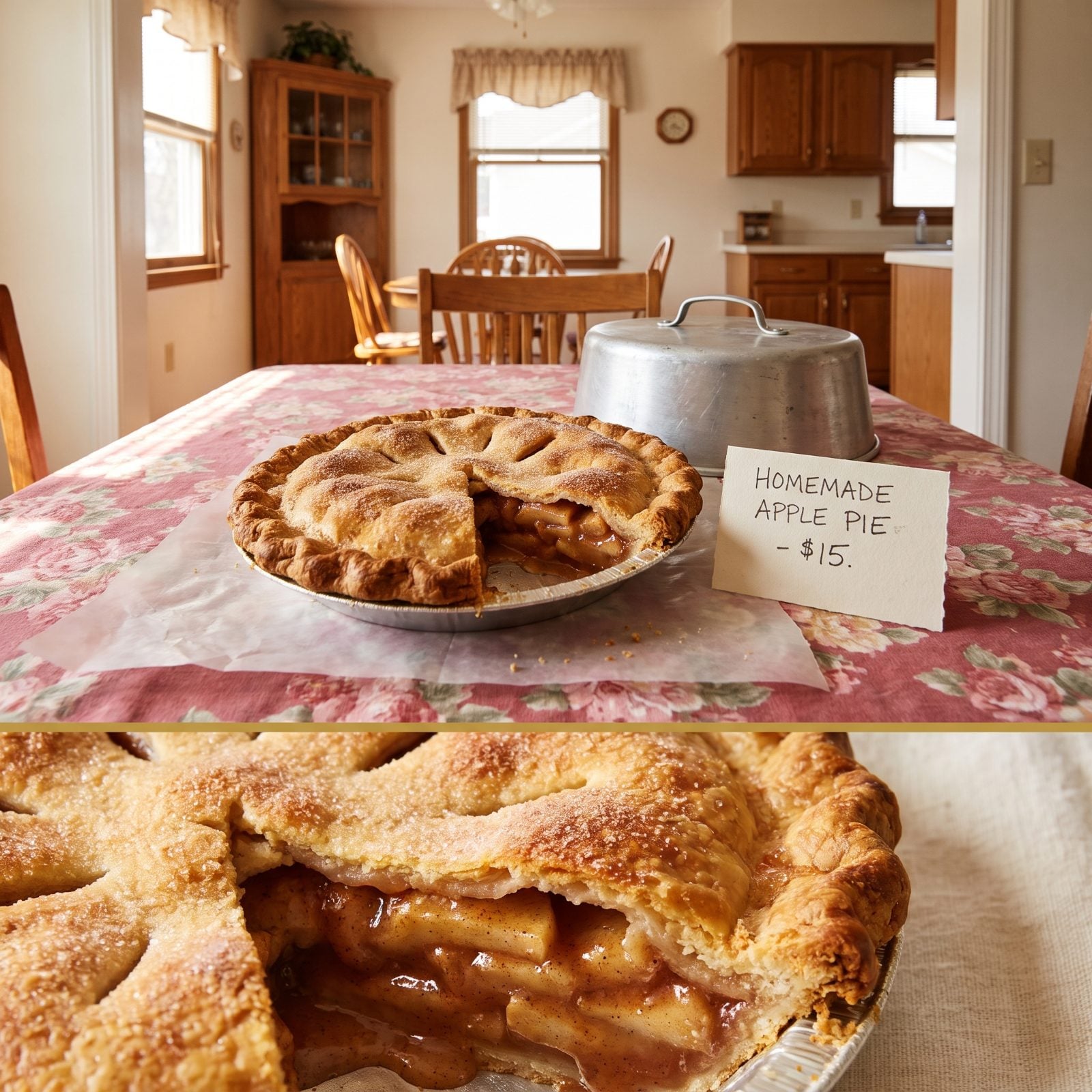
This was the pie that sold first, more often than not. Apple carried no mystery, which was exactly its power — people trusted it. A double crust, hand-crimped and maybe a little lopsided, with cinnamon-brown apple slices that had slumped together into one tender mass under the lid.
The best ones used a firm baking apple that held its shape instead of collapsing into sauce. You could tell the serious bakers from the hopeful ones by whether the slice stood up on the plate or slid off in a wet heap. Nobody ever minded the heap, honestly.
What Our Readers Say
- When Piaci Pizza readers loved a food photo and tapped a reason, comfort came out on top at 30%, with nostalgia and simply looking good tied at 16%.
From Piaci Pizza reader polls and votes.
41. Lattice-Top Cherry Pie, the Table’s Showoff
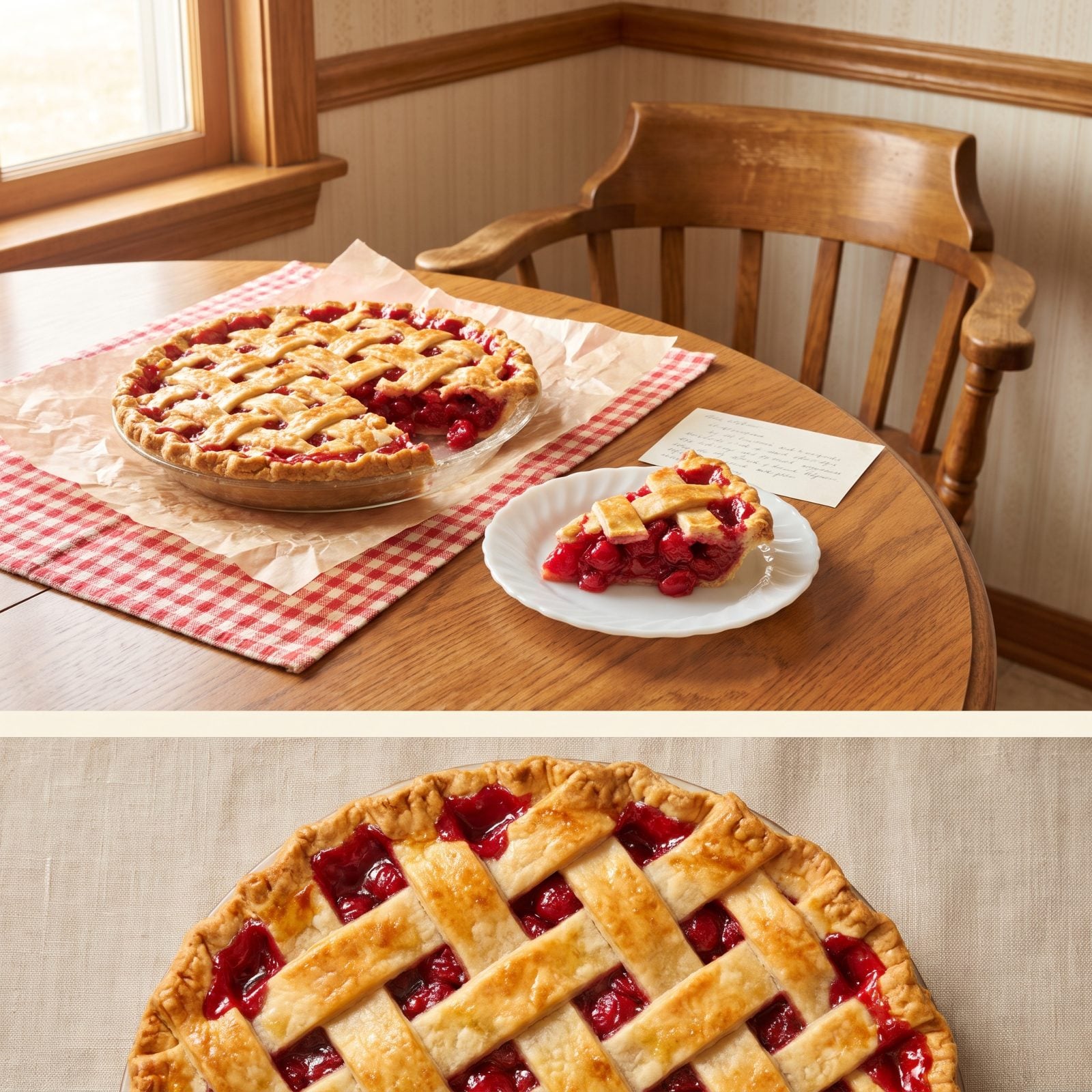
If the apple pie was the workhorse, the cherry pie was the beauty queen. That woven lattice did it. Those glossy red cherries winking through the diamond gaps caught the light and caught your eye from clear across the gymnasium.
Tart pie cherries, not the sweet kind you eat by the handful. The good ones set up just thick enough to hold a slice without turning to glue. A lattice is also a confession, by the way — it tells everyone whether you can really handle dough or whether you panicked and went double-crust at the last second.
A lattice-top cherry pie was the one you put at the front of the table on purpose.
40. Deep-Dish Blueberry, Stained and Proud
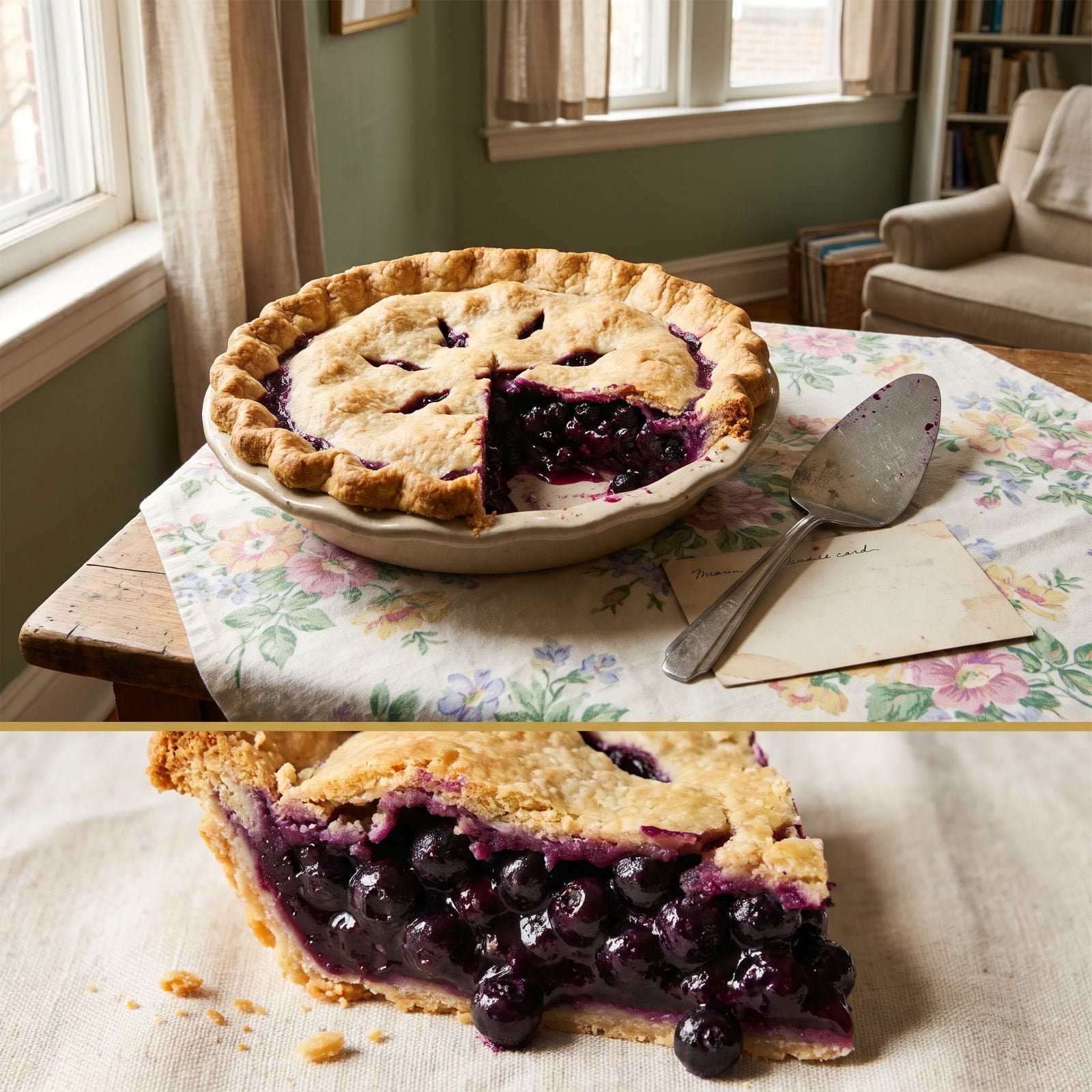
Deep-dish meant serious business. A tall ceramic dish, berries piled high, a top crust crimped up around the edge like a wall holding back a flood — because that filling did flood. Blueberry juice stains everything it touches: the plate, the fork, your tongue, the wax paper underneath.
The deeper dish changed the ratio in the eater’s favor. More fruit, less crust. You got a real spoonful of berries in every bite instead of hunting for them. Warm, it ran purple across the plate. Cooled overnight, it sliced clean and dark.
39. Fresh Peach Pie at the Height of Summer
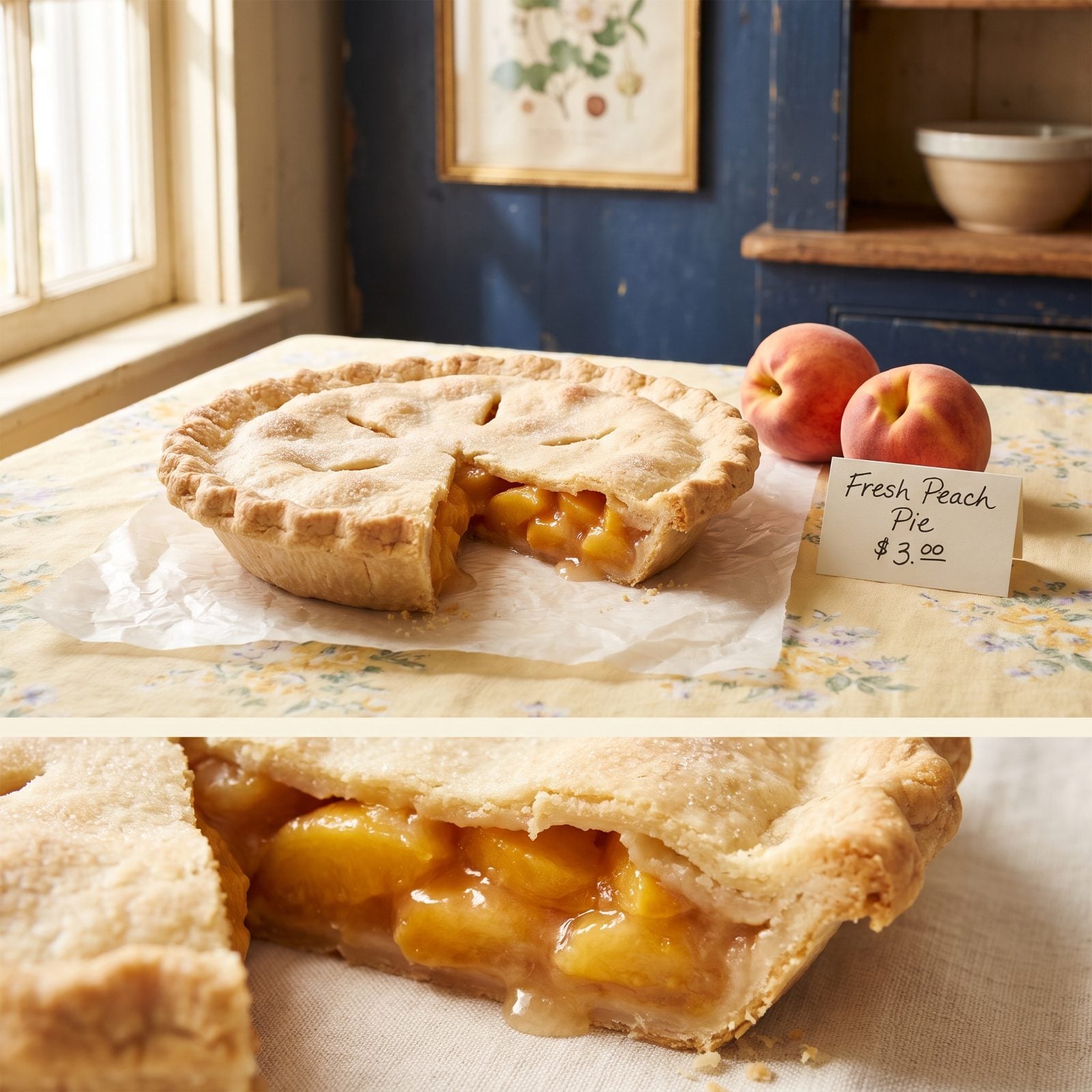
You only saw the real peach pie for a few weeks a year. Late July, August, when the fruit came in soft and heavy and perfumed the whole kitchen. That short season is what made it a prize at a bake sale. Everybody knew it wouldn’t be back until next summer.
Fresh peach ran looser than apple or cherry. The slices broke down into something almost custard-soft, held in a light syrup that tasted of the fruit and nothing much else. A heavy hand with sugar ruined it. The great ones trusted the peach to do the work.
38. Strawberry-Rhubarb, Sweet Meets Sour
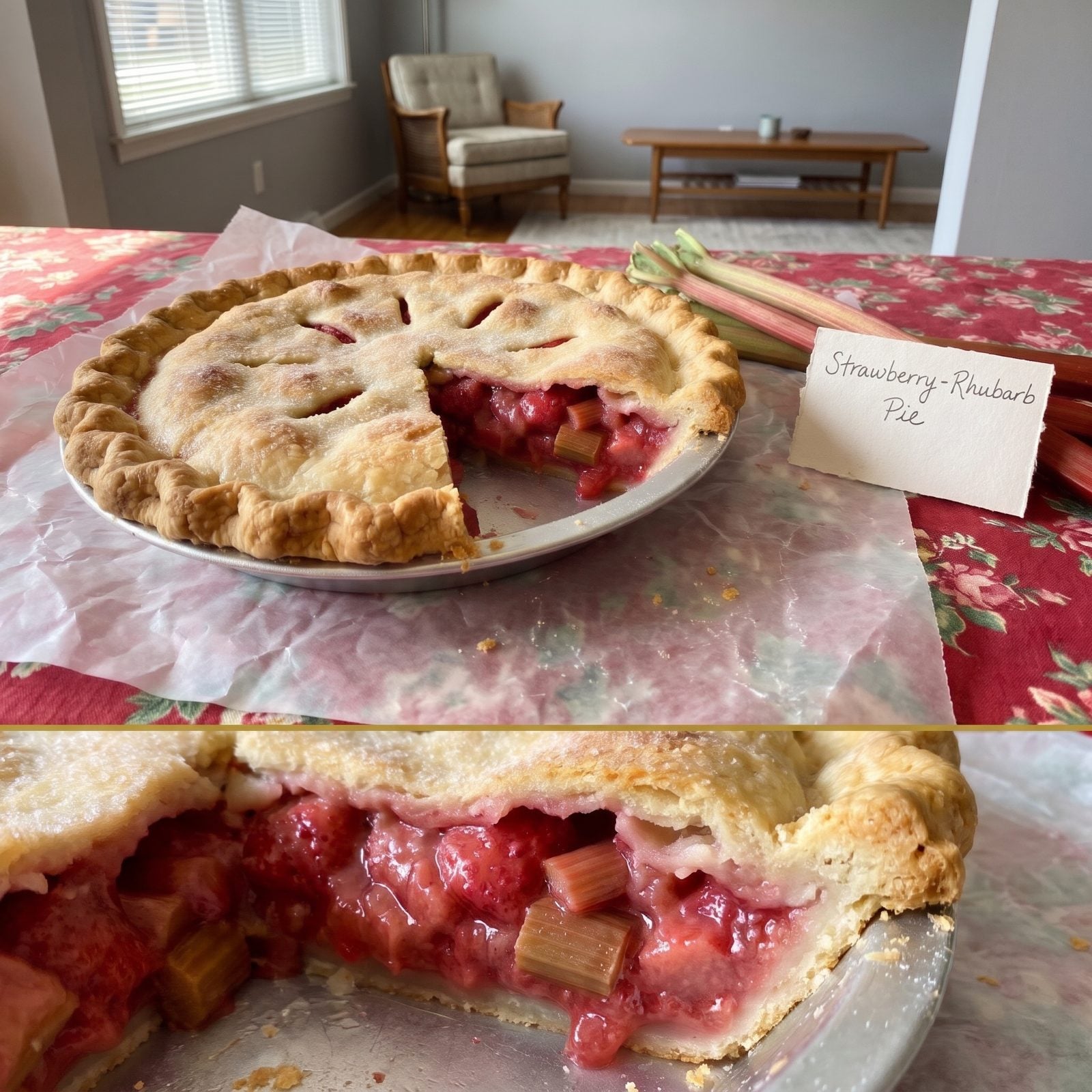
Here was the pie for people who thought dessert should fight back a little. Rhubarb alone is mouth-puckering sour, nearly inedible raw. Pair it with strawberries and sugar and you get something sharp and bright that cuts through a whole church-basement spread of frosted sheet cakes.
The texture tells the story. Strawberries melt down soft and sweet while the rhubarb holds in tender pink chunks that keep a little bite. Plenty of us ignored this pie as kids and only came around to it later. The sour is the whole appeal, and kids rarely trust sour.
37. Juicy Blackberry Pie, the Wild One
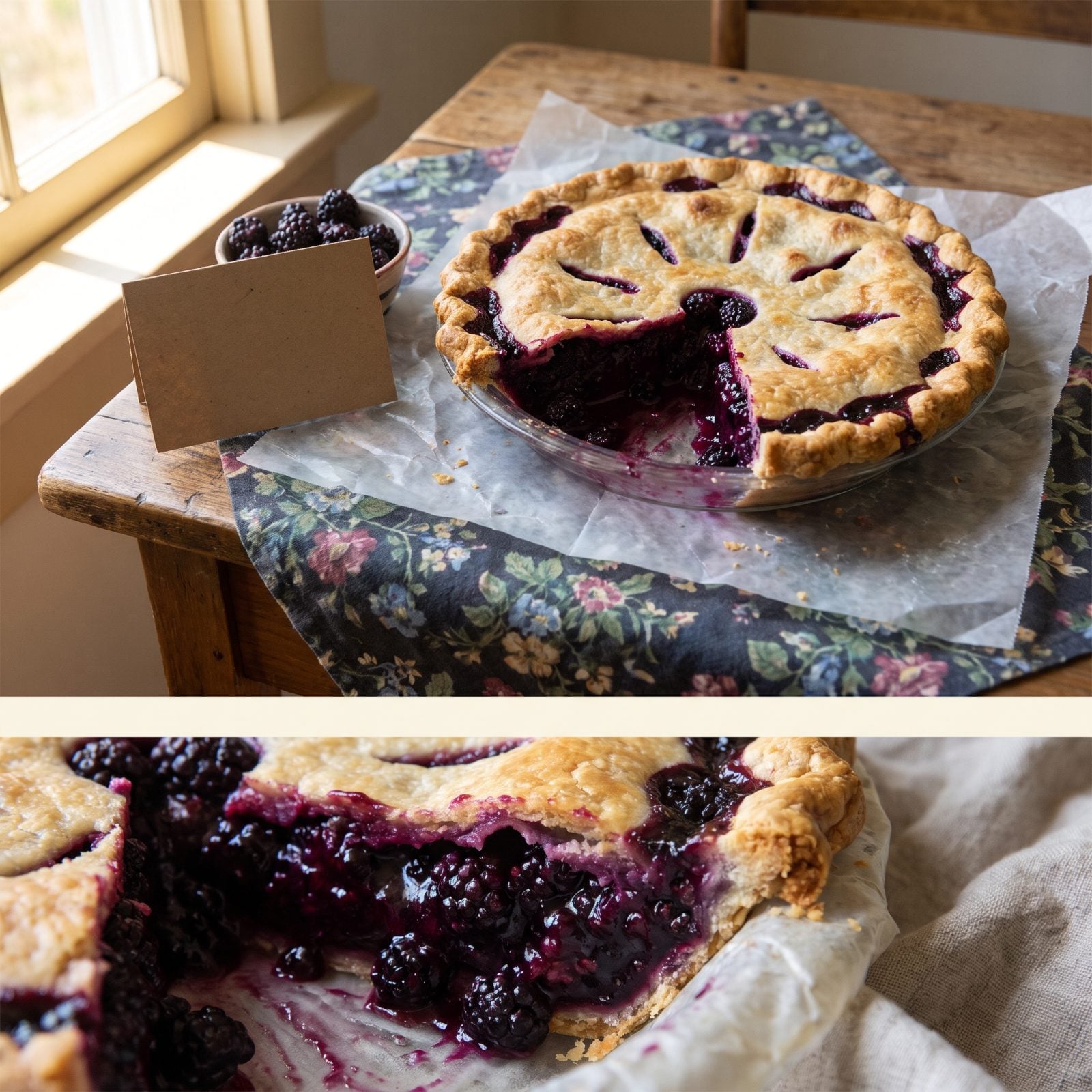
Blackberry pie had a backstory. Half the ones on the table came from berries somebody picked off a thorny bramble out by the fence line, arms scratched up for the trouble. That gave it a homegrown honesty the store-bought-filling pies could never fake.
The filling ran dark, nearly black, with whole berries holding their shape and tiny seeds you felt between your teeth. Juicier than almost anything else on the table. It needed a good thickener or the whole thing turned into a puddle. And the seeds divided people — some loved the texture, some picked them out of their molars for ten minutes. Worth it either way.
36. Red Raspberry Pie, Delicate and Dear
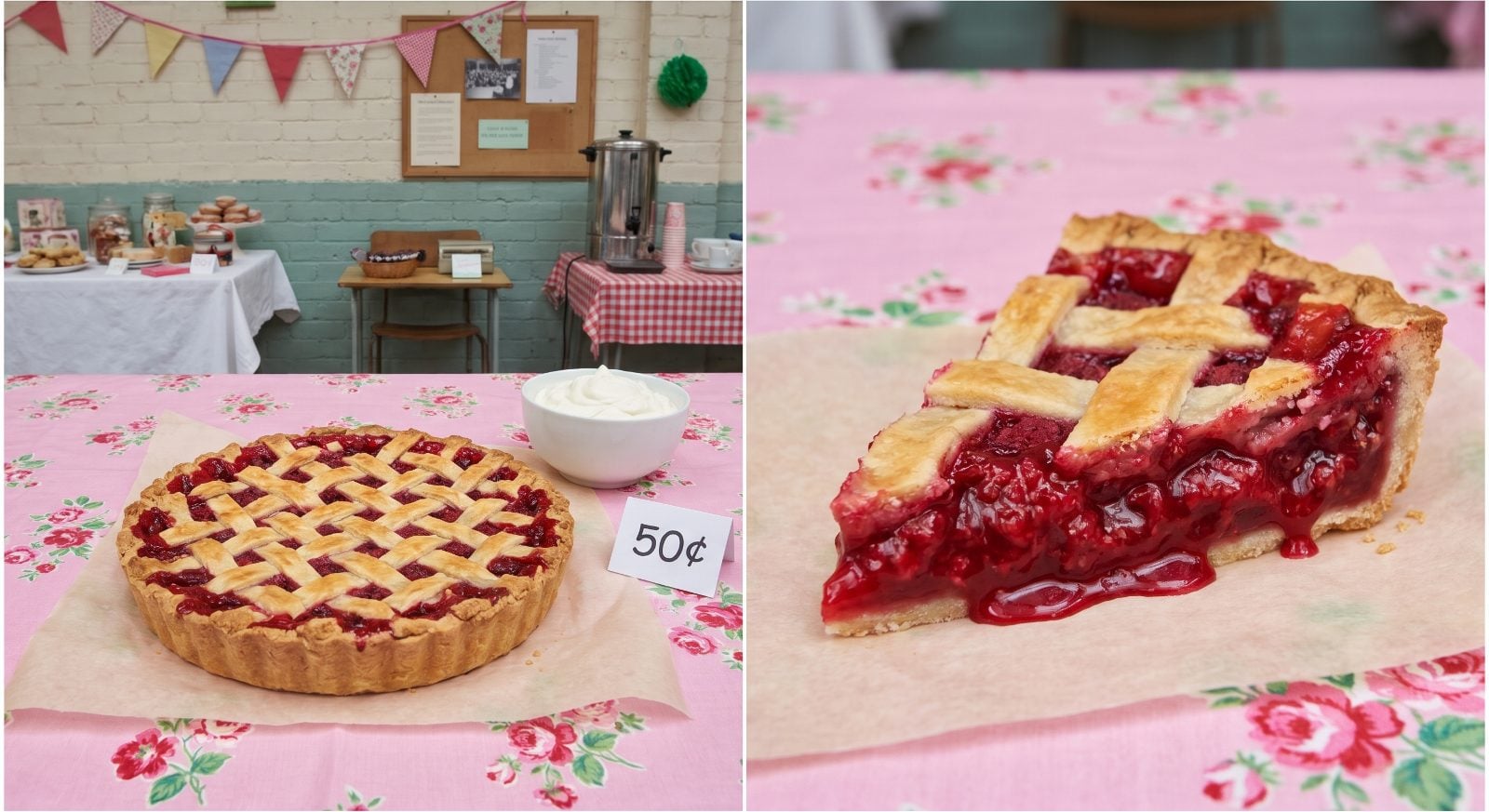
Raspberry pie was the quietly expensive one. Those berries bruise if you look at them wrong, they cost more, and they turn up less often, so when a red raspberry pie landed on the table it carried a little prestige. The person who made it was showing off, and rightly so.
Brighter and more perfumed than blackberry, with a jewel-red filling and that hollow-centered softness raspberries have. It leaned more tart than you’d expect. A real treat. Gone fast.
35. Tart Gooseberry Pie for the Old-Timers
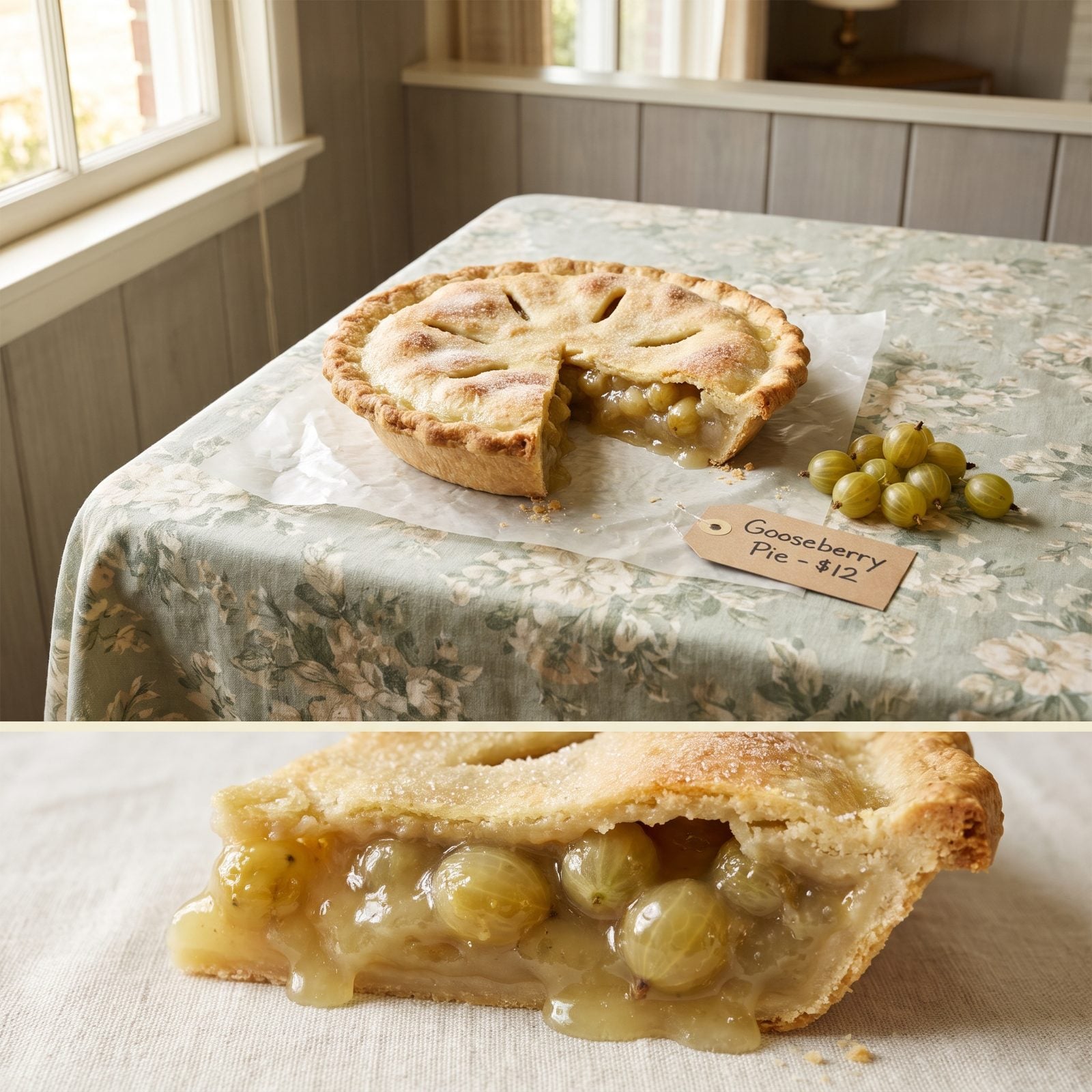
Ask anyone under forty what a gooseberry tastes like and you’ll get a blank look. This was a pie for the old-timers, the ones who grew the bushes in their backyard because their mothers had. A pale green-gold berry, fiercely tart, that most people never ate any way but baked into a pie.
The filling turned translucent and almost jammy, the berries holding their shape while the syrup set up thick. More sugar went into gooseberry than almost any other fruit pie, and it still came out bracingly sharp. It never sold out first. But the people who wanted it, really wanted it.
34. Concord Grape Pie, the Autumn Rarity
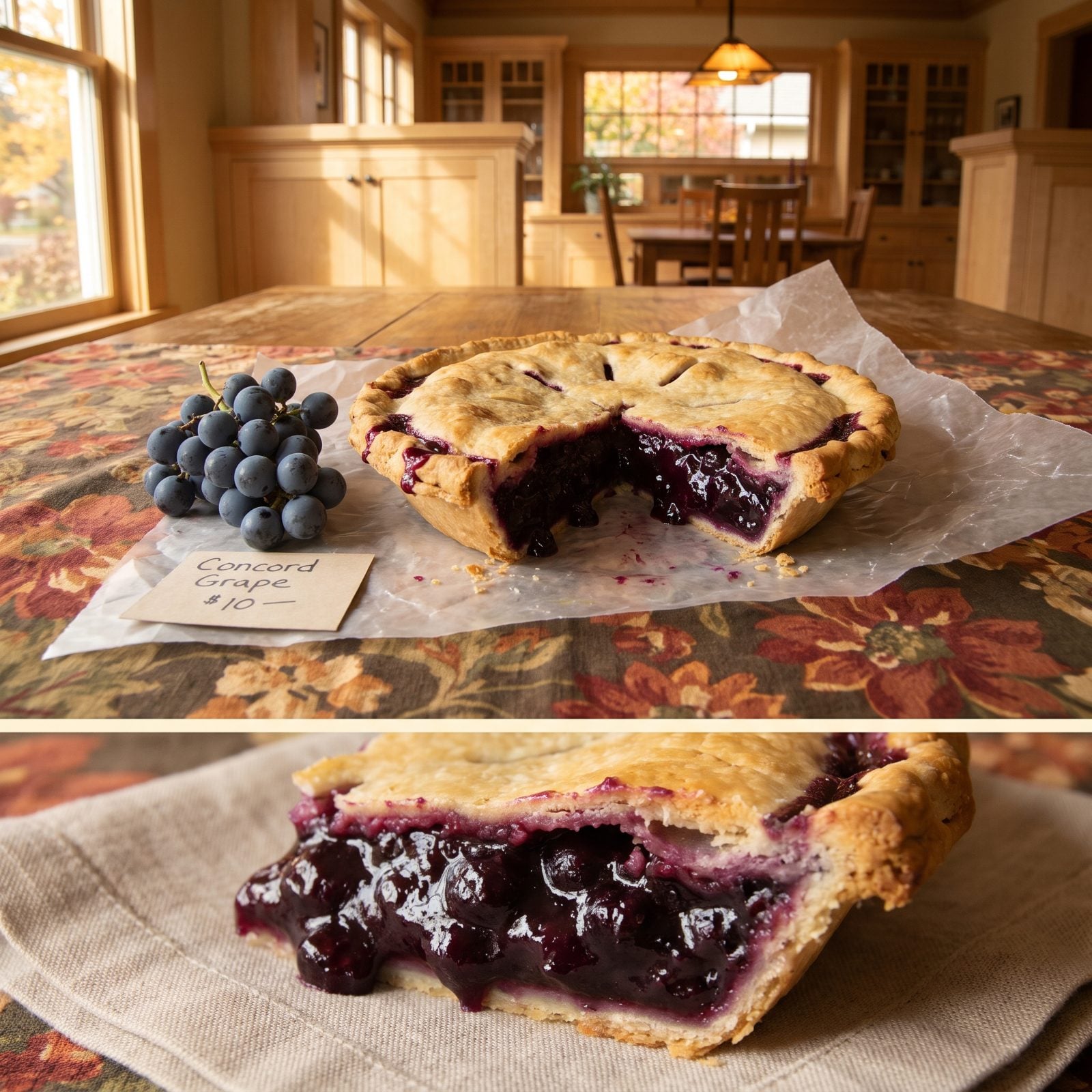
You tasted it and your brain said grape jelly, then corrected itself. Concord grape pie carries that unmistakable purple-juice flavor everyone knows from childhood, except deeper, warmer, more grown-up. A September-and-October pie, made when the Concord vines came in heavy and dusky blue.
It took real patience. Each grape skin gets slipped off, the pulp cooked down separate from the skins, then the two reunited. Nobody doing all that was cutting corners. The filling set up thick and dark, nearly like preserves. If you grew up near grape country, this one hit a nerve.
33. Spiced Pear Pie, the Quiet Finisher
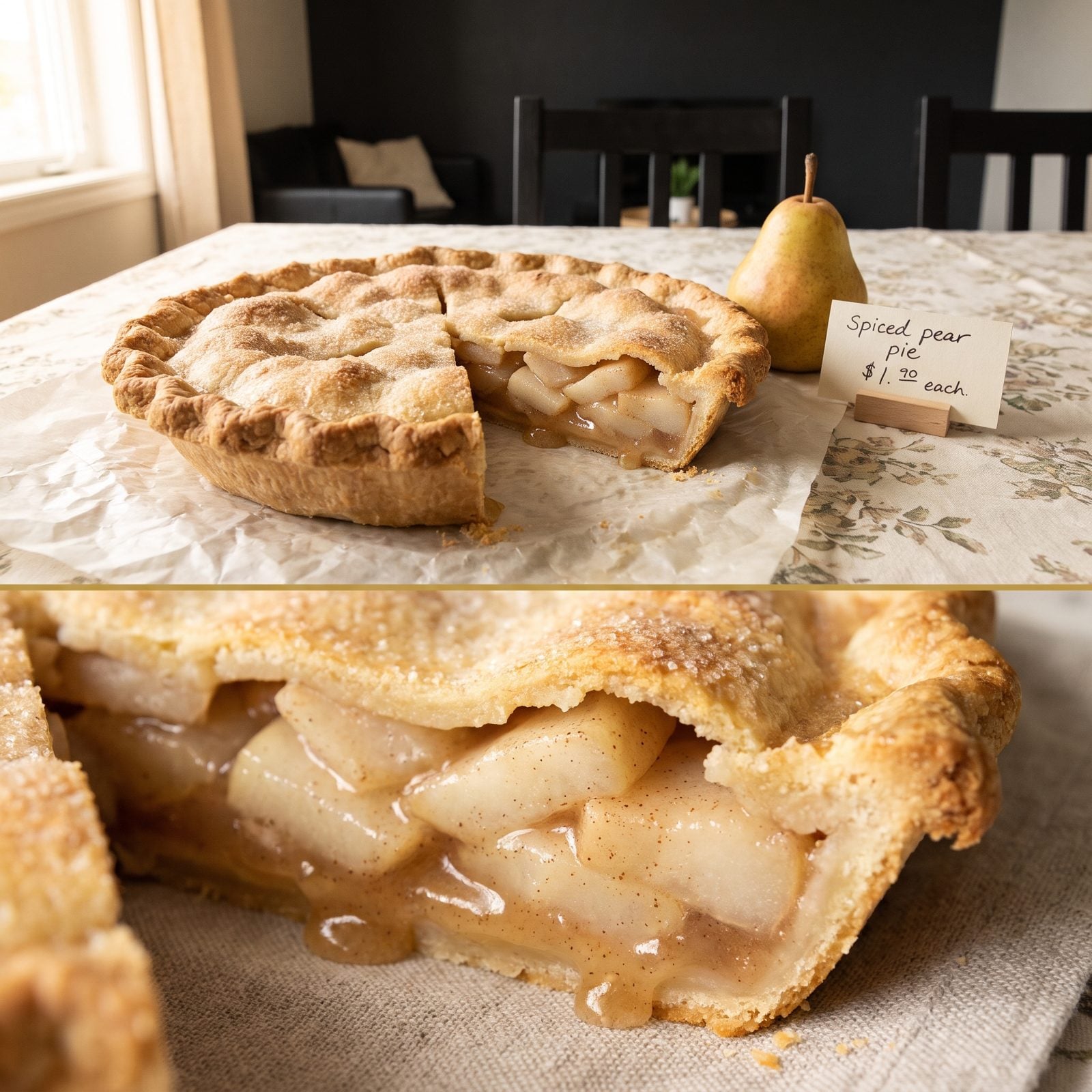
Pear pie lived in apple’s shadow and never seemed to mind. Softer, sweeter, more floral, with slices that cooked down tender and almost melting. The spices did the talking — cinnamon, nutmeg, sometimes a whisper of clove or ginger warming the whole thing through.
It was the pie the quieter bakers brought. No lattice drama, no deep-dish flood of juice, just a modest golden round that people underestimated until they tasted it. Often the last pie standing at the end of the sale, which was always a shame, because the ones who knew knew.
32. Ruby Cranberry Pie
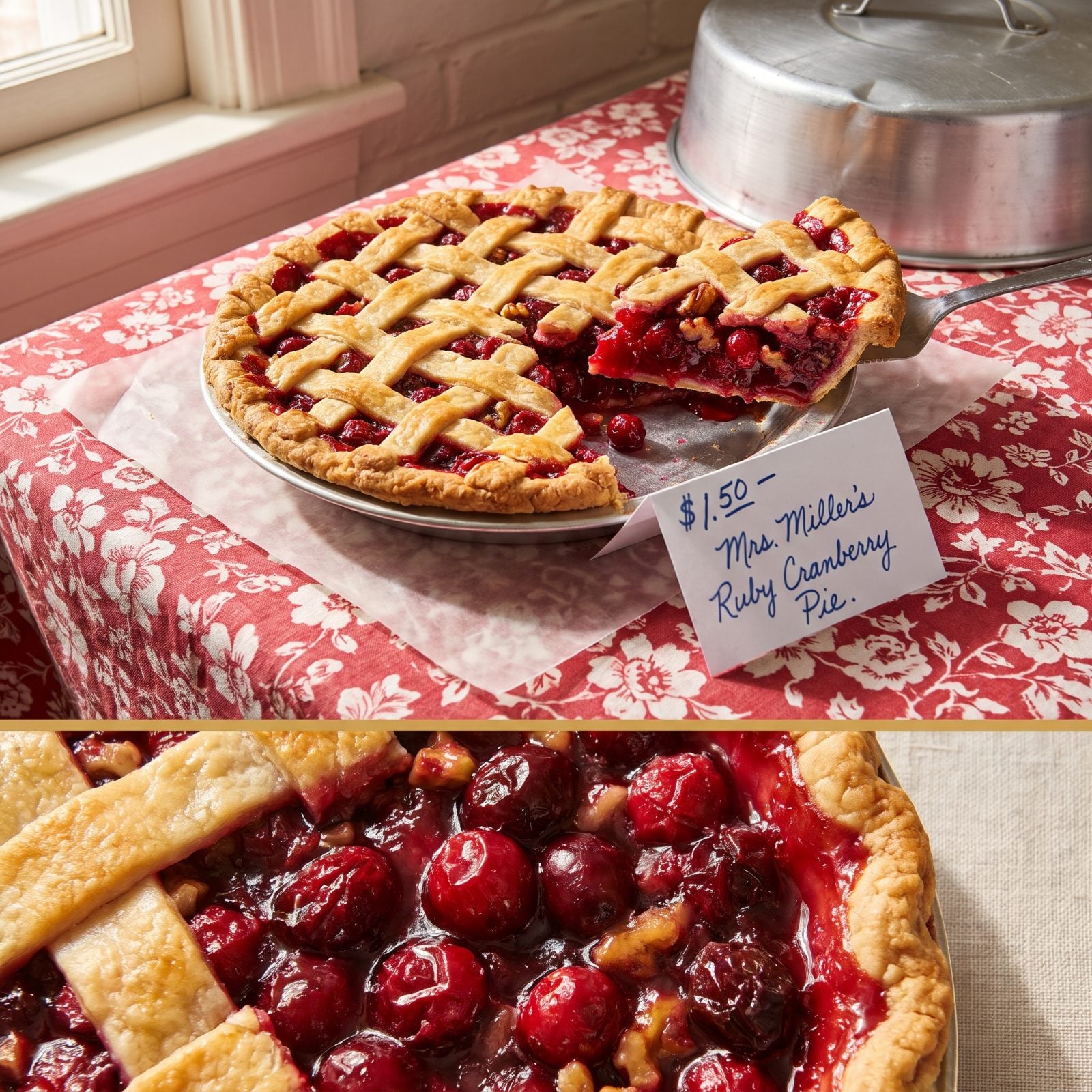
Tart was the whole point. Everyone else brought sweet, but somebody’s grandmother brought the cranberry pie, and it cut through the sugar overload of the rest of the table like a cold hand on a warm forehead. The filling cooks down to a jammy ruby that holds a slice without weeping, and most versions folded in walnuts or orange zest for backbone.
A fall and holiday pie, this, rarely seen in June. It traveled well, which mattered when the sale was down in the church basement and the pie rode over on the passenger seat. If you liked your dessert to argue with you a little, this was the one you grabbed first.
31. Spiced Pumpkin Pie
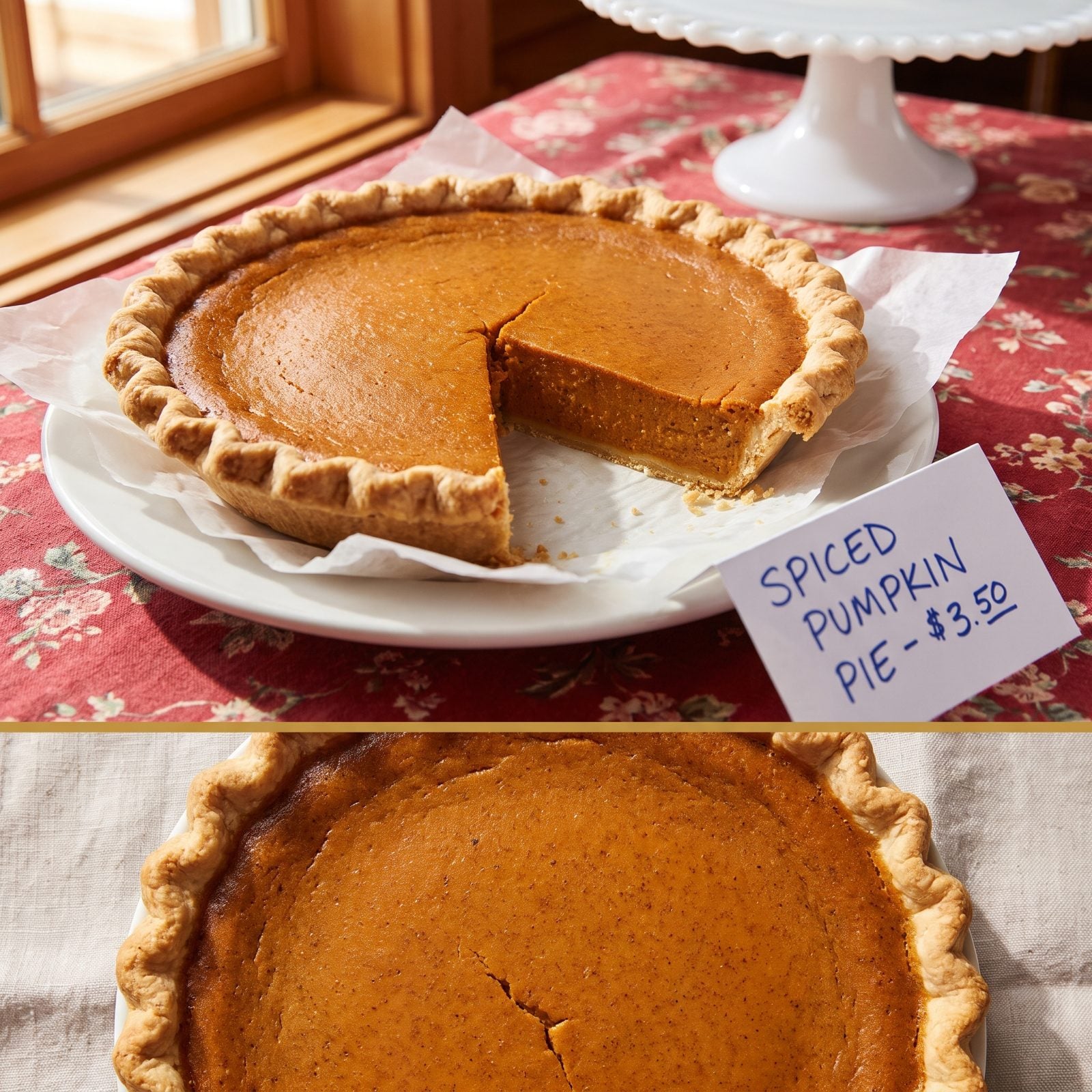
The dependable one. Pumpkin pie showed up at every single sale, which is exactly why it was rarely first to sell out — familiarity has a price. But a good one, custard set firm, cinnamon and clove doing real work instead of just tinting the filling, could still stop you cold in the aisle between the folding tables.
You could spot the homemade from the canned-mix versions by the color. Scratch pies ran darker, almost rust, and the surface carried a slight crack where it set unevenly in somebody’s temperamental oven. That crack was a badge, honestly. Meant nobody fussed over it.
30. Southern Sweet Potato Pie
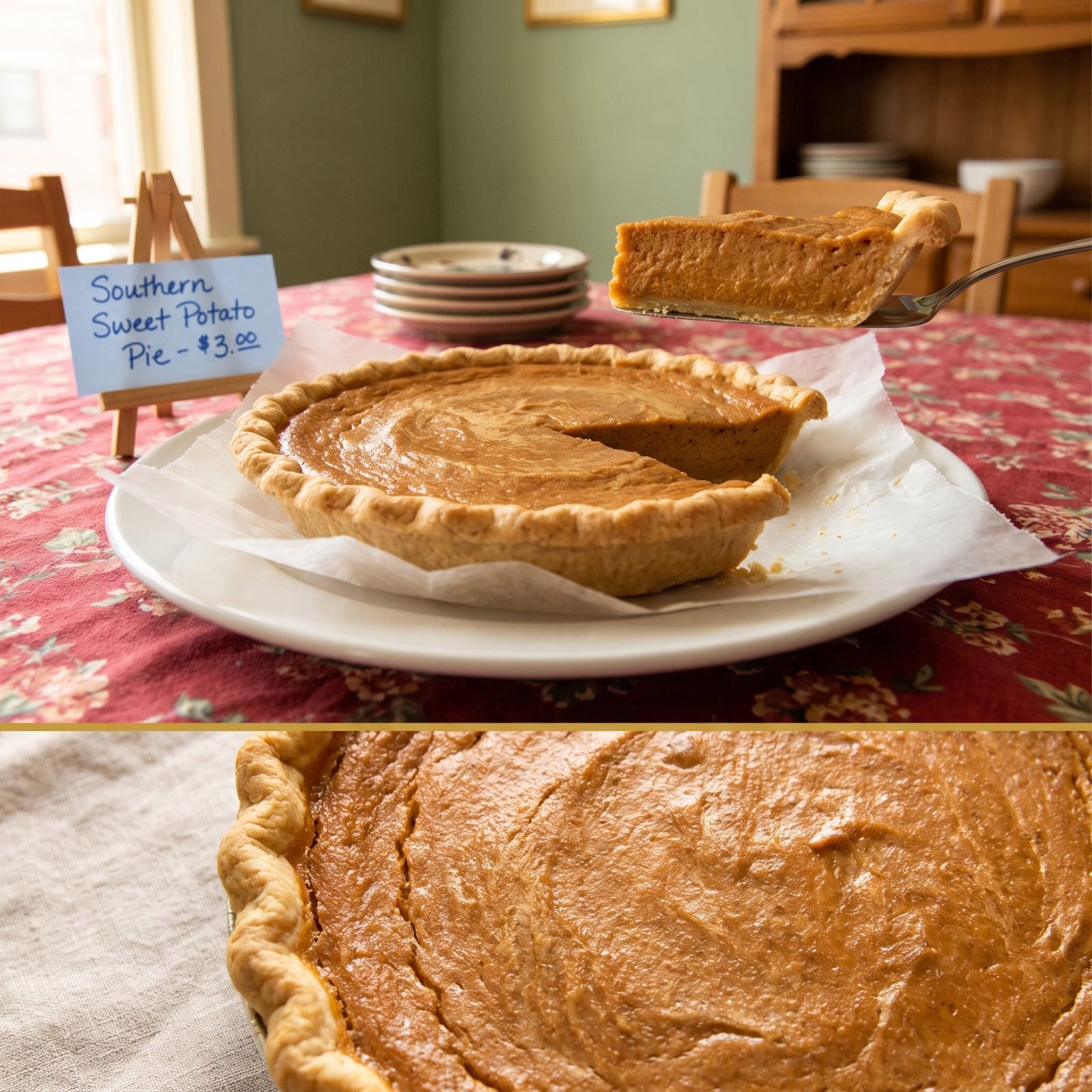
Do not confuse it with pumpkin. People who grew up with sweet potato pie will correct you fast, and they’re right to. The texture is lighter, almost whipped, and the flavor leans caramel and nutmeg rather than the heavier clove-and-ginger register of pumpkin. The color runs a warmer tan.
This was the pride of the table at Black church bake sales across the South, where the recipe passed down mother to daughter and everyone had an opinion about whether vanilla or a splash of bourbon belonged in it. A slice of the real thing sits lighter on the tongue than you expect. It was often the first pie gone, and the woman who made it knew it.
29. Classic Pecan Pie
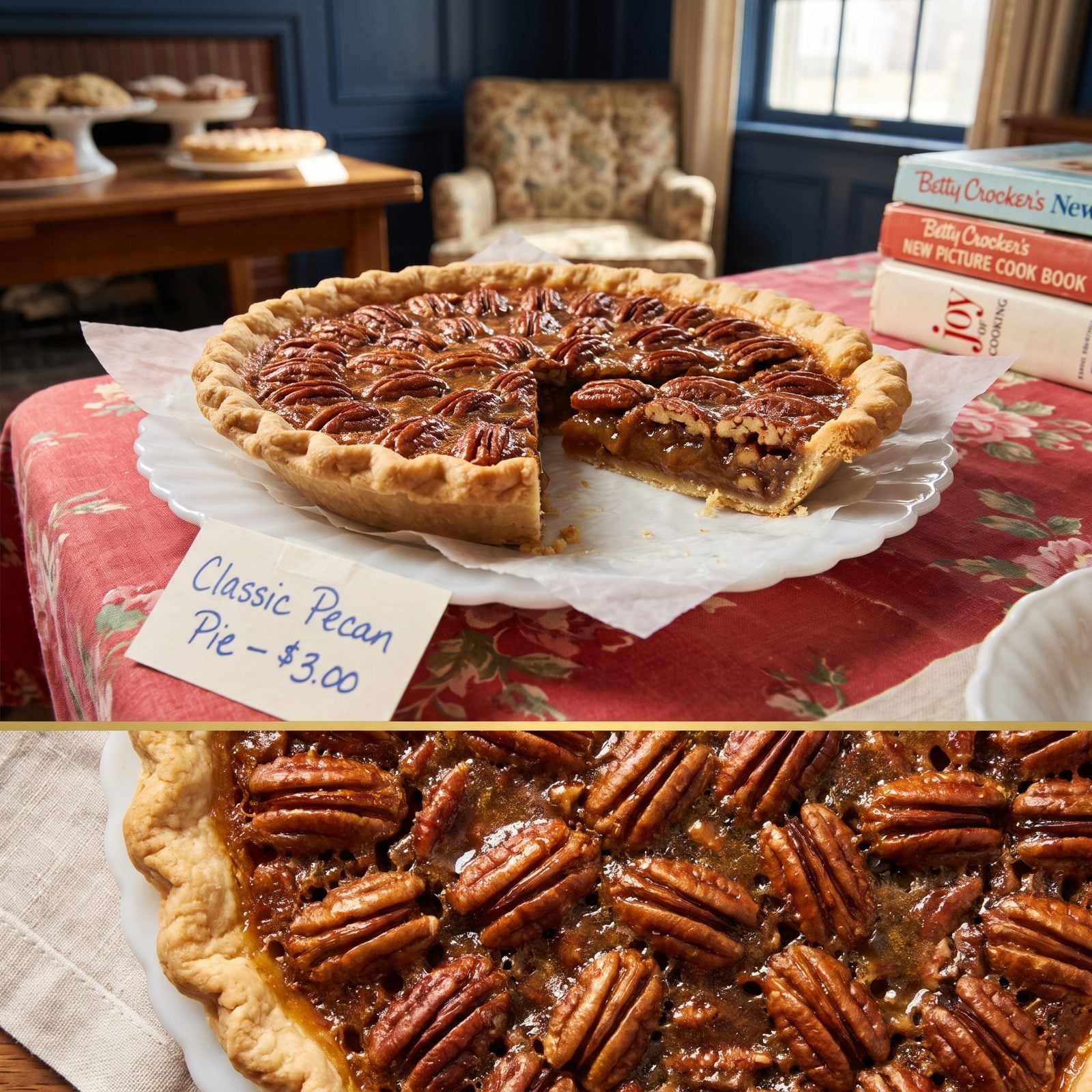
Sweetness with no apology. Pecan pie was the richest thing on the table and everybody knew it, which is why it sold slow but steady, a sliver at a time. The filling sets into a sticky amber custard under a crown of toasted pecans, and one slice was usually plenty for the whole family to share.
Southern versions ran darker and sometimes carried a ribbon of bourbon or a handful of chocolate chips at the bottom. The thrifty ones padded out the pecans with a little extra filling, because pecans weren’t cheap. You could tell a generous baker by how thick the nut layer sat.
28. Old-Fashioned Egg Custard Pie
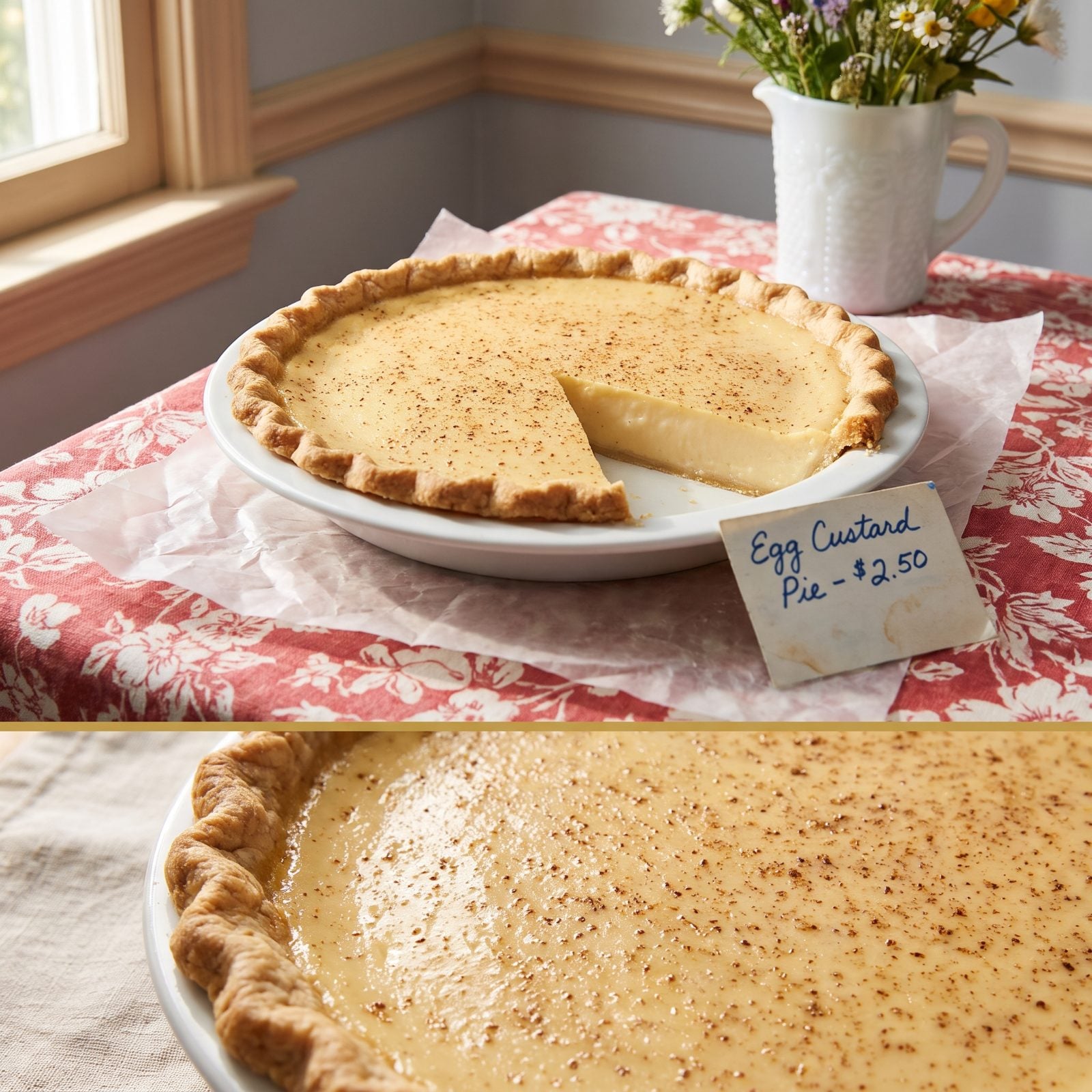
Plain in the best sense. Egg custard pie was eggs, milk, sugar and a grating of nutmeg baked until it just set into a trembling pale gold — no fruit, no nuts, nothing to hide behind. That’s exactly why the older church ladies respected it. A wobbly custard that didn’t weep or crack meant the baker knew her oven cold.
Gentle on the stomach and gentle on the wallet, it was a Depression-era survivor that carried right into the 1960s. Kids either loved its mild sweetness or walked right past it toward the pecan. The nutmeg on top was the only decoration it ever needed.
27. Southern Chess Pie
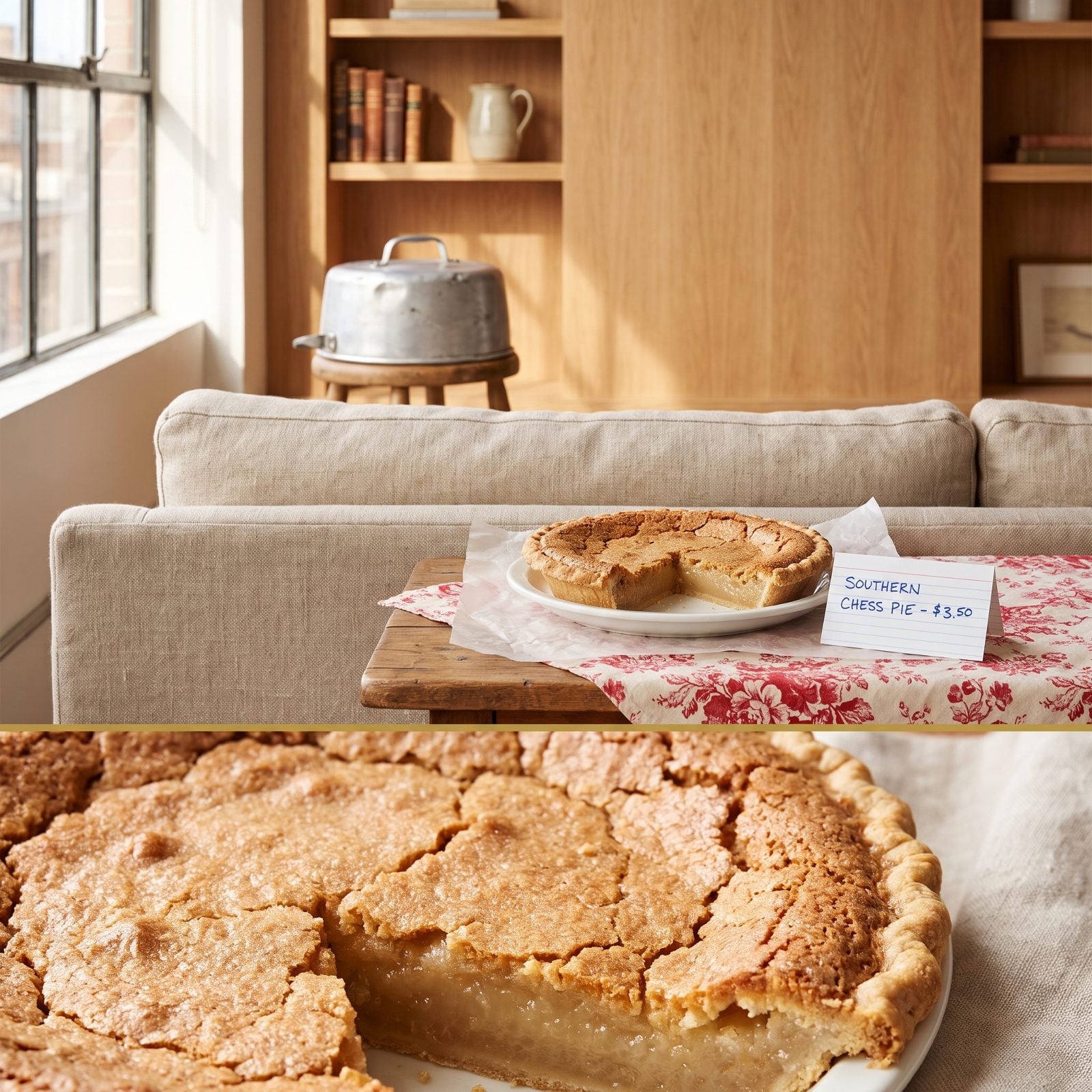
A pantry pie with a funny name. Chess pie came together from whatever was already in the kitchen: eggs, sugar, butter, and a spoonful of cornmeal or flour to give the filling its grain. The top bakes into a thin crackled crust over a dense, almost fudgy middle that walks the line between custard and candy.
Nobody fully agrees where the name came from. One story says it was “just pie,” drawled into “chess.” Another ties it to the pie chest where it kept for days without refrigeration. Either way it was a Southern bake sale fixture, sweet enough that a thin wedge went a long way.
26. Pennsylvania Dutch Shoofly Pie
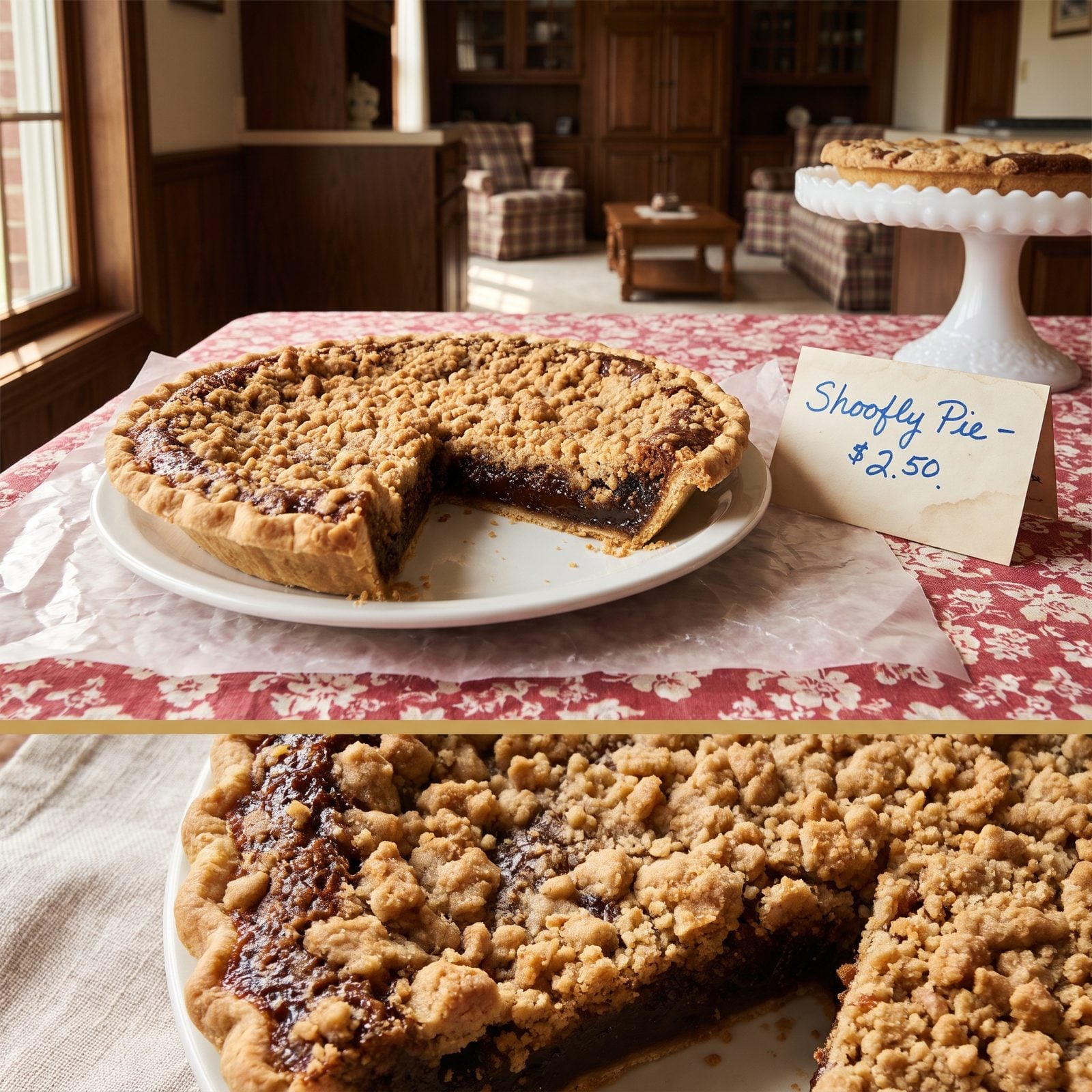
Breakfast pie, if you grew up Pennsylvania Dutch. Shoofly is built on molasses and a brown-sugar crumb, and it got eaten with coffee in the morning as often as after supper. The wet-bottom version keeps a layer of sticky molasses under the cake-like crumb. That’s the one worth fighting over.
The name comes from exactly what you’d guess. Molasses this sweet drew flies, and cooling the pie meant shooing them off. It traveled from the farm kitchens of Lancaster County onto church tables across the region, where it stood out as the dark, chewy oddity among all the pale custards.
25. Indiana Sugar Cream Pie
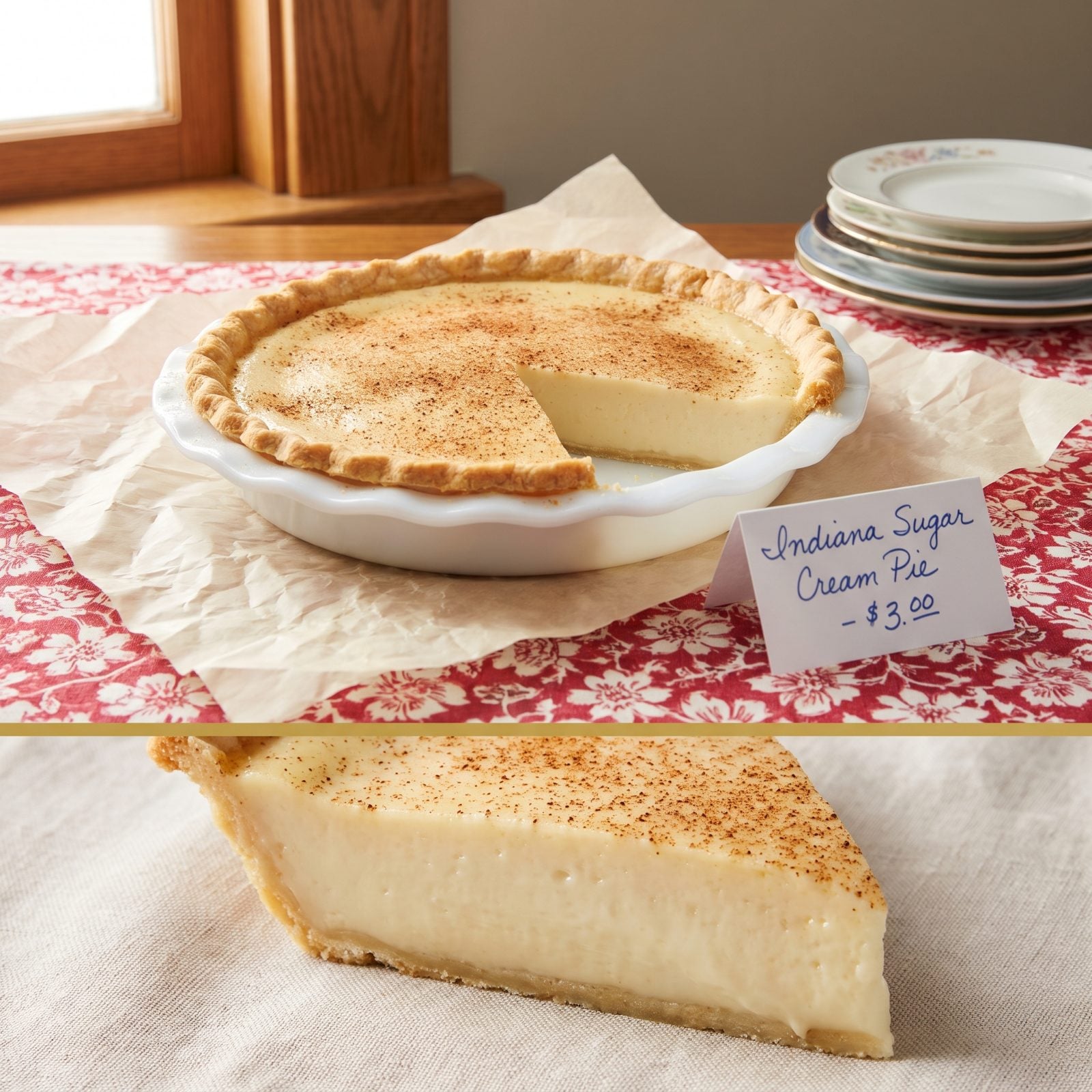
No eggs, and that’s the trick of it. Sugar cream pie thickens cream, sugar and flour right on the stove, pours into a shell, and bakes just until the top blisters under a dusting of cinnamon. The result lands somewhere between custard and vanilla pudding, impossibly simple.
Hoosiers claim it hard, and with reason. It’s the unofficial state pie of Indiana, born from frontier larders where fresh fruit was scarce in winter but cream and sugar were always on hand. On a bake sale table it read as humble, almost plain, until you tasted it and understood why the little Amish and Shaker communities kept making it for a hundred years.
24. Old-Fashioned Vinegar Pie
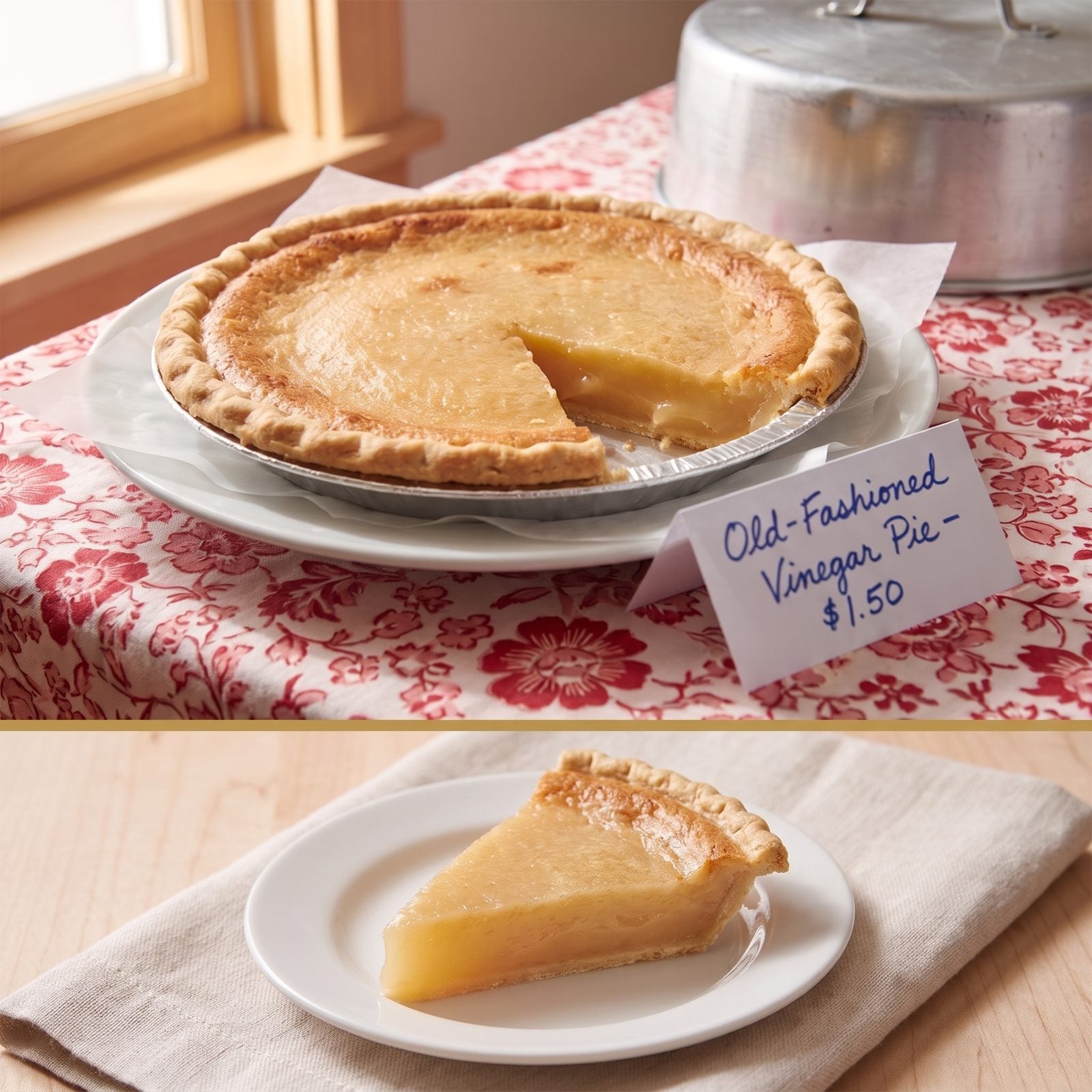
The one you had to explain. “Vinegar?” people would ask, nose already wrinkling, and then they’d try a bite and quiet down. A spoonful of cider vinegar stood in for the lemons nobody could get or afford, giving the custard a bright tang that read almost citrusy. The filling sets glossy and translucent; lifted out on its own it holds a firm golden slab with a clean cut edge, close to a set lemon curd in a lean year.
A mock pie, this — a make-do from the pioneer and Depression kitchens that kept showing up at rural church sales out of habit and thrift. It rarely won a ribbon. But the old folks reached for it, because it tasted like the pie their mothers made when there was nothing else to make one with.
23. Kentucky Transparent Pie
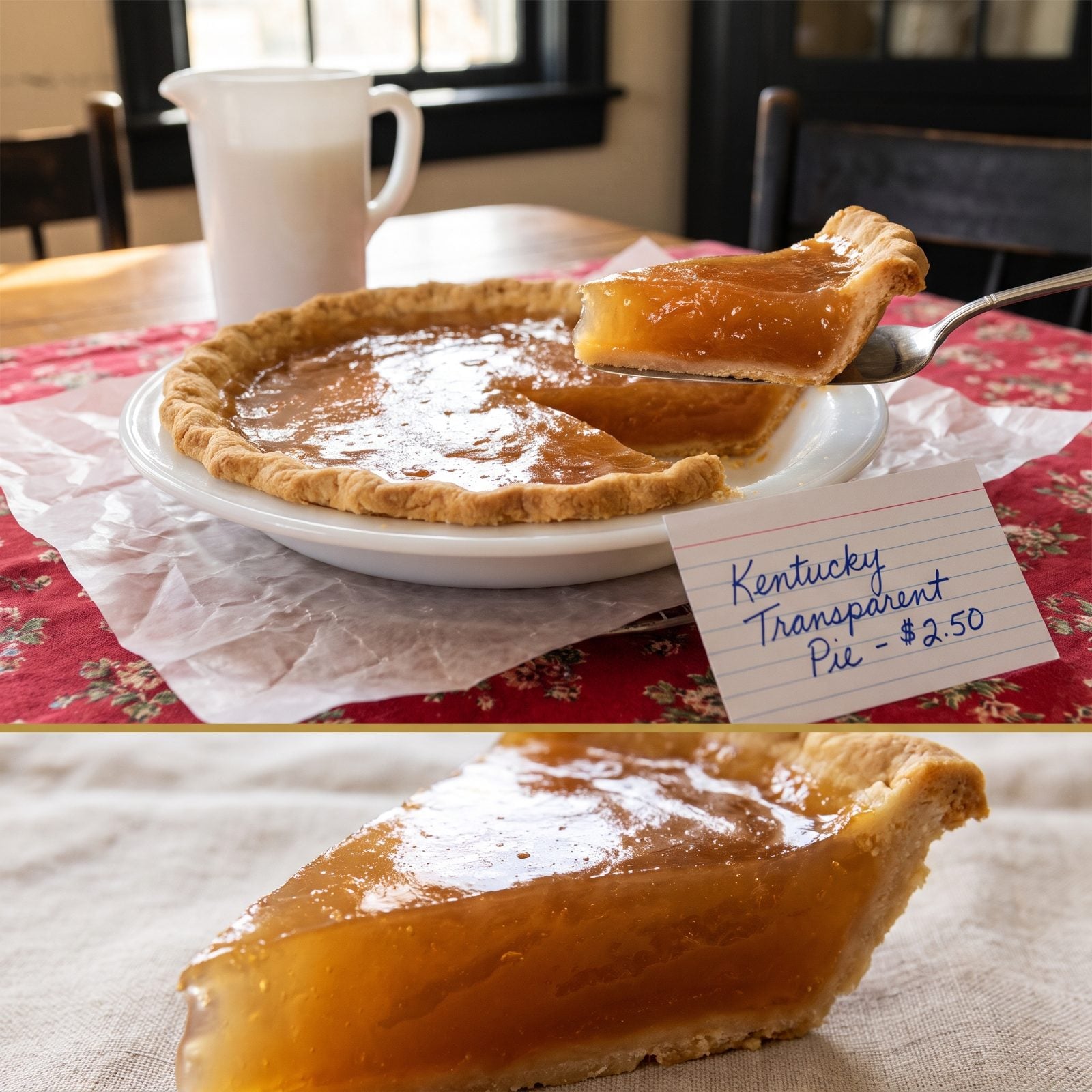
Cousin to the chess pie, but clearer and richer. Transparent pie leans on cream and butter where chess uses cornmeal, so the filling bakes down to a glassy caramel-gold that lets light through at the edges. It’s a Maysville, Kentucky signature — the kind of regional pride that gets argued about at family reunions.
Sweet doesn’t begin to cover it. This is a thin-slice pie, served in slivers, and it was the closing act of a good bake sale table once the fruit pies had gone. If you grew up in that pocket of Kentucky, no holiday felt finished without one sitting beside the sweet potato and the pecan, glossing in the light like it had somewhere better to be.
22. Traditional Mincemeat Pie
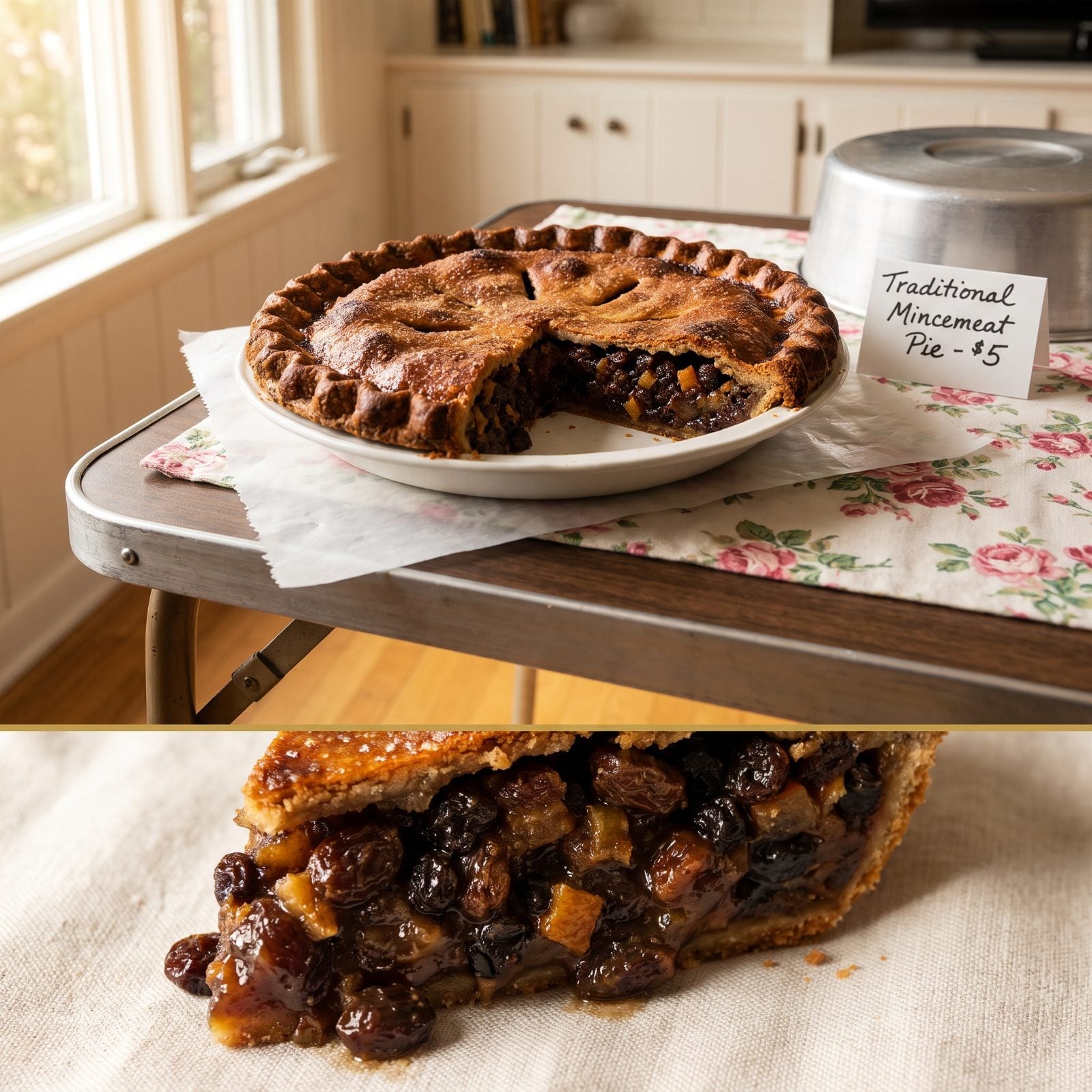
The pie nobody under forty wanted, and the pie that sold out to the grandmothers by ten o’clock. Mincemeat was already an old recipe in 1960, a holdover from when fruit, spice and a little suet got packed together to last the winter. By the bake sale era most of the meat was gone, and what remained was dense, dark, boozy-sweet, and heavy with raisins, apple, and candied peel.
You could tell the serious bakers by whether they’d cut vents into that thick top crust or just trusted it to hold. The flavor is Christmas in a crust, spiced and a little grown-up. If you grew up turning your nose up at it, that’s exactly the one your grandmother guarded.
When our readers disliked a food photo and gave a reason, “not for me” topped the list at 39%, with ingredients close behind at 30%, which sounds a lot like mincemeat’s reputation.
21. Old-Fashioned Raisin Pie
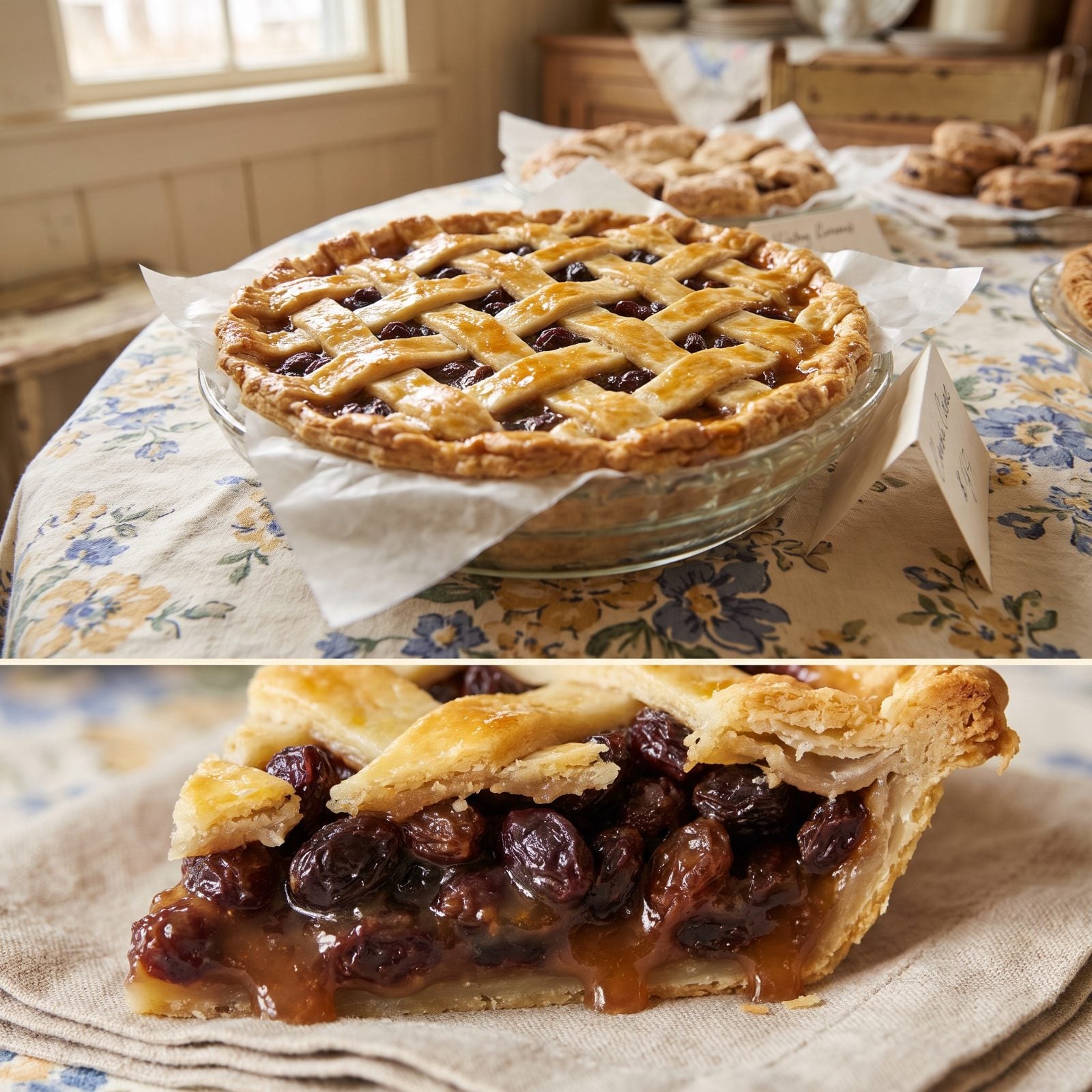
Cheap, humble, quietly beloved. Raisin pie earned a sadder nickname, funeral pie, because raisins kept in the pantry year-round, which meant a woman could put together a pie on short notice when a family needed feeding. That’s the whole story right there. It fed people when there was no time to shop.
Under the lattice sits a thick, dark, lemony-sweet raisin filling, glossy and a touch tart to cut the sugar. It travels well and keeps well, which is why it turned up at every potluck and sale table. Simpler than mincemeat, friendlier too. The kind of pie that doesn’t announce itself and wins you over by the second bite.
20. Mile-High Lemon Meringue Pie
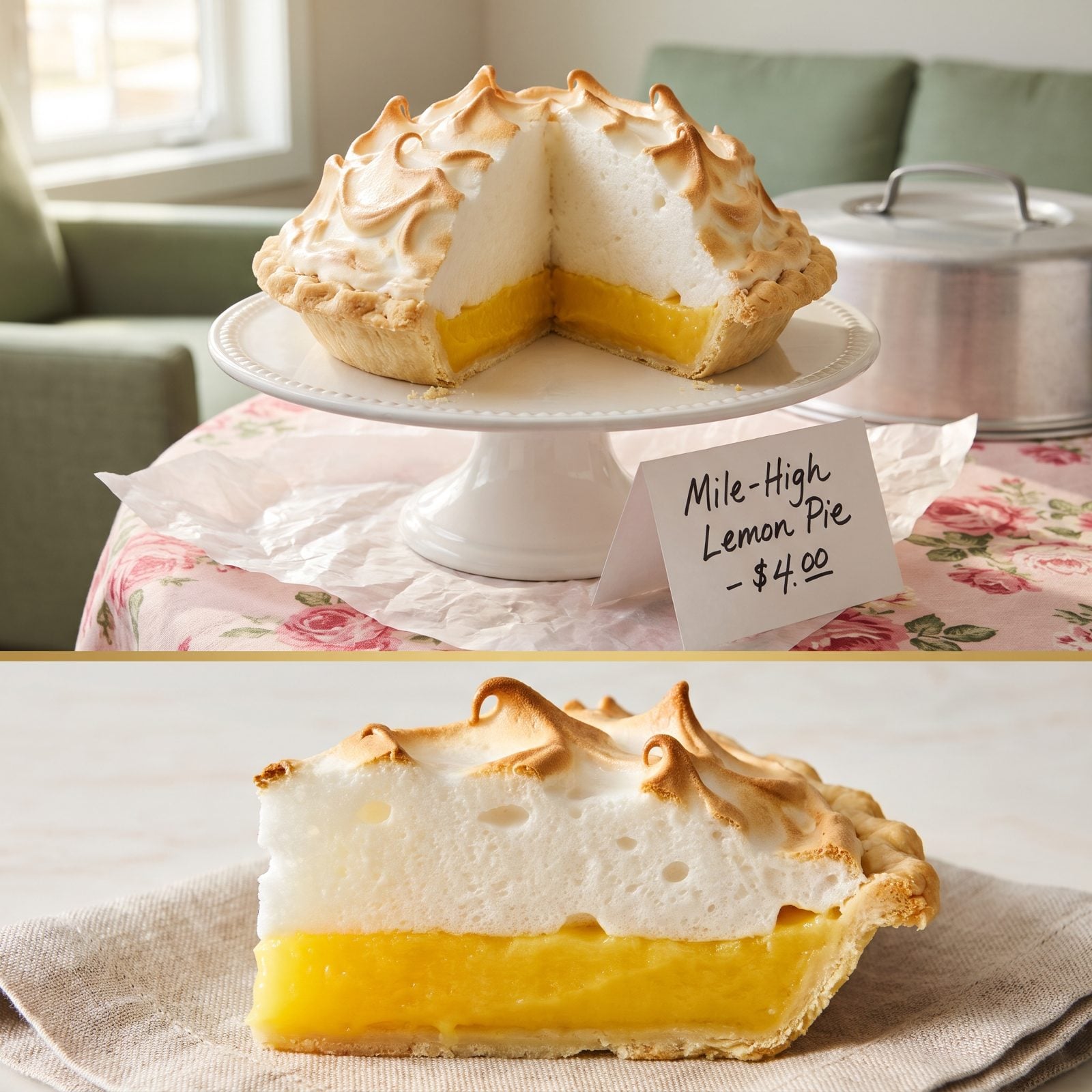
This was the showpiece, the pie that made people walk faster across the parking lot. A mile-high lemon meringue was a bragging pie, meringue whipped to towering swirled peaks, toasted just at the tips, hiding a lemon curd bright and tart enough to make you squint.
Getting it right was no small feat. Too humid and the meringue wept beads of syrup. Cut it too cold and the layers slid apart. A baker who could set one on the table standing tall, golden and weep-free, had earned her reputation. You bought it fast because everyone else was watching it too.
19. Chocolate Cream Pie
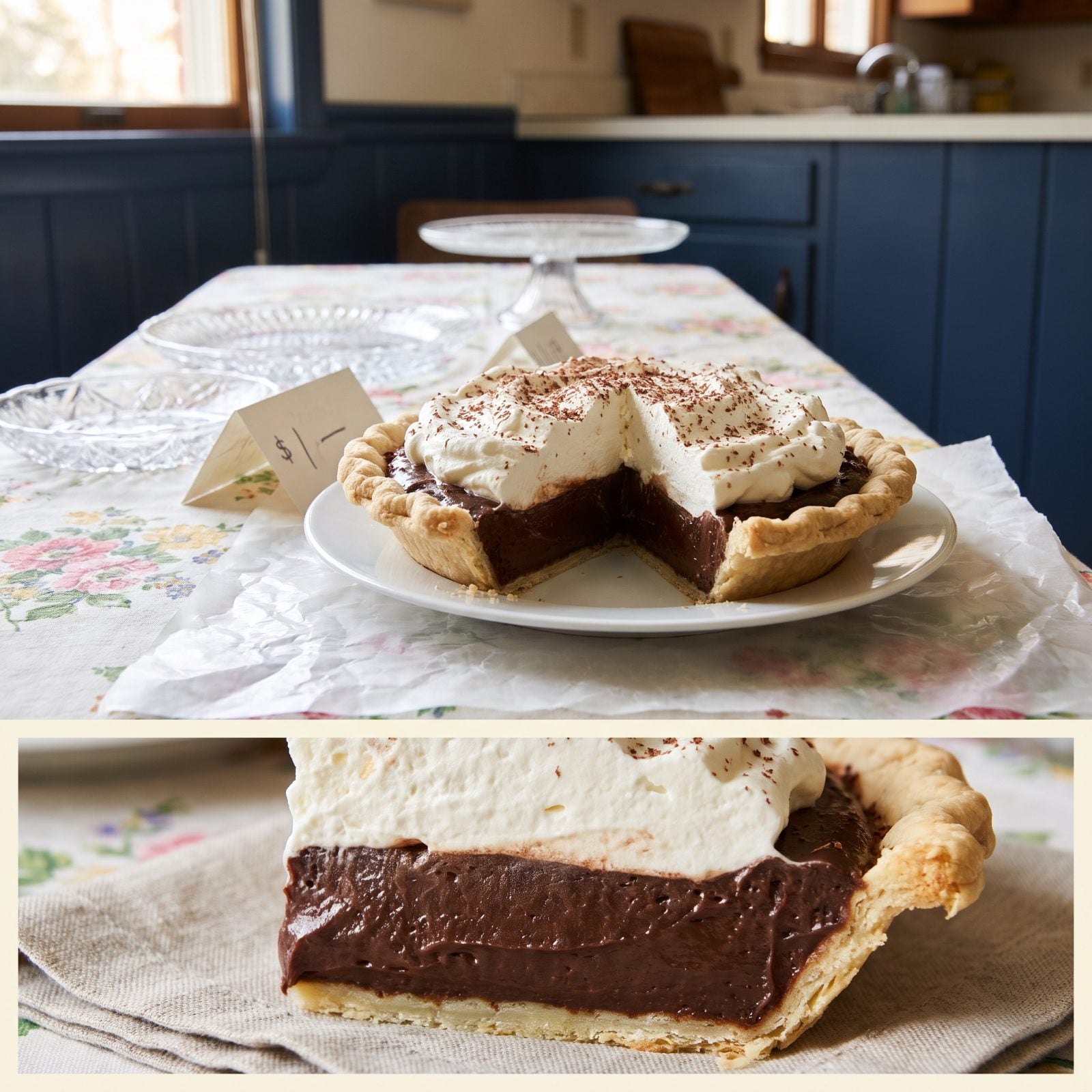
The safe bet, the one that sold to kids and adults with equal speed. Chocolate cream pie was a stovetop custard poured into a baked crust, chilled until it set, then crowned with real whipped cream. No baking the filling, no meringue drama, just dark silky chocolate under a soft white cloud.
The good ones were genuinely dark, almost bittersweet, so the whipped cream had something to push against. The lesser ones tasted like chocolate pudding in a pie shell, and honestly, plenty of us ate those happily too. We judged a chocolate cream pie entirely by how dense that first forkful felt. If it held its shape standing up, it was a good one.
18. Banana Cream Pie
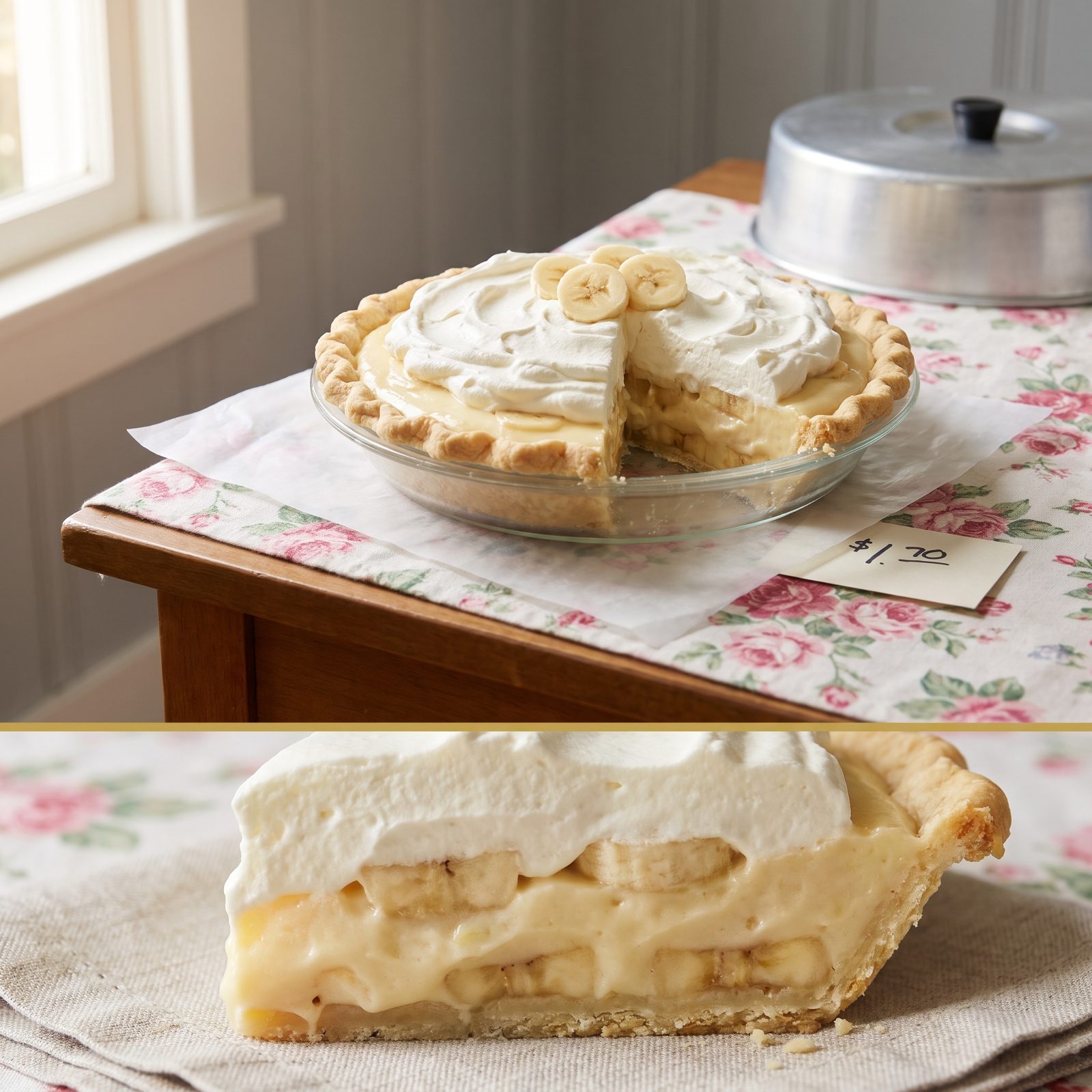
Same vanilla custard base as a dozen other pies, but the bananas changed everything. Sliced soft and layered into the filling, they went sweet and almost floral as they sat. Top that with whipped cream and you had the pie that disappeared fastest at a summer sale.
The catch, and every baker knew it: banana cream didn’t keep. Leave it overnight and the bananas browned, the custard went thin, the whole thing sulked. So you ate it the day it was made, which gave it a little urgency. Fresh, cool, and gone by afternoon.
17. Coconut Cream Pie
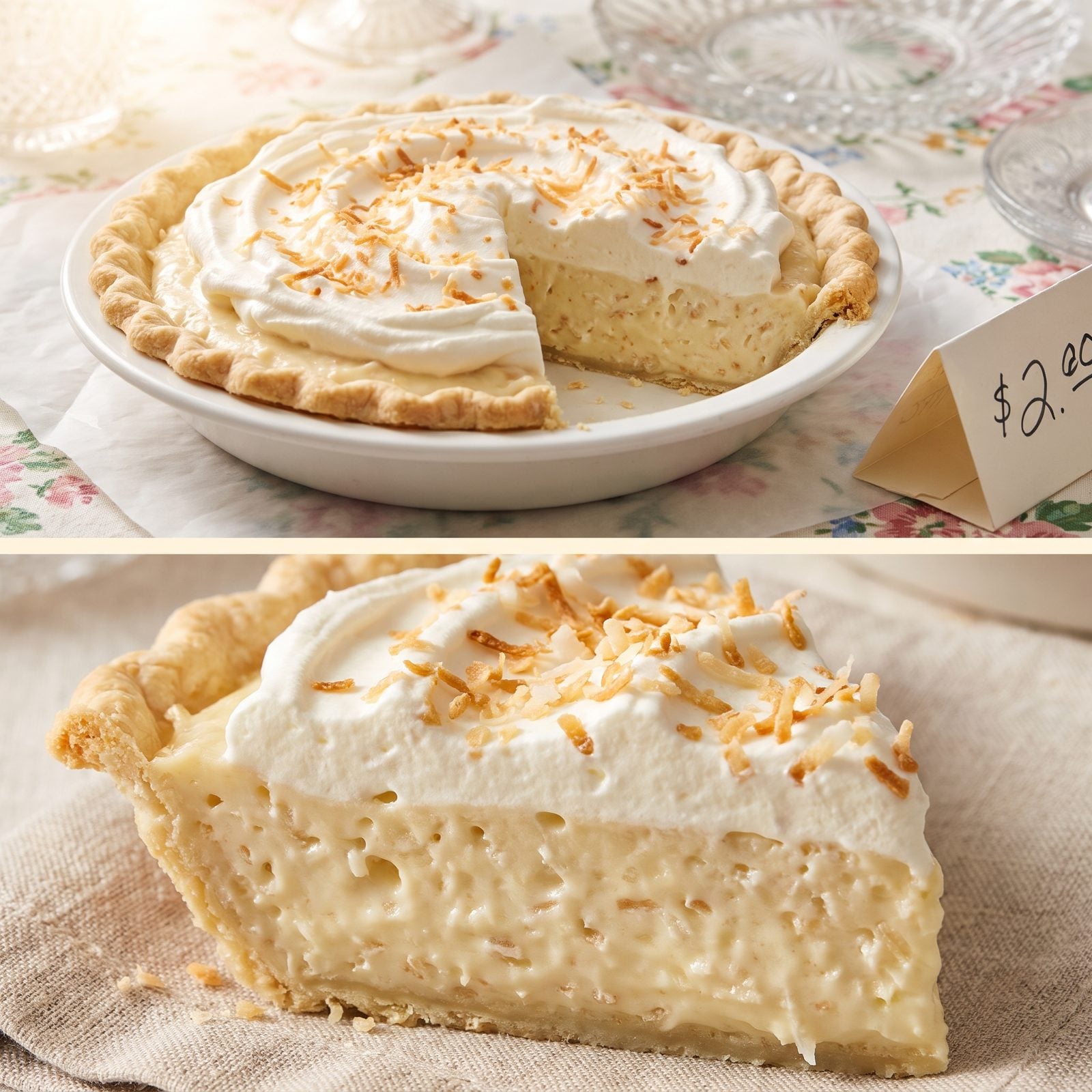
The grown-up favorite in the cream pie family. Coconut cream took the same custard everyone used, folded shredded coconut right into it, then scattered toasted flakes across the whipped cream on top. That toasting mattered. Raw coconut looked pale and sad. Toasted, it went golden and nutty and made the whole pie smell like somebody knew what they were doing.
Texture is the real draw. Smooth custard, then little chewy threads of coconut throughout, so every bite has something to do. It keeps better than banana, travels well, and tends to pull in the people who’ve already eaten three other pies and want something with a bit more character.
16. Butterscotch Cream Pie
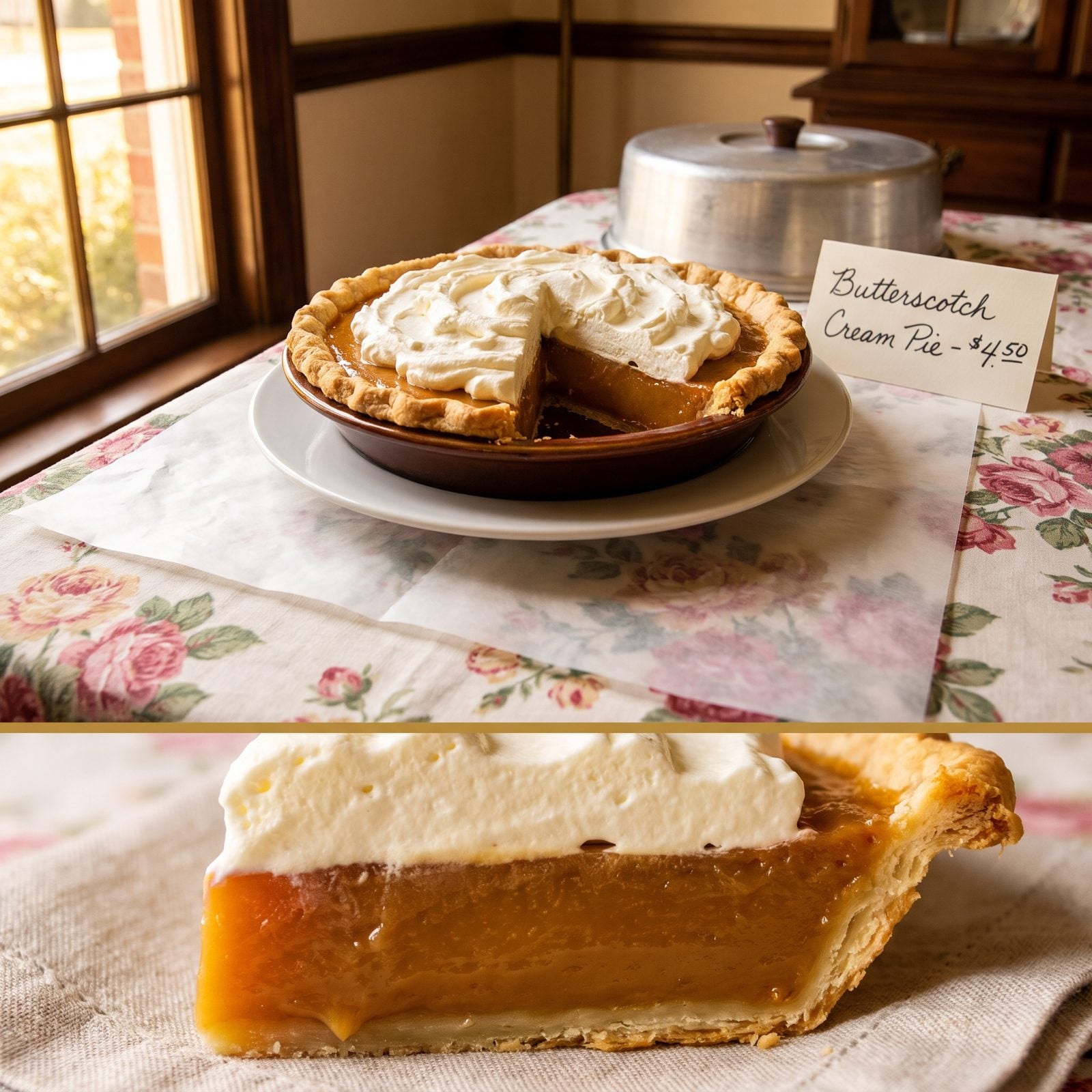
Don’t confuse it with caramel. Butterscotch starts with brown sugar and butter cooked together until it turns deep and almost smoky-sweet, and that gives this custard a flavor nothing else on the table had. The filling sets a rich amber, glossy, and the whipped cream on top keeps it from tipping over into too-much.
This was a quieter seller. The flashy pies went first, and then somebody would spot the butterscotch, remember how much they loved it, and buy the last two slices. Underrated, if you ask me. That brown-sugar depth makes plain vanilla custard taste a little dull by comparison.
15. Peanut Butter Cream Pie
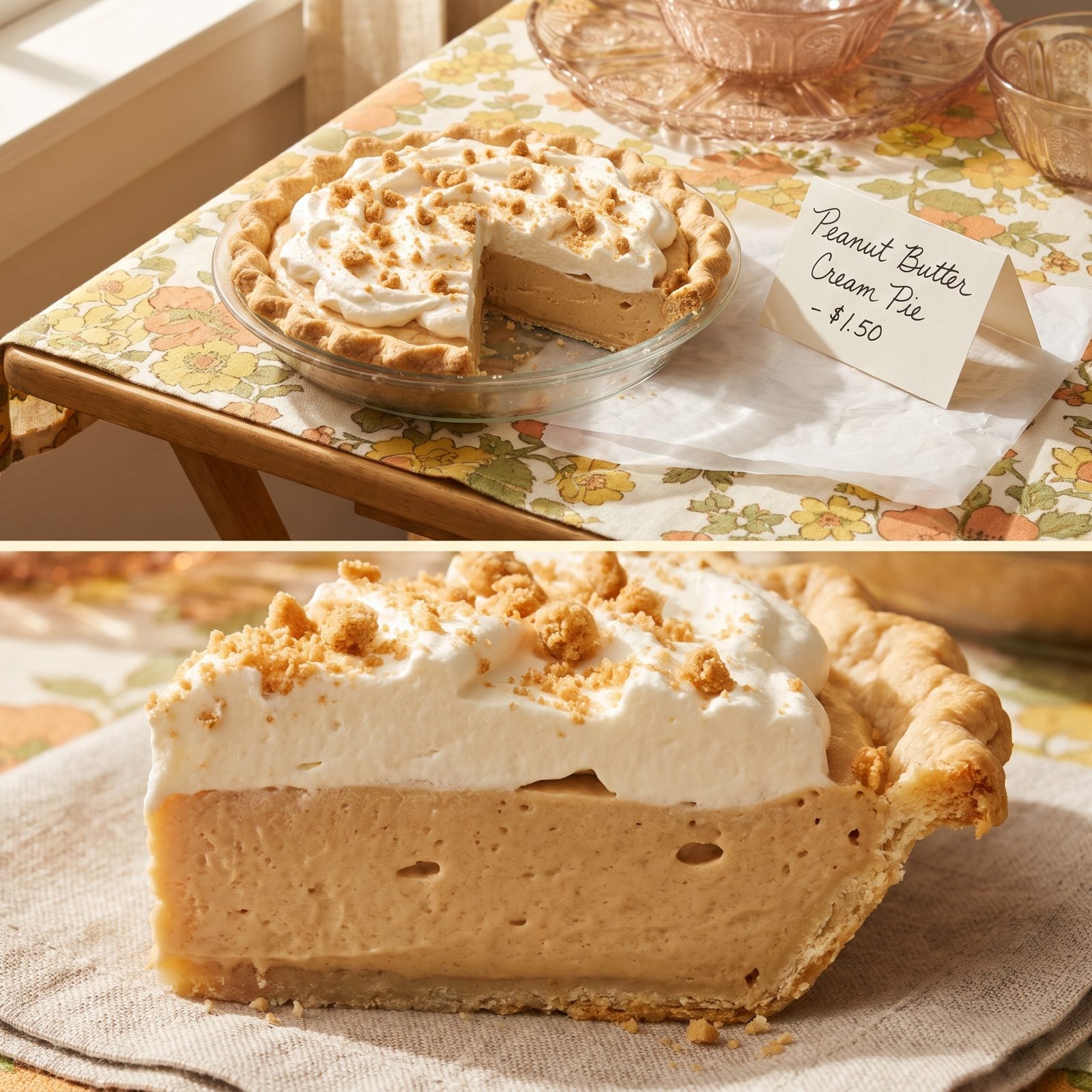
The kids’ pick, when it showed up. Peanut butter cream was less common than the vanilla-based pies, a little more regional, but where it appeared it vanished. Smooth peanut butter custard, salty-sweet, under whipped cream, sometimes with crumbled peanut butter crumbs scattered on top for a bit of grit.
What made it work was the salt. A good peanut butter pie pushed back against its own sweetness, so it never felt cloying the way a straight cream pie could. And if your church lady knew her stuff, she topped it with a drizzle of chocolate. At that point you fought your own cousins for a slice.
14. Pineapple Cream Pie
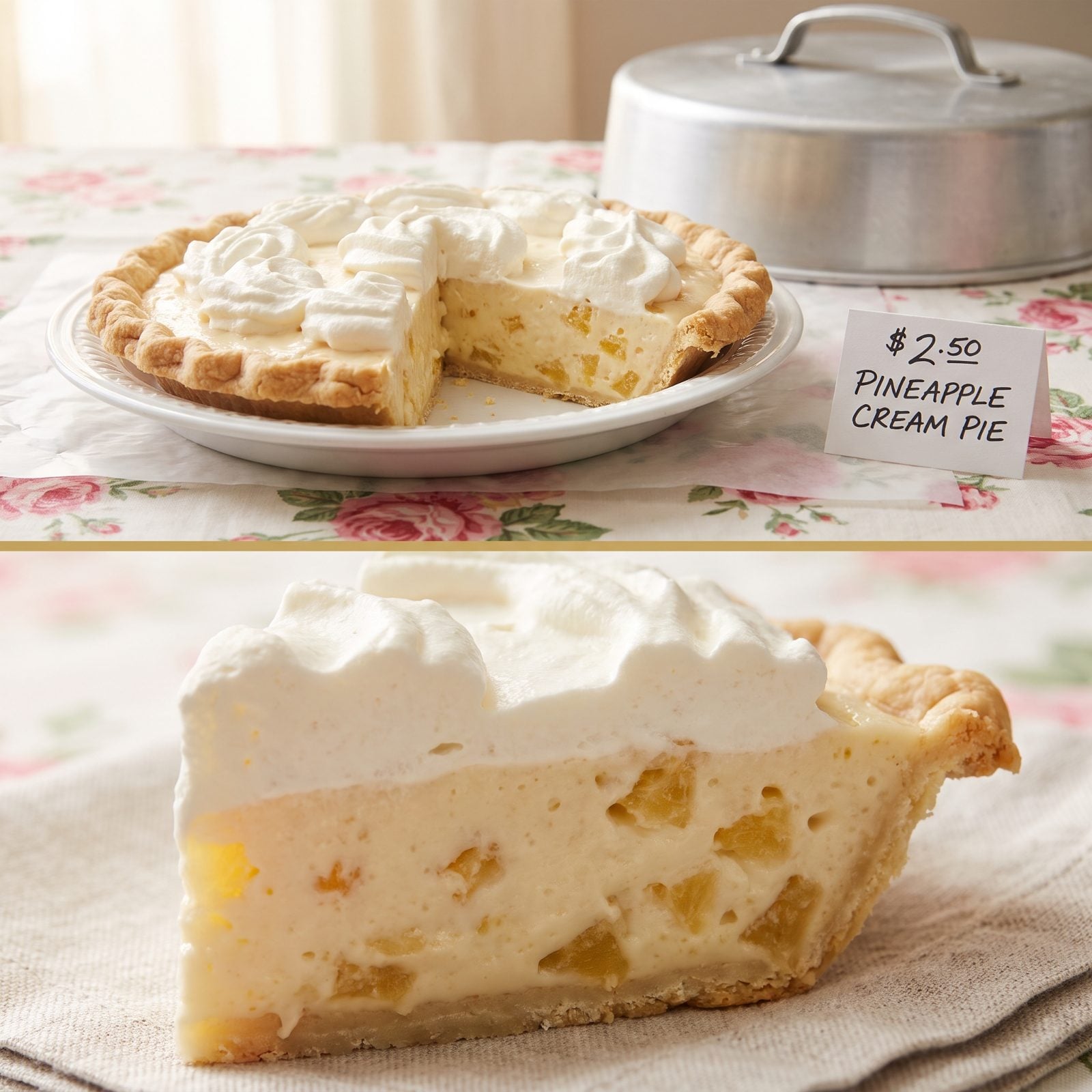
A product of the can opener, and proud of it. Crushed pineapple in a tin was a pantry staple by the 1960s, and folding it into a cream custard gave you a bright, tangy pie that tasted like a little vacation. The acid from the pineapple cut the richness and kept the whole thing light.
This one leaned festive, the pie that turned up at summer socials and ice cream suppers rather than solemn occasions. Sweet-tart, cool, a touch tropical for a church basement in Ohio. People who found it surprisingly good always acted a little surprised, which never made sense to me. Pineapple and cream were made for each other.
13. Lemon Chiffon Pie
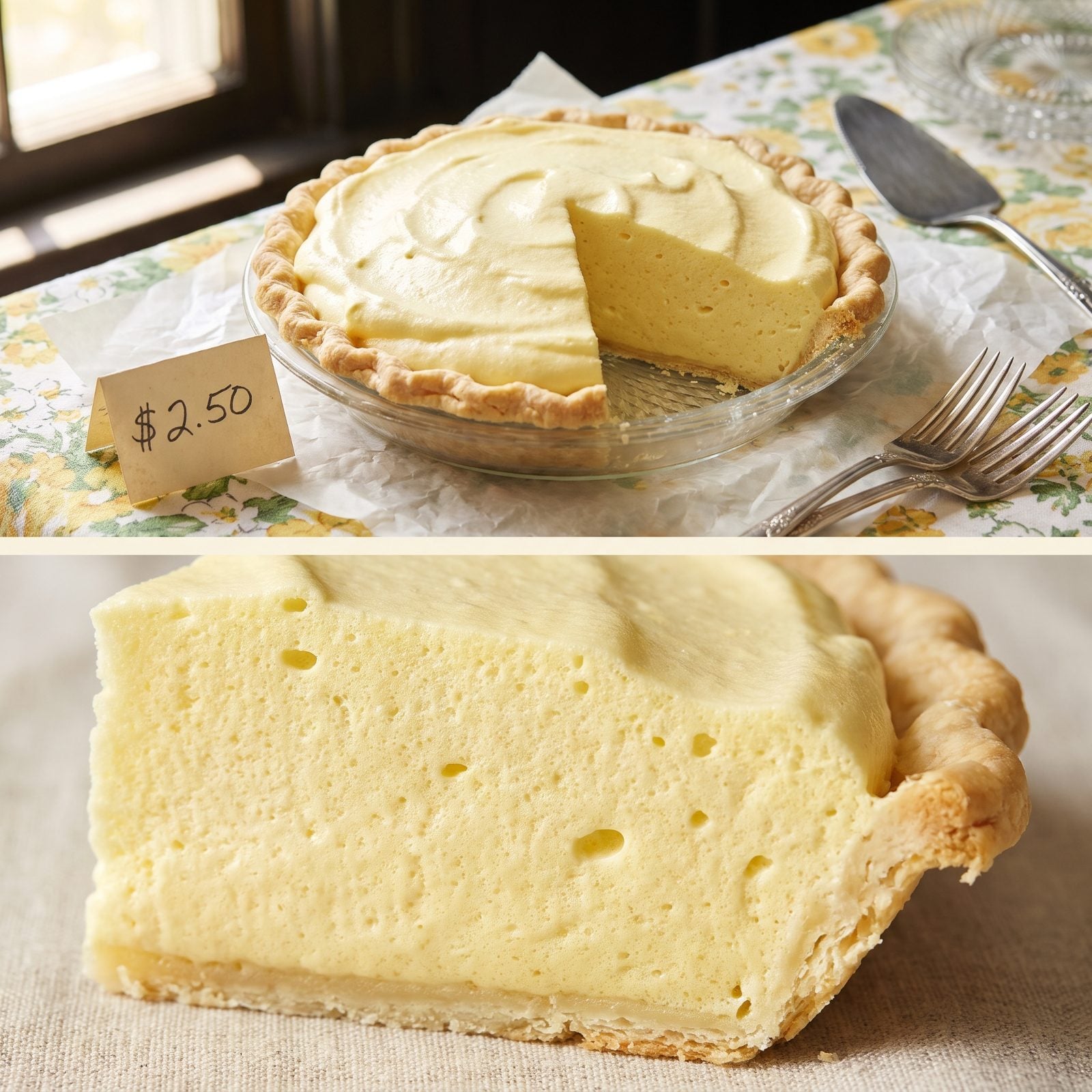
Lighter than everything else on the table, and that was the whole appeal. Chiffon pies were a mid-century craze, a lemon custard lightened with beaten egg whites and set with gelatin so it went airy, almost like a cold mousse that held a clean slice. Pale yellow, foamy, barely there on the fork.
If lemon meringue was the dramatic cousin, chiffon was the elegant one. Same bright citrus, totally different texture, so light it felt like you weren’t really having dessert. That illusion was exactly why people loved it after a big meal.
12. Strawberry Chiffon Pie
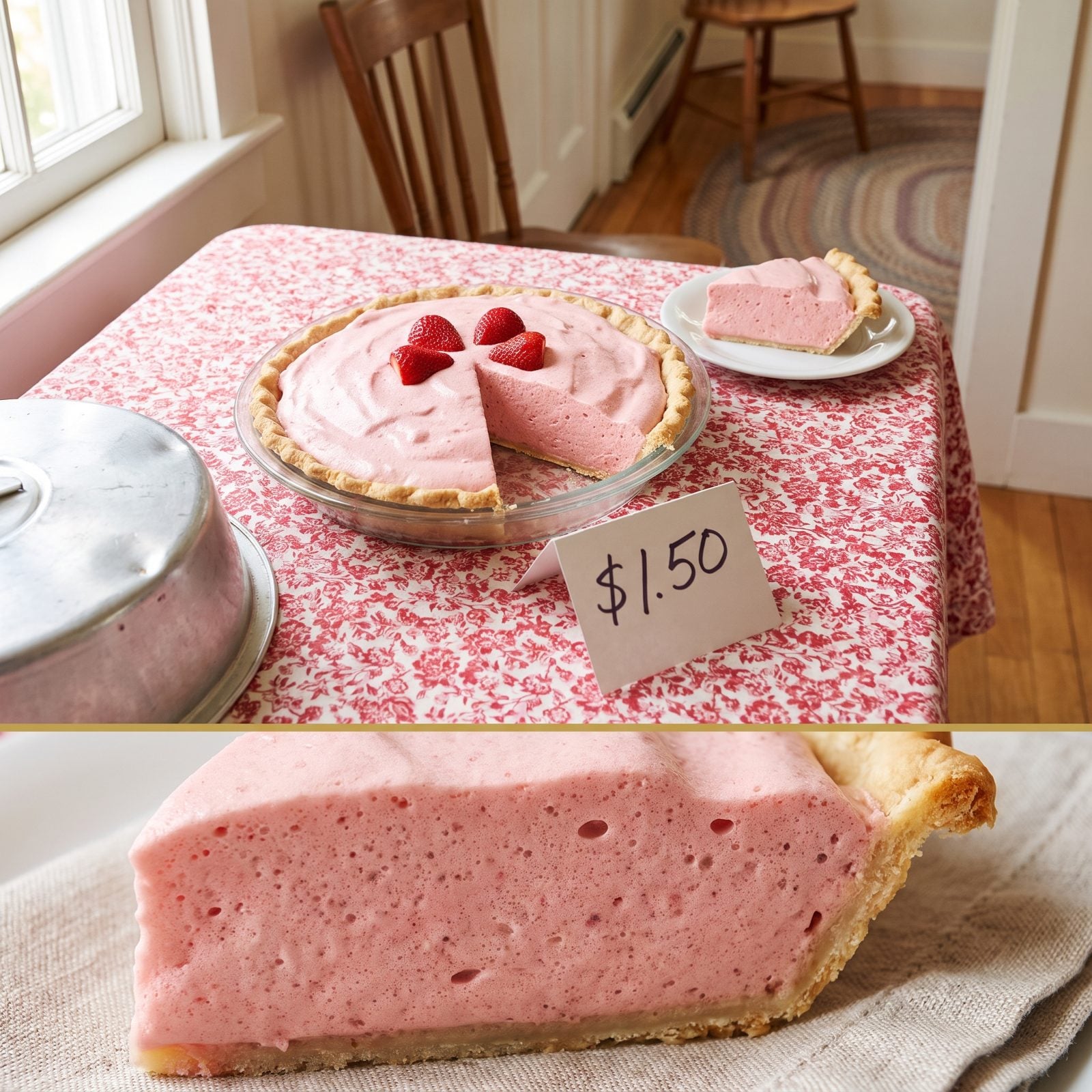
Chiffon pies were the showoffs of the table, and strawberry was the one that sold first in June. Light as a cloud, barely holding its shape, the filling was whipped egg and gelatin folded until it stood tall in a cool pink dome. It tasted more like the idea of a strawberry than the fruit itself, which is exactly why kids loved it.
You could spot a good one by how high it sat. A slumped chiffon meant somebody rushed the folding. A proud one meant somebody knew what they were doing.
11. Lemon Icebox Pie
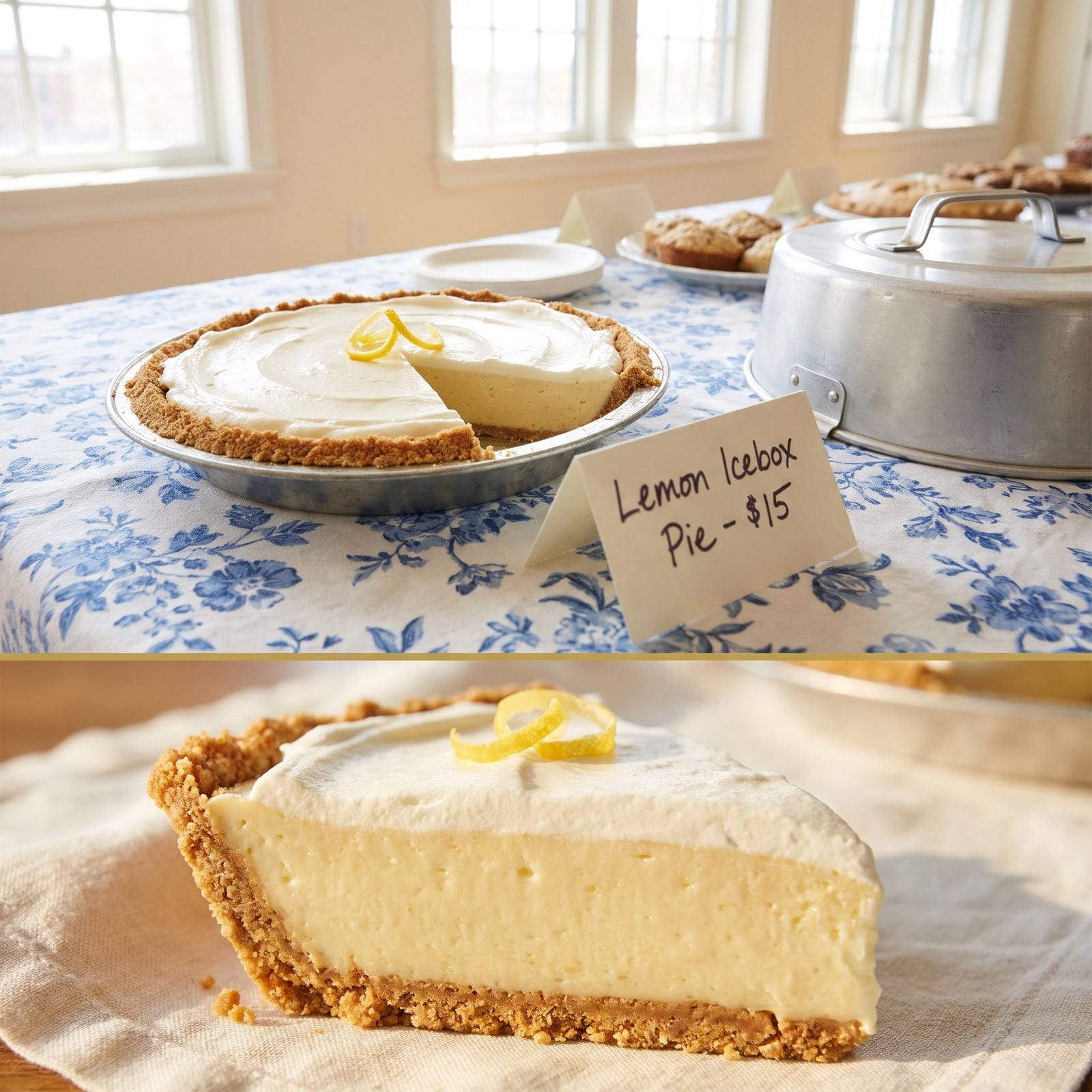
No oven required, which is why this one turned up in August when nobody wanted to turn on the stove. Sweetened condensed milk and lemon juice thickened in the refrigerator overnight into something dense and tangy, set in a graham crust. Sharp enough to make you squint. Sweet enough to make you come back.
This pie made the most of sweetened condensed milk, long a pantry fixture. One can, a few lemons, a crumb crust, and you had a dessert that could sit in the cold until the bake sale opened its doors.
10. Key Lime Pie
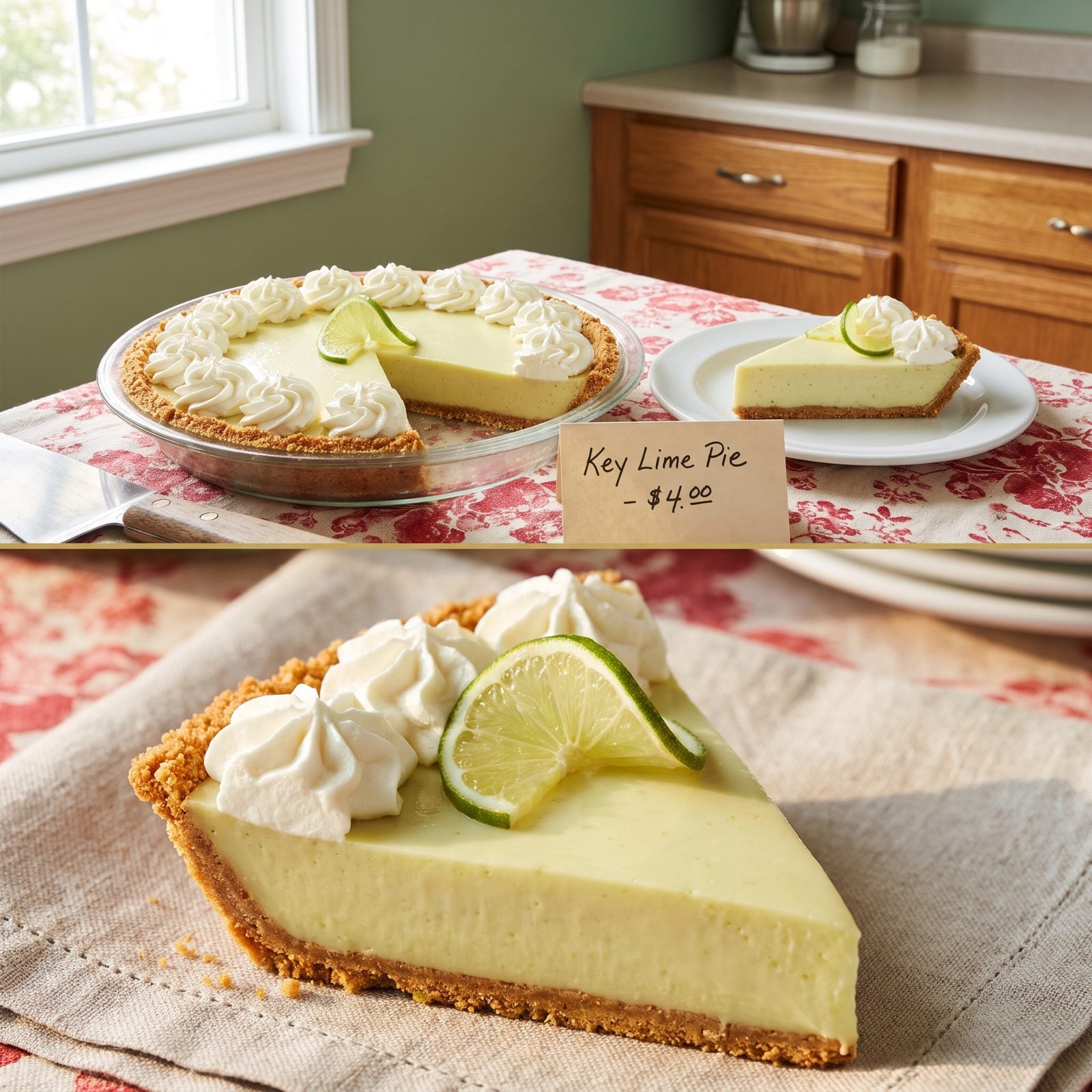
Cousin to the lemon icebox, but with its own loyal following. Key lime leaned pale and almost grayish-green, never the neon stuff you see now, and the tartness hit higher and brighter. Same trick with the condensed milk, different citrus, different attitude.
Outside of Florida back then, real key limes were hard to come by, so most bake sale versions used regular limes and nobody complained. The filling set up firm, held a clean slice, and went with whipped cream better than almost anything else on the table.
9. Rich Chocolate Fudge Pie
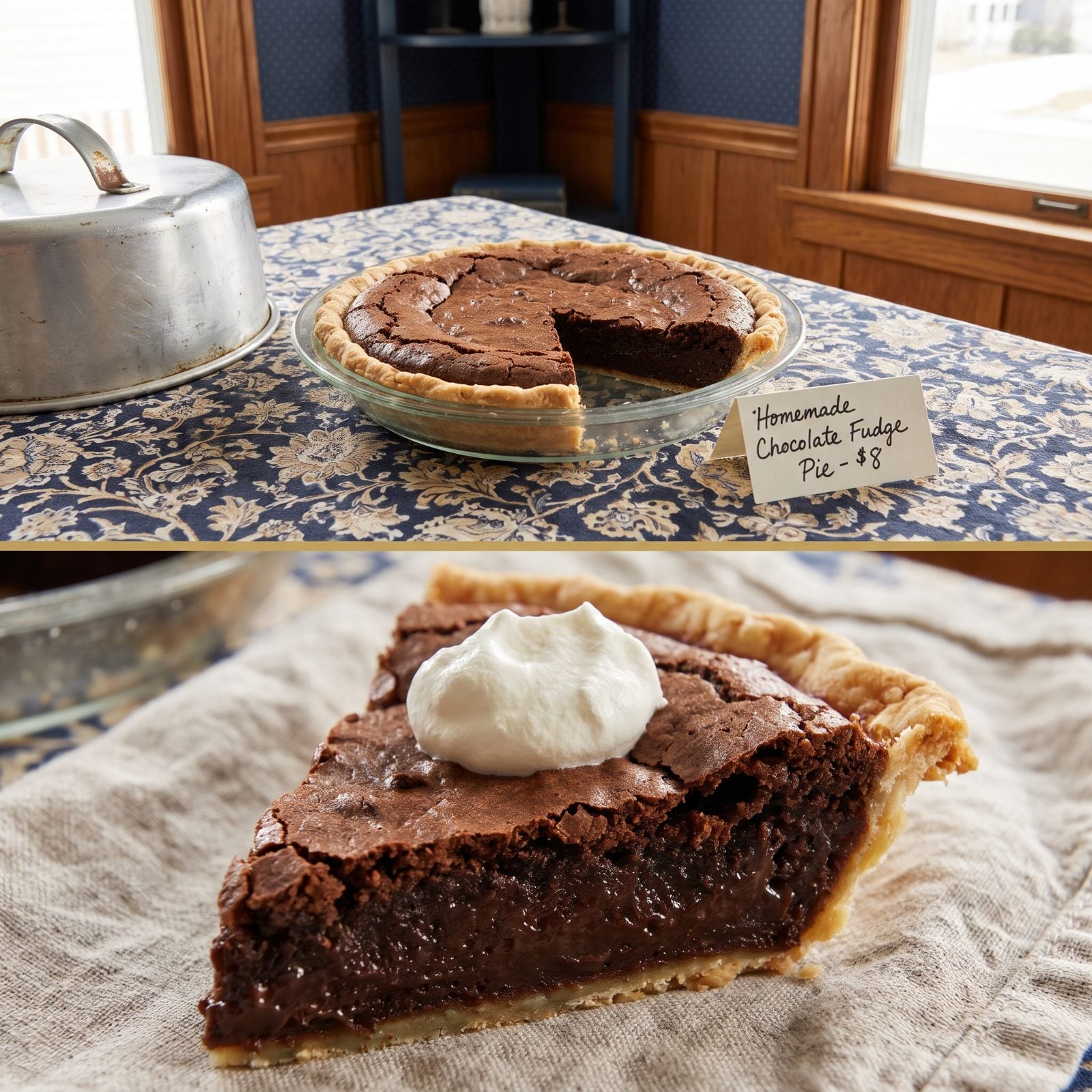
Somewhere between a pie and a brownie, and that was the point. Dense, dark, a little gooey in the center, with a top that cracked like a good brownie should. It disappeared nearly as fast as the fruit pies.
Kids made a beeline. Grownups pretended they weren’t going to, then bought a slice anyway.
8. German Chocolate Pie
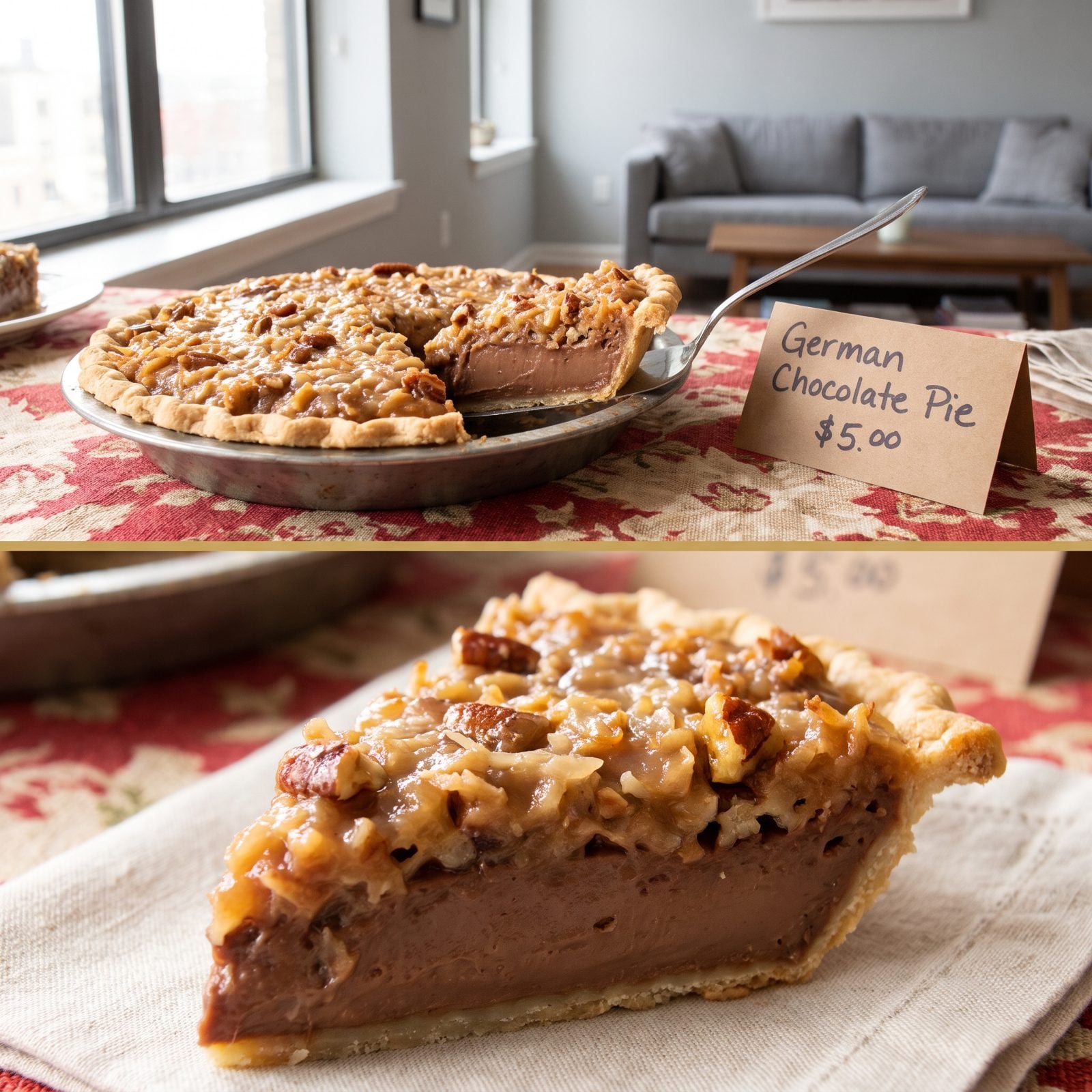
The cake came first, but the pie was no slouch — a smooth mild chocolate filling, sweeter and gentler than fudge pie, crowned with that unmistakable coconut-pecan topping, gooey and gold and faintly caramel.
German chocolate was never German. The name came from Sam German, who worked for Baker’s chocolate in the 1850s and lent his name to a sweet baking bar. A hundred years later his pie was sitting on a folding table next to the lemonade.
7. Maple Walnut Pie
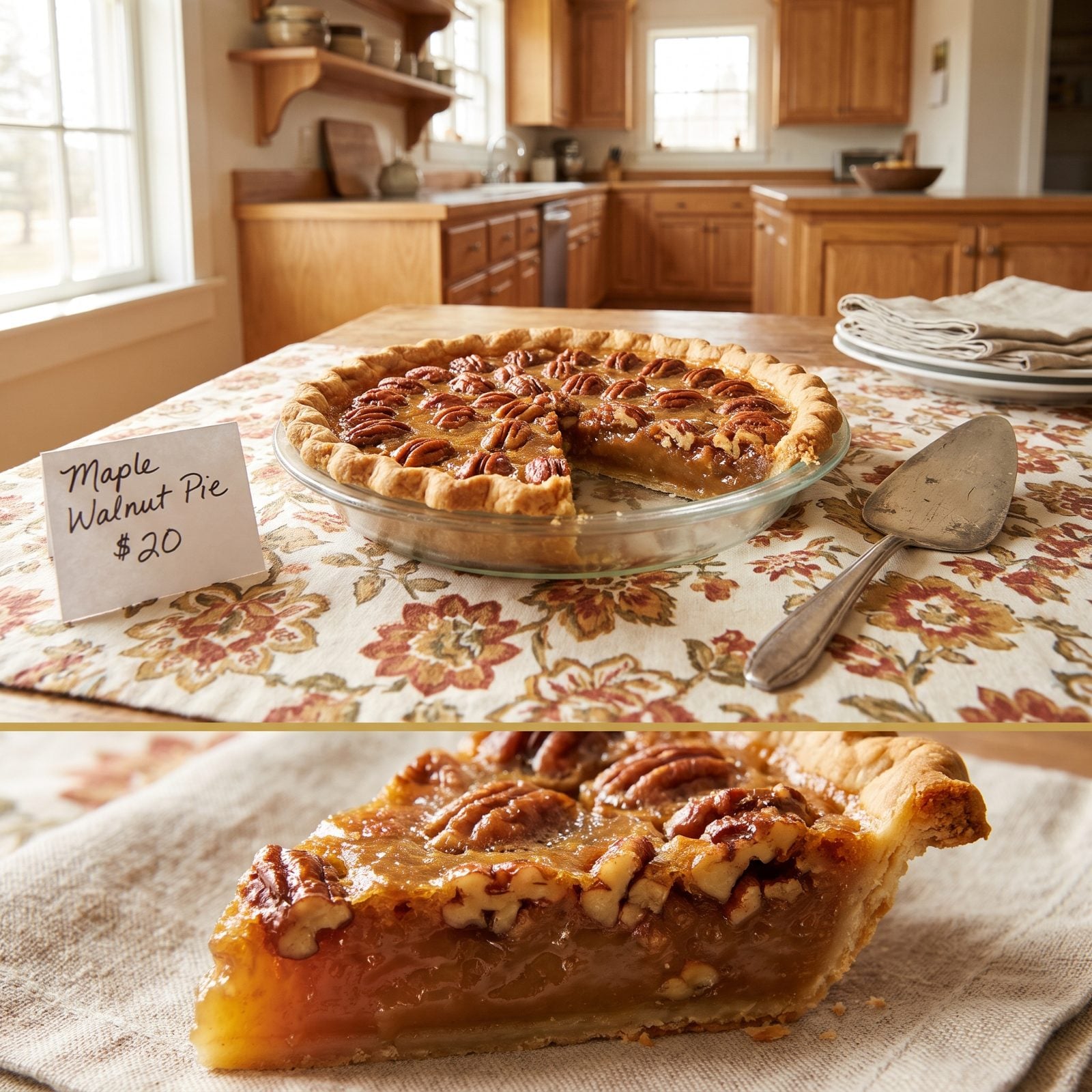
Pecan pie’s northern cousin. Where the South reached for corn syrup, New England swapped in walnuts and reached for maple syrup, and the result was earthier, less cloying, with a toasty richness from the nuts that cut the sweetness clean.
In Vermont and upstate New York this was the autumn pie, the one that showed up at the harvest bake sale smelling faintly of the sugarhouse. Walnut halves went on top, toasted dark, so every slice had its own little rooftop of them.
6. Date-Nut Pie
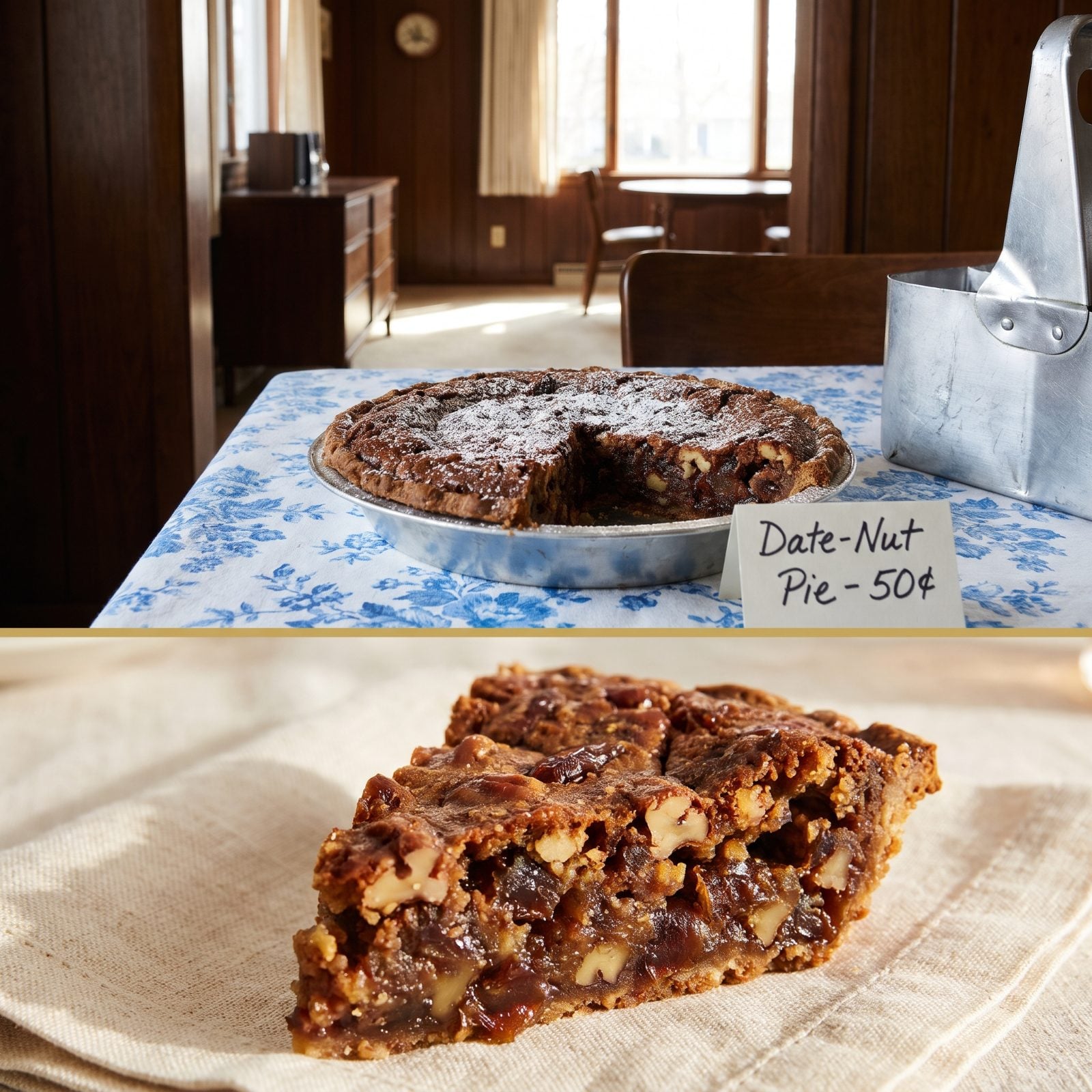
This was the pie the grandmothers bought. Dense, chewy, packed with chopped dates and walnuts, barely sweet beyond what the fruit brought on its own. It carried a kind of old-fashioned seriousness to it — the taste of a pantry that always kept a box of dates around for exactly this.
Kids walked right past it. Which was fine, because the people who wanted it really wanted it.
5. Black Bottom Pie
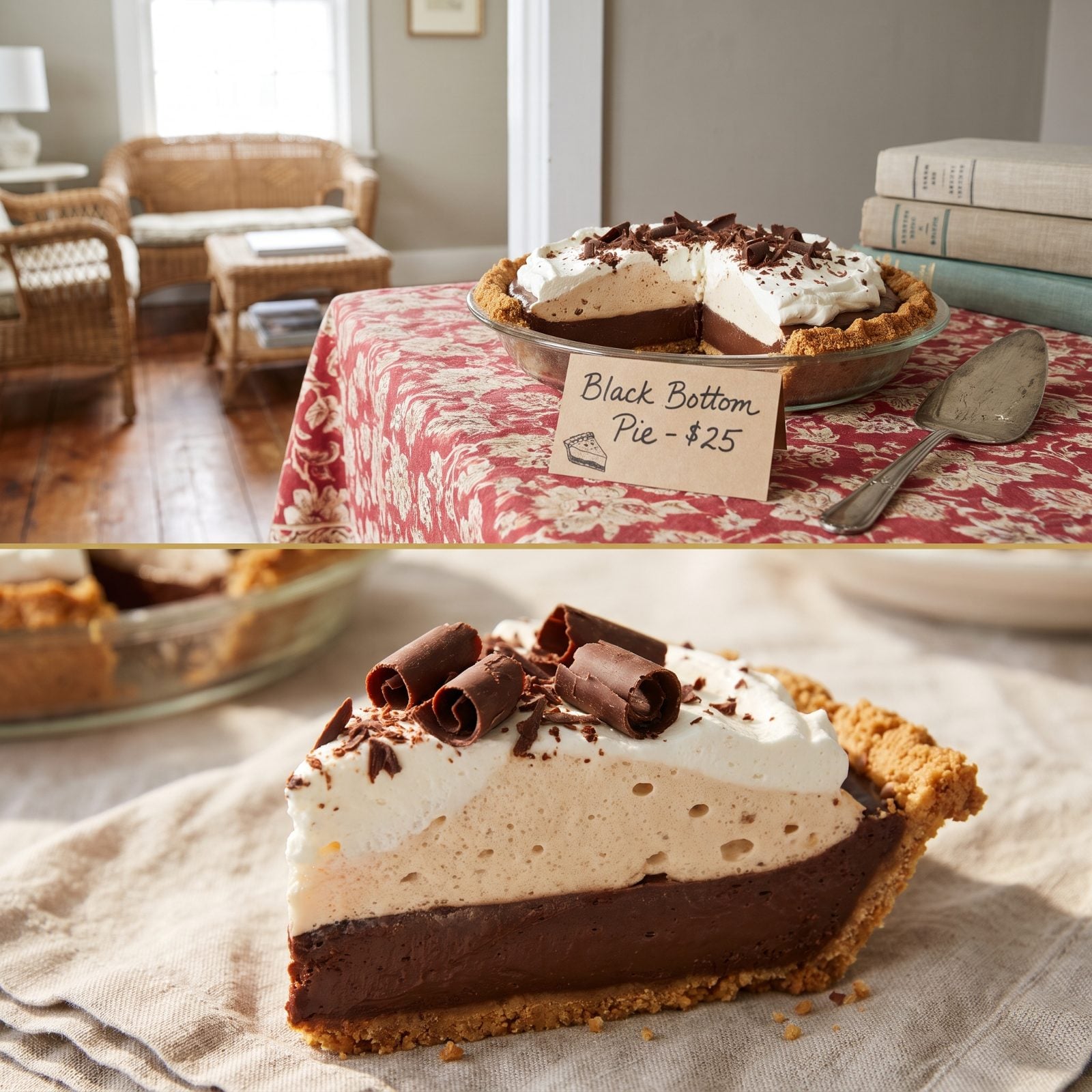
The fancy one. Two distinct layers — a dense dark chocolate custard on the bottom, a pale airy chiffon on top, usually spiked faintly with rum, all under whipped cream and chocolate shavings. Cutting the first slice was the reveal, the dark base against the light crown, and it drew a little crowd every time.
Nobody made black bottom pie by accident. It took two custards and a cool head, so when one showed up at the bake sale you knew somebody had decided to impress the neighbors.
The dark base against the light crown drew a little crowd every single time.
4. Meringue-Crust Angel Pie
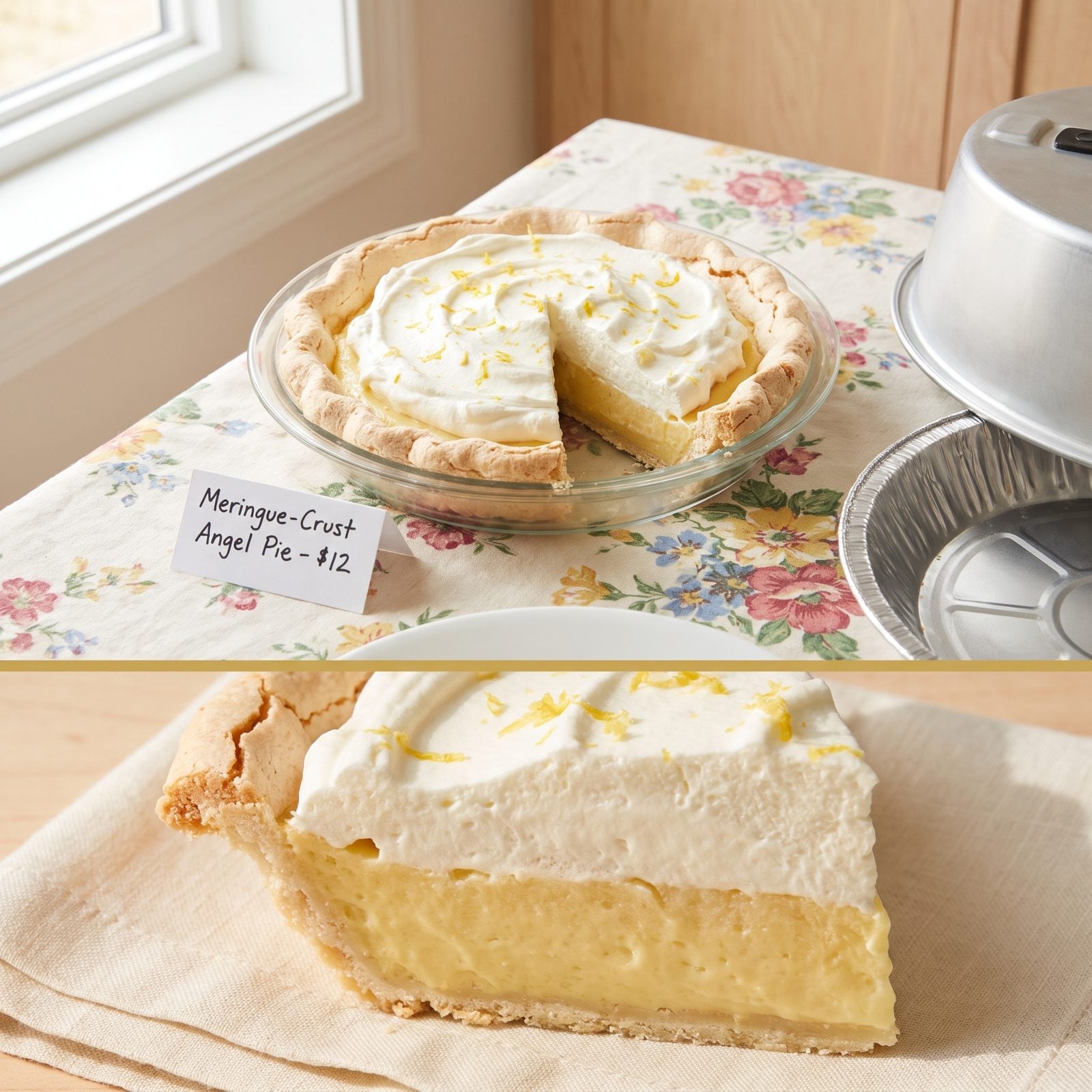
Here the crust was a baked meringue shell, dried low and slow until crisp, then filled with lemon custard and crowned with whipped cream. Light as air, which is where the name came from.
Delicate business, this one. The crumbly crust broke apart if you looked at it wrong, and a humid day could turn the whole thing soggy. A clean slice of angel pie meant somebody had gotten lucky with the weather and patient with the oven.
3. Millionaire Pie
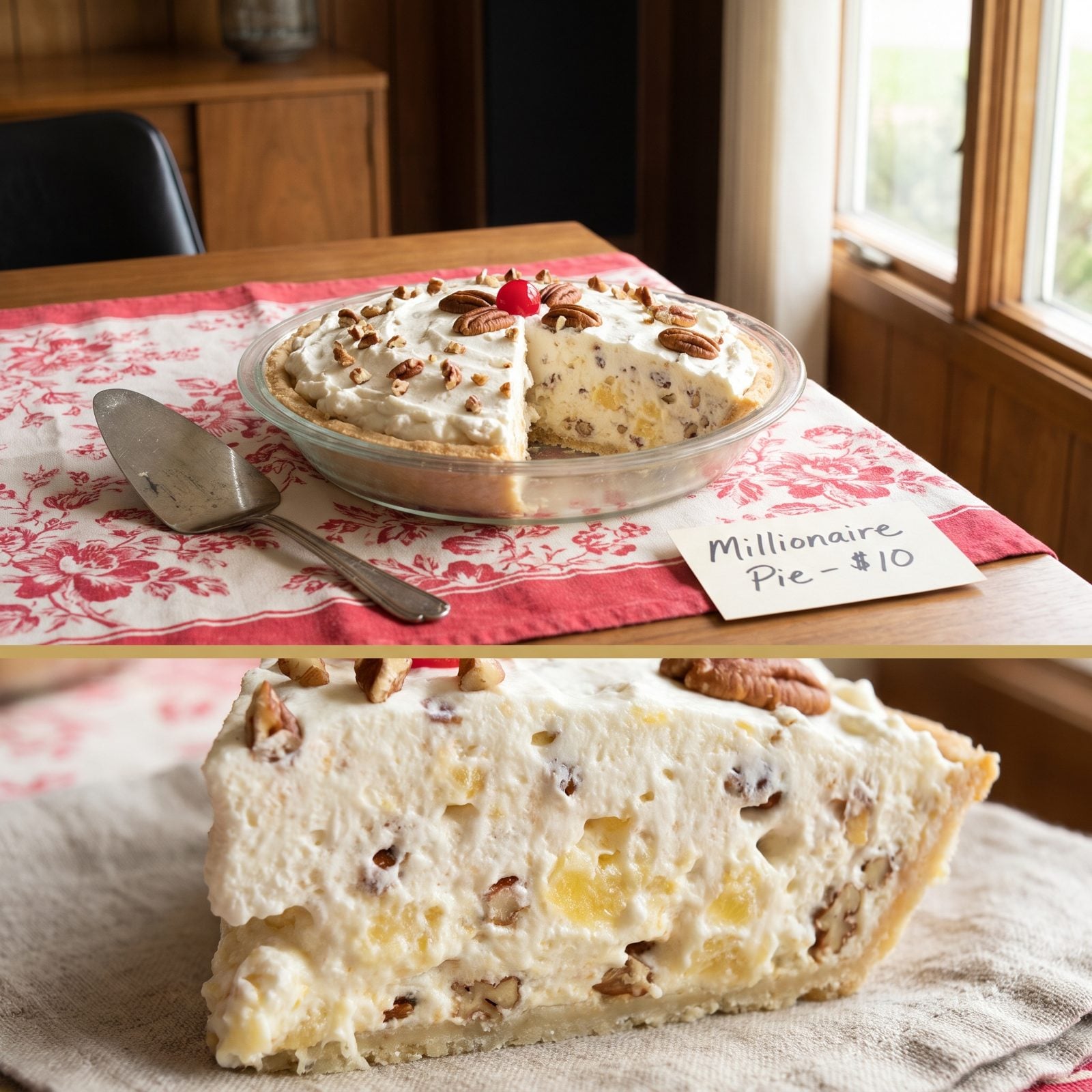
The last of the novelties, and the one with real swagger in its name. No baking involved — just a fluffy no-cook filling of whipped cream, crushed pineapple and chopped pecans folded together and spread into a pale, buttery pastry crust. Sweet, cold, a little tropical, the kind of thing that tasted expensive without costing much of anything.
It went by a dozen names depending on the county. Millionaire pie, Southern pineapple pie, sometimes just “that pineapple thing Ruth brings.” Whatever the label, it sold out, usually to the same three families.
2. Mint-Green Grasshopper Pie
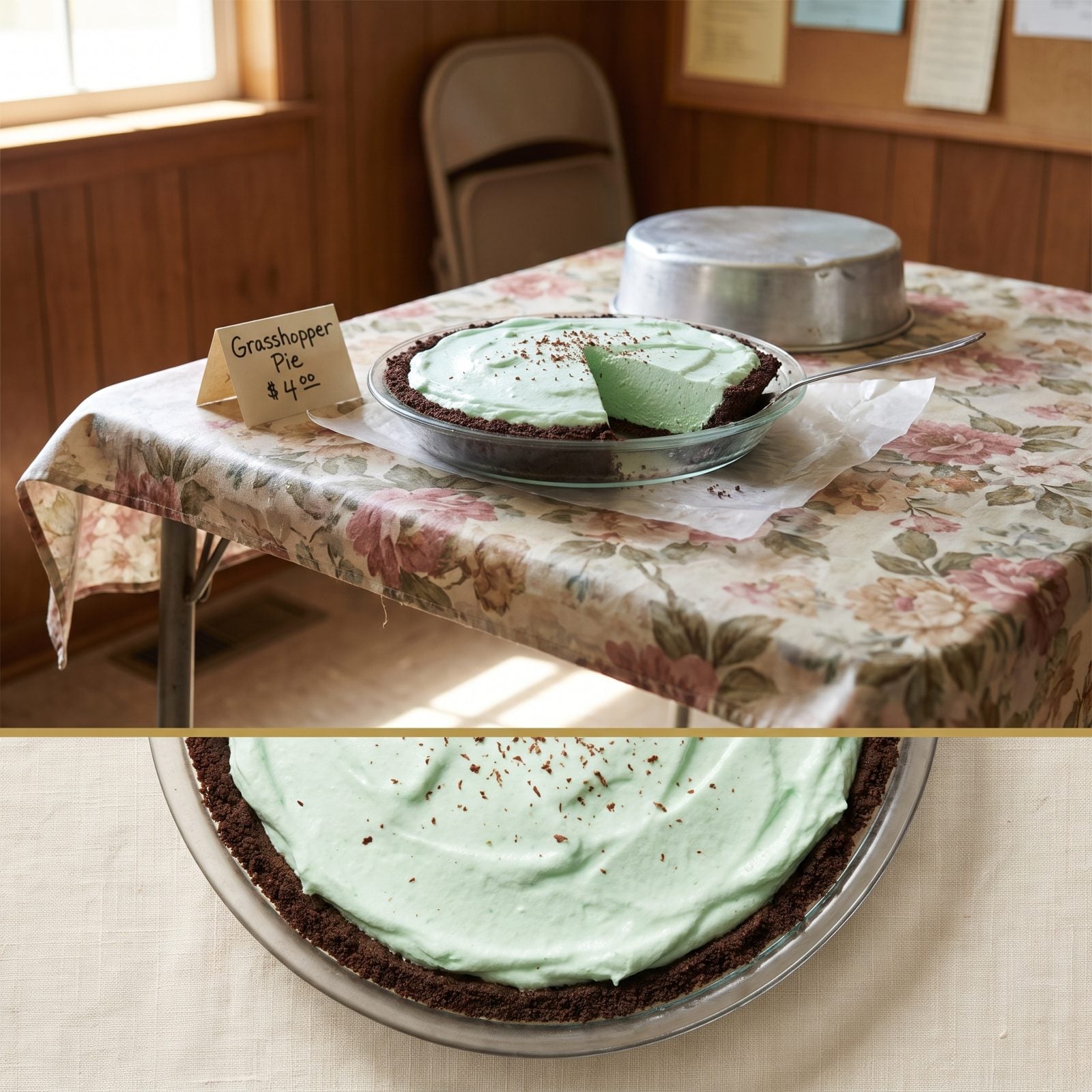
No pie at the 1960s bake sale announced itself from farther away than this one, and the mint-green color did all the talking. Set in a chocolate cookie crust, the filling was cool, airy, and faintly boozy from crème de menthe — though at a church table the grown-ups just smiled and looked the other way.
Grasshopper pie belongs to the chiffon family, so the filling runs light and whipped instead of dense. It sliced clean and held its shape on a flimsy paper plate, which mattered a lot when you were eating it on your feet next to the folding chairs.
Fancy without being fussy. The mint-and-chocolate combo felt lifted straight off a restaurant menu, which is exactly why it moved fast and why somebody always brought one.
1. Ritz Cracker Mock Apple Pie
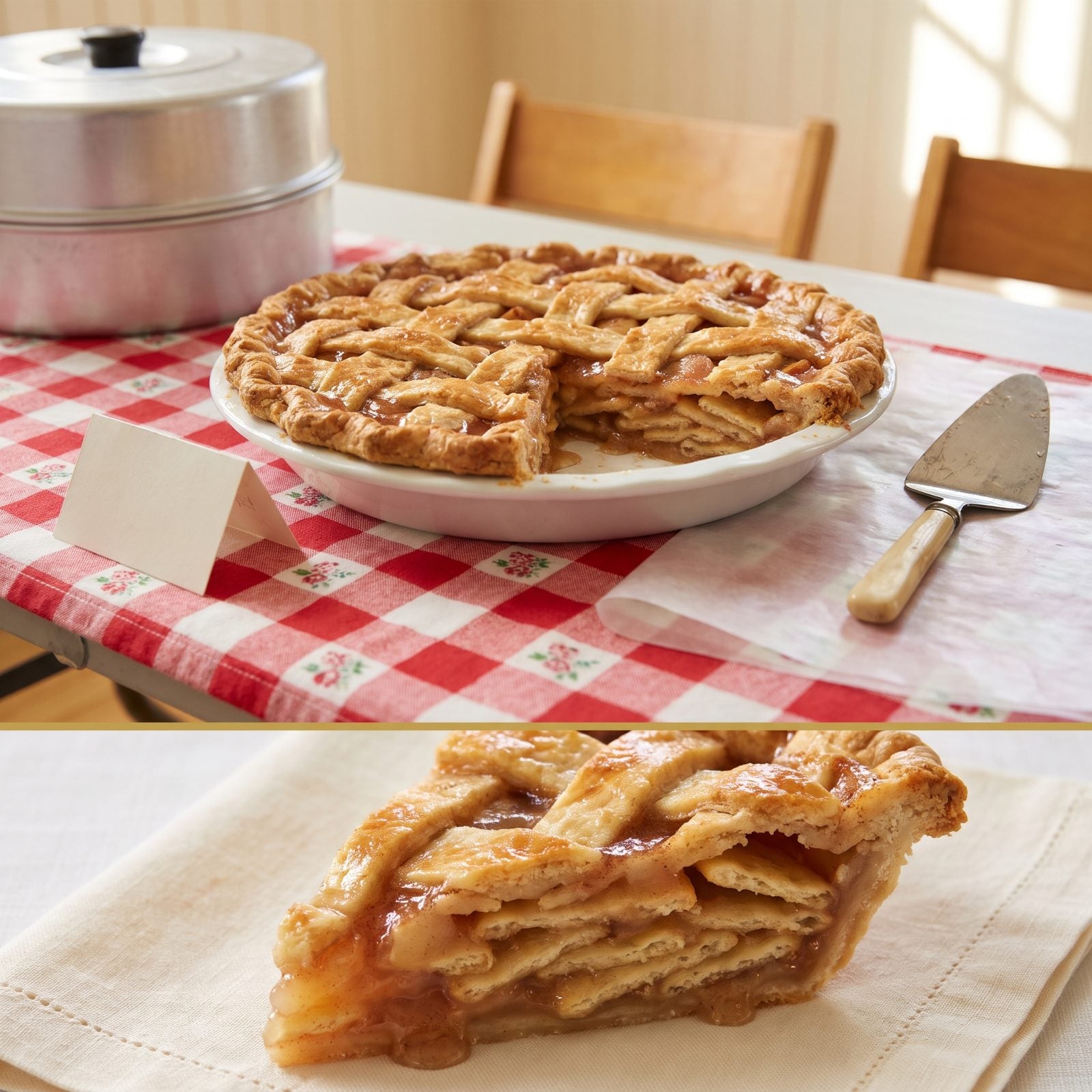
Now here’s the great sleight-of-hand from the Depression-era pantry, still turning up at bake sales thirty years later. No apples anywhere. The filling came together from crackers softened in a cinnamon-sugar syrup, and the strange part is that it actually worked — cut a slice and the texture fooled you, soft amber wedges giving like cooked fruit under a lattice top.
Mock apple pie earned its spot because it tasted of cinnamon, lemon, and a little mystery. The lattice crust browned up gorgeous and sold the full apple-pie illusion, right down to the syrup bubbling at the edges.
Call it the clever cousin on the table — the pie you bought partly to taste and partly just to see if the rumor was true.