
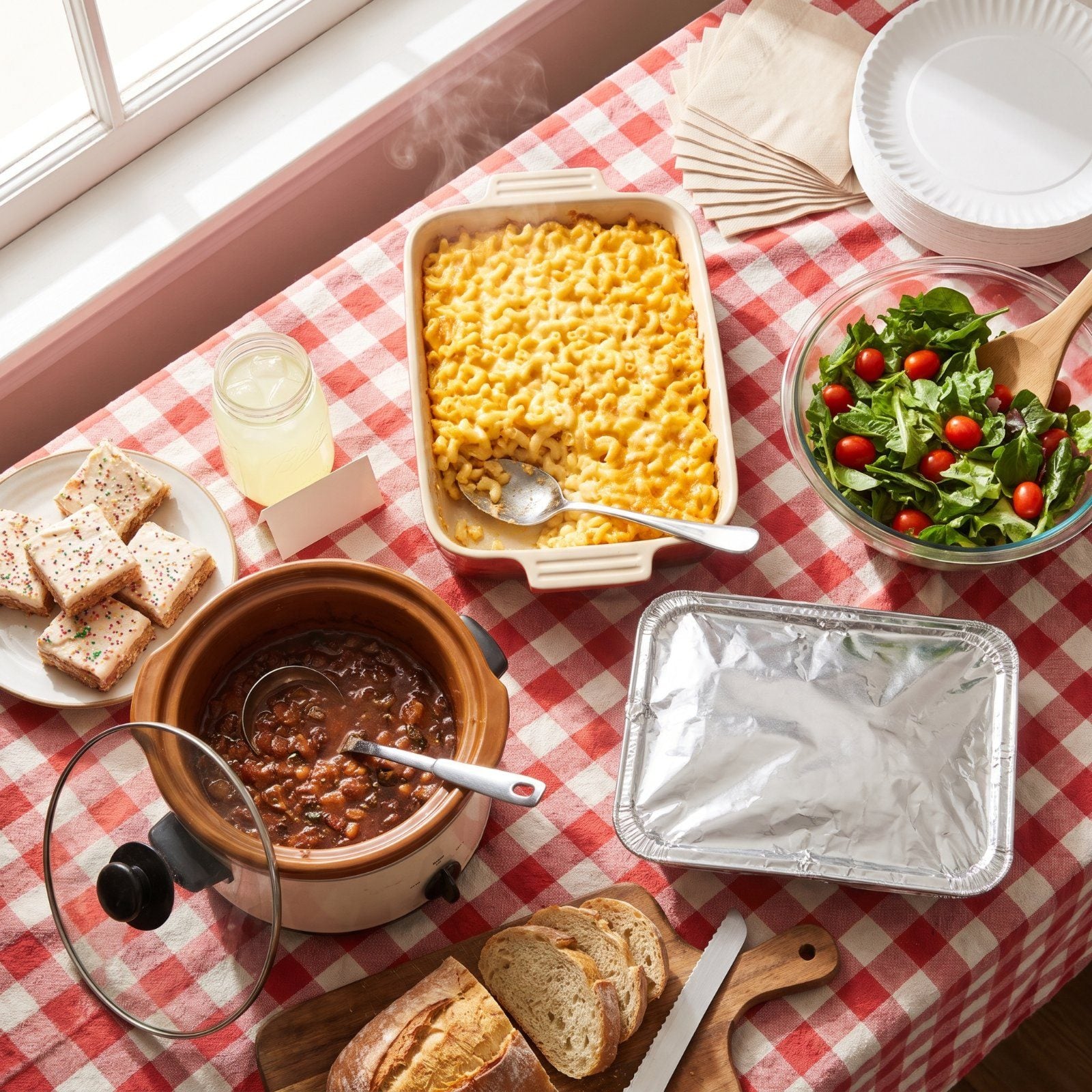
A potluck can collapse in the first fifteen minutes. Four people bring deviled eggs, nobody thought about a vegetable, and the one hot casserole shows up stone cold at 7:40 when dinner was called for six. We’ve all stood over a card table watching it happen, serving spoon in hand, wondering who was supposed to be running this thing. Nobody was. That’s the whole bargain of a potluck, and it works beautifully right up until somebody forgets their end of it. The rules below aren’t printed anywhere. They’re the quiet agreements that separate a good spread from a scramble.
Please note that some of the images in this article were created with the assistance of AI.
29. Claim Your Dish on the Sign-Up Sheet Early
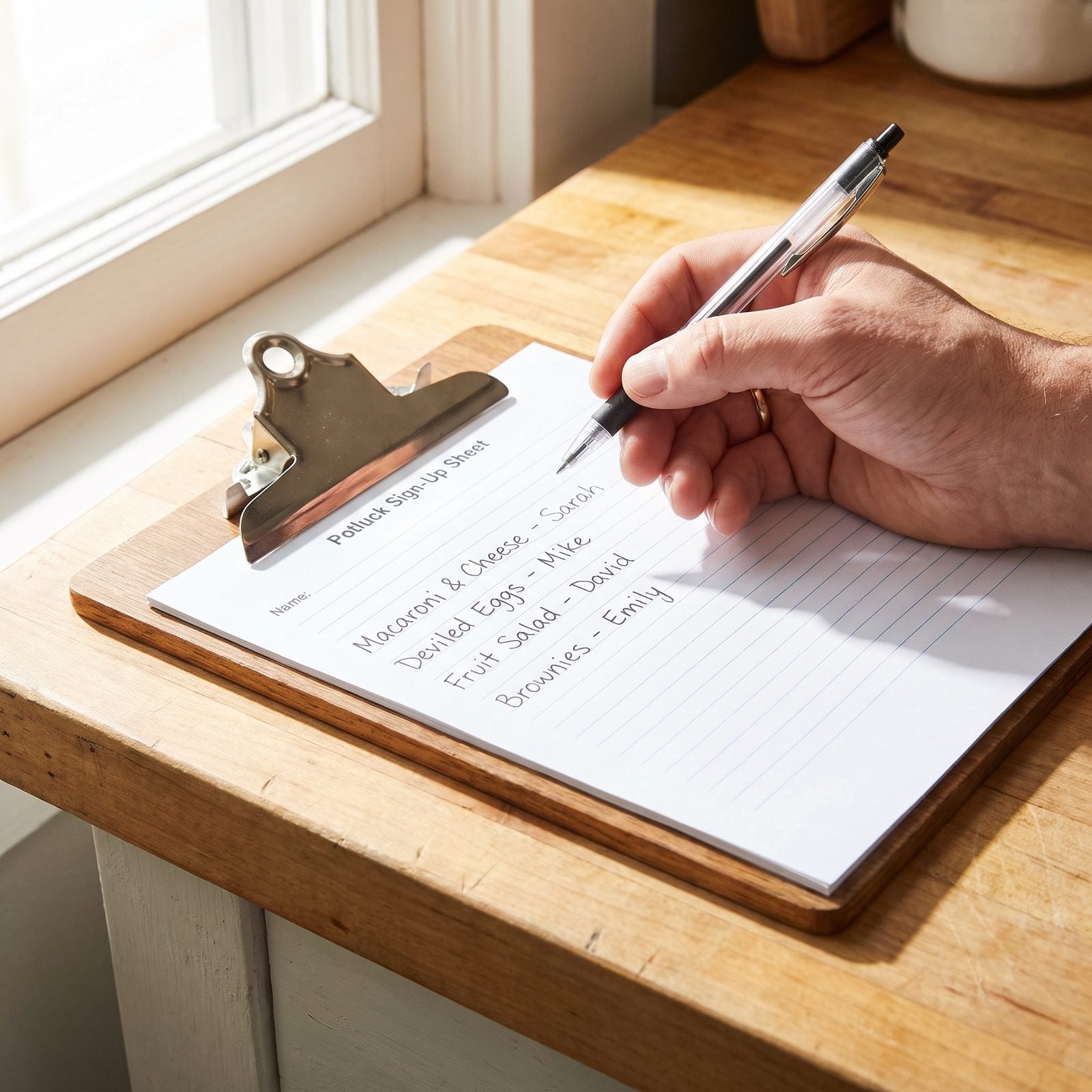
The sign-up sheet is a first-come document, and everyone knows it the second it goes up. Wait three days to claim a slot and you’ll find yourself hauling in the fourth batch of brownies to a table already drowning in chocolate.
Claiming early isn’t about being pushy. It’s about reading the board, spotting what’s thin, and parking your name where the spread actually needs help. The person who signs up dead last and brings whatever they feel like? That’s your seven-desserts-zero-rolls situation, right there.
28. Tell the Host Exactly What You Are Bringing
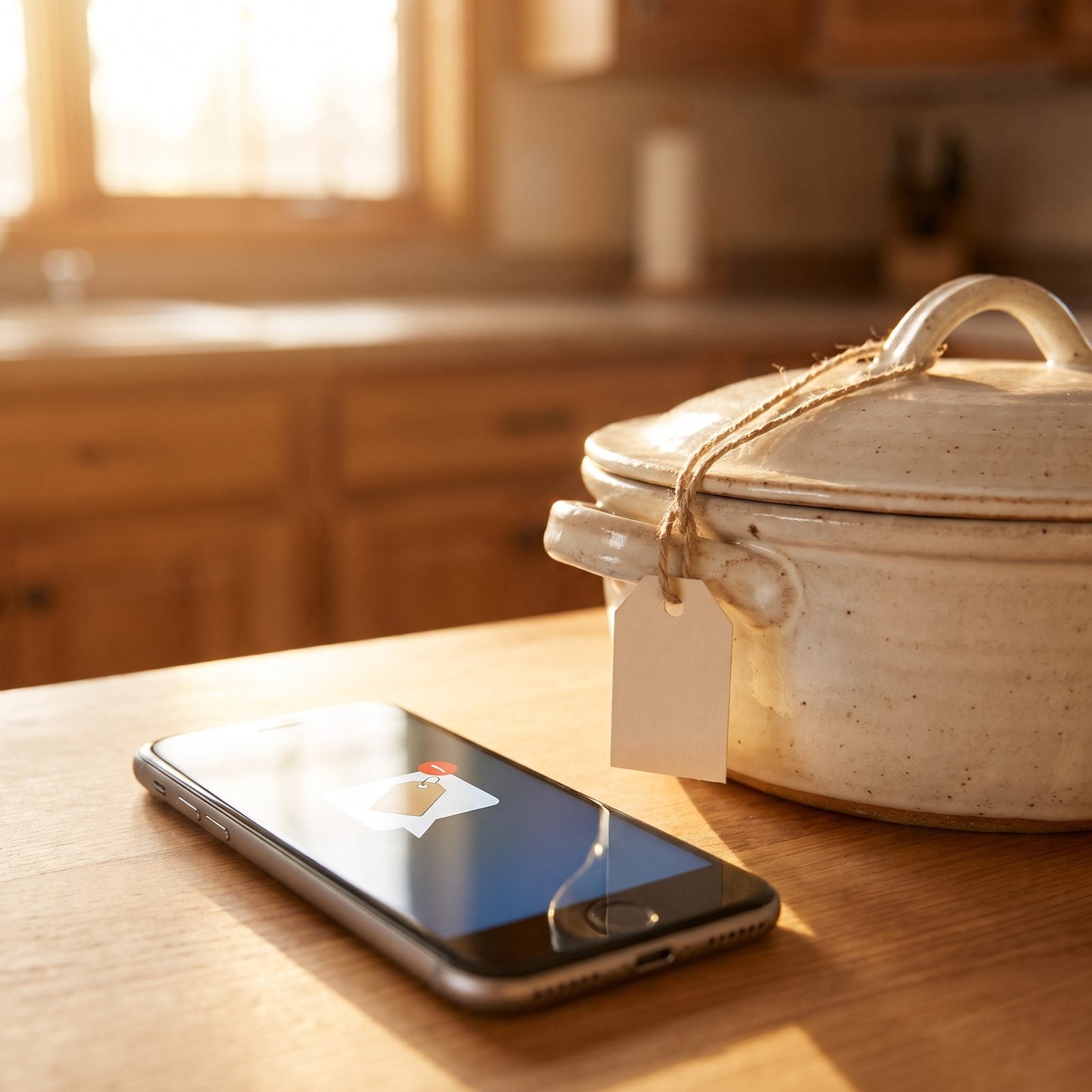
“I’ll bring a side” tells the host nothing. A side could be a bowl of green salad or a tray of scalloped potatoes that needs oven space nobody planned for.
Name the actual dish. Say if it’s hot, cold, needs the fridge, or ties up a burner. A host juggling twelve arrivals is already doing math on counter space, fridge room, and outlets. Hand them real numbers and you’ve made their whole afternoon easier before you even walk in the door.
What Our Readers Say
- When Piaci Pizza readers love a food photo and tap a reason, comfort comes out on top at 30%, ahead of ingredients and good looks.
- In our reader votes, main-course photos got hearts 79% of the time, compared with 75% for the other images in the same articles.
From Piaci Pizza reader polls and votes.
27. Stick to the Course You Signed Up For
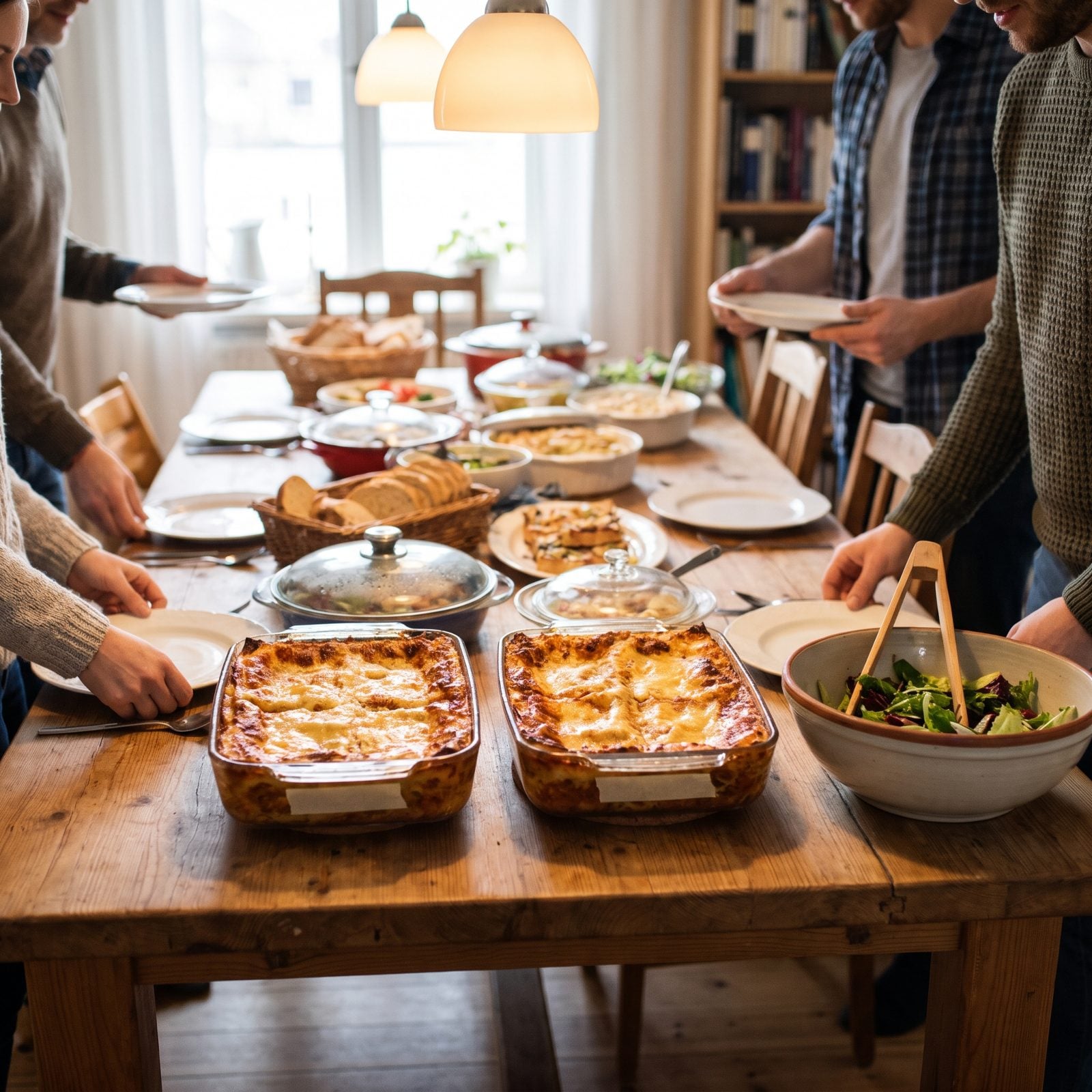
You signed up for salad. Then you got ambitious and made a lasagna because you were feeling it. Now two lasagnas sit side by side, fighting for the same patch of table, and the big bowl of salad beside them is only there because someone else picked up the slack.
The category system only holds if people honor it. Change your mind mid-week and you quietly break the balance the host was counting on. If inspiration strikes and you absolutely must switch, fine — but it stops being your private decision the moment it hits the whole table.
26. Update the Host the Minute Your Plans Change
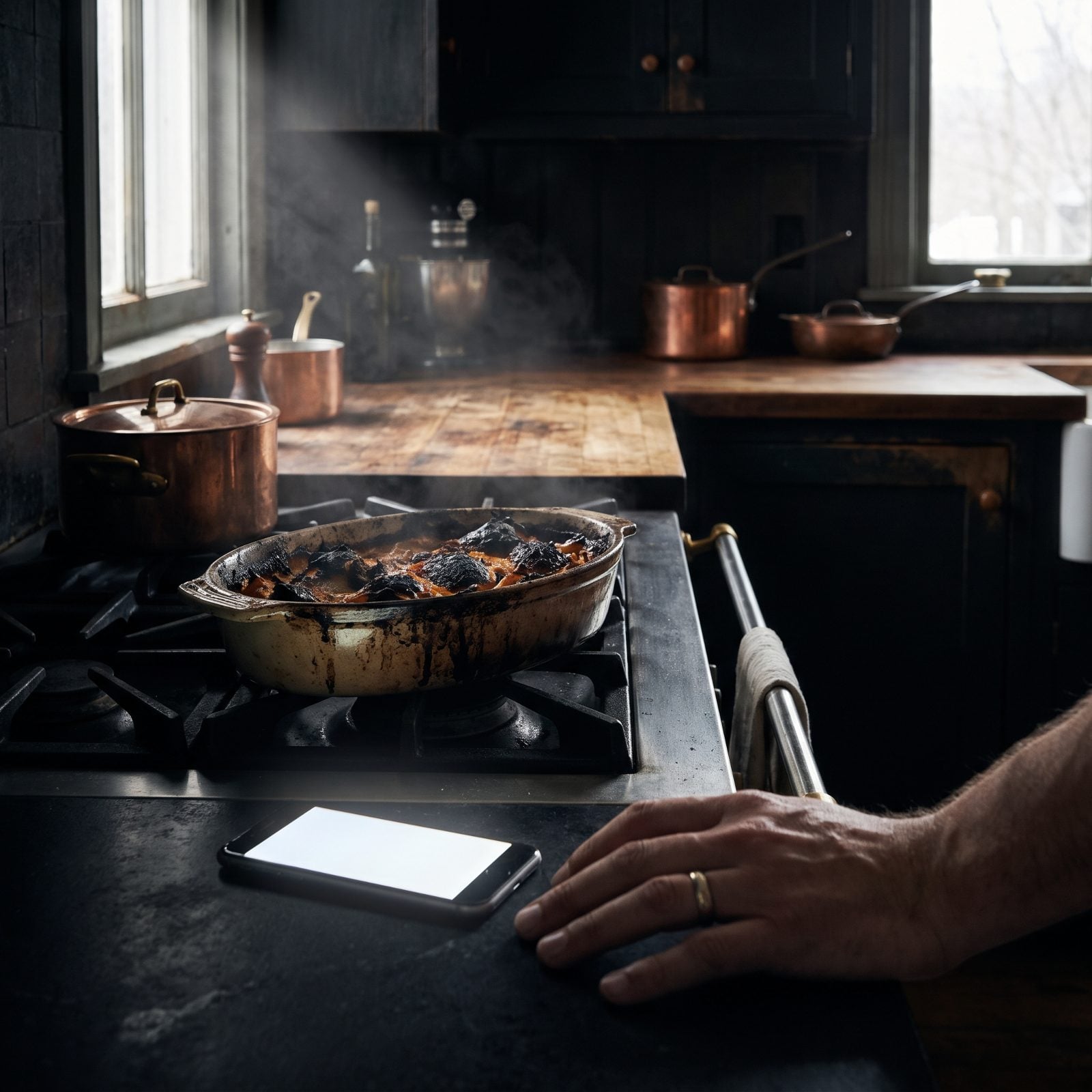
Life happens. The casserole burns, the store’s out of what you needed, you’re running an hour behind. None of that is a crime.
Staying quiet about it is. A host who thinks a main dish is on its way won’t scramble to backfill it, and the gap doesn’t surface until the table’s set and everyone’s circling, hungry. A quick heads-up buys them time to shuffle things, call someone, pull a backup from the pantry. Silence steals that time clean away.
25. Never Bring an Extra Guest Without Asking First
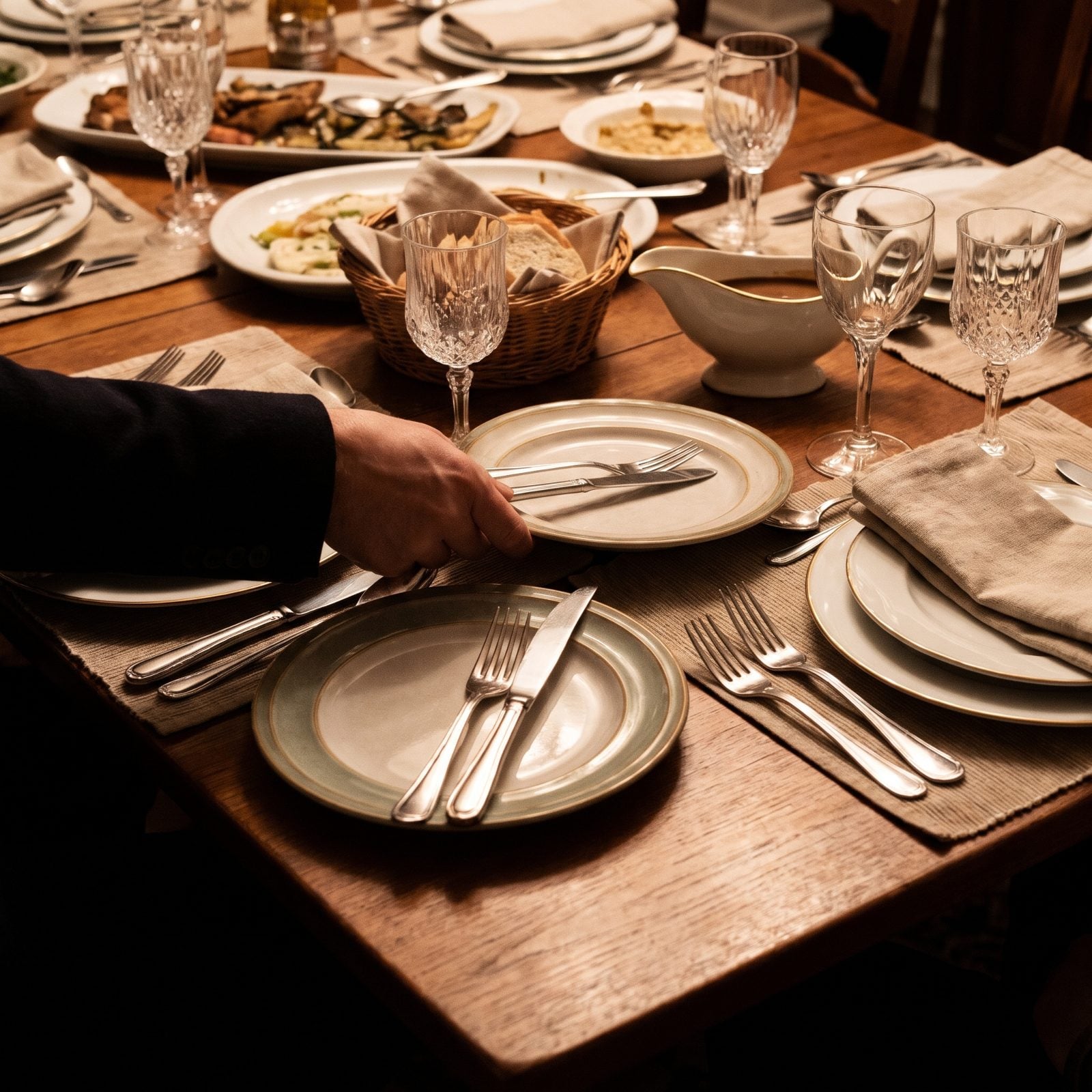
You RSVP’d for one. Then you turn up with your brother-in-law and his new girlfriend. The host counted plates, chairs, and portions for a set number, and that number just jumped by two.
Potlucks look casual, but hosts still plan around a headcount. An uninvited plus-one eats a portion someone else was promised and takes a seat that was never set. So ask first. Every single time. A good host will almost always say yes — the problem was never the extra person, it was finding out at the door.
24. Do Not Arrive Empty-Handed Without a Word
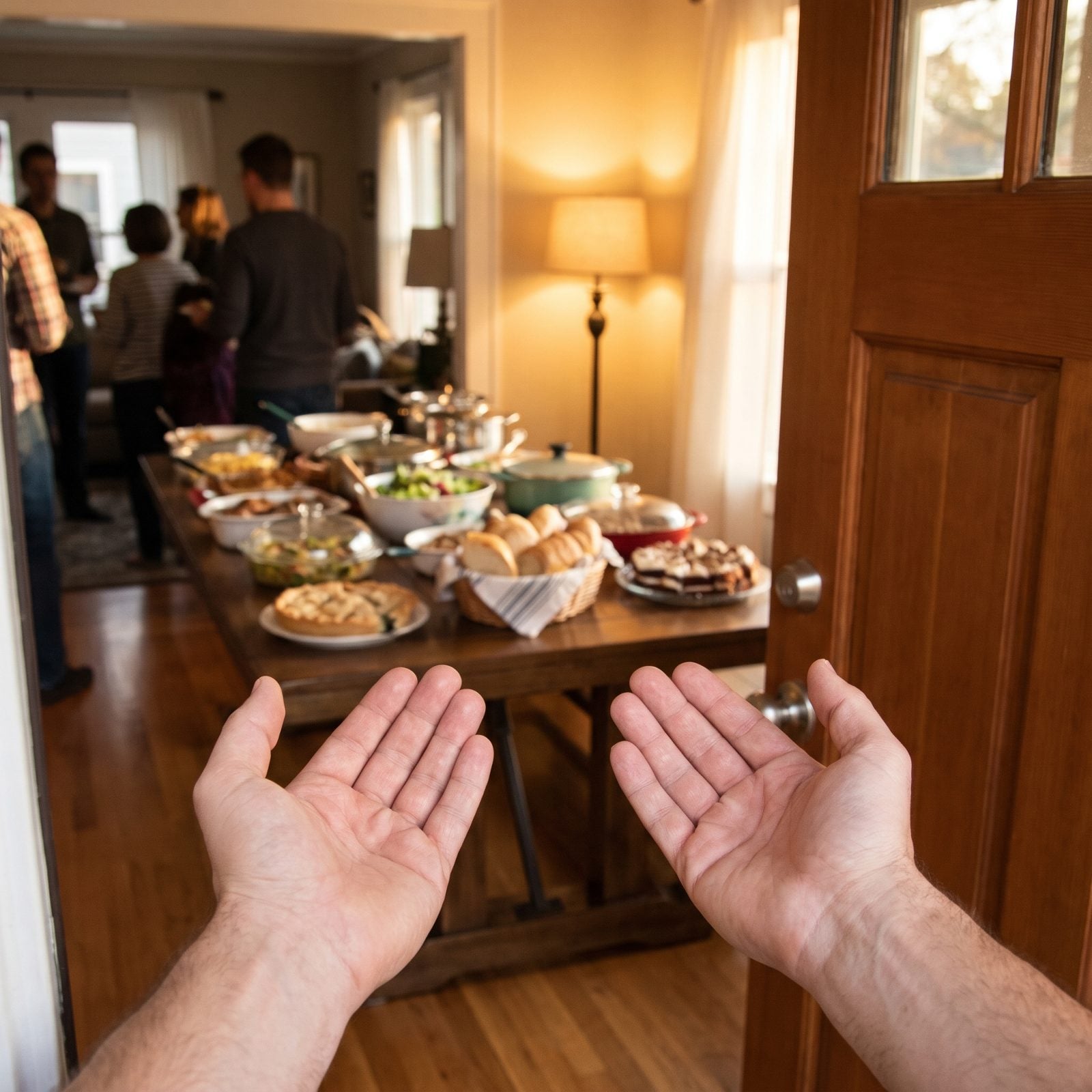
Sometimes the day falls apart and you arrive with nothing. It happens. What matters is whether you told anyone.
Walking in empty and quiet, then loading up a plate from everyone else’s work — that’s the move people remember. Couldn’t cook? Say so at the door, offer to grab drinks or rolls on the way, pitch in on dishes and cleanup after. A bakery pie snagged on the drive over covers it completely. The crime isn’t showing up without a casserole. It’s acting like nobody noticed.
23. Make Enough for Tasting Portions, Not Full Servings
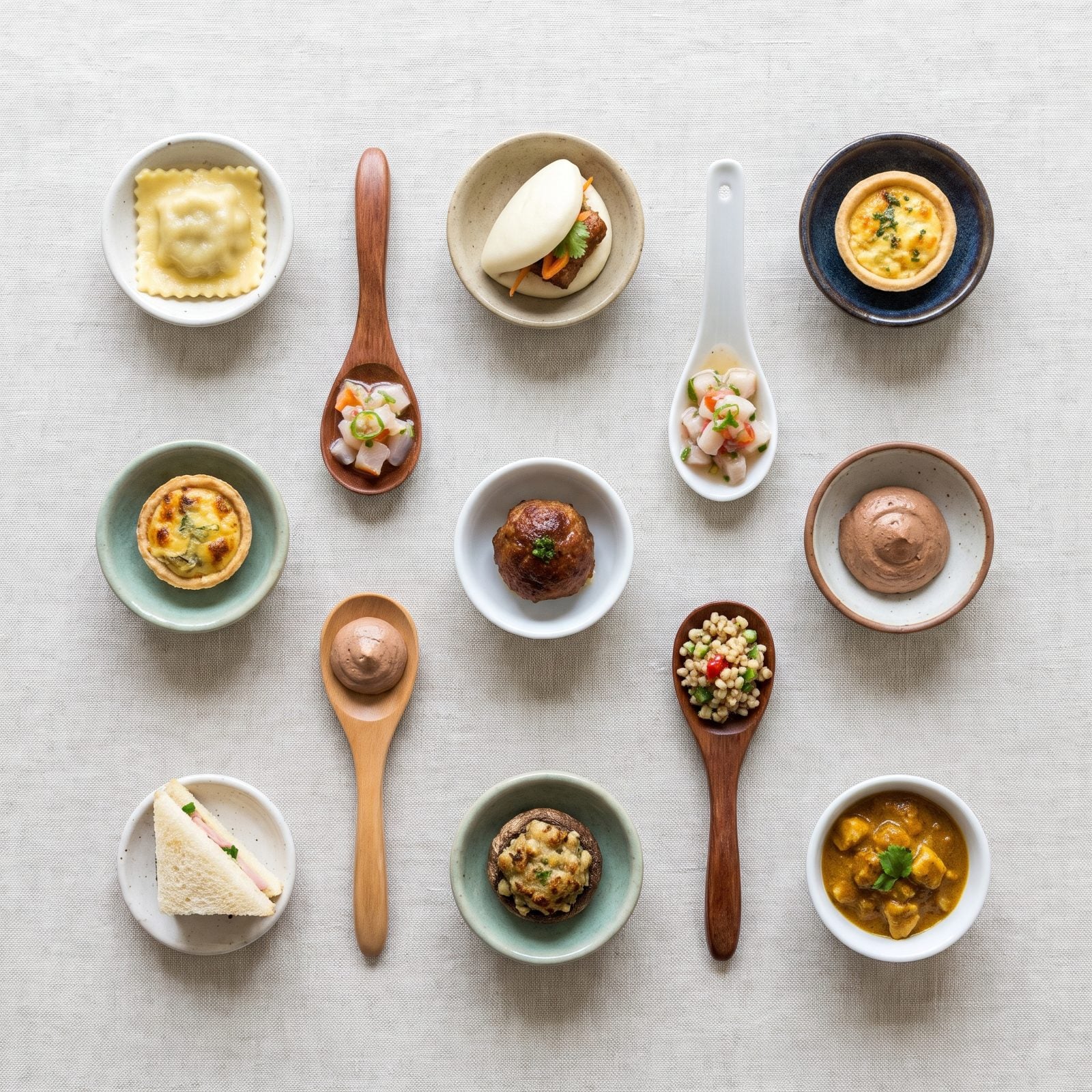
Here’s the math nobody does. At a potluck with ten dishes, each guest takes a spoonful of everything, not a dinner-sized helping of yours. Haul in a restaurant-pan of chili for twelve and you’ll be carrying most of it back to the car.
Plan for a crowd sampling, not a crowd feasting on your dish alone. A dozen tasting portions is usually plenty. Over-making feels generous, but a sea of leftovers just means a lot of food got half-eaten and the host now has your empty dish to return and your extras to find room for.
22. Arrive Inside the Host’s Serving Window

Timing is the quietest courtesy at a potluck and the one most often fumbled. Roll in forty minutes early and the host is still mid-cook, with your hot dish needing a burner they haven’t got free. Roll in forty minutes late and you’ve either held up the meal or missed it outright.
The host picks a window for a reason. Hot food should hit the table hot, cold food still cold, and everyone fed around the same time. Land inside that window and the whole operation stays on its feet.
21. Skip Recipes That Need Heavy Last-Minute Assembly
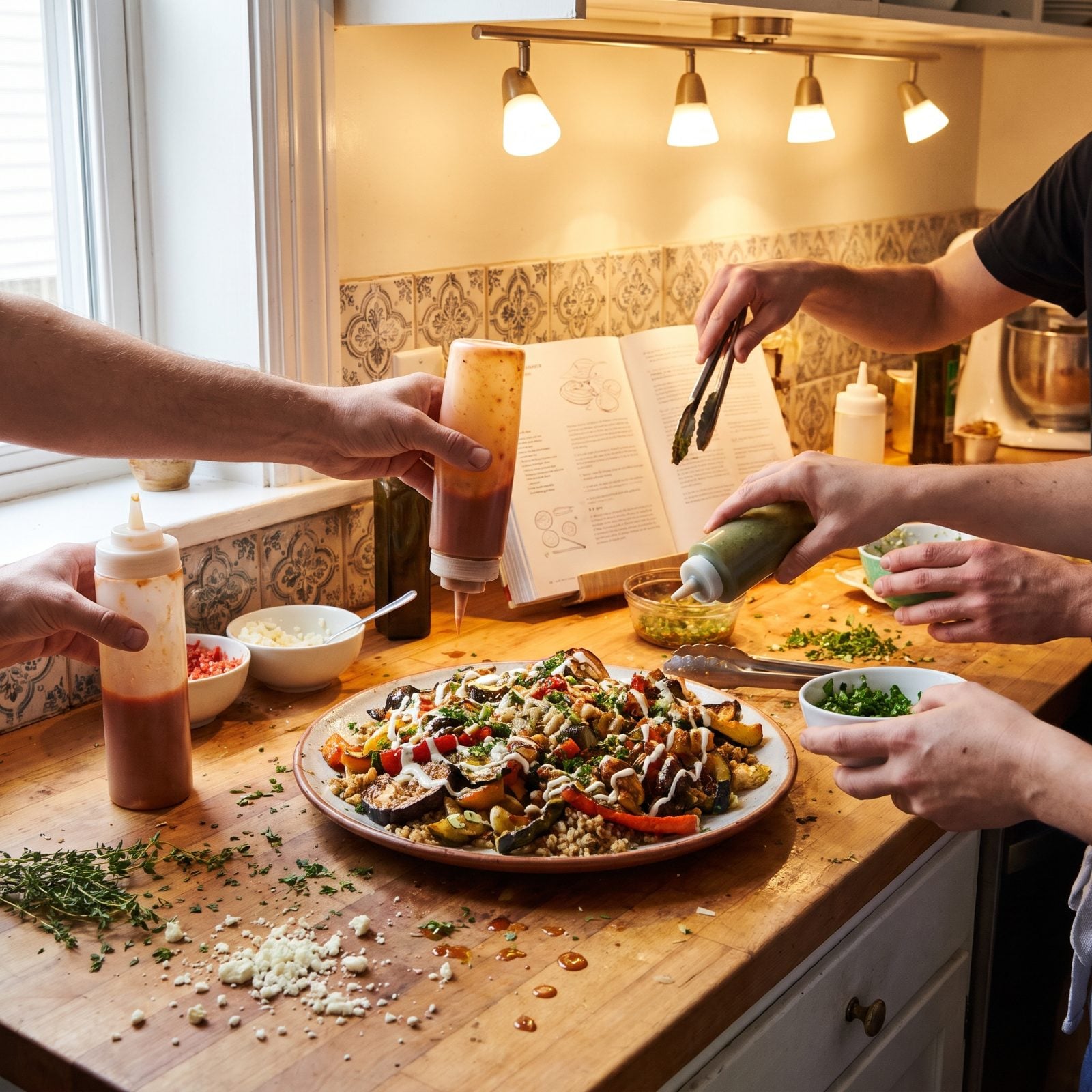
Some dishes have to be built on arrival — slice by slice, drizzle by drizzle, in a kitchen already packed with people reaching around each other. That’s the dish that chains you to the counter while everyone else is out catching up and laughing.
A potluck rewards food that travels finished and sits happily on a table. Pick the casserole that holds, the salad that’s better after it rests, the dessert that’s done before you ever leave home. Save the delicate last-second plating for a night when the kitchen is yours and nobody’s elbowing you for sink space. Honestly, the best potluck dish needs nothing from the room it arrives in.
20. Keep Hot Foods Hot and Cold Foods Cold

Food held too long in that lukewarm middle ground is where potlucks go quietly wrong. Bacteria don’t announce themselves. That casserole sitting tepid on the counter for an afternoon is the one that sends people home feeling off, and nobody ever traces it back.
Hot dishes belong in a slow cooker set to warm or a heat-retaining carrier. Cold dishes belong over ice. And the two-hour rule is real — once you’re past that window at room temperature, you’re gambling with your guests.
Asked how long potluck dishes can safely sit out, a food scientist says “If hot foods are continuously held above 140°F using warming trays, slow cookers, or chafing dishes, bacterial growth is greatly slowed. The issue begins once the food drops into the temperature danger zone”
19. Transport the Dish in a Sealed, Stable Container
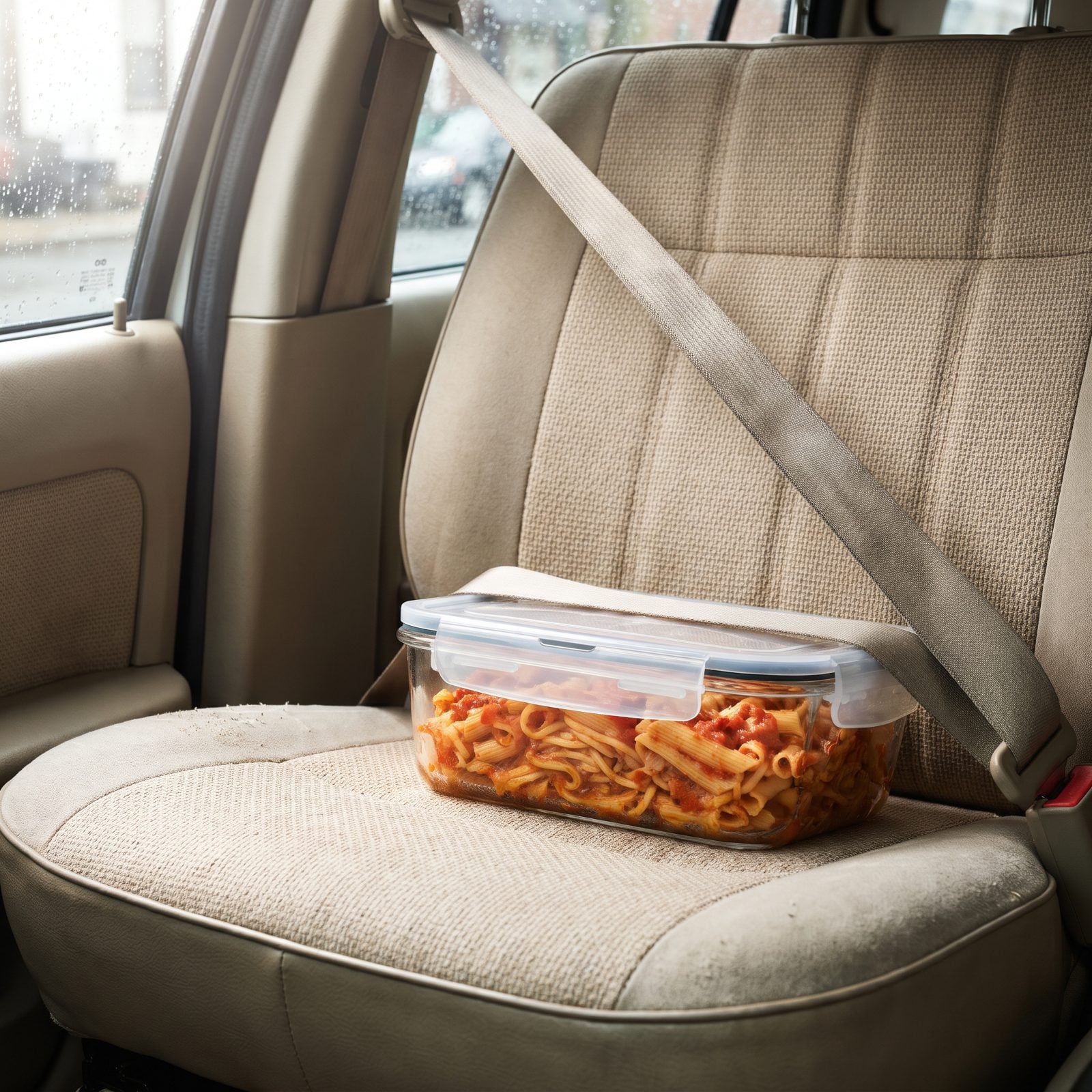
Anybody who has mopped marinara off a floor mat knows the regret of a lid that popped on the second left turn. A sliding, sloshing dish wrecks your car, your clothes, and the dish itself before you even arrive.
Use a container that genuinely seals. Then keep it level and wedged so it can’t travel. A rolled towel in the trunk does more than you’d think.
18. Bring the Proper Serving Utensil
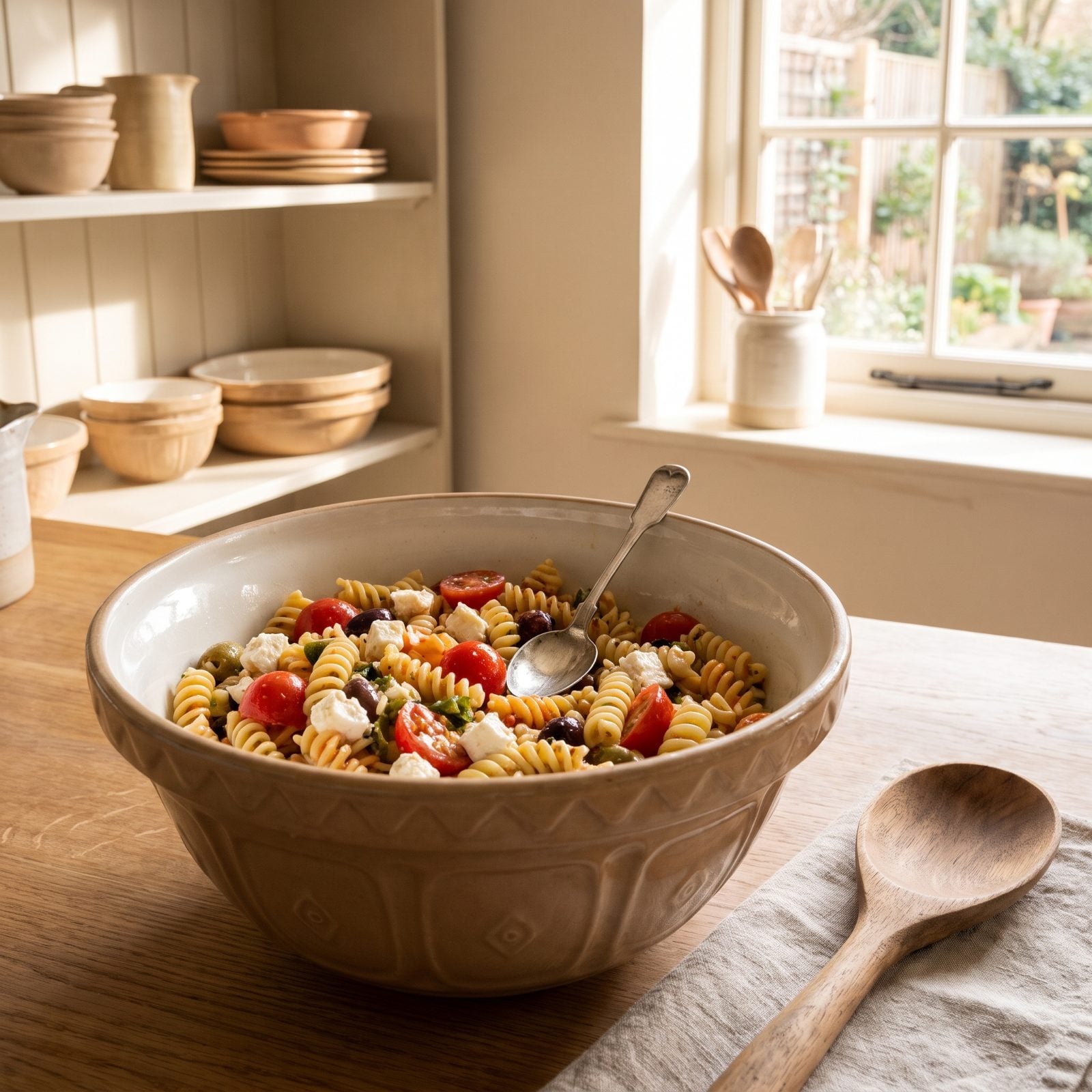
Nothing stalls a buffet line like a deep dish of pasta salad and a single teaspoon fished out of someone’s junk drawer. The host did not budget a dozen serving spoons for everyone else’s food, and asking for one mid-party is its own small awkwardness.
Match the utensil to the dish: tongs for salad, a ladle or deep spoon for anything saucy, a wide server for anything that cuts. Bring it with the food and tuck it right in the container.
As a certified etiquette trainer puts it in her guide to potluck manners, “Remember to bring appropriate serving utensils for your dish. Hosts may not have extras, and it avoids the hassle of trying to find something last-minute.”
17. Pack a Trivet for a Hot Serving Dish
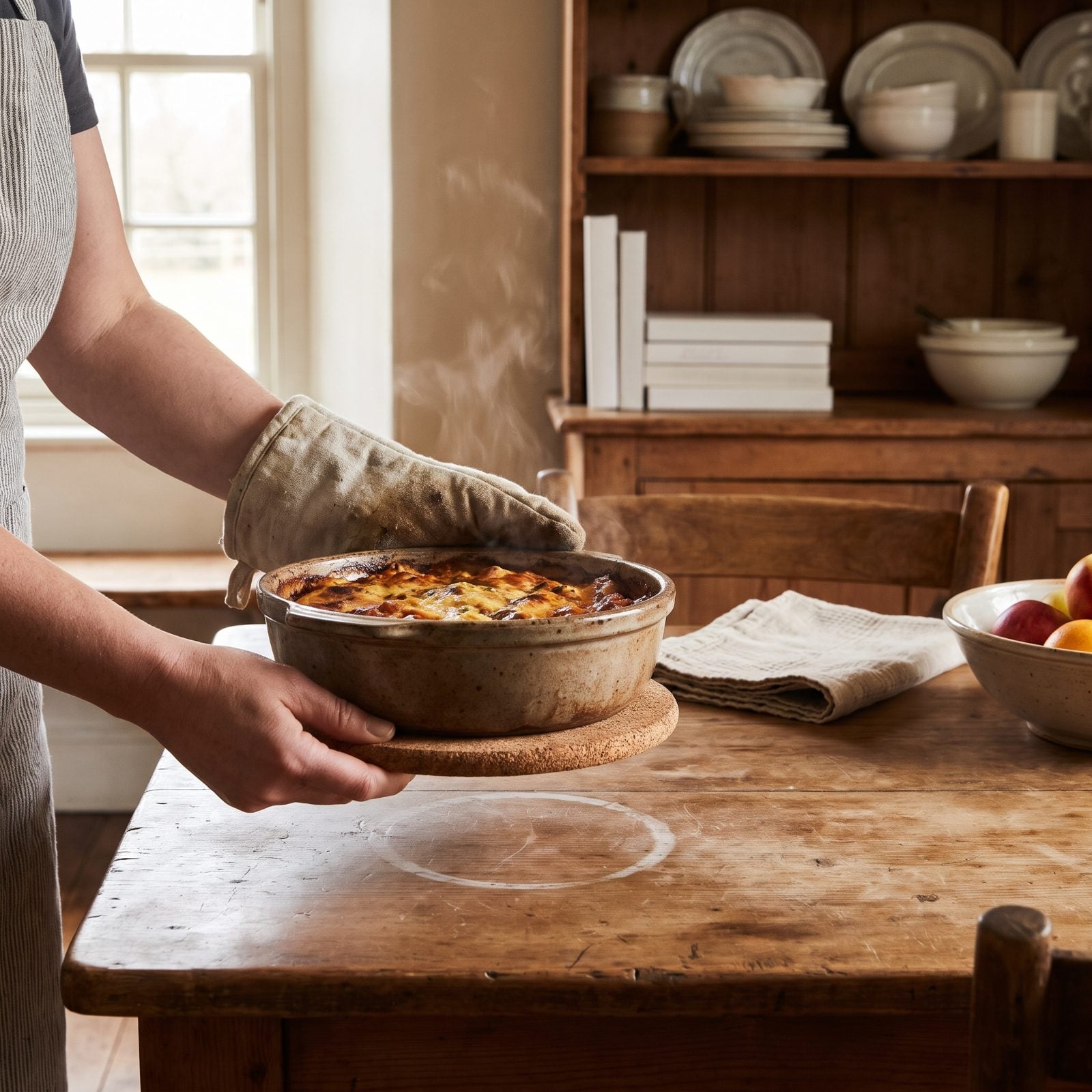
A scorching dish straight from a hot carrier onto bare wood leaves a white ring that outlasts the friendship. Host tables take the damage, and the person who caused it almost never notices until it’s permanent.
Tuck a cork or silicone trivet in with your dish. It weighs nothing, and it spares your host a heat scar they’ll stare at every dinner for years.
Food served straight from a skillet or pot got more hearts from our readers than other images in the same articles, 85% versus 78%, so that trivet will likely see use.
16. Label the Dish With Its Actual Name
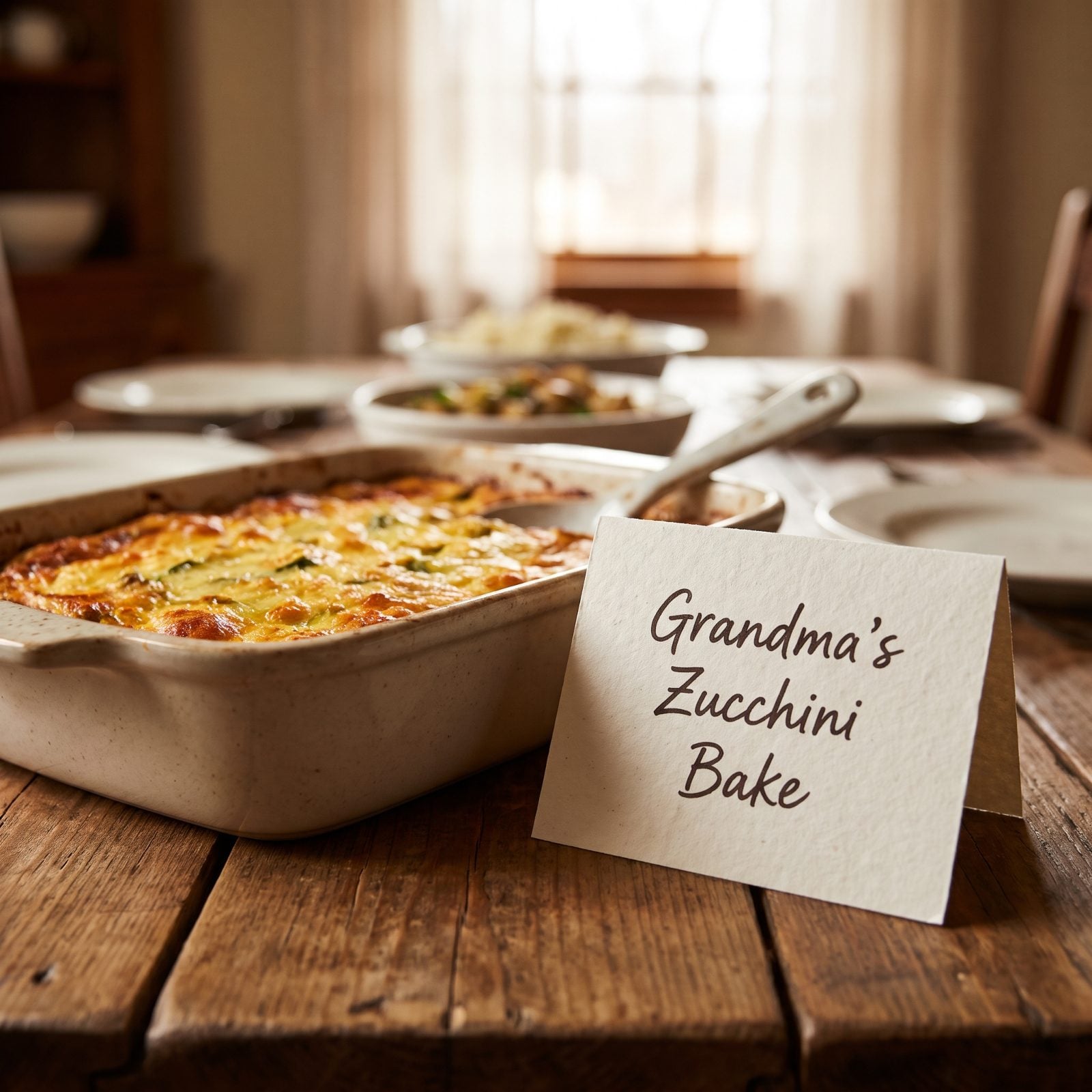
A mystery dish with no name is the one guests walk past all night. People get shy about poking at unmarked food, so a nameless casserole gets picked over last while the labeled ones empty out.
A folded index card with the dish’s real name does the quiet work of selling it. “Chicken and wild rice bake” invites a plate. An unlabeled brown dish invites suspicion.
15. Clearly Identify Major Allergens

For someone with a nut or shellfish allergy, an unmarked dish isn’t a curiosity. It’s a hazard. One bite of the wrong thing turns a fun night into an emergency, and the person at risk should never have to interrogate every bowl on the table.
Note the big ones right on your label: nuts, shellfish, eggs, dairy, wheat, soy. It takes ten seconds, and it tells an allergic guest they’re free to actually enjoy themselves.
14. Make Dietary Claims Only When You Are Certain
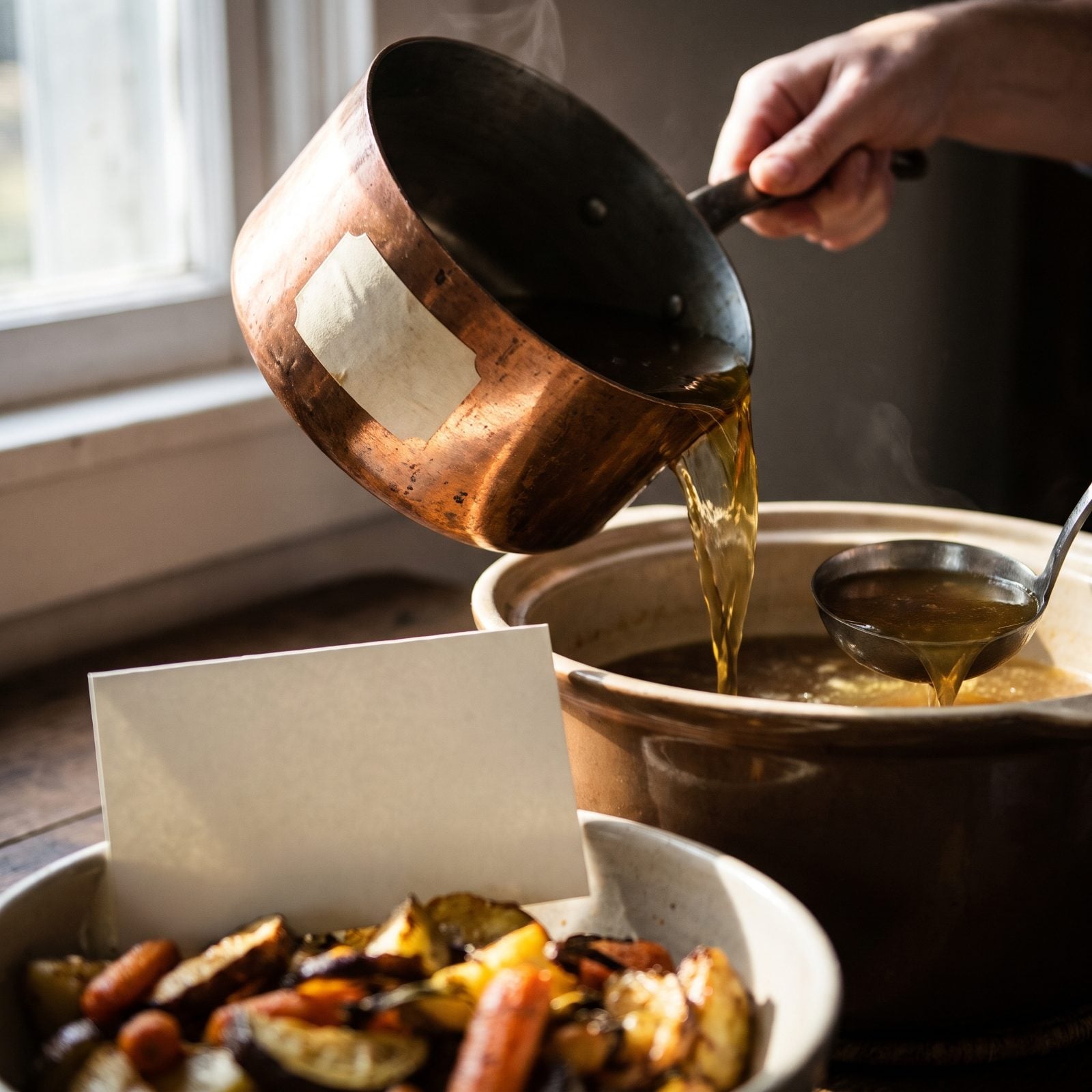
Calling a dish “vegetarian” when the beans were simmered in chicken stock is the kind of small lie that lands somebody in real distress. People with dietary restrictions trust your label completely — which is exactly why a careless claim is so dangerous.
If you’re not sure, don’t claim it. Animal products and gluten hide in broths, sauces, and seasonings most of us never read. Honestly, better to say “I think this is vegetarian but check with me” than to stamp a guarantee you can’t back up. That honesty protects the person counting on you.
13. Provide a Separate Utensil for Allergy-Friendly Food
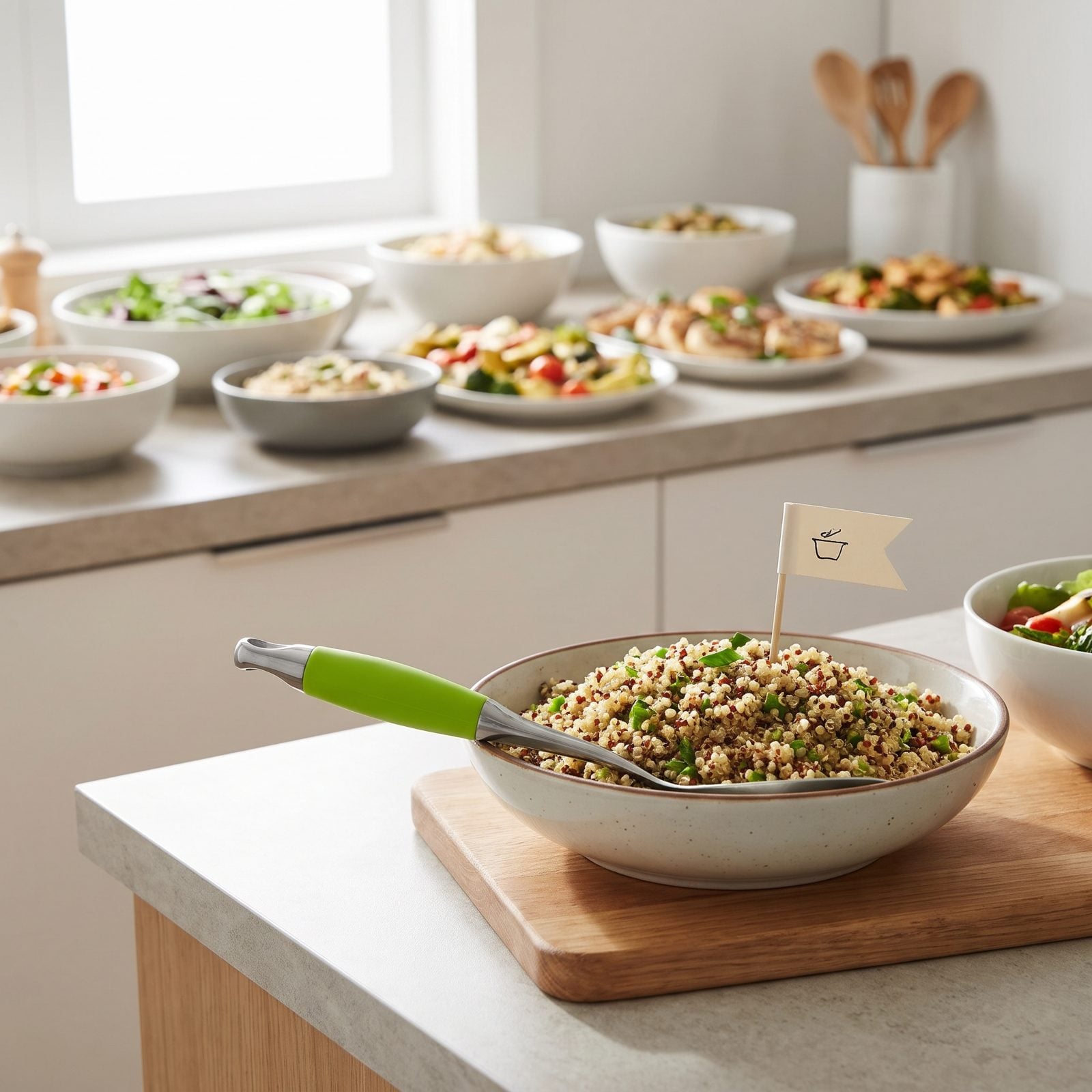
A shared spoon undoes every good intention. Dip the same server into the gluten-free pasta right after it touched the regular stuffing, and you’ve just cross-contaminated the one safe dish on the table. For someone with celiac, that crumb matters as much as a whole slice.
Give the allergy-friendly dish its own dedicated utensil and leave it there. Pick a different color so people remember not to swap.
12. Ask Before You Bring the Wine

Showing up with a bottle feels generous. It can also quietly derail a host who planned a dry afternoon, has recovering guests coming, or already paired everything with a specific punch. A quick text beforehand saves everyone the dance of pretending the surprise six-pack is welcome.
And if alcohol is a yes, ask what kind. Red wine on a white tablecloth with kids running around? That’s a stain waiting to happen.
11. Give the Host a Heads-Up on Anything Pungent or Drippy
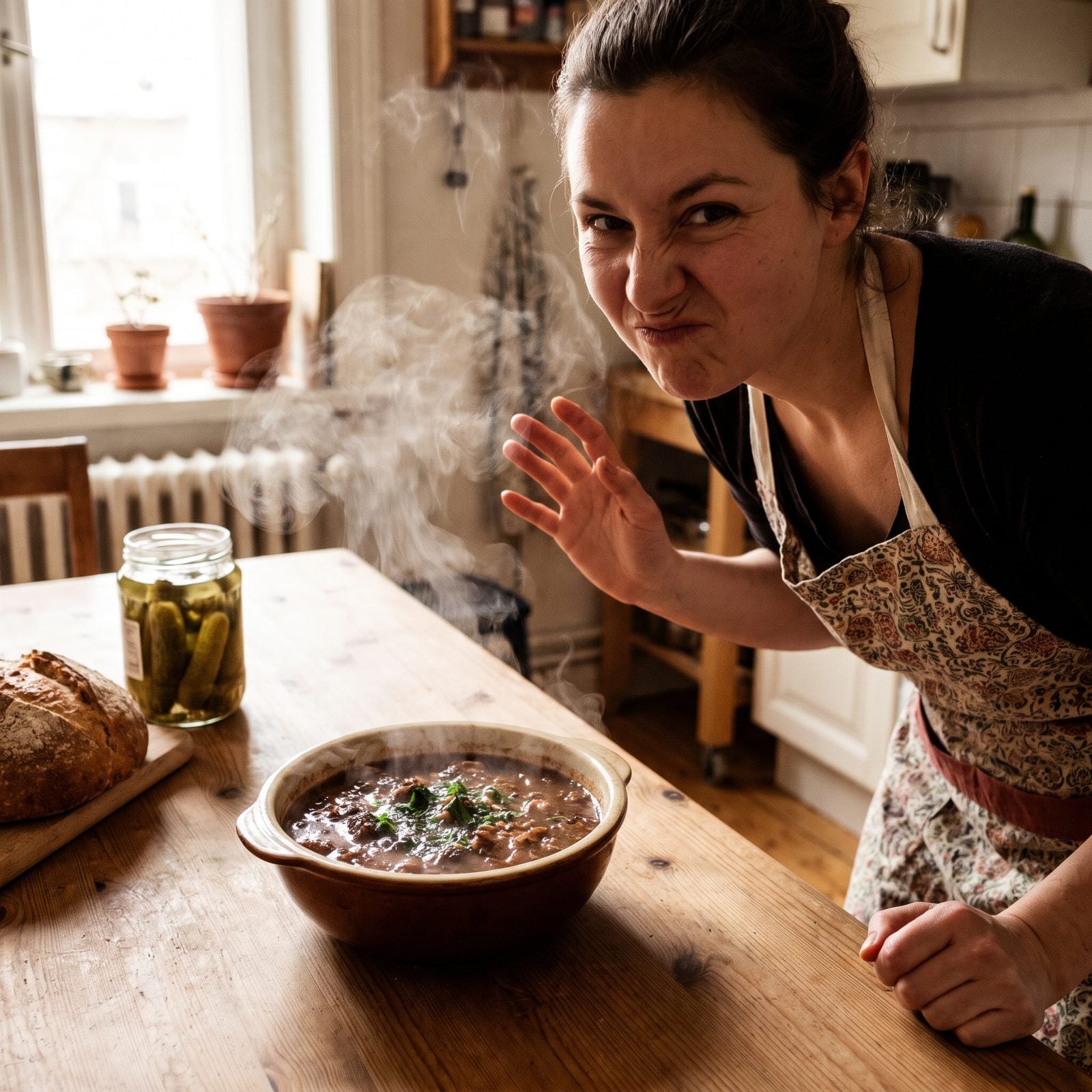
Durian. Sardine spread. A curry so fragrant it announces itself from the parking lot. These dishes have their fans, but a closed dining room has a nose, and your host may not want it dominated by one bowl.
Messy counts too. Anything that drips, splatters, or leaves a ring deserves a warning so the host can set it on a tray or near the kitchen instead of the good linen. A thirty-second mention beforehand beats a stained carpet and an awkward apology after.
10. Pre-Cut the Cake, Casserole, and Bread Before You Arrive
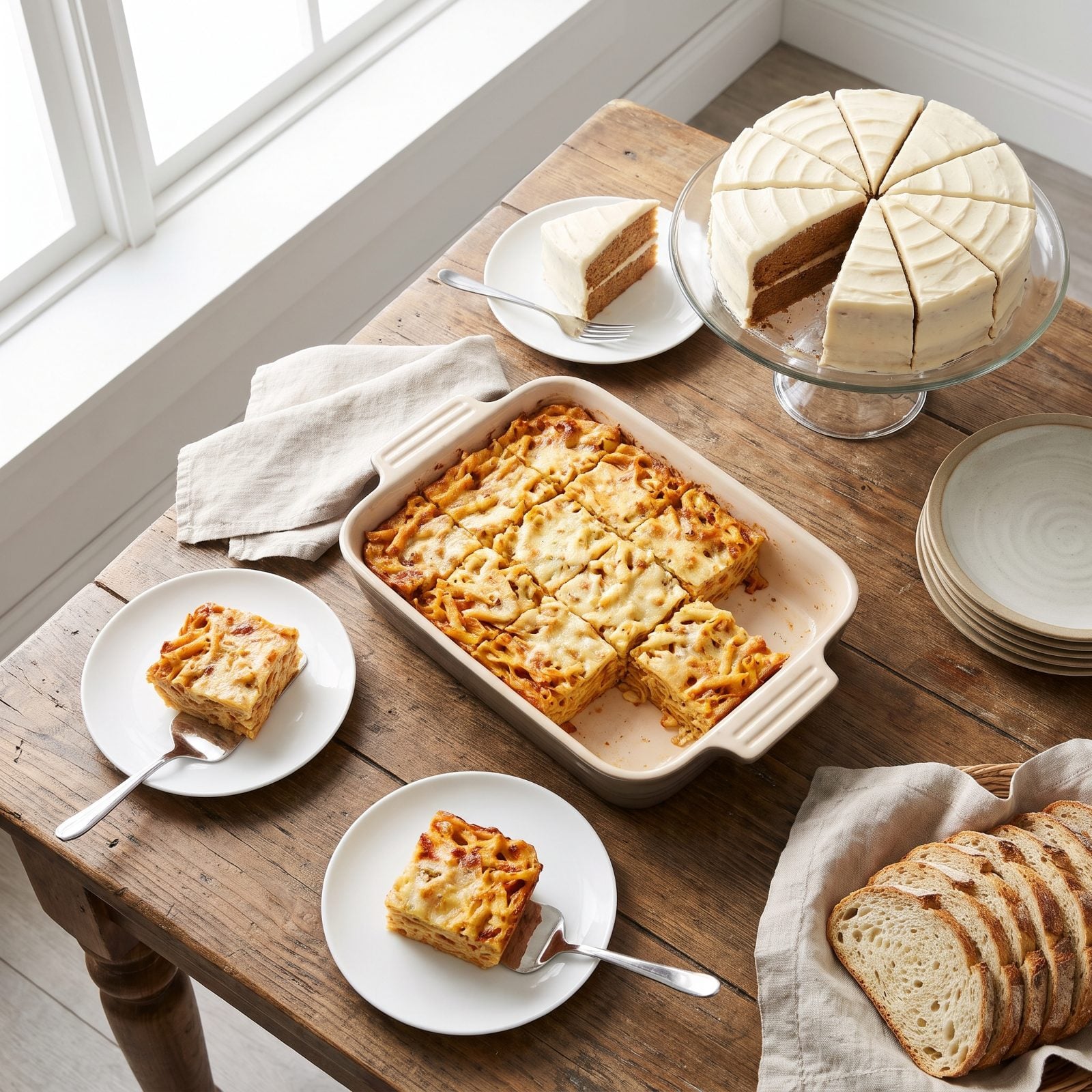
Nobody wants to be the first to hack into a whole cake. A dish that arrives already portioned moves the line along and spares timid guests the pressure of making the first cut badly. Scored casseroles, sliced bread, squares marked in the brownies — all of it says the same thing: dig in, it’s ready.
9. Let the Host Decide Where Your Dish Lands on the Table
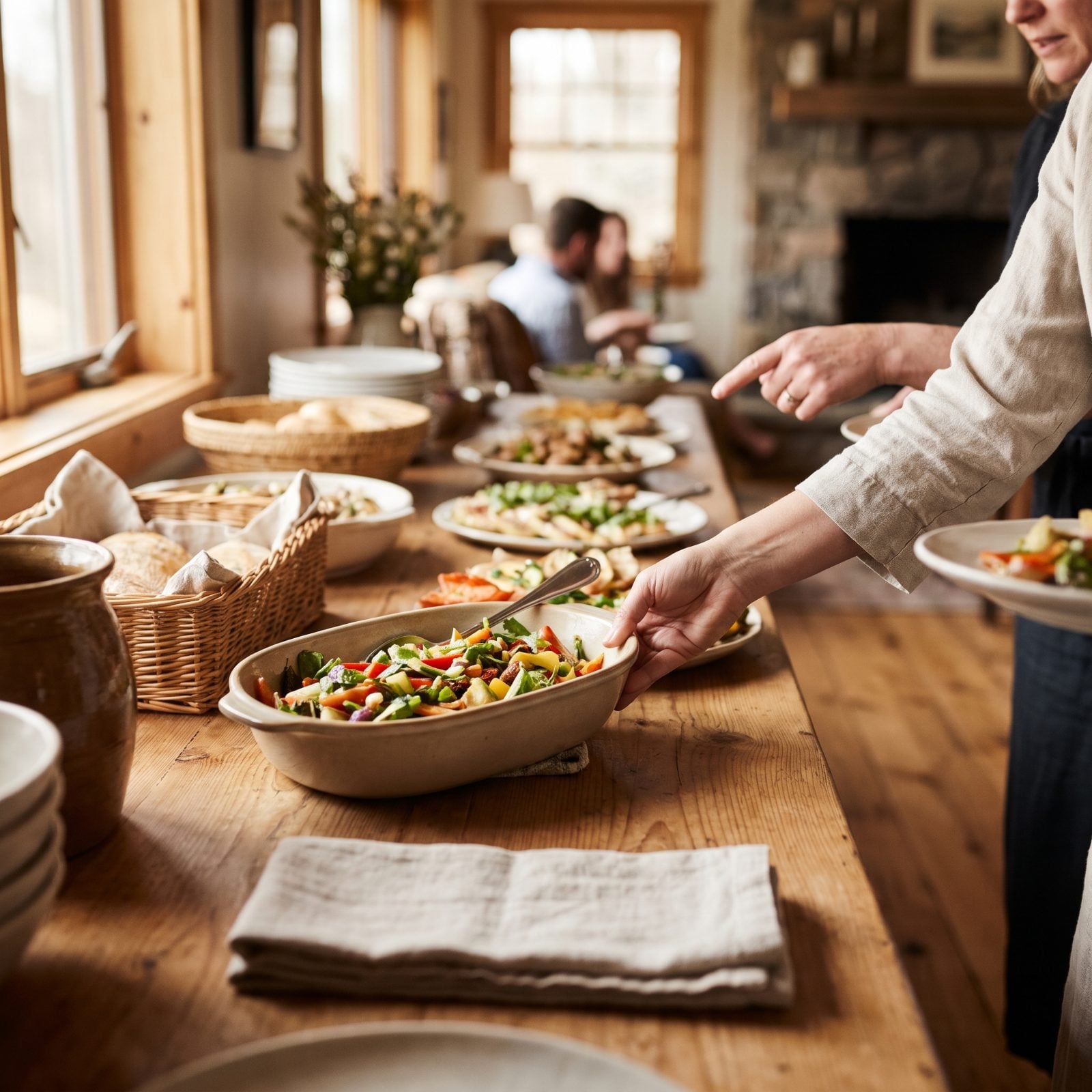
You walk in, spot a gap on the table, and plant your dish there. Reasonable instinct. But the host has usually built a flow — cold things grouped, hot things near outlets for the slow cookers, desserts kept clear of the mains.
Hand your dish over and ask where it should go. Rearranging someone’s careful layout to showcase your own contribution reads exactly how it sounds. The person who hosted gets to run the room.
8. Keep Your Hands Off the Food Before the Buffet Opens
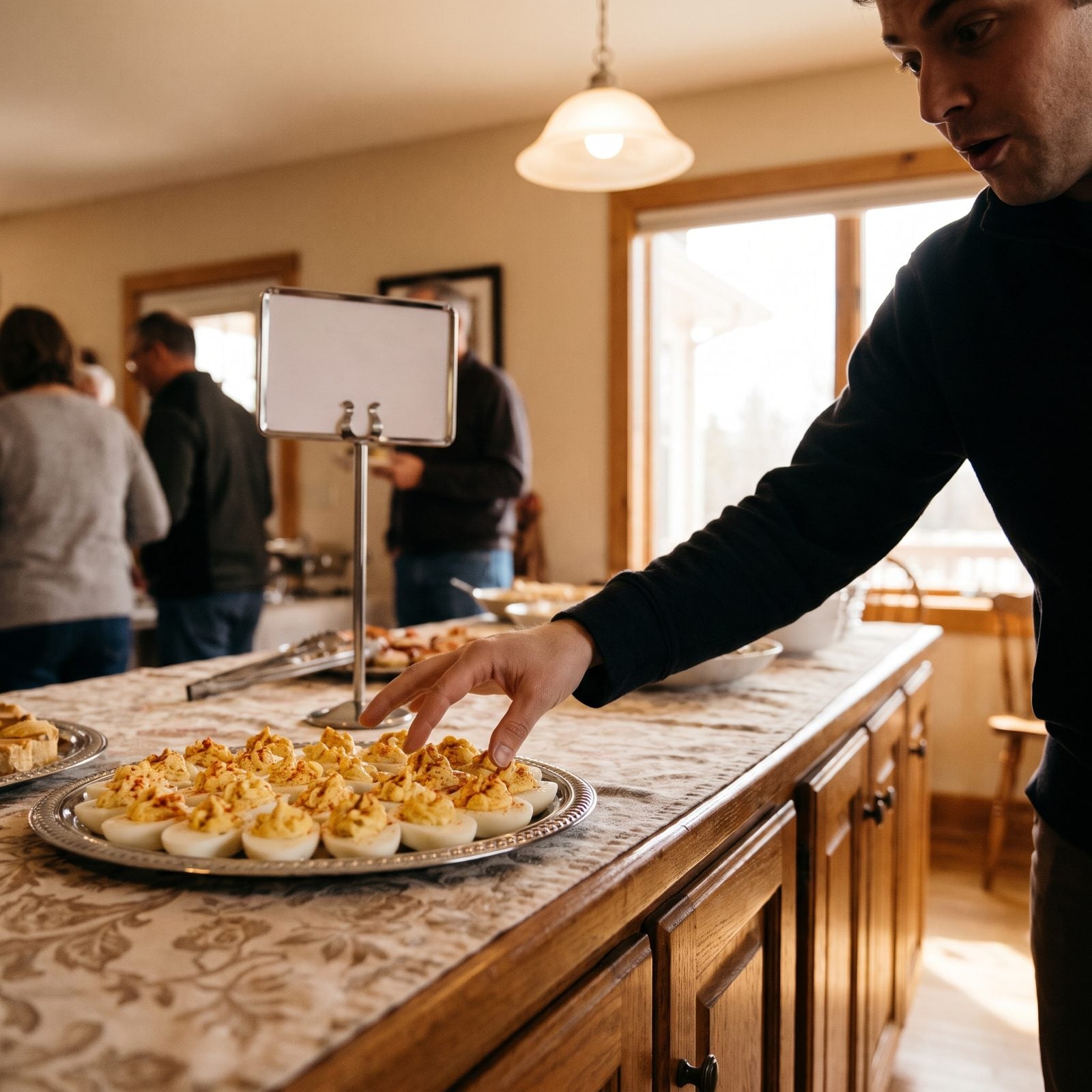
The spread is out, the host is still slicing something in the kitchen, and that pan of deviled eggs is right there. Don’t touch it.
Early sampling throws off the host’s timing and signals to everyone else that the gates are open before they are. Worse, it leaves gaps in a dish the host wanted to present whole. Wait for the word. Grazing before the official start is the potluck equivalent of eating off someone’s plate before they’ve picked up a fork.
7. Never Taste Straight From the Communal Serving Spoon
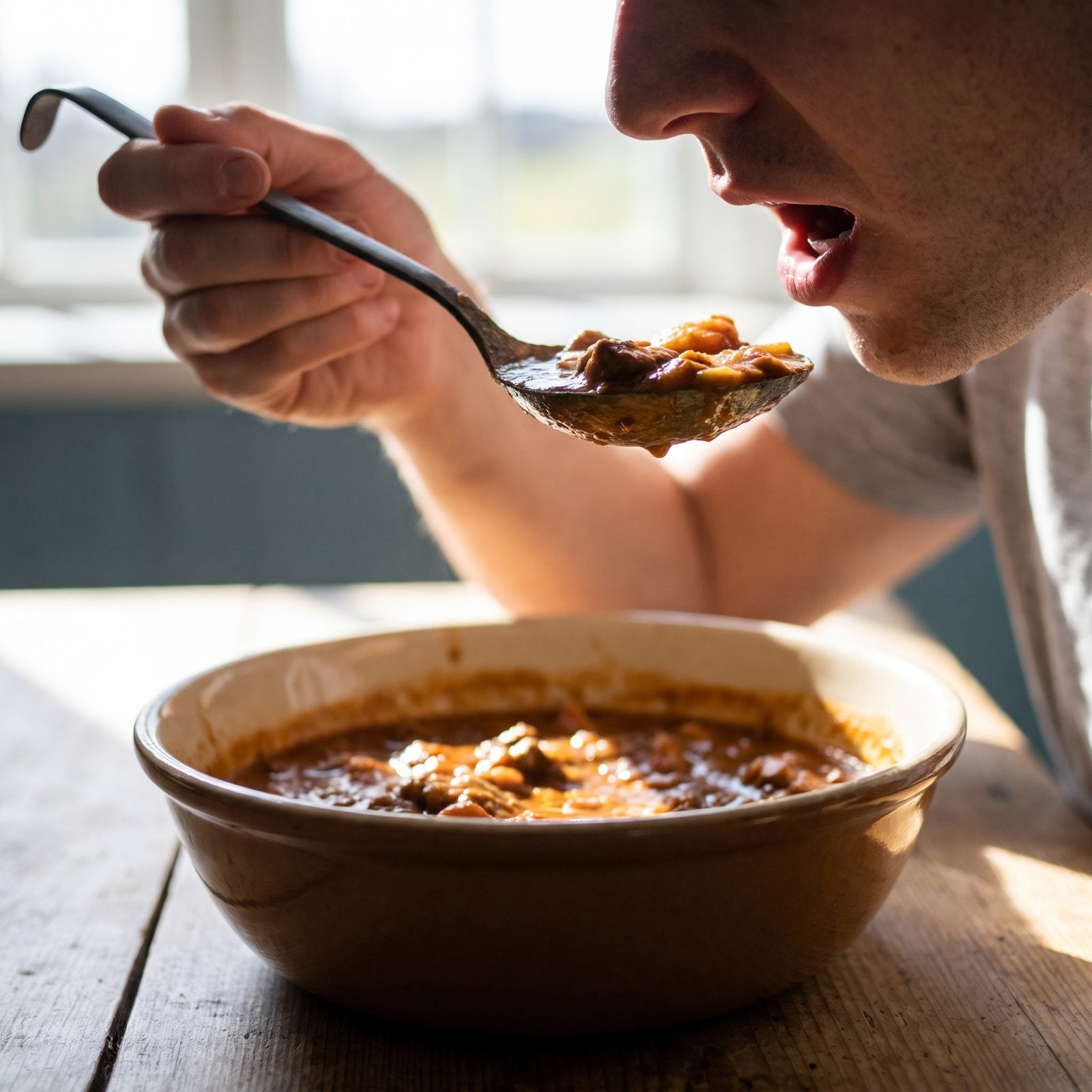
This is the one that gets noticed and never forgotten. A serving spoon goes from the bowl to your plate, full stop. No detour past your lips.
Curious how something tastes? Take a small portion on your own plate and try it there. One lick of a shared utensil turns a whole dish into something half the room will quietly avoid.
6. Take a Small Portion on Your First Trip
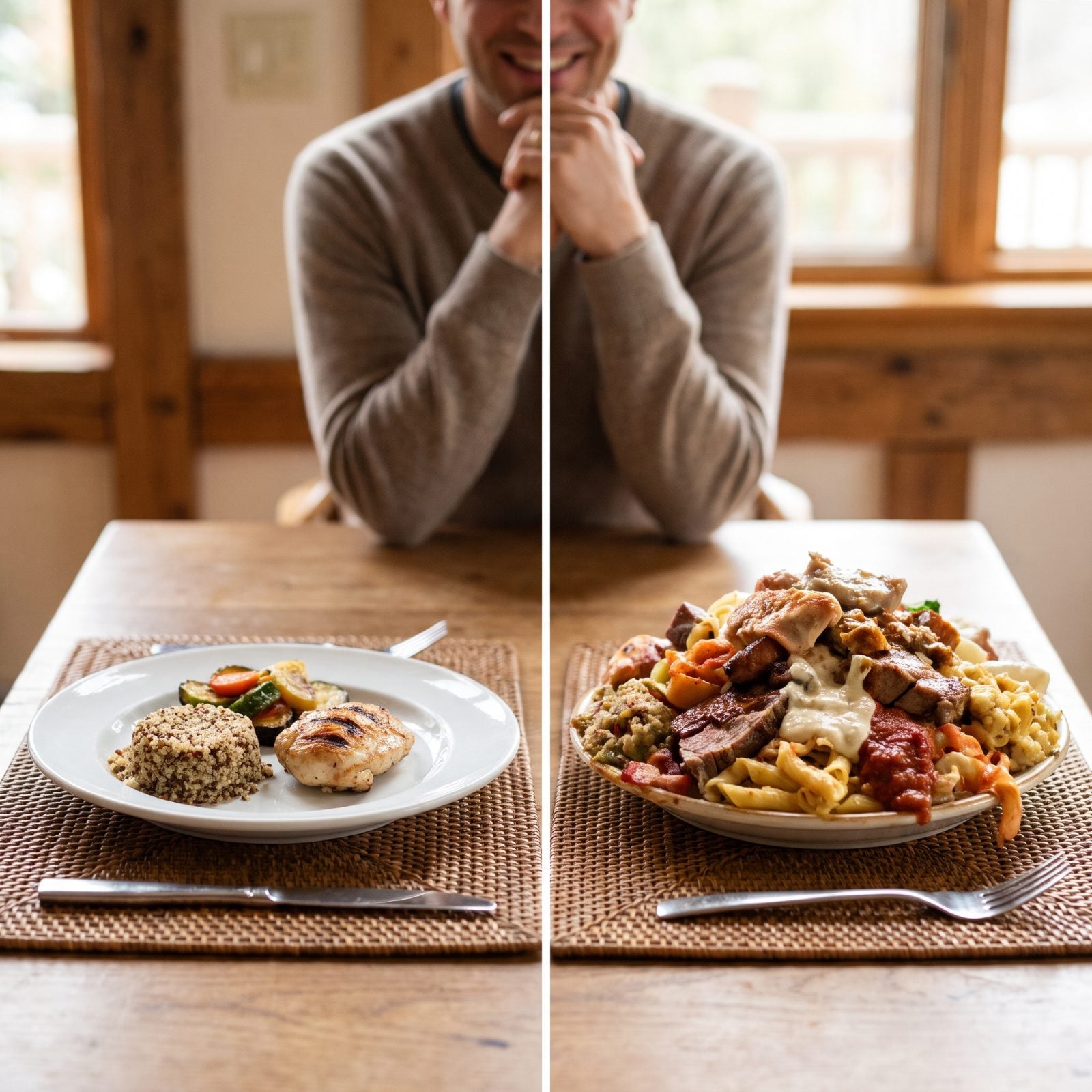
A potluck is a math problem the early birds can ruin. Pile your plate like it’s the last meal before a famine and the people at the end of the line get scraped-out dishes and apologetic shrugs.
Modest first helpings make sure everyone gets a taste of the showstopper, not just whoever reached it first. You can always come back — that’s the whole idea.
5. Hold Off on Seconds Until Everyone Has Eaten

You finished your plate, it was all delicious, and you’re eyeing a return trip. Check the room first. If there’s a cluster still waiting to make their first round, seconds can wait.
Nothing sours a shared meal faster than someone taking a third scoop of the brisket while a latecomer stares at an empty tray. Let the line complete one full pass, then circle back and enjoy yourself. It’s generosity measured in minutes, and people remember who had the patience to wait.
4. Keep the Buffet Line Moving

The buffet is not the place to debate whether you want the orzo or the roasted peppers. Decide, scoop, move. The person behind you has a plate and a growling stomach.
Want to study a dish, read the little card, or chat with the cook? Step out of the line and do it to the side. A single ponderer can back up a whole room of hungry people, and the bottleneck is always obvious to everyone except the person causing it.
3. Never Mock or Snub Another Guest’s Dish
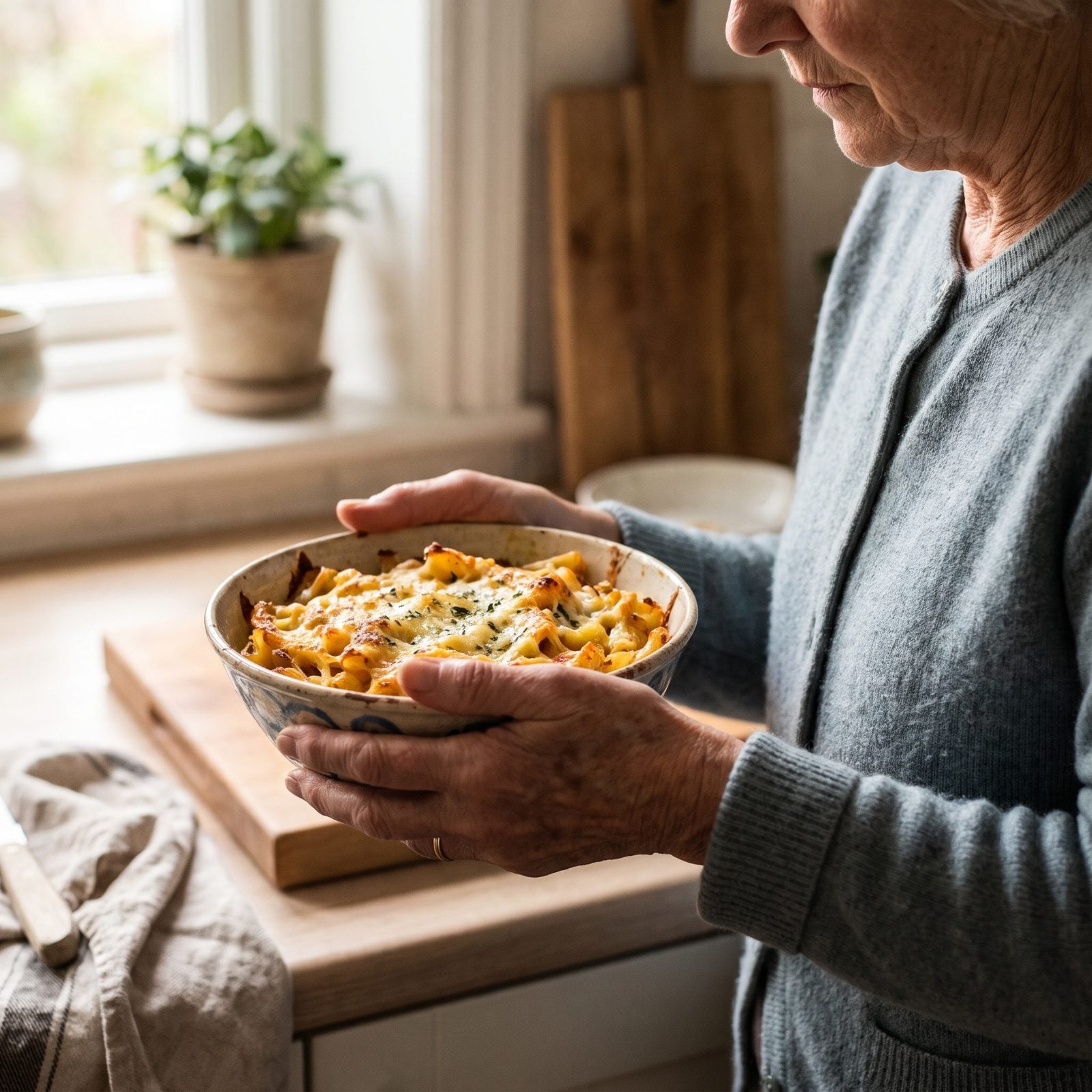
Somebody brought that dish nervously. They stood in their kitchen wondering if it was good enough, then carried it across town hoping people would like it. The lopsided one. The store-bought one. The experiment that didn’t quite land.
You don’t have to eat what you don’t want. You do have to keep your face and your comments kind. A raised eyebrow at the jello mold, a loud “what is THAT” at the unfamiliar stew — those cut deeper than anyone lets on.
2. Supervise Children Around the Buffet Table
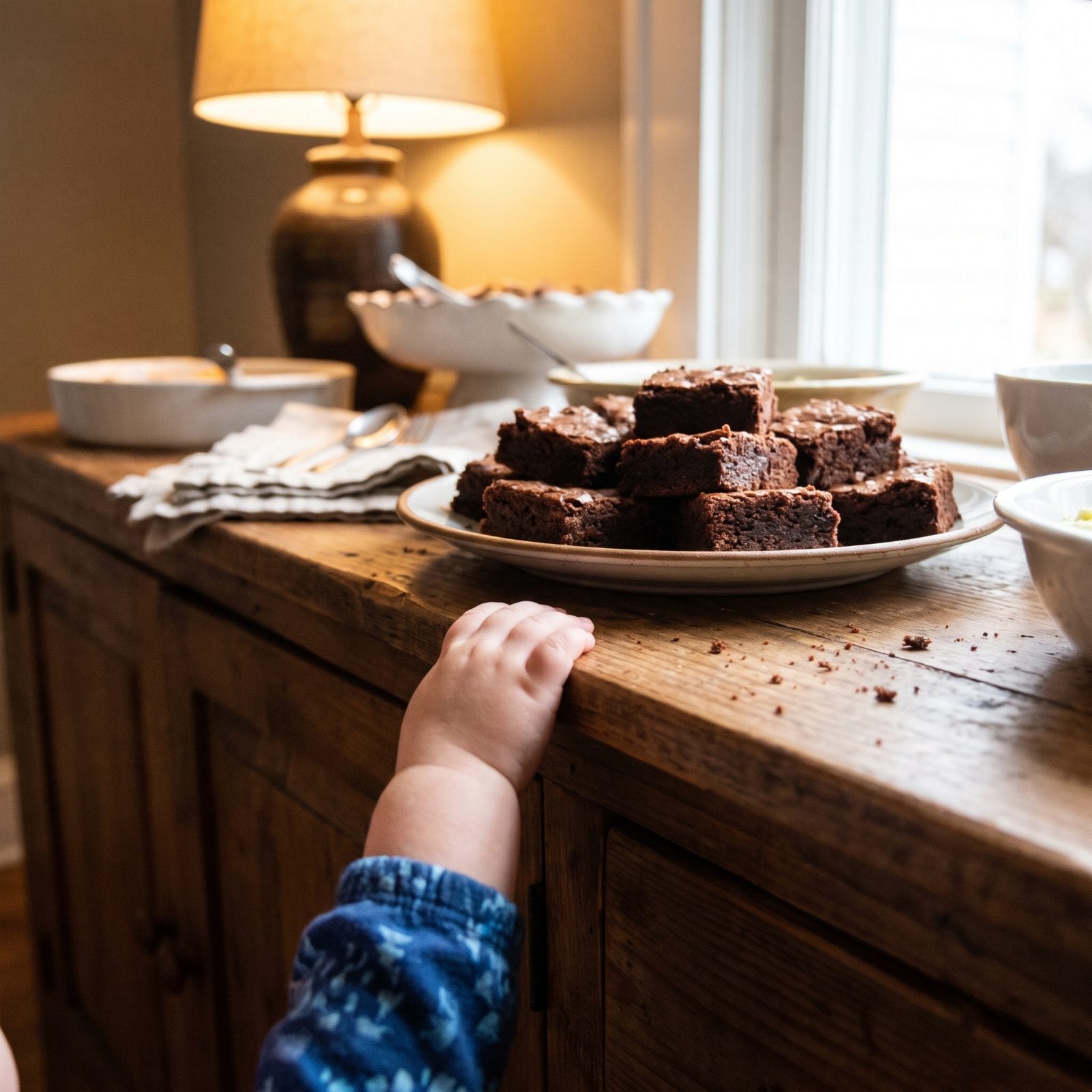
A child’s reach lands at exactly buffet height, which is the whole problem. The brownie tray sits at eye level, the serving spoon looks like a toy, and there’s a line six people deep behind them, patience running thin.
Nobody wants to be the person asking you to watch your kid. So they don’t say a word — they just quietly stop reaching for the deviled eggs after they’ve watched little fingers dip in and out of the bowl twice. Keep a hand near the small one when the small one is near the food. Load their plate yourself, then send them off to run around somewhere nowhere near dessert.
1. Wait for the Host Before Packing or Dividing Leftovers

A particular awkwardness sets in when a guest starts scooping lasagna into a borrowed Tupperware before the plates are even cleared. The host sees it, says nothing, and files it away forever.
Those leftovers belong to a plan you can’t see. The extra pie might be going home with the elderly aunt. Maybe the host has already claimed that big casserole for lunch all week, or the dish itself needs to go back to whoever brought it, full or empty. So wait to be offered. And when you are, take a reasonable share instead of the lion’s share.
Grabbing your own empty dish back is always fine. Loading up a road plate from everyone else’s cooking is a different animal entirely.