Would you like to save this?
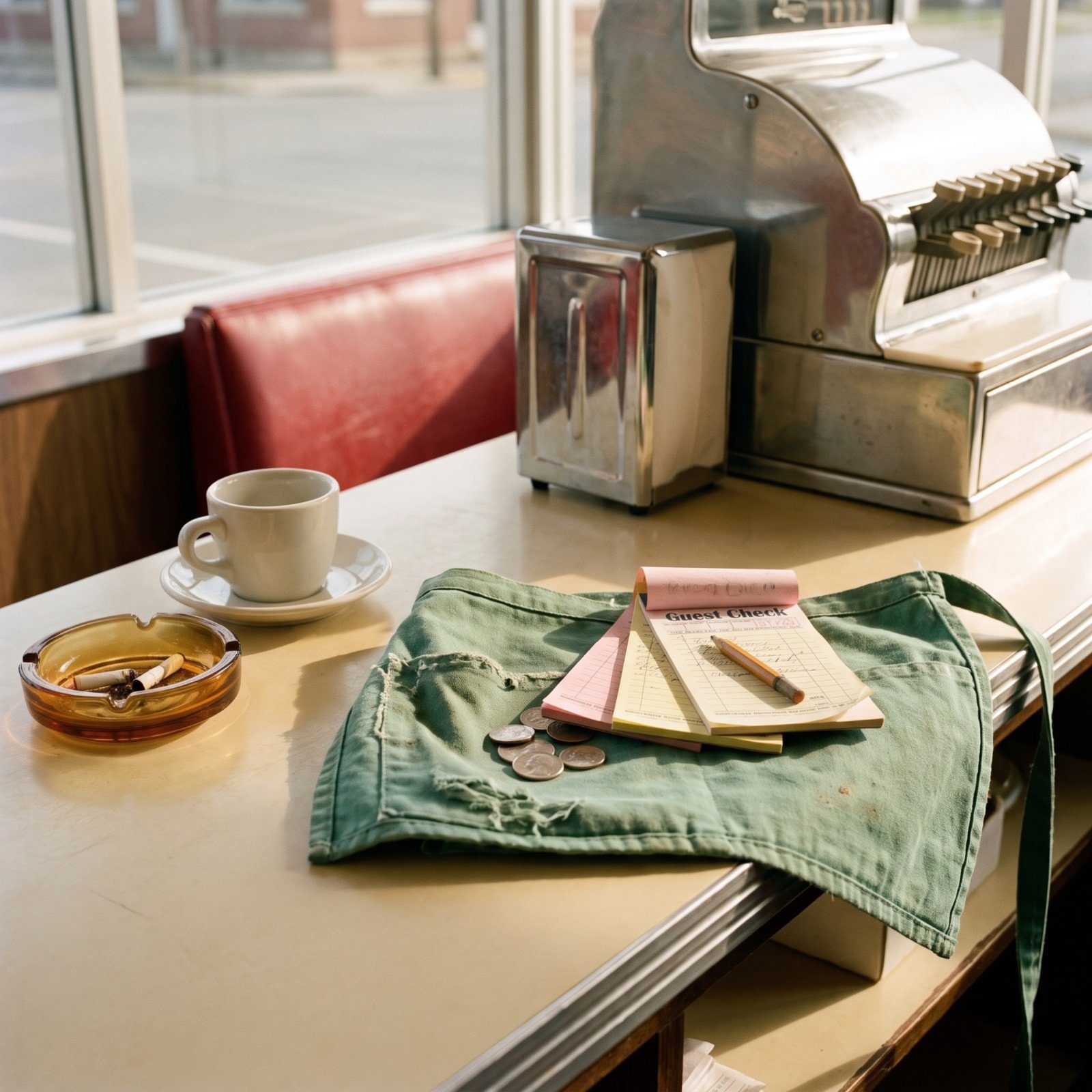
The bell rang at the pass and you moved before you thought. Three tables in your section, coffee down, checks in your head, a fistful of change riding in the front pocket of your apron. Working a diner floor in 1978 meant your hands knew things your brain didn’t have to spell out. Metal tools, carbon paper, a spinning wheel of tickets. The math was yours, all of it, and you carried it the way you carried plates. The ones below bring it back.
40. A Smoking Section Marked Only by a Sign, with Glass Ashtrays on Every Table
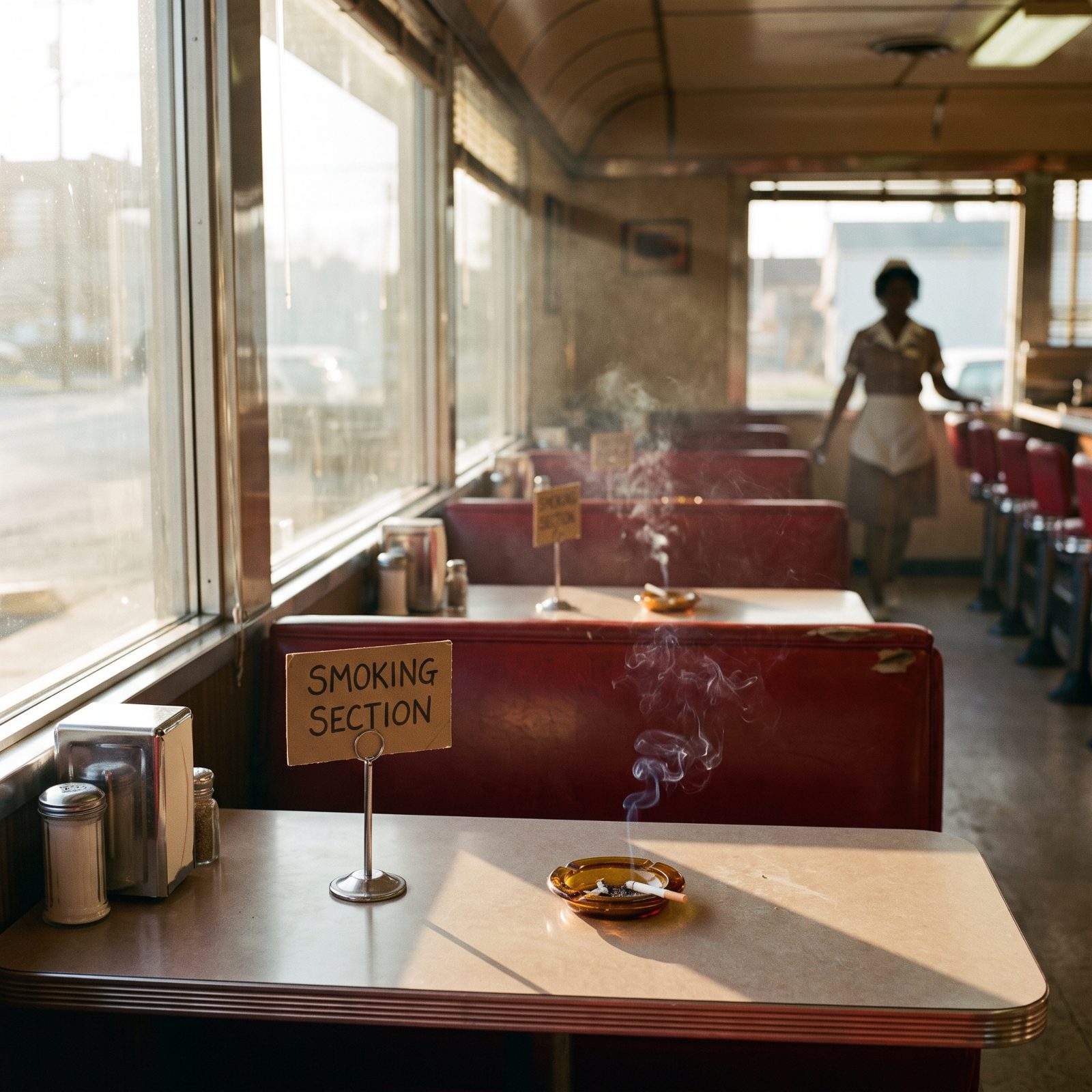
The whole distinction was a card-table tent that said SMOKING and another that said NON, ten feet of open floor between them, same air, same haze drifting over the counter by two o’clock. Nobody questioned it.
Every table wore a heavy glass ashtray, amber or clear, the kind that could crack a knuckle if you weren’t paying attention. You dumped them into a coffee can on your bus tray and wiped them with the same rag that did the tables. And a waitress could smoke on the floor between the register and the pass. Half of them did.
39. Credit Cards Processed with a Manual Imprinter
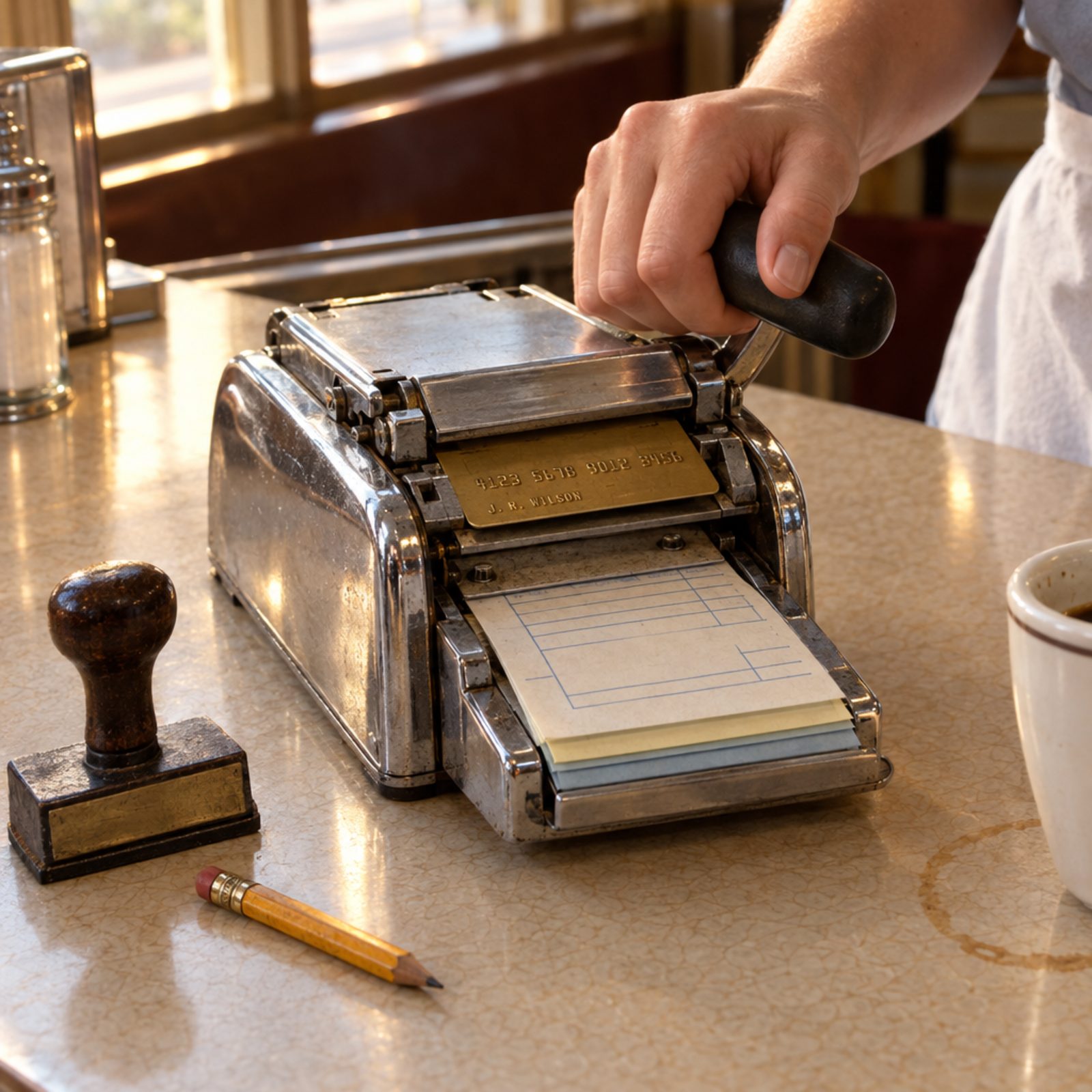
No terminal. No little screen asking you to tip. Just a heavy chrome sled on the counter and the sound it made: ka-CHUNK, as you dragged the roller across the card and the raised numbers bit into the carbon.
First you checked the card against a booklet of canceled numbers, a phone-book-thin list of accounts gone bad. If the amount was high you called it in from the wall phone and waited for someone to read back an approval code. The customer signed the top copy, you handed back the yellow, and the whole thing took longer than the meal cost.
38. Handwritten Guest Checks with Color-Coded Carbon Copies
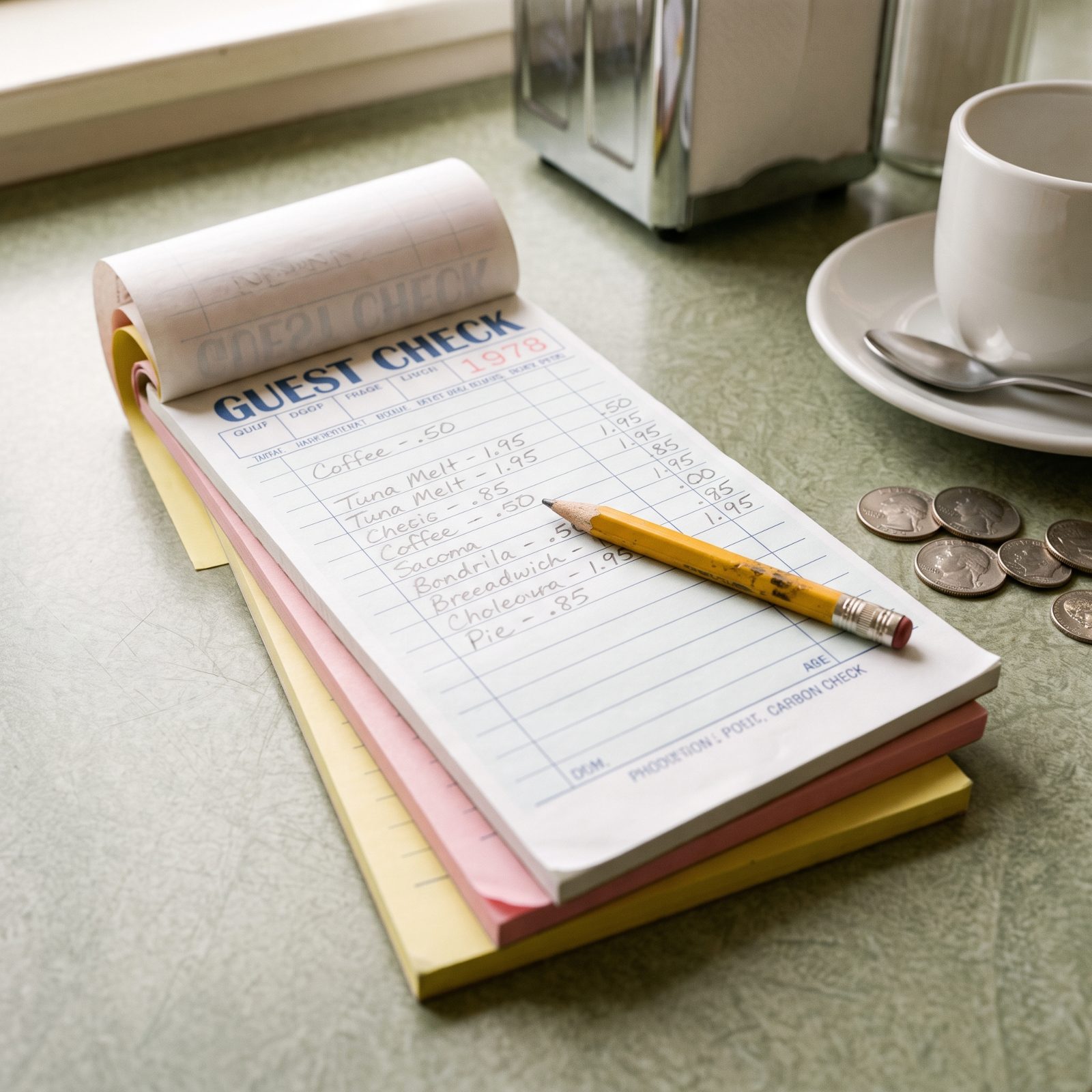
Green pad, one pencil, and your own shorthand. Two eggs over, whiskey down (that meant rye toast), adam and eve on a raft. The cook read your writing or he came looking for you, so your writing got good fast.
Under the top sheet lived a pink copy and a yellow copy, carbon-locked so the same words landed three times, one to the kitchen, one on the wheel, one to the register. You pressed hard. A light hand meant a ghost copy the cook couldn’t read, and that was an argument you’d lose.
37. A Mechanical Cash Register with Metal Keys
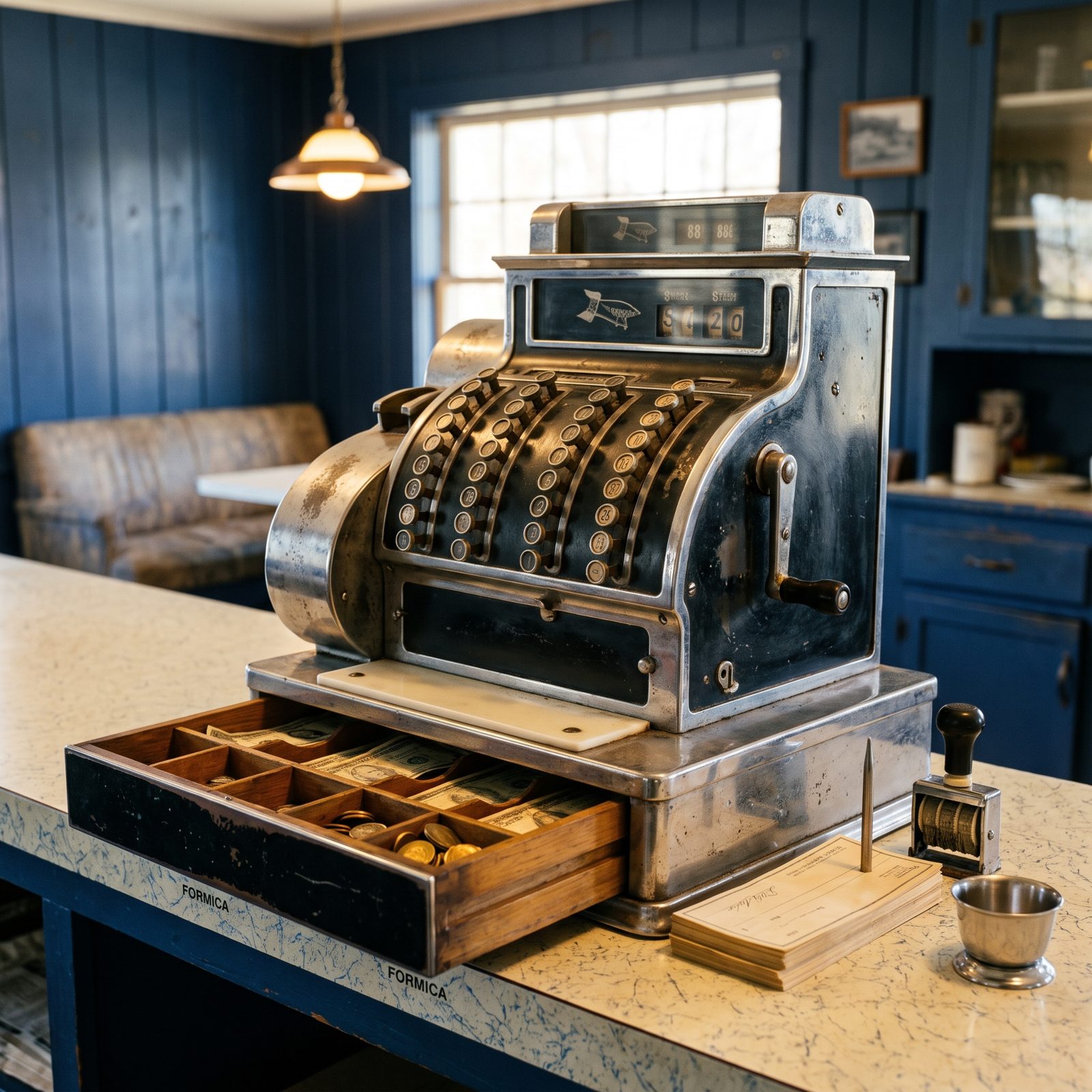
It weighed as much as a small engine and it wasn’t going anywhere. You punched the metal keys, they resisted a little, and the drawer flew out with a bell you could hear over the grill.
No total waiting for you on a screen. The register added, sure, but you’d already done the math in your head and just needed the drawer to open. Making change was a physical act: count up from the price to the bill handed over, coins first, then bills, out loud if the place was slow enough. That machine outlived three owners without a single software update.
36. Waitresses Calculating Checks by Hand
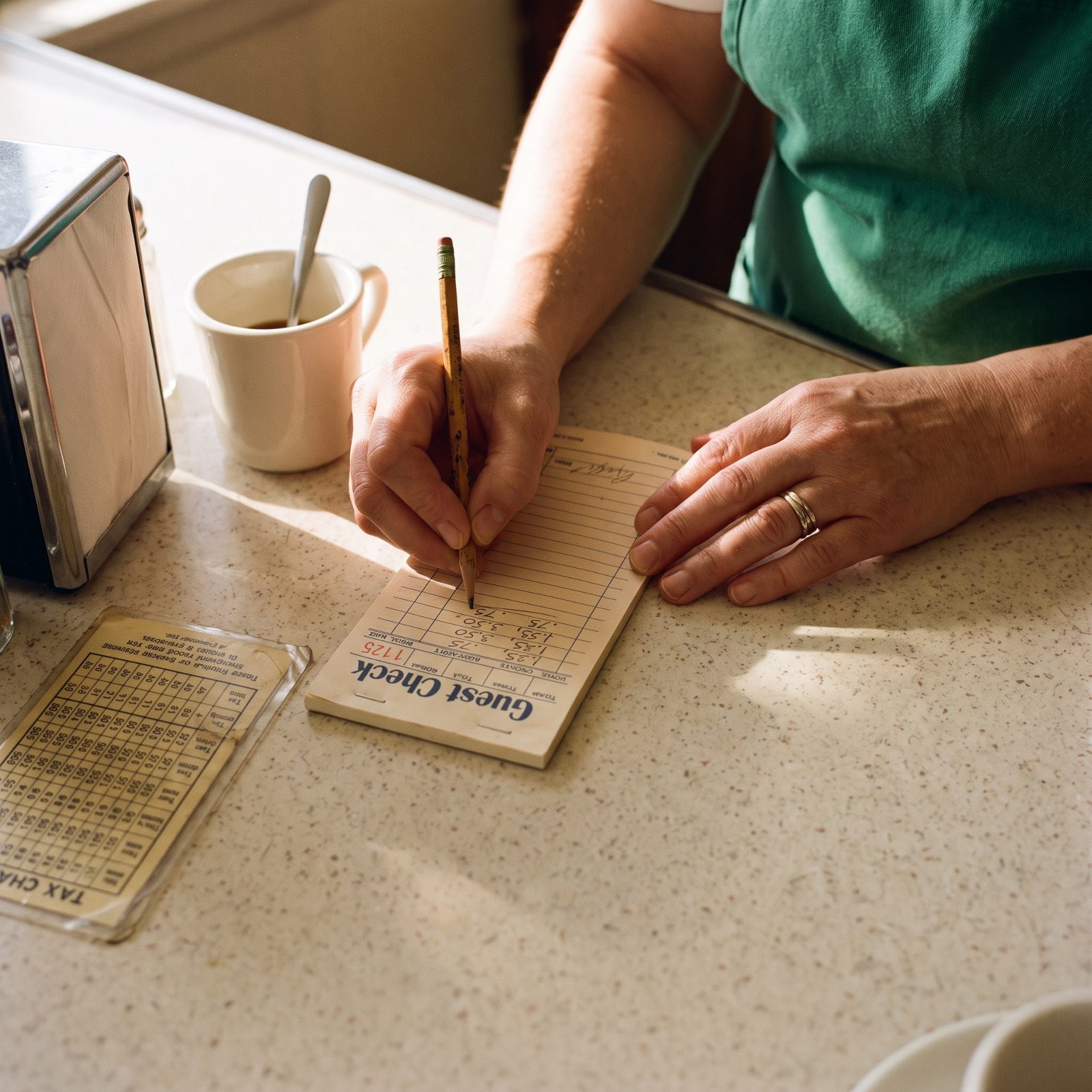
You totaled the column in your head while you walked it to the table. Four eggs, two coffees, a short stack, tax off the little laminated card taped by the register. Done before you set it down.
Nobody handed you a machine that did it. The math was the job, same as carrying four plates up one arm. A waitress who couldn’t add fast under the lunch rush didn’t last, and a mistake came out of your own tips more often than the drawer. So you got good, or you got out.
35. Exact Change Counted from a Waist Apron
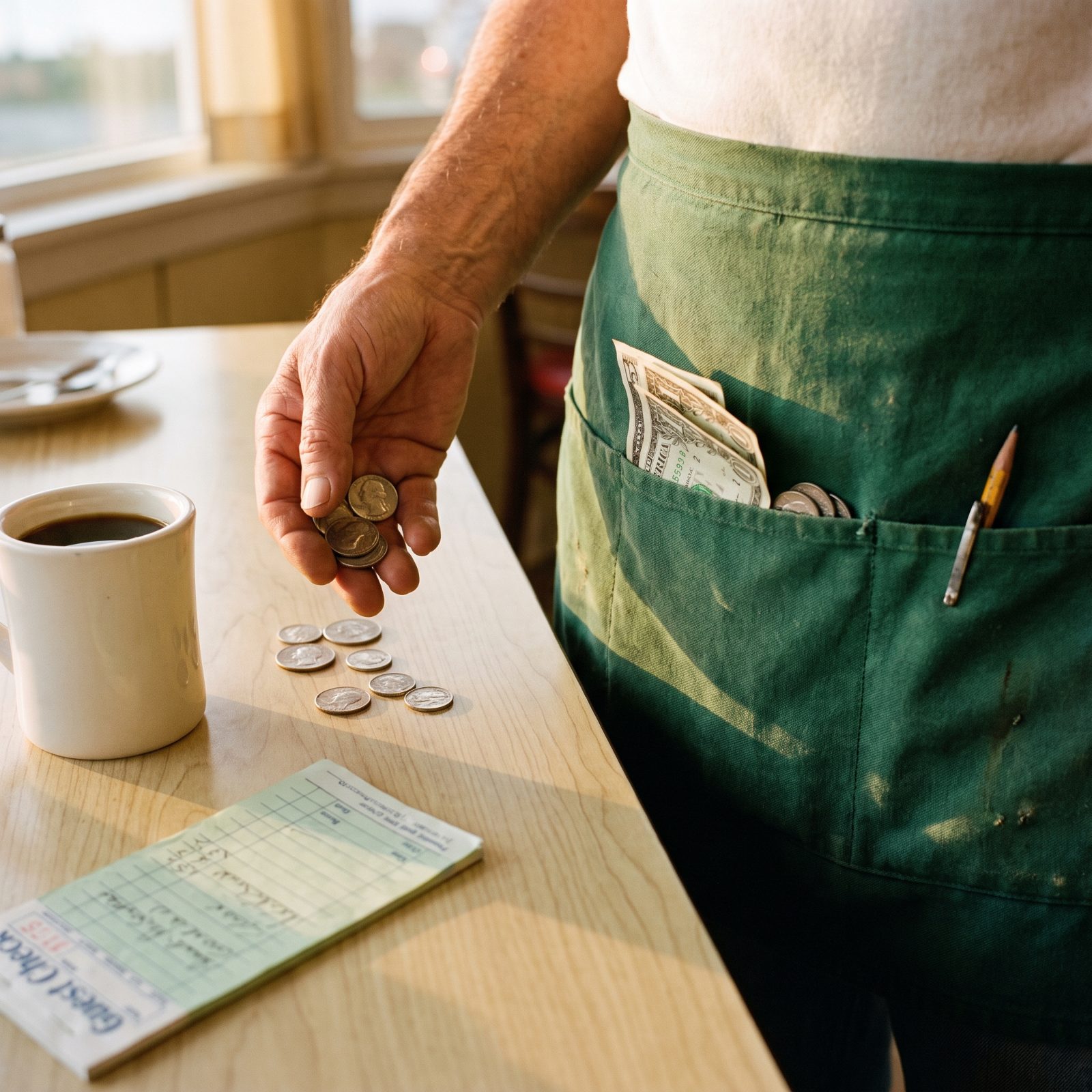
Your apron was your bank. The front pocket held a starting stash of small bills and rolls of coin, and you made change out of it all shift long, never once opening the register.
It rode heavy by dinner. You learned to count by feel, a quarter’s ridge against a dime’s, and to peel a five out of ones without looking down. At the end of the night you counted it back and squared with the drawer, and if you came up short it was your problem. That pocket sagging by the front hem was the whole economy of a good waitress.
34. Tips Left as Coins Beneath Coffee Cups
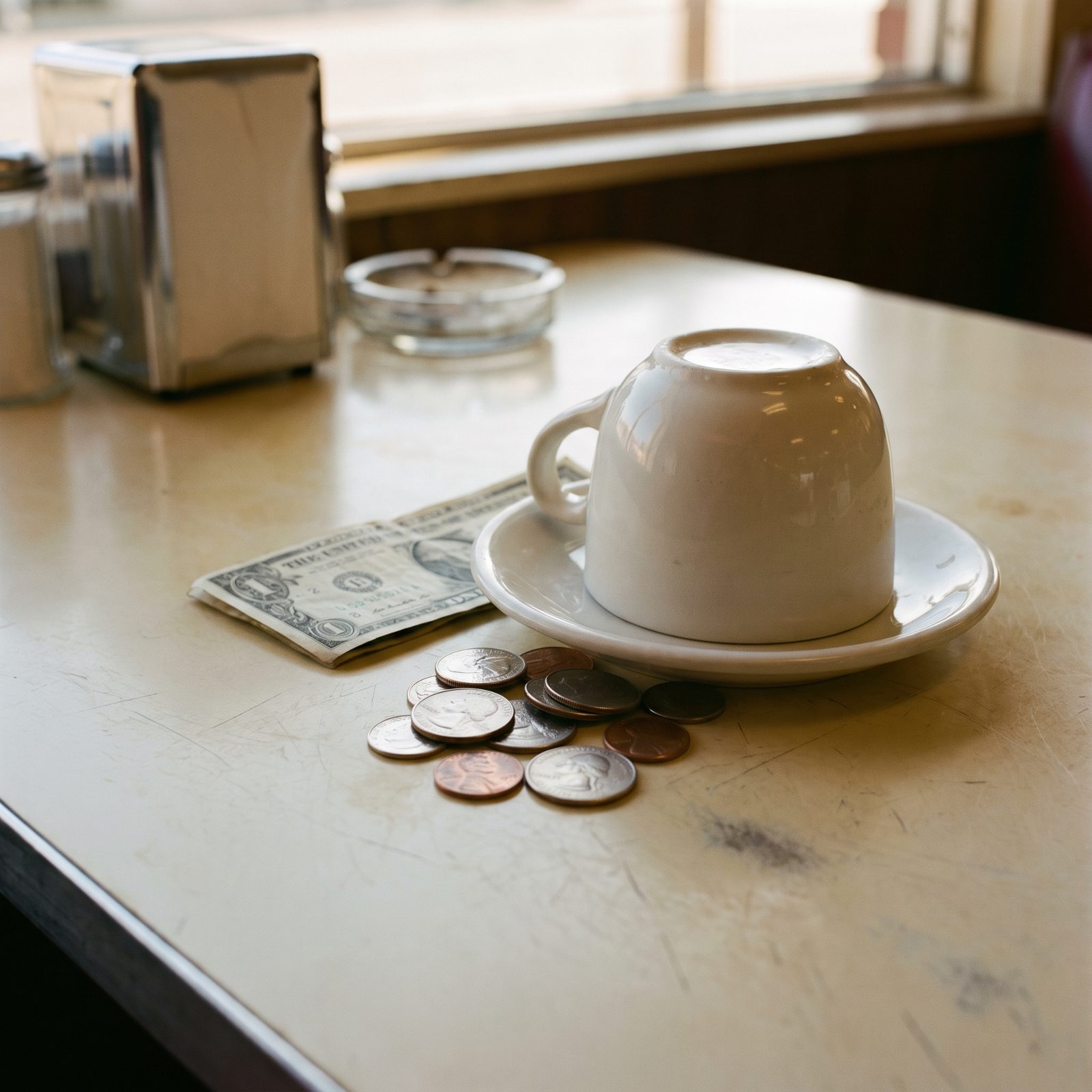
The dollar was for the check. The change was for you, and it landed under the coffee cup so it wouldn’t blow off the table or walk off with the next customer.
You cleared the table and there it was, a little stack of quarters and dimes damp from the saucer. Coins meant a real tip back then, not an afterthought. You scooped them into your apron with the plates in one motion, already reading the next table. A quarter under the cup said thank you plain as anything.
33. Order Tickets Clipped to a Spinning Wheel
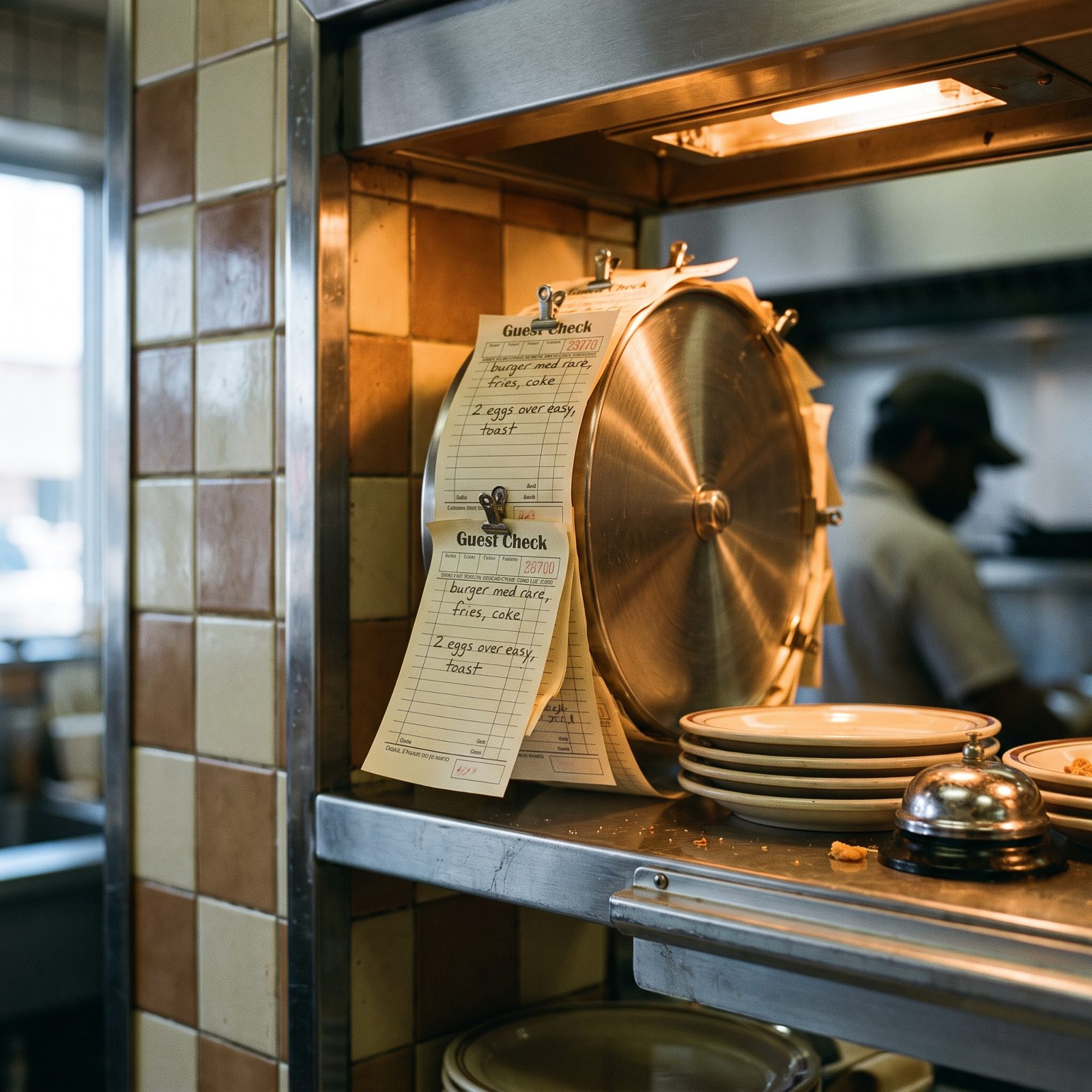
Clip the ticket, give the wheel a spin, call it out. The cook worked it left to right, oldest first, reaching up to snatch a check and slot the plate onto the shelf below.
You could hear a good line in the way that wheel turned. It squeaked. Everybody’s tickets rode it together, so a slow cook or a jammed grill showed up as a fan of paper backing up that nobody could ignore. When it was empty and spinning free, you knew you’d made it through the rush.
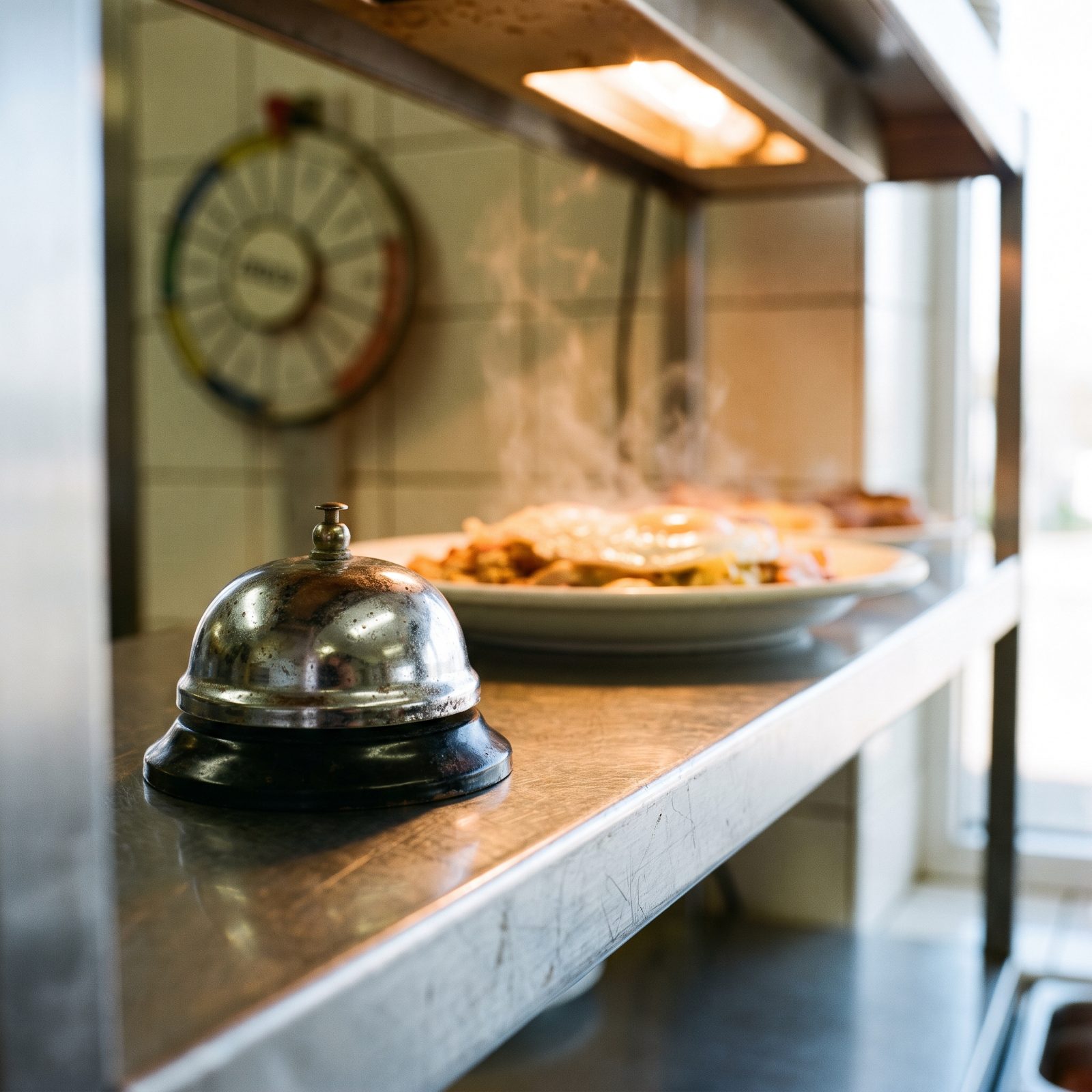
32. A Countertop Bell Calling Waitresses to the Pass
Would you like to save this?
One note, sharp as a slap, and you were already turning. The cook rang it when a plate hit the pass and needed to move before it died under the lamp.
Ding. Order up. You could be pouring coffee three tables away and your feet answered before your brain did. A cook who had to ring twice for the same plate got loud fast, and a hot plate sitting too long meant a cook and a waitress about to have words. That little thing ran the whole floor with a sound no bigger than a thimble.
31. Telephone Orders Pinned to a Corkboard
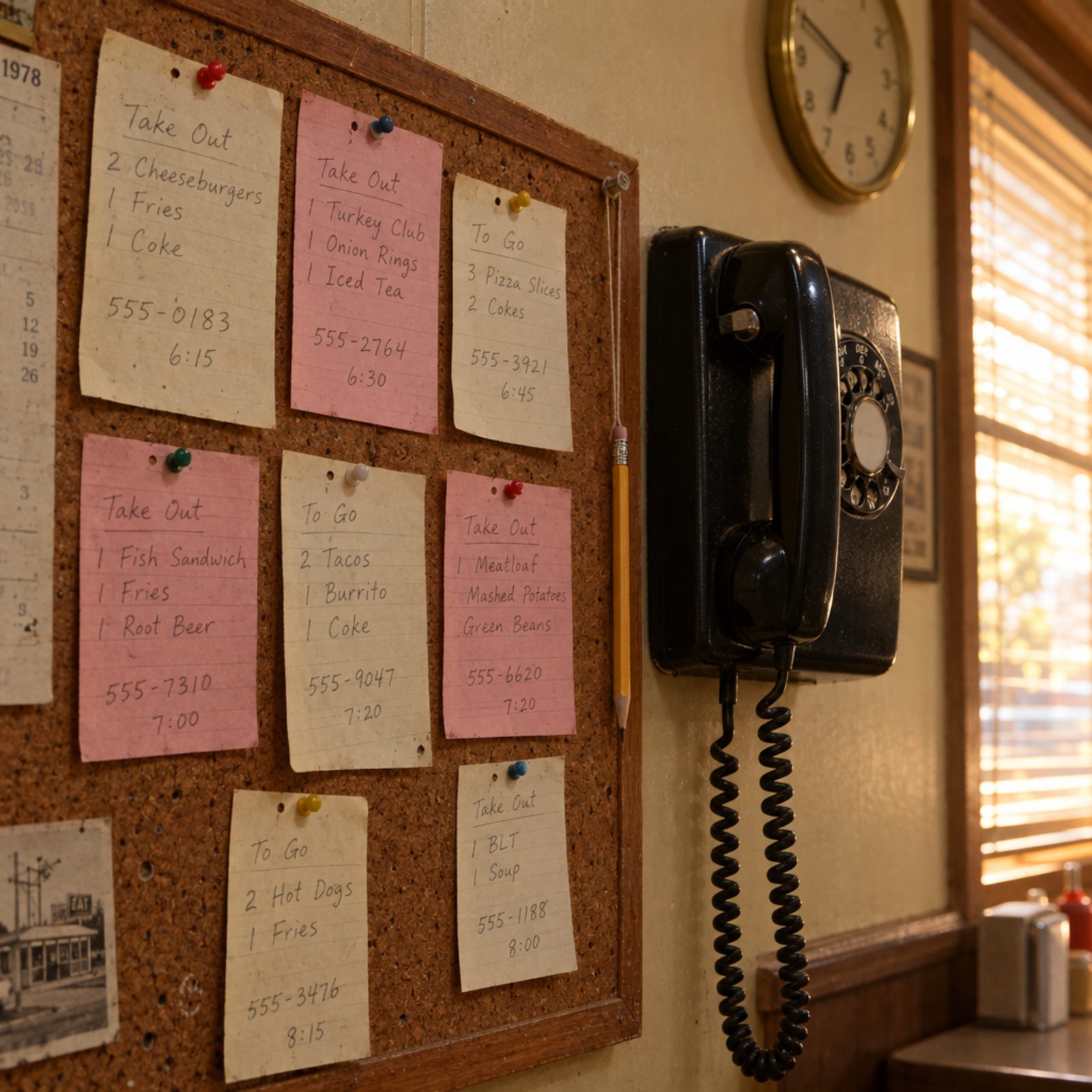
The phone rang, you grabbed the pencil hanging on a string, and you wrote the order on whatever slip was closest. Order, phone number, time it should be ready, then you stabbed it onto the corkboard by the rotary phone.
That board was the whole takeout system. Anybody walking past could read the slips and see what was coming, in what order, for whom. Pins fell out. Slips got buried. A busy Friday turned that cork into a mess of overlapping paper and pushpin holes, and somehow it worked, and somebody eventually pulled the slip when the bag went out the door.
30. The Hostess Ledger Where Every Name Got Written by Hand
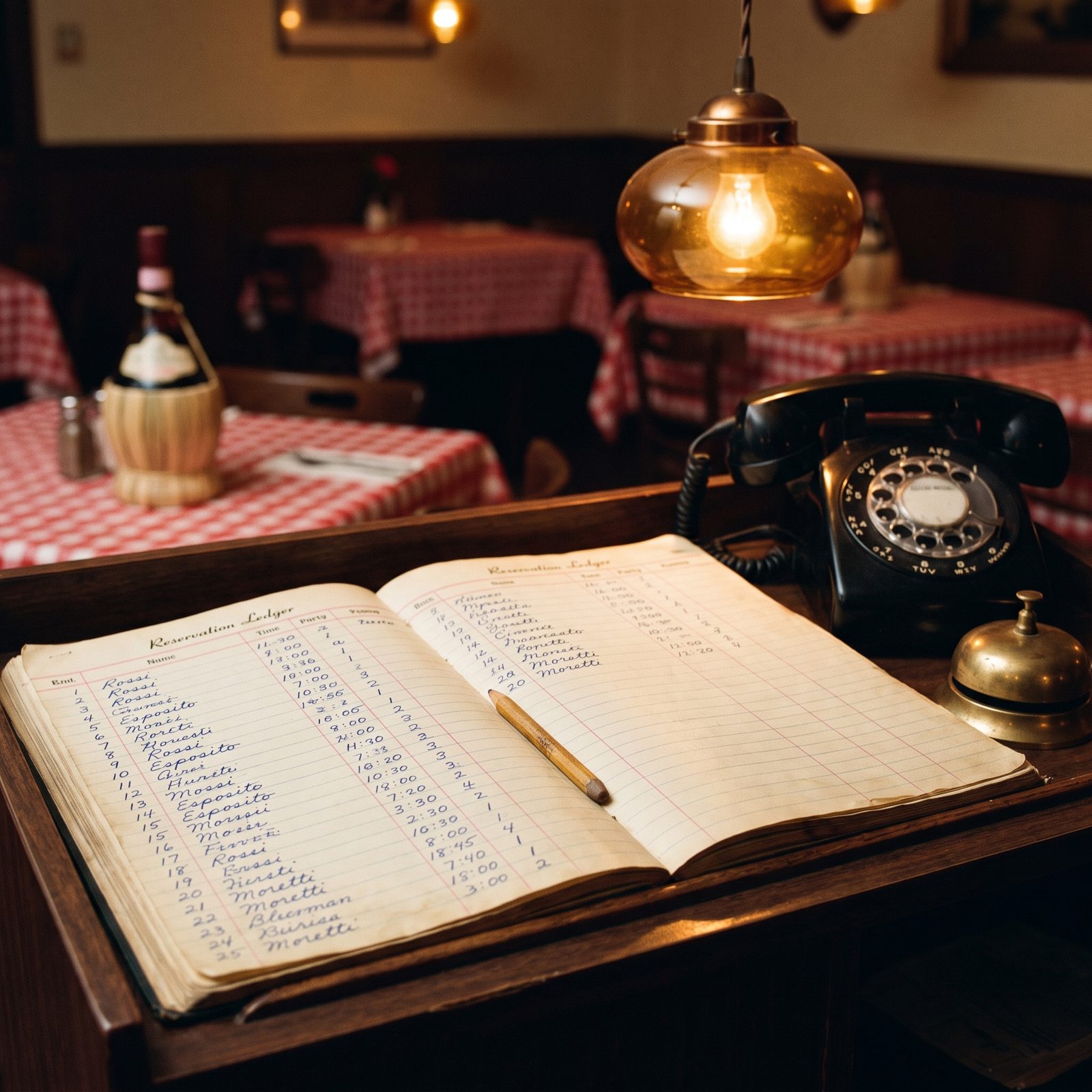
The whole night lived in that book. One column for the time, one for the name, a scribble for how many. Party of six shows up early? The hostess ran a finger down the page and did the math in her head while the phone rang against her shoulder.
There was no backup. Spill coffee on the 7 o’clock page and you were improvising the rest of the evening. The good ones knew half the names by heart anyway, so the book was really just a formality for the strangers.
29. Coffee Pots You Read by the Color of the Handle
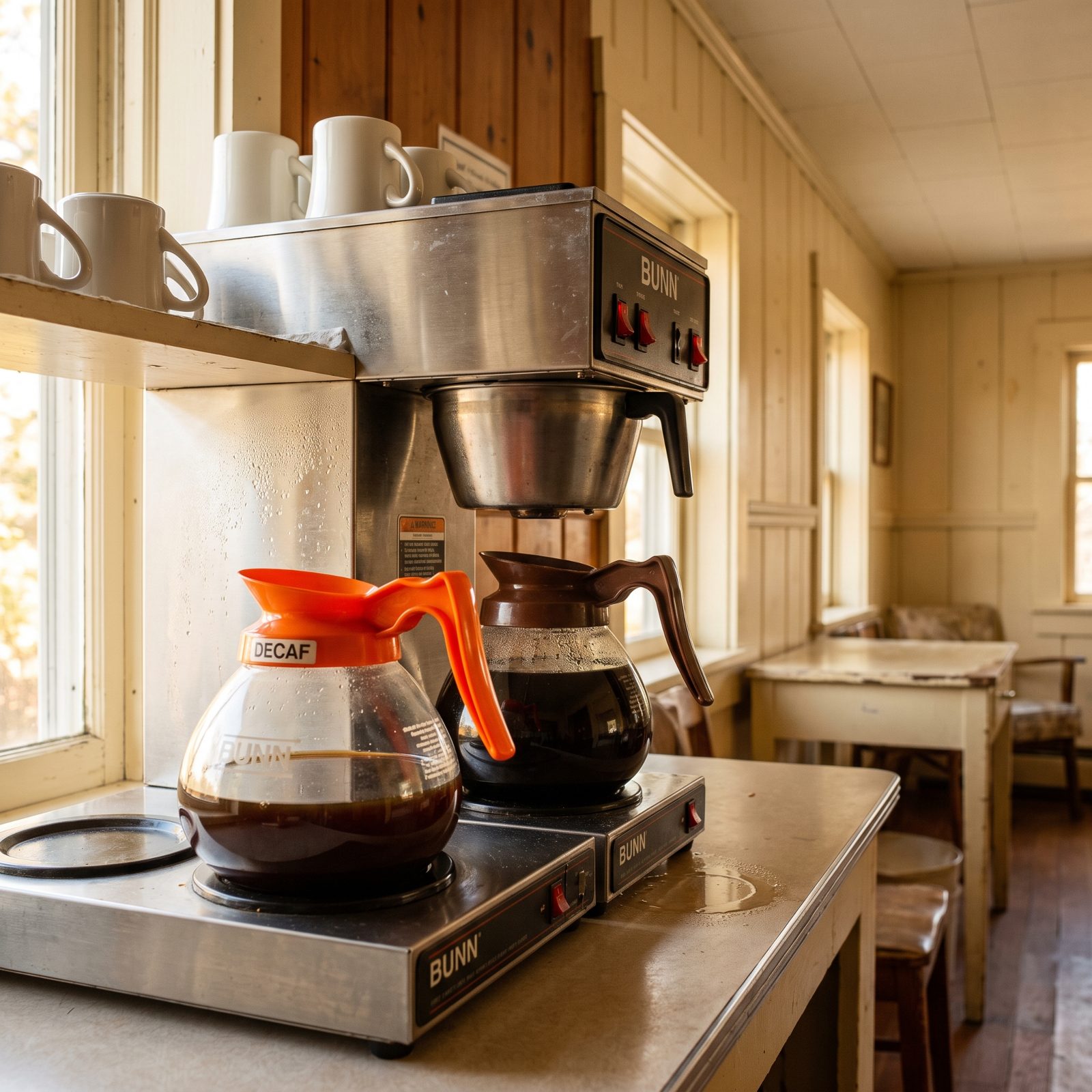
Orange meant decaf. Brown meant the real thing. You never had to ask, and neither did the waitress, because the handle told you everything from across the room.
She poured with both pots at once, one in each hand, working down a row of booths without breaking stride. The refill was automatic and free and nobody thought twice about it. Ask for a warm-up today and you feel like you’re begging a favor. Back then it came whether you wanted it or not.
28. The Chrome Counter Stools Bolted in a Perfect Row
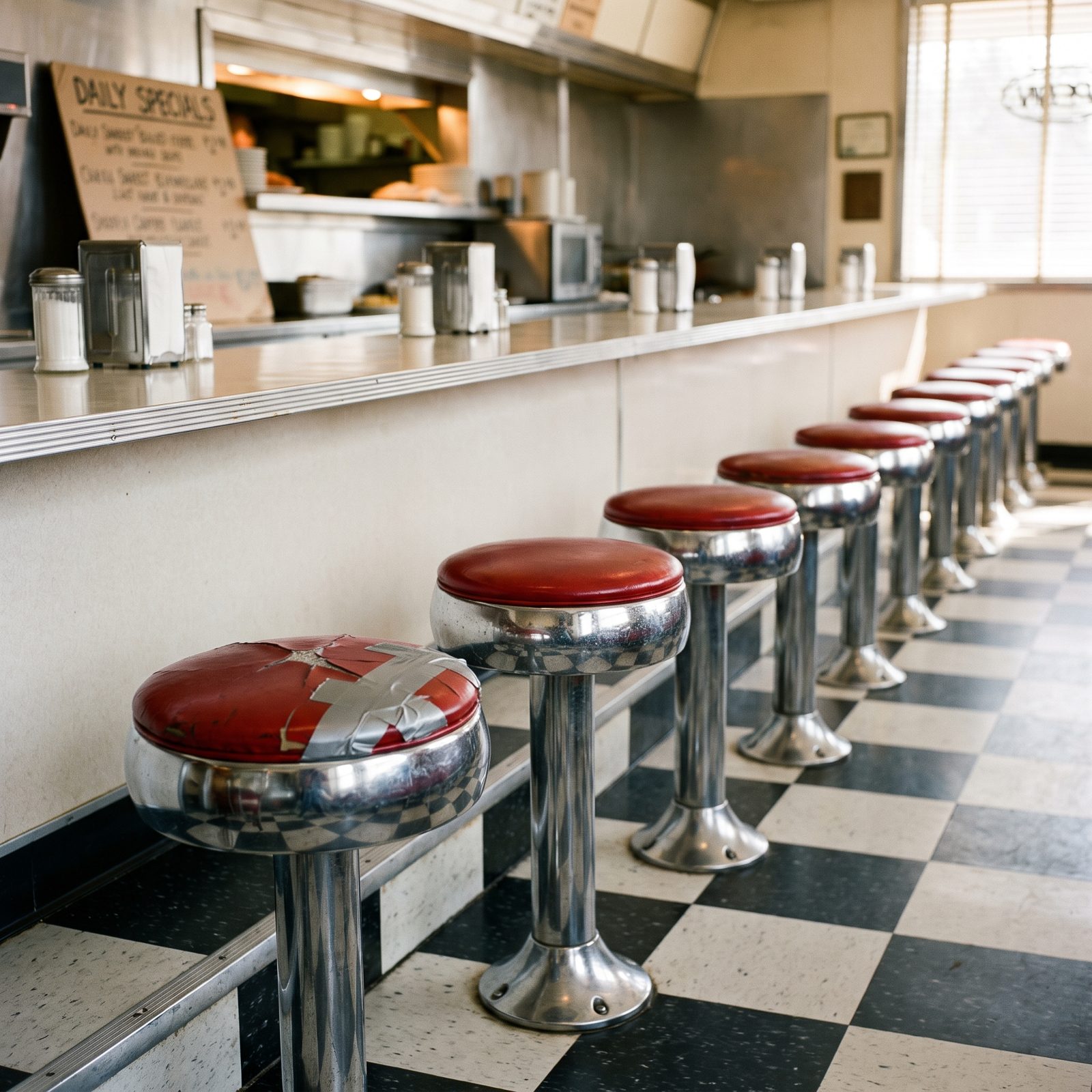
You could spin them. Every kid who ever sat at a lunch counter tested exactly how far before a parent said cut it out. The seats were red vinyl, cracked at the seams by 1978, patched with tape the color of the seat if you were lucky.
This was where the solo eaters went. Cab drivers, cops, the guy on his lunch break who didn’t want a booth to himself. You ate with the cook six feet away and the waitress leaning on the register between rushes. Most sociable seat in the place, and the loneliest, depending on the night.
27. The Little Jukebox Selector Bolted to Your Booth
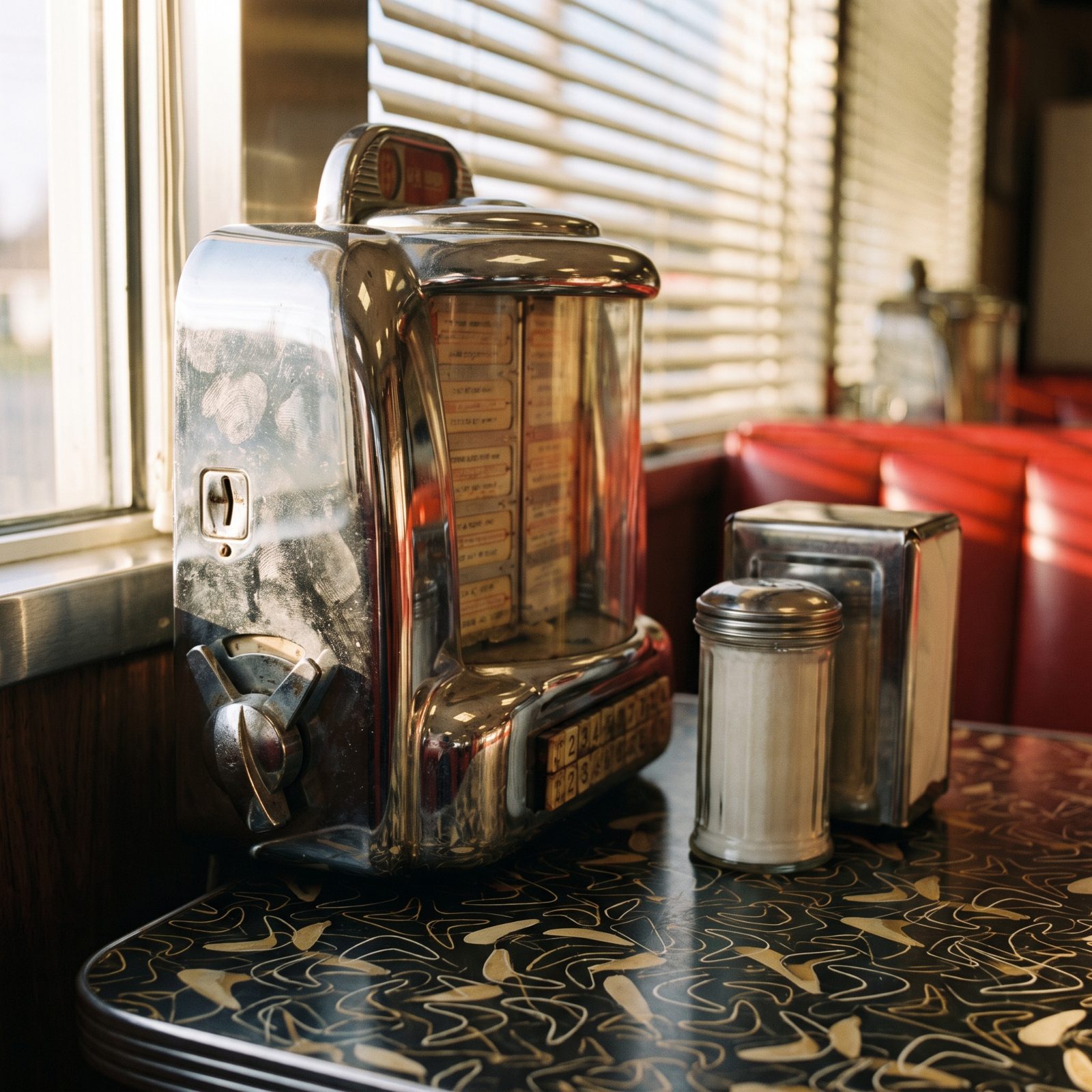
A nickel bought you three minutes of control over the whole room.
The selector sat right at your elbow, chrome and heavy, the song titles on little paper strips you flipped through with a tab. Drop the coin, punch the letter and number, and the machine talked to the big jukebox across the diner. Then you waited to hear your pick come up, hoping the guy two booths over hadn’t stacked six sad ones ahead of it.
26. The Cigarette Machine Humming by the Restrooms
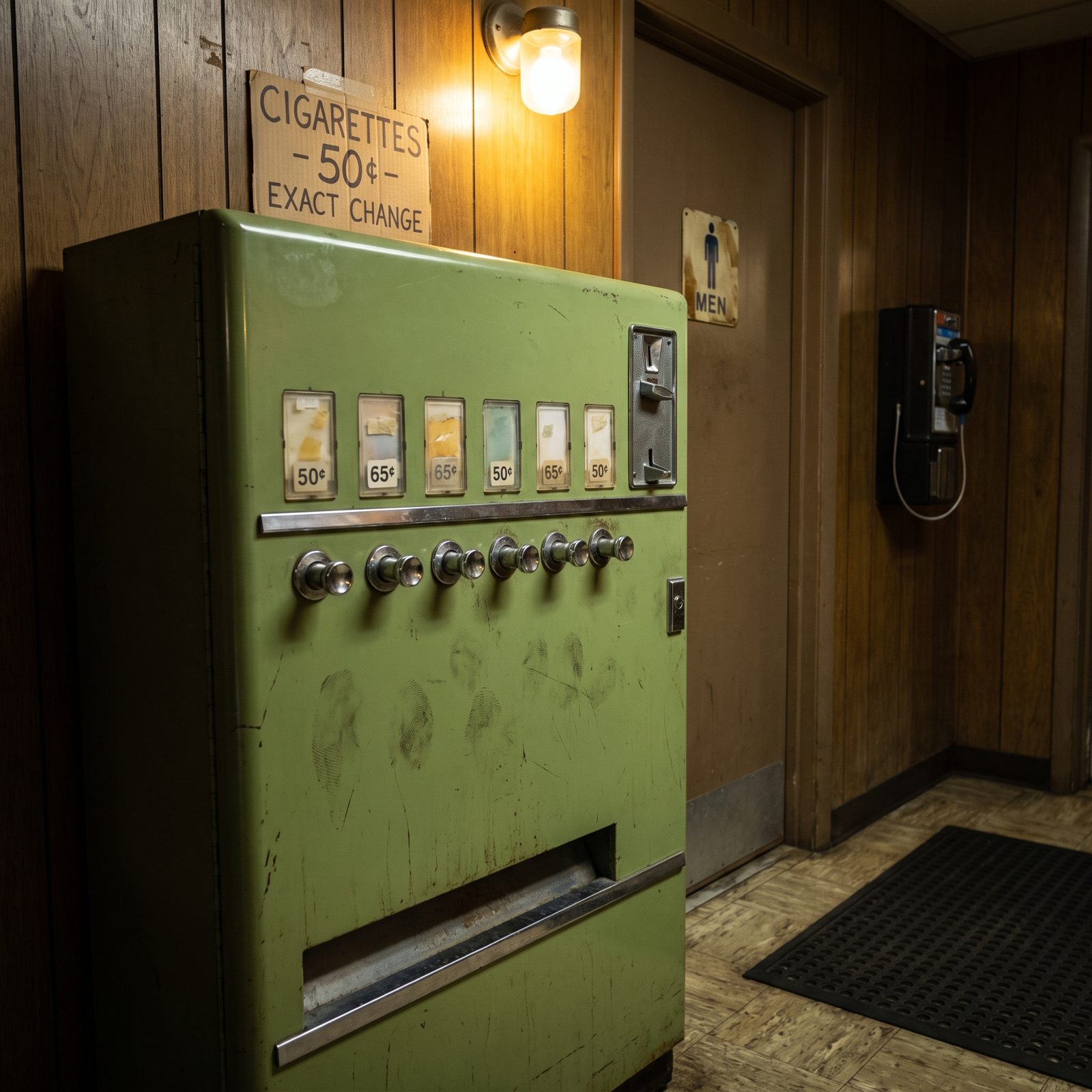
It stood in the dead-end hallway by the men’s room, humming under a single bulb — a wall of pull-knobs with a coin slot up top. You fed it quarters, yanked the knob, and a pack thudded into the tray with a book of matches tucked under the cellophane.
Nobody checked your age. The machine didn’t care. It sat there between the pay phone and the restroom doors like it was furniture, which for that decade it basically was. Pull the knob, hear the drop, light up back at your booth over the last of your coffee.
25. Paper Placemats That Doubled as the Local Yellow Pages
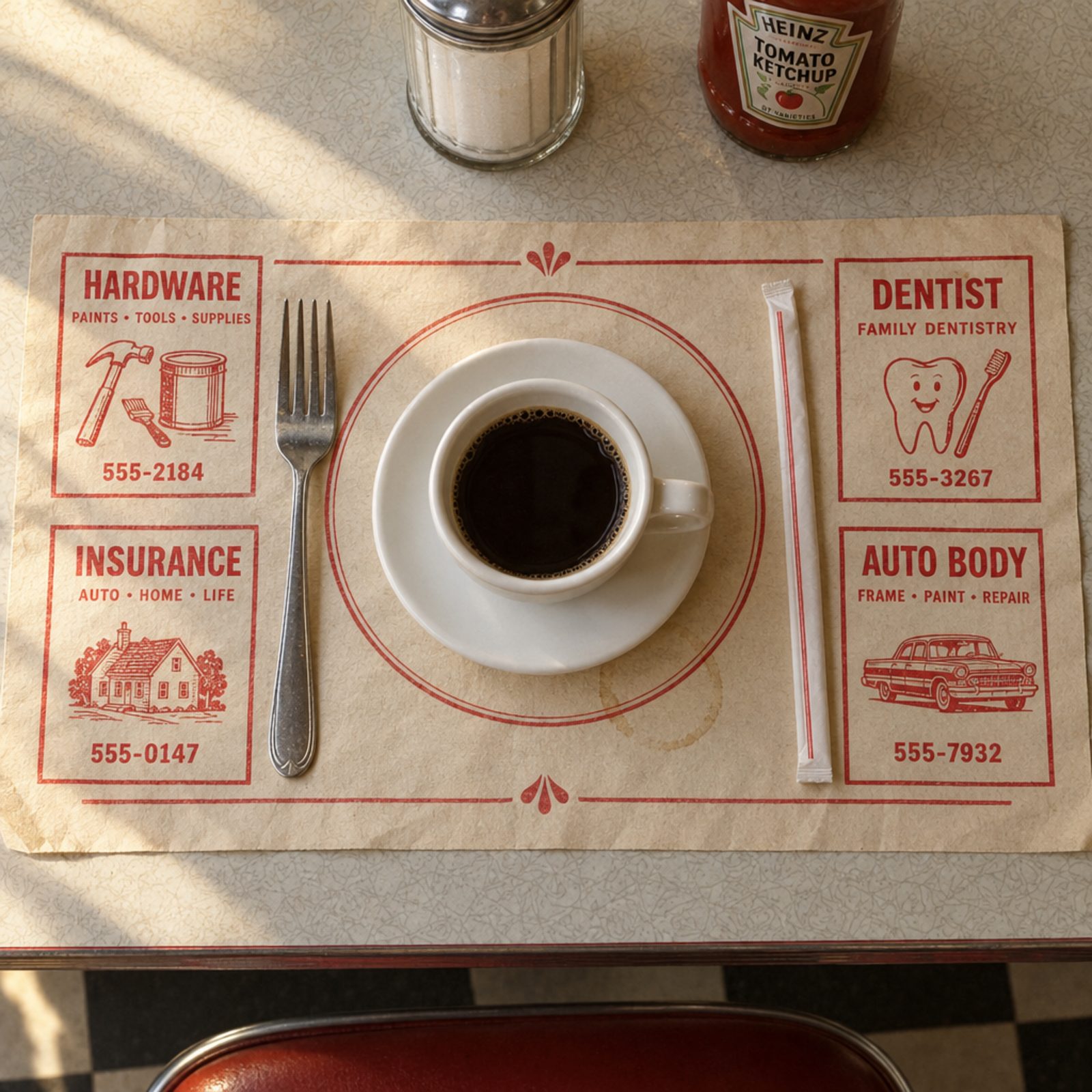
Before you ordered, you read the whole town.
Every business in a three-mile radius bought a little box around the border. The hardware store, the insurance agent, the auto body shop, the family dentist with a cartoon of a smiling tooth. You studied them while you waited for your eggs, and half the phone numbers in your head came from that paper.
Advertising and tablecloth in one. Grease-proof enough to eat on, cheap enough to throw away, and by the end of the meal your kid had drawn a mustache on the smiling tooth.
24. Menus Sealed Inside Heavy Brown Vinyl Covers
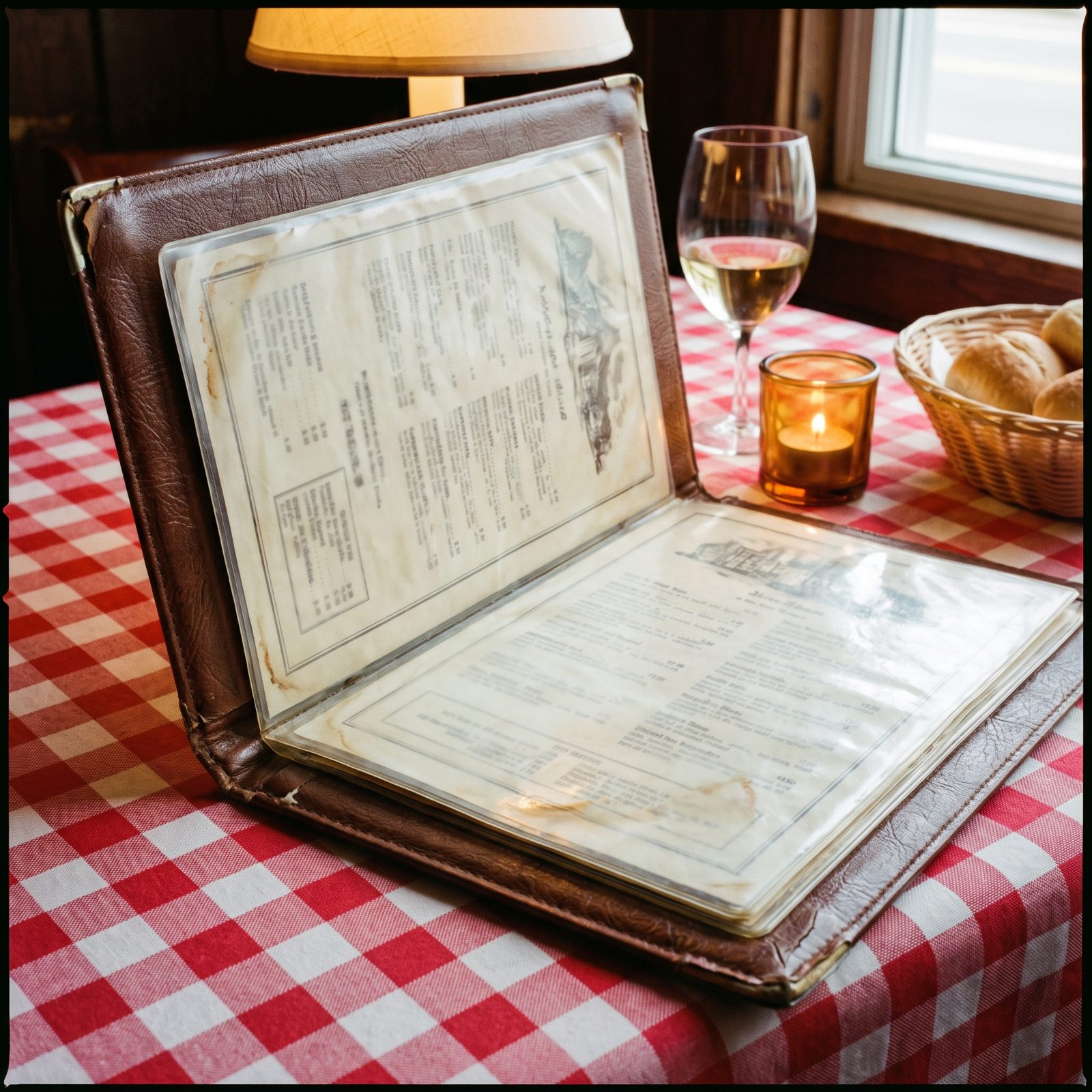
The menu weighed something. Slide it out of the rack and you felt the heft of the brown vinyl cover, padded like a book from a set nobody read, the corners gone soft and cracked from a thousand hands.
The pages lived behind a plastic sleeve clouded over from years of thumbs and steam, and you could wipe a spilled drink right off it. Those covers survived spaghetti sauce, birthday cake, and toddlers. Half of them are probably still in a booth somewhere holding a laminated page from 1978.
23. The Chalkboard Where the Blue-Plate Special Lived
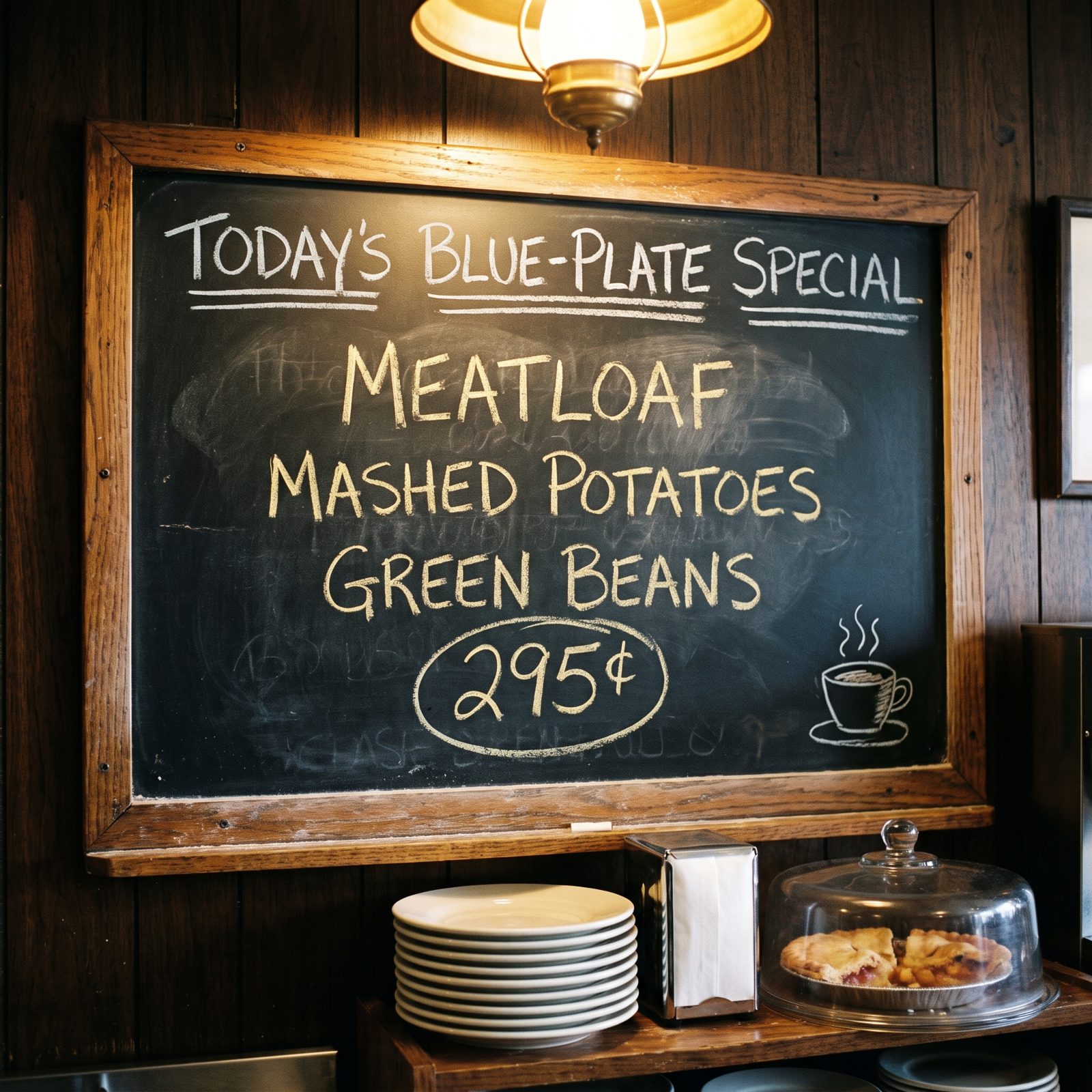
Somebody rewrote it every morning in chalk, usually the cook, usually before six. Meatloaf, mashed, green beans, roll. A price that ended in a nickel. The letters slanted a little because the hand that wrote them had bigger jobs waiting.
The blue-plate took its name from the compartmented plates it once came on, and by 1978 the plate was long gone but the name stuck around. You ordered it because it was cheap, fast, and already decided for you. Some days that’s exactly what you wanted from a menu.
22. The Relish Tray That Showed Up Before You Ordered
Would you like to save this?
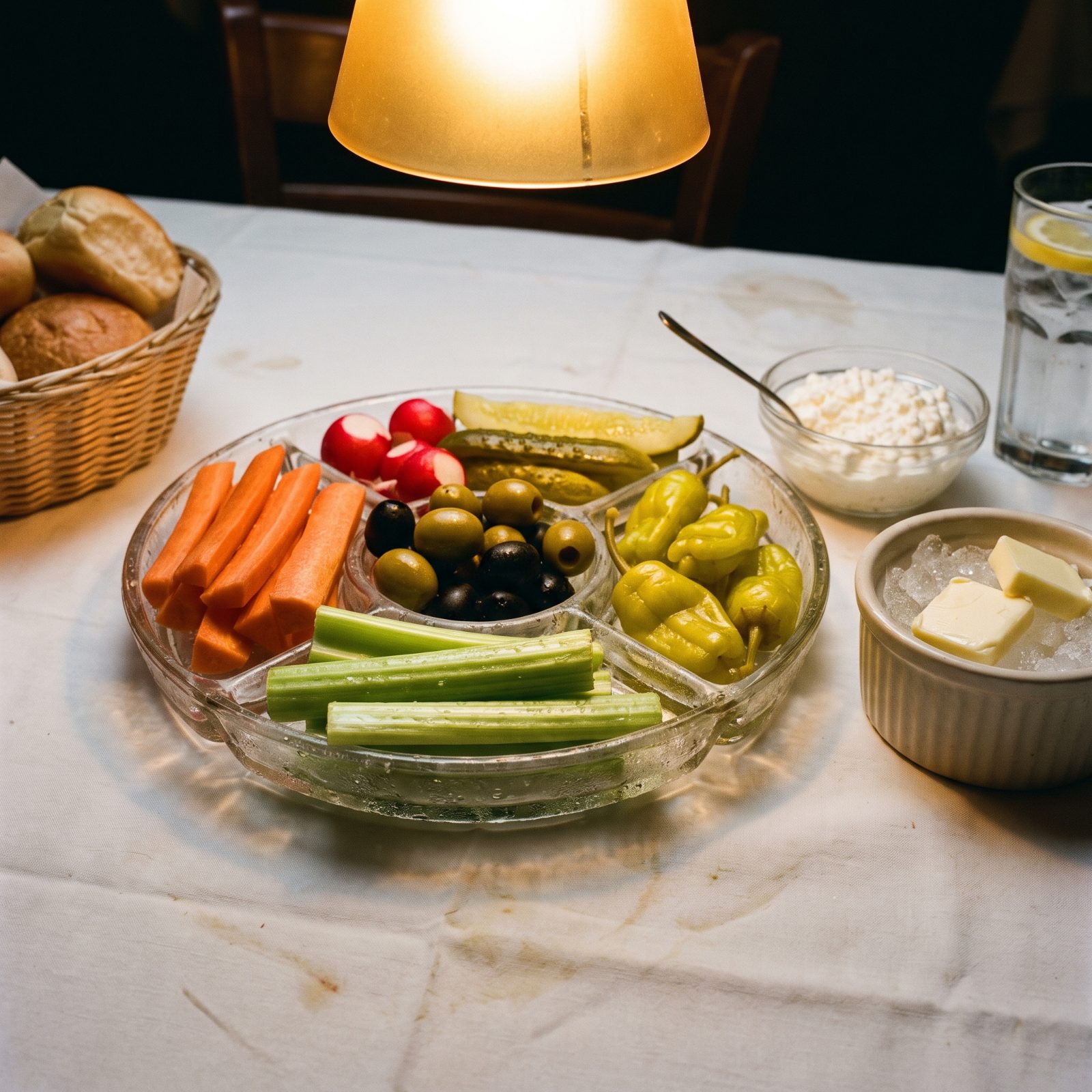
You didn’t ask for it. It just arrived.
Cold celery, carrot sticks, olives, radishes cut into little roses if the kitchen was showing off, a pickle spear or two. It hit the table with the bread while you were still deciding, and it kept the kids quiet and the grownups nibbling until the real food came.
Nobody itemized it on the check. It was hospitality, plain and cold and crunchy, the house saying we’re glad you came before you’d spent a dime. That gesture is nearly gone now, and the meal starts colder for it.
21. The Wire Caddy Full of Crackers on Every Table
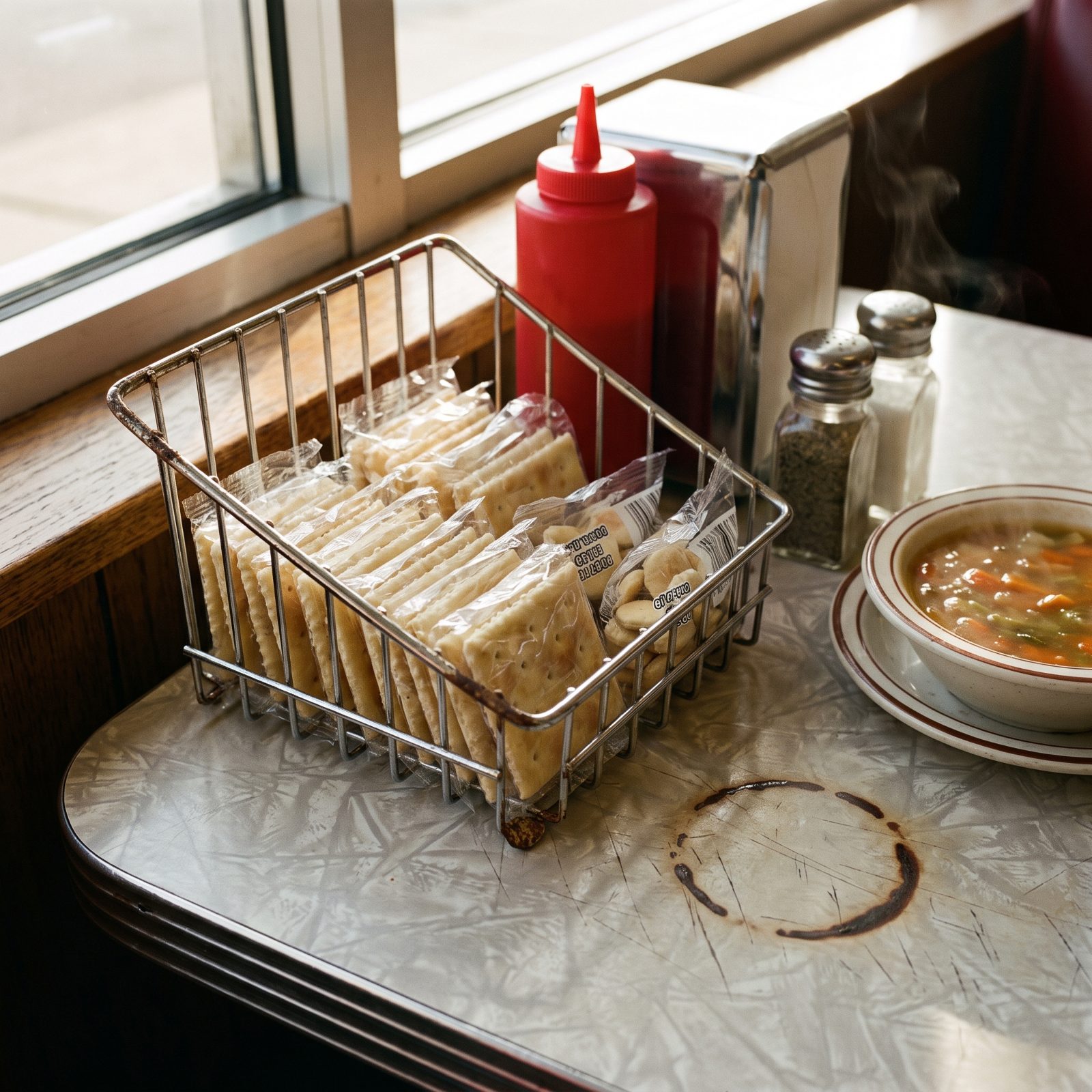
It sat in the middle of the table between the ketchup and the napkins, a little chrome basket of saltines in cellophane two-packs, always slightly bent, one corner going rusty.
Soup came, crackers went in. You crushed the pack in your fist first, tore the corner, dumped the crumbs across the top. Waiting on your order, you’d eat a pack dry just to have something to do with your hands. And there was always one kid stuffing extras in a coat pocket for later. The caddy never emptied — somebody refilled it the same way somebody rewrote the chalkboard, quietly, before the doors opened.
20. Sugar Poured From Heavy Glass Dispensers
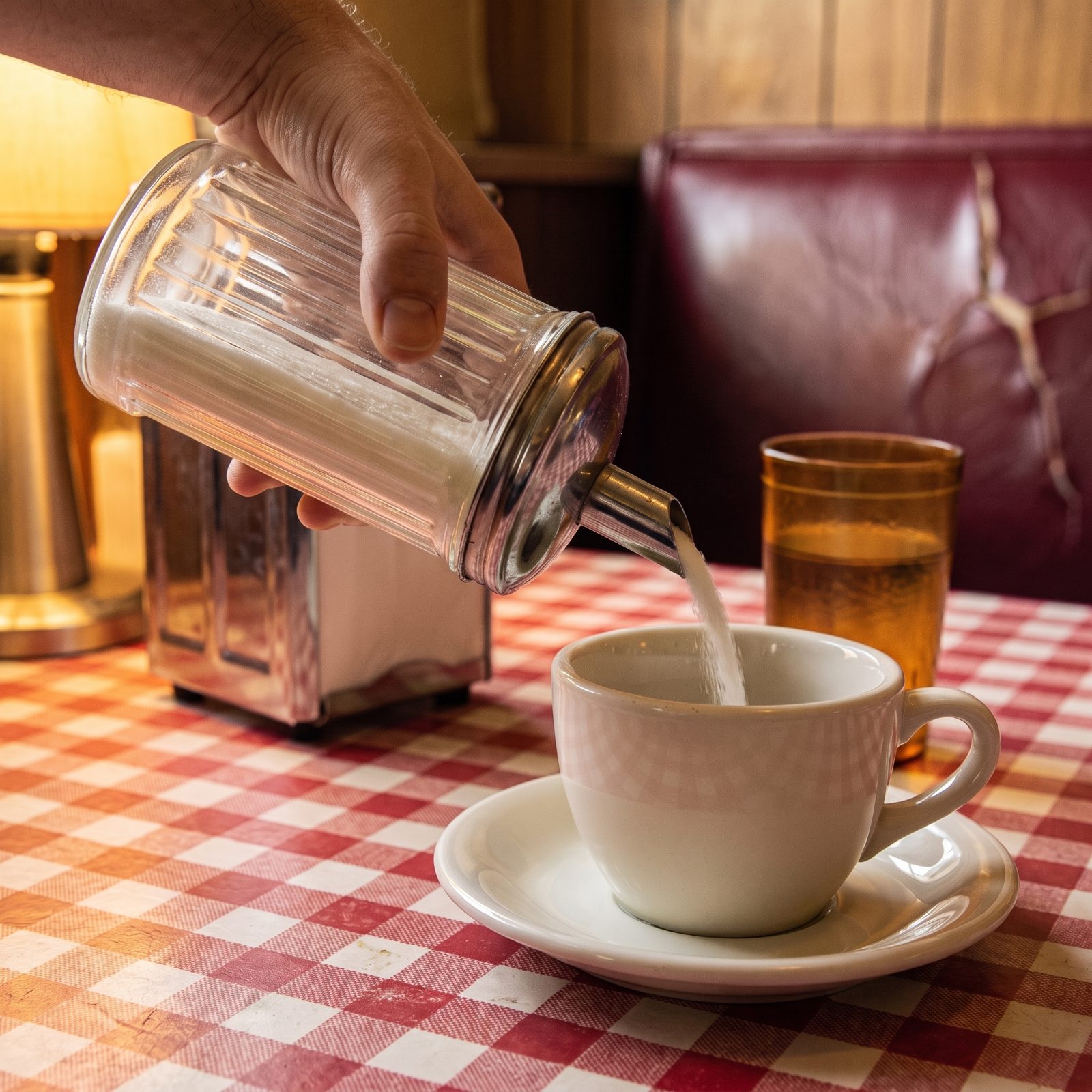
You gave it a shake first. Everybody did. The little jam in the spout, then that satisfying rush into the cup, and you always poured about twice what you needed.
The glass was heavy on purpose so it survived getting knocked over, wiped down, and refilled by a busser at close. No paper packets to tear, no pile of torn corners on the saucer — just a communal jar of sweetness passed booth to booth, sticky at the base, and nobody ever thought about the thousand strangers who’d touched it too.
19. The Rotating Glass Dessert Case That Hypnotized You
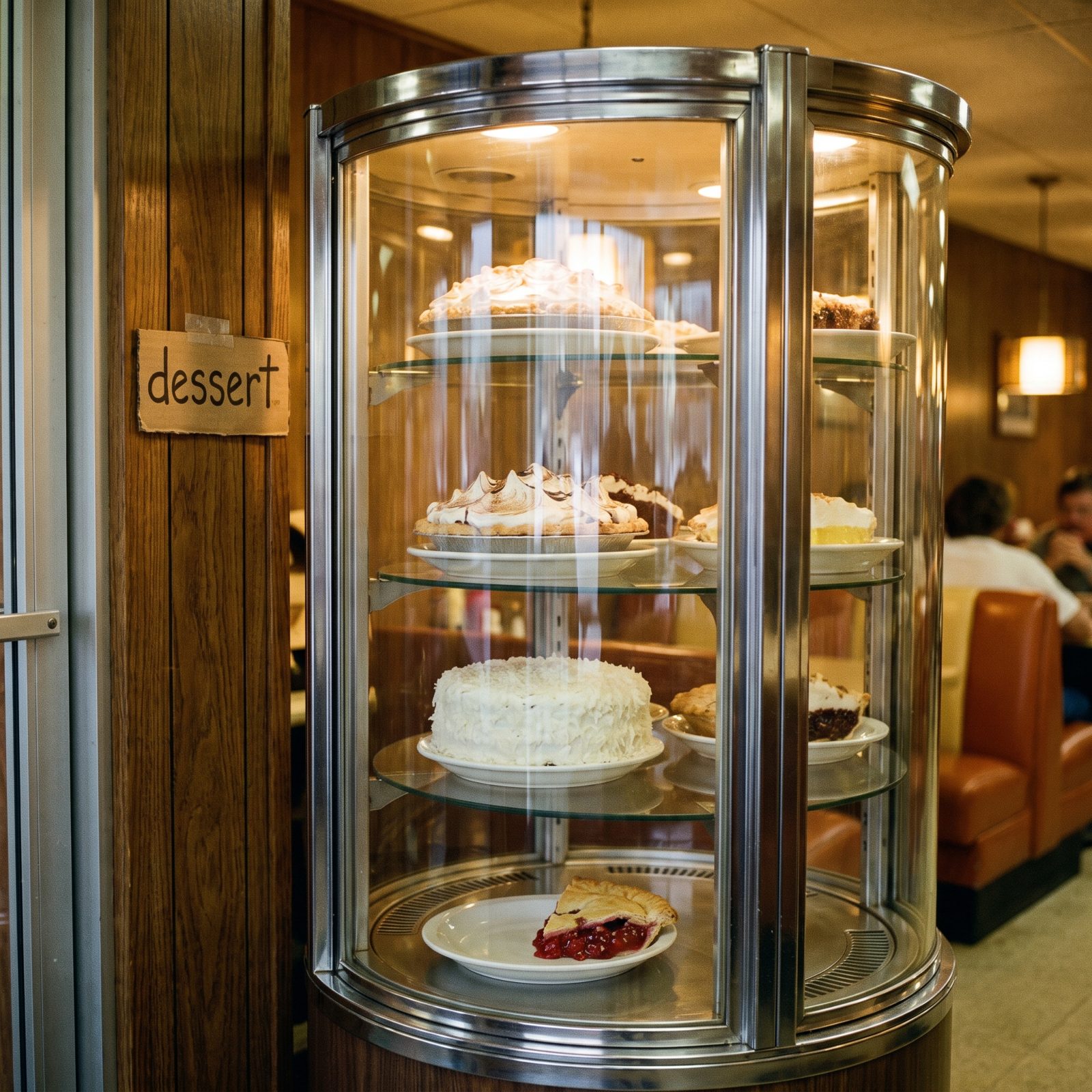
It sat by the register turning slow, and you watched it while you waited to pay. Lemon meringue three inches tall. A chocolate cream with peaks that looked painted on, the whole thing lit from inside like a jewelry case for pie.
Kids pressed their noses to the glass while the adults told themselves they were too full, then ordered a slice anyway. That case sold more dessert than any waiter could, just by rotating.
18. The Caesar Salad Built Right At Your Table
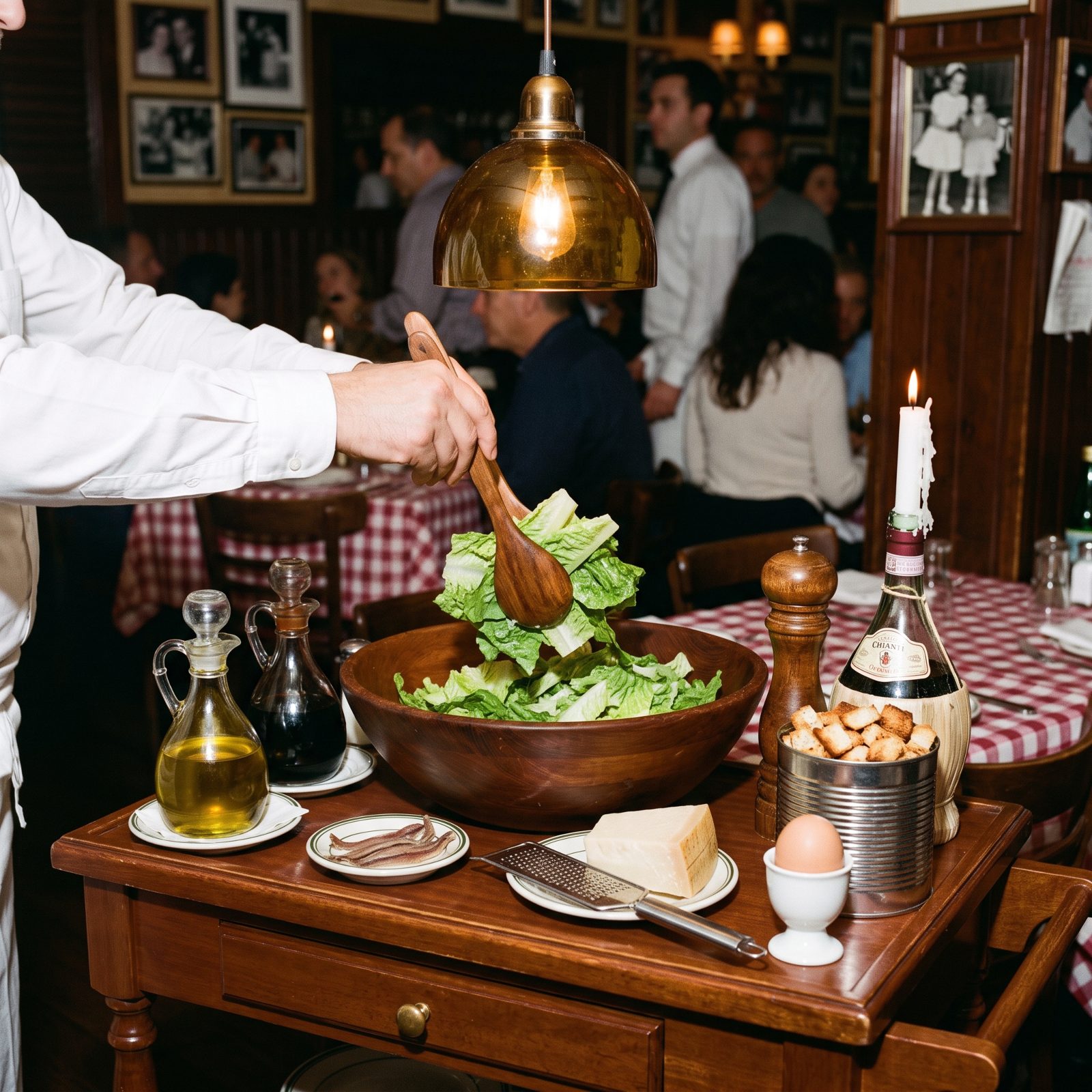
The cart rolled up and the show began. Anchovies mashed into the bowl, a raw egg cracked in, olive oil, lemon, a fistful of parmesan grated right in front of you and tossed with two big wooden spoons while you tried not to stare.
It felt like theater, and half the time it was. But the salad came out better for it — cold, sharp, made for your table alone.
17. The Wall Pay Phone By the Coat Rack
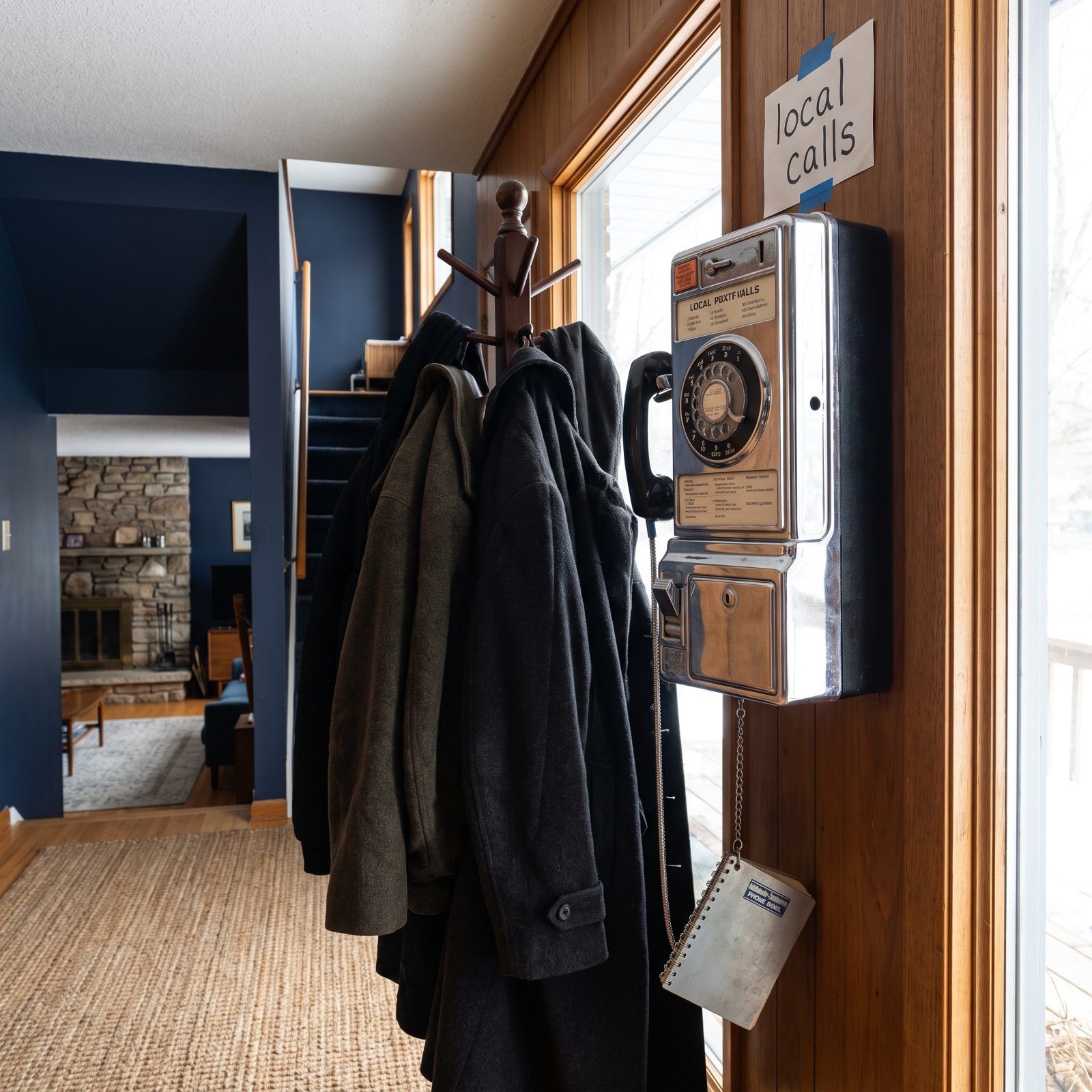
It hung by the door where the cold air came in — black receiver, chrome coin slots, a fat phone book on a chain that everybody had scribbled in. You’d feed it a dime and cover your other ear against the clatter of the dining room.
Teenagers called for rides. Businessmen checked in with the office. And every parent knew the drill: you gave the kid a quarter and told them to call the second the movie let out.
16. Matchbooks Stamped With the Restaurant’s Own Name
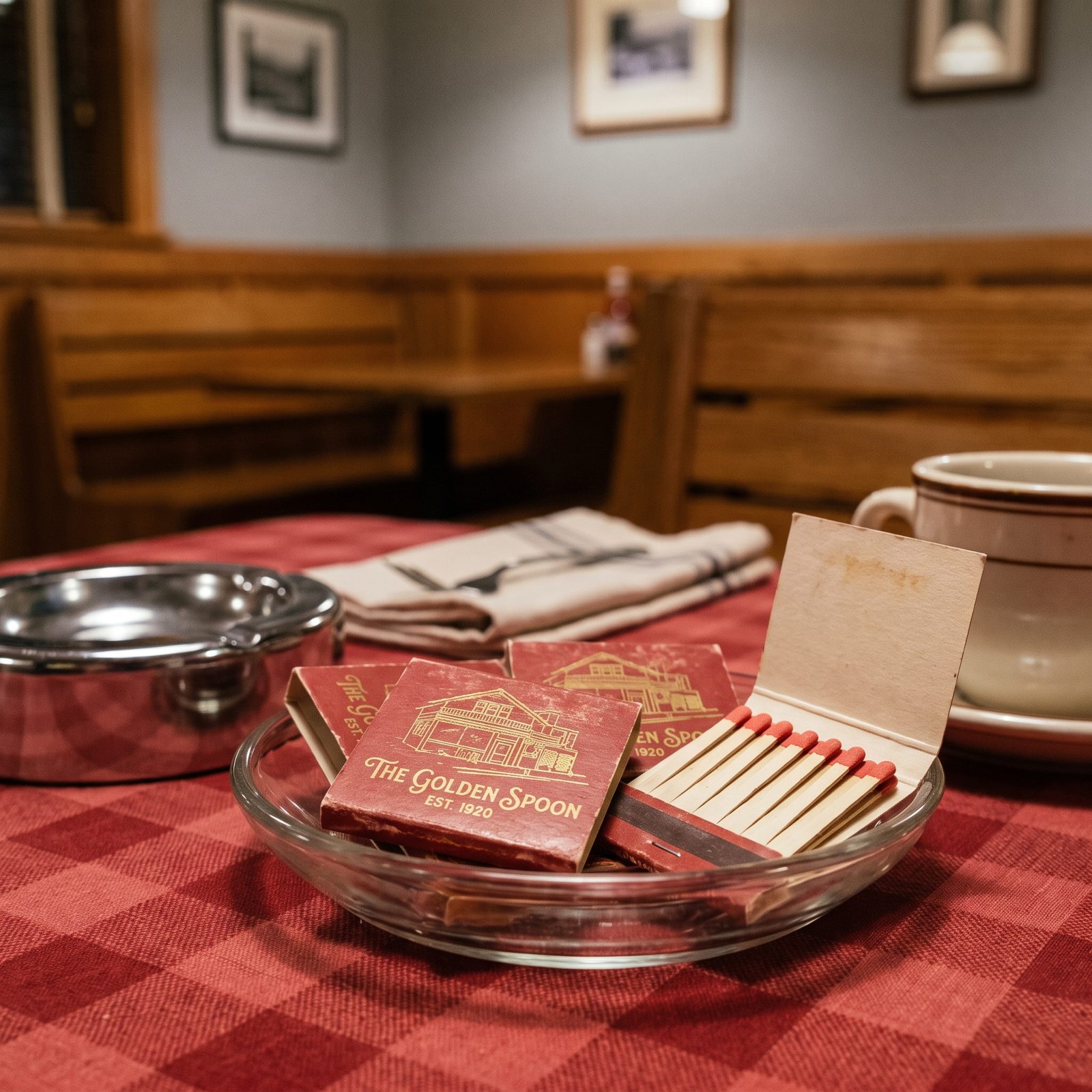
Free, and you took a handful. The name in gold script, maybe a little drawing of the building, the phone number with an old two-letter exchange. They lived in kitchen drawers and glove boxes for years after.
People lit cigarettes with them, sure. But mostly they were tiny billboards, and half the country carried around advertising for restaurants they’d only visited once.
15. Cloth Napkins Standing Up in the Water Goblets
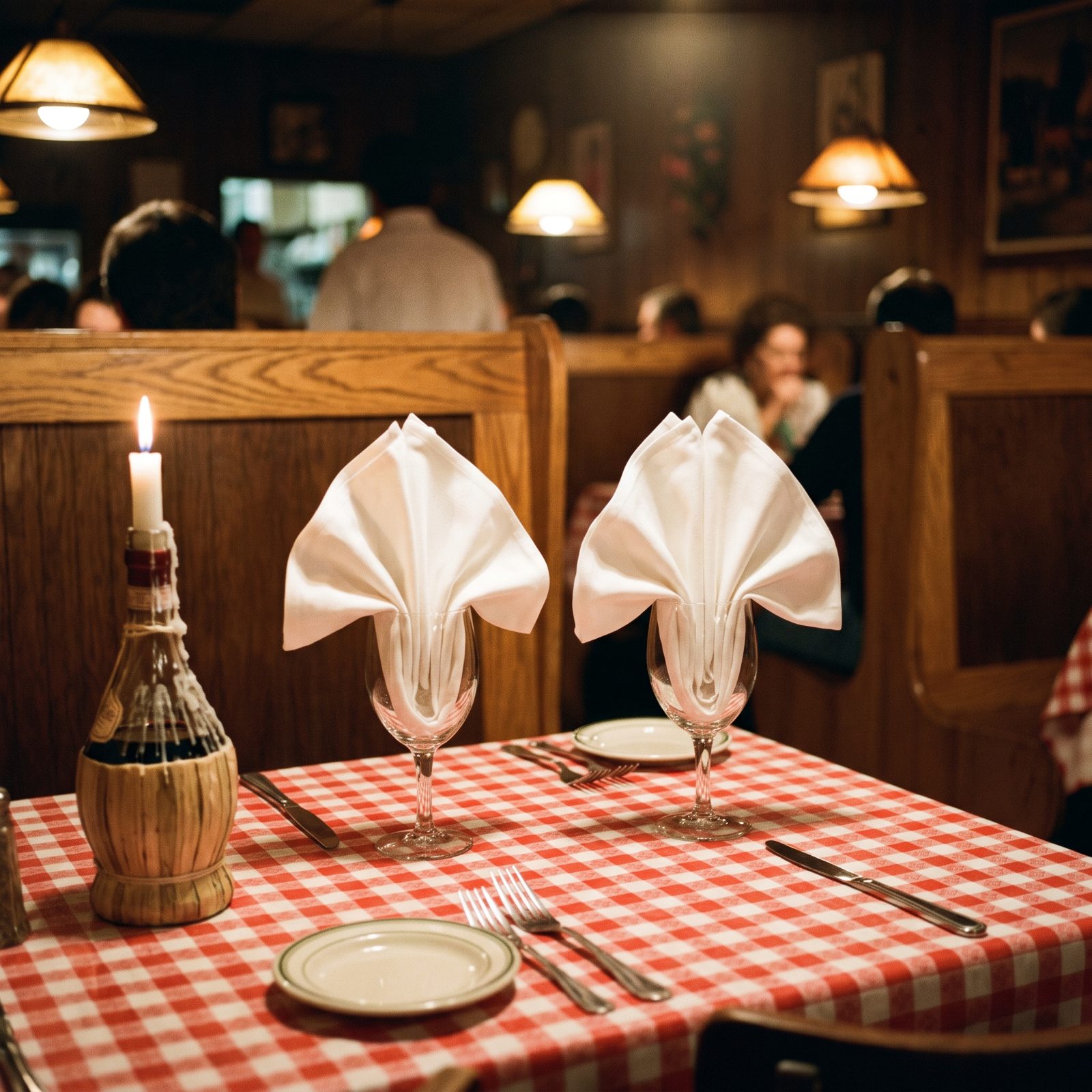
You didn’t touch that fan of white cloth right away. It stood tall in the water goblet like a little tent, folded by somebody in the back before the doors opened, and pulling it out felt almost rude.
Then you snapped it open and laid it across your lap. That was the signal — a sit-down place, cloth not paper, a meal that expected you to stay a while.
14. Steak Knives Arriving in Their Own Wooden Caddy
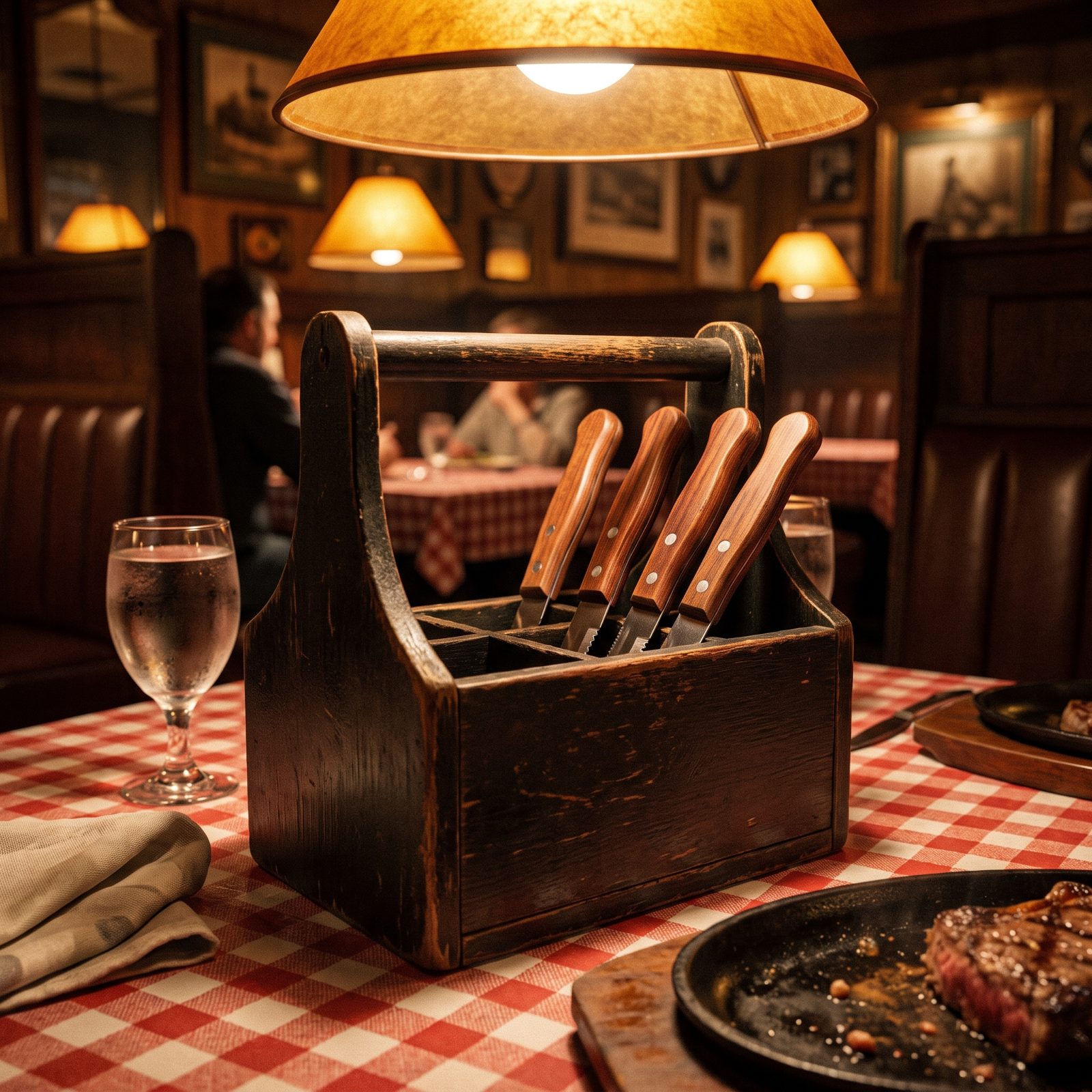
The waiter set it down like it mattered — a little wooden holder with the steak knives slotted upright, handles worn, blades serious. You picked one out yourself.
It told you what kind of night this was before the food even arrived. Nobody hauls out a wooden knife caddy for a tuna melt. That caddy meant somebody in the back was going to sear you a good piece of meat, and you’d better bring an appetite.
13. Cream Poured From the Little Glass Pitcher
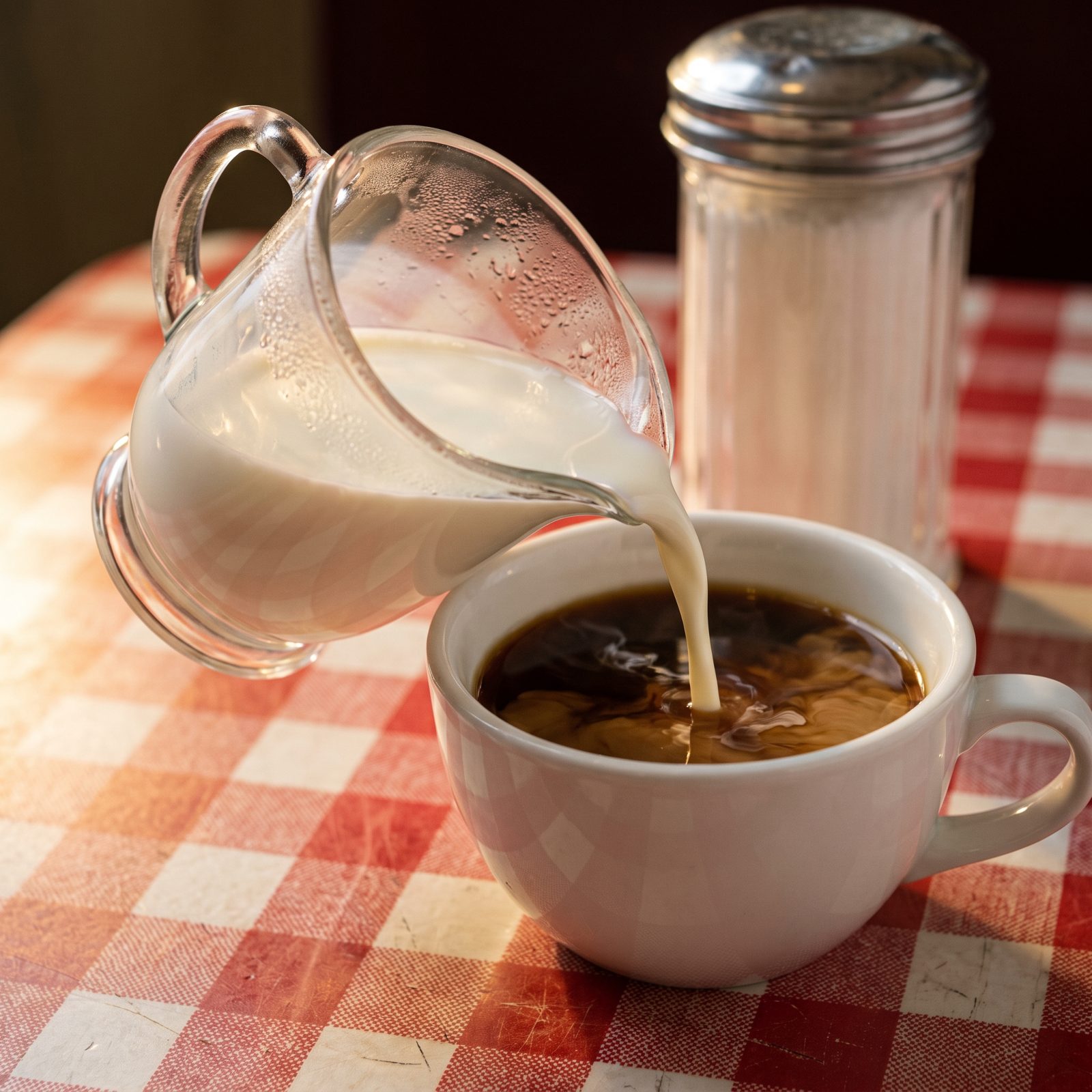
Cold, sweating, no bigger than a shot glass. You poured, and the cream bloomed up through the black coffee like smoke.
None of those plastic thimbles with the foil lid that always split wrong and squirted your shirt — just real cream in a real glass pitcher the busser topped off from his own. Small thing. But it’s one of those details you didn’t know you’d miss until it was gone.
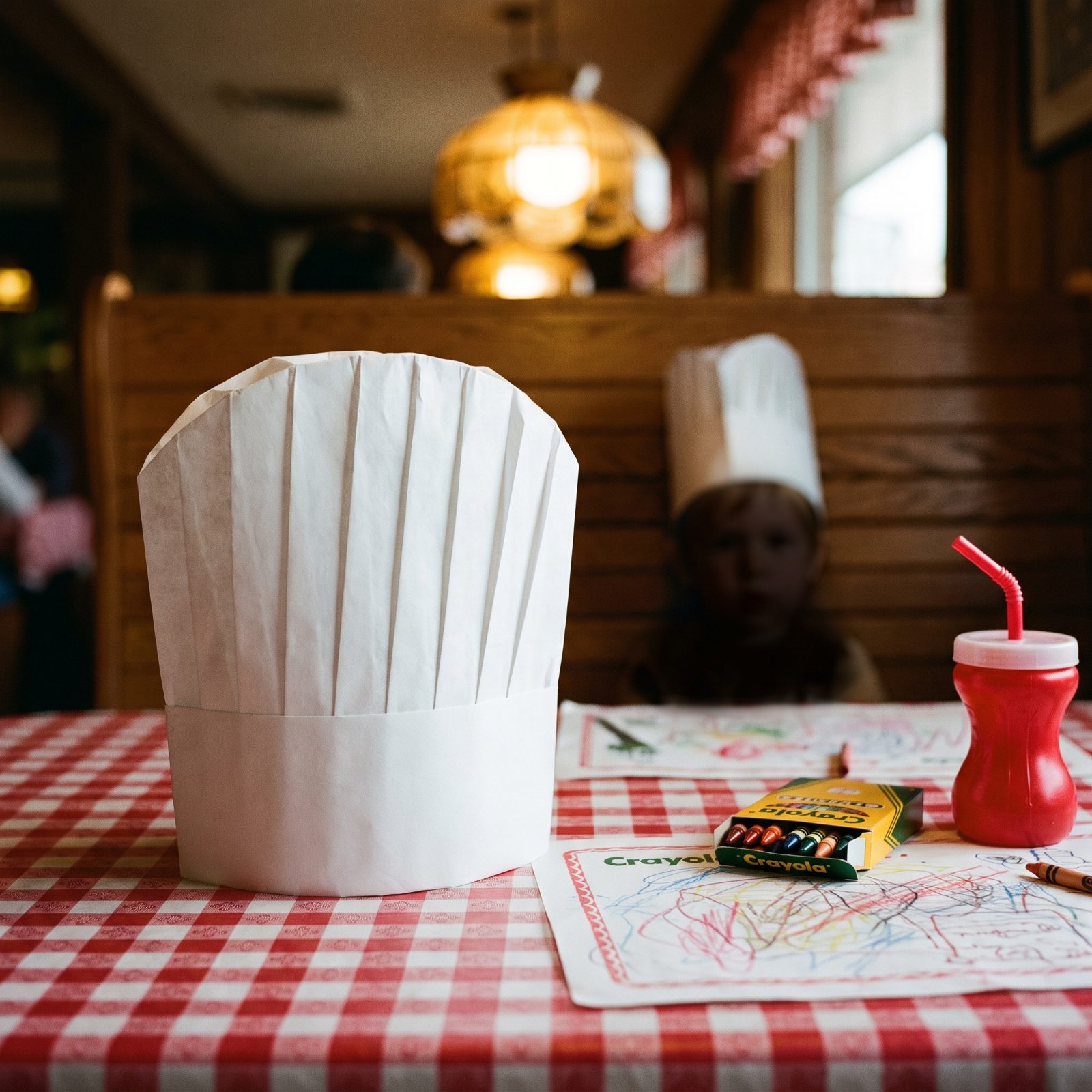
12. Kids Sent Home in Paper Chef Hats
Would you like to save this?
The waitress dropped a folded paper chef hat on the table and every kid under ten put it on immediately. Tall, pleated, a little too big, sliding down over the eyebrows.
You wore it the whole meal. You wore it to the car. And it usually made it home crushed at the bottom of a bag, which was fine, because you’d be back next Friday for a fresh one.
11. The Birthday Cake Carried Out Trailing Sparklers
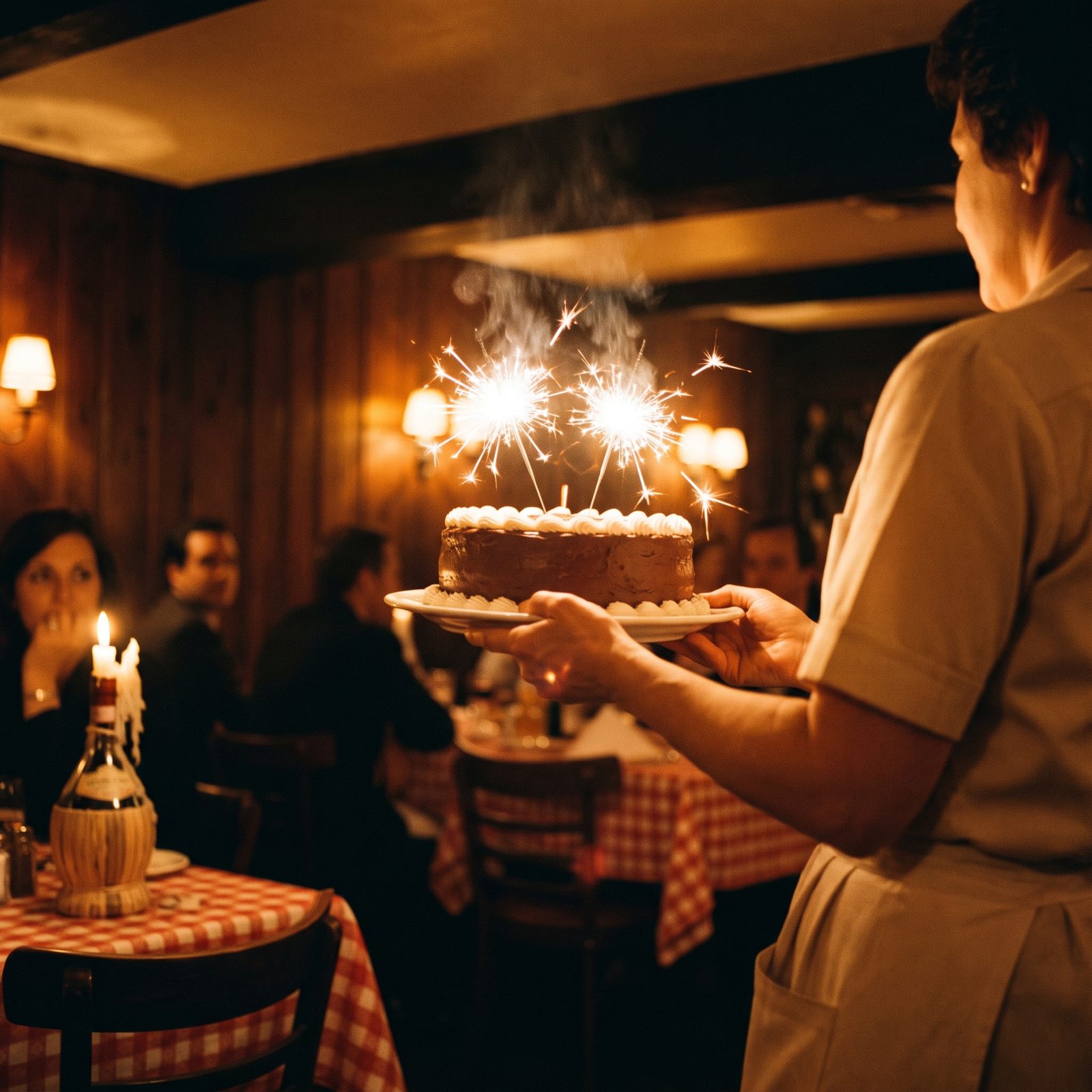
The lights dimmed a notch and you heard it before you saw it. The staff clapping their way across the room, and then the cake, sparklers spitting white fire over the frosting, held high above the waitress’s head.
Every table turned. The birthday kid tried to look embarrassed and failed. Somebody’s grandmother started singing off-key and the whole room caught it. Two sparklers, a scoop of ice cream, and the entire restaurant briefly on your side. There are worse ways to turn eight.
10. The Piano Player Taking Requests in the Lounge
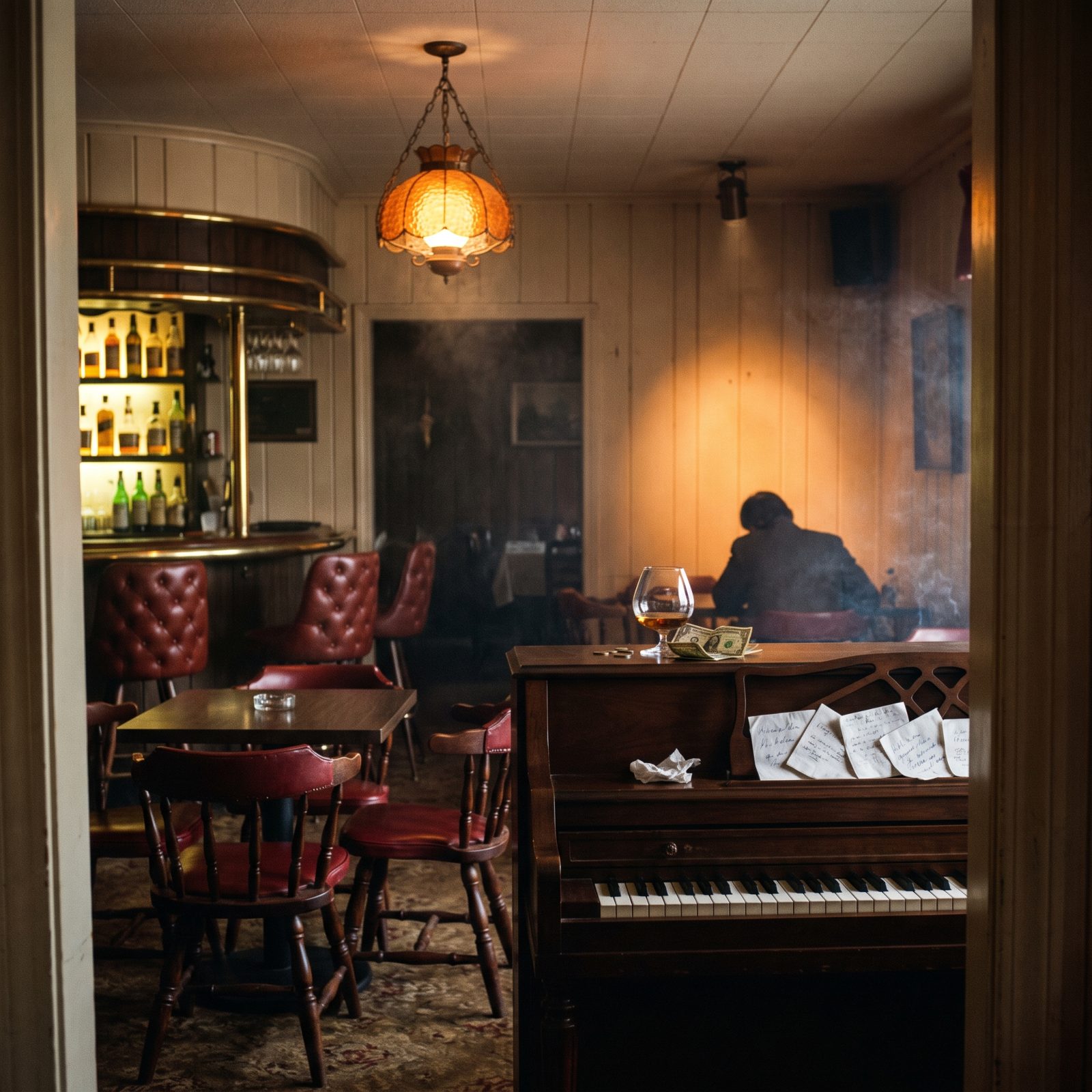
You’d carry a drink order across the room and hear someone at the bar call out a title, and by the time you set the glass down the melody had already started. The piano player worked the lounge the way you worked the floor. On tips, on charm, on knowing the room.
A snifter sat on the lid for dollar bills. Regulars had a song the way they had a booth, and if you requested their tune you’d get a nod like an old joke landing again.
9. The Coat-Check Attendant Just Past the Front Door
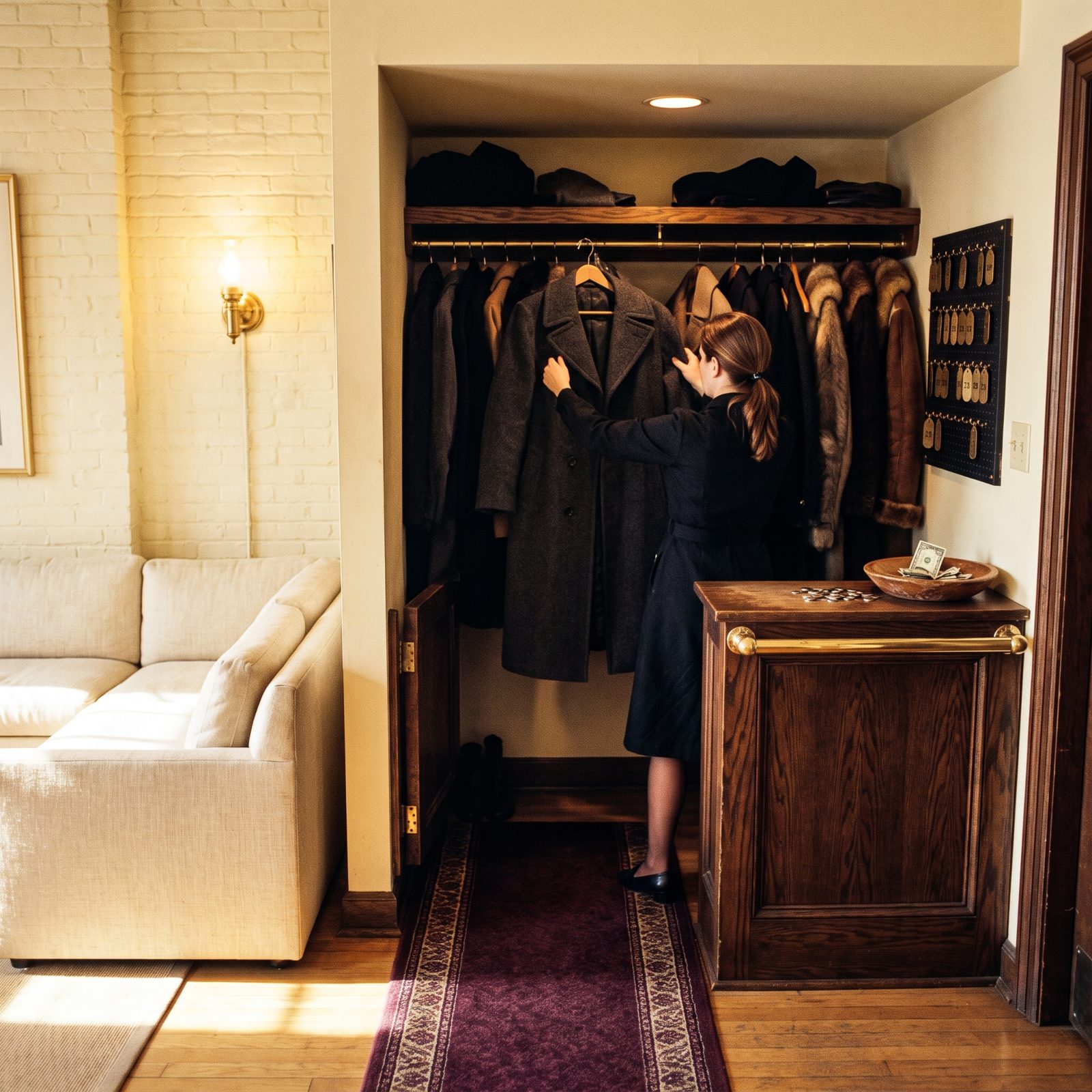
Cold months meant a small ceremony before you were even seated. You handed over your overcoat and got a brass numbered tag in return, warm from someone else’s hand, and the rack behind the half-door filled with wool and the occasional fur collar as the night went on.
It was a tiny transaction that told you the place took itself a little seriously. Nobody checks a coat anymore. We just drape them over the backs of chairs and hope.
8. Pinafore Aprons and Little Paper Caps
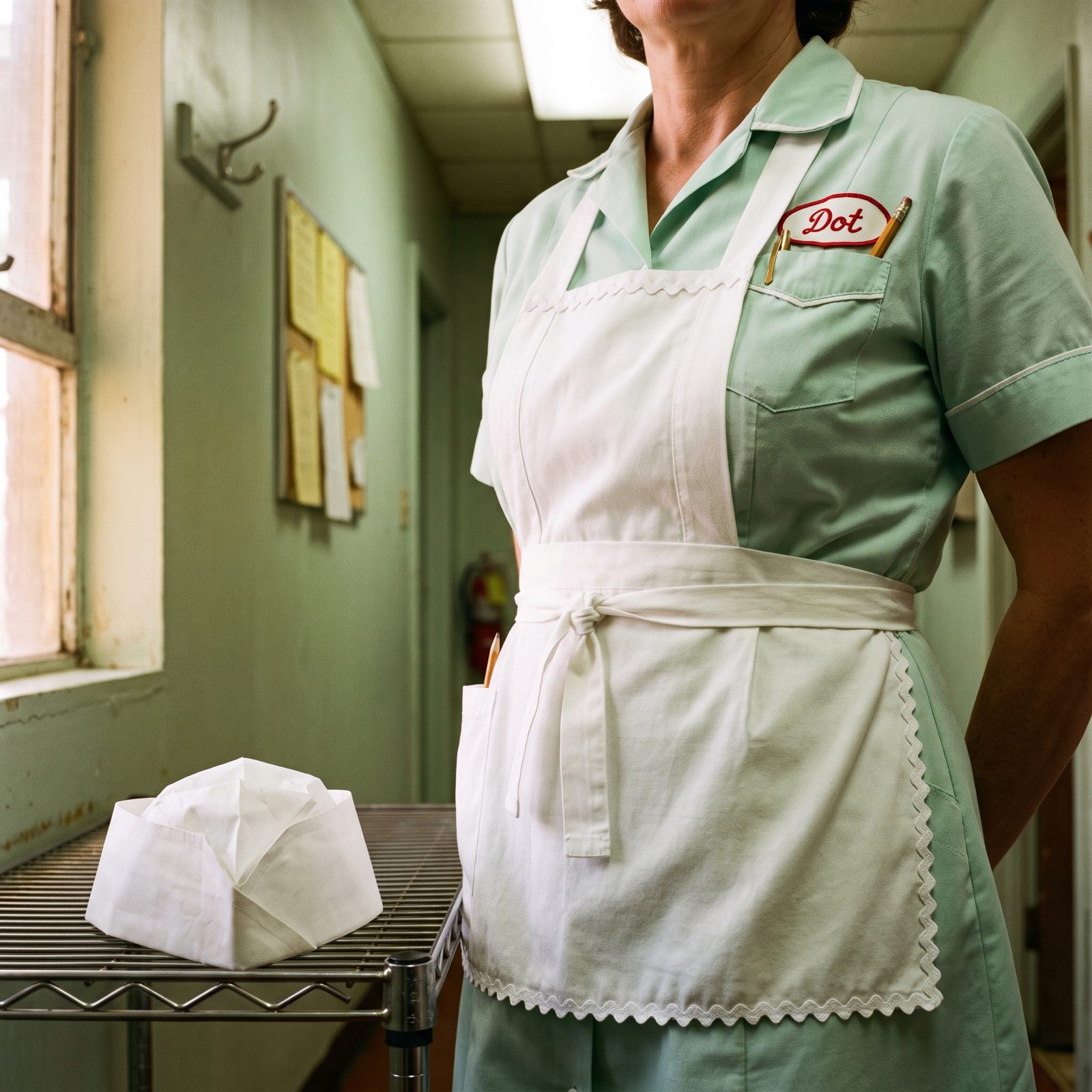
The paper cap went on with a bobby pin and a little defiance, because it never quite stayed. Underneath was the shirtdress, over it the pinafore apron with a hem of rickrack trim and a name patch stitched in red script. You wore your name on your chest so strangers could call you by it all shift long.
That uniform said this was a job you showed up for pressed and ready, and it could take a coffee spill, a kid’s ketchup, and a twelve-hour double and still look like a uniform.
7. Waitresses Who Called You by Your Order
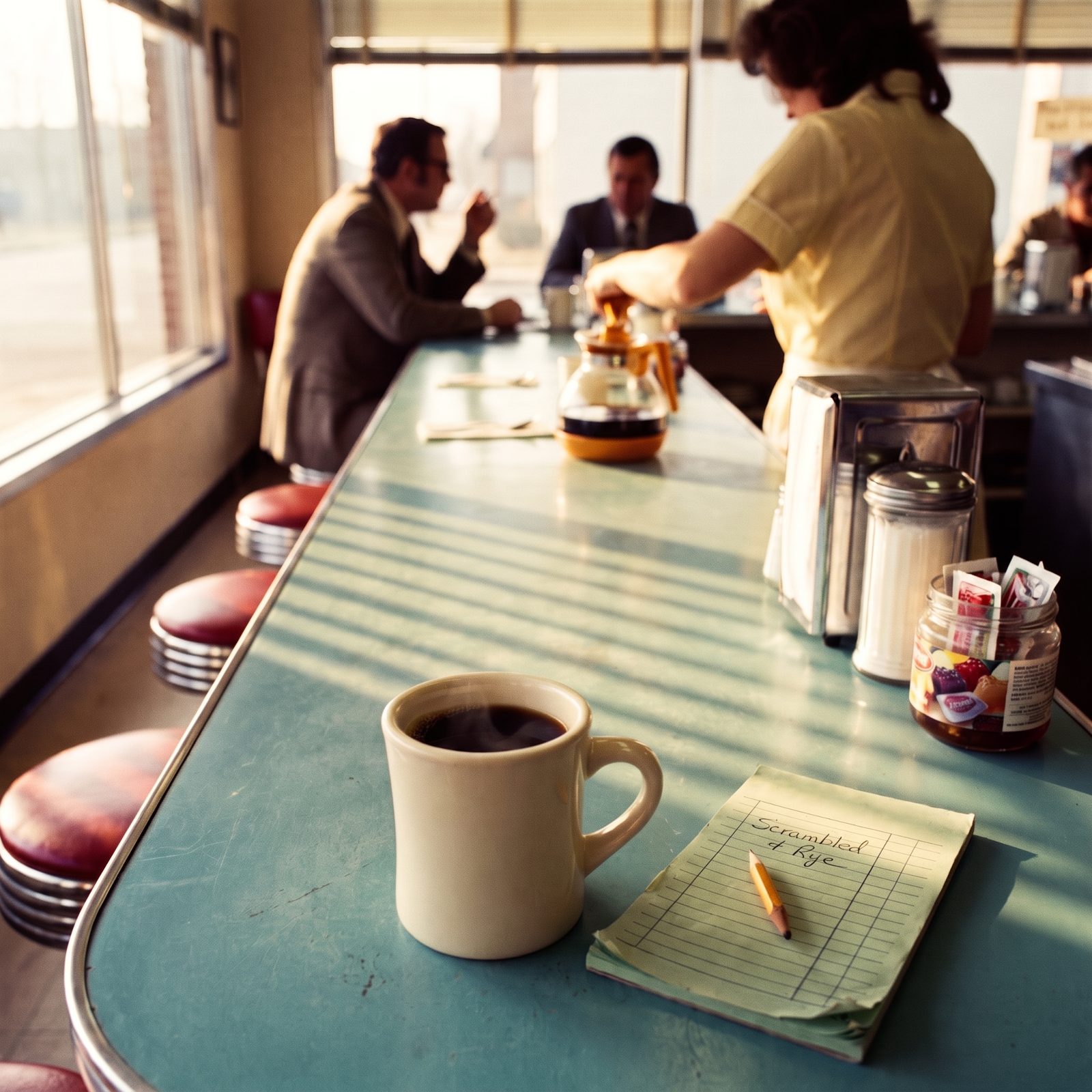
“Two eggs scrambled, rye, no home fries” wasn’t your order. It was your name. You’d slide onto the stool and the cup was already turned over, coffee already coming, before a word passed between you.
The good ones kept a whole floor’s worth of orders in their heads — which regular took cream, who wanted the check dropped early because he punched in at eight. It looked like memory. Really it was attention, the kind you can’t program.
6. The Fishbowl of Business Cards by the Register
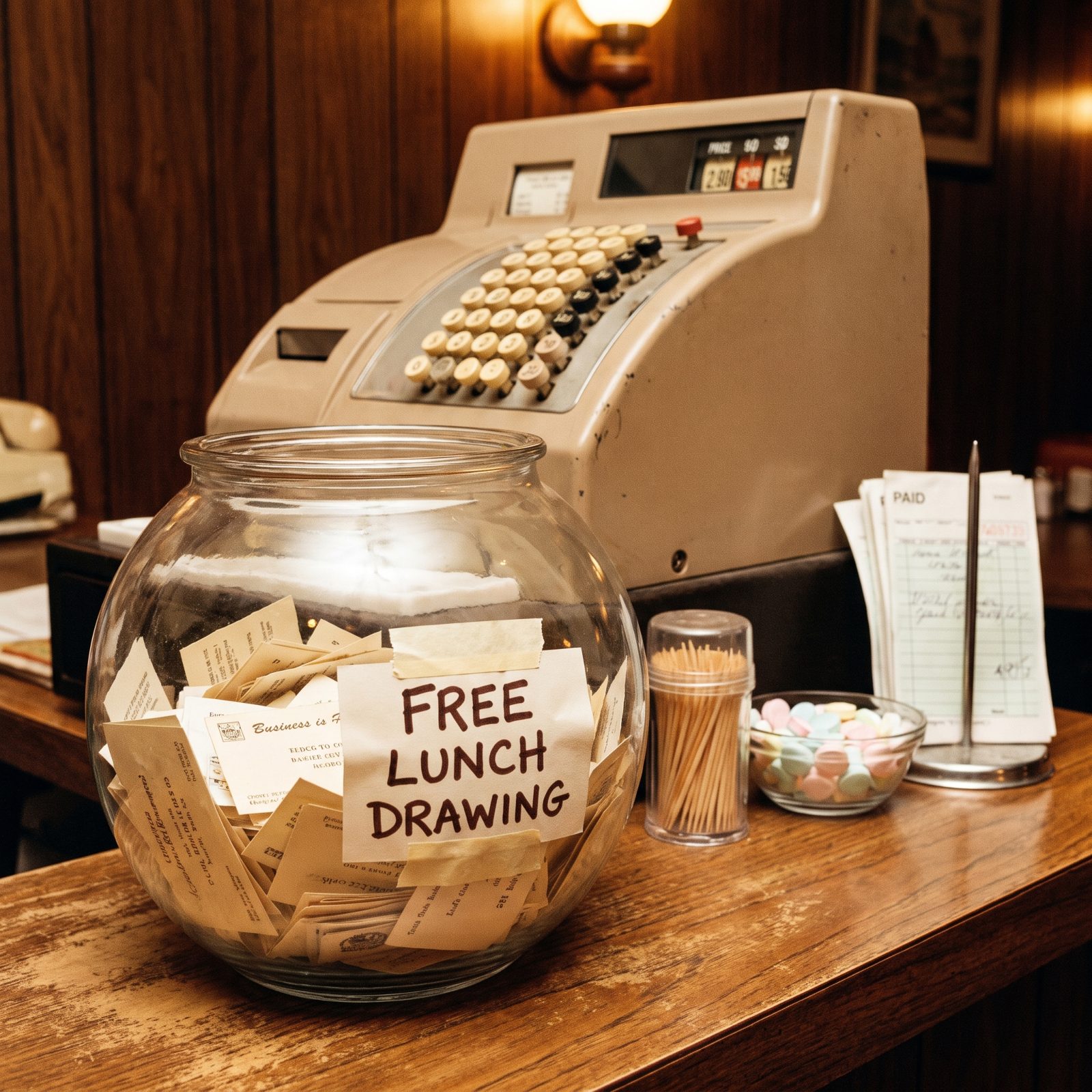
Right by the toothpicks and the little bowl of pastel mints sat a fishbowl stuffed with business cards. Drop yours in, win a free lunch, or maybe just build up a little archive of the local salesmen and insurance guys who ate there every Tuesday.
Marketing before anybody used the word. The prize was small; the real payoff was the ritual of leaning over the register, wiggling a card loose from the pocket, and dropping it in the glass.
5. The Polaroid Wall of Regulars Behind the Register
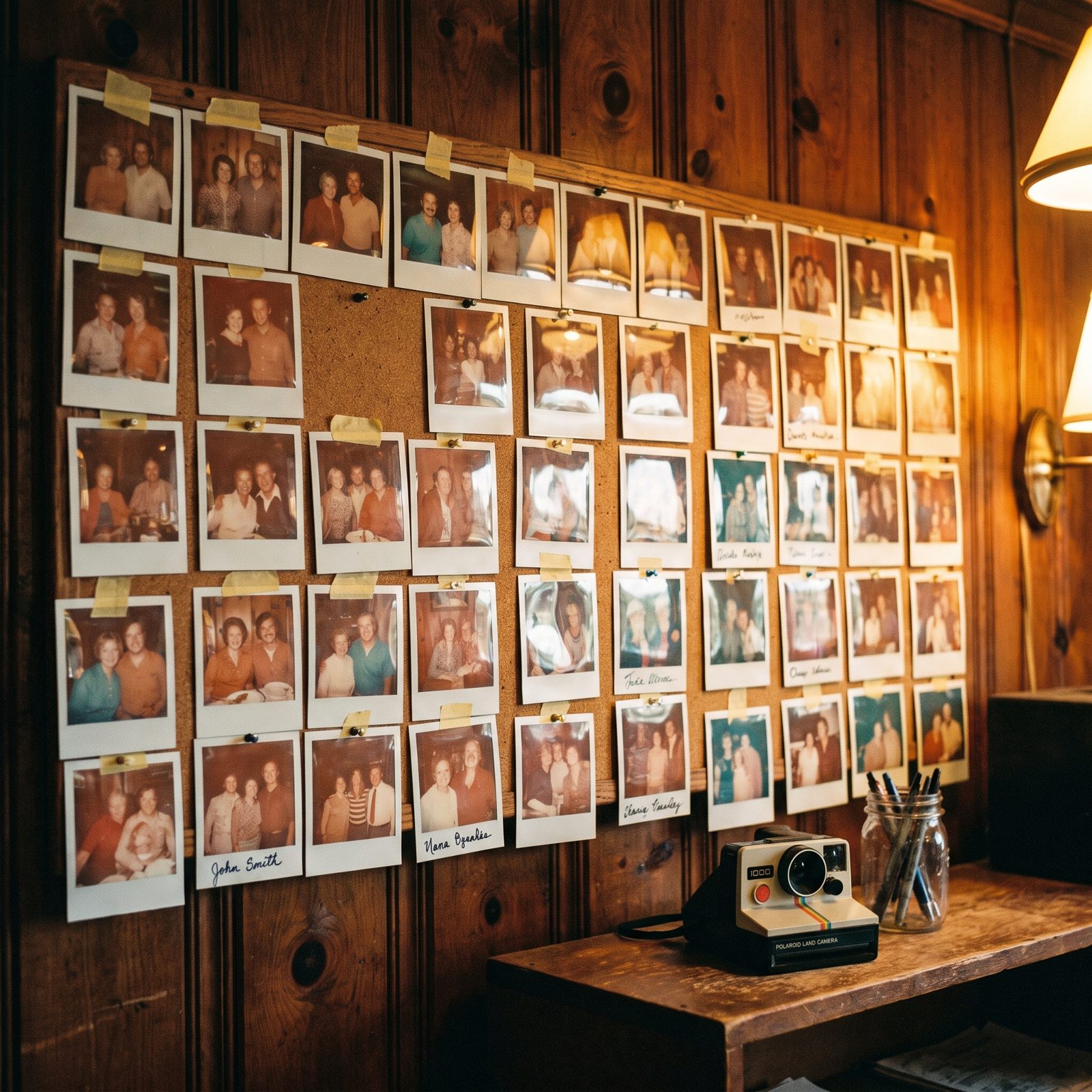
Every neighborhood place worth its salt had one. A stretch of wall behind the register papered with Polaroids, corners curling, colors already going orange the way that film did. Regulars at their tables. Birthday people. The owner’s cousin who visited once and never let anyone forget it.
You knew you’d truly arrived when they snapped one of you and taped it up — the loyalty program of 1978. No app, no points, just your face on the wall of a place that considered you family.
4. The Road Atlas Kept Beside the Cash Register
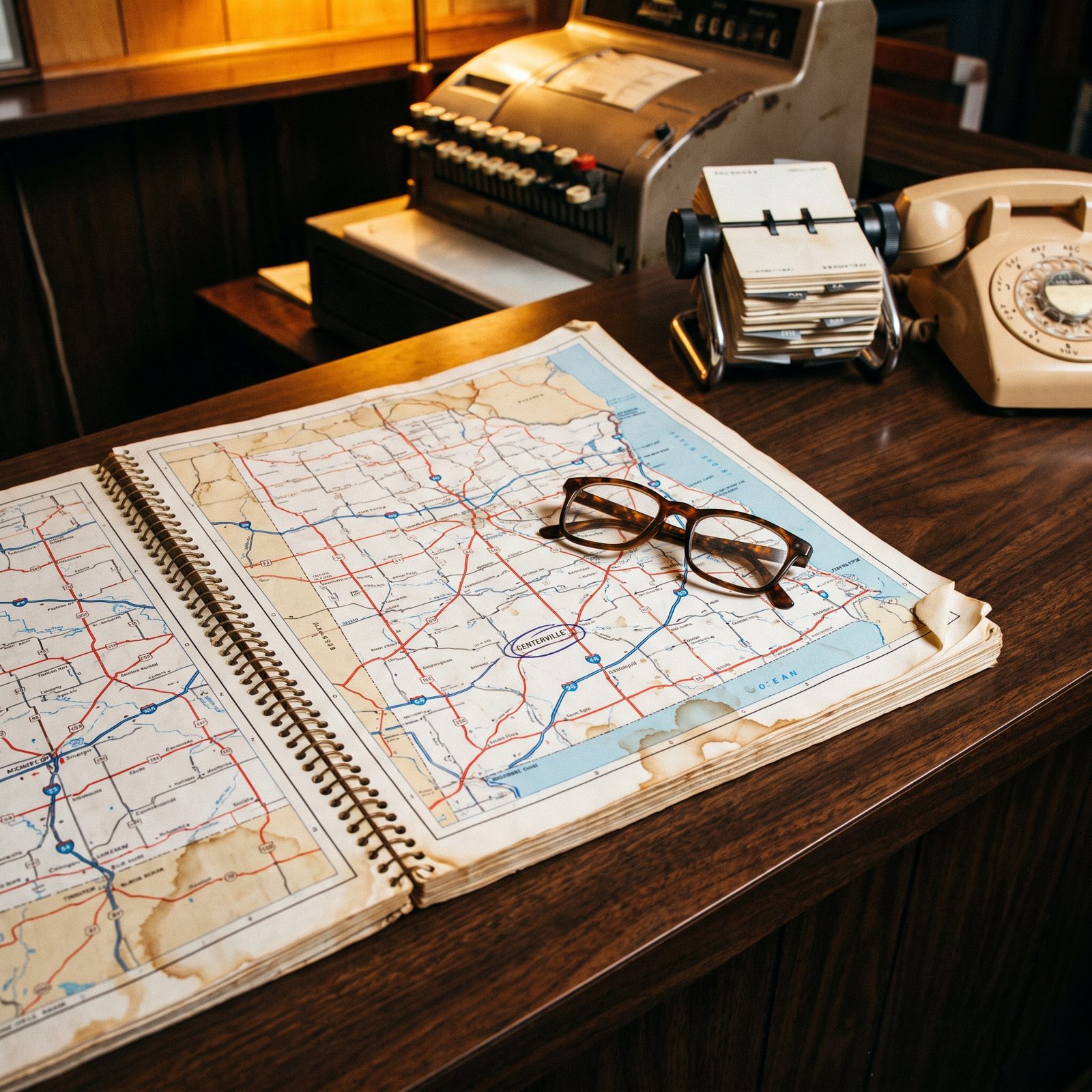
A trucker or a lost family would come in, order coffee, and ask how to get to the next town over. The answer lived in a battered spiral atlas kept right by the register, coffee-ringed and pen-marked, its spine cracked from a hundred hands.
Somebody behind the counter would flip to the right page, put a thumb on where you were, and trace the route with a finger. Directions came with a person attached to them. No satellite ever calls you honey.
3. The Newspaper Rack for the Solo Diner
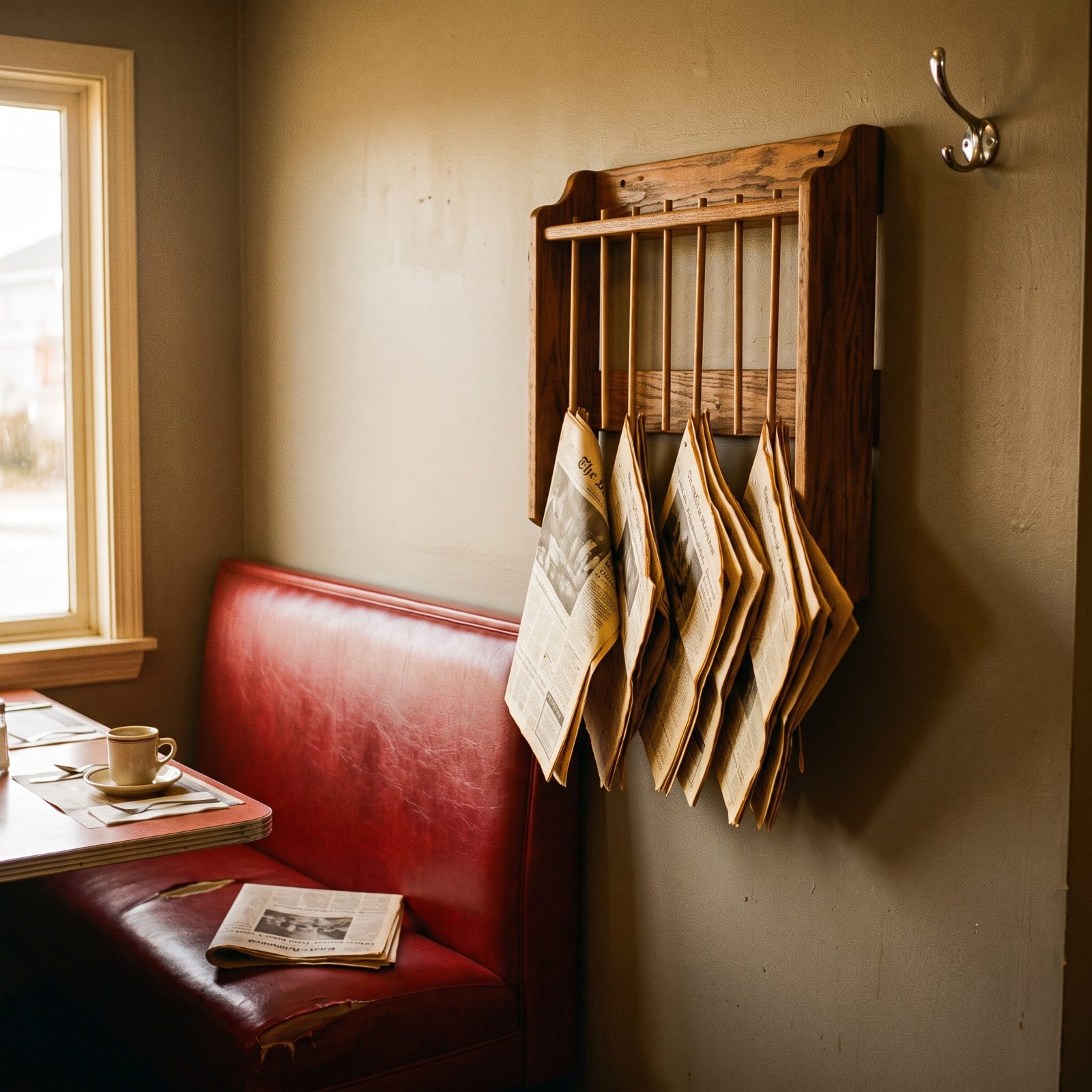
Eating alone didn’t mean staring at your hands. A wooden rack on the wall held the day’s papers on dowel rods, and you’d pull one down, fold it back to the sports page, and settle in with your eggs.
Nobody looked at a lone diner with a newspaper and thought lonely. It was a full agenda — coffee, a plate, the box scores, and no reason to hurry.
2. Chrome High Chairs with Cracked Vinyl Cushions
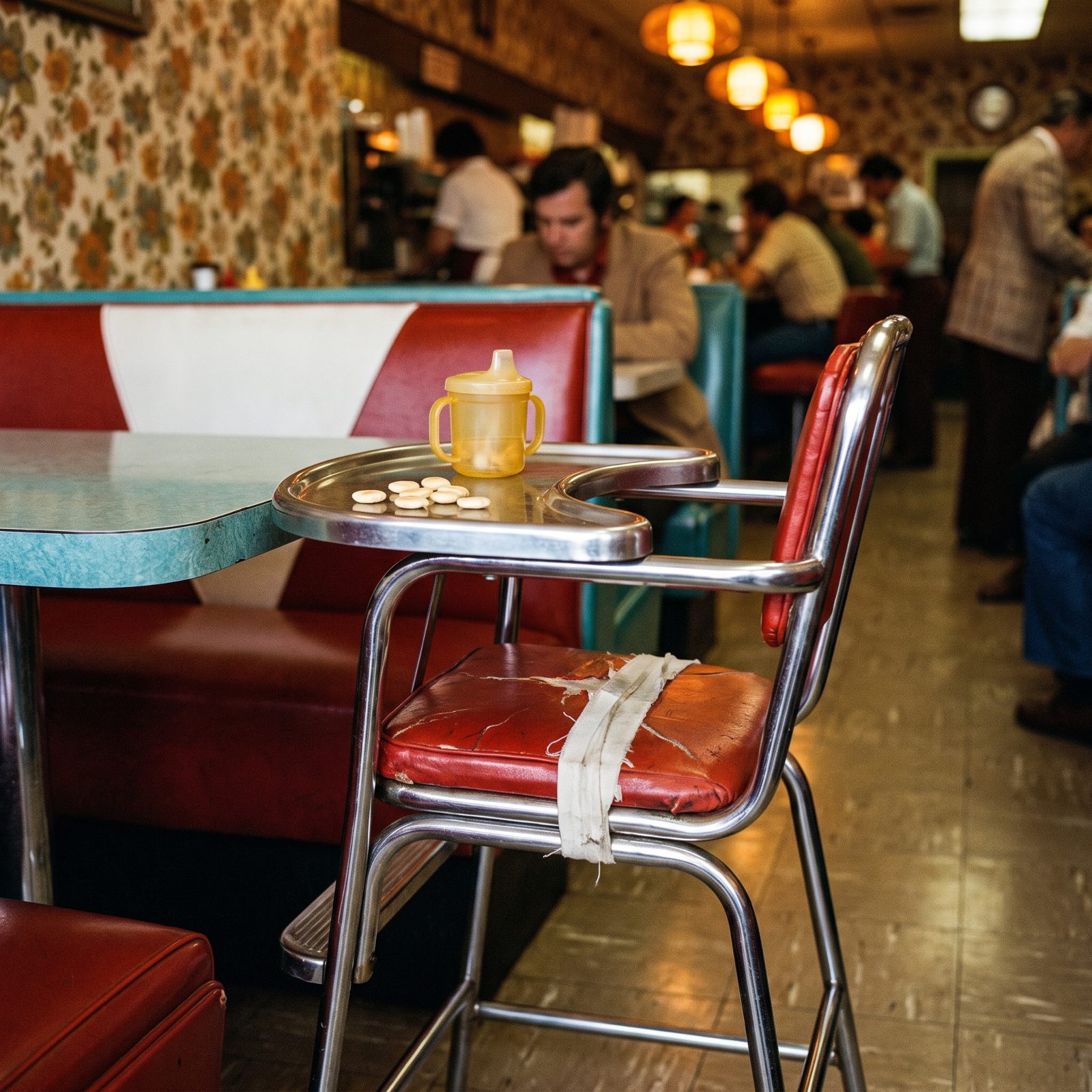
Heavy chrome tubing, a red vinyl seat gone brittle and split at the corners, usually patched with a strip of tape. The waitress would swing it up to the end of the booth one-handed like it weighed nothing, snap the tray in, and scatter a few oyster crackers to buy the parents ten minutes.
Those chairs took decades of ketchup and teething and still rolled out for the next family. Built like the restaurant itself. Meant to last, and they did.
1. The Coffee Shop Counter Tucked Inside the Department Store
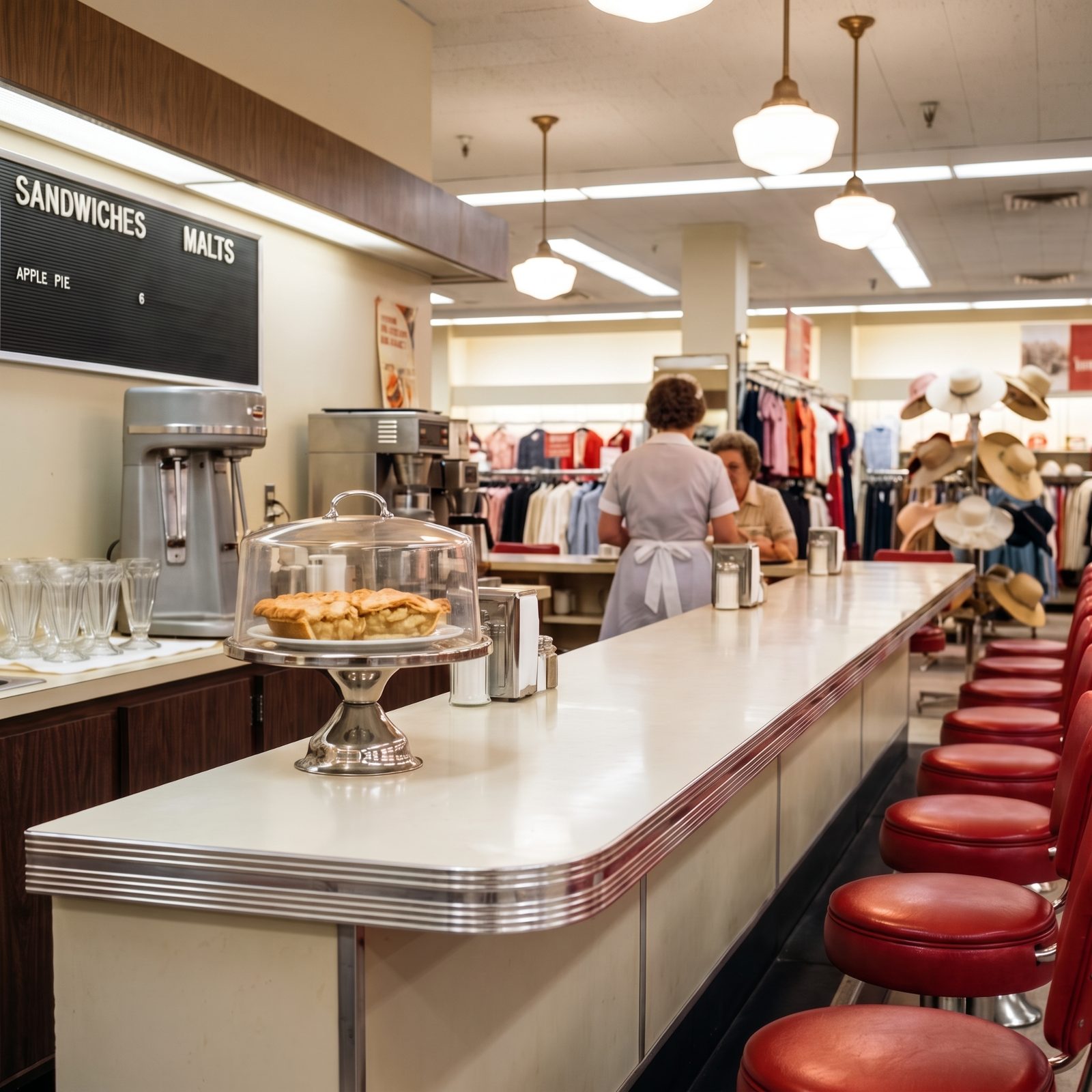
You went in for a coat and stopped for a grilled cheese without ever leaving the building. Nearly every big department store had a lunch counter — chrome stools, a domed pie stand, a malt machine whirring behind the register.
A shopping trip had a natural intermission built into it. Set the bags down, spin the stool, order the club sandwich and a fountain Coke while your feet recovered.
When those counters closed, shopping lost its middle chapter. You just kept walking until you were tired and went home.